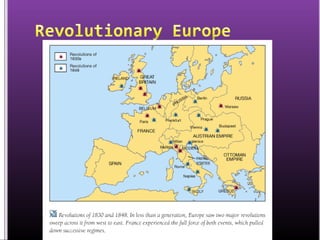
 The Revolutions of
1848 were the most
violent uprisings since
the French Revolution
 CommonThemes:
 Nationalism
 Liberalism
 Romanticism
 February – crackdown
on freedoms by Louis
Phillip
 Uprising ensues –
barricades, etc
 Second Republic
declared
 Unfortunately, many of
wealthiest leave Paris
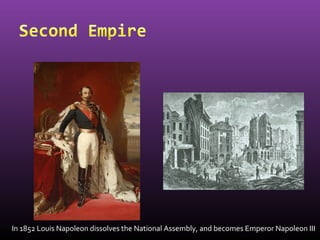
 Nephew of Napoleon
Bonaparte
 Elected in Fall 1848
with 70% of the vote
 Becomes first and last
president of the
Second Republic
In 1852 Louis Napoleon dissolves the National Assembly, and becomes Emperor Napoleon III
 Revolution in France
spurs liberals in Prussia
to action – Barricades in
Berlin!
 In March Emperor
FrederickWilliam IV
grants liberal demands
 Parliament formed in
Frankfurt to draft
Constitution of Unified
Germany
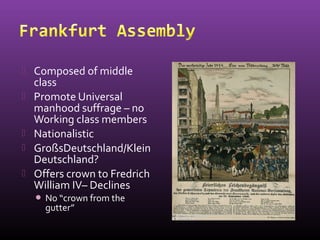
 Composed of middle
class
 Promote Universal
manhood suffrage – no
Working class members
 Nationalistic
 GroßsDeutschland/Klein
Deutschland?
 Offers crown to Fredrich
William IV– Declines
 No “crown from the
gutter”
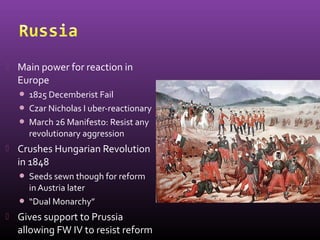
 Main power for reaction in
Europe
 1825 Decemberist Fail
 Czar Nicholas I uber-reactionary
 March 26 Manifesto: Resist any
revolutionary aggression
 Crushes Hungarian Revolution
in 1848
 Seeds sewn though for reform
inAustria later
 “Dual Monarchy”
 Gives support to Prussia
allowing FW IV to resist reform
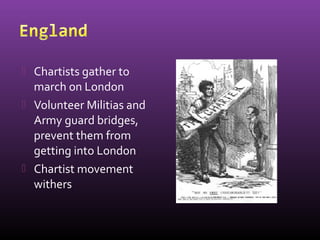
 Chartists gather to
march on London
 Volunteer Militias and
Army guard bridges,
prevent them from
getting into London
 Chartist movement
withers
 1832 Reform Bill
 1834 sewers
 Corn Law Repeal 1846
 No subsidies!
 Landowners don’t grow
wheat any more
 Import from U.S./Canada
 Pastoralism instead
 Free-trade for all
 Who does this benefit?
 Foreign Affairs
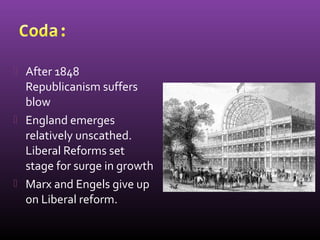
 After 1848
Republicanism suffers
blow
 England emerges
relatively unscathed.
Liberal Reforms set
stage for surge in growth
 Marx and Engels give up
on Liberal reform.

1848

  • 3.
     The Revolutionsof 1848 were the most violent uprisings since the French Revolution  CommonThemes:  Nationalism  Liberalism  Romanticism
  • 4.
     February –crackdown on freedoms by Louis Phillip  Uprising ensues – barricades, etc  Second Republic declared  Unfortunately, many of wealthiest leave Paris
  • 6.
     Nephew ofNapoleon Bonaparte  Elected in Fall 1848 with 70% of the vote  Becomes first and last president of the Second Republic
  • 7.
    In 1852 LouisNapoleon dissolves the National Assembly, and becomes Emperor Napoleon III
  • 8.
     Revolution inFrance spurs liberals in Prussia to action – Barricades in Berlin!  In March Emperor FrederickWilliam IV grants liberal demands  Parliament formed in Frankfurt to draft Constitution of Unified Germany
  • 9.
     Composed ofmiddle class  Promote Universal manhood suffrage – no Working class members  Nationalistic  GroßsDeutschland/Klein Deutschland?  Offers crown to Fredrich William IV– Declines  No “crown from the gutter”
  • 10.
     Main powerfor reaction in Europe  1825 Decemberist Fail  Czar Nicholas I uber-reactionary  March 26 Manifesto: Resist any revolutionary aggression  Crushes Hungarian Revolution in 1848  Seeds sewn though for reform inAustria later  “Dual Monarchy”  Gives support to Prussia allowing FW IV to resist reform
  • 11.
     Chartists gatherto march on London  Volunteer Militias and Army guard bridges, prevent them from getting into London  Chartist movement withers
  • 13.
     1832 ReformBill  1834 sewers  Corn Law Repeal 1846  No subsidies!  Landowners don’t grow wheat any more  Import from U.S./Canada  Pastoralism instead  Free-trade for all  Who does this benefit?  Foreign Affairs
  • 14.
     After 1848 Republicanismsuffers blow  England emerges relatively unscathed. Liberal Reforms set stage for surge in growth  Marx and Engels give up on Liberal reform.