HOW TO INTEGRATE ICT IN THE
  SCHOOLS & CLASSROOMS
  WHEN ICT IS AN EFFECTIVE WAY TO LEARN,
   WHY DOESN’T EVERY TEACHER USE IT?
   HOW TO INFLUENCE THE USE OF ICT IN
Dobro jutro kolegi Vesel
         sem,
    Goedemorgen collega's.
Fijn jullie te mogen ontmoeten
http://socrative.com
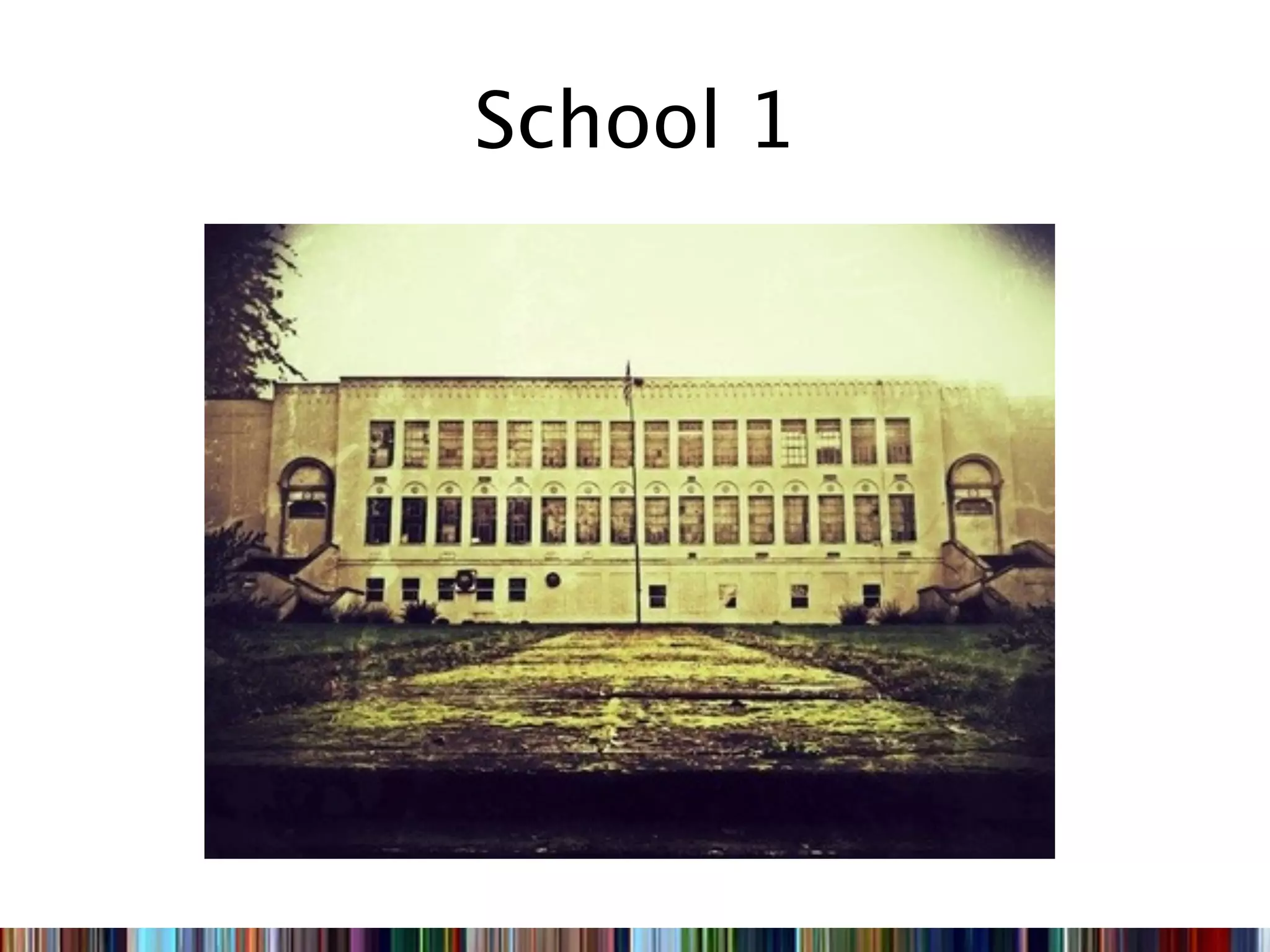
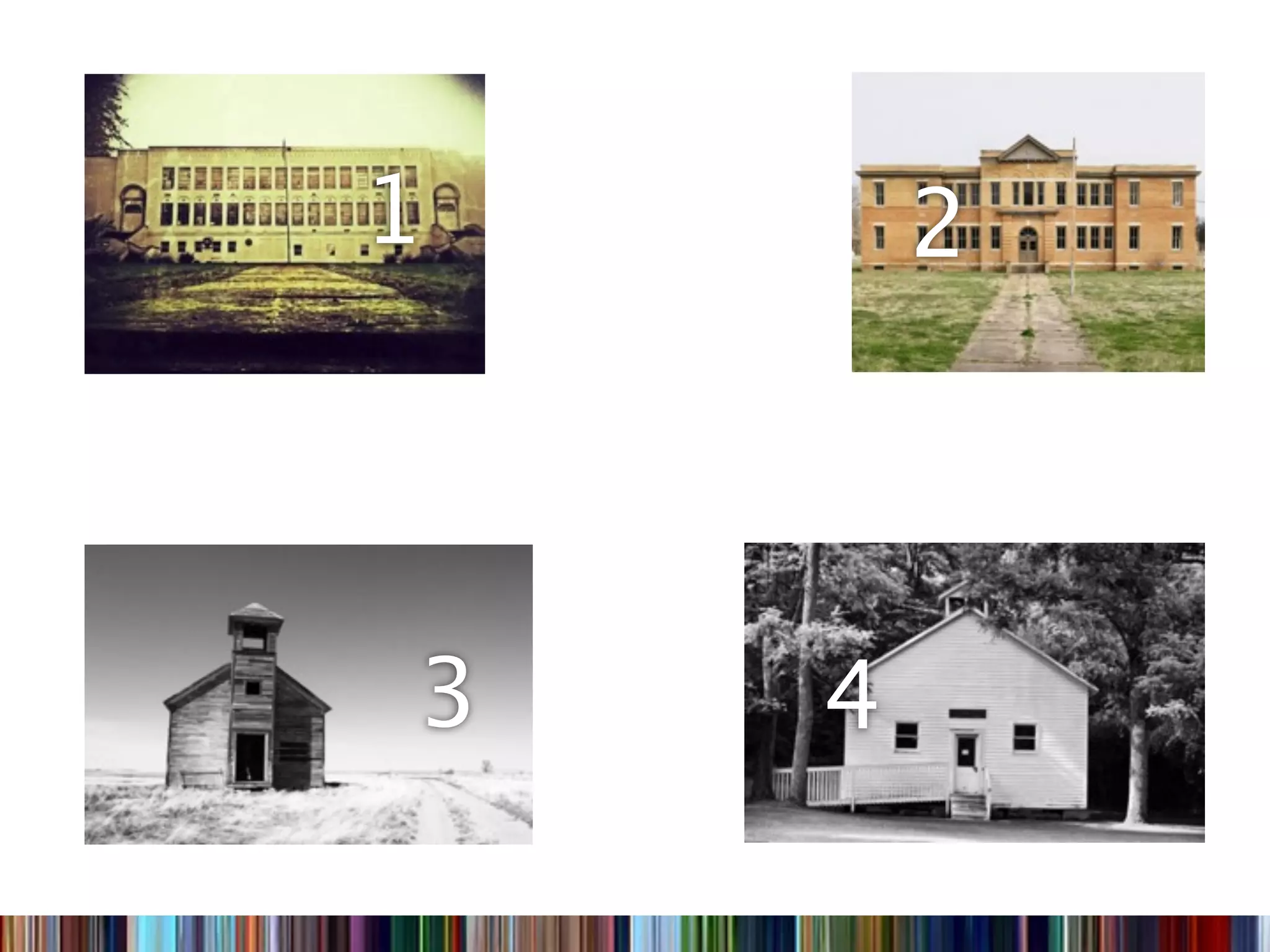
School 1
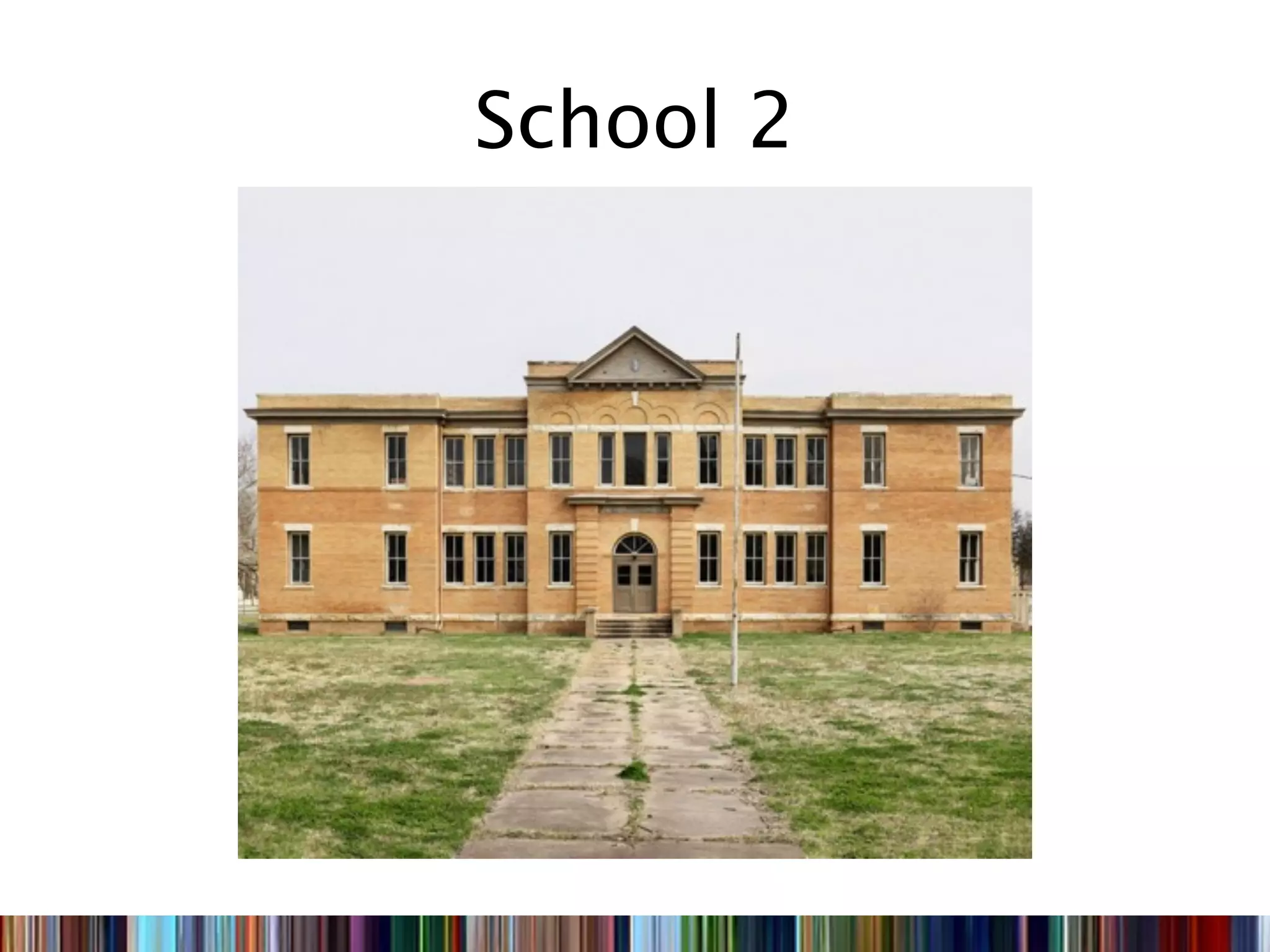
School 2
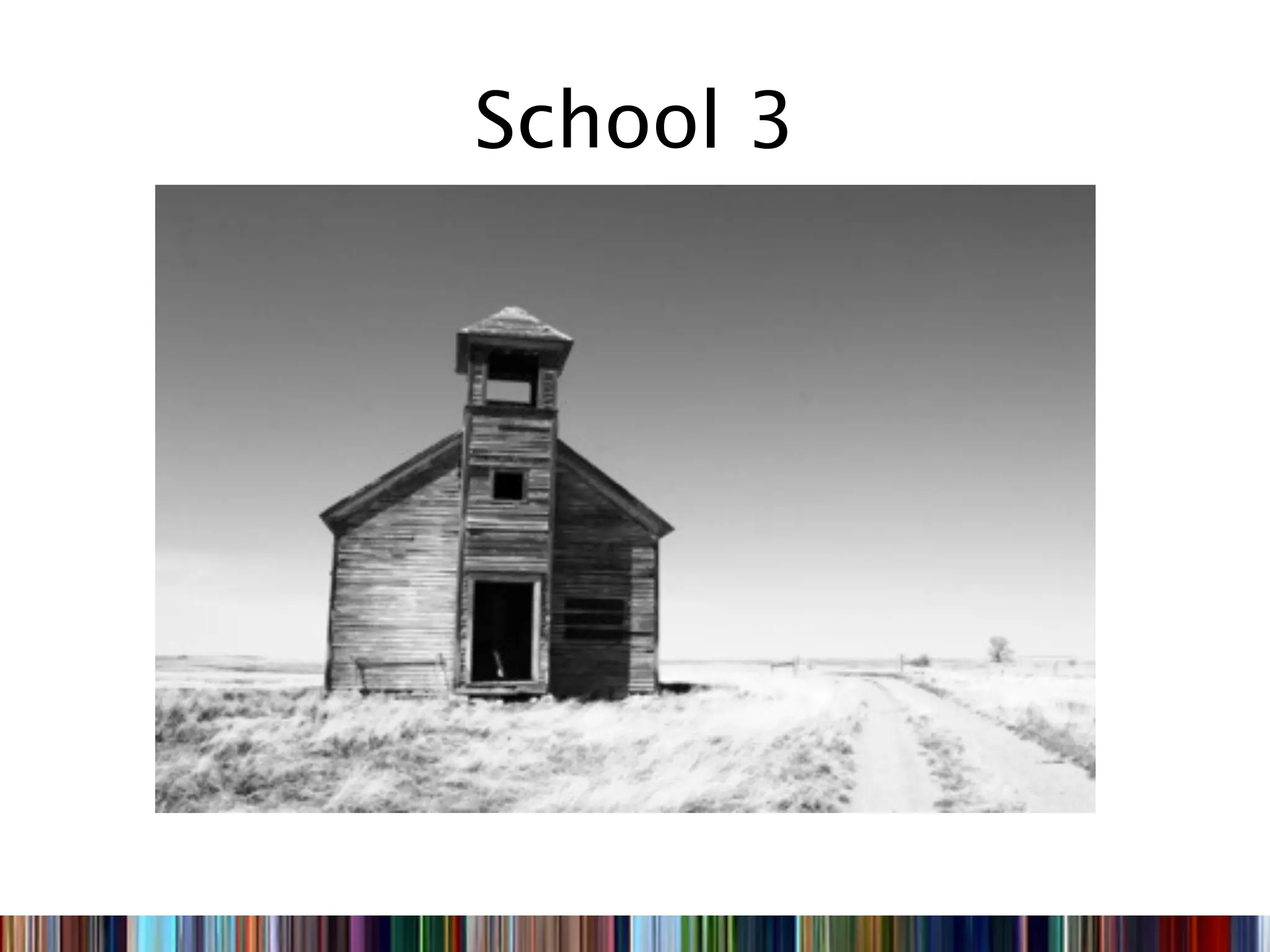
School 3
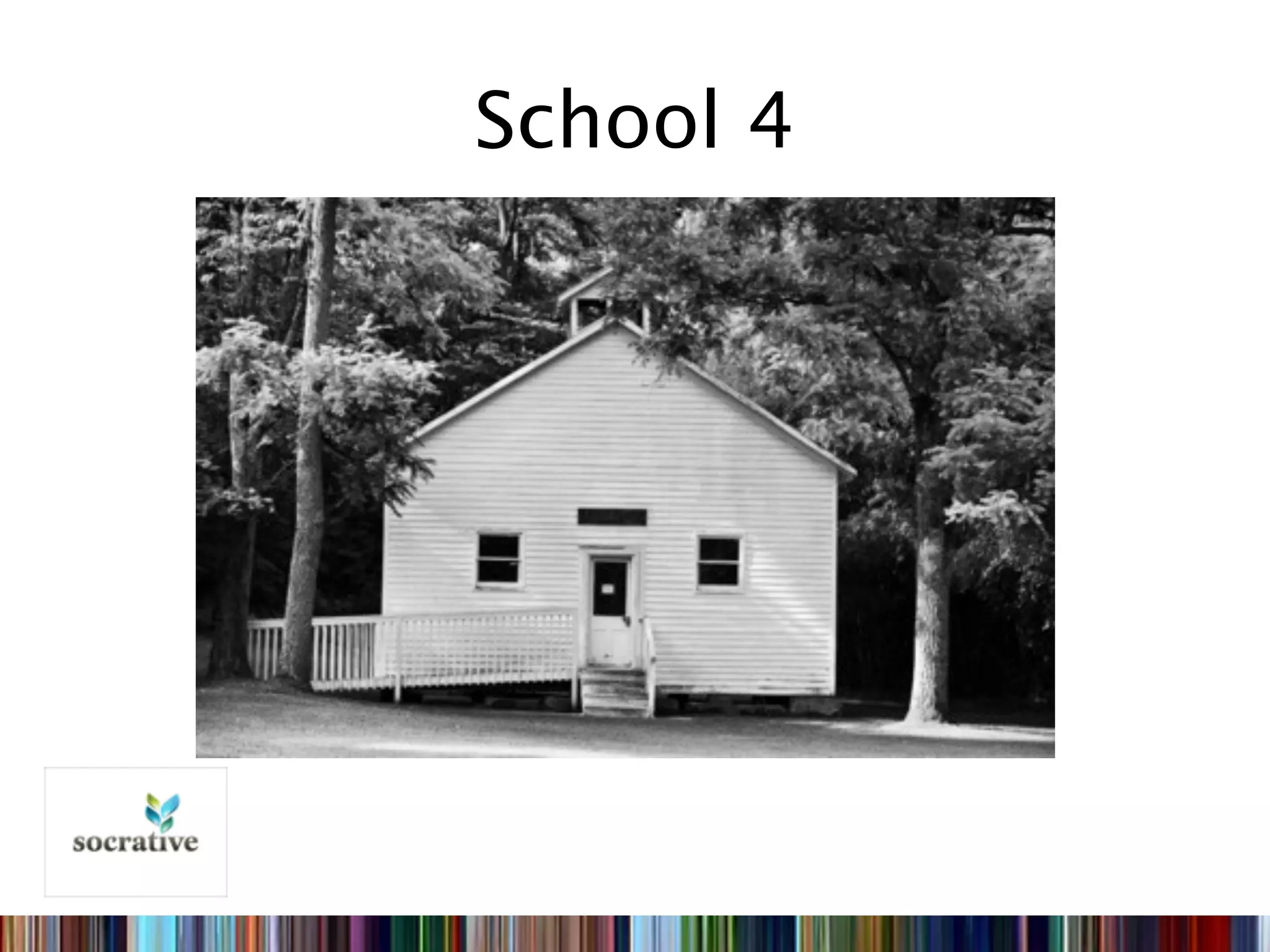
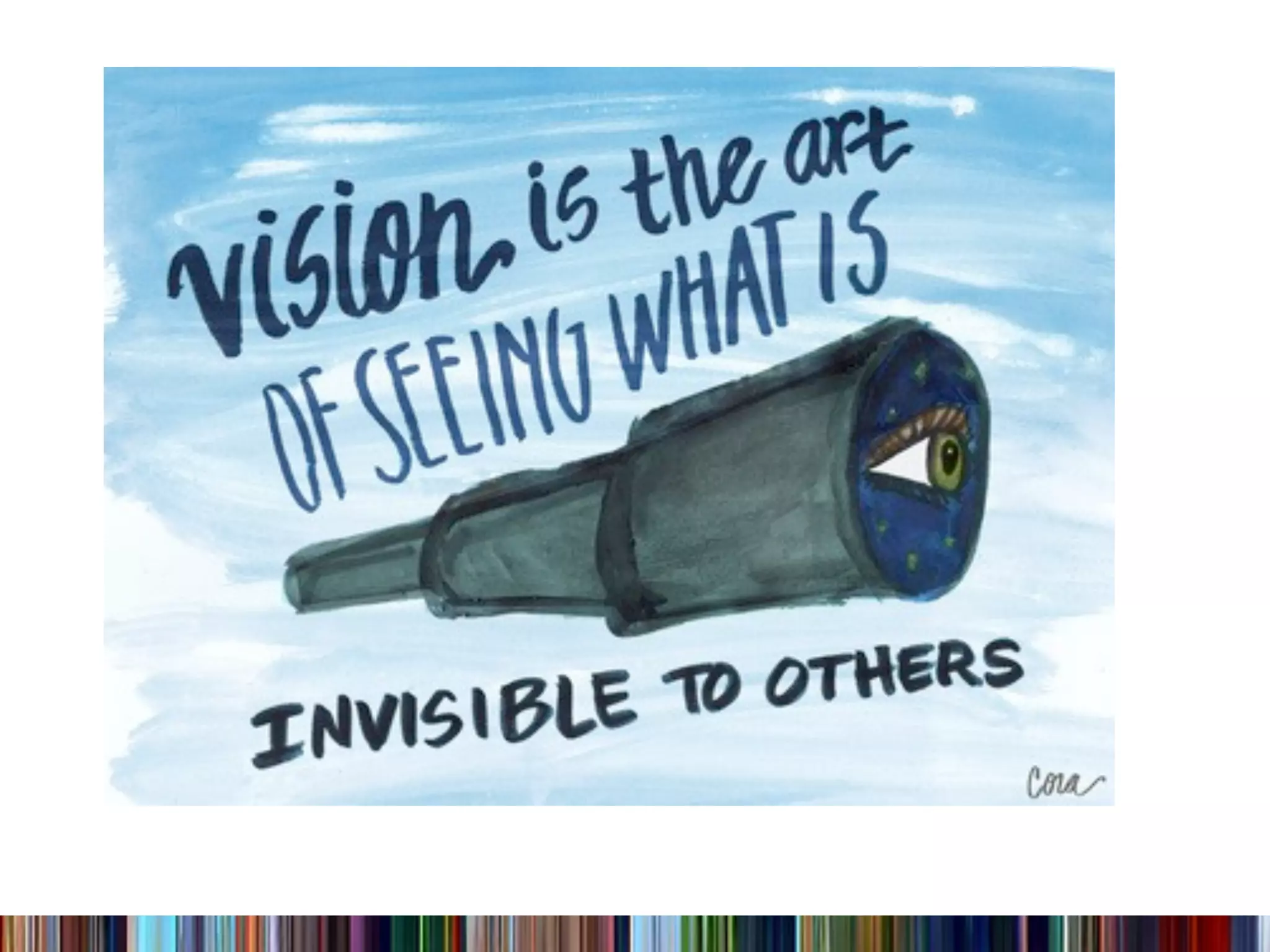
School 4
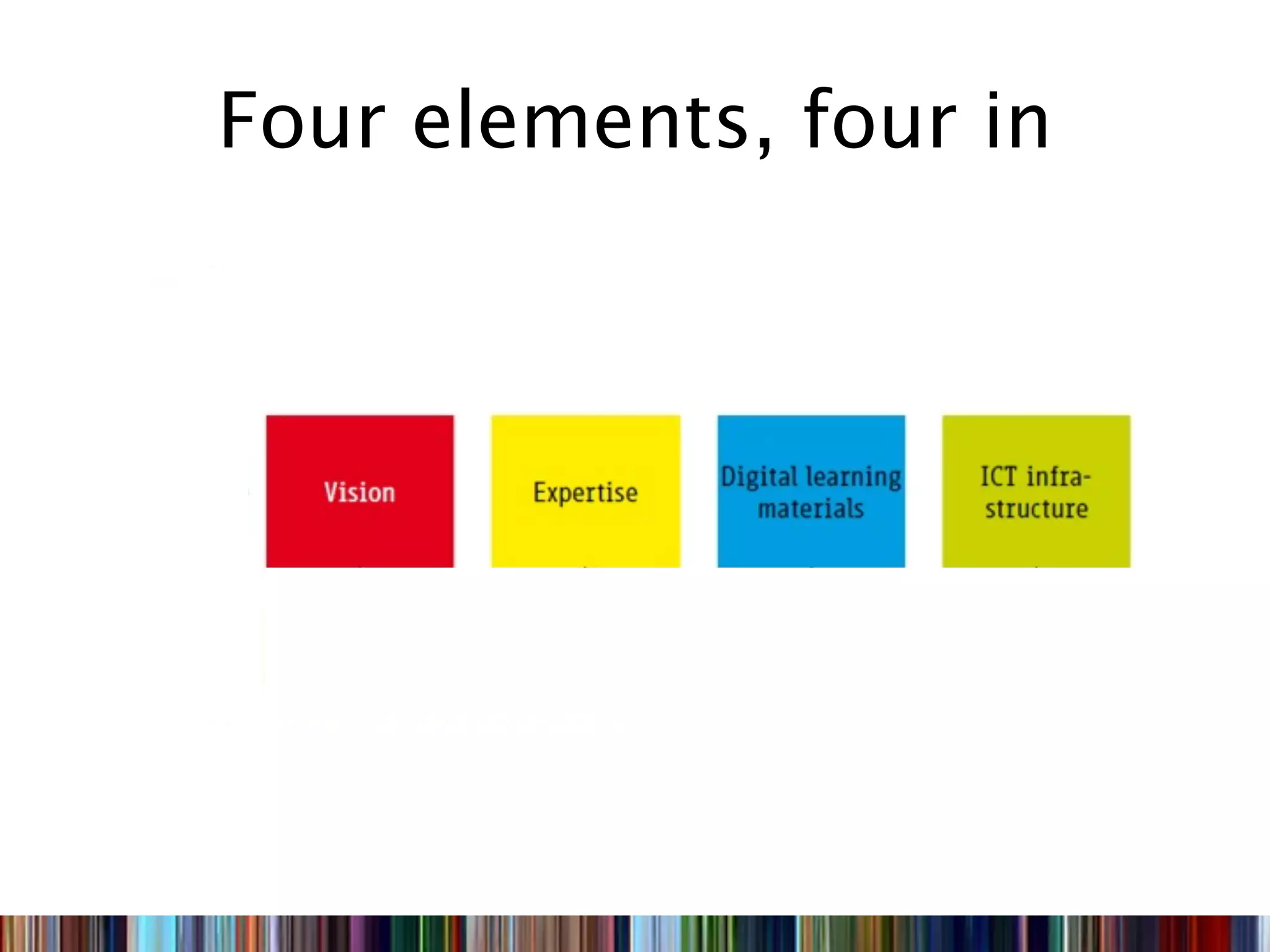
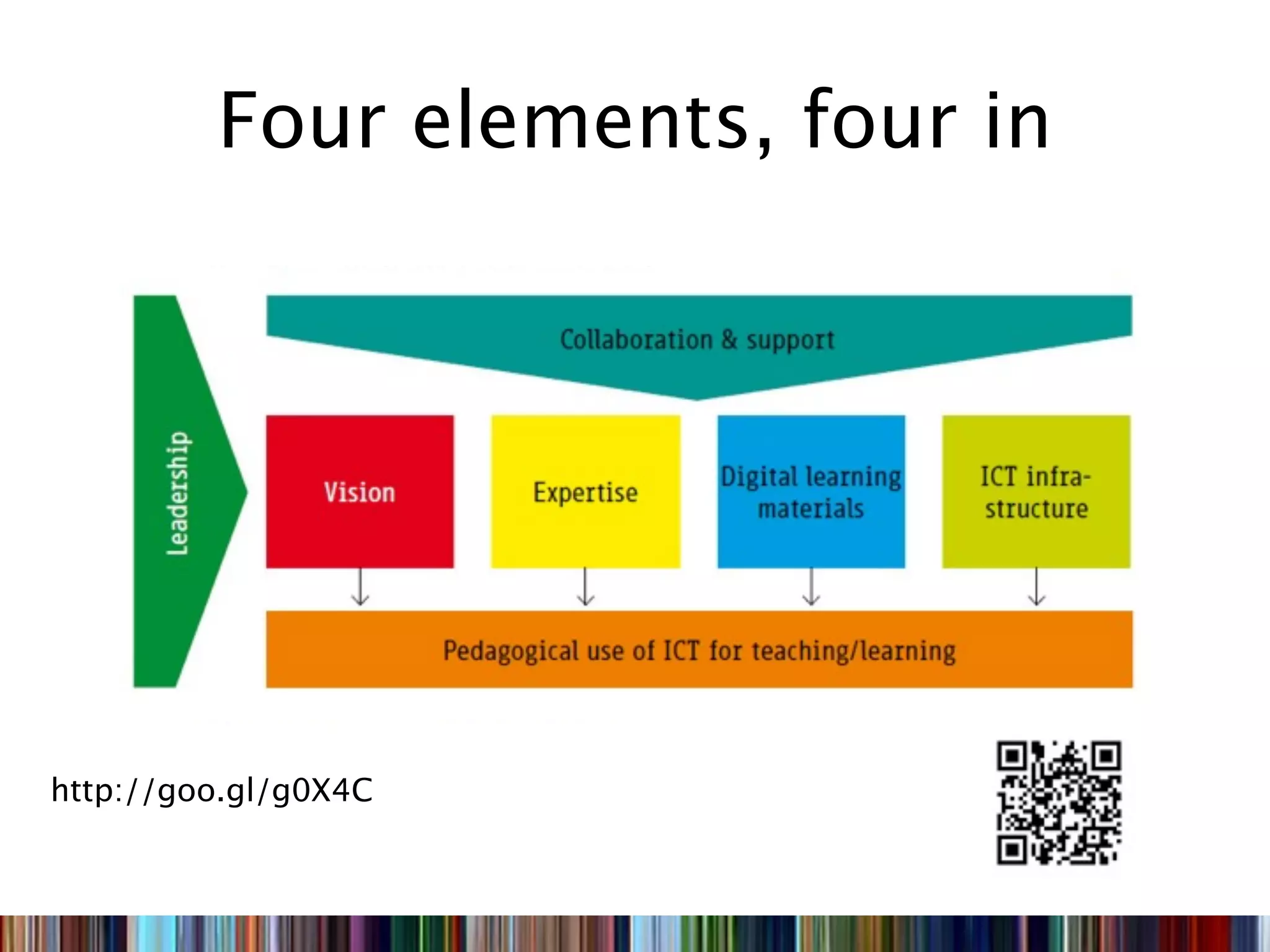
Four elements, four in
1       2


3   4
Four elements, four in


http://goo.gl/g0X4C
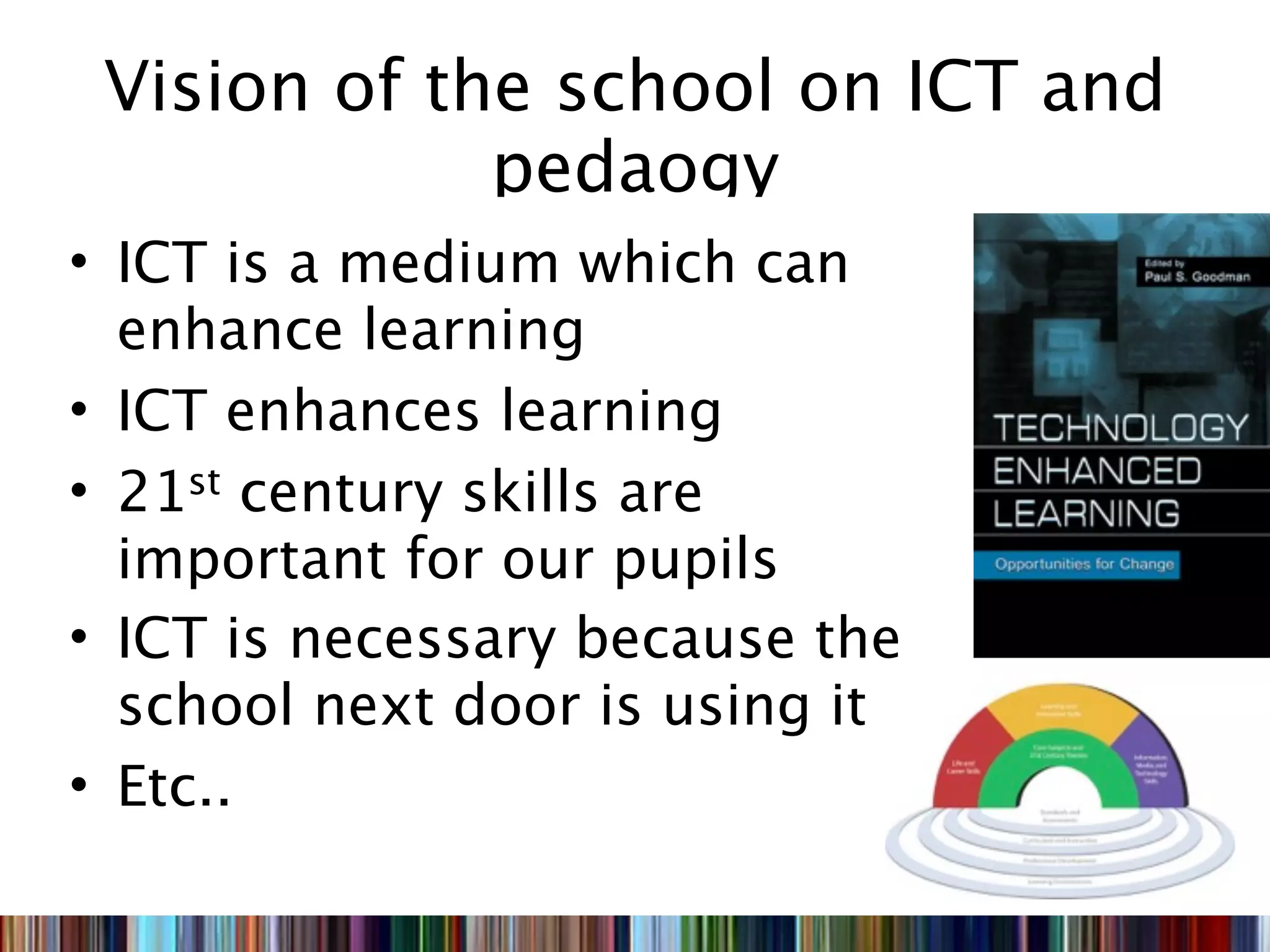
Vision of the school on ICT and
             pedaogy
• ICT is a medium which can
  enhance learning
• ICT enhances learning
• 21st century skills are
  important for our pupils
• ICT is necessary because the
  school next door is using it
• Etc..
Expertise of the teacher/
          management
• What is the level of expertise of
  – The management?
  – ICT-coördinator
  – The teachers?
  – The assistants?
  – The pupils?
  – The parents?
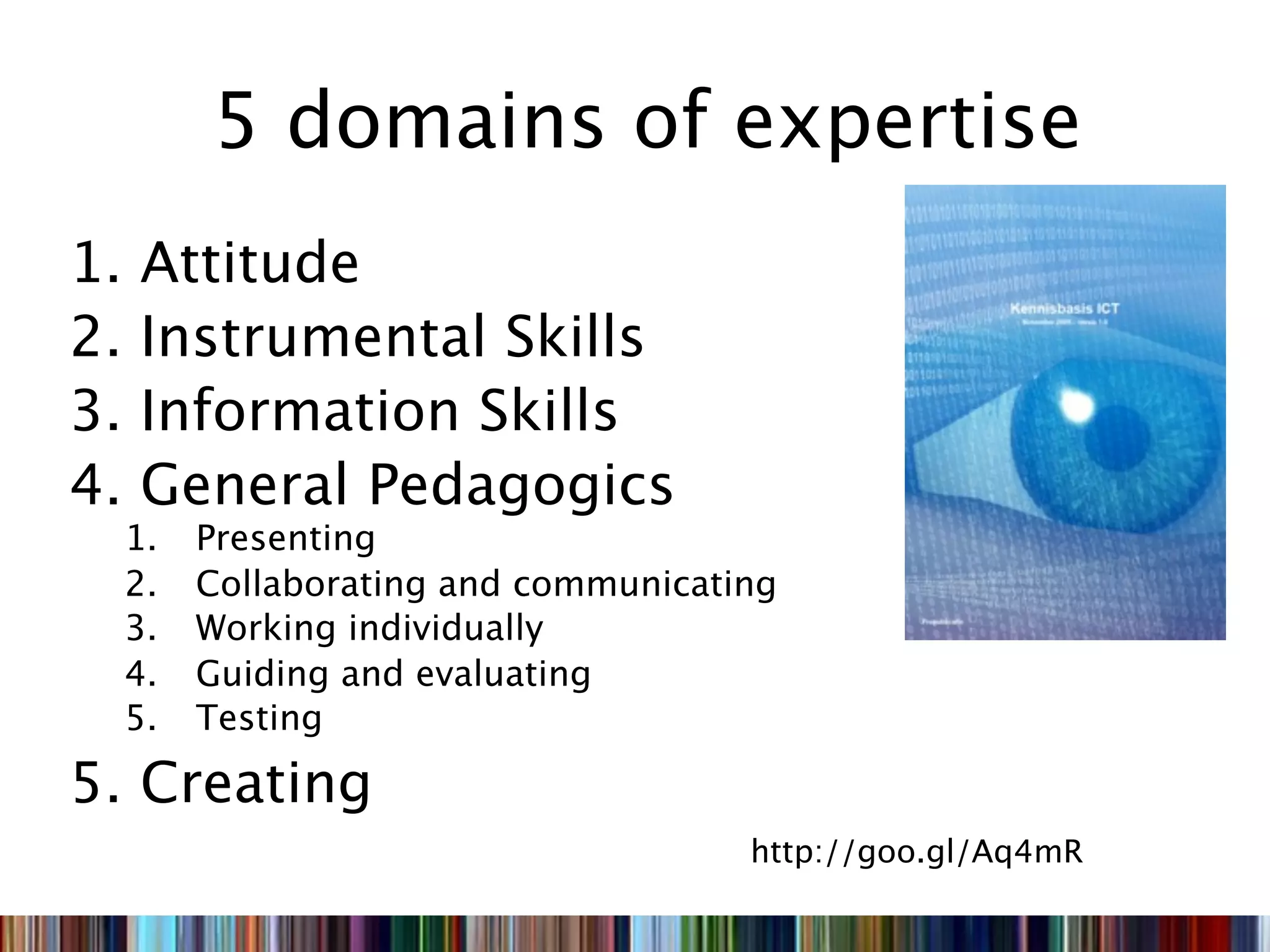
5 domains of expertise
1.   Attitude
2.   Instrumental Skills
3.   Information Skills
4.   General Pedagogics
     1.   Presenting
     2.   Collaborating and communicating
     3.   Working individually
     4.   Guiding and evaluating
     5.   Testing

5. Creating
                                       http://goo.gl/Aq4mR
Digital learning materials
• Curriculum content
• Additional content from internet
  resources: Khan academy , iTunesU,
Web 2.0 tools
ICT infrastructure
•       Hard- and software
•    Wired or Wifi connection
•            Reliability
•   Easy access (Single sign on)
Give answer on the first 6
             questions
• Vision is strongly developed in the
  Slovenian schools?
• The expertise of the manager is excellent
• The expertise of the teachers is excellent
• The ICT-infrastructure in schools is
  excellent: you can easily access the
  network
• Digital materials are present plentifully
• Schools have a lot of knowledge about
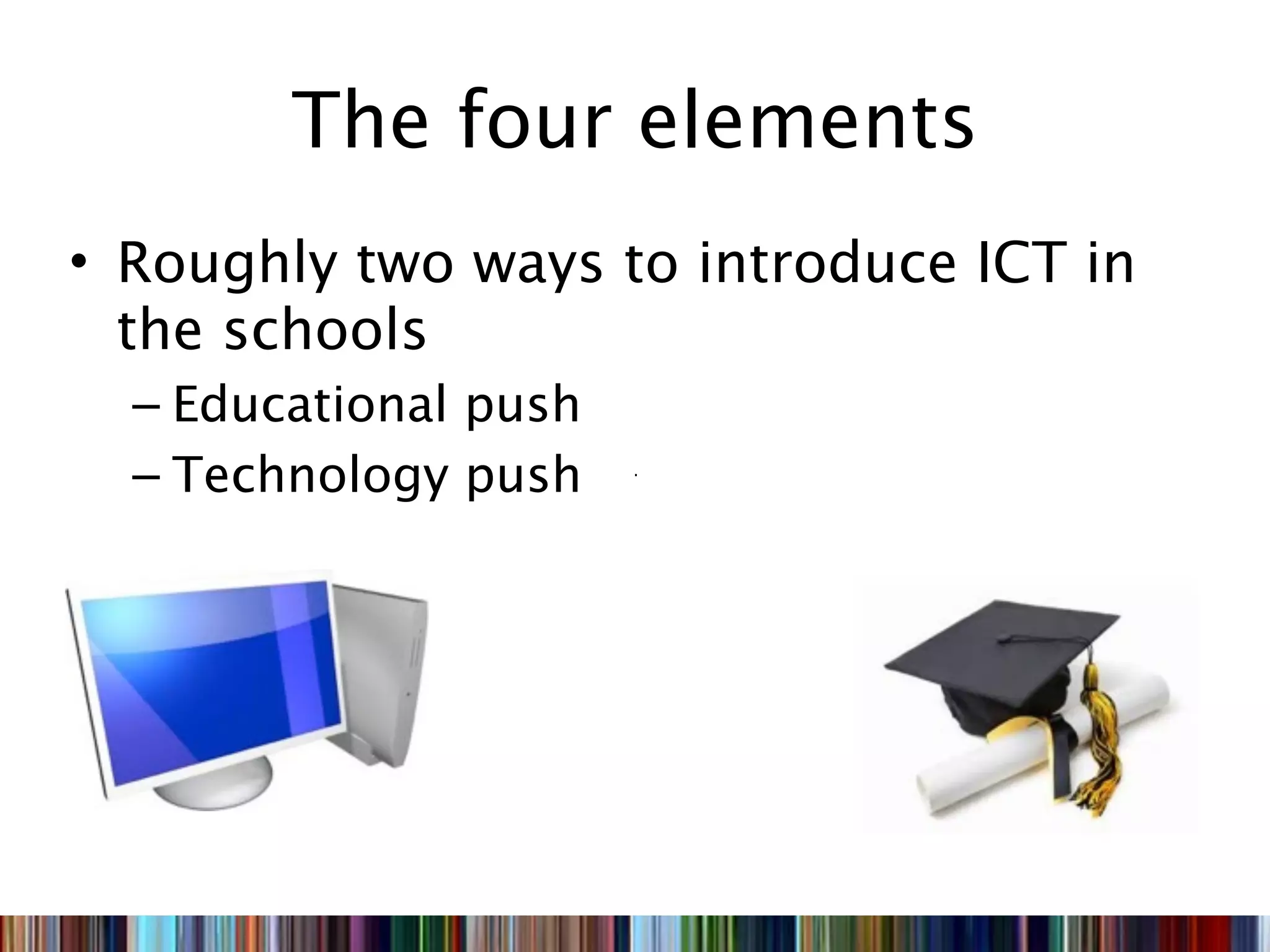
The four elements
• Roughly two ways to introduce ICT in
  the schools
  – Educational push
  – Technology push
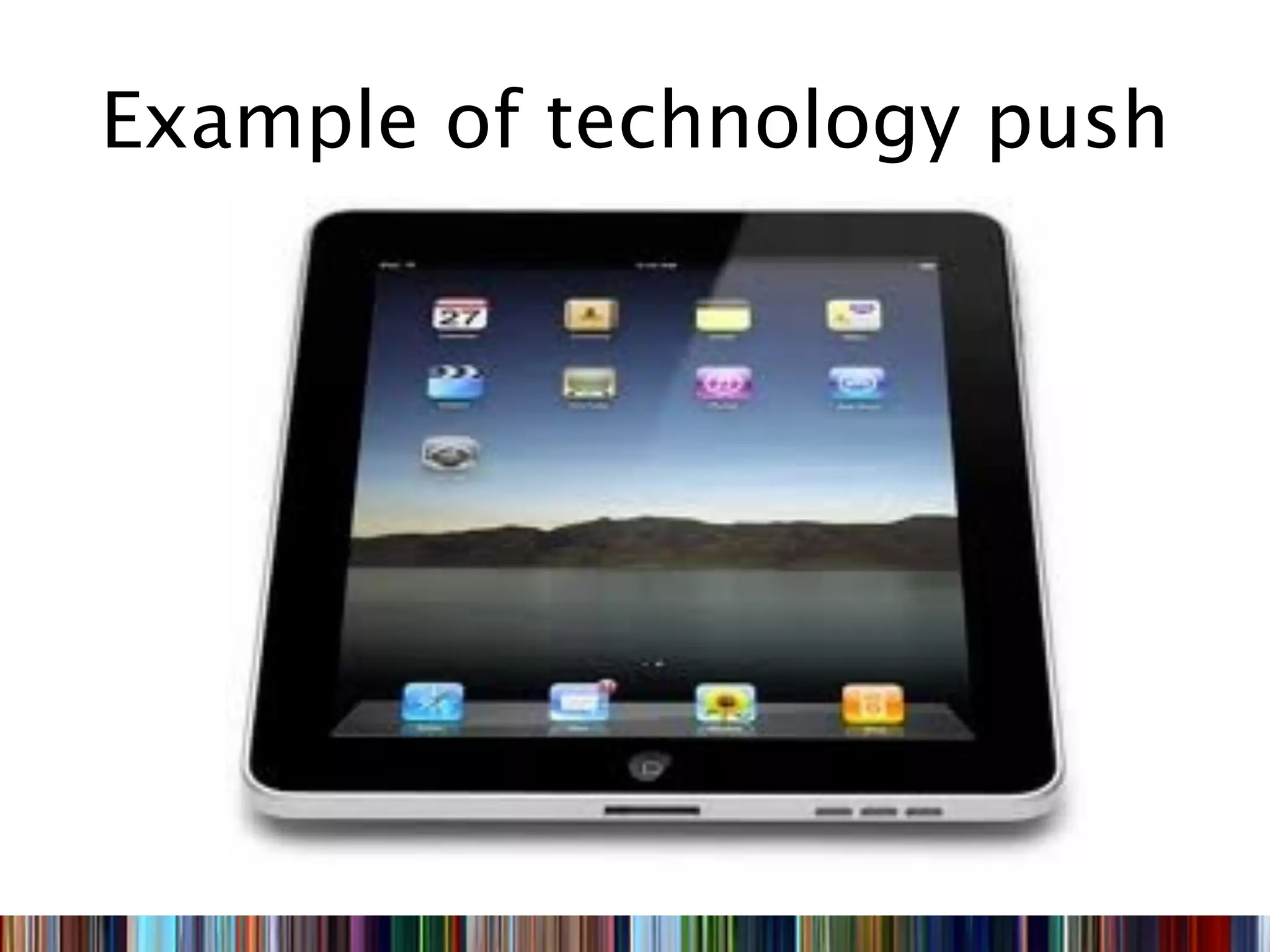
Example of technology push
Example of educational push

                   http://goo.gl/Qt6qL
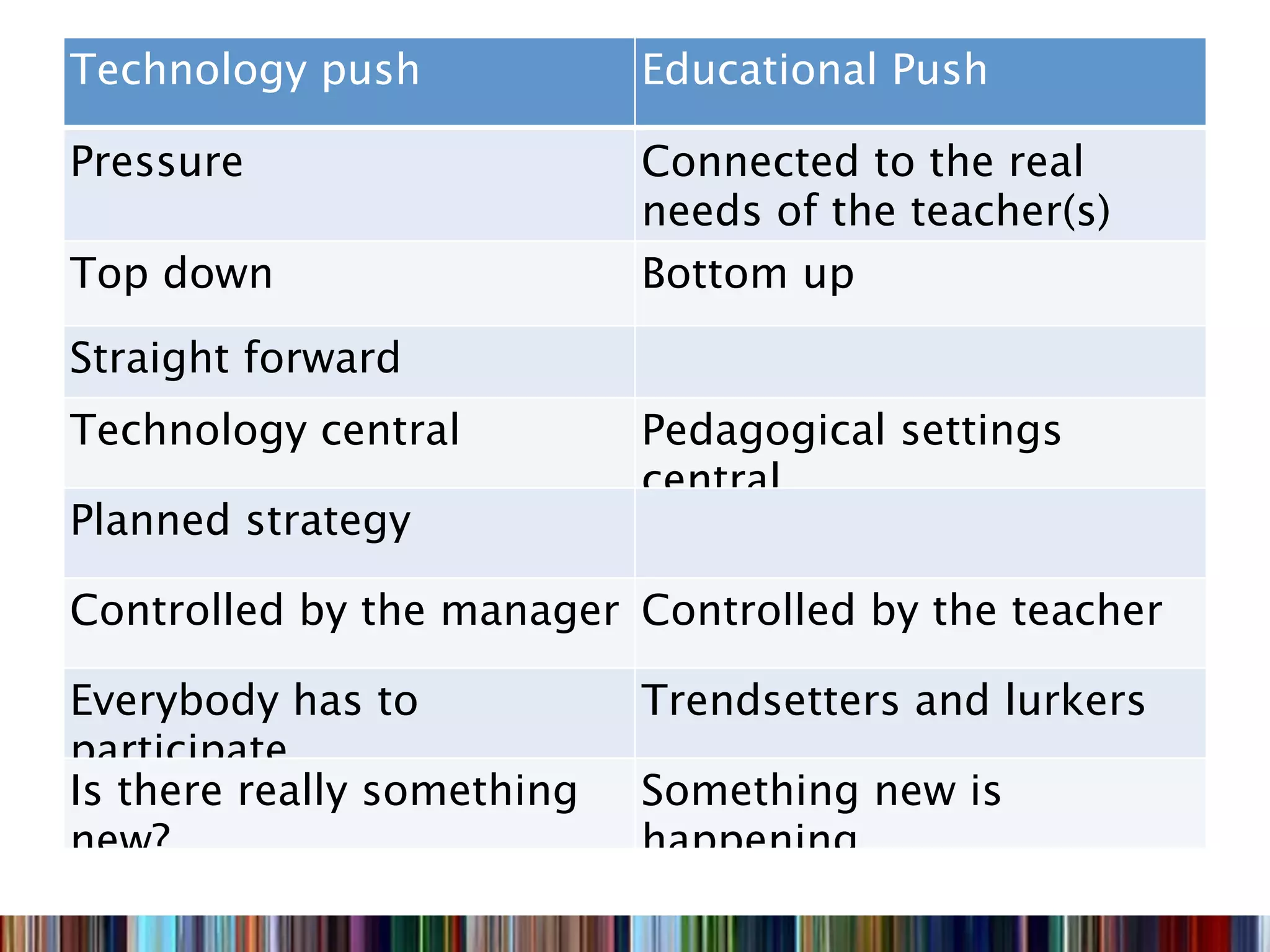
Technology push             Educational Push

Pressure                    Connected to the real
                            needs of the teacher(s)
Top down                    Bottom up
Straight forward
Technology central          Pedagogical settings
                            central
Planned strategy

Controlled by the manager Controlled by the teacher

Everybody has to            Trendsetters and lurkers
participate
Is there really something   Something new is
new?                        happening
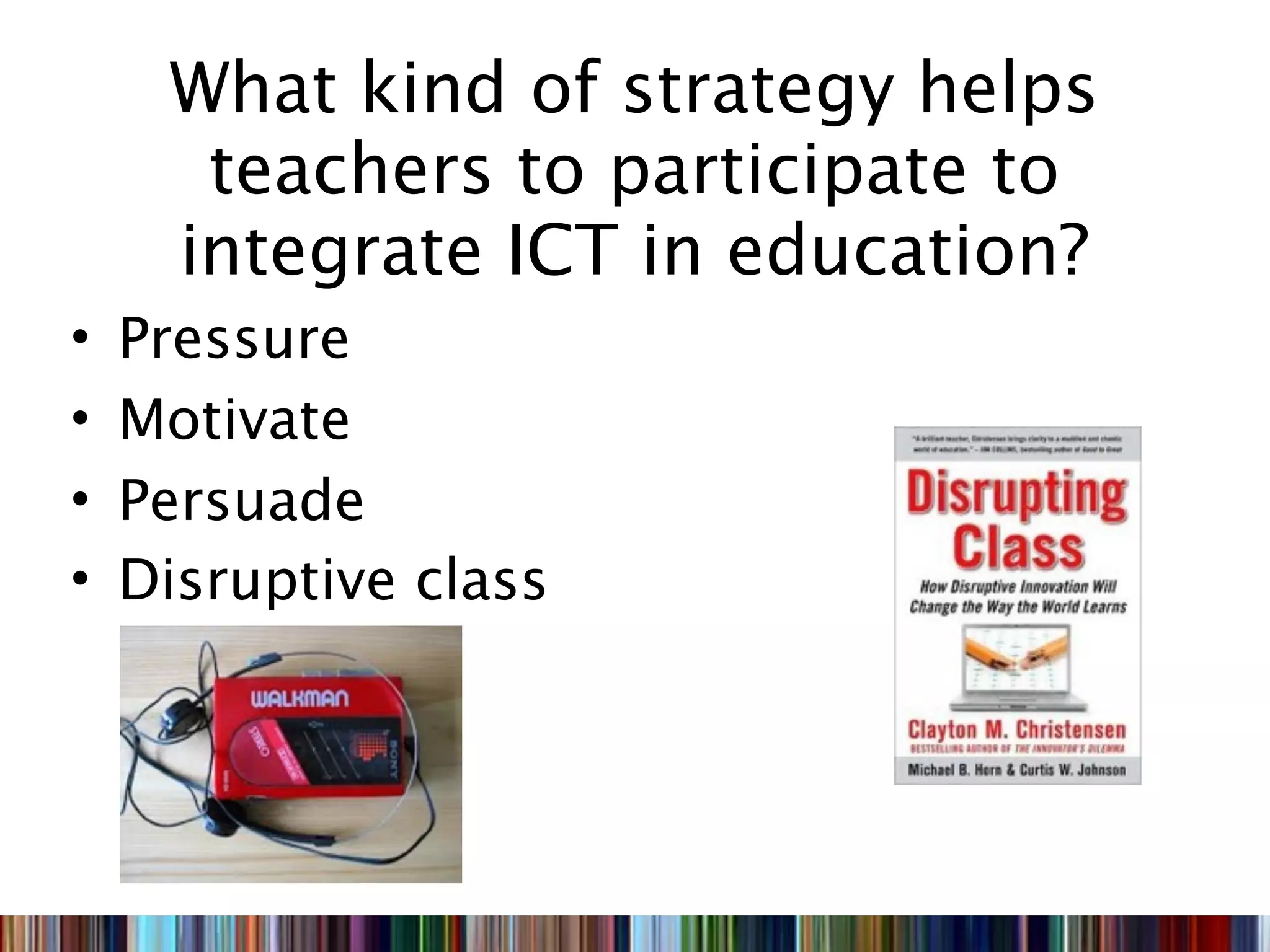
What kind of strategy helps
      teachers to participate to
     integrate ICT in education?
•   Pressure
•   Motivate
•   Persuade
•   Disruptive class
Teacher are well educated
people with a well-considered
opion about how pupils learn
Persuade them?
• Is working with ICT an effective
  strategy? Research saids..
Other meta-analyses
• Liao & Hao (2008) concluded, based on
  44 meta-analyses (30 f2f-studies and
  14 distance education, 1376 + 968
  studies) that on cognitive aspects .29
  effect and .06 effect on affective
  aspects

  Liao , Y.K. & Hao Y. (2008). Large scale studies and quantative methods. In : J.
 Voogt & G. Knezek (2008). International Handbook of information technology in
            primary and secondary education. Pp 1019-1035. New York: Springer
Other meta-analyses
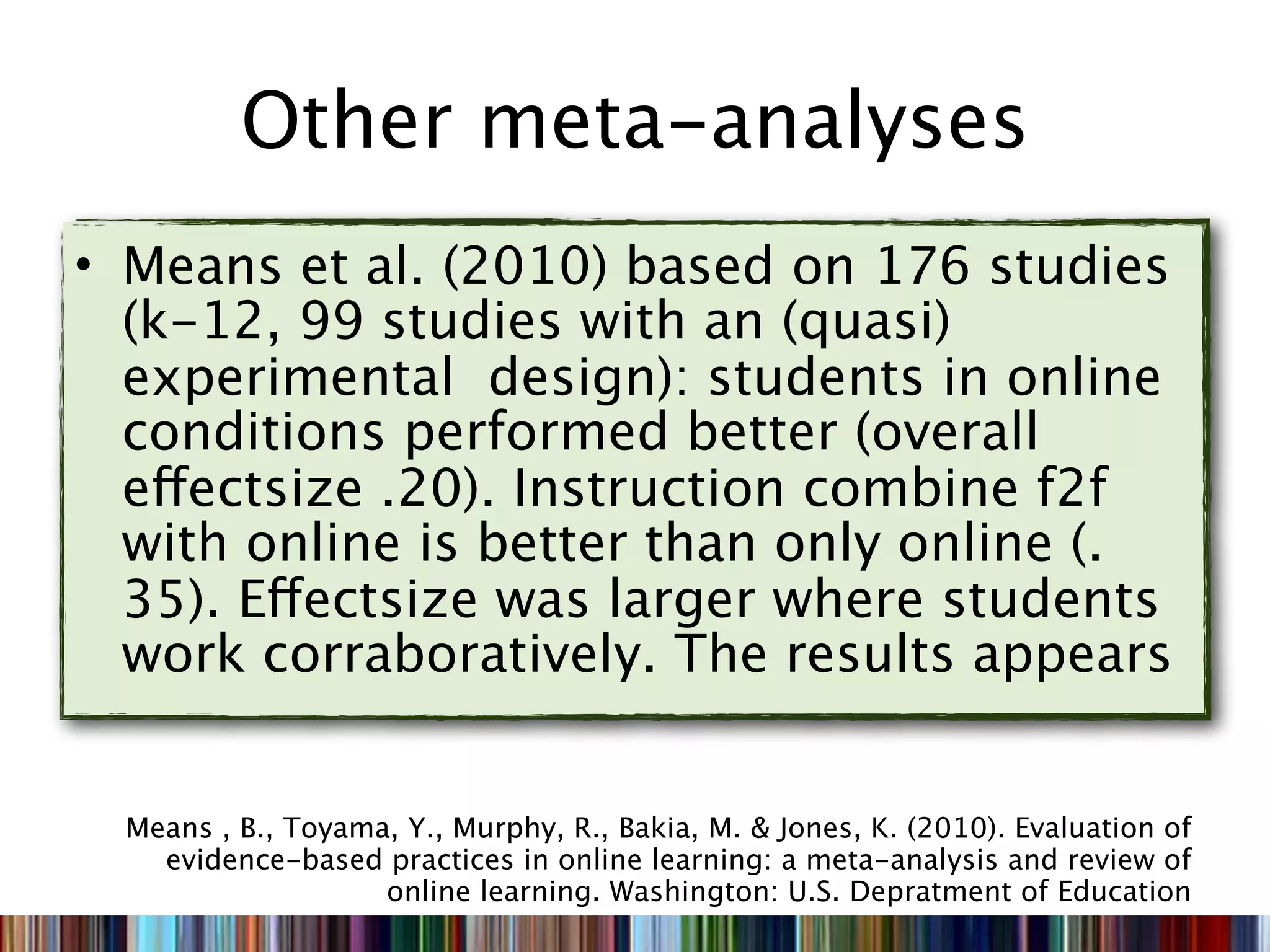
• Means et al. (2010) based on 176 studies
  (k-12, 99 studies with an (quasi)
  experimental design): students in online
  conditions performed better (overall
  effectsize .20). Instruction combine f2f
  with online is better than only online (.
  35). Effectsize was larger where students
  work corraboratively. The results appears


  Means , B., Toyama, Y., Murphy, R., Bakia, M. & Jones, K. (2010). Evaluation of
    evidence-based practices in online learning: a meta-analysis and review of
                    online learning. Washington: U.S. Depratment of Education
Other meta-analyses
• Higgins (2003): “[t]here is evidence from
  research that ICT can help pupils to learn
  and teachers to teach more effectively.
  However there is not a simple message in
  such evidence that ICT will make a
  difference simply by being used. Findings
  suggest that although ICT can improve
  learning there are a number of issues
  thatneed to be considered if such


  Means , B., Toyama, Y., Murphy, R., Bakia, M. & Jones, K. (2010). Evaluation of
    evidence-based practices in online learning: a meta-analysis and review of
                    online learning. Washington: U.S. Depratment of Education
So
IF ICT IS AN EFFECTIVE WAY TO
            LEARN,
• Does age matter?
• Is there something like fear of
  computers?
• Computer attiude?
• Computeruse and –experience?
• Does time matter?
3 Varaiables which predict if the
   teacher would use ICT in
• Attitude: the degree to which a person
  has a favorable or unfavorable
  evaluation or appraisal of the behavior
  in question
• Subjective norm: the perceived social
  pressure to perform or not to perform
  the behavior;
• Self-efficacy: beliefs in one’s
Attitude:
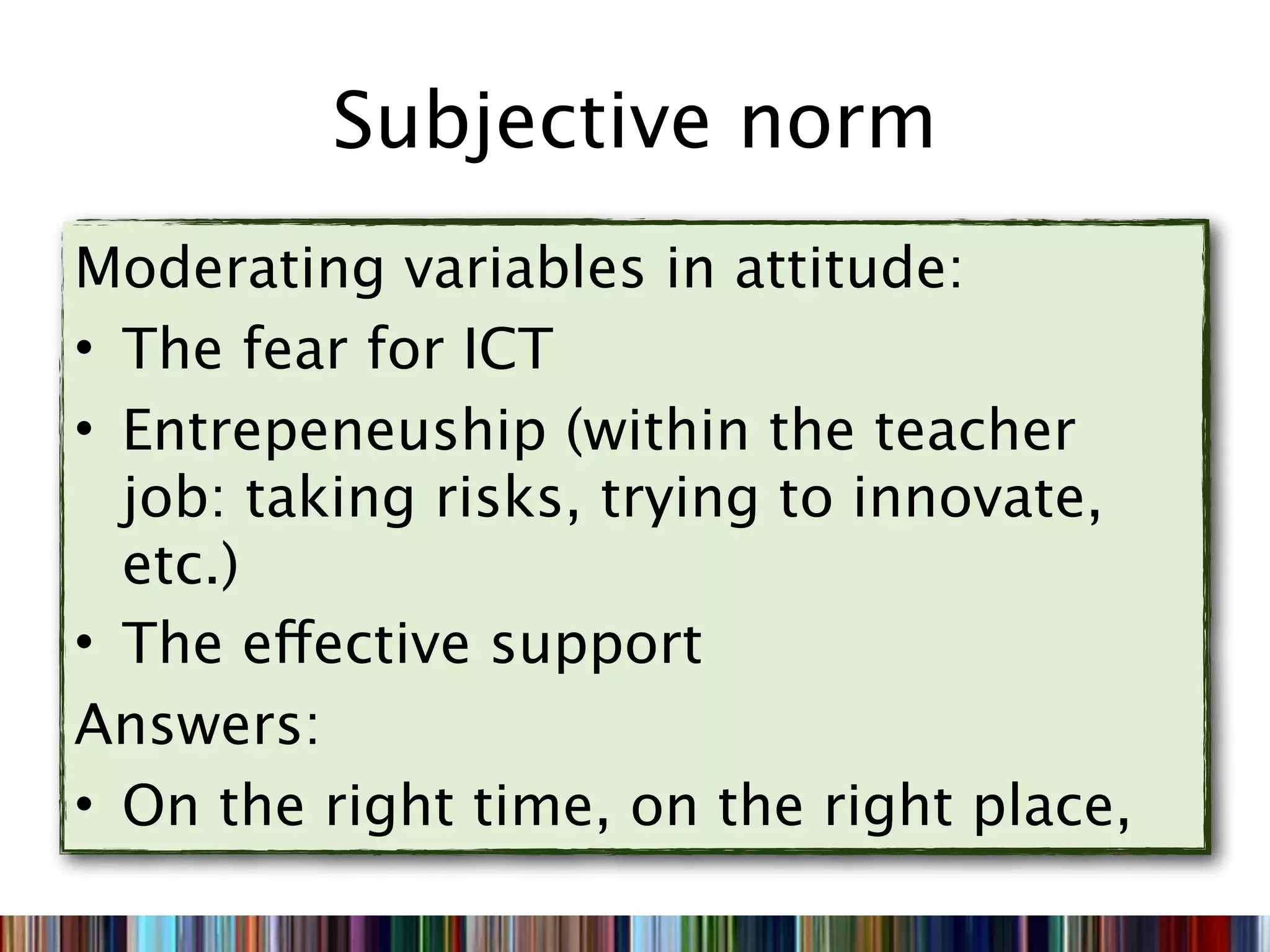
Moderating variables in attitude:
• The fear for ICT
• Entrepeneuship (within the teacher
  job: taking risks, trying to innovate,
  etc.)
Answers:
1. Gain the necessary experiences in to
   integrate ICT in the lessons
Subjective norm
Moderating variables in attitude:
• The fear for ICT
• Entrepeneuship (within the teacher
  job: taking risks, trying to innovate,
  etc.)
• The effective support
Answers:
• On the right time, on the right place,
Self-efficay
Moderating variables in attitude:
• The fear for ICT
• The effective support
• ICT Skills
Answers
• Working on ICT skills
However (Higgins, 2003) ICT has only
 added value when teachers are able
   exploit ICT in a pedaogical way
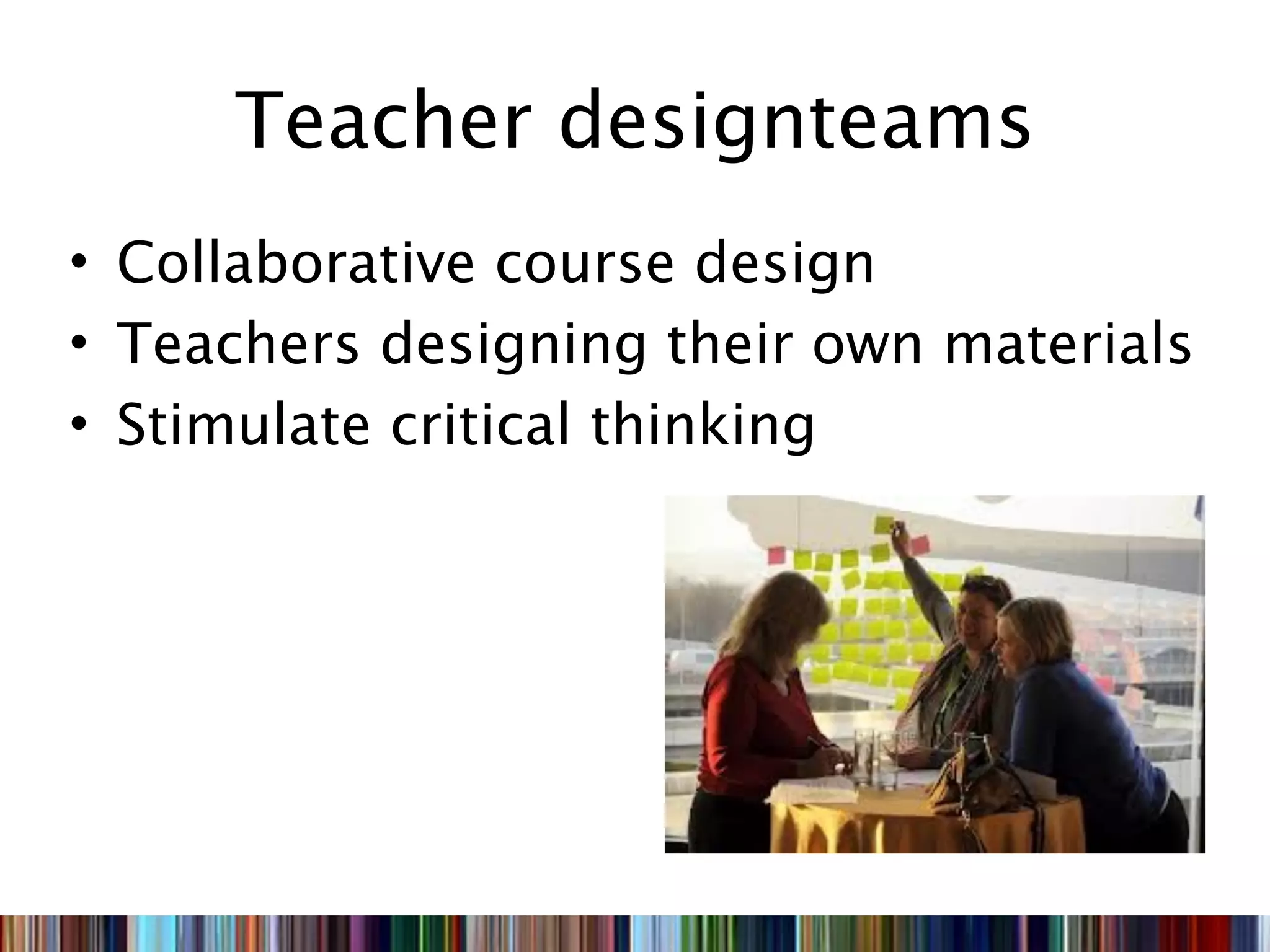
Teacher designteams
• Collaborative course design
• Teachers designing their own materials
• Stimulate critical thinking
http://goo.gl/rk4k
http://goo.gl/g0X4C

http://goo.gl/Aq4mR

http://goo.gl/iTXax
http://goo.gl/NUiFd

http://goo.gl/exPM
http://goo.gl/0b4d

http://goo.gl/k68c

http://goo.gl/hn3eB

http://goo.gl/Mwt6j

http://goo.gl/
agMZB
121031 how to integrate ict in the schools

121031 how to integrate ict in the schools

  • 1.
    HOW TO INTEGRATEICT IN THE SCHOOLS & CLASSROOMS WHEN ICT IS AN EFFECTIVE WAY TO LEARN, WHY DOESN’T EVERY TEACHER USE IT? HOW TO INFLUENCE THE USE OF ICT IN
  • 2.
    Dobro jutro kolegiVesel sem, Goedemorgen collega's. Fijn jullie te mogen ontmoeten
  • 3.
  • 5.
  • 6.
  • 7.
  • 8.
  • 9.
  • 10.
    1 2 3 4
  • 11.
    Four elements, fourin http://goo.gl/g0X4C
  • 13.
    Vision of theschool on ICT and pedaogy • ICT is a medium which can enhance learning • ICT enhances learning • 21st century skills are important for our pupils • ICT is necessary because the school next door is using it • Etc..
  • 14.
    Expertise of theteacher/ management • What is the level of expertise of – The management? – ICT-coördinator – The teachers? – The assistants? – The pupils? – The parents?
  • 15.
    5 domains ofexpertise 1. Attitude 2. Instrumental Skills 3. Information Skills 4. General Pedagogics 1. Presenting 2. Collaborating and communicating 3. Working individually 4. Guiding and evaluating 5. Testing 5. Creating http://goo.gl/Aq4mR
  • 18.
    Digital learning materials •Curriculum content • Additional content from internet resources: Khan academy , iTunesU,
  • 19.
  • 20.
    ICT infrastructure • Hard- and software • Wired or Wifi connection • Reliability • Easy access (Single sign on)
  • 21.
    Give answer onthe first 6 questions • Vision is strongly developed in the Slovenian schools? • The expertise of the manager is excellent • The expertise of the teachers is excellent • The ICT-infrastructure in schools is excellent: you can easily access the network • Digital materials are present plentifully • Schools have a lot of knowledge about
  • 22.
    The four elements •Roughly two ways to introduce ICT in the schools – Educational push – Technology push
  • 23.
  • 24.
    Example of educationalpush http://goo.gl/Qt6qL
  • 25.
    Technology push Educational Push Pressure Connected to the real needs of the teacher(s) Top down Bottom up Straight forward Technology central Pedagogical settings central Planned strategy Controlled by the manager Controlled by the teacher Everybody has to Trendsetters and lurkers participate Is there really something Something new is new? happening
  • 26.
    What kind ofstrategy helps teachers to participate to integrate ICT in education? • Pressure • Motivate • Persuade • Disruptive class
  • 27.
    Teacher are welleducated people with a well-considered opion about how pupils learn
  • 28.
    Persuade them? • Isworking with ICT an effective strategy? Research saids..
  • 30.
    Other meta-analyses • Liao& Hao (2008) concluded, based on 44 meta-analyses (30 f2f-studies and 14 distance education, 1376 + 968 studies) that on cognitive aspects .29 effect and .06 effect on affective aspects Liao , Y.K. & Hao Y. (2008). Large scale studies and quantative methods. In : J. Voogt & G. Knezek (2008). International Handbook of information technology in primary and secondary education. Pp 1019-1035. New York: Springer
  • 31.
    Other meta-analyses • Meanset al. (2010) based on 176 studies (k-12, 99 studies with an (quasi) experimental design): students in online conditions performed better (overall effectsize .20). Instruction combine f2f with online is better than only online (. 35). Effectsize was larger where students work corraboratively. The results appears Means , B., Toyama, Y., Murphy, R., Bakia, M. & Jones, K. (2010). Evaluation of evidence-based practices in online learning: a meta-analysis and review of online learning. Washington: U.S. Depratment of Education
  • 32.
    Other meta-analyses • Higgins(2003): “[t]here is evidence from research that ICT can help pupils to learn and teachers to teach more effectively. However there is not a simple message in such evidence that ICT will make a difference simply by being used. Findings suggest that although ICT can improve learning there are a number of issues thatneed to be considered if such Means , B., Toyama, Y., Murphy, R., Bakia, M. & Jones, K. (2010). Evaluation of evidence-based practices in online learning: a meta-analysis and review of online learning. Washington: U.S. Depratment of Education
  • 33.
  • 34.
    IF ICT ISAN EFFECTIVE WAY TO LEARN,
  • 35.
    • Does agematter? • Is there something like fear of computers? • Computer attiude? • Computeruse and –experience? • Does time matter?
  • 36.
    3 Varaiables whichpredict if the teacher would use ICT in • Attitude: the degree to which a person has a favorable or unfavorable evaluation or appraisal of the behavior in question • Subjective norm: the perceived social pressure to perform or not to perform the behavior; • Self-efficacy: beliefs in one’s
  • 38.
    Attitude: Moderating variables inattitude: • The fear for ICT • Entrepeneuship (within the teacher job: taking risks, trying to innovate, etc.) Answers: 1. Gain the necessary experiences in to integrate ICT in the lessons
  • 39.
    Subjective norm Moderating variablesin attitude: • The fear for ICT • Entrepeneuship (within the teacher job: taking risks, trying to innovate, etc.) • The effective support Answers: • On the right time, on the right place,
  • 40.
    Self-efficay Moderating variables inattitude: • The fear for ICT • The effective support • ICT Skills Answers • Working on ICT skills
  • 41.
    However (Higgins, 2003)ICT has only added value when teachers are able exploit ICT in a pedaogical way
  • 48.
    Teacher designteams • Collaborativecourse design • Teachers designing their own materials • Stimulate critical thinking
  • 49.
  • 50.

Editor's Notes

  • #2 Welcome on these presentation. I’m Erik Bolhuis. I’m a teacher educator and i’m a senior lecture at Windesheim University. I’m project manager at the domain Education and Movement. This is a part of the University with almost 50 teacher education programs. From teacher education for primary education to secondairy education, from physics to teacher art and culture. \nMy mane task is to integrate ICT in all these programs. I’m have not an ICT background, and i’m only interested in two things how to integrate ICT in the our lessons and how to facilitate my collegeau’s so that they are moving. My central points at these are two: 500 years ago education find it hard to integrate books in education (By putting symbols outside, instead of inside ourself (our remembering), we incline to get superficial thinkers and would not lead to intellectual depening, wisdom and real luck (Socrates). So it is no wondering that we find it hard these days to integrate ICT in our lessons. And my second central point is: there is a new world waiting for us, but sometimes it is better to stay in this world.\nAn other task of me, is teaching (adult)student how to innovate their school in using ICT, and i’m phd-researcher at Twente University in Holland. My research is about the use of data in innovations.\n
  • #3 \n
  • #4 We try to use socrative.com\nEverybody. Open up your laptop or other device. Start your browser and go to socrative.com. Log in as an student, and enter the roomnumber: 419768\nLet’s start with a simple question: 1. Wat is WhatsApp?\n
  • #5 Let’s asume you are in my hometown Zwolle (Almost Preseren Square?) Nice wheater, drinking a beer etc.). While we are talking on the terras, we are making plans to visit schools. We are visiting four schools:\n
  • #6 The first school we are visiting is a secondary school in the Inner Town of Zwolle. When we enter the building we see a classroom where a teacher gives an instruction, while a computer and a projector is used. An another class isn’t using any ICT. In a third class is given an instruction on an interactive whiteboard. In a final grade students are busy watching a movie what the teacher has put on the electronic learning environment.\n
  • #7 In a second school, we see an enthusiastic teacher, Monique. She uses ICT in a beautiful way: Monique is a history teacher and she let her children write blogs about historical persons. She also uses Twitter to teach historical consciousness to students. So she gives a series of lessons about Napoleon. At the end of the lesson, she encourages her pupils in the next two weeks to Twitter with her and then she responds as if she was Napoleon before the battle of Waterloo. Pupils asks her a lot of questions about how to communicate how he sleeps, what he is going to do the next hours, etc. She was the most enthusiastic teacher of the school. Other teacher where more or less enthusiastic, and very dependent on Monique.\n
  • #8 In the third school are just the laptops introduced. Class 1 and 2 of the HAVO / VWO, all students received a laptop. Next year years 3 and 4 and the following year the classes 5 and 6. When we entering a first class every pupil is using the laptop. They have all the books in pdf on the laptop and teachers in teams working on the development of new material. They develop material in a very strict project.\n
  • #9 In the fourth school, using tablets, laptops and desktops, depending on what is to be learned. Classes can have this, because each class has a number of desktops and also access to mobile cabinets containing laptops and tablets. Teachers develop lessons in which ICT is integrated and share it with each other. So they do together ideas going on.\n\nSOCRATIVE: which do you like it most?\n
  • #10 Vision of the school on ICT and pedagogy\nExpertise of the teacher/management\nDigital learning materials\nICT infrastructure\n
  • #11 Vision: the first school they had a very basic vision: ICT is good and use it. How, they had no spefic ideas\nThe second school: with the enthousiastic Monique: Monique has vision, but the others? What happens when Monique leaves the school?\nThe third school has a very technical vision: gave everybody a laptop, develop learning materials and the lessons are much better\nThe fourth school has the vision that ICT can facilitate learning. Teachers have to search in what way this can happen and support teachers in their search.\n\nExpertise: the first school they had a very basic idea about expertise: teachers have less expertises and they have to have a refresher course.\nThe second school: Monique has a lot of expertise, here colleagues didn’t have and lean on Monique\nThe third school in introducing the laptops offered a course in which teachers could learn how they could go to the laptop and some windows programs.\nThe fourth school professionalises colleagues by making available time to enable lessons to develop and share with each other.\nThe first school puts no time in developing digital learning materials. The second school, this is mainly done by Monique. Monique does share something with her ollega's, but she does not see that the colleague'' s make use of them. The third school is a lot of effort into the development of teaching materials. one wants to make all digital learning. In the fourth school time devoted to the development of learning materials by not investing in learning, but more in developing the expertise of teachers to develop teaching materials ..\n\nThe first school has a projector, two interactive whiteboards, a number of desktops and two laptops. The second school has a lot of material. This was purchased by Monique, but is also especially by its use. The third school has systematically delaptop entered and all teachers and students have a laptop. In the fourth school is much material, but this is available and can be used depending on the learning process that must be accomplished.\n
  • #12 Vision of the school on ICT and pedagogy\nExpertise of the teacher/management\nDigital learning materials\nICT infrastructure\n
  • #13 What is the vision of the school to teach, how students should learn? Is it a vision that is imposed from above or a shared vision that has guided for education? Who is alive and under discussion?\n
  • #14 There are many visions and many sources for your vision:\nThere is a slight difference between the first and the second view and that is the certainty of faith in technology\n20st century skills is based on the skills that students in the 21st century should have to work, in society and move to live in general\nAnd sometimes it is a very basic vision, the school next to us is using ICT and all pupils now go to the other school\n
  • #15 What are the skills of the teachers, but also the teaching assistants, the Directors and the IT department?\n\nSOCARTIVE: Vraag 2: Did the skills of the pupils also matter?\n
  • #16 For the teachers we have in Holland a Knowledge base. In this knowledge, we defined what a teacher all should know and be able with regard to the integration of ICT in education\n
  • #17 and if it does not work, do not get upset\n
  • #18 always have a plan b on hand\n
  • #19 Coursera, Udacity, Udemy, Khan, Benchprep, Great Courses, Straighterline\n
  • #20 \n
  • #21 How stable is the IT infrastructure? The hardware is robust? Can it take a beating? there is a good helpdesk? What if a computer is broken? Is there enough software? What is WiFi?\n
  • #22 SOCRATIVE Vraag 3, 4, 5, 6, 7 en 8\n
  • #23 By a technology-push is the emphasis on the hardware and software, the emphasis is less on learning materials and learning and how the knowledge of the teacher is necessary in integrating ICT in education\nBy a educational push is the emphasis on the learning process of the student and his vision of how ICT can contribute to that process, in which the knowledge of the teacher to realize this essential\n
  • #24 A school director is completely under the spell of the iPad. At home he has an iPad and see how his grandson teaches using an ipad. He sees great potential for education at school and decides the first two classes to be equipped with an iPad. He is convinced that the teachers will somehow learn to deal with this ipad and different that the students that teachers tell\n
  • #25 \n
  • #26 \n
  • #27 Do you know the strategy of disruptive class? \nIt is a strategy in which an innovation is achieved where it has no competition from the old techniques. An example is the rise of the Walkman. Because there was a tape recorder which was very good, and becoming better, they were not afraid of the emergence of an inferior small device walkman. Because the big companies are not entered into the competition this device could be large and thus a large share of the market.\n
  • #28 \n
  • #29 helps it teachers to convince? Helps it to persuade\n
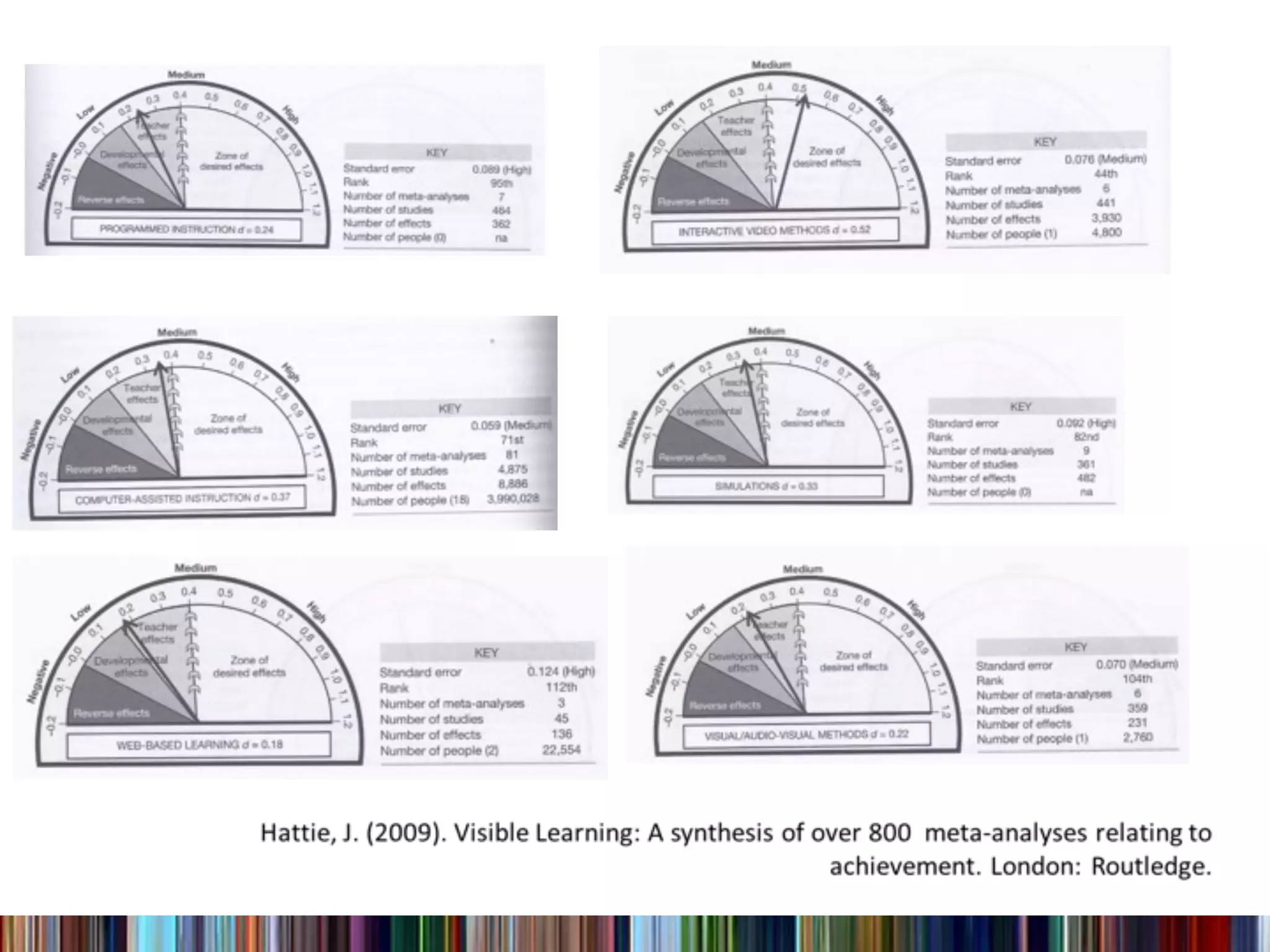
  • #30 Programmed instruction has an overall effect of .24\nInteractive video methods an effect of .54\nComputer assisted instruction: .37\nSimulations .33\nWeb-based learning .18\nVisual/audio-visual methods .22\n\nThat is not much, especially when you consider that research in itself effect even though nothing is done.\n
  • #31 \n
  • #32 \n
  • #33 \n
  • #34 So it works?\n
  • #35 There is evidence that it works, but why not use teachers more ICT in their lessons?\n
  • #36 SOCRATIVE DDU\n
  • #37 \n
  • #38 \n
  • #39 \n
  • #40 An example, using the director in the school ICT as he chairing a meeting? There is an interactive whiteboard behind him and he uses only a powerpoint to run, or does he really use it?\nOr you, tell you later against the teachers, you need to use ICT and yourself do not you? Who of you has a paper calendar?\n
  • #41 Not talking on ICT skills, but working and developping ICT-skills\n
  • #42 \n
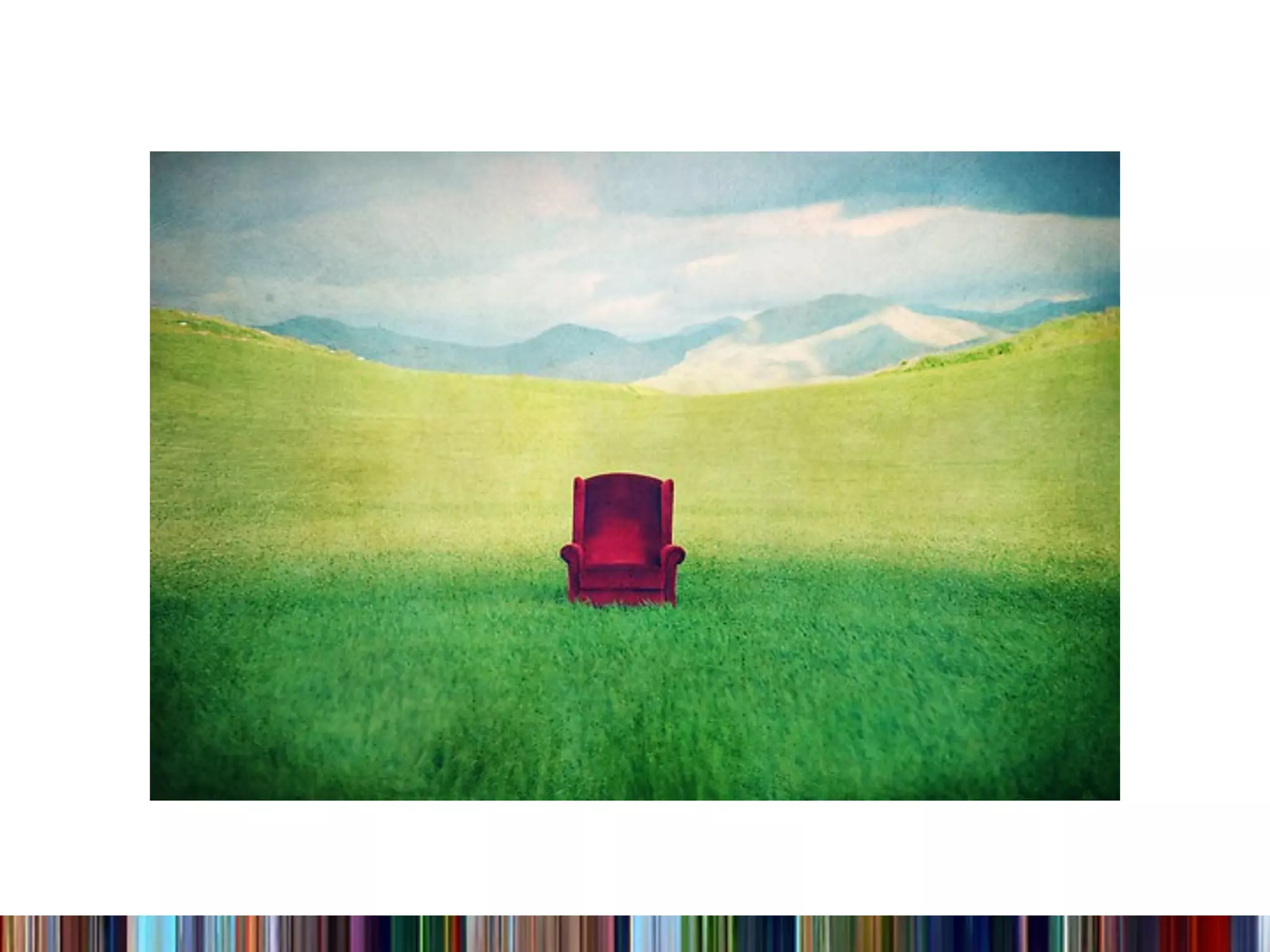
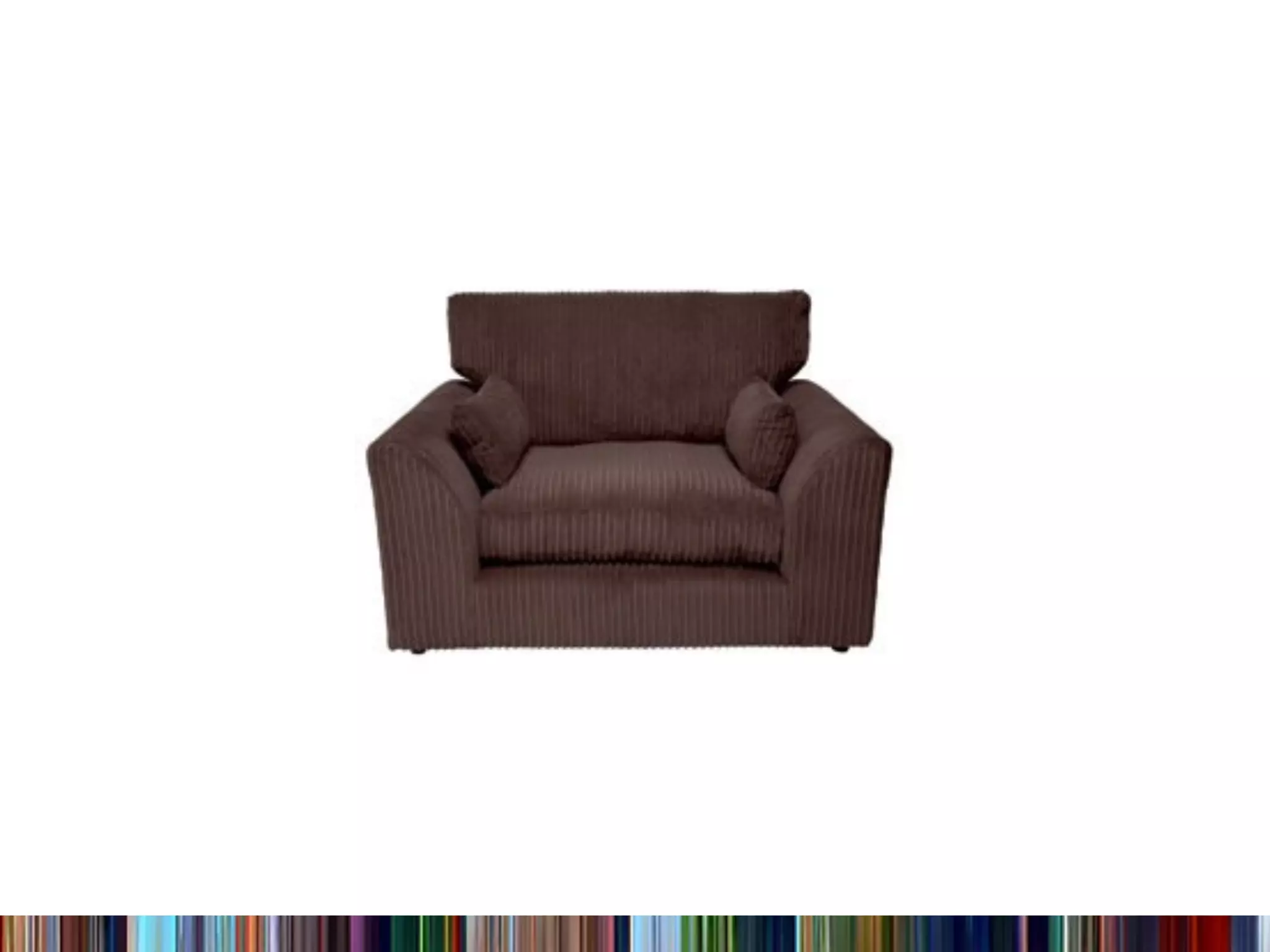
  • #43 Suppose you are a carpenter. Your whole life you make all chairs and seats only\n
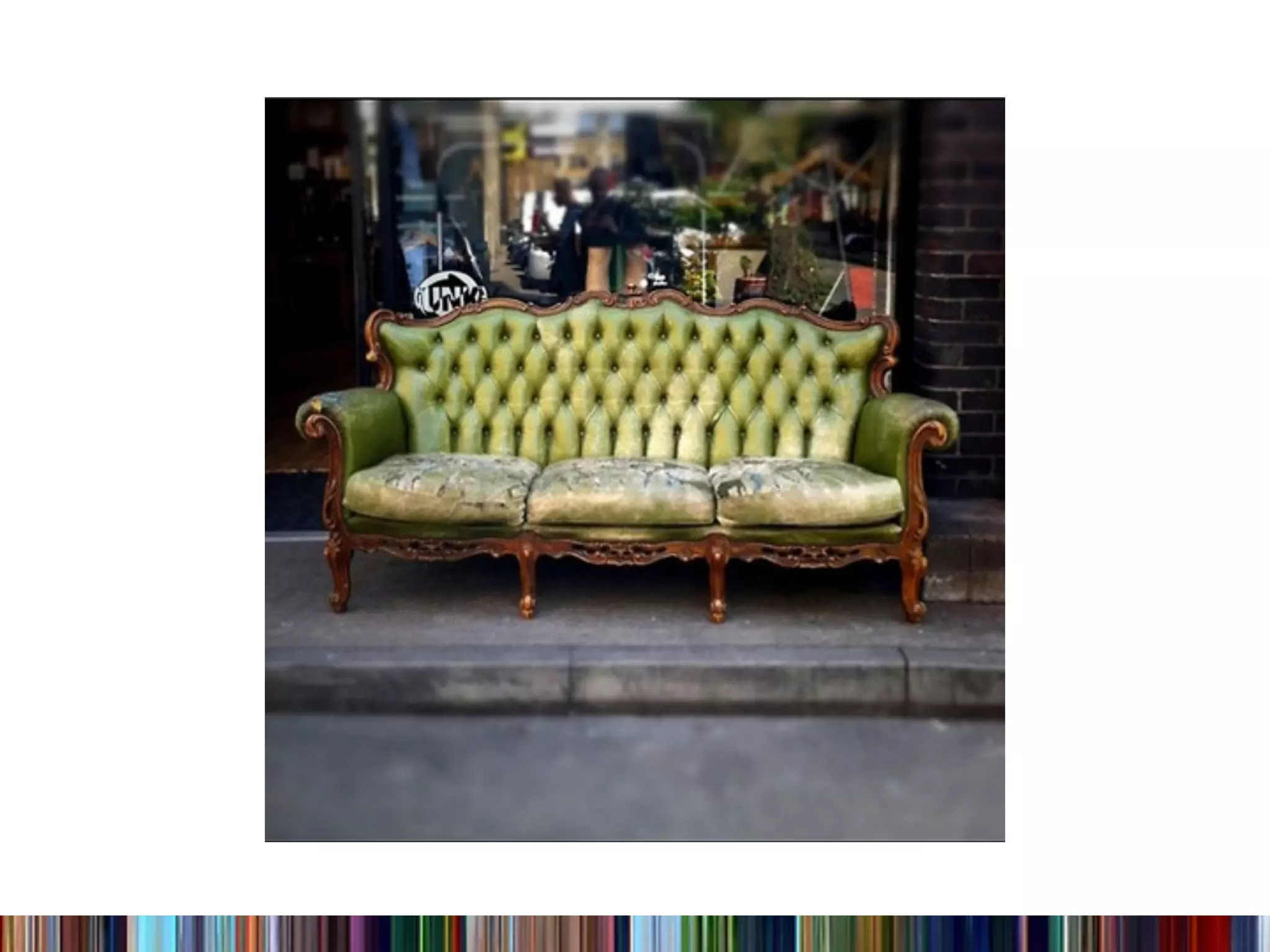
  • #44 And there is another cabinetmaker. He makes his life all sofas\n
  • #45 Is it fair to ask what is better, a chair or a sofa? \nIt depends on what you want to use it? Is it sit? It is about what the moosite looks? It is about the best that you can sit at the dinner table?\n
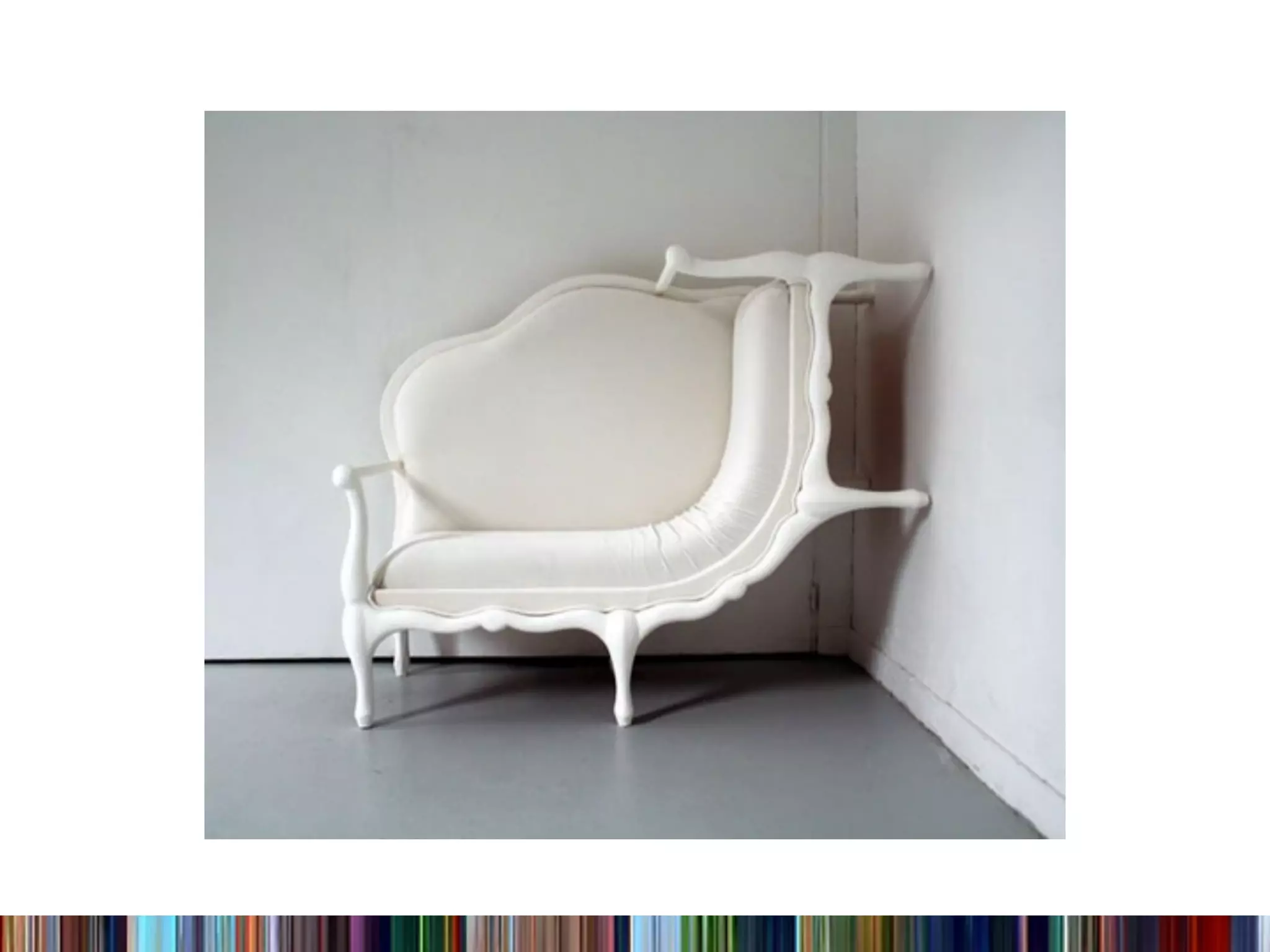
  • #46 If you are a carpenter who always chairs made calls to a bank, he will make a bank like this, perhaps\n
  • #47 If you are a carpenter who only sofas made calls to a chair, he will make a chair like this.\nChairs and sofas make similar, but different. So it is to develop materials with ICT and without ICT\n
  • #48 The teacher play an very important role. He can say yes, but once in the classroom, he can quite different things\n
  • #49 Beacause\n
  • #50 \n
  • #51 \n
  • #52 \n
  • #53 \n