Studying Populations Mr. Schumaier
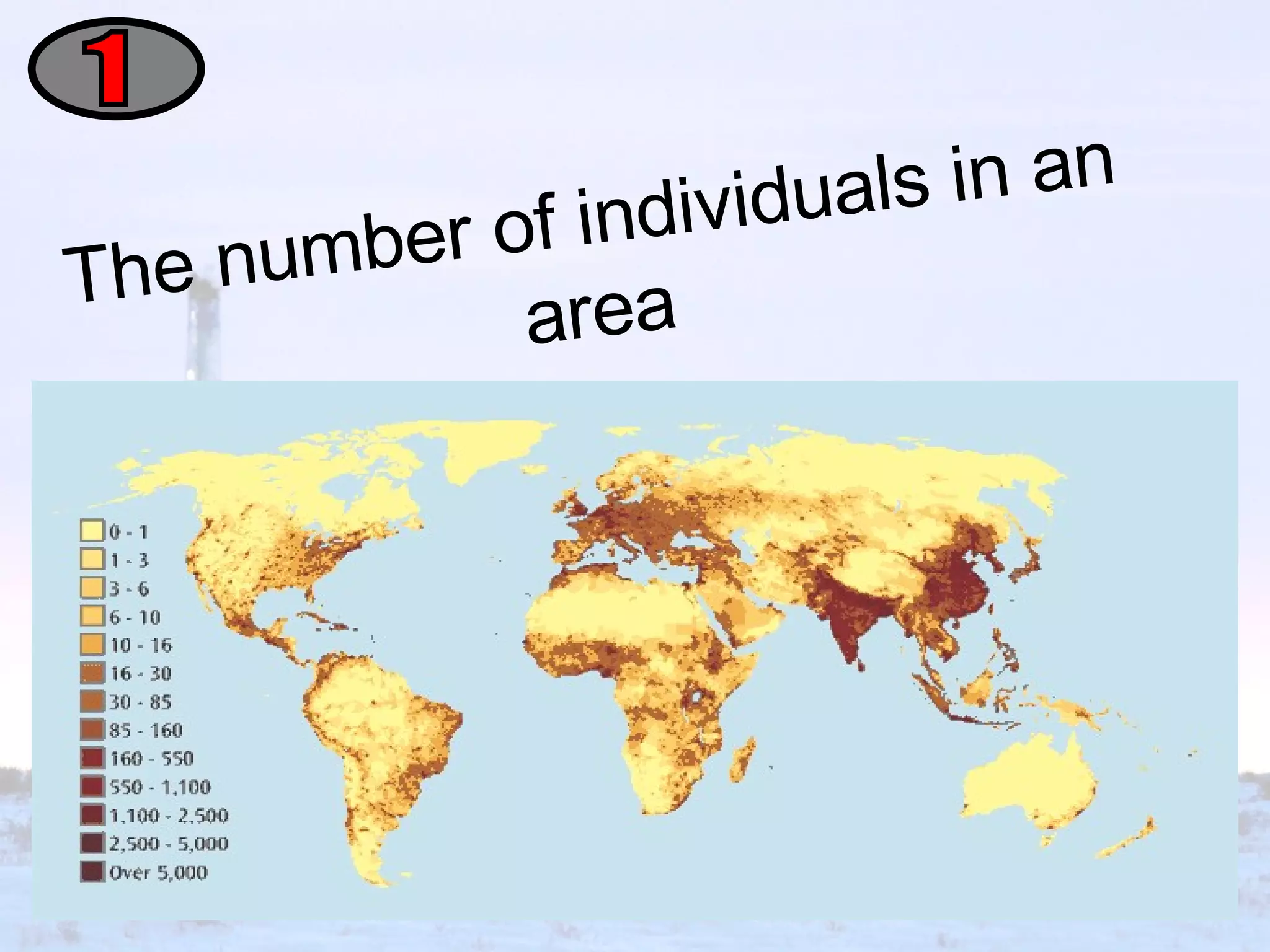
What is POPULATION DENSITY? 1
The number of individuals in an area 1
How do ecologists determine the size of a population? 2
2 Direct Observations Counting one by one all members of a species in an area.
2 Indirect Observations Observing tracks or other signs rather than the organisms themselves.
2 Sampling Ecologists make an estimate. Count the number in a small area then multiply to find for a larger area
2 Mark-and-Recapture Animal is captured, marked, and then released into the environment.  They are then recaptured and counted.
What is an ESTIMATE? 3
An approximation of a number, based on reasonable assumptions. 3
When is sampling used to estimate a population? 4
Sampling is used when it is not possible to count every member of a population because there are too many, they are too spread out, or not all the members of the population can be found. 4
What causes populations to change in size? 5
New members enter the population or members leave the population. 5
What do scientists mean by BIRTH RATE & DEATH RATE? 6
Birth Rate Number of births in a population in a certain amount of time. 6 Death Rate Number of deaths in a population in a certain amount of time.
What is IMMIGEATION? 7
Moving into a population. 7
What is EMIGRATION? 8
Leaving a population 8
What is a LIMITING FACTOR? 9
An environmental factor that prevents a population from increasing. 9
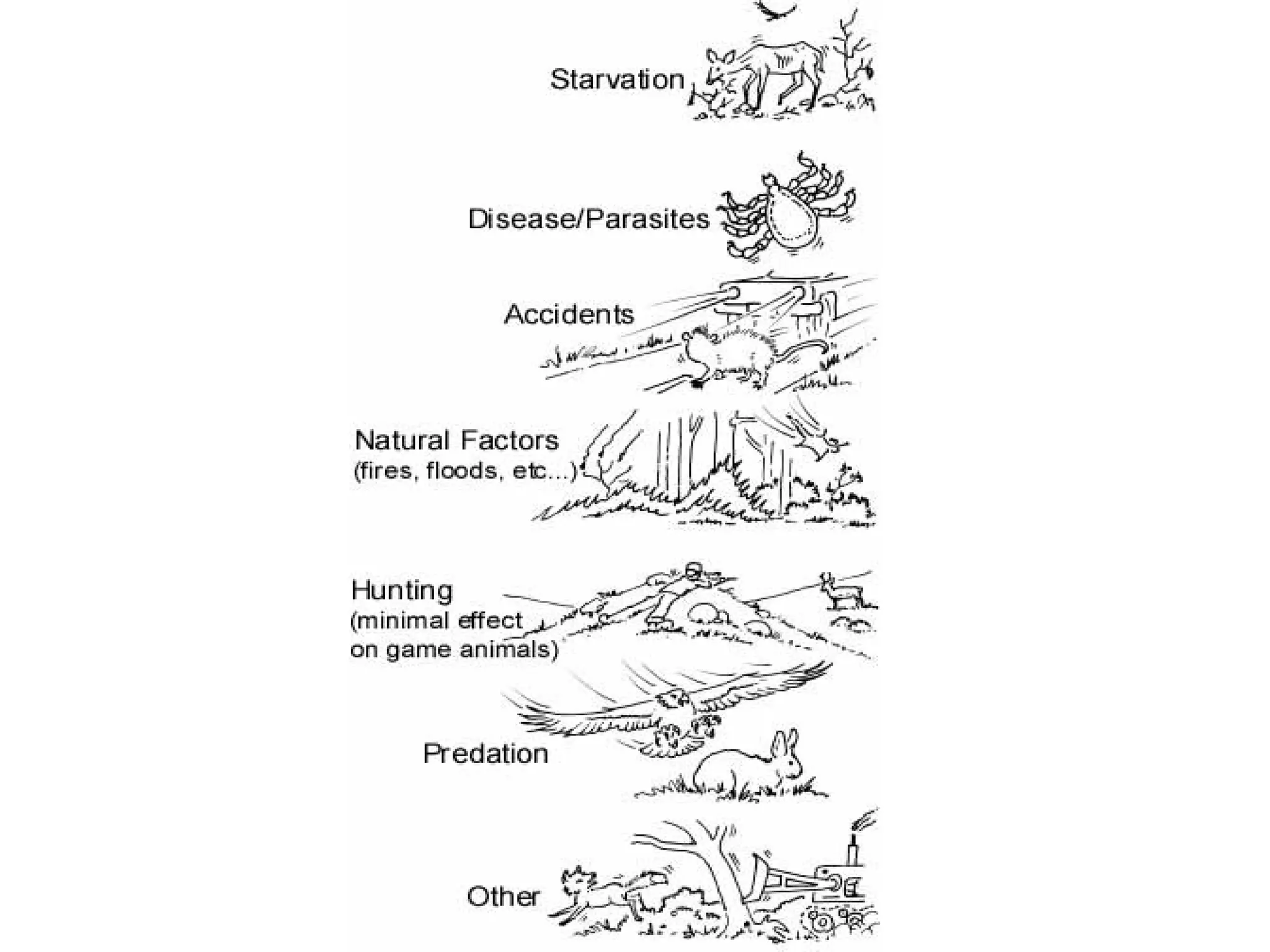
What factors limit population growth? 10
Food Space Weather Conditions 10
 
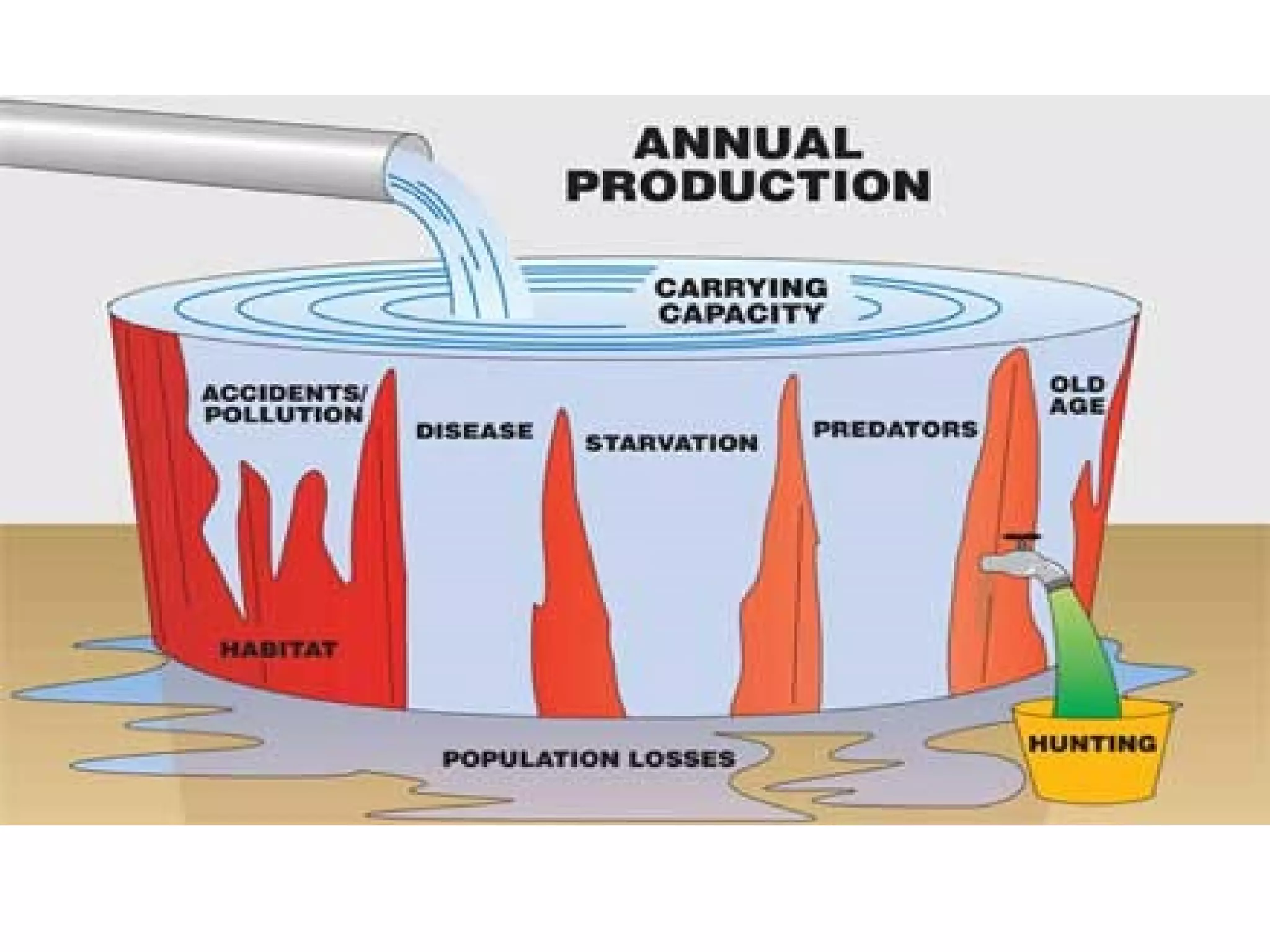
What is an environments CARRYING CAPACITY? 11
The largest population that an environment can support. 11
 
 
How can space & weather limit population growth? 12
Space – If organisms are crowded, some will not be ale to reproduce or even survive. 12 Weather – Severe weather conditions can kill many members of the population.
The End

1.2 Studying Populations