Volume 11 Issue 4 (2020)
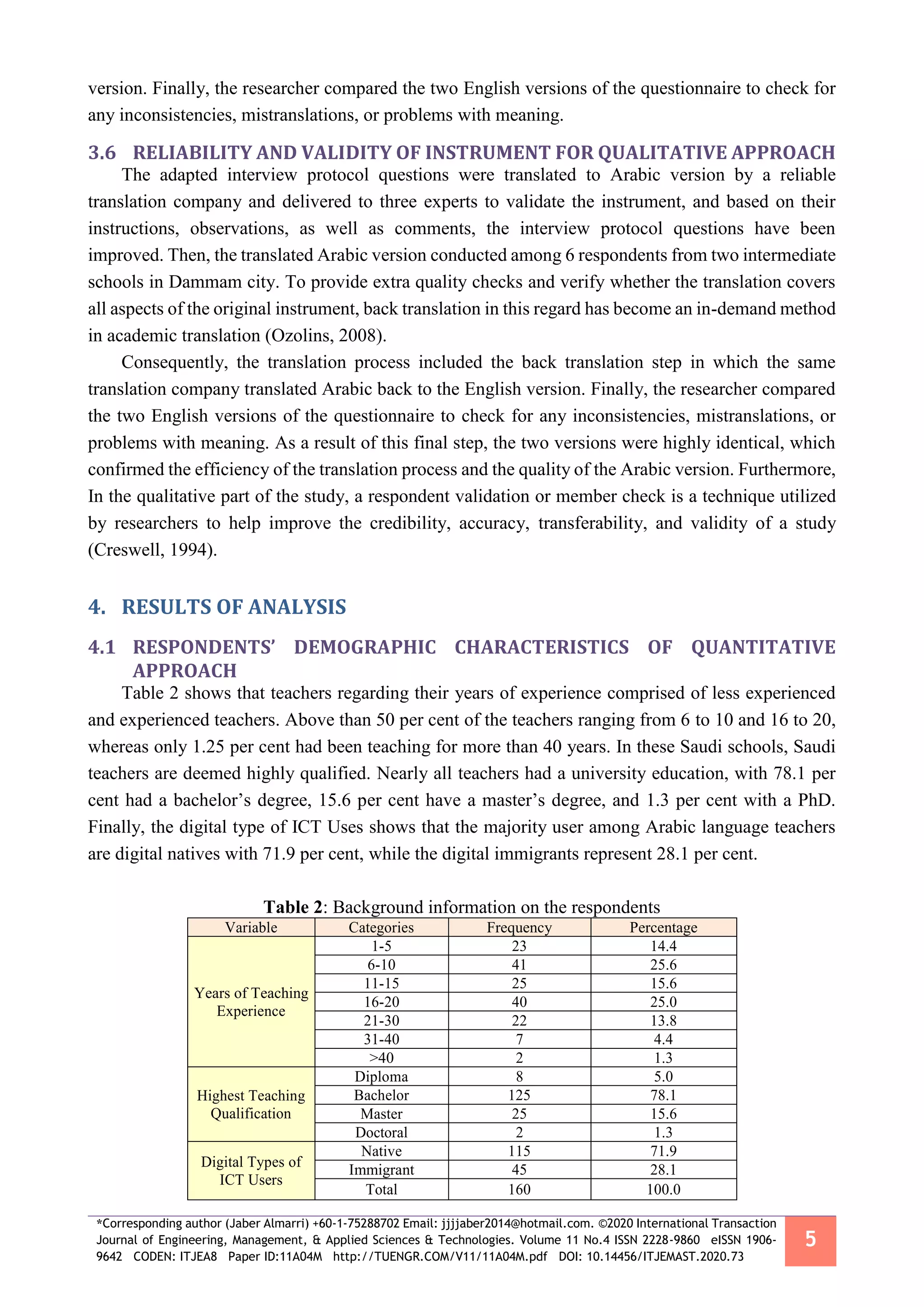
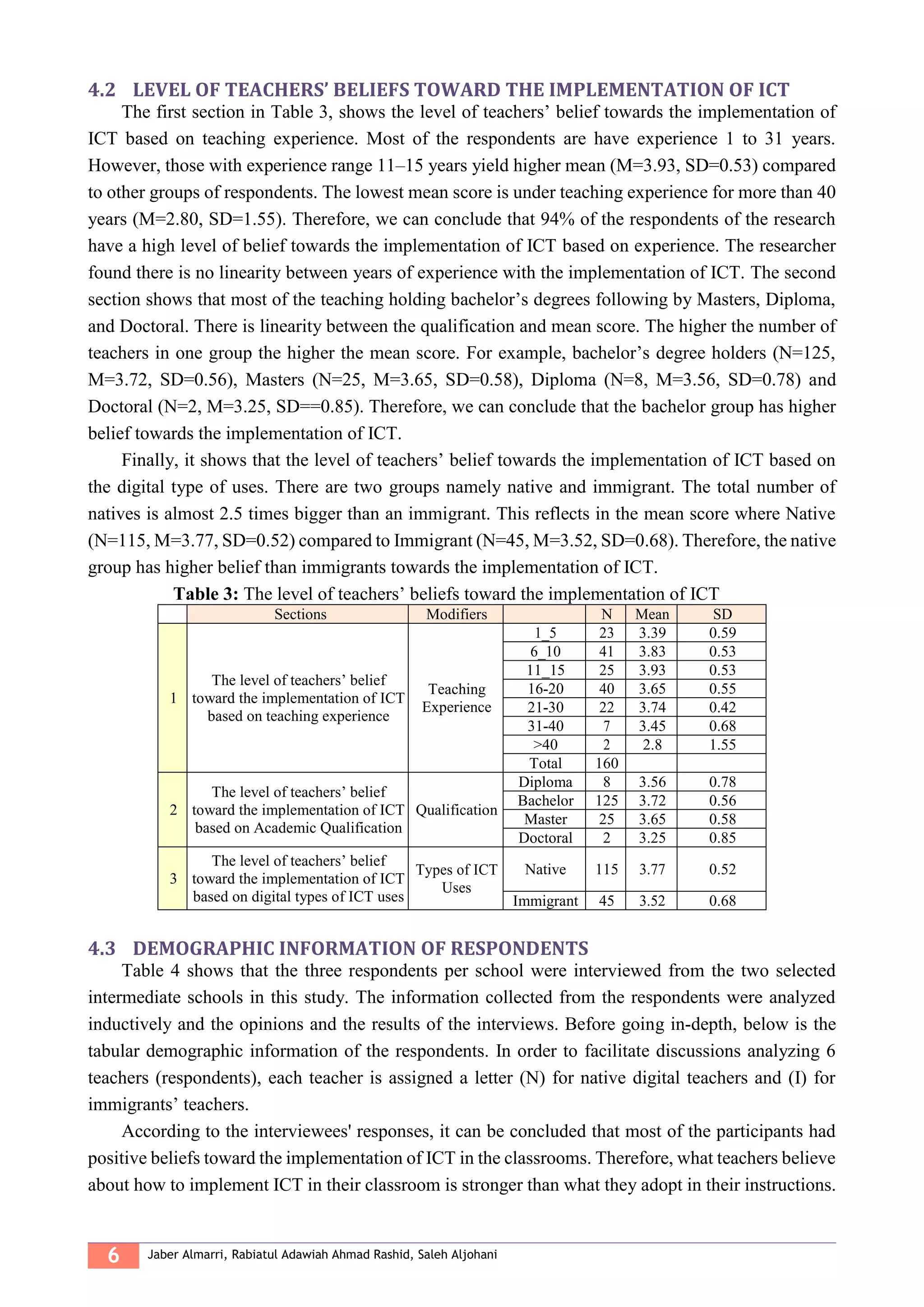
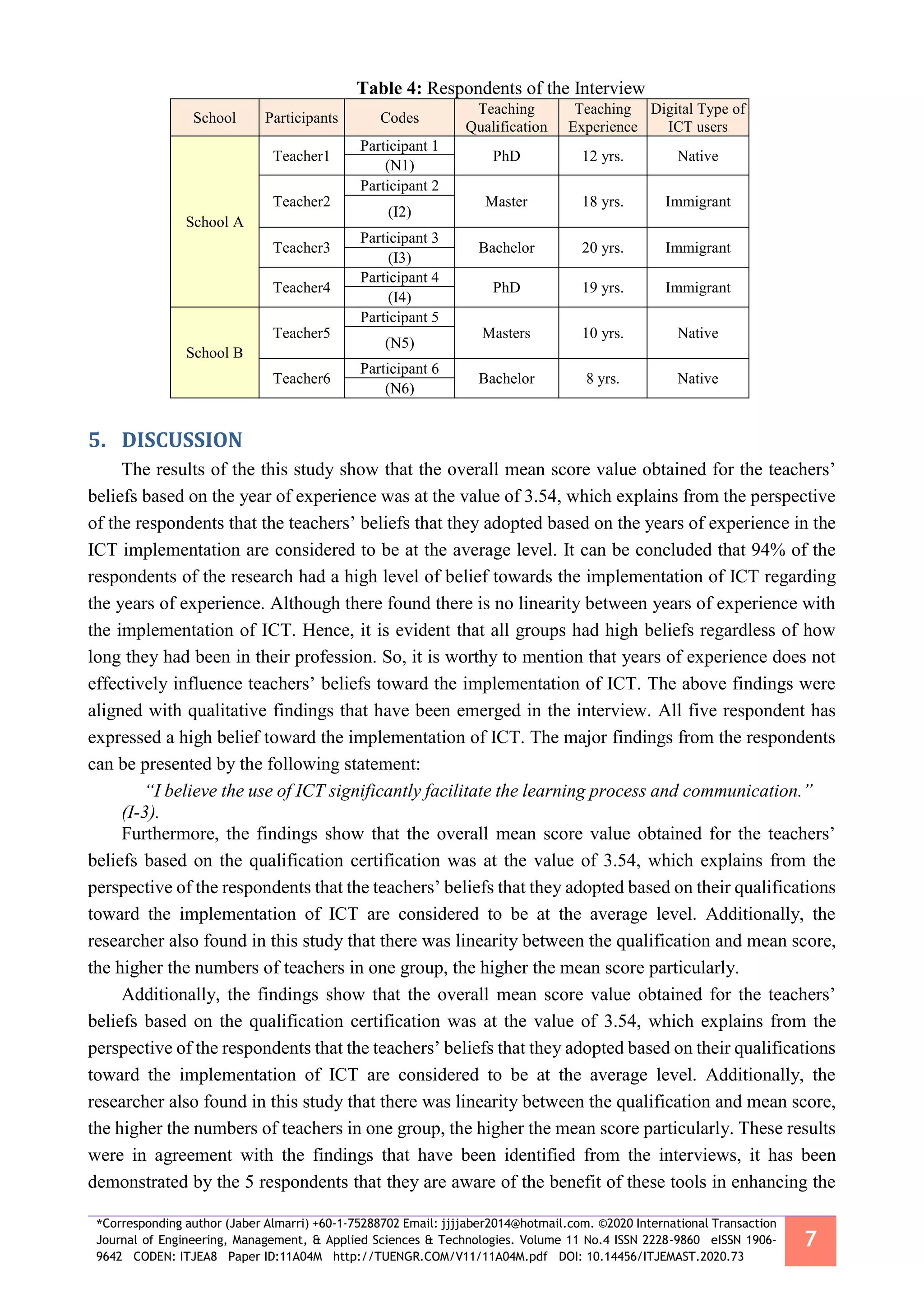
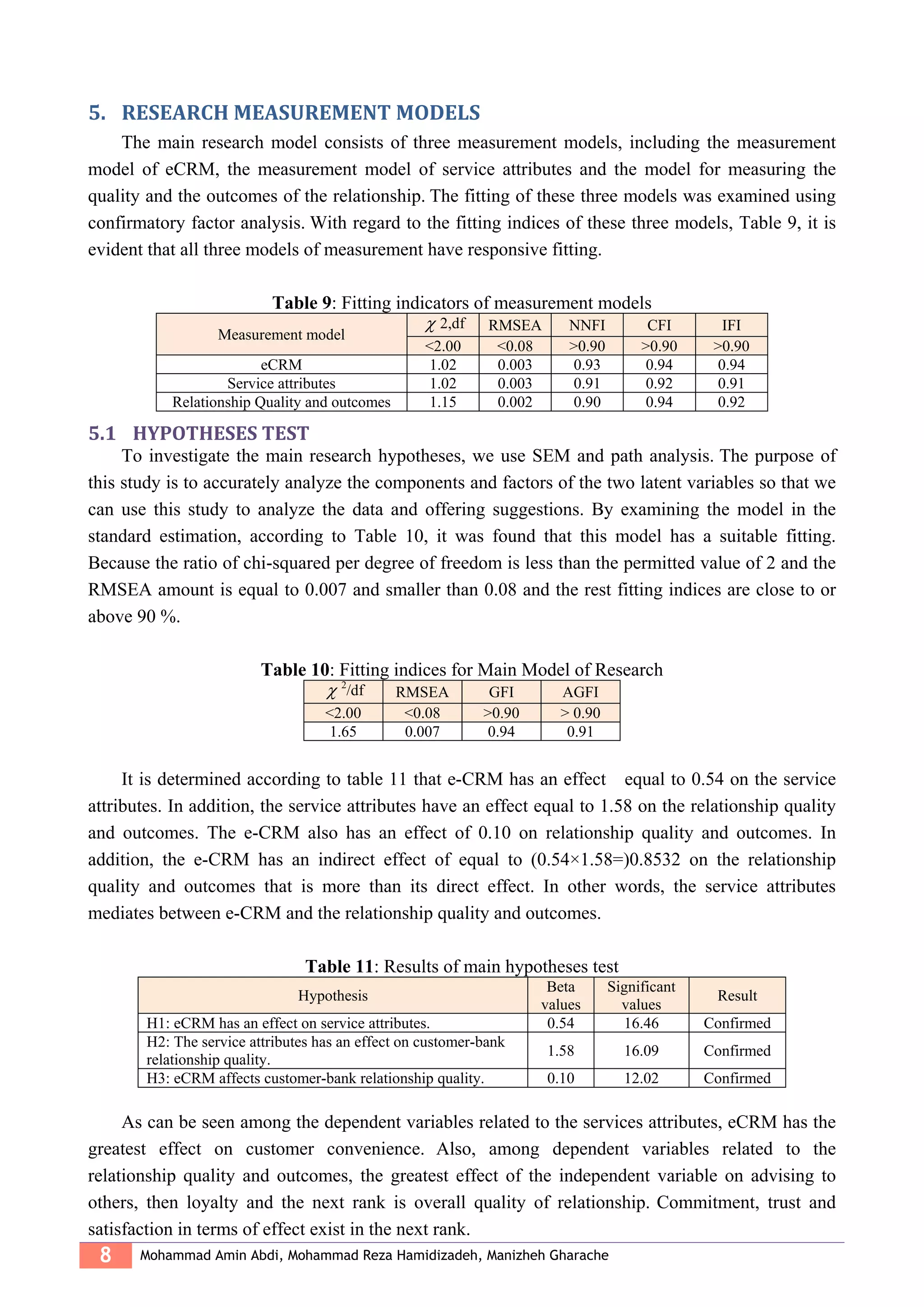
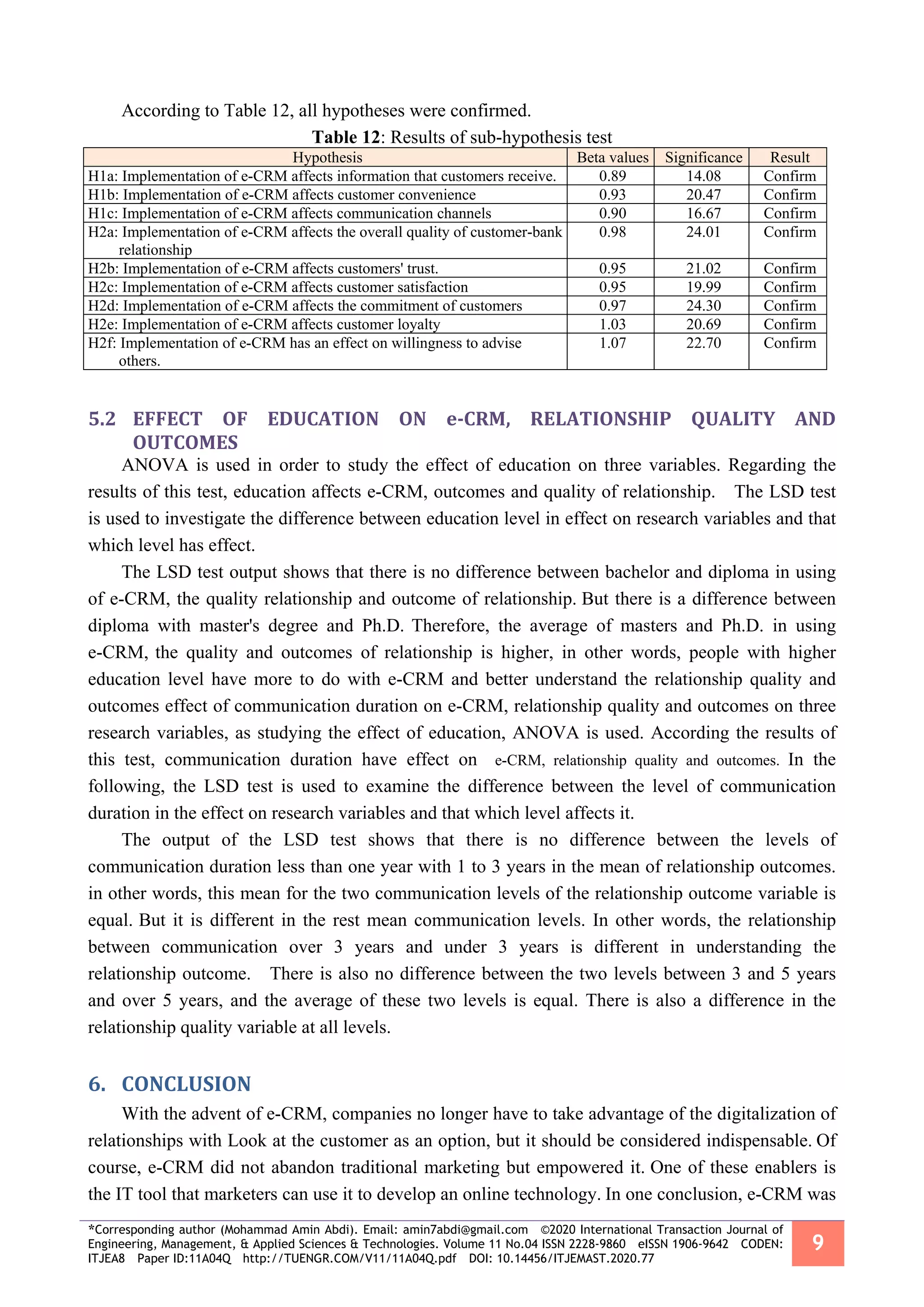
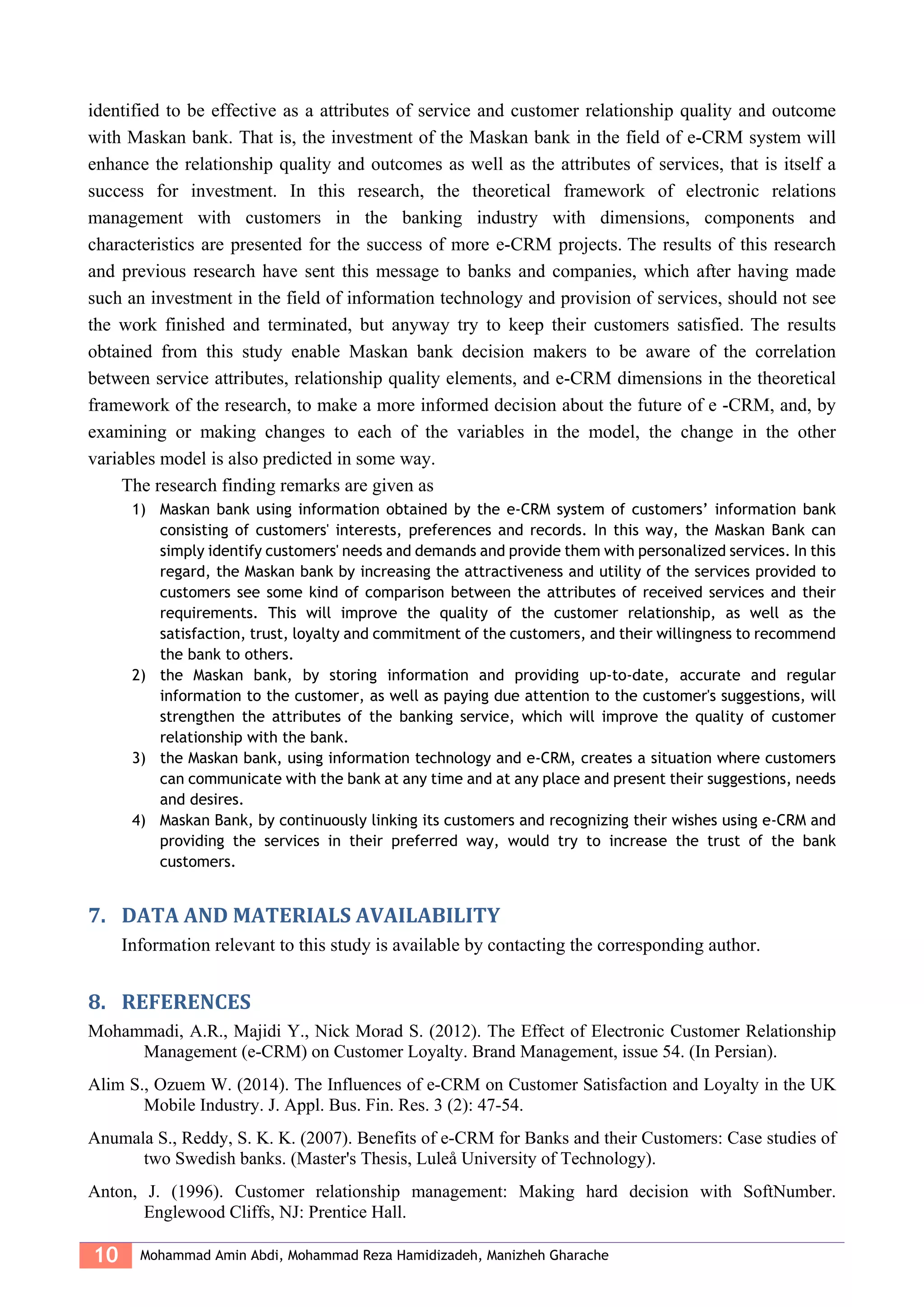
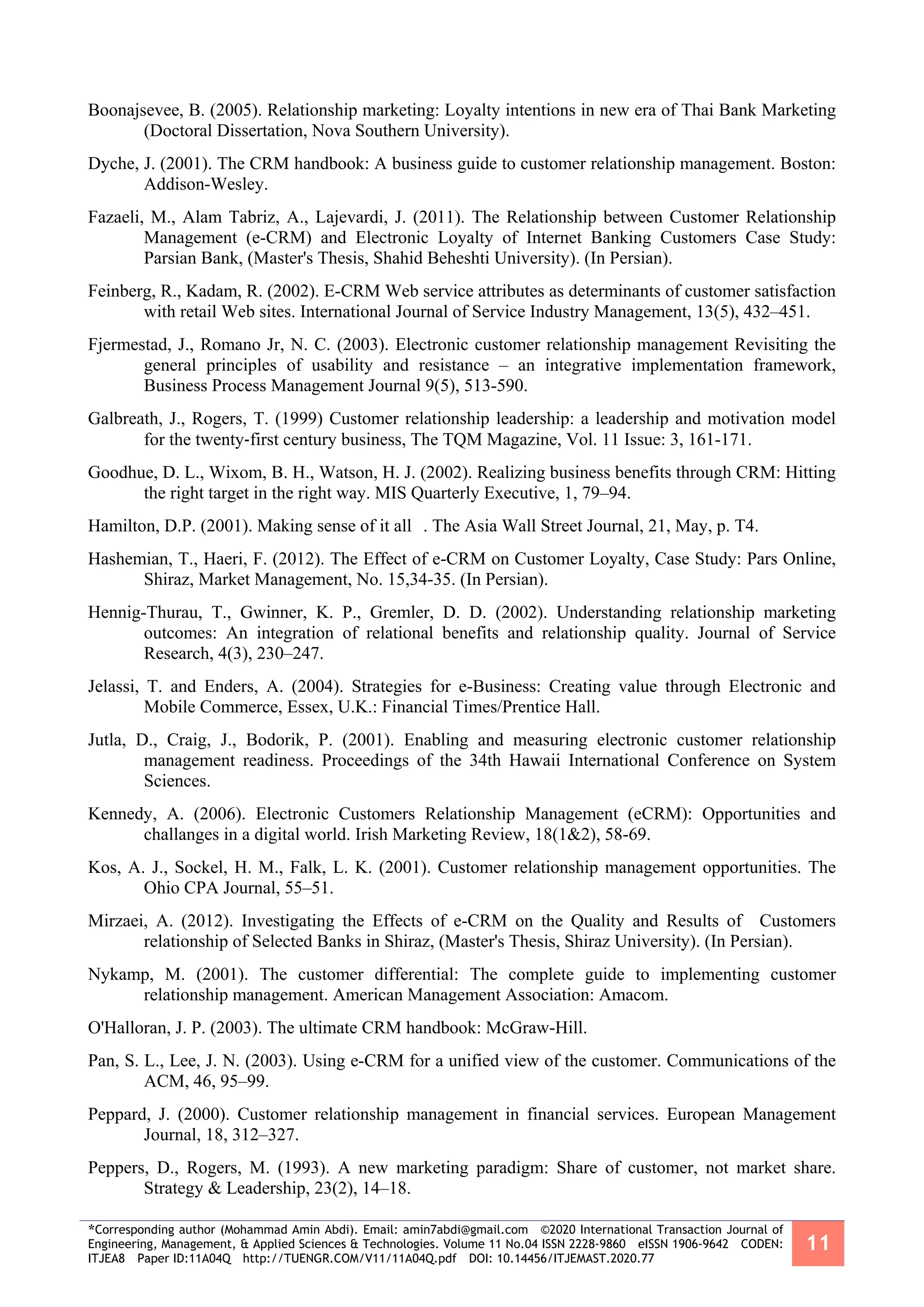
ISSN 2228-9860
eISSN 1906-9642
http://TuEngr.com
TEACHERS' BELIEF TOWARDS THE
IMPLEMENTATION OF ICT IN
INTERMEDIATE SCHOOLS IN SAUDI
ARABIA
MEASURING J-CURVE EFFECT USING
EXCHANGE RATE INSTABILITY AND
TRADE IMBALANCES: A QUANTITATIVE
3SLS APPROACH
ROLES OF EMOTIONAL INTELLIGENCE
IN DETERMINING WORKPLACE ADVICE
NETWORK CENTRALITY:
BETWEENNESS AND CORENESS
SEEKING IDENTITY IN COLLEGE
TOWNS THROUGH PUBLIC SPACES: AN
AMERICAN EXPERIENCE
EFFECTS OF E-CRM ON THE SERVICE
ATTRIBUTES AND QUALITY OF
CUSTOMER-BANK RELATIONSHIP
A STUDY ON PEDESTRIAN LIGHT
SIGNALS IN THAILAND
IMPACTS OF URBANIZATION AND
ENERGY CONSUMPTION ON CLIMATE
CHANGE IN PAKISTAN
DYNAMICS OF OVERCONFIDENCE
AMONG STOCK MARKET INVESTORS
IN PAKISTAN
EVALUATION OF BIOPHYSICAL PARAMETERS OF
THE CARDIOVASCULAR SYSTEM IN THE
EXPERIMENT
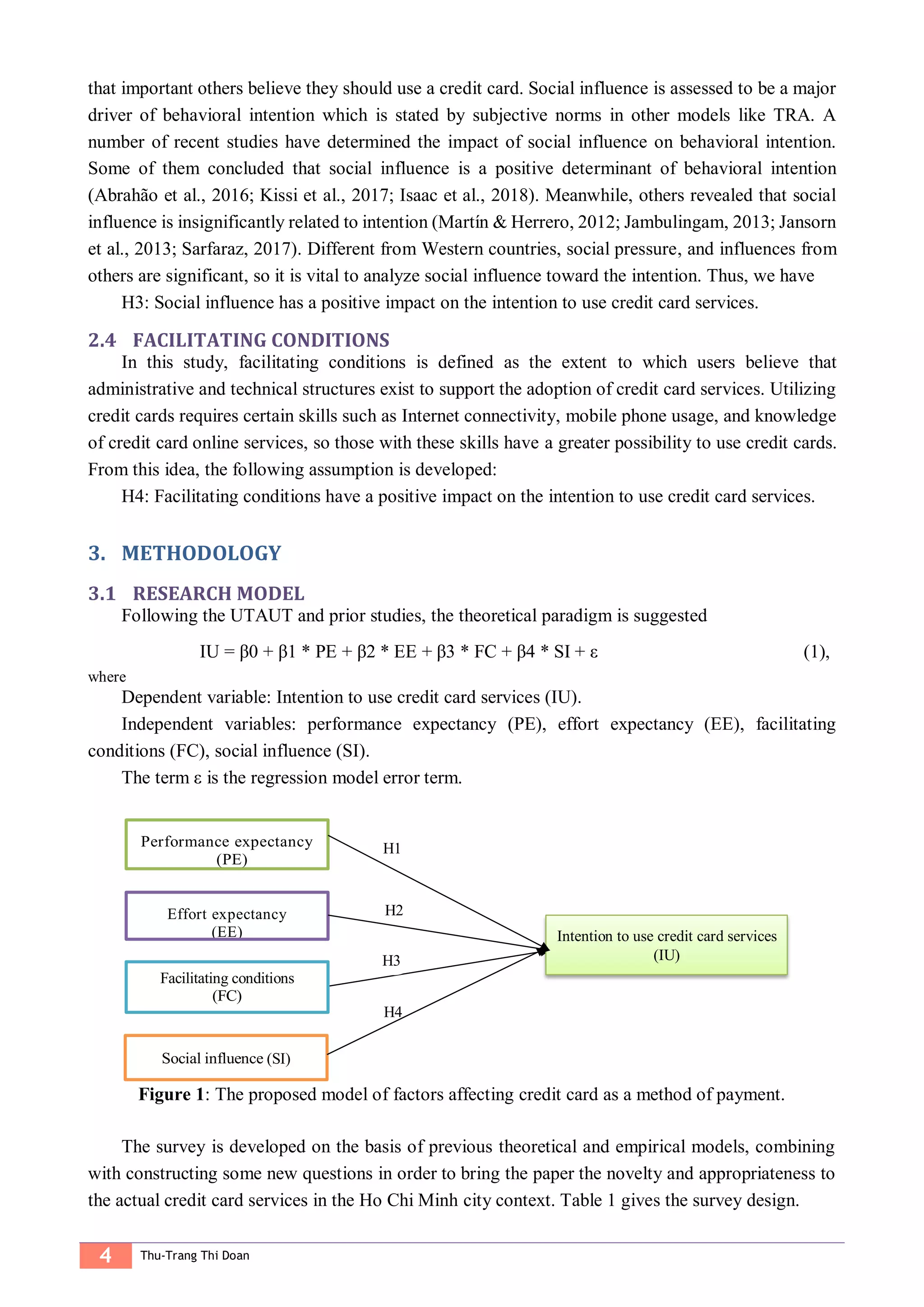
FACTORS AFFECTING INTENTIONS TO USE
CREDIT CARDS IN VIETNAM: AN EMPIRICAL
RESEARCH BASED ON UTAUT
RESPONSIBILITIES OF MULTINATIONAL
CORPORATES IN COMMON LAW
IMPACTS OF DYSFUNCTIONAL CAREER
THOUGHTS ON ACHIEVEMENT MOTIVATION
AMONG UNIVERSITY STUDENTS: GENDER
DIFFERENCES
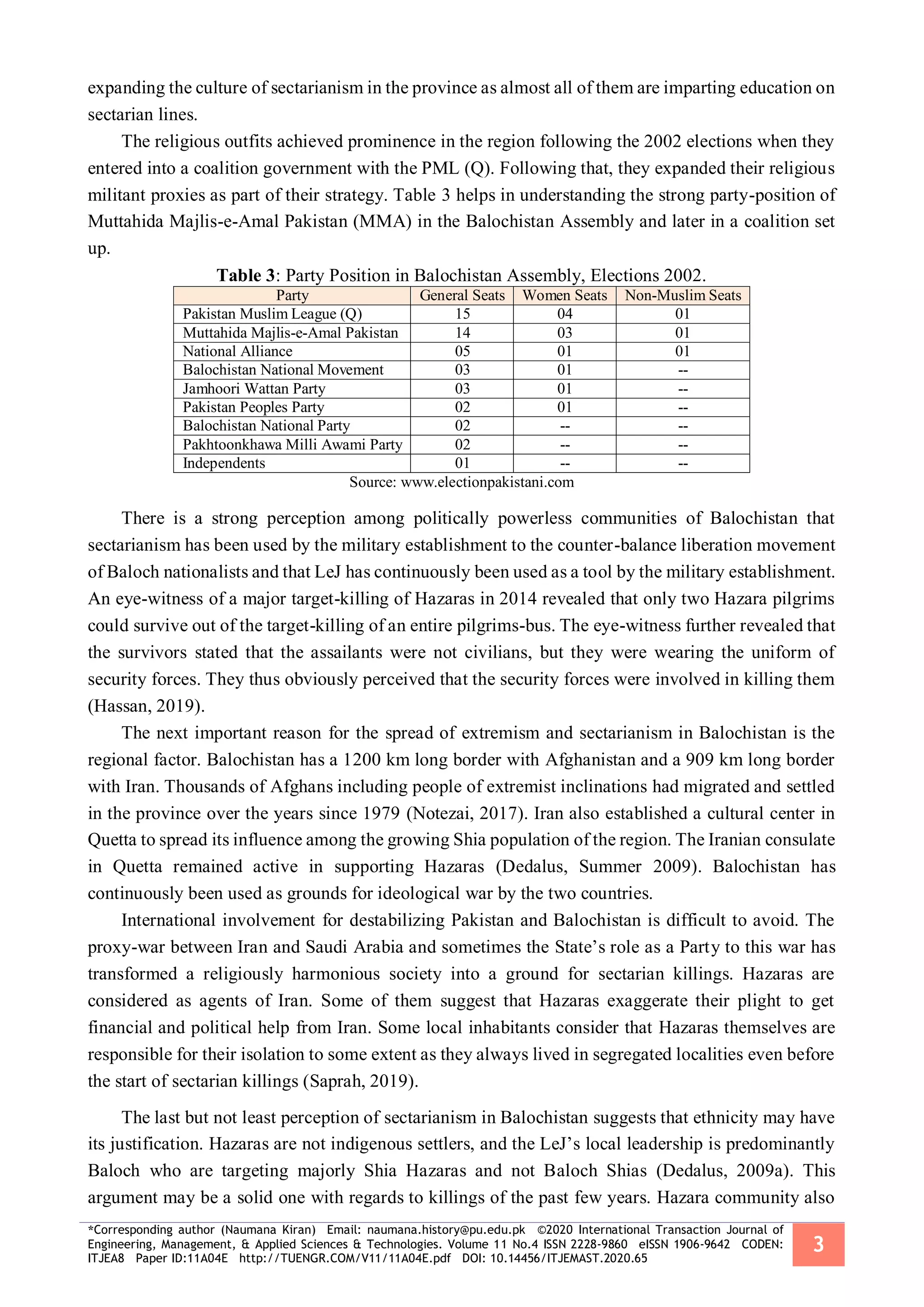
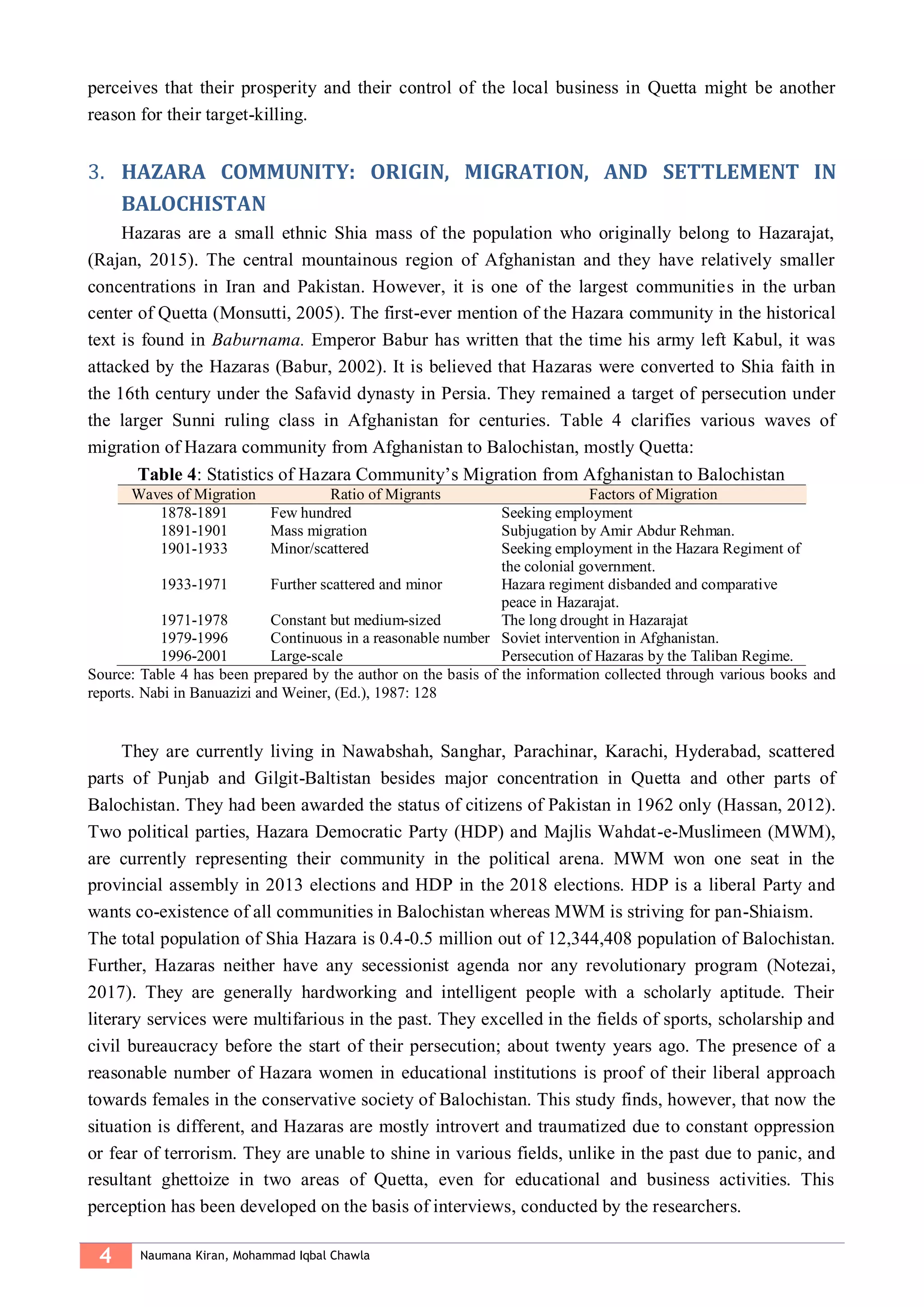
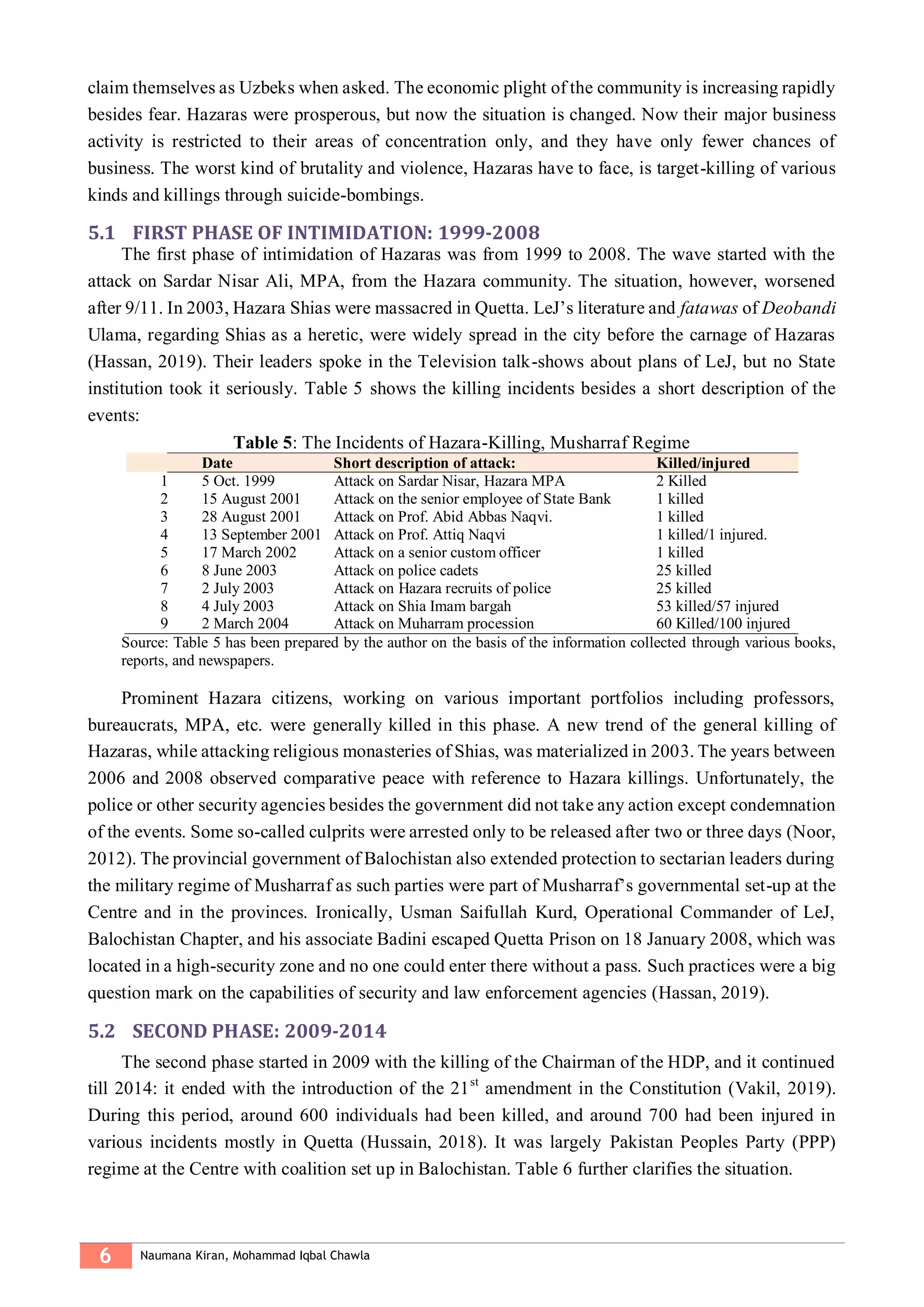
SECTARIANISM IN BALOCHISTAN: LASHKAR-E-
JHANGVI VS HAZARA COMMUNITY
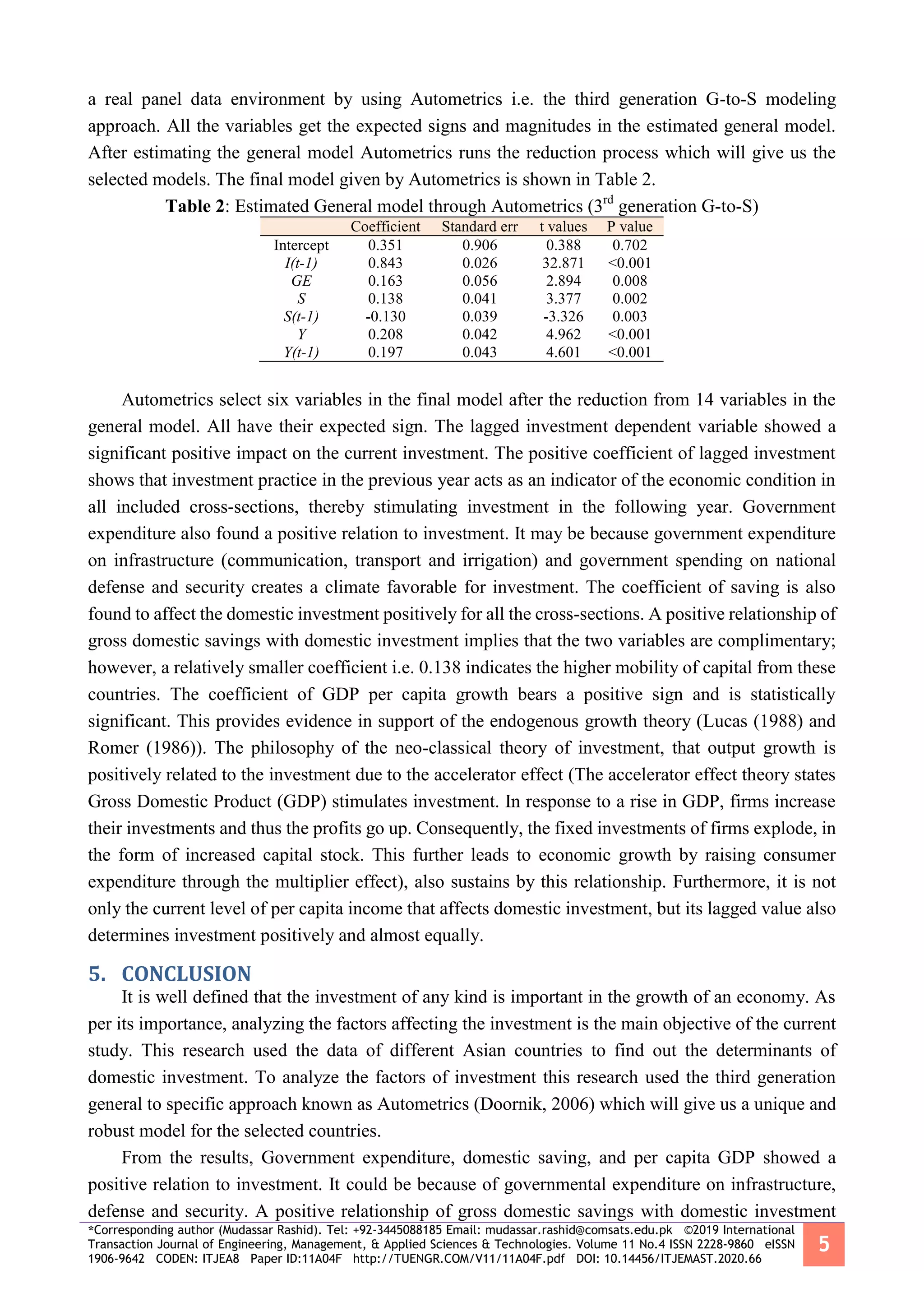
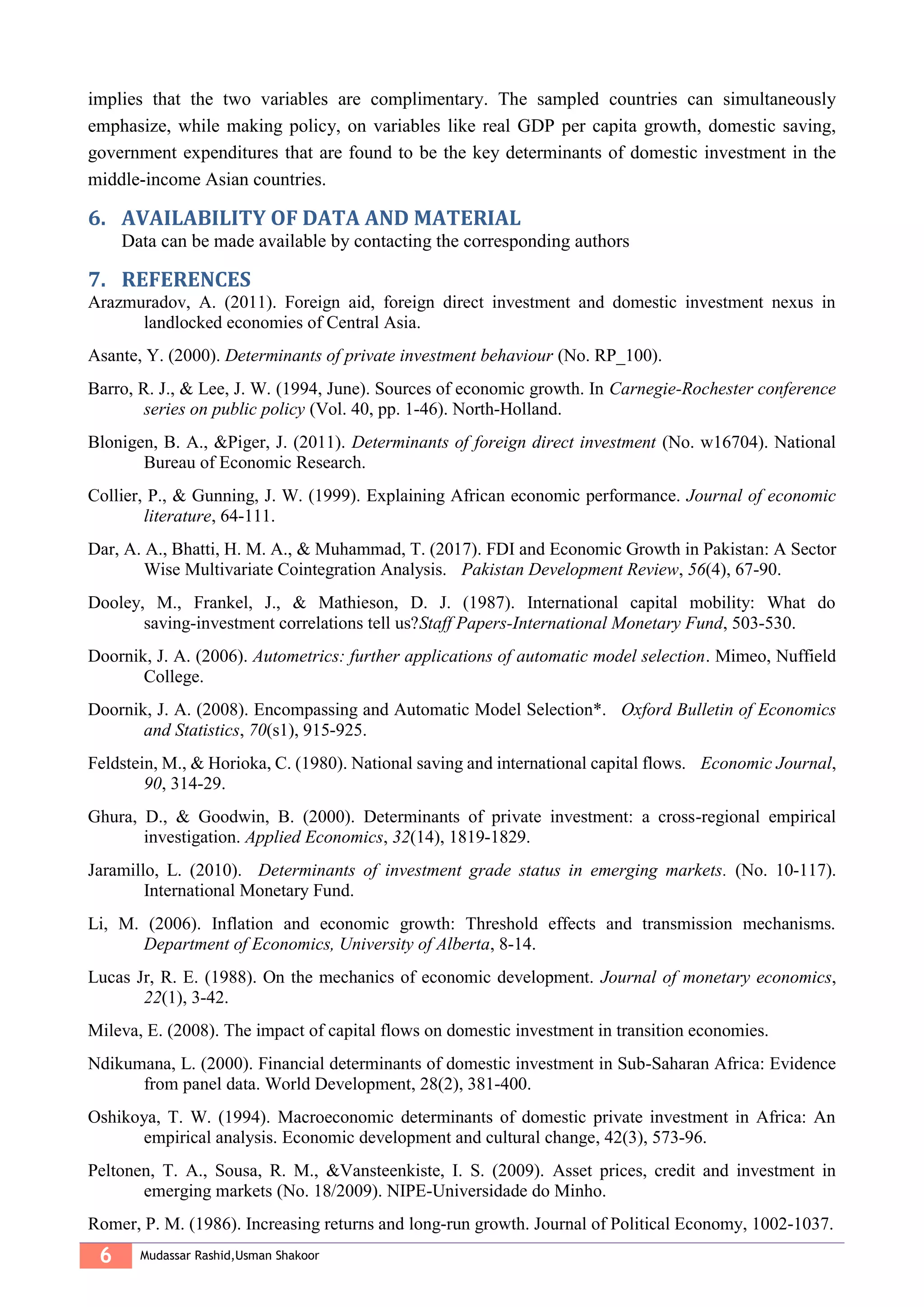
REVISITING DETERMINANTS OF INVESTMENT
THROUGH G-TO-S APPROACH FOR ASIAN
COUNTRIES
A SPOTLIGHT ON RUSSIAN TOURISM AND
HOSPITALITY INDUSTRY
COMPETENCY AND MARKETING PERFORMANCE
MEASUREMENT OF SAUDI ARABIAN FOOD &
DRINK PRODUCTS IN SAUDI ARABIA OF MIDDLE
EAST REGION
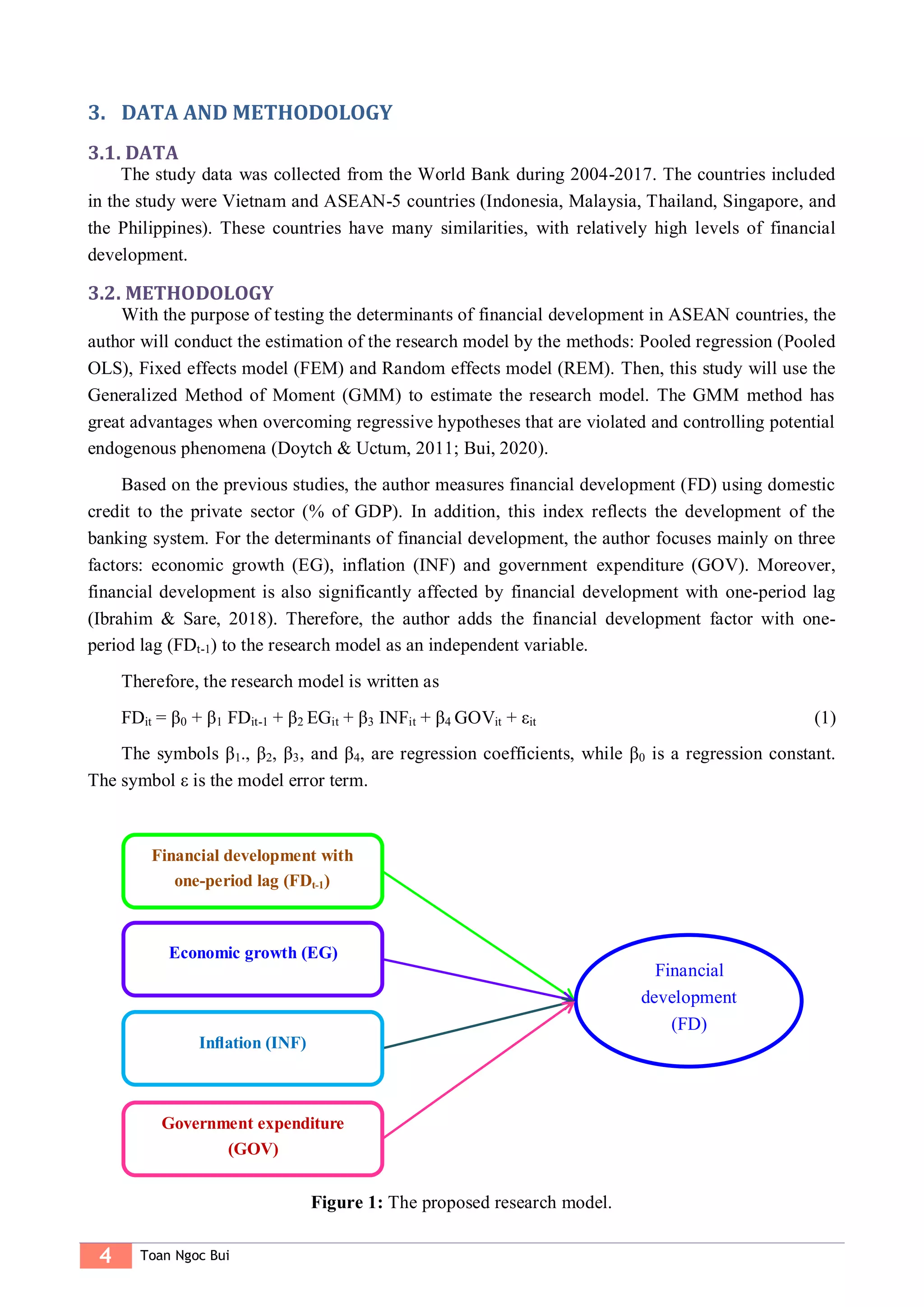
DETERMINANTS OF FINANCIAL DEVELOPMENT:
EVIDENCE FROM ASEAN COUNTRIES
COMPARATIVE ANALYSIS OF TRADITIONAL AND
SOFT COMPUTING MODELS FOR TRADING
SIGNALS PREDICTION
DILEMMAS OF LEAN PRODUCTION IN RUSSIA
AN EMPIRICAL STUDY OF SUSTAINABLE BUYING
BEHAVIORS OF PAKISTANI CONSUMERS TOWARD
CHINESE PRODUCTS
International Transaction Journal of Engineering,
Management, & Applied Sciences & Technologies
http://TuEngr.com
International Editorial Board
Editor-in-Chief
Ahmad Sanusi Hassan, PhD
Professor
Universiti Sains Malaysia,
MALAYSIA
Executive Editor
Boonsap Witchayangkoon, PhD
Associate Professor
Thammasat University, THAILAND
Editorial Board:
Assoc. Prof. Dr. Mohamed Gadi (University of Nottingham, UNITED KINGDOM)
Professor Dr.Hitoshi YAMADA (Yokohama National University, JAPAN)
Professor Dr. Chuen-Sheng Cheng (Yuan Ze University, TAIWAN )
Professor Dr.Mikio SATOMURA (Shizuoka University, JAPAN)
Professor Dr.Chuen-Sheng Cheng (Yuan Ze University, TAIWAN)
Emeritus Professor Dr.Mike Jenks (Oxford Brookes University, UNITED KINGDOM )
Professor Dr.I Nyoman Pujawan (Sepuluh Nopember Institute of Technology,
INDONESIA)
Professor Dr.Toshio YOSHII (EHIME University, JAPAN)
Professor Dr.Neven Duić (University of Zagreb, CROATIA)
Professor Dr.Dewan Muhammad Nuruzzaman (University Malaysia Pahang MALAYSIA)
Professor Dr.Masato SAITOH (Saitama University, JAPAN)
Scientific and Technical Committee & Editorial Review
Board on Engineering, Technologies and Applied Sciences:
Associate Prof. Dr. Paulo Cesar Lima Segantine (University of São Paulo, BRASIL)
Associate Prof. Dr. Kurt B. Wurm (New Mexico State University, USA )
Associate Prof. Dr. Truong V.B.Giang (Vietnam National University, Hanoi, VIETNAM)
Associate Prof. Dr. Fatemeh Khozaei (Islamic Azad University Kerman Branch, IRAN)
Assistant Prof.Dr. Zoe D. Ziaka (International Hellenic University, GREECE)
Associate Prof.Dr. Junji SHIKATA (Yokohama National University, JAPAN)
Assistant Prof.Dr. Akeel Noori Abdul Hameed (University of Sharjah, UAE)
Assistant Prof.Dr. Rohit Srivastava (Indian Institute of Technology Bombay, INDIA)
Assistant Prof. Dr.Muhammad Yar Khan (COMSATS University, Pakistan)
Assistant Prof. Dr. David Kuria (Kimathi University College of Technology, KENYA )
Dr. Mazran bin Ismail (Universiti Sains Malaysia, MALAYSIA )
Dr. Salahaddin Yasin Baper (Salahaddin University - Hawler, IRAQ )
Dr. Foong Swee Yeok (Universiti Sains Malaysia, MALAYSIA)
Dr.Azusa FUKUSHIMA (Kobe Gakuin University, JAPAN)
Dr.Yasser Arab (Ittihad Private University, SYRIA)
Dr.Arslan Khalid (Shandong University, CHINA)
©2020 International Transaction Journal of Engineering, Management, & Applied Sciences & Technologies.
i
©2020 International Transaction Journal of Engineering, Management, & Applied Sciences & Technologies.
:: International Transaction Journal of Engineering,
Management, & Applied Sciences & Technologies
Volume 11 Issue 4 (2020) ISSN 2228-9860
http://TuEngr.com eISSN 1906-9642
FEATURE PEER-REVIEWED ARTICLES
EVALUATION OF BIOPHYSICAL PARAMETERS OF THE
CARDIOVASCULAR SYSTEM IN THE EXPERIMENT 11A04A
FACTORS AFFECTING INTENTIONS TO USE CREDIT CARDS IN
VIETNAM: AN EMPIRICAL RESEARCH BASED ON UTAUT
11A04B
RESPONSIBILITIES OF MULTINATIONAL CORPORATES IN COMMON
LAW 11A04C
IMPACTS OF DYSFUNCTIONAL CAREER THOUGHTS ON ACHIEVEMENT
MOTIVATION AMONG UNIVERSITY STUDENTS: GENDER DIFFERENCES
11A04D
SECTARIANISM IN BALOCHISTAN: LASHKAR-E-JHANGVI VS HAZARA
COMMUNITY 11A04E
REVISITING DETERMINANTS OF INVESTMENT THROUGH G-TO-S
APPROACH FOR ASIAN COUNTRIES 11A04F
A SPOTLIGHT ON RUSSIAN TOURISM AND HOSPITALITY INDUSTRY
11A04G
COMPETENCY AND MARKETING PERFORMANCE MEASUREMENT OF
SAUDI ARABIAN FOOD & DRINK PRODUCTS IN SAUDI ARABIA OF
MIDDLE EAST REGION
11A04H
DETERMINANTS OF FINANCIAL DEVELOPMENT: EVIDENCE FROM
ASEAN COUNTRIES
11A04I
COMPARATIVE ANALYSIS OF TRADITIONAL AND SOFT COMPUTING
MODELS FOR TRADING SIGNALS PREDICTION 11A04J
DILEMMAS OF LEAN PRODUCTION IN RUSSIA
11A04K
AN EMPIRICAL STUDY OF SUSTAINABLE BUYING BEHAVIORS OF
PAKISTANI CONSUMERS TOWARD CHINESE PRODUCTS
11A04L
ii
TEACHERS' BELIEF TOWARDS THE IMPLEMENTATION OF ICT IN
INTERMEDIATE SCHOOLS IN SAUDI ARABIA
11A04M
MEASURING J-CURVE EFFECT USING EXCHANGE RATE INSTABILITY
AND TRADE IMBALANCES: A QUANTITATIVE 3SLS APPROACH
11A04N
ROLES OF EMOTIONAL INTELLIGENCE IN DETERMINING
WORKPLACE ADVICE NETWORK CENTRALITY: BETWEENNESS AND
CORENESS
11A04O
SEEKING IDENTITY IN COLLEGE TOWNS THROUGH PUBLIC SPACES:
AN AMERICAN EXPERIENCE
11A04P
EFFECTS OF E-CRM ON THE SERVICE ATTRIBUTES AND QUALITY
OF CUSTOMER-BANK RELATIONSHIP
11A04Q
A STUDY ON PEDESTRIAN LIGHT SIGNALS IN THAILAND 11A04R
IMPACTS OF URBANIZATION AND ENERGY CONSUMPTION ON
CLIMATE CHANGE IN PAKISTAN
11A04S
DYNAMICS OF OVERCONFIDENCE AMONG STOCK MARKET
INVESTORS IN PAKISTAN
11A04T
Contacts:
Professor Dr.Ahmad Sanusi Hassan (Editor-in-Chief), School of Housing, Building
and Planning, UNIVERSITI SAINS MALAYSIA, 11800 Minden, Penang, MALAYSIA. Tel:
+60-4-653-2835 Fax: +60-4-657 6523, Sanusi@usm.my, Editor@TuEngr.com
Associate Professor Dr.Boonsap Witchayangkoon (Executive Editor), Thammasat
School of Engineering, THAMMASAT UNIVERSITY, Klong-Luang, Pathumtani, 12120,
THAILAND. Tel: +66-2-5643005 Ext 3101. Fax: +66-2-5643022
DrBoonsap@gmail.com, Editor@TuEngr.com
Managing Office
TUENGR Group, 88/244 Moo 3, Moo Baan Saransiri, Klong#2, KlongLuang,
Pathumtani, 12120, THAILAND. Tel/WhatsApp: +66-995535450.
P l P id i MALAYSIA/THAILAND
Side image is the colorful models of Corona COVID19 virus.
*Corresponding author (Alexander Pustovalov) Email: alexanderpugachev@yahoo.com ©2020 International Transaction
Journal of Engineering, Management, & Applied Sciences & Technologies. Volume 11 No.4 ISSN 2228-9860 eISSN 1906-9642
CODEN: ITJEA8 Paper ID:11A04A http://TUENGR.COM/V11/11A04A.pdf DOI: 10.14456/ITJEMAST.2020.61
1
International Transaction Journal of Engineering,
Management, & Applied Sciences & Technologies
http://TuEngr.com
PAPER ID: 11A04A
EVALUATION OF BIOPHYSICAL PARAMETERS OF THE
CARDIOVASCULAR SYSTEM IN THE EXPERIMENT
Pustovalov Alexander
a*
, Paschenko Vasily
a
, Kuleshova Olga
a
,
Fatyanov Sergey
a
, Morozov Alexander
a
, Afanasyev Mikhail
a
a
Ryazan State Agrotechnological University named after P.A. Kostycheva, RUSSIA.
A R T I C L E I N F O A B S T RA C T
Article history:
Received 14 June 2019
Received in revised form 08
November 2019
Accepted 19 November 2019
Available online 05 December
2019
Keywords:
Microwaves; Radiation;
Hypoxia; Cations, Blood
vessels, Blood, Heart,
Erythrocytes, Viscosity,
Bio-membranes; Gamma
irradiation.
The aim of this experiment was to evaluate the ways of identifying a
number of biophysical quantities in the vessel wall-plasma-erythrocytes
system in heart tissues under the action of microwave electromagnetic
wave, γ-irradiation, with pressure chamber hypoxia. The level of
magnesium, sodium, calcium and potassium ions in erythrocytes, blood
plasma, various blood vessels, tissues and organs of animals was
determined, and the activity of Na, K-ATPase of erythrocyte
membranes, the amount of inter-wall potential difference of the vessel
wall, erythrocytes charge and the viscosity of the suspension of
erythrocytes were measured both under the action of the these factors in
various modes of exposure, and the introduction of Heparin,
Neodicumarinum, calcium antagonists Cardil and Phenihidin, Trental
and Xantinol nicotinate. The general results of the experimental data and
discussion of both characteristics and general changes in the recorded
values with the corresponding conclusions are presented. The largest
deviations of the detected values were found when γ-irradiation with a
decrease in their concentrations in all evaluated tissues and in the blood
with a decrease in hematocrit by 2 times.
Disciplinary: Multidisciplinary (Biological Sciences, Medical Sciences,
Biotechnology).
©2020 INT TRANS J ENG MANAG SCI TECH.
INTRODUCTION1.
The significance of evaluating the effects of among others negatively acting drugs and
environmental factors on blood vessels, organs, and blood is dictated primarily by the fact that
cardiovascular disorders are the main causes of deaths in Russia and many countries of the world. In
particular, the number of people exposed to electromagnetic waves of super-high frequency (SHF
EMW) and radiation, as well as those suffering from the lack of oxygen supply to the body (hypoxia)
is increasing, which requires the development of methods for preventing and correcting deviations
from the normal functioning of the body (Zima & Dreval, 2000; Kiryushin & Motalova, 2014;
©2020 International Transaction Journal of Engineering, Management, & Applied Sciences & Technologies
2 Pustovalov A., Paschenko V., Kuleshova O., Fatyanov S., Morozov A., Afanasyev M.
Terekhov et al., 2016; Afridi et al., 2013; Bi et al., 2018; Choi et al., 2018; Davis et al., 2018; Egami
& Hamashima, 2018; Grün et al., 2018; Nan et al., 2018; Panhwar et al., 2014; Ruiter et al., 2018;
Shen et al., 2018).
The available results of the study of the blood circulation and the cardiovascular system require a
review of established opinions on the main blood vessels and their evaluation when analyzing the
effects of various environmental effects on them (e.g. SHF EMW, γ- irradiation and various modes of
hypoxia) and the prescribed drugs. In this regard, the expediency of the analysis is dictated at the
membrane level as well: how and to what extent the relationships between blood vessels and blood
change, to what extent they participate in the mechanisms of action of drugs on the body's functional
systems (FS) (Zima & Dreval, 2000; Kazakov et al., 2009; Kashirina et al., 2013; Landyshev et al.,
2009; Mamikonyan, 2015; Nikiforov, 2015; Pustovalov et al., 2002; Filipets & Gozhenko, 2014;
Afridi et al., 2013; Ahmad et al., 2018; Davis et al., 2018; Panhwar et al., 2014; Ruiter et al., 2018).
In biomedical research, a special direction “membranology” was distinguished according to the
analysis of the structure, properties, functioning of biomembranes, their role and importance in the
vital activity of the cell, tissue, organ and the whole organism. The theoretical and practical
importance of such studies is due to the fact that the system analysis when studying the functions of
biological membranes reveals the molecular mechanisms of the development of many diseases in
conjunction with biochemical disorders, makes it possible to propose new diagnostic methods and
approaches for treating a number of diseases, and investigates the involvement of the membrane
factor in drugs effect on the body's FSs (Kashirina et al., 2013; Nikiforov, 2015; Pustovalov et al.,
2002; Afridi et al., 2013; Panhwar et al., 2014).
The functional state of bio-membranes is also characterized by the level of ions in tissues,
organs, blood, the magnitude of the potential difference of the vessel wall and the charge of the
formed elements and the rheological properties of blood (Landyshev et al., 2009; Mamikonyan, 2015;
Nikiforov, 2015; Pustovalov et al., 2002; Filipets & Gozhenko, 2014; Afridi et al., 2013; Panhwar et
al., 2014). The study of these parameters allows solving the problems of adjusting the functioning of
the membranes when exposed, for example, to physical factors, by prescribing drugs for the
functional systems of the body.
The aim of this study was to develop methods for analyzing characteristic disorders of various
bio-membranes of tissues, organs and blood under the action of SHF EMW, radiation, pressure
chamber hypoxia, as well as to develop and substantiate the methods of prescribing drugs for the FS
of the human body and animals with the ability to reduce the corresponding functional and
pathological disorders caused by a number of physical factors.
LITERATURE REVIEW2.
Bio membranes and ionic homeostasis of the cell. The plasma membrane is a liquid crystal
structure, all types of ion transport through which can be divided into passive diffusion, facilitated
diffusion and active transport.
Passive transport of ions through bio membranes is carried out in the direction of the
electrochemical gradient, which is formed as a combination of the electrical and concentration
gradient of the bio membrane. With facilitated diffusion, the transport of ions is carried out using
mobile or fixed carriers and channels, and during exchange diffusion, the concentration of these ions
on both sides of the bio membrane does not change (Pustovalov et al., 2002; Terekhina et al., 2012;
*Corresponding author (Alexander Pustovalov) Email: alexanderpugachev@yahoo.com ©2020 International Transaction
Journal of Engineering, Management, & Applied Sciences & Technologies. Volume 11 No.4 ISSN 2228-9860 eISSN 1906-9642
CODEN: ITJEA8 Paper ID:11A04A http://TUENGR.COM/V11/11A04A.pdf DOI: 10.14456/ITJEMAST.2020.61
3
Filipets & Gozhenko, 2014).
In a bio membrane, as in a liquid crystal structure, the so-called phase transitions are present, i.e.
"melting" of lipids when heated and their "crystallization" when decreasing temperature. In this case,
the evidence of phase transitions depends both on the genus and the state of bio membranes, which
does not exclude their use as a diagnostic test for the analysis of damaging effects, as well as the
corrective effect of drugs on the body's FS.
The importance and relevance of studying biomembranes in modern drug is confirmed, for
example, by the fact that American scientists Roderick Mac Kinnon (Rockefeller University in New
York) and Peter Agr (J. Hopkins University in Baltimore) won the Nobel Prize in chemistry in 2003.
Their work was devoted to studying the properties and functioning of ion channels of bio membranes.
1. Endogenous and exogenous factors can modify the permeability of bio membranes for ions.
For example, the deviation of cations in the medium can disrupt the membrane structure, which is
possibly caused by a deviation of the trans-membrane potential difference, and it is possible that the
membrane potential, for example, that of erythrocytes plays a leading role in changing their
permeability. At the same time, the change in the concentration of ions in cells contributes to the
modification of the transfer of cations in the membrane (Pustovalov et al., 2002; Terekhina et al.,
2012; Filipets & Gozhenko, 2014; Afridi et al., 2013; Panhwar et al., 2014).
The wall of blood vessels should be considered in comparison with erythrocytes as a system of
biological membranes with different permeability parameters or, as a result, as one multicellular
heterogeneous bio membrane, where all transport processes are different combinations and
modifications of the known cation transport. The inter-wall transport of cations and metabolites along
a concentration gradient (diffusion or facilitated diffusion) in tissues, the smallest blood vessels, or in
a combination (blood - wall of a vessel in large vessels) can significantly depend on the distribution of
cations and electrical charges, which, in turn, contributes changes in the functioning of blood vessels
(Pustovalov et al., 2002; Afridi et al., 2013; Panhwar et al., 2014).
Ca2+
, Na+
, K+
and Mg2+
cations are involved in a number of regulatory releasers. The disturbance
of these cations distributions inside and outside the cell in a given functional state can cause some
corresponding biochemical disturbances.
Achieving a more effective correction of pathological abnormalities in the body, accompanied by
electrolyte imbalance, requires an approach that allows you to compare the control processes
occurring both at the cellular level and in individual organs. This approach would make it possible to
analyze the sequence of disease development more significantly and have more successful medical
correction by appropriate effects on the FS of the body.
It should be noted that erythrocytes affect many aspects of the process of hemocirculation,
having a significant impact on hemostasis and intravascular thrombosis. The mechanical properties of
erythrocytes and their deformability are one of the main factors affecting blood functioning. In
addition, the movement of blood and its viscosity are considered to be essential factors in vascular
tone regulation (Landyshev et al., 2009; Mamikonyan, 2015; Nikiforov, 2015; Pustovalov et al.,
2002).
When considering the functions of blood vessels and blood together, it is necessary to take into
account the values of the coefficient of blood viscosity, plasma, erythrocytes and their membranes
and the role of erythrocyte deformability.
4 Pustovalov A., Paschenko V., Kuleshova O., Fatyanov S., Morozov A., Afanasyev M.
The study of the blood viscosity, its plasma, a suspension of erythrocytes and their membranes
under the action of damaging environmental factors is an essential condition in the practical
realization of the possibility of some effective influence on the microcirculation in hemodynamic and
metabolic disorders, in achieving the significance of the effect of drugs.
The influence of microwave irradiation, hypoxia, and γ-rays on the cardiovascular system and
blood. The influence of microwave irradiation, hypoxia and γ-rays on the cardiovascular system and
blood. The interactions of electromagnetic radiation with living organisms are diverse and require
various additional studies. The interaction of electromagnetic waves with biological objects depends
both on the parameters of the waves (frequency, wavelength, coherence, polarization, intensity, etc.)
and on the properties, the state of the bio-system itself (electrical conductivity, dielectric constant,
tissue bioelectric activity, etc.). For example, at the cell level, membrane, ionic, non-chemical, and a
number of other theories of the interaction of electromagnetic radiation with cell structures are
discussed (Kazakov et al., 2009; Kiryushin & Motalova, 2014; Terekhov et al., 2016; Egami et al.,
2018; Shen et al., 2018).
Microwave irradiation, for example, can have a direct effect on blood cells with the possible
induction of the protein structures metabolism from membranes or a change in their conformational
state. The high sensitivity of lipid metabolism under the action of electromagnetic waves of the
microwave range seems to be important. A number of effects of microwave irradiation cause
ambiguous effects on the transport of sodium and potassium ions through the erythrocyte membrane
(Kazakov et al., 2009; Kiryushin & Motalova, 2014; Terekhov et al., 2016; Ruiter et al., 2018).
The concept of the leading significance of bio-membranes in the body's response to microwave
irradiation is presented as one of the main methods of microwave radiation exposure on cells. The
essence of this concept lies in the fact that bio-membranes are capable of selective absorption of
microwave energy, which is ensured by the heterogeneity of the electrical and other
physical-chemical properties of the membrane and near-membrane layers. The corresponding
absorption of microwaves in the membranes includes both thermal and non-thermal components. The
nonthermal absorption of microwave energy is based, in particular, on some resonance phenomena,
the manifestation of which depends on both the molecular organization of the microstructures of the
irradiated object and on the conditions and modes of study.
The presence of high physiological and possible therapeutic activity of microwaves suggests that
microwave radiation has a diverse influence on the action and metabolism of drugs. However,
without knowledge of characteristics of the influence of microwaves on the action of drugs with
damaging factors, effective treatment is not possible and the forecast of remote consequences is
difficult.
In this regard, we studied the effect of SHF EMW on tissues of blood vessels, heart, organs,
blood, and the use of anticoagulants Neodicumarinum and Heparin.
The effect of ionizing radiation on biological objects is characterized by a variety of interrelated
and interdependent reactions affecting the functioning of almost all body systems, the reactivity of
which changes according to factors of the external and internal environment of the body, including
pharmacological agents, which significantly complicates the choice of doses and dosage regimens
(Zima & Dreval, 2000; Ahmad et al., 2018; Choi et al., 2018; Grün et al., 2018).
The biological effects of radiation on cell membranes, on the human body and animals, depend
both on the dose and radiation power, and on the γ-radiation stage (Zima & Dreval, 2000; Ahmad et
*Corresponding author (Alexander Pustovalov) Email: alexanderpugachev@yahoo.com ©2020 International Transaction
Journal of Engineering, Management, & Applied Sciences & Technologies. Volume 11 No.4 ISSN 2228-9860 eISSN 1906-9642
CODEN: ITJEA8 Paper ID:11A04A http://TUENGR.COM/V11/11A04A.pdf DOI: 10.14456/ITJEMAST.2020.61
5
al., 2018; Choi et al., 2018; Grün et al., 2018).
Ionizing radiation has a direct and indirect effect on the circulatory system, causing damage to
the vascular wall itself and blood corpuscles, changes the reactivity of the tone and the blood
channels, violating the permeability of bio-membranes (Zima & Dreval, 2000; Ahmad et al., 2018;
Choi et al., 2018; Grün et al., 2018).
Despite numerous studies of the effects of radioactive radiation on humans and animals, there is
a lack of knowledge about the nature of the processes that develop after irradiation in the structures of
the vascular wall at the sub-cellular, cellular and membrane levels. Still, to some extent, there is not
enough knowledge to understand the mechanisms of damage to the vascular wall itself,
hemodynamic disturbances and their connection with impaired blood clotting at various periods after
irradiation. The pathogenetic validity and effectiveness of methods for the prevention and treatment
of radiation injuries of the circulatory system are still low. Despite significant advances in radiation
medicine, there is a need to study the effects of radioactive radiation on the body's FS and the choice
of means to correct the disturbances.
The primary cause of hypoxia is the lack of oxygen in cells, which leads, in particular, to a
decrease in the re-synthesis of energy-supplying phosphates. At the same time, the functional activity
of erythrocytes reflects their ability to bind, transfer and release oxygen (Bi et al., 2018; Davis et al.,
2018; Nan et al., 2018).
Hypoxia is actually the most frequent phenomenon of general pathology. However, it should be
noted that this is only one of the possible causes of the energy deficit in the body, and that,
considering bio-energy in all its complexity, it is necessary to focus on complex disruption of energy
metabolism, the individual stages of which are closely related to each other by cause-effect relations
(Bi et al., 2018; Davis et al., 2018; Nan et al., 2018).
The most important element of the vascular system is the microcirculatory bloodstream, in which
the exchange of substances and gases between the blood and tissues. There is no doubt that often
during hypoxia, along with the use of antihypoxic drugs, it is also necessary to prescribe anti- and
hemo-coagulants and vascular agents. However, there exists a task about the necessary study of the
features of their controlling influence, in particular, on blood vessels, blood, the structure and
functions of bio-membranes, the ratio of cations in them and the functional respiratory system.
MATERIALS AND METHODS3.
To study the vascular wall and blood, we used the following drugs: Phenihidin and Cardil
(calcium antagonists), antiaggregants and the ones affecting blood microcirculation - Trental and
Xantinol nicotinate, Heparin - an anticoagulant of direct action, and Neodicumarinum - that of
indirect action.
Studies were conducted on 150 outbreed white heterosexual rats weighing 0.14-0.18 kg,
anesthetized with ether, and on 24 cats using sodium pentobarbital as anesthesia. Each group included
six animals.
The methods of prescribing the above-mentioned drugs are selected with the available data from
their experimental use and the characteristics of laboratory animals:
- Heparin sodium manufactured by "Belmedpreparaty", Belarus - abdominally for 7 days, 2 times
a day at doses of 0.15 U/g or 1.5 U/g.
6 Pustovalov A., Paschenko V., Kuleshova O., Fatyanov S., Morozov A., Afanasyev M.
- Neodicumarinum manufactured by "Health PHFO", Ukraine - orally for 6 days, 2 times a day at
doses of 0.003 g / kg or 0.03 g/kg.
- Cardil is a trading name. The active substance is Diltiazem manufactured by Orion Pharma
International, Finland - orally for 7 days, 3 times a day and 1 time on the 8th
day at a dose of 3.5 mg/kg
(daily dose of 10.5 mg/kg).
- Xantinol nicotinate manufactured by "Polipharm", Russia - orally for 7 days, 3 times a day at a
dose of 30 mg/kg and 1 time on the 8th
day (daily dose of 90 mg/kg).
- Trental - trade name. Active substance
- Pentoxiphyllin manufactured by "Jugoremedija", Yugoslavia - intramuscularly for 7 days, 2
times a day and 1 time on the 8th
day at a dose of 10 mg/kg.
- Phenihidin–trade name. The active substance is Nifedipinum manufactured by "Grindex",
Latvia - orally for 14 days, 2 times a day and 1 time on the 15th
day at a dose of 0.0025 g/kg (daily
dose of 0.005 g / kg).
To determine the concentration of sodium, potassium, calcium and magnesium ions in
erythrocytes, blood plasma, tissues of blood vessels and organs of animals, their mineralization was
carried out by burning at high temperature in a muffle furnace and then in test tubes - in nitric acid
vapor (Pustovalov et al., 2002). Salt solutions were obtained by adding deionized water.
The levels of magnesium and calcium cations in the materials under study were measured with a
fluorimeter and those of potassium and sodium with a flame photometer. Blood viscosity and
suspensions of erythrocytes were measured with a capillary viscometer. The viscometer was designed
using the capillaries of the Sally hemometer with a diameter of 0.52  0.02 mm, a length of 0.13 m
and a height of the liquid column above the capillary of 0.02 m. The shear rate was about 2.5 s-1
. The
erythrocyte suspension was prepared by washing arterial blood three times with cooled isotonic
phosphate buffer with рН=7.4 by centrifuging for an hour at 1500 rpm. A suspension of erythrocytes
in isotonic phosphate buffer with pH = 7.4 and hematocrit of 50 % was received. Evaluation of the
temperature dependence on the coefficient of viscosity of the suspension of erythrocytes (TDCVSE)
was carried out by immersing the tubes in a water thermostat. The temperature varied from 34о
С to
46о
С via 1о
Сwith incubation at each temperature for 9  1 minutes. The temperature was maintained
with an accuracy of  0.25о
С.
For potassium and sodium ions, the active transport through erythrocyte bio-membranes was
calculated from the activity of their Na, K-ATPases (in nanomoles of the released orthophosphate per
1 mg of protein per hour). The inter-wall potential difference (IWPD) of the abdominal aorta was
measured with metal silver chloride electrodes. Hematocrit was evaluated after centrifuging blood in
Panchenkov capillaries for ¼ of an hour at 3,000 rpm. The control of blood clotting was carried out by
hemocoagulograph Н334. The charge of erythrocytes was estimated by relative changes in the
fluorescence intensity of charge-dependent probe 1.8АNS-1-anilinonaphalene-8-sulfonate (ANS).
The research results were processed statistically using the appropriate programs. At the same
time, the normalized correlation coefficients (CC) were calculated using the methods of
non-parametric statistics (the rank orders of the values obtained from the experimental data were
used).
A single microwave irradiation of 36 white rats was carried out using LUCH-58 apparatus in the
mode of obtaining blood hyper coagulation. Once for 1/3 hour, 18 rats were irradiated at an energy
flux density (EFD) of 40 W/m2
. The first group of 6 rats served as irradiation control, and the second
*Corresponding author (Alexander Pustovalov) Email: alexanderpugachev@yahoo.com ©2020 International Transaction
Journal of Engineering, Management, & Applied Sciences & Technologies. Volume 11 No.4 ISSN 2228-9860 eISSN 1906-9642
CODEN: ITJEA8 Paper ID:11A04A http://TUENGR.COM/V11/11A04A.pdf DOI: 10.14456/ITJEMAST.2020.61
7
and the third groups also each of 6 rats got heparin abdominally at doses of 0.15 or 1.50 U / g after
irradiation. The other 3 series of six rats were exposed for 7 days to 30 minutes daily with EFD of 8 W
/ m2
. After each irradiation, Neodicumarinum was orally administered to two groups of rats at a dose
of 0.003 or 0.030 mg / g. The remaining series of animals served as a control of the course microwave
exposure. One group of 6 rats was intact (total control).
The course SHF irradiation of 12 cats weighing 2,900-3,900 g, six animals in each group, was
carried out using G3-14A apparatus with horn antenna P6-8 with EFD of 0.4 W / m at a wavelength of
0.03 m in conditions close to the schedule of relevant enterprises (5 days a week during the month
every day for 5 hours). The other two groups of cats were irradiated with the help of LUCH-58
microwave therapy apparatus (wavelength 0.125 m) once for 1.5 hours with EFD of 4 W/m2
(thermal
effect is hardly probable) or 30 W / m2
(thermal non-heating effect in the absence of integral
increasing of temperature in tissues).
The total single γ-irradiation of 5 groups of rats (one of the series represented the control of
γ-irradiation) was performed using LUCH-1 radiotherapy apparatus with a dose of 5 Gy at a dose rate
of 1 Gy/min. In this mode of irradiation, radiation sickness does not cause mortality of rats for 2
weeks. The material for the study was taken on the 15th day after γ-irradiation, 1 hour after the end of
the seven-day oral administration of Phenihidin to animals 3 times a day at a dose of 0.0035 g / kg
(daily dose of 0.0105 g/kg) or for 7 days at a dose of 0.030 g/kg of oral administration of Xantinol
nicotinate 3 times a day (daily dose of 0.090 g/kg), or administration of Cardil at a dose of 0.0035 g /
kg 3 times a day (daily dose of 0.0105 g/kg) during the last 7 days, or a seven-day intramuscular
administration of Trental 2 times a day and 1 time on the 8th
day at a dose of 0.010 g/kg.
Acute hypoxia was carried out by a single keeping of 30 rats in the pressure chamber at a “rise
height” of 8000 m (atmospheric pressure of 40,000 Pa) for 6 hours. The first group of rats represented
the control of acute hypoxia, another group was administered Phenihidin for 7 days (daily dose of
0.0105 g/kg), or Xantinol nicotinate was administered for 7 days at a dose of 0.030 g/kg orally 3 times
a day (daily dose of 0.090 g/kg), or Cardil was administered 3 times a day at a dose of 0.0035 g/kg
(daily dose of 0.0105 g/kg) for 7 days, or a seven-day intramuscular administration of Trental 2 times
a day and 1 time for day 8 at a dose of 0.010 g/kg. In the last case the end of prescribing was the day
when the animals were in the pressure chamber.
Chronic hypoxia was caused by the presence of 5 groups of animals in the pressure chamber for
6 hours a day for 14 days at “rise heights” starting from 3.5 km, followed by a daily increase of
“height” by 0.5 km to reach 6 km. On the 14th
day animals were placed on the “height” of 8 km. The
first group of animals was represented by the control of chronic hypoxia, other groups of six animals
were orally administered Phenihid in 3 times a day for 7 days at a dose of 0.0035 g/kg (daily dose of
0.0105 g / kg), or Xantinol nicotinate was administered for 7 days at a dose of 0.030 g/kg orally 3
times a day (daily dose of 0.090 g/kg), or Cardil was administered 3 times a day at a dose of 0.0035
g/kg (daily dose of 0.0105 g/kg) for last 7 days, or a seven-day intramuscular administration of
Trental 2 times a day and 1 time for day 8 at a dose of 0.010 mg/kg. The last day of prescribing was
the day when the animals were in the pressure chamber.
RESULTS AND DISCUSSION4.
Consider the results of an experiment to evaluate the content of ions in the blood, tissues of the
8 Pustovalov A., Paschenko V., Kuleshova O., Fatyanov S., Morozov A., Afanasyev M.
heart, the size of the abdominal aorta and the blood viscosity of white rats under SHF radiation. The
research results represent a huge amount of tabular and graphic material, so this article presents
mainly a discussion of the experimental results.
A single SHF irradiation of rats decreased the content of Mg2+
, К+
and Са2+
cations as well as the
Cа / Mg ratio when increasing the concentration of Nа+
ions and the value of Nа / K in tissues of the
heart. At the same time, in the indicated mode, the content of the named ions in tissues of the
abdominal aorta and myocardium changed in a co-directional manner, while in the
plasma-erythrocyte system the Nа+
gradient decreased with increasing К+
and Са2+
.
The charge of erythrocytes decreased, possibly, by increasing the degree of binding of calcium
ions to the outer surface of the membrane of irradiated animals, which leads to a change in the double
electric layer and additional shielding of a part of negative charges.
In the course of SHF irradiation, as in the case of a single one, an increase of Mg2+
concentration
in plasma was recorded with a more pronounced change in the level of potassium. The concentration
of Nа+
is more significantly increased in erythrocytes, than that of К+
, which is apparently due to an
increase in the passive transfer of Nа+
cations through cell membranes.
The disorder of the cationic composition of erythrocytes is probably caused by a change in the
structure of their membranes, which indicates the absence of microwaves on the secondary structure
of the protein in the erythrocyte membrane and indicates subtler changes in the molecular
organization of the membranes due to abnormality of protein and lipid interactions in the membrane.
In the course of SHF irradiation of animals, a more pronounced imbalance of the ions we studied
in myocardial tissues was observed, than in a single exposure with a significant decrease in the values
of Na / K and Ca / Mg.
The single SHF irradiation influenced greater the blood coagulation process and the course
irradiation significantly increased the viscosity of the erythrocyte suspension. This may be due to an
increase in the molar coefficient of phospholipids/cholesterol erythrocyte membranes and a drop in
the charge of erythrocytes.
The obtained results confirm the assumption of the high sensitivity of bio-membranes to SHF
radiation, which is probably one of the mechanisms of the biological action of microwaves.
Thus, an increase in the content of Nа+
, К+
, and Mg2+
in erythrocytes was registered both with the
course and single exposure of microwaves to animals with a decrease in the Са2+
and the charge of
erythrocytes. A decrease in the Nа+
gradient in the plasma-erythrocyte system and an increase in К+
and Са2+
were noted. The content of cognominal ions in the tissues of the abdominal aorta and
myocardium changed concurrently with a single SHF irradiation of animals, and the course SHF
irradiation caused a decrease in the level of all investigated cations in the tissues of the heart and
blood vessel (except for increasing the level of К+
in the myocardium).
The values of the correlation coefficients in the case of SHF irradiation allow us to conclude that
the content of Mg2+
cations is high in all the organs and tissues of animals we studied. In this case, it is
possible in some cases to predict the concentration of a number of cations in the tissues of the
myocardium and blood vessel according to the level of ions in erythrocytes and blood plasma.
The SHF irradiation has changed the cationic composition in the organs and tissues we studied
with a violation of their ratios in the content of these ions, which suggests the presence of common
damaging mechanisms in both erythrocyte membranes and in more complex membranes.
The course of heparin to control rats for 3 days 4 times a day at a dose of 0.15 and 1.5 U / g
*Corresponding author (Alexander Pustovalov) Email: alexanderpugachev@yahoo.com ©2020 International Transaction
Journal of Engineering, Management, & Applied Sciences & Technologies. Volume 11 No.4 ISSN 2228-9860 eISSN 1906-9642
CODEN: ITJEA8 Paper ID:11A04A http://TUENGR.COM/V11/11A04A.pdf DOI: 10.14456/ITJEMAST.2020.61
9
contributed to a slight decrease in the level of the studied cations and their ratios in plasma compared
to their values in control animals. The level of Nа+
decreased by 12 % and К+
by 7 % in erythrocytes
with an increase in the value ofК/Nain them at a dose of 0.15 U / g by 1.22 times, which was probably
due to a corresponding increase in the activity of Nа and К-ATPase by 27 %. The concentration of
divalent cations decreased significantly (up to 40 %) with a higher dose of heparin.
More vivid disorders in the level of cations were observed in the tissues of the myocardium and
blood vessel, where in a case of heparin the level of Nа+
increased in both doses together with the
decline of the level of К+
cations and an increase of Nа / К coefficient values in them from 42 to 89 %.
However, if the concentration of Mg 2+
in the myocardium practically did not change, then in the
tissues of the blood vessel it increased, when decreasing Са2+
and the value of Ca / Mg by 1.69 times.
There was an increase of Mg2+
gradient in erythrocytes in the blood vessel with a slight decrease
of К+
.
The study of TDCVSE showed a more significant drop in the viscosity of the erythrocyte
suspension at a dose of heparin of 1.5 U / g in the range of all temperatures studied, which to a large
extent was probably due to an increase in the negative charge of erythrocytes.
When heparin was administered to animals at a dose of 0.15 U / g after a single SHF irradiation,
the imbalance of cations in the myocardium practically did not change, but the Ca / Mg value almost
corresponded to its value in control rats.
The rather good effect of heparin, when SHF exposure, is to a certain extent related, apparently,
to its ability to lower cholesterol in the blood and regulate the permeability of bio-membranes.
The administration of heparin to animals at a dose of 0.15 U / g for nine days when keeping rats
in the pressure chamber was accompanied by the correction of a number of estimated parameters
caused by chronic hypoxia. The value of blood coagulation time actually corresponded to its value in
control rats, however, the hematocrit remained equal to 58 %. The viscosity of the erythrocyte
suspension decreased, however, its values in the area of physiological temperatures were nevertheless
higher than in control animals, and the appearance of TDCVSE was closer to that in chronic hypoxia
than in intact animals.
The active transport and the magnitude of the charge of erythrocytes with the introduction of
heparin after the rats' stay in the pressure chamber were close to their values in the control rats, and
the level of cations in the plasma and in the vascular wall leveled out. The concentration of Са2+
in
erythrocytes decreased, but the levels of Mg2+
, К+
and Nа+
in the cells increased even more with a
deviation of Mg / Ca in them. However, an increase in К+
and Nа+
in erythrocytes did not cause a
change in their K / Na ratio, and their gradient in erythrocytes and blood plasma did not decrease as
the calcium gradient approached its value in intact rats.
Experimental data showed the presence of phase transitions of erythrocytes bio-membranes (as
their liquid-crystal structure) in control rats at temperatures of 35° C, 36° C, 39° C, 40° C. With an
increase in the temperature of the erythrocyte suspension, their viscosity increased on average, as
expected (Fig. 1, curve 1).
A single SHF irradiation of rats for 1/3 hour at an intensity of 0.04 kW / m2
caused an increase in
the viscosity of the erythrocyte suspension with the presence of a single-phase transition at a
temperature of 36о
С, which can be considered a characteristic effect of the above-mentioned mode of
SHF irradiation. When increasing temperature, the viscosity of the suspension increased
10 Pustovalov A., Paschenko V., Kuleshova O., Fatyanov S., Morozov A., Afanasyev M.
synchronously with its value in intact animals. e of 0.15 U / g more significantly contributed to the
approximation of the viscosity and TDCVSE to those in intact animals, than when prescribing the
drug at a dose of 1.5 U / g.
Analysis of the obtained dependencies of the coefficient of viscosity of the erythrocyte
suspension on temperature and the values of the viscosity of blood and its plasma allows us to
consider viscometry a valuable informative diagnostic test, especially since changes in the
rheological parameters of blood appear in the initial stages of the development of diseases. It should
be assumed that the correction of this component of the microcirculation will contribute to a
significant reduction in the development of the disease, and its severity can also be assessed
according to TDCVSE that we studied.
Figure 1. TDCVSE. Curve 1 - intact animals, curve 2 - SHF irradiation, curve 3 - SHF irradiation +
Neodicumarinum 3 mg / kg, curve 4 - SHF irradiation + Neodicumarinum 30 mg/kg.
In the course of SHF irradiation, the coefficient of viscosity of a suspension of erythrocytes
increased with characteristic phase transitions at temperatures of 35° C and 40° C (curve 2 in Figure
1). At the same time, the administration of Neodicumarinum at a dose of 3 mg/kg did not cause a
decrease in the viscosity coefficient, but, contrary to expectations, increased it (curve 3 in Figure 1),
which should be assumed as with its effect on blood clotting as a perverse effect. A similar
paradoxical effect of Neodicumarinum with different parameters of the action of microwaves is not
excluded. However, a tenfold increase in the dose of Neodicumarinum to 0.030 mg / g significantly
approximated the appearance of the TDCVSE curve (curve 4 in Fig. 1) to that in control rats (curve 1
in Fig. 1), which gives grounds to consider it appropriate to administer the drug in this dose to correct
TDCVSE caused by this mode of action of microwaves.
Analysis of the imbalance of ions in the tissues of blood vessels after irradiation of cats with
electromagnetic waves showed that in the tissues of blood vessels of various functional purposes,
unidirectional and oppositely directed deviations of the content of Nа+
, К+
, Mg 2+
and Са2+
ions and
their ratios were observed.
*Corresponding author (Alexander Pustovalov) Email: alexanderpugachev@yahoo.com ©2020 International Transaction
Journal of Engineering, Management, & Applied Sciences & Technologies. Volume 11 No.4 ISSN 2228-9860 eISSN 1906-9642
CODEN: ITJEA8 Paper ID:11A04A http://TUENGR.COM/V11/11A04A.pdf DOI: 10.14456/ITJEMAST.2020.61
11
In a case of microwaves, the level of Nа+
ions in arteries increased, while in the tissues the aorta
it decreased. For К+
cations, the opposite deviations with an increase in the Na+
/ K+
value in arteries
and a decrease of it in the aorta were observed. If in the anterior vena cava, the content of Nа+
cations
increased with a decrease in the К+
concentration with an increase in the value of Na+
/ K+
, then in the
posterior vena cava their opposite deviations were observed.
Oppositely directed changes in the level of calcium cations were detected both in two different
arteries and in various vena cava and aorta. In all the blood vessels studied by us, the level of
magnesium decreased significantly with an increase in the ratio of Ca2+
/ Mg2+
in them.
The phase character of the blood vessel response we observe during SHF irradiation requires
adequate therapeutic interventions. A number of SHF irradiation effects related to the function of
cells can be explained by a change in the enzymatic activity of membrane protein ATPases, as a result
of which the concentration profiles of ions contained in the membrane layer can change.
It is not excluded that the indicators of the influence of microwaves we have registered are also
due to their direct effect on the tissues of blood vessels with the possible induction of the release of
protein structures from the membranes or a change in their conformational state.
Thus, the imbalance of cations in the blood vessels of cats registered by us during SHF irradiation
in this mode dictates the need to avoid SHF irradiation, to carry out the necessary therapeutic and
other measures.
Our assessment of the imbalance of ions in the tissues of various organs during irradiation of
cats with electromagnetic waves showed that under the action of microwaves during the month at an
intensity of 0.4 W / m2
, the sodium level in the myocardium, liver and kidney decreased more
significantly than in intact animals.
When the organs lost Na+
cations, the level of potassium ions increased in the tissues: in the
kidneys by 4.17 times, in the heart by 1.47 times, in the bladder by 2.04 times, in the liver by 1.42
times and only in the lung and the spleen it remained almost unchanged.
Such violations of the levels of Na+
and K+
ions caused an imbalance of Na+
/ K+
in organs. This
ratio decreased in the myocardium by 2.98 times, in the kidneys by 6.72 times, in the bladder by 2.18
times, in the liver by 2.04 times and only in the tissues of the lung and the spleen this ratio practically
remained the same.
The study showed that the most serious sharp decrease in the Na / K ratio in the mentioned
irradiation regime was observed in the kidney tissues, which necessitates correction of the Na+
/ K+
value, especially in this organ.
To a much lesser extent, SHF irradiation during a month with an intensity of 0.4 W/m2
at a
wavelength of 0.03 m (with a frequency of 1,010 Hz = 10 GHz) caused an imbalance of Ca2+
and
Mg2+
ions in organs. The Mg2+
content increased significantly in the kidney (4.36 times) and in the
lungs (1.32 times). At the same time, the content of Ca2+
in the tissues of the kidney (131%), the
spleen (198 %), and the bladder (156 %) increased, while its level did not actually change in the
myocardium, the liver and lungs.
In this regard, the ratio of Ca2+
/ Mg2+
decreased by 1.29 times in the lung tissues and 3.36 times
in the kidney tissues, and in the spleen and bladder tissues, on the contrary, increased respectively by
1.81 times and 1.43 times. Consequently, the most significant changes in the levels of Ca2+
, Mg2+
and
their ratios were recorded (as for monovalent sodium and potassium cations) in the kidney.
12 Pustovalov A., Paschenko V., Kuleshova O., Fatyanov S., Morozov A., Afanasyev M.
Irradiation of cats with microwaves at a wavelength of 0.126 m (at a frequency of 2.375 GHz) for
1.5 hours with EFD of 4 W / m2
caused a decrease in the level of Nа+
cations in the tissues of a number
of organs: in the heart by 1.94 times, in the liver by 2.72 times, in the kidneys by 191 % and in the
bladder by 167 %. A similar directionality of deviations of the level of Na+
was noted earlier with
other parameters of microwaves.
In this mode of exposure of electromagnetic waves to animals, an increase in К+
concentration
was recorded in all the organs we studied. The most significant changes were in the myocardium (by
3.15 times), in the liver (by 2.58 times), in the bladder (by 3.11 times) and more in the kidney. Such
violations of potassium and sodium concentrations were accompanied by a significant decrease in the
amount of Na+
/ K+
in the liver (by 8.82 times), in the kidneys by more than 6 times and in the bladder
by 4.30 times.
The increase in the concentration of calcium cations in the tissues examined by us in a number of
organs was significantly less than that of magnesium, potassium, and sodium ions (in the kidneys - by
1.52 times and in the bladder - by 1.61 times).
An increase in Mg2+
content was noted in various organs. It was more significant than that of
calcium cations: in the kidneys by 2.61 times, in the heart by 5.62 times, in the liver by 3.18 times and
in the bladder by 3.48 times. Accordingly, the ratio of Ca2+
/Mg2+
decreased in almost all organs, more
significantly in the myocardium (by 3.52 times), the liver (by 4.96 times) and in the kidneys (by 175
%).
In comparison with the effect of microwaves on cats with EFD of 0.4 W/m2
, this method of
exposure had the imbalance of the studied cations (except for the level of Са2+
cations) and the ratios
of Ca2+
/ Mg2+
and Na+
/ K+
.
The phase character of the blood vessel response we have observed during SHF irradiation
requires adequate therapeutic interventions. A number of SHF irradiation effects related to the
function of cells can be explained by a change in the enzymatic activity of membrane protein
ATPases. As a result of it the concentration profiles of the ions, contained in the near-membrane
electrolyte layer and forming an electrical double layer, can change (Zima & Dreval, 2000; Kazakov
et al., 2009; Panhwar et al., 2014).
We noted general and specific deviations of the experimental results in the regulation of the
cardiovascular system and blood functioning with Xantinol nicotinate during γ-irradiation and
hypoxia.
The administration of Xantinol nicotinate to control rats promoted a decrease (by 12-35 %)in the
concentration of cations in the tissues of the myocardium, the blood vessel, erythrocytes, and blood
plasma, except for an increase in the level of K+
and Na+
in the myocardium. However, a significant
increase in the activity of Na and K-ATPases of erythrocyte membranes was not accompanied by an
adequate increase in the K / Na ratio in them. Therefore, this was facilitated by an increase in the
passive transport of K+
and Na+
cations across the erythrocyte membrane, which should probably be
assumed to have a negative effect on the drug.
The administration of this drug to control rats increased the value of Na / K in the heart by 139 %
and decreased the Ca / Mg ratio. These values changed in the tissues of a blood vessel in the opposite
way. The K+
gradient increased in the blood plasma, erythrocytes, the tissues of the blood vessel,
while the Na+
gradient decreased.
The positive results of the action of Xantinol nicotinate should include a decrease in blood
*Corresponding author (Alexander Pustovalov) Email: alexanderpugachev@yahoo.com ©2020 International Transaction
Journal of Engineering, Management, & Applied Sciences & Technologies. Volume 11 No.4 ISSN 2228-9860 eISSN 1906-9642
CODEN: ITJEA8 Paper ID:11A04A http://TUENGR.COM/V11/11A04A.pdf DOI: 10.14456/ITJEMAST.2020.61
13
viscosity by reducing both plasma viscosity and erythrocytes by 19 % with an increase of 28 % in the
VFD of the vascular wall.
The results of the correlation analysis with the administration of Xantinol nicotinate to control
rats give an opportunity to estimate the level of magnesium and sodium cations in the tissues of the
blood vessel or calcium and sodium in the heart, respectively, according to the content of Ca2+
in
plasma and sodium in erythrocytes or K+
in plasma and erythrocytes.
The administration of Xantinol nicotinate to animals during acute hypoxia caused more
significant correction of the parameters studied in the work than its administration in the case of
chronic hypoxia.
The content of cations in the vascular wall, practically corresponded to its value in control rats
with an increase in the frequency of abdominal aorta. Only the content of Ca+
decreased in plasma
and the concentration of K+
and Mg2+
in the heart increased by 132 % with decreasing Ca/Mg, but
without changing the level of Ca2+
. The administration of the drug caused the correlation adjustment
of Na+
, K+
, and Ca2+
concentrations in erythrocytes with an increase in K / Na and gradients of K+
,
Mg2+
, Ca2+
in plasma, the blood vessel, erythrocytes.
Probably, the passive transfer of Na+
and K+
cations increased through the erythrocyte
bio-membrane, since the administration of the drug to animals during acute hypoxia promoted the
growth of active transport of sodium and potassium ions by 172 % (the latter was also observed when
it was used in control animals). The increase in energy consumption for an increase in K / Na in
erythrocytes can be considered an undesirable factor in the membrane mechanism of the drug action
during acute hypoxia. At the same time, the drug significantly reduced the blood viscosity coefficient
(by 21 %), both by reducing the plasma viscosity and by lowering the hematocrit to its level in control
rats. In this case, the correlation analysis revealed an estimate of the content of Na+
, K+,
and Ca2+
in
the tissue of the vascular wall and the heart according to the content of cations in erythrocytes and
blood plasma.
Summing up the effect of Xantinol nicotinate on the increase in the active transport of Na+
and
K+
, it should be noted that it can correct the changes in the values we studied caused by acute hypoxia,
which allows us to recommend considering its preventive use in medicine in a case of acute hypoxia
When administrating Xantinol nicotinate to animals in a case of chronic hypoxia, the tendency of
K+
, Mg2+
and Na+
level changes in plasma was inverse to changes in these values in a case of chronic
hypoxia, however, the level of Ca2+
increased significantly in erythrocytes and plasma. The
imbalance of other cations in erythrocytes was not corrected. The K+
cation gradient increased with a
decrease of Mg2+
and Na+
in the blood vessel, erythrocytes, and plasma as compared to their values in
both control animals and in chronic pressure chamber hypoxia
In general, the experimental data showed the lack of drug efficacy on the correction of the
parameters studied by us in a case of chronic pressure chamber hypoxia. Despite a number of its
positive effects, this drug should apparently be considered ineffective in a case of chronic hypoxia for
correcting the balance of ions in the heart, blood vessel and blood viscosity, especially due to the
increased content of Ca2+
in plasma, myocardium, erythrocytes and low correction of blood viscosity.
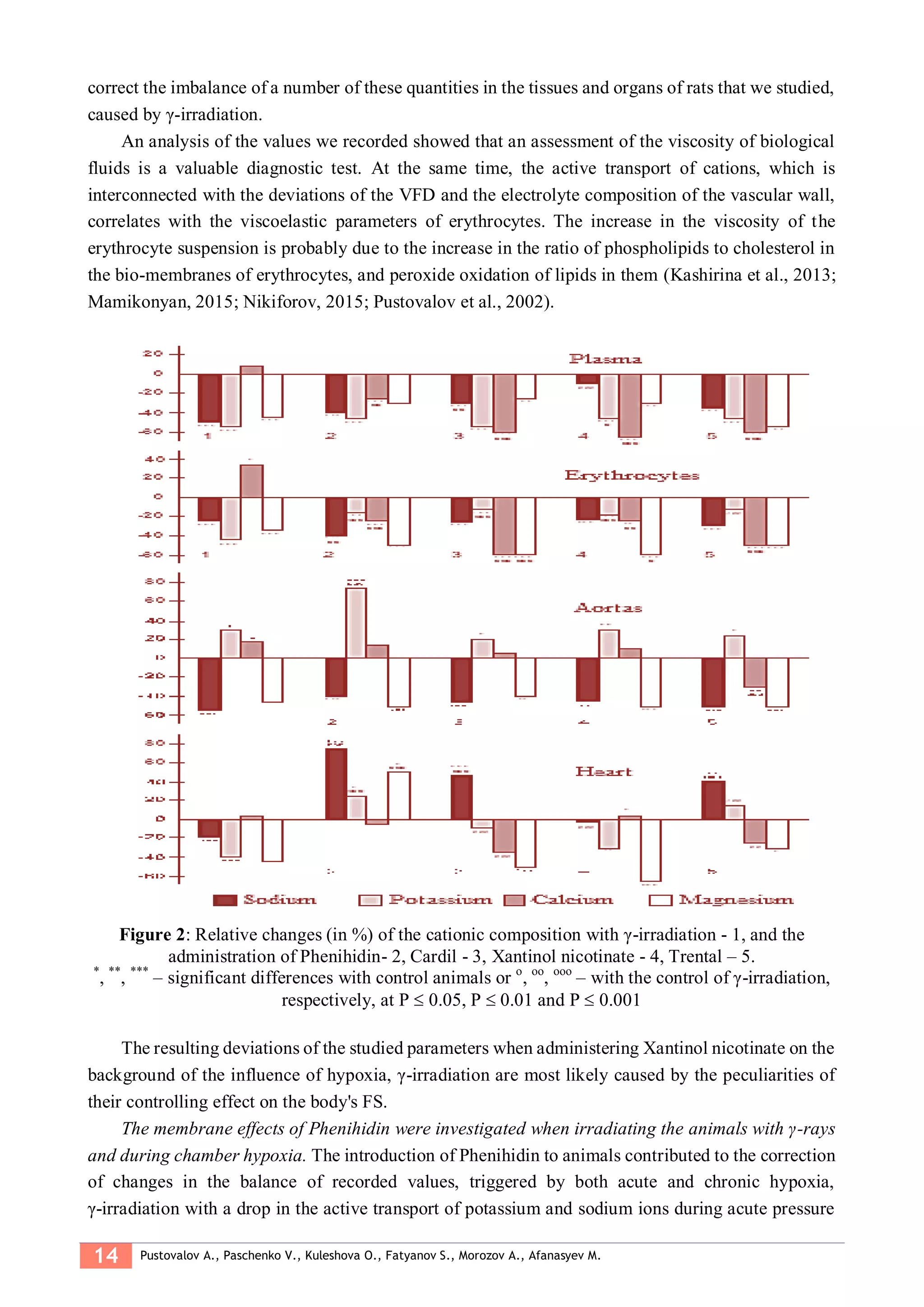
In a case of radiation injury, the administration of Xantinol nicotinate to animals caused positive
deviations of the studied values, but not more significant than its effect was observed during acute
hypoxia (Fig. 2). Experimental data allow us to consider possible to administer Xantinol nicotinate to
14 Pustovalov A., Paschenko V., Kuleshova O., Fatyanov S., Morozov A., Afanasyev M.
correct the imbalance of a number of these quantities in the tissues and organs of rats that we studied,
caused by γ-irradiation.
An analysis of the values we recorded showed that an assessment of the viscosity of biological
fluids is a valuable diagnostic test. At the same time, the active transport of cations, which is
interconnected with the deviations of the VFD and the electrolyte composition of the vascular wall,
correlates with the viscoelastic parameters of erythrocytes. The increase in the viscosity of the
erythrocyte suspension is probably due to the increase in the ratio of phospholipids to cholesterol in
the bio-membranes of erythrocytes, and peroxide oxidation of lipids in them (Kashirina et al., 2013;
Mamikonyan, 2015; Nikiforov, 2015; Pustovalov et al., 2002).
Figure 2: Relative changes (in %) of the cationic composition with γ-irradiation - 1, and the
administration of Phenihidin- 2, Cardil - 3, Xantinol nicotinate - 4, Trental – 5.
*
, **
, ***
– significant differences with control animals or o
, oo
, ooo
– with the control of γ-irradiation,
respectively, at P  0.05, Р  0.01 and Р  0.001
The resulting deviations of the studied parameters when administering Xantinol nicotinate on the
background of the influence of hypoxia, γ-irradiation are most likely caused by the peculiarities of
their controlling effect on the body's FS.
The membrane effects of Phenihidin were investigated when irradiating the animals with γ-rays
and during chamber hypoxia. The introduction of Phenihidin to animals contributed to the correction
of changes in the balance of recorded values, triggered by both acute and chronic hypoxia,
γ-irradiation with a drop in the active transport of potassium and sodium ions during acute pressure
*Corresponding author (Alexander Pustovalov) Email: alexanderpugachev@yahoo.com ©2020 International Transaction
Journal of Engineering, Management, & Applied Sciences & Technologies. Volume 11 No.4 ISSN 2228-9860 eISSN 1906-9642
CODEN: ITJEA8 Paper ID:11A04A http://TUENGR.COM/V11/11A04A.pdf DOI: 10.14456/ITJEMAST.2020.61
15
chamber hypoxia and γ-irradiation. At the same time, the correction was more significant during
chronic hypoxia and, to a lesser extent, during radiation exposure.
The effectiveness of the action of Cardil on the studied values during hypoxia and γ-irradiation of
rats was evaluated. The results of the experiment suggest that Cardil should be prescribed to correct
the deviations of the quantities we studied in tissues and organs during γ-irradiation of animals,
despite the fact that the level of cations in them differed from the concentration of ions in intact
animals. The greatest correction of the studied values was observed with γ-irradiation compared with
that with chronic pressure chamber hypoxia.
Evaluation of the correlation coefficients revealed the effect of the concentration of magnesium
cations on their level in the studied organs and tissues. Therefore, it should be noted that in the
biomedical work, in diagnostics, nowadays, more attention has been paid to studies of the parameters
of the content of magnesium cations both of the diagnostic test and of the corresponding treatment.
The deviations of the registered parameters noted by us with the introduction of Cardil under
hypoxic conditions or radiation damage are probably caused by the significance of their control effect
on FS and their characteristic bio-membrane effect.
The following are the concentrations of ions in the vascular wall, in the blood and the heart, as
well as the coefficient of blood viscosity when administering Trental to control rats, γ-irradiation,
pressure chamber hypoxia. The results we obtained revealed that the administration of Trental to
animals contributed to a significant correction of changes in the studied parameters in the organs and
tissues caused by acute hypoxia, but less significant than with the administration of Xantinol
nicotinate, Phenihidin under conditions of acute hypoxia. However, in chronic pressure chamber
hypoxia, the administration of Trental to animals did not cause any significant correction of the
recorded parameters in the abdominal aorta, the blood plasma, and erythrocytes.
With γ-irradiation of animals, the introduction of Trental contributed to the correction of Ca / Mg
in plasma and erythrocytes, as well as in the vascular wall and in the heart. In the abdominal aorta and
in the blood plasma, this was observed by reducing the level of Сa2+ with the unchanged level of
other electrolytes. In the heart, the directivity of deviations of K+, Ca2+, and Na+ concentrations was
opposite to that of γ-irradiation of animals (Figure 2).
Withγ-irradiation in erythrocytes, the correction of deviations of K+
and Ca2+
was noted without
any correction of the content of Mg2+
and Na+
in them. Since the decrease in the active transport of
potassium and sodium cations (as compared to their values during γ-irradiation), then the K/Na ratio
in erythrocytes and the K+
gradient in erythrocytes and plasma increased. And the passive transport of
Na+
cations decreased more significantly, than the active transport, and K+
ions transport was more
significant through erythrocyte bio-membranes (Figure 2).
The results of the study revealed that with the introduction of Trental to animals, it is possible to
correct a number of violations of the studied parameters in erythrocytes, abdominal aorta, in blood
plasma caused by γ-irradiation. A higher corrective effect with the introduction of Trental to animals
was observed with γ-irradiation and to a lesser extent with chronic pressure chamber hypoxia.
The results of our work allow us to conclude that the influence of pharmacological preparations
on the FS of the body in the conditions of various pathological conditions of the body should also be
provided for the correction of electrolyte imbalance in the tissues of organs, blood vessels, and blood.
16 Pustovalov A., Paschenko V., Kuleshova O., Fatyanov S., Morozov A., Afanasyev M.
CONCLUSION5.
The effects of SHF irradiation are due to the parameters of microwaves and the duration of their
exposure. In our study, the presence of a co-directional change in the level of cognominal ions in the
rat myocardium has been shown with various types of SHF irradiation of animals.
There were less pronounced deviations in the balance of the cations of the blood vessels during
the course action of microwaves than during a single one with greater intensity. In all the modes of
irradiation we studied, hyper-coagulation of blood was noted.
The reaction of the whole organism can be associated with the direct effect of SHF radiation on
blood cells. The induction of the release of protein structures from the membrane by microwaves and
conformational changes of proteins in the membrane are possible (Kazakov et al., 2009; Kiryushin &
Motalova, 2014; Terekhov et al., 2016; Egami & Hamashima, 2018).
However, hemodynamic shifts occur, probably, not so much because of the direct influence of
waves on the cardiovascular system, as due to some violation of the structure and function of the
body’s regulatory systems, ensuring the constancy of the internal environment of the body. When
angiodystonic disorders of the SHF etiology, it is necessary to introduce measures aimed at correcting
electrolyte disorders into the medical complex.
The strategy of treating hypoxic states, radioactive injuries and damaging effects of microwaves
by influencing the body's PS with leveling out imbalances of cations will help eliminate immediate
and long-term negative effects. It is justified to assign traditional and evaluate the significance of new
drugs to achieve the desired therapeutic effect and the degree of correction of electrolyte disorders
and viscoelastic properties of blood.
The results revealed both general and specific changes in the studied values against the
background of the damaging effects on animals that we examined. The severity and direction of their
deviations were due to the type of hypoxic state, the modes of microwave action and radioactive
damage. We discovered a number of regularities:
- the VFD of the vascular wall decreased, as well as the charge of erythrocytes with an increase in
the coefficient of blood and erythrocytes viscosity except for the decrease of blood viscosity during
γ-irradiation with a decrease in hematocrit and an increase in the time of blood clotting;
- the concentration of Mg2+
in the blood vessel wall decreased mainly with a decrease in the
magnitude of Ca2+
and Na+
in the tissues of the abdominal aorta, blood plasma, and erythrocytes
under the action of microwaves and radioactive damage. The similarity of the deviations of the
quantities studied by us at various external damaging effects is probably due to the presence of
common factors of destabilization of bio-membranes with a violation of their structure and an
imbalance of cations in them; general patterns of molecular organization of protein-membrane
receptors and protein ATPases; probably the uniformity of membrane damage by channel-forming
proteins and the entry of various toxins inside the cell and, probably, the ability of Na, K-ATPase, to
"adapt" to the negative influences of the surrounding environment (Kazakov et al., 2009; Kashirina et
al., 2013; Pustovalov et al., 2002; Terekhina et al., 2012; Filipets, N.D. & Gozhenko, A.I. (2014;
Afridi et al., 2013; Panhwar et al., 2014).
There was a decrease in the level of Mg2+
in the heart and plasma with an increase in the level of
Ca2+
in the myocardium under conditions of acute or chronic pressure chamber hypoxia and
γ-irradiation. The concentration of Ca2+
increased in erythrocytes with a drop in the level of Na+
and
K+
in the heart against the background of various types of hypoxia, while the level of Ca2+
and the
*Corresponding author (Alexander Pustovalov) Email: alexanderpugachev@yahoo.com ©2020 International Transaction
Journal of Engineering, Management, & Applied Sciences & Technologies. Volume 11 No.4 ISSN 2228-9860 eISSN 1906-9642
CODEN: ITJEA8 Paper ID:11A04A http://TUENGR.COM/V11/11A04A.pdf DOI: 10.14456/ITJEMAST.2020.61
17
value of Ca/Mg in the heart, erythrocytes and blood plasma increased with an increase in the activity
of passive Na+ transport during chronic pressure chamber hypoxia, and K+
cations in a case of acute
hypoxia.
With different modes of γ-irradiation the concentration of Na+
, K+
and Mg2+
decreased in the
blood plasma together with increasing values of Ca/Mg and the activity of Na+
, K+
-ATPases in
erythrocyte membranes and the passive transfer of K+
cations accompanied with a decrease in the
total level of ions both in the heart tissues and the abdominal aorta, and in blood plasma and
erythrocytes.
There was a drop in K/Na values in erythrocytes, both under the action of microwaves and
radioactive damage, as well as in chronic pressure chamber hypoxia. A decrease in blood clotting
time was noted during SHF irradiation and hypoxia, and γ-irradiation contributed to the process of
slowing blood coagulation.
Concluding remarks are
1. Under the influence of microwaves on the PS of the organism of animals, a decrease in the
VFD of the vascular wall, the charge of erythrocytes with an increase in the viscosity coefficient of
erythrocytes and blood were registered. The level of Mg2+
in the tissues of the vascular wall was
reduced, as well as the magnitude of the Na+
and K+
gradient both in the abdominal aorta and in the
erythrocytes and blood plasma.
2. The administration of Neodicumarinum at a dose of 0.003 g/kg at the background of the action
of microwaves contributes not to an increase, but to a decrease in blood clotting time with an increase
in the viscosity of the erythrocyte suspension and an increase in deviations of the content of ions in
the tissues of the vascular wall, in the blood plasma and erythrocytes.
3. The introduction of Xantinol nicotinate for 7 days at a dose of 0.003 g/kg three times a day
corrects changes in the balance of Na+
, K+
, Mg2+
and Ca2+
ions in the myocardium, abdominal aorta,
and blood viscosity of animals provoked by acute hypoxia with an increase in both active and passive
transport of sodium and potassium through the erythrocyte bio-membranes.
4. The imbalance of Na+
, K+
, Mg2+
and Ca2+
ions and the ratio of their contents in cats' blood
vessels studied by us is determined by the parameters of the action of microwaves and is more
pronounced at the background of microwaves at a wavelength of 0.125 m for 1.5 hours at an intensity
of 30 W/m2
, than during their exposure during a month at EFD of 0.4 W/m2
for 300 minutes a day five
days a week.
5. The course administration of Xantinol nicotinate for 7 days (daily dose of 0.09 g/kg) did not
cause any significant correction of the balance of Na+
, Mg2+
, K+
and Ca2+
ions in the tissues of the
myocardium, blood vessel, and also the blood viscosity of animals caused by chronic pressure
chamber hypoxia.
6. With γ-irradiation of animals with a dose of 5 Gray, a correction of the balance of Na+
, Mg2+
,
K+
and Ca2+
ions and blood viscosity of white rats, as well as the blood viscosity of animals by 7-day
administration of Xantinol nicotinate in a daily dose of 0.09 g/kg was registered caused by
γ-radiation, but less pronounced than in acute hypoxia.
18 Pustovalov A., Paschenko V., Kuleshova O., Fatyanov S., Morozov A., Afanasyev M.
7. At the background of the acute pressure chamber hypoxia of animals, the effect of Phenihidin,
Cardil, Xantinol nicotinate, Trental (in daily doses here and in the following conclusions,
respectively, 0.005 g/kg, 0.0105 g/kg, 0.09 g/kg and 0.020 g/kg) on FS of the organism contribute to
the growth of K / Na values in erythrocytes and the K+
gradient values in the vascular wall, blood
plasma and erythrocytes with a decrease in active and passive transport of Na+
and K+
ions through
erythrocyte bio-membranes (except for an increase in active transport and passive transfer of Na+
ions, K+
when administration of Xantinol nicotinate).
8. Xantinol nicotinate and Trental at the background of chronic pressure chamber hypoxia in
animals causes some correction of the Na+
, Mg2+
and K+
balance in the heart with a decrease in the
activity of both Na+
, K+
-ATPase and passive transfer of Na+
and K+
through erythrocyte
bio-membranes and erythrocyte suspension viscosity, but does not decline hematocrit and blood
viscosity index. Cardil against the background of chronic pressure chamber hypoxia corrects the
balance of Na+
, K+
and Ca2+
in the vascular wall, erythrocytes and in the blood plasma of animals
with some decrease in the activity of both Na+
, K+
-ATPase and passive transfer of Na+
, K+
through
erythrocyte bio-membranes when growing the level of Ca2+
in the heart.
9. In a case of administration of Cardil, Xantinol nicotinate, Trental and Phenihidin at the
background of γ-irradiation, acute pressure chamber hypoxia the Mg2+
level in erythrocytes, the
blood plasma, the myocardium, and the vascular wall is less than that in control rats.
10. During hypoxia, exposure to microwaves, and radioactive damage to animals, the same
tendencies were revealed: the IWPD of the vascular wall or erythrocytes charge decline when there is
some increase in the viscosity of erythrocytes and blood, except for the drop in blood viscosity during
γ-irradiation with a decrease in hematocrit and blood coagulation. In a case of microwaves and
radioactive irradiation the concentration of Mg2+
in the vascular wall, as well as the gradient of Na+
and Ca2+
in the vascular wall, in erythrocytes and blood plasma decreases. Acute chronic hypoxia and
γ-irradiation reduce the content of Mg2+
in the heart and in the blood plasma with an increase in the
level of Ca2+
in the myocardium.
11. At the background of microwaves, radioactive damage and pressure chamber hypoxia, the
following features of deviations of the studied biophysical parameters of blood functioning,
abdominal aorta and the heart of rats:
- the imbalance of ions in the vascular wall, blood plasma and erythrocytes is more significant
during microwave irradiation than during chamber hypoxia, and in the myocardium, to a greater
extent during hypoxia; the active transport of potassium and sodium is significantly rejected during
γ-irradiation than during hypoxia; the viscosity of erythrocytes is to a greater extent increased with
pressure chamber hypoxia and γ-irradiation than with microwave irradiation;
- the concentration of Ca2
and the value of Ca / Mg in the blood plasma, erythrocytes and the
heart increase with a decline in the Na / K ratio in the plasma and the vascular wall and an increase in
hematocrit during the pressure chamber of chronic and acute hypoxia;
- with γ-irradiation at a dose of 5 Gray, the concentrations of Na+
, Mg2+
, Ca2+
and K+
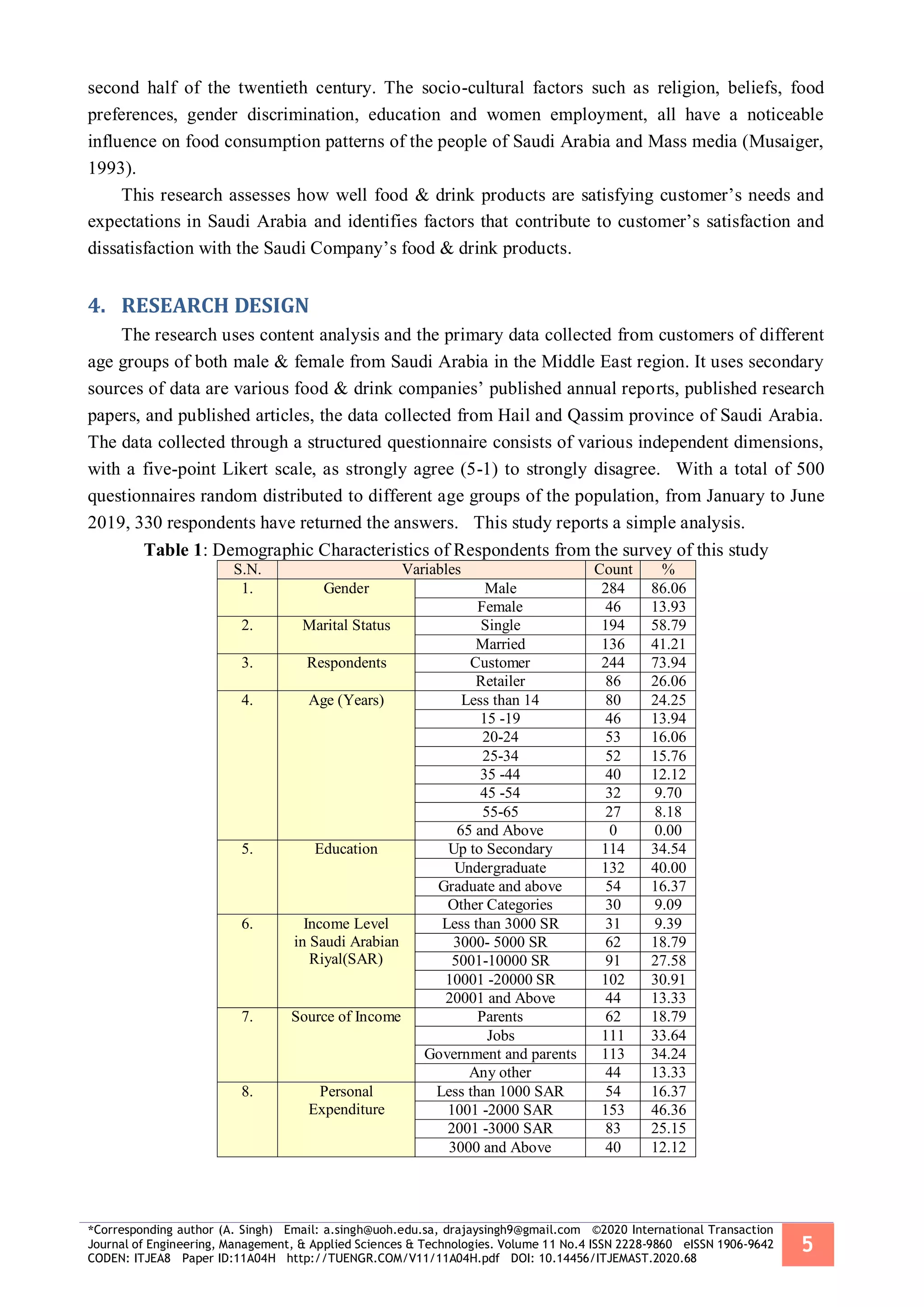
both in the
tissues of the heart and the vascular wall have unidirectionally deviated. An increase in the values of
Na / K and a decrease in the total content of all the ions studied by us take place in erythrocytes and
the blood plasma.
*Corresponding author (Alexander Pustovalov) Email: alexanderpugachev@yahoo.com ©2020 International Transaction
Journal of Engineering, Management, & Applied Sciences & Technologies. Volume 11 No.4 ISSN 2228-9860 eISSN 1906-9642
CODEN: ITJEA8 Paper ID:11A04A http://TUENGR.COM/V11/11A04A.pdf DOI: 10.14456/ITJEMAST.2020.61
19
12. The intensities of the correction of the imbalance of ions in the plasma, in erythrocytes, heart
tissues and abdominal aorta, the blood viscosity coefficient of drugs are different:
- significant: Trental, Cardil, Phenihidin, Xantinol nicotinate with acute pressure chamber
hypoxia and γ-irradiation; Phenihidin, Cardil with chronic hypoxia; Heparin at a dose of 0.150 U/g
and Streptase at a dose of 2.5 U/g when pressure chamber hypoxia;
- cause a slight correction: Trental, Xantinol nicotinate - with pressure chamber chronic hypoxia;
Vikasol, Protamine Sulphate in the appropriate doses of 0.00025 mg/g and 0.0001 mg/g with
γ-irradiation;
- Neodikumarinum at a dose of 0.003 mg/g under the action of microwaves does not cause a
slowdown, but rather an acceleration of the blood coagulation process, and also increases the
viscosity of erythrocytes and imbalance of ions in erythrocytes, vascular wall and blood plasma.
13. Under the action of microwaves, radiation damage, acute chamber pressure and chronic
hypoxia, the effects of the drugs studied by us change (compared to their effects in control rats) as for
blood viscosity values and ion levels in erythrocytes, vascular wall and blood of animals:
- acute chamber hypoxia causes an increase in the action of Phenihidin on positive changes in
blood viscosity, on the reduction of calcium in erythrocytes and an increase in the level of magnesium
in the heart;
- chronic pressure chamber hypoxia reduces the effect of Phenihidin, Cardil, Trental, Xantinol
nicotinate on an increase in the IWPD of the vascular wall, reduces the effect of Cardil in myocardial
tissues, but increases the effect of Xantinol nicotinate on the blood viscosity;
- radiation damage reduces the effect of Cardil and Xantinol nicotinate on increasing the
frequency of the IWPD of the abdominal aorta and reduces the effect of Xantinol nicotinate on the
balance of cations in the wall of the abdominal aorta.
14. High correlation coefficients have also been recorded between deviations of the ion content
in erythrocytes or blood plasma, impaired concentrations of cations in the tissues of the myocardium
or vascular wall, as well as between the concentrations of Mg2+
cations in myocardial and vascular
tissues and in erythrocytes, blood plasma and Na+
, Ca2+
, K+
in them under microwave irradiation,
radiation damage and pressure-chamber hypoxia, and the prescription of the drugs we studied.
DATA AND MATERIALS AVAILABILITY6.
Information relevant to this study is available by contacting the corresponding author.
REFERENCES7.
Afridi, H.I.; Panhwar, A.H.; Kazi, T.G. & Talpur, F.N. (2013). Evaluation of calcium, magnesium,
potassium and sodium in biological samples of male human immunodeficiency virus patients
with tuberculosis and diarrhea compared to healthy control subjects in Pakistan. Clin. Lab.,
59(5-6), 539-542.
Bi, R., Dai, Y., & Ma, Z. (2018). Endothelial cell autophagy in chronic intermittent hypoxia is
impaired by miRNA-30a-mediated translational control of Beclin-1. J. of Cell Biochem.
Choi, K.H., Jeon, J.Y., & Lee, Y.E. (2018). Synergistic Activity of Paclitaxel, Sorafenib,
and Radiation Therapy in advanced Renal Cell Carcinoma and Breast Cancer. Transl. Oncol.
Davis, J.T., Boulet, L.M., & Hardinat, A.M. (2018). Ventilatory responses to acute hypoxia and
hypercapnia in humans with a patent foramen ovale.J. of Appl. Physiol.
20 Pustovalov A., Paschenko V., Kuleshova O., Fatyanov S., Morozov A., Afanasyev M.
Egami, H. & Hamashima, Y. (2018). Practical and Scalable Organic Reactions with Flow Microwave
Apparatus. Chem. Rec.
Filipets, N.D. & Gozhenko, A.I. (2014). Comparative evaluation of the nephroprotective properties
of modulators of potassium and calcium channels in experimental kidney damage. Experim.
and clinic. pharmacology, 77(1), 10-12.
Grün, J., Köhn, J., & Loutfi-Kraussat, B. (2018). Second infield re-irradiation with a resulting
cumulative equivalent dose (EQD2max ) of >180Gy for patients with recurrent head and neck
cancer. Head Neck.
Kashirina, L. G., Antonov, A. V., & Polischchuk, S. D. (2013). Lipid peroxidation and antioxidant
protection of the body in young cows of different productivity. Herald of Ryazan State
Agrotechnological University, 1, 8-12.
Kazakov, A. V., Orlov, B. N., & Churmasov, A. V. (2009). BIOLOGICAL ROLE OF
ELECTROMAGNETIC RADIATION OF OPTICAL AND RADIO-FREQUENCY
RANGES. Сельскохозяйственная биология, (6), 11-17.
Kiryushin, V. A., & Motalova, T. V. (2014). The intensity of electromagnetic radiation generated by
cellular radiotelephone communication. Materials for the 18th All-Russian sc.-pract. conf.
with intern. particip. Social-hygienic monitoring of public health. Ryazan, RyazSMU, 18,
100-104.
Landyshev, Yu. S., Scherban, N. A., & Smorodina, E. I. (2009). The clinical significance of
micro-rheological disorders in patients with chronic kidney disease. Dyspnea and associated
syndromes. Inter-region. coll. of sc. works. Issue 3. Ryazan, RyazGMU, 172-175.
Mamikonyan, V. R. (2015). The effect of blood rheological properties on ophthalmohemodynamics.
Herald of ophthalmology, 131(3),17-21.
Nan, J., Nan, C., & Ye, J. (2018). EGCG protects cardiomyocytes against hypoxia-reperfusion injury
via inhibiting OMA1 activation. J. of Cell Sci.
Nikiforov, V.S. (2015). Blood viscosity as a target of therapeutic effects in cardiovascular pathology.
Pharmateca, 13, 59-62.
Panhwar, A.H., Kazi, T.G., & Afridi, H.I. (2014). Distribution of potassium, calcium, magnesium and
sodium levels in biological samples of Pakistani hypertensive patients and control subjects.
Clin. Lab., (2), 132-137.
Pustovalov, A.P., Rachkov, A.K., & Ivlev, Yu.I. (2002). Regulation of the balance of electrolytes in
the tissues of the heart and blood vessels and blood viscosity by diltiazem during experimental
hypertension in rats. Practical and experimental pharmacotherapy of cardiovascular diseases.
Coll. of sc. articles, Ryazan, 168-170.
Ruiter, S.J.S., Heerink, W.J. & de Jong, K.P. (2018). Liver microwave ablation: a systematic review
of various FDA-approved systems. Eur. Radiol.
Shen, Q., Hong, L., Deng, X. & Shen, L. (2018). Completely stopping microwaves with extremely
enhanced magnetic fields. Sci. Rep.
Terekhina, A.A.; Bakovetskaya, O.V. & Fedosova, O.A. (2012). Electrolytes in biological fluids of
mares in connection with the functional state of the reproductive system throughout the year.
Herald of Ryazan State Agrotechnological University, 2, 29-31.
Terekhov, I.V.; Bondar, S.S. & Khadartsev, A.A. (2016). Laboratory determination of intracellular
factors of antiviral protection in community-acquired pneumonia in assessing the effects of
low-intensity SHF radiation. Clinical laboratory diagnostics, 6, 62-66.
*Corresponding author (Alexander Pustovalov) Email: alexanderpugachev@yahoo.com ©2020 International Transaction
Journal of Engineering, Management, & Applied Sciences & Technologies. Volume 11 No.4 ISSN 2228-9860 eISSN 1906-9642
CODEN: ITJEA8 Paper ID:11A04A http://TUENGR.COM/V11/11A04A.pdf DOI: 10.14456/ITJEMAST.2020.61
21
Zima, G. V., & Dreval, V. I. (2000). Influence of ionizing radiation in a wide range on the structural
and functional characteristics of the protein and lipid components of the erythrocyte plasma
membranes. Radiat. Biology. Radioecology, 40(3), 261-265.
Professor Dr.Alexander Pustovalov is Professor of the Ryazan State Agrotechnological University named after P.A.
Kostychev. He holds a Doctors of Biological Sciences. He is a resercher in Physics, Medbiophysics, Higher
Mathematics, Medical Electronics and Cybernetics, also in the Effect of Chronic Hypoxia on Cation Balance in the
Cardiovascular System and Blood Viscosity.
Professor Dr.Paschenko Vasily is Professor of the Electrical Engineering and Physics Department, Ryazan State
Agrotechnological University named after P.A. Kostychev. He holds a Doctor of Biological Sciences. He is a
resercher in investigation of the effect of laser radiation on seed germination and animal productivity.
Olga Kuleshova is a Researcher in the Effect of Chronic Hypoxia on Cation Balance in the Cardiovascular System and
Blood Viscosity.
Sergey Fatyanov is an Associate Professor and Head of the Electrical Engineering and Physics Department, Ryazan
State Agrotechnological University named after P.A. Kostychev. He is a Candidate of Engineering Sciences. He is a
resercher in UHF Therapy in the Treatment of Animals and Increase of their Productivity.
Alexander Morozov is a Senior Lecturer of the Electrical Engineering and Physics Department, Ryazan State
Agrotechnological University named after P.A. Kostychev. He is a Candidate of Engineering Sciences. He is a
resercher in UHF Therapy in the Treatment of Animals and Increase of their Productivity.
Mikhail Afanasyev is an Associate Professor of the Electrical Engineering and Physics Department, Ryazan State
Agrotechnological University named after P.A. Kostychev. He is a Candidate of Agricultural Sciences. He is a
resercher in Dairy Productivity of Cows in Connection with their Features of Cardiovascular System.
Trademarks Disclaimer: All product names including trademarks™ or registered® trademarks
mentioned in this article are the property of their respective owners, using for identification and
educational purposes only. The use of them does not imply any endorsement or affiliation.
*Corresponding author (Thu-Trang Thi Doan). Email: doanthithutrang@iuh.edu.vn ©2020 International Transaction Journal
of Engineering, Management, & Applied Sciences & Technologies. Volume 11 No.4 ISSN 2228-9860 eISSN 1906-9642 CODEN:
ITJEA8 Paper ID:11A04B http://TUENGR.COM/V11/11A04B.pdf DOI: 10.14456/ITJEMAST.2020.62
1
International Transaction Journal of Engineering,
Management, & Applied Sciences & Technologies
http://TuEngr.com
PAPER ID: 11A04B
FACTORS AFFECTING INTENTIONS TO USE CREDIT CARDS
IN VIETNAM: AN EMPIRICAL RESEARCH BASED ON UTAUT
Thu-Trang Thi Doan
a*
a
Faculty of Finance and Banking, Industrial University of Ho Chi Minh City (IUH), VIETNAM.
A R T I C L E I N F O A B S T RA C T
Article history:
Received 09 September 2019
Received in revised form 18
November 2019
Accepted 28 November 2019
Available online 05 December
2019
Keywords:
Payment with credit card;
Performance expectancy;
Social influence;
Facilitating conditions;
Effort expectancy;
Transaction with credit
cards.
The paper examines factors that influence intentions to use credit
cards in Vietnam. Based on the Unified Theory of Acceptance and Use
of Technology (UTAUT), the study develops a theoretical paradigm
including four explanatory variables of intentions to use credit card
services which are performance expectancy (PE), social influence (SI),
effort expectancy (EE), and facilitating conditions (FC). The empirical
results obtained a sample of 630 valid participants reveal the significant
and concurrent impact of the four determinants. Specifically,
performance expectancy and social influence exert the most significant
impact on intentions of credit card use. We have confidence that the
findings will provide banks with guidance in improving their services as
well as developing their media and marketing strategies in order to
highlight efficiency, ease of use, and convenience and popularity,
thereby promoting the intention of credit card adoption.
Disciplinary: Management Sciences (Business Management and
Banking).
©2020 INT TRANS J ENG MANAG SCI TECH.
INTRODUCTION1.
The year 2020 is a landmark in the history of 70 years since the first credit card was first issued.
After seven decades, credit cards have been popularized worldwide and recognized as a payment
method without cash. Together with this positive influence, credit cards also help boost the economy.
According to Moody’s Analytics (2016), more use of credit card gives a 0.1% cumulative rise in
global GDP which equals a $74 billion contribution to yearly GDP. This popularity rocketed in the
U.S, one of the biggest markets. TransUnion (2016) reported that the use of credit and debit card
reached a peak in the U.S, where nearly 79% of consumers use credit cards. However, the mentioned
data could only reveal half of the story so it is necessary to investigate other emerging markets in the
East and Southeast Asia.
According to World Bank figures in 2017, in Southeast Asian countries like Indonesia, the
Philippines, Thailand and Vietnam, credit card ownership still languishes at single-digit percentages.
©2020 International Transaction Journal of Engineering, Management, & Applied Sciences & Technologies
2 Thu-Trang Thi Doan
The only ones bucking the ASEAN trend are Singapore (48%) and Malaysia (21%). In the bigger
Asian markets of India and China, the story is similar – credit card penetration in India is at 2% while
China fares slightly better at 25%. That is still lower than in developed economies like Japan, the
UK, and the USA.
With low levels of market penetration in the Asia-Pacific region, credit cards have available
room for growth. But with the rise of mobile payments, that space is considerably shrinking. In the
initial period of e-commerce, credit cards and online purchase seemed destined for each other, which
were assessed to be the most convenient cashless payment. Nevertheless, with the growth of mobile
technologies and apps, alternate payment solutions are launched rapidly. Thanks to faster checkouts
and flexible services, they promise a more comfortable shopping experience than traditional credit
card use.
In fact, digital payments have gradually been playing a key role in the global economy.
Particularly, in 2017, they reached around US$ 3.1 trillion, or 13% of all commercial transactions and
predicted to climb to US$4.1 trillion in 2019. At this rate, alternate payment solutions could overtake
credit payment on e-commerce platforms by the end of 2019. In this context, credit cards are
surrendering their users and turnover to new payments. There is no doubt that credit card service
needs to be changed for development. With many advancements in information technology,
consumers are always in demand for speed, convenience, most notable, mobiles are recognized as the
future of payments.
Credit card service is nascent in Vietnam as compared to the long history of global credit
payment. Being official released in 2002, Vietnam's credit card service was experiencing many
difficulties and unknown to a majority of consumers. Meanwhile, a limited number of theoretical and
practical studies have aimed to determine the level of credit card acceptance of consumers. Hence, it
is vital to identify determinants of intentions to utilize credit cards in order to help banks retain and
attract customers. This paper aims to investigate these determinants among Vietnamese users,
thereby assisting the management in giving wise decisions and business strategies to attract
customers.
LITERATURE REVIEW2.
The Unified Theory of Acceptance and Use of Technology (UTAUT), based on eight theories
and models of Technology Acceptance, was first introduced by Venkatesh et al. (2003). Following
earlier theories of the Technology Acceptance Model, the UTAUT assumes that behavioral intention
is a factor that exerts the most significant influence on the real user behavior of customers. Indeed,
according to Venkatesh et al. (2003), behavioral intention can be explained for 70% cases of real user
behavior, being superior to the earlier studies (with their explanation at 30 to 45 percent). More than
that, the UTAUT has been adopted by a big number of empirical researchers. Specifically, Martín and
Herrero (2012) employed it to examine the impact of the user’s psychological factors on the online
purchase intention in rural tourism by the observation of 1083 tourists that had previously visited
several websites of rural accommodations. In the same vein, Abubakar and Ahmad (2013)
investigated the correlation between the UTAUT and behavioral intention to the adoption at Point of
Sale (POS) terminals. This theory was also utilized by Jambulingam (2013) to identify determinants
of behavioral intention to adopt mobile technology in the learning environment by observing 351
*Corresponding author (Thu-Trang Thi Doan). Email: doanthithutrang@iuh.edu.vn ©2020 International Transaction Journal
of Engineering, Management, & Applied Sciences & Technologies. Volume 11 No.4 ISSN 2228-9860 eISSN 1906-9642 CODEN:
ITJEA8 Paper ID:11A04B http://TUENGR.COM/V11/11A04B.pdf DOI: 10.14456/ITJEMAST.2020.62
3
students from private Malaysian universities. Jansorn et al. (2013) also adopted this theory to
determine the factors which influence the acceptance of e-payment service in Thailand with the
participation of 100 correspondents. Another analysis of Junadi and Sfenrianto (2015) also suggested
the UTAUT model examine intention to use electronic payments among Indonesian consumers.
Maillet et al. (2015) gave an explanation for the acceptance, adoption and satisfaction of 616 nurses
using electronic patient records in Canada by testing a theoretical model adapted from the UTAUT.
Similarly, Abrahão et al. (2016) adapted it to explain the intention to use mobile payments by the
participation of 605 Brazilian users. A model of the UTAUT was also adapted by Chauhan and
Jaiswal (2016) for testing determinants of acceptance of ERP software training in business schools by
researching 324 students in India. The UTAUT was also used by Kissi et al. (2017) to determine
factors that exert impact on intention to use debit cards of 400 students in the faculty of Business
Administration at Nigeria University. With a framework of the UTAUT, Sarfaraz (2017) tested
drivers of intention to adopt mobile banking by conducting surveys among 340 observations in
Jordan. A study by Isaac et al. (2018) also adapted the UTAUT to examine factors that influence
decisions to use the internet of 520 users in organizations in Yemen. Chao (2019) adopted a model of
the UTAUT to predict factors influencing intention to use mobile learning by delivering online
surveys to 1562 students in Taiwan. In summary, the UTAUT is superior to any of the prior theories.
Hence, it is selected in this paper to examine drivers of intention to use a credit card of Vietnamese.
The four factors affecting the intention of credit card adoption are mentioned including:
2.1 PERFORMANCE EXPECTANCY
In this study, based on the framework of the UTAUT developed by Venkatesh et al (2003),
performance expectancy is defined as the degree to which users believe credit card services can help
to improve their work performance. By the analyses of determinants of technology use intention,
Martín & Herrero (2012), Jambulingam (2013) and Isaac et al. (2018) stressed the positive correlation
between performance expectancy and intention. This relationship was also proved by Jansorn et al.
(2013), Abrahão et al. (2016), Kissi et al. (2017) and Sarfaraz (2017) who researched factors of
intention to use banking services. Further, these results also show that performance expectancy is the
most significant antecedent of behaviors in technology and banking service adoption. From this
premise, the hypothesis is proposed:
H1: Performance expectancy has a positive impact on the intention to use credit card services.
2.2 EFFORT EXPECTANCY
In this study, we define effort expectancy as the extent to which users perceive credit card
services as easy to use. Up to now, there have been many studies investigating the influence of effort
expectancy on behavioral intention. Martín & Herrero (2012), Abrahão et al. (2016), Sarfaraz (2017)
and Isaac et al. (2018) recognized that effort expectancy is positively correlated to behavioral
intention. however, some scholars argued that effort expectancy is not a prediction of intention
(Jambulingam, 2013; Jansorn et al., 2013; Kissi et al., 2017). Especially to credit card services,
problems occurring in use will cause customers considerable financial loss. Thus, if they can perceive
the ease to use that is without problems, their intention will increase. Hence, we hypothesized that:
H2: Effort expectancy has a positive impact on the intention to use credit card services.
2.3 SOCIAL INFLUENCE
For the purpose of this study, social influence is defined as the degree to which users perceive
4 Thu-Trang Thi Doan
that important others believe they should use a credit card. Social influence is assessed to be a major
driver of behavioral intention which is stated by subjective norms in other models like TRA. A
number of recent studies have determined the impact of social influence on behavioral intention.
Some of them concluded that social influence is a positive determinant of behavioral intention
(Abrahão et al., 2016; Kissi et al., 2017; Isaac et al., 2018). Meanwhile, others revealed that social
influence is insignificantly related to intention (Martín & Herrero, 2012; Jambulingam, 2013; Jansorn
et al., 2013; Sarfaraz, 2017). Different from Western countries, social pressure, and influences from
others are significant, so it is vital to analyze social influence toward the intention. Thus, we have
H3: Social influence has a positive impact on the intention to use credit card services.
2.4 FACILITATING CONDITIONS
In this study, facilitating conditions is defined as the extent to which users believe that
administrative and technical structures exist to support the adoption of credit card services. Utilizing
credit cards requires certain skills such as Internet connectivity, mobile phone usage, and knowledge
of credit card online services, so those with these skills have a greater possibility to use credit cards.
From this idea, the following assumption is developed:
H4: Facilitating conditions have a positive impact on the intention to use credit card services.
METHODOLOGY3.
3.1 RESEARCH MODEL
Following the UTAUT and prior studies, the theoretical paradigm is suggested
IU = β0 + β1 * PE + β2 * EE + β3 * FC + β4 * SI + ε (1),
where
Dependent variable: Intention to use credit card services (IU).
Independent variables: performance expectancy (PE), effort expectancy (EE), facilitating
conditions (FC), social influence (SI).
The term ε is the regression model error term.
Figure 1: The proposed model of factors affecting credit card as a method of payment.
The survey is developed on the basis of previous theoretical and empirical models, combining
with constructing some new questions in order to bring the paper the novelty and appropriateness to
the actual credit card services in the Ho Chi Minh city context. Table 1 gives the survey design.
(SI)
Facilitating conditions
Effort expectancy
(EE) Intention to use credit card services
(IU)
H1
H2
H3
H4
*Corresponding author (Thu-Trang Thi Doan). Email: doanthithutrang@iuh.edu.vn ©2020 International Transaction Journal
of Engineering, Management, & Applied Sciences & Technologies. Volume 11 No.4 ISSN 2228-9860 eISSN 1906-9642 CODEN:
ITJEA8 Paper ID:11A04B http://TUENGR.COM/V11/11A04B.pdf DOI: 10.14456/ITJEMAST.2020.62
5
Table 1: Measuring scales and references for the proposed constructs.
Variables Code Definitions References
Performance
expectancy (PE)
PE1
Using credit card services enables users
to manage their financial information
well.
Newly constructed
PE2
Users can save more time by using
credit card services.
Martín and Herrero (2012); Junadi and Sfenrianto
(2015); Abrahão et al. (2016); Chauhan and Jaiswal
(2016); Kissi et al. (2017); Sarfaraz (2017); Isaac et al.
(2018).
PE3
It is unnecessary for users to pay a
frequent visit to traditional banks.
Martín and Herrero (2012); Junadi and Sfenrianto
(2015); Abrahão et al. (2016); Sarfaraz (2017); Isaac
et al. (2018).
PE4
Using credit card services increases
users’ productivity and work
performance.
Martín and Herrero (2012); Junadi and Sfenrianto
(2015); Abrahão et al. (2016); Chauhan and Jaiswal
(2016); Kissi et al. (2017); Sarfaraz (2017); Isaac et al.
(2018).
PE5
Users can access to more integrated
services when using credit cards.
Martín and Herrero (2012); Abrahão et al. (2016);
Chauhan and Jaiswal (2016); Kissi et al. (2017);
Sarfaraz (2017); Isaac et al. (2018).
Effort
expectancy (EE)
EE1
Users can interact with credit card
service systems everywhere.
Martín and Herrero (2012); Junadi and Sfenrianto
(2015); Abrahão et al. (2016); Chauhan and Jaiswal
(2016); Kissi et al. (2017); Sarfaraz (2017); Isaac et al.
(2018).
EE2
Instructions are clear and
understandable.
Martín and Herrero (2012); Abrahão et al. (2016);
Chauhan and Jaiswal (2016); Sarfaraz (2017).
EE3
Processes in credit card services are
simple to users.
Martín and Herrero (2012); Junadi and Sfenrianto
(2015); Abrahão et al. (2016); Chauhan and Jaiswal
(2016); Kissi et al. (2017); Sarfaraz (2017); Isaac et
al. (2018).
EE4
There are always 24/7 hotlines for
customer assistance.
Newly constructed
Facilitating
conditions (FC)
FC1
Users have the necessary resources for
the use of credit card services.
Martín and Herrero (2012); Chauhan and Jaiswal
(2016); Kissi et al. (2017); Isaac et al. (2018).
FC2
Users have the necessary knowledge for
the use of credit card services.
Martín and Herrero (2012); Chauhan and Jaiswal
(2016); Kissi et al. (2017).
FC3
Languages used in a transaction are
clear and understandable.
Newly constructed
Social influence
(SI)
SI1
Users’ acquaintances (relative,
friends…) frequently use credit card
services.
Martín and Herrero (2012); Junadi and Sfenrianto
(2015); Abrahão et al. (2016); Chauhan and Jaiswal
(2016); Kissi et al. (2017); Sarfaraz (2017); Isaac et al.
(2018).
SI2
Users’ working/ studying environments
are supportive of credit card services
Abrahão et al. (2016); Kissi et al. (2017); Sarfaraz
(2017).
SI3
Credit card services are following
social trends.
Abrahão et al. (2016).
SI4
Credit card services are advertised
everywhere.
Newly constructed
Intention to use
credit card
services (IU)
IU1
Users intend to use/ keep using credit
cards in the future.
Martín and Herrero (2012); Junadi and Sfenrianto
(2015); Abrahão et al. (2016); Chauhan and Jaiswal
(2016); Kissi et al. (2017); Sarfaraz (2017); Isaac et al.
(2018).
IU2
Users will use credit cards more
frequently.
Kissi et al. (2017); Isaac et al. (2018).
IU3
Users intend to recommend credit card
services to their friends and relatives.
Junadi and Sfenrianto (2015).
3.2 DATA COLLECTION
A survey is conducted to collect data in 63 provinces in Vietnam during May-August, 2019. Data
are gathered by using questionnaires that are directly delivered and via online tools under forms of
Google docs. Before a survey, a test is conducted to ensure the validity and comprehensibility of the
questionnaires. A total of 1000 paper and online questionnaires are administered, in which 752 forms
6 Thu-Trang Thi Doan
are collected with 630 valid questionnaires are obtained for the analysis.
3.3 RESEARCH METHODOLOGY
This research employs exploratory factor analysis (EFA) and multiple regression to evaluate the
factors affecting the intention to use credit cards in 63 provinces in Vietnam. EFA allows to extract
observed variables to one or a smaller number of latent variables ('factors'). Meanwhile, this
analysis determine convergent validity according to how participant responses and its discriminant
validity. After the analysis, only the set of factors satisfied can be included in the next steps.
RESULT4.
4.1 DESCRIPTIVE STATISTICS
Figure 2 shows the detail of questionnaire participants, including gender, age, and income.
Figure 2: Descriptive statistics of participants.
4.2 CRONBACH’S ALPHA TEST
Cronbach’s Alpha is an estimate of the reliability of the construct. This test is to examine the
robustness and correlation among observed variables. Moreover, this helps analyzers eliminate
inappropriate variables and constrain garbage value in the model. Accordingly, only variable with the
corrected item-total correlation being greater than 0.3 and alpha being greater than 0.6 is considered
to be acceptable and fit for the analyses.
Table 2: Cronbach’s Alpha
Observed variables Corrected Item-Total Correlation Cronbach's Alpha if Item Deleted
Performance expectancy (PE) Cronbach's Alpha = 0.868
PE1 0.783 0.816
PE2 0.772 0.820
PE3 0.657 0.850
PE4 0.629 0.855
PE5 0.642 0.851
Effort expectancy (EE) Cronbach's Alpha = 0.843
EE1 0.727 0.780
EE2 0.625 0.823
EE3 0.653 0.818
EE4 0.722 0.783
Facilitating conditions (FC) Cronbach's Alpha = 0.882
FC1 0.747 0.855
FC2 0.772 0.834
FC3 0.812 0.810
Social influence (SI): Cronbach's Alpha = 0.876
SI1 0.769 0.827
SI2 0.718 0.849
SI3 0.744 0.837
SI4 0.708 0.852
Intention to use credit card services (IU) Cronbach's Alpha = 0.638
IU1 0.554 0.393
IU2 0.398 0.617
IU3 0.402 0.599
*Corresponding author (Thu-Trang Thi Doan). Email: doanthithutrang@iuh.edu.vn ©2020 International Transaction Journal
of Engineering, Management, & Applied Sciences & Technologies. Volume 11 No.4 ISSN 2228-9860 eISSN 1906-9642 CODEN:
ITJEA8 Paper ID:11A04B http://TUENGR.COM/V11/11A04B.pdf DOI: 10.14456/ITJEMAST.2020.62
7
The results show that all variables possess a total correlation of corrected items of greater than
0.3 and alpha of higher than 0.6, thereby meeting the acceptance level and fitting the next steps.
4.3 EXPLORATORY FACTOR ANALYSIS (EFA)
4.3.1 EXPLORATORY FACTOR ANALYSIS (EFA) RESULTS OF INDEPENDENT VARIABLES
The EFA results indicate that the analysis can extract four factors, including performance
expectancy (PE), effort expectancy (EF), facilitating conditions (FC) and social influence (SI), with
KMO of 0.745 (greater than 0.5), an eigenvalue of 1.719 (greater than 1), average variance extracted
of 72.108% (greater than 50%); the Bartlett test’s significance level of 0.000 (lower than 5%). It can
be deduced that these factors are independent variables considered reliable and significant for the
analysis.
Table 3: EFA results of independent variables
Factor loading Result SD
Kaiser-Meyer-Olkin Measure of Sampling Adequacy. 0.745 0.5 < 0.745 < 1
Bartlett's Test of Sphericity (Sig.) 0.000 0.000 < 5%
Cumulative % 72.108% 72.108% > 50%
Eigenvalue 1.719 1.719 > 1
Table 4: Rotated Component Matrix (independent variables)
Variables
Component
1 2 3 4
PE2 0.876
PE1 0.865
PE3 0.768
PE4 0.745
PE5 0.715
SI1 0.873
SI2 0.856
SI3 0.841
SI4 0.804
EE1 0.875
EE4 0.856
EE3 0.762
EE2 0.757
FC2 0.892
FC3 0.892
FC1 0.873
4.3.2 EXPLORATORY FACTOR ANALYSIS (EFA) RESULTS OF DEPENDENT VARIABLES
Table 5, the analysis can extract one factor which is the intention to use credit card services (IU)
with KMO of 0.604 (greater than 0.5), an eigenvalue of 1.755 (greater than 1), average variance
extracted of 58.487% (greater than 50%); the Bartlett test’s significance level of 0.000 (lower than
5%). Hence, this factor is the valid dependent variable for the next steps in the model.
Table 5: EFA results of dependent variables (IU).
Factor loading Results SD
Kaiser-Meyer-Olkin Measure of Sampling Adequacy. 0.604 0.5 < 0.604 < 1
Bartlett's Test of Sphericity (Sig.) 0.000 0.000 < 5%
Cumulative % 58.487% 58.487% > 50%
Eigenvalue 1.755 1.755 > 1
8 Thu-Trang Thi Doan
Table 6: Rotated Component Matrix (dependent variable)
Variables
Component
1
IU1 0.840
IU3 0.731
IU2 0.717
4.4 ESTIMATED RESULTS OF THE MODEL
The estimated results of the model determine the extent to which independent variables influence
dependent ones. Therefore, levels of dependent variables can be predicted with the given value of
independent ones. The estimated results of the model are presented as follows:
Table 7: Estimated results of the model
Variables Beta Sig.
Performance expectancy (PE) 0.418 0.000***
Social influence (SI) 0.304 0.000***
Effort expectancy (EE) 0.247 0.000***
Facilitating conditions (FC) 0.166 0.000***
N 630
ANOVA (sig.) 0.000***
R Square 71.8%
Note: *** indicates significance at the 1% level.
Figure 3: Histogram.
The ANOVA test reveals that the estimated results are significant at the 1% level (sig. = 0.000),
being reliable and valid for the study. Further, R-squared is adapted to evaluate the appropriateness of
the model. It indicates how much variation of a dependent variable is explained by the independent
variables in a regression model. That R-squared values are close to 1 means how the model fits the
dataset and vice versa with the values being close to 0. R-squared is 71.8% which means that 71.8%
variation of intention to use credit cards can be explained by the selected independent variables.
The behavioral intention in Vietnam is also concurrently influenced by independent variables.
The estimated results of the model are thus written in the following equation:
IU = 0.418 * PE + 0.247 * EE + 0.166 * FC + 0.304 * SI (2)
4.5 DISCUSSION
The results report that intention of the credit card usage is influenced by four drivers, namely
performance expectancy, effort expectancy, facilitating conditions and social influence. All of them
are positively correlated to the behavioral intention.
*Corresponding author (Thu-Trang Thi Doan). Email: doanthithutrang@iuh.edu.vn ©2020 International Transaction Journal
of Engineering, Management, & Applied Sciences & Technologies. Volume 11 No.4 ISSN 2228-9860 eISSN 1906-9642 CODEN:
ITJEA8 Paper ID:11A04B http://TUENGR.COM/V11/11A04B.pdf DOI: 10.14456/ITJEMAST.2020.62
9
Figure 4: Results of testing the model
Performance expectancy is the most significant (β = 0.418) determinant which reflects how
users’ work performance is believed to obtain by the use of credit cards. The performance can be seen
by how users feel the convenience, efficiency of the service which makes the transaction simpler and
faster. Therefore, the more effective users perceive, the higher their intentions are.
The second substantial (β = 0.304) factor affecting the intention to use credit cards is the social
influence which indicates how an individual is influenced by their acquaintances such as friends,
family, colleagues… These recommendations are an effective marketing channel that helps increase
the number of customers using credit cards. An individual increasingly tends to use credit cards when
being recommended by their important people.
Effort expectancy defined as the ease to use the system also has a significant (β = 0.247) impact
on the intention of credit card adoption. Obviously, a complicated credit card service will cause
hesitation in using. This complexity can be the root of errors in usage and financial damages. If users
believe that the system is easy to use without lots of effort, they certainly tend to use the service more.
The last driver of the behavioral intention is facilitating conditions that are defined as how users
believe that the technical infrastructure can assist their usage. Hence, a good technical infrastructure
to facilitate the credit card uses exert considerable impact on the users’ intention.
CONCLUSION5.
The paper examines the factors which are related to the intention to use credit card services
among Vietnamese. The findings show that behavioral intention is significantly influenced by
performance expectancy, social influence, effort expectancy and facilitating conditions. These results
provide bank policymakers with essential information to promote their credit card services.
Understanding the determinants of the intention to use credit cards in Vietnam helps the management
concentrate on each factor in order to raise users’ intentions and expand more services. Based on the
empirical results, some implications are suggested as follows:
- Improve performance expectancy: It can be deduced that performance expectancy is the major
driver of the intention to adopt credit cards, so it is important to be improved. It is necessary for banks
to convince their users of the superiority of credit card services, most notably to their potential users.
0.418
0.247
0.166
0.304
(SI)
Facilitating conditions
Effort expectancy
(EE)
Intention to use credit card services
(IU)
10 Thu-Trang Thi Doan
To attract more customers, it is recommended to free the issuance and first-year annual fees.
Consequently, more customers can experience the advantages of credit card usage.
- Value social influence: Consumers tend to have a belief in their acquaintances such as family,
friends, colleagues who have experienced and recommend the services. In spite of their subjectivity,
these opinions significantly affect those who have hesitation in credit card services. Thus, it is vital
for banks to enhance their belief through positive recommendations from the important people who
have experienced the convenience in shopping, safety in payment and good customer services.
- Enhance effort expectancy: The quality of the services should be concentrated. Specifically,
user-friendly designs on compatible equipment as well as fast and precise processing speed are
recommended to avoid technical problems, risks and losses during the transaction. This can catch a
positive impression on the compatibility of the services. In addition, detailed instructions should be
updated as well as popularized to facilitate users’ transactions.
- Improve facilitating conditions: The more attractive the equipment, the more customers it can
attract. Therefore, technical modernization is crucial in developing banking services in general and
credit card counterparts in particular. The bank leading in new technical applications has more
competitive advantages in introducing their services.
The paper successfully achieves its objective of investigating factors influencing the intention to
use credit cards among Vietnamese by adopting the Unified Theory of Acceptance and Use of
Technology (UTAUT). Hopefully, these implications contribute to the sustainable development of
the services in Vietnam. However, as its limitations, limited observations are adopted in the study
which is conducted from a single Vietnam. These may be interesting proposals for future research.
DATA AND MATERIALS AVAILABILITY6.
Information relevant to this study is available by contacting the corresponding author.
REFERENCES7.
Abubakar, F. M., & Ahmad, H. B. (2013). The Moderating Effect of Technology Awareness on the
Relationship between UTAUT Constructs and Behavioural Intention to Use Technology: A Conceptual
Paper. Australian Journal of Business and Management Research, 3(2), 14–23.
Chao, C. M. (2019). Factors Determining the Behavioral Intention to Use Mobile Learning: An Application
and Extension of the UTAUT Model. Frontiers in Psychology, 10, 1–14.
Chauhan, S., and Jaiswal, M. (2016). Determinants of acceptance of ERP software training in business schools:
empirical investigation using UTAUT model. The International Journal of Management Education,
14(3), 248–262.
Isaac, O., Abdullah, Z., Aldholay, A. H., & Ameen, A. A. (2019). Antecedents and outcomes of internet usage
within organizations in Yemen: An extension of the Unifified Theory of Acceptance and Use of
Technology (UTAUT) model. Asia Pacific Management Review, In press, corrected proof, Available
online 23 May 2019. https://www.sciencedirect.com/science/article/pii/S1029313217305614
Jambulingam, M. (2013). Behavioural Intention to Adopt Mobile Technology among Tertiary Students. World
Applied Sciences Journal, 22(9), 1262–1271.
Jansorn, T., Kiattisin, S., & Leelasantitham, A. (2013). Study of acceptance factors for electronic payment
services. ISS & MLB︱September, 24(26), 452–461.
*Corresponding author (Thu-Trang Thi Doan). Email: doanthithutrang@iuh.edu.vn ©2020 International Transaction Journal
of Engineering, Management, & Applied Sciences & Technologies. Volume 11 No.4 ISSN 2228-9860 eISSN 1906-9642 CODEN:
ITJEA8 Paper ID:11A04B http://TUENGR.COM/V11/11A04B.pdf DOI: 10.14456/ITJEMAST.2020.62
11
Junadi, & Sfenrianto,. (2015). A Model of Factors Influencing Consumer’s Intention To Use E-Payment
System in Indonesia. Procedia Computer Science, 59, 214–220.
Kissi, P. S., Oluwatobiloba, M. K., & Berko, A. Y. (2017). Factors affecting university students Intentions to
use debit card services:An empirical study based on UTAUT. Business, Management and Education,
15(2), 196–210.
Maillet, É., Mathieu, L., and Sicotte, C. (2015). Modeling factors explaining the acceptance, actual use and
satisfaction of nurses using an electronic patient record in acute care settings: an extension of the
UTAUT. International journal of medical informatics, 84, 36–47.
Martín, H. S., & Herrero, A. (2012), Influence of the user’s psychological factors on the online purchase
intention in rural tourism: Integrating innovativeness to the UTAUT framework. Tourism Management,
33(2), 341–350.
Moody’s Analytics. (2016). The Impact of Electronic Payments on Economic Growth. Available from internet:
https://usa.visa.com/dam/VCOM/download/visa-everywhere/global-impact/impact-of-electronic-paym
ents-on-economic-growth.pdf
Sarfaraz, J. (2017). Unified theory of acceptance and use of technology (UTAUT) model-mobile banking.
Journal of Internet Banking and Commerce, 22(3), 1–20.
TransUnion. (2016). TransUnion Industry Insights Report Q2 2016 press release. Available from internet:
https://newsroom.transunion.com/credit-card-popularity-soars-as-133-million-consumers-now-possess
-at-least-one-card-with-a-balance
The World Bank. (2017). The Global Findex Database 2017. Available from internet:
https://globalfindex.worldbank.org/sites/globalfindex/files/2018-04/2017%20Findex%20full%20repor
t_0.pdf
Venkatesh, V., Morris, M. G., Davis, G. B., & Davis, F. D. (2003). User acceptance of information technology:
Toward a unified view. MIS Quarterly: Management Information Systems, 27(3), 425–478.
Thu-Trang Thi Doan is a Lecturer at Faculty of Finance and Banking, Industrial University of Ho Chi Minh City,
Vietnam. She holds a Master of Finance and Banking from University of Finance – Marketing (UFM), Vietnam. Her
researches are in the fields of Finance and Banking, Real Estate Market and Applied Econometrics.
Trademarks Disclaimer: All product names including trademarks™ or registered® trademarks
mentioned in this article are the property of their respective owners, using for identification and
educational purposes only. The use of them does not imply any endorsement or affiliation.
*Corresponding author (Kamyab Najafi). Email: najafi.kamyab@yahoo.com ©2020 International Transaction Journal of
Engineering, Management, & Applied Sciences & Technologies. Volume 11 No.4 ISSN 2228-9860 eISSN 1906-9642 CODEN:
ITJEA8 Paper ID:11A04C http://TUENGR.COM/V11/11A04C.pdf DOI: 10.14456/ITJEMAST.2020.63
1
International Transaction Journal of Engineering,
Management, & Applied Sciences & Technologies
http://TuEngr.com
PAPER ID: 11A04C
RESPONSIBILITIES OF MULTINATIONAL
CORPORATES IN COMMON LAW
Kamyab Najafi a*
a
Private Law Program, Islamic Azad University of Sirjan Branch, IRAN.
A R T I C L E I N F O A B S T R A C T
Article history:
Received 10 July 2019
Received in revised form 30
October 2019
Accepted 14 November 2019
Available online 05 December
2019
Keywords:
Civil responsibility;
Damage and liability;
Legal performance;
Foreign investment;
International corporate
performance.
The arrival of multinational corporates is one of the most significant
symbols of economic globalization. The international business has
evolved by the arrival of these corporates and has made new issues.
Meanwhile, some groups complained about it and knew it destructive,
and other groups talked about its positive effects on societies and denied
its negative results. Multinational corporates are considered as a
powerful political and economic societies all over the world. The most
important mechanism to transfer technology in the recent decade has
been establishing multinational corporates. It is tried in this research to
describe the positive legal performance of these corporates in the host
countries and their effect on the globalization process in particular, on
the national security of countries, and state the conditions that the
activities of the international corporate can be properly utilized. In other
words, how to express the positive and negative performance of these
corporates about their activities can be described. In this regard, two
countries of Iran and Britain were described and each limit will be
investigated in this research which themselves have proved some laws
about the responsibility of the international corporates.
Disciplinary: Multidisciplinary (Globalization, International Business,
International Law).
©2020 INT TRANS J ENG MANAG SCI TECH.
INTRODUCTION1.
The multinational corporates are rooted in western and eastern Indian traders. These institutions
are rarely multinational and a colonial tool. Improving marine and Barry Shipping and the emergence
of business thinking created the initial samples of the multinational corporates. There are three main
reasons behind the incremental attention to multinational corporates. The first one is the old discipline
originating politics. The successful accumulation by social actors led to others attempt to organize the
opposite power which has various objectives and benefits. Second, some corporates expose
themselves and even the industries they work into serious damages to human rights,
work-environment standards, and other social issues. Third, such corporates have global abilities and
©2020 International Transaction Journal of Engineering, Management, & Applied Sciences & Technologies
2 Kamyab Najafi
wealth that give them incomparable power and capacity than international organizations and
governments.
It is said that international corporates are the international laws peak which finally will change
the definition of international laws.
This law was created to adjust the governors’ relationships. The concept of power-based policy is
mixed with economics-based power. These actors have non-political economic power.
PROBLEM STATEMENT2.
Corporate is defined as participating, sharing, and communicating various owners’ rights in an
object with sharing among them. The commercial corporate is called the one doing commercial
activities. The term “national” is used with various and sometimes opposite meanings. In some cases,
it means European national (governmental) and sometimes it means what belongs to one or several
people, not all government (Moeini, 2006).
Meanwhile, the concept of the multinational corporation resulted after the World War II, and the
popular application of multinational term started since the publication of exclusive attachment of
“business week” magazine called multinational corporates (Rahnama, 1978, 78). The new form of
multinational activities was formed by the industrial revolution, and these corporates dominated the
economy of non-developed countries with the corporation of big banks in the mother country. The
concept of multinational corporates has been called by various names during its lifetime:
“international commercial institute”, “international agency”, “international corporates group”,
“multinational agency”, “multinational corporates”, “international commercial unit”, “international
collaborative group”, and even “the US corporate monster” (Suez et al., 1979, 70).
There were several international corporates in the global era before the development of these
types of institutes and they have developed their commercial activities beyond the national borders of
their country. The extra utilization of the hot countries' resources and achievement to the rich
revenues, and finally its transfer to the origin country gradually caused disillusionment among
nations and sometimes with national governments in host countries. In some cases, the assets of these
companies have been nationalized or confiscated by the host government. Managers and authorities
of the foreign investors have found out when these types of investments with the cooperation of
investors and traders are in the host country, many of the mentioned problems will be removed .
According to Mosafa and Masoudi (2010), the multinational corporates have responsibilities from
various aspects in whose accomplishment the responsibilities of the multinational corporations have
been examined from economic, social, environmental, and ethical based on human rights, workforce,
and society. For example, Britain has the most comprehensive possible competence to deal with
violations in accordance with the law of civil liability of foreigners. According to this law, Britain
courts are competent to investigate any act contrary to international civil law rules, regardless of
where it occurs. In contrast, the internal court tries in confrontation with multinational corporates to
follow the proper reference competence theory. The judicial procedure has had a growing tendency to
qualify on the basis of the appropriate jurisdiction theory. According to this theory, a dispute can be
arranged in a court that can best investigate the matter. According to the importance of the
multinational corporates an investigation of their responsibilities and laws in the global society as
well as the similarities between Iran and Britain laws from various aspects, this research investigates
and compares the responsibilities of multinational companies from Iran and Britain laws.
*Corresponding author (Kamyab Najafi). Email: najafi.kamyab@yahoo.com ©2020 International Transaction Journal of
Engineering, Management, & Applied Sciences & Technologies. Volume 11 No.4 ISSN 2228-9860 eISSN 1906-9642 CODEN:
ITJEA8 Paper ID:11A04C http://TUENGR.COM/V11/11A04C.pdf DOI: 10.14456/ITJEMAST.2020.63
3
RESEARCH BACKGROUND3.
Some similar domestic and foreign research has been conducted about multinational corporates
and their responsibility as follows:
1- Mosaffa and Masoudi (2010) in their research under the title of “evolution in multinational
corporates responsibility” concluded that their responsibility has encompassed their vertical aspect
from economics to ethics and from the horizontal aspect from the workforce to whole humanity by
developing multinational corporates activity. In addition, the importance of its ten principals will be
referred in addition to the determination of the UN International Covenant on the field.
2- Aghaei and Akbarian (2011) concluded in their research under the title of “political
economics of multinational corporates and development-oriented government that multinational
corporates arrival and their status in international political economics have significantly changed the
diplomacy and interaction among actors. And now the arrival of these corporates to the international
era, two other aspects in addition to government-government diplomacy were added that are
corporate-government and corporate-corporate diplomacies. Moreover, this issue is proved that
multinational corporates do not necessarily make the world countries particularly the developing
countries develop by entering the international era, but their interaction with the
development-oriented government which is particular for the developing countries makes this
government type and their interaction with the multinational corporates develop.
3- Farhandi (1989) conducted research under the title of “the main origin of thought manners
about the relationship between the multinational corporates and the third-world countries” and
investigated the relationships between the multinational corporates' relationship and the third-world
countries.
4- Kashani Arani (2007) in research under the title of “courts conflicts about multinational
corporates stop” first analyzed the theories of unity or generality, the plurality of territoriality of
stopping multinational corporations, and scientists’ reasons about it. Then, it will be observed after
investigating to accomplish the unity or generality of stop and discussion about legal competences of
Iran courts to deal with the suspension of such companies and the issuance of a ruling although, the
stop nature is appropriate issuance of a single ruling. However, the solution must be checked in
contract laws according to the contradiction of domestic laws of countries, stop generality, and
impossibility of issue in laws contradiction framework. Nonetheless, bilateral or multilateral
contracts are not sufficient for this case. Adjusting the global agreement is essential to reach the goal
with the possible addition of governments.
6- Maimunah ISMAI (2009) determined the issue of corporates social responsibilities in his
research titled “corporates social responsibilities and their roles in social development” an
international landscape.”
This work investigates multinational corporates and their responsibilities in Iran and Britain and
by what regulations the multinational corporates dominate on the commercial issues.
3.1 DEFINITIONS OF VARIABLES
3.1.2 MULTINATIONAL CORPORATE
It is called to the type of corporates formed by the participation of real and legal people from
different countries and gradually loses their dependency and national features to the specific country.
4 Kamyab Najafi
These types of corporates have backgrounds older than one century nut have mainly developed in
recent decades. These corporates are multinational based on ownership. Today, corporates like
British Petroleum, British Telecom, and British Airways are global with a weak relationship with
Britain
3.1.3 CORPORATES
Corporate is defined as sharing, diving, and collecting the rights of multiple owners in an object
in a manner that is disseminated.
Commercial corporate: it means the corporate do business. The national term in Iran has
sometimes different and contradicted meaning. In rare cases, the term national means European, and
sometimes it means the corporate belongs to one or several persons, not all the nations (Moeini,
2006).
METHODOLOGY4.
The methodology of this research is a descriptive-analytical/ the data collection method of this
thesis is a librarian that will be conducted by taking notes from the Persian and Latin books as well as
the internet. The data collection tool is taking notes from books, articles, and internet references.
Since the methodology of this research is fundamental-theoretical and based on the
descriptive-analytical method, and the data collection method is librarian, the quantitative and
qualitative methods like surveying won’t be used but the comparative method is used.
4.1 CONCEPT OF RESPONSIBILITY
4.1.1 LEXICAL DEFINITION
Responsibility means the legal commitment to another person to remove the caused loss by
him/her. The legal meaning of responsibility is the individual commitment to tolerate the legal
punishment verdict in turn of his behavior. Some Iranian jurists know responsibility as the obligation
of a person to answer his actions and behaviors towards the people according to the mentioned lexical
meaning, whose measure of manifestation is behavioral causing damage or crime. Although
responsibility is not defined in Iran law anyway and so jurists haven’t defined it similarly, all of them
know responsibility as a type of commitment.
4.1.2 LEGAL CONCEPT
In addition, responsibility in a legal concept in foreign law that requires either unilateral power or
compliance with a legal norm to do or not to do something. For example, the seller is responsible to
deliver the sold thing in a selling contract and the customer is responsible to pay it. Sometimes the
opposite part is called a capable person. The responsible person is legally obliged to do or tolerate
something. Therefore, the responsible person may be obliged to pay or execute something. The
responsibility may be caused by optional action or law requirements. For example, if a person violates
the contract clauses requirements, break the public laws, he/she will be legally responsible (Feyz,
1994: 112).
4.2 OBJECTIVES OF MULTINATIONAL CORPORATES
The final target of multinational corporates is the daily incremental development and gaining
gain as much as possible all over the world. The multinational corporates are the unrest searchers of
productivity and profit. These companies work wherever production is cheaper and efficiency is
*Corresponding author (Kamyab Najafi). Email: najafi.kamyab@yahoo.com ©2020 International Transaction Journal of
Engineering, Management, & Applied Sciences & Technologies. Volume 11 No.4 ISSN 2228-9860 eISSN 1906-9642 CODEN:
ITJEA8 Paper ID:11A04C http://TUENGR.COM/V11/11A04C.pdf DOI: 10.14456/ITJEMAST.2020.63
5
more. They always seek for profit even at the global level. Their central base is in their home country,
but the whole world is their economic homeland. The strategic target of these corporates is the
economic unity and globalization of the countries' national economies.
Obviously, the multinational corporates prioritize the maximum profit for their mother corporate
and the profitability of subordinate corporates is the next priority.
4.3 PRINCIPAL REASON FOR DEVELOPING THE MULTINATIONAL CORPORATES
Actually, the main reason for developing the multinational corporates particularly in developing
countries is dependent on the following aspects:
First, ensuring the availability of essential raw materials
Second, predicting foreign markets for export facilities and having their whole control
Third, no need to anticipate competition from small local companies and organizations
Fourth, huge profits from the cheap workforce (Samavati, 2001: 88)
It is understood from the term multinational corporates that are formed and managed by people
with various nationalities, and this perception about “multinational corporates” is logical. The
nationality of the corporates is registered based on its state citizenship because a corporate can’t have
various nationality or citizenship. Thus, calling multinational is meaningful only if its formers have
various nationalities; otherwise, it must be said that the expression of “multinational corporate” is not
correct. This critic has been argued by representatives of some countries in the United Nations
Economic and Social Council. Hence, it is suggested to use the term multinational corporate instead
of several-nationality corporates, and this expression can show the argued corporates better
(Samavati, 2001).
4.4 NATURE OF MULTINATIONAL CORPORATES
Today, there is not even unity in the definition of the multinational corporates. Some jurists
believe that the domestic legal system can’t be able to adjust and adapt the activities of the companies
with the developed activities all over the world anymore. They are called multi-national by jurists
because they act in the realm of the governance of several countries and need to adjust their behaviors
with two or several countries. Meanwhile, UNCTAD selected the term “multinational corporates”
and believes that these corporates can’t be called the subordinators of international law but they must
have assigned new laws about their performances (Mohammadi, 2009).
4.5 LEGAL ENTITY OF MULTINATIONAL CORPORATES
Controversy over the international legal personality of transnational corporations is based on the
increasing influence of these companies on the development and transformation of international law.
In some cases, these corporates even have more economic power than some governments. This fact
has changed these corporates to one of the biggest actors of an international economic era. However,
the anticipation reason for these corporates as the international laws subordinators is not only their
economic power, the legal aspect has significantly influenced on it. It is particularly significant in
international business. For example, the role of international corporates can be referred to in coding
this commercial agreement relevant to intellectual property. Moreover, these corporates have a
significant role in the conflict solving process in the structure of the World Trade Organization. It
itself leans on the previous breakthroughs of these corporates in the framework of the international
laws (Kamrani, 2000).
6 Kamyab Najafi
4.6 INTERNATIONAL LAWS OF FOREIGN INVESTMENT
The multinational corporates use various methods for investment. The establishment of the
economic agencies in the host country or investment in the existed agencies is the usual way of
investment. Such a mechanism is well known as the capital participation (Ardeshir, 2010).
Today, the different methods are used for foreign investment such as technology transfer
contracts that are mainly signed through the under-license contracts. The investment is investigated
before entering to the issue of international laws. The public international law is a legal system to
protect itself along with international peace and security which made a self-imposed normative
system based on the principle of free will. In this field, international investment law is one of its
independent sub-systems.
4.7 MAIN AXES OF THE INTERNATIONAL LEGAL SYSTEMS OF FOREIGN
INVESTMENT
Private ownership and its status in the international legal systems of foreign investment
The new jurists try to promote a global concept for ownership right through international
documents. The concept of private ownership in the US is the basic principle of social structure. In
Britain and other European countries, the interpretation of property rights was not accepted as the
cornerstone of community formation. It is generally perceived that ownership is a right given by
society and must be used in alignment with the public interests (Joybari, 2000: 83). The arrival of this
legal order is nothing more than the mere existence of more suitable behavioral standards for
transnational corporations compared to domestic enterprises. Another point about the concept of
ownership is the description of the concept of ownership. Hence, it is concluded that the
environmental factors, except the public interest and importance of these actions, are tied to pay for
compensation in cases that the government expropriates.
4.8 RESPONSIBILITY OF THE MULTINATIONAL CORPORATES IN IRAN AND
BRITAIN
The “mutual strategy” of the multinational corporates is not anything except the collection of the
centralized decision makings. The relationship between the center and surrounding is one of the main
features of the multinational corporates. Laws, as well as economics and management principles of
this collection, must be precisely evaluated. The mentioned relationship can be stated with the
concept of dominance. The usual and familiar term of “control” can be chosen. The relationship
means the legal or practical relation between two persons that decision making of one is the policy of
another. This concept has two merits: one is indoctrination of the existence of an unequal relationship
between the center and the surrounding and somehow the existence of the difference between the two,
and the lack of complete unity and unambiguous identity. The importance of the concept of
domination or control becomes apparent when it comes to the second element of multinational
corporations. The multinational being of this phenomenon means the presence of the corporate in the
territory of several countries. The multinational corporate is double according to multiplicity because
first, it is made of several companies with the legal entity which means the multinational corporation
is a collection of companies groups. Second, these companies are made based on the domestic laws of
various countries and so have various citizenship (Hosseini & Mousavi Bayeki 2011).
The comprehensive discussion here acts principally about the detected cases as essential by the
court. More transparently, they are waste if they take out the veil of immunity. Be noticed that there
are many comparative studies in this field. Some cases can be found in various legal fields (their
*Corresponding author (Kamyab Najafi). Email: najafi.kamyab@yahoo.com ©2020 International Transaction Journal of
Engineering, Management, & Applied Sciences & Technologies. Volume 11 No.4 ISSN 2228-9860 eISSN 1906-9642 CODEN:
ITJEA8 Paper ID:11A04C http://TUENGR.COM/V11/11A04C.pdf DOI: 10.14456/ITJEMAST.2020.63
7
systematic collection is useful) indicating there are executable and specific regulations in the
multinational corporates.
It is efficient to notice that executing the constant and fixed legal principles about the
multinationalism is not always easy, because the mentioned concepts based on the probable
assumption in them may not be correct.
4.9 DOMINANT REGULATIONS ON THE RESPONSIBILITY OF THE
MULTINATIONAL CORPORATES IN IRAN
4.9.1 REGISTRATION OF THE FOREIGN COMPANY IN IRAN
If to deepen the theoretical discussions, it must be said that registration of a foreign company in
another country and adaptation of the subordinated country is meaningless unless the meaning of the
term in Iranian law is synonymous with a pronounced sentence, because this legal institution was
previously registered. It means the foreign legal entity was formed and registered in agreement with
the regulation of another country, so its re-registration in Iran and giving certification without the
registration of the branch or representative cannot mean anything other than issuing a verdict
(Nadimi, 2000).
4.10 RESPONSIBILITY OF THE MULTINATIONAL CORPORATES IN BRITAIN LAWS
4.10.1 STRUCTURE OF CORPORATES IN BRITAIN LAWS
Britain has a historical background and efficient experiences about direct investment, and this
issue has helped the Britain countries to invest in other countries of the world properly. Britain
protected its benefits with the common-wealth countries, used the governmental help in this regard,
and so invested in countries which used to be British colonies. Britain was the second-largest naval
force after the United States, which would have the ability to protect the interests of its companies in
case of danger to their companies. Therefore, a collection of the mentioned factors and some other
factors caused Britain to stay in the field of exporting the US goods directly. Economic recovery in
Western Europe has led the countries of the continent to resume capital exports, with the addition of
multinational companies from 1965 onward. There are federal, Swiss, Dutch, French, Belgian, and
Swedish names above all Western European countries that issued direct investment.
The damage is determined in Britain system in two ways:
A- Liquidated damages: this damage is predicted in advance by both parties according to
which the injured party has the right to claim that money in case of violation of the contract.
B- Unliquidated damages: the determination of this damage in contract was entrusted to the
judge in this regard as if the condition of the contract is a lethal aspect, and in other words, if the
intention is to force it to enter into the implementation of the main obligation, then the condition will
be fined (Gary, 2003: 118).
4.10.2 BASES OF THE CORPORATE RESPONSIBILITY IN BRITAIN LAW
The civil responsibility means the obligation of an individual (both legal and real entities) to
compensate the imposed damages to another person need the accomplishment of three following
elements:
1- The existence of damage; 2- The commitment of the harmful act; 3- The relation between
the causal relationship between the person's action and the caused damage (Katuzian, 1983, 142)
8 Kamyab Najafi
Alternatively, the general principle in Iran law is that the responsibility is originated from the
fault (Ibid, pp: 186-187), and the risk-based responsibility is an exception.
Both the legal and real entities are known responsible based on the relevant laws and regulations.
If a community doesn’t have a legal entity, that can’t be known responsible, but if the responsibility is
taken by the community’s members, only they can be known responsible and require to compensate
for the damages.
The corporate is responsible as a legal entity when first it imposed damage on a person or people,
secondly do something harmful by the corporate or its members, and third, there is a causal
relationship between the action of the corporate (its members) and the imposed damage.
The basis of civil responsibility in Iran's legal system is a fault. According to this theory, the
companion of imposing damage must have done a fault which led to the damage. Since the corporate
has a credit, not a tangible and physical nature, the assumption of fault attribution hesitates. There are
some ideas in Britain's laws that are essential to mention.
4.11 CIVIL RESPONSIBILITY OF CORPORATE IN COMPARATIVE LAWS
This part investigates two contemporary legal systems as the symbols of common law and
written law (British law) systems.
4.11.1 BRITISH LAWS
As mentioned, the bases of civil responsibility of the corporations in British law are based on
three Alterego, collective fault, and liability theories. This part in particular studies the issue of
corporate civil responsibility based on the proved laws of corporations in 2006.
British laws consider two ways to assume corporate civil responsibility. The first way is a
corporate may be responsible like a real entity to do a civil responsibility or its usual consequences
(compensation of the damages). It is essential to prove such a responsibility to identify whose actions
are considered as corporate actions. (For example, the rules of the assignment were used by Mr.
Ludhufman in the Global Case.) Then, it is essential to prove the actions of this person in absorbing
the responsibility is due to corporate civil responsibility.
When a representative works for the corporate, the responsibility is considered for the corporate
as far as preventing the commitment of the negotiated contracted person. For example, the initial
verdict was violated by the investigating authority in one case who argued that the mayor and
members of a municipal association did not have the legal right to do so on the basis of the statute.
Therefore, the board should have the right to do business in accordance with the statute in order to be
responsible for the company (Ibid, 150). Despite the beliefs of most Iranian jurists, the participation
in British laws is not equal and adaptable with the guaranteed corporates.
4.11.2 IRAN LAWS
There has been a lot of controversy about non-material damage to the British courts such as the
Charlie against Boxdonel lawsuit in 1854 and Victoria’s washing machine lawsuit against the
Tyumen Industries Ltd (1949), etc. Although there were no regulations about the non-profit damage
before approval procedure code adopted in 1939 in Iran legal system (civil law), it included properties
by the approval of the law on loss and damage, in addition, to consider an interest in it, and a number
of judgments were issued in this regard. These include the issued vote no. 921 of branch 5 of the
Tehran General Court after the establishment of the Islamic Republic of Iran, in view of inflation and
economic conditions of the community.
*Corresponding author (Kamyab Najafi). Email: najafi.kamyab@yahoo.com ©2020 International Transaction Journal of
Engineering, Management, & Applied Sciences & Technologies. Volume 11 No.4 ISSN 2228-9860 eISSN 1906-9642 CODEN:
ITJEA8 Paper ID:11A04C http://TUENGR.COM/V11/11A04C.pdf DOI: 10.14456/ITJEMAST.2020.63
9
The new Civil Procedure Code, adopted in 2000 in article 515 of note 2, states that “damage
caused by a non-profit is not legally binding and the damage to the delay of payment is legal in law.”
CONCLUSION5.
The multinational corporates have quickly grown by their huge aspects in a way that develops
their giant industrial and commercial empires and incrementally penetrate in more extensive parts of
the states’ economic lives. Stephen Hammer predicted based on this process that a government of
300-400 multinationals will rule over 70% of the world's industrial output in the not-so-distant future.
His prediction was not so far from reality because five developed capitalist countries as the United
States, Germany, Japan, France, and the United Kingdom have 172 companies from over 200 large
transnational corporations now. These corporates have 25% of the world production and their selling
has increased from $ 3,000 billion in 1982 to $ 5900 billion based on measurements. These
companies seek their profit and development of their actions in the final analysis and do not mention
the national benefits in this way, and the international profit of the corporate is mentioned by them
above all. In this regard, financial managers of some multinational corporates have so much financial
power that they can be jealous of many finance ministers and heads of central banks. However, the
increasing investment of transnational corporations in different parts of the world has had a dramatic
impact on the economic, social, and cultural life of countries. The performance of these corporates
has mixed with the various aspects of the developing countries' aspects in a way that the
understanding and analyzing the economic and social conditions of these countries seem unimportant
regardless of the role of transnational corporations. Thus, understanding these companies, their
actions, and policies are very important as well as their impact and performance in underdeveloped
societies.
DATA AND MATERIALS AVAILABILITY6.
No data is used or generated from this study.
REFERENCES7.
Aghaie, S. A. H., & Akbarian, A. S. (2011). The political economy of multinational corporations and
the development-oriented government. Journal of Politics, 41(1), 1-20.
Ardeshir, A. (2010). Observation mechanisms for government companies. Tehran, Noavar express.
Farhandi, A. (1982). The Original Source of Thoughts on the Relationship of Multinationals with
Third World Countries. Journal of Business Management. 17 pages.
Gray, K. R. (2002). Foreign direct investment and environmental impacts-Is the debate over. Rev.
Eur. Comp. & Int'l Envtl. L., 11, 306.
Hosseni, S. H., & Mousavi Bayeki, S. A. (2011). Supervisory Authorities Governing Financial
Contracts and Challenges. Journal of Monetary Economics, Financial Year 1, 1.
Joybari, R., (2001). Government and its role in the privatization of banks. Tehran, Nozhan.
Kamrani, M., (2000). Government companies and supervisors. Tehran, Noor.
Kashani Arani. 2007. Courts Conflict in Multinational Corporate Disputes. Teacher of Humanities,
Road 2, Volume 11, 186-163.
Katuzian, N., (1990). Civil rights, indemnity, civil liability. Tehran: Tehran University Press.
10 Kamyab Najafi
Maimunah, I. (2009). Corporate Social Responsibility and Its Role in Community Development: An
International Perspective. Uluslararası Sosyal Aratırmalar Dergisi The Journal of International
Social Research Volume 2.9 Fall 2009.
Masafa, N, Masoudi, H. (2010). Transforming Corporate Responsibility for Multinationals. Journal
of Politics, 40(4), 273-287.
Moeini, M., (2006). Tehran, audit law in governmental companies. Tehran, Noavar express.
Mohammadi, R., (2009). Supervisory bases in corporate legal issues. the management.
Paul Suez et al. (1978) Multinational corporations, Sharif University of Technology, Tehran,
Rahnama, Q. (1978). Multinational corporations and underdeveloped countries, Baharan, Tehran,
Samavati, H. (2011). Investigating and Analyzing the Legal Dimensions of a Limited Liability
Company with a Comparative Study, Tehran, Qoqnos Publications, First Edition.
Kamyab Najafi has an MA in Private Law from the Islamic Azad University of Sirjan Branch, He is interested in
International Corporations within the Law Framework.
*Corresponding author (K. Shahbaz). Tel: +92-3348387824 Email: psykanwal@gmail.com ©2020 International Transaction
Journal of Engineering, Management, & Applied Sciences & Technologies. Volume 11 No.4 ISSN 2228-9860 eISSN 1906-9642
CODEN: ITJEA8 Paper ID:11A04D http://TUENGR.COM/V11/11A04D.pdf DOI: 10.14456/ITJEMAST.2020.64
1
International Transaction Journal of Engineering,
Management, & Applied Sciences & Technologies
http://TuEngr.com
PAPER ID: 11A04D
IMPACTS OF DYSFUNCTIONAL CAREER THOUGHTS
ON ACHIEVEMENT MOTIVATION AMONG UNIVERSITY
STUDENTS: GENDER DIFFERENCES
Kanwal Shahbaz
a*
, Faiza Rasul
b
, Sadaf Ahsan
a
, Sidra Azhar
c
,
Sana Gul
a
, Rashna Rehman
a
, and Tahira
a
a
Psychology & Education Department, Foundation University, Rawalpindi Campus, PAKISTAN.
b
National Institute of Psychology, Quaid-i-Azam University, Islamabad, PAKISTAN.
c
Career Development Centre, National University of Sciences and Technology, Islamabad, PAKISTAN.
A R T I C L E I N F O A B S T R A C T
Article history:
Received 24 May 2019
Received in revised form 18
October 2019
Accepted 04 November 2019
Available online 05 December
2019
Keywords:
University high
achievers; Globalization;
Multistage sampling;
Career growth;
Dysfunctional thinking;
Cognitive Information
Processing (CIP).
The challenges of globalization, acclimatization, and advancement
in technology have raised the standards of work that affected the
productivity of the students and resulted in dysfunctional career thoughts
among university students, i.e. the future manufacture and production
industry. This study investigated the impact of dysfunctional career
thoughts on achievement motivation among university students. A total
of 90 students from various courses participated in the research through a
multistage sampling technique. The SPSS-XXIII analysis depicted that
there is a significant negative correlation between dysfunctional career
thoughts and achievement motivation. The linear regression showed that
dysfunctional career thought as a predictor has explained 46% variance
in achievement motivation among high achievers; dysfunctional career
thoughts were found significantly high among males than females. The
results provide empirical evidence to design strategies to improve the
present and future career growth of the students by more focusing on
achievement motivation and controlling the dysfunctional career
thoughts among university students.
Disciplinary: Psychology & Education Sciences.
©2020 INT TRANS J ENG MANAG SCI TECH.
INTRODUCTION1.
Dysfunctional career thoughts are deemed as actions and barriers that may affect the
decision-making process (Sampson et al., 2016). Dysfunctional career thoughts are such as a barrier
to making a career decision, dysfunctional thinking, irrational expectations, misconceptions and
irrational beliefs. However, the core approaches behind these thoughts are set together by definition
and mainly associated with the Cognitive Information Processing theory (CIP) (Kim et al., 2015).
Since last decades, dysfunctional career thoughts have been studies in many aspects, and studies
©2020 International Transaction Journal of Engineering, Management, & Applied Sciences & Technologies
2 Kanwal Shahbaz, Faiza Rasul, Sadaf Ahsan, Sidra Azhar, Sana Gul, Rashna Rehman, Tahira
have discussed it with several factors including career decision making efficacy (Guan et al., 2016;
Lent, 2017; Mau et al., 2016), career thinking (Bullock et al., 2015), but there were less
evidence-based studies on the relationship between dysfunctional career thoughts and achievement
motivation. In the current era, there is a need to study the relationship between dysfunctional career
thoughts and achievement motivation among university students, who are the industry manufacturers
(Ridgway and Hasty, 2017).
Achievement motivation can be defined as a behavior demonstrating or directing a high ability
for achievement and personal growth (Imani and Subramanian, 2018). In fact, achievement
motivation can be expressed as people's choices, struggles, efforts and task achievement actions in
order to achieve performance and outcomes (Muenks, 2018). Thus, it is argued that when a student
has dysfunctional career thoughts, the achievement motivation may be affected by such thoughts.
The students with dysfunctional career thoughts have less motivation toward their future growth.
However, it is necessary to have high motivation for high career growth(Jiang et al., 2016).
This study aims to investigate the role/impact of dysfunctional career thoughts on achievement
motivation among bachelor’s and master’s level university students in Pakistan and the impact on
achievement motivation with respect to gender and bridged those research gaps through the empirical
findings. The study was done through face to face interviews with 18 students, and it was found that
there is a need to study the underlying relationship and impact of dysfunctional career thoughts and/of
achievement motivation to plan better career growth of the students.
LITERATURE REVIEW2.
Most of the research has explained the Cognitive Information Processing (CIP) theory to
understand the concept of dysfunctional career thoughts. For instance, CIP demonstrates the career
thoughts and outcomes where an individual is thinking about the assumption, behaviors, attitudes,
plans, feelings, and thoughts that are associated with solving problems and future decision makings.
Hence, it is believed that dysfunctional career thoughts are, in fact, the career thoughts that may act as
a barrier or hinder any decision-making process (Sampson et al., 2016).
A variety of theories has been discussed for motivation and linked it to achievement motivation
and has considered the motivation with performance, choices, and outcomes. In fact, motivation is an
expectation of people, choice, persistence struggle and performance that can be explained by activity
and actions of the individuals’ (Raiz et al., 2017; Robba et al., 2018; Severiens, and Schmidt, 2009).
Dysfunctional career thoughts are the negative misconceptions, irrational decisions, private rules
and irrational thoughts of a person that may create a barrier in the decision-making process,
achievement, and goals (Suldo et al., 2016). Dysfunctional career thoughts reveal the behaviors of
people, emotions of people and verbal expression that may hinder the outcomes, decision and belief
of peoples towards decision making. It was argued that dysfunctional career thoughts could decline
the learner's ability, behavior towards task achievement and their supporting framework. So it is
arguable that dysfunctional career thoughts can decay the outcomes of achievement motivation
(Dipeolu et al., 2015).
Additionally, the positive and negative psychological factors are associated with dysfunctional
career thoughts. When there is a high dysfunctional career thought, it is argued that negative thought
may be created and may lead to lower achievement motivation among students (Parker et al., 2015).
Students’ positive thoughts, beliefs, and behaviors can be negatively influenced due to the high
*Corresponding author (K. Shahbaz). Tel: +92-3348387824 Email: psykanwal@gmail.com ©2020 International Transaction
Journal of Engineering, Management, & Applied Sciences & Technologies. Volume 11 No.4 ISSN 2228-9860 eISSN 1906-9642
CODEN: ITJEA8 Paper ID:11A04D http://TUENGR.COM/V11/11A04D.pdf DOI: 10.14456/ITJEMAST.2020.64
3
dysfunctional career thoughts. It is scrutinized that dysfunctional career thoughts have a negative
influence on student’s achievement motivation (Belser et al., 2018).
Achievement motivation refers to the personal learning and personal growth of the individuals.
According to Maslow theory of hierarchy, to reach the self-actualized state, an individual fulfills their
needs through both internal and external stimuli (Wentzel and Miele, 2016). For an individual to
depict high achievement motivation dysfunctional career thoughts need to be controlled.
METHODOLOGY3.
A quantitative cross-sectional research design was employed to investigate the impact of
dysfunctional career thoughts on achievement motivation.
3.1 INSTRUMENTS
There were two instruments used for the current research. The psychometric properties of the
two inventories were already established and re-established for the current sample of the research.
3.1.1 CAREER THOUGHT INVENTORY
Career Thoughts Inventory (CTI) was developed by Sampson et al. (1996) as cited in (Lee,
Peterson, Sampson, and Park, 2016). The inventory consists of 48 items describing thoughts that
some people have when considering career choices. The items are worded negatively to represent
dysfunctional career thoughts. Participants respond to the items using a 4 point Likert type scale
ranging from Strongly Disagree (SD) to Strongly Agree (SA). High Scores indicate higher
dysfunctional career thoughts. The scale was reliable with α= 0.88.
3.1.2 ACHIEVEMENT MOTIVATION INVENTORY
Achievement Motivation Inventory (AMI) was developed by (Busato, Prins, Elshout, and
Hamaker, 2000), consisted of 32 items, including 5 points Likert scale ranging from 5=completely
agree to 1= completely disagree was used in the present study. The scale was reliable with α= 0.75.
3.2 SAMPLE
A total of 90 students participated in this research through a multistage sampling technique. In
the first stage, the country was selected, then the city, then the university; than departments and
finally, the high and low achiever students were selected randomly. Out of those 90 students, 48 were
males and 42 females; 75from middle adulthood, 15 from late adulthood; 72 from private and 18 from
Government university; 30 from BS 1st
semester and 30 from BS last semester and 30 were from MS
2nd
and last semester; 13 from low-level socioeconomic, 62 from middle status and 15 from high SES;
86 were single,3 were married and one was divorced; participant of the research.
3.3 PROCEDURE
To investigate the impact of dysfunctional career thoughts among university students, a formal
request was made to the administering and educational department of universities for conducting the
research. After receiving the approvals, the researchers personally visited universities and interacted
with participants. Before the formal collection of data, all the students were gathered under one
canopy (conducive environment) and were asked to fill the consent forms. The first part of the
consent form included the confidentiality clause in which the participants were ensured about the
confidentiality of the data that it would only be used for the research purposes and not to be shared
4 Kanwal Shahbaz, Faiza Rasul, Sadaf Ahsan, Sidra Azhar, Sana Gul, Rashna Rehman, Tahira
with anyone. The instruments of the study were distributed to the students who wanted to participate
in the research.
RESULTS4.
To investigate the impact of dysfunctional career thoughts on achievement motivation, the
quantitative data were analyzed through SPSS-XXIII. The descriptive and inferential statistics were
applied and displayed in Table 1. Results contain the empirical findings of the study.
Table 1: Descriptive statistics of Career Thought Inventory and Achievement Motivation
Variables Mean SD Skewness Kurtosis α
CTI 68.33 16.53 -.29 -.21 .88
AMI 82.35 13.20 -.19 .41 .75
Note: CTI=Career Thought inventory, AMI=Achievement Motivation Inventory, α=Alpha reliability
Table 1 shows the descriptive statistics of the variables. For instance, dysfunctional career
thoughts skewness value is -.29 and its kurtosis value is -.21. Similarly, achievement motivation
skewness value is -.19 and its kurtosis value is .41, which shows the normal distribution. Table 2
indicates that there is a significant negative relationship between dysfunctional career thoughts and
achievement motivation (r = -.225, p < 0.05).
Table 2: Correlation between Career Thought Inventory and Achievement Motivation
Variables CTI AMI
CTI - -.225*
AMI - -
Table 3: Linear regression analysis on CTI and AMI
Variables B S.E β 95% CI [UL, LL]
Constant 1.18 .05
CTI -1.80 .08 -.225 [-.345,106.2]
ΔR2
.41 [111.0, .91]
R2
.46
F(1,88) 4.70
Note: S.E=Standard error, CI=Confidence interval, p < 0.05
In Table 3, to test the hypothesis, linear regression was performed in SPSS, where the impact of
the independent variable i.e. dysfunctional career thoughts was studied on the dependent variable i.e.
achievement motivation. The value of R2
indicates that dysfunctional career thoughts explain 46%
variance in the achievement motivation. The results indicate that dysfunctional career thoughts have
a significant negative impact on achievement motivation. Hence, we argue that the hypothesis of the
study is supported as the results are significant.
Table 4: Independent sample t-test on Dysfunctional Career Thoughts and Achievement Motivation
across gender
Male (n=48) Female (n=42) p t 95% CI
Variables Mean SD Mean SD UL LL Cohen’s d
CTI 74.75 13.27 61.00 16.98 0.02 4.30 20.09 7.40 .06
AMI 78.54 12.72 86.71 12.51 0.05 0.05 -2.87 -13.4 .08
In Table 4, the results show that significant gender differences exist for dysfunctional career
thought (p=0.02) and for achievement motivation (p= 0.05). The results show that male participants
*Corresponding author (K. Shahbaz). Tel: +92-3348387824 Email: psykanwal@gmail.com ©2020 International Transaction
Journal of Engineering, Management, & Applied Sciences & Technologies. Volume 11 No.4 ISSN 2228-9860 eISSN 1906-9642
CODEN: ITJEA8 Paper ID:11A04D http://TUENGR.COM/V11/11A04D.pdf DOI: 10.14456/ITJEMAST.2020.64
5
have high dysfunctional career thoughts than female participants. Furthermore, the results also
indicate that female participants have high achievement motivation than male participants.
Table 5: Independent sample t-test on Dysfunctional Career Thoughts and Achievement Motivation
among high and low achievers (N=90, p < 0.05)
High Achievers Low Achievers
p t
95% CI
Cohen’s d
Variables Mean SD Mean SD UL LL
CTI 74.0 12.11 65.2 13.11 0.03 4.20 20.9 7.30 .05
AMI 71 11.12 74.4 12.4 0.01 3.80 -3.11 -14.21 .06
Table 5 shows that the high achievers scored significantly higher on CTI than low achievers, and
high achievers scored significantly lower on achievement motivation than low achievers. Hence, high
achievers have high career thoughts than low achievers and low achievers have high achievement
motivation than high achievers.
DISCUSSION5.
This research investigated the impacts of dysfunctional career thoughts on achievement
motivation among university students. From this study, the average rate of students pursuing
degrees from abroad has also risen due to high demands and for better survival. The competition has
gotten high leaving an impact on the students’ growth, productivity, and development which is why
achievement motivation is investigated than power motivation.
The findings indicated a significant negative relationship between achievement motivation and
dysfunctional career thoughts, which shows that a student with high achievement motivation would
have low dysfunctional career thoughts and vice versa. The evolutionary theory explains the behavior
well by emphasizing the progressing nature of human beings with respect to the demand of the
external environment (Sober, 2014). The students do more focus on the achievement of degree than
the insight learning similarly the students who are high achievers have high dysfunctional career
thoughts and low achievement motivation and vice versa. The empirical findings show that low
achievers are more settle with the knowledge than others and therefore have less dysfunctional
thoughts than high achievers.
The independent sample t-test explains that dysfunctional career thoughts are high in males than
females that are well explained by the biological theory of human development (Sterelny and
Hiscock, 2014). The high dysfunctional thought is more of a cultural and societal norm as Pakistani
society looks up to males when it comes to run the family instead of females. The unstated rule of the
society for the males induces dysfunctional thoughts with low achievement motivation (Jo et al.,
2016; Kim et al., 2015; Meyer and Shippen, 2016). This is the very reason that females in our
society are more concerned with the in-depth knowledge and quality of the work than males.
The results also showed that dysfunctional career thoughts have a significant negative influence
on achievement motivation and thus supported our hypothesis of the study. Our findings are
consistent with the prior study of (Creed et al., 2016; Hechtlinger et al., 2017; Otto et al., 2017) who
argued that dysfunctional career thoughts are significantly related to achievement motivation.
Moreover,(Ahmad and Rana, 2011; Ayub, 2010) argued that the achievement motivation of a student
depends upon several factors but dysfunctional career thoughts. The prospective can attenuate the
growth and progress of achievement motivation. Therefore, it is suggested that dysfunctional career
6 Kanwal Shahbaz, Faiza Rasul, Sadaf Ahsan, Sidra Azhar, Sana Gul, Rashna Rehman, Tahira
thoughts can be found in different approaches and even it exist in both the career growth and the job
search procedure (Shahbaz and Shahbaz, 2015)
The students with dysfunctional career thoughts are often concerned with lower personal goals
and can make lower efforts for the achievement of their purposes. It is generally practiced that
university students often struggle for job seeking and achievement of good status in their life. In this
perspective, the dysfunctional career thoughts can reduce their goals and motivations to achieve
something in life. It is argued for school teachers, lecturers and head of educational authorizes to
reduce the dysfunctional career thoughts by promoting the achievement motivation among the
students, so they can achieve the best in their future life.
CONCLUSION6.
This paper examines the impacts of dysfunctional career thoughts on achievement motivation
among university students. With the advancement in the field of science and technology, the hefty life
of students is becoming more and more mechanical with an increase in impulsiveness. Due to this
factor, the students are overly anxious about their career settlement and this deviates their focus from
the realistic goal and leads to dysfunctional career thoughts, hence affecting their level of motivation
for achievement. The dysfunctional career thoughts are higher among males than females. To justify
for such a finding is that in Asian culture, most importantly in Pakistan males are stressed and held
responsible for earning a living for the family i.e. sole bread runners. In such a scenario,
dysfunctional career thoughts seem obvious to appear.
In the light of the present literature and empirical findings of this research, the teachers,
students and the educational institutions must take necessary steps to address the dysfunctional career
thoughts among the students; plan policy and educational reforms that improves achievement
motivation among the students for a better and developed economy of a country. Special care should
be provided to the upbringing and career planning of the males, so that they may help them in the time
of dire need.
DATA AND MATERIALS AVAILABILITY7.
Information regarding this study is available by contacting the corresponding author.
REFERENCES8.
Ahmad, I., and Rana, S. (2011). Affectivity, achievement motivation, and academic performance in college
students. Pakistan Journal of Psychological Research, 27(1),107-120.
Ayub, N. (2010). Effect of intrinsic and extrinsic motivation on academic performance. Pakistan Business
Review, 8, 363-372.
Belser, C. T., Prescod, D. J., Daire, A. P., Dagley, M. A., and Young, C. Y. (2018). The Influence of Career
Planning on Career Thoughts in STEM‐Interested Undergraduates. The Career Development
Quarterly, 66(2), 176-181.
Bullock‐Yowell, E., Reed, C. A., Mohn, R. S., Galles, J., Peterson, G. W., and Reardon, R. C. (2015).
Neuroticism, negative thinking, and coping with respect to career decision state. The Career
Development Quarterly, 63(4), 333-347.
Busato, V. V., Prins, F. J., Elshout, J. J., and Hamaker, C. (2000). Intellectual ability, learning style,
personality, achievement motivation and academic success of psychology students in higher
education. Personality and Individual Differences, 29(6), 1057-1068.
*Corresponding author (K. Shahbaz). Tel: +92-3348387824 Email: psykanwal@gmail.com ©2020 International Transaction
Journal of Engineering, Management, & Applied Sciences & Technologies. Volume 11 No.4 ISSN 2228-9860 eISSN 1906-9642
CODEN: ITJEA8 Paper ID:11A04D http://TUENGR.COM/V11/11A04D.pdf DOI: 10.14456/ITJEMAST.2020.64
7
Creed, P. A., Kjoelaas, S., and Hood, M. (2016). Testing a goal-orientation model of antecedents to career
calling. Journal of Career Development, 43(5), 398-412.
Dipeolu, A., Hargrave, S., and Storlie, C. A. (2015). Enhancing ADHD and LD diagnostic accuracy using
career instruments. Journal of Career Development, 42(1), 19-32.
Guan, P., Capezio, A., Restubog, S. L. D., Read, S., Lajom, J. A. L., and Li, M. (2016). The role of
traditionality in the relationships among parental support, career decision-making self-efficacy and
career adaptability. Journal of Vocational Behavior, 94, 114-123.
Hechtlinger, S., Levin, N., and Gati, I. (2017). Dysfunctional Career Decision-Making Beliefs: A
Multidimensional Model and Measure. Journal of Career Assessment, 10,98-109.
Imani, M. P., and Subramanian, S. (2018). Achievement Motivation and Academic Achievement of Higher
Secondary Students Locality Wise Analysis. Paripex-Indian Journal of Research, 6(8).
Jiang, S., Schenke, K., Eccles, J. S., Xu, D., and Warschauer, M. (2016). Females' Enrollment and Completion
in Science, Technology, Engineering, and Mathematics Massive Open Online Courses.Reviews,8(1).
Jo, H., Ra, Y. A., Lee, J., and Kim, W. H. (2016). Impact of dysfunctional career thoughts on career decision
self‐efficacy and vocational identity. The Career Development Quarterly, 64(4), 333-344.
Kim, B., Lee, B. H., Ha, G., Lee, H. K., and Lee, S. M. (2015). Examining longitudinal relationships between
dysfunctional career thoughts and career decision-making self-efficacy in school-to-work transition.
Journal of Career Development, 42(6), 511-523.
Lee, D., Peterson, G. W., Sampson Jr, J. P., and Park, M. (2016). A Cross-Cultural Comparison of Negative
Career Thoughts. Journal of Career Assessment, 24(4), 685-700.
Lent, R. W., Ireland, G. W., Penn, L. T., Morris, T. R., and Sappington, R. (2017). Sources of self-efficacy and
outcome expectations for career exploration and decision-making: A test of the social cognitive model
of career self-management. Journal of Vocational Behavior, 99, 107-117.
Mau, W.-C. J., Perkins, V. J., and Mau, Y.-H. (2016). Gender and Racial Differences in Career
Decision-Making Dispositions of College Students Enrolled in STEM Majors. Science and Gender,
12(4), 489-501.
Meyer, J. M., and Shippen, M. E. (2016). The career thought inventory and incarcerated males: A preliminary
psychometric review. American Journal of Criminal Justice, 41(2), 340-358.
Muenks, K., Wigfield, A., and Eccles, J. S. (2018). I can do this! The development and calibration of children’s
expectations for success and competence beliefs. Developmental Reviews, 9(2).
Otto, K., Roe, R., Sobiraj, S., Baluku, M. M., and Garrido Vásquez, M. E. (2017). The impact of career
ambition on psychologists’ extrinsic and intrinsic career success: The less they want, the more they
get. Career Development International, 22(1), 23-36.
Parker, P. D., Ciarrochi, J., Heaven, P., Marshall, S., Sahdra, B., and Kiuru, N. (2015). Hope, friends, and
subjective well‐being: A social network approach to peer group contextual effects. Child
Development, 86(2), 642-650.
Raiz, M., Zubair, A., and Shahbaz, K. (2017). Leadership styles and pygmalion effect among banking
employees. Journal of Psychology and Psychotherapy, 7(2), 292.
Ridgway, J., and Hasty, A. (2017). Inviting Industry into the Classroom: Meeting Learning Outcomes While
Satisfying Industry Demands. Industry & Education, 3(2),78-99.
Robba, M., Zammarchi, C., and Grasso, G. (2018). Method for secure signal transmission in a
telecommunication network, in particular in a local area network: Google Patents.
Sampson Jr, J. P., Peterson, G. W., Reardon, R. C., Lenz, J. G., Finklea, M. B., Freeman, and Center, D. S.
(2016). Bibliography: A cognitive information processing (CIP) approach to career development and
services. Cognitive, 12(3), 670-690.
Severiens, S. E., and Schmidt, H. G. (2009). Academic and social integration and study progress in problem
based learning. Higher Education, 58(1), 59.
Shahbaz, K., and Shahbaz, K. (2015). Relationship between Spiritual Well-being and Quality of Life among
8 Kanwal Shahbaz, Faiza Rasul, Sadaf Ahsan, Sidra Azhar, Sana Gul, Rashna Rehman, Tahira
Chronically Ill Individuals. The International Journal of Indian Psychology, 2(4).
Sober, E. (2014). The nature of selection: Evolutionary Theory In Philosophical Focus: University of Chicago
Press.
Sterelny, K., and Hiscock, P. (2014). Symbols, signals, and the archaeological record. Biological Theory, 9(1),
1-3.
Suldo, S. M., Thalji-Raitano, A., Kiefer, S. M., and Ferron, J. M. (2016). Conceptualizing high school students'
mental health through a dual-factor model. School Psychology Review, 45(4), 434-457.
Wentzel, K. R., and Miele, D. B. (2016). School-Based Peer Relationships and Achievement Motivation.
Sicentia Cognita, 9(3), 342-356.
Kanwal Shahbaz is a Career Counsellor, Psychologist, and works as a Lecturer in Pakistan. She has received her MS
from C3A-NUST. She has also received a Diploma in Cognitive Behavior Therapy from Mills Psychology Canada. Her
research interests include Behavioral Neuroscience; Infertility; Career Sensitization; Endocrinology and
Neuropsychology.
Faiza Rasul is a PhD scholar at National Institute of Psychology. Her research interests include Industrial and
Organizational Psychology.
Dr. Sadaf Ahsan is an Assistant Professor and Director Research in Department of Psychology, Foundation University
Islamabad. Her research interests include marital adjustment and relationship management and its role in human
development.
Sidra Azhar holds a Master’s Degree in Applied Psychology from Virtual University, Pakistan. She is interested in
Career & Education Counseling.
Sana Gul is a Student at University of Northern British Columbia, Canada. Her research interests Include Cohorts and
Longitudinal Study Design and Emotional Challenges Faced by Adolescents.
Rashna Rehman is an MS scholar in Pakistan. Her research interests include Clinical Intervention, Psychotherapy and
Limitation of Psychoactive Drugs in Pakistan.
Tahira is a Psychologist in Pakistan. Her research interest includes Drug Rehab and Dosage Regime Planning in
Pakistan.
Trademarks Disclaimer: All product names including trademarks™ or registered® trademarks mentioned in
this article are the property of their respective owners, using for identification and educational purposes
only. The use of them does not imply any endorsement or affiliation.
*Corresponding author (Naumana Kiran) Email: naumana.history@pu.edu.pk ©2020 International Transaction Journal of
Engineering, Management, & Applied Sciences & Technologies. Volume 11 No.4 ISSN 2228-9860 eISSN 1906-9642 CODEN:
ITJEA8 Paper ID:11A04E http://TUENGR.COM/V11/11A04E.pdf DOI: 10.14456/ITJEMAST.2020.65
1
International Transaction Journal of Engineering,
Management, & Applied Sciences & Technologies
http://TuEngr.com
PAPER ID: 11A04E
SECTARIANISM IN BALOCHISTAN:
LASHKAR-E-JHANGVI VS HAZARA COMMUNITY
Naumana Kiran
a*
, Mohammad Iqbal Chawla
a
a
Department of History and Pakistan Studies, University of the Punjab, Lahore, PAKISTAN.
A R T I C L E I N F O A B S T RA C T
Article history:
Received 28 June 2019
Received in revised form 08
November 2019
Accepted 18 November 2019
Available online 05 December
2019
Keywords:
Sectarianism; Pakistan;
Lashkar-e-Jhangvi;
Hazara Shia; Migration;
persecution; Sectarian
violence; State’s policy.
The study examines the factors, responsible for the spread of
sectarianism in Balochistan with a major concentration on the persecution
of the Hazara community by a Deoband sectarian outfit;
Lashkar-e-Jhangvi (LeJ). The research is mostly analytical and
comparative; based on both qualitative and quantitative research
techniques. The research finds that protection to sectarian organizations
like LeJ by the military establishment and the State’s indifference had
intensified the issue. However, since the introduction of the National
Action Plan (2014), some reasonable and effective measures have been
taken for the safety of Hazaras. Still, a lot is required to be done to
assimilate Hazaras in the society and to revive the culture of religious
tolerance in Balochistan, Pakistan.
Disciplinary: Multidisciplinary (Social Engineering, Peace and Conflict
Studies, World Studies/History; Psychology).
©2020 INT TRANS J ENG MANAG SCI TECH.
INTRODUCTION1.
This paper studies the phenomenon of sectarian violence in the province of Balochistan with a
major emphasis on persecution of the Hazara community. It suggests that this persecution is
happening in the backdrop of increasing immunity to intolerance and less or no religious harmony.
This study is an attempt to highlight the issue while focusing on one small community, Hazara Shia of
Quetta, as prey and Lashkar-e-Jhangvi (LeJ) as their predator. The in-depth study of this type would,
hopefully, help us in understanding the phenomenon of sectarian violence in Balochistan fully and
completely. The reason for focusing on the sufferings of the Hazara community of Balochistan is that
it is facing a major assault by LeJ as claimed by LeJ leadership on many occasions. Secondly,
academia has largely ignored this subject. The study also highlights the types of violence and
methods, utilized therein against the Hazara community. The research has found that targeted-killing
and general attacks on the small but religious Hazara community have created psychological issues
among their brilliant and hard-working youngsters specifically and the rest of the community
generally. In addition, the study intends to highlight the steps taken by various regimes to ameliorate
©2020 International Transaction Journal of Engineering, Management, & Applied Sciences & Technologies
2 Naumana Kiran, Mohammad Iqbal Chawla
the issue. It has explored that some initial half-hearted efforts were made to resolve the issue which
was followed by a few successful steps for its resolution, however, the issue remains and it calls for
more serious steps. The study is based on mostly qualitative research supported by a partial resort to
quantitative research methods.
BALOCHISTAN: INITIAL HARMONY AND ORIGIN OF SECTARIANISM2.
Balochistan constitutes 43% of Pakistan’s territory and only 5% of its population. The Baloch
and Pashtun constitute 85 percent of the population whereas the rest 15 percent includes Brahuis,
Punjabis, Sindhis, and Hazaras (Sidiqi, 2015). Sunnis, in Pakistan, generally constitute 70-75% of the
population, while Shias comprise 15-20% (Malik, 2002). However, exact figures are not available.
Balochistan, for centuries, has been traditionally known for its secular conventions. There were
no signs of sectarian or religious rivalries. The Balochis had remained more concerned about their
Baloch identity and tribal affiliations than with religious identities. Unfortunately, the State’s policies
since Zia ul Haq’s regime have gradually transformed the historical co-existence on a religious basis
into antagonism against each other’s belief systems. Islam was used as a political tool by the Zia
regime and Islamist parties were introduced, for the first time in the province to counter-balance the
nationalist parties (Notezai, 2017). Besides opening a chain of Deoband Madrassas in the province
(Hussain, 2018). The pupils of these religious seminaries could then be trained and produced in the
mental mold of the federal government’s version of Islam. Thus the seeds of sectarianism were sown
in the province. Zia regime’s policies were continued by future governments and especially by the
military regime of Musharraf with even greater zeal and vigor. Musharraf regime specifically focused
on the Baloch belt of the province which was traditionally against mullah culture. Ministry of
Religious Affairs opened a lot of new Deoband Madrassas in this belt to transform the younger
generation of Baloch tribes (Grare, 2013). There were only 169 Madrassas in the province in 1979,
which rose to 347 in 1988.
Table 1: Madrassas of various sects in Balochistan, for 1979 and 1988.
Year Students Deoband Barelvi Ahl-e Hadis Shia Others/Unknown Total
1979 - 20 14 - - 135 169*
1988 40390 278 34 3 1 31 347**
*Source: Government of Pakistan Report on Madrassahs Annexure-14.
**Tariq Rahman, “Madrassahs in Pakistan: A Phenomenal Growth,” Dawn, 10 April 2000.
However, the number of Madrassas in Balochistan, by 2015-16 compared to the pre 9/11 era has
been figured out in Table 2.
Table 2: Madrassas in Balochistan, 2015-16
Madrassa Board Male Female Mixed Total
Rabita-tul-Madaris Islamia 58 8 115 181
Wafaq-ul-Madaris 325 29 423 777
Tanzeem-ul-Madaris 132 12 316 460
Other Bodies 41 12 127 180
Not Affiliated 292 49 826 1167
Not Reported 78 4 112 194
Total 926 114 1919 2959
Source: Pakistan Education Statistics, 2015-16, National Education Management System, Academy of Educational
Planning and Management, Ministry of Federal Education and Professional Training, Government of Pakistan,
Islamabad.
Table 2 shows that the total number of Madrassas, representing various schools of thought, has
been raised to two thousand nine hundred and fifty-nine. This rise of madrassa has a great impact on
*Corresponding author (Naumana Kiran) Email: naumana.history@pu.edu.pk ©2020 International Transaction Journal of
Engineering, Management, & Applied Sciences & Technologies. Volume 11 No.4 ISSN 2228-9860 eISSN 1906-9642 CODEN:
ITJEA8 Paper ID:11A04E http://TUENGR.COM/V11/11A04E.pdf DOI: 10.14456/ITJEMAST.2020.65
3
expanding the culture of sectarianism in the province as almost all of them are imparting education on
sectarian lines.
The religious outfits achieved prominence in the region following the 2002 elections when they
entered into a coalition government with the PML (Q). Following that, they expanded their religious
militant proxies as part of their strategy. Table 3 helps in understanding the strong party-position of
Muttahida Majlis-e-Amal Pakistan (MMA) in the Balochistan Assembly and later in a coalition set
up.
Table 3: Party Position in Balochistan Assembly, Elections 2002.
Party General Seats Women Seats Non-Muslim Seats
Pakistan Muslim League (Q) 15 04 01
Muttahida Majlis-e-Amal Pakistan 14 03 01
National Alliance 05 01 01
Balochistan National Movement 03 01 --
Jamhoori Wattan Party 03 01 --
Pakistan Peoples Party 02 01 --
Balochistan National Party 02 -- --
Pakhtoonkhawa Milli Awami Party 02 -- --
Independents 01 -- --
Source: www.electionpakistani.com
There is a strong perception among politically powerless communities of Balochistan that
sectarianism has been used by the military establishment to the counter-balance liberation movement
of Baloch nationalists and that LeJ has continuously been used as a tool by the military establishment.
An eye-witness of a major target-killing of Hazaras in 2014 revealed that only two Hazara pilgrims
could survive out of the target-killing of an entire pilgrims-bus. The eye-witness further revealed that
the survivors stated that the assailants were not civilians, but they were wearing the uniform of
security forces. They thus obviously perceived that the security forces were involved in killing them
(Hassan, 2019).
The next important reason for the spread of extremism and sectarianism in Balochistan is the
regional factor. Balochistan has a 1200 km long border with Afghanistan and a 909 km long border
with Iran. Thousands of Afghans including people of extremist inclinations had migrated and settled
in the province over the years since 1979 (Notezai, 2017). Iran also established a cultural center in
Quetta to spread its influence among the growing Shia population of the region. The Iranian consulate
in Quetta remained active in supporting Hazaras (Dedalus, Summer 2009). Balochistan has
continuously been used as grounds for ideological war by the two countries.
International involvement for destabilizing Pakistan and Balochistan is difficult to avoid. The
proxy-war between Iran and Saudi Arabia and sometimes the State’s role as a Party to this war has
transformed a religiously harmonious society into a ground for sectarian killings. Hazaras are
considered as agents of Iran. Some of them suggest that Hazaras exaggerate their plight to get
financial and political help from Iran. Some local inhabitants consider that Hazaras themselves are
responsible for their isolation to some extent as they always lived in segregated localities even before
the start of sectarian killings (Saprah, 2019).
The last but not least perception of sectarianism in Balochistan suggests that ethnicity may have
its justification. Hazaras are not indigenous settlers, and the LeJ’s local leadership is predominantly
Baloch who are targeting majorly Shia Hazaras and not Baloch Shias (Dedalus, 2009a). This
argument may be a solid one with regards to killings of the past few years. Hazara community also
4 Naumana Kiran, Mohammad Iqbal Chawla
perceives that their prosperity and their control of the local business in Quetta might be another
reason for their target-killing.
HAZARA COMMUNITY: ORIGIN, MIGRATION, AND SETTLEMENT IN3.
BALOCHISTAN
Hazaras are a small ethnic Shia mass of the population who originally belong to Hazarajat,
(Rajan, 2015). The central mountainous region of Afghanistan and they have relatively smaller
concentrations in Iran and Pakistan. However, it is one of the largest communities in the urban
center of Quetta (Monsutti, 2005). The first-ever mention of the Hazara community in the historical
text is found in Baburnama. Emperor Babur has written that the time his army left Kabul, it was
attacked by the Hazaras (Babur, 2002). It is believed that Hazaras were converted to Shia faith in
the 16th century under the Safavid dynasty in Persia. They remained a target of persecution under
the larger Sunni ruling class in Afghanistan for centuries. Table 4 clarifies various waves of
migration of Hazara community from Afghanistan to Balochistan, mostly Quetta:
Table 4: Statistics of Hazara Community’s Migration from Afghanistan to Balochistan
Waves of Migration Ratio of Migrants Factors of Migration
1878-1891 Few hundred Seeking employment
1891-1901 Mass migration Subjugation by Amir Abdur Rehman.
1901-1933 Minor/scattered Seeking employment in the Hazara Regiment of
the colonial government.
1933-1971 Further scattered and minor Hazara regiment disbanded and comparative
peace in Hazarajat.
1971-1978 Constant but medium-sized The long drought in Hazarajat
1979-1996 Continuous in a reasonable number Soviet intervention in Afghanistan.
1996-2001 Large-scale Persecution of Hazaras by the Taliban Regime.
Source: Table 4 has been prepared by the author on the basis of the information collected through various books and
reports. Nabi in Banuazizi and Weiner, (Ed.), 1987: 128
They are currently living in Nawabshah, Sanghar, Parachinar, Karachi, Hyderabad, scattered
parts of Punjab and Gilgit-Baltistan besides major concentration in Quetta and other parts of
Balochistan. They had been awarded the status of citizens of Pakistan in 1962 only (Hassan, 2012).
Two political parties, Hazara Democratic Party (HDP) and Majlis Wahdat-e-Muslimeen (MWM),
are currently representing their community in the political arena. MWM won one seat in the
provincial assembly in 2013 elections and HDP in the 2018 elections. HDP is a liberal Party and
wants co-existence of all communities in Balochistan whereas MWM is striving for pan-Shiaism.
The total population of Shia Hazara is 0.4-0.5 million out of 12,344,408 population of Balochistan.
Further, Hazaras neither have any secessionist agenda nor any revolutionary program (Notezai,
2017). They are generally hardworking and intelligent people with a scholarly aptitude. Their
literary services were multifarious in the past. They excelled in the fields of sports, scholarship and
civil bureaucracy before the start of their persecution; about twenty years ago. The presence of a
reasonable number of Hazara women in educational institutions is proof of their liberal approach
towards females in the conservative society of Balochistan. This study finds, however, that now the
situation is different, and Hazaras are mostly introvert and traumatized due to constant oppression
or fear of terrorism. They are unable to shine in various fields, unlike in the past due to panic, and
resultant ghettoize in two areas of Quetta, even for educational and business activities. This
perception has been developed on the basis of interviews, conducted by the researchers.
*Corresponding author (Naumana Kiran) Email: naumana.history@pu.edu.pk ©2020 International Transaction Journal of
Engineering, Management, & Applied Sciences & Technologies. Volume 11 No.4 ISSN 2228-9860 eISSN 1906-9642 CODEN:
ITJEA8 Paper ID:11A04E http://TUENGR.COM/V11/11A04E.pdf DOI: 10.14456/ITJEMAST.2020.65
5
LASKHAR-E-JHANGVI: AN OVERVIEW4.
LeJ is the main extremist religious group behind open and severe persecution of Shias generally
and of the Hazara community specifically (Siddiqi, 2015). It is a breakaway faction of SSP, which
was established in 1996 by Malik Is’haq in coordination with Riaz Basra and Muhammad Ajmal
known as Akram Lahori (Report, 2006). It was named after their slain leader Maulana Huq Nawaz
Jhangvi (Gazdar, 2016).
Initially, it had the support of the Pakistan military as it was active in Kashmir Jihad and was
supporting the Taliban regime in Afghanistan. The situation changed after 9/11, and it was banned by
Musharraf in 2002. The banning did not have much impact on the working of the organization and it
continued operating in South Punjab, Balochistan and some parts of KPK and areas of former FATA
(Mahmood, 2015). However, its stance changed and it started cooperating with TTP and even with
al-Qaeda. It started targeting Pakistan security forces in later years and emerged as a terrorist group.
As far as its religious ideologies and leaning are concerned, it is Sunni Deobandi and extremely
intolerant towards other religious factions or creeds. It is specifically extremely anti-Shia and
considers Shias as heretics who deserve to be killed. It is usually notified outside the gates of the
mosques of LeJ/SSP in Jhang that ‘the entry of a dog and a Shia is prohibited in the
mosque.’(Khattak, 2013). It wants to ‘purify’ land of Pakistan from ‘impure Shias.’
LeJ has proved to be the main contender against Hazaras as it is involved in a large number of
target-killing and bombing attacks (Chandran et al, 2015). Some attacks had been materialized in
collaboration with TTP also. LeJ is further working in different areas with other sub-names such as
Lashkar-e-Difah in Turbat, (Reza, 2019). Jaish-ul-Islam, Al-Alami, and Jama’at-ul-Ahrar, etc. to give
the impression that various sectarian organizations are working against Shias in Balochistan. LeJ
reorganized itself in 2010 and introduced eight small cells throughout Pakistan to execute its plan
more appropriately (Pamphlet of Lashkar-e-Jhangvi,).
Unlike the earlier leadership of LeJ, the later one was Balochistan-born and was trained in
Afghanistan-based training camps, established and operated by Riaz Basra and other leadership of
LeJ. This cadre of Baloch leadership included Usman Saifullah Kurd, Dawood Badini, and Shafiq
Rind. Their return from the training camps was the real end of harmony in the peaceful land of
Balochistan (Dedalus, 45).
PERSECUTION OF HAZARA COMMUNITY AND POLICY OF THE STATE5.
This part of the paper sees methods, styles, and levels of persecution of the Hazara community
and policy of the State in a parallel way. The tide of sectarian killing or vulnerability of the Hazara
community can be divided into three phases depending both on the intensity of maltreatment and the
State’s policy.
The major persecution of Hazaras is the prevalence of constant fear. They spend their lives in the
vicinity of Quetta in fright. Many of them are affected by mental diseases of trauma and others. Their
free movement is possible only in areas of their concentration, i.e. Hazara Town and Mariabad
(Ahmad, 2012). Their children cannot go to schools freely and safely in areas other than these two
locations. No public hospital is available in their areas, and they are fearful of going to other parts of
the city. Fear is so visible and constant that they try to conceal their original identities. They even
6 Naumana Kiran, Mohammad Iqbal Chawla
claim themselves as Uzbeks when asked. The economic plight of the community is increasing rapidly
besides fear. Hazaras were prosperous, but now the situation is changed. Now their major business
activity is restricted to their areas of concentration only, and they have only fewer chances of
business. The worst kind of brutality and violence, Hazaras have to face, is target-killing of various
kinds and killings through suicide-bombings.
5.1 FIRST PHASE OF INTIMIDATION: 1999-2008
The first phase of intimidation of Hazaras was from 1999 to 2008. The wave started with the
attack on Sardar Nisar Ali, MPA, from the Hazara community. The situation, however, worsened
after 9/11. In 2003, Hazara Shias were massacred in Quetta. LeJ’s literature and fatawas of Deobandi
Ulama, regarding Shias as a heretic, were widely spread in the city before the carnage of Hazaras
(Hassan, 2019). Their leaders spoke in the Television talk-shows about plans of LeJ, but no State
institution took it seriously. Table 5 shows the killing incidents besides a short description of the
events:
Table 5: The Incidents of Hazara-Killing, Musharraf Regime
Date Short description of attack: Killed/injured
1 5 Oct. 1999 Attack on Sardar Nisar, Hazara MPA 2 Killed
2 15 August 2001 Attack on the senior employee of State Bank 1 killed
3 28 August 2001 Attack on Prof. Abid Abbas Naqvi. 1 killed
4 13 September 2001 Attack on Prof. Attiq Naqvi 1 killed/1 injured.
5 17 March 2002 Attack on a senior custom officer 1 killed
6 8 June 2003 Attack on police cadets 25 killed
7 2 July 2003 Attack on Hazara recruits of police 25 killed
8 4 July 2003 Attack on Shia Imam bargah 53 killed/57 injured
9 2 March 2004 Attack on Muharram procession 60 Killed/100 injured
Source: Table 5 has been prepared by the author on the basis of the information collected through various books,
reports, and newspapers.
Prominent Hazara citizens, working on various important portfolios including professors,
bureaucrats, MPA, etc. were generally killed in this phase. A new trend of the general killing of
Hazaras, while attacking religious monasteries of Shias, was materialized in 2003. The years between
2006 and 2008 observed comparative peace with reference to Hazara killings. Unfortunately, the
police or other security agencies besides the government did not take any action except condemnation
of the events. Some so-called culprits were arrested only to be released after two or three days (Noor,
2012). The provincial government of Balochistan also extended protection to sectarian leaders during
the military regime of Musharraf as such parties were part of Musharraf’s governmental set-up at the
Centre and in the provinces. Ironically, Usman Saifullah Kurd, Operational Commander of LeJ,
Balochistan Chapter, and his associate Badini escaped Quetta Prison on 18 January 2008, which was
located in a high-security zone and no one could enter there without a pass. Such practices were a big
question mark on the capabilities of security and law enforcement agencies (Hassan, 2019).
5.2 SECOND PHASE: 2009-2014
The second phase started in 2009 with the killing of the Chairman of the HDP, and it continued
till 2014: it ended with the introduction of the 21st
amendment in the Constitution (Vakil, 2019).
During this period, around 600 individuals had been killed, and around 700 had been injured in
various incidents mostly in Quetta (Hussain, 2018). It was largely Pakistan Peoples Party (PPP)
regime at the Centre with coalition set up in Balochistan. Table 6 further clarifies the situation.
*Corresponding author (Naumana Kiran) Email: naumana.history@pu.edu.pk ©2020 International Transaction Journal of
Engineering, Management, & Applied Sciences & Technologies. Volume 11 No.4 ISSN 2228-9860 eISSN 1906-9642 CODEN:
ITJEA8 Paper ID:11A04E http://TUENGR.COM/V11/11A04E.pdf DOI: 10.14456/ITJEMAST.2020.65
7
Table 6: The Incidents of Hazara-Killing, PPP Regime.
Date Short description of attacks: PPP Regime Killed/Injured
1 January 2009 Attack on President of HDP 1 killed
2 August-October
2009
4 targetted-attacks on prominent Hazara citizens 4 killed
3 12 January 2010 Suicide bombing attack on the hospital at the occasion of treatment of
injured Hazara
12 killed/47 injured
4 22 May 2010 Attack on a physician 2 killed
5 3 September 2010 Suicide bombing attack on a procession of Imamia Student Federation 56 killed/10 injured
6 30 July 2011 Attack on a Hazara Wan 11 killed/3 injured
7 31 August 2011 Attack on Imam Bargah on Eid prayer 11 killed/13 injured
8 19 September 2011 Attack on Shia pilgrim bus 26 killed
9 4 October 2011 Attack on a Shia Hazara bus 13 killed/6 injured
109 April 2012 Attack on Hazara shops 6 killed
1115 May 2012 Attack on Hazara outside of post office 2 killed/1 injured
1218 June 2012 Attack on a Shia Hazara bus 4 killed/72 injured
131 September 2012 Attack on vegetable sellers 7 killed
1420 September 2012 Attack on Shia pilgrim bus 3 killed/12 injured
154 October 2012 Attack on an employee of Finance Ministry 1 killed
1616 October 2012 Attack on a Hazara Shop 4 killed
176 November 2012 Attack on a Hazara Shop 3 killed
1810 November 2012 Road attack on Hazaras 2 killed
1910 January 2013 Snooker club attack 96 killed/150 injured
2017 February 2013 A remote control bomb explosion on Hazara vegetable market 84 killed/21 injured
Source: Table 6 has been prepared by the author on the basis of the information collected through various books, reports,
and newspapers. There were a few other incidents besides the above mentioned. (Dawn 11 January 2013)
Some new trends in killings of Hazaras, such as attacks on Shia pilgrim buses, Hazara shops, and
common people moving on roads had been introduced besides already prevailing styles of killing.
Above all, suicide bombing attacks on big gatherings of Hazaras were the bleakest aspect of the
killing of common citizens of Pakistan. The ratio of the killing of Hazaras and the number of attacks
remained very high during this period. Hazara-killing reached its highest level in 2013. The years
2012 and 2013 are considered as worst years in this regard.
The issue was discussed and debated in the National Assembly. Usman Khan, Advocate, MNA
said that the coalition cabinet of Balochistan had included criminals and gangsters. January 2013
snooker club suicide bombing attack was the worst one. The Hazara community started a sit-in until
justice was assured to them, and their co-brothers in the whole of Pakistan started demonstrations
against the government. The PPP government only then had to yield to the demand, and Prime
Minister Raja Pervaz Ashraf announced for the imposition of Governor’s Rule in the presence of
Hazara Shia leadership on 12 January 2013. It proved to be an insufficient measure as no
improvement was observed in the law and order situation even after that. The leaders of opposition
parties demanded, on the floor of the House, to arrest all culprits especially leaders of LeJ, who
openly had accepted the responsibility for the attacks.
Police and intelligence agencies failed badly besides Anti-terrorism courts. Neither any culprit
was arrested nor was operation clean-up materialized against any sectarian outfit or sectarian-killer
like Is’haq (Ahmed, 2011). Reza Vakil, Senior Vice President of HDP shared that the President of
their Party met with the President of Pakistan during his visit to Quetta in February 2013 and
requested to take some effective measures for the protection of the Hazara community.
Unfortunately, the president took that request in the lighter mood and said that he and his forefathers
had given many sacrifices but remained patient. Hazaras should also forbear the circumstances.
Whereas the president while talking to media, stated, "the fight against militant and sectarian mindset
may be hard and long but will not rest till we have defeated this enemy of the state and the country."
8 Naumana Kiran, Mohammad Iqbal Chawla
Although some general measures to improve security such as banning rahdaris, displaying arms,
using tinted glasses, etc., had been introduced under the President’s instructions, yet no specified
operation had been started by the provincial or national government (Business Recorder 2013.)
LeJ had remained helpful to the military in its cause of Jihad on required fronts, so small-level
operations had not proved to be fruitful. Mir Zubair Mehmood, a capital city police officer shared that
police itself had remained a target of LeJ and was mostly unable to control its actions (Dedalus,
2009b). The counter-terrorism approach of the State remained selective during that period.
Operations had not been materialized indiscriminately against all terrorist groups. Despite LeJ’s open
acceptance of the killing of Hazaras, no effective measures were taken by the State against its culprits.
5.3 THIRD PHASE, 2014 TO DATE
The third phase in the history of Hazara’s intimidation started in 2014 and continued to date. It
was MLN’s regime, followed by Tehrik-i-Insaf in 2018. The situation was gradually brought under
control while introducing some severe and specified steps to overcome the crisis in the province. As
major concentrations of Hazaras are in Hazara town and Mariabad on Alamdar Road in Quetta, so
some measure like establishment of permanent check-posts at entry and exit points of these areas,
construction of high-security walls around their colonies, appointment of 19 platoons of FC personal
in Mariabad and Hazara town, appointment of patrolling police in the areas of common movement of
Hazaras, have been introduced for their protection. (2012). Secondly, the road from Quetta to Taftan,
Iran and back, for Shia pilgrims, has been made safe.
The federal government passed an amendment in the Anti-Terrorism Act, 1997 in June 2014.
The purpose of the amendment was to make security agencies more powerful to deal with sectarian
and terrorist outfits and to make the existence of such organizations more difficult in Pakistan.
Previously, Pakistan’s criminal justice system had only a five to ten percent rate of conviction.
However, targeting military and other security personnel by various groups in Balochistan had
created the realization that the extremists were against the security agencies also. The new situation
had helped the agencies to re-design the policy.
Nonetheless, some developments had been observed in dealing with LeJ in Balochistan in 2015
and 2016. On account of weak and dubious court procedures in Pakistan, the government of Nawaz
Sharif established military courts for a period of two years to deal with the cases related to terrorism
and sectarianism under the 21st
amendment in the constitution. It was clearly mentioned that all such
culprits, arrested on the basis of sectarian or religious violence or on the act of terrorism would be
treated in the Military courts. It was after the establishment of military courts that some
improvements had been observed in dealing with such cases and around three hundred terrorists were
awarded the death sentence including Akram Lahori of LeJ; he was hanged in January 2015. Malik
Is’haq with thirteen other major hard-core leaders of LeJ was killed in a gunfight with the police in
July 2015. Earlier Usman Kurd, leader of Baloch faction had been killed in February 2015 in Quetta
by Frontier Corps. These developments were considered a major blow to the operational capabilities
of LeJ, Balochistan. Qari Ismail alias Ahmed, who confessed to being involved in fifteen cases of
target-killing, had been arrested in May 2018, and three of its major leaders including Salman Badini,
the head of LeJ, were killed in the same month.
PM Nawaz Sharif’s government had established, prior to the 21st
amendment, such a political
government in Balochistan which also served the purpose of a broader level of peace. Besides, it's
*Corresponding author (Naumana Kiran) Email: naumana.history@pu.edu.pk ©2020 International Transaction Journal of
Engineering, Management, & Applied Sciences & Technologies. Volume 11 No.4 ISSN 2228-9860 eISSN 1906-9642 CODEN:
ITJEA8 Paper ID:11A04E http://TUENGR.COM/V11/11A04E.pdf DOI: 10.14456/ITJEMAST.2020.65
9
National Action Plan (NAP) (Fayyaz, 2008). Also supported the security agencies to overcome bad
law and order situation in Balochistan. It included non-military measures such as banning of
extremist Madrassas and sectarian outfits, controlling financial means of terrorist groups, ban on
hate-speech against ethnic minorities, etc. In spite of the constant efforts of the government,
persecution of the Hazara community, though with less intensity, continued during the whole regime
as is described in Table 7.
Table 7: The Incidents of Hazara-Killing, PML (N) Regime
Date Short description of attacks: PML (N) Regime Killed/Injured
1 2 January 2014 Attack on pilgrims bus 30 killed/21 injured
2 12 April 2014 Road attack on Hazaras 2 killed
3 9 June 2014 Attack on Hazara pilgrims in a hotel 30 killed
4 23 October 2014 Attack on a Hazara bus 8 killed/6 injured
5 25 May 2015 Two Road attacks 4 killed/9 injured
6 7 June 2015 Road attack 5 killed
7 5 July 2015 Attack on the post office 2 killed
8 6 November 2015 Road attack 2 killed/2 injured
9 1 August 2016 Attack on Hazaras in a rickshaw 2 killed
10 4 October 2016 Attack on a bus 4 Hazara women
killed/dozens injured.
11 8 December 2016 Road attack 1 killed
12 5 January 2017 Attack on a taxi with Hazara passengers 5 injured
13 3 June 2017 Attack on Ph. D scholars 2 killed
14 23 June 2017 Road attack 2 killed
15 19 July 2017 Attack on a car of Hazara family 4 killed
16 1 August 2017 Road attack 2 killed
17 10 September 2017 Attack on a car of Hazara family 4 killed/2 injured
18 16 September 2017 Attack on a car of Hazara family No casualty
19 9 October 2017 Attack on Hazara vegetable sellers 5 killed/1 injured
20 20 October 2017 Attack on Hazara labors 1 killed
21 April 2018 4 attacks on shopkeepers and others 6 killed
22 11 April 2019 Attack on Hazarganji Market 20 killed/48 injured
Source: Table 7 has been prepared by the author on the basis of the information collected through various books, reports,
and newspapers.
Overall, security arrangements have been improved for the said community in Quetta, but
protecting Hazaras in their specified areas of concentration have resulted in general feeling among
them that they had been ghettoized unnecessarily (Hassan, 2012). They want broader and long-term
actions for their protection. Despite various steps of the government, occasional incidents of killing
Hazaras are observed. The latest attack on them was observed on 12 April 2019, in which sixteen
people, mostly vegetable vendors, were killed. Ramazan Mengal, LeJ leader, had been released by the
police only two days earlier than the Friday violence regardless of Mengal’s confession of murdering
many Hazaras and grave charges of human rights contraventions. Such actions are a big question
mark on the seriousness and faithfulness of the authorities to settle the issue.
CONCLUSION6.
Overall, the State’s policy of divide and rule for Balochistan needs a radical shift. In place of
divide and rule, positive measures should be introduced to overcome the wave of sectarianism in the
province. It is quite unfortunate that Jihad and sectarianism have become intermingled in Pakistan.
Although military establishment supports Jihadi organizations for the purpose of Jihad in Kashmir
and Afghanistan, when the same is involved in sectarianism; the establishment, the military, and
intelligence agencies usually turn a blind eye on their activities. However, in the case of Balochistan,
besides this factor, sectarian outfits had been supported by the establishment to counter the nationalist
10 Naumana Kiran, Mohammad Iqbal Chawla
forces also. It cannot be claimed that the military had always been part of the anti-Hazara activities or
involved in their killings, nonetheless, it has sometimes facilitated or ignored the activities of militant
outfits to achieve its other objectives. The strong entrenchment of Taliban, robust LeJ and
establishment of MMA’s government in the province during the Musharraf regime were the factors
due to which sectarianism experienced a drastic upswing. The issue inherited to the succeeding
civilian regime.
Unfortunately, the PPP regime (2008-2013) also could not solve the issue except taking some
scattered steps like a dismissal of the government or imposition of the Governor’s Rule. However,
some result-oriented and long-term measures had been introduced by ML (N)’s government
(2013-2018). The policy measures such as the establishment of military courts, construction of
high-security walls in areas of Hazara concentration, killing of Malik Is’haq, and other hard-core
leadership of LeJ in police encounters and implementation of National Action Plan have provided
some solid results. Existence in a society without integrating with the other communities is not a good
example of mutual survival so some broader and long-term measures should be taken by the State to
settle the issue, which requires services of the military, state institutions, provincial and national
governments, and civil society alike to create a society of co-existence and tolerance once again. It is
the time to create general awareness about tolerance and forbearance besides controlling sectarian
outfits and mushrooming of sectarian Madrassas.
REFERENCES7.
Ahmad, M. (2012). Quetta Division. In e. Ziauddin Sardar and Robin Yassin Kassab, CM: Critical
Muslim 4. London: C Hurst and co.
Babur, Z.-u.-D. M. (2002). Babur Nama. (A. S. Beveridge, Trans.) Lahore: Sang-e-Meel Publications.
Chandran D. Suba and Khanyari, A. (2015). Armed Conflicts in Pakistan 2013: Continuing Violence
despite Changes in Leadership, In D. S. ed, Armed Conflict, Peace Audit and Early Warning
2014: Stability and Instability in South Asia. New Delhi: Sage Publications.
Dedalus, S. (2009). The Bitter Harvest Sectarianism in Balochistan. Middle East Report.
Fayyaz, S. (2008). Responding to Terrorism: Pakistan's Anti-Terrorism Laws. Perspectives on Terrorism,
2(6).
Gazdar, H. K. (2016, February). Buffer Zone, Colonial Enclave or Urban Hub? Quetta: Between Four
Regions and Two Wars. Working Paper. Crisis State Research Centre.
Grare, F. (2013). Balochistan: The State versus the Nation. Washington: Carnegie.
Hassan, N. (2012, May). Planned Extermination: Balochistan Shia Hazara Community. The News Line.
Retrieved July 25, 2019
Hassan, Z. (2019, July 19). A Student from Balochistan, studying in the University of the Punjab. (t.
author, Interviewer)
Hussain, S. (2018, July 12). It's Not Just the U. S. with the Gerrymandering Problem-Look at Pakistan.
Foreign Policy in Focus.
Khan, Z. A. (n.d). Balochistan: Oscillating in a Chain. Spearhead Research. Retrieved August 18, 2009,
from www.spearheadresearch
Khattak, D. (2013). A Profile of Lashkar-i-Jhangvi Leader Malik Ishaq. Combatting Terrorism Centre,
6(1).
*Corresponding author (Naumana Kiran) Email: naumana.history@pu.edu.pk ©2020 International Transaction Journal of
Engineering, Management, & Applied Sciences & Technologies. Volume 11 No.4 ISSN 2228-9860 eISSN 1906-9642 CODEN:
ITJEA8 Paper ID:11A04E http://TUENGR.COM/V11/11A04E.pdf DOI: 10.14456/ITJEMAST.2020.65
11
Mahmood, S. (2015). Malik Is'haq's Legacy of Sectarian Violence in Pakistan. Counter Terrorist Trends
and Analysis, 7(10).
Malik, I. H. (2002). Report of the Minority Rights Group. refworld.
Monsutti, A. (2005). War and Migration: Social Networks and Economic Strategies of the Hazaras of
Afghanistan. (P. Camilier, Trans.) London: Routledge.
Noor, S. (2012). Transformation of Sectarian Terrorism in Pakistan. Counter Terrorist Trends and
Analysis, 4(6).
Notezai, M. A. (2017). The Rise of Religious Extremism in Balochistan. The Diplomat.
Rajan, V. G. (2015). Al Qaeda's Global Crisis: The Islamic State, Takfir and the Genocide of Muslims.
New York: Routledge.
Reza, Q. (2019). Ex-Student of the University of the Punjab and the resident of Jhang. (t. author,
Interviewer)
Saprah, J. (2019, August 6). Lecturer, University of Balochistan, Quetta. (t. author, Interviewer)
Siddiqi, M. U. (2015). Perception of Violence and Victimization among Hazaras in Pakistan. Journal of
Political Science(Vol.XXXIII).
Sidiqi, F. (2015). Sectarian Violence in Balochistan. Middle East Institute.
Vakil, M. R. (2019). Senior Vice President of Hazara Democratic Party. (t. Author, Interviewer)
Dr. Naumana Kiran is a Post-doctoral fellow at the Department of History and Pakistan Studies, University of the
Punjab, Lahore. She is an Associate Professor at the Department of History and Pakistan Studies, University of the
Punjab, Lahore, Pakistan. Her book, Federal Cabinet in Pakistan, Formation and Working, 1947-1977 has been
published by Oxford University Press. Her research encompasses Socio-Cultural Life of Muslims in Early Muslim India,
Pakistan Movement, Punjab Politics in Colonial and Modern Era, Historical contributions of unprivilegedclasses and
groups ofsociety in the Pakistan Movement, Contribution of Women in Indo-Pak History, History of Pakistan
Movement and Pakistan, Politics of Pakistanand Study of Institutions.
Dr. Mohammad Iqbal Chawla is Dean, Faculty of Arts & Humanities and Professor & Chairman, Department of
History, University of the Punjab, Lahore, Pakistan. He got a number of awards, such as HEC Post-Doctoral Fellowship
Award 2010-2011, Overseas Ph.D. Scholarship & Punjab University's Best Teacher’s Award, Best Book Publication
Award. His areas of interest include Modern South Asia, American History, European History, Current History,
History of Pakistan, Colonial and Post Colonial Punjab.
*Corresponding author (Mudassar Rashid). Tel: +92-3445088185 Email: mudassar.rashid@comsats.edu.pk ©2019 International
Transaction Journal of Engineering, Management, & Applied Sciences & Technologies. Volume 11 No.4 ISSN 2228-9860 eISSN
1906-9642 CODEN: ITJEA8 Paper ID:11A04F http://TUENGR.COM/V11/11A04F.pdf DOI: 10.14456/ITJEMAST.2020.66
1
International Transaction Journal of Engineering,
Management, & Applied Sciences & Technologies
http://TuEngr.com
PAPER ID: 11A04F
REVISITING DETERMINANTS OF INVESTMENT THROUGH
G-TO-S APPROACH FOR ASIAN COUNTRIES
Mudassar Rashid
a*
, Usman Shakoor
a
a
Department of Economics, COMSATS University Islamabad, PAKISTAN.
A R T I C L E I N F O A B S T R A C T
Article history:
Received 02 August 2019
Received in revised form 11
November 2019
Accepted 19 November 2019
Available online 09 December
2019
Keywords:
Autometrics modeling
technique; General to
Specific (G2S); Random
coefficient model;
Investment accelerator
effect; Economic
Growth; Domestic
Investment; Attract
investment; Investment
reforms.
Investment is one of the key components of an economy and any
significant variations in it have persistent effects on the economy. This
paper empirically finds the determinants of growth in domestic
investment in Asian countries over the period 1987-2017. The main
objective of this research is to find the impact of various variables like
Capital investment, Domestic savings, Gross domestic product per
capita, Trade, Government expenditure, inflation, lending rates and
privatization on investment in selected Asian countries. The study used
the Autometrics for analysis, which is the third-generation modeling
technique and is the latest variant of general to a specific approach, and
to identify the indicators in explaining the investment of sample
countries. The result shows that Domestic savings, Gross domestic
product per capita, Government expenditures have a positive impact
and significant effect on domestic investment. The study clearly
emphasizes the role of these policy variables in attracting investment
and determining its growth and highlights a positive and significant
impact of reforms on investment in selected countries.
Disciplinary: Economics Sciences (Investment).
©2019 INT TRANS J ENG MANAG SCI TECH.
1. INTRODUCTION
Investment is one of the crucial factors of aggregate demand and any significant variations in
it have persistent effects on the economy. There are a large number of empirical studies that have
shown the importance of investment in attaining higher rates of growth (Barro and Lee, 1994; Collier
and Gunning, 1999; Ndikumana, 2000). In developing countries, many studies investigate the
investment – growth relation and the factors influencing variation in the investment rate. Investment
can be classified into two main classes, i.e. domestic investment and foreign direct investment (FDI).
Several studies have explained the determinants of FDI in middle- and low-income countries
(Blonigen and Piger, 2011). However, the studies discussing the factors affecting domestic
investment in these countries are fewer. In this study, we use the Autometrics to investigate the
factors explain the domestic investment for low- and middle-income countries.
©2020 International Transaction Journal of Engineering, Management, & Applied Sciences & Technologies
2 Mudassar Rashid,Usman Shakoor
In between the class of panel data models, a model that is often used is representative of
real-world data is the random coefficient model, which assumes the random coefficients and
intercepts for each cross-section. The objective of this section is to apply Autometrics, as it is the
latest variant of General to Specific modeling approach (G-to S) to identify a model representative of
investment for all the countries. For this purpose, we are estimating the general model which includes
maximum available candidate variables explaining the investment and then through a rigorous
procedure of G-to-S modeling. This would help the regional policymakers to develop a better policy
for their country.
2. LITERATURE REVIEW
Several researchers have studied the role of a variety of factors including macroeconomic
variables in explaining investment behavior. The studies not only differ from each other based on
factors included in the model and the estimation techniques applied but also on the basis of results
arrived and a spectrum of conclusions. In a broader sense, the empirical literature on investment
behavior in developing countries focuses on macroeconomic variables. The findings of some of the
relevant studies on the topic are discussed below.
Typical studies include lagged investment as an explanatory factor for explaining investment.
This gives a clear picture to investors about the economy of a country, so it has a positive affection on
investment (Mileva, 2008; Salahuddin et al., 2009) for transition and developing countries
respectively. An increase in aggregate demand tends firms to increase supply which may need
enhancement of installed capacity and thus affect investment positively. Salahuddin et al. (2009)
show that GDP per capita significantly explains domestic investment for Muslim developing
countries. These results are also confirmed by various studies using different data sets
(Oshikoya,1994; Ghura and Goodwin, 2000; Mileva, 2008; Peltonen et al., 2009).
Salahuddin et al. (2009) and Dar et.al. (2017) find domestic saving to be related positively with
domestic investment for 21 Muslim developing economies. Feldstein and Horioka (1980) suggest
that the saving-investment correlation is high in OECD countries, which implies low capital mobility
among these countries; this is known as the F-H puzzle. Dooley et al. (1987) also reach a similar
conclusion for the developing countries. Shahbaz et al. (2010) and found a weak correlation, maybe
due to insufficient capital mobility for Pakistan and the South Asian countries showing a
contradiction with the FH puzzle.
The interest rate and inflation have been found to have a mixed relationship with investment.
Ghura and Goodwin (2000) show that interest rate has a negative effect on private investment for the
developing countries of Asia, Latin America and Sub Saharan Africa. Salahuddin et al. (2009) study
Muslim developing countries and find no significant influence on the real lending rate on private
investment. Li (2006) finds a negative relation of inflation with domestic investment for 117
countries. Shahbaz et al. (2010) show a positive impact of inflation on investment for Pakistan. There
exist another set of studies that concludes that there is no relation between domestic investment and
inflation (Jaramillo, 2010; Salahuddin et al. 2009). International trade is considered to have positive
relationships with investment. As the volume of imports and exports increases, the investors are
induced to invest more. Salahuddin et al. (2009) find a positive relationship between trade and
domestic investment. However, Mileva (2008) in a study on transition economies reports an
insignificant influence of trade.
*Corresponding author (Mudassar Rashid). Tel: +92-3445088185 Email: mudassar.rashid@comsats.edu.pk ©2019 International
Transaction Journal of Engineering, Management, & Applied Sciences & Technologies. Volume 11 No.4 ISSN 2228-9860 eISSN
1906-9642 CODEN: ITJEA8 Paper ID:11A04F http://TUENGR.COM/V11/11A04F.pdf DOI: 10.14456/ITJEMAST.2020.66
3
Government expenditure can affect investment in either direction. High government borrowing
may affect the interest rate which tends to reduce the size obtainable funds in the financial market for
the private sector, which leads to crowding out of the private investment. Ghura and Goodwin (2000)
find results that favor this hypothesis for developing countries from Asia, Latin America and Sub
Saharan Africa. The Government can enhance investment by utilizing the funds on the improvement
of basic infrastructure to develop a comfortable environment for investors (Asante, 2000).
The literature shows several factors affecting investment. However, the patterns of variables may
change depending upon the sample features or the techniques of estimation used for analysis. Due to
the constraints of data availability, it is not always possible to have the entire candidate variables. The
following set of variables are incorporated in the analysis: lagged investment, real Gross domestic
product (GDP) per capita growth, domestic credit to the private sector, domestic saving, government
expenditures, trade, inflation and interest rate.
3. METHOD
This study considers the data from middle-income Asian countries classified by the World Bank.
The data is taken from WDI online database. As said earlier, due to data constraints, it is not possible
to have all the countries in our analysis, so we managed 10 cross-sections/countries' annual data from
1987 to 2017. The countries included in the study are Bhutan, China, Fiji, Indonesia, India, Srilanka,
Malaysia, Pakistan, Philippine and Thailand.
The main objective of this study is to select the model that would be representative of all the
selected countries. This research used the Autometrics (Doornik, 2006,2008) developed under the
assumption of a random coefficient model. The general model will include all the above-mentioned
variables along with their first lag. So, the general model we start with includes sixteen variables
along with intercept. In order to find the role of the financial and macroeconomic variables on the
domestic investment, we use an investment model which is a variant of the model earlier used by
Ndikumana (2000). The model in its general form is given as
𝐼𝑖𝑡 = 𝛽0 + 𝛽1 𝐼𝑖𝑡−1 + ∑𝛽𝑖 𝑋𝑖𝑡 + ∑𝛽𝐽 𝑋𝑖𝑡−1 + 𝜖𝑖𝑡 (1),
where I is the domestic investment (as a percentage of GDP) of country i at time t. X indicates the set
of all possible variables and Xt-1 as the lag of variables and 𝛽0, 𝛽1, 𝛽𝑖, 𝛽𝐽 are the respective
coefficients. It can also be written as
𝐼𝑖𝑡 =
𝛽0 + 𝛽1 𝐼𝑖𝑡−1 + 𝛽2 𝐺𝐸𝑖𝑡 + 𝛽3 𝐺𝐸𝑖𝑡−1 + 𝛽4 𝐼𝑛𝑓𝑖𝑡 + 𝛽5 𝐼𝑛𝑓𝑖𝑡−1 + 𝛽6 𝑃𝑅𝐼𝑉𝑇𝑖𝑡 + 𝛽7 𝑃𝑅𝐼𝑉𝑇𝑖𝑡−1 + 𝛽8 𝑅𝑖𝑡 +
𝛽9 𝑅𝑖𝑡−1 + 𝛽10 𝑆𝑖𝑡 + 𝛽11 𝑆𝑖𝑡−1 + 𝛽12 𝑇𝑖𝑡 + 𝛽13 𝑇𝑖𝑡−1+𝛽14 𝑌𝑖𝑡 + 𝛽15 𝑌𝑖𝑡−1 + 𝜖𝑖𝑡
(2),
Where
Iit = Gross Fixed Capital Formation (% of GDP);
GEit= Government final consumption expenditure (% of GDP);
Infit = Inflation, GDP deflator (annual %);
PRIVTit = Domestic credit to private sector as a percentage of GDP;
Rit = Lending interest rate (%);
Sit = Gross domestic savings (% of GDP);
Tit = Trade (% of GDP);
4 Mudassar Rashid,Usman Shakoor
Yit = GDP per capita growth (Annual %);
𝜖𝑖𝑡= error term ~ IID (μ, δ2
) , where μ is mean and δ2
is variance;
β0 is intercept and β1 to β15 are the respective coefficients for each variable.
Gross fixed capital formation (a proxy for gross domestic investment) is expressed as a
percentage of GDP and is used as dependent variable (I) which includes land developments (fences,
drains ); machinery; plant, equipment purchases; and construction which includes railways, roads,
offices, schools, hospitals, commercial and industrial buildings and private residential residences.
Mileva (2008) and Arazmuradov (2011) analyzed the determinants of investment using the same
variable. General government final consumption expenditure (GE) indicates current government
expenditures for goods and services and expenditure on security and defense; however, the
expenditures on the government military are excluded from it.
Inflation (Inf) is measured by the GDP deflator which specifies the overall rate of change in price
in the economy. Domestic credit to the private sector (PRIVT), a financial variable that defines the
role of a bank in financing the private sector. Lending interest rate (R) is the rate of interest claimed by
banks on finances from the lender. Gross domestic saving (S) is calculated by taking the difference
between GDP and final consumption expenditures. Trade (T) is the total amount of imports and
exports of the goods and services as a percentage of GDP. GDP per capita growth (Y) is the annual
growth rate of GDP per capita (the ratio of gross domestic product and the midyear population).
4. RESULT AND DISCUSSION
To see the results of different models we run the random coefficient model. The starting point of
the search in Autometrics is the general model given by (2). Table 1 shows the coefficients, standard
error, t and p values for all the variables at a 5% significance level. The general model consists of the
variables explained in the above section, along with their one lag. The general model is estimated by
a random coefficient model and results are given in Table 1. All the variables got the right signs and
out of candidate variables seven are found significant at a 5% level and two variables are significant
at a 10% level of significance.
Table 1: Estimated model through Random co-efficient Model.
Coefficient Standard err t-values p-value
Intercept 2.515 1.647 1.527 0.148
I(t-1) 0.831 0.032 26.274 <0.001
GE 0.293 0.122 2.412 0.029
GE(t-1) -0.156 0.123 -1.263 0.226
Inf -0.005 0.030 -0.155 0.879
Inf(t-1) 0.022 0.029 0.746 0.467
PRIVT 0.032 0.026 1.252 0.230
PRIVT(t-1) -0.045 0.025 -1.781 0.095
R -0.008 0.088 -0.089 0.930
R(t-1) -0.072 0.083 -0.870 0.398
S 0.170 0.044 3.909 0.001
S(t-1) -0.142 0.042 -3.366 0.004
T 0.037 0.020 1.894 0.078
T(t-1) -0.042 0.020 -2.160 0.047
Y 0.199 0.048 4.122 0.001
Y(t-1) 0.160 0.050 3.182 0.006
Our main objective of this research is to find the factors of the investment which perform well in
*Corresponding author (Mudassar Rashid). Tel: +92-3445088185 Email: mudassar.rashid@comsats.edu.pk ©2019 International
Transaction Journal of Engineering, Management, & Applied Sciences & Technologies. Volume 11 No.4 ISSN 2228-9860 eISSN
1906-9642 CODEN: ITJEA8 Paper ID:11A04F http://TUENGR.COM/V11/11A04F.pdf DOI: 10.14456/ITJEMAST.2020.66
5
a real panel data environment by using Autometrics i.e. the third generation G-to-S modeling
approach. All the variables get the expected signs and magnitudes in the estimated general model.
After estimating the general model Autometrics runs the reduction process which will give us the
selected models. The final model given by Autometrics is shown in Table 2.
Table 2: Estimated General model through Autometrics (3rd
generation G-to-S)
Coefficient Standard err t values P value
Intercept 0.351 0.906 0.388 0.702
I(t-1) 0.843 0.026 32.871 <0.001
GE 0.163 0.056 2.894 0.008
S 0.138 0.041 3.377 0.002
S(t-1) -0.130 0.039 -3.326 0.003
Y 0.208 0.042 4.962 <0.001
Y(t-1) 0.197 0.043 4.601 <0.001
Autometrics select six variables in the final model after the reduction from 14 variables in the
general model. All have their expected sign. The lagged investment dependent variable showed a
significant positive impact on the current investment. The positive coefficient of lagged investment
shows that investment practice in the previous year acts as an indicator of the economic condition in
all included cross-sections, thereby stimulating investment in the following year. Government
expenditure also found a positive relation to investment. It may be because government expenditure
on infrastructure (communication, transport and irrigation) and government spending on national
defense and security creates a climate favorable for investment. The coefficient of saving is also
found to affect the domestic investment positively for all the cross-sections. A positive relationship of
gross domestic savings with domestic investment implies that the two variables are complimentary;
however, a relatively smaller coefficient i.e. 0.138 indicates the higher mobility of capital from these
countries. The coefficient of GDP per capita growth bears a positive sign and is statistically
significant. This provides evidence in support of the endogenous growth theory (Lucas (1988) and
Romer (1986)). The philosophy of the neo-classical theory of investment, that output growth is
positively related to the investment due to the accelerator effect (The accelerator effect theory states
Gross Domestic Product (GDP) stimulates investment. In response to a rise in GDP, firms increase
their investments and thus the profits go up. Consequently, the fixed investments of firms explode, in
the form of increased capital stock. This further leads to economic growth by raising consumer
expenditure through the multiplier effect), also sustains by this relationship. Furthermore, it is not
only the current level of per capita income that affects domestic investment, but its lagged value also
determines investment positively and almost equally.
5. CONCLUSION
It is well defined that the investment of any kind is important in the growth of an economy. As
per its importance, analyzing the factors affecting the investment is the main objective of the current
study. This research used the data of different Asian countries to find out the determinants of
domestic investment. To analyze the factors of investment this research used the third generation
general to specific approach known as Autometrics (Doornik, 2006) which will give us a unique and
robust model for the selected countries.
From the results, Government expenditure, domestic saving, and per capita GDP showed a
positive relation to investment. It could be because of governmental expenditure on infrastructure,
defense and security. A positive relationship of gross domestic savings with domestic investment
6 Mudassar Rashid,Usman Shakoor
implies that the two variables are complimentary. The sampled countries can simultaneously
emphasize, while making policy, on variables like real GDP per capita growth, domestic saving,
government expenditures that are found to be the key determinants of domestic investment in the
middle-income Asian countries.
6. AVAILABILITY OF DATA AND MATERIAL
Data can be made available by contacting the corresponding authors
7. REFERENCES
Arazmuradov, A. (2011). Foreign aid, foreign direct investment and domestic investment nexus in
landlocked economies of Central Asia.
Asante, Y. (2000). Determinants of private investment behaviour (No. RP_100).
Barro, R. J., & Lee, J. W. (1994, June). Sources of economic growth. In Carnegie-Rochester conference
series on public policy (Vol. 40, pp. 1-46). North-Holland.
Blonigen, B. A., &Piger, J. (2011). Determinants of foreign direct investment (No. w16704). National
Bureau of Economic Research.
Collier, P., & Gunning, J. W. (1999). Explaining African economic performance. Journal of economic
literature, 64-111.
Dar, A. A., Bhatti, H. M. A., & Muhammad, T. (2017). FDI and Economic Growth in Pakistan: A Sector
Wise Multivariate Cointegration Analysis. Pakistan Development Review, 56(4), 67-90.
Dooley, M., Frankel, J., & Mathieson, D. J. (1987). International capital mobility: What do
saving-investment correlations tell us?Staff Papers-International Monetary Fund, 503-530.
Doornik, J. A. (2006). Autometrics: further applications of automatic model selection. Mimeo, Nuffield
College.
Doornik, J. A. (2008). Encompassing and Automatic Model Selection*. Oxford Bulletin of Economics
and Statistics, 70(s1), 915-925.
Feldstein, M., & Horioka, C. (1980). National saving and international capital flows. Economic Journal,
90, 314-29.
Ghura, D., & Goodwin, B. (2000). Determinants of private investment: a cross-regional empirical
investigation. Applied Economics, 32(14), 1819-1829.
Jaramillo, L. (2010). Determinants of investment grade status in emerging markets. (No. 10-117).
International Monetary Fund.
Li, M. (2006). Inflation and economic growth: Threshold effects and transmission mechanisms.
Department of Economics, University of Alberta, 8-14.
Lucas Jr, R. E. (1988). On the mechanics of economic development. Journal of monetary economics,
22(1), 3-42.
Mileva, E. (2008). The impact of capital flows on domestic investment in transition economies.
Ndikumana, L. (2000). Financial determinants of domestic investment in Sub-Saharan Africa: Evidence
from panel data. World Development, 28(2), 381-400.
Oshikoya, T. W. (1994). Macroeconomic determinants of domestic private investment in Africa: An
empirical analysis. Economic development and cultural change, 42(3), 573-96.
Peltonen, T. A., Sousa, R. M., &Vansteenkiste, I. S. (2009). Asset prices, credit and investment in
emerging markets (No. 18/2009). NIPE-Universidade do Minho.
Romer, P. M. (1986). Increasing returns and long-run growth. Journal of Political Economy, 1002-1037.
*Corresponding author (Mudassar Rashid). Tel: +92-3445088185 Email: mudassar.rashid@comsats.edu.pk ©2019 International
Transaction Journal of Engineering, Management, & Applied Sciences & Technologies. Volume 11 No.4 ISSN 2228-9860 eISSN
1906-9642 CODEN: ITJEA8 Paper ID:11A04F http://TUENGR.COM/V11/11A04F.pdf DOI: 10.14456/ITJEMAST.2020.66
7
Salahuddin, M., Islam, M. R., & Salim, S. A. (2009). Determinants of Investment in Muslim Developing
Countries: An Empirical Investigation. Journal of Economics and Management 3 (1): 100, 129.
Shahbaz, M., Ahmad, N., & Wahid, A. N. (2010). Savings–investment correlation and capital outflow: the
case of Pakistan. Transition Studies Review, 17(1), 80-97.
Dr. Mudassar Rashid is an Assistant Professor at the Department of Economics, COMSATS University, Islamabad
Pakistan. He has a Doctoral degree in Econometrics. His research interests are Applied Econometrics, Climate, Health
Economics and Data Science.
Dr. Usman Shakoor is an Assistant Professor at the Department of Economics, COMSATS University, Islamabad
Pakistan. He has a Doctoral degree in Agriculture Economics. His research focuses on Climate and Agricultural
Economics and Data Science.
Trademarks Disclaimer: All product names including trademarks™ or registered® trademarks mentioned in
this article are the property of their respective owners, using for identification and educational purposes
only. Use of them does not imply any endorsement or affiliation.
*Corresponding author (Elena V. Frolova) Email: efrolova06@mail.ru ©2020 International Transaction Journal of
Engineering, Management, & Applied Sciences & Technologies. Volume 11 No.4 ISSN 2228-9860 eISSN 1906-9642 CODEN:
ITJEA8 Paper ID:11A04G http://TUENGR.COM/V11/11A04G.pdf DOI: 10.14456/ITJEMAST.2020.67
1
International Transaction Journal of Engineering,
Management, & Applied Sciences & Technologies
http://TuEngr.com
PAPER ID: 11A04G
A SPOTLIGHT ON RUSSIAN TOURISM
AND HOSPITALITY INDUSTRY
Elena V. Frolova
a*
, Elena E. Kabanova
a
, Olga V. Rogach
a
,
Ekaterina A. Vetrova
a
, Tatyana M. Ryabova
a
a
Department of Management and Administration, Russian State Social University, Moscow, Russian
Federation.
A R T I C L E I N F O A B S T RA C T
Article history:
Received 12 July 2019
Received in revised form 08
November 2019
Accepted 18 November 2019
Available online 05 December
2019
Keywords:
Tourist attraction;
Tourist infrastructure;
Tourism potential;
Practice-oriented
training; Hospitality;
After-sales service.
The presence of competitive, highly qualified personnel in the
hospitality sector determines the success of the tourism industry. The
quality of interaction between the tourist and the service staff, attention to
the individual needs of a client, friendliness, and general atmosphere of
hospitality forms the tourist’s attitudes to a return visit, the development
of the tourist attractiveness of the territory. The empirical base is
represented by the questionnaires survey results of local authority heads of
the Russian Federation. The study results showed that the lack of qualified
personnel significantly limits the development of domestic tourism in
Russia. The improvement of the industry staffing includes several areas:
personnel training for service and tourism enterprises, as well as
improving the skills of municipal employees on the development of tourist
attractiveness for some territory. Training in tourism and hospitality
should include such aspects as the research methods of expectations,
interests and customer satisfaction by services; the development of
strategic projects and programs that take into account the differentiated
needs of both high-income and low-budget social groups; the specifics of
cooperation, organizational interaction with key partners in order to meet
customer need comprehensively; quality management of tourism services;
hospitality innovation; promotion of tourism products and services;
information technologies in hospitality.
Disciplinary: Tourism Management.
©2020 INT TRANS J ENG MANAG SCI TECH.
INTRODUCTION1.
Tourism industry plays one of the key roles in the economy of most states. Tourism provides
revenue to local and regional budgets, the development of financial stability, the emergence of new
jobs, and the development of related industries. The social functions of tourism are no less
significant: socialization of an individual, familiarization with the cultural and historical heritage,
leisure quality improvement, education and cultural experience expansion (Secondi, 2011).
©2020 International Transaction Journal of Engineering, Management, & Applied Sciences & Technologies
2 Elena V. Frolova, Elena E. Kabanova, Olga V. Rogach, Ekaterina A. Vetrova, Tatyana M. Ryabova
A success of tourism business is determined by a number of parameters including the cultural
and historical potential of a territory, the presence of tourist attraction objects, the quality of tourism
infrastructure, and the effectiveness of marketing strategies (Frolova et al., 2017). However, among
these parameters, the staffing of the industry is among the most significant. According to experts, the
success of the Russian tourism industry is determined by the presence of competitive, professionally
mobile, highly qualified experts trained at international standards (Brel et al., 2015). In the scientific
literature, special attention is paid to the so-called “cumulative effect of hospitality”, which is
interpreted as the quality of the interaction between tourists and the host (Pearce & Wu, 2015). Their
interdependent, trusting relationships forms the space of “commercialized hospitality” focused on the
client needs and interests.
The results of mass studies show that the satisfaction of a tourist, his orientation to a return visit is
largely determined by the tourism program staffing: the host's attention, the guide's work, and
after-sales service (Chan et al., 2015, Abili, 2019). Clarifying this position, Harrington et al. (2011)
emphasizes that, in addition to the content of a tourism product, the drivers of positive experience
were the level and speed of service, the friendliness of staff, and the general atmosphere of
hospitality. It is interesting that the quality of service is directly dependent on the level of customer
loyalty, directly forming his trust in the organization as a whole. Thus, the training of employees
often becomes a key factor of tourism organization success. After-sales service of a quality tourist
products, impeccable service and qualified employees develop the necessary reputation of tourism
enterprises and services, and help to attract customers (Stadnichenko, 2011).
The modern model of professional personnel training in tourism should be based on the
following principles: practical training, taking into account the requirements of world standards and
the most successful international practices; implementation of a competency-based approach; focus
on the needs of employers; provision of educational program variability, the possibility of path
selection for the development of professional competencies; continuity and multi-level training
programs (Mikhailova, 2011).
METHOD2.
In the process of working on the article, they used such data sources as information and analytical
materials of federal, regional and local authorities, the results of statistical studies of the Federal State
Statistics Service of the Russian Federation. The analysis of tourism and hospitality sector staffing
problems is also based on the analytical conclusions presented in the Concept of the federal target
program "The development of domestic and inbound tourism in the Russian Federation (2019 -
2025)."
The empirical base of the study is presented by the results of local authority head survey of the
Russian Federation. This survey is conducted by the All-Russian Council of Local Self-Government
by sending out questionnaires via e-mail with the participation of the authors. The questionnaire
includes pools of questions characterizing the organizational, personnel, financial resources of
Russian municipalities, problems and prospects for socio-economic development, also in the field of
tourism and hospitality.
In addition, they used the results of the All-Russian Center survey for the Study of Public
Opinion. These surveys cover 1600 respondents, the sample includes 45 regions, and 146 settlements.
The study covers all federal districts. The signs of representation: settlement type, gender, age,
*Corresponding author (Elena V. Frolova) Email: efrolova06@mail.ru ©2020 International Transaction Journal of
Engineering, Management, & Applied Sciences & Technologies. Volume 11 No.4 ISSN 2228-9860 eISSN 1906-9642 CODEN:
ITJEA8 Paper ID:11A04G http://TUENGR.COM/V11/11A04G.pdf DOI: 10.14456/ITJEMAST.2020.67
3
education. Home personal interviews were used as the method of interviewing.
RESULT3.
Tourism development in Russia is far behind the real possibilities of the country tourism
potential. According to the results of the survey, the prestige of domestic tourist trips is significantly
lower than their foreign counterparts, especially among highly profitable social groups. Among the
respondents whose income exceeds $250 per family member per month, the share of people who
prefer overseas vacations is much higher (39%, which is 13 percentage points higher than average).
Similarly, the respondents with a higher level of education (higher, incomplete higher) chose the
option of foreign vacations more often (37%, which is 11 percentage points higher than the average).
As for trips with the purpose of cultural and educational tourism in the Russian Federation, the
demand here is much lower than that of the options for "beach holidays". Thus, in modern conditions,
there is a certain contradiction between the high tourism potential of the Russian territories and the
lack of Russian tourist offer demand among the population, the low level of competitiveness and
prestige of tourism products, primarily among social groups with a high level of income and
education. Figure 1 shows tourism word clouds.
Figure 1: Tourism word clouds.
The most important factor of tourism development in the Russian Federation is the effective
functioning of the tourist infrastructure. The quality of hospitality services is determined both by the
material and technical base, and by the characteristics of human capital. As for infrastructure
resources, the analysis of statistical data shows a high level of quantitative indicator increment. So,
the number of hotels and similar accommodation facilities has doubled (6774 in 2008 and 9855 in
2013) (Frolova, 2016). At that, the number of tourist infrastructure facilities that provides
specialized offers of tourist services to various social groups is being reduced. In particular, the
negative dynamics is characteristic of the number of sanatoriums and boarding houses with treatment;
the number of health facilities for children has been decreased also. These trends illustrate the
strengthening of a standardized, averaged approach to the consumer of tourism products, and the
reduction of differentiated offers of tourism services.
4 Elena V. Frolova, Elena E. Kabanova, Olga V. Rogach, Ekaterina A. Vetrova, Tatyana M. Ryabova
3.1 SURVEY RESULT
The results of a population survey illustrate the problems of tourist infrastructure development.
For example, when they answered the question “What are attractive factors for you to rest in Russia as
compared to vacation abroad?” none of the respondents chose the answer “the quality of tourist
services and comfort”, which indirectly indicates the main disadvantage of domestic tourism. The
respondents from all regions ranked the quality of tourist services and the comfort of rest (20–56%) as
the main factors for the attractiveness of vacation abroad. Modern tourists who are focused on gaining
new experience and positive impressions from a trip are quite critical about the problems of service,
and lack of attention to individual needs.
In addition, the hotel industry of the Russian Federation is characterized by a number of
problems: the inadequacy of mid-range hotels, the moral and physical deterioration of hotel facilities,
the low service level, and, most importantly, the shortage of qualified personnel (Frolova et al., 2016).
3.2 THE FEDERAL TARGET PROGRAM
The Concept of the federal target program “The development of domestic and inbound tourism in
the Russian Federation (2019-2025)” emphasizes the insufficient quality of service in all sectors of
the tourism industry that is associated with a lack of professional staff. This problem solution requires
the improvement of methodological and software base of the industry-wide system for training and
advanced training of tourism industry experts, and forming the asset of tutor support for the personnel
of tourism infrastructure facilities (The concept of the federal target program).
3.3 NEEDING PERSONNEL DEVELOPMENT & TRAINING
The development of professional and effective staff is one of the most significant factors in the
development of tourism. In recent years, acute personnel problems have accumulated in Russia,
primarily due to the insufficient level of manager competence in the field of hospitality (Frolova,
Kabanova, 2017), the lack of professional knowledge and skills among the managers operating in
situations of high competition, risks and uncertainty.
The studies show that the outflow of qualified personnel is one of the most significant social
constraints on hospitality service quality improvement. The outflow of personnel is associated with
such circumstances as the seasonal nature of work (Matev & Assenova, 2012), and low wages, Figure
2. This problem is also relevant for Russia, where the remuneration of workers in the hospitality
sector is much lower than in other industries.
Figure 2: Comparison on average nominal accrued monthly wage among employees in hotel
industries and the average from other sectors.
(Source: Russia in numbers - 2019, Federal State Statistics Service:
http://www.gks.ru/bgd/regl/b19_11/Main.htm (retrieved date: 20.07.19)).
This problem is aggravated by the exaggerated expectations of university graduates in the field of
*Corresponding author (Elena V. Frolova) Email: efrolova06@mail.ru ©2020 International Transaction Journal of
Engineering, Management, & Applied Sciences & Technologies. Volume 11 No.4 ISSN 2228-9860 eISSN 1906-9642 CODEN:
ITJEA8 Paper ID:11A04G http://TUENGR.COM/V11/11A04G.pdf DOI: 10.14456/ITJEMAST.2020.67
5
tourism, who aspire to rapid promotion on the career ladder, and a high level of remuneration without
experience. As the result of the emerging contradictions between the expectations of young
professionals and the real situation on the labor market, tourism enterprises are constantly faced with
the problem of staff turnover and the shortage of personnel with special education in the field of
tourism and hospitality. About 70% of tourism industry employees do not have basic vocational
education (Kushchev, 2012).
3.4 RUSSIAN TOURISM CONSTRAINS
According to the survey of local government heads in the Russian Federation, the lack of
qualified personnel significantly limits the development of domestic tourism. The heads of
municipalities note the poor quality of excursion services, the lack of qualified personnel capable of
providing high-quality differentiated tourist services. According to experts, the tourist product of
many Russian cities does not currently allow tourists to be held for more than one day. Excursion
programs include the visits to cultural and historical sites for a fairly short period of time, after which
tourists leave the city without staying overnight. These trends significantly reduce the profitability of
tourism enterprises. Under these conditions, the municipalities of small cities bear only additional
financial burden from the arrival of tourists, providing landscaping, garbage collection, etc. The low
volume of sold tourism products, the reduction of the tourism market capacity on the territory does
not allow to replenish the local budget due to additional tax revenues from service and tourism
organizations. One of the problem solution mechanisms is to expand the range of tourist services,
their differentiation, the increase of attractiveness for the mass tourist. The achievement of such
complex tasks is not possible without the active participation of highly qualified personnel in the
hospitality industry. The industry staffing improvement is necessary both at the organizational level
(training of management companies in the service and tourism sectors) and at the administrative level
(advanced training of municipal employees on tourism development issues). The overwhelming
majority of the interrogated heads of municipalities (76.3%) noted that the holding of continuing
education courses for municipal employees on the development of tourist attractiveness of the
municipality is especially demanded in modern conditions (see Figure 3).
Figure 3: Distribution of answers to the following question: “Does it important to do continuing
education courses for municipal employees on the development of tourist attractiveness in a
municipality?”
DISCUSSION4.
In modern conditions of a high level of risk and uncertainty, a dynamic change in customer
needs, the most popular are not universal management theories, but practice-oriented training based
6 Elena V. Frolova, Elena E. Kabanova, Olga V. Rogach, Ekaterina A. Vetrova, Tatyana M. Ryabova
on the analysis and exchange of experience, in-depth knowledge and research of specific problems
(Kabanova, Vetrova, 2018). Practice-oriented training is one of the most important factors in staff
professionalization. The main goal of this training is vocational training / retraining aimed at both
theoretical and practical knowledge and skill improvement in accordance with modern market
requirements. The content of practice-oriented programs in the field of hospitality should be
developed taking into account the resources, specifics and possibilities of the corresponding service
provision.
4.1 TOURISM EDUCATION DEVELOPMENT & RESEARCH
The factors for the effective development of professional competencies among future tourism
professionals are the labor market monitoring, the research and accounting quality improvement and
the integration of its results into the educational process, and the development of interactive forms of
student learning.
The main areas of study may include
1. research methodology for expectations and level of customer satisfaction evaluation;
2. the development of strategic projects and programs that take into account the differentiated
needs of both high-income and low-budget social groups;
3. The specifics of cooperation, organizational interaction with key partners in order to meet the
needs of customers comprehensively (accommodation facilities - food industry - travel companies -
the objects of tourist attraction - the objects of cultural and entertainment sphere);
4. the quality standards for the provision of tourist services in the low-cost class segment;
5. personnel management;
6. the management of tourism service quality;
7. financial management;
8. the promotion of tourism products and services;
9. hospitality innovations;
10. information technology in the field of hospitality and others.
4.2 KEY FUNCTIONS OF TOURISM MANAGERIAL PERSONNEL
In modern conditions, the manager’s functional in the hospitality industry is not limited to
traditional areas of activity, including staff selection, motivation and organization of activities. In
conditions of a high level of competition, the key functions of managerial personnel in the tourism
and hospitality sector should include:
• Analytical - the organization of research in order to analyze and evaluate the needs of customers
and the degree of their expectation satisfaction.
• Marketing - image development, the development of advertising strategies.
• Organizational - the development and implementation of projects, strategies and programs for
the development of the hospitality facility; maintaining the standards of service quality for both
high-income and low-budget social groups.
• Regulatory - the regulation of business processes, selection and attraction of competitive
employees, interaction with the Board of Directors, shareholders, etc.
• Coordination - the interaction with key partners in the field of tourism (accommodation
facilities - food industry - travel companies - the objects of tourist attraction - the objects of cultural
and entertainment sphere).
*Corresponding author (Elena V. Frolova) Email: efrolova06@mail.ru ©2020 International Transaction Journal of
Engineering, Management, & Applied Sciences & Technologies. Volume 11 No.4 ISSN 2228-9860 eISSN 1906-9642 CODEN:
ITJEA8 Paper ID:11A04G http://TUENGR.COM/V11/11A04G.pdf DOI: 10.14456/ITJEMAST.2020.67
7
4.3 A BIG STEP FORWARD FOR HOSPITALITY SECTOR
The leaders of modern municipalities consider the development of the hospitality sector, the
attraction of tourists as the main mechanisms to increase the financial security of local budgets, create
new jobs, develop and modernize cultural, leisure and social infrastructure. Creation of a competitive
tourism product is possible in the context of coordination of efforts of all interested entities, the
attraction of highly qualified personnel, able to integrate research, marketing, and technological areas
of work in their activities. Tourism networking is important (Klimova et al., 2019).
CONCLUSION5.
Russia has great potential for the development of domestic and inbound tourism. The tourist
attractiveness of the Russian Federation provides an opportunity to develop almost any type of
tourism. However, the high tourist and recreational potential and the rich cultural and historical
heritage of Russia do not provide an appropriate level of development of domestic and inbound
tourism. The main constraining factors restricting the influx of tourists are the lack of qualified
personnel employed in the hospitality sector, the inadequacy of mid-range hotels, the moral and
physical deterioration of tourist infrastructure, and the poor quality of service. The insufficient level
of the Russian tourist product competitiveness actualizes the search of new trends for its
improvement, modernization of training practices for the hospitality industry personnel corps.
The training of highly professional, competitive personnel in the field of hospitality, timely
responding to new socio-economic and political challenges, focused on innovation in the field of
tourism, taking into account the interests and needs of potential consumers is a key factor in the
development of Russian tourism.
DATA AND MATERIALS AVAILABILITY6.
Information relevant to this study is available by contacting the corresponding author.
REFERENCES7.
Abili, M., Zhao, Y. (2019). Planning and Managing Restrictions and Barriers to Tourism Development
between Iran and China. International Transaction Journal of Engineering, Management, &
Applied Sciences & Technologies. 10(5), 695-707.
Brel, O. A., Gubanova, M., & Kavkaeva, N. (2015). The analysis of the state of training for the tourism
industry in the Kemerovo region. Bulletin of the Kemerovo State University, 1-4(61), 101-106.
Chan, A., Hsu, C. H. C., & Baum, T. (2015). The Impact of Tour Service Performance on Tourist
Satisfaction and Behavioral Intentions: A Study of Chinese Tourists in Hong Kong. Journal of
Travel & Tourism Marketing. 32(1-2), 18-33.
Frolova, E. V., & Kabanova, E. E. (2016). Strengthening the Tourism Appeal of Russian Territories:
Current Trends and Management Practices. Economic and Social Changes-Facts Trends Forecast,
1(43), 153–169.
Frolova, E. V., & Kabanova, E. E. (2017). Tourist Attraction Development Factors of Russia’s
Municipalities. Public Administration Issues, 3, 112–128.
Frolova, E. V., Rogach, O. V., Kabanova, E. E., & Ryabova, T. M. (2016). Domestic tourist market in the
population estimates: a sociological analysis. Journal of Environmental Management and
Tourism, 7(4), 698-705.
8 Elena V. Frolova, Elena E. Kabanova, Olga V. Rogach, Ekaterina A. Vetrova, Tatyana M. Ryabova
Frolova, E. V., Ryabova, T. M., Kabanova, E. E., Rogach, O. V., & Vetrova, E. A. (2017). Domestic
tourism in Russian federation: population estimations, resources and development constraints.
Journal of Environmental Management and Tourism, 8(2), 436-445.
Harrington, R. J., Ottenbacher, M. C., Staggs, A., & Powell, F. A. (2011). Generation Y Consumers:
Key Restaurant Attributes Affecting Positive and Negative Experiences. Journal of Hospitality &
Tourism Research, 36(4), 431-449.
Kabanova, E. E., & Vetrova, E. A. (2018). The Practice of Implementing Bologna Process in the
Education Sector in the Russian Federation: Trends and Consequences. European Journal of
Contemporary Education, 7(3), 511-520.
Klimova, T.B., Bogomazova, I.V., Tkhorikov, B., Glumova, Y., Plokhikh, R., Plokhikh, R. (2019).
Network Interaction in the Tourist and Recreational Sphere. International Transaction Journal of
Engineering, Management, & Applied Sciences & Technologies. 10(19), 10A19A, 1-11.
Kushchev, N. P. (2012). Quality management training for the tourism industry. RMAT Bulletin, 1(4),
48-52.
Mikhailova, M. N. (2011). About tourism industry staff training. Pskov Regional Journal, 11, 104-112.
Pearce, P.L., & Wu, M. Y. (2015). Soft infrastructure at tourism sites: identifying key issues for Asian
tourism from case studies. Tourism Recreation Research, 40(1), 120-132.
Russia in numbers (2019). Federal State Statistics Service. http://www.gks.ru/bgd/regl/b19_11/Main.htm
(reference date: 20.07.19).
Secondi, L., Meseguer-Santamaría, M.L., Mondéjar-Jiménez, J., & Vargas-Vargas, M. (2011).
Influence of tourist sector structure on motivations of heritage tourists. The Service Industries
Journal, 31(10), 1659-1668.
Stadnichenko, Yu.Yu. (2011). Stagnation of tourist personnel during the economic crisis. Service in
Russia and abroad, 4, 272-276.
The concept of the federal target program "The development of domestic and inbound tourism in the
Russian Federation (2019-2025)". Federal Agency for Tourism.
http://www.russiatourism.ru/contents/deyatelnost/programmy-i-proekty/federalnaya-tselevaya-p
rogramma-razvitie-vnutrennego-i-vezdnogo-turizma-v-rossiyskoy-federatsii-2019-2025-gody-
Dr.Frolova Elena Viktorovna is Professor at Department of Management and Public Administration, Russian State
Social University. She a Doctor of Sociology degree. Her research interests are Municipal Government, Tourism
Development, Tourism Infrastructure, Social Capital of Local Communities.
Kabanova Elena Evgen'evna is an Associate Professor at Department of Management and Public Administration,
Russian State Social University. Candidate of Sociology Research interests: Public Administration, Local Government,
Social Infrastructure, Tourism, Tourist Attraction, Municipalities.
Rogach Olga Vladimirovna is an Associate Professor at Department of Management and Public Administration,
Russian State Social University. She is a Candidate of Sociology. Her research interests are State and Municipal
Administration, Development of Tourist Attractiveness of The Territories, Social Capital of Local Communities.
Vetrova Ekaterina Alexandrovna is an Assistant Professor at the Department of Management and Administrative
Management at the Russian State Social University. She is a Candidate of Economics. Her research interests are
Regional Economics, State and Municipal Government, Knowledge Economics, and Tourism.
Ryabova Tatyana Mikhailovna is a Candidate of Sociological Sciences. Her reseach is Education Management,
Public and Municipal Service.
*Corresponding author (A. Singh) Email: a.singh@uoh.edu.sa, drajaysingh9@gmail.com ©2020 International Transaction
Journal of Engineering, Management, & Applied Sciences & Technologies. Volume 11 No.4 ISSN 2228-9860 eISSN 1906-9642
CODEN: ITJEA8 Paper ID:11A04H http://TUENGR.COM/V11/11A04H.pdf DOI: 10.14456/ITJEMAST.2020.68
1
International Transaction Journal of Engineering,
Management, & Applied Sciences & Technologies
http://TuEngr.com
PAPER ID: 11A04H
COMPETENCY AND MARKETING PERFORMANCE
MEASUREMENT OF SAUDI ARABIAN FOOD & DRINK
PRODUCTS IN SAUDI ARABIA OF MIDDLE EAST REGION
Ajay Singh
a*
a
College of Business Administration, University of Hail, KINGDOM OF SAUDI ARABIA.
A R T I C L E I N F O A B S T RA C T
Article history:
Received 28 June 2019
Received in revised form 08
November 2019
Accepted 18 November 2019
Available online 05 December
2019
Keywords:
Food products; Drink
products; Energy Drinks;
Customer satisfaction;
Saudi Arabia; Gulf
region; Health conscious
products.
This paper investigates and measures the competency and
performance of food & drink products of various organizations of Saudi
Arabia in the Middle East region. The study primarily uses organizations,
past data and records, and, secondly, customer satisfaction surveys by
applying a structured questionnaire. The areas of the research focus on a
variety of food & drink products, customer satisfaction, Industry
resources, and socio-economic impact on the country. The key findings
of the study focus on the determination of distinguishing performances
and customers’ expectations. Measuring the performance of these
products emphasize immediate and meaningful outcomes from the
Industry and customer’s preferences and expectations. The competency &
performance of the food & drink products have evaluated with defined
satisfaction criteria that show the opinion of the people about these
varieties of products of Saudi Arabian companies. This study finds that
customers are happy with the products. However, producers must further
enhance product quality to meet and compete with new products entering
the market.
Disciplinary: Business Management (Marketing).
©2020 INT TRANS J ENG MANAG SCI TECH.
1. INTRODUCTION
Competency and Performance measurement through the customer satisfaction concept has
accepted by many organizations and competitors in the time of globalization is the key to success
for them (Singh, 2016). Also, it has explained with the customer relationship and product quality &
services, price & value of the products, customers' long term relationship with the product, and
customers' expectations with product & services. Employee's competencies contribute to a firm's
entire performance, so the firms need to enhance the employee's learning opportunities at their
workplace to attain high performance along with competencies development (Osei & Ackah 2015).
Competitors recognized customer satisfaction as a critical business strategy to profit growth and
increase in market share (Singh, 2016). Consumer's high disposable income created Saudi Arabia as
©2020 International Transaction Journal of Engineering, Management, & Applied Sciences & Technologies
2 Ajay Singh
an inspirational destination and an attractive marketplace for investors seeking long-term growth
(BMI, 2018). Promotion emphasizes brand strengths across segments, and an intensive distribution
network has maintained locally, with new channels aimed in Middle Eastern as well as southeast
Asian markets (Sadi et al., 2007). The findings of various past researches about customer
satisfaction have used to sketch out the plan to emphasize companies' performance and target
outcome (Singh, 2016). In a survey of 200 senior marketing managers, 71 percent agreed that the
customer satisfaction metric is very useful in managing and monitoring their businesses (Farris et
al., 2010). Many companies have policies to incorporate competency and performance
measurement through customer satisfaction into their strategic vision and mission statement. Berry
& Parasuraman (1991) have provided the basis to measure a gap between the customer expectation
of performance and their perceived experience of performance. Eroglu et al. (1990) evaluated his
research along with a seven-point scale, and within these, six items based on ATM services and ice
cream restaurants.
1.1 SAUDI ARABIAN MARKET: A SNAPSHOT
Kingdom of Saudi Arabia (KSA) is the largest market of high-value packaged and processed
food in the Gulf region, with 33 million youth population having a large portion of expatriates
(BMI, 2018). The market has high income-potential in the Arab world with a trade-oriented
business environment. People 85% living in urban areas and around one-fifth of the Saudi
population comprise expatriates. The KSA is divided into 13 regions, and Makkah is the holiest city
in Saudi Arabia, over 7 million people, as it is the destination for hajj (pilgrimage) for all Muslims
throughout the world. The strength of the Saudi market is the sheer size of the local population, as it
constitutes 2/3rd of the total Gulf population in the Middle East region, which provides significant
long-term growth opportunities for the retail sector. Non-alcoholic drink market-driven industry
growth in Saudi Arabia has opened up more opportunities and broader growth for investors from
2018 onwards.
The country has an excellent infrastructure for international market players with a strong
logistical network. It has established a significant market in the Middle East, Europe, Africa, and
Asia and have very well facilitated with shipping, aviation, and transportation. Saudi Arabia is
among the largest member facilitators of goods and services in Gulf countries. Vision 2030 and
National Transformation Programme (NTP, 2020) initiated to achieve the goal of economic
diversification in the country. The country's infrastructure has considered performing well, ranking
29th in the World (WEF, 2016-2017) with 2nd
rank in MENA (Middle East, North Africa,
Afghanistan, and Pakistan) region.
Regarding cross-border trade, KSA ranks 158th out of 190 (World Bank, 2017). KSA become a
member of the World Trade Organization (WTO) in 2005. The official language is Arabic, while the
English language has widely accepted and spoken in the country. Ramadan is a holy period for the
Muslims, they have fasting during the period, and non-Muslims are supposed not to eat or drink in
public places during the same period.
The considerable advantage for foreign investors and companies are in the tax system
governance of the country. KSA has a high-value growth-driven market for food & drink products
having a traditional culture and strong Islamic belief and value (Rahman, 2014). The Kingdom
introduced an additional tax on unhealthy products, e.g., soft drinks and tobacco. The non-alcoholic
*Corresponding author (A. Singh) Email: a.singh@uoh.edu.sa, drajaysingh9@gmail.com ©2020 International Transaction
Journal of Engineering, Management, & Applied Sciences & Technologies. Volume 11 No.4 ISSN 2228-9860 eISSN 1906-9642
CODEN: ITJEA8 Paper ID:11A04H http://TUENGR.COM/V11/11A04H.pdf DOI: 10.14456/ITJEMAST.2020.68
3
drink industry is one of the dynamic industries in the Kingdom, and the use of alcoholic beverages
has strictly prohibited inside the country (BMI, 2018). Only Halal meat has consumed, and Pork or
Pork products have strictly banned throughout the Kingdom (EU, 2017). Agri-food production has
constrained by climate conditions of the country, and production has limited for the products due to
low water intensity. The Saudi Arabian General Investment Authority (SAGIA) encourages foreign
investors and facilitates them. All foods, drinks, and edible agricultural products, whether locally
manufactured or imported to Saudi Arabia, are required to comply with regulations and standards
set by the SFDA (Saudi Food & Drug Authority) or the Gulf Standardizations Organization (GSO).
The introduction of Value Added Tax (VAT) has shifted consumer preferences from energy drinks
and Carbonated drinks to healthier products (BMI, 2018).
The Saudi dairy industry is booming with the growing population, and so is the high demand. It
has the largest market for soft drinks in the Middle East, having the largest soft drink consumers in
the world (DSM, n.d). The healthier products such as juice and other non-alcoholic drinks become
popular among the consumers and are using as alternatives to carbonated beverages. Also, fresh
meats, fruits, and vegetable consumption are increasing in the Kingdom due to rising health
awareness among the people. Honey has been using for general and medicinal purposes. It has
consumed for homeopathic remedies, teas, and other food and beverages. Olive’s oil has also
increased a better growth opportunity for processing food & vegetables in the country. Chocolate
and consumption of confectionery products have dramatically increased over the past years. The
consumption of wheat is high in the Kingdom, and most of the cereal grain consumption has based
on wheat-based products (EU, 2017).
2. PERFORMANCE OF FOOD & DRINK PRODUCTS
As a member of the Gulf Cooperation Council (GCCs) common market, Saudi Arabia provides
a lower-cost export base than its neighbor countries. It is a right business place of entry for investors
seeking long-term business growth. Saudi Arabia is the largest dairy industry in the Gulf region and
is the market for high-value packaged and processed foods. The Saudi Arabian market becomes
more secure for the investors due to the Middle East and North African political crisis
comparatively with some other countries in the region, its customers are price-conscious, relatively
than UAE, Kuwait, or Qatar. Increasing habits of health consciousness have increased the
opportunities for food producers in this region also, the increased demand for organic foods. The
food-processing sector of the country is also continuing to attract investors, particularly its key
business segments, such as dairy products (BMI, 2014).
Saudi Arabia is the largest market in the Gulf region of the Middle East has a high per capita
consumption of soft drinks dealing with bottled water, fruit juice, and carbonate segments. Tea and
coffee consumption is also at a very high level as it is an integral part of the local Saudi culture. The
taste and preferences of Saudi consumers towards the branded product is very high, and a large
segment of the population is interested in new and innovative products. The Saudi Arabian economy
remains attractive for the investors as they found it most secure place in the Middle East reason due
to its high oil prices, government spending, and high customer confidence. The soft drinks industry
has shown the promising value and an increasing trend in the growth in past years. Its major
growing products are the bottled water and fruit juice segments. Besides, the energy drinks added
4 Ajay Singh
continuing strength as the soft drinks in the business of drink products. The hot drink products such
as teas, herbal tea, and fruit tea, become very popular and showing substantial growth opportunities
in this region. The dairy industry of Saudi Arabia in the Gulf region is most competent, and the
country leading company in this field is Almarai, the largest dairy company with a high market
share. Also, the leading players in the fruit and Juice are Almarai, Alsafi; other market players are
Hail Agricultural Development Company, AlsafiDanme, SADAFCO, Zamzam Cola (carbonate),
and Red Bull (energy drink).
The historical data of food consumption shows that food sales have increased from Saudi Riyal
(SR)144,946.6 million in 2015 to Saudi Riyal (SR)154, 633 million in 2017. While the percentage
of growth year-over-year has decreased from 8.6% to 1.9% in 2018. On the other hand, the sales of
drink products have increased from Saudi Riyal (SR) 12,862 million in 2015 to 13,733 million in
2017. While the percentage of growth year-over-year has decreased from 8.8% in 2015 to 1.9% in
2017 (BMI, 2018).
3. REVIEW OF LITERATURE
Competency and performance of food & drink products have ultimately affected by customer
satisfaction. It is because the company needs to take action to improve quality and create value
among its customers through the product and services. Lucas et al. (2014), in his research, examined
and evaluated the human performance benefits and potential harms associated with Energy drinks.
Al-Islam and Fari (2014) examined a group of people for energy drinks consumption, related
behaviors, and lifestyle factors. The findings of the survey reveal that energy drinks have consumed
at a relatively high rate amongst adolescents and adults. Musaiger and Zagzoog, (2014) examined
the knowledge, attitude, and intake of energy drinks among adolescents in Saudi Arabia through
applying multistage sampling over 1061 school-children of age group 12-19 years using a survey
questionnaire. The findings of the study reveal an alarming situation relating to energy drinks
consumption among Saudi adolescents and their unawareness of its side effects. Ismaiel et al. (2014)
analyze the significant factors that influence the consumption, expenditure pattern, and demand of
honey in Saudi Arabia using the econometric model on primary data. The findings suggest that
honey is an essential commodity in Saudi Arabia. Tamime et al. (2014), carried out a survey-based
study of the of fermented milk products from many countries. Gillan (2014) highlighted the strong
business opportunities for many different products and services in the KSA. Muhammad (2014)
reviewed the challenges facing the Saudi Arabian Dairy Industry dominated by a few companies
engaged in aggregation price war strategies. The study discussed the key player and the main drivers
for milk production and consumption in detail. Diduch et al. (2013) described how various factors
relating to treating water, how the finished product is stored, and transported might affect the quality
of bottled water. The study emphasizes increasing contamination by organic compounds in bottled
water. Samir (1998) focuses on nutritional problems in Arab countries due to changes in food
consumption patterns.
Sadi and Henderson (2007), examined how Al‐Marai and dairy food businesses use the strategy
of market penetration to beat the competition by offering quality merchandise across the Middle
East. Al-Otaibi and Robinson (2002) conducted a study on the dairy industry in Saudi Arabia to
know the current situation of the industry and to know the prospects of the industry and business in
the country. Grigg (1998), focused on the changing geography of world food consumption in the
*Corresponding author (A. Singh) Email: a.singh@uoh.edu.sa, drajaysingh9@gmail.com ©2020 International Transaction
Journal of Engineering, Management, & Applied Sciences & Technologies. Volume 11 No.4 ISSN 2228-9860 eISSN 1906-9642
CODEN: ITJEA8 Paper ID:11A04H http://TUENGR.COM/V11/11A04H.pdf DOI: 10.14456/ITJEMAST.2020.68
5
second half of the twentieth century. The socio-cultural factors such as religion, beliefs, food
preferences, gender discrimination, education and women employment, all have a noticeable
influence on food consumption patterns of the people of Saudi Arabia and Mass media (Musaiger,
1993).
This research assesses how well food & drink products are satisfying customer’s needs and
expectations in Saudi Arabia and identifies factors that contribute to customer’s satisfaction and
dissatisfaction with the Saudi Company’s food & drink products.
4. RESEARCH DESIGN
The research uses content analysis and the primary data collected from customers of different
age groups of both male & female from Saudi Arabia in the Middle East region. It uses secondary
sources of data are various food & drink companies’ published annual reports, published research
papers, and published articles, the data collected from Hail and Qassim province of Saudi Arabia.
The data collected through a structured questionnaire consists of various independent dimensions,
with a five-point Likert scale, as strongly agree (5-1) to strongly disagree. With a total of 500
questionnaires random distributed to different age groups of the population, from January to June
2019, 330 respondents have returned the answers. This study reports a simple analysis.
Table 1: Demographic Characteristics of Respondents from the survey of this study
S.N. Variables Count %
1. Gender Male 284 86.06
Female 46 13.93
2. Marital Status Single 194 58.79
Married 136 41.21
3. Respondents Customer 244 73.94
Retailer 86 26.06
4. Age (Years) Less than 14 80 24.25
15 -19 46 13.94
20-24 53 16.06
25-34 52 15.76
35 -44 40 12.12
45 -54 32 9.70
55-65 27 8.18
65 and Above 0 0.00
5. Education Up to Secondary 114 34.54
Undergraduate 132 40.00
Graduate and above 54 16.37
Other Categories 30 9.09
6. Income Level
in Saudi Arabian
Riyal(SAR)
Less than 3000 SR 31 9.39
3000- 5000 SR 62 18.79
5001-10000 SR 91 27.58
10001 -20000 SR 102 30.91
20001 and Above 44 13.33
7. Source of Income Parents 62 18.79
Jobs 111 33.64
Government and parents 113 34.24
Any other 44 13.33
8. Personal
Expenditure
Less than 1000 SAR 54 16.37
1001 -2000 SAR 153 46.36
2001 -3000 SAR 83 25.15
3000 and Above 40 12.12
6 Ajay Singh
5. FINDINGS
Table 1 shows the distribution of demographic characteristics of customers who were
participants in the study. It is evident from the table that about 86% of respondents were males out of
330 of the total samples. The respondents who were less than 14 years of age are 24.25 %, and the
majority of respondents (60%) were young (15-34 years old). Undergraduate participants were
highest at 40%.
1.
More than 13% of respondents have their monthly income 20000SR and more. Only 9% of
have their monthly income less than 3000SR. For personal income sources, the survey results
show that more than 36% of the respondents were doing their job and are self-dependent, and 34%
of respondents were dependent on the government and their parents. 19% were dependents on their
parents only. The highest personal expenditure level in Saudi Arabia, 46.36% lies between 1000SR
to 2000SR in a month and only 12% spend more than 3000SR in a month for their expense.
Table 2 describes the performance measurement of Saudi food products and, it depicts that 89%
of respondents agreed with the price of food products is reasonable in Saudi Arabia, while 11% of
respondents did not agree with it. On the other hand, 88% of respondents strongly agreed with the
statement that the quality of food products is excellent in Saudi Arabia, and 10% of respondents did
not agree with it. More than 66% of respondents agreed with the statement that food products are
customized products in Saudi Arabia, while 26.67% did not agree with it, and 6.67% of respondents
did not respond.
Table 2: Marketing performance measurement of food products.
S. No Intake of Food Products 5 4 3 2 1 Count
1 Price of Food Products is reasonable in Saudi Arabia
219
(66.36)
75
(22.73)
0
(0.00)
32
(9.67)
4
(1.21)
330*
(100)**
2 Food Products are quality products in Saudi Arabia
178
(53.94)
113
(34.24)
6
(1.82)
25
(7.58)
8
(2.42)
330
(100)
3 Food products are customized product in Saudi Arabia
123
(37.27)
97
(29.39)
22
(6.67)
62
(18.79)
26
(7.88)
330
(100)
4 Food products are health-conscious products in Saudi Arabia?
188
(56.97)
101
(30.61)
9
(2.73)
24
(7.27)
8
(2.42)
330
(100)
5 Food Products contain no vitamins?
37
(11.21)
36
(10.91)
4
(1.21)
129
(39.09)
124
(37.58)
330
(100)
6 Food products contain vitamins?
134
(40.61)
127
(38.48)
6
(1.82)
40
(12.12)
23
(6.97)
330
(100)
7 Do all the food products follow the standards?
124
(37.58)
98
(29.70)
23
(6.97)
54
(16.36)
31
(9.39)
330
(100)
8 Customer awareness of Saudi Food products is high compared
to other nations’ products in the Middle East region.
158
(47.88)
116
(35.15)
6
(1.82)
29
(8.79)
21
(6.36)
330
(100)
9. Saudi Food Products have a higher sales volume than
competitors in the Middle East region.
145
(43.94)
114
(34.55)
11
(3.33)
39
11.82
21
(6.36)
330
(100)
10 Saudi Food Products have created value through its Food
products in the Middle East region.
131
(39.70)
124
(37.58)
14
(4.24)
30
(9.09)
31
(9.39)
330
(100)
Average Intake of Food Products
143.7
(43.55)
100.1
(30.30)
10.1
(3.03)
46.4
(14.06)
29.7
(9.00)
330
(100)
11 Reasons for the intake of Food Products
11a Taste and flavor
176
(53.33)
94
(28.48)
14
(4.24)
33
(10.00)
13
(3.94)
330
(100)
11b Provide strength to the body
141
(42.73)
134
(40.61)
22
(6.67)
22
(6.67)
11
(3.33)
330
(100)
11c Save the times in preparation
145
(43.94)
139
(42.12)
3
(0.91)
22
(6.67)
21
(6.36)
330
(100)
11d Save the money
67
(20.30)
76
(23.03)
37
(11.2)
85
(25.76)
65
(19.70)
330
(100)
11e Part of Culture
93
(28.18)
104
(31.52)
19
(5.76)
43
(13.03)
41
(12.42)
330
(100)
Average of Intakes of Energy Drinks
124.4
(37.76)
109.4
(33.03)
28.59
(8.47)
41
(12.42)
30.2
(9.09)
330
(100)
Source: Survey Questionnaire; ‘*’=Count, ‘**’=Percentage (%)
Concerning health consciousness, more than 87% of respondents agreed with the statement that
food products are health-conscious, while approximately 10% of respondents did not agree with it,
*Corresponding author (A. Singh) Email: a.singh@uoh.edu.sa, drajaysingh9@gmail.com ©2020 International Transaction
Journal of Engineering, Management, & Applied Sciences & Technologies. Volume 11 No.4 ISSN 2228-9860 eISSN 1906-9642
CODEN: ITJEA8 Paper ID:11A04H http://TUENGR.COM/V11/11A04H.pdf DOI: 10.14456/ITJEMAST.2020.68
7
and 2.73% of respondents didn’t answer. Asking about a negative relationship with food and
vitamins’, only 21% of respondents agreed with the statement that food Products contain no
vitamins, while approximately 77% did not agree with it. Opposite to it, asking about positive
relationships with food and vitamins’ 79% of respondents agreed with the statement that food
products contain vitamins, while approximately 19% of respondents did not agree with it. About the
competency and performance standards of food products, 67% of respondents agreed with the
statement that all the food products are standard while approximately 26% of respondents did not
agree with it. Asking on consumer awareness, more than 85% of respondents agreed with the
statement that customer awareness of Saudi food products is high comparatively than foreign food
products in the Middle East region while approximately 15% of respondents did not agree with it.
Also, more than 78% of respondents agreed with the statement that Saudi food products have higher
sales volume than its competitors in the Middle East region, while approximately 18% of
respondents did not agree with it. On value creation through Saudi food products, more than 77%
of respondents agreed with the statement that Saudi food products had created value in the Middle
East region while 18.5% of respondents did not agree with this statement.
Table 3: Performance Measurement Drink Products
Source: Survey Questionnaire; ‘*’=Count, ‘**’=Percentage (%)
S. No Intake of Drink Products 5 4 3 2 1 Count
1 Prices of Drink Products are reasonable? 209
(63.33)
79
(23.94)
0
(0.00)
34
(10.30)
8
(2.42)
330*
(100)**
2 Drink products are energy product in Saudi
Arabia?
168
(50.91)
123
(37.27)
7
(2.12)
24
(7.27)
8
(2.42)
330
(100)
3 Drink products contain caffeine? 43
(13.03)
47
(14.24)
29
(8.79)
132
(40.00)
79
(23.94)
330
(100)
4 Drink products are quality products in Saudi
Arabia?
178
(53.94)
103
(31.21)
5
(1.52)
26
(7.88)
18
(5.45)
330
(100)
5 Drink products are customized product in Saudi
Arabia?
99
(30.00)
87
(26.36)
14
(4.24)
66
(20.00)
64
(19.39)
330
(100)
6 Drink products contain vitamins? 104
(31.52)
97
(29.39)
18
(5.45)
68
(20.61)
43
(13.03)
330
(100)
7 Energy drinks to be the same as soft drinks? 39
(11.82)
43
(13.03)
23
(6.97)
134
(40.61)
91
(27.58)
330
(100)
8 Level of Customer awareness of Saudi Drink
products comparatively higher than other nations’
products in Middle East region.
147
(44.55)
106
(32.12)
11
(3.33)
37
(11.21)
29
(8.79)
330
(100)
9 Saudi Drink Products have higher sales volume
comparatively than other companies in the Middle
East region.
149
(45.15)
119
36.06
10
(3.03)
33
(10.00)
19
(5.76)
330
(100)
10 Saudi Arabia has created value through its Drink
products in the Middle East region.
141
(42.73)
114
(34.55)
16
(4.85)
29
(8.79)
30
(9.09)
330
(100)
Average Intake Food products 127.7
(38.70)
91.8
(27.82)
13.3
(4.03)
58.3
(17.67)
38.9
(11.79)
330
(100)
Reasons for Intake of Energy Drink Products
a Taste and flavor 196
(59.39)
77
(23.33)
8
(2.42)
36
(10.91)
13
(3.94)
330
(100)
b Energize body 87
(26.36)
66
(20.00)
22
(6.67)
78
(23.64)
77
(23.33)
330
(100)
c Build the body 33
(10.00)
36
(10.91)
19
(5.76)
146
(44.24)
96
(29.09)
330
(100)
d Follow the friends/ Colleague 147
(44.55)
96
(29.09)
9
(2.73)
54
(16.36)
24
(7.27)
330
(100)
e Just for Trial 94
(28.48)
89
(26.97)
29
(8.79)
77
(23.33)
41
(12.42)
330
(100)
Average of Intakes of Energy Drink Products 111.4
(33.76)
72.8
(22.06)
17.4
(5.27)
78.2
(23.70)
50.2
(15.21)
330
(100)
8 Ajay Singh
Table 3 is related to the Performance Measurement of drink products in Saudi Arabia in the
Middle East region. The table results show that 87% of respondents agreed with this statement that
prices of drink products are reasonable in Saudi Arabia, and 13% of respondents did not agree with
it. Similarly, 88% of respondents strongly agreed with the statement that drink products are energy
products in Saudi Arabia, while 10% of respondents did not agree with it. Further, 27% of
respondents agreed with this statement that drink products contain caffeine, while 64% did not agree
with it. About quality consciousness, more than 85% of respondents agreed with the statement that
drink products are quality products in Saudi Arabia, while approximately 13% of respondents did
not agree with it.
About product customization, 56% of respondents agreed with the statement that drink
products are customized products in Saudi Arabia, while approximately 39% did not agree with it.
About positive relation with drink products and vitamins, 61% of respondents agreed with the
statement that drink products contain vitamins while 34% of respondents did not agree with it.
Concerning energy drinks and soft drinks, only 25% of respondents agreed with the statement that
energy drinks are the same as soft drinks, while 68% of respondents did not agree with it.
For consumer awareness, more than 77% of respondents agreed with the statement that the
level of customer awareness about Saudi drink products is comparatively higher than foreign drink
products in the Middle East region while 20% of respondents did not agree with it. Also, more than
81% of respondents agreed with the statement that Saudi drink products have higher sales volume
than its competitors in the Middle East region, while approximately 16% of respondents did not
agree with it. In terms of value creation through Saudi drink products, more than 77% of
respondents admitted that Saudi drink products had created value in the Middle East region while
18% of respondents did not agree with it.
Figure 1: Food & Drink products and Customer
satisfaction.
Figure 2: Reason for Intake of Food/Energy
Drinks and Average Customer Satisfaction.
Figure 1 shows that on average, more than 74 % to 75% of respondents agreed that Saudi food
& drink products are competent and performing substantially in the Middle East region while only a
few of the respondents didn’t agree with it. Customer satisfaction is dependent on the competency
and performance measurement of the products. It is to be measured by product quality, product
price, health consciousness, taste and flavor, and product customization with the country culture.
Figure 2 shows that the respondents show a favorable response to the intake of food & drink
products, and on average, customers get satisfied. The three reasons for taking/liking of food
0
50
100
150
200
Strongly
agree
Agree Don't
Know
Disagree Strongly
disagree
Food and Drink productsand Customer
satisfaction
Food Products Drink Products
Respondents(People)
0
50
100
150
200
Strongly
agree
Agree Don't
Know
Disagree Strongly
disagree
Reason for Intake of Food /EnergyDrink
and AverageCustomer Satisfaction
Food Products Drink Products
Respondents(People)
*Corresponding author (A. Singh) Email: a.singh@uoh.edu.sa, drajaysingh9@gmail.com ©2020 International Transaction
Journal of Engineering, Management, & Applied Sciences & Technologies. Volume 11 No.4 ISSN 2228-9860 eISSN 1906-9642
CODEN: ITJEA8 Paper ID:11A04H http://TUENGR.COM/V11/11A04H.pdf DOI: 10.14456/ITJEMAST.2020.68
9
products are ‘Taste and flavor,’ ‘Provide strength to the body,’ and ‘Save the times in preparation.’
The data shows that 89% of respondents take food products due to its taste and flavor. 83 % of
respondents take food products because these provide strength to the body and, 86% of respondents
take these products as they think that these products save time in preparation/cooking. In
continuance of these, there are two other reasons for taking food products; these are ‘Save the
money’ and ‘Part of Culture.’ 43% of the respondents strongly agree with taking food products save
their money while 45% disagreed for the same. On the other hand, 60% of the respondents take food
products as they think these as a part of the culture while 25% disagreed with it (Table 2).
Also, the respondents show favorable responses on three reasons for taking drink products, and
these are ‘Taste and flavor,’ ‘Follow the friends or colleagues,’ and ‘Just for Trail.’ It shows that
83% of the respondents take drink products due to their taste and flavor. 74 % of respondents take
drink products because they follow their friends and colleges and, 55% of respondents take these
drink Products Just for Trail. There are two other reasons for choosing these products as they
‘energize the body’ and ‘build the body.’ It shows that 46% of the respondents agreed strongly with
taking drink products as they think these energies their body while 47% disagreed with it. About
building the body, 21% of respondents use drink products as they believe these products help to
develop their bodies, while 73% disagreed with it, (Table 3).
6. DISCUSSION
The findings of the study explain that males participated in more numbers comparatively than
female participants. The majority of the participants in the survey were young between 15 to 34
years. Undergraduate participants were highest amongst the surveyed population. The participants
of the middle income-level participated in more than other categories. One-third of the people have
their income from the government job, and the additional one-third of the people doing their
businesses and self-dependent, and the rest of one-third of people are dependent on the government
and their parents. A high percentage of personal expenditure of the people in Saudi Arabia lies
between 1000SR to 2000SR. Most Saudi Arabia people agreed on the price and quality of food &
drink products are reasonable in the Kingdom. The study results show that food & drink products
are satisfying the need of the customer, and products are customized; these are healthy and contains
vitamins. There is well awareness among the people about the Saudi food & drink products
comparatively foreign countries products. Because of it, Saudi food & drink products have high
sales volume, creating value to the customer, and are competent & high performing in the Middle
East Reason. The Saudi Arabian population agreed to drink products, and as per them, these
products provide energy and strengths. Some people believe that these drink products contain
caffeine, while most of them disagreed with it. Some people think that these products can save time
and money while half of them don’t believe in it. Saudi Arabia people also believe that using drink
products is part of their culture. The people take these drink products for taste, grouping with
friends, and sometimes just for trials.
7. CONCLUSION
The competency and marketing performance of food & drink products of Saudi Arabia in the
10 Ajay Singh
Middle East region have placed a great value for the customers and the country together. The
research shows that a large percentage of the population in Saudi Arabia is consuming these
products showing great satisfaction. The Saudi Arabian food processing Industry has been
increasing with considerable growth over the past decade. The government is imposing high tariffs
on imports to reduce competition with local companies in the Industry. The Saudi Arabian soft drink
industry comprises of 2/3rd volume of the whole market in the Gulf region. These include
carbonates, bottled water, fruit juices, energy drinks/functional drinks, etc. Rising health
consciousness among the people has a strong positive impact in the coming years, especially for
fruit juices, bottled water, and energy drinks, which is a good sign for Industrial growth in the
coming few years for food and drink products.
The survey outcomes reveal that huge populations experiencing better in consuming the food &
drink products and like as are better than any other similar company in the Middle East region. Most
of the people experiencing that the quality of food & drink products has following a reputed
standard, and the services of these respective companies are excellent. Also, these products are
satisfying the massive demand for Saudi Arabian food & drink products in the Middle East region.
Even though for some local Saudi brands, quality innovation and transparency are critical hills to
climb (Paul, 2012). The findings show that the values the customers receive from these products are
overall satisfactory. The existing data also show that a large percentage of customers feel satisfied
with a wide range of these food & drink products.
Despite these, the food imports of Saudi Arabia increased by 10% in 2018 compared to 2017
and expected to reach $35 billion in 2020 (GSA, 2018). Also, country Islamic value,
country-culture, and people’s health consciousness will allow the drink industry to grow only with
non-alcoholic drink markets.
8. DATA AND MATERIAL AVIALABILITY
Information regarding this study is available by contacting the corresponding author.
9. REFERENCES
Berry, L.L., A. Parasuraman (1991). Marketing Services: Competing Through Quality, New York: Free
Press. ISBN 978-0-02-903079-0.
BMI (2014), Saudi Arabia Food & drink report, 2014. ISSN 1749-2920. Retrieved from
www.businessmonitor.com
Diduch, M., Polkowska, Ż., & Namiesnik, J. (2013). Factors affecting the quality of bottled water.
Journal of Exposure Science and Environmental Epidemiology, 23, 111-119.
DSM (n.d), Leading the fight for consumers’ health, Retrieved from,
https://www.dsm.com/corporate/solutions/nutrition-health/fortifying-out-diets-html
Eroglu, Sevgin A., &Machleit, Karen A. (1990). An empirical study of retail crowding: Antecedents and
consequences. Journal of Retailing, 66(2), 201.
EU (2017), The Food and Beverage Market Entry Handbook: Saudi Arabia, Luxembourg: Publications
Office of the European Union, 2017.
Farris, P., Bendle, N. T., Pfeifer, P. E., & Reibstein, D. J. (2010). Marketing metrics: The definitive
guide to measuring marketing performance. Upper Saddle River, NJ: Wharton School.
*Corresponding author (A. Singh) Email: a.singh@uoh.edu.sa, drajaysingh9@gmail.com ©2020 International Transaction
Journal of Engineering, Management, & Applied Sciences & Technologies. Volume 11 No.4 ISSN 2228-9860 eISSN 1906-9642
CODEN: ITJEA8 Paper ID:11A04H http://TUENGR.COM/V11/11A04H.pdf DOI: 10.14456/ITJEMAST.2020.68
11
Grigg, D. (1999). The Changing Geography of World Food Consumption in the Second Half of the
Twentieth Century. The Geographical Journal, 165(1), 1-11.
GSA (2018), General Authority of Statistics https://www.stats.gov.sa/en • BMI • GAIN REPORT •
Euromonitor • Aaron Allen & Associates • EY-MENA Hotel Benchmark Survey Report Alpen
Capital. http://www.foodexsaudi.com/en/about-saudi-food-market
Ismaiel, S., Kahtani, S. A., Adgaba, N., Al-Ghamdi, A. A., & Zulail, A. (2014). Factors That Affect
Consumption Patterns and Market Demands for Honey in the Kingdom of Saudi Arabia. Food
and Nutrition Sciences,05(17), 1725-1737. doi:10.4236/fns.2014.517186
Lucas A. Johnson, David Foster, Jackie C. McDowell. (2014). Energy Drinks: Review of Performance
Benefits, Health Concerns, and Use by Military Personnel, Military Medicine, 179(4), 375–380.
Mo’ez Al-Islam & Ezzat Fari’s (2014). Pattern of Caffeinated Energy Drinks Consumption among
Adolescents and Adult in Hail, Saudi Arabia, Scientific Research, Food and Nutrition Sciences,
5, 156-168.
Mohammed Naquibur Rahman (2014). A study on Saudi Arabian retail dynamics, its potential future
and challenges, 2(1), 102-113.
Musaiger, A. O. (1993). Socio-Cultural and Economic Factors Affecting Food Consumption Patterns in
the Arab Countries. Journal of the Royal Society of Health, 113(2), 68-74.
doi:10.1177/146642409311300205
Musaiger, A., & Zagzoog, N. (2014), Knowledge, Attitudes and Practices toward Energy Drinks among
Adolescents in Saudi Arabia. Global Journal of Health Science,6(2). doi:10.5539/gjhs.v6n2p42
NTP, (2016), National Transformation Programme 2020.
Osei A. J., Ackah O. (2015). Employee’s competency and organizational performance in the
pharmaceutical industry, An empirical study of pharmaceutical firms in Ghana, International
Journal of Economics, Commerce and Management, 3(3), 1-9.
Paul T. (2012), Islamic Branding and Marketing: Creating a Global Islamic Business, John Wiley &
Sons (Asia) Pte. Ltd.
Sadi, M. A., & Henderson, J. C. (2007). In search of greener pastures. British Food Journal,109(8),
637-647.
Singh, Ajay, (2016), Performance Measurement of Almarai Products and Customer Satisfaction,
International Journal of Management Science, 4(1): 1-12.
Tamime, A., Hickey, M., & Muir, D. (2014). Strained fermented milks – A review of existing legislative
provisions, survey of nutritional labelling of commercial products in selected markets and
terminology of products in some selected countries. International Journal of Dairy
Technology, 67(3), 305-333.
WEF (2016), World Economic Forum, Global Competitiveness Report 2016-2017. 2016. Available at
http://www3.weforum.org/docs/GCR2016-2017/05FullReport/TheGlobalCompetitivenessRep
ort2016-2017_FINAL.pdf
World Bank (2017), East of Doing Business in Saudi Arabia, Retrieved from
http://www.doingbusiness.org/data/exploreeconomies/saudi-arabia#trading-across-borders
Dr.Ajay Singh is an Assistant Professor of Management at the College of Business Administration, the University of
Hail. He obtained his Doctor of Philosophy in Management from Bundelkhand University, Jhansi (India). He received
a Gold Medal for his Master of Philosophy study. Dr.Ajay’s research areas are Organizational Development,
Performance Management, Employee Engagement, Women Empowerment, and Cross-cultural Management.
*Corresponding author (Toan Ngoc Bui). Email: buingoctoan@iuh.edu.vn ©2020 International Transaction Journal of
Engineering, Management, & Applied Sciences & Technologies. Volume 10 No.11 ISSN 2228-9860 eISSN 1906-9642 CODEN:
ITJEA8 Paper ID:11A04I http://TUENGR.COM/V11/11A04I.pdf DOI: 10.14456/ITJEMAST.2020.69
1
International Transaction Journal of Engineering,
Management, & Applied Sciences & Technologies
http://TuEngr.com
PAPER ID: 11A04I
DETERMINANTS OF FINANCIAL DEVELOPMENT:
EVIDENCE FROM ASEAN COUNTRIES
Toan Ngoc Bui a*
a
Faculty of Finance and Banking, Industrial University of Ho Chi Minh City (IUH), VIETNAM.
A R T I C L E I N F O A B S T RA C T
Article history:
Received 11 July 2019
Received in revised form 15
November 2019
Accepted 30 November 2019
Available online 09 December
2019
Keywords:
Domestic credit;
Economic growth;
Inflation; Government
expenditure; GMM;
ASEAN
macroeconomics.
This article examines the determinants of financial development in
ASEAN countries. In particular, financial development (FD) is
measured through domestic credit to the private sector (% of GDP). The
study data was collected from the World Bank during 2004-2017.
Using the Generalized Method of Moment (GMM), this article has
found the first empirical evidence on the determinants of financial
development in ASEAN countries. In particular, FD is negatively
affected by economic growth (EG) and inflation (INF). Not only that,
but FD is also positively affected by financial development with one-
period lag (FDt-1). The results of this study are important for ASEAN
countries. Indeed, based on the study results, ASEAN countries will
have a reliable basis for operating macroeconomics associated with
financial development more effectively and sustainably.
Disciplinary: Management Sciences (Financial Management).
©2019 INT TRANS J ENG MANAG SCI TECH.
1. INTRODUCTION
Financial development can be understood as the development of the scale of the financial
industry (Zaman et al., 2012; Bui, 2019). In particular, financial development is focused primarily
on the development of the banking system (Greenwood & Jovanovic, 1990; Bencivenga & Smith,
1991; Bui, 2019; Bui, 2020). Financial development has been a topic of study interested in recent
years. Because the financial development plays a very important role in providing the quality
financial intermediation services (Schumpeter, 1911), which helps effectively allocate the resources
(Cherif & Dreger, 2016), thereby stimulating the economic growth (Greenwood & Jovanovic, 1990;
Bencivenga & Smith, 1991; Bui, 2019) and poverty reduction (Demirguc-kunt & Levine, 2009).
Therefore, countries with better financial systems often have faster economic growth than countries
with less developed financial systems (King & Levine, 1993). This also leads to a practical problem
as most of the empirical studies on financial development focus on the impact of financial
development on economic growth and poverty reduction. Although this is an interesting study issue,
©2020 International Transaction Journal of Engineering, Management, & Applied Sciences & Technologies
2 Toan Ngoc Bui
in order to have a basis for proposing the policies for effective financial development, the
identification of determinants of financial development is also a necessary topic of study. In fact,
there are very few empirical studies considering the determinants of financial development, this is a
big gap in the previous studies. Therefore, identifying the determinants of financial development is
an interesting and necessary study topic and there are still many gaps to explore.
With this study, the author will focus on answering the question "What factors will affect
financial development". In particular, the study data is collected in ASEAN countries, which have
been relatively high in financial development in recent years, but there is a lack of empirical studies
on this issue. Therefore, the author expects to create the first empirical evidence on the determinants
of financial development in ASEAN countries. Based on the results of this study, ASEAN countries
will have a basis for operating macroeconomics associated with financial development more
effectively and sustainably.
The remainder of the article will include the following sections: the second section presents the
results of the previous literature review, the third section presents the data and methodology, the 4th
section presents the results of the study, the fifth section presents the conclusions of the article.
2. LITERATURE REVIEW
In this section, the author will present the results of previous studies. For the determinants of
financial development, the author focuses on presenting the factors that will be considered in this
study and is used in most previous studies, including economic growth, inflation, and government
expenditure.
2.1. IMPACTS OF ECONOMIC GROWTH ON FINANCIAL DEVELOPMENT
The impacts of economic growth on financial development are first mentioned in Robinson's
study (1952). Accordingly, the favorable economic growth will create conditions to stimulate
financial development, it means that the financial system will be scaled up. In other words,
economic growth has a positive impact on financial development. In the same opinion, Goldsmith
(1969) has also found positive impacts of economic growth on financial development in 35
countries. In another study, Rajan and Zingales (1998) suggested that economic growth creates
investment opportunities, stimulates credit demand, and thus has a positive impact on financial
development. Not only that, Khan and Senhadji (2003) also found positive impacts of economic
growth on financial development in developed countries. Recently, Guerra (2017) argued that
economic growth has a positive impact on development in Mexico.
However, some views that economic growth may have a negative impact on financial
development. Accordingly, when economic growth is too high, the economy will be potentially
risky and unsustainable, which can lead to negative impacts on financial development. Because, as
the economy grows and the financial system grows, the banks will increase credit supply and can
control poor credit quality, leading to the risk of the financial system suffered from crisis and
recession in the future. In this view, Ram's (1999), Naceur et al. (2014) are included. Indeed, Ram
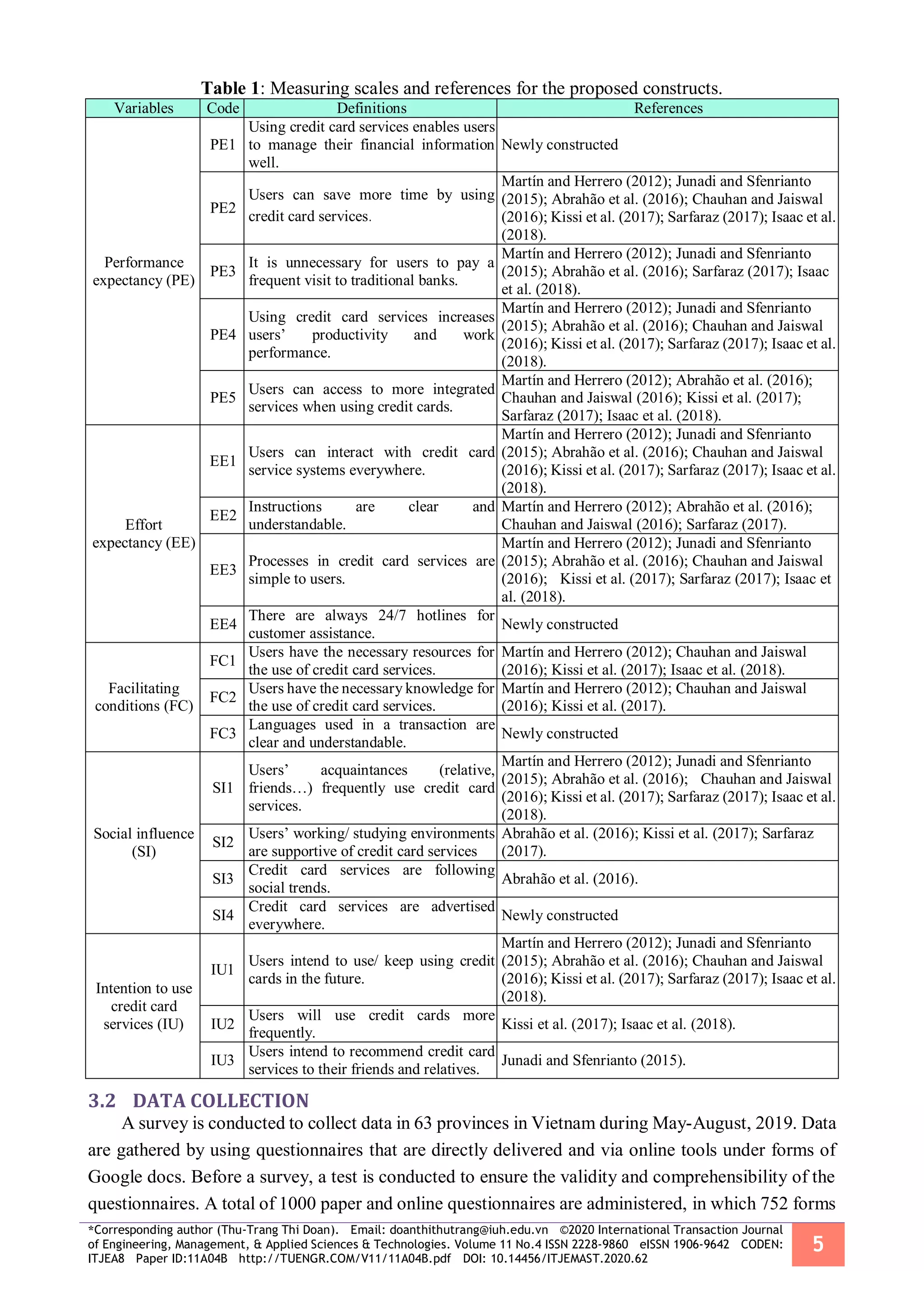
(1999) analyzed the data from 95 countries and suggested that a negative relationship exists
between economic growth and financial development. Meanwhile, Naceur et al. (2014) argued that
economic growth has a negative impact on the development of the banking system in countries in
*Corresponding author (Toan Ngoc Bui). Email: buingoctoan@iuh.edu.vn ©2020 International Transaction Journal of
Engineering, Management, & Applied Sciences & Technologies. Volume 10 No.11 ISSN 2228-9860 eISSN 1906-9642 CODEN:
ITJEA8 Paper ID:11A04I http://TUENGR.COM/V11/11A04I.pdf DOI: 10.14456/ITJEMAST.2020.69
3
the MENA region.
2.2. IMPACTS OF INFLATION ON FINANCIAL DEVELOPMENT
Among macroeconomic factors, inflation is an important determinant of financial development
(Naceur et al., 2014). Inflation can have a negative impact on financial development. Indeed, the
high inflation shows that the economy is facing many difficulties, credit demand is reduced, and the
amount of savings is also reduced, leading to a decrease in the supply of credit to the economy
(Moore, 1986; Azariadis & Smith, 1996; Choi et al., 1996). Not only that, but high inflation also
reduces the ability to repay loans, leading to a decline in the efficiency of credit allocation (Boyd et
al., 2001).
In the empirical studies, Haslag and Koo (1999), Boyd et al. (2001) found the negative impact
of inflation on financial development in many countries. Not only that, Dehesa et al. (2007)
analyzed the panel data from 120 countries and suggested that low inflation would increase credit
supply. At the same time, Zoli (2007) argued that high inflation would have an adverse impact on
financial development in emerging countries in Europe. In the same view, Andrianaivo and Yartey
(2009) find the negative impact of inflation on development in major African countries. Moreover,
Bittencourt (2011) argues that inflation has a negative impact on financial development in Brazil. In
addition, Naceur et al. (2014) also found the negative impact of inflation on the development of the
banking system in countries in the MENA region.
2.3. IMPACTS OF GOVERNMENT EXPENDITURE ON FINANCIAL DEVELOPMENT
Most empirical studies suggest that government expenditure has a positive impact on financial
development. Indeed, the government plays an important role in promoting the development of the
financial industry (Gerschenkron, 1962). Moreover, government expenditure is an important
prerequisite for the development of the private sector, thereby stimulating the need for loans and
creating incentives for financial development. The positive impact of government expenditure on
financial development is also found in many empirical studies. For example, Hussain et al. (2009)
suggest that government expenditure has a positive impact on private investment in Pakistan. In the
same view, Rehman et al. (2009) suggest that government expenditure has a positive impact on
short-term private investment in Pakistan. In another study, Bittencourt (2011) found the positive
impact of government expenditure on financial development in Brazil. In addition, Cooray (2011)
argues that government expenditure positively affects the scale of the financial sector, especially in
low-income economies.
However, if government expenditure is used inefficiently, it can have a negative impact on
financial development (Lopez-de-Silanes et al., 1997). Accordingly, government intervention can
make the financial system inefficient due to increasing operating costs (Kornai, 1979). On the other
hand, government intervention in the financial sector will limit private investment, leading to
financial development restrictions (Cooray, 2011). The negative impact of government expenditure
on financial development (from a banking perspective) is also found in the study of Naceur et al.
(2014) when analyzing the data of MENA region countries.
4 Toan Ngoc Bui
3. DATA AND METHODOLOGY
3.1. DATA
The study data was collected from the World Bank during 2004-2017. The countries included
in the study were Vietnam and ASEAN-5 countries (Indonesia, Malaysia, Thailand, Singapore, and
the Philippines). These countries have many similarities, with relatively high levels of financial
development.
3.2. METHODOLOGY
With the purpose of testing the determinants of financial development in ASEAN countries, the
author will conduct the estimation of the research model by the methods: Pooled regression (Pooled
OLS), Fixed effects model (FEM) and Random effects model (REM). Then, this study will use the
Generalized Method of Moment (GMM) to estimate the research model. The GMM method has
great advantages when overcoming regressive hypotheses that are violated and controlling potential
endogenous phenomena (Doytch & Uctum, 2011; Bui, 2020).
Based on the previous studies, the author measures financial development (FD) using domestic
credit to the private sector (% of GDP). In addition, this index reflects the development of the
banking system. For the determinants of financial development, the author focuses mainly on three
factors: economic growth (EG), inflation (INF) and government expenditure (GOV). Moreover,
financial development is also significantly affected by financial development with one-period lag
(Ibrahim & Sare, 2018). Therefore, the author adds the financial development factor with one-
period lag (FDt-1) to the research model as an independent variable.
Therefore, the research model is written as
FDit = β0 + β1 FDit-1 + β2 EGit + β3 INFit + β4 GOVit + εit (1)
The symbols β1., β2, β3, and β4, are regression coefficients, while β0 is a regression constant.
The symbol ε is the model error term.
Figure 1: The proposed research model.
Financial development with
one-period lag (FDt-1)
Financial
development
(FD)
Economic growth (EG)
Inflation (INF)
Government expenditure
(GOV)
*Corresponding author (Toan Ngoc Bui). Email: buingoctoan@iuh.edu.vn ©2020 International Transaction Journal of
Engineering, Management, & Applied Sciences & Technologies. Volume 10 No.11 ISSN 2228-9860 eISSN 1906-9642 CODEN:
ITJEA8 Paper ID:11A04I http://TUENGR.COM/V11/11A04I.pdf DOI: 10.14456/ITJEMAST.2020.69
5
Table 1: Summary of variables (source: research model proposed by the author).
Variable name Code Source How to measure
Dependent variable
Financial development FD World Bank Domestic credit to the private sector (% of GDP)
Independent variables
Financial development
with a one-period lag
FDt-1 World Bank One-period lag of financial development
Economic growth EG World Bank GDP growth (annual %)
Inflation INF World Bank Inflation, consumer prices (annual %)
Government expenditure GOV World Bank
General government final consumption expenditure
(% of GDP)
Table 2: Descriptive statistics of all variables (source: author's computation).
Variable Mean Min Max
Financial development (FD) 83.749 24.606 149.335
Economic growth (EG) 5.331 -1.514 15.240
Inflation (INF) 4.295 -0.900 23.116
Government expenditure (GOV) 10.542 5.465 17.114
Figure 2: Financial development in ASEAN countries (source: author's computation).
6 Toan Ngoc Bui
4. RESULT
Table 2 shows that financial development has averaged at 83.749%. In 2017, Thailand is the
country with the highest level of financial development (144.968%). It is followed by Vietnam
(130.722%), Singapore (128.212%), Malaysia (118.806%), Philippines (47.770%), and the lowest
in Indonesia (38.740%) (Figure 2).
Table 3: Correlation coefficients between variables (source: author's computation).
Variables FD FDt-1 EG INF GOV
FD 1.000
FDt-1 0.988 1.000
EG -0.241 -0.225 1.000
INF -0.341 -0.326 0.171 1.000
GOV 0.448 0.462 -0.369 -0.565 1.000
Table 3, the results of correlation analysis between variables show that economic growth (EG)
and inflation (INF) negatively correlate with financial development (FD). Meanwhile, the
remaining variables are positively correlated with FD.
Table 4: Results of estimating research models using Pooled OLS, FEM, REM methods
(source: author's computation).
FD Pooled OLS FEM REM
Constant 10.878**
-2.335 11.285**
FDt-1 1.008***
0.812***
1.001***
EG -0.456 -0.503*
-0.445
INF -0.361*
-0.491**
-0.411*
GOV -0.493 2.360**
-0.456
R2
97.83% 93.17% 97.82%
Significance level
F(4, 73) = 821.95
Prob > F = 0.000***
F(4, 68) = 119.49
Prob > F = 0.000***
Wald chi2(4) = 2523.40
Prob > chi2 = 0.000***
F test
F(5, 68) = 4.66
Prob > F = 0.001***
Hausman test
chi2(4) = 1.95
Prob > chi2 = 0.745
Note: *
, **
and ***
indicate significance at the 10%, 5% and 1% level, respectively.
Table 4 presents the results of estimating the research model using the Pooled Regression
model (Pooled OLS), Fixed effects model (FEM) and Random effects model (REM). In particular,
the Random effects model (REM) method is proved to be more suitable because the test of F (5, 68)
= 4.66 is statistically significant at the 1% significance level, and the Hausman test is not
statistically significant (chi2(4) = 1.95). Therefore, the author will conduct research model tests
based on estimates by the Random effects model (REM) method.
Table 5: Testing of multicollinearity, heteroscedasticity, and autocorrelation
(source: author's computation).
Multicollinearity test
Heteroscedasticity test Autocorrelation test
Variable VIF
FDt-1 1.29
chibar2(01) = 0.07
Prob > chibar2 = 0.397
F(1, 5) = 21.644
Prob > F = 0.006***
EG 1.17
INF 1.49
GOV 1.84
Mean VIF = 1.45
Note: ***
indicates significance at the 1% level.
The testing results show that the research model with multicollinearity is considered not
serious. And also, the research model has no heteroscedasticity. However, the research model has
autocorrelation (Table 5).
*Corresponding author (Toan Ngoc Bui). Email: buingoctoan@iuh.edu.vn ©2020 International Transaction Journal of
Engineering, Management, & Applied Sciences & Technologies. Volume 10 No.11 ISSN 2228-9860 eISSN 1906-9642 CODEN:
ITJEA8 Paper ID:11A04I http://TUENGR.COM/V11/11A04I.pdf DOI: 10.14456/ITJEMAST.2020.69
7
Therefore, the author will estimate the research model according to the Generalized Method of
Moment (GMM) to overcome the autocorrelation. Not only that, but the GMM also helps the author
control the potential endogenous phenomenon in the research model.
Table 6: Model estimation results by GMM method (source: author's computation).
FD Coef. P>|z|
Constant 20.240 0.000***
FDt-1 0.897 0.000***
EG -0.557 0.029**
INF -0.781 0.000***
GOV -0.288 0.619
Significance level
Wald chi2(3) = 1297.02
Prob > chi2 = 0.000***
Arellano-Bond test for
AR(2) in first differences
z = -0.89
Pr > z = 0.374
Sargan test
chi2(2) = 0.29
Prob > chi2 = 0.867
Note: **
and ***
indicate significance at the 5% and 1% level, respectively.
Table 6 shows the results of estimating the research model with statistical significance at 1%.
And also, the Sargan test shows that the instruments used in the research model are appropriate.
Therefore, the results of estimating the research model by the GMM method are appropriate and
usable. Accordingly, the financial development with one-period lag (FDt-1) has a positive impact (β
= 0.897) on financial development (FD) with a 1% significance level, this result is consistent with
the previous judgment of Ibrahim and Sare (2018). And also, the financial development (FD) is also
negatively affected by the economic growth (EG) (β = -0.557, with 5% significance level) and
inflation (INF) (β = -0.781, with 1% significance level ). With this dataset, the author has not found
a statistically significant impact of government expenditure (GOV) on financial development (FD).
4.1 IMPACTS OF ECONOMIC GROWTH ON FINANCIAL DEVELOPMENT
The study results show that economic growth (EG) has a negative impact on financial
development (FD). Accordingly, high economic growth will have many potential risks and create
negative impacts on financial development. This is very consistent with reality in the recent period,
especially when the global economic crisis occurred. At that time, ASEAN economies had just
experienced a very high growth period, but the unsustainable growth of the economy made the
financial system develop but had many risks (especially the credit quality is not strictly controlled),
this has made the financial system in crisis and strong decline. The negative impact of economic
growth (EG) on financial development (FD) is also consistent with Ram (1999), Naceur et al.
(2014).
4.2 IMPACTS OF INFLATION ON FINANCIAL DEVELOPMENT
The study results show that inflation (INF) has a negative impact on financial development
(FD). Thus, the high inflation will make business and production activities more difficult, the credit
demand will be reduced, the amount of savings will also decrease, leading to a decrease in the
supply of credit to the economy. Financial development will decrease. The negative impact of
inflation (INF) on FD was also found in the research of Haslag and Koo (1999), Boyd et al. (2001),
Zoli (2007), Andrianaivo and Yartey (2009), Bittencourt (2011), Naceur et al. (2014).
Thus, financial development (FD) is significantly affected by financial development with one-
8 Toan Ngoc Bui
period lag (FDt-1), economic growth (EG) and inflation (INF). This is consistent with some
observations in the previous studies. However, this article is the first empirical evidence in the
Asean region in this issue. Therefore, the study results are important for ASEAN countries.
5. CONCLUSION
This article has found the first empirical evidence on the determinants of financial development
in ASEAN countries. Accordingly, financial development with one-period lag (FDt-1) has a positive
impact on financial development (FD). And also, the financial development (FD) is negatively
affected by economic growth (EG) and inflation (INF). Based on this, ASEAN countries will have a
reliable basis to run macroeconomics associated with financial development more effectively and
sustainably.
Due to data limitations, some variables can affect FD but have not been considered in this
study, such as the global economic crisis and real estate market. Moreover, in order to ensure the
homogeneity of the study data, the number of countries included in the study is limited.
6. DATA AND MATERIAL AVAILABILITY
Information regarding this study is available by contacting the corresponding author.
7. REFERENCES
Andrianaivo, M., & Yartey, C.A. (2009). Understanding the Growth of African Financial Markets. IMF
Working Paper, 1-40.
Azariadis, C., & Smith, B.D. (1996). Private Information, Money, and Growth: Indeterminacy,
Fluctuations, and the Mundell–Tobin Effect. Journal of Economic Growth, 1, 309-332.
Bencivenga, V.R., & Smith, B.D. (1991). Financial Intermediation and Endogenous growth. Review of
Economic Studies, 58, 195-209.
Boyd, J.H., Levine, R., & Smith, B.D. (2001). The impact of inflation on financial sector performance.
Journal of Monetary Economics, 47, 221-248.
Bui, T.N. (2019). The Role of Financial Development in the Vietnam Economy. WSEAS Transactions
on Business and Economics, 16, 471-476.
Bui, T.N. (2020). Supply chain finance, financial development and profitability of real estate firms in
Vietnam. Uncertain Supply Chain Management, 8(1), 37-42.
Cherif, M., & Dreger, C. (2016). Institutional Determinants of Financial Development in MENA
countries. Review of Development Economics, 20(3), 670-680.
Choi, S., Smith, B.D., & Boyd, J.H. (1996). Inflation, financial markets and capital formation.
Proceedings, Federal Reserve Bank of St. Louis, issue May, 9-35.
Cooray, A. (2011). The role of the government in financial sector development. Economic Modelling,
28(3), 928-938.
Dehesa, M., Druck, P., & Plekhanov, A. (2007). Relative Price Stability, Creditor Rights, and Financial
Deepening. IMF Working Paper, 1-21.
Doytch, N., & Uctum, M. (2011). Does the worldwide shift of FDI from manufacturing to services
accelerate economic growth? A GMM estimation study. Journal of International Money and
Finance, 30(3), 410-427.
Gerschenkron, A. (1962). Economic Backwardness in Historical Perspective. Harvard University Press,
Cambridge, MA.
*Corresponding author (Toan Ngoc Bui). Email: buingoctoan@iuh.edu.vn ©2020 International Transaction Journal of
Engineering, Management, & Applied Sciences & Technologies. Volume 10 No.11 ISSN 2228-9860 eISSN 1906-9642 CODEN:
ITJEA8 Paper ID:11A04I http://TUENGR.COM/V11/11A04I.pdf DOI: 10.14456/ITJEMAST.2020.69
9
Goldsmith, R.W. (1969). Financial structure and development. Yale University Press, New Haven.
Greenwood, J., & Jovanovic, B. (1990). Financial development, growth, and the distribution of income.
Journal of Political Economy, 98(5), 1076-1107.
Guerra, E.A.R. (2017). The economic growth and the banking credit in Mexico: Granger causality and
short-term effects, 2001Q1-2016Q4. Economía Informa, 406, 46-58.
Haslag, J.H., & Koo, J. (1999). Financial Repression, Financial Development and Economic Growth.
Working Papers 9902, Federal Reserve Bank of Dallas, 1-43.
Hussain, A., Muhammad, S.D., Akram, K., & Lal, I. (2009). Effectiveness of government expenditure
crowding-in or crowding-out: empirical evidence in case of Pakistan. European Journal of
Economics, Finance and Administrative Sciences, 16, 143-149.
Ibrahim M., & Sare Y.A. (2018). Determinants of financial development in Africa: How robust is the
interactive effect of trade openness and human capital?. Economic Analysis and Policy, 60, 18-
26.
Khan, M.S., & Khan, A.S. (2003). Financial Development and Economic Growth: A Review and New
Evidence. Journal of African Economies, 12(2), 89-110.
King, R.G., & Levine, R. (1993). Finance and growth: Schumpeter might be right. The Quarterly
Journal of Economics, 108(3), 717-737.
Kornai, J. (1979). Resource-Constrained Versus Demand-Constrained Systems. Econometrica, 47, 801-
819.
Lopez-de-Silanes, F., Shleifer, A., & Vishny, R. (1997). Privatization in the United States. RAND
Journal of Economics, 28, 447-471.
Moore, B.J. (1986). Inflation and financial deepening. Journal of Development Economics, 20, 125-133.
Naceur, S.B., Cherif, M., & Kandil, M. (2014). What drives the development of the MENA financial
sector?. Borsa Istanbul Review, 14(4), 212-223.
Rajan, R.G., & Zingales, L. (1998). Which capitalism? Lessons from the east Asian crisis. Journal of
Applied Corporate Finance, 11(3), 40-48.
Ram, R. (1999). Financial development and economic growth: additional evidence. The Journal of
Development Studies, 35, 164-174.
Rehman, H.U., Khan, S., & Khan, M.A. (2009). What determines private investment? The case of
Pakistan. South Asian Studies A Research Journal of South Asian Studies, 24(1), 52-68.
Robinson, J. (1952). The Generalisation of the General Theory in The Rate of Interest and other Essays.
McMillian, London.
Schumpeter, J.A. (1911). The Theory of Economic Development. Harvard University Press, Cambridge.
Zaman, K., Izhar, Z., Khan, M.M., & Ahmad, M. (2012). The relationship between financial indicators
and human development in Pakistan. Economic Modelling, 29(5), 1515-1523.
Zoli, E. (2007). Financial Development in Emerging Europe: The Unfinished Agenda. IMF Working
Paper, 1-36.
Toan Ngoc Bui is a Lecturer at the Faculty of Finance and Banking, Industrial University of Ho Chi Minh City
(IUH), Vietnam. He holds a Master of Finance and Banking from Ho Chi Minh City Open University, Vietnam.
Currently, he is pursuing a PhD at the University of Finance – Marketing (UFM), Vietnam. His researches are in
the fields of Financial Development, Real Estate Market and Applied Econometrics.
*Corresponding author (Faheem Aslam). Tel: +92-321-5063253. Email: fahimparacha@gmail.com ©2019 International
Transaction Journal of Engineering, Management, & Applied Sciences & Technologies. Volume 11 No.4 ISSN 2228-9860 eISSN
1906-9642 CODEN: ITJEA8 Paper ID:11A04J http://TUENGR.COM/V11/11A04J.pdf DOI: 10.14456/ITJEMAST.2020.70
1
International Transaction Journal of Engineering,
Management, & Applied Sciences & Technologies
http://TuEngr.com
PAPER ID: 11A04J
COMPARATIVE ANALYSIS OF TRADITIONAL AND SOFT
COMPUTING MODELS FOR TRADING SIGNALS PREDICTION
Beenish Bashir
a
, Faheem Aslam
a*
a
Department of Management Sciences, COMSATS University Islamabad, PAKISTAN.
A R T I C L E I N F O A B S T R A C T
Article history:
Received 11 July 2019
Received in revised form 20
November 2019
Accepted 29 November 2019
Available online 09 December
2019
Keywords:
Moving averages;
Autoregressive models;
Artificial neural network;
Support vector machine;
Financial marketing;
Extreme learning
machine.
Financial market forecasting always remains a challenging issue
due to the nature of the time series data as well the information stock
prices reflect. Economist takes this data as a linear process whereas the
soft computing models assume that time-series data is nonlinear,
complex and dynamic in nature and can be better analyzed through
nonlinear models. This research paper settles the debate by conducting
a comparative analysis of traditional forecasting models and soft
computing models for the trading signals prediction of Pakistan stock
exchange covering the daily data from 1997 to 2018. Our study is
unique regarding the target variable it predicts which reflects the overall
dynamics of the market not just the next period future price. In
traditional models, we include moving averages as well as
autoregressive models whereas in soft computing models we take
artificial neural networks, support vector machines and extreme
learning machines to have a comprehensive analysis. This comparison
shows that soft computing models perform better than traditional
models in trading signals prediction showing non-linear behavior of
financial time series data. However, amongst all soft computing
models, the artificial neural network becomes the best predictive model.
Our results are more convincing as compare to existing literature
regarding the careful selection of market features, which can help
investors to better understand market behavior and improve the
predictive ability of the model.
Disciplinary: Management Sciences (Financial Science).
©2020 INT TRANS J ENG MANAG SCI TECH.
1. INTRODUCTION
Financial markets are the barometer of any economy. It facilitates international trade, foreign
investment, institutional investment acting as a part of mutual funds and portfolio management.
Given their importance, much attention has been given by researchers and academia regarding its
prediction. These predictions are then incorporated into financial risk models and developing
©2020 International Transaction Journal of Engineering, Management, & Applied Sciences & Technologies
2 Beenish Bashir, Faheem Aslam
trading strategies. (Moradi & Rafiei, 2019; Zhong & Enke, 2019).
As the importance and predictability of financial markets are supported by previous studies
(Fama, 1965; Malkiel & Fama, 1970) but when it comes to the modeling techniques for forecasting
there is no consensus. The dispute is much related to the nature of the data financial markets generate.
The long-term investors are more concerned about the fundamentals of companies like price-earnings
ratio, revenue, expenses, assets, liabilities, management policy and financial ratio (Lam, 2004).
Whereas, short-term investors rely on price movements of stock, understanding market behavior
through different market features (Murphy, 1986). Technicians avoid the analysis of all economic
factors by focusing on pattern recognition of price considering this information enough for future
price determination (Hu et al., 2015; Patel et al., 2015; Teixeira & De Oliveira, 2010; Żbikowski,
2015). Tsinaslanidis and Kugiumtzis (2014) use numerous technical indicators for market analysis
which is time-series data in nature. Huang et al. (2019) also use different momentum and volatility
indicators for bitcoin predictive analysis.
For short-term prediction, traditional forecasting models consider time series data as a linear
process and apply the smoothening and autoregressive process to predict future price movement
(Kumar & Murugan, 2013; Lin et al., 2012; Wang et al., 2012). Financial time series are complex,
nonlinear, dynamic and chaotic. Soft computing models can capture this nonlinear behavior (Cheng
& Wei, 2014; Huang & Tsai, 2009; Lee, 2009). Tay and Cao (2001) compare artificial neural
networks (ANN) and support vector machines (SVM) and confirm their suitability for prediction of
the stock market. Huang, et al. (2005) use SVM for predicting the directional movement of the
NIKKIE 225 index. Kara et al. (2011) also employ SVM and ANN for predicting the Istanbul Stock
Exchange.
Our work is an addition to existing literature to settle the debate amongst traditional forecasting
models and soft computing models for trading signals prediction. All the existing literature is related
to price prediction, completely ignoring the trading signals forecasting that can enlighten investors
about entry and exist decisions. Secondly, we also focused on the relevant feature selection to
improve the predictive ability of models and to better understand market behavior. Lastly, our
analysis confirms the nonlinear and dynamic nature of financial time series data negating the
assumption of traditional forecasting models.
2. LITERATURE REVIEW
In the past ten years, various time series methodologies have been developed for financial market
forecasting that helps improve investment decisions (Teixeira & De Oliveira, 2010). Traditional
forecast models and soft computing models are two major approaches (Wang et al., 2011). In both
modeling approaches, financial data is considered as a time series data which is actually numerical
observations accumulated in sequential order over a period of time. (Brockwell & Davis, 2009; B.
Wang et al., 2012). This organization of financial data enables model developers to utilize time series
tools to understand market behavior (Oliveira & Meira, 2006). Further, these tools pave a way to do
data mining tasks, such as classification, trend analysis, seasonal effect, cycles and extreme event
detection (Cryer & Chan, 2008).
The traditional models involve averages, regression and autoregressive models based on the
linearity of normally distributed variables (Lin et al., 2012; Wang et al., 2012). In reality, financial
time series data is dynamic, chaotic, nonlinear and highly volatile which makes its prediction
*Corresponding author (Faheem Aslam). Tel: +92-321-5063253. Email: fahimparacha@gmail.com ©2019 International
Transaction Journal of Engineering, Management, & Applied Sciences & Technologies. Volume 11 No.4 ISSN 2228-9860 eISSN
1906-9642 CODEN: ITJEA8 Paper ID:11A04J http://TUENGR.COM/V11/11A04J.pdf DOI: 10.14456/ITJEMAST.2020.70
3
complex as compare to other non-financial time-series data (Vanstone & Finnie, 2009). Financial
time series inherit these characteristics from economic factors, investor’s sentiments, political events
and movement of other stock markets (Kara et al., 2011).
The nature of financial time series data calls for flexible and adaptive models for future price
prediction (Huang & Tsai, 2009) and soft computing models serve the purpose (Lin et al., 2012). Soft
computing models, such as artificial neural networks, support vector machine and extreme learning
machine give better predictions with high accuracy (Lee, 2009). Most of the soft computing models
can handle nonlinear relations through relevant market features with less statistical assumptions
(Atsalakis & Valavanis, 2009). Weng et al. (2017) find that soft computing models are appropriate for
developing rules when using with a rich knowledge database. Zhong and Enke (2017) conclude a
trading strategy based on classification models yield high returns than the benchmark T-bill strategy.
Liang et al. (2009) find that the non-parametric model outperforms parametric models in financial
market forecasting. As soft computing models are self-adaptive and are more tolerant of imprecision
(Cheng & Wei, 2014). Hence, we investigate whether these findings hold for trading signals
prediction of Pakistan stock exchange or not.
3. METHOD
3.1 DATA
We use the Pakistan Stock Exchange (KSE-100 index) daily quotes from 7/02/1997 to
18/07/2018 with the total observations 5168. The data set is bifurcated into a training dataset and
testing dataset. The training dataset has 3764 observations cover 70% of total observations and the
testing set has 1404 observations include the remaining 30% of total observation.
3.2 TARGET VARIABLE “T”
The target variable T (Equation 1) gives a holistic picture of stock prices by incorporating overall
dynamics in the following days. This cannot be merely done through price movements, therefore, the
target variable is defined as the sum of all variation above an absolute value of target margin 𝑥%
(Torgo, 2011)
𝑇 = ∑( 𝑣 ∈ 𝑉𝑖: 𝑣 > 𝑥% ∨ 𝑣 < −𝑥%) (1)
where 𝑉𝑖 (Equation 2) is k percentage variation of current close price and the following k days price
average.
𝑉𝑖 = {
𝑃̅𝑖+𝑗 − 𝐶𝑖
𝐶𝑖
}
𝑗=1
𝑘 (2)
and the daily average price is computed as Equation 3.
𝑃̅𝑖 =
𝐶𝑖 + 𝐻𝑖 + 𝐿𝑖
3
(3)
𝐶𝑖, 𝐻𝑖 𝑎𝑛𝑑 𝐿𝑖 are close, high and low prices for the day i respectively.
The target variable is T value and develops a model that predicts this value by using the feature’s
4 Beenish Bashir, Faheem Aslam
information that gives three trading actions (sell, hold and buy), this transformation is carried out
using the values in Equation 4.
𝑠𝑖𝑔𝑛𝑎𝑙 = {
𝑠𝑒𝑙𝑙 𝑖𝑓 𝑇 < −0.1
ℎ𝑜𝑙𝑑 𝑖𝑓 − 0.1 ≤ 𝑇 ≤ 0.1
𝑏𝑢𝑦 𝑖𝑓 𝑇 > 0.1
(4)
The threshold 0.1 and -0.1 are heuristic and any other value can be used. However, the value 0.1
is the average of last four days average price that is 2.5% higher than the current close (4x0.025=0.1)
The only care should be taken is that very high values will generate fewer signals and very small
values let an investor trade on minor variation, incurring higher risk (Torgo, 2014).
3.3 INPUT FEATURES
We use fifteen features (Table 1) as the input of the soft computing model. These features are
selected from the list of features available in the Technical trading rule package (Ulrich et al., 2018)
through a random forest technique (Figure 1).
Figure 1: Variable importance according to the random forest.
Table 1: List of Selected Technical Indicators
Sr. No. Selected Technical Indicators
1 Average True Range
2 Average True Range High
3 Average True Range Low
4 ATR tr.
5 ADX (Welles Wilder’s Directional Movement Index)
6 ADX Dip
7 ADX Din
8 ADX DX
9 Bollinger Bands Down
10 Bollinger Bands Moving Average
11 Bollinger Band
12 Bollinger Band Up
13 SAR (Parabolic Stop and Reverse)
14 Run Mean
15 Run Standard Deviation
3.4 METHODOLOGY
This section explains both the traditional and soft computing models used for prediction analysis.
*Corresponding author (Faheem Aslam). Tel: +92-321-5063253. Email: fahimparacha@gmail.com ©2019 International
Transaction Journal of Engineering, Management, & Applied Sciences & Technologies. Volume 11 No.4 ISSN 2228-9860 eISSN
1906-9642 CODEN: ITJEA8 Paper ID:11A04J http://TUENGR.COM/V11/11A04J.pdf DOI: 10.14456/ITJEMAST.2020.70
5
3.4.1 TRADITIONAL MODELS
We first explain the simple moving average, centered moving average, right-aligned moving
average, exponential weighted moving average then move to autoregressive moving average model.
Simple Moving Average (SMA) is the average of n prices (Equation 5) where each observation is
given equal weight. If we take difference of the two of SMA values at times t and t-1, it gives
Equation 6 and recursive form become as Equation 7 which improves the computational speed of
SMA in real-life scenarios (Zakamulin, 2017) by reducing total n operations involve in Equation 5 to
just three mathematical operations (Equation 8) irrespective of the length of averaging window
length.
𝑆𝑀𝐴 𝑡(𝑛) =
1
𝑛
∑ 𝑃𝑡−𝑖
𝑛−1
𝑖=0
(5)
𝑆𝑀𝐴 𝑡(𝑛) − 𝑆𝑀𝐴 𝑡−1(𝑛) =
𝑃𝑡 − 𝑃𝑡−𝑛
𝑛
(6)
𝑆𝑀𝐴 𝑡(𝑛) = 𝑆𝑀𝐴 𝑡−1(𝑛) +
𝑃𝑡 − 𝑃𝑡−𝑛
𝑛
(7)
The Herfindahl index of SMA (Rhoades, 1993) equals
1
𝑛
; hence defining the smoothness of
SMA(n) as (
1
𝑛
)−1
= 𝑛. The increase in the average window length not only increases its smoothness
but also increases the average lag time of SMA which is a linear function of smoothness (Equation 9).
𝐿𝑎𝑔 𝑡𝑖𝑚𝑒(𝑆𝑀𝐴 𝑛) =
∑ 𝑖𝑛−1
𝑖=1
∑ 𝑖𝑛−1
𝑖=0
=
𝑛 − 1
2
(8)
𝐿𝑎𝑔 𝑡𝑖𝑚𝑒(𝑆𝑀𝐴 𝑛) =
1
2
× 𝑆𝑚𝑜𝑜𝑡ℎ𝑛𝑒𝑠𝑠(𝑆𝑀𝐴 𝑛) −
1
2
(9)
It is quite easy to find a trend and breakthroughs in a trend by looking on historical data
considering time series data of 𝑃𝑡 as a combination of trend 𝑇𝑡 and an irregular component called as
noise 𝐼𝑡. Then, an additive model can be written as Equation 10. Noise is a short-lived variation
around the trend eliminated through centered moving average or other smoothening tools. Any
average of time series data is computed using a fixed window length that rolls through time. This
window length is called an averaging period. In case of centered moving average if n is the window
length then it consists of a center and two halves of length k such that n = 2k + 1. Since centered
moving average at time t (equation11) removes noise so the value of CMA is the value of trend in the
given time series data. The window length n is selected keeping in mind the elimination of noise
(Equation 12)
𝑃𝑡 = 𝑇𝑡 + 𝐼𝑡 (10)
𝐶𝑀𝐴 𝑡 =
1
𝑛
∑ 𝑃𝑡−𝑖
𝑛−1
𝑖=0
(11)
6 Beenish Bashir, Faheem Aslam
Tt = 𝐶𝑀𝐴 𝑡 (n) (12)
In real life, an analyst is interested in the forecasting of time series t + 1 given the historical data
series t (Equation 13).
𝑅𝑀𝐴 𝑡 =
1
𝑛
∑ 𝑃𝑡−𝑖
𝑛−1
𝑖=0
(13)
Mathematical comparison of centered moving average and right-aligned moving average (RMA)
at a given time t leads to the conclusion that 𝑅𝑀𝐴 𝑡 is equal to 𝐶𝑀𝐴 𝑡−𝑘 (Equation 11). In fact, RMA
is a lagged version of CMA given the same window length and shares the same properties of CMA.
Particularly, RMA with longer window length is better at removing noise from the data series but this
comes with longer lag time. The lag time is given as Equation 15
𝑅𝑀𝐴 𝑡(𝑛) = 𝐶𝑀𝐴 𝑡−𝑘(𝑛) (14)
𝑙𝑎𝑔𝑡𝑖𝑚𝑒 = 𝑘 −
𝑛 − 1
2
(15)
However, the linearly weighted moving average has the drawback that it assigns the same weight
to all observations ignoring the importance of recent observation in future prediction. This problem is
addressed by exponential moving average (EMA), using the concept of exponential factor λ
(Equation 16). The value of λ can be greater than zero and less than or equal to 1.
𝐸𝑀𝐴 𝑡(𝜆, 𝑛) =
∑ 𝜆𝑖
𝑃𝑡−𝑖
𝑛−1
𝑖=0
∑ 𝜆𝑖𝑛−1
𝑖=0
(16)
Autoregressive Integrated Moving Average (ARIMA) is the most commonly used forecasting
model amongst traditional forecasting models. It is a generalized version of ARMA (autoregressive
moving average) when used for differenced data rather than original data series. Orders of AR part
(p), the difference (d) and MA (q) part specify the ARMA model and the model is said to be of
order (p,d,q). However, AR and MA are different models for stationary time series and ARMA (and
ARIMA) is a hybrid form of these two models for a better fit. The steps of building ARIMA models
are explained as follows.
Auto Regression (AR) is a class of linear models where the dependent variable is regressed
against its own lagged values. If 𝑦𝑡 is modeled via the AR process, it is written as Equation 17
similar to simple linear regression. It has an intercept like term (δ), regressors 𝑦𝑡−𝑖, and parameters
∅ 𝑡−𝑖 an error term 𝜀𝑡. The only special thing is that regressors are the dependent variable’s own
lagged terms. If lag up to p is included in the model, the AR process is said to be of order p.
𝑦𝑡 = 𝛿 + ∅𝑦𝑡−1 + ∅2 𝑦𝑡−2 + ⋯ + ∅ 𝑝 𝑦𝑡−𝑝 + 𝜀𝑡 (17)
Moving Average (MA) is another class of linear models. In MA, the output or the variable of
interest is modeled via its own imperfectly predicted values of current and previous times. It can be
written in terms of error terms as Equation 18.
𝑦𝑡 = 𝜇 + 𝜃1 𝜀𝑡−1 + 𝜃2 𝜀𝑡−2 + ⋯ + 𝜃 𝑞 𝜀 𝑞−1 + 𝜀𝑡 (18)
*Corresponding author (Faheem Aslam). Tel: +92-321-5063253. Email: fahimparacha@gmail.com ©2019 International
Transaction Journal of Engineering, Management, & Applied Sciences & Technologies. Volume 11 No.4 ISSN 2228-9860 eISSN
1906-9642 CODEN: ITJEA8 Paper ID:11A04J http://TUENGR.COM/V11/11A04J.pdf DOI: 10.14456/ITJEMAST.2020.70
7
Again, it has a form similar to classic linear regression. The regressors are the imperfections
(errors) in predicting previous terms. Here the model is specified with a positive sign for the
parameters. It is not uncommon where we have a negative sign for the parameters. The model above
include errors for q lags and said to have an order of q. In the case of differenced data ARIMA (p,d,q)
become ARMA(p,q) having the mathematical form as Equation 19.
𝑦𝑡 = 𝛿 + ∑ ∅𝑖 𝑦𝑡
𝑝
𝑖=1
+ ∑ ∅ 𝑗 𝜀𝑡−𝑗
𝑞
𝑗=1
+ 𝜀𝑡 (19)
3.4.2 SOFT COMPUTING MODELS
Artificial Neural Network (ANN) is a nonlinear regression technique and popularly used for
stock market prediction (Zhiqiang et al., 2013). This field is tracked back to (McCulloch & Pitts,
1943) mathematical function perceived as a model of biological neural network. This model of the
neural network comprises three components: weighted inputs that are like synapses in the human
brain. Adder- The summation of all input signals corresponds to the neuron membrane which
assembles all electrical charges. Activation function- determines if a neuron has an action potential
for a specific set of inputs (Algorithm 1).
ALGORITHM 1 Artificial Neural Network
1. Start with small random weights
2. Input the data set
3. For forwarding phase: hidden layer compute activation function of each neuron then
calculate the activation function of output
4. For the backward phase: calculate error at the output and at the hidden layers then update
the weights of both layers
5. For recall apply the forward phase described in step 3
When it comes to the interpretation of ANN it’s more like a black box. Therefore, Support vector
machines (SVMs) apply the concept of margin to solve the problem of ANN. SVM easily separates
the data by mapping it into high dimensions (Boser et al., 1992). By aiming to maximize the size of
margin that classifies the objects without any point lying inside.
ALGORITHM 2 Support Vector Machine
1. Begin with an input data set
2. Classify the data set
3. Apply SVM with a different kernel function
4. Specify hyperplane
5. Repeat step 3 if obtained accuracy is not obtained
The learning speed of ANN and SVM is slower than what is required because of slow
gradient-based learning algorithms. Whereas the Extreme Learning Machine (ELM) randomly
selects hidden nodes and analytically finds the output weights (Algorithm 3).
8 Beenish Bashir, Faheem Aslam
ALGORITHM 3 Extreme Learning Machine
1. With the training set and activation function and hidden neuron number
2. Assign random input weights and bias
3. Compute hidden layer output matrix
4. Compute the output weights
4. RESULT AND DISCUSSION
SMA is computed using sma function () in R package smooth (Tukey) and forecast function () in
R package forecast (Hyndman et al., 2019). By default, SMA order selection (h) is based on AIC and
returns the model with the lowest value. Here the order of SMA is 12 giving a good fit shown in
purple colored line with AIC value of -3151.602. The forecast is done for the next 10 days
represented after a red cutting line (Figure 2). The forecast trajectory of SMA (12) is not just a straight
line. This is because the actual values are used in the construction of point forecasts up to h=12 with a
95% prediction interval.
Figure 2: Simple Moving Average.
Figure 3: Centered Moving Average.
Centered moving average is computed in R deploying function cma () in package Smooth
(Svetunkov, 2017) with the argument order equals to “null” to find order based on AIC. In this
*Corresponding author (Faheem Aslam). Tel: +92-321-5063253. Email: fahimparacha@gmail.com ©2019 International
Transaction Journal of Engineering, Management, & Applied Sciences & Technologies. Volume 11 No.4 ISSN 2228-9860 eISSN
1906-9642 CODEN: ITJEA8 Paper ID:11A04J http://TUENGR.COM/V11/11A04J.pdf DOI: 10.14456/ITJEMAST.2020.70
9
analysis CMA at order 13 with AIC value, -3896.784 is computed. Our result reveals the basic
property of a centered moving average that is irrespective of window length, CMA closely follows
real data pattern (Figure 3).
The right-aligned moving average is computed by using function rollmean () with argument
align “right” in R package zoo (Shah, Zeileis, & Grothendieck, 2005). The actual data series is in
black line and the right aligned moving average is shown by the orange line and the gray line is the
prediction interval (Figure 4). Overall, the RMA fits well with the pattern of real data. Figure 5 shows
a magnified version of the forecasted region where the dark shaded area is 80% prediction interval
and the light shaded area is 95% prediction interval and the predicted blue line lies within the bounds
of the prediction interval.
Figure 4: RMA and Trading Signals Data.
We estimate exponential moving average by own code with the lambda optimized at 0.1. The
method of least square is used to find the optimal value of λ for which the sum of squared errors (SSE)
is minimized (Čisar & Čisar, 2011). Table 2, there is an increasing trend in SSE values with the
higher values of lambda. Whereas most of the packages use lambda value as 0.2 (Lucas & Saccucci,
1990). Figure 6 illustrates EMA and actual dataset, the black line is the actual data and the orange line
is EMA whereas the gray line is the predicted interval and EMA is following the actual data set.
Figure 5: Magnified Graph of RMA Forecasted Region.
10 Beenish Bashir, Faheem Aslam
Table 2: The optimized value of Lambda
λ SSE
0.1 0.04432
0.2 0.05035
0.5 0.05146
0.7 0.05157
0.9 0.05157
Figure 6: EMA and Actual Data Set.
Three major steps are followed to make an ARIMA forecast model: (1) Model specification (2)
Parameter estimation (3) Diagnostics and potential improvement. We first check the stationarity of
the data by taking differences and keep taking the difference until the series becomes stationary that
number is d. There are different tools to detect stationarity. Like visual observation of the data plot
and autocorrelation. After determining d, we can utilize sample PACF (partial autocorrelation) to get
the AR order p. The lag at which PACF cuts off is the order of AR and the lag at which ACF
(autocorrelation) cut off is the order q of MA. The trading signal data was not level stationary but its
first difference stationary as shown in Figures 7 and 8. Next Figures 9 and 10 show the ACF and
PACF plot of a simulated time series. For the series, the ACF cuts off after lag 1 and PACF also cuts
off after lag 1. So three potential (p, q) specification would be (1, 0), (0, 1) and (1,1).
Figure 7: Graphical Representation of First Differenced series of Trading Signals.
Since the ACF plot of first difference is better than level stationary graph so the series is
stationary at first difference. We further investigate it with unit root test KPSS in R package urca
(Pfaff et al., 2016). The value of the test statistic is 0.0039 so the series is first differenced stationary.
Once we determine the orders, the next step is to find the parameters. Commonly used techniques are
*Corresponding author (Faheem Aslam). Tel: +92-321-5063253. Email: fahimparacha@gmail.com ©2019 International
Transaction Journal of Engineering, Management, & Applied Sciences & Technologies. Volume 11 No.4 ISSN 2228-9860 eISSN
1906-9642 CODEN: ITJEA8 Paper ID:11A04J http://TUENGR.COM/V11/11A04J.pdf DOI: 10.14456/ITJEMAST.2020.70
11
Figure 8: Autocorrelation Plot of Original Trading Signals Series.
Figure 9: Autocorrelation Plot of First Differenced Trading Signals Series.
Figure 10: Partial Autocorrelation Plot of First Differenced Trading Signals Series
least-square, maximum likelihood, method of moments. R package forecast (Hyndman & Khandakar,
2007) use the maximum likelihood method. After developing the model, we check the model
adequacy through diagnostics.
The original plot shows clear nonstationarity. The ACF does not cuts off, rather it shows a slow
12 Beenish Bashir, Faheem Aslam
decrease. On the other hand, the first difference data looks much stationery. The ACF cuts off after
some lags. We can perform another formal test to test the stationarity of the differenced data. But here
from the plot of the original data and the ACF plot provide a good indication that the differenced data
is stationary. Since it took one differencing to get stationarity, here d=1. The values of p and q, which
is the order of AR and MA part is determined through the plots of ACF and PACF that makes three
models, ARIMA(0,1,1), ARIMA(1,1,0) and ARIMA(1,1,1).
4.1 MODEL BUILDING AND DIAGNOSTIC
We develop three ARIMA models with orders as proposed earlier. We bifurcate the data into a
70:30 ratio. The total number of observations is 5151, the training data set has 3606 observations and
the testing dataset has the remaining 1545 observations. For estimation purposes, R package Forecast
(Hyndman & Khandakar, 2007) and package Metrics (Hamner et al., 2018) are deployed.
In Figure 11, the forecasts for the next 10 days are plotted as a blue line, where 80% prediction
interval is shown in dark shaded area and 95% prediction interval as a light shaded area. If there is no
autocorrelation between forecast errors then the model cannot be improved. In Figure 12, spike 2, 4, 7
and then 10 is out of the significance bounds. We carry out a unit root test where KPSS has the value
of the test statistic 0.0287 confirming the evidence of non-zero correlation. The forecast errors in
Figure 13 represents a more or less normal distribution.
Figure 11: Ten days Forecast.
Figure 12: ACF Plot of Residual ARIMA (1, 1, 1).
The model selection among the above tested traditional models is based on AIC values. Table 3
shows that all AIC values are in negative means that the likelihood at the maximum was > 1 and
algebraically lower AIC is selected rather than the absolute value of AIC which in our case is ARMA
(1,1,1) with AIC value -3923.65 and precision value 0.1333. Right-aligned averages and the
*Corresponding author (Faheem Aslam). Tel: +92-321-5063253. Email: fahimparacha@gmail.com ©2019 International
Transaction Journal of Engineering, Management, & Applied Sciences & Technologies. Volume 11 No.4 ISSN 2228-9860 eISSN
1906-9642 CODEN: ITJEA8 Paper ID:11A04J http://TUENGR.COM/V11/11A04J.pdf DOI: 10.14456/ITJEMAST.2020.70
13
exponentially weighted average has no reported value of AIC.
Figure 13: Histogram of Residual ARIMA (1, 1, 1).
Table 3: Comparison of Traditional Model
Model AIC
SMA -3151.602
CMA -3896.784
RMA Null
EMA Null
ARMA(0,1,1) -3680.29
ARMA(1,1,0) -2611.42
ARMA(1,1,1) -3923.65
Table 4: Comparison of Soft Computing Model.
Technique Activation function Precision Score
ANN ReLU 0.6311
Tanh 0.5836
Sigmoid 0.5945
SVM Polynomial 0.5265
Radial Basis 0.4830
Tanh 0.4950
ELM Sigmoid 0.5000
ReLU 0.4285
Tanh 0.4410
The ANN is applied in package nnet of R. The feed-forward ANN model has three layers: input,
hidden and output. ANN model utilized in this study employs the sigmoid, tanh and ReLU activation
function. The network has 15 input neurons that correspondents to the 15 selected input technical
indicators through the random forest (Table 1). The output layer has a predicted signal. All
parameters are fixed for this ANN. The network is trained on 70% data and tested on the remaining
30% of the data set. The highest precision score is 0.6311 with activation function ReLU. SVM is
estimated against three activation functions which are, polynomial, tanh and radial basis with the
highest precision value 0.5265 in polynomial activation function. ELM is applied using function
elm_train() and elm_predict(). The number of hidden nodes is 10, three activation functions ReLU,
sigmoid and tanh are used and the input layer has 15 selected input technical indicators. The highest
precision value is 0.5000 with activation function sigmoid. The soft computing models ANN gives
the highest precisions score with activation function ReLU for KSE-100 trading signal data as shown
14 Beenish Bashir, Faheem Aslam
in Table 4. The analysis of traditional econometric techniques only ARMA (1,1,1) is the best model
but the precision score is quite low (Table 5). These results are in line with previous studies (Hsu,
Lessmann, Sung, Ma, & Johnson, 2016; Rojas et al., 2008) which also assert the better predictive
performance of soft computing models over traditional models.
Table 5: Comparison of Best Traditional Model and Best Soft Computing Model
Model Type Model Precision Score
Traditional Model ARMA(1,1,1) 0.1333
Soft Computing Model ANN 0.6311
5. CONCLUSION
This study brings forward the unsettled debate in the literature about modeling techniques for
trading signals prediction. We cover a vast range of models from moving averages to autoregressive
models and then soft computing models. Our detailed analysis finds the best of the traditional models
and best of soft computing models but soft computing models perform better than traditional
forecasting models for trading signals prediction. These findings are important for traders who can
forecast trading signals on the basis of the soft computing model rather than the traditional model.
Our analysis also confirms the non-linear behavior of time series financial data which can be better
handled through the soft computing model.
6. AVAILABILITY OF DATA AND MATERIAL
Data can be made available by contacting the corresponding authors
7. REFERENCES
Atsalakis, G. S., & Valavanis, K. P. (2009). Surveying stock market forecasting techniques–Part II: Soft
computing methods. Expert systems with Applications, 36(3), 5932-5941.
Boser, B. E., Guyon, I. M., & Vapnik, V. N. (1992). A training algorithm for optimal margin classifiers.
Paper presented at the Proceedings of the fifth annual workshop on Computational learning
theory.
Brockwell, P. J., & Davis, R. A. (2009). Time Series: Theory and Methods, (Springer Series in Statistics).
Cheng, C.-H., & Wei, L.-Y. (2014). A novel time-series model based on empirical mode decomposition
for forecasting TAIEX. Economic Modelling, 36, 136-141.
Čisar, P., & Čisar, S. M. (2011). Optimization methods of EWMA statistics. Acta Polytechnica
Hungarica, 8(5), 73-87.
Cryer, J. D., & Chan, K.-S. (2008). Time series regression models. Time series analysis: with applications
in R, 249-276.
Fama, E. F. (1965). The behavior of stock-market prices. The journal of Business, 38(1), 34-105.
Hamner, B., Frasco, M., & LeDell, E. (2018). Package ‘Metrics’.
Hsu, M.W., Lessmann, S., Sung, M.C., Ma, T., & Johnson, J.E. (2016). Bridging the divide in financial
market forecasting: machine learners vs. financial economists. Expert systems with Applications,
61, 215-234.
Hu, Y., Feng, B., Zhang, X., Ngai, E., & Liu, M. (2015). Stock trading rule discovery with an evolutionary
trend following model. Expert systems with Applications, 42(1), 212-222.
Huang, C.-L., & Tsai, C. Y. (2009). A hybrid SOFM-SVR with a filter-based feature selection for stock
market forecasting. Expert Systems with Applications, 36(2), 1529-1539.
*Corresponding author (Faheem Aslam). Tel: +92-321-5063253. Email: fahimparacha@gmail.com ©2019 International
Transaction Journal of Engineering, Management, & Applied Sciences & Technologies. Volume 11 No.4 ISSN 2228-9860 eISSN
1906-9642 CODEN: ITJEA8 Paper ID:11A04J http://TUENGR.COM/V11/11A04J.pdf DOI: 10.14456/ITJEMAST.2020.70
15
Huang, J.Z., Huang, W., & Ni, J. (2019). Predicting bitcoin returns using high-dimensional technical
indicators. The Journal of Finance and Data Science, 5(3), 140-155.
Huang, W., Nakamori, Y., & Wang, S.-Y. (2005). Forecasting stock market movement direction with
support vector machine. Computers & operations research, 32(10), 2513-2522.
Hyndman, R. J., Athanasopoulos, G., Bergmeir, C., Caceres, G., Chhay, L., O'Hara-Wild, M., . . .
Razbash, S. (2019). Package ‘forecast’. Online] https://cran. r-project.
org/web/packages/forecast/forecast. pdf.
Hyndman, R. J., & Khandakar, Y. (2007). Automatic time series for forecasting: the forecast package for
R: Monash University, Department of Econometrics and Business Statistics ….
Kara, Y., Boyacioglu, M. A., & Baykan, Ö. K. (2011). Predicting direction of stock price index movement
using artificial neural networks and support vector machines: The sample of the Istanbul Stock
Exchange. Expert systems with Applications, 38(5), 5311-5319.
Kumar, D. A., & Murugan, S. (2013). Performance analysis of Indian stock market index using neural
network time series model. Paper presented at the 2013 International Conference on Pattern
Recognition, Informatics and Mobile Engineering.
Lam, M. (2004). Neural network techniques for financial performance prediction: integrating
fundamental and technical analysis. Decision Support Systems, 37(4), 567-581.
Lee, M.-C. (2009). Using support vector machine with a hybrid feature selection method to the stock trend
prediction. Expert systems with Applications, 36(8), 10896-10904.
Lin, C.-S., Chiu, S.-H., & Lin, T.-Y. (2012). Empirical mode decomposition–based least squares support
vector regression for foreign exchange rate forecasting. Economic Modelling, 29(6), 2583-2590.
Lucas, J. M., & Saccucci, M. S. (1990). Exponentially weighted moving average control schemes:
properties and enhancements. Technometrics, 32(1), 1-12.
Malkiel, B. G., & Fama, E. F. (1970). Efficient capital markets: A review of theory and empirical work.
The journal of finance, 25(2), 383-417.
McCulloch, W. S., & Pitts, W. (1943). A logical calculus of the ideas immanent in nervous activity. The
bulletin of mathematical biophysics, 5(4), 115-133.
Moradi, S., & Rafiei, F. M. (2019). A dynamic credit risk assessment model with data mining techniques:
evidence from Iranian banks. Financial Innovation, 5(1), 15.
Murphy, J. J. (1986). Technical Analysis of the Futures Markets, New York Institute of Finance.
Englewood Cliffs, NJ.
Oliveira, A. L., & Meira, S. R. (2006). Detecting novelties in time series through neural networks
forecasting with robust confidence intervals. Neurocomputing, 70(1-3), 79-92.
Patel, J., Shah, S., Thakkar, P., & Kotecha, K. (2015). Predicting stock and stock price index movement
using trend deterministic data preparation and machine learning techniques. Expert systems with
Applications, 42(1), 259-268.
Pfaff, B., Zivot, E., Stigler, M., & Pfaff, M. B. (2016). Package ‘urca’. Unit root and cointegration tests
for time series data. R package version, 1.2-6.
Rhoades, S. A. (1993). The herfindahl-hirschman index. Fed. Res. Bull., 79, 188.
Rojas, I., Valenzuela, O., Rojas, F., Guillén, A., Herrera, L. J., Pomares, H., . . .Pasadas, M. (2008).
Soft-computing techniques and ARMA model for time series prediction. Neurocomputing,
71(4-6), 519-537.
Shah, A., Zeileis, A., & Grothendieck, G. (2005). zoo Quick Reference. Package vignette.
16 Beenish Bashir, Faheem Aslam
Svetunkov, I. (2017). Statistical models underlying functions of'smooth package for R.
Tay, F. E., & Cao, L. (2001). Application of support vector machines in financial time series forecasting.
Omega, 29(4), 309-317.
Teixeira, L. A., & De Oliveira, A. L. I. (2010). A method for automatic stock trading combining technical
analysis and nearest neighbor classification. Expert systems with Applications, 37(10),
6885-6890.
Torgo, L. (2011). Data mining with R: learning with case studies: Chapman and Hall/CRC.
Torgo, L. (2014). An infrastructure for performance estimation and experimental comparison of
predictive models in r. arXiv preprint arXiv:1412.0436.
Tsinaslanidis, P. E., & Kugiumtzis, D. (2014). A prediction scheme using perceptually important points
and dynamic time warping. Expert systems with Applications, 41(15), 6848-6860.
Tukey, J. Exploratory data analysis 1977 Reading. MA Addison-Wesley.
Ulrich, J., Ulrich, M. J., & RUnit, S. (2018). Package ‘TTR’.
Vanstone, B., & Finnie, G. (2009). An empirical methodology for developing stockmarket trading
systems using artificial neural networks. Expert systems with Applications, 36(3), 6668-6680.
Wang, B., Huang, H., & Wang, X. (2012). A novel text mining approach to financial time series
forecasting. Neurocomputing, 83, 136-145.
Wang, J.-Z., Wang, J.-J., Zhang, Z.-G., & Guo, S.-P. (2011). Forecasting stock indices with back
propagation neural network. Expert systems with Applications, 38(11), 14346-14355.
Weng, B., Ahmed, M. A., & Megahed, F. M. (2017). Stock market one-day ahead movement prediction
using disparate data sources. Expert systems with Applications, 79, 153-163.
Zakamulin, V. (2017). Market Timing with Moving Averages: The Anatomy and Performance of Trading
Rules: Springer.
Żbikowski, K. (2015). Using volume weighted support vector machines with walk forward testing and
feature selection for the purpose of creating stock trading strategy. Expert systems with
Applications, 42(4), 1797-1805.
Zhiqiang, G., Huaiqing, W., & Quan, L. (2013). Financial time series forecasting using LPP and SVM
optimized by PSO. Soft Computing, 17(5), 805-818.
Zhong, X., & Enke, D. (2017). Forecasting daily stock market return using dimensionality reduction.
Expert systems with Applications, 67, 126-139.
Zhong, X., & Enke, D. (2019). Predicting the daily return direction of the stock market using hybrid
machine learning algorithms. Financial Innovation, 5(1), 4.
Beenish Bashir is a PhD scholar at Department of Management Sciences, COMSATS University Islamabad.
She was a visiting research student at University of Côte d'Azur, France. Her research interest are Financial
Markets, Financial Risk Management, Machine Learning and Data Science.
Dr. Faheem Aslam is an Assistant Professor at Department of Management Sciences, COMSATS University
Islamabad. He earned his Master's and Ph.D. Degrees from Hanyang University Business School, Seoul, South
Korea. His research interests are Financial Analytics, Data Mining, Artificial Intelligence and Data Science.
Trademarks Disclaimer: All product names including trademarks™ or registered® trademarks mentioned in
this article are the property of their respective owners, using for identification and educational purposes
only. Use of them does not imply any endorsement or affiliation.
*Corresponding author (V.S. Rachkov). Email: jasond7595@gmail.com ©2019 International Transaction Journal of
Engineering, Management, & Applied Sciences & Technologies. Volume 11 No.4 ISSN 2228-9860 eISSN 1906-9642 CODEN:
ITJEA8 Paper ID:11A04K http://TUENGR.COM/V11/11A04K.pdf DOI: 10.14456/ITJEMAST.2020.71
1
International Transaction Journal of Engineering,
Management, & Applied Sciences & Technologies
http://TuEngr.com
PAPER ID: 11A04K
DILEMMAS OF LEAN PRODUCTION IN RUSSIA
Shutov V. A.
a
, Rachkov V.S.
a*
, Mikheev S.V.
a
, Miskov D.V.
a
,
Nazarenko M.A.
a
, Cheremukhina Y.Y.
a
, Novikov A.S.
a
a
Department of Quality Management and Certification, MIREA-Russian Technological University, RUSSIA.
A R T I C L E I N F O A B S T R A C T
Article history:
Received 26 July 2019
Received in revised form 26
November 2019
Accepted 02 December 2019
Available online 09 December
2019
Keywords:
Russian lean production;
Production enterprise;
Production management;
Quality control;
Employees Supports.
This article describes the problems in introducing Lean Production
(LP) in Russian production. Based on the introduction of individual
lean production tools, conclusions were drawn and solutions to this
problem were proposed. The article is devoted to the general problems of
LP and possible measures to achieve the best results of the production
processes of enterprises.
Disciplinary: Production Sciences (Lean Production & Technology).
©2020 INT TRANS J ENG MANAG SCI TECH.
1. INTRODUCTION
The concept of lean manufacturing emerged in Japan after World War II, when there was an
urgent need to rebuild infrastructure, industry and the country as a whole. Resources for recovery
were sorely lackingthe such conditions, the founder of the concept of lean production Taiichi Ono
acted. He introduced new control technology in Toyota's factories [1].
At the heart of this concept is the definition of the value of the finished product for the consumer.
The main point is that all processes occurring in the enterprise are considered from the point of view
of additional value, namely, minimizing unnecessary operations in the production process, which
ultimately has a positive impact on the financial position of the enterprise.
Basically, there are eight types of losses:
1) Product defects and defects. This type of loss significantly affects both the company's expenses
and its own status;
2) Overproduction. Often it looks like this: the factory produced an excessive amount of products.
Its sale is unplanned for a long time, so it needs to be postponed in warehouses, and this
additional costs for logistics solutions, gasoline, electricity, etc. [2];
3) Expectation. In the absence of established production, there is downtime in different aspects of
the enterprise, for example, there are problems with the transportation of finished products,
which also has a bad effect on the financial position of the company;
4) Unnecessary transportation. The less movement of material assets occurs, the lower the costs;
©2020 International Transaction Journal of Engineering, Management, & Applied Sciences & Technologies
2 Shutov V. A., Rachkov V.S., Mikheev S.V., Miskov D.V., Nazarenko M.A., Cheremukhina Y.Y., Novikov A.S.
5) Unnecessary stages of processing of finished products. Even in the process of planning
production, it is necessary to take into account this aspect in order to avoid unnecessary costs;
6) Excess stocks of raw materials for the manufacture of the product;
7) Technological overload of electronic equipment. It is necessary to plan in advance the amount
of production for a period of time. This fact will help to reduce the cost of repair and
maintenance of electronic systems;
8) Unfair load distribution of duties of employees, as well as their unrealized potential. We need
an individual approach to each employee of the company.
Also, the occurrence of material losses is possible due to non-economic nature, for example, the
presence of sanctions against the country, in this case, the problem must be solved at the state level
[3].
Throughout the operation of the enterprise, it is necessary to continuously improve the methods
of lean production in order to improve its position in the market, as well as to improve the financial
situation.
2. PROBLEMS OF LEAN PRODUCTION
At the moment, lean production is especially important in the Russian Federation. This is
facilitated by foreign companies. They open their own production in Russia, as the production of
dimensional, material and energy-intensive products is cheaper to produce in our country.
Competition between manufacturers occurs at the level of product development speed, therefore only
the best suppliers and products (price/quality/delivery terms) are selected. Also, Russian suppliers
strive for full compliance with international quality standards ISO/TS-16949 and to a constant
reduction of all costs [2].
In the Russian Federation, there are several problems with the implementation of Lean
Production on enterprises. The main obstacle is the lack of desire of the staff to learn and understand
the basics of the LP concept. There is a question of motivation of employees, in particular workers at
the enterprise. People are more guided by the experience and methods of the Soviet times: piecework
system of remuneration, the motivation of production managers to implement the plan in normal
hours or the volume of finished products delivered to the warehouse, identification of the real
capabilities of the enterprise, etc.
Also, the management itself may not be fully involved in the production stages. In theory, there
has been talking about improving the organization of work of the staff, but in fact, nothing is solved.
This problem is often traced and often little supported, both financially and morally by the leaders
themselves. Long-term decisions to take the necessary measures to improve the financial situation of
the company, lack of motivation, the expectation of quick results without serious efforts-all these
factors are reduced to a decrease in the quality of the enterprise as a whole.
The main problem is a misunderstanding of the whole concept of Lean Production. Most
enterprises approach the implementation of this system globally in order to reduce costs and improve
quality. This is due to insufficient information base with incorrect interpretation, the originals of
which are foreign authors describing their experience in another economy. As a result, the
management is content with individual elements of the LP and does not dare to global changes.
In Russia, little attention is paid to the study of Lean-tools, in consequence, they are either
insufficient or a priori incorrect integration into the enterprise. Enterprise Resource Planning (ERP),
Advanced Planning and Scheduling (APS), and Manufacturing Execution System (MES) systems are
*Corresponding author (V.S. Rachkov). Email: jasond7595@gmail.com ©2019 International Transaction Journal of
Engineering, Management, & Applied Sciences & Technologies. Volume 11 No.4 ISSN 2228-9860 eISSN 1906-9642 CODEN:
ITJEA8 Paper ID:11A04K http://TUENGR.COM/V11/11A04K.pdf DOI: 10.14456/ITJEMAST.2020.71
3
necessary to use for competent production of products and the use of Lean-tools separately will not
give results in the qualitative organization of the enterprise, at least without proper investments.
3. CREATION OF A SPECIAL DEPARTMENT AS AN APPROACH TO SUPPORT
EMPLOYEES
In this article, the greatest attention is paid to the individual approach to each employee by
management. After all, the work of the enterprise depends entirely on the work of employees.
In different companies at the stage of interviewing future employees, the authorities pay attention
individually to each person, choose the best of the best, but later attention to the workers is present
only at the level of performance of official duties and for the most part, the management is not
interested in how a person relates to his work. As a result, the employee ceases to feel needed by the
company, he realizes that not so much depends on him, and in general begins to perform his work
more slowly than and not as responsibly as he did in the beginning.
A high moral level gives emotional support and an incentive to qualitatively perform their duties,
but the authorities either do not want or simply cannot devote time to such aspects, therefore, there
must be some small organization or perhaps a Department that will deal with issues of such a plan.
Therefore the following is proposed:
- Within the enterprise, a special Department is created, which will deal with feedback between
the boss and the employee. The top management allocates the necessary minimum space for the work
of this Department, employs a certain number of people and is fully equipped with a working room
with the necessary amenities.
Initially, a trained group of people will pay attention to each employee, ask his opinion about the
workplace, about personal moments concerning the work, as well as record all comments about the
improvement and improvement of working conditions. Below are the aspects that will be discussed
with employees of the enterprise:
- Statement of "mission" of the company. This term has become popular in Western enterprises
and gradually come into circulation in Russia. The employee, in addition to salary and bonuses, it is
important to understand that his work does not go to waste and he must know that he is doing a
common cause that benefits the company. The more value this employee brings, the better the
company will perform. [4] Without fail, enthusiasm should be encouraged. Therefore, the created
Department will also monitor the personal achievements of employees and report on this to the
authorities, who will subsequently decide on rewards;
- Explanation of responsibility. Every worker has a sphere of responsibility in the workplace.
When a person does not fully understand what role he plays in the company, his involvement falls.
Basically, this problem arises against the background of illiterate leadership, which simply does not
consider it necessary to devote time to explaining these points. That is why the created Department
will deal with these cases;
- High-quality health. For any person, good physical and psychological health is necessary [5].
The satisfaction of these details will also contribute to the established Department;
- Free schedule. In any business, the end result is important. For the most rapid and high-quality
achievement, it is necessary to correctly distribute the working time. It often happens that half of the
employee's day is completely free due to an order not received, lack of raw materials for production or
4 Shutov V. A., Rachkov V.S., Mikheev S.V., Miskov D.V., Nazarenko M.A., Cheremukhina Y.Y., Novikov A.S.
other reason. Therefore, it is necessary to allocate time so that the employee does not work on the
number of work hours, but on the result. Therefore, you can offer to work "on the remote", if this is
the IT sphere, or give the employee a day off. Management may not have time to deal with such
issues.
- Personal achievement. Performance of the monthly or quarterly plan by the employee can be
noted with a small feast;
- Promotion of merit. For the achievement of the employee of the company it is possible to praise
personally;
- Trust between management and employees. Employees want nothing to be hidden from them.
The management and HR Department often neglect this, as a result of which the involvement suffers.
In this case, you can share with employees "insider" information for a common understanding of
things;
- Entertainments. The created Department will also be engaged in the creation of any thematic
entertainment that will help relieve stress and tension in the workplace. This is a very important
aspect of the psychological state of the employee. Just entertainment will bring together both
employees and management;
- Regular improvement of working skills. The Department should help with emerging issues and
difficulties, thereby unloading the authorities. Then the employee will be much faster and clearer to
perform their duties;
- Regular feedback. The chief should know everything that happens in his subordination, but
there is not always time to personally follow it;
- Discussion of working moments. The trained staff of the established Department will hold
regular meetings, during which they will discuss the General working points, the need for any
resources to perform the work, the availability of ideas for improving jobs or others. Thus the
enterprise from within will be constantly improved;
- Input into the swing of things. Almost any new employee is hard to get used to at the beginning
of his arrival at work. A kind of discomfort does not allow you to perform the work efficiently and
quickly. In order not to distract the "grandfathers" on various issues, the created Department will deal
with such working aspects;
- Organization of a General dinner. The employee will be pleased if all departments, including
the authorities, will have lunch together. So a person will not feel the effect of "boss-subordinate",
which will favorably affect communication within the company.
- Possibility of open communication. People often want to express their opinion in a free form, so
you can not forbid them to do so, because of the maximum understanding [6].
The composition of the Department assumes the presence of 6-7 employees, each of whom
performs his position. One person is the "intermediary" between the company's superiors, established
Department and employees. His main job is to regularly support feedback between all employees of
the enterprise, as well as in the formation of reports. Two accountants are responsible for the financial
position of the Department. Their task is to calculate the estimated costs of meeting the personal
needs of personnel, as well as the cost of organizing internal events. Four employees carry out
individual communication of workers of the enterprise, but in case of a small number of shots of the
company, they can be reduced to two-three people.
*Corresponding author (V.S. Rachkov). Email: jasond7595@gmail.com ©2019 International Transaction Journal of
Engineering, Management, & Applied Sciences & Technologies. Volume 11 No.4 ISSN 2228-9860 eISSN 1906-9642 CODEN:
ITJEA8 Paper ID:11A04K http://TUENGR.COM/V11/11A04K.pdf DOI: 10.14456/ITJEMAST.2020.71
5
4. FACTORS OF EMPLOYEE SATISFACTION
It is also necessary to create certain factors of satisfaction of employees, for the most accurate
assessment of morale in the team.
Let us say within seven days there is a survey of personnel on physical and moral conditions in
the course of performance of official duties for a period of time.
These factors are designated as SE PM (satisfaction of employees: physical and moral). It is
formed from three aspects.
o Attention from the authorities;
o Attitudes of the team to the employee;
o Physical fatigue during the execution of the works.
The SE PM is evaluated on a ten-point scale (from 1 to 10) by the employee of the enterprise and
the result is handed over to the authorized personnel, who in turn produce a general analysis and
subsequent conclusions.
Thus, it is necessary to collect General information to determine the levels of SE PM for
subsequent conclusions and further action.
Example 1 results of a survey of eight employees from the Production Quality Control
Department in a period of 5 days, in the working intervals of 8:00-13:00 and 14:00-17:00 are shown.
For clarity, there are two diagrams: graphic and petal. Several conclusions can be drawn from
them:
- None of the employees noted a value below 4. This indicates a good result since there are no
completely dissatisfied, but it is worth paying attention to workers who have a figure below 5;
- on Monday, the values vary in the range from 4 to 7. It can be concluded that the satisfaction of
personnel is at an average level since this day accounts for the largest workload, as well as tasks for
the implementation of the plan for the current week;
- on average, Friday shows that employees are most satisfied with the conditions included in the
list of SE PM, so there is no need to introduce serious working changes;
- Wednesday according to employees is the most favorable working day. This may be due to a
small amount of work and the availability of free time for personal Affairs. Almost all the staff of the
quality management Department is completely satisfied with their physical and moral condition;
- On indicators of Tuesday and Thursday, it is possible to draw a conclusion that these are
average-statistical in the course of working activity of shots.
The results suggest a change in the strategic approach to improving the average performance of
FM [7].
Several conclusions can be drawn from these data. First, to improve the quality of work of the
entire enterprise, it is necessary to increase the indicators of the SE PM at least in the intervals of 6 to
10 units of this coefficient. Since individually achieve results in 10 units of each employee is very
difficult, because not all components of the team can be 100% mutual understanding due to the
personal qualities of each person, so this interval will be enough.
To achieve this result, it is necessary to take gradual measures, for example, to distribute the load
on the employee on different days of the week. On Monday, the load can be reduced, while on
Tuesday or Wednesday to increase it.
6 Shutov V. A., Rachkov V.S., Mikheev S.V., Miskov D.V., Nazarenko M.A., Cheremukhina Y.Y., Novikov A.S.
Example 1: Daily SE PM value of quality management Department for eight workers for week 15
April 2019.
0
2
4
6
8
10
12
Monday Tuesday Wednesday Thursday Friday
SE PM of the Quality Management Department
Worker#1 Worker#2 Worker#3 Worker#4
Worker#5 Worker#6 Worker#7 Worker#8
0
2
4
6
8
10
Monday
Tuesday
WednesdayThursday
Friday
SE PM of the quality management Department
Worker#1 Worker#2 Worker#3 Worker#4
Worker#5 Worker#6 Worker#7 Worker. 8
*Corresponding author (V.S. Rachkov). Email: jasond7595@gmail.com ©2019 International Transaction Journal of
Engineering, Management, & Applied Sciences & Technologies. Volume 11 No.4 ISSN 2228-9860 eISSN 1906-9642 CODEN:
ITJEA8 Paper ID:11A04K http://TUENGR.COM/V11/11A04K.pdf DOI: 10.14456/ITJEMAST.2020.71
7
In theory, you can achieve the best average result. On Tuesday and Thursday, you can organize
small entertainment events to reduce the moral burden, thereby also increasing the average. The
mathematical regularities, in this case, will be the results of the average indicators of the FM
employees ' satisfaction coefficients for the period of time.
Secondly, it is possible to draw a conclusion about personal preferences in entertainment
programs and some qualities of the employee. If such measurements are made over a period of
several months, mathematical regularities will appear, on the basis of which it will be seen how
satisfied the employee is with the changes made by the Department.
Thus, these activities on the survey of personnel of the company can bring positive results both
for the enterprise and for all employees. The most important advantages of this solution are presented
below:
- Significant unloading of the authorities. Almost all personnel issues will be dealt with by the
created Department;
- Financial benefit. This solution will quickly bring a return on investment. In addition, the
quality of the work will be higher by several orders of magnitude;
- Improvement of the situation within the team. Having friends at work has a positive effect on
the overall atmosphere of the "team".
5. CONCLUSION
The concept of lean production has been examined for use in Russian production. Also, the
decision on the implementation of the special department to support employees allows you to solve a
number of problems that will improve the quality of the enterprise with minimal financial costs.
Many factors have been considered to enhance efficacy of the working, which in turn increase the
production outputs.
6. AVAILABILITY OF DATA AND MATERIAL
Data can be made available by contacting the corresponding authors
7. ACKNOWLEDGEMENT
This article was prepared with the support of the Ministry of education and science of the Russian
Federation.
8. CONFLICT OF INTEREST
The author confirms that the presented data do not contain conflicts of interest.
9. REFERENCES
[1] Jeffrey L. Dao Toyota: 14 principles of management of the world's leading company. 2004, 40-51.
[2] James P. Wumek, Daniel D. how to get rid of losses and achieve prosperity of your company
[Text] / publ. 2003, 78-83.
[3] Petrusevich D. A. Analysis of Mathematical Models Used to Predict Econometric Time Series.
8 Shutov V. A., Rachkov V.S., Mikheev S.V., Miskov D.V., Nazarenko M.A., Cheremukhina Y.Y., Novikov A.S.
Russian Journal of Technology, 2019, 7(2), 64-65.
[4] Mike R., John S. Learn to see business processes. Building maps of value streams. 2018. 20-25.
[5] Masaaki I. Gemba Kaizen. The way to reduce costs and improve quality. 2012, 475-487.
[6] William D. Goldratt's theory of constraints. Systematic approach to continuous improvement.
2012, 88-101.
[7] Mandych I. A., Bykova A.V. Trends in innovation and investment development of high-tech
enterprises. Russian Technological Journal, 2019, 7(5), 80-81.
Vasily Shutov graduated from the Russian technological University with a Bachelor of Science in the
Development of Optoelectronic Devices. He studies at the Magistracy. He has a great interest in developing
a solar two-axis tracker.
Rachkov Vladislav, graduated from Russian Technology University with a Bachelor of Science in design and
technology of electronic equipment, is studying at the Magistracy. He holds keen interests in the area of
Lean Production.
Sergey V. Mikheev graduated from Russian Technology University with a Master of Radiotechnics. He
studies at the Graduate School of the Department of Quality Management and Certification at MIREA -
Russian Technological University. Mikheev is interested in Quality Management, Environmental
Management and Radio Engineering.
Dr.Dmitry V. Miskov is a Lecturer in Department of Quality Management and Certification in MIREA —
Russian Technological University. He got a Ph.D. in Technical Sciences. Dr. Miskov is interested in Quality
Management and Radio Engineering.
Dr.Maxim A. Nazarenko is Chair of the Department of Quality Management and Certification in MIREA —
Russian Technological University. He got a Ph.D. in Physics and Mathematics. Dr. Nazarenko scientific
interests cover a wide range of subjects, especially in Quality Management and Standardization,
Scientometric indicators.
Dr.Yulia Yu. Cheremukhina is a Lecturer in Department of Quality Management and Certification in MIREA
— Russian Technological University. She got a Ph.D. in technical sciences. Dr. Cheremukhina is interested in
Quality Management and Certification.
Dr. Alexander S. Novikov is a Lecturer in Department of Quality Management and Certification in MIREA —
Russian Technological University. He got a Ph.D. in Technical Sciences. Dr. Novikov is interested in
Standardization and Quality Management, including Scientific Papers Similarity.
*Corresponding author (Hashim Ali). Email: alikhan@sjtu.edu.cn ©2020 International Transaction Journal of Engineering,
Management, & Applied Sciences & Technologies. Volume 11 No.4 ISSN 2228-9860 eISSN 1906-9642 CODEN: ITJEA8 Paper
ID:11A04L http://TUENGR.COM/V11/11A04L.pdf DOI: 10.14456/ITJEMAST.2020.72
1
International Transaction Journal of Engineering,
Management, & Applied Sciences & Technologies
http://TuEngr.com
PAPER ID: 11A04L
AN EMPIRICAL STUDY OF SUSTAINABLE BUYING
BEHAVIORS OF PAKISTANI CONSUMERS TOWARD
CHINESE PRODUCTS
Hashim Ali
a*
, Abdul Majeed Khan
b
, Benqian Li
a
, Mehnaz
c
, Arman Khan
d
, Muhammadi
e
a
School of Media and Communication, Shanghai Jiao Tong University, 800, Ming Hang Dong Chuan Rd.
200240, Shanghai, CHINA.
b
School of Education, University of Mianwali, PAKISTAN.
c
School of Economics and Management, Universities of Science and Technology Beijing, CHINA.
d
School of Business Administration, Shaheed Benazir Bhutto University Nawabshah, PAKISTAN.
e
Schools of International Relations and Public Affairs, Shanghai International Studies University, CHINA.
A R T I C L E I N F O A B S T R A C T
Article history:
Received 11 July 2019
Received in revised form 15
November 2019
Accepted 30 November 2019
Available online 09 December
2019
Keywords:
Product quality;
Product price;
Product brand;
Product promotion;
Sustainable consumer
buying behavior.
The increasing popularity and development of Chinese products
have been the prime interest of social sciences researchers.
Additionally, a modest representation of Chinese products composed
equality of outcomes has elevated the issue to understand why Pakistani
consumers purchase Chinese products and what do consumers consider
before buying. Therefore, this study investigates the gap in the
perception of consumers of buying Chinese products in Pakistan. The
contemporary investigation has been improved for how Pakistani
consumers recognize Chinese products while making buying decisions.
The tools of diverse opinions can positively affect their buying
decisions. This paper contributes to different issues on sustainable CBB
towards Chinese products. This study works in a range of approaches
such as field experiments, surveys, scale improvement, and provisional
assessment. Additionally, this study offers useful understandings about
consumers’ perception and consumption of different products that are
unknown to their culture relatedness. The investigation suggests that
Pakistani consumers are aware of the estimated price and quality of
Chinese products. Hence, salespeople of Chinese products in Pakistan
must be alert about quality, price, and knowledge about the
improvement of products they are posing in the marketplace. Numerous
significant results have been found in this study.
Disciplinary: Management Sciences (International Marketing).
©2019 INT TRANS J ENG MANAG SCI TECH.
©2020 International Transaction Journal of Engineering, Management, & Applied Sciences & Technologies
2 Hashim Ali, Abdul Majeed Khan, Benqian Li, Mehnaz, Arman Khan, Muhammadi
1. INTRODUCTION
Chinese products, such as home-based appliances, cloth, fabric, generator, hardware, and other
dominating products, are common and popular goods in markets of several countries. China is one
of the most developed countries that contributed very quickly to modernism, and many countries
are interested to understand the path to its rapid growth. China has developed and implemented
many trade policies to produce different types of products and deliver them to world markets [1, 2].
As consumers are buying Chinese products with the highest percentage of world population,
substantial consumer productiveness will have control in the world economy over transnational
occupation [3, 4]. The cost of labor is low, therefore, many multinational corporations have set up
their plants in China to take advantage of its cost-effective industry [2, 5]. In contrast, China,
regarded as the fastest growing economy after many goods have been created by the United States
to compete with the multinational players [6]. Similarly, individual products developed by China,
such as Tsingtao beer and Lenovo computers, have expanded and achieved world-class status.
Additionally, a significant figure of companies’ sales in China has hiked i.e., the Baoshan steel,
Baoshan Iron, Shenhua Energy of China, solar energy of China and China telecom [7]. While [8]
states that Chinese products are not hugely accessible in the markets, nevertheless, the world has
seen an unexpected success of Chinese products in the current global marketplace [8]. China’s
developing status and its product development is a focal point of research for social science
researchers (SSR). However, consumer assurance is a major factor affecting the status of Chinese
products, as their quality is mostly considered as poor in some markets.Many studies have
investigated the relationship between brand recognition and buying behavior of consumers [10].
Maximum studies concerning sustainable CBB towards foreign products had found a significant
impact on brand image [11]. Henceforth, this paper finds the factors affecting the sustainable
buying behavior of consumers towards Chinese products in the Pakistani context.
Sustainability projects are frequently attributed to innovative products If goods are consumer-
friendly, sustainability would no longer be a problem [12]. This test, on the other hand, has many
issues. For example, the ability to reach customers also requires high investment rates, market
approval, political support and willingness to pay. Considering the high number of failures in
innovative products, the analysis of consumer behavior seems crucial in driving product design and
policy interventions to promote sustainable behavior [12]. Argumentation such as this underlies the
impetus on consumer behavior for this particular issue. Consumer behavior analysis also uses a
variety of different methods [13, 14, 15]. Different approaches and methods are revealed in the
influence of this subject, but all of them are experimental and providing limited insight into
consumer schemes. Sustainable CBB analysis is a frequent concept and reflected in various
policies, each one contributing fragments to the mystery of consumer buying behavior. This study
answers their criticisms in that sustainable user behavior towards buying Chinese products [16].
Nevertheless, these literatures and empirical evidence indicates that other similar studies that
concentrate on the perception of consumers to buy foreign products would provide some useful
insights and knowledge on the perception of the Pakistani consumer to buy Chinese products. The
results of this study provide insights to the investigators in manufacturing and promoting business,
and the people included in the industry, to understand how customers perceive Chinese items in the
context of a Pakistani consumer. Furthermore, this research delivers evidence for promotion
*Corresponding author (Hashim Ali). Email: alikhan@sjtu.edu.cn ©2020 International Transaction Journal of Engineering,
Management, & Applied Sciences & Technologies. Volume 11 No.4 ISSN 2228-9860 eISSN 1906-9642 CODEN: ITJEA8 Paper
ID:11A04L http://TUENGR.COM/V11/11A04L.pdf DOI: 10.14456/ITJEMAST.2020.72
3
investigators, directors, administrative and non-governmental establishment and administrations and
development social scientists, assisting them in identifying proper presentation of strategies as well
as expressing unique advertising methods [17].
2. LITERATURE REVIEW
2.1 CONSUMER BUYING BEHAVIOR TOWARDS CHINESE PRODUCTS
Consuming specific products of a country, such as Chinese products, depends on nationalism.
According to [15], nationalism is a measure of the assertiveness that consumers hold. CBB relates
to the quality of the product imported from China. In addition, the value of consumer products was
measured by a simple, cost-effective attitude of indexation. Research statements indicate the quality
and consumer buying decisions are unarguably associated [19]. A modest cost-effective attitude of
indexation measured and CBB associated with the variety of merchandise imported from China also
reflected the consumer products value [19].
The average product quality ranking of China was 2.028/10, indicates that lower rating by
supporting the hypotheses and perception of Canadian consumers towards Canadian products and
buying behavior to imported goods to Canada were analyzed [20]. Data from 635 respondents
concerning Canadian consumer’s behavior towards Canadian product quality and quality of goods
that are imported into Canada. The result shows that increased product cost makes a qualitative new
product and also the attitude of the workforce in producing a quality product in Canada. For
instance, [18] discovered that patriotism is an essential part of assertiveness that a customer retains.
Consequently, nationalism in Chinese buying behavior to their industrial items is traditional but not
respectable as per other nations.
In the framework of Chinese context, [21] specified nationalism as “the theories apprehended
by the detailed consumer of the country like China about the suitability, as well as sympathetic on
buying is satisfactory/dis-satisfactory for China’s perception towards the product is created to free
the nation [21]. Several investigators studies the products of consumer independence and associated
matters. They create freedom in the product price and quality, which has a significant part in buying
behavior [22]. Many studies dedicated independence models in diverse nations [23, 24]. Consumer
acceptance is becoming a leading share of the product package. In addition, the narrowness of
consumers can also be defined as unwillingness to buy foreign products [25]. Although the
consumer discrimination affects the behavior towards buying quality to national products [26].
Conversely, there are insufficiently related issues that affect consumer buying behavior. There
was a conservative association between CBB and income [27]. Consumers’ desire in developed
countries is preferred for their own country’s products [14]. The willingness of the consumer to
purchase is influenced by country image also and explained that the consumers do regularly accept
the products of an established nation of sound quality than other developing countries’ products
[28]. Established that “made by” denotes the personality of the brand [29]. This study is dedicated
to Chinese production and how sustainable of Pakistani consumer behavior influence on behalf of
purchasing Chinese product.
2.2 PRODUCT QUALITY
Critical determination of consumer satisfaction is the product quality and demand increases
4 Hashim Ali, Abdul Majeed Khan, Benqian Li, Mehnaz, Arman Khan, Muhammadi
when the company supplies a better variety of products that are produced [30]. A researcher [31]
used assessment of product quality in terms of likeness, possibility, and readiness to purchase in
assessing consumer purchase intention, the results showed the evaluation of quality and influence
on purchase intention [32]. Compromising quality is simply unthinkable in a global business era.
Therefore, to continue economically, distributing products with high quality will be the primary
economic reward for a few enterprises for achievement and improved market.
In contrast, Chinese products in Pakistan are very low-priced with attractive designs.
Conversely, consumers who do not use or prefer Chinese products because of quality issues. In this
circumstance, it can be understood that a product (Chinese cell phones) might not be a satisfied
perception of the consumer. This mentioned the assessment of product quality at the time of the
subsequent purchase decision, which could explain the buying behavior [33]. Henceforth, the
quality product to a similar illustration of Chinese products, there are insufficient consumers who
have contented by-product straight; however, the consumer may not have enough awareness of the
product. Consequently, in the Pakistani context, the quality concern can be calculated as an
essential question while Pakistani consumers interested in Chinese products initially [34].
2.3 PRICE SENSITIVITY
As compared to the products that are imported from other nations, the consumers are mostly
attracted through the low price of Chinese products. The perceived price and quality could impact a
future purchasing decision [35]. Price sensitivity is fundamental as a significant element of
consumers and considers an operation for purchase purpose [36]. In the explanation of, [37] there
are numerous factors which are significant tools for the consumers as well as price sensitivity and
price objectivity [37]. Furthermore, it can also be supposed that consumer regularly protests the
confident approach in the direction of the products. For instance, if similar products have price
differences, then consumers will purchase the product at a lower price. Economic theory similarly
expressed a similar method for consumer outlook [38]. Nowadays, Chinese products disturbed
Pakistani national products, by this comparable market confidential. If the multicultural issue is
discounted, all people from the Pakistani market will buy the lower-priced products. At this point,
emphasis on negative global occasion is similar to introducing high-priced Chinese products in the
markets of Pakistan, it has been negative for the local market as well. On the contrary, buying
products since a positive state has been communicated at self-protective characteristics [39]. Thus,
the question of cost has been observed as consumers have been annoyed around the issues of
reasonable price of the product when disliked, and derived to documentation, fundamentally.
2.4 PRODUCT BRAND
A product brand may be a physical element, a service, a shop, a person, a place, an
organization, or an idea [39]. This study implemented the brand concept and brand-related theories
to examine the brand's influence on consumer assertiveness and purchasing decisions related to
private label brands. The brand element is one of the critical features of extrinsic indications that
contribute expressively to consumer approaches and their subsequent buying purposes [41, 42].
The main issue in the strategy of a product is branding. A brand is a part of a product and plan
of communication and function to show the brand and generate a brand image [43]. The American
Marketing Association (AMA) describes brand as a word labeling representation or plan, or a
potential agreement to differentiate and differentiate goods or services from those of participants.
*Corresponding author (Hashim Ali). Email: alikhan@sjtu.edu.cn ©2020 International Transaction Journal of Engineering,
Management, & Applied Sciences & Technologies. Volume 11 No.4 ISSN 2228-9860 eISSN 1906-9642 CODEN: ITJEA8 Paper
ID:11A04L http://TUENGR.COM/V11/11A04L.pdf DOI: 10.14456/ITJEMAST.2020.72
5
Included in this view, whenever a dealer creates a new name, logo or emblem for a new product, a
brand is created [42].
2.5 PRODUCT PROMOTION
The work [38] claims that product promotions are useful for extensive period techniques,
increasing the brand value, promotion of sales are commonly used in a direction to generate
demand for the products and consequently deals with brand managers effectively and progressively
that utilize advancement since their viability in a few of the cases [41]. Taking this under
consideration, it is worthwhile for each advertiser to survey such as a product brand. Diamond and
Cambell propose that the purpose of product promotion is characterizing it as a short-term
simulation of purchase or sales of the product. In a link to Chinese products, the consumer has an
objective and opinion which identifies as a perception before buying the products [42]. When the
outcome of China observed by way of foreign products, consumers proceed with the country's
appearance for example; how is China perceived in the marketplace for a particular product.
Mostly, an advanced level of experience concerning the product can express the raising of the
number of products.
Furthermore, familiar consumers are additional perspective to attach through the extra
significant information that will add to an advanced collection of product level [43]. Fundamentally,
consumer purchase intent and product classification are dynamic processes in the framework of
buying Chinese products. Frequently, consumers have been made to choose and selective towards
appointing in evolution. Therefore, product and internalization developments affect CBB practice.
Furthermore, [43] also has declared that consumer’s intention of buying extraneous products and
consumer buying behaviors [43]. Consequently, different categories of products by numerous
conditions have an energetic part of the users attention, besides, buying the products of China.
2.6 THEORETICAL MODEL
As the determination of this investigation was to measure the sustainable CBB towards Chinese
goods, therefore, the hypothetical framework is as follows.
Figure 1: Conceptual model of this study.
The hypotheses are proposed as
H1: There is a positive correlation between product quality and consumer behavior towards Chinese
products;
H2: There is a positive correlation between price and consumer behavior towards Chinese products;
Product Quality
Product Price
Product Brand
Product
Promotion
Consumer Buying
Behavior towards
Chinese Products
H1
H2
H3
H4
6 Hashim Ali, Abdul Majeed Khan, Benqian Li, Mehnaz, Arman Khan, Muhammadi
H3: There is a positive correlation among brand recognition and CBB towards Chinese products;
H4: There is a positive association among promotion and CBB towards Chinese products.
3. METHODOLOGY
The nature of this research is quantitative because data were collected for analysis. The
research links consumer-related behavior to Chinese products. The questionnaire is designed to
measure the association between the factors, where product quality was developed [19]. The total
number of items is eight (8) and one of the sample items is “How do you feel about the quality of
the previously used Chinese product?” While product price questions were developed by[19]. The
total number of items is five and one of the sample items is “It is important to me to get the best
price for the product I buy.” Product promotion was developed in [18], and the total number of
items is four (4) and one of the sample items is “I buy mostly product which offers regular sales”.
Similarly, the product brand has been developed in [18]. It has thirteen (13) items for measurement
and one of the sample items is “This brand has a very unique Chinese brand image, compared to
competing brands”. Finally, the items for purchase decision measurement were developed by [19]
and the total number of items is fourteen and one of the sample items is “The more information
about Chinese product I learn, it is harder to choose the best”. The total number of items of product
quality, product price, product promotion, and product brand and purchase decision was fifty.
For the measurement of these items, the target population was selected as citizens of the big
cities of Pakistani consumers who preferred Chinese products at least once a year. A random
sampling method was applied for data analysis and investigation purposes. This random sampling
method was used and considered to be applicable to this type of investigation [42]. The total
number of respondents was 150 from different cities of the country for having equal chances of
participation. Additional alterations were prepared on the based-on feedback in the questionnaire.
Due to required time limitations are rising through these investigations, the investigator had been
dependent only on the five different biggest cities of Pakistan. Furthermore, exploratory factor
analysis (EFA) and regression analysis were used to analyze market sustainability for Chinese
products. The study design has been organized in a way that is more comfortable for the
participants that mean respondents have not faced any difficulty and confusion from the beginning
to the end. The questionnaires are made in simple, central, and conventional language. Likert Scale
consisting five-Likert point (1= strongly disagree to 5= strongly agree) was used in the inquiry. All
items of the questionnaire were delivered in the English language, and the pretest tools were
measured to be required to attest to the clarity of the survey and reliability before used on the
population's sample. Hence, the investigation has displayed applicability of examination to classify
precise & specific outcomes since the dimensions which were prepared on variables of study tools
that have used in this study.
4. RESULT AND DISCUSSION
The questionnaire's internal accuracy is being investigated. An alpha value above 0.70 is
known to be a good value. Table 1 lists the Alpha reliability test for this sample, the reliability
result is 0.923 and the questionnaire is therefore considered reliable.
*Corresponding author (Hashim Ali). Email: alikhan@sjtu.edu.cn ©2020 International Transaction Journal of Engineering,
Management, & Applied Sciences & Technologies. Volume 11 No.4 ISSN 2228-9860 eISSN 1906-9642 CODEN: ITJEA8 Paper
ID:11A04L http://TUENGR.COM/V11/11A04L.pdf DOI: 10.14456/ITJEMAST.2020.72
7
Table 1: Variable Reliability Test.
Cronbach’s
Alpha
Cornbrash’s Alpha Based
on Standardized Items
No. of
Items
0.917 0.923 50
The sum of four variables is derived, which clarified 49.44 percent of the variance by using the
Varimax rotation of the main axis with a cut point of 0.6. For the underlying structure of the 50
things relating to sustainable consumer behavior towards Chinese products in the context of
Pakistan, factor loading has been incorporated. The results of KMO (0.813) and Bartlett Sphericity
Test (0.634) are reported in Table 3. Chi-Square (1785.634) and <0.001 (p<0.05) significant point.
Table 2: KMO and Bartlett’s Test.
Tests Value
Kaiser-Meyer-Olkin Measure of Sampling Adequacy 0.813
Bartlett's Test of Sphericity 0.634
Approx. Chi-Square 1785.634
Df 276
Sig. <0.001
This study also considered the respondent’s buying behavior towards Chinese products. The
results of this study show that there are seventy-two percent (72%) (n=150) respondents, listed in
Table 3. Moreover, 72% strongly agree and disagree that like the Chinese products.
Table 3: Overall Perception
Frequency Valid % Cumulative %
Strongly Disagree 6 4 4.7
Disagree 19 12.7 16.7
Neutral 17 11.3 28
Agree 56 37.3 65.3
Strongly Agree 52 34.7 100
Total 150 100
Multiple regressions were performed on sustainable CBB towards Chinese products. Four
independent variables are available (product price, product quality, and product brand and product
promotion), CBB as a dependent variable each of the four indicators representing an independent
variable to determine the affiliation among dependent and independent variables. The summary of
the model in Table 4 shows how much variance the dependent variable explains. In this
investigation, the value is 0.589, which means that 58.9 percent of the difference is described in the
model. Table 5 gives ANOVA result.
Table 4: Model Summary
Model R R2
Adj. R2
Std.
1 0.775a
0.6 0.589 5.495
Predictors: (Constant), product quality, product promotion, product price, and product brand
Dependent Variable: Buying behavior
Table 5: ANOVA Result.
Model Sum of Square Df Mean Square F Sig.
1 Regression 6564.907 4 1641.227 54.352 <0.001
Residual 4378.426 145 30.196 54.352 <0.001
Total 10943.333 149
Dependent Variable: purchase behavior
Predictors: (Constant), product quality, Product promotion, Product price, Product brand
8 Hashim Ali, Abdul Majeed Khan, Benqian Li, Mehnaz, Arman Khan, Muhammadi
Table 6 lists the matrix of coefficients showing the standard beta coefficients providing a
degree of contribution of each variable specified in the model. The largest beta value for the brand
is .469, meaning the the brand is a specific variable label that describes the dependent variable when
the variance defined in the model is determined by all other variables.
Table 6: Coefficient Values.
Model
Unstandardized
Coefficients
Standardized
Coefficients T Sig.
B Std. Error Beta
1 (Constant) 10.672 2.862 ------- 3.729 <0.001
Product price .568 .147 .267 3.868 <0.001
Product quality .509 .079 .469 6.459 <0.001
Product Promotion .348 .165 .143 2.103 .037
Product brand -.057 .096 -.037 -.592 .555
In this investigation, the product quality hypothesis is significant At the <0.001 stage, p < 0.05.
Hypotheses 1 is acknowledged and the results show that product quality has a major impact on the
sustainable conduct of consumers towards Chinese products. The overall impression of Chinese
products tends to be several poor buyers, but not all Chinese products are of inferior quality.
Therefore, because of durability, many consumers prefer Chinese products.
The cost of the product has a significant value <0.001 which is p<0.05, thus H2 is accepted,
which confirms that the price of a product has a considerable effect on CBB towards Chinese
goods. This might be due to the cost-effective consumer input of Chinese products, as they are
relatively cheaper than other national products.
However, in this modest segment, China has expanded its enormous potential share, enhancing
its value-effective strategies. Thus, Chinese products are widespread to middle and inferior revenue
groups. In this investigation, the respondent’s majority fall over the low-price groups. Therefore,
this result is positive for their opinion as they can afford the product of China.
Product promotion is important at 0.037, which is p<0.05; thus H4 is acknowledged, which
means that brand promotion has a positive or significant impact on consumer purchasing behavior
towards Chinese products. This might be due to the promotion of Chinese products as they are
generally cheaper than other national products. Thus, in this investigation, the respondent’s majority
of the respondents vary with product promotion. Therefore, this looks positive to their opinion as
they can afford the product of China.
The product brand's significant level is 0.555 which means that the value of significance is
p>0.05. Therefore, H3 is rejected as the product brand which has a negative impact on the consumer
buying decision, but product brand hurts the CBB so that in this hypothesis, there is indeed a
positive association between the brands and the actions of consumers in purchasing Chinese
products. Table 7 summarizes that hypotheses result.
Table 7. Hypotheses acceptance or rejection.
Hypotheses Result
H1 Accepted
H2 Accepted
H3 Rejected
H4 Accepted
*Corresponding author (Hashim Ali). Email: alikhan@sjtu.edu.cn ©2020 International Transaction Journal of Engineering,
Management, & Applied Sciences & Technologies. Volume 11 No.4 ISSN 2228-9860 eISSN 1906-9642 CODEN: ITJEA8 Paper
ID:11A04L http://TUENGR.COM/V11/11A04L.pdf DOI: 10.14456/ITJEMAST.2020.72
9
5. CONCLUSION
This study focuses on the buying behavior of Pakistan’s sustainable consumers towards
Chinese products. Through a questionnaire, four independent variables (product price, product
quality, product promotion, and product brand) and one dependent variable (buying behavior) are
examined. The questionnaire was distributed to 150 respondents who used Chinese products. The
results of sustainable consumers buying behavior towards the investigation of the Chinese products
show that the value of the product price is 0,000 and the quality of the product is 0,000, it means the
price and quality of the product are important factors that affect the respondents in this investigation
while purchasing Chinese products. Product promotion has a significant value of 0.037, meaning it
also has a substantial impact on consumer buying behaviors.
Last, the significant value of product promotion is 0.555, It has no significant impact on CBB
on Chinese goods. On the other hand, it can be seen that price affects the purchasing behavior as a
separate effect apart from the other factors that affect the sustainable CBB against Chinese goods
while the role of the product quality differs in the purchasing behavior, the most significant weight
being the persuasive price providers. Nevertheless, there was no significant positive interaction
between the product brands.
This research gives ideas both theoretical and practical. From the perspective of theoretical
implication. The analysis questionnaire is used for this study's quantitative methods, the types of
variables used to capture the perception of the consumer of Chinese products contribute to the
literature gap. These methods and process was not adequately accessible to the purchase of Chinese
products in previous studies in Pakistan. From the practical point of view, the current investigation
has strengthened the understanding of how the customer considers the Chinese product before
making the purchasing decision. Besides, this investigation provides a practical understanding of
how the consumer recognizes and uses different opinions that may be unfamiliar to their social-
contextual. Therefore, it permits the growth of specific marketing programs or the development of
existing marketing programs for the market of Pakistan. In conclusion, this investigation proves that
the consumers of Pakistan are very aware of the price and quality of Chinese products.
Consequently, in Pakistan, the marketers of Chinese products should be cautious about the quality,
price, and technological development of a product they are proposing to the marketplace. It is
suggested that, for future investigation, the sample size should be expanded and improved. In
addition, higher-income sampling may recognize various issues that were overlooked in this study.
6. DATA AND MATERIAL AVAILABILITY
Information regarding this study is available by contacting the corresponding author.
7. REFERENCES
[1] Engardio, F., Chindia: How China and India are Revolutionizing Global Business. New York:
McGraw-Hill 2007, 34-37.
[2] Hou, J. W., Economics reforms of China Cause and effects. The Social Science Journal 2011,
48 (3), 419-434.
10 Hashim Ali, Abdul Majeed Khan, Benqian Li, Mehnaz, Arman Khan, Muhammadi
[3] Meredith, R., The elephant and the dragon: The rise of India and China and what it means for all
of us. WW Norton & Company: 2008.
[4] Pennington, R., Critical issues in Chinese market communication development. The Social
Science Journal 2002, 39 (1), 83-94.
[5] Taslimi, M.; Goudarzi, M.; Rostamian, R. Impact of Inflation Uncertainty on the Prices of
Industrial Products. World Applied Sciences Journal 2012, 20 (8), 1139-1146.
[6] Forbes, 2012. Global 2000 Leading Companies. Retrieved from www.forbes.com/glob al2000/.
[7] Thomas, J.R., 2012. China syndrome. Retrieved June 28, 2012, from Www.Rockproducts.Com
Rock Products.
[8] Buehlmann, U.; Bumgardner, M.; Lihra, T.; Frye, M., Attitudes of US retailers toward China,
Canada, and the United States as manufacturing sources for furniture: an assessment of
competing priorities. Journal of Global Marketing 2007, 20 (1), 61-73.
[9] Antonides, G.; Antonides; Gerrit Sustainable Consumer Behaviour: A Collection of Empirical
Studies. Sustainability 2017, 9, 1686.
[10] Jackson, T., Motivating sustainable consumption. Sustainable Development Research
Network 2005, 29, 30.
[11] Kaynak, E.; Kara, A., Consumer perceptions of foreign products: An analysis of product-
country images and ethnocentrism. European Journal of Marketing 2002, 36 (7/8), 928-949.
[12] Mont, O., Institutionalisation of sustainable consumption patterns based on shared use.
Ecolog. Econ. 2004, 50 (1-2), 135-153.
[13] Spangenberg, J. H., Design for sustainability (DfS): Interface of sustainable production and
consumption. In Handbook of sustainable engineering, Springer: 2013; pp 575-595.
[14] Sarwar, A. A.-M.; Azam, S. F.; Haque, A.; Sleman, G.; Nikhashemi, S. R., Customer’s
perception towards buying Chinese products: an empirical investigation in Malaysia. World
Applied Sciences Journal 2013, 2 (2), 152-160.
[15] Klein, J. G.; Ettenson, R.; Morris, M. D., The animosity model of foreign product purchase:
An empirical test in the People's Republic of China. The Journal of Marketing 1998, 89-100.
[16] Schniederjans, M. J.; Cao, Q.; Olson, J. R., Consumer perceptions of product quality: Made
in China. Quality Management Journal 2004, 11 (3), 8-18.
[17] Wall, M.; Heslop, L. A., Consumer attitudes toward Canadian-made versus imported
products. Journal of the Academy of Marketing Science 1986, 14 (2), 27-36.
[18] Shimp, T. A.; Sharma, S., Consumer ethnocentrism: Construction and validation of the
CETSCALE. J. Marketing Res. 1987, 280-289.
[19] Shankarmahesh, M. N., Consumer ethnocentrism: an integrative review of its antecedents
and consequences. International Marketing Review 2006, 23 (2), 146-172.
[20] Good, L. K.; Huddleston, P., Ethnocentrism of Polish and Russian consumers: are feelings
and intentions related. International Marketing Review 1995, 12 (5), 35-48.
[21] Durvasula, S.; Andrews, J. C.; Netemeyer, R. G., A cross-cultural comparison of consumer
ethnocentrism in the United States and Russia. Journal of International Consumer Marketing
1997, 9 (4), 73-93.
*Corresponding author (Hashim Ali). Email: alikhan@sjtu.edu.cn ©2020 International Transaction Journal of Engineering,
Management, & Applied Sciences & Technologies. Volume 11 No.4 ISSN 2228-9860 eISSN 1906-9642 CODEN: ITJEA8 Paper
ID:11A04L http://TUENGR.COM/V11/11A04L.pdf DOI: 10.14456/ITJEMAST.2020.72
11
[22] Rose, M.; Rose, G. M.; Shoham, A., The impact of consumer animosity on attitudes towards
foreign goods: a study of Jewish and Arab Israelis. Journal of Consumer Marketing 2009, 26
(5), 330-339.
[23] Verlegh, P. W.; Steenkamp, J.-B. E., A review and meta-analysis of country-of-origin
research. J. Econ. Psych. 1999, 20 (5), 521-546.
[24] Keller, Kevin Lane & Apéria, Tony & Georgeson, Mats. 2008 [Strategic brand management:
a European perspective] Prentice Hall.UK
[25] Wang, C.-K.; Lamb, C. W., The impact of selected environmental forces upon consumers'
willingness to buy foreign products. Journal of the Academy of Marketing Science 1983, 11 (1-
2), 71-84.
[26] Nagashima, A., A comparison of Japanese and US attitudes toward foreign products. The
Journal of Marketing 1970, 68-74.
[27] Thonemann, U. W., & Bradley, J. R. (2002). The effect of product variety on supply-chain
performance. European Journal of Operational Research, 143(3), 548–569.doi:10.1016/s0377-
2217 (01)00343-5
[28] Dodds, W. B.; Monroe, K. B.; Grewal, D., Effects of price, brand, and store information on
buyers' product evaluations. J. Marketing Res. 1991, 307-319.
[29] Freling, T. H.; Forbes, L. P., An empirical analysis of the brand personality effect. Journal of
Product & Brand Management 2005, 14 (7), 404-413.
[30] Dzever, S.; Quester, P., Country-Of-Origin Effects on Purchasing Agents’ Product
Perceptions: An Australian Perspective1. Industrial Marketing Management 1999, 28 (2), 165-
175.
[31] Kazmi, S., Hayder, K. (2018) http://www.pakistaneconomist.com/2018/05/07/future-
chinese-products-brands-pakistan/
[32] Norouzi, G.; Moghaddasi, R., Analysis of the Price Transmission Along the Iranian Market
Chain for Different Meat Products. World Applied Sciences Journal 2012, 20 (1), 64-69.
[33] Humble, D. R., System and method for checkout counter product promotion. Google
Patents: 1989.
[34] Riefler, P., Diamantopoulos, A., Consumer animosity: a literature review and a
reconsideration of its measurement. International Marketing Review 2007, 24 (1), 87-119.
[35] Russell, C. A., Now showing: Global movies crossing cultural lines. Is resistance futile? San
Diego State University, San Diego, CA, CIBER working paper series 2004.
[36] Kotler, P., Lee, N., Corporate social responsibility: Doing the most good for your company
and your cause. John Wiley & Sons: 2008.
[37] Keller, K. L., Brand synthesis: The multidimensionality of brand knowledge. J. Cons. Res.
2003, 29 (4), 595-600.
[38] Kotler, P.; Gertner, D., Country as a brand, product, and beyond: A place marketing and
brand management perspective. Journal of brand management 2002, 9 (4), 249-261.
[39] Kapferer, J.-N., Managing luxury brands. Journal of brand management 1997, 4 (4), 251-
259.
12 Hashim Ali, Abdul Majeed Khan, Benqian Li, Mehnaz, Arman Khan, Muhammadi
[40] Campbell, M. D.; Tolan, J.; Strauss, R.; Diamond, S. L., Relating angling-dependent fish
impairment to immediate release mortality of red snapper (Lutjanus campechanus). Fisheries
Research 2010, 106 (1), 64-70.
[41] Kiel, G. C.; Layton, R. A., Dimensions of consumer information-seeking behavior. J.
Marketing Res. 1981, 233-239.
[42] Assael, H., Consumer behavior and marketing action. Kent Pub. Co.: 1984.
[43] Hair, J. F., Black, WC, Babin, BJ, & Anderson, RE (2010). Multivariate data analysis 2010,
7.
Hashim Ali is a PhD Scholar at Shanghai Jiao Tong University, School of Media & Communication, China. His
research interest includes Social Media Marketing, Consumer Behaviours’, Branding & Advertising.
Dr Abdul Majeed Khan is an Assistant Professor at School of Education, University of Mianwali, Pakistan. His
research interest is Adult Education, Local Market Awareness, Teaching evaluation
Professor Dr.Benqian LI is Professor at School of Media & Communication, Shanghai Jiao Tong University China.
His research Interest include Media Economics and Management, Media Industry and Policy, Media Effect.
Mehnaz is a PhD Student at School of Economics and Management, Universities of Science and Technology
Beijing China. Her research interest is Consumer Behaviors, Employees Relations, Organizational Development.
Arman Khan is a Lecturer at School Business Administration, Shaheed Benazir Bhutto University Nawabshah,
Pakistan. His research Interest: Marketing, Strategic Marketing & Advertising
Muhammadi is a PhD Scholar at School International Relations & Public Affairs, Shanghai International Studies
University, China. His research interest includes International Political Economy, Global Governance, China-
Pakistan Relations, Belt and Road, China Pakistan Economic Corridor, Cyber Politics and Security in IR, Public
Policy and Management.
*Corresponding author (Jaber Almarri) +60-1-75288702 Email: jjjjaber2014@hotmail.com. ©2020 International Transaction
Journal of Engineering, Management, & Applied Sciences & Technologies. Volume 11 No.4 ISSN 2228-9860 eISSN 1906-
9642 CODEN: ITJEA8 Paper ID:11A04M http://TUENGR.COM/V11/11A04M.pdf DOI: 10.14456/ITJEMAST.2020.73
1
International Transaction Journal of Engineering,
Management, & Applied Sciences & Technologies
http://TuEngr.com
PAPER ID: 11A04M
TEACHERS’ BELIEF TOWARDS THE IMPLEMENTATION
OF ICT IN INTERMEDIATE SCHOOLS IN SAUDI ARABIA
Jaber Almarri
a*
, Rabiatul Adawiah Ahmad Rashid
a
, Saleh Aljohani
b
a
School of Education, Universiti Sains Malaysia, MALAYSIA.
b
Ministry of Education, SAUDI ARABIA.
A R T I C L E I N F O A B S T R A C T
Article history:
Received 16 July 2019
Received in revised form 18
November 2019
Accepted 29 November 2019
Available online 09 December
2019
Keywords:
ICT implementation;
ICT classroom;
Technology-based
teaching; ICT school;
ICT integrated
learning.
This mixed-method study sought to investigate the Arabic language
teachers’ belief toward the implementation of ICT in intermediate
schools in Dammam city based on three variables: qualification
certification, years of experience, and digital type of ICT users. Two
instruments have been used for this study including questionnaire and a
semi-structured interview protocol. For the quantitative approach based
on given criteria, 160 respondents were selected randomly and
quantitative data were analyzed descriptively. For the qualitative
approach, 6 respondents were selected purposively, analyzed with a
thematic analysis approach. The results show that teachers in Saudi
Arabia do have positive beliefs regarding the implementation of ICT.
Findings also indicate that teachers, especially from digital immigrants
need guidance in implementing ICT. Thus, it is necessary to provide
more training on the use of ICT to digital immigrant teachers who mostly
are senior teachers.
Disciplinary: Education Sciences (ICT in Education).
©2019 INT TRANS J ENG MANAG SCI TECH.
1. INTRODUCTION
In the worldwide setting, ICT (Information and Communication Technology) influences almost
all aspects of the life of the people today. Accordingly, most nations, perceive ICT as a doorway for
growing educational standards (Noor-UL-Amin, 2013, Nikolaevich, 2019). For example,
nowadays, both developed and developing nations perceive the significance of ICT tools for their
economic development. Developed nations, such as the US, invests above than $10 billion yearly in
the educational technology sector in public schools (Brunk, 2008), whereas Australia invests roughly
AUD$8 billion (Lane, 2012). On the other hand, developing nations, for instance, India, which has
executed a program to upgrade the current system of tertiary and professional education through the
integrating ICT instruments to enhance the acquisition of human capital (Halewood & Kenny, 2008).
In a like manner, Uganda’s developmental policy concentrates heavily on ICT and the utilization of
©2020 International Transaction Journal of Engineering, Management, & Applied Sciences & Technologies
2 Jaber Almarri, Rabiatul Adawiah Ahmad Rashid, Saleh Aljohani
massive ICT instruments to act as an adequate driver and enabler to build the nation’s education and
economy (Ssewanyana & Busler, 2007). ICT is considered as an essential component for
communication and connecting with people living in a digital society. ICT has not only changed the
world we live in but also changed the manner we learn. It is universally accepted that ICT has become
a modern literacy model in this century.
From the advancement of ICT, the Saudi government has invested ICT tremendously in the field
of education to develop a better public school system. It was stated that in the year 2007, Saudi Arabia
spent Euro 2 billion on the inclusion of modern technology in educational sectors (Ministry of
Finance, 2015). Public Schools have developed changes in their curriculum and have proactively
adopted the educational technology-based teaching system. The transformation project involves the
training of the educators for efficient integration and application of ICT in the education system.
Moreover, the Saudi Government has allocated 25% of its budget to the educational sector to
implement ICT (Ministry of Finance, 2015).
Despite the huge investment in the educational sector, Saudi Arabia schools cannot compete with
the sophisticated ICT- equipment schools in leading countries and the gap in the ICT field is great
(Ageel, 2011). Saudi Arabia needs to upgrade the ICT equipment and to train teachers and
administrators staff to integrate and implement ICT in improving learning and teaching effectively.
Hence, it is clear that there is still a research gap between the availability and implementation of ICT
in the educational system in Saudi Arabia. However, teachers’ belief is vital in impacting their
acceptance of and subsequent successful implementation of ICT in their daily practices (Huang &
Liaw, 2005; Hew & Brush, 2007). The successful usage of ICT relies on sensitive decisions that
teachers have to make in their everyday practice toward the implementation of ICT tools. Hew and
Brush (2007) have discovered that teachers' belief as a barrier to implementing technology for
instruction. Problems can appear when teachers' belief is disregard, because "beliefs and values that
teachers hold drive many of the choices they make in the classroom" (Cuban, 2001:169). Cuban has
argued that beliefs affect how and what educators decide to teach and what innovations they embrace
or ignore.
Hence, it is justified to consider teachers’ beliefs to get a better understanding of this issue. This
research relies on two research questions:
1- What is the level of teachers’ beliefs towards the implementation of ICT based on qualification
certification- years of experience- a digital type of ICT uses among teachers?
2- What are teachers' beliefs towards the implementation of ICT in the classrooms?
2. TEACHERS' BELIEFS AND ICT-IMPLEMENTATION
Several research studies involving the use of ICT (Oyaid, 2009; Almadhour, 2010; Almalki &
Williams, 2012), have uncovered that there is a need for an effective implementation strategy for ICT
in the Saudi schools. According to Richardson (1966), he asserted that personal experiences shape
teachers' beliefs. Moreover, he stated that all the facets of life influence the way people look at the
world, moral views and intelligence, views about the self in the context of society and different kinds
of familial, cultural and personal viewpoints. Also, their gender shapes a person's opinion, the area of
residence, socio-economic and cultural upbringing and choices adopted in life; these views have an
impact on the ability to teach (Richardson, 1996).
Aslan and Zhu (2016) conducted a study in Turkey aimed at examining the pre-service teachers’
perceptions of factors associated with ICT-evident efficiency of technology, evident capacity to
*Corresponding author (Jaber Almarri) +60-1-75288702 Email: jjjjaber2014@hotmail.com. ©2020 International Transaction
Journal of Engineering, Management, & Applied Sciences & Technologies. Volume 11 No.4 ISSN 2228-9860 eISSN 1906-
9642 CODEN: ITJEA8 Paper ID:11A04M http://TUENGR.COM/V11/11A04M.pdf DOI: 10.14456/ITJEMAST.2020.73
3
integrate ICT, beliefs concerning ICT, concerns about utilizing ICT, external obstacles in adopting
ICT, study material associated with ICT, comprehending of pedagogy and preceding expertise in the
use of ICT in the setting of ICT adoption in teaching techniques to comprehend the limit of integrating
ICT into teaching practices. The result showed that the apparent expertise in the incorporation of ICT,
worries regarding the use of computers, apparent expertise in ICT and factors linked to the
understanding of pedagogy were quite valid indicators of the teacher’s capability to incorporate ICT
into teaching approaches.
Chemwei et al. (2014), carried out a study in Kenya aimed to examine the association between
the teacher’s level of ICT integration in teaching in primary teacher training colleges and their
characteristics. The findings revealed that there was a significant relationship between teachers’ level
of ICT integration and their age. Moreover, he also found that no relationships between teachers’
level of ICT integration in teaching and gender and their level of education. Besides, teachers’ years
of teaching are insignificant in explaining ICT-Integration in teaching.
3. RESEARCH DESIGN
A mixed-method approach was selected to frame the research design of this study and make it
more robust. It also aims at improving the quality of the final findings provides a more thorough
understanding of analyses (Sydenstricker-Neto, 1997; Creswell, 2009). This approach can, therefore,
extend the analysis, findings, and conclusions to better inform its results and create a stronger path
towards a critical evaluation of ICT integration into the public intermediate schools in Dammam city.
The rationale of combining these different approaches is to reduce the weaknesses inherent in a single
method to gain a contextual understanding through a more rigorous approach (Johnson &
Onwuegbuzie, 2004).
3.1 THE SAMPLE OF THE STUDY
The data was extracted quantitatively from the questionnaire which has been distributed
randomly to 240 male intermediate school teachers in Dammam, a city of the east of Saudi Arabia.
Only 160 teachers (66.7%) returned the questionnaires. Therefore, the sample of this study is 160.
For the in-depth interview protocols, a purposive sampling technique was employed to choose 3 of
the Arabic language teachers from the two public intermediate schools because these two schools are
fully equipping with ICT tools in the classrooms. According to Guest, Bunce, and Johnson (2006),
they suggested that the sample between 6 and 12 for interviews will be sufficient if this selected group
is homogenous to understand and achieve the objectives of the research.
3.2 THE INSTRUMENTS OF THE STUDY
3.2.1 QUESTIONNAIRES
The questionnaire was adapted from Venkatesh et al (2003), to measure the level of teachers’
belief. The questionnaire was divided into different constructs for easy reading and completion. A
Likert scale with five levels of the possible answer for the UTAUT model (from Strongly Disagree
to Strongly Agree). The design of the research questionnaire was conducted via Google Drive. The
respondents were required to respond to 20 Likert Scales statements dealing with the four core
constructs of their beliefs, which are, the performance expectancy determinant, the effort expectancy
determinant, the social influence determinant, and the facilitating condition determinant.
4 Jaber Almarri, Rabiatul Adawiah Ahmad Rashid, Saleh Aljohani
3.2.2 SEMI-STRUCTURED INTERVIEWS PROTOCOL
Six teachers of the Arabic language in the two selected intermediate schools were invited to sit
in the interview. The teachers' in-depth interviews were carried out one by one to ensure the frankness
and confidentiality of the recorded responses, 55 to 60 minutes were allotted to each teacher to enable
him to respond to the in-depth interview questions.
3.3 DATA ANALYSIS
The quantitative data were analyzed utilizing descriptive statistics (means, standard deviation,
and frequency) for the first research question. SPSS®21 was used to analyze these processes.
Furthermore, the qualitative data collected through the semi-structured interviews were analyzed
utilizing the thematic content analysis method (Braun & Clarke, 2006), to answer the second
research question. This method aims to identify common or recurrent themes in the data and to
describe the important elements of participants’ accounts (Braun & Clarke, 2006). The data analysis
method used includes six steps, as stated by Braun and Clarke (2006). The researcher first familiarized
himself with the data by reading the interview scripts over several times. Based on this initial review,
the researcher generated a list of codes that were data-driven and consistent with the interpretive
approach. then considered how commonly considered codes combined to form over-arching themes.
Next, a review of these themes is made to ensure that they accurately reflected the data set. Eventually,
the researcher identified and named the themes, and reflected on how best to report them (Braun and
Clark, 2006).
3.4 PILOT STUDY OF SURVEY
The pilot study was conducted in Dammam City in March 2017. The questionnaire was carried
out among 30 teachers of the Arabic language in Primary schools in Dammam city in Saudi Arabic
before distribution for data collection. In this study, a reliability analysis was run utilizing SPSS
Version 21 for all the constructs of the UTAUT model. In SPSS, Cronbach’s coefficient alpha is the
most common test (Sekaran, 2003). According to Sekaran (2003), Cronbach’s alpha value should be
in the 0.7 range to be accepted and to denote appropriate internal consistency. Therefore, each variable
was tested utilizing the Cronbach Coefficient Alpha value to determine the reliability. The result is
summarized below.
Table 1: Reliability Test for Pilot Instrument
Variable Number of Items Cronbach Alpha Value
Teacher’s Beliefs 20 .90
3.5 VALIDATION OF QUANTITATIVE DATA
To validate the instrument, the researcher sent the questionnaire to 3 experts who have extensive
knowledge of ICT and qualified in the Arabic language. They were required to evaluate the
questionnaire and provide feedback regarding the clarity, sufficiency, and simplicity of the
instrument. The 3 experts recommended keeping these questions unchanged. As per the
questionnaire, the draft was revised and the final survey questionnaire was approved. Furthermore,
as the questionnaire was first written in the English language hence, there was a need for the
questionnaire to be translated into Arabic. To this end, the researcher sent it to a reliable translation
company, as it was prepared for Arabic speakers. In academic translation field, back translation has
become an in-demand method. It is a beneficial methodology to translate questionnaires, surveys, and
research instruments. Consequently, the translation process used in this study included the back
translation step with the same translation company, they have translated Arabic back to the English
*Corresponding author (Jaber Almarri) +60-1-75288702 Email: jjjjaber2014@hotmail.com. ©2020 International Transaction
Journal of Engineering, Management, & Applied Sciences & Technologies. Volume 11 No.4 ISSN 2228-9860 eISSN 1906-
9642 CODEN: ITJEA8 Paper ID:11A04M http://TUENGR.COM/V11/11A04M.pdf DOI: 10.14456/ITJEMAST.2020.73
5
version. Finally, the researcher compared the two English versions of the questionnaire to check for
any inconsistencies, mistranslations, or problems with meaning.
3.6 RELIABILITY AND VALIDITY OF INSTRUMENT FOR QUALITATIVE APPROACH
The adapted interview protocol questions were translated to Arabic version by a reliable
translation company and delivered to three experts to validate the instrument, and based on their
instructions, observations, as well as comments, the interview protocol questions have been
improved. Then, the translated Arabic version conducted among 6 respondents from two intermediate
schools in Dammam city. To provide extra quality checks and verify whether the translation covers
all aspects of the original instrument, back translation in this regard has become an in-demand method
in academic translation (Ozolins, 2008).
Consequently, the translation process included the back translation step in which the same
translation company translated Arabic back to the English version. Finally, the researcher compared
the two English versions of the questionnaire to check for any inconsistencies, mistranslations, or
problems with meaning. As a result of this final step, the two versions were highly identical, which
confirmed the efficiency of the translation process and the quality of the Arabic version. Furthermore,
In the qualitative part of the study, a respondent validation or member check is a technique utilized
by researchers to help improve the credibility, accuracy, transferability, and validity of a study
(Creswell, 1994).
4. RESULTS OF ANALYSIS
4.1 RESPONDENTS’ DEMOGRAPHIC CHARACTERISTICS OF QUANTITATIVE
APPROACH
Table 2 shows that teachers regarding their years of experience comprised of less experienced
and experienced teachers. Above than 50 per cent of the teachers ranging from 6 to 10 and 16 to 20,
whereas only 1.25 per cent had been teaching for more than 40 years. In these Saudi schools, Saudi
teachers are deemed highly qualified. Nearly all teachers had a university education, with 78.1 per
cent had a bachelor’s degree, 15.6 per cent have a master’s degree, and 1.3 per cent with a PhD.
Finally, the digital type of ICT Uses shows that the majority user among Arabic language teachers
are digital natives with 71.9 per cent, while the digital immigrants represent 28.1 per cent.
Table 2: Background information on the respondents
Variable Categories Frequency Percentage
Years of Teaching
Experience
1-5 23 14.4
6-10 41 25.6
11-15 25 15.6
16-20 40 25.0
21-30 22 13.8
31-40 7 4.4
>40 2 1.3
Highest Teaching
Qualification
Diploma 8 5.0
Bachelor 125 78.1
Master 25 15.6
Doctoral 2 1.3
Digital Types of
ICT Users
Native 115 71.9
Immigrant 45 28.1
Total 160 100.0
6 Jaber Almarri, Rabiatul Adawiah Ahmad Rashid, Saleh Aljohani
4.2 LEVEL OF TEACHERS’ BELIEFS TOWARD THE IMPLEMENTATION OF ICT
The first section in Table 3, shows the level of teachers’ belief towards the implementation of
ICT based on teaching experience. Most of the respondents are have experience 1 to 31 years.
However, those with experience range 11–15 years yield higher mean (M=3.93, SD=0.53) compared
to other groups of respondents. The lowest mean score is under teaching experience for more than 40
years (M=2.80, SD=1.55). Therefore, we can conclude that 94% of the respondents of the research
have a high level of belief towards the implementation of ICT based on experience. The researcher
found there is no linearity between years of experience with the implementation of ICT. The second
section shows that most of the teaching holding bachelor’s degrees following by Masters, Diploma,
and Doctoral. There is linearity between the qualification and mean score. The higher the number of
teachers in one group the higher the mean score. For example, bachelor’s degree holders (N=125,
M=3.72, SD=0.56), Masters (N=25, M=3.65, SD=0.58), Diploma (N=8, M=3.56, SD=0.78) and
Doctoral (N=2, M=3.25, SD==0.85). Therefore, we can conclude that the bachelor group has higher
belief towards the implementation of ICT.
Finally, it shows that the level of teachers’ belief towards the implementation of ICT based on
the digital type of uses. There are two groups namely native and immigrant. The total number of
natives is almost 2.5 times bigger than an immigrant. This reflects in the mean score where Native
(N=115, M=3.77, SD=0.52) compared to Immigrant (N=45, M=3.52, SD=0.68). Therefore, the native
group has higher belief than immigrants towards the implementation of ICT.
Table 3: The level of teachers’ beliefs toward the implementation of ICT
Sections Modifiers N Mean SD
1
The level of teachers’ belief
toward the implementation of ICT
based on teaching experience
Teaching
Experience
1_5 23 3.39 0.59
6_10 41 3.83 0.53
11_15 25 3.93 0.53
16-20 40 3.65 0.55
21-30 22 3.74 0.42
31-40 7 3.45 0.68
>40 2 2.8 1.55
Total 160
2
The level of teachers’ belief
toward the implementation of ICT
based on Academic Qualification
Qualification
Diploma 8 3.56 0.78
Bachelor 125 3.72 0.56
Master 25 3.65 0.58
Doctoral 2 3.25 0.85
3
The level of teachers’ belief
toward the implementation of ICT
based on digital types of ICT uses
Types of ICT
Uses
Native 115 3.77 0.52
Immigrant 45 3.52 0.68
4.3 DEMOGRAPHIC INFORMATION OF RESPONDENTS
Table 4 shows that the three respondents per school were interviewed from the two selected
intermediate schools in this study. The information collected from the respondents were analyzed
inductively and the opinions and the results of the interviews. Before going in-depth, below is the
tabular demographic information of the respondents. In order to facilitate discussions analyzing 6
teachers (respondents), each teacher is assigned a letter (N) for native digital teachers and (I) for
immigrants’ teachers.
According to the interviewees' responses, it can be concluded that most of the participants had
positive beliefs toward the implementation of ICT in the classrooms. Therefore, what teachers believe
about how to implement ICT in their classroom is stronger than what they adopt in their instructions.
*Corresponding author (Jaber Almarri) +60-1-75288702 Email: jjjjaber2014@hotmail.com. ©2020 International Transaction
Journal of Engineering, Management, & Applied Sciences & Technologies. Volume 11 No.4 ISSN 2228-9860 eISSN 1906-
9642 CODEN: ITJEA8 Paper ID:11A04M http://TUENGR.COM/V11/11A04M.pdf DOI: 10.14456/ITJEMAST.2020.73
7
Table 4: Respondents of the Interview
School Participants Codes
Teaching
Qualification
Teaching
Experience
Digital Type of
ICT users
School A
Teacher1
Participant 1
PhD 12 yrs. Native
(N1)
Teacher2
Participant 2
Master 18 yrs. Immigrant
(I2)
Teacher3
Participant 3
Bachelor 20 yrs. Immigrant
(I3)
Teacher4
Participant 4
PhD 19 yrs. Immigrant
(I4)
School B
Teacher5
Participant 5
Masters 10 yrs. Native
(N5)
Teacher6
Participant 6
Bachelor 8 yrs. Native
(N6)
5. DISCUSSION
The results of the this study show that the overall mean score value obtained for the teachers’
beliefs based on the year of experience was at the value of 3.54, which explains from the perspective
of the respondents that the teachers’ beliefs that they adopted based on the years of experience in the
ICT implementation are considered to be at the average level. It can be concluded that 94% of the
respondents of the research had a high level of belief towards the implementation of ICT regarding
the years of experience. Although there found there is no linearity between years of experience with
the implementation of ICT. Hence, it is evident that all groups had high beliefs regardless of how
long they had been in their profession. So, it is worthy to mention that years of experience does not
effectively influence teachers’ beliefs toward the implementation of ICT. The above findings were
aligned with qualitative findings that have been emerged in the interview. All five respondent has
expressed a high belief toward the implementation of ICT. The major findings from the respondents
can be presented by the following statement:
“I believe the use of ICT significantly facilitate the learning process and communication.”
(I-3).
Furthermore, the findings show that the overall mean score value obtained for the teachers’
beliefs based on the qualification certification was at the value of 3.54, which explains from the
perspective of the respondents that the teachers’ beliefs that they adopted based on their qualifications
toward the implementation of ICT are considered to be at the average level. Additionally, the
researcher also found in this study that there was linearity between the qualification and mean score,
the higher the numbers of teachers in one group, the higher the mean score particularly.
Additionally, the findings show that the overall mean score value obtained for the teachers’
beliefs based on the qualification certification was at the value of 3.54, which explains from the
perspective of the respondents that the teachers’ beliefs that they adopted based on their qualifications
toward the implementation of ICT are considered to be at the average level. Additionally, the
researcher also found in this study that there was linearity between the qualification and mean score,
the higher the numbers of teachers in one group, the higher the mean score particularly. These results
were in agreement with the findings that have been identified from the interviews, it has been
demonstrated by the 5 respondents that they are aware of the benefit of these tools in enhancing the
8 Jaber Almarri, Rabiatul Adawiah Ahmad Rashid, Saleh Aljohani
21-century skills in their students, except one of them who has a bachelor degree certification, when
he was asked to comment on the impact of ICT tools, he said:
“I think it eliminates the sense of innovation and thinking in students.” (N-6).
Finally, the findings show that the native group had higher beliefs than immigrants towards the
implementation of ICT. This reflects in the mean score where Native (N=115, M=3.77, SD=0.52)
compared to Immigrant (N=45, M=3.52, SD=0.68). This is completely consistent with the qualitative
findings, there was no distinction between Native digital respondents and Immigrant digital
respondents regarding their perception toward the implementation of ICT in their daily instructions.
However, although there was a significant relationship between the dichotomy, it is notable that the
difference between the two means is not very high, which demonstrates that the gap which was
claimed by Prensky (2001), as a deep gap is not as he described. This can be in agreement in somewhat
with the theory of Prensky, who asserted that there is a deep gap between the two generations due to
their brain structure.
6. CONCLUSION
Based on the general results of this study, it can be concluded that the majority of teachers had
positive beliefs toward the implementation of ICT in the classrooms regarding all the three variables
(qualification certification, years of experience, and digital type of ICT use). The results also indicate
that teachers, especially from digital immigrants need guidance in implementing ICT in schools.
Thus, the findings of the study imply the importance of providing more training on the use of ICT to
digital immigrant teachers who mostly are senior teachers on the usage of ICT. Also, the findings
indicate that more involvement of teachers in the process of decision making related to educational
policy is needed to reduce the gap between the actual curriculum and the planned curriculum.
7. AVAILABILITY OF DATA AND MATERIAL
Data used or generated from this study is available upon request to the corresponding author.
8. REFERENCES
Ageel, M. (2011). The ICT proficiencies of University Teachers in Saudi Arabia: A case study to identify
challenges and encouragements. Hummingbird. 2, 55-60.
Almadhour, B. (2010). The integration of information and communication technology into secondary
technology Teachers' pedagogy in New Zealand. Doctoral dissertation. Auckland University of
Technology.
Almalki, G., & Williams, N. (2012). A strategy to improve the usage of ICT in the Kingdom of Saudi
Arabia primary school. International Journal of Advanced Computer Science & Application, 3.
Aslan, A., & Zhu, C. (2016). Influencing factors and integration of ICT into teaching practices of pre-
service and starting teachers. International Journal of Research in Education and Science, 2(2),
359-370.
Braun, V., & Clarke, V. (2006). Using thematic analysis in psychology. Qualitative research in
psychology, 3(2), 77-101.
Brophy, J. (Ed.). (2002). Social constructivist teaching: Affordances and constraints. Emerald Publishing.
Brunk, J. D. (2008). "Factors affecting the level of technology implementation by Teachers in elementary
schools". 190. The University of Oklahoma.
*Corresponding author (Jaber Almarri) +60-1-75288702 Email: jjjjaber2014@hotmail.com. ©2020 International Transaction
Journal of Engineering, Management, & Applied Sciences & Technologies. Volume 11 No.4 ISSN 2228-9860 eISSN 1906-
9642 CODEN: ITJEA8 Paper ID:11A04M http://TUENGR.COM/V11/11A04M.pdf DOI: 10.14456/ITJEMAST.2020.73
9
Chemwei B. Njagi K. & Koech S. J. (2014). Assessment of Information and Communication Technology
(ICT) integration in instruction in teacher education.
Creswell, J. W. (1994). Research Design: Qualitative and Quantitative Approaches. Thousand Oaks.
Creswell, J. W. (2009). Research design: Qualitative, quantitative, and mixed methods Approach (3rd
Ed.).
London, UK: Sage Publications.
Cuban, L. (2001). Oversold and underused: Computers in the classroom. Cambridge, MA, & London:
Harvard University Press
Guest, G., Bunce, A., and Johnson, L. (2006) How many interviews are enough? : An experiment with
data saturation and variability. Field Methods, 18, 59-82. Speedling, E. (1981) Heart Attack: The
Family Response at Home and in the Hospital. New York: Tavistock.
Halewood, N., & Kenny, C. (2008). Young people and ICTs in developing countries. Information
Technology for Development, 14(2), 171-177. DOI: 10.1002./itdj.20093
Hew, K. F., & Brush, T. (2007). Integrating technology into K-12 teaching and learning: current
knowledge gaps and recommendations for future research. Educational Technology Research and
Development, 55, 223-253.
Huang, H. M., & Liaw, S. S. (2005). Exploring users’ attitudes and intentions toward the Web as a survey
tool. Computers in Human Behavior. 21(5), 729-743.
Jarvis, M. (2005). The psychology of effective learning and teaching. Nelson Thornes.
Johnson, R. B., & Onwuegbuzie, A. J. (2004). Mixed methods research: A research paradigm whose time
has come. Educational Researcher. 33(7), 14-26.
Keengwe, J., & Onchwari, G. (2008). Computer technology integration and student learning: Barriers and
promise, Journal of Science Education and Technology. 17, 560– 565.
Kinash, S., & Wood, K. (2013). Academic developer identity: How we know who we are, International
Journal for Academic Development. 18(2), 178-189.
Lane, J. M. (2012). Developing the vision: Preparing Teachers to deliver a digital world-class education
system. Australian Journal of Teacher Education, 37(4), 59-74.
Lowenthal, P. R., Muth, R., & Provenzo, E. F. (2009). Constructivism. Encyclopedia of the Social and
Cultural Foundations of Education. Thousand Oaks. 1.
Morris, N., “Learning and teaching with emerging technologies: Preservice pedagogy and classroom
realities” (2012). Electronic Theses and Dissertations.
Nikolaevich, S.M., Vasilievich, K.S., Gennadievich, I.A. (2019). MOOC and MOOC Degrees: New
Learning Paradigm and Its Specifics. International Transaction Journal of Engineering,
Management, & Applied Sciences & Technologyies. 10(19), 10A19K: 1-14.
Noor-Ul-Amin, S. (2013). Effective use of ICT for education and learning by drawing on worldwide
knowledge, research, and experience: ICT as a change agent for education. Scholarly Journal of
Education, 2 (4), 38-45.
Oyaid, A. (2009). Education policy in Saudi Arabia and its relation to secondary school Teachers’ ICT
use, perceptions, and views of the future of ICT in education.
Ozolins, U. (2008) Issues of back translation methodology in medical translations. Proceedings, FIT
[International Federation of Translators] XVII Congress, Shanghai.
Prensky, M. (2001). Digital natives, digital immigrants’ part 1. On the Horizon, 9(5), 1–6.
Richardson, V. (1996). The role of attitudes and beliefs in learning to teach. In Silula J. (Eds.), Handbook
of research on teacher education. Macmillan. New York.
10 Jaber Almarri, Rabiatul Adawiah Ahmad Rashid, Saleh Aljohani
Sekaran, U. (2003). Research Methods for Business: A Skill Building Approach (4th
Ed). John Wiley.
Ssewanyana, J., & Busler, M. (2007). Adoption and usage of ICT in developing countries: Case of
Ugandan firms. International Journal of Education and Development using ICT, 3(3).
Sydenstricker-Neto, J. (1997). Research design and mixed-method approach: A hands-on experience.
Web centre for social research methods. Retrieved April 2009 from
http://www.socialresearchmethods.net.
Venkatesh, V., Morris, M., Davis, G., and Davis, F. (2003)."User Acceptance of Information Technology:
Toward a Unified View". MIS Quarterly, 27 (3), 425-478.
Jaber Almarri is a PhD Candidate at Universiti Sains Malaysia. He graduated with a bachelor’s degree in Arabic
language instruction in Imam Abdulrahman bin Faisal University, College of Education, Saudi Arabia. He obtained
his master’s degree from Universiti Sains Malaysia, Penang. His research focuses on curriculum studies, ICT and
augmented reality and he is a teacher of Arabic language at a primary school in Dammam city, Saudi Arabia.
Rabiatul-Adawiah Ahmad Rashid has involves in researches at international level mainly in Indonesia, Brunei and
Germany. Rabiatul-Adawiah Ahmad Rashid has also plays the role as consultants in projects held by USAINS
Holdings especially in relation to government sectors. In the administrative aspect, Rabiatul-Adawiah Ahmad
Rashid is the program chairman for Teacher Training in School of Educational Studies, USM and also among the
editorial board members of Asia Pacific Journal of Educators and Education.
Saleh Aljohani got his PhD from Universiti Sains Malaysia. He is a certified Trainer in training processes and
programs devoted to developing thinking and creativity. His research focusses on giftedness and Creativity.
Trademarks Disclaimer: All product names including trademarks™ or registered® trademarks
mentioned in this article are the property of their respective owners, using for identification and
educational purposes only. The use of them does not imply any endorsement or affiliation.
*Corresponding author (Fahim Afzal). Tel: +86-15261858637. E-mail: fahimafzal@mail.com ©2020 International Transaction
Journal of Engineering, Management, & Applied Sciences & Technologies. Volume 11 No.04 ISSN 2228-9860 eISSN 1906-9642
CODEN: ITJEA8 Paper ID:11A04N http://TUENGR.COM/V11/11A04N.pdf DOI: 10.14456/ITJEMAST.2020.74
1
International Transaction Journal of Engineering,
Management, & Applied Sciences & Technologies
http://TuEngr.com
PAPER ID: 11A04N
MEASURING J-CURVE EFFECT USING EXCHANGE
RATE INSTABILITY AND TRADE IMBALANCES: A
QUANTITATIVE 3SLS APPROACH
Fahim Afzal
a*
, Pan Haiying
a
, Farman Afzal
b
, Imran Ahmed Shah
b
a
Business School, Hohai University, Nanjing, 210029, PR. CHINA
b
School of Management and Economics, University of Electronic Science and Technology of China, Chengdu,
CHINA.
A R T I C L E I N F O A B S T RA C T
Article history:
Received 12 August 2019
Received in revised form 25
November 2019
Accepted 06 December 2019
Available online 12 December
2019
Keywords:
J-curve theory; 3SLS
technique; GARCH;
Import and Export;
Exchange rate
instability;
Trade-balance;
Least-squares.
The exchange rate (ER) instability is an important factor in
determining the trade-balance (Tb) of a country. Fluctuations in ER do
affect the confidence level of shareholders, traders, and investors
(stockbrokers and individual buyers) in the economy; if their
confidence is shattered, then it will ultimately slow the trade process.
The effect of ER instability on the Tb has been analyzed in this study
that implies the impact of J-curve in Pakistan during the time of the
9/11 issue. This study is entirely quantitative considering the basic
time-series of data consisting of the following variables; ER volatility,
growth instability, export instability, agriculture and manufacturing
instability, and trade instability. The instability values of imports,
exports, ER, Tb, agriculture, and manufacturing variables have been
calculated by using the variance obtained from generalized
autoregressive conditional heteroscedasticity (GARCH). It has been
found that for a short period, the impact of ER instability on exports is
significantly positive with the coefficient of 0.2, but the negative impact
of ER instability on imports is -0.2, respectively. Moreover, the
relationship between the ER and terms of trade is significant, with a
slightly negative coefficient of -0.13. Importantly, this study concludes
that the J-curve effect does not work effectively due to different
geostrategic problems in a region.
Disciplinary: Management and Economics.
©2020 INT TRANS J ENG MANAG SCI TECH.
ACRONYMS
The acronyms used in this article are given in Table A.
©2020 International Transaction Journal of Engineering, Management, & Applied Sciences & Technologies
2 Fahim Afzal, Pan Haiying, Farman Afzal and Imran Ahmed Shah
Table A: Acronyms of the terms used in this article.
Term Abbreviation Term Abbreviation
C Constant D(LNER) The first derivative of LNER
LNER Natural log of exchange rate D(LNR) The first derivative of LNR
ERI Exchange rate instability D(TOT1) The first derivative of TOT1
TOT1 Term of trade at lag 1 D(LNMG) The first derivative of LNMG
TOTI Term of trade instability ER Real devaluation of exchange rate
LNR Natural log of reserves Ag The growth rate of agriculture
LNX Natural log of exports Mg Growth rate manufacturing
LNXI Natural log of exports instability TOT Term of trade
LNM Natural log of imports Tb Trade-balance
GDP Gross domestic product R The growth rate of FOREX reserves
LNGDP Natural log of GDP M The growth rate of imports
GDPI GDP Instability X The growth rate of exports
LNAG Natural log of agriculture Cg Consumer goods
LNMG Natural log of manufacturing goods Kg Capital goods
LNCG Natural log of consumer goods ICM Intermediate consumer goods imports
LNKG Natural log of capital goods IKM Intermediate capital goods imports
AGI Agricultural instability AM Agriculture and manufacturing
MGI Manufacturing instability AMI Instability in agriculture-manufacturing
D(LNX) First derivatives of LNX G The growth rate of GDP
D(LNCG) First derivatives of LNCG GI The growth rate instability
D(LNKG) First derivatives of LNKG TOT Term of trade
D(LNAG) First derivatives of LNAG XI Exports instability
D(LNM) First derivatives of LNM
D(LNGDP) First derivatives of LNGDP
1. INTRODUCTION
The foreign exchange market is the area that is highly concerned with the study of global
finance and international trade. According to most sources, the modern forex world truly began in
1973 when the system first went on-line. From that moment forward, the exchange was finally
digital. Nowadays, the stock market is the most liquid financial market in the world. According to
The Wall Street Journal, the volume of currency trading around the globe has hit $6.6 trillion a day.
In April 2010, the US trade accounted for 17.9%, Japan's trade accounted for 6.2%, and the UK's
trade accounted for 36.7%, making it the most significant place for financial trading in the world.
Therefore, a great number of studies have been carried out before the exchange rate (ER)
fluctuations and their impact on trade and other economic variables, and vice versa. (Alper, 2014).
The studies neither empirically nor theoretically determine whether the stability of the financial
market improves international trade or not (Adrian, 2019; Akthar & Hilton, 1984).
The phenomenon of the volume impact over the price impact, in the long-run, is the
Marshall-Lerner condition (MLC). Whenever it is time-plotted, the graph of trade response yields a
J-like line. Thus these lines represent the J-curve terminology (Aftab & Aurangzeb, 2002; Afzal &
Ahmad, 2004). MLC explains the devaluation in the currency of one country as not being beneficial
in the short-run. However, to improve the balance of payment and trade-balance (Tb) MLC is
proved to be a powerful tool. The elasticity of the ER is small, making the J-curve application less
likely to be satisfied in the short-run. However, as time passes, the elasticity grows larger making
the J-curve effect applicable by crossing the threshold point and thus creating progress in Tb.
Henceforth, the J-curve theory expresses that local currency depreciation will increase the price of
foreign goods for the locals and implication of cheaper local goods over foreign goods will decrease
the imports and increase in exports, causing improvements in the Tb (Rehman et al., 2012).
*Corresponding author (Fahim Afzal). Tel: +86-15261858637. E-mail: fahimafzal@mail.com ©2020 International Transaction
Journal of Engineering, Management, & Applied Sciences & Technologies. Volume 11 No.04 ISSN 2228-9860 eISSN 1906-9642
CODEN: ITJEA8 Paper ID:11A04N http://TUENGR.COM/V11/11A04N.pdf DOI: 10.14456/ITJEMAST.2020.74
3
The study of the relationship between Tb and ER is particularly significant for some
developing countries where trading streams keep on driving the balance of payment accounts
because of the low advancement of capital markets. Regardless of whether dictated by exogenous or
endogenous shocks or by any strategy or policies, the behavior of ER has been a typical, yet
questionable along with the policy issue in the vast majority countries. Many studies have been
conducted to examine the relationship between Tb and changes in the ER around the world.
(Alessandria & Choi, 2019; Onakoya et al., 2019). Predictions of the effects of ER changes on the
Tb possibly affected by several different factors in the economy. The behavior of economic factors
does have an impact, but apart from that, the macroeconomic conditions in a country do affect the
sensitivity of trade to the changes in ER (Backman, 2006).
The J-curve theory is dependent on the elasticity of imports and exports to the ER movements.
If it is elastic enough to the movements of the ER, then the J-curve theory will work (Rehman et al.,
2012). J-curve in Pakistan is found, but this does not provide enough information to devaluation
policy in Pakistan. The country can devalue its currency against one country and appreciate others.
In this situation, the directions are not clearing, so bilateral trade data is suggested for future study
(Rehman & Afzal, 2003).
This study examines the ER instability and its impact on Tb that signifies the j-curve effect if it
is satisfied in Pakistan during the post 9/11 period (September 11, 2001, terrorists’ attack on
America caused a major change in global economic position, where Pakistan was also affected due
to its geo-strategic location.). The model consists of the following variable: ER, export, and
import as dependent variable and agriculture, manufacturing, gross domestic product, intermediate
capital goods, and intermediate consumer goods, reserves as an independent variable. The variance
calculated by generalized autoregressive conditional heteroscedasticity (GARCH) has been used to
obtain the instability values of the ER, imports, exports, Tb, and agriculture-manufacturing
instability variables. Actual data values are used with log values and first derivatives, whereas the
first lag is used to check the long term impacts of instruments.
2. REVIEW OF LITERATURE
The renowned J-curve theory expresses that the devaluation of the local currency makes the
foreign goods more costly for locals and domestic goods less expensive for foreigners, which infers
the increasing of exports and the decreasing of imports, causing Tb improvements (Rehman et al.,
2012). Many economists (Englama et al., 2019; Khan, et al., 2018) believe that the devaluations in
currency show positive competitive advantages in foreign trade. Khan et al. (2019) have used the
Co-integration and vector error models to study the impact of the J-curve on the Pakistani economy.
This study states that the country can devalue against one country and appreciate it against others.
The economic theory explains that the improvements in the Tb in the long-run are caused by the
devaluation of the real ER explained by J-curve. It also explains that domestic and foreign income
shows negative and positive relationships with trade ratio (Rehman & Afzal, 2003).
In Pakistan ordinary least squares (OLS), two-stage least squares (2SLS), three-stage least
squares (3SLS) models have been used to find out J-curve and MLC from different perspectives
(Afzal & Ahmad, 2004). Aftab & Aurangzeb (2002) study the long-term and short-term effects of
4 Fahim Afzal, Pan Haiying, Farman Afzal and Imran Ahmed Shah
ER devaluation on Pakistan's Tb and impact of MLC equation with respects to the significant trade
partners of Pakistan, i.e., United States, Germany, Japan, United Kingdom, Italy, France, Korea,
Singapore, Netherland, and Canada, using OLS and 2SLS models. Studies show that real
devaluation of currency (Pakistan rupee) can be used as a policy tool to improve Tb. However, the
Tb may worsen in the future, and After that, the Tb is expected to continue to make progress (Aftab
& Aurangzeb, 2002).
Kemal (2005) has considered the instability of the ER and its consequences for the trade of
Pakistan. His analysis depends on using the 3SLS technique of the simultaneous equations model.
Four risk factors have considered, i.e., agriculture-manufacturing instability, ER, export, and growth
instability. GARCH variance is used to figure out stability in the three factors. The principle target
of his study is to examine that if the ER instability influences the trade or not and assuming this is
the case, at that point in what direction? In a large portion of the previous studies (Kemal, 2005;
Rehman & Afzal, 2003), gross domestic product (GDP) is utilized as a representative of the market.
However, they have utilized agriculture and manufacturing instability (segments of GDP and are
exportable divisions) in the export functions since exports are primarily reliant on these factors and
not on different segments of GDP. The impact of the ER is insignificant on exports but significant
with imports, yet it cannot be stated explicitly whether it positively influences the Tb because direct
Tb did not use by many researchers in the model. However, it is presumed that the improvements in
the Tb by increasing the exports and decreasing the imports is caused by genuine trade devaluation
(Aftab & Aurangzeb, 2002; Kemal, 2005; Rehman et al., 2012).
Khan & Sajjid (2006) have used the 3SLS technique and resulted that the MLC is significantly
fulfilled in Pakistan under certain conditions. The 3SLS sums up the 2SLS to assess the
relationships. 3SLS requires three stages: (1) in the first-stage regressions, the endogenous regresses
values to be predicted; (2) in a 2SLS step to get the cross-equation correlation matrix by evaluation
of residuals; and (3) the last 3SLS estimation step.
The J-curve theory has been recently studied for Pakistan utilizing quarterly data more from the
year of 1972 to 2002 and found the proof of the J-curve, and given the long-term effects of the
actual depreciation of the Pakistani currency (PKR), it would leave a bad impression (Afzal &
Ahmad, 2004).
3. MATERIALS AND METHODS
The analysis is performed to test the impact of the depreciation of the Pakistani currency (PKR)
ER on the bilateral Tb between Pakistan and its ten major trading partners, i.e., (USA, Germany,
Japan, UK, Italy, France, Korea, Singapore, Netherland, and Canada). These countries, together,
represent practically 50% of Pakistan's exports. This research begins with the empirical study by
considering the basic time-series of economic data using an autoregressive distributed lag (ARDL)
method. The research is entirely quantitative consisting of the following variables which are used to
determine the ER volatility: ER instability, growth instability, and export instability (Afzal &
Ahmad, 2004), agriculture and manufacturing. Moreover, the fifth variable introduced in this
research is the term of trade, as suggested by Rehman and Afzal (2003).
Data has been collected on an annual basis from the years 1979 to 2013, mainly having the
focus on the post 9/11 period. The economic data strictly covers the pre-post 9/11 period, where the
*Corresponding author (Fahim Afzal). Tel: +86-15261858637. E-mail: fahimafzal@mail.com ©2020 International Transaction
Journal of Engineering, Management, & Applied Sciences & Technologies. Volume 11 No.04 ISSN 2228-9860 eISSN 1906-9642
CODEN: ITJEA8 Paper ID:11A04N http://TUENGR.COM/V11/11A04N.pdf DOI: 10.14456/ITJEMAST.2020.74
5
ER instability and J-curve trend were not static. Since 2013, it has been observed that the country’s
economic situation went out of danger. Therefore, this study only considered twelve years of the
post 9/11 data. The numerical figures regarding the variables are from the issues of Economy
Survey of Pakistan, World Trade Organization, International Monetary Fund, and World Bank, etc.
First derivatives and first lags are used to calculate the long-run impact of annual data of all the
variables, as mentioned earlier. As the exports of Pakistan primarily consist of agriculture and
manufacturing; thus, other constituents of GDP are not considered as suggested by Kemal (2005).
GARCH variance is used to compute the instabilities. To overcome the problem of non-stationary
econometric data, a unit root test is applied at the preliminary stage of the test to incorporate
stationary data results.
Briefly, the model consists of the following variable: ER, export, and import as the dependent
variable, agriculture growth, manufacturing growth, GDP, intermediate capital goods, intermediate
consumer goods, and reserves as an independent variable. GARCH variance is used to compute
instability values of the ER, import, agriculture-manufacturing, export, and trade instability, etc.
while considering these variables in estimating the exports, imports and ER, mathematically the
model and the relationship between the variables can be presented as shown in the following
equations:
Estimation Exports Equation
 N   
           
           
           
           
           
    
1 2 1 3 1 4
1 5 1 6 1 7
1 8 1 9 1 10
1 11 1 12 1
13 1 14 1 16
15 1
X X N X NX X
NK X NA X A I X
NM X M I X NEP X
EPI X N X NX
X NK X NA X
TPEN X NM
         
            
           
           
          
     
(1)
Estimation Imports Equation
 NM  
           
           
           
           
1 2 * 1 3 1 4
1 5 1 6 1 7
1 8 1 9 1
10 1 11 1 12
X X NM X N X
X NEP X EP X
NP X NM X N
X NEP X NP X TPEN
        
          
          
          
(2)
Estimation Exchange Rate Equation
 NEP  
               
             
             
              
 
1 2 1 3 1 4 1 5
1 6 1 7 1 8 1
9 1 10 1 11 1
12 1 13 1 14 1
15
X X NEP X EP X TOT X
TOT X NP X N X N
X NM X NEP X TOT
X NP X N X NM
X TPEN
            
             
          
            
  
(3)
In Equation (3) the X shows the growth rate of exports, where ICM shows the growth rate of
6 Fahim Afzal, Pan Haiying, Farman Afzal and Imran Ahmed Shah
intermediate consumer goods imports, AM shows the joint variable of agriculture and
manufacturing growth rate, IKM represents the growth rate intermediate capital goods imports, ERI
shows the exchange rate instability, ER shows the real devaluation, AMI shows the instability in
agriculture-manufacturing. M represents the growth rate of imports, R represents the growth rate of
foreign exchange reserves or forex reserves, GI shows growth rate instability, G shows the growth
rate of GDP, Tb shows the growth rate of the trade-balance, XI shows export instability and TOT
shows term of the trade (Kemal, 2005).
4. DESCRIPTIVE ANALYSIS
OLS and 2SLS techniques are used in the first stage of the analysis. The test consists of 16
variables, out of which 6 are risk variables: instability of ER, agriculture, and manufacturing, the
term of trade, export and GDP. The GARCH variance calculates the instabilities. The Wald test is
also applied to determine the confidence level in the long-run to check the correlation of variables.
The 3SLS model is used to incorporate the covariance between the ER and deterministic factors of
import and export.
Compound annual growth rates of all variables for the period 1979-2013 are shown Table 1.
Imports’ compound growth rate (CGR) for the entire period (1979-2013) is 9.24%, which is higher
than the export growth rate of 6.69%. The growth rate for capital goods is positive but consumer
goods have a negative compound growth rate. The highest demand for consumer goods was in
1990, while capital goods import was highest in 2008. Manufacturing shows a slightly negative
growth rate of -0.74% that is reflected by the political instability and unmet capital requirements in
the past decades, whereas the agriculture sector grew at a higher rate i.e., 6.75% — moreover both
agriculture and manufacturing show an increasing trend in the long-run after 1990.
Table 1: Compound Annual Growth Rates 1979-2013
Instruments 1979-2001 2001-2013
ER 8.11 4.52
Ag 4.71 8.93
Mg 4.44 -9.57
TOT 9.16b 15.77
Tb -5.02 29.42
R 35.28 18.14
M -1.04 20.3
X 7.76 9.74
GDP 8.7 9.9
Cg -3.18 -5.42
Kg 5.77 17.11
An overall increasing trend is seen in agriculture growth in Pakistan from the years1979 to
2003. Though Pakistan’s economy is heavily depending upon agriculture, it is expected that the
value would accelerate in the coming years. An overall increasing trend in imports predicts a
worsening situation of the Tb of Pakistan.
CGR = {(
𝑌𝑛
𝑌0
)
1
𝑛
} ∗ 100 (4)
An improvement is seen in the Tb between the years 2003-2004, and then a sudden negative
trend in Tb has been found between the years 2007-2013.
Figure 1 shows the relationship between ER instability and exports. It has been pointed out that
*Corresponding author (Fahim Afzal). Tel: +86-15261858637. E-mail: fahimafzal@mail.com ©2020 International Transaction
Journal of Engineering, Management, & Applied Sciences & Technologies. Volume 11 No.04 ISSN 2228-9860 eISSN 1906-9642
CODEN: ITJEA8 Paper ID:11A04N http://TUENGR.COM/V11/11A04N.pdf DOI: 10.14456/ITJEMAST.2020.74
7
in the short and long-run, ER instability has had a significant positive impact on exports. Figure 2
shows that the negative short-run relationship of imports is positive, but the long-run relationship is
positive.
Figure 1: Exports and Exchange Rate Instability
Figure 2: Imports and Exchange Rate Instability
Figure 3 shows the relationship between the Tb and ER. The graph shows the significant
positive relationship between ER instability and imports, anyhow the significance level of
covariance between both can only be concluded by considering all other instruments.
8 Fahim Afzal, Pan Haiying, Farman Afzal and Imran Ahmed Shah
Figure 3: Trade-Balance and Exchange Rate
5. KEY FINDINGS
3SLS method has been used for the estimation of the simultaneous equations: import equation,
export equation, and ER equation. The results show that exports affect the ER positively with a
coefficient of 0.2, and imports affect the coefficient of -0.15 negatively. Conversely, ER volatility
in the long-run affects export positively and negatively to imports with coefficients of 0.5 and -3.7
respectively. This positive export and negative import covariance of ER imply that in long-run ER
instability helps in improving the Tb, keeping other market changes as constant.
For econometric models like OLS, 2SLS, and 3SLS, stationary data is required for the
operation. While some economic and time-series data used in our equations show trending and
non-stationary behavior, we have applied the “unit root test” to overcome this issue. Such variables
include the ER, asset prices, and real GDP, etc. According to Kemal (2005), the data is stationary at
level with 1 to 2 lags as per the requirement. As the secondary data gathered for the test is stationary
at level with one lag, we have used the first derivatives of variables. The natural logarithm is taken
to verify the long-run impact of covariance between instruments.
5.1 2SLS EXPORT EQUATION
The values of coefficients of the export equation show that agriculture and manufacturing and
ER affects exports equation significantly. LNCG (-1) with a coefficient value of 0.022 and a
probability of 0.856 shows a positive but insignificant relationship with exports. The coefficient of
LNKG (-1) shows a negative but insignificant relationship with exports. Test statistics of LNAG
(-1) are 2.23, and it shows a significant positive relationship with the coefficient value of 0.237261
because the probability is less than 0.05 which is 0.0159. Similarly, the test statistic of LNMG (-1)
is 4.13, and it shows a significant positive relationship with the coefficient value 0.397662 because
the probability is less than 0.05 which is 0.024. Moreover, the test statistic of AGI (-1) is 0.64,
which shows a positive but insignificant relationship with the coefficient value of 0.19. MGI (-1)
t-stat is 0.6, and it shows a negative but insignificant relationship with the coefficient value -0.1873.
This predicts that if the agriculture and manufacturing of domestic countries have grown over time,
it will render us a growth trend in exports in the long-run.
The test statistic of LNER (-1) is 2.4, and it shows a significant positive relationship with the
coefficient value 0.558 because the probability is less than 0.05 which is 0.046. This means that one
*Corresponding author (Fahim Afzal). Tel: +86-15261858637. E-mail: fahimafzal@mail.com ©2020 International Transaction
Journal of Engineering, Management, & Applied Sciences & Technologies. Volume 11 No.04 ISSN 2228-9860 eISSN 1906-9642
CODEN: ITJEA8 Paper ID:11A04N http://TUENGR.COM/V11/11A04N.pdf DOI: 10.14456/ITJEMAST.2020.74
9
unit change in the ER will increase by 2.4 units of exports. This is basically according to MLC that
with the increased ER, the domestic currency is depreciated, and foreigners now have to pay less to
buy our products. Hence an increasing trend in exports can be observed in the long-run.
D(LNAG(-1)) and ERI (-1) has a t-test of -0.3 which shows the insignificant negative
relationship with the coefficient value -1.19 and -0.077. D(LNKG(-1)), D(LNCG(-1)), D(LNX(-1))
and D(LNMG (-1)) show the insignificant positive relationship with the coefficient values 0.072,
0.008, 0.13 and 0.5 respectively
( ) 32.46271 0.547137* ( 1) 0.2372* ( 1)
0.397* ( 1) 0.5588* ( 1)
N N NA
NM EPI
            
     (5).
5.2 2SLS IMPORT EQUATION
Coefficient estimates of import equation show that GDP, ER and reserves ratio impact the
imports significantly. LNM(-1) ERI(-1), D(LNR(-1))and LNGDP(-1) shows the significant positive
relationship with the coefficient value of 0.44, 0.8, 0.2 and 0.5 respectively. GDPI (-1) and
D(LNER (-1)) show positive insignificant relationship with the coefficient value of 0.036344 and
2.1 respectively.
LNER (-1) and D(LNGDP (-1)) show a negative and significant relationship with the
coefficient value of -3.79193 and -2.589, respectively. LNR (-1)) and D(LNM (-1)) show an
insignificant negative relationship with the coefficient value -0.0143 and -0.13, respectively.
( )NM  
0.447259* ( 1) 0.053644* (1) 3.79193* ( 1)
0.806156* ( 1)2.58951* ( )( 1)) 0.209608* ( ( 1))
NM N NEP
EPI N NP
        
        
(6)
5.3 3SLS EXCHANGE RATE EQUATION
The coefficient values of the test suggest that terms of trade, reserves, export, and imports have
a substantial impact on the ER equation. TOT (-1) shows a significant negative relationship with the
coefficient value of -0.013. The test statistic of TOTI (-1) and LNR(-1) shows the insignificant but
negative relationship with the coefficient value of -5.00 and -0.035 respectively. This depicts that if
we increase our domestic reserves, it will appreciate the domestic currency as the ER will decrease
due to negative association. The test statistic is 4.23 of LNX (-1)) shows a significant positive
relationship with the coefficient value 0.206 because the probability is less than 0.05 which is
0.0249.
The coefficient of LNXI (-1) shows the significant negative relationship with the coefficient
value -0.005 because the probability is 0.030 which is less than 0.05. The test statistic of LNM (-1)
is 4.10 that shows the significant negative relationship with the coefficient value -0.15 because the
probability is less than 0.05 which is 0.0007. The test statistic of LNER (-1) is 1.55 that shows the
insignificant positive relationship with the coefficient value of 0.316 because the probability is less
than 0.05 which is 0.0479. ERI (-1) with a t-stat of 2.88 shows the significant negative relationship
with the coefficient value of -0.09 because the probability is less than 0.05 which is 0.01.
Test statistic is 0.75 of D(LNX(-1)) shows the insignificant negative relationship with the
coefficient value -0.06 because the probability is greater than 0.05 which is 0.49. D(LNER (-1)),
D(LNR(-1)), D(LNM(-1)), D(TOT1(-1)) and trend have the insignificant positive relationship with
the coefficient value 0.06, 0.0049, 0.188, 0.005 and 0.089 respectively.
10 Fahim Afzal, Pan Haiying, Farman Afzal and Imran Ahmed Shah
( )NEP  
7.782 0.31656* ( 1) 0.09* ( 1) 0.013*
( 1) 0.035* ( 1) 0.206* ( 1)
0.005171* ( 1) 0.1588* ( 1) 0.0054*
( 1)) 0.0049* ( ( 1)) 0.188*
( ( 1)) 0.08969*
NEP EPI
TOTI NP N
N I NM
TOTI NP
NM TPEN
     
        
      
      
     
(7)
Table 2: 3SLS Exchange Rate Table
Instruments OLS 2SLS(Export) 2SLS(Imports) 3SLS
Coef. t-value Sig. Coef. t-value Sig. Coef. t-value Sig. Coef. t-value Sig.
C 1.72 0.4 0.7 32.5 3.94 0.04 -71 -2 0.2 7.8 3 0
LNER(-1) 0.48 2.8 0.1 0.56 2.45 0.05 -3.8 -3 0 0.3 2 0.1
ERI(-1) -0.1 -1.8 0.1 -0.1 -0.4 0.73 0.81 2.3 0 -0.1 -3 0
TOT1(-1) 0 -2.5 0 0 -4 0
TOTI(-1) 0.01 1.8 0.1 0 0 1
LNR(-1) 0.27 3.3 0 0 0 0.9 0 -2 0
LNX(-1) 0.16 1.9 0.1 0.55 3.27 0 0.2 4 0
LNXI(-1) 0 -0.6 0.6 0 -2 0
LNM(-1) -0.1 -2.2 0.1 0.45 2.1 0 -0.2 -4 0
LNGDP(-1) -0.2 -1.4 0.2 0.54 3.6 0
GDPI(-1) 0.01 0.4 0.7 0.04 2 0.1
LNAG(-1) 0.32 2.2 0 0.24 2.24 0.02
LNMG(-1) 0 -0.2 0.9 0.4 4.13 0.02
LNCG(-1) 0.01 0.5 0.6 0.02 0.18 0.86
LNKG(-1) 0 -0.6 0.6 0 -0.1 0.96
@TREND 0.06 1.5 0.2 0.29 1.25 0.23 -0.3 -1 0.2 0.1 5 0
AGI(-1) 0.2 0.65 0.53
MGI(-1) -0.2 -0.7 0.51
D(LNX(-1)) 0.01 0.04 0.97 -0.1 -1 0.5
D(LNCG(-1)) 0.01 0.12 0.91
D(LNKG(-1)) 0.07 0.27 0.79
D(LNAG(-1)) -1.2 -1.1 0.31
D(LNM(1)) -0.1 -1 0.5 0.2 3 0
D(LNGDP(-1)) -2.6 -3 0
D(LNER(-1)) 2.12 1 0.3 0.1 0 0.8
D(LNR(-1)) 0.21 2.6 0 0 0 0.8
D(TOT1(-1)) 0 2 0
D(LNMG(-1)) 0.51 0.41 0.69
6. CONCLUSION
The primary objective of this study is to examine the ER instability and its impact on Tb that
signifies the J-curve effect if it is satisfied in Pakistan during the post 9/11 period. To analyze
J-curve comparatively, sample data is taken from the years 1979 to 2013. The analysis is based
upon three equations: estimation of exports, estimation of imports, and estimation of the ER. The
outcomes do not give any help to the standard J-curve phenomenon. An effort has been made to
verify the J-curve phenomenon between Pakistan and its ten well-known trade partners. The result
from the studies bolsters the customary view that depreciation leads to improvements in the Tb;
however, because of the rapid effect of devaluation on Tb analysts failed to recognize the J-curve.
In this study, the impact of ER instability on exports has been found to be a significant positive
impact with a coefficient of 0.2, but the negative impact of ER instability on imports is -0.2. This
means that ER instability helps to improve the long-run Tb. However, the term of trade has a
*Corresponding author (Fahim Afzal). Tel: +86-15261858637. E-mail: fahimafzal@mail.com ©2020 International Transaction
Journal of Engineering, Management, & Applied Sciences & Technologies. Volume 11 No.04 ISSN 2228-9860 eISSN 1906-9642
CODEN: ITJEA8 Paper ID:11A04N http://TUENGR.COM/V11/11A04N.pdf DOI: 10.14456/ITJEMAST.2020.74
11
negative but important relationship with ER, with a coefficient of -0.013. ER and Reserves have a
negative relationship that means increasing reserves appreciate the currency. Agriculture and
manufacturing have a positive association with the export math model (equation).
As this study has used annual data, we can only conclude the long-run significance of the
J-curve in Pakistan. Some aspects of the research are suggested for future study, including the use
of short term (quarterly, monthly, or daily) data to find out if the J-curve is satisfied in the short-run.
Future comparative studies can show ER volatility and its impact on trade with major trading
partners. Furthermore, new variables can be added in the estimation models to check the covariance
coefficients whether other variables will have a significant impact on Pakistan's Tb and ER
fluctuations. Various other tests, like the error correction model with a combination of the 3SLS
approach, can be applied to test the J-curve phenomena in the future.
7. DATA AND MATERIALS AVAILABILITY
Information relevant to this study is available by contacting the corresponding author.
8. REFERENCES
Adrian, T. J. C. J. (2019). Assessing Global Financial Stability. 39, 339.
Aftab, Z., & Aurangzeb, A. (2002). The Long-run and Short-run Impact of Exchange Rate
Devaluation on Pakistan's Trade Performance. The Pakistan Development Review, 41(3),
277-286.
Afzal, M., & Ahmad, I. (2004). Estimating Long-run Trade Elasticities in Pakistan: A Cointegration
Approach [with Comments]. The Pakistan Development Review, 43(4), 757-770.
Akthar, M., & Spence-Hilton, R. J. F. R. B. o. N. Y. Q. R., Spring. (1984). Effects of exchange rate
uncertainty on German and US trade. 7-16.
Alessandria, G. A., & Choi, H. (2019). The Dynamics of the US Trade Balance and Real Exchange
Rate: The J Curve and Trade Costs? (0898-2937). Retrieved from
Alper, F. Ö. J. Ç. Ü. S. B. E. D. (2014). Impact Of Exchange Rate Volatility On Trade: A Literature
Survey. 23(2), 29-46.
Backman, M. (2006). Exchange rate volatility: How the Swedish export is influenced.
Independent Thesis Advanced level (degree of Magister). Retrieved from
http://urn.kb.se/resolve?urn=urn:nbn:se:hj:diva-571 DiVA database.
Englama, A., Sissoho, M., Odeniran, O., & Haffner, O. (2019). Is Currency Devaluation
Appropriate for Improving Trade Balance in the WAMZ Countries? In The External Sector
of Africa's Economy (pp. 185-212): Springer.
Kemal, M. (2005). Exchange Rate Instability and Trade. The Case of Pakistan. Research Report of
the Pakistan Institute of Development Economics.
Khan, M., & Sajjid, M. (2006). The Exchange Rates and Monetary Dynamics in Pakistan: An
Autoregressive Distributed Lag (ARDL) Approach. THE LAHORE JOURNAL OF
ECONOMICS, 10. doi:10.35536/lje.2005.v10.i2.a6
Khan, M., Sheikh, S., & Ahmed, M. (2019). INTERDISCIPLINARY JOURNAL OF
Contemporary Research in Business.
Khan, U. E., Siddiqui, A. H., Zahid, M. U., & Uroos, A. (2018). Impact of Devaluation on Balance
12 Fahim Afzal, Pan Haiying, Farman Afzal and Imran Ahmed Shah
of Trade: A Context of Neighboring Countries. Journal of Finance & Economics Research,
3(2), 68-77. doi:10.20547/jfer1803205
Onakoya, A. B., Johnson, S. B., & Ajibola, O. J. J. K. J. o. S. S. (2019). Exchange rate and trade
balance: The case for J-curve Effect in Nigeria. 4(4), 47-63.
Rehman, A. U., Adil, I. H., & Hafsa, A. (2012). EXCHANGE RATE, J CURVE AND DEBT
BURDEN OF PAKISTAN. Pakistan Economic and Social Review, 50(1), 41-56.
Rehman, H. U., & Afzal, M. (2003). THE J CURVE PHENOMENON: AN EVIDENCE FROM
PAKISTAN. Pakistan Economic and Social Review, 41(1/2), 45-58.
Fahim Afzal is a Ph.D. Scholar at the Business School of Hohai University Nanjing. He received his
Master's Degree in Management Science and Engineering from the Business School of Hohai University.
His research area is Financial Development and Economic Growth, Project Risk Management and Stock
Market Trading.
Professor Dr. Pan Haiying is a Professor at the Business School of Hohai University. She received her
Ph.D. in Management and Master’s degree in Engineering from Hohai University Nanjing. Her research
area is Financial Development and Economic Growth, Market Trading Mechanism, Macro-Finance, and
Firm Investment and Financing Policy.
Farman Afzal is a Ph.D. Scholar in the School of Management and Economics, University Electronic
Science and Technology of China. Mr. Farman is a Lecturer at the Institute of Business & Management,
University of Engineering and Technology Lahore, Pakistan. He received his Master's Degree in
Management Sciences from SZABIST, Pakistan. His research interests are Operations Management and
Project Complexity & Risk
Imran Ahmed Shad is a Ph.D. Scholar at the School of Management and Economics, University
Electronic Science and Technology of China. He is a Lecturer at Shah Abdul Latif University, Khairpur
Pakistan. His research interest is Occupational Psychology.
Trademarks Disclaimer: All product names including trademarks™ or registered® trademarks
mentioned in this article are the property of their respective owners, using for identification and
educational purposes only. The use of them does not imply any endorsement or affiliation.
*Corresponding author (Zainab Bibi). Email: znb2005@hotmail.com ©2020 International Transaction Journal of Engineering,
Management, & Applied Sciences & Technologies. Volume 11 No.04 ISSN 2228-9860 eISSN 1906-9642 CODEN: ITJEA8
Paper ID:11A04O http://TUENGR.COM/V11/11A04O.pdf DOI: 10.14456/ITJEMAST.2020.75
1
International Transaction Journal of Engineering,
Management, & Applied Sciences & Technologies
http://TuEngr.com
PAPER ID: 11A04O
ROLES OF EMOTIONAL INTELLIGENCE IN DETERMINING
WORKPLACE ADVICE NETWORK CENTRALITY:
BETWEENNESS AND CORENESS
Nadeem Uz Zaman
a
, Zainab Bibi
b*
, Jahanvash Karim
b
, Siraj Ud Din
c
a
Institute of Management Sciences, Baluchistan University of IT, E&MS, Quetta, PAKISTAN.
b
Institute of Management Sciences, University of Balochistan, Quetta, PAKISTAN.
c
Department of Management Sciences, Khushal Khan Khattak University, Khyber Pakhtunkhwa, PAKISTAN.
A R T I C L E I N F O A B S T R A C T
Article history:
Received 02 August 2019
Received in revised form 25
November 2019
Accepted 06 December 2019
Available online 12 December
2019
Keywords:
Emotional quotient;
Self-emotional
appraisal; Workplace
Advice Network
(WAN) Centrality;
Service Sector
Organizations;
Sociometric matrix;
Interconnectivity of
nodes.
Roles of emotional intelligence (EI) are explored in determining
the centrality of actors in a workplace advice network (WAN) using
two measures: betweenness and coreness. Data were collected from 329
respondents in 15 different service-sector organizations using a
self-administered questionnaire with three sections: demographic,
socio-metric and Wong and Law’s (2002) scale for EI (WLEIS). The
data validity and reliability were tested through factor analyses and
Cronbach’s alpha. Results indicated that EI significantly determined
both betweenness and coreness centrality of actors in WAN. The
analyses of the individual branches of EI including self-emotional
appraisal (SEA), others’ emotional appraisal (OEA), use of emotions
(UOE) and the regulation (ROE) further disclosed that EI defined the
structural centrality more than the operational or functional one in
WANs. Furthermore, the social aspect of EI, as proposed by Goleman
(1995), was more effective in influencing the WAN centrality than the
personal intellect.
Disciplinary: Management Sciences (Human Resources Management),
Psychological Sciences.
©2020 INT TRANS J ENG MANAG SCI TECH.
1. INTRODUCTION
Information sharing is an instrumental element for the effective working of any organization
(Claro & Neto, 2009). When official channels fail to provide the exhaustive guidance, an informal
workplace advice network (WAN), defined as “set of relationships over which right information,
knowledge, guidance, direction, etc. flow in an organized setup” (Lazega et al., 2009), provides
knowledge and information to helps people collaborate at work (Manuti et al., 2015). When a WAN
comes into existence, some people in an organization tend to acquire prominently important
©2020 International Transaction Journal of Engineering, Management, & Applied Sciences & Technologies
2 Nadeem Uz Zaman, Zainab Bibi, Jahanvash Karim, Siraj Ud Din
positions in advice network - a concept known as centrality. Locating and understanding those
central people is of immense value as they control one of the important resources of organization,
knowledge and as such become the hubs of influence, power, and performance (Ibarra & Andrews,
1993). In social networks research, there is an overstated focus on outcomes of centrality like
performance, job satisfaction, etc. However, in the particular case of WAN, there is an absolute
shortage of research that identifies why some individuals acquire central positions. In this article,
we intend to explore if emotional intelligence (EI), as a psychological phenomenon, is a
determinant of WAN centrality. Keeping in view the desirability and intelligence of individuals
with greater EI, we propose that individuals with greater EI should acquire a more central position
in a WAN.
2. LITERATURE REVIEW
2.1 WORKPLACE ADVICE NETWORK CENTRALITY
The workplace advice networks are formed when some actors seek information, knowledge
instructions or directions from others who assume some formal or informal prominence due to their
greater connectivity (Bapuji & Crossan, 2004; Lazega et al., 2009). As a result, WAN become
highly centralized structures woven around some concept of status recognition. The notion of
centrality fundamentally explains the flow of content, number and direction of relations,
reachability, closeness and network structure (Hanneman & Riddle, 2005) and power or conversely
constraint, an actor has in the network. In their studies, Kitsak et al. (2010) and Lu et al. (2015)
have argued that network centrality is more important for the interconnectivity of nodes than the
number of actors. Different centrality measures have been proposed in the literature of social
networks that summarize network data which can then be used to reach certain analytical decisions
about the role and prominence of actors in the network (Rombach et al., 2014).
Betweenness indicates high connectivity and reachability and facilitates a prompt sharing of
the content within a network (Newman, 2010). Thus, betweenness accounts for greater operational
power through an informal authority bestowed upon them due to their position in the network since
many other ties pass through these gatekeepers. Yet another measure of the interconnectivity of the
nodes can be used to map the density of the interconnectivity of nodes- coreness as against the
sparse ‘periphery’ (Chelnokov & Zephyrova, 2006; Rombach et al., 2014). The core-periphery
structure offers a physical classification of actors. The core of a network is a composite centrality
measure of a network with the greatest ties among the nodes (Borgatti & Everett, 1999).
3. EMOTIONAL INTELLIGENCE
The theory of emotional intelligence was put forth by Goleman (1995 & 1998) twice as
stronger as the intelligence quotient. There are several studies that have tested how EI can be an
important element in determining individuals’ performance (Law et al., 2004). Mayer et al. (1990)
argued that EI can enhance several important attributes among individuals that make them capable
to feel and show emotions, transfer emotions to thoughts, understand emotions and also regulate
emotions in self and others. Based on this, Davies et al. (1998) put forth four branches of EI
which include (1) self-emotional appraisal (SEA), (2) others’ emotional appraisal (OEA), (3) the
*Corresponding author (Zainab Bibi). Email: znb2005@hotmail.com ©2020 International Transaction Journal of Engineering,
Management, & Applied Sciences & Technologies. Volume 11 No.04 ISSN 2228-9860 eISSN 1906-9642 CODEN: ITJEA8
Paper ID:11A04O http://TUENGR.COM/V11/11A04O.pdf DOI: 10.14456/ITJEMAST.2020.75
3
regulation (ROE) and use of emotions (UOE). Together, works of Cherniss and Goleman (2001)
and Goleman (1995; 1998) suggest that these four constructs form two important categories of EI:
personal and social. Personal emotional intelligence relates to how an individual understands and
manages his own emotions for improved personal competence (Cherniss & Goleman, 2001).
4. EI AND WAN CENTRALITY
There is a sheer lack of research of EI as a determinant of WAN centrality. Some studies,
however, have generally found emotional intelligence related to social networks in some of the
organizational outcomes. For example, Iruloh and Ukaegbu (2015) have empirically noticed a
significant correlation between EI and the perceived social support among the youth. Also, Brackett
et al. (2011) have highlighted some implications of EI on the success of individuals, groups and
work in organizations. Besides, Lopes et al. (2004) have found that EI is positively associated with
the desirability of social relationships. Ramachandran et al. (2011) have discovered that EI can
affectively determine citizenship behavior in any workplace. Lopes et al. (2004) argued that
individuals possessing greater EI can build better relationships with others and are often successful
in the management of their impressions (Sancho et al., 2014). These findings imply that EI
augments the formation of relations with others that are socially desirable. Thus, in the language of
social networks, it can be suggested that EI positively affects an actor’s social network ties and
consequently position- coreness and betweenness. We thus hypothesize:
H0: EI determines network centrality (coreness or betweenness) of actors in the WANs.
4.1 SELF-EMOTIONAL APPRAISAL (SEA)
The self-awareness of one’s emotions refers to the ability to assess self emotions as a response
the surroundings (Goleman, 1995; Davies et al., 1998). The self-awareness, thus, is a fundamental
aspect of building personal competence and ability (Davies et al., 1998). SEA can exclusively be
attributed to PEI (Goleman, 1998; Law et al., 2004) as it relates entirely to PEI in terms of one’s
personal emotions, strengths and limitations. Theoretically, as advice-sharing is knowledge-based,
personal intellectual competence should attract advice seekers (Borgatti et al., 2009) resulting in the
generation of WAN. The individuals with greater SEA exhibit better personal performance and
competence (Goleman, 1995) and thus should attract other actors in WAN to form ties. This should,
in principle, improve their centrality which is affected by the number of ties (Hanneman & Riddle,
2005). Thus, it is hypothesizing that SEA improves actor’s betweenness and coreness in WANs.
H01: SEA positively determines centrality (coreness or betweenness) of actors in WAN.
4.2 OTHERS-EMOTIONAL APPRAISAL (OEA)
The second component of EI is understanding of others’ emotions (Davies et al., 1998).
Goleman (1995) showing the social awareness of people around. OEA can be associated with social
awareness based on empathy, service orientation and overall organizational awareness (Cherniss &
Goleman, 2001). OEA makes individuals popular among others and creates a stress-free
interactional environment (Gardner & Stough, 2002; Sancho et al., 2014). This desirability may also
be alternated for the notion of ‘homophily’ in social networks which can be defined in terms of
relationships formed due to similar geographical locations, age, religion, shared beliefs. The
4 Nadeem Uz Zaman, Zainab Bibi, Jahanvash Karim, Siraj Ud Din
common thread running across all relationships based on homophily is the mutual understanding
among all actors. Theoretically, McPherson et al. (2001) have considered homophily as the basic
organizing principle, we thus expect that this sense of the homophily caused by OEA should
generate a larger number of relations and consequently improve WAN centrality. We can, therefore,
hypothesize:
H02: OEA positively affects position (coreness or betweenness) of actors in WAN.
4.3 USE OF EMOTIONS (UOE)
Having conceptualized that the awareness of self and others’ emotions can affect WAN
centrality, it is consequential to recognize that better use of emotions would result in greater
workplace benefits. WLEIS measures UOE with items relating to goal accomplishment,
self-confidence, self-motivation and encouragement (Law et al., 2004; Wong & Law, 2002) which
suggest personal achievement in the form of improved performance and organizational prominence.
So, this PEI oriented construct gives rise to status recognition to actors with greater UOE and
relevant theory suggests that status affects actors’ position (Brand et al., 2015; Long et al., 2013;
Lazega et al., 2009; Loeb & Rawling, 2011). Evidence in support of advice network centrality being
affected by status recognition has also been reported in some previous studies (Lazega et al., 2009;
Nebus, 2006). Thus, UOE should harness greater centrality in the WAN and affect WAN coreness
and betweenness.
H03: UOE positively affects position (coreness or betweenness) of actors in WAN.
4.4 REGULATIONS OF EMOTIONS (ROE)
Being more like an SEI component, ROE is a circumstantial capability that works in the
stressful conditions through maintenance of the one’s emotional equilibrium. ROE serves as an
impulse to manage one’s situational emotions such as handling work-related temper, control of the
anger and negative emotions (Law et al., 2004; Wong & Law, 2002). Such emotional control in the
face of stressful circumstances enriches one’s social desirability through the comfort of interaction
with them, which in itself is a sense of homophily. So, as McPherson et al., (2001) have considered
homophily to be an important determinant of socialization and relationship forming, we suggest that
UOE should improve WAN centrality.
H04: ROE positively affects position (coreness or betweenness) of actors in WAN.
5. METHODOLOGY
This study had a quantitative design that explored the relationship between four branches of EI:
SEA, OEA, UOE and ROE; and two measures of WAN centrality: betweenness and coreness. The
data were collected from several different service sector organizations with a size of around 20 to
25 employees including schools, independent sections, and branches of large firms like banks,
universities, government sector organizations and NGOs. We ensured that these groups were
formally created keeping in view some organizational purpose and acted somehow independent of
other sections and branches of the parent organization. The group size was ensured to remain in the
range of 20-25 in order to control the effect of group size and to facilitate the collection of
sociometric data that required a 100% response rate. A total of 15 groups were surveyed and 329
responses could actually be recorded.
*Corresponding author (Zainab Bibi). Email: znb2005@hotmail.com ©2020 International Transaction Journal of Engineering,
Management, & Applied Sciences & Technologies. Volume 11 No.04 ISSN 2228-9860 eISSN 1906-9642 CODEN: ITJEA8
Paper ID:11A04O http://TUENGR.COM/V11/11A04O.pdf DOI: 10.14456/ITJEMAST.2020.75
5
5.1 INSTRUMENT
Employing the survey method, we developed a questionnaire with three sections. The first
section asked questions relating to gender, education and job experience. The second section
collected advice network data using a sociometric matrix. The third section collected data pertaining
to EI using a 16-item questionnaire. The sociometric matrix made use of the ‘name generation
technique’ which involved two stages of data collection. At the first stage, the names of every
employee in the group within the organization were obtained and were used to develop the matrix
for WAN data in the questionnaire. In the second stage, the matrix was distributed as a part of the
overall questionnaire. Respondents marked only those names they informally sought advice from.
To measure EI, Wong and Law’s (2002) EI scale was used.
5.2 ANALYSES OF DATA
The data collected from respondents in different service sector organizations were first fed into
UCINET 6 separately for each of 15 organizations and branches and the software calculated the
values of betweenness and coreness from the data provided for every actor in each organization.
The entire data from 15 service sector organizations for every actor were combined in SPSS®
alongside the demographic and the EI data collected using WLEIS. The total responses reached a
number of 329 on which the statistical analyses were done. For the overall role of EI in determining
WAN centrality measures of betweenness and coreness, an independent hierarchical regression
analysis was run in SPS®22 controlling education and job experience. Whereas, AMOS 22 was
used to test the model of SEA, OEA, UOE and ROE affecting WAN betweenness and coreness
while the effects of education and job experience were controlled.
5.3 DATA SCREENING, CLEANING, AND TRANSFORMATION
Following the data screening and transforming approach suggested by Tabachnick and Fidell,
(1989; p.746), we ascertained that there were no missing values in our data through a case-wise
screening. Responses were monitored for low standard deviations to look after unengaged
responses. No missing data or unengaged responses were found. Boxplots were used to highlight
any outliers in other variables and no significant outliers were detected. Data were normalized using
the two-step approach of normalization (Templeton, 2011) in SPSS®23. The two-step
normalization is of advantage insomuch as it does not assume any specific distribution or skewness,
as well as this method, does not involve the issue of non-positive values. Q–Q (quantile-quantile)
Plots showed that the data had become normally distributed after the two-step transformation.
5.4 TESTING ASSUMPTIONS OF LINEARITY AND MULTICOLLINEARITY
In order to check our data for linearity, we plotted all the independent variables (SEA, OEA,
UOE, and ROE) against the dependent variables (closeness and coreness) in SPSS®23. In addition,
we also used curve estimation to confirm that the relationships were linear. We also estimated
linearity between betweenness as independent variables (IVs) and coreness as dependent variables
(DVs). On the other hand, multicollinearity was detected using the variance inflation factor (VIF) in
SPSS 23. In order to detect multicollinearity in the dataset, we analyzed all the relationships
between independent variables to look for values of VIF being greater than 5 (Maddala & Lahiri,
2009).
6 Nadeem Uz Zaman, Zainab Bibi, Jahanvash Karim, Siraj Ud Din
6. RESULTS OF STUDY
6.1 EXPLORATORY FACTOR ANALYSIS (EFA)
The solution explained 60.277% of the total variance. KMO was 0.66 (p< 0.001) which was
acceptable (Field, 2005). The solution produced four orthogonal factors that conformed to the
theory strictly. All of the factor loadings were above 0.55 and considering the sample size of 319,
the loadings were fairly acceptable (Guadagnoli & Velicer, 1988). The average factor loadings for
each latent variable neared 0.7, which yet indicated that the overall solution was good. As Costello
and Osborne (2005) have suggested that in social sciences it is difficult to achieve commonalities
that are high (0.8 or greater), they rather fall somewhere between 0.4-0.7 in most cases. Hatcher
(1994) and Tabachnick and Fidell (2001) advocate that this problem can be handled with
sufficiently large sample sizes; Hatcher (1994) thus suggests a sample size is sufficiently large with
as many as 100 cases.
So, 0.40 is an acceptable value for commonalities in the case of Likert Scale data provided the
sample size is fairly large (Hatcher, 1994). Similarly, Tabachnick & Fidell (2001) recommend that
commonalities even as low as 0.3 are enough evidence to justify FA if the sample size is large. So,
as the sample size is sufficiently large, we concede the results of the exploratory factor analysis
being fairly acceptable. The Cronbach’s alphas for all the latent factors exceed 0.7 which are
acceptable (Goerge & Mallery, 2003; Kline, 2000). The non-redundant residuals of the reproduced
correlation matrix fall below .5 (32%) indicating that this EFA model is a good fit (Yong & Pearce,
2013). We established that the factor structure of the EI scale has both convergent as well as
discriminant validity. The overall loadings of all items in each of the four factors were greater than
0.5 indicating convergent validity of the scale. Similarly, there was no cross-loading between two
different factors that exceeded 0.3 confirming divergent validity as in Table 1 (John & Martinez,
2000).
Table 1: Exploratory Factor Analysis: Rotated Matrix Scores and Communalities
OEA UOE SEA ROE Communalities
Alpha 0.744 0.789 0.8 0.711
EI_1 .898 0.808
EI_2 .843 0.720
EI_3 .662 0.450
EI_4 .595 0.374
EI_5 .925 0.879
EI_6 .581 0.380
EI_7 .725 0.569
EI_8 .837 0.720
EI_9 .660 0.446
EI_10 .716 0.568
EI_11 .834 0.738
EI_12 .892 0.846
EI_13 .670 0.513
EI_14 .701 0.553
EI_15 .755 0.589
EI_16 .684 0.491
Extraction Method: Principal Component Analysis.
Rotation Method: Varimax with Kaiser Normalization. Rotation converged in five iterations.
6.2 CONFIRMATORY FACTOR ANALYSIS
AMOS 23 was used to develop and analyze the confirmatory factor analysis of the four factors
*Corresponding author (Zainab Bibi). Email: znb2005@hotmail.com ©2020 International Transaction Journal of Engineering,
Management, & Applied Sciences & Technologies. Volume 11 No.04 ISSN 2228-9860 eISSN 1906-9642 CODEN: ITJEA8
Paper ID:11A04O http://TUENGR.COM/V11/11A04O.pdf DOI: 10.14456/ITJEMAST.2020.75
7
extracted in the EFA. The mode returned high goodness of fit indices (CMIN/DF (χ2
/df) = 2,015,
Comparative Fit Index (CFI) = 0.957, Goodness of Fit (GFI) = 0.936, Adjust Goodness of Fit Index
(AGFI) = 0.903, Root Mean Square Error of Approximation (RMSEA) = 0.056). The results
confirm the strong goodness of fit and a valid model.
Figure 1: Model fit Statistics for the SEM model.
Using the SEM model, we tested if four factors, as extracted in exploratory factor analysis and
confirmed in the CFA, have any role in determining WAN centrality constructs of betweenness and
coreness. Figure 1 shows that education and job experience were used as control variables, as
these two might affect the centrality of WAN. The model fit was very good with CMIN/DF =1.87
(P=0.44), CFI = .986, RMSEA .052 and PCLOSE= 0.425. Control variables, education and age, do
not confound relationship with neither of the WAN constructs of betweenness and coreness as their
regression weights are insignificant for both education (R2
(betweenness) = 1.333; p=.053 and R2
(coreness) = 0.17; p=.064) and job experience (R2
(betweenness) = 0.494; p=.358 and R2
(coreness)
= -.57; p=.054). In order to confirm any traces of confounding in the model by education and job
experience, we also employed hierarchical regression analysis. The two control variables became
insignificant in the overall model for both betweenness and coreness as DVs and SEA, OEA, UOE,
ROE, education and job experience as IVs as shown in Figure 2.
6.3 RESULTS OF THE REGRESSION ANALYSES
A prior hierarchical regression analysis was run between total EI and WAN betweenness and
coreness in SPSS®22 independent of four constructs. This was to mitigate the issue of
multicollinearity since overall EI which is the total of four branches can affect our SEM model for
its intercorrelation with SEA, OEA, UOE and ROE (Farrar & Glauber, 1967). Results suggested
that EI significantly determined betweenness (R2
= 0.029; F= 9.744, p = 0.002; β= 0.261*); the
effects of education and job experience were fairly controlled in this EI-betweenness relationship
(Edu: β= 0.100, p= .058 and job experience: β= 0.062, p= .237). Similarly, the relationship between
EI and WAN coreness was also statistically significant (R2
= 0.633, p = 0.000, β= 0.778*); the
effects of education and job experience were not found to be confounding the EI-betweenness
relationship (Edu: β= 0.022, p= .508 and job experience: β= 0.-.129, p= .052). Thus, we retain H0
that EI determines network centrality. The R2
s, βs and the p values for both betweenness and
coreness centrality measures, we conclude that EI has a more profound effect on coreness rather
than betweenness.
8 Nadeem Uz Zaman, Zainab Bibi, Jahanvash Karim, Siraj Ud Din
Figure 2: Normal Q-Q plots of the variables in the data.
Results of the SEM model indicated that some of the four factors of EI had significant effect
on WAN betweenness and coreness. As with SEA, the construct significantly determined WAN
betweenness (R2
= 0.217; β=0.683; p = 0.000); relationship amid SEA and coreness, nonetheless,
was not significant (R2
= 0.011; β=0.004; p = 0.673). Regression weights for OEA were significant
for both betweenness (R2
= 0.143; β=0.463; p = 0.012) and coreness (R2
= 0.415; β=0.141; p =
0.000). On contrary, weights for UOE were not significant for betweenness (R2
= 0.061; β=0.198; p
= 0.264) but for coreness they were statistically significant (R2
= 0.217; β=0.094; p = 0.000). In case
of ROE the case was significant for both betweenness (R2
= 0.127; β=0.385; p = 0.027) and coreness
(R2
= 0.482; β=0.153; p = 0.000). As it could be noticed from the R2
that overall effects of EI and
four constructs were greater on coreness than they were on betweenness. Table 2 shows the
results of hypotheses testing based on the above-mentioned results.
*Corresponding author (Zainab Bibi). Email: znb2005@hotmail.com ©2020 International Transaction Journal of Engineering,
Management, & Applied Sciences & Technologies. Volume 11 No.04 ISSN 2228-9860 eISSN 1906-9642 CODEN: ITJEA8
Paper ID:11A04O http://TUENGR.COM/V11/11A04O.pdf DOI: 10.14456/ITJEMAST.2020.75
9
Table 2: Summary of the hypothesis testing
Hypotheses Statements Betweenness Coreness Overall Centrality
H0
EI determines network centrality (coreness or
betweenness) of actors in the WANs.
Retained Retained Retained
H01
SEA positively determines centrality (coreness or
betweenness) of actors in WAN.
Retained Rejected Partly
H02
OEA positively affects position (coreness or
betweenness) of actors in WAN.
Retained Retained Retained
H03
UOE positively affects position (coreness or
betweenness) of actors in WAN.
Rejected Retained Partly
H04
ROE positively affects position (coreness or
betweenness) of actors in WAN.
Retained Retained Retained
7. DISCUSSION
7.1 HYPOTHESIS H0
Our analyses show that EI does determine the centrality of actors in WANs. As centrality is a
gauge of the workplace influence and power (Ibarra & Andrews, 1993), individuals with better EI
assume central positions in a WAN and consequently enjoy an informally influential status in an
organization. As centrality signifies that an actor has many ties in a network, our findings also
conform to the idea that EI nourishes citizenship behavior (Ramachandran et al., 2011). There can
be certain other EI-related reasons that improve individual WAN centrality include better impress
management (Lazega et al., 2004) over control of ones’ negative emotions and exhibition of the
positive ones (Brackett et al., 2011) and also superior problem-solving ability (Deniz, 2013). This
personal emotional control and intellectual preeminence, in turn, improve the desirability of link
with them in WAN. In simple words, this means that individuals with greater EI not enjoy
prominence and influence due to better betweenness in a WAN (Freeman, 1997; Newman, 2010)
but also a socially attractive and homophilous position in the network (Borgatti & Everett, 1999;
Newman, 2010). Thus, other actors turn to them for advice not only but enjoy this relationship with
them. However, R2
for coreness is greater than that for betweenness, suggesting the influence of EI
is felt more on the desirability of actors rather than their prominence.
7.2 HYPOTHESIS H01
Our second hypothesis included the effects of SEA on WAN centrality measures of coreness
and betweenness. In the case of betweenness, we retain our null hypothesis that SEA determines
WAN betweenness. Whereas, we reject the hypothesis that SEA affects WAN coreness. Keeping in
view that betweenness is a centrality measure related to geodesic distance-shortest path from one
node to another- through which information flows (Freeman, 1997; Newman, 2010), it primarily
relates to the flow of advice in WAN. In this sense, it is a measure of connectivity reflecting the
prominence of an actor across the flow of advice in the network (Brandes, 2001). In simpler words,
it tells that when advice sharing takes place in WAN, individuals with better betweenness are more
frequently approached. As a result, betweenness can be assumed to be a functional measure of
centrality. Contrary to betweenness, coreness is structural phenomenon that refers to a physical
distribution of actors within a network into two distinctive subgroups: a well-connected core of
actors and a periphery of sparsely and relatively disconnected individuals in the Euclidean space
(Borgatti & Everett, 1999; Newman, 2010) - sometimes into third division of semi-periphery.
10 Nadeem Uz Zaman, Zainab Bibi, Jahanvash Karim, Siraj Ud Din
Coreness is a relationship-based concept and lacks direction and flow (Hanneman & Riddle, 2005).
We conclude that the SEA does not have an influence in affecting the structure of WAN.
7.3 HYPOTHESES H02
We accept the hypothesis that OEA affects WAN centrality through both the measures of
betweenness and coreness. Continuing with our discussion of betweenness being a functionality
measure and coreness a structural phenomenon, OEA influences both the functional flow of advice
within a WAN and the structural distribution of actors within the network. This means that actors
not only seek advice from those who understand their emotions but also are more connected to
them. We can infer that as individuals with better OEA understand others' emotions well and care
for them, others feel close to them in response. Resultantly, alongside the charisma of personal
benevolence, the dogma of homophily plays its role and others tend to form ties with them due to
personal likeness. In simple words, OEA nourishes a gregarious and enjoyable advice-seeking
environment which is reflected in both betweenness and coreness of the WAN.
7.4 HYPOTHESIS H03
Unlike SEA and OEA, UOE affects structure rather than functionality as this branch of EI
significantly determines WAN coreness but not betweenness. So, we retain the null hypothesis for
coreness but reject the same for betweenness. In WLEIS, UOE can strictly be considered as a
component of PEI relating to abilities like goal success, confidence, self-motivation, and
self-encouragement (Law et al., 2004; Wong & Law, 2002). These capabilities hint upon improved
organizational performance over others (Shamsuddin & Rahman, 2014; Rooy & Tiswesvaran,
2004). As UOE is not a branch of SEI as per WLEIS, we can suggest that it is the status recognition
built through UOE and not homophily that lures others and affects the structure of WAN.
7.5 HYPOTHESIS H04
As the regression weights were statistically significant for both coreness and betweenness, we
retain the null hypothesis that ROE determines WAN centrality. As ROE can conveniently be
considered an SEI component which gives rise to situational competence and is also conducive to
relationship building (Law et al., 2004; Wong & Law, 2002), it is the ease of interaction brought
about by ROE that commits others to advice-sharing. So keeping in view the respective functional
and structural demarcation of betweenness and coreness, we suggest that the social behavior of an
individual with greater ROE results in structural bonding as well as advice sharing. Like OEA, ROE
cultivates a fulfilling milieu for advice-seeking as is reflected in both of the centrality measures of
WAN.
8. CONCLUSION
In this article, we explored how emotional intelligence determines the centrality of actors in a
workplace advice network. Two centrality measures were adopted for this purpose: betweenness
and coreness. Betweenness indicated the functional influence of actors over the transfer of advice;
whereas, coreness showed the structural importance of actors within a WAN. Our initial analysis
revealed that EI significantly determines both betweenness and coreness centrality of actors in
WAN. The results indicated that EI defined the structural centrality more than the operational or
functional one in WANs. This was because the overall R2
s for betweenness were lesser than those
*Corresponding author (Zainab Bibi). Email: znb2005@hotmail.com ©2020 International Transaction Journal of Engineering,
Management, & Applied Sciences & Technologies. Volume 11 No.04 ISSN 2228-9860 eISSN 1906-9642 CODEN: ITJEA8
Paper ID:11A04O http://TUENGR.COM/V11/11A04O.pdf DOI: 10.14456/ITJEMAST.2020.75
11
for coreness. Where coreness is a structural concept of centrality and betweenness a determinant of
the transfer of advice.
A further look into individual factors, SEA, OEA, UOE, and ROE disclosed that the personal
dimensions of EI, SEA and UOE, determined one of centrality measures understudy but not the
other. SEA significantly predicted betweenness but not coreness. On the other hand, UOE
statistically significantly affected WAN coreness but not betweenness. Whereas, the social
dimensions of EI determined both betweenness and coreness significantly. We were, consequently,
able to conclude that it is the social aspect of EI that is more effective in influencing the WAN
centrality rather than the personal ones and it is the element of homophily that defined the WAN
centrality through the role of the personal intellect itself could not be denied. Nonetheless, this
makes advice-sharing operationally ineffective. Our study focused only on the structural and
operational measures of centrality. There is a need to know how EI affects the direction of the flow
of advice in WANs. Thus, further research is suggested. Besides, one of the major limitations of the
study was that two of the relationships were not linear and thus somehow affected the analysis in
part.
9. DATA AND MATERIALS AVAILABILITY
Information relevant to this study is available by contacting the corresponding author.
10.REFERENCES
Bapuji, H., & Crossan, M. M., (2004). From questions to answers: reviewing organizational learning
research. Management Learning, 35, 397–417.
Borgatti, S. P., & Everett, M. G. (1999). Model of core/periphery structures. Social Networks, 21,
375-395
Brackett, M. A., Rivers, S. E., & Salovey, P. (2011). Emotional Intelligence: Implications for Personal,
Social, Academic, and Workplace Success. Social and Personality Psychology Compass 5(1).
88–103.
Brandes, U. (2001). A Faster Algorithm for Betweenness Centrality. Journal of Mathematical
Sociology 25(2):163-177
Chelnokov & Zephyrova, (2006). On a matrix0based measure of the degree of coreness of a node in a
network. Matematicheskie Zametki (Mathematical Notes), 80 (6), 908–919
Cherniss, C., & Goleman, D. (2001). The Emotionally Intelligent Workplace: How to Select for,
Measure, and Improve Emotional Intelligence in Individuals, Groups, and Organizations.
Jossey-Bass
Claro, D. P., & Neto, S. A. (2009). Sales Managers’ Performance and Social Capital: The Impact of an
Advice Network. BAR, Curitiva, 6(4), 316-330.
Davies, M., Stankov, L., & Roberts, R. D. (1998). Emotional intelligence: In search of an elusive
construct. Journal of Personality and Social Psychology, 75, 989–1015.
Deniz, S. (2013). The relationship between emotional intelligence and problem solving skills in
prospective teachers. Educational Research and Reviews, 8(24). 1339-2345.
12 Nadeem Uz Zaman, Zainab Bibi, Jahanvash Karim, Siraj Ud Din
Farrar, D. E., & Glauber, R. R. (1967). Multicollinearity in Regression Analysis: The Problem
Revisited. The Review of Economics and Statistics, 49(1), 92-107.
Field, A. P. (2005). Discovering Statistics Using SPSS (2nd
Ed.). London: Sage.
Freeman, L. (1977). A set of measures of centrality based on betweenness. Sociometry 40: 35–41.
Gardner, L., & Stough, C. (2002). Examining the relationship between leadership and emotional
intelligence in senior level managers. Leadership and Organization Development Journal, 23,
68–78.
Goleman, D. (1995). Emotional intelligence. New York: Bantam Books.
Goleman, D. (1998). Working with emotional intelligence. New York: Bantam Books.
Guadagnoli, E., & Velicer, W. F. (1988). Relation of sample size to the stability of component patterns.
Psychological Bulletin, 103, 265-275.
Hanneman, R. A., & Riddle, M. (2005). Introduction to Social Networks Methods. Riverside, CA.
Iruloh, B. & Ukaegbu, H. (2015). Emotional, social, cognitive intelligence and social support network
among youths. British Journal of Physical Research, 3(2), 35-41.
Kitsak, M., Gallos, l. K., Havlin, S., Liljeros, F., Stanley, H. E., & Makse, H. A., (2010). Identification
of influential spreaders in complex networks. Nature Physics 6, 888-893.
Kline, P. (2000). The handbook of psychological testing (2nd ed.). London: Routledge, page 13.
Law, K.S., Wong, C., & Song, L.J. (2004). The construct and criterion validity of emotional intelligence
and its potential utility for management studies. Journal of Applied Psychology, 89, 483-496.
Lazega, E., Mounier, L., Snijders, T., & Tubaro, P. (2009). Norms, status and the dynamics of advice
network: A case study. Social Networks.
Loeb, S., & Rawlings, C. (2011). Effective linking in a principal advice network: A conceptual model
and exploratory analysis.
Lopes, P. N., Brackett, M. A., Nezlek, J., Schutz, A., & Salovey, P. (2004). Emotional Intelligence and
Social Interaction. Personality and Social Psychology Bulletin, 30(8).
Maddala, G. S., & Lahiri, K. (2009). Introduction to Econometrics (Fourth ed.). Chichester: Wiley.
Manuti, A., Pastore, S., Scardigno, A. F., Giancaspro, M. L., & Morciano, D., (2015). Formal and
informal learning in the workplace: a research review. International Journal of Training and
Development 19(1).
Mayer, J. D., DiPaolo, M., & Salovey, P. (1990). Perceiving affective content in ambiguous visual
stimuli: A component of emotional intelligence. Journal of Personality Assessment, 54. 772–
781.
Newman, M. E. J. (2010). The Networks: An Introduction. Oxford, UK: Oxford University Press.
Ramachandran, Y., Jordan, P. J., Troth, A. C., & Lawrence, S. (2011). Emotional Intelligence,
Emotional Labour and Organisational Citizenship Behaviour in service environments.
International Journal of Work, Organization and Emotion, 4(2), 136-157.
Rombach, M. P., Porter, M. A., Fowler, J. H., & Mucha, P. J. (2014). Core-periphery structure in
networks. SIAM Journal of Applied Mathematics, 74(1), 176-190.
Rooy, D. L., & Viswesvaran, C. (2004). Emotional intelligence: A meta-analytic investigation of
predictive validity and nomological net. Journal of Vocational Behavior, 65, 71-95
Sancho, E. G., Salguero, J. M., & Berrocal, p. (2014). The relationships between Emotional Intelligence
and Aggression: A Systematic Review. Aggression and Violent Behavior, 19, 584-591.
*Corresponding author (Zainab Bibi). Email: znb2005@hotmail.com ©2020 International Transaction Journal of Engineering,
Management, & Applied Sciences & Technologies. Volume 11 No.04 ISSN 2228-9860 eISSN 1906-9642 CODEN: ITJEA8
Paper ID:11A04O http://TUENGR.COM/V11/11A04O.pdf DOI: 10.14456/ITJEMAST.2020.75
13
Shafieihassanabadi, S., Pourrashidi, R. (2019). An Analysis of Emotional and Cultural Intelligence
Relationship on Organizational Citizenship Behaviors among Employees of Iranian Tourism
Organizations. International Transaction Journal of Engineering, Management, & Applied
Sciences & Technologies. 10(14), 10A14F: 1-17.
Shamsuddin, N., & Rahman, R. A. (2014). The Relationship between Emotional Intelligence and Job
Performance of Call Centre Agents. Procedia-Social and Behavioral Sciences, 129(15). 75-81.
Tabachnick, B., &. Fidell, L. (1989). Using Multivariate Statistics. New York, Harper & Row
Publishers.
Templeton, G., F. (2011). A two-step approach for transforming continuous variables to normal:
implications and recommendations for IS research. Communications of the Association for
Information Systems: 28.
Wong, C. S., & Law, K. S. (2002). The effects of leader and follower emotional intelligence on
performance and attitude: An exploratory study. Leadership Quarterly, 13, 243-274.
Yong, A. G., & Pearce, S. (2013). A Beginner’s Guide to Factor Analysis: Focusing on Exploratory
Factor Analysis. Tutorials in Quantitative Methods for Psychology, 9(2).79-94.
Nadeem Uz Zaman is a PhD scholar and an Assistant Professor, Balochistan University of IT, E&MS,
Quetta. His focus of research is on Exploring the Structure of Workplace Advice Networks in Relation
to Employees’ Personal, Perceived and Psychological Aspects, Social Network Analysis and Human
Resource Management.
Professor Dr. Zainab Bibi is Professor at IMS, University of Balochistan, Quetta. She got her Ph.D. in
Public Administration/Organizational Behavior from Karachi University. Her research is
Management, Organizational Behavior, Conflict Management, Human Resource Management.
Professor Dr. Jahanvash Karim is Professor at IMS, University of Balochistan, Quetta. He got his PhD
degree from Universite Aix-Marseille, France in Emotional Intelligence. His research interest is HRM.
Dr. Siraj-ud-Din is an Assistant Professor at Department of Management Sciences, Khushal Khan
Khattak University, Khyber Pakhtunkhwa, Pakistan. He got a Ph.D. Degree in Business Administration,
Gomal University, DIKhan. His research is focused on HRM.
Trademarks Disclaimer: All product names including trademarks™ or registered® trademarks
mentioned in this article are the property of their respective owners, using for identification and
educational purposes only. The use of them does not imply any endorsement or affiliation.
*Corresponding author (Hu, Xiao). Tel: +1-208-885-6850. Email: xiaoh@uidaho.edu. ©2020 International Transaction
Journal of Engineering, Management, & Applied Sciences & Technologies. Volume 11 No.4 ISSN 2228-9860 eISSN 1906-9642
CODEN: ITJEA8 Paper ID:11A04P http://TUENGR.COM/V11/11A04P.pdf DOI: 10.14456/ITJEMAST.2020.76
1
International Transaction Journal of Engineering,
Management, & Applied Sciences & Technologies
http://TuEngr.com
PAPER ID: 11A04P
SEEKING IDENTITY IN COLLEGE TOWNS THROUGH
PUBLIC SPACES: AN AMERICAN EXPERIENCE
Hu, Xiao
a*
a
Architecture Program, College of Art & Architecture, University of Idaho, USA
A R T I C L E I N F O A B S T R A C T
Article history:
Received 12 August 2019
Received in revised form 25
November 2019
Accepted 06 December 2019
Available online 12 December
2019
Keywords:
College town
landscape; College
town character;
Campus community;
Urban identity; College
town space; Sense of a
place; Public Space;
University gardens;
Cultural identity;
Campus identity;
Businesses in college
towns.
Hundreds of USA college towns present a unique type of urban place
and different from other cities and towns where the college towns are
located. They share many common characters, such as their youthful
populations, highly educated workforces, the relative absence of heavy
industry, with cultural opportunities more typical of large cities. In
addition, the attributes of the institutions located in college towns and the
residents breed unusual landscapes and architectural landmarks - the
university campus, fraternity rows, the college-oriented shopping districts,
and student-oriented housings. In a college town, a higher education
institution creates a dominant influence over the characters of the
community and mainly contributes to the formation of the town’s culture
and identity. General urban spaces in college towns are highly used for
social interactions and often considered an extension of a university
campus. The college town experience has contributed to the town’s urban
identity formation and played an important role in shaping many citizens’
personalities and worldviews. However, limited studies of college towns
have been conducted to investigate the unique urban space of college
towns. This paper examines the qualities of public spaces in two college
towns in the Northwest region of the US: Pullman WA, and Moscow, ID,
where the main campus of Washington State University and the
University of Idaho is located respectively and investigates how they
contribute to the shape of local identity. Employing field observations and
interviews, this study focuses on the edges between the university campus
and the town center and observes how the urban experience of using these
edges supports social interaction and shapes people’s unique sense of a
place. This study reveals a unique urban pattern of spatial performance
and its relationship to people’s spatial experience and interpretation. Also,
this study suggests the qualities of designing public spaces to promote the
sense of place and tactile reality.
Disciplinary: Architecture and Town Planning.
©2020 INT TRANS J ENG MANAG SCI TECH.
©2020 International Transaction Journal of Engineering, Management, & Applied Sciences & Technologies
2 Hu, Xiao
1. INTRODUCTION
People always attach places to some special meanings. Indeed, the meaning of a place is
considerably important for people’s spatial perception and determines their behaviors and feelings.
Tuan (1977) suggests that the meaning of a place is structured by people’s experiences. For people,
a place possesses its own discrete cluster of attributes and properties which cause and correspond to
people's feelings, behaviors, responses, and perceptions. Then, those feelings, behaviors, responses
and perceptions accommodate, assimilate and evaluate place-related information and begin to
conceptualize the identity of the place (Breakwell, 1986). For decades, researchers have explored
the interaction between the environment and human behaviors to better understand the meaning of
place in everyday lives and how those everyday experiences are related to the meaning of place
within particular social and cultural contexts. Relph (1976) points out that physical settings, human
activities, and place meanings are the three fundamental components of a place. Canter (1977)
provides a similar model, in which the meaning of a place is defined by the interaction among
actions, conceptions and physical attributes.
Agnew (1987) focuses on the social influence over the meaning of a place, and he demonstrates
three fundamental elements: 1) locale, referring to the settings composed of both informal and
institutional social relationships; 2) location, the geographical area encompassing the locale; and 3)
sense of place, the locally constructed human feelings, and perceptions. Therefore, the meaning of a
place is defined by its geographical characteristics, its relationships with the cultural and social
surroundings, and people’s established subjective territorial identity. Due to the ongoing
interactions between the locale and its surroundings, a place is not considered static. Rather, the
meaning of a place is the product of the continuous interactions of the three elements and also
continuously produces new meanings over a period of time. Massey (1994) argues that the meaning
of a place is not essence, but processes. This suggests that a place means different things for each
individual and it may acquire new meanings over time.
Researchers have employed the notion of “place identity” to describe the meaning of place
(like Proshansky et al., 1983; Korpela, 1989; Lalli, 1992; Twigger-Ross & Uzzell, 1996; Zwain and
Bahauddin, 2019). Twigger-Ross and Uzzell (1996) stress that two ways directly related to the
establishment of place identity. The first is place identification, referring to people’s expressed
identification with a place, like people from London referring to themselves as Londoners. In this
way, social identity and social meanings can be inserted into the place identity. Hence, place
identification would express membership of a group of people who are defined by location. The
second is the relationship between people’s social behaviors and the physical characteristics of a
place. This model demonstrates that place identity can be defined by either the characteristics of
physical environments, or the human behaviors and management, or both. In short, the meaning of a
place can be either place-based or people-based.
College towns are unconventional places with unique physical characteristics and unusual
demographics, different from other towns and cities. Unlike their European counterparts in large
cities, many American universities and colleges are located in small towns where the higher
education institutions clearly dominate the urban lives. In an American college town, a college or
university significantly influences the community life and considerably shapes local cultural and
social contexts. Normally, the college or university is the largest employer in town, and the students
*Corresponding author (Hu, Xiao). Tel: +1-208-885-6850. Email: xiaoh@uidaho.edu. ©2020 International Transaction
Journal of Engineering, Management, & Applied Sciences & Technologies. Volume 11 No.4 ISSN 2228-9860 eISSN 1906-9642
CODEN: ITJEA8 Paper ID:11A04P http://TUENGR.COM/V11/11A04P.pdf DOI: 10.14456/ITJEMAST.2020.76
3
of the college or university make up a large percentage of the local population. In general, the
university campus is located close to the center of the town and becomes the hub of local activities,
serving not only students and faculty but also the residents of the town and nearby communities.
With the “green space” of campus, rows of fraternity houses and student dorms, as well as symbolic
sports facilities, the university presents different attributes of places. In a college town, urban life is
strongly tied to campus life and is strongly influenced by the distinctive characteristics of campus.
Those characteristics not only provide distinctive place identification for local people but also
facilitate diverse and rich social and cultural interactions between local residents and the
environment.
In addition, college towns often pay considerable attention to the quality of their place images.
Both the university and the local community are enormously dependent upon their positive
“images.” For the university, a good image is an attraction for excellent faculty and students, and
high levels of grants, donations, external investment and support. For the local community, the
positive place image is equally important to encourage more middle-and upper-class families to
move in and consequently increase opportunities for external investment and tax-revenues. A good
place contributes to the standing of a good university while a good university contributes to cultural
enrichment, social harmony and economic growth. College towns have posed a unique pattern of
urban space. However, very limited studies focus on this particular quality of ordinary everyday
spaces in college towns that acquire their own meanings to be placed through unusual processes.
This study is to examine the quality of the public spaces in college towns and to investigate
how those spaces acquire their particular meanings through the interaction between their physical
characteristics and human behaviors to the contribution of the urban identity of the host city /town.
This study is conducted in Moscow, Idaho and Pullman, Washington, both with 25-35 thousand
population, and homes for the University of Idaho and Washington State University respectively,
two major state flagship and land-grant universities for the State of Idaho and the State of
Washington in the US. The research inquiry employs two approaches: visual observations and
face-to-face interviews. Visual observation uses various techniques, including diagrams, field notes,
sketches, photographs, and video recordings. 122 people are sampled for interviews by convenience
sampling. Both methods provide information about people’s behaviors, attitudes, and perceptions
and their interactions with the physical characteristics and qualities of particular places. In this
study, “public space” is identified as a physical place where people spend time in the active or
passive socialization with other people or conduct particular activities.
2. OVERVIEW OF COLLEGE TOWNS IN THE US
There are hundreds of college towns in the US. Among them, some are famous due to the
prestigious universities that are located in those towns, such as Ann Arbor, MI for University of
Michigan; Newark, DE, for University of Delaware; Norman, OK for University of Oklahoma;
State College, PA for Pennsylvania State University; Ithaca, NY for Cornell University, etc. Across
the USA, no matter if the college town is home to a comprehensive state flagship university or a
small private college, there are a series of fundamental differences between college towns and other
kinds of cities and towns.
4 Hu, Xiao
First, the demography of college towns shows a significant difference from other cities and
towns. Due to a large number of students and faculty members in town, the median age of college
towns are much younger, and the educational achievement of residents is much higher. For
example, the Median age is 24.4 in Moscow, ID and 22.5 in Pullman, WA, beyond 10 years
younger than the United States overall (U.S. Census Bureau, 2010). There are 54% Moscow adults
and 65.3% Pullman adults who have gained a bachelor’s degree or above, compared with the
national average of 24.4%. Also, in Moscow and Pullman, there is a high percentage of non-married
people (45.8% and 58.5 respectively, much higher than the national level’s 27.1% (U.S. Census
Bureau, 2010). This means that residents of college towns are youthful and highly educated with
less family commitment.
In a college town, the hosted university is the primary economic driver and also the largest
local employer. In general, education contributes nearly 20% of employment in the US (U.S.
Census Bureau, 2010). But it provides 44% employment in Moscow, and 54% in Pullman, both the
largest within the town.
College towns are often comparatively cosmopolitan and culturally diverse. In the Northwest
Inland region of the US, both Moscow and Pullman are unusually diverse in their population
makeup. Pullman has 9% Asian population, higher than all towns and cities in the entire state of
Washington and Moscow has the highest percentage of Asian population within the state of Idaho
(U.S. Census Bureau, 2010). There are more than 2,000 international students from over 100
countries enrolled at Washington State University, and 500 students from over 76 countries at the
University of Idaho.
The unique attributes of college town demographics would inevitably influence local culture
and lifestyles and shapes an unusual urban identity for the local communities. The research
orientation and large population of students and faculty create a strong intellectual context that
would lead to a fashioned distinctive non-mainstream taste in public life. In his study of an
American college town, Gumpercht (2003) discovered that due to the influence of students and
faculty in social science, arts and humanities, college towns normally are more liberal in the
political views and more likely support left-leaning causes and candidates. There are more
non-mainstream tastes, active music scenes, ethnic restaurants and offbeat movies. There are more
people in college towns who tend to read the New York Times, listen to National Public Radio, and
advocate environmental sustainability and human rights. Also, residents in college towns are much
less likely to use private automobiles for commuting to work or study. In Moscow and Pullman,
around 20% of residents walk to work or study, almost nine times higher than people in other US
cities and towns (U.S. Census Bureau, 2010).
In addition, since students contribute considerably to the makeup of the town population and
most students would move to other places after their graduation, there is high life mobility in
college towns. One-quarter of Moscow residents move from other states during the past five years,
three times as likely as the overall US population. In Pullman, during the past 5 years, over 15% of
residents are from other states. As a result, house ownership is significantly low while rental
housing is more commonly occupied. In Pullman, nearly 70 % of residents live in rental housing
and more than half of Moscow residents live in rental housing. Table 1 shows the percentage of
housing tenure occupied by owners and renters. This also influences the form of housing units.
*Corresponding author (Hu, Xiao). Tel: +1-208-885-6850. Email: xiaoh@uidaho.edu. ©2020 International Transaction
Journal of Engineering, Management, & Applied Sciences & Technologies. Volume 11 No.4 ISSN 2228-9860 eISSN 1906-9642
CODEN: ITJEA8 Paper ID:11A04P http://TUENGR.COM/V11/11A04P.pdf DOI: 10.14456/ITJEMAST.2020.76
5
Grouping housing is more commonly employed. Table 2 indicates that residents in both Moscow
and Pullman are more than twice as likely as the overall US population to live in a 2-bedroom
housing. And more than half of residents in Pullman and Moscow live in collective housings with 3
or more bedrooms.
Table 1. Percentage of housing occupancy comparison among Pullman, Moscow and the national
level. (Resource: U.S. Census Bureau, 2010).
Type U.S. Average Pullman, WA Moscow, ID
Owner-occupied housing units 66.2% 30.7% 43.8%
Renter-occupied housing units 33.8% 69.3% 56.2%
Table 2: Percentage of housing forms comparison among Pullman, Moscow and the national level.
(Resource: U.S. Census Bureau, 2010).
Number of rooms housing U.S. Average Pullman, WA Moscow, ID
2 bed-room housing 4.3% 8.4% 9.3%
3 or above bed-room housing 22% 51.6% 37.5%
3. PUBLIC SPACES IN PULLMAN & MOSCOW
The rich and diverse public life in college towns encourages both formal and impromptu
encounters and interactions. Public events occur in a variety of places, which possess particular
physical characteristics or serve particular groups of people. In college towns, both the university
and the community sponsor the shared experience in public spaces that serve basic survival,
communication, and entertainment needs and perform cultural, social, civic and commercial
functions. As a result, college towns have created some unconventional public spaces that are
normally seen in other cities and towns.
3.1 UNIVERSITY CAMPUS AS A PUBLIC SPACE
In a college town, the university campus actually is the focus of community life. With its
recreational facilities, libraries, bookstores, galleries and museums, banquet halls, auditoriums,
theaters, stadiums, and gardens, the university campus is indeed the hub of event activities that are
socially and culturally important. The campus serves not only students and faculty but also the
entire community of the town and the region. Most local residents consider the university campus is
an integral part of the town, providing a large range of activities and facilities. In college towns, the
university campus is the primary provider for public interaction and draws people from surrounding
communities, functioning as both a learning environment and a community public space. Hence, the
university campus is central to the identity of the college town.
As a rural land-grant university, the University of Idaho campus is the largest within the state
of Idaho, sprawling over 1,500 acres (6 square kilometers). Within this campus, there are two
arboretums, an 18-hole golf course, a public gymnasium with a public swimming center, a public
theater, two performing auditoriums, an indoor stadium, a bookstore, a daycare center, two baseball
courts and multiple tennis courts, several religious centers and galleries, and conference facilities.
There are also dozens of restaurants, café shops, and convenience stores. With the number and
variety of events on campus increased, those spaces and facilities provide local residents with high
quality social and cultural lives that can be normally associated only in large cities. Thus, the
university campus becomes a major complement for college towns, greatly enhance the quality of
local urban life and foster new social and cultural values into local communities. For example,
6 Hu, Xiao
every February, the University of Idaho hosts the four-day-long Lionel Hampton International Jazz
Festival, bringing international famous jazz masters together with elementary, junior high, high
school and college students from the entire country to share and celebrate a truly American art form
of music. This event attracts over ten thousand participants who come from different states and
regions to Moscow. For local residents, this event is also the largest music gathering in town and
they really enjoy the benefit of attending world-class jazz concerts in town without traveling
hundreds of miles to other large cities.
During college football seasons, tens of thousands of fans are drawn from the entire region of
eastern Washington and Northern Idaho to the two small towns. This becomes the primary
economic driver for local communities and creates a “college football culture” such as group events
before and after games, post-game traffic jams, and drunk fans. Washington State University’s
Martin Stadium holds 35,117 people, ten thousand more than the entire population of Pullman.
Visitors come from as far as Spokane and Walla Walla.
Over 95% of the interview respondents of this study report that they have either occasionally or
frequently participated in events hosted on the campuses of the University of Idaho or Washington
State University. Most of the respondents (92%) appreciate the opportunities of social and cultural
events provided by the university and recognize that the university campus really improves their
lives in a small town.
Campus landscape and university gardens are also central to the local residents’ public use. In
this country, the belief that a college campus should be green and wooded has historically
influenced most American university planning (Gumpercht, 2003). A park-like campus landscape
fosters a natural consolation and also instills an appreciation for natural beauty and refinement to
students and faculty. Gumpercht (2007) describes this trend in campus planning by citing Turner’s
statement “the romantic notion of a college in nature, removed from the corrupting force of the city,
became an American ideal.” (p.96). Both the University of Idaho and Washington State University
have spent over 1 million dollars on their campus landscape maintenance and improvement. Both
campuses are open to all public 24/7. Many local residents like to go to campus for walking the
dog, jogging, or taking a rest. 54% of respondents occasionally go to university campuses for
leisure activities. Consequently, it is more likely to see non-university residents in college towns be
present on campus for a variety of purposes and there are more opportunities for social interactions
for non-academic activities on the university campus which is located in a college town. Local
communities often conduct event gatherings on the University of Idaho campus, see Figure 1.
Figure 1: Event gatherings on the University of Idaho campus.
*Corresponding author (Hu, Xiao). Tel: +1-208-885-6850. Email: xiaoh@uidaho.edu. ©2020 International Transaction
Journal of Engineering, Management, & Applied Sciences & Technologies. Volume 11 No.4 ISSN 2228-9860 eISSN 1906-9642
CODEN: ITJEA8 Paper ID:11A04P http://TUENGR.COM/V11/11A04P.pdf DOI: 10.14456/ITJEMAST.2020.76
7
Both Washington State University and the University of Idaho campuses have been used for
occasional outdoor markets by local communities. Figure 2 displays an open market in operation
close to the student housing of Washington State University campus.
Figure 2: An open market close to the student housing of Washington State University campus.
3.2 DOWNTOWN AS THE EXTENSION OF UNIVERSITY CAMPUS
Due to the unique demographics of their population, college towns have to develop a student-
and faculty-oriented commercial business to meet their needs. This implies that certain types of
businesses are more presented in college towns than in other cities and towns. In both Moscow and
Pullman, it is so easy to find café shops, pizza stores, fast-food restaurants, ethnic foods, bars,
bookstores, computer repair centers, bike shops, and t-shirt shops. For example, there are 12 pizza
stores in Pullman and 7 in Moscow. Therefore, the pizza store per capital is 4.9 stores for every
10,000 residents in Pullman and 3.0 in Moscow, much higher than the state of Washington’s 1.79
and the state of Idaho’s 2.0 (Pizza Magazine, 2009). Also, because the car ownership per capita is
low among students and the limited size of the town, those businesses are usually close to the
campus and tend to be located together to form a commercial district where students can easily find
what they want. Therefore, the commercial business area is normally located within 5-15 minute
walking distance from campus and is often between the campus and the student-dominated
neighborhoods.
In terms of the items provided by businesses in college towns, there are more un-mainstream
and unconventional tastes and preferences. Bookstores in Moscow and Pullman often sell foreign
books and independent film DVDs. Café shops often have divisions to separate spaces for group
activities. Local businesses normally provide flexible shifts for their student workers. There are
more restaurants that provide vegetable menus.
Also, the community events held at the commercial area and town center attract college
students, faculty and staff members to actively participate. In both Pullman and Moscow, their
downtown areas host weekly farmers’ markets where the university population is not only the major
buyers but also the major participants for playing live music, organizing group events, providing
ethnic foods and products, and promoting new ideas and thoughts. During holiday seasons, groups
and organizations from the university are normally the major participants of the town’s annual
parade. Through this interconnection occurred in community events, the college culture and identity
naturally merge into local communities and shape the unique culture and identity for college towns.
8 Hu, Xiao
4. THE SHAPE OF URBAN IDENTITY BY PUBLIC SPACES IN PULLMAN &
MOSCOW
With their historical roots in agriculture and similar population sizes, both Pullman and
Moscow offer a small-town comfort and cosmopolitan amenities. Like other college towns, Pullman
and Moscow share many similar urban characteristics. Both towns are located in the heart of the
Palouse area which is featured with rolling hills and wheat farming. Residents in both towns are
young, culturally diverse, and highly educated. The number of college students makes up a large
percentage of the entire population. The two universities are the largest employers in town and offer
a lot of cultural, educational, and recreational opportunities for public events. Both towns have
gained national attention and become known due to the two land-grant universities hosted.
However, both towns demonstrate a significant difference in urban identity and the quality of
public spaces perceived by residents. 83% of respondents report that they consider Moscow is a
better place to live with better urban sense and features than Pullman. 72% of respondents consider
Moscow is more pedestrian-friendly and 65% report more urban amenities located in Moscow. In
fact, 61% of respondents who live at Pullman often go to Moscow for leisure and shopping while
only 35% of Moscow residents frequently travel to Pullman for leisure and shopping (one major
reason is that there is no tax for grocery shopping in Washington). Figures 3 and 6 demonstrate the
huge difference of weekend street scenes at the Main Street of Pullman and Moscow. The two
photos are taken on the same day and same time. Obviously, there are many more people showed in
Moscow’s Main Street where public spaces are more used and better appreciated. Therefore,
although as college towns, Pullman and Moscow are alike in many aspects, their public spaces
show different patterns of performance.
Figure 3: The Different Street Life in downtown Pullman (left) and Moscow (right) at a typical
weekend.
Several factors help explain why local residents are in strong favor of Moscow’s public space.
First, the public space in downtown Moscow is much easier to access for the university population.
Although both Washington State University and the University of Idaho campuses are close to the
downtown center of their hosted towns, it is much easier and more direct for the university
population to commute between the town center and campus in Moscow. In Pullman, the public
space of downtown is separated from the campus by Washington State University’s Greek
community which is situated on the downhill of College Hill and among residential buildings and
apartments. The walking distance from the Compton Union Building, the main campus center of
Washington University, to Pullman’s Main Street is over one mile, which normally takes 15-20
*Corresponding author (Hu, Xiao). Tel: +1-208-885-6850. Email: xiaoh@uidaho.edu. ©2020 International Transaction
Journal of Engineering, Management, & Applied Sciences & Technologies. Volume 11 No.4 ISSN 2228-9860 eISSN 1906-9642
CODEN: ITJEA8 Paper ID:11A04P http://TUENGR.COM/V11/11A04P.pdf DOI: 10.14456/ITJEMAST.2020.76
9
minutes for walking. Also, many student apartments are far away from the downtown area. For
those who are living north to the campus, it would be hard to go to the downtown public spaces
without cars. From Figure4, it clearly sees that the physical distance between the town center and
the campus discourages the public space use in downtown Pullman. On the other hand, Moscow
downtown demonstrates a different relationship with the campus and nearby student neighborhood.
The downtown area is adjacent to the University of Idaho’s campus and also close to major student
neighborhoods. It is only half a mile between Main Street and the Idaho Commons, the heart of the
University of Idaho campus. For most students, it only takes 5-10 minutes to walk to Downtown
Moscow from their classes or apartments. Many students actually use local café shops as their
primary study spaces. In this study, visual observation finds that over 70% of café shop users in
Moscow are college students. Hence, a short distance between the campus and the town center
would significantly promote the everyday public space use in college towns.
Figure 4: the comparison of campus-downtown connection between Pullman (left) and Moscow
(right)
Second, due to the apparent difference of urban layouts in Pullman and Moscow, the
distributions of central business districts in these two towns are by no means identical. In Pullman,
separate campus-adjacent business districts have been developed around the campus to the west,
north, and south. Most stores are café shops, fast food restaurants, and bars. For students, it is not
necessary to go to the downtown area for food or for fun. As a result, there is no need of using
downtown’s public spaces to satisfy students’ immediate demands. Thus, Pullman’s downtown
business district is small, and not well developed. Within the 8 blocks of downtown business
district, there are nine restaurants, three bars and only one café shop. However, Moscow’s
downtown serves both the university population and the general public. Most of Moscow’s
businesses are situated along its Main Street to form a centralized business district. Covering 20
blocks, Moscow’s downtown offers a wide range of businesses including 21 restaurants, nine bars,
six café shops, three bookstores, two art galleries, two bicycle store, two theaters, two music stores,
one grocery supermarket, one spa, one beauty salon, and many other services. Both the university
population and local residents are attracted to come here for consumption and socialization. The
increased human activities create a positive use of public spaces in downtown Moscow. Also, the
wide range of merchants encourages and promotes the diversity of public spaces for different
10 Hu, Xiao
human interactions. In downtown Moscow, it is easy to find the public space is used for
multipurpose, which offers considerable spatial flexibility. As a result, Moscow’s Main Street
possesses the ability to promote the chances of seeing and meeting other people in different ways
and consequently to make this social interaction an integral part of local residents’ daily routine.
This creates a sense of collective ownership of physical places and makes the public spaces to be
easily recognizable and memorable.
Thirdly, Moscow’s Main Street is better pedestrian-friendly and therefore promotes more
repeated interactions and the shared experience of everyday life. In both Pullman and Moscow, a
major highway travels through the downtown areas. In Pullman, the Washington State Route 270
(SR270), which connects Pullman and Moscow, is divided into a one-way couplet in the downtown.
The westbound SR270 uses Pullman’s Main Street for about 4 blocks. Although the speed limit is
reduced to 25 miles per hour in this area, the large number of passing-by vehicles poses a serious
inconvenience and discomfort for people to use downtown Pullman’s public space. In Moscow, US
Route 95 (US 95) also passes through the downtown area in a one-way couplet. However, neither
the northbound nor southbound US 95 merge with Main Street. Both travel on the east and west
edges of the downtown area. The entire Main Street is reserved for slow traffic use. Walking along
Moscow’s Main Street, people do not need to worry about vehicular traffic and the spaces provide
comfort and at-easiness for local people’s everyday life. This promotes opportunities for repeated
and continuous human interactions in downtown public space. As a result, a continuous daily
routine in public spaces provides the familiarity of a physical place which leads to the creation of a
sense of security and comfort. In addition, the pedestrian-friendly street offers business owners an
opportunity to personalize the street frontages to be more permeable to the street. In Moscow, most
stores along Main Street make their doors and windows wide open, allowing people outside to see
and know the activities inside. Also, signs and displays are often used to personalize the store’s
interface with the street. Therefore, Main Street becomes a meaningful place to go. For example,
Figure5 shows outdoor seats and displays are often employed in Moscow’s Main Street to create a
personalized public space by extending services to the street. This enhances the spatial adaptability
of streets by making responses to the changing needs of people and the environment. For people
with diverse backgrounds, this quality of space results in a positive place identity that transforms
this place into a meaningful attachment for people. Pullman’s public space lacks this street feature
(see Figure 6).
Figure 5: Business owners in Moscow Main Street use outdoor seats, displays, and signs to
personalize the interface with streets.
*Corresponding author (Hu, Xiao). Tel: +1-208-885-6850. Email: xiaoh@uidaho.edu. ©2020 International Transaction
Journal of Engineering, Management, & Applied Sciences & Technologies. Volume 11 No.4 ISSN 2228-9860 eISSN 1906-9642
CODEN: ITJEA8 Paper ID:11A04P http://TUENGR.COM/V11/11A04P.pdf DOI: 10.14456/ITJEMAST.2020.76
11
Figure 6: Street frontages in Pullman’s Main Street lack of personalization and permeability.
5. CONCLUSION
College towns in the United States provide an unusual urban pattern with different features
from other types of towns and cities. With their unconventional demographics, college towns form
particular cultures and lifestyles, which strongly influence the way of using and perceiving public
spaces. First, the university campus becomes an integral and essential part of the town’s urban
public space. Most college towns are remote from metropolitan areas and therefore lack the
significant urban experience like that in large cities. However, the university campus provides a
considerable supplement to enrich the quality of urban life in college towns. Through its buildings,
landscapes, and facilities, the university campus serves both as an environment for students’
learning and a public space for the local community’s everyday life needs. Second, the urban space
of college towns is often developed as an expansion of the university campus, primarily serving the
university population. Student housings usually take over campus-adjacent neighborhoods and
transform those neighborhoods into student-dominant places. Downtown and campus-adjacent
commercial districts primarily serve the needs and desires of the college community. There are
more student-oriented public spaces and services. This mixed-use of public spaces by both
university population and local communities creates a uniquely vibrant, attractive, and sustainable
pattern of lifestyle and also an unusual urban pattern that caters to the daily needs of both students
and local residents and promotes the interactions between college communities and local residents.
With the comparison of downtown public spaces between Pullman, WA and Moscow, ID, the
findings of this study suggest that the public spaces in the college towns’ downtown area are the
desired places for to promote a more vibrant, attractive, comfortable, and safe daily life. The quality
of downtown’s public spaces is primarily influenced by three factors: its accessibility to the
university campus and student neighborhoods, a centralized commercial district with diverse
businesses, and the Pedestrian-friendly Main Street as well as the permeable and personalized street
frontages. A short distance and direct access to the downtown public spaces from the university
campus and student neighborhoods would promote the increased use of public spaces by university
communities. A centralized downtown commercial district not only provides life easiness and
comfort to both university populations and local residents but also helps satisfy the university
population’s diverse life needs and encourages different kinds of social interactions. In the
downtown commercial district, Main Street plays a major role in forming a college town’s urban
12 Hu, Xiao
everyday life experience. A pedestrian-friendly main Street facilitates the use of public spaces and
makes it possible to enhance the street frontage by personalization and permeability, which ensures
an everyday public space to become a place with meanings and attachments.
6. DATA AND MATERIALS AVAILABILITY
Information relevant to this study is available by contacting the corresponding author.
7. REFERENCES
Agnew, J.A. (1987). Place and Politics: The Geographical Mediation of State and Society. Boston:
Allen & Unwin.
Breakwell, G.M. (1986). Process of Self-Evaluation: Efficacy and Estrangement. In G.M. Breakwell Ed.
Social Psychology of Identity and The Self-Concept. Surrey, UK: Surrey University Press.
Canter, D. (1977). The Psychology of Place. London: Architectural Press.
Gumprecht, B. (2003). The American College Town. Journal of The Geographical Review, 93(1),
51-80.
Gumprecht, B. (2007). The Campus as A Public Space in the American College Town. Journal of
Historical Geography. 33, 72-103.
Korpela, K.M. (1989). “Place Identity as A Product of Environmental Self-Regulation.’ In Journal of
Environmental Psychology. 9, 241-256.
Lalli, M. (1992). “Urban-related Identity: Theory, Measurement, and Empirical Findings.” In Journal of
Environmental Psychology, 12, 258-303.
Massey, D. (1995). Space, Place, and Gender. Minneapolis: University of Minnesota Press.
Pizza Magazine. (2009). 2009 Pizza Power Report. Retrieved from
http://digital.pmq.com/pizzamagazine/200909/?folio=46.
Proshansky, H.M., Fabian, A.K., & Kaminoff, R. (1983). Place Identity: Physical World Socialization
of Self. Journal of Environmental Psychology. 3, 57-83.
Relph, E. (1976) Place and Placelessness. London: Routledge Kegan & Paul.
Tuan, Y. F. (1977). Space and Place: The Perspective of Experience. Minneapolis: University of
Minnesota Press.
Twigger-Ross, C.L. & Uzzell, D.L. (1996). Place & Identity Processes. Journal of Environmental
Psychology, 16. 205-220.
U.S. Census Bureau. (2010). US Census 2010. Retrieved from
http://censtats.census.gov/cgi-bin/pct/pctProfile.pl.
Zwain, A., Bahauddin, A. (2019). An Investigation on the Interior Traditional Courtyard Shophouses
Based On the Identity Formation: Case Study of Lot Nos. 3, 5, And 7 Lorang Ikan, George
Town, Malaysia. International Transaction Journal of Engineering, Management, & Applied
Sciences & Technologies. 10(18), 10A18M: 1-13.
Dr. Hu, Xiao is an Associate Professor of Architecture at the University of Idaho, USA. He gained his B.
Arch from Chongqing Jianzhu University in 1997 and received his Master's degree in Architecture in 2003
and Ph.D. in 2009 from the University of Nebraska-Lincoln, USA. Dr. Hu’s research focuses on Urban
Design and Urban Spatial Quality, Globalization of Architectural Practice and Education,
Evidence-based Design and Cross-cultural Learning of Architecture. As a Licensed Architect, Dr. Hu
works closely with professional designers from the US, China, Southeast Asia and Middle-east to
promote Sustainable Design Ideas and Strategies in Urbanization and in User-Centered Design.
Trademarks Disclaimer: All product names including trademarks™ or registered® trademarks
mentioned in this article are the property of their respective owners, using for identification and
educational purposes only. The use of them does not imply any endorsement or affiliation.
*Corresponding author (Mohammad Amin Abdi). Email: amin7abdi@gmail.com ©2020 International Transaction Journal of
Engineering, Management, & Applied Sciences & Technologies. Volume 11 No.04 ISSN 2228-9860 eISSN 1906-9642 CODEN:
ITJEA8 Paper ID:11A04Q http://TUENGR.COM/V11/11A04Q.pdf DOI: 10.14456/ITJEMAST.2020.77
1
International Transaction Journal of Engineering,
Management, & Applied Sciences & Technologies
http://TuEngr.com
PAPER ID: 11A04Q
EFFECTS OF E-CRM ON THE SERVICE ATTRIBUTES
AND QUALITY OF CUSTOMER-BANK RELATIONSHIP
Mohammad Amin Abdi
a*
, Mohammad Reza Hamidizadeh
a
,
Manizheh Gharache
a
a
Faculty of Management and Accounting, Shahid Beheshti University, IRAN.
A R T I C L E I N F O A B S T R A C T
Article history:
Received 24 June 2019
Received in revised form 12
August 2019
Accepted 16 August 2019
Available online 12 December
2019
Keywords:
Service Attributes;
Relationship quality;
Relationship outcomes;
Banking services;
Electronic Customer
Relationship
Management; Virtual
relationships;
eBanking; eCRM.
This paper investigates the effect of electronic Customer
Relationship Management (e-CRM) on the service attributes and
quality of customer-bank relationships, for a study case of Maskan
Bank Branches in Tehran. This is applied research in terms of
objective and it is descriptive and quantitative in terms of data nature.
The statistical population of this research includes the customers who
use the Maskan Bank electronic communication service in Tehran city.
According to results, the implementation of e-CRM affects the services
attributes and quality as well as the outcomes of Customer Relationship
with bank Maskan. In addition, the e-CRM implementation also has an
indirect effect on relationships quality and outcomes through
customer-based service attributes. This study find that the education
and communication duration with bank as an intervening variable
affects each of the e-CRM variables, the quality and outcomes of
customer-bank relationships.
Disciplinary: Management Sciences (Banking Management).
©2020 INT TRANS J ENG MANAG SCI TECH.
1. INTRODUCTION
The relationships management with electronic customers is the result of one of the fundamental
changes in the business beliefs and paradigms and that change of organizations approach is from
mass and general relationships with different customer groups to one-to-one and virtual
relationships with them through IT and communications, which is a kind of trading strategy to
increase the volume of customer financial transactions with the bank. The e-CRM is a customer-
based marketing strategy that deals with the most valuable assets of an organization, which is its
customers. It addresses all customer-related financial and business processes. It creates value both
for the organization and the customer. Information technology should be used to present this value
and implement this strategy. Therefore, e-CRM can lead to the most surprising evolution of the
©2020 International Transaction Journal of Engineering, Management, & Applied Sciences & Technologies
2 Mohammad Amin Abdi, Mohammad Reza Hamidizadeh, Manizheh Gharache
transition from product-driven differentiation to customer based differentiation.
Electronic customer relationship applications were developed with e-banking. These types of
operational programs give organizations the ability to care for their customers through the web and
reach customers’ demands on time. This is one of the differences between CRM and e-CRM, which
changes from service providing-service receiving CRM to web-based CRM. The evolution of
e-CRM has been associated with the e-business that transforms traditional business from mass
production to mass customization.
With the emergence of e-CRM, the banks should no longer see the digital advantage of
customer relationships as an option, they should consider it an indisputable necessity. Of course, the
e-CRM did not obsolete traditional marketing, but empowered it. One of these empowerment
makers is the IT tool that marketers can use to develop an online technology. e-CRM for banks in
this era is considered as a strategic investment. A bank can be successful in having the best
customer relationship strategy.
2. THEORETICAL FUNDAMENTALS AND RESEARCH BACKGROUND
2.1 CRM & eCRM
There are many definitions of CRM. In the definition given by Galbreath and Rogers (1999),
CRM is defined as follows: activities undertaken by a company to identify, find, attract, develop
and maintain the loyalty of profitable customers by providing responsive goods and services to
suitable customers through responsive channels at a reasonable cost and time, CRM facilitates
relationships between companies and customers, business partners, suppliers and employees.
Another definition provided by Hamilton(2001) states: The process of storing and analyzing the
vast amount of data produced by the sales calls, customer service centers, actual purchased,
supposedly yielding greater insight into customer behavior. CRM also allows the company to
behave differently with a variety of customers. In the other definition provided by Swift (2000),
CRM is an enterprise approach to understanding and influencing customer behavior through
meaningful communications, in order to improve customer acquisition, customer retention,
customer loyalty, and customer profitability CRM is a comprehensive strategy and process of
inventory, management and data sharing with key customers to create great value for the company
and customers.
As the scholars acknowledge, CRM has five benefits. It simplifies the customers work for
exchange transactions, focuses on end-users of products and services of organizations, redesigns the
processes of dealing with customers, makes the organization profitable, and creates loyalty in the
customer. The e-CRM application provides profiles and history of every organization's contact
made with its customers, and is a combination of hardware, software, applications, and managerial
obligations. Whose goal is to improve customer service, build a relationship and maintain a
customer base. e-CRM does not only include software and technology, but also includes business
processes based on a customer- based strategy and includes a wide range of topics, tools, and
practices ranging from the proper design of digital goods to pricing and loyalty programs.
The Sweeny Group has defined CRM as “all the tools technologies and procedures to
manage improve or facilitate sales, support and related interactions with customers, prospects and
business partners throughout the enterprise.”
*Corresponding author (Mohammad Amin Abdi). Email: amin7abdi@gmail.com ©2020 International Transaction Journal of
Engineering, Management, & Applied Sciences & Technologies. Volume 11 No.04 ISSN 2228-9860 eISSN 1906-9642 CODEN:
ITJEA8 Paper ID:11A04Q http://TUENGR.COM/V11/11A04Q.pdf DOI: 10.14456/ITJEMAST.2020.77
3
In this research, e-CRM refers to establishing the electronic communication by the customer
with the bank through four communication channels defined in the system, including the bank's
website, e-mail, telephone (call center) and mobile.
2.2 SERVICE ATTRIBUTES
Past research and scientists' views show that there is a big gap between the implementation of
e-CRM and the outcomes that this gap should be addressed by responsive variables. The variable
that fills this gap is called customer-based service attributes. The attributes of customer-based
services in this research are defined as CRM and e-CRM activities, in other words, as a result of
e-CRM and CRM outcomes in the bank from the customer perspective. Using the information of
experts and previous studies, the dimensions of customer- based services attributes are presented in
Table 1.
Table 1: Dimensions of service attributes (Sivaraks et al, 2011)
Dimension information provision References
Information
Accurate information provision Jutla et al. (2001), Kos et al. (2001), Pan and Lee (2003)
Relevant information provision Jutla et al. (2001), Kos et al. (2001), Pan and Lee (2003)
Responsive information provision Jutla et al. (2001), Kos et al. (2001), Pan and Lee (2003)
Timely access to accurate information Anton (1996), O'Halloran (2003)
Complete information provision to customer Goodhue et al. (2002), Kos et al. (2001)
Customer
convenience
Personalized information and services Nykamp (2001), Peppers & Rogers (1993)
Provide consistent data Goodhue et al. (2002), Peppard (2000)
Providing information on the conditions of
services purchase and use
Feinberg and Kadam (2002)
Communication
channel
Opportunities to interact with bank Kos et al. (2001), Peppard (2000), Wilson et al. (2002)
Contact at any time Boonajsevee (2005)
Contact at any place Boonajsevee (2005)
Consequently, it forms the overall impression that a customer has concerning the complete
relationship with a business, including different transactions (Wong & Sohal, 2002). Relationship
quality comprises several key components that reflect the overall nature of relationships between
firms and their customers (Hennig-Thurau et al, 2002).
Therefore, in this research, the purpose of the study was to determine the overall quality of the
relationship, including the bank's attention to the customer's demands, the importance of the
relationship with the bank for the client, the advantage of the relationship with the bank for the
client, the customer's prominence of the relationship with the bank, the bank-customer respect, the
bank's flexibility to the customer demands and attention to the customer needs by bank. Also, the
purpose of trust is to maintain customer information by the bank, lack of bank's mistakes in
executing customer's requests, and the full trust of the client to the bank. The purpose of customer
satisfaction includes diversification, quality, speed and desirability of the services provided by the
bank, as well as the general customer satisfaction of the bank service. The purpose of the
commitment is to include customer perspective and foresight on its relationship with the bank, the
commitment of the bank to fulfill the customers' demands, and the customer's commitment to
continue its relationship with the bank. The purpose of loyalty includes the permanent selection of
bank services by the client, the choice of the bank as the main service provider by the customer,
perspective and customer investment in the bank and the best choice for the client in the selection of
bank. Also, the purpose of giving advice to others is to offer a bank service by client to his friends
and connecting with friends and acquaintances about the bank's terms and conditions.
4 Mohammad Amin Abdi, Mohammad Reza Hamidizadeh, Manizheh Gharache
2.3 Research background
The history summary of internal researches in Table 2 and the background summary of foreign
research is reported in Table 3.
Table 2: Internal Research Background in Iran.
Authors Outcomes
Hashemian &
Haeri (2012)
deployment of the e-CRM system in Pars Online Shiraz Co caused Increase customer satisfaction,
better cooperation with customers, legal commitment to customers, greater customer trust in the
company and, in general, the better loyalty of the customers.
Mohammadi et
al., (2012)
e-CRM implementation has positive significant relationship with customer loyalty.
Mirzaei (2012) Effects of e-CRM implementation among different banks are significantly different.
Ziauddini et al.,
(2012)
e-CRM has a positive and significant relationship with all the quality factors of the bank's
communication with customers, which has the greatest effect on the loyalty factor and also its
least is related to the commitment factor.
Fazaeli et al.,
(2011)
Electronic Satisfaction and trust is effective on the electronic loyalty of online banking
customers.
Qodousi (2011) There is a significant relationship between e-CRM and customer loyalty levels.
Hosseini et al.,
(2006)
e-CRM has a direct positive effect on the quality of communication and the indirect effect on the
results of communication.
Table 3: Foreign Research Background.
Authors Outcomes
Alim & Ozuem (2014) Delivering personalized services to customers using e-CRM information leads to customer
satisfaction and loyalty.
Anumala & Reddy
(2007)
Keep in touch with customers
Provide effective personalized services to customers
Access to customer up to date information
Improve the security of customer transactions
Interacting with customers and creating satisfaction in them
Creating Facility for Customers
Increasing the speed and accuracy of service delivery
Customer trust in bank services
Kennedy (2006) Increasing customer interaction and communication
Manage customer contact points
Personalization and electronic loyalty
The source of competitive advantage
Yu-Lin (2005) Increasing sales
Improving customer relationship
Improved efficiency and effectiveness in providing services to customers
Jelassi & Enders (2004) Increase customer satisfaction
Attract new customers
Permanent recruitment of transit customers
Maximize customer relationship with the bank
Establish long-term customer relationship with minimal cost
Reduce customer complaints
Increased profitability of low profit customers
Focus on valued customers
Shan & Lee (2003) relationship speed between customer and bank
Improved service quality
Achieve competitive advantage
Keep relation with customers
Increase profitability
Fjermestad & Romano
(2003)
Serving the customer in better ways
Maintaining valuable customers
Increasing analytical capabilities in the organization
Dyche (2001) Improved customer service
Development of relationships
Maintaining valuable customers
Upgrading image of customer value
*Corresponding author (Mohammad Amin Abdi). Email: amin7abdi@gmail.com ©2020 International Transaction Journal of
Engineering, Management, & Applied Sciences & Technologies. Volume 11 No.04 ISSN 2228-9860 eISSN 1906-9642 CODEN:
ITJEA8 Paper ID:11A04Q http://TUENGR.COM/V11/11A04Q.pdf DOI: 10.14456/ITJEMAST.2020.77
5
3. HYPOTHESES AND MODEL
This research hypotheses include three main hypotheses: the first hypothesis consists of three
sub-hypotheses and the second hypothesis includes four sub-hypotheses as follows.
H1: e-CRM implementation has a positive effect on the service attributes that customers
receive.
H1a: The implementation of e-CRM has a positive effect on the information that customers
receive.
H1b: The implementation of e-CRM has a positive effect on customer convenience.
H1c: e-CRM implementation has a positive effect on customer communication channels.
H2: e-CRM implementation has a positive effect on the outcomes and quality of customer
relationship with the bank.
H2a: The implementation of e-CRM has a positive effect on the overall quality of
customer-bank relationship.
H2b: e-CRM implementation has a positive effect on the customers trust in the bank.
H2c: e-CRM implementation has a positive effect on customer satisfaction.
H2d: The implementation of e-CRM has a positive effect on the commitment of bank
customers.
H2e: The implementation of e-CRM has a positive effect on loyalty of bank customers.
H2f: The implementation of e-CRM has a positive effect on the willingness to advise others.
H3: e-CRM implementation has indirect effect on the quality and outcomes of customer
relationship with the bank through the service attributes that customers receive.
According to the research hypotheses obtained by reviewing the theoretical fundaments, the
model of this research is shown in Figure 1. Therefore, the independent variable is the e-CRM
implementation model and the dependent variables of the service feature model and the
relationship quality. In this model, the service feature includes three dimensions of information,
customer convenience, and communication channels, and the quality of the relationship and the
relationship outcomes also include six dimensions of the overall quality of relationship, trust,
satisfaction, commitment, loyalty and advice to others. Also, the e-CRM implementation through
the service quality has an indirect effect on the quality and the outcomes of the relationship.
4. METHODOLOGY
The statistical research population is the Maskan Bank customers in Tehran who have
contacted Maskan Bank using electronic communication tools. Therefore, the statistical population
of this research has two common traits. Due to the wideness of the statistical population and the
lack of access to its entire members, the stratified random sampling method was used based on
geographic regions, because the number of electronic customer is different in each region to another
region. Each customer is considered a sample unit. The Cochran formula was used to determine the
required sample size. The total statistical sample size was estimated using the Cochran formula
according to the size of the statistical population, which is equal to 485 people. Then, according to
Table 4, the sample size for each class of the statistical population was calculated by determining
the ratio of members’ number of each class to the total number of community members.
6 Mohammad Amin Abdi, Mohammad Reza Hamidizadeh, Manizheh Gharache
Figure 1: Conceptual model of research.
Table 4: Size of statistical population and sample
Region Number of Branches Number of electronic customer Ratio Sample size
north east 51 18,063 21% 102
north west 54 26,161 30% 145
south west 52 25,070 29% 141
south east 49 17,591 20% 97
Total 206 86,885 100% 485
The data were collected by a questionnaire. It was prepared by using a five-point grading scale.
After determining the questionnaire validity, and confirming its reliability, those were distributed
according to Table 4 at Maskan Bank Branches in Tehran and data were collected.
Table 5: Distribution of questions in the questionnaire
Variable Dimensions Number of questions
e-CRM 4
service attributes
Information 6
Convenience 3
Communication 3
Relationship outcomes
Satisfaction 5
Loyalty 4
Advice to others 2
Trust 3
Commitment 3
Relationship quality 7
Cronbach's alpha coefficient has been used to determine the reliability of this research. Table 6
shows the computed Cronbach's alpha coefficient for each of the research variables and their
dimensions. The reliability digit obtained in a 30-item sample is 79.38%, which is above 70% and is
appropriate, so the questionnaire enjoys good reliability.
e-CRM
Customer convenience
Information
Communication
Services
attributes
Quality and
outcomes of
relationship
Trust
Satisfaction
Commitment
Loyalty
Advising to others
Overall quality of relationship
*Corresponding author (Mohammad Amin Abdi). Email: amin7abdi@gmail.com ©2020 International Transaction Journal of
Engineering, Management, & Applied Sciences & Technologies. Volume 11 No.04 ISSN 2228-9860 eISSN 1906-9642 CODEN:
ITJEA8 Paper ID:11A04Q http://TUENGR.COM/V11/11A04Q.pdf DOI: 10.14456/ITJEMAST.2020.77
7
Table 6: Reliability of research variables
Variable Dimensions
Number of
questions
Reliability Total Reliability
e-CRM 4 0.81
79.38
Service
attributes
Information 6 0.79
Convenience 3 0.80
Communication 3 0.77
Relationship
outcomes
Satisfaction 5 0.76
Loyalty 4 0.78
Advice to others 2 0.77
Trust 3 0.81
Commitment 3 0.79
Relationship quality 7 0.80
In this research, we used SEM, ANOVA, and LSD to analyze and describe the data.
4.1 DEMOGRAPHIC DATA
The demographic characteristics of the sample including gender, age, education, occupation,
communication duration with the bank and income are presented in Tables 7 and 8. According to
Table 8, the highest number of respondents includes the men group between the ages of 25 and 40
with government jobs (104 cases). Also, according to Table 8, the highest number of respondents
belonging to the group of people with less than ten million rials income and the communication
duration between one to three years with a diploma qualification (63 cases).
Table 7: Respondents distribution by gender, age and occupation
Age
Occupation
Gender
Student Govt. Private Co. Self-employed Total
Under 25 yrs.
Male 15 1 16 1 33
Female 12 - 3 - 15
25 - 40 yrs.
Male 2 104 41 65 212
Female 12 16 22 21 71
40 – 60 yrs.
Male - 12 8 24 44
Female - 30 17 25 72
Above 60 yrs.
Male - - 1 8 9
Female - - 1 7 8
Total 41 163 109 151 464
Table 8: Respondents distribution by communication duration, income and education.
Communication duration Education
Income
Diploma Bachelor Masters Doctorate Total
Less than 1 year
Less than 10 million rials 14 3 - - 17
Between 10-20 million rials 10 14 2 - 26
Above 20 million rials - 1 - - 1
Between 1 to 3 years
Less than 10 million rials 63 6 - - 69
Between 10-20 million rials 17 51 13 1 82
Above 20 million rials 8 2 4 - 14
Between 3 to 5 years
Less than 10 million rials 6 8 - - 14
Between 10-20 million rials 11 31 38 1 81
Above 20 million rials 1 14 7 4 26
Above 5 years
Less than 10 million rials 5 6 - - 11
Between 10-20 million rials 31 24 13 1 69
Above 20 million rials 7 4 15 5 31
Total 173 164 92 12 441
8 Mohammad Amin Abdi, Mohammad Reza Hamidizadeh, Manizheh Gharache
5. RESEARCH MEASUREMENT MODELS
The main research model consists of three measurement models, including the measurement
model of eCRM, the measurement model of service attributes and the model for measuring the
quality and the outcomes of the relationship. The fitting of these three models was examined using
confirmatory factor analysis. With regard to the fitting indices of these three models, Table 9, it is
evident that all three models of measurement have responsive fitting.
Table 9: Fitting indicators of measurement models
Measurement model
χ 2,df RMSEA NNFI CFI IFI
<2.00 <0.08 >0.90 >0.90 >0.90
eCRM 1.02 0.003 0.93 0.94 0.94
Service attributes 1.02 0.003 0.91 0.92 0.91
Relationship Quality and outcomes 1.15 0.002 0.90 0.94 0.92
5.1 HYPOTHESES TEST
To investigate the main research hypotheses, we use SEM and path analysis. The purpose of
this study is to accurately analyze the components and factors of the two latent variables so that we
can use this study to analyze the data and offering suggestions. By examining the model in the
standard estimation, according to Table 10, it was found that this model has a suitable fitting.
Because the ratio of chi-squared per degree of freedom is less than the permitted value of 2 and the
RMSEA amount is equal to 0.007 and smaller than 0.08 and the rest fitting indices are close to or
above 90 %.
Table 10: Fitting indices for Main Model of Research
χ 2
/df RMSEA GFI AGFI
<2.00 <0.08 >0.90 > 0.90
1.65 0.007 0.94 0.91
It is determined according to table 11 that e-CRM has an effect equal to 0.54 on the service
attributes. In addition, the service attributes have an effect equal to 1.58 on the relationship quality
and outcomes. The e-CRM also has an effect of 0.10 on relationship quality and outcomes. In
addition, the e-CRM has an indirect effect of equal to (0.54×1.58= )0.8532 on the relationship
quality and outcomes that is more than its direct effect. In other words, the service attributes
mediates between e-CRM and the relationship quality and outcomes.
Table 11: Results of main hypotheses test
Hypothesis
Beta
values
Significant
values
Result
H1: eCRM has an effect on service attributes. 0.54 16.46 Confirmed
H2: The service attributes has an effect on customer-bank
relationship quality.
1.58 16.09 Confirmed
H3: eCRM affects customer-bank relationship quality. 0.10 12.02 Confirmed
As can be seen among the dependent variables related to the services attributes, eCRM has the
greatest effect on customer convenience. Also, among dependent variables related to the
relationship quality and outcomes, the greatest effect of the independent variable on advising to
others, then loyalty and the next rank is overall quality of relationship. Commitment, trust and
satisfaction in terms of effect exist in the next rank.
*Corresponding author (Mohammad Amin Abdi). Email: amin7abdi@gmail.com ©2020 International Transaction Journal of
Engineering, Management, & Applied Sciences & Technologies. Volume 11 No.04 ISSN 2228-9860 eISSN 1906-9642 CODEN:
ITJEA8 Paper ID:11A04Q http://TUENGR.COM/V11/11A04Q.pdf DOI: 10.14456/ITJEMAST.2020.77
9
According to Table 12, all hypotheses were confirmed.
Table 12: Results of sub-hypothesis test
Hypothesis Beta values Significance Result
H1a: Implementation of e-CRM affects information that customers receive. 0.89 14.08 Confirm
H1b: Implementation of e-CRM affects customer convenience 0.93 20.47 Confirm
H1c: Implementation of e-CRM affects communication channels 0.90 16.67 Confirm
H2a: Implementation of e-CRM affects the overall quality of customer-bank
relationship
0.98 24.01 Confirm
H2b: Implementation of e-CRM affects customers' trust. 0.95 21.02 Confirm
H2c: Implementation of e-CRM affects customer satisfaction 0.95 19.99 Confirm
H2d: Implementation of e-CRM affects the commitment of customers 0.97 24.30 Confirm
H2e: Implementation of e-CRM affects customer loyalty 1.03 20.69 Confirm
H2f: Implementation of e-CRM has an effect on willingness to advise
others.
1.07 22.70 Confirm
5.2 EFFECT OF EDUCATION ON e-CRM, RELATIONSHIP QUALITY AND
OUTCOMES
ANOVA is used in order to study the effect of education on three variables. Regarding the
results of this test, education affects e-CRM, outcomes and quality of relationship. The LSD test
is used to investigate the difference between education level in effect on research variables and that
which level has effect.
The LSD test output shows that there is no difference between bachelor and diploma in using
of e-CRM, the quality relationship and outcome of relationship. But there is a difference between
diploma with master's degree and Ph.D. Therefore, the average of masters and Ph.D. in using
e-CRM, the quality and outcomes of relationship is higher, in other words, people with higher
education level have more to do with e-CRM and better understand the relationship quality and
outcomes effect of communication duration on e-CRM, relationship quality and outcomes on three
research variables, as studying the effect of education, ANOVA is used. According the results of
this test, communication duration have effect on e-CRM, relationship quality and outcomes. In the
following, the LSD test is used to examine the difference between the level of communication
duration in the effect on research variables and that which level affects it.
The output of the LSD test shows that there is no difference between the levels of
communication duration less than one year with 1 to 3 years in the mean of relationship outcomes.
in other words, this mean for the two communication levels of the relationship outcome variable is
equal. But it is different in the rest mean communication levels. In other words, the relationship
between communication over 3 years and under 3 years is different in understanding the
relationship outcome. There is also no difference between the two levels between 3 and 5 years
and over 5 years, and the average of these two levels is equal. There is also a difference in the
relationship quality variable at all levels.
6. CONCLUSION
With the advent of e-CRM, companies no longer have to take advantage of the digitalization of
relationships with Look at the customer as an option, but it should be considered indispensable. Of
course, e-CRM did not abandon traditional marketing but empowered it. One of these enablers is
the IT tool that marketers can use it to develop an online technology. In one conclusion, e-CRM was
10 Mohammad Amin Abdi, Mohammad Reza Hamidizadeh, Manizheh Gharache
identified to be effective as a attributes of service and customer relationship quality and outcome
with Maskan bank. That is, the investment of the Maskan bank in the field of e-CRM system will
enhance the relationship quality and outcomes as well as the attributes of services, that is itself a
success for investment. In this research, the theoretical framework of electronic relations
management with customers in the banking industry with dimensions, components and
characteristics are presented for the success of more e-CRM projects. The results of this research
and previous research have sent this message to banks and companies, which after having made
such an investment in the field of information technology and provision of services, should not see
the work finished and terminated, but anyway try to keep their customers satisfied. The results
obtained from this study enable Maskan bank decision makers to be aware of the correlation
between service attributes, relationship quality elements, and e-CRM dimensions in the theoretical
framework of the research, to make a more informed decision about the future of e -CRM, and, by
examining or making changes to each of the variables in the model, the change in the other
variables model is also predicted in some way.
The research finding remarks are given as
1) Maskan bank using information obtained by the e-CRM system of customers’ information bank
consisting of customers' interests, preferences and records. In this way, the Maskan Bank can
simply identify customers' needs and demands and provide them with personalized services. In this
regard, the Maskan bank by increasing the attractiveness and utility of the services provided to
customers see some kind of comparison between the attributes of received services and their
requirements. This will improve the quality of the customer relationship, as well as the
satisfaction, trust, loyalty and commitment of the customers, and their willingness to recommend
the bank to others.
2) the Maskan bank, by storing information and providing up-to-date, accurate and regular
information to the customer, as well as paying due attention to the customer's suggestions, will
strengthen the attributes of the banking service, which will improve the quality of customer
relationship with the bank.
3) the Maskan bank, using information technology and e-CRM, creates a situation where customers
can communicate with the bank at any time and at any place and present their suggestions, needs
and desires.
4) Maskan Bank, by continuously linking its customers and recognizing their wishes using e-CRM and
providing the services in their preferred way, would try to increase the trust of the bank
customers.
7. DATA AND MATERIALS AVAILABILITY
Information relevant to this study is available by contacting the corresponding author.
8. REFERENCES
Mohammadi, A.R., Majidi Y., Nick Morad S. (2012). The Effect of Electronic Customer Relationship
Management (e-CRM) on Customer Loyalty. Brand Management, issue 54. (In Persian).
Alim S., Ozuem W. (2014). The Influences of e-CRM on Customer Satisfaction and Loyalty in the UK
Mobile Industry. J. Appl. Bus. Fin. Res. 3 (2): 47-54.
Anumala S., Reddy, S. K. K. (2007). Benefits of e-CRM for Banks and their Customers: Case studies of
two Swedish banks. (Master's Thesis, Luleå University of Technology).
Anton, J. (1996). Customer relationship management: Making hard decision with SoftNumber.
Englewood Cliffs, NJ: Prentice Hall.
*Corresponding author (Mohammad Amin Abdi). Email: amin7abdi@gmail.com ©2020 International Transaction Journal of
Engineering, Management, & Applied Sciences & Technologies. Volume 11 No.04 ISSN 2228-9860 eISSN 1906-9642 CODEN:
ITJEA8 Paper ID:11A04Q http://TUENGR.COM/V11/11A04Q.pdf DOI: 10.14456/ITJEMAST.2020.77
11
Boonajsevee, B. (2005). Relationship marketing: Loyalty intentions in new era of Thai Bank Marketing
(Doctoral Dissertation, Nova Southern University).
Dyche, J. (2001). The CRM handbook: A business guide to customer relationship management. Boston:
Addison-Wesley.
Fazaeli, M., Alam Tabriz, A., Lajevardi, J. (2011). The Relationship between Customer Relationship
Management (e-CRM) and Electronic Loyalty of Internet Banking Customers Case Study:
Parsian Bank, (Master's Thesis, Shahid Beheshti University). (In Persian).
Feinberg, R., Kadam, R. (2002). E-CRM Web service attributes as determinants of customer satisfaction
with retail Web sites. International Journal of Service Industry Management, 13(5), 432–451.
Fjermestad, J., Romano Jr, N. C. (2003). Electronic customer relationship management Revisiting the
general principles of usability and resistance – an integrative implementation framework,
Business Process Management Journal 9(5), 513-590.
Galbreath, J., Rogers, T. (1999) Customer relationship leadership: a leadership and motivation model
for the twenty‐first century business, The TQM Magazine, Vol. 11 Issue: 3, 161-171.
Goodhue, D. L., Wixom, B. H., Watson, H. J. (2002). Realizing business benefits through CRM: Hitting
the right target in the right way. MIS Quarterly Executive, 1, 79–94.
Hamilton, D.P. (2001). Making sense of it all . The Asia Wall Street Journal, 21, May, p. T4.
Hashemian, T., Haeri, F. (2012). The Effect of e-CRM on Customer Loyalty, Case Study: Pars Online,
Shiraz, Market Management, No. 15,34-35. (In Persian).
Hennig-Thurau, T., Gwinner, K. P., Gremler, D. D. (2002). Understanding relationship marketing
outcomes: An integration of relational benefits and relationship quality. Journal of Service
Research, 4(3), 230–247.
Jelassi, T. and Enders, A. (2004). Strategies for e-Business: Creating value through Electronic and
Mobile Commerce, Essex, U.K.: Financial Times/Prentice Hall.
Jutla, D., Craig, J., Bodorik, P. (2001). Enabling and measuring electronic customer relationship
management readiness. Proceedings of the 34th Hawaii International Conference on System
Sciences.
Kennedy, A. (2006). Electronic Customers Relationship Management (eCRM): Opportunities and
challanges in a digital world. Irish Marketing Review, 18(1&2), 58-69.
Kos, A. J., Sockel, H. M., Falk, L. K. (2001). Customer relationship management opportunities. The
Ohio CPA Journal, 55–51.
Mirzaei, A. (2012). Investigating the Effects of e-CRM on the Quality and Results of Customers
relationship of Selected Banks in Shiraz, (Master's Thesis, Shiraz University). (In Persian).
Nykamp, M. (2001). The customer differential: The complete guide to implementing customer
relationship management. American Management Association: Amacom.
O'Halloran, J. P. (2003). The ultimate CRM handbook: McGraw-Hill.
Pan, S. L., Lee, J. N. (2003). Using e-CRM for a unified view of the customer. Communications of the
ACM, 46, 95–99.
Peppard, J. (2000). Customer relationship management in financial services. European Management
Journal, 18, 312–327.
Peppers, D., Rogers, M. (1993). A new marketing paradigm: Share of customer, not market share.
Strategy & Leadership, 23(2), 14–18.
12 Mohammad Amin Abdi, Mohammad Reza Hamidizadeh, Manizheh Gharache
Qodousi, M. (2011). Effectiveness of e-CRM on customer loyalty of mobile phone companies, case
study of Irancell, (Master's thesis, Payam Noor University of Tehran). (In Persian).
Shan, L. P., Lee, J. N. (2003). Using e-CRM for a unified view of the customer. Communication of the
ACM, 46(4), 95-99.
Sivaraks, P., Krairit, D., Tang, J. C. S. (2011). Effects of e-CRM on customer–bank relationship quality
and outcomes: The case of Thailand. Journal of High Technology Management Research, 22,
141–157.
Swift, R. S. (2000). Accelerating customer relationships: Using CRM and relationship technologies,
Prentice Hall.
Wilson, H., Elizabeth, D., Malcolm, M. (2002). Factors for success in Customer Relationship
Management (CRM) systems. Journal of Marketing Management, 18, 193–219.
Wong, A., Sohal, A. (2002). An examination of the relationship between trust, commitment and
relationship quality. International Journal of Retail & Distribution Management, 30(1), 34–50.
Yu-Lin, H. Y. a. (2005). Financial service personalization. Industrial management and data systems,
105.
Mohammad Amin Abdi received a Master's degree in Business Administration from Shahid Beheshti
University, Iran. His research interests are Strategic Planning and Marketing.
Professor Dr. Mohammad Reza Hamidizadeh is Professor at Faculty of Management and
Accounting, Shahid Beheshti University, Iran. His works are focused on Strategic Planning &
Management, Organization & Management, Managerial Econimics, System Dynamics, Marketing..
Dr. Manizheh Gharache is an Associate Professor at Faculty of Management and Accounting, Shahid
Beheshti University, Iran. She is interested in Digital Marketing and Management.
Trademarks Disclaimer: All product names including trademarks™ or registered® trademarks
mentioned in this article are the property of their respective owners, using for identification and
educational purposes only. The use of them does not imply any endorsement or affiliation.
*Corresponding author (W.Raksuntorn). Email: rwinai@engr.tu.ac.th ©2020 International Transaction Journal of
Engineering, Management, & Applied Sciences & Technologies. Volume 11 No.4 ISSN 2228-9860 eISSN 1906-9642 CODEN:
ITJEA8 Paper ID:11A04R http://TUENGR.COM/V10A/11A04R.pdf DOI: 10.14456/ITJEMAST.2020.78
1
International Transaction Journal of Engineering,
Management, & Applied Sciences & Technologies
http://TuEngr.com
PAPER ID: 11A04R
A STUDY OF PEDESTRIAN SIGNALS IN THAILAND
Vorada Thiangpungtham
a
, Winai Raksuntorn
a*
, Boonsap Witchayangkoon
a
,
Nareenart Raksuntorn
b
, and Songrit Chayanan
c
a Department of Civil Engineering, Thammasat School of Engineering, Thammasat University, THAILAND.
b Faculty of Industrial Technology, Suan Sunandha Rajabhat University, THAILAND.
c Bureau of Highway Safety, Department of Highways, Ministry of Transportation, Royal Thai Government,
THAILAND.
A R T I C L E I N F O A B S T R A C T
Article history:
Received 24 July 2019
Received in revised form 08
November 2019
Accepted 19 November 2019
Available online 12 December
2019
Keywords:
Pedestrian signals;
Crosswalk;
Intersection crosswalk;
Midblock crosswalks;
Startup lost time of
pedestrian; Signalized
intersections.
This study focuses on observing the pedestrian signal at two
midblock crossings and three intersection crossings located in Bangkok,
Thailand. The data has been collected for traffic phases and pedestrian
phases. All are pedestrian two-way crossings. Each crossing width is
measured. The minimum green interval are computed using the
crossing width information. These are compared with the actual green
interval for all crossings. The study finds that actual green interval are
not enough. The warning remaining time for pedestrians to cross is not
enough that pedestrians needs to run to get through causing unsafe
conditions. Pedestrians also do not understand the pedestrians’ rule of
law that they should stop when warning of pedestrian signal showing as
flashing. The minimum pedestrians’ green interval should be
considered with pedestrians’ startup lost time and crossing width.
Disciplinary: Civil Engineering (Traffic Engineering).
©2019 INT TRANS J ENG MANAG SCI TECH.
1. INTRODUCTION
Accident data from the Thailand Accident Research Center, Asian Institute of Technology
reports the statistics of highways accidents for 2013-2017, found that the characteristics of high-
impact collisions include 'car and pedestrian accidents', which are classified as accidents with the
highest severity index due to having an average of 55 deaths per 100 accidents. The cause of
pedestrian accidents is no safe crossing point. Also, drivers do not respect traffic laws as they do not
stop their car for people to crossing the road, making pedestrians more vulnerable to accidents.
Pedestrians traffic lights are regarded as one of the important equipment for people crossing the
road. Pedestrians on the crossroads are another factor that is overlooked in the intersection design.
Although equipment has been introduced to increase safety and reduce the risk for pedestrians
However, the current junction design of various departments such as the Department of
©2020 International Transaction Journal of Engineering, Management, & Applied Sciences & Technologies
2 Vorada Thiangpungtham, Winai Raksuntorn, Boonsap Witchayangkoon, Nareenart Raksuntorn, and Songrit Chayanan
Highways, Department of Rural Roads and various local agencies, mainly focusing on resolving
vehicle traffic jams Affecting the safety of people crossing the road and vehicle users For the traffic
to be effective This research is a study to make traffic signal management efficient and safe for both
drivers and people crossing.
1.1 DETERMINING CROSSWALK TIME-SPACE
The design of the traffic light for pedestrians is based on the Highway Capacity Manual 2010.
The green time for intersections or crossings must consider the green interval. For the timing of the
traffic signal intended for pedestrians. Since the length of the signal at these strokes has a direct
impact on pedestrian crossing success rates. If the length of the signal in this stroke is too short,
pedestrians to have not enough time to cross the road. Which increases the likelihood of an accident
on the crosswalk higher, but if the signal at this time is too long Will affect vehicles on the
intersection, wasting more time traveling through the intersection than is necessary Therefore, the
green time for pedestrians must be designed with regard to the main factors such as the number of
pedestrians, the walking speed of pedestrians, the length of the crosswalk, Width of a crosswalk and
Start-up time of pedestrians. Pedestrian signal criteria can be calculated from equation one and
equation two as follows.
𝑡 = SLT +
𝐿
𝑆
+ 0.81
𝑁
𝑊
𝑊 > 3𝑚 (1)
𝑡 = 𝑆𝐿𝑇 +
𝐿
𝑆
+ 0.27𝑁 𝑊 ≤ 3𝑚 (2)
Where
o 𝑡 = time for crossing (seconds)
o 𝐿 = length of the crossing (meters)
o 𝑆 = Pedestrian walking speed (meters / seconds)
o 𝑁 = number of people crossing for that time period (person)
o 𝑊 = width of the crossing (meters)
o 𝑆𝐿𝑇 = Startup lost time (seconds) (normally 3.2 seconds).
Figure 1: Required Green interval signal at a given number of crossing pedestrains for 5m width
and 11m crossing length, with walking speed 1.2m/s.
1.2 PEDESTRIAN SIGNAL PHASES
Pedestrian signal according to the Manual on Uniform Traffic Control Devices for Streets and
Highways 2009 that the range of Phase pedestrian signal has 3 phases. The first phase signal is red
0
5
10
15
20
1 5 10 15 20 25 30 35 40
RequiredCrossingTime(s)
Number of pedestrains waiting for crossing
(number of people)
*Corresponding author (W.Raksuntorn). Email: rwinai@engr.tu.ac.th ©2020 International Transaction Journal of
Engineering, Management, & Applied Sciences & Technologies. Volume 11 No.4 ISSN 2228-9860 eISSN 1906-9642 CODEN:
ITJEA8 Paper ID:11A04R http://TUENGR.COM/V10A/11A04R.pdf DOI: 10.14456/ITJEMAST.2020.78
3
time. The second phase signal is green time and the thrid phase signal is Is a flashing red time.
2. LITERATURE REVIEW
Zhang et al. (2018) investigated pedestrian phase pattern in a traffic light scheduling problem for
signalized network, by presenting a traffic signal scheduling strategy for a pedestrian-vehicle mixed-
flow network with consideration of the pedestrian two-way crossing phase (TWC) and the exclusive
pedestrian phase (EPP) in the urban traffic system.
Alhajyaseen (2010) studied current signal control strategies tending to ignore the pedestrian
delays that may be imposed by reducing traffic delays. This is reasonable for motorways and rural
roads where vehicular traffic is dominant over pedestrian traffic.
Gårder (1989) carried out a traffic conflicts technique. Most pedestrian accidents in built-up areas
occur at intersections. Even after signalization the number of accidents involving pedestrians often
remains high. This paper describes how the traffic conflicts techniques has been used to examine the
risk to pedestrians at 120 intersections.
Ma (2014) discussed established quantitative criteria for selecting pedestrian phase patterns
between the exclusive pedestrian phase (EPP) and the normal two-way crossing (TWC) with both
safety and efficiency factors traded-off in an economic evaluation framework.
Kattan et al. (2009) studied the City of Calgary, Alberta, Canada, with an implementation of a
pilot test of the pedestrian scramble operation (or the Barnes dance) at two intersections in the
downtown area. Pedestrian scramble is an exclusive pedestrian signal phase in which traffic in all
four directions is stopped and pedestrians are allowed to make diagonal as well as lateral crossings.
The purpose of this study is to evaluate the pilot project at one intersection to determine the effect of
this new operation on pedestrian safety.
Noland (2007) analysed simple hypothetical network using the VISSIM micro-simulation model
to study the effects of signal cycle timings on delay and travel time costs for both vehicles and
pedestrians in various pedestrian phasing scenarios.
All the works have been done and reported so far involved with of pedestrian safety. This
research investigates green interval and pedestrian signal phases for all crossings.
3. MODELING STUDY AREA
This study collect data from five two midblock crosswalks and three intersection crosswalks
located in Bangkok. These three intersection crosswalks are (1) Crosswalks on the Sri Ayutthaya
intersection (2) Crosswalks on Arun Amarin intersection (3) Crosswalks on Suan Miskawan
intersection. The two midblock crosswalks are (4) Midblock crosswalk in front of the Din Daeng
District office, Mitmaitri Road and (5) Midblock crosswalk beside the Bangkok City Hall M. The
physical characteristics of the five crossing are shown as follows.
3.1 SRI AYUTTHAYA INTERSECTION
In the area of Sri Ayutthya Road intersecting with Rama VI Road, having four legs, six traffic
lanes. The crosswalk widths are 32.40, 31.00, 28.20 and 28.70 meters as show in Figure 2 (a).
Traffic signal phase of the Sri Ayutthaya intersection as shown in Table 1 and Figure 2 (b).
Comparative table of the shortest green interval and the current green interval used in the Sri
Ayutthaya intersection as shown in Table 2.
4 Vorada Thiangpungtham, Winai Raksuntorn, Boonsap Witchayangkoon, Nareenart Raksuntorn, and Songrit Chayanan
(a)
(b)
Figure 2: Physical and traffic signal phase of the Sri Ayutthaya intersection.
Table 1: Traffic signal phase of the Sri Ayutthaya intersection (in seconds).
Time period Phase 1 Phase 2 Phase 3 Phase 4 Signal cycle time
6:00-20:00 55 45 35 40 175
20:00-23:00 40 40 25 25 130
23:00-6:00 35 35 35 35 140
Table 2: Comparative table of the shortest green interval and the current green interval used in the
Sri Ayutthaya intersection.
Time period Phase
Length of
crosswalk
(meters)
The minimum
green interval
(seconds)
Current green
interval
(seconds)
Different
time
(seconds)
6:00-20:00 Phase 1 32.4 30 55 25
Phase 2 31 29 45 16
Phase 3 28.2 27 35 8
Phase 4 28.7 27 40 13
20:00-23:00 Phase 1 32.4 30 40 10
Phase 2 31 29 40 11
Phase 3 28.2 27 25 -2
Phase 4 28.7 27 25 -2
23:00-6:00 Phase 1 32.4 30 35 5
Phase 2 31 29 35 6
Phase 3 28.2 27 35 8
Phase 4 28.7 27 35 8
3.2 ARUN AMARIN INTERSECTION
In the area of Arun Amarin Road intersecting with Somdet Phra Pinklao Road, having four legs,
six traffic lanes. The crosswalk are 26.60, 69.00, 28.90 and 60.10 meters as show in Figure 3 (a).
Traffic signal phase of the Arun Amarin intersection as shown in Table 3 and Figure 3 (b).
Comparative table of the shortest green interval and the current green interval used in the Arun
*Corresponding author (W.Raksuntorn). Email: rwinai@engr.tu.ac.th ©2020 International Transaction Journal of
Engineering, Management, & Applied Sciences & Technologies. Volume 11 No.4 ISSN 2228-9860 eISSN 1906-9642 CODEN:
ITJEA8 Paper ID:11A04R http://TUENGR.COM/V10A/11A04R.pdf DOI: 10.14456/ITJEMAST.2020.78
5
Amarin intersection as shown in Table 4.
(a)
(b)
Figure 3: Physical and traffic signal phase of Arun Amarin intersection.
Table 3: Traffic signal phase of Arun Amarin intersection (in seconds).
Time period Phase 1 Phase 2 Phase 3 Phase 4 Signal cycle time
6:00-22:00 25 20 40 25 110
22:00-6:00 20 15 25 20 80
Table 4: Comparative table of the shortest green interval and the current green interval used in the
Arun Amarin intersection.
Time
period
Phase
Length of
crosswalk
(meters)
The minimum
green interval
(seconds)
Current green
interval (seconds)
Different time
(seconds)
6:00-22:00 Phase 1 26.6 26 25 -1
Phase 2 69 61 20 -41
Phase 3 28.9 28 40 12
Phase 4 60.1 54 25 -29
22:00-6:00 Phase 1 26.6 26 20 -6
Phase 2 69 61 15 -46
Phase 3 28.9 28 25 -3
Phase 4 60.1 54 20 -34
3.3 SUAN MISKAWAN INTERSECTION
In the area of Ratchadamnoen Nok Road, intersecting with Phitsanulok Road, having four legs,
six and ten traffic lanes. The crosswalk are 21.50, 52.50, 18.90 and 50.20 meters as show in Figure 4
(a). Traffic signal phase of the Suan Miskawan intersection as shown in Table 5 and Figure 4 (b).
Comparative table of the shortest green interval and the current green interval used in the Suan
6 Vorada Thiangpungtham, Winai Raksuntorn, Boonsap Witchayangkoon, Nareenart Raksuntorn, and Songrit Chayanan
Miskawan intersection as shown in Table 6.
(a)
(b)
Figure 4: Physical and traffic signal phase of the Suan Miskawan intersection.
Table 5: Traffic signal phase of the Suan Miskawan intersection (in seconds).
Time period Phase 1 Phase 2 Phase 3 Phase 4 Signal cycle time
6:00-22:00 50 35 40 15 140
22:00-6:00 30 20 20 10 80
Table 6: Comparative table of the shortest green interval and the current green interval used in the
Suan Miskawan intersection.
Time
period
Phase
Length of
crosswalk
(meters)
The minimum green
interval (seconds)
Current green
interval
(seconds)
Different
time
(seconds)
6:00-22:00 Phase 1 21.5 21 50 29
Phase 2 50.2 45 35 -10
Phase 3 52.5 47 40 -7
Phase 4 18.9 19 15 -4
22:00-6:00 Phase 1 21.5 21 30 9
Phase 2 50.2 45 20 -25
Phase 3 52.5 47 20 -27
Phase 4 18.9 19 10 -9
3.4 MIDBLOCK CROSSWALK IN FRONT OF DIN DAENG DISTRICT OFFICE,
MITMAITRI ROAD
Midblock crosswalks in front of Din Daeng District Office Located on Mitmaitri Road Located
on the same side as the Thai-Japanese stadium, Din Daeng, having 4 traffic lanes in 2 directions, 2
traffic lanes in opposite directions. The midblock crosswalk are 11 meters as show in Figure 5.
*Corresponding author (W.Raksuntorn). Email: rwinai@engr.tu.ac.th ©2020 International Transaction Journal of
Engineering, Management, & Applied Sciences & Technologies. Volume 11 No.4 ISSN 2228-9860 eISSN 1906-9642 CODEN:
ITJEA8 Paper ID:11A04R http://TUENGR.COM/V10A/11A04R.pdf DOI: 10.14456/ITJEMAST.2020.78
7
Comparative table of the shortest green interval and the current green interval used in the Suan
Miskawan intersection as shown in Table 7.
Figure 5: Physical characteristics of midblock crosswalks in front of the Din Daeng District office.
Table 7: Comparative table of the shortest green interval and the current green interval used at
midblock crosswalks on Mitmaitri Road.
Area
Length of
crosswalk
(meters)
The minimum green
interval (seconds)
Current green
interval
(seconds)
Different
time
(seconds)
Mitmaitri Road Crosswalk 11 13 10 -3
3.5 MIDBLOCK CROSSWALK BESIDE BANGKOK CITY HALL DINSO ROAD
Midblock crosswalk beside bangkok city hall located on pencil road, having 4 traffic lanes in 2
directions, 2 traffic lanes in opposite directions. The midblock crosswalk 11 meters. as show in Figure
6. Comparative table of the shortest green interval and the current green interval used in the Suan
Miskawan intersection as shown in Table 8.
Table 8: Comparative table of the shortest green interval and the current green interval used at
midblock crosswalks beside Bangkok City Hall.
Area
Length of crosswalk
(meters)
The minimum green
interval (seconds)
Current green
interval (seconds)
Different time
(seconds)
Bangkok City hall
crosswalk
11 13 15 2
Figure 6: Physical characteristics of the crossing on the side of Bangkok City Hall.
8 Vorada Thiangpungtham, Winai Raksuntorn, Boonsap Witchayangkoon, Nareenart Raksuntorn, and Songrit Chayanan
4. ANALYSIS AND RESULTS
4.1 GREEN INTERVAL FOR PEDESTRIANS
From data collection and survey which can be divided into 2 areas which are the road signalized
for both at intersection and at midblock crosswalks in Thailand. The green interval for pedestrians
depends on the length of the crossing at a speed of 1.2 meters per second. Considering the green
interval of the pedestrians signal in Bangkok areas, it is found that the green interval enabled for each
crossing is sufficient for only those who are in the first row awaiting at the crossing as can be shown
from Table 2, 4, 6, 7 and 8. There is not enough green interval to safely cross the road for pedestrian
crossing. Which may increase the chances of accidents on the crosswalk.
Pedestrian signals at intersection, the green interval for pedestrians of all surveyed points is a
fixed time control. The green interval is not enough for pedestrians to be able to crossing
successfully as can be shown from Tables 2, 4 and 6. The changing of traffic signal phase does not
consider pedestrians on the crosswalk when the traffic signal is controlled by a traffic police.
Pedestrian signals at midblock crosswalks, The green interval for pedestrians at the crosswalk
being surveyed is an inappropriate and insufficient to safely crosswalk the road. The green interval
activated is sufficient for the person crossing the street in the first row, that people crossing the street
must immediately walk when receiving a walking green signal as can be shown from Tables 7 and 8.
4.2 PEDESTRIAN SIGNAL PHASES
Pedestrian signal phases at intersection crosswalk is to turn on the pedestrian signal for 3 phases.
In the first phase, the green signal for pedestrians (Image of a green pedestrian). The second phase is
the green signal flashing three times for pedestrians. (Flashing green pedestrian image) and the third
phase is the red signal for pedestrians (Red pedestrian image). Found that the second phase is not
adequate for pedestrians to cross the road safely. Therefore, it can be concluded that the timing of
the signal on the intersection is incorrect and inappropriate.
Pedestrian signal phases at midblock crosswalk will turn on the pedestrian signal for 3 phases.
When you press the button, the first phase will stop waiting for the pedestrian signal, (red walking
figure) with a countdown number until zero. The second phase is a green signal for pedestrians (green
pedestrian image) with a countdown number until zero and the third phase stops the pedestrian signal
(the image of the red pedestrian and there are no countdown numbers). However, the second phase is
to give pedestrian signal that pedestrians have to decide for themselves from the remaining time.In
which the decision is based on the standard of guessing resulting in incorrect decisions or intentionally
violating the power signal Which allowing pedestrians to make their own decisions may increase the
likelihood of accidents. Therefore, it can be concluded that the opening of the timing signal using the
countdown timer on the crossing is incorrect and inappropriate.
5. CONCLUSION
Based on data collected, the pedestrian signals are only installed on some signalized intersections
which meet one of the pedestrian signal criteria. However, pedestrian phases at most intersections
and midblock crosswalks are not adequate for pedestrians to cross the road safely.
The green interval for both at intersection and at midblock crosswalks must consider the number
of pedestrians, the speed of pedestrians, the length of the crossing, width of the crossing and startup
lost time of pedestrians. Providing pedestrian signal for midblock, crosswalk should add warning
signal phase or may change to use the countdown in the warning signal phase instead.
*Corresponding author (W.Raksuntorn). Email: rwinai@engr.tu.ac.th ©2020 International Transaction Journal of
Engineering, Management, & Applied Sciences & Technologies. Volume 11 No.4 ISSN 2228-9860 eISSN 1906-9642 CODEN:
ITJEA8 Paper ID:11A04R http://TUENGR.COM/V10A/11A04R.pdf DOI: 10.14456/ITJEMAST.2020.78
9
6. DATA AVIALABILITY
Relevant information is available by contacting the corresponding author.
7. REFERENCES
Alhajyaseen, W. (2010). A traffic signal optimization strategy considering both vehicular and
pedestrian flows, Conference: 89th Transportation Research Board Annual Meeting, At
Washington DC, Volume: https://trid.trb.org/view.aspx?id=910813
Gårder, P. (1989). Pedestrian safety at traffic signals: A study carried out with the help of a traffic
conflicts technique,Accident Analysis & Prevention 21(5):435-44
Kattan L. et al. (2009). Pedestrian Scramble Operations. Transportation Research Record Journal of
the Transportation Research Board, 2140, 79-84
Ma, Wanjing. et al. (2014). Optimization of pedestrian phase patterns and signal timings for isolated
intersection, Transportation Research Part C Emerging Technologies 58
Robert B. Noland (2007). Trade-offs between vehicular and pedestrian traffic using micro-simulation
methods, Transport Policy 14(2):124-138
Transportation Research Board (2000). Highway Capacity Manual. Washington, D.C., National
Research Council.
U.S. Department of Transportation. (2003). Manual on Uniform Traffic Control Devices for Streets
and Highways. Federal Highway Administration.
Zhang, Y., & Su, R. (2018). Pedestrian Phase Pattern Investigation in a Traffic Light Scheduling
Problem for Signalized Network. In 2018 IEEE Conference on Control Technology and
Applications (CCTA), 608-613.
Vorada Thiangpungtham is a Master degree student of Department of Civil Engineering, Thammasat School of
Engineering, Thammasat University, THAILAND. She earned a Bachelor of Engineering and Management,
Thammasat School of Engineering, Thammasat University. She is interested in traffic modeling analysis and
management.
Dr. Winai Raksuntorn received his PhD (Civil Engineering) from University of Colorado, USA. He is currently an
Assistant Professor in the Department of Civil Engineering, Faculty of Engineering, Thammasat University. His
research interests include transportation safety analysis, traffic operations and management, traffic impact studies,
traffic flow modeling, highway capacity analysis, advanced traffic management for intelligent transportation
systems.
Dr. Boonsap Witchayangkoon is an Associate Professor in Department of Civil Engineering at Thammasat University.
He received his B.Eng. from King Mongkut’s University of Technology Thonburi with Honors. He continued his PhD
study at University of Maine, USA, where he obtained his PhD in Spatial Information Science & Engineering. Dr.
Witchayangkoon current interests involve applications of multidisciplinary and emerging technologies to
engineering.
Dr. Nareenart Raksuntorn is an Assistant Professor at the Faculty of Industrial Technology, Suan Sunandha Rajabhat
University. She received the B.Eng. degree in Electronics Engineering from King Mongkut’s Institute of Technology
Ladkrabang, Thailand, the M.S. degree in Electrical Engineering from the University of Colorado, and the Ph.D.
degree in Electrical Engineering from the Department of Electrical and Computer Engineering, Mississippi State
University. Her research interests include remote sensing image analysis, image processing, and pattern recognition.
Dr. Songrit Chayanan is Head of Traffic and Transportation Surveys, Bureau of Highway Safety, Department of
Highways, Thailand. He earned his Bachelor of Engineering degree with Honors from Thammasat University,
Thailand. He got his PhD from University of Washington, USA. His research is related to analysis of highways
transportation and accidents.
*Corresponding author (A.M.Malik, M.Rizwan). Tel: +92-321-5562788/+86-13125008896 Email: arshadmm@uaar.edu.pk, rizwaneco@gmail.com
©2019 International Transaction Journal of Engineering, Management, & Applied Sciences & Technologies. Volume 11 No.4 ISSN 2228-9860
eISSN 1906-9642 CODEN: ITJEA8 Paper ID:11A04S http://TUENGR.COM/V11/11A04S.pdf DOI: 10.14456/ITJEMAST.2020.79
1
International Transaction Journal of Engineering,
Management, & Applied Sciences & Technologies
http://TuEngr.com
PAPER ID: 11A04S
IMPACTS OF URBANIZATION AND ENERGY
CONSUMPTION ON CLIMATE CHANGE IN PAKISTAN
Hamid Ali
a
, Arshad Mahmood Malik
a*
,
Hafiz Muhammad Abubakar Siddique
b
, Muhammad Rizwan
c*
a
Department of Economics & Agri. Economics, PMAS Arid Agriculture University, Rawalpindi, PAKISTAN.
b
Department of Business and Commerce, GIFT University, Gujranwala, PAKISTAN.
c
School of Economics and Management, Yangtze University, Jingzhou, 434023, Hubei, P. R. CHINA.
A R T I C L E I N F O A B S T R A C T
Article history:
Received 15 July 2019
Received in revised form 20
November 2019
Accepted 04 December 2019
Available online 19 December
2019
Keywords:
Carbon (CO2) emissions;
Economic Growth;
Energy consumption;
Trade; ARDL Approach;
Granger Causality;
Energy use.
Internal migration from rural to urban areas has been observed for a
couple of years, which creates environmental issues. The aim is to scan
the influence of urbanization, energy use and economic growth on
climate change of Pakistan for 1980-2015, using ARDL and granger
causality test. The findings show the long-run relationship between
urbanization, economic growth, energy, and climate change. In the long
run, energy use and urbanization are increasing carbon and affecting
climate. The short-run results of the causality test indicate unidirectional
causality from urbanization to economic growth, to climate change, and
to energy consumption. The findings also suggest the one-directional
causation from growth to CO2 emissions and energy. In the long run,
causality shows unidirectional causality from urbanization and economic
growth to capital, trade energy consumption and to CO2. The
bidirectional causality also exits between energy consumption and
climate change.
Disciplinary: Multidisciplinary (Earth and Environmental Sciences
(Climate Change), Economic Science, Energy Science, Sustainability and
BioScience (Carbon Emissions), Urbanization, Migration, and Mobility
Studies).
©2020 INT TRANS J ENG MANAG SCI TECH.
1. INTRODUCTION
In the last two decades, a large number of households have been migrated from rural to urban
areas. The expansion of industry causes urbanization as it creates employment opportunities. Internal
migration also arises due to some other reasons, e.g. lack of health facilities, lack of quality and
higher education, low living standard and backwardness in rural areas, etc. Food expenditures are also
rising in rural areas (Habib et al., 2016). The Government of Pakistan is also indirectly involved in the
©2020 International Transaction Journal of Engineering, Management, & Applied Sciences & Technologies
2 Hamid Ali, Arshad Mahmood Malik, Hafiz Muhammad Abubakar Siddique & Muhammad Rizwan
increasing trend of urbanization because of a lack of concentration on rural development. According
to the report of the economic survey of Pakistan (2018), the trend of the population decreased in rural
areas from 62.1% in 2013 to 59.46% in 2017, while, the urban population’s share increased from
37.9% in 2013 to 40.54% in 2017.
The rising trend of urbanization causes various problems such as congestion, excess labor supply
in urban areas and especially it creates environment-related issues (Siddique et al., 2016). Omri
(2013) found that urbanization is an increasing factor in CO2 emissions in Middle East and North
African (MENA) countries.
The highest level of power resources is beneficial to a country as it accelerates production, trade
and economic growth as well (Siddique & Majeed, 2015). Besides the incentives of power resources
and energy consumption, the intensive use of energy is dangerous for the environment as it is one of
the main reasons for increasing carbon emissions. The urbanization is also a causing factor of
pollution, but better policies and institutions can improve the quality of the environment.
Urbanization pollutes the environment while it improves the environmental quality in the
presence of good institutions and stable policies (Adams et al., 2016). According to Ponce and
Marshall (2014), urbanization has an adverse influence on CO2 emissions in the countries having a
strong environmental protection policy. The study suggests that the impact of urbanization depends
on the power of environmental policy. Shahbaz et al. (2014) bring into being one-directional
causation running from urban population to carbon emissions. Omri (2013) found that urbanization is
an increasing factor in CO2 emissions in MENA countries for 1990-2011.
Urbanization has a weak impact on the environment at the initial level. According to Bekhet &
Othman (2017), urbanization is increasing CO2 emissions at early stages in Malaysia.
An economy can move towards development and modernization with flourishing the indusial
sector. People move from rural to urban areas. A better industrial sector creates employment
opportunities in an economy as a result people migrate from rustic to towns. That kind of migration is
good to a level and creates many problems if it exceeds the specific level. The industry uses power
resources (energy) and releases various harmful gases like carbon dioxide.
The study focuses on the effects of usage of energy on CO2 emissions by add-in an urban
population in Pakistan. The objective is to find the influence of urbanization, energy and economic
growth on climate change, and to investigate the causal relationship in Pakistan.
2. LITERATURE REVIEW
2.1 URBANIZATION, ENERGY USE, AND CLIMATE CHANGE
In the literature, CO2 emissions are used as a proxy of climate change (see, for instance, Nawaz et
al., 2016). Adams et al. (2016) established a nexus between urbanization and CO2 emissions in
Ghana for 1965-2011. The findings suggest that urbanization pollutes the environment while it
improves the quality of the environment in the presence of good institutional governance.
Bekhet & Othman (2017) found that urbanization has a positive impact on CO2 emissions at early
stages in Malaysia from 1971 to 2015. The causality outcomes exposed the unidirectional impact
from urbanization to CO2 emissions. He et al. (2017) scrutinized the effect of urbanization on
emissions of CO2 from energy consumption for China for 1995-2013. The results exposed a U-curved
affiliation among urbanization and CO2 emissions. The study also suggests that the results vary from
region to region.
*Corresponding author (A.M.Malik, M.Rizwan). Tel: +92-321-5562788/+86-13125008896 Email: arshadmm@uaar.edu.pk, rizwaneco@gmail.com
©2019 International Transaction Journal of Engineering, Management, & Applied Sciences & Technologies. Volume 11 No.4 ISSN 2228-9860
eISSN 1906-9642 CODEN: ITJEA8 Paper ID:11A04S http://TUENGR.COM/V11/11A04S.pdf DOI: 10.14456/ITJEMAST.2020.79
3
Siddique et al. (2016) investigated the presence of two-way causality between urbanization and
CO2, and among energy and CO2 emissions in South Asia for 1983-2013. Al-Mulali & Ozturk (2015)
investigated that urbanization damages the environment in MENA countries over the time period of
1996 to 2012. Shahbaz et al. (2014) found a one-way causality from urbanization to carbon in UAE
over 1975-2011, using the ARDL.
Ponce & Marshall (2014) explored that urbanization has a weak negative impact on CO2
emissions in the countries having a strong environmental protection policy. The study also suggests
that the impact of urbanization depends on the power of environmental policy. Similarly, Omri
(2013) found that urbanization is an increasing factor in carbon dioxide emissions in MENA
countries from 1990 to 2011.
Hossain (2011) explored one-sided relationships from urbanization to economic growth in the
short-run in industrial economies over 1971-2007.
Li & Lin (2015) traced the relationship between urbanization, energy and CO2 emissions for a
panel of 73 nations over 1971-2010. The study divided the panel into four groups. The results express
that urbanization is an increasing indicator of CO2. Xu & Lin (2015) showed that the existence of an
inverted u-shaped non-1inear relationship between industrialization and CO2 emissions for China
over 1990-2011. In the eastern region, an inverted u shaped pattern followed by urbanization.
Western regions followed a positive U-shaped pattern, while the central region follows the same as in
the western arena.
Wang et al. (2017) showed that socioeconomic factors correlate significantly with CO2
emissions for four big cities of China i.e. Beijing, Tianjin, Shanghai and Guangzhou for the period of
1990-2010.
A substantial body of literature found the positive impact of energy consumption and the urban
population on CO2. In some cases, the relationship between urbanization and CO2 emissions, for
example, Ali et al. (2016) investigated that urbanization has not been a statistically noteworthy
impact on CO2 whereas energy and growth have a significant impact on CO2 in Nigeria for
1971-2011, using ARDL approach. In contrast, Wang et al. (2018) investigated that planning about
urbanization increases the carbon emission in Taipei.
2.2 CLIMATE CHANGE, ENERGY, AND ECONOMIC GROWTH
Energy consumption, trade, and economic growth have also an influence on climate change. In
the literature, the results vary from region to region as in some economies the mentioned indicators
have a positive impact on CO2 and negative in others. Shahbaz et al. (2013) expressed that energy use
and economic growth are the increasing factors of CO2 emissions, and trade is good for the
environment. The granger causality test indicates a two-sided association between energy and CO2,
and between the growth of an economy and CO2.
Begum et al. (2015) probed roles of GDP growth and energy use on carbon emissions in
Malaysia, using the ARDL bounds testing method. The results traced that initially, economic growth
declines CO2 emissions from 1970-1980, and it increases emissions in 1980-2009. In the long run,
economic growth is an accelerating factor of CO2 emissions.
Zhang & Cheng (2009) exposed unidirectional causality from growth to energy, and energy is an
increasing factor of carbon emissions in China over 1960-2007. The results also express that both
energy and carbon do not affect growth. The aim of this research is to find out the fresh evidence on
4 Hamid Ali, Arshad Mahmood Malik, Hafiz Muhammad Abubakar Siddique & Muhammad Rizwan
the nexus among CO2 emissions and urbanization in Pakistan for policy-making perspectives.
3. THEORETICAL FRAMEWORK AND METHODOLOGY
Energy is an accelerating factor of production. On the other hand, the increasing level of energy
consumption and urbanization creating some environment-related issues. This study re-examines the
impression of urban population and energy use on the environment, incorporating the growth of
Pakistan. It also examined how trade affects the climate (CO2 emissions). In literature, CO2 emissions
are used as the alternative variable of climate change (Nawaz et al., 2016).
Many studies have explored the relationship between CO2 emissions, energy consumption, and
growth (Alam et al., 2012). Recently, Omri, A. (2013) has incorporated trade in growth model but
Shahbaz et al. (2013) emphasized financial development in this regard. Hossain (2011) stressed on
the dynamic link among urban population and CO2 emissions.
According to the literature, economic growth, trade, energy, and urbanization have an influence
on climate change (see, e.g. Section 2). The climate change function is given as
𝐶𝑂 = 𝑓 (𝐾, 𝐸, 𝑈𝑅, 𝑌, 𝑇) (1).
The climate change (CO) is our dependent variable, capital (K), energy consumption (E),
urbanization (UR), economic growth (Y) and trade (T) are independent variables. The general form is
modeled as
𝐶𝑂𝑡 = 𝐴 𝐾𝑡
𝛽1
𝐸𝑡
𝛽2
𝑈𝑅𝑡
𝛽3
𝑌𝑡
𝛽4
𝑇𝑡
𝛽5
(2).
To linearize Equation (2), the natural log is used as
𝑙𝑛𝐶𝑂𝑡 = 𝛽0 + 𝛽1 𝑙𝑛𝐾𝑡 + 𝛽2 𝑙𝑛𝐸𝑡 + 𝛽3 𝑙𝑛𝑈𝑅𝑡 + 𝛽4 𝑙𝑛𝑌𝑡 + 𝛽5 𝑙𝑛𝑇𝑡 + 𝜀𝑡 (3),
where, 𝑙𝑛: Natural logarithm, 𝐶𝑂: Climate change (CO2 emissions), 𝐾: Capital, 𝐸: Energy
consumption, 𝑈𝑅: Urbanization; 𝑌: Economic growth, 𝑇: Trade, 𝛽0: Intercept, 𝛽1 : Capital
elasticity of climate change, 𝛽2: Elasticity of energy consumption with respect to climate change,
𝛽3: Urbanization elasticity of climate change, 𝛽4: Elasticity of economic growth with respect to
climate change, 𝛽5: Elasticity of trade, & 𝑡 = time period from 1980 to 2015. The symbol 𝜀 is the
model error term.
4. METHODOLOGY
To catch interactions between urbanization, consumption of energy and climate change (CO2) in
the short and the long run. The relevant techniques and methods are discussed in this section. First, we
determine the order of integration of variables by applying the ADF unit root test. The suitable
technique for the model is the ARDL bounds testing co-integration approach. To check the direction,
VCM is used and stability diagnostic tests are applied. ARDL is a single equation approach which
gives the relationship between variables in the long and short run.
ARDL does not identify the causality direction. Engle and Granger (1987) developed an
approach for finding the granger causality relationship. In this approach all variables at first
difference form are used as dependent and independent variables by adding lags for short-run granger
causality, variables are used in different forms. The error correction term (ECT) is used for a long-run
causal relationship as equations of VECM granger causality (Equation (4)).
*Corresponding author (A.M.Malik, M.Rizwan). Tel: +92-321-5562788/+86-13125008896 Email: arshadmm@uaar.edu.pk, rizwaneco@gmail.com
©2019 International Transaction Journal of Engineering, Management, & Applied Sciences & Technologies. Volume 11 No.4 ISSN 2228-9860
eISSN 1906-9642 CODEN: ITJEA8 Paper ID:11A04S http://TUENGR.COM/V11/11A04S.pdf DOI: 10.14456/ITJEMAST.2020.79
5
[
∆𝑙𝑛𝐶𝑂𝑡
∆𝑙𝑛𝐾𝑡
∆𝑙𝑛𝐸𝑡
∆𝑙𝑛𝑈𝑅𝑡
∆𝑙𝑛𝑌𝑡
∆𝑙𝑛𝑇𝑡 ]
=
[
𝛽1
𝛽2
𝛽3
𝛽4
𝛽5
𝛽6]
+
[
𝛼11,1 𝛼12,1 𝛼13,1 𝛼14,1 𝛼15,1 𝛼16,1
𝛼21,1 𝛼22,1 𝛼23,1 𝛼24,1 𝛼25,1 𝛼26,1
𝛼31,1 𝛼32,1 𝛼33,1 𝛼34,1 𝛼35,1 𝛼36,1
𝛼41,1 𝛼42,1 𝛼43,1 𝛼44,1 𝛼45,1 𝛼46,1
𝛼51,1 𝛼52,1 𝛼53,1 𝛼54,1 𝛼55,1 𝛼56,1
𝛼61,1 𝛼62,1 𝛼11,1 𝛼11,1 𝛼11,1 𝛼11,1 ] [
∆𝑙𝑛𝐶𝑂𝑡−1
∆𝑙𝑛𝐾𝑡−1
∆𝑙𝑛𝐸𝑡−1
∆𝑙𝑛𝑈𝑅𝑡−1
∆𝑙𝑛𝑌𝑡−1
∆𝑙𝑛𝑇𝑡−1 ]
… +
[
𝛼11,𝑘 𝛼12,𝑘 𝛼13,𝑘 𝛼14,𝑘 𝛼15,𝑘 𝛼16,𝑘
𝛼21,𝑘 𝛼22,𝑘 𝛼23,𝑘 𝛼24,𝑘 𝛼25,𝑘 𝛼26,𝑘
𝛼31,𝑘 𝛼32,𝑘 𝛼33,𝑘 𝛼34,𝑘 𝛼35,𝑘 𝛼36,𝑘
𝛼41,𝑘 𝛼42,𝑘 𝛼43,𝑘 𝛼44,𝑘 𝛼45,𝑘 𝛼46,𝑘
𝛼51,𝑘 𝛼52,𝑘 𝛼53,𝑘 𝛼54,𝑘 𝛼55,𝑘 𝛼56,𝑘
𝛼61,𝑘 𝛼62,𝑘 𝛼11,𝑘 𝛼11,𝑘 𝛼11,𝑘 𝛼11,𝑘 ] [
∆𝑙𝑛𝐶𝑂𝑡−𝑘
∆𝑙𝑛𝐾𝑡−𝑘
∆𝑙𝑛𝐸𝑡−𝑘
∆𝑙𝑛𝑈𝑅𝑡−𝑘
∆𝑙𝑛𝑌𝑡−𝑘
∆𝑙𝑛𝑇𝑡−𝑘 ]
+
[
𝜆1
𝜆2
𝜆3
𝜆4
𝜆5
𝜆6]
𝐸𝐶𝑇𝑡−1 +
[
𝜀1𝑡
𝜀2𝑡
𝜀3𝑡
𝜀4𝑡
𝜀5𝑡
𝜀6𝑡]
(4),
where ∆ is the first difference, 𝛽𝑠 are the intercepts, and 𝑘 is lag length, 𝜀 for error terms and the
variables have been explained in the methodology section. The ECT terms interpret the long-run
causality relationship and adjustments. The term ECT is obtained by the residuals from equation (3).
The coefficient of variables expressed the short-run dynamics and the coefficient of 𝐸𝐶𝑇𝑡−1 shows
the long-run causal relationship.
5. DATA
The dependent variable of the study, i.e. per capita carbon dioxide emissions (metric tons) is used
as a proxy of climate change (see e.g., Jalil & Feridun, 2011; Nawaz et al., 2016).
The independent variables include gross capital formation as a share of GDP (Shahbaz, et al.
2013), energy consumption per capita, urban population as urbanization, trade as a share of GDP, and
per capita GDP at constant price 2010 US$ as economic growth (Omri, 2013; Siddique & Majeed,
2016; & Siddique et al., 2018). Data is taken from WDI and variables are used in natural logarithm
form.
5.1 DESCRIPTIVE ANALYSIS
Table 1 shows the descriptive statistics. The average value of CO2 is -0.347, the minimum score
is -0.889 and the maximum value is 0.006. The average capital (share of GDP) is 2.876. The average
energy use is 0.143 and the average value of urbanization (urban population as a share of total) is
17.540. The detail of all variables is given in Table 1.
Table 1: Descriptive Statistics
Variables CO2 K E UR Y T
Mean -0.347 2.876 6.060 17.540 6.720 3.522
Median -0.299 2.912 6.106 17.561 6.720 3.530
Max. 0.006 3.035 6.260 18.109 7.041 3.661
Min. -0.889 2.647 5.759 16.902 6.321 3.317
St. Dev. 0.268 0.097 0.143 0.354 0.202 0.081
Obs. 36 36 36 36 36 36
5.2 CORRELATION
CO2 emissions show a positive correlation with energy, economic growth, and urbanization,
while CO2 is negatively correlated with capital and trade (Table 2).
6 Hamid Ali, Arshad Mahmood Malik, Hafiz Muhammad Abubakar Siddique & Muhammad Rizwan
Table 2: Correlation Matrix.
Variables CO2 K E UR Y T
CO2 1.000
K -0.511 1.000
E 0.978 -0.438 1.000
UR 0.976 -0.646 0.937 1.000
Y 0.983 -0.564 0.944 0.960 1.000
T -0.361 0.640 -0.301 -0.443 -0.367 1.000
6. DISCUSSION
The estimation strategy is as follows: the first ADF test is applied check order of integration
Second, the ARDL test is used for the confirmation of co-integration. Third, we have applied various
tests to check diagnostics. Fourth, the granger causality approach is used for direction between
variables.
6.1 RESULT OF UNIT ROOT TEST
Table 3 shows that the null hypothesis for all variables except energy and urbanization is not
rejected at 5% level of significance.
Table 3: Result of Unit Root Test.
Variables With Intercept With Trend and Intercept
I(0) I(1) I(0) I(1)
t-statistics
CO -1.819 -7.433 -2.175 -4.965
K -1.508 -5.896 -2.495 -5.826
E -3.256 - 0.292 -5.277
UR -0.862 -4.728 -3.564 -
Y -0.917 -3.889 -2.597 -3.842
T -2.269 -7.561 -2.773 -7.519
6.2 RESULT OF BOUNDS F‐TEST
Table 4 shows the results of the ARDL bounds F-test for co-integration, it carries the lag length
of variables, F-stat and critical values of bounds. The lag length of all variables used in our analysis is
4. The F-stat (19.61) is more than the critical value which confirms co-integration in the long run.
Table 4: Result of Bounds F‐Test
Model Lags F-stat
Critical Value
at 1% at 5%
I(0) I(1) I(0) I(1)
CO, K, E, UR, Y, T (4, 4, 4, 4, 4, 4) 19.616 3.41 4.68 2.62 3.79
6.3 ARDL CO-INTEGRATION RESULTS
In the short run, energy, urbanization, and trade are inversely correlated with CO2, which implies
that energy, trade, and urbanization are declining the level of emissions. Capital has also a negative
impact on CO2 emissions. Siddique (2017) also found a negative impact of capital and energy on CO2
emissions in the short run. The short-run coefficients of energy, urbanization, and trade are significant
at a 1% level of significance but capital is insignificant. On the other hand, economic growth is an
increasing factor in CO2 emissions and it has bad impacts on the climate of Pakistan (Shahbaz et al.,
2013).
In the long run, energy consumption, urbanization, trade, and capital have a significant positive
*Corresponding author (A.M.Malik, M.Rizwan). Tel: +92-321-5562788/+86-13125008896 Email: arshadmm@uaar.edu.pk, rizwaneco@gmail.com
©2019 International Transaction Journal of Engineering, Management, & Applied Sciences & Technologies. Volume 11 No.4 ISSN 2228-9860
eISSN 1906-9642 CODEN: ITJEA8 Paper ID:11A04S http://TUENGR.COM/V11/11A04S.pdf DOI: 10.14456/ITJEMAST.2020.79
7
impact on CO2 emissions while economic growth has a negative effect on CO2. The coefficient of
capital is 0.71 which implies that a 1% rise in capital formation causes a 0.71% increase in CO2
emissions. The results are matched with literature (Alam et al., 2012; Jalil & Feridun, 2011; Omri,
2013). The coefficient of urbanization is 1.89, implies that a 1% rise in urbanization reasons a 1.89%
increase in CO2 emissions. Omri (2013) & Hossain (2011) also found the same results. The elasticity
of energy is 0.91 which means 0.91% CO2 emissions rise if energy rises by 1%. Alam et al. (2012),
and Jalil & Feridun (2011) investigated the long-run impact of energy on CO2 emissions.
The coefficient of economic growth (-1.98) shows a 1% intensification in economic growth
sources a 1.98% decrease in emissions (Table 5). Begum et al. (2015) also found a negative impact of
economic growth on CO2 emissions. The results confirm a 1% increase in trade origins a 0.46%
increase in carbon emissions (Siddique, 2017).
Table 5: Consequences of ARDL
Variables
Short Run Results Long Run Results
Coeff. Prob. Coeff. Prob.
CO (-4) 0.825 (0.209)
K -0.441 (0.236) 0.713 (0.097)
K (-4) -0.421 (0.198)
E 0.420 (0.573) 0.919 (0.093)
E (-4) -1.931 (0.049)
UR 9.136 (0.909) 1.895 (0.060)
UR (-4) -43.006 (0.038)
Y -0.463 (0.462) -1.988 (0.101)
Y (-4) 2.639 (0.082)
T 0.198 (0.436) 0.469 (0.077)
T(-4) -0.678 (0.038)
Constant -95.988 (0.077) -30.110 (0.029)
RSS 0.002
R2
0.599
6.4 RESULT OF RESIDUAL AND STABILITY DIAGNOSTICS
Table 6 contains the results of various tests of stability. The p-value of heteroskedasticity (𝜒2
HET) test is insignificant that shows there is homoskedasticity. The results of serial correlation LM (𝜒2
LM) test are also insignificant which expresses no autocorrelation. The results of the Ramsey reset test
(𝜒2
RESET) predict the functional form is good.
Table 6: Results of diagnostics.
Tests F-stat Prob.
𝜒2
LM 0.380 0.542
𝜒2
HET 1.082 0.535
𝜒2
RESET 0.878 0.520
6.5 RESULT OF GRANGER CAUSALITY TEST
Table 7 contains the results of the direction of causality between CO2 emissions and all
independent variables.
The short-run results of Granger causality show a one-sided association from urbanization,
energy, and growth to CO2 emissions. Alam et al. (2012), Shahbaz et al. (2013) and Kohler (2013)
found unidirectional causality from energy to CO2 emissions. The findings exposed a unidirectional
causality from urbanization to economic growth, Al-Mulali & Ozturk (2015), Bekhet & Othman
(2017), and Hossain (2011) established one-directional causation form urbanization to economic
8 Hamid Ali, Arshad Mahmood Malik, Hafiz Muhammad Abubakar Siddique & Muhammad Rizwan
growth. The unidirectional causality is running from urbanization to energy which shows that
urbanization is one of the reasons to increase the use of energy resources.
The findings also expressed a unidirectional causality from urbanization and economic growth to
capital. The results also indicate single direction causation from the capital to trade. One-way
causality is also running from CO2 emissions and energy consumption to capital.
The unidirectional causality is running from economic growth to energy consumption, which
shows that economic growth is one of the reasons to increase the use of energy resources. Omri
(2013) also investigated the two-way causality between economic growth and energy consumption.
The environmental policies should design by incorporating economic growth, energy, trade, and
urbanization.
Table 7: Results of Causality Test
Short-run Results
Variables ∆CO ∆K ∆E ∆UR ∆Y ∆T
∆CO 2.390* 0.644 0.357 0.327 0.477
Prob. (0.109) (0.532) (0.702) (0.723) (0.624)
∆K 0.334 0.882 0.800 1.545 3.397*
Prob. (0.718) (0.424) (0.458) (0.230) (0.047)
∆E 1.424* 4.821* 0.112 0.209 1.481
Prob. (0.057) (0.015) (0.893) (0.812) (0.244)
∆UR 2.976* 2.645* 4.461* 3.198* 1.723
Prob. (0.066) (0.088) (0.020) (0.055) (0.196)
∆Y 3.196* 9.316* 2.308* 0.201 2.100
Prob. (0.055) (0.001) (0.107) (0.819) (0.140)
∆T 0.480 0.062 0.355 0.567 0.862
Prob. (0.623) (0.939) (0.703) (0.573) (0.432)
Long run Results
ECT -0.525* 0.972* 0.466* -0.004 0.199 1.164*
Standard error (0.250) (0.420) (0.152) (0.004) (0.143) (0.555)
The long-run results also are shown in Table 7. The coefficients of error correction term show the
long-run causal relationship among the variables. The positive sign of coefficients of ECT means
error correction is not taking place, while the minus sign explains the speed of recovery in error to
stability in the long run. The measurement of ECT is significant that exposed the causal relationship
among the variables in the long run. The results show one-sided causality from urbanization and
economic growth to climate change. The result explains that urbanization and the growth of an
economy are polluting the environment and affecting the climate of Pakistan.
The results also expressed the bidirectional causality between climate change and capital,
between energy and climate change, and between trade and climate change (CO2) in the long run. The
two-way causal relationship also exists among energy and capital, between trade and capital, and
between trade and energy consumption.
7. CONCLUSION
The study investigates the effect of urbanization, economic growth and the usage of energy on
climate change in Pakistan for 1980-2015 by employing the ARDL and causality approach. The
results of the ARDL bounds F-test for co-integration confirm an actuality of long-run co-integration
link between urbanization, energy consumption, economic growth and CO2 emissions in Pakistan.
In the short run, energy consumption, urbanization, and trade have a negative and significant
impact on CO2 emissions, which implies that energy, trade, and urbanization are helpful to decrease
the level of carbon emissions. Siddique (2017) also expressed a negative role of energy to CO2 in the
*Corresponding author (A.M.Malik, M.Rizwan). Tel: +92-321-5562788/+86-13125008896 Email: arshadmm@uaar.edu.pk, rizwaneco@gmail.com
©2019 International Transaction Journal of Engineering, Management, & Applied Sciences & Technologies. Volume 11 No.4 ISSN 2228-9860
eISSN 1906-9642 CODEN: ITJEA8 Paper ID:11A04S http://TUENGR.COM/V11/11A04S.pdf DOI: 10.14456/ITJEMAST.2020.79
9
short run. On the other hand, economic growth has a positive and significant impact on carbon
emissions in Pakistan.
In the long run, energy consumption, urbanization, trade, and capital have a significant positive
impact on CO2 emissions while economic growth has a negative impact on CO2. The results are
matched with literature (Alam et al., 2012; Jalil and Feridun, 2011; Omri, 2013).
The short-run results of causality show a one-way causality from urbanization, energy
consumption and economic growth to CO2 emissions. Alam et al. (2012), Shahbaz et al. (2013) and
Kohler (2013) exposed unidirectional causality from energy consumption to CO2 emissions. The
findings exposed a unidirectional causality from urbanization to economic growth. This study results
are consistent with the studies of Al-Mulali and Ozturk (2015), Bekhet and Othman (2017) & Hossain
(2011).
The long-run results of causality show unidirectional causality from urbanization and economic
growth to climate change (CO2). The result explains that urbanization and the growth of an economy
are polluting the environment and affecting the climate. The unidirectional causality is also running
from urbanization and economic growth to trade and energy. The results also expressed the
bidirectional causality between climate change and capital, between energy and climate change, and
between trade and climate change (CO2). The bidirectional association also exits among energy use
and climate change.
The results suggest that the migration from rural to urban areas is affecting climate and rising
CO2 emissions. We recommended that the government should adopt the policies to control
environmental issues by considering the energy and urbanization policies.
8. AVAILABILITY OF DATA AND MATERIAL
Data can be made available by contacting the corresponding author.
9. REFERENCES
Adams, S., Adom, P. K., & Klobodu, E. K. M. (2016). Urbanization, regime type and durability, and
CO2 emissions in Ghana. Environmental Science and Pollution Research, 23(23),
23825-23839.
Al-Mulali, U., & Ozturk, I. (2015). The effect of energy consumption, urbanization, trade openness,
industrial output, and the political stability on the CO2 emissions in the MENA (Middle East
and North African) region. Energy, 84, 382-389.
Alam, Jahangir, M., Ara Begum, I., Buysse, J., & Van Huylenbroeck, G. (2012). Energy
consumption, carbon emissions and economic growth nexus in Bangladesh: Cointegration
and dynamic causality analysis. Energy Policy, 45, 217-225.
Ali, H. S., Law, S. H., & Zannah, T. I. (2016). Dynamic impact of urbanization, economic growth,
energy consumption, and trade openness on CO2 emissions in Nigeria. Environmental
Science and Pollution Research, 23(12), 12435-12443.
Begum, R. A., Sohag, K., Abdullah, S. M. S., & Jaafar, M. (2015). CO2 emissions, energy
consumption, economic and population growth in Malaysia. Renewable and Sustainable
Energy Reviews, 41, 594-601.
Bekhet, H. A., & Othman, N. S. (2017). Impact of Urbanization Growth on Malaysia CO2 Emissions:
Evidence from the Dynamic Relationship. Journal of Cleaner Production. 154, 374-388.
10 Hamid Ali, Arshad Mahmood Malik, Hafiz Muhammad Abubakar Siddique & Muhammad Rizwan
Engle, R. F., & Granger, C. W. (1987). Co-integration and error correction: representation,
estimation, and testing. Econometrica: Journal of the Econometric Society, 251-276.
Habib, H. S., Malik, A. M., Abid, A., & Khan, M. A. (2016). Socioeconomic determinants of rural
household food expenditures in Rawalpindi. Pakistan Journal of Agricultural
Research, 29(1).
He, Z., Xu, S., Shen, W., Long, R., & Chen, H. (2017). Impact of urbanization on energy related CO2
emission at different development levels: Regional difference in China based on panel
estimation. Journal of Cleaner Production, 140, 1719-1730.
Hossain, S. (2011). Panel estimation for CO2 emissions, energy consumption, economic growth,
trade openness and urbanization of newly industrialized countries. Energy Policy, 39(11),
6991-6999.
Jalil, A., & Feridun, M. (2011). The impact of growth, energy and financial development on the
environment in China: A cointegration analysis. Energy Economics, 33(2), 284-291.
Li, K., & Lin, B. (2015). Impacts of urbanization and industrialization on energy consumption/CO2
emissions: does the level of development matter? Renewable and Sustainable Energy
Reviews, 52, 1107-1122.
Nawaz, A., Siddique, H. M. A., and Majeed, M. T. (2016). The Impact of Climate Change on
Economic Growth: A Panel Data Analysis. Bulletin of Energy Economics, 4(4), 359-365.
Omri, A. (2013). CO2 emissions, energy consumption and economic growth nexus in MENA
countries: Evidence from simultaneous equations models. Energy Economics, 40, 657-664.
Ozturk, I., & Acaravci, A. (2010). CO2 emissions, energy consumption and economic growth in
Turkey. Renewable and Sustainable Energy Reviews, 14(9), 3220-3225.
Ponce de Leon Barido, D., & Marshall, J. D. (2014). Relationship between urbanization and CO2
emissions depends on income level and policy. Environmental science & technology, 48(7),
3632-3639.
Shahbaz, M., Khan, S., & Tahir, M. I. (2013). The dynamic links between energy consumption,
economic growth, financial development and trade in China: fresh evidence from multivariate
framework analysis. Energy Economics, 40, 8-21.
Shahbaz, M., Hye, Q. M. A., Tiwari, A. K., & Leitão, N. C. (2013). Economic growth, energy
consumption, financial development, international trade and CO2 emissions in Indonesia.
Renewable and Sustainable Energy Reviews, 25, 109-121.
Shahbaz, M., Sbia, R., Hamdi, H., & Ozturk, I. (2014). Economic growth, electricity consumption,
urbanization and CO2 emissions relationship in United Arab Emirates. Ecological Indicators,
45, 622-631.
Shahbaz, M., Tiwari, A. K., & Nasir, M. (2013). The effects of financial development, economic
growth, coal consumption and trade openness on CO2 emissions in South Africa. Energy
Policy, 61, 1452-1459.
Siddique, H. M. A., Mohey-ud-din, G., & Kiani, A. (2018). Health, Education and Economic Growth
Nexus: Evidence from Middle Income Countries. Global Social Sciences Review, 3(4), 68-86.
Siddique, H. M. A. (2017). Impact of Financial Development and Energy Consumption on CO2
Emissions: Evidence from Pakistan. Bulletin of Business and Economics (BBE), 6(2), 68-73.
Siddique, H.M.A. and Majeed, M. T. (2016). Impact of Electricity Consumption on Economic
Growth in Pakistan: An Application of the ARDL Bounds Testing Approach. Bulletin of
Energy Economics, 4(4), 354-358.
*Corresponding author (A.M.Malik, M.Rizwan). Tel: +92-321-5562788/+86-13125008896 Email: arshadmm@uaar.edu.pk, rizwaneco@gmail.com
©2019 International Transaction Journal of Engineering, Management, & Applied Sciences & Technologies. Volume 11 No.4 ISSN 2228-9860
eISSN 1906-9642 CODEN: ITJEA8 Paper ID:11A04S http://TUENGR.COM/V11/11A04S.pdf DOI: 10.14456/ITJEMAST.2020.79
11
Siddique, H. M. A., & Majeed M. T., (2015). Energy Consumption, Economic Growth, Trade and
Financial Development Nexus in South Asia. Pakistan Journal of Commerce and Social
Science, 9(2), 658-682.
Siddique, H. M. A., Majeed M. T., & Ahmad H. K., (2016). The Impact of Urbanization and Energy
Consumption on CO2 Emissions in South Asia. South Asian Studies, 31(2), 745-757.
Wang, S., Liu, X., Zhou, C., Hu, J., & Ou, J. (2017). Examining the impacts of socioeconomic
factors, urban form, and transportation networks on CO2 emissions in China’s megacities.
Applied energy, 185, 189-200.
Wang, S. H., Huang, S. L., & Huang, P. J. (2018). Can spatial planning really mitigate carbon dioxide
emissions in urban areas? A case study in Taipei, Taiwan. Landscape and Urban Planning,
169, 22-36.
Xu, B., & Lin, B. (2015). How industrialization and urbanization process impacts on CO2 emissions
in China: evidence from nonparametric additive regression models. Energy Economics, 48,
188-202.
Zhang, X. P., & Cheng, X. M. (2009). Energy consumption, carbon emissions, and economic growth
in China. Ecological Economics, 68(10), 2706-2712.
Hamid Ali is an MPhil graduate from Department of Economics & Agri. Economics, PMAS Arid Agriculture
University Rawalpindi, Pakistan. Email: daimawan3 @ gmail.com
Dr.Arshad Mahmood Malik is an Assistant Professor at the Department of Economics & Agri. Economics,
PMAS Arid Agriculture University Rawalpindi, Pakistan. He also hold the office of Director, Institute of
Hydroponics Agriculture at PMAS AAUR. Dr. Arshad does research in Hydroponics Economics and
Management, Resource Economics, CGE Modelling and International Economics. Email: arshadmm @
uaar.edu.pk.
Hafiz Muhammad Abubakar Siddique is doing PhD in Economics at Federal Urdu University of Arts,
Science and Technology, Islamabad, Pakistan. He is a Lecturer at Department of Business & Commerce,
GIFT University, Gujranwala, Pakistan. Email: bakar343 @ gmail.com
Dr.Muhammad Rizwan is an Associate Professor at School of Economics and Management, Yangtze
University, Jingzhou, 434023,Hubei, P. R. China. Dr. Rizwan does research in Green Economics,
Managerial Economics and Behavioural Economics. His current project is 'Economic Analysis of
Bio-fortified Crops'. Email: rizwaneco @ gmail.com
*Corresponding author (M.Haroon Rasheed). Email: mhra26@gmail.com ©2019 International Transaction Journal of
Engineering, Management, & Applied Sciences & Technologies. Volume 11 No.4 ISSN 2228-9860 eISSN 1906-9642 CODEN:
ITJEA8 Paper ID:11A04T http://TUENGR.COM/V11/11A04T.pdf DOI: 10.14456/ITJEMAST.2020.80
1
International Transaction Journal of Engineering,
Management, & Applied Sciences & Technologies
http://TuEngr.com
PAPER ID: 11A04T
DYNAMICS OF OVERCONFIDENCE AMONG
STOCK MARKET INVESTORS IN PAKISTAN
Muhammad Haroon Rasheed a*
, Faid Gul a
,
Muhammad Waqar Akhtar b
and Sanaullah Tariq c
a
Department of Management Sciences, National University of Modern Languages Islamabad, PAKISTAN.
b
School of Management, Universite Clermont Auvergne, Clermont-Ferrand, FRANCE.
c
Department of Management Sciences, Iqra University, Islamabad, PAKISTAN.
A R T I C L E I N F O A B S T R A C T
Article history:
Received 05 August 2019
Received in revised form 26
November 2019
Accepted 09 December 2019
Available online 19 December
2019
Keywords:
Behavioral finance;
Personality traits;
Behavioral factors;
Overconfidence bias;
Locus of control;
Decision-making;
Biased behavior.
In behavioral finance, the prime focus is on psychological
determinants of an individual’s decision making. Factors including
personality traits and behavioral biases helped answering where the
traditional rational paradigm of finance failed to explain, this study
extend this avenue by identifying the influence of overconfidence and
how its effects varies among personalities by considering the moderating
impact of locus of control. The study is quantitative and data collection
is done using a survey questionnaire from investors operating in
Islamabad Pakistan. The results indicated that there exists significant
relationship of overconfidence with investor’s decisions and this relation
is being significantly moderated by locus of control indicating the
possibility of predictability of biased behavior from individual’s
personality. These findings are helpful for understanding the real life
financial behavior and are significant for investors, managers and
brokers in identifying and overcoming irrational exuberance and is
useful for policy makers in policy making.
Disciplinary: Management & Economic Sciences (Finance).
©2020 INT TRANS J ENG MANAG SCI TECH.
1. INTRODUCTION
Stock market is among the cornerstones of an economy and aids economy by providing a place
for sale and purchase stocks. Recent economic growth resulting from globalization and free trade
environment has improved the income level of the households, resulting in increased savings and an
increasing trend of investments in stock markets across the world (Pellinen et al., 2011). Stock
markets act as financing source for the business organizations (Samuel, 1996), and play several
functions including gving signaling mechanism for the managers by aiding them in performing
decisions regarding investments and ensuring corporate governance. Stock markets are best known
©2020 International Transaction Journal of Engineering, Management, & Applied Sciences & Technologies
2 Muhammad Haroon Rasheed, Faid Gul, Muhammad Waqar Akhtar and Sanaullah Tariq
for their role as the most effective source to raise capital for business entities (Zuravicky, 2005) and
considered as a yardstick for economic growth. Hence studying and understanding the behavior of
investors operating at the stock markets is currently an avenue in focus in the field of economics.
The principle of market efficiency segregates the stock markets into three types namely, weak
form efficient market, semi-strong form efficient market and strong form efficient market (Fama,
1970), where first reflects all available past information making the stock completely unpredictable
from past prices (Xue & Zhang, 2017). In other words, in such market the stock market returns follow
random walk hypothesis and future value of stock is unpredictable (Chakraborty, 2006) but in real
world market efficiency fails to hold due to market frictions such as transaction cost and limited
dissemination of information (Cohen et al., 1986; Keim & Stambaugh, 1986). Conventional finance
school of thought (Markowitz, 1952) is of the view that investor decisions follows the paradigm of
rationality and wealth maximization in their financial decisions resulting in a unanimous behavior but
in the real life investor decisions are not that simple and scientific in nature. The investors do behave
irrationally and their decisions deviates them from conventional theories of finance.
To overcome these shortcomings in explaining investor’s real life behavior, a new school of
thought emerged as “Behavioral Finance” that helps to identify the reasons of such behavior
(Slugoski et al., 1993). Behaviorists are of the view that investors in real world are not rational and are
misguided during decision making by cognitive factors that includes biases, heuristics, errors,
illusions and hence lack the capabilities to process the complete information available (Shefrin,
2007). According to Rapach et al. (2013) and Hong et al. (2007), frictions in information dissemation
is an important factor. Behavioral factors including biases, heuristics and sentiments also play their
role (Barber & Odean, 2008; DeBondt & Thaler, 1995; Kahneman & Riepe, 1998).
Overconfidence is one of these behavioral factor. The most significant and experimented factor
among all the factors hence current study is to analyze the influence of overconfidence on rational
choice making of investors in Pakistan (Michailova. 2010). Pakistani market is a new investment
avenue created by merging the three stock markets into one in 2016. This study address investor’s
issues in real life to improve their decision-making abilities. This study examines impacts of locus of
control as factor moderating the biasness caused in the decision-making. This study assist investors to
discover the degree and nature of irrational decision caused by overconfidence and locus of control.
2. LITERATURE REVIEW
Even if the financial participants are aware of the deviations from fundamental value, the
deviation still exists (Barberis and Thaler, 2003). Behavioral finance attributed this deviation to
behavioral factors of which overconfidence is one of the most important factors leading to market
anomalies. Overconfidence explained the existence of underpricing and overpricing of securities in
the stock market. It also explained the excessive trading volume that lead to herding behavior and
noise trading in stock market.
2.1 OVERCONFIDENCE BIAS
Overconfidence is a bias that leads people to believe to be better than their actual abilities
(Shefrin, 2007). The overconfident investors consider themselves to have more knowledge than they
actually have. Overconfidence bias is among the psychological factors and has a vital role in mental
process of investors (Jaros et al., 1993). Overconfidence is a growing study field, especially in
collectivist culture like Pakistan. Prior studies established that overconfidence behavior exists
*Corresponding author (M.Haroon Rasheed). Email: mhra26@gmail.com ©2019 International Transaction Journal of
Engineering, Management, & Applied Sciences & Technologies. Volume 11 No.4 ISSN 2228-9860 eISSN 1906-9642 CODEN:
ITJEA8 Paper ID:11A04T http://TUENGR.COM/V11/11A04T.pdf DOI: 10.14456/ITJEMAST.2020.80
3
significantly more in Asian cultures compared to Western culture, thus more vital to explore.
Overconfidence bias is categorized into two categories, Prediction Overconfidence which leads
investors to have a very high confidence interval and Certainty Overconfidence which leads investors
to have very certain judgement (Pompian, 2006). Sultana & Pardhasaradhi (2012) study these biases
as crucial factors impacting the investment choices. Overconfident investors with prediction
overconfidence will ignore the risk associated with their portfolio and the investors with certainty
overconfidence will trade excessively and eventually that overconfidence will lead investors to have
an undiversified portfolio (Awan et al., 2006). Investors due to the impact of overconfidence
overestimate their ability to control the events, their understanding and undermine the vulnerability
associated with their decisions (Baker & Nofsinger, 2002). The negative impact of the bias on
investors is witnessed during the 1990s technological bubble in which the investors invested too
much in the technological stocks due to their overconfidence that they will have super return from
having concentrated stocks but at the end when the bubble burst, losses incurred (Pompian, 2006)
hence it is paramount to explore the influence of overconfidence on the decision making of investors
to examine its influence and its nature through empirical evidence.
2.1.1 RELATIONSHIP OF OVERCONFIDENCE WITH INVESTMENT DECISION MAKING
A general consensus exists in the literature regarding investment decisions effecting by the
impact of the all the behavioral biases including overconfidence bias on it. Decision making is a
process of selecting among different alternatives while keeping in mind one’s goals which in
investor’s case is selecting among different stocks available (Miller & Byrnes, 2001). A decision can
be made in many ways by using different approaches to reach at a decision. This Decision making
style can be described as personal specific way of interpreting the information and response to
decision making conditions (Driver, 1979). According to the popular Harren (1979) model, there are
three decision making styles including rational which use all the available and relevant information
and alternatives and then decide rationally, Dependent on which decisions are made based on the
opinions of others and intuition in which decisions are made on the basis of feelings and emotions.
Our concern in this study is only with one decision-making style namely rationality and how rational
decision-making is effected by overconfidence bias. As rationality is the basic assumption of
traditional financial models (Barberis & Thaler, 2003) and by rational it means investors will have
optimal yield at any assumed level of risk and least risk at any agreed level of profit by considering all
the available alternatives (Markowitz, 1952) and then having an optimal decision but when we
observe real life behavior of Investors they do behave irrationally, various factors hinder the mental
process of investors (Barber & Odean, 1999) also it is considered that sometimes investors do not
have informational efficiency as assumed in conventional theories of finance (Ritter, 2003).
Overconfidence bias is “an inopportune belief toward a witnessed reasoning, judgment and the
person's cognitive abilities” (Sadi et al., 2011). Market participants with this bias believe themselves
to be better than others (Awan et al., 2006) hence incline to be overoptimistic in making investment
choices hence leading them to trade excessively and the investors that trade excessively receives
lower returns than the average (Gervais & Odean, 2001) hence having suboptimal or irrational
decisions. For market trends, investors also overestimate their abilities leading them to suboptimal or
even faulty forecast (Shefrin, 2002) hence causing them to behave irrationally. Overconfidence
among investors is the reason why securities are not traded on fundamental or value that is calculated
4 Muhammad Haroon Rasheed, Faid Gul, Muhammad Waqar Akhtar and Sanaullah Tariq
using rational analysis (Scott et al., 2003). Thus this study can establish a hypothesis as
H1: Overconfidence is positively and significantly linked with irrational decision making.
2.1.2 MODERATING ROLE OF LOCUS OF CONTROL
The term locus of control was presented by Cromwell et al. (1961), but this term wasn’t used in
psychology until the early 1970’s and it took almost another decade before its common use in other
fields (Kazemi et al., 2015). It can be divided into two categories of internal and external.
The first is witnessed when an individual thinks that the anticipated outcome will befall due to
his/her own and in the later type an individual thinks the result is out of his control and influenced by
external factors like luck, chance, fate and powerful others (Selart, 2005). It can also be defined as the
belief on the events happening to him is because of the internal factors or external factors. As
expressed by the definition locus of control is associated with persons view of itself hence it impact
the decision making of persons on events happening to him. The current study focused on this trait
because it represents the primary or fundamental difference in behavior. In the current study we are
only concerned with the impact of internal locus of control on the connection of overconfidence and
investors judgement in stock markets. As investor with internal inclination will attribute the outcome
to be as desired and resulting in investors’ motivation towards their decisions based on his feeling and
intuition instead of following the rational process of decision making. The investor’s elucidation of
their own personal capabilities over consequence is also influenced by the time and type of
investment (Lam & Schaubroeck, 2000). According to Gervais and Odean (2001) some investors also
undermine their abilities and become overly risk averse hence leading towards a more biased and
irrational decisions.
The investors with inclination towards internal locus of control do not accomplish and thrive in
stock market, they do not contemplate helpful information to make decision correct due to their
believe about the control over the investment outcome (Boone & Witteloostuijn, 2005). Kaustia and
Perttula (2012) reported that investors having internal locus of control overemphasize on their own
capabilities and are of the view that they are better than average and can control or alter circumstances
in the market (Allen & Evans, 2005) resulting in increased irrationality in their decisions. By deriving
on the preceding arguments it can be stated that internal locus of control cause the individuals to rely
more on overconfidence and hence have a potential to act as a moderator.
A moderator can modify the strength of the affiliation among the dependent and criterion, in
accordance with the rules set by Baron and Kenny (1986) to test moderation, first the link between
internal locus of control and investors decision making is going to be established. As moderation in
investment decision making is the extent with which locus of control impacts on the relationship of
overconfidence and decision making (Szilagyi et al., 1976).
H2: The relationship between Overconfidence and irrational investment decision making style is
moderated by Locus of Control.
3. METHODOLOGY
The proposed framework Figure 1 is to explore effects on investment decision making style in
terms of overconfidence among investors and the degree of internal locus, Firstly this study will
inspect the influence of overconfidence on stock market through investor’s decisions and secondly it
will analyze the moderating impact of internal locus of control. shows the study framework.
*Corresponding author (M.Haroon Rasheed). Email: mhra26@gmail.com ©2019 International Transaction Journal of
Engineering, Management, & Applied Sciences & Technologies. Volume 11 No.4 ISSN 2228-9860 eISSN 1906-9642 CODEN:
ITJEA8 Paper ID:11A04T http://TUENGR.COM/V11/11A04T.pdf DOI: 10.14456/ITJEMAST.2020.80
5
Figure 1: Study Framework
3.1 QUESTIONNAIRE DESIGN
This study is questionnaire based survey and the questionnaire used in the study consisted of four
parts namely Overconfidence Bias, Internal Locus of Control, Investment Decision Making and
Demographic information (i.e. Age, Marital Status, Qualification and Investment Experience). The
questions were answered using five point Likert scale. Detail of the items used to measure the
variables are given below;
Overconfidence Bias
The study adopted items for measuring the degree of overconfidence from the instrument of
Sarwar et al. (2014). The five items relating to overconfidence were adopted to be used in our study.
Locus of Control
This study adapted items for determining the degree of internal locus of control from the
inventory of Furnham (1986) and Rasheed et al. (2018).
Decision Making
The items dealing with irrational decision making were adopted from the instrument developed
by Scott & Bruce (1995). Five items dealing with irrationality or intuition were used in this current
study.
Table 1: Demographic Distribution
Characteristics Frequency Percent
Marital Status
Single
Married
101
95
51.2
48.8
Gender
Male
Female
170
26
86.3
13.7
Age
18 to 25
26 to 33
34 to 41
42 to 50
50 & Above
24
75
50
31
16
12.2
38.2
25.5
15.8
8.2
Investment Experience
00-05 Years
06-20 Years
21 Years & Above
84
86
26
42.8
43.9
13.5
Qualification
Intermediate
Bachelors
Masters
M.Phil.
Others
7
85
90
7
7
3.5
43.4
46
3.5
3.5
3.2 SAMPLING
Primary focus is on identifying the influence of overconfidence on choice making style of
investors operating at Pakistan Stock Exchange (PSX). Out of three hundred questionnaires
6 Muhammad Haroon Rasheed, Faid Gul, Muhammad Waqar Akhtar and Sanaullah Tariq
distributed amongst investors operating in Sargodha, Lahore and Islamabad, two hundred and thirty
were returned and one hundred ninety six were considered for the final analysis. The detail of the
demography is given in Table 1.
3.3 RELIABILITY AND VALIDITY TESTS
To confirm the validity, the questionnaire has been reviewed by a couple of academic experts
along with an expert in English language and then it has been reviewed by a couple of brokers and
investors to access that they understand either the items as it intended. Later a study is analyzed for
the reliability and validity, results given in Table 2. Reliability is ascertained using Cronbach’s Alpha,
with values well above 0.70, thus, the instrument deemed fit for further analysis.
The instrument also exhibited criterion validity (Kerlinger and Lee, 1999) and to examine and
establish the construct validity, convergent validity and discriminant validity the criteria (Campbell &
Fiske, 1998), explanatory (EFA) and confirmatory factor analyses (CFA) is used.
Table 2: Reliability and Validity Results
Items Factor Loadings Item to total correlation Cumulative Variance (%) Cronbach’s Alpha
O.B 1
O.B 2
O.B 3
O.B 4
O.B 5
0.899
0.696
0.919
0.738
0.916
0.813
0.644
0.813
0.702
0.782
42.6% 0.897
L.C 1
L.C 2
L.C 3
L.C 4
L.C 5
L.C 6
L.C 7
L.C 8
0.799
0.686
0.716
0.724
0.910
0.751
0.857
0.799
0.798
0.704
0.755
0.640
0.806
0.605
0.785
0.684
59.3% 0.915
D.M 1
D.M 2
D.M 3
D.M 4
D.M 5
0.745
0.865
0.894
0.857
0.858
0.601
0.818
0.842
0.774
0.776
70.1% 0.904
4. ANALYSIS AND DISCUSSION
4.1 CORRELATION ANALYSIS
As can be observed in Table 3 that all variables are positively correlated. Out of which the most
strongest and significant is between Locus of Control and Overconfidence bias (r = 0.579, p<0.01).
Followed by the relationship between Investment Decision making and Locus of Control (r = 0.313,
p<0.01) after which is the association between Overconfidence Bias and Decision Making (r = 0.298,
p<0.01).
Table 3: Correlation Analysis (Significant at 0.01 (1-tailed))
Variable O.B LOC D.M
Overconfidence Bias (O.B) 1
Locus of Control (LOC) 0.579* 1
Decision Making (D.M) 0.298* 0.313* 1
4.2 ANALYSIS OF STRUCTURAL EQUATION MODELING
Analysis of overconfidence bias’s influence on the decision making is made via structural
equation modeling (SEM). The findings are shown in Figure 2.
*Corresponding author (M.Haroon Rasheed). Email: mhra26@gmail.com ©2019 International Transaction Journal of
Engineering, Management, & Applied Sciences & Technologies. Volume 11 No.4 ISSN 2228-9860 eISSN 1906-9642 CODEN:
ITJEA8 Paper ID:11A04T http://TUENGR.COM/V11/11A04T.pdf DOI: 10.14456/ITJEMAST.2020.80
7
Figure 2: Structural Equation Modeling.
In the study, overconfidence is considered to be an exogenous variable and investment decision
making is considered to be the endogenous variable for overconfidence bias.
Table 4 indicates that the influence of overconfidence on investors irrational decision making is
particularly significant and per unit rise in the level of overconfidence is resulting in upsurge in
irrationality of investors by (β=0.300, p<0.01).
Table 4: Structural Equation Modeling
Β S.β S.E C.R P
D.M<----O.B 0.30 0.29 0.078 3.844 <0.001
Which mean that the higher the inclination of investor to use overconfidence the more
suboptimal choices will be probable, hence proving Hypothesis 1 of the study. The hypothesis is
tested after establishing that each variable has a nonzero loading in his own factor and zero loading
with all the others factors, there are no relationship between the error terms of the observed variables,
there are no connection between the errors associated with the factors and also there is no relationship
between the residual and the errors. Having satisfying all these rules, the model fit is assessed using
different fitness indices, revealing that the model is statistically fit including Goodness of Fit Index
(GFI) and Confirmatory Fit Index (CFI) with values 0.926 and 0.918 respectively out of the total
value of 1. These values are good as above 0.90 and acceptable above 0.80, along with the value of
CMIN / DF = 2.491 which is a fraction of Chi-Square ( ) is acceptable at value below 3.
4.3 MODERATION OF LOCUS OF CONTROL WITH OVERCONFIDENCE BIAS
The proposed moderation of internal locus of control is conducted as per the rules (Baron and
Kenny, 1986). New variables (known as Interaction terms) are generated in dataset with
multiplication of overconfidence and locus of control (O.B x LOC) so that the results can be
interpretable. Then analysis is run in SPSS for relationship by entering dependent variable and
moderator, followed by interaction were entered in a simultaneous regression model, see Table 5.
Table 5: Moderation Analysis
Model1 Model2
β S.E T P β S.E T P
O.B
LOC
O.B x LOC
0.180
0.215
0.085
0.083
2.122
2.541
0.035
0.012
0.395
0.428
0.159
0.404
0.450
0.064
0.975
0.952
2.318
0.349
0.342
0.021
R Square Change 0.016 0.023
8 Muhammad Haroon Rasheed, Faid Gul, Muhammad Waqar Akhtar and Sanaullah Tariq
The Moderation results are showing that Overconfidence (β = - 0.395, p = 0.349) and locus of
control (β = 0.428, p = 0.342) both results are insignificantly linked with the investment decision
making in model 2. Interaction variable of the both variable is significant (β = 0.159, p = 0.021) which
is indicating the moderating relationship between overconfidence and decision making hence our 2nd
hypothesis is also accepted. The moderating influence of internal locus can also be observed with the
help of the Figure 3 also indicating that the higher the degree of internal locus the investor will have
the higher will be the irrationality in their decision making.
Figure 3: Moderation Analysis
5. DISCUSSION
Based on the analysis performed a number of observation can made as it can been seen that there
is a progressive link between overconfidence and irrationality of the investment decisions and the
effect is direct and significant. This result support over hypothesis and also are in accordance with the
findings of Waweru et al. (2008), Rasheed et al. (2008), and Kudryavtsev et al. (2013) who
determined that in real world investors are effected by the behavioral factors or biases and similar is
the case with investors in Pakistan. Drawing form these results we can say that the Investors with
overconfidence bias will have more irrational or suboptimal decisions as compared to a nonbiased
investor. Also a Kudryavtsev et al. (2013) established that these biases are correlated among investors
and an investor suffering from a bias is likely to using the other biases in their investment choices
also, So the current findings are also important on that account also that investors in Pakistan are
provoked by all the behavioral biases that causes deviation from the rational choices as explained by
the conventional theories of finance. Hence this is a useful contribution to explain the reasons of
deviation from standard financial theories like efficient market hypothesis, causes of herd behavior
and deviation of stocks from intrinsic value.
Further in this study the moderation effect of the internal locus of control is performed which
showed that there exists a significant moderating impact hence proving our proposed hypothesis 2.
These result showed that the investors with higher degree of internal locus of control will lead
investors to higher irrationality in their decision making will result in causing deviation from the
standard or rational behavior. These findings are also of vital significance as according to Lin &
Ding (2003) locus of control will moderates a relationship only if the relationship under analysis is
personality specific and as Kudryavtsev et al. (2013) found out that all the biases are correlated
among investors hence it can be established that all the biases or cognitive factors are personality
specific and this finding can help to identify the investors that will be more prone towards these
behavioral factors and will aid in establishing a comprehensive framework grounded on the theories
*Corresponding author (M.Haroon Rasheed). Email: mhra26@gmail.com ©2019 International Transaction Journal of
Engineering, Management, & Applied Sciences & Technologies. Volume 11 No.4 ISSN 2228-9860 eISSN 1906-9642 CODEN:
ITJEA8 Paper ID:11A04T http://TUENGR.COM/V11/11A04T.pdf DOI: 10.14456/ITJEMAST.2020.80
9
of behavioral economics for determining the financial behavior in real life.
6. CONCLUSION
This study is conducted to inspect the theories of behavioral finance. The intention of the article
is to examine the influence of overconfidence bias on investor’s decision and also to examine the
impact of internal locus of control as a moderator with overconfidence bias to increase irrationality
amongst investors operating at Pakistan Stock Exchange (PSX). This study finds out using empirical
investigation through structural equation modeling that overconfidence bias have a substantial
influence on investment choices. Hence becoming a key factor for explanation of irrational behavior
of stockholders in real world. Also it is established that degree of locus of control impact this relation
causing investors to be more irrational towards their decision making. The investors buy stocks for
just because they think they are better than others and trade excessively instead of undertaking the
complete analysis which lead their portfolios to be suboptimal. That can lead to bad performance of
the market sometimes, especially when some people trick the investors by spreading fake information
to bend the trend of the stock market in their own personal benefits.
7. AVAILABILITY OF DATA AND MATERIAL
Data can be made available by contacting the corresponding author.
8. REFERENCES
Allen, W. D., & Evans, D. A. (2005). Bidding and overconfidence in experimental financial markets. The
Journal of Behavioral Finance, 6(3), 108–120.
Awan, H. M., Bukhari, K., & Ghufran, B. (2006). Understanding investment behavior of individual
investors: How they handle investment decisions. Do They Act Rationally.
Baker, H. K., & Nofsinger, J. R. (2002). Psychological biases of investors. Financial Services Review,
11(2), 97–116.
Barber, B. M., & Odean, T. (1999). The courage of misguided convictions. Financial Analysts Journal,
55(6), 41–55.
Barber, B. M., & Odean, T. (2008). All that glitters: The effect of attention and news on the buying
behavior of individual and institutional investors. Review of Financial Studies, 21(2), 785–818.
Barberis, N., & Thaler, R. (2003). A survey of behavioral finance. Handbook of the Economics of
Finance, 1, 1053–1128.
Boone, C., & Van Witteloostuijn, A. (2005). Team locus-of-control composition, leadership structure,
information acquisition, and financial performance: A business simulation study. Academy of
Management Journal, 48(5), 889–909.
Campbell, D., & Fiske, D. (1998). Convergent and discriminant validation by the multitrait-multimethods
matrix’. Personality, 56, 162.
Cromwell, R. L., Rosenthal, D., Shakow, D., & Zahn, T. P. (1961). Reaction time, locus of control, choice
behavior, and descriptions of parental behavior in schizophrenic and normal subjects. Journal of
Personality, 29(4), 363–379.
DeBondt, W. F. M., & Thaler, R. (1995). Financial Decision Making in Markets and Firm Finance. Series
of Handbooks in Operational Research and Management Science, 9.
10 Muhammad Haroon Rasheed, Faid Gul, Muhammad Waqar Akhtar and Sanaullah Tariq
Driver, M. J. (1979). Individual decision making and creativity. Organizational Behavior, 59–91.
Furnham, A. (1986). Economic locus of control. Human Relations, 39(1), 29–43.
Gervais, S., & Odean, T. (2001). Learning to be overconfident. Review of Financial Studies, 14(1), 1–27.
Gul, F., & Akhtar, N. (2016). Predictors of Investor Overconfidence in Karachi Stock Exchange. Journal
of Managerial Sciences, 10(2), 301–315.
Harren, V. A. (1979). A model of career decision making for college students. Journal of Vocational
Behavior, 14(2), 119–133.
Hong, H., Torous, W., & Valkanov, R. (2007). Do industries lead stock markets? Journal of Financial
Economics, 83(2), 367–396.
Jaros, S. J., Jermier, J. M., Koehler, J. W., & Sincich, T. (1993). Effects of continuance, affective, and
moral commitment on the withdrawal process: An evaluation of eight structural equation models.
Academy of Management Journal, 36(5), 951–995.
Kahneman, D., & Riepe, M. W. (1998). Aspects of investor psychology. The Journal of Portfolio
Management, 24(4), 52–65.
Kaustia, M., & Perttula, M. (2012). Overconfidence and debiasing in the financial industry. Review of
Behavioural Finance, 4(1), 46–62.
Kazemi, Z., B. Ansarirad, & A.H. Asl. (2015). The effect of control locus on process of individual
Investors Decision-making (Tehran Stock Exchange). Advances in Environmental Biology, 2(9),
1024–1029.
Kerlinger, F. N., & Lee, H. B. (1999). Foundations of behavioral research. Retrieved from
http://www.citeulike.org/group/328/article/404473
Kudryavtsev, A., Cohen, G., & Hon-Snir, S. (2013). “Rational’or’Intuitive”: Are Behavioral Biases
Correlated Across Stock Market Investors? Contemporary Economics, 7(2), 31–53.
Lam, S. S., & Schaubroeck, J. (2000). The role of locus of control in reactions to being promoted and to
being passed over: A quasi experiment. Academy of Management Journal, 43(1), 66–78.
Lin, C.-P., & Ding, C. G. (2003). Modeling information ethics: The joint moderating role of locus of
control and job insecurity. Journal of Business Ethics, 48(4), 335–346.
Markowitz, H. (1952). Portfolio selection. The Journal of Finance, 7(1), 77–91.
Michailova, J. (2010). Development of the overconfidence measurement instrument for the economic
experiment. Munich Personal RePEc Archive, 34475(2), 1–44.
Miller, D. C., & Byrnes, J. P. (2001). Adolescents’ decision making in social situations: A self-regulation
perspective. Journal of Applied Developmental Psychology, 22(3), 237–256.
Pompian, M. M. (2006). Behavioral finance and wealth management. How to Build Optimal Portfolios
That Account for Investor Biases, New Jersey. Retrieved from
http://down.cenet.org.cn/upfile/10/2007121471954151.pdf
Rapach, D. E., Strauss, J. K., & Zhou, G. (2013). International stock return predictability: What is the role
of the United States? The Journal of Finance, 68(4), 1633–1662.
Rasheed, M. H., Rafique, A., Zahid, T., & Akhtar, M. W. (2018). Factors influencing investor’s decision
making in Pakistan: Moderating the role of locus of control. Review of Behavioral Finance, 10(1),
70–87. DOI: 10.1108/RBF-05-2016-0028
Ritter, J. R. (2003). Behavioral finance. Pacific-Basin Finance Journal, 11(4), 429–437.
*Corresponding author (M.Haroon Rasheed). Email: mhra26@gmail.com ©2019 International Transaction Journal of
Engineering, Management, & Applied Sciences & Technologies. Volume 11 No.4 ISSN 2228-9860 eISSN 1906-9642 CODEN:
ITJEA8 Paper ID:11A04T http://TUENGR.COM/V11/11A04T.pdf DOI: 10.14456/ITJEMAST.2020.80
11
Sadi, R., Asl, H. G., Rostami, M. R., Gholipour, A., & Gholipour, F. (2011). Behavioral finance: The
explanation of investors’ personality and perceptual biases effects on financial decisions.
International Journal of Economics and Finance, 3(5), 234–241.
Sarwar, A., Mansoor, Z., & Butt, N. S. (2014). Investor’s Behavior in Pakistan Mercantile Exchange
(PMEX). Science International, 26(3), 1371–1377.
Scott, J., Stumpp, M., & Xu, P. (2003). Overconfidence bias in international stock prices. The Journal of
Portfolio Management, 29(2), 80–89.
Scott, S. G., & Bruce, R. A. (1995). Decision-making style: The development and assessment of a new
measure. Educational and Psychological Measurement, 55(5), 818–831.
Selart, M. (2005). Understanding the role of locus of control in consultative decision-making: A case
study. Management Decision, 43(3), 397–412.
Shefrin, H. (2002). Beyond greed and fear: Understanding behavioral finance and the psychology of
investing.
Shefrin, H. (2007). Behavioral corporate finance: Decisions that create value.
Slugoski, B. R., Shields, H. A., & Dawson, K. A. (1993). Relation of conditional reasoning to heuristic
processing. Personality and Social Psychology Bulletin, 19(2), 158–166.
Sultana, S. T., & Pardhasaradhi, S. (2012). An empirical analysis of factors influencing Indian individual
equity investors’ decision making and behavior. European Journal of Business and Management,
4(18), 50–61.
Waweru, N. M., Munyoki, E., & Uliana, E. (2008). The effects of behavioural factors in investment
decision-making: A survey of institutional investors operating at the Nairobi Stock Exchange.
International Journal of Business and Emerging Markets, 1(1), 24–41.
Muhammad Haroon Rasheed is a PhD Research Scholar at Department of Management sciences at National University
of Modern Languages, Islamabad and studying under HEC Pakistan Indigenous Scholarship Program. He received his M.S
degree in Finance from COMSATS University Islamabad. His current interests involve applications of Behavioral
Theories in the Field of Finance.
Dr. Faid Gul is Head of Department Management Sciences, National University of Modern Languages Islamabad,
Pakistan. His research interests include Behavioral Finance, Capital Markets, Corporate Finance and Corporate
Governance.
Muhammad Waqar Akhtar is a PhD Scholar at School of Management, Universite Clermont Auvergne,
Clermont-Ferrand, France. He is pursuing his PhD under HEC Pakistan Overseas Scholarship Program. His Interest
involve Understanding of Financial Behavior from the Prospect of Behavioral Finance.
Sanaullah Tariq is a PhD Research Scholar at Department of Management sciences, IQRA University Islamabad under
HEC Pakistan Indigenous Scholarship Program. He received his M.S degree in Finance from COMSATS University
Islamabad. His current interests involve Stock Market Behavior.
Trademarks Disclaimer: All product names including trademarks™ or registered® trademarks
mentioned in this article are the property of their respective owners, using for identification and
educational purposes only. The use of them does not imply any endorsement or affiliation.
:: International Transaction Journal of Engineering,
Management, & Applied Sciences & Technologies
http://TuEngr.com
Call-for-Papers:
ITJEMAST invites you to submit high quality papers for full peer-review and
possible publication in areas pertaining to our scope including engineering,
science, management and technology, especially interdisciplinary/cross-
disciplinary/multidisciplinary subjects.
More Research Publication Available at
http://TUENGR.COM
Submit your science research today.
:: International Transaction Journal of Engineering,
Management, & Applied Sciences & Technologies

11(4) 2020 ITJEMAST Multidisciplinary Research Articles

  • 1.
    Volume 11 Issue4 (2020) ISSN 2228-9860 eISSN 1906-9642 http://TuEngr.com TEACHERS' BELIEF TOWARDS THE IMPLEMENTATION OF ICT IN INTERMEDIATE SCHOOLS IN SAUDI ARABIA MEASURING J-CURVE EFFECT USING EXCHANGE RATE INSTABILITY AND TRADE IMBALANCES: A QUANTITATIVE 3SLS APPROACH ROLES OF EMOTIONAL INTELLIGENCE IN DETERMINING WORKPLACE ADVICE NETWORK CENTRALITY: BETWEENNESS AND CORENESS SEEKING IDENTITY IN COLLEGE TOWNS THROUGH PUBLIC SPACES: AN AMERICAN EXPERIENCE EFFECTS OF E-CRM ON THE SERVICE ATTRIBUTES AND QUALITY OF CUSTOMER-BANK RELATIONSHIP A STUDY ON PEDESTRIAN LIGHT SIGNALS IN THAILAND IMPACTS OF URBANIZATION AND ENERGY CONSUMPTION ON CLIMATE CHANGE IN PAKISTAN DYNAMICS OF OVERCONFIDENCE AMONG STOCK MARKET INVESTORS IN PAKISTAN EVALUATION OF BIOPHYSICAL PARAMETERS OF THE CARDIOVASCULAR SYSTEM IN THE EXPERIMENT FACTORS AFFECTING INTENTIONS TO USE CREDIT CARDS IN VIETNAM: AN EMPIRICAL RESEARCH BASED ON UTAUT RESPONSIBILITIES OF MULTINATIONAL CORPORATES IN COMMON LAW IMPACTS OF DYSFUNCTIONAL CAREER THOUGHTS ON ACHIEVEMENT MOTIVATION AMONG UNIVERSITY STUDENTS: GENDER DIFFERENCES SECTARIANISM IN BALOCHISTAN: LASHKAR-E- JHANGVI VS HAZARA COMMUNITY REVISITING DETERMINANTS OF INVESTMENT THROUGH G-TO-S APPROACH FOR ASIAN COUNTRIES A SPOTLIGHT ON RUSSIAN TOURISM AND HOSPITALITY INDUSTRY COMPETENCY AND MARKETING PERFORMANCE MEASUREMENT OF SAUDI ARABIAN FOOD & DRINK PRODUCTS IN SAUDI ARABIA OF MIDDLE EAST REGION DETERMINANTS OF FINANCIAL DEVELOPMENT: EVIDENCE FROM ASEAN COUNTRIES COMPARATIVE ANALYSIS OF TRADITIONAL AND SOFT COMPUTING MODELS FOR TRADING SIGNALS PREDICTION DILEMMAS OF LEAN PRODUCTION IN RUSSIA AN EMPIRICAL STUDY OF SUSTAINABLE BUYING BEHAVIORS OF PAKISTANI CONSUMERS TOWARD CHINESE PRODUCTS
  • 2.
    International Transaction Journalof Engineering, Management, & Applied Sciences & Technologies http://TuEngr.com International Editorial Board Editor-in-Chief Ahmad Sanusi Hassan, PhD Professor Universiti Sains Malaysia, MALAYSIA Executive Editor Boonsap Witchayangkoon, PhD Associate Professor Thammasat University, THAILAND Editorial Board: Assoc. Prof. Dr. Mohamed Gadi (University of Nottingham, UNITED KINGDOM) Professor Dr.Hitoshi YAMADA (Yokohama National University, JAPAN) Professor Dr. Chuen-Sheng Cheng (Yuan Ze University, TAIWAN ) Professor Dr.Mikio SATOMURA (Shizuoka University, JAPAN) Professor Dr.Chuen-Sheng Cheng (Yuan Ze University, TAIWAN) Emeritus Professor Dr.Mike Jenks (Oxford Brookes University, UNITED KINGDOM ) Professor Dr.I Nyoman Pujawan (Sepuluh Nopember Institute of Technology, INDONESIA) Professor Dr.Toshio YOSHII (EHIME University, JAPAN) Professor Dr.Neven Duić (University of Zagreb, CROATIA) Professor Dr.Dewan Muhammad Nuruzzaman (University Malaysia Pahang MALAYSIA) Professor Dr.Masato SAITOH (Saitama University, JAPAN) Scientific and Technical Committee & Editorial Review Board on Engineering, Technologies and Applied Sciences: Associate Prof. Dr. Paulo Cesar Lima Segantine (University of São Paulo, BRASIL) Associate Prof. Dr. Kurt B. Wurm (New Mexico State University, USA ) Associate Prof. Dr. Truong V.B.Giang (Vietnam National University, Hanoi, VIETNAM) Associate Prof. Dr. Fatemeh Khozaei (Islamic Azad University Kerman Branch, IRAN) Assistant Prof.Dr. Zoe D. Ziaka (International Hellenic University, GREECE) Associate Prof.Dr. Junji SHIKATA (Yokohama National University, JAPAN) Assistant Prof.Dr. Akeel Noori Abdul Hameed (University of Sharjah, UAE) Assistant Prof.Dr. Rohit Srivastava (Indian Institute of Technology Bombay, INDIA) Assistant Prof. Dr.Muhammad Yar Khan (COMSATS University, Pakistan) Assistant Prof. Dr. David Kuria (Kimathi University College of Technology, KENYA ) Dr. Mazran bin Ismail (Universiti Sains Malaysia, MALAYSIA ) Dr. Salahaddin Yasin Baper (Salahaddin University - Hawler, IRAQ ) Dr. Foong Swee Yeok (Universiti Sains Malaysia, MALAYSIA) Dr.Azusa FUKUSHIMA (Kobe Gakuin University, JAPAN) Dr.Yasser Arab (Ittihad Private University, SYRIA) Dr.Arslan Khalid (Shandong University, CHINA) ©2020 International Transaction Journal of Engineering, Management, & Applied Sciences & Technologies.
  • 3.
    i ©2020 International TransactionJournal of Engineering, Management, & Applied Sciences & Technologies. :: International Transaction Journal of Engineering, Management, & Applied Sciences & Technologies Volume 11 Issue 4 (2020) ISSN 2228-9860 http://TuEngr.com eISSN 1906-9642 FEATURE PEER-REVIEWED ARTICLES EVALUATION OF BIOPHYSICAL PARAMETERS OF THE CARDIOVASCULAR SYSTEM IN THE EXPERIMENT 11A04A FACTORS AFFECTING INTENTIONS TO USE CREDIT CARDS IN VIETNAM: AN EMPIRICAL RESEARCH BASED ON UTAUT 11A04B RESPONSIBILITIES OF MULTINATIONAL CORPORATES IN COMMON LAW 11A04C IMPACTS OF DYSFUNCTIONAL CAREER THOUGHTS ON ACHIEVEMENT MOTIVATION AMONG UNIVERSITY STUDENTS: GENDER DIFFERENCES 11A04D SECTARIANISM IN BALOCHISTAN: LASHKAR-E-JHANGVI VS HAZARA COMMUNITY 11A04E REVISITING DETERMINANTS OF INVESTMENT THROUGH G-TO-S APPROACH FOR ASIAN COUNTRIES 11A04F A SPOTLIGHT ON RUSSIAN TOURISM AND HOSPITALITY INDUSTRY 11A04G COMPETENCY AND MARKETING PERFORMANCE MEASUREMENT OF SAUDI ARABIAN FOOD & DRINK PRODUCTS IN SAUDI ARABIA OF MIDDLE EAST REGION 11A04H DETERMINANTS OF FINANCIAL DEVELOPMENT: EVIDENCE FROM ASEAN COUNTRIES 11A04I COMPARATIVE ANALYSIS OF TRADITIONAL AND SOFT COMPUTING MODELS FOR TRADING SIGNALS PREDICTION 11A04J DILEMMAS OF LEAN PRODUCTION IN RUSSIA 11A04K AN EMPIRICAL STUDY OF SUSTAINABLE BUYING BEHAVIORS OF PAKISTANI CONSUMERS TOWARD CHINESE PRODUCTS 11A04L
  • 4.
    ii TEACHERS' BELIEF TOWARDSTHE IMPLEMENTATION OF ICT IN INTERMEDIATE SCHOOLS IN SAUDI ARABIA 11A04M MEASURING J-CURVE EFFECT USING EXCHANGE RATE INSTABILITY AND TRADE IMBALANCES: A QUANTITATIVE 3SLS APPROACH 11A04N ROLES OF EMOTIONAL INTELLIGENCE IN DETERMINING WORKPLACE ADVICE NETWORK CENTRALITY: BETWEENNESS AND CORENESS 11A04O SEEKING IDENTITY IN COLLEGE TOWNS THROUGH PUBLIC SPACES: AN AMERICAN EXPERIENCE 11A04P EFFECTS OF E-CRM ON THE SERVICE ATTRIBUTES AND QUALITY OF CUSTOMER-BANK RELATIONSHIP 11A04Q A STUDY ON PEDESTRIAN LIGHT SIGNALS IN THAILAND 11A04R IMPACTS OF URBANIZATION AND ENERGY CONSUMPTION ON CLIMATE CHANGE IN PAKISTAN 11A04S DYNAMICS OF OVERCONFIDENCE AMONG STOCK MARKET INVESTORS IN PAKISTAN 11A04T Contacts: Professor Dr.Ahmad Sanusi Hassan (Editor-in-Chief), School of Housing, Building and Planning, UNIVERSITI SAINS MALAYSIA, 11800 Minden, Penang, MALAYSIA. Tel: +60-4-653-2835 Fax: +60-4-657 6523, Sanusi@usm.my, Editor@TuEngr.com Associate Professor Dr.Boonsap Witchayangkoon (Executive Editor), Thammasat School of Engineering, THAMMASAT UNIVERSITY, Klong-Luang, Pathumtani, 12120, THAILAND. Tel: +66-2-5643005 Ext 3101. Fax: +66-2-5643022 DrBoonsap@gmail.com, Editor@TuEngr.com Managing Office TUENGR Group, 88/244 Moo 3, Moo Baan Saransiri, Klong#2, KlongLuang, Pathumtani, 12120, THAILAND. Tel/WhatsApp: +66-995535450. P l P id i MALAYSIA/THAILAND Side image is the colorful models of Corona COVID19 virus.
  • 5.
    *Corresponding author (AlexanderPustovalov) Email: alexanderpugachev@yahoo.com ©2020 International Transaction Journal of Engineering, Management, & Applied Sciences & Technologies. Volume 11 No.4 ISSN 2228-9860 eISSN 1906-9642 CODEN: ITJEA8 Paper ID:11A04A http://TUENGR.COM/V11/11A04A.pdf DOI: 10.14456/ITJEMAST.2020.61 1 International Transaction Journal of Engineering, Management, & Applied Sciences & Technologies http://TuEngr.com PAPER ID: 11A04A EVALUATION OF BIOPHYSICAL PARAMETERS OF THE CARDIOVASCULAR SYSTEM IN THE EXPERIMENT Pustovalov Alexander a* , Paschenko Vasily a , Kuleshova Olga a , Fatyanov Sergey a , Morozov Alexander a , Afanasyev Mikhail a a Ryazan State Agrotechnological University named after P.A. Kostycheva, RUSSIA. A R T I C L E I N F O A B S T RA C T Article history: Received 14 June 2019 Received in revised form 08 November 2019 Accepted 19 November 2019 Available online 05 December 2019 Keywords: Microwaves; Radiation; Hypoxia; Cations, Blood vessels, Blood, Heart, Erythrocytes, Viscosity, Bio-membranes; Gamma irradiation. The aim of this experiment was to evaluate the ways of identifying a number of biophysical quantities in the vessel wall-plasma-erythrocytes system in heart tissues under the action of microwave electromagnetic wave, γ-irradiation, with pressure chamber hypoxia. The level of magnesium, sodium, calcium and potassium ions in erythrocytes, blood plasma, various blood vessels, tissues and organs of animals was determined, and the activity of Na, K-ATPase of erythrocyte membranes, the amount of inter-wall potential difference of the vessel wall, erythrocytes charge and the viscosity of the suspension of erythrocytes were measured both under the action of the these factors in various modes of exposure, and the introduction of Heparin, Neodicumarinum, calcium antagonists Cardil and Phenihidin, Trental and Xantinol nicotinate. The general results of the experimental data and discussion of both characteristics and general changes in the recorded values with the corresponding conclusions are presented. The largest deviations of the detected values were found when γ-irradiation with a decrease in their concentrations in all evaluated tissues and in the blood with a decrease in hematocrit by 2 times. Disciplinary: Multidisciplinary (Biological Sciences, Medical Sciences, Biotechnology). ©2020 INT TRANS J ENG MANAG SCI TECH. INTRODUCTION1. The significance of evaluating the effects of among others negatively acting drugs and environmental factors on blood vessels, organs, and blood is dictated primarily by the fact that cardiovascular disorders are the main causes of deaths in Russia and many countries of the world. In particular, the number of people exposed to electromagnetic waves of super-high frequency (SHF EMW) and radiation, as well as those suffering from the lack of oxygen supply to the body (hypoxia) is increasing, which requires the development of methods for preventing and correcting deviations from the normal functioning of the body (Zima & Dreval, 2000; Kiryushin & Motalova, 2014; ©2020 International Transaction Journal of Engineering, Management, & Applied Sciences & Technologies
  • 6.
    2 Pustovalov A.,Paschenko V., Kuleshova O., Fatyanov S., Morozov A., Afanasyev M. Terekhov et al., 2016; Afridi et al., 2013; Bi et al., 2018; Choi et al., 2018; Davis et al., 2018; Egami & Hamashima, 2018; Grün et al., 2018; Nan et al., 2018; Panhwar et al., 2014; Ruiter et al., 2018; Shen et al., 2018). The available results of the study of the blood circulation and the cardiovascular system require a review of established opinions on the main blood vessels and their evaluation when analyzing the effects of various environmental effects on them (e.g. SHF EMW, γ- irradiation and various modes of hypoxia) and the prescribed drugs. In this regard, the expediency of the analysis is dictated at the membrane level as well: how and to what extent the relationships between blood vessels and blood change, to what extent they participate in the mechanisms of action of drugs on the body's functional systems (FS) (Zima & Dreval, 2000; Kazakov et al., 2009; Kashirina et al., 2013; Landyshev et al., 2009; Mamikonyan, 2015; Nikiforov, 2015; Pustovalov et al., 2002; Filipets & Gozhenko, 2014; Afridi et al., 2013; Ahmad et al., 2018; Davis et al., 2018; Panhwar et al., 2014; Ruiter et al., 2018). In biomedical research, a special direction “membranology” was distinguished according to the analysis of the structure, properties, functioning of biomembranes, their role and importance in the vital activity of the cell, tissue, organ and the whole organism. The theoretical and practical importance of such studies is due to the fact that the system analysis when studying the functions of biological membranes reveals the molecular mechanisms of the development of many diseases in conjunction with biochemical disorders, makes it possible to propose new diagnostic methods and approaches for treating a number of diseases, and investigates the involvement of the membrane factor in drugs effect on the body's FSs (Kashirina et al., 2013; Nikiforov, 2015; Pustovalov et al., 2002; Afridi et al., 2013; Panhwar et al., 2014). The functional state of bio-membranes is also characterized by the level of ions in tissues, organs, blood, the magnitude of the potential difference of the vessel wall and the charge of the formed elements and the rheological properties of blood (Landyshev et al., 2009; Mamikonyan, 2015; Nikiforov, 2015; Pustovalov et al., 2002; Filipets & Gozhenko, 2014; Afridi et al., 2013; Panhwar et al., 2014). The study of these parameters allows solving the problems of adjusting the functioning of the membranes when exposed, for example, to physical factors, by prescribing drugs for the functional systems of the body. The aim of this study was to develop methods for analyzing characteristic disorders of various bio-membranes of tissues, organs and blood under the action of SHF EMW, radiation, pressure chamber hypoxia, as well as to develop and substantiate the methods of prescribing drugs for the FS of the human body and animals with the ability to reduce the corresponding functional and pathological disorders caused by a number of physical factors. LITERATURE REVIEW2. Bio membranes and ionic homeostasis of the cell. The plasma membrane is a liquid crystal structure, all types of ion transport through which can be divided into passive diffusion, facilitated diffusion and active transport. Passive transport of ions through bio membranes is carried out in the direction of the electrochemical gradient, which is formed as a combination of the electrical and concentration gradient of the bio membrane. With facilitated diffusion, the transport of ions is carried out using mobile or fixed carriers and channels, and during exchange diffusion, the concentration of these ions on both sides of the bio membrane does not change (Pustovalov et al., 2002; Terekhina et al., 2012;
  • 7.
    *Corresponding author (AlexanderPustovalov) Email: alexanderpugachev@yahoo.com ©2020 International Transaction Journal of Engineering, Management, & Applied Sciences & Technologies. Volume 11 No.4 ISSN 2228-9860 eISSN 1906-9642 CODEN: ITJEA8 Paper ID:11A04A http://TUENGR.COM/V11/11A04A.pdf DOI: 10.14456/ITJEMAST.2020.61 3 Filipets & Gozhenko, 2014). In a bio membrane, as in a liquid crystal structure, the so-called phase transitions are present, i.e. "melting" of lipids when heated and their "crystallization" when decreasing temperature. In this case, the evidence of phase transitions depends both on the genus and the state of bio membranes, which does not exclude their use as a diagnostic test for the analysis of damaging effects, as well as the corrective effect of drugs on the body's FS. The importance and relevance of studying biomembranes in modern drug is confirmed, for example, by the fact that American scientists Roderick Mac Kinnon (Rockefeller University in New York) and Peter Agr (J. Hopkins University in Baltimore) won the Nobel Prize in chemistry in 2003. Their work was devoted to studying the properties and functioning of ion channels of bio membranes. 1. Endogenous and exogenous factors can modify the permeability of bio membranes for ions. For example, the deviation of cations in the medium can disrupt the membrane structure, which is possibly caused by a deviation of the trans-membrane potential difference, and it is possible that the membrane potential, for example, that of erythrocytes plays a leading role in changing their permeability. At the same time, the change in the concentration of ions in cells contributes to the modification of the transfer of cations in the membrane (Pustovalov et al., 2002; Terekhina et al., 2012; Filipets & Gozhenko, 2014; Afridi et al., 2013; Panhwar et al., 2014). The wall of blood vessels should be considered in comparison with erythrocytes as a system of biological membranes with different permeability parameters or, as a result, as one multicellular heterogeneous bio membrane, where all transport processes are different combinations and modifications of the known cation transport. The inter-wall transport of cations and metabolites along a concentration gradient (diffusion or facilitated diffusion) in tissues, the smallest blood vessels, or in a combination (blood - wall of a vessel in large vessels) can significantly depend on the distribution of cations and electrical charges, which, in turn, contributes changes in the functioning of blood vessels (Pustovalov et al., 2002; Afridi et al., 2013; Panhwar et al., 2014). Ca2+ , Na+ , K+ and Mg2+ cations are involved in a number of regulatory releasers. The disturbance of these cations distributions inside and outside the cell in a given functional state can cause some corresponding biochemical disturbances. Achieving a more effective correction of pathological abnormalities in the body, accompanied by electrolyte imbalance, requires an approach that allows you to compare the control processes occurring both at the cellular level and in individual organs. This approach would make it possible to analyze the sequence of disease development more significantly and have more successful medical correction by appropriate effects on the FS of the body. It should be noted that erythrocytes affect many aspects of the process of hemocirculation, having a significant impact on hemostasis and intravascular thrombosis. The mechanical properties of erythrocytes and their deformability are one of the main factors affecting blood functioning. In addition, the movement of blood and its viscosity are considered to be essential factors in vascular tone regulation (Landyshev et al., 2009; Mamikonyan, 2015; Nikiforov, 2015; Pustovalov et al., 2002). When considering the functions of blood vessels and blood together, it is necessary to take into account the values of the coefficient of blood viscosity, plasma, erythrocytes and their membranes and the role of erythrocyte deformability.
  • 8.
    4 Pustovalov A.,Paschenko V., Kuleshova O., Fatyanov S., Morozov A., Afanasyev M. The study of the blood viscosity, its plasma, a suspension of erythrocytes and their membranes under the action of damaging environmental factors is an essential condition in the practical realization of the possibility of some effective influence on the microcirculation in hemodynamic and metabolic disorders, in achieving the significance of the effect of drugs. The influence of microwave irradiation, hypoxia, and γ-rays on the cardiovascular system and blood. The influence of microwave irradiation, hypoxia and γ-rays on the cardiovascular system and blood. The interactions of electromagnetic radiation with living organisms are diverse and require various additional studies. The interaction of electromagnetic waves with biological objects depends both on the parameters of the waves (frequency, wavelength, coherence, polarization, intensity, etc.) and on the properties, the state of the bio-system itself (electrical conductivity, dielectric constant, tissue bioelectric activity, etc.). For example, at the cell level, membrane, ionic, non-chemical, and a number of other theories of the interaction of electromagnetic radiation with cell structures are discussed (Kazakov et al., 2009; Kiryushin & Motalova, 2014; Terekhov et al., 2016; Egami et al., 2018; Shen et al., 2018). Microwave irradiation, for example, can have a direct effect on blood cells with the possible induction of the protein structures metabolism from membranes or a change in their conformational state. The high sensitivity of lipid metabolism under the action of electromagnetic waves of the microwave range seems to be important. A number of effects of microwave irradiation cause ambiguous effects on the transport of sodium and potassium ions through the erythrocyte membrane (Kazakov et al., 2009; Kiryushin & Motalova, 2014; Terekhov et al., 2016; Ruiter et al., 2018). The concept of the leading significance of bio-membranes in the body's response to microwave irradiation is presented as one of the main methods of microwave radiation exposure on cells. The essence of this concept lies in the fact that bio-membranes are capable of selective absorption of microwave energy, which is ensured by the heterogeneity of the electrical and other physical-chemical properties of the membrane and near-membrane layers. The corresponding absorption of microwaves in the membranes includes both thermal and non-thermal components. The nonthermal absorption of microwave energy is based, in particular, on some resonance phenomena, the manifestation of which depends on both the molecular organization of the microstructures of the irradiated object and on the conditions and modes of study. The presence of high physiological and possible therapeutic activity of microwaves suggests that microwave radiation has a diverse influence on the action and metabolism of drugs. However, without knowledge of characteristics of the influence of microwaves on the action of drugs with damaging factors, effective treatment is not possible and the forecast of remote consequences is difficult. In this regard, we studied the effect of SHF EMW on tissues of blood vessels, heart, organs, blood, and the use of anticoagulants Neodicumarinum and Heparin. The effect of ionizing radiation on biological objects is characterized by a variety of interrelated and interdependent reactions affecting the functioning of almost all body systems, the reactivity of which changes according to factors of the external and internal environment of the body, including pharmacological agents, which significantly complicates the choice of doses and dosage regimens (Zima & Dreval, 2000; Ahmad et al., 2018; Choi et al., 2018; Grün et al., 2018). The biological effects of radiation on cell membranes, on the human body and animals, depend both on the dose and radiation power, and on the γ-radiation stage (Zima & Dreval, 2000; Ahmad et
  • 9.
    *Corresponding author (AlexanderPustovalov) Email: alexanderpugachev@yahoo.com ©2020 International Transaction Journal of Engineering, Management, & Applied Sciences & Technologies. Volume 11 No.4 ISSN 2228-9860 eISSN 1906-9642 CODEN: ITJEA8 Paper ID:11A04A http://TUENGR.COM/V11/11A04A.pdf DOI: 10.14456/ITJEMAST.2020.61 5 al., 2018; Choi et al., 2018; Grün et al., 2018). Ionizing radiation has a direct and indirect effect on the circulatory system, causing damage to the vascular wall itself and blood corpuscles, changes the reactivity of the tone and the blood channels, violating the permeability of bio-membranes (Zima & Dreval, 2000; Ahmad et al., 2018; Choi et al., 2018; Grün et al., 2018). Despite numerous studies of the effects of radioactive radiation on humans and animals, there is a lack of knowledge about the nature of the processes that develop after irradiation in the structures of the vascular wall at the sub-cellular, cellular and membrane levels. Still, to some extent, there is not enough knowledge to understand the mechanisms of damage to the vascular wall itself, hemodynamic disturbances and their connection with impaired blood clotting at various periods after irradiation. The pathogenetic validity and effectiveness of methods for the prevention and treatment of radiation injuries of the circulatory system are still low. Despite significant advances in radiation medicine, there is a need to study the effects of radioactive radiation on the body's FS and the choice of means to correct the disturbances. The primary cause of hypoxia is the lack of oxygen in cells, which leads, in particular, to a decrease in the re-synthesis of energy-supplying phosphates. At the same time, the functional activity of erythrocytes reflects their ability to bind, transfer and release oxygen (Bi et al., 2018; Davis et al., 2018; Nan et al., 2018). Hypoxia is actually the most frequent phenomenon of general pathology. However, it should be noted that this is only one of the possible causes of the energy deficit in the body, and that, considering bio-energy in all its complexity, it is necessary to focus on complex disruption of energy metabolism, the individual stages of which are closely related to each other by cause-effect relations (Bi et al., 2018; Davis et al., 2018; Nan et al., 2018). The most important element of the vascular system is the microcirculatory bloodstream, in which the exchange of substances and gases between the blood and tissues. There is no doubt that often during hypoxia, along with the use of antihypoxic drugs, it is also necessary to prescribe anti- and hemo-coagulants and vascular agents. However, there exists a task about the necessary study of the features of their controlling influence, in particular, on blood vessels, blood, the structure and functions of bio-membranes, the ratio of cations in them and the functional respiratory system. MATERIALS AND METHODS3. To study the vascular wall and blood, we used the following drugs: Phenihidin and Cardil (calcium antagonists), antiaggregants and the ones affecting blood microcirculation - Trental and Xantinol nicotinate, Heparin - an anticoagulant of direct action, and Neodicumarinum - that of indirect action. Studies were conducted on 150 outbreed white heterosexual rats weighing 0.14-0.18 kg, anesthetized with ether, and on 24 cats using sodium pentobarbital as anesthesia. Each group included six animals. The methods of prescribing the above-mentioned drugs are selected with the available data from their experimental use and the characteristics of laboratory animals: - Heparin sodium manufactured by "Belmedpreparaty", Belarus - abdominally for 7 days, 2 times a day at doses of 0.15 U/g or 1.5 U/g.
  • 10.
    6 Pustovalov A.,Paschenko V., Kuleshova O., Fatyanov S., Morozov A., Afanasyev M. - Neodicumarinum manufactured by "Health PHFO", Ukraine - orally for 6 days, 2 times a day at doses of 0.003 g / kg or 0.03 g/kg. - Cardil is a trading name. The active substance is Diltiazem manufactured by Orion Pharma International, Finland - orally for 7 days, 3 times a day and 1 time on the 8th day at a dose of 3.5 mg/kg (daily dose of 10.5 mg/kg). - Xantinol nicotinate manufactured by "Polipharm", Russia - orally for 7 days, 3 times a day at a dose of 30 mg/kg and 1 time on the 8th day (daily dose of 90 mg/kg). - Trental - trade name. Active substance - Pentoxiphyllin manufactured by "Jugoremedija", Yugoslavia - intramuscularly for 7 days, 2 times a day and 1 time on the 8th day at a dose of 10 mg/kg. - Phenihidin–trade name. The active substance is Nifedipinum manufactured by "Grindex", Latvia - orally for 14 days, 2 times a day and 1 time on the 15th day at a dose of 0.0025 g/kg (daily dose of 0.005 g / kg). To determine the concentration of sodium, potassium, calcium and magnesium ions in erythrocytes, blood plasma, tissues of blood vessels and organs of animals, their mineralization was carried out by burning at high temperature in a muffle furnace and then in test tubes - in nitric acid vapor (Pustovalov et al., 2002). Salt solutions were obtained by adding deionized water. The levels of magnesium and calcium cations in the materials under study were measured with a fluorimeter and those of potassium and sodium with a flame photometer. Blood viscosity and suspensions of erythrocytes were measured with a capillary viscometer. The viscometer was designed using the capillaries of the Sally hemometer with a diameter of 0.52  0.02 mm, a length of 0.13 m and a height of the liquid column above the capillary of 0.02 m. The shear rate was about 2.5 s-1 . The erythrocyte suspension was prepared by washing arterial blood three times with cooled isotonic phosphate buffer with рН=7.4 by centrifuging for an hour at 1500 rpm. A suspension of erythrocytes in isotonic phosphate buffer with pH = 7.4 and hematocrit of 50 % was received. Evaluation of the temperature dependence on the coefficient of viscosity of the suspension of erythrocytes (TDCVSE) was carried out by immersing the tubes in a water thermostat. The temperature varied from 34о С to 46о С via 1о Сwith incubation at each temperature for 9  1 minutes. The temperature was maintained with an accuracy of  0.25о С. For potassium and sodium ions, the active transport through erythrocyte bio-membranes was calculated from the activity of their Na, K-ATPases (in nanomoles of the released orthophosphate per 1 mg of protein per hour). The inter-wall potential difference (IWPD) of the abdominal aorta was measured with metal silver chloride electrodes. Hematocrit was evaluated after centrifuging blood in Panchenkov capillaries for ¼ of an hour at 3,000 rpm. The control of blood clotting was carried out by hemocoagulograph Н334. The charge of erythrocytes was estimated by relative changes in the fluorescence intensity of charge-dependent probe 1.8АNS-1-anilinonaphalene-8-sulfonate (ANS). The research results were processed statistically using the appropriate programs. At the same time, the normalized correlation coefficients (CC) were calculated using the methods of non-parametric statistics (the rank orders of the values obtained from the experimental data were used). A single microwave irradiation of 36 white rats was carried out using LUCH-58 apparatus in the mode of obtaining blood hyper coagulation. Once for 1/3 hour, 18 rats were irradiated at an energy flux density (EFD) of 40 W/m2 . The first group of 6 rats served as irradiation control, and the second
  • 11.
    *Corresponding author (AlexanderPustovalov) Email: alexanderpugachev@yahoo.com ©2020 International Transaction Journal of Engineering, Management, & Applied Sciences & Technologies. Volume 11 No.4 ISSN 2228-9860 eISSN 1906-9642 CODEN: ITJEA8 Paper ID:11A04A http://TUENGR.COM/V11/11A04A.pdf DOI: 10.14456/ITJEMAST.2020.61 7 and the third groups also each of 6 rats got heparin abdominally at doses of 0.15 or 1.50 U / g after irradiation. The other 3 series of six rats were exposed for 7 days to 30 minutes daily with EFD of 8 W / m2 . After each irradiation, Neodicumarinum was orally administered to two groups of rats at a dose of 0.003 or 0.030 mg / g. The remaining series of animals served as a control of the course microwave exposure. One group of 6 rats was intact (total control). The course SHF irradiation of 12 cats weighing 2,900-3,900 g, six animals in each group, was carried out using G3-14A apparatus with horn antenna P6-8 with EFD of 0.4 W / m at a wavelength of 0.03 m in conditions close to the schedule of relevant enterprises (5 days a week during the month every day for 5 hours). The other two groups of cats were irradiated with the help of LUCH-58 microwave therapy apparatus (wavelength 0.125 m) once for 1.5 hours with EFD of 4 W/m2 (thermal effect is hardly probable) or 30 W / m2 (thermal non-heating effect in the absence of integral increasing of temperature in tissues). The total single γ-irradiation of 5 groups of rats (one of the series represented the control of γ-irradiation) was performed using LUCH-1 radiotherapy apparatus with a dose of 5 Gy at a dose rate of 1 Gy/min. In this mode of irradiation, radiation sickness does not cause mortality of rats for 2 weeks. The material for the study was taken on the 15th day after γ-irradiation, 1 hour after the end of the seven-day oral administration of Phenihidin to animals 3 times a day at a dose of 0.0035 g / kg (daily dose of 0.0105 g/kg) or for 7 days at a dose of 0.030 g/kg of oral administration of Xantinol nicotinate 3 times a day (daily dose of 0.090 g/kg), or administration of Cardil at a dose of 0.0035 g / kg 3 times a day (daily dose of 0.0105 g/kg) during the last 7 days, or a seven-day intramuscular administration of Trental 2 times a day and 1 time on the 8th day at a dose of 0.010 g/kg. Acute hypoxia was carried out by a single keeping of 30 rats in the pressure chamber at a “rise height” of 8000 m (atmospheric pressure of 40,000 Pa) for 6 hours. The first group of rats represented the control of acute hypoxia, another group was administered Phenihidin for 7 days (daily dose of 0.0105 g/kg), or Xantinol nicotinate was administered for 7 days at a dose of 0.030 g/kg orally 3 times a day (daily dose of 0.090 g/kg), or Cardil was administered 3 times a day at a dose of 0.0035 g/kg (daily dose of 0.0105 g/kg) for 7 days, or a seven-day intramuscular administration of Trental 2 times a day and 1 time for day 8 at a dose of 0.010 g/kg. In the last case the end of prescribing was the day when the animals were in the pressure chamber. Chronic hypoxia was caused by the presence of 5 groups of animals in the pressure chamber for 6 hours a day for 14 days at “rise heights” starting from 3.5 km, followed by a daily increase of “height” by 0.5 km to reach 6 km. On the 14th day animals were placed on the “height” of 8 km. The first group of animals was represented by the control of chronic hypoxia, other groups of six animals were orally administered Phenihid in 3 times a day for 7 days at a dose of 0.0035 g/kg (daily dose of 0.0105 g / kg), or Xantinol nicotinate was administered for 7 days at a dose of 0.030 g/kg orally 3 times a day (daily dose of 0.090 g/kg), or Cardil was administered 3 times a day at a dose of 0.0035 g/kg (daily dose of 0.0105 g/kg) for last 7 days, or a seven-day intramuscular administration of Trental 2 times a day and 1 time for day 8 at a dose of 0.010 mg/kg. The last day of prescribing was the day when the animals were in the pressure chamber. RESULTS AND DISCUSSION4. Consider the results of an experiment to evaluate the content of ions in the blood, tissues of the
  • 12.
    8 Pustovalov A.,Paschenko V., Kuleshova O., Fatyanov S., Morozov A., Afanasyev M. heart, the size of the abdominal aorta and the blood viscosity of white rats under SHF radiation. The research results represent a huge amount of tabular and graphic material, so this article presents mainly a discussion of the experimental results. A single SHF irradiation of rats decreased the content of Mg2+ , К+ and Са2+ cations as well as the Cа / Mg ratio when increasing the concentration of Nа+ ions and the value of Nа / K in tissues of the heart. At the same time, in the indicated mode, the content of the named ions in tissues of the abdominal aorta and myocardium changed in a co-directional manner, while in the plasma-erythrocyte system the Nа+ gradient decreased with increasing К+ and Са2+ . The charge of erythrocytes decreased, possibly, by increasing the degree of binding of calcium ions to the outer surface of the membrane of irradiated animals, which leads to a change in the double electric layer and additional shielding of a part of negative charges. In the course of SHF irradiation, as in the case of a single one, an increase of Mg2+ concentration in plasma was recorded with a more pronounced change in the level of potassium. The concentration of Nа+ is more significantly increased in erythrocytes, than that of К+ , which is apparently due to an increase in the passive transfer of Nа+ cations through cell membranes. The disorder of the cationic composition of erythrocytes is probably caused by a change in the structure of their membranes, which indicates the absence of microwaves on the secondary structure of the protein in the erythrocyte membrane and indicates subtler changes in the molecular organization of the membranes due to abnormality of protein and lipid interactions in the membrane. In the course of SHF irradiation of animals, a more pronounced imbalance of the ions we studied in myocardial tissues was observed, than in a single exposure with a significant decrease in the values of Na / K and Ca / Mg. The single SHF irradiation influenced greater the blood coagulation process and the course irradiation significantly increased the viscosity of the erythrocyte suspension. This may be due to an increase in the molar coefficient of phospholipids/cholesterol erythrocyte membranes and a drop in the charge of erythrocytes. The obtained results confirm the assumption of the high sensitivity of bio-membranes to SHF radiation, which is probably one of the mechanisms of the biological action of microwaves. Thus, an increase in the content of Nа+ , К+ , and Mg2+ in erythrocytes was registered both with the course and single exposure of microwaves to animals with a decrease in the Са2+ and the charge of erythrocytes. A decrease in the Nа+ gradient in the plasma-erythrocyte system and an increase in К+ and Са2+ were noted. The content of cognominal ions in the tissues of the abdominal aorta and myocardium changed concurrently with a single SHF irradiation of animals, and the course SHF irradiation caused a decrease in the level of all investigated cations in the tissues of the heart and blood vessel (except for increasing the level of К+ in the myocardium). The values of the correlation coefficients in the case of SHF irradiation allow us to conclude that the content of Mg2+ cations is high in all the organs and tissues of animals we studied. In this case, it is possible in some cases to predict the concentration of a number of cations in the tissues of the myocardium and blood vessel according to the level of ions in erythrocytes and blood plasma. The SHF irradiation has changed the cationic composition in the organs and tissues we studied with a violation of their ratios in the content of these ions, which suggests the presence of common damaging mechanisms in both erythrocyte membranes and in more complex membranes. The course of heparin to control rats for 3 days 4 times a day at a dose of 0.15 and 1.5 U / g
  • 13.
    *Corresponding author (AlexanderPustovalov) Email: alexanderpugachev@yahoo.com ©2020 International Transaction Journal of Engineering, Management, & Applied Sciences & Technologies. Volume 11 No.4 ISSN 2228-9860 eISSN 1906-9642 CODEN: ITJEA8 Paper ID:11A04A http://TUENGR.COM/V11/11A04A.pdf DOI: 10.14456/ITJEMAST.2020.61 9 contributed to a slight decrease in the level of the studied cations and their ratios in plasma compared to their values in control animals. The level of Nа+ decreased by 12 % and К+ by 7 % in erythrocytes with an increase in the value ofК/Nain them at a dose of 0.15 U / g by 1.22 times, which was probably due to a corresponding increase in the activity of Nа and К-ATPase by 27 %. The concentration of divalent cations decreased significantly (up to 40 %) with a higher dose of heparin. More vivid disorders in the level of cations were observed in the tissues of the myocardium and blood vessel, where in a case of heparin the level of Nа+ increased in both doses together with the decline of the level of К+ cations and an increase of Nа / К coefficient values in them from 42 to 89 %. However, if the concentration of Mg 2+ in the myocardium practically did not change, then in the tissues of the blood vessel it increased, when decreasing Са2+ and the value of Ca / Mg by 1.69 times. There was an increase of Mg2+ gradient in erythrocytes in the blood vessel with a slight decrease of К+ . The study of TDCVSE showed a more significant drop in the viscosity of the erythrocyte suspension at a dose of heparin of 1.5 U / g in the range of all temperatures studied, which to a large extent was probably due to an increase in the negative charge of erythrocytes. When heparin was administered to animals at a dose of 0.15 U / g after a single SHF irradiation, the imbalance of cations in the myocardium practically did not change, but the Ca / Mg value almost corresponded to its value in control rats. The rather good effect of heparin, when SHF exposure, is to a certain extent related, apparently, to its ability to lower cholesterol in the blood and regulate the permeability of bio-membranes. The administration of heparin to animals at a dose of 0.15 U / g for nine days when keeping rats in the pressure chamber was accompanied by the correction of a number of estimated parameters caused by chronic hypoxia. The value of blood coagulation time actually corresponded to its value in control rats, however, the hematocrit remained equal to 58 %. The viscosity of the erythrocyte suspension decreased, however, its values in the area of physiological temperatures were nevertheless higher than in control animals, and the appearance of TDCVSE was closer to that in chronic hypoxia than in intact animals. The active transport and the magnitude of the charge of erythrocytes with the introduction of heparin after the rats' stay in the pressure chamber were close to their values in the control rats, and the level of cations in the plasma and in the vascular wall leveled out. The concentration of Са2+ in erythrocytes decreased, but the levels of Mg2+ , К+ and Nа+ in the cells increased even more with a deviation of Mg / Ca in them. However, an increase in К+ and Nа+ in erythrocytes did not cause a change in their K / Na ratio, and their gradient in erythrocytes and blood plasma did not decrease as the calcium gradient approached its value in intact rats. Experimental data showed the presence of phase transitions of erythrocytes bio-membranes (as their liquid-crystal structure) in control rats at temperatures of 35° C, 36° C, 39° C, 40° C. With an increase in the temperature of the erythrocyte suspension, their viscosity increased on average, as expected (Fig. 1, curve 1). A single SHF irradiation of rats for 1/3 hour at an intensity of 0.04 kW / m2 caused an increase in the viscosity of the erythrocyte suspension with the presence of a single-phase transition at a temperature of 36о С, which can be considered a characteristic effect of the above-mentioned mode of SHF irradiation. When increasing temperature, the viscosity of the suspension increased
  • 14.
    10 Pustovalov A.,Paschenko V., Kuleshova O., Fatyanov S., Morozov A., Afanasyev M. synchronously with its value in intact animals. e of 0.15 U / g more significantly contributed to the approximation of the viscosity and TDCVSE to those in intact animals, than when prescribing the drug at a dose of 1.5 U / g. Analysis of the obtained dependencies of the coefficient of viscosity of the erythrocyte suspension on temperature and the values of the viscosity of blood and its plasma allows us to consider viscometry a valuable informative diagnostic test, especially since changes in the rheological parameters of blood appear in the initial stages of the development of diseases. It should be assumed that the correction of this component of the microcirculation will contribute to a significant reduction in the development of the disease, and its severity can also be assessed according to TDCVSE that we studied. Figure 1. TDCVSE. Curve 1 - intact animals, curve 2 - SHF irradiation, curve 3 - SHF irradiation + Neodicumarinum 3 mg / kg, curve 4 - SHF irradiation + Neodicumarinum 30 mg/kg. In the course of SHF irradiation, the coefficient of viscosity of a suspension of erythrocytes increased with characteristic phase transitions at temperatures of 35° C and 40° C (curve 2 in Figure 1). At the same time, the administration of Neodicumarinum at a dose of 3 mg/kg did not cause a decrease in the viscosity coefficient, but, contrary to expectations, increased it (curve 3 in Figure 1), which should be assumed as with its effect on blood clotting as a perverse effect. A similar paradoxical effect of Neodicumarinum with different parameters of the action of microwaves is not excluded. However, a tenfold increase in the dose of Neodicumarinum to 0.030 mg / g significantly approximated the appearance of the TDCVSE curve (curve 4 in Fig. 1) to that in control rats (curve 1 in Fig. 1), which gives grounds to consider it appropriate to administer the drug in this dose to correct TDCVSE caused by this mode of action of microwaves. Analysis of the imbalance of ions in the tissues of blood vessels after irradiation of cats with electromagnetic waves showed that in the tissues of blood vessels of various functional purposes, unidirectional and oppositely directed deviations of the content of Nа+ , К+ , Mg 2+ and Са2+ ions and their ratios were observed.
  • 15.
    *Corresponding author (AlexanderPustovalov) Email: alexanderpugachev@yahoo.com ©2020 International Transaction Journal of Engineering, Management, & Applied Sciences & Technologies. Volume 11 No.4 ISSN 2228-9860 eISSN 1906-9642 CODEN: ITJEA8 Paper ID:11A04A http://TUENGR.COM/V11/11A04A.pdf DOI: 10.14456/ITJEMAST.2020.61 11 In a case of microwaves, the level of Nа+ ions in arteries increased, while in the tissues the aorta it decreased. For К+ cations, the opposite deviations with an increase in the Na+ / K+ value in arteries and a decrease of it in the aorta were observed. If in the anterior vena cava, the content of Nа+ cations increased with a decrease in the К+ concentration with an increase in the value of Na+ / K+ , then in the posterior vena cava their opposite deviations were observed. Oppositely directed changes in the level of calcium cations were detected both in two different arteries and in various vena cava and aorta. In all the blood vessels studied by us, the level of magnesium decreased significantly with an increase in the ratio of Ca2+ / Mg2+ in them. The phase character of the blood vessel response we observe during SHF irradiation requires adequate therapeutic interventions. A number of SHF irradiation effects related to the function of cells can be explained by a change in the enzymatic activity of membrane protein ATPases, as a result of which the concentration profiles of ions contained in the membrane layer can change. It is not excluded that the indicators of the influence of microwaves we have registered are also due to their direct effect on the tissues of blood vessels with the possible induction of the release of protein structures from the membranes or a change in their conformational state. Thus, the imbalance of cations in the blood vessels of cats registered by us during SHF irradiation in this mode dictates the need to avoid SHF irradiation, to carry out the necessary therapeutic and other measures. Our assessment of the imbalance of ions in the tissues of various organs during irradiation of cats with electromagnetic waves showed that under the action of microwaves during the month at an intensity of 0.4 W / m2 , the sodium level in the myocardium, liver and kidney decreased more significantly than in intact animals. When the organs lost Na+ cations, the level of potassium ions increased in the tissues: in the kidneys by 4.17 times, in the heart by 1.47 times, in the bladder by 2.04 times, in the liver by 1.42 times and only in the lung and the spleen it remained almost unchanged. Such violations of the levels of Na+ and K+ ions caused an imbalance of Na+ / K+ in organs. This ratio decreased in the myocardium by 2.98 times, in the kidneys by 6.72 times, in the bladder by 2.18 times, in the liver by 2.04 times and only in the tissues of the lung and the spleen this ratio practically remained the same. The study showed that the most serious sharp decrease in the Na / K ratio in the mentioned irradiation regime was observed in the kidney tissues, which necessitates correction of the Na+ / K+ value, especially in this organ. To a much lesser extent, SHF irradiation during a month with an intensity of 0.4 W/m2 at a wavelength of 0.03 m (with a frequency of 1,010 Hz = 10 GHz) caused an imbalance of Ca2+ and Mg2+ ions in organs. The Mg2+ content increased significantly in the kidney (4.36 times) and in the lungs (1.32 times). At the same time, the content of Ca2+ in the tissues of the kidney (131%), the spleen (198 %), and the bladder (156 %) increased, while its level did not actually change in the myocardium, the liver and lungs. In this regard, the ratio of Ca2+ / Mg2+ decreased by 1.29 times in the lung tissues and 3.36 times in the kidney tissues, and in the spleen and bladder tissues, on the contrary, increased respectively by 1.81 times and 1.43 times. Consequently, the most significant changes in the levels of Ca2+ , Mg2+ and their ratios were recorded (as for monovalent sodium and potassium cations) in the kidney.
  • 16.
    12 Pustovalov A.,Paschenko V., Kuleshova O., Fatyanov S., Morozov A., Afanasyev M. Irradiation of cats with microwaves at a wavelength of 0.126 m (at a frequency of 2.375 GHz) for 1.5 hours with EFD of 4 W / m2 caused a decrease in the level of Nа+ cations in the tissues of a number of organs: in the heart by 1.94 times, in the liver by 2.72 times, in the kidneys by 191 % and in the bladder by 167 %. A similar directionality of deviations of the level of Na+ was noted earlier with other parameters of microwaves. In this mode of exposure of electromagnetic waves to animals, an increase in К+ concentration was recorded in all the organs we studied. The most significant changes were in the myocardium (by 3.15 times), in the liver (by 2.58 times), in the bladder (by 3.11 times) and more in the kidney. Such violations of potassium and sodium concentrations were accompanied by a significant decrease in the amount of Na+ / K+ in the liver (by 8.82 times), in the kidneys by more than 6 times and in the bladder by 4.30 times. The increase in the concentration of calcium cations in the tissues examined by us in a number of organs was significantly less than that of magnesium, potassium, and sodium ions (in the kidneys - by 1.52 times and in the bladder - by 1.61 times). An increase in Mg2+ content was noted in various organs. It was more significant than that of calcium cations: in the kidneys by 2.61 times, in the heart by 5.62 times, in the liver by 3.18 times and in the bladder by 3.48 times. Accordingly, the ratio of Ca2+ /Mg2+ decreased in almost all organs, more significantly in the myocardium (by 3.52 times), the liver (by 4.96 times) and in the kidneys (by 175 %). In comparison with the effect of microwaves on cats with EFD of 0.4 W/m2 , this method of exposure had the imbalance of the studied cations (except for the level of Са2+ cations) and the ratios of Ca2+ / Mg2+ and Na+ / K+ . The phase character of the blood vessel response we have observed during SHF irradiation requires adequate therapeutic interventions. A number of SHF irradiation effects related to the function of cells can be explained by a change in the enzymatic activity of membrane protein ATPases. As a result of it the concentration profiles of the ions, contained in the near-membrane electrolyte layer and forming an electrical double layer, can change (Zima & Dreval, 2000; Kazakov et al., 2009; Panhwar et al., 2014). We noted general and specific deviations of the experimental results in the regulation of the cardiovascular system and blood functioning with Xantinol nicotinate during γ-irradiation and hypoxia. The administration of Xantinol nicotinate to control rats promoted a decrease (by 12-35 %)in the concentration of cations in the tissues of the myocardium, the blood vessel, erythrocytes, and blood plasma, except for an increase in the level of K+ and Na+ in the myocardium. However, a significant increase in the activity of Na and K-ATPases of erythrocyte membranes was not accompanied by an adequate increase in the K / Na ratio in them. Therefore, this was facilitated by an increase in the passive transport of K+ and Na+ cations across the erythrocyte membrane, which should probably be assumed to have a negative effect on the drug. The administration of this drug to control rats increased the value of Na / K in the heart by 139 % and decreased the Ca / Mg ratio. These values changed in the tissues of a blood vessel in the opposite way. The K+ gradient increased in the blood plasma, erythrocytes, the tissues of the blood vessel, while the Na+ gradient decreased. The positive results of the action of Xantinol nicotinate should include a decrease in blood
  • 17.
    *Corresponding author (AlexanderPustovalov) Email: alexanderpugachev@yahoo.com ©2020 International Transaction Journal of Engineering, Management, & Applied Sciences & Technologies. Volume 11 No.4 ISSN 2228-9860 eISSN 1906-9642 CODEN: ITJEA8 Paper ID:11A04A http://TUENGR.COM/V11/11A04A.pdf DOI: 10.14456/ITJEMAST.2020.61 13 viscosity by reducing both plasma viscosity and erythrocytes by 19 % with an increase of 28 % in the VFD of the vascular wall. The results of the correlation analysis with the administration of Xantinol nicotinate to control rats give an opportunity to estimate the level of magnesium and sodium cations in the tissues of the blood vessel or calcium and sodium in the heart, respectively, according to the content of Ca2+ in plasma and sodium in erythrocytes or K+ in plasma and erythrocytes. The administration of Xantinol nicotinate to animals during acute hypoxia caused more significant correction of the parameters studied in the work than its administration in the case of chronic hypoxia. The content of cations in the vascular wall, practically corresponded to its value in control rats with an increase in the frequency of abdominal aorta. Only the content of Ca+ decreased in plasma and the concentration of K+ and Mg2+ in the heart increased by 132 % with decreasing Ca/Mg, but without changing the level of Ca2+ . The administration of the drug caused the correlation adjustment of Na+ , K+ , and Ca2+ concentrations in erythrocytes with an increase in K / Na and gradients of K+ , Mg2+ , Ca2+ in plasma, the blood vessel, erythrocytes. Probably, the passive transfer of Na+ and K+ cations increased through the erythrocyte bio-membrane, since the administration of the drug to animals during acute hypoxia promoted the growth of active transport of sodium and potassium ions by 172 % (the latter was also observed when it was used in control animals). The increase in energy consumption for an increase in K / Na in erythrocytes can be considered an undesirable factor in the membrane mechanism of the drug action during acute hypoxia. At the same time, the drug significantly reduced the blood viscosity coefficient (by 21 %), both by reducing the plasma viscosity and by lowering the hematocrit to its level in control rats. In this case, the correlation analysis revealed an estimate of the content of Na+ , K+, and Ca2+ in the tissue of the vascular wall and the heart according to the content of cations in erythrocytes and blood plasma. Summing up the effect of Xantinol nicotinate on the increase in the active transport of Na+ and K+ , it should be noted that it can correct the changes in the values we studied caused by acute hypoxia, which allows us to recommend considering its preventive use in medicine in a case of acute hypoxia When administrating Xantinol nicotinate to animals in a case of chronic hypoxia, the tendency of K+ , Mg2+ and Na+ level changes in plasma was inverse to changes in these values in a case of chronic hypoxia, however, the level of Ca2+ increased significantly in erythrocytes and plasma. The imbalance of other cations in erythrocytes was not corrected. The K+ cation gradient increased with a decrease of Mg2+ and Na+ in the blood vessel, erythrocytes, and plasma as compared to their values in both control animals and in chronic pressure chamber hypoxia In general, the experimental data showed the lack of drug efficacy on the correction of the parameters studied by us in a case of chronic pressure chamber hypoxia. Despite a number of its positive effects, this drug should apparently be considered ineffective in a case of chronic hypoxia for correcting the balance of ions in the heart, blood vessel and blood viscosity, especially due to the increased content of Ca2+ in plasma, myocardium, erythrocytes and low correction of blood viscosity. In a case of radiation injury, the administration of Xantinol nicotinate to animals caused positive deviations of the studied values, but not more significant than its effect was observed during acute hypoxia (Fig. 2). Experimental data allow us to consider possible to administer Xantinol nicotinate to
  • 18.
    14 Pustovalov A.,Paschenko V., Kuleshova O., Fatyanov S., Morozov A., Afanasyev M. correct the imbalance of a number of these quantities in the tissues and organs of rats that we studied, caused by γ-irradiation. An analysis of the values we recorded showed that an assessment of the viscosity of biological fluids is a valuable diagnostic test. At the same time, the active transport of cations, which is interconnected with the deviations of the VFD and the electrolyte composition of the vascular wall, correlates with the viscoelastic parameters of erythrocytes. The increase in the viscosity of the erythrocyte suspension is probably due to the increase in the ratio of phospholipids to cholesterol in the bio-membranes of erythrocytes, and peroxide oxidation of lipids in them (Kashirina et al., 2013; Mamikonyan, 2015; Nikiforov, 2015; Pustovalov et al., 2002). Figure 2: Relative changes (in %) of the cationic composition with γ-irradiation - 1, and the administration of Phenihidin- 2, Cardil - 3, Xantinol nicotinate - 4, Trental – 5. * , ** , *** – significant differences with control animals or o , oo , ooo – with the control of γ-irradiation, respectively, at P  0.05, Р  0.01 and Р  0.001 The resulting deviations of the studied parameters when administering Xantinol nicotinate on the background of the influence of hypoxia, γ-irradiation are most likely caused by the peculiarities of their controlling effect on the body's FS. The membrane effects of Phenihidin were investigated when irradiating the animals with γ-rays and during chamber hypoxia. The introduction of Phenihidin to animals contributed to the correction of changes in the balance of recorded values, triggered by both acute and chronic hypoxia, γ-irradiation with a drop in the active transport of potassium and sodium ions during acute pressure
  • 19.
    *Corresponding author (AlexanderPustovalov) Email: alexanderpugachev@yahoo.com ©2020 International Transaction Journal of Engineering, Management, & Applied Sciences & Technologies. Volume 11 No.4 ISSN 2228-9860 eISSN 1906-9642 CODEN: ITJEA8 Paper ID:11A04A http://TUENGR.COM/V11/11A04A.pdf DOI: 10.14456/ITJEMAST.2020.61 15 chamber hypoxia and γ-irradiation. At the same time, the correction was more significant during chronic hypoxia and, to a lesser extent, during radiation exposure. The effectiveness of the action of Cardil on the studied values during hypoxia and γ-irradiation of rats was evaluated. The results of the experiment suggest that Cardil should be prescribed to correct the deviations of the quantities we studied in tissues and organs during γ-irradiation of animals, despite the fact that the level of cations in them differed from the concentration of ions in intact animals. The greatest correction of the studied values was observed with γ-irradiation compared with that with chronic pressure chamber hypoxia. Evaluation of the correlation coefficients revealed the effect of the concentration of magnesium cations on their level in the studied organs and tissues. Therefore, it should be noted that in the biomedical work, in diagnostics, nowadays, more attention has been paid to studies of the parameters of the content of magnesium cations both of the diagnostic test and of the corresponding treatment. The deviations of the registered parameters noted by us with the introduction of Cardil under hypoxic conditions or radiation damage are probably caused by the significance of their control effect on FS and their characteristic bio-membrane effect. The following are the concentrations of ions in the vascular wall, in the blood and the heart, as well as the coefficient of blood viscosity when administering Trental to control rats, γ-irradiation, pressure chamber hypoxia. The results we obtained revealed that the administration of Trental to animals contributed to a significant correction of changes in the studied parameters in the organs and tissues caused by acute hypoxia, but less significant than with the administration of Xantinol nicotinate, Phenihidin under conditions of acute hypoxia. However, in chronic pressure chamber hypoxia, the administration of Trental to animals did not cause any significant correction of the recorded parameters in the abdominal aorta, the blood plasma, and erythrocytes. With γ-irradiation of animals, the introduction of Trental contributed to the correction of Ca / Mg in plasma and erythrocytes, as well as in the vascular wall and in the heart. In the abdominal aorta and in the blood plasma, this was observed by reducing the level of Сa2+ with the unchanged level of other electrolytes. In the heart, the directivity of deviations of K+, Ca2+, and Na+ concentrations was opposite to that of γ-irradiation of animals (Figure 2). Withγ-irradiation in erythrocytes, the correction of deviations of K+ and Ca2+ was noted without any correction of the content of Mg2+ and Na+ in them. Since the decrease in the active transport of potassium and sodium cations (as compared to their values during γ-irradiation), then the K/Na ratio in erythrocytes and the K+ gradient in erythrocytes and plasma increased. And the passive transport of Na+ cations decreased more significantly, than the active transport, and K+ ions transport was more significant through erythrocyte bio-membranes (Figure 2). The results of the study revealed that with the introduction of Trental to animals, it is possible to correct a number of violations of the studied parameters in erythrocytes, abdominal aorta, in blood plasma caused by γ-irradiation. A higher corrective effect with the introduction of Trental to animals was observed with γ-irradiation and to a lesser extent with chronic pressure chamber hypoxia. The results of our work allow us to conclude that the influence of pharmacological preparations on the FS of the body in the conditions of various pathological conditions of the body should also be provided for the correction of electrolyte imbalance in the tissues of organs, blood vessels, and blood.
  • 20.
    16 Pustovalov A.,Paschenko V., Kuleshova O., Fatyanov S., Morozov A., Afanasyev M. CONCLUSION5. The effects of SHF irradiation are due to the parameters of microwaves and the duration of their exposure. In our study, the presence of a co-directional change in the level of cognominal ions in the rat myocardium has been shown with various types of SHF irradiation of animals. There were less pronounced deviations in the balance of the cations of the blood vessels during the course action of microwaves than during a single one with greater intensity. In all the modes of irradiation we studied, hyper-coagulation of blood was noted. The reaction of the whole organism can be associated with the direct effect of SHF radiation on blood cells. The induction of the release of protein structures from the membrane by microwaves and conformational changes of proteins in the membrane are possible (Kazakov et al., 2009; Kiryushin & Motalova, 2014; Terekhov et al., 2016; Egami & Hamashima, 2018). However, hemodynamic shifts occur, probably, not so much because of the direct influence of waves on the cardiovascular system, as due to some violation of the structure and function of the body’s regulatory systems, ensuring the constancy of the internal environment of the body. When angiodystonic disorders of the SHF etiology, it is necessary to introduce measures aimed at correcting electrolyte disorders into the medical complex. The strategy of treating hypoxic states, radioactive injuries and damaging effects of microwaves by influencing the body's PS with leveling out imbalances of cations will help eliminate immediate and long-term negative effects. It is justified to assign traditional and evaluate the significance of new drugs to achieve the desired therapeutic effect and the degree of correction of electrolyte disorders and viscoelastic properties of blood. The results revealed both general and specific changes in the studied values against the background of the damaging effects on animals that we examined. The severity and direction of their deviations were due to the type of hypoxic state, the modes of microwave action and radioactive damage. We discovered a number of regularities: - the VFD of the vascular wall decreased, as well as the charge of erythrocytes with an increase in the coefficient of blood and erythrocytes viscosity except for the decrease of blood viscosity during γ-irradiation with a decrease in hematocrit and an increase in the time of blood clotting; - the concentration of Mg2+ in the blood vessel wall decreased mainly with a decrease in the magnitude of Ca2+ and Na+ in the tissues of the abdominal aorta, blood plasma, and erythrocytes under the action of microwaves and radioactive damage. The similarity of the deviations of the quantities studied by us at various external damaging effects is probably due to the presence of common factors of destabilization of bio-membranes with a violation of their structure and an imbalance of cations in them; general patterns of molecular organization of protein-membrane receptors and protein ATPases; probably the uniformity of membrane damage by channel-forming proteins and the entry of various toxins inside the cell and, probably, the ability of Na, K-ATPase, to "adapt" to the negative influences of the surrounding environment (Kazakov et al., 2009; Kashirina et al., 2013; Pustovalov et al., 2002; Terekhina et al., 2012; Filipets, N.D. & Gozhenko, A.I. (2014; Afridi et al., 2013; Panhwar et al., 2014). There was a decrease in the level of Mg2+ in the heart and plasma with an increase in the level of Ca2+ in the myocardium under conditions of acute or chronic pressure chamber hypoxia and γ-irradiation. The concentration of Ca2+ increased in erythrocytes with a drop in the level of Na+ and K+ in the heart against the background of various types of hypoxia, while the level of Ca2+ and the
  • 21.
    *Corresponding author (AlexanderPustovalov) Email: alexanderpugachev@yahoo.com ©2020 International Transaction Journal of Engineering, Management, & Applied Sciences & Technologies. Volume 11 No.4 ISSN 2228-9860 eISSN 1906-9642 CODEN: ITJEA8 Paper ID:11A04A http://TUENGR.COM/V11/11A04A.pdf DOI: 10.14456/ITJEMAST.2020.61 17 value of Ca/Mg in the heart, erythrocytes and blood plasma increased with an increase in the activity of passive Na+ transport during chronic pressure chamber hypoxia, and K+ cations in a case of acute hypoxia. With different modes of γ-irradiation the concentration of Na+ , K+ and Mg2+ decreased in the blood plasma together with increasing values of Ca/Mg and the activity of Na+ , K+ -ATPases in erythrocyte membranes and the passive transfer of K+ cations accompanied with a decrease in the total level of ions both in the heart tissues and the abdominal aorta, and in blood plasma and erythrocytes. There was a drop in K/Na values in erythrocytes, both under the action of microwaves and radioactive damage, as well as in chronic pressure chamber hypoxia. A decrease in blood clotting time was noted during SHF irradiation and hypoxia, and γ-irradiation contributed to the process of slowing blood coagulation. Concluding remarks are 1. Under the influence of microwaves on the PS of the organism of animals, a decrease in the VFD of the vascular wall, the charge of erythrocytes with an increase in the viscosity coefficient of erythrocytes and blood were registered. The level of Mg2+ in the tissues of the vascular wall was reduced, as well as the magnitude of the Na+ and K+ gradient both in the abdominal aorta and in the erythrocytes and blood plasma. 2. The administration of Neodicumarinum at a dose of 0.003 g/kg at the background of the action of microwaves contributes not to an increase, but to a decrease in blood clotting time with an increase in the viscosity of the erythrocyte suspension and an increase in deviations of the content of ions in the tissues of the vascular wall, in the blood plasma and erythrocytes. 3. The introduction of Xantinol nicotinate for 7 days at a dose of 0.003 g/kg three times a day corrects changes in the balance of Na+ , K+ , Mg2+ and Ca2+ ions in the myocardium, abdominal aorta, and blood viscosity of animals provoked by acute hypoxia with an increase in both active and passive transport of sodium and potassium through the erythrocyte bio-membranes. 4. The imbalance of Na+ , K+ , Mg2+ and Ca2+ ions and the ratio of their contents in cats' blood vessels studied by us is determined by the parameters of the action of microwaves and is more pronounced at the background of microwaves at a wavelength of 0.125 m for 1.5 hours at an intensity of 30 W/m2 , than during their exposure during a month at EFD of 0.4 W/m2 for 300 minutes a day five days a week. 5. The course administration of Xantinol nicotinate for 7 days (daily dose of 0.09 g/kg) did not cause any significant correction of the balance of Na+ , Mg2+ , K+ and Ca2+ ions in the tissues of the myocardium, blood vessel, and also the blood viscosity of animals caused by chronic pressure chamber hypoxia. 6. With γ-irradiation of animals with a dose of 5 Gray, a correction of the balance of Na+ , Mg2+ , K+ and Ca2+ ions and blood viscosity of white rats, as well as the blood viscosity of animals by 7-day administration of Xantinol nicotinate in a daily dose of 0.09 g/kg was registered caused by γ-radiation, but less pronounced than in acute hypoxia.
  • 22.
    18 Pustovalov A.,Paschenko V., Kuleshova O., Fatyanov S., Morozov A., Afanasyev M. 7. At the background of the acute pressure chamber hypoxia of animals, the effect of Phenihidin, Cardil, Xantinol nicotinate, Trental (in daily doses here and in the following conclusions, respectively, 0.005 g/kg, 0.0105 g/kg, 0.09 g/kg and 0.020 g/kg) on FS of the organism contribute to the growth of K / Na values in erythrocytes and the K+ gradient values in the vascular wall, blood plasma and erythrocytes with a decrease in active and passive transport of Na+ and K+ ions through erythrocyte bio-membranes (except for an increase in active transport and passive transfer of Na+ ions, K+ when administration of Xantinol nicotinate). 8. Xantinol nicotinate and Trental at the background of chronic pressure chamber hypoxia in animals causes some correction of the Na+ , Mg2+ and K+ balance in the heart with a decrease in the activity of both Na+ , K+ -ATPase and passive transfer of Na+ and K+ through erythrocyte bio-membranes and erythrocyte suspension viscosity, but does not decline hematocrit and blood viscosity index. Cardil against the background of chronic pressure chamber hypoxia corrects the balance of Na+ , K+ and Ca2+ in the vascular wall, erythrocytes and in the blood plasma of animals with some decrease in the activity of both Na+ , K+ -ATPase and passive transfer of Na+ , K+ through erythrocyte bio-membranes when growing the level of Ca2+ in the heart. 9. In a case of administration of Cardil, Xantinol nicotinate, Trental and Phenihidin at the background of γ-irradiation, acute pressure chamber hypoxia the Mg2+ level in erythrocytes, the blood plasma, the myocardium, and the vascular wall is less than that in control rats. 10. During hypoxia, exposure to microwaves, and radioactive damage to animals, the same tendencies were revealed: the IWPD of the vascular wall or erythrocytes charge decline when there is some increase in the viscosity of erythrocytes and blood, except for the drop in blood viscosity during γ-irradiation with a decrease in hematocrit and blood coagulation. In a case of microwaves and radioactive irradiation the concentration of Mg2+ in the vascular wall, as well as the gradient of Na+ and Ca2+ in the vascular wall, in erythrocytes and blood plasma decreases. Acute chronic hypoxia and γ-irradiation reduce the content of Mg2+ in the heart and in the blood plasma with an increase in the level of Ca2+ in the myocardium. 11. At the background of microwaves, radioactive damage and pressure chamber hypoxia, the following features of deviations of the studied biophysical parameters of blood functioning, abdominal aorta and the heart of rats: - the imbalance of ions in the vascular wall, blood plasma and erythrocytes is more significant during microwave irradiation than during chamber hypoxia, and in the myocardium, to a greater extent during hypoxia; the active transport of potassium and sodium is significantly rejected during γ-irradiation than during hypoxia; the viscosity of erythrocytes is to a greater extent increased with pressure chamber hypoxia and γ-irradiation than with microwave irradiation; - the concentration of Ca2 and the value of Ca / Mg in the blood plasma, erythrocytes and the heart increase with a decline in the Na / K ratio in the plasma and the vascular wall and an increase in hematocrit during the pressure chamber of chronic and acute hypoxia; - with γ-irradiation at a dose of 5 Gray, the concentrations of Na+ , Mg2+ , Ca2+ and K+ both in the tissues of the heart and the vascular wall have unidirectionally deviated. An increase in the values of Na / K and a decrease in the total content of all the ions studied by us take place in erythrocytes and the blood plasma.
  • 23.
    *Corresponding author (AlexanderPustovalov) Email: alexanderpugachev@yahoo.com ©2020 International Transaction Journal of Engineering, Management, & Applied Sciences & Technologies. Volume 11 No.4 ISSN 2228-9860 eISSN 1906-9642 CODEN: ITJEA8 Paper ID:11A04A http://TUENGR.COM/V11/11A04A.pdf DOI: 10.14456/ITJEMAST.2020.61 19 12. The intensities of the correction of the imbalance of ions in the plasma, in erythrocytes, heart tissues and abdominal aorta, the blood viscosity coefficient of drugs are different: - significant: Trental, Cardil, Phenihidin, Xantinol nicotinate with acute pressure chamber hypoxia and γ-irradiation; Phenihidin, Cardil with chronic hypoxia; Heparin at a dose of 0.150 U/g and Streptase at a dose of 2.5 U/g when pressure chamber hypoxia; - cause a slight correction: Trental, Xantinol nicotinate - with pressure chamber chronic hypoxia; Vikasol, Protamine Sulphate in the appropriate doses of 0.00025 mg/g and 0.0001 mg/g with γ-irradiation; - Neodikumarinum at a dose of 0.003 mg/g under the action of microwaves does not cause a slowdown, but rather an acceleration of the blood coagulation process, and also increases the viscosity of erythrocytes and imbalance of ions in erythrocytes, vascular wall and blood plasma. 13. Under the action of microwaves, radiation damage, acute chamber pressure and chronic hypoxia, the effects of the drugs studied by us change (compared to their effects in control rats) as for blood viscosity values and ion levels in erythrocytes, vascular wall and blood of animals: - acute chamber hypoxia causes an increase in the action of Phenihidin on positive changes in blood viscosity, on the reduction of calcium in erythrocytes and an increase in the level of magnesium in the heart; - chronic pressure chamber hypoxia reduces the effect of Phenihidin, Cardil, Trental, Xantinol nicotinate on an increase in the IWPD of the vascular wall, reduces the effect of Cardil in myocardial tissues, but increases the effect of Xantinol nicotinate on the blood viscosity; - radiation damage reduces the effect of Cardil and Xantinol nicotinate on increasing the frequency of the IWPD of the abdominal aorta and reduces the effect of Xantinol nicotinate on the balance of cations in the wall of the abdominal aorta. 14. High correlation coefficients have also been recorded between deviations of the ion content in erythrocytes or blood plasma, impaired concentrations of cations in the tissues of the myocardium or vascular wall, as well as between the concentrations of Mg2+ cations in myocardial and vascular tissues and in erythrocytes, blood plasma and Na+ , Ca2+ , K+ in them under microwave irradiation, radiation damage and pressure-chamber hypoxia, and the prescription of the drugs we studied. DATA AND MATERIALS AVAILABILITY6. Information relevant to this study is available by contacting the corresponding author. REFERENCES7. Afridi, H.I.; Panhwar, A.H.; Kazi, T.G. & Talpur, F.N. (2013). Evaluation of calcium, magnesium, potassium and sodium in biological samples of male human immunodeficiency virus patients with tuberculosis and diarrhea compared to healthy control subjects in Pakistan. Clin. Lab., 59(5-6), 539-542. Bi, R., Dai, Y., & Ma, Z. (2018). Endothelial cell autophagy in chronic intermittent hypoxia is impaired by miRNA-30a-mediated translational control of Beclin-1. J. of Cell Biochem. Choi, K.H., Jeon, J.Y., & Lee, Y.E. (2018). Synergistic Activity of Paclitaxel, Sorafenib, and Radiation Therapy in advanced Renal Cell Carcinoma and Breast Cancer. Transl. Oncol. Davis, J.T., Boulet, L.M., & Hardinat, A.M. (2018). Ventilatory responses to acute hypoxia and hypercapnia in humans with a patent foramen ovale.J. of Appl. Physiol.
  • 24.
    20 Pustovalov A.,Paschenko V., Kuleshova O., Fatyanov S., Morozov A., Afanasyev M. Egami, H. & Hamashima, Y. (2018). Practical and Scalable Organic Reactions with Flow Microwave Apparatus. Chem. Rec. Filipets, N.D. & Gozhenko, A.I. (2014). Comparative evaluation of the nephroprotective properties of modulators of potassium and calcium channels in experimental kidney damage. Experim. and clinic. pharmacology, 77(1), 10-12. Grün, J., Köhn, J., & Loutfi-Kraussat, B. (2018). Second infield re-irradiation with a resulting cumulative equivalent dose (EQD2max ) of >180Gy for patients with recurrent head and neck cancer. Head Neck. Kashirina, L. G., Antonov, A. V., & Polischchuk, S. D. (2013). Lipid peroxidation and antioxidant protection of the body in young cows of different productivity. Herald of Ryazan State Agrotechnological University, 1, 8-12. Kazakov, A. V., Orlov, B. N., & Churmasov, A. V. (2009). BIOLOGICAL ROLE OF ELECTROMAGNETIC RADIATION OF OPTICAL AND RADIO-FREQUENCY RANGES. Сельскохозяйственная биология, (6), 11-17. Kiryushin, V. A., & Motalova, T. V. (2014). The intensity of electromagnetic radiation generated by cellular radiotelephone communication. Materials for the 18th All-Russian sc.-pract. conf. with intern. particip. Social-hygienic monitoring of public health. Ryazan, RyazSMU, 18, 100-104. Landyshev, Yu. S., Scherban, N. A., & Smorodina, E. I. (2009). The clinical significance of micro-rheological disorders in patients with chronic kidney disease. Dyspnea and associated syndromes. Inter-region. coll. of sc. works. Issue 3. Ryazan, RyazGMU, 172-175. Mamikonyan, V. R. (2015). The effect of blood rheological properties on ophthalmohemodynamics. Herald of ophthalmology, 131(3),17-21. Nan, J., Nan, C., & Ye, J. (2018). EGCG protects cardiomyocytes against hypoxia-reperfusion injury via inhibiting OMA1 activation. J. of Cell Sci. Nikiforov, V.S. (2015). Blood viscosity as a target of therapeutic effects in cardiovascular pathology. Pharmateca, 13, 59-62. Panhwar, A.H., Kazi, T.G., & Afridi, H.I. (2014). Distribution of potassium, calcium, magnesium and sodium levels in biological samples of Pakistani hypertensive patients and control subjects. Clin. Lab., (2), 132-137. Pustovalov, A.P., Rachkov, A.K., & Ivlev, Yu.I. (2002). Regulation of the balance of electrolytes in the tissues of the heart and blood vessels and blood viscosity by diltiazem during experimental hypertension in rats. Practical and experimental pharmacotherapy of cardiovascular diseases. Coll. of sc. articles, Ryazan, 168-170. Ruiter, S.J.S., Heerink, W.J. & de Jong, K.P. (2018). Liver microwave ablation: a systematic review of various FDA-approved systems. Eur. Radiol. Shen, Q., Hong, L., Deng, X. & Shen, L. (2018). Completely stopping microwaves with extremely enhanced magnetic fields. Sci. Rep. Terekhina, A.A.; Bakovetskaya, O.V. & Fedosova, O.A. (2012). Electrolytes in biological fluids of mares in connection with the functional state of the reproductive system throughout the year. Herald of Ryazan State Agrotechnological University, 2, 29-31. Terekhov, I.V.; Bondar, S.S. & Khadartsev, A.A. (2016). Laboratory determination of intracellular factors of antiviral protection in community-acquired pneumonia in assessing the effects of low-intensity SHF radiation. Clinical laboratory diagnostics, 6, 62-66.
  • 25.
    *Corresponding author (AlexanderPustovalov) Email: alexanderpugachev@yahoo.com ©2020 International Transaction Journal of Engineering, Management, & Applied Sciences & Technologies. Volume 11 No.4 ISSN 2228-9860 eISSN 1906-9642 CODEN: ITJEA8 Paper ID:11A04A http://TUENGR.COM/V11/11A04A.pdf DOI: 10.14456/ITJEMAST.2020.61 21 Zima, G. V., & Dreval, V. I. (2000). Influence of ionizing radiation in a wide range on the structural and functional characteristics of the protein and lipid components of the erythrocyte plasma membranes. Radiat. Biology. Radioecology, 40(3), 261-265. Professor Dr.Alexander Pustovalov is Professor of the Ryazan State Agrotechnological University named after P.A. Kostychev. He holds a Doctors of Biological Sciences. He is a resercher in Physics, Medbiophysics, Higher Mathematics, Medical Electronics and Cybernetics, also in the Effect of Chronic Hypoxia on Cation Balance in the Cardiovascular System and Blood Viscosity. Professor Dr.Paschenko Vasily is Professor of the Electrical Engineering and Physics Department, Ryazan State Agrotechnological University named after P.A. Kostychev. He holds a Doctor of Biological Sciences. He is a resercher in investigation of the effect of laser radiation on seed germination and animal productivity. Olga Kuleshova is a Researcher in the Effect of Chronic Hypoxia on Cation Balance in the Cardiovascular System and Blood Viscosity. Sergey Fatyanov is an Associate Professor and Head of the Electrical Engineering and Physics Department, Ryazan State Agrotechnological University named after P.A. Kostychev. He is a Candidate of Engineering Sciences. He is a resercher in UHF Therapy in the Treatment of Animals and Increase of their Productivity. Alexander Morozov is a Senior Lecturer of the Electrical Engineering and Physics Department, Ryazan State Agrotechnological University named after P.A. Kostychev. He is a Candidate of Engineering Sciences. He is a resercher in UHF Therapy in the Treatment of Animals and Increase of their Productivity. Mikhail Afanasyev is an Associate Professor of the Electrical Engineering and Physics Department, Ryazan State Agrotechnological University named after P.A. Kostychev. He is a Candidate of Agricultural Sciences. He is a resercher in Dairy Productivity of Cows in Connection with their Features of Cardiovascular System. Trademarks Disclaimer: All product names including trademarks™ or registered® trademarks mentioned in this article are the property of their respective owners, using for identification and educational purposes only. The use of them does not imply any endorsement or affiliation.
  • 26.
    *Corresponding author (Thu-TrangThi Doan). Email: doanthithutrang@iuh.edu.vn ©2020 International Transaction Journal of Engineering, Management, & Applied Sciences & Technologies. Volume 11 No.4 ISSN 2228-9860 eISSN 1906-9642 CODEN: ITJEA8 Paper ID:11A04B http://TUENGR.COM/V11/11A04B.pdf DOI: 10.14456/ITJEMAST.2020.62 1 International Transaction Journal of Engineering, Management, & Applied Sciences & Technologies http://TuEngr.com PAPER ID: 11A04B FACTORS AFFECTING INTENTIONS TO USE CREDIT CARDS IN VIETNAM: AN EMPIRICAL RESEARCH BASED ON UTAUT Thu-Trang Thi Doan a* a Faculty of Finance and Banking, Industrial University of Ho Chi Minh City (IUH), VIETNAM. A R T I C L E I N F O A B S T RA C T Article history: Received 09 September 2019 Received in revised form 18 November 2019 Accepted 28 November 2019 Available online 05 December 2019 Keywords: Payment with credit card; Performance expectancy; Social influence; Facilitating conditions; Effort expectancy; Transaction with credit cards. The paper examines factors that influence intentions to use credit cards in Vietnam. Based on the Unified Theory of Acceptance and Use of Technology (UTAUT), the study develops a theoretical paradigm including four explanatory variables of intentions to use credit card services which are performance expectancy (PE), social influence (SI), effort expectancy (EE), and facilitating conditions (FC). The empirical results obtained a sample of 630 valid participants reveal the significant and concurrent impact of the four determinants. Specifically, performance expectancy and social influence exert the most significant impact on intentions of credit card use. We have confidence that the findings will provide banks with guidance in improving their services as well as developing their media and marketing strategies in order to highlight efficiency, ease of use, and convenience and popularity, thereby promoting the intention of credit card adoption. Disciplinary: Management Sciences (Business Management and Banking). ©2020 INT TRANS J ENG MANAG SCI TECH. INTRODUCTION1. The year 2020 is a landmark in the history of 70 years since the first credit card was first issued. After seven decades, credit cards have been popularized worldwide and recognized as a payment method without cash. Together with this positive influence, credit cards also help boost the economy. According to Moody’s Analytics (2016), more use of credit card gives a 0.1% cumulative rise in global GDP which equals a $74 billion contribution to yearly GDP. This popularity rocketed in the U.S, one of the biggest markets. TransUnion (2016) reported that the use of credit and debit card reached a peak in the U.S, where nearly 79% of consumers use credit cards. However, the mentioned data could only reveal half of the story so it is necessary to investigate other emerging markets in the East and Southeast Asia. According to World Bank figures in 2017, in Southeast Asian countries like Indonesia, the Philippines, Thailand and Vietnam, credit card ownership still languishes at single-digit percentages. ©2020 International Transaction Journal of Engineering, Management, & Applied Sciences & Technologies
  • 27.
    2 Thu-Trang ThiDoan The only ones bucking the ASEAN trend are Singapore (48%) and Malaysia (21%). In the bigger Asian markets of India and China, the story is similar – credit card penetration in India is at 2% while China fares slightly better at 25%. That is still lower than in developed economies like Japan, the UK, and the USA. With low levels of market penetration in the Asia-Pacific region, credit cards have available room for growth. But with the rise of mobile payments, that space is considerably shrinking. In the initial period of e-commerce, credit cards and online purchase seemed destined for each other, which were assessed to be the most convenient cashless payment. Nevertheless, with the growth of mobile technologies and apps, alternate payment solutions are launched rapidly. Thanks to faster checkouts and flexible services, they promise a more comfortable shopping experience than traditional credit card use. In fact, digital payments have gradually been playing a key role in the global economy. Particularly, in 2017, they reached around US$ 3.1 trillion, or 13% of all commercial transactions and predicted to climb to US$4.1 trillion in 2019. At this rate, alternate payment solutions could overtake credit payment on e-commerce platforms by the end of 2019. In this context, credit cards are surrendering their users and turnover to new payments. There is no doubt that credit card service needs to be changed for development. With many advancements in information technology, consumers are always in demand for speed, convenience, most notable, mobiles are recognized as the future of payments. Credit card service is nascent in Vietnam as compared to the long history of global credit payment. Being official released in 2002, Vietnam's credit card service was experiencing many difficulties and unknown to a majority of consumers. Meanwhile, a limited number of theoretical and practical studies have aimed to determine the level of credit card acceptance of consumers. Hence, it is vital to identify determinants of intentions to utilize credit cards in order to help banks retain and attract customers. This paper aims to investigate these determinants among Vietnamese users, thereby assisting the management in giving wise decisions and business strategies to attract customers. LITERATURE REVIEW2. The Unified Theory of Acceptance and Use of Technology (UTAUT), based on eight theories and models of Technology Acceptance, was first introduced by Venkatesh et al. (2003). Following earlier theories of the Technology Acceptance Model, the UTAUT assumes that behavioral intention is a factor that exerts the most significant influence on the real user behavior of customers. Indeed, according to Venkatesh et al. (2003), behavioral intention can be explained for 70% cases of real user behavior, being superior to the earlier studies (with their explanation at 30 to 45 percent). More than that, the UTAUT has been adopted by a big number of empirical researchers. Specifically, Martín and Herrero (2012) employed it to examine the impact of the user’s psychological factors on the online purchase intention in rural tourism by the observation of 1083 tourists that had previously visited several websites of rural accommodations. In the same vein, Abubakar and Ahmad (2013) investigated the correlation between the UTAUT and behavioral intention to the adoption at Point of Sale (POS) terminals. This theory was also utilized by Jambulingam (2013) to identify determinants of behavioral intention to adopt mobile technology in the learning environment by observing 351
  • 28.
    *Corresponding author (Thu-TrangThi Doan). Email: doanthithutrang@iuh.edu.vn ©2020 International Transaction Journal of Engineering, Management, & Applied Sciences & Technologies. Volume 11 No.4 ISSN 2228-9860 eISSN 1906-9642 CODEN: ITJEA8 Paper ID:11A04B http://TUENGR.COM/V11/11A04B.pdf DOI: 10.14456/ITJEMAST.2020.62 3 students from private Malaysian universities. Jansorn et al. (2013) also adopted this theory to determine the factors which influence the acceptance of e-payment service in Thailand with the participation of 100 correspondents. Another analysis of Junadi and Sfenrianto (2015) also suggested the UTAUT model examine intention to use electronic payments among Indonesian consumers. Maillet et al. (2015) gave an explanation for the acceptance, adoption and satisfaction of 616 nurses using electronic patient records in Canada by testing a theoretical model adapted from the UTAUT. Similarly, Abrahão et al. (2016) adapted it to explain the intention to use mobile payments by the participation of 605 Brazilian users. A model of the UTAUT was also adapted by Chauhan and Jaiswal (2016) for testing determinants of acceptance of ERP software training in business schools by researching 324 students in India. The UTAUT was also used by Kissi et al. (2017) to determine factors that exert impact on intention to use debit cards of 400 students in the faculty of Business Administration at Nigeria University. With a framework of the UTAUT, Sarfaraz (2017) tested drivers of intention to adopt mobile banking by conducting surveys among 340 observations in Jordan. A study by Isaac et al. (2018) also adapted the UTAUT to examine factors that influence decisions to use the internet of 520 users in organizations in Yemen. Chao (2019) adopted a model of the UTAUT to predict factors influencing intention to use mobile learning by delivering online surveys to 1562 students in Taiwan. In summary, the UTAUT is superior to any of the prior theories. Hence, it is selected in this paper to examine drivers of intention to use a credit card of Vietnamese. The four factors affecting the intention of credit card adoption are mentioned including: 2.1 PERFORMANCE EXPECTANCY In this study, based on the framework of the UTAUT developed by Venkatesh et al (2003), performance expectancy is defined as the degree to which users believe credit card services can help to improve their work performance. By the analyses of determinants of technology use intention, Martín & Herrero (2012), Jambulingam (2013) and Isaac et al. (2018) stressed the positive correlation between performance expectancy and intention. This relationship was also proved by Jansorn et al. (2013), Abrahão et al. (2016), Kissi et al. (2017) and Sarfaraz (2017) who researched factors of intention to use banking services. Further, these results also show that performance expectancy is the most significant antecedent of behaviors in technology and banking service adoption. From this premise, the hypothesis is proposed: H1: Performance expectancy has a positive impact on the intention to use credit card services. 2.2 EFFORT EXPECTANCY In this study, we define effort expectancy as the extent to which users perceive credit card services as easy to use. Up to now, there have been many studies investigating the influence of effort expectancy on behavioral intention. Martín & Herrero (2012), Abrahão et al. (2016), Sarfaraz (2017) and Isaac et al. (2018) recognized that effort expectancy is positively correlated to behavioral intention. however, some scholars argued that effort expectancy is not a prediction of intention (Jambulingam, 2013; Jansorn et al., 2013; Kissi et al., 2017). Especially to credit card services, problems occurring in use will cause customers considerable financial loss. Thus, if they can perceive the ease to use that is without problems, their intention will increase. Hence, we hypothesized that: H2: Effort expectancy has a positive impact on the intention to use credit card services. 2.3 SOCIAL INFLUENCE For the purpose of this study, social influence is defined as the degree to which users perceive
  • 29.
    4 Thu-Trang ThiDoan that important others believe they should use a credit card. Social influence is assessed to be a major driver of behavioral intention which is stated by subjective norms in other models like TRA. A number of recent studies have determined the impact of social influence on behavioral intention. Some of them concluded that social influence is a positive determinant of behavioral intention (Abrahão et al., 2016; Kissi et al., 2017; Isaac et al., 2018). Meanwhile, others revealed that social influence is insignificantly related to intention (Martín & Herrero, 2012; Jambulingam, 2013; Jansorn et al., 2013; Sarfaraz, 2017). Different from Western countries, social pressure, and influences from others are significant, so it is vital to analyze social influence toward the intention. Thus, we have H3: Social influence has a positive impact on the intention to use credit card services. 2.4 FACILITATING CONDITIONS In this study, facilitating conditions is defined as the extent to which users believe that administrative and technical structures exist to support the adoption of credit card services. Utilizing credit cards requires certain skills such as Internet connectivity, mobile phone usage, and knowledge of credit card online services, so those with these skills have a greater possibility to use credit cards. From this idea, the following assumption is developed: H4: Facilitating conditions have a positive impact on the intention to use credit card services. METHODOLOGY3. 3.1 RESEARCH MODEL Following the UTAUT and prior studies, the theoretical paradigm is suggested IU = β0 + β1 * PE + β2 * EE + β3 * FC + β4 * SI + ε (1), where Dependent variable: Intention to use credit card services (IU). Independent variables: performance expectancy (PE), effort expectancy (EE), facilitating conditions (FC), social influence (SI). The term ε is the regression model error term. Figure 1: The proposed model of factors affecting credit card as a method of payment. The survey is developed on the basis of previous theoretical and empirical models, combining with constructing some new questions in order to bring the paper the novelty and appropriateness to the actual credit card services in the Ho Chi Minh city context. Table 1 gives the survey design. (SI) Facilitating conditions Effort expectancy (EE) Intention to use credit card services (IU) H1 H2 H3 H4
  • 30.
    *Corresponding author (Thu-TrangThi Doan). Email: doanthithutrang@iuh.edu.vn ©2020 International Transaction Journal of Engineering, Management, & Applied Sciences & Technologies. Volume 11 No.4 ISSN 2228-9860 eISSN 1906-9642 CODEN: ITJEA8 Paper ID:11A04B http://TUENGR.COM/V11/11A04B.pdf DOI: 10.14456/ITJEMAST.2020.62 5 Table 1: Measuring scales and references for the proposed constructs. Variables Code Definitions References Performance expectancy (PE) PE1 Using credit card services enables users to manage their financial information well. Newly constructed PE2 Users can save more time by using credit card services. Martín and Herrero (2012); Junadi and Sfenrianto (2015); Abrahão et al. (2016); Chauhan and Jaiswal (2016); Kissi et al. (2017); Sarfaraz (2017); Isaac et al. (2018). PE3 It is unnecessary for users to pay a frequent visit to traditional banks. Martín and Herrero (2012); Junadi and Sfenrianto (2015); Abrahão et al. (2016); Sarfaraz (2017); Isaac et al. (2018). PE4 Using credit card services increases users’ productivity and work performance. Martín and Herrero (2012); Junadi and Sfenrianto (2015); Abrahão et al. (2016); Chauhan and Jaiswal (2016); Kissi et al. (2017); Sarfaraz (2017); Isaac et al. (2018). PE5 Users can access to more integrated services when using credit cards. Martín and Herrero (2012); Abrahão et al. (2016); Chauhan and Jaiswal (2016); Kissi et al. (2017); Sarfaraz (2017); Isaac et al. (2018). Effort expectancy (EE) EE1 Users can interact with credit card service systems everywhere. Martín and Herrero (2012); Junadi and Sfenrianto (2015); Abrahão et al. (2016); Chauhan and Jaiswal (2016); Kissi et al. (2017); Sarfaraz (2017); Isaac et al. (2018). EE2 Instructions are clear and understandable. Martín and Herrero (2012); Abrahão et al. (2016); Chauhan and Jaiswal (2016); Sarfaraz (2017). EE3 Processes in credit card services are simple to users. Martín and Herrero (2012); Junadi and Sfenrianto (2015); Abrahão et al. (2016); Chauhan and Jaiswal (2016); Kissi et al. (2017); Sarfaraz (2017); Isaac et al. (2018). EE4 There are always 24/7 hotlines for customer assistance. Newly constructed Facilitating conditions (FC) FC1 Users have the necessary resources for the use of credit card services. Martín and Herrero (2012); Chauhan and Jaiswal (2016); Kissi et al. (2017); Isaac et al. (2018). FC2 Users have the necessary knowledge for the use of credit card services. Martín and Herrero (2012); Chauhan and Jaiswal (2016); Kissi et al. (2017). FC3 Languages used in a transaction are clear and understandable. Newly constructed Social influence (SI) SI1 Users’ acquaintances (relative, friends…) frequently use credit card services. Martín and Herrero (2012); Junadi and Sfenrianto (2015); Abrahão et al. (2016); Chauhan and Jaiswal (2016); Kissi et al. (2017); Sarfaraz (2017); Isaac et al. (2018). SI2 Users’ working/ studying environments are supportive of credit card services Abrahão et al. (2016); Kissi et al. (2017); Sarfaraz (2017). SI3 Credit card services are following social trends. Abrahão et al. (2016). SI4 Credit card services are advertised everywhere. Newly constructed Intention to use credit card services (IU) IU1 Users intend to use/ keep using credit cards in the future. Martín and Herrero (2012); Junadi and Sfenrianto (2015); Abrahão et al. (2016); Chauhan and Jaiswal (2016); Kissi et al. (2017); Sarfaraz (2017); Isaac et al. (2018). IU2 Users will use credit cards more frequently. Kissi et al. (2017); Isaac et al. (2018). IU3 Users intend to recommend credit card services to their friends and relatives. Junadi and Sfenrianto (2015). 3.2 DATA COLLECTION A survey is conducted to collect data in 63 provinces in Vietnam during May-August, 2019. Data are gathered by using questionnaires that are directly delivered and via online tools under forms of Google docs. Before a survey, a test is conducted to ensure the validity and comprehensibility of the questionnaires. A total of 1000 paper and online questionnaires are administered, in which 752 forms
  • 31.
    6 Thu-Trang ThiDoan are collected with 630 valid questionnaires are obtained for the analysis. 3.3 RESEARCH METHODOLOGY This research employs exploratory factor analysis (EFA) and multiple regression to evaluate the factors affecting the intention to use credit cards in 63 provinces in Vietnam. EFA allows to extract observed variables to one or a smaller number of latent variables ('factors'). Meanwhile, this analysis determine convergent validity according to how participant responses and its discriminant validity. After the analysis, only the set of factors satisfied can be included in the next steps. RESULT4. 4.1 DESCRIPTIVE STATISTICS Figure 2 shows the detail of questionnaire participants, including gender, age, and income. Figure 2: Descriptive statistics of participants. 4.2 CRONBACH’S ALPHA TEST Cronbach’s Alpha is an estimate of the reliability of the construct. This test is to examine the robustness and correlation among observed variables. Moreover, this helps analyzers eliminate inappropriate variables and constrain garbage value in the model. Accordingly, only variable with the corrected item-total correlation being greater than 0.3 and alpha being greater than 0.6 is considered to be acceptable and fit for the analyses. Table 2: Cronbach’s Alpha Observed variables Corrected Item-Total Correlation Cronbach's Alpha if Item Deleted Performance expectancy (PE) Cronbach's Alpha = 0.868 PE1 0.783 0.816 PE2 0.772 0.820 PE3 0.657 0.850 PE4 0.629 0.855 PE5 0.642 0.851 Effort expectancy (EE) Cronbach's Alpha = 0.843 EE1 0.727 0.780 EE2 0.625 0.823 EE3 0.653 0.818 EE4 0.722 0.783 Facilitating conditions (FC) Cronbach's Alpha = 0.882 FC1 0.747 0.855 FC2 0.772 0.834 FC3 0.812 0.810 Social influence (SI): Cronbach's Alpha = 0.876 SI1 0.769 0.827 SI2 0.718 0.849 SI3 0.744 0.837 SI4 0.708 0.852 Intention to use credit card services (IU) Cronbach's Alpha = 0.638 IU1 0.554 0.393 IU2 0.398 0.617 IU3 0.402 0.599
  • 32.
    *Corresponding author (Thu-TrangThi Doan). Email: doanthithutrang@iuh.edu.vn ©2020 International Transaction Journal of Engineering, Management, & Applied Sciences & Technologies. Volume 11 No.4 ISSN 2228-9860 eISSN 1906-9642 CODEN: ITJEA8 Paper ID:11A04B http://TUENGR.COM/V11/11A04B.pdf DOI: 10.14456/ITJEMAST.2020.62 7 The results show that all variables possess a total correlation of corrected items of greater than 0.3 and alpha of higher than 0.6, thereby meeting the acceptance level and fitting the next steps. 4.3 EXPLORATORY FACTOR ANALYSIS (EFA) 4.3.1 EXPLORATORY FACTOR ANALYSIS (EFA) RESULTS OF INDEPENDENT VARIABLES The EFA results indicate that the analysis can extract four factors, including performance expectancy (PE), effort expectancy (EF), facilitating conditions (FC) and social influence (SI), with KMO of 0.745 (greater than 0.5), an eigenvalue of 1.719 (greater than 1), average variance extracted of 72.108% (greater than 50%); the Bartlett test’s significance level of 0.000 (lower than 5%). It can be deduced that these factors are independent variables considered reliable and significant for the analysis. Table 3: EFA results of independent variables Factor loading Result SD Kaiser-Meyer-Olkin Measure of Sampling Adequacy. 0.745 0.5 < 0.745 < 1 Bartlett's Test of Sphericity (Sig.) 0.000 0.000 < 5% Cumulative % 72.108% 72.108% > 50% Eigenvalue 1.719 1.719 > 1 Table 4: Rotated Component Matrix (independent variables) Variables Component 1 2 3 4 PE2 0.876 PE1 0.865 PE3 0.768 PE4 0.745 PE5 0.715 SI1 0.873 SI2 0.856 SI3 0.841 SI4 0.804 EE1 0.875 EE4 0.856 EE3 0.762 EE2 0.757 FC2 0.892 FC3 0.892 FC1 0.873 4.3.2 EXPLORATORY FACTOR ANALYSIS (EFA) RESULTS OF DEPENDENT VARIABLES Table 5, the analysis can extract one factor which is the intention to use credit card services (IU) with KMO of 0.604 (greater than 0.5), an eigenvalue of 1.755 (greater than 1), average variance extracted of 58.487% (greater than 50%); the Bartlett test’s significance level of 0.000 (lower than 5%). Hence, this factor is the valid dependent variable for the next steps in the model. Table 5: EFA results of dependent variables (IU). Factor loading Results SD Kaiser-Meyer-Olkin Measure of Sampling Adequacy. 0.604 0.5 < 0.604 < 1 Bartlett's Test of Sphericity (Sig.) 0.000 0.000 < 5% Cumulative % 58.487% 58.487% > 50% Eigenvalue 1.755 1.755 > 1
  • 33.
    8 Thu-Trang ThiDoan Table 6: Rotated Component Matrix (dependent variable) Variables Component 1 IU1 0.840 IU3 0.731 IU2 0.717 4.4 ESTIMATED RESULTS OF THE MODEL The estimated results of the model determine the extent to which independent variables influence dependent ones. Therefore, levels of dependent variables can be predicted with the given value of independent ones. The estimated results of the model are presented as follows: Table 7: Estimated results of the model Variables Beta Sig. Performance expectancy (PE) 0.418 0.000*** Social influence (SI) 0.304 0.000*** Effort expectancy (EE) 0.247 0.000*** Facilitating conditions (FC) 0.166 0.000*** N 630 ANOVA (sig.) 0.000*** R Square 71.8% Note: *** indicates significance at the 1% level. Figure 3: Histogram. The ANOVA test reveals that the estimated results are significant at the 1% level (sig. = 0.000), being reliable and valid for the study. Further, R-squared is adapted to evaluate the appropriateness of the model. It indicates how much variation of a dependent variable is explained by the independent variables in a regression model. That R-squared values are close to 1 means how the model fits the dataset and vice versa with the values being close to 0. R-squared is 71.8% which means that 71.8% variation of intention to use credit cards can be explained by the selected independent variables. The behavioral intention in Vietnam is also concurrently influenced by independent variables. The estimated results of the model are thus written in the following equation: IU = 0.418 * PE + 0.247 * EE + 0.166 * FC + 0.304 * SI (2) 4.5 DISCUSSION The results report that intention of the credit card usage is influenced by four drivers, namely performance expectancy, effort expectancy, facilitating conditions and social influence. All of them are positively correlated to the behavioral intention.
  • 34.
    *Corresponding author (Thu-TrangThi Doan). Email: doanthithutrang@iuh.edu.vn ©2020 International Transaction Journal of Engineering, Management, & Applied Sciences & Technologies. Volume 11 No.4 ISSN 2228-9860 eISSN 1906-9642 CODEN: ITJEA8 Paper ID:11A04B http://TUENGR.COM/V11/11A04B.pdf DOI: 10.14456/ITJEMAST.2020.62 9 Figure 4: Results of testing the model Performance expectancy is the most significant (β = 0.418) determinant which reflects how users’ work performance is believed to obtain by the use of credit cards. The performance can be seen by how users feel the convenience, efficiency of the service which makes the transaction simpler and faster. Therefore, the more effective users perceive, the higher their intentions are. The second substantial (β = 0.304) factor affecting the intention to use credit cards is the social influence which indicates how an individual is influenced by their acquaintances such as friends, family, colleagues… These recommendations are an effective marketing channel that helps increase the number of customers using credit cards. An individual increasingly tends to use credit cards when being recommended by their important people. Effort expectancy defined as the ease to use the system also has a significant (β = 0.247) impact on the intention of credit card adoption. Obviously, a complicated credit card service will cause hesitation in using. This complexity can be the root of errors in usage and financial damages. If users believe that the system is easy to use without lots of effort, they certainly tend to use the service more. The last driver of the behavioral intention is facilitating conditions that are defined as how users believe that the technical infrastructure can assist their usage. Hence, a good technical infrastructure to facilitate the credit card uses exert considerable impact on the users’ intention. CONCLUSION5. The paper examines the factors which are related to the intention to use credit card services among Vietnamese. The findings show that behavioral intention is significantly influenced by performance expectancy, social influence, effort expectancy and facilitating conditions. These results provide bank policymakers with essential information to promote their credit card services. Understanding the determinants of the intention to use credit cards in Vietnam helps the management concentrate on each factor in order to raise users’ intentions and expand more services. Based on the empirical results, some implications are suggested as follows: - Improve performance expectancy: It can be deduced that performance expectancy is the major driver of the intention to adopt credit cards, so it is important to be improved. It is necessary for banks to convince their users of the superiority of credit card services, most notably to their potential users. 0.418 0.247 0.166 0.304 (SI) Facilitating conditions Effort expectancy (EE) Intention to use credit card services (IU)
  • 35.
    10 Thu-Trang ThiDoan To attract more customers, it is recommended to free the issuance and first-year annual fees. Consequently, more customers can experience the advantages of credit card usage. - Value social influence: Consumers tend to have a belief in their acquaintances such as family, friends, colleagues who have experienced and recommend the services. In spite of their subjectivity, these opinions significantly affect those who have hesitation in credit card services. Thus, it is vital for banks to enhance their belief through positive recommendations from the important people who have experienced the convenience in shopping, safety in payment and good customer services. - Enhance effort expectancy: The quality of the services should be concentrated. Specifically, user-friendly designs on compatible equipment as well as fast and precise processing speed are recommended to avoid technical problems, risks and losses during the transaction. This can catch a positive impression on the compatibility of the services. In addition, detailed instructions should be updated as well as popularized to facilitate users’ transactions. - Improve facilitating conditions: The more attractive the equipment, the more customers it can attract. Therefore, technical modernization is crucial in developing banking services in general and credit card counterparts in particular. The bank leading in new technical applications has more competitive advantages in introducing their services. The paper successfully achieves its objective of investigating factors influencing the intention to use credit cards among Vietnamese by adopting the Unified Theory of Acceptance and Use of Technology (UTAUT). Hopefully, these implications contribute to the sustainable development of the services in Vietnam. However, as its limitations, limited observations are adopted in the study which is conducted from a single Vietnam. These may be interesting proposals for future research. DATA AND MATERIALS AVAILABILITY6. Information relevant to this study is available by contacting the corresponding author. REFERENCES7. Abubakar, F. M., & Ahmad, H. B. (2013). The Moderating Effect of Technology Awareness on the Relationship between UTAUT Constructs and Behavioural Intention to Use Technology: A Conceptual Paper. Australian Journal of Business and Management Research, 3(2), 14–23. Chao, C. M. (2019). Factors Determining the Behavioral Intention to Use Mobile Learning: An Application and Extension of the UTAUT Model. Frontiers in Psychology, 10, 1–14. Chauhan, S., and Jaiswal, M. (2016). Determinants of acceptance of ERP software training in business schools: empirical investigation using UTAUT model. The International Journal of Management Education, 14(3), 248–262. Isaac, O., Abdullah, Z., Aldholay, A. H., & Ameen, A. A. (2019). Antecedents and outcomes of internet usage within organizations in Yemen: An extension of the Unifified Theory of Acceptance and Use of Technology (UTAUT) model. Asia Pacific Management Review, In press, corrected proof, Available online 23 May 2019. https://www.sciencedirect.com/science/article/pii/S1029313217305614 Jambulingam, M. (2013). Behavioural Intention to Adopt Mobile Technology among Tertiary Students. World Applied Sciences Journal, 22(9), 1262–1271. Jansorn, T., Kiattisin, S., & Leelasantitham, A. (2013). Study of acceptance factors for electronic payment services. ISS & MLB︱September, 24(26), 452–461.
  • 36.
    *Corresponding author (Thu-TrangThi Doan). Email: doanthithutrang@iuh.edu.vn ©2020 International Transaction Journal of Engineering, Management, & Applied Sciences & Technologies. Volume 11 No.4 ISSN 2228-9860 eISSN 1906-9642 CODEN: ITJEA8 Paper ID:11A04B http://TUENGR.COM/V11/11A04B.pdf DOI: 10.14456/ITJEMAST.2020.62 11 Junadi, & Sfenrianto,. (2015). A Model of Factors Influencing Consumer’s Intention To Use E-Payment System in Indonesia. Procedia Computer Science, 59, 214–220. Kissi, P. S., Oluwatobiloba, M. K., & Berko, A. Y. (2017). Factors affecting university students Intentions to use debit card services:An empirical study based on UTAUT. Business, Management and Education, 15(2), 196–210. Maillet, É., Mathieu, L., and Sicotte, C. (2015). Modeling factors explaining the acceptance, actual use and satisfaction of nurses using an electronic patient record in acute care settings: an extension of the UTAUT. International journal of medical informatics, 84, 36–47. Martín, H. S., & Herrero, A. (2012), Influence of the user’s psychological factors on the online purchase intention in rural tourism: Integrating innovativeness to the UTAUT framework. Tourism Management, 33(2), 341–350. Moody’s Analytics. (2016). The Impact of Electronic Payments on Economic Growth. Available from internet: https://usa.visa.com/dam/VCOM/download/visa-everywhere/global-impact/impact-of-electronic-paym ents-on-economic-growth.pdf Sarfaraz, J. (2017). Unified theory of acceptance and use of technology (UTAUT) model-mobile banking. Journal of Internet Banking and Commerce, 22(3), 1–20. TransUnion. (2016). TransUnion Industry Insights Report Q2 2016 press release. Available from internet: https://newsroom.transunion.com/credit-card-popularity-soars-as-133-million-consumers-now-possess -at-least-one-card-with-a-balance The World Bank. (2017). The Global Findex Database 2017. Available from internet: https://globalfindex.worldbank.org/sites/globalfindex/files/2018-04/2017%20Findex%20full%20repor t_0.pdf Venkatesh, V., Morris, M. G., Davis, G. B., & Davis, F. D. (2003). User acceptance of information technology: Toward a unified view. MIS Quarterly: Management Information Systems, 27(3), 425–478. Thu-Trang Thi Doan is a Lecturer at Faculty of Finance and Banking, Industrial University of Ho Chi Minh City, Vietnam. She holds a Master of Finance and Banking from University of Finance – Marketing (UFM), Vietnam. Her researches are in the fields of Finance and Banking, Real Estate Market and Applied Econometrics. Trademarks Disclaimer: All product names including trademarks™ or registered® trademarks mentioned in this article are the property of their respective owners, using for identification and educational purposes only. The use of them does not imply any endorsement or affiliation.
  • 37.
    *Corresponding author (KamyabNajafi). Email: najafi.kamyab@yahoo.com ©2020 International Transaction Journal of Engineering, Management, & Applied Sciences & Technologies. Volume 11 No.4 ISSN 2228-9860 eISSN 1906-9642 CODEN: ITJEA8 Paper ID:11A04C http://TUENGR.COM/V11/11A04C.pdf DOI: 10.14456/ITJEMAST.2020.63 1 International Transaction Journal of Engineering, Management, & Applied Sciences & Technologies http://TuEngr.com PAPER ID: 11A04C RESPONSIBILITIES OF MULTINATIONAL CORPORATES IN COMMON LAW Kamyab Najafi a* a Private Law Program, Islamic Azad University of Sirjan Branch, IRAN. A R T I C L E I N F O A B S T R A C T Article history: Received 10 July 2019 Received in revised form 30 October 2019 Accepted 14 November 2019 Available online 05 December 2019 Keywords: Civil responsibility; Damage and liability; Legal performance; Foreign investment; International corporate performance. The arrival of multinational corporates is one of the most significant symbols of economic globalization. The international business has evolved by the arrival of these corporates and has made new issues. Meanwhile, some groups complained about it and knew it destructive, and other groups talked about its positive effects on societies and denied its negative results. Multinational corporates are considered as a powerful political and economic societies all over the world. The most important mechanism to transfer technology in the recent decade has been establishing multinational corporates. It is tried in this research to describe the positive legal performance of these corporates in the host countries and their effect on the globalization process in particular, on the national security of countries, and state the conditions that the activities of the international corporate can be properly utilized. In other words, how to express the positive and negative performance of these corporates about their activities can be described. In this regard, two countries of Iran and Britain were described and each limit will be investigated in this research which themselves have proved some laws about the responsibility of the international corporates. Disciplinary: Multidisciplinary (Globalization, International Business, International Law). ©2020 INT TRANS J ENG MANAG SCI TECH. INTRODUCTION1. The multinational corporates are rooted in western and eastern Indian traders. These institutions are rarely multinational and a colonial tool. Improving marine and Barry Shipping and the emergence of business thinking created the initial samples of the multinational corporates. There are three main reasons behind the incremental attention to multinational corporates. The first one is the old discipline originating politics. The successful accumulation by social actors led to others attempt to organize the opposite power which has various objectives and benefits. Second, some corporates expose themselves and even the industries they work into serious damages to human rights, work-environment standards, and other social issues. Third, such corporates have global abilities and ©2020 International Transaction Journal of Engineering, Management, & Applied Sciences & Technologies
  • 38.
    2 Kamyab Najafi wealththat give them incomparable power and capacity than international organizations and governments. It is said that international corporates are the international laws peak which finally will change the definition of international laws. This law was created to adjust the governors’ relationships. The concept of power-based policy is mixed with economics-based power. These actors have non-political economic power. PROBLEM STATEMENT2. Corporate is defined as participating, sharing, and communicating various owners’ rights in an object with sharing among them. The commercial corporate is called the one doing commercial activities. The term “national” is used with various and sometimes opposite meanings. In some cases, it means European national (governmental) and sometimes it means what belongs to one or several people, not all government (Moeini, 2006). Meanwhile, the concept of the multinational corporation resulted after the World War II, and the popular application of multinational term started since the publication of exclusive attachment of “business week” magazine called multinational corporates (Rahnama, 1978, 78). The new form of multinational activities was formed by the industrial revolution, and these corporates dominated the economy of non-developed countries with the corporation of big banks in the mother country. The concept of multinational corporates has been called by various names during its lifetime: “international commercial institute”, “international agency”, “international corporates group”, “multinational agency”, “multinational corporates”, “international commercial unit”, “international collaborative group”, and even “the US corporate monster” (Suez et al., 1979, 70). There were several international corporates in the global era before the development of these types of institutes and they have developed their commercial activities beyond the national borders of their country. The extra utilization of the hot countries' resources and achievement to the rich revenues, and finally its transfer to the origin country gradually caused disillusionment among nations and sometimes with national governments in host countries. In some cases, the assets of these companies have been nationalized or confiscated by the host government. Managers and authorities of the foreign investors have found out when these types of investments with the cooperation of investors and traders are in the host country, many of the mentioned problems will be removed . According to Mosafa and Masoudi (2010), the multinational corporates have responsibilities from various aspects in whose accomplishment the responsibilities of the multinational corporations have been examined from economic, social, environmental, and ethical based on human rights, workforce, and society. For example, Britain has the most comprehensive possible competence to deal with violations in accordance with the law of civil liability of foreigners. According to this law, Britain courts are competent to investigate any act contrary to international civil law rules, regardless of where it occurs. In contrast, the internal court tries in confrontation with multinational corporates to follow the proper reference competence theory. The judicial procedure has had a growing tendency to qualify on the basis of the appropriate jurisdiction theory. According to this theory, a dispute can be arranged in a court that can best investigate the matter. According to the importance of the multinational corporates an investigation of their responsibilities and laws in the global society as well as the similarities between Iran and Britain laws from various aspects, this research investigates and compares the responsibilities of multinational companies from Iran and Britain laws.
  • 39.
    *Corresponding author (KamyabNajafi). Email: najafi.kamyab@yahoo.com ©2020 International Transaction Journal of Engineering, Management, & Applied Sciences & Technologies. Volume 11 No.4 ISSN 2228-9860 eISSN 1906-9642 CODEN: ITJEA8 Paper ID:11A04C http://TUENGR.COM/V11/11A04C.pdf DOI: 10.14456/ITJEMAST.2020.63 3 RESEARCH BACKGROUND3. Some similar domestic and foreign research has been conducted about multinational corporates and their responsibility as follows: 1- Mosaffa and Masoudi (2010) in their research under the title of “evolution in multinational corporates responsibility” concluded that their responsibility has encompassed their vertical aspect from economics to ethics and from the horizontal aspect from the workforce to whole humanity by developing multinational corporates activity. In addition, the importance of its ten principals will be referred in addition to the determination of the UN International Covenant on the field. 2- Aghaei and Akbarian (2011) concluded in their research under the title of “political economics of multinational corporates and development-oriented government that multinational corporates arrival and their status in international political economics have significantly changed the diplomacy and interaction among actors. And now the arrival of these corporates to the international era, two other aspects in addition to government-government diplomacy were added that are corporate-government and corporate-corporate diplomacies. Moreover, this issue is proved that multinational corporates do not necessarily make the world countries particularly the developing countries develop by entering the international era, but their interaction with the development-oriented government which is particular for the developing countries makes this government type and their interaction with the multinational corporates develop. 3- Farhandi (1989) conducted research under the title of “the main origin of thought manners about the relationship between the multinational corporates and the third-world countries” and investigated the relationships between the multinational corporates' relationship and the third-world countries. 4- Kashani Arani (2007) in research under the title of “courts conflicts about multinational corporates stop” first analyzed the theories of unity or generality, the plurality of territoriality of stopping multinational corporations, and scientists’ reasons about it. Then, it will be observed after investigating to accomplish the unity or generality of stop and discussion about legal competences of Iran courts to deal with the suspension of such companies and the issuance of a ruling although, the stop nature is appropriate issuance of a single ruling. However, the solution must be checked in contract laws according to the contradiction of domestic laws of countries, stop generality, and impossibility of issue in laws contradiction framework. Nonetheless, bilateral or multilateral contracts are not sufficient for this case. Adjusting the global agreement is essential to reach the goal with the possible addition of governments. 6- Maimunah ISMAI (2009) determined the issue of corporates social responsibilities in his research titled “corporates social responsibilities and their roles in social development” an international landscape.” This work investigates multinational corporates and their responsibilities in Iran and Britain and by what regulations the multinational corporates dominate on the commercial issues. 3.1 DEFINITIONS OF VARIABLES 3.1.2 MULTINATIONAL CORPORATE It is called to the type of corporates formed by the participation of real and legal people from different countries and gradually loses their dependency and national features to the specific country.
  • 40.
    4 Kamyab Najafi Thesetypes of corporates have backgrounds older than one century nut have mainly developed in recent decades. These corporates are multinational based on ownership. Today, corporates like British Petroleum, British Telecom, and British Airways are global with a weak relationship with Britain 3.1.3 CORPORATES Corporate is defined as sharing, diving, and collecting the rights of multiple owners in an object in a manner that is disseminated. Commercial corporate: it means the corporate do business. The national term in Iran has sometimes different and contradicted meaning. In rare cases, the term national means European, and sometimes it means the corporate belongs to one or several persons, not all the nations (Moeini, 2006). METHODOLOGY4. The methodology of this research is a descriptive-analytical/ the data collection method of this thesis is a librarian that will be conducted by taking notes from the Persian and Latin books as well as the internet. The data collection tool is taking notes from books, articles, and internet references. Since the methodology of this research is fundamental-theoretical and based on the descriptive-analytical method, and the data collection method is librarian, the quantitative and qualitative methods like surveying won’t be used but the comparative method is used. 4.1 CONCEPT OF RESPONSIBILITY 4.1.1 LEXICAL DEFINITION Responsibility means the legal commitment to another person to remove the caused loss by him/her. The legal meaning of responsibility is the individual commitment to tolerate the legal punishment verdict in turn of his behavior. Some Iranian jurists know responsibility as the obligation of a person to answer his actions and behaviors towards the people according to the mentioned lexical meaning, whose measure of manifestation is behavioral causing damage or crime. Although responsibility is not defined in Iran law anyway and so jurists haven’t defined it similarly, all of them know responsibility as a type of commitment. 4.1.2 LEGAL CONCEPT In addition, responsibility in a legal concept in foreign law that requires either unilateral power or compliance with a legal norm to do or not to do something. For example, the seller is responsible to deliver the sold thing in a selling contract and the customer is responsible to pay it. Sometimes the opposite part is called a capable person. The responsible person is legally obliged to do or tolerate something. Therefore, the responsible person may be obliged to pay or execute something. The responsibility may be caused by optional action or law requirements. For example, if a person violates the contract clauses requirements, break the public laws, he/she will be legally responsible (Feyz, 1994: 112). 4.2 OBJECTIVES OF MULTINATIONAL CORPORATES The final target of multinational corporates is the daily incremental development and gaining gain as much as possible all over the world. The multinational corporates are the unrest searchers of productivity and profit. These companies work wherever production is cheaper and efficiency is
  • 41.
    *Corresponding author (KamyabNajafi). Email: najafi.kamyab@yahoo.com ©2020 International Transaction Journal of Engineering, Management, & Applied Sciences & Technologies. Volume 11 No.4 ISSN 2228-9860 eISSN 1906-9642 CODEN: ITJEA8 Paper ID:11A04C http://TUENGR.COM/V11/11A04C.pdf DOI: 10.14456/ITJEMAST.2020.63 5 more. They always seek for profit even at the global level. Their central base is in their home country, but the whole world is their economic homeland. The strategic target of these corporates is the economic unity and globalization of the countries' national economies. Obviously, the multinational corporates prioritize the maximum profit for their mother corporate and the profitability of subordinate corporates is the next priority. 4.3 PRINCIPAL REASON FOR DEVELOPING THE MULTINATIONAL CORPORATES Actually, the main reason for developing the multinational corporates particularly in developing countries is dependent on the following aspects: First, ensuring the availability of essential raw materials Second, predicting foreign markets for export facilities and having their whole control Third, no need to anticipate competition from small local companies and organizations Fourth, huge profits from the cheap workforce (Samavati, 2001: 88) It is understood from the term multinational corporates that are formed and managed by people with various nationalities, and this perception about “multinational corporates” is logical. The nationality of the corporates is registered based on its state citizenship because a corporate can’t have various nationality or citizenship. Thus, calling multinational is meaningful only if its formers have various nationalities; otherwise, it must be said that the expression of “multinational corporate” is not correct. This critic has been argued by representatives of some countries in the United Nations Economic and Social Council. Hence, it is suggested to use the term multinational corporate instead of several-nationality corporates, and this expression can show the argued corporates better (Samavati, 2001). 4.4 NATURE OF MULTINATIONAL CORPORATES Today, there is not even unity in the definition of the multinational corporates. Some jurists believe that the domestic legal system can’t be able to adjust and adapt the activities of the companies with the developed activities all over the world anymore. They are called multi-national by jurists because they act in the realm of the governance of several countries and need to adjust their behaviors with two or several countries. Meanwhile, UNCTAD selected the term “multinational corporates” and believes that these corporates can’t be called the subordinators of international law but they must have assigned new laws about their performances (Mohammadi, 2009). 4.5 LEGAL ENTITY OF MULTINATIONAL CORPORATES Controversy over the international legal personality of transnational corporations is based on the increasing influence of these companies on the development and transformation of international law. In some cases, these corporates even have more economic power than some governments. This fact has changed these corporates to one of the biggest actors of an international economic era. However, the anticipation reason for these corporates as the international laws subordinators is not only their economic power, the legal aspect has significantly influenced on it. It is particularly significant in international business. For example, the role of international corporates can be referred to in coding this commercial agreement relevant to intellectual property. Moreover, these corporates have a significant role in the conflict solving process in the structure of the World Trade Organization. It itself leans on the previous breakthroughs of these corporates in the framework of the international laws (Kamrani, 2000).
  • 42.
    6 Kamyab Najafi 4.6INTERNATIONAL LAWS OF FOREIGN INVESTMENT The multinational corporates use various methods for investment. The establishment of the economic agencies in the host country or investment in the existed agencies is the usual way of investment. Such a mechanism is well known as the capital participation (Ardeshir, 2010). Today, the different methods are used for foreign investment such as technology transfer contracts that are mainly signed through the under-license contracts. The investment is investigated before entering to the issue of international laws. The public international law is a legal system to protect itself along with international peace and security which made a self-imposed normative system based on the principle of free will. In this field, international investment law is one of its independent sub-systems. 4.7 MAIN AXES OF THE INTERNATIONAL LEGAL SYSTEMS OF FOREIGN INVESTMENT Private ownership and its status in the international legal systems of foreign investment The new jurists try to promote a global concept for ownership right through international documents. The concept of private ownership in the US is the basic principle of social structure. In Britain and other European countries, the interpretation of property rights was not accepted as the cornerstone of community formation. It is generally perceived that ownership is a right given by society and must be used in alignment with the public interests (Joybari, 2000: 83). The arrival of this legal order is nothing more than the mere existence of more suitable behavioral standards for transnational corporations compared to domestic enterprises. Another point about the concept of ownership is the description of the concept of ownership. Hence, it is concluded that the environmental factors, except the public interest and importance of these actions, are tied to pay for compensation in cases that the government expropriates. 4.8 RESPONSIBILITY OF THE MULTINATIONAL CORPORATES IN IRAN AND BRITAIN The “mutual strategy” of the multinational corporates is not anything except the collection of the centralized decision makings. The relationship between the center and surrounding is one of the main features of the multinational corporates. Laws, as well as economics and management principles of this collection, must be precisely evaluated. The mentioned relationship can be stated with the concept of dominance. The usual and familiar term of “control” can be chosen. The relationship means the legal or practical relation between two persons that decision making of one is the policy of another. This concept has two merits: one is indoctrination of the existence of an unequal relationship between the center and the surrounding and somehow the existence of the difference between the two, and the lack of complete unity and unambiguous identity. The importance of the concept of domination or control becomes apparent when it comes to the second element of multinational corporations. The multinational being of this phenomenon means the presence of the corporate in the territory of several countries. The multinational corporate is double according to multiplicity because first, it is made of several companies with the legal entity which means the multinational corporation is a collection of companies groups. Second, these companies are made based on the domestic laws of various countries and so have various citizenship (Hosseini & Mousavi Bayeki 2011). The comprehensive discussion here acts principally about the detected cases as essential by the court. More transparently, they are waste if they take out the veil of immunity. Be noticed that there are many comparative studies in this field. Some cases can be found in various legal fields (their
  • 43.
    *Corresponding author (KamyabNajafi). Email: najafi.kamyab@yahoo.com ©2020 International Transaction Journal of Engineering, Management, & Applied Sciences & Technologies. Volume 11 No.4 ISSN 2228-9860 eISSN 1906-9642 CODEN: ITJEA8 Paper ID:11A04C http://TUENGR.COM/V11/11A04C.pdf DOI: 10.14456/ITJEMAST.2020.63 7 systematic collection is useful) indicating there are executable and specific regulations in the multinational corporates. It is efficient to notice that executing the constant and fixed legal principles about the multinationalism is not always easy, because the mentioned concepts based on the probable assumption in them may not be correct. 4.9 DOMINANT REGULATIONS ON THE RESPONSIBILITY OF THE MULTINATIONAL CORPORATES IN IRAN 4.9.1 REGISTRATION OF THE FOREIGN COMPANY IN IRAN If to deepen the theoretical discussions, it must be said that registration of a foreign company in another country and adaptation of the subordinated country is meaningless unless the meaning of the term in Iranian law is synonymous with a pronounced sentence, because this legal institution was previously registered. It means the foreign legal entity was formed and registered in agreement with the regulation of another country, so its re-registration in Iran and giving certification without the registration of the branch or representative cannot mean anything other than issuing a verdict (Nadimi, 2000). 4.10 RESPONSIBILITY OF THE MULTINATIONAL CORPORATES IN BRITAIN LAWS 4.10.1 STRUCTURE OF CORPORATES IN BRITAIN LAWS Britain has a historical background and efficient experiences about direct investment, and this issue has helped the Britain countries to invest in other countries of the world properly. Britain protected its benefits with the common-wealth countries, used the governmental help in this regard, and so invested in countries which used to be British colonies. Britain was the second-largest naval force after the United States, which would have the ability to protect the interests of its companies in case of danger to their companies. Therefore, a collection of the mentioned factors and some other factors caused Britain to stay in the field of exporting the US goods directly. Economic recovery in Western Europe has led the countries of the continent to resume capital exports, with the addition of multinational companies from 1965 onward. There are federal, Swiss, Dutch, French, Belgian, and Swedish names above all Western European countries that issued direct investment. The damage is determined in Britain system in two ways: A- Liquidated damages: this damage is predicted in advance by both parties according to which the injured party has the right to claim that money in case of violation of the contract. B- Unliquidated damages: the determination of this damage in contract was entrusted to the judge in this regard as if the condition of the contract is a lethal aspect, and in other words, if the intention is to force it to enter into the implementation of the main obligation, then the condition will be fined (Gary, 2003: 118). 4.10.2 BASES OF THE CORPORATE RESPONSIBILITY IN BRITAIN LAW The civil responsibility means the obligation of an individual (both legal and real entities) to compensate the imposed damages to another person need the accomplishment of three following elements: 1- The existence of damage; 2- The commitment of the harmful act; 3- The relation between the causal relationship between the person's action and the caused damage (Katuzian, 1983, 142)
  • 44.
    8 Kamyab Najafi Alternatively,the general principle in Iran law is that the responsibility is originated from the fault (Ibid, pp: 186-187), and the risk-based responsibility is an exception. Both the legal and real entities are known responsible based on the relevant laws and regulations. If a community doesn’t have a legal entity, that can’t be known responsible, but if the responsibility is taken by the community’s members, only they can be known responsible and require to compensate for the damages. The corporate is responsible as a legal entity when first it imposed damage on a person or people, secondly do something harmful by the corporate or its members, and third, there is a causal relationship between the action of the corporate (its members) and the imposed damage. The basis of civil responsibility in Iran's legal system is a fault. According to this theory, the companion of imposing damage must have done a fault which led to the damage. Since the corporate has a credit, not a tangible and physical nature, the assumption of fault attribution hesitates. There are some ideas in Britain's laws that are essential to mention. 4.11 CIVIL RESPONSIBILITY OF CORPORATE IN COMPARATIVE LAWS This part investigates two contemporary legal systems as the symbols of common law and written law (British law) systems. 4.11.1 BRITISH LAWS As mentioned, the bases of civil responsibility of the corporations in British law are based on three Alterego, collective fault, and liability theories. This part in particular studies the issue of corporate civil responsibility based on the proved laws of corporations in 2006. British laws consider two ways to assume corporate civil responsibility. The first way is a corporate may be responsible like a real entity to do a civil responsibility or its usual consequences (compensation of the damages). It is essential to prove such a responsibility to identify whose actions are considered as corporate actions. (For example, the rules of the assignment were used by Mr. Ludhufman in the Global Case.) Then, it is essential to prove the actions of this person in absorbing the responsibility is due to corporate civil responsibility. When a representative works for the corporate, the responsibility is considered for the corporate as far as preventing the commitment of the negotiated contracted person. For example, the initial verdict was violated by the investigating authority in one case who argued that the mayor and members of a municipal association did not have the legal right to do so on the basis of the statute. Therefore, the board should have the right to do business in accordance with the statute in order to be responsible for the company (Ibid, 150). Despite the beliefs of most Iranian jurists, the participation in British laws is not equal and adaptable with the guaranteed corporates. 4.11.2 IRAN LAWS There has been a lot of controversy about non-material damage to the British courts such as the Charlie against Boxdonel lawsuit in 1854 and Victoria’s washing machine lawsuit against the Tyumen Industries Ltd (1949), etc. Although there were no regulations about the non-profit damage before approval procedure code adopted in 1939 in Iran legal system (civil law), it included properties by the approval of the law on loss and damage, in addition, to consider an interest in it, and a number of judgments were issued in this regard. These include the issued vote no. 921 of branch 5 of the Tehran General Court after the establishment of the Islamic Republic of Iran, in view of inflation and economic conditions of the community.
  • 45.
    *Corresponding author (KamyabNajafi). Email: najafi.kamyab@yahoo.com ©2020 International Transaction Journal of Engineering, Management, & Applied Sciences & Technologies. Volume 11 No.4 ISSN 2228-9860 eISSN 1906-9642 CODEN: ITJEA8 Paper ID:11A04C http://TUENGR.COM/V11/11A04C.pdf DOI: 10.14456/ITJEMAST.2020.63 9 The new Civil Procedure Code, adopted in 2000 in article 515 of note 2, states that “damage caused by a non-profit is not legally binding and the damage to the delay of payment is legal in law.” CONCLUSION5. The multinational corporates have quickly grown by their huge aspects in a way that develops their giant industrial and commercial empires and incrementally penetrate in more extensive parts of the states’ economic lives. Stephen Hammer predicted based on this process that a government of 300-400 multinationals will rule over 70% of the world's industrial output in the not-so-distant future. His prediction was not so far from reality because five developed capitalist countries as the United States, Germany, Japan, France, and the United Kingdom have 172 companies from over 200 large transnational corporations now. These corporates have 25% of the world production and their selling has increased from $ 3,000 billion in 1982 to $ 5900 billion based on measurements. These companies seek their profit and development of their actions in the final analysis and do not mention the national benefits in this way, and the international profit of the corporate is mentioned by them above all. In this regard, financial managers of some multinational corporates have so much financial power that they can be jealous of many finance ministers and heads of central banks. However, the increasing investment of transnational corporations in different parts of the world has had a dramatic impact on the economic, social, and cultural life of countries. The performance of these corporates has mixed with the various aspects of the developing countries' aspects in a way that the understanding and analyzing the economic and social conditions of these countries seem unimportant regardless of the role of transnational corporations. Thus, understanding these companies, their actions, and policies are very important as well as their impact and performance in underdeveloped societies. DATA AND MATERIALS AVAILABILITY6. No data is used or generated from this study. REFERENCES7. Aghaie, S. A. H., & Akbarian, A. S. (2011). The political economy of multinational corporations and the development-oriented government. Journal of Politics, 41(1), 1-20. Ardeshir, A. (2010). Observation mechanisms for government companies. Tehran, Noavar express. Farhandi, A. (1982). The Original Source of Thoughts on the Relationship of Multinationals with Third World Countries. Journal of Business Management. 17 pages. Gray, K. R. (2002). Foreign direct investment and environmental impacts-Is the debate over. Rev. Eur. Comp. & Int'l Envtl. L., 11, 306. Hosseni, S. H., & Mousavi Bayeki, S. A. (2011). Supervisory Authorities Governing Financial Contracts and Challenges. Journal of Monetary Economics, Financial Year 1, 1. Joybari, R., (2001). Government and its role in the privatization of banks. Tehran, Nozhan. Kamrani, M., (2000). Government companies and supervisors. Tehran, Noor. Kashani Arani. 2007. Courts Conflict in Multinational Corporate Disputes. Teacher of Humanities, Road 2, Volume 11, 186-163. Katuzian, N., (1990). Civil rights, indemnity, civil liability. Tehran: Tehran University Press.
  • 46.
    10 Kamyab Najafi Maimunah,I. (2009). Corporate Social Responsibility and Its Role in Community Development: An International Perspective. Uluslararası Sosyal Aratırmalar Dergisi The Journal of International Social Research Volume 2.9 Fall 2009. Masafa, N, Masoudi, H. (2010). Transforming Corporate Responsibility for Multinationals. Journal of Politics, 40(4), 273-287. Moeini, M., (2006). Tehran, audit law in governmental companies. Tehran, Noavar express. Mohammadi, R., (2009). Supervisory bases in corporate legal issues. the management. Paul Suez et al. (1978) Multinational corporations, Sharif University of Technology, Tehran, Rahnama, Q. (1978). Multinational corporations and underdeveloped countries, Baharan, Tehran, Samavati, H. (2011). Investigating and Analyzing the Legal Dimensions of a Limited Liability Company with a Comparative Study, Tehran, Qoqnos Publications, First Edition. Kamyab Najafi has an MA in Private Law from the Islamic Azad University of Sirjan Branch, He is interested in International Corporations within the Law Framework.
  • 47.
    *Corresponding author (K.Shahbaz). Tel: +92-3348387824 Email: psykanwal@gmail.com ©2020 International Transaction Journal of Engineering, Management, & Applied Sciences & Technologies. Volume 11 No.4 ISSN 2228-9860 eISSN 1906-9642 CODEN: ITJEA8 Paper ID:11A04D http://TUENGR.COM/V11/11A04D.pdf DOI: 10.14456/ITJEMAST.2020.64 1 International Transaction Journal of Engineering, Management, & Applied Sciences & Technologies http://TuEngr.com PAPER ID: 11A04D IMPACTS OF DYSFUNCTIONAL CAREER THOUGHTS ON ACHIEVEMENT MOTIVATION AMONG UNIVERSITY STUDENTS: GENDER DIFFERENCES Kanwal Shahbaz a* , Faiza Rasul b , Sadaf Ahsan a , Sidra Azhar c , Sana Gul a , Rashna Rehman a , and Tahira a a Psychology & Education Department, Foundation University, Rawalpindi Campus, PAKISTAN. b National Institute of Psychology, Quaid-i-Azam University, Islamabad, PAKISTAN. c Career Development Centre, National University of Sciences and Technology, Islamabad, PAKISTAN. A R T I C L E I N F O A B S T R A C T Article history: Received 24 May 2019 Received in revised form 18 October 2019 Accepted 04 November 2019 Available online 05 December 2019 Keywords: University high achievers; Globalization; Multistage sampling; Career growth; Dysfunctional thinking; Cognitive Information Processing (CIP). The challenges of globalization, acclimatization, and advancement in technology have raised the standards of work that affected the productivity of the students and resulted in dysfunctional career thoughts among university students, i.e. the future manufacture and production industry. This study investigated the impact of dysfunctional career thoughts on achievement motivation among university students. A total of 90 students from various courses participated in the research through a multistage sampling technique. The SPSS-XXIII analysis depicted that there is a significant negative correlation between dysfunctional career thoughts and achievement motivation. The linear regression showed that dysfunctional career thought as a predictor has explained 46% variance in achievement motivation among high achievers; dysfunctional career thoughts were found significantly high among males than females. The results provide empirical evidence to design strategies to improve the present and future career growth of the students by more focusing on achievement motivation and controlling the dysfunctional career thoughts among university students. Disciplinary: Psychology & Education Sciences. ©2020 INT TRANS J ENG MANAG SCI TECH. INTRODUCTION1. Dysfunctional career thoughts are deemed as actions and barriers that may affect the decision-making process (Sampson et al., 2016). Dysfunctional career thoughts are such as a barrier to making a career decision, dysfunctional thinking, irrational expectations, misconceptions and irrational beliefs. However, the core approaches behind these thoughts are set together by definition and mainly associated with the Cognitive Information Processing theory (CIP) (Kim et al., 2015). Since last decades, dysfunctional career thoughts have been studies in many aspects, and studies ©2020 International Transaction Journal of Engineering, Management, & Applied Sciences & Technologies
  • 48.
    2 Kanwal Shahbaz,Faiza Rasul, Sadaf Ahsan, Sidra Azhar, Sana Gul, Rashna Rehman, Tahira have discussed it with several factors including career decision making efficacy (Guan et al., 2016; Lent, 2017; Mau et al., 2016), career thinking (Bullock et al., 2015), but there were less evidence-based studies on the relationship between dysfunctional career thoughts and achievement motivation. In the current era, there is a need to study the relationship between dysfunctional career thoughts and achievement motivation among university students, who are the industry manufacturers (Ridgway and Hasty, 2017). Achievement motivation can be defined as a behavior demonstrating or directing a high ability for achievement and personal growth (Imani and Subramanian, 2018). In fact, achievement motivation can be expressed as people's choices, struggles, efforts and task achievement actions in order to achieve performance and outcomes (Muenks, 2018). Thus, it is argued that when a student has dysfunctional career thoughts, the achievement motivation may be affected by such thoughts. The students with dysfunctional career thoughts have less motivation toward their future growth. However, it is necessary to have high motivation for high career growth(Jiang et al., 2016). This study aims to investigate the role/impact of dysfunctional career thoughts on achievement motivation among bachelor’s and master’s level university students in Pakistan and the impact on achievement motivation with respect to gender and bridged those research gaps through the empirical findings. The study was done through face to face interviews with 18 students, and it was found that there is a need to study the underlying relationship and impact of dysfunctional career thoughts and/of achievement motivation to plan better career growth of the students. LITERATURE REVIEW2. Most of the research has explained the Cognitive Information Processing (CIP) theory to understand the concept of dysfunctional career thoughts. For instance, CIP demonstrates the career thoughts and outcomes where an individual is thinking about the assumption, behaviors, attitudes, plans, feelings, and thoughts that are associated with solving problems and future decision makings. Hence, it is believed that dysfunctional career thoughts are, in fact, the career thoughts that may act as a barrier or hinder any decision-making process (Sampson et al., 2016). A variety of theories has been discussed for motivation and linked it to achievement motivation and has considered the motivation with performance, choices, and outcomes. In fact, motivation is an expectation of people, choice, persistence struggle and performance that can be explained by activity and actions of the individuals’ (Raiz et al., 2017; Robba et al., 2018; Severiens, and Schmidt, 2009). Dysfunctional career thoughts are the negative misconceptions, irrational decisions, private rules and irrational thoughts of a person that may create a barrier in the decision-making process, achievement, and goals (Suldo et al., 2016). Dysfunctional career thoughts reveal the behaviors of people, emotions of people and verbal expression that may hinder the outcomes, decision and belief of peoples towards decision making. It was argued that dysfunctional career thoughts could decline the learner's ability, behavior towards task achievement and their supporting framework. So it is arguable that dysfunctional career thoughts can decay the outcomes of achievement motivation (Dipeolu et al., 2015). Additionally, the positive and negative psychological factors are associated with dysfunctional career thoughts. When there is a high dysfunctional career thought, it is argued that negative thought may be created and may lead to lower achievement motivation among students (Parker et al., 2015). Students’ positive thoughts, beliefs, and behaviors can be negatively influenced due to the high
  • 49.
    *Corresponding author (K.Shahbaz). Tel: +92-3348387824 Email: psykanwal@gmail.com ©2020 International Transaction Journal of Engineering, Management, & Applied Sciences & Technologies. Volume 11 No.4 ISSN 2228-9860 eISSN 1906-9642 CODEN: ITJEA8 Paper ID:11A04D http://TUENGR.COM/V11/11A04D.pdf DOI: 10.14456/ITJEMAST.2020.64 3 dysfunctional career thoughts. It is scrutinized that dysfunctional career thoughts have a negative influence on student’s achievement motivation (Belser et al., 2018). Achievement motivation refers to the personal learning and personal growth of the individuals. According to Maslow theory of hierarchy, to reach the self-actualized state, an individual fulfills their needs through both internal and external stimuli (Wentzel and Miele, 2016). For an individual to depict high achievement motivation dysfunctional career thoughts need to be controlled. METHODOLOGY3. A quantitative cross-sectional research design was employed to investigate the impact of dysfunctional career thoughts on achievement motivation. 3.1 INSTRUMENTS There were two instruments used for the current research. The psychometric properties of the two inventories were already established and re-established for the current sample of the research. 3.1.1 CAREER THOUGHT INVENTORY Career Thoughts Inventory (CTI) was developed by Sampson et al. (1996) as cited in (Lee, Peterson, Sampson, and Park, 2016). The inventory consists of 48 items describing thoughts that some people have when considering career choices. The items are worded negatively to represent dysfunctional career thoughts. Participants respond to the items using a 4 point Likert type scale ranging from Strongly Disagree (SD) to Strongly Agree (SA). High Scores indicate higher dysfunctional career thoughts. The scale was reliable with α= 0.88. 3.1.2 ACHIEVEMENT MOTIVATION INVENTORY Achievement Motivation Inventory (AMI) was developed by (Busato, Prins, Elshout, and Hamaker, 2000), consisted of 32 items, including 5 points Likert scale ranging from 5=completely agree to 1= completely disagree was used in the present study. The scale was reliable with α= 0.75. 3.2 SAMPLE A total of 90 students participated in this research through a multistage sampling technique. In the first stage, the country was selected, then the city, then the university; than departments and finally, the high and low achiever students were selected randomly. Out of those 90 students, 48 were males and 42 females; 75from middle adulthood, 15 from late adulthood; 72 from private and 18 from Government university; 30 from BS 1st semester and 30 from BS last semester and 30 were from MS 2nd and last semester; 13 from low-level socioeconomic, 62 from middle status and 15 from high SES; 86 were single,3 were married and one was divorced; participant of the research. 3.3 PROCEDURE To investigate the impact of dysfunctional career thoughts among university students, a formal request was made to the administering and educational department of universities for conducting the research. After receiving the approvals, the researchers personally visited universities and interacted with participants. Before the formal collection of data, all the students were gathered under one canopy (conducive environment) and were asked to fill the consent forms. The first part of the consent form included the confidentiality clause in which the participants were ensured about the confidentiality of the data that it would only be used for the research purposes and not to be shared
  • 50.
    4 Kanwal Shahbaz,Faiza Rasul, Sadaf Ahsan, Sidra Azhar, Sana Gul, Rashna Rehman, Tahira with anyone. The instruments of the study were distributed to the students who wanted to participate in the research. RESULTS4. To investigate the impact of dysfunctional career thoughts on achievement motivation, the quantitative data were analyzed through SPSS-XXIII. The descriptive and inferential statistics were applied and displayed in Table 1. Results contain the empirical findings of the study. Table 1: Descriptive statistics of Career Thought Inventory and Achievement Motivation Variables Mean SD Skewness Kurtosis α CTI 68.33 16.53 -.29 -.21 .88 AMI 82.35 13.20 -.19 .41 .75 Note: CTI=Career Thought inventory, AMI=Achievement Motivation Inventory, α=Alpha reliability Table 1 shows the descriptive statistics of the variables. For instance, dysfunctional career thoughts skewness value is -.29 and its kurtosis value is -.21. Similarly, achievement motivation skewness value is -.19 and its kurtosis value is .41, which shows the normal distribution. Table 2 indicates that there is a significant negative relationship between dysfunctional career thoughts and achievement motivation (r = -.225, p < 0.05). Table 2: Correlation between Career Thought Inventory and Achievement Motivation Variables CTI AMI CTI - -.225* AMI - - Table 3: Linear regression analysis on CTI and AMI Variables B S.E β 95% CI [UL, LL] Constant 1.18 .05 CTI -1.80 .08 -.225 [-.345,106.2] ΔR2 .41 [111.0, .91] R2 .46 F(1,88) 4.70 Note: S.E=Standard error, CI=Confidence interval, p < 0.05 In Table 3, to test the hypothesis, linear regression was performed in SPSS, where the impact of the independent variable i.e. dysfunctional career thoughts was studied on the dependent variable i.e. achievement motivation. The value of R2 indicates that dysfunctional career thoughts explain 46% variance in the achievement motivation. The results indicate that dysfunctional career thoughts have a significant negative impact on achievement motivation. Hence, we argue that the hypothesis of the study is supported as the results are significant. Table 4: Independent sample t-test on Dysfunctional Career Thoughts and Achievement Motivation across gender Male (n=48) Female (n=42) p t 95% CI Variables Mean SD Mean SD UL LL Cohen’s d CTI 74.75 13.27 61.00 16.98 0.02 4.30 20.09 7.40 .06 AMI 78.54 12.72 86.71 12.51 0.05 0.05 -2.87 -13.4 .08 In Table 4, the results show that significant gender differences exist for dysfunctional career thought (p=0.02) and for achievement motivation (p= 0.05). The results show that male participants
  • 51.
    *Corresponding author (K.Shahbaz). Tel: +92-3348387824 Email: psykanwal@gmail.com ©2020 International Transaction Journal of Engineering, Management, & Applied Sciences & Technologies. Volume 11 No.4 ISSN 2228-9860 eISSN 1906-9642 CODEN: ITJEA8 Paper ID:11A04D http://TUENGR.COM/V11/11A04D.pdf DOI: 10.14456/ITJEMAST.2020.64 5 have high dysfunctional career thoughts than female participants. Furthermore, the results also indicate that female participants have high achievement motivation than male participants. Table 5: Independent sample t-test on Dysfunctional Career Thoughts and Achievement Motivation among high and low achievers (N=90, p < 0.05) High Achievers Low Achievers p t 95% CI Cohen’s d Variables Mean SD Mean SD UL LL CTI 74.0 12.11 65.2 13.11 0.03 4.20 20.9 7.30 .05 AMI 71 11.12 74.4 12.4 0.01 3.80 -3.11 -14.21 .06 Table 5 shows that the high achievers scored significantly higher on CTI than low achievers, and high achievers scored significantly lower on achievement motivation than low achievers. Hence, high achievers have high career thoughts than low achievers and low achievers have high achievement motivation than high achievers. DISCUSSION5. This research investigated the impacts of dysfunctional career thoughts on achievement motivation among university students. From this study, the average rate of students pursuing degrees from abroad has also risen due to high demands and for better survival. The competition has gotten high leaving an impact on the students’ growth, productivity, and development which is why achievement motivation is investigated than power motivation. The findings indicated a significant negative relationship between achievement motivation and dysfunctional career thoughts, which shows that a student with high achievement motivation would have low dysfunctional career thoughts and vice versa. The evolutionary theory explains the behavior well by emphasizing the progressing nature of human beings with respect to the demand of the external environment (Sober, 2014). The students do more focus on the achievement of degree than the insight learning similarly the students who are high achievers have high dysfunctional career thoughts and low achievement motivation and vice versa. The empirical findings show that low achievers are more settle with the knowledge than others and therefore have less dysfunctional thoughts than high achievers. The independent sample t-test explains that dysfunctional career thoughts are high in males than females that are well explained by the biological theory of human development (Sterelny and Hiscock, 2014). The high dysfunctional thought is more of a cultural and societal norm as Pakistani society looks up to males when it comes to run the family instead of females. The unstated rule of the society for the males induces dysfunctional thoughts with low achievement motivation (Jo et al., 2016; Kim et al., 2015; Meyer and Shippen, 2016). This is the very reason that females in our society are more concerned with the in-depth knowledge and quality of the work than males. The results also showed that dysfunctional career thoughts have a significant negative influence on achievement motivation and thus supported our hypothesis of the study. Our findings are consistent with the prior study of (Creed et al., 2016; Hechtlinger et al., 2017; Otto et al., 2017) who argued that dysfunctional career thoughts are significantly related to achievement motivation. Moreover,(Ahmad and Rana, 2011; Ayub, 2010) argued that the achievement motivation of a student depends upon several factors but dysfunctional career thoughts. The prospective can attenuate the growth and progress of achievement motivation. Therefore, it is suggested that dysfunctional career
  • 52.
    6 Kanwal Shahbaz,Faiza Rasul, Sadaf Ahsan, Sidra Azhar, Sana Gul, Rashna Rehman, Tahira thoughts can be found in different approaches and even it exist in both the career growth and the job search procedure (Shahbaz and Shahbaz, 2015) The students with dysfunctional career thoughts are often concerned with lower personal goals and can make lower efforts for the achievement of their purposes. It is generally practiced that university students often struggle for job seeking and achievement of good status in their life. In this perspective, the dysfunctional career thoughts can reduce their goals and motivations to achieve something in life. It is argued for school teachers, lecturers and head of educational authorizes to reduce the dysfunctional career thoughts by promoting the achievement motivation among the students, so they can achieve the best in their future life. CONCLUSION6. This paper examines the impacts of dysfunctional career thoughts on achievement motivation among university students. With the advancement in the field of science and technology, the hefty life of students is becoming more and more mechanical with an increase in impulsiveness. Due to this factor, the students are overly anxious about their career settlement and this deviates their focus from the realistic goal and leads to dysfunctional career thoughts, hence affecting their level of motivation for achievement. The dysfunctional career thoughts are higher among males than females. To justify for such a finding is that in Asian culture, most importantly in Pakistan males are stressed and held responsible for earning a living for the family i.e. sole bread runners. In such a scenario, dysfunctional career thoughts seem obvious to appear. In the light of the present literature and empirical findings of this research, the teachers, students and the educational institutions must take necessary steps to address the dysfunctional career thoughts among the students; plan policy and educational reforms that improves achievement motivation among the students for a better and developed economy of a country. Special care should be provided to the upbringing and career planning of the males, so that they may help them in the time of dire need. DATA AND MATERIALS AVAILABILITY7. Information regarding this study is available by contacting the corresponding author. REFERENCES8. Ahmad, I., and Rana, S. (2011). Affectivity, achievement motivation, and academic performance in college students. Pakistan Journal of Psychological Research, 27(1),107-120. Ayub, N. (2010). Effect of intrinsic and extrinsic motivation on academic performance. Pakistan Business Review, 8, 363-372. Belser, C. T., Prescod, D. J., Daire, A. P., Dagley, M. A., and Young, C. Y. (2018). The Influence of Career Planning on Career Thoughts in STEM‐Interested Undergraduates. The Career Development Quarterly, 66(2), 176-181. Bullock‐Yowell, E., Reed, C. A., Mohn, R. S., Galles, J., Peterson, G. W., and Reardon, R. C. (2015). Neuroticism, negative thinking, and coping with respect to career decision state. The Career Development Quarterly, 63(4), 333-347. Busato, V. V., Prins, F. J., Elshout, J. J., and Hamaker, C. (2000). Intellectual ability, learning style, personality, achievement motivation and academic success of psychology students in higher education. Personality and Individual Differences, 29(6), 1057-1068.
  • 53.
    *Corresponding author (K.Shahbaz). Tel: +92-3348387824 Email: psykanwal@gmail.com ©2020 International Transaction Journal of Engineering, Management, & Applied Sciences & Technologies. Volume 11 No.4 ISSN 2228-9860 eISSN 1906-9642 CODEN: ITJEA8 Paper ID:11A04D http://TUENGR.COM/V11/11A04D.pdf DOI: 10.14456/ITJEMAST.2020.64 7 Creed, P. A., Kjoelaas, S., and Hood, M. (2016). Testing a goal-orientation model of antecedents to career calling. Journal of Career Development, 43(5), 398-412. Dipeolu, A., Hargrave, S., and Storlie, C. A. (2015). Enhancing ADHD and LD diagnostic accuracy using career instruments. Journal of Career Development, 42(1), 19-32. Guan, P., Capezio, A., Restubog, S. L. D., Read, S., Lajom, J. A. L., and Li, M. (2016). The role of traditionality in the relationships among parental support, career decision-making self-efficacy and career adaptability. Journal of Vocational Behavior, 94, 114-123. Hechtlinger, S., Levin, N., and Gati, I. (2017). Dysfunctional Career Decision-Making Beliefs: A Multidimensional Model and Measure. Journal of Career Assessment, 10,98-109. Imani, M. P., and Subramanian, S. (2018). Achievement Motivation and Academic Achievement of Higher Secondary Students Locality Wise Analysis. Paripex-Indian Journal of Research, 6(8). Jiang, S., Schenke, K., Eccles, J. S., Xu, D., and Warschauer, M. (2016). Females' Enrollment and Completion in Science, Technology, Engineering, and Mathematics Massive Open Online Courses.Reviews,8(1). Jo, H., Ra, Y. A., Lee, J., and Kim, W. H. (2016). Impact of dysfunctional career thoughts on career decision self‐efficacy and vocational identity. The Career Development Quarterly, 64(4), 333-344. Kim, B., Lee, B. H., Ha, G., Lee, H. K., and Lee, S. M. (2015). Examining longitudinal relationships between dysfunctional career thoughts and career decision-making self-efficacy in school-to-work transition. Journal of Career Development, 42(6), 511-523. Lee, D., Peterson, G. W., Sampson Jr, J. P., and Park, M. (2016). A Cross-Cultural Comparison of Negative Career Thoughts. Journal of Career Assessment, 24(4), 685-700. Lent, R. W., Ireland, G. W., Penn, L. T., Morris, T. R., and Sappington, R. (2017). Sources of self-efficacy and outcome expectations for career exploration and decision-making: A test of the social cognitive model of career self-management. Journal of Vocational Behavior, 99, 107-117. Mau, W.-C. J., Perkins, V. J., and Mau, Y.-H. (2016). Gender and Racial Differences in Career Decision-Making Dispositions of College Students Enrolled in STEM Majors. Science and Gender, 12(4), 489-501. Meyer, J. M., and Shippen, M. E. (2016). The career thought inventory and incarcerated males: A preliminary psychometric review. American Journal of Criminal Justice, 41(2), 340-358. Muenks, K., Wigfield, A., and Eccles, J. S. (2018). I can do this! The development and calibration of children’s expectations for success and competence beliefs. Developmental Reviews, 9(2). Otto, K., Roe, R., Sobiraj, S., Baluku, M. M., and Garrido Vásquez, M. E. (2017). The impact of career ambition on psychologists’ extrinsic and intrinsic career success: The less they want, the more they get. Career Development International, 22(1), 23-36. Parker, P. D., Ciarrochi, J., Heaven, P., Marshall, S., Sahdra, B., and Kiuru, N. (2015). Hope, friends, and subjective well‐being: A social network approach to peer group contextual effects. Child Development, 86(2), 642-650. Raiz, M., Zubair, A., and Shahbaz, K. (2017). Leadership styles and pygmalion effect among banking employees. Journal of Psychology and Psychotherapy, 7(2), 292. Ridgway, J., and Hasty, A. (2017). Inviting Industry into the Classroom: Meeting Learning Outcomes While Satisfying Industry Demands. Industry & Education, 3(2),78-99. Robba, M., Zammarchi, C., and Grasso, G. (2018). Method for secure signal transmission in a telecommunication network, in particular in a local area network: Google Patents. Sampson Jr, J. P., Peterson, G. W., Reardon, R. C., Lenz, J. G., Finklea, M. B., Freeman, and Center, D. S. (2016). Bibliography: A cognitive information processing (CIP) approach to career development and services. Cognitive, 12(3), 670-690. Severiens, S. E., and Schmidt, H. G. (2009). Academic and social integration and study progress in problem based learning. Higher Education, 58(1), 59. Shahbaz, K., and Shahbaz, K. (2015). Relationship between Spiritual Well-being and Quality of Life among
  • 54.
    8 Kanwal Shahbaz,Faiza Rasul, Sadaf Ahsan, Sidra Azhar, Sana Gul, Rashna Rehman, Tahira Chronically Ill Individuals. The International Journal of Indian Psychology, 2(4). Sober, E. (2014). The nature of selection: Evolutionary Theory In Philosophical Focus: University of Chicago Press. Sterelny, K., and Hiscock, P. (2014). Symbols, signals, and the archaeological record. Biological Theory, 9(1), 1-3. Suldo, S. M., Thalji-Raitano, A., Kiefer, S. M., and Ferron, J. M. (2016). Conceptualizing high school students' mental health through a dual-factor model. School Psychology Review, 45(4), 434-457. Wentzel, K. R., and Miele, D. B. (2016). School-Based Peer Relationships and Achievement Motivation. Sicentia Cognita, 9(3), 342-356. Kanwal Shahbaz is a Career Counsellor, Psychologist, and works as a Lecturer in Pakistan. She has received her MS from C3A-NUST. She has also received a Diploma in Cognitive Behavior Therapy from Mills Psychology Canada. Her research interests include Behavioral Neuroscience; Infertility; Career Sensitization; Endocrinology and Neuropsychology. Faiza Rasul is a PhD scholar at National Institute of Psychology. Her research interests include Industrial and Organizational Psychology. Dr. Sadaf Ahsan is an Assistant Professor and Director Research in Department of Psychology, Foundation University Islamabad. Her research interests include marital adjustment and relationship management and its role in human development. Sidra Azhar holds a Master’s Degree in Applied Psychology from Virtual University, Pakistan. She is interested in Career & Education Counseling. Sana Gul is a Student at University of Northern British Columbia, Canada. Her research interests Include Cohorts and Longitudinal Study Design and Emotional Challenges Faced by Adolescents. Rashna Rehman is an MS scholar in Pakistan. Her research interests include Clinical Intervention, Psychotherapy and Limitation of Psychoactive Drugs in Pakistan. Tahira is a Psychologist in Pakistan. Her research interest includes Drug Rehab and Dosage Regime Planning in Pakistan. Trademarks Disclaimer: All product names including trademarks™ or registered® trademarks mentioned in this article are the property of their respective owners, using for identification and educational purposes only. The use of them does not imply any endorsement or affiliation.
  • 55.
    *Corresponding author (NaumanaKiran) Email: naumana.history@pu.edu.pk ©2020 International Transaction Journal of Engineering, Management, & Applied Sciences & Technologies. Volume 11 No.4 ISSN 2228-9860 eISSN 1906-9642 CODEN: ITJEA8 Paper ID:11A04E http://TUENGR.COM/V11/11A04E.pdf DOI: 10.14456/ITJEMAST.2020.65 1 International Transaction Journal of Engineering, Management, & Applied Sciences & Technologies http://TuEngr.com PAPER ID: 11A04E SECTARIANISM IN BALOCHISTAN: LASHKAR-E-JHANGVI VS HAZARA COMMUNITY Naumana Kiran a* , Mohammad Iqbal Chawla a a Department of History and Pakistan Studies, University of the Punjab, Lahore, PAKISTAN. A R T I C L E I N F O A B S T RA C T Article history: Received 28 June 2019 Received in revised form 08 November 2019 Accepted 18 November 2019 Available online 05 December 2019 Keywords: Sectarianism; Pakistan; Lashkar-e-Jhangvi; Hazara Shia; Migration; persecution; Sectarian violence; State’s policy. The study examines the factors, responsible for the spread of sectarianism in Balochistan with a major concentration on the persecution of the Hazara community by a Deoband sectarian outfit; Lashkar-e-Jhangvi (LeJ). The research is mostly analytical and comparative; based on both qualitative and quantitative research techniques. The research finds that protection to sectarian organizations like LeJ by the military establishment and the State’s indifference had intensified the issue. However, since the introduction of the National Action Plan (2014), some reasonable and effective measures have been taken for the safety of Hazaras. Still, a lot is required to be done to assimilate Hazaras in the society and to revive the culture of religious tolerance in Balochistan, Pakistan. Disciplinary: Multidisciplinary (Social Engineering, Peace and Conflict Studies, World Studies/History; Psychology). ©2020 INT TRANS J ENG MANAG SCI TECH. INTRODUCTION1. This paper studies the phenomenon of sectarian violence in the province of Balochistan with a major emphasis on persecution of the Hazara community. It suggests that this persecution is happening in the backdrop of increasing immunity to intolerance and less or no religious harmony. This study is an attempt to highlight the issue while focusing on one small community, Hazara Shia of Quetta, as prey and Lashkar-e-Jhangvi (LeJ) as their predator. The in-depth study of this type would, hopefully, help us in understanding the phenomenon of sectarian violence in Balochistan fully and completely. The reason for focusing on the sufferings of the Hazara community of Balochistan is that it is facing a major assault by LeJ as claimed by LeJ leadership on many occasions. Secondly, academia has largely ignored this subject. The study also highlights the types of violence and methods, utilized therein against the Hazara community. The research has found that targeted-killing and general attacks on the small but religious Hazara community have created psychological issues among their brilliant and hard-working youngsters specifically and the rest of the community generally. In addition, the study intends to highlight the steps taken by various regimes to ameliorate ©2020 International Transaction Journal of Engineering, Management, & Applied Sciences & Technologies
  • 56.
    2 Naumana Kiran,Mohammad Iqbal Chawla the issue. It has explored that some initial half-hearted efforts were made to resolve the issue which was followed by a few successful steps for its resolution, however, the issue remains and it calls for more serious steps. The study is based on mostly qualitative research supported by a partial resort to quantitative research methods. BALOCHISTAN: INITIAL HARMONY AND ORIGIN OF SECTARIANISM2. Balochistan constitutes 43% of Pakistan’s territory and only 5% of its population. The Baloch and Pashtun constitute 85 percent of the population whereas the rest 15 percent includes Brahuis, Punjabis, Sindhis, and Hazaras (Sidiqi, 2015). Sunnis, in Pakistan, generally constitute 70-75% of the population, while Shias comprise 15-20% (Malik, 2002). However, exact figures are not available. Balochistan, for centuries, has been traditionally known for its secular conventions. There were no signs of sectarian or religious rivalries. The Balochis had remained more concerned about their Baloch identity and tribal affiliations than with religious identities. Unfortunately, the State’s policies since Zia ul Haq’s regime have gradually transformed the historical co-existence on a religious basis into antagonism against each other’s belief systems. Islam was used as a political tool by the Zia regime and Islamist parties were introduced, for the first time in the province to counter-balance the nationalist parties (Notezai, 2017). Besides opening a chain of Deoband Madrassas in the province (Hussain, 2018). The pupils of these religious seminaries could then be trained and produced in the mental mold of the federal government’s version of Islam. Thus the seeds of sectarianism were sown in the province. Zia regime’s policies were continued by future governments and especially by the military regime of Musharraf with even greater zeal and vigor. Musharraf regime specifically focused on the Baloch belt of the province which was traditionally against mullah culture. Ministry of Religious Affairs opened a lot of new Deoband Madrassas in this belt to transform the younger generation of Baloch tribes (Grare, 2013). There were only 169 Madrassas in the province in 1979, which rose to 347 in 1988. Table 1: Madrassas of various sects in Balochistan, for 1979 and 1988. Year Students Deoband Barelvi Ahl-e Hadis Shia Others/Unknown Total 1979 - 20 14 - - 135 169* 1988 40390 278 34 3 1 31 347** *Source: Government of Pakistan Report on Madrassahs Annexure-14. **Tariq Rahman, “Madrassahs in Pakistan: A Phenomenal Growth,” Dawn, 10 April 2000. However, the number of Madrassas in Balochistan, by 2015-16 compared to the pre 9/11 era has been figured out in Table 2. Table 2: Madrassas in Balochistan, 2015-16 Madrassa Board Male Female Mixed Total Rabita-tul-Madaris Islamia 58 8 115 181 Wafaq-ul-Madaris 325 29 423 777 Tanzeem-ul-Madaris 132 12 316 460 Other Bodies 41 12 127 180 Not Affiliated 292 49 826 1167 Not Reported 78 4 112 194 Total 926 114 1919 2959 Source: Pakistan Education Statistics, 2015-16, National Education Management System, Academy of Educational Planning and Management, Ministry of Federal Education and Professional Training, Government of Pakistan, Islamabad. Table 2 shows that the total number of Madrassas, representing various schools of thought, has been raised to two thousand nine hundred and fifty-nine. This rise of madrassa has a great impact on
  • 57.
    *Corresponding author (NaumanaKiran) Email: naumana.history@pu.edu.pk ©2020 International Transaction Journal of Engineering, Management, & Applied Sciences & Technologies. Volume 11 No.4 ISSN 2228-9860 eISSN 1906-9642 CODEN: ITJEA8 Paper ID:11A04E http://TUENGR.COM/V11/11A04E.pdf DOI: 10.14456/ITJEMAST.2020.65 3 expanding the culture of sectarianism in the province as almost all of them are imparting education on sectarian lines. The religious outfits achieved prominence in the region following the 2002 elections when they entered into a coalition government with the PML (Q). Following that, they expanded their religious militant proxies as part of their strategy. Table 3 helps in understanding the strong party-position of Muttahida Majlis-e-Amal Pakistan (MMA) in the Balochistan Assembly and later in a coalition set up. Table 3: Party Position in Balochistan Assembly, Elections 2002. Party General Seats Women Seats Non-Muslim Seats Pakistan Muslim League (Q) 15 04 01 Muttahida Majlis-e-Amal Pakistan 14 03 01 National Alliance 05 01 01 Balochistan National Movement 03 01 -- Jamhoori Wattan Party 03 01 -- Pakistan Peoples Party 02 01 -- Balochistan National Party 02 -- -- Pakhtoonkhawa Milli Awami Party 02 -- -- Independents 01 -- -- Source: www.electionpakistani.com There is a strong perception among politically powerless communities of Balochistan that sectarianism has been used by the military establishment to the counter-balance liberation movement of Baloch nationalists and that LeJ has continuously been used as a tool by the military establishment. An eye-witness of a major target-killing of Hazaras in 2014 revealed that only two Hazara pilgrims could survive out of the target-killing of an entire pilgrims-bus. The eye-witness further revealed that the survivors stated that the assailants were not civilians, but they were wearing the uniform of security forces. They thus obviously perceived that the security forces were involved in killing them (Hassan, 2019). The next important reason for the spread of extremism and sectarianism in Balochistan is the regional factor. Balochistan has a 1200 km long border with Afghanistan and a 909 km long border with Iran. Thousands of Afghans including people of extremist inclinations had migrated and settled in the province over the years since 1979 (Notezai, 2017). Iran also established a cultural center in Quetta to spread its influence among the growing Shia population of the region. The Iranian consulate in Quetta remained active in supporting Hazaras (Dedalus, Summer 2009). Balochistan has continuously been used as grounds for ideological war by the two countries. International involvement for destabilizing Pakistan and Balochistan is difficult to avoid. The proxy-war between Iran and Saudi Arabia and sometimes the State’s role as a Party to this war has transformed a religiously harmonious society into a ground for sectarian killings. Hazaras are considered as agents of Iran. Some of them suggest that Hazaras exaggerate their plight to get financial and political help from Iran. Some local inhabitants consider that Hazaras themselves are responsible for their isolation to some extent as they always lived in segregated localities even before the start of sectarian killings (Saprah, 2019). The last but not least perception of sectarianism in Balochistan suggests that ethnicity may have its justification. Hazaras are not indigenous settlers, and the LeJ’s local leadership is predominantly Baloch who are targeting majorly Shia Hazaras and not Baloch Shias (Dedalus, 2009a). This argument may be a solid one with regards to killings of the past few years. Hazara community also
  • 58.
    4 Naumana Kiran,Mohammad Iqbal Chawla perceives that their prosperity and their control of the local business in Quetta might be another reason for their target-killing. HAZARA COMMUNITY: ORIGIN, MIGRATION, AND SETTLEMENT IN3. BALOCHISTAN Hazaras are a small ethnic Shia mass of the population who originally belong to Hazarajat, (Rajan, 2015). The central mountainous region of Afghanistan and they have relatively smaller concentrations in Iran and Pakistan. However, it is one of the largest communities in the urban center of Quetta (Monsutti, 2005). The first-ever mention of the Hazara community in the historical text is found in Baburnama. Emperor Babur has written that the time his army left Kabul, it was attacked by the Hazaras (Babur, 2002). It is believed that Hazaras were converted to Shia faith in the 16th century under the Safavid dynasty in Persia. They remained a target of persecution under the larger Sunni ruling class in Afghanistan for centuries. Table 4 clarifies various waves of migration of Hazara community from Afghanistan to Balochistan, mostly Quetta: Table 4: Statistics of Hazara Community’s Migration from Afghanistan to Balochistan Waves of Migration Ratio of Migrants Factors of Migration 1878-1891 Few hundred Seeking employment 1891-1901 Mass migration Subjugation by Amir Abdur Rehman. 1901-1933 Minor/scattered Seeking employment in the Hazara Regiment of the colonial government. 1933-1971 Further scattered and minor Hazara regiment disbanded and comparative peace in Hazarajat. 1971-1978 Constant but medium-sized The long drought in Hazarajat 1979-1996 Continuous in a reasonable number Soviet intervention in Afghanistan. 1996-2001 Large-scale Persecution of Hazaras by the Taliban Regime. Source: Table 4 has been prepared by the author on the basis of the information collected through various books and reports. Nabi in Banuazizi and Weiner, (Ed.), 1987: 128 They are currently living in Nawabshah, Sanghar, Parachinar, Karachi, Hyderabad, scattered parts of Punjab and Gilgit-Baltistan besides major concentration in Quetta and other parts of Balochistan. They had been awarded the status of citizens of Pakistan in 1962 only (Hassan, 2012). Two political parties, Hazara Democratic Party (HDP) and Majlis Wahdat-e-Muslimeen (MWM), are currently representing their community in the political arena. MWM won one seat in the provincial assembly in 2013 elections and HDP in the 2018 elections. HDP is a liberal Party and wants co-existence of all communities in Balochistan whereas MWM is striving for pan-Shiaism. The total population of Shia Hazara is 0.4-0.5 million out of 12,344,408 population of Balochistan. Further, Hazaras neither have any secessionist agenda nor any revolutionary program (Notezai, 2017). They are generally hardworking and intelligent people with a scholarly aptitude. Their literary services were multifarious in the past. They excelled in the fields of sports, scholarship and civil bureaucracy before the start of their persecution; about twenty years ago. The presence of a reasonable number of Hazara women in educational institutions is proof of their liberal approach towards females in the conservative society of Balochistan. This study finds, however, that now the situation is different, and Hazaras are mostly introvert and traumatized due to constant oppression or fear of terrorism. They are unable to shine in various fields, unlike in the past due to panic, and resultant ghettoize in two areas of Quetta, even for educational and business activities. This perception has been developed on the basis of interviews, conducted by the researchers.
  • 59.
    *Corresponding author (NaumanaKiran) Email: naumana.history@pu.edu.pk ©2020 International Transaction Journal of Engineering, Management, & Applied Sciences & Technologies. Volume 11 No.4 ISSN 2228-9860 eISSN 1906-9642 CODEN: ITJEA8 Paper ID:11A04E http://TUENGR.COM/V11/11A04E.pdf DOI: 10.14456/ITJEMAST.2020.65 5 LASKHAR-E-JHANGVI: AN OVERVIEW4. LeJ is the main extremist religious group behind open and severe persecution of Shias generally and of the Hazara community specifically (Siddiqi, 2015). It is a breakaway faction of SSP, which was established in 1996 by Malik Is’haq in coordination with Riaz Basra and Muhammad Ajmal known as Akram Lahori (Report, 2006). It was named after their slain leader Maulana Huq Nawaz Jhangvi (Gazdar, 2016). Initially, it had the support of the Pakistan military as it was active in Kashmir Jihad and was supporting the Taliban regime in Afghanistan. The situation changed after 9/11, and it was banned by Musharraf in 2002. The banning did not have much impact on the working of the organization and it continued operating in South Punjab, Balochistan and some parts of KPK and areas of former FATA (Mahmood, 2015). However, its stance changed and it started cooperating with TTP and even with al-Qaeda. It started targeting Pakistan security forces in later years and emerged as a terrorist group. As far as its religious ideologies and leaning are concerned, it is Sunni Deobandi and extremely intolerant towards other religious factions or creeds. It is specifically extremely anti-Shia and considers Shias as heretics who deserve to be killed. It is usually notified outside the gates of the mosques of LeJ/SSP in Jhang that ‘the entry of a dog and a Shia is prohibited in the mosque.’(Khattak, 2013). It wants to ‘purify’ land of Pakistan from ‘impure Shias.’ LeJ has proved to be the main contender against Hazaras as it is involved in a large number of target-killing and bombing attacks (Chandran et al, 2015). Some attacks had been materialized in collaboration with TTP also. LeJ is further working in different areas with other sub-names such as Lashkar-e-Difah in Turbat, (Reza, 2019). Jaish-ul-Islam, Al-Alami, and Jama’at-ul-Ahrar, etc. to give the impression that various sectarian organizations are working against Shias in Balochistan. LeJ reorganized itself in 2010 and introduced eight small cells throughout Pakistan to execute its plan more appropriately (Pamphlet of Lashkar-e-Jhangvi,). Unlike the earlier leadership of LeJ, the later one was Balochistan-born and was trained in Afghanistan-based training camps, established and operated by Riaz Basra and other leadership of LeJ. This cadre of Baloch leadership included Usman Saifullah Kurd, Dawood Badini, and Shafiq Rind. Their return from the training camps was the real end of harmony in the peaceful land of Balochistan (Dedalus, 45). PERSECUTION OF HAZARA COMMUNITY AND POLICY OF THE STATE5. This part of the paper sees methods, styles, and levels of persecution of the Hazara community and policy of the State in a parallel way. The tide of sectarian killing or vulnerability of the Hazara community can be divided into three phases depending both on the intensity of maltreatment and the State’s policy. The major persecution of Hazaras is the prevalence of constant fear. They spend their lives in the vicinity of Quetta in fright. Many of them are affected by mental diseases of trauma and others. Their free movement is possible only in areas of their concentration, i.e. Hazara Town and Mariabad (Ahmad, 2012). Their children cannot go to schools freely and safely in areas other than these two locations. No public hospital is available in their areas, and they are fearful of going to other parts of the city. Fear is so visible and constant that they try to conceal their original identities. They even
  • 60.
    6 Naumana Kiran,Mohammad Iqbal Chawla claim themselves as Uzbeks when asked. The economic plight of the community is increasing rapidly besides fear. Hazaras were prosperous, but now the situation is changed. Now their major business activity is restricted to their areas of concentration only, and they have only fewer chances of business. The worst kind of brutality and violence, Hazaras have to face, is target-killing of various kinds and killings through suicide-bombings. 5.1 FIRST PHASE OF INTIMIDATION: 1999-2008 The first phase of intimidation of Hazaras was from 1999 to 2008. The wave started with the attack on Sardar Nisar Ali, MPA, from the Hazara community. The situation, however, worsened after 9/11. In 2003, Hazara Shias were massacred in Quetta. LeJ’s literature and fatawas of Deobandi Ulama, regarding Shias as a heretic, were widely spread in the city before the carnage of Hazaras (Hassan, 2019). Their leaders spoke in the Television talk-shows about plans of LeJ, but no State institution took it seriously. Table 5 shows the killing incidents besides a short description of the events: Table 5: The Incidents of Hazara-Killing, Musharraf Regime Date Short description of attack: Killed/injured 1 5 Oct. 1999 Attack on Sardar Nisar, Hazara MPA 2 Killed 2 15 August 2001 Attack on the senior employee of State Bank 1 killed 3 28 August 2001 Attack on Prof. Abid Abbas Naqvi. 1 killed 4 13 September 2001 Attack on Prof. Attiq Naqvi 1 killed/1 injured. 5 17 March 2002 Attack on a senior custom officer 1 killed 6 8 June 2003 Attack on police cadets 25 killed 7 2 July 2003 Attack on Hazara recruits of police 25 killed 8 4 July 2003 Attack on Shia Imam bargah 53 killed/57 injured 9 2 March 2004 Attack on Muharram procession 60 Killed/100 injured Source: Table 5 has been prepared by the author on the basis of the information collected through various books, reports, and newspapers. Prominent Hazara citizens, working on various important portfolios including professors, bureaucrats, MPA, etc. were generally killed in this phase. A new trend of the general killing of Hazaras, while attacking religious monasteries of Shias, was materialized in 2003. The years between 2006 and 2008 observed comparative peace with reference to Hazara killings. Unfortunately, the police or other security agencies besides the government did not take any action except condemnation of the events. Some so-called culprits were arrested only to be released after two or three days (Noor, 2012). The provincial government of Balochistan also extended protection to sectarian leaders during the military regime of Musharraf as such parties were part of Musharraf’s governmental set-up at the Centre and in the provinces. Ironically, Usman Saifullah Kurd, Operational Commander of LeJ, Balochistan Chapter, and his associate Badini escaped Quetta Prison on 18 January 2008, which was located in a high-security zone and no one could enter there without a pass. Such practices were a big question mark on the capabilities of security and law enforcement agencies (Hassan, 2019). 5.2 SECOND PHASE: 2009-2014 The second phase started in 2009 with the killing of the Chairman of the HDP, and it continued till 2014: it ended with the introduction of the 21st amendment in the Constitution (Vakil, 2019). During this period, around 600 individuals had been killed, and around 700 had been injured in various incidents mostly in Quetta (Hussain, 2018). It was largely Pakistan Peoples Party (PPP) regime at the Centre with coalition set up in Balochistan. Table 6 further clarifies the situation.
  • 61.
    *Corresponding author (NaumanaKiran) Email: naumana.history@pu.edu.pk ©2020 International Transaction Journal of Engineering, Management, & Applied Sciences & Technologies. Volume 11 No.4 ISSN 2228-9860 eISSN 1906-9642 CODEN: ITJEA8 Paper ID:11A04E http://TUENGR.COM/V11/11A04E.pdf DOI: 10.14456/ITJEMAST.2020.65 7 Table 6: The Incidents of Hazara-Killing, PPP Regime. Date Short description of attacks: PPP Regime Killed/Injured 1 January 2009 Attack on President of HDP 1 killed 2 August-October 2009 4 targetted-attacks on prominent Hazara citizens 4 killed 3 12 January 2010 Suicide bombing attack on the hospital at the occasion of treatment of injured Hazara 12 killed/47 injured 4 22 May 2010 Attack on a physician 2 killed 5 3 September 2010 Suicide bombing attack on a procession of Imamia Student Federation 56 killed/10 injured 6 30 July 2011 Attack on a Hazara Wan 11 killed/3 injured 7 31 August 2011 Attack on Imam Bargah on Eid prayer 11 killed/13 injured 8 19 September 2011 Attack on Shia pilgrim bus 26 killed 9 4 October 2011 Attack on a Shia Hazara bus 13 killed/6 injured 109 April 2012 Attack on Hazara shops 6 killed 1115 May 2012 Attack on Hazara outside of post office 2 killed/1 injured 1218 June 2012 Attack on a Shia Hazara bus 4 killed/72 injured 131 September 2012 Attack on vegetable sellers 7 killed 1420 September 2012 Attack on Shia pilgrim bus 3 killed/12 injured 154 October 2012 Attack on an employee of Finance Ministry 1 killed 1616 October 2012 Attack on a Hazara Shop 4 killed 176 November 2012 Attack on a Hazara Shop 3 killed 1810 November 2012 Road attack on Hazaras 2 killed 1910 January 2013 Snooker club attack 96 killed/150 injured 2017 February 2013 A remote control bomb explosion on Hazara vegetable market 84 killed/21 injured Source: Table 6 has been prepared by the author on the basis of the information collected through various books, reports, and newspapers. There were a few other incidents besides the above mentioned. (Dawn 11 January 2013) Some new trends in killings of Hazaras, such as attacks on Shia pilgrim buses, Hazara shops, and common people moving on roads had been introduced besides already prevailing styles of killing. Above all, suicide bombing attacks on big gatherings of Hazaras were the bleakest aspect of the killing of common citizens of Pakistan. The ratio of the killing of Hazaras and the number of attacks remained very high during this period. Hazara-killing reached its highest level in 2013. The years 2012 and 2013 are considered as worst years in this regard. The issue was discussed and debated in the National Assembly. Usman Khan, Advocate, MNA said that the coalition cabinet of Balochistan had included criminals and gangsters. January 2013 snooker club suicide bombing attack was the worst one. The Hazara community started a sit-in until justice was assured to them, and their co-brothers in the whole of Pakistan started demonstrations against the government. The PPP government only then had to yield to the demand, and Prime Minister Raja Pervaz Ashraf announced for the imposition of Governor’s Rule in the presence of Hazara Shia leadership on 12 January 2013. It proved to be an insufficient measure as no improvement was observed in the law and order situation even after that. The leaders of opposition parties demanded, on the floor of the House, to arrest all culprits especially leaders of LeJ, who openly had accepted the responsibility for the attacks. Police and intelligence agencies failed badly besides Anti-terrorism courts. Neither any culprit was arrested nor was operation clean-up materialized against any sectarian outfit or sectarian-killer like Is’haq (Ahmed, 2011). Reza Vakil, Senior Vice President of HDP shared that the President of their Party met with the President of Pakistan during his visit to Quetta in February 2013 and requested to take some effective measures for the protection of the Hazara community. Unfortunately, the president took that request in the lighter mood and said that he and his forefathers had given many sacrifices but remained patient. Hazaras should also forbear the circumstances. Whereas the president while talking to media, stated, "the fight against militant and sectarian mindset may be hard and long but will not rest till we have defeated this enemy of the state and the country."
  • 62.
    8 Naumana Kiran,Mohammad Iqbal Chawla Although some general measures to improve security such as banning rahdaris, displaying arms, using tinted glasses, etc., had been introduced under the President’s instructions, yet no specified operation had been started by the provincial or national government (Business Recorder 2013.) LeJ had remained helpful to the military in its cause of Jihad on required fronts, so small-level operations had not proved to be fruitful. Mir Zubair Mehmood, a capital city police officer shared that police itself had remained a target of LeJ and was mostly unable to control its actions (Dedalus, 2009b). The counter-terrorism approach of the State remained selective during that period. Operations had not been materialized indiscriminately against all terrorist groups. Despite LeJ’s open acceptance of the killing of Hazaras, no effective measures were taken by the State against its culprits. 5.3 THIRD PHASE, 2014 TO DATE The third phase in the history of Hazara’s intimidation started in 2014 and continued to date. It was MLN’s regime, followed by Tehrik-i-Insaf in 2018. The situation was gradually brought under control while introducing some severe and specified steps to overcome the crisis in the province. As major concentrations of Hazaras are in Hazara town and Mariabad on Alamdar Road in Quetta, so some measure like establishment of permanent check-posts at entry and exit points of these areas, construction of high-security walls around their colonies, appointment of 19 platoons of FC personal in Mariabad and Hazara town, appointment of patrolling police in the areas of common movement of Hazaras, have been introduced for their protection. (2012). Secondly, the road from Quetta to Taftan, Iran and back, for Shia pilgrims, has been made safe. The federal government passed an amendment in the Anti-Terrorism Act, 1997 in June 2014. The purpose of the amendment was to make security agencies more powerful to deal with sectarian and terrorist outfits and to make the existence of such organizations more difficult in Pakistan. Previously, Pakistan’s criminal justice system had only a five to ten percent rate of conviction. However, targeting military and other security personnel by various groups in Balochistan had created the realization that the extremists were against the security agencies also. The new situation had helped the agencies to re-design the policy. Nonetheless, some developments had been observed in dealing with LeJ in Balochistan in 2015 and 2016. On account of weak and dubious court procedures in Pakistan, the government of Nawaz Sharif established military courts for a period of two years to deal with the cases related to terrorism and sectarianism under the 21st amendment in the constitution. It was clearly mentioned that all such culprits, arrested on the basis of sectarian or religious violence or on the act of terrorism would be treated in the Military courts. It was after the establishment of military courts that some improvements had been observed in dealing with such cases and around three hundred terrorists were awarded the death sentence including Akram Lahori of LeJ; he was hanged in January 2015. Malik Is’haq with thirteen other major hard-core leaders of LeJ was killed in a gunfight with the police in July 2015. Earlier Usman Kurd, leader of Baloch faction had been killed in February 2015 in Quetta by Frontier Corps. These developments were considered a major blow to the operational capabilities of LeJ, Balochistan. Qari Ismail alias Ahmed, who confessed to being involved in fifteen cases of target-killing, had been arrested in May 2018, and three of its major leaders including Salman Badini, the head of LeJ, were killed in the same month. PM Nawaz Sharif’s government had established, prior to the 21st amendment, such a political government in Balochistan which also served the purpose of a broader level of peace. Besides, it's
  • 63.
    *Corresponding author (NaumanaKiran) Email: naumana.history@pu.edu.pk ©2020 International Transaction Journal of Engineering, Management, & Applied Sciences & Technologies. Volume 11 No.4 ISSN 2228-9860 eISSN 1906-9642 CODEN: ITJEA8 Paper ID:11A04E http://TUENGR.COM/V11/11A04E.pdf DOI: 10.14456/ITJEMAST.2020.65 9 National Action Plan (NAP) (Fayyaz, 2008). Also supported the security agencies to overcome bad law and order situation in Balochistan. It included non-military measures such as banning of extremist Madrassas and sectarian outfits, controlling financial means of terrorist groups, ban on hate-speech against ethnic minorities, etc. In spite of the constant efforts of the government, persecution of the Hazara community, though with less intensity, continued during the whole regime as is described in Table 7. Table 7: The Incidents of Hazara-Killing, PML (N) Regime Date Short description of attacks: PML (N) Regime Killed/Injured 1 2 January 2014 Attack on pilgrims bus 30 killed/21 injured 2 12 April 2014 Road attack on Hazaras 2 killed 3 9 June 2014 Attack on Hazara pilgrims in a hotel 30 killed 4 23 October 2014 Attack on a Hazara bus 8 killed/6 injured 5 25 May 2015 Two Road attacks 4 killed/9 injured 6 7 June 2015 Road attack 5 killed 7 5 July 2015 Attack on the post office 2 killed 8 6 November 2015 Road attack 2 killed/2 injured 9 1 August 2016 Attack on Hazaras in a rickshaw 2 killed 10 4 October 2016 Attack on a bus 4 Hazara women killed/dozens injured. 11 8 December 2016 Road attack 1 killed 12 5 January 2017 Attack on a taxi with Hazara passengers 5 injured 13 3 June 2017 Attack on Ph. D scholars 2 killed 14 23 June 2017 Road attack 2 killed 15 19 July 2017 Attack on a car of Hazara family 4 killed 16 1 August 2017 Road attack 2 killed 17 10 September 2017 Attack on a car of Hazara family 4 killed/2 injured 18 16 September 2017 Attack on a car of Hazara family No casualty 19 9 October 2017 Attack on Hazara vegetable sellers 5 killed/1 injured 20 20 October 2017 Attack on Hazara labors 1 killed 21 April 2018 4 attacks on shopkeepers and others 6 killed 22 11 April 2019 Attack on Hazarganji Market 20 killed/48 injured Source: Table 7 has been prepared by the author on the basis of the information collected through various books, reports, and newspapers. Overall, security arrangements have been improved for the said community in Quetta, but protecting Hazaras in their specified areas of concentration have resulted in general feeling among them that they had been ghettoized unnecessarily (Hassan, 2012). They want broader and long-term actions for their protection. Despite various steps of the government, occasional incidents of killing Hazaras are observed. The latest attack on them was observed on 12 April 2019, in which sixteen people, mostly vegetable vendors, were killed. Ramazan Mengal, LeJ leader, had been released by the police only two days earlier than the Friday violence regardless of Mengal’s confession of murdering many Hazaras and grave charges of human rights contraventions. Such actions are a big question mark on the seriousness and faithfulness of the authorities to settle the issue. CONCLUSION6. Overall, the State’s policy of divide and rule for Balochistan needs a radical shift. In place of divide and rule, positive measures should be introduced to overcome the wave of sectarianism in the province. It is quite unfortunate that Jihad and sectarianism have become intermingled in Pakistan. Although military establishment supports Jihadi organizations for the purpose of Jihad in Kashmir and Afghanistan, when the same is involved in sectarianism; the establishment, the military, and intelligence agencies usually turn a blind eye on their activities. However, in the case of Balochistan, besides this factor, sectarian outfits had been supported by the establishment to counter the nationalist
  • 64.
    10 Naumana Kiran,Mohammad Iqbal Chawla forces also. It cannot be claimed that the military had always been part of the anti-Hazara activities or involved in their killings, nonetheless, it has sometimes facilitated or ignored the activities of militant outfits to achieve its other objectives. The strong entrenchment of Taliban, robust LeJ and establishment of MMA’s government in the province during the Musharraf regime were the factors due to which sectarianism experienced a drastic upswing. The issue inherited to the succeeding civilian regime. Unfortunately, the PPP regime (2008-2013) also could not solve the issue except taking some scattered steps like a dismissal of the government or imposition of the Governor’s Rule. However, some result-oriented and long-term measures had been introduced by ML (N)’s government (2013-2018). The policy measures such as the establishment of military courts, construction of high-security walls in areas of Hazara concentration, killing of Malik Is’haq, and other hard-core leadership of LeJ in police encounters and implementation of National Action Plan have provided some solid results. Existence in a society without integrating with the other communities is not a good example of mutual survival so some broader and long-term measures should be taken by the State to settle the issue, which requires services of the military, state institutions, provincial and national governments, and civil society alike to create a society of co-existence and tolerance once again. It is the time to create general awareness about tolerance and forbearance besides controlling sectarian outfits and mushrooming of sectarian Madrassas. REFERENCES7. Ahmad, M. (2012). Quetta Division. In e. Ziauddin Sardar and Robin Yassin Kassab, CM: Critical Muslim 4. London: C Hurst and co. Babur, Z.-u.-D. M. (2002). Babur Nama. (A. S. Beveridge, Trans.) Lahore: Sang-e-Meel Publications. Chandran D. Suba and Khanyari, A. (2015). Armed Conflicts in Pakistan 2013: Continuing Violence despite Changes in Leadership, In D. S. ed, Armed Conflict, Peace Audit and Early Warning 2014: Stability and Instability in South Asia. New Delhi: Sage Publications. Dedalus, S. (2009). The Bitter Harvest Sectarianism in Balochistan. Middle East Report. Fayyaz, S. (2008). Responding to Terrorism: Pakistan's Anti-Terrorism Laws. Perspectives on Terrorism, 2(6). Gazdar, H. K. (2016, February). Buffer Zone, Colonial Enclave or Urban Hub? Quetta: Between Four Regions and Two Wars. Working Paper. Crisis State Research Centre. Grare, F. (2013). Balochistan: The State versus the Nation. Washington: Carnegie. Hassan, N. (2012, May). Planned Extermination: Balochistan Shia Hazara Community. The News Line. Retrieved July 25, 2019 Hassan, Z. (2019, July 19). A Student from Balochistan, studying in the University of the Punjab. (t. author, Interviewer) Hussain, S. (2018, July 12). It's Not Just the U. S. with the Gerrymandering Problem-Look at Pakistan. Foreign Policy in Focus. Khan, Z. A. (n.d). Balochistan: Oscillating in a Chain. Spearhead Research. Retrieved August 18, 2009, from www.spearheadresearch Khattak, D. (2013). A Profile of Lashkar-i-Jhangvi Leader Malik Ishaq. Combatting Terrorism Centre, 6(1).
  • 65.
    *Corresponding author (NaumanaKiran) Email: naumana.history@pu.edu.pk ©2020 International Transaction Journal of Engineering, Management, & Applied Sciences & Technologies. Volume 11 No.4 ISSN 2228-9860 eISSN 1906-9642 CODEN: ITJEA8 Paper ID:11A04E http://TUENGR.COM/V11/11A04E.pdf DOI: 10.14456/ITJEMAST.2020.65 11 Mahmood, S. (2015). Malik Is'haq's Legacy of Sectarian Violence in Pakistan. Counter Terrorist Trends and Analysis, 7(10). Malik, I. H. (2002). Report of the Minority Rights Group. refworld. Monsutti, A. (2005). War and Migration: Social Networks and Economic Strategies of the Hazaras of Afghanistan. (P. Camilier, Trans.) London: Routledge. Noor, S. (2012). Transformation of Sectarian Terrorism in Pakistan. Counter Terrorist Trends and Analysis, 4(6). Notezai, M. A. (2017). The Rise of Religious Extremism in Balochistan. The Diplomat. Rajan, V. G. (2015). Al Qaeda's Global Crisis: The Islamic State, Takfir and the Genocide of Muslims. New York: Routledge. Reza, Q. (2019). Ex-Student of the University of the Punjab and the resident of Jhang. (t. author, Interviewer) Saprah, J. (2019, August 6). Lecturer, University of Balochistan, Quetta. (t. author, Interviewer) Siddiqi, M. U. (2015). Perception of Violence and Victimization among Hazaras in Pakistan. Journal of Political Science(Vol.XXXIII). Sidiqi, F. (2015). Sectarian Violence in Balochistan. Middle East Institute. Vakil, M. R. (2019). Senior Vice President of Hazara Democratic Party. (t. Author, Interviewer) Dr. Naumana Kiran is a Post-doctoral fellow at the Department of History and Pakistan Studies, University of the Punjab, Lahore. She is an Associate Professor at the Department of History and Pakistan Studies, University of the Punjab, Lahore, Pakistan. Her book, Federal Cabinet in Pakistan, Formation and Working, 1947-1977 has been published by Oxford University Press. Her research encompasses Socio-Cultural Life of Muslims in Early Muslim India, Pakistan Movement, Punjab Politics in Colonial and Modern Era, Historical contributions of unprivilegedclasses and groups ofsociety in the Pakistan Movement, Contribution of Women in Indo-Pak History, History of Pakistan Movement and Pakistan, Politics of Pakistanand Study of Institutions. Dr. Mohammad Iqbal Chawla is Dean, Faculty of Arts & Humanities and Professor & Chairman, Department of History, University of the Punjab, Lahore, Pakistan. He got a number of awards, such as HEC Post-Doctoral Fellowship Award 2010-2011, Overseas Ph.D. Scholarship & Punjab University's Best Teacher’s Award, Best Book Publication Award. His areas of interest include Modern South Asia, American History, European History, Current History, History of Pakistan, Colonial and Post Colonial Punjab.
  • 66.
    *Corresponding author (MudassarRashid). Tel: +92-3445088185 Email: mudassar.rashid@comsats.edu.pk ©2019 International Transaction Journal of Engineering, Management, & Applied Sciences & Technologies. Volume 11 No.4 ISSN 2228-9860 eISSN 1906-9642 CODEN: ITJEA8 Paper ID:11A04F http://TUENGR.COM/V11/11A04F.pdf DOI: 10.14456/ITJEMAST.2020.66 1 International Transaction Journal of Engineering, Management, & Applied Sciences & Technologies http://TuEngr.com PAPER ID: 11A04F REVISITING DETERMINANTS OF INVESTMENT THROUGH G-TO-S APPROACH FOR ASIAN COUNTRIES Mudassar Rashid a* , Usman Shakoor a a Department of Economics, COMSATS University Islamabad, PAKISTAN. A R T I C L E I N F O A B S T R A C T Article history: Received 02 August 2019 Received in revised form 11 November 2019 Accepted 19 November 2019 Available online 09 December 2019 Keywords: Autometrics modeling technique; General to Specific (G2S); Random coefficient model; Investment accelerator effect; Economic Growth; Domestic Investment; Attract investment; Investment reforms. Investment is one of the key components of an economy and any significant variations in it have persistent effects on the economy. This paper empirically finds the determinants of growth in domestic investment in Asian countries over the period 1987-2017. The main objective of this research is to find the impact of various variables like Capital investment, Domestic savings, Gross domestic product per capita, Trade, Government expenditure, inflation, lending rates and privatization on investment in selected Asian countries. The study used the Autometrics for analysis, which is the third-generation modeling technique and is the latest variant of general to a specific approach, and to identify the indicators in explaining the investment of sample countries. The result shows that Domestic savings, Gross domestic product per capita, Government expenditures have a positive impact and significant effect on domestic investment. The study clearly emphasizes the role of these policy variables in attracting investment and determining its growth and highlights a positive and significant impact of reforms on investment in selected countries. Disciplinary: Economics Sciences (Investment). ©2019 INT TRANS J ENG MANAG SCI TECH. 1. INTRODUCTION Investment is one of the crucial factors of aggregate demand and any significant variations in it have persistent effects on the economy. There are a large number of empirical studies that have shown the importance of investment in attaining higher rates of growth (Barro and Lee, 1994; Collier and Gunning, 1999; Ndikumana, 2000). In developing countries, many studies investigate the investment – growth relation and the factors influencing variation in the investment rate. Investment can be classified into two main classes, i.e. domestic investment and foreign direct investment (FDI). Several studies have explained the determinants of FDI in middle- and low-income countries (Blonigen and Piger, 2011). However, the studies discussing the factors affecting domestic investment in these countries are fewer. In this study, we use the Autometrics to investigate the factors explain the domestic investment for low- and middle-income countries. ©2020 International Transaction Journal of Engineering, Management, & Applied Sciences & Technologies
  • 67.
    2 Mudassar Rashid,UsmanShakoor In between the class of panel data models, a model that is often used is representative of real-world data is the random coefficient model, which assumes the random coefficients and intercepts for each cross-section. The objective of this section is to apply Autometrics, as it is the latest variant of General to Specific modeling approach (G-to S) to identify a model representative of investment for all the countries. For this purpose, we are estimating the general model which includes maximum available candidate variables explaining the investment and then through a rigorous procedure of G-to-S modeling. This would help the regional policymakers to develop a better policy for their country. 2. LITERATURE REVIEW Several researchers have studied the role of a variety of factors including macroeconomic variables in explaining investment behavior. The studies not only differ from each other based on factors included in the model and the estimation techniques applied but also on the basis of results arrived and a spectrum of conclusions. In a broader sense, the empirical literature on investment behavior in developing countries focuses on macroeconomic variables. The findings of some of the relevant studies on the topic are discussed below. Typical studies include lagged investment as an explanatory factor for explaining investment. This gives a clear picture to investors about the economy of a country, so it has a positive affection on investment (Mileva, 2008; Salahuddin et al., 2009) for transition and developing countries respectively. An increase in aggregate demand tends firms to increase supply which may need enhancement of installed capacity and thus affect investment positively. Salahuddin et al. (2009) show that GDP per capita significantly explains domestic investment for Muslim developing countries. These results are also confirmed by various studies using different data sets (Oshikoya,1994; Ghura and Goodwin, 2000; Mileva, 2008; Peltonen et al., 2009). Salahuddin et al. (2009) and Dar et.al. (2017) find domestic saving to be related positively with domestic investment for 21 Muslim developing economies. Feldstein and Horioka (1980) suggest that the saving-investment correlation is high in OECD countries, which implies low capital mobility among these countries; this is known as the F-H puzzle. Dooley et al. (1987) also reach a similar conclusion for the developing countries. Shahbaz et al. (2010) and found a weak correlation, maybe due to insufficient capital mobility for Pakistan and the South Asian countries showing a contradiction with the FH puzzle. The interest rate and inflation have been found to have a mixed relationship with investment. Ghura and Goodwin (2000) show that interest rate has a negative effect on private investment for the developing countries of Asia, Latin America and Sub Saharan Africa. Salahuddin et al. (2009) study Muslim developing countries and find no significant influence on the real lending rate on private investment. Li (2006) finds a negative relation of inflation with domestic investment for 117 countries. Shahbaz et al. (2010) show a positive impact of inflation on investment for Pakistan. There exist another set of studies that concludes that there is no relation between domestic investment and inflation (Jaramillo, 2010; Salahuddin et al. 2009). International trade is considered to have positive relationships with investment. As the volume of imports and exports increases, the investors are induced to invest more. Salahuddin et al. (2009) find a positive relationship between trade and domestic investment. However, Mileva (2008) in a study on transition economies reports an insignificant influence of trade.
  • 68.
    *Corresponding author (MudassarRashid). Tel: +92-3445088185 Email: mudassar.rashid@comsats.edu.pk ©2019 International Transaction Journal of Engineering, Management, & Applied Sciences & Technologies. Volume 11 No.4 ISSN 2228-9860 eISSN 1906-9642 CODEN: ITJEA8 Paper ID:11A04F http://TUENGR.COM/V11/11A04F.pdf DOI: 10.14456/ITJEMAST.2020.66 3 Government expenditure can affect investment in either direction. High government borrowing may affect the interest rate which tends to reduce the size obtainable funds in the financial market for the private sector, which leads to crowding out of the private investment. Ghura and Goodwin (2000) find results that favor this hypothesis for developing countries from Asia, Latin America and Sub Saharan Africa. The Government can enhance investment by utilizing the funds on the improvement of basic infrastructure to develop a comfortable environment for investors (Asante, 2000). The literature shows several factors affecting investment. However, the patterns of variables may change depending upon the sample features or the techniques of estimation used for analysis. Due to the constraints of data availability, it is not always possible to have the entire candidate variables. The following set of variables are incorporated in the analysis: lagged investment, real Gross domestic product (GDP) per capita growth, domestic credit to the private sector, domestic saving, government expenditures, trade, inflation and interest rate. 3. METHOD This study considers the data from middle-income Asian countries classified by the World Bank. The data is taken from WDI online database. As said earlier, due to data constraints, it is not possible to have all the countries in our analysis, so we managed 10 cross-sections/countries' annual data from 1987 to 2017. The countries included in the study are Bhutan, China, Fiji, Indonesia, India, Srilanka, Malaysia, Pakistan, Philippine and Thailand. The main objective of this study is to select the model that would be representative of all the selected countries. This research used the Autometrics (Doornik, 2006,2008) developed under the assumption of a random coefficient model. The general model will include all the above-mentioned variables along with their first lag. So, the general model we start with includes sixteen variables along with intercept. In order to find the role of the financial and macroeconomic variables on the domestic investment, we use an investment model which is a variant of the model earlier used by Ndikumana (2000). The model in its general form is given as 𝐼𝑖𝑡 = 𝛽0 + 𝛽1 𝐼𝑖𝑡−1 + ∑𝛽𝑖 𝑋𝑖𝑡 + ∑𝛽𝐽 𝑋𝑖𝑡−1 + 𝜖𝑖𝑡 (1), where I is the domestic investment (as a percentage of GDP) of country i at time t. X indicates the set of all possible variables and Xt-1 as the lag of variables and 𝛽0, 𝛽1, 𝛽𝑖, 𝛽𝐽 are the respective coefficients. It can also be written as 𝐼𝑖𝑡 = 𝛽0 + 𝛽1 𝐼𝑖𝑡−1 + 𝛽2 𝐺𝐸𝑖𝑡 + 𝛽3 𝐺𝐸𝑖𝑡−1 + 𝛽4 𝐼𝑛𝑓𝑖𝑡 + 𝛽5 𝐼𝑛𝑓𝑖𝑡−1 + 𝛽6 𝑃𝑅𝐼𝑉𝑇𝑖𝑡 + 𝛽7 𝑃𝑅𝐼𝑉𝑇𝑖𝑡−1 + 𝛽8 𝑅𝑖𝑡 + 𝛽9 𝑅𝑖𝑡−1 + 𝛽10 𝑆𝑖𝑡 + 𝛽11 𝑆𝑖𝑡−1 + 𝛽12 𝑇𝑖𝑡 + 𝛽13 𝑇𝑖𝑡−1+𝛽14 𝑌𝑖𝑡 + 𝛽15 𝑌𝑖𝑡−1 + 𝜖𝑖𝑡 (2), Where Iit = Gross Fixed Capital Formation (% of GDP); GEit= Government final consumption expenditure (% of GDP); Infit = Inflation, GDP deflator (annual %); PRIVTit = Domestic credit to private sector as a percentage of GDP; Rit = Lending interest rate (%); Sit = Gross domestic savings (% of GDP); Tit = Trade (% of GDP);
  • 69.
    4 Mudassar Rashid,UsmanShakoor Yit = GDP per capita growth (Annual %); 𝜖𝑖𝑡= error term ~ IID (μ, δ2 ) , where μ is mean and δ2 is variance; β0 is intercept and β1 to β15 are the respective coefficients for each variable. Gross fixed capital formation (a proxy for gross domestic investment) is expressed as a percentage of GDP and is used as dependent variable (I) which includes land developments (fences, drains ); machinery; plant, equipment purchases; and construction which includes railways, roads, offices, schools, hospitals, commercial and industrial buildings and private residential residences. Mileva (2008) and Arazmuradov (2011) analyzed the determinants of investment using the same variable. General government final consumption expenditure (GE) indicates current government expenditures for goods and services and expenditure on security and defense; however, the expenditures on the government military are excluded from it. Inflation (Inf) is measured by the GDP deflator which specifies the overall rate of change in price in the economy. Domestic credit to the private sector (PRIVT), a financial variable that defines the role of a bank in financing the private sector. Lending interest rate (R) is the rate of interest claimed by banks on finances from the lender. Gross domestic saving (S) is calculated by taking the difference between GDP and final consumption expenditures. Trade (T) is the total amount of imports and exports of the goods and services as a percentage of GDP. GDP per capita growth (Y) is the annual growth rate of GDP per capita (the ratio of gross domestic product and the midyear population). 4. RESULT AND DISCUSSION To see the results of different models we run the random coefficient model. The starting point of the search in Autometrics is the general model given by (2). Table 1 shows the coefficients, standard error, t and p values for all the variables at a 5% significance level. The general model consists of the variables explained in the above section, along with their one lag. The general model is estimated by a random coefficient model and results are given in Table 1. All the variables got the right signs and out of candidate variables seven are found significant at a 5% level and two variables are significant at a 10% level of significance. Table 1: Estimated model through Random co-efficient Model. Coefficient Standard err t-values p-value Intercept 2.515 1.647 1.527 0.148 I(t-1) 0.831 0.032 26.274 <0.001 GE 0.293 0.122 2.412 0.029 GE(t-1) -0.156 0.123 -1.263 0.226 Inf -0.005 0.030 -0.155 0.879 Inf(t-1) 0.022 0.029 0.746 0.467 PRIVT 0.032 0.026 1.252 0.230 PRIVT(t-1) -0.045 0.025 -1.781 0.095 R -0.008 0.088 -0.089 0.930 R(t-1) -0.072 0.083 -0.870 0.398 S 0.170 0.044 3.909 0.001 S(t-1) -0.142 0.042 -3.366 0.004 T 0.037 0.020 1.894 0.078 T(t-1) -0.042 0.020 -2.160 0.047 Y 0.199 0.048 4.122 0.001 Y(t-1) 0.160 0.050 3.182 0.006 Our main objective of this research is to find the factors of the investment which perform well in
  • 70.
    *Corresponding author (MudassarRashid). Tel: +92-3445088185 Email: mudassar.rashid@comsats.edu.pk ©2019 International Transaction Journal of Engineering, Management, & Applied Sciences & Technologies. Volume 11 No.4 ISSN 2228-9860 eISSN 1906-9642 CODEN: ITJEA8 Paper ID:11A04F http://TUENGR.COM/V11/11A04F.pdf DOI: 10.14456/ITJEMAST.2020.66 5 a real panel data environment by using Autometrics i.e. the third generation G-to-S modeling approach. All the variables get the expected signs and magnitudes in the estimated general model. After estimating the general model Autometrics runs the reduction process which will give us the selected models. The final model given by Autometrics is shown in Table 2. Table 2: Estimated General model through Autometrics (3rd generation G-to-S) Coefficient Standard err t values P value Intercept 0.351 0.906 0.388 0.702 I(t-1) 0.843 0.026 32.871 <0.001 GE 0.163 0.056 2.894 0.008 S 0.138 0.041 3.377 0.002 S(t-1) -0.130 0.039 -3.326 0.003 Y 0.208 0.042 4.962 <0.001 Y(t-1) 0.197 0.043 4.601 <0.001 Autometrics select six variables in the final model after the reduction from 14 variables in the general model. All have their expected sign. The lagged investment dependent variable showed a significant positive impact on the current investment. The positive coefficient of lagged investment shows that investment practice in the previous year acts as an indicator of the economic condition in all included cross-sections, thereby stimulating investment in the following year. Government expenditure also found a positive relation to investment. It may be because government expenditure on infrastructure (communication, transport and irrigation) and government spending on national defense and security creates a climate favorable for investment. The coefficient of saving is also found to affect the domestic investment positively for all the cross-sections. A positive relationship of gross domestic savings with domestic investment implies that the two variables are complimentary; however, a relatively smaller coefficient i.e. 0.138 indicates the higher mobility of capital from these countries. The coefficient of GDP per capita growth bears a positive sign and is statistically significant. This provides evidence in support of the endogenous growth theory (Lucas (1988) and Romer (1986)). The philosophy of the neo-classical theory of investment, that output growth is positively related to the investment due to the accelerator effect (The accelerator effect theory states Gross Domestic Product (GDP) stimulates investment. In response to a rise in GDP, firms increase their investments and thus the profits go up. Consequently, the fixed investments of firms explode, in the form of increased capital stock. This further leads to economic growth by raising consumer expenditure through the multiplier effect), also sustains by this relationship. Furthermore, it is not only the current level of per capita income that affects domestic investment, but its lagged value also determines investment positively and almost equally. 5. CONCLUSION It is well defined that the investment of any kind is important in the growth of an economy. As per its importance, analyzing the factors affecting the investment is the main objective of the current study. This research used the data of different Asian countries to find out the determinants of domestic investment. To analyze the factors of investment this research used the third generation general to specific approach known as Autometrics (Doornik, 2006) which will give us a unique and robust model for the selected countries. From the results, Government expenditure, domestic saving, and per capita GDP showed a positive relation to investment. It could be because of governmental expenditure on infrastructure, defense and security. A positive relationship of gross domestic savings with domestic investment
  • 71.
    6 Mudassar Rashid,UsmanShakoor implies that the two variables are complimentary. The sampled countries can simultaneously emphasize, while making policy, on variables like real GDP per capita growth, domestic saving, government expenditures that are found to be the key determinants of domestic investment in the middle-income Asian countries. 6. AVAILABILITY OF DATA AND MATERIAL Data can be made available by contacting the corresponding authors 7. REFERENCES Arazmuradov, A. (2011). Foreign aid, foreign direct investment and domestic investment nexus in landlocked economies of Central Asia. Asante, Y. (2000). Determinants of private investment behaviour (No. RP_100). Barro, R. J., & Lee, J. W. (1994, June). Sources of economic growth. In Carnegie-Rochester conference series on public policy (Vol. 40, pp. 1-46). North-Holland. Blonigen, B. A., &Piger, J. (2011). Determinants of foreign direct investment (No. w16704). National Bureau of Economic Research. Collier, P., & Gunning, J. W. (1999). Explaining African economic performance. Journal of economic literature, 64-111. Dar, A. A., Bhatti, H. M. A., & Muhammad, T. (2017). FDI and Economic Growth in Pakistan: A Sector Wise Multivariate Cointegration Analysis. Pakistan Development Review, 56(4), 67-90. Dooley, M., Frankel, J., & Mathieson, D. J. (1987). International capital mobility: What do saving-investment correlations tell us?Staff Papers-International Monetary Fund, 503-530. Doornik, J. A. (2006). Autometrics: further applications of automatic model selection. Mimeo, Nuffield College. Doornik, J. A. (2008). Encompassing and Automatic Model Selection*. Oxford Bulletin of Economics and Statistics, 70(s1), 915-925. Feldstein, M., & Horioka, C. (1980). National saving and international capital flows. Economic Journal, 90, 314-29. Ghura, D., & Goodwin, B. (2000). Determinants of private investment: a cross-regional empirical investigation. Applied Economics, 32(14), 1819-1829. Jaramillo, L. (2010). Determinants of investment grade status in emerging markets. (No. 10-117). International Monetary Fund. Li, M. (2006). Inflation and economic growth: Threshold effects and transmission mechanisms. Department of Economics, University of Alberta, 8-14. Lucas Jr, R. E. (1988). On the mechanics of economic development. Journal of monetary economics, 22(1), 3-42. Mileva, E. (2008). The impact of capital flows on domestic investment in transition economies. Ndikumana, L. (2000). Financial determinants of domestic investment in Sub-Saharan Africa: Evidence from panel data. World Development, 28(2), 381-400. Oshikoya, T. W. (1994). Macroeconomic determinants of domestic private investment in Africa: An empirical analysis. Economic development and cultural change, 42(3), 573-96. Peltonen, T. A., Sousa, R. M., &Vansteenkiste, I. S. (2009). Asset prices, credit and investment in emerging markets (No. 18/2009). NIPE-Universidade do Minho. Romer, P. M. (1986). Increasing returns and long-run growth. Journal of Political Economy, 1002-1037.
  • 72.
    *Corresponding author (MudassarRashid). Tel: +92-3445088185 Email: mudassar.rashid@comsats.edu.pk ©2019 International Transaction Journal of Engineering, Management, & Applied Sciences & Technologies. Volume 11 No.4 ISSN 2228-9860 eISSN 1906-9642 CODEN: ITJEA8 Paper ID:11A04F http://TUENGR.COM/V11/11A04F.pdf DOI: 10.14456/ITJEMAST.2020.66 7 Salahuddin, M., Islam, M. R., & Salim, S. A. (2009). Determinants of Investment in Muslim Developing Countries: An Empirical Investigation. Journal of Economics and Management 3 (1): 100, 129. Shahbaz, M., Ahmad, N., & Wahid, A. N. (2010). Savings–investment correlation and capital outflow: the case of Pakistan. Transition Studies Review, 17(1), 80-97. Dr. Mudassar Rashid is an Assistant Professor at the Department of Economics, COMSATS University, Islamabad Pakistan. He has a Doctoral degree in Econometrics. His research interests are Applied Econometrics, Climate, Health Economics and Data Science. Dr. Usman Shakoor is an Assistant Professor at the Department of Economics, COMSATS University, Islamabad Pakistan. He has a Doctoral degree in Agriculture Economics. His research focuses on Climate and Agricultural Economics and Data Science. Trademarks Disclaimer: All product names including trademarks™ or registered® trademarks mentioned in this article are the property of their respective owners, using for identification and educational purposes only. Use of them does not imply any endorsement or affiliation.
  • 73.
    *Corresponding author (ElenaV. Frolova) Email: efrolova06@mail.ru ©2020 International Transaction Journal of Engineering, Management, & Applied Sciences & Technologies. Volume 11 No.4 ISSN 2228-9860 eISSN 1906-9642 CODEN: ITJEA8 Paper ID:11A04G http://TUENGR.COM/V11/11A04G.pdf DOI: 10.14456/ITJEMAST.2020.67 1 International Transaction Journal of Engineering, Management, & Applied Sciences & Technologies http://TuEngr.com PAPER ID: 11A04G A SPOTLIGHT ON RUSSIAN TOURISM AND HOSPITALITY INDUSTRY Elena V. Frolova a* , Elena E. Kabanova a , Olga V. Rogach a , Ekaterina A. Vetrova a , Tatyana M. Ryabova a a Department of Management and Administration, Russian State Social University, Moscow, Russian Federation. A R T I C L E I N F O A B S T RA C T Article history: Received 12 July 2019 Received in revised form 08 November 2019 Accepted 18 November 2019 Available online 05 December 2019 Keywords: Tourist attraction; Tourist infrastructure; Tourism potential; Practice-oriented training; Hospitality; After-sales service. The presence of competitive, highly qualified personnel in the hospitality sector determines the success of the tourism industry. The quality of interaction between the tourist and the service staff, attention to the individual needs of a client, friendliness, and general atmosphere of hospitality forms the tourist’s attitudes to a return visit, the development of the tourist attractiveness of the territory. The empirical base is represented by the questionnaires survey results of local authority heads of the Russian Federation. The study results showed that the lack of qualified personnel significantly limits the development of domestic tourism in Russia. The improvement of the industry staffing includes several areas: personnel training for service and tourism enterprises, as well as improving the skills of municipal employees on the development of tourist attractiveness for some territory. Training in tourism and hospitality should include such aspects as the research methods of expectations, interests and customer satisfaction by services; the development of strategic projects and programs that take into account the differentiated needs of both high-income and low-budget social groups; the specifics of cooperation, organizational interaction with key partners in order to meet customer need comprehensively; quality management of tourism services; hospitality innovation; promotion of tourism products and services; information technologies in hospitality. Disciplinary: Tourism Management. ©2020 INT TRANS J ENG MANAG SCI TECH. INTRODUCTION1. Tourism industry plays one of the key roles in the economy of most states. Tourism provides revenue to local and regional budgets, the development of financial stability, the emergence of new jobs, and the development of related industries. The social functions of tourism are no less significant: socialization of an individual, familiarization with the cultural and historical heritage, leisure quality improvement, education and cultural experience expansion (Secondi, 2011). ©2020 International Transaction Journal of Engineering, Management, & Applied Sciences & Technologies
  • 74.
    2 Elena V.Frolova, Elena E. Kabanova, Olga V. Rogach, Ekaterina A. Vetrova, Tatyana M. Ryabova A success of tourism business is determined by a number of parameters including the cultural and historical potential of a territory, the presence of tourist attraction objects, the quality of tourism infrastructure, and the effectiveness of marketing strategies (Frolova et al., 2017). However, among these parameters, the staffing of the industry is among the most significant. According to experts, the success of the Russian tourism industry is determined by the presence of competitive, professionally mobile, highly qualified experts trained at international standards (Brel et al., 2015). In the scientific literature, special attention is paid to the so-called “cumulative effect of hospitality”, which is interpreted as the quality of the interaction between tourists and the host (Pearce & Wu, 2015). Their interdependent, trusting relationships forms the space of “commercialized hospitality” focused on the client needs and interests. The results of mass studies show that the satisfaction of a tourist, his orientation to a return visit is largely determined by the tourism program staffing: the host's attention, the guide's work, and after-sales service (Chan et al., 2015, Abili, 2019). Clarifying this position, Harrington et al. (2011) emphasizes that, in addition to the content of a tourism product, the drivers of positive experience were the level and speed of service, the friendliness of staff, and the general atmosphere of hospitality. It is interesting that the quality of service is directly dependent on the level of customer loyalty, directly forming his trust in the organization as a whole. Thus, the training of employees often becomes a key factor of tourism organization success. After-sales service of a quality tourist products, impeccable service and qualified employees develop the necessary reputation of tourism enterprises and services, and help to attract customers (Stadnichenko, 2011). The modern model of professional personnel training in tourism should be based on the following principles: practical training, taking into account the requirements of world standards and the most successful international practices; implementation of a competency-based approach; focus on the needs of employers; provision of educational program variability, the possibility of path selection for the development of professional competencies; continuity and multi-level training programs (Mikhailova, 2011). METHOD2. In the process of working on the article, they used such data sources as information and analytical materials of federal, regional and local authorities, the results of statistical studies of the Federal State Statistics Service of the Russian Federation. The analysis of tourism and hospitality sector staffing problems is also based on the analytical conclusions presented in the Concept of the federal target program "The development of domestic and inbound tourism in the Russian Federation (2019 - 2025)." The empirical base of the study is presented by the results of local authority head survey of the Russian Federation. This survey is conducted by the All-Russian Council of Local Self-Government by sending out questionnaires via e-mail with the participation of the authors. The questionnaire includes pools of questions characterizing the organizational, personnel, financial resources of Russian municipalities, problems and prospects for socio-economic development, also in the field of tourism and hospitality. In addition, they used the results of the All-Russian Center survey for the Study of Public Opinion. These surveys cover 1600 respondents, the sample includes 45 regions, and 146 settlements. The study covers all federal districts. The signs of representation: settlement type, gender, age,
  • 75.
    *Corresponding author (ElenaV. Frolova) Email: efrolova06@mail.ru ©2020 International Transaction Journal of Engineering, Management, & Applied Sciences & Technologies. Volume 11 No.4 ISSN 2228-9860 eISSN 1906-9642 CODEN: ITJEA8 Paper ID:11A04G http://TUENGR.COM/V11/11A04G.pdf DOI: 10.14456/ITJEMAST.2020.67 3 education. Home personal interviews were used as the method of interviewing. RESULT3. Tourism development in Russia is far behind the real possibilities of the country tourism potential. According to the results of the survey, the prestige of domestic tourist trips is significantly lower than their foreign counterparts, especially among highly profitable social groups. Among the respondents whose income exceeds $250 per family member per month, the share of people who prefer overseas vacations is much higher (39%, which is 13 percentage points higher than average). Similarly, the respondents with a higher level of education (higher, incomplete higher) chose the option of foreign vacations more often (37%, which is 11 percentage points higher than the average). As for trips with the purpose of cultural and educational tourism in the Russian Federation, the demand here is much lower than that of the options for "beach holidays". Thus, in modern conditions, there is a certain contradiction between the high tourism potential of the Russian territories and the lack of Russian tourist offer demand among the population, the low level of competitiveness and prestige of tourism products, primarily among social groups with a high level of income and education. Figure 1 shows tourism word clouds. Figure 1: Tourism word clouds. The most important factor of tourism development in the Russian Federation is the effective functioning of the tourist infrastructure. The quality of hospitality services is determined both by the material and technical base, and by the characteristics of human capital. As for infrastructure resources, the analysis of statistical data shows a high level of quantitative indicator increment. So, the number of hotels and similar accommodation facilities has doubled (6774 in 2008 and 9855 in 2013) (Frolova, 2016). At that, the number of tourist infrastructure facilities that provides specialized offers of tourist services to various social groups is being reduced. In particular, the negative dynamics is characteristic of the number of sanatoriums and boarding houses with treatment; the number of health facilities for children has been decreased also. These trends illustrate the strengthening of a standardized, averaged approach to the consumer of tourism products, and the reduction of differentiated offers of tourism services.
  • 76.
    4 Elena V.Frolova, Elena E. Kabanova, Olga V. Rogach, Ekaterina A. Vetrova, Tatyana M. Ryabova 3.1 SURVEY RESULT The results of a population survey illustrate the problems of tourist infrastructure development. For example, when they answered the question “What are attractive factors for you to rest in Russia as compared to vacation abroad?” none of the respondents chose the answer “the quality of tourist services and comfort”, which indirectly indicates the main disadvantage of domestic tourism. The respondents from all regions ranked the quality of tourist services and the comfort of rest (20–56%) as the main factors for the attractiveness of vacation abroad. Modern tourists who are focused on gaining new experience and positive impressions from a trip are quite critical about the problems of service, and lack of attention to individual needs. In addition, the hotel industry of the Russian Federation is characterized by a number of problems: the inadequacy of mid-range hotels, the moral and physical deterioration of hotel facilities, the low service level, and, most importantly, the shortage of qualified personnel (Frolova et al., 2016). 3.2 THE FEDERAL TARGET PROGRAM The Concept of the federal target program “The development of domestic and inbound tourism in the Russian Federation (2019-2025)” emphasizes the insufficient quality of service in all sectors of the tourism industry that is associated with a lack of professional staff. This problem solution requires the improvement of methodological and software base of the industry-wide system for training and advanced training of tourism industry experts, and forming the asset of tutor support for the personnel of tourism infrastructure facilities (The concept of the federal target program). 3.3 NEEDING PERSONNEL DEVELOPMENT & TRAINING The development of professional and effective staff is one of the most significant factors in the development of tourism. In recent years, acute personnel problems have accumulated in Russia, primarily due to the insufficient level of manager competence in the field of hospitality (Frolova, Kabanova, 2017), the lack of professional knowledge and skills among the managers operating in situations of high competition, risks and uncertainty. The studies show that the outflow of qualified personnel is one of the most significant social constraints on hospitality service quality improvement. The outflow of personnel is associated with such circumstances as the seasonal nature of work (Matev & Assenova, 2012), and low wages, Figure 2. This problem is also relevant for Russia, where the remuneration of workers in the hospitality sector is much lower than in other industries. Figure 2: Comparison on average nominal accrued monthly wage among employees in hotel industries and the average from other sectors. (Source: Russia in numbers - 2019, Federal State Statistics Service: http://www.gks.ru/bgd/regl/b19_11/Main.htm (retrieved date: 20.07.19)). This problem is aggravated by the exaggerated expectations of university graduates in the field of
  • 77.
    *Corresponding author (ElenaV. Frolova) Email: efrolova06@mail.ru ©2020 International Transaction Journal of Engineering, Management, & Applied Sciences & Technologies. Volume 11 No.4 ISSN 2228-9860 eISSN 1906-9642 CODEN: ITJEA8 Paper ID:11A04G http://TUENGR.COM/V11/11A04G.pdf DOI: 10.14456/ITJEMAST.2020.67 5 tourism, who aspire to rapid promotion on the career ladder, and a high level of remuneration without experience. As the result of the emerging contradictions between the expectations of young professionals and the real situation on the labor market, tourism enterprises are constantly faced with the problem of staff turnover and the shortage of personnel with special education in the field of tourism and hospitality. About 70% of tourism industry employees do not have basic vocational education (Kushchev, 2012). 3.4 RUSSIAN TOURISM CONSTRAINS According to the survey of local government heads in the Russian Federation, the lack of qualified personnel significantly limits the development of domestic tourism. The heads of municipalities note the poor quality of excursion services, the lack of qualified personnel capable of providing high-quality differentiated tourist services. According to experts, the tourist product of many Russian cities does not currently allow tourists to be held for more than one day. Excursion programs include the visits to cultural and historical sites for a fairly short period of time, after which tourists leave the city without staying overnight. These trends significantly reduce the profitability of tourism enterprises. Under these conditions, the municipalities of small cities bear only additional financial burden from the arrival of tourists, providing landscaping, garbage collection, etc. The low volume of sold tourism products, the reduction of the tourism market capacity on the territory does not allow to replenish the local budget due to additional tax revenues from service and tourism organizations. One of the problem solution mechanisms is to expand the range of tourist services, their differentiation, the increase of attractiveness for the mass tourist. The achievement of such complex tasks is not possible without the active participation of highly qualified personnel in the hospitality industry. The industry staffing improvement is necessary both at the organizational level (training of management companies in the service and tourism sectors) and at the administrative level (advanced training of municipal employees on tourism development issues). The overwhelming majority of the interrogated heads of municipalities (76.3%) noted that the holding of continuing education courses for municipal employees on the development of tourist attractiveness of the municipality is especially demanded in modern conditions (see Figure 3). Figure 3: Distribution of answers to the following question: “Does it important to do continuing education courses for municipal employees on the development of tourist attractiveness in a municipality?” DISCUSSION4. In modern conditions of a high level of risk and uncertainty, a dynamic change in customer needs, the most popular are not universal management theories, but practice-oriented training based
  • 78.
    6 Elena V.Frolova, Elena E. Kabanova, Olga V. Rogach, Ekaterina A. Vetrova, Tatyana M. Ryabova on the analysis and exchange of experience, in-depth knowledge and research of specific problems (Kabanova, Vetrova, 2018). Practice-oriented training is one of the most important factors in staff professionalization. The main goal of this training is vocational training / retraining aimed at both theoretical and practical knowledge and skill improvement in accordance with modern market requirements. The content of practice-oriented programs in the field of hospitality should be developed taking into account the resources, specifics and possibilities of the corresponding service provision. 4.1 TOURISM EDUCATION DEVELOPMENT & RESEARCH The factors for the effective development of professional competencies among future tourism professionals are the labor market monitoring, the research and accounting quality improvement and the integration of its results into the educational process, and the development of interactive forms of student learning. The main areas of study may include 1. research methodology for expectations and level of customer satisfaction evaluation; 2. the development of strategic projects and programs that take into account the differentiated needs of both high-income and low-budget social groups; 3. The specifics of cooperation, organizational interaction with key partners in order to meet the needs of customers comprehensively (accommodation facilities - food industry - travel companies - the objects of tourist attraction - the objects of cultural and entertainment sphere); 4. the quality standards for the provision of tourist services in the low-cost class segment; 5. personnel management; 6. the management of tourism service quality; 7. financial management; 8. the promotion of tourism products and services; 9. hospitality innovations; 10. information technology in the field of hospitality and others. 4.2 KEY FUNCTIONS OF TOURISM MANAGERIAL PERSONNEL In modern conditions, the manager’s functional in the hospitality industry is not limited to traditional areas of activity, including staff selection, motivation and organization of activities. In conditions of a high level of competition, the key functions of managerial personnel in the tourism and hospitality sector should include: • Analytical - the organization of research in order to analyze and evaluate the needs of customers and the degree of their expectation satisfaction. • Marketing - image development, the development of advertising strategies. • Organizational - the development and implementation of projects, strategies and programs for the development of the hospitality facility; maintaining the standards of service quality for both high-income and low-budget social groups. • Regulatory - the regulation of business processes, selection and attraction of competitive employees, interaction with the Board of Directors, shareholders, etc. • Coordination - the interaction with key partners in the field of tourism (accommodation facilities - food industry - travel companies - the objects of tourist attraction - the objects of cultural and entertainment sphere).
  • 79.
    *Corresponding author (ElenaV. Frolova) Email: efrolova06@mail.ru ©2020 International Transaction Journal of Engineering, Management, & Applied Sciences & Technologies. Volume 11 No.4 ISSN 2228-9860 eISSN 1906-9642 CODEN: ITJEA8 Paper ID:11A04G http://TUENGR.COM/V11/11A04G.pdf DOI: 10.14456/ITJEMAST.2020.67 7 4.3 A BIG STEP FORWARD FOR HOSPITALITY SECTOR The leaders of modern municipalities consider the development of the hospitality sector, the attraction of tourists as the main mechanisms to increase the financial security of local budgets, create new jobs, develop and modernize cultural, leisure and social infrastructure. Creation of a competitive tourism product is possible in the context of coordination of efforts of all interested entities, the attraction of highly qualified personnel, able to integrate research, marketing, and technological areas of work in their activities. Tourism networking is important (Klimova et al., 2019). CONCLUSION5. Russia has great potential for the development of domestic and inbound tourism. The tourist attractiveness of the Russian Federation provides an opportunity to develop almost any type of tourism. However, the high tourist and recreational potential and the rich cultural and historical heritage of Russia do not provide an appropriate level of development of domestic and inbound tourism. The main constraining factors restricting the influx of tourists are the lack of qualified personnel employed in the hospitality sector, the inadequacy of mid-range hotels, the moral and physical deterioration of tourist infrastructure, and the poor quality of service. The insufficient level of the Russian tourist product competitiveness actualizes the search of new trends for its improvement, modernization of training practices for the hospitality industry personnel corps. The training of highly professional, competitive personnel in the field of hospitality, timely responding to new socio-economic and political challenges, focused on innovation in the field of tourism, taking into account the interests and needs of potential consumers is a key factor in the development of Russian tourism. DATA AND MATERIALS AVAILABILITY6. Information relevant to this study is available by contacting the corresponding author. REFERENCES7. Abili, M., Zhao, Y. (2019). Planning and Managing Restrictions and Barriers to Tourism Development between Iran and China. International Transaction Journal of Engineering, Management, & Applied Sciences & Technologies. 10(5), 695-707. Brel, O. A., Gubanova, M., & Kavkaeva, N. (2015). The analysis of the state of training for the tourism industry in the Kemerovo region. Bulletin of the Kemerovo State University, 1-4(61), 101-106. Chan, A., Hsu, C. H. C., & Baum, T. (2015). The Impact of Tour Service Performance on Tourist Satisfaction and Behavioral Intentions: A Study of Chinese Tourists in Hong Kong. Journal of Travel & Tourism Marketing. 32(1-2), 18-33. Frolova, E. V., & Kabanova, E. E. (2016). Strengthening the Tourism Appeal of Russian Territories: Current Trends and Management Practices. Economic and Social Changes-Facts Trends Forecast, 1(43), 153–169. Frolova, E. V., & Kabanova, E. E. (2017). Tourist Attraction Development Factors of Russia’s Municipalities. Public Administration Issues, 3, 112–128. Frolova, E. V., Rogach, O. V., Kabanova, E. E., & Ryabova, T. M. (2016). Domestic tourist market in the population estimates: a sociological analysis. Journal of Environmental Management and Tourism, 7(4), 698-705.
  • 80.
    8 Elena V.Frolova, Elena E. Kabanova, Olga V. Rogach, Ekaterina A. Vetrova, Tatyana M. Ryabova Frolova, E. V., Ryabova, T. M., Kabanova, E. E., Rogach, O. V., & Vetrova, E. A. (2017). Domestic tourism in Russian federation: population estimations, resources and development constraints. Journal of Environmental Management and Tourism, 8(2), 436-445. Harrington, R. J., Ottenbacher, M. C., Staggs, A., & Powell, F. A. (2011). Generation Y Consumers: Key Restaurant Attributes Affecting Positive and Negative Experiences. Journal of Hospitality & Tourism Research, 36(4), 431-449. Kabanova, E. E., & Vetrova, E. A. (2018). The Practice of Implementing Bologna Process in the Education Sector in the Russian Federation: Trends and Consequences. European Journal of Contemporary Education, 7(3), 511-520. Klimova, T.B., Bogomazova, I.V., Tkhorikov, B., Glumova, Y., Plokhikh, R., Plokhikh, R. (2019). Network Interaction in the Tourist and Recreational Sphere. International Transaction Journal of Engineering, Management, & Applied Sciences & Technologies. 10(19), 10A19A, 1-11. Kushchev, N. P. (2012). Quality management training for the tourism industry. RMAT Bulletin, 1(4), 48-52. Mikhailova, M. N. (2011). About tourism industry staff training. Pskov Regional Journal, 11, 104-112. Pearce, P.L., & Wu, M. Y. (2015). Soft infrastructure at tourism sites: identifying key issues for Asian tourism from case studies. Tourism Recreation Research, 40(1), 120-132. Russia in numbers (2019). Federal State Statistics Service. http://www.gks.ru/bgd/regl/b19_11/Main.htm (reference date: 20.07.19). Secondi, L., Meseguer-Santamaría, M.L., Mondéjar-Jiménez, J., & Vargas-Vargas, M. (2011). Influence of tourist sector structure on motivations of heritage tourists. The Service Industries Journal, 31(10), 1659-1668. Stadnichenko, Yu.Yu. (2011). Stagnation of tourist personnel during the economic crisis. Service in Russia and abroad, 4, 272-276. The concept of the federal target program "The development of domestic and inbound tourism in the Russian Federation (2019-2025)". Federal Agency for Tourism. http://www.russiatourism.ru/contents/deyatelnost/programmy-i-proekty/federalnaya-tselevaya-p rogramma-razvitie-vnutrennego-i-vezdnogo-turizma-v-rossiyskoy-federatsii-2019-2025-gody- Dr.Frolova Elena Viktorovna is Professor at Department of Management and Public Administration, Russian State Social University. She a Doctor of Sociology degree. Her research interests are Municipal Government, Tourism Development, Tourism Infrastructure, Social Capital of Local Communities. Kabanova Elena Evgen'evna is an Associate Professor at Department of Management and Public Administration, Russian State Social University. Candidate of Sociology Research interests: Public Administration, Local Government, Social Infrastructure, Tourism, Tourist Attraction, Municipalities. Rogach Olga Vladimirovna is an Associate Professor at Department of Management and Public Administration, Russian State Social University. She is a Candidate of Sociology. Her research interests are State and Municipal Administration, Development of Tourist Attractiveness of The Territories, Social Capital of Local Communities. Vetrova Ekaterina Alexandrovna is an Assistant Professor at the Department of Management and Administrative Management at the Russian State Social University. She is a Candidate of Economics. Her research interests are Regional Economics, State and Municipal Government, Knowledge Economics, and Tourism. Ryabova Tatyana Mikhailovna is a Candidate of Sociological Sciences. Her reseach is Education Management, Public and Municipal Service.
  • 81.
    *Corresponding author (A.Singh) Email: a.singh@uoh.edu.sa, drajaysingh9@gmail.com ©2020 International Transaction Journal of Engineering, Management, & Applied Sciences & Technologies. Volume 11 No.4 ISSN 2228-9860 eISSN 1906-9642 CODEN: ITJEA8 Paper ID:11A04H http://TUENGR.COM/V11/11A04H.pdf DOI: 10.14456/ITJEMAST.2020.68 1 International Transaction Journal of Engineering, Management, & Applied Sciences & Technologies http://TuEngr.com PAPER ID: 11A04H COMPETENCY AND MARKETING PERFORMANCE MEASUREMENT OF SAUDI ARABIAN FOOD & DRINK PRODUCTS IN SAUDI ARABIA OF MIDDLE EAST REGION Ajay Singh a* a College of Business Administration, University of Hail, KINGDOM OF SAUDI ARABIA. A R T I C L E I N F O A B S T RA C T Article history: Received 28 June 2019 Received in revised form 08 November 2019 Accepted 18 November 2019 Available online 05 December 2019 Keywords: Food products; Drink products; Energy Drinks; Customer satisfaction; Saudi Arabia; Gulf region; Health conscious products. This paper investigates and measures the competency and performance of food & drink products of various organizations of Saudi Arabia in the Middle East region. The study primarily uses organizations, past data and records, and, secondly, customer satisfaction surveys by applying a structured questionnaire. The areas of the research focus on a variety of food & drink products, customer satisfaction, Industry resources, and socio-economic impact on the country. The key findings of the study focus on the determination of distinguishing performances and customers’ expectations. Measuring the performance of these products emphasize immediate and meaningful outcomes from the Industry and customer’s preferences and expectations. The competency & performance of the food & drink products have evaluated with defined satisfaction criteria that show the opinion of the people about these varieties of products of Saudi Arabian companies. This study finds that customers are happy with the products. However, producers must further enhance product quality to meet and compete with new products entering the market. Disciplinary: Business Management (Marketing). ©2020 INT TRANS J ENG MANAG SCI TECH. 1. INTRODUCTION Competency and Performance measurement through the customer satisfaction concept has accepted by many organizations and competitors in the time of globalization is the key to success for them (Singh, 2016). Also, it has explained with the customer relationship and product quality & services, price & value of the products, customers' long term relationship with the product, and customers' expectations with product & services. Employee's competencies contribute to a firm's entire performance, so the firms need to enhance the employee's learning opportunities at their workplace to attain high performance along with competencies development (Osei & Ackah 2015). Competitors recognized customer satisfaction as a critical business strategy to profit growth and increase in market share (Singh, 2016). Consumer's high disposable income created Saudi Arabia as ©2020 International Transaction Journal of Engineering, Management, & Applied Sciences & Technologies
  • 82.
    2 Ajay Singh aninspirational destination and an attractive marketplace for investors seeking long-term growth (BMI, 2018). Promotion emphasizes brand strengths across segments, and an intensive distribution network has maintained locally, with new channels aimed in Middle Eastern as well as southeast Asian markets (Sadi et al., 2007). The findings of various past researches about customer satisfaction have used to sketch out the plan to emphasize companies' performance and target outcome (Singh, 2016). In a survey of 200 senior marketing managers, 71 percent agreed that the customer satisfaction metric is very useful in managing and monitoring their businesses (Farris et al., 2010). Many companies have policies to incorporate competency and performance measurement through customer satisfaction into their strategic vision and mission statement. Berry & Parasuraman (1991) have provided the basis to measure a gap between the customer expectation of performance and their perceived experience of performance. Eroglu et al. (1990) evaluated his research along with a seven-point scale, and within these, six items based on ATM services and ice cream restaurants. 1.1 SAUDI ARABIAN MARKET: A SNAPSHOT Kingdom of Saudi Arabia (KSA) is the largest market of high-value packaged and processed food in the Gulf region, with 33 million youth population having a large portion of expatriates (BMI, 2018). The market has high income-potential in the Arab world with a trade-oriented business environment. People 85% living in urban areas and around one-fifth of the Saudi population comprise expatriates. The KSA is divided into 13 regions, and Makkah is the holiest city in Saudi Arabia, over 7 million people, as it is the destination for hajj (pilgrimage) for all Muslims throughout the world. The strength of the Saudi market is the sheer size of the local population, as it constitutes 2/3rd of the total Gulf population in the Middle East region, which provides significant long-term growth opportunities for the retail sector. Non-alcoholic drink market-driven industry growth in Saudi Arabia has opened up more opportunities and broader growth for investors from 2018 onwards. The country has an excellent infrastructure for international market players with a strong logistical network. It has established a significant market in the Middle East, Europe, Africa, and Asia and have very well facilitated with shipping, aviation, and transportation. Saudi Arabia is among the largest member facilitators of goods and services in Gulf countries. Vision 2030 and National Transformation Programme (NTP, 2020) initiated to achieve the goal of economic diversification in the country. The country's infrastructure has considered performing well, ranking 29th in the World (WEF, 2016-2017) with 2nd rank in MENA (Middle East, North Africa, Afghanistan, and Pakistan) region. Regarding cross-border trade, KSA ranks 158th out of 190 (World Bank, 2017). KSA become a member of the World Trade Organization (WTO) in 2005. The official language is Arabic, while the English language has widely accepted and spoken in the country. Ramadan is a holy period for the Muslims, they have fasting during the period, and non-Muslims are supposed not to eat or drink in public places during the same period. The considerable advantage for foreign investors and companies are in the tax system governance of the country. KSA has a high-value growth-driven market for food & drink products having a traditional culture and strong Islamic belief and value (Rahman, 2014). The Kingdom introduced an additional tax on unhealthy products, e.g., soft drinks and tobacco. The non-alcoholic
  • 83.
    *Corresponding author (A.Singh) Email: a.singh@uoh.edu.sa, drajaysingh9@gmail.com ©2020 International Transaction Journal of Engineering, Management, & Applied Sciences & Technologies. Volume 11 No.4 ISSN 2228-9860 eISSN 1906-9642 CODEN: ITJEA8 Paper ID:11A04H http://TUENGR.COM/V11/11A04H.pdf DOI: 10.14456/ITJEMAST.2020.68 3 drink industry is one of the dynamic industries in the Kingdom, and the use of alcoholic beverages has strictly prohibited inside the country (BMI, 2018). Only Halal meat has consumed, and Pork or Pork products have strictly banned throughout the Kingdom (EU, 2017). Agri-food production has constrained by climate conditions of the country, and production has limited for the products due to low water intensity. The Saudi Arabian General Investment Authority (SAGIA) encourages foreign investors and facilitates them. All foods, drinks, and edible agricultural products, whether locally manufactured or imported to Saudi Arabia, are required to comply with regulations and standards set by the SFDA (Saudi Food & Drug Authority) or the Gulf Standardizations Organization (GSO). The introduction of Value Added Tax (VAT) has shifted consumer preferences from energy drinks and Carbonated drinks to healthier products (BMI, 2018). The Saudi dairy industry is booming with the growing population, and so is the high demand. It has the largest market for soft drinks in the Middle East, having the largest soft drink consumers in the world (DSM, n.d). The healthier products such as juice and other non-alcoholic drinks become popular among the consumers and are using as alternatives to carbonated beverages. Also, fresh meats, fruits, and vegetable consumption are increasing in the Kingdom due to rising health awareness among the people. Honey has been using for general and medicinal purposes. It has consumed for homeopathic remedies, teas, and other food and beverages. Olive’s oil has also increased a better growth opportunity for processing food & vegetables in the country. Chocolate and consumption of confectionery products have dramatically increased over the past years. The consumption of wheat is high in the Kingdom, and most of the cereal grain consumption has based on wheat-based products (EU, 2017). 2. PERFORMANCE OF FOOD & DRINK PRODUCTS As a member of the Gulf Cooperation Council (GCCs) common market, Saudi Arabia provides a lower-cost export base than its neighbor countries. It is a right business place of entry for investors seeking long-term business growth. Saudi Arabia is the largest dairy industry in the Gulf region and is the market for high-value packaged and processed foods. The Saudi Arabian market becomes more secure for the investors due to the Middle East and North African political crisis comparatively with some other countries in the region, its customers are price-conscious, relatively than UAE, Kuwait, or Qatar. Increasing habits of health consciousness have increased the opportunities for food producers in this region also, the increased demand for organic foods. The food-processing sector of the country is also continuing to attract investors, particularly its key business segments, such as dairy products (BMI, 2014). Saudi Arabia is the largest market in the Gulf region of the Middle East has a high per capita consumption of soft drinks dealing with bottled water, fruit juice, and carbonate segments. Tea and coffee consumption is also at a very high level as it is an integral part of the local Saudi culture. The taste and preferences of Saudi consumers towards the branded product is very high, and a large segment of the population is interested in new and innovative products. The Saudi Arabian economy remains attractive for the investors as they found it most secure place in the Middle East reason due to its high oil prices, government spending, and high customer confidence. The soft drinks industry has shown the promising value and an increasing trend in the growth in past years. Its major growing products are the bottled water and fruit juice segments. Besides, the energy drinks added
  • 84.
    4 Ajay Singh continuingstrength as the soft drinks in the business of drink products. The hot drink products such as teas, herbal tea, and fruit tea, become very popular and showing substantial growth opportunities in this region. The dairy industry of Saudi Arabia in the Gulf region is most competent, and the country leading company in this field is Almarai, the largest dairy company with a high market share. Also, the leading players in the fruit and Juice are Almarai, Alsafi; other market players are Hail Agricultural Development Company, AlsafiDanme, SADAFCO, Zamzam Cola (carbonate), and Red Bull (energy drink). The historical data of food consumption shows that food sales have increased from Saudi Riyal (SR)144,946.6 million in 2015 to Saudi Riyal (SR)154, 633 million in 2017. While the percentage of growth year-over-year has decreased from 8.6% to 1.9% in 2018. On the other hand, the sales of drink products have increased from Saudi Riyal (SR) 12,862 million in 2015 to 13,733 million in 2017. While the percentage of growth year-over-year has decreased from 8.8% in 2015 to 1.9% in 2017 (BMI, 2018). 3. REVIEW OF LITERATURE Competency and performance of food & drink products have ultimately affected by customer satisfaction. It is because the company needs to take action to improve quality and create value among its customers through the product and services. Lucas et al. (2014), in his research, examined and evaluated the human performance benefits and potential harms associated with Energy drinks. Al-Islam and Fari (2014) examined a group of people for energy drinks consumption, related behaviors, and lifestyle factors. The findings of the survey reveal that energy drinks have consumed at a relatively high rate amongst adolescents and adults. Musaiger and Zagzoog, (2014) examined the knowledge, attitude, and intake of energy drinks among adolescents in Saudi Arabia through applying multistage sampling over 1061 school-children of age group 12-19 years using a survey questionnaire. The findings of the study reveal an alarming situation relating to energy drinks consumption among Saudi adolescents and their unawareness of its side effects. Ismaiel et al. (2014) analyze the significant factors that influence the consumption, expenditure pattern, and demand of honey in Saudi Arabia using the econometric model on primary data. The findings suggest that honey is an essential commodity in Saudi Arabia. Tamime et al. (2014), carried out a survey-based study of the of fermented milk products from many countries. Gillan (2014) highlighted the strong business opportunities for many different products and services in the KSA. Muhammad (2014) reviewed the challenges facing the Saudi Arabian Dairy Industry dominated by a few companies engaged in aggregation price war strategies. The study discussed the key player and the main drivers for milk production and consumption in detail. Diduch et al. (2013) described how various factors relating to treating water, how the finished product is stored, and transported might affect the quality of bottled water. The study emphasizes increasing contamination by organic compounds in bottled water. Samir (1998) focuses on nutritional problems in Arab countries due to changes in food consumption patterns. Sadi and Henderson (2007), examined how Al‐Marai and dairy food businesses use the strategy of market penetration to beat the competition by offering quality merchandise across the Middle East. Al-Otaibi and Robinson (2002) conducted a study on the dairy industry in Saudi Arabia to know the current situation of the industry and to know the prospects of the industry and business in the country. Grigg (1998), focused on the changing geography of world food consumption in the
  • 85.
    *Corresponding author (A.Singh) Email: a.singh@uoh.edu.sa, drajaysingh9@gmail.com ©2020 International Transaction Journal of Engineering, Management, & Applied Sciences & Technologies. Volume 11 No.4 ISSN 2228-9860 eISSN 1906-9642 CODEN: ITJEA8 Paper ID:11A04H http://TUENGR.COM/V11/11A04H.pdf DOI: 10.14456/ITJEMAST.2020.68 5 second half of the twentieth century. The socio-cultural factors such as religion, beliefs, food preferences, gender discrimination, education and women employment, all have a noticeable influence on food consumption patterns of the people of Saudi Arabia and Mass media (Musaiger, 1993). This research assesses how well food & drink products are satisfying customer’s needs and expectations in Saudi Arabia and identifies factors that contribute to customer’s satisfaction and dissatisfaction with the Saudi Company’s food & drink products. 4. RESEARCH DESIGN The research uses content analysis and the primary data collected from customers of different age groups of both male & female from Saudi Arabia in the Middle East region. It uses secondary sources of data are various food & drink companies’ published annual reports, published research papers, and published articles, the data collected from Hail and Qassim province of Saudi Arabia. The data collected through a structured questionnaire consists of various independent dimensions, with a five-point Likert scale, as strongly agree (5-1) to strongly disagree. With a total of 500 questionnaires random distributed to different age groups of the population, from January to June 2019, 330 respondents have returned the answers. This study reports a simple analysis. Table 1: Demographic Characteristics of Respondents from the survey of this study S.N. Variables Count % 1. Gender Male 284 86.06 Female 46 13.93 2. Marital Status Single 194 58.79 Married 136 41.21 3. Respondents Customer 244 73.94 Retailer 86 26.06 4. Age (Years) Less than 14 80 24.25 15 -19 46 13.94 20-24 53 16.06 25-34 52 15.76 35 -44 40 12.12 45 -54 32 9.70 55-65 27 8.18 65 and Above 0 0.00 5. Education Up to Secondary 114 34.54 Undergraduate 132 40.00 Graduate and above 54 16.37 Other Categories 30 9.09 6. Income Level in Saudi Arabian Riyal(SAR) Less than 3000 SR 31 9.39 3000- 5000 SR 62 18.79 5001-10000 SR 91 27.58 10001 -20000 SR 102 30.91 20001 and Above 44 13.33 7. Source of Income Parents 62 18.79 Jobs 111 33.64 Government and parents 113 34.24 Any other 44 13.33 8. Personal Expenditure Less than 1000 SAR 54 16.37 1001 -2000 SAR 153 46.36 2001 -3000 SAR 83 25.15 3000 and Above 40 12.12
  • 86.
    6 Ajay Singh 5.FINDINGS Table 1 shows the distribution of demographic characteristics of customers who were participants in the study. It is evident from the table that about 86% of respondents were males out of 330 of the total samples. The respondents who were less than 14 years of age are 24.25 %, and the majority of respondents (60%) were young (15-34 years old). Undergraduate participants were highest at 40%. 1. More than 13% of respondents have their monthly income 20000SR and more. Only 9% of have their monthly income less than 3000SR. For personal income sources, the survey results show that more than 36% of the respondents were doing their job and are self-dependent, and 34% of respondents were dependent on the government and their parents. 19% were dependents on their parents only. The highest personal expenditure level in Saudi Arabia, 46.36% lies between 1000SR to 2000SR in a month and only 12% spend more than 3000SR in a month for their expense. Table 2 describes the performance measurement of Saudi food products and, it depicts that 89% of respondents agreed with the price of food products is reasonable in Saudi Arabia, while 11% of respondents did not agree with it. On the other hand, 88% of respondents strongly agreed with the statement that the quality of food products is excellent in Saudi Arabia, and 10% of respondents did not agree with it. More than 66% of respondents agreed with the statement that food products are customized products in Saudi Arabia, while 26.67% did not agree with it, and 6.67% of respondents did not respond. Table 2: Marketing performance measurement of food products. S. No Intake of Food Products 5 4 3 2 1 Count 1 Price of Food Products is reasonable in Saudi Arabia 219 (66.36) 75 (22.73) 0 (0.00) 32 (9.67) 4 (1.21) 330* (100)** 2 Food Products are quality products in Saudi Arabia 178 (53.94) 113 (34.24) 6 (1.82) 25 (7.58) 8 (2.42) 330 (100) 3 Food products are customized product in Saudi Arabia 123 (37.27) 97 (29.39) 22 (6.67) 62 (18.79) 26 (7.88) 330 (100) 4 Food products are health-conscious products in Saudi Arabia? 188 (56.97) 101 (30.61) 9 (2.73) 24 (7.27) 8 (2.42) 330 (100) 5 Food Products contain no vitamins? 37 (11.21) 36 (10.91) 4 (1.21) 129 (39.09) 124 (37.58) 330 (100) 6 Food products contain vitamins? 134 (40.61) 127 (38.48) 6 (1.82) 40 (12.12) 23 (6.97) 330 (100) 7 Do all the food products follow the standards? 124 (37.58) 98 (29.70) 23 (6.97) 54 (16.36) 31 (9.39) 330 (100) 8 Customer awareness of Saudi Food products is high compared to other nations’ products in the Middle East region. 158 (47.88) 116 (35.15) 6 (1.82) 29 (8.79) 21 (6.36) 330 (100) 9. Saudi Food Products have a higher sales volume than competitors in the Middle East region. 145 (43.94) 114 (34.55) 11 (3.33) 39 11.82 21 (6.36) 330 (100) 10 Saudi Food Products have created value through its Food products in the Middle East region. 131 (39.70) 124 (37.58) 14 (4.24) 30 (9.09) 31 (9.39) 330 (100) Average Intake of Food Products 143.7 (43.55) 100.1 (30.30) 10.1 (3.03) 46.4 (14.06) 29.7 (9.00) 330 (100) 11 Reasons for the intake of Food Products 11a Taste and flavor 176 (53.33) 94 (28.48) 14 (4.24) 33 (10.00) 13 (3.94) 330 (100) 11b Provide strength to the body 141 (42.73) 134 (40.61) 22 (6.67) 22 (6.67) 11 (3.33) 330 (100) 11c Save the times in preparation 145 (43.94) 139 (42.12) 3 (0.91) 22 (6.67) 21 (6.36) 330 (100) 11d Save the money 67 (20.30) 76 (23.03) 37 (11.2) 85 (25.76) 65 (19.70) 330 (100) 11e Part of Culture 93 (28.18) 104 (31.52) 19 (5.76) 43 (13.03) 41 (12.42) 330 (100) Average of Intakes of Energy Drinks 124.4 (37.76) 109.4 (33.03) 28.59 (8.47) 41 (12.42) 30.2 (9.09) 330 (100) Source: Survey Questionnaire; ‘*’=Count, ‘**’=Percentage (%) Concerning health consciousness, more than 87% of respondents agreed with the statement that food products are health-conscious, while approximately 10% of respondents did not agree with it,
  • 87.
    *Corresponding author (A.Singh) Email: a.singh@uoh.edu.sa, drajaysingh9@gmail.com ©2020 International Transaction Journal of Engineering, Management, & Applied Sciences & Technologies. Volume 11 No.4 ISSN 2228-9860 eISSN 1906-9642 CODEN: ITJEA8 Paper ID:11A04H http://TUENGR.COM/V11/11A04H.pdf DOI: 10.14456/ITJEMAST.2020.68 7 and 2.73% of respondents didn’t answer. Asking about a negative relationship with food and vitamins’, only 21% of respondents agreed with the statement that food Products contain no vitamins, while approximately 77% did not agree with it. Opposite to it, asking about positive relationships with food and vitamins’ 79% of respondents agreed with the statement that food products contain vitamins, while approximately 19% of respondents did not agree with it. About the competency and performance standards of food products, 67% of respondents agreed with the statement that all the food products are standard while approximately 26% of respondents did not agree with it. Asking on consumer awareness, more than 85% of respondents agreed with the statement that customer awareness of Saudi food products is high comparatively than foreign food products in the Middle East region while approximately 15% of respondents did not agree with it. Also, more than 78% of respondents agreed with the statement that Saudi food products have higher sales volume than its competitors in the Middle East region, while approximately 18% of respondents did not agree with it. On value creation through Saudi food products, more than 77% of respondents agreed with the statement that Saudi food products had created value in the Middle East region while 18.5% of respondents did not agree with this statement. Table 3: Performance Measurement Drink Products Source: Survey Questionnaire; ‘*’=Count, ‘**’=Percentage (%) S. No Intake of Drink Products 5 4 3 2 1 Count 1 Prices of Drink Products are reasonable? 209 (63.33) 79 (23.94) 0 (0.00) 34 (10.30) 8 (2.42) 330* (100)** 2 Drink products are energy product in Saudi Arabia? 168 (50.91) 123 (37.27) 7 (2.12) 24 (7.27) 8 (2.42) 330 (100) 3 Drink products contain caffeine? 43 (13.03) 47 (14.24) 29 (8.79) 132 (40.00) 79 (23.94) 330 (100) 4 Drink products are quality products in Saudi Arabia? 178 (53.94) 103 (31.21) 5 (1.52) 26 (7.88) 18 (5.45) 330 (100) 5 Drink products are customized product in Saudi Arabia? 99 (30.00) 87 (26.36) 14 (4.24) 66 (20.00) 64 (19.39) 330 (100) 6 Drink products contain vitamins? 104 (31.52) 97 (29.39) 18 (5.45) 68 (20.61) 43 (13.03) 330 (100) 7 Energy drinks to be the same as soft drinks? 39 (11.82) 43 (13.03) 23 (6.97) 134 (40.61) 91 (27.58) 330 (100) 8 Level of Customer awareness of Saudi Drink products comparatively higher than other nations’ products in Middle East region. 147 (44.55) 106 (32.12) 11 (3.33) 37 (11.21) 29 (8.79) 330 (100) 9 Saudi Drink Products have higher sales volume comparatively than other companies in the Middle East region. 149 (45.15) 119 36.06 10 (3.03) 33 (10.00) 19 (5.76) 330 (100) 10 Saudi Arabia has created value through its Drink products in the Middle East region. 141 (42.73) 114 (34.55) 16 (4.85) 29 (8.79) 30 (9.09) 330 (100) Average Intake Food products 127.7 (38.70) 91.8 (27.82) 13.3 (4.03) 58.3 (17.67) 38.9 (11.79) 330 (100) Reasons for Intake of Energy Drink Products a Taste and flavor 196 (59.39) 77 (23.33) 8 (2.42) 36 (10.91) 13 (3.94) 330 (100) b Energize body 87 (26.36) 66 (20.00) 22 (6.67) 78 (23.64) 77 (23.33) 330 (100) c Build the body 33 (10.00) 36 (10.91) 19 (5.76) 146 (44.24) 96 (29.09) 330 (100) d Follow the friends/ Colleague 147 (44.55) 96 (29.09) 9 (2.73) 54 (16.36) 24 (7.27) 330 (100) e Just for Trial 94 (28.48) 89 (26.97) 29 (8.79) 77 (23.33) 41 (12.42) 330 (100) Average of Intakes of Energy Drink Products 111.4 (33.76) 72.8 (22.06) 17.4 (5.27) 78.2 (23.70) 50.2 (15.21) 330 (100)
  • 88.
    8 Ajay Singh Table3 is related to the Performance Measurement of drink products in Saudi Arabia in the Middle East region. The table results show that 87% of respondents agreed with this statement that prices of drink products are reasonable in Saudi Arabia, and 13% of respondents did not agree with it. Similarly, 88% of respondents strongly agreed with the statement that drink products are energy products in Saudi Arabia, while 10% of respondents did not agree with it. Further, 27% of respondents agreed with this statement that drink products contain caffeine, while 64% did not agree with it. About quality consciousness, more than 85% of respondents agreed with the statement that drink products are quality products in Saudi Arabia, while approximately 13% of respondents did not agree with it. About product customization, 56% of respondents agreed with the statement that drink products are customized products in Saudi Arabia, while approximately 39% did not agree with it. About positive relation with drink products and vitamins, 61% of respondents agreed with the statement that drink products contain vitamins while 34% of respondents did not agree with it. Concerning energy drinks and soft drinks, only 25% of respondents agreed with the statement that energy drinks are the same as soft drinks, while 68% of respondents did not agree with it. For consumer awareness, more than 77% of respondents agreed with the statement that the level of customer awareness about Saudi drink products is comparatively higher than foreign drink products in the Middle East region while 20% of respondents did not agree with it. Also, more than 81% of respondents agreed with the statement that Saudi drink products have higher sales volume than its competitors in the Middle East region, while approximately 16% of respondents did not agree with it. In terms of value creation through Saudi drink products, more than 77% of respondents admitted that Saudi drink products had created value in the Middle East region while 18% of respondents did not agree with it. Figure 1: Food & Drink products and Customer satisfaction. Figure 2: Reason for Intake of Food/Energy Drinks and Average Customer Satisfaction. Figure 1 shows that on average, more than 74 % to 75% of respondents agreed that Saudi food & drink products are competent and performing substantially in the Middle East region while only a few of the respondents didn’t agree with it. Customer satisfaction is dependent on the competency and performance measurement of the products. It is to be measured by product quality, product price, health consciousness, taste and flavor, and product customization with the country culture. Figure 2 shows that the respondents show a favorable response to the intake of food & drink products, and on average, customers get satisfied. The three reasons for taking/liking of food 0 50 100 150 200 Strongly agree Agree Don't Know Disagree Strongly disagree Food and Drink productsand Customer satisfaction Food Products Drink Products Respondents(People) 0 50 100 150 200 Strongly agree Agree Don't Know Disagree Strongly disagree Reason for Intake of Food /EnergyDrink and AverageCustomer Satisfaction Food Products Drink Products Respondents(People)
  • 89.
    *Corresponding author (A.Singh) Email: a.singh@uoh.edu.sa, drajaysingh9@gmail.com ©2020 International Transaction Journal of Engineering, Management, & Applied Sciences & Technologies. Volume 11 No.4 ISSN 2228-9860 eISSN 1906-9642 CODEN: ITJEA8 Paper ID:11A04H http://TUENGR.COM/V11/11A04H.pdf DOI: 10.14456/ITJEMAST.2020.68 9 products are ‘Taste and flavor,’ ‘Provide strength to the body,’ and ‘Save the times in preparation.’ The data shows that 89% of respondents take food products due to its taste and flavor. 83 % of respondents take food products because these provide strength to the body and, 86% of respondents take these products as they think that these products save time in preparation/cooking. In continuance of these, there are two other reasons for taking food products; these are ‘Save the money’ and ‘Part of Culture.’ 43% of the respondents strongly agree with taking food products save their money while 45% disagreed for the same. On the other hand, 60% of the respondents take food products as they think these as a part of the culture while 25% disagreed with it (Table 2). Also, the respondents show favorable responses on three reasons for taking drink products, and these are ‘Taste and flavor,’ ‘Follow the friends or colleagues,’ and ‘Just for Trail.’ It shows that 83% of the respondents take drink products due to their taste and flavor. 74 % of respondents take drink products because they follow their friends and colleges and, 55% of respondents take these drink Products Just for Trail. There are two other reasons for choosing these products as they ‘energize the body’ and ‘build the body.’ It shows that 46% of the respondents agreed strongly with taking drink products as they think these energies their body while 47% disagreed with it. About building the body, 21% of respondents use drink products as they believe these products help to develop their bodies, while 73% disagreed with it, (Table 3). 6. DISCUSSION The findings of the study explain that males participated in more numbers comparatively than female participants. The majority of the participants in the survey were young between 15 to 34 years. Undergraduate participants were highest amongst the surveyed population. The participants of the middle income-level participated in more than other categories. One-third of the people have their income from the government job, and the additional one-third of the people doing their businesses and self-dependent, and the rest of one-third of people are dependent on the government and their parents. A high percentage of personal expenditure of the people in Saudi Arabia lies between 1000SR to 2000SR. Most Saudi Arabia people agreed on the price and quality of food & drink products are reasonable in the Kingdom. The study results show that food & drink products are satisfying the need of the customer, and products are customized; these are healthy and contains vitamins. There is well awareness among the people about the Saudi food & drink products comparatively foreign countries products. Because of it, Saudi food & drink products have high sales volume, creating value to the customer, and are competent & high performing in the Middle East Reason. The Saudi Arabian population agreed to drink products, and as per them, these products provide energy and strengths. Some people believe that these drink products contain caffeine, while most of them disagreed with it. Some people think that these products can save time and money while half of them don’t believe in it. Saudi Arabia people also believe that using drink products is part of their culture. The people take these drink products for taste, grouping with friends, and sometimes just for trials. 7. CONCLUSION The competency and marketing performance of food & drink products of Saudi Arabia in the
  • 90.
    10 Ajay Singh MiddleEast region have placed a great value for the customers and the country together. The research shows that a large percentage of the population in Saudi Arabia is consuming these products showing great satisfaction. The Saudi Arabian food processing Industry has been increasing with considerable growth over the past decade. The government is imposing high tariffs on imports to reduce competition with local companies in the Industry. The Saudi Arabian soft drink industry comprises of 2/3rd volume of the whole market in the Gulf region. These include carbonates, bottled water, fruit juices, energy drinks/functional drinks, etc. Rising health consciousness among the people has a strong positive impact in the coming years, especially for fruit juices, bottled water, and energy drinks, which is a good sign for Industrial growth in the coming few years for food and drink products. The survey outcomes reveal that huge populations experiencing better in consuming the food & drink products and like as are better than any other similar company in the Middle East region. Most of the people experiencing that the quality of food & drink products has following a reputed standard, and the services of these respective companies are excellent. Also, these products are satisfying the massive demand for Saudi Arabian food & drink products in the Middle East region. Even though for some local Saudi brands, quality innovation and transparency are critical hills to climb (Paul, 2012). The findings show that the values the customers receive from these products are overall satisfactory. The existing data also show that a large percentage of customers feel satisfied with a wide range of these food & drink products. Despite these, the food imports of Saudi Arabia increased by 10% in 2018 compared to 2017 and expected to reach $35 billion in 2020 (GSA, 2018). Also, country Islamic value, country-culture, and people’s health consciousness will allow the drink industry to grow only with non-alcoholic drink markets. 8. DATA AND MATERIAL AVIALABILITY Information regarding this study is available by contacting the corresponding author. 9. REFERENCES Berry, L.L., A. Parasuraman (1991). Marketing Services: Competing Through Quality, New York: Free Press. ISBN 978-0-02-903079-0. BMI (2014), Saudi Arabia Food & drink report, 2014. ISSN 1749-2920. Retrieved from www.businessmonitor.com Diduch, M., Polkowska, Ż., & Namiesnik, J. (2013). Factors affecting the quality of bottled water. Journal of Exposure Science and Environmental Epidemiology, 23, 111-119. DSM (n.d), Leading the fight for consumers’ health, Retrieved from, https://www.dsm.com/corporate/solutions/nutrition-health/fortifying-out-diets-html Eroglu, Sevgin A., &Machleit, Karen A. (1990). An empirical study of retail crowding: Antecedents and consequences. Journal of Retailing, 66(2), 201. EU (2017), The Food and Beverage Market Entry Handbook: Saudi Arabia, Luxembourg: Publications Office of the European Union, 2017. Farris, P., Bendle, N. T., Pfeifer, P. E., & Reibstein, D. J. (2010). Marketing metrics: The definitive guide to measuring marketing performance. Upper Saddle River, NJ: Wharton School.
  • 91.
    *Corresponding author (A.Singh) Email: a.singh@uoh.edu.sa, drajaysingh9@gmail.com ©2020 International Transaction Journal of Engineering, Management, & Applied Sciences & Technologies. Volume 11 No.4 ISSN 2228-9860 eISSN 1906-9642 CODEN: ITJEA8 Paper ID:11A04H http://TUENGR.COM/V11/11A04H.pdf DOI: 10.14456/ITJEMAST.2020.68 11 Grigg, D. (1999). The Changing Geography of World Food Consumption in the Second Half of the Twentieth Century. The Geographical Journal, 165(1), 1-11. GSA (2018), General Authority of Statistics https://www.stats.gov.sa/en • BMI • GAIN REPORT • Euromonitor • Aaron Allen & Associates • EY-MENA Hotel Benchmark Survey Report Alpen Capital. http://www.foodexsaudi.com/en/about-saudi-food-market Ismaiel, S., Kahtani, S. A., Adgaba, N., Al-Ghamdi, A. A., & Zulail, A. (2014). Factors That Affect Consumption Patterns and Market Demands for Honey in the Kingdom of Saudi Arabia. Food and Nutrition Sciences,05(17), 1725-1737. doi:10.4236/fns.2014.517186 Lucas A. Johnson, David Foster, Jackie C. McDowell. (2014). Energy Drinks: Review of Performance Benefits, Health Concerns, and Use by Military Personnel, Military Medicine, 179(4), 375–380. Mo’ez Al-Islam & Ezzat Fari’s (2014). Pattern of Caffeinated Energy Drinks Consumption among Adolescents and Adult in Hail, Saudi Arabia, Scientific Research, Food and Nutrition Sciences, 5, 156-168. Mohammed Naquibur Rahman (2014). A study on Saudi Arabian retail dynamics, its potential future and challenges, 2(1), 102-113. Musaiger, A. O. (1993). Socio-Cultural and Economic Factors Affecting Food Consumption Patterns in the Arab Countries. Journal of the Royal Society of Health, 113(2), 68-74. doi:10.1177/146642409311300205 Musaiger, A., & Zagzoog, N. (2014), Knowledge, Attitudes and Practices toward Energy Drinks among Adolescents in Saudi Arabia. Global Journal of Health Science,6(2). doi:10.5539/gjhs.v6n2p42 NTP, (2016), National Transformation Programme 2020. Osei A. J., Ackah O. (2015). Employee’s competency and organizational performance in the pharmaceutical industry, An empirical study of pharmaceutical firms in Ghana, International Journal of Economics, Commerce and Management, 3(3), 1-9. Paul T. (2012), Islamic Branding and Marketing: Creating a Global Islamic Business, John Wiley & Sons (Asia) Pte. Ltd. Sadi, M. A., & Henderson, J. C. (2007). In search of greener pastures. British Food Journal,109(8), 637-647. Singh, Ajay, (2016), Performance Measurement of Almarai Products and Customer Satisfaction, International Journal of Management Science, 4(1): 1-12. Tamime, A., Hickey, M., & Muir, D. (2014). Strained fermented milks – A review of existing legislative provisions, survey of nutritional labelling of commercial products in selected markets and terminology of products in some selected countries. International Journal of Dairy Technology, 67(3), 305-333. WEF (2016), World Economic Forum, Global Competitiveness Report 2016-2017. 2016. Available at http://www3.weforum.org/docs/GCR2016-2017/05FullReport/TheGlobalCompetitivenessRep ort2016-2017_FINAL.pdf World Bank (2017), East of Doing Business in Saudi Arabia, Retrieved from http://www.doingbusiness.org/data/exploreeconomies/saudi-arabia#trading-across-borders Dr.Ajay Singh is an Assistant Professor of Management at the College of Business Administration, the University of Hail. He obtained his Doctor of Philosophy in Management from Bundelkhand University, Jhansi (India). He received a Gold Medal for his Master of Philosophy study. Dr.Ajay’s research areas are Organizational Development, Performance Management, Employee Engagement, Women Empowerment, and Cross-cultural Management.
  • 92.
    *Corresponding author (ToanNgoc Bui). Email: buingoctoan@iuh.edu.vn ©2020 International Transaction Journal of Engineering, Management, & Applied Sciences & Technologies. Volume 10 No.11 ISSN 2228-9860 eISSN 1906-9642 CODEN: ITJEA8 Paper ID:11A04I http://TUENGR.COM/V11/11A04I.pdf DOI: 10.14456/ITJEMAST.2020.69 1 International Transaction Journal of Engineering, Management, & Applied Sciences & Technologies http://TuEngr.com PAPER ID: 11A04I DETERMINANTS OF FINANCIAL DEVELOPMENT: EVIDENCE FROM ASEAN COUNTRIES Toan Ngoc Bui a* a Faculty of Finance and Banking, Industrial University of Ho Chi Minh City (IUH), VIETNAM. A R T I C L E I N F O A B S T RA C T Article history: Received 11 July 2019 Received in revised form 15 November 2019 Accepted 30 November 2019 Available online 09 December 2019 Keywords: Domestic credit; Economic growth; Inflation; Government expenditure; GMM; ASEAN macroeconomics. This article examines the determinants of financial development in ASEAN countries. In particular, financial development (FD) is measured through domestic credit to the private sector (% of GDP). The study data was collected from the World Bank during 2004-2017. Using the Generalized Method of Moment (GMM), this article has found the first empirical evidence on the determinants of financial development in ASEAN countries. In particular, FD is negatively affected by economic growth (EG) and inflation (INF). Not only that, but FD is also positively affected by financial development with one- period lag (FDt-1). The results of this study are important for ASEAN countries. Indeed, based on the study results, ASEAN countries will have a reliable basis for operating macroeconomics associated with financial development more effectively and sustainably. Disciplinary: Management Sciences (Financial Management). ©2019 INT TRANS J ENG MANAG SCI TECH. 1. INTRODUCTION Financial development can be understood as the development of the scale of the financial industry (Zaman et al., 2012; Bui, 2019). In particular, financial development is focused primarily on the development of the banking system (Greenwood & Jovanovic, 1990; Bencivenga & Smith, 1991; Bui, 2019; Bui, 2020). Financial development has been a topic of study interested in recent years. Because the financial development plays a very important role in providing the quality financial intermediation services (Schumpeter, 1911), which helps effectively allocate the resources (Cherif & Dreger, 2016), thereby stimulating the economic growth (Greenwood & Jovanovic, 1990; Bencivenga & Smith, 1991; Bui, 2019) and poverty reduction (Demirguc-kunt & Levine, 2009). Therefore, countries with better financial systems often have faster economic growth than countries with less developed financial systems (King & Levine, 1993). This also leads to a practical problem as most of the empirical studies on financial development focus on the impact of financial development on economic growth and poverty reduction. Although this is an interesting study issue, ©2020 International Transaction Journal of Engineering, Management, & Applied Sciences & Technologies
  • 93.
    2 Toan NgocBui in order to have a basis for proposing the policies for effective financial development, the identification of determinants of financial development is also a necessary topic of study. In fact, there are very few empirical studies considering the determinants of financial development, this is a big gap in the previous studies. Therefore, identifying the determinants of financial development is an interesting and necessary study topic and there are still many gaps to explore. With this study, the author will focus on answering the question "What factors will affect financial development". In particular, the study data is collected in ASEAN countries, which have been relatively high in financial development in recent years, but there is a lack of empirical studies on this issue. Therefore, the author expects to create the first empirical evidence on the determinants of financial development in ASEAN countries. Based on the results of this study, ASEAN countries will have a basis for operating macroeconomics associated with financial development more effectively and sustainably. The remainder of the article will include the following sections: the second section presents the results of the previous literature review, the third section presents the data and methodology, the 4th section presents the results of the study, the fifth section presents the conclusions of the article. 2. LITERATURE REVIEW In this section, the author will present the results of previous studies. For the determinants of financial development, the author focuses on presenting the factors that will be considered in this study and is used in most previous studies, including economic growth, inflation, and government expenditure. 2.1. IMPACTS OF ECONOMIC GROWTH ON FINANCIAL DEVELOPMENT The impacts of economic growth on financial development are first mentioned in Robinson's study (1952). Accordingly, the favorable economic growth will create conditions to stimulate financial development, it means that the financial system will be scaled up. In other words, economic growth has a positive impact on financial development. In the same opinion, Goldsmith (1969) has also found positive impacts of economic growth on financial development in 35 countries. In another study, Rajan and Zingales (1998) suggested that economic growth creates investment opportunities, stimulates credit demand, and thus has a positive impact on financial development. Not only that, Khan and Senhadji (2003) also found positive impacts of economic growth on financial development in developed countries. Recently, Guerra (2017) argued that economic growth has a positive impact on development in Mexico. However, some views that economic growth may have a negative impact on financial development. Accordingly, when economic growth is too high, the economy will be potentially risky and unsustainable, which can lead to negative impacts on financial development. Because, as the economy grows and the financial system grows, the banks will increase credit supply and can control poor credit quality, leading to the risk of the financial system suffered from crisis and recession in the future. In this view, Ram's (1999), Naceur et al. (2014) are included. Indeed, Ram (1999) analyzed the data from 95 countries and suggested that a negative relationship exists between economic growth and financial development. Meanwhile, Naceur et al. (2014) argued that economic growth has a negative impact on the development of the banking system in countries in
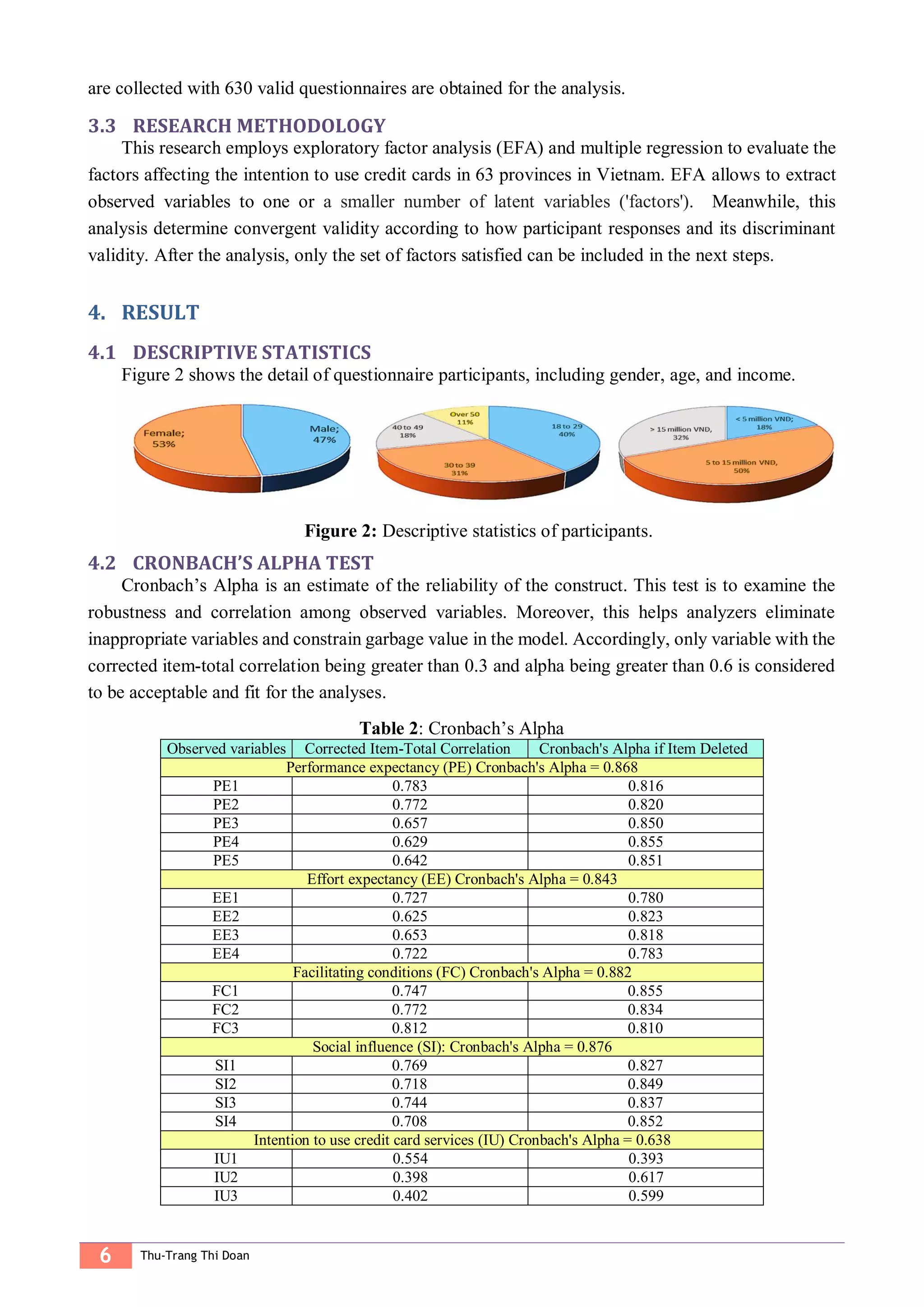
  • 94.
    *Corresponding author (ToanNgoc Bui). Email: buingoctoan@iuh.edu.vn ©2020 International Transaction Journal of Engineering, Management, & Applied Sciences & Technologies. Volume 10 No.11 ISSN 2228-9860 eISSN 1906-9642 CODEN: ITJEA8 Paper ID:11A04I http://TUENGR.COM/V11/11A04I.pdf DOI: 10.14456/ITJEMAST.2020.69 3 the MENA region. 2.2. IMPACTS OF INFLATION ON FINANCIAL DEVELOPMENT Among macroeconomic factors, inflation is an important determinant of financial development (Naceur et al., 2014). Inflation can have a negative impact on financial development. Indeed, the high inflation shows that the economy is facing many difficulties, credit demand is reduced, and the amount of savings is also reduced, leading to a decrease in the supply of credit to the economy (Moore, 1986; Azariadis & Smith, 1996; Choi et al., 1996). Not only that, but high inflation also reduces the ability to repay loans, leading to a decline in the efficiency of credit allocation (Boyd et al., 2001). In the empirical studies, Haslag and Koo (1999), Boyd et al. (2001) found the negative impact of inflation on financial development in many countries. Not only that, Dehesa et al. (2007) analyzed the panel data from 120 countries and suggested that low inflation would increase credit supply. At the same time, Zoli (2007) argued that high inflation would have an adverse impact on financial development in emerging countries in Europe. In the same view, Andrianaivo and Yartey (2009) find the negative impact of inflation on development in major African countries. Moreover, Bittencourt (2011) argues that inflation has a negative impact on financial development in Brazil. In addition, Naceur et al. (2014) also found the negative impact of inflation on the development of the banking system in countries in the MENA region. 2.3. IMPACTS OF GOVERNMENT EXPENDITURE ON FINANCIAL DEVELOPMENT Most empirical studies suggest that government expenditure has a positive impact on financial development. Indeed, the government plays an important role in promoting the development of the financial industry (Gerschenkron, 1962). Moreover, government expenditure is an important prerequisite for the development of the private sector, thereby stimulating the need for loans and creating incentives for financial development. The positive impact of government expenditure on financial development is also found in many empirical studies. For example, Hussain et al. (2009) suggest that government expenditure has a positive impact on private investment in Pakistan. In the same view, Rehman et al. (2009) suggest that government expenditure has a positive impact on short-term private investment in Pakistan. In another study, Bittencourt (2011) found the positive impact of government expenditure on financial development in Brazil. In addition, Cooray (2011) argues that government expenditure positively affects the scale of the financial sector, especially in low-income economies. However, if government expenditure is used inefficiently, it can have a negative impact on financial development (Lopez-de-Silanes et al., 1997). Accordingly, government intervention can make the financial system inefficient due to increasing operating costs (Kornai, 1979). On the other hand, government intervention in the financial sector will limit private investment, leading to financial development restrictions (Cooray, 2011). The negative impact of government expenditure on financial development (from a banking perspective) is also found in the study of Naceur et al. (2014) when analyzing the data of MENA region countries.
  • 95.
    4 Toan NgocBui 3. DATA AND METHODOLOGY 3.1. DATA The study data was collected from the World Bank during 2004-2017. The countries included in the study were Vietnam and ASEAN-5 countries (Indonesia, Malaysia, Thailand, Singapore, and the Philippines). These countries have many similarities, with relatively high levels of financial development. 3.2. METHODOLOGY With the purpose of testing the determinants of financial development in ASEAN countries, the author will conduct the estimation of the research model by the methods: Pooled regression (Pooled OLS), Fixed effects model (FEM) and Random effects model (REM). Then, this study will use the Generalized Method of Moment (GMM) to estimate the research model. The GMM method has great advantages when overcoming regressive hypotheses that are violated and controlling potential endogenous phenomena (Doytch & Uctum, 2011; Bui, 2020). Based on the previous studies, the author measures financial development (FD) using domestic credit to the private sector (% of GDP). In addition, this index reflects the development of the banking system. For the determinants of financial development, the author focuses mainly on three factors: economic growth (EG), inflation (INF) and government expenditure (GOV). Moreover, financial development is also significantly affected by financial development with one-period lag (Ibrahim & Sare, 2018). Therefore, the author adds the financial development factor with one- period lag (FDt-1) to the research model as an independent variable. Therefore, the research model is written as FDit = β0 + β1 FDit-1 + β2 EGit + β3 INFit + β4 GOVit + εit (1) The symbols β1., β2, β3, and β4, are regression coefficients, while β0 is a regression constant. The symbol ε is the model error term. Figure 1: The proposed research model. Financial development with one-period lag (FDt-1) Financial development (FD) Economic growth (EG) Inflation (INF) Government expenditure (GOV)
  • 96.
    *Corresponding author (ToanNgoc Bui). Email: buingoctoan@iuh.edu.vn ©2020 International Transaction Journal of Engineering, Management, & Applied Sciences & Technologies. Volume 10 No.11 ISSN 2228-9860 eISSN 1906-9642 CODEN: ITJEA8 Paper ID:11A04I http://TUENGR.COM/V11/11A04I.pdf DOI: 10.14456/ITJEMAST.2020.69 5 Table 1: Summary of variables (source: research model proposed by the author). Variable name Code Source How to measure Dependent variable Financial development FD World Bank Domestic credit to the private sector (% of GDP) Independent variables Financial development with a one-period lag FDt-1 World Bank One-period lag of financial development Economic growth EG World Bank GDP growth (annual %) Inflation INF World Bank Inflation, consumer prices (annual %) Government expenditure GOV World Bank General government final consumption expenditure (% of GDP) Table 2: Descriptive statistics of all variables (source: author's computation). Variable Mean Min Max Financial development (FD) 83.749 24.606 149.335 Economic growth (EG) 5.331 -1.514 15.240 Inflation (INF) 4.295 -0.900 23.116 Government expenditure (GOV) 10.542 5.465 17.114 Figure 2: Financial development in ASEAN countries (source: author's computation).
  • 97.
    6 Toan NgocBui 4. RESULT Table 2 shows that financial development has averaged at 83.749%. In 2017, Thailand is the country with the highest level of financial development (144.968%). It is followed by Vietnam (130.722%), Singapore (128.212%), Malaysia (118.806%), Philippines (47.770%), and the lowest in Indonesia (38.740%) (Figure 2). Table 3: Correlation coefficients between variables (source: author's computation). Variables FD FDt-1 EG INF GOV FD 1.000 FDt-1 0.988 1.000 EG -0.241 -0.225 1.000 INF -0.341 -0.326 0.171 1.000 GOV 0.448 0.462 -0.369 -0.565 1.000 Table 3, the results of correlation analysis between variables show that economic growth (EG) and inflation (INF) negatively correlate with financial development (FD). Meanwhile, the remaining variables are positively correlated with FD. Table 4: Results of estimating research models using Pooled OLS, FEM, REM methods (source: author's computation). FD Pooled OLS FEM REM Constant 10.878** -2.335 11.285** FDt-1 1.008*** 0.812*** 1.001*** EG -0.456 -0.503* -0.445 INF -0.361* -0.491** -0.411* GOV -0.493 2.360** -0.456 R2 97.83% 93.17% 97.82% Significance level F(4, 73) = 821.95 Prob > F = 0.000*** F(4, 68) = 119.49 Prob > F = 0.000*** Wald chi2(4) = 2523.40 Prob > chi2 = 0.000*** F test F(5, 68) = 4.66 Prob > F = 0.001*** Hausman test chi2(4) = 1.95 Prob > chi2 = 0.745 Note: * , ** and *** indicate significance at the 10%, 5% and 1% level, respectively. Table 4 presents the results of estimating the research model using the Pooled Regression model (Pooled OLS), Fixed effects model (FEM) and Random effects model (REM). In particular, the Random effects model (REM) method is proved to be more suitable because the test of F (5, 68) = 4.66 is statistically significant at the 1% significance level, and the Hausman test is not statistically significant (chi2(4) = 1.95). Therefore, the author will conduct research model tests based on estimates by the Random effects model (REM) method. Table 5: Testing of multicollinearity, heteroscedasticity, and autocorrelation (source: author's computation). Multicollinearity test Heteroscedasticity test Autocorrelation test Variable VIF FDt-1 1.29 chibar2(01) = 0.07 Prob > chibar2 = 0.397 F(1, 5) = 21.644 Prob > F = 0.006*** EG 1.17 INF 1.49 GOV 1.84 Mean VIF = 1.45 Note: *** indicates significance at the 1% level. The testing results show that the research model with multicollinearity is considered not serious. And also, the research model has no heteroscedasticity. However, the research model has autocorrelation (Table 5).
  • 98.
    *Corresponding author (ToanNgoc Bui). Email: buingoctoan@iuh.edu.vn ©2020 International Transaction Journal of Engineering, Management, & Applied Sciences & Technologies. Volume 10 No.11 ISSN 2228-9860 eISSN 1906-9642 CODEN: ITJEA8 Paper ID:11A04I http://TUENGR.COM/V11/11A04I.pdf DOI: 10.14456/ITJEMAST.2020.69 7 Therefore, the author will estimate the research model according to the Generalized Method of Moment (GMM) to overcome the autocorrelation. Not only that, but the GMM also helps the author control the potential endogenous phenomenon in the research model. Table 6: Model estimation results by GMM method (source: author's computation). FD Coef. P>|z| Constant 20.240 0.000*** FDt-1 0.897 0.000*** EG -0.557 0.029** INF -0.781 0.000*** GOV -0.288 0.619 Significance level Wald chi2(3) = 1297.02 Prob > chi2 = 0.000*** Arellano-Bond test for AR(2) in first differences z = -0.89 Pr > z = 0.374 Sargan test chi2(2) = 0.29 Prob > chi2 = 0.867 Note: ** and *** indicate significance at the 5% and 1% level, respectively. Table 6 shows the results of estimating the research model with statistical significance at 1%. And also, the Sargan test shows that the instruments used in the research model are appropriate. Therefore, the results of estimating the research model by the GMM method are appropriate and usable. Accordingly, the financial development with one-period lag (FDt-1) has a positive impact (β = 0.897) on financial development (FD) with a 1% significance level, this result is consistent with the previous judgment of Ibrahim and Sare (2018). And also, the financial development (FD) is also negatively affected by the economic growth (EG) (β = -0.557, with 5% significance level) and inflation (INF) (β = -0.781, with 1% significance level ). With this dataset, the author has not found a statistically significant impact of government expenditure (GOV) on financial development (FD). 4.1 IMPACTS OF ECONOMIC GROWTH ON FINANCIAL DEVELOPMENT The study results show that economic growth (EG) has a negative impact on financial development (FD). Accordingly, high economic growth will have many potential risks and create negative impacts on financial development. This is very consistent with reality in the recent period, especially when the global economic crisis occurred. At that time, ASEAN economies had just experienced a very high growth period, but the unsustainable growth of the economy made the financial system develop but had many risks (especially the credit quality is not strictly controlled), this has made the financial system in crisis and strong decline. The negative impact of economic growth (EG) on financial development (FD) is also consistent with Ram (1999), Naceur et al. (2014). 4.2 IMPACTS OF INFLATION ON FINANCIAL DEVELOPMENT The study results show that inflation (INF) has a negative impact on financial development (FD). Thus, the high inflation will make business and production activities more difficult, the credit demand will be reduced, the amount of savings will also decrease, leading to a decrease in the supply of credit to the economy. Financial development will decrease. The negative impact of inflation (INF) on FD was also found in the research of Haslag and Koo (1999), Boyd et al. (2001), Zoli (2007), Andrianaivo and Yartey (2009), Bittencourt (2011), Naceur et al. (2014). Thus, financial development (FD) is significantly affected by financial development with one-
  • 99.
    8 Toan NgocBui period lag (FDt-1), economic growth (EG) and inflation (INF). This is consistent with some observations in the previous studies. However, this article is the first empirical evidence in the Asean region in this issue. Therefore, the study results are important for ASEAN countries. 5. CONCLUSION This article has found the first empirical evidence on the determinants of financial development in ASEAN countries. Accordingly, financial development with one-period lag (FDt-1) has a positive impact on financial development (FD). And also, the financial development (FD) is negatively affected by economic growth (EG) and inflation (INF). Based on this, ASEAN countries will have a reliable basis to run macroeconomics associated with financial development more effectively and sustainably. Due to data limitations, some variables can affect FD but have not been considered in this study, such as the global economic crisis and real estate market. Moreover, in order to ensure the homogeneity of the study data, the number of countries included in the study is limited. 6. DATA AND MATERIAL AVAILABILITY Information regarding this study is available by contacting the corresponding author. 7. REFERENCES Andrianaivo, M., & Yartey, C.A. (2009). Understanding the Growth of African Financial Markets. IMF Working Paper, 1-40. Azariadis, C., & Smith, B.D. (1996). Private Information, Money, and Growth: Indeterminacy, Fluctuations, and the Mundell–Tobin Effect. Journal of Economic Growth, 1, 309-332. Bencivenga, V.R., & Smith, B.D. (1991). Financial Intermediation and Endogenous growth. Review of Economic Studies, 58, 195-209. Boyd, J.H., Levine, R., & Smith, B.D. (2001). The impact of inflation on financial sector performance. Journal of Monetary Economics, 47, 221-248. Bui, T.N. (2019). The Role of Financial Development in the Vietnam Economy. WSEAS Transactions on Business and Economics, 16, 471-476. Bui, T.N. (2020). Supply chain finance, financial development and profitability of real estate firms in Vietnam. Uncertain Supply Chain Management, 8(1), 37-42. Cherif, M., & Dreger, C. (2016). Institutional Determinants of Financial Development in MENA countries. Review of Development Economics, 20(3), 670-680. Choi, S., Smith, B.D., & Boyd, J.H. (1996). Inflation, financial markets and capital formation. Proceedings, Federal Reserve Bank of St. Louis, issue May, 9-35. Cooray, A. (2011). The role of the government in financial sector development. Economic Modelling, 28(3), 928-938. Dehesa, M., Druck, P., & Plekhanov, A. (2007). Relative Price Stability, Creditor Rights, and Financial Deepening. IMF Working Paper, 1-21. Doytch, N., & Uctum, M. (2011). Does the worldwide shift of FDI from manufacturing to services accelerate economic growth? A GMM estimation study. Journal of International Money and Finance, 30(3), 410-427. Gerschenkron, A. (1962). Economic Backwardness in Historical Perspective. Harvard University Press, Cambridge, MA.
  • 100.
    *Corresponding author (ToanNgoc Bui). Email: buingoctoan@iuh.edu.vn ©2020 International Transaction Journal of Engineering, Management, & Applied Sciences & Technologies. Volume 10 No.11 ISSN 2228-9860 eISSN 1906-9642 CODEN: ITJEA8 Paper ID:11A04I http://TUENGR.COM/V11/11A04I.pdf DOI: 10.14456/ITJEMAST.2020.69 9 Goldsmith, R.W. (1969). Financial structure and development. Yale University Press, New Haven. Greenwood, J., & Jovanovic, B. (1990). Financial development, growth, and the distribution of income. Journal of Political Economy, 98(5), 1076-1107. Guerra, E.A.R. (2017). The economic growth and the banking credit in Mexico: Granger causality and short-term effects, 2001Q1-2016Q4. Economía Informa, 406, 46-58. Haslag, J.H., & Koo, J. (1999). Financial Repression, Financial Development and Economic Growth. Working Papers 9902, Federal Reserve Bank of Dallas, 1-43. Hussain, A., Muhammad, S.D., Akram, K., & Lal, I. (2009). Effectiveness of government expenditure crowding-in or crowding-out: empirical evidence in case of Pakistan. European Journal of Economics, Finance and Administrative Sciences, 16, 143-149. Ibrahim M., & Sare Y.A. (2018). Determinants of financial development in Africa: How robust is the interactive effect of trade openness and human capital?. Economic Analysis and Policy, 60, 18- 26. Khan, M.S., & Khan, A.S. (2003). Financial Development and Economic Growth: A Review and New Evidence. Journal of African Economies, 12(2), 89-110. King, R.G., & Levine, R. (1993). Finance and growth: Schumpeter might be right. The Quarterly Journal of Economics, 108(3), 717-737. Kornai, J. (1979). Resource-Constrained Versus Demand-Constrained Systems. Econometrica, 47, 801- 819. Lopez-de-Silanes, F., Shleifer, A., & Vishny, R. (1997). Privatization in the United States. RAND Journal of Economics, 28, 447-471. Moore, B.J. (1986). Inflation and financial deepening. Journal of Development Economics, 20, 125-133. Naceur, S.B., Cherif, M., & Kandil, M. (2014). What drives the development of the MENA financial sector?. Borsa Istanbul Review, 14(4), 212-223. Rajan, R.G., & Zingales, L. (1998). Which capitalism? Lessons from the east Asian crisis. Journal of Applied Corporate Finance, 11(3), 40-48. Ram, R. (1999). Financial development and economic growth: additional evidence. The Journal of Development Studies, 35, 164-174. Rehman, H.U., Khan, S., & Khan, M.A. (2009). What determines private investment? The case of Pakistan. South Asian Studies A Research Journal of South Asian Studies, 24(1), 52-68. Robinson, J. (1952). The Generalisation of the General Theory in The Rate of Interest and other Essays. McMillian, London. Schumpeter, J.A. (1911). The Theory of Economic Development. Harvard University Press, Cambridge. Zaman, K., Izhar, Z., Khan, M.M., & Ahmad, M. (2012). The relationship between financial indicators and human development in Pakistan. Economic Modelling, 29(5), 1515-1523. Zoli, E. (2007). Financial Development in Emerging Europe: The Unfinished Agenda. IMF Working Paper, 1-36. Toan Ngoc Bui is a Lecturer at the Faculty of Finance and Banking, Industrial University of Ho Chi Minh City (IUH), Vietnam. He holds a Master of Finance and Banking from Ho Chi Minh City Open University, Vietnam. Currently, he is pursuing a PhD at the University of Finance – Marketing (UFM), Vietnam. His researches are in the fields of Financial Development, Real Estate Market and Applied Econometrics.
  • 101.
    *Corresponding author (FaheemAslam). Tel: +92-321-5063253. Email: fahimparacha@gmail.com ©2019 International Transaction Journal of Engineering, Management, & Applied Sciences & Technologies. Volume 11 No.4 ISSN 2228-9860 eISSN 1906-9642 CODEN: ITJEA8 Paper ID:11A04J http://TUENGR.COM/V11/11A04J.pdf DOI: 10.14456/ITJEMAST.2020.70 1 International Transaction Journal of Engineering, Management, & Applied Sciences & Technologies http://TuEngr.com PAPER ID: 11A04J COMPARATIVE ANALYSIS OF TRADITIONAL AND SOFT COMPUTING MODELS FOR TRADING SIGNALS PREDICTION Beenish Bashir a , Faheem Aslam a* a Department of Management Sciences, COMSATS University Islamabad, PAKISTAN. A R T I C L E I N F O A B S T R A C T Article history: Received 11 July 2019 Received in revised form 20 November 2019 Accepted 29 November 2019 Available online 09 December 2019 Keywords: Moving averages; Autoregressive models; Artificial neural network; Support vector machine; Financial marketing; Extreme learning machine. Financial market forecasting always remains a challenging issue due to the nature of the time series data as well the information stock prices reflect. Economist takes this data as a linear process whereas the soft computing models assume that time-series data is nonlinear, complex and dynamic in nature and can be better analyzed through nonlinear models. This research paper settles the debate by conducting a comparative analysis of traditional forecasting models and soft computing models for the trading signals prediction of Pakistan stock exchange covering the daily data from 1997 to 2018. Our study is unique regarding the target variable it predicts which reflects the overall dynamics of the market not just the next period future price. In traditional models, we include moving averages as well as autoregressive models whereas in soft computing models we take artificial neural networks, support vector machines and extreme learning machines to have a comprehensive analysis. This comparison shows that soft computing models perform better than traditional models in trading signals prediction showing non-linear behavior of financial time series data. However, amongst all soft computing models, the artificial neural network becomes the best predictive model. Our results are more convincing as compare to existing literature regarding the careful selection of market features, which can help investors to better understand market behavior and improve the predictive ability of the model. Disciplinary: Management Sciences (Financial Science). ©2020 INT TRANS J ENG MANAG SCI TECH. 1. INTRODUCTION Financial markets are the barometer of any economy. It facilitates international trade, foreign investment, institutional investment acting as a part of mutual funds and portfolio management. Given their importance, much attention has been given by researchers and academia regarding its prediction. These predictions are then incorporated into financial risk models and developing ©2020 International Transaction Journal of Engineering, Management, & Applied Sciences & Technologies
  • 102.
    2 Beenish Bashir,Faheem Aslam trading strategies. (Moradi & Rafiei, 2019; Zhong & Enke, 2019). As the importance and predictability of financial markets are supported by previous studies (Fama, 1965; Malkiel & Fama, 1970) but when it comes to the modeling techniques for forecasting there is no consensus. The dispute is much related to the nature of the data financial markets generate. The long-term investors are more concerned about the fundamentals of companies like price-earnings ratio, revenue, expenses, assets, liabilities, management policy and financial ratio (Lam, 2004). Whereas, short-term investors rely on price movements of stock, understanding market behavior through different market features (Murphy, 1986). Technicians avoid the analysis of all economic factors by focusing on pattern recognition of price considering this information enough for future price determination (Hu et al., 2015; Patel et al., 2015; Teixeira & De Oliveira, 2010; Żbikowski, 2015). Tsinaslanidis and Kugiumtzis (2014) use numerous technical indicators for market analysis which is time-series data in nature. Huang et al. (2019) also use different momentum and volatility indicators for bitcoin predictive analysis. For short-term prediction, traditional forecasting models consider time series data as a linear process and apply the smoothening and autoregressive process to predict future price movement (Kumar & Murugan, 2013; Lin et al., 2012; Wang et al., 2012). Financial time series are complex, nonlinear, dynamic and chaotic. Soft computing models can capture this nonlinear behavior (Cheng & Wei, 2014; Huang & Tsai, 2009; Lee, 2009). Tay and Cao (2001) compare artificial neural networks (ANN) and support vector machines (SVM) and confirm their suitability for prediction of the stock market. Huang, et al. (2005) use SVM for predicting the directional movement of the NIKKIE 225 index. Kara et al. (2011) also employ SVM and ANN for predicting the Istanbul Stock Exchange. Our work is an addition to existing literature to settle the debate amongst traditional forecasting models and soft computing models for trading signals prediction. All the existing literature is related to price prediction, completely ignoring the trading signals forecasting that can enlighten investors about entry and exist decisions. Secondly, we also focused on the relevant feature selection to improve the predictive ability of models and to better understand market behavior. Lastly, our analysis confirms the nonlinear and dynamic nature of financial time series data negating the assumption of traditional forecasting models. 2. LITERATURE REVIEW In the past ten years, various time series methodologies have been developed for financial market forecasting that helps improve investment decisions (Teixeira & De Oliveira, 2010). Traditional forecast models and soft computing models are two major approaches (Wang et al., 2011). In both modeling approaches, financial data is considered as a time series data which is actually numerical observations accumulated in sequential order over a period of time. (Brockwell & Davis, 2009; B. Wang et al., 2012). This organization of financial data enables model developers to utilize time series tools to understand market behavior (Oliveira & Meira, 2006). Further, these tools pave a way to do data mining tasks, such as classification, trend analysis, seasonal effect, cycles and extreme event detection (Cryer & Chan, 2008). The traditional models involve averages, regression and autoregressive models based on the linearity of normally distributed variables (Lin et al., 2012; Wang et al., 2012). In reality, financial time series data is dynamic, chaotic, nonlinear and highly volatile which makes its prediction
  • 103.
    *Corresponding author (FaheemAslam). Tel: +92-321-5063253. Email: fahimparacha@gmail.com ©2019 International Transaction Journal of Engineering, Management, & Applied Sciences & Technologies. Volume 11 No.4 ISSN 2228-9860 eISSN 1906-9642 CODEN: ITJEA8 Paper ID:11A04J http://TUENGR.COM/V11/11A04J.pdf DOI: 10.14456/ITJEMAST.2020.70 3 complex as compare to other non-financial time-series data (Vanstone & Finnie, 2009). Financial time series inherit these characteristics from economic factors, investor’s sentiments, political events and movement of other stock markets (Kara et al., 2011). The nature of financial time series data calls for flexible and adaptive models for future price prediction (Huang & Tsai, 2009) and soft computing models serve the purpose (Lin et al., 2012). Soft computing models, such as artificial neural networks, support vector machine and extreme learning machine give better predictions with high accuracy (Lee, 2009). Most of the soft computing models can handle nonlinear relations through relevant market features with less statistical assumptions (Atsalakis & Valavanis, 2009). Weng et al. (2017) find that soft computing models are appropriate for developing rules when using with a rich knowledge database. Zhong and Enke (2017) conclude a trading strategy based on classification models yield high returns than the benchmark T-bill strategy. Liang et al. (2009) find that the non-parametric model outperforms parametric models in financial market forecasting. As soft computing models are self-adaptive and are more tolerant of imprecision (Cheng & Wei, 2014). Hence, we investigate whether these findings hold for trading signals prediction of Pakistan stock exchange or not. 3. METHOD 3.1 DATA We use the Pakistan Stock Exchange (KSE-100 index) daily quotes from 7/02/1997 to 18/07/2018 with the total observations 5168. The data set is bifurcated into a training dataset and testing dataset. The training dataset has 3764 observations cover 70% of total observations and the testing set has 1404 observations include the remaining 30% of total observation. 3.2 TARGET VARIABLE “T” The target variable T (Equation 1) gives a holistic picture of stock prices by incorporating overall dynamics in the following days. This cannot be merely done through price movements, therefore, the target variable is defined as the sum of all variation above an absolute value of target margin 𝑥% (Torgo, 2011) 𝑇 = ∑( 𝑣 ∈ 𝑉𝑖: 𝑣 > 𝑥% ∨ 𝑣 < −𝑥%) (1) where 𝑉𝑖 (Equation 2) is k percentage variation of current close price and the following k days price average. 𝑉𝑖 = { 𝑃̅𝑖+𝑗 − 𝐶𝑖 𝐶𝑖 } 𝑗=1 𝑘 (2) and the daily average price is computed as Equation 3. 𝑃̅𝑖 = 𝐶𝑖 + 𝐻𝑖 + 𝐿𝑖 3 (3) 𝐶𝑖, 𝐻𝑖 𝑎𝑛𝑑 𝐿𝑖 are close, high and low prices for the day i respectively. The target variable is T value and develops a model that predicts this value by using the feature’s
  • 104.
    4 Beenish Bashir,Faheem Aslam information that gives three trading actions (sell, hold and buy), this transformation is carried out using the values in Equation 4. 𝑠𝑖𝑔𝑛𝑎𝑙 = { 𝑠𝑒𝑙𝑙 𝑖𝑓 𝑇 < −0.1 ℎ𝑜𝑙𝑑 𝑖𝑓 − 0.1 ≤ 𝑇 ≤ 0.1 𝑏𝑢𝑦 𝑖𝑓 𝑇 > 0.1 (4) The threshold 0.1 and -0.1 are heuristic and any other value can be used. However, the value 0.1 is the average of last four days average price that is 2.5% higher than the current close (4x0.025=0.1) The only care should be taken is that very high values will generate fewer signals and very small values let an investor trade on minor variation, incurring higher risk (Torgo, 2014). 3.3 INPUT FEATURES We use fifteen features (Table 1) as the input of the soft computing model. These features are selected from the list of features available in the Technical trading rule package (Ulrich et al., 2018) through a random forest technique (Figure 1). Figure 1: Variable importance according to the random forest. Table 1: List of Selected Technical Indicators Sr. No. Selected Technical Indicators 1 Average True Range 2 Average True Range High 3 Average True Range Low 4 ATR tr. 5 ADX (Welles Wilder’s Directional Movement Index) 6 ADX Dip 7 ADX Din 8 ADX DX 9 Bollinger Bands Down 10 Bollinger Bands Moving Average 11 Bollinger Band 12 Bollinger Band Up 13 SAR (Parabolic Stop and Reverse) 14 Run Mean 15 Run Standard Deviation 3.4 METHODOLOGY This section explains both the traditional and soft computing models used for prediction analysis.
  • 105.
    *Corresponding author (FaheemAslam). Tel: +92-321-5063253. Email: fahimparacha@gmail.com ©2019 International Transaction Journal of Engineering, Management, & Applied Sciences & Technologies. Volume 11 No.4 ISSN 2228-9860 eISSN 1906-9642 CODEN: ITJEA8 Paper ID:11A04J http://TUENGR.COM/V11/11A04J.pdf DOI: 10.14456/ITJEMAST.2020.70 5 3.4.1 TRADITIONAL MODELS We first explain the simple moving average, centered moving average, right-aligned moving average, exponential weighted moving average then move to autoregressive moving average model. Simple Moving Average (SMA) is the average of n prices (Equation 5) where each observation is given equal weight. If we take difference of the two of SMA values at times t and t-1, it gives Equation 6 and recursive form become as Equation 7 which improves the computational speed of SMA in real-life scenarios (Zakamulin, 2017) by reducing total n operations involve in Equation 5 to just three mathematical operations (Equation 8) irrespective of the length of averaging window length. 𝑆𝑀𝐴 𝑡(𝑛) = 1 𝑛 ∑ 𝑃𝑡−𝑖 𝑛−1 𝑖=0 (5) 𝑆𝑀𝐴 𝑡(𝑛) − 𝑆𝑀𝐴 𝑡−1(𝑛) = 𝑃𝑡 − 𝑃𝑡−𝑛 𝑛 (6) 𝑆𝑀𝐴 𝑡(𝑛) = 𝑆𝑀𝐴 𝑡−1(𝑛) + 𝑃𝑡 − 𝑃𝑡−𝑛 𝑛 (7) The Herfindahl index of SMA (Rhoades, 1993) equals 1 𝑛 ; hence defining the smoothness of SMA(n) as ( 1 𝑛 )−1 = 𝑛. The increase in the average window length not only increases its smoothness but also increases the average lag time of SMA which is a linear function of smoothness (Equation 9). 𝐿𝑎𝑔 𝑡𝑖𝑚𝑒(𝑆𝑀𝐴 𝑛) = ∑ 𝑖𝑛−1 𝑖=1 ∑ 𝑖𝑛−1 𝑖=0 = 𝑛 − 1 2 (8) 𝐿𝑎𝑔 𝑡𝑖𝑚𝑒(𝑆𝑀𝐴 𝑛) = 1 2 × 𝑆𝑚𝑜𝑜𝑡ℎ𝑛𝑒𝑠𝑠(𝑆𝑀𝐴 𝑛) − 1 2 (9) It is quite easy to find a trend and breakthroughs in a trend by looking on historical data considering time series data of 𝑃𝑡 as a combination of trend 𝑇𝑡 and an irregular component called as noise 𝐼𝑡. Then, an additive model can be written as Equation 10. Noise is a short-lived variation around the trend eliminated through centered moving average or other smoothening tools. Any average of time series data is computed using a fixed window length that rolls through time. This window length is called an averaging period. In case of centered moving average if n is the window length then it consists of a center and two halves of length k such that n = 2k + 1. Since centered moving average at time t (equation11) removes noise so the value of CMA is the value of trend in the given time series data. The window length n is selected keeping in mind the elimination of noise (Equation 12) 𝑃𝑡 = 𝑇𝑡 + 𝐼𝑡 (10) 𝐶𝑀𝐴 𝑡 = 1 𝑛 ∑ 𝑃𝑡−𝑖 𝑛−1 𝑖=0 (11)
  • 106.
    6 Beenish Bashir,Faheem Aslam Tt = 𝐶𝑀𝐴 𝑡 (n) (12) In real life, an analyst is interested in the forecasting of time series t + 1 given the historical data series t (Equation 13). 𝑅𝑀𝐴 𝑡 = 1 𝑛 ∑ 𝑃𝑡−𝑖 𝑛−1 𝑖=0 (13) Mathematical comparison of centered moving average and right-aligned moving average (RMA) at a given time t leads to the conclusion that 𝑅𝑀𝐴 𝑡 is equal to 𝐶𝑀𝐴 𝑡−𝑘 (Equation 11). In fact, RMA is a lagged version of CMA given the same window length and shares the same properties of CMA. Particularly, RMA with longer window length is better at removing noise from the data series but this comes with longer lag time. The lag time is given as Equation 15 𝑅𝑀𝐴 𝑡(𝑛) = 𝐶𝑀𝐴 𝑡−𝑘(𝑛) (14) 𝑙𝑎𝑔𝑡𝑖𝑚𝑒 = 𝑘 − 𝑛 − 1 2 (15) However, the linearly weighted moving average has the drawback that it assigns the same weight to all observations ignoring the importance of recent observation in future prediction. This problem is addressed by exponential moving average (EMA), using the concept of exponential factor λ (Equation 16). The value of λ can be greater than zero and less than or equal to 1. 𝐸𝑀𝐴 𝑡(𝜆, 𝑛) = ∑ 𝜆𝑖 𝑃𝑡−𝑖 𝑛−1 𝑖=0 ∑ 𝜆𝑖𝑛−1 𝑖=0 (16) Autoregressive Integrated Moving Average (ARIMA) is the most commonly used forecasting model amongst traditional forecasting models. It is a generalized version of ARMA (autoregressive moving average) when used for differenced data rather than original data series. Orders of AR part (p), the difference (d) and MA (q) part specify the ARMA model and the model is said to be of order (p,d,q). However, AR and MA are different models for stationary time series and ARMA (and ARIMA) is a hybrid form of these two models for a better fit. The steps of building ARIMA models are explained as follows. Auto Regression (AR) is a class of linear models where the dependent variable is regressed against its own lagged values. If 𝑦𝑡 is modeled via the AR process, it is written as Equation 17 similar to simple linear regression. It has an intercept like term (δ), regressors 𝑦𝑡−𝑖, and parameters ∅ 𝑡−𝑖 an error term 𝜀𝑡. The only special thing is that regressors are the dependent variable’s own lagged terms. If lag up to p is included in the model, the AR process is said to be of order p. 𝑦𝑡 = 𝛿 + ∅𝑦𝑡−1 + ∅2 𝑦𝑡−2 + ⋯ + ∅ 𝑝 𝑦𝑡−𝑝 + 𝜀𝑡 (17) Moving Average (MA) is another class of linear models. In MA, the output or the variable of interest is modeled via its own imperfectly predicted values of current and previous times. It can be written in terms of error terms as Equation 18. 𝑦𝑡 = 𝜇 + 𝜃1 𝜀𝑡−1 + 𝜃2 𝜀𝑡−2 + ⋯ + 𝜃 𝑞 𝜀 𝑞−1 + 𝜀𝑡 (18)
  • 107.
    *Corresponding author (FaheemAslam). Tel: +92-321-5063253. Email: fahimparacha@gmail.com ©2019 International Transaction Journal of Engineering, Management, & Applied Sciences & Technologies. Volume 11 No.4 ISSN 2228-9860 eISSN 1906-9642 CODEN: ITJEA8 Paper ID:11A04J http://TUENGR.COM/V11/11A04J.pdf DOI: 10.14456/ITJEMAST.2020.70 7 Again, it has a form similar to classic linear regression. The regressors are the imperfections (errors) in predicting previous terms. Here the model is specified with a positive sign for the parameters. It is not uncommon where we have a negative sign for the parameters. The model above include errors for q lags and said to have an order of q. In the case of differenced data ARIMA (p,d,q) become ARMA(p,q) having the mathematical form as Equation 19. 𝑦𝑡 = 𝛿 + ∑ ∅𝑖 𝑦𝑡 𝑝 𝑖=1 + ∑ ∅ 𝑗 𝜀𝑡−𝑗 𝑞 𝑗=1 + 𝜀𝑡 (19) 3.4.2 SOFT COMPUTING MODELS Artificial Neural Network (ANN) is a nonlinear regression technique and popularly used for stock market prediction (Zhiqiang et al., 2013). This field is tracked back to (McCulloch & Pitts, 1943) mathematical function perceived as a model of biological neural network. This model of the neural network comprises three components: weighted inputs that are like synapses in the human brain. Adder- The summation of all input signals corresponds to the neuron membrane which assembles all electrical charges. Activation function- determines if a neuron has an action potential for a specific set of inputs (Algorithm 1). ALGORITHM 1 Artificial Neural Network 1. Start with small random weights 2. Input the data set 3. For forwarding phase: hidden layer compute activation function of each neuron then calculate the activation function of output 4. For the backward phase: calculate error at the output and at the hidden layers then update the weights of both layers 5. For recall apply the forward phase described in step 3 When it comes to the interpretation of ANN it’s more like a black box. Therefore, Support vector machines (SVMs) apply the concept of margin to solve the problem of ANN. SVM easily separates the data by mapping it into high dimensions (Boser et al., 1992). By aiming to maximize the size of margin that classifies the objects without any point lying inside. ALGORITHM 2 Support Vector Machine 1. Begin with an input data set 2. Classify the data set 3. Apply SVM with a different kernel function 4. Specify hyperplane 5. Repeat step 3 if obtained accuracy is not obtained The learning speed of ANN and SVM is slower than what is required because of slow gradient-based learning algorithms. Whereas the Extreme Learning Machine (ELM) randomly selects hidden nodes and analytically finds the output weights (Algorithm 3).
  • 108.
    8 Beenish Bashir,Faheem Aslam ALGORITHM 3 Extreme Learning Machine 1. With the training set and activation function and hidden neuron number 2. Assign random input weights and bias 3. Compute hidden layer output matrix 4. Compute the output weights 4. RESULT AND DISCUSSION SMA is computed using sma function () in R package smooth (Tukey) and forecast function () in R package forecast (Hyndman et al., 2019). By default, SMA order selection (h) is based on AIC and returns the model with the lowest value. Here the order of SMA is 12 giving a good fit shown in purple colored line with AIC value of -3151.602. The forecast is done for the next 10 days represented after a red cutting line (Figure 2). The forecast trajectory of SMA (12) is not just a straight line. This is because the actual values are used in the construction of point forecasts up to h=12 with a 95% prediction interval. Figure 2: Simple Moving Average. Figure 3: Centered Moving Average. Centered moving average is computed in R deploying function cma () in package Smooth (Svetunkov, 2017) with the argument order equals to “null” to find order based on AIC. In this
  • 109.
    *Corresponding author (FaheemAslam). Tel: +92-321-5063253. Email: fahimparacha@gmail.com ©2019 International Transaction Journal of Engineering, Management, & Applied Sciences & Technologies. Volume 11 No.4 ISSN 2228-9860 eISSN 1906-9642 CODEN: ITJEA8 Paper ID:11A04J http://TUENGR.COM/V11/11A04J.pdf DOI: 10.14456/ITJEMAST.2020.70 9 analysis CMA at order 13 with AIC value, -3896.784 is computed. Our result reveals the basic property of a centered moving average that is irrespective of window length, CMA closely follows real data pattern (Figure 3). The right-aligned moving average is computed by using function rollmean () with argument align “right” in R package zoo (Shah, Zeileis, & Grothendieck, 2005). The actual data series is in black line and the right aligned moving average is shown by the orange line and the gray line is the prediction interval (Figure 4). Overall, the RMA fits well with the pattern of real data. Figure 5 shows a magnified version of the forecasted region where the dark shaded area is 80% prediction interval and the light shaded area is 95% prediction interval and the predicted blue line lies within the bounds of the prediction interval. Figure 4: RMA and Trading Signals Data. We estimate exponential moving average by own code with the lambda optimized at 0.1. The method of least square is used to find the optimal value of λ for which the sum of squared errors (SSE) is minimized (Čisar & Čisar, 2011). Table 2, there is an increasing trend in SSE values with the higher values of lambda. Whereas most of the packages use lambda value as 0.2 (Lucas & Saccucci, 1990). Figure 6 illustrates EMA and actual dataset, the black line is the actual data and the orange line is EMA whereas the gray line is the predicted interval and EMA is following the actual data set. Figure 5: Magnified Graph of RMA Forecasted Region.
  • 110.
    10 Beenish Bashir,Faheem Aslam Table 2: The optimized value of Lambda λ SSE 0.1 0.04432 0.2 0.05035 0.5 0.05146 0.7 0.05157 0.9 0.05157 Figure 6: EMA and Actual Data Set. Three major steps are followed to make an ARIMA forecast model: (1) Model specification (2) Parameter estimation (3) Diagnostics and potential improvement. We first check the stationarity of the data by taking differences and keep taking the difference until the series becomes stationary that number is d. There are different tools to detect stationarity. Like visual observation of the data plot and autocorrelation. After determining d, we can utilize sample PACF (partial autocorrelation) to get the AR order p. The lag at which PACF cuts off is the order of AR and the lag at which ACF (autocorrelation) cut off is the order q of MA. The trading signal data was not level stationary but its first difference stationary as shown in Figures 7 and 8. Next Figures 9 and 10 show the ACF and PACF plot of a simulated time series. For the series, the ACF cuts off after lag 1 and PACF also cuts off after lag 1. So three potential (p, q) specification would be (1, 0), (0, 1) and (1,1). Figure 7: Graphical Representation of First Differenced series of Trading Signals. Since the ACF plot of first difference is better than level stationary graph so the series is stationary at first difference. We further investigate it with unit root test KPSS in R package urca (Pfaff et al., 2016). The value of the test statistic is 0.0039 so the series is first differenced stationary. Once we determine the orders, the next step is to find the parameters. Commonly used techniques are
  • 111.
    *Corresponding author (FaheemAslam). Tel: +92-321-5063253. Email: fahimparacha@gmail.com ©2019 International Transaction Journal of Engineering, Management, & Applied Sciences & Technologies. Volume 11 No.4 ISSN 2228-9860 eISSN 1906-9642 CODEN: ITJEA8 Paper ID:11A04J http://TUENGR.COM/V11/11A04J.pdf DOI: 10.14456/ITJEMAST.2020.70 11 Figure 8: Autocorrelation Plot of Original Trading Signals Series. Figure 9: Autocorrelation Plot of First Differenced Trading Signals Series. Figure 10: Partial Autocorrelation Plot of First Differenced Trading Signals Series least-square, maximum likelihood, method of moments. R package forecast (Hyndman & Khandakar, 2007) use the maximum likelihood method. After developing the model, we check the model adequacy through diagnostics. The original plot shows clear nonstationarity. The ACF does not cuts off, rather it shows a slow
  • 112.
    12 Beenish Bashir,Faheem Aslam decrease. On the other hand, the first difference data looks much stationery. The ACF cuts off after some lags. We can perform another formal test to test the stationarity of the differenced data. But here from the plot of the original data and the ACF plot provide a good indication that the differenced data is stationary. Since it took one differencing to get stationarity, here d=1. The values of p and q, which is the order of AR and MA part is determined through the plots of ACF and PACF that makes three models, ARIMA(0,1,1), ARIMA(1,1,0) and ARIMA(1,1,1). 4.1 MODEL BUILDING AND DIAGNOSTIC We develop three ARIMA models with orders as proposed earlier. We bifurcate the data into a 70:30 ratio. The total number of observations is 5151, the training data set has 3606 observations and the testing dataset has the remaining 1545 observations. For estimation purposes, R package Forecast (Hyndman & Khandakar, 2007) and package Metrics (Hamner et al., 2018) are deployed. In Figure 11, the forecasts for the next 10 days are plotted as a blue line, where 80% prediction interval is shown in dark shaded area and 95% prediction interval as a light shaded area. If there is no autocorrelation between forecast errors then the model cannot be improved. In Figure 12, spike 2, 4, 7 and then 10 is out of the significance bounds. We carry out a unit root test where KPSS has the value of the test statistic 0.0287 confirming the evidence of non-zero correlation. The forecast errors in Figure 13 represents a more or less normal distribution. Figure 11: Ten days Forecast. Figure 12: ACF Plot of Residual ARIMA (1, 1, 1). The model selection among the above tested traditional models is based on AIC values. Table 3 shows that all AIC values are in negative means that the likelihood at the maximum was > 1 and algebraically lower AIC is selected rather than the absolute value of AIC which in our case is ARMA (1,1,1) with AIC value -3923.65 and precision value 0.1333. Right-aligned averages and the
  • 113.
    *Corresponding author (FaheemAslam). Tel: +92-321-5063253. Email: fahimparacha@gmail.com ©2019 International Transaction Journal of Engineering, Management, & Applied Sciences & Technologies. Volume 11 No.4 ISSN 2228-9860 eISSN 1906-9642 CODEN: ITJEA8 Paper ID:11A04J http://TUENGR.COM/V11/11A04J.pdf DOI: 10.14456/ITJEMAST.2020.70 13 exponentially weighted average has no reported value of AIC. Figure 13: Histogram of Residual ARIMA (1, 1, 1). Table 3: Comparison of Traditional Model Model AIC SMA -3151.602 CMA -3896.784 RMA Null EMA Null ARMA(0,1,1) -3680.29 ARMA(1,1,0) -2611.42 ARMA(1,1,1) -3923.65 Table 4: Comparison of Soft Computing Model. Technique Activation function Precision Score ANN ReLU 0.6311 Tanh 0.5836 Sigmoid 0.5945 SVM Polynomial 0.5265 Radial Basis 0.4830 Tanh 0.4950 ELM Sigmoid 0.5000 ReLU 0.4285 Tanh 0.4410 The ANN is applied in package nnet of R. The feed-forward ANN model has three layers: input, hidden and output. ANN model utilized in this study employs the sigmoid, tanh and ReLU activation function. The network has 15 input neurons that correspondents to the 15 selected input technical indicators through the random forest (Table 1). The output layer has a predicted signal. All parameters are fixed for this ANN. The network is trained on 70% data and tested on the remaining 30% of the data set. The highest precision score is 0.6311 with activation function ReLU. SVM is estimated against three activation functions which are, polynomial, tanh and radial basis with the highest precision value 0.5265 in polynomial activation function. ELM is applied using function elm_train() and elm_predict(). The number of hidden nodes is 10, three activation functions ReLU, sigmoid and tanh are used and the input layer has 15 selected input technical indicators. The highest precision value is 0.5000 with activation function sigmoid. The soft computing models ANN gives the highest precisions score with activation function ReLU for KSE-100 trading signal data as shown
  • 114.
    14 Beenish Bashir,Faheem Aslam in Table 4. The analysis of traditional econometric techniques only ARMA (1,1,1) is the best model but the precision score is quite low (Table 5). These results are in line with previous studies (Hsu, Lessmann, Sung, Ma, & Johnson, 2016; Rojas et al., 2008) which also assert the better predictive performance of soft computing models over traditional models. Table 5: Comparison of Best Traditional Model and Best Soft Computing Model Model Type Model Precision Score Traditional Model ARMA(1,1,1) 0.1333 Soft Computing Model ANN 0.6311 5. CONCLUSION This study brings forward the unsettled debate in the literature about modeling techniques for trading signals prediction. We cover a vast range of models from moving averages to autoregressive models and then soft computing models. Our detailed analysis finds the best of the traditional models and best of soft computing models but soft computing models perform better than traditional forecasting models for trading signals prediction. These findings are important for traders who can forecast trading signals on the basis of the soft computing model rather than the traditional model. Our analysis also confirms the non-linear behavior of time series financial data which can be better handled through the soft computing model. 6. AVAILABILITY OF DATA AND MATERIAL Data can be made available by contacting the corresponding authors 7. REFERENCES Atsalakis, G. S., & Valavanis, K. P. (2009). Surveying stock market forecasting techniques–Part II: Soft computing methods. Expert systems with Applications, 36(3), 5932-5941. Boser, B. E., Guyon, I. M., & Vapnik, V. N. (1992). A training algorithm for optimal margin classifiers. Paper presented at the Proceedings of the fifth annual workshop on Computational learning theory. Brockwell, P. J., & Davis, R. A. (2009). Time Series: Theory and Methods, (Springer Series in Statistics). Cheng, C.-H., & Wei, L.-Y. (2014). A novel time-series model based on empirical mode decomposition for forecasting TAIEX. Economic Modelling, 36, 136-141. Čisar, P., & Čisar, S. M. (2011). Optimization methods of EWMA statistics. Acta Polytechnica Hungarica, 8(5), 73-87. Cryer, J. D., & Chan, K.-S. (2008). Time series regression models. Time series analysis: with applications in R, 249-276. Fama, E. F. (1965). The behavior of stock-market prices. The journal of Business, 38(1), 34-105. Hamner, B., Frasco, M., & LeDell, E. (2018). Package ‘Metrics’. Hsu, M.W., Lessmann, S., Sung, M.C., Ma, T., & Johnson, J.E. (2016). Bridging the divide in financial market forecasting: machine learners vs. financial economists. Expert systems with Applications, 61, 215-234. Hu, Y., Feng, B., Zhang, X., Ngai, E., & Liu, M. (2015). Stock trading rule discovery with an evolutionary trend following model. Expert systems with Applications, 42(1), 212-222. Huang, C.-L., & Tsai, C. Y. (2009). A hybrid SOFM-SVR with a filter-based feature selection for stock market forecasting. Expert Systems with Applications, 36(2), 1529-1539.
  • 115.
    *Corresponding author (FaheemAslam). Tel: +92-321-5063253. Email: fahimparacha@gmail.com ©2019 International Transaction Journal of Engineering, Management, & Applied Sciences & Technologies. Volume 11 No.4 ISSN 2228-9860 eISSN 1906-9642 CODEN: ITJEA8 Paper ID:11A04J http://TUENGR.COM/V11/11A04J.pdf DOI: 10.14456/ITJEMAST.2020.70 15 Huang, J.Z., Huang, W., & Ni, J. (2019). Predicting bitcoin returns using high-dimensional technical indicators. The Journal of Finance and Data Science, 5(3), 140-155. Huang, W., Nakamori, Y., & Wang, S.-Y. (2005). Forecasting stock market movement direction with support vector machine. Computers & operations research, 32(10), 2513-2522. Hyndman, R. J., Athanasopoulos, G., Bergmeir, C., Caceres, G., Chhay, L., O'Hara-Wild, M., . . . Razbash, S. (2019). Package ‘forecast’. Online] https://cran. r-project. org/web/packages/forecast/forecast. pdf. Hyndman, R. J., & Khandakar, Y. (2007). Automatic time series for forecasting: the forecast package for R: Monash University, Department of Econometrics and Business Statistics …. Kara, Y., Boyacioglu, M. A., & Baykan, Ö. K. (2011). Predicting direction of stock price index movement using artificial neural networks and support vector machines: The sample of the Istanbul Stock Exchange. Expert systems with Applications, 38(5), 5311-5319. Kumar, D. A., & Murugan, S. (2013). Performance analysis of Indian stock market index using neural network time series model. Paper presented at the 2013 International Conference on Pattern Recognition, Informatics and Mobile Engineering. Lam, M. (2004). Neural network techniques for financial performance prediction: integrating fundamental and technical analysis. Decision Support Systems, 37(4), 567-581. Lee, M.-C. (2009). Using support vector machine with a hybrid feature selection method to the stock trend prediction. Expert systems with Applications, 36(8), 10896-10904. Lin, C.-S., Chiu, S.-H., & Lin, T.-Y. (2012). Empirical mode decomposition–based least squares support vector regression for foreign exchange rate forecasting. Economic Modelling, 29(6), 2583-2590. Lucas, J. M., & Saccucci, M. S. (1990). Exponentially weighted moving average control schemes: properties and enhancements. Technometrics, 32(1), 1-12. Malkiel, B. G., & Fama, E. F. (1970). Efficient capital markets: A review of theory and empirical work. The journal of finance, 25(2), 383-417. McCulloch, W. S., & Pitts, W. (1943). A logical calculus of the ideas immanent in nervous activity. The bulletin of mathematical biophysics, 5(4), 115-133. Moradi, S., & Rafiei, F. M. (2019). A dynamic credit risk assessment model with data mining techniques: evidence from Iranian banks. Financial Innovation, 5(1), 15. Murphy, J. J. (1986). Technical Analysis of the Futures Markets, New York Institute of Finance. Englewood Cliffs, NJ. Oliveira, A. L., & Meira, S. R. (2006). Detecting novelties in time series through neural networks forecasting with robust confidence intervals. Neurocomputing, 70(1-3), 79-92. Patel, J., Shah, S., Thakkar, P., & Kotecha, K. (2015). Predicting stock and stock price index movement using trend deterministic data preparation and machine learning techniques. Expert systems with Applications, 42(1), 259-268. Pfaff, B., Zivot, E., Stigler, M., & Pfaff, M. B. (2016). Package ‘urca’. Unit root and cointegration tests for time series data. R package version, 1.2-6. Rhoades, S. A. (1993). The herfindahl-hirschman index. Fed. Res. Bull., 79, 188. Rojas, I., Valenzuela, O., Rojas, F., Guillén, A., Herrera, L. J., Pomares, H., . . .Pasadas, M. (2008). Soft-computing techniques and ARMA model for time series prediction. Neurocomputing, 71(4-6), 519-537. Shah, A., Zeileis, A., & Grothendieck, G. (2005). zoo Quick Reference. Package vignette.
  • 116.
    16 Beenish Bashir,Faheem Aslam Svetunkov, I. (2017). Statistical models underlying functions of'smooth package for R. Tay, F. E., & Cao, L. (2001). Application of support vector machines in financial time series forecasting. Omega, 29(4), 309-317. Teixeira, L. A., & De Oliveira, A. L. I. (2010). A method for automatic stock trading combining technical analysis and nearest neighbor classification. Expert systems with Applications, 37(10), 6885-6890. Torgo, L. (2011). Data mining with R: learning with case studies: Chapman and Hall/CRC. Torgo, L. (2014). An infrastructure for performance estimation and experimental comparison of predictive models in r. arXiv preprint arXiv:1412.0436. Tsinaslanidis, P. E., & Kugiumtzis, D. (2014). A prediction scheme using perceptually important points and dynamic time warping. Expert systems with Applications, 41(15), 6848-6860. Tukey, J. Exploratory data analysis 1977 Reading. MA Addison-Wesley. Ulrich, J., Ulrich, M. J., & RUnit, S. (2018). Package ‘TTR’. Vanstone, B., & Finnie, G. (2009). An empirical methodology for developing stockmarket trading systems using artificial neural networks. Expert systems with Applications, 36(3), 6668-6680. Wang, B., Huang, H., & Wang, X. (2012). A novel text mining approach to financial time series forecasting. Neurocomputing, 83, 136-145. Wang, J.-Z., Wang, J.-J., Zhang, Z.-G., & Guo, S.-P. (2011). Forecasting stock indices with back propagation neural network. Expert systems with Applications, 38(11), 14346-14355. Weng, B., Ahmed, M. A., & Megahed, F. M. (2017). Stock market one-day ahead movement prediction using disparate data sources. Expert systems with Applications, 79, 153-163. Zakamulin, V. (2017). Market Timing with Moving Averages: The Anatomy and Performance of Trading Rules: Springer. Żbikowski, K. (2015). Using volume weighted support vector machines with walk forward testing and feature selection for the purpose of creating stock trading strategy. Expert systems with Applications, 42(4), 1797-1805. Zhiqiang, G., Huaiqing, W., & Quan, L. (2013). Financial time series forecasting using LPP and SVM optimized by PSO. Soft Computing, 17(5), 805-818. Zhong, X., & Enke, D. (2017). Forecasting daily stock market return using dimensionality reduction. Expert systems with Applications, 67, 126-139. Zhong, X., & Enke, D. (2019). Predicting the daily return direction of the stock market using hybrid machine learning algorithms. Financial Innovation, 5(1), 4. Beenish Bashir is a PhD scholar at Department of Management Sciences, COMSATS University Islamabad. She was a visiting research student at University of Côte d'Azur, France. Her research interest are Financial Markets, Financial Risk Management, Machine Learning and Data Science. Dr. Faheem Aslam is an Assistant Professor at Department of Management Sciences, COMSATS University Islamabad. He earned his Master's and Ph.D. Degrees from Hanyang University Business School, Seoul, South Korea. His research interests are Financial Analytics, Data Mining, Artificial Intelligence and Data Science. Trademarks Disclaimer: All product names including trademarks™ or registered® trademarks mentioned in this article are the property of their respective owners, using for identification and educational purposes only. Use of them does not imply any endorsement or affiliation.
  • 117.
    *Corresponding author (V.S.Rachkov). Email: jasond7595@gmail.com ©2019 International Transaction Journal of Engineering, Management, & Applied Sciences & Technologies. Volume 11 No.4 ISSN 2228-9860 eISSN 1906-9642 CODEN: ITJEA8 Paper ID:11A04K http://TUENGR.COM/V11/11A04K.pdf DOI: 10.14456/ITJEMAST.2020.71 1 International Transaction Journal of Engineering, Management, & Applied Sciences & Technologies http://TuEngr.com PAPER ID: 11A04K DILEMMAS OF LEAN PRODUCTION IN RUSSIA Shutov V. A. a , Rachkov V.S. a* , Mikheev S.V. a , Miskov D.V. a , Nazarenko M.A. a , Cheremukhina Y.Y. a , Novikov A.S. a a Department of Quality Management and Certification, MIREA-Russian Technological University, RUSSIA. A R T I C L E I N F O A B S T R A C T Article history: Received 26 July 2019 Received in revised form 26 November 2019 Accepted 02 December 2019 Available online 09 December 2019 Keywords: Russian lean production; Production enterprise; Production management; Quality control; Employees Supports. This article describes the problems in introducing Lean Production (LP) in Russian production. Based on the introduction of individual lean production tools, conclusions were drawn and solutions to this problem were proposed. The article is devoted to the general problems of LP and possible measures to achieve the best results of the production processes of enterprises. Disciplinary: Production Sciences (Lean Production & Technology). ©2020 INT TRANS J ENG MANAG SCI TECH. 1. INTRODUCTION The concept of lean manufacturing emerged in Japan after World War II, when there was an urgent need to rebuild infrastructure, industry and the country as a whole. Resources for recovery were sorely lackingthe such conditions, the founder of the concept of lean production Taiichi Ono acted. He introduced new control technology in Toyota's factories [1]. At the heart of this concept is the definition of the value of the finished product for the consumer. The main point is that all processes occurring in the enterprise are considered from the point of view of additional value, namely, minimizing unnecessary operations in the production process, which ultimately has a positive impact on the financial position of the enterprise. Basically, there are eight types of losses: 1) Product defects and defects. This type of loss significantly affects both the company's expenses and its own status; 2) Overproduction. Often it looks like this: the factory produced an excessive amount of products. Its sale is unplanned for a long time, so it needs to be postponed in warehouses, and this additional costs for logistics solutions, gasoline, electricity, etc. [2]; 3) Expectation. In the absence of established production, there is downtime in different aspects of the enterprise, for example, there are problems with the transportation of finished products, which also has a bad effect on the financial position of the company; 4) Unnecessary transportation. The less movement of material assets occurs, the lower the costs; ©2020 International Transaction Journal of Engineering, Management, & Applied Sciences & Technologies
  • 118.
    2 Shutov V.A., Rachkov V.S., Mikheev S.V., Miskov D.V., Nazarenko M.A., Cheremukhina Y.Y., Novikov A.S. 5) Unnecessary stages of processing of finished products. Even in the process of planning production, it is necessary to take into account this aspect in order to avoid unnecessary costs; 6) Excess stocks of raw materials for the manufacture of the product; 7) Technological overload of electronic equipment. It is necessary to plan in advance the amount of production for a period of time. This fact will help to reduce the cost of repair and maintenance of electronic systems; 8) Unfair load distribution of duties of employees, as well as their unrealized potential. We need an individual approach to each employee of the company. Also, the occurrence of material losses is possible due to non-economic nature, for example, the presence of sanctions against the country, in this case, the problem must be solved at the state level [3]. Throughout the operation of the enterprise, it is necessary to continuously improve the methods of lean production in order to improve its position in the market, as well as to improve the financial situation. 2. PROBLEMS OF LEAN PRODUCTION At the moment, lean production is especially important in the Russian Federation. This is facilitated by foreign companies. They open their own production in Russia, as the production of dimensional, material and energy-intensive products is cheaper to produce in our country. Competition between manufacturers occurs at the level of product development speed, therefore only the best suppliers and products (price/quality/delivery terms) are selected. Also, Russian suppliers strive for full compliance with international quality standards ISO/TS-16949 and to a constant reduction of all costs [2]. In the Russian Federation, there are several problems with the implementation of Lean Production on enterprises. The main obstacle is the lack of desire of the staff to learn and understand the basics of the LP concept. There is a question of motivation of employees, in particular workers at the enterprise. People are more guided by the experience and methods of the Soviet times: piecework system of remuneration, the motivation of production managers to implement the plan in normal hours or the volume of finished products delivered to the warehouse, identification of the real capabilities of the enterprise, etc. Also, the management itself may not be fully involved in the production stages. In theory, there has been talking about improving the organization of work of the staff, but in fact, nothing is solved. This problem is often traced and often little supported, both financially and morally by the leaders themselves. Long-term decisions to take the necessary measures to improve the financial situation of the company, lack of motivation, the expectation of quick results without serious efforts-all these factors are reduced to a decrease in the quality of the enterprise as a whole. The main problem is a misunderstanding of the whole concept of Lean Production. Most enterprises approach the implementation of this system globally in order to reduce costs and improve quality. This is due to insufficient information base with incorrect interpretation, the originals of which are foreign authors describing their experience in another economy. As a result, the management is content with individual elements of the LP and does not dare to global changes. In Russia, little attention is paid to the study of Lean-tools, in consequence, they are either insufficient or a priori incorrect integration into the enterprise. Enterprise Resource Planning (ERP), Advanced Planning and Scheduling (APS), and Manufacturing Execution System (MES) systems are
  • 119.
    *Corresponding author (V.S.Rachkov). Email: jasond7595@gmail.com ©2019 International Transaction Journal of Engineering, Management, & Applied Sciences & Technologies. Volume 11 No.4 ISSN 2228-9860 eISSN 1906-9642 CODEN: ITJEA8 Paper ID:11A04K http://TUENGR.COM/V11/11A04K.pdf DOI: 10.14456/ITJEMAST.2020.71 3 necessary to use for competent production of products and the use of Lean-tools separately will not give results in the qualitative organization of the enterprise, at least without proper investments. 3. CREATION OF A SPECIAL DEPARTMENT AS AN APPROACH TO SUPPORT EMPLOYEES In this article, the greatest attention is paid to the individual approach to each employee by management. After all, the work of the enterprise depends entirely on the work of employees. In different companies at the stage of interviewing future employees, the authorities pay attention individually to each person, choose the best of the best, but later attention to the workers is present only at the level of performance of official duties and for the most part, the management is not interested in how a person relates to his work. As a result, the employee ceases to feel needed by the company, he realizes that not so much depends on him, and in general begins to perform his work more slowly than and not as responsibly as he did in the beginning. A high moral level gives emotional support and an incentive to qualitatively perform their duties, but the authorities either do not want or simply cannot devote time to such aspects, therefore, there must be some small organization or perhaps a Department that will deal with issues of such a plan. Therefore the following is proposed: - Within the enterprise, a special Department is created, which will deal with feedback between the boss and the employee. The top management allocates the necessary minimum space for the work of this Department, employs a certain number of people and is fully equipped with a working room with the necessary amenities. Initially, a trained group of people will pay attention to each employee, ask his opinion about the workplace, about personal moments concerning the work, as well as record all comments about the improvement and improvement of working conditions. Below are the aspects that will be discussed with employees of the enterprise: - Statement of "mission" of the company. This term has become popular in Western enterprises and gradually come into circulation in Russia. The employee, in addition to salary and bonuses, it is important to understand that his work does not go to waste and he must know that he is doing a common cause that benefits the company. The more value this employee brings, the better the company will perform. [4] Without fail, enthusiasm should be encouraged. Therefore, the created Department will also monitor the personal achievements of employees and report on this to the authorities, who will subsequently decide on rewards; - Explanation of responsibility. Every worker has a sphere of responsibility in the workplace. When a person does not fully understand what role he plays in the company, his involvement falls. Basically, this problem arises against the background of illiterate leadership, which simply does not consider it necessary to devote time to explaining these points. That is why the created Department will deal with these cases; - High-quality health. For any person, good physical and psychological health is necessary [5]. The satisfaction of these details will also contribute to the established Department; - Free schedule. In any business, the end result is important. For the most rapid and high-quality achievement, it is necessary to correctly distribute the working time. It often happens that half of the employee's day is completely free due to an order not received, lack of raw materials for production or
  • 120.
    4 Shutov V.A., Rachkov V.S., Mikheev S.V., Miskov D.V., Nazarenko M.A., Cheremukhina Y.Y., Novikov A.S. other reason. Therefore, it is necessary to allocate time so that the employee does not work on the number of work hours, but on the result. Therefore, you can offer to work "on the remote", if this is the IT sphere, or give the employee a day off. Management may not have time to deal with such issues. - Personal achievement. Performance of the monthly or quarterly plan by the employee can be noted with a small feast; - Promotion of merit. For the achievement of the employee of the company it is possible to praise personally; - Trust between management and employees. Employees want nothing to be hidden from them. The management and HR Department often neglect this, as a result of which the involvement suffers. In this case, you can share with employees "insider" information for a common understanding of things; - Entertainments. The created Department will also be engaged in the creation of any thematic entertainment that will help relieve stress and tension in the workplace. This is a very important aspect of the psychological state of the employee. Just entertainment will bring together both employees and management; - Regular improvement of working skills. The Department should help with emerging issues and difficulties, thereby unloading the authorities. Then the employee will be much faster and clearer to perform their duties; - Regular feedback. The chief should know everything that happens in his subordination, but there is not always time to personally follow it; - Discussion of working moments. The trained staff of the established Department will hold regular meetings, during which they will discuss the General working points, the need for any resources to perform the work, the availability of ideas for improving jobs or others. Thus the enterprise from within will be constantly improved; - Input into the swing of things. Almost any new employee is hard to get used to at the beginning of his arrival at work. A kind of discomfort does not allow you to perform the work efficiently and quickly. In order not to distract the "grandfathers" on various issues, the created Department will deal with such working aspects; - Organization of a General dinner. The employee will be pleased if all departments, including the authorities, will have lunch together. So a person will not feel the effect of "boss-subordinate", which will favorably affect communication within the company. - Possibility of open communication. People often want to express their opinion in a free form, so you can not forbid them to do so, because of the maximum understanding [6]. The composition of the Department assumes the presence of 6-7 employees, each of whom performs his position. One person is the "intermediary" between the company's superiors, established Department and employees. His main job is to regularly support feedback between all employees of the enterprise, as well as in the formation of reports. Two accountants are responsible for the financial position of the Department. Their task is to calculate the estimated costs of meeting the personal needs of personnel, as well as the cost of organizing internal events. Four employees carry out individual communication of workers of the enterprise, but in case of a small number of shots of the company, they can be reduced to two-three people.
  • 121.
    *Corresponding author (V.S.Rachkov). Email: jasond7595@gmail.com ©2019 International Transaction Journal of Engineering, Management, & Applied Sciences & Technologies. Volume 11 No.4 ISSN 2228-9860 eISSN 1906-9642 CODEN: ITJEA8 Paper ID:11A04K http://TUENGR.COM/V11/11A04K.pdf DOI: 10.14456/ITJEMAST.2020.71 5 4. FACTORS OF EMPLOYEE SATISFACTION It is also necessary to create certain factors of satisfaction of employees, for the most accurate assessment of morale in the team. Let us say within seven days there is a survey of personnel on physical and moral conditions in the course of performance of official duties for a period of time. These factors are designated as SE PM (satisfaction of employees: physical and moral). It is formed from three aspects. o Attention from the authorities; o Attitudes of the team to the employee; o Physical fatigue during the execution of the works. The SE PM is evaluated on a ten-point scale (from 1 to 10) by the employee of the enterprise and the result is handed over to the authorized personnel, who in turn produce a general analysis and subsequent conclusions. Thus, it is necessary to collect General information to determine the levels of SE PM for subsequent conclusions and further action. Example 1 results of a survey of eight employees from the Production Quality Control Department in a period of 5 days, in the working intervals of 8:00-13:00 and 14:00-17:00 are shown. For clarity, there are two diagrams: graphic and petal. Several conclusions can be drawn from them: - None of the employees noted a value below 4. This indicates a good result since there are no completely dissatisfied, but it is worth paying attention to workers who have a figure below 5; - on Monday, the values vary in the range from 4 to 7. It can be concluded that the satisfaction of personnel is at an average level since this day accounts for the largest workload, as well as tasks for the implementation of the plan for the current week; - on average, Friday shows that employees are most satisfied with the conditions included in the list of SE PM, so there is no need to introduce serious working changes; - Wednesday according to employees is the most favorable working day. This may be due to a small amount of work and the availability of free time for personal Affairs. Almost all the staff of the quality management Department is completely satisfied with their physical and moral condition; - On indicators of Tuesday and Thursday, it is possible to draw a conclusion that these are average-statistical in the course of working activity of shots. The results suggest a change in the strategic approach to improving the average performance of FM [7]. Several conclusions can be drawn from these data. First, to improve the quality of work of the entire enterprise, it is necessary to increase the indicators of the SE PM at least in the intervals of 6 to 10 units of this coefficient. Since individually achieve results in 10 units of each employee is very difficult, because not all components of the team can be 100% mutual understanding due to the personal qualities of each person, so this interval will be enough. To achieve this result, it is necessary to take gradual measures, for example, to distribute the load on the employee on different days of the week. On Monday, the load can be reduced, while on Tuesday or Wednesday to increase it.
  • 122.
    6 Shutov V.A., Rachkov V.S., Mikheev S.V., Miskov D.V., Nazarenko M.A., Cheremukhina Y.Y., Novikov A.S. Example 1: Daily SE PM value of quality management Department for eight workers for week 15 April 2019. 0 2 4 6 8 10 12 Monday Tuesday Wednesday Thursday Friday SE PM of the Quality Management Department Worker#1 Worker#2 Worker#3 Worker#4 Worker#5 Worker#6 Worker#7 Worker#8 0 2 4 6 8 10 Monday Tuesday WednesdayThursday Friday SE PM of the quality management Department Worker#1 Worker#2 Worker#3 Worker#4 Worker#5 Worker#6 Worker#7 Worker. 8
  • 123.
    *Corresponding author (V.S.Rachkov). Email: jasond7595@gmail.com ©2019 International Transaction Journal of Engineering, Management, & Applied Sciences & Technologies. Volume 11 No.4 ISSN 2228-9860 eISSN 1906-9642 CODEN: ITJEA8 Paper ID:11A04K http://TUENGR.COM/V11/11A04K.pdf DOI: 10.14456/ITJEMAST.2020.71 7 In theory, you can achieve the best average result. On Tuesday and Thursday, you can organize small entertainment events to reduce the moral burden, thereby also increasing the average. The mathematical regularities, in this case, will be the results of the average indicators of the FM employees ' satisfaction coefficients for the period of time. Secondly, it is possible to draw a conclusion about personal preferences in entertainment programs and some qualities of the employee. If such measurements are made over a period of several months, mathematical regularities will appear, on the basis of which it will be seen how satisfied the employee is with the changes made by the Department. Thus, these activities on the survey of personnel of the company can bring positive results both for the enterprise and for all employees. The most important advantages of this solution are presented below: - Significant unloading of the authorities. Almost all personnel issues will be dealt with by the created Department; - Financial benefit. This solution will quickly bring a return on investment. In addition, the quality of the work will be higher by several orders of magnitude; - Improvement of the situation within the team. Having friends at work has a positive effect on the overall atmosphere of the "team". 5. CONCLUSION The concept of lean production has been examined for use in Russian production. Also, the decision on the implementation of the special department to support employees allows you to solve a number of problems that will improve the quality of the enterprise with minimal financial costs. Many factors have been considered to enhance efficacy of the working, which in turn increase the production outputs. 6. AVAILABILITY OF DATA AND MATERIAL Data can be made available by contacting the corresponding authors 7. ACKNOWLEDGEMENT This article was prepared with the support of the Ministry of education and science of the Russian Federation. 8. CONFLICT OF INTEREST The author confirms that the presented data do not contain conflicts of interest. 9. REFERENCES [1] Jeffrey L. Dao Toyota: 14 principles of management of the world's leading company. 2004, 40-51. [2] James P. Wumek, Daniel D. how to get rid of losses and achieve prosperity of your company [Text] / publ. 2003, 78-83. [3] Petrusevich D. A. Analysis of Mathematical Models Used to Predict Econometric Time Series.
  • 124.
    8 Shutov V.A., Rachkov V.S., Mikheev S.V., Miskov D.V., Nazarenko M.A., Cheremukhina Y.Y., Novikov A.S. Russian Journal of Technology, 2019, 7(2), 64-65. [4] Mike R., John S. Learn to see business processes. Building maps of value streams. 2018. 20-25. [5] Masaaki I. Gemba Kaizen. The way to reduce costs and improve quality. 2012, 475-487. [6] William D. Goldratt's theory of constraints. Systematic approach to continuous improvement. 2012, 88-101. [7] Mandych I. A., Bykova A.V. Trends in innovation and investment development of high-tech enterprises. Russian Technological Journal, 2019, 7(5), 80-81. Vasily Shutov graduated from the Russian technological University with a Bachelor of Science in the Development of Optoelectronic Devices. He studies at the Magistracy. He has a great interest in developing a solar two-axis tracker. Rachkov Vladislav, graduated from Russian Technology University with a Bachelor of Science in design and technology of electronic equipment, is studying at the Magistracy. He holds keen interests in the area of Lean Production. Sergey V. Mikheev graduated from Russian Technology University with a Master of Radiotechnics. He studies at the Graduate School of the Department of Quality Management and Certification at MIREA - Russian Technological University. Mikheev is interested in Quality Management, Environmental Management and Radio Engineering. Dr.Dmitry V. Miskov is a Lecturer in Department of Quality Management and Certification in MIREA — Russian Technological University. He got a Ph.D. in Technical Sciences. Dr. Miskov is interested in Quality Management and Radio Engineering. Dr.Maxim A. Nazarenko is Chair of the Department of Quality Management and Certification in MIREA — Russian Technological University. He got a Ph.D. in Physics and Mathematics. Dr. Nazarenko scientific interests cover a wide range of subjects, especially in Quality Management and Standardization, Scientometric indicators. Dr.Yulia Yu. Cheremukhina is a Lecturer in Department of Quality Management and Certification in MIREA — Russian Technological University. She got a Ph.D. in technical sciences. Dr. Cheremukhina is interested in Quality Management and Certification. Dr. Alexander S. Novikov is a Lecturer in Department of Quality Management and Certification in MIREA — Russian Technological University. He got a Ph.D. in Technical Sciences. Dr. Novikov is interested in Standardization and Quality Management, including Scientific Papers Similarity.
  • 125.
    *Corresponding author (HashimAli). Email: alikhan@sjtu.edu.cn ©2020 International Transaction Journal of Engineering, Management, & Applied Sciences & Technologies. Volume 11 No.4 ISSN 2228-9860 eISSN 1906-9642 CODEN: ITJEA8 Paper ID:11A04L http://TUENGR.COM/V11/11A04L.pdf DOI: 10.14456/ITJEMAST.2020.72 1 International Transaction Journal of Engineering, Management, & Applied Sciences & Technologies http://TuEngr.com PAPER ID: 11A04L AN EMPIRICAL STUDY OF SUSTAINABLE BUYING BEHAVIORS OF PAKISTANI CONSUMERS TOWARD CHINESE PRODUCTS Hashim Ali a* , Abdul Majeed Khan b , Benqian Li a , Mehnaz c , Arman Khan d , Muhammadi e a School of Media and Communication, Shanghai Jiao Tong University, 800, Ming Hang Dong Chuan Rd. 200240, Shanghai, CHINA. b School of Education, University of Mianwali, PAKISTAN. c School of Economics and Management, Universities of Science and Technology Beijing, CHINA. d School of Business Administration, Shaheed Benazir Bhutto University Nawabshah, PAKISTAN. e Schools of International Relations and Public Affairs, Shanghai International Studies University, CHINA. A R T I C L E I N F O A B S T R A C T Article history: Received 11 July 2019 Received in revised form 15 November 2019 Accepted 30 November 2019 Available online 09 December 2019 Keywords: Product quality; Product price; Product brand; Product promotion; Sustainable consumer buying behavior. The increasing popularity and development of Chinese products have been the prime interest of social sciences researchers. Additionally, a modest representation of Chinese products composed equality of outcomes has elevated the issue to understand why Pakistani consumers purchase Chinese products and what do consumers consider before buying. Therefore, this study investigates the gap in the perception of consumers of buying Chinese products in Pakistan. The contemporary investigation has been improved for how Pakistani consumers recognize Chinese products while making buying decisions. The tools of diverse opinions can positively affect their buying decisions. This paper contributes to different issues on sustainable CBB towards Chinese products. This study works in a range of approaches such as field experiments, surveys, scale improvement, and provisional assessment. Additionally, this study offers useful understandings about consumers’ perception and consumption of different products that are unknown to their culture relatedness. The investigation suggests that Pakistani consumers are aware of the estimated price and quality of Chinese products. Hence, salespeople of Chinese products in Pakistan must be alert about quality, price, and knowledge about the improvement of products they are posing in the marketplace. Numerous significant results have been found in this study. Disciplinary: Management Sciences (International Marketing). ©2019 INT TRANS J ENG MANAG SCI TECH. ©2020 International Transaction Journal of Engineering, Management, & Applied Sciences & Technologies
  • 126.
    2 Hashim Ali,Abdul Majeed Khan, Benqian Li, Mehnaz, Arman Khan, Muhammadi 1. INTRODUCTION Chinese products, such as home-based appliances, cloth, fabric, generator, hardware, and other dominating products, are common and popular goods in markets of several countries. China is one of the most developed countries that contributed very quickly to modernism, and many countries are interested to understand the path to its rapid growth. China has developed and implemented many trade policies to produce different types of products and deliver them to world markets [1, 2]. As consumers are buying Chinese products with the highest percentage of world population, substantial consumer productiveness will have control in the world economy over transnational occupation [3, 4]. The cost of labor is low, therefore, many multinational corporations have set up their plants in China to take advantage of its cost-effective industry [2, 5]. In contrast, China, regarded as the fastest growing economy after many goods have been created by the United States to compete with the multinational players [6]. Similarly, individual products developed by China, such as Tsingtao beer and Lenovo computers, have expanded and achieved world-class status. Additionally, a significant figure of companies’ sales in China has hiked i.e., the Baoshan steel, Baoshan Iron, Shenhua Energy of China, solar energy of China and China telecom [7]. While [8] states that Chinese products are not hugely accessible in the markets, nevertheless, the world has seen an unexpected success of Chinese products in the current global marketplace [8]. China’s developing status and its product development is a focal point of research for social science researchers (SSR). However, consumer assurance is a major factor affecting the status of Chinese products, as their quality is mostly considered as poor in some markets.Many studies have investigated the relationship between brand recognition and buying behavior of consumers [10]. Maximum studies concerning sustainable CBB towards foreign products had found a significant impact on brand image [11]. Henceforth, this paper finds the factors affecting the sustainable buying behavior of consumers towards Chinese products in the Pakistani context. Sustainability projects are frequently attributed to innovative products If goods are consumer- friendly, sustainability would no longer be a problem [12]. This test, on the other hand, has many issues. For example, the ability to reach customers also requires high investment rates, market approval, political support and willingness to pay. Considering the high number of failures in innovative products, the analysis of consumer behavior seems crucial in driving product design and policy interventions to promote sustainable behavior [12]. Argumentation such as this underlies the impetus on consumer behavior for this particular issue. Consumer behavior analysis also uses a variety of different methods [13, 14, 15]. Different approaches and methods are revealed in the influence of this subject, but all of them are experimental and providing limited insight into consumer schemes. Sustainable CBB analysis is a frequent concept and reflected in various policies, each one contributing fragments to the mystery of consumer buying behavior. This study answers their criticisms in that sustainable user behavior towards buying Chinese products [16]. Nevertheless, these literatures and empirical evidence indicates that other similar studies that concentrate on the perception of consumers to buy foreign products would provide some useful insights and knowledge on the perception of the Pakistani consumer to buy Chinese products. The results of this study provide insights to the investigators in manufacturing and promoting business, and the people included in the industry, to understand how customers perceive Chinese items in the context of a Pakistani consumer. Furthermore, this research delivers evidence for promotion
  • 127.
    *Corresponding author (HashimAli). Email: alikhan@sjtu.edu.cn ©2020 International Transaction Journal of Engineering, Management, & Applied Sciences & Technologies. Volume 11 No.4 ISSN 2228-9860 eISSN 1906-9642 CODEN: ITJEA8 Paper ID:11A04L http://TUENGR.COM/V11/11A04L.pdf DOI: 10.14456/ITJEMAST.2020.72 3 investigators, directors, administrative and non-governmental establishment and administrations and development social scientists, assisting them in identifying proper presentation of strategies as well as expressing unique advertising methods [17]. 2. LITERATURE REVIEW 2.1 CONSUMER BUYING BEHAVIOR TOWARDS CHINESE PRODUCTS Consuming specific products of a country, such as Chinese products, depends on nationalism. According to [15], nationalism is a measure of the assertiveness that consumers hold. CBB relates to the quality of the product imported from China. In addition, the value of consumer products was measured by a simple, cost-effective attitude of indexation. Research statements indicate the quality and consumer buying decisions are unarguably associated [19]. A modest cost-effective attitude of indexation measured and CBB associated with the variety of merchandise imported from China also reflected the consumer products value [19]. The average product quality ranking of China was 2.028/10, indicates that lower rating by supporting the hypotheses and perception of Canadian consumers towards Canadian products and buying behavior to imported goods to Canada were analyzed [20]. Data from 635 respondents concerning Canadian consumer’s behavior towards Canadian product quality and quality of goods that are imported into Canada. The result shows that increased product cost makes a qualitative new product and also the attitude of the workforce in producing a quality product in Canada. For instance, [18] discovered that patriotism is an essential part of assertiveness that a customer retains. Consequently, nationalism in Chinese buying behavior to their industrial items is traditional but not respectable as per other nations. In the framework of Chinese context, [21] specified nationalism as “the theories apprehended by the detailed consumer of the country like China about the suitability, as well as sympathetic on buying is satisfactory/dis-satisfactory for China’s perception towards the product is created to free the nation [21]. Several investigators studies the products of consumer independence and associated matters. They create freedom in the product price and quality, which has a significant part in buying behavior [22]. Many studies dedicated independence models in diverse nations [23, 24]. Consumer acceptance is becoming a leading share of the product package. In addition, the narrowness of consumers can also be defined as unwillingness to buy foreign products [25]. Although the consumer discrimination affects the behavior towards buying quality to national products [26]. Conversely, there are insufficiently related issues that affect consumer buying behavior. There was a conservative association between CBB and income [27]. Consumers’ desire in developed countries is preferred for their own country’s products [14]. The willingness of the consumer to purchase is influenced by country image also and explained that the consumers do regularly accept the products of an established nation of sound quality than other developing countries’ products [28]. Established that “made by” denotes the personality of the brand [29]. This study is dedicated to Chinese production and how sustainable of Pakistani consumer behavior influence on behalf of purchasing Chinese product. 2.2 PRODUCT QUALITY Critical determination of consumer satisfaction is the product quality and demand increases
  • 128.
    4 Hashim Ali,Abdul Majeed Khan, Benqian Li, Mehnaz, Arman Khan, Muhammadi when the company supplies a better variety of products that are produced [30]. A researcher [31] used assessment of product quality in terms of likeness, possibility, and readiness to purchase in assessing consumer purchase intention, the results showed the evaluation of quality and influence on purchase intention [32]. Compromising quality is simply unthinkable in a global business era. Therefore, to continue economically, distributing products with high quality will be the primary economic reward for a few enterprises for achievement and improved market. In contrast, Chinese products in Pakistan are very low-priced with attractive designs. Conversely, consumers who do not use or prefer Chinese products because of quality issues. In this circumstance, it can be understood that a product (Chinese cell phones) might not be a satisfied perception of the consumer. This mentioned the assessment of product quality at the time of the subsequent purchase decision, which could explain the buying behavior [33]. Henceforth, the quality product to a similar illustration of Chinese products, there are insufficient consumers who have contented by-product straight; however, the consumer may not have enough awareness of the product. Consequently, in the Pakistani context, the quality concern can be calculated as an essential question while Pakistani consumers interested in Chinese products initially [34]. 2.3 PRICE SENSITIVITY As compared to the products that are imported from other nations, the consumers are mostly attracted through the low price of Chinese products. The perceived price and quality could impact a future purchasing decision [35]. Price sensitivity is fundamental as a significant element of consumers and considers an operation for purchase purpose [36]. In the explanation of, [37] there are numerous factors which are significant tools for the consumers as well as price sensitivity and price objectivity [37]. Furthermore, it can also be supposed that consumer regularly protests the confident approach in the direction of the products. For instance, if similar products have price differences, then consumers will purchase the product at a lower price. Economic theory similarly expressed a similar method for consumer outlook [38]. Nowadays, Chinese products disturbed Pakistani national products, by this comparable market confidential. If the multicultural issue is discounted, all people from the Pakistani market will buy the lower-priced products. At this point, emphasis on negative global occasion is similar to introducing high-priced Chinese products in the markets of Pakistan, it has been negative for the local market as well. On the contrary, buying products since a positive state has been communicated at self-protective characteristics [39]. Thus, the question of cost has been observed as consumers have been annoyed around the issues of reasonable price of the product when disliked, and derived to documentation, fundamentally. 2.4 PRODUCT BRAND A product brand may be a physical element, a service, a shop, a person, a place, an organization, or an idea [39]. This study implemented the brand concept and brand-related theories to examine the brand's influence on consumer assertiveness and purchasing decisions related to private label brands. The brand element is one of the critical features of extrinsic indications that contribute expressively to consumer approaches and their subsequent buying purposes [41, 42]. The main issue in the strategy of a product is branding. A brand is a part of a product and plan of communication and function to show the brand and generate a brand image [43]. The American Marketing Association (AMA) describes brand as a word labeling representation or plan, or a potential agreement to differentiate and differentiate goods or services from those of participants.
  • 129.
    *Corresponding author (HashimAli). Email: alikhan@sjtu.edu.cn ©2020 International Transaction Journal of Engineering, Management, & Applied Sciences & Technologies. Volume 11 No.4 ISSN 2228-9860 eISSN 1906-9642 CODEN: ITJEA8 Paper ID:11A04L http://TUENGR.COM/V11/11A04L.pdf DOI: 10.14456/ITJEMAST.2020.72 5 Included in this view, whenever a dealer creates a new name, logo or emblem for a new product, a brand is created [42]. 2.5 PRODUCT PROMOTION The work [38] claims that product promotions are useful for extensive period techniques, increasing the brand value, promotion of sales are commonly used in a direction to generate demand for the products and consequently deals with brand managers effectively and progressively that utilize advancement since their viability in a few of the cases [41]. Taking this under consideration, it is worthwhile for each advertiser to survey such as a product brand. Diamond and Cambell propose that the purpose of product promotion is characterizing it as a short-term simulation of purchase or sales of the product. In a link to Chinese products, the consumer has an objective and opinion which identifies as a perception before buying the products [42]. When the outcome of China observed by way of foreign products, consumers proceed with the country's appearance for example; how is China perceived in the marketplace for a particular product. Mostly, an advanced level of experience concerning the product can express the raising of the number of products. Furthermore, familiar consumers are additional perspective to attach through the extra significant information that will add to an advanced collection of product level [43]. Fundamentally, consumer purchase intent and product classification are dynamic processes in the framework of buying Chinese products. Frequently, consumers have been made to choose and selective towards appointing in evolution. Therefore, product and internalization developments affect CBB practice. Furthermore, [43] also has declared that consumer’s intention of buying extraneous products and consumer buying behaviors [43]. Consequently, different categories of products by numerous conditions have an energetic part of the users attention, besides, buying the products of China. 2.6 THEORETICAL MODEL As the determination of this investigation was to measure the sustainable CBB towards Chinese goods, therefore, the hypothetical framework is as follows. Figure 1: Conceptual model of this study. The hypotheses are proposed as H1: There is a positive correlation between product quality and consumer behavior towards Chinese products; H2: There is a positive correlation between price and consumer behavior towards Chinese products; Product Quality Product Price Product Brand Product Promotion Consumer Buying Behavior towards Chinese Products H1 H2 H3 H4
  • 130.
    6 Hashim Ali,Abdul Majeed Khan, Benqian Li, Mehnaz, Arman Khan, Muhammadi H3: There is a positive correlation among brand recognition and CBB towards Chinese products; H4: There is a positive association among promotion and CBB towards Chinese products. 3. METHODOLOGY The nature of this research is quantitative because data were collected for analysis. The research links consumer-related behavior to Chinese products. The questionnaire is designed to measure the association between the factors, where product quality was developed [19]. The total number of items is eight (8) and one of the sample items is “How do you feel about the quality of the previously used Chinese product?” While product price questions were developed by[19]. The total number of items is five and one of the sample items is “It is important to me to get the best price for the product I buy.” Product promotion was developed in [18], and the total number of items is four (4) and one of the sample items is “I buy mostly product which offers regular sales”. Similarly, the product brand has been developed in [18]. It has thirteen (13) items for measurement and one of the sample items is “This brand has a very unique Chinese brand image, compared to competing brands”. Finally, the items for purchase decision measurement were developed by [19] and the total number of items is fourteen and one of the sample items is “The more information about Chinese product I learn, it is harder to choose the best”. The total number of items of product quality, product price, product promotion, and product brand and purchase decision was fifty. For the measurement of these items, the target population was selected as citizens of the big cities of Pakistani consumers who preferred Chinese products at least once a year. A random sampling method was applied for data analysis and investigation purposes. This random sampling method was used and considered to be applicable to this type of investigation [42]. The total number of respondents was 150 from different cities of the country for having equal chances of participation. Additional alterations were prepared on the based-on feedback in the questionnaire. Due to required time limitations are rising through these investigations, the investigator had been dependent only on the five different biggest cities of Pakistan. Furthermore, exploratory factor analysis (EFA) and regression analysis were used to analyze market sustainability for Chinese products. The study design has been organized in a way that is more comfortable for the participants that mean respondents have not faced any difficulty and confusion from the beginning to the end. The questionnaires are made in simple, central, and conventional language. Likert Scale consisting five-Likert point (1= strongly disagree to 5= strongly agree) was used in the inquiry. All items of the questionnaire were delivered in the English language, and the pretest tools were measured to be required to attest to the clarity of the survey and reliability before used on the population's sample. Hence, the investigation has displayed applicability of examination to classify precise & specific outcomes since the dimensions which were prepared on variables of study tools that have used in this study. 4. RESULT AND DISCUSSION The questionnaire's internal accuracy is being investigated. An alpha value above 0.70 is known to be a good value. Table 1 lists the Alpha reliability test for this sample, the reliability result is 0.923 and the questionnaire is therefore considered reliable.
  • 131.
    *Corresponding author (HashimAli). Email: alikhan@sjtu.edu.cn ©2020 International Transaction Journal of Engineering, Management, & Applied Sciences & Technologies. Volume 11 No.4 ISSN 2228-9860 eISSN 1906-9642 CODEN: ITJEA8 Paper ID:11A04L http://TUENGR.COM/V11/11A04L.pdf DOI: 10.14456/ITJEMAST.2020.72 7 Table 1: Variable Reliability Test. Cronbach’s Alpha Cornbrash’s Alpha Based on Standardized Items No. of Items 0.917 0.923 50 The sum of four variables is derived, which clarified 49.44 percent of the variance by using the Varimax rotation of the main axis with a cut point of 0.6. For the underlying structure of the 50 things relating to sustainable consumer behavior towards Chinese products in the context of Pakistan, factor loading has been incorporated. The results of KMO (0.813) and Bartlett Sphericity Test (0.634) are reported in Table 3. Chi-Square (1785.634) and <0.001 (p<0.05) significant point. Table 2: KMO and Bartlett’s Test. Tests Value Kaiser-Meyer-Olkin Measure of Sampling Adequacy 0.813 Bartlett's Test of Sphericity 0.634 Approx. Chi-Square 1785.634 Df 276 Sig. <0.001 This study also considered the respondent’s buying behavior towards Chinese products. The results of this study show that there are seventy-two percent (72%) (n=150) respondents, listed in Table 3. Moreover, 72% strongly agree and disagree that like the Chinese products. Table 3: Overall Perception Frequency Valid % Cumulative % Strongly Disagree 6 4 4.7 Disagree 19 12.7 16.7 Neutral 17 11.3 28 Agree 56 37.3 65.3 Strongly Agree 52 34.7 100 Total 150 100 Multiple regressions were performed on sustainable CBB towards Chinese products. Four independent variables are available (product price, product quality, and product brand and product promotion), CBB as a dependent variable each of the four indicators representing an independent variable to determine the affiliation among dependent and independent variables. The summary of the model in Table 4 shows how much variance the dependent variable explains. In this investigation, the value is 0.589, which means that 58.9 percent of the difference is described in the model. Table 5 gives ANOVA result. Table 4: Model Summary Model R R2 Adj. R2 Std. 1 0.775a 0.6 0.589 5.495 Predictors: (Constant), product quality, product promotion, product price, and product brand Dependent Variable: Buying behavior Table 5: ANOVA Result. Model Sum of Square Df Mean Square F Sig. 1 Regression 6564.907 4 1641.227 54.352 <0.001 Residual 4378.426 145 30.196 54.352 <0.001 Total 10943.333 149 Dependent Variable: purchase behavior Predictors: (Constant), product quality, Product promotion, Product price, Product brand
  • 132.
    8 Hashim Ali,Abdul Majeed Khan, Benqian Li, Mehnaz, Arman Khan, Muhammadi Table 6 lists the matrix of coefficients showing the standard beta coefficients providing a degree of contribution of each variable specified in the model. The largest beta value for the brand is .469, meaning the the brand is a specific variable label that describes the dependent variable when the variance defined in the model is determined by all other variables. Table 6: Coefficient Values. Model Unstandardized Coefficients Standardized Coefficients T Sig. B Std. Error Beta 1 (Constant) 10.672 2.862 ------- 3.729 <0.001 Product price .568 .147 .267 3.868 <0.001 Product quality .509 .079 .469 6.459 <0.001 Product Promotion .348 .165 .143 2.103 .037 Product brand -.057 .096 -.037 -.592 .555 In this investigation, the product quality hypothesis is significant At the <0.001 stage, p < 0.05. Hypotheses 1 is acknowledged and the results show that product quality has a major impact on the sustainable conduct of consumers towards Chinese products. The overall impression of Chinese products tends to be several poor buyers, but not all Chinese products are of inferior quality. Therefore, because of durability, many consumers prefer Chinese products. The cost of the product has a significant value <0.001 which is p<0.05, thus H2 is accepted, which confirms that the price of a product has a considerable effect on CBB towards Chinese goods. This might be due to the cost-effective consumer input of Chinese products, as they are relatively cheaper than other national products. However, in this modest segment, China has expanded its enormous potential share, enhancing its value-effective strategies. Thus, Chinese products are widespread to middle and inferior revenue groups. In this investigation, the respondent’s majority fall over the low-price groups. Therefore, this result is positive for their opinion as they can afford the product of China. Product promotion is important at 0.037, which is p<0.05; thus H4 is acknowledged, which means that brand promotion has a positive or significant impact on consumer purchasing behavior towards Chinese products. This might be due to the promotion of Chinese products as they are generally cheaper than other national products. Thus, in this investigation, the respondent’s majority of the respondents vary with product promotion. Therefore, this looks positive to their opinion as they can afford the product of China. The product brand's significant level is 0.555 which means that the value of significance is p>0.05. Therefore, H3 is rejected as the product brand which has a negative impact on the consumer buying decision, but product brand hurts the CBB so that in this hypothesis, there is indeed a positive association between the brands and the actions of consumers in purchasing Chinese products. Table 7 summarizes that hypotheses result. Table 7. Hypotheses acceptance or rejection. Hypotheses Result H1 Accepted H2 Accepted H3 Rejected H4 Accepted
  • 133.
    *Corresponding author (HashimAli). Email: alikhan@sjtu.edu.cn ©2020 International Transaction Journal of Engineering, Management, & Applied Sciences & Technologies. Volume 11 No.4 ISSN 2228-9860 eISSN 1906-9642 CODEN: ITJEA8 Paper ID:11A04L http://TUENGR.COM/V11/11A04L.pdf DOI: 10.14456/ITJEMAST.2020.72 9 5. CONCLUSION This study focuses on the buying behavior of Pakistan’s sustainable consumers towards Chinese products. Through a questionnaire, four independent variables (product price, product quality, product promotion, and product brand) and one dependent variable (buying behavior) are examined. The questionnaire was distributed to 150 respondents who used Chinese products. The results of sustainable consumers buying behavior towards the investigation of the Chinese products show that the value of the product price is 0,000 and the quality of the product is 0,000, it means the price and quality of the product are important factors that affect the respondents in this investigation while purchasing Chinese products. Product promotion has a significant value of 0.037, meaning it also has a substantial impact on consumer buying behaviors. Last, the significant value of product promotion is 0.555, It has no significant impact on CBB on Chinese goods. On the other hand, it can be seen that price affects the purchasing behavior as a separate effect apart from the other factors that affect the sustainable CBB against Chinese goods while the role of the product quality differs in the purchasing behavior, the most significant weight being the persuasive price providers. Nevertheless, there was no significant positive interaction between the product brands. This research gives ideas both theoretical and practical. From the perspective of theoretical implication. The analysis questionnaire is used for this study's quantitative methods, the types of variables used to capture the perception of the consumer of Chinese products contribute to the literature gap. These methods and process was not adequately accessible to the purchase of Chinese products in previous studies in Pakistan. From the practical point of view, the current investigation has strengthened the understanding of how the customer considers the Chinese product before making the purchasing decision. Besides, this investigation provides a practical understanding of how the consumer recognizes and uses different opinions that may be unfamiliar to their social- contextual. Therefore, it permits the growth of specific marketing programs or the development of existing marketing programs for the market of Pakistan. In conclusion, this investigation proves that the consumers of Pakistan are very aware of the price and quality of Chinese products. Consequently, in Pakistan, the marketers of Chinese products should be cautious about the quality, price, and technological development of a product they are proposing to the marketplace. It is suggested that, for future investigation, the sample size should be expanded and improved. In addition, higher-income sampling may recognize various issues that were overlooked in this study. 6. DATA AND MATERIAL AVAILABILITY Information regarding this study is available by contacting the corresponding author. 7. REFERENCES [1] Engardio, F., Chindia: How China and India are Revolutionizing Global Business. New York: McGraw-Hill 2007, 34-37. [2] Hou, J. W., Economics reforms of China Cause and effects. The Social Science Journal 2011, 48 (3), 419-434.
  • 134.
    10 Hashim Ali,Abdul Majeed Khan, Benqian Li, Mehnaz, Arman Khan, Muhammadi [3] Meredith, R., The elephant and the dragon: The rise of India and China and what it means for all of us. WW Norton & Company: 2008. [4] Pennington, R., Critical issues in Chinese market communication development. The Social Science Journal 2002, 39 (1), 83-94. [5] Taslimi, M.; Goudarzi, M.; Rostamian, R. Impact of Inflation Uncertainty on the Prices of Industrial Products. World Applied Sciences Journal 2012, 20 (8), 1139-1146. [6] Forbes, 2012. Global 2000 Leading Companies. Retrieved from www.forbes.com/glob al2000/. [7] Thomas, J.R., 2012. China syndrome. Retrieved June 28, 2012, from Www.Rockproducts.Com Rock Products. [8] Buehlmann, U.; Bumgardner, M.; Lihra, T.; Frye, M., Attitudes of US retailers toward China, Canada, and the United States as manufacturing sources for furniture: an assessment of competing priorities. Journal of Global Marketing 2007, 20 (1), 61-73. [9] Antonides, G.; Antonides; Gerrit Sustainable Consumer Behaviour: A Collection of Empirical Studies. Sustainability 2017, 9, 1686. [10] Jackson, T., Motivating sustainable consumption. Sustainable Development Research Network 2005, 29, 30. [11] Kaynak, E.; Kara, A., Consumer perceptions of foreign products: An analysis of product- country images and ethnocentrism. European Journal of Marketing 2002, 36 (7/8), 928-949. [12] Mont, O., Institutionalisation of sustainable consumption patterns based on shared use. Ecolog. Econ. 2004, 50 (1-2), 135-153. [13] Spangenberg, J. H., Design for sustainability (DfS): Interface of sustainable production and consumption. In Handbook of sustainable engineering, Springer: 2013; pp 575-595. [14] Sarwar, A. A.-M.; Azam, S. F.; Haque, A.; Sleman, G.; Nikhashemi, S. R., Customer’s perception towards buying Chinese products: an empirical investigation in Malaysia. World Applied Sciences Journal 2013, 2 (2), 152-160. [15] Klein, J. G.; Ettenson, R.; Morris, M. D., The animosity model of foreign product purchase: An empirical test in the People's Republic of China. The Journal of Marketing 1998, 89-100. [16] Schniederjans, M. J.; Cao, Q.; Olson, J. R., Consumer perceptions of product quality: Made in China. Quality Management Journal 2004, 11 (3), 8-18. [17] Wall, M.; Heslop, L. A., Consumer attitudes toward Canadian-made versus imported products. Journal of the Academy of Marketing Science 1986, 14 (2), 27-36. [18] Shimp, T. A.; Sharma, S., Consumer ethnocentrism: Construction and validation of the CETSCALE. J. Marketing Res. 1987, 280-289. [19] Shankarmahesh, M. N., Consumer ethnocentrism: an integrative review of its antecedents and consequences. International Marketing Review 2006, 23 (2), 146-172. [20] Good, L. K.; Huddleston, P., Ethnocentrism of Polish and Russian consumers: are feelings and intentions related. International Marketing Review 1995, 12 (5), 35-48. [21] Durvasula, S.; Andrews, J. C.; Netemeyer, R. G., A cross-cultural comparison of consumer ethnocentrism in the United States and Russia. Journal of International Consumer Marketing 1997, 9 (4), 73-93.
  • 135.
    *Corresponding author (HashimAli). Email: alikhan@sjtu.edu.cn ©2020 International Transaction Journal of Engineering, Management, & Applied Sciences & Technologies. Volume 11 No.4 ISSN 2228-9860 eISSN 1906-9642 CODEN: ITJEA8 Paper ID:11A04L http://TUENGR.COM/V11/11A04L.pdf DOI: 10.14456/ITJEMAST.2020.72 11 [22] Rose, M.; Rose, G. M.; Shoham, A., The impact of consumer animosity on attitudes towards foreign goods: a study of Jewish and Arab Israelis. Journal of Consumer Marketing 2009, 26 (5), 330-339. [23] Verlegh, P. W.; Steenkamp, J.-B. E., A review and meta-analysis of country-of-origin research. J. Econ. Psych. 1999, 20 (5), 521-546. [24] Keller, Kevin Lane & Apéria, Tony & Georgeson, Mats. 2008 [Strategic brand management: a European perspective] Prentice Hall.UK [25] Wang, C.-K.; Lamb, C. W., The impact of selected environmental forces upon consumers' willingness to buy foreign products. Journal of the Academy of Marketing Science 1983, 11 (1- 2), 71-84. [26] Nagashima, A., A comparison of Japanese and US attitudes toward foreign products. The Journal of Marketing 1970, 68-74. [27] Thonemann, U. W., & Bradley, J. R. (2002). The effect of product variety on supply-chain performance. European Journal of Operational Research, 143(3), 548–569.doi:10.1016/s0377- 2217 (01)00343-5 [28] Dodds, W. B.; Monroe, K. B.; Grewal, D., Effects of price, brand, and store information on buyers' product evaluations. J. Marketing Res. 1991, 307-319. [29] Freling, T. H.; Forbes, L. P., An empirical analysis of the brand personality effect. Journal of Product & Brand Management 2005, 14 (7), 404-413. [30] Dzever, S.; Quester, P., Country-Of-Origin Effects on Purchasing Agents’ Product Perceptions: An Australian Perspective1. Industrial Marketing Management 1999, 28 (2), 165- 175. [31] Kazmi, S., Hayder, K. (2018) http://www.pakistaneconomist.com/2018/05/07/future- chinese-products-brands-pakistan/ [32] Norouzi, G.; Moghaddasi, R., Analysis of the Price Transmission Along the Iranian Market Chain for Different Meat Products. World Applied Sciences Journal 2012, 20 (1), 64-69. [33] Humble, D. R., System and method for checkout counter product promotion. Google Patents: 1989. [34] Riefler, P., Diamantopoulos, A., Consumer animosity: a literature review and a reconsideration of its measurement. International Marketing Review 2007, 24 (1), 87-119. [35] Russell, C. A., Now showing: Global movies crossing cultural lines. Is resistance futile? San Diego State University, San Diego, CA, CIBER working paper series 2004. [36] Kotler, P., Lee, N., Corporate social responsibility: Doing the most good for your company and your cause. John Wiley & Sons: 2008. [37] Keller, K. L., Brand synthesis: The multidimensionality of brand knowledge. J. Cons. Res. 2003, 29 (4), 595-600. [38] Kotler, P.; Gertner, D., Country as a brand, product, and beyond: A place marketing and brand management perspective. Journal of brand management 2002, 9 (4), 249-261. [39] Kapferer, J.-N., Managing luxury brands. Journal of brand management 1997, 4 (4), 251- 259.
  • 136.
    12 Hashim Ali,Abdul Majeed Khan, Benqian Li, Mehnaz, Arman Khan, Muhammadi [40] Campbell, M. D.; Tolan, J.; Strauss, R.; Diamond, S. L., Relating angling-dependent fish impairment to immediate release mortality of red snapper (Lutjanus campechanus). Fisheries Research 2010, 106 (1), 64-70. [41] Kiel, G. C.; Layton, R. A., Dimensions of consumer information-seeking behavior. J. Marketing Res. 1981, 233-239. [42] Assael, H., Consumer behavior and marketing action. Kent Pub. Co.: 1984. [43] Hair, J. F., Black, WC, Babin, BJ, & Anderson, RE (2010). Multivariate data analysis 2010, 7. Hashim Ali is a PhD Scholar at Shanghai Jiao Tong University, School of Media & Communication, China. His research interest includes Social Media Marketing, Consumer Behaviours’, Branding & Advertising. Dr Abdul Majeed Khan is an Assistant Professor at School of Education, University of Mianwali, Pakistan. His research interest is Adult Education, Local Market Awareness, Teaching evaluation Professor Dr.Benqian LI is Professor at School of Media & Communication, Shanghai Jiao Tong University China. His research Interest include Media Economics and Management, Media Industry and Policy, Media Effect. Mehnaz is a PhD Student at School of Economics and Management, Universities of Science and Technology Beijing China. Her research interest is Consumer Behaviors, Employees Relations, Organizational Development. Arman Khan is a Lecturer at School Business Administration, Shaheed Benazir Bhutto University Nawabshah, Pakistan. His research Interest: Marketing, Strategic Marketing & Advertising Muhammadi is a PhD Scholar at School International Relations & Public Affairs, Shanghai International Studies University, China. His research interest includes International Political Economy, Global Governance, China- Pakistan Relations, Belt and Road, China Pakistan Economic Corridor, Cyber Politics and Security in IR, Public Policy and Management.
  • 137.
    *Corresponding author (JaberAlmarri) +60-1-75288702 Email: jjjjaber2014@hotmail.com. ©2020 International Transaction Journal of Engineering, Management, & Applied Sciences & Technologies. Volume 11 No.4 ISSN 2228-9860 eISSN 1906- 9642 CODEN: ITJEA8 Paper ID:11A04M http://TUENGR.COM/V11/11A04M.pdf DOI: 10.14456/ITJEMAST.2020.73 1 International Transaction Journal of Engineering, Management, & Applied Sciences & Technologies http://TuEngr.com PAPER ID: 11A04M TEACHERS’ BELIEF TOWARDS THE IMPLEMENTATION OF ICT IN INTERMEDIATE SCHOOLS IN SAUDI ARABIA Jaber Almarri a* , Rabiatul Adawiah Ahmad Rashid a , Saleh Aljohani b a School of Education, Universiti Sains Malaysia, MALAYSIA. b Ministry of Education, SAUDI ARABIA. A R T I C L E I N F O A B S T R A C T Article history: Received 16 July 2019 Received in revised form 18 November 2019 Accepted 29 November 2019 Available online 09 December 2019 Keywords: ICT implementation; ICT classroom; Technology-based teaching; ICT school; ICT integrated learning. This mixed-method study sought to investigate the Arabic language teachers’ belief toward the implementation of ICT in intermediate schools in Dammam city based on three variables: qualification certification, years of experience, and digital type of ICT users. Two instruments have been used for this study including questionnaire and a semi-structured interview protocol. For the quantitative approach based on given criteria, 160 respondents were selected randomly and quantitative data were analyzed descriptively. For the qualitative approach, 6 respondents were selected purposively, analyzed with a thematic analysis approach. The results show that teachers in Saudi Arabia do have positive beliefs regarding the implementation of ICT. Findings also indicate that teachers, especially from digital immigrants need guidance in implementing ICT. Thus, it is necessary to provide more training on the use of ICT to digital immigrant teachers who mostly are senior teachers. Disciplinary: Education Sciences (ICT in Education). ©2019 INT TRANS J ENG MANAG SCI TECH. 1. INTRODUCTION In the worldwide setting, ICT (Information and Communication Technology) influences almost all aspects of the life of the people today. Accordingly, most nations, perceive ICT as a doorway for growing educational standards (Noor-UL-Amin, 2013, Nikolaevich, 2019). For example, nowadays, both developed and developing nations perceive the significance of ICT tools for their economic development. Developed nations, such as the US, invests above than $10 billion yearly in the educational technology sector in public schools (Brunk, 2008), whereas Australia invests roughly AUD$8 billion (Lane, 2012). On the other hand, developing nations, for instance, India, which has executed a program to upgrade the current system of tertiary and professional education through the integrating ICT instruments to enhance the acquisition of human capital (Halewood & Kenny, 2008). In a like manner, Uganda’s developmental policy concentrates heavily on ICT and the utilization of ©2020 International Transaction Journal of Engineering, Management, & Applied Sciences & Technologies
  • 138.
    2 Jaber Almarri,Rabiatul Adawiah Ahmad Rashid, Saleh Aljohani massive ICT instruments to act as an adequate driver and enabler to build the nation’s education and economy (Ssewanyana & Busler, 2007). ICT is considered as an essential component for communication and connecting with people living in a digital society. ICT has not only changed the world we live in but also changed the manner we learn. It is universally accepted that ICT has become a modern literacy model in this century. From the advancement of ICT, the Saudi government has invested ICT tremendously in the field of education to develop a better public school system. It was stated that in the year 2007, Saudi Arabia spent Euro 2 billion on the inclusion of modern technology in educational sectors (Ministry of Finance, 2015). Public Schools have developed changes in their curriculum and have proactively adopted the educational technology-based teaching system. The transformation project involves the training of the educators for efficient integration and application of ICT in the education system. Moreover, the Saudi Government has allocated 25% of its budget to the educational sector to implement ICT (Ministry of Finance, 2015). Despite the huge investment in the educational sector, Saudi Arabia schools cannot compete with the sophisticated ICT- equipment schools in leading countries and the gap in the ICT field is great (Ageel, 2011). Saudi Arabia needs to upgrade the ICT equipment and to train teachers and administrators staff to integrate and implement ICT in improving learning and teaching effectively. Hence, it is clear that there is still a research gap between the availability and implementation of ICT in the educational system in Saudi Arabia. However, teachers’ belief is vital in impacting their acceptance of and subsequent successful implementation of ICT in their daily practices (Huang & Liaw, 2005; Hew & Brush, 2007). The successful usage of ICT relies on sensitive decisions that teachers have to make in their everyday practice toward the implementation of ICT tools. Hew and Brush (2007) have discovered that teachers' belief as a barrier to implementing technology for instruction. Problems can appear when teachers' belief is disregard, because "beliefs and values that teachers hold drive many of the choices they make in the classroom" (Cuban, 2001:169). Cuban has argued that beliefs affect how and what educators decide to teach and what innovations they embrace or ignore. Hence, it is justified to consider teachers’ beliefs to get a better understanding of this issue. This research relies on two research questions: 1- What is the level of teachers’ beliefs towards the implementation of ICT based on qualification certification- years of experience- a digital type of ICT uses among teachers? 2- What are teachers' beliefs towards the implementation of ICT in the classrooms? 2. TEACHERS' BELIEFS AND ICT-IMPLEMENTATION Several research studies involving the use of ICT (Oyaid, 2009; Almadhour, 2010; Almalki & Williams, 2012), have uncovered that there is a need for an effective implementation strategy for ICT in the Saudi schools. According to Richardson (1966), he asserted that personal experiences shape teachers' beliefs. Moreover, he stated that all the facets of life influence the way people look at the world, moral views and intelligence, views about the self in the context of society and different kinds of familial, cultural and personal viewpoints. Also, their gender shapes a person's opinion, the area of residence, socio-economic and cultural upbringing and choices adopted in life; these views have an impact on the ability to teach (Richardson, 1996). Aslan and Zhu (2016) conducted a study in Turkey aimed at examining the pre-service teachers’ perceptions of factors associated with ICT-evident efficiency of technology, evident capacity to
  • 139.
    *Corresponding author (JaberAlmarri) +60-1-75288702 Email: jjjjaber2014@hotmail.com. ©2020 International Transaction Journal of Engineering, Management, & Applied Sciences & Technologies. Volume 11 No.4 ISSN 2228-9860 eISSN 1906- 9642 CODEN: ITJEA8 Paper ID:11A04M http://TUENGR.COM/V11/11A04M.pdf DOI: 10.14456/ITJEMAST.2020.73 3 integrate ICT, beliefs concerning ICT, concerns about utilizing ICT, external obstacles in adopting ICT, study material associated with ICT, comprehending of pedagogy and preceding expertise in the use of ICT in the setting of ICT adoption in teaching techniques to comprehend the limit of integrating ICT into teaching practices. The result showed that the apparent expertise in the incorporation of ICT, worries regarding the use of computers, apparent expertise in ICT and factors linked to the understanding of pedagogy were quite valid indicators of the teacher’s capability to incorporate ICT into teaching approaches. Chemwei et al. (2014), carried out a study in Kenya aimed to examine the association between the teacher’s level of ICT integration in teaching in primary teacher training colleges and their characteristics. The findings revealed that there was a significant relationship between teachers’ level of ICT integration and their age. Moreover, he also found that no relationships between teachers’ level of ICT integration in teaching and gender and their level of education. Besides, teachers’ years of teaching are insignificant in explaining ICT-Integration in teaching. 3. RESEARCH DESIGN A mixed-method approach was selected to frame the research design of this study and make it more robust. It also aims at improving the quality of the final findings provides a more thorough understanding of analyses (Sydenstricker-Neto, 1997; Creswell, 2009). This approach can, therefore, extend the analysis, findings, and conclusions to better inform its results and create a stronger path towards a critical evaluation of ICT integration into the public intermediate schools in Dammam city. The rationale of combining these different approaches is to reduce the weaknesses inherent in a single method to gain a contextual understanding through a more rigorous approach (Johnson & Onwuegbuzie, 2004). 3.1 THE SAMPLE OF THE STUDY The data was extracted quantitatively from the questionnaire which has been distributed randomly to 240 male intermediate school teachers in Dammam, a city of the east of Saudi Arabia. Only 160 teachers (66.7%) returned the questionnaires. Therefore, the sample of this study is 160. For the in-depth interview protocols, a purposive sampling technique was employed to choose 3 of the Arabic language teachers from the two public intermediate schools because these two schools are fully equipping with ICT tools in the classrooms. According to Guest, Bunce, and Johnson (2006), they suggested that the sample between 6 and 12 for interviews will be sufficient if this selected group is homogenous to understand and achieve the objectives of the research. 3.2 THE INSTRUMENTS OF THE STUDY 3.2.1 QUESTIONNAIRES The questionnaire was adapted from Venkatesh et al (2003), to measure the level of teachers’ belief. The questionnaire was divided into different constructs for easy reading and completion. A Likert scale with five levels of the possible answer for the UTAUT model (from Strongly Disagree to Strongly Agree). The design of the research questionnaire was conducted via Google Drive. The respondents were required to respond to 20 Likert Scales statements dealing with the four core constructs of their beliefs, which are, the performance expectancy determinant, the effort expectancy determinant, the social influence determinant, and the facilitating condition determinant.
  • 140.
    4 Jaber Almarri,Rabiatul Adawiah Ahmad Rashid, Saleh Aljohani 3.2.2 SEMI-STRUCTURED INTERVIEWS PROTOCOL Six teachers of the Arabic language in the two selected intermediate schools were invited to sit in the interview. The teachers' in-depth interviews were carried out one by one to ensure the frankness and confidentiality of the recorded responses, 55 to 60 minutes were allotted to each teacher to enable him to respond to the in-depth interview questions. 3.3 DATA ANALYSIS The quantitative data were analyzed utilizing descriptive statistics (means, standard deviation, and frequency) for the first research question. SPSS®21 was used to analyze these processes. Furthermore, the qualitative data collected through the semi-structured interviews were analyzed utilizing the thematic content analysis method (Braun & Clarke, 2006), to answer the second research question. This method aims to identify common or recurrent themes in the data and to describe the important elements of participants’ accounts (Braun & Clarke, 2006). The data analysis method used includes six steps, as stated by Braun and Clarke (2006). The researcher first familiarized himself with the data by reading the interview scripts over several times. Based on this initial review, the researcher generated a list of codes that were data-driven and consistent with the interpretive approach. then considered how commonly considered codes combined to form over-arching themes. Next, a review of these themes is made to ensure that they accurately reflected the data set. Eventually, the researcher identified and named the themes, and reflected on how best to report them (Braun and Clark, 2006). 3.4 PILOT STUDY OF SURVEY The pilot study was conducted in Dammam City in March 2017. The questionnaire was carried out among 30 teachers of the Arabic language in Primary schools in Dammam city in Saudi Arabic before distribution for data collection. In this study, a reliability analysis was run utilizing SPSS Version 21 for all the constructs of the UTAUT model. In SPSS, Cronbach’s coefficient alpha is the most common test (Sekaran, 2003). According to Sekaran (2003), Cronbach’s alpha value should be in the 0.7 range to be accepted and to denote appropriate internal consistency. Therefore, each variable was tested utilizing the Cronbach Coefficient Alpha value to determine the reliability. The result is summarized below. Table 1: Reliability Test for Pilot Instrument Variable Number of Items Cronbach Alpha Value Teacher’s Beliefs 20 .90 3.5 VALIDATION OF QUANTITATIVE DATA To validate the instrument, the researcher sent the questionnaire to 3 experts who have extensive knowledge of ICT and qualified in the Arabic language. They were required to evaluate the questionnaire and provide feedback regarding the clarity, sufficiency, and simplicity of the instrument. The 3 experts recommended keeping these questions unchanged. As per the questionnaire, the draft was revised and the final survey questionnaire was approved. Furthermore, as the questionnaire was first written in the English language hence, there was a need for the questionnaire to be translated into Arabic. To this end, the researcher sent it to a reliable translation company, as it was prepared for Arabic speakers. In academic translation field, back translation has become an in-demand method. It is a beneficial methodology to translate questionnaires, surveys, and research instruments. Consequently, the translation process used in this study included the back translation step with the same translation company, they have translated Arabic back to the English
  • 141.
    *Corresponding author (JaberAlmarri) +60-1-75288702 Email: jjjjaber2014@hotmail.com. ©2020 International Transaction Journal of Engineering, Management, & Applied Sciences & Technologies. Volume 11 No.4 ISSN 2228-9860 eISSN 1906- 9642 CODEN: ITJEA8 Paper ID:11A04M http://TUENGR.COM/V11/11A04M.pdf DOI: 10.14456/ITJEMAST.2020.73 5 version. Finally, the researcher compared the two English versions of the questionnaire to check for any inconsistencies, mistranslations, or problems with meaning. 3.6 RELIABILITY AND VALIDITY OF INSTRUMENT FOR QUALITATIVE APPROACH The adapted interview protocol questions were translated to Arabic version by a reliable translation company and delivered to three experts to validate the instrument, and based on their instructions, observations, as well as comments, the interview protocol questions have been improved. Then, the translated Arabic version conducted among 6 respondents from two intermediate schools in Dammam city. To provide extra quality checks and verify whether the translation covers all aspects of the original instrument, back translation in this regard has become an in-demand method in academic translation (Ozolins, 2008). Consequently, the translation process included the back translation step in which the same translation company translated Arabic back to the English version. Finally, the researcher compared the two English versions of the questionnaire to check for any inconsistencies, mistranslations, or problems with meaning. As a result of this final step, the two versions were highly identical, which confirmed the efficiency of the translation process and the quality of the Arabic version. Furthermore, In the qualitative part of the study, a respondent validation or member check is a technique utilized by researchers to help improve the credibility, accuracy, transferability, and validity of a study (Creswell, 1994). 4. RESULTS OF ANALYSIS 4.1 RESPONDENTS’ DEMOGRAPHIC CHARACTERISTICS OF QUANTITATIVE APPROACH Table 2 shows that teachers regarding their years of experience comprised of less experienced and experienced teachers. Above than 50 per cent of the teachers ranging from 6 to 10 and 16 to 20, whereas only 1.25 per cent had been teaching for more than 40 years. In these Saudi schools, Saudi teachers are deemed highly qualified. Nearly all teachers had a university education, with 78.1 per cent had a bachelor’s degree, 15.6 per cent have a master’s degree, and 1.3 per cent with a PhD. Finally, the digital type of ICT Uses shows that the majority user among Arabic language teachers are digital natives with 71.9 per cent, while the digital immigrants represent 28.1 per cent. Table 2: Background information on the respondents Variable Categories Frequency Percentage Years of Teaching Experience 1-5 23 14.4 6-10 41 25.6 11-15 25 15.6 16-20 40 25.0 21-30 22 13.8 31-40 7 4.4 >40 2 1.3 Highest Teaching Qualification Diploma 8 5.0 Bachelor 125 78.1 Master 25 15.6 Doctoral 2 1.3 Digital Types of ICT Users Native 115 71.9 Immigrant 45 28.1 Total 160 100.0
  • 142.
    6 Jaber Almarri,Rabiatul Adawiah Ahmad Rashid, Saleh Aljohani 4.2 LEVEL OF TEACHERS’ BELIEFS TOWARD THE IMPLEMENTATION OF ICT The first section in Table 3, shows the level of teachers’ belief towards the implementation of ICT based on teaching experience. Most of the respondents are have experience 1 to 31 years. However, those with experience range 11–15 years yield higher mean (M=3.93, SD=0.53) compared to other groups of respondents. The lowest mean score is under teaching experience for more than 40 years (M=2.80, SD=1.55). Therefore, we can conclude that 94% of the respondents of the research have a high level of belief towards the implementation of ICT based on experience. The researcher found there is no linearity between years of experience with the implementation of ICT. The second section shows that most of the teaching holding bachelor’s degrees following by Masters, Diploma, and Doctoral. There is linearity between the qualification and mean score. The higher the number of teachers in one group the higher the mean score. For example, bachelor’s degree holders (N=125, M=3.72, SD=0.56), Masters (N=25, M=3.65, SD=0.58), Diploma (N=8, M=3.56, SD=0.78) and Doctoral (N=2, M=3.25, SD==0.85). Therefore, we can conclude that the bachelor group has higher belief towards the implementation of ICT. Finally, it shows that the level of teachers’ belief towards the implementation of ICT based on the digital type of uses. There are two groups namely native and immigrant. The total number of natives is almost 2.5 times bigger than an immigrant. This reflects in the mean score where Native (N=115, M=3.77, SD=0.52) compared to Immigrant (N=45, M=3.52, SD=0.68). Therefore, the native group has higher belief than immigrants towards the implementation of ICT. Table 3: The level of teachers’ beliefs toward the implementation of ICT Sections Modifiers N Mean SD 1 The level of teachers’ belief toward the implementation of ICT based on teaching experience Teaching Experience 1_5 23 3.39 0.59 6_10 41 3.83 0.53 11_15 25 3.93 0.53 16-20 40 3.65 0.55 21-30 22 3.74 0.42 31-40 7 3.45 0.68 >40 2 2.8 1.55 Total 160 2 The level of teachers’ belief toward the implementation of ICT based on Academic Qualification Qualification Diploma 8 3.56 0.78 Bachelor 125 3.72 0.56 Master 25 3.65 0.58 Doctoral 2 3.25 0.85 3 The level of teachers’ belief toward the implementation of ICT based on digital types of ICT uses Types of ICT Uses Native 115 3.77 0.52 Immigrant 45 3.52 0.68 4.3 DEMOGRAPHIC INFORMATION OF RESPONDENTS Table 4 shows that the three respondents per school were interviewed from the two selected intermediate schools in this study. The information collected from the respondents were analyzed inductively and the opinions and the results of the interviews. Before going in-depth, below is the tabular demographic information of the respondents. In order to facilitate discussions analyzing 6 teachers (respondents), each teacher is assigned a letter (N) for native digital teachers and (I) for immigrants’ teachers. According to the interviewees' responses, it can be concluded that most of the participants had positive beliefs toward the implementation of ICT in the classrooms. Therefore, what teachers believe about how to implement ICT in their classroom is stronger than what they adopt in their instructions.
  • 143.
    *Corresponding author (JaberAlmarri) +60-1-75288702 Email: jjjjaber2014@hotmail.com. ©2020 International Transaction Journal of Engineering, Management, & Applied Sciences & Technologies. Volume 11 No.4 ISSN 2228-9860 eISSN 1906- 9642 CODEN: ITJEA8 Paper ID:11A04M http://TUENGR.COM/V11/11A04M.pdf DOI: 10.14456/ITJEMAST.2020.73 7 Table 4: Respondents of the Interview School Participants Codes Teaching Qualification Teaching Experience Digital Type of ICT users School A Teacher1 Participant 1 PhD 12 yrs. Native (N1) Teacher2 Participant 2 Master 18 yrs. Immigrant (I2) Teacher3 Participant 3 Bachelor 20 yrs. Immigrant (I3) Teacher4 Participant 4 PhD 19 yrs. Immigrant (I4) School B Teacher5 Participant 5 Masters 10 yrs. Native (N5) Teacher6 Participant 6 Bachelor 8 yrs. Native (N6) 5. DISCUSSION The results of the this study show that the overall mean score value obtained for the teachers’ beliefs based on the year of experience was at the value of 3.54, which explains from the perspective of the respondents that the teachers’ beliefs that they adopted based on the years of experience in the ICT implementation are considered to be at the average level. It can be concluded that 94% of the respondents of the research had a high level of belief towards the implementation of ICT regarding the years of experience. Although there found there is no linearity between years of experience with the implementation of ICT. Hence, it is evident that all groups had high beliefs regardless of how long they had been in their profession. So, it is worthy to mention that years of experience does not effectively influence teachers’ beliefs toward the implementation of ICT. The above findings were aligned with qualitative findings that have been emerged in the interview. All five respondent has expressed a high belief toward the implementation of ICT. The major findings from the respondents can be presented by the following statement: “I believe the use of ICT significantly facilitate the learning process and communication.” (I-3). Furthermore, the findings show that the overall mean score value obtained for the teachers’ beliefs based on the qualification certification was at the value of 3.54, which explains from the perspective of the respondents that the teachers’ beliefs that they adopted based on their qualifications toward the implementation of ICT are considered to be at the average level. Additionally, the researcher also found in this study that there was linearity between the qualification and mean score, the higher the numbers of teachers in one group, the higher the mean score particularly. Additionally, the findings show that the overall mean score value obtained for the teachers’ beliefs based on the qualification certification was at the value of 3.54, which explains from the perspective of the respondents that the teachers’ beliefs that they adopted based on their qualifications toward the implementation of ICT are considered to be at the average level. Additionally, the researcher also found in this study that there was linearity between the qualification and mean score, the higher the numbers of teachers in one group, the higher the mean score particularly. These results were in agreement with the findings that have been identified from the interviews, it has been demonstrated by the 5 respondents that they are aware of the benefit of these tools in enhancing the
  • 144.
    8 Jaber Almarri,Rabiatul Adawiah Ahmad Rashid, Saleh Aljohani 21-century skills in their students, except one of them who has a bachelor degree certification, when he was asked to comment on the impact of ICT tools, he said: “I think it eliminates the sense of innovation and thinking in students.” (N-6). Finally, the findings show that the native group had higher beliefs than immigrants towards the implementation of ICT. This reflects in the mean score where Native (N=115, M=3.77, SD=0.52) compared to Immigrant (N=45, M=3.52, SD=0.68). This is completely consistent with the qualitative findings, there was no distinction between Native digital respondents and Immigrant digital respondents regarding their perception toward the implementation of ICT in their daily instructions. However, although there was a significant relationship between the dichotomy, it is notable that the difference between the two means is not very high, which demonstrates that the gap which was claimed by Prensky (2001), as a deep gap is not as he described. This can be in agreement in somewhat with the theory of Prensky, who asserted that there is a deep gap between the two generations due to their brain structure. 6. CONCLUSION Based on the general results of this study, it can be concluded that the majority of teachers had positive beliefs toward the implementation of ICT in the classrooms regarding all the three variables (qualification certification, years of experience, and digital type of ICT use). The results also indicate that teachers, especially from digital immigrants need guidance in implementing ICT in schools. Thus, the findings of the study imply the importance of providing more training on the use of ICT to digital immigrant teachers who mostly are senior teachers on the usage of ICT. Also, the findings indicate that more involvement of teachers in the process of decision making related to educational policy is needed to reduce the gap between the actual curriculum and the planned curriculum. 7. AVAILABILITY OF DATA AND MATERIAL Data used or generated from this study is available upon request to the corresponding author. 8. REFERENCES Ageel, M. (2011). The ICT proficiencies of University Teachers in Saudi Arabia: A case study to identify challenges and encouragements. Hummingbird. 2, 55-60. Almadhour, B. (2010). The integration of information and communication technology into secondary technology Teachers' pedagogy in New Zealand. Doctoral dissertation. Auckland University of Technology. Almalki, G., & Williams, N. (2012). A strategy to improve the usage of ICT in the Kingdom of Saudi Arabia primary school. International Journal of Advanced Computer Science & Application, 3. Aslan, A., & Zhu, C. (2016). Influencing factors and integration of ICT into teaching practices of pre- service and starting teachers. International Journal of Research in Education and Science, 2(2), 359-370. Braun, V., & Clarke, V. (2006). Using thematic analysis in psychology. Qualitative research in psychology, 3(2), 77-101. Brophy, J. (Ed.). (2002). Social constructivist teaching: Affordances and constraints. Emerald Publishing. Brunk, J. D. (2008). "Factors affecting the level of technology implementation by Teachers in elementary schools". 190. The University of Oklahoma.
  • 145.
    *Corresponding author (JaberAlmarri) +60-1-75288702 Email: jjjjaber2014@hotmail.com. ©2020 International Transaction Journal of Engineering, Management, & Applied Sciences & Technologies. Volume 11 No.4 ISSN 2228-9860 eISSN 1906- 9642 CODEN: ITJEA8 Paper ID:11A04M http://TUENGR.COM/V11/11A04M.pdf DOI: 10.14456/ITJEMAST.2020.73 9 Chemwei B. Njagi K. & Koech S. J. (2014). Assessment of Information and Communication Technology (ICT) integration in instruction in teacher education. Creswell, J. W. (1994). Research Design: Qualitative and Quantitative Approaches. Thousand Oaks. Creswell, J. W. (2009). Research design: Qualitative, quantitative, and mixed methods Approach (3rd Ed.). London, UK: Sage Publications. Cuban, L. (2001). Oversold and underused: Computers in the classroom. Cambridge, MA, & London: Harvard University Press Guest, G., Bunce, A., and Johnson, L. (2006) How many interviews are enough? : An experiment with data saturation and variability. Field Methods, 18, 59-82. Speedling, E. (1981) Heart Attack: The Family Response at Home and in the Hospital. New York: Tavistock. Halewood, N., & Kenny, C. (2008). Young people and ICTs in developing countries. Information Technology for Development, 14(2), 171-177. DOI: 10.1002./itdj.20093 Hew, K. F., & Brush, T. (2007). Integrating technology into K-12 teaching and learning: current knowledge gaps and recommendations for future research. Educational Technology Research and Development, 55, 223-253. Huang, H. M., & Liaw, S. S. (2005). Exploring users’ attitudes and intentions toward the Web as a survey tool. Computers in Human Behavior. 21(5), 729-743. Jarvis, M. (2005). The psychology of effective learning and teaching. Nelson Thornes. Johnson, R. B., & Onwuegbuzie, A. J. (2004). Mixed methods research: A research paradigm whose time has come. Educational Researcher. 33(7), 14-26. Keengwe, J., & Onchwari, G. (2008). Computer technology integration and student learning: Barriers and promise, Journal of Science Education and Technology. 17, 560– 565. Kinash, S., & Wood, K. (2013). Academic developer identity: How we know who we are, International Journal for Academic Development. 18(2), 178-189. Lane, J. M. (2012). Developing the vision: Preparing Teachers to deliver a digital world-class education system. Australian Journal of Teacher Education, 37(4), 59-74. Lowenthal, P. R., Muth, R., & Provenzo, E. F. (2009). Constructivism. Encyclopedia of the Social and Cultural Foundations of Education. Thousand Oaks. 1. Morris, N., “Learning and teaching with emerging technologies: Preservice pedagogy and classroom realities” (2012). Electronic Theses and Dissertations. Nikolaevich, S.M., Vasilievich, K.S., Gennadievich, I.A. (2019). MOOC and MOOC Degrees: New Learning Paradigm and Its Specifics. International Transaction Journal of Engineering, Management, & Applied Sciences & Technologyies. 10(19), 10A19K: 1-14. Noor-Ul-Amin, S. (2013). Effective use of ICT for education and learning by drawing on worldwide knowledge, research, and experience: ICT as a change agent for education. Scholarly Journal of Education, 2 (4), 38-45. Oyaid, A. (2009). Education policy in Saudi Arabia and its relation to secondary school Teachers’ ICT use, perceptions, and views of the future of ICT in education. Ozolins, U. (2008) Issues of back translation methodology in medical translations. Proceedings, FIT [International Federation of Translators] XVII Congress, Shanghai. Prensky, M. (2001). Digital natives, digital immigrants’ part 1. On the Horizon, 9(5), 1–6. Richardson, V. (1996). The role of attitudes and beliefs in learning to teach. In Silula J. (Eds.), Handbook of research on teacher education. Macmillan. New York.
  • 146.
    10 Jaber Almarri,Rabiatul Adawiah Ahmad Rashid, Saleh Aljohani Sekaran, U. (2003). Research Methods for Business: A Skill Building Approach (4th Ed). John Wiley. Ssewanyana, J., & Busler, M. (2007). Adoption and usage of ICT in developing countries: Case of Ugandan firms. International Journal of Education and Development using ICT, 3(3). Sydenstricker-Neto, J. (1997). Research design and mixed-method approach: A hands-on experience. Web centre for social research methods. Retrieved April 2009 from http://www.socialresearchmethods.net. Venkatesh, V., Morris, M., Davis, G., and Davis, F. (2003)."User Acceptance of Information Technology: Toward a Unified View". MIS Quarterly, 27 (3), 425-478. Jaber Almarri is a PhD Candidate at Universiti Sains Malaysia. He graduated with a bachelor’s degree in Arabic language instruction in Imam Abdulrahman bin Faisal University, College of Education, Saudi Arabia. He obtained his master’s degree from Universiti Sains Malaysia, Penang. His research focuses on curriculum studies, ICT and augmented reality and he is a teacher of Arabic language at a primary school in Dammam city, Saudi Arabia. Rabiatul-Adawiah Ahmad Rashid has involves in researches at international level mainly in Indonesia, Brunei and Germany. Rabiatul-Adawiah Ahmad Rashid has also plays the role as consultants in projects held by USAINS Holdings especially in relation to government sectors. In the administrative aspect, Rabiatul-Adawiah Ahmad Rashid is the program chairman for Teacher Training in School of Educational Studies, USM and also among the editorial board members of Asia Pacific Journal of Educators and Education. Saleh Aljohani got his PhD from Universiti Sains Malaysia. He is a certified Trainer in training processes and programs devoted to developing thinking and creativity. His research focusses on giftedness and Creativity. Trademarks Disclaimer: All product names including trademarks™ or registered® trademarks mentioned in this article are the property of their respective owners, using for identification and educational purposes only. The use of them does not imply any endorsement or affiliation.
  • 147.
    *Corresponding author (FahimAfzal). Tel: +86-15261858637. E-mail: fahimafzal@mail.com ©2020 International Transaction Journal of Engineering, Management, & Applied Sciences & Technologies. Volume 11 No.04 ISSN 2228-9860 eISSN 1906-9642 CODEN: ITJEA8 Paper ID:11A04N http://TUENGR.COM/V11/11A04N.pdf DOI: 10.14456/ITJEMAST.2020.74 1 International Transaction Journal of Engineering, Management, & Applied Sciences & Technologies http://TuEngr.com PAPER ID: 11A04N MEASURING J-CURVE EFFECT USING EXCHANGE RATE INSTABILITY AND TRADE IMBALANCES: A QUANTITATIVE 3SLS APPROACH Fahim Afzal a* , Pan Haiying a , Farman Afzal b , Imran Ahmed Shah b a Business School, Hohai University, Nanjing, 210029, PR. CHINA b School of Management and Economics, University of Electronic Science and Technology of China, Chengdu, CHINA. A R T I C L E I N F O A B S T RA C T Article history: Received 12 August 2019 Received in revised form 25 November 2019 Accepted 06 December 2019 Available online 12 December 2019 Keywords: J-curve theory; 3SLS technique; GARCH; Import and Export; Exchange rate instability; Trade-balance; Least-squares. The exchange rate (ER) instability is an important factor in determining the trade-balance (Tb) of a country. Fluctuations in ER do affect the confidence level of shareholders, traders, and investors (stockbrokers and individual buyers) in the economy; if their confidence is shattered, then it will ultimately slow the trade process. The effect of ER instability on the Tb has been analyzed in this study that implies the impact of J-curve in Pakistan during the time of the 9/11 issue. This study is entirely quantitative considering the basic time-series of data consisting of the following variables; ER volatility, growth instability, export instability, agriculture and manufacturing instability, and trade instability. The instability values of imports, exports, ER, Tb, agriculture, and manufacturing variables have been calculated by using the variance obtained from generalized autoregressive conditional heteroscedasticity (GARCH). It has been found that for a short period, the impact of ER instability on exports is significantly positive with the coefficient of 0.2, but the negative impact of ER instability on imports is -0.2, respectively. Moreover, the relationship between the ER and terms of trade is significant, with a slightly negative coefficient of -0.13. Importantly, this study concludes that the J-curve effect does not work effectively due to different geostrategic problems in a region. Disciplinary: Management and Economics. ©2020 INT TRANS J ENG MANAG SCI TECH. ACRONYMS The acronyms used in this article are given in Table A. ©2020 International Transaction Journal of Engineering, Management, & Applied Sciences & Technologies
  • 148.
    2 Fahim Afzal,Pan Haiying, Farman Afzal and Imran Ahmed Shah Table A: Acronyms of the terms used in this article. Term Abbreviation Term Abbreviation C Constant D(LNER) The first derivative of LNER LNER Natural log of exchange rate D(LNR) The first derivative of LNR ERI Exchange rate instability D(TOT1) The first derivative of TOT1 TOT1 Term of trade at lag 1 D(LNMG) The first derivative of LNMG TOTI Term of trade instability ER Real devaluation of exchange rate LNR Natural log of reserves Ag The growth rate of agriculture LNX Natural log of exports Mg Growth rate manufacturing LNXI Natural log of exports instability TOT Term of trade LNM Natural log of imports Tb Trade-balance GDP Gross domestic product R The growth rate of FOREX reserves LNGDP Natural log of GDP M The growth rate of imports GDPI GDP Instability X The growth rate of exports LNAG Natural log of agriculture Cg Consumer goods LNMG Natural log of manufacturing goods Kg Capital goods LNCG Natural log of consumer goods ICM Intermediate consumer goods imports LNKG Natural log of capital goods IKM Intermediate capital goods imports AGI Agricultural instability AM Agriculture and manufacturing MGI Manufacturing instability AMI Instability in agriculture-manufacturing D(LNX) First derivatives of LNX G The growth rate of GDP D(LNCG) First derivatives of LNCG GI The growth rate instability D(LNKG) First derivatives of LNKG TOT Term of trade D(LNAG) First derivatives of LNAG XI Exports instability D(LNM) First derivatives of LNM D(LNGDP) First derivatives of LNGDP 1. INTRODUCTION The foreign exchange market is the area that is highly concerned with the study of global finance and international trade. According to most sources, the modern forex world truly began in 1973 when the system first went on-line. From that moment forward, the exchange was finally digital. Nowadays, the stock market is the most liquid financial market in the world. According to The Wall Street Journal, the volume of currency trading around the globe has hit $6.6 trillion a day. In April 2010, the US trade accounted for 17.9%, Japan's trade accounted for 6.2%, and the UK's trade accounted for 36.7%, making it the most significant place for financial trading in the world. Therefore, a great number of studies have been carried out before the exchange rate (ER) fluctuations and their impact on trade and other economic variables, and vice versa. (Alper, 2014). The studies neither empirically nor theoretically determine whether the stability of the financial market improves international trade or not (Adrian, 2019; Akthar & Hilton, 1984). The phenomenon of the volume impact over the price impact, in the long-run, is the Marshall-Lerner condition (MLC). Whenever it is time-plotted, the graph of trade response yields a J-like line. Thus these lines represent the J-curve terminology (Aftab & Aurangzeb, 2002; Afzal & Ahmad, 2004). MLC explains the devaluation in the currency of one country as not being beneficial in the short-run. However, to improve the balance of payment and trade-balance (Tb) MLC is proved to be a powerful tool. The elasticity of the ER is small, making the J-curve application less likely to be satisfied in the short-run. However, as time passes, the elasticity grows larger making the J-curve effect applicable by crossing the threshold point and thus creating progress in Tb. Henceforth, the J-curve theory expresses that local currency depreciation will increase the price of foreign goods for the locals and implication of cheaper local goods over foreign goods will decrease the imports and increase in exports, causing improvements in the Tb (Rehman et al., 2012).
  • 149.
    *Corresponding author (FahimAfzal). Tel: +86-15261858637. E-mail: fahimafzal@mail.com ©2020 International Transaction Journal of Engineering, Management, & Applied Sciences & Technologies. Volume 11 No.04 ISSN 2228-9860 eISSN 1906-9642 CODEN: ITJEA8 Paper ID:11A04N http://TUENGR.COM/V11/11A04N.pdf DOI: 10.14456/ITJEMAST.2020.74 3 The study of the relationship between Tb and ER is particularly significant for some developing countries where trading streams keep on driving the balance of payment accounts because of the low advancement of capital markets. Regardless of whether dictated by exogenous or endogenous shocks or by any strategy or policies, the behavior of ER has been a typical, yet questionable along with the policy issue in the vast majority countries. Many studies have been conducted to examine the relationship between Tb and changes in the ER around the world. (Alessandria & Choi, 2019; Onakoya et al., 2019). Predictions of the effects of ER changes on the Tb possibly affected by several different factors in the economy. The behavior of economic factors does have an impact, but apart from that, the macroeconomic conditions in a country do affect the sensitivity of trade to the changes in ER (Backman, 2006). The J-curve theory is dependent on the elasticity of imports and exports to the ER movements. If it is elastic enough to the movements of the ER, then the J-curve theory will work (Rehman et al., 2012). J-curve in Pakistan is found, but this does not provide enough information to devaluation policy in Pakistan. The country can devalue its currency against one country and appreciate others. In this situation, the directions are not clearing, so bilateral trade data is suggested for future study (Rehman & Afzal, 2003). This study examines the ER instability and its impact on Tb that signifies the j-curve effect if it is satisfied in Pakistan during the post 9/11 period (September 11, 2001, terrorists’ attack on America caused a major change in global economic position, where Pakistan was also affected due to its geo-strategic location.). The model consists of the following variable: ER, export, and import as dependent variable and agriculture, manufacturing, gross domestic product, intermediate capital goods, and intermediate consumer goods, reserves as an independent variable. The variance calculated by generalized autoregressive conditional heteroscedasticity (GARCH) has been used to obtain the instability values of the ER, imports, exports, Tb, and agriculture-manufacturing instability variables. Actual data values are used with log values and first derivatives, whereas the first lag is used to check the long term impacts of instruments. 2. REVIEW OF LITERATURE The renowned J-curve theory expresses that the devaluation of the local currency makes the foreign goods more costly for locals and domestic goods less expensive for foreigners, which infers the increasing of exports and the decreasing of imports, causing Tb improvements (Rehman et al., 2012). Many economists (Englama et al., 2019; Khan, et al., 2018) believe that the devaluations in currency show positive competitive advantages in foreign trade. Khan et al. (2019) have used the Co-integration and vector error models to study the impact of the J-curve on the Pakistani economy. This study states that the country can devalue against one country and appreciate it against others. The economic theory explains that the improvements in the Tb in the long-run are caused by the devaluation of the real ER explained by J-curve. It also explains that domestic and foreign income shows negative and positive relationships with trade ratio (Rehman & Afzal, 2003). In Pakistan ordinary least squares (OLS), two-stage least squares (2SLS), three-stage least squares (3SLS) models have been used to find out J-curve and MLC from different perspectives (Afzal & Ahmad, 2004). Aftab & Aurangzeb (2002) study the long-term and short-term effects of
  • 150.
    4 Fahim Afzal,Pan Haiying, Farman Afzal and Imran Ahmed Shah ER devaluation on Pakistan's Tb and impact of MLC equation with respects to the significant trade partners of Pakistan, i.e., United States, Germany, Japan, United Kingdom, Italy, France, Korea, Singapore, Netherland, and Canada, using OLS and 2SLS models. Studies show that real devaluation of currency (Pakistan rupee) can be used as a policy tool to improve Tb. However, the Tb may worsen in the future, and After that, the Tb is expected to continue to make progress (Aftab & Aurangzeb, 2002). Kemal (2005) has considered the instability of the ER and its consequences for the trade of Pakistan. His analysis depends on using the 3SLS technique of the simultaneous equations model. Four risk factors have considered, i.e., agriculture-manufacturing instability, ER, export, and growth instability. GARCH variance is used to figure out stability in the three factors. The principle target of his study is to examine that if the ER instability influences the trade or not and assuming this is the case, at that point in what direction? In a large portion of the previous studies (Kemal, 2005; Rehman & Afzal, 2003), gross domestic product (GDP) is utilized as a representative of the market. However, they have utilized agriculture and manufacturing instability (segments of GDP and are exportable divisions) in the export functions since exports are primarily reliant on these factors and not on different segments of GDP. The impact of the ER is insignificant on exports but significant with imports, yet it cannot be stated explicitly whether it positively influences the Tb because direct Tb did not use by many researchers in the model. However, it is presumed that the improvements in the Tb by increasing the exports and decreasing the imports is caused by genuine trade devaluation (Aftab & Aurangzeb, 2002; Kemal, 2005; Rehman et al., 2012). Khan & Sajjid (2006) have used the 3SLS technique and resulted that the MLC is significantly fulfilled in Pakistan under certain conditions. The 3SLS sums up the 2SLS to assess the relationships. 3SLS requires three stages: (1) in the first-stage regressions, the endogenous regresses values to be predicted; (2) in a 2SLS step to get the cross-equation correlation matrix by evaluation of residuals; and (3) the last 3SLS estimation step. The J-curve theory has been recently studied for Pakistan utilizing quarterly data more from the year of 1972 to 2002 and found the proof of the J-curve, and given the long-term effects of the actual depreciation of the Pakistani currency (PKR), it would leave a bad impression (Afzal & Ahmad, 2004). 3. MATERIALS AND METHODS The analysis is performed to test the impact of the depreciation of the Pakistani currency (PKR) ER on the bilateral Tb between Pakistan and its ten major trading partners, i.e., (USA, Germany, Japan, UK, Italy, France, Korea, Singapore, Netherland, and Canada). These countries, together, represent practically 50% of Pakistan's exports. This research begins with the empirical study by considering the basic time-series of economic data using an autoregressive distributed lag (ARDL) method. The research is entirely quantitative consisting of the following variables which are used to determine the ER volatility: ER instability, growth instability, and export instability (Afzal & Ahmad, 2004), agriculture and manufacturing. Moreover, the fifth variable introduced in this research is the term of trade, as suggested by Rehman and Afzal (2003). Data has been collected on an annual basis from the years 1979 to 2013, mainly having the focus on the post 9/11 period. The economic data strictly covers the pre-post 9/11 period, where the
  • 151.
    *Corresponding author (FahimAfzal). Tel: +86-15261858637. E-mail: fahimafzal@mail.com ©2020 International Transaction Journal of Engineering, Management, & Applied Sciences & Technologies. Volume 11 No.04 ISSN 2228-9860 eISSN 1906-9642 CODEN: ITJEA8 Paper ID:11A04N http://TUENGR.COM/V11/11A04N.pdf DOI: 10.14456/ITJEMAST.2020.74 5 ER instability and J-curve trend were not static. Since 2013, it has been observed that the country’s economic situation went out of danger. Therefore, this study only considered twelve years of the post 9/11 data. The numerical figures regarding the variables are from the issues of Economy Survey of Pakistan, World Trade Organization, International Monetary Fund, and World Bank, etc. First derivatives and first lags are used to calculate the long-run impact of annual data of all the variables, as mentioned earlier. As the exports of Pakistan primarily consist of agriculture and manufacturing; thus, other constituents of GDP are not considered as suggested by Kemal (2005). GARCH variance is used to compute the instabilities. To overcome the problem of non-stationary econometric data, a unit root test is applied at the preliminary stage of the test to incorporate stationary data results. Briefly, the model consists of the following variable: ER, export, and import as the dependent variable, agriculture growth, manufacturing growth, GDP, intermediate capital goods, intermediate consumer goods, and reserves as an independent variable. GARCH variance is used to compute instability values of the ER, import, agriculture-manufacturing, export, and trade instability, etc. while considering these variables in estimating the exports, imports and ER, mathematically the model and the relationship between the variables can be presented as shown in the following equations: Estimation Exports Equation  N                                                                     1 2 1 3 1 4 1 5 1 6 1 7 1 8 1 9 1 10 1 11 1 12 1 13 1 14 1 16 15 1 X X N X NX X NK X NA X A I X NM X M I X NEP X EPI X N X NX X NK X NA X TPEN X NM                                                                 (1) Estimation Imports Equation  NM                                                   1 2 * 1 3 1 4 1 5 1 6 1 7 1 8 1 9 1 10 1 11 1 12 X X NM X N X X NEP X EP X NP X NM X N X NEP X NP X TPEN                                           (2) Estimation Exchange Rate Equation  NEP                                                                1 2 1 3 1 4 1 5 1 6 1 7 1 8 1 9 1 10 1 11 1 12 1 13 1 14 1 15 X X NEP X EP X TOT X TOT X NP X N X N X NM X NEP X TOT X NP X N X NM X TPEN                                                       (3) In Equation (3) the X shows the growth rate of exports, where ICM shows the growth rate of
  • 152.
    6 Fahim Afzal,Pan Haiying, Farman Afzal and Imran Ahmed Shah intermediate consumer goods imports, AM shows the joint variable of agriculture and manufacturing growth rate, IKM represents the growth rate intermediate capital goods imports, ERI shows the exchange rate instability, ER shows the real devaluation, AMI shows the instability in agriculture-manufacturing. M represents the growth rate of imports, R represents the growth rate of foreign exchange reserves or forex reserves, GI shows growth rate instability, G shows the growth rate of GDP, Tb shows the growth rate of the trade-balance, XI shows export instability and TOT shows term of the trade (Kemal, 2005). 4. DESCRIPTIVE ANALYSIS OLS and 2SLS techniques are used in the first stage of the analysis. The test consists of 16 variables, out of which 6 are risk variables: instability of ER, agriculture, and manufacturing, the term of trade, export and GDP. The GARCH variance calculates the instabilities. The Wald test is also applied to determine the confidence level in the long-run to check the correlation of variables. The 3SLS model is used to incorporate the covariance between the ER and deterministic factors of import and export. Compound annual growth rates of all variables for the period 1979-2013 are shown Table 1. Imports’ compound growth rate (CGR) for the entire period (1979-2013) is 9.24%, which is higher than the export growth rate of 6.69%. The growth rate for capital goods is positive but consumer goods have a negative compound growth rate. The highest demand for consumer goods was in 1990, while capital goods import was highest in 2008. Manufacturing shows a slightly negative growth rate of -0.74% that is reflected by the political instability and unmet capital requirements in the past decades, whereas the agriculture sector grew at a higher rate i.e., 6.75% — moreover both agriculture and manufacturing show an increasing trend in the long-run after 1990. Table 1: Compound Annual Growth Rates 1979-2013 Instruments 1979-2001 2001-2013 ER 8.11 4.52 Ag 4.71 8.93 Mg 4.44 -9.57 TOT 9.16b 15.77 Tb -5.02 29.42 R 35.28 18.14 M -1.04 20.3 X 7.76 9.74 GDP 8.7 9.9 Cg -3.18 -5.42 Kg 5.77 17.11 An overall increasing trend is seen in agriculture growth in Pakistan from the years1979 to 2003. Though Pakistan’s economy is heavily depending upon agriculture, it is expected that the value would accelerate in the coming years. An overall increasing trend in imports predicts a worsening situation of the Tb of Pakistan. CGR = {( 𝑌𝑛 𝑌0 ) 1 𝑛 } ∗ 100 (4) An improvement is seen in the Tb between the years 2003-2004, and then a sudden negative trend in Tb has been found between the years 2007-2013. Figure 1 shows the relationship between ER instability and exports. It has been pointed out that
  • 153.
    *Corresponding author (FahimAfzal). Tel: +86-15261858637. E-mail: fahimafzal@mail.com ©2020 International Transaction Journal of Engineering, Management, & Applied Sciences & Technologies. Volume 11 No.04 ISSN 2228-9860 eISSN 1906-9642 CODEN: ITJEA8 Paper ID:11A04N http://TUENGR.COM/V11/11A04N.pdf DOI: 10.14456/ITJEMAST.2020.74 7 in the short and long-run, ER instability has had a significant positive impact on exports. Figure 2 shows that the negative short-run relationship of imports is positive, but the long-run relationship is positive. Figure 1: Exports and Exchange Rate Instability Figure 2: Imports and Exchange Rate Instability Figure 3 shows the relationship between the Tb and ER. The graph shows the significant positive relationship between ER instability and imports, anyhow the significance level of covariance between both can only be concluded by considering all other instruments.
  • 154.
    8 Fahim Afzal,Pan Haiying, Farman Afzal and Imran Ahmed Shah Figure 3: Trade-Balance and Exchange Rate 5. KEY FINDINGS 3SLS method has been used for the estimation of the simultaneous equations: import equation, export equation, and ER equation. The results show that exports affect the ER positively with a coefficient of 0.2, and imports affect the coefficient of -0.15 negatively. Conversely, ER volatility in the long-run affects export positively and negatively to imports with coefficients of 0.5 and -3.7 respectively. This positive export and negative import covariance of ER imply that in long-run ER instability helps in improving the Tb, keeping other market changes as constant. For econometric models like OLS, 2SLS, and 3SLS, stationary data is required for the operation. While some economic and time-series data used in our equations show trending and non-stationary behavior, we have applied the “unit root test” to overcome this issue. Such variables include the ER, asset prices, and real GDP, etc. According to Kemal (2005), the data is stationary at level with 1 to 2 lags as per the requirement. As the secondary data gathered for the test is stationary at level with one lag, we have used the first derivatives of variables. The natural logarithm is taken to verify the long-run impact of covariance between instruments. 5.1 2SLS EXPORT EQUATION The values of coefficients of the export equation show that agriculture and manufacturing and ER affects exports equation significantly. LNCG (-1) with a coefficient value of 0.022 and a probability of 0.856 shows a positive but insignificant relationship with exports. The coefficient of LNKG (-1) shows a negative but insignificant relationship with exports. Test statistics of LNAG (-1) are 2.23, and it shows a significant positive relationship with the coefficient value of 0.237261 because the probability is less than 0.05 which is 0.0159. Similarly, the test statistic of LNMG (-1) is 4.13, and it shows a significant positive relationship with the coefficient value 0.397662 because the probability is less than 0.05 which is 0.024. Moreover, the test statistic of AGI (-1) is 0.64, which shows a positive but insignificant relationship with the coefficient value of 0.19. MGI (-1) t-stat is 0.6, and it shows a negative but insignificant relationship with the coefficient value -0.1873. This predicts that if the agriculture and manufacturing of domestic countries have grown over time, it will render us a growth trend in exports in the long-run. The test statistic of LNER (-1) is 2.4, and it shows a significant positive relationship with the coefficient value 0.558 because the probability is less than 0.05 which is 0.046. This means that one
  • 155.
    *Corresponding author (FahimAfzal). Tel: +86-15261858637. E-mail: fahimafzal@mail.com ©2020 International Transaction Journal of Engineering, Management, & Applied Sciences & Technologies. Volume 11 No.04 ISSN 2228-9860 eISSN 1906-9642 CODEN: ITJEA8 Paper ID:11A04N http://TUENGR.COM/V11/11A04N.pdf DOI: 10.14456/ITJEMAST.2020.74 9 unit change in the ER will increase by 2.4 units of exports. This is basically according to MLC that with the increased ER, the domestic currency is depreciated, and foreigners now have to pay less to buy our products. Hence an increasing trend in exports can be observed in the long-run. D(LNAG(-1)) and ERI (-1) has a t-test of -0.3 which shows the insignificant negative relationship with the coefficient value -1.19 and -0.077. D(LNKG(-1)), D(LNCG(-1)), D(LNX(-1)) and D(LNMG (-1)) show the insignificant positive relationship with the coefficient values 0.072, 0.008, 0.13 and 0.5 respectively ( ) 32.46271 0.547137* ( 1) 0.2372* ( 1) 0.397* ( 1) 0.5588* ( 1) N N NA NM EPI                   (5). 5.2 2SLS IMPORT EQUATION Coefficient estimates of import equation show that GDP, ER and reserves ratio impact the imports significantly. LNM(-1) ERI(-1), D(LNR(-1))and LNGDP(-1) shows the significant positive relationship with the coefficient value of 0.44, 0.8, 0.2 and 0.5 respectively. GDPI (-1) and D(LNER (-1)) show positive insignificant relationship with the coefficient value of 0.036344 and 2.1 respectively. LNER (-1) and D(LNGDP (-1)) show a negative and significant relationship with the coefficient value of -3.79193 and -2.589, respectively. LNR (-1)) and D(LNM (-1)) show an insignificant negative relationship with the coefficient value -0.0143 and -0.13, respectively. ( )NM   0.447259* ( 1) 0.053644* (1) 3.79193* ( 1) 0.806156* ( 1)2.58951* ( )( 1)) 0.209608* ( ( 1)) NM N NEP EPI N NP                   (6) 5.3 3SLS EXCHANGE RATE EQUATION The coefficient values of the test suggest that terms of trade, reserves, export, and imports have a substantial impact on the ER equation. TOT (-1) shows a significant negative relationship with the coefficient value of -0.013. The test statistic of TOTI (-1) and LNR(-1) shows the insignificant but negative relationship with the coefficient value of -5.00 and -0.035 respectively. This depicts that if we increase our domestic reserves, it will appreciate the domestic currency as the ER will decrease due to negative association. The test statistic is 4.23 of LNX (-1)) shows a significant positive relationship with the coefficient value 0.206 because the probability is less than 0.05 which is 0.0249. The coefficient of LNXI (-1) shows the significant negative relationship with the coefficient value -0.005 because the probability is 0.030 which is less than 0.05. The test statistic of LNM (-1) is 4.10 that shows the significant negative relationship with the coefficient value -0.15 because the probability is less than 0.05 which is 0.0007. The test statistic of LNER (-1) is 1.55 that shows the insignificant positive relationship with the coefficient value of 0.316 because the probability is less than 0.05 which is 0.0479. ERI (-1) with a t-stat of 2.88 shows the significant negative relationship with the coefficient value of -0.09 because the probability is less than 0.05 which is 0.01. Test statistic is 0.75 of D(LNX(-1)) shows the insignificant negative relationship with the coefficient value -0.06 because the probability is greater than 0.05 which is 0.49. D(LNER (-1)), D(LNR(-1)), D(LNM(-1)), D(TOT1(-1)) and trend have the insignificant positive relationship with the coefficient value 0.06, 0.0049, 0.188, 0.005 and 0.089 respectively.
  • 156.
    10 Fahim Afzal,Pan Haiying, Farman Afzal and Imran Ahmed Shah ( )NEP   7.782 0.31656* ( 1) 0.09* ( 1) 0.013* ( 1) 0.035* ( 1) 0.206* ( 1) 0.005171* ( 1) 0.1588* ( 1) 0.0054* ( 1)) 0.0049* ( ( 1)) 0.188* ( ( 1)) 0.08969* NEP EPI TOTI NP N N I NM TOTI NP NM TPEN                                    (7) Table 2: 3SLS Exchange Rate Table Instruments OLS 2SLS(Export) 2SLS(Imports) 3SLS Coef. t-value Sig. Coef. t-value Sig. Coef. t-value Sig. Coef. t-value Sig. C 1.72 0.4 0.7 32.5 3.94 0.04 -71 -2 0.2 7.8 3 0 LNER(-1) 0.48 2.8 0.1 0.56 2.45 0.05 -3.8 -3 0 0.3 2 0.1 ERI(-1) -0.1 -1.8 0.1 -0.1 -0.4 0.73 0.81 2.3 0 -0.1 -3 0 TOT1(-1) 0 -2.5 0 0 -4 0 TOTI(-1) 0.01 1.8 0.1 0 0 1 LNR(-1) 0.27 3.3 0 0 0 0.9 0 -2 0 LNX(-1) 0.16 1.9 0.1 0.55 3.27 0 0.2 4 0 LNXI(-1) 0 -0.6 0.6 0 -2 0 LNM(-1) -0.1 -2.2 0.1 0.45 2.1 0 -0.2 -4 0 LNGDP(-1) -0.2 -1.4 0.2 0.54 3.6 0 GDPI(-1) 0.01 0.4 0.7 0.04 2 0.1 LNAG(-1) 0.32 2.2 0 0.24 2.24 0.02 LNMG(-1) 0 -0.2 0.9 0.4 4.13 0.02 LNCG(-1) 0.01 0.5 0.6 0.02 0.18 0.86 LNKG(-1) 0 -0.6 0.6 0 -0.1 0.96 @TREND 0.06 1.5 0.2 0.29 1.25 0.23 -0.3 -1 0.2 0.1 5 0 AGI(-1) 0.2 0.65 0.53 MGI(-1) -0.2 -0.7 0.51 D(LNX(-1)) 0.01 0.04 0.97 -0.1 -1 0.5 D(LNCG(-1)) 0.01 0.12 0.91 D(LNKG(-1)) 0.07 0.27 0.79 D(LNAG(-1)) -1.2 -1.1 0.31 D(LNM(1)) -0.1 -1 0.5 0.2 3 0 D(LNGDP(-1)) -2.6 -3 0 D(LNER(-1)) 2.12 1 0.3 0.1 0 0.8 D(LNR(-1)) 0.21 2.6 0 0 0 0.8 D(TOT1(-1)) 0 2 0 D(LNMG(-1)) 0.51 0.41 0.69 6. CONCLUSION The primary objective of this study is to examine the ER instability and its impact on Tb that signifies the J-curve effect if it is satisfied in Pakistan during the post 9/11 period. To analyze J-curve comparatively, sample data is taken from the years 1979 to 2013. The analysis is based upon three equations: estimation of exports, estimation of imports, and estimation of the ER. The outcomes do not give any help to the standard J-curve phenomenon. An effort has been made to verify the J-curve phenomenon between Pakistan and its ten well-known trade partners. The result from the studies bolsters the customary view that depreciation leads to improvements in the Tb; however, because of the rapid effect of devaluation on Tb analysts failed to recognize the J-curve. In this study, the impact of ER instability on exports has been found to be a significant positive impact with a coefficient of 0.2, but the negative impact of ER instability on imports is -0.2. This means that ER instability helps to improve the long-run Tb. However, the term of trade has a
  • 157.
    *Corresponding author (FahimAfzal). Tel: +86-15261858637. E-mail: fahimafzal@mail.com ©2020 International Transaction Journal of Engineering, Management, & Applied Sciences & Technologies. Volume 11 No.04 ISSN 2228-9860 eISSN 1906-9642 CODEN: ITJEA8 Paper ID:11A04N http://TUENGR.COM/V11/11A04N.pdf DOI: 10.14456/ITJEMAST.2020.74 11 negative but important relationship with ER, with a coefficient of -0.013. ER and Reserves have a negative relationship that means increasing reserves appreciate the currency. Agriculture and manufacturing have a positive association with the export math model (equation). As this study has used annual data, we can only conclude the long-run significance of the J-curve in Pakistan. Some aspects of the research are suggested for future study, including the use of short term (quarterly, monthly, or daily) data to find out if the J-curve is satisfied in the short-run. Future comparative studies can show ER volatility and its impact on trade with major trading partners. Furthermore, new variables can be added in the estimation models to check the covariance coefficients whether other variables will have a significant impact on Pakistan's Tb and ER fluctuations. Various other tests, like the error correction model with a combination of the 3SLS approach, can be applied to test the J-curve phenomena in the future. 7. DATA AND MATERIALS AVAILABILITY Information relevant to this study is available by contacting the corresponding author. 8. REFERENCES Adrian, T. J. C. J. (2019). Assessing Global Financial Stability. 39, 339. Aftab, Z., & Aurangzeb, A. (2002). The Long-run and Short-run Impact of Exchange Rate Devaluation on Pakistan's Trade Performance. The Pakistan Development Review, 41(3), 277-286. Afzal, M., & Ahmad, I. (2004). Estimating Long-run Trade Elasticities in Pakistan: A Cointegration Approach [with Comments]. The Pakistan Development Review, 43(4), 757-770. Akthar, M., & Spence-Hilton, R. J. F. R. B. o. N. Y. Q. R., Spring. (1984). Effects of exchange rate uncertainty on German and US trade. 7-16. Alessandria, G. A., & Choi, H. (2019). The Dynamics of the US Trade Balance and Real Exchange Rate: The J Curve and Trade Costs? (0898-2937). Retrieved from Alper, F. Ö. J. Ç. Ü. S. B. E. D. (2014). Impact Of Exchange Rate Volatility On Trade: A Literature Survey. 23(2), 29-46. Backman, M. (2006). Exchange rate volatility: How the Swedish export is influenced. Independent Thesis Advanced level (degree of Magister). Retrieved from http://urn.kb.se/resolve?urn=urn:nbn:se:hj:diva-571 DiVA database. Englama, A., Sissoho, M., Odeniran, O., & Haffner, O. (2019). Is Currency Devaluation Appropriate for Improving Trade Balance in the WAMZ Countries? In The External Sector of Africa's Economy (pp. 185-212): Springer. Kemal, M. (2005). Exchange Rate Instability and Trade. The Case of Pakistan. Research Report of the Pakistan Institute of Development Economics. Khan, M., & Sajjid, M. (2006). The Exchange Rates and Monetary Dynamics in Pakistan: An Autoregressive Distributed Lag (ARDL) Approach. THE LAHORE JOURNAL OF ECONOMICS, 10. doi:10.35536/lje.2005.v10.i2.a6 Khan, M., Sheikh, S., & Ahmed, M. (2019). INTERDISCIPLINARY JOURNAL OF Contemporary Research in Business. Khan, U. E., Siddiqui, A. H., Zahid, M. U., & Uroos, A. (2018). Impact of Devaluation on Balance
  • 158.
    12 Fahim Afzal,Pan Haiying, Farman Afzal and Imran Ahmed Shah of Trade: A Context of Neighboring Countries. Journal of Finance & Economics Research, 3(2), 68-77. doi:10.20547/jfer1803205 Onakoya, A. B., Johnson, S. B., & Ajibola, O. J. J. K. J. o. S. S. (2019). Exchange rate and trade balance: The case for J-curve Effect in Nigeria. 4(4), 47-63. Rehman, A. U., Adil, I. H., & Hafsa, A. (2012). EXCHANGE RATE, J CURVE AND DEBT BURDEN OF PAKISTAN. Pakistan Economic and Social Review, 50(1), 41-56. Rehman, H. U., & Afzal, M. (2003). THE J CURVE PHENOMENON: AN EVIDENCE FROM PAKISTAN. Pakistan Economic and Social Review, 41(1/2), 45-58. Fahim Afzal is a Ph.D. Scholar at the Business School of Hohai University Nanjing. He received his Master's Degree in Management Science and Engineering from the Business School of Hohai University. His research area is Financial Development and Economic Growth, Project Risk Management and Stock Market Trading. Professor Dr. Pan Haiying is a Professor at the Business School of Hohai University. She received her Ph.D. in Management and Master’s degree in Engineering from Hohai University Nanjing. Her research area is Financial Development and Economic Growth, Market Trading Mechanism, Macro-Finance, and Firm Investment and Financing Policy. Farman Afzal is a Ph.D. Scholar in the School of Management and Economics, University Electronic Science and Technology of China. Mr. Farman is a Lecturer at the Institute of Business & Management, University of Engineering and Technology Lahore, Pakistan. He received his Master's Degree in Management Sciences from SZABIST, Pakistan. His research interests are Operations Management and Project Complexity & Risk Imran Ahmed Shad is a Ph.D. Scholar at the School of Management and Economics, University Electronic Science and Technology of China. He is a Lecturer at Shah Abdul Latif University, Khairpur Pakistan. His research interest is Occupational Psychology. Trademarks Disclaimer: All product names including trademarks™ or registered® trademarks mentioned in this article are the property of their respective owners, using for identification and educational purposes only. The use of them does not imply any endorsement or affiliation.
  • 159.
    *Corresponding author (ZainabBibi). Email: znb2005@hotmail.com ©2020 International Transaction Journal of Engineering, Management, & Applied Sciences & Technologies. Volume 11 No.04 ISSN 2228-9860 eISSN 1906-9642 CODEN: ITJEA8 Paper ID:11A04O http://TUENGR.COM/V11/11A04O.pdf DOI: 10.14456/ITJEMAST.2020.75 1 International Transaction Journal of Engineering, Management, & Applied Sciences & Technologies http://TuEngr.com PAPER ID: 11A04O ROLES OF EMOTIONAL INTELLIGENCE IN DETERMINING WORKPLACE ADVICE NETWORK CENTRALITY: BETWEENNESS AND CORENESS Nadeem Uz Zaman a , Zainab Bibi b* , Jahanvash Karim b , Siraj Ud Din c a Institute of Management Sciences, Baluchistan University of IT, E&MS, Quetta, PAKISTAN. b Institute of Management Sciences, University of Balochistan, Quetta, PAKISTAN. c Department of Management Sciences, Khushal Khan Khattak University, Khyber Pakhtunkhwa, PAKISTAN. A R T I C L E I N F O A B S T R A C T Article history: Received 02 August 2019 Received in revised form 25 November 2019 Accepted 06 December 2019 Available online 12 December 2019 Keywords: Emotional quotient; Self-emotional appraisal; Workplace Advice Network (WAN) Centrality; Service Sector Organizations; Sociometric matrix; Interconnectivity of nodes. Roles of emotional intelligence (EI) are explored in determining the centrality of actors in a workplace advice network (WAN) using two measures: betweenness and coreness. Data were collected from 329 respondents in 15 different service-sector organizations using a self-administered questionnaire with three sections: demographic, socio-metric and Wong and Law’s (2002) scale for EI (WLEIS). The data validity and reliability were tested through factor analyses and Cronbach’s alpha. Results indicated that EI significantly determined both betweenness and coreness centrality of actors in WAN. The analyses of the individual branches of EI including self-emotional appraisal (SEA), others’ emotional appraisal (OEA), use of emotions (UOE) and the regulation (ROE) further disclosed that EI defined the structural centrality more than the operational or functional one in WANs. Furthermore, the social aspect of EI, as proposed by Goleman (1995), was more effective in influencing the WAN centrality than the personal intellect. Disciplinary: Management Sciences (Human Resources Management), Psychological Sciences. ©2020 INT TRANS J ENG MANAG SCI TECH. 1. INTRODUCTION Information sharing is an instrumental element for the effective working of any organization (Claro & Neto, 2009). When official channels fail to provide the exhaustive guidance, an informal workplace advice network (WAN), defined as “set of relationships over which right information, knowledge, guidance, direction, etc. flow in an organized setup” (Lazega et al., 2009), provides knowledge and information to helps people collaborate at work (Manuti et al., 2015). When a WAN comes into existence, some people in an organization tend to acquire prominently important ©2020 International Transaction Journal of Engineering, Management, & Applied Sciences & Technologies
  • 160.
    2 Nadeem UzZaman, Zainab Bibi, Jahanvash Karim, Siraj Ud Din positions in advice network - a concept known as centrality. Locating and understanding those central people is of immense value as they control one of the important resources of organization, knowledge and as such become the hubs of influence, power, and performance (Ibarra & Andrews, 1993). In social networks research, there is an overstated focus on outcomes of centrality like performance, job satisfaction, etc. However, in the particular case of WAN, there is an absolute shortage of research that identifies why some individuals acquire central positions. In this article, we intend to explore if emotional intelligence (EI), as a psychological phenomenon, is a determinant of WAN centrality. Keeping in view the desirability and intelligence of individuals with greater EI, we propose that individuals with greater EI should acquire a more central position in a WAN. 2. LITERATURE REVIEW 2.1 WORKPLACE ADVICE NETWORK CENTRALITY The workplace advice networks are formed when some actors seek information, knowledge instructions or directions from others who assume some formal or informal prominence due to their greater connectivity (Bapuji & Crossan, 2004; Lazega et al., 2009). As a result, WAN become highly centralized structures woven around some concept of status recognition. The notion of centrality fundamentally explains the flow of content, number and direction of relations, reachability, closeness and network structure (Hanneman & Riddle, 2005) and power or conversely constraint, an actor has in the network. In their studies, Kitsak et al. (2010) and Lu et al. (2015) have argued that network centrality is more important for the interconnectivity of nodes than the number of actors. Different centrality measures have been proposed in the literature of social networks that summarize network data which can then be used to reach certain analytical decisions about the role and prominence of actors in the network (Rombach et al., 2014). Betweenness indicates high connectivity and reachability and facilitates a prompt sharing of the content within a network (Newman, 2010). Thus, betweenness accounts for greater operational power through an informal authority bestowed upon them due to their position in the network since many other ties pass through these gatekeepers. Yet another measure of the interconnectivity of the nodes can be used to map the density of the interconnectivity of nodes- coreness as against the sparse ‘periphery’ (Chelnokov & Zephyrova, 2006; Rombach et al., 2014). The core-periphery structure offers a physical classification of actors. The core of a network is a composite centrality measure of a network with the greatest ties among the nodes (Borgatti & Everett, 1999). 3. EMOTIONAL INTELLIGENCE The theory of emotional intelligence was put forth by Goleman (1995 & 1998) twice as stronger as the intelligence quotient. There are several studies that have tested how EI can be an important element in determining individuals’ performance (Law et al., 2004). Mayer et al. (1990) argued that EI can enhance several important attributes among individuals that make them capable to feel and show emotions, transfer emotions to thoughts, understand emotions and also regulate emotions in self and others. Based on this, Davies et al. (1998) put forth four branches of EI which include (1) self-emotional appraisal (SEA), (2) others’ emotional appraisal (OEA), (3) the
  • 161.
    *Corresponding author (ZainabBibi). Email: znb2005@hotmail.com ©2020 International Transaction Journal of Engineering, Management, & Applied Sciences & Technologies. Volume 11 No.04 ISSN 2228-9860 eISSN 1906-9642 CODEN: ITJEA8 Paper ID:11A04O http://TUENGR.COM/V11/11A04O.pdf DOI: 10.14456/ITJEMAST.2020.75 3 regulation (ROE) and use of emotions (UOE). Together, works of Cherniss and Goleman (2001) and Goleman (1995; 1998) suggest that these four constructs form two important categories of EI: personal and social. Personal emotional intelligence relates to how an individual understands and manages his own emotions for improved personal competence (Cherniss & Goleman, 2001). 4. EI AND WAN CENTRALITY There is a sheer lack of research of EI as a determinant of WAN centrality. Some studies, however, have generally found emotional intelligence related to social networks in some of the organizational outcomes. For example, Iruloh and Ukaegbu (2015) have empirically noticed a significant correlation between EI and the perceived social support among the youth. Also, Brackett et al. (2011) have highlighted some implications of EI on the success of individuals, groups and work in organizations. Besides, Lopes et al. (2004) have found that EI is positively associated with the desirability of social relationships. Ramachandran et al. (2011) have discovered that EI can affectively determine citizenship behavior in any workplace. Lopes et al. (2004) argued that individuals possessing greater EI can build better relationships with others and are often successful in the management of their impressions (Sancho et al., 2014). These findings imply that EI augments the formation of relations with others that are socially desirable. Thus, in the language of social networks, it can be suggested that EI positively affects an actor’s social network ties and consequently position- coreness and betweenness. We thus hypothesize: H0: EI determines network centrality (coreness or betweenness) of actors in the WANs. 4.1 SELF-EMOTIONAL APPRAISAL (SEA) The self-awareness of one’s emotions refers to the ability to assess self emotions as a response the surroundings (Goleman, 1995; Davies et al., 1998). The self-awareness, thus, is a fundamental aspect of building personal competence and ability (Davies et al., 1998). SEA can exclusively be attributed to PEI (Goleman, 1998; Law et al., 2004) as it relates entirely to PEI in terms of one’s personal emotions, strengths and limitations. Theoretically, as advice-sharing is knowledge-based, personal intellectual competence should attract advice seekers (Borgatti et al., 2009) resulting in the generation of WAN. The individuals with greater SEA exhibit better personal performance and competence (Goleman, 1995) and thus should attract other actors in WAN to form ties. This should, in principle, improve their centrality which is affected by the number of ties (Hanneman & Riddle, 2005). Thus, it is hypothesizing that SEA improves actor’s betweenness and coreness in WANs. H01: SEA positively determines centrality (coreness or betweenness) of actors in WAN. 4.2 OTHERS-EMOTIONAL APPRAISAL (OEA) The second component of EI is understanding of others’ emotions (Davies et al., 1998). Goleman (1995) showing the social awareness of people around. OEA can be associated with social awareness based on empathy, service orientation and overall organizational awareness (Cherniss & Goleman, 2001). OEA makes individuals popular among others and creates a stress-free interactional environment (Gardner & Stough, 2002; Sancho et al., 2014). This desirability may also be alternated for the notion of ‘homophily’ in social networks which can be defined in terms of relationships formed due to similar geographical locations, age, religion, shared beliefs. The
  • 162.
    4 Nadeem UzZaman, Zainab Bibi, Jahanvash Karim, Siraj Ud Din common thread running across all relationships based on homophily is the mutual understanding among all actors. Theoretically, McPherson et al. (2001) have considered homophily as the basic organizing principle, we thus expect that this sense of the homophily caused by OEA should generate a larger number of relations and consequently improve WAN centrality. We can, therefore, hypothesize: H02: OEA positively affects position (coreness or betweenness) of actors in WAN. 4.3 USE OF EMOTIONS (UOE) Having conceptualized that the awareness of self and others’ emotions can affect WAN centrality, it is consequential to recognize that better use of emotions would result in greater workplace benefits. WLEIS measures UOE with items relating to goal accomplishment, self-confidence, self-motivation and encouragement (Law et al., 2004; Wong & Law, 2002) which suggest personal achievement in the form of improved performance and organizational prominence. So, this PEI oriented construct gives rise to status recognition to actors with greater UOE and relevant theory suggests that status affects actors’ position (Brand et al., 2015; Long et al., 2013; Lazega et al., 2009; Loeb & Rawling, 2011). Evidence in support of advice network centrality being affected by status recognition has also been reported in some previous studies (Lazega et al., 2009; Nebus, 2006). Thus, UOE should harness greater centrality in the WAN and affect WAN coreness and betweenness. H03: UOE positively affects position (coreness or betweenness) of actors in WAN. 4.4 REGULATIONS OF EMOTIONS (ROE) Being more like an SEI component, ROE is a circumstantial capability that works in the stressful conditions through maintenance of the one’s emotional equilibrium. ROE serves as an impulse to manage one’s situational emotions such as handling work-related temper, control of the anger and negative emotions (Law et al., 2004; Wong & Law, 2002). Such emotional control in the face of stressful circumstances enriches one’s social desirability through the comfort of interaction with them, which in itself is a sense of homophily. So, as McPherson et al., (2001) have considered homophily to be an important determinant of socialization and relationship forming, we suggest that UOE should improve WAN centrality. H04: ROE positively affects position (coreness or betweenness) of actors in WAN. 5. METHODOLOGY This study had a quantitative design that explored the relationship between four branches of EI: SEA, OEA, UOE and ROE; and two measures of WAN centrality: betweenness and coreness. The data were collected from several different service sector organizations with a size of around 20 to 25 employees including schools, independent sections, and branches of large firms like banks, universities, government sector organizations and NGOs. We ensured that these groups were formally created keeping in view some organizational purpose and acted somehow independent of other sections and branches of the parent organization. The group size was ensured to remain in the range of 20-25 in order to control the effect of group size and to facilitate the collection of sociometric data that required a 100% response rate. A total of 15 groups were surveyed and 329 responses could actually be recorded.
  • 163.
    *Corresponding author (ZainabBibi). Email: znb2005@hotmail.com ©2020 International Transaction Journal of Engineering, Management, & Applied Sciences & Technologies. Volume 11 No.04 ISSN 2228-9860 eISSN 1906-9642 CODEN: ITJEA8 Paper ID:11A04O http://TUENGR.COM/V11/11A04O.pdf DOI: 10.14456/ITJEMAST.2020.75 5 5.1 INSTRUMENT Employing the survey method, we developed a questionnaire with three sections. The first section asked questions relating to gender, education and job experience. The second section collected advice network data using a sociometric matrix. The third section collected data pertaining to EI using a 16-item questionnaire. The sociometric matrix made use of the ‘name generation technique’ which involved two stages of data collection. At the first stage, the names of every employee in the group within the organization were obtained and were used to develop the matrix for WAN data in the questionnaire. In the second stage, the matrix was distributed as a part of the overall questionnaire. Respondents marked only those names they informally sought advice from. To measure EI, Wong and Law’s (2002) EI scale was used. 5.2 ANALYSES OF DATA The data collected from respondents in different service sector organizations were first fed into UCINET 6 separately for each of 15 organizations and branches and the software calculated the values of betweenness and coreness from the data provided for every actor in each organization. The entire data from 15 service sector organizations for every actor were combined in SPSS® alongside the demographic and the EI data collected using WLEIS. The total responses reached a number of 329 on which the statistical analyses were done. For the overall role of EI in determining WAN centrality measures of betweenness and coreness, an independent hierarchical regression analysis was run in SPS®22 controlling education and job experience. Whereas, AMOS 22 was used to test the model of SEA, OEA, UOE and ROE affecting WAN betweenness and coreness while the effects of education and job experience were controlled. 5.3 DATA SCREENING, CLEANING, AND TRANSFORMATION Following the data screening and transforming approach suggested by Tabachnick and Fidell, (1989; p.746), we ascertained that there were no missing values in our data through a case-wise screening. Responses were monitored for low standard deviations to look after unengaged responses. No missing data or unengaged responses were found. Boxplots were used to highlight any outliers in other variables and no significant outliers were detected. Data were normalized using the two-step approach of normalization (Templeton, 2011) in SPSS®23. The two-step normalization is of advantage insomuch as it does not assume any specific distribution or skewness, as well as this method, does not involve the issue of non-positive values. Q–Q (quantile-quantile) Plots showed that the data had become normally distributed after the two-step transformation. 5.4 TESTING ASSUMPTIONS OF LINEARITY AND MULTICOLLINEARITY In order to check our data for linearity, we plotted all the independent variables (SEA, OEA, UOE, and ROE) against the dependent variables (closeness and coreness) in SPSS®23. In addition, we also used curve estimation to confirm that the relationships were linear. We also estimated linearity between betweenness as independent variables (IVs) and coreness as dependent variables (DVs). On the other hand, multicollinearity was detected using the variance inflation factor (VIF) in SPSS 23. In order to detect multicollinearity in the dataset, we analyzed all the relationships between independent variables to look for values of VIF being greater than 5 (Maddala & Lahiri, 2009).
  • 164.
    6 Nadeem UzZaman, Zainab Bibi, Jahanvash Karim, Siraj Ud Din 6. RESULTS OF STUDY 6.1 EXPLORATORY FACTOR ANALYSIS (EFA) The solution explained 60.277% of the total variance. KMO was 0.66 (p< 0.001) which was acceptable (Field, 2005). The solution produced four orthogonal factors that conformed to the theory strictly. All of the factor loadings were above 0.55 and considering the sample size of 319, the loadings were fairly acceptable (Guadagnoli & Velicer, 1988). The average factor loadings for each latent variable neared 0.7, which yet indicated that the overall solution was good. As Costello and Osborne (2005) have suggested that in social sciences it is difficult to achieve commonalities that are high (0.8 or greater), they rather fall somewhere between 0.4-0.7 in most cases. Hatcher (1994) and Tabachnick and Fidell (2001) advocate that this problem can be handled with sufficiently large sample sizes; Hatcher (1994) thus suggests a sample size is sufficiently large with as many as 100 cases. So, 0.40 is an acceptable value for commonalities in the case of Likert Scale data provided the sample size is fairly large (Hatcher, 1994). Similarly, Tabachnick & Fidell (2001) recommend that commonalities even as low as 0.3 are enough evidence to justify FA if the sample size is large. So, as the sample size is sufficiently large, we concede the results of the exploratory factor analysis being fairly acceptable. The Cronbach’s alphas for all the latent factors exceed 0.7 which are acceptable (Goerge & Mallery, 2003; Kline, 2000). The non-redundant residuals of the reproduced correlation matrix fall below .5 (32%) indicating that this EFA model is a good fit (Yong & Pearce, 2013). We established that the factor structure of the EI scale has both convergent as well as discriminant validity. The overall loadings of all items in each of the four factors were greater than 0.5 indicating convergent validity of the scale. Similarly, there was no cross-loading between two different factors that exceeded 0.3 confirming divergent validity as in Table 1 (John & Martinez, 2000). Table 1: Exploratory Factor Analysis: Rotated Matrix Scores and Communalities OEA UOE SEA ROE Communalities Alpha 0.744 0.789 0.8 0.711 EI_1 .898 0.808 EI_2 .843 0.720 EI_3 .662 0.450 EI_4 .595 0.374 EI_5 .925 0.879 EI_6 .581 0.380 EI_7 .725 0.569 EI_8 .837 0.720 EI_9 .660 0.446 EI_10 .716 0.568 EI_11 .834 0.738 EI_12 .892 0.846 EI_13 .670 0.513 EI_14 .701 0.553 EI_15 .755 0.589 EI_16 .684 0.491 Extraction Method: Principal Component Analysis. Rotation Method: Varimax with Kaiser Normalization. Rotation converged in five iterations. 6.2 CONFIRMATORY FACTOR ANALYSIS AMOS 23 was used to develop and analyze the confirmatory factor analysis of the four factors
  • 165.
    *Corresponding author (ZainabBibi). Email: znb2005@hotmail.com ©2020 International Transaction Journal of Engineering, Management, & Applied Sciences & Technologies. Volume 11 No.04 ISSN 2228-9860 eISSN 1906-9642 CODEN: ITJEA8 Paper ID:11A04O http://TUENGR.COM/V11/11A04O.pdf DOI: 10.14456/ITJEMAST.2020.75 7 extracted in the EFA. The mode returned high goodness of fit indices (CMIN/DF (χ2 /df) = 2,015, Comparative Fit Index (CFI) = 0.957, Goodness of Fit (GFI) = 0.936, Adjust Goodness of Fit Index (AGFI) = 0.903, Root Mean Square Error of Approximation (RMSEA) = 0.056). The results confirm the strong goodness of fit and a valid model. Figure 1: Model fit Statistics for the SEM model. Using the SEM model, we tested if four factors, as extracted in exploratory factor analysis and confirmed in the CFA, have any role in determining WAN centrality constructs of betweenness and coreness. Figure 1 shows that education and job experience were used as control variables, as these two might affect the centrality of WAN. The model fit was very good with CMIN/DF =1.87 (P=0.44), CFI = .986, RMSEA .052 and PCLOSE= 0.425. Control variables, education and age, do not confound relationship with neither of the WAN constructs of betweenness and coreness as their regression weights are insignificant for both education (R2 (betweenness) = 1.333; p=.053 and R2 (coreness) = 0.17; p=.064) and job experience (R2 (betweenness) = 0.494; p=.358 and R2 (coreness) = -.57; p=.054). In order to confirm any traces of confounding in the model by education and job experience, we also employed hierarchical regression analysis. The two control variables became insignificant in the overall model for both betweenness and coreness as DVs and SEA, OEA, UOE, ROE, education and job experience as IVs as shown in Figure 2. 6.3 RESULTS OF THE REGRESSION ANALYSES A prior hierarchical regression analysis was run between total EI and WAN betweenness and coreness in SPSS®22 independent of four constructs. This was to mitigate the issue of multicollinearity since overall EI which is the total of four branches can affect our SEM model for its intercorrelation with SEA, OEA, UOE and ROE (Farrar & Glauber, 1967). Results suggested that EI significantly determined betweenness (R2 = 0.029; F= 9.744, p = 0.002; β= 0.261*); the effects of education and job experience were fairly controlled in this EI-betweenness relationship (Edu: β= 0.100, p= .058 and job experience: β= 0.062, p= .237). Similarly, the relationship between EI and WAN coreness was also statistically significant (R2 = 0.633, p = 0.000, β= 0.778*); the effects of education and job experience were not found to be confounding the EI-betweenness relationship (Edu: β= 0.022, p= .508 and job experience: β= 0.-.129, p= .052). Thus, we retain H0 that EI determines network centrality. The R2 s, βs and the p values for both betweenness and coreness centrality measures, we conclude that EI has a more profound effect on coreness rather than betweenness.
  • 166.
    8 Nadeem UzZaman, Zainab Bibi, Jahanvash Karim, Siraj Ud Din Figure 2: Normal Q-Q plots of the variables in the data. Results of the SEM model indicated that some of the four factors of EI had significant effect on WAN betweenness and coreness. As with SEA, the construct significantly determined WAN betweenness (R2 = 0.217; β=0.683; p = 0.000); relationship amid SEA and coreness, nonetheless, was not significant (R2 = 0.011; β=0.004; p = 0.673). Regression weights for OEA were significant for both betweenness (R2 = 0.143; β=0.463; p = 0.012) and coreness (R2 = 0.415; β=0.141; p = 0.000). On contrary, weights for UOE were not significant for betweenness (R2 = 0.061; β=0.198; p = 0.264) but for coreness they were statistically significant (R2 = 0.217; β=0.094; p = 0.000). In case of ROE the case was significant for both betweenness (R2 = 0.127; β=0.385; p = 0.027) and coreness (R2 = 0.482; β=0.153; p = 0.000). As it could be noticed from the R2 that overall effects of EI and four constructs were greater on coreness than they were on betweenness. Table 2 shows the results of hypotheses testing based on the above-mentioned results.
  • 167.
    *Corresponding author (ZainabBibi). Email: znb2005@hotmail.com ©2020 International Transaction Journal of Engineering, Management, & Applied Sciences & Technologies. Volume 11 No.04 ISSN 2228-9860 eISSN 1906-9642 CODEN: ITJEA8 Paper ID:11A04O http://TUENGR.COM/V11/11A04O.pdf DOI: 10.14456/ITJEMAST.2020.75 9 Table 2: Summary of the hypothesis testing Hypotheses Statements Betweenness Coreness Overall Centrality H0 EI determines network centrality (coreness or betweenness) of actors in the WANs. Retained Retained Retained H01 SEA positively determines centrality (coreness or betweenness) of actors in WAN. Retained Rejected Partly H02 OEA positively affects position (coreness or betweenness) of actors in WAN. Retained Retained Retained H03 UOE positively affects position (coreness or betweenness) of actors in WAN. Rejected Retained Partly H04 ROE positively affects position (coreness or betweenness) of actors in WAN. Retained Retained Retained 7. DISCUSSION 7.1 HYPOTHESIS H0 Our analyses show that EI does determine the centrality of actors in WANs. As centrality is a gauge of the workplace influence and power (Ibarra & Andrews, 1993), individuals with better EI assume central positions in a WAN and consequently enjoy an informally influential status in an organization. As centrality signifies that an actor has many ties in a network, our findings also conform to the idea that EI nourishes citizenship behavior (Ramachandran et al., 2011). There can be certain other EI-related reasons that improve individual WAN centrality include better impress management (Lazega et al., 2004) over control of ones’ negative emotions and exhibition of the positive ones (Brackett et al., 2011) and also superior problem-solving ability (Deniz, 2013). This personal emotional control and intellectual preeminence, in turn, improve the desirability of link with them in WAN. In simple words, this means that individuals with greater EI not enjoy prominence and influence due to better betweenness in a WAN (Freeman, 1997; Newman, 2010) but also a socially attractive and homophilous position in the network (Borgatti & Everett, 1999; Newman, 2010). Thus, other actors turn to them for advice not only but enjoy this relationship with them. However, R2 for coreness is greater than that for betweenness, suggesting the influence of EI is felt more on the desirability of actors rather than their prominence. 7.2 HYPOTHESIS H01 Our second hypothesis included the effects of SEA on WAN centrality measures of coreness and betweenness. In the case of betweenness, we retain our null hypothesis that SEA determines WAN betweenness. Whereas, we reject the hypothesis that SEA affects WAN coreness. Keeping in view that betweenness is a centrality measure related to geodesic distance-shortest path from one node to another- through which information flows (Freeman, 1997; Newman, 2010), it primarily relates to the flow of advice in WAN. In this sense, it is a measure of connectivity reflecting the prominence of an actor across the flow of advice in the network (Brandes, 2001). In simpler words, it tells that when advice sharing takes place in WAN, individuals with better betweenness are more frequently approached. As a result, betweenness can be assumed to be a functional measure of centrality. Contrary to betweenness, coreness is structural phenomenon that refers to a physical distribution of actors within a network into two distinctive subgroups: a well-connected core of actors and a periphery of sparsely and relatively disconnected individuals in the Euclidean space (Borgatti & Everett, 1999; Newman, 2010) - sometimes into third division of semi-periphery.
  • 168.
    10 Nadeem UzZaman, Zainab Bibi, Jahanvash Karim, Siraj Ud Din Coreness is a relationship-based concept and lacks direction and flow (Hanneman & Riddle, 2005). We conclude that the SEA does not have an influence in affecting the structure of WAN. 7.3 HYPOTHESES H02 We accept the hypothesis that OEA affects WAN centrality through both the measures of betweenness and coreness. Continuing with our discussion of betweenness being a functionality measure and coreness a structural phenomenon, OEA influences both the functional flow of advice within a WAN and the structural distribution of actors within the network. This means that actors not only seek advice from those who understand their emotions but also are more connected to them. We can infer that as individuals with better OEA understand others' emotions well and care for them, others feel close to them in response. Resultantly, alongside the charisma of personal benevolence, the dogma of homophily plays its role and others tend to form ties with them due to personal likeness. In simple words, OEA nourishes a gregarious and enjoyable advice-seeking environment which is reflected in both betweenness and coreness of the WAN. 7.4 HYPOTHESIS H03 Unlike SEA and OEA, UOE affects structure rather than functionality as this branch of EI significantly determines WAN coreness but not betweenness. So, we retain the null hypothesis for coreness but reject the same for betweenness. In WLEIS, UOE can strictly be considered as a component of PEI relating to abilities like goal success, confidence, self-motivation, and self-encouragement (Law et al., 2004; Wong & Law, 2002). These capabilities hint upon improved organizational performance over others (Shamsuddin & Rahman, 2014; Rooy & Tiswesvaran, 2004). As UOE is not a branch of SEI as per WLEIS, we can suggest that it is the status recognition built through UOE and not homophily that lures others and affects the structure of WAN. 7.5 HYPOTHESIS H04 As the regression weights were statistically significant for both coreness and betweenness, we retain the null hypothesis that ROE determines WAN centrality. As ROE can conveniently be considered an SEI component which gives rise to situational competence and is also conducive to relationship building (Law et al., 2004; Wong & Law, 2002), it is the ease of interaction brought about by ROE that commits others to advice-sharing. So keeping in view the respective functional and structural demarcation of betweenness and coreness, we suggest that the social behavior of an individual with greater ROE results in structural bonding as well as advice sharing. Like OEA, ROE cultivates a fulfilling milieu for advice-seeking as is reflected in both of the centrality measures of WAN. 8. CONCLUSION In this article, we explored how emotional intelligence determines the centrality of actors in a workplace advice network. Two centrality measures were adopted for this purpose: betweenness and coreness. Betweenness indicated the functional influence of actors over the transfer of advice; whereas, coreness showed the structural importance of actors within a WAN. Our initial analysis revealed that EI significantly determines both betweenness and coreness centrality of actors in WAN. The results indicated that EI defined the structural centrality more than the operational or functional one in WANs. This was because the overall R2 s for betweenness were lesser than those
  • 169.
    *Corresponding author (ZainabBibi). Email: znb2005@hotmail.com ©2020 International Transaction Journal of Engineering, Management, & Applied Sciences & Technologies. Volume 11 No.04 ISSN 2228-9860 eISSN 1906-9642 CODEN: ITJEA8 Paper ID:11A04O http://TUENGR.COM/V11/11A04O.pdf DOI: 10.14456/ITJEMAST.2020.75 11 for coreness. Where coreness is a structural concept of centrality and betweenness a determinant of the transfer of advice. A further look into individual factors, SEA, OEA, UOE, and ROE disclosed that the personal dimensions of EI, SEA and UOE, determined one of centrality measures understudy but not the other. SEA significantly predicted betweenness but not coreness. On the other hand, UOE statistically significantly affected WAN coreness but not betweenness. Whereas, the social dimensions of EI determined both betweenness and coreness significantly. We were, consequently, able to conclude that it is the social aspect of EI that is more effective in influencing the WAN centrality rather than the personal ones and it is the element of homophily that defined the WAN centrality through the role of the personal intellect itself could not be denied. Nonetheless, this makes advice-sharing operationally ineffective. Our study focused only on the structural and operational measures of centrality. There is a need to know how EI affects the direction of the flow of advice in WANs. Thus, further research is suggested. Besides, one of the major limitations of the study was that two of the relationships were not linear and thus somehow affected the analysis in part. 9. DATA AND MATERIALS AVAILABILITY Information relevant to this study is available by contacting the corresponding author. 10.REFERENCES Bapuji, H., & Crossan, M. M., (2004). From questions to answers: reviewing organizational learning research. Management Learning, 35, 397–417. Borgatti, S. P., & Everett, M. G. (1999). Model of core/periphery structures. Social Networks, 21, 375-395 Brackett, M. A., Rivers, S. E., & Salovey, P. (2011). Emotional Intelligence: Implications for Personal, Social, Academic, and Workplace Success. Social and Personality Psychology Compass 5(1). 88–103. Brandes, U. (2001). A Faster Algorithm for Betweenness Centrality. Journal of Mathematical Sociology 25(2):163-177 Chelnokov & Zephyrova, (2006). On a matrix0based measure of the degree of coreness of a node in a network. Matematicheskie Zametki (Mathematical Notes), 80 (6), 908–919 Cherniss, C., & Goleman, D. (2001). The Emotionally Intelligent Workplace: How to Select for, Measure, and Improve Emotional Intelligence in Individuals, Groups, and Organizations. Jossey-Bass Claro, D. P., & Neto, S. A. (2009). Sales Managers’ Performance and Social Capital: The Impact of an Advice Network. BAR, Curitiva, 6(4), 316-330. Davies, M., Stankov, L., & Roberts, R. D. (1998). Emotional intelligence: In search of an elusive construct. Journal of Personality and Social Psychology, 75, 989–1015. Deniz, S. (2013). The relationship between emotional intelligence and problem solving skills in prospective teachers. Educational Research and Reviews, 8(24). 1339-2345.
  • 170.
    12 Nadeem UzZaman, Zainab Bibi, Jahanvash Karim, Siraj Ud Din Farrar, D. E., & Glauber, R. R. (1967). Multicollinearity in Regression Analysis: The Problem Revisited. The Review of Economics and Statistics, 49(1), 92-107. Field, A. P. (2005). Discovering Statistics Using SPSS (2nd Ed.). London: Sage. Freeman, L. (1977). A set of measures of centrality based on betweenness. Sociometry 40: 35–41. Gardner, L., & Stough, C. (2002). Examining the relationship between leadership and emotional intelligence in senior level managers. Leadership and Organization Development Journal, 23, 68–78. Goleman, D. (1995). Emotional intelligence. New York: Bantam Books. Goleman, D. (1998). Working with emotional intelligence. New York: Bantam Books. Guadagnoli, E., & Velicer, W. F. (1988). Relation of sample size to the stability of component patterns. Psychological Bulletin, 103, 265-275. Hanneman, R. A., & Riddle, M. (2005). Introduction to Social Networks Methods. Riverside, CA. Iruloh, B. & Ukaegbu, H. (2015). Emotional, social, cognitive intelligence and social support network among youths. British Journal of Physical Research, 3(2), 35-41. Kitsak, M., Gallos, l. K., Havlin, S., Liljeros, F., Stanley, H. E., & Makse, H. A., (2010). Identification of influential spreaders in complex networks. Nature Physics 6, 888-893. Kline, P. (2000). The handbook of psychological testing (2nd ed.). London: Routledge, page 13. Law, K.S., Wong, C., & Song, L.J. (2004). The construct and criterion validity of emotional intelligence and its potential utility for management studies. Journal of Applied Psychology, 89, 483-496. Lazega, E., Mounier, L., Snijders, T., & Tubaro, P. (2009). Norms, status and the dynamics of advice network: A case study. Social Networks. Loeb, S., & Rawlings, C. (2011). Effective linking in a principal advice network: A conceptual model and exploratory analysis. Lopes, P. N., Brackett, M. A., Nezlek, J., Schutz, A., & Salovey, P. (2004). Emotional Intelligence and Social Interaction. Personality and Social Psychology Bulletin, 30(8). Maddala, G. S., & Lahiri, K. (2009). Introduction to Econometrics (Fourth ed.). Chichester: Wiley. Manuti, A., Pastore, S., Scardigno, A. F., Giancaspro, M. L., & Morciano, D., (2015). Formal and informal learning in the workplace: a research review. International Journal of Training and Development 19(1). Mayer, J. D., DiPaolo, M., & Salovey, P. (1990). Perceiving affective content in ambiguous visual stimuli: A component of emotional intelligence. Journal of Personality Assessment, 54. 772– 781. Newman, M. E. J. (2010). The Networks: An Introduction. Oxford, UK: Oxford University Press. Ramachandran, Y., Jordan, P. J., Troth, A. C., & Lawrence, S. (2011). Emotional Intelligence, Emotional Labour and Organisational Citizenship Behaviour in service environments. International Journal of Work, Organization and Emotion, 4(2), 136-157. Rombach, M. P., Porter, M. A., Fowler, J. H., & Mucha, P. J. (2014). Core-periphery structure in networks. SIAM Journal of Applied Mathematics, 74(1), 176-190. Rooy, D. L., & Viswesvaran, C. (2004). Emotional intelligence: A meta-analytic investigation of predictive validity and nomological net. Journal of Vocational Behavior, 65, 71-95 Sancho, E. G., Salguero, J. M., & Berrocal, p. (2014). The relationships between Emotional Intelligence and Aggression: A Systematic Review. Aggression and Violent Behavior, 19, 584-591.
  • 171.
    *Corresponding author (ZainabBibi). Email: znb2005@hotmail.com ©2020 International Transaction Journal of Engineering, Management, & Applied Sciences & Technologies. Volume 11 No.04 ISSN 2228-9860 eISSN 1906-9642 CODEN: ITJEA8 Paper ID:11A04O http://TUENGR.COM/V11/11A04O.pdf DOI: 10.14456/ITJEMAST.2020.75 13 Shafieihassanabadi, S., Pourrashidi, R. (2019). An Analysis of Emotional and Cultural Intelligence Relationship on Organizational Citizenship Behaviors among Employees of Iranian Tourism Organizations. International Transaction Journal of Engineering, Management, & Applied Sciences & Technologies. 10(14), 10A14F: 1-17. Shamsuddin, N., & Rahman, R. A. (2014). The Relationship between Emotional Intelligence and Job Performance of Call Centre Agents. Procedia-Social and Behavioral Sciences, 129(15). 75-81. Tabachnick, B., &. Fidell, L. (1989). Using Multivariate Statistics. New York, Harper & Row Publishers. Templeton, G., F. (2011). A two-step approach for transforming continuous variables to normal: implications and recommendations for IS research. Communications of the Association for Information Systems: 28. Wong, C. S., & Law, K. S. (2002). The effects of leader and follower emotional intelligence on performance and attitude: An exploratory study. Leadership Quarterly, 13, 243-274. Yong, A. G., & Pearce, S. (2013). A Beginner’s Guide to Factor Analysis: Focusing on Exploratory Factor Analysis. Tutorials in Quantitative Methods for Psychology, 9(2).79-94. Nadeem Uz Zaman is a PhD scholar and an Assistant Professor, Balochistan University of IT, E&MS, Quetta. His focus of research is on Exploring the Structure of Workplace Advice Networks in Relation to Employees’ Personal, Perceived and Psychological Aspects, Social Network Analysis and Human Resource Management. Professor Dr. Zainab Bibi is Professor at IMS, University of Balochistan, Quetta. She got her Ph.D. in Public Administration/Organizational Behavior from Karachi University. Her research is Management, Organizational Behavior, Conflict Management, Human Resource Management. Professor Dr. Jahanvash Karim is Professor at IMS, University of Balochistan, Quetta. He got his PhD degree from Universite Aix-Marseille, France in Emotional Intelligence. His research interest is HRM. Dr. Siraj-ud-Din is an Assistant Professor at Department of Management Sciences, Khushal Khan Khattak University, Khyber Pakhtunkhwa, Pakistan. He got a Ph.D. Degree in Business Administration, Gomal University, DIKhan. His research is focused on HRM. Trademarks Disclaimer: All product names including trademarks™ or registered® trademarks mentioned in this article are the property of their respective owners, using for identification and educational purposes only. The use of them does not imply any endorsement or affiliation.
  • 172.
    *Corresponding author (Hu,Xiao). Tel: +1-208-885-6850. Email: xiaoh@uidaho.edu. ©2020 International Transaction Journal of Engineering, Management, & Applied Sciences & Technologies. Volume 11 No.4 ISSN 2228-9860 eISSN 1906-9642 CODEN: ITJEA8 Paper ID:11A04P http://TUENGR.COM/V11/11A04P.pdf DOI: 10.14456/ITJEMAST.2020.76 1 International Transaction Journal of Engineering, Management, & Applied Sciences & Technologies http://TuEngr.com PAPER ID: 11A04P SEEKING IDENTITY IN COLLEGE TOWNS THROUGH PUBLIC SPACES: AN AMERICAN EXPERIENCE Hu, Xiao a* a Architecture Program, College of Art & Architecture, University of Idaho, USA A R T I C L E I N F O A B S T R A C T Article history: Received 12 August 2019 Received in revised form 25 November 2019 Accepted 06 December 2019 Available online 12 December 2019 Keywords: College town landscape; College town character; Campus community; Urban identity; College town space; Sense of a place; Public Space; University gardens; Cultural identity; Campus identity; Businesses in college towns. Hundreds of USA college towns present a unique type of urban place and different from other cities and towns where the college towns are located. They share many common characters, such as their youthful populations, highly educated workforces, the relative absence of heavy industry, with cultural opportunities more typical of large cities. In addition, the attributes of the institutions located in college towns and the residents breed unusual landscapes and architectural landmarks - the university campus, fraternity rows, the college-oriented shopping districts, and student-oriented housings. In a college town, a higher education institution creates a dominant influence over the characters of the community and mainly contributes to the formation of the town’s culture and identity. General urban spaces in college towns are highly used for social interactions and often considered an extension of a university campus. The college town experience has contributed to the town’s urban identity formation and played an important role in shaping many citizens’ personalities and worldviews. However, limited studies of college towns have been conducted to investigate the unique urban space of college towns. This paper examines the qualities of public spaces in two college towns in the Northwest region of the US: Pullman WA, and Moscow, ID, where the main campus of Washington State University and the University of Idaho is located respectively and investigates how they contribute to the shape of local identity. Employing field observations and interviews, this study focuses on the edges between the university campus and the town center and observes how the urban experience of using these edges supports social interaction and shapes people’s unique sense of a place. This study reveals a unique urban pattern of spatial performance and its relationship to people’s spatial experience and interpretation. Also, this study suggests the qualities of designing public spaces to promote the sense of place and tactile reality. Disciplinary: Architecture and Town Planning. ©2020 INT TRANS J ENG MANAG SCI TECH. ©2020 International Transaction Journal of Engineering, Management, & Applied Sciences & Technologies
  • 173.
    2 Hu, Xiao 1.INTRODUCTION People always attach places to some special meanings. Indeed, the meaning of a place is considerably important for people’s spatial perception and determines their behaviors and feelings. Tuan (1977) suggests that the meaning of a place is structured by people’s experiences. For people, a place possesses its own discrete cluster of attributes and properties which cause and correspond to people's feelings, behaviors, responses, and perceptions. Then, those feelings, behaviors, responses and perceptions accommodate, assimilate and evaluate place-related information and begin to conceptualize the identity of the place (Breakwell, 1986). For decades, researchers have explored the interaction between the environment and human behaviors to better understand the meaning of place in everyday lives and how those everyday experiences are related to the meaning of place within particular social and cultural contexts. Relph (1976) points out that physical settings, human activities, and place meanings are the three fundamental components of a place. Canter (1977) provides a similar model, in which the meaning of a place is defined by the interaction among actions, conceptions and physical attributes. Agnew (1987) focuses on the social influence over the meaning of a place, and he demonstrates three fundamental elements: 1) locale, referring to the settings composed of both informal and institutional social relationships; 2) location, the geographical area encompassing the locale; and 3) sense of place, the locally constructed human feelings, and perceptions. Therefore, the meaning of a place is defined by its geographical characteristics, its relationships with the cultural and social surroundings, and people’s established subjective territorial identity. Due to the ongoing interactions between the locale and its surroundings, a place is not considered static. Rather, the meaning of a place is the product of the continuous interactions of the three elements and also continuously produces new meanings over a period of time. Massey (1994) argues that the meaning of a place is not essence, but processes. This suggests that a place means different things for each individual and it may acquire new meanings over time. Researchers have employed the notion of “place identity” to describe the meaning of place (like Proshansky et al., 1983; Korpela, 1989; Lalli, 1992; Twigger-Ross & Uzzell, 1996; Zwain and Bahauddin, 2019). Twigger-Ross and Uzzell (1996) stress that two ways directly related to the establishment of place identity. The first is place identification, referring to people’s expressed identification with a place, like people from London referring to themselves as Londoners. In this way, social identity and social meanings can be inserted into the place identity. Hence, place identification would express membership of a group of people who are defined by location. The second is the relationship between people’s social behaviors and the physical characteristics of a place. This model demonstrates that place identity can be defined by either the characteristics of physical environments, or the human behaviors and management, or both. In short, the meaning of a place can be either place-based or people-based. College towns are unconventional places with unique physical characteristics and unusual demographics, different from other towns and cities. Unlike their European counterparts in large cities, many American universities and colleges are located in small towns where the higher education institutions clearly dominate the urban lives. In an American college town, a college or university significantly influences the community life and considerably shapes local cultural and social contexts. Normally, the college or university is the largest employer in town, and the students
  • 174.
    *Corresponding author (Hu,Xiao). Tel: +1-208-885-6850. Email: xiaoh@uidaho.edu. ©2020 International Transaction Journal of Engineering, Management, & Applied Sciences & Technologies. Volume 11 No.4 ISSN 2228-9860 eISSN 1906-9642 CODEN: ITJEA8 Paper ID:11A04P http://TUENGR.COM/V11/11A04P.pdf DOI: 10.14456/ITJEMAST.2020.76 3 of the college or university make up a large percentage of the local population. In general, the university campus is located close to the center of the town and becomes the hub of local activities, serving not only students and faculty but also the residents of the town and nearby communities. With the “green space” of campus, rows of fraternity houses and student dorms, as well as symbolic sports facilities, the university presents different attributes of places. In a college town, urban life is strongly tied to campus life and is strongly influenced by the distinctive characteristics of campus. Those characteristics not only provide distinctive place identification for local people but also facilitate diverse and rich social and cultural interactions between local residents and the environment. In addition, college towns often pay considerable attention to the quality of their place images. Both the university and the local community are enormously dependent upon their positive “images.” For the university, a good image is an attraction for excellent faculty and students, and high levels of grants, donations, external investment and support. For the local community, the positive place image is equally important to encourage more middle-and upper-class families to move in and consequently increase opportunities for external investment and tax-revenues. A good place contributes to the standing of a good university while a good university contributes to cultural enrichment, social harmony and economic growth. College towns have posed a unique pattern of urban space. However, very limited studies focus on this particular quality of ordinary everyday spaces in college towns that acquire their own meanings to be placed through unusual processes. This study is to examine the quality of the public spaces in college towns and to investigate how those spaces acquire their particular meanings through the interaction between their physical characteristics and human behaviors to the contribution of the urban identity of the host city /town. This study is conducted in Moscow, Idaho and Pullman, Washington, both with 25-35 thousand population, and homes for the University of Idaho and Washington State University respectively, two major state flagship and land-grant universities for the State of Idaho and the State of Washington in the US. The research inquiry employs two approaches: visual observations and face-to-face interviews. Visual observation uses various techniques, including diagrams, field notes, sketches, photographs, and video recordings. 122 people are sampled for interviews by convenience sampling. Both methods provide information about people’s behaviors, attitudes, and perceptions and their interactions with the physical characteristics and qualities of particular places. In this study, “public space” is identified as a physical place where people spend time in the active or passive socialization with other people or conduct particular activities. 2. OVERVIEW OF COLLEGE TOWNS IN THE US There are hundreds of college towns in the US. Among them, some are famous due to the prestigious universities that are located in those towns, such as Ann Arbor, MI for University of Michigan; Newark, DE, for University of Delaware; Norman, OK for University of Oklahoma; State College, PA for Pennsylvania State University; Ithaca, NY for Cornell University, etc. Across the USA, no matter if the college town is home to a comprehensive state flagship university or a small private college, there are a series of fundamental differences between college towns and other kinds of cities and towns.
  • 175.
    4 Hu, Xiao First,the demography of college towns shows a significant difference from other cities and towns. Due to a large number of students and faculty members in town, the median age of college towns are much younger, and the educational achievement of residents is much higher. For example, the Median age is 24.4 in Moscow, ID and 22.5 in Pullman, WA, beyond 10 years younger than the United States overall (U.S. Census Bureau, 2010). There are 54% Moscow adults and 65.3% Pullman adults who have gained a bachelor’s degree or above, compared with the national average of 24.4%. Also, in Moscow and Pullman, there is a high percentage of non-married people (45.8% and 58.5 respectively, much higher than the national level’s 27.1% (U.S. Census Bureau, 2010). This means that residents of college towns are youthful and highly educated with less family commitment. In a college town, the hosted university is the primary economic driver and also the largest local employer. In general, education contributes nearly 20% of employment in the US (U.S. Census Bureau, 2010). But it provides 44% employment in Moscow, and 54% in Pullman, both the largest within the town. College towns are often comparatively cosmopolitan and culturally diverse. In the Northwest Inland region of the US, both Moscow and Pullman are unusually diverse in their population makeup. Pullman has 9% Asian population, higher than all towns and cities in the entire state of Washington and Moscow has the highest percentage of Asian population within the state of Idaho (U.S. Census Bureau, 2010). There are more than 2,000 international students from over 100 countries enrolled at Washington State University, and 500 students from over 76 countries at the University of Idaho. The unique attributes of college town demographics would inevitably influence local culture and lifestyles and shapes an unusual urban identity for the local communities. The research orientation and large population of students and faculty create a strong intellectual context that would lead to a fashioned distinctive non-mainstream taste in public life. In his study of an American college town, Gumpercht (2003) discovered that due to the influence of students and faculty in social science, arts and humanities, college towns normally are more liberal in the political views and more likely support left-leaning causes and candidates. There are more non-mainstream tastes, active music scenes, ethnic restaurants and offbeat movies. There are more people in college towns who tend to read the New York Times, listen to National Public Radio, and advocate environmental sustainability and human rights. Also, residents in college towns are much less likely to use private automobiles for commuting to work or study. In Moscow and Pullman, around 20% of residents walk to work or study, almost nine times higher than people in other US cities and towns (U.S. Census Bureau, 2010). In addition, since students contribute considerably to the makeup of the town population and most students would move to other places after their graduation, there is high life mobility in college towns. One-quarter of Moscow residents move from other states during the past five years, three times as likely as the overall US population. In Pullman, during the past 5 years, over 15% of residents are from other states. As a result, house ownership is significantly low while rental housing is more commonly occupied. In Pullman, nearly 70 % of residents live in rental housing and more than half of Moscow residents live in rental housing. Table 1 shows the percentage of housing tenure occupied by owners and renters. This also influences the form of housing units.
  • 176.
    *Corresponding author (Hu,Xiao). Tel: +1-208-885-6850. Email: xiaoh@uidaho.edu. ©2020 International Transaction Journal of Engineering, Management, & Applied Sciences & Technologies. Volume 11 No.4 ISSN 2228-9860 eISSN 1906-9642 CODEN: ITJEA8 Paper ID:11A04P http://TUENGR.COM/V11/11A04P.pdf DOI: 10.14456/ITJEMAST.2020.76 5 Grouping housing is more commonly employed. Table 2 indicates that residents in both Moscow and Pullman are more than twice as likely as the overall US population to live in a 2-bedroom housing. And more than half of residents in Pullman and Moscow live in collective housings with 3 or more bedrooms. Table 1. Percentage of housing occupancy comparison among Pullman, Moscow and the national level. (Resource: U.S. Census Bureau, 2010). Type U.S. Average Pullman, WA Moscow, ID Owner-occupied housing units 66.2% 30.7% 43.8% Renter-occupied housing units 33.8% 69.3% 56.2% Table 2: Percentage of housing forms comparison among Pullman, Moscow and the national level. (Resource: U.S. Census Bureau, 2010). Number of rooms housing U.S. Average Pullman, WA Moscow, ID 2 bed-room housing 4.3% 8.4% 9.3% 3 or above bed-room housing 22% 51.6% 37.5% 3. PUBLIC SPACES IN PULLMAN & MOSCOW The rich and diverse public life in college towns encourages both formal and impromptu encounters and interactions. Public events occur in a variety of places, which possess particular physical characteristics or serve particular groups of people. In college towns, both the university and the community sponsor the shared experience in public spaces that serve basic survival, communication, and entertainment needs and perform cultural, social, civic and commercial functions. As a result, college towns have created some unconventional public spaces that are normally seen in other cities and towns. 3.1 UNIVERSITY CAMPUS AS A PUBLIC SPACE In a college town, the university campus actually is the focus of community life. With its recreational facilities, libraries, bookstores, galleries and museums, banquet halls, auditoriums, theaters, stadiums, and gardens, the university campus is indeed the hub of event activities that are socially and culturally important. The campus serves not only students and faculty but also the entire community of the town and the region. Most local residents consider the university campus is an integral part of the town, providing a large range of activities and facilities. In college towns, the university campus is the primary provider for public interaction and draws people from surrounding communities, functioning as both a learning environment and a community public space. Hence, the university campus is central to the identity of the college town. As a rural land-grant university, the University of Idaho campus is the largest within the state of Idaho, sprawling over 1,500 acres (6 square kilometers). Within this campus, there are two arboretums, an 18-hole golf course, a public gymnasium with a public swimming center, a public theater, two performing auditoriums, an indoor stadium, a bookstore, a daycare center, two baseball courts and multiple tennis courts, several religious centers and galleries, and conference facilities. There are also dozens of restaurants, café shops, and convenience stores. With the number and variety of events on campus increased, those spaces and facilities provide local residents with high quality social and cultural lives that can be normally associated only in large cities. Thus, the university campus becomes a major complement for college towns, greatly enhance the quality of local urban life and foster new social and cultural values into local communities. For example,
  • 177.
    6 Hu, Xiao everyFebruary, the University of Idaho hosts the four-day-long Lionel Hampton International Jazz Festival, bringing international famous jazz masters together with elementary, junior high, high school and college students from the entire country to share and celebrate a truly American art form of music. This event attracts over ten thousand participants who come from different states and regions to Moscow. For local residents, this event is also the largest music gathering in town and they really enjoy the benefit of attending world-class jazz concerts in town without traveling hundreds of miles to other large cities. During college football seasons, tens of thousands of fans are drawn from the entire region of eastern Washington and Northern Idaho to the two small towns. This becomes the primary economic driver for local communities and creates a “college football culture” such as group events before and after games, post-game traffic jams, and drunk fans. Washington State University’s Martin Stadium holds 35,117 people, ten thousand more than the entire population of Pullman. Visitors come from as far as Spokane and Walla Walla. Over 95% of the interview respondents of this study report that they have either occasionally or frequently participated in events hosted on the campuses of the University of Idaho or Washington State University. Most of the respondents (92%) appreciate the opportunities of social and cultural events provided by the university and recognize that the university campus really improves their lives in a small town. Campus landscape and university gardens are also central to the local residents’ public use. In this country, the belief that a college campus should be green and wooded has historically influenced most American university planning (Gumpercht, 2003). A park-like campus landscape fosters a natural consolation and also instills an appreciation for natural beauty and refinement to students and faculty. Gumpercht (2007) describes this trend in campus planning by citing Turner’s statement “the romantic notion of a college in nature, removed from the corrupting force of the city, became an American ideal.” (p.96). Both the University of Idaho and Washington State University have spent over 1 million dollars on their campus landscape maintenance and improvement. Both campuses are open to all public 24/7. Many local residents like to go to campus for walking the dog, jogging, or taking a rest. 54% of respondents occasionally go to university campuses for leisure activities. Consequently, it is more likely to see non-university residents in college towns be present on campus for a variety of purposes and there are more opportunities for social interactions for non-academic activities on the university campus which is located in a college town. Local communities often conduct event gatherings on the University of Idaho campus, see Figure 1. Figure 1: Event gatherings on the University of Idaho campus.
  • 178.
    *Corresponding author (Hu,Xiao). Tel: +1-208-885-6850. Email: xiaoh@uidaho.edu. ©2020 International Transaction Journal of Engineering, Management, & Applied Sciences & Technologies. Volume 11 No.4 ISSN 2228-9860 eISSN 1906-9642 CODEN: ITJEA8 Paper ID:11A04P http://TUENGR.COM/V11/11A04P.pdf DOI: 10.14456/ITJEMAST.2020.76 7 Both Washington State University and the University of Idaho campuses have been used for occasional outdoor markets by local communities. Figure 2 displays an open market in operation close to the student housing of Washington State University campus. Figure 2: An open market close to the student housing of Washington State University campus. 3.2 DOWNTOWN AS THE EXTENSION OF UNIVERSITY CAMPUS Due to the unique demographics of their population, college towns have to develop a student- and faculty-oriented commercial business to meet their needs. This implies that certain types of businesses are more presented in college towns than in other cities and towns. In both Moscow and Pullman, it is so easy to find café shops, pizza stores, fast-food restaurants, ethnic foods, bars, bookstores, computer repair centers, bike shops, and t-shirt shops. For example, there are 12 pizza stores in Pullman and 7 in Moscow. Therefore, the pizza store per capital is 4.9 stores for every 10,000 residents in Pullman and 3.0 in Moscow, much higher than the state of Washington’s 1.79 and the state of Idaho’s 2.0 (Pizza Magazine, 2009). Also, because the car ownership per capita is low among students and the limited size of the town, those businesses are usually close to the campus and tend to be located together to form a commercial district where students can easily find what they want. Therefore, the commercial business area is normally located within 5-15 minute walking distance from campus and is often between the campus and the student-dominated neighborhoods. In terms of the items provided by businesses in college towns, there are more un-mainstream and unconventional tastes and preferences. Bookstores in Moscow and Pullman often sell foreign books and independent film DVDs. Café shops often have divisions to separate spaces for group activities. Local businesses normally provide flexible shifts for their student workers. There are more restaurants that provide vegetable menus. Also, the community events held at the commercial area and town center attract college students, faculty and staff members to actively participate. In both Pullman and Moscow, their downtown areas host weekly farmers’ markets where the university population is not only the major buyers but also the major participants for playing live music, organizing group events, providing ethnic foods and products, and promoting new ideas and thoughts. During holiday seasons, groups and organizations from the university are normally the major participants of the town’s annual parade. Through this interconnection occurred in community events, the college culture and identity naturally merge into local communities and shape the unique culture and identity for college towns.
  • 179.
    8 Hu, Xiao 4.THE SHAPE OF URBAN IDENTITY BY PUBLIC SPACES IN PULLMAN & MOSCOW With their historical roots in agriculture and similar population sizes, both Pullman and Moscow offer a small-town comfort and cosmopolitan amenities. Like other college towns, Pullman and Moscow share many similar urban characteristics. Both towns are located in the heart of the Palouse area which is featured with rolling hills and wheat farming. Residents in both towns are young, culturally diverse, and highly educated. The number of college students makes up a large percentage of the entire population. The two universities are the largest employers in town and offer a lot of cultural, educational, and recreational opportunities for public events. Both towns have gained national attention and become known due to the two land-grant universities hosted. However, both towns demonstrate a significant difference in urban identity and the quality of public spaces perceived by residents. 83% of respondents report that they consider Moscow is a better place to live with better urban sense and features than Pullman. 72% of respondents consider Moscow is more pedestrian-friendly and 65% report more urban amenities located in Moscow. In fact, 61% of respondents who live at Pullman often go to Moscow for leisure and shopping while only 35% of Moscow residents frequently travel to Pullman for leisure and shopping (one major reason is that there is no tax for grocery shopping in Washington). Figures 3 and 6 demonstrate the huge difference of weekend street scenes at the Main Street of Pullman and Moscow. The two photos are taken on the same day and same time. Obviously, there are many more people showed in Moscow’s Main Street where public spaces are more used and better appreciated. Therefore, although as college towns, Pullman and Moscow are alike in many aspects, their public spaces show different patterns of performance. Figure 3: The Different Street Life in downtown Pullman (left) and Moscow (right) at a typical weekend. Several factors help explain why local residents are in strong favor of Moscow’s public space. First, the public space in downtown Moscow is much easier to access for the university population. Although both Washington State University and the University of Idaho campuses are close to the downtown center of their hosted towns, it is much easier and more direct for the university population to commute between the town center and campus in Moscow. In Pullman, the public space of downtown is separated from the campus by Washington State University’s Greek community which is situated on the downhill of College Hill and among residential buildings and apartments. The walking distance from the Compton Union Building, the main campus center of Washington University, to Pullman’s Main Street is over one mile, which normally takes 15-20
  • 180.
    *Corresponding author (Hu,Xiao). Tel: +1-208-885-6850. Email: xiaoh@uidaho.edu. ©2020 International Transaction Journal of Engineering, Management, & Applied Sciences & Technologies. Volume 11 No.4 ISSN 2228-9860 eISSN 1906-9642 CODEN: ITJEA8 Paper ID:11A04P http://TUENGR.COM/V11/11A04P.pdf DOI: 10.14456/ITJEMAST.2020.76 9 minutes for walking. Also, many student apartments are far away from the downtown area. For those who are living north to the campus, it would be hard to go to the downtown public spaces without cars. From Figure4, it clearly sees that the physical distance between the town center and the campus discourages the public space use in downtown Pullman. On the other hand, Moscow downtown demonstrates a different relationship with the campus and nearby student neighborhood. The downtown area is adjacent to the University of Idaho’s campus and also close to major student neighborhoods. It is only half a mile between Main Street and the Idaho Commons, the heart of the University of Idaho campus. For most students, it only takes 5-10 minutes to walk to Downtown Moscow from their classes or apartments. Many students actually use local café shops as their primary study spaces. In this study, visual observation finds that over 70% of café shop users in Moscow are college students. Hence, a short distance between the campus and the town center would significantly promote the everyday public space use in college towns. Figure 4: the comparison of campus-downtown connection between Pullman (left) and Moscow (right) Second, due to the apparent difference of urban layouts in Pullman and Moscow, the distributions of central business districts in these two towns are by no means identical. In Pullman, separate campus-adjacent business districts have been developed around the campus to the west, north, and south. Most stores are café shops, fast food restaurants, and bars. For students, it is not necessary to go to the downtown area for food or for fun. As a result, there is no need of using downtown’s public spaces to satisfy students’ immediate demands. Thus, Pullman’s downtown business district is small, and not well developed. Within the 8 blocks of downtown business district, there are nine restaurants, three bars and only one café shop. However, Moscow’s downtown serves both the university population and the general public. Most of Moscow’s businesses are situated along its Main Street to form a centralized business district. Covering 20 blocks, Moscow’s downtown offers a wide range of businesses including 21 restaurants, nine bars, six café shops, three bookstores, two art galleries, two bicycle store, two theaters, two music stores, one grocery supermarket, one spa, one beauty salon, and many other services. Both the university population and local residents are attracted to come here for consumption and socialization. The increased human activities create a positive use of public spaces in downtown Moscow. Also, the wide range of merchants encourages and promotes the diversity of public spaces for different
  • 181.
    10 Hu, Xiao humaninteractions. In downtown Moscow, it is easy to find the public space is used for multipurpose, which offers considerable spatial flexibility. As a result, Moscow’s Main Street possesses the ability to promote the chances of seeing and meeting other people in different ways and consequently to make this social interaction an integral part of local residents’ daily routine. This creates a sense of collective ownership of physical places and makes the public spaces to be easily recognizable and memorable. Thirdly, Moscow’s Main Street is better pedestrian-friendly and therefore promotes more repeated interactions and the shared experience of everyday life. In both Pullman and Moscow, a major highway travels through the downtown areas. In Pullman, the Washington State Route 270 (SR270), which connects Pullman and Moscow, is divided into a one-way couplet in the downtown. The westbound SR270 uses Pullman’s Main Street for about 4 blocks. Although the speed limit is reduced to 25 miles per hour in this area, the large number of passing-by vehicles poses a serious inconvenience and discomfort for people to use downtown Pullman’s public space. In Moscow, US Route 95 (US 95) also passes through the downtown area in a one-way couplet. However, neither the northbound nor southbound US 95 merge with Main Street. Both travel on the east and west edges of the downtown area. The entire Main Street is reserved for slow traffic use. Walking along Moscow’s Main Street, people do not need to worry about vehicular traffic and the spaces provide comfort and at-easiness for local people’s everyday life. This promotes opportunities for repeated and continuous human interactions in downtown public space. As a result, a continuous daily routine in public spaces provides the familiarity of a physical place which leads to the creation of a sense of security and comfort. In addition, the pedestrian-friendly street offers business owners an opportunity to personalize the street frontages to be more permeable to the street. In Moscow, most stores along Main Street make their doors and windows wide open, allowing people outside to see and know the activities inside. Also, signs and displays are often used to personalize the store’s interface with the street. Therefore, Main Street becomes a meaningful place to go. For example, Figure5 shows outdoor seats and displays are often employed in Moscow’s Main Street to create a personalized public space by extending services to the street. This enhances the spatial adaptability of streets by making responses to the changing needs of people and the environment. For people with diverse backgrounds, this quality of space results in a positive place identity that transforms this place into a meaningful attachment for people. Pullman’s public space lacks this street feature (see Figure 6). Figure 5: Business owners in Moscow Main Street use outdoor seats, displays, and signs to personalize the interface with streets.
  • 182.
    *Corresponding author (Hu,Xiao). Tel: +1-208-885-6850. Email: xiaoh@uidaho.edu. ©2020 International Transaction Journal of Engineering, Management, & Applied Sciences & Technologies. Volume 11 No.4 ISSN 2228-9860 eISSN 1906-9642 CODEN: ITJEA8 Paper ID:11A04P http://TUENGR.COM/V11/11A04P.pdf DOI: 10.14456/ITJEMAST.2020.76 11 Figure 6: Street frontages in Pullman’s Main Street lack of personalization and permeability. 5. CONCLUSION College towns in the United States provide an unusual urban pattern with different features from other types of towns and cities. With their unconventional demographics, college towns form particular cultures and lifestyles, which strongly influence the way of using and perceiving public spaces. First, the university campus becomes an integral and essential part of the town’s urban public space. Most college towns are remote from metropolitan areas and therefore lack the significant urban experience like that in large cities. However, the university campus provides a considerable supplement to enrich the quality of urban life in college towns. Through its buildings, landscapes, and facilities, the university campus serves both as an environment for students’ learning and a public space for the local community’s everyday life needs. Second, the urban space of college towns is often developed as an expansion of the university campus, primarily serving the university population. Student housings usually take over campus-adjacent neighborhoods and transform those neighborhoods into student-dominant places. Downtown and campus-adjacent commercial districts primarily serve the needs and desires of the college community. There are more student-oriented public spaces and services. This mixed-use of public spaces by both university population and local communities creates a uniquely vibrant, attractive, and sustainable pattern of lifestyle and also an unusual urban pattern that caters to the daily needs of both students and local residents and promotes the interactions between college communities and local residents. With the comparison of downtown public spaces between Pullman, WA and Moscow, ID, the findings of this study suggest that the public spaces in the college towns’ downtown area are the desired places for to promote a more vibrant, attractive, comfortable, and safe daily life. The quality of downtown’s public spaces is primarily influenced by three factors: its accessibility to the university campus and student neighborhoods, a centralized commercial district with diverse businesses, and the Pedestrian-friendly Main Street as well as the permeable and personalized street frontages. A short distance and direct access to the downtown public spaces from the university campus and student neighborhoods would promote the increased use of public spaces by university communities. A centralized downtown commercial district not only provides life easiness and comfort to both university populations and local residents but also helps satisfy the university population’s diverse life needs and encourages different kinds of social interactions. In the downtown commercial district, Main Street plays a major role in forming a college town’s urban
  • 183.
    12 Hu, Xiao everydaylife experience. A pedestrian-friendly main Street facilitates the use of public spaces and makes it possible to enhance the street frontage by personalization and permeability, which ensures an everyday public space to become a place with meanings and attachments. 6. DATA AND MATERIALS AVAILABILITY Information relevant to this study is available by contacting the corresponding author. 7. REFERENCES Agnew, J.A. (1987). Place and Politics: The Geographical Mediation of State and Society. Boston: Allen & Unwin. Breakwell, G.M. (1986). Process of Self-Evaluation: Efficacy and Estrangement. In G.M. Breakwell Ed. Social Psychology of Identity and The Self-Concept. Surrey, UK: Surrey University Press. Canter, D. (1977). The Psychology of Place. London: Architectural Press. Gumprecht, B. (2003). The American College Town. Journal of The Geographical Review, 93(1), 51-80. Gumprecht, B. (2007). The Campus as A Public Space in the American College Town. Journal of Historical Geography. 33, 72-103. Korpela, K.M. (1989). “Place Identity as A Product of Environmental Self-Regulation.’ In Journal of Environmental Psychology. 9, 241-256. Lalli, M. (1992). “Urban-related Identity: Theory, Measurement, and Empirical Findings.” In Journal of Environmental Psychology, 12, 258-303. Massey, D. (1995). Space, Place, and Gender. Minneapolis: University of Minnesota Press. Pizza Magazine. (2009). 2009 Pizza Power Report. Retrieved from http://digital.pmq.com/pizzamagazine/200909/?folio=46. Proshansky, H.M., Fabian, A.K., & Kaminoff, R. (1983). Place Identity: Physical World Socialization of Self. Journal of Environmental Psychology. 3, 57-83. Relph, E. (1976) Place and Placelessness. London: Routledge Kegan & Paul. Tuan, Y. F. (1977). Space and Place: The Perspective of Experience. Minneapolis: University of Minnesota Press. Twigger-Ross, C.L. & Uzzell, D.L. (1996). Place & Identity Processes. Journal of Environmental Psychology, 16. 205-220. U.S. Census Bureau. (2010). US Census 2010. Retrieved from http://censtats.census.gov/cgi-bin/pct/pctProfile.pl. Zwain, A., Bahauddin, A. (2019). An Investigation on the Interior Traditional Courtyard Shophouses Based On the Identity Formation: Case Study of Lot Nos. 3, 5, And 7 Lorang Ikan, George Town, Malaysia. International Transaction Journal of Engineering, Management, & Applied Sciences & Technologies. 10(18), 10A18M: 1-13. Dr. Hu, Xiao is an Associate Professor of Architecture at the University of Idaho, USA. He gained his B. Arch from Chongqing Jianzhu University in 1997 and received his Master's degree in Architecture in 2003 and Ph.D. in 2009 from the University of Nebraska-Lincoln, USA. Dr. Hu’s research focuses on Urban Design and Urban Spatial Quality, Globalization of Architectural Practice and Education, Evidence-based Design and Cross-cultural Learning of Architecture. As a Licensed Architect, Dr. Hu works closely with professional designers from the US, China, Southeast Asia and Middle-east to promote Sustainable Design Ideas and Strategies in Urbanization and in User-Centered Design. Trademarks Disclaimer: All product names including trademarks™ or registered® trademarks mentioned in this article are the property of their respective owners, using for identification and educational purposes only. The use of them does not imply any endorsement or affiliation.
  • 184.
    *Corresponding author (MohammadAmin Abdi). Email: amin7abdi@gmail.com ©2020 International Transaction Journal of Engineering, Management, & Applied Sciences & Technologies. Volume 11 No.04 ISSN 2228-9860 eISSN 1906-9642 CODEN: ITJEA8 Paper ID:11A04Q http://TUENGR.COM/V11/11A04Q.pdf DOI: 10.14456/ITJEMAST.2020.77 1 International Transaction Journal of Engineering, Management, & Applied Sciences & Technologies http://TuEngr.com PAPER ID: 11A04Q EFFECTS OF E-CRM ON THE SERVICE ATTRIBUTES AND QUALITY OF CUSTOMER-BANK RELATIONSHIP Mohammad Amin Abdi a* , Mohammad Reza Hamidizadeh a , Manizheh Gharache a a Faculty of Management and Accounting, Shahid Beheshti University, IRAN. A R T I C L E I N F O A B S T R A C T Article history: Received 24 June 2019 Received in revised form 12 August 2019 Accepted 16 August 2019 Available online 12 December 2019 Keywords: Service Attributes; Relationship quality; Relationship outcomes; Banking services; Electronic Customer Relationship Management; Virtual relationships; eBanking; eCRM. This paper investigates the effect of electronic Customer Relationship Management (e-CRM) on the service attributes and quality of customer-bank relationships, for a study case of Maskan Bank Branches in Tehran. This is applied research in terms of objective and it is descriptive and quantitative in terms of data nature. The statistical population of this research includes the customers who use the Maskan Bank electronic communication service in Tehran city. According to results, the implementation of e-CRM affects the services attributes and quality as well as the outcomes of Customer Relationship with bank Maskan. In addition, the e-CRM implementation also has an indirect effect on relationships quality and outcomes through customer-based service attributes. This study find that the education and communication duration with bank as an intervening variable affects each of the e-CRM variables, the quality and outcomes of customer-bank relationships. Disciplinary: Management Sciences (Banking Management). ©2020 INT TRANS J ENG MANAG SCI TECH. 1. INTRODUCTION The relationships management with electronic customers is the result of one of the fundamental changes in the business beliefs and paradigms and that change of organizations approach is from mass and general relationships with different customer groups to one-to-one and virtual relationships with them through IT and communications, which is a kind of trading strategy to increase the volume of customer financial transactions with the bank. The e-CRM is a customer- based marketing strategy that deals with the most valuable assets of an organization, which is its customers. It addresses all customer-related financial and business processes. It creates value both for the organization and the customer. Information technology should be used to present this value and implement this strategy. Therefore, e-CRM can lead to the most surprising evolution of the ©2020 International Transaction Journal of Engineering, Management, & Applied Sciences & Technologies
  • 185.
    2 Mohammad AminAbdi, Mohammad Reza Hamidizadeh, Manizheh Gharache transition from product-driven differentiation to customer based differentiation. Electronic customer relationship applications were developed with e-banking. These types of operational programs give organizations the ability to care for their customers through the web and reach customers’ demands on time. This is one of the differences between CRM and e-CRM, which changes from service providing-service receiving CRM to web-based CRM. The evolution of e-CRM has been associated with the e-business that transforms traditional business from mass production to mass customization. With the emergence of e-CRM, the banks should no longer see the digital advantage of customer relationships as an option, they should consider it an indisputable necessity. Of course, the e-CRM did not obsolete traditional marketing, but empowered it. One of these empowerment makers is the IT tool that marketers can use to develop an online technology. e-CRM for banks in this era is considered as a strategic investment. A bank can be successful in having the best customer relationship strategy. 2. THEORETICAL FUNDAMENTALS AND RESEARCH BACKGROUND 2.1 CRM & eCRM There are many definitions of CRM. In the definition given by Galbreath and Rogers (1999), CRM is defined as follows: activities undertaken by a company to identify, find, attract, develop and maintain the loyalty of profitable customers by providing responsive goods and services to suitable customers through responsive channels at a reasonable cost and time, CRM facilitates relationships between companies and customers, business partners, suppliers and employees. Another definition provided by Hamilton(2001) states: The process of storing and analyzing the vast amount of data produced by the sales calls, customer service centers, actual purchased, supposedly yielding greater insight into customer behavior. CRM also allows the company to behave differently with a variety of customers. In the other definition provided by Swift (2000), CRM is an enterprise approach to understanding and influencing customer behavior through meaningful communications, in order to improve customer acquisition, customer retention, customer loyalty, and customer profitability CRM is a comprehensive strategy and process of inventory, management and data sharing with key customers to create great value for the company and customers. As the scholars acknowledge, CRM has five benefits. It simplifies the customers work for exchange transactions, focuses on end-users of products and services of organizations, redesigns the processes of dealing with customers, makes the organization profitable, and creates loyalty in the customer. The e-CRM application provides profiles and history of every organization's contact made with its customers, and is a combination of hardware, software, applications, and managerial obligations. Whose goal is to improve customer service, build a relationship and maintain a customer base. e-CRM does not only include software and technology, but also includes business processes based on a customer- based strategy and includes a wide range of topics, tools, and practices ranging from the proper design of digital goods to pricing and loyalty programs. The Sweeny Group has defined CRM as “all the tools technologies and procedures to manage improve or facilitate sales, support and related interactions with customers, prospects and business partners throughout the enterprise.”
  • 186.
    *Corresponding author (MohammadAmin Abdi). Email: amin7abdi@gmail.com ©2020 International Transaction Journal of Engineering, Management, & Applied Sciences & Technologies. Volume 11 No.04 ISSN 2228-9860 eISSN 1906-9642 CODEN: ITJEA8 Paper ID:11A04Q http://TUENGR.COM/V11/11A04Q.pdf DOI: 10.14456/ITJEMAST.2020.77 3 In this research, e-CRM refers to establishing the electronic communication by the customer with the bank through four communication channels defined in the system, including the bank's website, e-mail, telephone (call center) and mobile. 2.2 SERVICE ATTRIBUTES Past research and scientists' views show that there is a big gap between the implementation of e-CRM and the outcomes that this gap should be addressed by responsive variables. The variable that fills this gap is called customer-based service attributes. The attributes of customer-based services in this research are defined as CRM and e-CRM activities, in other words, as a result of e-CRM and CRM outcomes in the bank from the customer perspective. Using the information of experts and previous studies, the dimensions of customer- based services attributes are presented in Table 1. Table 1: Dimensions of service attributes (Sivaraks et al, 2011) Dimension information provision References Information Accurate information provision Jutla et al. (2001), Kos et al. (2001), Pan and Lee (2003) Relevant information provision Jutla et al. (2001), Kos et al. (2001), Pan and Lee (2003) Responsive information provision Jutla et al. (2001), Kos et al. (2001), Pan and Lee (2003) Timely access to accurate information Anton (1996), O'Halloran (2003) Complete information provision to customer Goodhue et al. (2002), Kos et al. (2001) Customer convenience Personalized information and services Nykamp (2001), Peppers & Rogers (1993) Provide consistent data Goodhue et al. (2002), Peppard (2000) Providing information on the conditions of services purchase and use Feinberg and Kadam (2002) Communication channel Opportunities to interact with bank Kos et al. (2001), Peppard (2000), Wilson et al. (2002) Contact at any time Boonajsevee (2005) Contact at any place Boonajsevee (2005) Consequently, it forms the overall impression that a customer has concerning the complete relationship with a business, including different transactions (Wong & Sohal, 2002). Relationship quality comprises several key components that reflect the overall nature of relationships between firms and their customers (Hennig-Thurau et al, 2002). Therefore, in this research, the purpose of the study was to determine the overall quality of the relationship, including the bank's attention to the customer's demands, the importance of the relationship with the bank for the client, the advantage of the relationship with the bank for the client, the customer's prominence of the relationship with the bank, the bank-customer respect, the bank's flexibility to the customer demands and attention to the customer needs by bank. Also, the purpose of trust is to maintain customer information by the bank, lack of bank's mistakes in executing customer's requests, and the full trust of the client to the bank. The purpose of customer satisfaction includes diversification, quality, speed and desirability of the services provided by the bank, as well as the general customer satisfaction of the bank service. The purpose of the commitment is to include customer perspective and foresight on its relationship with the bank, the commitment of the bank to fulfill the customers' demands, and the customer's commitment to continue its relationship with the bank. The purpose of loyalty includes the permanent selection of bank services by the client, the choice of the bank as the main service provider by the customer, perspective and customer investment in the bank and the best choice for the client in the selection of bank. Also, the purpose of giving advice to others is to offer a bank service by client to his friends and connecting with friends and acquaintances about the bank's terms and conditions.
  • 187.
    4 Mohammad AminAbdi, Mohammad Reza Hamidizadeh, Manizheh Gharache 2.3 Research background The history summary of internal researches in Table 2 and the background summary of foreign research is reported in Table 3. Table 2: Internal Research Background in Iran. Authors Outcomes Hashemian & Haeri (2012) deployment of the e-CRM system in Pars Online Shiraz Co caused Increase customer satisfaction, better cooperation with customers, legal commitment to customers, greater customer trust in the company and, in general, the better loyalty of the customers. Mohammadi et al., (2012) e-CRM implementation has positive significant relationship with customer loyalty. Mirzaei (2012) Effects of e-CRM implementation among different banks are significantly different. Ziauddini et al., (2012) e-CRM has a positive and significant relationship with all the quality factors of the bank's communication with customers, which has the greatest effect on the loyalty factor and also its least is related to the commitment factor. Fazaeli et al., (2011) Electronic Satisfaction and trust is effective on the electronic loyalty of online banking customers. Qodousi (2011) There is a significant relationship between e-CRM and customer loyalty levels. Hosseini et al., (2006) e-CRM has a direct positive effect on the quality of communication and the indirect effect on the results of communication. Table 3: Foreign Research Background. Authors Outcomes Alim & Ozuem (2014) Delivering personalized services to customers using e-CRM information leads to customer satisfaction and loyalty. Anumala & Reddy (2007) Keep in touch with customers Provide effective personalized services to customers Access to customer up to date information Improve the security of customer transactions Interacting with customers and creating satisfaction in them Creating Facility for Customers Increasing the speed and accuracy of service delivery Customer trust in bank services Kennedy (2006) Increasing customer interaction and communication Manage customer contact points Personalization and electronic loyalty The source of competitive advantage Yu-Lin (2005) Increasing sales Improving customer relationship Improved efficiency and effectiveness in providing services to customers Jelassi & Enders (2004) Increase customer satisfaction Attract new customers Permanent recruitment of transit customers Maximize customer relationship with the bank Establish long-term customer relationship with minimal cost Reduce customer complaints Increased profitability of low profit customers Focus on valued customers Shan & Lee (2003) relationship speed between customer and bank Improved service quality Achieve competitive advantage Keep relation with customers Increase profitability Fjermestad & Romano (2003) Serving the customer in better ways Maintaining valuable customers Increasing analytical capabilities in the organization Dyche (2001) Improved customer service Development of relationships Maintaining valuable customers Upgrading image of customer value
  • 188.
    *Corresponding author (MohammadAmin Abdi). Email: amin7abdi@gmail.com ©2020 International Transaction Journal of Engineering, Management, & Applied Sciences & Technologies. Volume 11 No.04 ISSN 2228-9860 eISSN 1906-9642 CODEN: ITJEA8 Paper ID:11A04Q http://TUENGR.COM/V11/11A04Q.pdf DOI: 10.14456/ITJEMAST.2020.77 5 3. HYPOTHESES AND MODEL This research hypotheses include three main hypotheses: the first hypothesis consists of three sub-hypotheses and the second hypothesis includes four sub-hypotheses as follows. H1: e-CRM implementation has a positive effect on the service attributes that customers receive. H1a: The implementation of e-CRM has a positive effect on the information that customers receive. H1b: The implementation of e-CRM has a positive effect on customer convenience. H1c: e-CRM implementation has a positive effect on customer communication channels. H2: e-CRM implementation has a positive effect on the outcomes and quality of customer relationship with the bank. H2a: The implementation of e-CRM has a positive effect on the overall quality of customer-bank relationship. H2b: e-CRM implementation has a positive effect on the customers trust in the bank. H2c: e-CRM implementation has a positive effect on customer satisfaction. H2d: The implementation of e-CRM has a positive effect on the commitment of bank customers. H2e: The implementation of e-CRM has a positive effect on loyalty of bank customers. H2f: The implementation of e-CRM has a positive effect on the willingness to advise others. H3: e-CRM implementation has indirect effect on the quality and outcomes of customer relationship with the bank through the service attributes that customers receive. According to the research hypotheses obtained by reviewing the theoretical fundaments, the model of this research is shown in Figure 1. Therefore, the independent variable is the e-CRM implementation model and the dependent variables of the service feature model and the relationship quality. In this model, the service feature includes three dimensions of information, customer convenience, and communication channels, and the quality of the relationship and the relationship outcomes also include six dimensions of the overall quality of relationship, trust, satisfaction, commitment, loyalty and advice to others. Also, the e-CRM implementation through the service quality has an indirect effect on the quality and the outcomes of the relationship. 4. METHODOLOGY The statistical research population is the Maskan Bank customers in Tehran who have contacted Maskan Bank using electronic communication tools. Therefore, the statistical population of this research has two common traits. Due to the wideness of the statistical population and the lack of access to its entire members, the stratified random sampling method was used based on geographic regions, because the number of electronic customer is different in each region to another region. Each customer is considered a sample unit. The Cochran formula was used to determine the required sample size. The total statistical sample size was estimated using the Cochran formula according to the size of the statistical population, which is equal to 485 people. Then, according to Table 4, the sample size for each class of the statistical population was calculated by determining the ratio of members’ number of each class to the total number of community members.
  • 189.
    6 Mohammad AminAbdi, Mohammad Reza Hamidizadeh, Manizheh Gharache Figure 1: Conceptual model of research. Table 4: Size of statistical population and sample Region Number of Branches Number of electronic customer Ratio Sample size north east 51 18,063 21% 102 north west 54 26,161 30% 145 south west 52 25,070 29% 141 south east 49 17,591 20% 97 Total 206 86,885 100% 485 The data were collected by a questionnaire. It was prepared by using a five-point grading scale. After determining the questionnaire validity, and confirming its reliability, those were distributed according to Table 4 at Maskan Bank Branches in Tehran and data were collected. Table 5: Distribution of questions in the questionnaire Variable Dimensions Number of questions e-CRM 4 service attributes Information 6 Convenience 3 Communication 3 Relationship outcomes Satisfaction 5 Loyalty 4 Advice to others 2 Trust 3 Commitment 3 Relationship quality 7 Cronbach's alpha coefficient has been used to determine the reliability of this research. Table 6 shows the computed Cronbach's alpha coefficient for each of the research variables and their dimensions. The reliability digit obtained in a 30-item sample is 79.38%, which is above 70% and is appropriate, so the questionnaire enjoys good reliability. e-CRM Customer convenience Information Communication Services attributes Quality and outcomes of relationship Trust Satisfaction Commitment Loyalty Advising to others Overall quality of relationship
  • 190.
    *Corresponding author (MohammadAmin Abdi). Email: amin7abdi@gmail.com ©2020 International Transaction Journal of Engineering, Management, & Applied Sciences & Technologies. Volume 11 No.04 ISSN 2228-9860 eISSN 1906-9642 CODEN: ITJEA8 Paper ID:11A04Q http://TUENGR.COM/V11/11A04Q.pdf DOI: 10.14456/ITJEMAST.2020.77 7 Table 6: Reliability of research variables Variable Dimensions Number of questions Reliability Total Reliability e-CRM 4 0.81 79.38 Service attributes Information 6 0.79 Convenience 3 0.80 Communication 3 0.77 Relationship outcomes Satisfaction 5 0.76 Loyalty 4 0.78 Advice to others 2 0.77 Trust 3 0.81 Commitment 3 0.79 Relationship quality 7 0.80 In this research, we used SEM, ANOVA, and LSD to analyze and describe the data. 4.1 DEMOGRAPHIC DATA The demographic characteristics of the sample including gender, age, education, occupation, communication duration with the bank and income are presented in Tables 7 and 8. According to Table 8, the highest number of respondents includes the men group between the ages of 25 and 40 with government jobs (104 cases). Also, according to Table 8, the highest number of respondents belonging to the group of people with less than ten million rials income and the communication duration between one to three years with a diploma qualification (63 cases). Table 7: Respondents distribution by gender, age and occupation Age Occupation Gender Student Govt. Private Co. Self-employed Total Under 25 yrs. Male 15 1 16 1 33 Female 12 - 3 - 15 25 - 40 yrs. Male 2 104 41 65 212 Female 12 16 22 21 71 40 – 60 yrs. Male - 12 8 24 44 Female - 30 17 25 72 Above 60 yrs. Male - - 1 8 9 Female - - 1 7 8 Total 41 163 109 151 464 Table 8: Respondents distribution by communication duration, income and education. Communication duration Education Income Diploma Bachelor Masters Doctorate Total Less than 1 year Less than 10 million rials 14 3 - - 17 Between 10-20 million rials 10 14 2 - 26 Above 20 million rials - 1 - - 1 Between 1 to 3 years Less than 10 million rials 63 6 - - 69 Between 10-20 million rials 17 51 13 1 82 Above 20 million rials 8 2 4 - 14 Between 3 to 5 years Less than 10 million rials 6 8 - - 14 Between 10-20 million rials 11 31 38 1 81 Above 20 million rials 1 14 7 4 26 Above 5 years Less than 10 million rials 5 6 - - 11 Between 10-20 million rials 31 24 13 1 69 Above 20 million rials 7 4 15 5 31 Total 173 164 92 12 441
  • 191.
    8 Mohammad AminAbdi, Mohammad Reza Hamidizadeh, Manizheh Gharache 5. RESEARCH MEASUREMENT MODELS The main research model consists of three measurement models, including the measurement model of eCRM, the measurement model of service attributes and the model for measuring the quality and the outcomes of the relationship. The fitting of these three models was examined using confirmatory factor analysis. With regard to the fitting indices of these three models, Table 9, it is evident that all three models of measurement have responsive fitting. Table 9: Fitting indicators of measurement models Measurement model χ 2,df RMSEA NNFI CFI IFI <2.00 <0.08 >0.90 >0.90 >0.90 eCRM 1.02 0.003 0.93 0.94 0.94 Service attributes 1.02 0.003 0.91 0.92 0.91 Relationship Quality and outcomes 1.15 0.002 0.90 0.94 0.92 5.1 HYPOTHESES TEST To investigate the main research hypotheses, we use SEM and path analysis. The purpose of this study is to accurately analyze the components and factors of the two latent variables so that we can use this study to analyze the data and offering suggestions. By examining the model in the standard estimation, according to Table 10, it was found that this model has a suitable fitting. Because the ratio of chi-squared per degree of freedom is less than the permitted value of 2 and the RMSEA amount is equal to 0.007 and smaller than 0.08 and the rest fitting indices are close to or above 90 %. Table 10: Fitting indices for Main Model of Research χ 2 /df RMSEA GFI AGFI <2.00 <0.08 >0.90 > 0.90 1.65 0.007 0.94 0.91 It is determined according to table 11 that e-CRM has an effect equal to 0.54 on the service attributes. In addition, the service attributes have an effect equal to 1.58 on the relationship quality and outcomes. The e-CRM also has an effect of 0.10 on relationship quality and outcomes. In addition, the e-CRM has an indirect effect of equal to (0.54×1.58= )0.8532 on the relationship quality and outcomes that is more than its direct effect. In other words, the service attributes mediates between e-CRM and the relationship quality and outcomes. Table 11: Results of main hypotheses test Hypothesis Beta values Significant values Result H1: eCRM has an effect on service attributes. 0.54 16.46 Confirmed H2: The service attributes has an effect on customer-bank relationship quality. 1.58 16.09 Confirmed H3: eCRM affects customer-bank relationship quality. 0.10 12.02 Confirmed As can be seen among the dependent variables related to the services attributes, eCRM has the greatest effect on customer convenience. Also, among dependent variables related to the relationship quality and outcomes, the greatest effect of the independent variable on advising to others, then loyalty and the next rank is overall quality of relationship. Commitment, trust and satisfaction in terms of effect exist in the next rank.
  • 192.
    *Corresponding author (MohammadAmin Abdi). Email: amin7abdi@gmail.com ©2020 International Transaction Journal of Engineering, Management, & Applied Sciences & Technologies. Volume 11 No.04 ISSN 2228-9860 eISSN 1906-9642 CODEN: ITJEA8 Paper ID:11A04Q http://TUENGR.COM/V11/11A04Q.pdf DOI: 10.14456/ITJEMAST.2020.77 9 According to Table 12, all hypotheses were confirmed. Table 12: Results of sub-hypothesis test Hypothesis Beta values Significance Result H1a: Implementation of e-CRM affects information that customers receive. 0.89 14.08 Confirm H1b: Implementation of e-CRM affects customer convenience 0.93 20.47 Confirm H1c: Implementation of e-CRM affects communication channels 0.90 16.67 Confirm H2a: Implementation of e-CRM affects the overall quality of customer-bank relationship 0.98 24.01 Confirm H2b: Implementation of e-CRM affects customers' trust. 0.95 21.02 Confirm H2c: Implementation of e-CRM affects customer satisfaction 0.95 19.99 Confirm H2d: Implementation of e-CRM affects the commitment of customers 0.97 24.30 Confirm H2e: Implementation of e-CRM affects customer loyalty 1.03 20.69 Confirm H2f: Implementation of e-CRM has an effect on willingness to advise others. 1.07 22.70 Confirm 5.2 EFFECT OF EDUCATION ON e-CRM, RELATIONSHIP QUALITY AND OUTCOMES ANOVA is used in order to study the effect of education on three variables. Regarding the results of this test, education affects e-CRM, outcomes and quality of relationship. The LSD test is used to investigate the difference between education level in effect on research variables and that which level has effect. The LSD test output shows that there is no difference between bachelor and diploma in using of e-CRM, the quality relationship and outcome of relationship. But there is a difference between diploma with master's degree and Ph.D. Therefore, the average of masters and Ph.D. in using e-CRM, the quality and outcomes of relationship is higher, in other words, people with higher education level have more to do with e-CRM and better understand the relationship quality and outcomes effect of communication duration on e-CRM, relationship quality and outcomes on three research variables, as studying the effect of education, ANOVA is used. According the results of this test, communication duration have effect on e-CRM, relationship quality and outcomes. In the following, the LSD test is used to examine the difference between the level of communication duration in the effect on research variables and that which level affects it. The output of the LSD test shows that there is no difference between the levels of communication duration less than one year with 1 to 3 years in the mean of relationship outcomes. in other words, this mean for the two communication levels of the relationship outcome variable is equal. But it is different in the rest mean communication levels. In other words, the relationship between communication over 3 years and under 3 years is different in understanding the relationship outcome. There is also no difference between the two levels between 3 and 5 years and over 5 years, and the average of these two levels is equal. There is also a difference in the relationship quality variable at all levels. 6. CONCLUSION With the advent of e-CRM, companies no longer have to take advantage of the digitalization of relationships with Look at the customer as an option, but it should be considered indispensable. Of course, e-CRM did not abandon traditional marketing but empowered it. One of these enablers is the IT tool that marketers can use it to develop an online technology. In one conclusion, e-CRM was
  • 193.
    10 Mohammad AminAbdi, Mohammad Reza Hamidizadeh, Manizheh Gharache identified to be effective as a attributes of service and customer relationship quality and outcome with Maskan bank. That is, the investment of the Maskan bank in the field of e-CRM system will enhance the relationship quality and outcomes as well as the attributes of services, that is itself a success for investment. In this research, the theoretical framework of electronic relations management with customers in the banking industry with dimensions, components and characteristics are presented for the success of more e-CRM projects. The results of this research and previous research have sent this message to banks and companies, which after having made such an investment in the field of information technology and provision of services, should not see the work finished and terminated, but anyway try to keep their customers satisfied. The results obtained from this study enable Maskan bank decision makers to be aware of the correlation between service attributes, relationship quality elements, and e-CRM dimensions in the theoretical framework of the research, to make a more informed decision about the future of e -CRM, and, by examining or making changes to each of the variables in the model, the change in the other variables model is also predicted in some way. The research finding remarks are given as 1) Maskan bank using information obtained by the e-CRM system of customers’ information bank consisting of customers' interests, preferences and records. In this way, the Maskan Bank can simply identify customers' needs and demands and provide them with personalized services. In this regard, the Maskan bank by increasing the attractiveness and utility of the services provided to customers see some kind of comparison between the attributes of received services and their requirements. This will improve the quality of the customer relationship, as well as the satisfaction, trust, loyalty and commitment of the customers, and their willingness to recommend the bank to others. 2) the Maskan bank, by storing information and providing up-to-date, accurate and regular information to the customer, as well as paying due attention to the customer's suggestions, will strengthen the attributes of the banking service, which will improve the quality of customer relationship with the bank. 3) the Maskan bank, using information technology and e-CRM, creates a situation where customers can communicate with the bank at any time and at any place and present their suggestions, needs and desires. 4) Maskan Bank, by continuously linking its customers and recognizing their wishes using e-CRM and providing the services in their preferred way, would try to increase the trust of the bank customers. 7. DATA AND MATERIALS AVAILABILITY Information relevant to this study is available by contacting the corresponding author. 8. REFERENCES Mohammadi, A.R., Majidi Y., Nick Morad S. (2012). The Effect of Electronic Customer Relationship Management (e-CRM) on Customer Loyalty. Brand Management, issue 54. (In Persian). Alim S., Ozuem W. (2014). The Influences of e-CRM on Customer Satisfaction and Loyalty in the UK Mobile Industry. J. Appl. Bus. Fin. Res. 3 (2): 47-54. Anumala S., Reddy, S. K. K. (2007). Benefits of e-CRM for Banks and their Customers: Case studies of two Swedish banks. (Master's Thesis, Luleå University of Technology). Anton, J. (1996). Customer relationship management: Making hard decision with SoftNumber. Englewood Cliffs, NJ: Prentice Hall.
  • 194.
    *Corresponding author (MohammadAmin Abdi). Email: amin7abdi@gmail.com ©2020 International Transaction Journal of Engineering, Management, & Applied Sciences & Technologies. Volume 11 No.04 ISSN 2228-9860 eISSN 1906-9642 CODEN: ITJEA8 Paper ID:11A04Q http://TUENGR.COM/V11/11A04Q.pdf DOI: 10.14456/ITJEMAST.2020.77 11 Boonajsevee, B. (2005). Relationship marketing: Loyalty intentions in new era of Thai Bank Marketing (Doctoral Dissertation, Nova Southern University). Dyche, J. (2001). The CRM handbook: A business guide to customer relationship management. Boston: Addison-Wesley. Fazaeli, M., Alam Tabriz, A., Lajevardi, J. (2011). The Relationship between Customer Relationship Management (e-CRM) and Electronic Loyalty of Internet Banking Customers Case Study: Parsian Bank, (Master's Thesis, Shahid Beheshti University). (In Persian). Feinberg, R., Kadam, R. (2002). E-CRM Web service attributes as determinants of customer satisfaction with retail Web sites. International Journal of Service Industry Management, 13(5), 432–451. Fjermestad, J., Romano Jr, N. C. (2003). Electronic customer relationship management Revisiting the general principles of usability and resistance – an integrative implementation framework, Business Process Management Journal 9(5), 513-590. Galbreath, J., Rogers, T. (1999) Customer relationship leadership: a leadership and motivation model for the twenty‐first century business, The TQM Magazine, Vol. 11 Issue: 3, 161-171. Goodhue, D. L., Wixom, B. H., Watson, H. J. (2002). Realizing business benefits through CRM: Hitting the right target in the right way. MIS Quarterly Executive, 1, 79–94. Hamilton, D.P. (2001). Making sense of it all . The Asia Wall Street Journal, 21, May, p. T4. Hashemian, T., Haeri, F. (2012). The Effect of e-CRM on Customer Loyalty, Case Study: Pars Online, Shiraz, Market Management, No. 15,34-35. (In Persian). Hennig-Thurau, T., Gwinner, K. P., Gremler, D. D. (2002). Understanding relationship marketing outcomes: An integration of relational benefits and relationship quality. Journal of Service Research, 4(3), 230–247. Jelassi, T. and Enders, A. (2004). Strategies for e-Business: Creating value through Electronic and Mobile Commerce, Essex, U.K.: Financial Times/Prentice Hall. Jutla, D., Craig, J., Bodorik, P. (2001). Enabling and measuring electronic customer relationship management readiness. Proceedings of the 34th Hawaii International Conference on System Sciences. Kennedy, A. (2006). Electronic Customers Relationship Management (eCRM): Opportunities and challanges in a digital world. Irish Marketing Review, 18(1&2), 58-69. Kos, A. J., Sockel, H. M., Falk, L. K. (2001). Customer relationship management opportunities. The Ohio CPA Journal, 55–51. Mirzaei, A. (2012). Investigating the Effects of e-CRM on the Quality and Results of Customers relationship of Selected Banks in Shiraz, (Master's Thesis, Shiraz University). (In Persian). Nykamp, M. (2001). The customer differential: The complete guide to implementing customer relationship management. American Management Association: Amacom. O'Halloran, J. P. (2003). The ultimate CRM handbook: McGraw-Hill. Pan, S. L., Lee, J. N. (2003). Using e-CRM for a unified view of the customer. Communications of the ACM, 46, 95–99. Peppard, J. (2000). Customer relationship management in financial services. European Management Journal, 18, 312–327. Peppers, D., Rogers, M. (1993). A new marketing paradigm: Share of customer, not market share. Strategy & Leadership, 23(2), 14–18.
  • 195.
    12 Mohammad AminAbdi, Mohammad Reza Hamidizadeh, Manizheh Gharache Qodousi, M. (2011). Effectiveness of e-CRM on customer loyalty of mobile phone companies, case study of Irancell, (Master's thesis, Payam Noor University of Tehran). (In Persian). Shan, L. P., Lee, J. N. (2003). Using e-CRM for a unified view of the customer. Communication of the ACM, 46(4), 95-99. Sivaraks, P., Krairit, D., Tang, J. C. S. (2011). Effects of e-CRM on customer–bank relationship quality and outcomes: The case of Thailand. Journal of High Technology Management Research, 22, 141–157. Swift, R. S. (2000). Accelerating customer relationships: Using CRM and relationship technologies, Prentice Hall. Wilson, H., Elizabeth, D., Malcolm, M. (2002). Factors for success in Customer Relationship Management (CRM) systems. Journal of Marketing Management, 18, 193–219. Wong, A., Sohal, A. (2002). An examination of the relationship between trust, commitment and relationship quality. International Journal of Retail & Distribution Management, 30(1), 34–50. Yu-Lin, H. Y. a. (2005). Financial service personalization. Industrial management and data systems, 105. Mohammad Amin Abdi received a Master's degree in Business Administration from Shahid Beheshti University, Iran. His research interests are Strategic Planning and Marketing. Professor Dr. Mohammad Reza Hamidizadeh is Professor at Faculty of Management and Accounting, Shahid Beheshti University, Iran. His works are focused on Strategic Planning & Management, Organization & Management, Managerial Econimics, System Dynamics, Marketing.. Dr. Manizheh Gharache is an Associate Professor at Faculty of Management and Accounting, Shahid Beheshti University, Iran. She is interested in Digital Marketing and Management. Trademarks Disclaimer: All product names including trademarks™ or registered® trademarks mentioned in this article are the property of their respective owners, using for identification and educational purposes only. The use of them does not imply any endorsement or affiliation.
  • 196.
    *Corresponding author (W.Raksuntorn).Email: rwinai@engr.tu.ac.th ©2020 International Transaction Journal of Engineering, Management, & Applied Sciences & Technologies. Volume 11 No.4 ISSN 2228-9860 eISSN 1906-9642 CODEN: ITJEA8 Paper ID:11A04R http://TUENGR.COM/V10A/11A04R.pdf DOI: 10.14456/ITJEMAST.2020.78 1 International Transaction Journal of Engineering, Management, & Applied Sciences & Technologies http://TuEngr.com PAPER ID: 11A04R A STUDY OF PEDESTRIAN SIGNALS IN THAILAND Vorada Thiangpungtham a , Winai Raksuntorn a* , Boonsap Witchayangkoon a , Nareenart Raksuntorn b , and Songrit Chayanan c a Department of Civil Engineering, Thammasat School of Engineering, Thammasat University, THAILAND. b Faculty of Industrial Technology, Suan Sunandha Rajabhat University, THAILAND. c Bureau of Highway Safety, Department of Highways, Ministry of Transportation, Royal Thai Government, THAILAND. A R T I C L E I N F O A B S T R A C T Article history: Received 24 July 2019 Received in revised form 08 November 2019 Accepted 19 November 2019 Available online 12 December 2019 Keywords: Pedestrian signals; Crosswalk; Intersection crosswalk; Midblock crosswalks; Startup lost time of pedestrian; Signalized intersections. This study focuses on observing the pedestrian signal at two midblock crossings and three intersection crossings located in Bangkok, Thailand. The data has been collected for traffic phases and pedestrian phases. All are pedestrian two-way crossings. Each crossing width is measured. The minimum green interval are computed using the crossing width information. These are compared with the actual green interval for all crossings. The study finds that actual green interval are not enough. The warning remaining time for pedestrians to cross is not enough that pedestrians needs to run to get through causing unsafe conditions. Pedestrians also do not understand the pedestrians’ rule of law that they should stop when warning of pedestrian signal showing as flashing. The minimum pedestrians’ green interval should be considered with pedestrians’ startup lost time and crossing width. Disciplinary: Civil Engineering (Traffic Engineering). ©2019 INT TRANS J ENG MANAG SCI TECH. 1. INTRODUCTION Accident data from the Thailand Accident Research Center, Asian Institute of Technology reports the statistics of highways accidents for 2013-2017, found that the characteristics of high- impact collisions include 'car and pedestrian accidents', which are classified as accidents with the highest severity index due to having an average of 55 deaths per 100 accidents. The cause of pedestrian accidents is no safe crossing point. Also, drivers do not respect traffic laws as they do not stop their car for people to crossing the road, making pedestrians more vulnerable to accidents. Pedestrians traffic lights are regarded as one of the important equipment for people crossing the road. Pedestrians on the crossroads are another factor that is overlooked in the intersection design. Although equipment has been introduced to increase safety and reduce the risk for pedestrians However, the current junction design of various departments such as the Department of ©2020 International Transaction Journal of Engineering, Management, & Applied Sciences & Technologies
  • 197.
    2 Vorada Thiangpungtham,Winai Raksuntorn, Boonsap Witchayangkoon, Nareenart Raksuntorn, and Songrit Chayanan Highways, Department of Rural Roads and various local agencies, mainly focusing on resolving vehicle traffic jams Affecting the safety of people crossing the road and vehicle users For the traffic to be effective This research is a study to make traffic signal management efficient and safe for both drivers and people crossing. 1.1 DETERMINING CROSSWALK TIME-SPACE The design of the traffic light for pedestrians is based on the Highway Capacity Manual 2010. The green time for intersections or crossings must consider the green interval. For the timing of the traffic signal intended for pedestrians. Since the length of the signal at these strokes has a direct impact on pedestrian crossing success rates. If the length of the signal in this stroke is too short, pedestrians to have not enough time to cross the road. Which increases the likelihood of an accident on the crosswalk higher, but if the signal at this time is too long Will affect vehicles on the intersection, wasting more time traveling through the intersection than is necessary Therefore, the green time for pedestrians must be designed with regard to the main factors such as the number of pedestrians, the walking speed of pedestrians, the length of the crosswalk, Width of a crosswalk and Start-up time of pedestrians. Pedestrian signal criteria can be calculated from equation one and equation two as follows. 𝑡 = SLT + 𝐿 𝑆 + 0.81 𝑁 𝑊 𝑊 > 3𝑚 (1) 𝑡 = 𝑆𝐿𝑇 + 𝐿 𝑆 + 0.27𝑁 𝑊 ≤ 3𝑚 (2) Where o 𝑡 = time for crossing (seconds) o 𝐿 = length of the crossing (meters) o 𝑆 = Pedestrian walking speed (meters / seconds) o 𝑁 = number of people crossing for that time period (person) o 𝑊 = width of the crossing (meters) o 𝑆𝐿𝑇 = Startup lost time (seconds) (normally 3.2 seconds). Figure 1: Required Green interval signal at a given number of crossing pedestrains for 5m width and 11m crossing length, with walking speed 1.2m/s. 1.2 PEDESTRIAN SIGNAL PHASES Pedestrian signal according to the Manual on Uniform Traffic Control Devices for Streets and Highways 2009 that the range of Phase pedestrian signal has 3 phases. The first phase signal is red 0 5 10 15 20 1 5 10 15 20 25 30 35 40 RequiredCrossingTime(s) Number of pedestrains waiting for crossing (number of people)
  • 198.
    *Corresponding author (W.Raksuntorn).Email: rwinai@engr.tu.ac.th ©2020 International Transaction Journal of Engineering, Management, & Applied Sciences & Technologies. Volume 11 No.4 ISSN 2228-9860 eISSN 1906-9642 CODEN: ITJEA8 Paper ID:11A04R http://TUENGR.COM/V10A/11A04R.pdf DOI: 10.14456/ITJEMAST.2020.78 3 time. The second phase signal is green time and the thrid phase signal is Is a flashing red time. 2. LITERATURE REVIEW Zhang et al. (2018) investigated pedestrian phase pattern in a traffic light scheduling problem for signalized network, by presenting a traffic signal scheduling strategy for a pedestrian-vehicle mixed- flow network with consideration of the pedestrian two-way crossing phase (TWC) and the exclusive pedestrian phase (EPP) in the urban traffic system. Alhajyaseen (2010) studied current signal control strategies tending to ignore the pedestrian delays that may be imposed by reducing traffic delays. This is reasonable for motorways and rural roads where vehicular traffic is dominant over pedestrian traffic. Gårder (1989) carried out a traffic conflicts technique. Most pedestrian accidents in built-up areas occur at intersections. Even after signalization the number of accidents involving pedestrians often remains high. This paper describes how the traffic conflicts techniques has been used to examine the risk to pedestrians at 120 intersections. Ma (2014) discussed established quantitative criteria for selecting pedestrian phase patterns between the exclusive pedestrian phase (EPP) and the normal two-way crossing (TWC) with both safety and efficiency factors traded-off in an economic evaluation framework. Kattan et al. (2009) studied the City of Calgary, Alberta, Canada, with an implementation of a pilot test of the pedestrian scramble operation (or the Barnes dance) at two intersections in the downtown area. Pedestrian scramble is an exclusive pedestrian signal phase in which traffic in all four directions is stopped and pedestrians are allowed to make diagonal as well as lateral crossings. The purpose of this study is to evaluate the pilot project at one intersection to determine the effect of this new operation on pedestrian safety. Noland (2007) analysed simple hypothetical network using the VISSIM micro-simulation model to study the effects of signal cycle timings on delay and travel time costs for both vehicles and pedestrians in various pedestrian phasing scenarios. All the works have been done and reported so far involved with of pedestrian safety. This research investigates green interval and pedestrian signal phases for all crossings. 3. MODELING STUDY AREA This study collect data from five two midblock crosswalks and three intersection crosswalks located in Bangkok. These three intersection crosswalks are (1) Crosswalks on the Sri Ayutthaya intersection (2) Crosswalks on Arun Amarin intersection (3) Crosswalks on Suan Miskawan intersection. The two midblock crosswalks are (4) Midblock crosswalk in front of the Din Daeng District office, Mitmaitri Road and (5) Midblock crosswalk beside the Bangkok City Hall M. The physical characteristics of the five crossing are shown as follows. 3.1 SRI AYUTTHAYA INTERSECTION In the area of Sri Ayutthya Road intersecting with Rama VI Road, having four legs, six traffic lanes. The crosswalk widths are 32.40, 31.00, 28.20 and 28.70 meters as show in Figure 2 (a). Traffic signal phase of the Sri Ayutthaya intersection as shown in Table 1 and Figure 2 (b). Comparative table of the shortest green interval and the current green interval used in the Sri Ayutthaya intersection as shown in Table 2.
  • 199.
    4 Vorada Thiangpungtham,Winai Raksuntorn, Boonsap Witchayangkoon, Nareenart Raksuntorn, and Songrit Chayanan (a) (b) Figure 2: Physical and traffic signal phase of the Sri Ayutthaya intersection. Table 1: Traffic signal phase of the Sri Ayutthaya intersection (in seconds). Time period Phase 1 Phase 2 Phase 3 Phase 4 Signal cycle time 6:00-20:00 55 45 35 40 175 20:00-23:00 40 40 25 25 130 23:00-6:00 35 35 35 35 140 Table 2: Comparative table of the shortest green interval and the current green interval used in the Sri Ayutthaya intersection. Time period Phase Length of crosswalk (meters) The minimum green interval (seconds) Current green interval (seconds) Different time (seconds) 6:00-20:00 Phase 1 32.4 30 55 25 Phase 2 31 29 45 16 Phase 3 28.2 27 35 8 Phase 4 28.7 27 40 13 20:00-23:00 Phase 1 32.4 30 40 10 Phase 2 31 29 40 11 Phase 3 28.2 27 25 -2 Phase 4 28.7 27 25 -2 23:00-6:00 Phase 1 32.4 30 35 5 Phase 2 31 29 35 6 Phase 3 28.2 27 35 8 Phase 4 28.7 27 35 8 3.2 ARUN AMARIN INTERSECTION In the area of Arun Amarin Road intersecting with Somdet Phra Pinklao Road, having four legs, six traffic lanes. The crosswalk are 26.60, 69.00, 28.90 and 60.10 meters as show in Figure 3 (a). Traffic signal phase of the Arun Amarin intersection as shown in Table 3 and Figure 3 (b). Comparative table of the shortest green interval and the current green interval used in the Arun
  • 200.
    *Corresponding author (W.Raksuntorn).Email: rwinai@engr.tu.ac.th ©2020 International Transaction Journal of Engineering, Management, & Applied Sciences & Technologies. Volume 11 No.4 ISSN 2228-9860 eISSN 1906-9642 CODEN: ITJEA8 Paper ID:11A04R http://TUENGR.COM/V10A/11A04R.pdf DOI: 10.14456/ITJEMAST.2020.78 5 Amarin intersection as shown in Table 4. (a) (b) Figure 3: Physical and traffic signal phase of Arun Amarin intersection. Table 3: Traffic signal phase of Arun Amarin intersection (in seconds). Time period Phase 1 Phase 2 Phase 3 Phase 4 Signal cycle time 6:00-22:00 25 20 40 25 110 22:00-6:00 20 15 25 20 80 Table 4: Comparative table of the shortest green interval and the current green interval used in the Arun Amarin intersection. Time period Phase Length of crosswalk (meters) The minimum green interval (seconds) Current green interval (seconds) Different time (seconds) 6:00-22:00 Phase 1 26.6 26 25 -1 Phase 2 69 61 20 -41 Phase 3 28.9 28 40 12 Phase 4 60.1 54 25 -29 22:00-6:00 Phase 1 26.6 26 20 -6 Phase 2 69 61 15 -46 Phase 3 28.9 28 25 -3 Phase 4 60.1 54 20 -34 3.3 SUAN MISKAWAN INTERSECTION In the area of Ratchadamnoen Nok Road, intersecting with Phitsanulok Road, having four legs, six and ten traffic lanes. The crosswalk are 21.50, 52.50, 18.90 and 50.20 meters as show in Figure 4 (a). Traffic signal phase of the Suan Miskawan intersection as shown in Table 5 and Figure 4 (b). Comparative table of the shortest green interval and the current green interval used in the Suan
  • 201.
    6 Vorada Thiangpungtham,Winai Raksuntorn, Boonsap Witchayangkoon, Nareenart Raksuntorn, and Songrit Chayanan Miskawan intersection as shown in Table 6. (a) (b) Figure 4: Physical and traffic signal phase of the Suan Miskawan intersection. Table 5: Traffic signal phase of the Suan Miskawan intersection (in seconds). Time period Phase 1 Phase 2 Phase 3 Phase 4 Signal cycle time 6:00-22:00 50 35 40 15 140 22:00-6:00 30 20 20 10 80 Table 6: Comparative table of the shortest green interval and the current green interval used in the Suan Miskawan intersection. Time period Phase Length of crosswalk (meters) The minimum green interval (seconds) Current green interval (seconds) Different time (seconds) 6:00-22:00 Phase 1 21.5 21 50 29 Phase 2 50.2 45 35 -10 Phase 3 52.5 47 40 -7 Phase 4 18.9 19 15 -4 22:00-6:00 Phase 1 21.5 21 30 9 Phase 2 50.2 45 20 -25 Phase 3 52.5 47 20 -27 Phase 4 18.9 19 10 -9 3.4 MIDBLOCK CROSSWALK IN FRONT OF DIN DAENG DISTRICT OFFICE, MITMAITRI ROAD Midblock crosswalks in front of Din Daeng District Office Located on Mitmaitri Road Located on the same side as the Thai-Japanese stadium, Din Daeng, having 4 traffic lanes in 2 directions, 2 traffic lanes in opposite directions. The midblock crosswalk are 11 meters as show in Figure 5.
  • 202.
    *Corresponding author (W.Raksuntorn).Email: rwinai@engr.tu.ac.th ©2020 International Transaction Journal of Engineering, Management, & Applied Sciences & Technologies. Volume 11 No.4 ISSN 2228-9860 eISSN 1906-9642 CODEN: ITJEA8 Paper ID:11A04R http://TUENGR.COM/V10A/11A04R.pdf DOI: 10.14456/ITJEMAST.2020.78 7 Comparative table of the shortest green interval and the current green interval used in the Suan Miskawan intersection as shown in Table 7. Figure 5: Physical characteristics of midblock crosswalks in front of the Din Daeng District office. Table 7: Comparative table of the shortest green interval and the current green interval used at midblock crosswalks on Mitmaitri Road. Area Length of crosswalk (meters) The minimum green interval (seconds) Current green interval (seconds) Different time (seconds) Mitmaitri Road Crosswalk 11 13 10 -3 3.5 MIDBLOCK CROSSWALK BESIDE BANGKOK CITY HALL DINSO ROAD Midblock crosswalk beside bangkok city hall located on pencil road, having 4 traffic lanes in 2 directions, 2 traffic lanes in opposite directions. The midblock crosswalk 11 meters. as show in Figure 6. Comparative table of the shortest green interval and the current green interval used in the Suan Miskawan intersection as shown in Table 8. Table 8: Comparative table of the shortest green interval and the current green interval used at midblock crosswalks beside Bangkok City Hall. Area Length of crosswalk (meters) The minimum green interval (seconds) Current green interval (seconds) Different time (seconds) Bangkok City hall crosswalk 11 13 15 2 Figure 6: Physical characteristics of the crossing on the side of Bangkok City Hall.
  • 203.
    8 Vorada Thiangpungtham,Winai Raksuntorn, Boonsap Witchayangkoon, Nareenart Raksuntorn, and Songrit Chayanan 4. ANALYSIS AND RESULTS 4.1 GREEN INTERVAL FOR PEDESTRIANS From data collection and survey which can be divided into 2 areas which are the road signalized for both at intersection and at midblock crosswalks in Thailand. The green interval for pedestrians depends on the length of the crossing at a speed of 1.2 meters per second. Considering the green interval of the pedestrians signal in Bangkok areas, it is found that the green interval enabled for each crossing is sufficient for only those who are in the first row awaiting at the crossing as can be shown from Table 2, 4, 6, 7 and 8. There is not enough green interval to safely cross the road for pedestrian crossing. Which may increase the chances of accidents on the crosswalk. Pedestrian signals at intersection, the green interval for pedestrians of all surveyed points is a fixed time control. The green interval is not enough for pedestrians to be able to crossing successfully as can be shown from Tables 2, 4 and 6. The changing of traffic signal phase does not consider pedestrians on the crosswalk when the traffic signal is controlled by a traffic police. Pedestrian signals at midblock crosswalks, The green interval for pedestrians at the crosswalk being surveyed is an inappropriate and insufficient to safely crosswalk the road. The green interval activated is sufficient for the person crossing the street in the first row, that people crossing the street must immediately walk when receiving a walking green signal as can be shown from Tables 7 and 8. 4.2 PEDESTRIAN SIGNAL PHASES Pedestrian signal phases at intersection crosswalk is to turn on the pedestrian signal for 3 phases. In the first phase, the green signal for pedestrians (Image of a green pedestrian). The second phase is the green signal flashing three times for pedestrians. (Flashing green pedestrian image) and the third phase is the red signal for pedestrians (Red pedestrian image). Found that the second phase is not adequate for pedestrians to cross the road safely. Therefore, it can be concluded that the timing of the signal on the intersection is incorrect and inappropriate. Pedestrian signal phases at midblock crosswalk will turn on the pedestrian signal for 3 phases. When you press the button, the first phase will stop waiting for the pedestrian signal, (red walking figure) with a countdown number until zero. The second phase is a green signal for pedestrians (green pedestrian image) with a countdown number until zero and the third phase stops the pedestrian signal (the image of the red pedestrian and there are no countdown numbers). However, the second phase is to give pedestrian signal that pedestrians have to decide for themselves from the remaining time.In which the decision is based on the standard of guessing resulting in incorrect decisions or intentionally violating the power signal Which allowing pedestrians to make their own decisions may increase the likelihood of accidents. Therefore, it can be concluded that the opening of the timing signal using the countdown timer on the crossing is incorrect and inappropriate. 5. CONCLUSION Based on data collected, the pedestrian signals are only installed on some signalized intersections which meet one of the pedestrian signal criteria. However, pedestrian phases at most intersections and midblock crosswalks are not adequate for pedestrians to cross the road safely. The green interval for both at intersection and at midblock crosswalks must consider the number of pedestrians, the speed of pedestrians, the length of the crossing, width of the crossing and startup lost time of pedestrians. Providing pedestrian signal for midblock, crosswalk should add warning signal phase or may change to use the countdown in the warning signal phase instead.
  • 204.
    *Corresponding author (W.Raksuntorn).Email: rwinai@engr.tu.ac.th ©2020 International Transaction Journal of Engineering, Management, & Applied Sciences & Technologies. Volume 11 No.4 ISSN 2228-9860 eISSN 1906-9642 CODEN: ITJEA8 Paper ID:11A04R http://TUENGR.COM/V10A/11A04R.pdf DOI: 10.14456/ITJEMAST.2020.78 9 6. DATA AVIALABILITY Relevant information is available by contacting the corresponding author. 7. REFERENCES Alhajyaseen, W. (2010). A traffic signal optimization strategy considering both vehicular and pedestrian flows, Conference: 89th Transportation Research Board Annual Meeting, At Washington DC, Volume: https://trid.trb.org/view.aspx?id=910813 Gårder, P. (1989). Pedestrian safety at traffic signals: A study carried out with the help of a traffic conflicts technique,Accident Analysis & Prevention 21(5):435-44 Kattan L. et al. (2009). Pedestrian Scramble Operations. Transportation Research Record Journal of the Transportation Research Board, 2140, 79-84 Ma, Wanjing. et al. (2014). Optimization of pedestrian phase patterns and signal timings for isolated intersection, Transportation Research Part C Emerging Technologies 58 Robert B. Noland (2007). Trade-offs between vehicular and pedestrian traffic using micro-simulation methods, Transport Policy 14(2):124-138 Transportation Research Board (2000). Highway Capacity Manual. Washington, D.C., National Research Council. U.S. Department of Transportation. (2003). Manual on Uniform Traffic Control Devices for Streets and Highways. Federal Highway Administration. Zhang, Y., & Su, R. (2018). Pedestrian Phase Pattern Investigation in a Traffic Light Scheduling Problem for Signalized Network. In 2018 IEEE Conference on Control Technology and Applications (CCTA), 608-613. Vorada Thiangpungtham is a Master degree student of Department of Civil Engineering, Thammasat School of Engineering, Thammasat University, THAILAND. She earned a Bachelor of Engineering and Management, Thammasat School of Engineering, Thammasat University. She is interested in traffic modeling analysis and management. Dr. Winai Raksuntorn received his PhD (Civil Engineering) from University of Colorado, USA. He is currently an Assistant Professor in the Department of Civil Engineering, Faculty of Engineering, Thammasat University. His research interests include transportation safety analysis, traffic operations and management, traffic impact studies, traffic flow modeling, highway capacity analysis, advanced traffic management for intelligent transportation systems. Dr. Boonsap Witchayangkoon is an Associate Professor in Department of Civil Engineering at Thammasat University. He received his B.Eng. from King Mongkut’s University of Technology Thonburi with Honors. He continued his PhD study at University of Maine, USA, where he obtained his PhD in Spatial Information Science & Engineering. Dr. Witchayangkoon current interests involve applications of multidisciplinary and emerging technologies to engineering. Dr. Nareenart Raksuntorn is an Assistant Professor at the Faculty of Industrial Technology, Suan Sunandha Rajabhat University. She received the B.Eng. degree in Electronics Engineering from King Mongkut’s Institute of Technology Ladkrabang, Thailand, the M.S. degree in Electrical Engineering from the University of Colorado, and the Ph.D. degree in Electrical Engineering from the Department of Electrical and Computer Engineering, Mississippi State University. Her research interests include remote sensing image analysis, image processing, and pattern recognition. Dr. Songrit Chayanan is Head of Traffic and Transportation Surveys, Bureau of Highway Safety, Department of Highways, Thailand. He earned his Bachelor of Engineering degree with Honors from Thammasat University, Thailand. He got his PhD from University of Washington, USA. His research is related to analysis of highways transportation and accidents.
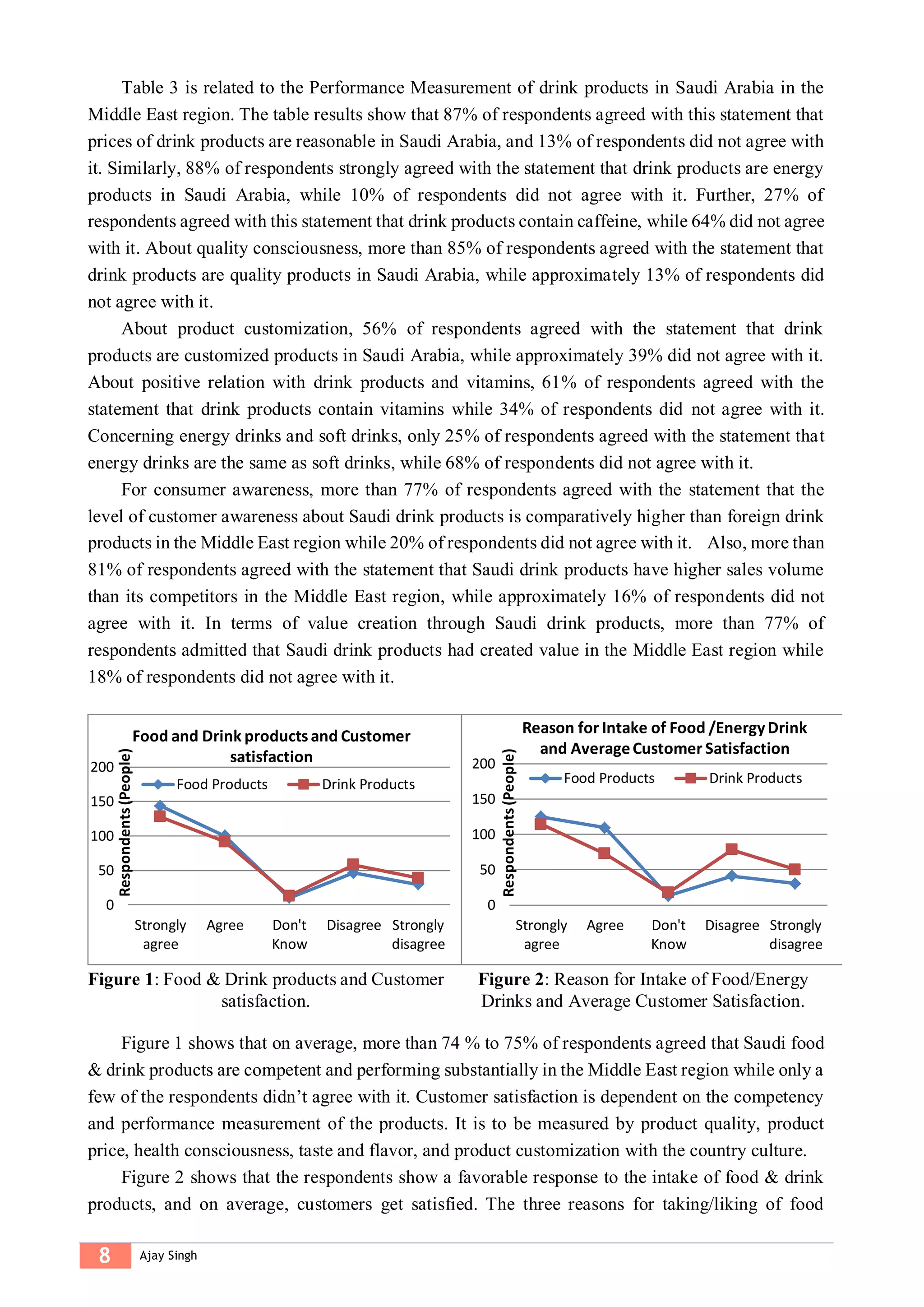
  • 205.
    *Corresponding author (A.M.Malik,M.Rizwan). Tel: +92-321-5562788/+86-13125008896 Email: arshadmm@uaar.edu.pk, rizwaneco@gmail.com ©2019 International Transaction Journal of Engineering, Management, & Applied Sciences & Technologies. Volume 11 No.4 ISSN 2228-9860 eISSN 1906-9642 CODEN: ITJEA8 Paper ID:11A04S http://TUENGR.COM/V11/11A04S.pdf DOI: 10.14456/ITJEMAST.2020.79 1 International Transaction Journal of Engineering, Management, & Applied Sciences & Technologies http://TuEngr.com PAPER ID: 11A04S IMPACTS OF URBANIZATION AND ENERGY CONSUMPTION ON CLIMATE CHANGE IN PAKISTAN Hamid Ali a , Arshad Mahmood Malik a* , Hafiz Muhammad Abubakar Siddique b , Muhammad Rizwan c* a Department of Economics & Agri. Economics, PMAS Arid Agriculture University, Rawalpindi, PAKISTAN. b Department of Business and Commerce, GIFT University, Gujranwala, PAKISTAN. c School of Economics and Management, Yangtze University, Jingzhou, 434023, Hubei, P. R. CHINA. A R T I C L E I N F O A B S T R A C T Article history: Received 15 July 2019 Received in revised form 20 November 2019 Accepted 04 December 2019 Available online 19 December 2019 Keywords: Carbon (CO2) emissions; Economic Growth; Energy consumption; Trade; ARDL Approach; Granger Causality; Energy use. Internal migration from rural to urban areas has been observed for a couple of years, which creates environmental issues. The aim is to scan the influence of urbanization, energy use and economic growth on climate change of Pakistan for 1980-2015, using ARDL and granger causality test. The findings show the long-run relationship between urbanization, economic growth, energy, and climate change. In the long run, energy use and urbanization are increasing carbon and affecting climate. The short-run results of the causality test indicate unidirectional causality from urbanization to economic growth, to climate change, and to energy consumption. The findings also suggest the one-directional causation from growth to CO2 emissions and energy. In the long run, causality shows unidirectional causality from urbanization and economic growth to capital, trade energy consumption and to CO2. The bidirectional causality also exits between energy consumption and climate change. Disciplinary: Multidisciplinary (Earth and Environmental Sciences (Climate Change), Economic Science, Energy Science, Sustainability and BioScience (Carbon Emissions), Urbanization, Migration, and Mobility Studies). ©2020 INT TRANS J ENG MANAG SCI TECH. 1. INTRODUCTION In the last two decades, a large number of households have been migrated from rural to urban areas. The expansion of industry causes urbanization as it creates employment opportunities. Internal migration also arises due to some other reasons, e.g. lack of health facilities, lack of quality and higher education, low living standard and backwardness in rural areas, etc. Food expenditures are also rising in rural areas (Habib et al., 2016). The Government of Pakistan is also indirectly involved in the ©2020 International Transaction Journal of Engineering, Management, & Applied Sciences & Technologies
  • 206.
    2 Hamid Ali,Arshad Mahmood Malik, Hafiz Muhammad Abubakar Siddique & Muhammad Rizwan increasing trend of urbanization because of a lack of concentration on rural development. According to the report of the economic survey of Pakistan (2018), the trend of the population decreased in rural areas from 62.1% in 2013 to 59.46% in 2017, while, the urban population’s share increased from 37.9% in 2013 to 40.54% in 2017. The rising trend of urbanization causes various problems such as congestion, excess labor supply in urban areas and especially it creates environment-related issues (Siddique et al., 2016). Omri (2013) found that urbanization is an increasing factor in CO2 emissions in Middle East and North African (MENA) countries. The highest level of power resources is beneficial to a country as it accelerates production, trade and economic growth as well (Siddique & Majeed, 2015). Besides the incentives of power resources and energy consumption, the intensive use of energy is dangerous for the environment as it is one of the main reasons for increasing carbon emissions. The urbanization is also a causing factor of pollution, but better policies and institutions can improve the quality of the environment. Urbanization pollutes the environment while it improves the environmental quality in the presence of good institutions and stable policies (Adams et al., 2016). According to Ponce and Marshall (2014), urbanization has an adverse influence on CO2 emissions in the countries having a strong environmental protection policy. The study suggests that the impact of urbanization depends on the power of environmental policy. Shahbaz et al. (2014) bring into being one-directional causation running from urban population to carbon emissions. Omri (2013) found that urbanization is an increasing factor in CO2 emissions in MENA countries for 1990-2011. Urbanization has a weak impact on the environment at the initial level. According to Bekhet & Othman (2017), urbanization is increasing CO2 emissions at early stages in Malaysia. An economy can move towards development and modernization with flourishing the indusial sector. People move from rural to urban areas. A better industrial sector creates employment opportunities in an economy as a result people migrate from rustic to towns. That kind of migration is good to a level and creates many problems if it exceeds the specific level. The industry uses power resources (energy) and releases various harmful gases like carbon dioxide. The study focuses on the effects of usage of energy on CO2 emissions by add-in an urban population in Pakistan. The objective is to find the influence of urbanization, energy and economic growth on climate change, and to investigate the causal relationship in Pakistan. 2. LITERATURE REVIEW 2.1 URBANIZATION, ENERGY USE, AND CLIMATE CHANGE In the literature, CO2 emissions are used as a proxy of climate change (see, for instance, Nawaz et al., 2016). Adams et al. (2016) established a nexus between urbanization and CO2 emissions in Ghana for 1965-2011. The findings suggest that urbanization pollutes the environment while it improves the quality of the environment in the presence of good institutional governance. Bekhet & Othman (2017) found that urbanization has a positive impact on CO2 emissions at early stages in Malaysia from 1971 to 2015. The causality outcomes exposed the unidirectional impact from urbanization to CO2 emissions. He et al. (2017) scrutinized the effect of urbanization on emissions of CO2 from energy consumption for China for 1995-2013. The results exposed a U-curved affiliation among urbanization and CO2 emissions. The study also suggests that the results vary from region to region.
  • 207.
    *Corresponding author (A.M.Malik,M.Rizwan). Tel: +92-321-5562788/+86-13125008896 Email: arshadmm@uaar.edu.pk, rizwaneco@gmail.com ©2019 International Transaction Journal of Engineering, Management, & Applied Sciences & Technologies. Volume 11 No.4 ISSN 2228-9860 eISSN 1906-9642 CODEN: ITJEA8 Paper ID:11A04S http://TUENGR.COM/V11/11A04S.pdf DOI: 10.14456/ITJEMAST.2020.79 3 Siddique et al. (2016) investigated the presence of two-way causality between urbanization and CO2, and among energy and CO2 emissions in South Asia for 1983-2013. Al-Mulali & Ozturk (2015) investigated that urbanization damages the environment in MENA countries over the time period of 1996 to 2012. Shahbaz et al. (2014) found a one-way causality from urbanization to carbon in UAE over 1975-2011, using the ARDL. Ponce & Marshall (2014) explored that urbanization has a weak negative impact on CO2 emissions in the countries having a strong environmental protection policy. The study also suggests that the impact of urbanization depends on the power of environmental policy. Similarly, Omri (2013) found that urbanization is an increasing factor in carbon dioxide emissions in MENA countries from 1990 to 2011. Hossain (2011) explored one-sided relationships from urbanization to economic growth in the short-run in industrial economies over 1971-2007. Li & Lin (2015) traced the relationship between urbanization, energy and CO2 emissions for a panel of 73 nations over 1971-2010. The study divided the panel into four groups. The results express that urbanization is an increasing indicator of CO2. Xu & Lin (2015) showed that the existence of an inverted u-shaped non-1inear relationship between industrialization and CO2 emissions for China over 1990-2011. In the eastern region, an inverted u shaped pattern followed by urbanization. Western regions followed a positive U-shaped pattern, while the central region follows the same as in the western arena. Wang et al. (2017) showed that socioeconomic factors correlate significantly with CO2 emissions for four big cities of China i.e. Beijing, Tianjin, Shanghai and Guangzhou for the period of 1990-2010. A substantial body of literature found the positive impact of energy consumption and the urban population on CO2. In some cases, the relationship between urbanization and CO2 emissions, for example, Ali et al. (2016) investigated that urbanization has not been a statistically noteworthy impact on CO2 whereas energy and growth have a significant impact on CO2 in Nigeria for 1971-2011, using ARDL approach. In contrast, Wang et al. (2018) investigated that planning about urbanization increases the carbon emission in Taipei. 2.2 CLIMATE CHANGE, ENERGY, AND ECONOMIC GROWTH Energy consumption, trade, and economic growth have also an influence on climate change. In the literature, the results vary from region to region as in some economies the mentioned indicators have a positive impact on CO2 and negative in others. Shahbaz et al. (2013) expressed that energy use and economic growth are the increasing factors of CO2 emissions, and trade is good for the environment. The granger causality test indicates a two-sided association between energy and CO2, and between the growth of an economy and CO2. Begum et al. (2015) probed roles of GDP growth and energy use on carbon emissions in Malaysia, using the ARDL bounds testing method. The results traced that initially, economic growth declines CO2 emissions from 1970-1980, and it increases emissions in 1980-2009. In the long run, economic growth is an accelerating factor of CO2 emissions. Zhang & Cheng (2009) exposed unidirectional causality from growth to energy, and energy is an increasing factor of carbon emissions in China over 1960-2007. The results also express that both energy and carbon do not affect growth. The aim of this research is to find out the fresh evidence on
  • 208.
    4 Hamid Ali,Arshad Mahmood Malik, Hafiz Muhammad Abubakar Siddique & Muhammad Rizwan the nexus among CO2 emissions and urbanization in Pakistan for policy-making perspectives. 3. THEORETICAL FRAMEWORK AND METHODOLOGY Energy is an accelerating factor of production. On the other hand, the increasing level of energy consumption and urbanization creating some environment-related issues. This study re-examines the impression of urban population and energy use on the environment, incorporating the growth of Pakistan. It also examined how trade affects the climate (CO2 emissions). In literature, CO2 emissions are used as the alternative variable of climate change (Nawaz et al., 2016). Many studies have explored the relationship between CO2 emissions, energy consumption, and growth (Alam et al., 2012). Recently, Omri, A. (2013) has incorporated trade in growth model but Shahbaz et al. (2013) emphasized financial development in this regard. Hossain (2011) stressed on the dynamic link among urban population and CO2 emissions. According to the literature, economic growth, trade, energy, and urbanization have an influence on climate change (see, e.g. Section 2). The climate change function is given as 𝐶𝑂 = 𝑓 (𝐾, 𝐸, 𝑈𝑅, 𝑌, 𝑇) (1). The climate change (CO) is our dependent variable, capital (K), energy consumption (E), urbanization (UR), economic growth (Y) and trade (T) are independent variables. The general form is modeled as 𝐶𝑂𝑡 = 𝐴 𝐾𝑡 𝛽1 𝐸𝑡 𝛽2 𝑈𝑅𝑡 𝛽3 𝑌𝑡 𝛽4 𝑇𝑡 𝛽5 (2). To linearize Equation (2), the natural log is used as 𝑙𝑛𝐶𝑂𝑡 = 𝛽0 + 𝛽1 𝑙𝑛𝐾𝑡 + 𝛽2 𝑙𝑛𝐸𝑡 + 𝛽3 𝑙𝑛𝑈𝑅𝑡 + 𝛽4 𝑙𝑛𝑌𝑡 + 𝛽5 𝑙𝑛𝑇𝑡 + 𝜀𝑡 (3), where, 𝑙𝑛: Natural logarithm, 𝐶𝑂: Climate change (CO2 emissions), 𝐾: Capital, 𝐸: Energy consumption, 𝑈𝑅: Urbanization; 𝑌: Economic growth, 𝑇: Trade, 𝛽0: Intercept, 𝛽1 : Capital elasticity of climate change, 𝛽2: Elasticity of energy consumption with respect to climate change, 𝛽3: Urbanization elasticity of climate change, 𝛽4: Elasticity of economic growth with respect to climate change, 𝛽5: Elasticity of trade, & 𝑡 = time period from 1980 to 2015. The symbol 𝜀 is the model error term. 4. METHODOLOGY To catch interactions between urbanization, consumption of energy and climate change (CO2) in the short and the long run. The relevant techniques and methods are discussed in this section. First, we determine the order of integration of variables by applying the ADF unit root test. The suitable technique for the model is the ARDL bounds testing co-integration approach. To check the direction, VCM is used and stability diagnostic tests are applied. ARDL is a single equation approach which gives the relationship between variables in the long and short run. ARDL does not identify the causality direction. Engle and Granger (1987) developed an approach for finding the granger causality relationship. In this approach all variables at first difference form are used as dependent and independent variables by adding lags for short-run granger causality, variables are used in different forms. The error correction term (ECT) is used for a long-run causal relationship as equations of VECM granger causality (Equation (4)).
  • 209.
    *Corresponding author (A.M.Malik,M.Rizwan). Tel: +92-321-5562788/+86-13125008896 Email: arshadmm@uaar.edu.pk, rizwaneco@gmail.com ©2019 International Transaction Journal of Engineering, Management, & Applied Sciences & Technologies. Volume 11 No.4 ISSN 2228-9860 eISSN 1906-9642 CODEN: ITJEA8 Paper ID:11A04S http://TUENGR.COM/V11/11A04S.pdf DOI: 10.14456/ITJEMAST.2020.79 5 [ ∆𝑙𝑛𝐶𝑂𝑡 ∆𝑙𝑛𝐾𝑡 ∆𝑙𝑛𝐸𝑡 ∆𝑙𝑛𝑈𝑅𝑡 ∆𝑙𝑛𝑌𝑡 ∆𝑙𝑛𝑇𝑡 ] = [ 𝛽1 𝛽2 𝛽3 𝛽4 𝛽5 𝛽6] + [ 𝛼11,1 𝛼12,1 𝛼13,1 𝛼14,1 𝛼15,1 𝛼16,1 𝛼21,1 𝛼22,1 𝛼23,1 𝛼24,1 𝛼25,1 𝛼26,1 𝛼31,1 𝛼32,1 𝛼33,1 𝛼34,1 𝛼35,1 𝛼36,1 𝛼41,1 𝛼42,1 𝛼43,1 𝛼44,1 𝛼45,1 𝛼46,1 𝛼51,1 𝛼52,1 𝛼53,1 𝛼54,1 𝛼55,1 𝛼56,1 𝛼61,1 𝛼62,1 𝛼11,1 𝛼11,1 𝛼11,1 𝛼11,1 ] [ ∆𝑙𝑛𝐶𝑂𝑡−1 ∆𝑙𝑛𝐾𝑡−1 ∆𝑙𝑛𝐸𝑡−1 ∆𝑙𝑛𝑈𝑅𝑡−1 ∆𝑙𝑛𝑌𝑡−1 ∆𝑙𝑛𝑇𝑡−1 ] … + [ 𝛼11,𝑘 𝛼12,𝑘 𝛼13,𝑘 𝛼14,𝑘 𝛼15,𝑘 𝛼16,𝑘 𝛼21,𝑘 𝛼22,𝑘 𝛼23,𝑘 𝛼24,𝑘 𝛼25,𝑘 𝛼26,𝑘 𝛼31,𝑘 𝛼32,𝑘 𝛼33,𝑘 𝛼34,𝑘 𝛼35,𝑘 𝛼36,𝑘 𝛼41,𝑘 𝛼42,𝑘 𝛼43,𝑘 𝛼44,𝑘 𝛼45,𝑘 𝛼46,𝑘 𝛼51,𝑘 𝛼52,𝑘 𝛼53,𝑘 𝛼54,𝑘 𝛼55,𝑘 𝛼56,𝑘 𝛼61,𝑘 𝛼62,𝑘 𝛼11,𝑘 𝛼11,𝑘 𝛼11,𝑘 𝛼11,𝑘 ] [ ∆𝑙𝑛𝐶𝑂𝑡−𝑘 ∆𝑙𝑛𝐾𝑡−𝑘 ∆𝑙𝑛𝐸𝑡−𝑘 ∆𝑙𝑛𝑈𝑅𝑡−𝑘 ∆𝑙𝑛𝑌𝑡−𝑘 ∆𝑙𝑛𝑇𝑡−𝑘 ] + [ 𝜆1 𝜆2 𝜆3 𝜆4 𝜆5 𝜆6] 𝐸𝐶𝑇𝑡−1 + [ 𝜀1𝑡 𝜀2𝑡 𝜀3𝑡 𝜀4𝑡 𝜀5𝑡 𝜀6𝑡] (4), where ∆ is the first difference, 𝛽𝑠 are the intercepts, and 𝑘 is lag length, 𝜀 for error terms and the variables have been explained in the methodology section. The ECT terms interpret the long-run causality relationship and adjustments. The term ECT is obtained by the residuals from equation (3). The coefficient of variables expressed the short-run dynamics and the coefficient of 𝐸𝐶𝑇𝑡−1 shows the long-run causal relationship. 5. DATA The dependent variable of the study, i.e. per capita carbon dioxide emissions (metric tons) is used as a proxy of climate change (see e.g., Jalil & Feridun, 2011; Nawaz et al., 2016). The independent variables include gross capital formation as a share of GDP (Shahbaz, et al. 2013), energy consumption per capita, urban population as urbanization, trade as a share of GDP, and per capita GDP at constant price 2010 US$ as economic growth (Omri, 2013; Siddique & Majeed, 2016; & Siddique et al., 2018). Data is taken from WDI and variables are used in natural logarithm form. 5.1 DESCRIPTIVE ANALYSIS Table 1 shows the descriptive statistics. The average value of CO2 is -0.347, the minimum score is -0.889 and the maximum value is 0.006. The average capital (share of GDP) is 2.876. The average energy use is 0.143 and the average value of urbanization (urban population as a share of total) is 17.540. The detail of all variables is given in Table 1. Table 1: Descriptive Statistics Variables CO2 K E UR Y T Mean -0.347 2.876 6.060 17.540 6.720 3.522 Median -0.299 2.912 6.106 17.561 6.720 3.530 Max. 0.006 3.035 6.260 18.109 7.041 3.661 Min. -0.889 2.647 5.759 16.902 6.321 3.317 St. Dev. 0.268 0.097 0.143 0.354 0.202 0.081 Obs. 36 36 36 36 36 36 5.2 CORRELATION CO2 emissions show a positive correlation with energy, economic growth, and urbanization, while CO2 is negatively correlated with capital and trade (Table 2).
  • 210.
    6 Hamid Ali,Arshad Mahmood Malik, Hafiz Muhammad Abubakar Siddique & Muhammad Rizwan Table 2: Correlation Matrix. Variables CO2 K E UR Y T CO2 1.000 K -0.511 1.000 E 0.978 -0.438 1.000 UR 0.976 -0.646 0.937 1.000 Y 0.983 -0.564 0.944 0.960 1.000 T -0.361 0.640 -0.301 -0.443 -0.367 1.000 6. DISCUSSION The estimation strategy is as follows: the first ADF test is applied check order of integration Second, the ARDL test is used for the confirmation of co-integration. Third, we have applied various tests to check diagnostics. Fourth, the granger causality approach is used for direction between variables. 6.1 RESULT OF UNIT ROOT TEST Table 3 shows that the null hypothesis for all variables except energy and urbanization is not rejected at 5% level of significance. Table 3: Result of Unit Root Test. Variables With Intercept With Trend and Intercept I(0) I(1) I(0) I(1) t-statistics CO -1.819 -7.433 -2.175 -4.965 K -1.508 -5.896 -2.495 -5.826 E -3.256 - 0.292 -5.277 UR -0.862 -4.728 -3.564 - Y -0.917 -3.889 -2.597 -3.842 T -2.269 -7.561 -2.773 -7.519 6.2 RESULT OF BOUNDS F‐TEST Table 4 shows the results of the ARDL bounds F-test for co-integration, it carries the lag length of variables, F-stat and critical values of bounds. The lag length of all variables used in our analysis is 4. The F-stat (19.61) is more than the critical value which confirms co-integration in the long run. Table 4: Result of Bounds F‐Test Model Lags F-stat Critical Value at 1% at 5% I(0) I(1) I(0) I(1) CO, K, E, UR, Y, T (4, 4, 4, 4, 4, 4) 19.616 3.41 4.68 2.62 3.79 6.3 ARDL CO-INTEGRATION RESULTS In the short run, energy, urbanization, and trade are inversely correlated with CO2, which implies that energy, trade, and urbanization are declining the level of emissions. Capital has also a negative impact on CO2 emissions. Siddique (2017) also found a negative impact of capital and energy on CO2 emissions in the short run. The short-run coefficients of energy, urbanization, and trade are significant at a 1% level of significance but capital is insignificant. On the other hand, economic growth is an increasing factor in CO2 emissions and it has bad impacts on the climate of Pakistan (Shahbaz et al., 2013). In the long run, energy consumption, urbanization, trade, and capital have a significant positive
  • 211.
    *Corresponding author (A.M.Malik,M.Rizwan). Tel: +92-321-5562788/+86-13125008896 Email: arshadmm@uaar.edu.pk, rizwaneco@gmail.com ©2019 International Transaction Journal of Engineering, Management, & Applied Sciences & Technologies. Volume 11 No.4 ISSN 2228-9860 eISSN 1906-9642 CODEN: ITJEA8 Paper ID:11A04S http://TUENGR.COM/V11/11A04S.pdf DOI: 10.14456/ITJEMAST.2020.79 7 impact on CO2 emissions while economic growth has a negative effect on CO2. The coefficient of capital is 0.71 which implies that a 1% rise in capital formation causes a 0.71% increase in CO2 emissions. The results are matched with literature (Alam et al., 2012; Jalil & Feridun, 2011; Omri, 2013). The coefficient of urbanization is 1.89, implies that a 1% rise in urbanization reasons a 1.89% increase in CO2 emissions. Omri (2013) & Hossain (2011) also found the same results. The elasticity of energy is 0.91 which means 0.91% CO2 emissions rise if energy rises by 1%. Alam et al. (2012), and Jalil & Feridun (2011) investigated the long-run impact of energy on CO2 emissions. The coefficient of economic growth (-1.98) shows a 1% intensification in economic growth sources a 1.98% decrease in emissions (Table 5). Begum et al. (2015) also found a negative impact of economic growth on CO2 emissions. The results confirm a 1% increase in trade origins a 0.46% increase in carbon emissions (Siddique, 2017). Table 5: Consequences of ARDL Variables Short Run Results Long Run Results Coeff. Prob. Coeff. Prob. CO (-4) 0.825 (0.209) K -0.441 (0.236) 0.713 (0.097) K (-4) -0.421 (0.198) E 0.420 (0.573) 0.919 (0.093) E (-4) -1.931 (0.049) UR 9.136 (0.909) 1.895 (0.060) UR (-4) -43.006 (0.038) Y -0.463 (0.462) -1.988 (0.101) Y (-4) 2.639 (0.082) T 0.198 (0.436) 0.469 (0.077) T(-4) -0.678 (0.038) Constant -95.988 (0.077) -30.110 (0.029) RSS 0.002 R2 0.599 6.4 RESULT OF RESIDUAL AND STABILITY DIAGNOSTICS Table 6 contains the results of various tests of stability. The p-value of heteroskedasticity (𝜒2 HET) test is insignificant that shows there is homoskedasticity. The results of serial correlation LM (𝜒2 LM) test are also insignificant which expresses no autocorrelation. The results of the Ramsey reset test (𝜒2 RESET) predict the functional form is good. Table 6: Results of diagnostics. Tests F-stat Prob. 𝜒2 LM 0.380 0.542 𝜒2 HET 1.082 0.535 𝜒2 RESET 0.878 0.520 6.5 RESULT OF GRANGER CAUSALITY TEST Table 7 contains the results of the direction of causality between CO2 emissions and all independent variables. The short-run results of Granger causality show a one-sided association from urbanization, energy, and growth to CO2 emissions. Alam et al. (2012), Shahbaz et al. (2013) and Kohler (2013) found unidirectional causality from energy to CO2 emissions. The findings exposed a unidirectional causality from urbanization to economic growth, Al-Mulali & Ozturk (2015), Bekhet & Othman (2017), and Hossain (2011) established one-directional causation form urbanization to economic
  • 212.
    8 Hamid Ali,Arshad Mahmood Malik, Hafiz Muhammad Abubakar Siddique & Muhammad Rizwan growth. The unidirectional causality is running from urbanization to energy which shows that urbanization is one of the reasons to increase the use of energy resources. The findings also expressed a unidirectional causality from urbanization and economic growth to capital. The results also indicate single direction causation from the capital to trade. One-way causality is also running from CO2 emissions and energy consumption to capital. The unidirectional causality is running from economic growth to energy consumption, which shows that economic growth is one of the reasons to increase the use of energy resources. Omri (2013) also investigated the two-way causality between economic growth and energy consumption. The environmental policies should design by incorporating economic growth, energy, trade, and urbanization. Table 7: Results of Causality Test Short-run Results Variables ∆CO ∆K ∆E ∆UR ∆Y ∆T ∆CO 2.390* 0.644 0.357 0.327 0.477 Prob. (0.109) (0.532) (0.702) (0.723) (0.624) ∆K 0.334 0.882 0.800 1.545 3.397* Prob. (0.718) (0.424) (0.458) (0.230) (0.047) ∆E 1.424* 4.821* 0.112 0.209 1.481 Prob. (0.057) (0.015) (0.893) (0.812) (0.244) ∆UR 2.976* 2.645* 4.461* 3.198* 1.723 Prob. (0.066) (0.088) (0.020) (0.055) (0.196) ∆Y 3.196* 9.316* 2.308* 0.201 2.100 Prob. (0.055) (0.001) (0.107) (0.819) (0.140) ∆T 0.480 0.062 0.355 0.567 0.862 Prob. (0.623) (0.939) (0.703) (0.573) (0.432) Long run Results ECT -0.525* 0.972* 0.466* -0.004 0.199 1.164* Standard error (0.250) (0.420) (0.152) (0.004) (0.143) (0.555) The long-run results also are shown in Table 7. The coefficients of error correction term show the long-run causal relationship among the variables. The positive sign of coefficients of ECT means error correction is not taking place, while the minus sign explains the speed of recovery in error to stability in the long run. The measurement of ECT is significant that exposed the causal relationship among the variables in the long run. The results show one-sided causality from urbanization and economic growth to climate change. The result explains that urbanization and the growth of an economy are polluting the environment and affecting the climate of Pakistan. The results also expressed the bidirectional causality between climate change and capital, between energy and climate change, and between trade and climate change (CO2) in the long run. The two-way causal relationship also exists among energy and capital, between trade and capital, and between trade and energy consumption. 7. CONCLUSION The study investigates the effect of urbanization, economic growth and the usage of energy on climate change in Pakistan for 1980-2015 by employing the ARDL and causality approach. The results of the ARDL bounds F-test for co-integration confirm an actuality of long-run co-integration link between urbanization, energy consumption, economic growth and CO2 emissions in Pakistan. In the short run, energy consumption, urbanization, and trade have a negative and significant impact on CO2 emissions, which implies that energy, trade, and urbanization are helpful to decrease the level of carbon emissions. Siddique (2017) also expressed a negative role of energy to CO2 in the
  • 213.
    *Corresponding author (A.M.Malik,M.Rizwan). Tel: +92-321-5562788/+86-13125008896 Email: arshadmm@uaar.edu.pk, rizwaneco@gmail.com ©2019 International Transaction Journal of Engineering, Management, & Applied Sciences & Technologies. Volume 11 No.4 ISSN 2228-9860 eISSN 1906-9642 CODEN: ITJEA8 Paper ID:11A04S http://TUENGR.COM/V11/11A04S.pdf DOI: 10.14456/ITJEMAST.2020.79 9 short run. On the other hand, economic growth has a positive and significant impact on carbon emissions in Pakistan. In the long run, energy consumption, urbanization, trade, and capital have a significant positive impact on CO2 emissions while economic growth has a negative impact on CO2. The results are matched with literature (Alam et al., 2012; Jalil and Feridun, 2011; Omri, 2013). The short-run results of causality show a one-way causality from urbanization, energy consumption and economic growth to CO2 emissions. Alam et al. (2012), Shahbaz et al. (2013) and Kohler (2013) exposed unidirectional causality from energy consumption to CO2 emissions. The findings exposed a unidirectional causality from urbanization to economic growth. This study results are consistent with the studies of Al-Mulali and Ozturk (2015), Bekhet and Othman (2017) & Hossain (2011). The long-run results of causality show unidirectional causality from urbanization and economic growth to climate change (CO2). The result explains that urbanization and the growth of an economy are polluting the environment and affecting the climate. The unidirectional causality is also running from urbanization and economic growth to trade and energy. The results also expressed the bidirectional causality between climate change and capital, between energy and climate change, and between trade and climate change (CO2). The bidirectional association also exits among energy use and climate change. The results suggest that the migration from rural to urban areas is affecting climate and rising CO2 emissions. We recommended that the government should adopt the policies to control environmental issues by considering the energy and urbanization policies. 8. AVAILABILITY OF DATA AND MATERIAL Data can be made available by contacting the corresponding author. 9. REFERENCES Adams, S., Adom, P. K., & Klobodu, E. K. M. (2016). Urbanization, regime type and durability, and CO2 emissions in Ghana. Environmental Science and Pollution Research, 23(23), 23825-23839. Al-Mulali, U., & Ozturk, I. (2015). The effect of energy consumption, urbanization, trade openness, industrial output, and the political stability on the CO2 emissions in the MENA (Middle East and North African) region. Energy, 84, 382-389. Alam, Jahangir, M., Ara Begum, I., Buysse, J., & Van Huylenbroeck, G. (2012). Energy consumption, carbon emissions and economic growth nexus in Bangladesh: Cointegration and dynamic causality analysis. Energy Policy, 45, 217-225. Ali, H. S., Law, S. H., & Zannah, T. I. (2016). Dynamic impact of urbanization, economic growth, energy consumption, and trade openness on CO2 emissions in Nigeria. Environmental Science and Pollution Research, 23(12), 12435-12443. Begum, R. A., Sohag, K., Abdullah, S. M. S., & Jaafar, M. (2015). CO2 emissions, energy consumption, economic and population growth in Malaysia. Renewable and Sustainable Energy Reviews, 41, 594-601. Bekhet, H. A., & Othman, N. S. (2017). Impact of Urbanization Growth on Malaysia CO2 Emissions: Evidence from the Dynamic Relationship. Journal of Cleaner Production. 154, 374-388.
  • 214.
    10 Hamid Ali,Arshad Mahmood Malik, Hafiz Muhammad Abubakar Siddique & Muhammad Rizwan Engle, R. F., & Granger, C. W. (1987). Co-integration and error correction: representation, estimation, and testing. Econometrica: Journal of the Econometric Society, 251-276. Habib, H. S., Malik, A. M., Abid, A., & Khan, M. A. (2016). Socioeconomic determinants of rural household food expenditures in Rawalpindi. Pakistan Journal of Agricultural Research, 29(1). He, Z., Xu, S., Shen, W., Long, R., & Chen, H. (2017). Impact of urbanization on energy related CO2 emission at different development levels: Regional difference in China based on panel estimation. Journal of Cleaner Production, 140, 1719-1730. Hossain, S. (2011). Panel estimation for CO2 emissions, energy consumption, economic growth, trade openness and urbanization of newly industrialized countries. Energy Policy, 39(11), 6991-6999. Jalil, A., & Feridun, M. (2011). The impact of growth, energy and financial development on the environment in China: A cointegration analysis. Energy Economics, 33(2), 284-291. Li, K., & Lin, B. (2015). Impacts of urbanization and industrialization on energy consumption/CO2 emissions: does the level of development matter? Renewable and Sustainable Energy Reviews, 52, 1107-1122. Nawaz, A., Siddique, H. M. A., and Majeed, M. T. (2016). The Impact of Climate Change on Economic Growth: A Panel Data Analysis. Bulletin of Energy Economics, 4(4), 359-365. Omri, A. (2013). CO2 emissions, energy consumption and economic growth nexus in MENA countries: Evidence from simultaneous equations models. Energy Economics, 40, 657-664. Ozturk, I., & Acaravci, A. (2010). CO2 emissions, energy consumption and economic growth in Turkey. Renewable and Sustainable Energy Reviews, 14(9), 3220-3225. Ponce de Leon Barido, D., & Marshall, J. D. (2014). Relationship between urbanization and CO2 emissions depends on income level and policy. Environmental science & technology, 48(7), 3632-3639. Shahbaz, M., Khan, S., & Tahir, M. I. (2013). The dynamic links between energy consumption, economic growth, financial development and trade in China: fresh evidence from multivariate framework analysis. Energy Economics, 40, 8-21. Shahbaz, M., Hye, Q. M. A., Tiwari, A. K., & Leitão, N. C. (2013). Economic growth, energy consumption, financial development, international trade and CO2 emissions in Indonesia. Renewable and Sustainable Energy Reviews, 25, 109-121. Shahbaz, M., Sbia, R., Hamdi, H., & Ozturk, I. (2014). Economic growth, electricity consumption, urbanization and CO2 emissions relationship in United Arab Emirates. Ecological Indicators, 45, 622-631. Shahbaz, M., Tiwari, A. K., & Nasir, M. (2013). The effects of financial development, economic growth, coal consumption and trade openness on CO2 emissions in South Africa. Energy Policy, 61, 1452-1459. Siddique, H. M. A., Mohey-ud-din, G., & Kiani, A. (2018). Health, Education and Economic Growth Nexus: Evidence from Middle Income Countries. Global Social Sciences Review, 3(4), 68-86. Siddique, H. M. A. (2017). Impact of Financial Development and Energy Consumption on CO2 Emissions: Evidence from Pakistan. Bulletin of Business and Economics (BBE), 6(2), 68-73. Siddique, H.M.A. and Majeed, M. T. (2016). Impact of Electricity Consumption on Economic Growth in Pakistan: An Application of the ARDL Bounds Testing Approach. Bulletin of Energy Economics, 4(4), 354-358.
  • 215.
    *Corresponding author (A.M.Malik,M.Rizwan). Tel: +92-321-5562788/+86-13125008896 Email: arshadmm@uaar.edu.pk, rizwaneco@gmail.com ©2019 International Transaction Journal of Engineering, Management, & Applied Sciences & Technologies. Volume 11 No.4 ISSN 2228-9860 eISSN 1906-9642 CODEN: ITJEA8 Paper ID:11A04S http://TUENGR.COM/V11/11A04S.pdf DOI: 10.14456/ITJEMAST.2020.79 11 Siddique, H. M. A., & Majeed M. T., (2015). Energy Consumption, Economic Growth, Trade and Financial Development Nexus in South Asia. Pakistan Journal of Commerce and Social Science, 9(2), 658-682. Siddique, H. M. A., Majeed M. T., & Ahmad H. K., (2016). The Impact of Urbanization and Energy Consumption on CO2 Emissions in South Asia. South Asian Studies, 31(2), 745-757. Wang, S., Liu, X., Zhou, C., Hu, J., & Ou, J. (2017). Examining the impacts of socioeconomic factors, urban form, and transportation networks on CO2 emissions in China’s megacities. Applied energy, 185, 189-200. Wang, S. H., Huang, S. L., & Huang, P. J. (2018). Can spatial planning really mitigate carbon dioxide emissions in urban areas? A case study in Taipei, Taiwan. Landscape and Urban Planning, 169, 22-36. Xu, B., & Lin, B. (2015). How industrialization and urbanization process impacts on CO2 emissions in China: evidence from nonparametric additive regression models. Energy Economics, 48, 188-202. Zhang, X. P., & Cheng, X. M. (2009). Energy consumption, carbon emissions, and economic growth in China. Ecological Economics, 68(10), 2706-2712. Hamid Ali is an MPhil graduate from Department of Economics & Agri. Economics, PMAS Arid Agriculture University Rawalpindi, Pakistan. Email: daimawan3 @ gmail.com Dr.Arshad Mahmood Malik is an Assistant Professor at the Department of Economics & Agri. Economics, PMAS Arid Agriculture University Rawalpindi, Pakistan. He also hold the office of Director, Institute of Hydroponics Agriculture at PMAS AAUR. Dr. Arshad does research in Hydroponics Economics and Management, Resource Economics, CGE Modelling and International Economics. Email: arshadmm @ uaar.edu.pk. Hafiz Muhammad Abubakar Siddique is doing PhD in Economics at Federal Urdu University of Arts, Science and Technology, Islamabad, Pakistan. He is a Lecturer at Department of Business & Commerce, GIFT University, Gujranwala, Pakistan. Email: bakar343 @ gmail.com Dr.Muhammad Rizwan is an Associate Professor at School of Economics and Management, Yangtze University, Jingzhou, 434023,Hubei, P. R. China. Dr. Rizwan does research in Green Economics, Managerial Economics and Behavioural Economics. His current project is 'Economic Analysis of Bio-fortified Crops'. Email: rizwaneco @ gmail.com
  • 216.
    *Corresponding author (M.HaroonRasheed). Email: mhra26@gmail.com ©2019 International Transaction Journal of Engineering, Management, & Applied Sciences & Technologies. Volume 11 No.4 ISSN 2228-9860 eISSN 1906-9642 CODEN: ITJEA8 Paper ID:11A04T http://TUENGR.COM/V11/11A04T.pdf DOI: 10.14456/ITJEMAST.2020.80 1 International Transaction Journal of Engineering, Management, & Applied Sciences & Technologies http://TuEngr.com PAPER ID: 11A04T DYNAMICS OF OVERCONFIDENCE AMONG STOCK MARKET INVESTORS IN PAKISTAN Muhammad Haroon Rasheed a* , Faid Gul a , Muhammad Waqar Akhtar b and Sanaullah Tariq c a Department of Management Sciences, National University of Modern Languages Islamabad, PAKISTAN. b School of Management, Universite Clermont Auvergne, Clermont-Ferrand, FRANCE. c Department of Management Sciences, Iqra University, Islamabad, PAKISTAN. A R T I C L E I N F O A B S T R A C T Article history: Received 05 August 2019 Received in revised form 26 November 2019 Accepted 09 December 2019 Available online 19 December 2019 Keywords: Behavioral finance; Personality traits; Behavioral factors; Overconfidence bias; Locus of control; Decision-making; Biased behavior. In behavioral finance, the prime focus is on psychological determinants of an individual’s decision making. Factors including personality traits and behavioral biases helped answering where the traditional rational paradigm of finance failed to explain, this study extend this avenue by identifying the influence of overconfidence and how its effects varies among personalities by considering the moderating impact of locus of control. The study is quantitative and data collection is done using a survey questionnaire from investors operating in Islamabad Pakistan. The results indicated that there exists significant relationship of overconfidence with investor’s decisions and this relation is being significantly moderated by locus of control indicating the possibility of predictability of biased behavior from individual’s personality. These findings are helpful for understanding the real life financial behavior and are significant for investors, managers and brokers in identifying and overcoming irrational exuberance and is useful for policy makers in policy making. Disciplinary: Management & Economic Sciences (Finance). ©2020 INT TRANS J ENG MANAG SCI TECH. 1. INTRODUCTION Stock market is among the cornerstones of an economy and aids economy by providing a place for sale and purchase stocks. Recent economic growth resulting from globalization and free trade environment has improved the income level of the households, resulting in increased savings and an increasing trend of investments in stock markets across the world (Pellinen et al., 2011). Stock markets act as financing source for the business organizations (Samuel, 1996), and play several functions including gving signaling mechanism for the managers by aiding them in performing decisions regarding investments and ensuring corporate governance. Stock markets are best known ©2020 International Transaction Journal of Engineering, Management, & Applied Sciences & Technologies
  • 217.
    2 Muhammad HaroonRasheed, Faid Gul, Muhammad Waqar Akhtar and Sanaullah Tariq for their role as the most effective source to raise capital for business entities (Zuravicky, 2005) and considered as a yardstick for economic growth. Hence studying and understanding the behavior of investors operating at the stock markets is currently an avenue in focus in the field of economics. The principle of market efficiency segregates the stock markets into three types namely, weak form efficient market, semi-strong form efficient market and strong form efficient market (Fama, 1970), where first reflects all available past information making the stock completely unpredictable from past prices (Xue & Zhang, 2017). In other words, in such market the stock market returns follow random walk hypothesis and future value of stock is unpredictable (Chakraborty, 2006) but in real world market efficiency fails to hold due to market frictions such as transaction cost and limited dissemination of information (Cohen et al., 1986; Keim & Stambaugh, 1986). Conventional finance school of thought (Markowitz, 1952) is of the view that investor decisions follows the paradigm of rationality and wealth maximization in their financial decisions resulting in a unanimous behavior but in the real life investor decisions are not that simple and scientific in nature. The investors do behave irrationally and their decisions deviates them from conventional theories of finance. To overcome these shortcomings in explaining investor’s real life behavior, a new school of thought emerged as “Behavioral Finance” that helps to identify the reasons of such behavior (Slugoski et al., 1993). Behaviorists are of the view that investors in real world are not rational and are misguided during decision making by cognitive factors that includes biases, heuristics, errors, illusions and hence lack the capabilities to process the complete information available (Shefrin, 2007). According to Rapach et al. (2013) and Hong et al. (2007), frictions in information dissemation is an important factor. Behavioral factors including biases, heuristics and sentiments also play their role (Barber & Odean, 2008; DeBondt & Thaler, 1995; Kahneman & Riepe, 1998). Overconfidence is one of these behavioral factor. The most significant and experimented factor among all the factors hence current study is to analyze the influence of overconfidence on rational choice making of investors in Pakistan (Michailova. 2010). Pakistani market is a new investment avenue created by merging the three stock markets into one in 2016. This study address investor’s issues in real life to improve their decision-making abilities. This study examines impacts of locus of control as factor moderating the biasness caused in the decision-making. This study assist investors to discover the degree and nature of irrational decision caused by overconfidence and locus of control. 2. LITERATURE REVIEW Even if the financial participants are aware of the deviations from fundamental value, the deviation still exists (Barberis and Thaler, 2003). Behavioral finance attributed this deviation to behavioral factors of which overconfidence is one of the most important factors leading to market anomalies. Overconfidence explained the existence of underpricing and overpricing of securities in the stock market. It also explained the excessive trading volume that lead to herding behavior and noise trading in stock market. 2.1 OVERCONFIDENCE BIAS Overconfidence is a bias that leads people to believe to be better than their actual abilities (Shefrin, 2007). The overconfident investors consider themselves to have more knowledge than they actually have. Overconfidence bias is among the psychological factors and has a vital role in mental process of investors (Jaros et al., 1993). Overconfidence is a growing study field, especially in collectivist culture like Pakistan. Prior studies established that overconfidence behavior exists
  • 218.
    *Corresponding author (M.HaroonRasheed). Email: mhra26@gmail.com ©2019 International Transaction Journal of Engineering, Management, & Applied Sciences & Technologies. Volume 11 No.4 ISSN 2228-9860 eISSN 1906-9642 CODEN: ITJEA8 Paper ID:11A04T http://TUENGR.COM/V11/11A04T.pdf DOI: 10.14456/ITJEMAST.2020.80 3 significantly more in Asian cultures compared to Western culture, thus more vital to explore. Overconfidence bias is categorized into two categories, Prediction Overconfidence which leads investors to have a very high confidence interval and Certainty Overconfidence which leads investors to have very certain judgement (Pompian, 2006). Sultana & Pardhasaradhi (2012) study these biases as crucial factors impacting the investment choices. Overconfident investors with prediction overconfidence will ignore the risk associated with their portfolio and the investors with certainty overconfidence will trade excessively and eventually that overconfidence will lead investors to have an undiversified portfolio (Awan et al., 2006). Investors due to the impact of overconfidence overestimate their ability to control the events, their understanding and undermine the vulnerability associated with their decisions (Baker & Nofsinger, 2002). The negative impact of the bias on investors is witnessed during the 1990s technological bubble in which the investors invested too much in the technological stocks due to their overconfidence that they will have super return from having concentrated stocks but at the end when the bubble burst, losses incurred (Pompian, 2006) hence it is paramount to explore the influence of overconfidence on the decision making of investors to examine its influence and its nature through empirical evidence. 2.1.1 RELATIONSHIP OF OVERCONFIDENCE WITH INVESTMENT DECISION MAKING A general consensus exists in the literature regarding investment decisions effecting by the impact of the all the behavioral biases including overconfidence bias on it. Decision making is a process of selecting among different alternatives while keeping in mind one’s goals which in investor’s case is selecting among different stocks available (Miller & Byrnes, 2001). A decision can be made in many ways by using different approaches to reach at a decision. This Decision making style can be described as personal specific way of interpreting the information and response to decision making conditions (Driver, 1979). According to the popular Harren (1979) model, there are three decision making styles including rational which use all the available and relevant information and alternatives and then decide rationally, Dependent on which decisions are made based on the opinions of others and intuition in which decisions are made on the basis of feelings and emotions. Our concern in this study is only with one decision-making style namely rationality and how rational decision-making is effected by overconfidence bias. As rationality is the basic assumption of traditional financial models (Barberis & Thaler, 2003) and by rational it means investors will have optimal yield at any assumed level of risk and least risk at any agreed level of profit by considering all the available alternatives (Markowitz, 1952) and then having an optimal decision but when we observe real life behavior of Investors they do behave irrationally, various factors hinder the mental process of investors (Barber & Odean, 1999) also it is considered that sometimes investors do not have informational efficiency as assumed in conventional theories of finance (Ritter, 2003). Overconfidence bias is “an inopportune belief toward a witnessed reasoning, judgment and the person's cognitive abilities” (Sadi et al., 2011). Market participants with this bias believe themselves to be better than others (Awan et al., 2006) hence incline to be overoptimistic in making investment choices hence leading them to trade excessively and the investors that trade excessively receives lower returns than the average (Gervais & Odean, 2001) hence having suboptimal or irrational decisions. For market trends, investors also overestimate their abilities leading them to suboptimal or even faulty forecast (Shefrin, 2002) hence causing them to behave irrationally. Overconfidence among investors is the reason why securities are not traded on fundamental or value that is calculated
  • 219.
    4 Muhammad HaroonRasheed, Faid Gul, Muhammad Waqar Akhtar and Sanaullah Tariq using rational analysis (Scott et al., 2003). Thus this study can establish a hypothesis as H1: Overconfidence is positively and significantly linked with irrational decision making. 2.1.2 MODERATING ROLE OF LOCUS OF CONTROL The term locus of control was presented by Cromwell et al. (1961), but this term wasn’t used in psychology until the early 1970’s and it took almost another decade before its common use in other fields (Kazemi et al., 2015). It can be divided into two categories of internal and external. The first is witnessed when an individual thinks that the anticipated outcome will befall due to his/her own and in the later type an individual thinks the result is out of his control and influenced by external factors like luck, chance, fate and powerful others (Selart, 2005). It can also be defined as the belief on the events happening to him is because of the internal factors or external factors. As expressed by the definition locus of control is associated with persons view of itself hence it impact the decision making of persons on events happening to him. The current study focused on this trait because it represents the primary or fundamental difference in behavior. In the current study we are only concerned with the impact of internal locus of control on the connection of overconfidence and investors judgement in stock markets. As investor with internal inclination will attribute the outcome to be as desired and resulting in investors’ motivation towards their decisions based on his feeling and intuition instead of following the rational process of decision making. The investor’s elucidation of their own personal capabilities over consequence is also influenced by the time and type of investment (Lam & Schaubroeck, 2000). According to Gervais and Odean (2001) some investors also undermine their abilities and become overly risk averse hence leading towards a more biased and irrational decisions. The investors with inclination towards internal locus of control do not accomplish and thrive in stock market, they do not contemplate helpful information to make decision correct due to their believe about the control over the investment outcome (Boone & Witteloostuijn, 2005). Kaustia and Perttula (2012) reported that investors having internal locus of control overemphasize on their own capabilities and are of the view that they are better than average and can control or alter circumstances in the market (Allen & Evans, 2005) resulting in increased irrationality in their decisions. By deriving on the preceding arguments it can be stated that internal locus of control cause the individuals to rely more on overconfidence and hence have a potential to act as a moderator. A moderator can modify the strength of the affiliation among the dependent and criterion, in accordance with the rules set by Baron and Kenny (1986) to test moderation, first the link between internal locus of control and investors decision making is going to be established. As moderation in investment decision making is the extent with which locus of control impacts on the relationship of overconfidence and decision making (Szilagyi et al., 1976). H2: The relationship between Overconfidence and irrational investment decision making style is moderated by Locus of Control. 3. METHODOLOGY The proposed framework Figure 1 is to explore effects on investment decision making style in terms of overconfidence among investors and the degree of internal locus, Firstly this study will inspect the influence of overconfidence on stock market through investor’s decisions and secondly it will analyze the moderating impact of internal locus of control. shows the study framework.
  • 220.
    *Corresponding author (M.HaroonRasheed). Email: mhra26@gmail.com ©2019 International Transaction Journal of Engineering, Management, & Applied Sciences & Technologies. Volume 11 No.4 ISSN 2228-9860 eISSN 1906-9642 CODEN: ITJEA8 Paper ID:11A04T http://TUENGR.COM/V11/11A04T.pdf DOI: 10.14456/ITJEMAST.2020.80 5 Figure 1: Study Framework 3.1 QUESTIONNAIRE DESIGN This study is questionnaire based survey and the questionnaire used in the study consisted of four parts namely Overconfidence Bias, Internal Locus of Control, Investment Decision Making and Demographic information (i.e. Age, Marital Status, Qualification and Investment Experience). The questions were answered using five point Likert scale. Detail of the items used to measure the variables are given below; Overconfidence Bias The study adopted items for measuring the degree of overconfidence from the instrument of Sarwar et al. (2014). The five items relating to overconfidence were adopted to be used in our study. Locus of Control This study adapted items for determining the degree of internal locus of control from the inventory of Furnham (1986) and Rasheed et al. (2018). Decision Making The items dealing with irrational decision making were adopted from the instrument developed by Scott & Bruce (1995). Five items dealing with irrationality or intuition were used in this current study. Table 1: Demographic Distribution Characteristics Frequency Percent Marital Status Single Married 101 95 51.2 48.8 Gender Male Female 170 26 86.3 13.7 Age 18 to 25 26 to 33 34 to 41 42 to 50 50 & Above 24 75 50 31 16 12.2 38.2 25.5 15.8 8.2 Investment Experience 00-05 Years 06-20 Years 21 Years & Above 84 86 26 42.8 43.9 13.5 Qualification Intermediate Bachelors Masters M.Phil. Others 7 85 90 7 7 3.5 43.4 46 3.5 3.5 3.2 SAMPLING Primary focus is on identifying the influence of overconfidence on choice making style of investors operating at Pakistan Stock Exchange (PSX). Out of three hundred questionnaires
  • 221.
    6 Muhammad HaroonRasheed, Faid Gul, Muhammad Waqar Akhtar and Sanaullah Tariq distributed amongst investors operating in Sargodha, Lahore and Islamabad, two hundred and thirty were returned and one hundred ninety six were considered for the final analysis. The detail of the demography is given in Table 1. 3.3 RELIABILITY AND VALIDITY TESTS To confirm the validity, the questionnaire has been reviewed by a couple of academic experts along with an expert in English language and then it has been reviewed by a couple of brokers and investors to access that they understand either the items as it intended. Later a study is analyzed for the reliability and validity, results given in Table 2. Reliability is ascertained using Cronbach’s Alpha, with values well above 0.70, thus, the instrument deemed fit for further analysis. The instrument also exhibited criterion validity (Kerlinger and Lee, 1999) and to examine and establish the construct validity, convergent validity and discriminant validity the criteria (Campbell & Fiske, 1998), explanatory (EFA) and confirmatory factor analyses (CFA) is used. Table 2: Reliability and Validity Results Items Factor Loadings Item to total correlation Cumulative Variance (%) Cronbach’s Alpha O.B 1 O.B 2 O.B 3 O.B 4 O.B 5 0.899 0.696 0.919 0.738 0.916 0.813 0.644 0.813 0.702 0.782 42.6% 0.897 L.C 1 L.C 2 L.C 3 L.C 4 L.C 5 L.C 6 L.C 7 L.C 8 0.799 0.686 0.716 0.724 0.910 0.751 0.857 0.799 0.798 0.704 0.755 0.640 0.806 0.605 0.785 0.684 59.3% 0.915 D.M 1 D.M 2 D.M 3 D.M 4 D.M 5 0.745 0.865 0.894 0.857 0.858 0.601 0.818 0.842 0.774 0.776 70.1% 0.904 4. ANALYSIS AND DISCUSSION 4.1 CORRELATION ANALYSIS As can be observed in Table 3 that all variables are positively correlated. Out of which the most strongest and significant is between Locus of Control and Overconfidence bias (r = 0.579, p<0.01). Followed by the relationship between Investment Decision making and Locus of Control (r = 0.313, p<0.01) after which is the association between Overconfidence Bias and Decision Making (r = 0.298, p<0.01). Table 3: Correlation Analysis (Significant at 0.01 (1-tailed)) Variable O.B LOC D.M Overconfidence Bias (O.B) 1 Locus of Control (LOC) 0.579* 1 Decision Making (D.M) 0.298* 0.313* 1 4.2 ANALYSIS OF STRUCTURAL EQUATION MODELING Analysis of overconfidence bias’s influence on the decision making is made via structural equation modeling (SEM). The findings are shown in Figure 2.
  • 222.
    *Corresponding author (M.HaroonRasheed). Email: mhra26@gmail.com ©2019 International Transaction Journal of Engineering, Management, & Applied Sciences & Technologies. Volume 11 No.4 ISSN 2228-9860 eISSN 1906-9642 CODEN: ITJEA8 Paper ID:11A04T http://TUENGR.COM/V11/11A04T.pdf DOI: 10.14456/ITJEMAST.2020.80 7 Figure 2: Structural Equation Modeling. In the study, overconfidence is considered to be an exogenous variable and investment decision making is considered to be the endogenous variable for overconfidence bias. Table 4 indicates that the influence of overconfidence on investors irrational decision making is particularly significant and per unit rise in the level of overconfidence is resulting in upsurge in irrationality of investors by (β=0.300, p<0.01). Table 4: Structural Equation Modeling Β S.β S.E C.R P D.M<----O.B 0.30 0.29 0.078 3.844 <0.001 Which mean that the higher the inclination of investor to use overconfidence the more suboptimal choices will be probable, hence proving Hypothesis 1 of the study. The hypothesis is tested after establishing that each variable has a nonzero loading in his own factor and zero loading with all the others factors, there are no relationship between the error terms of the observed variables, there are no connection between the errors associated with the factors and also there is no relationship between the residual and the errors. Having satisfying all these rules, the model fit is assessed using different fitness indices, revealing that the model is statistically fit including Goodness of Fit Index (GFI) and Confirmatory Fit Index (CFI) with values 0.926 and 0.918 respectively out of the total value of 1. These values are good as above 0.90 and acceptable above 0.80, along with the value of CMIN / DF = 2.491 which is a fraction of Chi-Square ( ) is acceptable at value below 3. 4.3 MODERATION OF LOCUS OF CONTROL WITH OVERCONFIDENCE BIAS The proposed moderation of internal locus of control is conducted as per the rules (Baron and Kenny, 1986). New variables (known as Interaction terms) are generated in dataset with multiplication of overconfidence and locus of control (O.B x LOC) so that the results can be interpretable. Then analysis is run in SPSS for relationship by entering dependent variable and moderator, followed by interaction were entered in a simultaneous regression model, see Table 5. Table 5: Moderation Analysis Model1 Model2 β S.E T P β S.E T P O.B LOC O.B x LOC 0.180 0.215 0.085 0.083 2.122 2.541 0.035 0.012 0.395 0.428 0.159 0.404 0.450 0.064 0.975 0.952 2.318 0.349 0.342 0.021 R Square Change 0.016 0.023
  • 223.
    8 Muhammad HaroonRasheed, Faid Gul, Muhammad Waqar Akhtar and Sanaullah Tariq The Moderation results are showing that Overconfidence (β = - 0.395, p = 0.349) and locus of control (β = 0.428, p = 0.342) both results are insignificantly linked with the investment decision making in model 2. Interaction variable of the both variable is significant (β = 0.159, p = 0.021) which is indicating the moderating relationship between overconfidence and decision making hence our 2nd hypothesis is also accepted. The moderating influence of internal locus can also be observed with the help of the Figure 3 also indicating that the higher the degree of internal locus the investor will have the higher will be the irrationality in their decision making. Figure 3: Moderation Analysis 5. DISCUSSION Based on the analysis performed a number of observation can made as it can been seen that there is a progressive link between overconfidence and irrationality of the investment decisions and the effect is direct and significant. This result support over hypothesis and also are in accordance with the findings of Waweru et al. (2008), Rasheed et al. (2008), and Kudryavtsev et al. (2013) who determined that in real world investors are effected by the behavioral factors or biases and similar is the case with investors in Pakistan. Drawing form these results we can say that the Investors with overconfidence bias will have more irrational or suboptimal decisions as compared to a nonbiased investor. Also a Kudryavtsev et al. (2013) established that these biases are correlated among investors and an investor suffering from a bias is likely to using the other biases in their investment choices also, So the current findings are also important on that account also that investors in Pakistan are provoked by all the behavioral biases that causes deviation from the rational choices as explained by the conventional theories of finance. Hence this is a useful contribution to explain the reasons of deviation from standard financial theories like efficient market hypothesis, causes of herd behavior and deviation of stocks from intrinsic value. Further in this study the moderation effect of the internal locus of control is performed which showed that there exists a significant moderating impact hence proving our proposed hypothesis 2. These result showed that the investors with higher degree of internal locus of control will lead investors to higher irrationality in their decision making will result in causing deviation from the standard or rational behavior. These findings are also of vital significance as according to Lin & Ding (2003) locus of control will moderates a relationship only if the relationship under analysis is personality specific and as Kudryavtsev et al. (2013) found out that all the biases are correlated among investors hence it can be established that all the biases or cognitive factors are personality specific and this finding can help to identify the investors that will be more prone towards these behavioral factors and will aid in establishing a comprehensive framework grounded on the theories
  • 224.
    *Corresponding author (M.HaroonRasheed). Email: mhra26@gmail.com ©2019 International Transaction Journal of Engineering, Management, & Applied Sciences & Technologies. Volume 11 No.4 ISSN 2228-9860 eISSN 1906-9642 CODEN: ITJEA8 Paper ID:11A04T http://TUENGR.COM/V11/11A04T.pdf DOI: 10.14456/ITJEMAST.2020.80 9 of behavioral economics for determining the financial behavior in real life. 6. CONCLUSION This study is conducted to inspect the theories of behavioral finance. The intention of the article is to examine the influence of overconfidence bias on investor’s decision and also to examine the impact of internal locus of control as a moderator with overconfidence bias to increase irrationality amongst investors operating at Pakistan Stock Exchange (PSX). This study finds out using empirical investigation through structural equation modeling that overconfidence bias have a substantial influence on investment choices. Hence becoming a key factor for explanation of irrational behavior of stockholders in real world. Also it is established that degree of locus of control impact this relation causing investors to be more irrational towards their decision making. The investors buy stocks for just because they think they are better than others and trade excessively instead of undertaking the complete analysis which lead their portfolios to be suboptimal. That can lead to bad performance of the market sometimes, especially when some people trick the investors by spreading fake information to bend the trend of the stock market in their own personal benefits. 7. AVAILABILITY OF DATA AND MATERIAL Data can be made available by contacting the corresponding author. 8. REFERENCES Allen, W. D., & Evans, D. A. (2005). Bidding and overconfidence in experimental financial markets. The Journal of Behavioral Finance, 6(3), 108–120. Awan, H. M., Bukhari, K., & Ghufran, B. (2006). Understanding investment behavior of individual investors: How they handle investment decisions. Do They Act Rationally. Baker, H. K., & Nofsinger, J. R. (2002). Psychological biases of investors. Financial Services Review, 11(2), 97–116. Barber, B. M., & Odean, T. (1999). The courage of misguided convictions. Financial Analysts Journal, 55(6), 41–55. Barber, B. M., & Odean, T. (2008). All that glitters: The effect of attention and news on the buying behavior of individual and institutional investors. Review of Financial Studies, 21(2), 785–818. Barberis, N., & Thaler, R. (2003). A survey of behavioral finance. Handbook of the Economics of Finance, 1, 1053–1128. Boone, C., & Van Witteloostuijn, A. (2005). Team locus-of-control composition, leadership structure, information acquisition, and financial performance: A business simulation study. Academy of Management Journal, 48(5), 889–909. Campbell, D., & Fiske, D. (1998). Convergent and discriminant validation by the multitrait-multimethods matrix’. Personality, 56, 162. Cromwell, R. L., Rosenthal, D., Shakow, D., & Zahn, T. P. (1961). Reaction time, locus of control, choice behavior, and descriptions of parental behavior in schizophrenic and normal subjects. Journal of Personality, 29(4), 363–379. DeBondt, W. F. M., & Thaler, R. (1995). Financial Decision Making in Markets and Firm Finance. Series of Handbooks in Operational Research and Management Science, 9.
  • 225.
    10 Muhammad HaroonRasheed, Faid Gul, Muhammad Waqar Akhtar and Sanaullah Tariq Driver, M. J. (1979). Individual decision making and creativity. Organizational Behavior, 59–91. Furnham, A. (1986). Economic locus of control. Human Relations, 39(1), 29–43. Gervais, S., & Odean, T. (2001). Learning to be overconfident. Review of Financial Studies, 14(1), 1–27. Gul, F., & Akhtar, N. (2016). Predictors of Investor Overconfidence in Karachi Stock Exchange. Journal of Managerial Sciences, 10(2), 301–315. Harren, V. A. (1979). A model of career decision making for college students. Journal of Vocational Behavior, 14(2), 119–133. Hong, H., Torous, W., & Valkanov, R. (2007). Do industries lead stock markets? Journal of Financial Economics, 83(2), 367–396. Jaros, S. J., Jermier, J. M., Koehler, J. W., & Sincich, T. (1993). Effects of continuance, affective, and moral commitment on the withdrawal process: An evaluation of eight structural equation models. Academy of Management Journal, 36(5), 951–995. Kahneman, D., & Riepe, M. W. (1998). Aspects of investor psychology. The Journal of Portfolio Management, 24(4), 52–65. Kaustia, M., & Perttula, M. (2012). Overconfidence and debiasing in the financial industry. Review of Behavioural Finance, 4(1), 46–62. Kazemi, Z., B. Ansarirad, & A.H. Asl. (2015). The effect of control locus on process of individual Investors Decision-making (Tehran Stock Exchange). Advances in Environmental Biology, 2(9), 1024–1029. Kerlinger, F. N., & Lee, H. B. (1999). Foundations of behavioral research. Retrieved from http://www.citeulike.org/group/328/article/404473 Kudryavtsev, A., Cohen, G., & Hon-Snir, S. (2013). “Rational’or’Intuitive”: Are Behavioral Biases Correlated Across Stock Market Investors? Contemporary Economics, 7(2), 31–53. Lam, S. S., & Schaubroeck, J. (2000). The role of locus of control in reactions to being promoted and to being passed over: A quasi experiment. Academy of Management Journal, 43(1), 66–78. Lin, C.-P., & Ding, C. G. (2003). Modeling information ethics: The joint moderating role of locus of control and job insecurity. Journal of Business Ethics, 48(4), 335–346. Markowitz, H. (1952). Portfolio selection. The Journal of Finance, 7(1), 77–91. Michailova, J. (2010). Development of the overconfidence measurement instrument for the economic experiment. Munich Personal RePEc Archive, 34475(2), 1–44. Miller, D. C., & Byrnes, J. P. (2001). Adolescents’ decision making in social situations: A self-regulation perspective. Journal of Applied Developmental Psychology, 22(3), 237–256. Pompian, M. M. (2006). Behavioral finance and wealth management. How to Build Optimal Portfolios That Account for Investor Biases, New Jersey. Retrieved from http://down.cenet.org.cn/upfile/10/2007121471954151.pdf Rapach, D. E., Strauss, J. K., & Zhou, G. (2013). International stock return predictability: What is the role of the United States? The Journal of Finance, 68(4), 1633–1662. Rasheed, M. H., Rafique, A., Zahid, T., & Akhtar, M. W. (2018). Factors influencing investor’s decision making in Pakistan: Moderating the role of locus of control. Review of Behavioral Finance, 10(1), 70–87. DOI: 10.1108/RBF-05-2016-0028 Ritter, J. R. (2003). Behavioral finance. Pacific-Basin Finance Journal, 11(4), 429–437.
  • 226.
    *Corresponding author (M.HaroonRasheed). Email: mhra26@gmail.com ©2019 International Transaction Journal of Engineering, Management, & Applied Sciences & Technologies. Volume 11 No.4 ISSN 2228-9860 eISSN 1906-9642 CODEN: ITJEA8 Paper ID:11A04T http://TUENGR.COM/V11/11A04T.pdf DOI: 10.14456/ITJEMAST.2020.80 11 Sadi, R., Asl, H. G., Rostami, M. R., Gholipour, A., & Gholipour, F. (2011). Behavioral finance: The explanation of investors’ personality and perceptual biases effects on financial decisions. International Journal of Economics and Finance, 3(5), 234–241. Sarwar, A., Mansoor, Z., & Butt, N. S. (2014). Investor’s Behavior in Pakistan Mercantile Exchange (PMEX). Science International, 26(3), 1371–1377. Scott, J., Stumpp, M., & Xu, P. (2003). Overconfidence bias in international stock prices. The Journal of Portfolio Management, 29(2), 80–89. Scott, S. G., & Bruce, R. A. (1995). Decision-making style: The development and assessment of a new measure. Educational and Psychological Measurement, 55(5), 818–831. Selart, M. (2005). Understanding the role of locus of control in consultative decision-making: A case study. Management Decision, 43(3), 397–412. Shefrin, H. (2002). Beyond greed and fear: Understanding behavioral finance and the psychology of investing. Shefrin, H. (2007). Behavioral corporate finance: Decisions that create value. Slugoski, B. R., Shields, H. A., & Dawson, K. A. (1993). Relation of conditional reasoning to heuristic processing. Personality and Social Psychology Bulletin, 19(2), 158–166. Sultana, S. T., & Pardhasaradhi, S. (2012). An empirical analysis of factors influencing Indian individual equity investors’ decision making and behavior. European Journal of Business and Management, 4(18), 50–61. Waweru, N. M., Munyoki, E., & Uliana, E. (2008). The effects of behavioural factors in investment decision-making: A survey of institutional investors operating at the Nairobi Stock Exchange. International Journal of Business and Emerging Markets, 1(1), 24–41. Muhammad Haroon Rasheed is a PhD Research Scholar at Department of Management sciences at National University of Modern Languages, Islamabad and studying under HEC Pakistan Indigenous Scholarship Program. He received his M.S degree in Finance from COMSATS University Islamabad. His current interests involve applications of Behavioral Theories in the Field of Finance. Dr. Faid Gul is Head of Department Management Sciences, National University of Modern Languages Islamabad, Pakistan. His research interests include Behavioral Finance, Capital Markets, Corporate Finance and Corporate Governance. Muhammad Waqar Akhtar is a PhD Scholar at School of Management, Universite Clermont Auvergne, Clermont-Ferrand, France. He is pursuing his PhD under HEC Pakistan Overseas Scholarship Program. His Interest involve Understanding of Financial Behavior from the Prospect of Behavioral Finance. Sanaullah Tariq is a PhD Research Scholar at Department of Management sciences, IQRA University Islamabad under HEC Pakistan Indigenous Scholarship Program. He received his M.S degree in Finance from COMSATS University Islamabad. His current interests involve Stock Market Behavior. Trademarks Disclaimer: All product names including trademarks™ or registered® trademarks mentioned in this article are the property of their respective owners, using for identification and educational purposes only. The use of them does not imply any endorsement or affiliation.
  • 227.
    :: International TransactionJournal of Engineering, Management, & Applied Sciences & Technologies http://TuEngr.com Call-for-Papers: ITJEMAST invites you to submit high quality papers for full peer-review and possible publication in areas pertaining to our scope including engineering, science, management and technology, especially interdisciplinary/cross- disciplinary/multidisciplinary subjects.
  • 228.
    More Research PublicationAvailable at http://TUENGR.COM Submit your science research today. :: International Transaction Journal of Engineering, Management, & Applied Sciences & Technologies