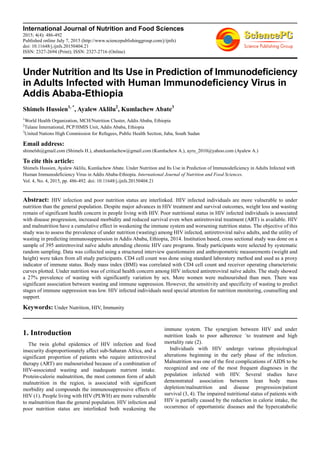
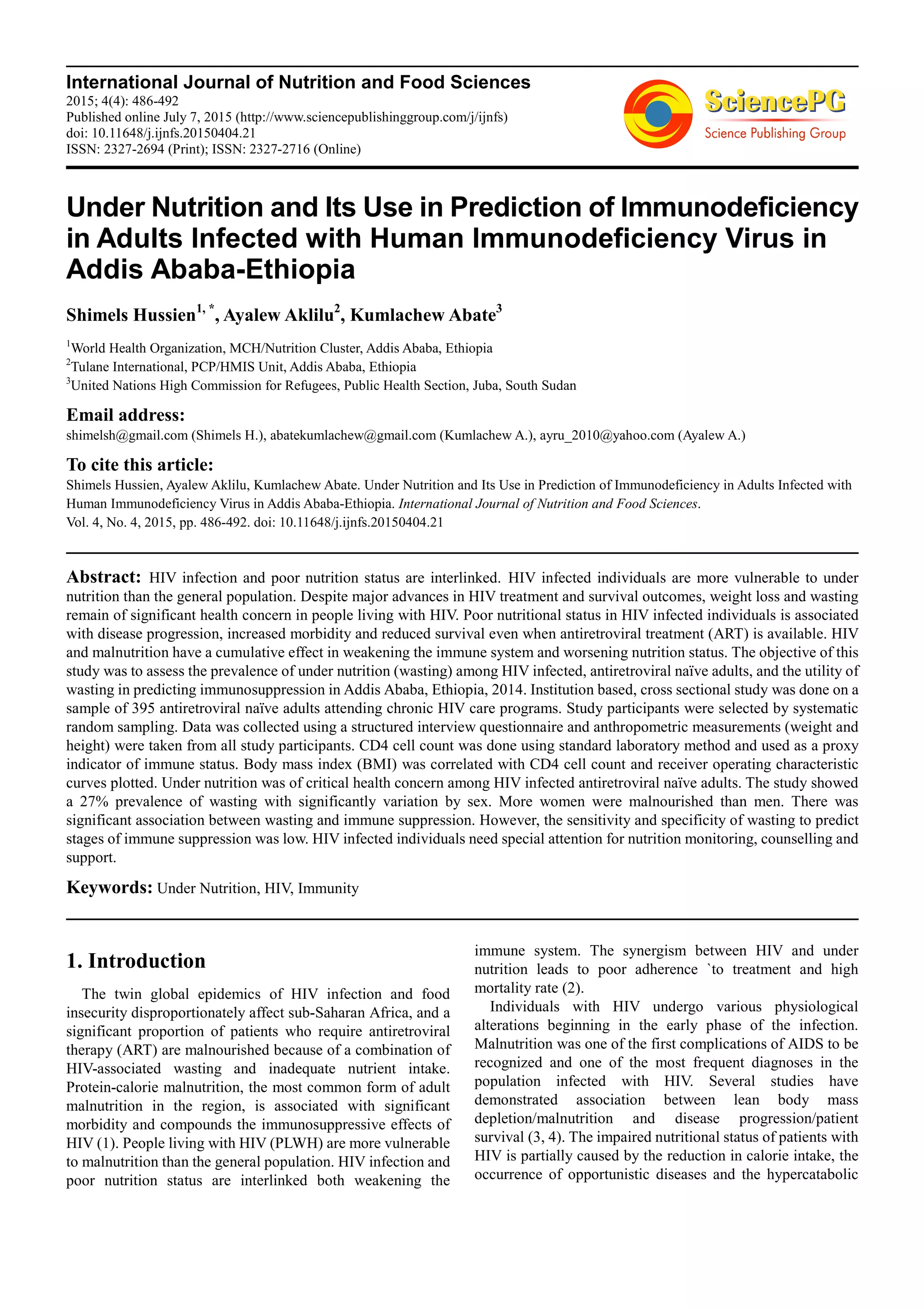
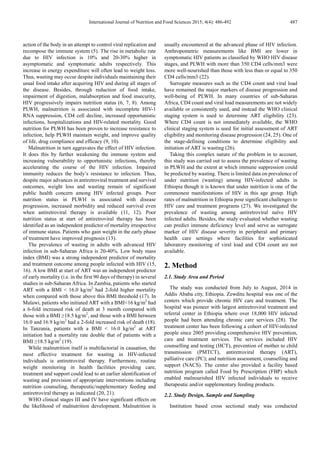
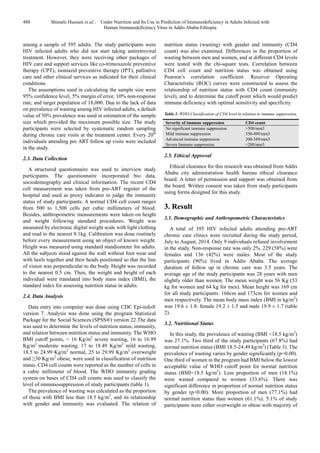
International Journal of Nutrition and Food Sciences
2015; 4(4): 486-492
Published online July 7, 2015 (http://www.sciencepublishinggroup.com/j/ijnfs)
doi: 10.11648/j.ijnfs.20150404.21
ISSN: 2327-2694 (Print); ISSN: 2327-2716 (Online)
Under Nutrition and Its Use in Prediction of Immunodeficiency
in Adults Infected with Human Immunodeficiency Virus in
Addis Ababa-Ethiopia
Shimels Hussien1, *
, Ayalew Aklilu2
, Kumlachew Abate3
1
World Health Organization, MCH/Nutrition Cluster, Addis Ababa, Ethiopia
2
Tulane International, PCP/HMIS Unit, Addis Ababa, Ethiopia
3
United Nations High Commission for Refugees, Public Health Section, Juba, South Sudan
Email address:
shimelsh@gmail.com (Shimels H.), abatekumlachew@gmail.com (Kumlachew A.), ayru_2010@yahoo.com (Ayalew A.)
To cite this article:
Shimels Hussien, Ayalew Aklilu, Kumlachew Abate. Under Nutrition and Its Use in Prediction of Immunodeficiency in Adults Infected with
Human Immunodeficiency Virus in Addis Ababa-Ethiopia. International Journal of Nutrition and Food Sciences.
Vol. 4, No. 4, 2015, pp. 486-492. doi: 10.11648/j.ijnfs.20150404.21
Abstract: HIV infection and poor nutrition status are interlinked. HIV infected individuals are more vulnerable to under
nutrition than the general population. Despite major advances in HIV treatment and survival outcomes, weight loss and wasting
remain of significant health concern in people living with HIV. Poor nutritional status in HIV infected individuals is associated
with disease progression, increased morbidity and reduced survival even when antiretroviral treatment (ART) is available. HIV
and malnutrition have a cumulative effect in weakening the immune system and worsening nutrition status. The objective of this
study was to assess the prevalence of under nutrition (wasting) among HIV infected, antiretroviral naïve adults, and the utility of
wasting in predicting immunosuppression in Addis Ababa, Ethiopia, 2014. Institution based, cross sectional study was done on a
sample of 395 antiretroviral naïve adults attending chronic HIV care programs. Study participants were selected by systematic
random sampling. Data was collected using a structured interview questionnaire and anthropometric measurements (weight and
height) were taken from all study participants. CD4 cell count was done using standard laboratory method and used as a proxy
indicator of immune status. Body mass index (BMI) was correlated with CD4 cell count and receiver operating characteristic
curves plotted. Under nutrition was of critical health concern among HIV infected antiretroviral naïve adults. The study showed
a 27% prevalence of wasting with significantly variation by sex. More women were malnourished than men. There was
significant association between wasting and immune suppression. However, the sensitivity and specificity of wasting to predict
stages of immune suppression was low. HIV infected individuals need special attention for nutrition monitoring, counselling and
support.
Keywords: Under Nutrition, HIV, Immunity
1. Introduction
The twin global epidemics of HIV infection and food
insecurity disproportionately affect sub-Saharan Africa, and a
significant proportion of patients who require antiretroviral
therapy (ART) are malnourished because of a combination of
HIV-associated wasting and inadequate nutrient intake.
Protein-calorie malnutrition, the most common form of adult
malnutrition in the region, is associated with significant
morbidity and compounds the immunosuppressive effects of
HIV (1). People living with HIV (PLWH) are more vulnerable
to malnutrition than the general population. HIV infection and
poor nutrition status are interlinked both weakening the
immune system. The synergism between HIV and under
nutrition leads to poor adherence `to treatment and high
mortality rate (2).
Individuals with HIV undergo various physiological
alterations beginning in the early phase of the infection.
Malnutrition was one of the first complications of AIDS to be
recognized and one of the most frequent diagnoses in the
population infected with HIV. Several studies have
demonstrated association between lean body mass
depletion/malnutrition and disease progression/patient
survival (3, 4). The impaired nutritional status of patients with
HIV is partially caused by the reduction in calorie intake, the
occurrence of opportunistic diseases and the hypercatabolic
International Journal of Nutrition and Food Sciences 2015; 4(4): 486-492 487
action of the body in an attempt to control viral replication and
recompose the immune system (5). The rise in metabolic rate
due to HIV infection is 10% and 20-30% higher in
asymptomatic and symptomatic adults respectively. This
increase in energy expenditure will often lead to weight loss.
Thus, wasting may occur despite individuals maintaining their
usual food intake after acquiring HIV and during all stages of
the disease. Besides, through reduction of food intake,
impairment of digestion, malabsorption and food insecurity,
HIV progressively impairs nutrition status (6, 7, 8). Among
PLWH, malnutrition is associated with incomplete HIV-1
RNA suppression, CD4 cell decline, increased opportunistic
infections, hospitalizations and HIV-related mortality. Good
nutrition for PLWH has been proven to increase resistance to
infection, help PLWH maintain weight, and improve quality
of life, drug compliance and efficacy (9, 10).
Malnutrition in turn aggravates the effect of HIV infection.
It does this by further weakening the immune system and
increasing vulnerability to opportunistic infections, thereby
accelerating the course of the HIV infection. Impaired
immunity reduces the body’s resistance to infection. Thus,
despite major advances in antiretroviral treatment and survival
outcomes, weight loss and wasting remain of significant
public health concern among HIV infected groups. Poor
nutrition status in PLWH is associated with disease
progression, increased morbidity and reduced survival even
when antiretroviral therapy is available (11, 12). Poor
nutrition status at start of antiretroviral therapy has been
identified as an independent predictor of mortality irrespective
of immune status. Patients who gain weight in the early phase
of treatment have improved prognosis (13).
The prevalence of wasting in adults with advanced HIV
infection in sub-Saharan Africa is 20-40%. Low body mass
index (BMI) was a strong independent predictor of mortality
and treatment outcome among people infected with HIV (15,
16). A low BMI at start of ART was an independent predictor
of early mortality (i.e. in the first 90 days of therapy) in several
studies in sub-Saharan Africa. In Zambia, patients who started
ART with a BMI < 16.0 kg/m2
had 2-fold higher mortality
when compared with those above this BMI threshold (17). In
Malawi, patients who initiated ART with a BMI<16 kg/m2
had
a 6-fold increased risk of death at 3 month compared with
those with a BMI ≥18.5 kg/m2
, and those with a BMI between
16.0 and 16.9 kg/m2
had a 2-fold increased risk of death (18).
In Tanzania, patients with a BMI < 16.0 kg/m2
at ART
initiation had a mortality rate double that of patients with a
BMI ≥18.5 kg/m2
(19).
While malnutrition itself is multifactorial in causation, the
most effective treatment for wasting in HIV-infected
individuals is antiretroviral therapy. Furthermore, routine
weight monitoring in health facilities providing care,
treatment and support could lead to an earlier identification of
wasting and provision of appropriate interventions including
nutrition counseling, therapeutic/supplementary feeding and
antiretroviral therapy as indicated (20, 21).
WHO clinical stages III and IV have significant effects on
the likelihood of malnutrition development. Malnutrition is
usually encountered at the advanced phase of HIV infection.
Anthropometric measurements like BMI are lower in
symptomatic HIV patients as classified by WHO HIV disease
stages, and PLWH with more than 350 CD4 cells/mm3 were
more well-nourished than those with less than or equal to 350
CD4 cells/mm3 (22).
Surrogate measures such as the CD4 count and viral load
have remained the major markers of disease progression and
well-being of PLWH. In many countries of sub-Saharan
Africa, CD4 count and viral load measurements are not widely
available or consistently used, and instead the WHO clinical
staging system is used to determine ART eligibility (23).
Where CD4 count is not immediately available, the WHO
clinical staging system is used for initial assessment of ART
eligibility and monitoring disease progression (24, 25). One of
the stage-defining conditions to determine eligibility and
initiation of ART is wasting (26).
Taking this complex nature of the problem in to account,
this study was carried out to assess the prevalence of wasting
in PLWH and the extent at which immune suppression could
be predicted by wasting. There is limited data on prevalence of
under nutrition (wasting) among HIV-infected adults in
Ethiopia though it is known that under nutrition is one of the
commonest manifestations of HIV in this age group. High
rates of malnutrition in Ethiopia pose significant challenges to
HIV care and treatment programs (27). We investigated the
prevalence of wasting among antiretroviral naïve HIV
infected adults. Besides, the study evaluated whether wasting
can predict immune deficiency level and serve as surrogate
marker of HIV disease severity in peripheral and primary
health care settings where facilities for sophisticated
laboratory monitoring of viral load and CD4 count are not
available.
2. Method
2.1. Study Area and Period
The study was conducted from July to August, 2014 in
Addis Ababa city, Ethiopia. Zewditu hospital was one of the
centers which provide chronic HIV care and treatment. The
hospital was pioneer with largest antiretroviral treatment and
referral center in Ethiopia where over 18,000 HIV infected
people had been attending chronic care services (28). The
treatment center has been following a cohort of HIV-infected
people since 2005 providing comprehensive HIV prevention,
care and treatment services. The services included HIV
counselling and testing (HCT), prevention of mother to child
transmission (PMTCT), antiretroviral therapy (ART),
palliative care (PC); and nutrition assessment, counselling and
support (NACS). The center also provided a facility based
nutrition program called Food by Prescription (FBP) which
enabled malnourished HIV infected individuals to receive
therapeutic and/or supplementary feeding products.
2.2. Study Design, Sample and Sampling
Institution based cross sectional study was conducted
488 Shimels Hussien et al.: Under Nutrition and Its Use in Prediction of Immunodeficiency in Adults Infected with
Human Immunodeficiency Virus in Addis Ababa-Ethiopia
among a sample of 395 adults. The study participants were
HIV infected adults who did not start taking antiretroviral
treatment. However, they were receiving other packages of
HIV care and support services like co-trimoxazole preventive
therapy (CPT), isoniazid preventive therapy (IPT), palliative
care and other clinical services as indicated for their clinical
conditions.
The assumptions used in calculating the sample size were
95% confidence level, 5% margin of error, 10% non-response
rate, and target population of 18,000. Due to the lack of data
on prevalence of wasting among HIV infected adults, a default
value of 50% prevalence was used in estimation of the sample
size which provided the maximum possible size. The study
participants were selected by systematic random sampling
during chronic care visits at the treatment center. Every 20th
individuals attending pre ART follow up visits were included
in the study.
2.3. Data Collection
A structured questionnaire was used to interview study
participants. The questionnaire incorporated bio data,
sociodemography and clinical information. The recent CD4
cell measurement was taken from pre-ART register of the
hospital and used as proxy indicator to judge the immunity
status of study participants. A normal CD4 cell count ranges
from 500 to 1,500 cells per cubic millimeters of blood.
Besides, anthropometric measurements were taken on height
and weight following standard procedures. Weight was
measured by electronic digital weight scale with light clothing
and read to the nearest 0.1kg. Calibration was done routinely
before every measurement using an object of known weight.
Height was measured using standard standiometer for adults.
All the subjects stood against the wall without foot wear and
with heels together and their heads positioned so that the line
of vision was perpendicular to the body. Height was recorded
to the nearest 0.5 cm. Then, the weight and height of each
individual were translated into body mass index (BMI), the
standard index for assessing nutrition status in adults.
2.4. Data Analysis
Data entry into computer was done using CDC Epi-info®
version 7. Analysis was done using the program Statistical
Package for the Social Sciences (SPSS®) version 22.The data
was used to determine the levels of nutrition status, immunity,
and relation between nutrition status and immunity. The WHO
BMI cutoff points, < 16 Kg/m2
severe wasting, 16 to 16.99
Kg/m2
moderate wasting, 17 to 18.49 Kg/m2
mild wasting,
18.5 to 24.99 Kg/m2
normal, 25 to 29.99 Kg/m2
overweight
and ≥30 Kg/m2
obese, were used in classification of nutrition
status. CD4 cell counts were reported as the number of cells in
a cubic millimeter of blood. The WHO immunity grading
system on bases of CD4 cell counts was used to classify the
level of immunosuppression of study participants (table 1).
The prevalence of wasting was calculated as the proportion
of those with BMI less than 18.5 kg/m2
, and its relationship
with gender and immunity was evaluated. The relation of
nutrition status (wasting) with gender and immunity (CD4
count) was also examined. Differences in the proportion of
wasting between men and women, and at different CD4 levels
were tested with the chi-square tests. Correlation between
CD4 cell count and nutrition status was obtained using
Pearson’s correlation coefficient. Receiver Operating
Characteristic (ROC) curves were constructed to assess the
relationship of nutrition status with CD4 count (immunity
level), and to determine the cutoff point which would predict
immune deficiency with optimal sensitivity and specificity.
Table 1. WHO Classification of CD4 level in relation to immune suppression.
Severity of immune suppression CD4 count
No significant immune suppression >500/mm3
Mild immune suppression 350-499/mm3
Advanced immune suppression 200-349/mm3
Severe Immune suppression <200/mm3
2.5. Ethical Approval
Ethical clearance for this research was obtained from Addis
Ababa city administration health bureau ethical clearance
board. A letter of permission and support was obtained from
the board. Written consent was taken from study participants
using forms designed for this study.
3. Result
3.1. Demographic and Anthropometric Characteristics
A total of 395 HIV infected adults attending pre-ART
chronic care clinics were recruited during the study period,
July to August, 2014. Only 9 individuals refused involvement
in the study. Non-response rate was only 2%. 229 (58%) were
females and 136 (42%) were males. Most of the study
participants (90%) lived in Addis Ababa. The average
duration of follow up in chronic care was 3.5 years. The
average age of the study participants was 28 years with men
slightly older than women. The mean weight was 56 Kg (53
kg for women and 64 kg for men). Mean height was 169 cm
for all study participants: 166cm and 173cm for women and
men respectively. The mean body mass index (BMI in kg/m2
)
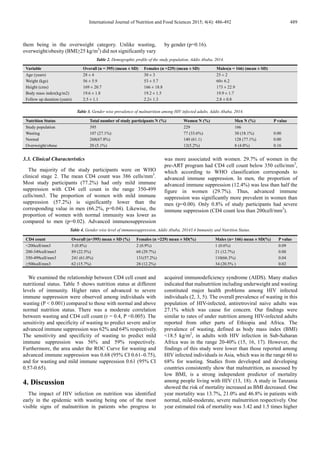
was 19.6 ± 1.8: female 19.2 ± 1.5 and male 19.9 ± 1.7 (table
2).
3.2. Nutritional Status
In this study, the prevalence of wasting (BMI <18.5 kg/m2
)
was 27.1%. Two third of the study participants (67.8%) had
normal nutrition status (BMI 18.5-24.49 kg/m2
) (Table 3). The
prevalence of wasting varies by gender significantly (p=0.00).
One third of women in the program had BMI below the lowest
acceptable value of WHO cutoff point for normal nutrition
status (BMI=18.5 kg/m2
). Less proportion of men (18.1%)
were wasted compared to women (33.6%). There was
significant difference in proportion of normal nutrition status
by gender (p=0.00). More proportion of men (77.1%) had
normal nutrition status than women (61.1%). 5.1% of study
participants were either overweight or obese with majority of
International Journal of Nutrition and Food Sciences 2015; 4(4): 486-492 489
them being in the overweight category. Unlike wasting,
overweight/obesity (BMI≥25 kg/m2
) did not significantly vary
by gender (p=0.16).
Table 2. Demographic profile of the study population, Addis Ababa, 2014.
Variable Overall (n = 395) (mean ± SD) Females (n =229) (mean ± SD) Males(n = 166) (mean ± SD)
Age (years) 28 ± 4 30 ± 3 25 ± 2
Weight (kgs) 56 ± 5.9 53 ± 5.7 60± 6.2
Height (cms) 169 ± 20.7 166 ± 18.8 173 ± 22.9
Body mass index(kg/m2) 19.6 ± 1.8 19.2 ± 1.5 19.9 ± 1.7
Follow up duration (years) 2.5 ± 1.1 2.2± 1.3 2.8 ± 0.8
Table 3. Gender wise prevalence of malnutrition among HIV infected adults, Addis Ababa, 2014.
Nutrition Status Total number of study participants N (%) Women N (%) Men N (%) P value
Study population 395 229 166
Wasting 107 (27.1%) 77 (33.6%) 30 (18.1%) 0.00
Normal 268(67.8%) 140 (61.1) 128 (77.1%) 0.00
Overweight/obese 20 (5.1%) 12(5.2%) 8 (4.8%) 0.16
3.3. Clinical Characteristics
The majority of the study participants were on WHO
clinical stage 2. The mean CD4 count was 386 cells/mm3
.
Most study participants (77.2%) had only mild immune
suppression with CD4 cell count in the range 350-499
cells/mm3. The proportion of women with mild immune
suppression (57.2%) is significantly lower than the
corresponding value in men (66.2%, p=0.04). Likewise, the
proportion of women with normal immunity was lower as
compared to men (p=0.02). Advanced immunosuppression
was more associated with women. 29.7% of women in the
pre-ART program had CD4 cell count below 350 cells/mm3
,
which according to WHO classification corresponds to
advanced immune suppression. In men, the proportion of
advanced immune suppression (12.4%) was less than half the
figure in women (29.7%). Thus, advanced immune
suppression was significantly more prevalent in women than
men (p=0.00). Only 0.8% of study participants had severe
immune suppression (CD4 count less than 200cell/mm3
).
Table 4. Gender wise level of immunosuppression, Addis Ababa, 20143.4 Immunity and Nutrition Status.
CD4 count Overall (n=395) mean ± SD (%) Females (n =229) mean ± SD(%) Males (n= 166) mean ± SD(%) P value
<200cell/mm3 3 (0.8%) 2 (0.9%) 1 (0.6%) 0.09
200-349cell/mm3 89 (22.5%) 68 (29.7%) 21 (12.7%) 0.00
350-499cell/mm3 241 (61.0%) 131(57.2%) 110(66.3%) 0.04
≥500cell/mm3 62 (15.7%) 28 (12.2%) 34 (20.5% ) 0.02
We examined the relationship between CD4 cell count and
nutritional status. Table 5 shows nutrition status at different
levels of immunity. Higher rates of advanced to severe
immune suppression were observed among individuals with
wasting (P < 0.001) compared to those with normal and above
normal nutrition status. There was a moderate correlation
between wasting and CD4 cell count (r = 0.4, P <0.005). The
sensitivity and specificity of wasting to predict severe and/or
advanced immune suppression was 62% and 64% respectively.
The sensitivity and specificity of wasting to predict mild
immune suppression was 56% and 59% respectively.
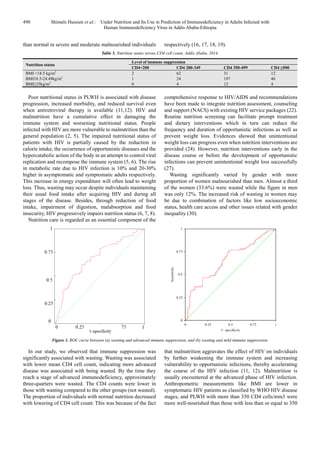
Furthermore, the area under the ROC Curve for wasting and
advanced immune suppression was 0.68 (95% CI 0.61–0.75),
and for wasting and mild immune suppression 0.61 (95% CI
0.57-0.65).
4. Discussion
The impact of HIV infection on nutrition was identified
early in the epidemic with wasting being one of the most
visible signs of malnutrition in patients who progress to
acquired immunodeficiency syndrome (AIDS). Many studies
indicated that malnutrition including underweight and wasting
constituted major health problems among HIV infected
individuals (2, 3, 5). The overall prevalence of wasting in this
population of HIV-infected, antiretroviral naive adults was
27.1% which was cause for concern. Our findings were
similar to rates of under nutrition among HIV-infected adults
reported from other parts of Ethiopia and Africa. The
prevalence of wasting, defined as body mass index (BMI)
<18.5 kg/m2
, in adults with HIV infection in Sub-Saharan
Africa was in the range 20-40% (15, 16, 17). However, the
findings of this study were lower than those reported among
HIV infected individuals in Asia, which was in the range 60 to
68% for wasting. Studies from developed and developing
countries consistently show that malnutrition, as assessed by
low BMI, is a strong independent predictor of mortality
among people living with HIV (13, 18). A study in Tanzania
showed the risk of mortality increased as BMI decreased. One
year mortality was 13.7%, 21.0% and 46.8% in patients with
normal, mild-moderate, severe malnutrition respectively. One
year estimated risk of mortality was 3.42 and 1.5 times higher
490 Shimels Hussien et al.: Under Nutrition and Its Use in Prediction of Immunodeficiency in Adults Infected with
Human Immunodeficiency Virus in Addis Ababa-Ethiopia
than normal in severe and moderate malnourished individuals respectively (16, 17, 18, 19).
Table 5. Nutrition status versus CD4 cell count, Addis Ababa, 2014.
Nutrition status
Level of immune suppression
CD4<200 CD4 200-349 CD4 350-499 CD4 ≥500
BMI <18.5 kg/m2
2 62 31 12
BMI18.5-24.49kg/m2
1 24 197 46
BMI≥25kg/m2
0 4 12 4
Poor nutritional status in PLWH is associated with disease
progression, increased morbidity, and reduced survival even
when antiretroviral therapy is available (11,12). HIV and
malnutrition have a cumulative effect in damaging the
immune system and worsening nutritional status. People
infected with HIV are more vulnerable to malnutrition than the
general population (2, 5). The impaired nutritional status of
patients with HIV is partially caused by the reduction in
calorie intake, the occurrence of opportunistic diseases and the
hypercatabolic action of the body in an attempt to control viral
replication and recompose the immune system (5, 6). The rise
in metabolic rate due to HIV infection is 10% and 20-30%
higher in asymptomatic and symptomatic adults respectively.
This increase in energy expenditure will often lead to weight
loss. Thus, wasting may occur despite individuals maintaining
their usual food intake after acquiring HIV and during all
stages of the disease. Besides, through reduction of food
intake, impairment of digestion, malabsorption and food
insecurity, HIV progressively impairs nutrition status (6, 7, 8).
Nutrition care is regarded as an essential component of the
comprehensive response to HIV/AIDS and recommendations
have been made to integrate nutrition assessment, counseling
and support (NACS) with existing HIV service packages (22).
Routine nutrition screening can facilitate prompt treatment
and dietary interventions which in turn can reduce the
frequency and duration of opportunistic infections as well as
prevent weight loss. Evidences showed that unintentional
weight loss can progress even when nutrition interventions are
provided (24). However, nutrition interventions early in the
disease course or before the development of opportunistic
infections can prevent unintentional weight loss successfully
(27).
Wasting significantly varied by gender with more
proportion of women malnourished than men. Almost a third
of the women (33.6%) were wasted while the figure in men
was only 12%. The increased risk of wasting in women may
be due to combination of factors like low socioeconomic
status, health care access and other issues related with gender
inequality (30).
Figure 1. ROC curve between (a) wasting and advanced immune suppression, and (b) wasting and mild immune suppression.
In our study, we observed that immune suppression was
significantly associated with wasting. Wasting was associated
with lower mean CD4 cell count, indicating more advanced
disease was associated with being wasted. By the time they
reach a stage of advanced immunodeficiency, approximately
three-quarters were wasted. The CD4 counts were lower in
those with wasting compared to the other groups (not wasted).
The proportion of individuals with normal nutrition decreased
with lowering of CD4 cell count. This was because of the fact
that malnutrition aggravates the effect of HIV on individuals
by further weakening the immune system and increasing
vulnerability to opportunistic infections, thereby accelerating
the course of the HIV infection (11, 12). Malnutrition is
usually encountered at the advanced phase of HIV infection.
Anthropometric measurements like BMI are lower in
symptomatic HIV patients as classified by WHO HIV disease
stages, and PLWH with more than 350 CD4 cells/mm3 were
more well-nourished than those with less than or equal to 350
International Journal of Nutrition and Food Sciences 2015;
CD4 cells/mm3 (22).
Despite immune status and wasting showed a fair
correlation (r=0.4, p=0.00), the presence of wasting
could not be used to predict disease severity
Among those with wasting, though the majority had CD4
count below 350, almost one fourth of study participants in the
group had CD4 > 350. The sensitivity and specificity
wasting alone in predicting immune status was not very
satisfactory. The area under the ROC curve for both mild and
advanced immune suppression was in the range of 0.59
indicating poor diagnostic accuracy. Because malnutrition is
common at all stages of HIV disease (6, 7,
be used as a surrogate marker for predicting disease stage or
severity of HIV associated immunosuppression
is a need to cautiously use wasting in clinical staging of HIV
infected adults as its sensitivity and specificity in predicting
immunodeficiency are not satisfactory.
5. Conclusion and Recommendations
In summary, we have found that there was high prevalence
of wasting among HIV-infected antiretroviral naïve adults in
Ethiopia. Given the fact that under nutrition aggravates the
course of HIV infection, the prevailing high level of
malnutrition showed by this study was of significant concern.
Routine nutrition screening can facilitate prompt treatment
and dietary interventions, which in turn can reduce the
frequency and duration of opportunistic infections a
prevent weight loss. Nutrition interventions early in the
disease course or before the development of opportunistic
infections can prevent unintentional weight loss successfully
and reduce morbidity and mortality. Hence, the existing
efforts of ministry of health to avail nutrition assessment,
counselling and support (NACS) services
strengthened. There was moderate correlation between
wasting and immune suppression. However, the sensitivity
and specificity of wasting alone in prediction
associated immune suppression was not strong enough to
consider wasting as an independent surrogate marker
cell level. Wasting may occur even at relatively higher CD4
levels.
Acknowledgements
The authors are grateful to the staff of the HIV/A
division of Zewditu hospital for their assistance during data
collection. The authors would also like to express our
gratitude to participants of this study.
Reference
[1] Koethe JR, Heimburger DC. Nutritional aspects of
HIV-associated wasting in sub-Saharan Africa. Am J Clin Nutr
2010, 91:1138S-1142S.
[2] Peter Katona, Judit Katona. The Interaction between Nutrition
and Infection. Clin Infect Dis. 2008, 46:1582
International Journal of Nutrition and Food Sciences 2015; 4(4): 486-492
immune status and wasting showed a fair
, the presence of wasting alone
predict disease severity very accurately.
Among those with wasting, though the majority had CD4 cell
th of study participants in the
group had CD4 > 350. The sensitivity and specificity of
predicting immune status was not very
sfactory. The area under the ROC curve for both mild and
advanced immune suppression was in the range of 0.59–0.68,
indicating poor diagnostic accuracy. Because malnutrition is
8), wasting cannot
ogate marker for predicting disease stage or
of HIV associated immunosuppression. Hence, there
use wasting in clinical staging of HIV
infected adults as its sensitivity and specificity in predicting
5. Conclusion and Recommendations
there was high prevalence
infected antiretroviral naïve adults in
Given the fact that under nutrition aggravates the
prevailing high level of
trition showed by this study was of significant concern.
Routine nutrition screening can facilitate prompt treatment
and dietary interventions, which in turn can reduce the
frequency and duration of opportunistic infections as well as
prevent weight loss. Nutrition interventions early in the
disease course or before the development of opportunistic
infections can prevent unintentional weight loss successfully
Hence, the existing
inistry of health to avail nutrition assessment,
counselling and support (NACS) services should be
. There was moderate correlation between
wasting and immune suppression. However, the sensitivity
in prediction of HIV
immune suppression was not strong enough to
surrogate marker of CD4
even at relatively higher CD4
l to the staff of the HIV/AIDS
ivision of Zewditu hospital for their assistance during data
collection. The authors would also like to express our
Nutritional aspects of
Saharan Africa. Am J Clin Nutr
. The Interaction between Nutrition
. Clin Infect Dis. 2008, 46:1582-1588.
[3] Burgin J, Nichols S, Dalrymple N. The nutritional status of
clinical attendees living with HIV/AIDS in St. Vicente and
Grenadines. West Indian Med J 2008,
[4] Ludy MJ, Hendricks K, Houser R, Chetchotisad P, Anunnatsiri
S. Body composition in adults infected with human
immunodeficiency vírus in Khon Kaen, T
Med Hyg 2005, 73:815-819.
[5] L. Salomon J, Truchis P, Melchior JC. Nutrition and HIV
infection. Br J Nutr 2002, 87: 111
[6] Melchior JC, Salmon D, Rigaud D, Leport C, Bouvet E,
Detruchis P, et al. Resting energy expenditure is increased in
stable, malnourished HIV infected pa
1991, 53(2):437-41.
[7] Melchior JC, Raguin G, Boulier A, Bouvet E, Rigaud D,
Matheron S, et al. Resting energy expenditure in human
immunodeficiency virus-infected patients: comparison
between patients with and without seconda
Clin Nutr 1993, 57(5):614-9.
[8] Dannhauser A, van Staden AM, van der Ryst E, Nel M, Marais
N, Erasmus E, et al. Nutritional status of HIV
patients in the Free State Province of South Africa:
anthropometric and dietary profil
53:165-73.
[9] Palermo T, Rawat R, Weiser SD, Kadiyala S. 10.
and Diet Quality Are Associated with Quality of Life
Outcomes among HIV-Infected Individuals in Uganda. PLoS
One. 2013, 8(4):e62353.
[10] Food Assistance Programmin
Project, Academy for Educational Dev
DC; 2007.
[11] Scrimshaw NS, SanGiovanni JP. Synergism of nutrition,
infection, and immunity: an overview. Am J Cli
66(2):464S-477S12.
[12] Mangili A, Murman DH, Zampini AM, Wanke CA. Nutrition
and HIV infection: review of weight loss and wasting in the era
of highly active antiretroviral therapy. Clin Infect Dis 2006;
42(6):836-42
[13] A Bussmann H, Wester CW, Ndwapi N, et al. Five
outcomes of initial patients tre
Antiretroviral Treatment Program. AIDS 2008
[14] Tariku M, Kemal Z. Prevalence of malnutrition in HIV infected
indioviduals in St. Peter Hospital
Hindai Publishing 2013, 12: 145
[15] Dannhauser A, van Staden AM, van der Ryst E, Nel M, Marais
N, Erasmus E, et al. Nutritional status of HIV
patients in the Free State Province of South Africa:
anthropometric and dietary profile. Eur J Clin Nutr 1999,
53:165-73.
[16] Zachariah R, Fitzgerald M, Massaquoi M, Pasulani O, Arnould
L, Makombe S, et al. Risk factors for high early mortality in
patients on antiretroviral treatment in a rura
AIDS 2006, 20:2355-60.
[17] Stringer JS, Zulu I, Levy J, et al. Rapid scale
antiretroviral therapy at primary care sites in Zambia:
feasibility and early outcomes. JAMA
491
Burgin J, Nichols S, Dalrymple N. The nutritional status of
with HIV/AIDS in St. Vicente and
nadines. West Indian Med J 2008, 57:438-443.
Ludy MJ, Hendricks K, Houser R, Chetchotisad P, Anunnatsiri
S. Body composition in adults infected with human
immunodeficiency vírus in Khon Kaen, Thailand. Am J Trop
L. Salomon J, Truchis P, Melchior JC. Nutrition and HIV
2002, 87: 111-119.
Melchior JC, Salmon D, Rigaud D, Leport C, Bouvet E,
Detruchis P, et al. Resting energy expenditure is increased in
nfected patients. Am J Clin Nutr
Melchior JC, Raguin G, Boulier A, Bouvet E, Rigaud D,
Matheron S, et al. Resting energy expenditure in human
infected patients: comparison
between patients with and without secondary infections. Am J
9.
Dannhauser A, van Staden AM, van der Ryst E, Nel M, Marais
N, Erasmus E, et al. Nutritional status of HIV-1 seropositive
patients in the Free State Province of South Africa:
anthropometric and dietary profile. Eur J Clin Nutr 1999,
Palermo T, Rawat R, Weiser SD, Kadiyala S. 10. Food Access
and Diet Quality Are Associated with Quality of Life
Infected Individuals in Uganda. PLoS
Food Assistance Programming in context of HIV. FANTA
Project, Academy for Educational Development, Washington,
Scrimshaw NS, SanGiovanni JP. Synergism of nutrition,
infection, and immunity: an overview. Am J Clin Nutr 1997,
Zampini AM, Wanke CA. Nutrition
and HIV infection: review of weight loss and wasting in the era
of highly active antiretroviral therapy. Clin Infect Dis 2006;
Bussmann H, Wester CW, Ndwapi N, et al. Five-year
outcomes of initial patients treated in Botswana’s National
Antiretroviral Treatment Program. AIDS 2008, 22:2303–11.
Tariku M, Kemal Z. Prevalence of malnutrition in HIV infected
indioviduals in St. Peter Hospital, Addis Ababa, Ethiopia.
Hindai Publishing 2013, 12: 145-151.
van Staden AM, van der Ryst E, Nel M, Marais
N, Erasmus E, et al. Nutritional status of HIV-1 seropositive
patients in the Free State Province of South Africa:
y profile. Eur J Clin Nutr 1999,
Massaquoi M, Pasulani O, Arnould
L, Makombe S, et al. Risk factors for high early mortality in
patients on antiretroviral treatment in a rural district of Malawi.
Stringer JS, Zulu I, Levy J, et al. Rapid scale-up of
therapy at primary care sites in Zambia:
feasibility and early outcomes. JAMA 2006, 296:782–93.
492 Shimels Hussien et al.: Under Nutrition and Its Use in Prediction of Immunodeficiency in Adults Infected with
Human Immunodeficiency Virus in Addis Ababa-Ethiopia
[18] Zachariah R, Fitzgerald M, Massaquoi M, et al. Risk factors for
high early mortality in patients on antiretroviral treatment in a
rural district of Malawi. AIDS 2006, 20:2355–60.
[19] Johannessen A, Naman E, Ngowi BJ, et al. Predictors of
mortality in HIV-infected patients starting antiretroviral
therapy in a rural hospital in Tanzania. BMC Infect Dis 2008,
8:52–60.
[20] Kotler DP. Wasting syndrome: nutritional support in HIV
infection. AIDS Res Hum Retroviruses 1994, 10:931-934.
[21] World Health Organization. Conference on Nutrition and
HIV/AIDS in Africa: Evidence, lessons and recommendations
for action. Executive summary of a scientific review. Geneva:
WHO, 2005.
[22] Somarriba G, Neri D, Schaefer N, Miller LT. The effect of
aging, nutrition and exercise during HIV infection. HIV/AIDS.
Research and Palliative Care. 2010, 2:191-20.
[23] Zachariah R, Reid SD, Chaillet P, Massaquoi M, Schouten EJ,
Harries AD. Viewpoint: why do we need a point-of-care CD4
test for low-income countries? Trop Med Int Health. 2011,
16:37-41.
[24] Colebunders R, Mann JM, Francis H, Bila K, Izaley L,
Kakonde N, et al. Evaluation of a clinical case-definition of
acquired immunodeficiency syndrome in Africa. Lancet. 1987,
1:492-4.
[25] De Cock KM, Colebunders R, Francis H, Nzilambi N, Laga M,
Ryder RW, et al. Evaluation of the WHO clinical case
definition for AIDS in rural Zaire. AIDS. 1988, 2:219-21.
[26] Malamba SS, Morgan D, Clayton T, Mayanja B, Okongo M,
Whitworth J. The prognostic value of the World Health
Organiazation staging system for HIV infection and disease in
rural Uganda. AIDS. 1999, 13:255-62.
[27] FANTA publications, Ethiopia Nutrition and HIV Tools: Food
and nutrition. The federal democratic of Ethiopia, Ministry of
Health National Nutrition and HIV/AIDS Implementation
Reference Manual. 2008
[28] FHAPCO. Monthly HIV Care and ART Update: Update as of
end of February, 2015. Addis Ababa, Ethiopia web site:
www.HAPCO.GOV.et.
[29] Child health and nutrition in Ethiopia. Analysis of EDHS 2011,
Addis Ababa, Ethiopia, 2013.
[30] Central Statistical Agency and ICF International. Ethiopia
Demographic and Health Survey. Central Statistical Agency,
Addis Ababa, Ethiopia; ICF International, Calverton, Md, USA,
2012

10.11648.j.ijnfs.20150404.21

  • 1.
    International Journal ofNutrition and Food Sciences 2015; 4(4): 486-492 Published online July 7, 2015 (http://www.sciencepublishinggroup.com/j/ijnfs) doi: 10.11648/j.ijnfs.20150404.21 ISSN: 2327-2694 (Print); ISSN: 2327-2716 (Online) Under Nutrition and Its Use in Prediction of Immunodeficiency in Adults Infected with Human Immunodeficiency Virus in Addis Ababa-Ethiopia Shimels Hussien1, * , Ayalew Aklilu2 , Kumlachew Abate3 1 World Health Organization, MCH/Nutrition Cluster, Addis Ababa, Ethiopia 2 Tulane International, PCP/HMIS Unit, Addis Ababa, Ethiopia 3 United Nations High Commission for Refugees, Public Health Section, Juba, South Sudan Email address: shimelsh@gmail.com (Shimels H.), abatekumlachew@gmail.com (Kumlachew A.), ayru_2010@yahoo.com (Ayalew A.) To cite this article: Shimels Hussien, Ayalew Aklilu, Kumlachew Abate. Under Nutrition and Its Use in Prediction of Immunodeficiency in Adults Infected with Human Immunodeficiency Virus in Addis Ababa-Ethiopia. International Journal of Nutrition and Food Sciences. Vol. 4, No. 4, 2015, pp. 486-492. doi: 10.11648/j.ijnfs.20150404.21 Abstract: HIV infection and poor nutrition status are interlinked. HIV infected individuals are more vulnerable to under nutrition than the general population. Despite major advances in HIV treatment and survival outcomes, weight loss and wasting remain of significant health concern in people living with HIV. Poor nutritional status in HIV infected individuals is associated with disease progression, increased morbidity and reduced survival even when antiretroviral treatment (ART) is available. HIV and malnutrition have a cumulative effect in weakening the immune system and worsening nutrition status. The objective of this study was to assess the prevalence of under nutrition (wasting) among HIV infected, antiretroviral naïve adults, and the utility of wasting in predicting immunosuppression in Addis Ababa, Ethiopia, 2014. Institution based, cross sectional study was done on a sample of 395 antiretroviral naïve adults attending chronic HIV care programs. Study participants were selected by systematic random sampling. Data was collected using a structured interview questionnaire and anthropometric measurements (weight and height) were taken from all study participants. CD4 cell count was done using standard laboratory method and used as a proxy indicator of immune status. Body mass index (BMI) was correlated with CD4 cell count and receiver operating characteristic curves plotted. Under nutrition was of critical health concern among HIV infected antiretroviral naïve adults. The study showed a 27% prevalence of wasting with significantly variation by sex. More women were malnourished than men. There was significant association between wasting and immune suppression. However, the sensitivity and specificity of wasting to predict stages of immune suppression was low. HIV infected individuals need special attention for nutrition monitoring, counselling and support. Keywords: Under Nutrition, HIV, Immunity 1. Introduction The twin global epidemics of HIV infection and food insecurity disproportionately affect sub-Saharan Africa, and a significant proportion of patients who require antiretroviral therapy (ART) are malnourished because of a combination of HIV-associated wasting and inadequate nutrient intake. Protein-calorie malnutrition, the most common form of adult malnutrition in the region, is associated with significant morbidity and compounds the immunosuppressive effects of HIV (1). People living with HIV (PLWH) are more vulnerable to malnutrition than the general population. HIV infection and poor nutrition status are interlinked both weakening the immune system. The synergism between HIV and under nutrition leads to poor adherence `to treatment and high mortality rate (2). Individuals with HIV undergo various physiological alterations beginning in the early phase of the infection. Malnutrition was one of the first complications of AIDS to be recognized and one of the most frequent diagnoses in the population infected with HIV. Several studies have demonstrated association between lean body mass depletion/malnutrition and disease progression/patient survival (3, 4). The impaired nutritional status of patients with HIV is partially caused by the reduction in calorie intake, the occurrence of opportunistic diseases and the hypercatabolic
  • 2.
    International Journal ofNutrition and Food Sciences 2015; 4(4): 486-492 487 action of the body in an attempt to control viral replication and recompose the immune system (5). The rise in metabolic rate due to HIV infection is 10% and 20-30% higher in asymptomatic and symptomatic adults respectively. This increase in energy expenditure will often lead to weight loss. Thus, wasting may occur despite individuals maintaining their usual food intake after acquiring HIV and during all stages of the disease. Besides, through reduction of food intake, impairment of digestion, malabsorption and food insecurity, HIV progressively impairs nutrition status (6, 7, 8). Among PLWH, malnutrition is associated with incomplete HIV-1 RNA suppression, CD4 cell decline, increased opportunistic infections, hospitalizations and HIV-related mortality. Good nutrition for PLWH has been proven to increase resistance to infection, help PLWH maintain weight, and improve quality of life, drug compliance and efficacy (9, 10). Malnutrition in turn aggravates the effect of HIV infection. It does this by further weakening the immune system and increasing vulnerability to opportunistic infections, thereby accelerating the course of the HIV infection. Impaired immunity reduces the body’s resistance to infection. Thus, despite major advances in antiretroviral treatment and survival outcomes, weight loss and wasting remain of significant public health concern among HIV infected groups. Poor nutrition status in PLWH is associated with disease progression, increased morbidity and reduced survival even when antiretroviral therapy is available (11, 12). Poor nutrition status at start of antiretroviral therapy has been identified as an independent predictor of mortality irrespective of immune status. Patients who gain weight in the early phase of treatment have improved prognosis (13). The prevalence of wasting in adults with advanced HIV infection in sub-Saharan Africa is 20-40%. Low body mass index (BMI) was a strong independent predictor of mortality and treatment outcome among people infected with HIV (15, 16). A low BMI at start of ART was an independent predictor of early mortality (i.e. in the first 90 days of therapy) in several studies in sub-Saharan Africa. In Zambia, patients who started ART with a BMI < 16.0 kg/m2 had 2-fold higher mortality when compared with those above this BMI threshold (17). In Malawi, patients who initiated ART with a BMI<16 kg/m2 had a 6-fold increased risk of death at 3 month compared with those with a BMI ≥18.5 kg/m2 , and those with a BMI between 16.0 and 16.9 kg/m2 had a 2-fold increased risk of death (18). In Tanzania, patients with a BMI < 16.0 kg/m2 at ART initiation had a mortality rate double that of patients with a BMI ≥18.5 kg/m2 (19). While malnutrition itself is multifactorial in causation, the most effective treatment for wasting in HIV-infected individuals is antiretroviral therapy. Furthermore, routine weight monitoring in health facilities providing care, treatment and support could lead to an earlier identification of wasting and provision of appropriate interventions including nutrition counseling, therapeutic/supplementary feeding and antiretroviral therapy as indicated (20, 21). WHO clinical stages III and IV have significant effects on the likelihood of malnutrition development. Malnutrition is usually encountered at the advanced phase of HIV infection. Anthropometric measurements like BMI are lower in symptomatic HIV patients as classified by WHO HIV disease stages, and PLWH with more than 350 CD4 cells/mm3 were more well-nourished than those with less than or equal to 350 CD4 cells/mm3 (22). Surrogate measures such as the CD4 count and viral load have remained the major markers of disease progression and well-being of PLWH. In many countries of sub-Saharan Africa, CD4 count and viral load measurements are not widely available or consistently used, and instead the WHO clinical staging system is used to determine ART eligibility (23). Where CD4 count is not immediately available, the WHO clinical staging system is used for initial assessment of ART eligibility and monitoring disease progression (24, 25). One of the stage-defining conditions to determine eligibility and initiation of ART is wasting (26). Taking this complex nature of the problem in to account, this study was carried out to assess the prevalence of wasting in PLWH and the extent at which immune suppression could be predicted by wasting. There is limited data on prevalence of under nutrition (wasting) among HIV-infected adults in Ethiopia though it is known that under nutrition is one of the commonest manifestations of HIV in this age group. High rates of malnutrition in Ethiopia pose significant challenges to HIV care and treatment programs (27). We investigated the prevalence of wasting among antiretroviral naïve HIV infected adults. Besides, the study evaluated whether wasting can predict immune deficiency level and serve as surrogate marker of HIV disease severity in peripheral and primary health care settings where facilities for sophisticated laboratory monitoring of viral load and CD4 count are not available. 2. Method 2.1. Study Area and Period The study was conducted from July to August, 2014 in Addis Ababa city, Ethiopia. Zewditu hospital was one of the centers which provide chronic HIV care and treatment. The hospital was pioneer with largest antiretroviral treatment and referral center in Ethiopia where over 18,000 HIV infected people had been attending chronic care services (28). The treatment center has been following a cohort of HIV-infected people since 2005 providing comprehensive HIV prevention, care and treatment services. The services included HIV counselling and testing (HCT), prevention of mother to child transmission (PMTCT), antiretroviral therapy (ART), palliative care (PC); and nutrition assessment, counselling and support (NACS). The center also provided a facility based nutrition program called Food by Prescription (FBP) which enabled malnourished HIV infected individuals to receive therapeutic and/or supplementary feeding products. 2.2. Study Design, Sample and Sampling Institution based cross sectional study was conducted
  • 3.
    488 Shimels Hussienet al.: Under Nutrition and Its Use in Prediction of Immunodeficiency in Adults Infected with Human Immunodeficiency Virus in Addis Ababa-Ethiopia among a sample of 395 adults. The study participants were HIV infected adults who did not start taking antiretroviral treatment. However, they were receiving other packages of HIV care and support services like co-trimoxazole preventive therapy (CPT), isoniazid preventive therapy (IPT), palliative care and other clinical services as indicated for their clinical conditions. The assumptions used in calculating the sample size were 95% confidence level, 5% margin of error, 10% non-response rate, and target population of 18,000. Due to the lack of data on prevalence of wasting among HIV infected adults, a default value of 50% prevalence was used in estimation of the sample size which provided the maximum possible size. The study participants were selected by systematic random sampling during chronic care visits at the treatment center. Every 20th individuals attending pre ART follow up visits were included in the study. 2.3. Data Collection A structured questionnaire was used to interview study participants. The questionnaire incorporated bio data, sociodemography and clinical information. The recent CD4 cell measurement was taken from pre-ART register of the hospital and used as proxy indicator to judge the immunity status of study participants. A normal CD4 cell count ranges from 500 to 1,500 cells per cubic millimeters of blood. Besides, anthropometric measurements were taken on height and weight following standard procedures. Weight was measured by electronic digital weight scale with light clothing and read to the nearest 0.1kg. Calibration was done routinely before every measurement using an object of known weight. Height was measured using standard standiometer for adults. All the subjects stood against the wall without foot wear and with heels together and their heads positioned so that the line of vision was perpendicular to the body. Height was recorded to the nearest 0.5 cm. Then, the weight and height of each individual were translated into body mass index (BMI), the standard index for assessing nutrition status in adults. 2.4. Data Analysis Data entry into computer was done using CDC Epi-info® version 7. Analysis was done using the program Statistical Package for the Social Sciences (SPSS®) version 22.The data was used to determine the levels of nutrition status, immunity, and relation between nutrition status and immunity. The WHO BMI cutoff points, < 16 Kg/m2 severe wasting, 16 to 16.99 Kg/m2 moderate wasting, 17 to 18.49 Kg/m2 mild wasting, 18.5 to 24.99 Kg/m2 normal, 25 to 29.99 Kg/m2 overweight and ≥30 Kg/m2 obese, were used in classification of nutrition status. CD4 cell counts were reported as the number of cells in a cubic millimeter of blood. The WHO immunity grading system on bases of CD4 cell counts was used to classify the level of immunosuppression of study participants (table 1). The prevalence of wasting was calculated as the proportion of those with BMI less than 18.5 kg/m2 , and its relationship with gender and immunity was evaluated. The relation of nutrition status (wasting) with gender and immunity (CD4 count) was also examined. Differences in the proportion of wasting between men and women, and at different CD4 levels were tested with the chi-square tests. Correlation between CD4 cell count and nutrition status was obtained using Pearson’s correlation coefficient. Receiver Operating Characteristic (ROC) curves were constructed to assess the relationship of nutrition status with CD4 count (immunity level), and to determine the cutoff point which would predict immune deficiency with optimal sensitivity and specificity. Table 1. WHO Classification of CD4 level in relation to immune suppression. Severity of immune suppression CD4 count No significant immune suppression >500/mm3 Mild immune suppression 350-499/mm3 Advanced immune suppression 200-349/mm3 Severe Immune suppression <200/mm3 2.5. Ethical Approval Ethical clearance for this research was obtained from Addis Ababa city administration health bureau ethical clearance board. A letter of permission and support was obtained from the board. Written consent was taken from study participants using forms designed for this study. 3. Result 3.1. Demographic and Anthropometric Characteristics A total of 395 HIV infected adults attending pre-ART chronic care clinics were recruited during the study period, July to August, 2014. Only 9 individuals refused involvement in the study. Non-response rate was only 2%. 229 (58%) were females and 136 (42%) were males. Most of the study participants (90%) lived in Addis Ababa. The average duration of follow up in chronic care was 3.5 years. The average age of the study participants was 28 years with men slightly older than women. The mean weight was 56 Kg (53 kg for women and 64 kg for men). Mean height was 169 cm for all study participants: 166cm and 173cm for women and men respectively. The mean body mass index (BMI in kg/m2 ) was 19.6 ± 1.8: female 19.2 ± 1.5 and male 19.9 ± 1.7 (table 2). 3.2. Nutritional Status In this study, the prevalence of wasting (BMI <18.5 kg/m2 ) was 27.1%. Two third of the study participants (67.8%) had normal nutrition status (BMI 18.5-24.49 kg/m2 ) (Table 3). The prevalence of wasting varies by gender significantly (p=0.00). One third of women in the program had BMI below the lowest acceptable value of WHO cutoff point for normal nutrition status (BMI=18.5 kg/m2 ). Less proportion of men (18.1%) were wasted compared to women (33.6%). There was significant difference in proportion of normal nutrition status by gender (p=0.00). More proportion of men (77.1%) had normal nutrition status than women (61.1%). 5.1% of study participants were either overweight or obese with majority of
  • 4.
    International Journal ofNutrition and Food Sciences 2015; 4(4): 486-492 489 them being in the overweight category. Unlike wasting, overweight/obesity (BMI≥25 kg/m2 ) did not significantly vary by gender (p=0.16). Table 2. Demographic profile of the study population, Addis Ababa, 2014. Variable Overall (n = 395) (mean ± SD) Females (n =229) (mean ± SD) Males(n = 166) (mean ± SD) Age (years) 28 ± 4 30 ± 3 25 ± 2 Weight (kgs) 56 ± 5.9 53 ± 5.7 60± 6.2 Height (cms) 169 ± 20.7 166 ± 18.8 173 ± 22.9 Body mass index(kg/m2) 19.6 ± 1.8 19.2 ± 1.5 19.9 ± 1.7 Follow up duration (years) 2.5 ± 1.1 2.2± 1.3 2.8 ± 0.8 Table 3. Gender wise prevalence of malnutrition among HIV infected adults, Addis Ababa, 2014. Nutrition Status Total number of study participants N (%) Women N (%) Men N (%) P value Study population 395 229 166 Wasting 107 (27.1%) 77 (33.6%) 30 (18.1%) 0.00 Normal 268(67.8%) 140 (61.1) 128 (77.1%) 0.00 Overweight/obese 20 (5.1%) 12(5.2%) 8 (4.8%) 0.16 3.3. Clinical Characteristics The majority of the study participants were on WHO clinical stage 2. The mean CD4 count was 386 cells/mm3 . Most study participants (77.2%) had only mild immune suppression with CD4 cell count in the range 350-499 cells/mm3. The proportion of women with mild immune suppression (57.2%) is significantly lower than the corresponding value in men (66.2%, p=0.04). Likewise, the proportion of women with normal immunity was lower as compared to men (p=0.02). Advanced immunosuppression was more associated with women. 29.7% of women in the pre-ART program had CD4 cell count below 350 cells/mm3 , which according to WHO classification corresponds to advanced immune suppression. In men, the proportion of advanced immune suppression (12.4%) was less than half the figure in women (29.7%). Thus, advanced immune suppression was significantly more prevalent in women than men (p=0.00). Only 0.8% of study participants had severe immune suppression (CD4 count less than 200cell/mm3 ). Table 4. Gender wise level of immunosuppression, Addis Ababa, 20143.4 Immunity and Nutrition Status. CD4 count Overall (n=395) mean ± SD (%) Females (n =229) mean ± SD(%) Males (n= 166) mean ± SD(%) P value <200cell/mm3 3 (0.8%) 2 (0.9%) 1 (0.6%) 0.09 200-349cell/mm3 89 (22.5%) 68 (29.7%) 21 (12.7%) 0.00 350-499cell/mm3 241 (61.0%) 131(57.2%) 110(66.3%) 0.04 ≥500cell/mm3 62 (15.7%) 28 (12.2%) 34 (20.5% ) 0.02 We examined the relationship between CD4 cell count and nutritional status. Table 5 shows nutrition status at different levels of immunity. Higher rates of advanced to severe immune suppression were observed among individuals with wasting (P < 0.001) compared to those with normal and above normal nutrition status. There was a moderate correlation between wasting and CD4 cell count (r = 0.4, P <0.005). The sensitivity and specificity of wasting to predict severe and/or advanced immune suppression was 62% and 64% respectively. The sensitivity and specificity of wasting to predict mild immune suppression was 56% and 59% respectively. Furthermore, the area under the ROC Curve for wasting and advanced immune suppression was 0.68 (95% CI 0.61–0.75), and for wasting and mild immune suppression 0.61 (95% CI 0.57-0.65). 4. Discussion The impact of HIV infection on nutrition was identified early in the epidemic with wasting being one of the most visible signs of malnutrition in patients who progress to acquired immunodeficiency syndrome (AIDS). Many studies indicated that malnutrition including underweight and wasting constituted major health problems among HIV infected individuals (2, 3, 5). The overall prevalence of wasting in this population of HIV-infected, antiretroviral naive adults was 27.1% which was cause for concern. Our findings were similar to rates of under nutrition among HIV-infected adults reported from other parts of Ethiopia and Africa. The prevalence of wasting, defined as body mass index (BMI) <18.5 kg/m2 , in adults with HIV infection in Sub-Saharan Africa was in the range 20-40% (15, 16, 17). However, the findings of this study were lower than those reported among HIV infected individuals in Asia, which was in the range 60 to 68% for wasting. Studies from developed and developing countries consistently show that malnutrition, as assessed by low BMI, is a strong independent predictor of mortality among people living with HIV (13, 18). A study in Tanzania showed the risk of mortality increased as BMI decreased. One year mortality was 13.7%, 21.0% and 46.8% in patients with normal, mild-moderate, severe malnutrition respectively. One year estimated risk of mortality was 3.42 and 1.5 times higher
  • 5.
    490 Shimels Hussienet al.: Under Nutrition and Its Use in Prediction of Immunodeficiency in Adults Infected with Human Immunodeficiency Virus in Addis Ababa-Ethiopia than normal in severe and moderate malnourished individuals respectively (16, 17, 18, 19). Table 5. Nutrition status versus CD4 cell count, Addis Ababa, 2014. Nutrition status Level of immune suppression CD4<200 CD4 200-349 CD4 350-499 CD4 ≥500 BMI <18.5 kg/m2 2 62 31 12 BMI18.5-24.49kg/m2 1 24 197 46 BMI≥25kg/m2 0 4 12 4 Poor nutritional status in PLWH is associated with disease progression, increased morbidity, and reduced survival even when antiretroviral therapy is available (11,12). HIV and malnutrition have a cumulative effect in damaging the immune system and worsening nutritional status. People infected with HIV are more vulnerable to malnutrition than the general population (2, 5). The impaired nutritional status of patients with HIV is partially caused by the reduction in calorie intake, the occurrence of opportunistic diseases and the hypercatabolic action of the body in an attempt to control viral replication and recompose the immune system (5, 6). The rise in metabolic rate due to HIV infection is 10% and 20-30% higher in asymptomatic and symptomatic adults respectively. This increase in energy expenditure will often lead to weight loss. Thus, wasting may occur despite individuals maintaining their usual food intake after acquiring HIV and during all stages of the disease. Besides, through reduction of food intake, impairment of digestion, malabsorption and food insecurity, HIV progressively impairs nutrition status (6, 7, 8). Nutrition care is regarded as an essential component of the comprehensive response to HIV/AIDS and recommendations have been made to integrate nutrition assessment, counseling and support (NACS) with existing HIV service packages (22). Routine nutrition screening can facilitate prompt treatment and dietary interventions which in turn can reduce the frequency and duration of opportunistic infections as well as prevent weight loss. Evidences showed that unintentional weight loss can progress even when nutrition interventions are provided (24). However, nutrition interventions early in the disease course or before the development of opportunistic infections can prevent unintentional weight loss successfully (27). Wasting significantly varied by gender with more proportion of women malnourished than men. Almost a third of the women (33.6%) were wasted while the figure in men was only 12%. The increased risk of wasting in women may be due to combination of factors like low socioeconomic status, health care access and other issues related with gender inequality (30). Figure 1. ROC curve between (a) wasting and advanced immune suppression, and (b) wasting and mild immune suppression. In our study, we observed that immune suppression was significantly associated with wasting. Wasting was associated with lower mean CD4 cell count, indicating more advanced disease was associated with being wasted. By the time they reach a stage of advanced immunodeficiency, approximately three-quarters were wasted. The CD4 counts were lower in those with wasting compared to the other groups (not wasted). The proportion of individuals with normal nutrition decreased with lowering of CD4 cell count. This was because of the fact that malnutrition aggravates the effect of HIV on individuals by further weakening the immune system and increasing vulnerability to opportunistic infections, thereby accelerating the course of the HIV infection (11, 12). Malnutrition is usually encountered at the advanced phase of HIV infection. Anthropometric measurements like BMI are lower in symptomatic HIV patients as classified by WHO HIV disease stages, and PLWH with more than 350 CD4 cells/mm3 were more well-nourished than those with less than or equal to 350
  • 6.
    International Journal ofNutrition and Food Sciences 2015; CD4 cells/mm3 (22). Despite immune status and wasting showed a fair correlation (r=0.4, p=0.00), the presence of wasting could not be used to predict disease severity Among those with wasting, though the majority had CD4 count below 350, almost one fourth of study participants in the group had CD4 > 350. The sensitivity and specificity wasting alone in predicting immune status was not very satisfactory. The area under the ROC curve for both mild and advanced immune suppression was in the range of 0.59 indicating poor diagnostic accuracy. Because malnutrition is common at all stages of HIV disease (6, 7, be used as a surrogate marker for predicting disease stage or severity of HIV associated immunosuppression is a need to cautiously use wasting in clinical staging of HIV infected adults as its sensitivity and specificity in predicting immunodeficiency are not satisfactory. 5. Conclusion and Recommendations In summary, we have found that there was high prevalence of wasting among HIV-infected antiretroviral naïve adults in Ethiopia. Given the fact that under nutrition aggravates the course of HIV infection, the prevailing high level of malnutrition showed by this study was of significant concern. Routine nutrition screening can facilitate prompt treatment and dietary interventions, which in turn can reduce the frequency and duration of opportunistic infections a prevent weight loss. Nutrition interventions early in the disease course or before the development of opportunistic infections can prevent unintentional weight loss successfully and reduce morbidity and mortality. Hence, the existing efforts of ministry of health to avail nutrition assessment, counselling and support (NACS) services strengthened. There was moderate correlation between wasting and immune suppression. However, the sensitivity and specificity of wasting alone in prediction associated immune suppression was not strong enough to consider wasting as an independent surrogate marker cell level. Wasting may occur even at relatively higher CD4 levels. Acknowledgements The authors are grateful to the staff of the HIV/A division of Zewditu hospital for their assistance during data collection. The authors would also like to express our gratitude to participants of this study. Reference [1] Koethe JR, Heimburger DC. Nutritional aspects of HIV-associated wasting in sub-Saharan Africa. Am J Clin Nutr 2010, 91:1138S-1142S. [2] Peter Katona, Judit Katona. The Interaction between Nutrition and Infection. Clin Infect Dis. 2008, 46:1582 International Journal of Nutrition and Food Sciences 2015; 4(4): 486-492 immune status and wasting showed a fair , the presence of wasting alone predict disease severity very accurately. Among those with wasting, though the majority had CD4 cell th of study participants in the group had CD4 > 350. The sensitivity and specificity of predicting immune status was not very sfactory. The area under the ROC curve for both mild and advanced immune suppression was in the range of 0.59–0.68, indicating poor diagnostic accuracy. Because malnutrition is 8), wasting cannot ogate marker for predicting disease stage or of HIV associated immunosuppression. Hence, there use wasting in clinical staging of HIV infected adults as its sensitivity and specificity in predicting 5. Conclusion and Recommendations there was high prevalence infected antiretroviral naïve adults in Given the fact that under nutrition aggravates the prevailing high level of trition showed by this study was of significant concern. Routine nutrition screening can facilitate prompt treatment and dietary interventions, which in turn can reduce the frequency and duration of opportunistic infections as well as prevent weight loss. Nutrition interventions early in the disease course or before the development of opportunistic infections can prevent unintentional weight loss successfully Hence, the existing inistry of health to avail nutrition assessment, counselling and support (NACS) services should be . There was moderate correlation between wasting and immune suppression. However, the sensitivity in prediction of HIV immune suppression was not strong enough to surrogate marker of CD4 even at relatively higher CD4 l to the staff of the HIV/AIDS ivision of Zewditu hospital for their assistance during data collection. The authors would also like to express our Nutritional aspects of Saharan Africa. Am J Clin Nutr . The Interaction between Nutrition . Clin Infect Dis. 2008, 46:1582-1588. [3] Burgin J, Nichols S, Dalrymple N. The nutritional status of clinical attendees living with HIV/AIDS in St. Vicente and Grenadines. West Indian Med J 2008, [4] Ludy MJ, Hendricks K, Houser R, Chetchotisad P, Anunnatsiri S. Body composition in adults infected with human immunodeficiency vírus in Khon Kaen, T Med Hyg 2005, 73:815-819. [5] L. Salomon J, Truchis P, Melchior JC. Nutrition and HIV infection. Br J Nutr 2002, 87: 111 [6] Melchior JC, Salmon D, Rigaud D, Leport C, Bouvet E, Detruchis P, et al. Resting energy expenditure is increased in stable, malnourished HIV infected pa 1991, 53(2):437-41. [7] Melchior JC, Raguin G, Boulier A, Bouvet E, Rigaud D, Matheron S, et al. Resting energy expenditure in human immunodeficiency virus-infected patients: comparison between patients with and without seconda Clin Nutr 1993, 57(5):614-9. [8] Dannhauser A, van Staden AM, van der Ryst E, Nel M, Marais N, Erasmus E, et al. Nutritional status of HIV patients in the Free State Province of South Africa: anthropometric and dietary profil 53:165-73. [9] Palermo T, Rawat R, Weiser SD, Kadiyala S. 10. and Diet Quality Are Associated with Quality of Life Outcomes among HIV-Infected Individuals in Uganda. PLoS One. 2013, 8(4):e62353. [10] Food Assistance Programmin Project, Academy for Educational Dev DC; 2007. [11] Scrimshaw NS, SanGiovanni JP. Synergism of nutrition, infection, and immunity: an overview. Am J Cli 66(2):464S-477S12. [12] Mangili A, Murman DH, Zampini AM, Wanke CA. Nutrition and HIV infection: review of weight loss and wasting in the era of highly active antiretroviral therapy. Clin Infect Dis 2006; 42(6):836-42 [13] A Bussmann H, Wester CW, Ndwapi N, et al. Five outcomes of initial patients tre Antiretroviral Treatment Program. AIDS 2008 [14] Tariku M, Kemal Z. Prevalence of malnutrition in HIV infected indioviduals in St. Peter Hospital Hindai Publishing 2013, 12: 145 [15] Dannhauser A, van Staden AM, van der Ryst E, Nel M, Marais N, Erasmus E, et al. Nutritional status of HIV patients in the Free State Province of South Africa: anthropometric and dietary profile. Eur J Clin Nutr 1999, 53:165-73. [16] Zachariah R, Fitzgerald M, Massaquoi M, Pasulani O, Arnould L, Makombe S, et al. Risk factors for high early mortality in patients on antiretroviral treatment in a rura AIDS 2006, 20:2355-60. [17] Stringer JS, Zulu I, Levy J, et al. Rapid scale antiretroviral therapy at primary care sites in Zambia: feasibility and early outcomes. JAMA 491 Burgin J, Nichols S, Dalrymple N. The nutritional status of with HIV/AIDS in St. Vicente and nadines. West Indian Med J 2008, 57:438-443. Ludy MJ, Hendricks K, Houser R, Chetchotisad P, Anunnatsiri S. Body composition in adults infected with human immunodeficiency vírus in Khon Kaen, Thailand. Am J Trop L. Salomon J, Truchis P, Melchior JC. Nutrition and HIV 2002, 87: 111-119. Melchior JC, Salmon D, Rigaud D, Leport C, Bouvet E, Detruchis P, et al. Resting energy expenditure is increased in nfected patients. Am J Clin Nutr Melchior JC, Raguin G, Boulier A, Bouvet E, Rigaud D, Matheron S, et al. Resting energy expenditure in human infected patients: comparison between patients with and without secondary infections. Am J 9. Dannhauser A, van Staden AM, van der Ryst E, Nel M, Marais N, Erasmus E, et al. Nutritional status of HIV-1 seropositive patients in the Free State Province of South Africa: anthropometric and dietary profile. Eur J Clin Nutr 1999, Palermo T, Rawat R, Weiser SD, Kadiyala S. 10. Food Access and Diet Quality Are Associated with Quality of Life Infected Individuals in Uganda. PLoS Food Assistance Programming in context of HIV. FANTA Project, Academy for Educational Development, Washington, Scrimshaw NS, SanGiovanni JP. Synergism of nutrition, infection, and immunity: an overview. Am J Clin Nutr 1997, Zampini AM, Wanke CA. Nutrition and HIV infection: review of weight loss and wasting in the era of highly active antiretroviral therapy. Clin Infect Dis 2006; Bussmann H, Wester CW, Ndwapi N, et al. Five-year outcomes of initial patients treated in Botswana’s National Antiretroviral Treatment Program. AIDS 2008, 22:2303–11. Tariku M, Kemal Z. Prevalence of malnutrition in HIV infected indioviduals in St. Peter Hospital, Addis Ababa, Ethiopia. Hindai Publishing 2013, 12: 145-151. van Staden AM, van der Ryst E, Nel M, Marais N, Erasmus E, et al. Nutritional status of HIV-1 seropositive patients in the Free State Province of South Africa: y profile. Eur J Clin Nutr 1999, Massaquoi M, Pasulani O, Arnould L, Makombe S, et al. Risk factors for high early mortality in patients on antiretroviral treatment in a rural district of Malawi. Stringer JS, Zulu I, Levy J, et al. Rapid scale-up of therapy at primary care sites in Zambia: feasibility and early outcomes. JAMA 2006, 296:782–93.
  • 7.
    492 Shimels Hussienet al.: Under Nutrition and Its Use in Prediction of Immunodeficiency in Adults Infected with Human Immunodeficiency Virus in Addis Ababa-Ethiopia [18] Zachariah R, Fitzgerald M, Massaquoi M, et al. Risk factors for high early mortality in patients on antiretroviral treatment in a rural district of Malawi. AIDS 2006, 20:2355–60. [19] Johannessen A, Naman E, Ngowi BJ, et al. Predictors of mortality in HIV-infected patients starting antiretroviral therapy in a rural hospital in Tanzania. BMC Infect Dis 2008, 8:52–60. [20] Kotler DP. Wasting syndrome: nutritional support in HIV infection. AIDS Res Hum Retroviruses 1994, 10:931-934. [21] World Health Organization. Conference on Nutrition and HIV/AIDS in Africa: Evidence, lessons and recommendations for action. Executive summary of a scientific review. Geneva: WHO, 2005. [22] Somarriba G, Neri D, Schaefer N, Miller LT. The effect of aging, nutrition and exercise during HIV infection. HIV/AIDS. Research and Palliative Care. 2010, 2:191-20. [23] Zachariah R, Reid SD, Chaillet P, Massaquoi M, Schouten EJ, Harries AD. Viewpoint: why do we need a point-of-care CD4 test for low-income countries? Trop Med Int Health. 2011, 16:37-41. [24] Colebunders R, Mann JM, Francis H, Bila K, Izaley L, Kakonde N, et al. Evaluation of a clinical case-definition of acquired immunodeficiency syndrome in Africa. Lancet. 1987, 1:492-4. [25] De Cock KM, Colebunders R, Francis H, Nzilambi N, Laga M, Ryder RW, et al. Evaluation of the WHO clinical case definition for AIDS in rural Zaire. AIDS. 1988, 2:219-21. [26] Malamba SS, Morgan D, Clayton T, Mayanja B, Okongo M, Whitworth J. The prognostic value of the World Health Organiazation staging system for HIV infection and disease in rural Uganda. AIDS. 1999, 13:255-62. [27] FANTA publications, Ethiopia Nutrition and HIV Tools: Food and nutrition. The federal democratic of Ethiopia, Ministry of Health National Nutrition and HIV/AIDS Implementation Reference Manual. 2008 [28] FHAPCO. Monthly HIV Care and ART Update: Update as of end of February, 2015. Addis Ababa, Ethiopia web site: www.HAPCO.GOV.et. [29] Child health and nutrition in Ethiopia. Analysis of EDHS 2011, Addis Ababa, Ethiopia, 2013. [30] Central Statistical Agency and ICF International. Ethiopia Demographic and Health Survey. Central Statistical Agency, Addis Ababa, Ethiopia; ICF International, Calverton, Md, USA, 2012