NEW BORN CARE
IMMEDIATE CARE OF THE
      NEWBORN
•AIRWAY
•TEMPERATURE
•APGAR
•IDENTIFICATION
AIRWAY
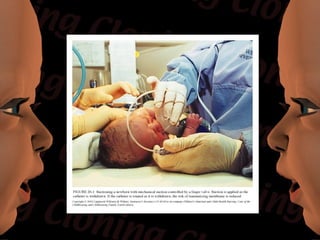
• Suctioning

  Suction gently and quickly (5 to 10
 seconds). Prolonged and deep
 suctioning of the nasopharynx during
 the first 5 to 10 minutes of life will
 stimulate the VAGUS NERVE (located
 in the esophagus) and cause
 bradycardia.
> Suction the MOUTH first before
  the nose. If the nose is suctioned
  first, the stimulation of the nasal
  mucosa will cause reflex inhalation
  of pharyngeal material into the
  trachea and bronchi, causing
  ASPIRATION.

>To test the patency of the airway,
  occlude one nostril at a time.
  (REMEMBER: newborns are
  NOSE BREATHERS.) If a newborn
  struggles when a nostril has been
  occluded, additional suctioning is
  indicated.
POSITIONING OF THE NEWBORN
 Right side lying
 1. promote drainage secretion
 2. promote closure of foramen
 ovale
 3. fasten gastric emptying time
 4. prevent an increase in
 intracranial pressure
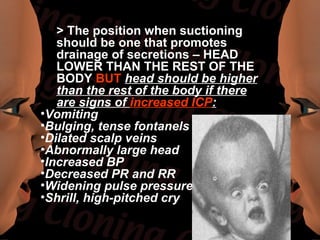
> The position when suctioning
   should be one that promotes
   drainage of secretions – HEAD
   LOWER THAN THE REST OF THE
   BODY BUT head should be higher
   than the rest of the body if there
   are signs of increased ICP:
•Vomiting
•Bulging, tense fontanels
•Dilated scalp veins
•Abnormally large head
•Increased BP
•Decreased PR and RR
•Widening pulse pressure
•Shrill, high-pitched cry
TEMPERATURE REGULATION
 (THERMOREGULATION)
• Maintain appropriate Body Temperature. Chilling
  will increase the body’s need for O2. The newborn
  suffers large losses of heat (cold stress) because
  he is wet at birth, the delivery room is cold, he does
  not have enough adipose tissue and does not know
  how to shiver.

• Wrap the newborn immediately

• Wrap him warmly

• Put him under a droplight
TEMPERATURE
 36.5 – 37.4ºC
 Rectal thermometer
 check the patency of rectum
    passage of meconium after 24 hours
 (imperforate anus)
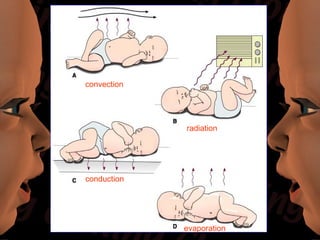
HEAT LOSS IN NEWBORN
• CONVECTION – flow of heat from body surface
  to cooler surroundings

• RADIATION – transfer of body heat to a cooler
  solid object not in contact with the body

• CONDUCTION – transfer of body heat to a
  cooler solid object in contact with the body

• EVAPORATION – loss of heat through
  conversion of a liquid to a vapor
convection


             radiation


conduction


             evaporation
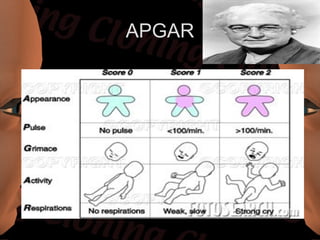
APGAR
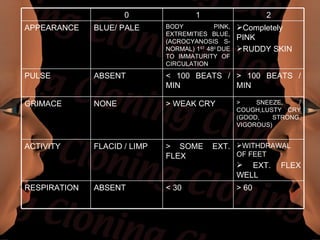
0                1                       2
APPEARANCE    BLUE/ PALE      BODY          PINK,   Completely
                              EXTREMITIES BLUE,
                              (ACROCYANOSIS S-
                                                    PINK
                              NORMAL) 1ST 480 DUE   RUDDY SKIN
                              TO IMMATURITY OF
                              CIRCULATION

PULSE         ABSENT          < 100 BEATS / > 100 BEATS /
                              MIN           MIN

GRIMACE       NONE            > WEAK CRY            >    SNEEZE,    /
                                                    COUGH,LUSTY CRY
                                                    (GOOD,    STRONG,
                                                    VIGOROUS)


ACTIVITY      FLACID / LIMP   > SOME       EXT. WITHDRAWAL
                              FLEX                  OF FEET
                                                     EXT.        FLEX
                                                    WELL
RESPIRATION   ABSENT          < 30                  > 60
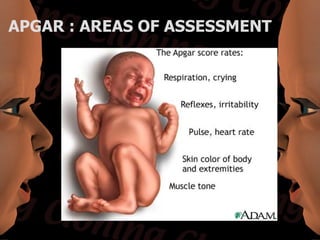
APGAR : AREAS OF ASSESSMENT
TOTAL SCORE
       INTERPRETATION
0-3
• POOR,SERIOUS,SEVERELY
  DEPRESSED; CPR
4-6
• FAIR,GUARDED, MODERATELY
  DEPRESSED
• NEEDS SUCTIONING & FURTHER
  OBSERVATION
7-10
• GOOD, HEALTHY, ADAPTS WELL IN
  THE EXTRAUTERINE LIFE
IDENTIFICATION
• Boy (blue), Girl (pink)
• Gender and Name of the mother
  ex. baby girl Ingrid Garcia
• Bed number
• Room number
• Name of the Ob-Gyne/Pediatrician
ROUTINE NEW BORN CARE
• BATHING
• ANTHROPOMETRIC MEASUREMENT
• CREDE’S PROPHYLAXIS
• VITAMIN K INJECTION

• UMBILICAL CORD CARE
• PRINTS
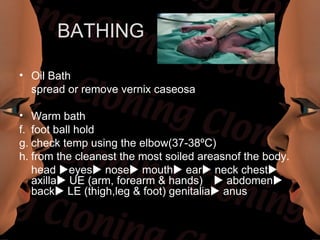
BATHING

• Oil Bath
  spread or remove vernix caseosa

• Warm bath
f. foot ball hold
g. check temp using the elbow(37-38ºC)
h. from the cleanest the most soiled areasnof the body.
   head eyes nose mouth ear neck chest
   axilla UE (arm, forearm & hands) abdomen
   back LE (thigh,leg & foot) genitalia anus
ANTHROPOMETRIC
      MEASUREMENT


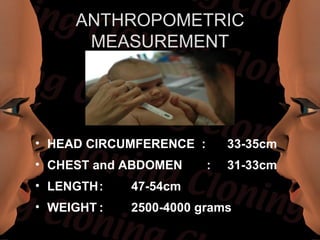
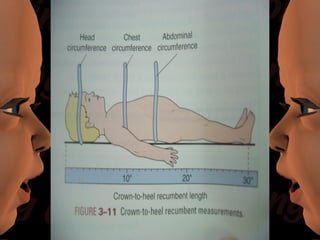
• HEAD CIRCUMFERENCE :       33-35cm
• CHEST and ABDOMEN      :   31-33cm
• LENGTH:    47-54cm
• WEIGHT :   2500-4000 grams
• Note: A reduction of NB weight of
  about 5-10% of BW (6-10oz) or less
  known as Physiologic weight loss
  during the 1st 3-10 days of life is
  normal.
• Causes:
     • -Infant is no longer under the
       influence of maternal hormones.
     • -Voids and passes out stools.
     • -Has relatively low nutritional
       intake
     • -Has beginning difficulty
       establishing sucking
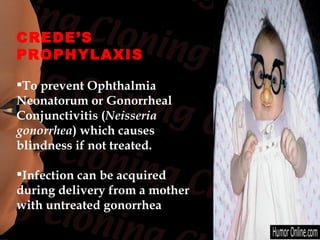
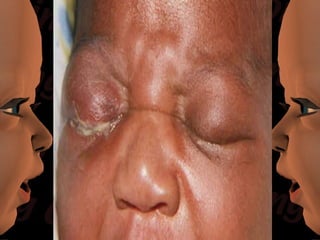
CREDE’S
PROPHYLAXIS

To prevent Ophthalmia
Neonatorum or Gonorrheal
Conjunctivitis (Neisseria
gonorrhea) which causes
blindness if not treated.

Infection can be acquired
during delivery from a mother
with untreated gonorrhea
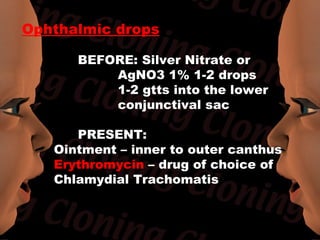
Ophthalmic drops

      BEFORE: Silver Nitrate or
          AgNO3 1% 1-2 drops
          1-2 gtts into the lower
          conjunctival sac

      PRESENT:
   Ointment – inner to outer canthus
   Erythromycin – drug of choice of
   Chlamydial Trachomatis
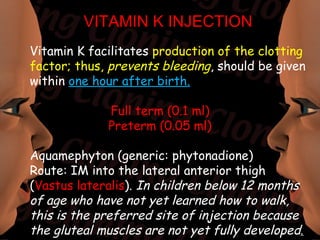
VITAMIN K INJECTION
Vitamin K facilitates production of the clotting
factor; thus, prevents bleeding, should be given
within one hour after birth.

             Full term (0.1 ml)
             Preterm (0.05 ml)

Aquamephyton (generic: phytonadione)
Route: IM into the lateral anterior thigh
(Vastus lateralis). In children below 12 months
of age who have not yet learned how to walk,
this is the preferred site of injection because
the gluteal muscles are not yet fully developed.
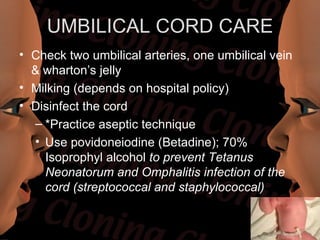
UMBILICAL CORD CARE
• Check two umbilical arteries, one umbilical vein
  & wharton’s jelly
• Milking (depends on hospital policy)
• Disinfect the cord
  – *Practice aseptic technique
  • Use povidoneiodine (Betadine); 70%
    Isoprophyl alcohol to prevent Tetanus
    Neonatorum and Omphalitis infection of the
    cord (streptococcal and staphylococcal)
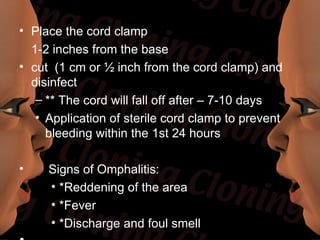
• Place the cord clamp
  1-2 inches from the base
• cut (1 cm or ½ inch from the cord clamp) and
  disinfect
   – ** The cord will fall off after – 7-10 days
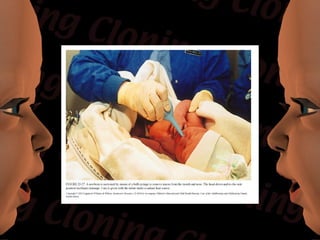
   • Application of sterile cord clamp to prevent
     bleeding within the 1st 24 hours

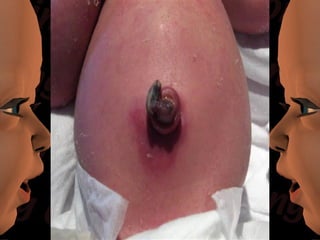
•    Signs of Omphalitis:
     • *Reddening of the area
     • *Fever
     • *Discharge and foul smell
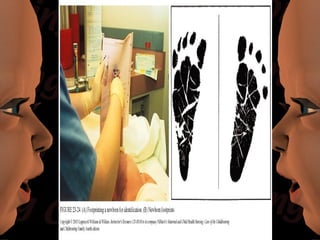
PRINTS
• Foot prints of the baby (most reliable)
• Thumb mark of the mother
• Identification bracelet
Nursing Intervention
1.   Meet physiologic needs
2.   Meet psychological needs
3.   Foster healthy family relationships
4.   Provide education
THE END

1. new born care

  • 1.
  • 2.
    IMMEDIATE CARE OFTHE NEWBORN •AIRWAY •TEMPERATURE •APGAR •IDENTIFICATION
  • 3.
    AIRWAY • Suctioning Suction gently and quickly (5 to 10 seconds). Prolonged and deep suctioning of the nasopharynx during the first 5 to 10 minutes of life will stimulate the VAGUS NERVE (located in the esophagus) and cause bradycardia.
  • 4.
    > Suction theMOUTH first before the nose. If the nose is suctioned first, the stimulation of the nasal mucosa will cause reflex inhalation of pharyngeal material into the trachea and bronchi, causing ASPIRATION. >To test the patency of the airway, occlude one nostril at a time. (REMEMBER: newborns are NOSE BREATHERS.) If a newborn struggles when a nostril has been occluded, additional suctioning is indicated.
  • 5.
    POSITIONING OF THENEWBORN Right side lying 1. promote drainage secretion 2. promote closure of foramen ovale 3. fasten gastric emptying time 4. prevent an increase in intracranial pressure
  • 6.
    > The positionwhen suctioning should be one that promotes drainage of secretions – HEAD LOWER THAN THE REST OF THE BODY BUT head should be higher than the rest of the body if there are signs of increased ICP: •Vomiting •Bulging, tense fontanels •Dilated scalp veins •Abnormally large head •Increased BP •Decreased PR and RR •Widening pulse pressure •Shrill, high-pitched cry
  • 9.
    TEMPERATURE REGULATION (THERMOREGULATION) •Maintain appropriate Body Temperature. Chilling will increase the body’s need for O2. The newborn suffers large losses of heat (cold stress) because he is wet at birth, the delivery room is cold, he does not have enough adipose tissue and does not know how to shiver. • Wrap the newborn immediately • Wrap him warmly • Put him under a droplight
  • 10.
    TEMPERATURE  36.5 –37.4ºC  Rectal thermometer  check the patency of rectum  passage of meconium after 24 hours  (imperforate anus)
  • 11.
    HEAT LOSS INNEWBORN • CONVECTION – flow of heat from body surface to cooler surroundings • RADIATION – transfer of body heat to a cooler solid object not in contact with the body • CONDUCTION – transfer of body heat to a cooler solid object in contact with the body • EVAPORATION – loss of heat through conversion of a liquid to a vapor
  • 12.
    convection radiation conduction evaporation
  • 13.
  • 14.
    0 1 2 APPEARANCE BLUE/ PALE BODY PINK, Completely EXTREMITIES BLUE, (ACROCYANOSIS S- PINK NORMAL) 1ST 480 DUE RUDDY SKIN TO IMMATURITY OF CIRCULATION PULSE ABSENT < 100 BEATS / > 100 BEATS / MIN MIN GRIMACE NONE > WEAK CRY > SNEEZE, / COUGH,LUSTY CRY (GOOD, STRONG, VIGOROUS) ACTIVITY FLACID / LIMP > SOME EXT. WITHDRAWAL FLEX OF FEET  EXT. FLEX WELL RESPIRATION ABSENT < 30 > 60
  • 15.
    APGAR : AREASOF ASSESSMENT
  • 16.
    TOTAL SCORE INTERPRETATION 0-3 • POOR,SERIOUS,SEVERELY DEPRESSED; CPR 4-6 • FAIR,GUARDED, MODERATELY DEPRESSED • NEEDS SUCTIONING & FURTHER OBSERVATION 7-10 • GOOD, HEALTHY, ADAPTS WELL IN THE EXTRAUTERINE LIFE
  • 17.
    IDENTIFICATION • Boy (blue),Girl (pink) • Gender and Name of the mother ex. baby girl Ingrid Garcia • Bed number • Room number • Name of the Ob-Gyne/Pediatrician
  • 18.
    ROUTINE NEW BORNCARE • BATHING • ANTHROPOMETRIC MEASUREMENT • CREDE’S PROPHYLAXIS • VITAMIN K INJECTION • UMBILICAL CORD CARE • PRINTS
  • 19.
    BATHING • Oil Bath spread or remove vernix caseosa • Warm bath f. foot ball hold g. check temp using the elbow(37-38ºC) h. from the cleanest the most soiled areasnof the body. head eyes nose mouth ear neck chest axilla UE (arm, forearm & hands) abdomen back LE (thigh,leg & foot) genitalia anus
  • 20.
    ANTHROPOMETRIC MEASUREMENT • HEAD CIRCUMFERENCE : 33-35cm • CHEST and ABDOMEN : 31-33cm • LENGTH: 47-54cm • WEIGHT : 2500-4000 grams
  • 21.
    • Note: Areduction of NB weight of about 5-10% of BW (6-10oz) or less known as Physiologic weight loss during the 1st 3-10 days of life is normal. • Causes: • -Infant is no longer under the influence of maternal hormones. • -Voids and passes out stools. • -Has relatively low nutritional intake • -Has beginning difficulty establishing sucking
  • 23.
    CREDE’S PROPHYLAXIS To prevent Ophthalmia Neonatorumor Gonorrheal Conjunctivitis (Neisseria gonorrhea) which causes blindness if not treated. Infection can be acquired during delivery from a mother with untreated gonorrhea
  • 25.
    Ophthalmic drops BEFORE: Silver Nitrate or AgNO3 1% 1-2 drops 1-2 gtts into the lower conjunctival sac PRESENT: Ointment – inner to outer canthus Erythromycin – drug of choice of Chlamydial Trachomatis
  • 26.
    VITAMIN K INJECTION VitaminK facilitates production of the clotting factor; thus, prevents bleeding, should be given within one hour after birth. Full term (0.1 ml) Preterm (0.05 ml) Aquamephyton (generic: phytonadione) Route: IM into the lateral anterior thigh (Vastus lateralis). In children below 12 months of age who have not yet learned how to walk, this is the preferred site of injection because the gluteal muscles are not yet fully developed.
  • 27.
    UMBILICAL CORD CARE •Check two umbilical arteries, one umbilical vein & wharton’s jelly • Milking (depends on hospital policy) • Disinfect the cord – *Practice aseptic technique • Use povidoneiodine (Betadine); 70% Isoprophyl alcohol to prevent Tetanus Neonatorum and Omphalitis infection of the cord (streptococcal and staphylococcal)
  • 28.
    • Place thecord clamp 1-2 inches from the base • cut (1 cm or ½ inch from the cord clamp) and disinfect – ** The cord will fall off after – 7-10 days • Application of sterile cord clamp to prevent bleeding within the 1st 24 hours • Signs of Omphalitis: • *Reddening of the area • *Fever • *Discharge and foul smell
  • 30.
    PRINTS • Foot printsof the baby (most reliable) • Thumb mark of the mother • Identification bracelet
  • 32.
    Nursing Intervention 1. Meet physiologic needs 2. Meet psychological needs 3. Foster healthy family relationships 4. Provide education
  • 33.