Mobile Leadership Program
Mobile Market, Mobile Assets, Why Google, Mobile Measurement
PROGRAM OVERVIEW
TABLE OF CONTENTS
1. The mobile market today
2. Getting started, mobile sites or apps?
3. Google mobile solutions and best practices
4. Measurement and optimisation for mobile
The Mobile Market Today
Are you understanding value to improve performance?
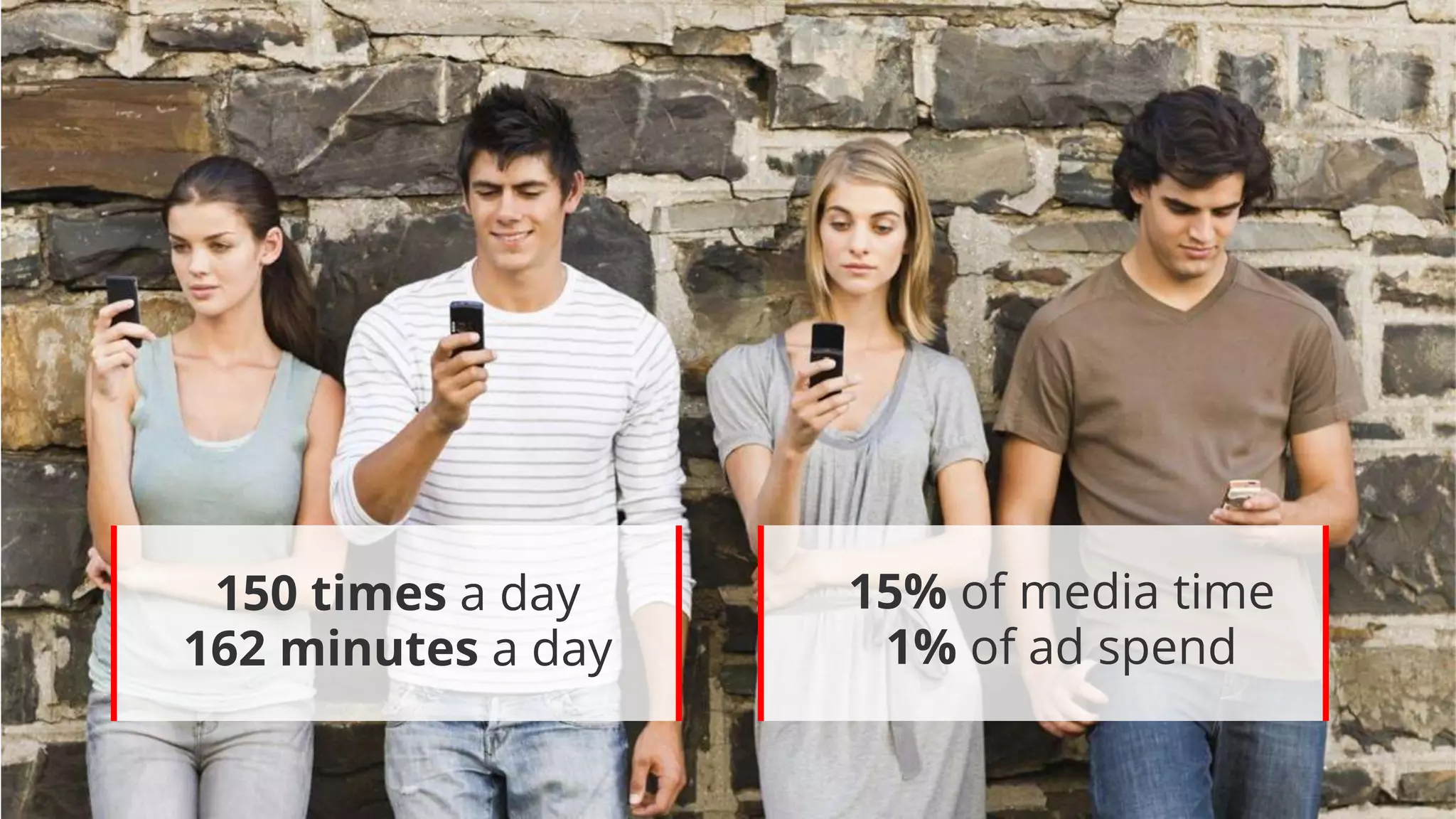
150 times a day
162 minutes a day
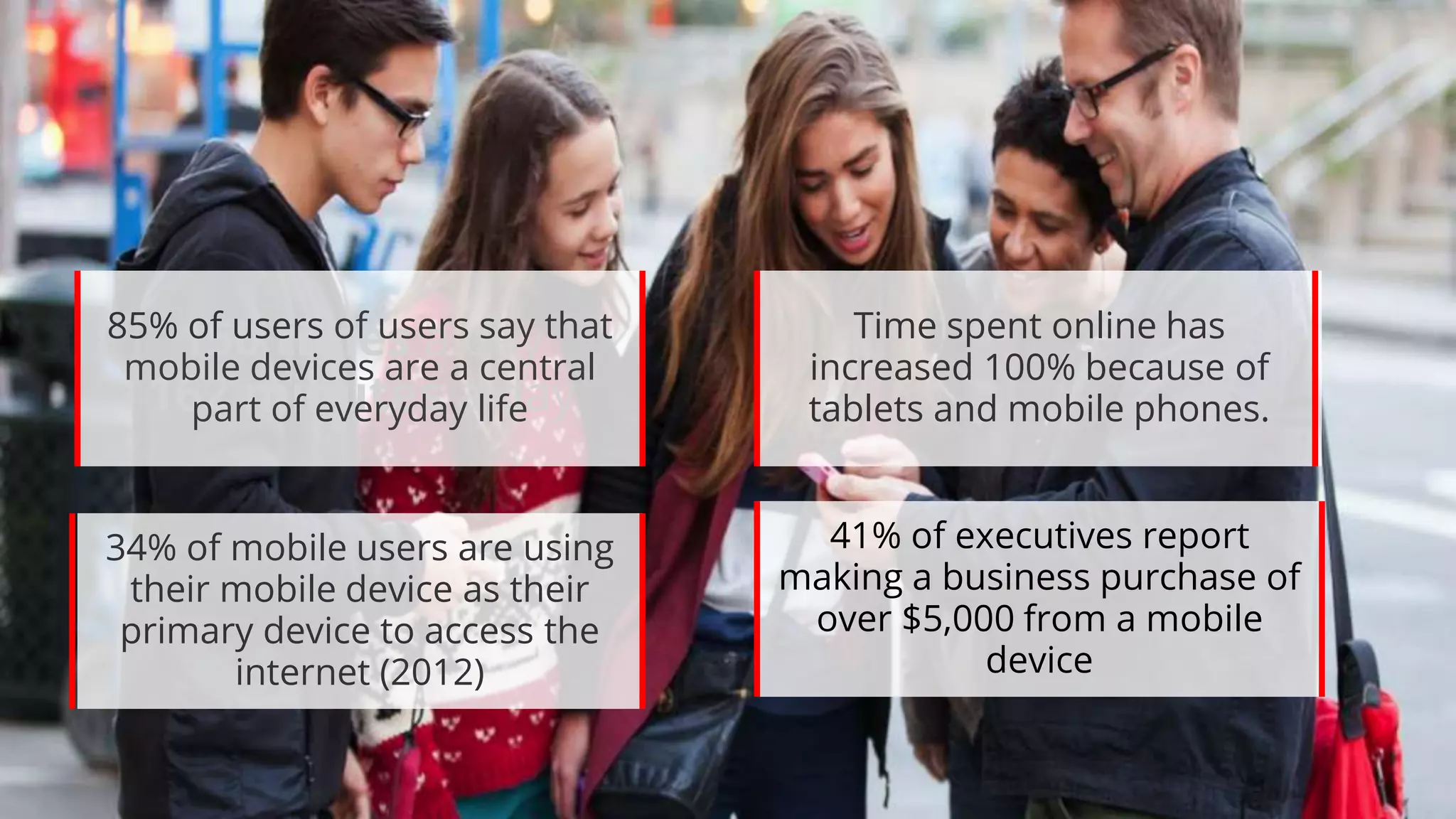
85% of users of users say that
mobile devices are a central
part of everyday life
Time spent online has
increased 100% because of
tablets and mobile phones.
34% of mobile users are using
their mobile device as their
primary device to access the
internet (2012)
41% of executives report
making a business purchase of
over $5,000 from a mobile
device
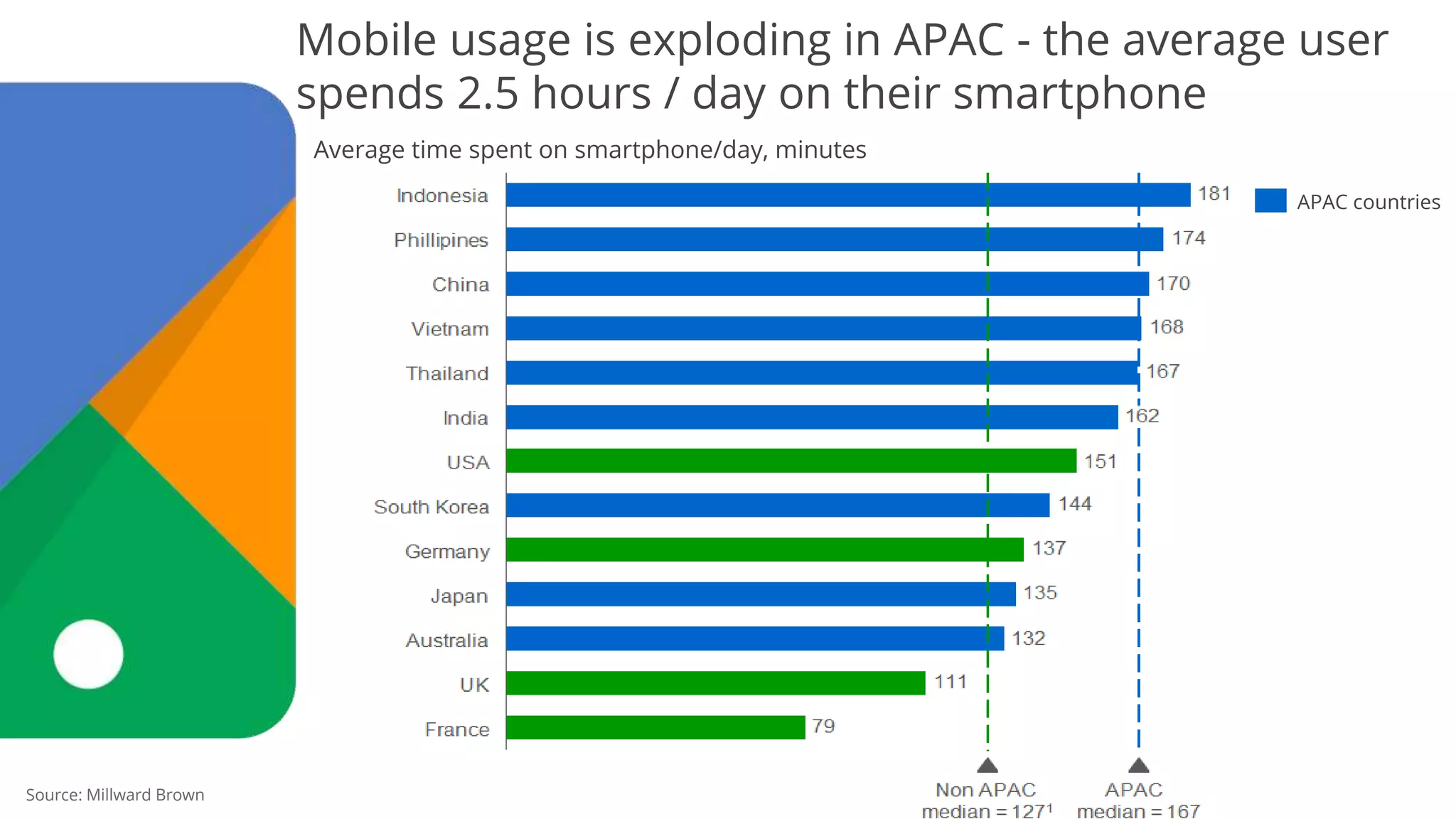
Mobile usage is exploding in APAC - the average user
spends 2.5 hours / day on their smartphone
APAC countries
Average time spent on smartphone/day, minutes
Source: Millward Brown
77%
of consumers
use a
smartphone
today - up from
[44%] a year ago
of consumers have
researched a product or
service on their phone
of consumers say they’ve
used a smartphone to
research a purchase
completed on a computer
of consumers say they’ve used
a smartphone to research a
purchase completed offline
of consumers say
they’ve completed a
purchase
on a smartphone
56%
46% 40%
38%
Mobile is a part of our everyday lives
150 times a day
162 minutes a day
15% of media time
1% of ad spend
Getting Started,
Mobile Sites or Apps?
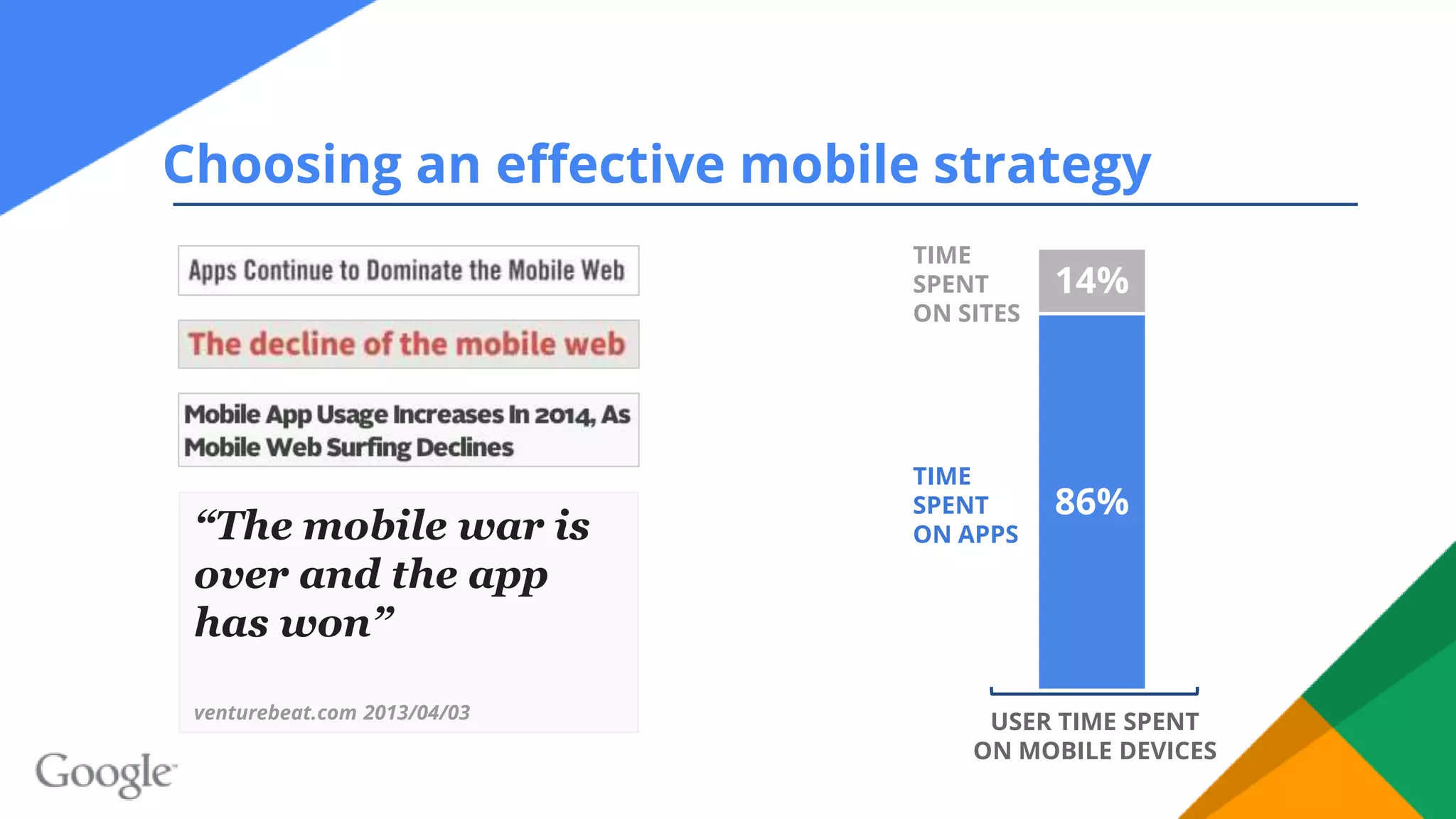
Choosing an effective mobile strategy
“The mobile war is
over and the app
has won”
venturebeat.com 2013/04/03
86%
14%
TIME
SPENT
ON SITES
TIME
SPENT
ON APPS
USER TIME SPENT
ON MOBILE DEVICES
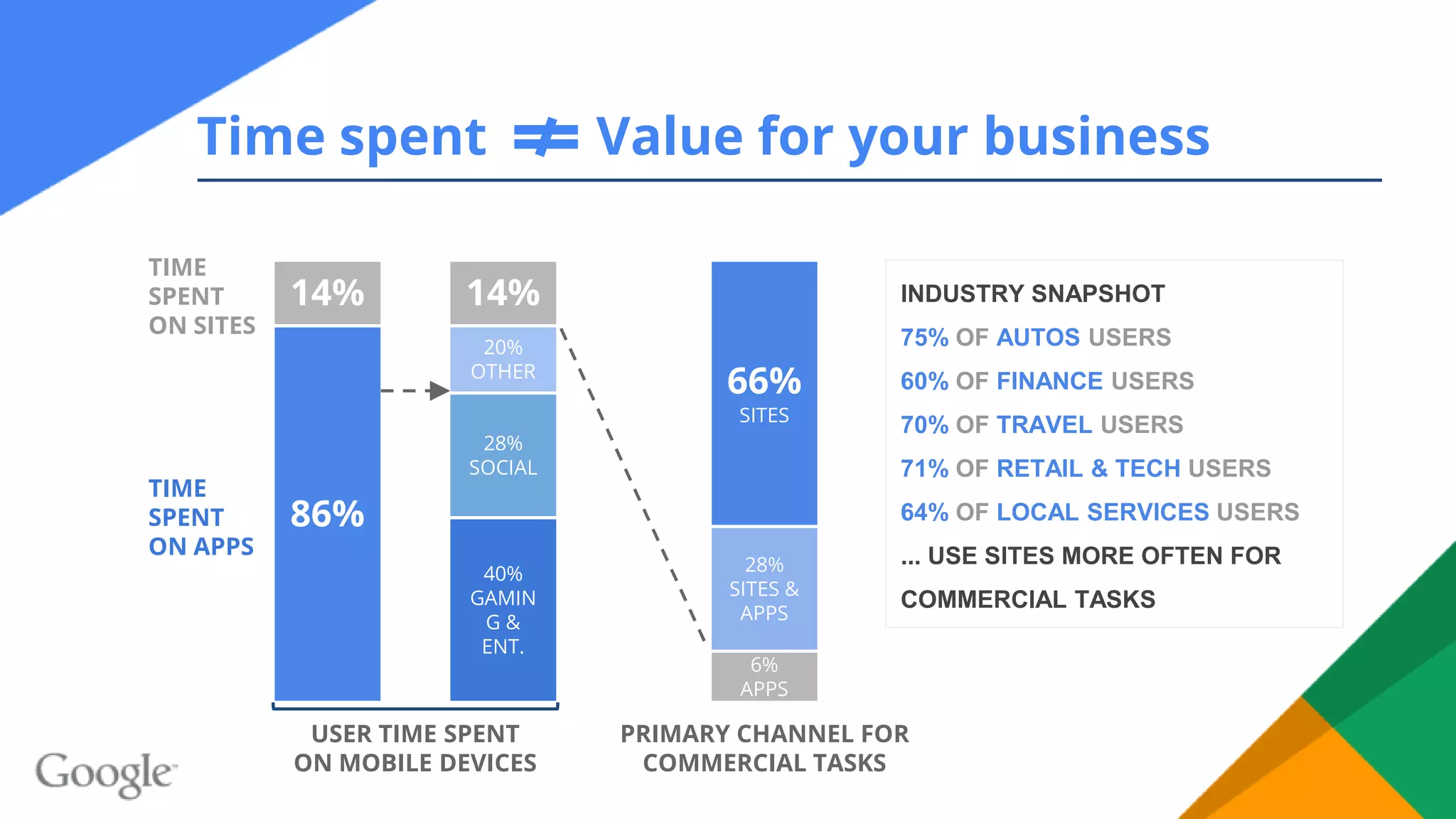
66%
SITES
6%
APPS
28%
SITES &
APPS
PRIMARY CHANNEL FOR
COMMERCIAL TASKS
INDUSTRY SNAPSHOT
75% OF AUTOS USERS
60% OF FINANCE USERS
70% OF TRAVEL USERS
71% OF RETAIL & TECH USERS
64% OF LOCAL SERVICES USERS
... USE SITES MORE OFTEN FOR
COMMERCIAL TASKS
86%
14%
TIME
SPENT
ON SITES
TIME
SPENT
ON APPS
14%
40%
GAMIN
G &
ENT.
28%
SOCIAL
20%
OTHER
USER TIME SPENT
ON MOBILE DEVICES
Time spent Value for your business
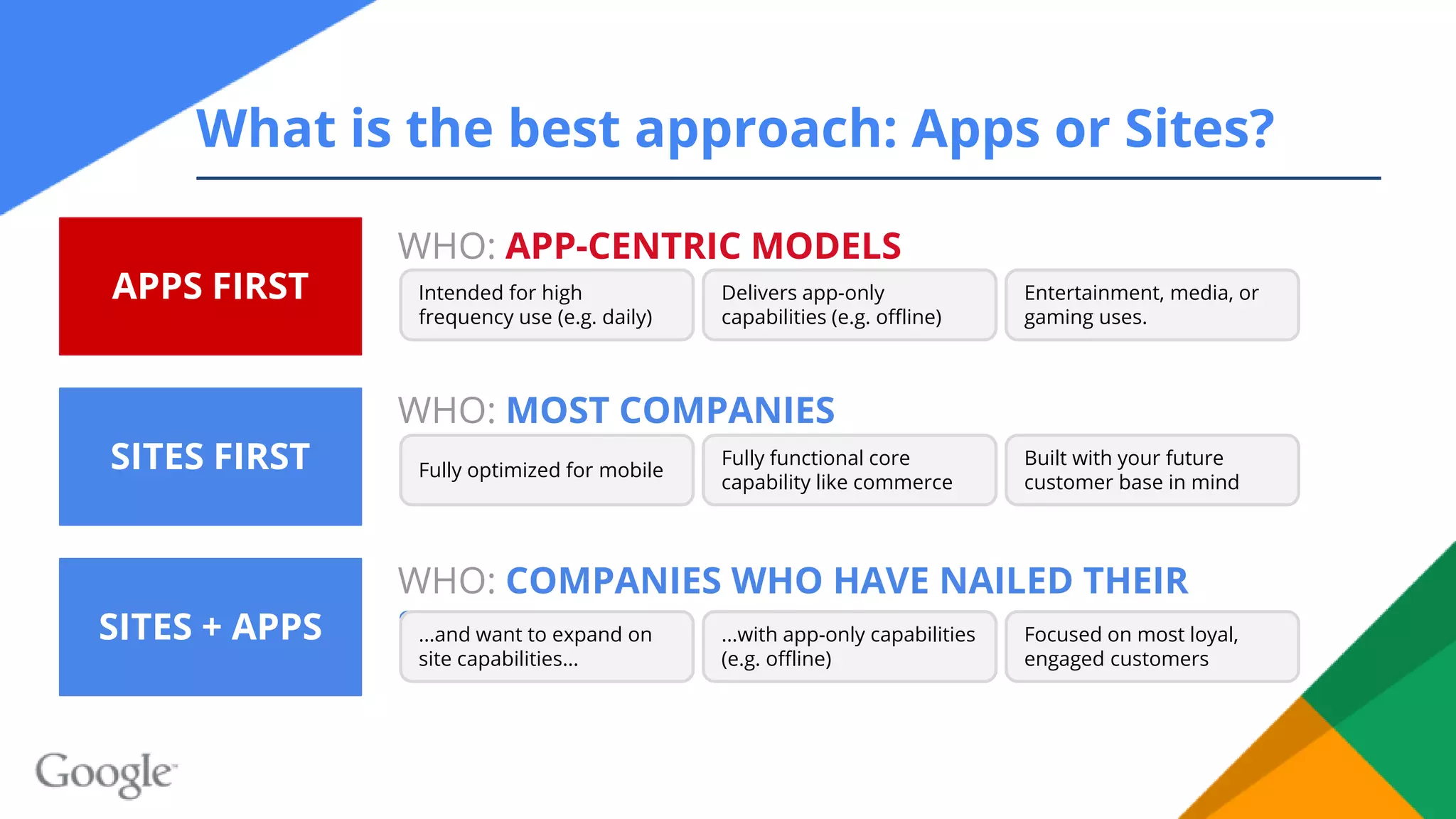
What is the best approach: Apps or Sites?
APPS FIRST
WHO: APP-CENTRIC MODELS
SITES FIRST
WHO: MOST COMPANIES
SITES + APPS
WHO: COMPANIES WHO HAVE NAILED THEIR
SITE...
Intended for high
frequency use (e.g. daily)
Delivers app-only
capabilities (e.g. offline)
Entertainment, media, or
gaming uses.
Fully optimized for mobile
Fully functional core
capability like commerce
Built with your future
customer base in mind
...and want to expand on
site capabilities...
...with app-only capabilities
(e.g. offline)
Focused on most loyal,
engaged customers
Google Mobile Solutions
and Best Practices
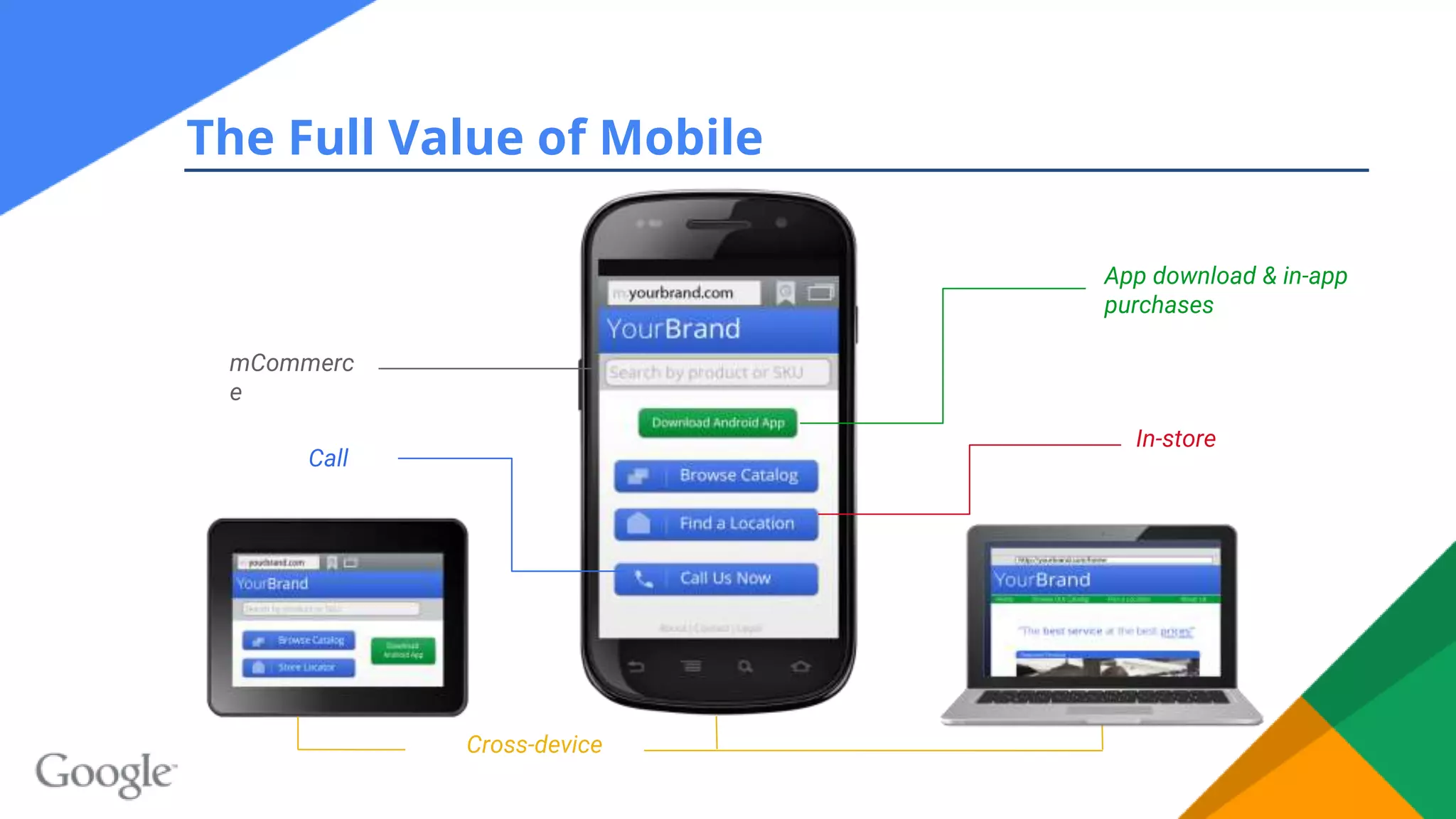
mCommerc
e
In-store
App download & in-app
purchases
Call
Cross-device
The Full Value of Mobile
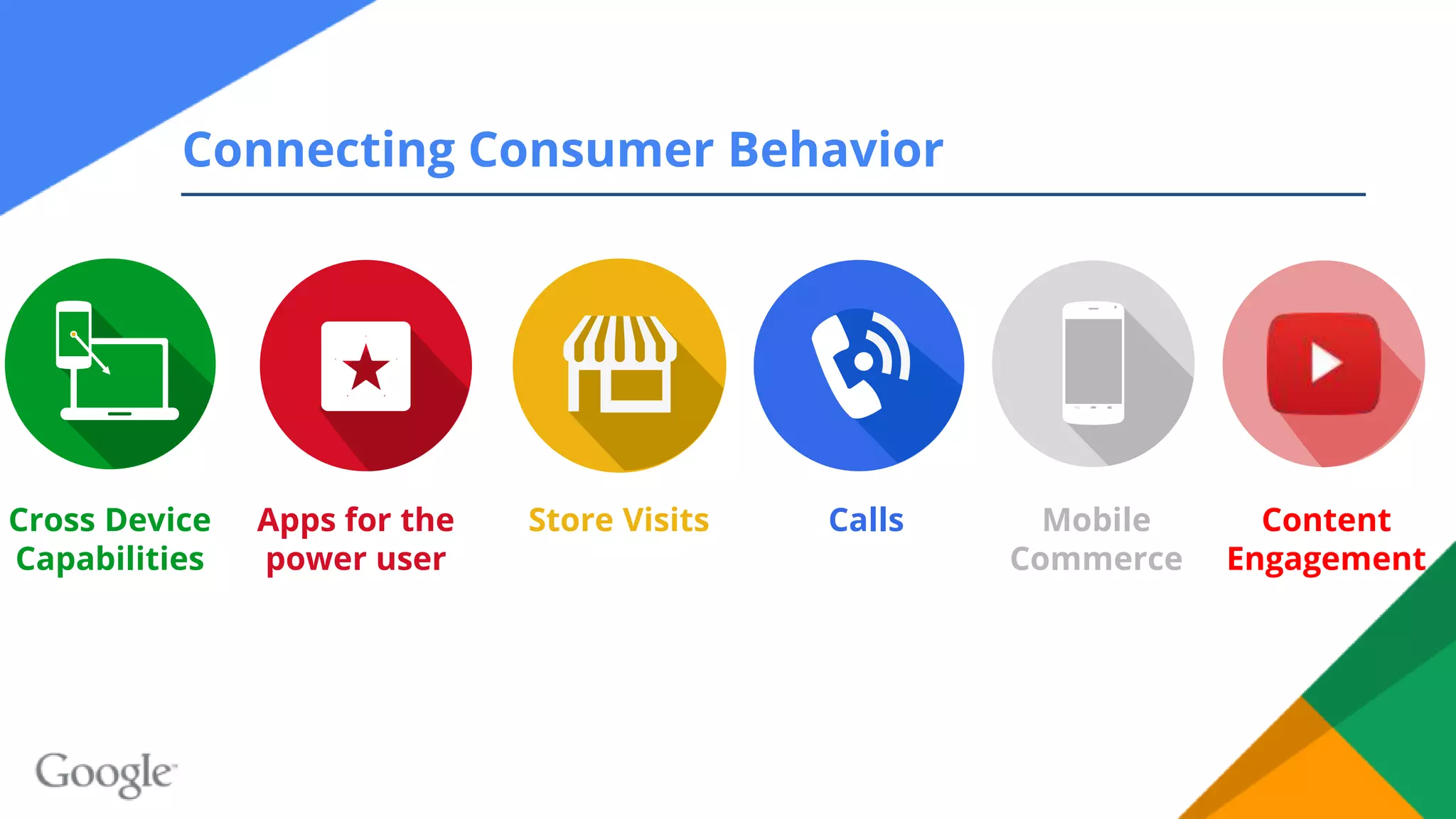
Connecting Consumer Behavior
Mobile
Commerce
Cross Device
Capabilities
Store Visits CallsApps for the
power user
Content
Engagement
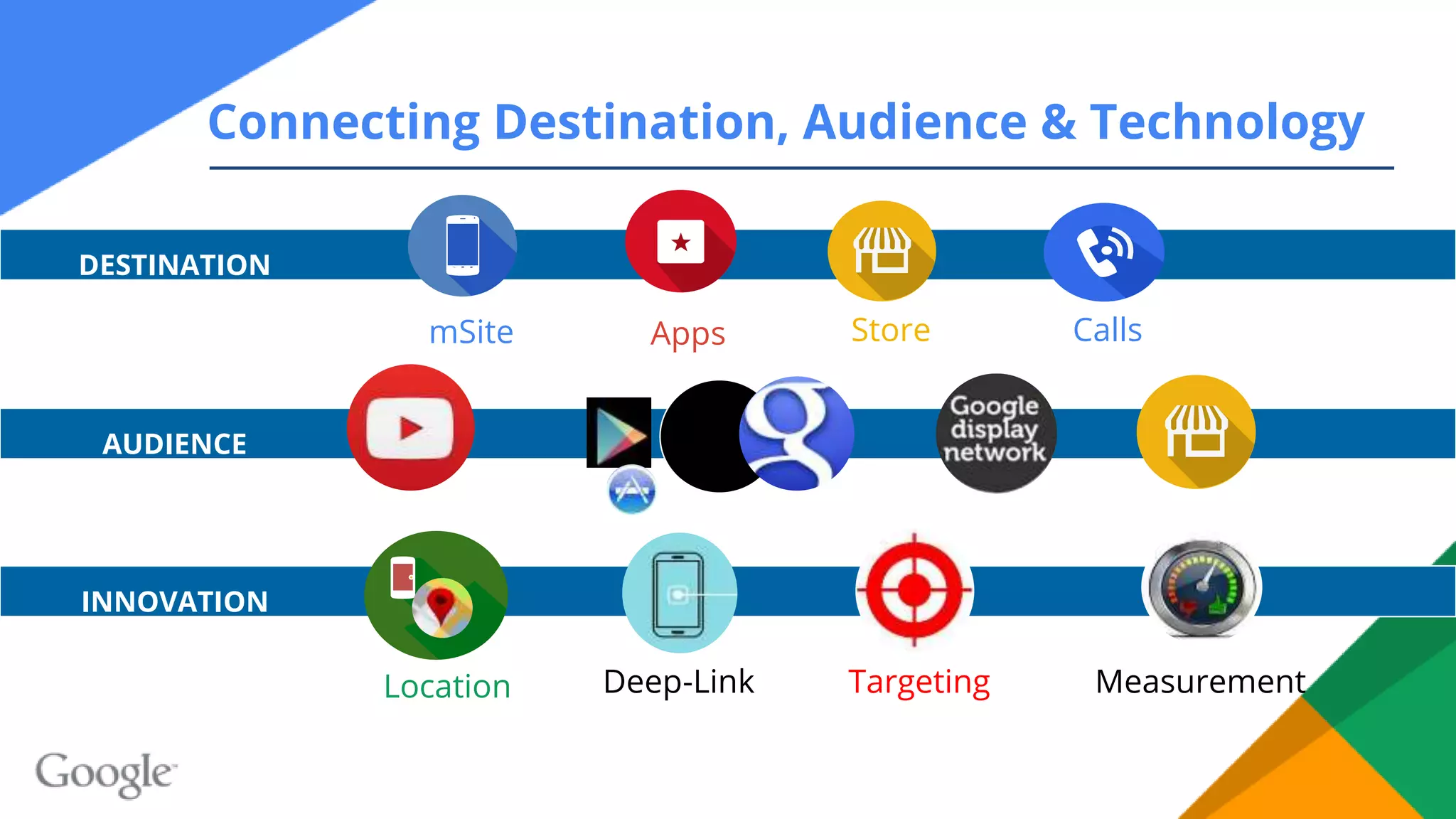
Connecting Destination, Audience & Technology
mSite
Location
Apps Store Calls
DESTINATION
AUDIENCE
INNOVATION
Deep-Link Targeting Measurement
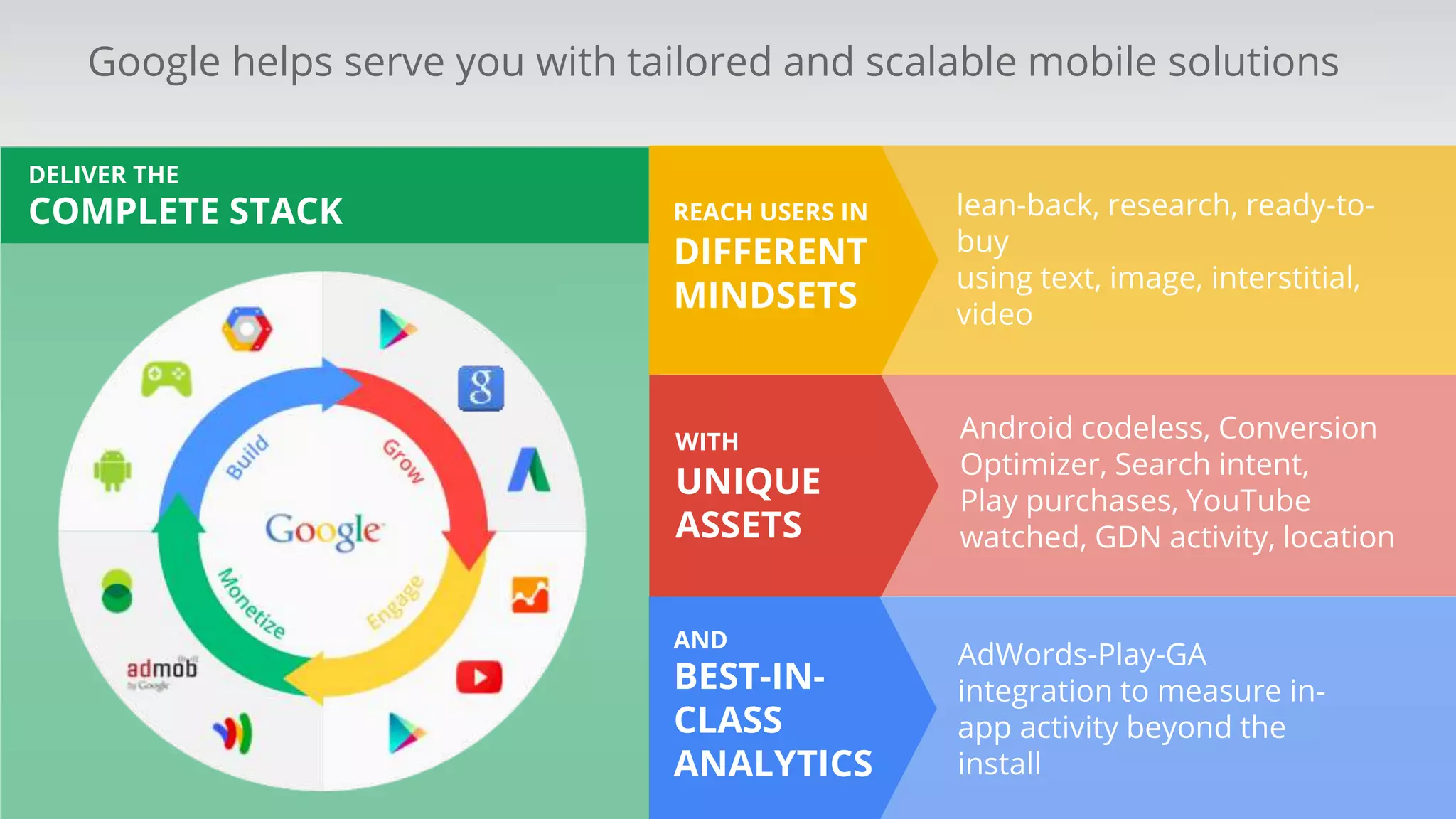
Google helps serve you with tailored and scalable mobile solutions
Android codeless, Conversion
Optimizer, Search intent,
Play purchases, YouTube
watched, GDN activity, location
lean-back, research, ready-to-
buy
using text, image, interstitial,
video
REACH USERS IN
DIFFERENT
MINDSETS
WITH
UNIQUE
ASSETS
DELIVER THE
COMPLETE STACK
AdWords-Play-GA
integration to measure in-
app activity beyond the
install
AND
BEST-IN-
CLASS
ANALYTICS
Measurement and
Optimisation for Mobile
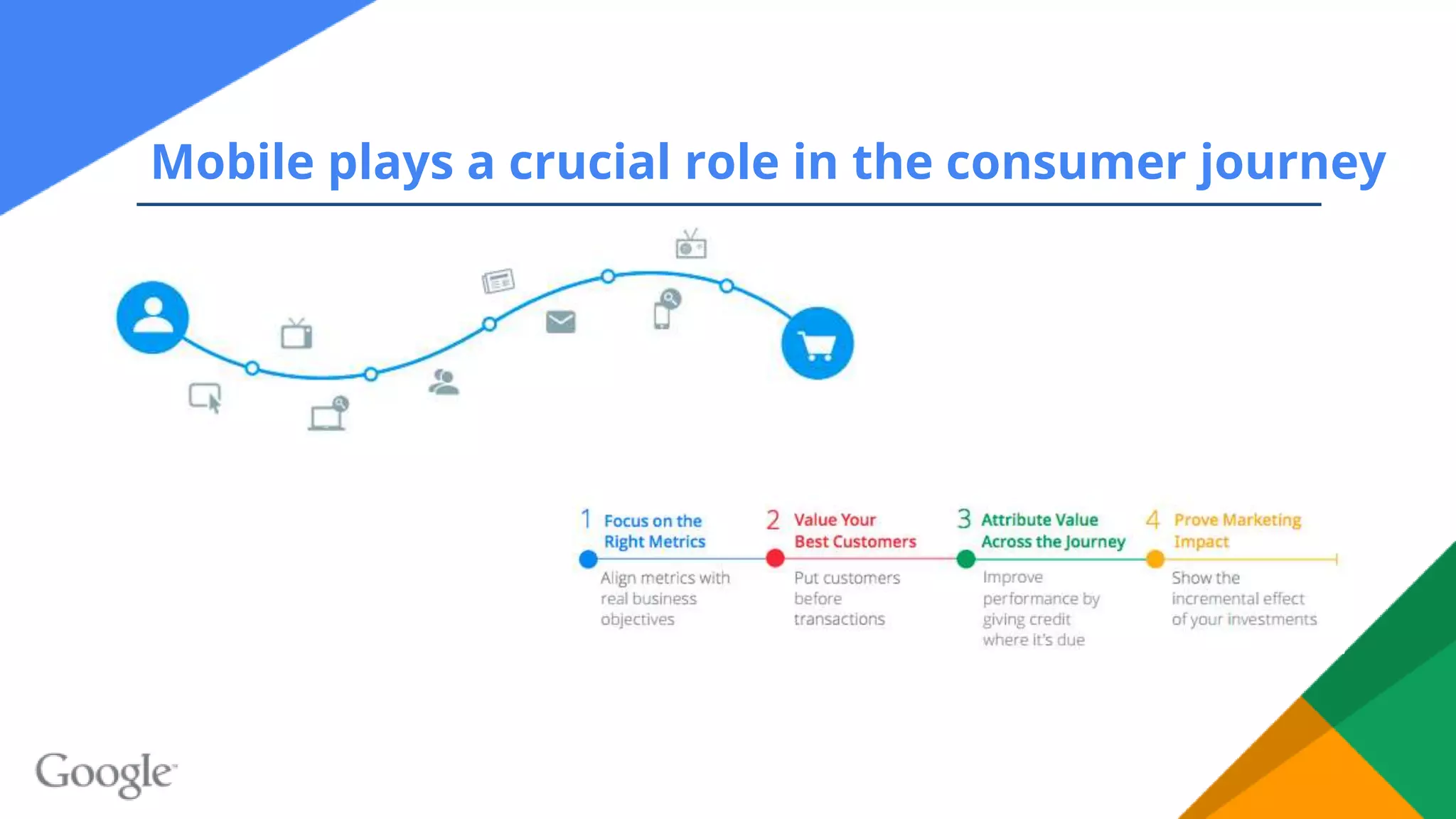
Mobile plays a crucial role in the consumer journey
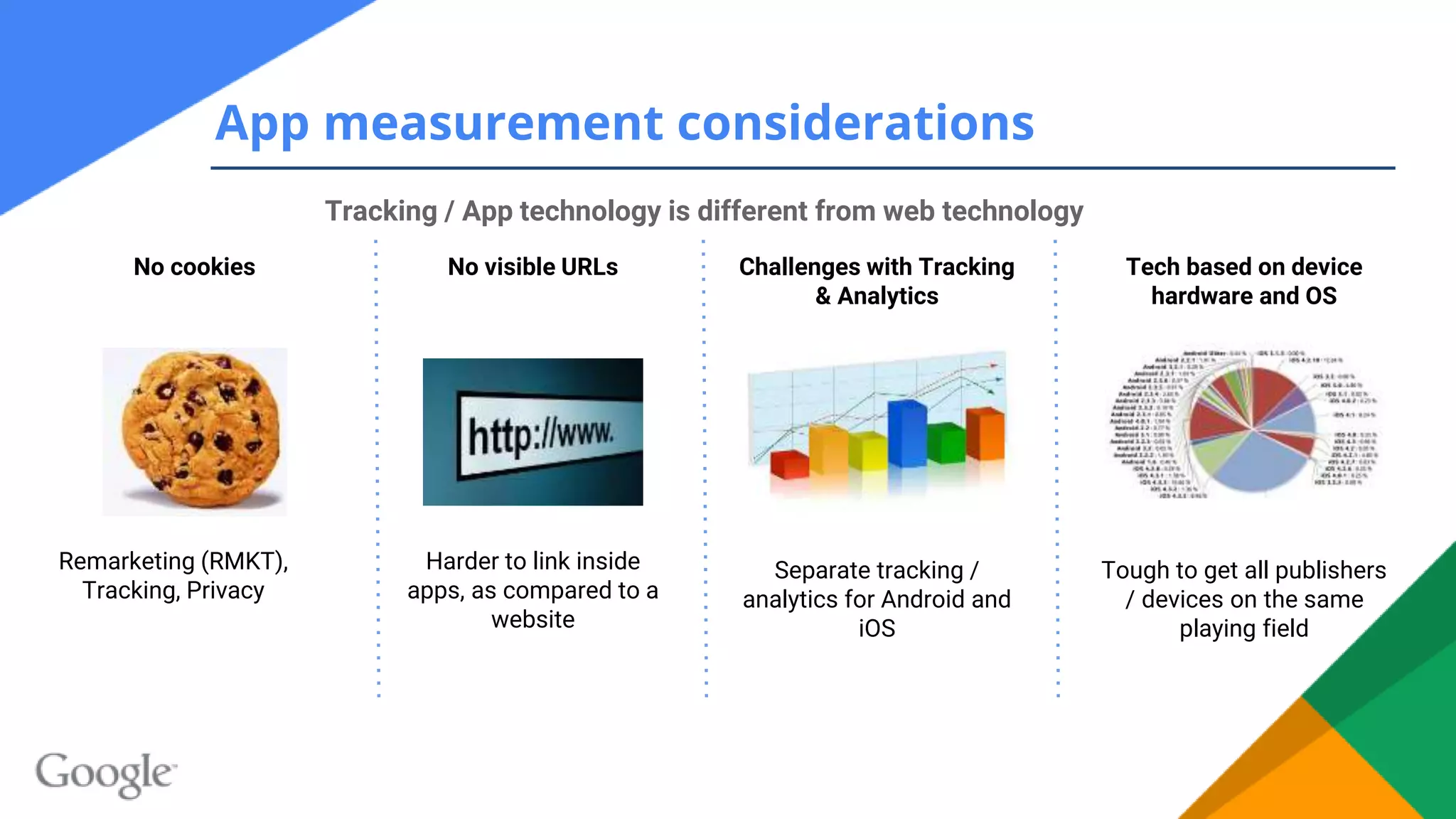
Tracking / App technology is different from web technology
No cookies No visible URLs Challenges with Tracking
& Analytics
Tech based on device
hardware and OS
Remarketing (RMKT),
Tracking, Privacy
Harder to link inside
apps, as compared to a
website
Separate tracking /
analytics for Android and
iOS
Tough to get all publishers
/ devices on the same
playing field
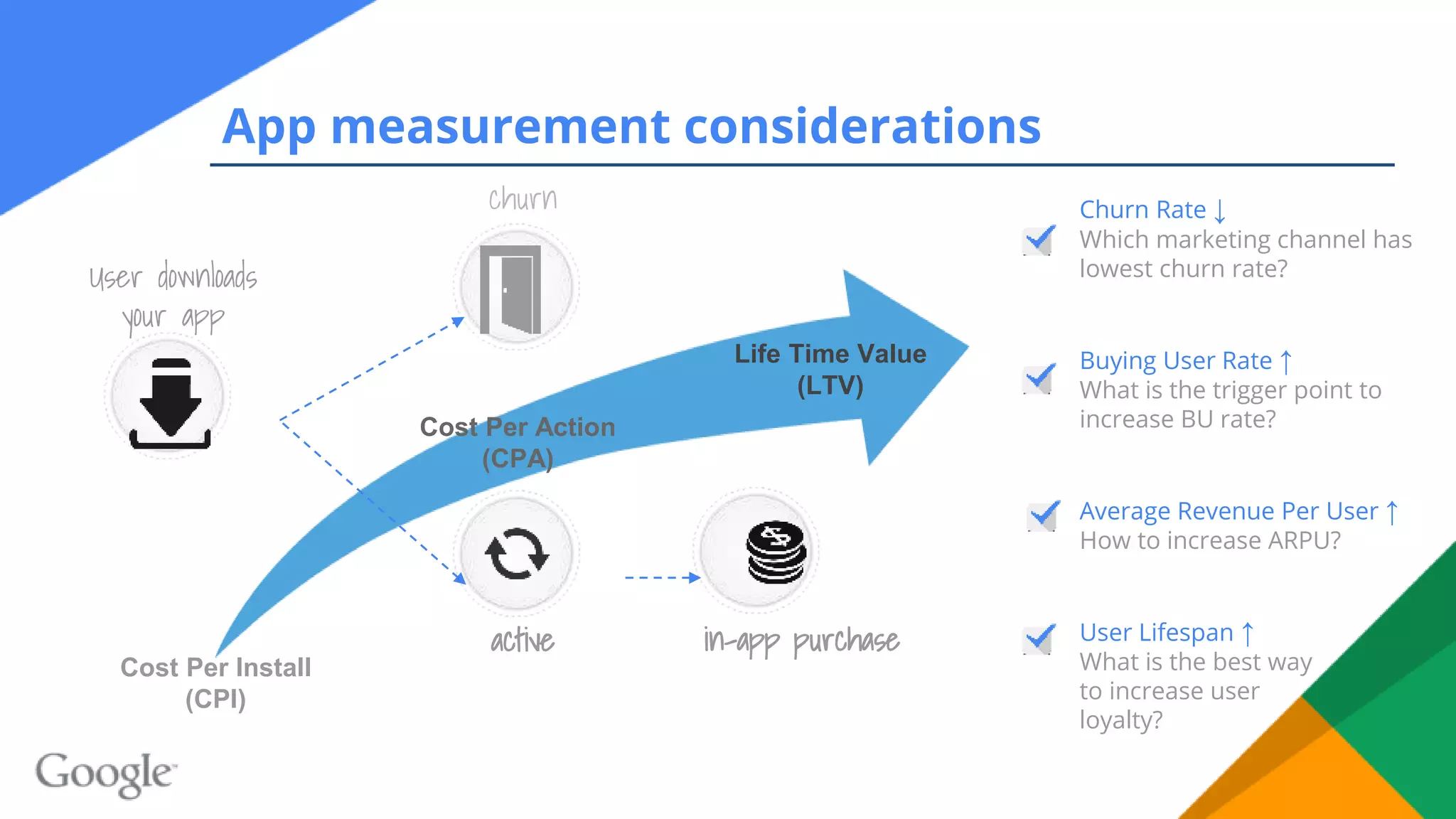
App measurement considerations
churn
User downloads
your app
active in-app purchase
Churn Rate ↓
Which marketing channel has
lowest churn rate?
Buying User Rate ↑
What is the trigger point to
increase BU rate?
Average Revenue Per User ↑
How to increase ARPU?
User Lifespan ↑
What is the best way
to increase user
loyalty?
Cost Per Install
(CPI)
Cost Per Action
(CPA)
Life Time Value
(LTV)
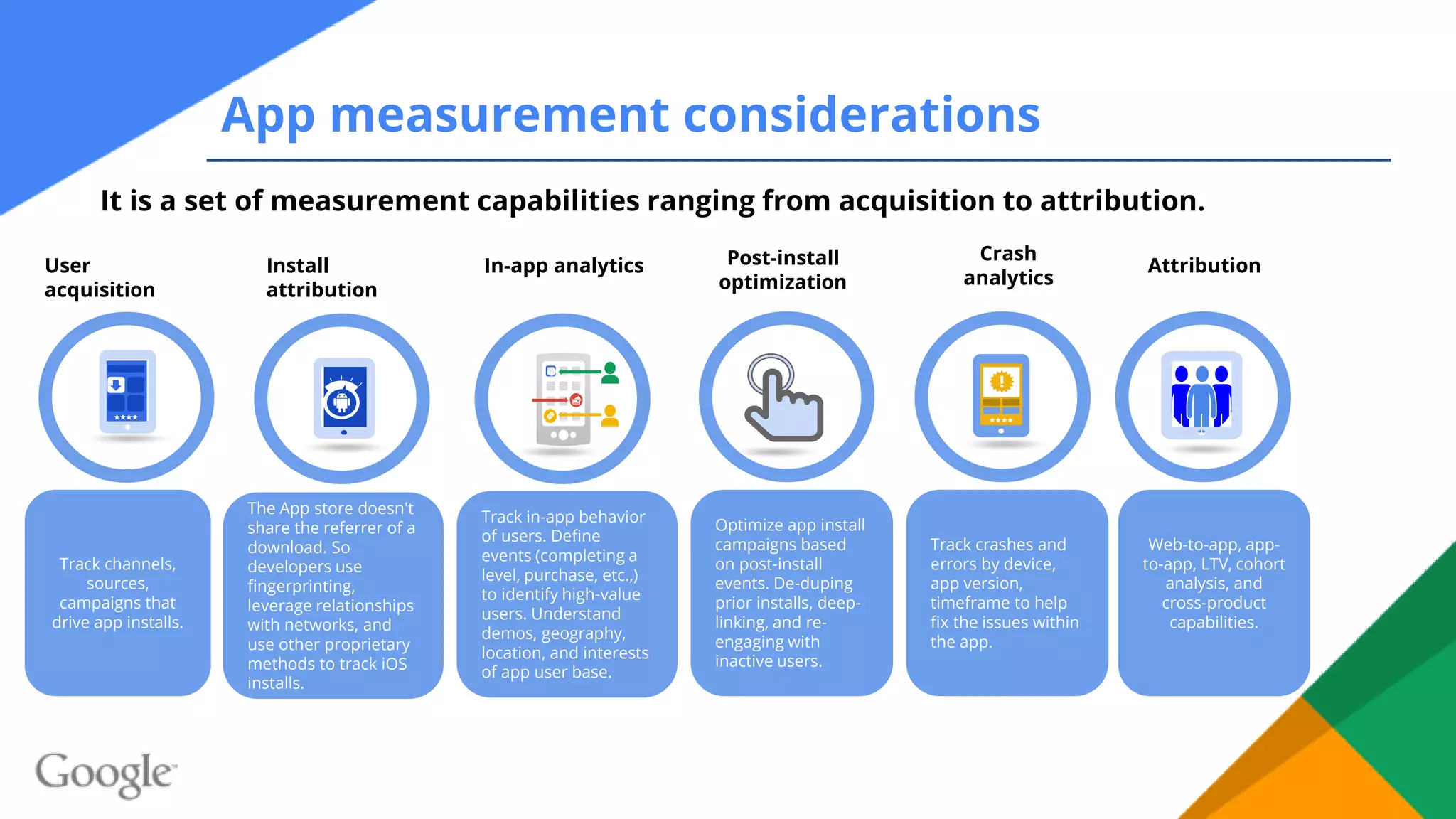
App measurement considerations
User
acquisition
Install
attribution
In-app analytics Post-install
optimization
Crash
analytics
Attribution
Track channels,
sources,
campaigns that
drive app installs.
The App store doesn't
share the referrer of a
download. So
developers use
fingerprinting,
leverage relationships
with networks, and
use other proprietary
methods to track iOS
installs.
Track in-app behavior
of users. Define
events (completing a
level, purchase, etc.,)
to identify high-value
users. Understand
demos, geography,
location, and interests
of app user base.
Optimize app install
campaigns based
on post-install
events. De-duping
prior installs, deep-
linking, and re-
engaging with
inactive users.
Track crashes and
errors by device,
app version,
timeframe to help
fix the issues within
the app.
Web-to-app, app-
to-app, LTV, cohort
analysis, and
cross-product
capabilities.
It is a set of measurement capabilities ranging from acquisition to attribution.
App measurement considerations
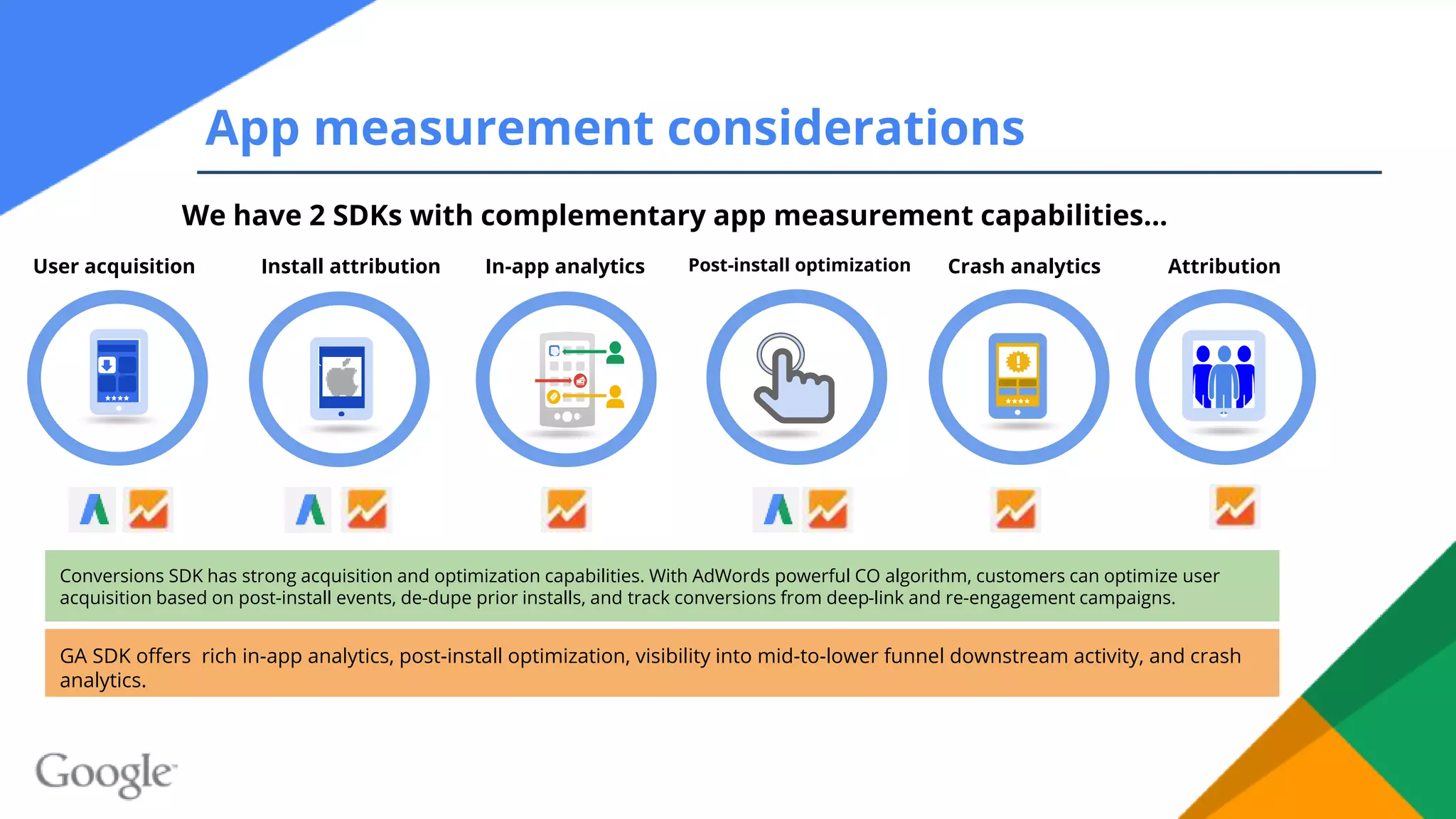
User acquisition In-app analytics Post-install optimization Crash analytics Attribution
We have 2 SDKs with complementary app measurement capabilities...
Conversions SDK has strong acquisition and optimization capabilities. With AdWords powerful CO algorithm, customers can optimize user
acquisition based on post-install events, de-dupe prior installs, and track conversions from deep-link and re-engagement campaigns.
GA SDK offers rich in-app analytics, post-install optimization, visibility into mid-to-lower funnel downstream activity, and crash
analytics.
Install attribution

1 mobile leadership program mobile market, mobile assets, why google, mobile measurement

  • 1.
    Mobile Leadership Program MobileMarket, Mobile Assets, Why Google, Mobile Measurement
  • 2.
  • 3.
    TABLE OF CONTENTS 1.The mobile market today 2. Getting started, mobile sites or apps? 3. Google mobile solutions and best practices 4. Measurement and optimisation for mobile
  • 4.
  • 5.
    Are you understandingvalue to improve performance? 150 times a day 162 minutes a day 85% of users of users say that mobile devices are a central part of everyday life Time spent online has increased 100% because of tablets and mobile phones. 34% of mobile users are using their mobile device as their primary device to access the internet (2012) 41% of executives report making a business purchase of over $5,000 from a mobile device
  • 6.
    Mobile usage isexploding in APAC - the average user spends 2.5 hours / day on their smartphone APAC countries Average time spent on smartphone/day, minutes Source: Millward Brown
  • 7.
    77% of consumers use a smartphone today- up from [44%] a year ago of consumers have researched a product or service on their phone of consumers say they’ve used a smartphone to research a purchase completed on a computer of consumers say they’ve used a smartphone to research a purchase completed offline of consumers say they’ve completed a purchase on a smartphone 56% 46% 40% 38% Mobile is a part of our everyday lives
  • 8.
    150 times aday 162 minutes a day 15% of media time 1% of ad spend
  • 9.
  • 10.
    Choosing an effectivemobile strategy “The mobile war is over and the app has won” venturebeat.com 2013/04/03 86% 14% TIME SPENT ON SITES TIME SPENT ON APPS USER TIME SPENT ON MOBILE DEVICES
  • 11.
    66% SITES 6% APPS 28% SITES & APPS PRIMARY CHANNELFOR COMMERCIAL TASKS INDUSTRY SNAPSHOT 75% OF AUTOS USERS 60% OF FINANCE USERS 70% OF TRAVEL USERS 71% OF RETAIL & TECH USERS 64% OF LOCAL SERVICES USERS ... USE SITES MORE OFTEN FOR COMMERCIAL TASKS 86% 14% TIME SPENT ON SITES TIME SPENT ON APPS 14% 40% GAMIN G & ENT. 28% SOCIAL 20% OTHER USER TIME SPENT ON MOBILE DEVICES Time spent Value for your business
  • 12.
    What is thebest approach: Apps or Sites? APPS FIRST WHO: APP-CENTRIC MODELS SITES FIRST WHO: MOST COMPANIES SITES + APPS WHO: COMPANIES WHO HAVE NAILED THEIR SITE... Intended for high frequency use (e.g. daily) Delivers app-only capabilities (e.g. offline) Entertainment, media, or gaming uses. Fully optimized for mobile Fully functional core capability like commerce Built with your future customer base in mind ...and want to expand on site capabilities... ...with app-only capabilities (e.g. offline) Focused on most loyal, engaged customers
  • 13.
  • 14.
    mCommerc e In-store App download &in-app purchases Call Cross-device The Full Value of Mobile
  • 15.
    Connecting Consumer Behavior Mobile Commerce CrossDevice Capabilities Store Visits CallsApps for the power user Content Engagement
  • 16.
    Connecting Destination, Audience& Technology mSite Location Apps Store Calls DESTINATION AUDIENCE INNOVATION Deep-Link Targeting Measurement
  • 17.
    Google helps serveyou with tailored and scalable mobile solutions Android codeless, Conversion Optimizer, Search intent, Play purchases, YouTube watched, GDN activity, location lean-back, research, ready-to- buy using text, image, interstitial, video REACH USERS IN DIFFERENT MINDSETS WITH UNIQUE ASSETS DELIVER THE COMPLETE STACK AdWords-Play-GA integration to measure in- app activity beyond the install AND BEST-IN- CLASS ANALYTICS
  • 18.
  • 19.
    Mobile plays acrucial role in the consumer journey
  • 20.
    Tracking / Apptechnology is different from web technology No cookies No visible URLs Challenges with Tracking & Analytics Tech based on device hardware and OS Remarketing (RMKT), Tracking, Privacy Harder to link inside apps, as compared to a website Separate tracking / analytics for Android and iOS Tough to get all publishers / devices on the same playing field App measurement considerations
  • 21.
    App measurement considerations churn Userdownloads your app active in-app purchase Churn Rate ↓ Which marketing channel has lowest churn rate? Buying User Rate ↑ What is the trigger point to increase BU rate? Average Revenue Per User ↑ How to increase ARPU? User Lifespan ↑ What is the best way to increase user loyalty? Cost Per Install (CPI) Cost Per Action (CPA) Life Time Value (LTV)
  • 22.
    App measurement considerations User acquisition Install attribution In-appanalytics Post-install optimization Crash analytics Attribution Track channels, sources, campaigns that drive app installs. The App store doesn't share the referrer of a download. So developers use fingerprinting, leverage relationships with networks, and use other proprietary methods to track iOS installs. Track in-app behavior of users. Define events (completing a level, purchase, etc.,) to identify high-value users. Understand demos, geography, location, and interests of app user base. Optimize app install campaigns based on post-install events. De-duping prior installs, deep- linking, and re- engaging with inactive users. Track crashes and errors by device, app version, timeframe to help fix the issues within the app. Web-to-app, app- to-app, LTV, cohort analysis, and cross-product capabilities. It is a set of measurement capabilities ranging from acquisition to attribution.
  • 23.
    App measurement considerations Useracquisition In-app analytics Post-install optimization Crash analytics Attribution We have 2 SDKs with complementary app measurement capabilities... Conversions SDK has strong acquisition and optimization capabilities. With AdWords powerful CO algorithm, customers can optimize user acquisition based on post-install events, de-dupe prior installs, and track conversions from deep-link and re-engagement campaigns. GA SDK offers rich in-app analytics, post-install optimization, visibility into mid-to-lower funnel downstream activity, and crash analytics. Install attribution