
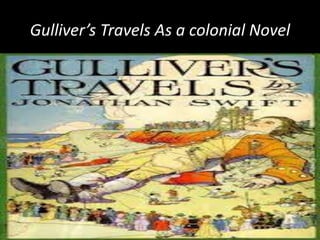


• Gulliver’s Travel As A Colonial

Novel

• Smt. S. B. Gardi Department Of English
• M. K. Bhavnagar University
• Presentation Topic : Gulliver’s Travel As a
Colonial Novel
• Paper no : 2 The Neo – Classical Literature
• Presenter : Drashti Dave v.
• M. A. Sem. 1
• Roll no : 9
Gulliver’s Travels As a colonial Novel
About Author and Novel:
• Gulliver’s Travels by Jonathan Swift. It is
published in 1726.
• Swift is a Satirist. Here Swift is
challenging the traditional idea that
humans are rational animals.
• The novel is a bitter harsh satire.
• Gulliver is a protagonist. Novel focus on
his voyage and struggle on four island.
Content of the novel:
•
•
•
•
•

The novel devided into four parts.
1) A voyage to Lilliput
2) A voyage to Brobdingnag
3) A voyage to Laputa &
4) A voyage to the country of
Houyhnhnms
• Gulliver’s Travels is a multi- layered text
so many themes related here.
The Theme of Colonialism :
• Major part of the novel depended on the
theme of Colonialism.
• What is colonialism?
• Colonialism is a term. Colonialism word
comes from Colony.
• There are two groups.
• 1. Colonizers & 2. Colonized
• Both are different.
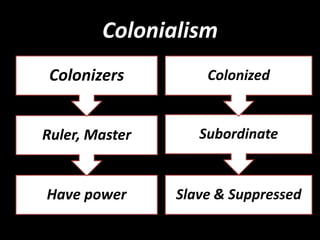
Colonialism
Colonizers

Colonized

Ruler, Master

Subordinate

Have power

Slave & Suppressed
• Colonized in the hand of “Colnised”
• Gulliver is a colonised man.
• Part one - known as a power
position, Lilliputians in illusion. Here Gulliver’s
enjoyment being ‘a big fish in a small pond’.
• Main conflict between big Endians and little
Endians.
• Part two – Decolonization, rejection of
eng.language. Here we are shown
marginalization of Gulliver.
• Part – three Christian v/s Heathen.
• Deformed human beings, deformed culture.
• This is also known as Floating island. Society
seems non human.
• Part fourth – Transformation in Gulliver. Here
animals are rational & cultured.
• Gulliver  trained yahoo, socking part of this
part is yahoo’s identity as a human being.
• Dehumanization of human being. Swift
focuses on Greed & Selfishness of human
nature.
• All parts are easy to understand the theme of
colonialism.
Conclusion
• At the end of the novel Gulliver come to
his society.
• The novel is a work of fantasy.
• Juxtaposition between real and unreal
world.
• Term colonialism is very helpful to
understand the plot.
• Swift does not try to change the system
but he attempt to find out flaws.
Thank you

gulliver’s travels

  • 1.
    • Gulliver’s TravelAs A Colonial Novel • Smt. S. B. Gardi Department Of English • M. K. Bhavnagar University • Presentation Topic : Gulliver’s Travel As a Colonial Novel • Paper no : 2 The Neo – Classical Literature • Presenter : Drashti Dave v. • M. A. Sem. 1 • Roll no : 9
  • 2.
    Gulliver’s Travels Asa colonial Novel
  • 3.
    About Author andNovel: • Gulliver’s Travels by Jonathan Swift. It is published in 1726. • Swift is a Satirist. Here Swift is challenging the traditional idea that humans are rational animals. • The novel is a bitter harsh satire. • Gulliver is a protagonist. Novel focus on his voyage and struggle on four island.
  • 4.
    Content of thenovel: • • • • • The novel devided into four parts. 1) A voyage to Lilliput 2) A voyage to Brobdingnag 3) A voyage to Laputa & 4) A voyage to the country of Houyhnhnms • Gulliver’s Travels is a multi- layered text so many themes related here.
  • 5.
    The Theme ofColonialism : • Major part of the novel depended on the theme of Colonialism. • What is colonialism? • Colonialism is a term. Colonialism word comes from Colony. • There are two groups. • 1. Colonizers & 2. Colonized • Both are different.
  • 6.
  • 7.
    • Colonized inthe hand of “Colnised” • Gulliver is a colonised man. • Part one - known as a power position, Lilliputians in illusion. Here Gulliver’s enjoyment being ‘a big fish in a small pond’. • Main conflict between big Endians and little Endians. • Part two – Decolonization, rejection of eng.language. Here we are shown marginalization of Gulliver. • Part – three Christian v/s Heathen.
  • 8.
    • Deformed humanbeings, deformed culture. • This is also known as Floating island. Society seems non human. • Part fourth – Transformation in Gulliver. Here animals are rational & cultured. • Gulliver  trained yahoo, socking part of this part is yahoo’s identity as a human being. • Dehumanization of human being. Swift focuses on Greed & Selfishness of human nature. • All parts are easy to understand the theme of colonialism.
  • 9.
    Conclusion • At theend of the novel Gulliver come to his society. • The novel is a work of fantasy. • Juxtaposition between real and unreal world. • Term colonialism is very helpful to understand the plot. • Swift does not try to change the system but he attempt to find out flaws.
  • 10.