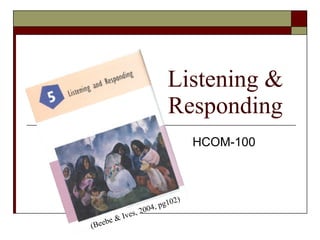
Listening & Responding HCOM-100 (Beebe & Ives, 2004, pg102)
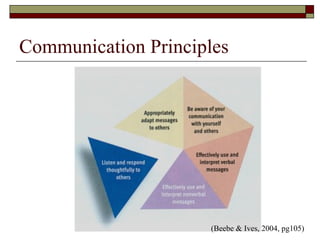
Communication Principles (Beebe & Ives, 2004, pg105)
Listening & Responding Preview The principle of Listening and Responding How we listen Listening goals Listening barriers Listening skills Responding skills Responding with Empathy
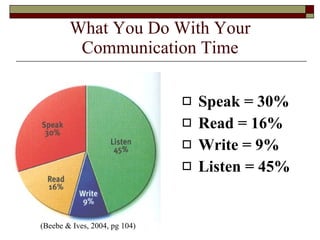
What You Do With Your Communication Time Speak = 30% Read = 16% Write = 9% Listen = 45% (Beebe & Ives, 2004, pg 104)
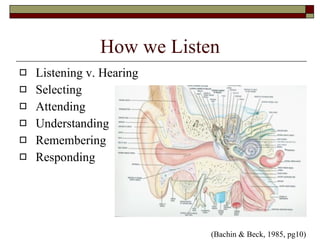
How we Listen Listening v. Hearing Selecting Attending Understanding Remembering Responding (Bachin & Beck, 1985, pg10)
Listening Barriers Self Barriers Self focus Emotional noise Criticism (Beebe & Ives, 2004, pg109)
Listening Barriers Information Processing Barriers Processing rate Information Overload Receiver apprehension
Listening Barriers Context Barriers Barriers of time and place noise
Listening Skills Stop:   Turn Off Competing Messages Decentering Look:   Listen With Your Eyes Listen:  Understand Details and Ideas Identify your listening goal Mentally summarize the details Link Message details with major idea Practice Transform barriers into goals
Responding Skills Be Descriptive Be Timely Be Brief Be Useful Be Active
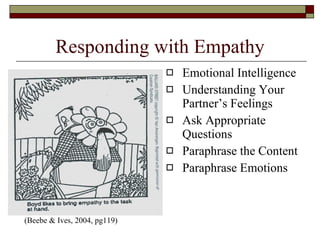
Responding with Empathy Emotional Intelligence Understanding Your Partner’s Feelings Ask Appropriate Questions Paraphrase the Content Paraphrase Emotions (Beebe & Ives, 2004, pg119)

05a listening.pp tlistening-souza

  • 1.
    Listening & RespondingHCOM-100 (Beebe & Ives, 2004, pg102)
  • 2.
    Communication Principles (Beebe& Ives, 2004, pg105)
  • 3.
    Listening & RespondingPreview The principle of Listening and Responding How we listen Listening goals Listening barriers Listening skills Responding skills Responding with Empathy
  • 4.
    What You DoWith Your Communication Time Speak = 30% Read = 16% Write = 9% Listen = 45% (Beebe & Ives, 2004, pg 104)
  • 5.
    How we ListenListening v. Hearing Selecting Attending Understanding Remembering Responding (Bachin & Beck, 1985, pg10)
  • 6.
    Listening Barriers SelfBarriers Self focus Emotional noise Criticism (Beebe & Ives, 2004, pg109)
  • 7.
    Listening Barriers InformationProcessing Barriers Processing rate Information Overload Receiver apprehension
  • 8.
    Listening Barriers ContextBarriers Barriers of time and place noise
  • 9.
    Listening Skills Stop: Turn Off Competing Messages Decentering Look: Listen With Your Eyes Listen: Understand Details and Ideas Identify your listening goal Mentally summarize the details Link Message details with major idea Practice Transform barriers into goals
  • 10.
    Responding Skills BeDescriptive Be Timely Be Brief Be Useful Be Active
  • 11.
    Responding with EmpathyEmotional Intelligence Understanding Your Partner’s Feelings Ask Appropriate Questions Paraphrase the Content Paraphrase Emotions (Beebe & Ives, 2004, pg119)