Closing Water, Nutrient
                 and Energy cycles
            Starting in wastewater treatment systems…


1
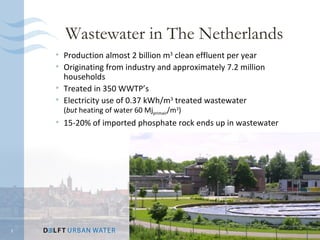
Wastewater in The Netherlands
    • Production almost 2 billion m3 clean effluent per year
    • Originating from industry and approximately 7.2 million
      households
    • Treated in 350 WWTP’s
    • Electricity use of 0.37 kWh/m3 treated wastewater
      (but heating of water 60 Mjprimair/m3)
    • 15-20% of imported phosphate rock ends up in wastewater


2
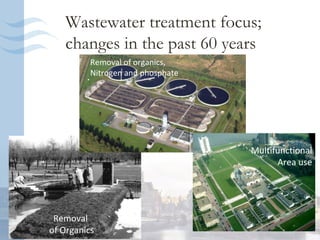
Wastewater treatment focus;
       changes in the past 60 years
              Removal of organics,
              Nitrogen and phosphate


                                       Multifunctional
                                             Area use


     Removal
3   of Organics
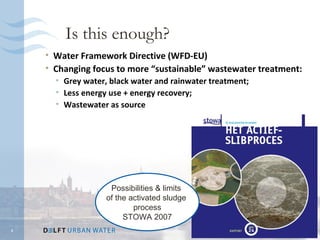
Is this enough?
    • Water Framework Directive (WFD-EU)
    • Changing focus to more “sustainable” wastewater treatment:
      • Grey water, black water and rainwater treatment;
      • Less energy use + energy recovery;
      • Wastewater as source


                    Possibilities & limits
                   of the activated sludge
                           process
                        STOWA 2007
4
5


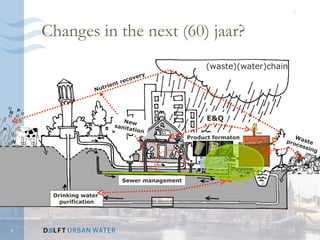
          Changes in the next (60) jaar?
                                                         (waste)(water)chain
                                          ery
                                   co v
                               t re
                           rien
                       Nut


    N P

                                 New                     E&Q
                              sanit
P                                   atio   n
                                                    Product formaton          W
    N                                                                      pro aste
                                                                              ces
                                                                                 sin
                                                                                    g


                                 Sewer management

           Drinking water
             purification


    5
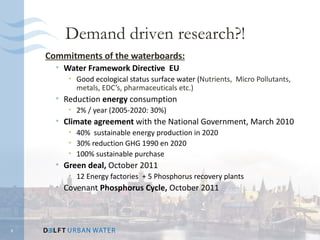
Demand driven research?!
    Commitments of the waterboards:
      • Water Framework Directive EU
         • Good ecological status surface water (Nutrients, Micro Pollutants,
           metals, EDC’s, pharmaceuticals etc.)
      • Reduction energy consumption
         • 2% / year (2005-2020: 30%)
      • Climate agreement with the National Government, March 2010
         • 40% sustainable energy production in 2020
         • 30% reduction GHG 1990 en 2020
         • 100% sustainable purchase
      • Green deal, October 2011
         • 12 Energy factories + 5 Phosphorus recovery plants
      • Covenant Phosphorus Cycle, October 2011


6
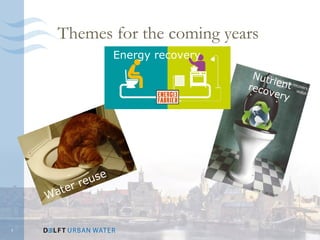
Themes for the coming years
                          Energy recovery
                                             Nutr
                                                  i
                                            reco ent
                                                very


                re u se
        a ter
    W


7
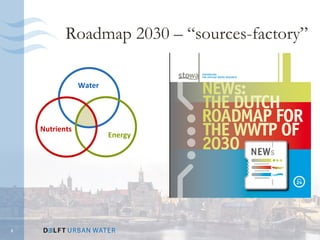
Roadmap 2030 – “sources-factory”

                Water


    Nutrients
                        Energy


8
Water


             Water reuse                                 Nutrients
                                                                             Energy


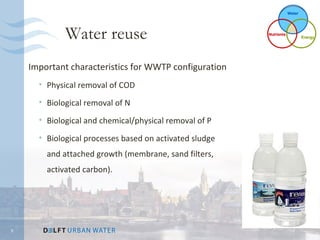
    Important characteristics for WWTP configuration
      • Physical removal of COD
      • Biological removal of N

      • Biological and chemical/physical removal of P

      • Biological processes based on activated sludge
        and attached growth (membrane, sand filters,
        activated carbon).


9
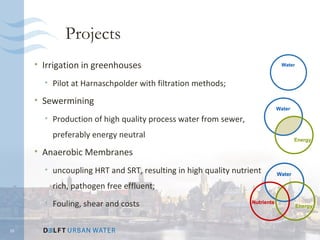
Projects
     • Irrigation in greenhouses                                             Water


       • Pilot at Harnaschpolder with filtration methods;
     • Sewermining
                                                                            Water

       • Production of high quality process water from sewer,
         preferably energy neutral                                                  Energy

     • Anaerobic Membranes
       • uncoupling HRT and SRT, resulting in high quality nutrient         Water

         rich, pathogen free effluent;
       • Fouling, shear and costs                               Nutrients
                                                                                     Energy


10
Water


            Nutrient recovery                                    Nutrients


            Product recovery
                                                                                     Energy


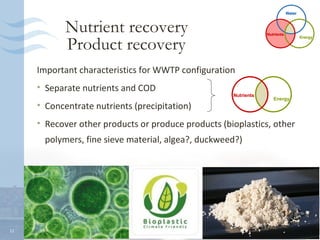
     Important characteristics for WWTP configuration
     • Separate nutrients and COD
                                                     Nutrients
                                                                    Energy
     • Concentrate nutrients (precipitation)
     • Recover other products or produce products (bioplastics, other
       polymers, fine sieve material, algea?, duckweed?)


11
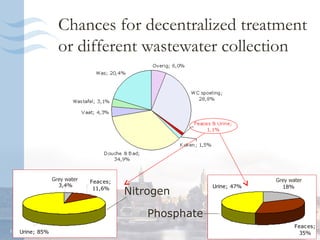
Chances for decentralized treatment
                    or different wastewater collection


                  Grijs water
                  Grey water                                           Grey water
                                                                       Grijs water
                                Feaces;
                     3,4%                                 Urine; 47%       18%
                                 11,6%
                                          Nitrogen

                                              Phosphate
                                                                              Feaces;
12   Urine; 85%                                                                 35%
Water


           Energy production                               Nutrients


           or Energy-factory
                                                                               Energy


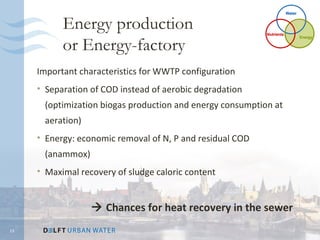
     Important characteristics for WWTP configuration
     • Separation of COD instead of aerobic degradation
      (optimization biogas production and energy consumption at
      aeration)
     • Energy: economic removal of N, P and residual COD
      (anammox)
     • Maximal recovery of sludge caloric content


                   Chances for heat recovery in the sewer
13
• Realisation
                              • Research/development
                                    • Marketing


14   www.energiefabriek.com
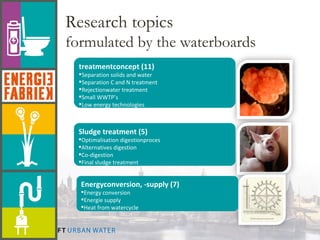
Research topics
     formulated by the waterboards
       treatmentconcept (11)
       Separation solids and water
       Separation C and N treatment
       Rejectionwater treatment
       Small WWTP’s
       Low energy technologies


       Sludge treatment (5)
       Optimalisation digestionproces
       Alternatives digestion
       Co-digestion
       Final sludge treatment


       Energyconversion, -supply (7)
       Energy conversion
       Energie supply
       Heat from watercycle


15
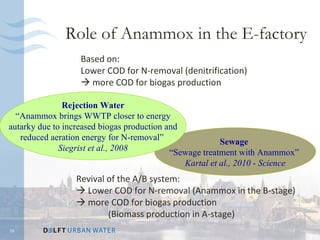
Role of Anammox in the E-factory
                  Based on:
                  Lower COD for N-removal (denitrification)
                   more COD for biogas production

               Rejection Water
  “Anammox brings WWTP closer to energy
autarky due to increased biogas production and
   reduced aeration energy for N-removal”                Sewage
              Siegrist et al., 2008         “Sewage treatment with Anammox”
                                             Kartal et al., 2010 - Science
                 Revival of the A/B system:
                  Lower COD for N-removal (Anammox in the B-stage)
                  more COD for biogas production
                         (Biomass production in A-stage)
16
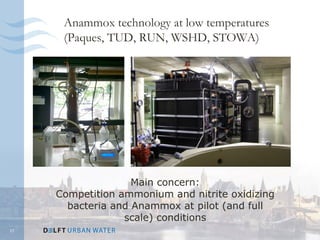
Anammox technology at low temperatures
      (Paques, TUD, RUN, WSHD, STOWA)


                    Main concern:
     Competition ammonium and nitrite oxidizing
       bacteria and Anammox at pilot (and full
                  scale) conditions
17
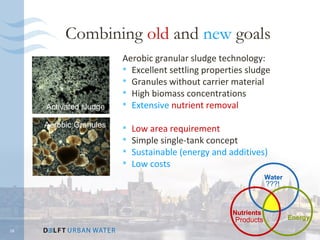
Combining old and new goals
                        Aerobic granular sludge technology:
                         Excellent settling properties sludge
                         Granules without carrier material
                         High biomass concentrations
     Activated sludge    Extensive nutrient removal

     Aerobic Granules      Low area requirement
                           Simple single-tank concept
                           Sustainable (energy and additives)
                           Low costs
                                                                 Water
                                                                 ???!


                                                     Nutrients
                                                     Products            Energy
18
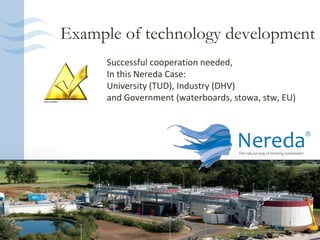
Example of technology development
           Successful cooperation needed,
           In this Nereda Case:
           University (TUD), Industry (DHV)
           and Government (waterboards, stowa, stw, EU)


19
Questions?


20

05 Closing cycles

  • 1.
    Closing Water, Nutrient and Energy cycles Starting in wastewater treatment systems… 1
  • 2.
    Wastewater in TheNetherlands • Production almost 2 billion m3 clean effluent per year • Originating from industry and approximately 7.2 million households • Treated in 350 WWTP’s • Electricity use of 0.37 kWh/m3 treated wastewater (but heating of water 60 Mjprimair/m3) • 15-20% of imported phosphate rock ends up in wastewater 2
  • 3.
    Wastewater treatment focus; changes in the past 60 years Removal of organics, Nitrogen and phosphate Multifunctional Area use Removal 3 of Organics
  • 4.
    Is this enough? • Water Framework Directive (WFD-EU) • Changing focus to more “sustainable” wastewater treatment: • Grey water, black water and rainwater treatment; • Less energy use + energy recovery; • Wastewater as source Possibilities & limits of the activated sludge process STOWA 2007 4
  • 5.
    5 Changes in the next (60) jaar? (waste)(water)chain ery co v t re rien Nut N P New E&Q sanit P atio n Product formaton W N pro aste ces sin g Sewer management Drinking water purification 5
  • 6.
    Demand driven research?! Commitments of the waterboards: • Water Framework Directive EU • Good ecological status surface water (Nutrients, Micro Pollutants, metals, EDC’s, pharmaceuticals etc.) • Reduction energy consumption • 2% / year (2005-2020: 30%) • Climate agreement with the National Government, March 2010 • 40% sustainable energy production in 2020 • 30% reduction GHG 1990 en 2020 • 100% sustainable purchase • Green deal, October 2011 • 12 Energy factories + 5 Phosphorus recovery plants • Covenant Phosphorus Cycle, October 2011 6
  • 7.
    Themes for thecoming years Energy recovery Nutr i reco ent very re u se a ter W 7
  • 8.
    Roadmap 2030 –“sources-factory” Water Nutrients Energy 8
  • 9.
    Water Water reuse Nutrients Energy Important characteristics for WWTP configuration • Physical removal of COD • Biological removal of N • Biological and chemical/physical removal of P • Biological processes based on activated sludge and attached growth (membrane, sand filters, activated carbon). 9
  • 10.
    Projects • Irrigation in greenhouses Water • Pilot at Harnaschpolder with filtration methods; • Sewermining Water • Production of high quality process water from sewer, preferably energy neutral Energy • Anaerobic Membranes • uncoupling HRT and SRT, resulting in high quality nutrient Water rich, pathogen free effluent; • Fouling, shear and costs Nutrients Energy 10
  • 11.
    Water Nutrient recovery Nutrients Product recovery Energy Important characteristics for WWTP configuration • Separate nutrients and COD Nutrients Energy • Concentrate nutrients (precipitation) • Recover other products or produce products (bioplastics, other polymers, fine sieve material, algea?, duckweed?) 11
  • 12.
    Chances for decentralizedtreatment or different wastewater collection Grijs water Grey water Grey water Grijs water Feaces; 3,4% Urine; 47% 18% 11,6% Nitrogen Phosphate Feaces; 12 Urine; 85% 35%
  • 13.
    Water Energy production Nutrients or Energy-factory Energy Important characteristics for WWTP configuration • Separation of COD instead of aerobic degradation (optimization biogas production and energy consumption at aeration) • Energy: economic removal of N, P and residual COD (anammox) • Maximal recovery of sludge caloric content  Chances for heat recovery in the sewer 13
  • 14.
    • Realisation • Research/development • Marketing 14 www.energiefabriek.com
  • 15.
    Research topics formulated by the waterboards treatmentconcept (11) Separation solids and water Separation C and N treatment Rejectionwater treatment Small WWTP’s Low energy technologies Sludge treatment (5) Optimalisation digestionproces Alternatives digestion Co-digestion Final sludge treatment Energyconversion, -supply (7) Energy conversion Energie supply Heat from watercycle 15
  • 16.
    Role of Anammoxin the E-factory Based on: Lower COD for N-removal (denitrification)  more COD for biogas production Rejection Water “Anammox brings WWTP closer to energy autarky due to increased biogas production and reduced aeration energy for N-removal” Sewage Siegrist et al., 2008 “Sewage treatment with Anammox” Kartal et al., 2010 - Science Revival of the A/B system:  Lower COD for N-removal (Anammox in the B-stage)  more COD for biogas production (Biomass production in A-stage) 16
  • 17.
    Anammox technology atlow temperatures (Paques, TUD, RUN, WSHD, STOWA) Main concern: Competition ammonium and nitrite oxidizing bacteria and Anammox at pilot (and full scale) conditions 17
  • 18.
    Combining old andnew goals Aerobic granular sludge technology:  Excellent settling properties sludge  Granules without carrier material  High biomass concentrations Activated sludge  Extensive nutrient removal Aerobic Granules  Low area requirement  Simple single-tank concept  Sustainable (energy and additives)  Low costs Water ???! Nutrients Products Energy 18
  • 19.
    Example of technologydevelopment Successful cooperation needed, In this Nereda Case: University (TUD), Industry (DHV) and Government (waterboards, stowa, stw, EU) 19
  • 20.

Editor's Notes

  • #3 0.37 kWh corresponds to 4,23 Mj primair /m 3
  • #7 Waterschappen produceren 80 miljoen kuub biogas/jaar (7,2 milj huiushoudens, bijna 2 miljard m3 afvalwater/jaar, 24 miljoen i.e., 0,37 kWh/m 3 electriciteitsverbruik (ong 3,5 maal zoveel voor verwarmen water), ongeveer 50 kWh/m3 drinkwater zuivering en transport en 0,11 kWh/m3 voor riooltransport 15% van de geinmporteerde fosfaat eindigt in het rioolwater (6 kg pp import: 0,9 kg/j pp in rioolwater)