Behind the Water Footprint Stream - Metrics and InitiativesOverview of available metrics to asses potential impacts of water use and current initiatives integrating them within LCAManueleMargni, Ph.D.Scientificcoordinator, CIRAIGEcole Polytechnique Montréalmanuele.margni@polymtl.ca(Incl. materialprovided by Quantis)
CIRAIG FactsheetFounded in 2000Multidisciplinary world-renowned research centre 135+ professors, researchers and students10 universities, 7 Chairs, 5 research unitsMember of the UNEP/SETAC Life Cycle InitiativeNumerous collaborations (Canada, USA, Europe)120+ applied research projects (industry and gov.)Official spin-offExpertise: Carbon and Water footprintLCACompany-based LCA and sustainability dashboardEcodesignEnvironmental communicationwww.quantis-intl.com2
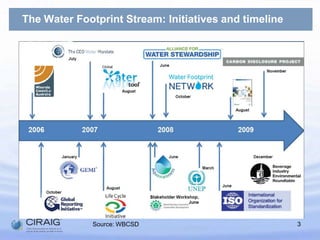
The Water Footprint Stream: Initiatives and timelineSource: WBCSD3
WhichFootprint Is Correct?But what water is important?There is currently little consistency in  the scope of water footprint and what is measured
There is nearly no consistency in how to evaluate impact4
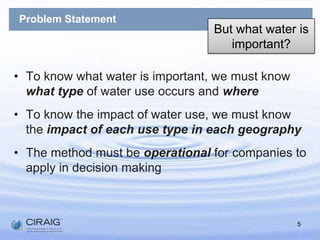
Problem StatementBut what water is important?To know what water is important, we must know what type of water use occurs and where
To know the impact of water use, we must know the impact of each use type in each geography
The method must be operational for companies to apply in decision making5
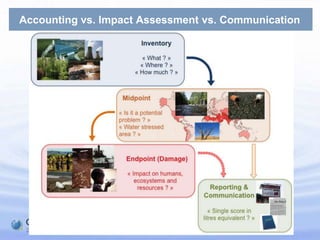
Accounting vs. Impact Assessment vs. Communication
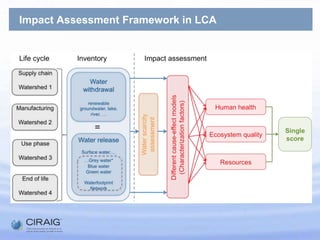
Impact AssessmentFramework in LCA
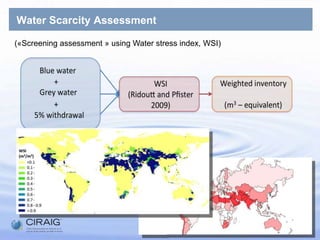
Water ScarcityAssessment(«Screening assessment » using Water stress index, WSI)
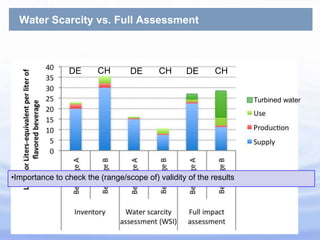
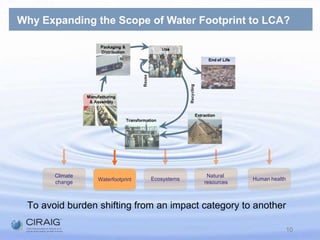
Water Scarcityvs. Full AssessmentCHDECHCHDEDETurbined waterImportance to check the (range/scope of) validity of the resultsWhy Expanding the Scope of Water Footprint to LCA?Climate changeEcosystemsNatural resourcesHuman healthWaterfootprintTo avoid burden shifting from an impact category to another10
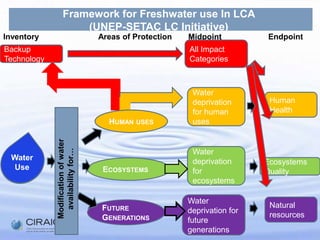
Framework for Freshwater use In LCA (UNEP-SETAC LC Initiative)EndpointMidpointInventoryAreas of ProtectionAll Impact CategoriesBackup TechnologyWater deprivation for human usesHuman HealthHuman usesModification of water availability for…Water deprivation for ecosystemsWater UseWater UseEcosystems QualityEcosystemsWater deprivation for future generationsNatural resourcesFuture Generations
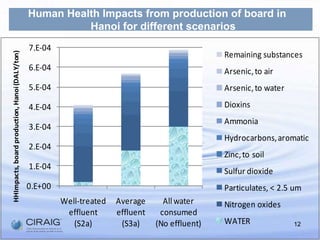
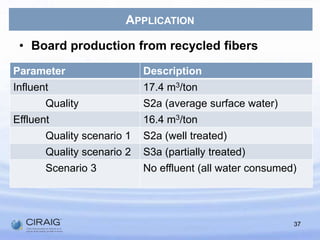
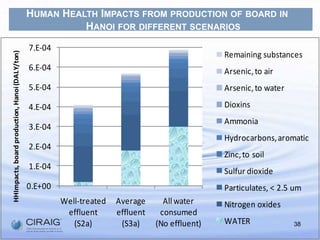
Human Health Impacts from production of board in Hanoi for different scenarios12
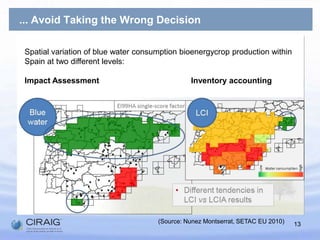
... Avoid Taking the Wrong Decision13Spatial variation of blue water consumption bioenergycrop production within Spain at two different levels:Impact AssessmentInventory accounting(Source: Nunez Montserrat, SETAC EU 2010)
UNEP-SETAC Life Cycle InitiativeInternational initiative for LCAReview and characterization of existing accounting and Impact assessment methodsRecommendations (end 2010) for:SciencePractitioners (incl. industry)Contact: ManueleMargni, CIRAIGSebastienHumbert, Quantis14
Towards an International Standard for Water Footprinting“Water Footprint: Principles, Requirements and Guidances”International standard for water footprintingThis International Standard specifies requirements and guidelines to assess and report water footprint based on LCATerminology, communicationImportant stages to considerConsistency with carbon footprinting and other LCA impact categoriesScope, system boundaryReview/ValidationReportingBegan 2009, end 2011Towards industry and practitioners
ManueleMargniCIRAIG – École Polytechnique de Montréal manuele.margni@polymtl.ca16
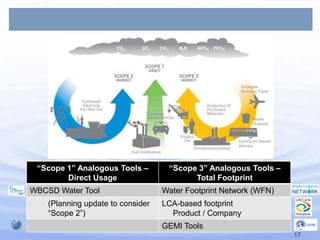
17
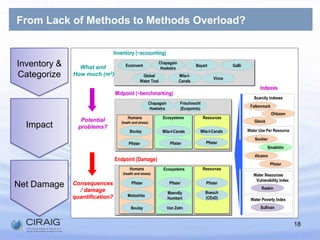
From Lack of Methods to Methods Overload?Inventory & CategorizeImpactNet Damage18
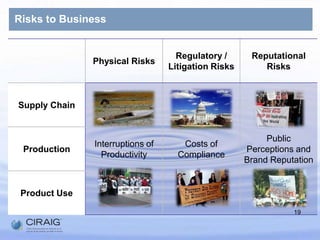
Risks to Business19
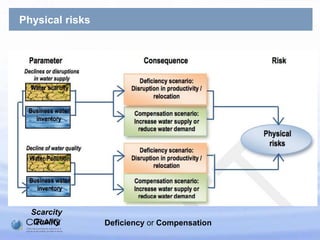
PhysicalrisksScarcityQualityDeficiency or Compensation
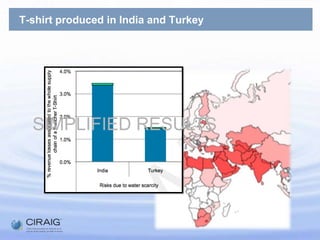
T-shirt produced in India and TurkeySIMPLIFIED RESULTS
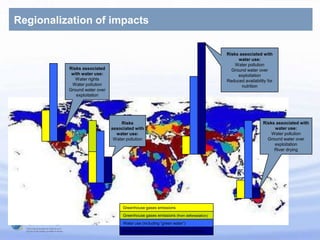
Risks associated with water use:Water pollutionGround water over exploitationReduced availability for nutritionRisks associated with water use:Water rightsWater pollutionGround water over exploitationRisks associated with water use:Water pollutionRisks associated with water use:Water pollutionGround water over exploitationRiver dryingGreenhouse gases emissionsGreenhouse gases emissions (from deforestation)Water use (including “green water”)Water impact (human health and ecosystems)Regionalization of impacts
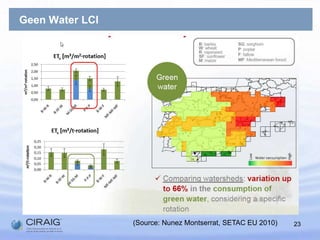
Geen Water LCI23(Source: Nunez Montserrat, SETAC EU 2010)
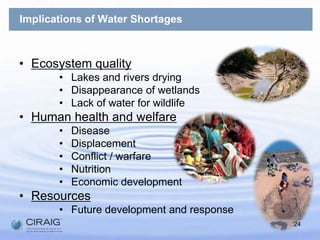
Implications of Water ShortagesEcosystem quality
Lakes and rivers drying
Disappearance of wetlands
Lack of water for wildlife
Human health and welfare
Disease
Displacement
Conflict / warfare
Nutrition
Economic development
Resources
Future development and response24
25About QuantisA Global PresenceAcademic PartnersDiverse Clientele
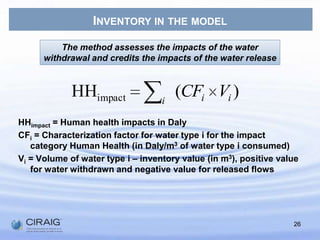
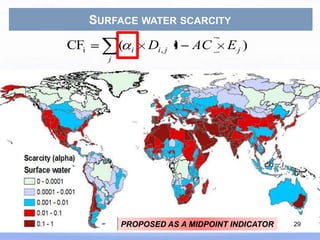
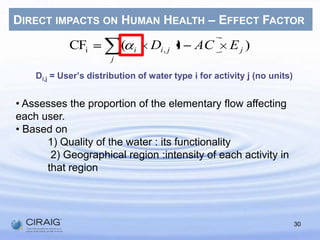
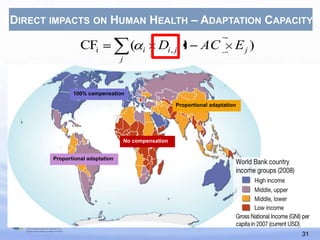
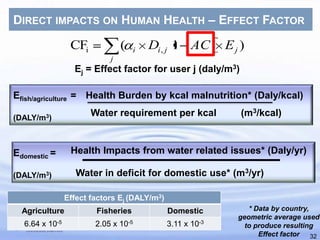
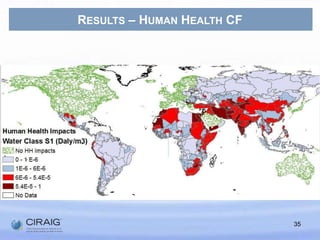
Inventory in the modelThe method assesses the impacts of the water withdrawal and credits the impacts of the water releaseHHimpact = Human health impacts in DalyCFi = Characterization factor for water type i for the impact category Human Health (in Daly/m3 of water type i consumed) Vi = Volume of water type i – inventory value (in m3), positive value for water withdrawn and negative value for released flows26
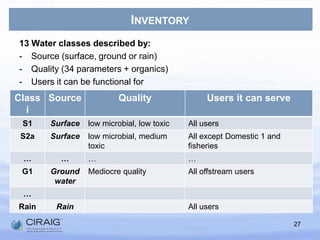
Inventory13 Water classes described by:Source (surface, ground or rain)

1.1 Manuele Margni

  • 1.
    Behind the WaterFootprint Stream - Metrics and InitiativesOverview of available metrics to asses potential impacts of water use and current initiatives integrating them within LCAManueleMargni, Ph.D.Scientificcoordinator, CIRAIGEcole Polytechnique Montréalmanuele.margni@polymtl.ca(Incl. materialprovided by Quantis)
  • 2.
    CIRAIG FactsheetFounded in2000Multidisciplinary world-renowned research centre 135+ professors, researchers and students10 universities, 7 Chairs, 5 research unitsMember of the UNEP/SETAC Life Cycle InitiativeNumerous collaborations (Canada, USA, Europe)120+ applied research projects (industry and gov.)Official spin-offExpertise: Carbon and Water footprintLCACompany-based LCA and sustainability dashboardEcodesignEnvironmental communicationwww.quantis-intl.com2
  • 3.
    The Water FootprintStream: Initiatives and timelineSource: WBCSD3
  • 4.
    WhichFootprint Is Correct?Butwhat water is important?There is currently little consistency in the scope of water footprint and what is measured
  • 5.
    There is nearlyno consistency in how to evaluate impact4
  • 6.
    Problem StatementBut whatwater is important?To know what water is important, we must know what type of water use occurs and where
  • 7.
    To know theimpact of water use, we must know the impact of each use type in each geography
  • 8.
    The method mustbe operational for companies to apply in decision making5
  • 9.
    Accounting vs. ImpactAssessment vs. Communication
  • 10.
  • 11.
  • 12.
    Water Scarcityvs. FullAssessmentCHDECHCHDEDETurbined waterImportance to check the (range/scope of) validity of the resultsWhy Expanding the Scope of Water Footprint to LCA?Climate changeEcosystemsNatural resourcesHuman healthWaterfootprintTo avoid burden shifting from an impact category to another10
  • 13.
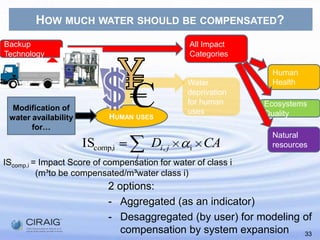
    Framework for Freshwateruse In LCA (UNEP-SETAC LC Initiative)EndpointMidpointInventoryAreas of ProtectionAll Impact CategoriesBackup TechnologyWater deprivation for human usesHuman HealthHuman usesModification of water availability for…Water deprivation for ecosystemsWater UseWater UseEcosystems QualityEcosystemsWater deprivation for future generationsNatural resourcesFuture Generations
  • 14.
    Human Health Impactsfrom production of board in Hanoi for different scenarios12
  • 15.
    ... Avoid Takingthe Wrong Decision13Spatial variation of blue water consumption bioenergycrop production within Spain at two different levels:Impact AssessmentInventory accounting(Source: Nunez Montserrat, SETAC EU 2010)
  • 16.
    UNEP-SETAC Life CycleInitiativeInternational initiative for LCAReview and characterization of existing accounting and Impact assessment methodsRecommendations (end 2010) for:SciencePractitioners (incl. industry)Contact: ManueleMargni, CIRAIGSebastienHumbert, Quantis14
  • 17.
    Towards an InternationalStandard for Water Footprinting“Water Footprint: Principles, Requirements and Guidances”International standard for water footprintingThis International Standard specifies requirements and guidelines to assess and report water footprint based on LCATerminology, communicationImportant stages to considerConsistency with carbon footprinting and other LCA impact categoriesScope, system boundaryReview/ValidationReportingBegan 2009, end 2011Towards industry and practitioners
  • 18.
    ManueleMargniCIRAIG – ÉcolePolytechnique de Montréal manuele.margni@polymtl.ca16
  • 19.
  • 20.
    From Lack ofMethods to Methods Overload?Inventory & CategorizeImpactNet Damage18
  • 21.
  • 22.
  • 23.
    T-shirt produced inIndia and TurkeySIMPLIFIED RESULTS
  • 24.
    Risks associated withwater use:Water pollutionGround water over exploitationReduced availability for nutritionRisks associated with water use:Water rightsWater pollutionGround water over exploitationRisks associated with water use:Water pollutionRisks associated with water use:Water pollutionGround water over exploitationRiver dryingGreenhouse gases emissionsGreenhouse gases emissions (from deforestation)Water use (including “green water”)Water impact (human health and ecosystems)Regionalization of impacts
  • 25.
    Geen Water LCI23(Source:Nunez Montserrat, SETAC EU 2010)
  • 26.
    Implications of WaterShortagesEcosystem quality
  • 27.
  • 28.
  • 29.
    Lack of waterfor wildlife
  • 30.
  • 31.
  • 32.
  • 33.
  • 34.
  • 35.
  • 36.
  • 37.
  • 38.
    25About QuantisA GlobalPresenceAcademic PartnersDiverse Clientele
  • 39.
    Inventory in themodelThe method assesses the impacts of the water withdrawal and credits the impacts of the water releaseHHimpact = Human health impacts in DalyCFi = Characterization factor for water type i for the impact category Human Health (in Daly/m3 of water type i consumed) Vi = Volume of water type i – inventory value (in m3), positive value for water withdrawn and negative value for released flows26
  • 40.
    Inventory13 Water classesdescribed by:Source (surface, ground or rain)

Editor's Notes

  • #16 The proposed International Standard will deliver principles, requirements and guidelinesfor a water footprint metric of products, processes and organisations, based on the guidance of impact assessment as given in ISO 14044. It will define how the different types of water sources (for example ground, surface, lake, river, green, blue, gray, etc.) should be considered, how the different types of water releases should be considered, and how the local environmental conditions (dry areas, wet areas) should be treated. For products, it will apply the life cycle approach and will be based on the same product system as specified in ISO 14040 and ISO 14044. At the organisation level, it will consider the guidance given by ISO 14064 for greenhouse gases. The standard will also address the communication issues linked to the water footprint
  • #40 Examples of 3 regions embedded? St-Laurence, quebec, canada?