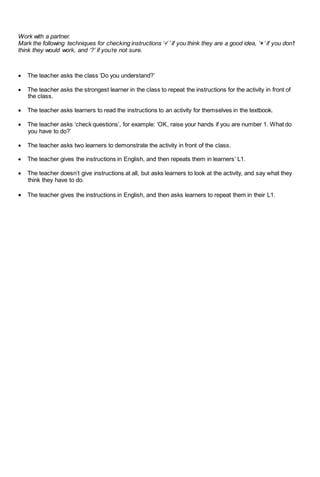
Work with a partner.
Mark the following techniques for checking instructions ‘’ if you think they are a good idea, ‘’ if you don’t
think they would work, and ‘?’ if you’re not sure.
 The teacher asks the class ‘Do you understand?’
 The teacher asks the strongest learner in the class to repeat the instructions for the activity in front of
the class.
 The teacher asks learners to read the instructions to an activity for themselves in the textbook.
 The teacher asks ‘check questions’, for example: ‘OK, raise your hands if you are number 1. What do
you have to do?’
 The teacher asks two learners to demonstrate the activity in front of the class.
 The teacher gives the instructions in English, and then repeats them in learners’ L1.
 The teacher doesn’t give instructions at all, but asks learners to look at the activity, and say what they
think they have to do.
 The teacher gives the instructions in English, and then asks learners to repeat them in their L1.
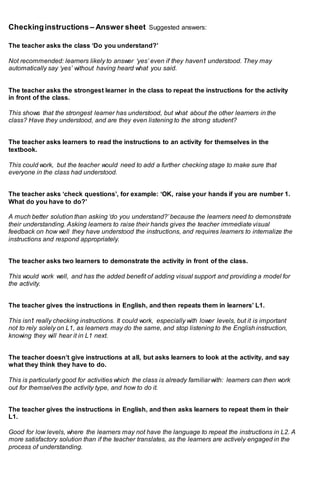
Checkinginstructions– Answer sheet Suggested answers:
The teacher asks the class ‘Do you understand?’
Not recommended: learners likely to answer ‘yes’ even if they haven’t understood. They may
automatically say ‘yes’ without having heard what you said.
The teacher asks the strongest learner in the class to repeat the instructions for the activity
in front of the class.
This shows that the strongest learner has understood, but what about the other learners in the
class? Have they understood, and are they even listening to the strong student?
The teacher asks learners to read the instructions to an activity for themselves in the
textbook.
This could work, but the teacher would need to add a further checking stage to make sure that
everyone in the class had understood.
The teacher asks ‘check questions’, for example: ‘OK, raise your hands if you are number 1.
What do you have to do?’
A much better solution than asking ‘do you understand?’ because the learners need to demonstrate
their understanding. Asking learners to raise their hands gives the teacher immediate visual
feedback on how well they have understood the instructions, and requires learners to internalize the
instructions and respond appropriately.
The teacher asks two learners to demonstrate the activity in front of the class.
This would work well, and has the added benefit of adding visual support and providing a model for
the activity.
The teacher gives the instructions in English, and then repeats them in learners’ L1.
This isn’t really checking instructions. It could work, especially with lower levels, but it is important
not to rely solely on L1, as learners may do the same, and stop listening to the English instruction,
knowing they will hear it in L1 next.
The teacher doesn’t give instructions at all, but asks learners to look at the activity, and say
what they think they have to do.
This is particularly good for activities which the class is already familiar with: learners can then work
out for themselves the activity type, and how to do it.
The teacher gives the instructions in English, and then asks learners to repeat them in their
L1.
Good for low levels, where the learners may not have the language to repeat the instructions in L2. A
more satisfactory solution than if the teacher translates, as the learners are actively engaged in the
process of understanding.

02_Worksheet B - Checking instructions.doc

  • 1.
    Work with apartner. Mark the following techniques for checking instructions ‘’ if you think they are a good idea, ‘’ if you don’t think they would work, and ‘?’ if you’re not sure.  The teacher asks the class ‘Do you understand?’  The teacher asks the strongest learner in the class to repeat the instructions for the activity in front of the class.  The teacher asks learners to read the instructions to an activity for themselves in the textbook.  The teacher asks ‘check questions’, for example: ‘OK, raise your hands if you are number 1. What do you have to do?’  The teacher asks two learners to demonstrate the activity in front of the class.  The teacher gives the instructions in English, and then repeats them in learners’ L1.  The teacher doesn’t give instructions at all, but asks learners to look at the activity, and say what they think they have to do.  The teacher gives the instructions in English, and then asks learners to repeat them in their L1.
  • 2.
    Checkinginstructions– Answer sheetSuggested answers: The teacher asks the class ‘Do you understand?’ Not recommended: learners likely to answer ‘yes’ even if they haven’t understood. They may automatically say ‘yes’ without having heard what you said. The teacher asks the strongest learner in the class to repeat the instructions for the activity in front of the class. This shows that the strongest learner has understood, but what about the other learners in the class? Have they understood, and are they even listening to the strong student? The teacher asks learners to read the instructions to an activity for themselves in the textbook. This could work, but the teacher would need to add a further checking stage to make sure that everyone in the class had understood. The teacher asks ‘check questions’, for example: ‘OK, raise your hands if you are number 1. What do you have to do?’ A much better solution than asking ‘do you understand?’ because the learners need to demonstrate their understanding. Asking learners to raise their hands gives the teacher immediate visual feedback on how well they have understood the instructions, and requires learners to internalize the instructions and respond appropriately. The teacher asks two learners to demonstrate the activity in front of the class. This would work well, and has the added benefit of adding visual support and providing a model for the activity. The teacher gives the instructions in English, and then repeats them in learners’ L1. This isn’t really checking instructions. It could work, especially with lower levels, but it is important not to rely solely on L1, as learners may do the same, and stop listening to the English instruction, knowing they will hear it in L1 next. The teacher doesn’t give instructions at all, but asks learners to look at the activity, and say what they think they have to do. This is particularly good for activities which the class is already familiar with: learners can then work out for themselves the activity type, and how to do it. The teacher gives the instructions in English, and then asks learners to repeat them in their L1. Good for low levels, where the learners may not have the language to repeat the instructions in L2. A more satisfactory solution than if the teacher translates, as the learners are actively engaged in the process of understanding.