Blue Ocean Strategy
Red Oceans 
• Compete in existing market space. 
• Beat the competition. 
• Exploit existing demand. 
• Make the value-cost trade-off. 
• Align the whole system of a firm’s activities with its strategic 
choice of differentiation or low cost.
Blue Oceans 
• Create uncontested market space. 
• Make the competition irrelevant. 
• Create and capture new demand. 
• Break the value-cost trade-off. 
• Align the whole system of a firm’s activities in pursuit of 
differentiation and low cost.
Restaurant “Campestre” 
• Which is its target market? 
• What does it offer?
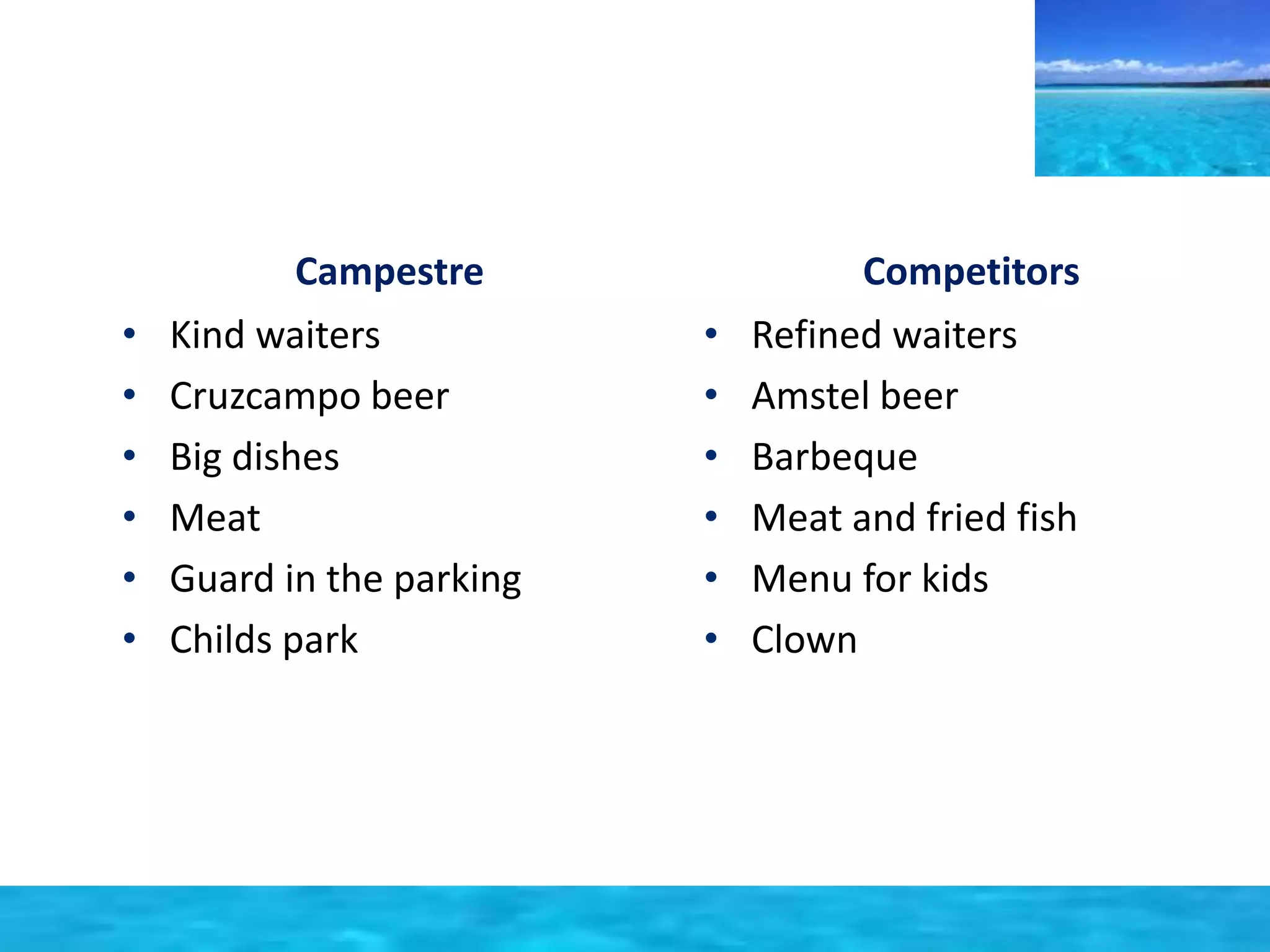
Campestre 
• Kind waiters 
• Cruzcampo beer 
• Big dishes 
• Meat 
• Guard in the parking 
• Childs park 
Competitors 
• Refined waiters 
• Amstel beer 
• Barbeque 
• Meat and fried fish 
• Menu for kids 
• Clown
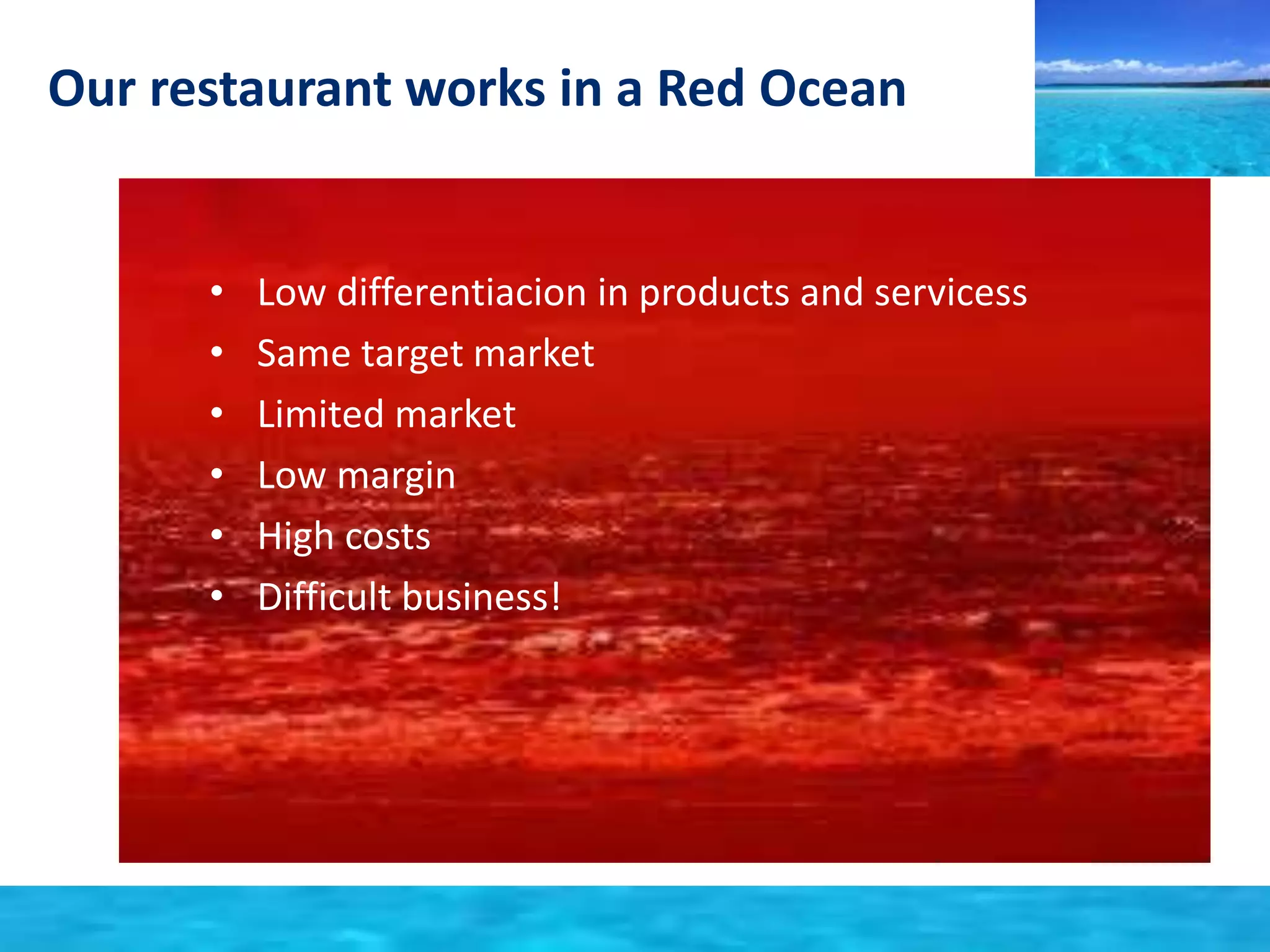
Our restaurant works in a Red Ocean 
• Low differentiacion in products and servicess 
• Same target market 
• Limited market 
• Low margin 
• High costs 
• Difficult business!
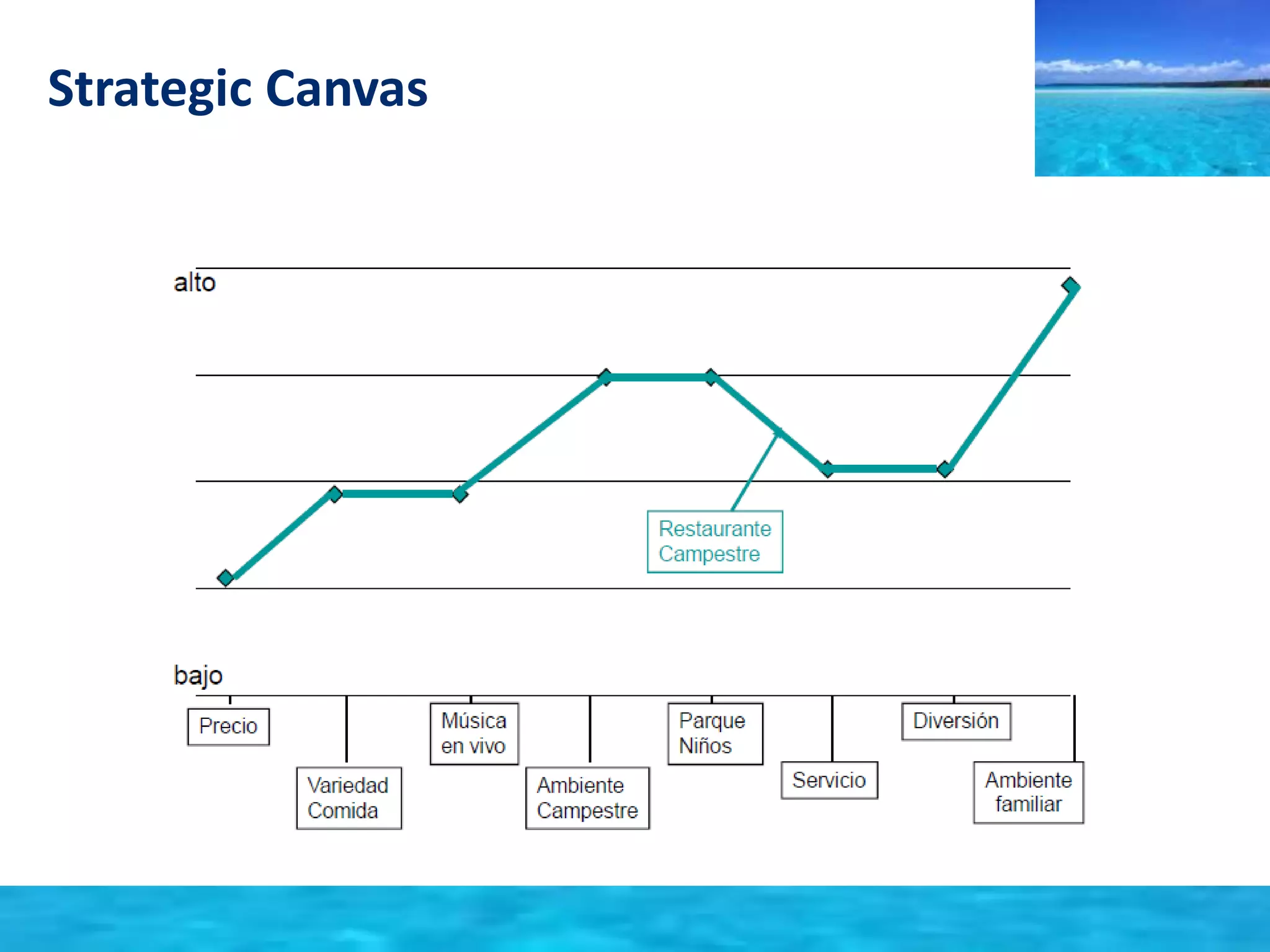
Strategic Canvas 
Campestre 
• Kind waiters 
• Cruzcampo beer 
• Big dishes 
• Meat 
• Half dishes 
• Security guard in the 
parking 
• Child park 
Competitors 
• Refined waiters 
• Amstel 
• Barbecue 
• Meat and fried fish 
• Menu for kids 
• Clown
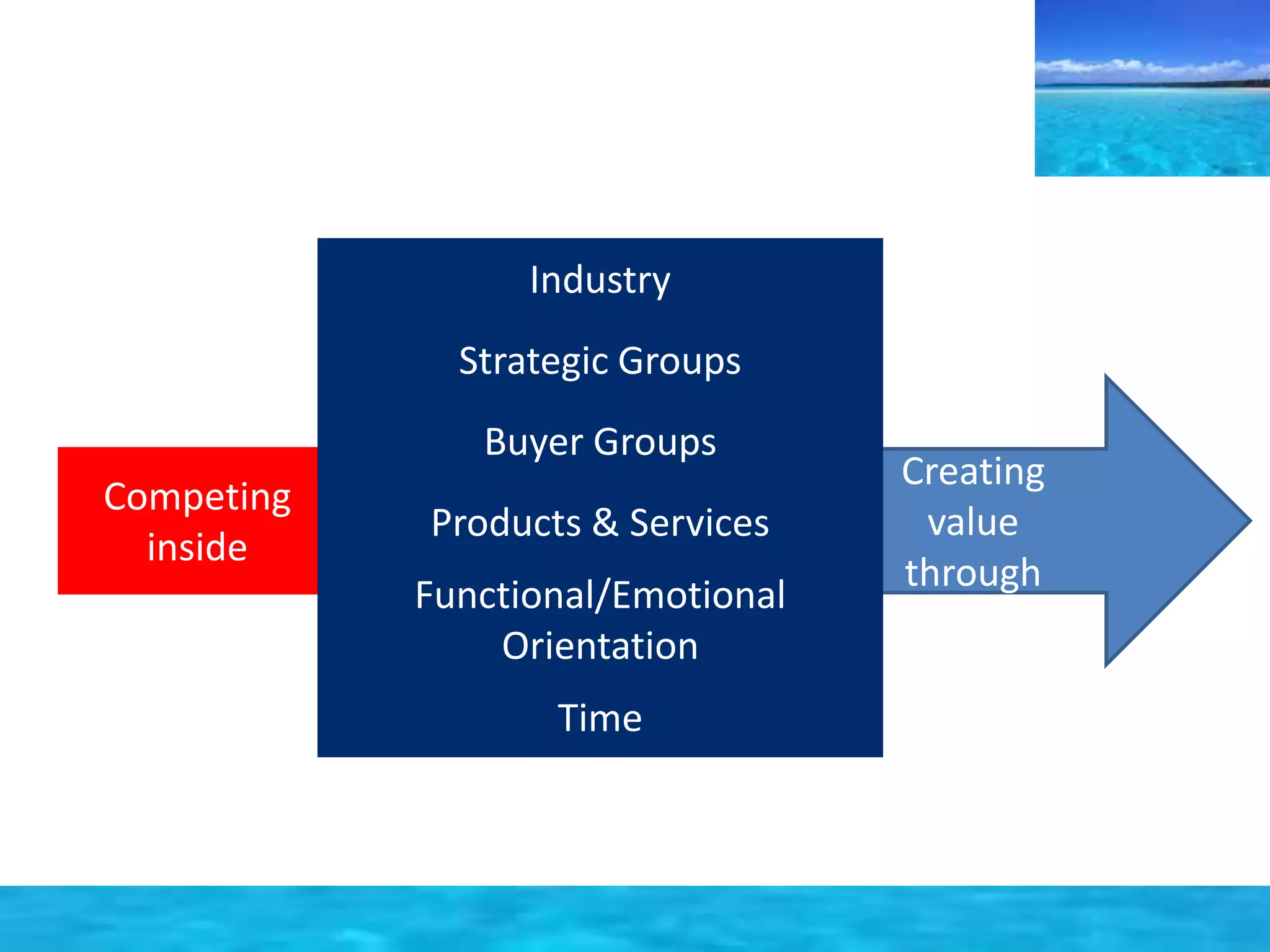
Competing 
inside 
Creating 
value 
through 
Industry 
Strategic Groups 
Buyer Groups 
Products & Services 
Functional/Emotional 
Orientation 
Time
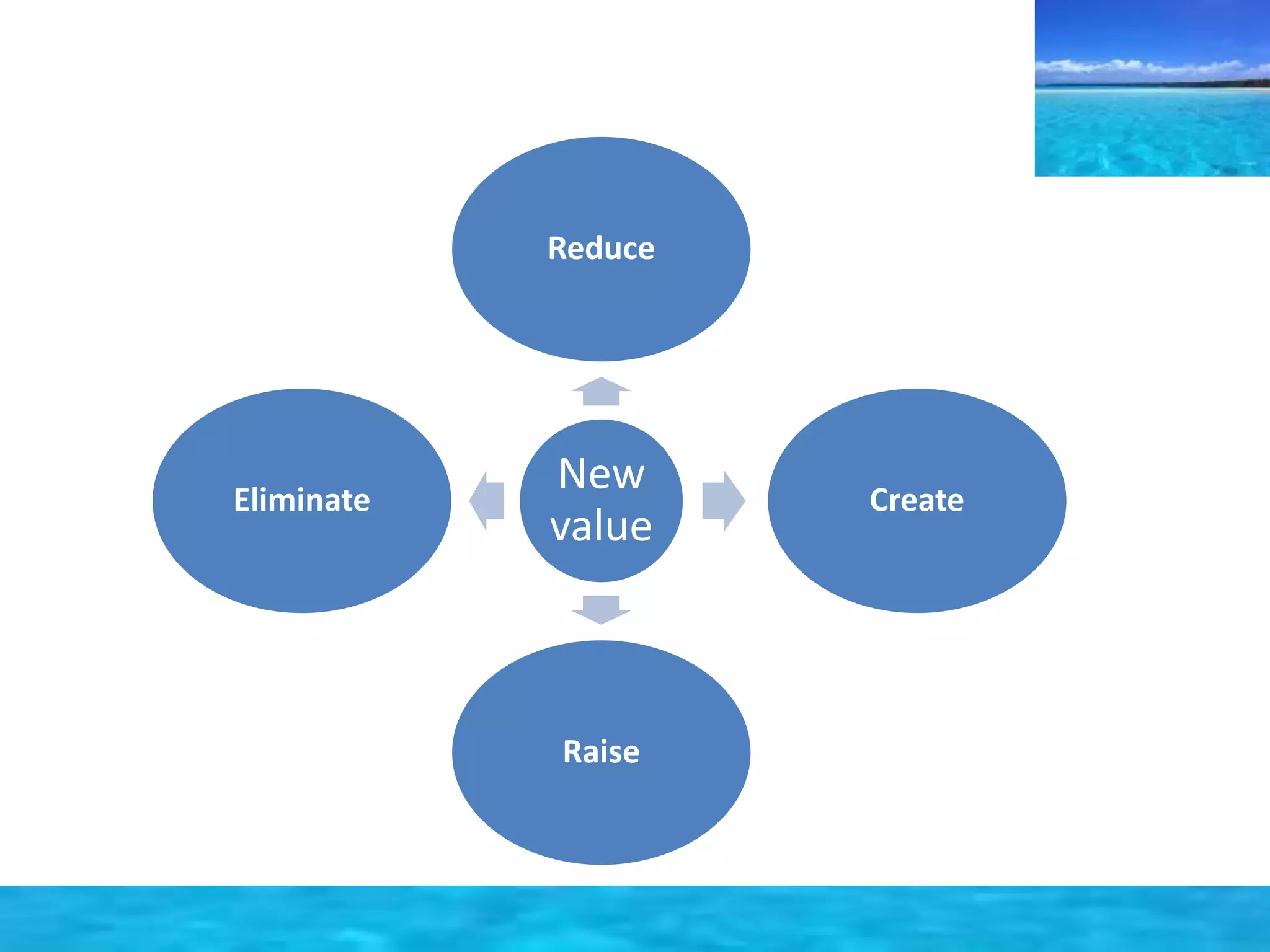
Reduce 
New 
value 
Create 
Raise 
Eliminate
Principles 
• Reach beyond existing demand. 
o Soon-to-be non customers. 
o Refusing non customers 
o Unexplored customers 
• Focus on the big picture, not the numbers.
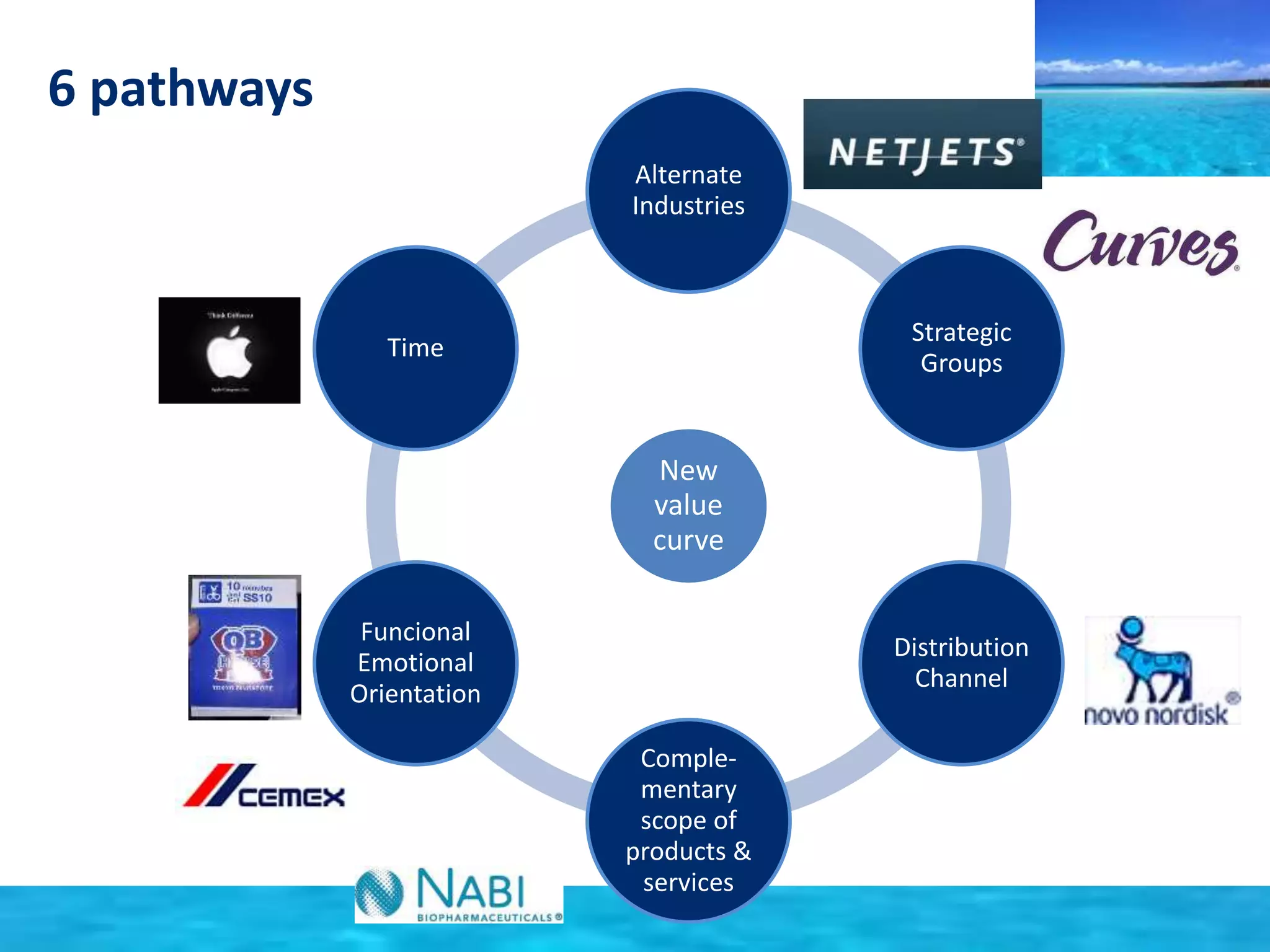
Alternate 
Industries 
New 
value 
curve 
Strategic 
Groups 
Distribution 
Channel 
Comple-mentary 
scope of 
products & 
services 
Time 
Funcional 
Emotional 
Orientation 
6 pathways
1. Exploring alternate industries 
• Alternatives include products or services that have different 
functions and form but the same purpose. 
Restaurants & Cinemas 
• Common aim: To enjoy being out at night.
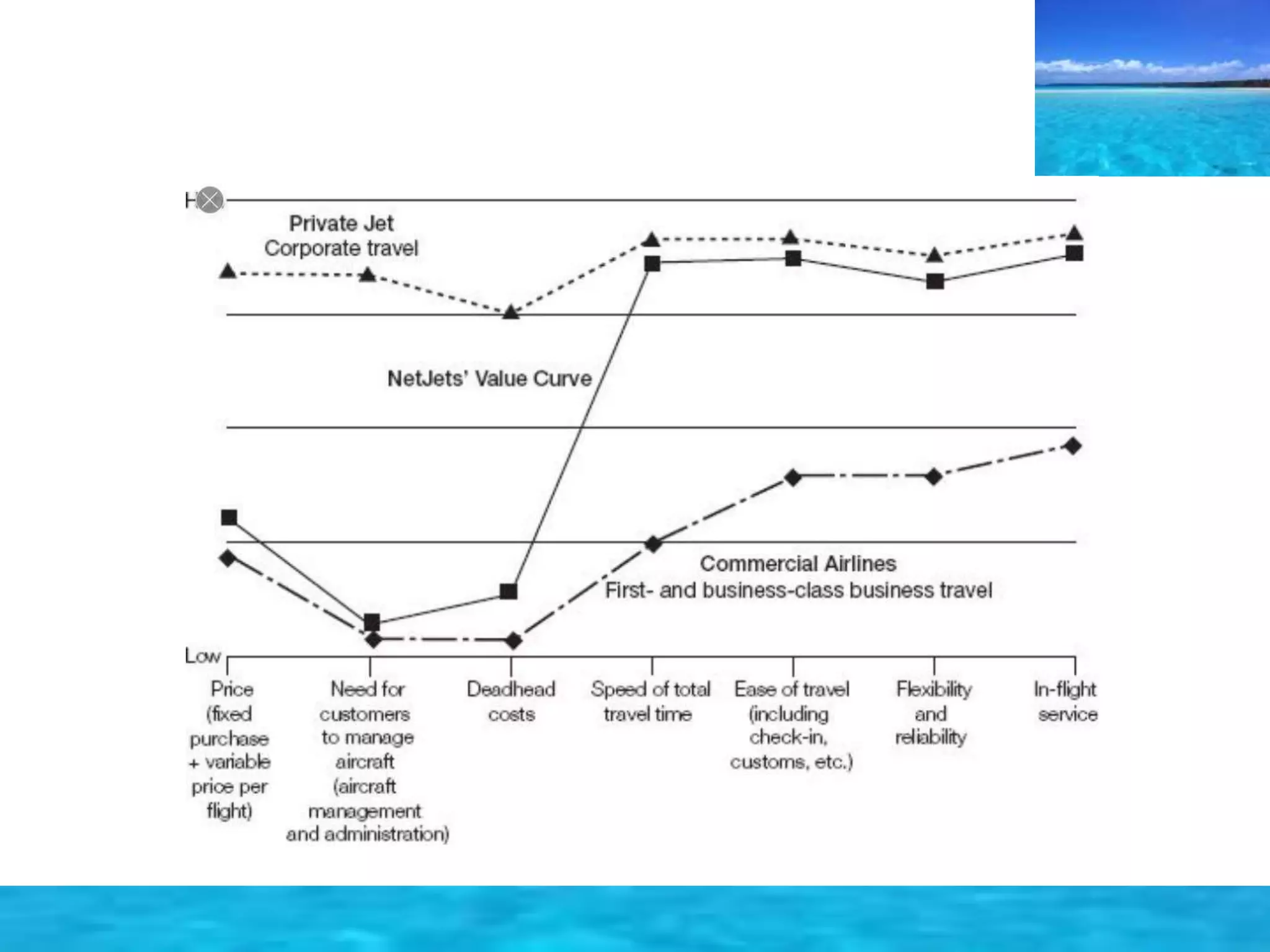
• Aviation customers: 
o Executives 
• Alternatives: 
o Commercial Airline. Business Class 
o Corporate Jet 
• Why should companies choose one of them? 
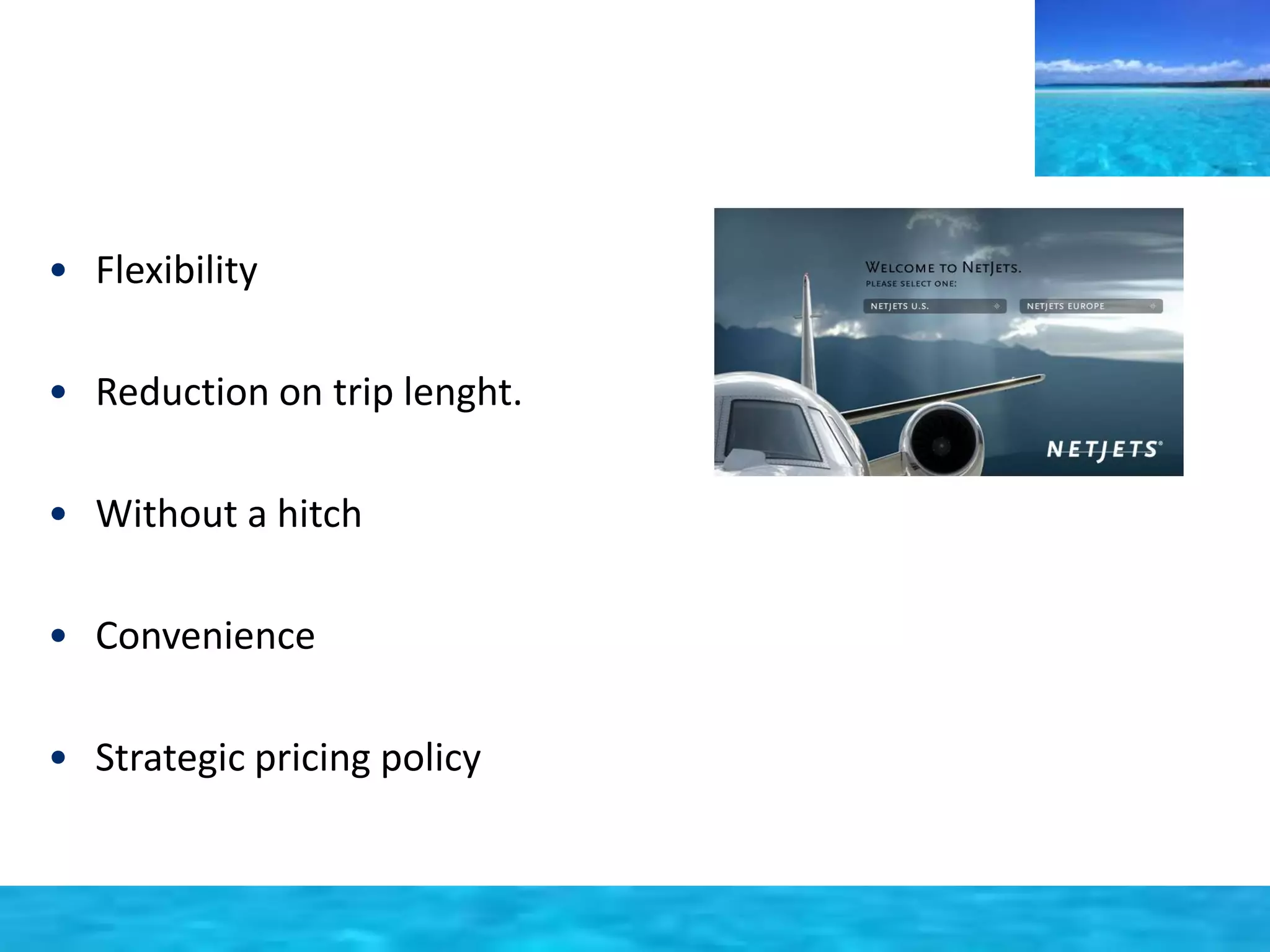
• Netjets: Divides planes ownership.
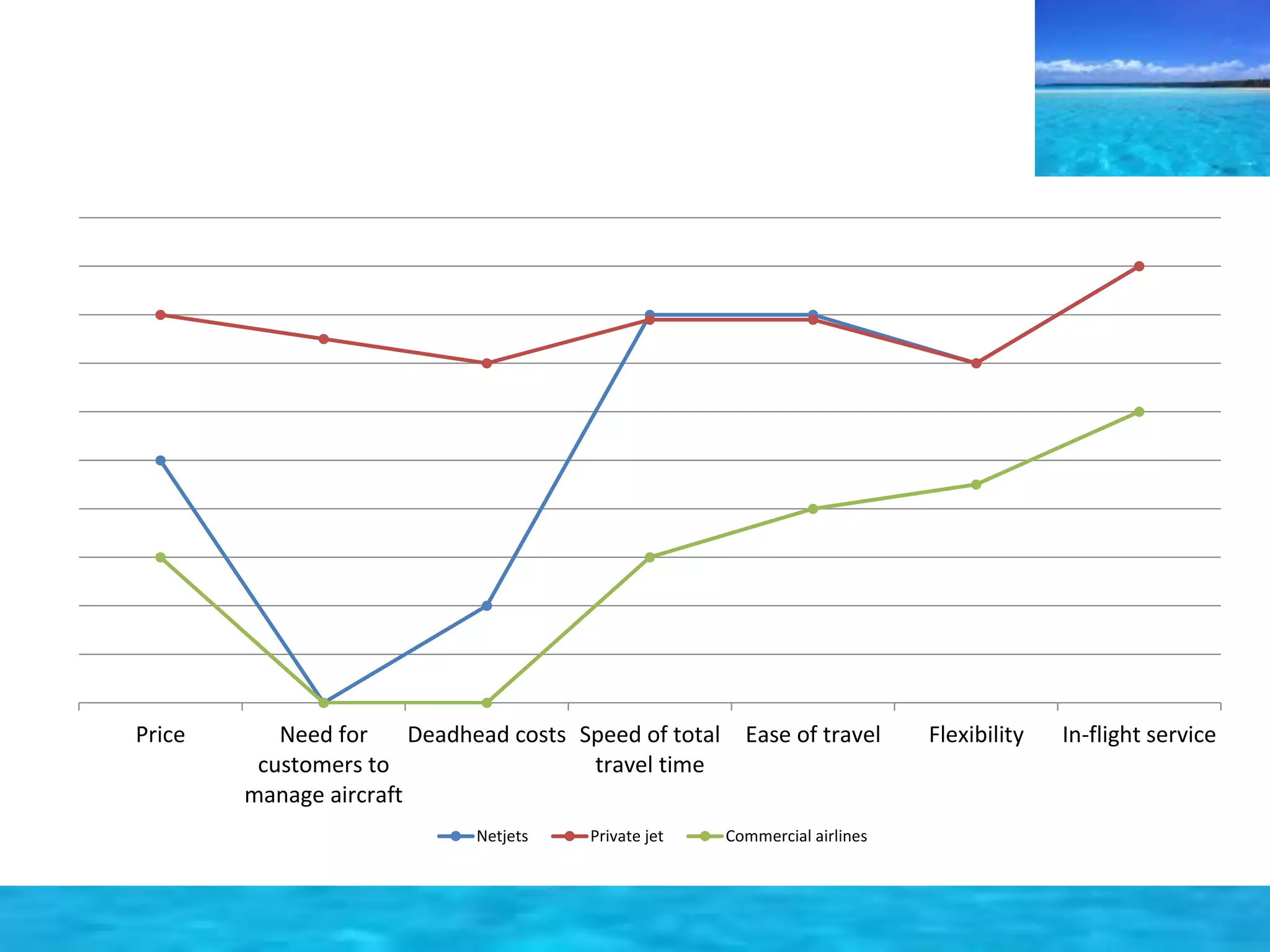
Price Need for 
customers to 
manage aircraft 
Deadhead costs Speed of total 
travel time 
Ease of travel Flexibility In-flight service 
Netjets Private jet Commercial airlines
• Flexibility 
• Reduction on trip lenght. 
• Without a hitch 
• Convenience 
• Strategic pricing policy
2. Strategic groups 
• Most companies focus on improving their competitive position 
inside one strategic group: 
o Luxury cars: Mercedes Benz, BMW, Jaguar 
o Economy cars: Ford, Renault,… 
• Key to find a Blue Ocean. To understand the reasons and the key 
factors that would make a customer to move from one strategic 
group to another.
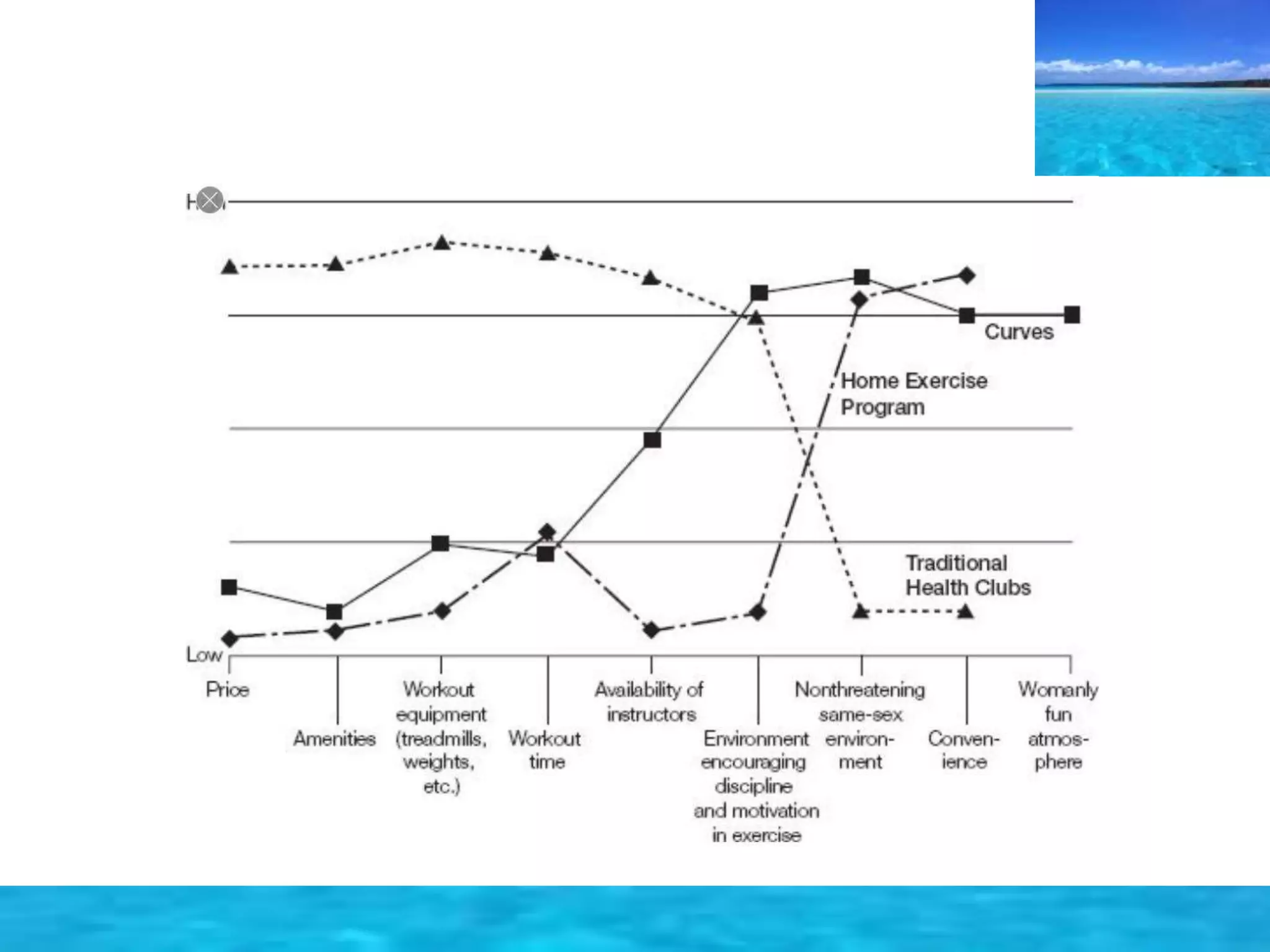
Industry 
Traditional Health Clubs 
• Full range exercises and 
sporting options 
Home exercise 
• Low cost 
• Privacy 
• Expensive 
• Not easily accessible 
• Lack of privacy 
• Low Motivation
• Why do women choose Health clubs or home exercise? 
Eliminate Raise 
• Non threatening same sex 
environment 
Reduce Create 
• Price 
• Amenities 
• Equipment 
• Availability of instructors 
• Womanly fun atmosphere
3. Analizing distribution channel 
• There is a chain of “buyers” who are directly or indirectly involved 
in the buying decision: 
o Purchasers 
o Users 
o Influencers
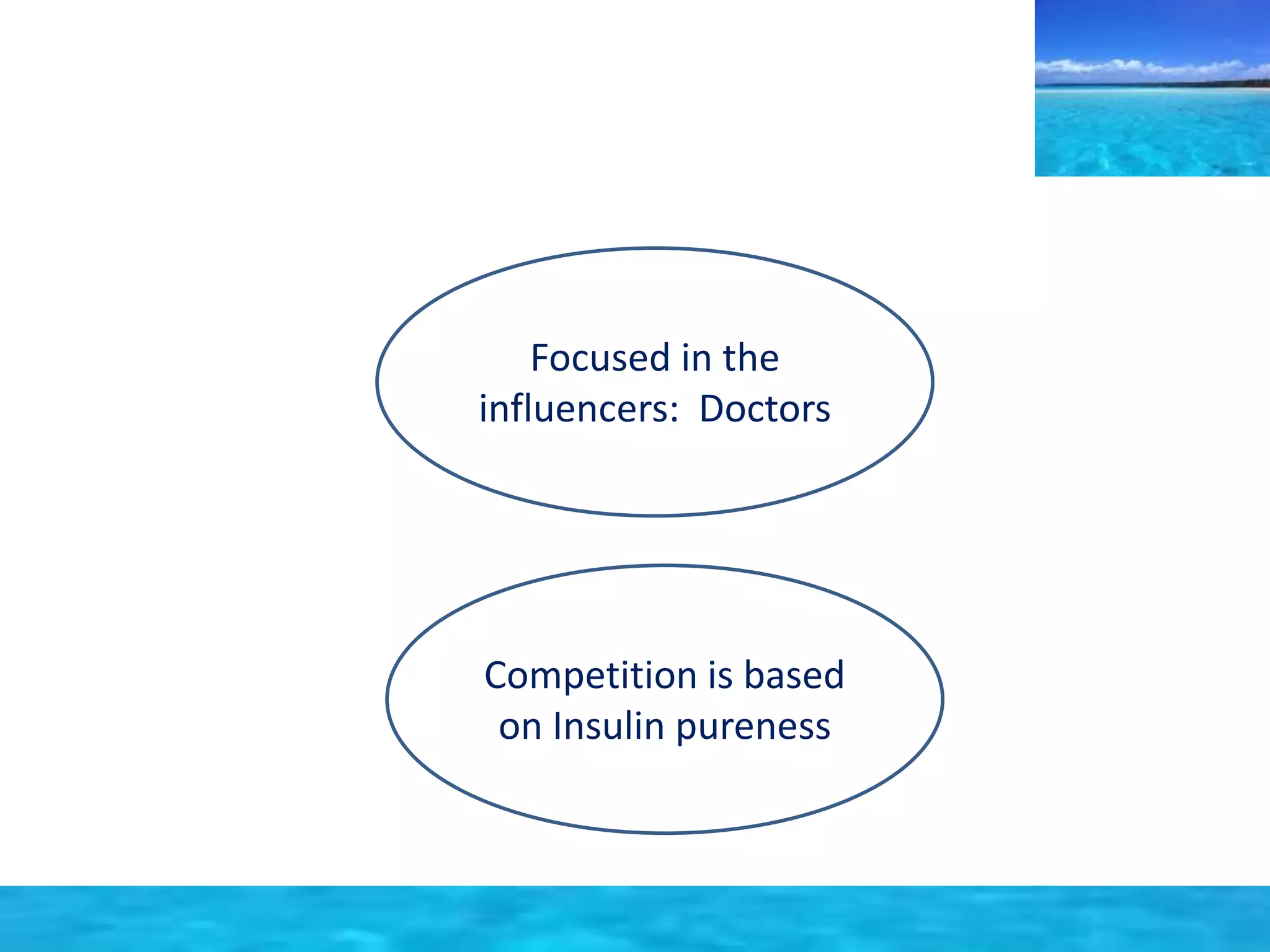
Focused in the 
influencers: Doctors 
Competition is based 
on Insulin pureness
4. Complementary scope of Products and 
Services 
• Think about what happens before, during and after your 
product/service is used.
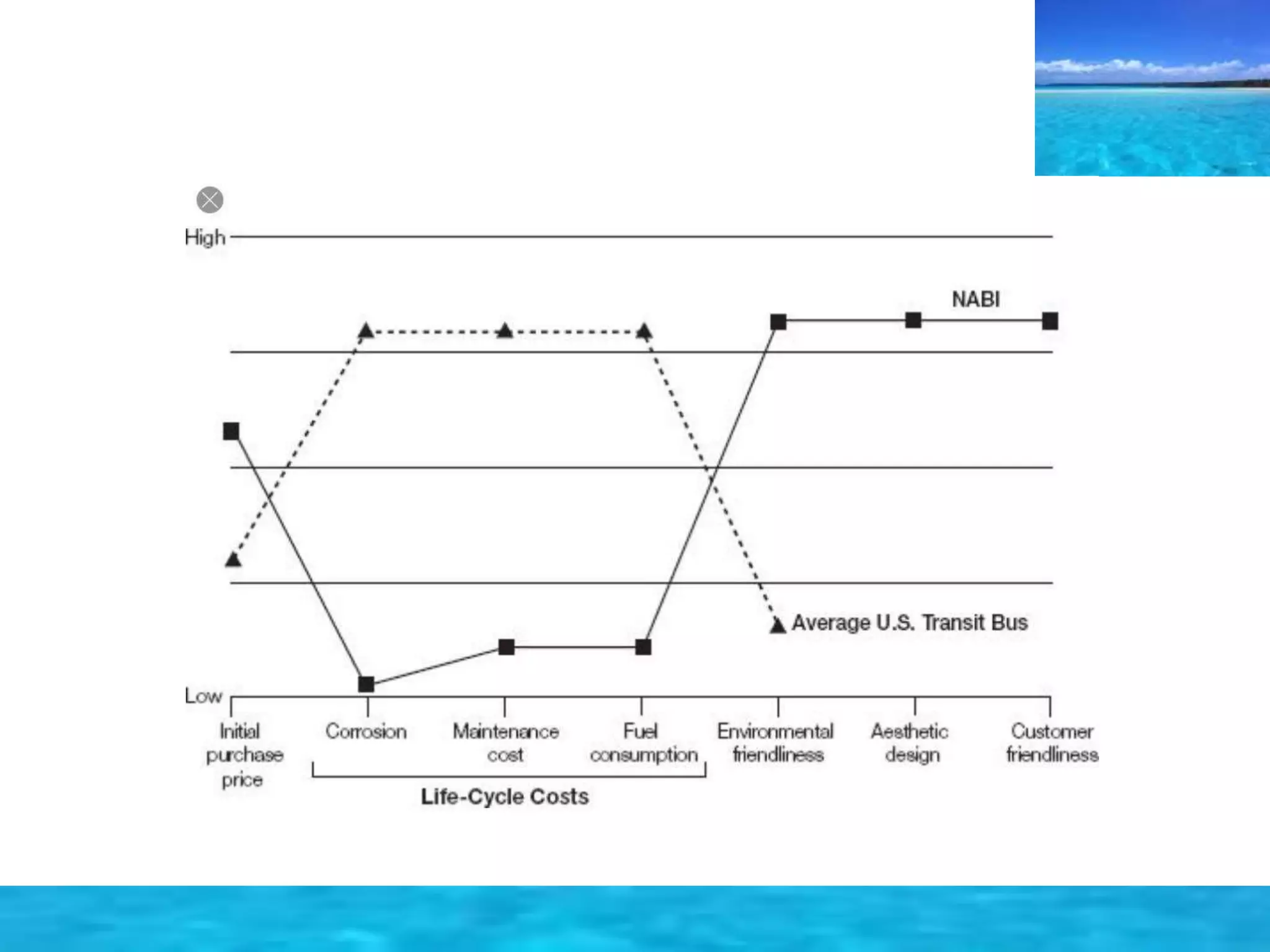
Buses industry: 
• Buses made from Steel. 
• Competition is based on price. 
• Characteristics 
o Old fashion designs 
o Low quality
• What happens before, during and after the product is used? 
o Maintenance costs. 
o High fuel consumption 
o Very heavy, so its components have short live. 
o No environmental friendliness
• Nabi thought about a global solution: 
Buses made from fibre glass 
o Maintenance costs reduction to do corrosion. 
o More quick, cheaper and easier repairs. 
o Less fuel. 
o Less production costs 
o More space.
5. Emotional/Functional 
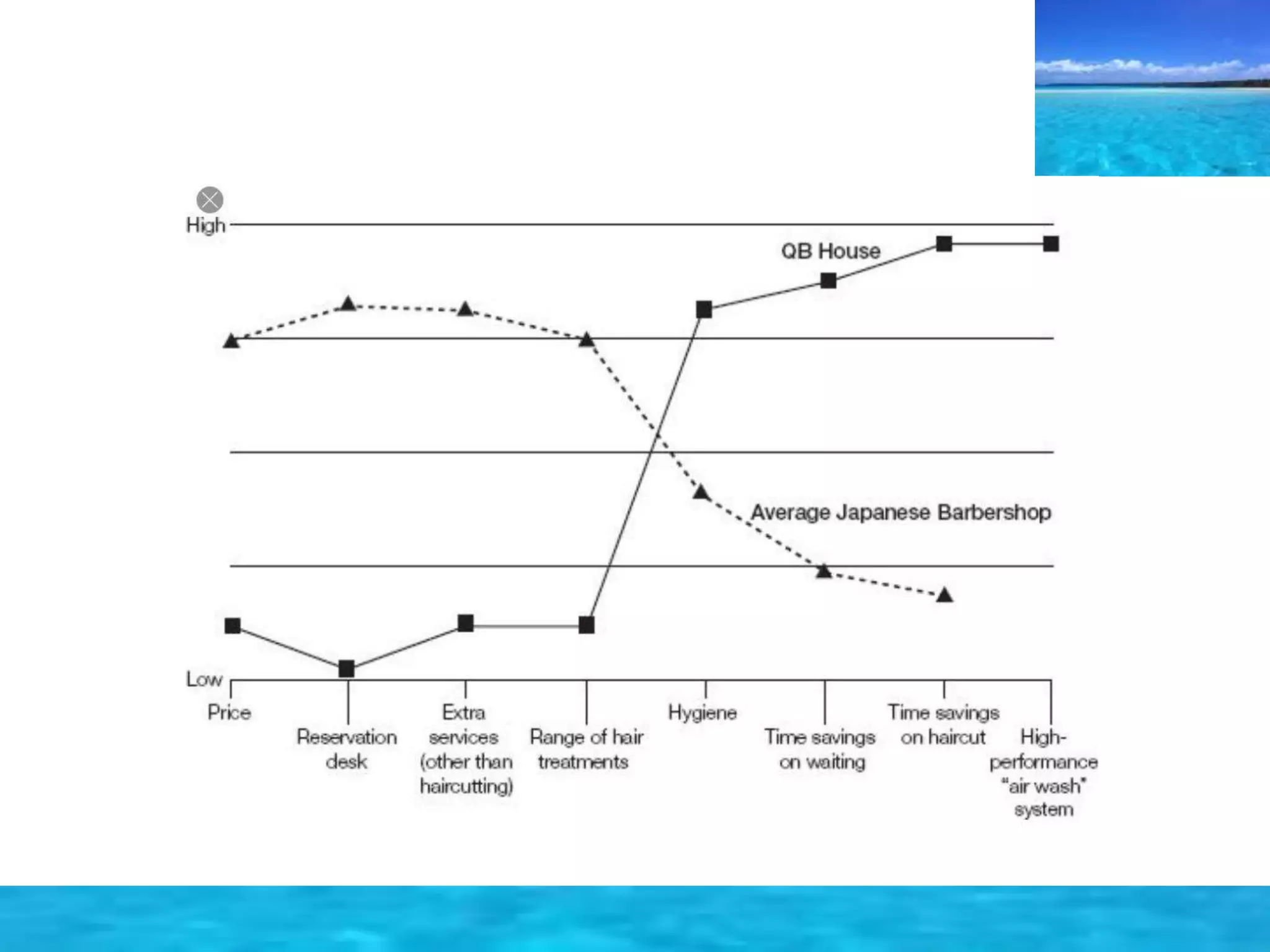
• Japanese barberries: 
o Hot towels 
o Massage 
o Coffee, tea 
o Special hair and skin treatments 
o Washing and drying hair. 
o Shaving 
o Queueing up 
o $ 27 – 45
• What about professionals and executives? 
o Air wash 
o Time reduction 
o No queuing 
o Price: $9 
o Income/barber increased
• Mexico. Self-construction represent 85% total market demand. 
• But really, few families invested in enlarging their hose. 
• They prefered to spend their money in the village feasts, 15th 
birthday celebrations, weddings and so on.
Patrimonio Hoy
5. Time
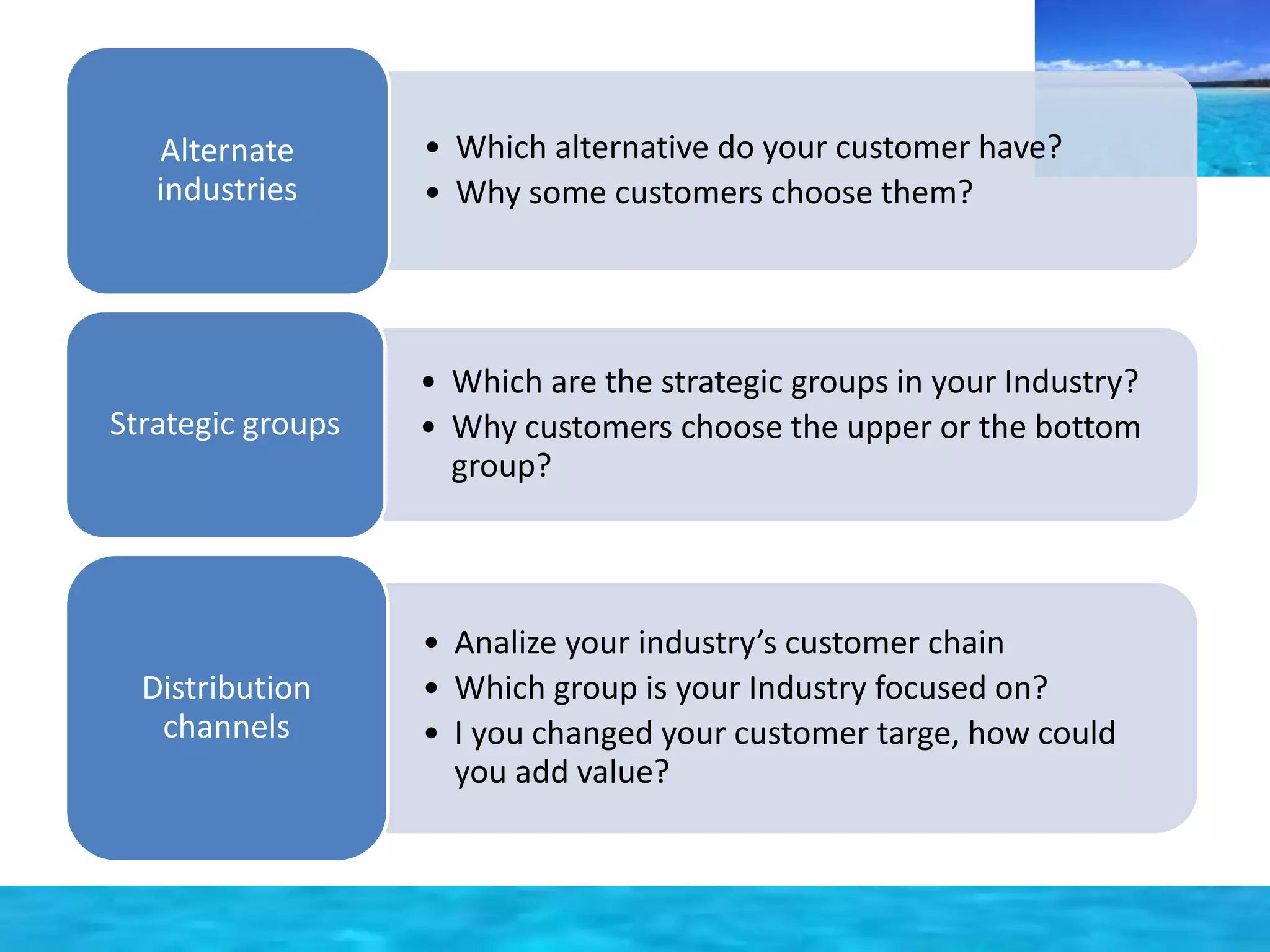
• Which alternative do your customer have? 
• Why some customers choose them? 
Alternate 
industries 
• Which are the strategic groups in your Industry? 
• Why customers choose the upper or the bottom 
group? 
Strategic groups 
• Analize your industry’s customer chain 
• Which group is your Industry focused on? 
• I you changed your customer targe, how could 
you add value? 
Distribution 
channels
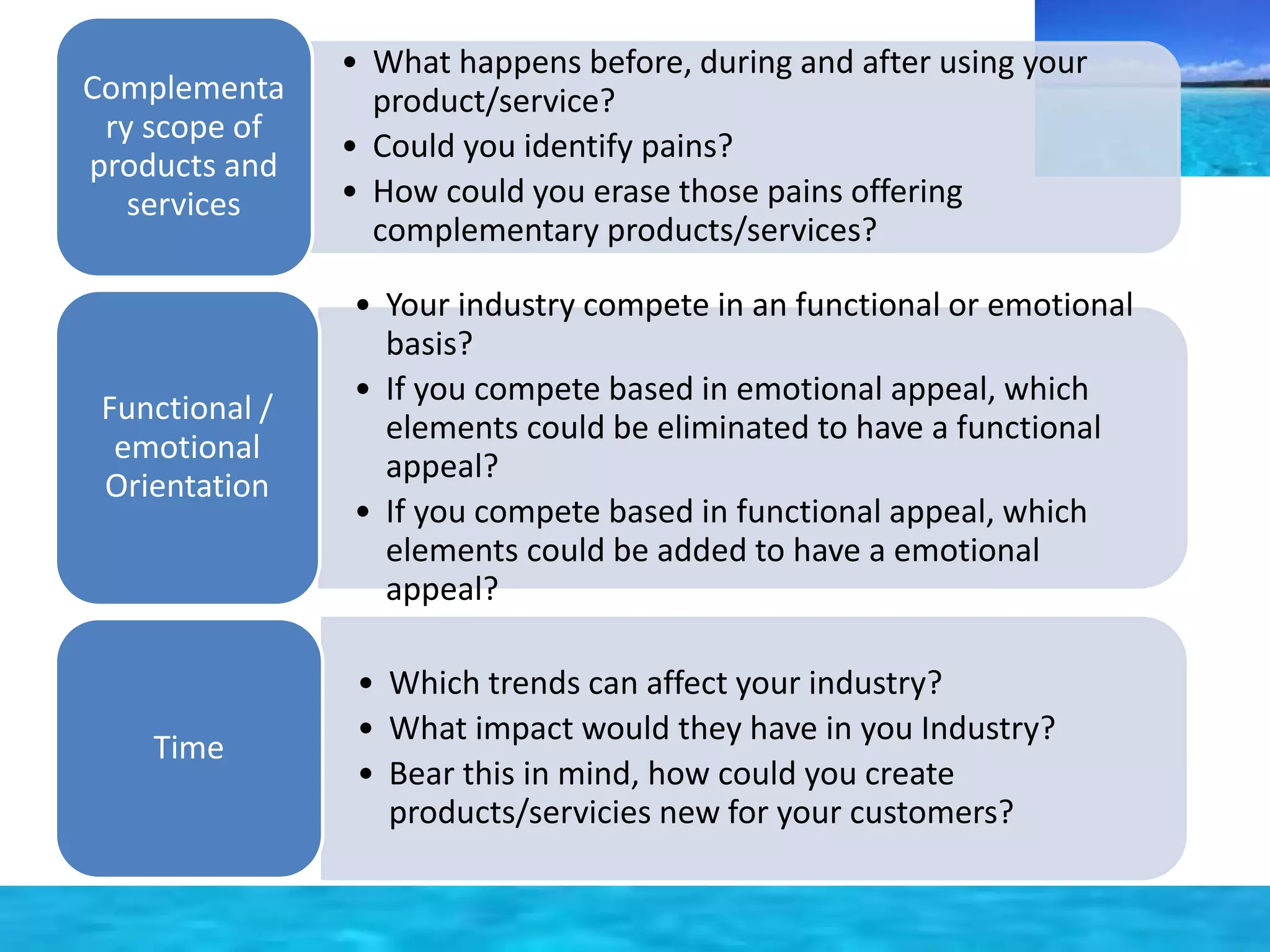
• What happens before, during and after using your 
product/service? 
• Could you identify pains? 
• How could you erase those pains offering 
complementary products/services? 
Complementa 
ry scope of 
products and 
services 
• Your industry compete in an functional or emotional 
basis? 
• If you compete based in emotional appeal, which 
elements could be eliminated to have a functional 
appeal? 
• If you compete based in functional appeal, which 
elements could be added to have a emotional 
appeal? 
Functional / 
emotional 
Orientation 
• Which trends can affect your industry? 
• What impact would they have in you Industry? 
• Bear this in mind, how could you create 
products/servicies new for your customers? 
Time

02b en-bos

  • 1.
  • 2.
    Red Oceans •Compete in existing market space. • Beat the competition. • Exploit existing demand. • Make the value-cost trade-off. • Align the whole system of a firm’s activities with its strategic choice of differentiation or low cost.
  • 3.
    Blue Oceans •Create uncontested market space. • Make the competition irrelevant. • Create and capture new demand. • Break the value-cost trade-off. • Align the whole system of a firm’s activities in pursuit of differentiation and low cost.
  • 4.
    Restaurant “Campestre” •Which is its target market? • What does it offer?
  • 5.
    Campestre • Kindwaiters • Cruzcampo beer • Big dishes • Meat • Guard in the parking • Childs park Competitors • Refined waiters • Amstel beer • Barbeque • Meat and fried fish • Menu for kids • Clown
  • 6.
    Our restaurant worksin a Red Ocean • Low differentiacion in products and servicess • Same target market • Limited market • Low margin • High costs • Difficult business!
  • 7.
    Strategic Canvas Campestre • Kind waiters • Cruzcampo beer • Big dishes • Meat • Half dishes • Security guard in the parking • Child park Competitors • Refined waiters • Amstel • Barbecue • Meat and fried fish • Menu for kids • Clown
  • 8.
    Competing inside Creating value through Industry Strategic Groups Buyer Groups Products & Services Functional/Emotional Orientation Time
  • 9.
    Reduce New value Create Raise Eliminate
  • 10.
    Principles • Reachbeyond existing demand. o Soon-to-be non customers. o Refusing non customers o Unexplored customers • Focus on the big picture, not the numbers.
  • 11.
    Alternate Industries New value curve Strategic Groups Distribution Channel Comple-mentary scope of products & services Time Funcional Emotional Orientation 6 pathways
  • 12.
    1. Exploring alternateindustries • Alternatives include products or services that have different functions and form but the same purpose. Restaurants & Cinemas • Common aim: To enjoy being out at night.
  • 14.
    • Aviation customers: o Executives • Alternatives: o Commercial Airline. Business Class o Corporate Jet • Why should companies choose one of them? • Netjets: Divides planes ownership.
  • 16.
    Price Need for customers to manage aircraft Deadhead costs Speed of total travel time Ease of travel Flexibility In-flight service Netjets Private jet Commercial airlines
  • 17.
    • Flexibility •Reduction on trip lenght. • Without a hitch • Convenience • Strategic pricing policy
  • 18.
    2. Strategic groups • Most companies focus on improving their competitive position inside one strategic group: o Luxury cars: Mercedes Benz, BMW, Jaguar o Economy cars: Ford, Renault,… • Key to find a Blue Ocean. To understand the reasons and the key factors that would make a customer to move from one strategic group to another.
  • 20.
    Industry Traditional HealthClubs • Full range exercises and sporting options Home exercise • Low cost • Privacy • Expensive • Not easily accessible • Lack of privacy • Low Motivation
  • 21.
    • Why dowomen choose Health clubs or home exercise? Eliminate Raise • Non threatening same sex environment Reduce Create • Price • Amenities • Equipment • Availability of instructors • Womanly fun atmosphere
  • 23.
    3. Analizing distributionchannel • There is a chain of “buyers” who are directly or indirectly involved in the buying decision: o Purchasers o Users o Influencers
  • 24.
    Focused in the influencers: Doctors Competition is based on Insulin pureness
  • 25.
    4. Complementary scopeof Products and Services • Think about what happens before, during and after your product/service is used.
  • 26.
    Buses industry: •Buses made from Steel. • Competition is based on price. • Characteristics o Old fashion designs o Low quality
  • 27.
    • What happensbefore, during and after the product is used? o Maintenance costs. o High fuel consumption o Very heavy, so its components have short live. o No environmental friendliness
  • 28.
    • Nabi thoughtabout a global solution: Buses made from fibre glass o Maintenance costs reduction to do corrosion. o More quick, cheaper and easier repairs. o Less fuel. o Less production costs o More space.
  • 30.
    5. Emotional/Functional •Japanese barberries: o Hot towels o Massage o Coffee, tea o Special hair and skin treatments o Washing and drying hair. o Shaving o Queueing up o $ 27 – 45
  • 31.
    • What aboutprofessionals and executives? o Air wash o Time reduction o No queuing o Price: $9 o Income/barber increased
  • 33.
    • Mexico. Self-constructionrepresent 85% total market demand. • But really, few families invested in enlarging their hose. • They prefered to spend their money in the village feasts, 15th birthday celebrations, weddings and so on.
  • 34.
  • 35.
  • 36.
    • Which alternativedo your customer have? • Why some customers choose them? Alternate industries • Which are the strategic groups in your Industry? • Why customers choose the upper or the bottom group? Strategic groups • Analize your industry’s customer chain • Which group is your Industry focused on? • I you changed your customer targe, how could you add value? Distribution channels
  • 37.
    • What happensbefore, during and after using your product/service? • Could you identify pains? • How could you erase those pains offering complementary products/services? Complementa ry scope of products and services • Your industry compete in an functional or emotional basis? • If you compete based in emotional appeal, which elements could be eliminated to have a functional appeal? • If you compete based in functional appeal, which elements could be added to have a emotional appeal? Functional / emotional Orientation • Which trends can affect your industry? • What impact would they have in you Industry? • Bear this in mind, how could you create products/servicies new for your customers? Time