
Test Analyst 
ISTQB® CTAL TAv1.0 
Samer Desouky
ISTQB® – CTAL - TAv1.0 
02- Testing Management
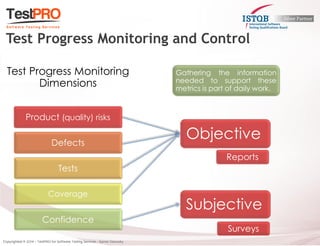
Test Progress Monitoring Dimensions 
Product (quality) risks 
Defects 
Tests 
Coverage 
Confidence 
Test Progress Monitoring and Control 
Objective 
Subjective 
Gathering the information needed to support these metrics is part of daily work. 
Reports 
Surveys
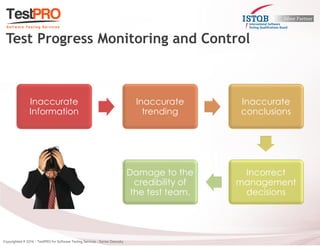
Test Progress Monitoring and Control 
Inaccurate Information 
Inaccurate trending 
Inaccurate conclusions 
Incorrect management decisions 
Damage to the credibility of the test team.
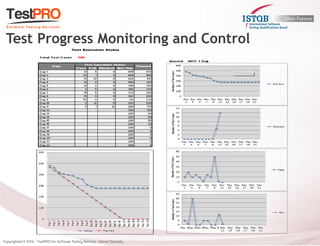
Test Progress Monitoring and Control 
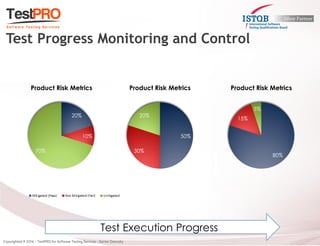
Test Execution Progress 
20% 
10% 
70% 
Product Risk Metrics 
80% 
15% 
5% 
Product Risk Metrics 
50% 
30% 
20% 
Product Risk Metrics
Test Progress Monitoring and Control
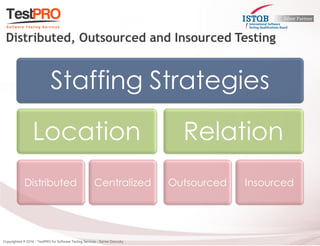
Staffing Strategies 
Location 
Distributed 
Centralized 
Relation 
Outsourced 
Insourced 
Distributed, Outsourced and Insourced Testing
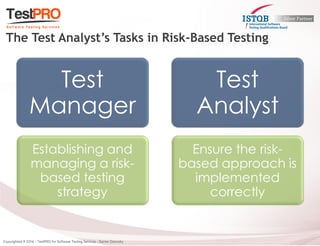
Test Manager 
Establishing and managing a risk- based testing strategy 
Test Analyst 
Ensure the risk- based approach is implemented correctly 
The Test Analyst’s Tasks in Risk-Based Testing
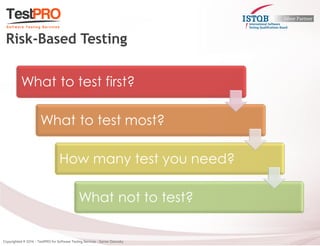
What to test first? 
What to test most? 
How many test you need? 
What not to test? 
Risk-Based Testing
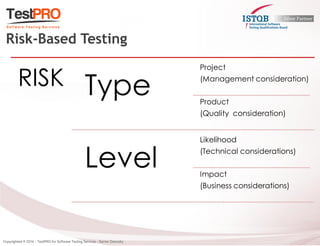
RISK 
Type 
Project 
(Management consideration) 
Product 
(Quality consideration) 
Level 
Likelihood 
(Technical considerations) 
Impact 
(Business considerations) 
Risk-Based Testing
Risk-Based Testing 
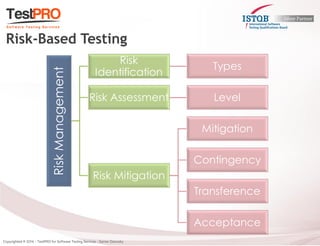
Risk Management 
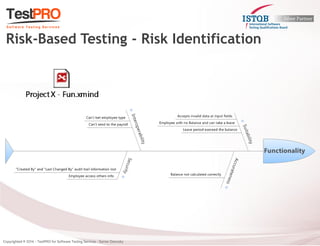
Risk Identification 
Types 
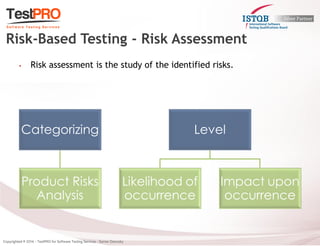
Risk Assessment 
Level 
Risk Mitigation 
Mitigation 
Contingency 
Transference 
Acceptance
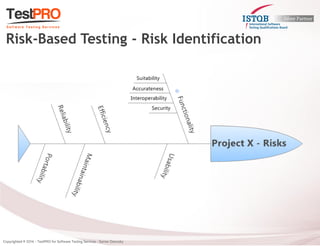
Risk-Based Testing - Risk Identification
•Risk assessment is the study of the identified risks. 
Risk-Based Testing - Risk Assessment 
Categorizing 
Product Risks Analysis 
Level 
Likelihood of occurrence 
Impact upon occurrence
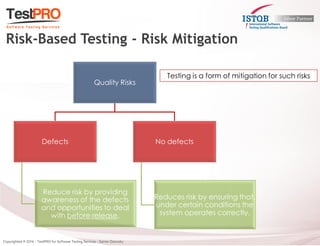
Risk-Based Testing - Risk Mitigation 
Quality Risks 
Defects 
Reduce risk by providing awareness of the defects and opportunities to deal with before release. 
No defects 
Reduces risk by ensuring that, under certain conditions the system operates correctly. 
Testing is a form of mitigation for such risks
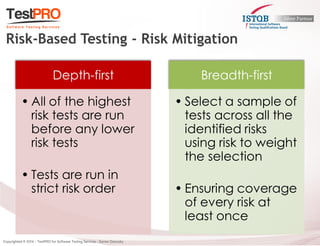
Depth-first 
•All of the highest risk tests are run before any lower risk tests 
•Tests are run in strict risk order 
Breadth-first 
•Select a sample of tests across all the identified risks using risk to weight the selection 
•Ensuring coverage of every risk at least once 
Risk-Based Testing - Risk Mitigation
Software Testing is our Profession. 
www.testproeg.com 
Contact Us 
+2 0222756841 
+2 01021902447 
+2 01000190709 
30 Ahmad El-Zomor St., Nasr City, Cairo, Egypt 
E-Mail: info@testproeg.com

02 - Testing Management - Crash Slides

  • 1.
    Test Analyst ISTQB®CTAL TAv1.0 Samer Desouky
  • 2.
    ISTQB® – CTAL- TAv1.0 02- Testing Management
  • 3.
    Test Progress MonitoringDimensions Product (quality) risks Defects Tests Coverage Confidence Test Progress Monitoring and Control Objective Subjective Gathering the information needed to support these metrics is part of daily work. Reports Surveys
  • 4.
    Test Progress Monitoringand Control Inaccurate Information Inaccurate trending Inaccurate conclusions Incorrect management decisions Damage to the credibility of the test team.
  • 5.
    Test Progress Monitoringand Control Test Execution Progress 20% 10% 70% Product Risk Metrics 80% 15% 5% Product Risk Metrics 50% 30% 20% Product Risk Metrics
  • 6.
  • 7.
    Staffing Strategies Location Distributed Centralized Relation Outsourced Insourced Distributed, Outsourced and Insourced Testing
  • 8.
    Test Manager Establishingand managing a risk- based testing strategy Test Analyst Ensure the risk- based approach is implemented correctly The Test Analyst’s Tasks in Risk-Based Testing
  • 9.
    What to testfirst? What to test most? How many test you need? What not to test? Risk-Based Testing
  • 10.
    RISK Type Project (Management consideration) Product (Quality consideration) Level Likelihood (Technical considerations) Impact (Business considerations) Risk-Based Testing
  • 11.
    Risk-Based Testing RiskManagement Risk Identification Types Risk Assessment Level Risk Mitigation Mitigation Contingency Transference Acceptance
  • 12.
    Risk-Based Testing -Risk Identification
  • 13.
    Risk-Based Testing -Risk Identification
  • 14.
    •Risk assessment isthe study of the identified risks. Risk-Based Testing - Risk Assessment Categorizing Product Risks Analysis Level Likelihood of occurrence Impact upon occurrence
  • 15.
    Risk-Based Testing -Risk Mitigation Quality Risks Defects Reduce risk by providing awareness of the defects and opportunities to deal with before release. No defects Reduces risk by ensuring that, under certain conditions the system operates correctly. Testing is a form of mitigation for such risks
  • 16.
    Depth-first •All ofthe highest risk tests are run before any lower risk tests •Tests are run in strict risk order Breadth-first •Select a sample of tests across all the identified risks using risk to weight the selection •Ensuring coverage of every risk at least once Risk-Based Testing - Risk Mitigation
  • 17.
    Software Testing isour Profession. www.testproeg.com Contact Us +2 0222756841 +2 01021902447 +2 01000190709 30 Ahmad El-Zomor St., Nasr City, Cairo, Egypt E-Mail: info@testproeg.com