S U B J E C T : C O N T E M P O R A R Y P H I L I P P I N E A R T S F R O M T H E R E G I O N S
T E A C H E R : I R I S H V I V I E N Z . V I N L U A N
You are expected to:
1. Point out the importance of
critiquing available art materials
and appropriate techniques,
2. Differentiate the difference
between critiquing and
criticizing,
3. Discuss ways of critiquing
available art materials and
appropriate techniques.
Pre-tests
Âź sheet
of paper
Instruction:
Read each item carefully. Choose the
letter of the correct answer. Write the
answers on your paper.
Letters only and in capital letter.
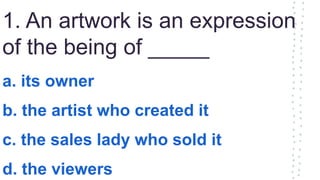
1. An artwork is an expression
of the being of _____
a. its owner
b. the artist who created it
c. the sales lady who sold it
d. the viewers
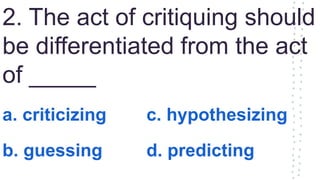
2. The act of critiquing should
be differentiated from the act
of _____
a. criticizing c. hypothesizing
b. guessing d. predicting
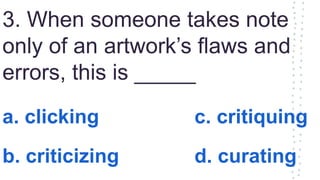
3. When someone takes note
only of an artwork’s flaws and
errors, this is _____
a. clicking c. critiquing
b. criticizing d. curating
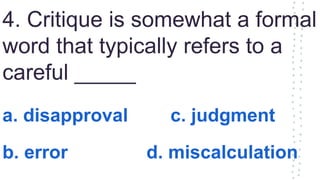
4. Critique is somewhat a formal
word that typically refers to a
careful _____
a. disapproval c. judgment
b. error d. miscalculation
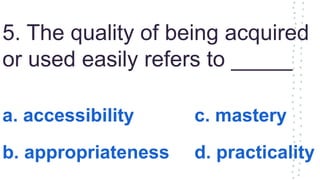
5. The quality of being acquired
or used easily refers to _____
a. accessibility c. mastery
b. appropriateness d. practicality
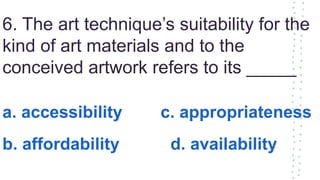
6. The art technique’s suitability for the
kind of art materials and to the
conceived artwork refers to its _____
a. accessibility c. appropriateness
b. affordability d. availability
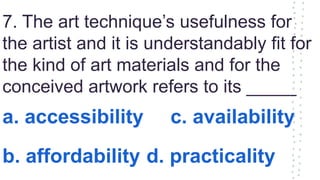
7. The art technique’s usefulness for
the artist and it is understandably fit for
the kind of art materials and for the
conceived artwork refers to its _____
a. accessibility c. availability
b. affordability d. practicality
8. For an art material to be
deemed really useful they have
to undergo _____
a. correction c. emulation
b. devaluation d. evaluation
9. An art material that is obtainable,
always ready for use and is at hand
is proof of its _____
a. appropriateness c. mastery
b. availability d. practicality
10. The means, process or methods of
using art materials in a manner that the
artist wants to use in order to create an
artwork refers to _____
a. art critique c. art technique
b. art form d. art signature
You Have to Learn that:
1. A dedicated and sincere artist
takes his or her choice of art
materials and artistic technique
seriously.
2. The way an artist critiques the available art materials
and the appropriate techniques, as one of the tasks in
creating an artwork, gives a purposeful interest and
sense of direction to what the artist is doing.
3. The critiquing of available art materials and
appropriate art techniques are necessary measures
carried out by a dedicated artist.
4. Critique refers to the detailed analysis and
assessment of something. Criticism refers to a
sharp or severe disapproval of something,
generally based on perceived faults or errors.
5. Some of the basic considerations in critiquing
available art materials are availability,
accessibility, and affordability.
6. Availability refers to the attribute of an
art material’s existence or presence for the
artist to obtain and use.
7. Accessibility refers to the attribute of an
art material to be easily acquired by the
artist without much effort or difficulty.
8. Affordability refers to the attribute of
an art material to be within the financial
capacity of the artist to purchase or buy.
9. Art technique is the manner and ability
by which an artist employs the technical
skills of a particular art.
10. Some of the considerations in critiquing
the appropriate art technique are
appropriateness, mastery and practicality.
11. Appropriateness refers to the art
technique’s suitability for the kind of art
materials and to the conceived artwork.
12. Mastery refers to the artist’s skill and
rich knowledge of the art technique.
13. Practicality refers to the art
technique’s functional and sensible
application for the creation of the
conceived art work.

02. Critiquing Available Materials and Appropriate Techniques.pptx

  • 1.
    S U BJ E C T : C O N T E M P O R A R Y P H I L I P P I N E A R T S F R O M T H E R E G I O N S T E A C H E R : I R I S H V I V I E N Z . V I N L U A N
  • 2.
    You are expectedto: 1. Point out the importance of critiquing available art materials and appropriate techniques, 2. Differentiate the difference between critiquing and criticizing, 3. Discuss ways of critiquing available art materials and appropriate techniques.
  • 3.
  • 4.
    Instruction: Read each itemcarefully. Choose the letter of the correct answer. Write the answers on your paper. Letters only and in capital letter.
  • 5.
    1. An artworkis an expression of the being of _____ a. its owner b. the artist who created it c. the sales lady who sold it d. the viewers
  • 6.
    2. The actof critiquing should be differentiated from the act of _____ a. criticizing c. hypothesizing b. guessing d. predicting
  • 7.
    3. When someonetakes note only of an artwork’s flaws and errors, this is _____ a. clicking c. critiquing b. criticizing d. curating
  • 8.
    4. Critique issomewhat a formal word that typically refers to a careful _____ a. disapproval c. judgment b. error d. miscalculation
  • 9.
    5. The qualityof being acquired or used easily refers to _____ a. accessibility c. mastery b. appropriateness d. practicality
  • 10.
    6. The arttechnique’s suitability for the kind of art materials and to the conceived artwork refers to its _____ a. accessibility c. appropriateness b. affordability d. availability
  • 11.
    7. The arttechnique’s usefulness for the artist and it is understandably fit for the kind of art materials and for the conceived artwork refers to its _____ a. accessibility c. availability b. affordability d. practicality
  • 12.
    8. For anart material to be deemed really useful they have to undergo _____ a. correction c. emulation b. devaluation d. evaluation
  • 13.
    9. An artmaterial that is obtainable, always ready for use and is at hand is proof of its _____ a. appropriateness c. mastery b. availability d. practicality
  • 14.
    10. The means,process or methods of using art materials in a manner that the artist wants to use in order to create an artwork refers to _____ a. art critique c. art technique b. art form d. art signature
  • 15.
    You Have toLearn that: 1. A dedicated and sincere artist takes his or her choice of art materials and artistic technique seriously.
  • 16.
    2. The wayan artist critiques the available art materials and the appropriate techniques, as one of the tasks in creating an artwork, gives a purposeful interest and sense of direction to what the artist is doing. 3. The critiquing of available art materials and appropriate art techniques are necessary measures carried out by a dedicated artist.
  • 17.
    4. Critique refersto the detailed analysis and assessment of something. Criticism refers to a sharp or severe disapproval of something, generally based on perceived faults or errors. 5. Some of the basic considerations in critiquing available art materials are availability, accessibility, and affordability.
  • 18.
    6. Availability refersto the attribute of an art material’s existence or presence for the artist to obtain and use. 7. Accessibility refers to the attribute of an art material to be easily acquired by the artist without much effort or difficulty.
  • 19.
    8. Affordability refersto the attribute of an art material to be within the financial capacity of the artist to purchase or buy. 9. Art technique is the manner and ability by which an artist employs the technical skills of a particular art.
  • 20.
    10. Some ofthe considerations in critiquing the appropriate art technique are appropriateness, mastery and practicality. 11. Appropriateness refers to the art technique’s suitability for the kind of art materials and to the conceived artwork.
  • 21.
    12. Mastery refersto the artist’s skill and rich knowledge of the art technique. 13. Practicality refers to the art technique’s functional and sensible application for the creation of the conceived art work.

Editor's Notes

  • #2 You will be elaborating on the importance of critiquing available art materials and appropriate techniques.
  • #6  1. c 11. a 2. a 12. b 3. B 13. c 4. c 14. c 5. a 15. c 6. c 7. d 8. d 9. b 10. c