www.europeanschoolnet.org - www.eun.org
Responsible citizenship in the 2020 world
II Congreso Internacional Menores en las TIC
II International Congress “Children in ICT”
Aprendiendo un uso responsable de las TIC
Learning a responsible usage of ICT
Recinto Ferial /Exhibition Site Luis Adaro (Gijón)
26-27 Octubre/October 2010
Janice Richardson
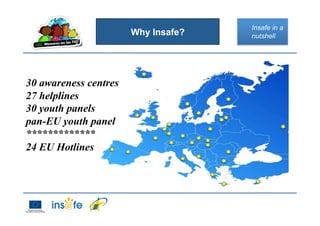
Why Insafe?
30 awareness centres
27 helplines
30 youth panels
pan-EU youth panel
*************
24 EU Hotlines
Insafe in a
nutshell
Safer Internet Day
Let’s work together…
Celebrated in 65 countries worldwide
It’s more than a game, its your life!
8 FEBRUARY 2011
SID
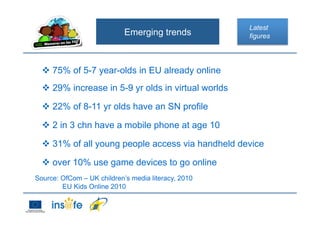
Emerging trends
 75% of 5-7 year-olds in EU already online
 29% increase in 5-9 yr olds in virtual worlds
 22% of 8-11 yr olds have an SN profile
 2 in 3 chn have a mobile phone at age 10
 31% of all young people access via handheld device
 over 10% use game devices to go online
Source: OfCom – UK children’s media literacy, 2010
EU Kids Online 2010
Latest
figures
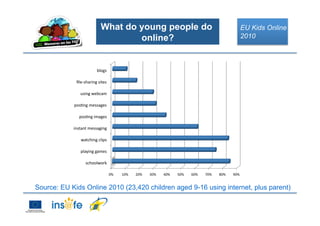
What do young people do
online?
0%	
   10%	
   20%	
   30%	
   40%	
   50%	
   60%	
   70%	
   80%	
   90%	
  
schoolwork	
  
playing	
  games	
  
watching	
  clips	
  
instant	
  messaging	
  
pos>ng	
  images	
  
pos>ng	
  messages	
  
using	
  webcam	
  
file-­‐sharing	
  sites	
  
blogs	
  
Source: EU Kids Online 2010 (23,420 children aged 9-16 using internet, plus parent)
EU Kids Online
2010
More trends!
 Facebook: 100 million users in first 9 months; took TV 13
years to reach same figure
 Facebook: 500 million active user spending 700 billion
minutes monthly
 There are currently 50 million tweets per day
 99% of all movies watched online in USA are via Youtube
Life online
More trends!
 Gamers spend an average 8 hours weekly playing online
 18 million accounts are registered on Second Life
 13 million players make World of Warcraft (“WoW”) world’s
largest Massive Multiplayer Online Role Playing Game
 Young people sleep 2 to 3 hours less nightly than in 2000
Life online
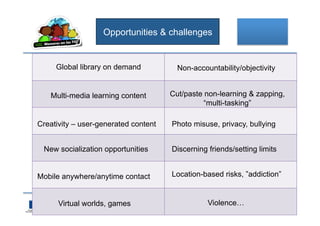
Opportunities & challenges
Global library on demand Non-accountability/objectivity
Cut/paste non-learning & zapping,
“multi-tasking”
Virtual worlds, games
Mobile anywhere/anytime contact
New socialization opportunities
Creativity – user-generated content
Multi-media learning content
Photo misuse, privacy, bullying
Discerning friends/setting limits
Location-based risks, ”addiction”
Violence…
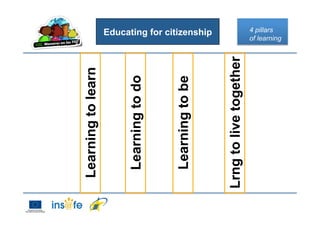
Educating for citizenship
Learningtolearn
Lrngtolivetogether
Learningtodo
Learningtobe
4 pillars
of learning
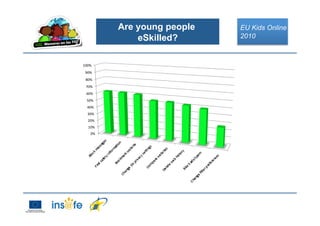
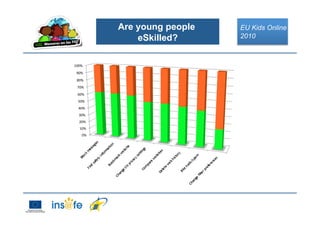
Are young people
eSkilled?
0%	
  
10%	
  
20%	
  
30%	
  
40%	
  
50%	
  
60%	
  
70%	
  
80%	
  
90%	
  
100%	
  
EU Kids Online
2010
Are young people
eSkilled?
EU Kids Online
2010
0%	
  
10%	
  
20%	
  
30%	
  
40%	
  
50%	
  
60%	
  
70%	
  
80%	
  
90%	
  
100%	
  
Learning to be?
15% of 11-16 year olds have received peer to peer “sexual messages or
images …[meaning] talk about having sex or images of people naked or
having sex,” and 3% say they have sent or posted such messages.
Privacy
Interculturaldialogue
4 pillars
of learning
Social
engagement
3 challenges to meet
 curriculum for progressive, systematic development
of skills
Adressing
the issues
 empowerment of parents – they have a real role to
play!
 socialisation of children into today’s information and
knowledge society from early age
Thank you for listening ;-)
For further information: Janice.Richardson@eun.org
info-insafe@eun.org

01. menorestic2010 richardson

  • 1.
    www.europeanschoolnet.org - www.eun.org Responsiblecitizenship in the 2020 world II Congreso Internacional Menores en las TIC II International Congress “Children in ICT” Aprendiendo un uso responsable de las TIC Learning a responsible usage of ICT Recinto Ferial /Exhibition Site Luis Adaro (Gijón) 26-27 Octubre/October 2010 Janice Richardson
  • 2.
    Why Insafe? 30 awarenesscentres 27 helplines 30 youth panels pan-EU youth panel ************* 24 EU Hotlines Insafe in a nutshell
  • 3.
    Safer Internet Day Let’swork together… Celebrated in 65 countries worldwide It’s more than a game, its your life! 8 FEBRUARY 2011 SID
  • 4.
    Emerging trends  75% of5-7 year-olds in EU already online  29% increase in 5-9 yr olds in virtual worlds  22% of 8-11 yr olds have an SN profile  2 in 3 chn have a mobile phone at age 10  31% of all young people access via handheld device  over 10% use game devices to go online Source: OfCom – UK children’s media literacy, 2010 EU Kids Online 2010 Latest figures
  • 5.
    What do youngpeople do online? 0%   10%   20%   30%   40%   50%   60%   70%   80%   90%   schoolwork   playing  games   watching  clips   instant  messaging   pos>ng  images   pos>ng  messages   using  webcam   file-­‐sharing  sites   blogs   Source: EU Kids Online 2010 (23,420 children aged 9-16 using internet, plus parent) EU Kids Online 2010
  • 6.
    More trends!  Facebook: 100million users in first 9 months; took TV 13 years to reach same figure  Facebook: 500 million active user spending 700 billion minutes monthly  There are currently 50 million tweets per day  99% of all movies watched online in USA are via Youtube Life online
  • 7.
    More trends!  Gamers spendan average 8 hours weekly playing online  18 million accounts are registered on Second Life  13 million players make World of Warcraft (“WoW”) world’s largest Massive Multiplayer Online Role Playing Game  Young people sleep 2 to 3 hours less nightly than in 2000 Life online
  • 8.
    Opportunities & challenges Globallibrary on demand Non-accountability/objectivity Cut/paste non-learning & zapping, “multi-tasking” Virtual worlds, games Mobile anywhere/anytime contact New socialization opportunities Creativity – user-generated content Multi-media learning content Photo misuse, privacy, bullying Discerning friends/setting limits Location-based risks, ”addiction” Violence…
  • 9.
  • 10.
    Are young people eSkilled? 0%   10%   20%   30%   40%   50%   60%   70%   80%   90%   100%   EU Kids Online 2010
  • 11.
    Are young people eSkilled? EUKids Online 2010 0%   10%   20%   30%   40%   50%   60%   70%   80%   90%   100%  
  • 12.
    Learning to be? 15%of 11-16 year olds have received peer to peer “sexual messages or images …[meaning] talk about having sex or images of people naked or having sex,” and 3% say they have sent or posted such messages. Privacy Interculturaldialogue 4 pillars of learning Social engagement
  • 13.
    3 challenges tomeet  curriculum for progressive, systematic development of skills Adressing the issues  empowerment of parents – they have a real role to play!  socialisation of children into today’s information and knowledge society from early age
  • 14.
    Thank you forlistening ;-) For further information: Janice.Richardson@eun.org info-insafe@eun.org