7 years after…
Linking national expectations
       & EU-focused actions
                    Janice Richardson
                         15 May 2012


                           www.saferinternet.org
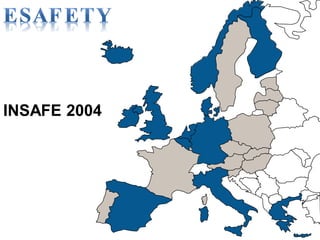
INSAFE 2004
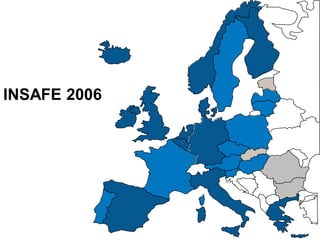
INSAFE 2006
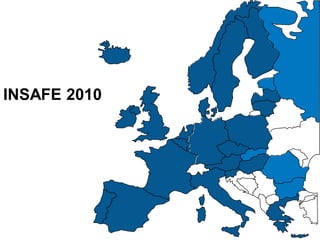
INSAFE 2010
3 key Insafe Expectations
• move from safety messages to in-depth
  safety education
• focus on the positive
• track emerging issues across Europe
  and share resources to respond


                                          5
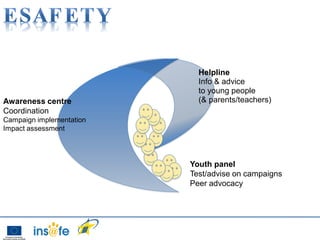
Helpline
                            Info & advice
                            to young people
Awareness centre            (& parents/teachers)
Coordination
Campaign implementation
Impact assessment


                          Youth panel
                          Test/advise on campaigns
                          Peer advocacy
SID

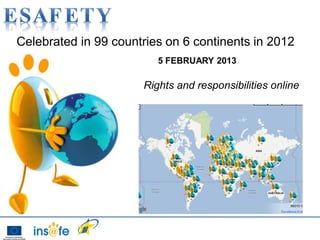
Celebrated in 99 countries on 6 continents in 2012
                         5 FEBRUARY 2013

                      Rights and responsibilities online
Users are getting younger…
                               and older!


•   A Swedish report states 50% of 4 yr olds go online*
•   74% of 5-7 year-olds in UK have access to internet**
•   29% increase in 5-9 yr olds in virtual worlds in 2010
•   over 50s in France make 48% of online purchases
                         *Beantin Webbkommunikation, 2010.
                         **OfCom – UK children’s media literacy, 2010 p.16;
                         LH2/kelkoo, France 2011
User-resilience

    Risk awareness/evaluation

     Peer advocacy/support

   Positive experience/content

Parent/teacher interaction/mediation

     Literacy building blocks
Emerging trends
      Communication is
        increasingly mobile


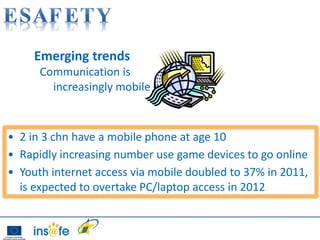
• 2 in 3 chn have a mobile phone at age 10
• Rapidly increasing number use game devices to go online
• Youth internet access via mobile doubled to 37% in 2011,
  is expected to overtake PC/laptop access in 2012
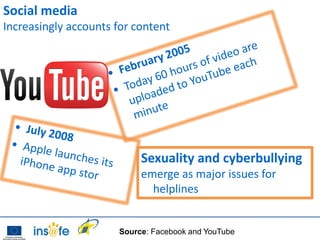
Social media
Increasingly accounts for content


                           Sexuality and cyberbullying
                           emerge as major issues for
                             helplines


                      Source: Facebook and YouTube
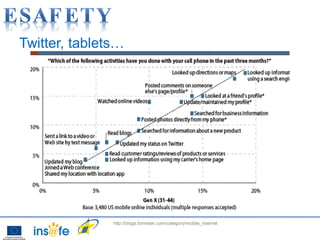
Twitter, tablets…


               http://blogs.forrester.com/category/mobile_internet
Youth
• to keep us informed of emerging issues
• to educate peers
• to take responsibility as users and digital
  citizens – investing in our future
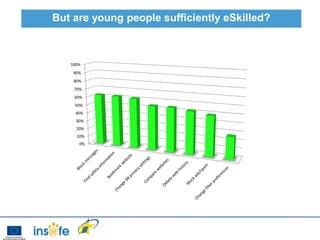
But are young people sufficiently eSkilled?
           EU Kids Online 2010


   100%
    90%
    80%
    70%
    60%
    50%
    40%
     30%
     20%
     10%
      0%
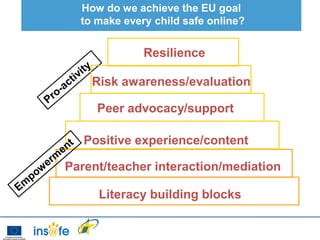
How do we achieve the EU goal
  to make every child safe online?


              Resilience

    Risk awareness/evaluation

     Peer advocacy/support

   Positive experience/content

Parent/teacher interaction/mediation

     Literacy building blocks
Children are great imitators. So give them
       something great to imitate.


  For further information: Janice.Richardson@eun.org

                           info-insafe@eun.org

Janice richardson

  • 1.
    7 years after… Linkingnational expectations & EU-focused actions Janice Richardson 15 May 2012 www.saferinternet.org
  • 2.
  • 3.
  • 4.
  • 5.
    3 key InsafeExpectations • move from safety messages to in-depth safety education • focus on the positive • track emerging issues across Europe and share resources to respond 5
  • 6.
    Helpline Info & advice to young people Awareness centre (& parents/teachers) Coordination Campaign implementation Impact assessment Youth panel Test/advise on campaigns Peer advocacy
  • 7.
    SID Celebrated in 99countries on 6 continents in 2012 5 FEBRUARY 2013 Rights and responsibilities online
  • 8.
    Users are gettingyounger… and older! • A Swedish report states 50% of 4 yr olds go online* • 74% of 5-7 year-olds in UK have access to internet** • 29% increase in 5-9 yr olds in virtual worlds in 2010 • over 50s in France make 48% of online purchases *Beantin Webbkommunikation, 2010. **OfCom – UK children’s media literacy, 2010 p.16; LH2/kelkoo, France 2011
  • 11.
    User-resilience Risk awareness/evaluation Peer advocacy/support Positive experience/content Parent/teacher interaction/mediation Literacy building blocks
  • 13.
    Emerging trends Communication is increasingly mobile • 2 in 3 chn have a mobile phone at age 10 • Rapidly increasing number use game devices to go online • Youth internet access via mobile doubled to 37% in 2011, is expected to overtake PC/laptop access in 2012
  • 14.
    Social media Increasingly accountsfor content Sexuality and cyberbullying emerge as major issues for helplines Source: Facebook and YouTube
  • 15.
    Twitter, tablets… http://blogs.forrester.com/category/mobile_internet
  • 16.
    Youth • to keepus informed of emerging issues • to educate peers • to take responsibility as users and digital citizens – investing in our future
  • 17.
    But are youngpeople sufficiently eSkilled? EU Kids Online 2010 100% 90% 80% 70% 60% 50% 40% 30% 20% 10% 0%
  • 18.
    How do weachieve the EU goal to make every child safe online? Resilience Risk awareness/evaluation Peer advocacy/support Positive experience/content Parent/teacher interaction/mediation Literacy building blocks
  • 19.
    Children are greatimitators. So give them something great to imitate. For further information: Janice.Richardson@eun.org info-insafe@eun.org