Presentation Topic
DDL VS DML
Present By
Shahbaz Khan Lund
Inayatullah Panhwar
Faveed Ali Siyal
Sayed Karamat Ali Shah
SQL
 SQL is a standardized query language for
requesting information from a database.
 The original version called SEQUEL
(structured English query language) was
designed by an IBM research center in 1974 and
1975.
 SQL was first introduced as a commercial
database system in 1979 by Oracle Corporation.
DDL(Data definition language)
 DDL stands for Data Definition
Language.
 DDL statements are used to build and
modify the structure of tables and
other objects in the database.
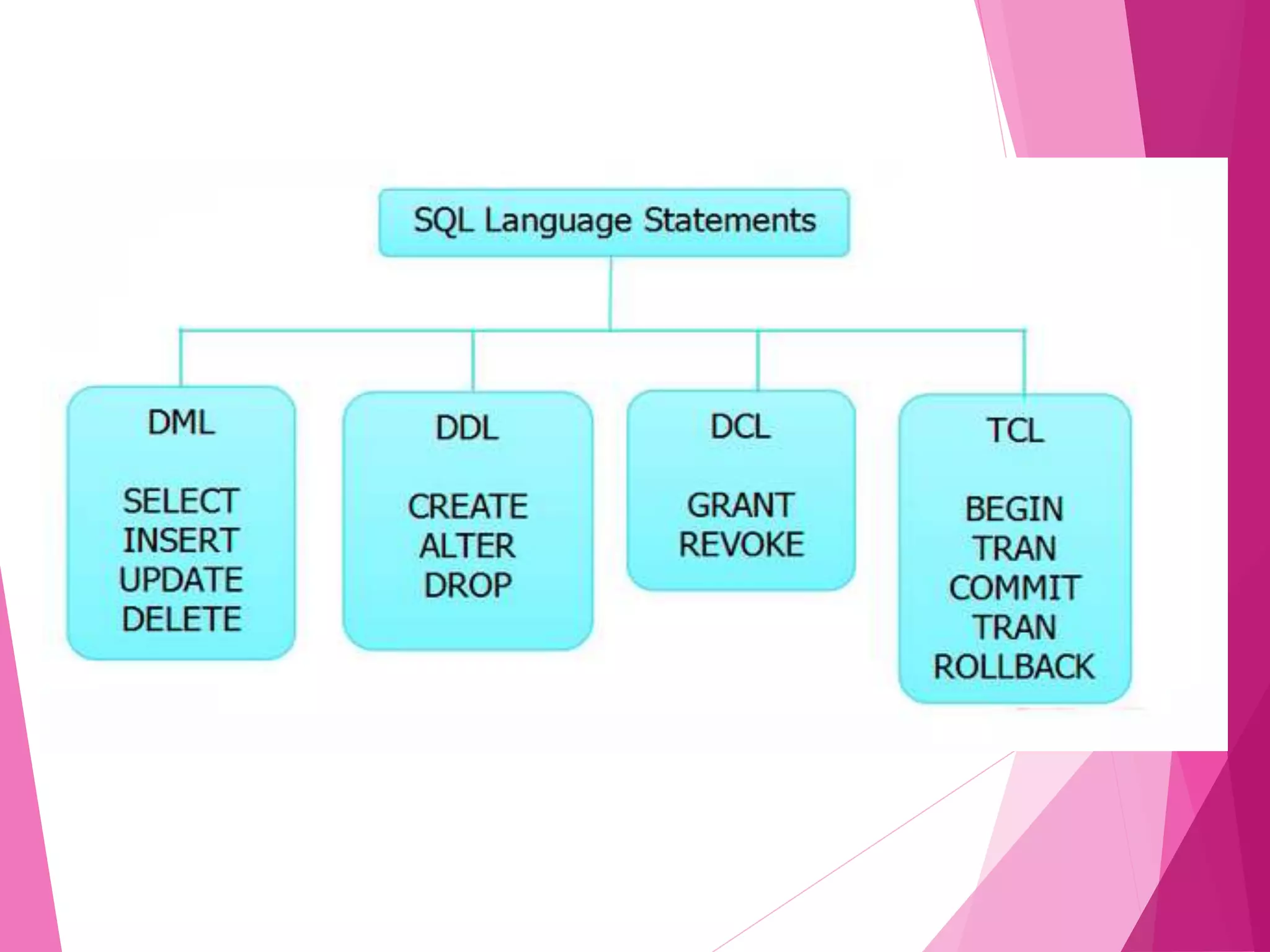
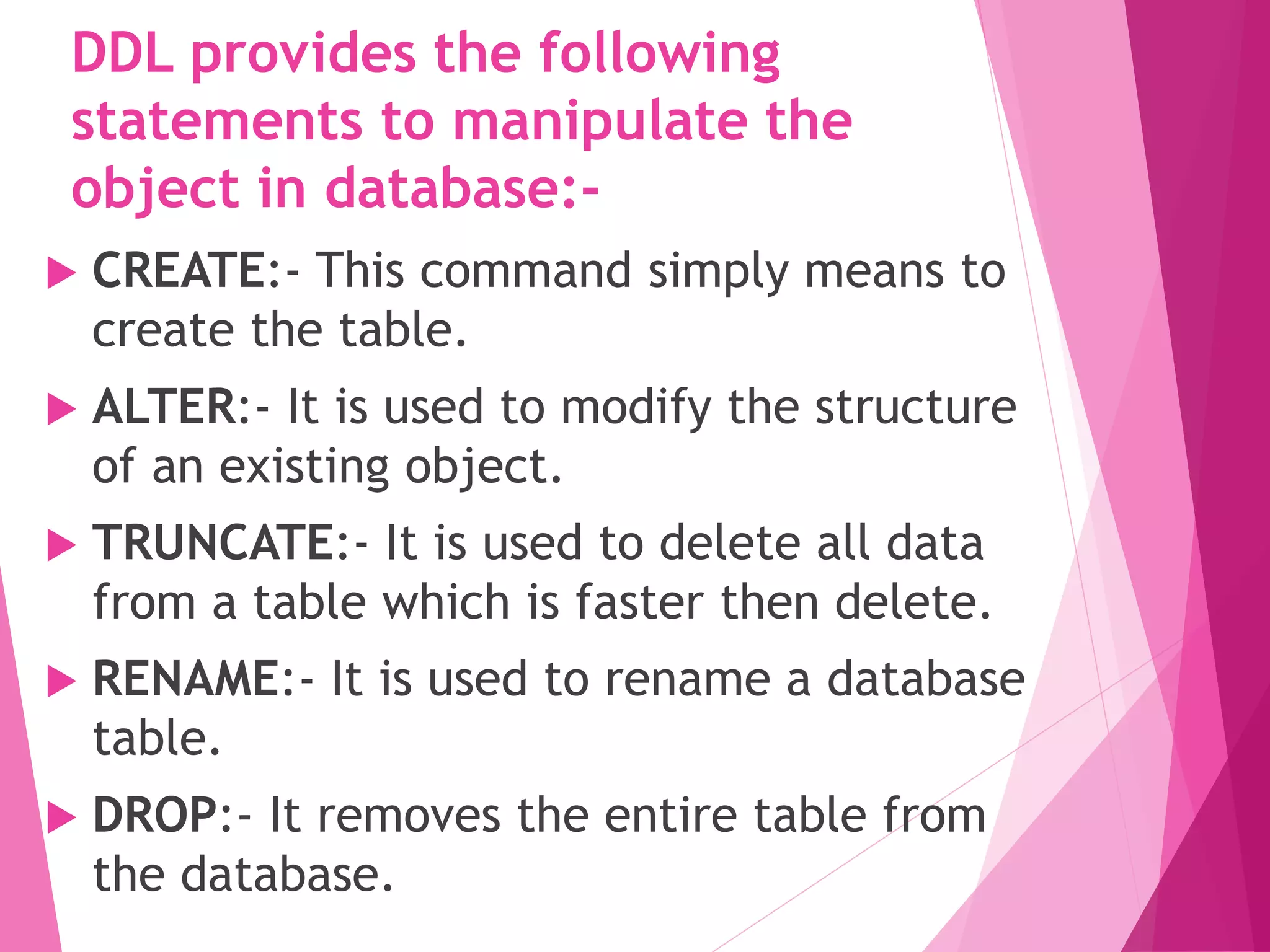
 CREATE:- This command simply means to
create the table.
 ALTER:- It is used to modify the structure
of an existing object.
 TRUNCATE:- It is used to delete all data
from a table which is faster then delete.
 RENAME:- It is used to rename a database
table.
 DROP:- It removes the entire table from
the database.
DDL provides the following
statements to manipulate the
object in database:-
Inayatullah Panhwar
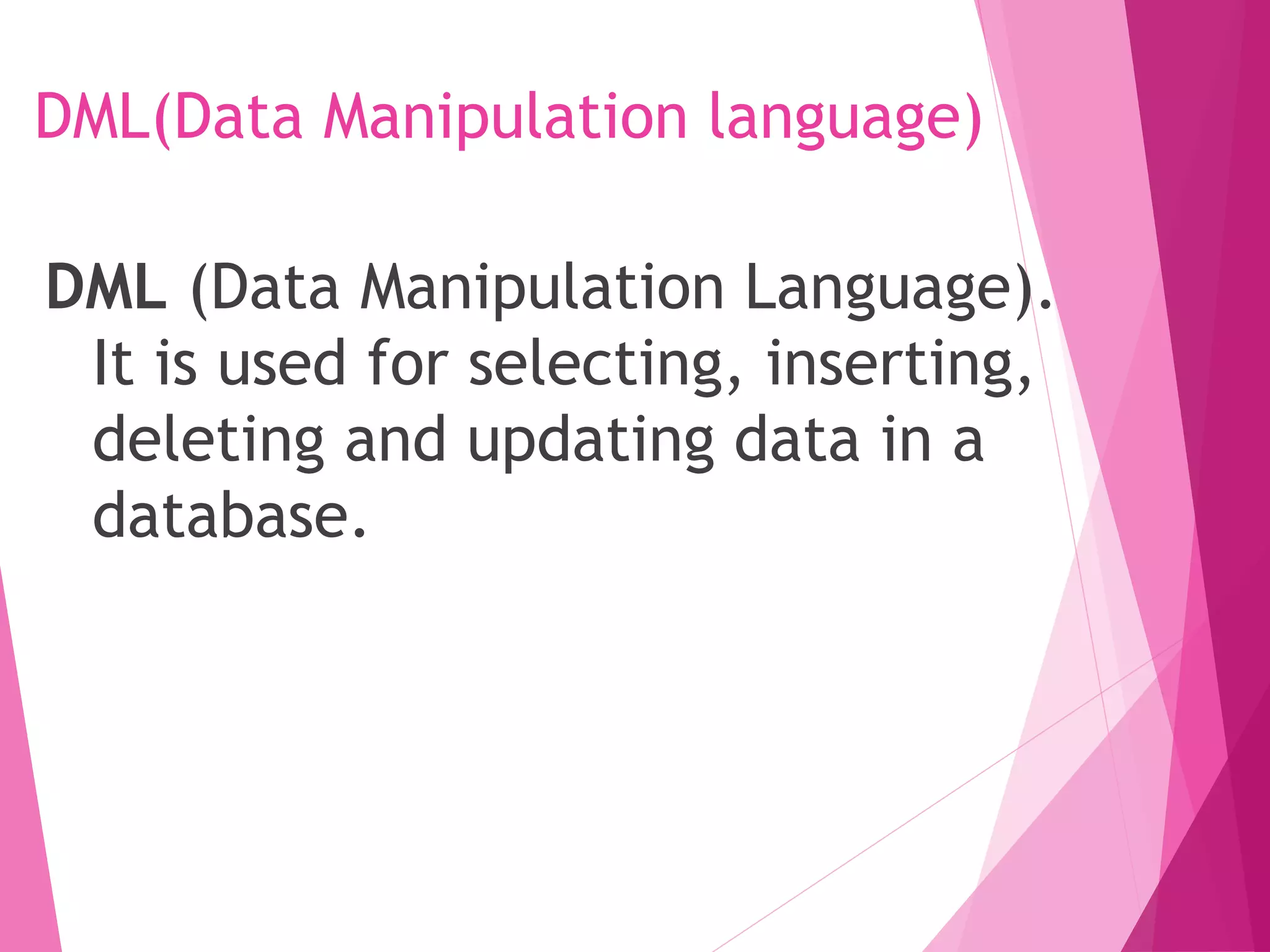
DML(Data Manipulation language)
DML (Data Manipulation Language).
It is used for selecting, inserting,
deleting and updating data in a
database.
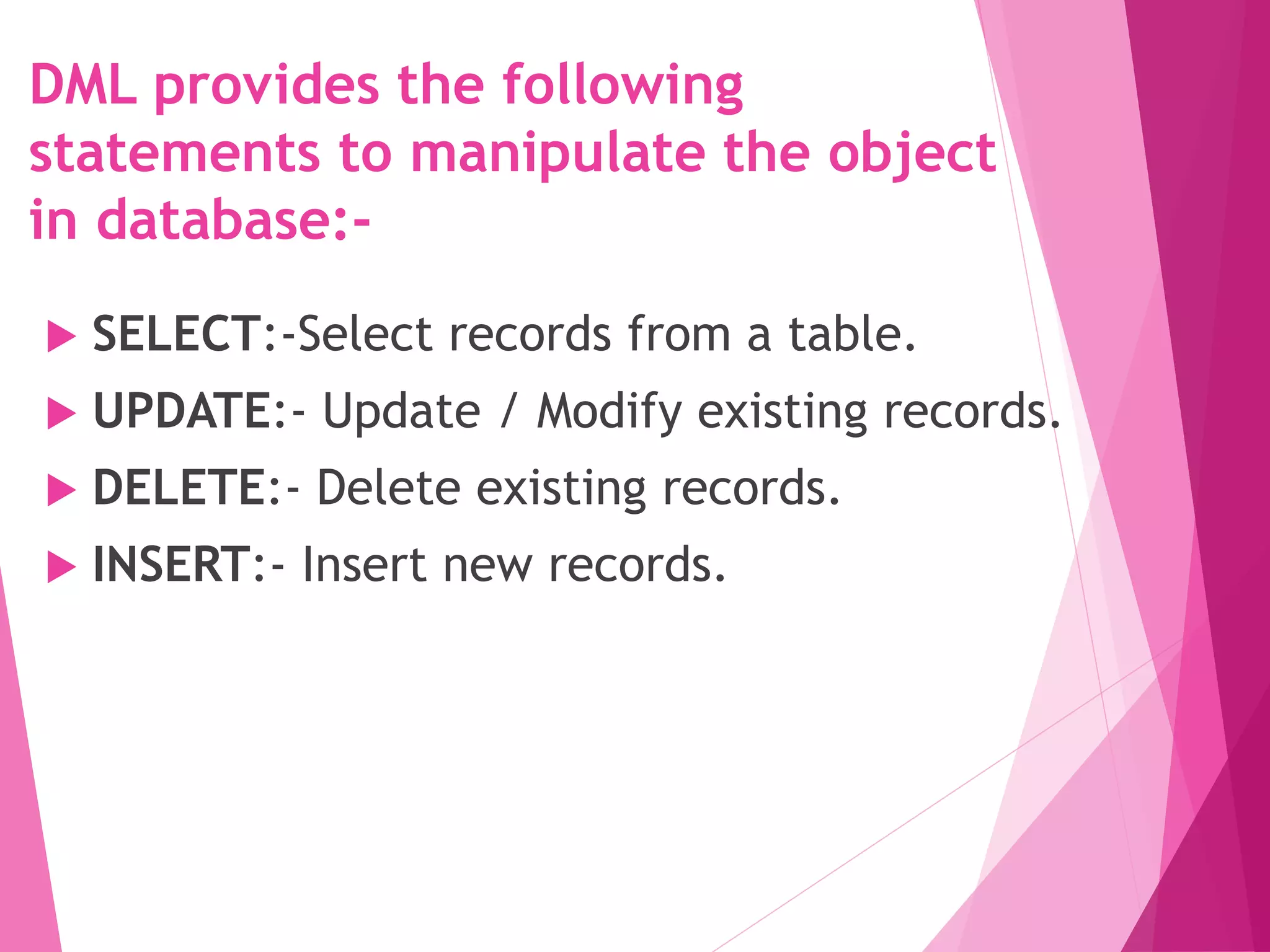
 SELECT:-Select records from a table.
 UPDATE:- Update / Modify existing records.
 DELETE:- Delete existing records.
 INSERT:- Insert new records.
DML provides the following
statements to manipulate the object
in database:-
Faveed Ali Siyal
Advantages of DML
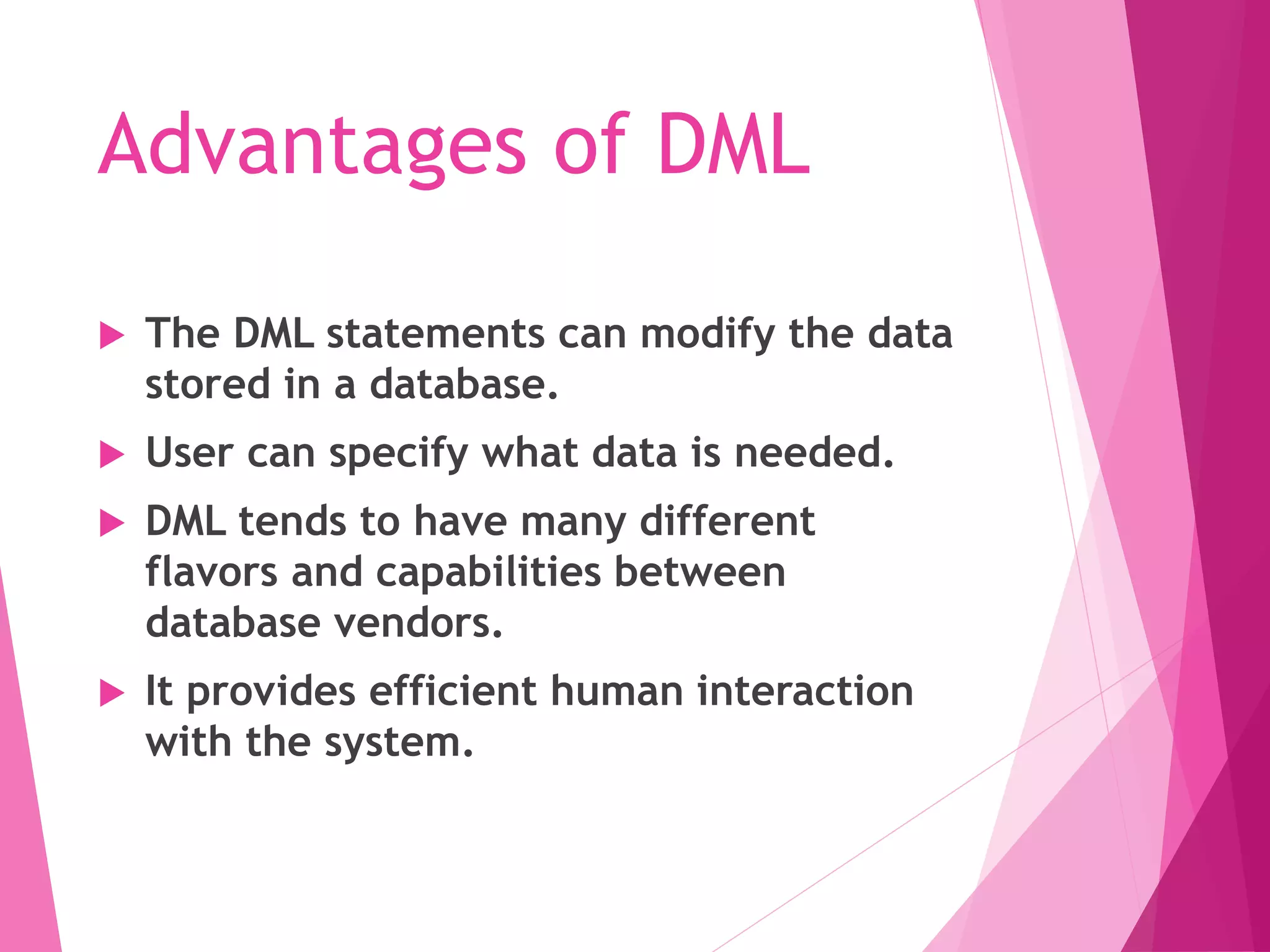
 The DML statements can modify the data
stored in a database.
 User can specify what data is needed.
 DML tends to have many different
flavors and capabilities between
database vendors.
 It provides efficient human interaction
with the system.
Disadvantages of DML
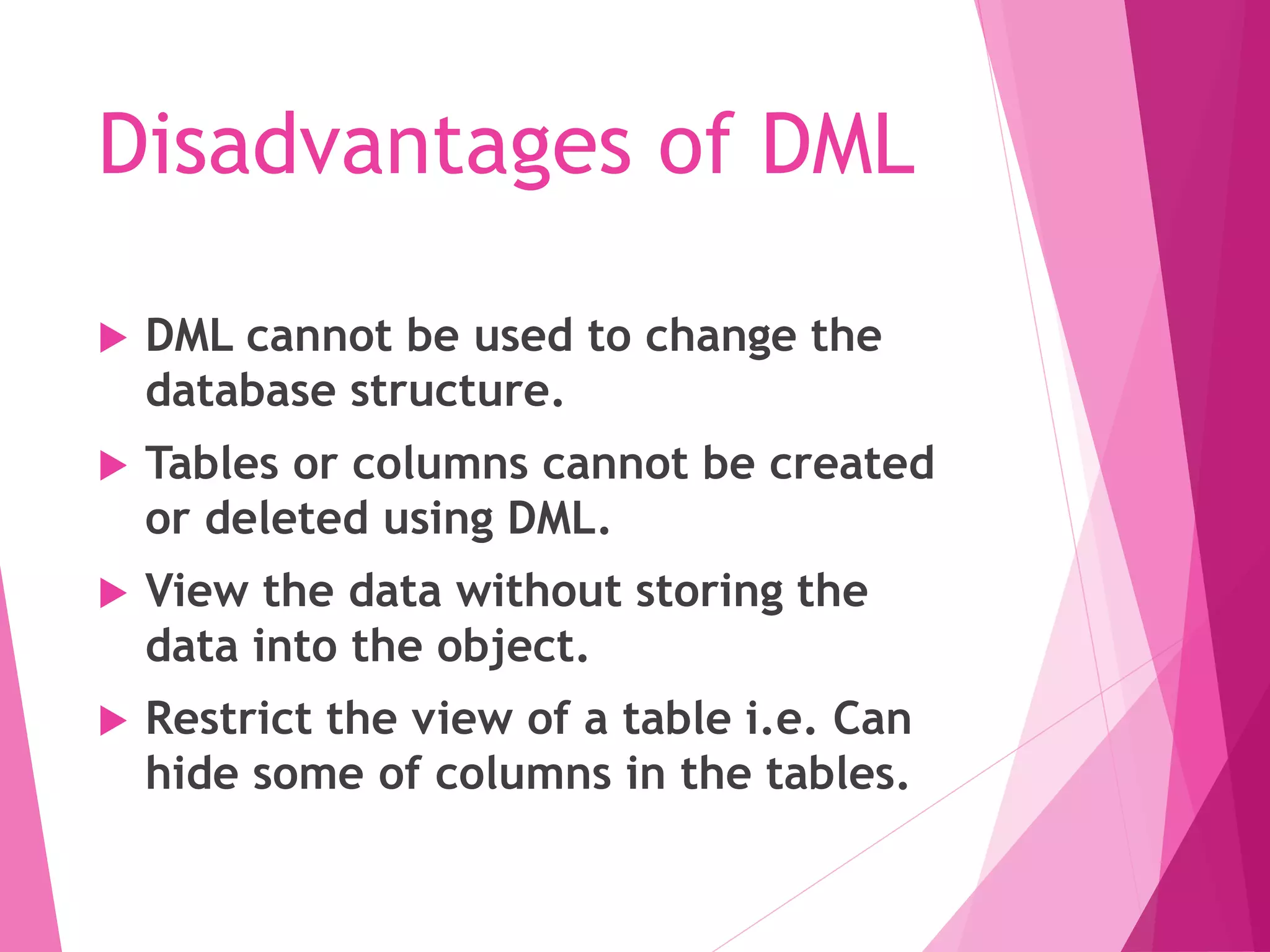
 DML cannot be used to change the
database structure.
 Tables or columns cannot be created
or deleted using DML.
 View the data without storing the
data into the object.
 Restrict the view of a table i.e. Can
hide some of columns in the tables.
Sayyed Karamat Shah
will do Practical
Of DDL and DML
statements .
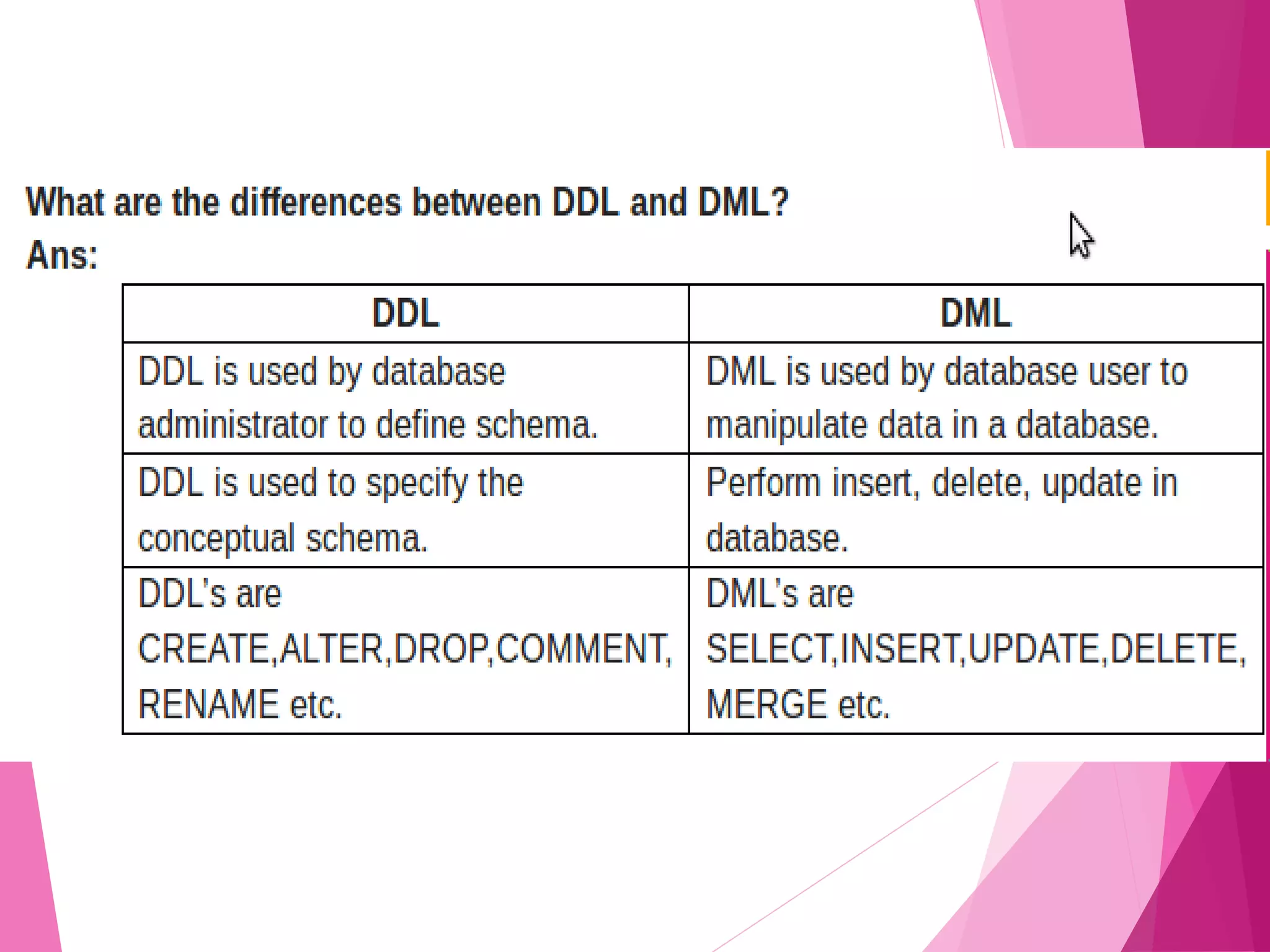
Ddl vs dml

Ddl vs dml

  • 2.
    Presentation Topic DDL VSDML Present By Shahbaz Khan Lund Inayatullah Panhwar Faveed Ali Siyal Sayed Karamat Ali Shah
  • 3.
    SQL  SQL isa standardized query language for requesting information from a database.  The original version called SEQUEL (structured English query language) was designed by an IBM research center in 1974 and 1975.  SQL was first introduced as a commercial database system in 1979 by Oracle Corporation.
  • 5.
    DDL(Data definition language) DDL stands for Data Definition Language.  DDL statements are used to build and modify the structure of tables and other objects in the database.
  • 6.
     CREATE:- Thiscommand simply means to create the table.  ALTER:- It is used to modify the structure of an existing object.  TRUNCATE:- It is used to delete all data from a table which is faster then delete.  RENAME:- It is used to rename a database table.  DROP:- It removes the entire table from the database. DDL provides the following statements to manipulate the object in database:-
  • 7.
  • 8.
    DML(Data Manipulation language) DML(Data Manipulation Language). It is used for selecting, inserting, deleting and updating data in a database.
  • 9.
     SELECT:-Select recordsfrom a table.  UPDATE:- Update / Modify existing records.  DELETE:- Delete existing records.  INSERT:- Insert new records. DML provides the following statements to manipulate the object in database:-
  • 11.
  • 12.
    Advantages of DML The DML statements can modify the data stored in a database.  User can specify what data is needed.  DML tends to have many different flavors and capabilities between database vendors.  It provides efficient human interaction with the system.
  • 13.
    Disadvantages of DML DML cannot be used to change the database structure.  Tables or columns cannot be created or deleted using DML.  View the data without storing the data into the object.  Restrict the view of a table i.e. Can hide some of columns in the tables.
  • 14.
    Sayyed Karamat Shah willdo Practical Of DDL and DML statements .