Designing In
Complexity
Julie Guinn
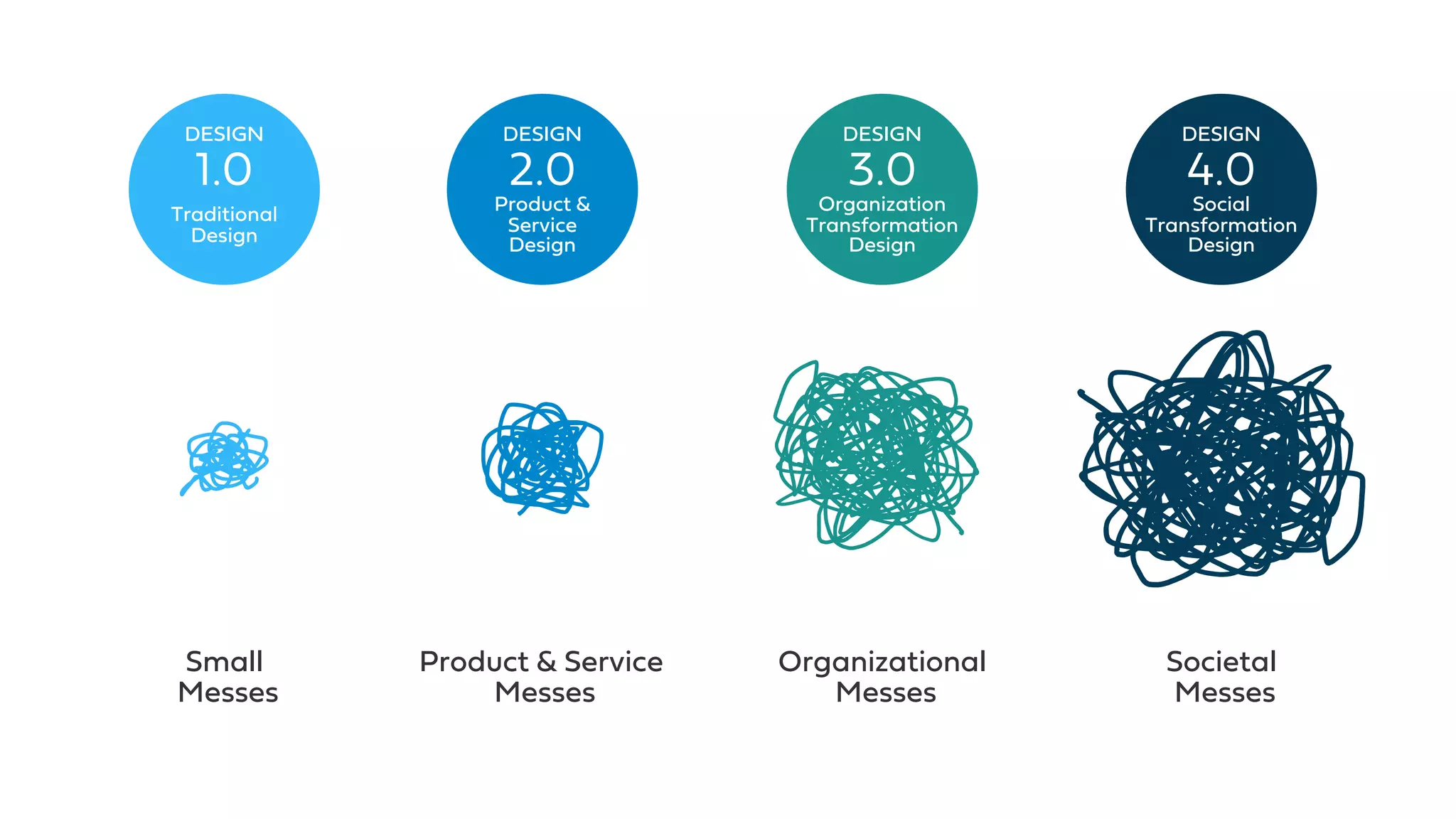
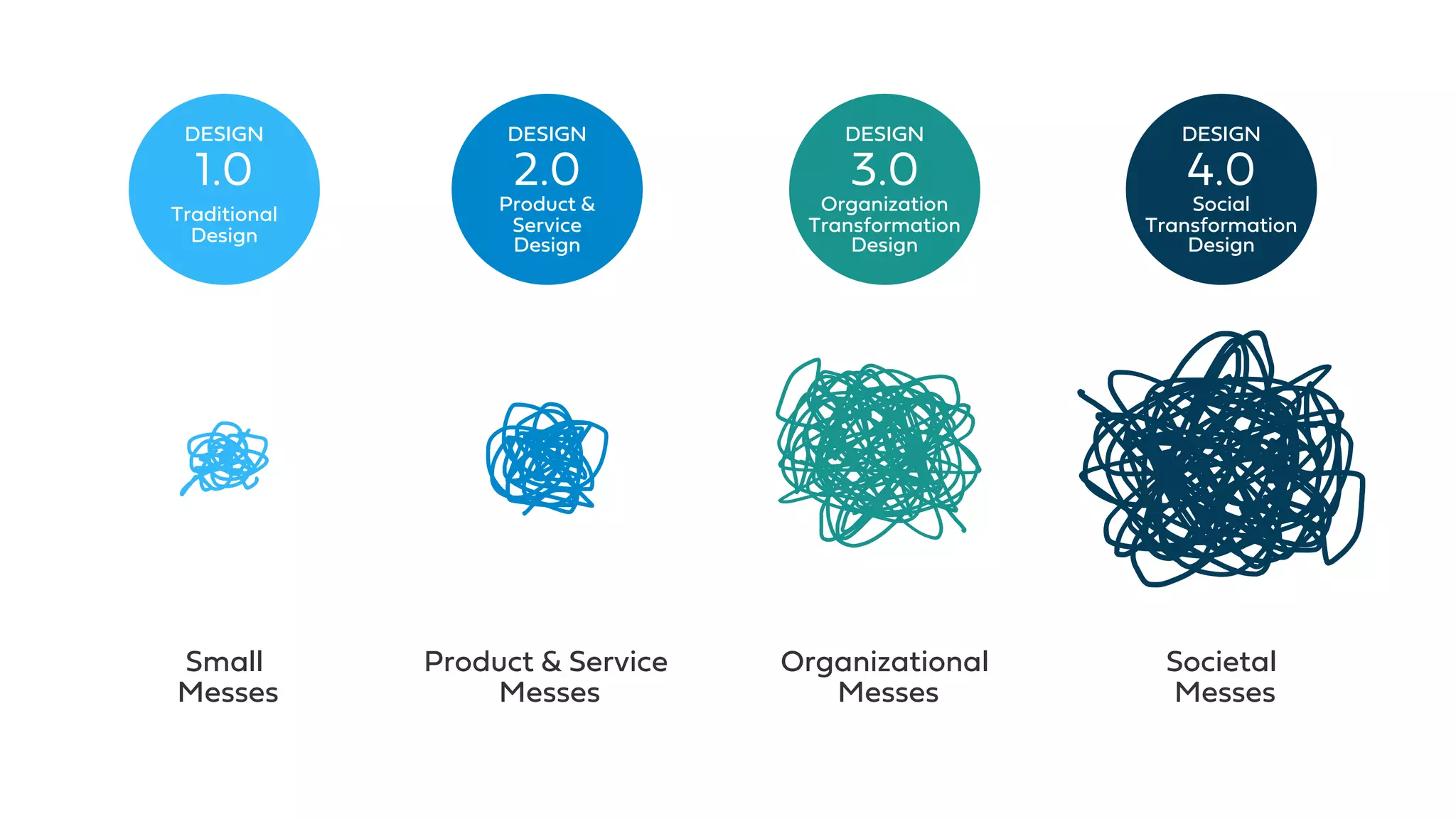
DESIGN
4.0
Social
Transformation
Design
DESIGN
3.0
Organization
Transformation
Design
DESIGN
2.0
Product &
Service
Design
DESIGN
1.0
Traditional
Design
Small
Messes
Product & Service
Messes
Organizational
Messes
Societal
Messes
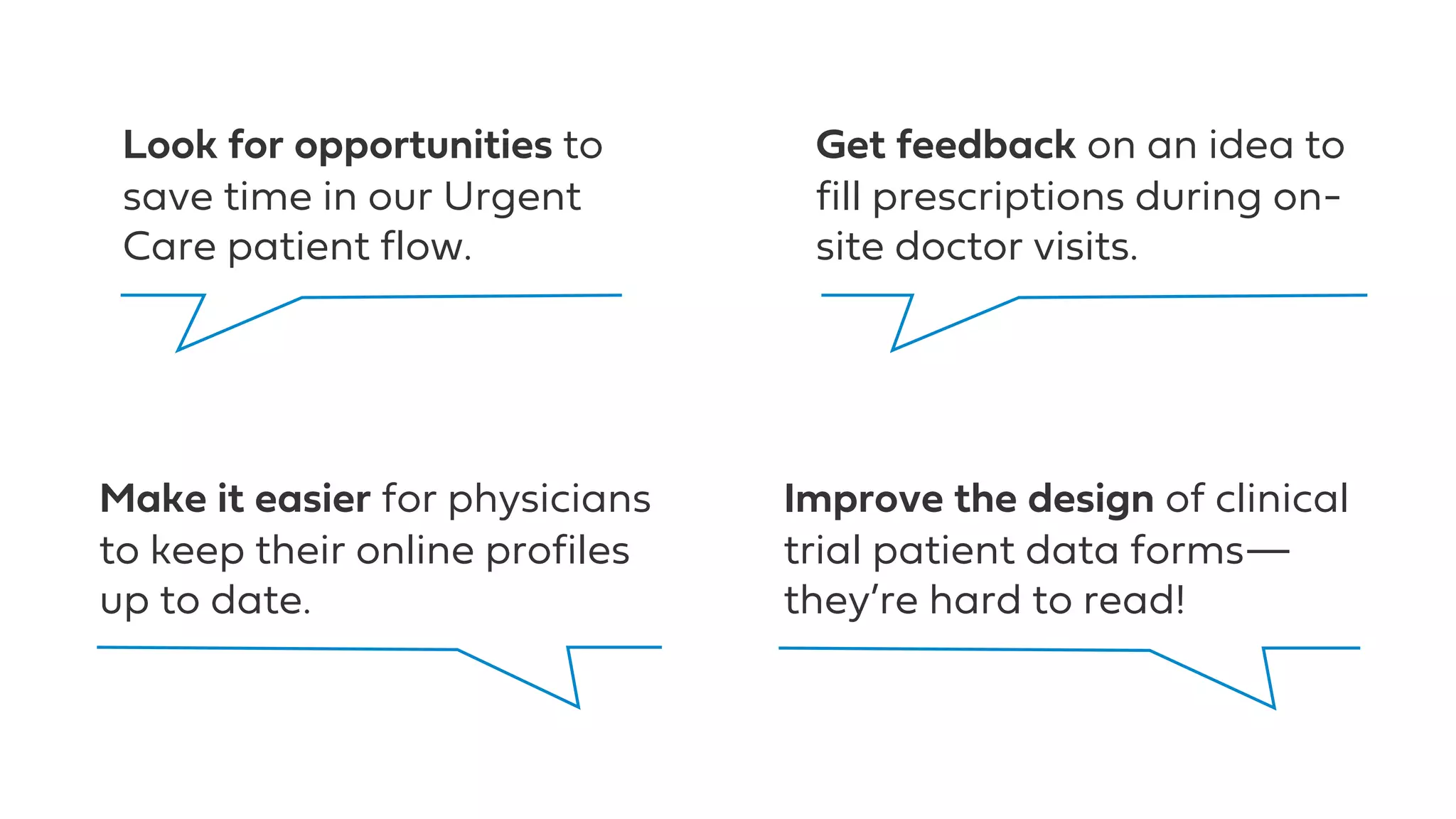
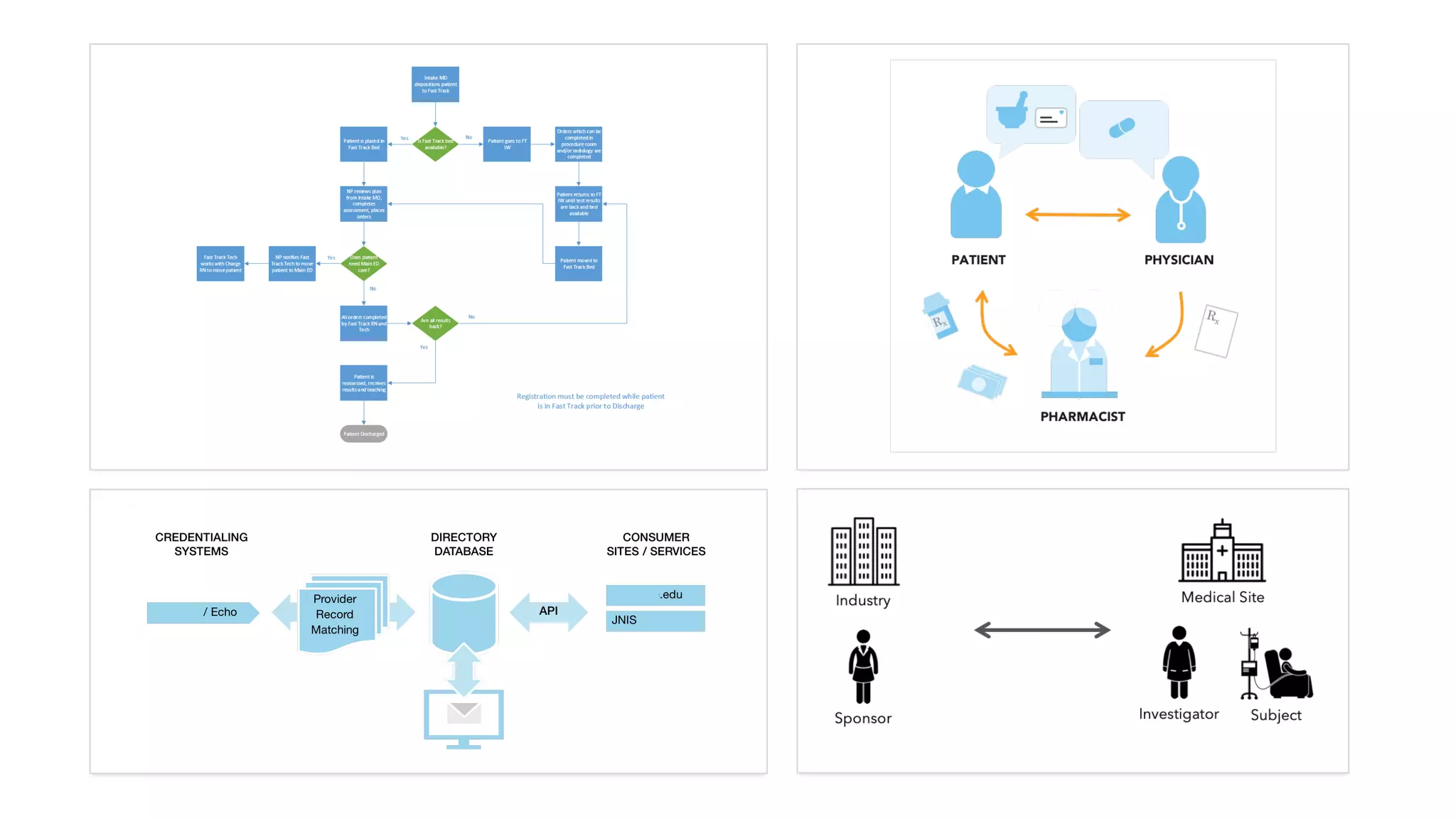
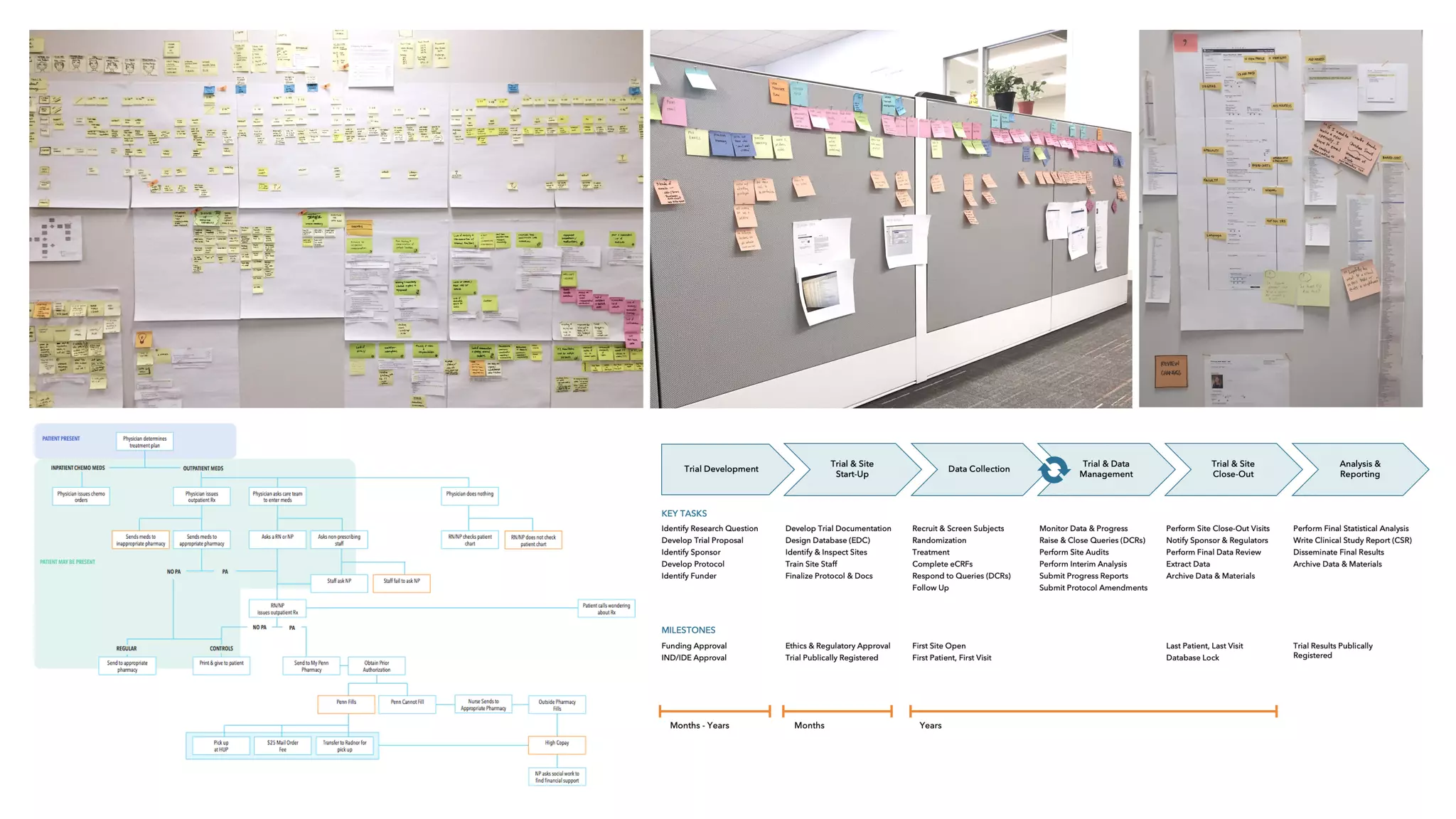
Make it easier for physicians
to keep their online profiles
up to date.
Get feedback on an idea to
fill prescriptions during on-
site doctor visits.
Look for opportunities to
save time in our Urgent
Care patient flow.
Improve the design of clinical
trial patient data forms—
they’re hard to read!
DESIGN
4.0
Social
Transformation
Design
DESIGN
3.0
Organization
Transformation
Design
DESIGN
2.0
Product &
Service
Design
DESIGN
1.0
Traditional
Design
Small
Messes
Product & Service
Messes
Organizational
Messes
Societal
Messes
Complex Adaptive Systems
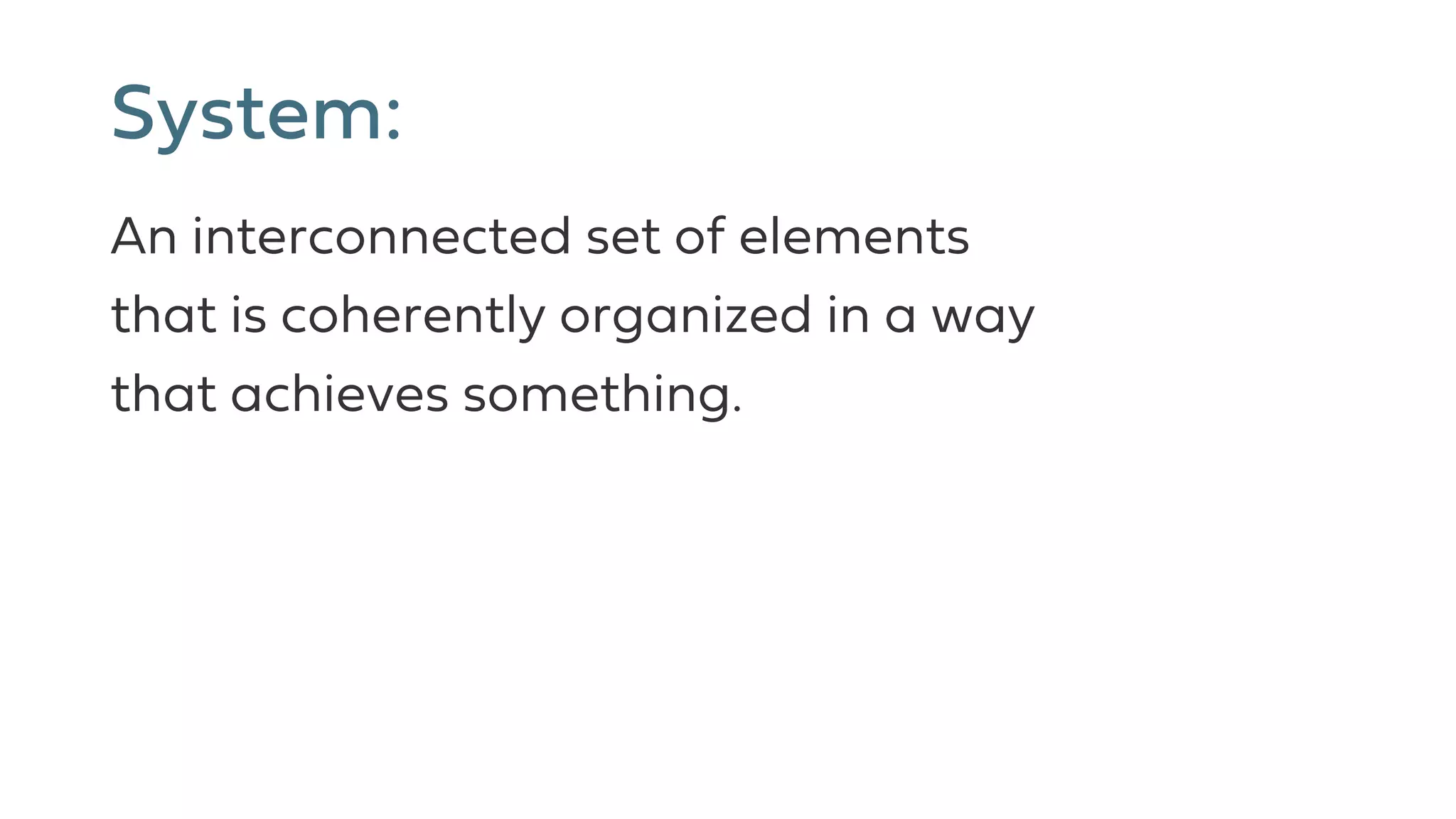
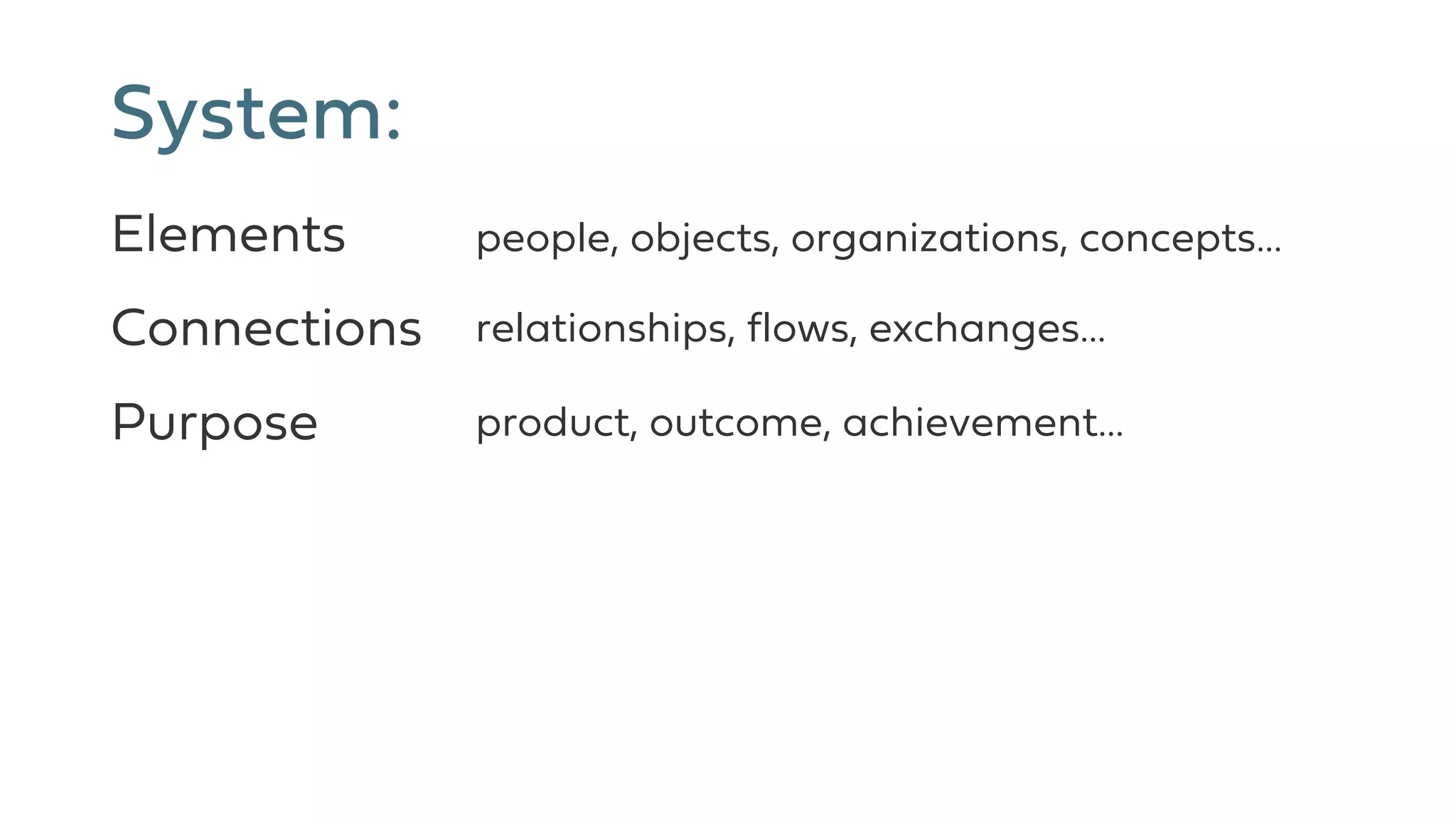
System:
An interconnected set of elements
that is coherently organized in a way
that achieves something.
System:
Elements
Connections
Purpose product, outcome, achievement…
relationships, flows, exchanges…
people, objects, organizations, concepts…
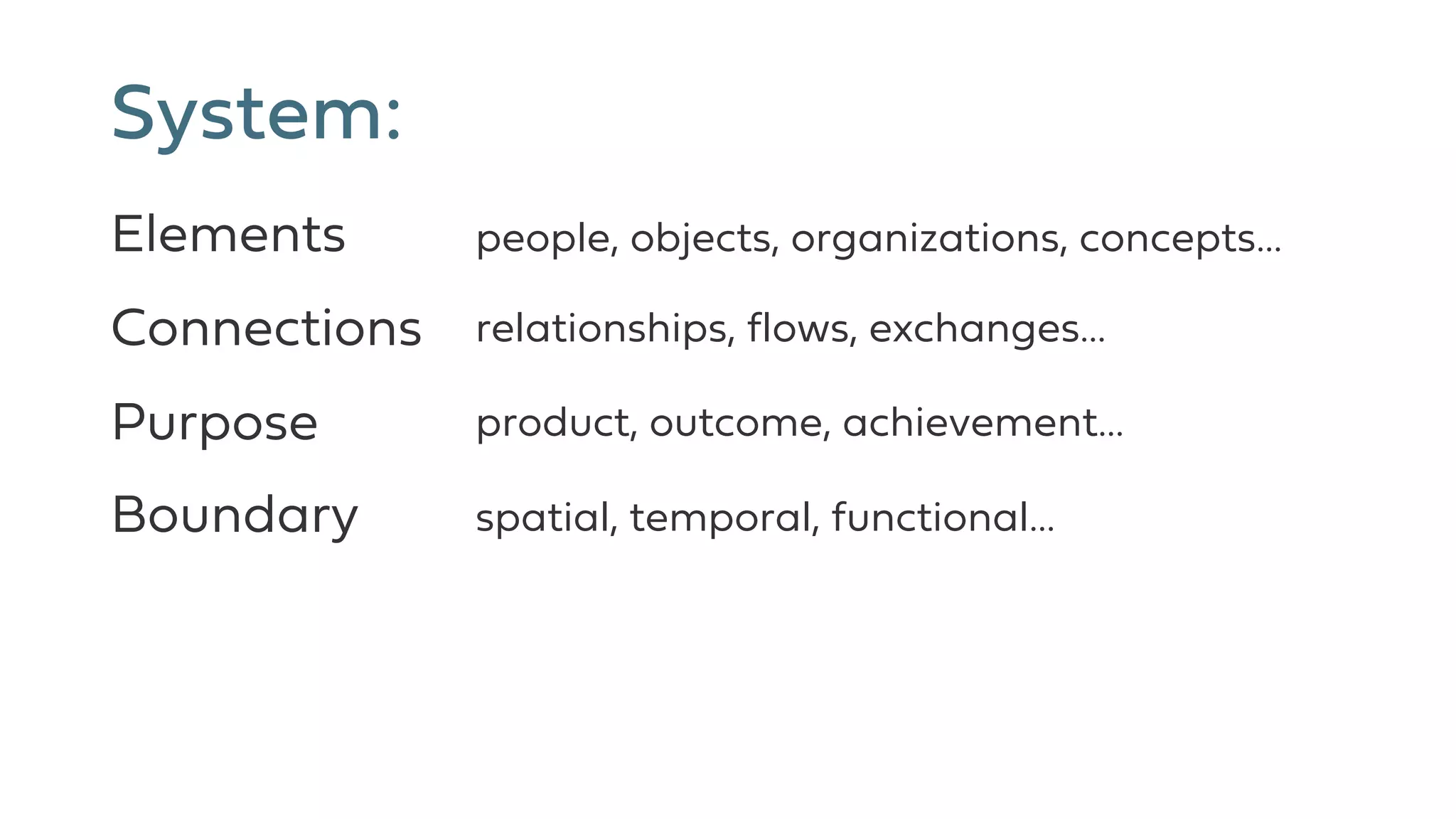
System:
Elements
Connections
Purpose
Boundary
product, outcome, achievement…
relationships, flows, exchanges…
people, objects, organizations, concepts…
spatial, temporal, functional…
Complex Adaptive System:
Elements
Connections
Purpose
Boundary
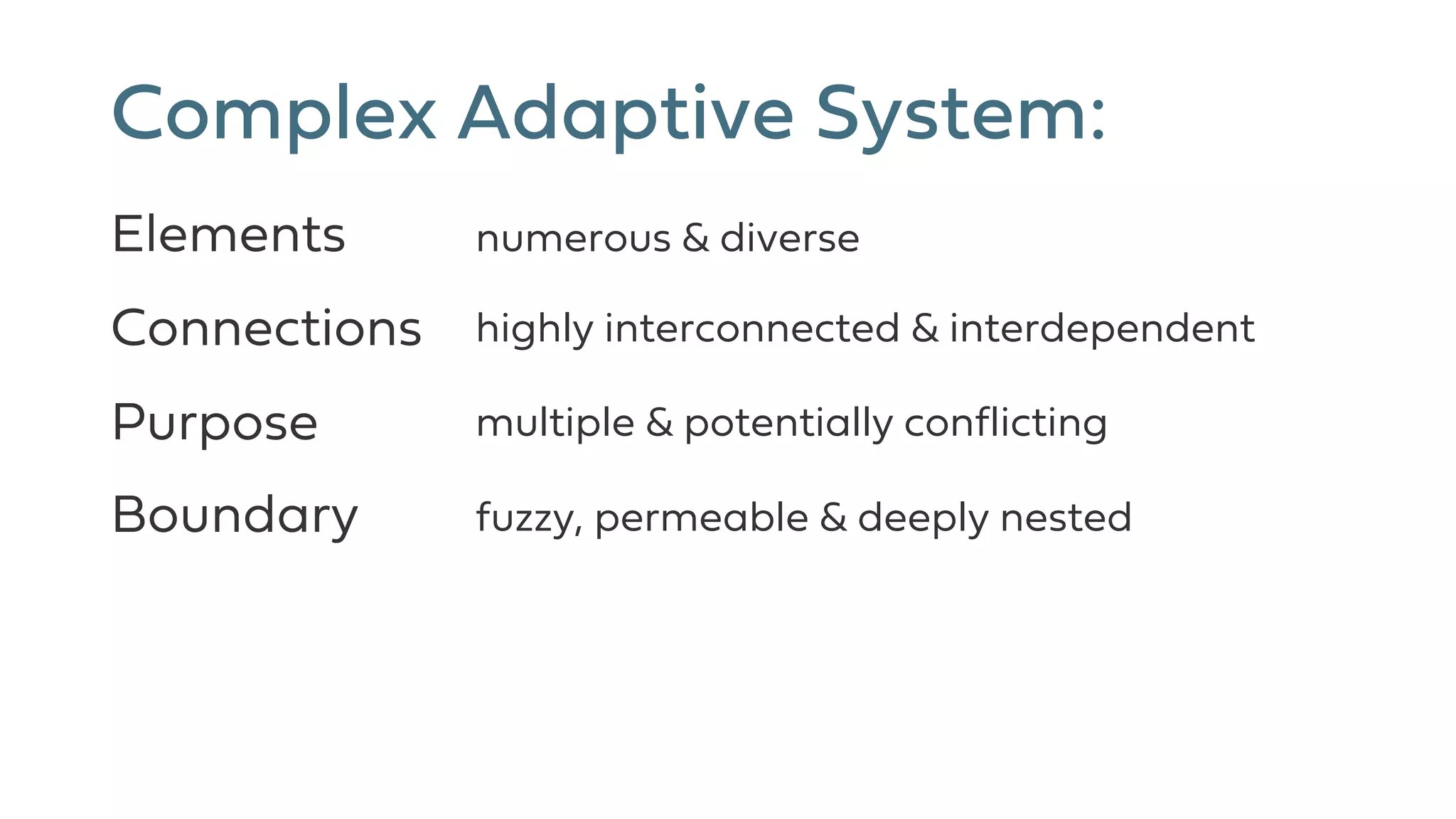
Complex Adaptive System:
Elements
Connections
Purpose
Boundary
multiple & potentially conflicting
highly interconnected & interdependent
numerous & diverse
fuzzy, permeable & deeply nested
Properties:
Emergence
Non-Linearity
Adaptation
Feedback Loops
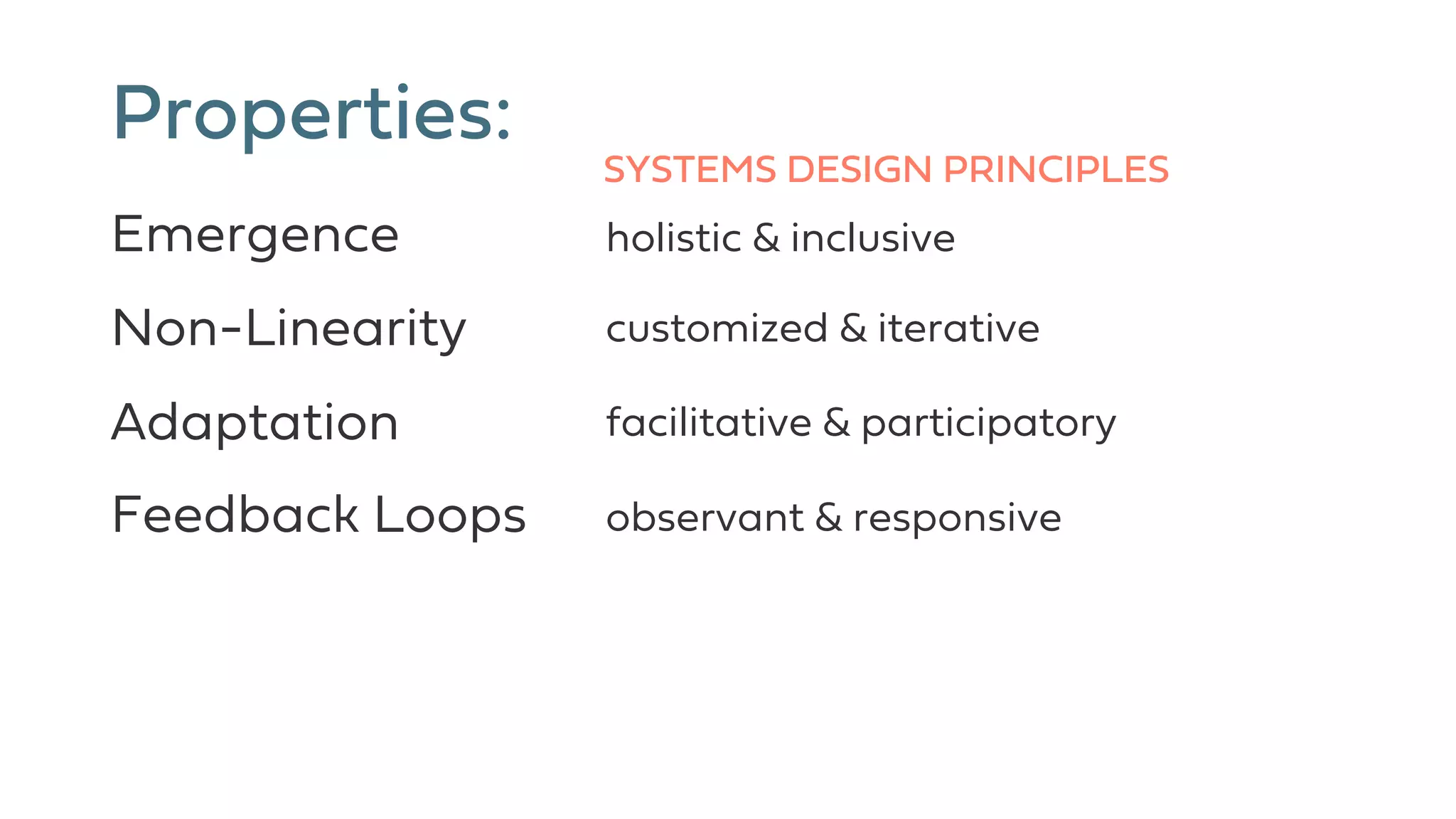
Properties:
Emergence
Non-Linearity
Adaptation
Feedback Loops
facilitative & participatory
customized & iterative
holistic & inclusive
observant & responsive
SYSTEMS DESIGN PRINCIPLES
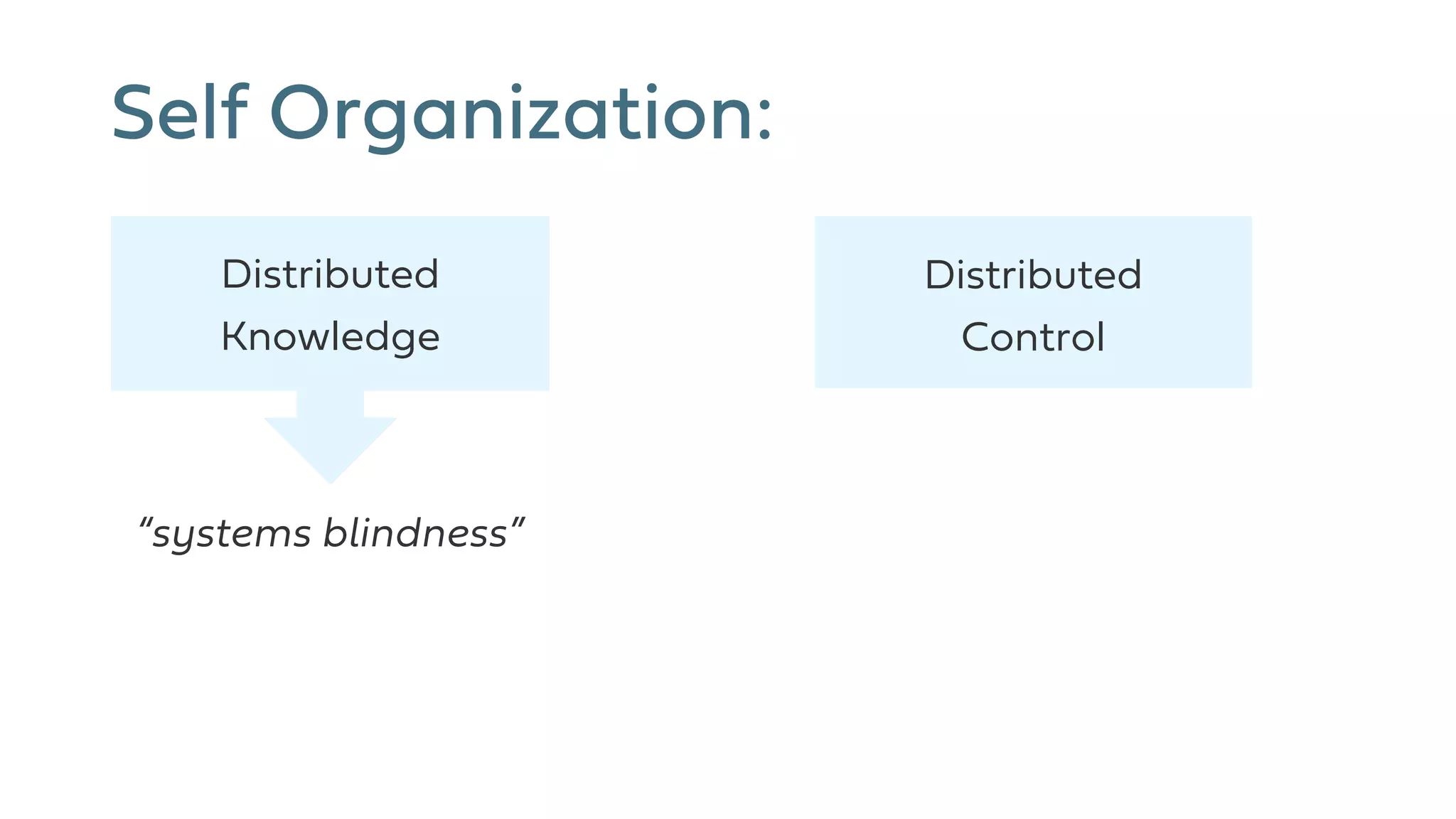
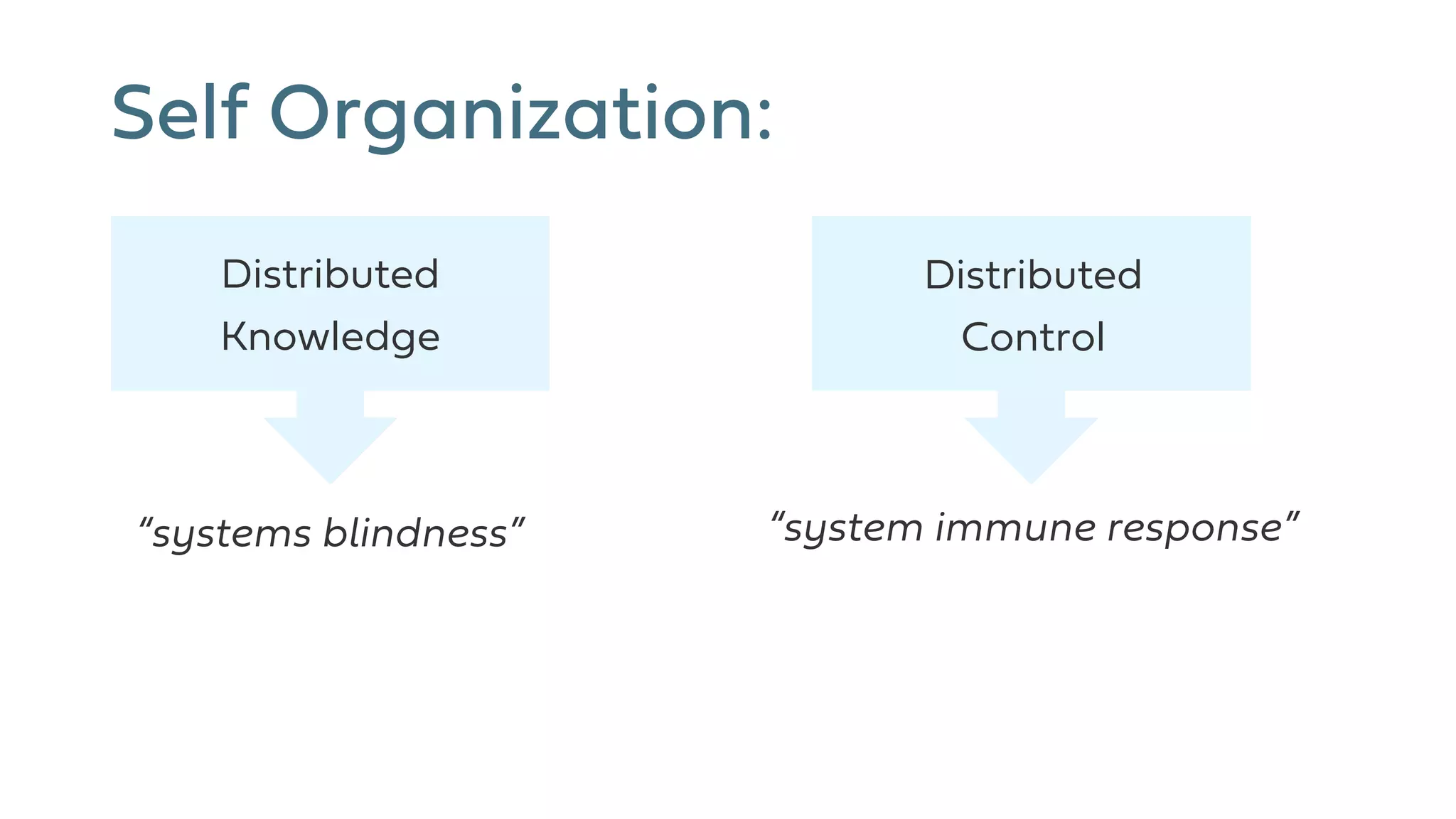
Self Organization:
A process whereby global order arises from
the local interactions of lower-level parts,
rather than being imposed by external agents.
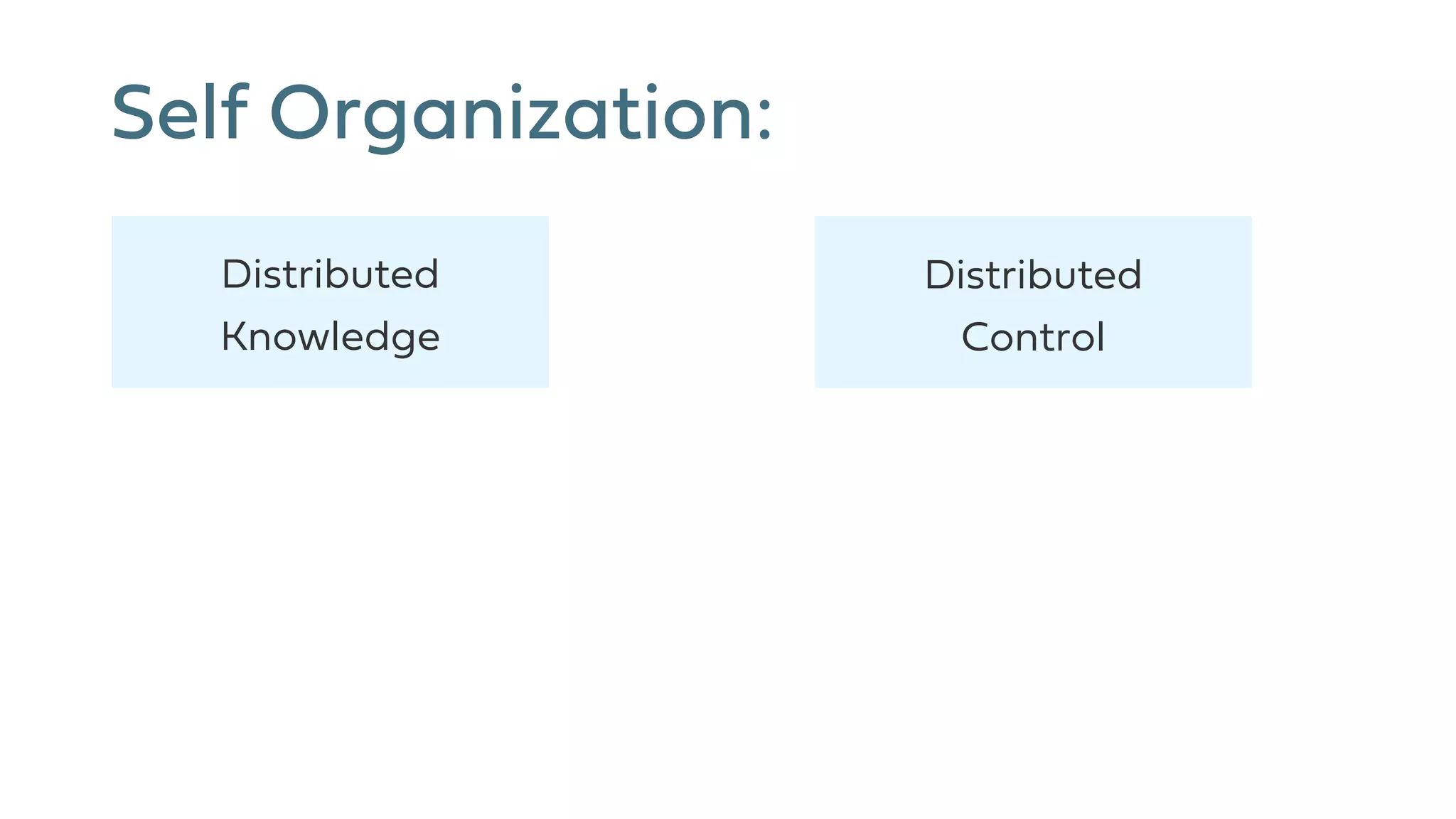
Self Organization:
Distributed
Knowledge
Distributed
Control
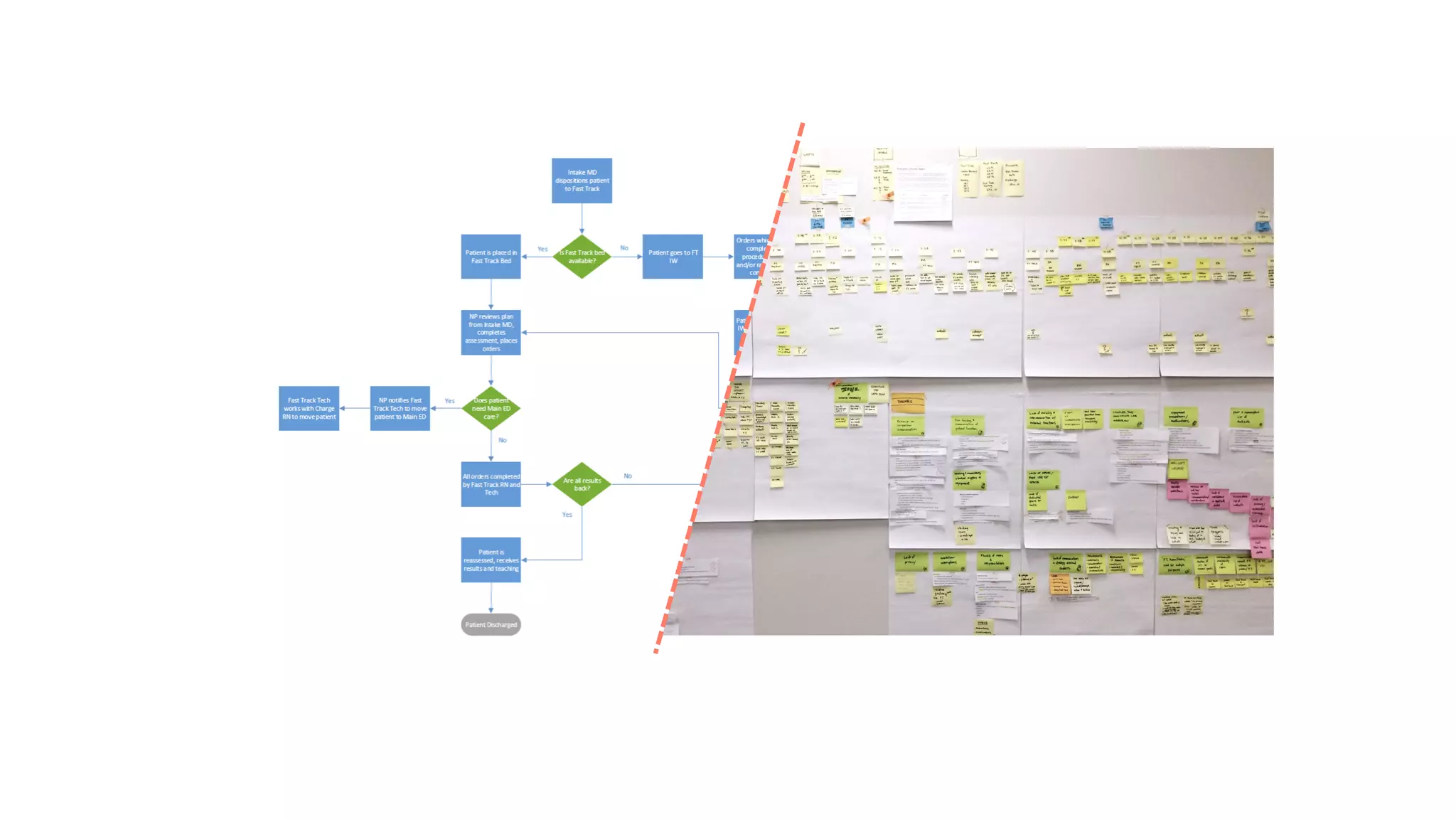
Self Organization:
“systems blindness”
Distributed
Knowledge
Distributed
Control
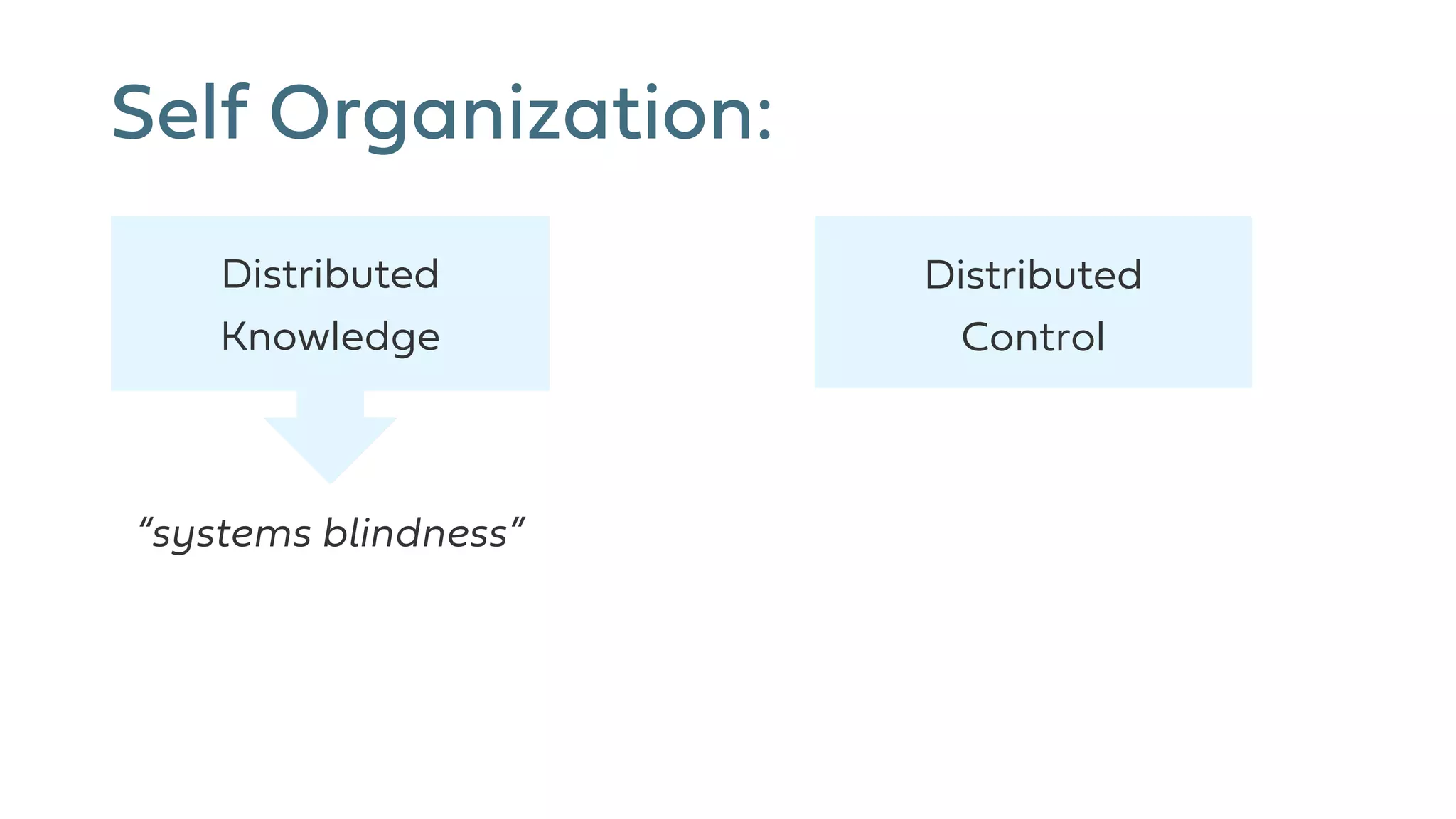
Self Organization:
“systems blindness”
Distributed
Knowledge
Distributed
Control
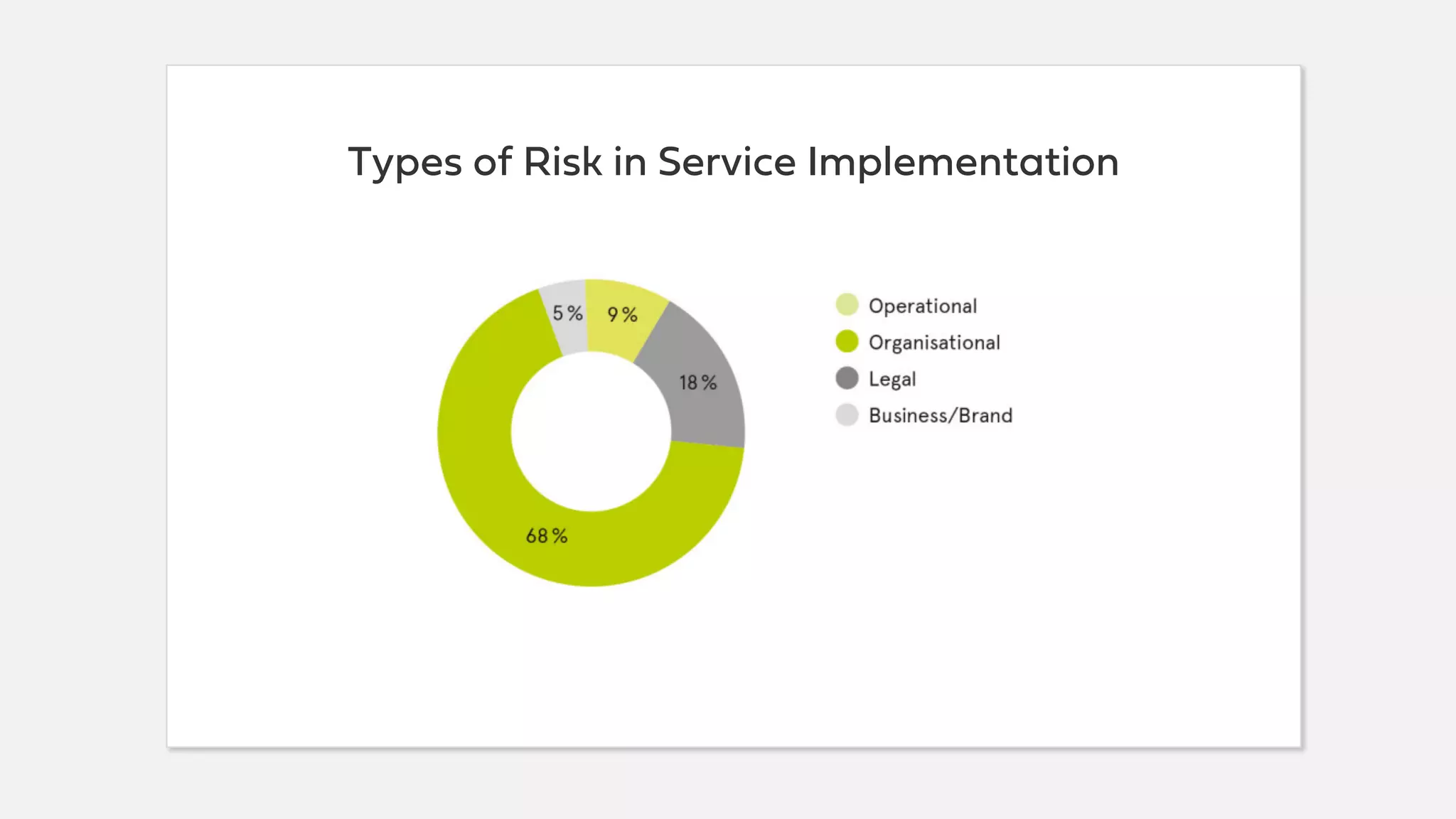
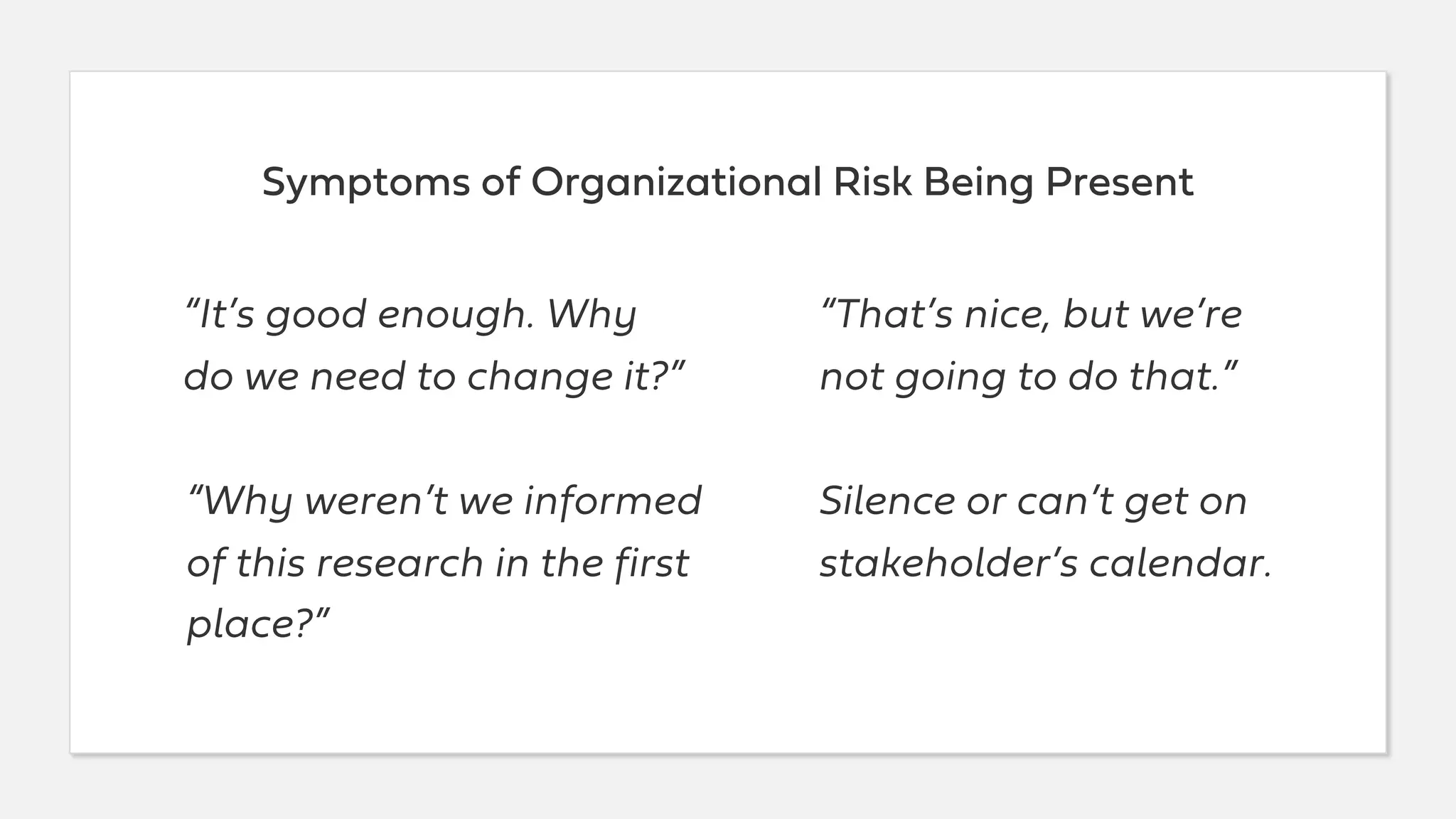
Types of Risk in Service Implementation
Symptoms of Organizational Risk Being Present
“It’s good enough. Why
do we need to change it?”
“That’s nice, but we’re
not going to do that.”
“Why weren’t we informed
of this research in the first
place?”
Silence or can’t get on
stakeholder’s calendar.
Self Organization:
“system immune response”“systems blindness”
Distributed
Knowledge
Distributed
Control
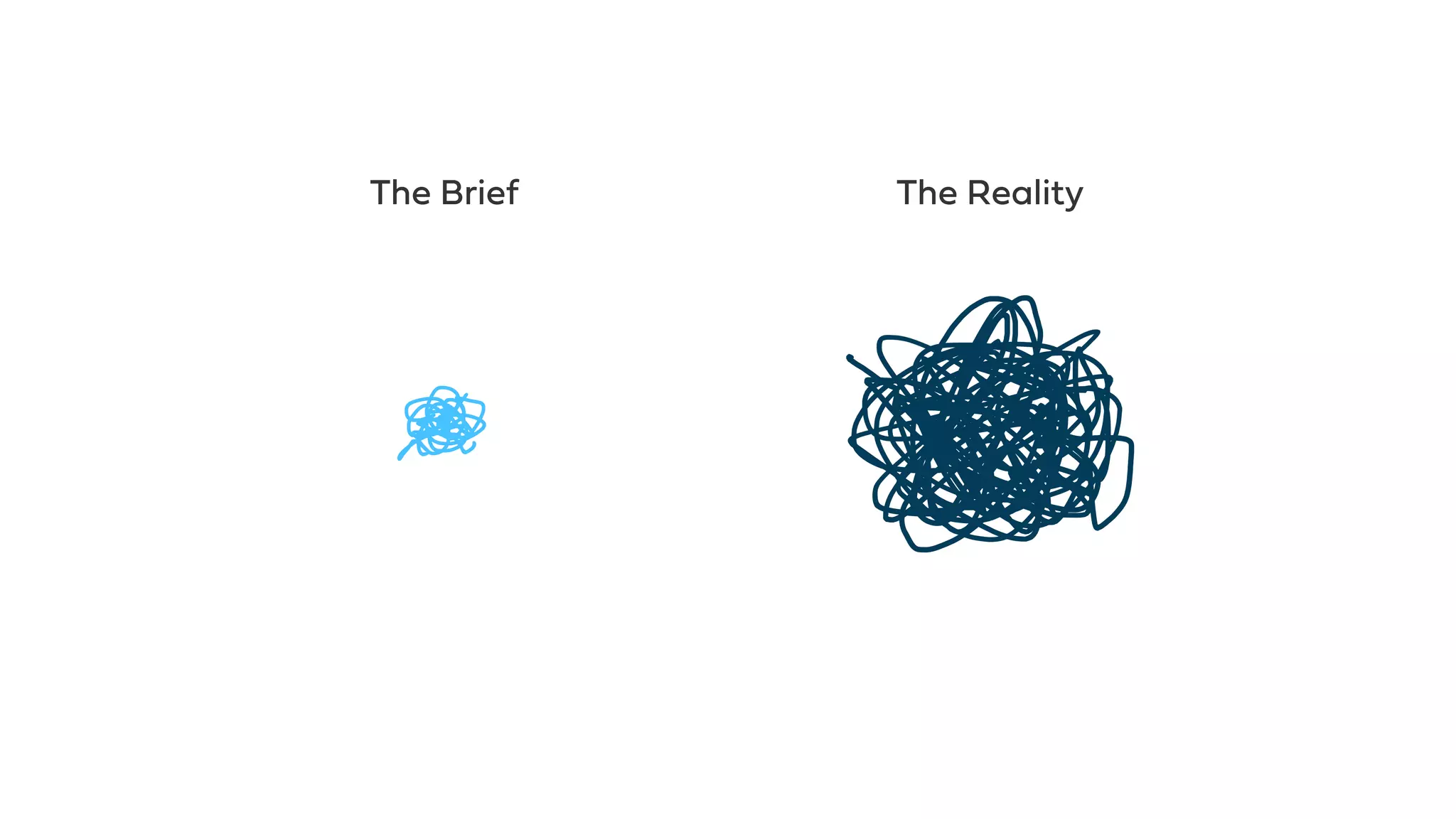
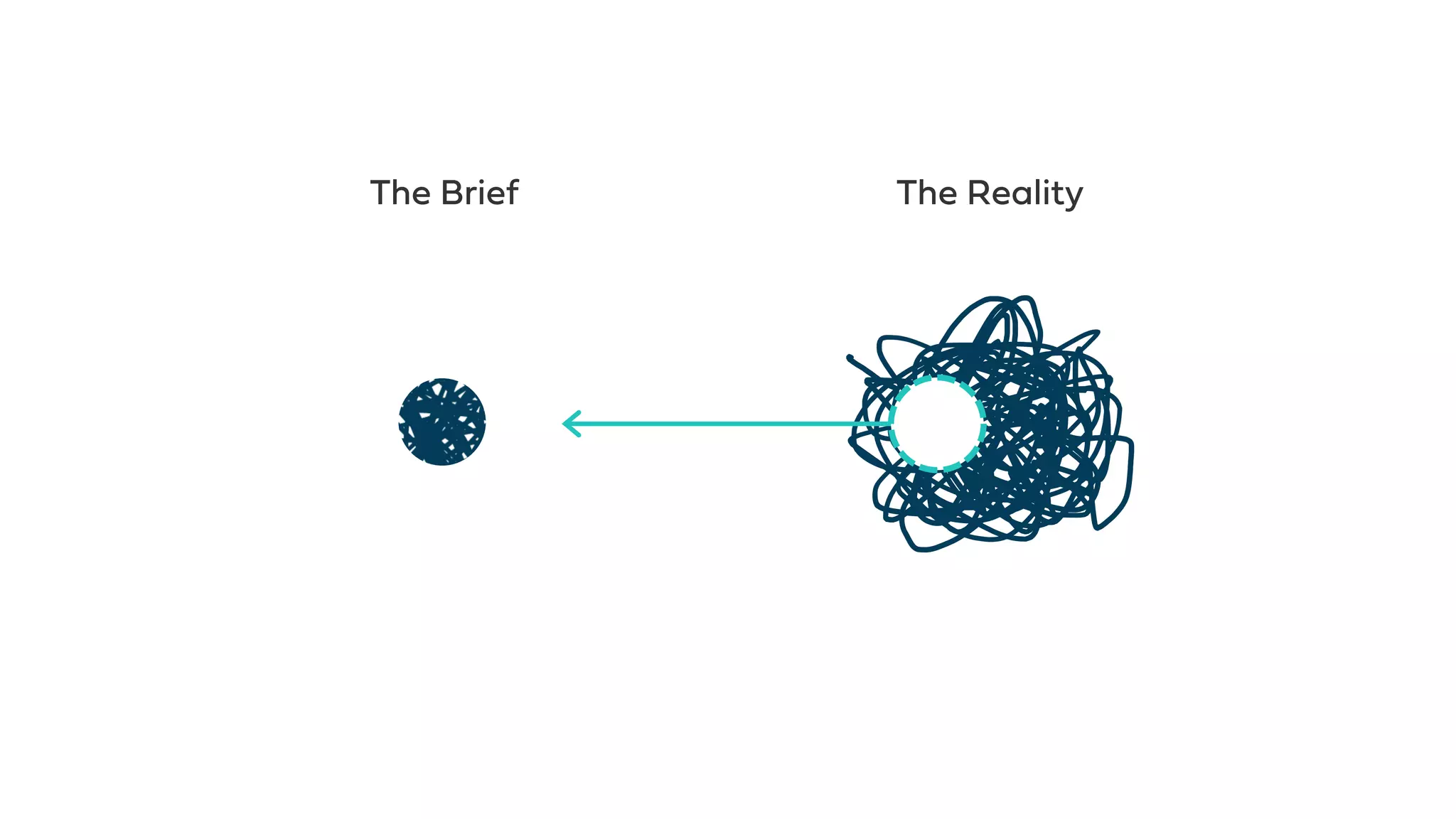
The Brief The Reality
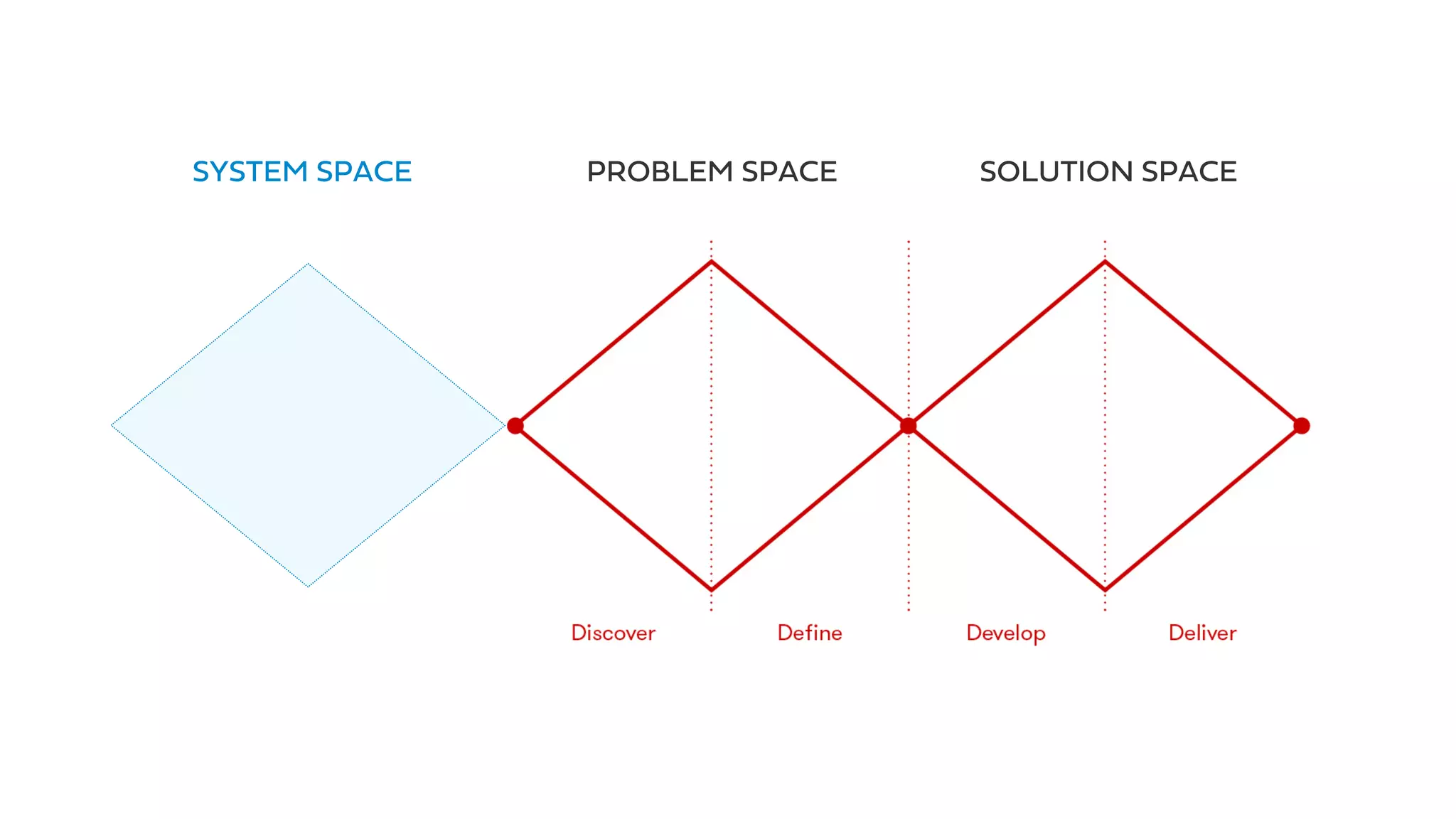
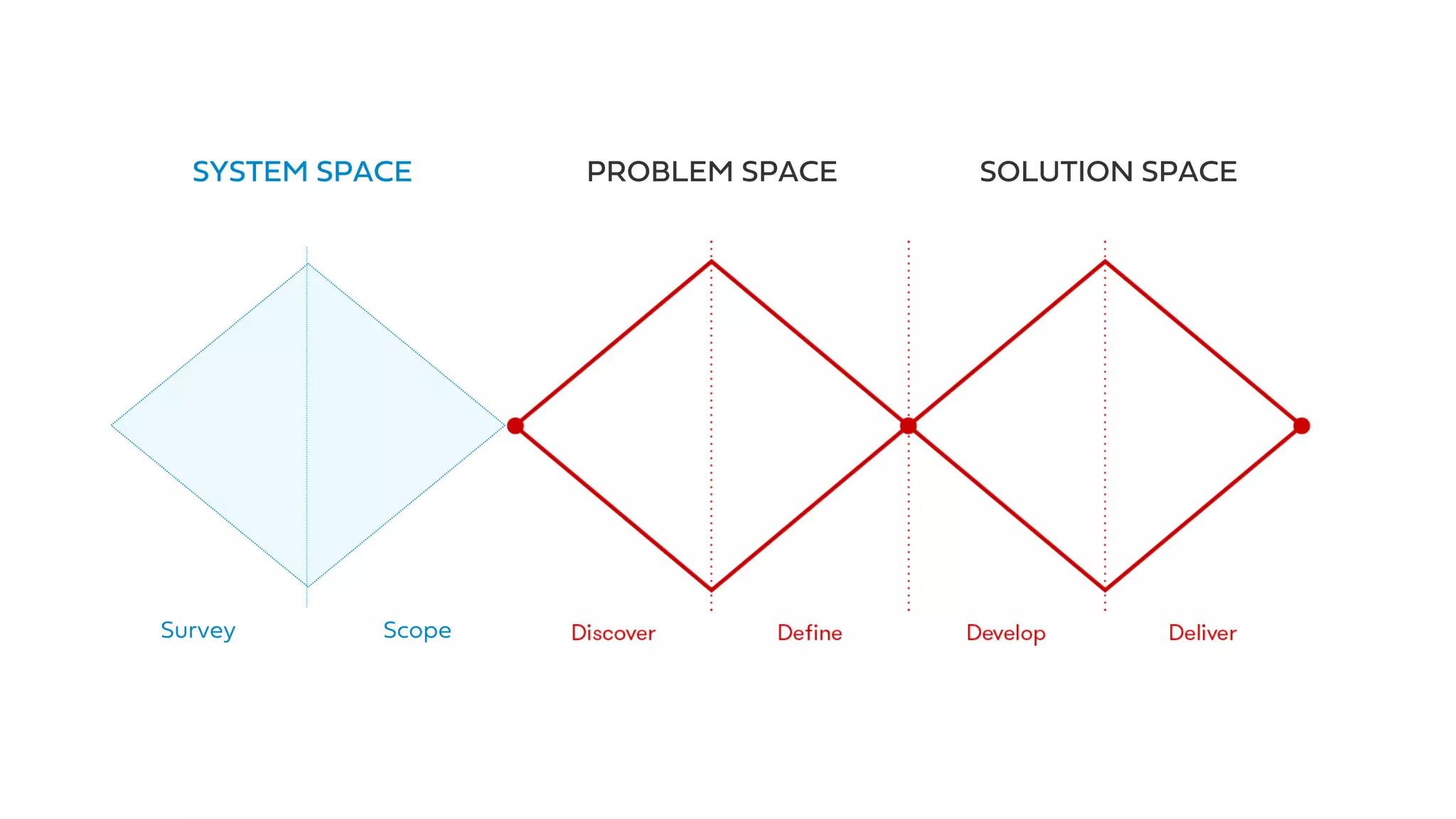
PROBLEM SPACE SOLUTION SPACESYSTEM SPACE
Survey Scope
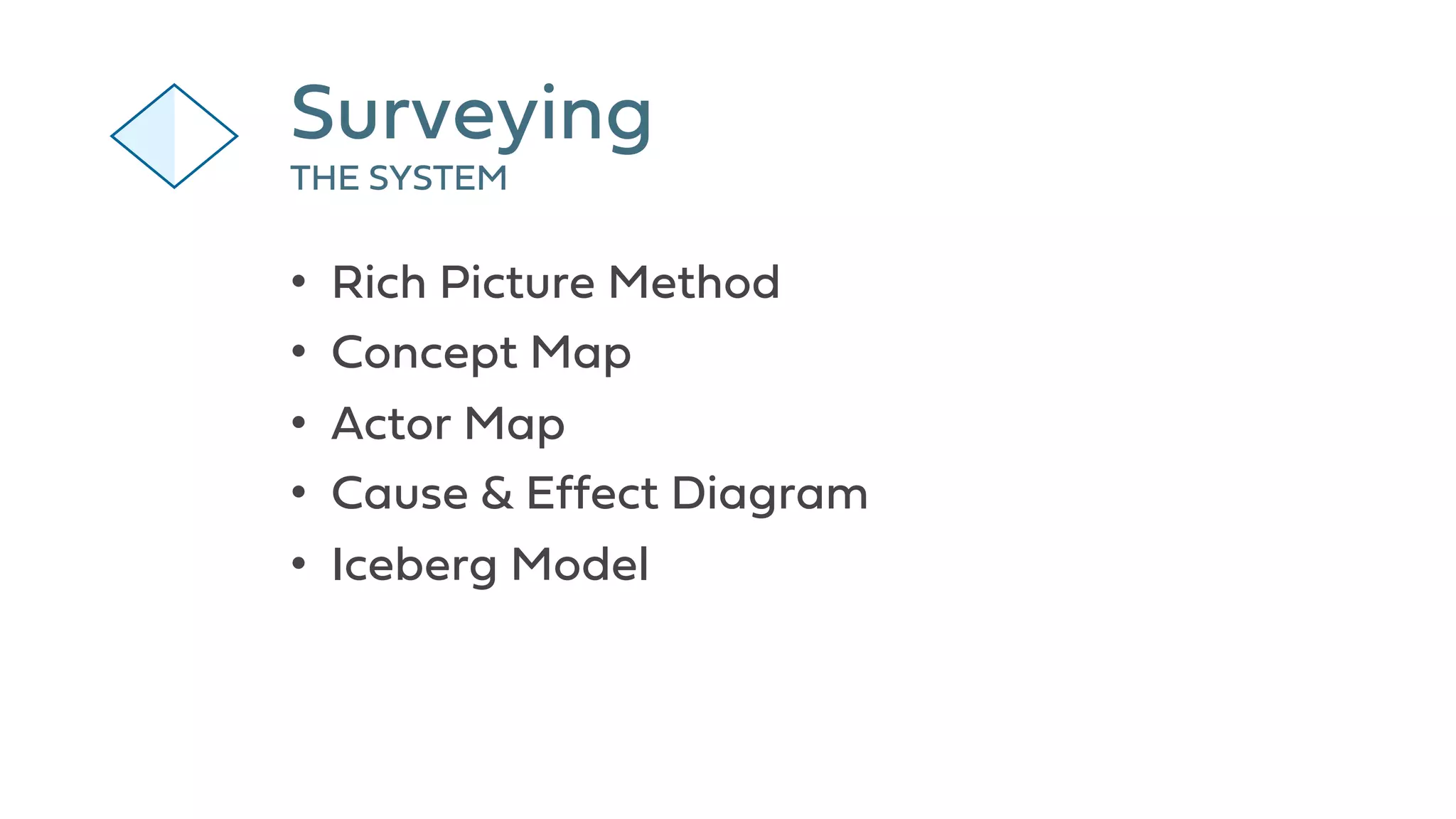
• Rich Picture Method
• Concept Map
• Actor Map
• Cause & Effect Diagram
• Iceberg Model
Surveying
THE SYSTEM
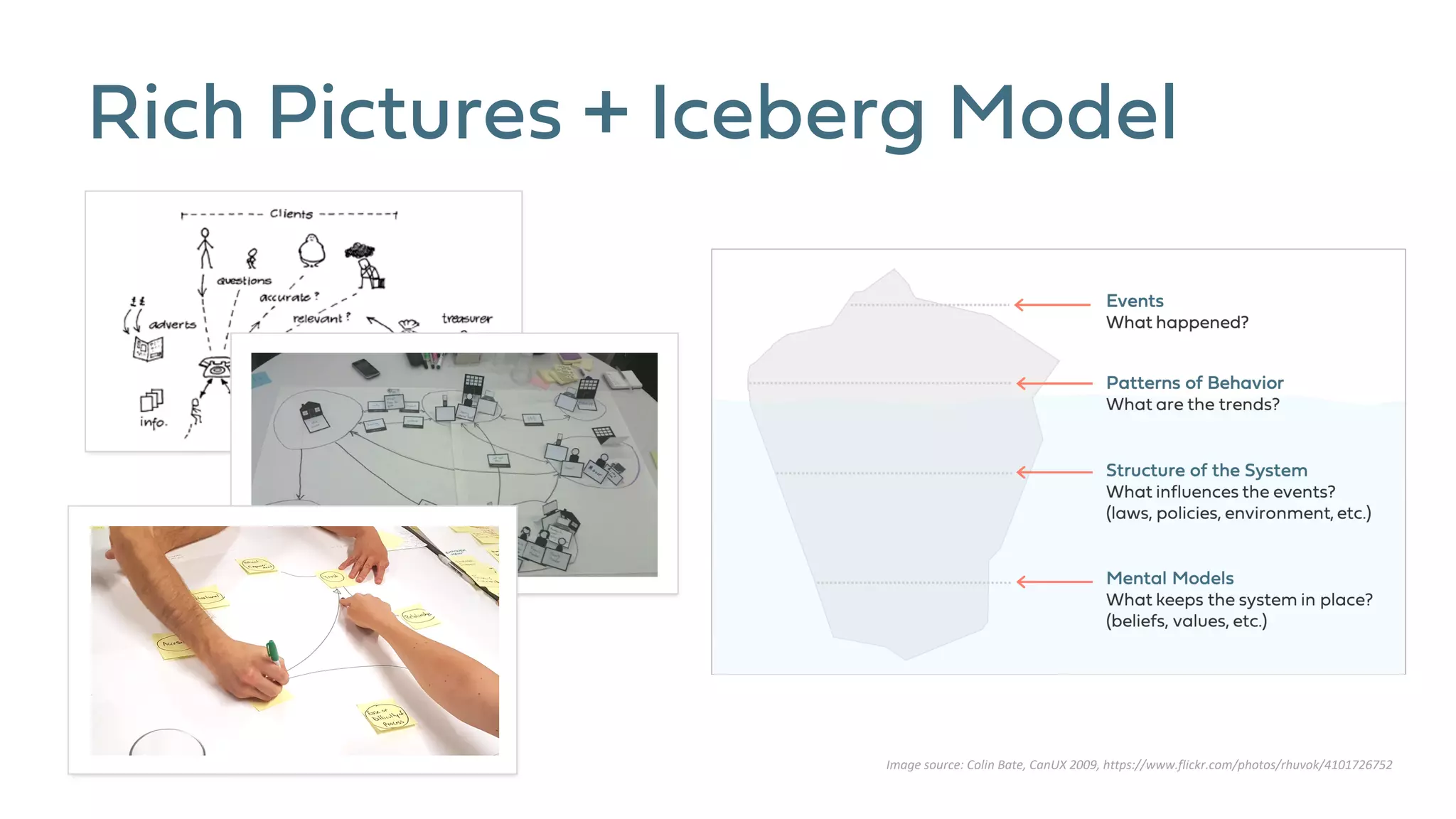
Rich Pictures + Iceberg Model
Image source: Colin Bate, CanUX 2009, https://www.flickr.com/photos/rhuvok/4101726752
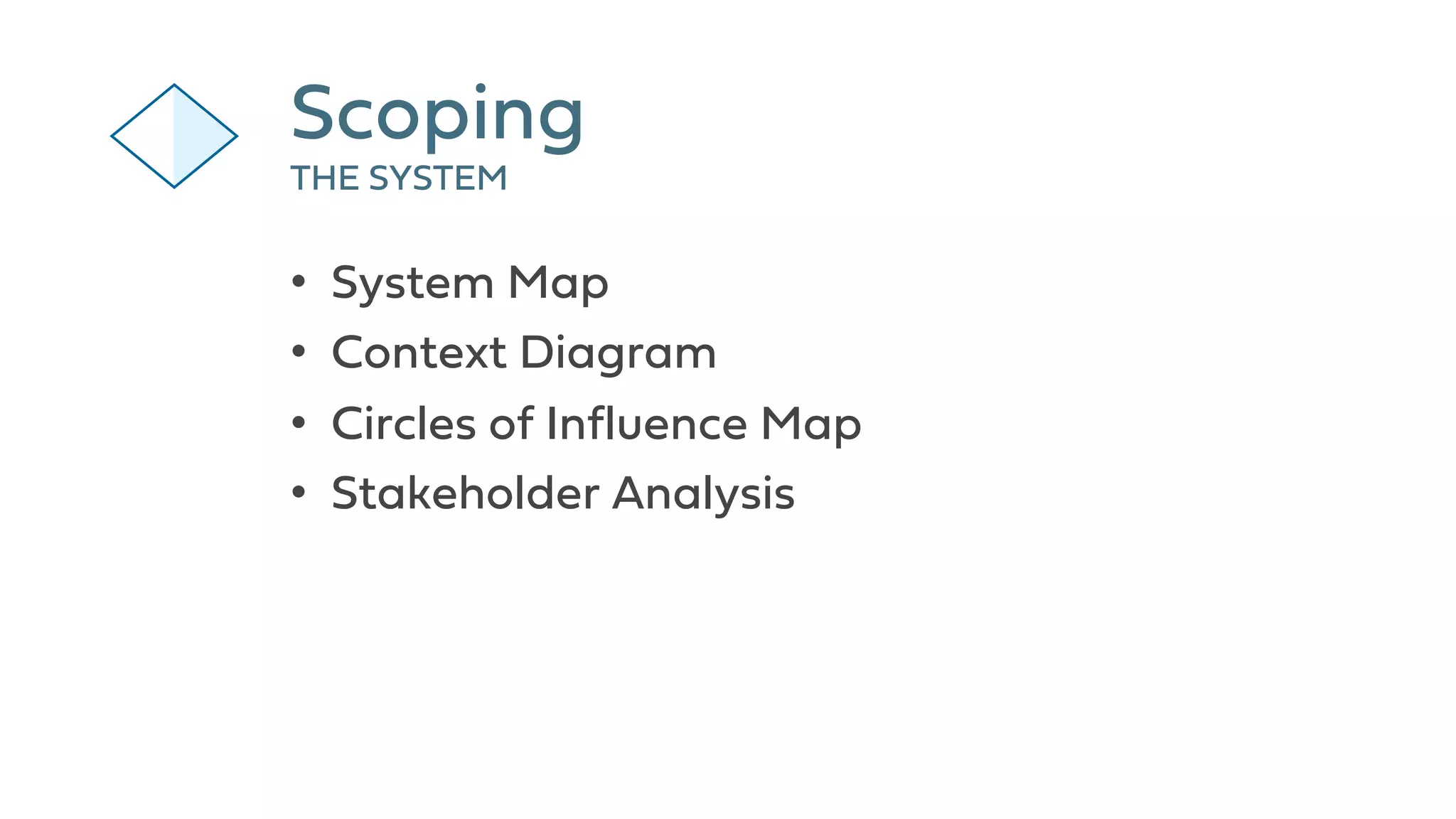
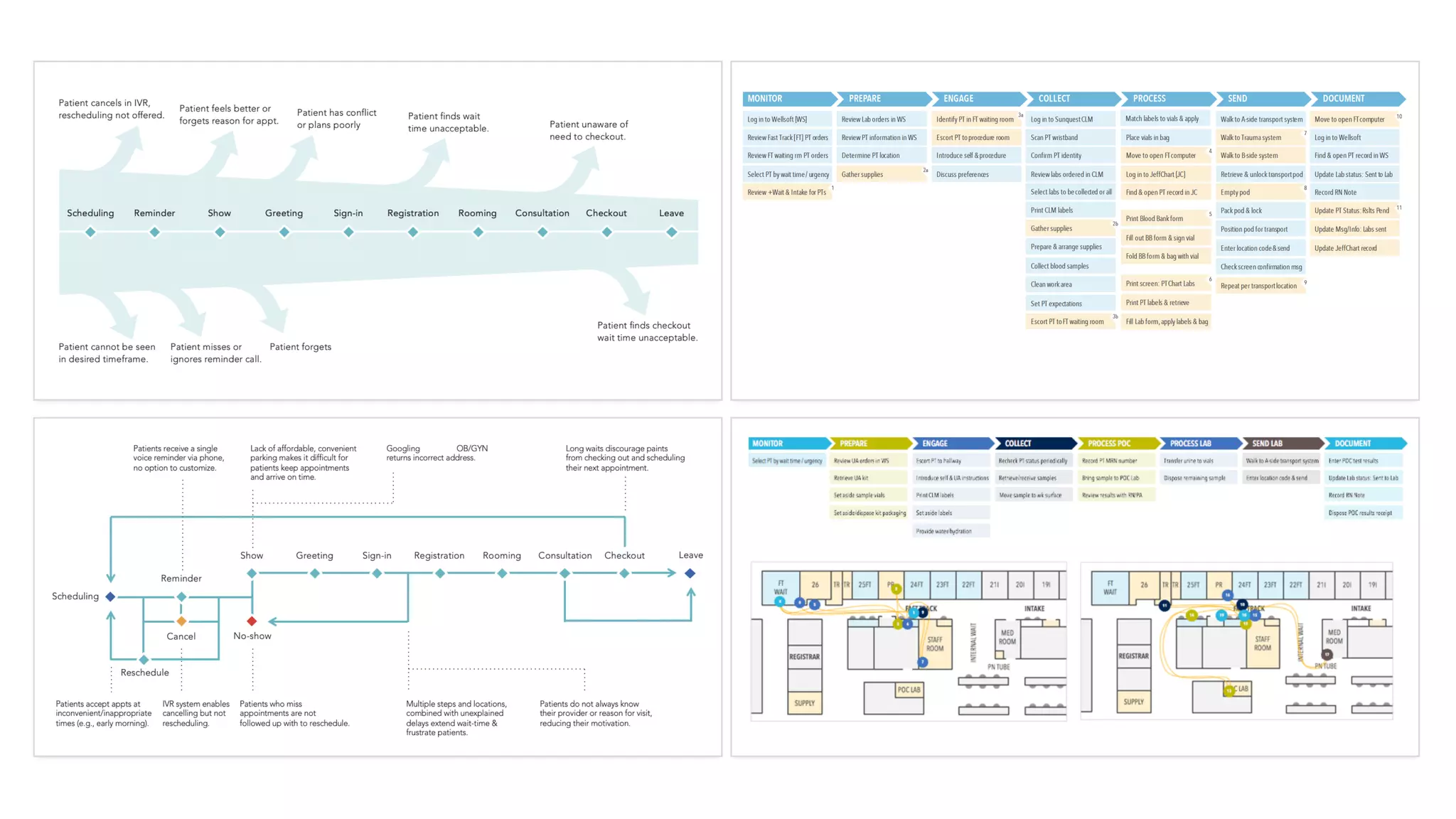
• System Map
• Context Diagram
• Circles of Influence Map
• Stakeholder Analysis
Scoping
THE SYSTEM
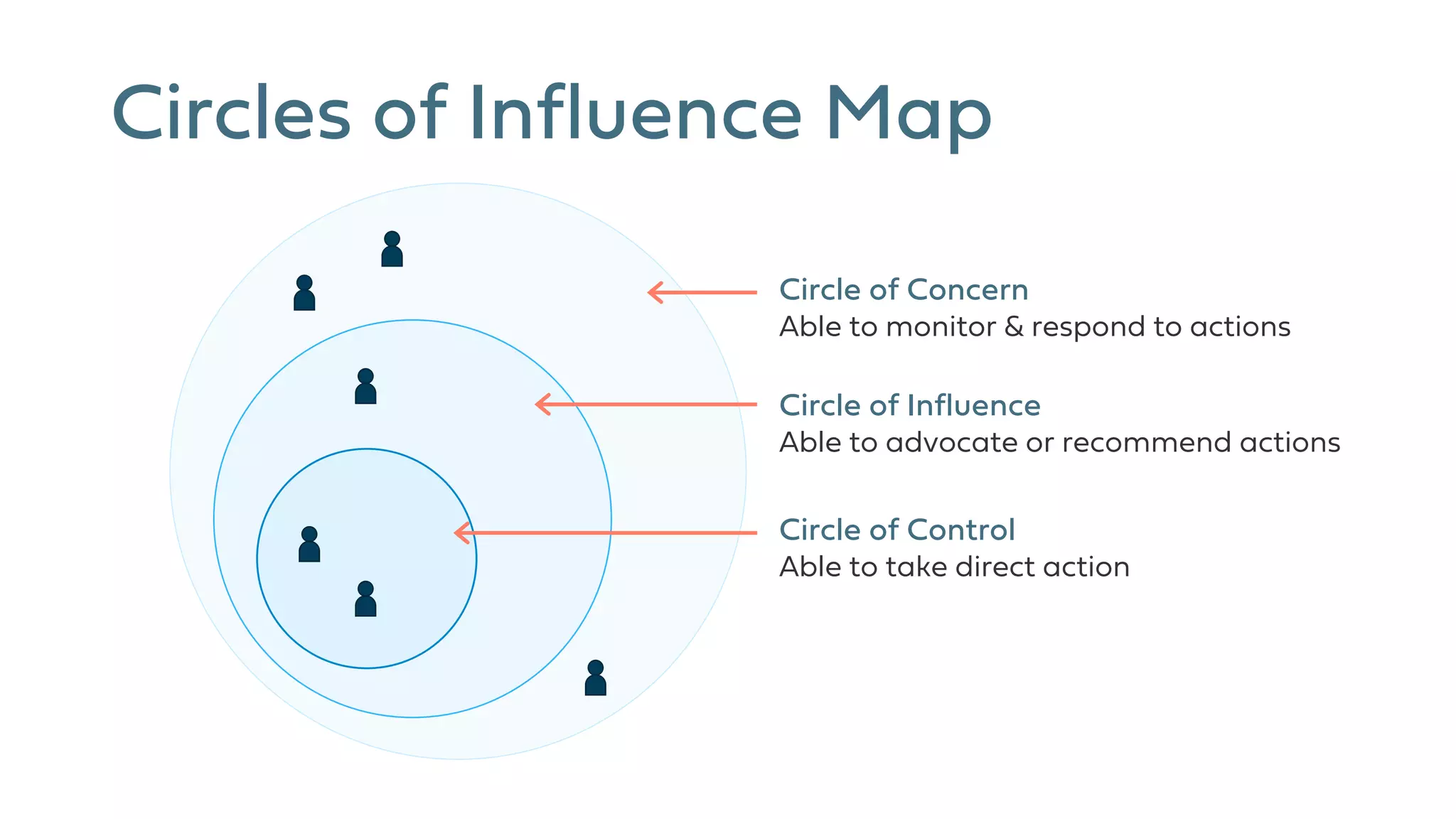
Circle of Control
Able to take direct action
Circle of Concern
Able to monitor & respond to actions
Circle of Influence
Able to advocate or recommend actions
Circles of Influence Map
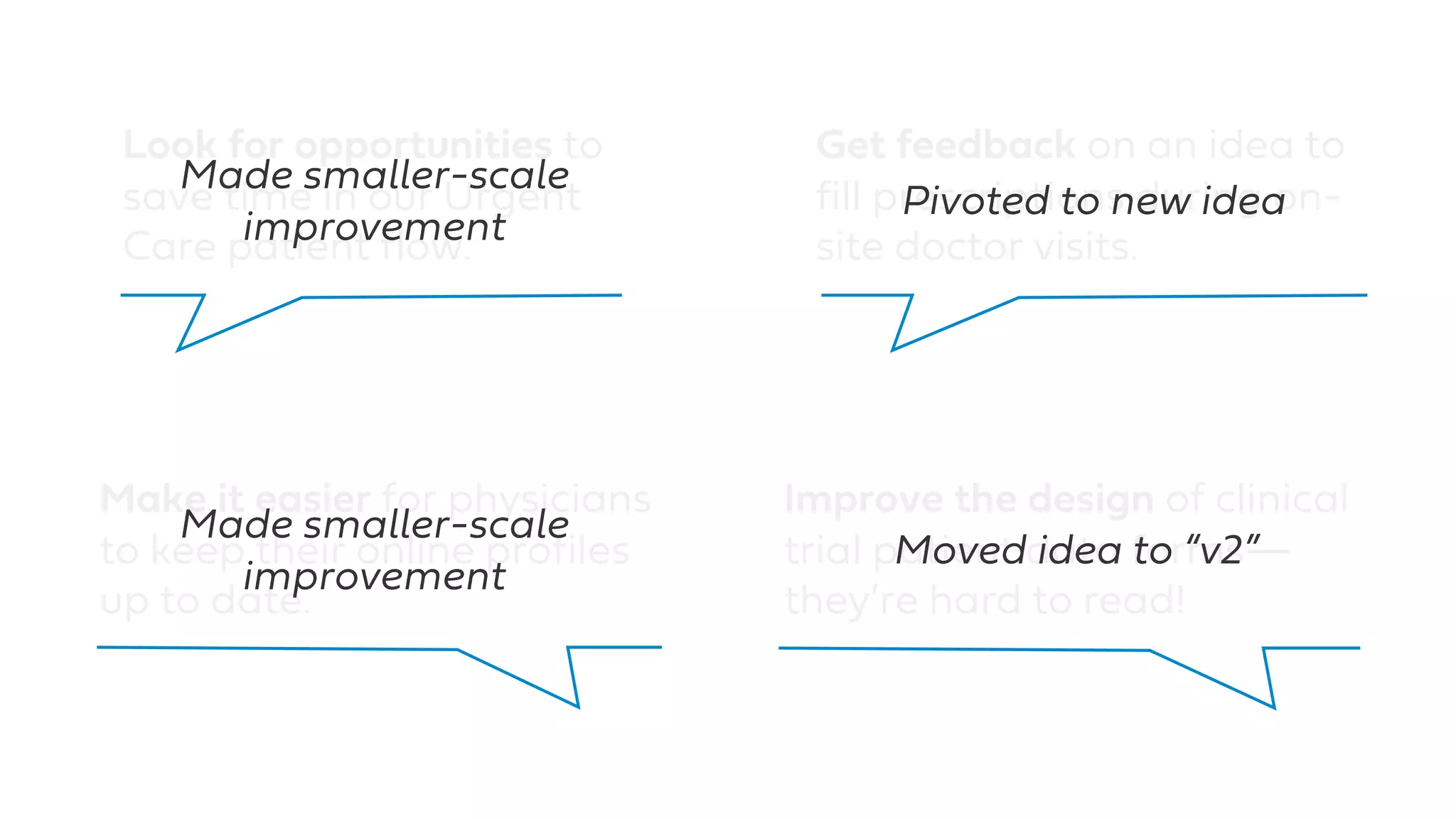
Make it easier for physicians
to keep their online profiles
up to date.
Get feedback on an idea to
fill prescriptions during on-
site doctor visits.
Look for opportunities to
save time in our Urgent
Care patient flow.
Improve the design of clinical
trial patient data forms—
they’re hard to read!
Pivoted to new idea
Made smaller-scale
improvement
Moved idea to “v2”
Made smaller-scale
improvement
Designing In
Complexity
Julie Guinn
spite of

Designing in Complexity | Julie Guinn | Elsevier