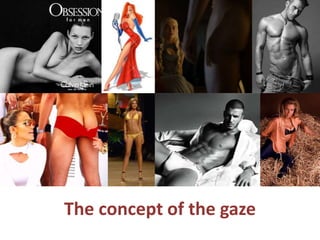
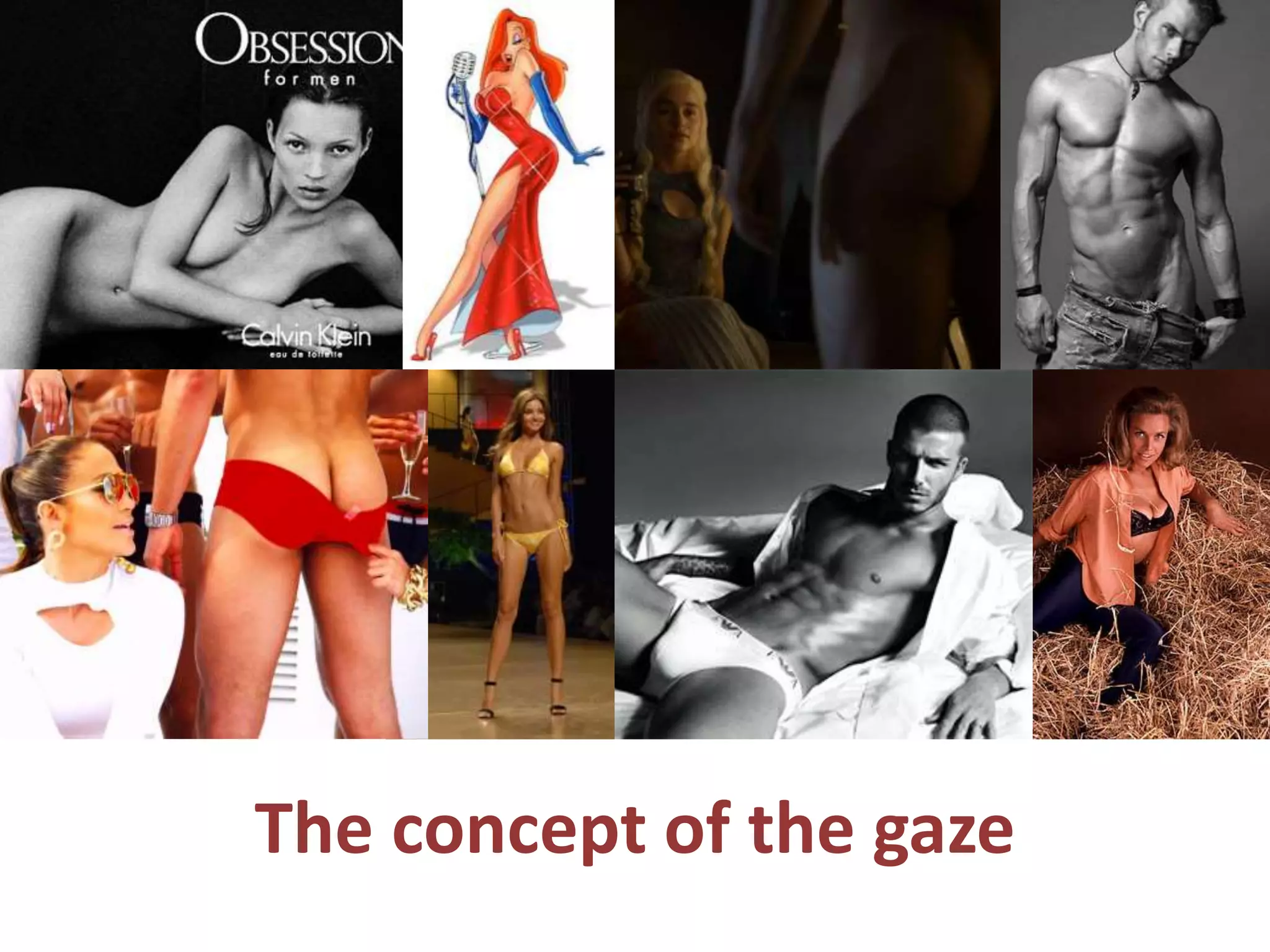
The concept of the gaze
What is the gaze? 
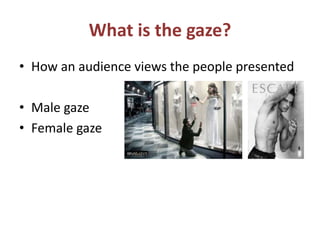
• How an audience views the people presented 
• Male gaze 
• Female gaze
Laura Mulvey – Male Gaze 
• How men look at women 
• How women look at 
themselves 
• How women look at other 
women 
• Coined phrase in 1975 
• Audiences have to view characters from the 
perspective of a heterosexual male
Laura Mulvey – Male Gaze 
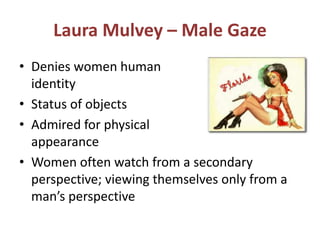
• Denies women human 
identity 
• Status of objects 
• Admired for physical 
appearance 
• Women often watch from a secondary 
perspective; viewing themselves only from a 
man’s perspective
Laura Mulvey – Male Gaze 
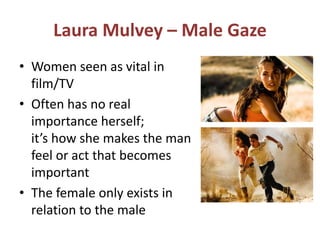
• Women seen as vital in 
film/TV 
• Often has no real 
importance herself; 
it’s how she makes the man 
feel or act that becomes 
important 
• The female only exists in 
relation to the male
Laura Mulvey – Male Gaze 
• Male gaze leads to Hegemonic 
ideologies in our society – the 
idea of dominance in political 
and social contexts 
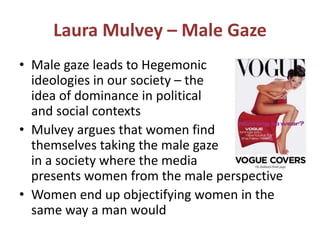
• Mulvey argues that women find 
themselves taking the male gaze 
in a society where the media 
presents women from the male perspective 
• Women end up objectifying women in the 
same way a man would
Laura Mulvey – Male Gaze 
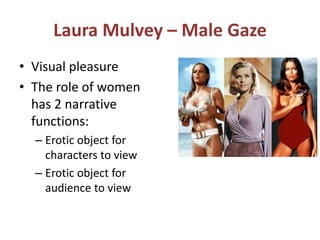
• Visual pleasure 
• The role of women 
has 2 narrative 
functions: 
– Erotic object for 
characters to view 
– Erotic object for 
audience to view
Laura Mulvey – Male Gaze 
• Characters looking at others are active (male) 
• Characters being looked at are passive 
(female) 
• Passive characters under control of male 
• Only exist for visual pleasure 
• Females (passives) often slow narrative down 
– are inspiration for men to act 
• Males (actives) push narrative on and create 
the ‘action’
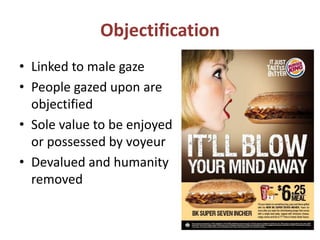
Objectification 
• Linked to male gaze 
• People gazed upon are 
objectified 
• Sole value to be enjoyed 
or possessed by voyeur 
• Devalued and humanity 
removed
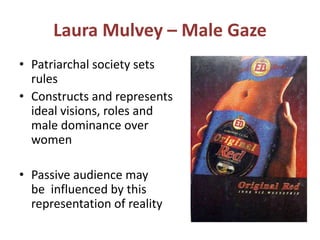
Laura Mulvey – Male Gaze 
• Patriarchal society sets 
rules 
• Constructs and represents 
ideal visions, roles and 
male dominance over 
women 
• Passive audience may 
be influenced by this 
representation of reality
Criticism of Mulvey 
• The question around male/female dichotomy 
• Ethnicity, class, age, etc. not considered 
• Not always men who have power over passive 
women 
• Suggests that gaze cannot be conceived of 
representation outside of heterosexuality 
• Suggests women cannot be strong 
protagonists 
• Some women like the ‘gaze’ and play up to it
Facial expressions of the male gaze 
• Women: 
– Chocolate box 
– Invitational 
– Super-smiler 
– Romantic or sexual 
• Marjorie Ferguson (1980) 
– See blog
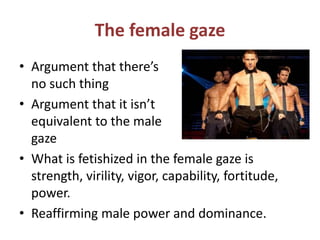
The female gaze 
• Argument that there’s 
no such thing 
• Argument that it isn’t 
equivalent to the male 
gaze 
• What is fetishized in the female gaze is 
strength, virility, vigor, capability, fortitude, 
power. 
• Reaffirming male power and dominance.
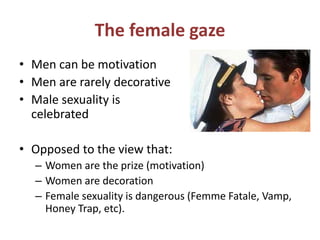
The female gaze 
• Men can be motivation 
• Men are rarely decorative 
• Male sexuality is 
celebrated 
• Opposed to the view that: 
– Women are the prize (motivation) 
– Women are decoration 
– Female sexuality is dangerous (Femme Fatale, Vamp, 
Honey Trap, etc).
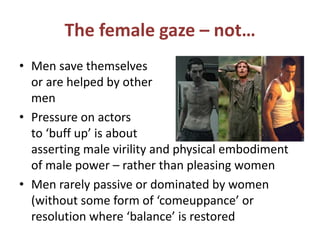
The female gaze – not… 
• Men save themselves 
or are helped by other 
men 
• Pressure on actors 
to ‘buff up’ is about 
asserting male virility and physical embodiment 
of male power – rather than pleasing women 
• Men rarely passive or dominated by women 
(without some form of ‘comeuppance’ or 
resolution where ‘balance’ is restored
Facial expressions of the female gaze 
• Men: 
– Carefree 
– Practical 
– Seductive 
– Comic 
– Catalogue 
• Trevor Millum (1975)
Is the gaze really just about gender 
and sexuality? 
• Jonathan Schroeder – the gaze represents 
psychological relationship of power. The 
person with the ‘gaze’ is superior to the 
person being ‘gazed’ upon.

The gaze

  • 1.
  • 2.
    What is thegaze? • How an audience views the people presented • Male gaze • Female gaze
  • 3.
    Laura Mulvey –Male Gaze • How men look at women • How women look at themselves • How women look at other women • Coined phrase in 1975 • Audiences have to view characters from the perspective of a heterosexual male
  • 4.
    Laura Mulvey –Male Gaze • Denies women human identity • Status of objects • Admired for physical appearance • Women often watch from a secondary perspective; viewing themselves only from a man’s perspective
  • 5.
    Laura Mulvey –Male Gaze • Women seen as vital in film/TV • Often has no real importance herself; it’s how she makes the man feel or act that becomes important • The female only exists in relation to the male
  • 6.
    Laura Mulvey –Male Gaze • Male gaze leads to Hegemonic ideologies in our society – the idea of dominance in political and social contexts • Mulvey argues that women find themselves taking the male gaze in a society where the media presents women from the male perspective • Women end up objectifying women in the same way a man would
  • 7.
    Laura Mulvey –Male Gaze • Visual pleasure • The role of women has 2 narrative functions: – Erotic object for characters to view – Erotic object for audience to view
  • 8.
    Laura Mulvey –Male Gaze • Characters looking at others are active (male) • Characters being looked at are passive (female) • Passive characters under control of male • Only exist for visual pleasure • Females (passives) often slow narrative down – are inspiration for men to act • Males (actives) push narrative on and create the ‘action’
  • 9.
    Objectification • Linkedto male gaze • People gazed upon are objectified • Sole value to be enjoyed or possessed by voyeur • Devalued and humanity removed
  • 10.
    Laura Mulvey –Male Gaze • Patriarchal society sets rules • Constructs and represents ideal visions, roles and male dominance over women • Passive audience may be influenced by this representation of reality
  • 11.
    Criticism of Mulvey • The question around male/female dichotomy • Ethnicity, class, age, etc. not considered • Not always men who have power over passive women • Suggests that gaze cannot be conceived of representation outside of heterosexuality • Suggests women cannot be strong protagonists • Some women like the ‘gaze’ and play up to it
  • 12.
    Facial expressions ofthe male gaze • Women: – Chocolate box – Invitational – Super-smiler – Romantic or sexual • Marjorie Ferguson (1980) – See blog
  • 13.
    The female gaze • Argument that there’s no such thing • Argument that it isn’t equivalent to the male gaze • What is fetishized in the female gaze is strength, virility, vigor, capability, fortitude, power. • Reaffirming male power and dominance.
  • 14.
    The female gaze • Men can be motivation • Men are rarely decorative • Male sexuality is celebrated • Opposed to the view that: – Women are the prize (motivation) – Women are decoration – Female sexuality is dangerous (Femme Fatale, Vamp, Honey Trap, etc).
  • 15.
    The female gaze– not… • Men save themselves or are helped by other men • Pressure on actors to ‘buff up’ is about asserting male virility and physical embodiment of male power – rather than pleasing women • Men rarely passive or dominated by women (without some form of ‘comeuppance’ or resolution where ‘balance’ is restored
  • 16.
    Facial expressions ofthe female gaze • Men: – Carefree – Practical – Seductive – Comic – Catalogue • Trevor Millum (1975)
  • 17.
    Is the gazereally just about gender and sexuality? • Jonathan Schroeder – the gaze represents psychological relationship of power. The person with the ‘gaze’ is superior to the person being ‘gazed’ upon.