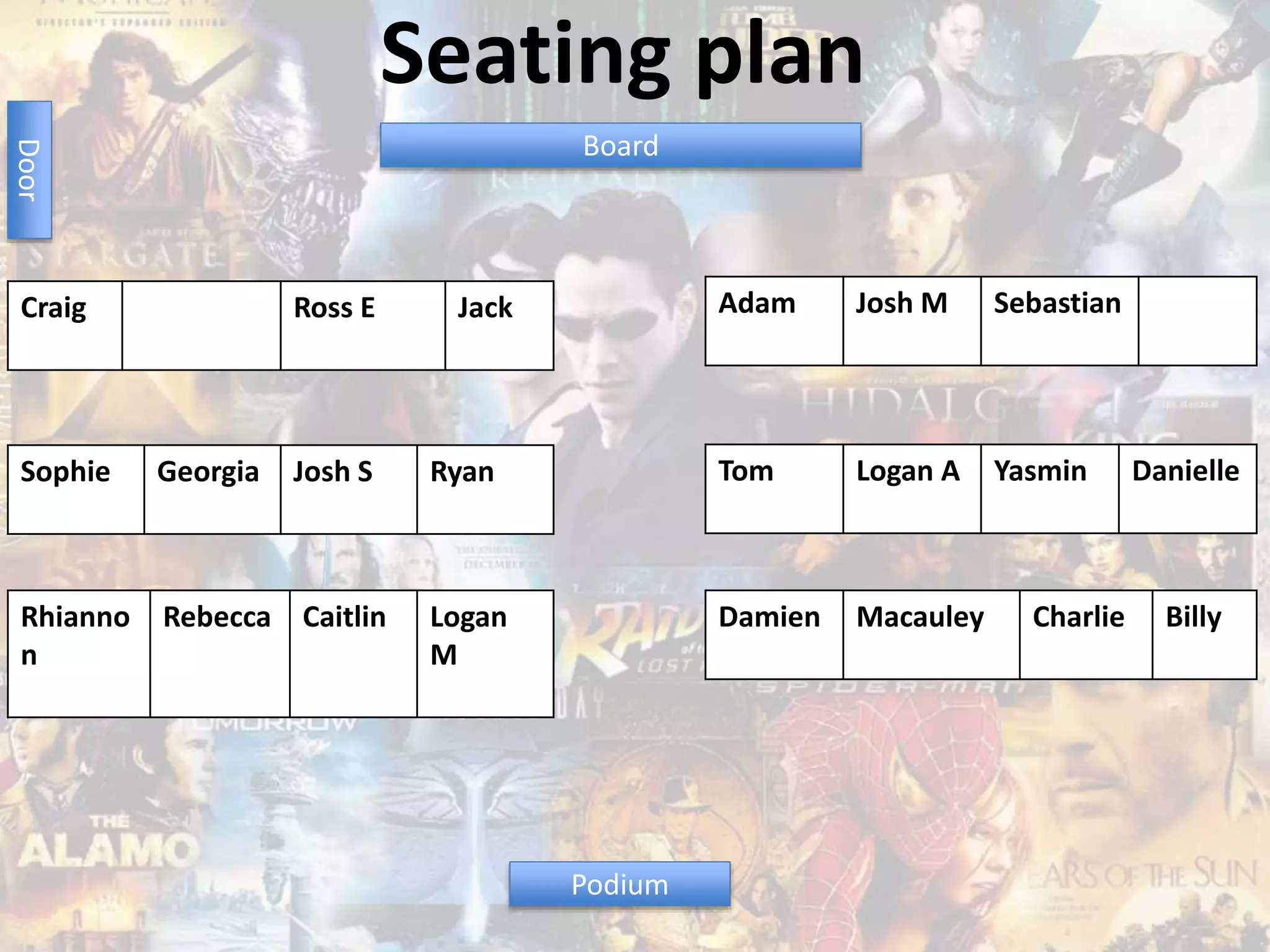
Seating plan
Board
Podium
Door
Craig Ross E Jack
Sophie Georgia Josh S Ryan
Rhianno
n
Rebecca Caitlin Logan
M
Adam Josh M Sebastian
Tom Logan A Yasmin Danielle
Damien Macauley Charlie Billy
GCSE Media Studies
The hard work starts now!
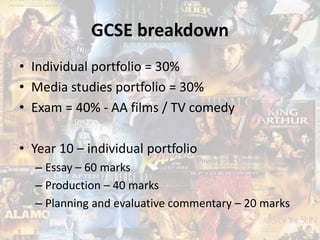
GCSE breakdown
• Individual portfolio = 30%
• Media studies portfolio = 30%
• Exam = 40% - AA films / TV comedy
• Year 10 – individual portfolio
– Essay – 60 marks
– Production – 40 marks
– Planning and evaluative commentary – 20 marks
Setting up your blog
• You need to complete the following:
– Set up a Gmail account (if you don’t already have one)
– Set up a blog using Blogger
– Title your blog – your name GCSE Media
– Blog address – firstnamesurnameCBA15
– Email Miss G with your blog address
• You also need to set up accounts for:
– Scribd
– Slideshare
– Google Drive
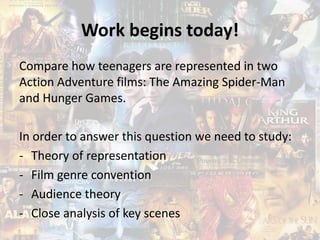
Work begins today!
Compare how teenagers are represented in two
Action Adventure films: The Amazing Spider-Man
and Hunger Games.
In order to answer this question we need to study:
- Theory of representation
- Film genre convention
- Audience theory
- Close analysis of key scenes
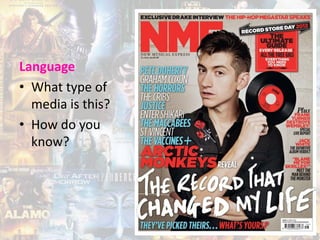
Language
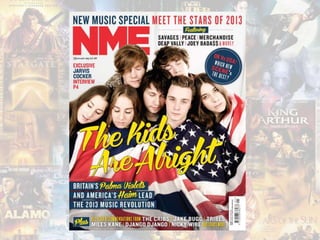
• What type of
media is this?
• How do you
know?
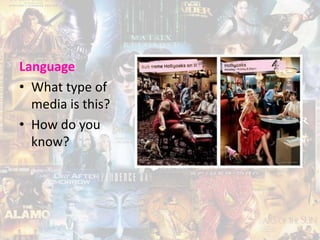
Language
• What type of
media is this?
• How do you
know?
L I A R
• Language = codes and conventions NOT JUST WORDS
– Layout, colour, images, text
– Camera shots, movements
– Sound, music and dialogue
– Graphics
– Narrative
• Institution
– Who makes the media text (Sky, Facebook, Sony, Bauer)
• Audience
– People who listen, watch, read or use media
– Grouped together in different ways (age, gender, wealth,
etc.)
• Representation
Representation
• The way real life is presented on TV, radio, in
papers and magazines
• Groups of people are represented in a certain
way so that people begin to believe ALL
people in that group are like that –
stereotyping
• Places, gender, social class can also be
represented
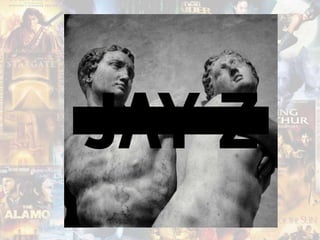
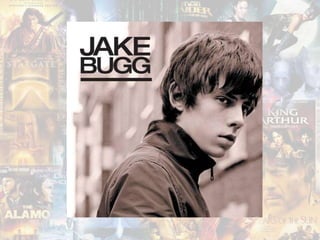
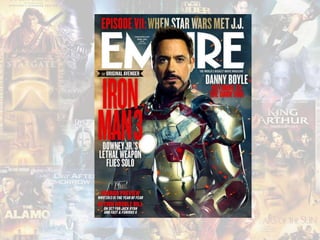
Language and audience
• Look at the media texts and discuss:
– What type of media is it?
– What kind of media language does it use?
– Who is the audience?
– How do you know it would appeal to that group of
people?
Using LIAR
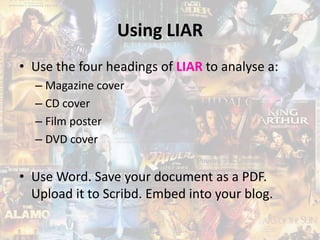
• Use the four headings of LIAR to analyse a:
– Magazine cover
– CD cover
– Film poster
– DVD cover
• Use Word. Save your document as a PDF.
Upload it to Scribd. Embed into your blog.

L1 representation

  • 1.
    Seating plan Board Podium Door Craig RossE Jack Sophie Georgia Josh S Ryan Rhianno n Rebecca Caitlin Logan M Adam Josh M Sebastian Tom Logan A Yasmin Danielle Damien Macauley Charlie Billy
  • 2.
    GCSE Media Studies Thehard work starts now!
  • 3.
    GCSE breakdown • Individualportfolio = 30% • Media studies portfolio = 30% • Exam = 40% - AA films / TV comedy • Year 10 – individual portfolio – Essay – 60 marks – Production – 40 marks – Planning and evaluative commentary – 20 marks
  • 4.
    Setting up yourblog • You need to complete the following: – Set up a Gmail account (if you don’t already have one) – Set up a blog using Blogger – Title your blog – your name GCSE Media – Blog address – firstnamesurnameCBA15 – Email Miss G with your blog address • You also need to set up accounts for: – Scribd – Slideshare – Google Drive
  • 5.
    Work begins today! Comparehow teenagers are represented in two Action Adventure films: The Amazing Spider-Man and Hunger Games. In order to answer this question we need to study: - Theory of representation - Film genre convention - Audience theory - Close analysis of key scenes
  • 6.
    Language • What typeof media is this? • How do you know?
  • 7.
    Language • What typeof media is this? • How do you know?
  • 8.
    L I AR • Language = codes and conventions NOT JUST WORDS – Layout, colour, images, text – Camera shots, movements – Sound, music and dialogue – Graphics – Narrative • Institution – Who makes the media text (Sky, Facebook, Sony, Bauer) • Audience – People who listen, watch, read or use media – Grouped together in different ways (age, gender, wealth, etc.) • Representation
  • 9.
    Representation • The wayreal life is presented on TV, radio, in papers and magazines • Groups of people are represented in a certain way so that people begin to believe ALL people in that group are like that – stereotyping • Places, gender, social class can also be represented
  • 10.
    Language and audience •Look at the media texts and discuss: – What type of media is it? – What kind of media language does it use? – Who is the audience? – How do you know it would appeal to that group of people?
  • 15.
    Using LIAR • Usethe four headings of LIAR to analyse a: – Magazine cover – CD cover – Film poster – DVD cover • Use Word. Save your document as a PDF. Upload it to Scribd. Embed into your blog.