Digital Transformation
in Government 3.0
Leif Skiftenes Flak, Professor
Chair of Department of Information Systems
Aug 1: Scientific lead of Centre for Digital Transformation
…challenges related to managing
increasingly complex transformation
efforts and uses examples from an
ongoing eHealth project in Norway…
Contents
• Norway
• TELMA
• Research approach and data
• Literature and theory
• Some headaches
• Preliminary findings
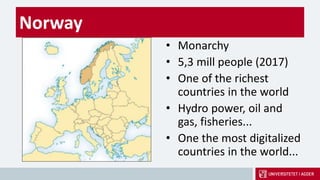
Norway
• Monarchy
• 5,3 mill people (2017)
• One of the richest
countries in the world
• Hydro power, oil and
gas, fisheries...
• One the most digitalized
countries in the world...
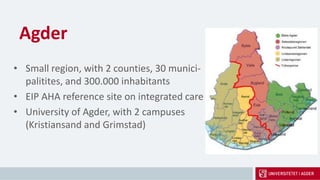
Agder
• Small region, with 2 counties, 30 munici-
palitites, and 300.000 inhabitants
• EIP AHA reference site on integrated care
• University of Agder, with 2 campuses
(Kristiansand and Grimstad)
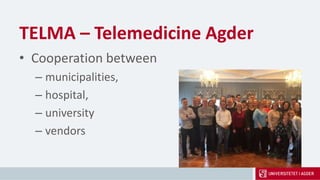
TELMA – Telemedicine Agder
• Cooperation between
– municipalities,
– hospital,
– university
– vendors
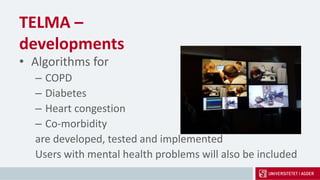
TELMA –
developments
• Algorithms for
– COPD
– Diabetes
– Heart congestion
– Co-morbidity
are developed, tested and implemented
Users with mental health problems will also be included
Telma objectives
• Test and evaluate TM solutions for
chronic deseases and co-morbidity
• Good health services
• Reduction in use of health care
personnel
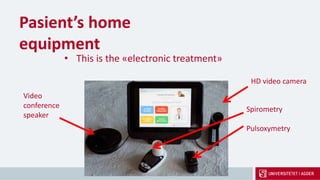
Pasient’s home
equipment
• This is the «electronic treatment»
Spirometry
Pulsoxymetry
HD video camera
Video
conference
speaker
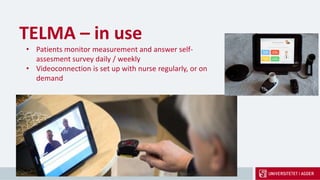
TELMA – in use
• Patients monitor measurement and answer self-
assesment survey daily / weekly
• Videoconnection is set up with nurse regularly, or on
demand
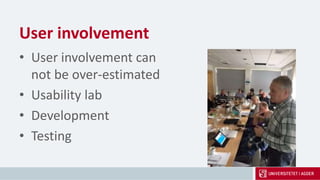
User involvement
• User involvement can
not be over-estimated
• Usability lab
• Development
• Testing
TELMA research
• Benefit realization in complex e-health
projects
– Different stakeholders with different goals and
interests
• (Machine learning for COPD and diabetes
– Prediction of future status, decision support
for nurses
– «Self-service»)
Literature and theory
Literature on eHealth as background
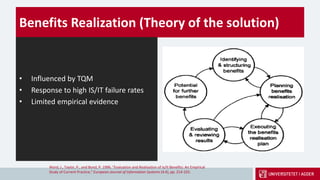
Benefits Realization (Theory of the solution)
• Influenced by TQM
• Response to high IS/IT failure rates
• Limited empirical evidence
Ward, J., Taylor, P., and Bond, P. 1996. "Evaluation and Realisation of Is/It Benefits: An Empirical
Study of Current Practice," European Journal of Information Systems (4:4), pp. 214-225.
Research approach
Data so far
• More than 40 stakeholder interviews
• Observations
• Participation in project meetings and
activities
• Documents
Headaches
• What exactly is the IT artifact(s)?
• What is a sound division of
labour/responsibility between project
management and researchers?
• Health services allocated by different criteria
in hospitals and municipalities.
• How can we reach a common understanding
of how to transform services?
Preliminary findings –
problem definition
Enablers
• Enthusiasm and ownership
• Service quality
• Digitalisation /Innovativeness
Problem areas
• Project delays
• Recruitment of patients
• Questionable RIO
• Lack of resources
• Sustainable governance model
• Lack of understanding of consumers of
municipal eHealth users
Inhibitors
• National governance model
• Digitalisation
• Complexity
• Project organisation and
management
Suggested actions
Establish goal clarity
• Project goals should be communicated
clearly from project management
• Make a short memo on how the
services in Telma contributes to «good
quality» and reduced used of health
personnel resources
Improve stakeholder management
• Update the stakeholder analysis and
use this actively
Plan for
governance
• Establish a governance and funding
model for sustainable use after the
project period
Identify volume users of municipal
services
• Identify the characteristics of volume
users of municipal service users
Some preliminary takeaways
Organisational maturity slows down
innovation
Not a GOV 3.0 issue
Complexity slows down innovation
Potential GOV 30. issue?
Organisations may not be a useful unit
of analysis
Potential GOV 3.0 issue?
AI/Machine learning may be an
effective way to understand eHealth
users
Definately a GOV 3.0 issue.
Thank you

Digital Transformation in Government 3.0

  • 1.
    Digital Transformation in Government3.0 Leif Skiftenes Flak, Professor Chair of Department of Information Systems Aug 1: Scientific lead of Centre for Digital Transformation
  • 2.
    …challenges related tomanaging increasingly complex transformation efforts and uses examples from an ongoing eHealth project in Norway…
  • 3.
    Contents • Norway • TELMA •Research approach and data • Literature and theory • Some headaches • Preliminary findings
  • 4.
    Norway • Monarchy • 5,3mill people (2017) • One of the richest countries in the world • Hydro power, oil and gas, fisheries... • One the most digitalized countries in the world...
  • 5.
    Agder • Small region,with 2 counties, 30 munici- palitites, and 300.000 inhabitants • EIP AHA reference site on integrated care • University of Agder, with 2 campuses (Kristiansand and Grimstad)
  • 6.
    TELMA – TelemedicineAgder • Cooperation between – municipalities, – hospital, – university – vendors
  • 7.
    TELMA – developments • Algorithmsfor – COPD – Diabetes – Heart congestion – Co-morbidity are developed, tested and implemented Users with mental health problems will also be included
  • 8.
    Telma objectives • Testand evaluate TM solutions for chronic deseases and co-morbidity • Good health services • Reduction in use of health care personnel
  • 9.
    Pasient’s home equipment • Thisis the «electronic treatment» Spirometry Pulsoxymetry HD video camera Video conference speaker
  • 10.
    TELMA – inuse • Patients monitor measurement and answer self- assesment survey daily / weekly • Videoconnection is set up with nurse regularly, or on demand
  • 11.
    User involvement • Userinvolvement can not be over-estimated • Usability lab • Development • Testing
  • 12.
    TELMA research • Benefitrealization in complex e-health projects – Different stakeholders with different goals and interests • (Machine learning for COPD and diabetes – Prediction of future status, decision support for nurses – «Self-service»)
  • 13.
  • 14.
    Literature on eHealthas background
  • 15.
    Benefits Realization (Theoryof the solution) • Influenced by TQM • Response to high IS/IT failure rates • Limited empirical evidence Ward, J., Taylor, P., and Bond, P. 1996. "Evaluation and Realisation of Is/It Benefits: An Empirical Study of Current Practice," European Journal of Information Systems (4:4), pp. 214-225.
  • 16.
  • 18.
    Data so far •More than 40 stakeholder interviews • Observations • Participation in project meetings and activities • Documents
  • 19.
  • 20.
    • What exactlyis the IT artifact(s)? • What is a sound division of labour/responsibility between project management and researchers? • Health services allocated by different criteria in hospitals and municipalities. • How can we reach a common understanding of how to transform services?
  • 21.
  • 22.
    Enablers • Enthusiasm andownership • Service quality • Digitalisation /Innovativeness
  • 23.
    Problem areas • Projectdelays • Recruitment of patients • Questionable RIO • Lack of resources • Sustainable governance model • Lack of understanding of consumers of municipal eHealth users
  • 24.
    Inhibitors • National governancemodel • Digitalisation • Complexity • Project organisation and management
  • 25.
  • 26.
    Establish goal clarity •Project goals should be communicated clearly from project management • Make a short memo on how the services in Telma contributes to «good quality» and reduced used of health personnel resources
  • 27.
    Improve stakeholder management •Update the stakeholder analysis and use this actively
  • 28.
    Plan for governance • Establisha governance and funding model for sustainable use after the project period
  • 29.
    Identify volume usersof municipal services • Identify the characteristics of volume users of municipal service users
  • 30.
  • 31.
    Organisational maturity slowsdown innovation Not a GOV 3.0 issue
  • 32.
    Complexity slows downinnovation Potential GOV 30. issue?
  • 33.
    Organisations may notbe a useful unit of analysis Potential GOV 3.0 issue?
  • 34.
    AI/Machine learning maybe an effective way to understand eHealth users Definately a GOV 3.0 issue.
  • 35.