Introduction to
     Wine
    Wine
Wine
Wine
Wine
Wine
Wine
Wine
Wine
Wine
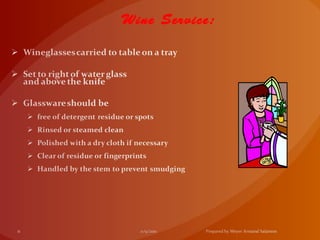
Wine Service:
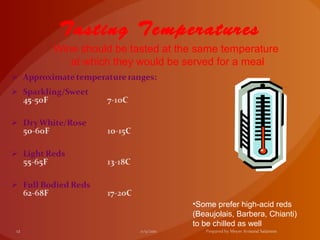
Tasting Temperatures
Wine should be tasted at the same temperature
   at which they would be served for a meal


                           •Some prefer high-acid reds
                           (Beaujolais, Barbera, Chianti)
                           to be chilled as well
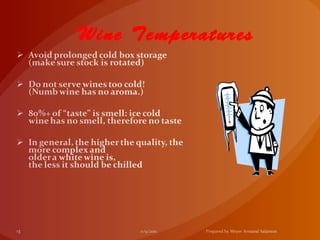
Wine Temperatures
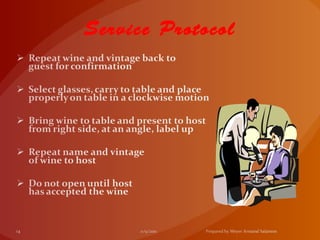
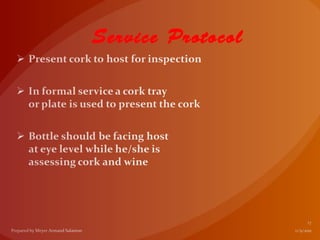
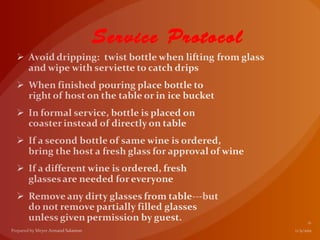
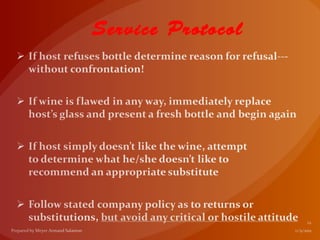
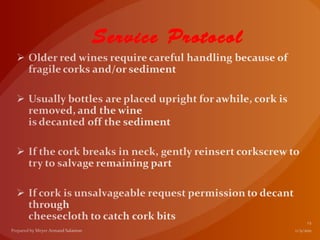
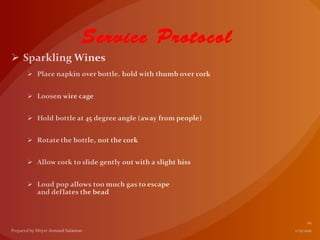
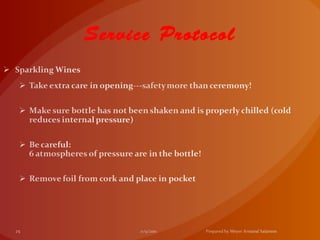
Service Protocol
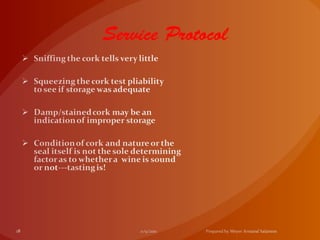
Service Protocol
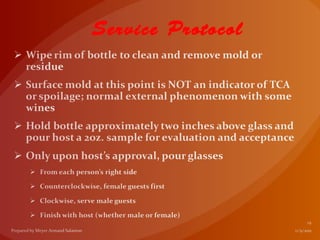
Service Protocol
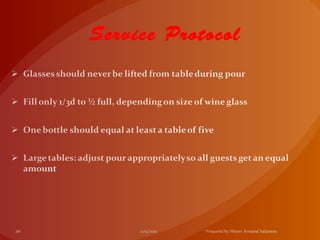
Service Protocol
Service Protocol
Service Protocol
Service Protocol
Service Protocol
Service Protocol
Service Protocol
Service Protocol
Service Protocol
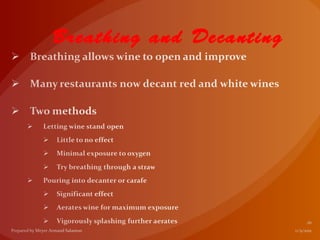
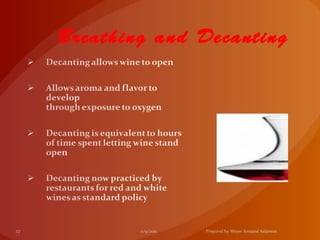
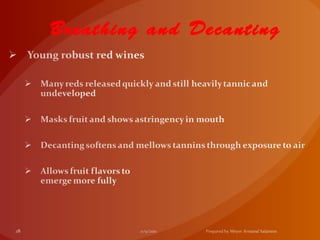
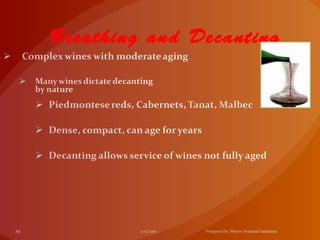
Breathing and Decanting
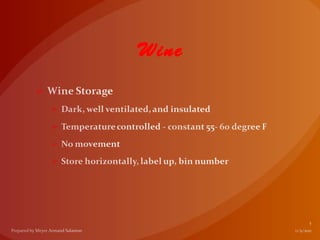
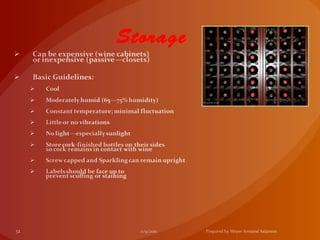
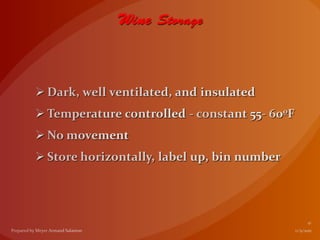
Storage
Introduction to
     Wine
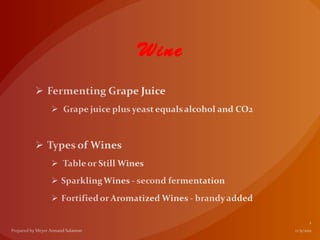
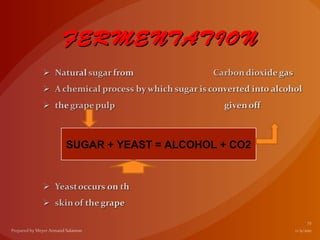
FERMENTATION


SUGAR + YEAST = ALCOHOL + CO2
Wine Tasting
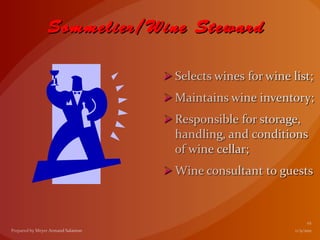
Sommelier/Wine Steward
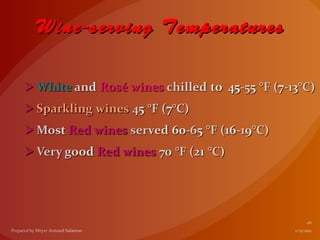
Wine-serving Temperatures
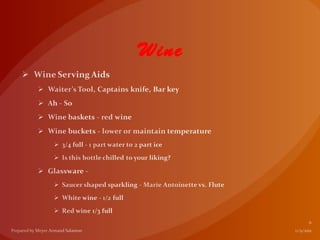
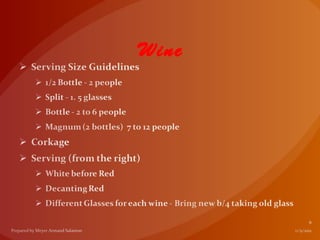
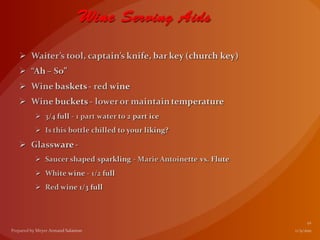
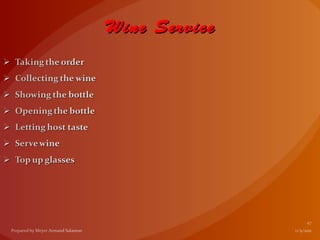
Wine Service
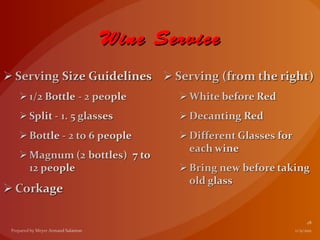
Wine Service
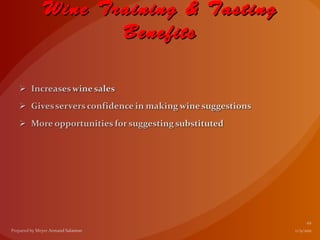
Wine Training & Tasting
       Benefits
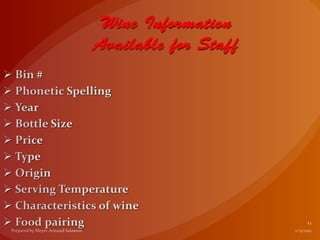
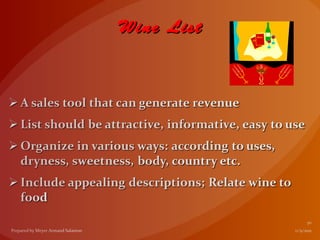
Wine List
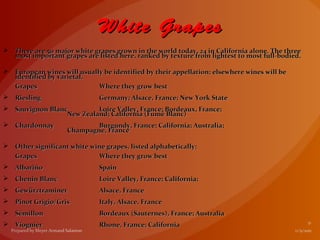
White Grapes
   There are 50 major white grapes grown in the world today, 24 in California alone. The three
    most important grapes are listed here, ranked by texture from lightest to most full-bodied.

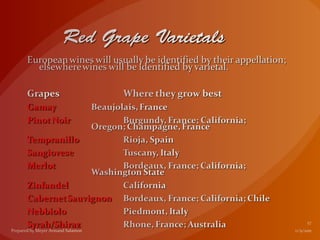
   European wines will usually be identified by their appellation; elsewhere wines will be
    identified by varietal.
    Grapes                    Where they grow best
   Riesling                   Germany; Alsace, France; New York State
   Sauvignon Blanc         Loire Valley, France; Bordeaux, France;
                   New Zealand; California (Fumé Blanc)
   Chardonnay              Burgundy, France; California; Australia;
                    Champagne, France

   Other significant white wine grapes, listed alphabetically:
    Grapes                    Where they grow best
   Albariño                   Spain
   Chenin Blanc               Loire Valley, France; California;
   Gewürztraminer             Alsace, France
   Pinot Grigio/Gris          Italy, Alsace, France
   Sémillon                   Bordeaux (Sauternes), France; Australia
   Viognier                   Rhone, France; California
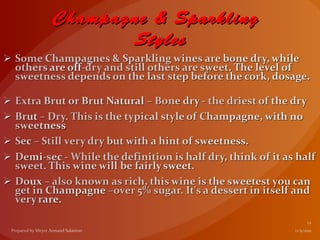
Champagne & Sparkling
       Styles
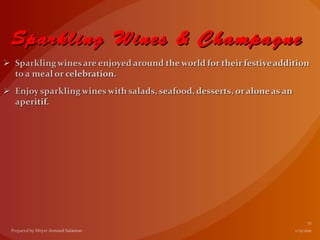
Sparkling Wines & Champagne
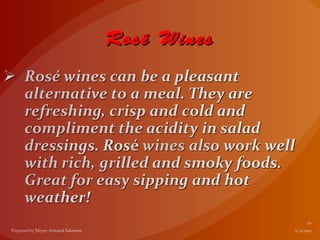
Rosé Wines
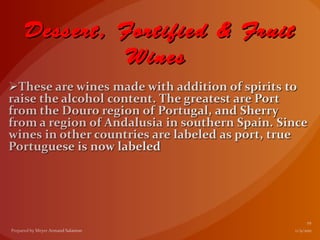
Dessert, Fortified & Fruit
          Wines
Dessert, Fortified & Fruit
         Wines
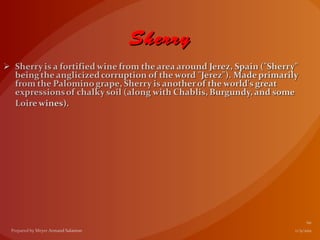
Sherry
Sherry
Fruit Infused
Fruit Infused
Port
Port
Dessert Wines
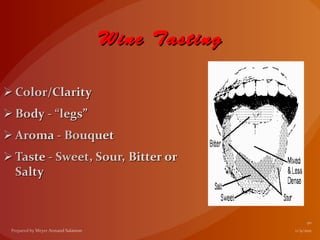
Wine Tasting
Defining Taste
Defining Taste
So why learn to taste effectively using
   sensory evaluation techniques?
Remember that a quality wine comes
      from the following:
Wines with superior quality
Sensory Evaluation
Sensory Evaluation
The Natural Tasting
     Sequence
Hearing
Sight
Sight
Sight
Sight
Smell
Smell
Smell
Smell
Wine has three facets
2) Aroma
3) Bouquet
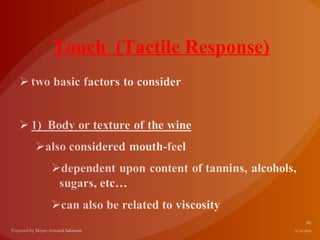
Touch (Tactile Response)
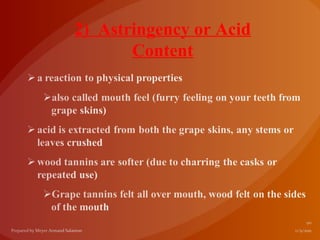
2) Astringency or Acid
       Content
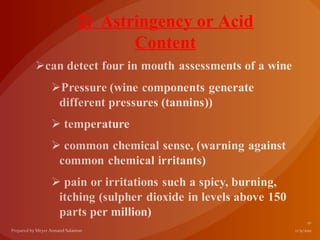
2) Astringency or Acid
       Content
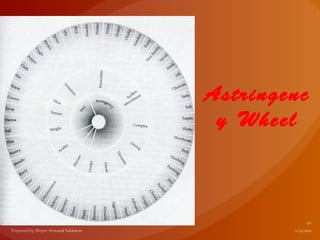
Astringenc
 y Wheel
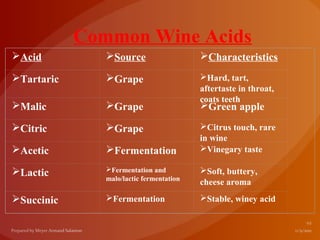
Common Wine Acids
Acid          Source                    Characteristics

Tartaric      Grape                     Hard, tart,
                                          aftertaste in throat,
                                          coats teeth
Malic         Grape                     Green apple

Citric        Grape                     Citrus touch, rare
                                          in wine
Acetic        Fermentation              Vinegary taste

Lactic        Fermentation and          Soft, buttery,
               malo/lactic fermentation
                                          cheese aroma
Succinic      Fermentation              Stable, winey acid
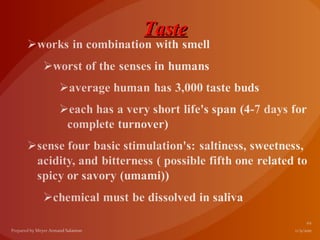
Taste
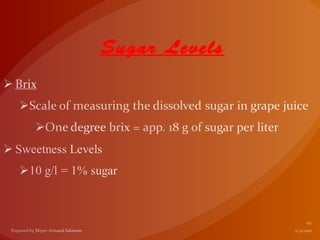
Sugar Levels
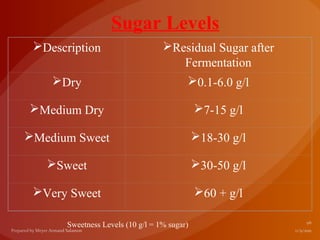
Sugar Levels
 Description                      Residual Sugar after
                                      Fermentation
    Dry                              0.1-6.0 g/l

Medium Dry                                   7-15 g/l

Medium Sweet                                 18-30 g/l

   Sweet                                     30-50 g/l

 Very Sweet                                  60 + g/l

       Sweetness Levels (10 g/l = 1% sugar)
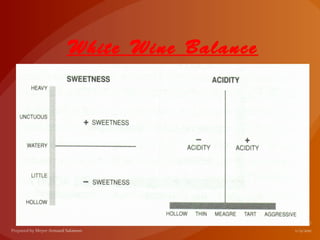
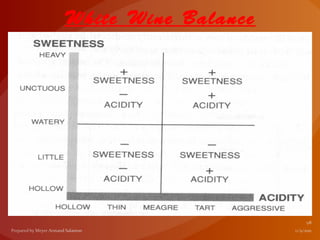
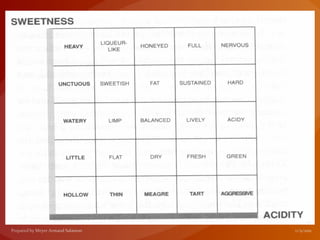
White Wine Balance
White Wine Balance
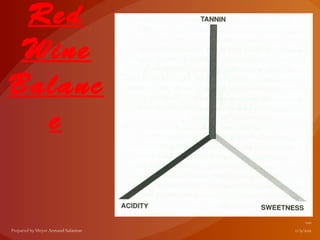
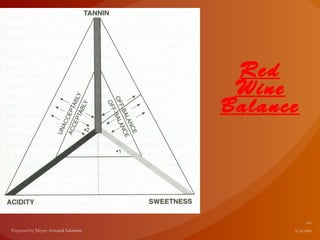
Red
 Wine
Balanc
  e
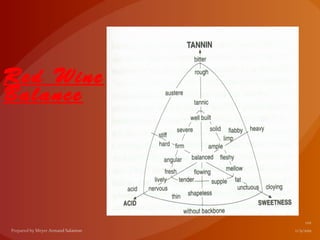
Red
 Wine
Balance
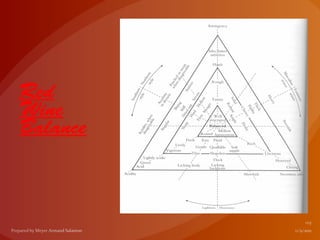
Red Wine
Balance
Red
Wine
Balance

Introduction to wine presentation

Editor's Notes