Wine
 By the end of this session you will be able to
understand
 Introduction to wine
 The history of wine
 Types of wine
 Technical term of wine
NICOL-2015
Introduction to wine
 Wine is an alcoholic beverage obtained from the
fermentation of freshly gathered grapes juice . The
fermentation take place according to the tradition and
practice of different region or state.
NICOL-2015
History of Wine
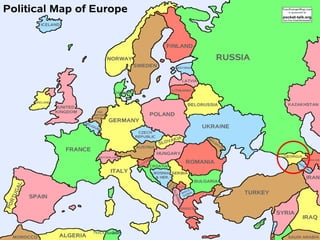
 The history of wine can be track back to ancient civilization.
According to various historical references the first evidence
of wine making dates back to 5000 BC in Georgia and
gradually moved on to Egypt and Greece before 2000 BC.
 Later Romans had learnt the growing of vines and art of wine
making from the Greeks.
 It had various symbolisms in religion Dionysus was
worshipped by the Greeks as their God of wine, as was
Bacchus by the Romans. In both civilization wine was
deeply associated with the God.
NICOL-2015
NICOL-2015
NICOL-2015
NICOL-2015
 Wine is still a vital part of some cultures and religions.
Jewish law insists that a Jew must drink four cups of
wine at religious holidays. While at weddings two cups
and they use wines in all function and gathering.
 The Christian also used wines in all ceremonies. The
Old Testament in the Bible gives evidence of wine
existing as the word ‘wine’ is mentioned 165 times.
NICOL-2015
 The wines slowly and gradually spread all over the
world. After Roman, it was European, France, Italy etc
who started producing wines.
 Today most of the restaurants make more money by
selling wines.
 Now different types, quality, brand, price etc. wines are
available in the market according to the taste and
budget of customers.
NICOL-2015
NICOL-2015
Types of Wine
 Table wine
 Sparkling wine
 Fortified wine
 Aromatized wine
NICOL-2015
 Table Wine
 The table wines are also known as still wines because
there is no carbonation and it’s also known as natural
wines. The alcoholic content is 7%-14% in volume.
These wines are considered as important part of the
meal experience.
 Table wines are further classified into Dry, Medium
dry and Sweet.
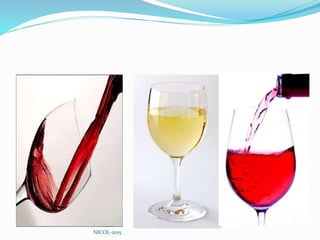
 It includes Red, White and Rose wine.
NICOL-2015
NICOL-2015
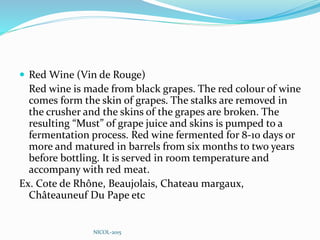
 Red Wine (Vin de Rouge)
Red wine is made from black grapes. The red colour of wine
comes form the skin of grapes. The stalks are removed in
the crusher and the skins of the grapes are broken. The
resulting “Must” of grape juice and skins is pumped to a
fermentation process. Red wine fermented for 8-10 days or
more and matured in barrels from six months to two years
before bottling. It is served in room temperature and
accompany with red meat.
Ex. Cote de Rhône, Beaujolais, Chateau margaux,
Châteauneuf Du Pape etc
NICOL-2015
NICOL-2015
THE CRUSHER - STEMMER
NICOL-2015
NICOL-2015
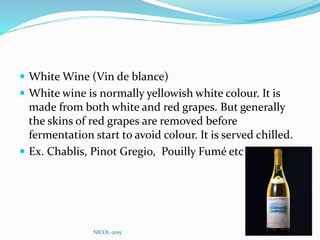
 White Wine (Vin de blance)
 White wine is normally yellowish white colour. It is
made from both white and red grapes. But generally
the skins of red grapes are removed before
fermentation start to avoid colour. It is served chilled.
 Ex. Chablis, Pinot Gregio, Pouilly Fumé etc
NICOL-2015
NICOL-2015
 Rose Wine (Vin de Rose)
 The Rose wine refers to pink wine, which is light-red
in colour. It is made from red/black, however,
fermentation with the skin usually take less or shorter
period.
Ex. Rose de Anjou, Meteus Rose etc.
NICOL-2015
 Sparkling wine:
 Those wines which are made fizzy with bubbles by the
addition of carbon dioxide under pressure are known as
sparkling wines. The second fermentation is done within
the bottle to obtained the sparkle which is know as “prise
de mousse”. They are drunk on festive occasions and
throughout a meal. The alcoholic content is less than 14%
in volume.
 Ex. Champagne of France,
 These wines are made by three methods.
 Champagne method: it is the most expensive method.
 Transfer method: Fermentation takes place in big barrels
and then transferred to another barrel.
 Bulk method: Fermentation is done in a huge fermentation
tank.
NICOL-2015
NICOL-2015
 Fortified Wine:
 These wines are fortified or strengthened by adding
alcohol in the form of brandy during fermentation.
The alcoholic content is 14% to 24% in volume. These
wines are usually sold by drink not by bottle. They are
drunk either before or after having meal.
 Ex. Port, Sherry
NICOL-2015
 Aromatized wine:
 These wines are prepared with the addition of brandy
of spirit and flavored with aromatic herbs barks and
other botanical plants. It is known as aperitif as well
and derived from French word ‘aperitif’ meaning
‘appetizer’. It is traditionally served before meals.
 Ex. Vermouths, dubonnet, Martini Rosso etc.
NICOL-2015
Technical term of wine
 Acidity: The acidity level in wine is derived in two
ways: the natural acids in the grape and the acids that
occur as a result of fermentation. When someone is
describing the "acidity" of wine, he or she is referring
to how sharp or tart (sour)the wine tastes.
 Aggressive: Wines described as aggressive are either
too tannic, acidic or a combination of both.
 Aroma: Taste in mouth
 Balanced: A wine described as balanced is exactly the
wine that is not too acidic, tannic or fruity. Wine that
are not balanced are acidic, flat or harsh.
NICOL-2015
 Full body: The term full body is used to describe the
weight and texture of a wine on the palate. Usually
from a combination of alcohol, glycerin and sugar
content. It is most commonly used in terms of full,
light or medium bodied.
 Blunt: Wine displaying strong alcoholic tastes and
lacking in bouquet and aromatics can be described as
blunt.
 Bouquet: A term bouquet is used to describe the
scents and aromas of wine.
NICOL-2015
 Clarity: Clarity is used to describe how the wine looks
in the glass. It should be clear and bright and not have
any indications of cloudy.
 Complex: Complex wines are those that display many
different balanced flavor or bouquet.
 Creamy: Wines described as creamy have smooth
mouth feel.
 Dry: Description of wine made or taste that has
contain between 0.5 grams residual sugar per liter.
NICOL-2015
 Fat: Wines become fat when they are well-balanced
and complex with a relatively low acid content. The
term fat is generally a positive description.
 Flat: For sparkling wine and Champagne, flat simply
means the wines have lost their bubbles or Co2. For all
other wines, the term is used to describe a wine that is
boring and dull, lacking in flavor and aroma
characteristics.
 Fruity: Fruity wines display flavors and aromas of
fresh fruit (other than grapes), such as blackberries or
dark cherries.
NICOL-2015
 Heavy: Wines described as heavy are too high in
tannins. Heavy wines are considered to be unbalanced.
 Light Bodied: Wines described as light bodied often
lack in flavor and texture and are sometimes
considered a little watery tasting.
 Tart: It means acidic same as sharp or sour
 Tannin: A naturally occurring substance in grape
skins, seeds and stems. It gives dry mouth feel. Tannin
can be softer as the wine age for longer.
NICOL-2015
 Volatile: Volatile is a negative characteristic used to
describe wine that has an off-scent like vinegar.
 Sweet wine: Are those with high amount of residual sugar
and thus taste completely sweet.
 Medium dry wine: Are those with residual sugars
contents lower than sweet wines.
 Dry wine: Are those with residual sugar contents between
0.5 grams residual sugar per liter.
 Brut: French term for dry wine
 Sec: French term for dry Champagne
 Demi- Sec: Medium dry
 Doux: Sweet
NICOL-2015
 Vineyard: The land where the grapes are planted
 Viticulture: The growing of grapes
 Vinification: The process of making wine
 Vintage: Is the wine that has been manufactured form
the grapes of particular year. Therefore a bottle of
wine labeled as 1988 (Vintage 1988) is thus made only
from grapes grown and harvested within 1988.
 Vin de table: Usually available as “House wine” these
wines are generally poor in quality and can purchase in
very limited amount.
NICOL-2015
 Vins de pays: These are wines produced in specified
area and generally higher quality than table wine.
 AOC: Appellation d’origine Controlee – This is higher
category of French wine. Subject to very strict quality
controls. Generally these wines are expensive.
NICOL-2015

Wine 1

  • 1.
    Wine  By theend of this session you will be able to understand  Introduction to wine  The history of wine  Types of wine  Technical term of wine NICOL-2015
  • 2.
    Introduction to wine Wine is an alcoholic beverage obtained from the fermentation of freshly gathered grapes juice . The fermentation take place according to the tradition and practice of different region or state. NICOL-2015
  • 3.
    History of Wine The history of wine can be track back to ancient civilization. According to various historical references the first evidence of wine making dates back to 5000 BC in Georgia and gradually moved on to Egypt and Greece before 2000 BC.  Later Romans had learnt the growing of vines and art of wine making from the Greeks.  It had various symbolisms in religion Dionysus was worshipped by the Greeks as their God of wine, as was Bacchus by the Romans. In both civilization wine was deeply associated with the God. NICOL-2015
  • 4.
  • 5.
  • 6.
  • 7.
     Wine isstill a vital part of some cultures and religions. Jewish law insists that a Jew must drink four cups of wine at religious holidays. While at weddings two cups and they use wines in all function and gathering.  The Christian also used wines in all ceremonies. The Old Testament in the Bible gives evidence of wine existing as the word ‘wine’ is mentioned 165 times. NICOL-2015
  • 8.
     The winesslowly and gradually spread all over the world. After Roman, it was European, France, Italy etc who started producing wines.  Today most of the restaurants make more money by selling wines.  Now different types, quality, brand, price etc. wines are available in the market according to the taste and budget of customers. NICOL-2015
  • 9.
  • 10.
    Types of Wine Table wine  Sparkling wine  Fortified wine  Aromatized wine NICOL-2015
  • 11.
     Table Wine The table wines are also known as still wines because there is no carbonation and it’s also known as natural wines. The alcoholic content is 7%-14% in volume. These wines are considered as important part of the meal experience.  Table wines are further classified into Dry, Medium dry and Sweet.  It includes Red, White and Rose wine. NICOL-2015
  • 12.
  • 13.
     Red Wine(Vin de Rouge) Red wine is made from black grapes. The red colour of wine comes form the skin of grapes. The stalks are removed in the crusher and the skins of the grapes are broken. The resulting “Must” of grape juice and skins is pumped to a fermentation process. Red wine fermented for 8-10 days or more and matured in barrels from six months to two years before bottling. It is served in room temperature and accompany with red meat. Ex. Cote de Rhône, Beaujolais, Chateau margaux, Châteauneuf Du Pape etc NICOL-2015
  • 14.
  • 15.
    THE CRUSHER -STEMMER NICOL-2015
  • 16.
  • 17.
     White Wine(Vin de blance)  White wine is normally yellowish white colour. It is made from both white and red grapes. But generally the skins of red grapes are removed before fermentation start to avoid colour. It is served chilled.  Ex. Chablis, Pinot Gregio, Pouilly Fumé etc NICOL-2015
  • 18.
  • 19.
     Rose Wine(Vin de Rose)  The Rose wine refers to pink wine, which is light-red in colour. It is made from red/black, however, fermentation with the skin usually take less or shorter period. Ex. Rose de Anjou, Meteus Rose etc. NICOL-2015
  • 20.
     Sparkling wine: Those wines which are made fizzy with bubbles by the addition of carbon dioxide under pressure are known as sparkling wines. The second fermentation is done within the bottle to obtained the sparkle which is know as “prise de mousse”. They are drunk on festive occasions and throughout a meal. The alcoholic content is less than 14% in volume.  Ex. Champagne of France,  These wines are made by three methods.  Champagne method: it is the most expensive method.  Transfer method: Fermentation takes place in big barrels and then transferred to another barrel.  Bulk method: Fermentation is done in a huge fermentation tank. NICOL-2015
  • 21.
  • 22.
     Fortified Wine: These wines are fortified or strengthened by adding alcohol in the form of brandy during fermentation. The alcoholic content is 14% to 24% in volume. These wines are usually sold by drink not by bottle. They are drunk either before or after having meal.  Ex. Port, Sherry NICOL-2015
  • 23.
     Aromatized wine: These wines are prepared with the addition of brandy of spirit and flavored with aromatic herbs barks and other botanical plants. It is known as aperitif as well and derived from French word ‘aperitif’ meaning ‘appetizer’. It is traditionally served before meals.  Ex. Vermouths, dubonnet, Martini Rosso etc. NICOL-2015
  • 24.
    Technical term ofwine  Acidity: The acidity level in wine is derived in two ways: the natural acids in the grape and the acids that occur as a result of fermentation. When someone is describing the "acidity" of wine, he or she is referring to how sharp or tart (sour)the wine tastes.  Aggressive: Wines described as aggressive are either too tannic, acidic or a combination of both.  Aroma: Taste in mouth  Balanced: A wine described as balanced is exactly the wine that is not too acidic, tannic or fruity. Wine that are not balanced are acidic, flat or harsh. NICOL-2015
  • 25.
     Full body:The term full body is used to describe the weight and texture of a wine on the palate. Usually from a combination of alcohol, glycerin and sugar content. It is most commonly used in terms of full, light or medium bodied.  Blunt: Wine displaying strong alcoholic tastes and lacking in bouquet and aromatics can be described as blunt.  Bouquet: A term bouquet is used to describe the scents and aromas of wine. NICOL-2015
  • 26.
     Clarity: Clarityis used to describe how the wine looks in the glass. It should be clear and bright and not have any indications of cloudy.  Complex: Complex wines are those that display many different balanced flavor or bouquet.  Creamy: Wines described as creamy have smooth mouth feel.  Dry: Description of wine made or taste that has contain between 0.5 grams residual sugar per liter. NICOL-2015
  • 27.
     Fat: Winesbecome fat when they are well-balanced and complex with a relatively low acid content. The term fat is generally a positive description.  Flat: For sparkling wine and Champagne, flat simply means the wines have lost their bubbles or Co2. For all other wines, the term is used to describe a wine that is boring and dull, lacking in flavor and aroma characteristics.  Fruity: Fruity wines display flavors and aromas of fresh fruit (other than grapes), such as blackberries or dark cherries. NICOL-2015
  • 28.
     Heavy: Winesdescribed as heavy are too high in tannins. Heavy wines are considered to be unbalanced.  Light Bodied: Wines described as light bodied often lack in flavor and texture and are sometimes considered a little watery tasting.  Tart: It means acidic same as sharp or sour  Tannin: A naturally occurring substance in grape skins, seeds and stems. It gives dry mouth feel. Tannin can be softer as the wine age for longer. NICOL-2015
  • 29.
     Volatile: Volatileis a negative characteristic used to describe wine that has an off-scent like vinegar.  Sweet wine: Are those with high amount of residual sugar and thus taste completely sweet.  Medium dry wine: Are those with residual sugars contents lower than sweet wines.  Dry wine: Are those with residual sugar contents between 0.5 grams residual sugar per liter.  Brut: French term for dry wine  Sec: French term for dry Champagne  Demi- Sec: Medium dry  Doux: Sweet NICOL-2015
  • 30.
     Vineyard: Theland where the grapes are planted  Viticulture: The growing of grapes  Vinification: The process of making wine  Vintage: Is the wine that has been manufactured form the grapes of particular year. Therefore a bottle of wine labeled as 1988 (Vintage 1988) is thus made only from grapes grown and harvested within 1988.  Vin de table: Usually available as “House wine” these wines are generally poor in quality and can purchase in very limited amount. NICOL-2015
  • 31.
     Vins depays: These are wines produced in specified area and generally higher quality than table wine.  AOC: Appellation d’origine Controlee – This is higher category of French wine. Subject to very strict quality controls. Generally these wines are expensive. NICOL-2015