THE PROGRESSIVE ERA
    OF EDUCATION
     Keifer, Whitney, Chandler
Progressive Education Movement
• Progressivism- philosophic orientation based on the belief that
  life is evolving in a positive direction, that people may be trusted
  to act in their own best interest, and education should focus on
  children’s interests and needs.

• Characteristics of Progressive Education:
   – Focused on social reform and improving quality of life
   – Not united by a single philosophy
   – Opposed to autocratic teaching methods
       • Based exclusively on textbooks, recitations, and memory
       • Isolation of classroom from the real world
       • Classroom discipline based on fear and physical punishment
   -- Teachers were guides rather than “task makers”
       • Provided students with activities related to natural interests for engagement
       • THEN moved students to higher levels of understanding.
       • Teachers needed perceptive understanding of children and a knowledge of
         discipline and knowing when a child is ready to learn.
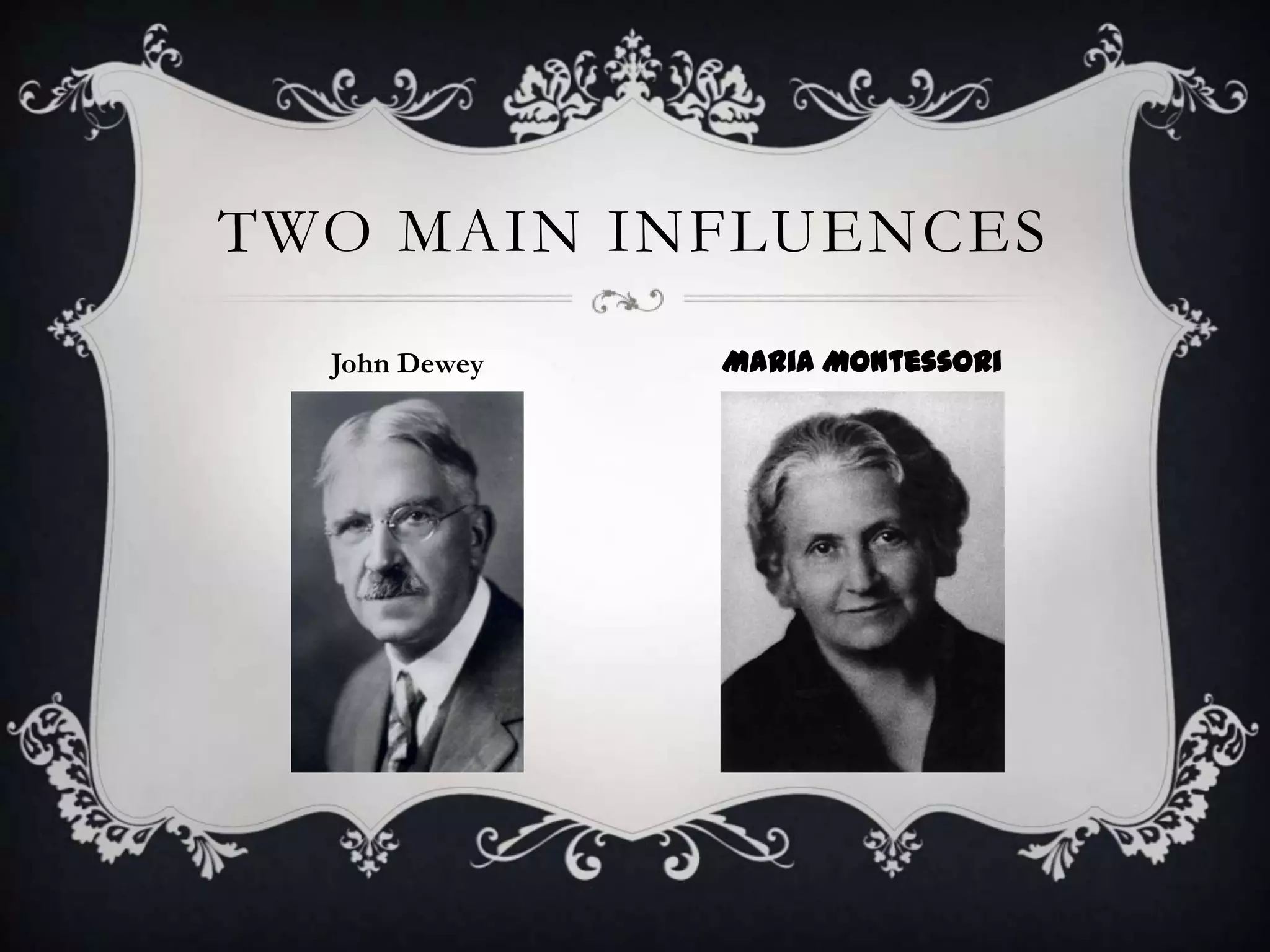
TWO MAIN INFLUENCES
  John Dewey   Maria Montessori
JOHN DEWEY
 1859-1952

 Founded a Laboratory School at University of
  Chicago where he was a professor.

 Believed students should have a say in what they
  studied

 Teachers would lead them on right path based on
  choices
MARIA MONTESSORI

 1870-1952

 Believed children’s development could be influenced by education
activities

 Interesting materials make students interested in learning

 Provide more self[discipline and self-confidence

 Methods used in early education today
Education (or lack thereof) of
Immigrants and Minorities
 During the late 19th and early 20th
  centuries American schools became
  more and more diverse.
 They now held Germans, Latin
  Americans, Chinese, Native
  Americans, Cubans, and Puerto Ricans.
Education?
 Children    were punished for speaking

 Parental    respect

 Military   institutions

 Emotional     scars
Help!
 Landmarkreport- The Problem of
 Indian Administration
 Build   day schools
 Revised   school curricula
 Reflecttribal cultures and need of
 local communities.
Mary McLeod Bethune
 Educational  rights of African Americans
 Founded Daytona Normal and Industrial
  School for Training Negro Girls.
 Merged with a boy’s school to become
  Bethune-Cookman College.
 Appointed to Advisory Board of National
  Youth Administration
 President Franklin Roosevelt- minority
The Decline of Progressive Education
 •   The decline of progressive education began with the start of
     WWII. The citizens of the US thought that the curriculum of
     progressivism was out of line with what the students
     needed to learn.
        *Teaching approaches were seen as soft and lacking
         structure and discipline children needed.
        *Many school deficiencies were blamed on progressive
          education
 •   The Progressive Education Association ceased operation in
     1955. When it began, it meant everything that was good in
     the educational system. By 1954, it was the root of all
     educational evil.
Federal Involvement in Education
• G.I. Bill of Rights
   – Aka: Servicemen’s Readjustment Act
   – Signed by FDR in 1944
   – Provided millions of veterans with payments for
     tuition and room and board at
     colleges, universities, and special schools all over the
     country
   – It not only stimulated growth of American colleges
     and universities; it also changed the character of the
     higher education student population
      • Returning veterans were older, spiking the average age.
      • Returning veterans were more serious about school, spiking
        the average GPA.
Federal Involvement in Education
              (continued)
• LANHAM ACT (1941) provided funding for
  – the training of workers in war plants by personnel
    from the U.S Office of Education during WWII
  – construction of schools in areas where military
    personnel and federal workers lived
  – provision of child care for children of working
    parents

The progressive era of education

  • 1.
    THE PROGRESSIVE ERA OF EDUCATION Keifer, Whitney, Chandler
  • 2.
    Progressive Education Movement •Progressivism- philosophic orientation based on the belief that life is evolving in a positive direction, that people may be trusted to act in their own best interest, and education should focus on children’s interests and needs. • Characteristics of Progressive Education: – Focused on social reform and improving quality of life – Not united by a single philosophy – Opposed to autocratic teaching methods • Based exclusively on textbooks, recitations, and memory • Isolation of classroom from the real world • Classroom discipline based on fear and physical punishment -- Teachers were guides rather than “task makers” • Provided students with activities related to natural interests for engagement • THEN moved students to higher levels of understanding. • Teachers needed perceptive understanding of children and a knowledge of discipline and knowing when a child is ready to learn.
  • 3.
    TWO MAIN INFLUENCES John Dewey Maria Montessori
  • 4.
    JOHN DEWEY  1859-1952 Founded a Laboratory School at University of Chicago where he was a professor.  Believed students should have a say in what they studied  Teachers would lead them on right path based on choices
  • 5.
    MARIA MONTESSORI  1870-1952 Believed children’s development could be influenced by education activities  Interesting materials make students interested in learning  Provide more self[discipline and self-confidence  Methods used in early education today
  • 6.
    Education (or lackthereof) of Immigrants and Minorities  During the late 19th and early 20th centuries American schools became more and more diverse.  They now held Germans, Latin Americans, Chinese, Native Americans, Cubans, and Puerto Ricans.
  • 7.
    Education?  Children were punished for speaking  Parental respect  Military institutions  Emotional scars
  • 8.
    Help!  Landmarkreport- TheProblem of Indian Administration  Build day schools  Revised school curricula  Reflecttribal cultures and need of local communities.
  • 9.
    Mary McLeod Bethune Educational rights of African Americans  Founded Daytona Normal and Industrial School for Training Negro Girls.  Merged with a boy’s school to become Bethune-Cookman College.  Appointed to Advisory Board of National Youth Administration  President Franklin Roosevelt- minority
  • 10.
    The Decline ofProgressive Education • The decline of progressive education began with the start of WWII. The citizens of the US thought that the curriculum of progressivism was out of line with what the students needed to learn. *Teaching approaches were seen as soft and lacking structure and discipline children needed. *Many school deficiencies were blamed on progressive education • The Progressive Education Association ceased operation in 1955. When it began, it meant everything that was good in the educational system. By 1954, it was the root of all educational evil.
  • 11.
    Federal Involvement inEducation • G.I. Bill of Rights – Aka: Servicemen’s Readjustment Act – Signed by FDR in 1944 – Provided millions of veterans with payments for tuition and room and board at colleges, universities, and special schools all over the country – It not only stimulated growth of American colleges and universities; it also changed the character of the higher education student population • Returning veterans were older, spiking the average age. • Returning veterans were more serious about school, spiking the average GPA.
  • 12.
    Federal Involvement inEducation (continued) • LANHAM ACT (1941) provided funding for – the training of workers in war plants by personnel from the U.S Office of Education during WWII – construction of schools in areas where military personnel and federal workers lived – provision of child care for children of working parents