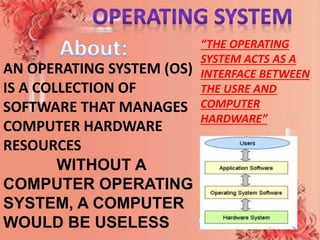
AN OPERATING SYSTEM (OS)
IS A COLLECTION OF
SOFTWARE THAT MANAGES
COMPUTER HARDWARE
RESOURCES
WITHOUT A
COMPUTER OPERATING
SYSTEM, A COMPUTER
WOULD BE USELESS
“THE OPERATING
SYSTEM ACTS AS A
INTERFACE BETWEEN
THE USRE AND
COMPUTER
HARDWARE”
Virtual memory is a common part of
operating system on desktop
computers.
The term virtual memory refers to
something which appears to be
present but actually it is not.
The virtual memory technique allows
users to use more memory for a
program than the real memory of a
computer.
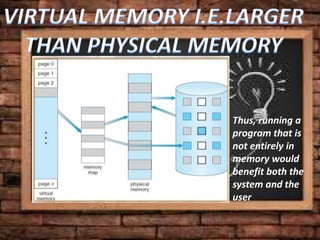
Thus, running a
program that is
not entirely in
memory would
benefit both the
system and the
user
Virtual memory is the address used by the programmer
and the set of such addresses is called address space.
An address in main memory is called a physical
address.
The set of such locations in main memory is called the
memory space.
Thus the memory space consist of the actual main
memory locations directly addressable for processing.
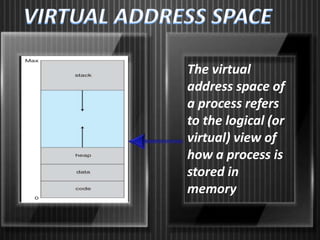
The virtual
address space of
a process refers
to the logical (or
virtual) view of
how a process is
stored in
memory
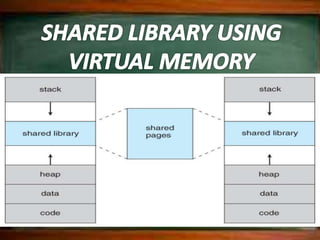
In addition to
separating logical
memory from physical
memory, virtual
memory also allows
files and memory to be
shared by two or more
processes through page
sharing. This leads to
the following benefits:
system libraries can be
shared by several
processes through
mapping of the shared
object into a virtual
address space.
Virtual memory enables
processes to share
memory.
Virtual memory can
allow pages to be shared
during process creation
with the forkO system
call, thus speeding up
process creation.
•Virtual memory is a
imaginary memory which
we are assuming. If we have
a material that exceed your
memory at that time we
need to use the concept of
virtual memory.
• virtual memory is
temporary memory which is
used along with the ram of
the system.
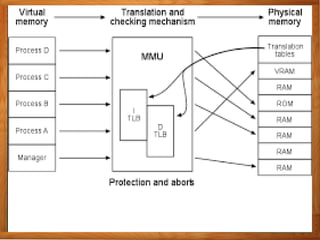
A programmer can write a program
which requires more memory space
than the capacity of the main memory.
Such a program is executed by virtual
memory technique.
The program is stored in the
secondary memory. The memory
management unit (MMU) transfers the
currently needed part of the program
from the secondary memory to the
main memory for execution.
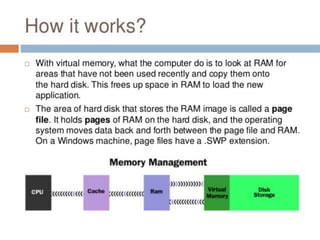
 This to and fro movement of
instructions and data (parts of a
program) between the main memory
and the secondary memory is called
Swapping
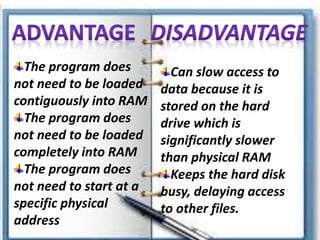
Can slow access to
data because it is
stored on the hard
drive which is
significantly slower
than physical RAM
Keeps the hard disk
busy, delaying access
to other files.
The program does
not need to be loaded
contiguously into RAM
The program does
not need to be loaded
completely into RAM
The program does
not need to start at a
specific physical
address
Os
Os

Os

  • 5.
    AN OPERATING SYSTEM(OS) IS A COLLECTION OF SOFTWARE THAT MANAGES COMPUTER HARDWARE RESOURCES WITHOUT A COMPUTER OPERATING SYSTEM, A COMPUTER WOULD BE USELESS “THE OPERATING SYSTEM ACTS AS A INTERFACE BETWEEN THE USRE AND COMPUTER HARDWARE”
  • 6.
    Virtual memory isa common part of operating system on desktop computers. The term virtual memory refers to something which appears to be present but actually it is not. The virtual memory technique allows users to use more memory for a program than the real memory of a computer.
  • 7.
    Thus, running a programthat is not entirely in memory would benefit both the system and the user
  • 8.
    Virtual memory isthe address used by the programmer and the set of such addresses is called address space. An address in main memory is called a physical address. The set of such locations in main memory is called the memory space. Thus the memory space consist of the actual main memory locations directly addressable for processing.
  • 9.
    The virtual address spaceof a process refers to the logical (or virtual) view of how a process is stored in memory
  • 11.
    In addition to separatinglogical memory from physical memory, virtual memory also allows files and memory to be shared by two or more processes through page sharing. This leads to the following benefits: system libraries can be shared by several processes through mapping of the shared object into a virtual address space. Virtual memory enables processes to share memory. Virtual memory can allow pages to be shared during process creation with the forkO system call, thus speeding up process creation.
  • 12.
    •Virtual memory isa imaginary memory which we are assuming. If we have a material that exceed your memory at that time we need to use the concept of virtual memory. • virtual memory is temporary memory which is used along with the ram of the system.
  • 13.
    A programmer canwrite a program which requires more memory space than the capacity of the main memory. Such a program is executed by virtual memory technique. The program is stored in the secondary memory. The memory management unit (MMU) transfers the currently needed part of the program from the secondary memory to the main memory for execution.  This to and fro movement of instructions and data (parts of a program) between the main memory and the secondary memory is called Swapping
  • 16.
    Can slow accessto data because it is stored on the hard drive which is significantly slower than physical RAM Keeps the hard disk busy, delaying access to other files. The program does not need to be loaded contiguously into RAM The program does not need to be loaded completely into RAM The program does not need to start at a specific physical address