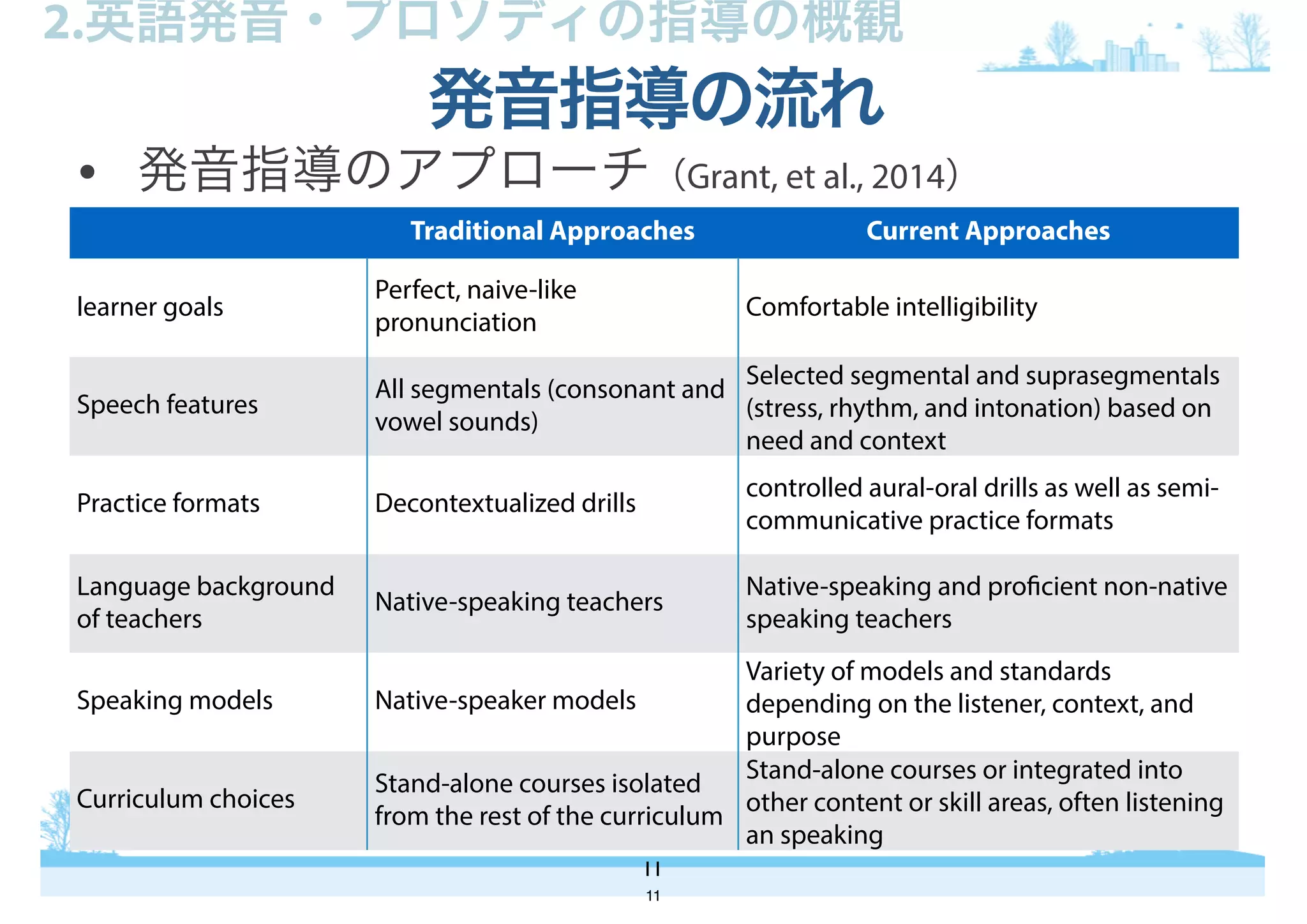
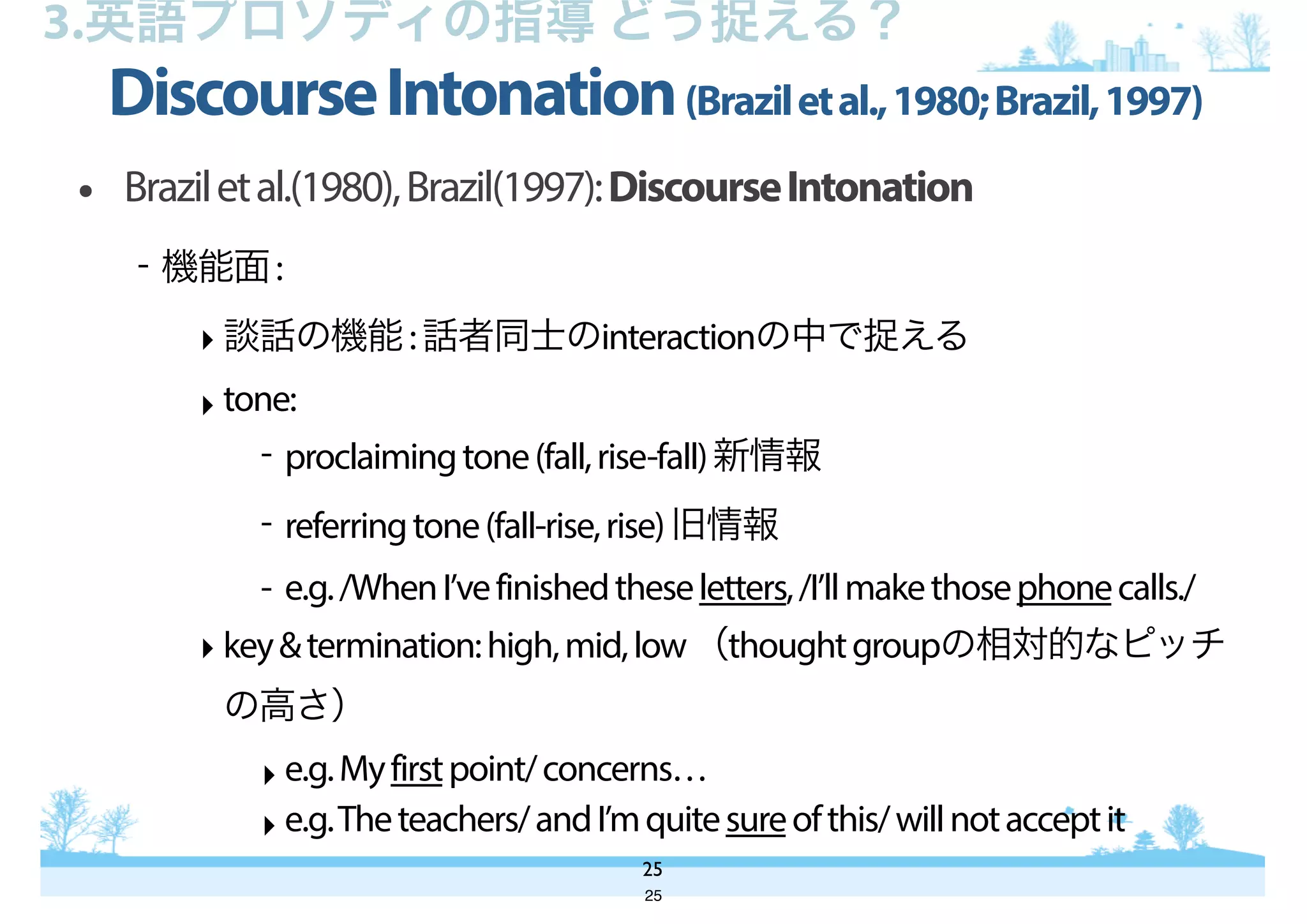
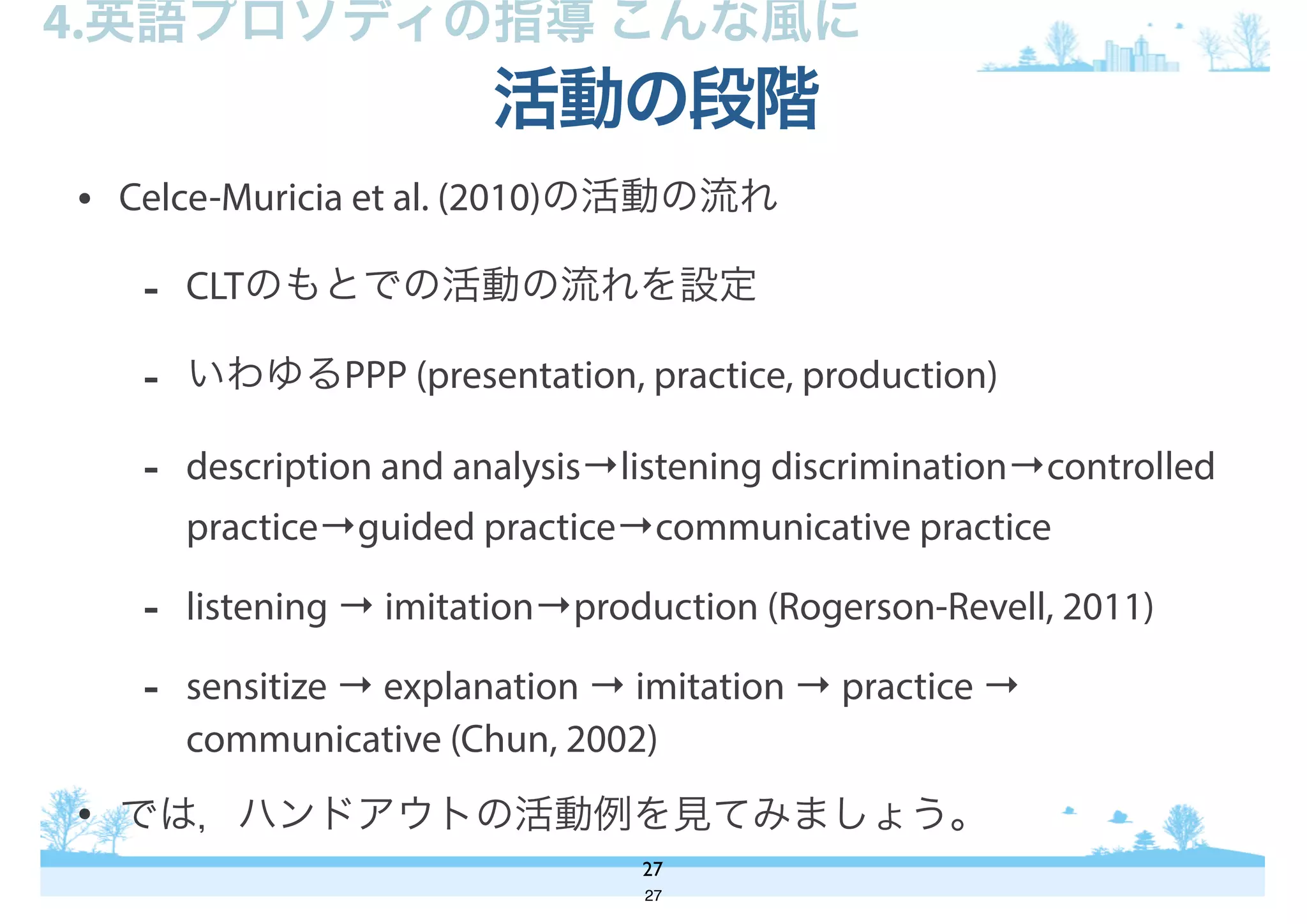
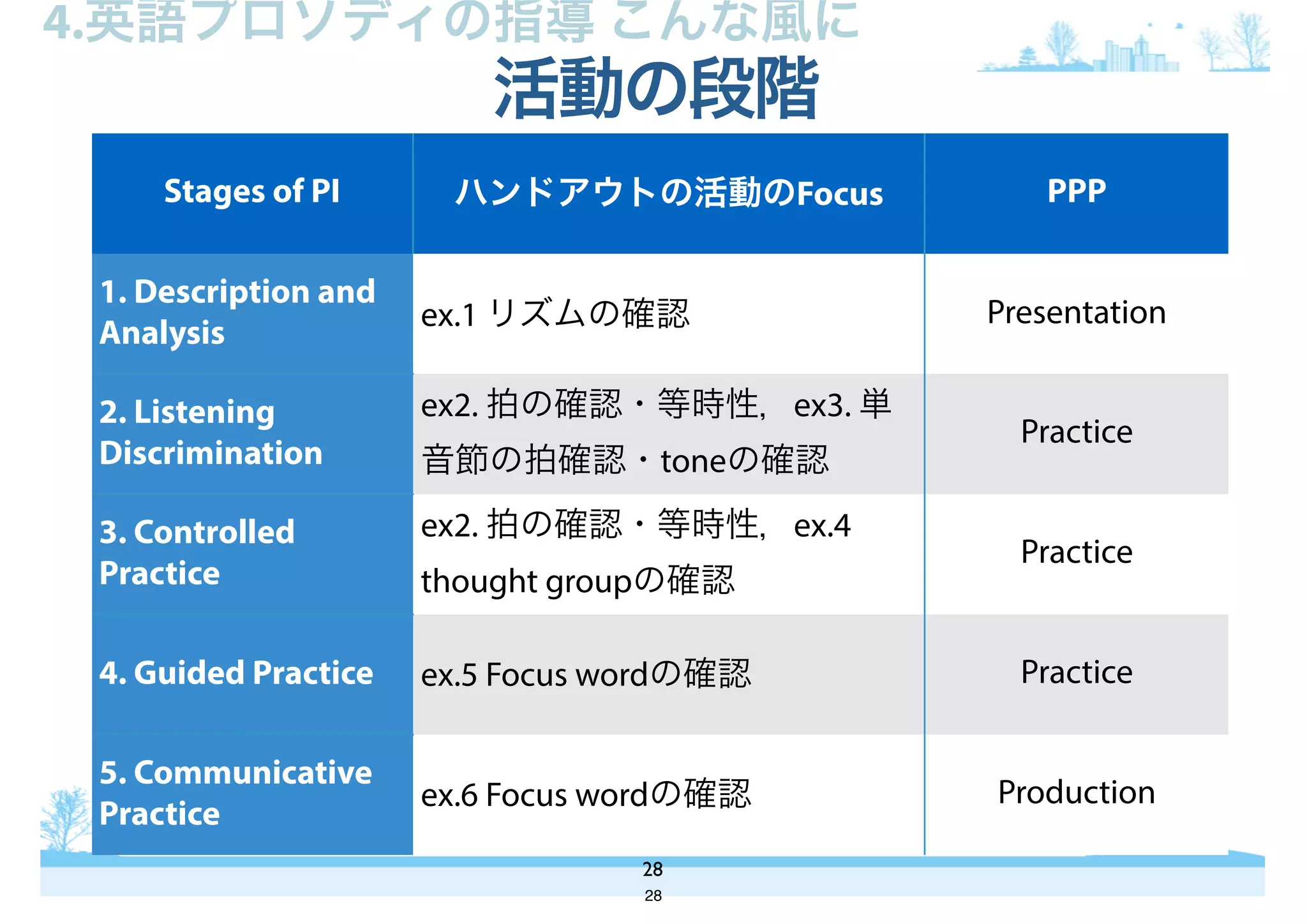
• 発音指導のアプローチ(Grant, etal., 2014)
発音指導の流れ
11
2.英語発音・プロソディの指導の概観
Traditional Approaches Current Approaches
learner goals
Perfect, naive-like
pronunciation
Comfortable intelligibility
Speech features
All segmentals (consonant and
vowel sounds)
Selected segmental and suprasegmentals
(stress, rhythm, and intonation) based on
need and context
Practice formats Decontextualized drills
controlled aural-oral drills as well as semi-
communicative practice formats
Language background
of teachers
Native-speaking teachers
Native-speaking and proficient non-native
speaking teachers
Speaking models Native-speaker models
Variety of models and standards
depending on the listener, context, and
purpose
Curriculum choices
Stand-alone courses isolated
from the rest of the curriculum
Stand-alone courses or integrated into
other content or skill areas, often listening
an speaking
11
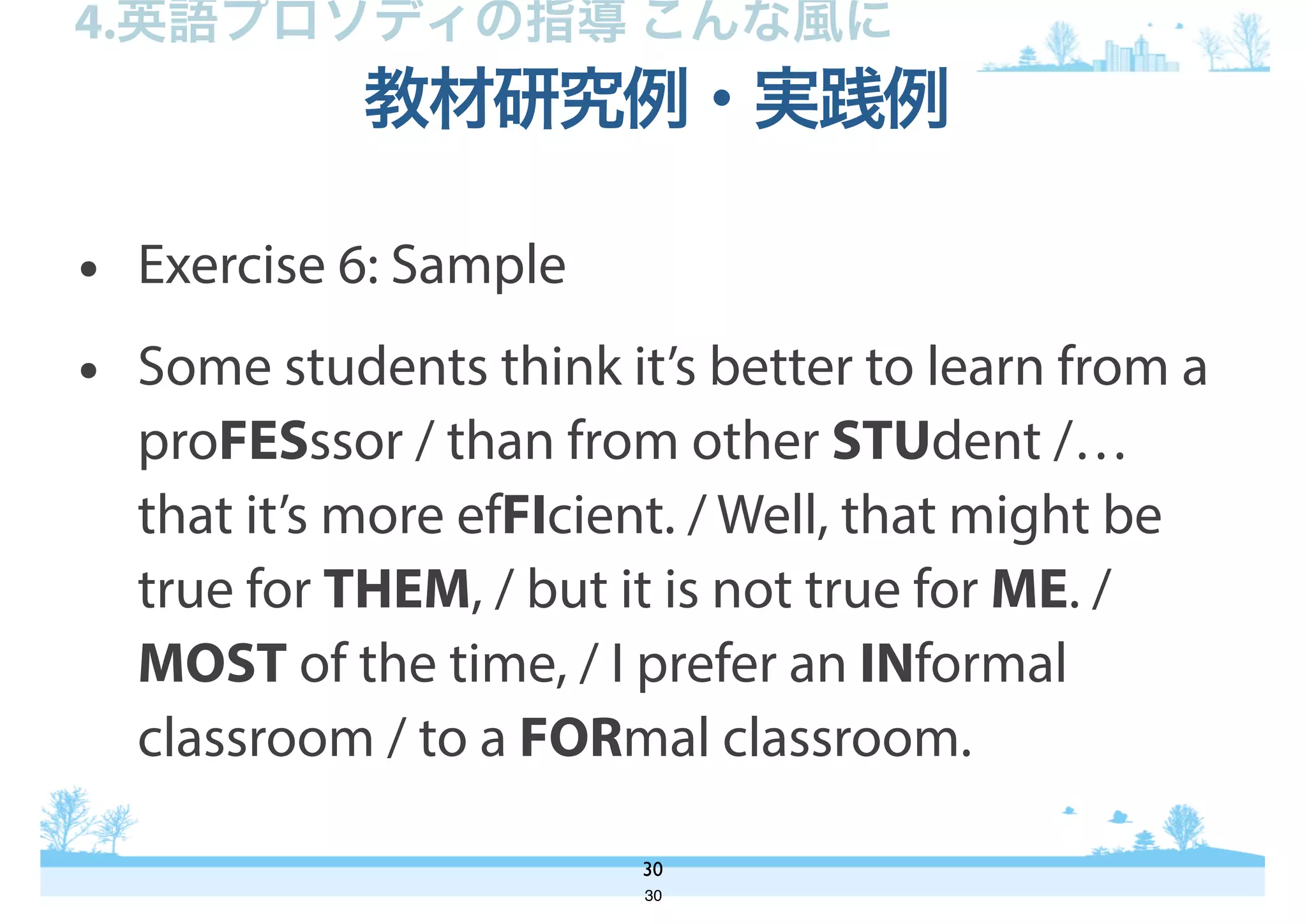
• Exercise 6:Sample
• Some students think it’s better to learn from a
proFESssor / than from other STUdent /…
that it’s more efFIcient. / Well, that might be
true for THEM, / but it is not true for ME. /
MOST of the time, / I prefer an INformal
classroom / to a FORmal classroom.
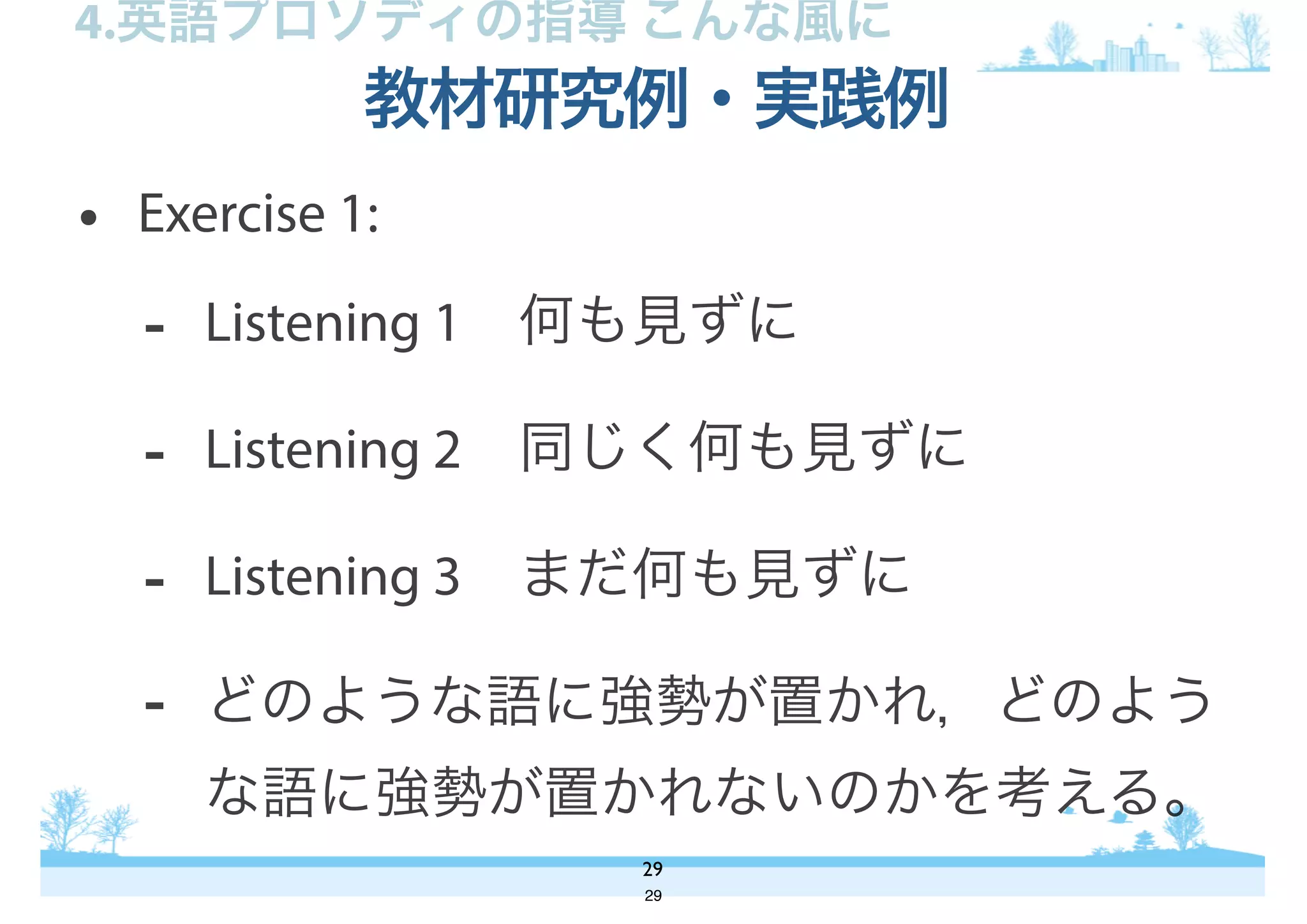
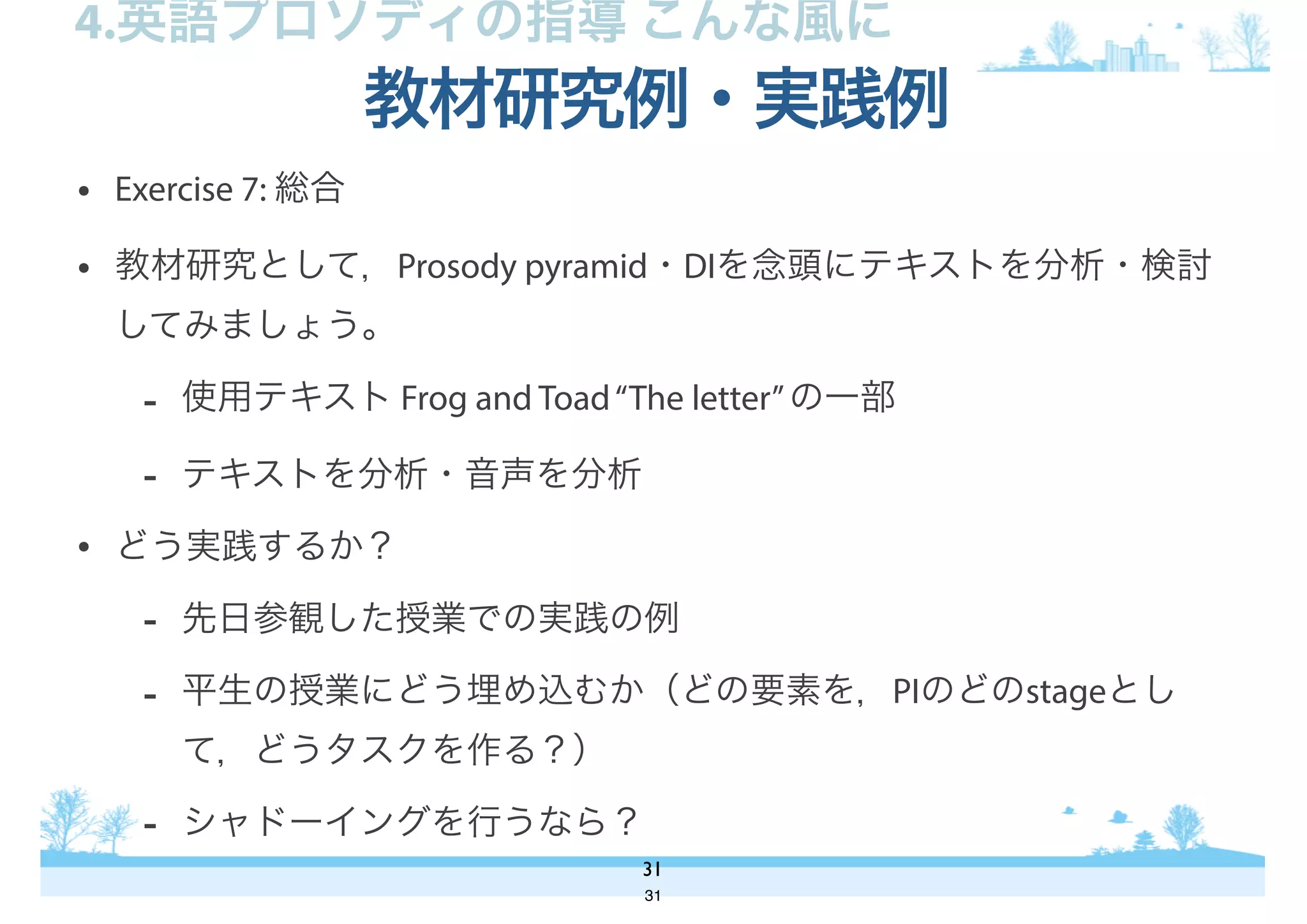
教材研究例・実践例
30
4.英語プロソディの指導 こんな風に
30