Building Services 
DRAINAGE SYSTEM
DRAINAGE SYSTEM 
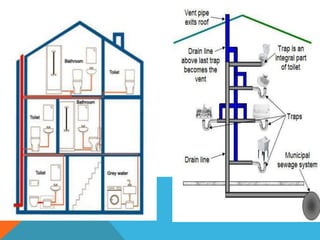
basically refers to All the piping within the private and public premises which 
conveys sewage, rainwater and other liquid waste to a point of disposal. A 
drainage system does not include the mains of public sewer systems or a private 
or a public sewage treatment or disposal plant. 
STACK 
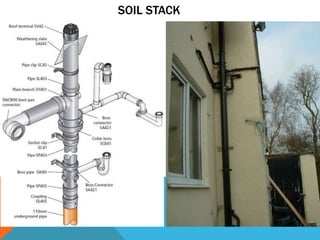
A general term used for any vertical line of soil, waste or vent piping. 
SOIL PIPE 
A pipe that conveys the discharge of Black water (liquids containing fecal 
matter) 
WASTE PIPE 
A pipe that conveys the disvharge of only Grey Water ( liquid waste free of fecal 
matter. ) 
A waste pipe is generally smaller than a soil pipe because of the nature of matter 
being discharged into the system. 
BRANCH 
Any part of the piping system other than the main, riser or stack. 
BUILDING/HOUSE DRAIN 
That part of the lowest horizontal piping of a plumbing system which receives 
the discharge from soil, waste and other drainage pipes inside a building and 
conveys it to the building sewer/house sewer.
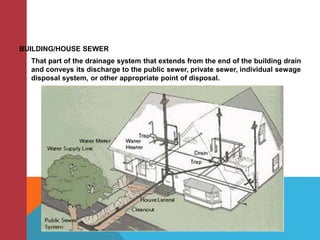
BUILDING/HOUSE SEWER 
That part of the drainage system that extends from the end of the building drain 
and conveys its discharge to the public sewer, private sewer, individual sewage 
disposal system, or other appropriate point of disposal.
SOIL STACK
Parts of a Drainage 
System 
„ ESSENTIAL 
COMPONENTS: 
– House Sewer 
– House Drain 
– House Trap 
– Fresh-air inlet 
– Soil and Waste Stacks 
– Fixture Branches 
– Traps 
– Vents 
„ SPECIAL DEVICES: 
– Interceptors 
– Sumps and Ejectors 
– Backwater Valves 
– Roof and Floor Drains 
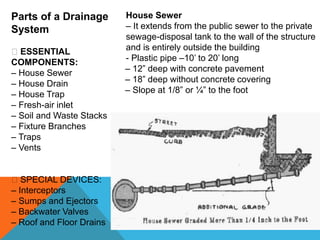
House Sewer 
– It extends from the public sewer to the private 
sewage-disposal tank to the wall of the structure 
and is entirely outside the building 
- Plastic pipe –10’ to 20’ long 
– 12” deep with concrete pavement 
– 18” deep without concrete covering 
– Slope at 1/8” or ¼” to the foot
ESSENTIAL COMPONENTS 
OF DRAINAGE SYSTEM
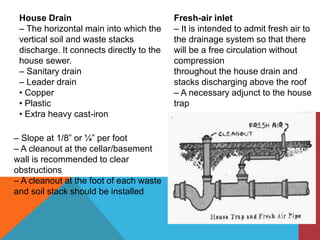
House Drain 
– The horizontal main into which the 
vertical soil and waste stacks 
discharge. It connects directly to the 
house sewer. 
– Sanitary drain 
– Leader drain 
• Copper 
• Plastic 
• Extra heavy cast-iron 
– Slope at 1/8” or ¼” per foot 
– A cleanout at the cellar/basement 
wall is recommended to clear 
obstructions 
– A cleanout at the foot of each waste 
and soil stack should be installed 
Fresh-air inlet 
– It is intended to admit fresh air to 
the drainage system so that there 
will be a free circulation without 
compression 
throughout the house drain and 
stacks discharging above the roof 
– A necessary adjunct to the house 
trap
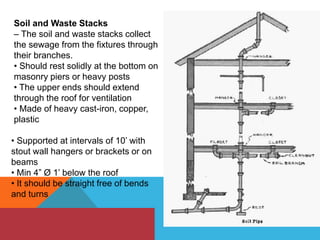
Soil and Waste Stacks 
– The soil and waste stacks collect 
the sewage from the fixtures through 
their branches. 
• Should rest solidly at the bottom on 
masonry piers or heavy posts 
• The upper ends should extend 
through the roof for ventilation 
• Made of heavy cast-iron, copper, 
plastic 
• Supported at intervals of 10’ with 
stout wall hangers or brackets or on 
beams 
• Min 4” Ø 1’ below the roof 
• It should be straight free of bends 
and turns
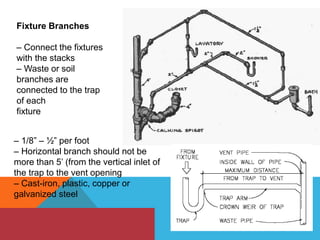
Fixture Branches 
– Connect the fixtures 
with the stacks 
– Waste or soil 
branches are 
connected to the trap 
of each 
fixture 
– 1/8” – ½” per foot 
– Horizontal branch should not be 
more than 5’ (from the vertical inlet of 
the trap to the vent opening 
– Cast-iron, plastic, copper or 
galvanized steel
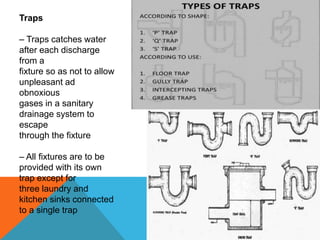
Traps 
– Traps catches water 
after each discharge 
from a 
fixture so as not to allow 
unpleasant ad 
obnoxious 
gases in a sanitary 
drainage system to 
escape 
through the fixture 
– All fixtures are to be 
provided with its own 
trap except for 
three laundry and 
kitchen sinks connected 
to a single trap
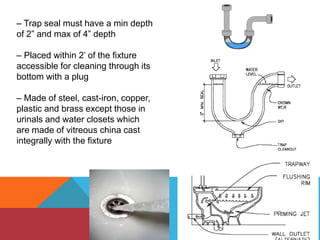
– Trap seal must have a min depth 
of 2” and max of 4” depth 
– Placed within 2’ of the fixture 
accessible for cleaning through its 
bottom with a plug 
– Made of steel, cast-iron, copper, 
plastic and brass except those in 
urinals and water closets which 
are made of vitreous china cast 
integrally with the fixture
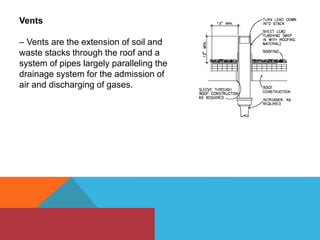
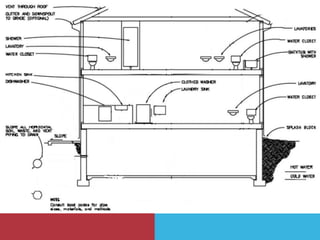
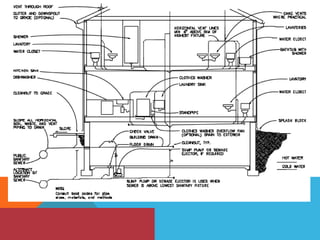
Vents 
– Vents are the extension of soil and 
waste stacks through the roof and a 
system of pipes largely paralleling the 
drainage system for the admission of 
air and discharging of gases.
SPECIAL DEVICES IN 
DRAINAGE SYSTEM
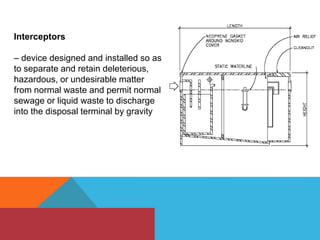
Interceptors 
– device designed and installed so as 
to separate and retain deleterious, 
hazardous, or undesirable matter 
from normal waste and permit normal 
sewage or liquid waste to discharge 
into the disposal terminal by gravity
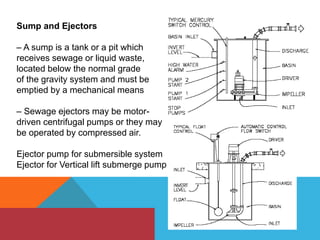
Sump and Ejectors 
– A sump is a tank or a pit which 
receives sewage or liquid waste, 
located below the normal grade 
of the gravity system and must be 
emptied by a mechanical means 
– Sewage ejectors may be motor-driven 
centrifugal pumps or they may 
be operated by compressed air. 
Ejector pump for submersible system 
Ejector for Vertical lift submerge pump
Backwater valves/check valve 
– A backwater valve closes to prevent reverse 
flow from a sewer to low facilities when there 
is a heavy drainage load for short periods that 
can cause building up and over flow of wastes. 
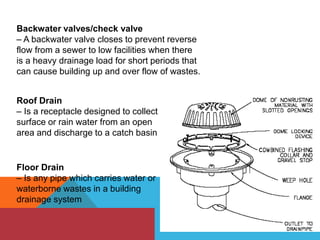
Roof Drain 
– Is a receptacle designed to collect 
surface or rain water from an open 
area and discharge to a catch basin 
Floor Drain 
– Is any pipe which carries water or 
waterborne wastes in a building 
drainage system
Sizing rain water piping 
Local regulations on the disposal of rain or storm water are apt to vary. Some places 
permit this water to run off into the septic tank or public or private sewer; others 
insist that it be drained into a dry well. Regardless of which rule prevails, it is 
recommended that rain water be kept separate from sewage and that a separate pipe 
be used to connect the drained area with the disposal area. If this is done, the rain-water 
drainage piping can be a smaller, more economical size, and the danger of 
flooding the sewage system during a cloudburst or thunder shower is eliminated. 
Storm-water piping size is determined by the area drained in horizontal projection, that 
is, the flat area in square feet on which rain may fall. Measurements of roof and other 
such areas may be estimated, but in doubtful cases the larger of two possible pipe 
sizes should be used. 
Sizing house drain 
The size of pipe to be used in a house drain is determined by the number of units 
drained by it. Proper diameters are: for 2 units, 1 1/2"; for 9 units, 2"; for 25 units, 2 
1/2". 
The size of any stack, house drain, or sewer must be, however, at least the size of the 
largest branch connected to it. The minimum size of a house drain receiving the 
discharge from a water closet should be 4" in diameter, and this pipe should 
continue full size to the vertical stacks receiving the discharge of water closets. 
Even without any water closets discharging into a system, the drainage system 
should have at least one 3" diameter stack extended full size through the roof.

Drainage system

  • 1.
  • 2.
    DRAINAGE SYSTEM basicallyrefers to All the piping within the private and public premises which conveys sewage, rainwater and other liquid waste to a point of disposal. A drainage system does not include the mains of public sewer systems or a private or a public sewage treatment or disposal plant. STACK A general term used for any vertical line of soil, waste or vent piping. SOIL PIPE A pipe that conveys the discharge of Black water (liquids containing fecal matter) WASTE PIPE A pipe that conveys the disvharge of only Grey Water ( liquid waste free of fecal matter. ) A waste pipe is generally smaller than a soil pipe because of the nature of matter being discharged into the system. BRANCH Any part of the piping system other than the main, riser or stack. BUILDING/HOUSE DRAIN That part of the lowest horizontal piping of a plumbing system which receives the discharge from soil, waste and other drainage pipes inside a building and conveys it to the building sewer/house sewer.
  • 3.
    BUILDING/HOUSE SEWER Thatpart of the drainage system that extends from the end of the building drain and conveys its discharge to the public sewer, private sewer, individual sewage disposal system, or other appropriate point of disposal.
  • 4.
  • 6.
    Parts of aDrainage System „ ESSENTIAL COMPONENTS: – House Sewer – House Drain – House Trap – Fresh-air inlet – Soil and Waste Stacks – Fixture Branches – Traps – Vents „ SPECIAL DEVICES: – Interceptors – Sumps and Ejectors – Backwater Valves – Roof and Floor Drains House Sewer – It extends from the public sewer to the private sewage-disposal tank to the wall of the structure and is entirely outside the building - Plastic pipe –10’ to 20’ long – 12” deep with concrete pavement – 18” deep without concrete covering – Slope at 1/8” or ¼” to the foot
  • 7.
    ESSENTIAL COMPONENTS OFDRAINAGE SYSTEM
  • 8.
    House Drain –The horizontal main into which the vertical soil and waste stacks discharge. It connects directly to the house sewer. – Sanitary drain – Leader drain • Copper • Plastic • Extra heavy cast-iron – Slope at 1/8” or ¼” per foot – A cleanout at the cellar/basement wall is recommended to clear obstructions – A cleanout at the foot of each waste and soil stack should be installed Fresh-air inlet – It is intended to admit fresh air to the drainage system so that there will be a free circulation without compression throughout the house drain and stacks discharging above the roof – A necessary adjunct to the house trap
  • 9.
    Soil and WasteStacks – The soil and waste stacks collect the sewage from the fixtures through their branches. • Should rest solidly at the bottom on masonry piers or heavy posts • The upper ends should extend through the roof for ventilation • Made of heavy cast-iron, copper, plastic • Supported at intervals of 10’ with stout wall hangers or brackets or on beams • Min 4” Ø 1’ below the roof • It should be straight free of bends and turns
  • 10.
    Fixture Branches –Connect the fixtures with the stacks – Waste or soil branches are connected to the trap of each fixture – 1/8” – ½” per foot – Horizontal branch should not be more than 5’ (from the vertical inlet of the trap to the vent opening – Cast-iron, plastic, copper or galvanized steel
  • 11.
    Traps – Trapscatches water after each discharge from a fixture so as not to allow unpleasant ad obnoxious gases in a sanitary drainage system to escape through the fixture – All fixtures are to be provided with its own trap except for three laundry and kitchen sinks connected to a single trap
  • 12.
    – Trap sealmust have a min depth of 2” and max of 4” depth – Placed within 2’ of the fixture accessible for cleaning through its bottom with a plug – Made of steel, cast-iron, copper, plastic and brass except those in urinals and water closets which are made of vitreous china cast integrally with the fixture
  • 13.
    Vents – Ventsare the extension of soil and waste stacks through the roof and a system of pipes largely paralleling the drainage system for the admission of air and discharging of gases.
  • 17.
    SPECIAL DEVICES IN DRAINAGE SYSTEM
  • 18.
    Interceptors – devicedesigned and installed so as to separate and retain deleterious, hazardous, or undesirable matter from normal waste and permit normal sewage or liquid waste to discharge into the disposal terminal by gravity
  • 19.
    Sump and Ejectors – A sump is a tank or a pit which receives sewage or liquid waste, located below the normal grade of the gravity system and must be emptied by a mechanical means – Sewage ejectors may be motor-driven centrifugal pumps or they may be operated by compressed air. Ejector pump for submersible system Ejector for Vertical lift submerge pump
  • 20.
    Backwater valves/check valve – A backwater valve closes to prevent reverse flow from a sewer to low facilities when there is a heavy drainage load for short periods that can cause building up and over flow of wastes. Roof Drain – Is a receptacle designed to collect surface or rain water from an open area and discharge to a catch basin Floor Drain – Is any pipe which carries water or waterborne wastes in a building drainage system
  • 21.
    Sizing rain waterpiping Local regulations on the disposal of rain or storm water are apt to vary. Some places permit this water to run off into the septic tank or public or private sewer; others insist that it be drained into a dry well. Regardless of which rule prevails, it is recommended that rain water be kept separate from sewage and that a separate pipe be used to connect the drained area with the disposal area. If this is done, the rain-water drainage piping can be a smaller, more economical size, and the danger of flooding the sewage system during a cloudburst or thunder shower is eliminated. Storm-water piping size is determined by the area drained in horizontal projection, that is, the flat area in square feet on which rain may fall. Measurements of roof and other such areas may be estimated, but in doubtful cases the larger of two possible pipe sizes should be used. Sizing house drain The size of pipe to be used in a house drain is determined by the number of units drained by it. Proper diameters are: for 2 units, 1 1/2"; for 9 units, 2"; for 25 units, 2 1/2". The size of any stack, house drain, or sewer must be, however, at least the size of the largest branch connected to it. The minimum size of a house drain receiving the discharge from a water closet should be 4" in diameter, and this pipe should continue full size to the vertical stacks receiving the discharge of water closets. Even without any water closets discharging into a system, the drainage system should have at least one 3" diameter stack extended full size through the roof.