An introduction to Knowledge Management Learning as  a way of business
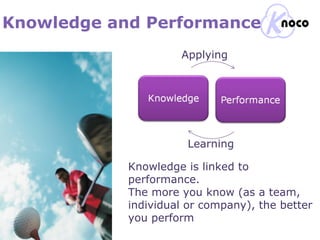
Knowledge and Performance Learning Applying Knowledge is linked to performance. The more you know (as a team, individual or company), the better you perform
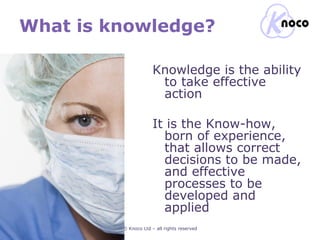
What is knowledge? © Knoco Ltd – all rights reserved Knowledge is the ability to take effective action It is the Know-how, born of experience, that allows correct decisions to be made, and effective processes to be developed and applied
What is Knowledge Management? A managed system for ensuring that The right knowledge Reaches the right people At the right time To help them make the right decisions © Knoco Ltd – all rights reserved Management as if  Knowledge had Value
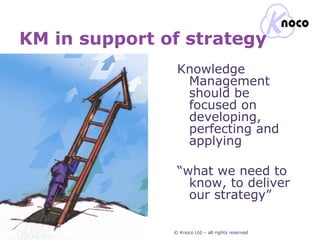
KM in support of strategy © Knoco Ltd – all rights reserved Knowledge  Management should be focused on developing, perfecting and applying “ what we need to know, to deliver our strategy”
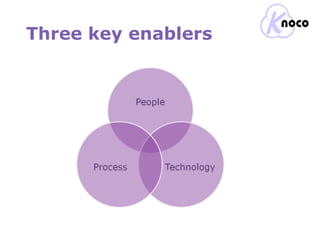
Three key enablers
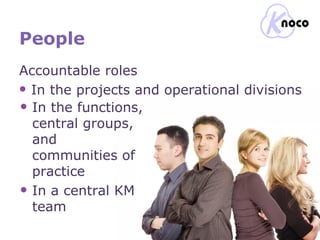
People © Knoco Ltd – all rights reserved In the functions, central groups, and communities of practice In a central KM team Accountable roles In the projects and operational divisions
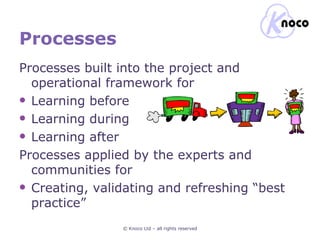
Processes Processes built into the project and operational framework for Learning before Learning during Learning after Processes applied by the experts and communities for Creating, validating and refreshing “best practice” © Knoco Ltd – all rights reserved
Technologies Technologies for Allowing communities to communicate and collaborate (e.g. community forums) Allowing people to find “those who know” (e.g. yellow pages) Allowing capture of new knowledge (e.g. lessons databases) Allowing access to community knowledge (e.g. wikis, portals, search engines) Allowing communities and experts to broadcast new knowledge and processes (e.g. blogs) © Knoco Ltd – all rights reserved
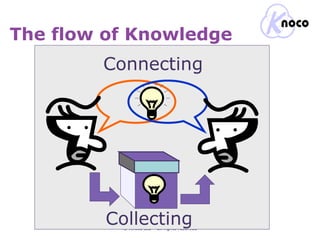
The flow of Knowledge © Knoco Ltd – all rights reserved Connecting Collecting
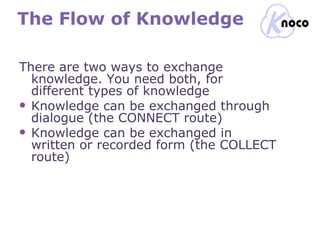
The Flow of Knowledge There are two ways to exchange knowledge. You need both, for different types of knowledge  Knowledge can be exchanged through dialogue (the CONNECT route) Knowledge can be exchanged in written or recorded form (the COLLECT route)
Motivating © Knoco Ltd – all rights reserved Exchange of knowledge is motivated in one of two ways Pull, or knowledge seeking Push, or knowledge sharing Knowledge seeking is a better place to start than Knowledge sharing A demand for knowledge will stimulate a supply, but not vice versa
For more guidance and resources © Knoco Ltd – all rights reserved http://www.knoco.com

Introduction To Knowledge Management

  • 1.
    An introduction toKnowledge Management Learning as a way of business
  • 2.
    Knowledge and PerformanceLearning Applying Knowledge is linked to performance. The more you know (as a team, individual or company), the better you perform
  • 3.
    What is knowledge?© Knoco Ltd – all rights reserved Knowledge is the ability to take effective action It is the Know-how, born of experience, that allows correct decisions to be made, and effective processes to be developed and applied
  • 4.
    What is KnowledgeManagement? A managed system for ensuring that The right knowledge Reaches the right people At the right time To help them make the right decisions © Knoco Ltd – all rights reserved Management as if Knowledge had Value
  • 5.
    KM in supportof strategy © Knoco Ltd – all rights reserved Knowledge Management should be focused on developing, perfecting and applying “ what we need to know, to deliver our strategy”
  • 6.
  • 7.
    People © KnocoLtd – all rights reserved In the functions, central groups, and communities of practice In a central KM team Accountable roles In the projects and operational divisions
  • 8.
    Processes Processes builtinto the project and operational framework for Learning before Learning during Learning after Processes applied by the experts and communities for Creating, validating and refreshing “best practice” © Knoco Ltd – all rights reserved
  • 9.
    Technologies Technologies forAllowing communities to communicate and collaborate (e.g. community forums) Allowing people to find “those who know” (e.g. yellow pages) Allowing capture of new knowledge (e.g. lessons databases) Allowing access to community knowledge (e.g. wikis, portals, search engines) Allowing communities and experts to broadcast new knowledge and processes (e.g. blogs) © Knoco Ltd – all rights reserved
  • 10.
    The flow ofKnowledge © Knoco Ltd – all rights reserved Connecting Collecting
  • 11.
    The Flow ofKnowledge There are two ways to exchange knowledge. You need both, for different types of knowledge Knowledge can be exchanged through dialogue (the CONNECT route) Knowledge can be exchanged in written or recorded form (the COLLECT route)
  • 12.
    Motivating © KnocoLtd – all rights reserved Exchange of knowledge is motivated in one of two ways Pull, or knowledge seeking Push, or knowledge sharing Knowledge seeking is a better place to start than Knowledge sharing A demand for knowledge will stimulate a supply, but not vice versa
  • 13.
    For more guidanceand resources © Knoco Ltd – all rights reserved http://www.knoco.com