INTEGRATED PEST
MANAGEMENT
By
Narottam Priyadarshi
 INTEGRATED means To combine two or more
things in order to become more effective
 PEST means An organism that reduces the
availability, quality, or value of some natural
resource
 MANAGEMENT means Skilled handling
Definition
 "IPM is a sustainable approach to managing
pests by combining biological, cultural,
physical and chemical tools in a way that
minimizes economic, health, and environmental
risks."
Aims of IPM
 Reduce the use of synthetic organic pesticides
 That are environmentally sound
 Pest minimal risk of human health
 Re-useable return on investment
 Provide consumable safe food
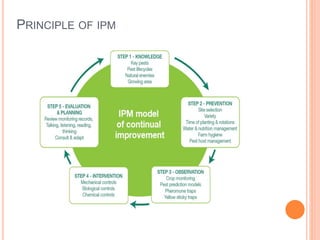
PRINCIPLE OF IPM
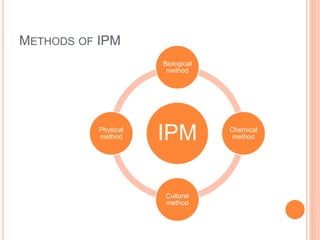
METHODS OF IPM
IPM
Biological
method
Chemical
method
Cultural
method
Physical
method
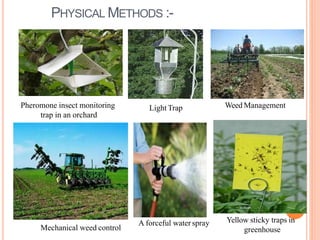
Mechanical weed control
Pheromone insect monitoring
trap in an orchard
Weed Management
Yellow sticky traps in
greenhouse
Light Trap
A forceful water spray
PHYSICAL METHODS :-
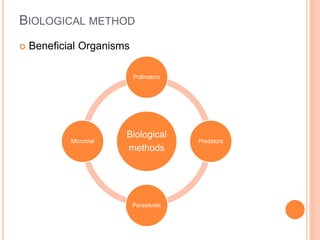
BIOLOGICAL METHOD
 Beneficial Organisms
Biological
methods
Pollinators
Predators
Parasitoids
Microbial
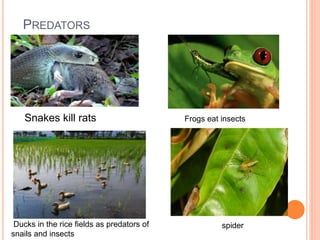
PREDATORS
Snakes kill rats Frogs eat insects
Ducks in the rice fields as predators of
snails and insects
spider
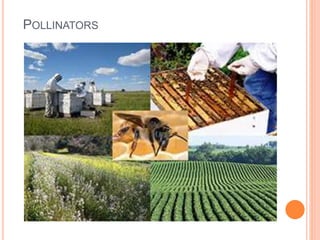
POLLINATORS
PARASITOIDS
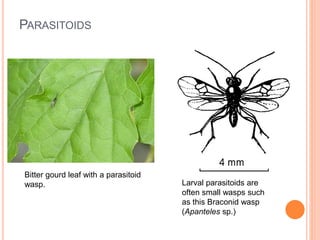
Larval parasitoids are
often small wasps such
as this Braconid wasp
(Apanteles sp.)
Bitter gourd leaf with a parasitoid
wasp.
MICROBIAL
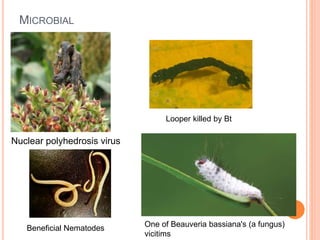
Nuclear polyhedrosis virus
Looper killed by Bt
Beneficial Nematodes One of Beauveria bassiana's (a fungus)
vicitims
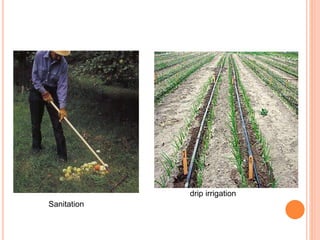
CULTURAL METHOD
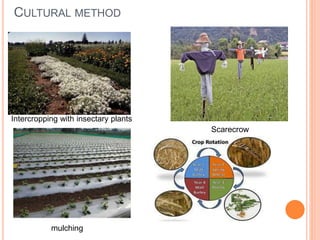
Intercropping with insectary plants
Scarecrow
mulching
Sanitation
drip irrigation
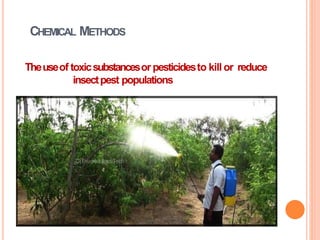
CHEMICAL METHODS
Theuseof toxicsubstancesor pesticidesto kill or reduce
insectpest populations
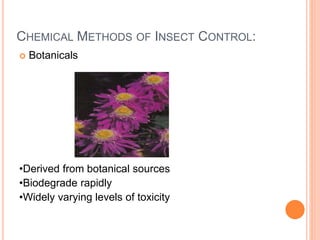
CHEMICAL METHODS OF INSECT CONTROL:
 Botanicals
•Derived from botanical sources
•Biodegrade rapidly
•Widely varying levels of toxicity
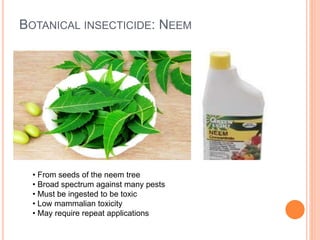
BOTANICAL INSECTICIDE: NEEM
• From seeds of the neem tree
• Broad spectrum against many pests
• Must be ingested to be toxic
• Low mammalian toxicity
• May require repeat applications
ADVANTAGES OF IPM :-
 Healthier plants
 Reduced contamination of environment
 Reduced use of pesticides
 Reduced input cost
 Batter use of natural resources
 Reduced contamination of the crop with chemical
residues
 Reduced risk of farmer from contamination with
chemicals
 More regular crop quality and quantity
REFERENCE:-
 http://ipm.ucanr.edu
 https://ipmguidelinesforgrains.com.au
 https://ipm-info.org
THANK YOU

IPM - Integrated Pest management