20 October 2010
2.5 Efficiency

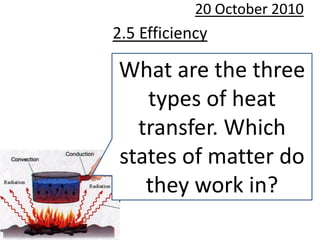
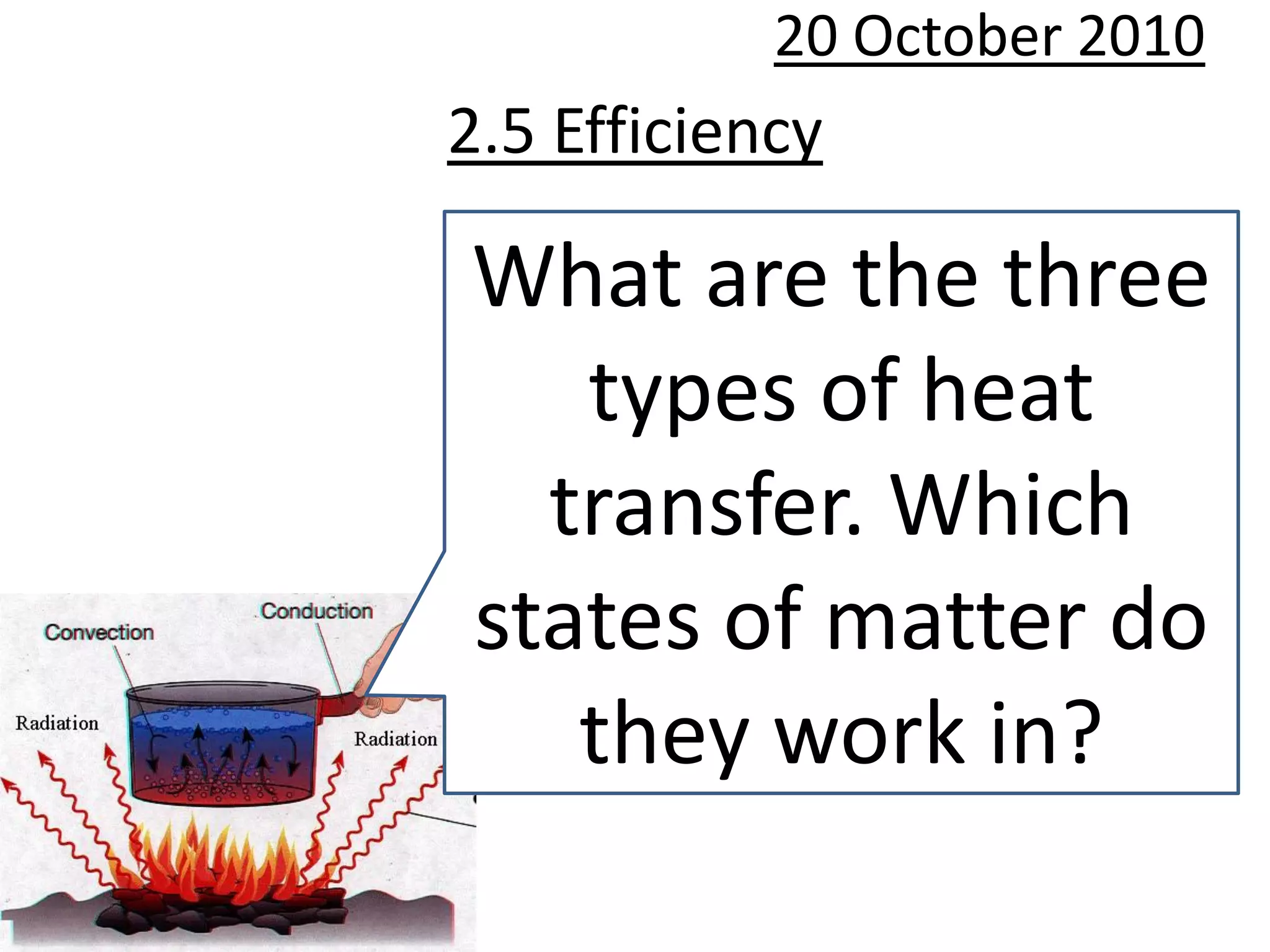
What are the three
   types of heat
  transfer. Which
states of matter do
   they work in?
Aims
• Understand the efficiency of energy
  transformations
• Calculate efficiency from given data
Efficiency
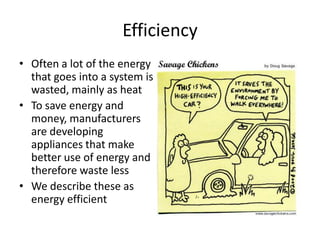
• Often a lot of the energy
  that goes into a system is
  wasted, mainly as heat
• To save energy and
  money, manufacturers
  are developing
  appliances that make
  better use of energy and
  therefore waste less
• We describe these as
  energy efficient
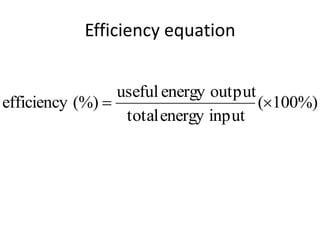
Efficiency equation


                 useful energy output
efficiency (%)                       (100%)
                  total energy input
Worked example
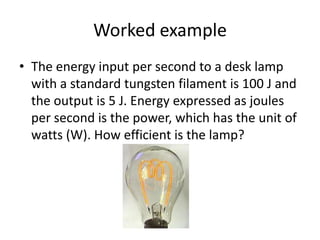
• The energy input per second to a desk lamp
  with a standard tungsten filament is 100 J and
  the output is 5 J. Energy expressed as joules
  per second is the power, which has the unit of
  watts (W). How efficient is the lamp?
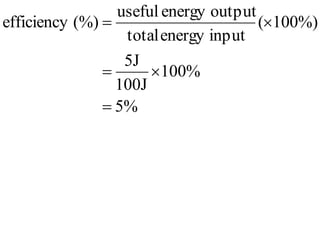
useful energy output
efficiency (%)                       (100%)
                  total energy input
                  5J
                     100%
                 100J
                5%
Activity A: Write down the ways in
which a petrol engine wastes energy
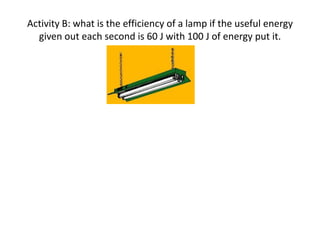
Activity B: what is the efficiency of a lamp if the useful energy
  given out each second is 60 J with 100 J of energy put it.
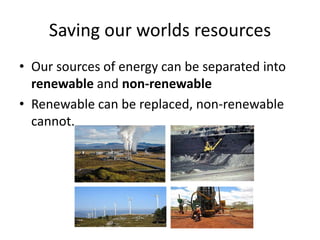
Saving our worlds resources
• Our sources of energy can be separated into
  renewable and non-renewable
• Renewable can be replaced, non-renewable
  cannot.
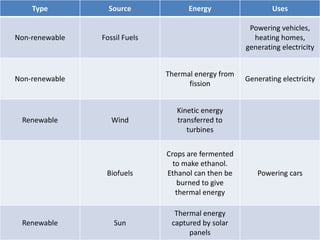
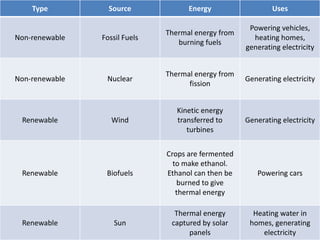
Type          Source             Energy                  Uses

                                                      Powering vehicles,
Non-renewable   Fossil Fuels                           heating homes,
                                                     generating electricity


                               Thermal energy from
Non-renewable                                        Generating electricity
                                     fission


                                  Kinetic energy
 Renewable         Wind           transferred to
                                     turbines


                               Crops are fermented
                                 to make ethanol.
                 Biofuels      Ethanol can then be      Powering cars
                                  burned to give
                                  thermal energy

                                 Thermal energy
 Renewable          Sun         captured by solar
                                     panels
Type          Source             Energy                  Uses

                                                      Powering vehicles,
                               Thermal energy from
Non-renewable   Fossil Fuels                           heating homes,
                                  burning fuels
                                                     generating electricity


                               Thermal energy from
Non-renewable    Nuclear                             Generating electricity
                                     fission


                                  Kinetic energy
 Renewable         Wind           transferred to     Generating electricity
                                     turbines


                               Crops are fermented
                                 to make ethanol.
 Renewable       Biofuels      Ethanol can then be      Powering cars
                                  burned to give
                                  thermal energy

                                 Thermal energy        Heating water in
 Renewable          Sun         captured by solar     homes, generating
                                     panels               electricity
Assessment activity 2.5
• See sheet

2.5 efficiency

  • 1.
    20 October 2010 2.5Efficiency What are the three types of heat transfer. Which states of matter do they work in?
  • 2.
    Aims • Understand theefficiency of energy transformations • Calculate efficiency from given data
  • 4.
    Efficiency • Often alot of the energy that goes into a system is wasted, mainly as heat • To save energy and money, manufacturers are developing appliances that make better use of energy and therefore waste less • We describe these as energy efficient
  • 5.
    Efficiency equation useful energy output efficiency (%)  (100%) total energy input
  • 6.
    Worked example • Theenergy input per second to a desk lamp with a standard tungsten filament is 100 J and the output is 5 J. Energy expressed as joules per second is the power, which has the unit of watts (W). How efficient is the lamp?
  • 7.
    useful energy output efficiency(%)  (100%) total energy input 5J  100% 100J  5%
  • 8.
    Activity A: Writedown the ways in which a petrol engine wastes energy
  • 9.
    Activity B: whatis the efficiency of a lamp if the useful energy given out each second is 60 J with 100 J of energy put it.
  • 10.
    Saving our worldsresources • Our sources of energy can be separated into renewable and non-renewable • Renewable can be replaced, non-renewable cannot.
  • 11.
    Type Source Energy Uses Powering vehicles, Non-renewable Fossil Fuels heating homes, generating electricity Thermal energy from Non-renewable Generating electricity fission Kinetic energy Renewable Wind transferred to turbines Crops are fermented to make ethanol. Biofuels Ethanol can then be Powering cars burned to give thermal energy Thermal energy Renewable Sun captured by solar panels
  • 12.
    Type Source Energy Uses Powering vehicles, Thermal energy from Non-renewable Fossil Fuels heating homes, burning fuels generating electricity Thermal energy from Non-renewable Nuclear Generating electricity fission Kinetic energy Renewable Wind transferred to Generating electricity turbines Crops are fermented to make ethanol. Renewable Biofuels Ethanol can then be Powering cars burned to give thermal energy Thermal energy Heating water in Renewable Sun captured by solar homes, generating panels electricity
  • 13.