Literary Criticism
           336 ENG
             (VI)

     Reader Response
            &
     Reception Theory

Dr Mohammed Fahmy Raiyah
Preliminary Questions
 Are our responses to a literary work the same as its
 meaning(s)?

 Does meaning exist in the text?

 Can one literary work have many meanings?

 Are some interpretations more valid than others?

  Reader Response critics try to find answer to the above
  questions about the relationship between meaning and
  reading.
Introduction
 This approach focuses on the reader and his role in the
  making of a literary work. The text does not exist without
  the reader. Meaning of literary texts depends upon the
  reader’s engagement and interaction with them. The
  reader is an active participant in the production of meaning.

 This school of criticism emerged in the United States in the
 1970s. Some major proponents of this approach include
   Norman Holland
   Stanley Fish
   Wolfgang Iser
   Hans-Robert Jauss
   Louise Rosenblatt
   David Bleich
Subjective vs Objective
 Reader Response was a reaction against the
 formalist approach that concentrates only on the
 text.    It is subjective because it takes into
 consideration the personality of the reader and the
 ways he contributes to the making of the text.
 Reading reveals more about the reader’s personality
 than about the text.
The Text and Meaning
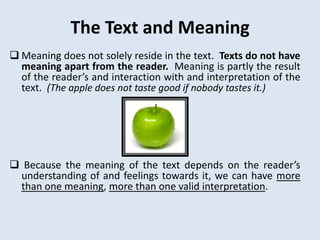
 Meaning does not solely reside in the text. Texts do not have
  meaning apart from the reader. Meaning is partly the result
  of the reader’s and interaction with and interpretation of the
  text. (The apple does not taste good if nobody tastes it.)


 Because the meaning of the text depends on the reader’s
 understanding of and feelings towards it, we can have more
 than one meaning, more than one valid interpretation.
The Reader
 The text remains incomplete without the reader.

 The reader is not the passive recipient of ideas included in
    the text by the author. He/she is active in giving
    meaning to the text.

 The reader’s life experiences, his/her personality,
    social and cultural background, education, gender, and
    personal taste influence his/her reading of the text.
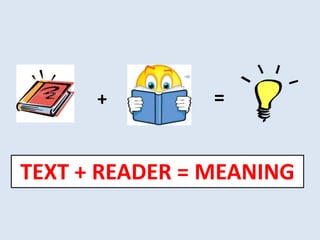
+         =


TEXT + READER = MEANING
Limits of Interpretation
 Different interpretations – but not all - are
  valid as long as the reader can provide
  evidence in the text.

 In each text there are limits to its possible
 interpretations. For example, we cannot change
 the setting, the plot, or redefine the characters.
Textual Gaps
       Iser argues that texts contain gaps (or blanks) – things that
    are not expressed – which invite the reader to interfere actively
    in order to find their meaning.

Reader response and reception theory

  • 1.
    Literary Criticism 336 ENG (VI) Reader Response & Reception Theory Dr Mohammed Fahmy Raiyah
  • 2.
    Preliminary Questions  Areour responses to a literary work the same as its meaning(s)?  Does meaning exist in the text?  Can one literary work have many meanings?  Are some interpretations more valid than others? Reader Response critics try to find answer to the above questions about the relationship between meaning and reading.
  • 3.
    Introduction  This approachfocuses on the reader and his role in the making of a literary work. The text does not exist without the reader. Meaning of literary texts depends upon the reader’s engagement and interaction with them. The reader is an active participant in the production of meaning.  This school of criticism emerged in the United States in the 1970s. Some major proponents of this approach include  Norman Holland  Stanley Fish  Wolfgang Iser  Hans-Robert Jauss  Louise Rosenblatt  David Bleich
  • 4.
    Subjective vs Objective Reader Response was a reaction against the formalist approach that concentrates only on the text. It is subjective because it takes into consideration the personality of the reader and the ways he contributes to the making of the text. Reading reveals more about the reader’s personality than about the text.
  • 5.
    The Text andMeaning  Meaning does not solely reside in the text. Texts do not have meaning apart from the reader. Meaning is partly the result of the reader’s and interaction with and interpretation of the text. (The apple does not taste good if nobody tastes it.)  Because the meaning of the text depends on the reader’s understanding of and feelings towards it, we can have more than one meaning, more than one valid interpretation.
  • 6.
    The Reader  Thetext remains incomplete without the reader.  The reader is not the passive recipient of ideas included in the text by the author. He/she is active in giving meaning to the text.  The reader’s life experiences, his/her personality, social and cultural background, education, gender, and personal taste influence his/her reading of the text.
  • 7.
    + = TEXT + READER = MEANING
  • 8.
    Limits of Interpretation Different interpretations – but not all - are valid as long as the reader can provide evidence in the text.  In each text there are limits to its possible interpretations. For example, we cannot change the setting, the plot, or redefine the characters.
  • 9.
    Textual Gaps  Iser argues that texts contain gaps (or blanks) – things that are not expressed – which invite the reader to interfere actively in order to find their meaning.