Industry Studies 1 
Make, Take and Sell Challenge: 
Manufacturing Capability 
Topic Number: 3
Overview 
Organisations continually strive to maximise 
efficiencies whilst sourcing the best quality and 
sustainable raw materials. A key consideration when 
developing a product is how best to manufacture it in 
order to achieve the scale required to service 
customers. There are a variety of options to consider 
that we will explore in this workshop. 
We will also discuss the issues with sourcing and 
manufacturing in one country and then selling it in 
another. Finally, we will develop our understanding of 
the various manufacturing implications on your 
product and come up with the optimal approach.
Learning outcomes for these workshops 
• Develop and determine how to source a variety of 
raw materials from around the world to maximise 
product efficiencies 
• Critically evaluate the variety of manufacturing 
options you have available and apply them 
appropriately to your business 
• Be able to forecast the demand for your product 
• Articulate the various manufacturing implications of 
producing a product in one country and selling it in 
another
Where to 
source 
your raw 
materials 
from?
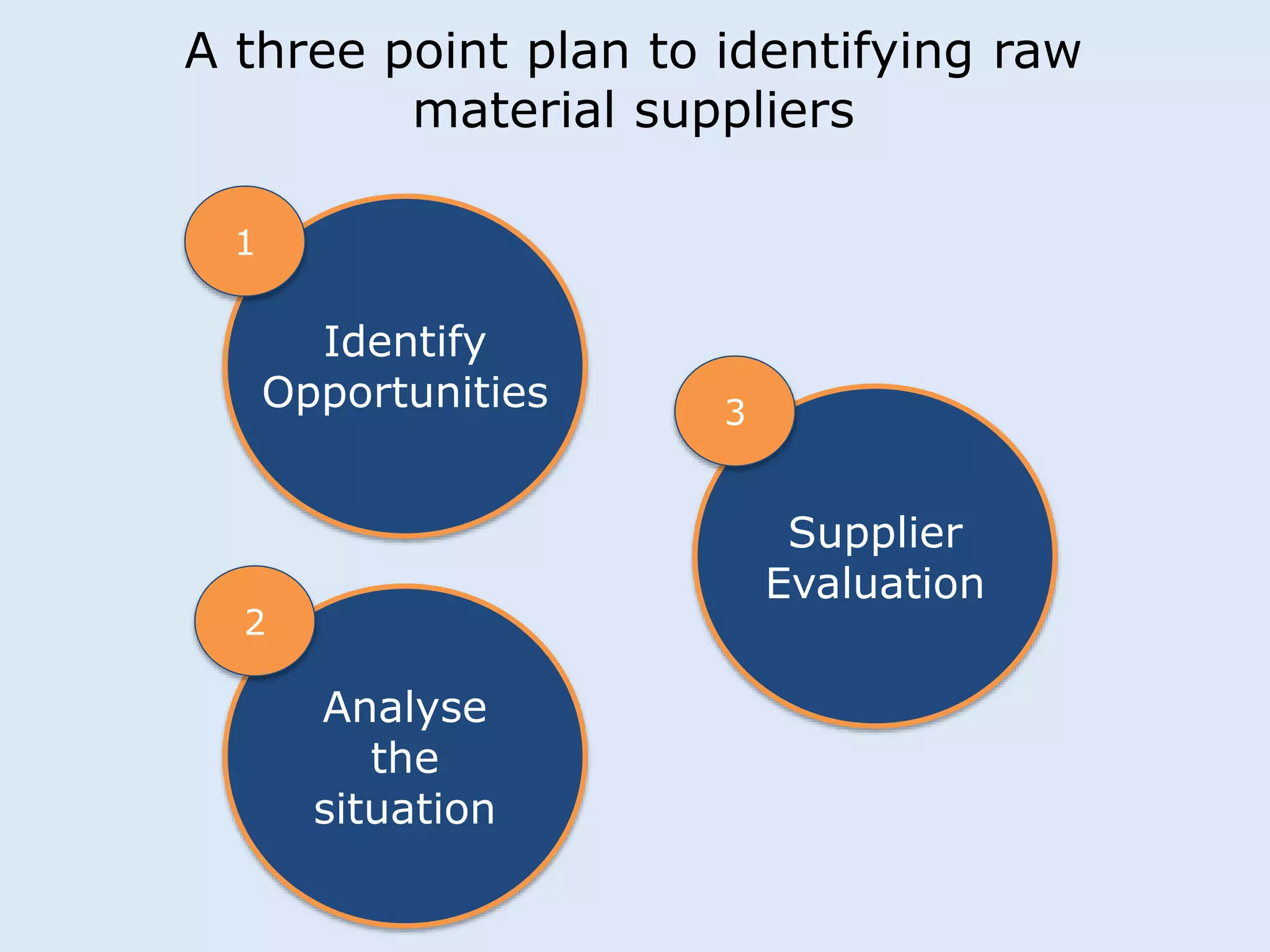
A three point plan to identifying raw 
material suppliers 
Analyse 
the 
situation 
Supplier 
Evaluation 
1 
2 
3 
Identify 
Opportunities
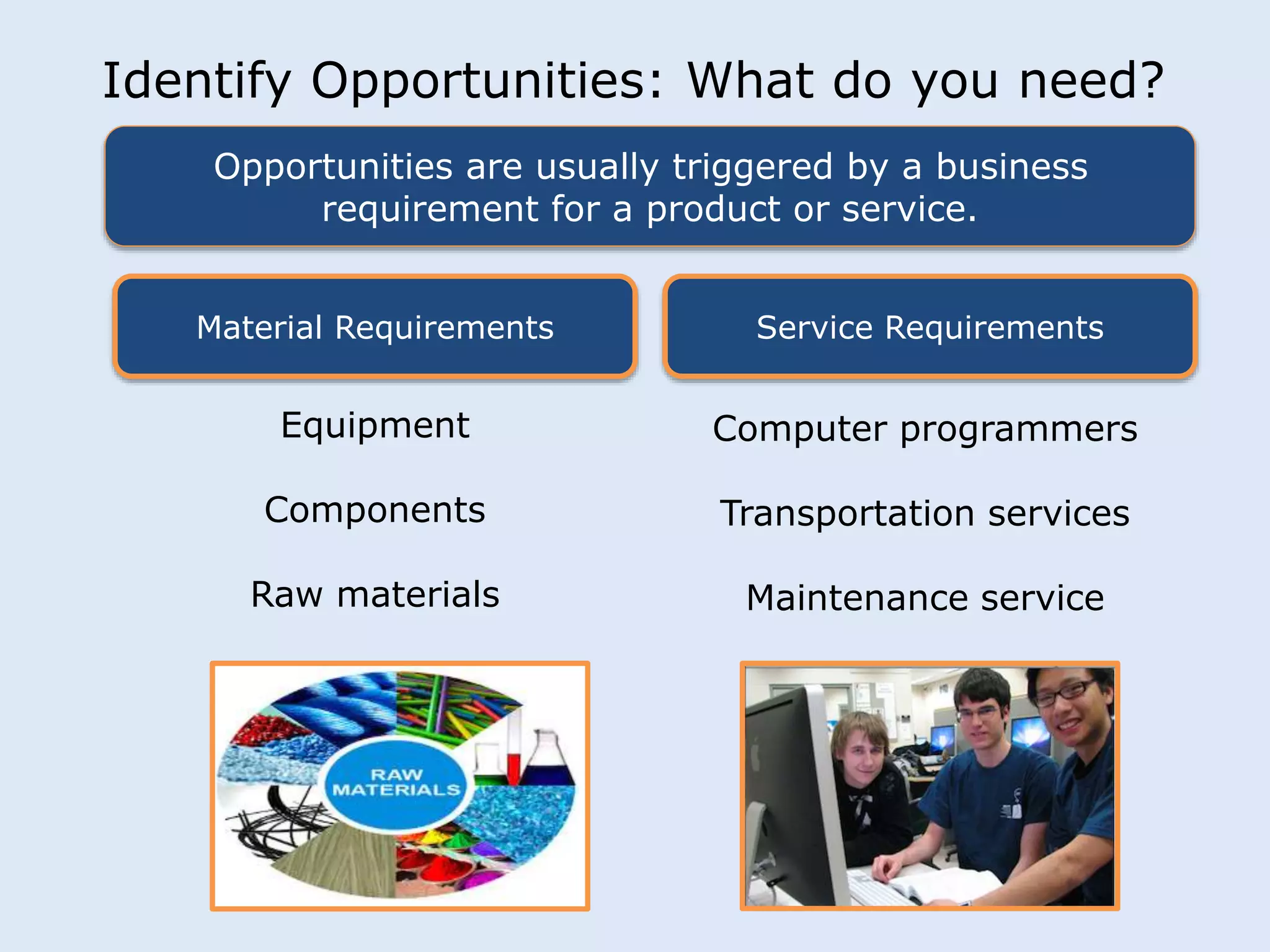
Identify Opportunities: What do you need? 
Opportunities are usually triggered by a business 
requirement for a product or service. 
Material Requirements Service Requirements 
Equipment 
Components 
Raw materials 
Computer programmers 
Transportation services 
Maintenance service
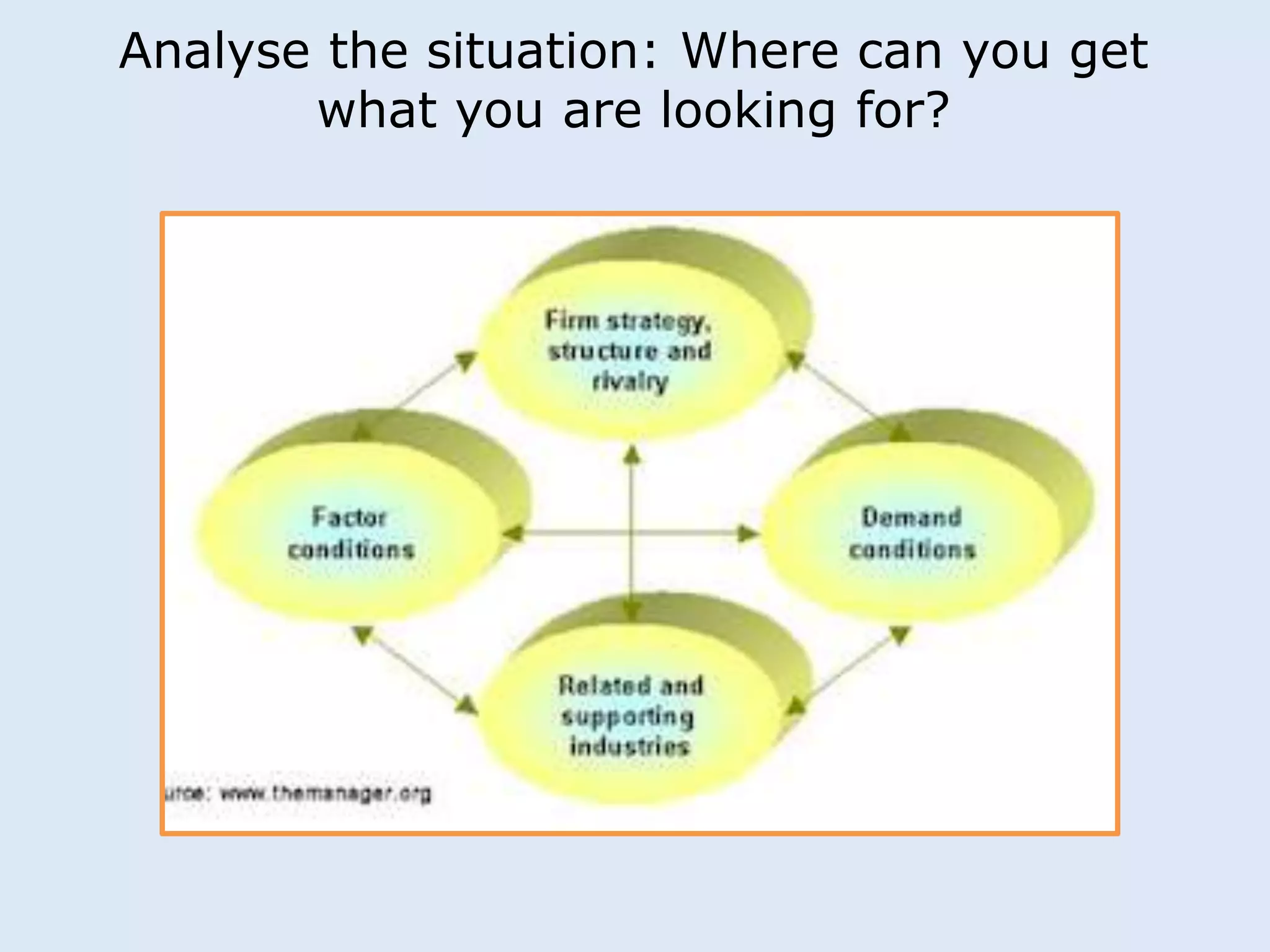
Analyse the situation: Where can you get 
what you are looking for?
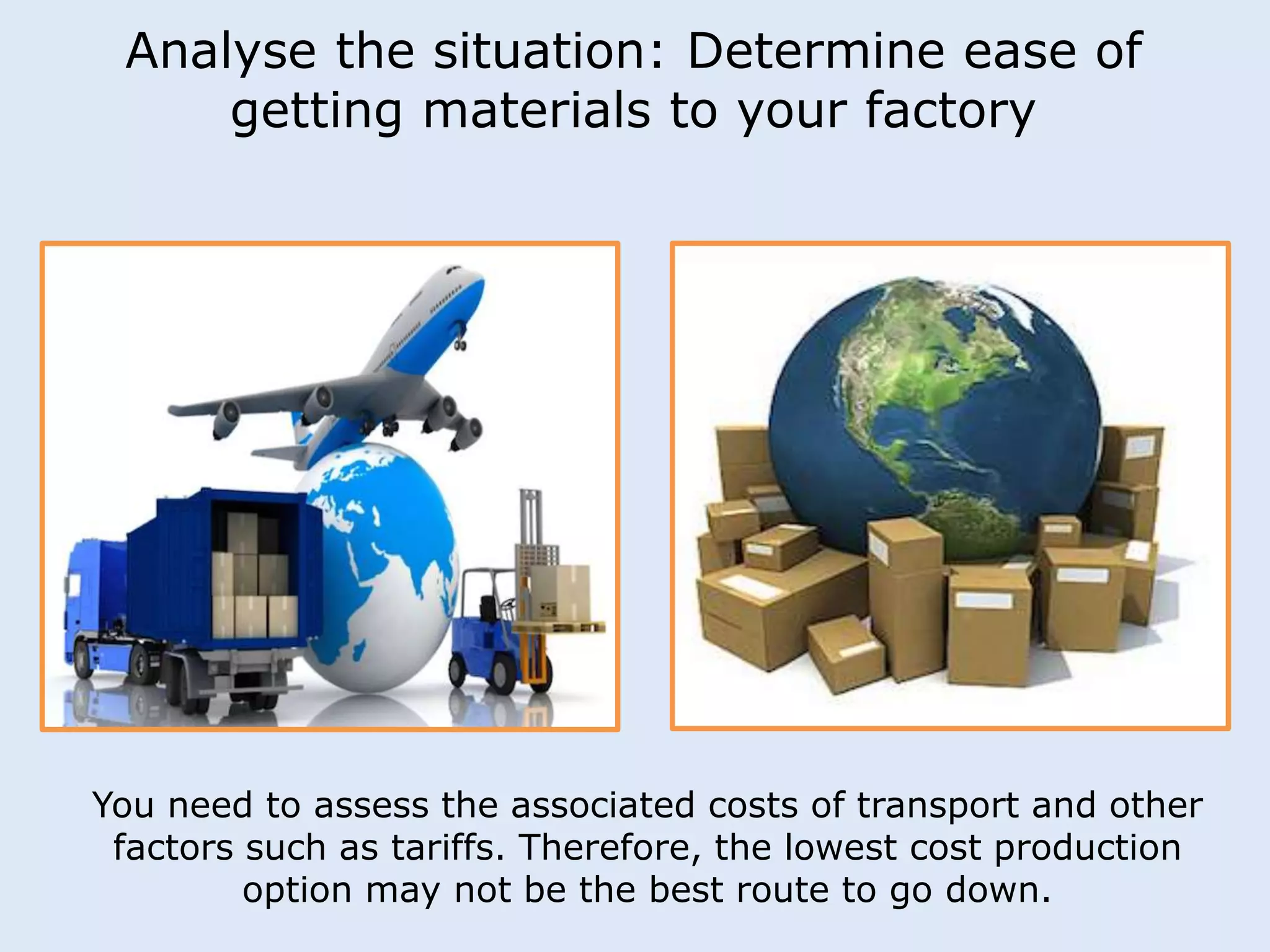
Analyse the situation: Determine ease of 
getting materials to your factory 
You need to assess the associated costs of transport and other 
factors such as tariffs. Therefore, the lowest cost production 
option may not be the best route to go down.
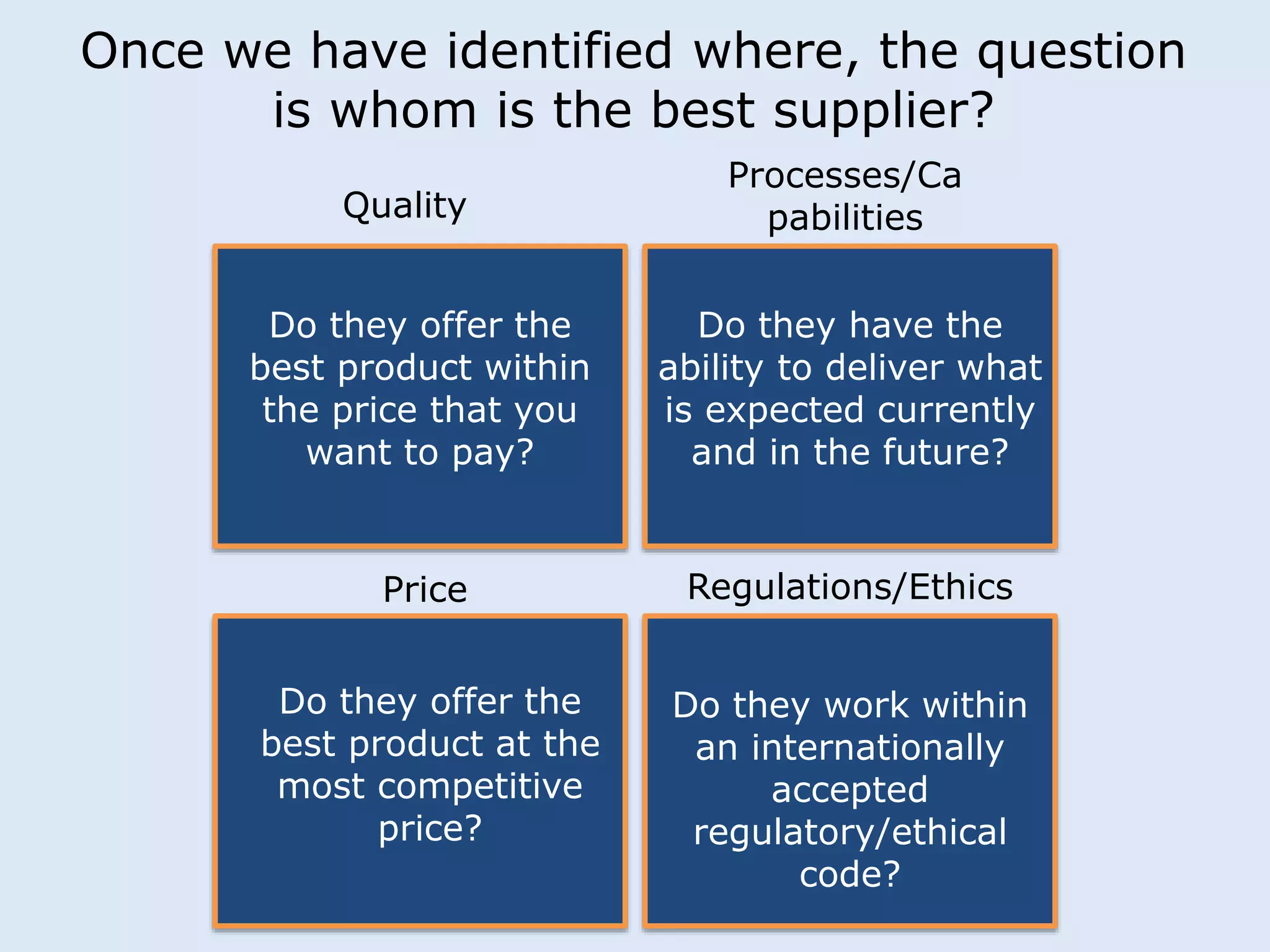
Once we have identified where, the question 
is whom is the best supplier? 
Quality 
Processes/Ca 
pabilities 
Do they offer the 
best product within 
the price that you 
want to pay? 
Do they have the 
ability to deliver what 
is expected currently 
and in the future? 
Price Regulations/Ethics 
Do they offer the 
best product at the 
most competitive 
price? 
Do they work within 
an internationally 
accepted 
regulatory/ethical 
code?
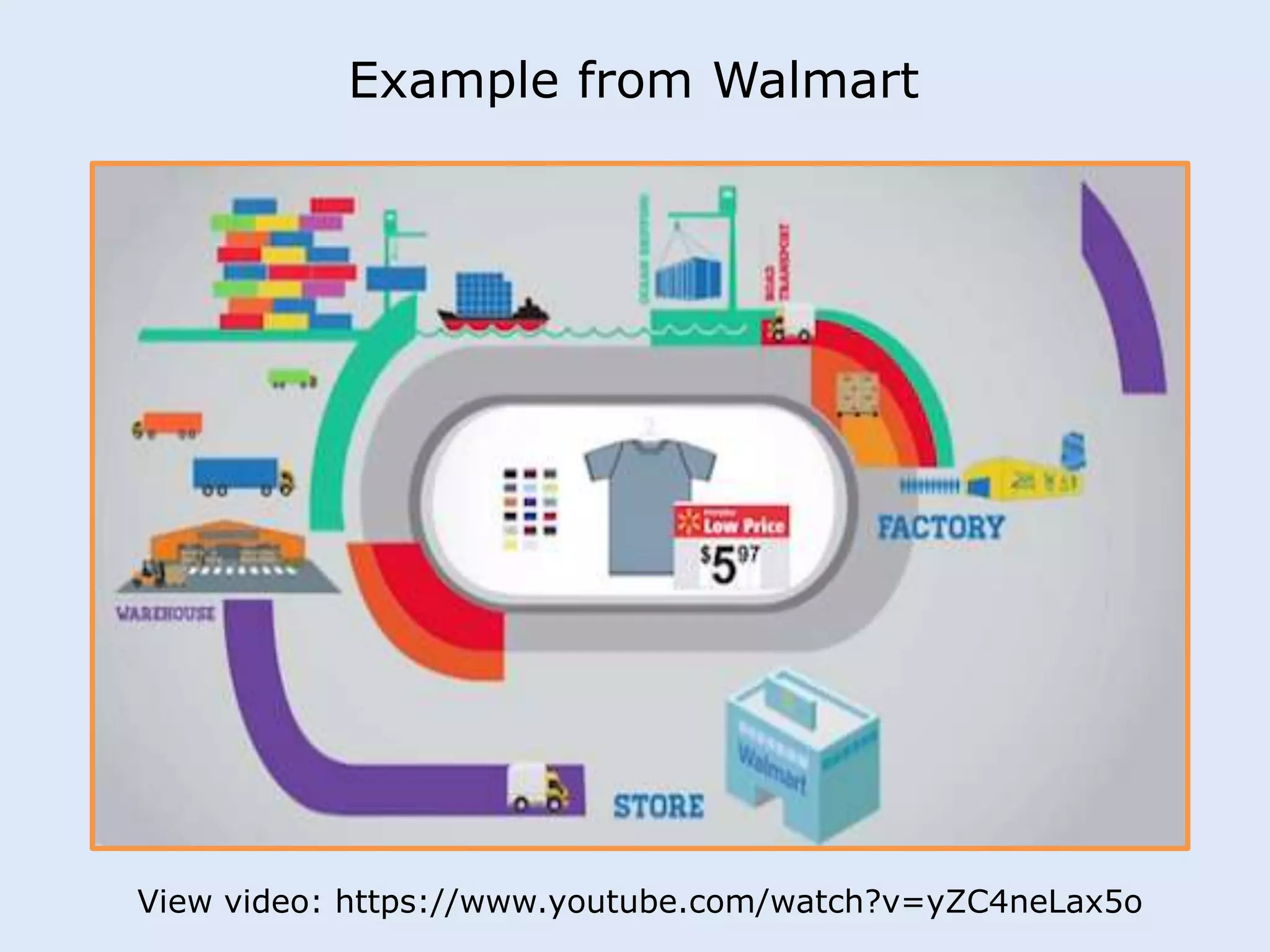
Example from Walmart 
View video: https://www.youtube.com/watch?v=yZC4neLax5o
What 
manufacturing 
model do you 
deploy?
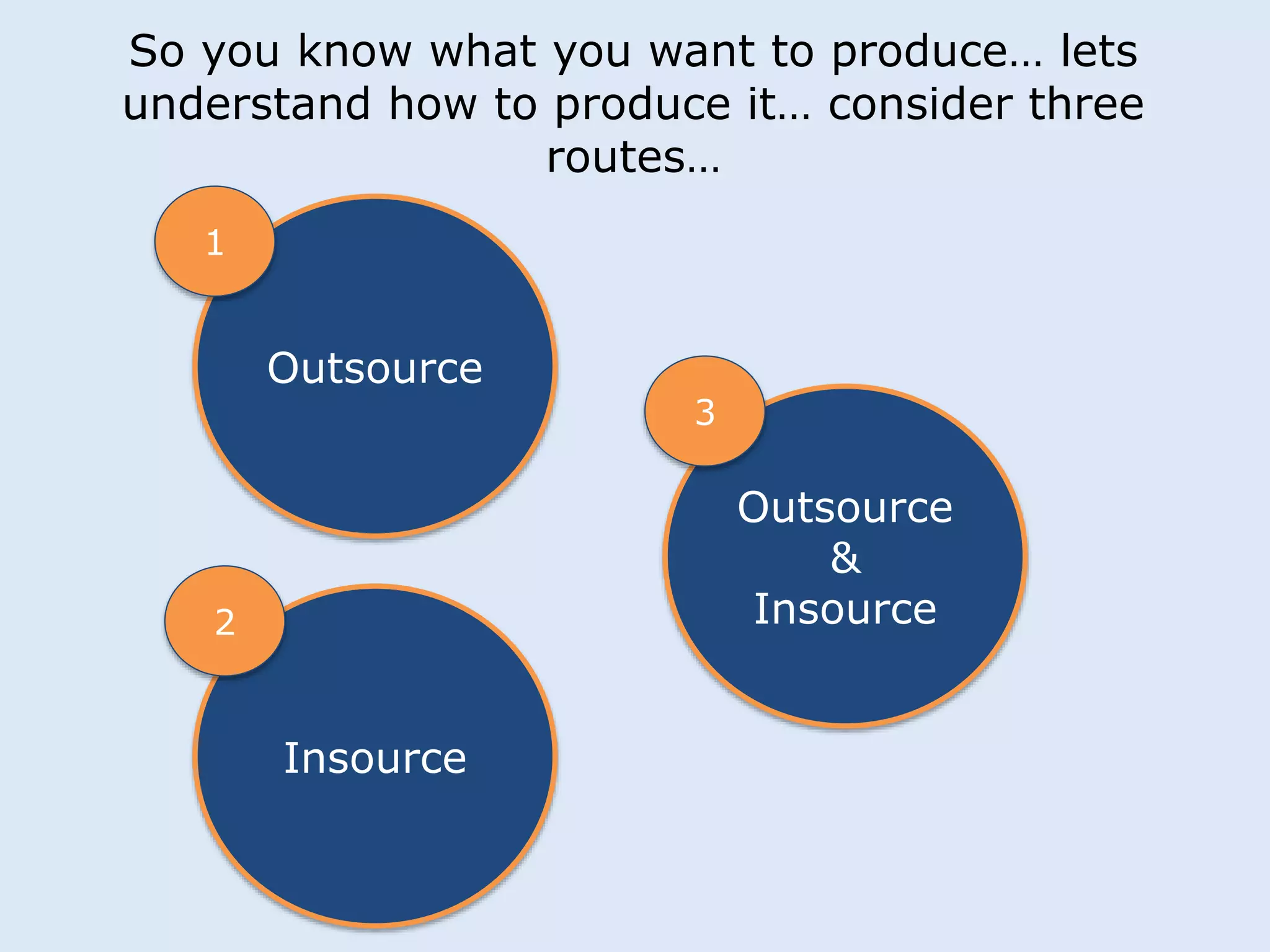
So you know what you want to produce… lets 
understand how to produce it… consider three 
routes… 
Outsource 
Insource 
Outsource 
& 
Insource 
1 
2 
3
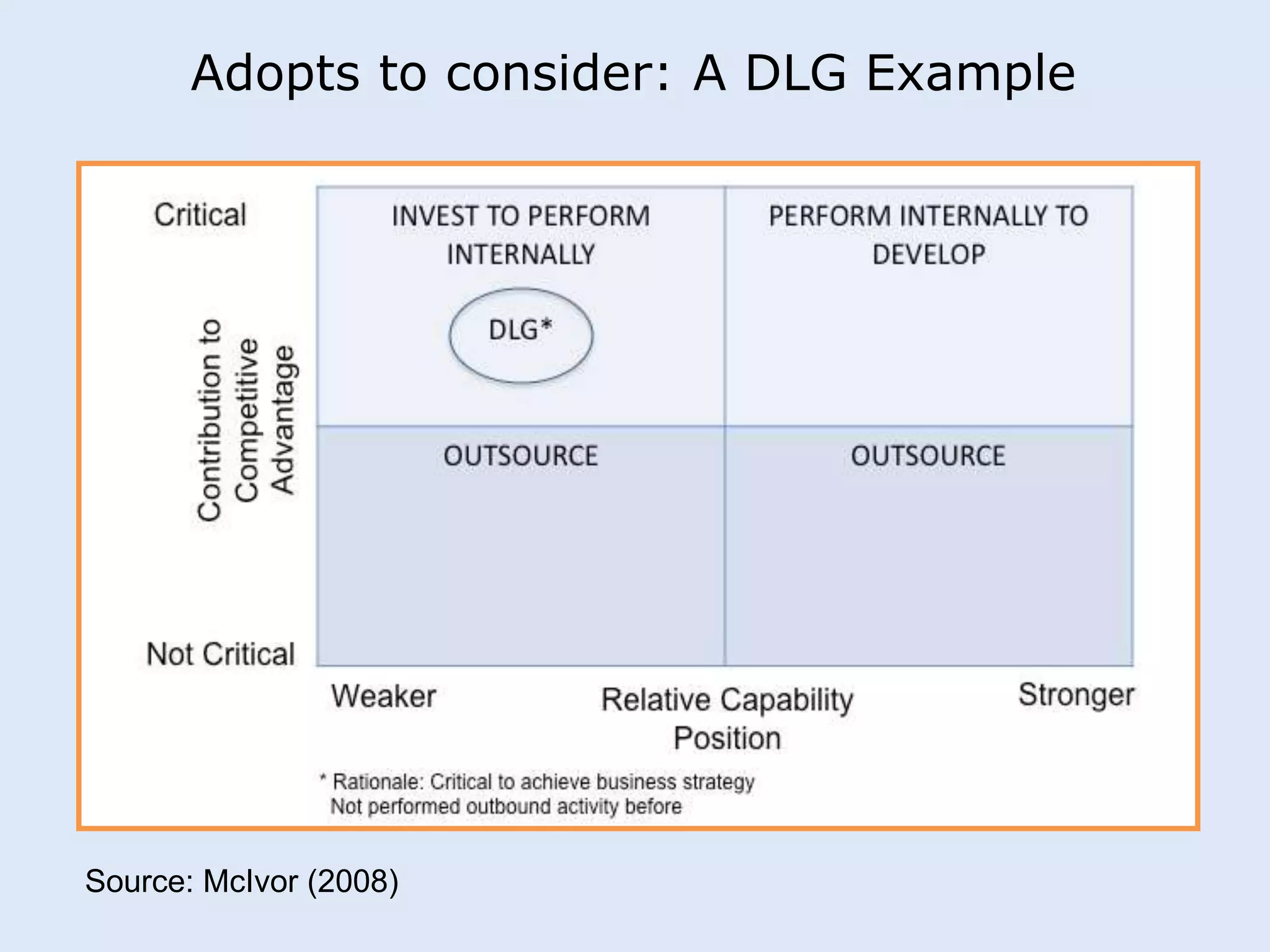
Adopts to consider: A DLG Example 
Source: McIvor (2008)
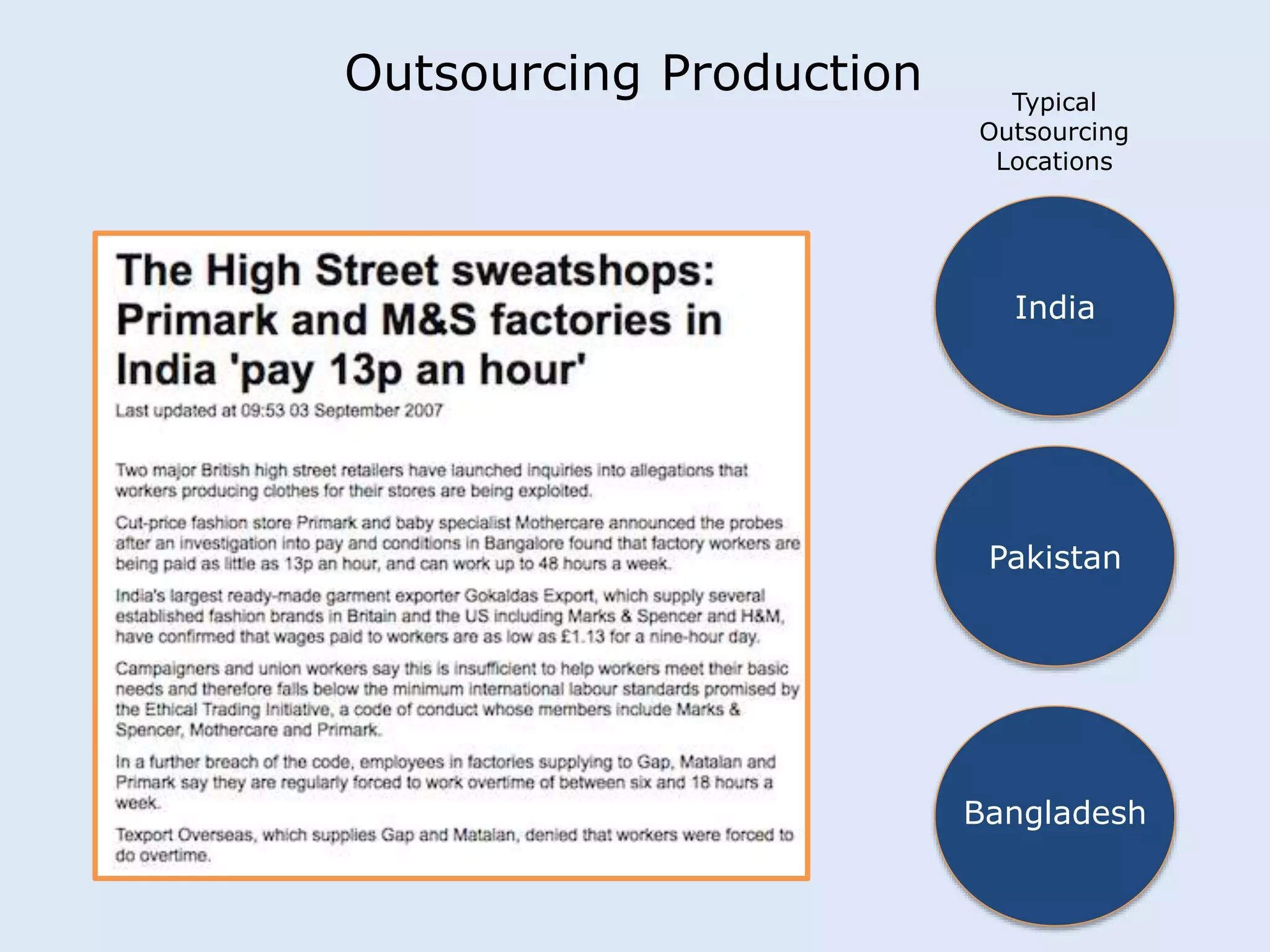
Outsourcing Production 
Typical 
Outsourcing 
Locations 
India 
Pakistan 
Bangladesh
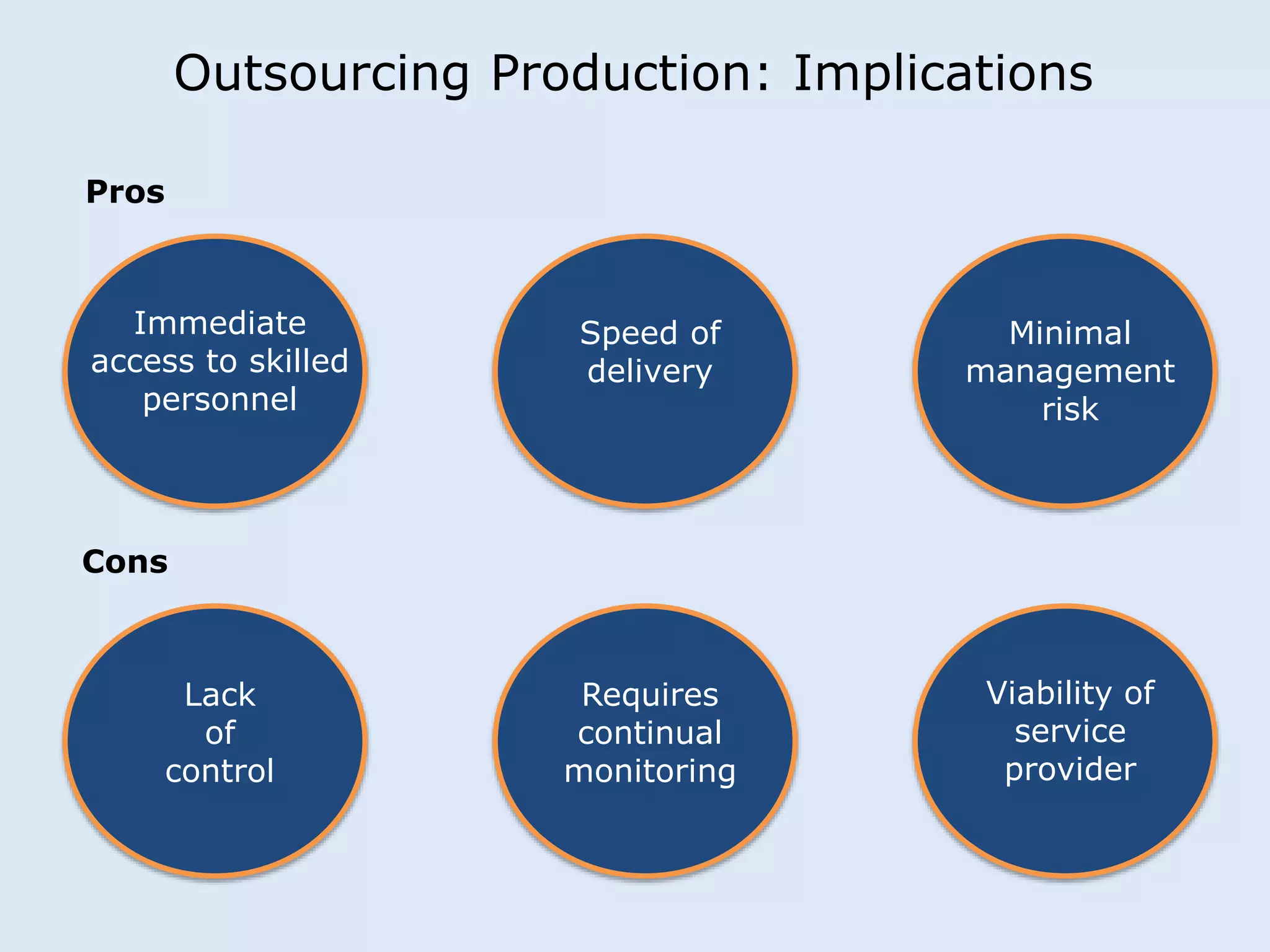
Outsourcing Production: Implications 
Pros 
Immediate 
access to skilled 
personnel 
Cons 
Speed of 
delivery 
Minimal 
management 
risk 
Lack 
of 
control 
Requires 
continual 
monitoring 
Viability of 
service 
provider
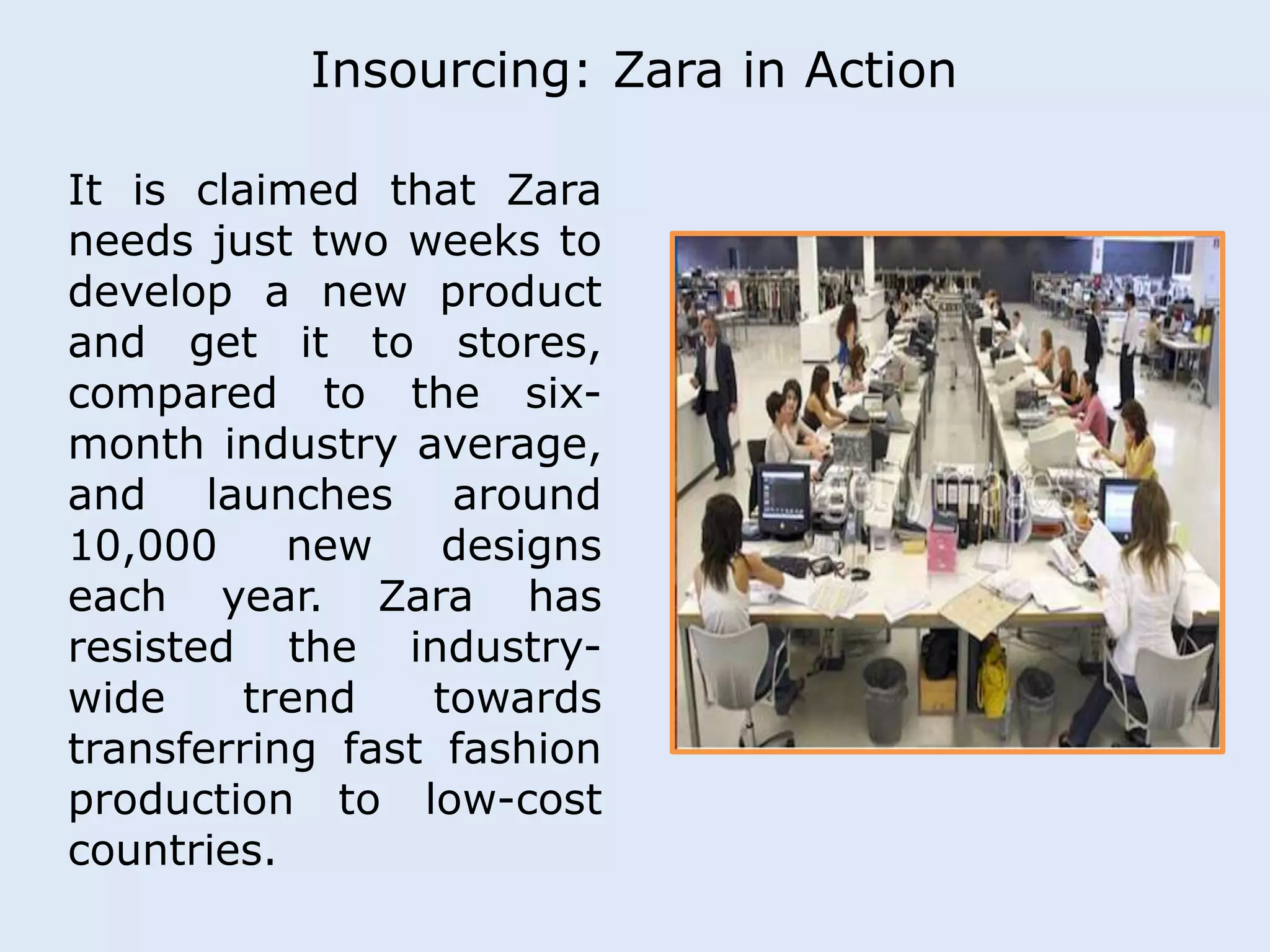
Insourcing: Zara in Action 
It is claimed that Zara 
needs just two weeks to 
develop a new product 
and get it to stores, 
compared to the six-month 
industry average, 
and launches around 
10,000 new designs 
each year. Zara has 
resisted the industry-wide 
trend towards 
transferring fast fashion 
production to low-cost 
countries.
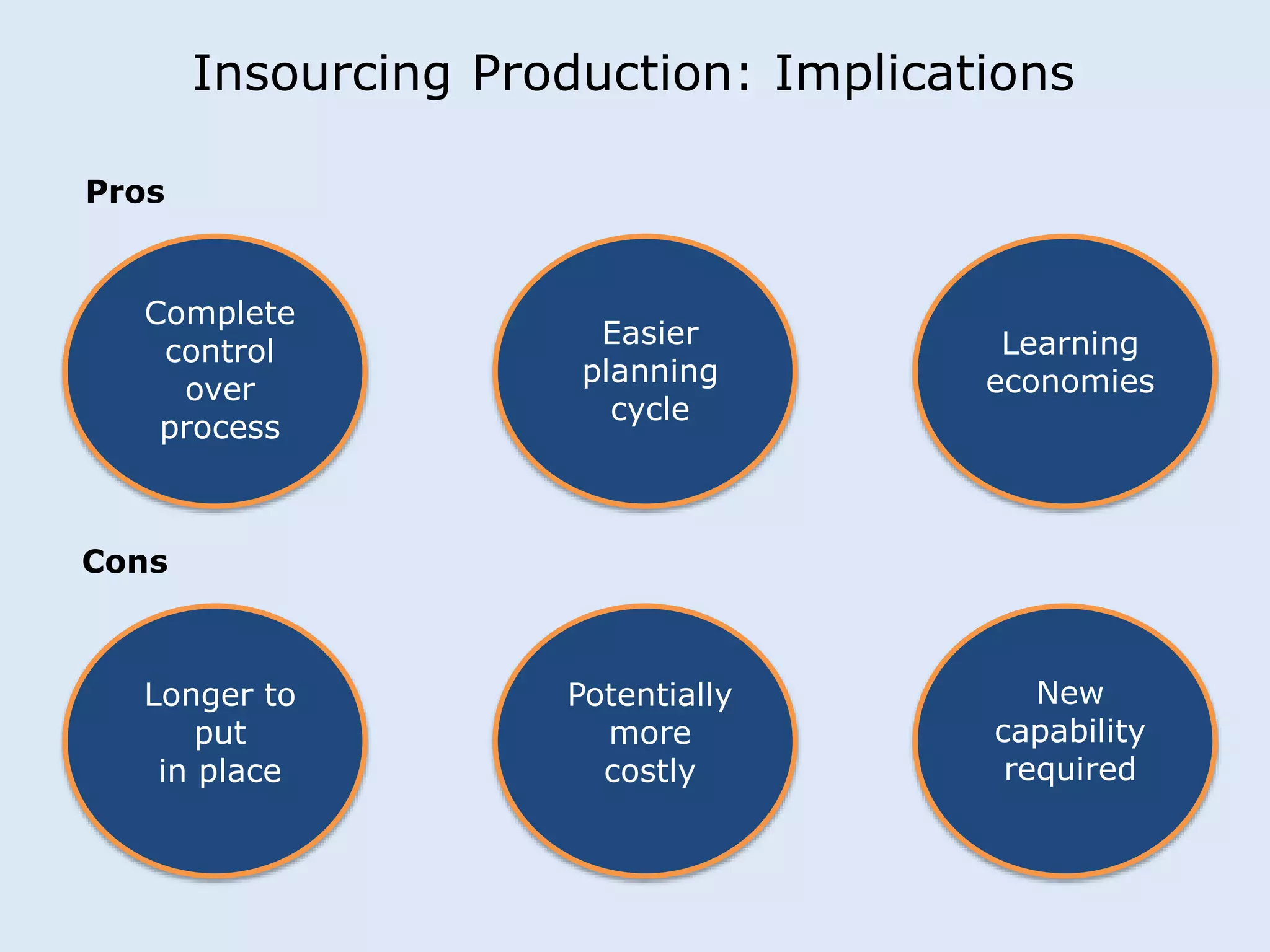
Insourcing Production: Implications 
Pros 
Complete 
control 
over 
process 
Cons 
Easier 
planning 
cycle 
Learning 
economies 
Longer to 
put 
in place 
Potentially 
more 
costly 
New 
capability 
required
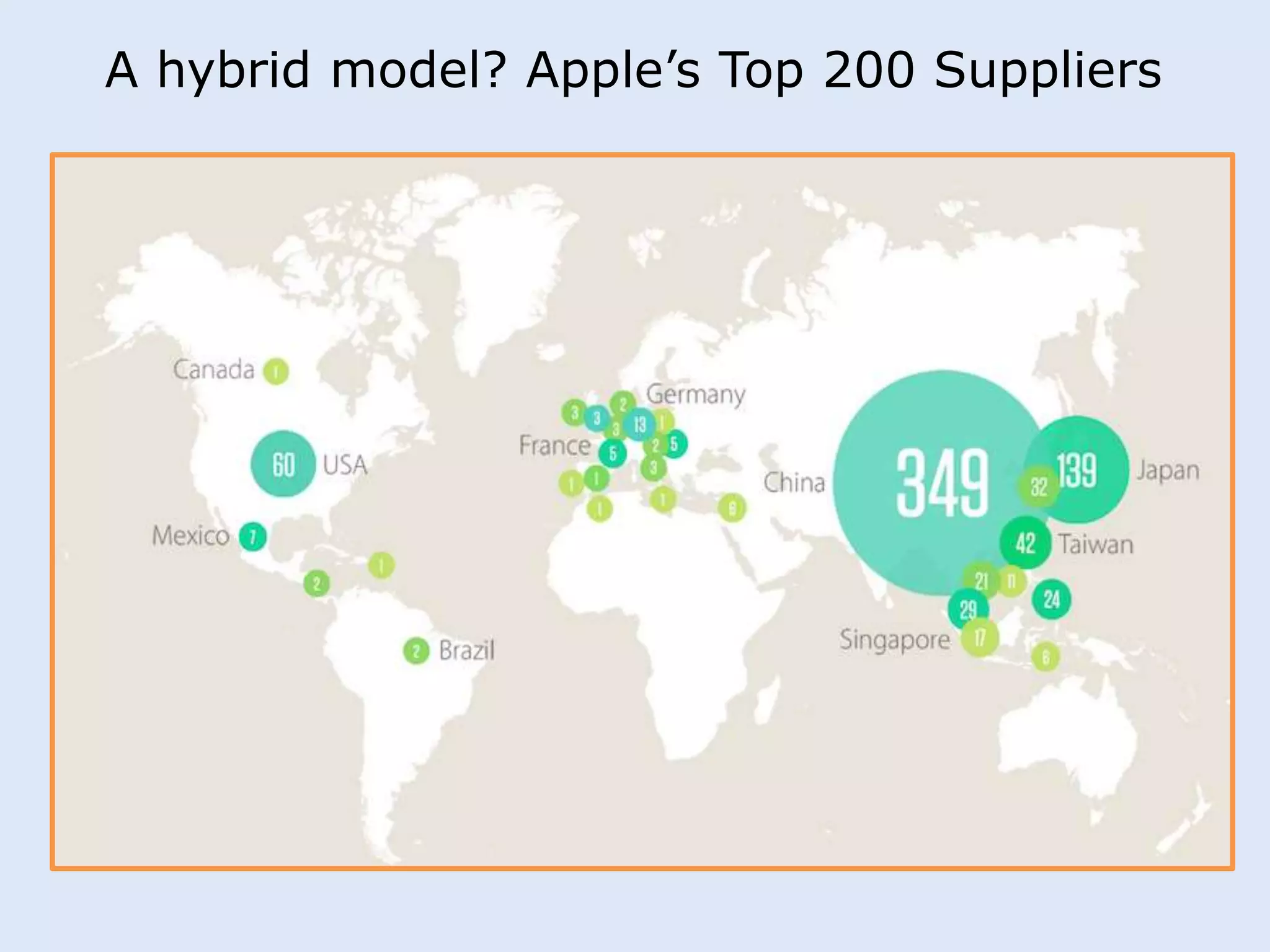
A hybrid model? Apple’s Top 200 Suppliers
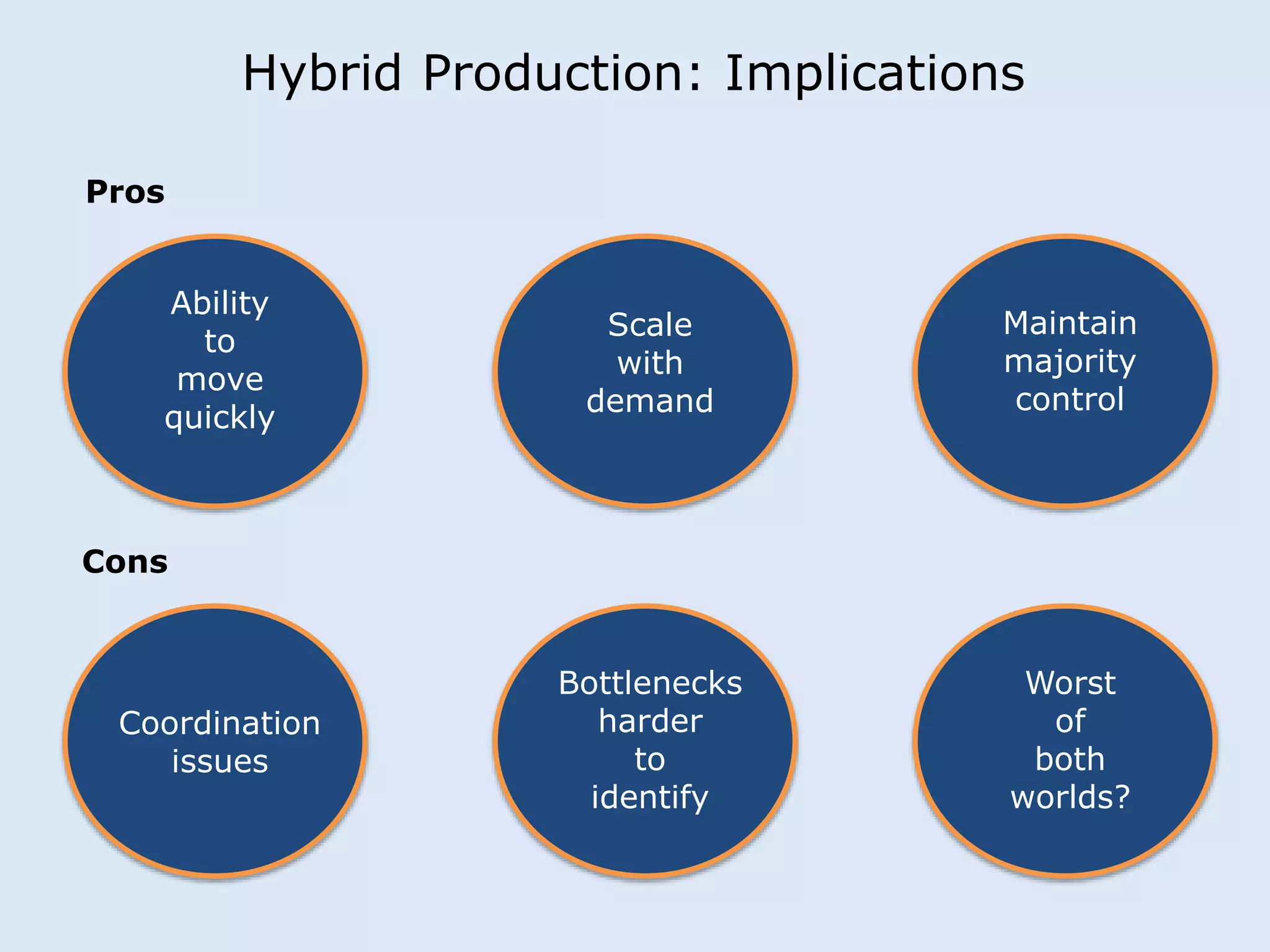
Hybrid Production: Implications 
Pros 
Cons 
Ability 
to 
move 
quickly 
Scale 
with 
demand 
Maintain 
majority 
control 
Coordination 
issues 
Bottlenecks 
harder 
to 
identify 
Worst 
of 
both 
worlds?
Where to 
manufacture? 
Home vs host 
country
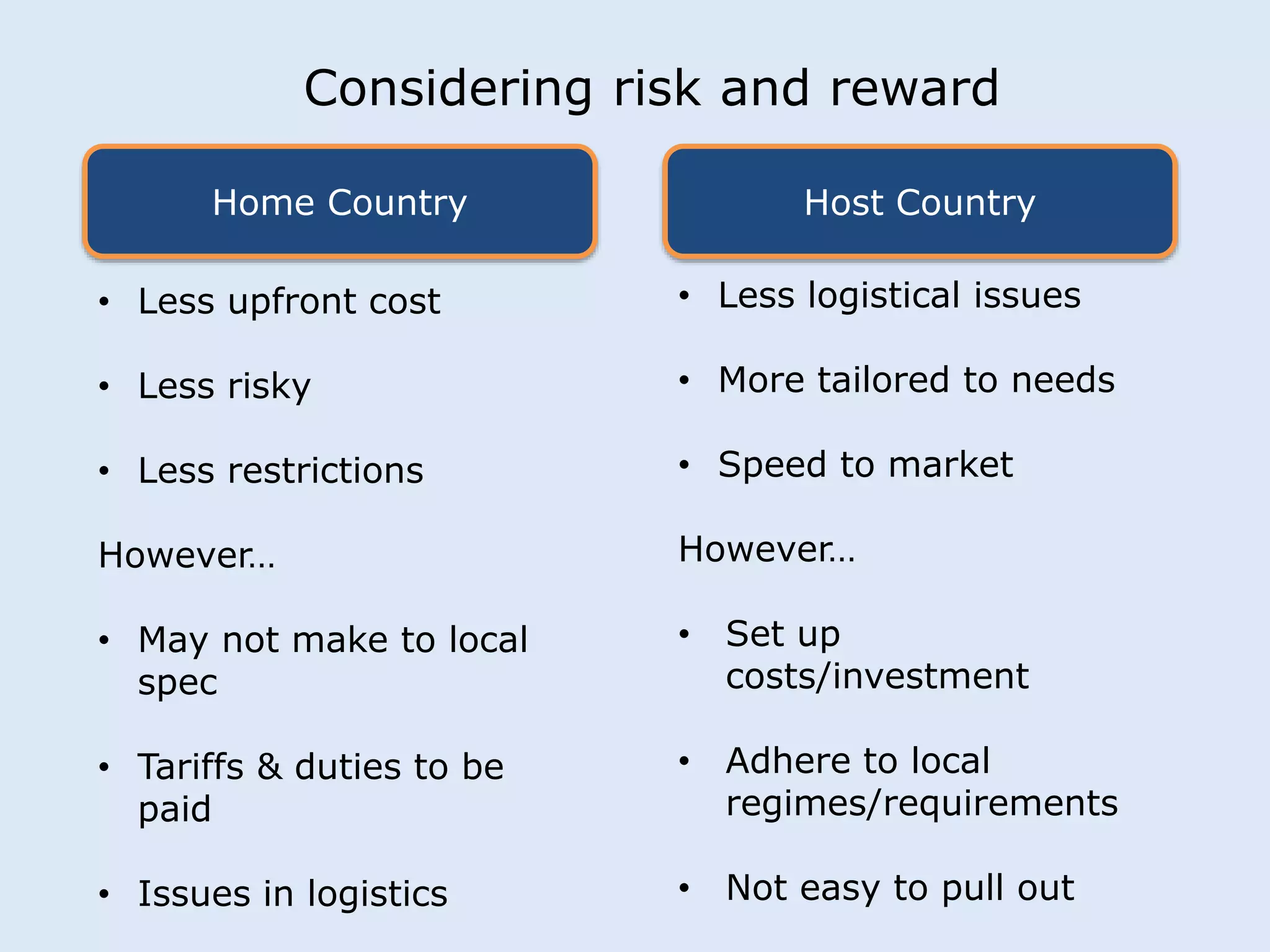
Considering risk and reward 
Home Country Host Country 
• Less upfront cost 
• Less risky 
• Less restrictions 
However… 
• May not make to local 
spec 
• Tariffs & duties to be 
paid 
• Issues in logistics 
• Less logistical issues 
• More tailored to needs 
• Speed to market 
However… 
• Set up 
costs/investment 
• Adhere to local 
regimes/requirements 
• Not easy to pull out
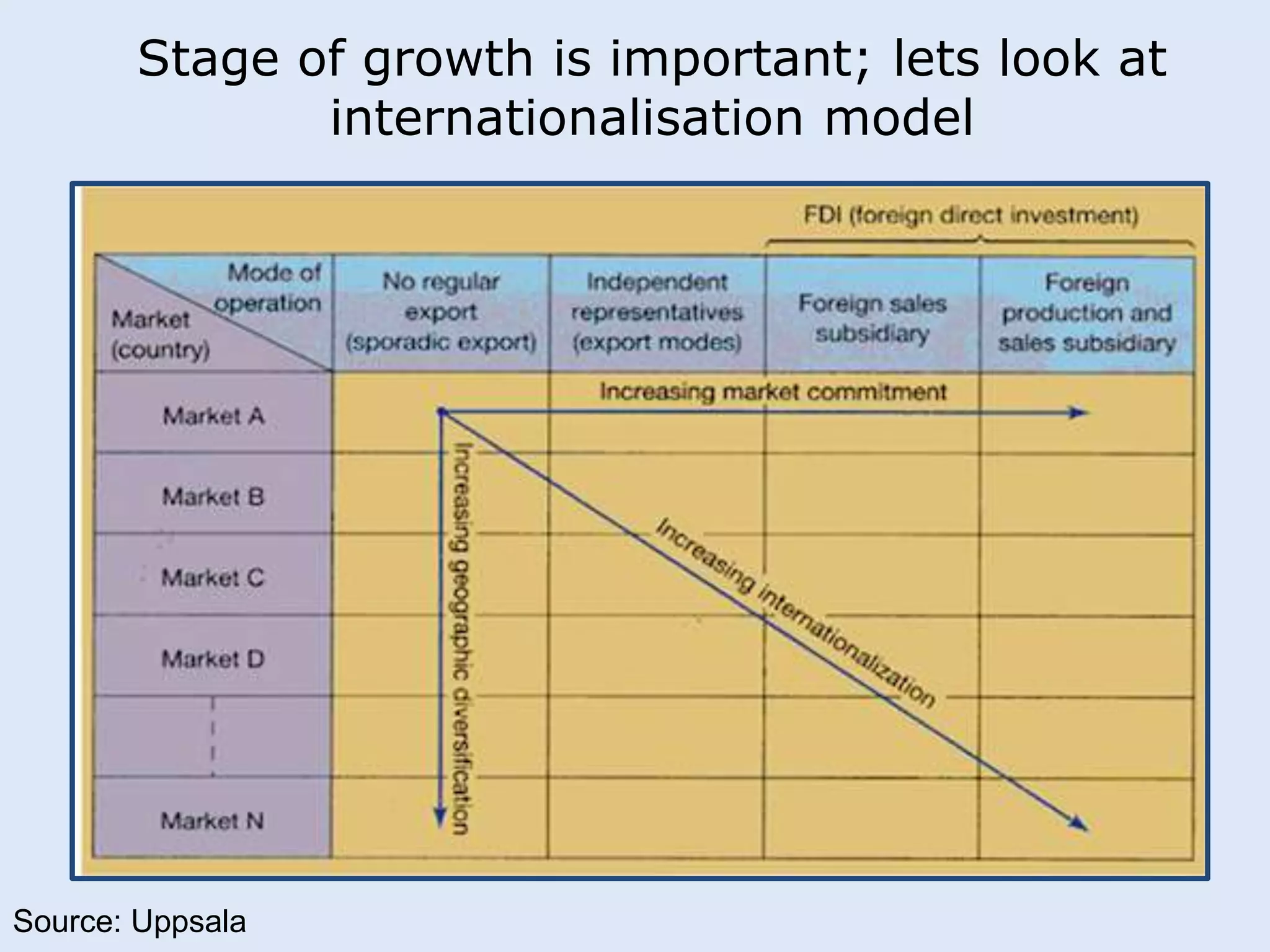
Stage of growth is important; lets look at 
internationalisation model 
Source: Uppsala
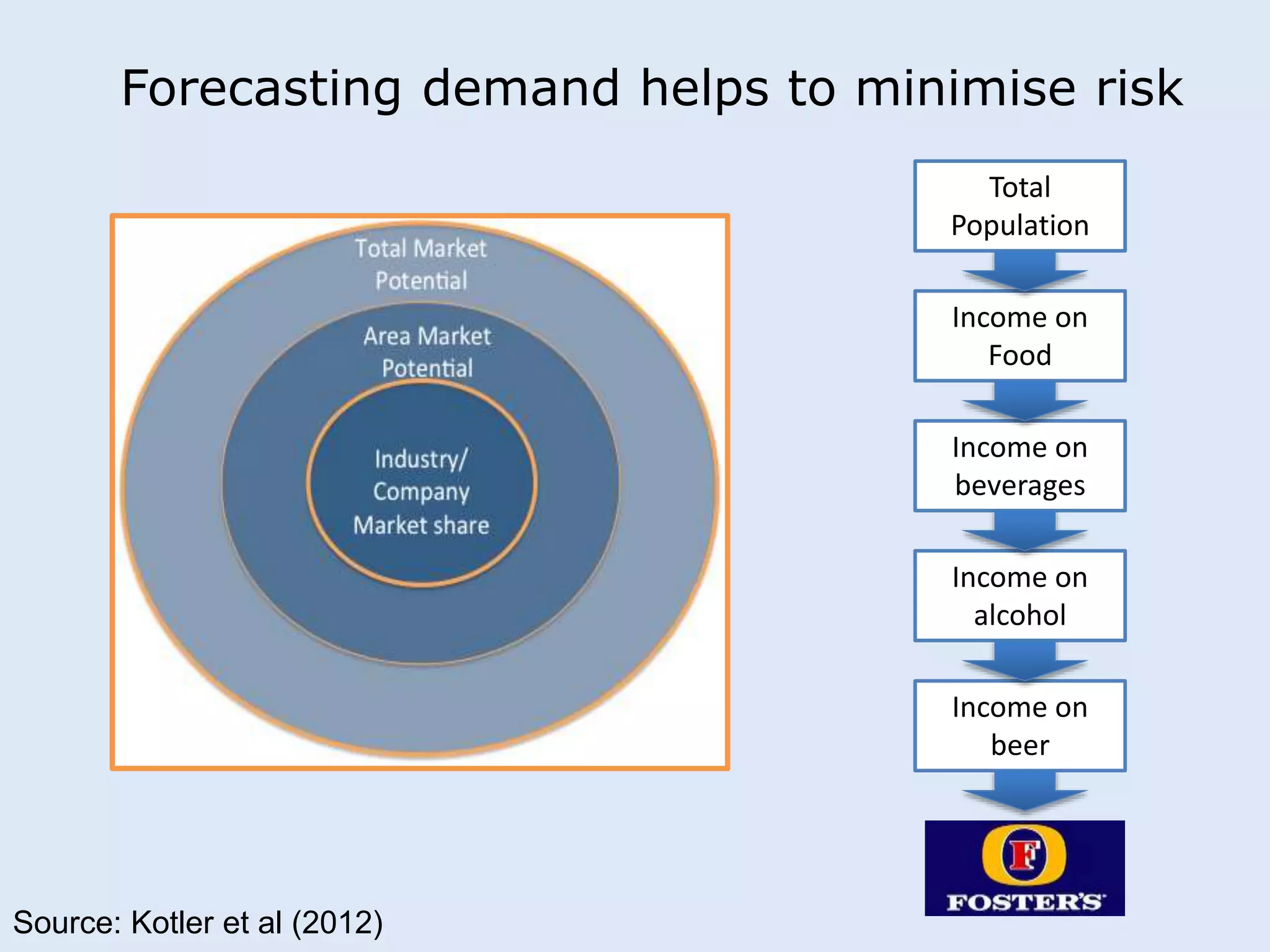
Forecasting demand helps to minimise risk 
Total 
Population 
Income on 
Food 
Income on 
beverages 
Income on 
alcohol 
Income on 
beer 
Source: Kotler et al (2012)
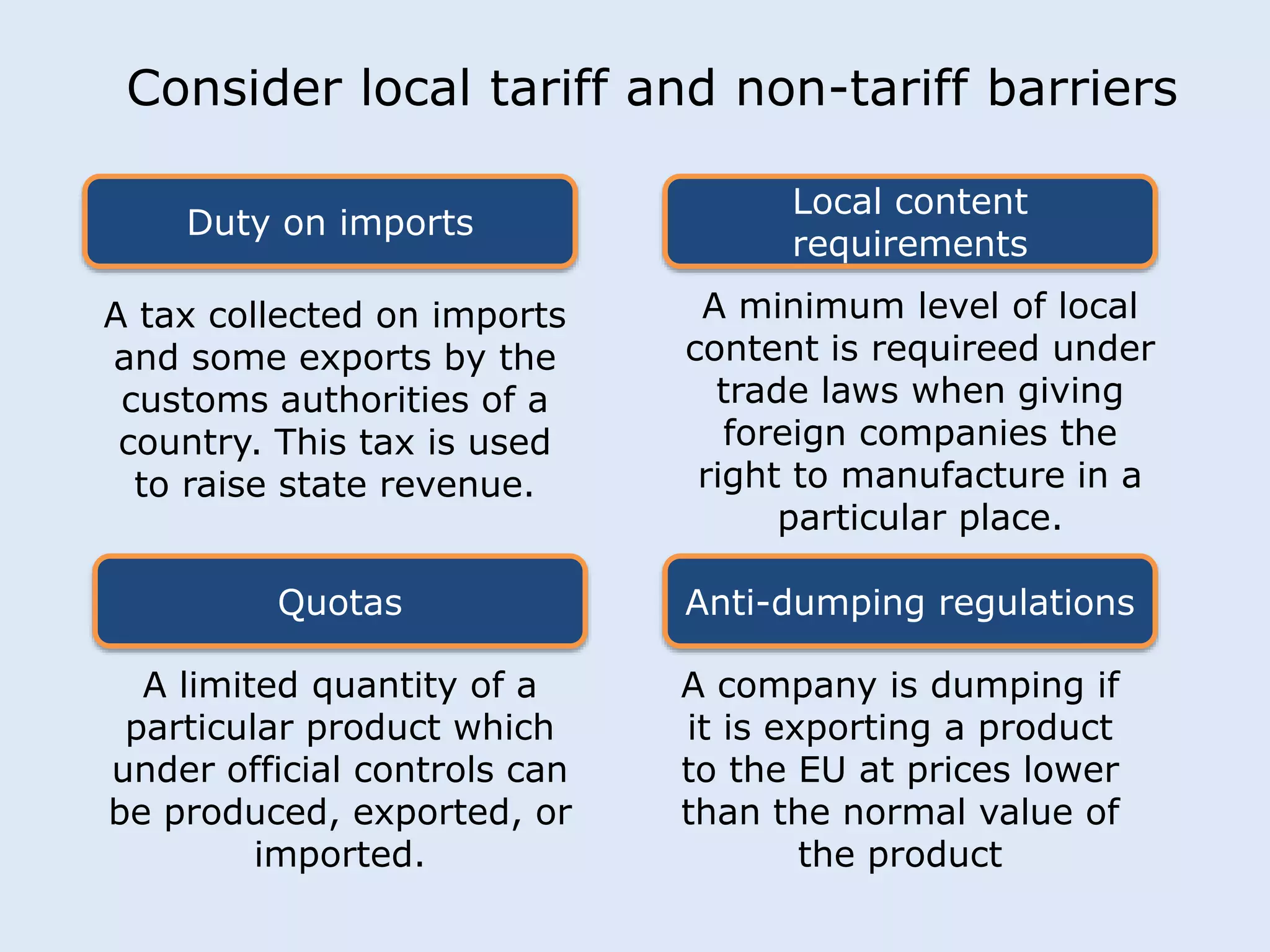
Consider local tariff and non-tariff barriers 
Duty on imports 
Local content 
requirements 
A tax collected on imports 
and some exports by the 
customs authorities of a 
country. This tax is used 
to raise state revenue. 
A minimum level of local 
content is requireed under 
trade laws when giving 
foreign companies the 
right to manufacture in a 
particular place. 
Quotas Anti-dumping regulations 
A limited quantity of a 
particular product which 
under official controls can 
be produced, exported, or 
imported. 
A company is dumping if 
it is exporting a product 
to the EU at prices lower 
than the normal value of 
the product
How to 
manufacture?
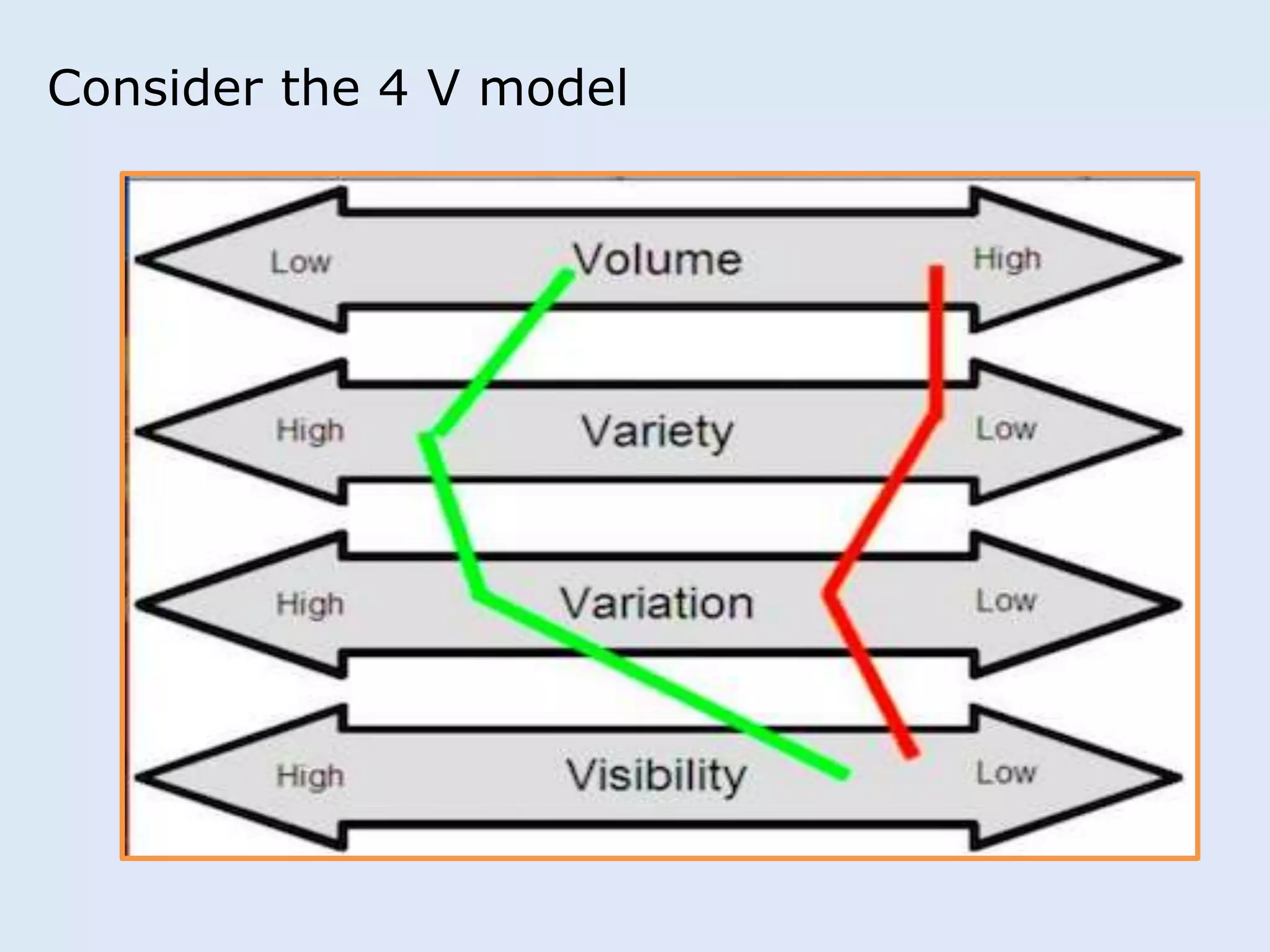
Consider the 4 V model
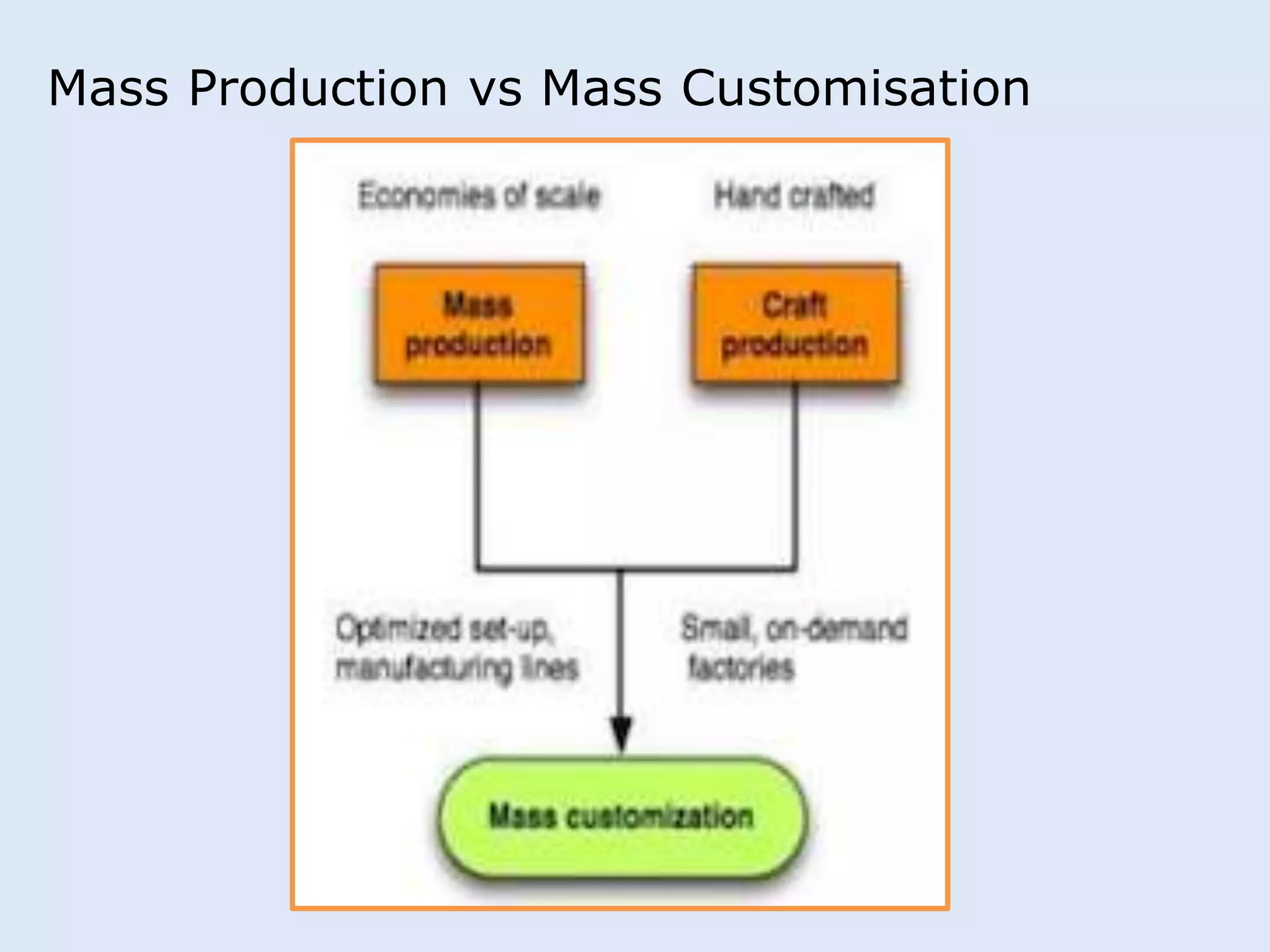
Mass Production vs Mass Customisation
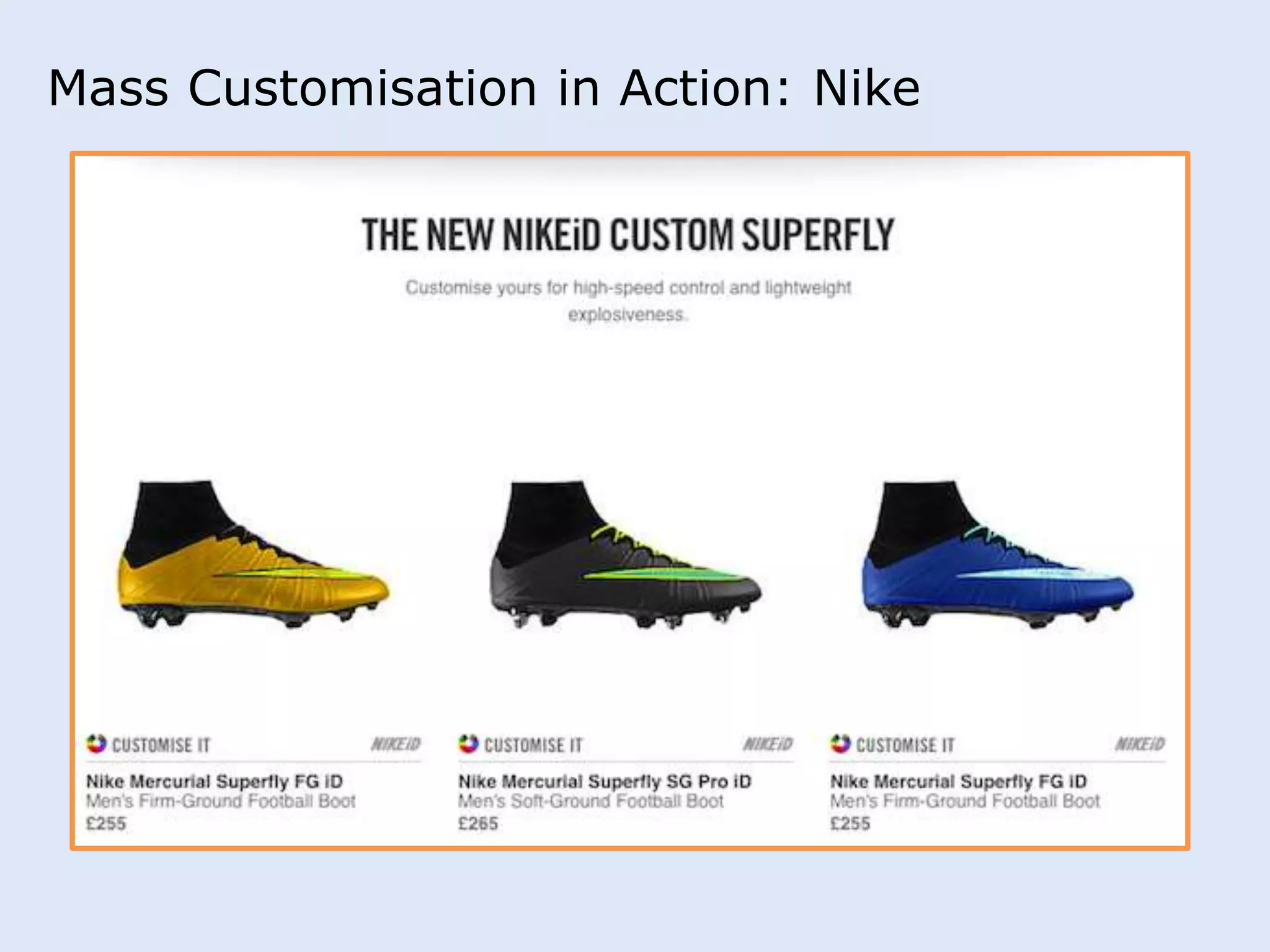
Mass Customisation in Action: Nike
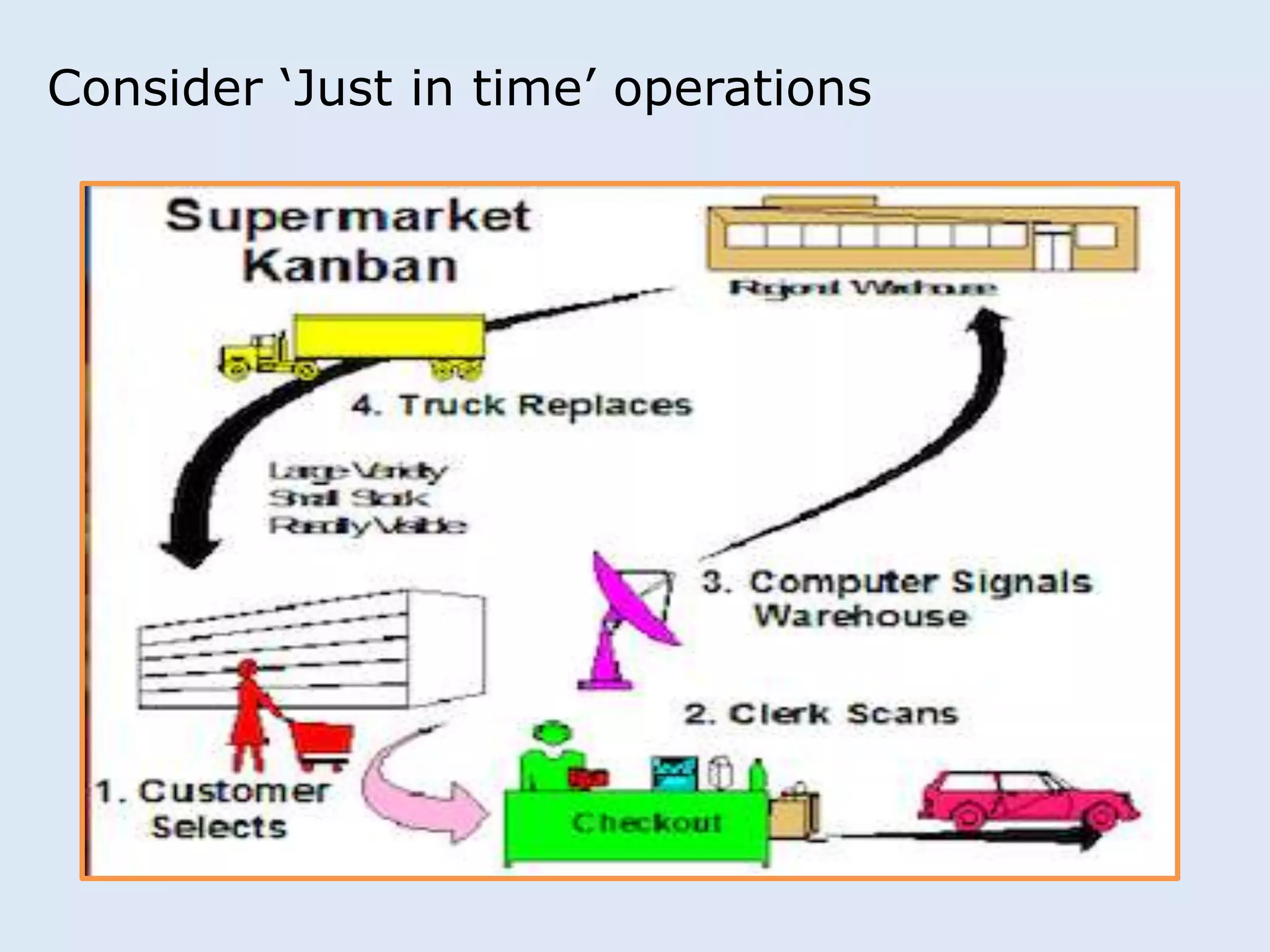
Consider ‘Just in time’ operations
End of Workshop 
Note: This recording is for your 
personal use only and not for further 
distribution or wider review. 
© Pearson College 2013
Is1 workshop 3   make, take   sell challenge v2 student

Is1 workshop 3 make, take sell challenge v2 student

  • 1.
    Industry Studies 1 Make, Take and Sell Challenge: Manufacturing Capability Topic Number: 3
  • 2.
    Overview Organisations continuallystrive to maximise efficiencies whilst sourcing the best quality and sustainable raw materials. A key consideration when developing a product is how best to manufacture it in order to achieve the scale required to service customers. There are a variety of options to consider that we will explore in this workshop. We will also discuss the issues with sourcing and manufacturing in one country and then selling it in another. Finally, we will develop our understanding of the various manufacturing implications on your product and come up with the optimal approach.
  • 3.
    Learning outcomes forthese workshops • Develop and determine how to source a variety of raw materials from around the world to maximise product efficiencies • Critically evaluate the variety of manufacturing options you have available and apply them appropriately to your business • Be able to forecast the demand for your product • Articulate the various manufacturing implications of producing a product in one country and selling it in another
  • 4.
    Where to source your raw materials from?
  • 5.
    A three pointplan to identifying raw material suppliers Analyse the situation Supplier Evaluation 1 2 3 Identify Opportunities
  • 6.
    Identify Opportunities: Whatdo you need? Opportunities are usually triggered by a business requirement for a product or service. Material Requirements Service Requirements Equipment Components Raw materials Computer programmers Transportation services Maintenance service
  • 7.
    Analyse the situation:Where can you get what you are looking for?
  • 8.
    Analyse the situation:Determine ease of getting materials to your factory You need to assess the associated costs of transport and other factors such as tariffs. Therefore, the lowest cost production option may not be the best route to go down.
  • 9.
    Once we haveidentified where, the question is whom is the best supplier? Quality Processes/Ca pabilities Do they offer the best product within the price that you want to pay? Do they have the ability to deliver what is expected currently and in the future? Price Regulations/Ethics Do they offer the best product at the most competitive price? Do they work within an internationally accepted regulatory/ethical code?
  • 10.
    Example from Walmart View video: https://www.youtube.com/watch?v=yZC4neLax5o
  • 11.
  • 12.
    So you knowwhat you want to produce… lets understand how to produce it… consider three routes… Outsource Insource Outsource & Insource 1 2 3
  • 13.
    Adopts to consider:A DLG Example Source: McIvor (2008)
  • 14.
    Outsourcing Production Typical Outsourcing Locations India Pakistan Bangladesh
  • 15.
    Outsourcing Production: Implications Pros Immediate access to skilled personnel Cons Speed of delivery Minimal management risk Lack of control Requires continual monitoring Viability of service provider
  • 16.
    Insourcing: Zara inAction It is claimed that Zara needs just two weeks to develop a new product and get it to stores, compared to the six-month industry average, and launches around 10,000 new designs each year. Zara has resisted the industry-wide trend towards transferring fast fashion production to low-cost countries.
  • 17.
    Insourcing Production: Implications Pros Complete control over process Cons Easier planning cycle Learning economies Longer to put in place Potentially more costly New capability required
  • 18.
    A hybrid model?Apple’s Top 200 Suppliers
  • 19.
    Hybrid Production: Implications Pros Cons Ability to move quickly Scale with demand Maintain majority control Coordination issues Bottlenecks harder to identify Worst of both worlds?
  • 20.
    Where to manufacture? Home vs host country
  • 21.
    Considering risk andreward Home Country Host Country • Less upfront cost • Less risky • Less restrictions However… • May not make to local spec • Tariffs & duties to be paid • Issues in logistics • Less logistical issues • More tailored to needs • Speed to market However… • Set up costs/investment • Adhere to local regimes/requirements • Not easy to pull out
  • 22.
    Stage of growthis important; lets look at internationalisation model Source: Uppsala
  • 23.
    Forecasting demand helpsto minimise risk Total Population Income on Food Income on beverages Income on alcohol Income on beer Source: Kotler et al (2012)
  • 24.
    Consider local tariffand non-tariff barriers Duty on imports Local content requirements A tax collected on imports and some exports by the customs authorities of a country. This tax is used to raise state revenue. A minimum level of local content is requireed under trade laws when giving foreign companies the right to manufacture in a particular place. Quotas Anti-dumping regulations A limited quantity of a particular product which under official controls can be produced, exported, or imported. A company is dumping if it is exporting a product to the EU at prices lower than the normal value of the product
  • 25.
  • 26.
  • 27.
    Mass Production vsMass Customisation
  • 28.
  • 29.
    Consider ‘Just intime’ operations
  • 30.
    End of Workshop Note: This recording is for your personal use only and not for further distribution or wider review. © Pearson College 2013