Backcasting “ or how I learned to stop predicting and help my clients “ IA Summit 2007 Las Vegas Matthew Milan Critical Mass   Sam Ladner York University
On Turbulent Environments Backcasting Background Backcasting as Information Architecture Is That a Discovery Process in Your Pocket? Session Overview
Turbulent Environments “ Take me to the river… “
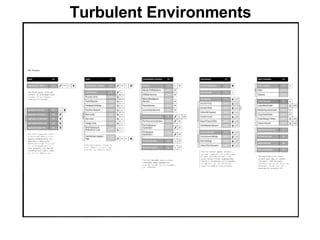
Turbulent Environments
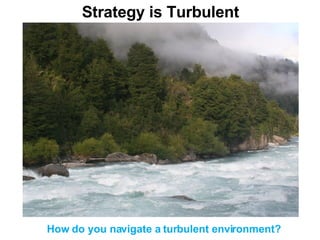
Strategy is Turbulent How do you navigate a turbulent environment?
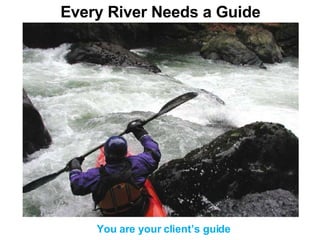
Every River Needs a Guide You are your client’s guide
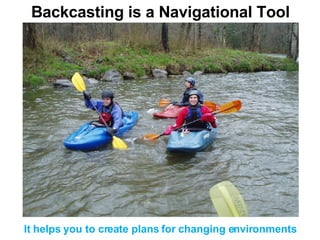
Backcasting is a Navigational Tool It helps you to create plans for changing environments
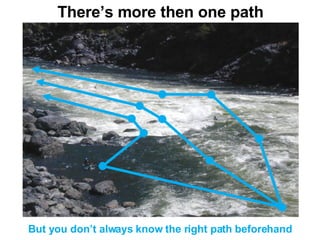
There’s more then one path But you don’t always know the right path beforehand
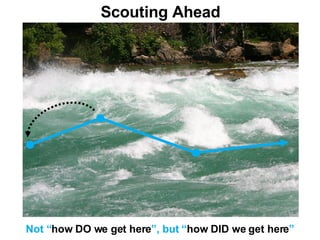
Scouting Ahead Not “ how DO we get here ”, but “ how DID we get here ”
Backcasting Background “ A recipe for people who hate to predict “
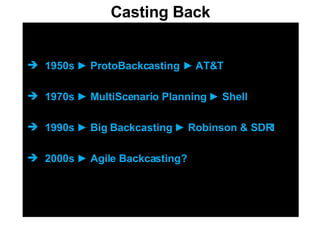
1950s  ► ProtoBackcasting ► AT&T 1970s  ►  MultiScenario Planning  ► Shell 1990s  ► Big Backcasting ► Robinson & SDRI 2000s ► Agile Backcasting? Casting Back
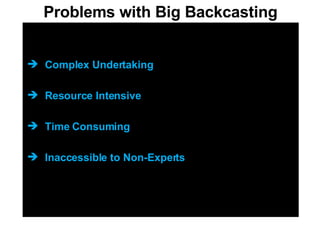
Complex Undertaking Resource Intensive Time Consuming Inaccessible to Non-Experts Problems with Big Backcasting
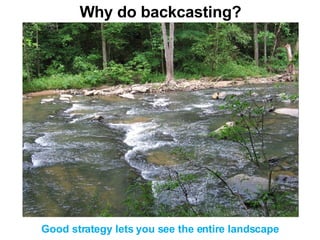
Why do backcasting? Good strategy lets you see the entire landscape
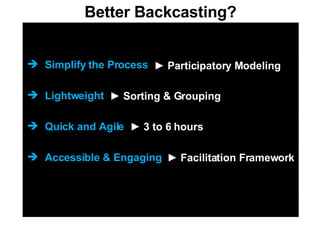
Simplify the Process Lightweight Quick and Agile Accessible & Engaging Better Backcasting? ►   Participatory Modeling ►   Sorting & Grouping ►   3 to 6 hours ►   Facilitation Framework
Backcasting as Information Architecture “ The Strategic Design of Shared Information Environments “
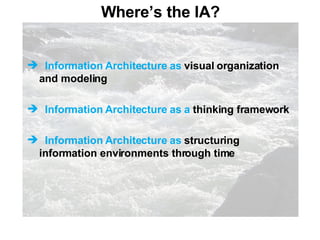
Information Architecture as  visual organization and modeling Information Architecture as a  thinking framework Information Architecture as  structuring information environments through time Where’s the IA?
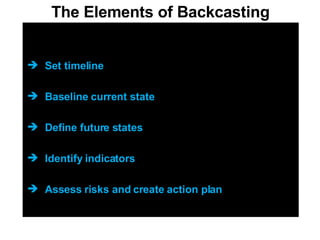
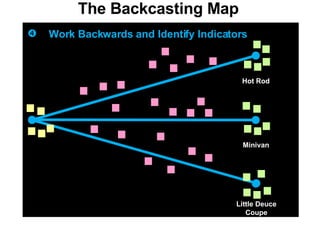
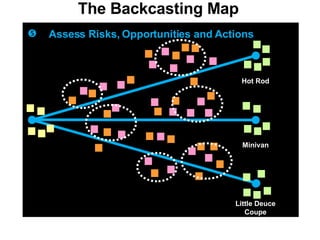
The Elements of Backcasting Set timeline Baseline current state Define future states Identify indicators Assess risks and create action plan
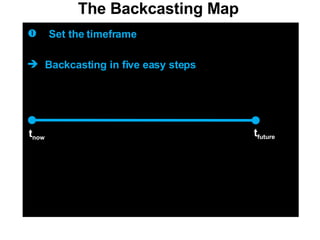
The Backcasting Map  Backcasting in five easy steps Set the timeframe   t now t future
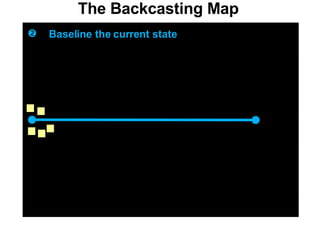
The Backcasting Map  Baseline the current state
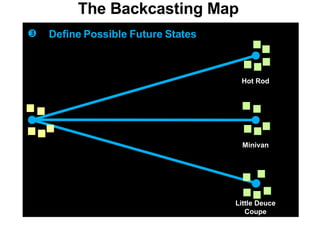
The Backcasting Map  Define Possible Future States   Hot Rod Minivan Little Deuce Coupe
The Backcasting Map  Work Backwards and Identify Indicators   Hot Rod Minivan Little Deuce Coupe
The Backcasting Map  Assess Risks, Opportunities and Actions   Hot Rod Minivan Little Deuce Coupe
A Discovery Process in Your Pocket “ Stop Predicting and Start Helping “
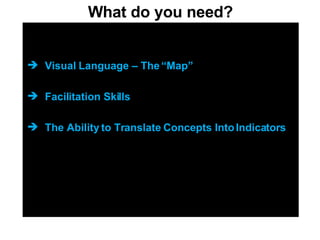
What do you need? Visual Language – The “Map” Facilitation Skills The Ability to Translate Concepts Into Indicators
What makes a good guide? Don’t tell you what to do Keep you safe Intentionally simplify complex situations Leave the choices to the journeyer
Case Study: OmniBank Fortune 500 Financial Services Firm Multi-Stage Redesign Multiple Stakeholders No Clear Strategy Client Desire to Learn Adaptability
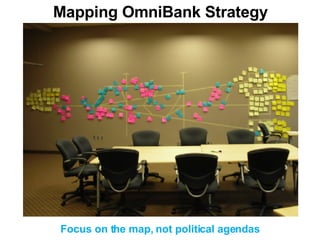
Mapping OmniBank Strategy Focus on the map, not political agendas
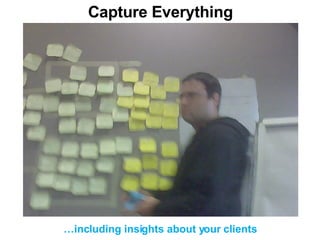
Capture Everything … including insights about your clients
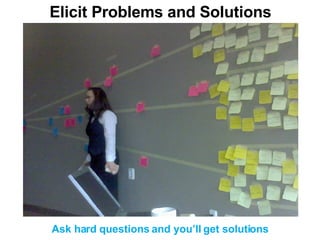
Elicit Problems and Solutions Ask hard questions and you’ll get solutions
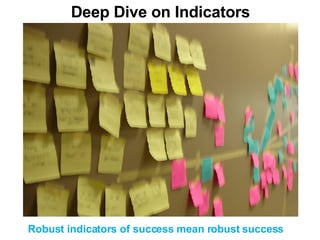
Deep Dive on Indicators Robust indicators of success mean robust success
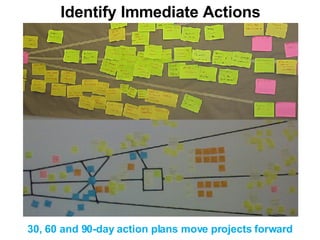
Identify Immediate Actions 30, 60 and 90-day action plans move projects forward
Take Me To The River

Backcasting - IA Summit 2007 Session Presentation

  • 1.
    Backcasting “ orhow I learned to stop predicting and help my clients “ IA Summit 2007 Las Vegas Matthew Milan Critical Mass Sam Ladner York University
  • 2.
    On Turbulent EnvironmentsBackcasting Background Backcasting as Information Architecture Is That a Discovery Process in Your Pocket? Session Overview
  • 3.
    Turbulent Environments “Take me to the river… “
  • 4.
  • 5.
    Strategy is TurbulentHow do you navigate a turbulent environment?
  • 6.
    Every River Needsa Guide You are your client’s guide
  • 7.
    Backcasting is aNavigational Tool It helps you to create plans for changing environments
  • 8.
    There’s more thenone path But you don’t always know the right path beforehand
  • 9.
    Scouting Ahead Not“ how DO we get here ”, but “ how DID we get here ”
  • 10.
    Backcasting Background “A recipe for people who hate to predict “
  • 11.
    1950s ►ProtoBackcasting ► AT&T 1970s ► MultiScenario Planning ► Shell 1990s ► Big Backcasting ► Robinson & SDRI 2000s ► Agile Backcasting? Casting Back
  • 12.
    Complex Undertaking ResourceIntensive Time Consuming Inaccessible to Non-Experts Problems with Big Backcasting
  • 13.
    Why do backcasting?Good strategy lets you see the entire landscape
  • 14.
    Simplify the ProcessLightweight Quick and Agile Accessible & Engaging Better Backcasting? ► Participatory Modeling ► Sorting & Grouping ► 3 to 6 hours ► Facilitation Framework
  • 15.
    Backcasting as InformationArchitecture “ The Strategic Design of Shared Information Environments “
  • 16.
    Information Architecture as visual organization and modeling Information Architecture as a thinking framework Information Architecture as structuring information environments through time Where’s the IA?
  • 17.
    The Elements ofBackcasting Set timeline Baseline current state Define future states Identify indicators Assess risks and create action plan
  • 18.
    The Backcasting Map Backcasting in five easy steps Set the timeframe t now t future
  • 19.
    The Backcasting Map Baseline the current state
  • 20.
    The Backcasting Map Define Possible Future States Hot Rod Minivan Little Deuce Coupe
  • 21.
    The Backcasting Map Work Backwards and Identify Indicators Hot Rod Minivan Little Deuce Coupe
  • 22.
    The Backcasting Map Assess Risks, Opportunities and Actions Hot Rod Minivan Little Deuce Coupe
  • 23.
    A Discovery Processin Your Pocket “ Stop Predicting and Start Helping “
  • 24.
    What do youneed? Visual Language – The “Map” Facilitation Skills The Ability to Translate Concepts Into Indicators
  • 25.
    What makes agood guide? Don’t tell you what to do Keep you safe Intentionally simplify complex situations Leave the choices to the journeyer
  • 26.
    Case Study: OmniBankFortune 500 Financial Services Firm Multi-Stage Redesign Multiple Stakeholders No Clear Strategy Client Desire to Learn Adaptability
  • 27.
    Mapping OmniBank StrategyFocus on the map, not political agendas
  • 28.
    Capture Everything …including insights about your clients
  • 29.
    Elicit Problems andSolutions Ask hard questions and you’ll get solutions
  • 30.
    Deep Dive onIndicators Robust indicators of success mean robust success
  • 31.
    Identify Immediate Actions30, 60 and 90-day action plans move projects forward
  • 32.
    Take Me ToThe River