Welcome! 
Our Group: 
-American business men 
and women, (aged 25-45) 
moving to South Korea for at 
least one year 
-Management and 
consultant team helping 
build the Olympic Village for 
the 2018 winter Olympics
Today’s Agenda 
1. Introduction (2 minutes) 
2. Icebreaker (5 minutes) 
3. Overview (8 minutes) 
4. Activity (10 minutes) 
5. Debrief (5 minutes) 
6. Conclusion (5 minutes) 
7. Questions and Evaluation (5-10 minutes)
Draw a Tree!
South Korea 
❖ Industrial Age to the Information Age 
❖ South Korea entered the global business forum with gusto 
❖ Foreign investors own 37% of the total market value of South 
Korean companies 
❖ South Korea hosting of the 2002 FIFA World Cup with Japan and 
the 2018 Winter Olympics 
❖ Intercultural competency is even more important than ever!
Stand Up!
Communication Styles
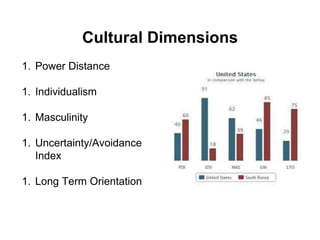
Cultural Dimensions 
1. Power Distance 
1. Individualism 
1. Masculinity 
1. Uncertainty/Avoidance 
Index 
1. Long Term Orientation
Do’s and Don’ts in the Work Place 
DO: 
● Work with the collective 
group 
● Recognize the strong 
work ethic & sacrifice of 
personal interests 
● Bond as a group, 
cultivating strong 
personal relationships 
● Compromise to settle 
disputes 
DON’T 
● Expect the “frontman” to 
act alone 
● Conduct personal 
business during 
organization time 
● Assume business will be 
conducted based on 
performance 
● Use ultimatums, 
frustration or anger 
(losing face)
Greeting norms in South Korea 
- Korean women usually 
nod slightly and will not 
shake hands with 
Western men. Western 
women may offer their 
hand to a Korean man. 
- Women should be the first 
to offer a hand for a 
handshake in South Korea 
The bow is the 
traditional Korean 
greeting, although it is 
often accompanied by a 
handshake among men. 
To show respect when 
shaking hands, support 
your right forearm with 
your left hand. 
- Bow when departing. 
Younger people wave 
(move their arm from 
side to side).
Names and Titles in business world 
- very impolite to 
address a Korean with 
his or her given name. 
Address Koreans using 
appropriate professional 
titles until specifically 
invited by your host or 
colleagues to use their 
given names 
- Americans should 
address a Korean with 
Mr., Mrs., Miss + family 
name; however, never 
address a high-ranking 
person or superior in 
this manner
Body Language 
- Koreans consider it a personal 
violation to be touched by 
someone who is not a relative or 
close friend. Avoid touching, 
patting or back slapping a 
Korean. 
- Direct eye contact between 
junior and senior businesspeople 
should be avoided. This is seen 
as impolite or even as a 
challenge. 
- Do not cross your legs or 
stretch your legs out straight in 
front of you. Keep your feet on 
the floor, never on a desk or 
chair. 
- Always pass and receive 
objects with your right hand 
(supported by the left hand at 
the wrist or forearm) or with two 
hands.
The concept of Kibun 
- Kibun is a word with no 
literal English translation; 
the closest terms are pride, 
face, mood, feelings, or 
state of mind. 
- It is important to know how 
to judge the state of 
someone else's kibun, how 
to avoid hurting it, and how 
to keep your own kibun at 
the same time. 
- Since this is a culture 
where social harmony is 
crucial, being able to judge 
another person's state of 
mind is critical to maintain 
the person's kibun. 
- Nunchi is the ability to 
determine another person's 
kibun by using the eye. 
- Nunchi is accomplished by 
watching body language 
and listening to the tone of 
voice as well as what is 
said
Wrap-up 
-Break into groups 
-discuss key learnings 
-share one with the 
class
Key Points 
● Our own cultural norms affect relationship in the 
workplace 
○ Think about your own reactions, preferences and 
feelings 
● Stepping into a new culture can seem very different 
○ The Cultural Dimensions model is a guide 
○ Societies are not homogenous 
○ There will always be deviations

Cultural trainingpresentation 2

  • 1.
    Welcome! Our Group: -American business men and women, (aged 25-45) moving to South Korea for at least one year -Management and consultant team helping build the Olympic Village for the 2018 winter Olympics
  • 2.
    Today’s Agenda 1.Introduction (2 minutes) 2. Icebreaker (5 minutes) 3. Overview (8 minutes) 4. Activity (10 minutes) 5. Debrief (5 minutes) 6. Conclusion (5 minutes) 7. Questions and Evaluation (5-10 minutes)
  • 3.
  • 4.
    South Korea ❖Industrial Age to the Information Age ❖ South Korea entered the global business forum with gusto ❖ Foreign investors own 37% of the total market value of South Korean companies ❖ South Korea hosting of the 2002 FIFA World Cup with Japan and the 2018 Winter Olympics ❖ Intercultural competency is even more important than ever!
  • 7.
  • 8.
  • 10.
    Cultural Dimensions 1.Power Distance 1. Individualism 1. Masculinity 1. Uncertainty/Avoidance Index 1. Long Term Orientation
  • 11.
    Do’s and Don’tsin the Work Place DO: ● Work with the collective group ● Recognize the strong work ethic & sacrifice of personal interests ● Bond as a group, cultivating strong personal relationships ● Compromise to settle disputes DON’T ● Expect the “frontman” to act alone ● Conduct personal business during organization time ● Assume business will be conducted based on performance ● Use ultimatums, frustration or anger (losing face)
  • 12.
    Greeting norms inSouth Korea - Korean women usually nod slightly and will not shake hands with Western men. Western women may offer their hand to a Korean man. - Women should be the first to offer a hand for a handshake in South Korea The bow is the traditional Korean greeting, although it is often accompanied by a handshake among men. To show respect when shaking hands, support your right forearm with your left hand. - Bow when departing. Younger people wave (move their arm from side to side).
  • 13.
    Names and Titlesin business world - very impolite to address a Korean with his or her given name. Address Koreans using appropriate professional titles until specifically invited by your host or colleagues to use their given names - Americans should address a Korean with Mr., Mrs., Miss + family name; however, never address a high-ranking person or superior in this manner
  • 14.
    Body Language -Koreans consider it a personal violation to be touched by someone who is not a relative or close friend. Avoid touching, patting or back slapping a Korean. - Direct eye contact between junior and senior businesspeople should be avoided. This is seen as impolite or even as a challenge. - Do not cross your legs or stretch your legs out straight in front of you. Keep your feet on the floor, never on a desk or chair. - Always pass and receive objects with your right hand (supported by the left hand at the wrist or forearm) or with two hands.
  • 15.
    The concept ofKibun - Kibun is a word with no literal English translation; the closest terms are pride, face, mood, feelings, or state of mind. - It is important to know how to judge the state of someone else's kibun, how to avoid hurting it, and how to keep your own kibun at the same time. - Since this is a culture where social harmony is crucial, being able to judge another person's state of mind is critical to maintain the person's kibun. - Nunchi is the ability to determine another person's kibun by using the eye. - Nunchi is accomplished by watching body language and listening to the tone of voice as well as what is said
  • 16.
    Wrap-up -Break intogroups -discuss key learnings -share one with the class
  • 17.
    Key Points ●Our own cultural norms affect relationship in the workplace ○ Think about your own reactions, preferences and feelings ● Stepping into a new culture can seem very different ○ The Cultural Dimensions model is a guide ○ Societies are not homogenous ○ There will always be deviations

Editor's Notes

  • #4 draw a tree (abstract or real) take 30 seconds to compare with your neighbor How many of you drew roots? How many of you consider the roots part of the tree? The roots make the tree stand-up, rooted into the ground, nutrients but this is the part that is often unseen http://www.thiagi.com/pfp/IE4H/september2005.html#99Seconds
  • #5 http://www.international-business-careers.com/international_career_expatriate_resources_2.shtml
  • #18 http://www.mindtools.com/pages/article/newLDR_66.htm