Medical Training Application
Service
The How To guide to getting your place in the world
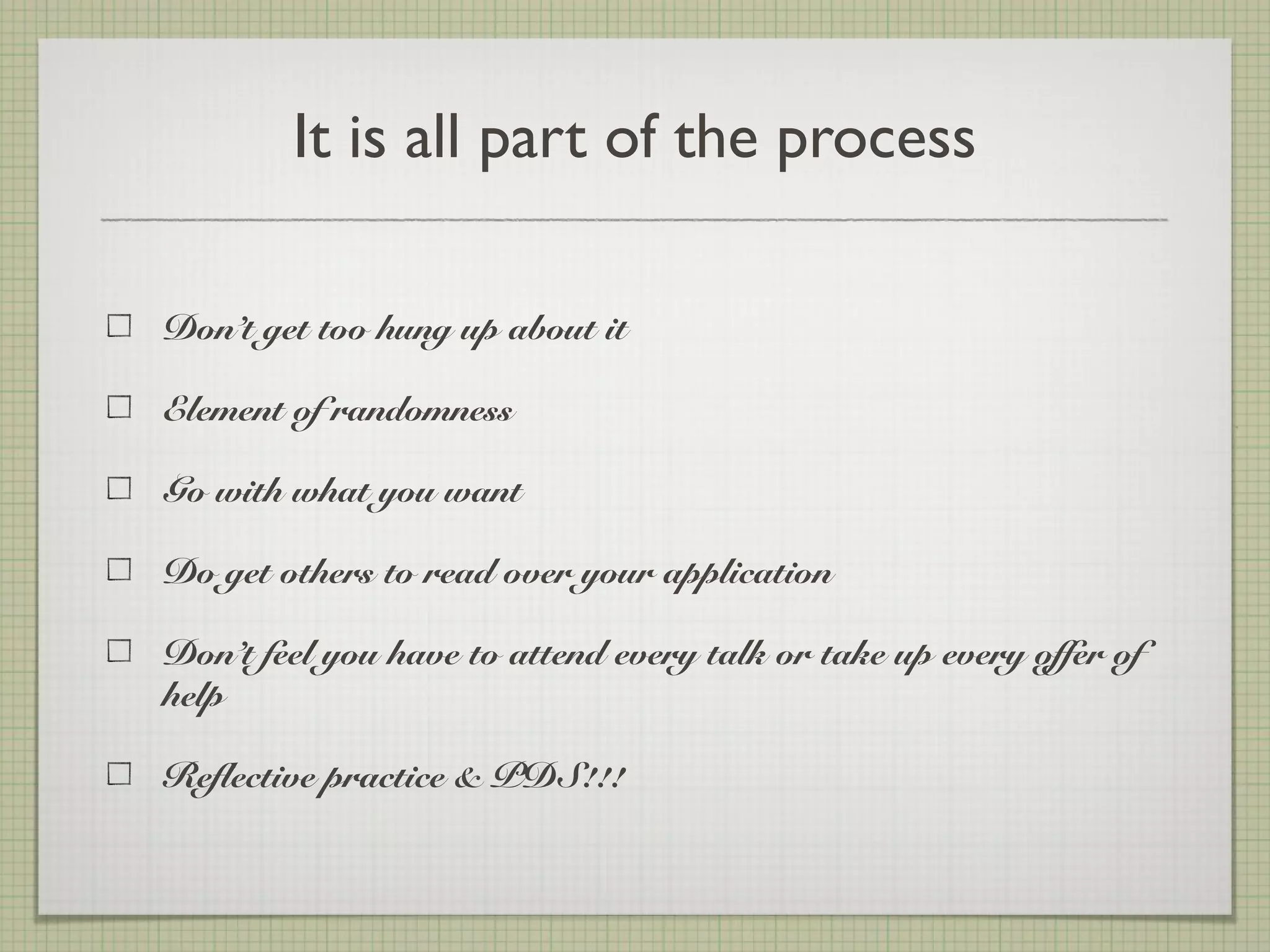
It is all part of the process
Don’t get too hung up about it
Element of randomness
Go with what you want
Do get others to read over your application
Don’t feel you have to attend every talk or take up every offer of
help
Reflective practice & PDS!!!
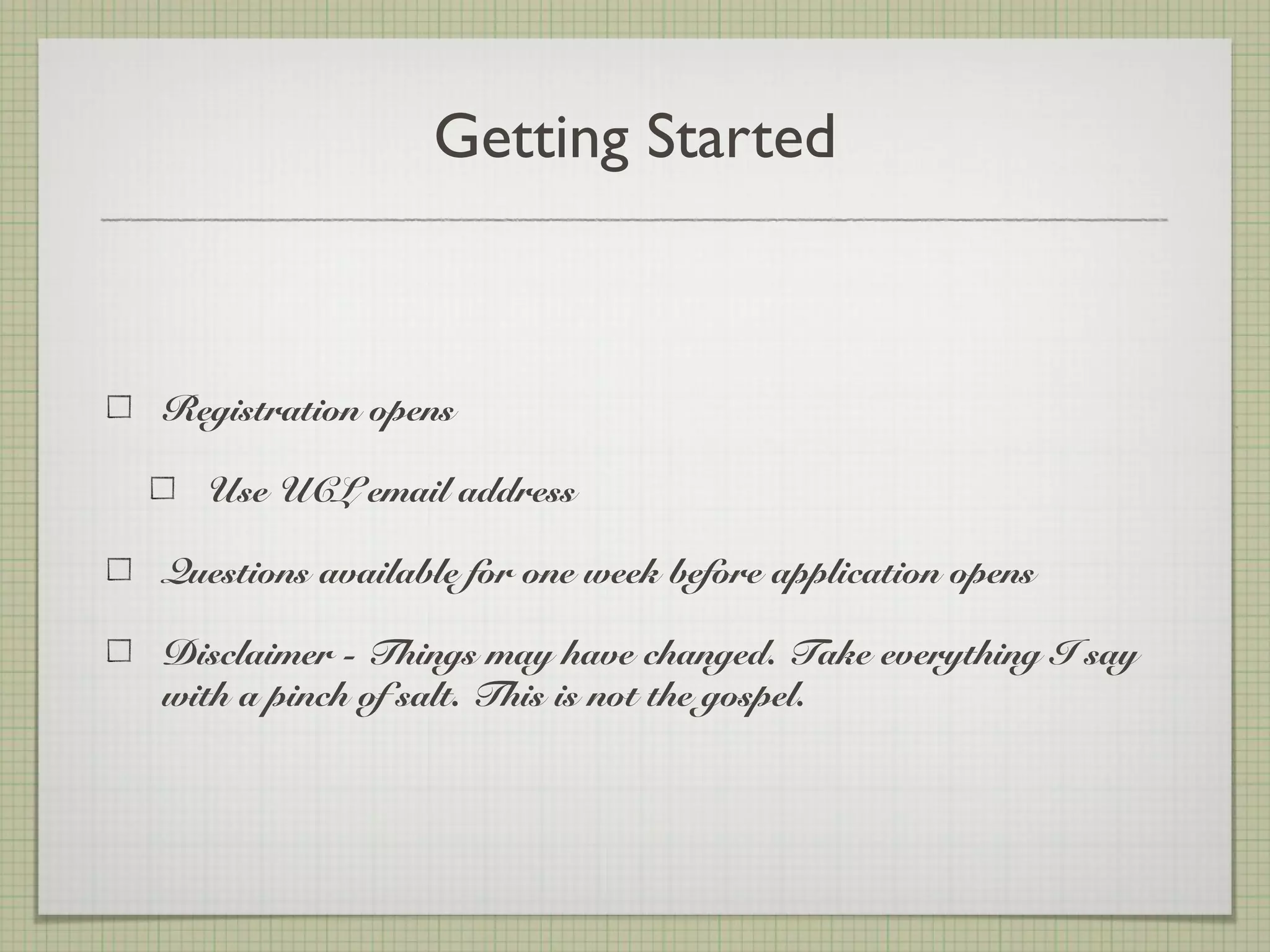
Getting Started
Registration opens
Use UCL email address
Questions available for one week before application opens
Disclaimer - Things may have changed. Take everything I say
with a pinch of salt. This is not the gospel.
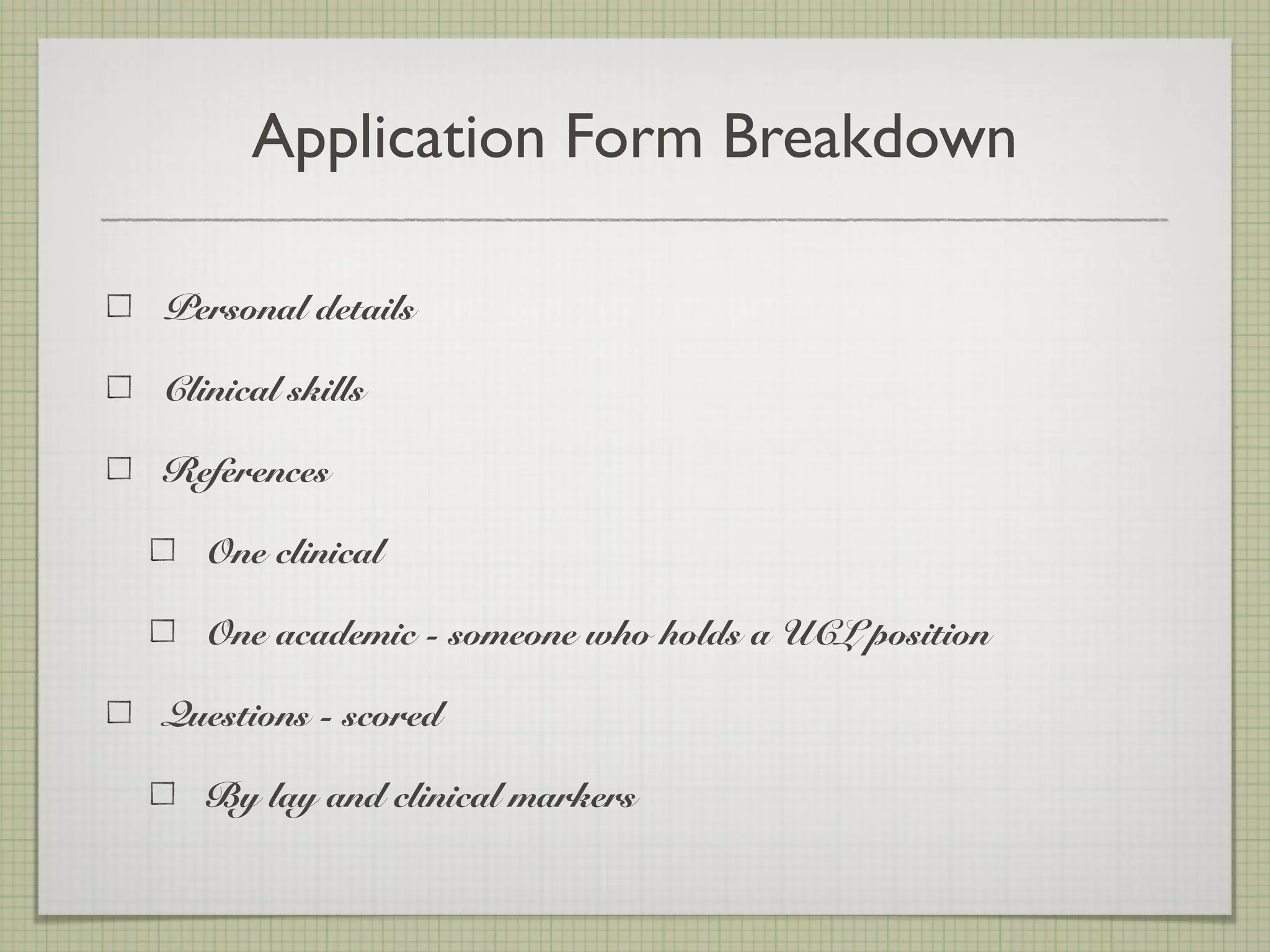
Application Form Breakdown
Personal details
Clinical skills
References
One clinical
One academic - someone who holds a UCL position
Questions - scored
By lay and clinical markers
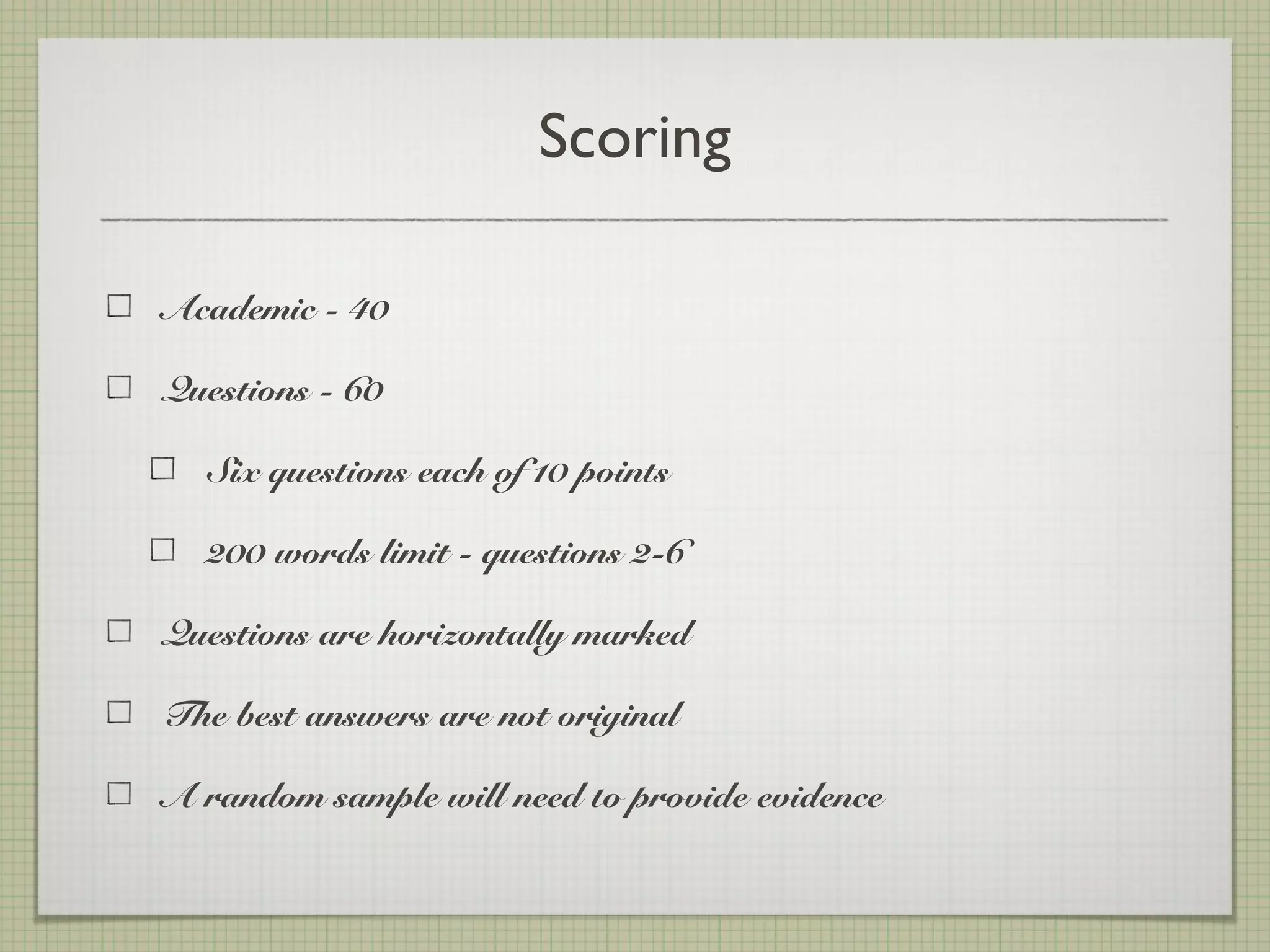
Scoring
Academic - 40
Questions - 60
Six questions each of 10 points
200 words limit - questions 2-6
Questions are horizontally marked
The best answers are not original
A random sample will need to provide evidence
Question 1
List your educational achievements
Part A - additional degrees (max 5 points)
Part B - other educational achievements (max 5 points)
Peer reviewed publications
National presentations
Nationally recognised prizes
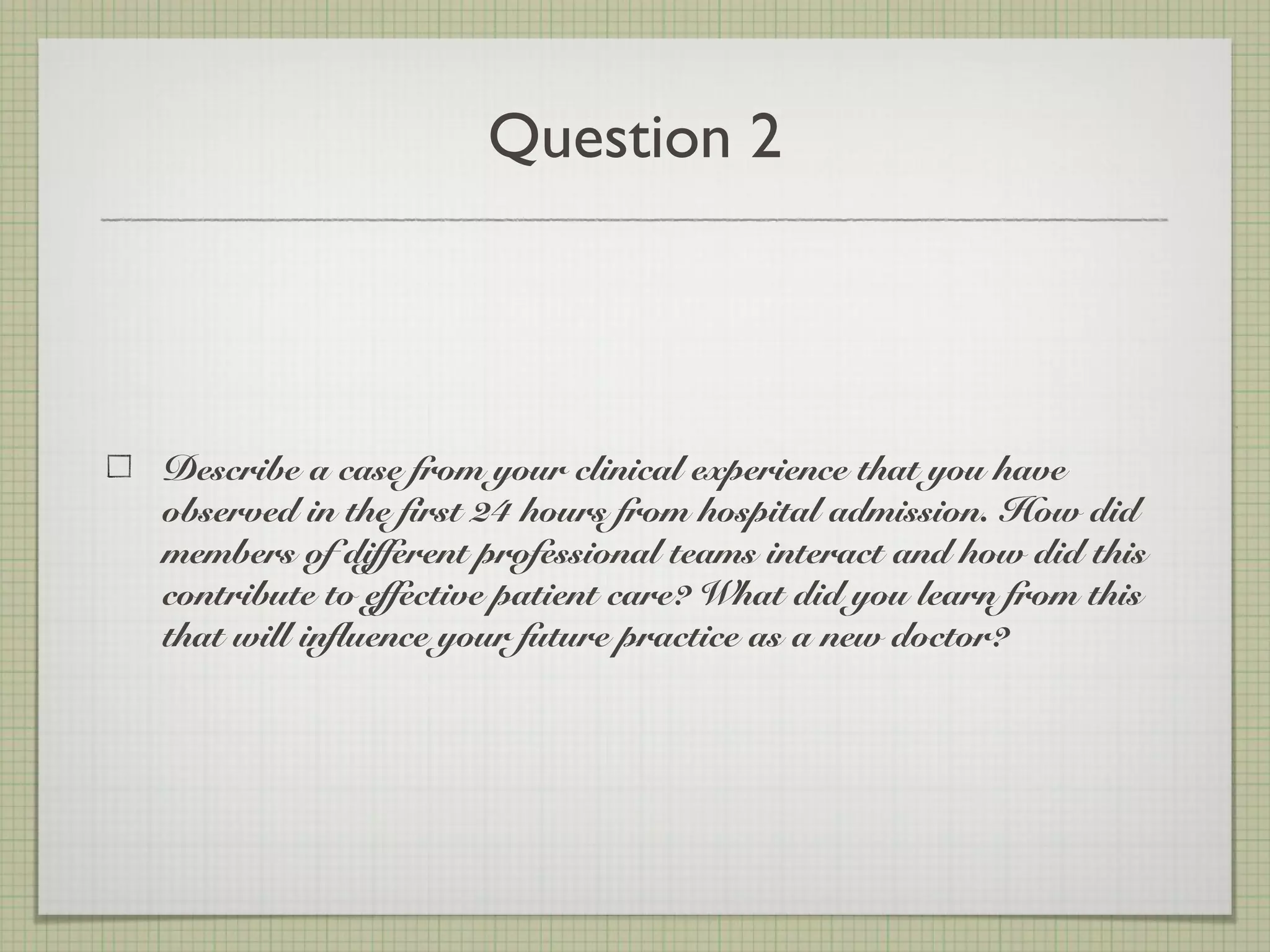
Question 2
Describe a case from your clinical experience that you have
observed in the first 24 hours from hospital admission. How did
members of different professional teams interact and how did this
contribute to effective patient care? What did you learn from this
that will influence your future practice as a new doctor?
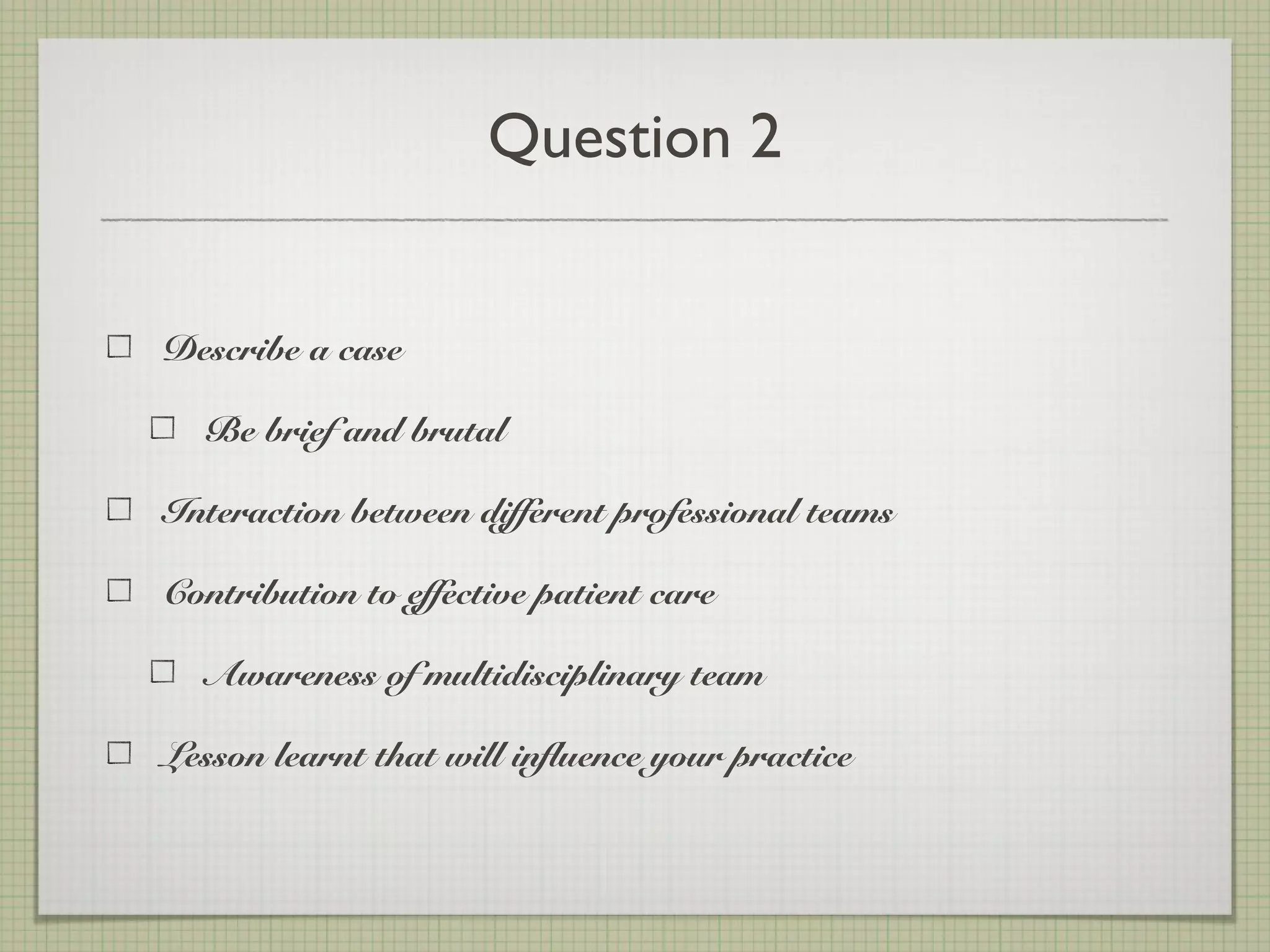
Question 2
Describe a case
Be brief and brutal
Interaction between different professional teams
Contribution to effective patient care
Awareness of multidisciplinary team
Lesson learnt that will influence your practice
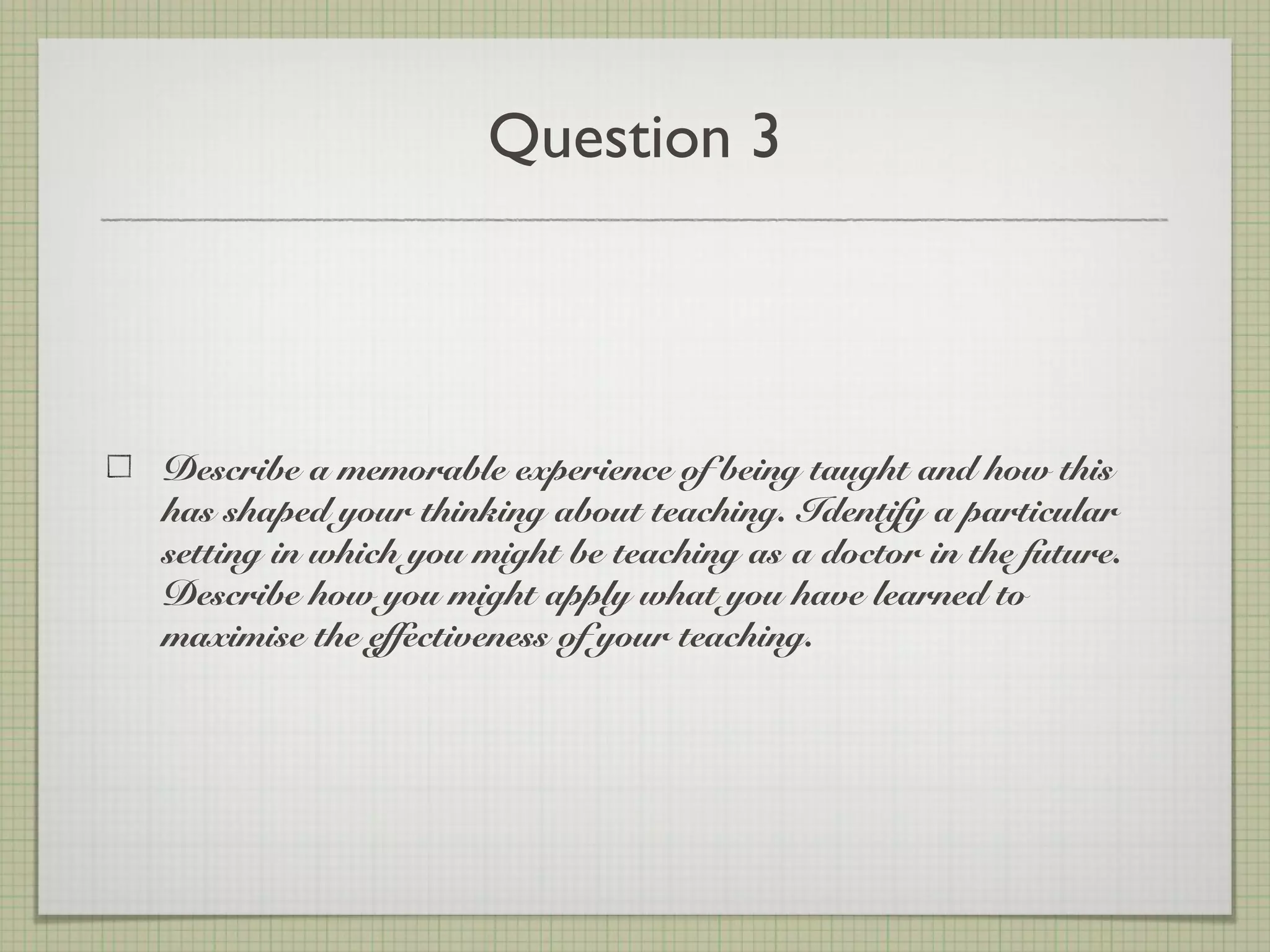
Question 3
Describe a memorable experience of being taught and how this
has shaped your thinking about teaching. Identify a particular
setting in which you might be teaching as a doctor in the future.
Describe how you might apply what you have learned to
maximise the effectiveness of your teaching.
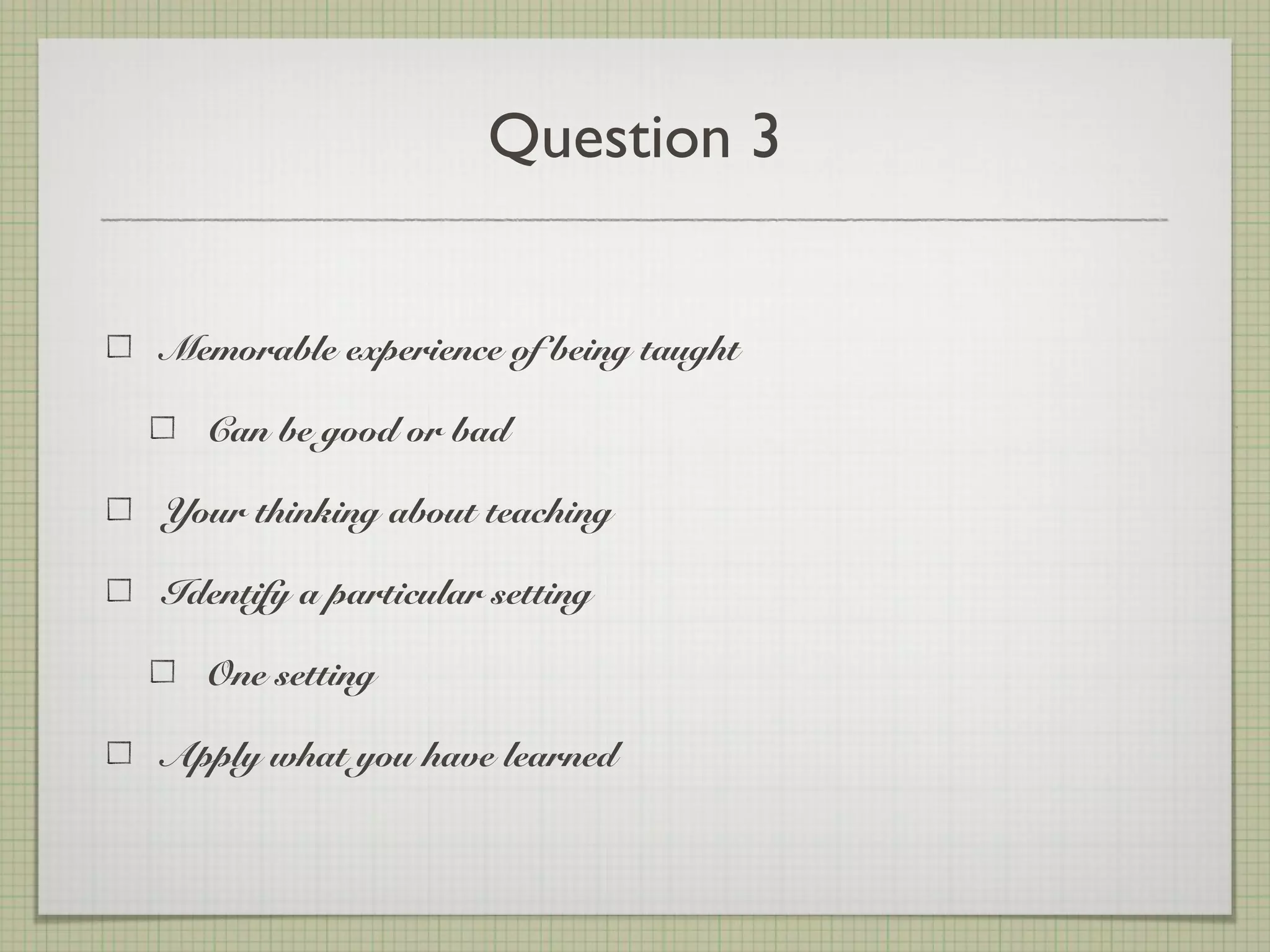
Question 3
Memorable experience of being taught
Can be good or bad
Your thinking about teaching
Identify a particular setting
One setting
Apply what you have learned
Question 4
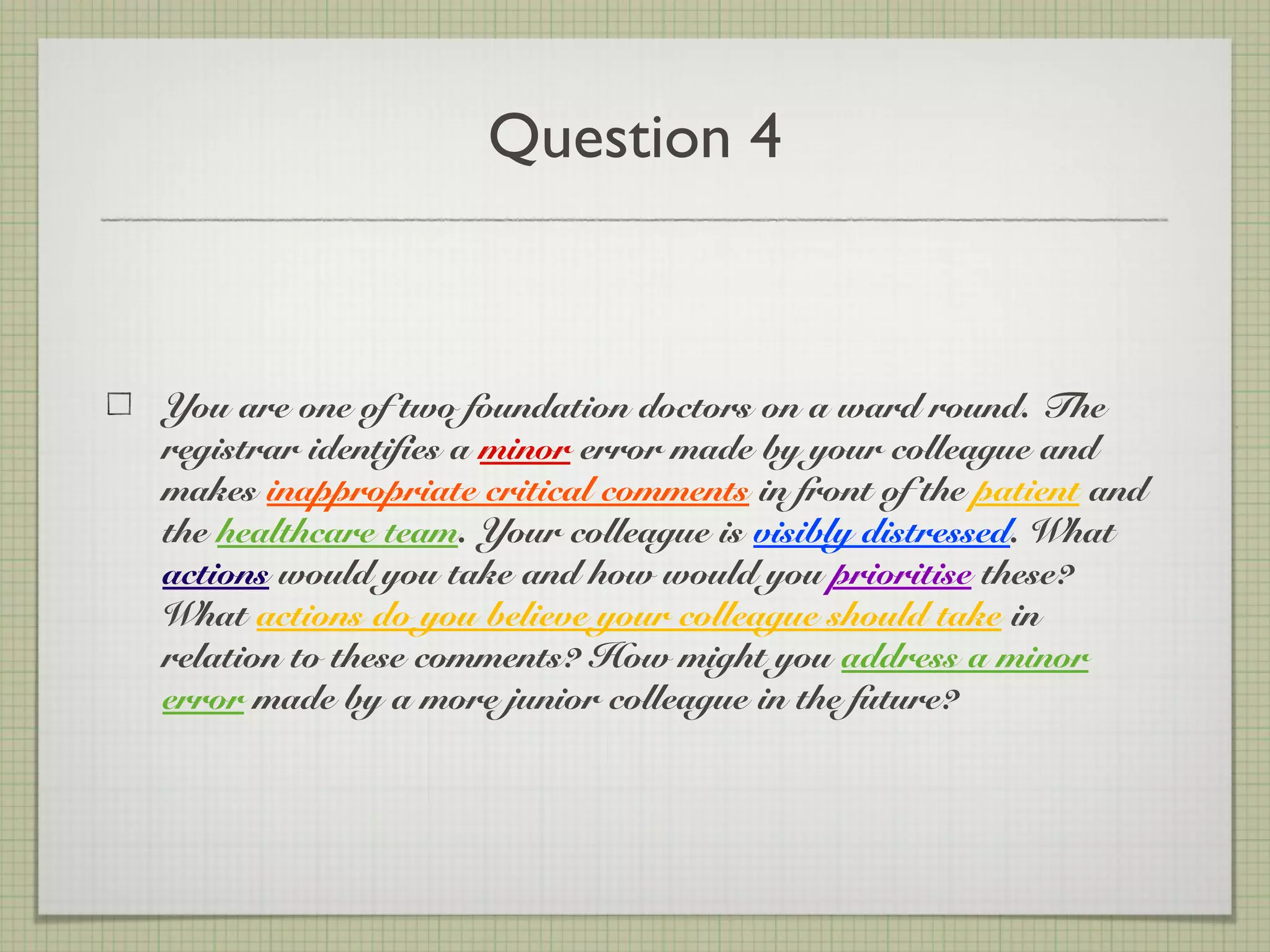
You are one of two foundation doctors on a ward round. The
registrar identifies a minor error made by your colleague and
makes inappropriate critical comments in front of the patient and
the healthcare team. Your colleague is visibly distressed. What
actions would you take and how would you prioritise these?
What actions do you believe your colleague should take in
relation to these comments? How might you address a minor
error made by a more junior colleague in the future?
Question 4
You are one of two foundation doctors on a ward round. The
registrar identifies a minor error made by your colleague and
makes inappropriate critical comments in front of the patient and
the healthcare team. Your colleague is visibly distressed. What
actions would you take and how would you prioritise these?
What actions do you believe your colleague should take in
relation to these comments? How might you address a minor
error made by a more junior colleague in the future?
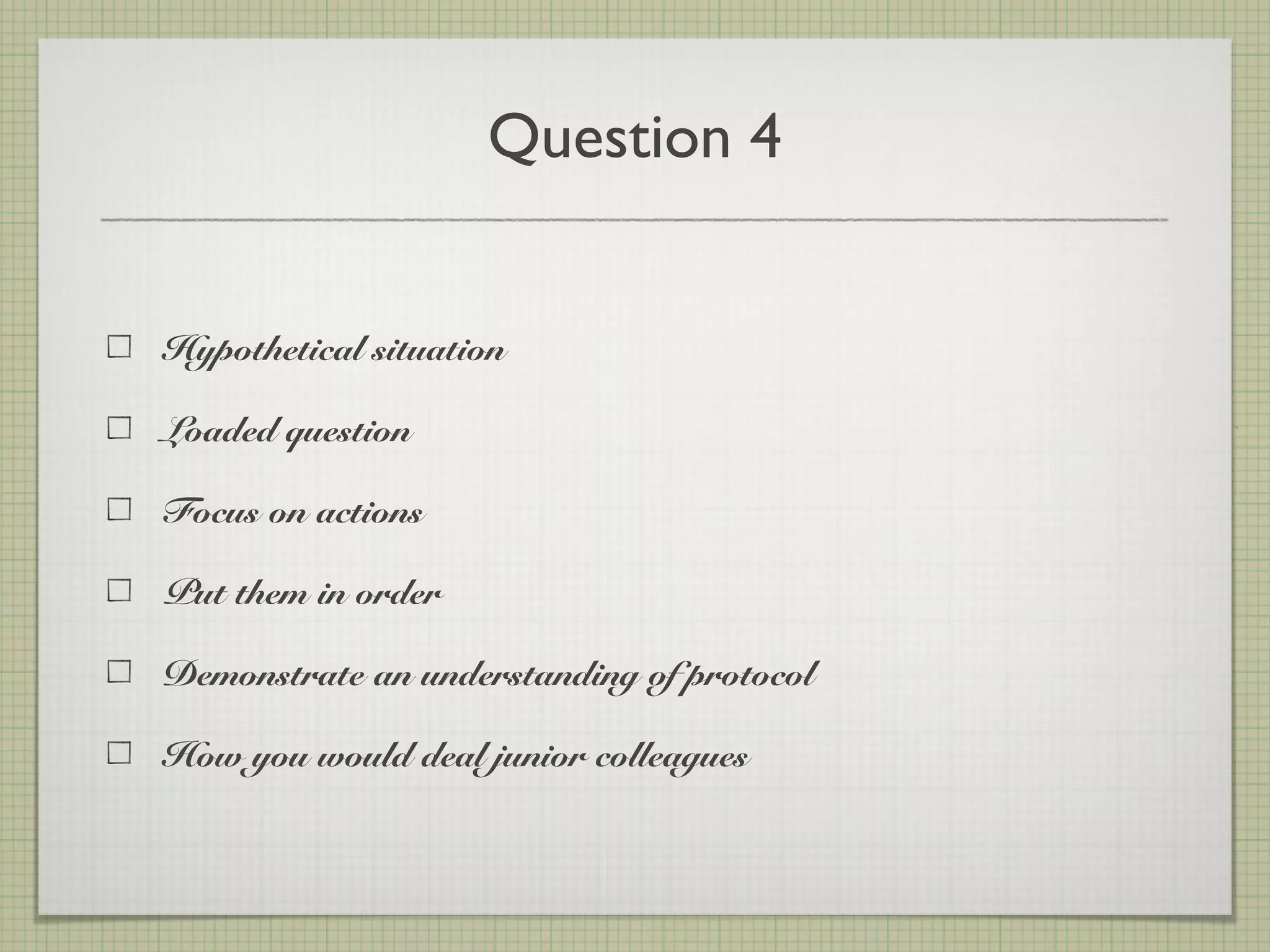
Question 4
Hypothetical situation
Loaded question
Focus on actions
Put them in order
Demonstrate an understanding of protocol
How you would deal junior colleagues
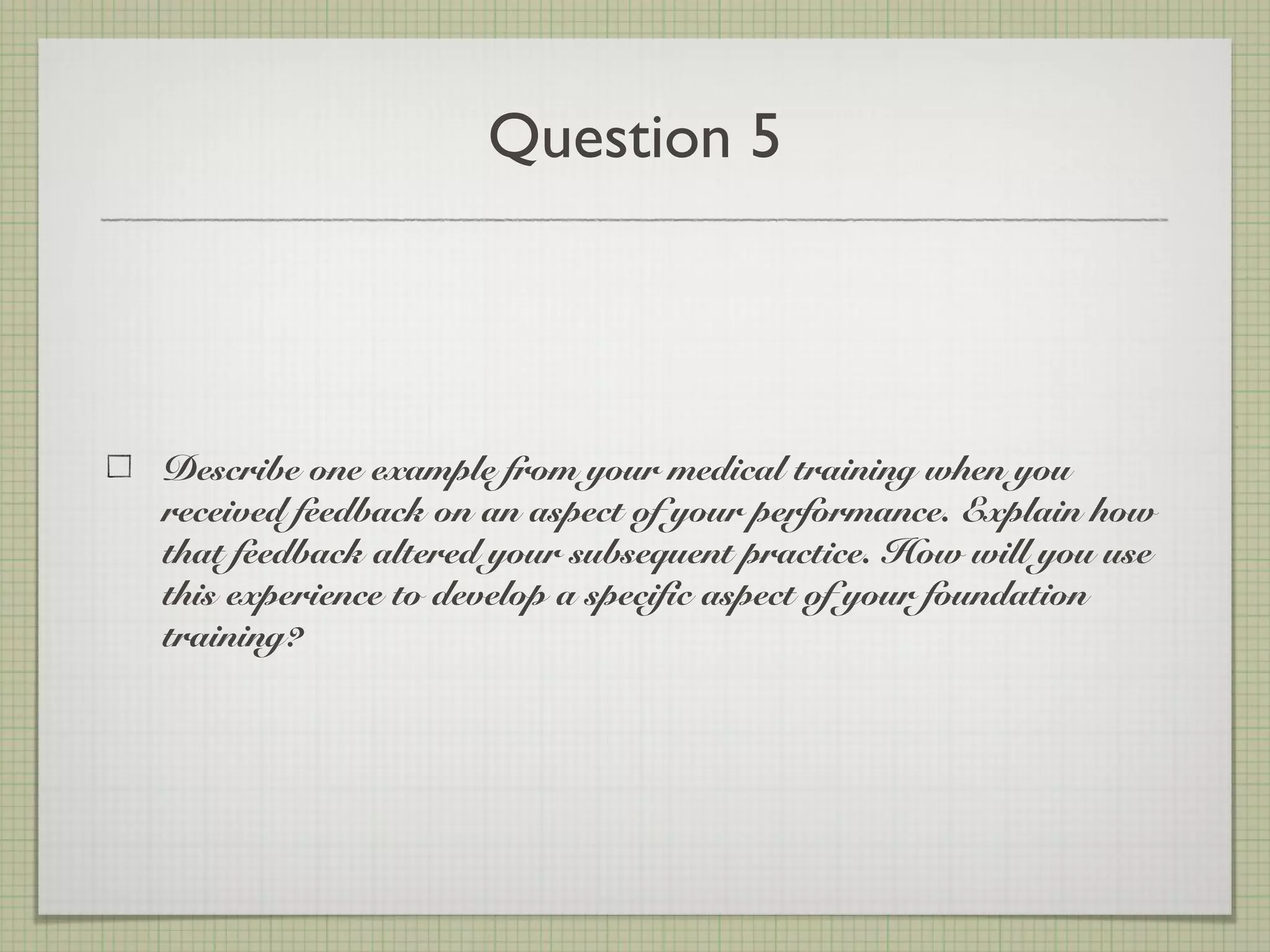
Question 5
Describe one example from your medical training when you
received feedback on an aspect of your performance. Explain how
that feedback altered your subsequent practice. How will you use
this experience to develop a specific aspect of your foundation
training?
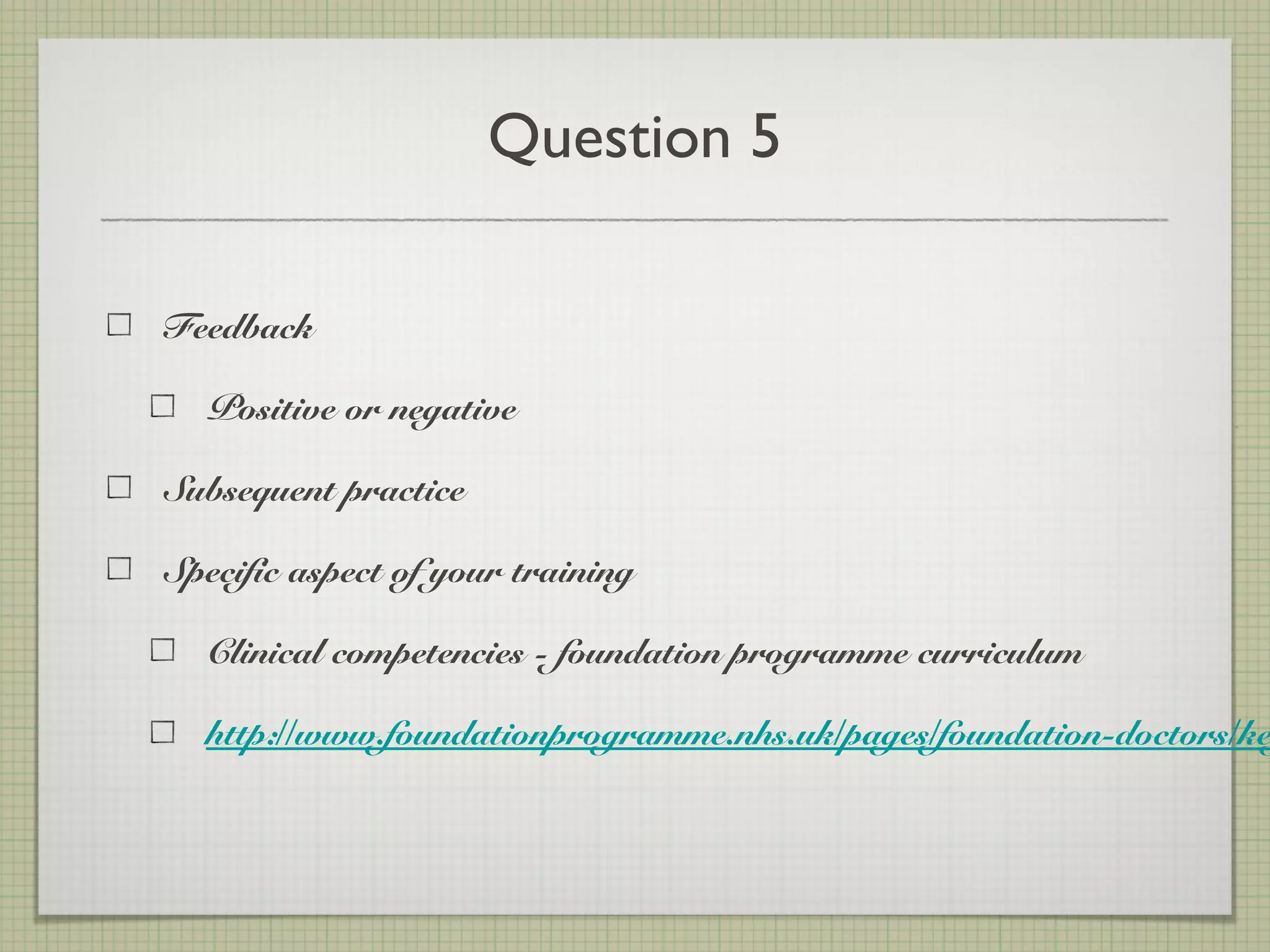
Question 5
Feedback
Positive or negative
Subsequent practice
Specific aspect of your training
Clinical competencies - foundation programme curriculum
http://www.foundationprogramme.nhs.uk/pages/foundation-doctors/ke
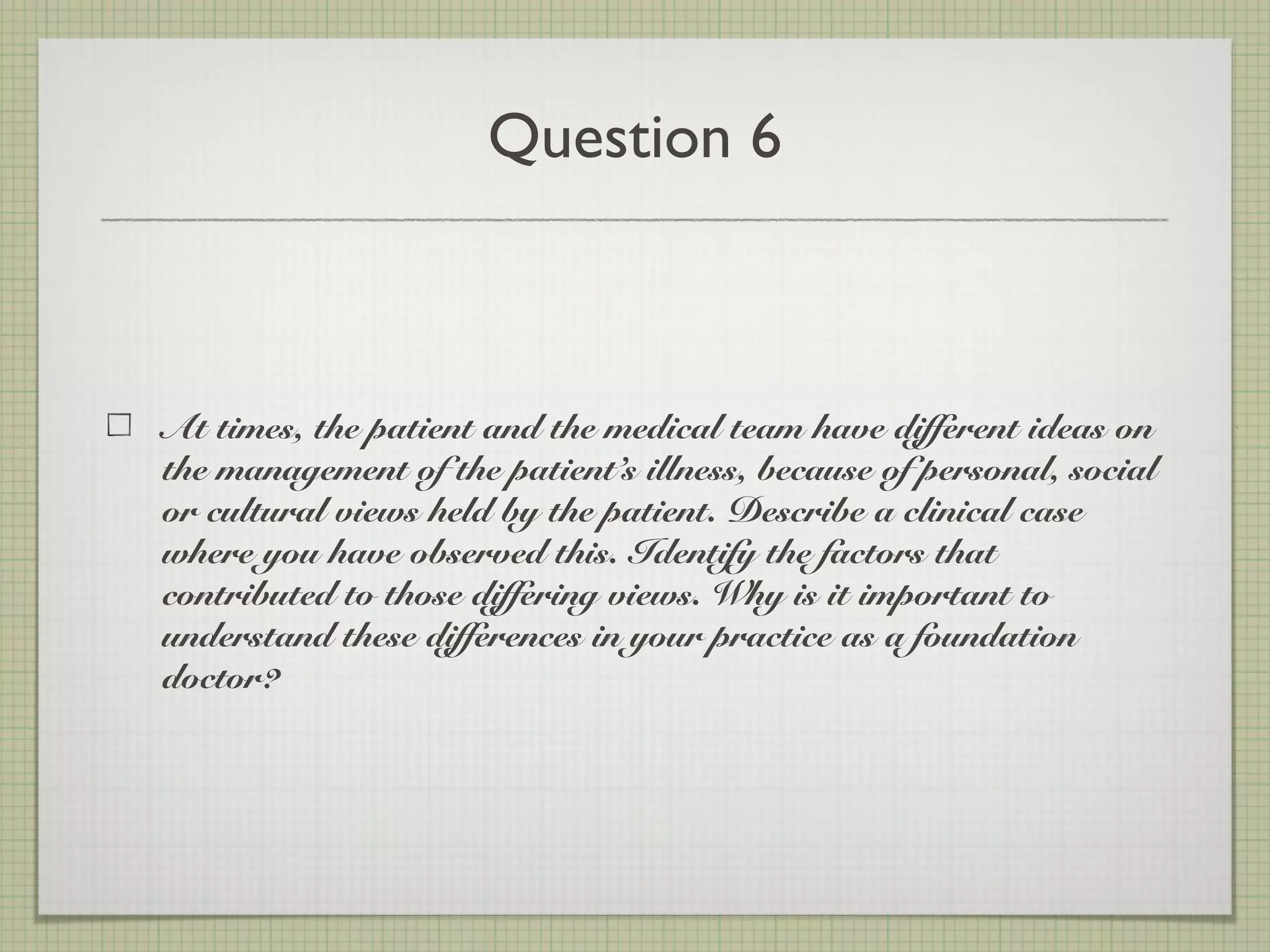
Question 6
At times, the patient and the medical team have different ideas on
the management of the patient’s illness, because of personal, social
or cultural views held by the patient. Describe a clinical case
where you have observed this. Identify the factors that
contributed to those differing views. Why is it important to
understand these differences in your practice as a foundation
doctor?
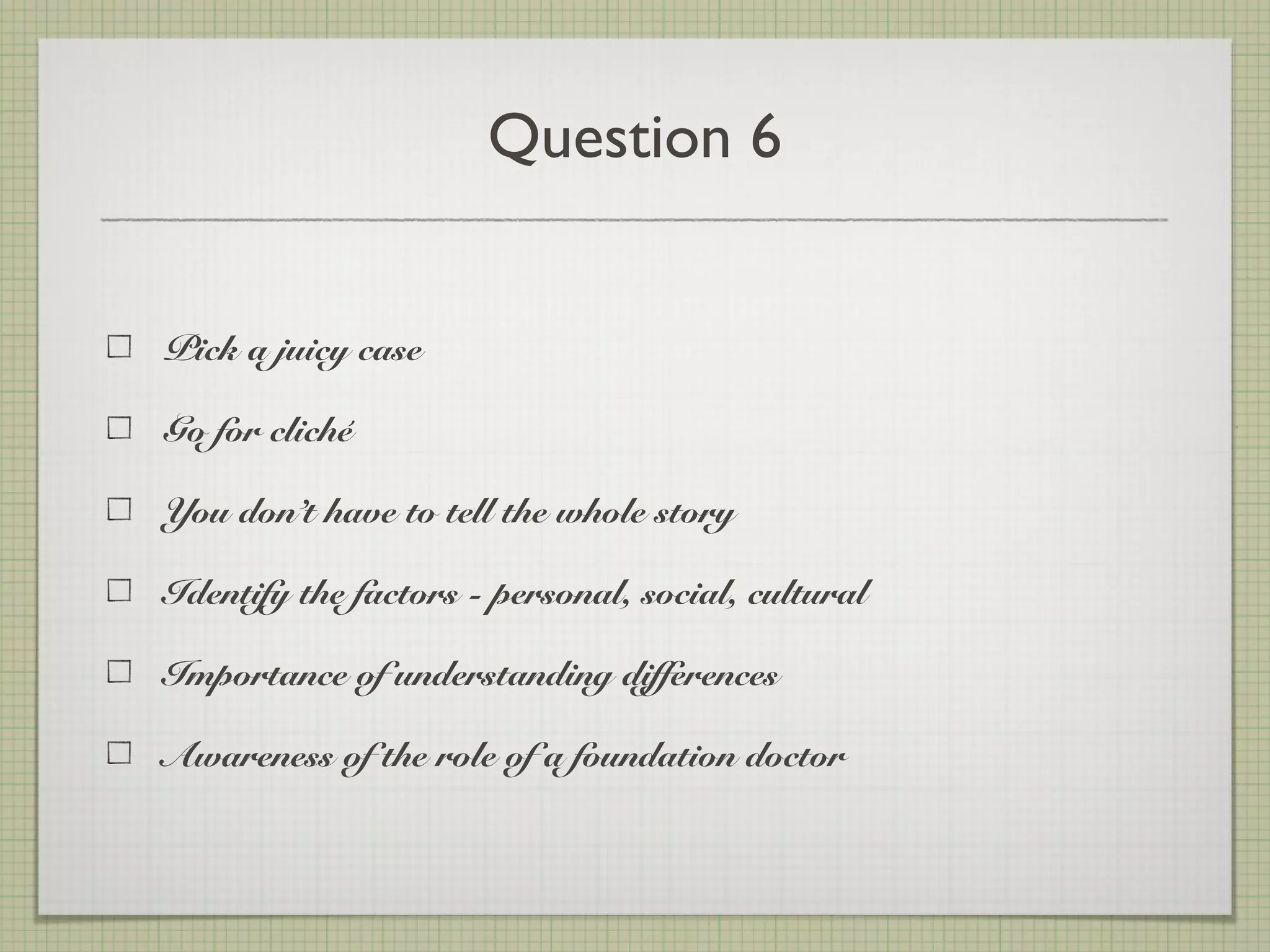
Question 6
Pick a juicy case
Go for cliché
You don’t have to tell the whole story
Identify the factors - personal, social, cultural
Importance of understanding differences
Awareness of the role of a foundation doctor
Any questions?
Thoughts?
Controversies?
Mythbusters?
It is all about confidence in your own ability.
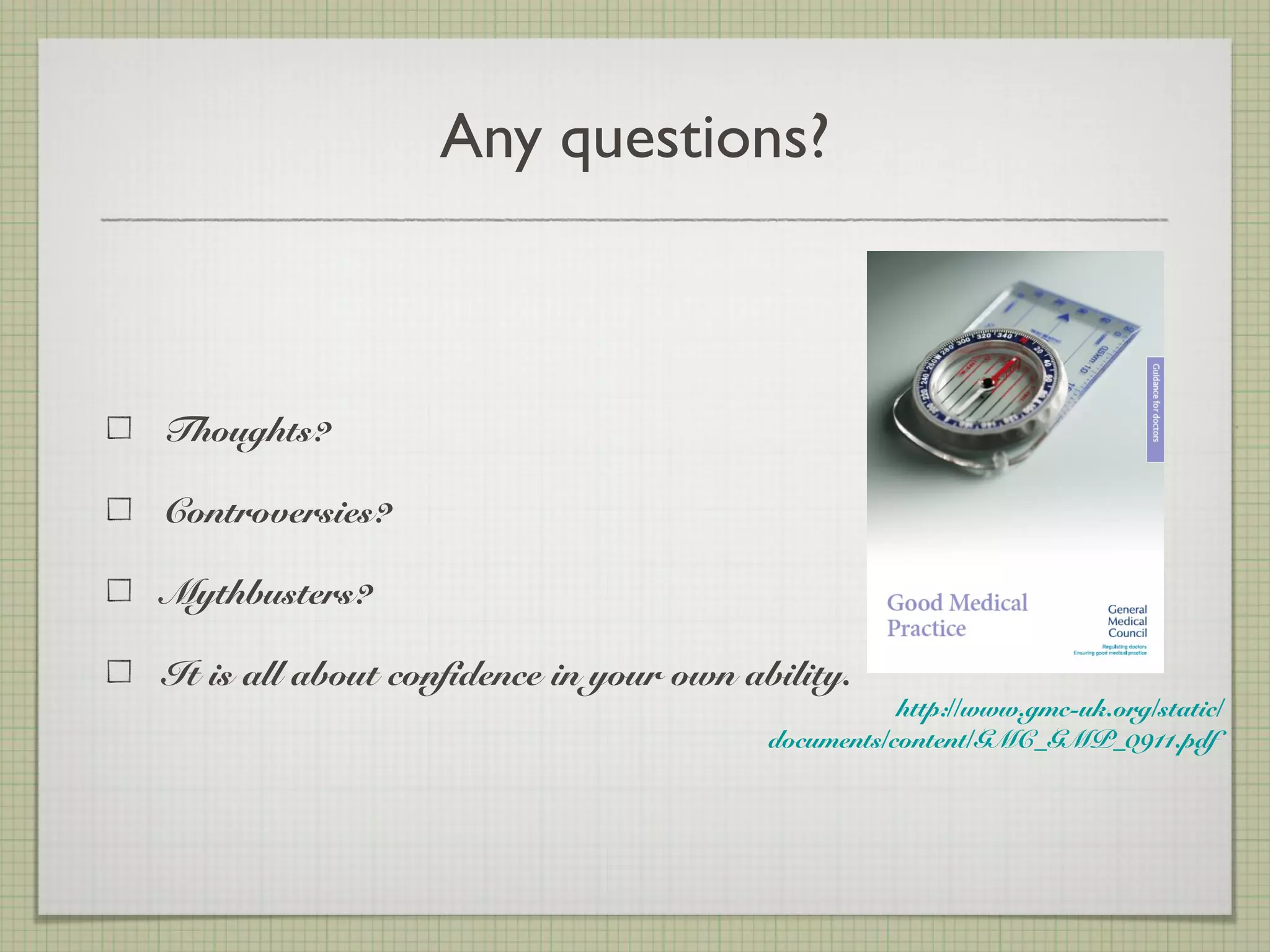
http://www.gmc-uk.org/static/
documents/content/GMC_GMP_0911.pdf

MTAS application

  • 1.
    Medical Training Application Service TheHow To guide to getting your place in the world
  • 2.
    It is allpart of the process Don’t get too hung up about it Element of randomness Go with what you want Do get others to read over your application Don’t feel you have to attend every talk or take up every offer of help Reflective practice & PDS!!!
  • 3.
    Getting Started Registration opens UseUCL email address Questions available for one week before application opens Disclaimer - Things may have changed. Take everything I say with a pinch of salt. This is not the gospel.
  • 4.
    Application Form Breakdown Personaldetails Clinical skills References One clinical One academic - someone who holds a UCL position Questions - scored By lay and clinical markers
  • 5.
    Scoring Academic - 40 Questions- 60 Six questions each of 10 points 200 words limit - questions 2-6 Questions are horizontally marked The best answers are not original A random sample will need to provide evidence
  • 6.
    Question 1 List youreducational achievements Part A - additional degrees (max 5 points) Part B - other educational achievements (max 5 points) Peer reviewed publications National presentations Nationally recognised prizes
  • 7.
    Question 2 Describe acase from your clinical experience that you have observed in the first 24 hours from hospital admission. How did members of different professional teams interact and how did this contribute to effective patient care? What did you learn from this that will influence your future practice as a new doctor?
  • 8.
    Question 2 Describe acase Be brief and brutal Interaction between different professional teams Contribution to effective patient care Awareness of multidisciplinary team Lesson learnt that will influence your practice
  • 9.
    Question 3 Describe amemorable experience of being taught and how this has shaped your thinking about teaching. Identify a particular setting in which you might be teaching as a doctor in the future. Describe how you might apply what you have learned to maximise the effectiveness of your teaching.
  • 10.
    Question 3 Memorable experienceof being taught Can be good or bad Your thinking about teaching Identify a particular setting One setting Apply what you have learned
  • 11.
    Question 4 You areone of two foundation doctors on a ward round. The registrar identifies a minor error made by your colleague and makes inappropriate critical comments in front of the patient and the healthcare team. Your colleague is visibly distressed. What actions would you take and how would you prioritise these? What actions do you believe your colleague should take in relation to these comments? How might you address a minor error made by a more junior colleague in the future?
  • 12.
    Question 4 You areone of two foundation doctors on a ward round. The registrar identifies a minor error made by your colleague and makes inappropriate critical comments in front of the patient and the healthcare team. Your colleague is visibly distressed. What actions would you take and how would you prioritise these? What actions do you believe your colleague should take in relation to these comments? How might you address a minor error made by a more junior colleague in the future?
  • 13.
    Question 4 Hypothetical situation Loadedquestion Focus on actions Put them in order Demonstrate an understanding of protocol How you would deal junior colleagues
  • 14.
    Question 5 Describe oneexample from your medical training when you received feedback on an aspect of your performance. Explain how that feedback altered your subsequent practice. How will you use this experience to develop a specific aspect of your foundation training?
  • 15.
    Question 5 Feedback Positive ornegative Subsequent practice Specific aspect of your training Clinical competencies - foundation programme curriculum http://www.foundationprogramme.nhs.uk/pages/foundation-doctors/ke
  • 16.
    Question 6 At times,the patient and the medical team have different ideas on the management of the patient’s illness, because of personal, social or cultural views held by the patient. Describe a clinical case where you have observed this. Identify the factors that contributed to those differing views. Why is it important to understand these differences in your practice as a foundation doctor?
  • 17.
    Question 6 Pick ajuicy case Go for cliché You don’t have to tell the whole story Identify the factors - personal, social, cultural Importance of understanding differences Awareness of the role of a foundation doctor
  • 18.
    Any questions? Thoughts? Controversies? Mythbusters? It isall about confidence in your own ability. http://www.gmc-uk.org/static/ documents/content/GMC_GMP_0911.pdf