CLB and CEFR
Informed Creation of
Learning Outcomes
Michael Burri, British Columbia Institute of Technology

TESL Canada Conference

Kamloops BC

Thursday, October 11, 2012
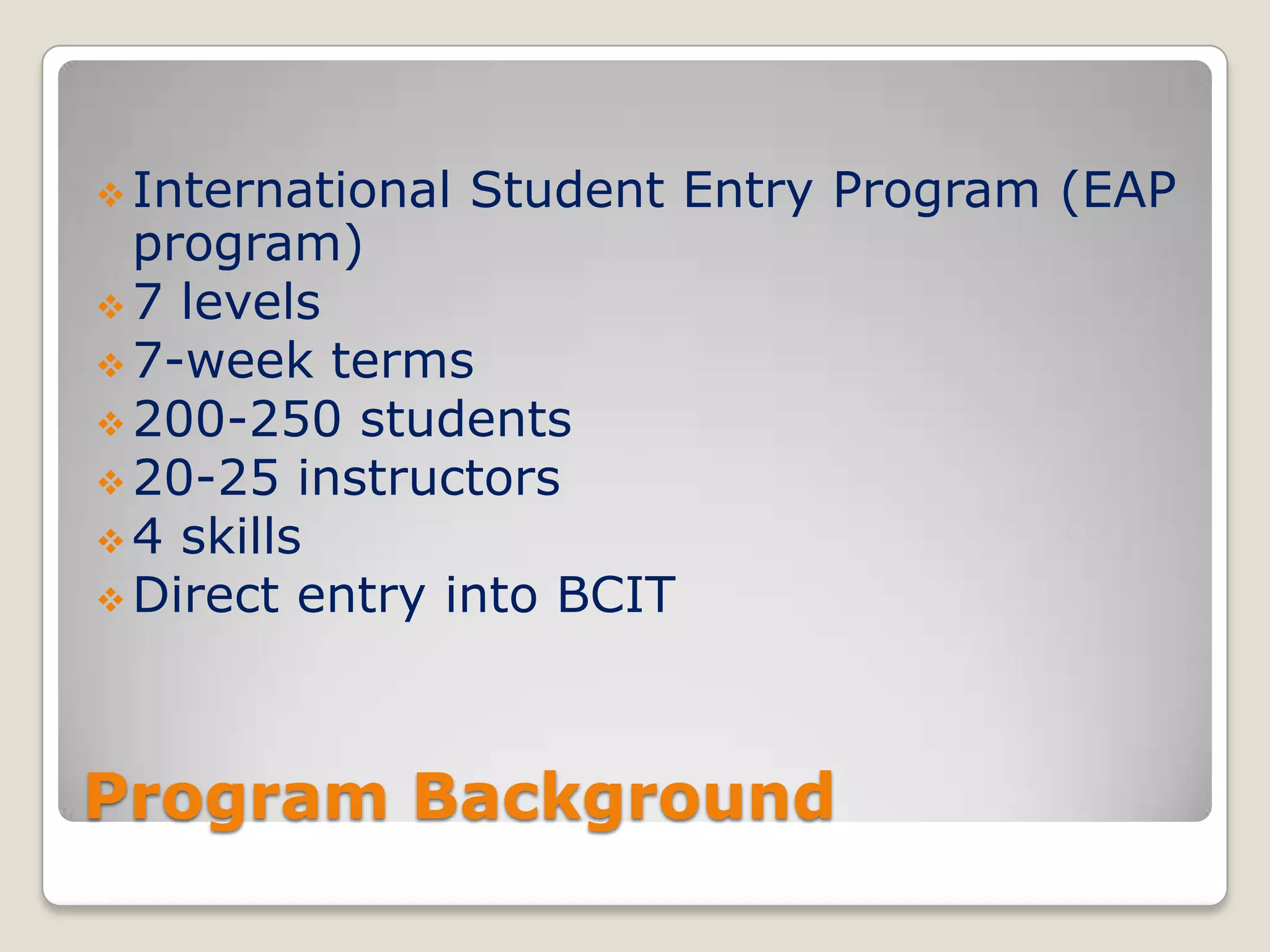
 International

Student Entry Program (EAP

program)
 7 levels
 7-week terms
 200-250 students
 20-25 instructors
 4 skills
 Direct entry into BCIT

Program Background
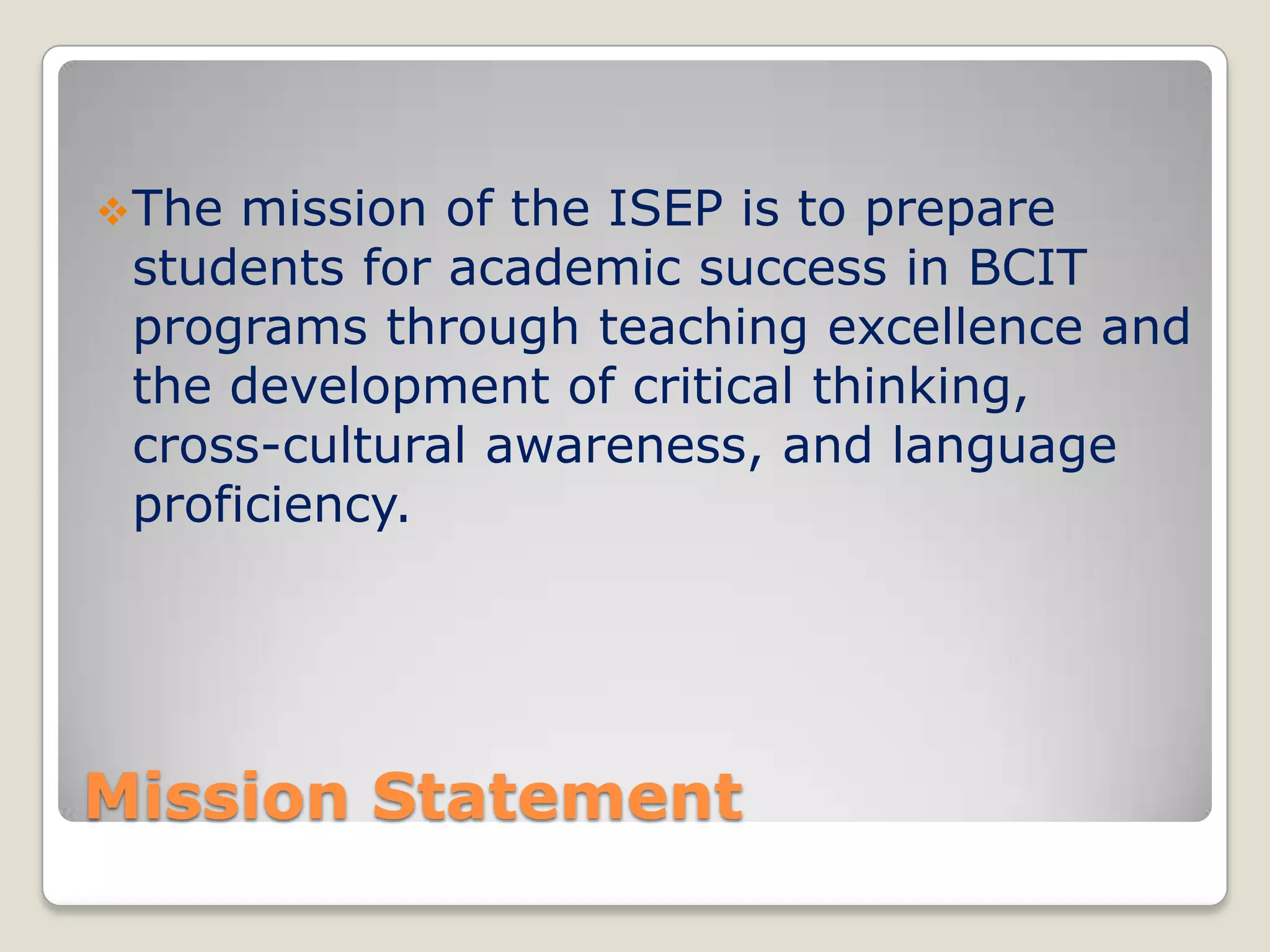
 The

mission of the ISEP is to prepare
students for academic success in BCIT
programs through teaching excellence and
the development of critical thinking,
cross-cultural awareness, and language
proficiency.

Mission Statement
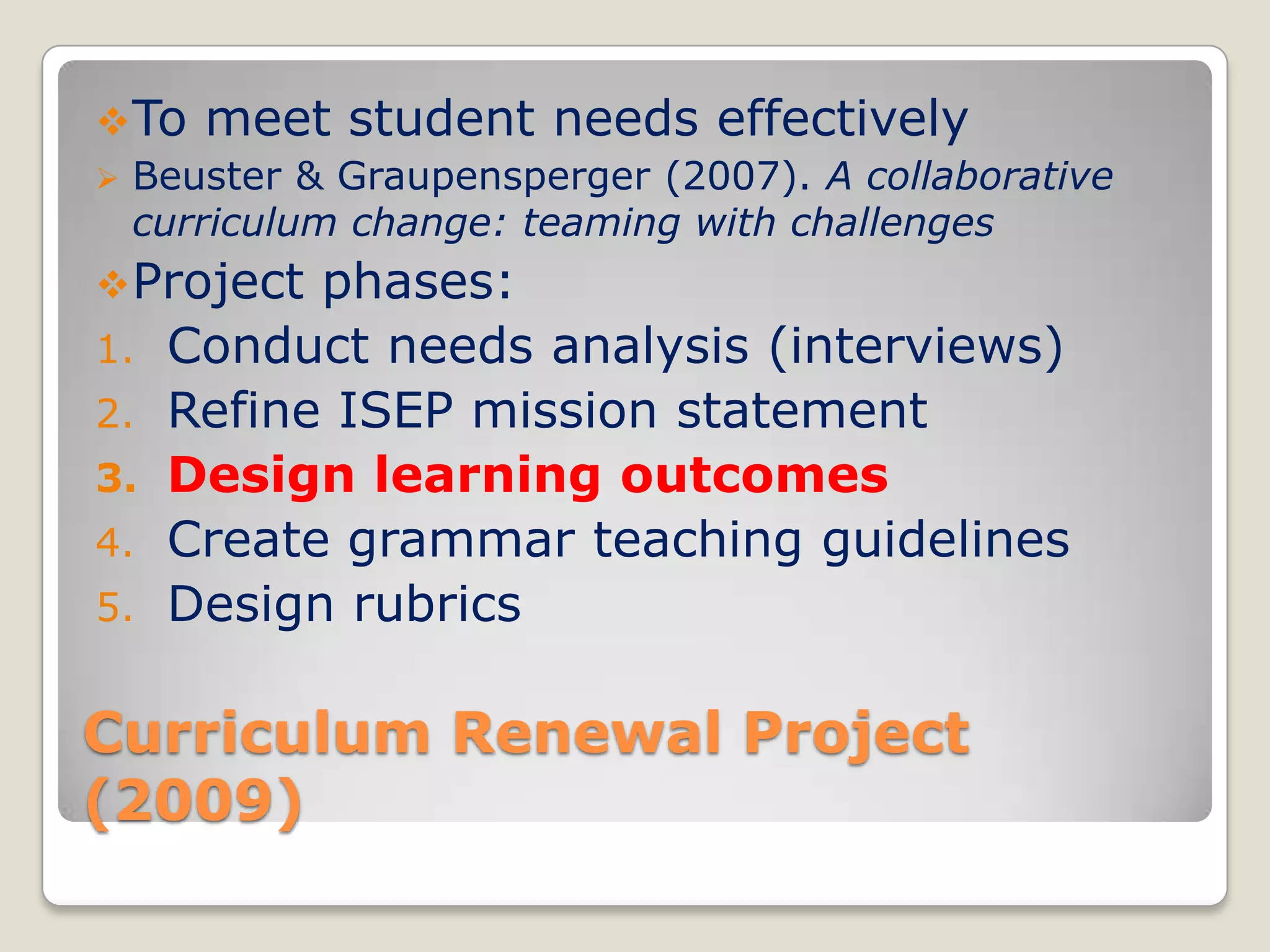
 To meet student needs effectively
 Beuster & Graupensperger (2007). A collaborative
curriculum change: teaming with challenges
 Project

1.
2.
3.
4.
5.

phases:
Conduct needs analysis (interviews)
Refine ISEP mission statement
Design learning outcomes
Create grammar teaching guidelines
Design rubrics

Curriculum Renewal Project
(2009)
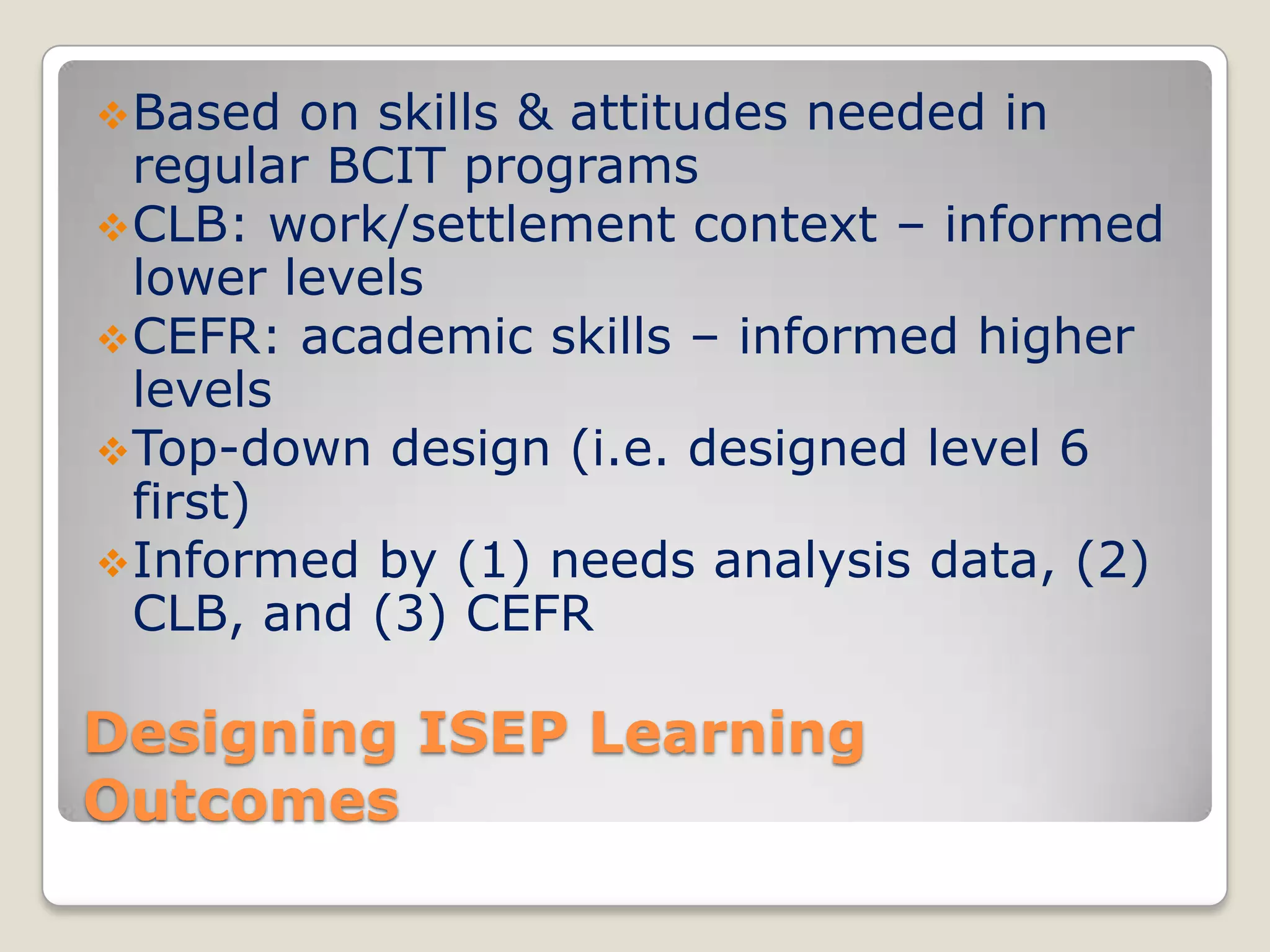
 Based

on skills & attitudes needed in
regular BCIT programs
 CLB: work/settlement context – informed
lower levels
 CEFR: academic skills – informed higher
levels
 Top-down design (i.e. designed level 6
first)
 Informed by (1) needs analysis data, (2)
CLB, and (3) CEFR

Designing ISEP Learning
Outcomes
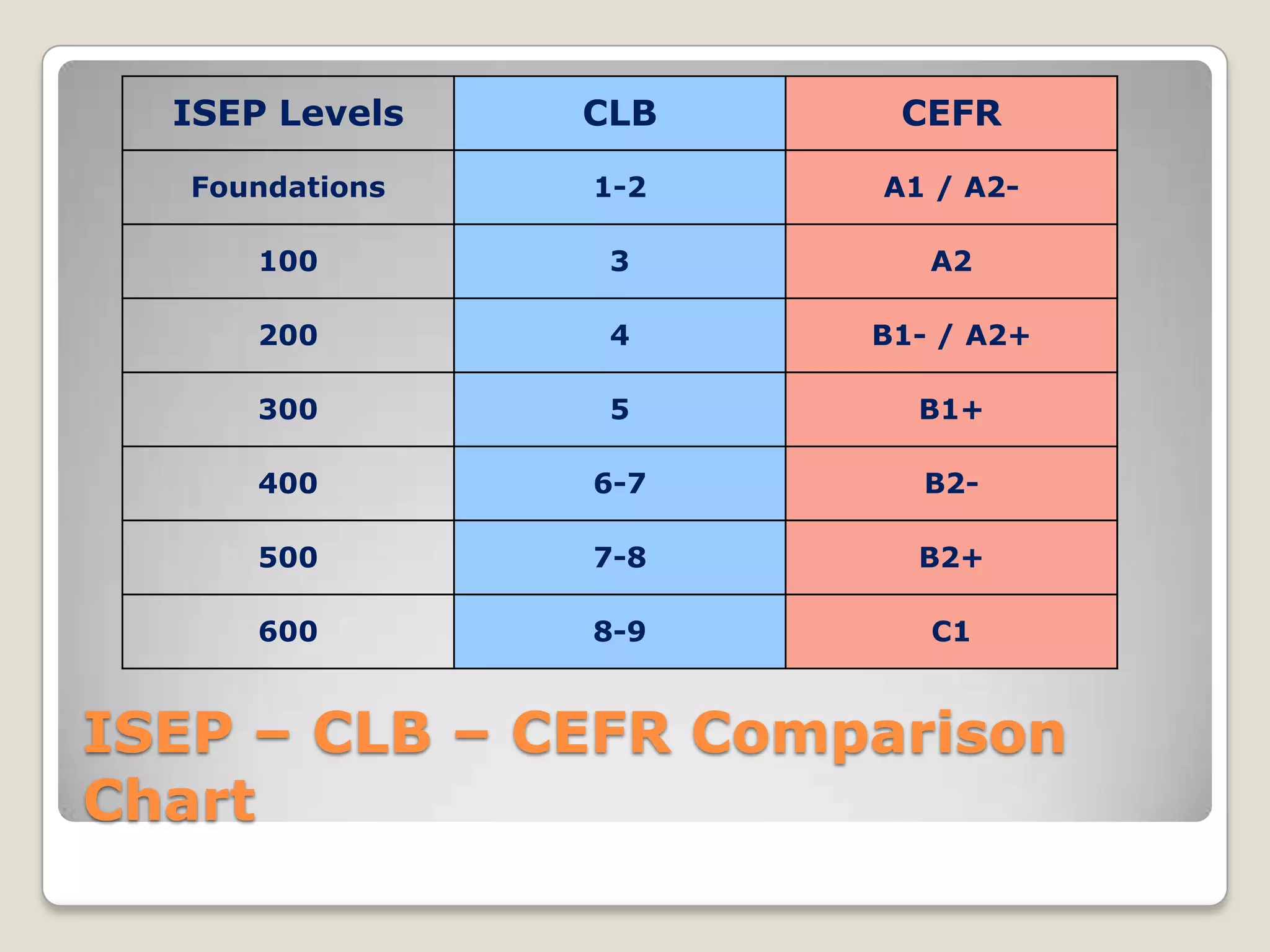
ISEP Levels

CLB

CEFR

Foundations

1-2

A1 / A2-

100

3

A2

200

4

B1- / A2+

300

5

B1+

400

6-7

B2-

500

7-8

B2+

600

8-9

C1

ISEP – CLB – CEFR Comparison
Chart
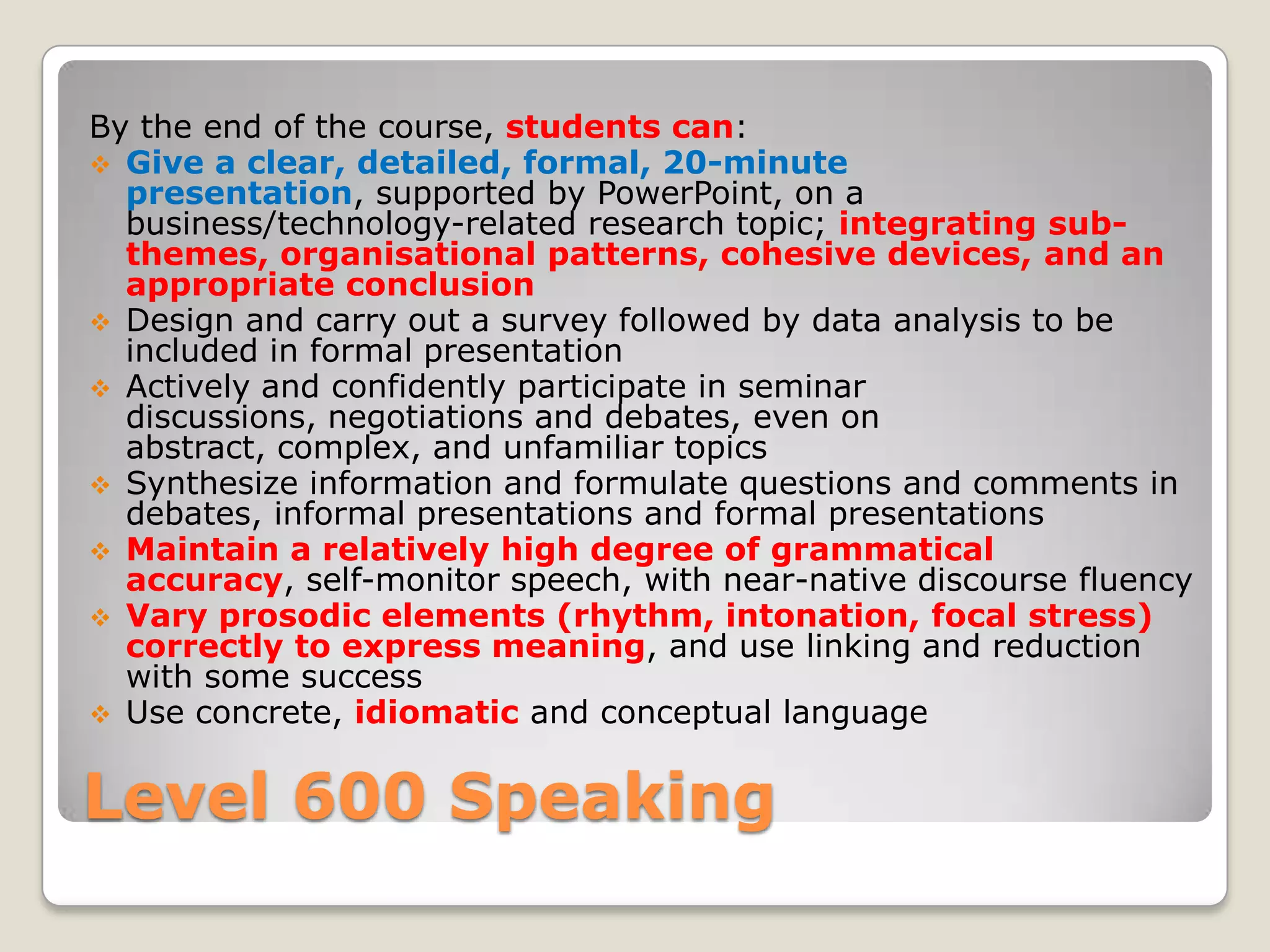
By the end of the course, students can:
 Give a clear, detailed, formal, 20-minute
presentation, supported by PowerPoint, on a
business/technology-related research topic; integrating subthemes, organisational patterns, cohesive devices, and an
appropriate conclusion
 Design and carry out a survey followed by data analysis to be
included in formal presentation
 Actively and confidently participate in seminar
discussions, negotiations and debates, even on
abstract, complex, and unfamiliar topics
 Synthesize information and formulate questions and comments in
debates, informal presentations and formal presentations
 Maintain a relatively high degree of grammatical
accuracy, self-monitor speech, with near-native discourse fluency
 Vary prosodic elements (rhythm, intonation, focal stress)
correctly to express meaning, and use linking and reduction
with some success
 Use concrete, idiomatic and conceptual language

Level 600 Speaking
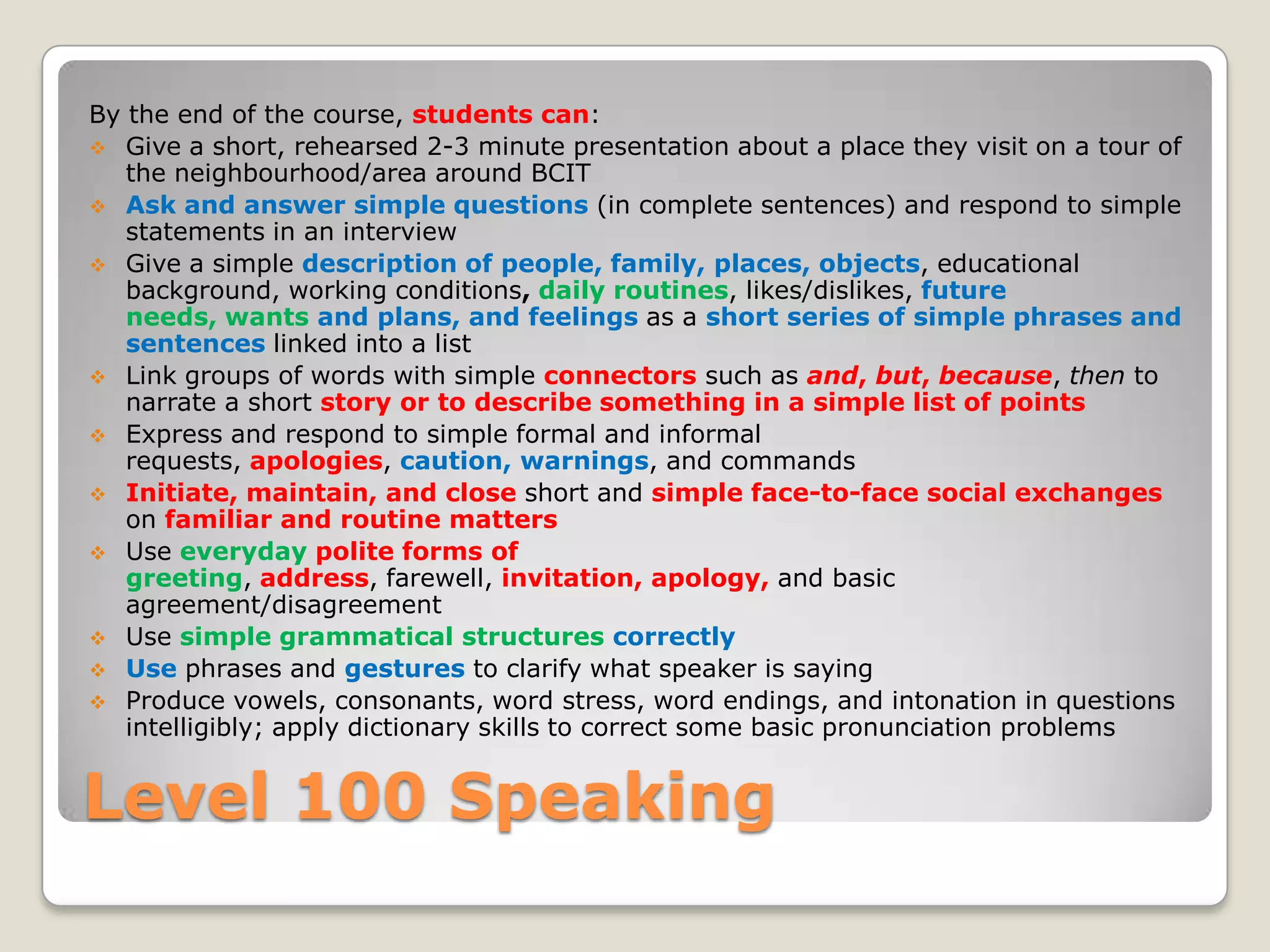
By the end of the course, students can:
 Give a short, rehearsed 2-3 minute presentation about a place they visit on a tour of
the neighbourhood/area around BCIT
 Ask and answer simple questions (in complete sentences) and respond to simple
statements in an interview
 Give a simple description of people, family, places, objects, educational
background, working conditions, daily routines, likes/dislikes, future
needs, wants and plans, and feelings as a short series of simple phrases and
sentences linked into a list
 Link groups of words with simple connectors such as and, but, because, then to
narrate a short story or to describe something in a simple list of points
 Express and respond to simple formal and informal
requests, apologies, caution, warnings, and commands
 Initiate, maintain, and close short and simple face-to-face social exchanges
on familiar and routine matters
 Use everyday polite forms of
greeting, address, farewell, invitation, apology, and basic
agreement/disagreement
 Use simple grammatical structures correctly
 Use phrases and gestures to clarify what speaker is saying
 Produce vowels, consonants, word stress, word endings, and intonation in questions
intelligibly; apply dictionary skills to correct some basic pronunciation problems

Level 100 Speaking
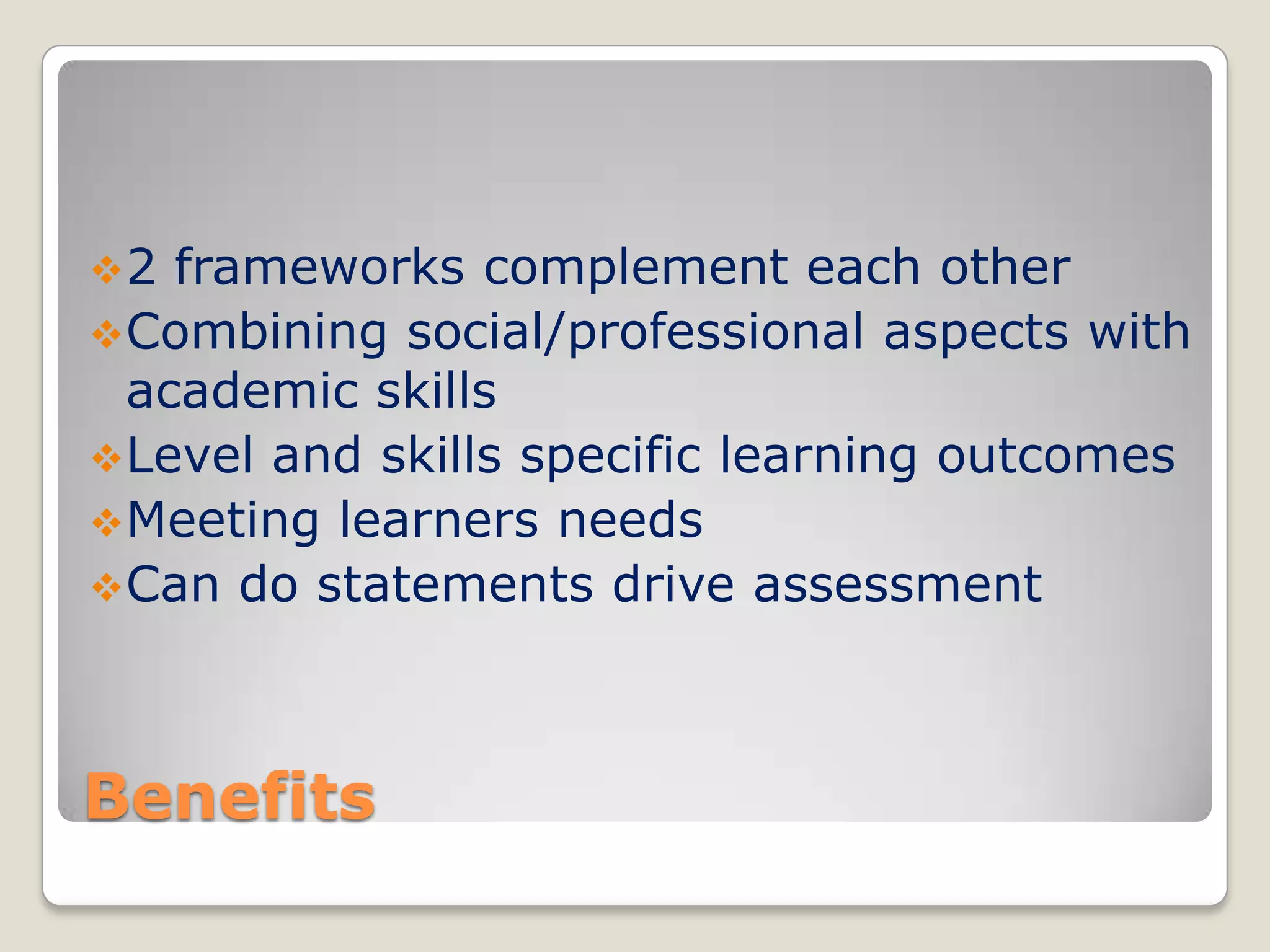
2

frameworks complement each other
 Combining social/professional aspects with
academic skills
 Level and skills specific learning outcomes
 Meeting learners needs
 Can do statements drive assessment

Benefits
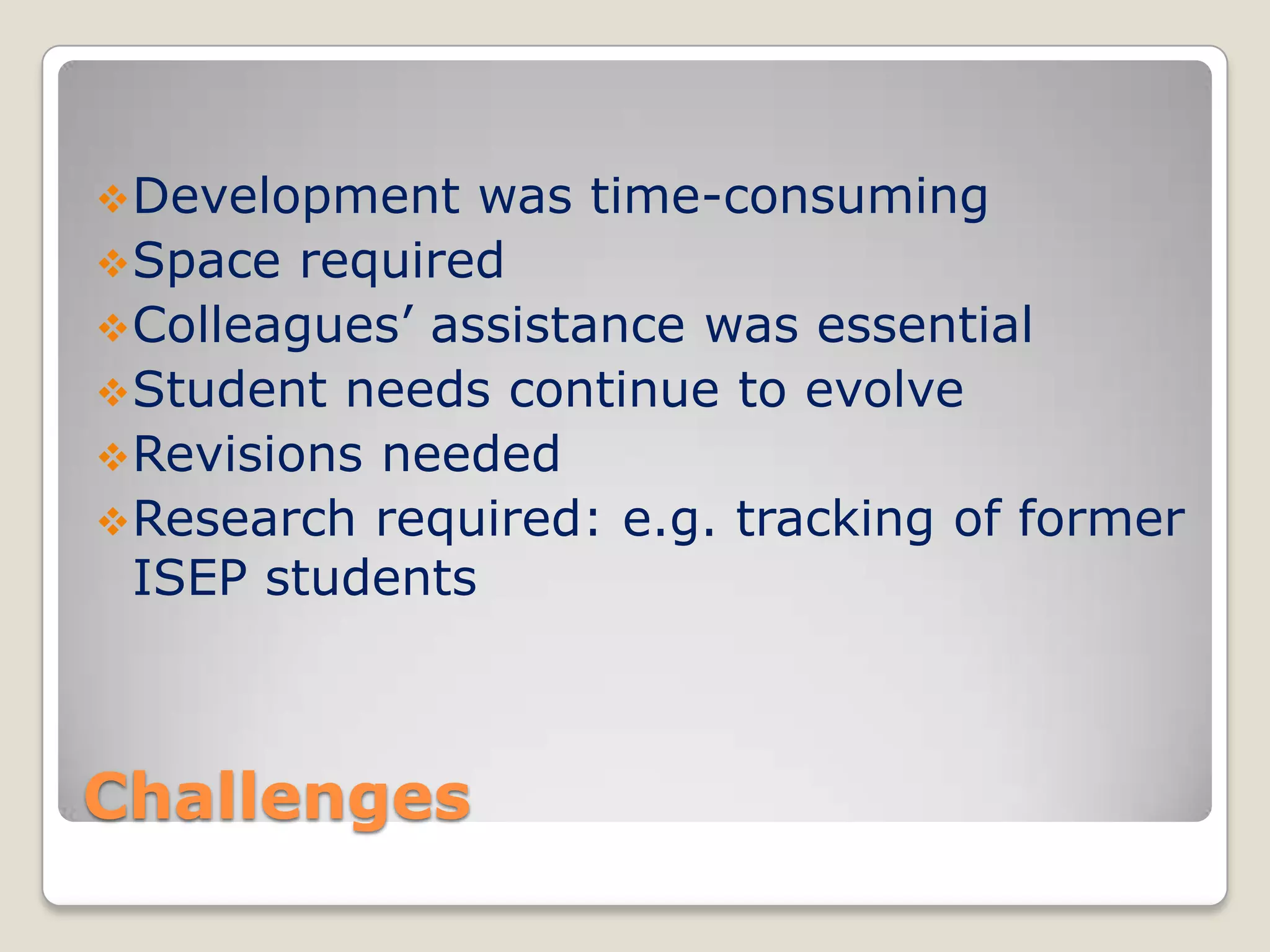
 Development

was time-consuming
 Space required
 Colleagues’ assistance was essential
 Student needs continue to evolve
 Revisions needed
 Research required: e.g. tracking of former
ISEP students

Challenges

CLB & CEFR Informed Creation of Learning Outcomes

  • 1.
    CLB and CEFR InformedCreation of Learning Outcomes Michael Burri, British Columbia Institute of Technology TESL Canada Conference Kamloops BC Thursday, October 11, 2012
  • 2.
     International Student EntryProgram (EAP program)  7 levels  7-week terms  200-250 students  20-25 instructors  4 skills  Direct entry into BCIT Program Background
  • 3.
     The mission ofthe ISEP is to prepare students for academic success in BCIT programs through teaching excellence and the development of critical thinking, cross-cultural awareness, and language proficiency. Mission Statement
  • 4.
     To meetstudent needs effectively  Beuster & Graupensperger (2007). A collaborative curriculum change: teaming with challenges  Project 1. 2. 3. 4. 5. phases: Conduct needs analysis (interviews) Refine ISEP mission statement Design learning outcomes Create grammar teaching guidelines Design rubrics Curriculum Renewal Project (2009)
  • 5.
     Based on skills& attitudes needed in regular BCIT programs  CLB: work/settlement context – informed lower levels  CEFR: academic skills – informed higher levels  Top-down design (i.e. designed level 6 first)  Informed by (1) needs analysis data, (2) CLB, and (3) CEFR Designing ISEP Learning Outcomes
  • 6.
    ISEP Levels CLB CEFR Foundations 1-2 A1 /A2- 100 3 A2 200 4 B1- / A2+ 300 5 B1+ 400 6-7 B2- 500 7-8 B2+ 600 8-9 C1 ISEP – CLB – CEFR Comparison Chart
  • 7.
    By the endof the course, students can:  Give a clear, detailed, formal, 20-minute presentation, supported by PowerPoint, on a business/technology-related research topic; integrating subthemes, organisational patterns, cohesive devices, and an appropriate conclusion  Design and carry out a survey followed by data analysis to be included in formal presentation  Actively and confidently participate in seminar discussions, negotiations and debates, even on abstract, complex, and unfamiliar topics  Synthesize information and formulate questions and comments in debates, informal presentations and formal presentations  Maintain a relatively high degree of grammatical accuracy, self-monitor speech, with near-native discourse fluency  Vary prosodic elements (rhythm, intonation, focal stress) correctly to express meaning, and use linking and reduction with some success  Use concrete, idiomatic and conceptual language Level 600 Speaking
  • 8.
    By the endof the course, students can:  Give a short, rehearsed 2-3 minute presentation about a place they visit on a tour of the neighbourhood/area around BCIT  Ask and answer simple questions (in complete sentences) and respond to simple statements in an interview  Give a simple description of people, family, places, objects, educational background, working conditions, daily routines, likes/dislikes, future needs, wants and plans, and feelings as a short series of simple phrases and sentences linked into a list  Link groups of words with simple connectors such as and, but, because, then to narrate a short story or to describe something in a simple list of points  Express and respond to simple formal and informal requests, apologies, caution, warnings, and commands  Initiate, maintain, and close short and simple face-to-face social exchanges on familiar and routine matters  Use everyday polite forms of greeting, address, farewell, invitation, apology, and basic agreement/disagreement  Use simple grammatical structures correctly  Use phrases and gestures to clarify what speaker is saying  Produce vowels, consonants, word stress, word endings, and intonation in questions intelligibly; apply dictionary skills to correct some basic pronunciation problems Level 100 Speaking
  • 9.
    2 frameworks complement eachother  Combining social/professional aspects with academic skills  Level and skills specific learning outcomes  Meeting learners needs  Can do statements drive assessment Benefits
  • 10.
     Development was time-consuming Space required  Colleagues’ assistance was essential  Student needs continue to evolve  Revisions needed  Research required: e.g. tracking of former ISEP students Challenges