Creative Economy
เศรษฐกิจสร้างสรรค์
ท่องเที่ยวสร้างสรรค์
เรื่อง... โศรยา หอมชื่น
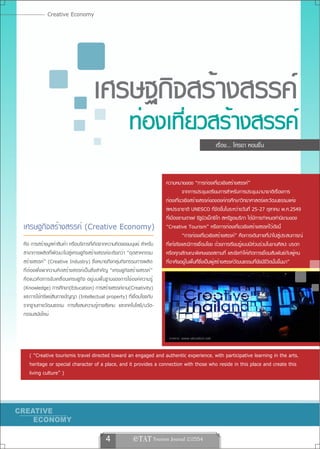
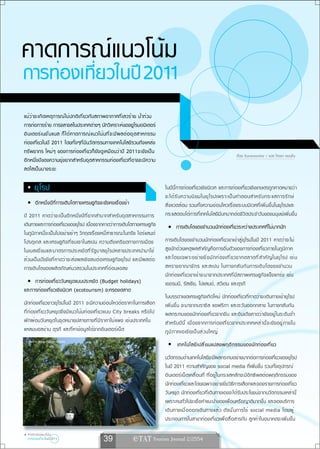
ความหมายของ “การท่องเที่ยวเชิงสร้างสรรค์”
จากการประชุมเตรียมการสำหรับการประชุมนานาชาติเรื่องการ
ท่องเที่ยวเชิงสร้างสรรค์ขององค์กรศึกษาวิทยาศาสตร์และวัฒนธรรมแห่ง
สหประชาชาติ UNESCO ที่จัดขึ้นในระหว่างวันที่ 25-27 ตุลาคม พ.ศ.2549
ที่เมืองซานตาเฟ รัฐนิวเม็กซิโก สหรัฐอเมริกา ได้มีการกำหนดคำนิยามของ
เศรษฐกิจสร้างสรรค์ (Creative Economy) “Creative Tourism” หรือการท่องเที่ยวเชิงสร้างสรรค์ไว้ดังนี้
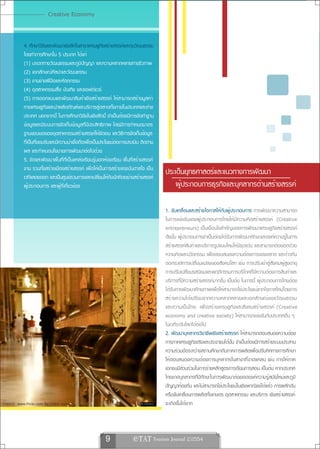
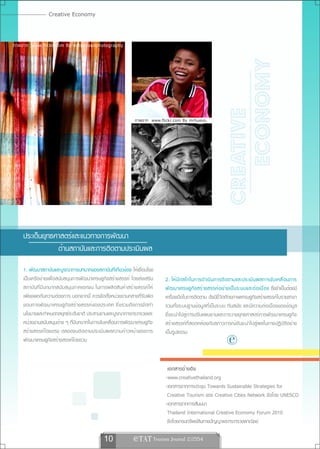
“การท่องเที่ยวเชิงสร้างสรรค์” คือการเดินทางที่นำไปสู่ประสบการณ์
คือ การสร้างมูลค่าสินค้า หรือบริการที่เกิดจากความคิดของมนุษย์ สำหรับ ที่แท้จริงและมีการเชื่อมโยง ด้วยการเรียนรู้แบบมีส่วนร่วมในงานศิลปะ มรดก
สาขาการผลิตที่พัฒนาไปสู่เศรษฐกิจสร้างสรรค์จะเรียกว่า “อุตสาหกรรม หรือคุณลักษณะพิเศษของสถานที่ และยังทำให้เกิดการเชื่อมสัมพันธ์กับผู้คน
สร้างสรรค์” (Creative Industry) ซึ่งหมายถึงกลุ่มกิจกรรมการผลิต ที่อาศัยอยู่ในพื้นที่ซึ่งเป็นผู้สร้างสรรค์วัฒนธรรมที่ยังมีชีวิตนั้นขึ้นมา”
ที่ต้องพึ่งพาความคิดสร้างสรรค์เป็นสิ่งสำคัญ “เศรษฐกิจสร้างสรรค์”
คือแนวคิดการขับเคลื่อนเศรษฐกิจ อยู่บนพื้นฐานของการใช้องค์ความรู้
(Knowledge) การศึกษา(Education) การสร้างสรรค์งาน(Creativity)
และการใช้ทรัพย์สินทางปัญญา (Intellectual property) ที่เชื่อมโยงกับ
รากฐานทางวัฒนธรรม การสั่งสมความรู้ทางสังคม และเทคโนโลยี/นวัต-
กรรมสมัยใหม่
( “Creative tourismis travel directed toward an engaged and authentic experience, with participative learning in the arts,
heritage or special character of a place, and it provides a connection with those who reside in this place and create this
living culture” )
4 e TAT Tourism Journal 2/2554
You
Tube
เมืองและชุมชนสร้างสรรค์
เรื่อง โศรยา หอมชื่น
จากการเข้าร่วมสัมมนาในงาน Thailand International Creative Economy Forum (TICEF) ระหว่างวันที่ 29-30
พฤศจิกายน 2553 ซึ่งเป็นการสัมมนาที่จัดขึ้นโดยกรมทรัพย์สินทางปัญญา และกระทรวงพาณิชย์ มีสาระสำคัญที่เกี่ยวเนื่อง
กับอุตสาหกรรมท่องเที่ยว ได้แก่ หัวข้อเมืองและชุมชนสร้างสรรค์ (Creative City and Community - Improving
our way of living) ซึ่งมีวิทยากร 3 ท่านได้แก่
1. พลเรือเอกฐนิธ กิตติอำพน ประธานสำนักงานบริหารและพัฒนาองค์ความรู้ (องค์การมหาชน)
2. Prof. Shin Nakagawa, Urban Research Plaza, Osaka City University ประเทศญี่ปุ่น
3. Mr.John Hartley, ARC Centre of Excellence for Creative Industries & Innovation, Queensland
University of Technology ประเทศออสเตรเลีย
พลเรือเอกฐนิธ กิตติอำพน
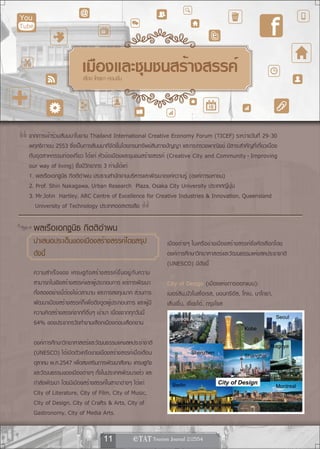
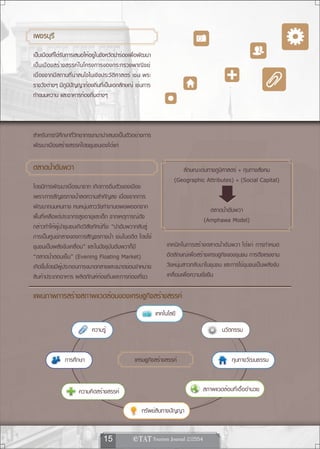
นำเสนอประเด็นของเมืองสร้างสรรค์โดยสรุป เมืองต่างๆ ในเครือข่ายเมืองสร้างสรรค์ซึ่งคัดเลือกโดย
ดังนี้ องค์การศึกษาวิทยาศาสตร์และวัฒนธรรมแห่งสหประชาชาติ
(UNESCO) มีดังนี้
ความสำเร็ จ ของ เศรษฐกิ จ สร้ า งสรรค์ ข ึ ้ น อยู ่ ก ั บ ความ
สามารถในเชิงสร้างสรรค์และผู้ประกอบการ แต่การพัฒนา City of Design (เมืองแห่งการออกแบบ):
ทั้งสองอย่างนี้ต้องใช้เวลานาน และการลงทุนมาก ส่วนการ เบอร์ลิน,บัวโนสไอเรส, มอนทรีอัล, โกเบ, นาโกยา,
พัฒนาเมืองสร้างสรรค์ก็เพื่อดึงดูดผู้ประกอบการ และผู้มี เสิ่นเจิ้น, เซี่ยงไฮ้, กรุงโซล
ความคิดสร้างสรรค์จากที่อื่นๆ เข้ามา เนื่องจากทุกวันนี้
Buenos Aires Seoul
64% ของประชากรวัยทำงานเลือกเมืองก่อนเลือกงาน
Kobe
องค์การศึกษาวิทยาศาสตร์และวัฒนธรรมแห่งสหประชาชาติ Nagoya
(UNESCO) ได้เปิดตัวเครือข่ายเมืองสร้างสรรค์เมื่อเดือน Shenzhen
Shanghai
ตุลาคม พ.ศ.2547 เพื่อส่งเสริมการพัฒนาสังคม เศรษฐกิจ
และวัฒนธรรมของเมืองต่างๆ ทั้งในประเทศพัฒนาแล้ว และ
กำลังพัฒนา โดยมีเมืองสร้างสรรค์ในสาขาต่างๆ ได้แก่ Berlin City of Design
Montreal
City of Literature, City of Film, City of Music,
City of Design, City of Crafts & Arts, City of
!
Gastronomy, City of Media Arts.
11
12.
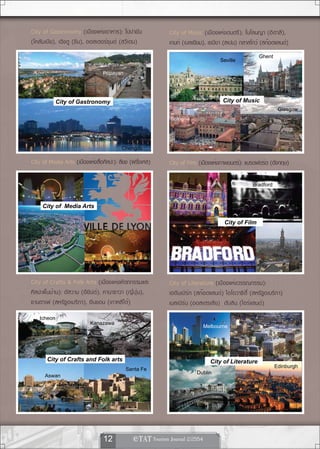
City of Gastronomy(เมืองแห่งอาหาร): โปปายัน City of Music (เมืองแห่งดนตรี): โบโลนญา (อิตาลี),
(โคลัมเบีย), เฉิงตู (จีน), ออสเตอร์ซุนด์ (สวีเดน) เกนท์ (เบลเยียม), เซบียา (สเปน) กลาสโกว์ (สก๊อตแลนด์)
Ghent
Seville
Ostersund
Popayan
City of Gastronomy City of Music
Glasgow
Bologna
Chengdu ! !
City of Media Arts (เมืองแห่งสือศิลปะ): ลียง (ฝรังเศส)
่ ่ City of Film (เมืองแห่งภาพยนตร์): แบรดฟอร์ด (อังกฤษ)
Bradford
City of Media Arts
City of Film
! !
City of Crafts & Folk Arts (เมืองแห่งหัตถกรรมและ City of Literature (เมืองแห่งวรรณกรรม):
ศิลปะพื้นบ้าน): อัสวาน (อียิปต์), คานาซาวา (ญี่ปุ่น), เอดินเบิร์ก (สก๊อตแลนด์) ไอโอวาซิตี้ (สหรัฐอเมริกา)
ซานตาเฟ (สหรัฐอเมริกา), อินชอน (เกาหลีใต้) เมลเบิร์น (ออสเตรเลีย) ดับลิน (ไอร์แลนด์)
Icheon
Kanazawa
Melbourne
Iowa City
City of Crafts and Folk arts City of Literature
Edinburgh
Santa Fe
Dublin
Aswan
! !
12
เอกสารอ้างอิง
วีระพงศ์ มาลัย. (2551).วัฒนธรรมที่แตกต่างกันกับพฤติกรรมการท่องเที่ยว. วารสารนักบริหาร. 28(2): 86-89
Chen, J.S. (2000). Cross-cultural differences in travel information acquisition among tourists from three Pacific-Rim countries. Journal of
Hospitality and Tourism Research, 24:239.
Crotts, J. & Erdmann, R. (2000). Does national culture influence consumers’ evaluation of travel services? A test of Hofstede’s model of
cross-cultural differences. Managing Service Quality, 10(6):410-22.
Donthu, N. & Yoo, B. (1998). Cultural influences on service quality expectations. Journal of Service Research, 1(2): 178-86.
Furrer, O., Liu, B. & Sudharshan, D. (2000). The relationship between culture and service quality perception: Basis for cross-
cultural market segmentation and resource allocation. Journal of Service Research, 2(4): 355-71.
Hofstede, G. (1984). Culture’s consequences: international differences in work-related Values. (Abridged ed.). Beverly Hills, CA: Sage
Publications.
Hofstede, G. & Hofstede, G.J. (2005). Cultures and organizations: Software of the mind. Revised and expanded 2nd ed. New York:
McGraw-Hill.
Jackson, M. (2001). Cultural influences on tourist destination choices of 21pacific rim nations. Paper presented at the CAUTHE
national research conference, pp. 166–176.
Jang, S. & Cai, L. (2002). Travel motivations and destination choice: A study of British outbound market. Journal of Travel and Tourism
Marketing, 13(3): 111-113.
Litvin, S., Crotts, J. & Hefner, F. (2004). Cross- cultural tourist behavior: A replication and extension involving Hofstede’s uncertainty
avoidance dimension. International Journal of Tourism Research, 6: 29-37.
Litvin, S. & Goh, W. (2004). Individualism as a moderating factor to the self-image congruity concept. Journal of Vacation Marketing,
10(1): 23-32.
Money, R. B. & Crotts, J. C. (2003). The effect to uncertainty avoidance on information search, planning, and purchases of international
travel vacations. Tourism Management, 24:191-202.
Park, S. (1998). A comparison of Korean and American gift-giving behaviors. Psychology and marketing, 15: 577-93.
Liu, R. & McClure, P. (2001). Recognizing cross-cultural differences in consumer complaint behavior and intentions: An empirical
examination. The Journal of Consumer Marketing, 18(1): 54-75.
Kozak, M. (2002). Comparative assessment of tourist motivations by nationality and destinations. Tourism Management, 23: 221-32.
Pizam, A. & Sussmann,S. (1995). Does nationality affect tourist behavior? Annals of Tourism Research, 22 (4): 901-17.
Pizam, A., Jansen-Verbeke, M. & Steel, L.(1997). Are all tourists alike regardless of nationality? The perceptions of Dutch tour guides.
Journal of International Hospitality, Leisure and Tourism management,1(1): 19-40.
Tsang, N. & Ap, J. (2007). Tourists’ perceptions of relational quality service attributes: A cross-cultural study. Journal of travel
Research, 45: 355-63.
Weiermair, K. (2000). Tourists’ perceptions towards and satisfaction with service quality in the cross-cultural service encounter:
Implications for hospitality and tourism management. Managing Service Quality, 10(6): 397-409.
Mattila, A. (1999a). An analysis of means-end hierarchy in cross-cultural context: What motivates Asian and Western business travelers
to stay at luxury hotels? Journal of Hospitality and leisure Marketing, 6 (2): 19-28.
Reisinger, Y. & Mavondo, F. (2006a). Cultural consequences on travel risk perception and safety. Tourism Analysis,11(4): 265-84.
Reisinger, Y. & Mavondo, F. (2006b). Cultural differences in travel risk perception. Journal of Travel and Tourism Marketing,20(1):
13-31.
Reisinger, Y. & Turner, L. (2002a). Cultural differences between Asian tourist markets and Australian hosts Part 1. Journal of Travel
Research, 40(3): 295-315.
Reisinger, Y. & Turner, L. (2002b). Cultural differences between Asian tourist markets and Australian hosts Part 2. Journal of Travel
Research, 40(3): 374-84.
Reisinger, Y. & Turner, L. (2009). Cross-Cultural Differences in Tourist Behavior. Handbook of Tourist Behavior. Routledge. pp.
237-255.
Rosenbaum, M. & Spears, D. (2005). Who buys what? Who does what? Analysis of cross-cultural consumption behaviors among tourists
in Hawaii. Journal of Vacation Marketing, 11(3). 235-47.
Shoemaker, S. (1994).Segmenting the U.S. travel market according to benefits realized. J Travel Res, 32(3): 8 - 21.
Sussmann,S. & Rashcovsky, C. (1997). A cross-cultural analysis of English and French Canadians’ vacation travel patterns. International
Journal of Hospitality Management, 16 (2): 191-208.
53
เรื่องและภาพ ยลรวี สิทธิชัย
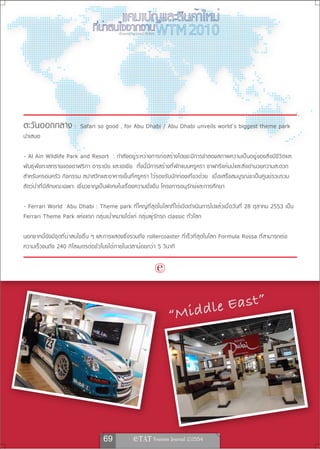
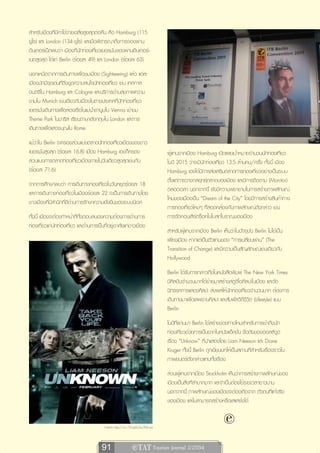
ตะวันออกกลาง: Safari so good , for Abu Dhabi / Abu Dhabi unveils world’s biggest theme park
นำเสนอ
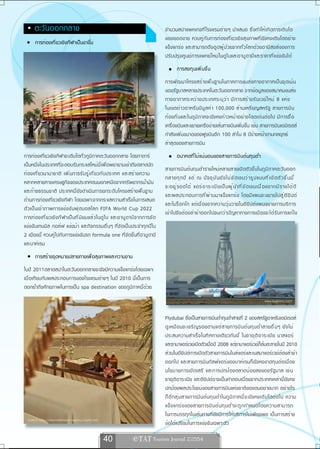
- Al Ain Wildlife Park and Resort : กำลังอยู่ระหว่างการก่อสร้างโดยจะมีการจำลองสภาพความเป็นอยู่ของสิ่งมีชีวิตและ
พันธุ์พืชทะเลทรายของอาฟริกา อาระเบีย และเอเชีย ทั้งนี้มีการสร้างที่พักแบบหรูหรา ซาฟารีแค้มป์และสิ่งอำนวยความสะดวก
สำหรับครอบครัว กิจกรรม สปาสวีทและอาหารเย็นที่หรูหรา ไว้รองรับนักท่องเที่ยวด้วย เมื่อเสร็จสมบูรณ์จะเป็นศูนย์รวบรวม
สัตว์ป่าที่มีลักษณะเฉพาะ เชี่ยวชาญเป็นพิเศษในเรื่องความยั่งยืน โครงการอนุรักษ์และการศึกษา
- Ferrari World Abu Dhabi : Theme park ที่ใหญ่ที่สุดในโลกที่ได้เปิดดำเนินการไปแล้วเมื่อวันที่ 28 ตุลาคม 2553 เป็น
Ferrari Theme Park แห่งแรก กลุ่มเป้าหมายได้แก่ กลุ่มผู้รักรถ classic ทั่วโลก
นอกจากนี้ยังมีจุดที่น่าสนใจอื่น ๆ และการแสดงซึ่งรวมถึง rollercoaster ที่เร็วที่สุดในโลก Formula Rossa ที่สามารถเร่ง
ความเร็วจนถึง 240 กิโลเมตรต่อชั่วโมงได้ภายในเวลาน้อยกว่า 5 วินาที
Middl e East”
“
69

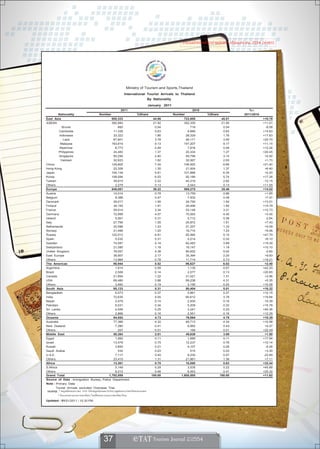
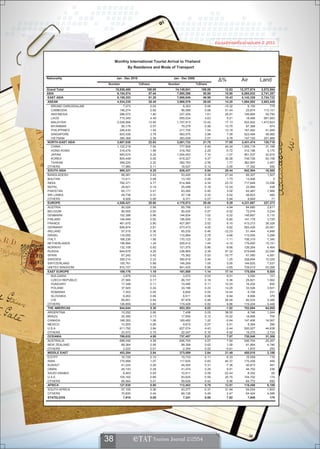




![TAT Review Magazine 4/2016 [39 MB]](https://cdn.slidesharecdn.com/ss_thumbnails/tat42016-161117140510-thumbnail.jpg?width=640&height=640&fit=bounds)


