Company 
LOGO 
Smart Concrete 
KIRTAN ADHIKARI EDC 2010050 
1
CONTENT 
1. INTRODUCTION 
2. INVENTOR AND INVENTION 
3. SELF SENSING CONCRETE 
4. LABORATORY EXPERIMENT 
5. RESULT AND DISCUSSION 
2
INTRODUCTION 
Concrete that is itself a sensor of strain or stress. 
The sensing ability is not due to the embedment or attachment of sensors. 
 The concrete has been modified through the use of admixtures so that it becomes a sensor 
3
INTRODUCTION 
The sensing ability of smart concrete are based on the change of electrical resistance. 
4
INVENTOR AND INVENTION 
Invented by Professor Deborah Chung in University at Buffalo, State University of New York. (1993) 
5
Self Sensing Concrete 
1.Smart Concrete Produced From Short Carbon Fibres 
2.Smart Concrete Produced from CNTs 
6
Self Sensing Concrete 
1.Smart Concrete Produced From Short Carbon Fibres 
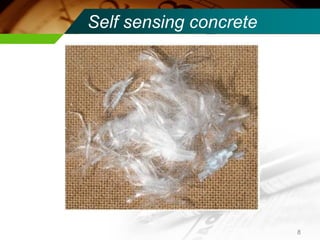
 Contain short carbon fibres, typically 5 mm in length 
Fibre content is 0.2 vol. % of cement 
Silica fume content is 15% by weight of cement 
Methylcellulose content is 0.4% by weight of cement 
7
Self sensing concrete 
8
Self sensing concrete 
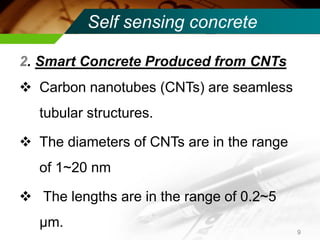
2. Smart Concrete Produced from CNTs 
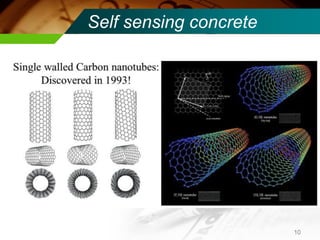
Carbon nanotubes (CNTs) are seamless tubular structures. 
The diameters of CNTs are in the range of 1~20 nm 
 The lengths are in the range of 0.2~5 μm. 
9
Self sensing concrete 
10
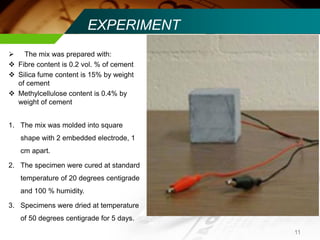
 The mix was prepared with: 
 Fibre content is 0.2 vol. % of cement 
 Silica fume content is 15% by weight 
of cement 
 Methylcellulose content is 0.4% by 
weight of cement 
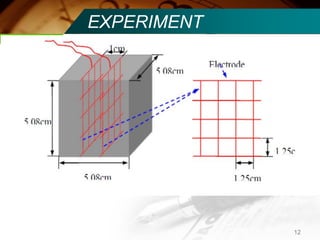
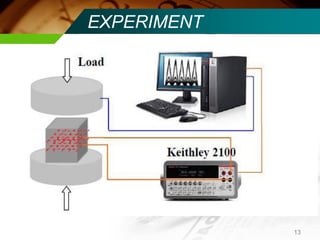
1. The mix was molded into square 
shape with 2 embedded electrode, 1 
cm apart. 
2. The specimen were cured at standard 
temperature of 20 degrees centigrade 
and 100 % humidity. 
3. Specimens were dried at temperature 
of 50 degrees centigrade for 5 days. 
EXPERIMENT 
11
EXPERIMENT 
12
EXPERIMENT 
13
RESULT AND DISCUSSION 
14
CONCLUSION 
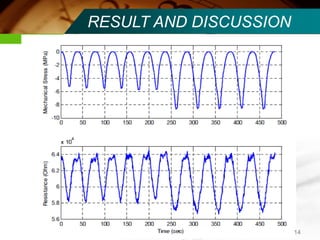
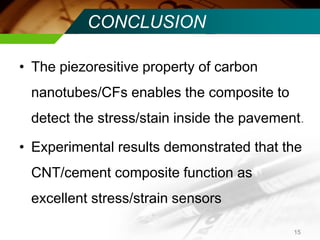
•The piezoresitive property of carbon nanotubes/CFs enables the composite to detect the stress/stain inside the pavement. 
•Experimental results demonstrated that the CNT/cement composite function as excellent stress/strain sensors 
15
RFERENCES 
REFERENCES 
[1] B. Demirel, S. Yaziciog˘lu and N. Orhan. (December 2006). Electrical behaviour of carbon fibre-reinforced. Magazine of 
Concrete Research, 7. 
[2] Chung, D. D. (2006). The Road to Scientific Success. Singapore: World Scientific Pubilishing Co.Pte.Ltd. 
[3] Chung, D. D. (1994). Carbon Fiber Composite. Washington: Butterworth-Heinemann. 
[4] Chung, D. D. (13 October 1994). Strain sensor based on resistance change accompanying the reversible pull-out of 
conducting short fibers in a less conducting matrix. Smart Mater. Strum. 
[5] Dr. Xun Yu, Dr. Eil Kwon. (April 2012). Carbon Nanotube Based Self-sensing Concrete for Pavement. Washington: 
University of Minnesota Duluth. 
16 
[1]

Smart concrete

  • 1.
    Company LOGO SmartConcrete KIRTAN ADHIKARI EDC 2010050 1
  • 2.
    CONTENT 1. INTRODUCTION 2. INVENTOR AND INVENTION 3. SELF SENSING CONCRETE 4. LABORATORY EXPERIMENT 5. RESULT AND DISCUSSION 2
  • 3.
    INTRODUCTION Concrete thatis itself a sensor of strain or stress. The sensing ability is not due to the embedment or attachment of sensors.  The concrete has been modified through the use of admixtures so that it becomes a sensor 3
  • 4.
    INTRODUCTION The sensingability of smart concrete are based on the change of electrical resistance. 4
  • 5.
    INVENTOR AND INVENTION Invented by Professor Deborah Chung in University at Buffalo, State University of New York. (1993) 5
  • 6.
    Self Sensing Concrete 1.Smart Concrete Produced From Short Carbon Fibres 2.Smart Concrete Produced from CNTs 6
  • 7.
    Self Sensing Concrete 1.Smart Concrete Produced From Short Carbon Fibres  Contain short carbon fibres, typically 5 mm in length Fibre content is 0.2 vol. % of cement Silica fume content is 15% by weight of cement Methylcellulose content is 0.4% by weight of cement 7
  • 8.
  • 9.
    Self sensing concrete 2. Smart Concrete Produced from CNTs Carbon nanotubes (CNTs) are seamless tubular structures. The diameters of CNTs are in the range of 1~20 nm  The lengths are in the range of 0.2~5 μm. 9
  • 10.
  • 11.
     The mixwas prepared with:  Fibre content is 0.2 vol. % of cement  Silica fume content is 15% by weight of cement  Methylcellulose content is 0.4% by weight of cement 1. The mix was molded into square shape with 2 embedded electrode, 1 cm apart. 2. The specimen were cured at standard temperature of 20 degrees centigrade and 100 % humidity. 3. Specimens were dried at temperature of 50 degrees centigrade for 5 days. EXPERIMENT 11
  • 12.
  • 13.
  • 14.
  • 15.
    CONCLUSION •The piezoresitiveproperty of carbon nanotubes/CFs enables the composite to detect the stress/stain inside the pavement. •Experimental results demonstrated that the CNT/cement composite function as excellent stress/strain sensors 15
  • 16.
    RFERENCES REFERENCES [1]B. Demirel, S. Yaziciog˘lu and N. Orhan. (December 2006). Electrical behaviour of carbon fibre-reinforced. Magazine of Concrete Research, 7. [2] Chung, D. D. (2006). The Road to Scientific Success. Singapore: World Scientific Pubilishing Co.Pte.Ltd. [3] Chung, D. D. (1994). Carbon Fiber Composite. Washington: Butterworth-Heinemann. [4] Chung, D. D. (13 October 1994). Strain sensor based on resistance change accompanying the reversible pull-out of conducting short fibers in a less conducting matrix. Smart Mater. Strum. [5] Dr. Xun Yu, Dr. Eil Kwon. (April 2012). Carbon Nanotube Based Self-sensing Concrete for Pavement. Washington: University of Minnesota Duluth. 16 [1]