Choose Your Startup’s Revenue Model
By Ken Leaver
February 2014

@Kenontek

www.kenontek.com
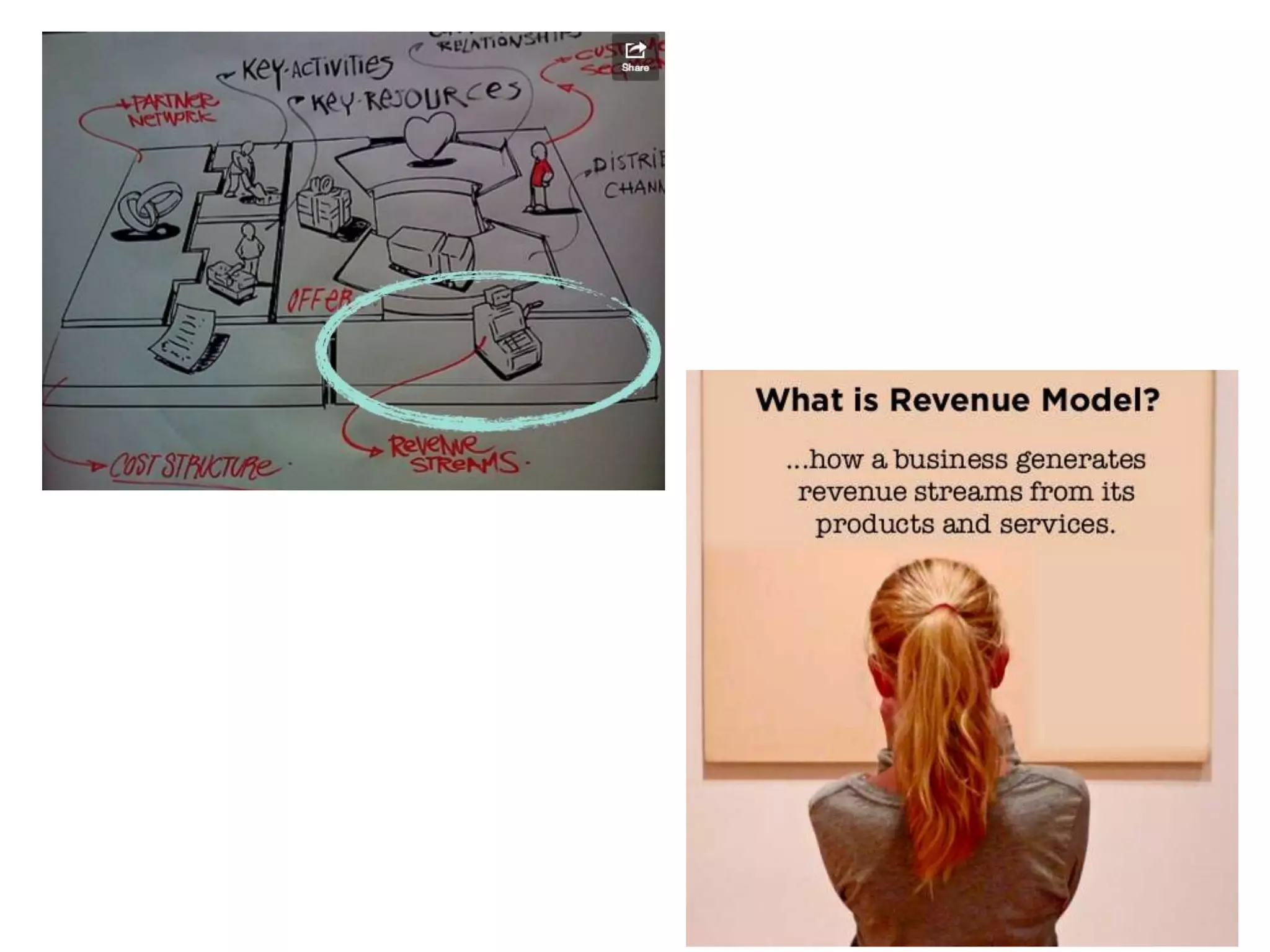
Chapter 1: What is a Revenue Model

Chapter 2: Overview of revenue models
Chapter 3: How to choose the right one (to start with)?
Chapter 4: Experiment & Iterate
Chapter 5: Defending your revenue model
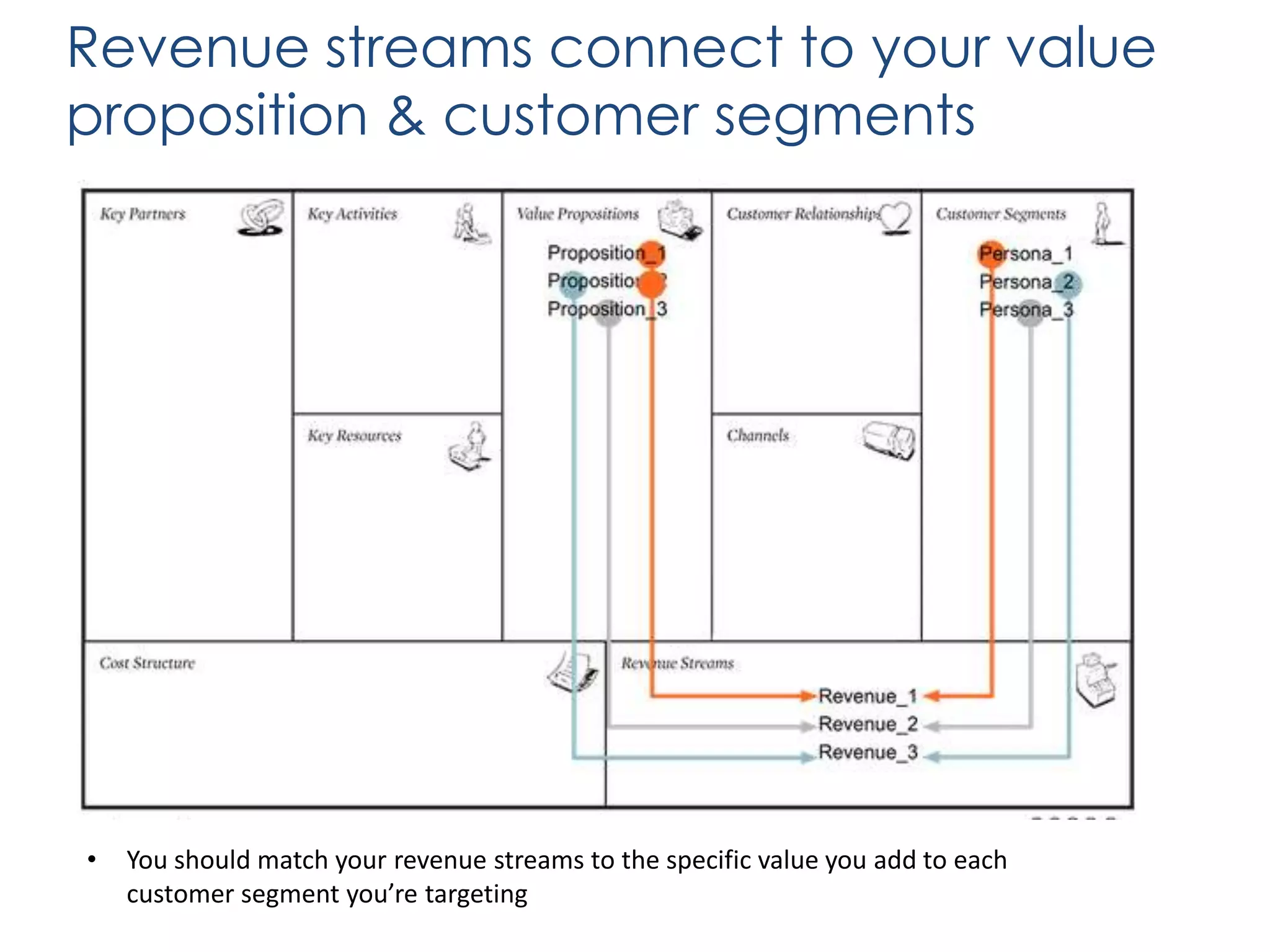
Revenue streams connect to your value
proposition & customer segments

•

You should match your revenue streams to the specific value you add to each
customer segment you’re targeting
Chapter 1: What is a Revenue Model

Chapter 2: Overview of revenue models
Chapter 3: How to choose the right one (to start with)?
Chapter 4: Experiment & Iterate
Chapter 5: Defending your revenue model
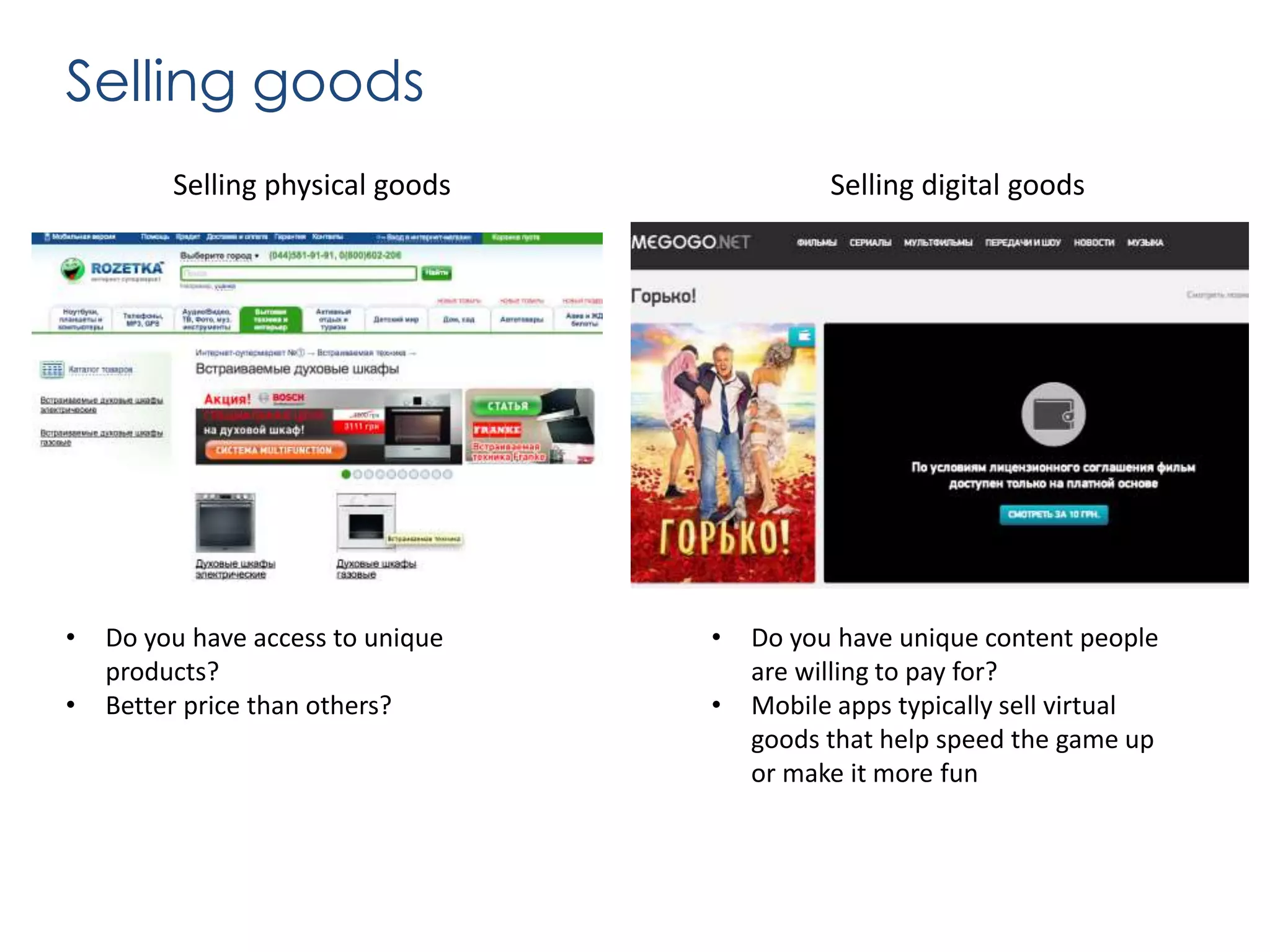
Selling goods
Selling physical goods

•
•

Do you have access to unique
products?
Better price than others?

Selling digital goods

•
•

Do you have unique content people
are willing to pay for?
Mobile apps typically sell virtual
goods that help speed the game up
or make it more fun
Media / Community Access

•
•

Build a community and then charge for access
Often need to create or attract quality content
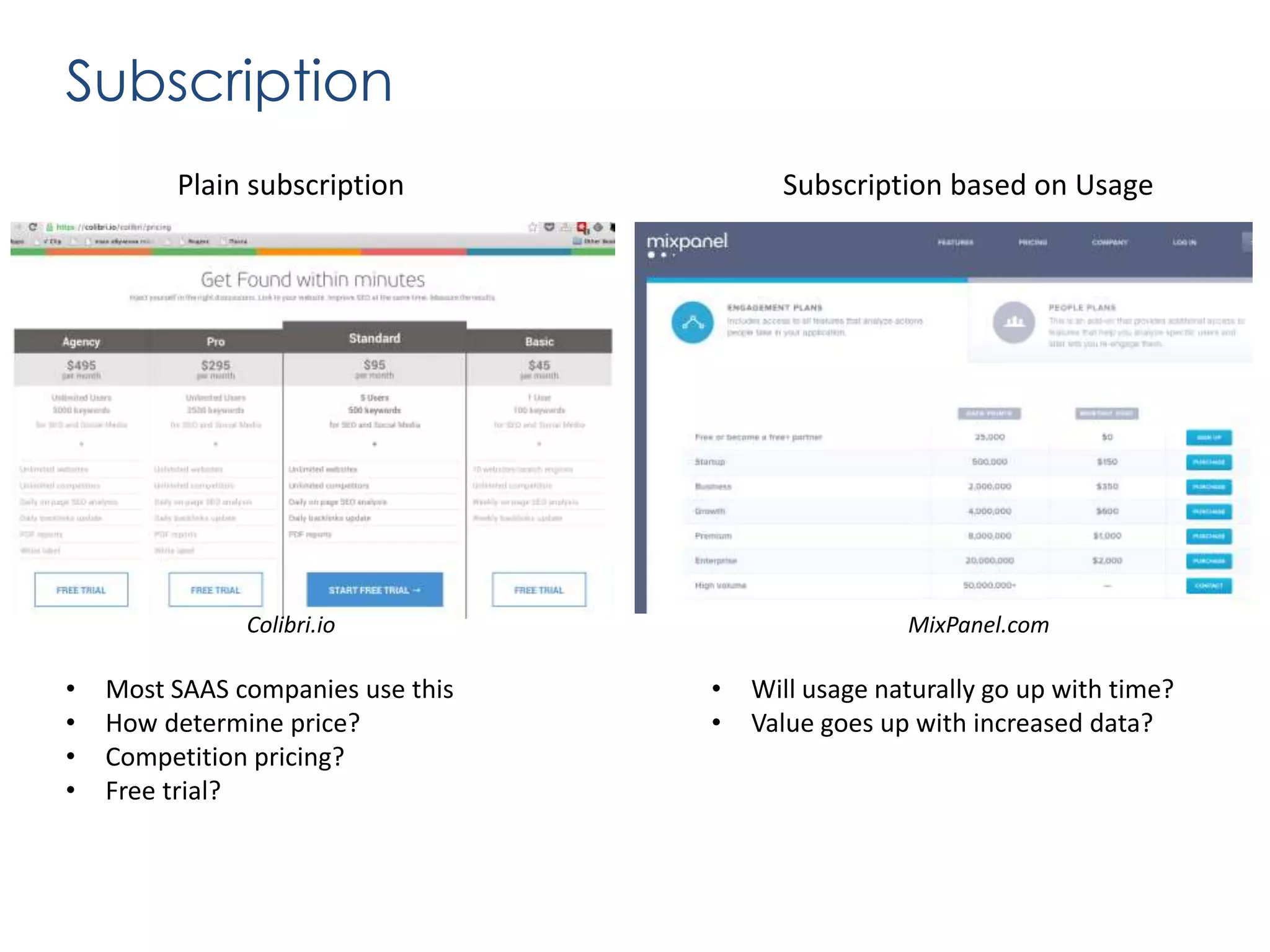
Subscription
Plain subscription

Subscription based on Usage

Colibri.io

•
•
•
•

Most SAAS companies use this
How determine price?
Competition pricing?
Free trial?

MixPanel.com

•
•

Will usage naturally go up with time?
Value goes up with increased data?
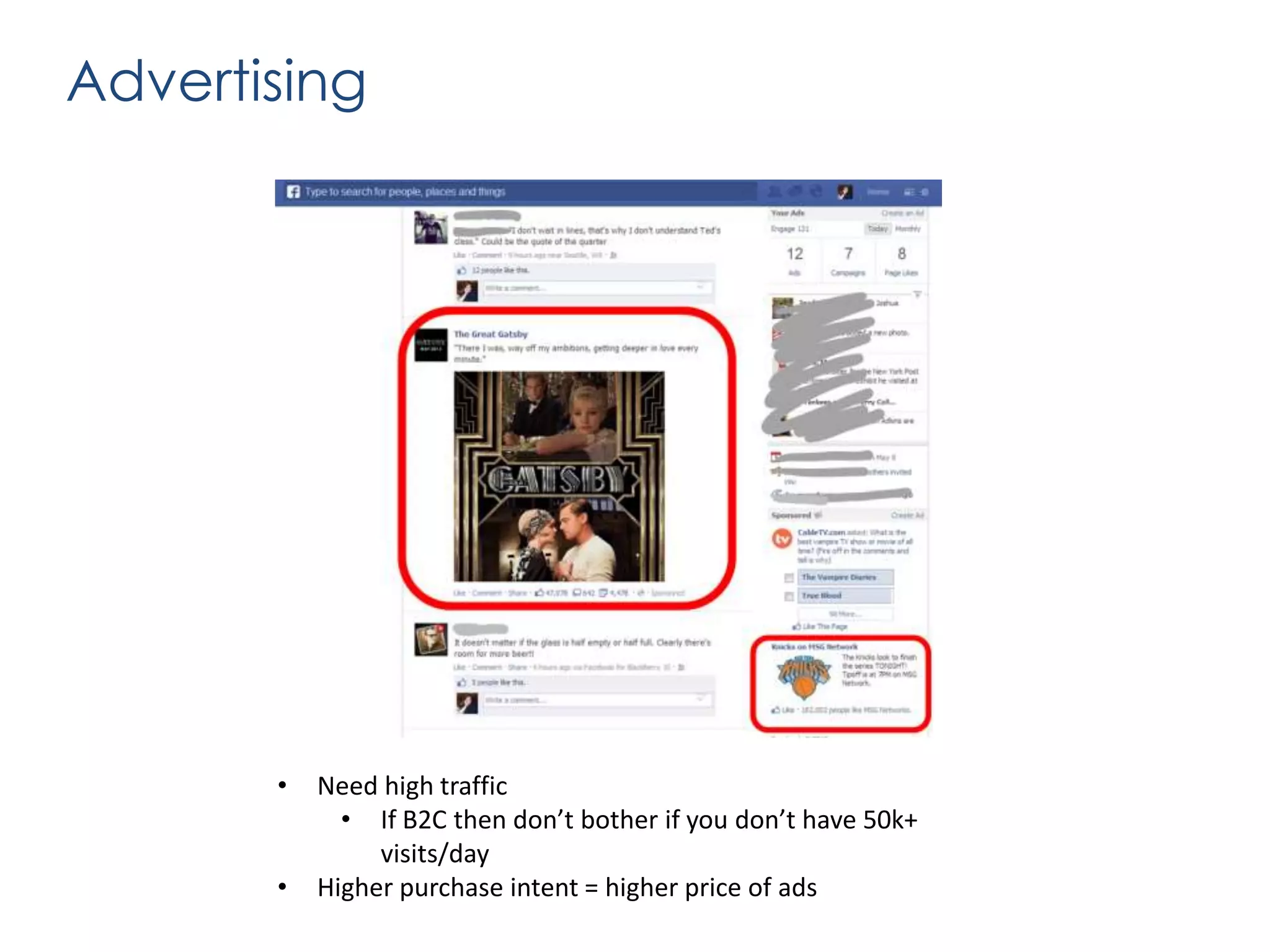
Advertising

•
•

Need high traffic
• If B2C then don’t bother if you don’t have 50k+
visits/day
Higher purchase intent = higher price of ads
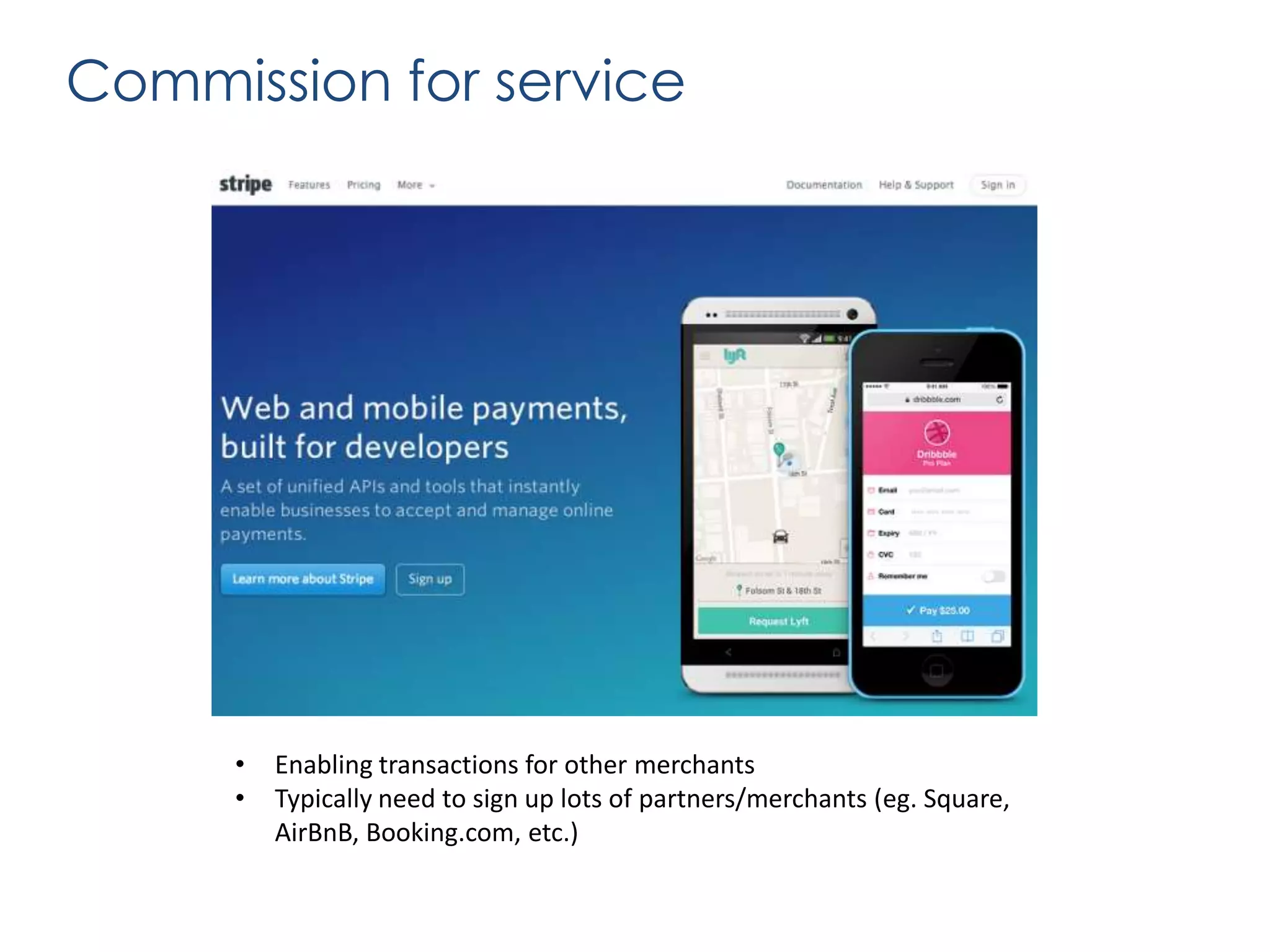
Commission for service
xxx

•
•

Enabling transactions for other merchants
Typically need to sign up lots of partners/merchants (eg. Square,
AirBnB, Booking.com, etc.)
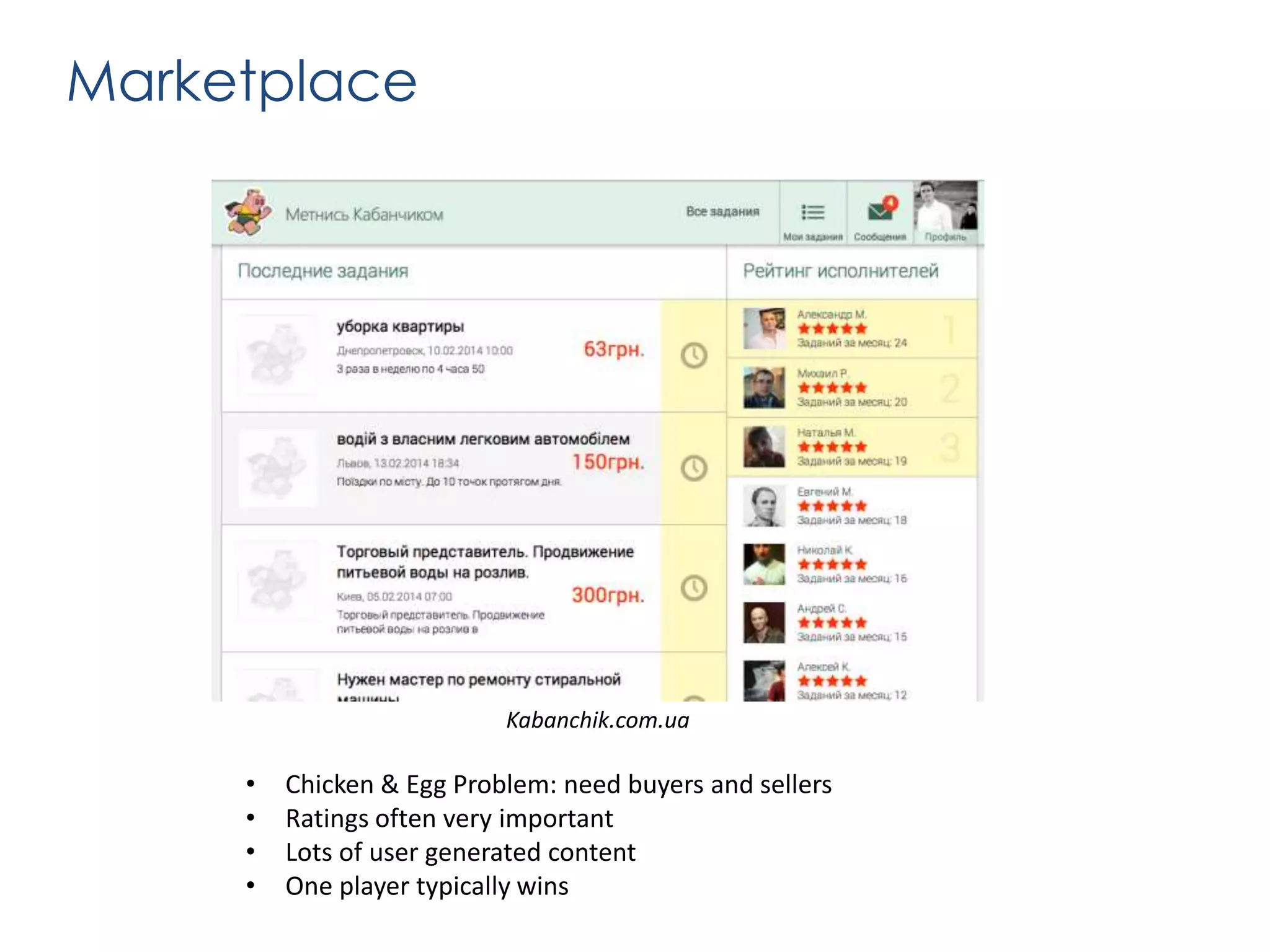
Marketplace

Kabanchik.com.ua

•
•
•
•

Chicken & Egg Problem: need buyers and sellers
Ratings often very important
Lots of user generated content
One player typically wins
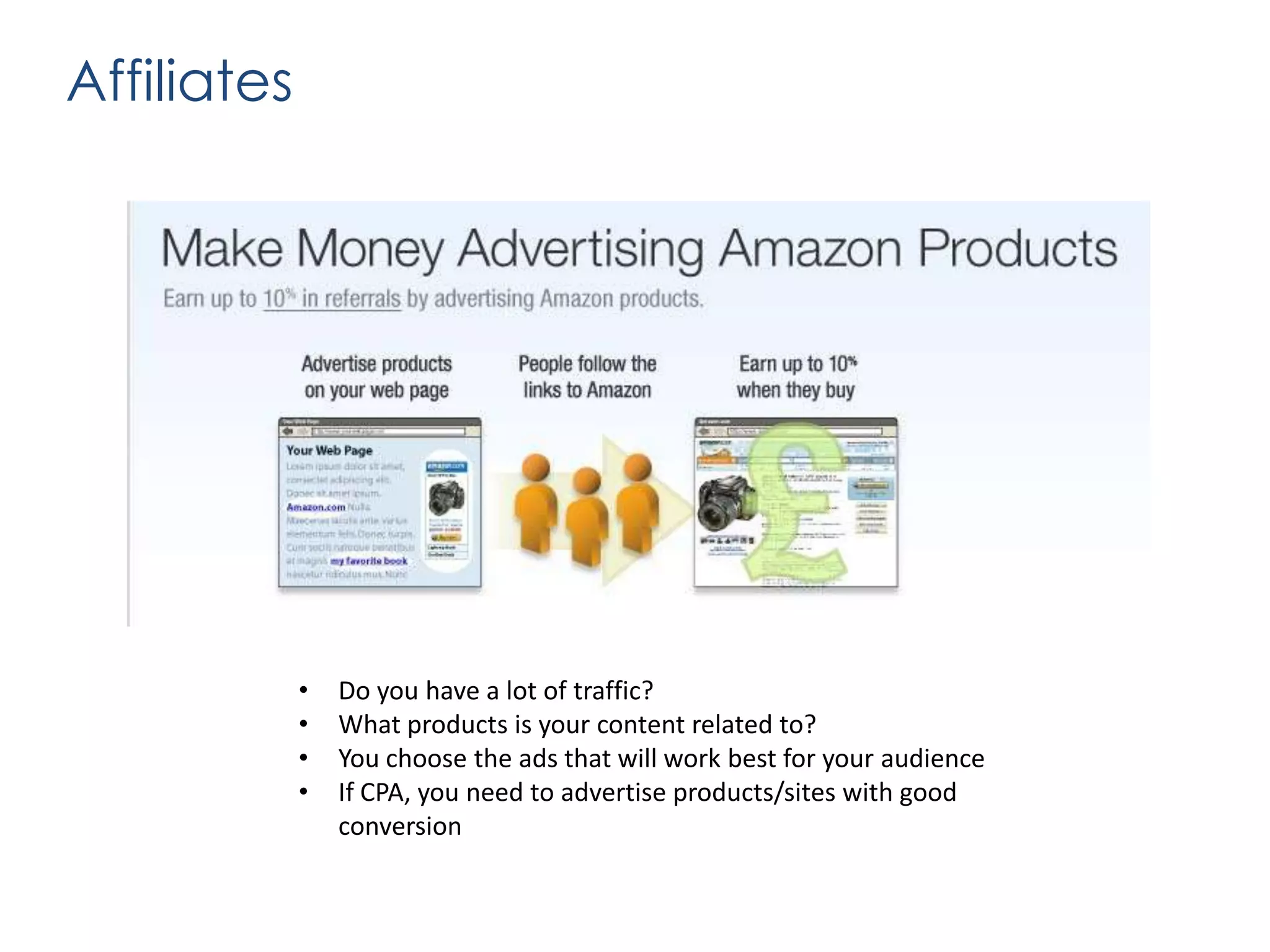
Affiliates

•
•
•
•

Do you have a lot of traffic?
What products is your content related to?
You choose the ads that will work best for your audience
If CPA, you need to advertise products/sites with good
conversion
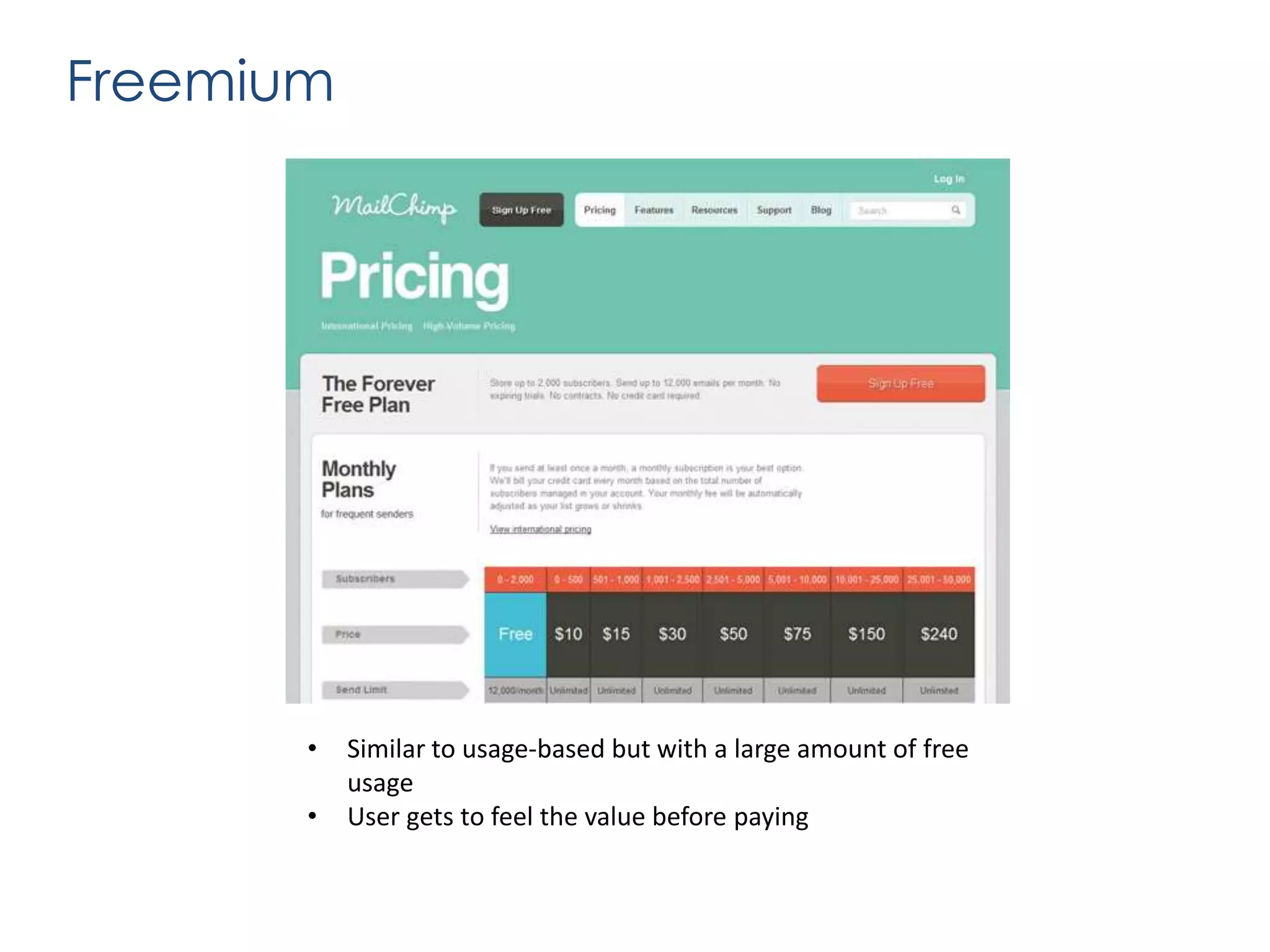
Freemium

•
•

Similar to usage-based but with a large amount of free
usage
User gets to feel the value before paying
Chapter 1: What is a Revenue Model

Chapter 2: Overview of revenue models
Chapter 3: How to choose the right one (to start with)?
Chapter 4: Experiment & Iterate
Chapter 5: Defending your revenue model
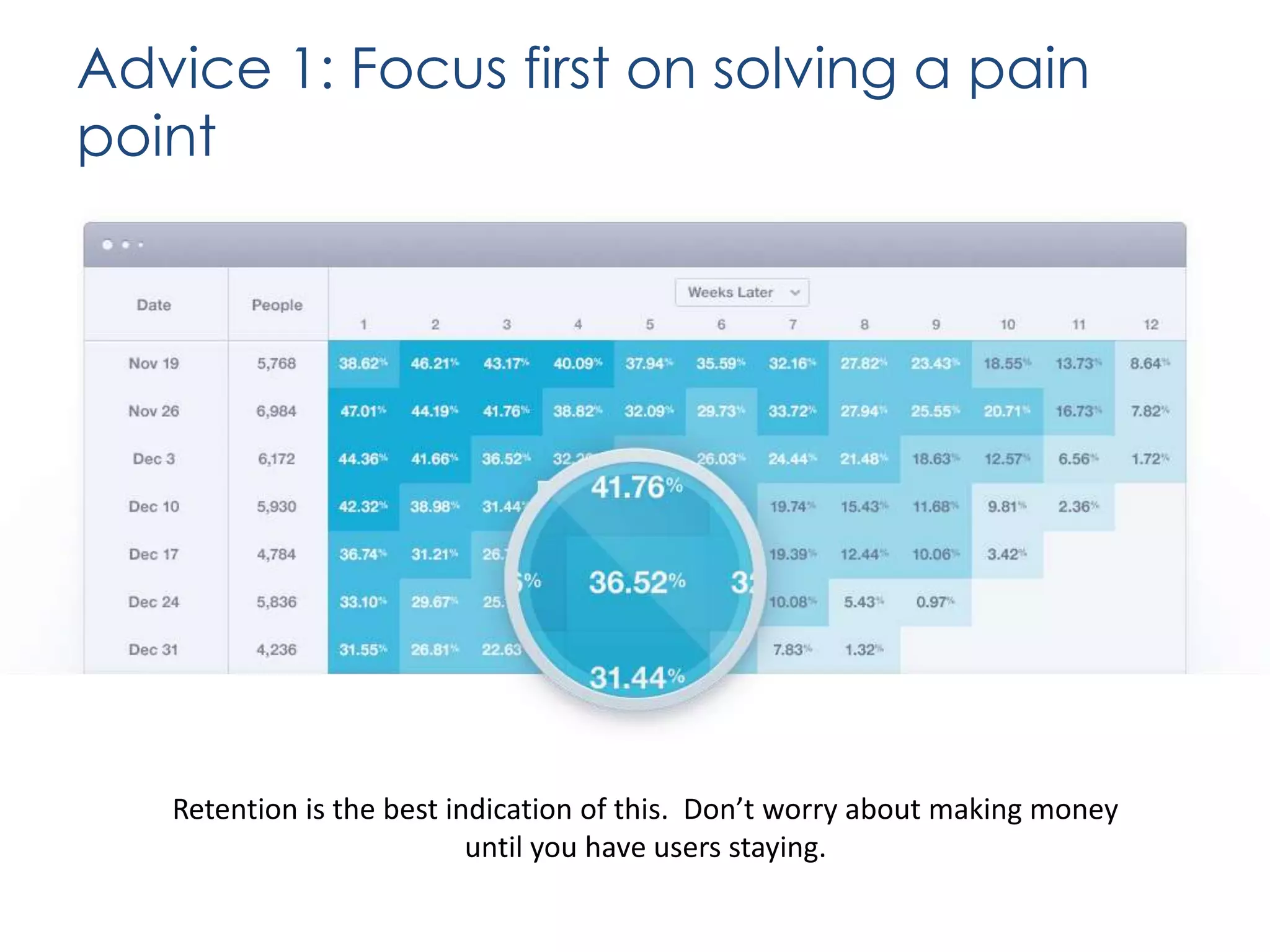
Advice 1: Focus first on solving a pain
point

Retention is the best indication of this. Don’t worry about making money
until you have users staying.
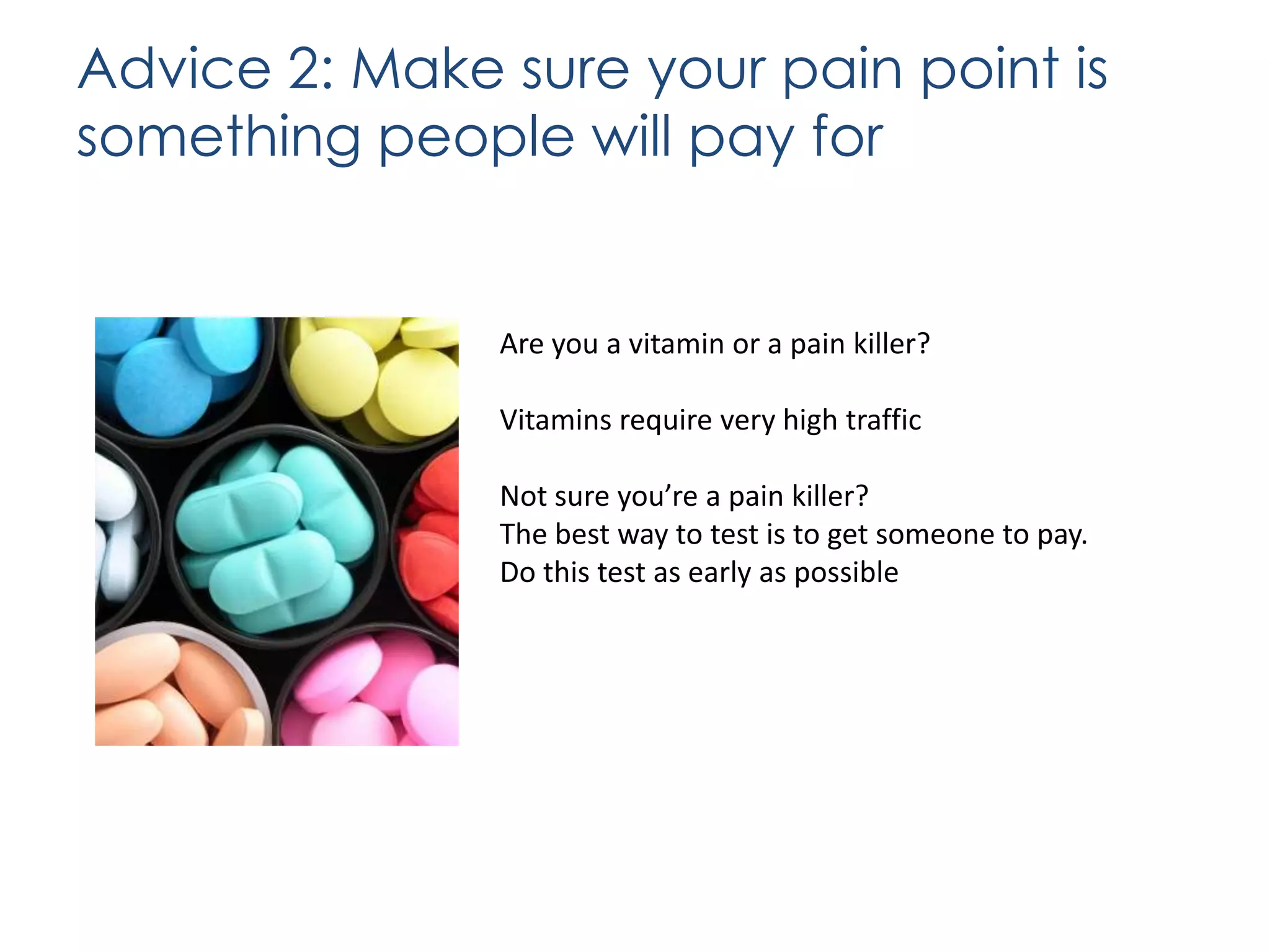
Advice 2: Make sure your pain point is
something people will pay for

Are you a vitamin or a pain killer?
Vitamins require very high traffic
Not sure you’re a pain killer?
The best way to test is to get someone to pay.
Do this test as early as possible
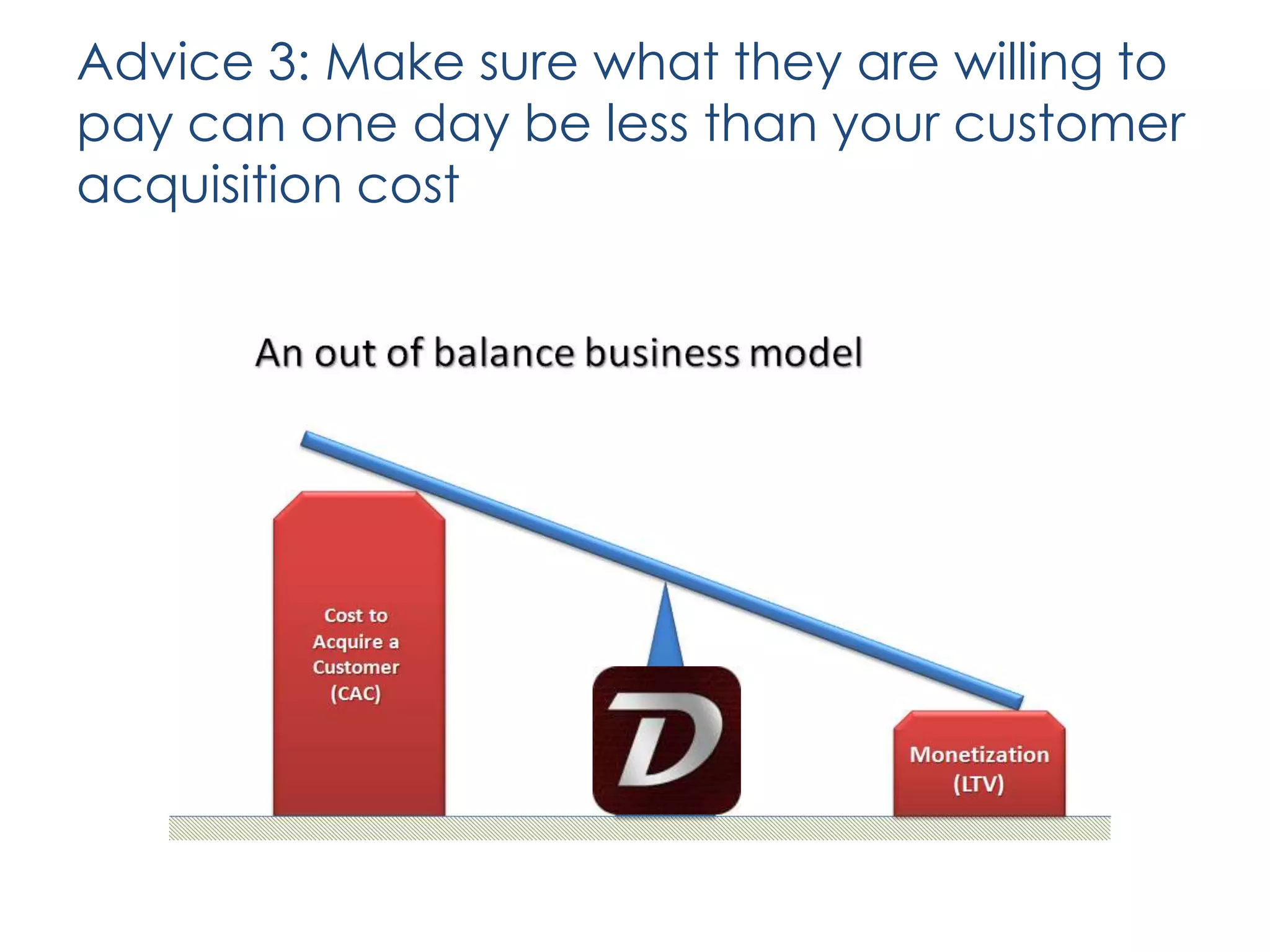
Advice 3: Make sure what they are willing to
pay can one day be less than your customer
acquisition cost
Chapter 1: What is a Revenue Model

Chapter 2: Overview of revenue models
Chapter 3: How to choose the right one (to start with)?
Chapter 4: Experiment & Iterate
Chapter 5: Defending your revenue model
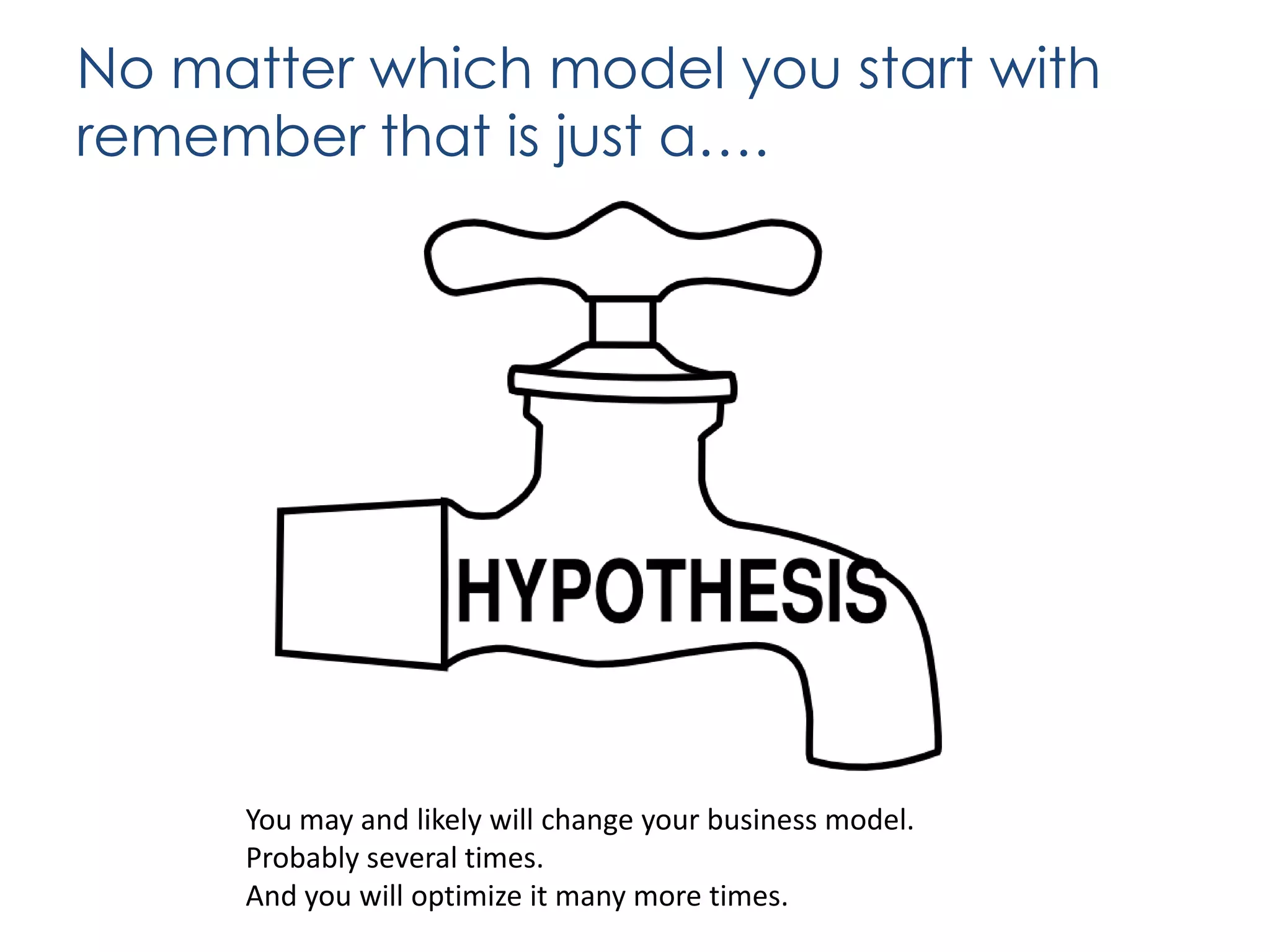
No matter which model you start with
remember that is just a….

You may and likely will change your business model.
Probably several times.
And you will optimize it many more times.
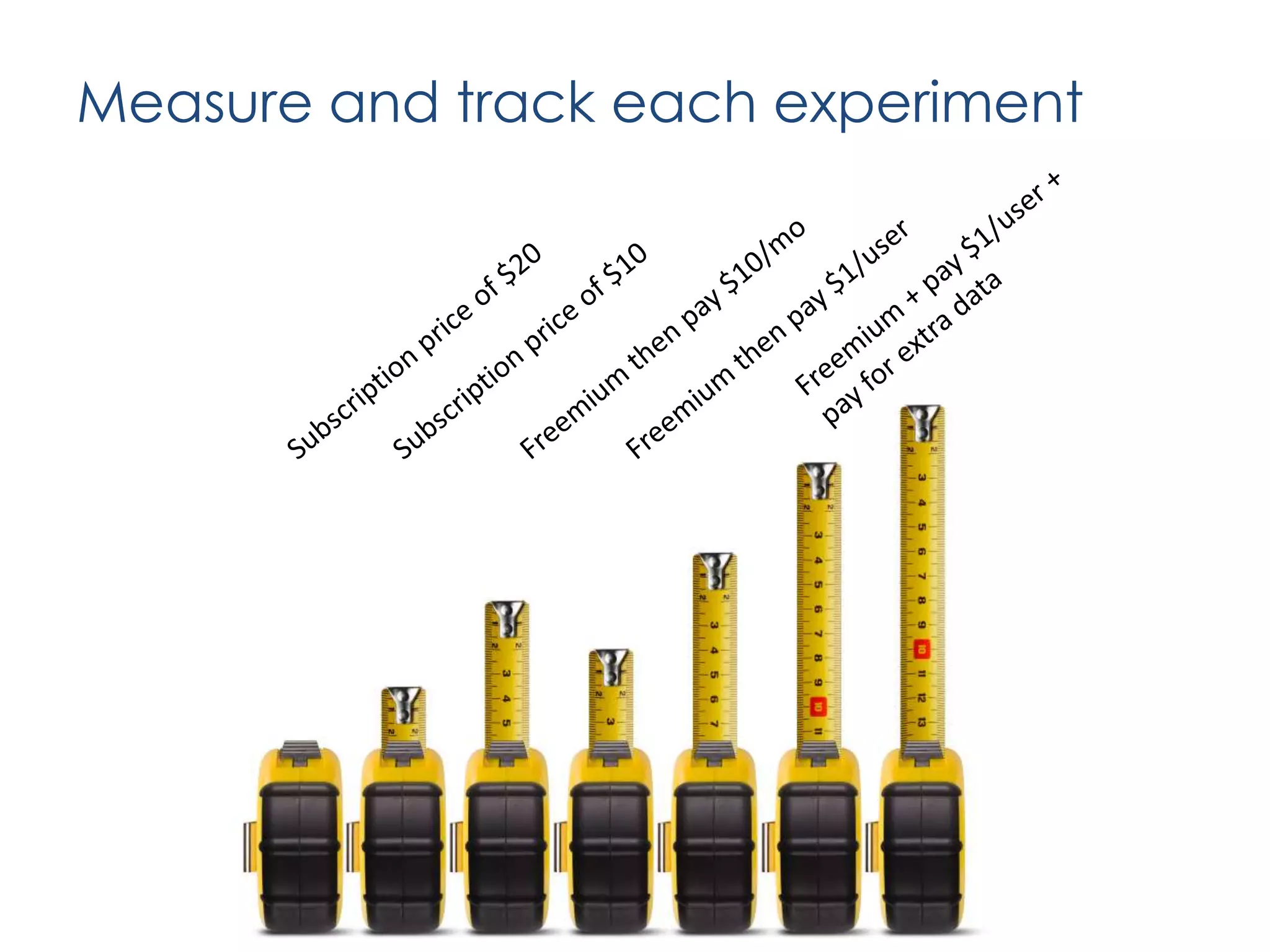
How do you test?
1. Make a hypothesis: “I think customers will be willing to pay a
service charge”
2. Test it by building this into the product and throwing 1000 visitors
at it (eg. at $0.10/visitor).
3. Look at the conversion (eg. 1%) and revenue per customer (eg.
$5).
4. Compare cost of acquisition ($100) vs. Revenue earned ($50)
5. Optimize or try a different model. Or do both.
6. Repeat until the equation is positive.
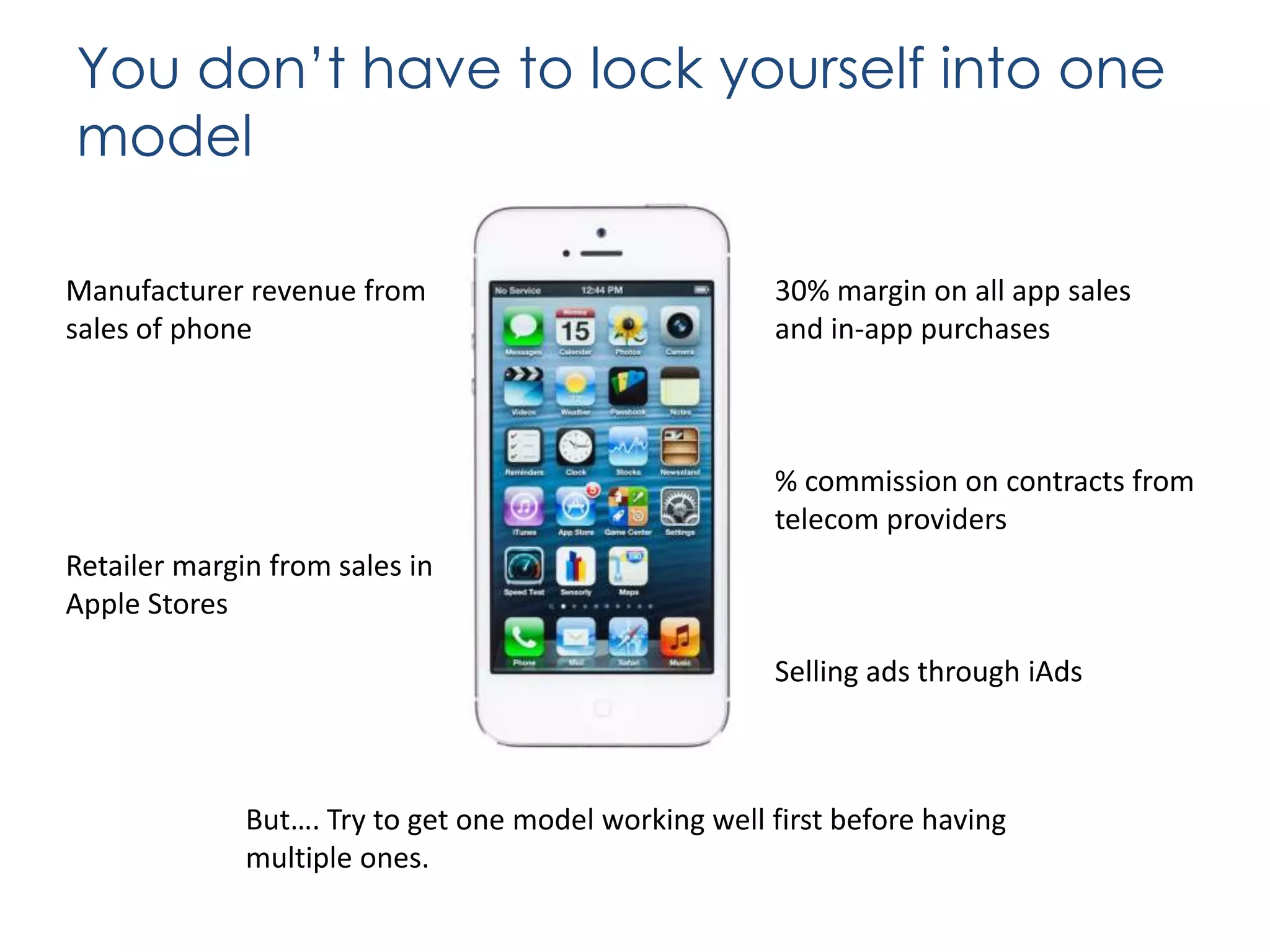
You don’t have to lock yourself into one
model
Manufacturer revenue from
sales of phone

30% margin on all app sales
and in-app purchases

% commission on contracts from
telecom providers
Retailer margin from sales in
Apple Stores
Selling ads through iAds

But…. Try to get one model working well first before having
multiple ones.
Measure and track each experiment
Chapter 1: What is a Revenue Model

Chapter 2: Overview of revenue models
Chapter 3: How to choose the right one (to start with)?
Chapter 4: Experiment & Iterate
Chapter 5: Defending your revenue model
Now its time for you to defend your
business model
1. We will split into 2 groups (1 mentor each / 3 teams per group)
2. Team presents:
• Idea & Pain Point (1min)
• Business model & why you chose that one (2min)
• Your estimate of Cost of User Acquisition & Revenue from Customer
(2min) – Be sure to explain your assumptions and give numbers!!!
• eg. cost of visitor = $0.10 x 1% (conversion) = $10. Revenue/user =
$15/subscription. I think people would be willing to pay $15 because
XXX…
3. Mentor & other teams challenge the business model with questions (5 min)
4. Next team is up
5. After all 3 teams presented we will switch the mentors in the groups and
repeat.

Choosing a startup's revenue model

  • 1.
    Choose Your Startup’sRevenue Model By Ken Leaver February 2014 @Kenontek www.kenontek.com
  • 2.
    Chapter 1: Whatis a Revenue Model Chapter 2: Overview of revenue models Chapter 3: How to choose the right one (to start with)? Chapter 4: Experiment & Iterate Chapter 5: Defending your revenue model
  • 4.
    Revenue streams connectto your value proposition & customer segments • You should match your revenue streams to the specific value you add to each customer segment you’re targeting
  • 5.
    Chapter 1: Whatis a Revenue Model Chapter 2: Overview of revenue models Chapter 3: How to choose the right one (to start with)? Chapter 4: Experiment & Iterate Chapter 5: Defending your revenue model
  • 6.
    Selling goods Selling physicalgoods • • Do you have access to unique products? Better price than others? Selling digital goods • • Do you have unique content people are willing to pay for? Mobile apps typically sell virtual goods that help speed the game up or make it more fun
  • 7.
    Media / CommunityAccess • • Build a community and then charge for access Often need to create or attract quality content
  • 8.
    Subscription Plain subscription Subscription basedon Usage Colibri.io • • • • Most SAAS companies use this How determine price? Competition pricing? Free trial? MixPanel.com • • Will usage naturally go up with time? Value goes up with increased data?
  • 9.
    Advertising • • Need high traffic •If B2C then don’t bother if you don’t have 50k+ visits/day Higher purchase intent = higher price of ads
  • 10.
    Commission for service xxx • • Enablingtransactions for other merchants Typically need to sign up lots of partners/merchants (eg. Square, AirBnB, Booking.com, etc.)
  • 11.
    Marketplace Kabanchik.com.ua • • • • Chicken & EggProblem: need buyers and sellers Ratings often very important Lots of user generated content One player typically wins
  • 12.
    Affiliates • • • • Do you havea lot of traffic? What products is your content related to? You choose the ads that will work best for your audience If CPA, you need to advertise products/sites with good conversion
  • 13.
    Freemium • • Similar to usage-basedbut with a large amount of free usage User gets to feel the value before paying
  • 14.
    Chapter 1: Whatis a Revenue Model Chapter 2: Overview of revenue models Chapter 3: How to choose the right one (to start with)? Chapter 4: Experiment & Iterate Chapter 5: Defending your revenue model
  • 15.
    Advice 1: Focusfirst on solving a pain point Retention is the best indication of this. Don’t worry about making money until you have users staying.
  • 16.
    Advice 2: Makesure your pain point is something people will pay for Are you a vitamin or a pain killer? Vitamins require very high traffic Not sure you’re a pain killer? The best way to test is to get someone to pay. Do this test as early as possible
  • 17.
    Advice 3: Makesure what they are willing to pay can one day be less than your customer acquisition cost
  • 18.
    Chapter 1: Whatis a Revenue Model Chapter 2: Overview of revenue models Chapter 3: How to choose the right one (to start with)? Chapter 4: Experiment & Iterate Chapter 5: Defending your revenue model
  • 19.
    No matter whichmodel you start with remember that is just a…. You may and likely will change your business model. Probably several times. And you will optimize it many more times.
  • 20.
    How do youtest? 1. Make a hypothesis: “I think customers will be willing to pay a service charge” 2. Test it by building this into the product and throwing 1000 visitors at it (eg. at $0.10/visitor). 3. Look at the conversion (eg. 1%) and revenue per customer (eg. $5). 4. Compare cost of acquisition ($100) vs. Revenue earned ($50) 5. Optimize or try a different model. Or do both. 6. Repeat until the equation is positive.
  • 21.
    You don’t haveto lock yourself into one model Manufacturer revenue from sales of phone 30% margin on all app sales and in-app purchases % commission on contracts from telecom providers Retailer margin from sales in Apple Stores Selling ads through iAds But…. Try to get one model working well first before having multiple ones.
  • 22.
    Measure and trackeach experiment
  • 23.
    Chapter 1: Whatis a Revenue Model Chapter 2: Overview of revenue models Chapter 3: How to choose the right one (to start with)? Chapter 4: Experiment & Iterate Chapter 5: Defending your revenue model
  • 24.
    Now its timefor you to defend your business model 1. We will split into 2 groups (1 mentor each / 3 teams per group) 2. Team presents: • Idea & Pain Point (1min) • Business model & why you chose that one (2min) • Your estimate of Cost of User Acquisition & Revenue from Customer (2min) – Be sure to explain your assumptions and give numbers!!! • eg. cost of visitor = $0.10 x 1% (conversion) = $10. Revenue/user = $15/subscription. I think people would be willing to pay $15 because XXX… 3. Mentor & other teams challenge the business model with questions (5 min) 4. Next team is up 5. After all 3 teams presented we will switch the mentors in the groups and repeat.