katie@esu8.orgKatie Morrow, ESU 8
Critical
Literacy
Text Dependent Reading
& Writing for all
Learning Goals:
• Understand principles of Text-
Dependent Reading and
Writing
• Strengthen students’ critical
literacy skills in a habit-
forming way
• Make literacy-based
instruction more interactive,
more engaging, and more
collaborative
Learner Experiences:
• Quick, fast-paced sampling
of key concepts related to
Text Reading & Writing
• Technology Connections
embedded throughout
• You try… interactive
activities along the way
http://bit.ly/CritLit
1st
Enroll in Canvas course
Foundations
Review
Check for Understanding
1.
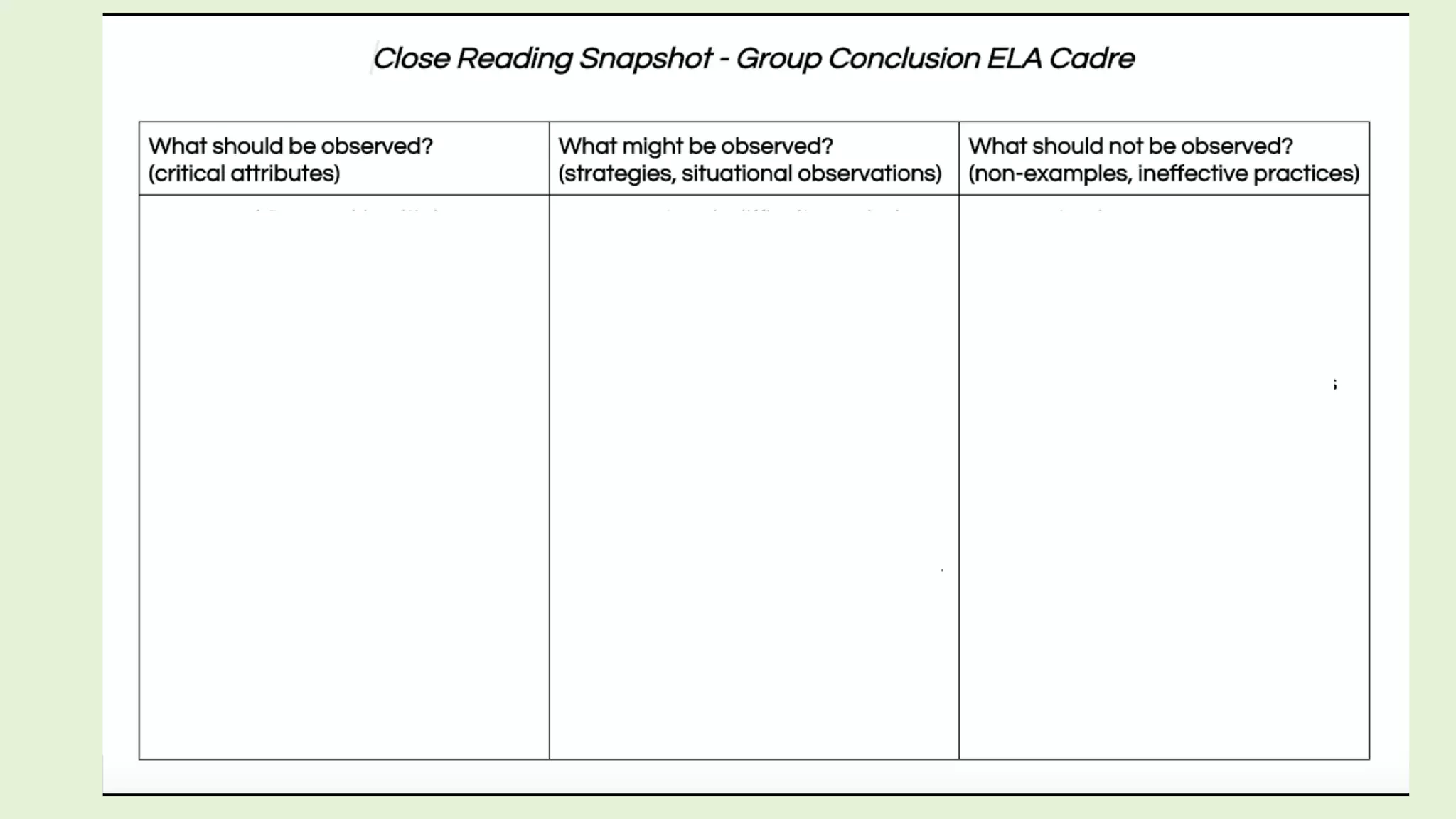
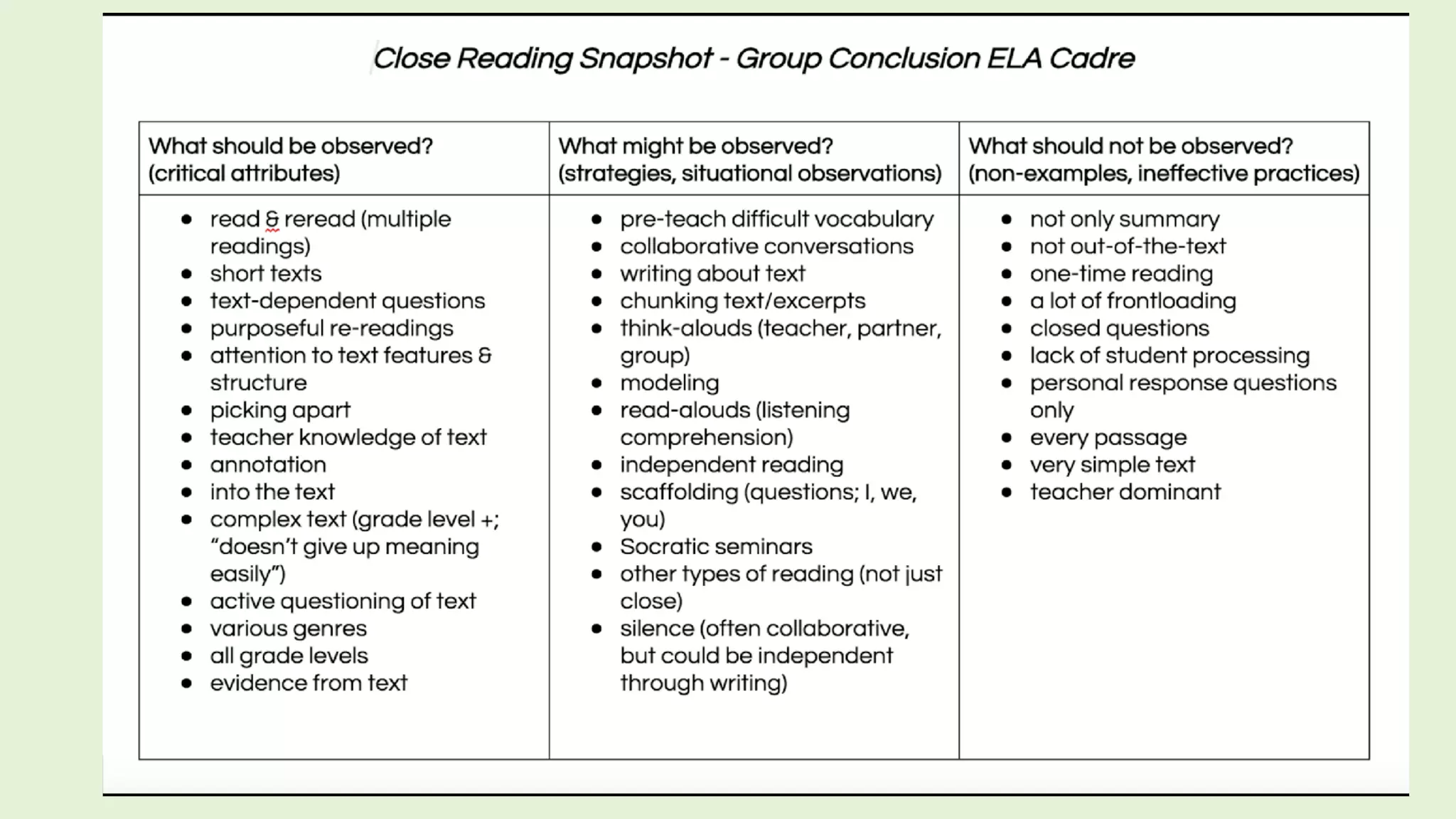
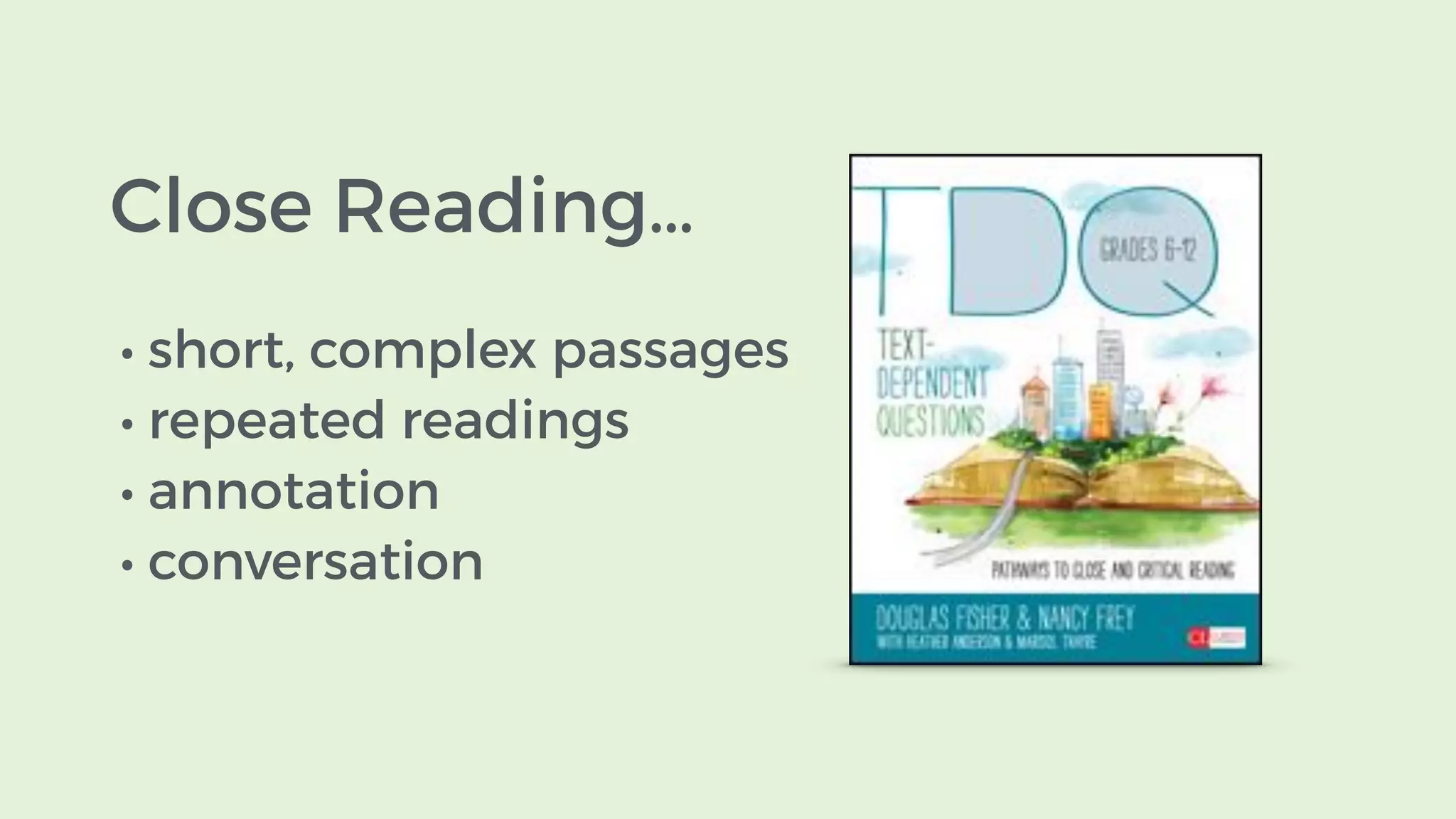
Close Reading…
• short, complex passages
• repeated readings
• annotation
• conversation
Close Reading
Complex texts
Little front loading
Let students struggle —
This is the space where learning
takes place
2.
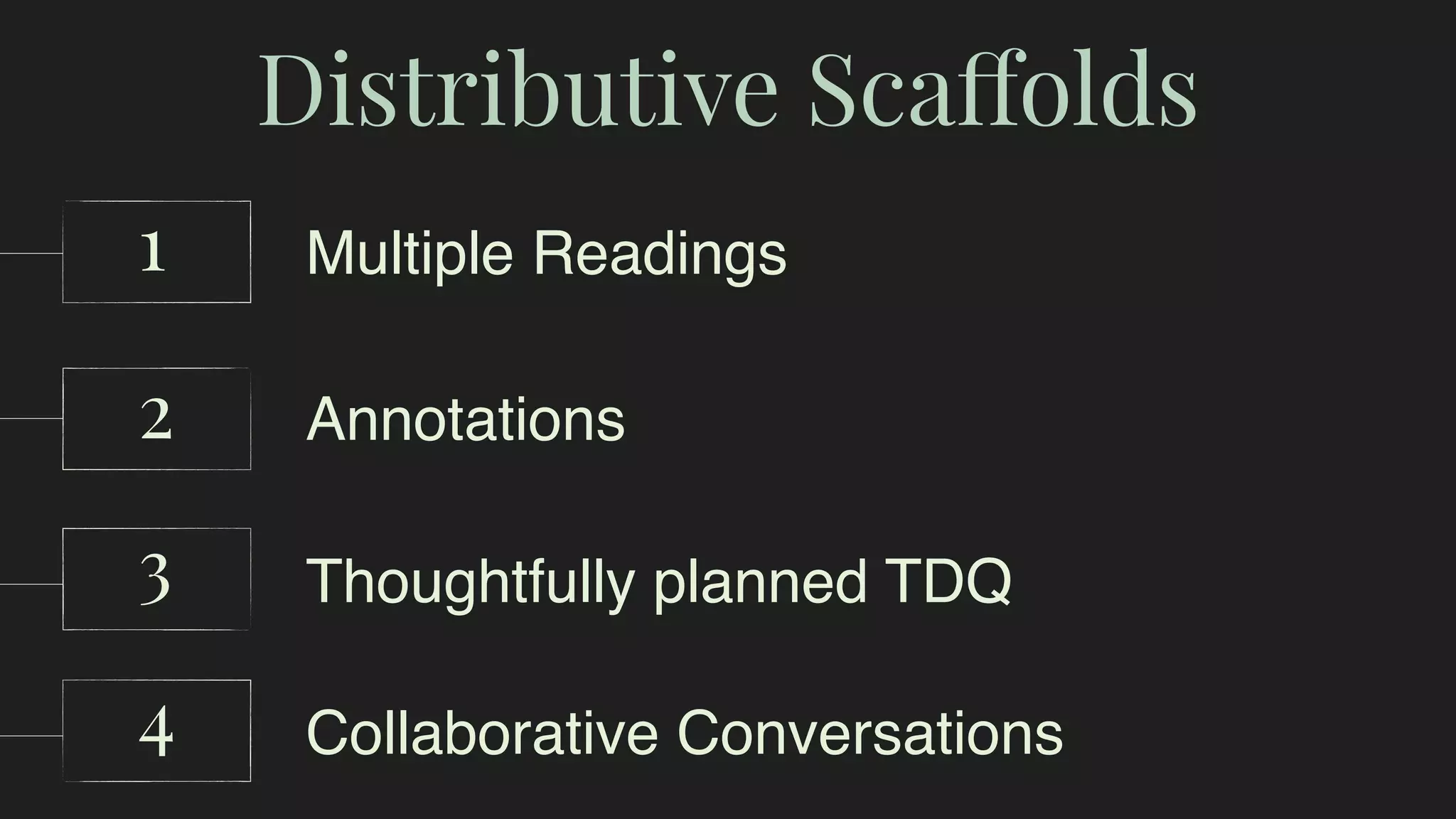
Distributive Scaffolds
Multiple Readings
Annotations
Thoughtfully planned TDQ
1
2
3
4 Collaborative Conversations
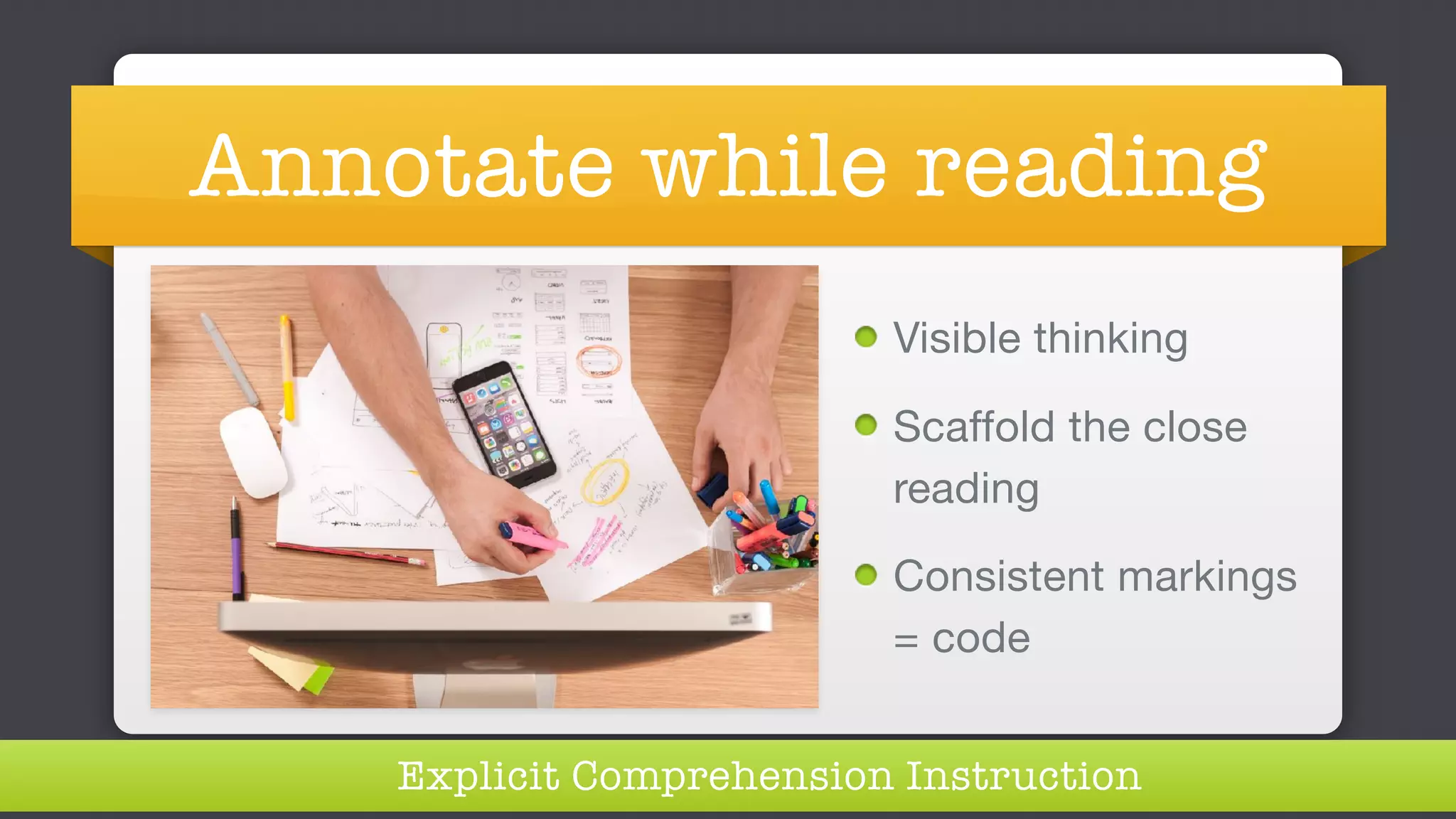
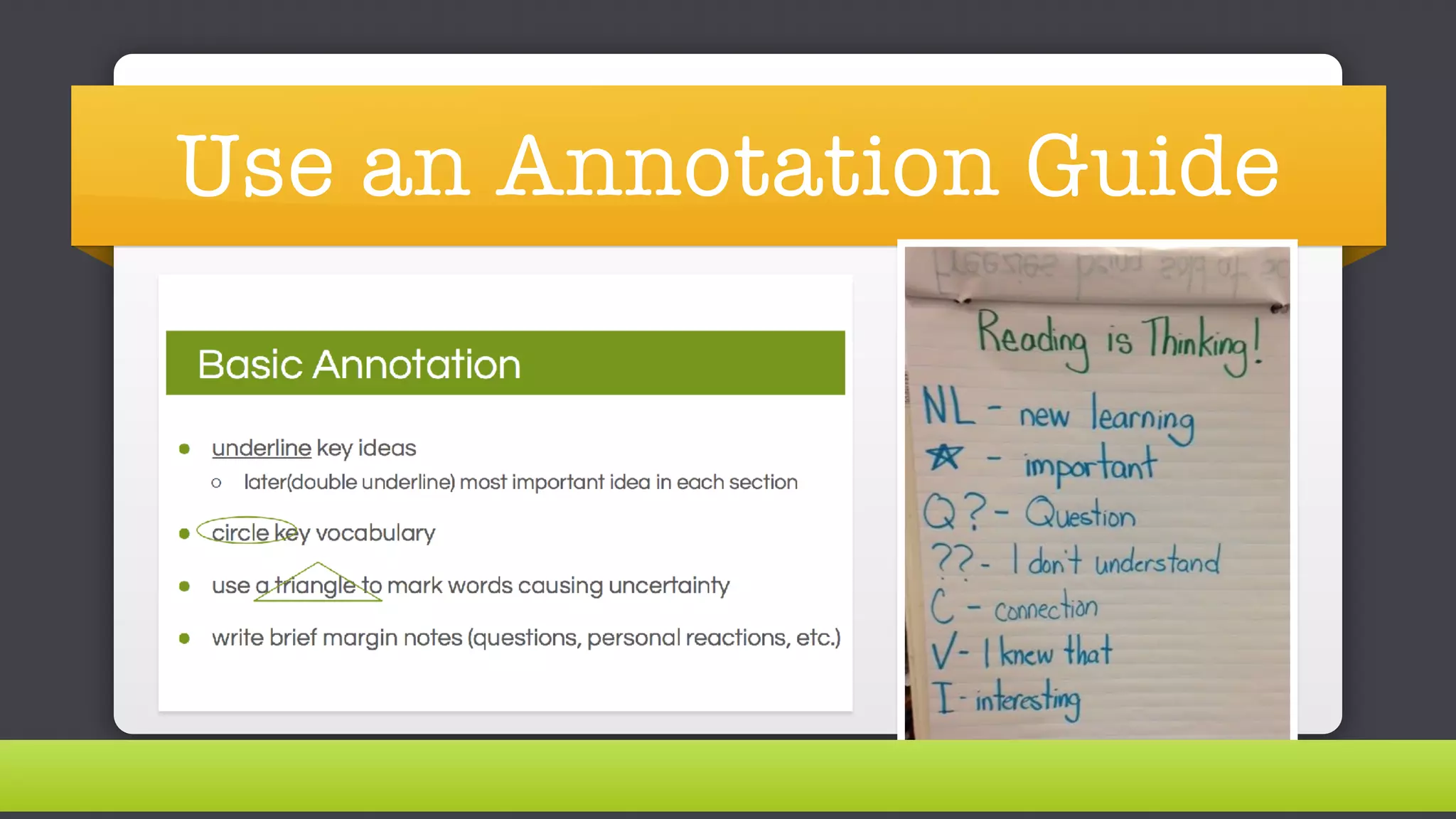
Annotate while reading
Visible thinking

Scaffold the close
reading

Consistent markings
= code
Explicit Comprehension Instruction
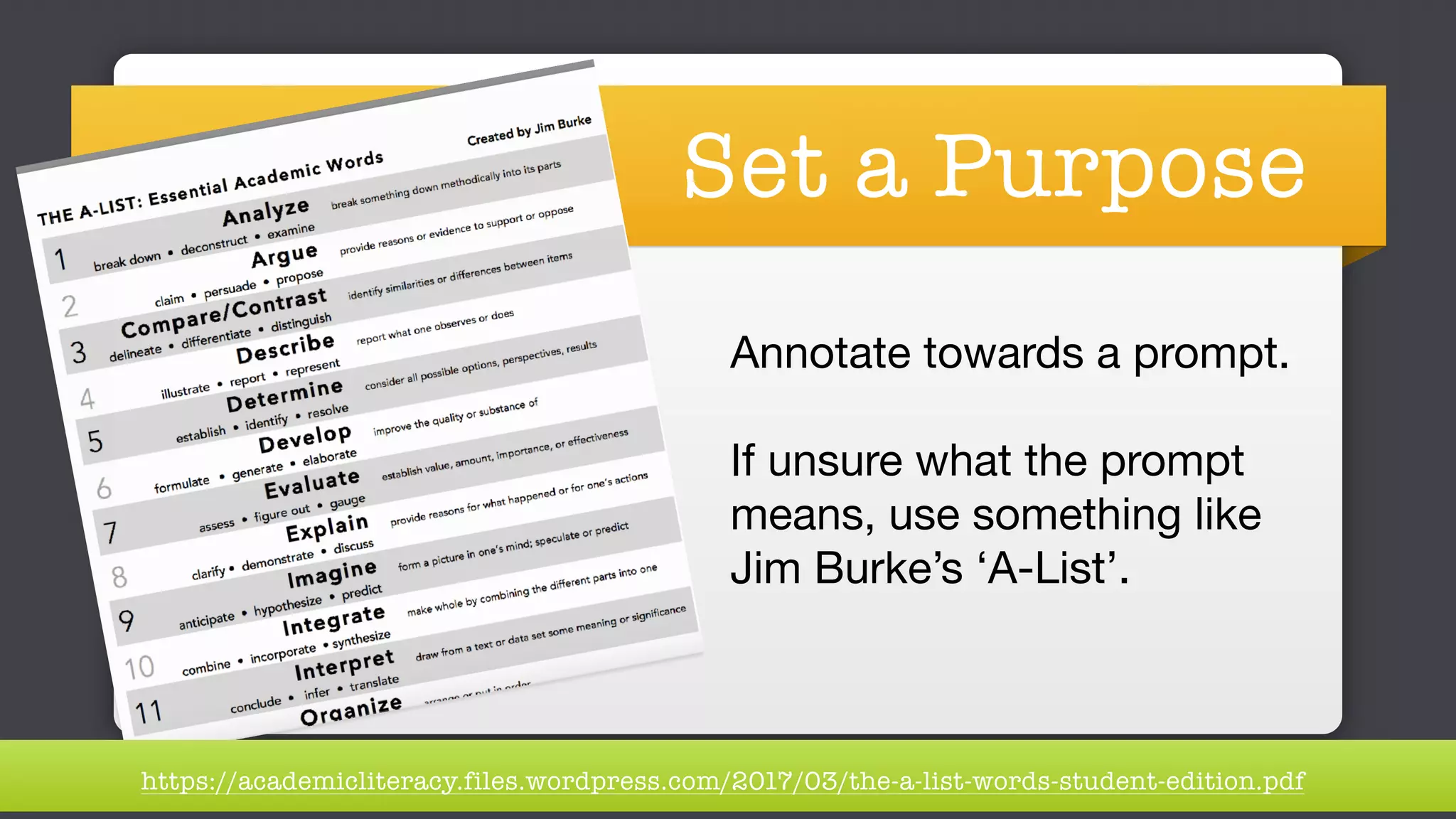
Set a Purpose
https://academicliteracy.files.wordpress.com/2017/03/the-a-list-words-student-edition.pdf
Annotate towards a prompt.

If unsure what the prompt
means, use something like
Jim Burke’s ‘A-List’.
Purpose = LEARN the content
		 Summarize a sentence or paragraph

		 Paraphrase a sentence or paragraph

		 Circle and define key words
http://www.davestuartjr.com/purposeful-annotation-close-reading/
Use an Annotation Guide
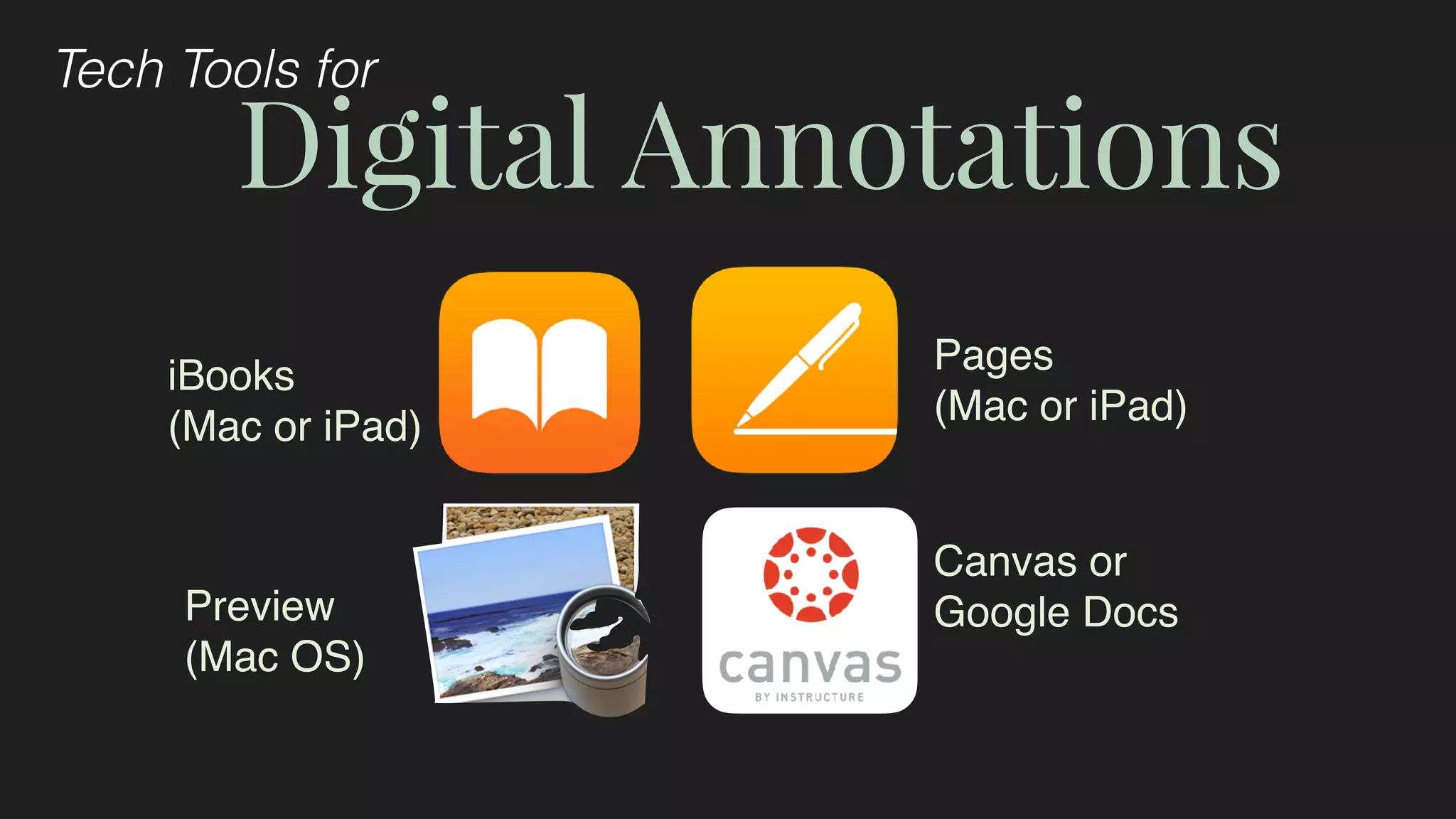
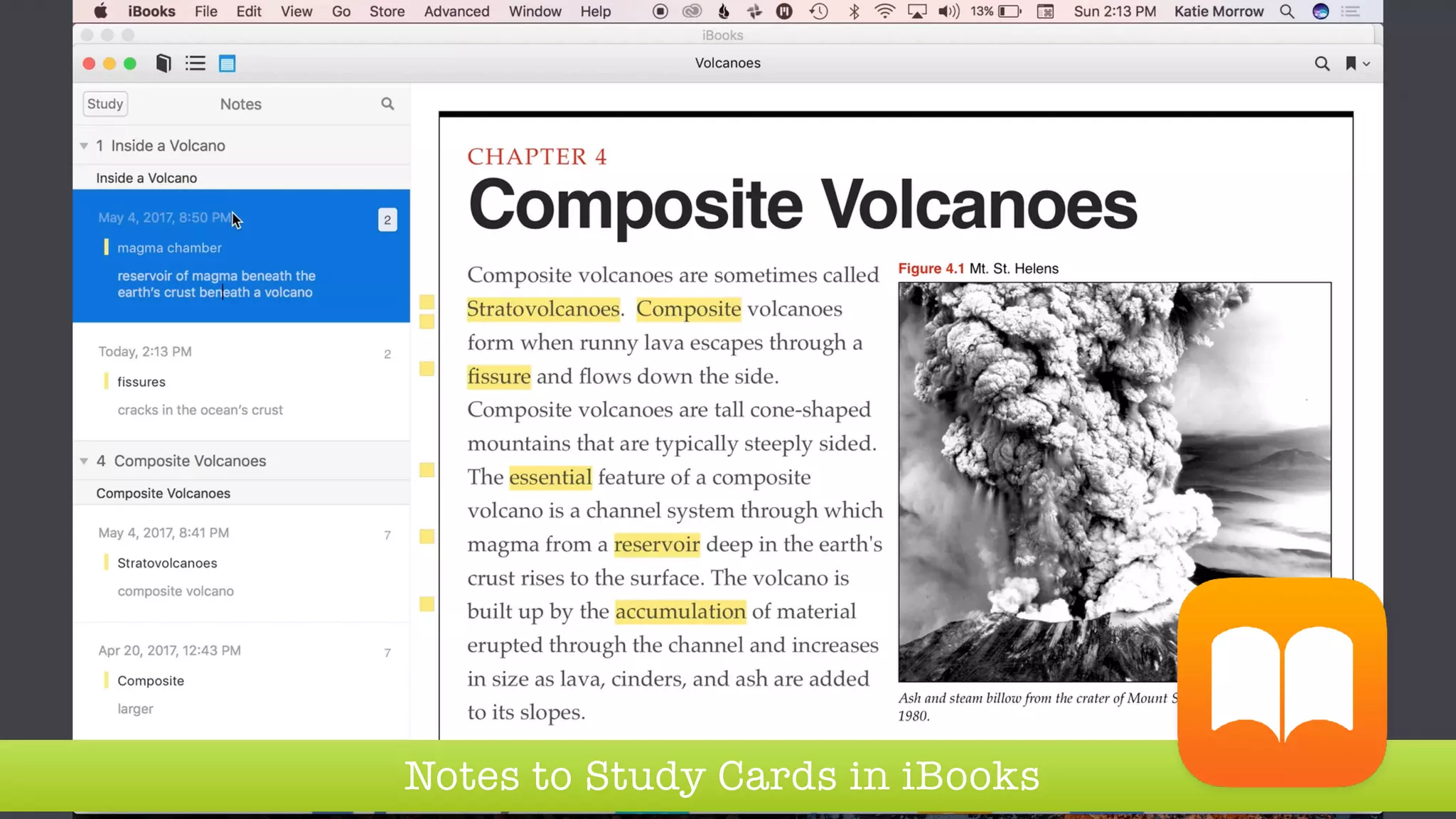
Digital Annotations
Tech Tools for
Pages
(Mac or iPad)
Canvas or
Google Docs
iBooks
(Mac or iPad)
Preview
(Mac OS)
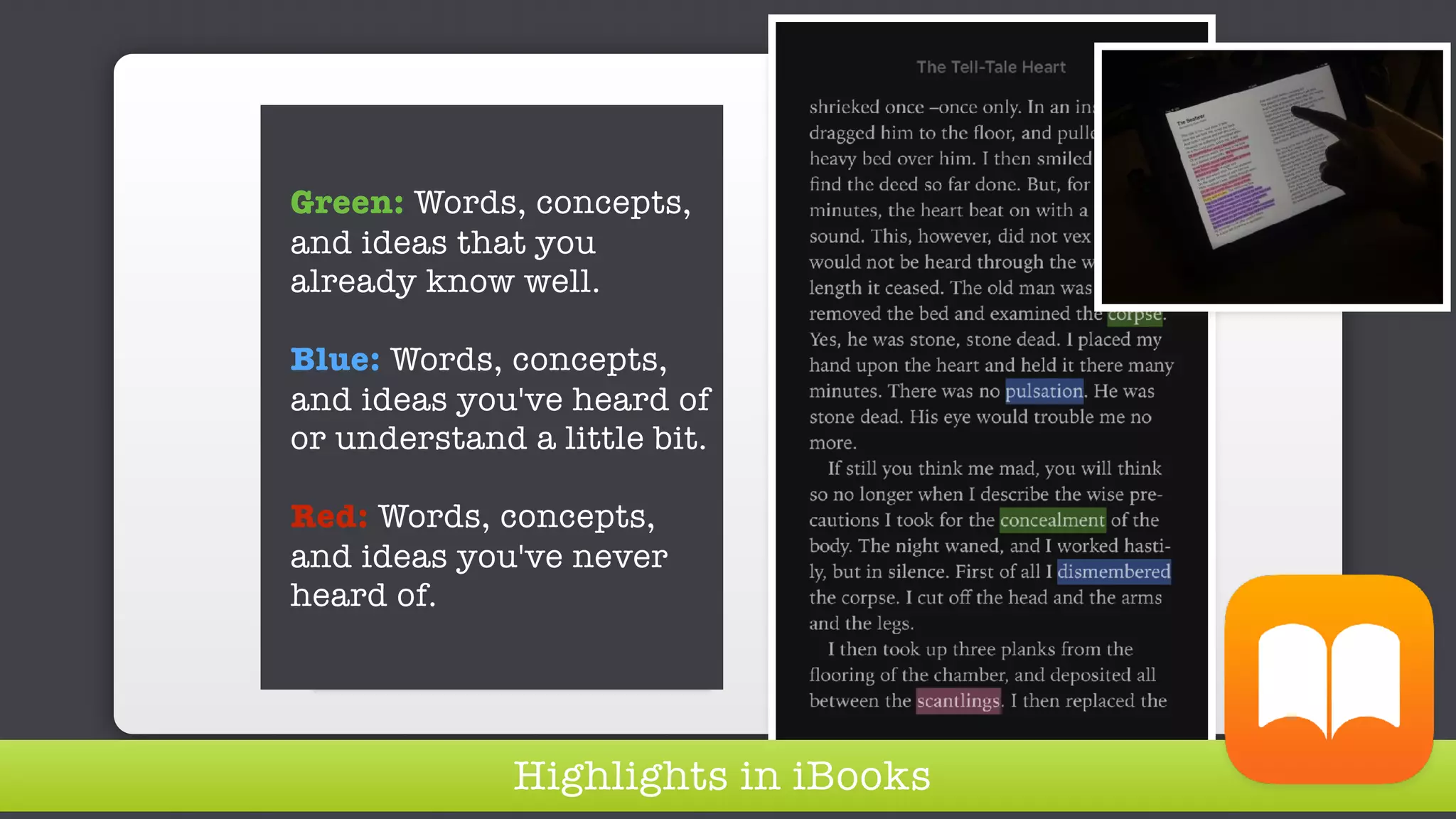
Green: Words, concepts,
and ideas that you
already know well.
Blue: Words, concepts,
and ideas you've heard of
or understand a little bit.
Red: Words, concepts,
and ideas you've never
heard of.
Highlights in iBooks
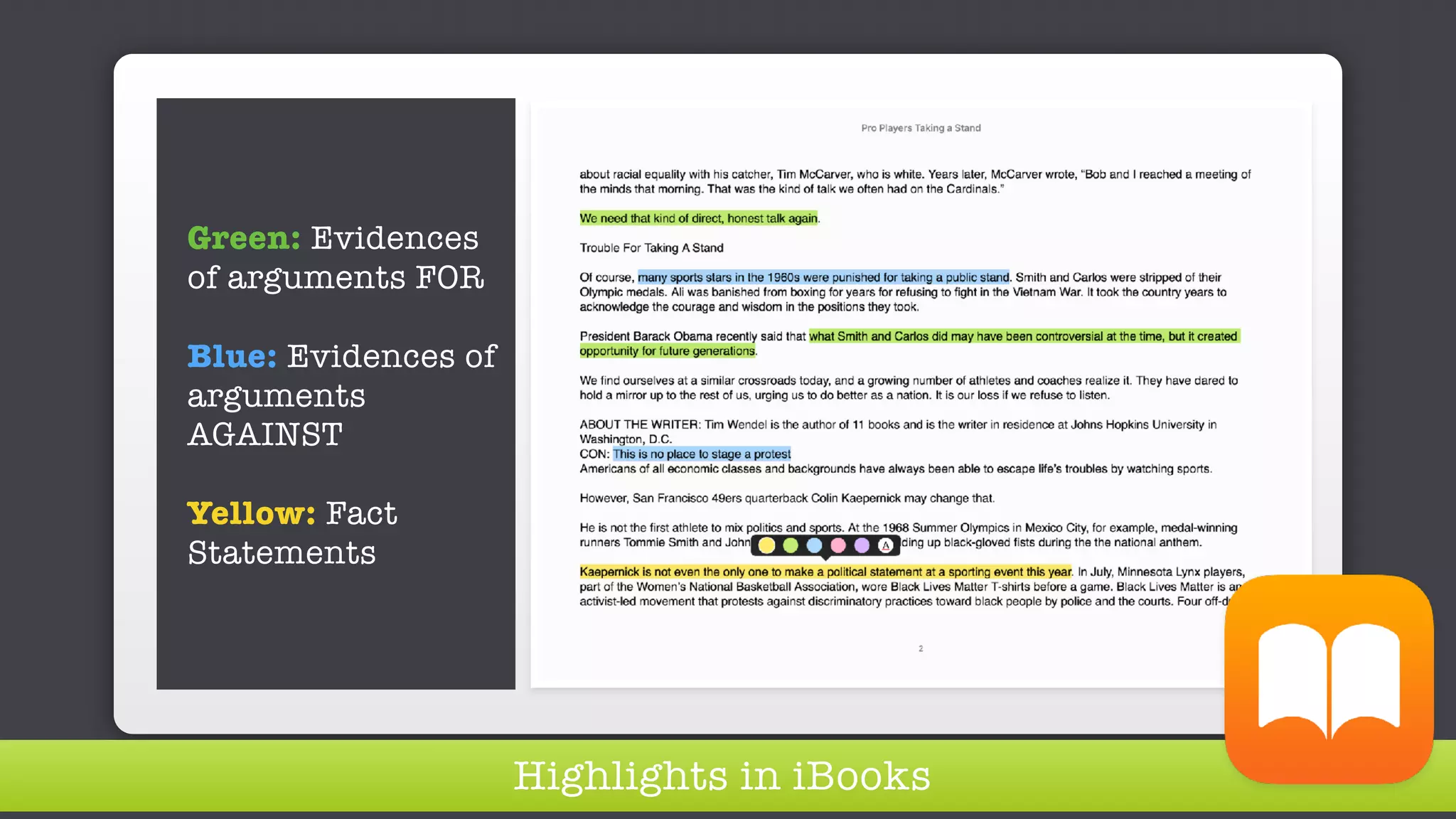
Green: Evidences
of arguments FOR
Blue: Evidences of
arguments
AGAINST
Yellow: Fact
Statements
Highlights in iBooks
Notes to Study Cards in iBooks
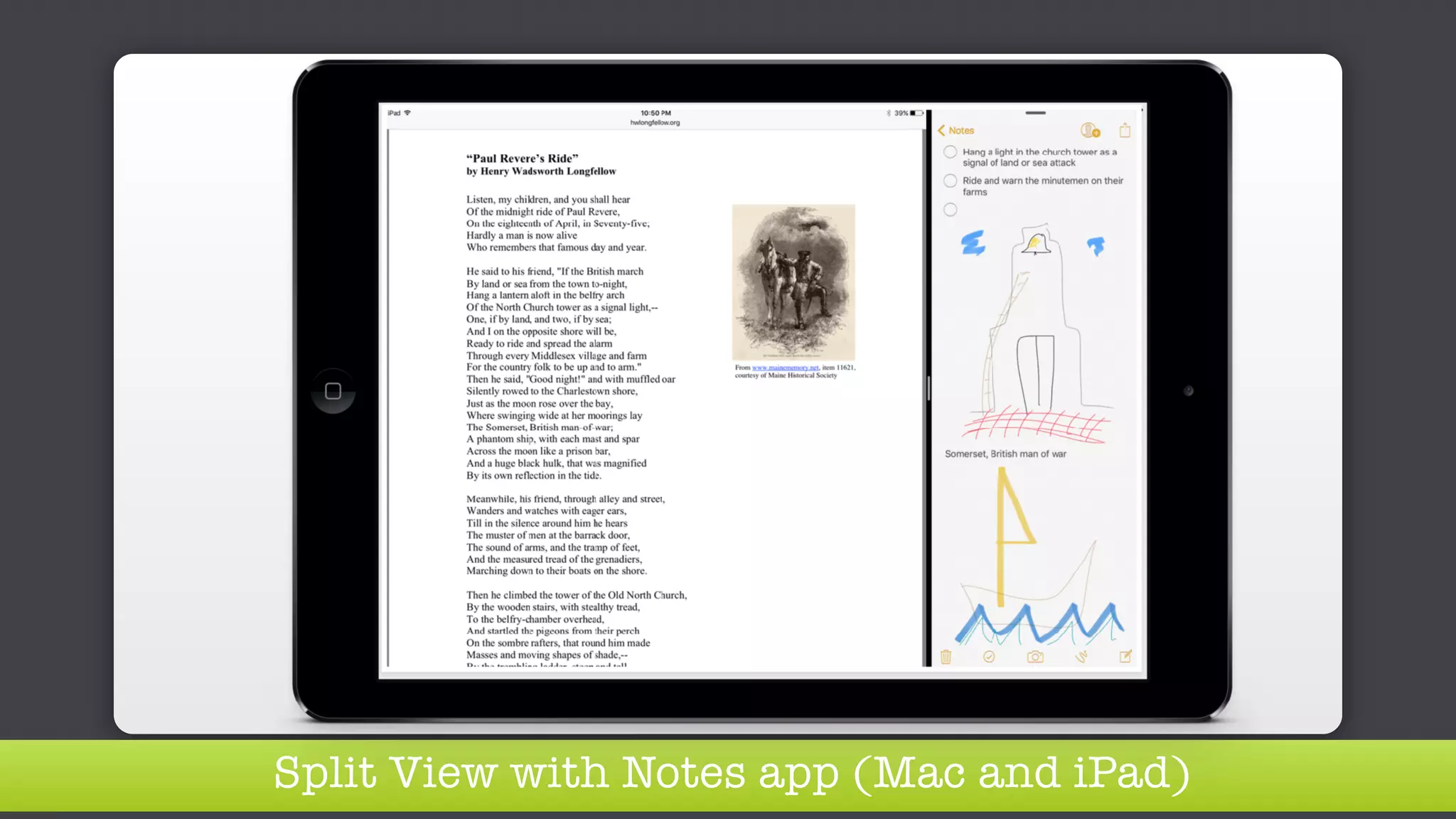
Split View with Notes app (Mac and iPad)
Open “If” pdf in ‘Preview’
Use the provided annotation guide
Annotate the text
You Try…
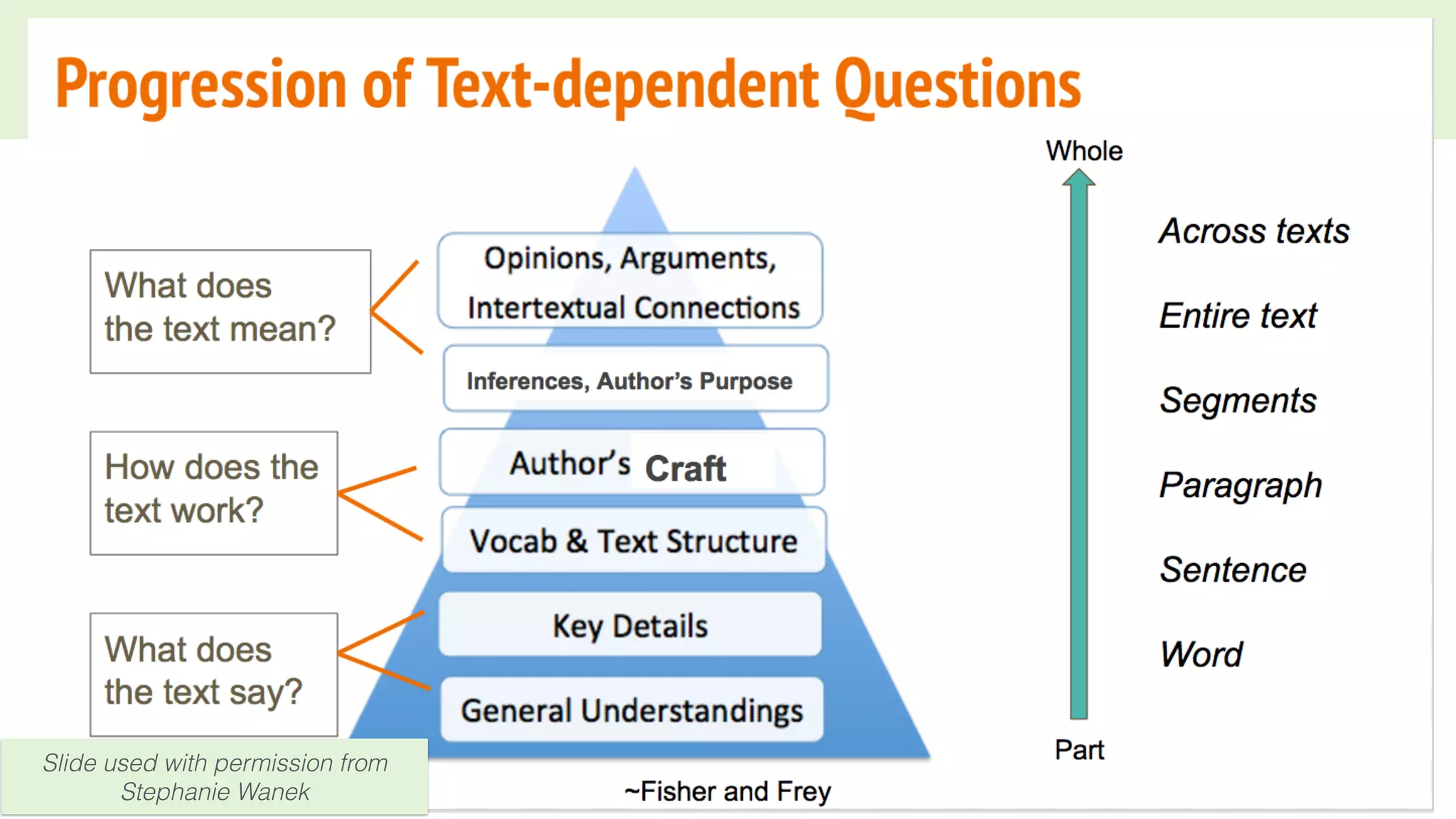
Text Dependent
Questions
Build the frame for a
close reading lesson
3.
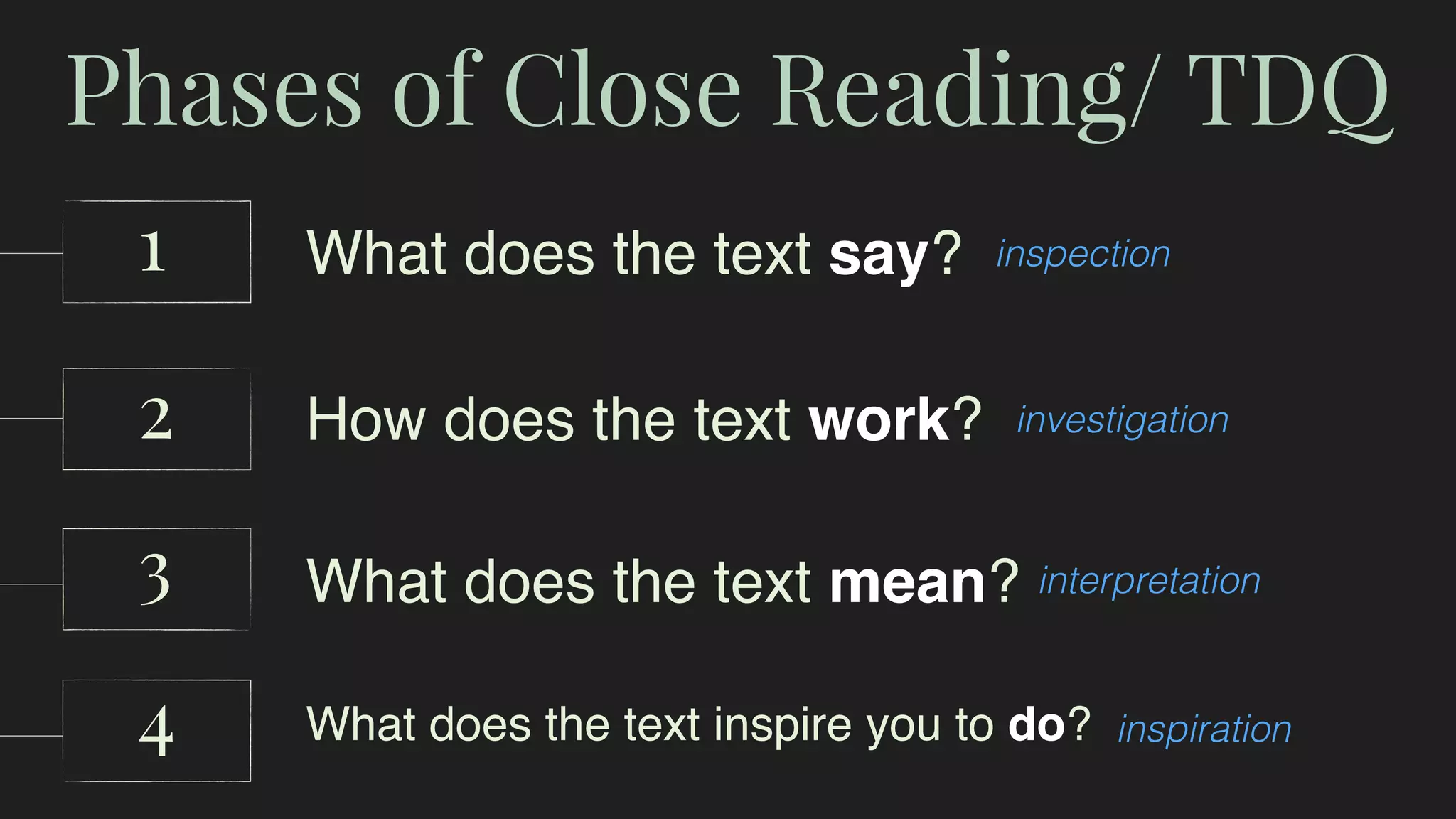
Phases of Close Reading/ TDQ
What does the text say?
How does the text work?
What does the text mean?
1
2
3
4 What does the text inspire you to do?
inspection
investigation
interpretation
inspiration
Header Text goes here
Body Level One
Body Level Two
Body Level Three
Body Level Four
Body Level Five
Slide used with permission from
Stephanie Wanek
Browse through the examples of text + TDQs
Open ‘Eisenhowers_D-Day_text’
With a partner try to craft one good text-
dependent question at each Level.
You Try…
Classroom
Discussions
Facilitate meaningful collaboration
4.
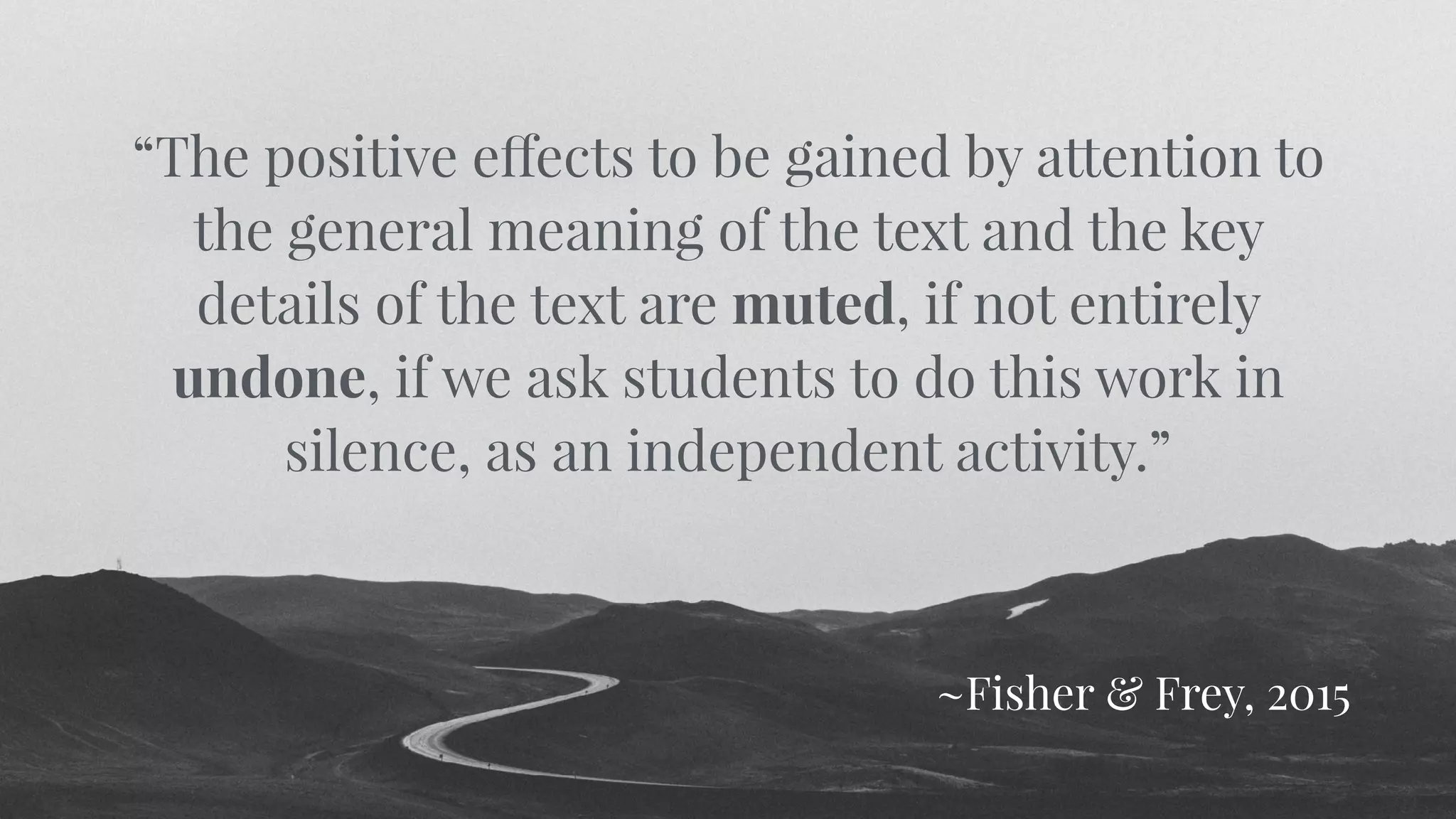
“The positive effects to be gained by attention to
the general meaning of the text and the key
details of the text are muted, if not entirely
undone, if we ask students to do this work in
silence, as an independent activity.”
~Fisher & Frey, 2015
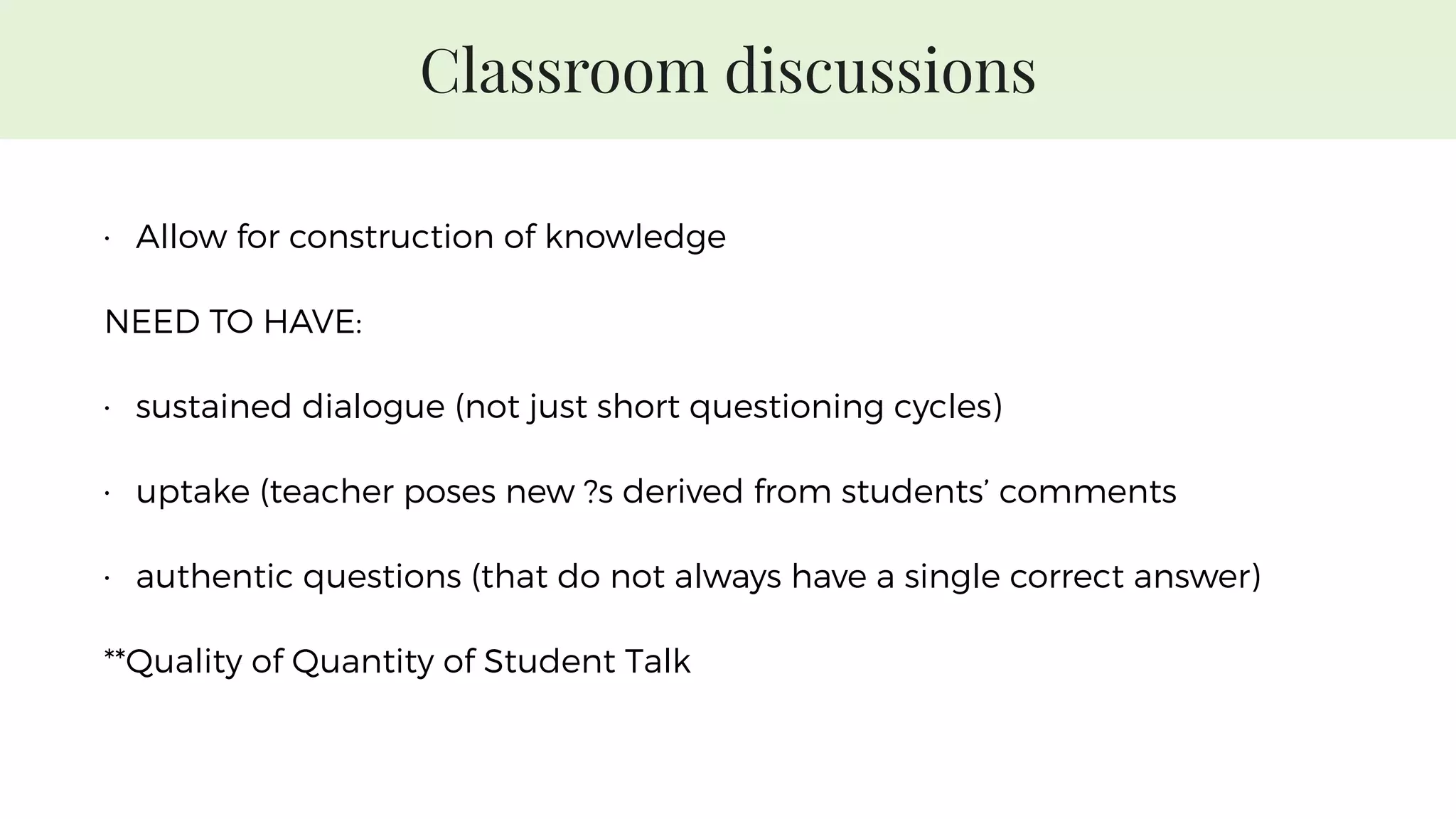
Classroom discussions
• Allow for construction of knowledge
NEED TO HAVE:
• sustained dialogue (not just short questioning cycles)
• uptake (teacher poses new ?s derived from students’ comments
• authentic questions (that do not always have a single correct answer)
**Quality of Quantity of Student Talk
In discussion and instructional
conversation “meaning is realized only
in the process of active, responsive
understanding.”
~Nystrand, 2006
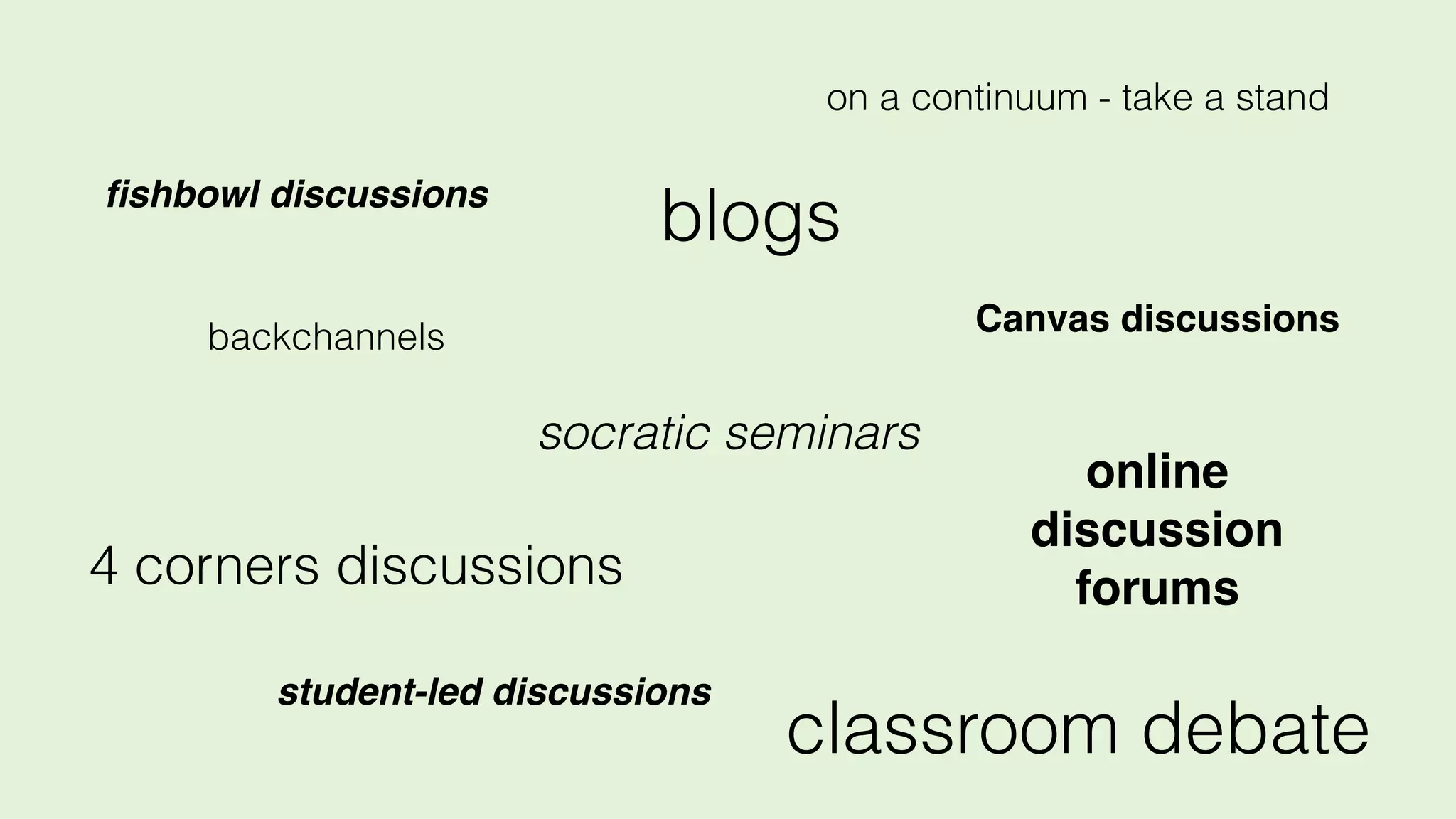
online
discussion
forums
socratic seminars
fishbowl discussions
4 corners discussions
on a continuum - take a stand
blogs
Canvas discussionsbackchannels
student-led discussions
classroom debate
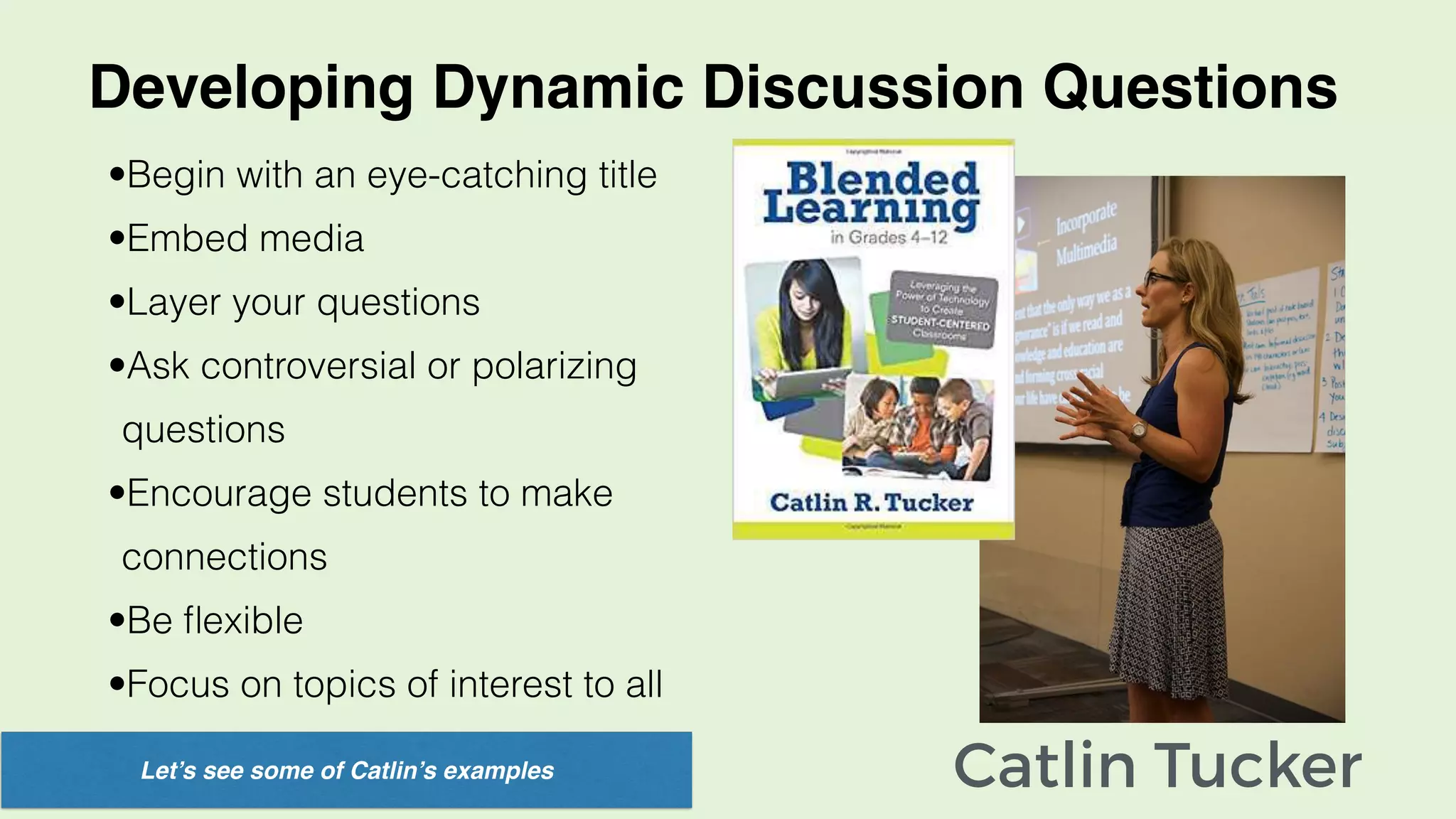
Catlin Tucker
Developing Dynamic Discussion Questions
•Begin with an eye-catching title
•Embed media
•Layer your questions
•Ask controversial or polarizing
questions
•Encourage students to make
connections
•Be flexible
•Focus on topics of interest to all
Let’s see some of Catlin’s examples
With a partner (or independently) craft one
dynamic discussion prompt and add it to the
Canvas post
You Try…
Text Dependent
Writing
“Writing is not caught;
it must be taught.”
~Anita Archer
5.
1
Your subhead goes here
“Short writing often.
Not just long writing seldom.”
~Anita Archer
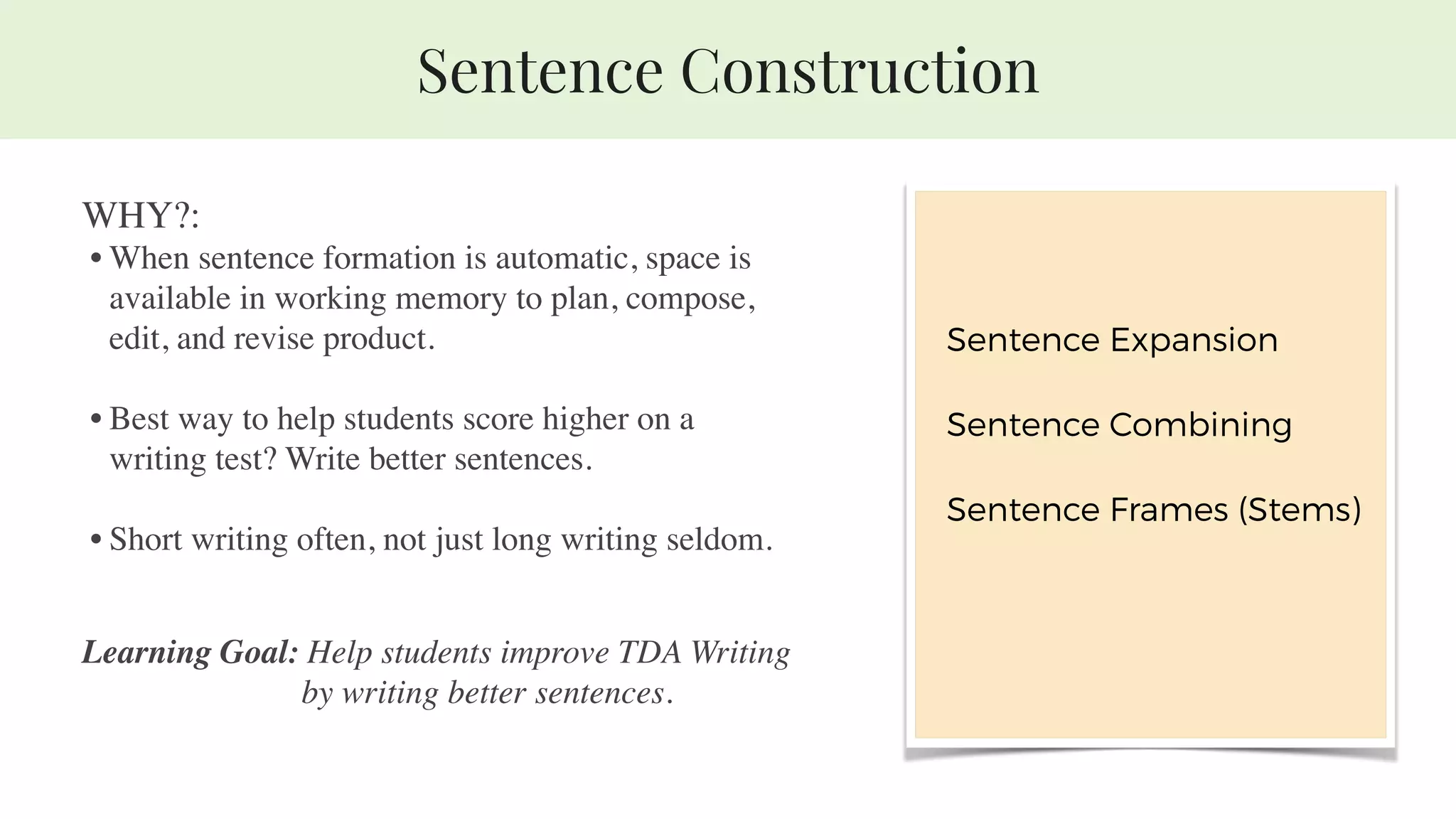
Sentence Construction
Sentence Expansion
Sentence Combining
Sentence Frames (Stems)
WHY?:
• When sentence formation is automatic, space is
available in working memory to plan, compose,
edit, and revise product.

• Best way to help students score higher on a
writing test? Write better sentences. 

• Short writing often, not just long writing seldom.

Learning Goal: Help students improve TDA Writing
                         by writing better sentences.
Complete the Practices in Canvas:
- Sentence Expansion
- Sentence Combining
- Sentence Frames
You Try…
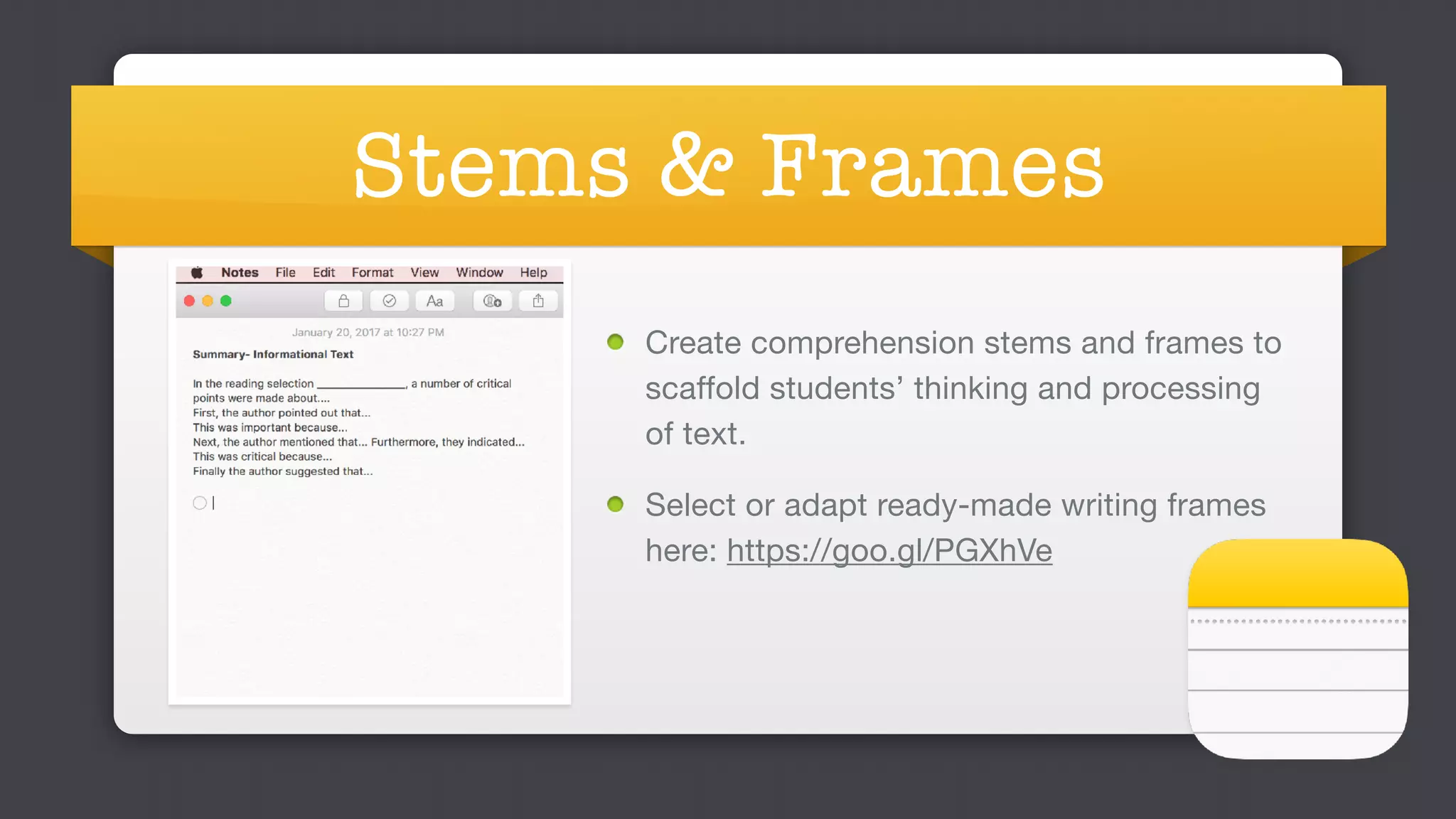
Stems & Frames
Create comprehension stems and frames to
scaffold students’ thinking and processing
of text.

Select or adapt ready-made writing frames
here: https://goo.gl/PGXhVe
Split Screen View
TDA: Text Dependent
Analysis
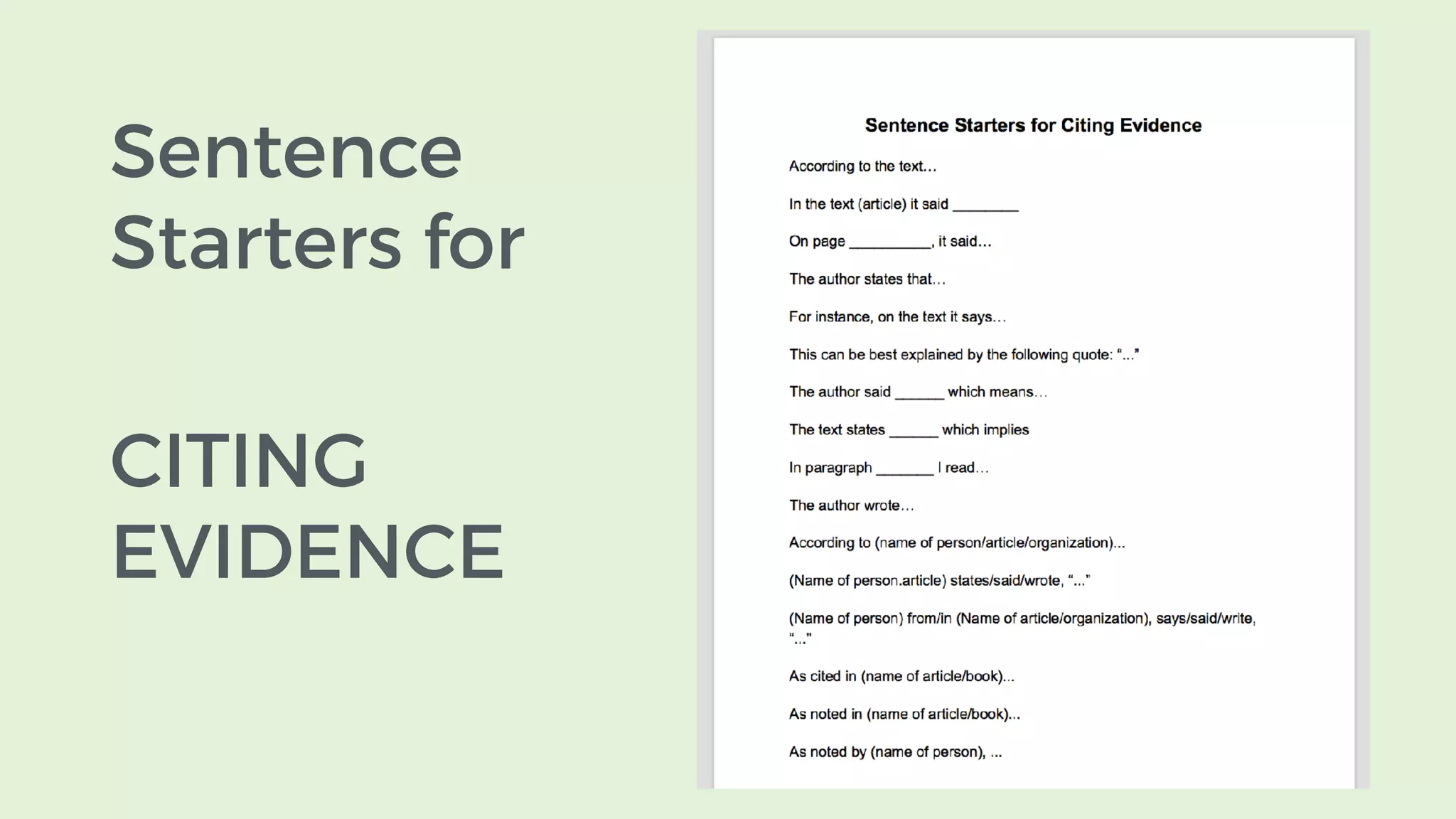
EVIDENCE
Sentence
Starters for
CITING
EVIDENCE
R: Restate the
question
A: Answer the
question
C: Cite examples
from the text
E: Extend your
answer
Assessment
Peer Review
Audio/Video Comments
Rubrics
6.
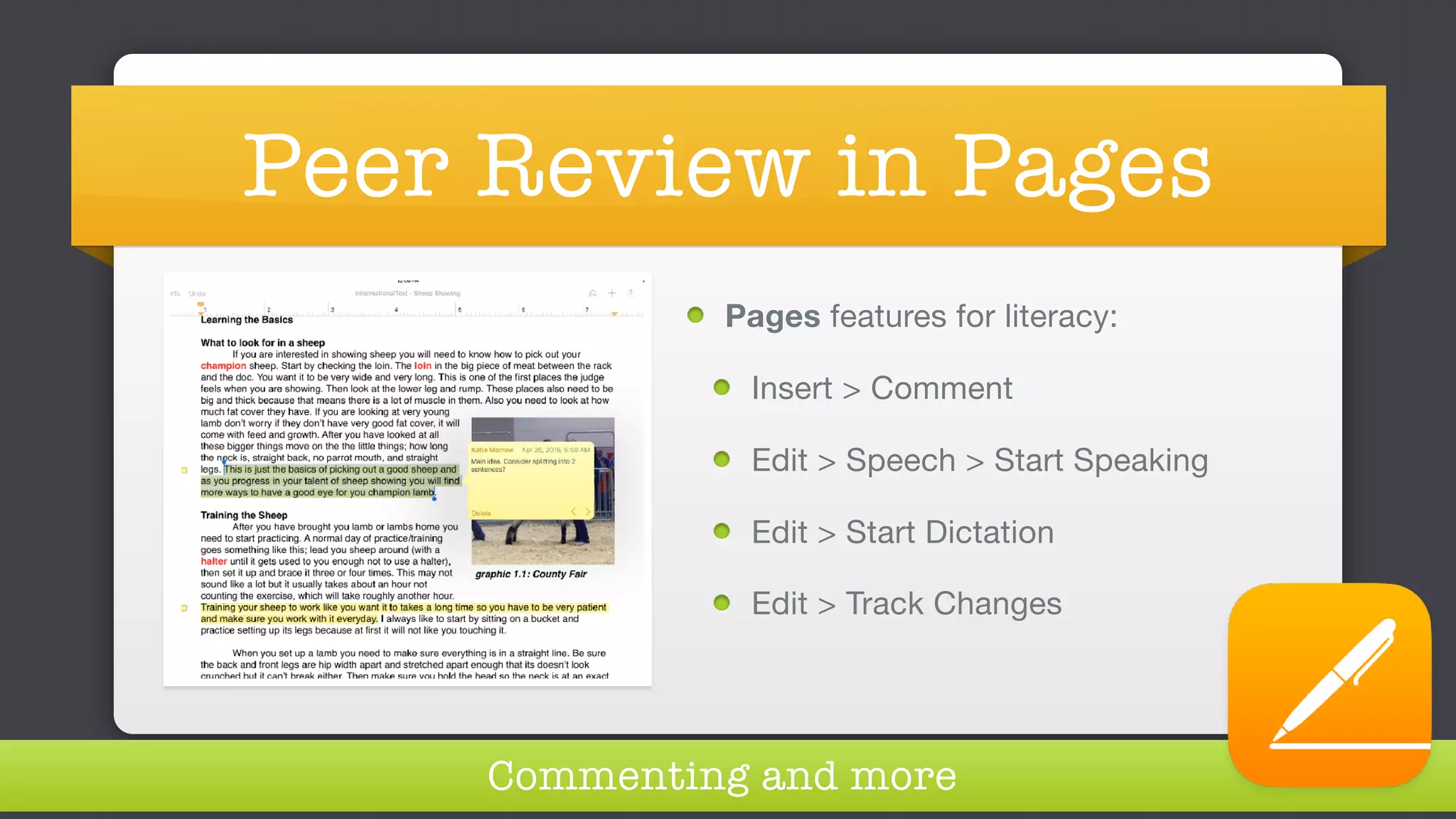
Peer Review in Pages
Pages features for literacy:

Insert > Comment

Edit > Speech > Start Speaking

Edit > Start Dictation

Edit > Track Changes
Commenting and more
Peer Review in G Docs
Google Docs features for literacy:

Insert > Comment

Accessibiltiy > Speak > Speak
Selection

Tools > Voice Typing

View > Mode > Suggesting
https://docs.google.com/a/esu8ne.org/document/d/
Open a Canvas course for which you are the
Teacher and explore the assessment options that
seem most beneficial to you.
You Try…
Exit Ticket
T/Y
in Canvas course

Critical Literacy: Text Dependent Reading and Writing for All