J U AN A M O R AL C AM AC H O
J U AN A M O R AL’ S E N G L I S H S I T E
Past perfect simple vs Simple
past
What is it?
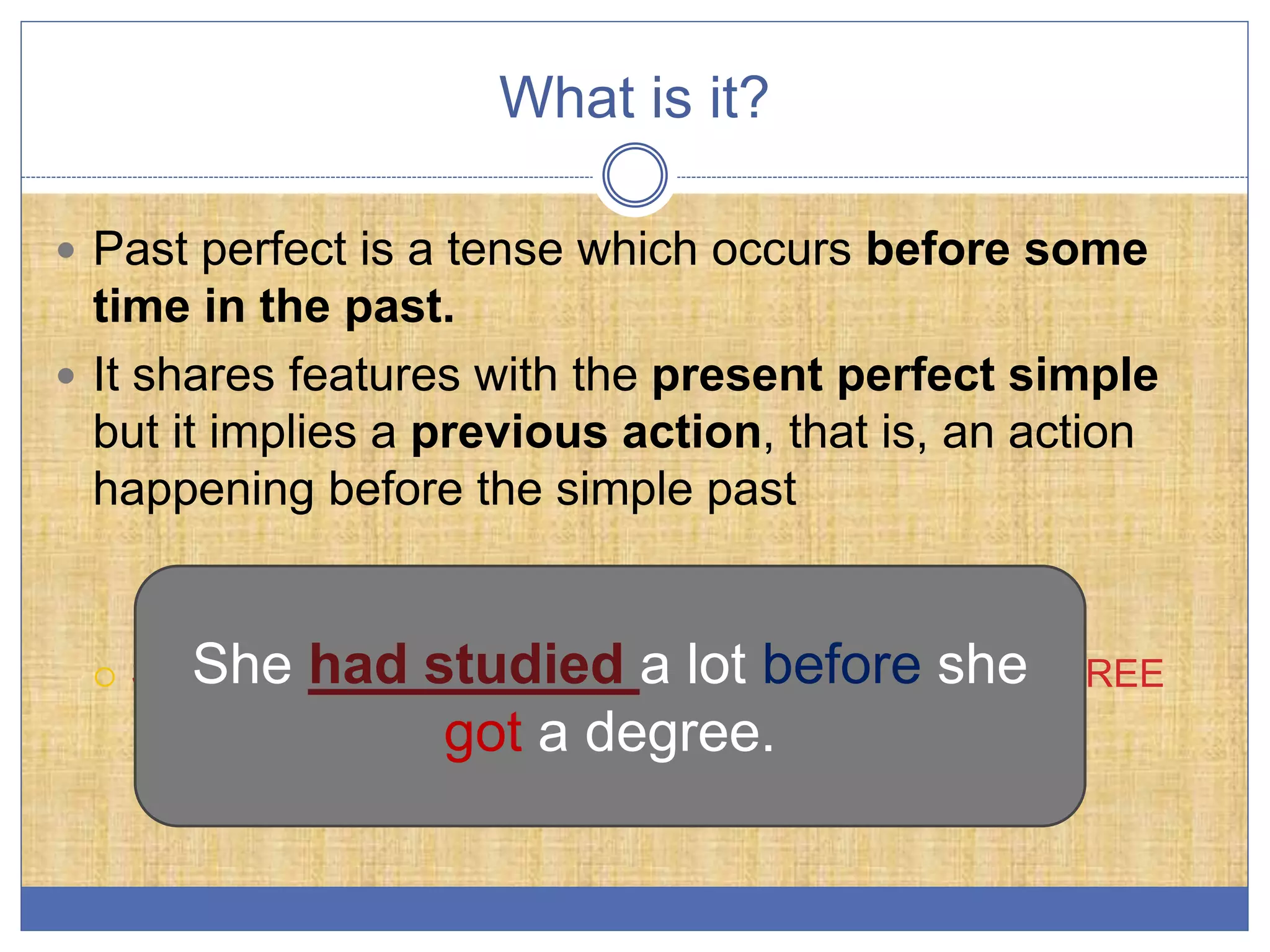
 Past perfect is a tense which occurs before some
time in the past.
 It shares features with the present perfect simple
but it implies a previous action, that is, an action
happening before the simple past
 SHE HAD STUDIED A LOT BEFORE SHE GOT A DEGREEShe had studied a lot before she
got a degree.
FORM
 PERFECT TENSE:
 It uses the past participle (third column or
ed-ending) of main verb.
 Perfect tenses also need HAVE as auxiliary
 PAST: It means that the auxiliary verb (HAVE) is
in the past(HAD)
 EXAMPLES:
You had studied
SHE
HADN’T
STUDIED
HAD THEY
STUDIED?
MARKERS/LINKERS
BEFORE, AFTER, LATER
• I went back home after I had visited my sister
• THE PAST PERFECT EXPRESSES THE OLDER
ACTION
ALREADY, YET, JUST, STILL, PREVIOUSLY
• I ate the dinner I had previously/already cooked.
• When I arrived at Jane’s, she had already gone
ADVERB PLACEMENT:
BETWEEN AUXILIARY AND MAIN VERB
• She had never visited England before last summer
TIPS ON USAGE
NOT VERY COMMONLY USED, BUT…
USED IN CONDITIONAL SENTENCES
USED IN REPORTED SPEECH
TRANSLATED BY PRETERITO ANTERIOR (HUBE ESTUDIADO),
PRETÉRICO PLUSCUAMPERFECTO (HUBIERA ESTUDIADO)

Past perfect simple vs simple past

  • 1.
    J U ANA M O R AL C AM AC H O J U AN A M O R AL’ S E N G L I S H S I T E Past perfect simple vs Simple past
  • 2.
    What is it? Past perfect is a tense which occurs before some time in the past.  It shares features with the present perfect simple but it implies a previous action, that is, an action happening before the simple past  SHE HAD STUDIED A LOT BEFORE SHE GOT A DEGREEShe had studied a lot before she got a degree.
  • 3.
    FORM  PERFECT TENSE: It uses the past participle (third column or ed-ending) of main verb.  Perfect tenses also need HAVE as auxiliary  PAST: It means that the auxiliary verb (HAVE) is in the past(HAD)  EXAMPLES: You had studied SHE HADN’T STUDIED HAD THEY STUDIED?
  • 4.
    MARKERS/LINKERS BEFORE, AFTER, LATER •I went back home after I had visited my sister • THE PAST PERFECT EXPRESSES THE OLDER ACTION ALREADY, YET, JUST, STILL, PREVIOUSLY • I ate the dinner I had previously/already cooked. • When I arrived at Jane’s, she had already gone ADVERB PLACEMENT: BETWEEN AUXILIARY AND MAIN VERB • She had never visited England before last summer
  • 5.
    TIPS ON USAGE NOTVERY COMMONLY USED, BUT… USED IN CONDITIONAL SENTENCES USED IN REPORTED SPEECH TRANSLATED BY PRETERITO ANTERIOR (HUBE ESTUDIADO), PRETÉRICO PLUSCUAMPERFECTO (HUBIERA ESTUDIADO)