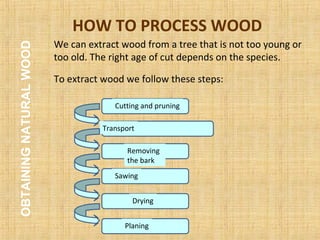
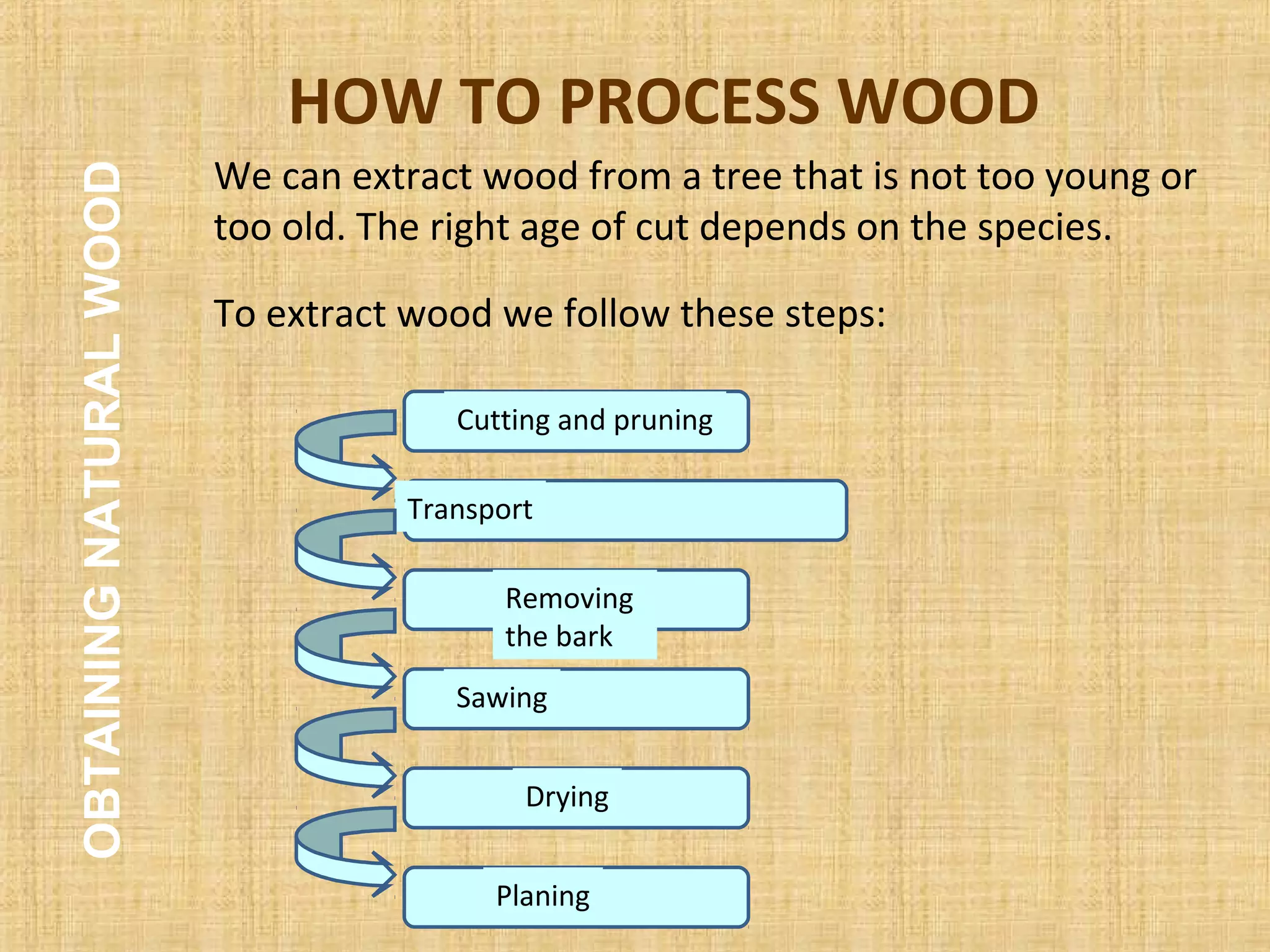
Cutting and pruning
Removing
the bark
Transport
Sawing
Drying
Planing
HOW TO PROCESS WOOD
We can extract wood from a tree that is not too young or
too old. The right age of cut depends on the species.
To extract wood we follow these steps:
OBTAININGNATURALWOOD
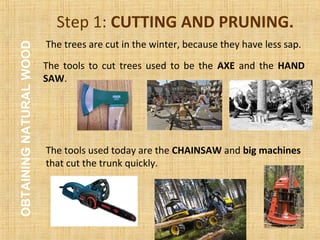
The tools to cut trees used to be the AXE and the HAND
SAW.
Step 1: CUTTING AND PRUNING.
The trees are cut in the winter, because they have less sap.
OBTAININGNATURALWOOD
The tools used today are the CHAINSAW and big machines
that cut the trunk quickly.
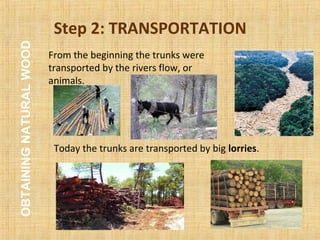
Today the trunks are transported by big lorries.
From the beginning the trunks were
transported by the rivers flow, or
animals.
Step 2: TRANSPORTATIONOBTAININGNATURALWOOD
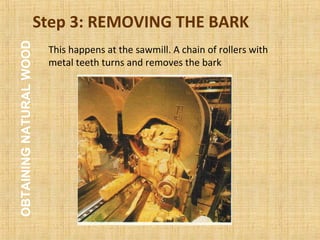
Step 3: REMOVING THE BARK
This happens at the sawmill. A chain of rollers with
metal teeth turns and removes the bark
OBTAININGNATURALWOOD
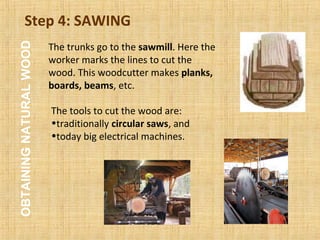
Step 4: SAWING
The tools to cut the wood are:
•traditionally circular saws, and
•today big electrical machines.
The trunks go to the sawmill. Here the
worker marks the lines to cut the
wood. This woodcutter makes planks,
boards, beams, etc.
OBTAININGNATURALWOOD
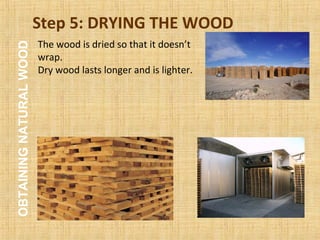
Step 5: DRYING THE WOOD
The wood is dried so that it doesn’t
wrap.
Dry wood lasts longer and is lighter.
OBTAININGNATURALWOOD
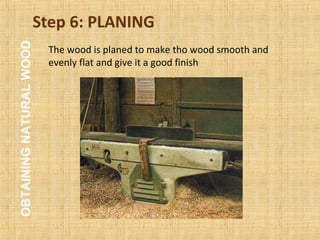
Step 6: PLANING
The wood is planed to make tho wood smooth and
evenly flat and give it a good finish
OBTAININGNATURALWOOD

Processing wood

  • 1.
    Cutting and pruning Removing thebark Transport Sawing Drying Planing HOW TO PROCESS WOOD We can extract wood from a tree that is not too young or too old. The right age of cut depends on the species. To extract wood we follow these steps: OBTAININGNATURALWOOD
  • 2.
    The tools tocut trees used to be the AXE and the HAND SAW. Step 1: CUTTING AND PRUNING. The trees are cut in the winter, because they have less sap. OBTAININGNATURALWOOD The tools used today are the CHAINSAW and big machines that cut the trunk quickly.
  • 3.
    Today the trunksare transported by big lorries. From the beginning the trunks were transported by the rivers flow, or animals. Step 2: TRANSPORTATIONOBTAININGNATURALWOOD
  • 4.
    Step 3: REMOVINGTHE BARK This happens at the sawmill. A chain of rollers with metal teeth turns and removes the bark OBTAININGNATURALWOOD
  • 5.
    Step 4: SAWING Thetools to cut the wood are: •traditionally circular saws, and •today big electrical machines. The trunks go to the sawmill. Here the worker marks the lines to cut the wood. This woodcutter makes planks, boards, beams, etc. OBTAININGNATURALWOOD
  • 6.
    Step 5: DRYINGTHE WOOD The wood is dried so that it doesn’t wrap. Dry wood lasts longer and is lighter. OBTAININGNATURALWOOD
  • 7.
    Step 6: PLANING Thewood is planed to make tho wood smooth and evenly flat and give it a good finish OBTAININGNATURALWOOD