The Process II igc
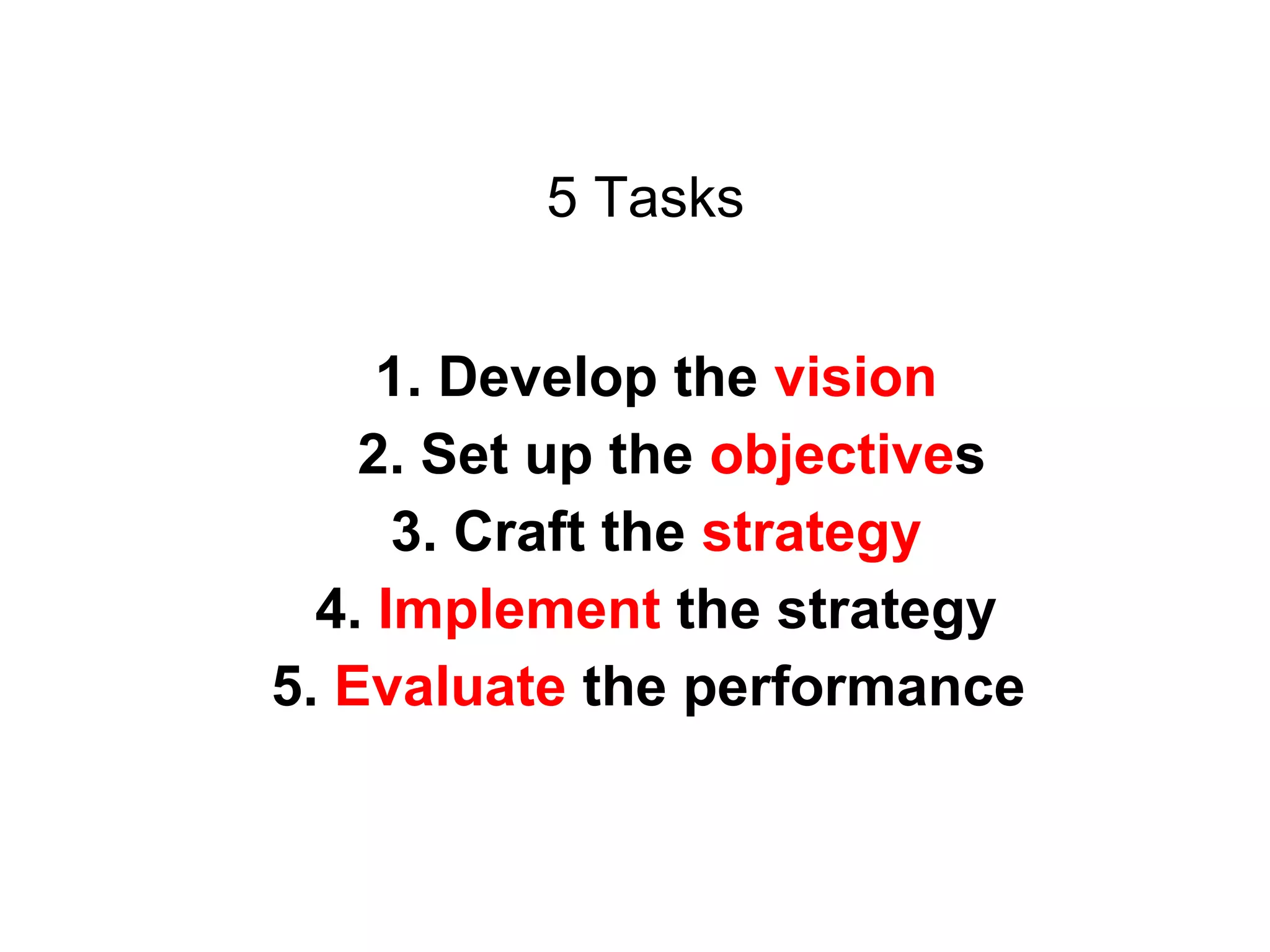
5 Tasks 1. Develop the  vision 2. Set up the  objective s 3. Craft the  strategy 4.  Implement  the strategy 5.  Evaluate  the performance
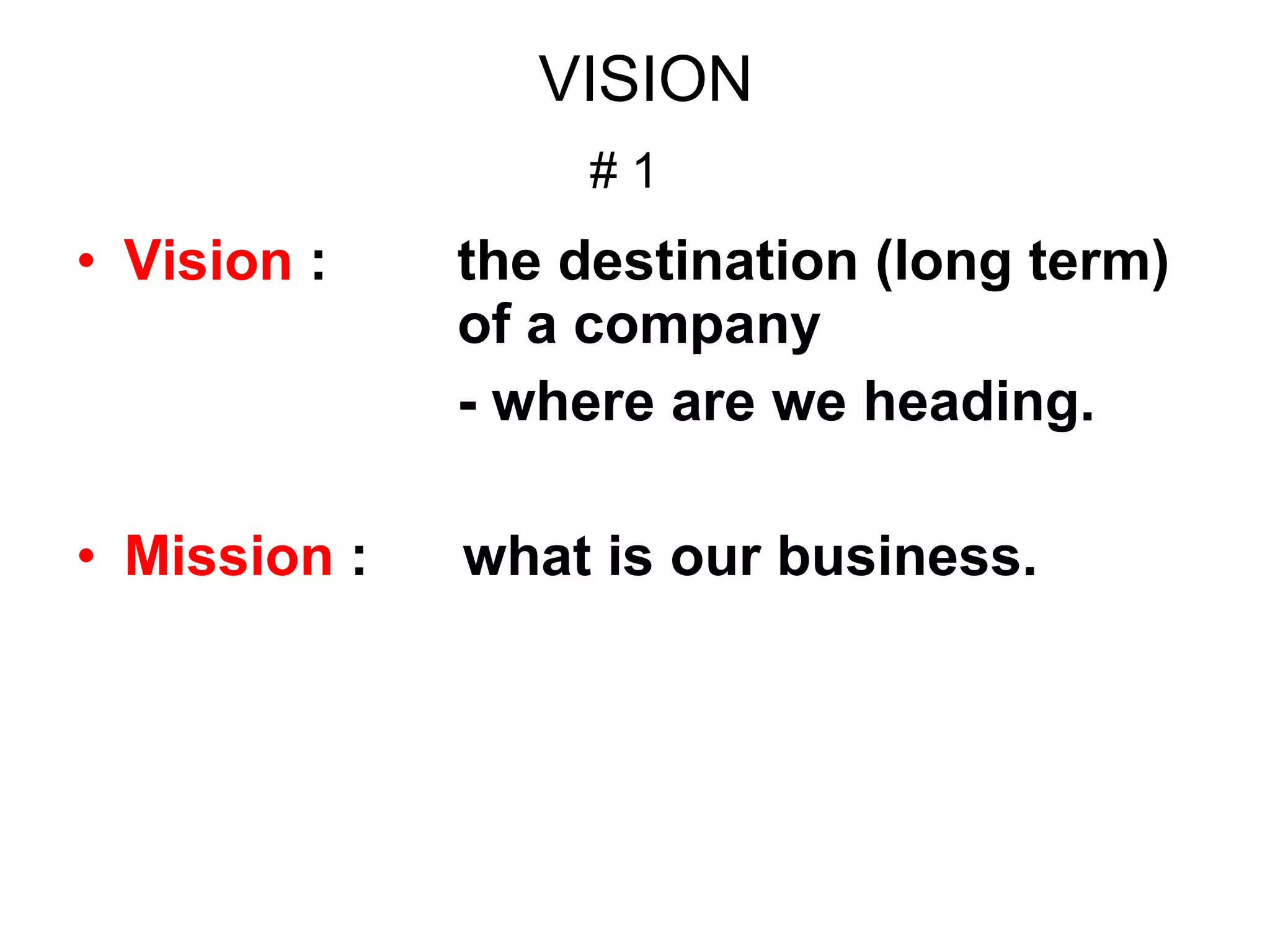
VISION # 1   Vision  : the destination (long term)  of a company  - where are we heading. Mission  :  what is our business.
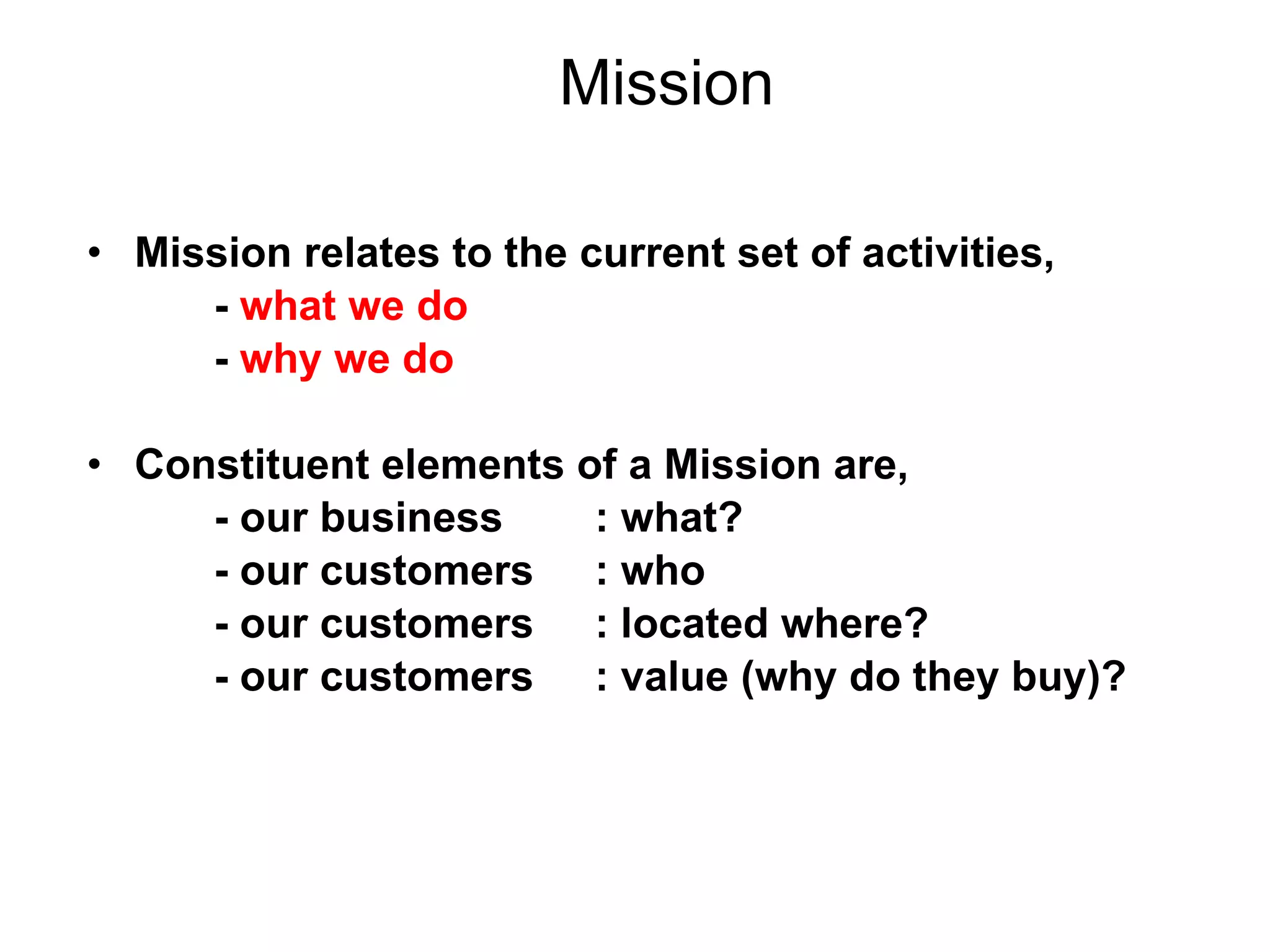
Mission Mission relates to the current set of activities, -  what we do -  why we do Constituent elements of a Mission are, - our business  : what? - our customers  : who  - our customers  : located where? - our customers  : value (why do they buy)?
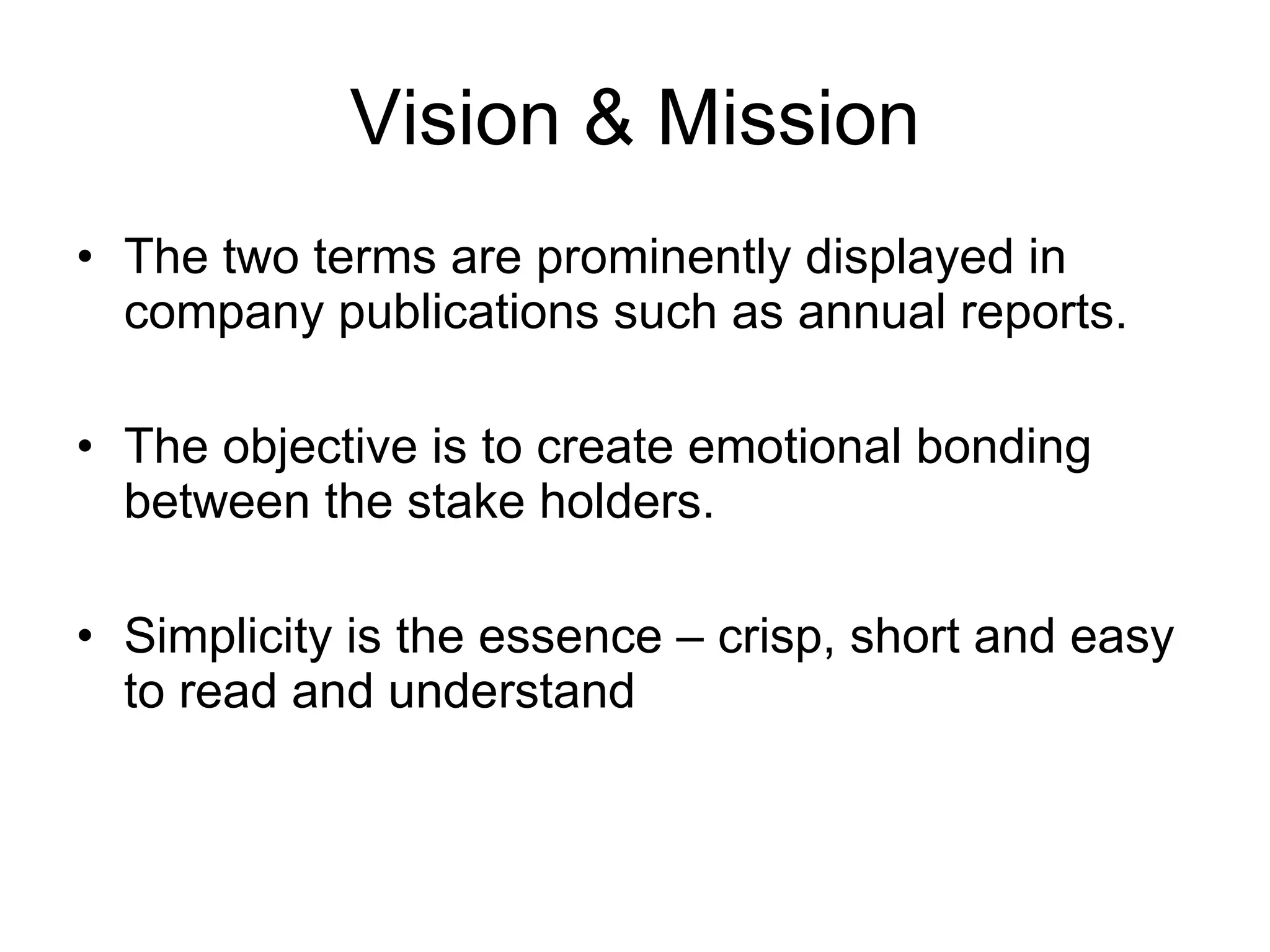
Vision & Mission The two terms are prominently displayed in company publications such as annual reports. The objective is to create emotional bonding between the stake holders. Simplicity is the essence – crisp, short and easy to read and understand
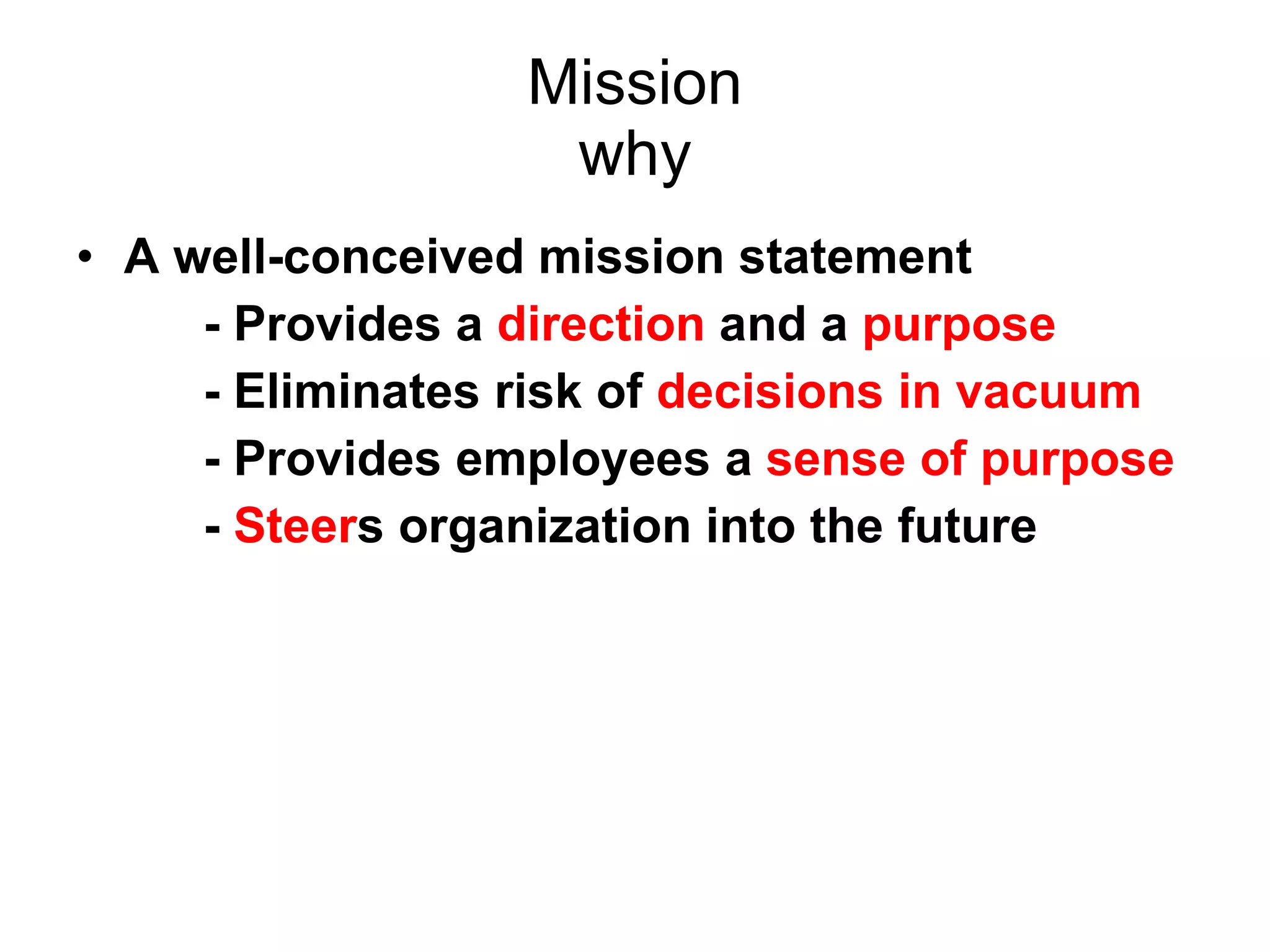
Mission why A well-conceived mission statement  - Provides a  direction  and a  purpose   - Eliminates risk of  decisions in vacuum - Provides employees a  sense of purpose -  Steer s organization into the future
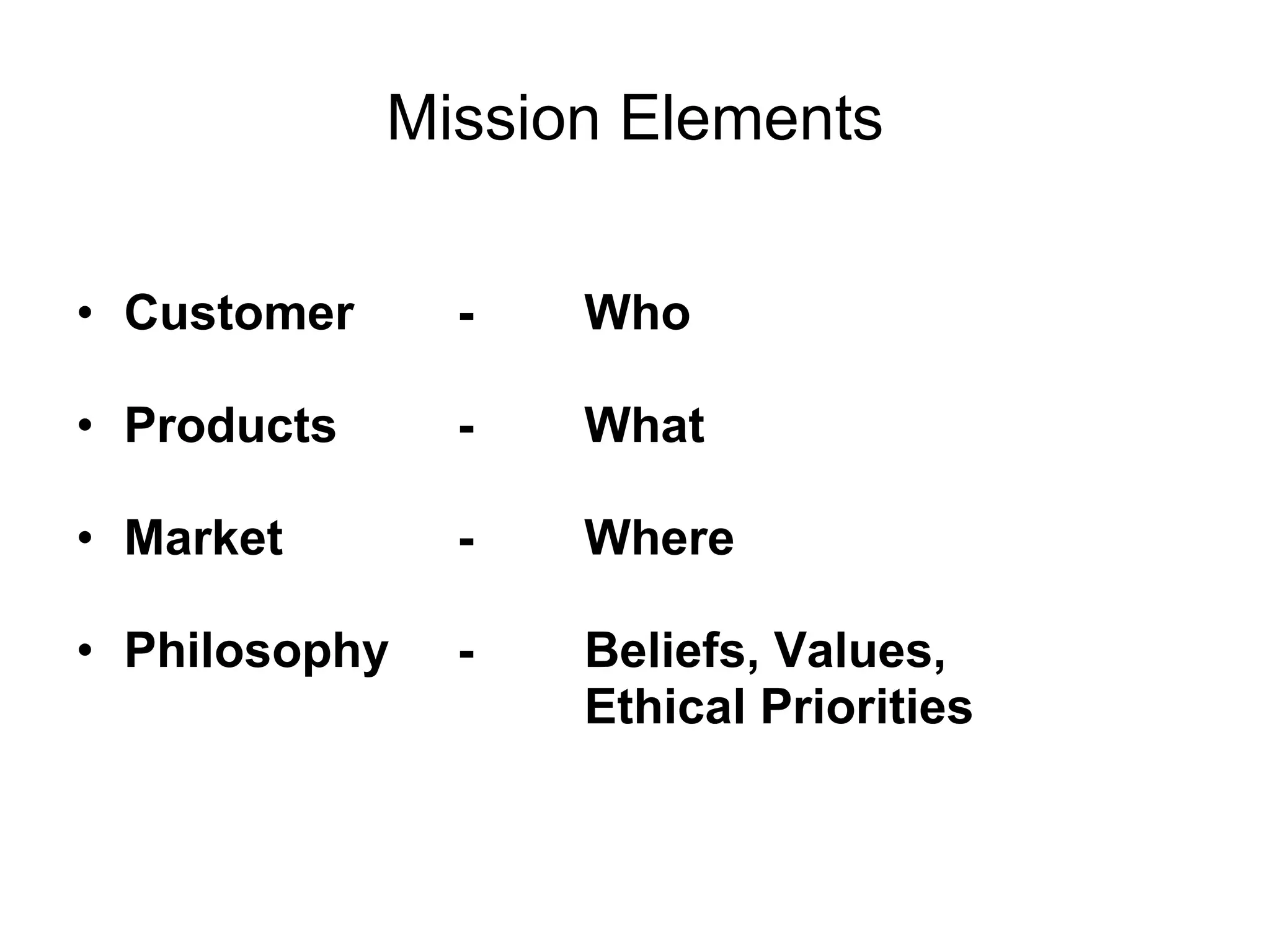
Mission Elements Customer  -  Who Products  -  What Market -  Where Philosophy -  Beliefs, Values,  Ethical Priorities
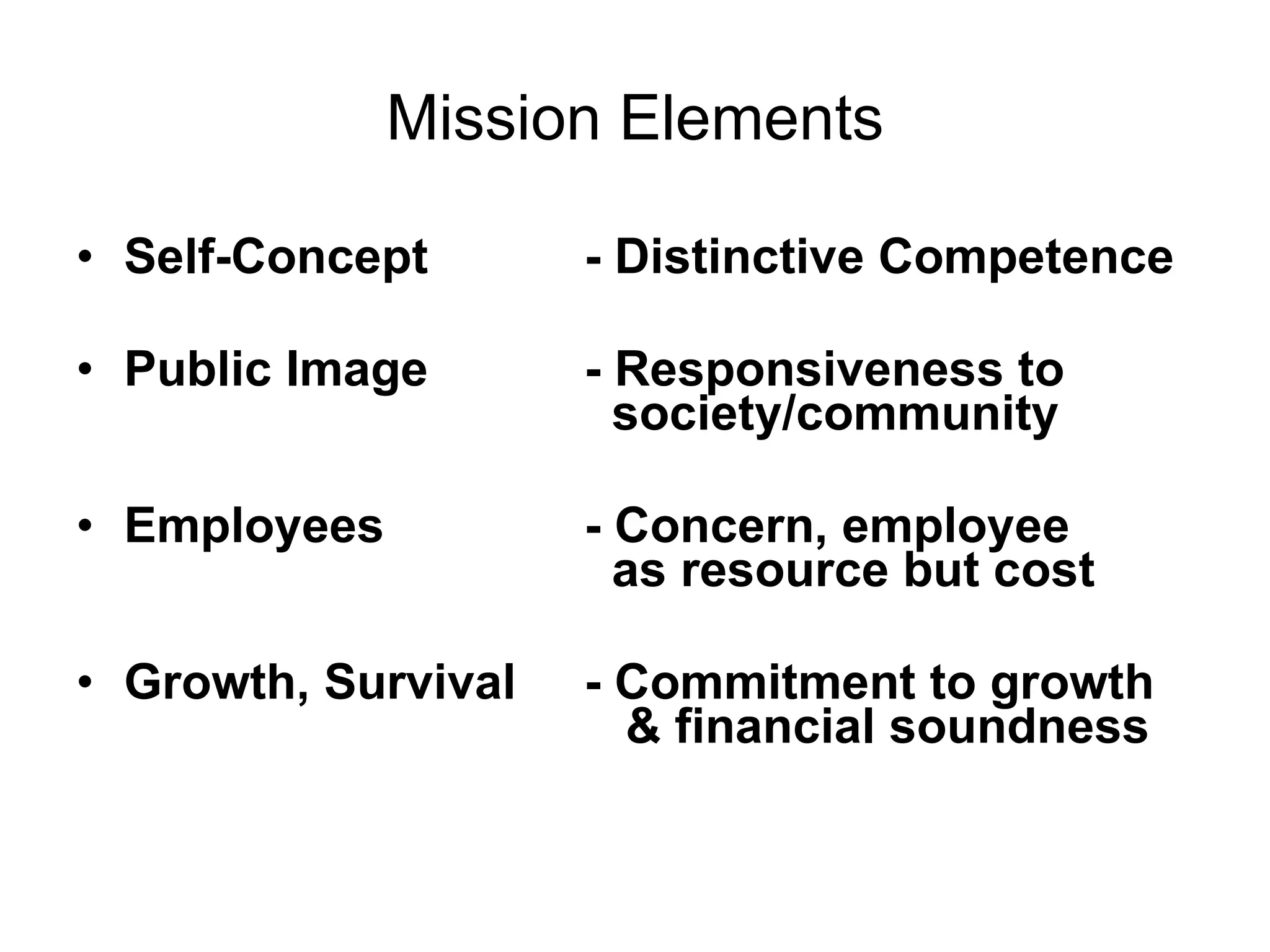
Mission Elements Self-Concept - Distinctive Competence Public Image - Responsiveness to    society/community Employees - Concern, employee    as resource but cost Growth, Survival  - Commitment to growth    & financial soundness
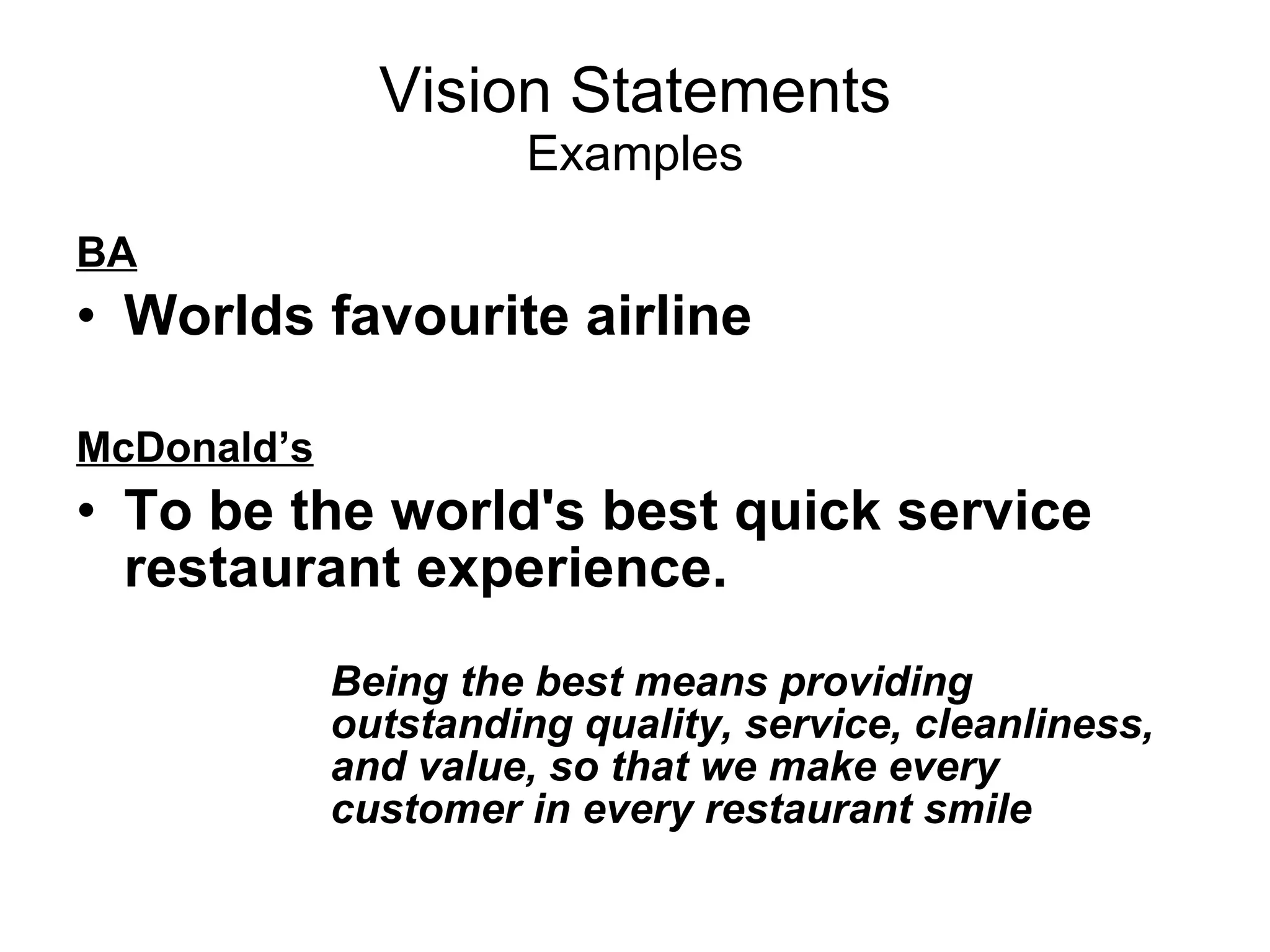
Vision Statements Examples BA Worlds favourite airline McDonald’s To be the world's best quick service restaurant experience.  Being the best means providing  outstanding quality, service, cleanliness,  and value, so that we make every  customer in every restaurant smile
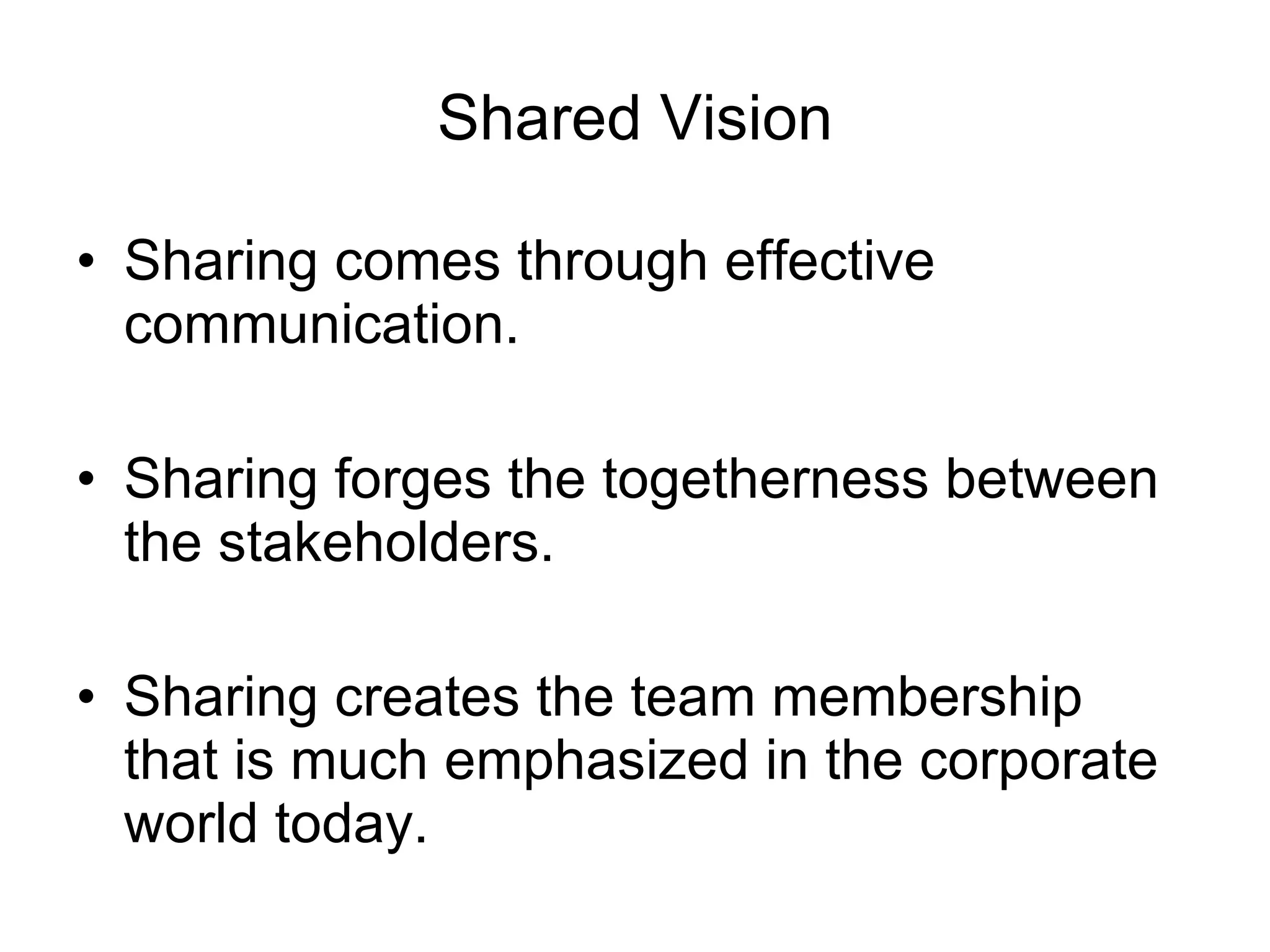
Shared Vision Sharing comes through effective communication. Sharing forges the togetherness between the stakeholders.  Sharing creates the team membership  that is much emphasized in the corporate world today.
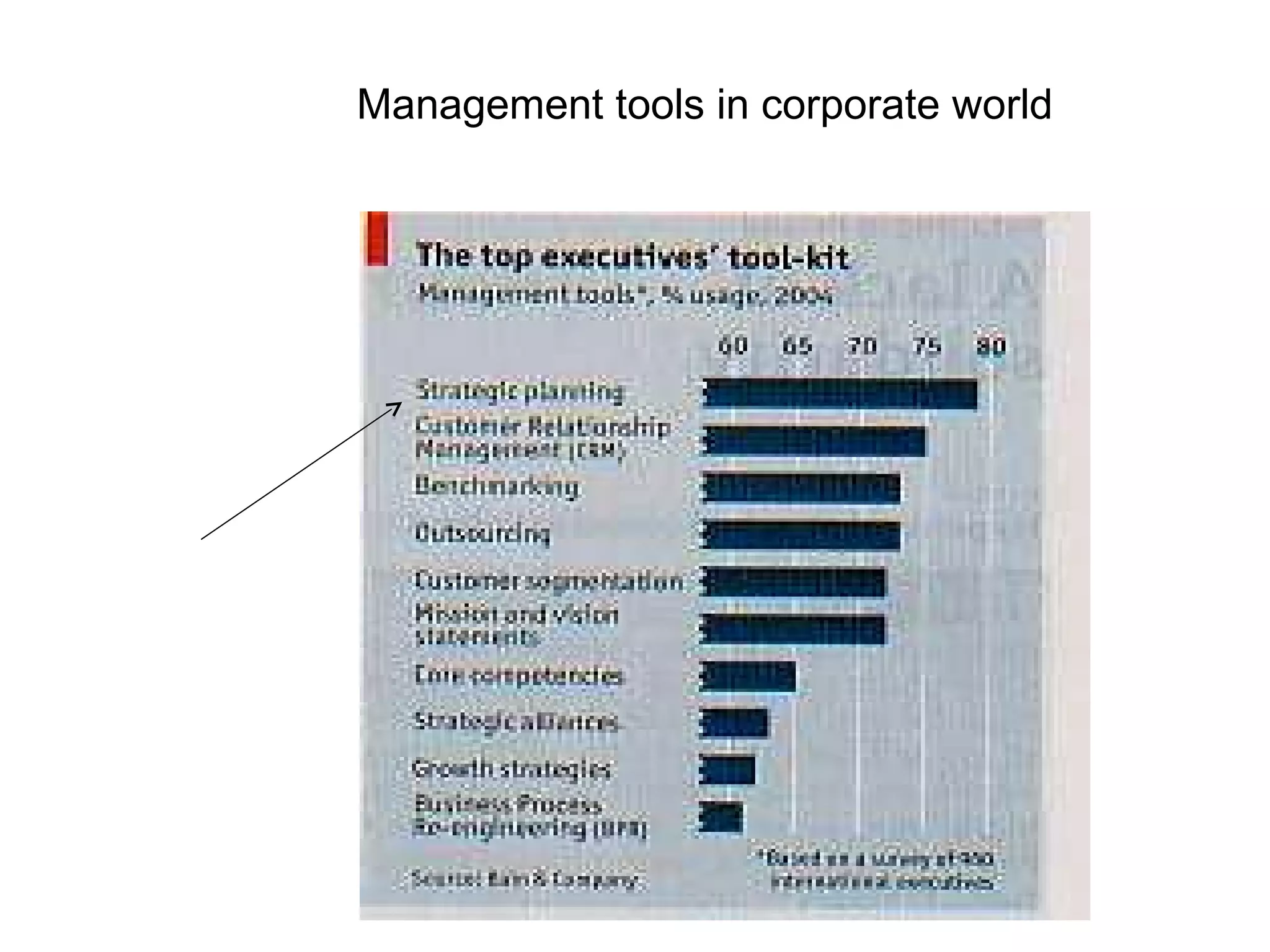
Management tools in corporate world
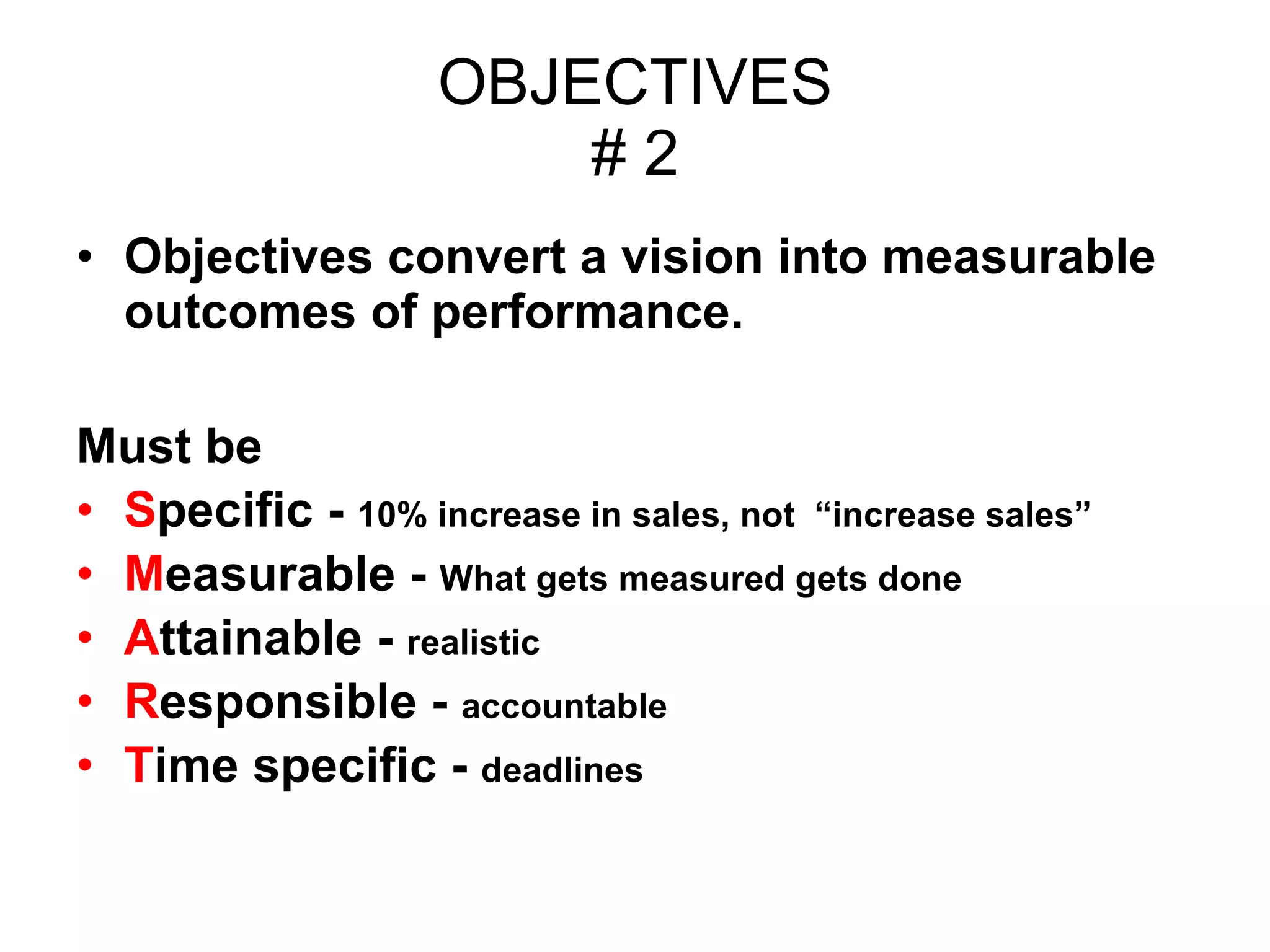
OBJECTIVES # 2 Objectives convert a vision into measurable outcomes of performance. Must be  S pecific -  10% increase in sales, not  “increase sales” M easurable -  What gets measured gets done A ttainable -  realistic R esponsible -  accountable T ime specific -  deadlines
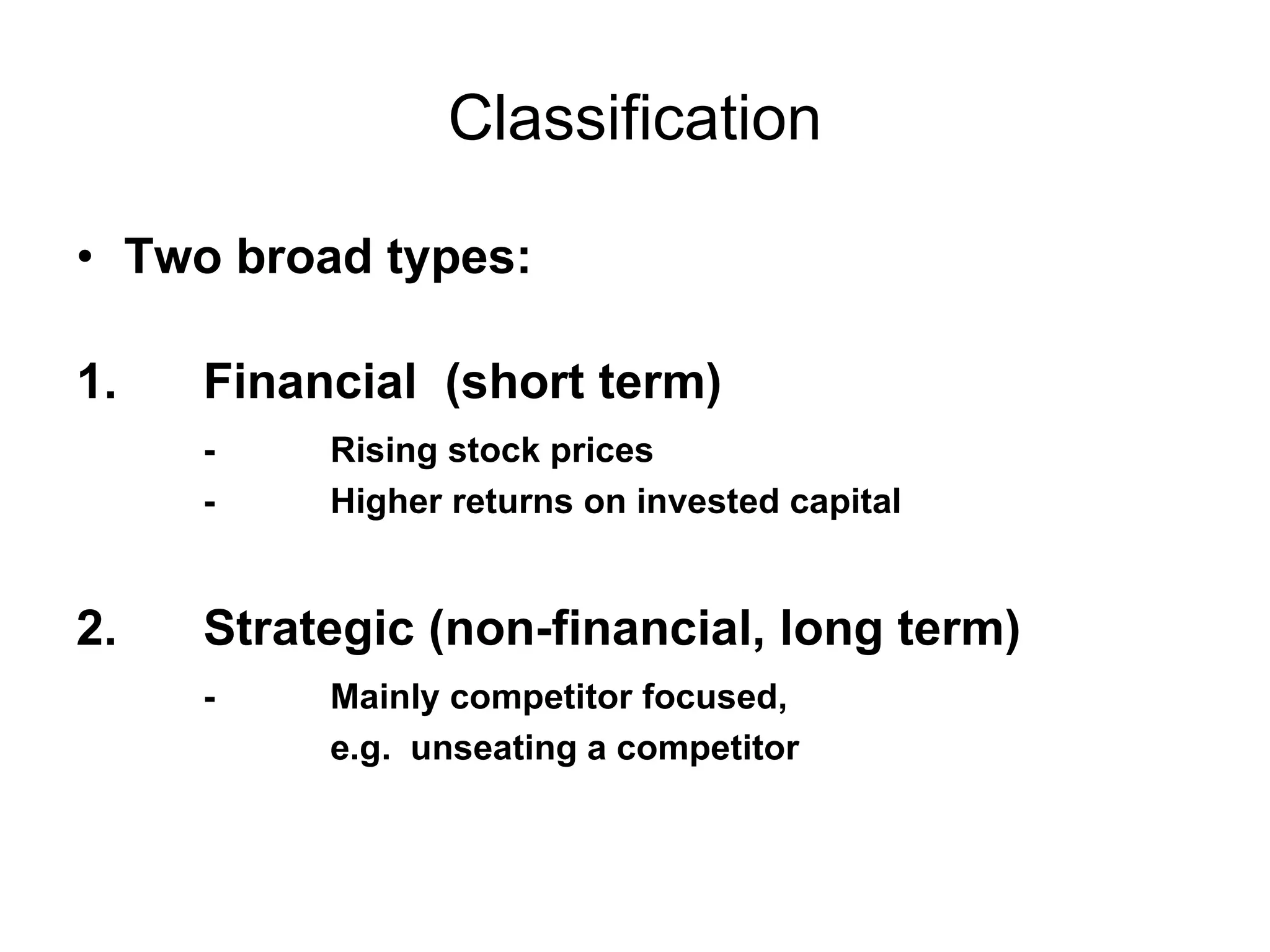
Classification Two broad types: 1. Financial  (short term) - Rising stock prices - Higher returns on invested capital 2.  Strategic (non-financial, long term) - Mainly competitor focused,  e.g.  unseating a competitor
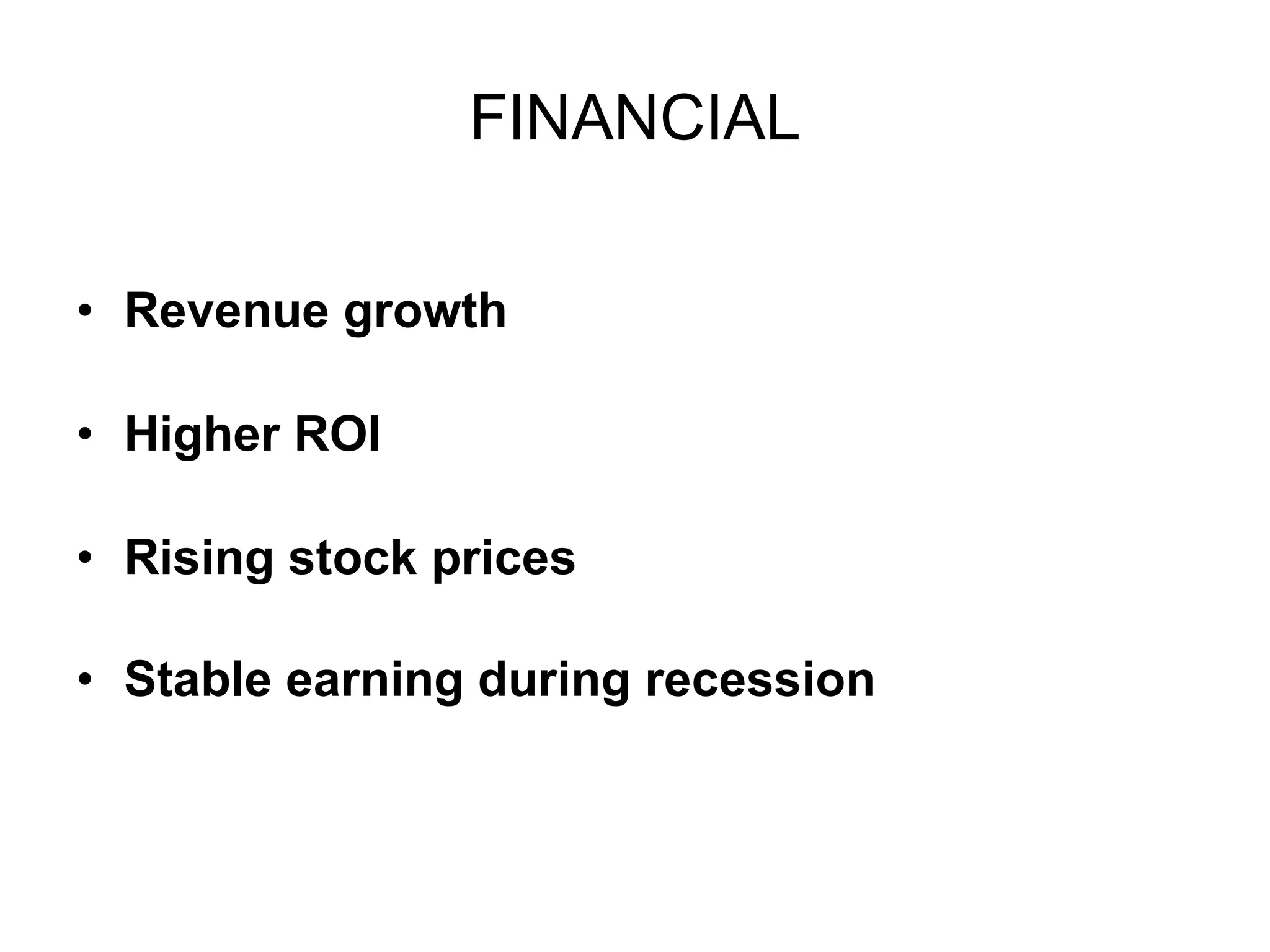
FINANCIAL Revenue growth Higher ROI Rising stock prices Stable earning during recession
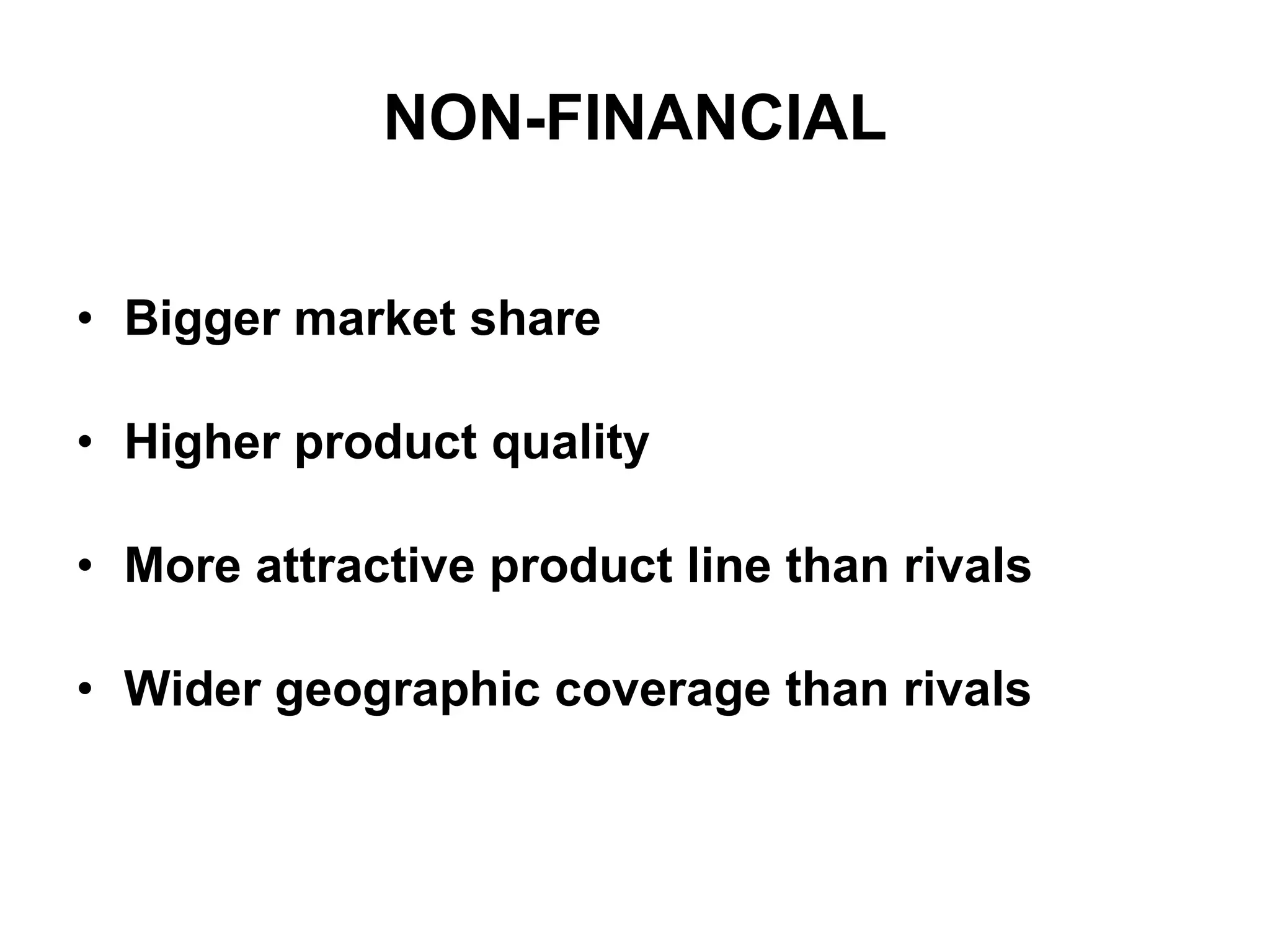
NON-FINANCIAL Bigger market share Higher product quality More attractive product line than rivals Wider geographic coverage than rivals
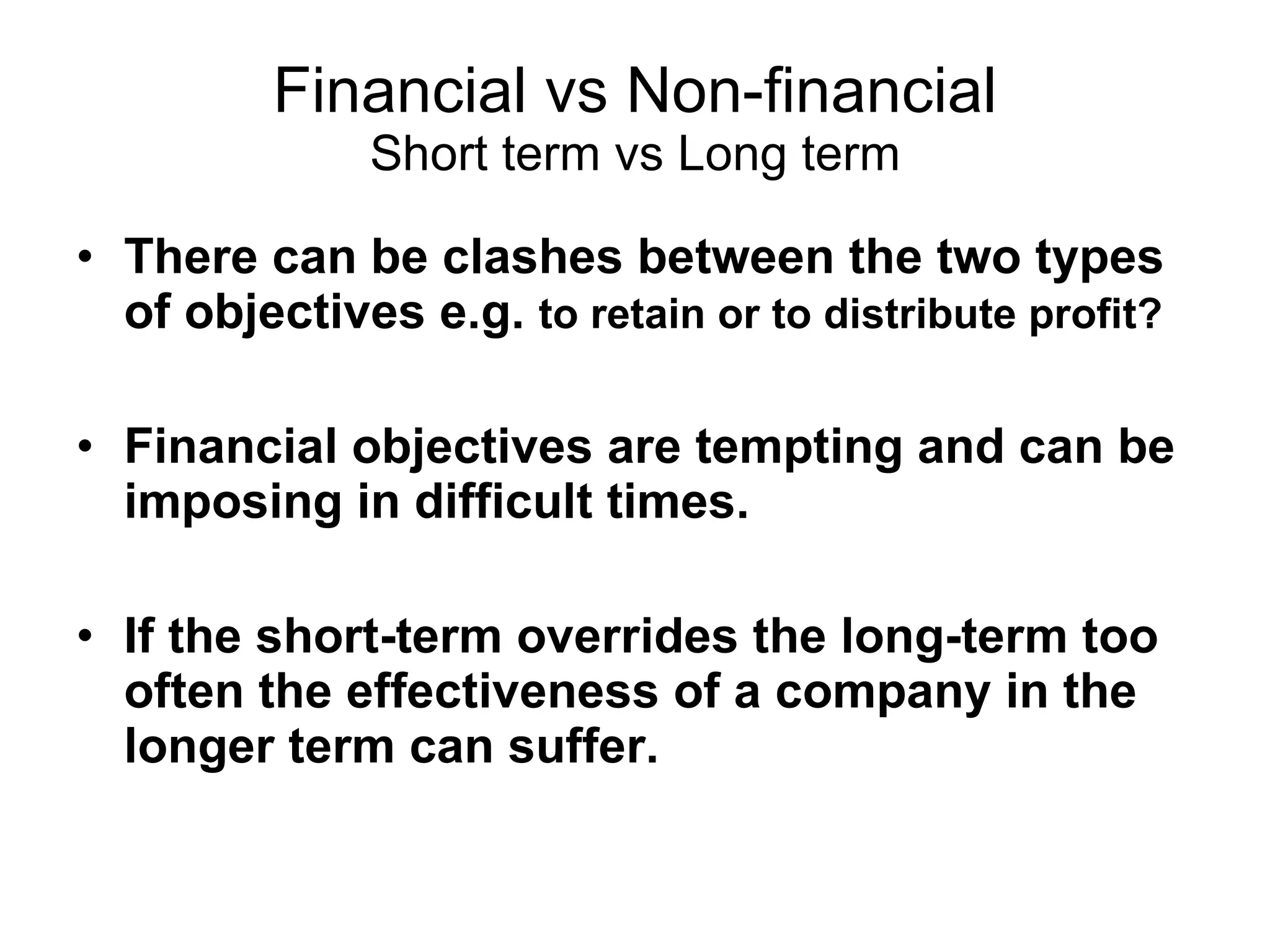
Financial vs Non-financial Short term vs Long term There can be clashes between the two types of objectives e.g.  to retain or to distribute profit? Financial objectives are tempting and can be imposing in difficult times.  If the short-term overrides the long-term too often the effectiveness of a company in the longer term can suffer.
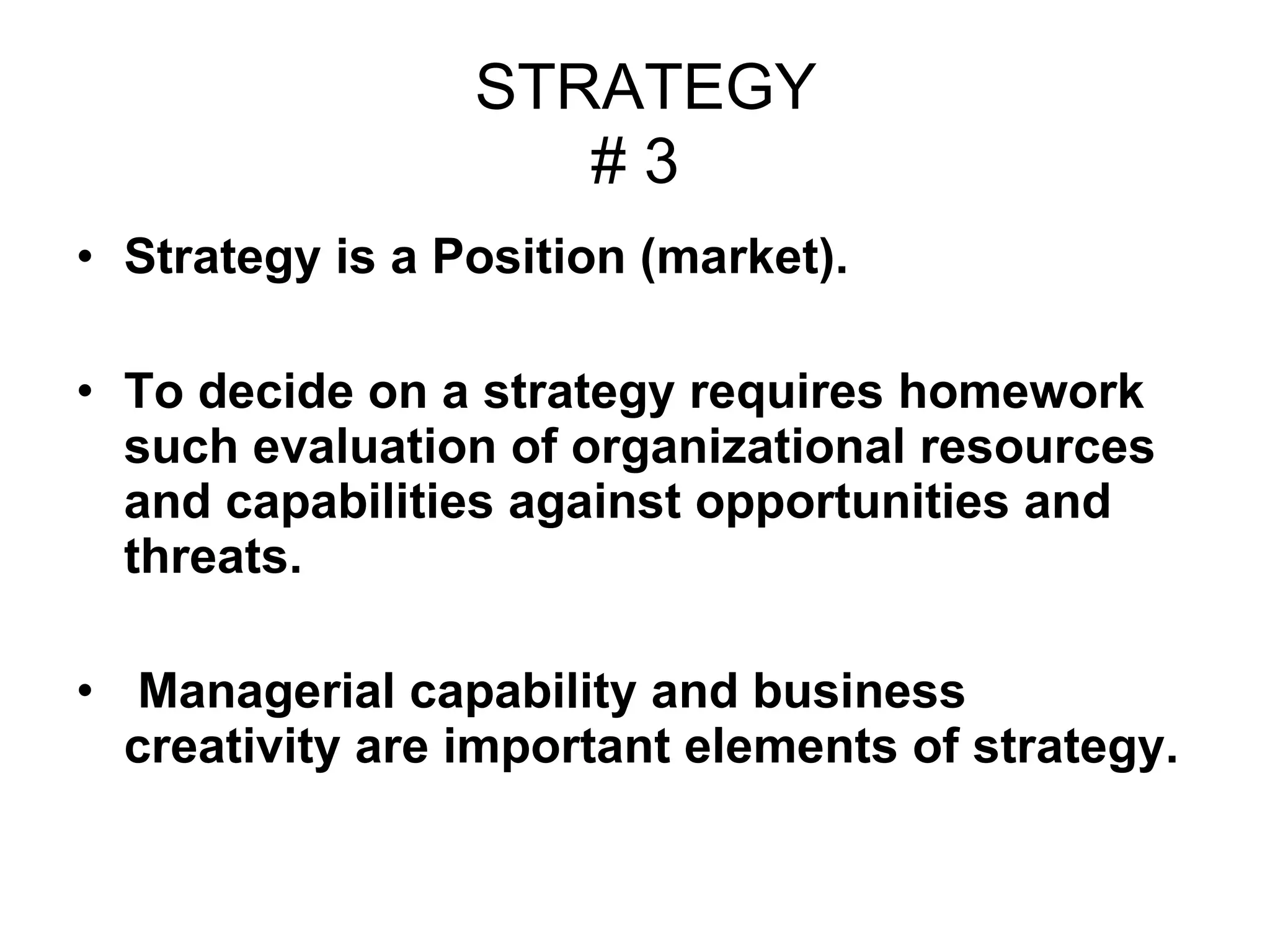
STRATEGY # 3 Strategy is a Position (market). To decide on a strategy requires homework such evaluation of organizational resources and capabilities against opportunities and threats. Managerial capability and business creativity are important elements of strategy.
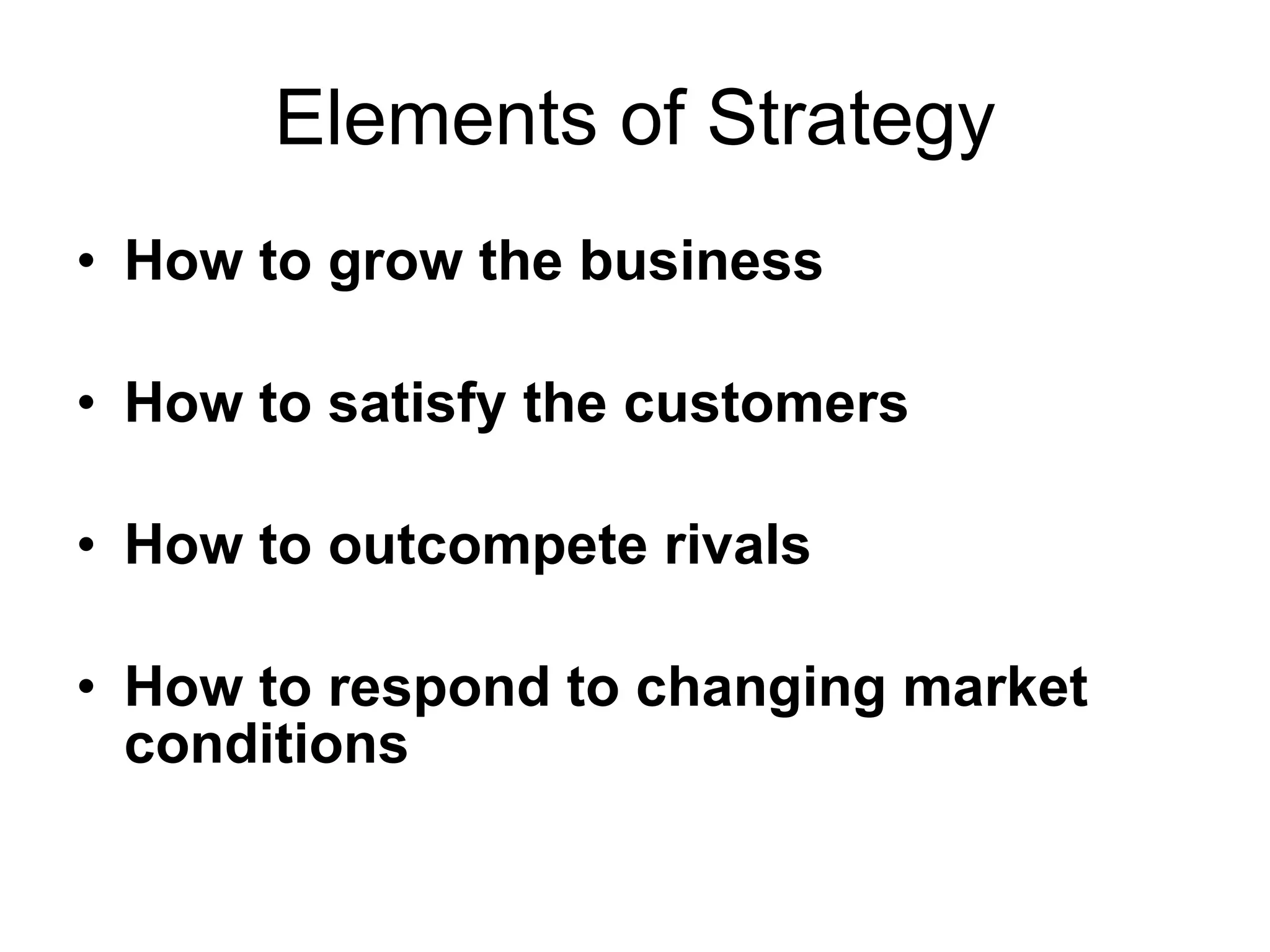
Elements of Strategy How to grow the business How to satisfy the customers How to outcompete rivals How to respond to changing market conditions
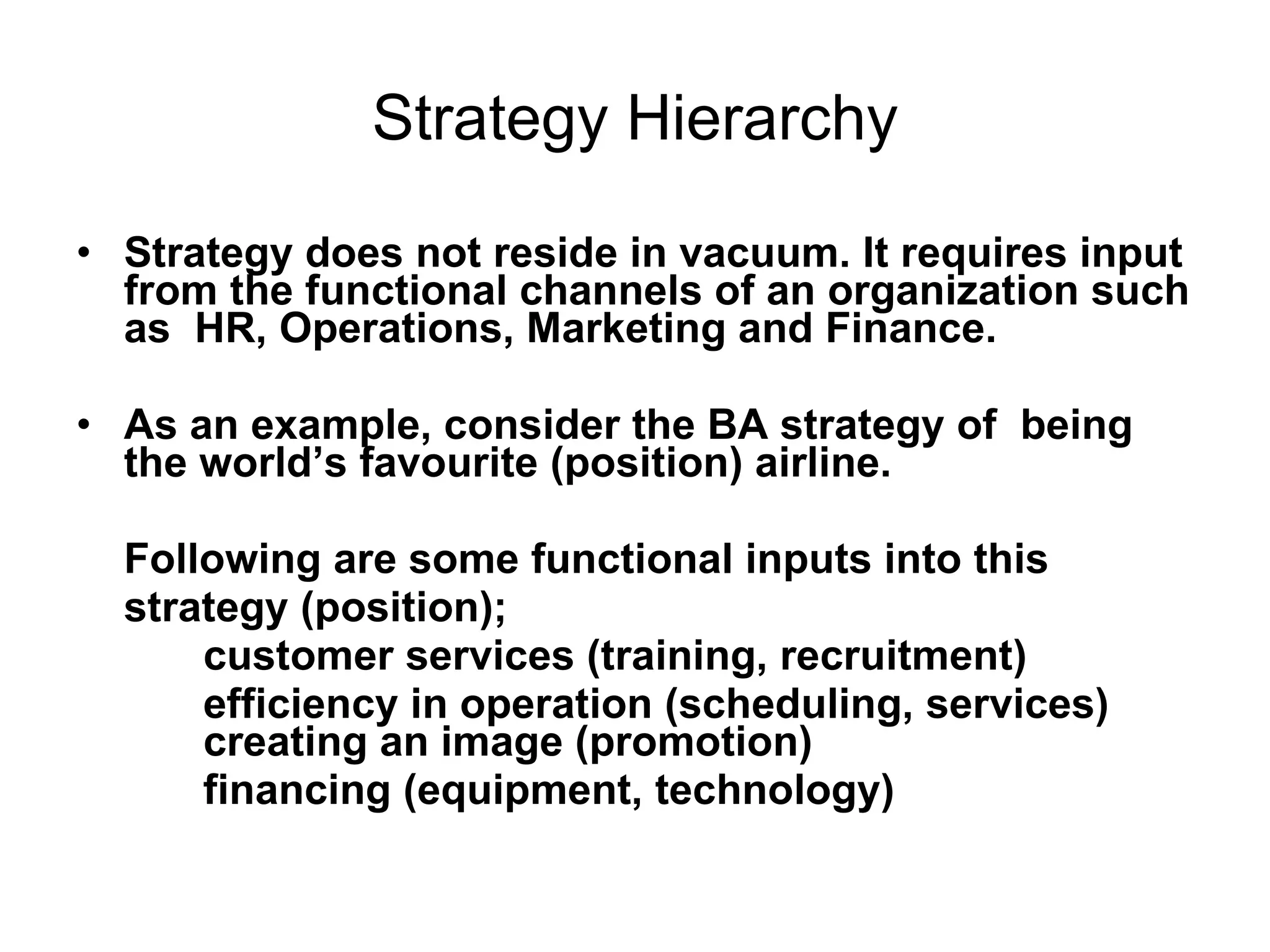
Strategy Hierarchy Strategy does not reside in vacuum. It requires input from the functional channels of an organization such as  HR, Operations, Marketing and Finance.  As an example, consider the BA strategy of  being the world’s favourite (position) airline.  Following are some functional inputs into this  strategy (position); customer services (training, recruitment)  efficiency in operation (scheduling, services)  creating an image (promotion)  financing (equipment, technology)
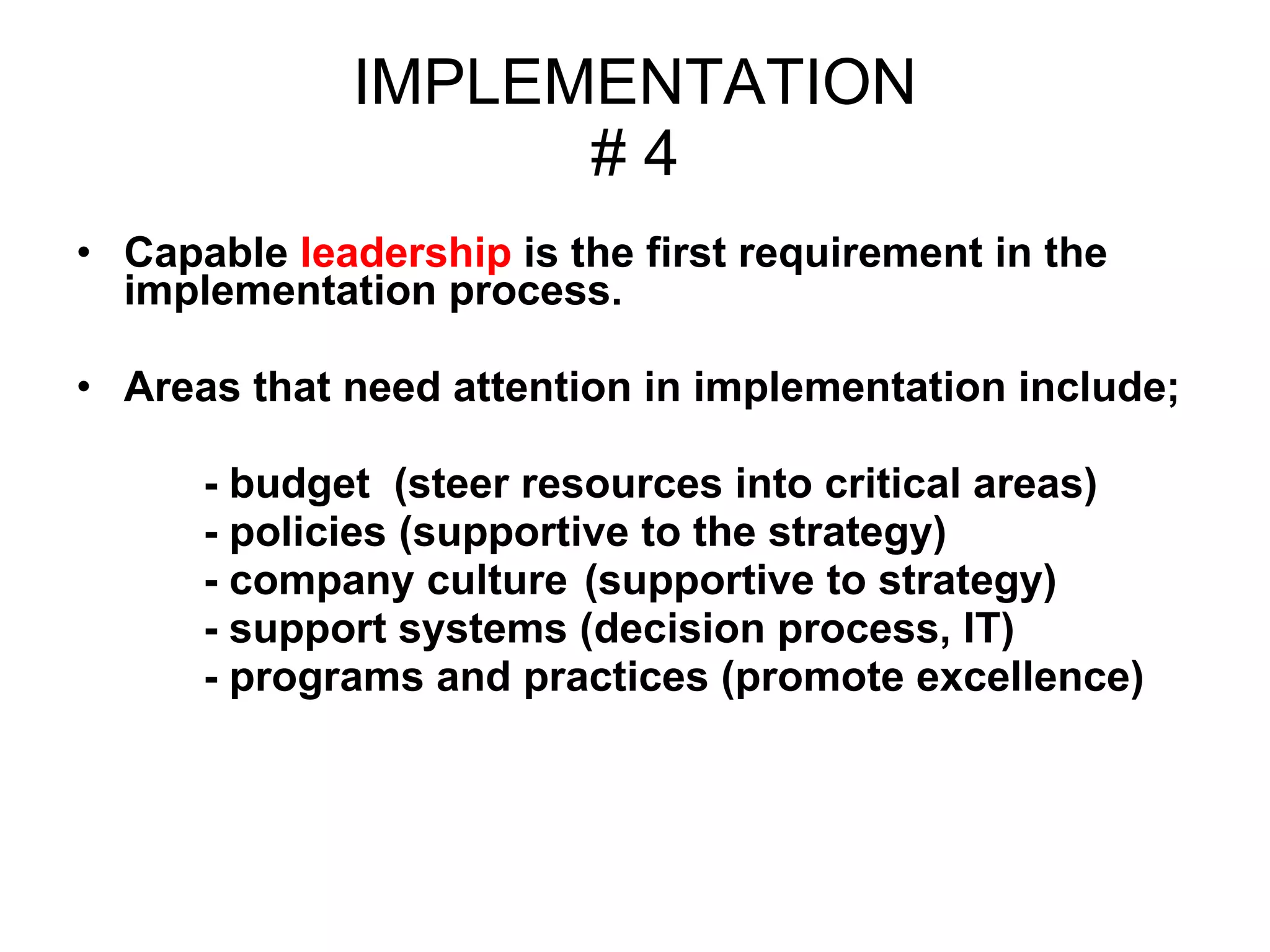
IMPLEMENTATION # 4 Capable  leadership  is the first requirement in the  implementation process.  Areas that need attention in implementation include; - budget  (steer resources into critical areas)  - policies (supportive to the strategy) - company culture  (supportive to strategy)  - support systems (decision process, IT)  - programs and practices (promote excellence)
Culture Collection of  values   and  norms   that are  shared  by people and groups  in an organization  that control the way they  interact   with each other and with stakeholders outside the organization.
Culture Values : Beliefs and Ideas that guide the  standard of behaviour in an  organization Norms : Guidelines on the appropriate kinds of  behaviour by employees in particular  situations
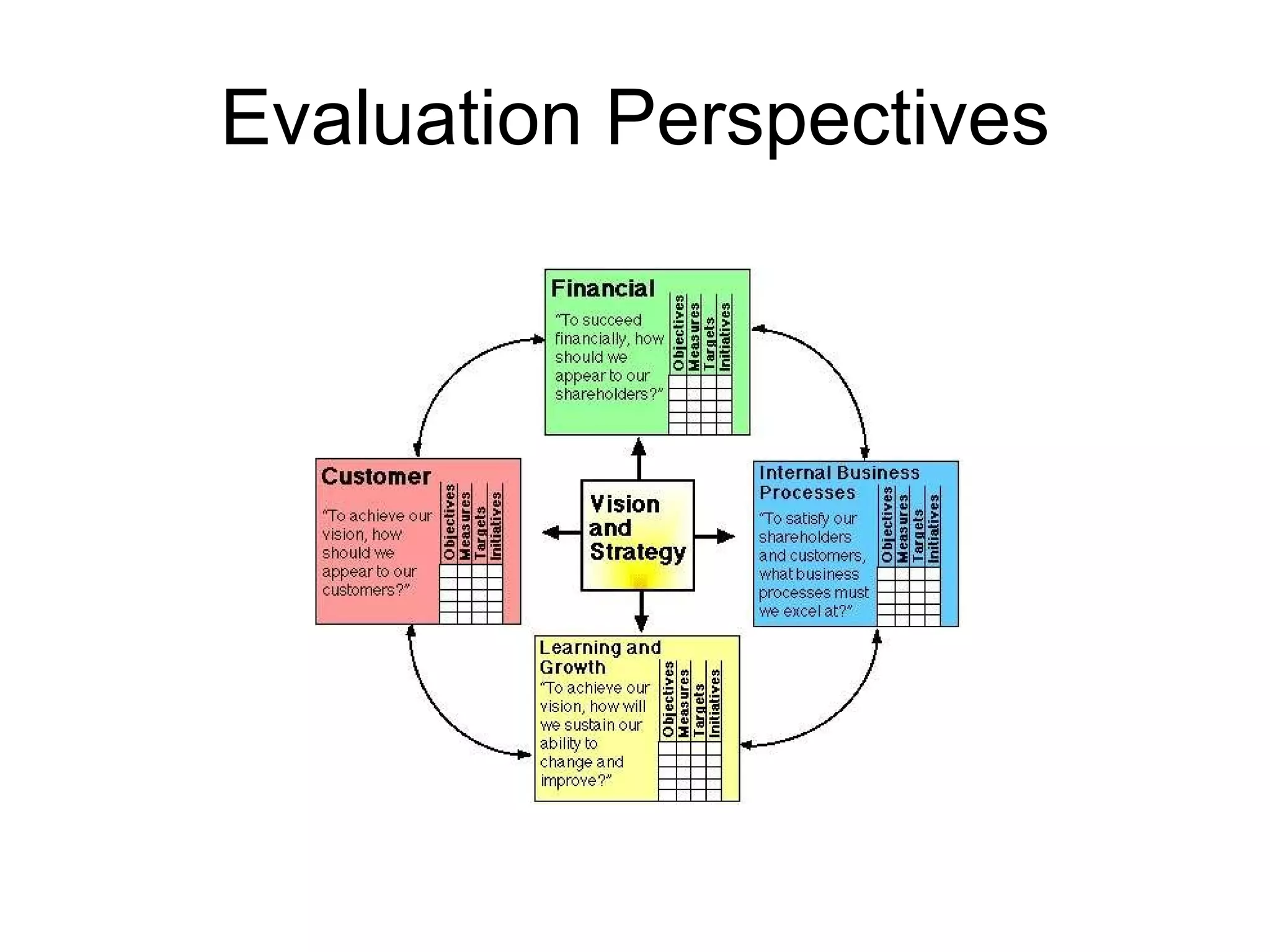
EVALUATION # 5 Evaluation requires balancing the present performance against the future requirements. Hence, financial measures alone cannot evaluate a strategic plan as they relate to the past events.  Additional measures required to assess the strategic aspects of a business include investments in long-term capabilities (R&D etc.) and customer relationships. Balanced Scorecard is a strategy tool developed to serve the dual purpose to mixing the diverse requirement of present against the future.
Evaluation Perspectives

S2 tasks

  • 1.
  • 2.
    5 Tasks 1.Develop the vision 2. Set up the objective s 3. Craft the strategy 4. Implement the strategy 5. Evaluate the performance
  • 3.
    VISION # 1 Vision : the destination (long term) of a company - where are we heading. Mission : what is our business.
  • 4.
    Mission Mission relatesto the current set of activities, - what we do - why we do Constituent elements of a Mission are, - our business : what? - our customers : who - our customers : located where? - our customers : value (why do they buy)?
  • 5.
    Vision & MissionThe two terms are prominently displayed in company publications such as annual reports. The objective is to create emotional bonding between the stake holders. Simplicity is the essence – crisp, short and easy to read and understand
  • 6.
    Mission why Awell-conceived mission statement - Provides a direction and a purpose - Eliminates risk of decisions in vacuum - Provides employees a sense of purpose - Steer s organization into the future
  • 7.
    Mission Elements Customer - Who Products - What Market - Where Philosophy - Beliefs, Values, Ethical Priorities
  • 8.
    Mission Elements Self-Concept- Distinctive Competence Public Image - Responsiveness to society/community Employees - Concern, employee as resource but cost Growth, Survival - Commitment to growth & financial soundness
  • 9.
    Vision Statements ExamplesBA Worlds favourite airline McDonald’s To be the world's best quick service restaurant experience. Being the best means providing outstanding quality, service, cleanliness, and value, so that we make every customer in every restaurant smile
  • 10.
    Shared Vision Sharingcomes through effective communication. Sharing forges the togetherness between the stakeholders. Sharing creates the team membership that is much emphasized in the corporate world today.
  • 11.
    Management tools incorporate world
  • 12.
    OBJECTIVES # 2Objectives convert a vision into measurable outcomes of performance. Must be S pecific - 10% increase in sales, not “increase sales” M easurable - What gets measured gets done A ttainable - realistic R esponsible - accountable T ime specific - deadlines
  • 13.
    Classification Two broadtypes: 1. Financial (short term) - Rising stock prices - Higher returns on invested capital 2. Strategic (non-financial, long term) - Mainly competitor focused, e.g. unseating a competitor
  • 14.
    FINANCIAL Revenue growthHigher ROI Rising stock prices Stable earning during recession
  • 15.
    NON-FINANCIAL Bigger marketshare Higher product quality More attractive product line than rivals Wider geographic coverage than rivals
  • 16.
    Financial vs Non-financialShort term vs Long term There can be clashes between the two types of objectives e.g. to retain or to distribute profit? Financial objectives are tempting and can be imposing in difficult times. If the short-term overrides the long-term too often the effectiveness of a company in the longer term can suffer.
  • 17.
    STRATEGY # 3Strategy is a Position (market). To decide on a strategy requires homework such evaluation of organizational resources and capabilities against opportunities and threats. Managerial capability and business creativity are important elements of strategy.
  • 18.
    Elements of StrategyHow to grow the business How to satisfy the customers How to outcompete rivals How to respond to changing market conditions
  • 19.
    Strategy Hierarchy Strategydoes not reside in vacuum. It requires input from the functional channels of an organization such as HR, Operations, Marketing and Finance. As an example, consider the BA strategy of being the world’s favourite (position) airline. Following are some functional inputs into this strategy (position); customer services (training, recruitment) efficiency in operation (scheduling, services) creating an image (promotion) financing (equipment, technology)
  • 20.
    IMPLEMENTATION # 4Capable leadership is the first requirement in the implementation process. Areas that need attention in implementation include; - budget (steer resources into critical areas) - policies (supportive to the strategy) - company culture (supportive to strategy) - support systems (decision process, IT) - programs and practices (promote excellence)
  • 21.
    Culture Collection of values and norms that are shared by people and groups in an organization that control the way they interact with each other and with stakeholders outside the organization.
  • 22.
    Culture Values :Beliefs and Ideas that guide the standard of behaviour in an organization Norms : Guidelines on the appropriate kinds of behaviour by employees in particular situations
  • 23.
    EVALUATION # 5Evaluation requires balancing the present performance against the future requirements. Hence, financial measures alone cannot evaluate a strategic plan as they relate to the past events. Additional measures required to assess the strategic aspects of a business include investments in long-term capabilities (R&D etc.) and customer relationships. Balanced Scorecard is a strategy tool developed to serve the dual purpose to mixing the diverse requirement of present against the future.
  • 24.