
A Constructivist Grounded Theory Approach to
      Semantic Metadata Interoperability
                                              in
                                      Digital Libraries


                                     Getaneh Alemu
                                     Penny Ross
                                     Brett Stevens


The 3rd Qualitative and Quantitative Methods in Libraries International Conference, Athens, Greece
                                        24th-27th May 2011
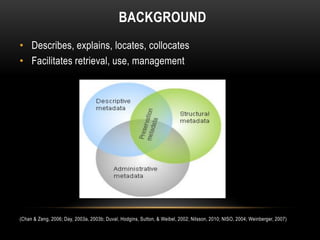
BACKGROUND
• Describes, explains, locates, collocates
• Facilitates retrieval, use, management


(Chan & Zeng, 2006; Day, 2003a, 2003b; Duval, Hodgins, Sutton, & Weibel, 2002; Nilsson, 2010; NISO, 2004; Weinberger, 2007)
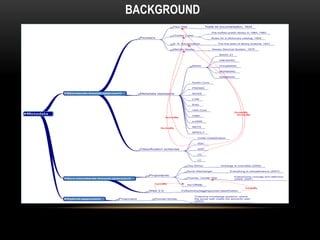
BACKGROUND
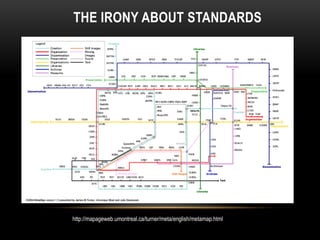
THE IRONY ABOUT STANDARDS


http://mapageweb.umontreal.ca/turner/meta/english/metamap.html
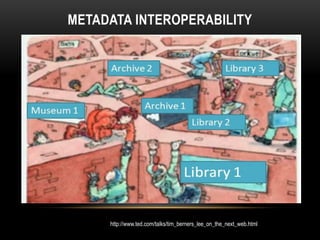
METADATA INTEROPERABILITY


     http://www.ted.com/talks/tim_berners_lee_on_the_next_web.html
METADATA INTEROPERABILITY

• Sharing semantically compatible information


• Managing in semantically compatible ways


• Enabling users to perform desired tasks


                       (Rothenberg, 2008)
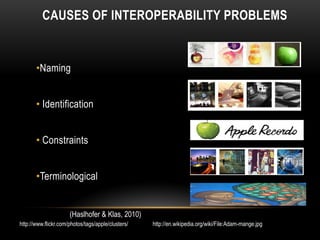
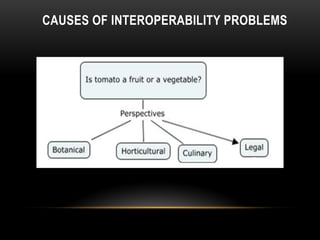
CAUSES OF INTEROPERABILITY PROBLEMS


       •Naming


       • Identification


       • Constraints


       •Terminological


                      (Haslhofer & Klas, 2010)
http://www.flickr.com/photos/tags/apple/clusters/   http://en.wikipedia.org/wiki/File:Adam-mange.jpg
CAUSES OF INTEROPERABILITY PROBLEMS
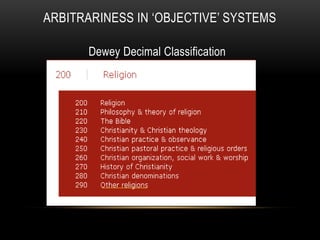
ARBITRARINESS IN „OBJECTIVE‟ SYSTEMS

       Dewey Decimal Classification
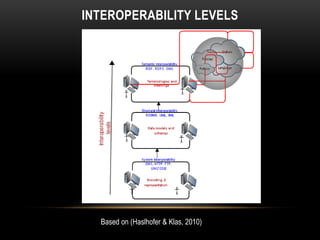
INTEROPERABILITY LEVELS


  Based on (Haslhofer & Klas, 2010)
INTEROPERABILITY SOLUTIONS
USING SINGLE STANDARD


• Very good for technical interoperability


• Good for structural interoperability


• Not feasible for semantic interoperability
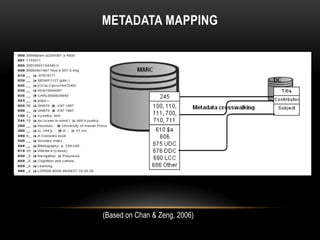
METADATA MAPPING


(Based on Chan & Zeng, 2006)
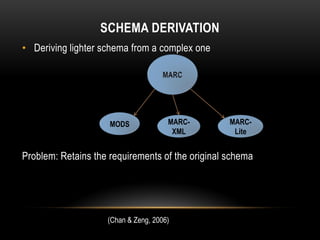
SCHEMA DERIVATION
• Deriving lighter schema from a complex one


                     MODS             MARC-       MARC-
                                       XML         Lite


Problem: Retains the requirements of the original schema


                    (Chan & Zeng, 2006)
APPLICATION PROFILES

  • Mix and match solution


  • Reusing metadata elements


  • Schema level solution


  • Requires to adopt specifications of original schema

(Baker, Dekkers, Heery, Patel, & Salokhe, 2008; Chan & Zeng, 2006; Heery & Patel, 2000; Hillmann & Phipps, 2007)
METADATA REGISTRIES


• Publishing/exposing metadata schemas


• Schema level solution


• Does not deal with metadata values


                (Chan & Zeng, 2006)
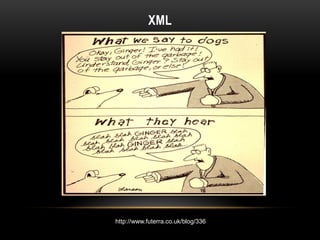
XML


http://www.futerra.co.uk/blog/336
SEMANTIC WEB TECHNOLOGIES

• RDF


• RDFS


• OWL
RESEARCH QUESTIONS

• What are the views and experiences of LIS researchers, librarians
  and users in using metadata?


• What solutions do they consider practical for facilitating information
  exchange, information sharing, and data integration?


• How much useful do they consider top-down vs bottom up
  approaches and Semantic Web and Web 2.0 technologies in relation
  to semantic metadata interoperability?
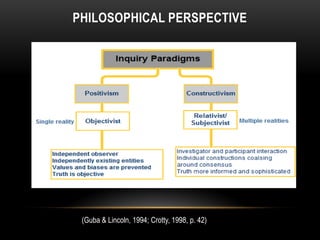
PHILOSOPHICAL PERSPECTIVE


 (Guba & Lincoln, 1994; Crotty, 1998, p. 42)
GROUNDED THEORY METHOD


      • Glaserian


      • Straussian


      • Constructivist


( Bryant & Charmaz, 2007; Charmaz, 2006; Glaser, 2001; Mills, Bonner, & Francis, 2006; Strauss & Corbin, 1998)
GROUNDED THEORY METHOD FOR SEMANTIC
             INTEROPERABILITY


• Scant use of theories in LIS


• Semantic interoperability is a qualitative concern


(Andersen & Skouvig, 2006; Floridi, 2000; Hjorland, 2000; Allan, 2007; Lehmann, 2010; Haslhofer & Klas, 2010, p.17)
DATA COLLECTION
• Unstructured, in-depth interviews


• Three categories of participants


• Choice of Research Site (Phase-I study)
   • 2 lecturers, 1 PhD researcher and 8 MSc students
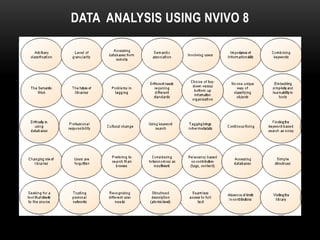
DATA ANALYSIS USING NVIVO 8
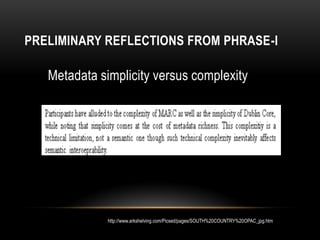
PRELIMINARY REFLECTIONS FROM PHRASE-I

   Metadata simplicity versus complexity


              http://www.arkshelving.com/Picsed/pages/SOUTH%20COUNTRY%20OPAC_jpg.htm
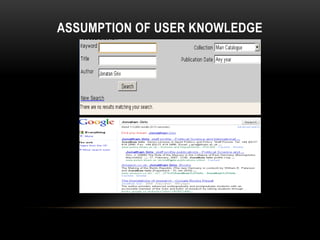
ASSUMPTION OF USER KNOWLEDGE
PRELIMINARY REFLECTIONS: OPAC


“OPAC is the biggest innovation for libraries that ever happened”
                                                         participant
THE PROBLEMS

• By their very nature, cultural information objects convey different meanings for
  diverse user groups, and hence, can be interpreted variously


• Human beings are highly unlikely to agree on a singular, top-down and
  hierarchical classification of objects


• Unfortunately, most current standards tend to adhere to what is known as the
  ontologically and objectively true viewpoint which substantially fails to capture
  and represent local and/or regional perspectives and interpretations.


      “The way Asians describe Asian art is quite different from the way a Westerner does.”
                                                                                       participant
CONCLUSION

Due to the very nature of the diversity inherent in institutional
and cultural interpretations as well as differences in the usage of
terms in metadata vocabularies, semantic metadata
interoperability issues can better be addressed by adopting a
social constructivist philosophical approach and by utilising a
constructivist grounded theory methodology.
Thank You!
      Questions?


Getaneh.Alemu@port.ac.uk

Semantic Metadata Interoperability in Digital Libraries

  • 1.
    A Constructivist GroundedTheory Approach to Semantic Metadata Interoperability in Digital Libraries Getaneh Alemu Penny Ross Brett Stevens The 3rd Qualitative and Quantitative Methods in Libraries International Conference, Athens, Greece 24th-27th May 2011
  • 2.
    BACKGROUND • Describes, explains,locates, collocates • Facilitates retrieval, use, management (Chan & Zeng, 2006; Day, 2003a, 2003b; Duval, Hodgins, Sutton, & Weibel, 2002; Nilsson, 2010; NISO, 2004; Weinberger, 2007)
  • 3.
  • 4.
    THE IRONY ABOUTSTANDARDS http://mapageweb.umontreal.ca/turner/meta/english/metamap.html
  • 5.
    METADATA INTEROPERABILITY http://www.ted.com/talks/tim_berners_lee_on_the_next_web.html
  • 6.
    METADATA INTEROPERABILITY • Sharingsemantically compatible information • Managing in semantically compatible ways • Enabling users to perform desired tasks (Rothenberg, 2008)
  • 7.
    CAUSES OF INTEROPERABILITYPROBLEMS •Naming • Identification • Constraints •Terminological (Haslhofer & Klas, 2010) http://www.flickr.com/photos/tags/apple/clusters/ http://en.wikipedia.org/wiki/File:Adam-mange.jpg
  • 8.
  • 9.
    ARBITRARINESS IN „OBJECTIVE‟SYSTEMS Dewey Decimal Classification
  • 10.
    INTEROPERABILITY LEVELS Based on (Haslhofer & Klas, 2010)
  • 11.
  • 12.
    USING SINGLE STANDARD •Very good for technical interoperability • Good for structural interoperability • Not feasible for semantic interoperability
  • 13.
    METADATA MAPPING (Based onChan & Zeng, 2006)
  • 14.
    SCHEMA DERIVATION • Derivinglighter schema from a complex one MODS MARC- MARC- XML Lite Problem: Retains the requirements of the original schema (Chan & Zeng, 2006)
  • 15.
    APPLICATION PROFILES • Mix and match solution • Reusing metadata elements • Schema level solution • Requires to adopt specifications of original schema (Baker, Dekkers, Heery, Patel, & Salokhe, 2008; Chan & Zeng, 2006; Heery & Patel, 2000; Hillmann & Phipps, 2007)
  • 16.
    METADATA REGISTRIES • Publishing/exposingmetadata schemas • Schema level solution • Does not deal with metadata values (Chan & Zeng, 2006)
  • 17.
  • 18.
    SEMANTIC WEB TECHNOLOGIES •RDF • RDFS • OWL
  • 19.
    RESEARCH QUESTIONS • Whatare the views and experiences of LIS researchers, librarians and users in using metadata? • What solutions do they consider practical for facilitating information exchange, information sharing, and data integration? • How much useful do they consider top-down vs bottom up approaches and Semantic Web and Web 2.0 technologies in relation to semantic metadata interoperability?
  • 20.
    PHILOSOPHICAL PERSPECTIVE (Guba& Lincoln, 1994; Crotty, 1998, p. 42)
  • 21.
    GROUNDED THEORY METHOD • Glaserian • Straussian • Constructivist ( Bryant & Charmaz, 2007; Charmaz, 2006; Glaser, 2001; Mills, Bonner, & Francis, 2006; Strauss & Corbin, 1998)
  • 22.
    GROUNDED THEORY METHODFOR SEMANTIC INTEROPERABILITY • Scant use of theories in LIS • Semantic interoperability is a qualitative concern (Andersen & Skouvig, 2006; Floridi, 2000; Hjorland, 2000; Allan, 2007; Lehmann, 2010; Haslhofer & Klas, 2010, p.17)
  • 23.
    DATA COLLECTION • Unstructured,in-depth interviews • Three categories of participants • Choice of Research Site (Phase-I study) • 2 lecturers, 1 PhD researcher and 8 MSc students
  • 24.
  • 25.
    PRELIMINARY REFLECTIONS FROMPHRASE-I Metadata simplicity versus complexity http://www.arkshelving.com/Picsed/pages/SOUTH%20COUNTRY%20OPAC_jpg.htm
  • 26.
  • 27.
    PRELIMINARY REFLECTIONS: OPAC “OPACis the biggest innovation for libraries that ever happened” participant
  • 28.
    THE PROBLEMS • Bytheir very nature, cultural information objects convey different meanings for diverse user groups, and hence, can be interpreted variously • Human beings are highly unlikely to agree on a singular, top-down and hierarchical classification of objects • Unfortunately, most current standards tend to adhere to what is known as the ontologically and objectively true viewpoint which substantially fails to capture and represent local and/or regional perspectives and interpretations. “The way Asians describe Asian art is quite different from the way a Westerner does.” participant
  • 29.
    CONCLUSION Due to thevery nature of the diversity inherent in institutional and cultural interpretations as well as differences in the usage of terms in metadata vocabularies, semantic metadata interoperability issues can better be addressed by adopting a social constructivist philosophical approach and by utilising a constructivist grounded theory methodology.
  • 30.
    Thank You! Questions? Getaneh.Alemu@port.ac.uk