Water
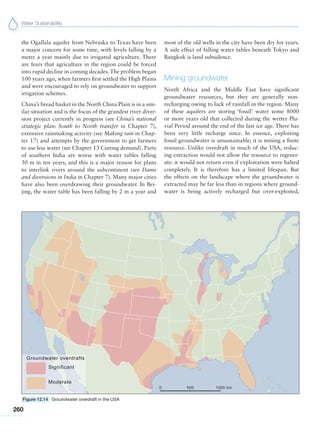
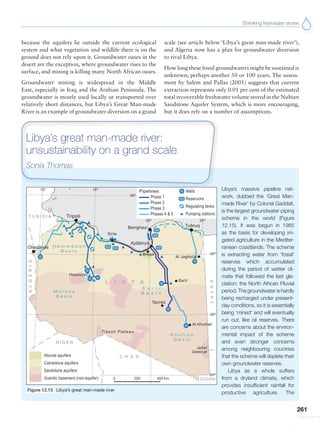
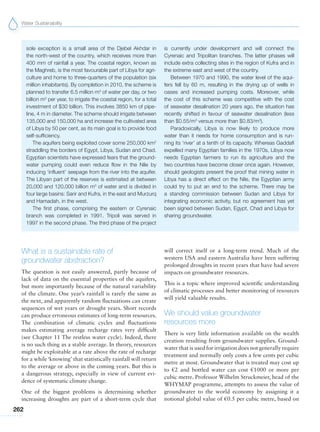
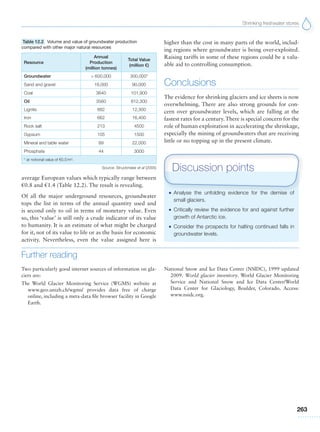
Sustainability
This page intentionally left blank
Water
Sustainability
A Global Perspective
J. A. A. Jones
First published in Great Britain in 2010 by
Hodder Education, An Hachette UK Company,
338 Euston Road, London NW1 3BH
http://www.hoddereducation.com
Copyright © 2010 J. A. A. Jones
All rights reserved. No part of this publication may be reproduced or
transmitted in any form or by any means, electronically or mechanically,
including photocopying, recording or any information storage or retrieval
system, without either prior permission in writing from the publisher or a
licence permitting restricted copying. In the United Kingdom such licences
are issued by the Copyright Licensing Agency: Saffron House, 6–10 Kirby Street,
London EC1N 8TS.
Hachette UK’s policy is to use papers that are natural, renewable and
recyclable products and made from wood grown in sustainable forests.
The logging and manufacturing processes are expected to conform to the
environmental regulations of the country of origin.
The advice and information in this book are believed to be true and
accurate at the date of going to press, but neither the author nor the publisher
can accept any legal responsibility or liability for any errors or omissions.
British Library Cataloguing in Publication Data
A catalogue record for this book is available from the British Library
Library of Congress Cataloging-in-Publication Data
A catalog record for this book is available from the Library of Congress
ISBN: 978 1 444 10488 2
1 2 3 4 5 6 7 8 9 10
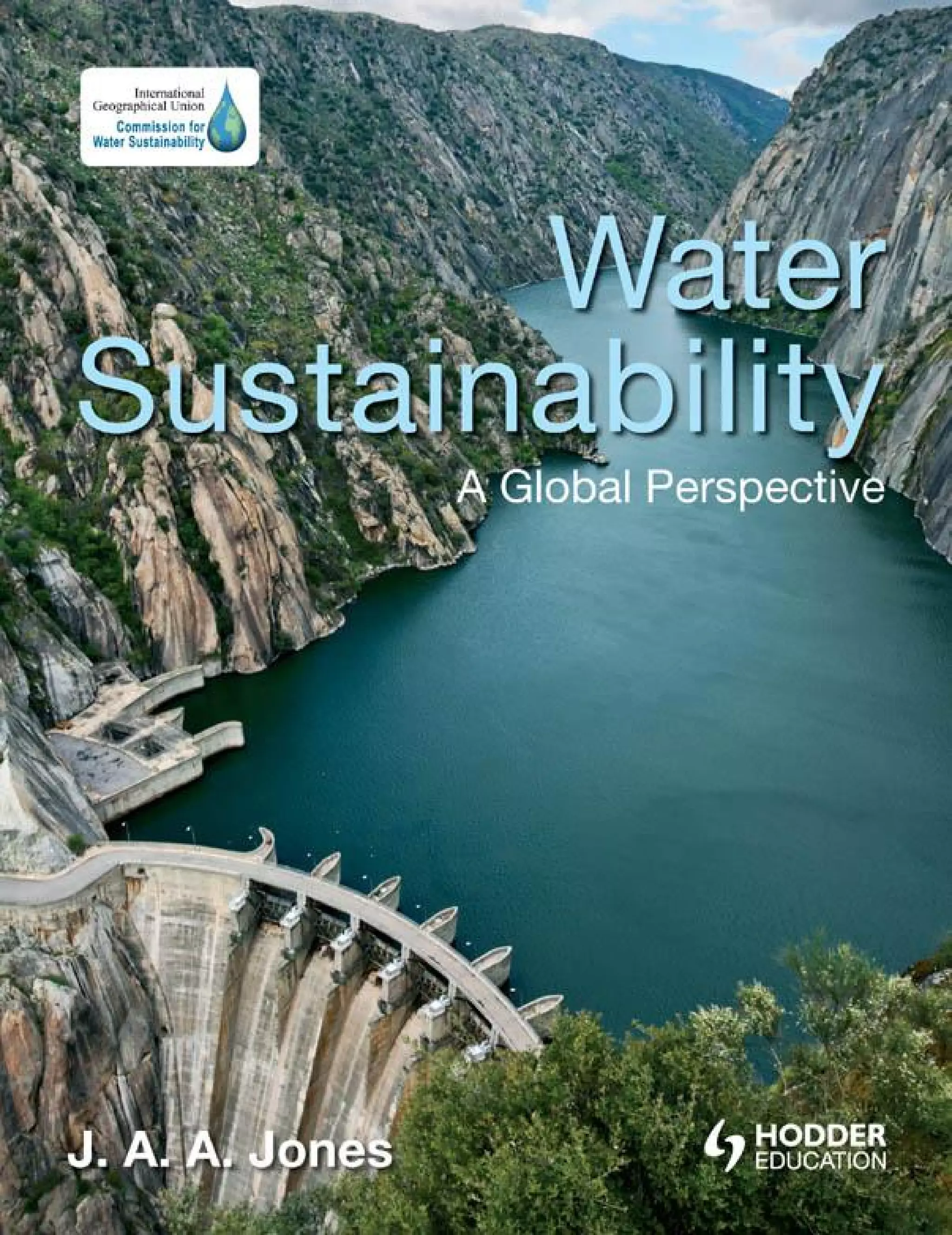
Cover image: © José Luis Gutiérrez/iStockphoto.com
Typeset in 10 on 13pt Sabon by Phoenix Photosetting, Chatham, Kent
Printed and bound in Italy by Printer Trento
What do you think about this book? Or any other Hodder Arnold title?
Please send your comments to educationenquiries@hodder.co.uk
To my wife Jennifer, and to Claire and Mark and their families
v
Contents
Preface vii
List of Contributors x
Introduction
1 A looming crisis 2
Part 1 Status and challenges
2 Rising demand and dwindling per capita resources 12
3 Water and poverty 27
4 Governance and finance 36
5 Pollution and water-related disease 49
6 Water, land and wildlife 97
7 Dams and diversions 117
8 Trading water – real and virtual 157
9 Water, war and terrorism 175
10 The threat of global warming 197
Part 2 Nature’s resources
11 The restless water cycle 222
12 Shrinking freshwater stores 246
Part 3 Towards sustainability
13 Cutting demand 266
14 Increasing supplies 281
15 Cleaning up and protecting the aquatic environment 299
16 Using seawater 326
17 Controlling the weather 339
18 Improved monitoring and data management 353
19 Improving prediction and risk assessment 367
20 Improving management and justice 381
21 Aid for the developing world 397
vi
Contents
Conclusions
22 Is sustainability achievable? 406
Notes 411
Bibliography 413
Index 439
This book has a companion website available at
http://www.hodderplus.com/geography
To access the Image Library and weblinks included on the
website please register the following access details:
Serial number: water104882
vii
Preface
“If humanity can avoid nuclear holocaust in the 21st century, then water is going
to be the most important issue to deal with.”
Professor András Szöllösi-Nagy
Rector, UNESCO-IHE Institute for Water Education
and former Director, Division of Water UNESCO
in this and with water conservation. However, for the
vast majority of the needy, simple ‘human scale’ solu-
tions will go a long way. If not eliminating the problems
completely, at least these simple approaches can allevi-
ate the worst – education and aids to self-help are high
on the list. Commitment comes first, funding a strong
second.
We offer this book as a contribution from the IGU Com-
mission for Water Sustainability to the serious debates
now ongoing, and especially to students of water
resources in the hope that it will encourage them to
delve more deeply into the issues it raises and maybe get
involved in some of the work that is so urgently needed.
The issues cover a wide range of disciplines and it is also
to be hoped that students of economic, politics and law
might find many issues of interest: your participation is
sorely needed.
The book is also an official contribution to the UN-
designated International Year of Planet Earth (2008–9),
for which I had the privilege of leading the groundwater
team. The IYPE marks 50 years since the International
Geophysical Year, which proved the springboard for the
development of global collaboration and field obser-
vations in the geosciences. In 1957–8, the only water-
related activities were in glaciology and the emphasis
was purely on the physical science. The world has
changed very much since, in many ways it seems more
hazardous, and science is focusing more and more on
service to humanity. The themes of the IYPE include
megacities, climate change, soils, natural resources, haz-
ards, and health and life, as well as deep geology and
oceanography.
At the same time, the UN designated three other sig-
nificant International Years. The International Polar
When the world entered the twenty-first century there
were more people without access to safe water and
sound sanitation than ever before. A third of the world
population were living in countries suffering moderate
to severe water stress. The Millennium Development
Goals set down by the UN in 2000 included a commit-
ment to begin to rectify the situation, at least to halve the
number of people without access to safe water and basic
sanitation by 2015. Unfortunately, we are fast approach-
ing 2015 and way short on the numbers. International
aid to developing countries has fallen well short of the
promises. And the prospects seem even bleaker follow-
ing the credit crunch of 2008–9.
Many factors are working against a solution, some old,
some new. But the greatest of these is population growth.
Population growth is solely responsible for the dramatic
reduction in per capita water resources in recent dec-
ades, and its exponential rise is predicted to reduce
resources by another third over the coming half-century.
It is in the developing world and emerging economies
that the pressure will be felt most. Not only are these
mostly the regions with the fastest population growth,
they are also countries that suffer from extreme poverty,
rapid industrialization and heavy water pollution, and
often wasteful water management, sometimes singly but
most commonly in combination.
In writing this book I have endeavoured to present a bal-
anced and in-depth view of the problems and their root
causes, and to try to foresee the soundest ways forward.
There is no ‘magic bullet’, indeed no ultimate solution at
all. Too many interests militate against any solution of
the population issue. But we can do things to mitigate
the effects of climate change, and even reduce the rate of
global warming itself. Many new technologies will help
Water Sustainability
viii
Year continues the theme of the IGY, but with the social
urgency caused by the effects of rapid climate change –
as a weather vane for the Earth – rather than the pure
physics of glacier movement and mass balance, studied
for its own sake. The International Year of Sanitation
focuses on one of the major Millennium Development
Goals, while the International Year of the Potato sounds
rather more esoteric. Daft as it may sound, however, the
IYP has a very important message for water resources
too. In the world as a whole, rice is the staple carbohy-
drate and 21 per cent of all water used goes into growing
rice. Only 1 per cent is used to grow potatoes. Of course,
more rice is grown than potatoes, but just look at the
difference in water consumption; it is astounding. On
average, 3400 m3
of water is used to produce a tonne of
white rice; in India it actually takes 4254 m3
/tonne. The
world average for a tonne of potatoes is just 250 m3
,
a saving of more than three million litres per tonne.
The drive should be on to get farmers in the Develop-
ing World to switch. Unfortunately, culture and tradi-
tion militate against success. But with food production
consuming over 80 per cent of world water supplies and
with rising populations and increasing affluence in the
emerging economies demanding more food, agriculture
has to be a prime focus for conserving water.
I am indebted to many colleagues and organizations for
assistance and financial support in this project. I am espe-
cially indebted to the International Geographical Union
and the International Council for Science (ICSU), who
funded my main research assistants, and in particular to
IGU Presidents and Secretary-Generals Bruno Messerli,
Eckhart Ehlers, Anne Buttimer and Ron Abler and Vice-
President Changming Liu for their unerring faith in the
project. I also owe a great deal to my publishers for their
support and latterly to Bianca Knights, Liz Wilson and
Lyn Ward for their invaluable advice on the final prod-
uct. The project started life as an atlas – and some of this
is still evident in the text. But the issues raised clearly
require far more than a conventional atlas, and it was
fortuitous that Hodder decided to curtail its atlas series
while the work was in progress.
I received enthusiastic support from the managers and
heads of a number of international data archives: Dr-Ing
Thomas Maurer (Global Runoff Data Centre, Koblenz),
Dr Richard Robarts (GEMS/Water, Burlington, Ontario),
Dr David Viner and Professor Phil Jones (Climatic
Research Unit, University of East Anglia, England),
and Professor Dr Wilhelm Struckmeier (WHYMAP
Programme, German Federal Institute for Geosciences
and Natural Resources (BGR), Hanover). Thanks also
to the UN Food and Agriculture Organization for use
of the AQUASTAT and FAOSTAT archives, to the man-
agement of Eurostat and to the International Union for
Conservation of Nature (IUCN). Frank Holsmuller and
his colleagues Andrew Parry and Matt Beven at ESRI
(Environmental Systems Research Institute, Inc.) gave
valuable advice on mapping and Kent Lethcoe at USGS/
EROS Data Center, Sioux Falls, guided us through the
Interrupted Goode Homolosine map projection. Thanks
also to Arjen Hoekstra for tutoring Róisín Murray-
Williams in water footprint analysis.
In addition to those colleagues who have made writ-
ten contributions to the book (listed separately), I
would like to thank colleagues who have offered sup-
port and advice, especially the Commission’s Vice-chair-
men Mingo-ko Woo and Kazuki Mori, also John Gash
(Centre for Ecology and Hydrology, UK), Des Walling
(President of the World Association for Sediment and
Erosion Research), Petra Döll (Johann Wolfgang Goethe
University, Frankfurt, Germany), Cathy Reidy Liermann
(University of Washington, USA), John and Annabel
Rodda (formerly president of the International Asso-
ciation of Hydrological Sciences and consultant for the
UN Non-Governmental Liaison Service, respectively),
Gerry Jones (honorary president, International Commis-
sion on Snow and Ice) and his successor John Pomeroy
(ICSI Hydrology), David Butler (Professor of Engineer-
ing, Exeter University, and former head of the Urban
Water Research Group, Imperial College London),
Saul Arlosoroff (Mekorot, National Water Corpora-
tion, Israel), Stephen Salter, Professor of Engineering
Design, Edinburgh University, Arona Soumare (Con-
servation Director, World Wildlife Fund – West Africa),
Ross Brown (Meteorological Service of Canada), Kevin
Hiscock (University of East Anglia, UK), Mark Rosen-
berg (ex-chair, IGU Commission on Health and Envi-
ronment), Peter Adams, PC (Professor emeritus, Trent
University, Canada), Atsumu Ohmura (ETH, Zurich),
José Maria García-Ruiz (ex-director, Instituto Pirenaico
de Ecología, Zaragoza), Graham Sumner (formerly Uni-
versity of Wales, Lampeter), David Kay (Director, Centre
for Research into Environment and Health, Aberyst-
wyth University) and Dick and Duncan Maclean. Nor
should I forget my son, Dr Mark Jones, MRCGP, who
gave helpful medical advice on Chapter 5.
Without the extensive support from directors and col-
leagues at the Institute of Geography and Earth Sciences,
Aberystwyth, this book would not have been possible.
Preface
ix
My thanks go particularly to my Senior Research Assist-
ant, Dr Keren Smith, and to my Senior Cartographer,
Ian Gulley, who has done such a fantastic job in trans-
forming our (very) rough drafts into highly presentable
maps and diagrams. My thanks also to research assist-
ant Alison Geeves and MSc internship students, Sonia
Thomas and Sophie Bonnier, from the Montpellier
SupAgro International Centre for Advanced Studies in
Agronomic Engineering. Additional cartographic assist-
ance was provided by Antony Smith, Dr Aled Rowlands,
Dr Catherine Swain and James Bell. Further support for
the research assistants was provided by the Oakdale
Trust and by the Walter Idris Bursary (Aberystwyth Uni-
versity).
Anthony Jones
IGU Commission for Water Sustainability
and Aberystwyth University
The author and the publishers would like to thank the
following for their permission to reproduce images, data
and quotations:
Permission to use data from:
FAO Aquastat (figs. 1.1–1.3, 2.1, 2.3–2.5, 2.7, 2.8) and
FAOSTAT (figs. 8.1–8.9, 20.2); Eurostat (figs. 5.3, 5.17);
CRU, University of East Anglia (figs. 11.6–11.24); GEMS/
Water (figs. 5.1, 5.6, 5.9, 5.21, 6.6, 6.7, 6.15); Global
Runoff Data Centre (figs. 11.25–11.30, 18.7); World
Health Organization (figs. 5.22–5.26); International
Union for Conservation of Nature (figs. 6.11, 6.13); UN
Economic and Social Commission for Asia and the Pacific
(fig. 3.4); Professor Martina Flörke (figs. 2.2, 10.2); Ebro
Hydrographic Department (fig. 7.22); Professor Arjen
Hoekstra, Water Footprint Network (figs. 2.6, 8.10–8.14);
Ross Brown, Meteorological Service of Canada, Dr David
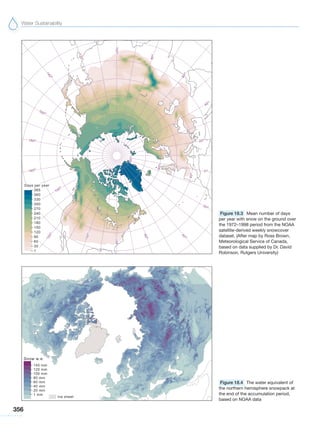
Robinson, Rutgers University, and NOAA (figs. 18.3, 18.4).
Permission for Figures edited and/or redrawn from:
Professor Aondover Tarhule (figs. 3.2, 3.3); Dr C.J.J.
Schouten (fig. 5.2); Dr Frank Winde (fig. 5.8); Professor
Wang Wuyi, based on original maps published by Tan
Jianan, Wang Wuyi, Zhu Wenyu, Li Ribang and Yang Lin-
sheng in The atlas of endemic diseases and their environ-
ment in the People’s Republic of China (1989), Science
Press, Beijing (figs. 5.10–5.15); British Geological Survey
(fig. 5.16); WHO, based on unpublished WHO document
WHO/VBC/89.967 (fig. 5.27); Professors D.E. Walling
and B. Webb (fig. 6.17); Emeritus Professor John Lewin
(fig. 7.2); Professor A. Hoekstra (figs. 815–17); Dr C. Pill-
ing (fig. 10.1); Dr Thomas Maurer, Global Runoff Data
Centre (figs. 11.31, 18.6); Professor Graham Cogley (figs.
12.1, 12.3); Professor Martin Funk, Head of the Divi-
sion of Glaciology at E.T.H. Zurich, graph based on data
from the Swiss Glacier Monitor compiled by Dr Andreas
Bauder, Glaciological Commission of the Swiss Academy
of Natural Sciences, and supplied by Professor Atsumu
Ohmura (figs. 12.2, 12.11); Professors Lydia Espizua and
Gabriela Maldonado (figs. 12.8–12.10); Professor Wil-
helm Struckmeier, based on Groundwater Resources of the
World 1:25  000  000 (2008 edition), downloadable from
www.whymap.org (fig. 12.12); Professors Martina Flörke
and Petra Döll (fig. 12.13); Professor D.D. Chiras/Benjamin
Cummings (fig. 12.14); Jos Kuipers (fig. 15.1); Dr H. van
Hout (fig. 15.3); Professor Jun Xia (figs. 15.7–15.9); Emeri-
tus Professor Stephen Salter (fig. 16.4); Dr Mike Marshall
(figs. 19.1, 19.2); Professor Emeritus Tom McMahon and
Dr Murray Peel (figs. 19.3–19.5); Water UK (fig. 20.1).
Photographs:
Professor Doracie Zoleta-Nantes (figs. 3.5, 5.4, 5.5); Pro-
fessor Emeritus Richard Wilson, Harvard University, the
Arsenic Foundation Inc., Boston, MA, USA, and Steven
Lamm, MD (figs. 5.18–5.20); Dr Simon Benger (figs. 6.3–
6.5); Dr Santiago Begueria (fig. 7.20); Società Meteoro-
logica Italiana (Italian Meteorological Society) and Italian
Glaciological Committee (figs. 12.4–12.7); Kurobe City
Office, Toyama Prefecture, Japan, annotated by Professor
Kazuki Mori (fig. 13.1); Professor Jana Olivier (fig. 14.4);
Gareth Evans (fig. 15.5); NASA Goddard Space Flight
Center and US Geological Survey, Landsat EROS imagery
(fig. 15.11); Marcia Brewster and the UN Division for Sus-
tainable Development, Interagency Gender and Water Task
Force, UNICEF Photography Unit, Division of Commu-
nication, New York, USA – Zimbabwe (UNICEF/HQ02-
0352), Rwanda (UNICEF/HQ99-0460) and Iraq (UNICEF/
HQ99-0663) photographed by Giacomo Pirozzi; Burma
(UNICEF/HQ95-0340) photograph by Franck Charton
(figs. 20.3–20.6).
Quotations:
Chapter 4 Public Private Partnerships: Quotation reprinted
with permission from: House of Commons Transport Com-
mittee, 2008: The London Underground and the Public-
Private Partnership Agreements. Second Report of Session
2007–08, 25 January, HC45, London, The Stationery
Office.
Every effort has been made to obtain necessary
permission with reference to copyright material. The
publishers apologise if inadvertently any sources remain
unacknowledged and will be glad to make the necessary
arrangements at the earliest opportunity.
x
List of Contributors
Dr Abdullah Almisnid, University of Gassim, Unizah,
Saudi Arabia.
Dr Simon N. Benger, Geography, Population and Envi-
ronmental Management, School of the Envrionment,
Flinders University, Adelaide, Australia.
Dr David B. Brooks, Director of Research, Friends of the
Earth Canada, Ottawa, Ontario, Canada.
Dr Laura Brown, Department of Geography, York Uni-
versity, Toronto, Ontario, Canada.
Marcia Brewster, former Task Manager, Interagency
Gender and Water Task Force, United Nations Division
for Sustainable Development, Department of Economic
and Social Affairs (DESA), United Nations Building,
New York, USA. Currently Vice President, UN Associa-
tion Southern New York Division.
Professor Claudio Cassardo, Department of General
Physics, University of Turin, Turin, Italy.
Professor J. Graham Cogley, Department of Geography,
Trent University, Peterborough, Ontario, Canada. He is
leading the updating of the World Glacier Inventory held
at the US National Snow and Ice Data Center (NSIDC),
Boulder, Colorado, USA.
Dr L.A. Dam-de Heij, CSO Adviesbureau (Consultancy
for Environmental Management and Survey), Bunnik,
The Netherlands.
Professor Joseph W. Dellapenna, School of Law, Vil-
lanova University, Villanova, Pennsylvania, USA.
Dr Lydia E. Espizua, National Research Council (Con-
sejo Nacional de Investigaciones Cientificas y Tecnicas
– CONICET), Argentina.
Professor Dr Mariele Evers, Chair of Sustainable Land
Development, Leuphana University of Lüneburg, Lüne-
burg, Germany.
Dr-Ing Martina Flo˝rke, Senior Researcher, Center for
Environmental Systems Research (CESR), University of
Kassel, Kassel, Germany.
Simone Grego, Programme Officer, World Water Assess-
ment Programme, Perugia, Italy.
Dr Glyn Hyett, Managing Director, 3P Technik UK
Limited and Celtic Sustainables (Environmental
Services), Cardigan, Ceredigion, UK.
Professor Arjen Y. Hoekstra, Scientific Director, Water
Footprint Network, University of Twente, Enschede, The
Netherlands.
Professor Alain Jigorel, Director, National Institute for
Applied Sciences (Institut National des Sciences Appli-
quées (INSA) de Rennes), Rennes, France.
Dr Peter Khaiter, School of Information Technology,
York University, Toronto, Canada.
Professor Nurit Kliot, Department of Geography, Uni-
versity of Haifa, Haifa, Israel.
Academician Professor Changming Liu, Institute of
Geographical Sciences and Natural Resources, Chinese
Academy of Sciences, Beijing, China. Former Vice-
president, International Geographical Union.
Dr-Ing João-Paulo de C. Lobo-Ferriera, Head of Ground-
water Division, National Laboratory for Civil Engineer-
ing (LNEC), Lisbon, Portugal.
Emeritus Professor Thomas A. McMahon, Department
of Civil and Environmental Engineering, University of
Melbourne, Melbourne, Victoria, Australia.
Dr Gabriela I. Maldonado, National Research Council
(Consejo Nacional de Investigaciones Cientificas y Tec-
nicas – CONICET), Argentina.
Dr Michael Marshall, Post-doctoral research assistant,
Institute of Geography and Earth Sciences, Aberystwyth
University, UK.
Dr-Ing Thomas Maurer, ex-Director, Global Runoff
Data Centre, at the German Federal Institute of Hydrol-
ogy (Bundesanstalt für Gewässerkunde – BfG), Koblenz,
Germany.
Róisín Murray-Williams, Scottish Water, Edinburgh;
former Water Science graduate, Aberystwyth University,
UK.
List of Contributors
xi
Dr Rossella Monti, Chief Executive Officer, Hydroaid,
Turin, Italy.
Dr Wouter Mosch, Ecopatrimonio environmental con-
sultancy, Murcia, Spain; formerly at CSO Adviesbureau,
Bunnik, The Netherlands.
Professor Jana Olivier, Department of Environmental
Sciences, University of South Africa, South Africa.
Dr-Ing Luis Oliveira, National Laboratory for Civil
Engineering (LNEC), Lisbon, Portugal.
Dr Murray C. Peel, Senior Research Fellow, Department
of Civil and Environmental Engineering, University of
Melbourne, Melbourne, Victoria, Australia.
Dr Mladen Picer, Institut Ruðer Boškovicˇ (IRB), Zagreb,
Croatia.
Dr Pierre Pitte, National Research Council (Consejo
Nacional de Investigacionas Cieutificas y Tecnicas –
CONICET), Argentina.
Professor John C. Rodda, ex-president, International
Association of Hydrological Sciences, Wallingford, Eng-
land. Former Director, Water Resources Division, World
Meteorological Organization, Geneva.
Dr C.J.J. Schouten, founding Director, CSO Adviesbu-
reau (Consultancy for Environmental Management and
survey), Bunnik, The Netherlands.
Professor Amarendra Sinha, Department of Geology,
University of Rajastan, Jaipur, India.
Professor Aondover Tarhule, Chair, Department of
Geography, and Consulting Director, Center for Risk
and Crisis Management, University of Oklahoma,
Norman, Oklahoma, USA.
Sonia Thomas, Agence de l’Eau Rhône Mediterranée
et Corse, Marseille. Formerly at Montpellier SupAgro
International Centre for Advanced Studies in Agronomic
Engineering, Montpellier, France.
Dr H.R.A. van Hout, Director CSO Adviesbureau (Con-
sultancy for Environmental Management and survey),
Bunnik, The Netherlands.
Dr Frank Winde, Department of Geography, North-
West University, Potchefstroom, North West Province,
South Africa.
Professor Emeritus Ming-ko Woo, School of Geogra-
phy and Earth Sciences, McMaster University, Hamil-
ton, Ontario, Canada. Formerly president, Hydrology
Section, Canadian Geophysical Union, coordinator,
Global Energy and Water Cycle Experiment (GEWEX)
in Canada, and vice-chair, IGU Commission for Water
Sustainability.
Professor Wang Wuyi, chair, IGU Commission on Health
and Environment. Chinese Academy of Sciences Insti-
tute of Geographical Sciences and Natural Resources
Research, Beijing, China.
Professor Jun Xia, Director, Center for Water Resources
Research, Chinese Academy of Sciences, Beijing, China.
Dr Kathy L. Young, Department of Geography, York Uni-
versity, Toronto, Ontario, Canada.
Professor Doracie Zoleta-Nantes, Chair, Department of
Geography, University of the Philippines, Manila, The
Philippines. Research Fellow, RMAP-Crawford School,
Australian National University.
Richard Zuccolo, Environmental consultant. Formerly
at the Italian Agency for Environmental Protection and
Technical Services (APAT), Padua, Italy.
This page intentionally left blank
1 A looming crisis 2
Introduction
2
A looming crisis1
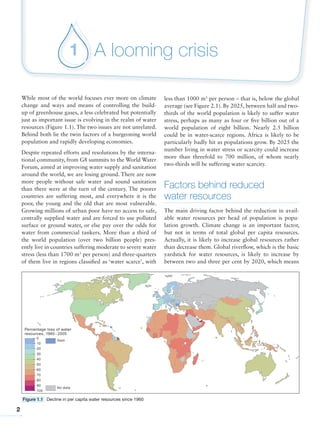
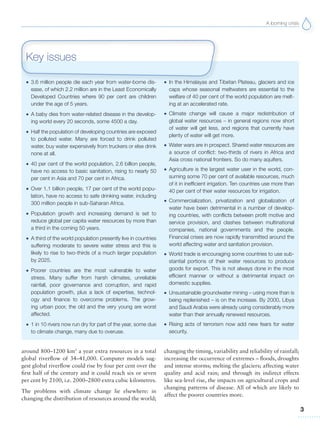
Figure 1.1 Decline in per capita water resources since 1960
While most of the world focuses ever more on climate
change and ways and means of controlling the build-
up of greenhouse gases, a less celebrated but potentially
just as important issue is evolving in the realm of water
resources (Figure 1.1). The two issues are not unrelated.
Behind both lie the twin factors of a burgeoning world
population and rapidly developing economies.
Despite repeated efforts and resolutions by the interna-
tional community, from G8 summits to the World Water
Forum, aimed at improving water supply and sanitation
around the world, we are losing ground. There are now
more people without safe water and sound sanitation
than there were at the turn of the century. The poorer
countries are suffering most, and everywhere it is the
poor, the young and the old that are most vulnerable.
Growing millions of urban poor have no access to safe,
centrally supplied water and are forced to use polluted
surface or ground water, or else pay over the odds for
water from commercial tankers. More than a third of
the world population (over two billion people) pres-
ently live in countries suffering moderate to severe water
stress (less than 1700 m3
per person) and three-quarters
of them live in regions classified as ‘water scarce’, with
less than 1000 m3
per person – that is, below the global
average (see Figure 2.1). By 2025, between half and two-
thirds of the world population is likely to suffer water
stress, perhaps as many as four or five billion out of a
world population of eight billion. Nearly 2.5 billion
could be in water-scarce regions. Africa is likely to be
particularly badly hit as populations grow. By 2025 the
number living in water stress or scarcity could increase
more than threefold to 700 million, of whom nearly
two-thirds will be suffering water scarcity.
Factors behind reduced
water resources
The main driving factor behind the reduction in avail-
able water resources per head of population is popu-
lation growth. Climate change is an important factor,
but not in terms of total global per capita resources.
Actually, it is likely to increase global resources rather
than decrease them. Global riverflow, which is the basic
yardstick for water resources, is likely to increase by
between two and three per cent by 2020, which means
A looming crisis
3
G 3.6 million people die each year from water-borne dis-
ease, of which 2.2 million are in the Least Economically
Developed Countries where 90 per cent are children
under the age of 5 years.
G A baby dies from water-related disease in the develop-
ing world every 20 seconds, some 4500 a day.
G Half the population of developing countries are exposed
to polluted water. Many are forced to drink polluted
water, buy water expensively from truckers or else drink
none at all.
G 40 per cent of the world population, 2.6 billion people,
have no access to basic sanitation, rising to nearly 50
per cent in Asia and 70 per cent in Africa.
G Over 1.1 billion people, 17 per cent of the world popu-
lation, have no access to safe drinking water, including
300 million people in sub-Saharan Africa.
G Population growth and increasing demand is set to
reduce global per capita water resources by more than
a third in the coming 50 years.
G A third of the world population presently live in countries
suffering moderate to severe water stress and this is
likely to rise to two-thirds of a much larger population
by 2025.
G Poorer countries are the most vulnerable to water
stress. Many suffer from harsh climates, unreliable
rainfall, poor governance and corruption, and rapid
population growth, plus a lack of expertise, technol-
ogy and finance to overcome problems. The grow-
ing urban poor, the old and the very young are worst
affected.
G 1 in 10 rivers now run dry for part of the year, some due
to climate change, many due to overuse.
G In the Himalayas and Tibetan Plateau, glaciers and ice
caps whose seasonal meltwaters are essential to the
welfare of 40 per cent of the world population are melt-
ing at an accelerated rate.
G Climate change will cause a major redistribution of
global water resources – in general regions now short
of water will get less, and regions that currently have
plenty of water will get more.
G Water wars are in prospect. Shared water resources are
a source of conflict: two-thirds of rivers in Africa and
Asia cross national frontiers. So do many aquifers.
G Agriculture is the largest water user in the world, con-
suming some 70 per cent of available resources, much
of it in inefficient irrigation. Ten countries use more than
40 per cent of their water resources for irrigation.
G Commercialization, privatization and globalization of
water have been detrimental in a number of develop-
ing countries, with conflicts between profit motive and
service provision, and clashes between multinational
companies, national governments and the people.
Financial crises are now rapidly transmitted around the
world affecting water and sanitation provision.
G World trade is encouraging some countries to use sub-
stantial portions of their water resources to produce
goods for export. This is not always done in the most
efficient manner or without a detrimental impact on
domestic supplies.
G Unsustainable groundwater mining – using more than is
being replenished – is on the increase. By 2000, Libya
and Saudi Arabia were already using considerably more
water than their annually renewed resources.
G Rising acts of terrorism now add new fears for water
security.
Key issues
around 800–1200 km3
a year extra resources in a total
global riverflow of 34–41,000. Computer models sug-
gest global riverflow could rise by four per cent over the
first half of the century and it could reach six or seven
per cent by 2100, i.e. 2000–2800 extra cubic kilometres.
The problems with climate change lie elsewhere: in
changing the distribution of resources around the world;
changing the timing, variability and reliability of rainfall;
increasing the occurrence of extremes – floods, droughts
and intense storms; melting the glaciers; affecting water
quality and acid rain; and through its indirect effects
like sea-level rise, the impacts on agricultural crops and
changing patterns of disease. All of which are likely to
affect the poorer countries more.
Water Sustainability
4
This really shows the fallacy of placing too much empha-
sis on average resources. Just as water is not evenly dis-
tributed across the land, so uneven growth in population
and the uneven effects of climate change are set to make
matters worse. Most of the extra resources will be in
middle to high latitudes, roughly polewards of 45°. The
subtropics and the desert margins will suffer the worst
reductions in rainfall. Essentially, the water-rich will get
richer, the water-poor will get poorer.
One reason why the CIA took a great interest in com-
puter models from the early days in the late 1980s was
the prospect of civil strife and large-scale international
migrations being fomented by drought and shortages of
food and water. Early models suggested the grain harvest
in North America could be reduced by up to 20 per cent,
which would drastically reduce the amount available for
the food aid on which much of Africa depends. Former
British ambassador to the UN, Sir Crispin Tickell (1977,
1991) saw the threats in the Least Economically Devel-
oped Countries very clearly. These threats are likely
to spill over to developed countries as migrants try to
seek asylum. Indeed, the boatloads of migrants entering
Europe from North Africa may be the first sign of this.
To this may be added flood migrants as tropical storms
hit harder.
More subtle changes are already under way in regions
that rely on glacier meltwaters for supplies. Virtu-
ally all mountain glaciers are melting, as are the polar
ice sheets. Melting glaciers provide extra water for a
while, until the ice is gone. The glaciers and ice caps
in the Himalayas are generally melting more rapidly
at present, though their demise is not quite as immi-
nent as the notorious vanishing date of ‘2035’ cited in
the IPCC (2007) report, which was exposed as totally
unfounded shortly after it was presented to the 2009
Copenhagen climate conference. Even less likely is the
suggestion made on America’s ABC television in 2008
by Indian glaciologist Syed Hasnain, the originator of
the meltdown theory, that the Ganges would run dry
by the middle of the century as a result. The ice bodies
in the region constitute the largest mass of ice outside
the polar regions – some glaciers are several hundreds
of metres thick and they lie at altitudes of many kilo-
metres. Professor Julian Dowdeswell, director of the
Scott Polar Research Institute, has pointed out that the
average Himalayan glacier is around 300 m thick, which
means a melt rate of 5 m a year would take 60 years for
it to melt completely. It could take hundreds of years
at present rates of melting for all the ice to disappear,
and there is no guarantee that rates will be maintained;
they have fluctuated widely over the past hundred years
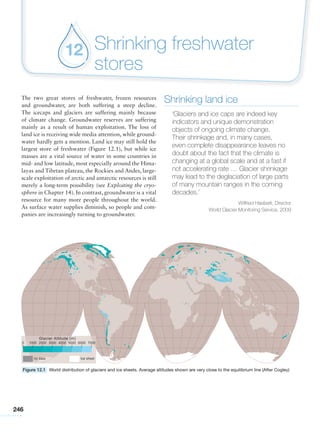
(Figure 12.2). Nevertheless, many rivers around the
world, where the glaciers are thinner and at lower alti-
tudes, are likely to suffer from reduced meltwaters. Gla-
cier meltwaters could run out within decades for some
Andean communities.
A question of quality
as well as quantity
The effects of global warming on water quality are also
likely to be very significant, yet they have been receiv-
ing far less attention. Higher water temperatures have
important chemical and biological consequences. The
water will expel oxygen. Fish and other aquatic crea-
tures can die through lack of oxygen. Higher rates of
evaporation and longer, more severe drought periods
will reduce river levels, slow down the flow and reduce
natural aeration at rapids and waterfalls. The result is
less natural self-cleaning in the rivers. At the same time,
lower flows mean there is less freshwater to dilute pol-
luted wastewater that is discharged into the rivers. In
the early 1990s, during the worst multi-year drought
of the twentieth century in south-east England, flow in
many rivers was essentially maintained by untreated
wastewater and sewage: the National Rivers Author-
ity designated 44 rivers as endangered and suspended
permits for discharges into the rivers. Warmer water
encourages bacteria to multiply and decompose organic
waste, enriching the water with nitrogen and phospho-
rus. Algae proliferate in the enriched water, killing other
vegetation by using up the oxygen and reducing light
levels. Toxic algal blooms are an increasing menace on
reservoirs. To this may be added increasingly acid rain as
it flushes more CO2
from the air, which has already been
blamed for acidifying the ocean.
The quality of water is an increasing problem, even
without considering the effects of climate change and
warmer rivers and lakes. Some 450 km3
of wastewater
are released into the world’s rivers and lakes every year
without treatment. This is more than one per cent of all
the annual riverflow in the world. It takes 6000 km3
of
clean water to dilute it to a safe level, but much of it is
reused before it reaches that status, and this is the source
of many diseases. Even before the water is ingested by
humans, the damage to river ecology and wildlife is
immense.
A looming crisis
5
Dire predictions made in the 1970s by the Russian
hydrologist, M.I. Lvovich, that all the world’s rivers
would be useless by 2000 because of mounting pollu-
tion, have mercifully not materialized. This is in large
part due to improved environmental regulation, espe-
cially in the developed countries. In Lvovich’s Eastern
Europe, matters have only progressed since the demise
of the Soviet system in 1990, followed by the accession
of many of the countries to the European Union making
them subject to its environmental legislation. But the
process is not yet complete there by any means.
Africa and Southern Asia are now the worst problem
areas. Half the population of developing countries are
exposed to polluted water. Many are forced to drink pol-
luted water, buy water expensively from truckers or else
drink none at all. Under ten per cent of the population
in Ethiopia, Eritrea and the Congo have access to proper
sanitation facilities (Figure 1.3). Nelson Mandela told
a salutary story when he accepted the IGU Planet and
Humanity Award in Durban in 2002. He had been asked
by a rich American businessman to what he could most
effectively donate money to help the young – perhaps
school computers? Mandela replied that the greatest need
was proper washing and sanitation facilities in schools.
Contracting diarrhoea from unwashed hands was the
prime cause of lost school days and the main obstacle
to education. A report by WaterAid in 2009 called for
attention to be given to diarrhoea for another reason. It
kills more children than HIV/Aids, TB and malaria put
together yet it receives a fraction of the funds.
The emerging powers of India and China are also still
well behind the G8 nations. The map highlights two
critical problems: most poor nations have inadequate
provision and the worst provision is in the tropical
regions. The combination of higher temperatures and
poor sanitation in tropical regions is a leading threat to
public health (see Water-related infectious diseases in
Chapter 5).
There are well-founded fears that Southern Asia will be
beset by rampant river pollution over the coming dec-
ades as populations grow, the poor migrate to the cities
(often to insanitary shanty town slums) and countries
with emerging economies industrialize. India and China
are in the forefront. The Yamuna River, which is Delhi’s
main source of water, is beset with sewage, rubbish and
industrial waste. In 2006 it had 100,000 times more
faecal coliform than the safe limit. One billion tonnes
of untreated wastewater are dumped in the Ganges
every day. A typical sample of water from the River
Ganges contains 60,000 faecal coliform bacteria in
every 100 ml of water. Over 400 million people depend
on the river. Many bathe in it in the belief that it has
unusual self-cleansing powers: in the largest religious
festival in the world, the Pitcher Festival or Kumbh
Mela, up to 50 million people attend the bathing cere-
monies. Serious action may be about to be taken. The
Ganga Sena (Army for the Protection of the Ganges)
has over 10,000 student activists. In 2009, hundreds of
students staged a demonstration in Varanasi distribut-
ing pamphlets and cleaning the ghats – the terraces of
funeral pyres beside the river. The World Bank is now
making a loan of $1 billion for a five-year clean-up
programme on the river beginning in 2010. However,
previous attempts, like the 1985 Ganges Action Plan,
have come to little: less than 40 per cent of the Action
Plan targets were met and there was considerable back-
sliding afterwards.
Lakes and rivers in China are heavily polluted, particu-
larly from industry. China has the fourth-largest water
resources in the world, but over 60 per cent of its 660
cities suffer from water shortages and 110 suffer severe
shortages. Pollution plays a large part in this: three-
quarters of rivers flowing through urban areas are unfit
for drinking or fishing and around a third are unfit
for agriculture or industry. Nearly 700 million people
drink water contaminated by human or animal waste.
During the 2008 Beijing Olympics factories were closed
or moved out of town. Even so, the government could
only guarantee safe drinking water for the Olympic vil-
lage, not the whole city. In 2007, China’s third largest
reservoir at Wuxi City in central China was covered with
toxic blue-green algae. In 2006, the Hong Kong based
Fountain Set Holdings, one of the largest cotton textile
companies in the world, was releasing 22,000 tonnes
a day of untreated wastewater contaminated with dye
into the local river from its factory in Guangdong, turn-
ing the river red. It was fined $1 million and has now
installed a treatment plant, but this was not an isolated
incident. One way that Chinese companies have kept
exports competitively cheap over the last two or three
decades has been to dump wastewater into the environ-
ment, despite the breach of national environmental legis-
lation: treatment costs an extra 13 cents per tonne. Some
companies have been falsifying their record books and
officials have colluded with illegal activities. River pollu-
tion is said to deprive over 300 million Chinese of clean
drinking water.
Water Sustainability
6
Water and the natural
environment
Protecting the environment is vital for protecting
water resources, and vice versa. But this requires some
entrenched attitudes to change, from governments and
multinational companies to peasant farmers. Just as
many in developing countries regard protecting the
environment as a kind of western fashion that only rich
nations can afford – having gained many of their own
riches from unfettered exploitation in the past – so some
also regard economizing on water use as something of
a luxury that they cannot afford. This is especially the
case where economies are dominated by the demands of
agriculture, like India. Globally, around 86 per cent of
all water withdrawals are used in agriculture. As popula-
tions grow, so more water will be needed for agriculture.
Better informed farmers and more efficient irrigation
systems are needed. Overuse of water for irrigation is
not just a waste of water, it can destroy soils and poison
rivers with salts, pesticides and fertilizers.
The link between land and water, between river basin
and rivers, needs wider recognition. Conservation, pres-
ervation and restoration are concepts that all human-
kind needs to embrace, not just to maintain biodiversity
and a healthy environment, but also to protect and con-
serve water resources for our own use and for future
generations. This is the essence of ‘water sustainability’.
Education has a vital role to play here. So too does what
is termed ‘capacity building’ – training local people to
solve water problems themselves.
Technological innovation has solved many problems
in the past. Dams are the time-honoured solution, but
like most technical solutions they have their draw-
backs, especially the megadams now being built. But
science and technology are rapidly expanding the suite
of options. Developed countries may have the resources
to overcome technical issues, but what about the devel-
oping world and what might mounting hunger, finan-
cial and social tensions, migration and conflicts do? Is
increasing globalization a help or a hindrance? Is water
too fundamental a social need to be in private hands? Is
there, indeed, such a thing as a human right to water?
Over-pumping of groundwater and pollution of ground-
water, especially by fertilizers and pesticides from agri-
culture, are growing problems around the world. Much
of the western USA, including the grainlands of the
Great Plains, is suffering from falling water tables. If this
leads to falling crop yields in the coming decades, this
will have serious ramifications well beyond the USA, as
this is one of the last remaining sources of food aid for
the world. Large tracts of both China and India are in
a similar situation. It is a leading reason behind grand
plans for diverting rivers from one side of the coun-
try to the other in both countries. Many Middle East-
ern countries are exploiting groundwater that has lain
there for thousands of years. It is not being replenished
in the present climate. They are using more than 100
per cent of their natural water resources, and it is ulti-
mately unsustainable. Jordan and Yemen are pumping
30 per cent more water from their groundwater than
is being recharged by rainfall and Israel is exceeding its
renewable supplies by 15 per cent. This led Israel to sign
a 20-year agreement with Turkey for the supply of 50
million m3
of water from the River Manavgat in return
for armaments in 2004. Libya has completed the grand-
est of diversion plans to bring ‘fossil’ groundwater from
the central Sahara to the Mediterranean coastlands.
Algeria has similar plans. But how long will such schemes
and overdrafts last and what environmental damage will
ensue?
From the tropical rainforests to the desert margins,
destruction of land resources and wild habitats by agri-
culture, poor husbandry or pure commercial greed is
also destroying water resources and aggravating flood-
ing. The world’s wetlands have been decimated over the
last half century. Most have been drained for agriculture,
and some in the real or imagined belief that they are the
source of disease.The result is less storage on floodplains
for stormwater, so floods are worse downstream and
more of the water that the wetlands might have released
after the storm to bolster river levels has passed by use-
lessly as floodwaters. Reappraisal of flood controls after
the disastrous floods on the Mississippi in 1993 has led
to a programme to re-establish riparian wetlands in the
headwaters. The Netherlands is now actively recreating
wetlands for the same reason. Similar arguments sur-
round deforestation. By and large, forests decrease flood
hazard, although they do also reduce water resources by
lowering riverflow across the board. Deforestation and
poor agricultural husbandry also exacerbate soil ero-
sion, which is reaching critical levels in many parts of the
world. Soil erosion is not simply a loss for agriculture.
The International Rivers Network estimates that severe
soil erosion affects 80 per cent of the land surrounding
the Three Gorges reservoir on the Yangtze River, much
of it due to tree-felling for fuel and building materials.
A looming crisis
7
This is causing 530 million tonnes of silt a year to enter
the reservoir, reducing its water-holding capacity and
affecting water quality for the towns along its banks.
The authorities in northern China are battling against
environmental degradation caused by uncontrolled
grazing, over-zealous irrigation, deforestation and over-
pumping of groundwater. Desertification is spreading
through northern and north-western China largely as a
result. Water tables are falling and the desert is expand-
ing by over 2500 km2
a year in northern China.
The Millennium
Development Goals
The Millennium Development Goals set by the UN Mil-
lennium Declaration in 2000 include halving the number
of people without access to safe water and sanitation by
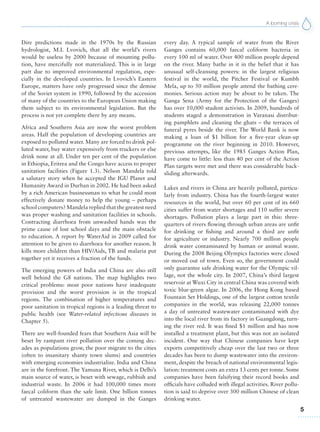
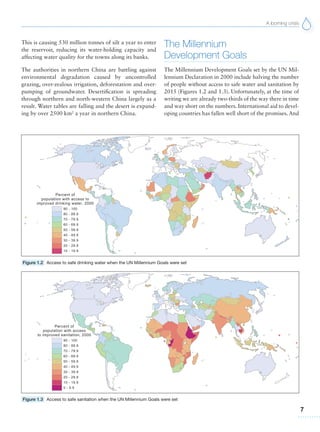
2015 (Figures 1.2 and 1.3). Unfortunately, at the time of
writing we are already two-thirds of the way there in time
and way short on the numbers. International aid to devel-
oping countries has fallen well short of the promises. And
Figure 1.3 Access to safe sanitation when the UN Millennium Goals were set
Figure 1.2 Access to safe drinking water when the UN Millennium Goals were set
Water Sustainability
8
the prospects seem bleaker following the credit crunch of
2008–9. Delivery of the Millennium Goals is frustrated
by the twin forces of reduced international aid and grow-
ing populations. India is a clear example of the latter.
In 2004–5, safe water and sanitation were provided for
325,000 more people, but over the last 20 years the popu-
lation has been growing at up to 1.75m a year, four to five
times the rate of growth in the provision of water services.
It is also regrettable that the MDG aims with respect to
water were only sub-themes of the eight main themes:
poverty and hunger, primary education, gender equality,
child mortality, maternal health, diseases, environmental
sustainability, and developing a global partnership for
development. Water is most prominent under the envi-
ronmental sustainability theme.
Water underpins up to six of the Millennium themes, yet
water deserves higher political priority in its own right.
One of the difficulties in coordinating international
efforts to solve water problems is that so many differ-
ent bodies have a legitimate interest in water. The World
Water Assessment Programme has to deal with some 30
or so UN bodies alone. This is not just an obstacle cre-
ated by bureaucracy. It is in the very nature of water. It
is the most fundamental of resources and is involved in
so many issues.
Poverty is a major cause of lack of access to safe water sup-
plies and sanitation. It undermines health, increases expo-
sure to disease, hinders access to education and reduces
the ability to work, and so poverty breeds poverty. A key
to improving water supply and sanitation for most of
the population of the world is to reduce poverty. Yet the
gap is widening between the ‘haves’ and ‘have-nots’. The
‘Make Poverty History’ campaign championed by Prime
Minister Tony Blair at the Gleneagles G8 summit in 2005
had little effect.There are now more than a billion people
in poverty in the world.The rate of population growth in
sub-Saharan Africa means that economies would need to
grow by several per cent a year just to maintain present
levels of poverty, and this is not happening. Apart from
the lack of piped water and sanitation, the urban poor
pay between five and ten times as much per litre as the
rich in the same city buying from water truckers. Reduc-
ing poverty would also be good for the environment.
Water, politics and economics
Despite limited progress with the Millennium Develop-
ment Goals, water has moved up the political agenda
over the past decade or so. The World Water Assess-
ment Programme, established by the UN in 2001, and
the five meetings of the World Water Forum since 1997
have played a major role in informing politicians and the
public of an impending crisis in water resources and its
causes. The UN World Water Development Reports that
the WWAP presents at the Forums are extremely valu-
able and highly influential, most notably in leading to
the launch of the UN Water for Life decade 2005–2015,
which aims to facilitate the Millennium Goals. The 2002
World Summit on Sustainable Development (WSSD) in
Johannesburg also produced a number of useful initia-
tives. The WASH campaign launched at the WSSD by
the Water Supply and Sanitation Collaborative Council
aims to raise public awareness and increase the politi-
cal profile of sanitation and safe water supplies through
the media, fact sheets and other publications. Water now
appears on the agendas of the World Economic Forum
in Davos and of the World Political Forum.
The present and impending problems are not simply ques-
tions of supply and demand. There are significant issues
in governance, finance and legal frameworks. Rivers and
groundwater resources that cross international bound-
aries are a source of conflict that is still inadequately
covered by international law, even though it is now two
decades since the idea of ‘water wars’ was first broached
in the run-up to the 1992 Rio Earth Summit. The WSSD
rightly identified lack of ‘good governance’ as a major
factor in the problems: the need for governmental insti-
tutions to plan for and supply adequate and affordable
facilities for all their citizens, as well as to inform them,
educate them in water issues and consult them. In 2009,
the 5th
World Water Forum identified corruption as a
major obstacle to good governance. It called for an inter-
national tribunal to address violations of anti-corruption
rules and appealed for safeguards against corruption to
be incorporated in the design of all new water projects.
The question of money is paramount. Money is needed
not only for the basic provisions of water and sanitation,
but also for the scientific and technical backup in Water
ResourcesAssessment,real-time monitoring,warning and
forecasting systems, and predicting the effects of foresee-
able changes in the environment, both physical and socio-
economic, so that sound planning can take place. The
whole question of funding for water resources projects
and the long-held policies of the World Bank and IMF to
encourage privatization and public-private partnerships
need careful scrutiny in light of recent cases of conflict
of interest between profit-making and service provision.
A looming crisis
9
1 Promoting good governance:
Assisting countries that commit to prioritize water and
sanitation as part of their sustainability strategy, especially
as part of the eradication of poverty – helping with inte-
grated management and developing institutional, legal
and regulatory frameworks.
2 Utilising all financial resources:
Giving high priority in Official Development Aid to sound
proposals as catalyst to mobilise other monetary sources,
direct encouragement of International Financial Institu-
tions, and providing technical assistance to domestic
financial provision and promoting public-private partner-
ships (PPPs).
3 Building infrastructure by empowering
local authorities and communities:
Help build systems, PPPs, community-based approaches
and improved technologies at household level.
4 Strengthening monitoring,
assessment and research:
Encourage sharing of information from UN and other
systems, including the websites established by the 3rd
World Water Forum Ministerial Conference, and support-
ing research and collaboration on aspects of the water
cycle.
5 Reinforcing the engagement of
international organizations:
Improving coordination within the UN Organization, and
between institutions, like the World Bank, the Bretton
Woods institutions and regional development banks. Pro-
posals by the World Panel on Financing Water Infrastruc-
ture include funding and insuring risk mitigation schemes,
and increasing flexibility in the rules covering loans.
At the G8 summit in May 2003, appropriately held at
Evian, the richest nations made a number of potentially
valuable resolutions on both governance and finance
in their Water Action Plan (see The G8 Action Plan).
The subsequent appearance of water on the agendas of
the World Economic and Political Forums is helping to
implement some of these issues.
The World Economic Forum is particularly valuable
because it engages large private companies as well as
governments. At the 2008 Davos meeting, the UN Secre-
tary-General shared the chair of a debate on the growing
portion of world population living in regions of water
stress up to 2025 with the heads of Nestlé and Coca-
Cola. The same meeting addressed two other growing
concerns: security from industrial espionage, especially
by cyber attacks, and the impact of buy-outs by hedge
funds and foreign sovereign wealth funds whose prime
interest is profit. No less a person than the director of
the FBI examined the vulnerability of governments,
companies and individuals to cyber attack by electronic
spies. And the chair of the US Securities and Exchange
Commission scrutinised the growing anxieties over the
powerful role of hedge funds in global markets, accom-
panied by a number of major industrialists. These issues
are of real concern to all countries with privatized water
industries.
The perspective was widened at the 2009 Davos meeting
to water in the context of fuel and food. A session on an
integrated approach to energy, food and water security
included a call for world leaders to establish a Natu-
ral Resource Security Council to cover food and water
that can match the UN Security Council for War and
Peace in its authority. A world authority such as this is
needed to coordinate strategy to improve the efficiency
of food supply chains: some 40 per cent of food produc-
tion is lost or spoiled between the farm and the con-
sumer. The chairman of Nestlé said at the time that he
was ‘convinced that we will run out of water long before
we run out of fuel’. He said that open markets with no
subsidies, especially not on biofuel, lead to more efficient
water use, and that it is imperative to try to arrest the
trend towards structural overuse of freshwater.
The connections between food, energy and water
are becoming critical. Irrigated agriculture currently
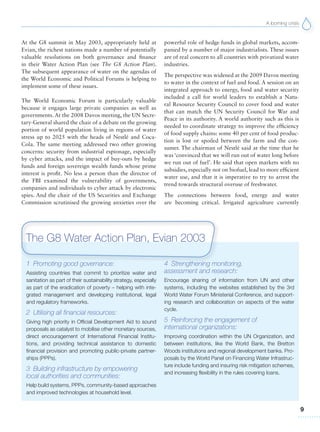
The G8 Water Action Plan, Evian 2003
Water Sustainability
10
produces nearly half of the food in the world by value. It
is the main source of over-pumping of groundwater and
falling water tables. Feeding a world population that is
50 per cent larger than now by mid-century will require
at least 50 per cent more water unless there is a major
shift in technology. It could take even more as people in
the emerging economies, like China and India, change
their diets and consume more meat, and invest in wash-
ing machines. To this may be added biofuel. It is esti-
mated that just supplying five per cent of current energy
from biofuel will double water consumption. But this is
assuming the current approach and technology, which is
changing: the British government for one has revised its
plans for expanding biofuel use. Of more concern is bio-
fuel crops taking up land that is supplying food crops.
One issue that caused considerable controversy at the
World Economic Forum in 2009 and which has been
hotly debated for some time among water policymak-
ers is whether access to water should be a basic human
right or simply a ‘need’. These two small words hold the
key to the difference between public and private in the
water industry. If it is a human right, then governments
should shoulder the responsibility of securing and sub-
sidizing supplies. The majority of stakeholders at the
5th World Water Forum were strongly pro the right to
water, despite two decades of World Bank support for
privatization. At Davos 2009, it was argued that govern-
ments should provide people with up to 25 litres a day
for drinking and hygiene, and that anything above this
amount should be chargeable. Some argued that pricing
water is necessary to restrain use. Only by attaching a
price to water can a system of trading permits be estab-
lished like those being implemented to constrain carbon
emissions. Farmers could then sell unused permits to
other farmers and so hopefully reduce overall water con-
sumption. However, the issue of pricing remains prob-
lematic: it may be necessary economically and to achieve
sustainability, but it can also be politically risky in many
countries. There is a compromise move developing
among water providers towards pricing for ‘sustainable
recovery’ of costs rather than full recovery, which was
identified at the 2009 World Water Forum in Istanbul.
Davos 2010 had yet broader issues in mind follow-
ing the ‘great recession’. The theme was no less than:
‘Improve the state of the world: rethink, redesign,
rebuild.’ The primary aim was to seek ways of creating
more financial stability in the world to prevent a recur-
rence of the near meltdown of international finance
that marred 2009 and has led to severe and continuing
impacts on the water industry, including deferred refur-
bishment of old infrastructure, job losses and problems
raising loans. Davos alone can only produce ideas. The
G8, or more effectively the G20, which includes India
and China, is the only place where there is any hope
of an effective redesign of global financial systems ever
being achieved.
Conclusion
The threats to water sustainability are huge. Political
awareness of the issues is increasing. Plans are prolifer-
ating. Technologies are advancing. But obstacles are also
persistent and new ones are arising. The greatest threats
are manmade. Will the fine words and good intentions
prevail?
Further reading
World Water Assessment Programme, 2009. Water in a chang-
ing world. 3rd edition, UN World Water Development
Report (WWDR–3). Available online at: www.unesco.org/
water/wwap/wwdr/wwdr3/
And, earlier WWDR editions.
Shiklomanov, I.A. and Rodda, J.C. (eds) 2003. World Water
Resources at the Beginning of the 21st Century. Interna-
tional Hydrology Series, UNESCO, Cambridge University
Press, Cambridge. pp. 414–416.
Sir Crispin Tickell 1977. Climate change and world affairs.
Cambridge, Mass., Harvard Studies in International Affairs
No. 37, 76pp.
And 1991. The human species: a suicidal success? Geographi-
cal Journal, 159(2), 219–26.
2 Rising demand and dwindling per capita
resources 12
3 Water and poverty 27
4 Governance and finance 36
5 Pollution and water-related disease 49
6 Water, land and wildlife 97
7 Dams and diversions 117
8 Trading water – real and virtual 157
9 Water, war and terrorism 175
10 The threat of global warming 197
Part 1
Status and challenges
12
Rising demand and
dwindling per capita
resources
2
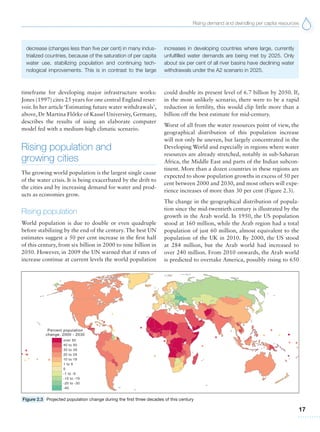
Demand continues to grow, driven by rising population,
the drift to the cities, the need for food and the increas-
ing consumption of manufactured goods.
Diminishing resources
In broad outline, the present-day geography of water
resources very much follows the pattern predetermined
by climate. Even when the size of the population is con-
sidered, the pattern remains broadly the same: at least
up to this point in time, the countries with the lowest per
capita water resources are generally those where nature
provides the least.
Economic development and rising affluence are begin-
ning to change this pattern. Per capita resources have
fallen by between 40 and 50 per cent over much of
Southern Asia during the last half century, mainly
through population growth, but they are set to decline
even more as economies expand. India as a whole is
already suffering water stress and China is moving in
the same direction. Provided these two emerging econo-
mies avoid civil unrest, they should be able to find the
economic and technical means to meet the challenges.
Africa is different. Per capita resources have fallen
between 60 and 80 per cent since the mid-twentieth
century. Most of subtropical Africa now suffers from
water stress, even scarcity. Modelling suggests that a
combination of population growth, economic develop-
ment and climate change will cause demand to double
or even quadruple in most of sub-Saharan Africa during
the first quarter of this century. Most countries with the
exception of South Africa are unlikely to have either the
economic or technical apparatus needed to meet this
challenge on their own.
By contrast, the huge leap in water demand in western
countries last century is unlikely to continue. There has
been a drastic reduction in demand in Germany over the
last 20 years as a result of water-saving technology and
citizen awareness.The demise of heavy water-consuming
industries and the effective export of many manufactur-
ing industries to countries where production costs are
cheaper have added a widespread downward trend in
demand from the industrial sector in the West. Demand
is therefore also a product of stage of economic develop-
ment, rising in the early stages, levelling off and maybe
even decreasing later.
Current status
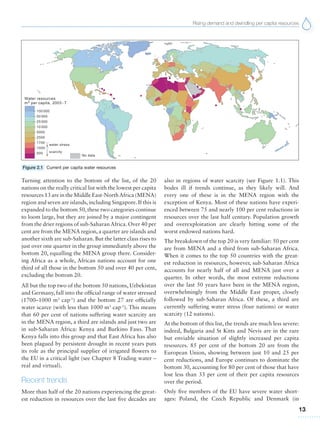
Of the top 20 best-resourced nations, nine have signifi-
cant ice- and snow-melt resources, the rest have humid
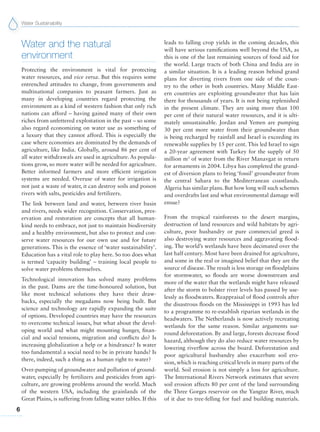
tropical climates, some have both (Figure 2.1). Unsur-
prisingly, Greenland tops the list with nearly 10.5 mil-
lion m3
per head. Most of this is inaccessible, although
climate change does appear to be increasing meltwaters
around the southern margins. Greenland’s resources are
more than 15 times that of the next, French Guiana (at
679,599 m3
cap-1
), followed by Iceland and Guyana at
569,650 and 326,088 m3
cap-1
respectively. Looking
down the list at the top 50 countries reveals that just
over a quarter have significant frozen resources, but the
proportion of humid tropical nations dependant solely
on high rainfall receipts rises to nearly 60 per cent,
and they account for over 80 per cent if the top 20 are
excluded.
There are, however, some major exceptions to this cli-
matic imperative that are mainly due to the size of pop-
ulation, either too many or too few. Australia appears
in the top 50, at number 36, more because of its low
population than any inherent climatic advantage –
indeed, it is the world’s driest inhabited continent and
adverse climatic trends are currently hitting it hard and
likely to get worse (see Chapter 10 The threat of global
warming). India is relegated to number 133 out of the
176 countries reporting to the UN Aquastat database,
by virtue of its huge population of over one billion and
rising. The other huge nation, China, with over 1.3 bil-
lion, comes in at just ten places above India. As the two
nations most likely to develop leading roles in the world
economy in coming decades, both will have to face seri-
ous water resources issues (see Chapter 7 Dams and
diversions).
Rising demand and dwindling per capita resources
13
Turning attention to the bottom of the list, of the 20
nations on the really critical list with the lowest per capita
resources 13 are in the Middle East-NorthAfrica (MENA)
region and seven are islands, including Singapore. If this is
expanded to the bottom 50, these two categories continue
to loom large, but they are joined by a major contingent
from the drier regions of sub-Saharan Africa. Over 40 per
cent are from the MENA region, a quarter are islands and
another sixth are sub-Saharan. But the latter class rises to
just over one quarter in the group immediately above the
bottom 20, equalling the MENA group there. Consider-
ing Africa as a whole, African nations account for one
third of all those in the bottom 50 and over 40 per cent,
excluding the bottom 20.
All but the top two of the bottom 50 nations, Uzbekistan
and Germany, fall into the official range of water stressed
(1700–1000 m3
cap-1
) and the bottom 27 are officially
water scarce (with less than 1000 m3
cap-1
). This means
that 60 per cent of nations suffering water scarcity are
in the MENA region, a third are islands and just two are
in sub-Saharan Africa: Kenya and Burkino Faso. That
Kenya falls into this group and that East Africa has also
been plagued by persistent drought in recent years puts
its role as the principal supplier of irrigated flowers to
the EU in a critical light (see Chapter 8 Trading water –
real and virtual).
Recent trends
More than half of the 20 nations experiencing the great-
est reduction in resources over the last five decades are
also in regions of water scarcity (see Figure 1.1). This
bodes ill if trends continue, as they likely will. And
every one of these is in the MENA region with the
exception of Kenya. Most of these nations have experi-
enced between 75 and nearly 100 per cent reductions in
resources over the last half century. Population growth
and overexploitation are clearly hitting some of the
worst endowed nations hard.
The breakdown of the top 20 is very familiar: 50 per cent
are from MENA and a third from sub-Saharan Africa.
When it comes to the top 50 countries with the great-
est reduction in resources, however, sub-Saharan Africa
accounts for nearly half of all and MENA just over a
quarter. In other words, the most extreme reductions
over the last 50 years have been in the MENA region,
overwhelmingly from the Middle East proper, closely
followed by sub-Saharan Africa. Of these, a third are
currently suffering water stress (four nations) or water
scarcity (12 nations).
At the bottom of this list, the trends are much less severe:
indeed, Bulgaria and St Kitts and Nevis are in the rare
but enviable situation of slightly increased per capita
resources. 85 per cent of the bottom 20 are from the
European Union, showing between just 10 and 25 per
cent reductions, and Europe continues to dominate the
bottom 30, accounting for 80 per cent of those that have
lost less than 33 per cent of their per capita resources
over the period.
Only five members of the EU have severe water short-
ages: Poland, the Czech Republic and Denmark (in
Figure 2.1 Current per capita water resources
Water Sustainability
14
In South America, the huge dam building programme
during the 1980s raised per capita resources to above
1970 levels, but dam building has not kept pace with
population growth since then. Australasia is the third
best endowed region, but while dam building doubled
per capita resources between 1970 and 1992, rising
population and a cutback in dam building have severely
eaten into this, resulting in a 35 per cent deterioration
– hence Queensland’s problems (see box ‘Brisbane’s
water crisis: a tale of politics, protests and complacency’
in Chapter 7). Europe has remained stable, balancing
population growth and dam building, while Asia has
managed to increase resources and turn around from
the decline experienced at the beginning of the 1990s.
Lastly, by this measure Africa has lost nearly half of the
resources it had in 1970, although there has been little
change since the early 1990s.
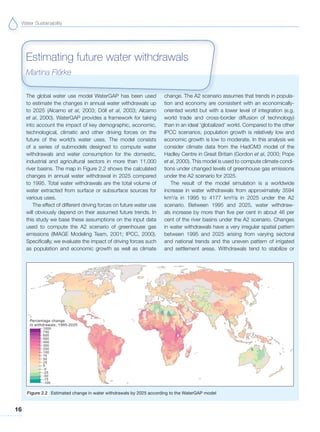
Future water demand
Predicting future water demand is not easy and prone
to error. Individual countries are increasingly modelling
demand as a necessary aid to forward planning. Per-
haps the earliest national forecasts were undertaken by
Canada in 1978 and the USA in 1981. Both predicted
water shortages in specific parts of their countries by
2000. Predictions of future demand in the UK by 2025
were produced by the National Rivers Authority (1994),
which revealed the parsimonious position of SE Eng-
land. The UK water industry has since been instructed to
update these predictions to include climate change and
to adopt as industry standard the so-called ‘medium-
high emissions’ estimate of global warming, which is
the scenario produced by the UK Hadley Centre’s green-
house-gases-only run of its General Circulation Model
(Hulme and Jenkins, 1998; CRU, 2000).
The addition of climate change compounds the diffi-
culties and increases the range of outcomes. The indus-
try now speaks of a range of ‘scenarios’ rather than a
simple projection of trends. These scenarios consist of
different assumptions about demographic and economic
trends and greenhouse gas emissions. Errors in one can
be multiplied by errors in another. The physical simu-
lation models themselves also contain assumptions and
approximations about climatic processes (see Chapter
10 The threat of global warming). The result is a range
of possibles that is whittled down to a few probables.
This is no argument for not trying, but it is an important
caveat. Forward plans must be laid, especially given the
stress), and Cyprus and Malta (in scarcity). Although the
latter two have also shown some of the lowest declines
over the past 50 years, at 32 per cent and 23 per cent
respectively, it is unsurprising that Malta has turned to
desalination. It is also noteworthy that while Europe as
a whole, including the Russian Federation, is among the
better-endowed regions outside the humid tropics, it is
also one of the greatest consumers of virtual water from
the rest of the world.
The effect of dams
The discussion thus far has been based on the official
UN statistics as presented in Aquastat, and these are
based on dividing the average annual net water balance
by population size. This is the official assessment. While
it provides a valid basis for comparison in itself, there
are a number of other aspects that should be considered,
which might give a somewhat different view. Not all the
water that flows into the rivers is usable, either because
it comes in spasmodic floods that are not or cannot be
harnessed, or because there are other demands upon
that water, be it fisheries and the aquatic environment,
or because there are countries downstream that have an
established demand, perhaps by treaty. Occasionally, it
gets too polluted.
In the 1970s, the veteran Russian hydrologist M.I. Lvov-
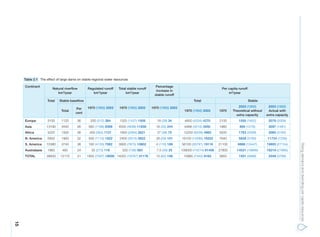
ich made his own calculations based on the obvious fact
that the main objective of building dams is to harness
floodwaters and transform a potential hazard into a
potential resource (Lvovich, 1970, 1977). His calcula-
tions were very instructive, and they have been extended
into the twenty-first century in Table 2.1. The column
covering stable per capita runoff without extra capacity
shows the effects population growth would have had on
per capita resources if no dams had been built.
The view is imperfect because we do not know the true
purpose of every dam or the proportion of stored water
that is destined for water supply and what may be used
purely to control floods or to generate hydropower. The
dataalsopurporttocoveronlylargedams,ofwhichGleick
(2003) counted 48,000 dams, though Chao et al (2008)
counted only around 30,000. Nevertheless, extending
Lvovich’s approach over the period since the beginning
of the 1970s reveals some very interesting divergences in
water resources engineering between regions.
The table suggests that North America has nearly
doubled its per capita resources by building dams.
Risingdemandanddwindlingpercapitaresources
15
Table 2.1 The effect of large dams on stable regional water resources
Continent
Natural riverflow
km3
/year
Regulated runoff
km3
/year
Total stable runoff
km3
/year
Percentage
increase in
stable runoff
Per capita runoff
m3
/year
Total Stable baseflow
1970 (1992) 2003 1970 (1992) 2003 1970 (1992) 2003
Total Stable
Total
Per
cent
1970 (1992) 2003 1970
2003 (1992)
Theoretical without
extra capacity
2003 (1992)
Actual with
extra capacity
Europe 3100 1125 36 200 (312) 384 1325 (1437) 1509 18 (28) 34 4850 (4334) 4270 2100 1550 (1852) 2079 (2009)
Asia 13190 3440 26 560 (1198) 8399 4000 (4638) 11839 16 (35) 244 6466 (4210) 3450 1960 900 (1276) 3097 (1481)
Africa 4225 1500 36 400 (564) 1121 1900 (2064) 2621 27 (38) 75 12250 (6536) 4965 5500 1763 (2939) 3080 (3193)
N. America 5950 1900 32 500 (1115) 1922 2400 (3015) 3822 26 (59) 101 19100 (14280) 18252 7640 5828 (5760) 11724 (7236)
S. America 10380 3740 36 160 (4135) 7062 3900 (7875) 10802 4 (110) 189 56100 (35791) 19116 21100 6888 (13447) 19893 (27154)
Australasia 1965 465 24 35 (273) 118 500 (738) 583 7.5 (59) 25 109000 (74274) 61406 27800 14531 (18899) 18219 (27895)
TOTAL 38830 12170 31 1855 (7597) 19006 14025 (19767) 31176 15 (62) 156 10965 (7442) 6163 3955 1931 (2688) 2049 (3789)
Water Sustainability
16
The global water use model WaterGAP has been used
to estimate the changes in annual water withdrawals up
to 2025 (Alcamo et al, 2003; Döll et al, 2003; Alcamo
et al, 2000). WaterGAP provides a framework for taking
into account the impact of key demographic, economic,
technological, climatic and other driving forces on the
future of the world’s water uses. The model consists
of a series of submodels designed to compute water
withdrawals and water consumption for the domestic,
industrial and agricultural sectors in more than 11,000
river basins. The map in Figure 2.2 shows the calculated
changes in annual water withdrawal in 2025 compared
to 1995. Total water withdrawals are the total volume of
water extracted from surface or subsurface sources for
various uses.
The effect of different driving forces on future water use
will obviously depend on their assumed future trends. In
this study we base these assumptions on the input data
used to compute the A2 scenario of greenhouse gas
emissions (IMAGE Modeling Team, 2001; IPCC, 2000).
Specifically, we evaluate the impact of driving forces such
as population and economic growth as well as climate
change. The A2 scenario assumes that trends in popula-
tion and economy are consistent with an economically-
oriented world but with a lower level of integration (e.g.
world trade and cross-border diffusion of technology)
than in an ideal ‘globalized’ world. Compared to the other
IPCC scenarios, population growth is relatively low and
economic growth is low to moderate. In this analysis we
consider climate data from the HadCM3 model of the
Hadley Centre in Great Britain (Gordon et al, 2000; Pope
et al, 2000). This model is used to compute climate condi-
tions under changed levels of greenhouse gas emissions
under the A2 scenario for 2025.
The result of the model simulation is a worldwide
increase in water withdrawals from approximately 3594
km3
/a in 1995 to 4177 km³/a in 2025 under the A2
scenario. Between 1995 and 2025, water withdraw-
als increase by more than five per cent in about 46 per
cent of the river basins under the A2 scenario. Changes
in water withdrawals have a very irregular spatial pattern
between 1995 and 2025 arising from varying sectoral
and national trends and the uneven pattern of irrigated
and settlement areas. Withdrawals tend to stabilize or
Estimating future water withdrawals
Martina Flo˝rke
Figure 2.2 Estimated change in water withdrawals by 2025 according to the WaterGAP model
Rising demand and dwindling per capita resources
17
timeframe for developing major infrastructure works:
Jones (1997) cites 25 years for one central England reser-
voir. In her article ‘Estimating future water withdrawals’,
above, Dr Martina Flo˝rke of Kassel University, Germany,
describes the results of using an elaborate computer
model fed with a medium-high climatic scenario.
Rising population and
growing cities
The growing world population is the largest single cause
of the water crisis. It is being exacerbated by the drift to
the cities and by increasing demand for water and prod-
ucts as economies grow.
Rising population
World population is due to double or even quadruple
before stabilizing by the end of the century. The best UN
estimates suggest a 50 per cent increase in the first half
of this century, from six billion in 2000 to nine billion in
2050. However, in 2009 the UN warned that if rates of
increase continue at current levels the world population
Figure 2.3 Projected population change during the first three decades of this century
decrease (changes less than five per cent) in many indus-
trialized countries, because of the saturation of per capita
water use, stabilizing population and continuing tech-
nological improvements. This is in contrast to the large
increases in developing countries where large, currently
unfulfilled water demands are being met by 2025. Only
about six per cent of all river basins have declining water
withdrawals under the A2 scenario in 2025.
could double its present level of 6.7 billion by 2050. If,
in the most unlikely scenario, there were to be a rapid
reduction in fertility, this would clip little more than a
billion off the best estimate for mid-century.
Worst of all from the water resources point of view, the
geographical distribution of this population increase
will not only be uneven, but largely concentrated in the
Developing World and especially in regions where water
resources are already stretched, notably in sub-Saharan
Africa, the Middle East and parts of the Indian subcon-
tinent. More than a dozen countries in these regions are
expected to show population growths in excess of 50 per
cent between 2000 and 2030, and most others will expe-
rience increases of more than 30 per cent (Figure 2.3).
The change in the geographical distribution of popula-
tion since the mid-twentieth century is illustrated by the
growth in the Arab world. In 1950, the US population
stood at 160 million, while the Arab region had a total
population of just 60 million, almost equivalent to the
population of the UK in 2010. By 2000, the US stood
at 284 million, but the Arab world had increased to
over 240 million. From 2010 onwards, the Arab world
is predicted to overtake America, possibly rising to 650
Water Sustainability
18
million by 2050 against America’s 400 million. Over
the next 25 years, the population in the Middle East
is projected to double – the fastest growth rate out-
side Africa. There is already a critical scarcity of water
resources in the Middle East and North Africa, where
11 of the 20 countries in the region have been using
more than 50 per cent of their renewable resources for
over a decade. Libya and most of the Arabian Penin-
sula already use over 100 per cent of their tradition-
ally assessed resources with the support of desalination
and fossil groundwater, some of which is 10,000 years
old and has not received significant recharge since the
Pluvial Period at the end of the last glacial period.
Most of the current expansion in world population
is occurring in the Least Economically Developed
Countries. In 1950 the LEDCs contained 67 per cent
of world population, in 1990 76 per cent, but by 2025
this could rise to 84 per cent. The population in sub-
Saharan Africa is expanding rapidly despite rampant
disease (Figure 2.3). In the hundred years between 1950
and 2050 the population is likely to have increased
more than sevenfold, from barely two-thirds that of the
current EU countries in 1950 to twice the EU now and
accelerating to five times the EU by 2050.
Another significant change in global demography is the
divergence in age structures between Developed and
Developing countries. While average age is increasing in
most Developed countries – between 1950 and 2000 it
rose from 30 to 35 in the USA and from 30 to 38 in
Europe – the reverse is happening in most of the Devel-
oping World. In many of these countries average age is
now in the teens. The greater number of young people
is an important factor accelerating overall fertility rates.
The International Labour Organization estimates that
youth unemployment in the Middle East is already
around 25 per cent. There and elsewhere, growth of an
impoverished youth class is likely to reduce ability to
pay for water services, but worse, it might lead to social
unrest, more extremism and terrorism.
The implications for per capita water resources are
immense. World resources per head of population are
likely to fall by a third or more between 2010 and 2050
solely as a result of population growth. Meanwhile, the
increase in global precipitation is likely to reduce this
loss by a mere three to four per cent (see Chapter 10
The threat of global warming). However, the differ-
ences in regional population growth shown in Figure
2.2 mean that the situation is far worse for most of the
countries already suffering water stress (see Figures 1.1
and 1.2). By mid-century, the number of people living
in water-stressed countries is likely to increase by up to
300 per cent to six billion, of whom half will be suffer-
ing severe stress.
Climate change will add to regional problems. Although
at the global scale climate change will increase resources,
in the regions that are currently stressed it will only make
matters worse, because of the shifts in rainfall patterns
(see Chapter 10 The threat of global warming). Arnell
(1998) estimated that climate change will add an extra
66 million people to those suffering moderate stress and
170 million to those suffering severe stress by 2050.
These estimates suggest that climate change will add
only one per cent as many people as population growth
to the numbers living under moderate stress and just five
per cent to those with severe water stress. Population
growth is clearly the principal problem.
What these estimates do not cover is increasing per capita
demand as economies grow and people become richer.
The so-called ‘multipliers’ of the population explosion
include improvements in the quality of life from cen-
tralized water supply to more washing machines, dish-
washers and bottled water, the expansion of cities and
centralized sewerage, and the demand for more indus-
trial, commercial and agricultural products. China is
going to follow this route over the next few decades. In
1980 per capita consumption in China was under 100
litres a day. It is now around 280 litres. In the UK, house-
holds use 150 litres per capita. In America, per capita
consumption is 400 litres. An indication of the potential
importance of multipliers is given by research in Amer-
ica which concluded that just over half of the increase in
national demand during the 1970s could be attributed
to population growth, a little over a third was due to
increased demands from the pre-existing population as
affluence and expectations increased, and the remaining
ten per cent was due to rising demands from the new
additions to the population.
While current trends suggest that the greatest popula-
tion growth is going to be in the LEDCs, one of the great
unknowns is the degree to which this may be accom-
panied by increasing prosperity. Prospects do not look
good at present, in which case the LEDCs will experi-
ence less of a multiplier effect and growth in demand
will be more in line with population size. Water con-
sumption in poor rural areas of Africa, Asia and Latin
America, is currently around 20 to 30 litres per capita
Rising demand and dwindling per capita resources
19
per day. If most of the population expansion were in
rural communities, then the extra strain on water
resources would not be so great. But increasingly people
are drifting to the cities.
The drift to the cities
We have already passed the point where over half of the
world’s population live in cities. By 2050 it could reach
three-quarters (Figures 2.4 and 2.5).
The drift to the cities is occurring everywhere in the
world and it has been happening since the Industrial
Revolution: 40 per cent of the French countryside
now has a lower population than it had 150 years ago,
although the national population has doubled. The
drift has accelerated during the last two decades and
the focus has shifted to the developing world. Within
ten years, more than 70 per cent of the population of
the developing world will be urban and a quarter will
live in cities with over one million people: by 2025 this
could reach 80 per cent.
Figure 2.4 Percentage of population living in urban areas in 2000
Figure 2.5 Percentage of population likely to be living in urban areas in 2030
Water Sustainability
20
Agriculture and industry:
the big water users
‘Agriculture is the greatest user of water
worldwide, accounting for an estimated 70
per cent of potable water use.’
Lester Brown
World Resources Institute
Agriculture
Global water use is dominated by agriculture. This is
leading to severe water shortages and competition and
disputes over supplies in an increasing number of areas.
The quote from Lester Brown relates only to ‘potable’
water, i.e. of drinking grade. But agriculture also uses
large quantities of lower grade water, mainly in irriga-
tion. The UNESCO-IHE Institute for Water Education
estimates that the growth and processing of agricul-
tural products account for nearly 86 per cent of global
water use (Hoekstra and Chapagain, 2008). Agriculture
dominates even more so in many of the regions suffering
water scarcity. While this may be a question of neces-
sity, it is also true that water for agriculture is priced far
below its real cost in most countries of the world and
that some of the drive to grow more comes from export-
led monetary returns.
Of the remaining water, industry now consumes about
ten per cent and the rest is down to domestic users
(Figure 2.6). It is important to bear this very uneven
breakdown in mind when considering where water con-
sumption might best be cut (see Chapter 13 Cutting
demand). Cutting domestic and industrial consumption
may be the prime target in Europe and North America,
but for the rest of the world it is agriculture.
Most of the water is used for products and services con-
sumed within the same country. But a substantial and
generally increasing amount is used to produce products
that are traded internationally. This is termed ‘virtual
water’, an interesting concept that is studied in detail
in Chapter 8 Trading water – real and virtual. About 13
per cent of all the water used globally goes into interna-
tional trade in food products (the external water foot-
print). This amounts to 15 per cent of all the water used
in agriculture.
Urban dwellers typically consume between 300 and 600
litres a day – between ten and 20 times that of peasant
farmers in the Least Economically Developed Countries
(LEDCs). Major cities now consume water at rates
equivalent to the flow in some of the larger rivers in the
world. Indeed, they are often a major factor, along with
irrigated agriculture, causing rivers to dry up (Pearce,
2007). The Nile, Colorado and Hwangho (Yellow River)
often fail to reach the sea. London consumes over half
again as much as currently flows down the Thames, yet
a major slice of the government’s planned 160,000 new
homes by 2016 is set to be in the Thames basin, an area
that is predicted to exceed its local water resources in
the 2020s (Rodda, 2006). The Environment Agency
complained of lack of consultation over the plans and
requested that local water resources should be formally
considered in planning applications.
China already has some 46 cities of two million or more,
of which the fortieth is larger than Paris. Twenty mil-
lion people a year are migrating to China’s cities, bar a
temporary reversal during the credit crunch: at least 120
million have already done so in recent years. Sixty per
cent of Chinese are still rural, but this is expected to fall
to 40 per cent by 2030. In China this drift is likely to be
accompanied by improved living standards and there-
fore more washing machines and more water consump-
tion. It is estimated that China’s economic emergence has
already raised 400 million people out of poverty. Small
wonder that over half of China’s cities are experiencing
water shortages. ‘Instant cities’ like Shenzen, which has
grown from nothing to five million in just a few years,
are further stretching resources in China. China plans
to relocate a further 400 million people to new urban
centres between 2000 and 2030.
The link between city dwelling and water consump-
tion is strong, but it is not immutable. There are signs
that some US cities are curbing consumption. Residen-
tial use in New York has fallen by a third in 15 years,
from around 760 litres per capita per day to 530. Seattle
and Albuquerque have also cut per capita consumption,
and total water withdrawals have also fallen in Califor-
nia despite rising population according to Palaniappan
(2008) – although the latest revelations suggest that offi-
cial statistics may not be too accurate (see Satellites in
Chapter 18). The link is also somewhat decoupled in the
LEDCs, which account for most of the new increase in
urban population globally. A considerable proportion of
these new urbanites live in makeshift housing without
mains services (see Chapter 3 Water and poverty).
Rising demand and dwindling per capita resources
21
‘It is normal for the world to be short of
food. The brief era of cheap eating has
been a disaster for the world. People
in the rich world have eaten too much
food … To make food cheap, we have
poisoned farmland with chemicals,
squandered precious water, abused
marginal terrain and undermined
biodiversity.’
Felipe Fernández-Armesto
Professor of Modern History, Oxford University, 2008
The global pattern plotted in Figures 2.6 to 2.8 shows
the almost total hegemony of agricultural demands for
water outside Europe and North America, most notably
in the MENA region and the tropics. The overwhelm-
ing bulk of this consumption is for irrigation. Only in
major beef producing countries like Lesotho and Brazil
are substantial amounts used for livestock, and even in
Brazil the recent rise of biofuels is diverting increasing
amounts of water to irrigated agriculture. Indeed, some
critics believe that water will become a major limit-
ing factor in growing biomass for energy (Rijssenbeek,
2007). Bio-oil production can consume up to twice as
much water in a semi-arid climate.
Irrigation can easily double crop yields and may be the
only way to obtain any worthwhile crop at all. Just 18
per cent of cropland is irrigated, but it produces 40 per
cent of the world’s food and around 50 per cent by value.
Moreover, with world population set to increase by three
billion in the next half century and climate change likely
to bring less rainfall in many of the developing coun-
tries experiencing rapid population growth, irrigated
Figure 2.6 The water footprint of
nations by sector
agriculture is going to be major tool in the struggle to
feed the world, irrespective of what plant technology
may achieve. FAO projections suggest that by 2030, irri-
gation in 93 developing countries will account for over
70 per cent of the estimated necessary increase in food
production since the millennium (UNESCO, 2006).
Some three-quarters of all irrigated land worldwide is
currently in Asia. Around a third of all Asian agricul-
ture is irrigated. India has the largest irrigation system
in the world, covering more than 70 million hectares.
India also has plans to divert waters from the Himalayas
to drier parts of the country (see Chapter 7 Dams and
diversions). Much of the water used is glacial meltwater
and concerns are being raised about its sustainability
with climate change (see Chapter 10 The threat of global
warming and Chapter 12 Shrinking freshwater stores).
Snowmelt is also a major contributor in North America,
which has the second largest area under irrigation.
Irrigated agriculture is expanding faster than other sec-
tors. Global demand for irrigation expanded tenfold
over the twentieth century, while the total demand for
water increased just fivefold. The irrigated area dou-
bled in the last 30 years of the century. The peak rates
of expansion may be over. In the 1970s, almost half a
million hectares were being added each year, but the
big expansion planned by the communist states of East-
ern Europe was curtailed by political changes from the
mid-1980s onwards. By the late 1990s expansion had
fallen to nearer 100,000 ha a year. Nevertheless, both
the amount and area of irrigation are clearly set to
continue expanding worldwide. Although the current
irrigated area stands at 277 million ha, it is estimated
that 470 million ha are suitable by virtue of soil fertil-
ity, topography and altitude. The Food and Agricultural
Water Sustainability
22
Figure 2.7 The world pattern of water use by sector (see Figure 2.8 for enlarged area)
Figure 2.8 Water use by sector in Europe,
the Middle East and North Africa
Organization of the United Nations (FAO) estimates
that the irrigated area in 93 developing countries will
increase by 20 per cent or 40 million ha between 1998
and 2030, even though this is less than half the 100 mil-
lion ha expansion in the previous 30 years. Worldwide,
the FAO calculates that the irrigated area will expand
by 34 per cent and that this will increase the fresh-
water demand by 14 per cent up to 2420 km3
in the
first three decades of this century. Substantial though
this is – at about seven per cent of global river resources
– it is modest compared with the a 55 per cent increase
in food production, which could result from improve-
ments in crops and management.
Although most of the increase will be in developing
countries – and the World Bank is focusing on support
for sub-Saharan Africa – a recent report by the European
Environment Agency (2009) describes irrigated agricul-
ture in Europe as a heavy and growing burden. Nearly
a quarter of water abstracted in Europe is for irrigation.
This may be little more than half the 44 per cent that is
used for cooling in power plants, but whereas most cool-
ing water is returned to the environment, only a third of
irrigation water is. The situation is worse in southern
Europe where 80 per cent of water abstracted goes to
irrigation. Most of this is abstracted in summer when
there is less in the rivers anyway, thus maximizing the
Rising demand and dwindling per capita resources
23
detrimental effects and providing less dilution for pollu-
tion. Golf courses are a key bane. A typical golf course
in southern Spain consumes 500,000 m3
a year – and the
Júcar river basin has 19 courses and 55 more planned
(see Saltwater irrigation of leisure landscapes in Chapter
16). These also attract many tourists who add to water
demands (see Chapter 7 Dams and diversions).
There are, however, a number of problems with current
approaches to irrigation that need addressing: waste-
ful practices, dominant crops that are extremely thirsty,
destruction of the soil, especially through salinization,
and pollution of surface and groundwater by fertiliz-
ers, herbicides and pesticides. Globally, irrigation is
extremely inefficient. Of the 2300 km3
of freshwater
withdrawn each year the crops effectively consume only
900 km3
. Cotton and rice top the list of thirsty crops
(see Chapter 8 Trading water – real and virtual). And
monocultures like cotton require large quantities of fer-
tilizers and pesticides (see The Aral Sea: lost and gained?
in Chapter 15). The Green Revolution of the 1960s and
1970s may have fed the world but it also killed wildlife
(see Chapter 5 Pollution and water-related disease). The
problem is still with us. In the run-up to the Copenhagen
climate summit in 2009, agri-business companies pro-
ducing fertilizers and pesticides lobbied to make agricul-
ture exempt from gas emissions targets. (Farming and
food account for 30 per cent of greenhouse gas emis-
sions.)
There is a wide range in the water efficiency of irriga-
tion systems around the world due to differences in tech-
nology, culture and climate. The key figures are the net
consumptive use, the ‘specific water use’ and the return
rate rather than the gross intake. Specific water use is
the intake per hectare per year, and the return rate is the
amount that is returned to the rivers. The net consump-
tive use in the USA is one of the lowest. Specific water use
in Israel is less than half that in Iraq. The highest rates
of return are in North America and the Commonwealth
of Independent States (CIS, the former members of the
Soviet Union), which at around 40 per cent are twice as
high as the world average or that in India. However, for
the CIS this return efficiency is outweighed by the high
level of initial, gross intake. As a result, the net consump-
tive use in the CIS averages more than ten times that of
India. The extreme inefficiency of the old Soviet irrigated
agriculture contributed to the approval of plans in 1982
to undertake a 50-year programme to divert the arctic
rivers to the south (see US and Soviet diversion plans in
Chapter 7).
It is estimated that over the millennia more than 25 mil-
lion hectares have been lost to agriculture through salin-
ization and waterlogging, most notably in the Middle
East, including substantial areas in Egypt and Iraq as
recently as the last quarter of the twentieth century. In
part, this is an inevitable consequence of high evapora-
tion rates, raising and depositing salts in the surface soils,
but it is also in part due to mismanagement: over-irriga-
tion and lack of adequate drainage. Flood irrigation in
paddies or furrows is still the predominant method, yet
it is also the most wasteful in evaporation losses. Dis-
tribution channels are predominantly leaky and uncov-
ered, yet covering and lining channels could save up to
60 per cent. Converting to spray or drip irrigation could
save up to 75 per cent. It is also a question of knowledge
and perception – when to irrigate and by how much. In
his piece below on irrigation in Saudi Arabia, Abdullah
Almisnid shows how wasteful traditional farmers are
compared with modern, high-tech commercial farms.
Even non-irrigated or ‘rainfed’ agriculture affects water
resources. Forest clearance is likely to decrease losses
through evaporation and transpiration and can aggra-
vate flood problems. Some crops may increase evapo-
transpiration and reduce riverflows or groundwater
recharge (see Chapter 6 Water, land and wildlife).
Industry and commerce
Compared with agriculture, industry is a minor player
on the world scale, accounting for barely a tenth of total
global water use (Figure 2.6). Only in Europe and North
America is industry a larger user per head of popula-
tion (Figures 2.7 and 2.8). In most developed countries,
industrial water use has also been declining for decades.
In England and Wales, whereas industry and power took
about two-thirds as much as domestic and municipal
sources in the 1960s, by the 1990s it took under a third.
Industrial use in England and Wales fell by 50 per cent in
the 1970s alone, partly because of the shock caused by
water cut-offs during the 1976 drought (perhaps a one
in 400 year extreme event) and it has not recovered. In
contrast, domestic and municipal demand increased 12
per cent over the decade.
The decline in industrial use continues. In part, this has
been because of the contraction in what used to be heavy
water users, like iron and steel production, but it is also
due to the need to cut costs, increase efficiency and to
revised assessments of vulnerability to outside supplies.
It used to take 200 tonnes of water to make a tonne of
Water Sustainability
24
The aquifers around Gassim are being depleted by
abstractions for irrigation, yet the economic activity in the
region is almost entirely dependent on the groundwater.
The local aquifers are barely being replenished by the low
rainfall (92 mm per annum). In the only well with a long
record, groundwater level fell by 71 metres between 1979
and 2001. Four other wells show falls of between five and
12 metres from 1997 to 2002. In the Al-Hasa area, south
east of Gassim, the recent decline has been as much as
four metres per year (Omran, 2004). If this pressure on
the water supply continues, even without climate change,
the area will face severe water storages with dire conse-
quences for agricultural production.
Both water use and productivity differ significantly
between traditional farms, using open furrow irrigation,
and modern commercial farms, using sprinkler irriga-
tion. Recent observations show that traditional farms use
between 12,663 and 18,874 m3
/ha/season to produce
only 1.6 to 2 tonnes/ha of wheat (Almisnid, 2005). In con-
trast, the modern commercial farms applied only 7100 to
9341 m3
/ha/season and achieved the much higher pro-
ductivity of 4.2 to 6.3 tonnes/ha. Farm interviews showed
little awareness of the need to conserve water amongst
the traditional farmers and a high degree of overuse.
The possible impact of climate change
on water availability and use
Calculations based on the output from three GCMs
(HadCM3, CGCM2 and ECHAM4) with two emissions
scenarios (A2 and B2) show significant increases in
annual temperature of 0.4° to 1.6°C by the 2020s for
Saudi Arabia as a whole, and 2° to 4.8°C by the 2080s.
There is no clear trend in rainfall, however, with results
ranging between -20 and +30 mm/year relative to the
baseline period of 1971–2000.
Incorporating the consequent changes in evapotran-
spiration losses, crop water requirements are estimated
to increase by three per cent with a 1.3°C increase in
average annual temperature by the 2020s. A 4.1°C rise
by the 2080s could increase crop water requirements by
12 per cent under scenario A2, and nine per cent under
scenario B2. Without any change in agricultural practices,
Gassim would therefore have significantly higher irrigation
needs, placing the area under even greater water avail-
ability pressures. Every 1°C increase in temperature could
lead to an additional water requirement of 103 m3
/ha/
season for winter wheat.
Irrigation methods, declining water tables and the
potential impact of climate change in Gassim,
Central Saudi Arabia
Abdullah Almisnid
steel in the 1930s, but it now takes only 2 tonnes, and 20
years ago semiconductor production took 17.6 litres per
cm2
, but it now takes only 7.6 (Palaniappan and Gleick,
2009).
Declining industrial consumption is also partly due to
environmental legislation, the need to establish environ-
mental credentials with shareholders and some genu-
ine concern for the environment. The situation in most
developing countries is the opposite. As industrialization
spreads, so water use rises, especially when much of the
industry is using old, water-intensive processes. China
began to rise as a steel producer in the 1970s and is now
the largest producer in the world, producing two and a
half times that of the EU. India now produces more than
half that of the USA.
To a large extent, developing countries and especially
the emerging economies are now following what hap-
pened in the West last century. North America showed a
twenty-fold increase in industrial water demand during
the twentieth century and by the end of the century
North America and the CIS accounted for half of all
industrial withdrawals.
We normally focus on the impacts of industry on water,
but a report by the banking group J.P. Morgan entitled
Rising demand and dwindling per capita resources
25
‘Watching Water: a guide to evaluating corporate risks
in a thirsty world’ focuses on the impacts of water on
industry. It points out that industry and commerce gen-
erally underestimate their sensitivity to water issues
(World Resources Institute, 2008). Exposure to water
scarcity and pollution is not limited to onsite produc-
tion, but may have a greater effect via the supply chain.
The industries most exposed to such risk are: power
generation, mining, semiconductor manufacturing, and
food and beverages. The authors conclude that disclo-
sure of exposure to water-related risks is ‘seriously inad-
equate’ and is typically included only in environmental
statements prepared for public relations rather than in
the regulatory filings that investors use. They recom-
mend that investors include vulnerability to water short-
ages and pollution in their assessments.
Power industry
There is increasing evidence of the impact of the power
industry on water. Cooling power plants run on fossil
and nuclear fuels consumes large amounts of water.
The large 2000 MW Didcot A coal-fired station in Eng-
land took in 24 million m3
from the River Thames in
2007 and returned just 17 million. Its sister plant, the
1360 MW gas-fired Didcot B, took in 11 million m3
and
returned just 5.5 million. Didcot also used over a mil-
lion cubic metres of mains water taken from the Thames
and treated to drinking water standard to top up the
boiler circuits. Coal-fired plants also use substantial
amounts of water in the process of scrubbing sulphur
dioxide out of the gas emissions – a technology that
became widely used following the fears associated with
acid rain deposition in the 1980s. Power stations also
return warm water to rivers and lakes with likely effects
on aquatic life. At Wales’s now defunct Trawsffynydd
nuclear plant, fish reared in the lake grew faster and
larger and were exported to stock other lakes for fish-
ing. However, excessive water temperatures reduce the
oxygen content of the water and could asphyxiate fish.
Power generation in the United States uses 514 million
m3
of freshwater a year and the thermoelectric power
sector accounts for 39 per cent of all freshwater with-
drawals in the country (World Resources Institute,
2008). Coal plants use 2800 litres to produce one MWh
of electricity, and gas plants use 2300. The 882 MW gas-
fired Riverside generator in Oklahoma uses 62,000 m3
a day – nearly 25 million m3
a year – which is about as
much as a city of 180,000 in America. Nuclear plants
need even more cooling: 3100 litres per megawatt hour.
Britain’s Dungeness station takes in 1892 million m3
a
year. This is seawater, but France’s stations on the Loire
use freshwater, as do many in the USA like the Cowan’s
Ford plant in North Carolina.
When current debates on reducing greenhouse gas emis-
sions are being used by governments to revive the nuclear
industry as a supposedly ‘green’ source of energy, it is
important to note its impact on water resources and on
the natural water environment. This is rarely if ever con-
sidered in the debate, yet if it were it could substantially
alter the verdict.
The power industry is also vulnerable itself to changes
in the quantity and quality of water available. Events
in France are a good illustration. In 2003 and again in
2009, exceptionally high water temperatures and low
river discharges caused the power company EDF to
close down many of its nuclear power stations. EDF
lost €300 million in 2003 closing down a quarter of its
nuclear plants and importing electricity from abroad.
The Brown’s Ferry nuclear plant that serves Memphis
was forced to close in the summer of 2007 because the
temperature of the intake water was too high for cool-
ing the plant, just as city demand was peaking for air
conditioning.
This is discussed further in the section on hydropower
in Chapter 7.
Peak water?
We hear a lot about ‘peak oil’, but is there such a thing
as ‘peak water’? The term peak water was invented by
the American media. The idea may have some value,
but it is not true in the same way as for oil. Oil is a
finite and limited resource. Water is essentially finite,
but it is unlimited, because it is being continually
renewed by the water cycle (see Chapter 11 The rest-
less water cycle). When we consume it, we are merely
transferring water from one place or one medium to
another. There can be no global peak water, but there
can be local peak water, as local water resources
diminish. This is more obvious in some parts of the
water cycle than others. Exploiting groundwater that
is not being recharged under the current climate is a
case where potential exhaustion is possible (see Mining
groundwater in Chapter 12). And cases where the rate
of extraction exceeds the rate of recharge will fall back
to a maximum yield that is dictated by the slower rate
of recharge.
Water Sustainability
26
Further reading
Science journalist Fred Pearce’s book is very readable and
informative:
Pearce, F. 2007. When the Rivers Run Dry – what happens
when our water runs out? Transworld Publishers, London.
A more complete scientific assessment is available in:
Shiklomanov, I.A. and Rodda, J.C. (eds) 2003. World Water
Resources at the beginning of the 21st century. Interna-
tional Hydrology Series, UNESCO, Cambridge University
Press, Cambridge.
The following paper and book by Lvovich are worth reading
as historical records:
Lvovich, M.I. 1970. Water resources of the world and their
future. International Association of Scientific Hydrology
Pub. No. 92: 317–22.
Lvovich, M.I. 1979. World water resources and their future.
Washington, D.C., American Geophysical Union.
Jones provides a critical summary of Lvovich’s views in:
Jones, J.A.A. 1997. Global Hydrology: processes, resources
and environmental management. Addison Wesley Long-
man, Harlow.
The concept of ‘peak water’ is engagingly presented by Meena
Palaniappan in her address to the American Planning Associa-
tion, available at the website of the Pacific Institute:
Palaniappan, M. 2008.‘Peak Water’. Pacific Institute, 11pp. At:
www.pacinst.org.
and
Palaniappan, M. and Gleick, P.H. 2009. Chapter 1 Peak Water,
in The world’s water 2008–2009, Pacific Institute, 1–16.
G Analyse the validity and implications of the concept
of peak water.
G Will increasing urbanization inevitably lead to more
water crises?
G Consider the links between growing population, food
demands and the use of water in agriculture.
Discussion points
‘It signals we are at the end of the age of
cheap, easy water. In the same way that
Peak Oil has meant the end of cheap,
easy to access sources of petroleum,
Peak Water means we are going to have
to go further, spend more, and expect less
in the realm of freshwater.’
Meena Palaniappan in Keynote address to
American Planning Association
Salt Lake City, 2008
The point made by Meena Palaniappan in the quotation
from her address to the American Planning Association
is that water is very expensive to transport over large
distances compared to its low value. Either we reduce
demand to the levels of locally renewable water or we
move to more expensive options like desalination or bulk
transportation. As an engineer, she is very familiar with
the costs of engineering water (the hard path), but she sees
the future in ‘soft path’ options, like controlling demand,
as the best way forward – decentralized and in the hands
of planners and communities (see box ‘Water soft paths:
the route to sustainable water security’ in Chapter 13).
One valuable new concept that arises from this is ‘peak
ecological water’. This is discussed in Chapter 15.
Conclusions
The rise in global demand for water shows no sign of
abating. Agriculture is the prime user and it is bound
to absorb more water as world population continues
to grow. Urbanization is demanding more and climate
change will add to demand in all sectors.
Economies of use are badly needed in every sector. Indus-
trial demand is in check in most developed countries,
but for reasons more of cost-cutting, changes in prod-
ucts and importing goods from abroad than for saving
national resources. In many parts of the developing
world, however, industry is a growing user. Important
elements of both agriculture and industry in the develop-
ing world are expanding to supply goods to developed
nations. In effect, developed countries are exporting
their water demand to the developing world, where
many countries are less able to support it through water
shortages of their own. Again, providing clean water and
sanitation in the developing world is bound to increase
their domestic consumption.
27
Water and poverty3
‘We should all be more alarmed that with the halfway mark to 2015, it is clear
that most of these targets will not be met. The cause is not a lack of resources,
but a lack of global political will.’
Dr Rowan Williams, Archbishop of Canterbury,
Head of the worldwide Anglican Communion
‘Poverty must be eradicated and if we all work together for change, poverty will
be eradicated.’
Gordon Brown, former UK Prime Minister
(Both at the Lambeth Conference, 2008.)
Poverty and lack of adequate drinking water and sanita-
tion go hand in hand. The WHO Commission on Social
Determinants of Health (2008) reported that social
inequalities are killing people on a grand scale: a girl
born today may have an average life expectancy of 80
years in the USA compared with just 45 years in the
developing world. However, the Commission was opti-
mistic that equality could be achieved within a genera-
tion if the will is there.
The 1.1 billion people who live in what the World Bank
classifies as ‘extreme poverty’ have little or no chance
of lifting themselves out of their predicament on their
own (Chen and Ravallion, 2004). Living on less than
$1 per day in equivalent purchasing power, they are
incapable of saving and investing, of paying for health
care and schooling, of buying new farm implements, or
of buying equipment for water treatment or even water
storage tanks. Their life is dominated by the daily fight
to eat and live. Many exist in declining circumstances,
in a negative feedback cycle of failing crops and failing
health. Workforces are weakened by malnutrition, and
debilitated and decimated by diseases like malaria and
HIV/AIDS. In many parts of rural Africa, whole villages
have lost their able-bodied men and women to AIDS,
ageing grandparents are left to raise orphaned children,
often up to half a dozen a time, or else the eldest child,
perhaps barely in their teens, is forced to care for their
younger siblings. The young have not yet learned the
farming knowhow of their parents and the old are incap-
able of putting it into practice. Education is curtailed,
schools close and the prospects for advancement else-
where are cut off. Worse, inheritance rules often divide
the farmland between heirs, thus reducing the area of
cropland available to sustain each new family. Most
countries where more than a quarter of the population
are extremely poor lie in the Indian subcontinent and in
most of the countries in sub-Saharan Africa. Many of
the countries in Latin America and eastern Asia are also
in ‘moderate poverty’, where more than a quarter of the
population earn between $1 and $2 a day in equivalent
buying power. These too are regions where both exist-
ing water resources are hard-pressed and demand is pro-
jected to increase markedly in the near future (see Figure
2.2).
‘The daily conditions in which people live
have a strong influence on health equity.
Access to quality housing and shelter and
clean water and sanitation are human
rights and basic needs for healthy living.’
Commission on Social Determinants of Health,
World Health Organization 2008
Environmental change is also playing its part. Haiti is
a tragic case, where denudation of the hillsides caused
Water Sustainability
28
by desperate attempts to get food and fuel has left the
country even more vulnerable to devastation by hurri-
canes. Climate change has increased the frequency and
persistence of drought in parts of Africa, especially in
the Sahel. Deforestation is widespread and expanding
as people seek out fuel and the lucky few clear more
land for farming. And climate change and deforestation
can interact, with disastrous consequences. As the land
is laid bare, the soil is more vulnerable: rainwater runs
off the surface of the sun-baked earth, enters desicca-
tion cracks and washes away the topsoil, and with it
the nutrients and organic matter needed to maintain the
fertility of the soil. Crop yields dwindle. More intense
droughts and the occasional heavier cloudbursts, fuelled
by more convective activity over warmer land, intensify
soil loss. With more rapid runoff and less water stored
in the soil or evaporated by vegetation, floods increase
(Figure 3.1). The floods are more of a hazard than a
potential resource, as they tend to exceed the capacity
of village dams and even wash the simple earth dams
away.
The eminent American climatologist Reid Bryson has
even suggested that deforestation and agricultural
activity in the semi-arid Sahel may change the climate:
that fine soil particles may be blown high into the air,
increase the reflectivity of the air to incoming sunlight
and so cool the air aloft. The cooled air sinks, gradually
heating up under the increasing weight of the more and
more atmosphere above, and eventually forms an ‘inver-
sion’, a zone of air that is warmer than most convective
air cells rising from the ground. The inversion inhibits
updrafts and so suppresses rain-forming clouds (Figure
3.1). Bryson suggests that this process may be extending
the natural subtropical inversion that is responsible for
the Sahara Desert southwards and holding back the sea-
sonal northward advance of the West African monsoon.
See Aondover Tarhule’s article ‘Drought in the Sahel’,
below.
Urban slums and shanty towns
As subsistence farming becomes less viable, migrants
head for the cities. The more able and better educated
may manage to raise their standard of living to the next
level, the ‘moderately poor’ on $1–2 per day or occa-
sionally better still, but many are simply increasing
the numbers in extreme poverty in the cities. The ever-
expanding shanty towns on the edge of cities in Africa,
southern Asia and Latin America are foci for disease
and desperation. Still, as in the villages they left, lack-
ing centrally supplied water and sewage, they are now
prey to the extra hazards born of close living, jerry-built
housing, lack of the old community support and exploit-
ation by ruthless city ‘entrepreneurs’. The vast differ-
ence in water prices between piped public water supplies
and water purchased from mobile tankers, which is all
even the more affluent poor may have access to in these
unplanned settlements, is illustrated in Figure 3.4. These
new urban poor are also confined to live in the worst
topographic locations, on hillsides prone to soil erosion
Figure 3.1 The effects of destroying
vegetation cover on hydrological
processes in semi-arid regions
Water and poverty
29
The semi-arid Sahel savannah zone in Africa is experienc-
ing the longest drought recorded anywhere on Earth in
modern times. A narrow bioclimatic zone, the Sahel (an
Arabic term meaning ‘desert fringe’) measures only about
500 km on average from North to South but stretches
across the entire southern margin of the Sahara Desert
from the Atlantic Ocean on the west to the Red Sea on
the east (Figure 3.2). Beginning in the late 1960s, the total
seasonal rainfall throughout the zone declined abruptly
by between 20 and 40 per cent (Figure 3.3). This was
due, principally, to a reduced number of high intensity rain
events. The onset of this drought, especially the period
between 1968 and 1973, was devastating. Famine
induced by the drought is generally blamed for the deaths
of between 100,000 and 250,000 people along with 12
million head of livestock in the six worst affected Sahelian
countries (Senegal, Mauritania, Mali, Burkina Faso, Niger
and Chad). In the early to mid-1980s, drought again rav-
aged the Sahel. This time, the hardest hit areas were in
Sudan and Ethiopia. Approximately one million people
starved to death in Ethiopia alone, and nearly 30 million
were forced to abandon their homes in search of food
and water. Since the late 1980s the total seasonal rainfall
in the Sahel has recovered somewhat but the pre-drought
levels have yet to be reached and the threat of drought
remains. Indeed, in 2005, poor rains, combined with a
locust outbreak, caused major famines that threatened
nearly three million of Niger’s 12 million inhabitants.
The link between drought and famines in Africa is
frequently confused in public discussion. Drought is a
meteorological condition that denotes a deficiency of
water with respect to a place, time or activity for which
the available water is normally adequate. Famine, on the
other hand, refers to the widespread shortage of food
and/or mass starvation of people as a result of a complex
web of interacting variables including drought or other
climatic phenomena (e.g. floods, locust outbreaks), con-
flicts or wars, poor transportation infrastructure, and mac-
roeconomic policies among many others. Thus, in parts
of the USA, Australia, or Israel with climates like that of the
Drought in the Sahel
Aondover Tarhule
Figure 3.2 The African Sahel Zone
Water Sustainability
30
Sahel, drought might lead to a slight increase in the price
of food products but not result in famine. In sub-Saharan
Africa, however, droughts and famine are strongly linked
primarily because agricultural production is at a near sub-
sistence level and the margin between normal food supply
and starvation is extremely small. At the same time, owing
to high poverty rates, many households that do not grow
enough food to eat either have very low-paying jobs or
no jobs at all, and cannot earn enough to buy food even
when it is physically available.
Scientists have pondered the question of whether
multidecadal droughts, such as the one currently affecting
the Sahel, have previously occurred in the region during
the last few centuries or whether the current drought
sequence represents a new phenomenon in the climate
dynamics of the region. Unfortunately, the instrumental
climate records are relatively short (most only go back
to the 1930s) and available proxy records, primarily from
lake-bottom sediments, have low stratigraphic or chrono-
logical resolution (Street-Perrott et al, 2000). However,
qualitative historical information can be retrieved from
reports referring to the landscape, such as the extent of
vegetation and sand dunes, river discharge, population
settlements, the size and depth of Lake Chad, droughts
and famines. This information is available in various forms
including travellers’ accounts and diaries, folklore, oral
histories, colonial records and palace chronicles from
the many empires and kingdoms that have occupied the
Sahel zone over the centuries. These sources indicate
that the Sahel as a whole was wetter than present prior
to the sixteenth century. They also show that widespread
and severe droughts occurred at least once during each
of the past four centuries, with a few between 10 and 20
years in duration.
The cause of Sahel drought has been the subject of
much research since the early 1970s. From the plethora
of studies have emerged two leading but sharply differing
hypotheses. The first emphasizes the role of anthropo-
genic impacts, while the second focuses on changes in
sea surface temperatures (SSTs) and their links to Sahel
rainfall. The premise of the first hypothesis is that rapid
and large-scale human-induced changes in vegetation
cover throughout the Sahel created a positive albedo-
rainfall feedback loop in which reduced vegetal cover
increases surface albedo, leading to desiccation of the
land surface and diminished rainfall, which causes further
decrease in vegetation cover and still further decrease in
rainfall (Glantz, 1994; Nicholson, 2000). Thus, once initi-
ated, the process is self-reinforcing, creating persistent
drought (Figure 3.1).
Both hypotheses appear correct. During the past half
century, for example, the Sahel has supported one of the
highest rates of population growth in the world, doubling
approximately every 25–30 years. The major urban cen-
tres have grown even faster, with growth rates of between
two to three times those of the national population. To
feed the burgeoning population, agriculture and livestock
grazing expanded correspondingly, often extending into
marginal areas ecologically unsuited to such activities. The
expansion in cultivated land was especially large because
Figure 3.3 Rainfall variability in the
Sahel during the twentieth century –
departures from long-term average
Water and poverty
31
crop yields remained relatively low as the result of very
low applications of fertilizers and pesticides. Despite the
increased area in cultivation therefore production tonnage
remained static. Demand for firewood in the urban cen-
tres contributed further to massive deforestation in the
surrounding areas. Around major centres like Niamey, tree
cover has been so reduced that from the air, the city itself
appears as by far the most heavily wooded area within a
radius of between 30 and 40 km.
These dynamics therefore support the theory of a pos-
sible land surface feedback mechanism. This has been
replicated to varying degrees in many computer models.
The problem is that the amount of change in the land sur-
face and the albedo required to simulate the observed
rainfall change are much larger than those observed in
the real world.
Scientists have recognized since the late 1970s that
variations in SSTs at key locations have some influence
on Sahel rainfall (Lamb and Peppler, 1992; Giannini et al,
2003). Recent modelling indicates that changes in global
sea surface temperatures between 1930 and 2000 can
account for between 25 and 35 per cent of the observed
rainfall change in the Sahel. These results are important
because they confirm what scientists had already sus-
pected, but they also reveal that SST by themselves cannot
explain all of the Sahel’s rainfall variability and drought.
A consensus is beginning to emerge that models incor-
porating the effects of both vegetation change and SST
variations would explain a larger proportion of observed
rainfall patterns and provide a basis for predicting future
rainfall and perhaps drought. In line with this thinking,
scientists from more than 20 countries are collaborating
on a new multidisciplinary initiative called AMMA (African
Monsoon Multidisciplinary Analysis). The goal of AMMA is
to assess the state of knowledge regarding rainfall vari-
ability and predictability for West Africa as a whole and to
develop new strategies for monitoring the causative land,
oceanic, and atmospheric processes (Lebel et al, 2003).
Such international collaboration is essential for reducing
the real human suffering and economic hardships caused
by drought in the Sahel, one of the poorest regions of our
world.
Figure 3.4 Comparison of the cost of water purchased from private vendors and from public
supplies in SE Asia
Water Sustainability
32
and landslides or floodplains prone to inundation, typi-
cally disowned and unsupported by city authorities
(see ‘Floods and poverty in Metro Manila’ by Doracie
Zoleta-Nantes, later in this chapter).
The lack of mains water supplies for many of the new
urban dwellers in the LEDCs may reduce per capita
water consumption, but it also increases pollution in
urban watercourses and health risks from water-related
diseases.
The World Health Organization estimates that between
2004 and 2015 the number of people living in cities
without sanitation will rise from 611 million to 692 mil-
lion. Numbers living in slums could reach two billion
by 2030. Over half the population of Mumbai, seven
million people, live in slums and three million of those
are forced to defecate in the open. Sewage rots in the
creeks and disfigures the shore. Some 60 per cent of the
population of Nairobi live in slums like Kibera, where
plastic bags are used as ‘flying toilets’. Two-thirds of
the population of Johannesburg live in Soweto. Around
one million people, a quarter of the population of Rio
de Janeiro, live in its 946 ‘favelas’. Rocinha favela, the
largest slum in South America, where sewers overflow
in the street and rats infest the homes, houses 160,000
people. The favelas are creeping up the surrounding
hills, destroying the forests. The situation is repeated
around the world as people migrate to the city margins
attracted by jobs or forced off the land by drought, fall-
ing yields, agribusiness or dams.
Inevitably, the urban poor are forced to live in the worst
locations. This often means they are more exposed
to natural disasters like floods and landslides. When
typhoon Ketsana struck Manila in September 2009, it
was the poor living in shanties in the low-lying areas of
city who suffered worst, as shown in Doracie Zolenta-
Nantes’ article. Landslides hit the inhabitants of Rio de
Janeiro shanty towns after a heavy rainstorm in April
2010.
Christina is 13 years old and is the eldest of seven sib-
lings. She does not go to school and lives with her unem-
ployed and sickly mother. She begs for money with her
youngest sister on the street pavements of Manila and
earns roughly one US dollar a day. Christina often experi-
ences floods as high as her waist on street pavements
while she begs, as well as inside her family’s shanty that
is made of rusty sheets of galvanized iron and worn out
scraps of wood. The family’s shanty is built on top of one
dried-up creek in the district of Sampaloc. Annual floods
always destroy her family’s shack. Her mother and her
siblings rebuild their huts together, with the help of their
neighbours, using whatever materials they are able to sal-
vage from the floods. They need food, shelter, dry cloth-
ing and medicine for respiratory illnesses that they often
experience during flooded days. Floods inconvenience
everyone in her family, except perhaps for her father who
is currently in jail for theft.
Christina Lungcay and her family are among millions
of Filipinos who are affected by the annual flooding in
Metro Manila. About 4500 hectares of the 65,000 hec-
tares of land comprising Metro Manila are prone to annual
flooding. Metro Manila has a tropical marine climate with
two distinct seasons: rainy (mid-June to October) and
dry (mid-November to early May). It experiences a mean
annual precipitation of 2069 mm, but it can reach 6800
mm some years. The country is hit by about 20 storms
and typhoons a year. When a typhoon event coincides
with torrential monsoon rains, caused by warm moist
south-westerly winds from the Indian Ocean between
June and October, the resulting flooding events can be
devastating. During this time, the water levels in most res-
ervoirs rise up to 30 m above normal. This necessitates
an emergency release of water at a time when the rivers
have already swelled considerably. This and the com-
bined effects of high tides and storm surges in the adjoin-
ing waters of Manila Bay contribute to extensive flooding
in the region.
The flooding is made worse by deforestation in the
catchment areas of major rivers such as the Pasig River,
and rampant expansion of housing on sloping site to meet
the demands of the population, which is growing rapidly
Floods and poverty in Metro Manila
Doracie Zoleta-Nantes
Water and poverty
33
mainly due to immigration from rural areas. The lack of
an adequate solid waste management system and weak
enforcement of anti-dumping and anti-littering ordinances
and other environmental laws compound the problems.
An estimated 14 million people and hundreds of indus-
tries indiscriminately dump plastic wastes, hazardous
chemical wastes and other solid refuse into the metrop-
olis’s waterways and drainage systems. The encroach-
ment of the squatter population in search of living space
and the building of structures by the government, com-
merce and industry on most of the waterways that dry up
during the summer months has already led to the loss of
60 km of esteros (drainage arteries). The lack of political
will on behalf of the government to build sufficient drain-
age and sewage systems or to dredge most channels of
the antiquated drainage systems is further compounded
by the rapid conversion of former swamplands and river
banks into housing estates and industrial sites. More-
over, the piecemeal allocation of flood countermeasures
at both the national and local levels and the lack of public
cooperation to systematically solve the problems of flood-
ing and the half-hearted support of the political leaders
who live in places not affected by floodwaters further
add to the complexity of addressing the root causes of
flood disasters in Metro Manila. Villages that were built
on former rice and swamplands are submerged in flood-
waters to depths of between 1 and 6 metres, causing
some people to regularly move up to the rooftops of their
houses for safety during the rainy season. Thousands of
commuters get stranded on flooded streets and pedes-
trians wade through, facing the risk of plunging into open
manholes or public infrastructure excavations and the
danger of coming in contact with floating and maybe
disease-infected human wastes. Occasionally, they may
bump into swimming rodents and snakes. Floodwaters
contaminate some sources of food and drinking water
and cause upsurges in the incidence of diarrhoea, chol-
era, leptospirosis and bronchitis, influenza and pneumo-
nia. People drown and the shanties and informal housing
structures of most of the urban poor are destroyed and
carried away by the ravaging floodwaters; floods further
marginalize poor families and render them homeless.
Flood mitigation measures have been undertaken in
the past and are continuously being proposed for the
future. One is squatter relocation and dismantling the
shanties and other illegal constructions on the banks
of waterways together with the strict observance of the
3-metre easement rule, which prohibits the construction
of any type of structure within 3 metres of any waterway.
Clearing, desilting and de-clogging drainage canals and
waterways, and the strict enforcement of anti-littering and
anti-dumping ordinances are badly needed, as well as the
additional construction and installation of flood inlets and
pumping stations in low-lying areas. The provision of more
public assistance, free transportation and other commu-
nity health services during the flood season is also salient.
Figure 3.5 All esteros or drainage canals in Greater Manila Area
are a convenient waste dumping site for millions of Metro Manila
residents and squatters
Local and international programmes to ‘Make poverty
history’ are entirely necessary to eliminate urban slums
and shanty towns, but they will inevitably put great pres-
sure on local water resources and require far more careful
planning than is presently the norm. Indeed, at present
very little of the money that cities spend on improving
water supply and sanitation reaches the urban slums.
Mumbai’s slums benefited from only ten per cent of the
World Bank money that funded flush toilets, treatment
plants and provided a long sea outfall for nearly half the
city’s population in 2002. It was estimated that Mumbai
slums needed 65,000 new toilets, but by the beginning
of the second sewage scheme (2008–2011) only a tenth
of these had been built and authorities were committed
to provide only 4700 more.
Sadly, the problems are not all confined to the LEDCs
as the EU and the USA receive more immigrants from
deprived regions of Africa, Asia and Latin America. Lis-
bon’s Cova da Moura is probably the worst urban slum
in Europe, a belated legacy from the country’s colonial
past as ‘reverse colonization’ brings immigrants from
Water Sustainability
34
Brazil and Angola, some illegally, to live in a Latin Amer-
ican style favela.
One of the great tragedies for the children of slum dwell-
ers is the loss of school days caused by sanitation-related
disease (see No plumbing disease in Chapter 5).
The political economy of poverty: how
the vast differences have developed
In the Millennium Development Goals the UN aims to
halve the number of people living on less than a dollar
a day by 2015. At the G8 summits in 2005 and 2006,
the leaders of the wealthiest nations pledged their sup-
port to actually ‘end poverty’. These are ambitious aims
and ones that, given the limited success of many pre-
vious grand international political aims, like the Inter-
national Drinking Water Supply and Sanitation Decade
(1981–90), have a high chance of not being realized.
Many politicians and political activists alike see inter-
national debt relief as a major route to this goal, if not
the sole panacea. This debt is certainly a critical factor
that has developed as a result of ‘aid’ from the devel-
oped world over the last half century, aid that has often
been given specifically to develop irrigation projects and
hydropower from dams constructed by western compa-
nies (see Chapter 7 Dams and diversions). The burden
of debt has frequently been worsened by being linked
to fluctuating interest rates, which subsequently reached
new heights, especially in the 1970s. Widespread moves
to cancel debt for the poorer countries in the mid-2000s
appear to be a step forward. However, wiping out debt
may discourage financial probity and reward spendthrift
or corrupt governments.
Contrary to the impression given by many well-publi-
cized campaigns, notably ones led by certain entertain-
ment personalities, debt is not the only cause of national
poverty. Financial burdens have also been exacerbated
by corrupt regimes that have diverted funds, by civil war
and by the direct or indirect costs of schemes that have
failed. Emigration of the intelligentsia and qualified tech-
nicians – doctors, nurses, school teachers and engineers
– has also taken its toll. Education too often leads to the
realization that a better lifestyle is achievable abroad:
a recent World Bank report claims that emigration has
been ‘disastrous’.
Parallel calls to increase western aid, while well-mean-
ing and potentially of value, similarly need careful and
critical evaluation. At the Gleneagles G8 summit lead-
ers promised to double aid to Africa by 2010. This has
not materialized, but the aim is still there to increase
aid to 0.7 per cent of GDP. In 2006, the UK pledged to
give £8 billion to Africa over the following ten years as
part of a new aid package designed to eradicate poverty.
But clearly, the first lesson from the recent past is not to
repeat the same sort of aid packages that have intensified
debt, fed corruption and often been inappropriate for a
particular physical and cultural environment. Improved
criteria are needed for giving aid, funding schemes that
have been better designed in terms of the social and
physical outcomes that are required in each country and,
most importantly, including tighter controls on the use of
the money. Both the World Bank and the IMF have been
rather lax in the latter area (Sachs, 2005). So have many
western governments. In 2010, Britain’s Department for
International Development pledged to improve after
admitting that the £300 million aid given to Malawi to
alleviate poverty had just been handed to the government
with no requirement to account for how it was spent.
Aid might also be given in smaller tranches for ‘pump-
priming’ schemes, rather than supporting grandiose
projects. Aid need not always be financial: encouraging
self-help through the transfer of knowledge and skills, so-
called‘capacity-building’, is increasingly recognized as an
important solution. The ultimate aim must be to enable
the poor countries to help themselves. In the words of
travel writer Paul Theroux (2006): ‘the impression that
Africa is fatally troubled and can be saved only by outside
help … is a destructive and extremely misleading conceit.’
In his view,Africa is more resilient and self-sufficient than
often portrayed, but these countries should force people
like medics and teachers to stay where they were trained.
The causes of poverty vary around the world, with dif-
ferent mixes of geographical context and historical devel-
opment. Landlocked countries like Bolivia or Nepal are
denied the advantages of ocean trade routes that have
boosted the economies of most of Western Europe.
Although both Nepal and Bolivia are blessed with high
per capita water resources by virtue of their mountain
location, their economies have failed to develop suffi-
ciently to support extensive networks of sanitation and
freshwater supply. Many developing countries also suffer
from adverse climates with higher exposure to extreme
climatic events and endemic diseases that put a strain on
weak economies.And a lack of natural resources,like coal
and oil, can be a stranglehold on economic development.
Indeed, the economic differences between nations were
proportionately far less before the Industrial Revolution.
Water and poverty
35
Jeffrey Sachs, Special Advisor to the UN secretary-
general on the Millennium Development Goals, pointed
to the need for authorities to recognize these differences
and constraints in proposing solutions, and to analyse
each case afresh (Sachs, 2005). He notes that the devel-
opment policies of the World Bank and the IMF over
the past 20 years, dominated by the notion of ‘structural
adjustment’ as a universal panacea, have been largely
detrimental. Their thesis has been that the sole causes of
poverty are: too much state ownership, excessive govern-
ment spending and intervention in the markets and gen-
erally poor governance.The solutions they imposed have
been ‘belt tightening’, liberalization of markets, privati-
zation, and improved governance. Many are reminiscent
of similar IMF prescriptions for more developed nations
and reflect the premise that: ‘Poverty is your own fault.
Be like us … enjoy the riches of private-sector-led eco-
nomic development’ (Sachs, 2005) (see Privatizing water
in Chapter 4). Sachs points to the disastrous effects on
countries that hardly had an economic ‘belt’ to tighten,
including the destabilization of regimes. Nevertheless,
closed markets, poor governance and corruption – often
encouraged by loose controls on the use of aid monies
– have undoubtedly played a part (see Corruption and
poor governance – Africa’s burden in Chapter 4).
In analysing the reasons why the economies of some
poorer countries have advanced over the previous quar-
ter-century, while others have not, Sachs (2005) suggests
that food productivity is a major factor. Of the 62 low-
income countries with per capita incomes below $3000
in 1980, the economies of 37 have grown and 25 have
declined. Sixteen of the 25 are in Africa. Sixteen of the
37 successes are in Asia. While East Asia had higher per
capita food productivity in 1980 (2016 kg/ha) and has
increased production, sub-Saharan Africa started with
low productivity (927 kg/ha), which has since declined.
Sachs links this with higher population densities, better
roads to transport fertilizer and grain, greater use of irri-
gation, and more donor aid supporting higher yield vari-
eties in Asia. In 1980, the percentage of cropland under
irrigation in EastAsia was 37 per cent compared with only
four per cent in sub-Saharan Africa. The ‘poverty trap’ in
rural areas, especially in Africa, is a reinforcing cycle: low
food productivity, lack of surplus food and infrastructure
for trade, and so lack of money, lack of investment in
irrigation, fertilizer and Green Revolution crops, thus less
food, more illness and a diminished workforce for grow-
ing food. In contrast, Sachs sees higher food productivity
as the ‘platform for Asia’s extraordinary growth’.
There are, however, other factors. Higher levels of edu-
cation and literacy, and lower fertility rates and infant
mortality have given East Asia an advantage. Accord-
ing to Sachs (2005), poor countries that have higher
populations also tend to do better, perhaps because they
develop more infrastructure and larger markets. Once
again, Asia scores over Africa, with India and China
prime examples, although there are still areas of extreme
poverty within these advancing nations.
Conclusions
The eradication of poverty is a vital part of the current
international political agenda,but it is making little head-
way. Poverty and water poverty go hand in hand. There
are areas in the western world where this exists, but the
biggest challenge lies in the developing world. The poor-
est countries also tend to lie in regions that suffer climatic
disadvantages – irregular and declining rainfall, and fre-
quent extreme weather events like floods, droughts and
hurricanes. These countries also have fragile environ-
ments, where human destruction of the environment –
over-grazing, clearing native vegetation for agriculture
and the destruction of trees for firewood or building – is
exploited by harsh weather and climate change.The drift
to the cities is creating a population of urban poor, which
is now expanding at an unprecedented pace. The urban
poor often suffer worse, crammed in high density shanty
towns with no clean water or sanitation and occupying
the areas most prone to floods and landslides.
G Study the links between poverty and harsh climatic
environments.
G Analyse the historical causes of poverty in one region
of the world.
G Consider the prospects for alleviating poverty and
water poverty.
Discussion points
Further reading
Jeremy Sachs has written a readable and thought provoking
book:
Sachs, J. 2005. The End of Poverty: how we can make it happen
in our lifetime. Penguin, London.
36
Governance and finance4
Inadequate governance has played a large role in the
water crisis and is set to continue to be a major con-
tributor. Fragmented responsibilities, ineffective man-
agement, overlapping interests and inter-institutional
rivalry, private profit-making, lack of coordination
between upstream and downstream users, inappropriate
political interference, poor legal structures and lack of
enforcement mechanisms, historical water rights inhib-
iting fairer water distribution, and lack of public or
stakeholder involvement are all responsible in different
degrees in different places. Communist countries have
suffered from over-centralization, underfunding, lack of
performance incentives and jobs for life for Party mem-
bers. At the other extreme, countries with more laissez-
faire capitalist politics have often suffered from too
much fragmentation among institutions and an exces-
sive profit motive. Many countries of all shades of the
political spectrum also continue to suffer from corrup-
tion. Corruption continues to be a particular problem
for developing countries, but it is by no means exclusive
to them.
Finance is an integral part of governance. Until recently,
finance has been mainly a question for national govern-
ments, but the rise of UN agencies in recent decades has
added another and largely welcome dimension, espe-
cially by introducing an ethical element into the grant-
ing of funds. This theme will be taken up more fully in
Chapters 20 and 21.
Corruption and poor
governance – Africa’s burden
In no part of the world more manifestly than in sub-
Saharan Africa, poor governance and institutional
corruption have added to the woes of the poor. In his
history of modern Africa, Guy Arnold (2006) points to
‘disappointed hopes and catastrophic failures’ in terms
of per capita income, life expectancy and infant mortal-
ity. Most have developed since colonial independence.
Widespread poverty is becoming increasingly restricted
to sub-Saharan Africa as Asia is rapidly assuming the
world economic dominance it had prior to 1750. Much
of the problem can be put down to international mon-
etary aid that has been misdirected by corrupt, inept
or unstable governments. Between the early 1970s and
2010, Africa received over £260 billion in aid, yet very
few countries outside South Africa have shown any sus-
tained economic ‘takeoff’.
The Democratic Republic of Congo, Ethiopia and Sudan
are prime examples. Soon after receiving the money col-
lected by Live Aid, the first global appeal for famine
relief in 1985, Ethiopia waged war on Eritrea. Billions
of dollars in aid is alleged to have been siphoned into
private accounts in Nigeria and Malawi. In March 2010
a former general in the Ethiopian rebels revealed that
rebels posing as merchants diverted most of the funds,
mostly to buy weapons, some to corrupt politicians. He
claims that only five per cent of the $10m aid received
in 1984–5 reached the starving people. Oxfam and Bob
Geldof disagree and say it was properly accounted for,
but there must be strong doubts. Accounting in such sit-
uations can be extremely difficult and loose accounting
is a big contributor to corruption.
Even in relatively successful Mozambique, according
to Professor Joseph Hanlon of the Open University,
there was little corruption before western aid arrived
in quantity. The aid also encouraged dependency and
discouraged entrepreneurship. Donors bear much of
the responsibility through their natural propensity to
publicize success rather than failure, ignoring waste and
not insisting on proper auditing procedures. Common-
wealth Secretary-General Don McKinnon has said: ‘too
much is left to the privacy of the corporate-client rela-
tionship.’
The Commission for Africa is now committed to eradi-
cating corruption and is pressurizing western banks to
repatriate the money. As with international debt relief
and aid focused specifically on eliminating poverty, how
successful this will be remains to be seen. At the very
least, it is an encouraging new mindset.
Governance and finance
37
Privatizing water
‘There is little doubt that the headlong rush
to private markets has failed to address
some of the most critical issues and
concerns about water. Our assessment
shows that rigorous, independent reviews
of water privatization efforts are necessary
to protect the public. Water is far too
important to human health and the health
of our natural world to be placed entirely in
the private sector.’
Dr Peter H. Gleick
Director of the Pacific Institute, California
Many water enterprises began as private initiatives, espe-
cially in the USA. The twentieth century tended to see
more governmental involvement, both locally and nation-
ally. But the theories expounded by economist Milton
Friedman which were embraced by the Reagan and
Thatcher governments in the 1980s led to a new phase
that has been widely copied: return of water adminis-
trations into private hands. The creation of the World
Trade Organization (WTO) in 1995 and its decision to
treat water as a commercial good has proven a major
encouragement.The foundations for this commercializa-
tion of water were laid beforehand by the international
meetings of GATT (the General Agreement on Tariffs and
Trade) in the years between its formation in 1948 and
the establishment of its permanent successor, the WTO.
GATT strove to establish the principle of free trade. In the
1970s, it was supported by the Trilateral Commission in
which the USA, Europe and Japan, supported by major
international banks, stated their support for free trade,
fewer tariff barriers and less ‘excess of democracy’.
The free trade philosophy led to the 1994 North Ameri-
can Free Trade Agreement (NAFTA), which has become
a source of disagreement between the USA and Canada
over the extent to which this covers water. NAFTA sees
water as a commercial good, a service and an investment.
It overrules national law like Canada’s Water Resources
Protection Act (1999) in all cases except where exploita-
tion can be proven to be environmentally damaging. It
supports foreign investment in water goods and services
and gives foreign companies the right to sue national
and provincial governments that block these in favour
of their own companies. The first such case was in 1998
when the Sun Belt Water Company of California sued the
British Columbian government for a reported $10 billion
for stopping it exporting water from BC to California.
The arguments are not all one way. The Nova Group in
Canada wanted to use the NAFTA legislation to export
Lake Superior water to Asia – 600 million litres by 2002,
but was stopped by public outcries on both shores. And
there has been a longstanding fight between the New-
foundland government and the national government over
Newfoundland’s desire to use NAFTA to export water to
the USA. Within America itself, the Supreme Court has
ruled that water is an article of interstate commerce.
The legislation continues to become more and more inva-
sive. Further economic integration is being introduced
under the provisions of NAFTA’s new Security and Prosper-
ity Partnership, which could force public funding of water
pipelines from Canada to the USA. Under WTO legisla-
tion, any government that wishes to stop foreign takeover
of water services can be challenged under international
trade rules with enforcement procedures. The WTO’s new
GATS (General Agreement on Trade in Services) contains
further threats to water sovereignty strengthening judi-
cial authority over domestic laws – as does the Free Trade
Area of the Americas, still in the planning. The Council of
Canadians, an influential NGO chaired by Maude Barlow,
is implacably opposed to water privatization and exports
and to these trade agreements (Barlow and Clarke, 2003).
The NGOs meeting at the 2nd World Water Forum in the
Hague, 2000, recorded their clear-cut opposition:‘Water is
the common heritage of mankind and should not be nego-
tiated as a commodity’ (Morely, 2000).There is also strong
opposition in certain quarters of the UN.
‘The Commission views certain goods
and services as basic human and societal
needs – access to clean water, for
example, and health care. Such goods
and services must be made available
universally regardless of ability to pay. In
such instances, therefore, it is the public
sector rather than the marketplace that
underwrites adequate supply and access.’
Commission on Social Determinants of Health
World Health Organization 2008
The principal argument in favour of privatization is
that private companies can go to the stock market
and banks for funding and overcome the problems of
under-investment that had led to ageing and inefficient
Water Sustainability
38
infrastructure. They could also afford to hire managers
with strong career experience as professional managers
rather than engineers with less experience of the market-
place. And competition should be good for the consumer
and reduce prices.
The model does not fit water as well as most other com-
modities, in so far as it tends to be a monopoly industry
– competition is limited by its very nature as a heavy,
bulky resource largely constrained by the pattern of
river basins and aquifers. Nevertheless, the World Bank
claims that the other advantages of privatization have
led to marked improvements in the provision of water
and sanitation around the world. The World Bank also
argues that privatization will help developing countries
pay off their international debts. The World Bank, the
International Monetary Fund and the Asian Develop-
ment Bank have all advocated privatization and have
often made it a condition of receiving international aid
as part of ‘structural adjustment programmes’ since the
early 1990s. In 2007, the Bank reported that 84 per
cent of all the systems that were privatized in the 1990s
remain so. However, 97 per cent of all administrations in
developing countries have not been privatized, and a sig-
nificant number of countries – 24 in all – have reclaimed
their water from private hands. In many cases this has
been achieved with some acrimony.
Britain and America have been in the forefront of priva-
tization. Water Authorities in England and Wales were
privatized in 1989. America is more varied with many
local community-owned operations remaining public
and others opting to try privatization, such as: Atlanta,
Georgia; New Orleans; Stockton, California; Chat-
tanooga, Tennessee; Jersey City; Peoria, Illinois; and Lee
County, Florida.
Types of privatization
There are numerous forms of privatization. In England
and Wales privatization involved the complete sell-off
of assets. Under a concession agreement as practised in
France, the private company is given licence to run the
entire system for a fixed number of years. Under a leas-
ing contract, the company leases the assets but invest-
ment is controlled by the public sector. Finally, under a
management only contract, the company runs the busi-
ness and is responsible for investment, but does not own
the assets or keep the profits – it is merely paid to do a
job. And there is another way that was established in
Wales in 2000 when Welsh Water, under its new owning
company Glas Cymru became a non-profit organization,
reinvesting all profits back into the company and its cus-
tomers. This could be a blueprint for a fairer solution
– no shareholders to show a profit for, concentration on
the primary public services but benefiting from business
acumen and the ability to raise money from commer-
cial sources. But it was fortuitous. It came about as a
management solution to financial difficulties in 2000,
when it was nearly taken over by a Japanese company.
And ironically, Welsh Water, under the operating com-
pany Hyder, had been one of the more acquisitive com-
panies following privatization, investing in electricity
and hotels, which proved a step too far and were subse-
quently sold off before Hyder’s demise.
The growth of the transnationals
A number of water companies have come to dominate
international investment in water services around the
world as a result of the freeing up of restrictions. Pri-
vate sector water companies in France have competed
for local authority contracts for over 50 years, and this
has given them the experience that explains why France
has so many global players: Vivendi (now, Véolia Envi-
ronnement), Suez (now Suez Environnement) and Saur.
In 2000, Vivendi and Suez were respectively 91st and
118th in the list of top corporations, operating in over
130 countries. Both companies have now spun off their
core water interests, but Véolia Environnement still
stood at number 135 in the list in 2009.
In terms of global water companies alone, Suez tops
the list serving 125 million customers, Véolia is second
with 110 million and Saur fourth with 29 million. The
German company RWE ranks third. Between them, the
French water companies serve a massive 40 per cent of
the world’s privatized drinking water. Other substantial
international players include Britain’s Thames Water
and United Utilities. In 2000, Suez, Vivendi and Thames
supplied 80 per cent of the world’s privatized drinking
water. Now just five companies still supply around 50
per cent of the privatized public water supplies in the
world, despite the entrance of a few more competitors
(STWR, 2010).
These companies have a tremendous global reach, often
incorporating engineering wings selling water and waste
treatment equipment as well as supplying water directly.
They also commonly incorporate an energy wing. Viv-
endi and Suez began buying up water rights in India in
the 1990s. Saur operates in Poland and Spain. United
Governance and finance
39
Utilities operates in Bulgaria, Estonia, Poland and the
Philippines, serves half a million people in South Aus-
tralia, and hopes to build a seawater desalination plant
for Adelaide, although the recession caused it to consider
divesting some of its foreign interests to raise £250,000.
Véolia began operating Sydney’s desalination plant in
February 2010.
The other constant feature of the industry over the last
20 years has been its fluidity. Mergers and acquisitions
have burgeoned this century, and the global recession
has added to the turmoil. RWE bought Thames Water
in 2001 and sold it in 2006 to a consortium, Kemble
Water, which includes the investment company Mac-
quarie of Australia. RWE bought the largest private
water company in the USA, the American Water Works
Company, in 2002 and sold what is now American
Water in 2009. Domestically in the UK, United Utilities
bought Southern Water and is currently contracted to
manage Scottish Water’s capital investment programme.
Ofwat objects to company mergers that reduce competi-
tion and diminish Ofwat’s ability to regulate them. It
argues that a certain number of companies are needed in
order to have comparators, but if the market is allowed
to work unfettered, the most efficient or most capital-
rich companies will absorb the others and consolidation
is the result.
The triumph of the multinationals carries at least four
major concerns for water. Is it good for a handful of
companies, mostly from one country, to control such
a large proportion of the water supply systems in the
world? Is foreign ownership a potential threat to local
democratic control of vital resources and utilities? Is it
good for the same companies to have a joint strangle-
hold on electricity and water? And is the inconstancy
of ownership a sound basis for long-term management
and for developments that are sympathetic to the local
needs? One noticeable feature of the opposition that
Ofwat received from water companies when it published
its plans to force them to reduce water prices over the
five-year period to 2015, is that the only really serious
threats came from foreign-owned companies. Thames,
owned by Australia’s Macquarie threatened legal action
but withdrew just before the deadline for acceptance.
Bristol Water, owned by Aguas de Barcelona, did chal-
lenge it and published plans to increase prices by a third.
Many takeovers and sales seem to suggest that interests
are purely financial. The growing interest from private
equity firms in utility companies, generally only con-
cerned with profits – even with a reputation for asset
stripping – is also a matter for concern.
Successes and failures
It is a truism that the media report failures rather than
successes. There have been many successes. United Utili-
ties for one has worked with its partner in the Philip-
pines, Manila Water, to raise clean water supplies from
26 per cent in 1997 to 92 per cent of the population in
the area served. Water quality in England has improved
significantly since privatization due to a £70 billion
investment over the past 20 years, double that spent
before privatization, but this is also due to new EU
directives and the threat of fines from the Environment
Agency forcing change.
In the UK, during the first eight years of private compa-
nies water prices rose around 50 per cent in real terms
and company profits increased by 147 per cent, i.e. more
than doubled. The UK water industry makes over £1 bil-
lion in annual profits. Some companies invested more,
but others did not, and many, like SevernTrent, paid
substantial amounts of the profits back to sharehold-
ers. Investment by some companies, like Welsh Water,
has had a marked effect on sewage treatment and gener-
ally enabled a year-on-year improvement in the clean-
liness of beaches and the number of blue flag beaches
(see Chapter 5 Pollution and water-related diseases). But
many companies have also received substantial fines for
polluting rivers, especially with raw sewage. The fight to
stop deliberate release of raw sewage into rivers is still
ongoing more than a decade after the policing authori-
ties were set up (see Chapter 5). And in social terms, the
industry shed 30,000 jobs in the first two years. A very
small, but technically important number of jobs were
lost by hydrometric officers (see Chapter 18 Improving
monitoring and data management).
The original privatization plan produced by the Thatcher
government in the 1980s had the private companies
policing themselves in England and Wales. Swift objec-
tions by environmentalists and the threat of taking the
issue to European authorities resulted in backtracking.
The National Rivers Authority and subsequently the
Environment Agency were created to cover environmen-
tal issues like pollution and floods, while Ofwat was
established to police commercial aspects. The industry in
Scotland has remained in the public sector, but with the
Water Industry Commission for Scotland setting price
limits and the Scottish Environmental Protection Agency
Water Sustainability
40
policing the environment. However, doubt is developing.
The Centre for Public Policy for the Regions (2010) sug-
gests privatization is the only way to update the infra-
structure and cure the 40 per cent leakage losses.
Meanwhile, Ofwat and the Environment Agency are
looking at ways of stopping water companies blocking
plans to move water from the north to SE England, and
of introducing competition in order to cut water bills.
Ofwat suggests the principle of ‘common carriage’ could
be used to create competition.Modelled on the privatized
electricity industry, this would nominally allow different
companies to use the same pipe network: it becomes a
more complex accounting exercise. The regulators also
accuse companies of choosing to build unnecessary reser-
voirs and desalination plants because these boost profits.
In the wider world, during the first ten years of priva-
tized water in South Africa, ten million people had their
water supplies cut off. A number of forays by western
companies into developing countries have resulted in
disaster. Tanzania famously terminated the contract of
the British company Biwater in 2005 to regain control,
just two years into its ten-year lifespan, after marked
increases in tariffs and lack of progress in extending
the water supply system. In Bolivia, organized public
opposition, widespread riots, and a number of deaths in
2000 caused the government to terminate concessions
to Aguas del Tunari in Cochabamba, Bolivia’s third city,
and to Aguas de Illimani in the capital La Paz. Both com-
panies were established after the World Bank refused to
renew its $25 million loan to Bolivia unless it changed
the law to allow privatization (Barlow, 2001). Aguas del
Tunari was formed by a consortium from the USA, UK,
Spain and Italy, but the US company Bechtel received
most of the opprobrium. It had a 40-year concession to
manage water and sewage, and to extend the network
to the poorer parts of the city, and was guaranteed a
15 per cent return per annum. The company immedi-
ately raised tariffs – to levels equal to between 20 and
30 per cent of household incomes – on the grounds that
it needed to build a new dam, the Misicuni. It began
cutting off non-payers, and was given the power to
seize their homes and outlaw the use of well water. It
claimed to have extended water pipes to the poor areas
of Cochabamba, but although it had laid pipes down the
roads most inhabitants did not get connected to them
because of the high costs. Following water supply cut-
offs, some 300,000 contracted cholera between 2000
and 2002, and at least 300 died from it in Cochabamba.
La Coordinadora de Defense del Agua y la Vida organ-
ized a strong opposition movement and helped advise
citizens. Aguas de Illimani, a subsidiary of Suez, was
similarly relieved of its contract in La Paz following the
protests in the suburb of El Alto.
Despite the victory for local democracy, very little has
changed since. The public companies are still cash-
strapped, the infrastructure inadequate for the current
population sizes and the poor pay ten times as much
for their water as the richer citizens with piped supplies.
Access to water supplies has improved, although water
is available only five days a week in these areas.
Other countries have not been so proactive. This is not
surprising as the economic power of some of these com-
panies can exceed that of a small state. Legal actions have
proliferated,but they can be very expensive.Both Biwater
and Bechtel subsequently sued the national governments,
as is their right under WTO rules, although Aguas del
Tunari signed a contract with the Bolivian government in
2006, which committed both sides to drop any financial
claims. Conversely, the giant French companies, Vivendi
and Suez, were charged with corruption in Argentina
and Indonesia, and in 2002 the US engineering company
Halliburton was convicted of bribing a Lesotho govern-
ment official in order to win the contract to build a dam
funded by $8 million from the World Bank to enhance
the water supply for Johannesburg.
The moral of these stories must be that if privatization
is forced upon developing countries in debt, it should
be done with more regard for the local situation and
the local communities. This is the argument behind the
newer version of privatization: public-private partner-
ships (PPPs).
Public-Private Partnerships
In its Water Action Plan, the 2003 G8 summit in Evian
gave its support for a compromise solution, public-
private partnerships (PPPs), to utilize private sources
of funds and commercial management expertise, while
theoretically retaining governmental control. The big
question is ‘can such partnerships work?’ One successful
scheme was Aquafin, which was established in 1990 by
the regional government of Flanders with 51 per cent
owned by UK’s SevernTrent Water. It was described as an
‘effective operator’, but in 2005 it was returned to state
control by order of the European Commission, which
ruled that the original contract broke EU competition
rules. Two advantages resulted: a significant reduction in
Governance and finance
41
the cost of raising loans, and this was passed on in price
reductions to the consumers. Yet in 2008, the govern-
ment began to consider returning to a PPP (Hall, 2008).
Three-quarters of France’s water services are in PPPs and
a study in 2004 showed that there were similar higher
water prices under them – 16.6 per cent higher than in
services provided by municipalities. Chile has a particu-
larly successful record of PPPs, which has raised access to
piped water from 27 per cent in the 1970s to 99 per cent
in 2005. The European Investment Bank is one of the
biggest funders of PPPs, including the water sector. Hun-
gary and the Czech Republic have established PPPs in
water services. Italy has invested more than €2.6 billion
in water PPPs. The UK established PPPs in the non-pri-
vatized water services in Scotland and Northern Ireland
during the 1990s. Lack of complaints seems to suggest
that many of these have been successful, such as United
Utilities’ contract with Scottish Water. Welsh Water is
another example. Though not strictly in public hands,
it has contracted work out to United Utilities and Kelda
Water and reports that this enabled it to reduce costs
more than any other privatized water company in the
UK. However, the regulator has required the company
to reduce water prices over the five-year period between
2010 and 2015. It also decided to take the United Utili-
ties work back in-house in 2010 and to reconsider the
Kelda contract in order to help meet the necessary 20
per cent reduction in costs.
The outright failure in 2007 of the PPP with Metronet,
the operator of London Underground part owned by
Thames Water, has, however, led to serious doubts about
such schemes in Britain. This is the conclusion of the
parliamentary committee:
‘The Government should not enter into
any further PPP agreements without a
comprehensive and accurate assessment of
the level of risk transfer to the private sector
and a firm idea of what would constitute an
appropriate price for taking on such a level
of risk. If it is not possible in reality to transfer
a significant proportion of the risk away from
the public purse, a simpler – and potentially
cheaper – public sector management model
should seriously be considered ... we are
inclined to the view that the model itself was
flawed and probably inferior to traditional public-
sector management. We can be more confident
in this conclusion now that the potential for
inefficiency and failure in the private sector has
been so clearly demonstrated. In comparison,
whatever the potential inefficiencies of the
public sector, proper public scrutiny and the
opportunity of meaningful control is likely to
provide superior value for money. Crucially, it
also offers protection from catastrophic failure.
It is worth remembering that when private
companies fail to deliver on large public projects
they can walk away—the taxpayer is inevitably
forced to pick up the pieces.’
House of Commons Transport Committee,
January 2008.
A special issue of the journal Public Money and Man-
agement concurred. The editor, Joop Koppenjan of Delft
University, maintains that profit is the primary motive for
company involvement, that PPPs frequently do not offer
the best of both worlds, and that involving the private
sector in national infrastructure has made it harder for
governments to uphold public sector values (Koppenjan
et al, 2008). All too often the public sector ‘merely pro-
vides cover for the pursuit of private interest incompati-
ble with the public interest’. Jones (2008) concludes that
the best that can be aimed for is a ‘workable (imperfect)
mix’. Profits can come from the increased value of shares
as well as sales: Hall (2008) reports that shares in PPP
companies rose 250 per cent between 2001 and 2007,
while the global average was only 100 per cent.
Given that the effectiveness of PPPs has been questioned
in the UK, the prospects for success in developing coun-
tries must be open to serious doubt. The revelation in
Bernard Marr’s book Managing and Delivering Perform-
ance (2008) that nearly 70 per cent of managers massage
data in order to meet performance targets, even in devel-
oped countries,adds to the concerns.Bechtel’s claims that
they had met water provision targets in Cochabamba are
an illustration. In Britain, Ofwat has fined private water
companies more than £60 million for misrepresenting
customer service levels and/or misreporting leakage data:
SevernTrent £35.8 million, Southern Water £20 million
and Thames Water £9 million. And there is always the
grave danger that the private sector takes any profits, but
the public purse shoulders any losses and the job is not
even satisfactorily completed (as in the case of London
Underground). Worse is the potential loss of sovereignty
over national resources.
Water Sustainability
42
Even the World Bank’s own 2006 review of private par-
ticipation in infrastructure (PPI) over the period 1983
to 2004 concluded that ‘PPI has disappointed’ (Annez,
2006).
The changing geography
of wealth and influence
The management, improvement and sustainability of
water resources around the world, from the local level
to the international, are highly dependent on both poli-
tics and economics. The main international institutions
that currently govern the world, the United Nations
Organization, the International Monetary Fund and the
World Bank, were set up to provide peace and security
at the end of the Second World War, and the dollar was
established as the international reserve currency. The
stability provided by this economic system survived
the decoupling of the dollar from the gold standard in
1973 and the floating of currency exchange rates. Two
books written by historians embody the certainty of the
western world view: J.M. Roberts’s The Triumph of the
West (1985) and Francis Fukuyama’s The End of His-
tory (1992), written following the rapid downfall of
Soviet communism after 1989. It was assumed that the
West would continue to dominate the world, both politi-
cally and economically, and that the ‘western’ model of
democracy would continue to spread throughout the
world without serious competition.
Those certainties began to crumble with the turn of the
millennium. In 2002, Jim O’Neill of Goldman Sachs
coined the term the ‘Bric’ economies to identify the rap-
idly advancing economies of Brazil, Russia, India and
China. In terms of importance, the acronym should really
be read in reverse. Initial doubts as to the likely power
of these economies now seem unfounded. The Bric
countries contain 40 per cent of world population and
already produce 15 per cent of global GDP, half that of
the USA. O’Neill (2009) predicts that China’s economy
could equal the USA by 2027 and make the total GDP of
the Bric economies larger than that of the G7. By 2050,
China’s GDP may be twice the size of the USA.
Two significant events occurred in 2009. China called
for more representation on world governing bodies,
especially the IMF and World Bank, and for a new
world economic system founded on an alternative cur-
rency to the dollar that is not linked to the viability of
the economy of one single country (a reaction to the
credit crunch). The second event was the first meeting of
heads of Bric countries in June 2009, marking the first
overt recognition that they may have shared interests
and might even represent a new force in international
politics as a united group. Unity was not apparent at
the meeting: the group is too diverse. But the challenge
to the status quo was established and Bric countries
promised a ‘multipolar world order’. With the growth of
globalization, markets opening up and increased labour
mobility, Bric countries, together with some Gulf states
such as Abu Dhabi and Qatar, are doing exclusive deals
with Africa to get resources, be it food or minerals. In
return, some, especially China, are supporting dam-
building and water-supply systems.
The world appears to be in the process of the greatest
change in the geography of wealth and influence since the
end of the Second World War. The dollar seems unlikely
to be replaced in the foreseeable future, given that half
the official monetary reserves of countries are held in
US dollars. But it has received a significant challenge,
especially from China. More importantly, the political
challenge to the way the world is governed is bound to
be addressed. The credit crunch of 2008–9 seems to have
made that certain. Despite suffering from the economic
recession hitting its trade with Europe and America, Chi-
na’s economy is set to grow further, perhaps as much as
10 per cent p.a. (O’Neill, 2009), and the loss of exports
has forced China to foster its domestic market more and
so put its economy on a sounder footing.
China and India are clear leaders in the change. But
while India is the world’s largest democracy and has thus
far shown relatively little interest in seeking resources
and political influence in other developing countries
(as opposed to manufacturing enterprises in developed
countries), China is the world’s largest dictatorship. And
it is China that currently has the economic ascendancy,
is most politically active internationally and is energeti-
cally buying into strategic resources around the world.
Whereas India’s companies are independent companies,
most of China’s have links with the state, and commer-
cial and political interests are inevitably intertwined.
China forestalled UN resolutions directed against the
repressive Burmese administration, and China has major
designs on hydropower resources in Burma. China was
the first to call for the International Criminal Court to
lift the indictment on President al-Bashir of Sudan for the
war crimes that necessitated withdrawal of water, food
and medical aid from numerous international agencies
(see The role of charities in Chapter 21), and the Chinese
Governance and finance
43
state petroleum company has control of Sudan’s valu-
able oil reserves. China’s normal defence is that it does
not interfere in the internal affairs of states it invests in,
but defending these countries against international criti-
cism and even UN sanctions goes beyond that.
China is offering to build infrastructure rather than emu-
late the western approach of offering loans. It is build-
ing the Tekeze hydropower scheme on a tributary of
the Nile in Ethiopia, and the 40,000 MW scheme at the
Grand Inga Dam in the Congo. China’s state company
Sino Hydro is also helping Ghana overcome dry season
problems at the Volta Dam, which restrict electricity pro-
duction and caused major power cuts in 2009, by taking
over development of the 400 MW Bui Dam on the Black
Volta. The previous proposal by a consortium under the
troubled US company Halliburton failed, partly due to a
critical environmental impact statement from a Canadian
firm. On completion in 2011, the dam will flood over a
quarter of the Bui National Park and threaten the exist-
ence of the black hippopotamus. China plans to build
216 large dams abroad in 49 countries, mainly in Africa
and SE Asia in the coming decade, including more than
ten megadams in the Sudan, Zambia, Gabon, Equatorial
Guinea, Mozambique and Angola, as well as in Ethiopia,
Nigeria, Ghana and the Republic of Congo, generally as
part of a package deal in return for energy and minerals.
In 2010, China agreed a loan to Ethiopia to build the
£1 billion Gibe III megadam on the Omo River, which
the World Bank had refused on environmental and social
grounds.
China’s foray into Africa is regarded by many as under-
mining attempts by the World Bank and IMF to improve
transparency, reduce corruption and limit environmen-
tal impacts. There is little or no public consultation and
people are forcibly displaced, like the 50,000 removed
from the site of the Merowe Dam in Sudan. The 1350
MW Mphanda Nkuwa Hydropower Dam in Mozam-
bique will undermine attempts to restore the Zambezi
Delta, which is a Ramsar site. The World Bank and
Western interests shunned the project on social and envi-
ronmental grounds.
China’s investment in Africa is being followed up by
Russian investment, with not dissimilar aims. Namibia’s
4366 tonnes of uranium oxide, ten per cent of the world
resources, must be attractive to both (see Uranium pol-
lution in Chapter 5). Russia is currently seeking more
involvement in Nigerian oil and gas. Oil pollution is
already a problem in some Nigerian rivers, reportedly
caused mainly by attacks on pipelines from nationalists
unhappy with the returns that Nigeria gets from foreign
companies.
Martin Jacques’s book When China Rules the World
(2009) charts the trend and gainsays the certainty of
Roberts and Fukuyama. Jacques challenges the assump-
tion that China is only interested in economic gain. The
recession has actually made it easier for Chinese com-
panies to pursue an aggressive programme of acquisi-
tion of strategic resources, just as the West did in the
nineteenth century, in order to lay the foundations for a
new hegemony. Jacques concludes that the process will
be ‘highly disorientating and disconcerting’.
The changes afoot do not stop with the Brics. Accord-
ing to O’Neill (2009) the ‘Next 11’ (including Indone-
sia, Iran, Nigeria, Turkey and Mexico) will soon follow,
though their GDPs are considerably lower than those
of the Brics. Their rising influence was recognized in the
first meeting of the G20 in London in 2009. Changing
demography will add to economic muscle. Whereas in
1900 Europeans accounted for a quarter of world popu-
lation, this was halved by 2000 and is projected to fall
to 7.5 per cent by 2050, by which time Africans will
outnumber Europeans five to one. In 1950 there were
60 million people in Arab countries; by 2000 there were
240 million, compared with 284 million in the USA. In
time, different political theories, religions and economic
viewpoints, including Muslim views on debt, are likely
to alter the principles of international aid that have been
guiding world institutions. One principle that seems
particularly vulnerable in the water resources context is
the insistence on privatization or public-private partner-
ships as prerequisites for funding from the World Bank
for water and sanitation projects.
Debt and transfiguration
Debt is the modus operandi of modern business, but
there are occasions when it gets out of hand. Credit rat-
ings are the essential guidelines for banks and investors,
and both companies and governments rely on good rat-
ings to raise money and finance projects. Lower credit
ratings mean higher interest rates and make it more
expensive, or in extremis impossible, to raise funds.
Two events in recent decades have demonstrated the often
complex links between finance and the water industry.
The first was in the 1980s, when loans for water projects
were a substantial factor in an international bank-
ing crisis, which led to the movement to rescind Third
Water Sustainability
44
World debt that rippled on for decades. In the 1980s,
Brazil began its vast expansion of hydropower dams in
order to kickstart the economy with ‘cheap’ electricity.
This was financed by loans from the World Bank and
other international sources to the state-owned company
Eletrobás. It played a significant part in Brazil becoming
the largest debtor in the world with $111 million of debt
by 1988, at least 25 per cent of which has been said to
be unnecessary. At its peak, $8 out of every $10 spent on
developments was derived from international loans. And
a third of the revenue of national utilities went to serv-
icing the debt. Brazil defaulted on repayment deadlines
and the global banking system was rocked by fears that
other developing countries would follow.
In the second event, water has been the victim rather
than part of the cause: the worst economic recession
since the 1930s.
Recession 2009
‘Blind faith in progress led to euphoric
overconfidence in the financial markets.’
On the Great Depression in:
Euphoria and Depression: the US between the wars
1917–1945, National Geographic Visual History of the
World, 2005
The credit crunch that began in 2007 with widespread
defaults in mortgage repayments among poor, ‘sub-
prime’ households in the USA, became a global recession
in 2009. In the 1990s, successive US governments had
encouraged financial institutions to help families with
poor credit ratings to take out mortgages to increase
home-ownership. The failure of numerous, time-hon-
oured financial institutions, and crucially the collapse of
Lehman Brothers in September 2008, exposed the fool-
ishness of the novel financial instruments they developed
called ‘credit default swaps’, in which sub-prime mort-
gages were bundled together in complex mixes that were
thought to virtually eliminate the risk from defaults and
which banks traded with each other recklessly.
Concerns were raised for the financing of the water
industry in many developed countries. In 2009, the IMF
calculated that economies would contract by an average
of two per cent during the year and the International
Labour Organization estimated that an extra 50 mil-
lion people worldwide would lose their jobs as a result
of the recession. Japan suffered badly. In September
2009, Japan’s Infrastructure Minister cancelled bidding
for construction contracts on the partially completed
Yamba Dam in Gunma Prefecture as part of the gov-
ernment ‘war on waste’. He subsequently announced
that no funding would be requested for Yamba in the
2010 fiscal budget, even though cost-benefit analysis
showed that it was among the highest rated of the 134
dams planned or under construction, with benefits esti-
mated at 3.4 times the cost. The total cost of all the dam
projects in hand would have been ¥8 trillion. The 100 of
these dams that were still in the planning stage were to
be considered for termination, 82 of which scored lower
than Yamba in cost-benefit terms.
A key problem that emerged was the reliance of interna-
tional and national banking organizations on credit-rat-
ing agencies, like Standard & Poor, as a guide to sound
borrowers. As the agencies down-rated companies and
countries, these found it more difficult to raise loans for
new projects or even to continue operating. The IMF,
the EU and other international organizations stepped in
to help countries, but companies were largely on their
own. Traditionally in a recession, stock market investors
gravitate to the ‘utilities’, which sell products that every-
one needs, as safer investments, and some did benefit
from this trend. Nevertheless, many UK companies lost
more than a quarter of their value in a year and some
faced down-grading.
The steep fall in share prices hit water companies in a
number of other ways. Anglian, South East and South-
ern Waters were all bought in debt-fuelled deals during
the buyout boom of 2006. The fall in share values put
them at risk of breaching the terms of the loans based
on the value of their assets. The private equity firm 3i,
which was part of the consortium that bought Anglian
Water, was particularly affected.
One company’s misfortune, however, can be another,
bigger company’s advantage. The fall in share prices was
ideal for takeovers by companies that could still raise the
capital, provided government objections to monopolies
can be overcome. Hence, by mid-2009 Thames Water
was seeking relaxation of merger restrictions in order
to buy up over a dozen small water supply companies
in the Thames region. The government was sympathetic
to the expected reduction in water tariffs in the areas
served by the smaller companies and to consolidation
of water supply and sewage treatment: consolidation
would add 5 million new water supply customers that
currently only received sewage services from Thames,
creating a total of 13 million combined sewage and
Governance and finance
45
water supply customers. The changes were incorporated
into the Flood and Water Management bill, which was
coincidentally being formulated at the time.
Early in the downturn, a number of other events in
the UK during January 2009 illustrate some of the
sensitivity in the water industry as revenues began to
fall. Thames Water brought forward 300 redundan-
cies as the number of households unable to pay their
bills increased above expectation. SevernTrent Water,
announced that it expected revenues to fall by about
£25 million due to lower consumption among metered
customers. Northumbrian Water and Essex & Suffolk
Water warned that revenues would be hit as industrial
customers scaled back usage. Anglian Water even put a
proposal to government to install ‘drip-meters’ in house-
holds that would not, as opposed to could not, pay their
water bills. Ofwat was sympathetic to the idea of ‘trickle
valves’ which would make showers, baths and garden
hoses impractical, allowing flows of one or two litres
a minute, as against the normal ten litres. The critical
question was how to distinguish between inability to
pay and unwillingness to pay: real poverty or playing
the system, perhaps many cases fit both. Thames Water
reported a 16 per cent rise in bad debt from customers,
amounting to £45 million in 2008–9. By October 2009,
UK water companies were owed £1.25 billion in unpaid
domestic bills. Ofwat reported that 20 per cent of cus-
tomers – five million – failed to pay.
In the event, British companies like Thames, North-
umbrian and South West Water managed to make an
operating profit for the financial year 2008–9 by raising
tariffs, despite falling demand and bad debts. They were
helped by falling interest charges on their debts. Some
companies also circumvented the law prohibiting cutting
supplies to non-payers by fitting pre-payment meters.
Even so, water companies pressed the regulator Ofwat
to change its policy of reviewing water tariffs only at
five-yearly intervals, and Thames Water proposed a fur-
ther tariff rise of 17 per cent in order to support planned
improvements.
The next event was quite different. As a consequence of
the UK Treasury’s need to raise money, it proposed to
sell some of the British Waterways’ £400 million worth
of canal properties and halted a plan to reopen another
canal in the Cotswolds. This would result in a significant
loss of income from rents etc. for British Waterways,
which depends on its commercial activities for a third
of its income and already had a £30 million deficit. It
could affect its future roles in flood relief and water sup-
plies (see Don’t forget the canals in Chapter 15). British
Waterways subsequently proposed going independent
because of the lack of available funds from central gov-
ernment.
Many of the problems experienced by the UK water
companies were prompted by the British law that pre-
vents companies turning the water off in households that
fail to pay their bills, which is rightly designed to pro-
tect the poor and vulnerable. As a result, Northumbrian
Water raised its provision for bad debt from domestic
customers from £2 million to £30 million and along
with other companies asked the government’s review of
water charges to consider making landlords liable for
tenants’ unpaid water bills. With government support,
the regulator, Ofwat, began working on ‘social tariffs’
for vulnerable households.
The situation in Britain contrasts with that in Detroit,
where the city water company was turning domestic
water supplies off in large numbers years before the
car industry’s near collapse, which dramatically raised
unemployment in 2008.
SevernTrent’s problem with metered customers brings
to mind the classic case of water conservation measures
in San Francisco during the water crisis of 1976–8. The
city administration requested a 25 per cent reduction
in consumption, but 40 per cent was actually achieved.
The Public Utilities Commission had granted the Water
Department a 43 per cent rate increase in order to
maintain its income, which probably contributed to the
excessive conservation. To cover the extra loss in rev-
enue, the Water Department requested an additional
22 per cent levy and then, at the height of the drought,
encouraged customers to consume more to prevent rates
going higher!
The speed and the way in which the credit crunch devel-
oped in 2008–9 seem to have a number of elements in
common with the way events unfolded in that San Fran-
cisco water crisis: the lack of prediction and foresight,
the unforeseen interlinkages within the system, well-
intentioned decisions that made matters worse, and the
lack of overall coordination of response.
What began as a crisis in the banking industry hit the
‘real’ economy as soon as banks failed, especially after
Lehmans: investments were lost, administrators called in
loans and banks refused new loans – credit dried up.And
this is where its true relevance to water supply comes
Water Sustainability
46
in: the potential to halt investment in new water-related
infrastructure, to cripple investment by foreign compa-
nies in developing countries, to reduce government aid
to developing nations, and to deprive NGOs and chari-
ties of vital operating funds from hard-pressed com-
pany sponsors and the public. In autumn 2008, the UK
Water Industry announced plans to spend £27 billion on
improving infrastructure from 2010 to 2015: how much
of this it will be able to raise is currently a moot point.
Some may come from the four per cent increase in water
bills agreed for 2009 by the regulator Ofwat back in
2004, but most of the funding for the new infrastructure
works has to be raised from the financial market. More
generally, the downward spiral is aggravated when credit
rating agencies downgrade companies, making them less
able to raise funds.
What is worse, whole countries were forced to seek
bailout funds from the IMF: Iceland, Hungary, Ukraine,
Latvia, Belarus, Pakistan, Serbia and Greece. And EU
banks suffered further heavy losses on large loans they
had made to the transition economies of east and cen-
tral Europe since the demise of the communist regimes.
Even China, once seen as a potential savour of foreign
institutions, suffered from the downturn in interna-
tional trade and was forced to inject $700 billion into
the economy. The fate of environmental protection in
Latvia is probably an indication of what may have hap-
pened in many east European countries. The Latvian
Environment, Geology and Meteorology Agency suf-
fered crippling staff cuts.
Impacts on developing countries
Although a number of emerging economies seem to have
been less affected by the global recession, most nota-
bly China, the effects have been transmitted to many
developing nations. India weathered the crunch mainly
because of the large population of rural consumers with
little exposure to outside finance. Nevertheless, the char-
ity ActionAid estimates the recession will cost develop-
ing countries more than $400 billion between 2008 and
2011. Compare this to the $180 billion that would be
enough to supply everyone in the world with safe water.
The IMF warned that sub-Saharan Africa could be badly
affected and calculated that the 22 poorest countries
would need as extra $25 billion, or even $140 billion, in
2009 alone to cope with the recession.
A number of factors transmitted the recession to Africa:
multinational companies had less money to invest in
projects, international aid programmes were cut back,
reduced consumer spending in developed countries
reduced demand for goods, bankrupt companies could
no longer give aid, western banks were less able to fund
development loans and interest rates on any loans that
were made would be higher, and the ability of the coun-
tries to raise loans for themselves at an acceptable price
was severely reduced.
It has hit the poorest hardest, with a likely fall of $46
in annual per capita income among the poor in sub-
Saharan Africa (Tutu, 2008; Seager, 2009; Parry, 2009).
Lehmans itself was a major donor, particularly to shanty
towns and the WHO (2009) says many more people will
have to continue to live in areas that are flooded each
year with a high risk of contracting leptospirosis and
other diseases. Italy cut aid by 50 per cent. The Interac-
tion Coalition predicted that US donations would fall by
$1 billion in 2009, down nearly ten per cent.
The recession set back anti-poverty campaigns and an
extra 90 million people are likely to fall into poverty
(DfID, 2009) – the World Bank estimates that 64 million
of them will be relegated to extreme poverty. Some of the
effect is due to lower remittances from migrant workers
abroad: half the population of Tajikistan live below the
poverty line and prior to the recession, these remittances
were equal to 45 per cent of national GDP.
In response, the G20 proposed a rapid response fund
and a Global Poverty Alert System, and the IMF sug-
gested that such a fund would comprise $1 trillion.
However, renewed promises of aid tied to GDPs are also
not so generous when GDP is falling. The EU pledged
to give 0.56 per cent of GDP a year in 2010, but falling
GDPs mean an actual reduction of $4.6 billion (Seager,
2009).
Impacts on water charities
Reports from UK charities reveal substantial cutbacks as
a result of pressure on a number of fronts: losses in Ice-
landic banks, reduced donations and the fall in the value
of the pound. British charities had invested nearly £120
million in Icelandic banks before their collapse and the
UK government refused compensation. This was partly
alleviated when the UK government decided to channel
renewed aid to Zimbabwe through international chari-
ties. Nevertheless, charities’ incomes fell by more than
50 per cent in 2009 while demands rose by over 70 per
cent in the wake of natural disasters.
Governance and finance
47
Transfiguration – a new world order?
In 2009, world leaders were united in condemning the
banking practices that led to the recession, referring to
the activities as‘shameful’ (US President Barack Obama),
‘irresponsible’ (UK Prime Minister Gordon Brown), and
‘greedy’ (Chinese Premier Wen Jiabao). The Deputy
Governor of the Bank of England spoke of the need for
‘profound’ changes in international financial systems
and methods, and many at the World Economic Forum
in Davos 2009 called for more socially responsible bank-
ing. With governments owning large parts of the bank-
ing industry, albeit by default, improvements certainly
should be possible. In response to apparent backtracking
by banks in 2010, President Obama initiated a renewed
attempt to institute domestic and international reform.
‘Before I die I hope someone will clarify
quantum physics for me. After I die, I hope
God will explain turbulence to me.’
Albert Einstein, quoted by
Alan Greenspan, former chairman of the US Federal
Reserve in The Age of Turbulence (2007)
Economists at the IMF spoke of ‘uncharted waters’ now
(Stavrev et al, 2009), and the challenge is twofold: to
improve regulation of the financial system, which may
involve new institutions, and to improve economic fore-
casting. Will it be any more feasible to develop a global
financial system that is proof to sudden shocks than it is
to guard against all possible floods? The principal weak-
ness in both economic and hydrological models is that
they rely on past data and experience, yet future events
are rarely if ever the same. The details will be dealt with
more fully in Chapter 19 Improving prediction and risk
assessment.
‘The economic world is driven primarily
by random jumps. Yet the common tools
of finance were designed for random
walks in which the market always moves
in baby steps …The inapplicability of the
bell curve has long been established, yet
close to 100,000 MBA students a year
in the US alone are taught to use it to
understand financial markets … In bell-
curve finance, the chance of big drops is
vanishingly small and is thus ignored. The
1987 stock market crash was, according
to such models, something that could
happen only once in several billion billion
years. In power-law finance, big drops –
while certainly less likely than small ones –
remain a real and calculable possibility.’
From: How the financial gurus get risk all wrong
Mandelbrot and Taleb, 2005
Writing in The Times in 2009, resident economist Ana-
tole Kaletsky called for new economic models to replace
the current ones, which are based on the assumptions
that the market is always correct and ‘efficient’ and that
investors always behave ‘rationally’. He extols the vir-
tues of the models for predicting extreme events based
on fractal, power-law mathematics developed by Benoît
Mandelbrot. In their book The (Mis)behavior of Mar-
kets: a fractal view of financial turbulence (2004), Man-
delbrot and Hudson extend Mandelbrot’s theories into
the realm of human behaviour by considering the psy-
chological bases which generate over-confident invest-
ment in the boom years and panic withdrawals when the
bust appears. So are we doomed to continue to suffer the
cycles of boom and bust? Are they inherent in the capi-
talist financial system as we know it? Former chairman
of the US Federal Reserve, Alan Greenspan, thinks they
will continue to occur, but that each one will be different
from the last (Hasell, 2009).
Conclusions
Significant changes are happening in the balance of
influence and wealth around the world. The rise of the
emerging countries, the Brics and others soon to join
them, is wresting control of international finance from
the old western sources, and this is bound to affect water
resources developments. The role of China is already
making its mark, with less concern for social and envi-
ronmental issues than the World Bank and IMF have
come to adopt. Corruption is a major problem, espe-
cially but by no means exclusively in Africa. Privatiza-
tion is still being promoted by most funding agencies,
although its record has been a mixed success, especially
in the developing world. It raises important questions
about sovereignty of resources and there is little doubt
that domination of the world market by a few transna-
tional companies is a dangerous state of affairs. Ofwat’s
policy of limiting company mergers in the UK is based
on sound principles that would be a good blueprint for
Water Sustainability
48
the world if there were any comparable authority to
enforce it.
Perhaps the most important issue of all is the stability
of the world financial system, as demonstrated by the
recent recession. We can only hope that the more dire
forecasts of a multiyear global depression and of new
national debts blighting a generation to come, are just
bad predictions. At least, we might reasonably hope that
human resilience will result in new and fairer interna-
tional financial systems. But the primary need is to pre-
pare new systems that can cope with extreme shocks.
Further reading
The UN World Water Development Reports provide detailed
discussions on governance and regular updates.
The book Blue Gold: the fight to stop corporate theft of the
world’s water by Maude Barlow and Tony Clarke (Earthscan,
2002/2003) gives a very detailed analysis of developments in
privatization.
A number of books try to predict the future economic geogra-
phy of the world. One authoritative account is:
King, Stephen D. 2010. Losing Control: the emerging threats
to western prosperity. Yale.
G Research the successes and failures of privatization.
G Explore the role of corruption in water resources
contracts.
G Follow the developing news on redesigning world
financial systems.
Discussion points
49
Pollution and water-
related disease
5
Water pollution escalated during the twentieth century
as populations grew, industry expanded and agriculture
took to artificial fertilizers and pesticides. While popula-
tion grew three-fold, water use increased six-fold and
more and more waste products were washed into the
environment as water treatment failed to keep pace.
Controls like the EU Water Framework Directive are
stemming the tide in most developed countries, but there
is still a substantial legacy lying in the landscape, in soils
and river deposits, waiting to be washed out. Moreover,
it is now the emerging and developing economies that
are becoming the big polluters.
The Global International Waters Assessment Report
found that pollution is the main water problem in a fifth
of the 97 UNEP regions (UNEP, 2006). This is exceeded
only by the 23 per cent of regions where shortage of
water is the prime concern.Among the most significantly
polluted drainage basins are: the Mississippi basin, the
Atlantic seaboard basins of Brazil, parts of West Africa,
the Congo and Lake Victoria basins, the Murray-Dar-
ling and drainage entering the Great Australian Bight,
and the Black and Baltic Sea drainages. Many islands
are also suffering, especially in the Caribbean, Indian
Ocean, Coral Sea and Sea of Japan.
Defining and determining
pollution
Most established water quality standards have been
based on the available evidence of their medical effects.
They generally relate to human drinking water sup-
plies rather than to water in the environment. There are
two major problems with this. First, medical evidence
is changing; as new links are found, so standards are
revised and generally the recommended limits are revised
downwards (for example,see the sections headed‘Arsenic
in groundwater’ and ‘Uranium pollution in South Africa’
later in this chapter). Second, our knowledge of the effects
on wildlife is generally much poorer than our medical
knowledge.This is despite the fact that links were mooted
and established between water pollution and pathological
effects in fish, mammals and birds half a century ago and
widely publicized in Rachel Carson’s classic 1962 book
Silent Spring. Furthermore, individuals’ resistances vary,
as do those of different wildlife species. For wildlife popu-
lations, sustainability is not only a matter of individuals’
resistance to toxins, but may also be a question of behav-
ioural reactions, the availability of environmental refuges
and the effects on predators and food stocks.
For humans as well as wildlife, the practicalities of
water testing also mean that generally only spot checks
are made or (somewhat better) a continuous monitoring
devise samples too infrequently to pick up a pollution
event, or retains only a statistical average. In such cases,
critical peak levels of pollution may be missed. It is also
possible to deliberately arrange to sample the water when
the risk of pollution is judged to be low. This issue has
been raised in criticism of sampling undertaken in some
Mediterranean countries to meet the requirements of the
EU Bathing Waters Directive. Discharges from sewage
plants are often regularly timed and predictable. Worse,
faecal pollution is commonly higher in rivers after a rain-
storm has washed manure off agricultural fields, so a
false impression of the safety of the water could be delib-
erately created by avoiding sampling on such days. This
is a tricky question for the design of legislation.
Where possible, in the following sections we have used
data from the international water quality data bank,
GEMS/Water, to map the global distribution of pollut-
ants. The maps show long-term mean concentrations.
World coverage is still patchy. In general, the best cover-
age is in Europe and Southeast Asia. However, the data-
base currently provides the best overview of the state
of surface waters worldwide and will hopefully develop
into a major resource as more stations are added.
For convenience, we have divided the chapter into two
broad halves: the first half deals with pollutants that are
poisonous, the second deals with infectious diseases.
Again for ease of presentation, the first half is broadly
divided into agricultural sources and urban-industrial
sources. However, as will become clear, not everything
fits neatly into this categorization.
Water Sustainability
50
Part 1 Toxic substances
Pollution from agriculture
Agriculture is taking over from industry as the greatest
source of water pollution in developed countries. This is
largely because legislation and environmental protection
agencies have focused more on point discharges from
industry but find pollution from agriculture, especially
from farmland, generally more difficult to pinpoint. The
Green Revolution of the 1960s and 1970s also contrib-
uted to widespread pollution in developing countries
due to reliance of artificial fertilizers, pesticides and
herbicides. Intensive livestock rearing, with its slurry
ponds and silage liquor, is now adding to river pollution,
mainly through accidental releases and storm runoff.
The infectious diseases associated with this will be dis-
cussed in Part 2.
Nitrates
Nitrates derived from agricultural fertilizers have been
an increasing threat to water quality over the last half
century. The EU Common Agricultural Policy encour-
aged large-scale application of fertilizer, sometimes as
high as 540 kg/ha/year in the Netherlands, by guar-
anteeing a minimum price for agricultural products.
Use of inorganic nitrate fertilizers increased three-fold
in Britain between the 1960s and 1980s, outstripping
phosphate or potash fertilizers (DoE, 1986). Urea from
animal excreta also increased, providing an additional
source.
There has been a parallel increase in nitrate concentra-
tions in British river water over the last 50 years. Nitrate
levels are highest in the agricultural areas of lowland
England, where levels were generally in excess of
5.5 mg/L of nitrogen in nitrate during the 1990s (Betton
et al, 1991). In the Great Ouse River in East Anglia, levels
of nitrogen as nitrate rose dramatically from around
2 mg/L at the start of the 1960s to near the WHO rec-
ommended limit of 10 mg/L during the 1980s (Roberts
and Marsh, 1987). The EU sets a limit at 50 mg/L of
nitrate, which was adopted in the 1980 Directive on the
Quality of Water for Human Consumption, while the
limit finally adopted by the WHO in 1984 is equivalent
to 45 mg of nitrate per litre.
The 1991 EU Directive Concerning the Protection of
Waters Against Pollution Caused by Nitrates from Agri-
cultural Sources provides protection of aquifers used for
drinking water. But despite strict controls on the applica-
tion levels for nitrogenous fertilizers and farm manures,
the designation of nitrate sensitive areas and ground-
water protection zones within the EU, the high levels of
pollution accumulated during the years of prolific appli-
cation are going to affect groundwater quality in some
areas for decades to come.
The GEMS/Water archive demonstrates relatively high
concentrations in many European rivers (Figure 5.1),
and there is no reason to suppose that countries not rep-
resented, like France and Italy, are any different. Rela-
tively high levels are also found in parts of the Indian
subcontinent, notably Gujarat, West Bengal and Bangla-
desh, as well as in south west USA.
‘Science is simply not always able to
provide neat and clean answers, and in
order to protect the public, expensive
policy decisions must sometimes be
made ... We seem to be forced to the
conclusion that an exceedingly rare toxic
condition, methaemoglobinemia in infants,
is linked to two episodes of exposure to
endogenous nitrite, but generated by two
entirely different mechanisms.’
Roger P. Smith,
Professor Emeritus of Pharmacology and Toxicology,
Dartmouth College, 2009
The reasons for concern
A scientific paper by Henry Comly published in 1945
raised the issue of a link between nitrates in well-water
and ‘blue baby syndrome’ or methaemoglobinemia. The
paper became a classic and was reprinted in the Journal
of the American Medical Association’s landmark series in
1989. As a result, nursing mothers are advised to avoid
drinking water contaminated with high levels of nitrate
for fear of methaemoglobinemia. The main symptom is
cyanosis, a bluish coloration of the skin due to lack of
oxygen in the blood, but Comly’s work was based on
just two cases. A subsequent survey covering all 50 US
states in 1951 reported 278 cases and 39 deaths (Smith,
Pollution and water-related disease
51
2009). The survey found no cases with levels in drinking
water below 10 ppm of nitrogen in nitrate, and just two
per cent up to 20 ppm, but above that the severity of
the symptoms rose in parallel to the increase in nitrates.
Due to this early work, the 10 ppm limit became the US,
WHO and EU standard and was reaffirmed in America
in 1995 by a National Research Council report. How-
ever, the number of cases fell steadily during the 1950s
without any preventative action. Professor Smith (2009)
speculates: was this due to improved public water sup-
plies in rural areas, or to public awareness of the dan-
gers, or to the popular trend to breastfeeding, because
high levels of nitrogen had been found in formula milk?
He notes that no cases have been reported in America
since 2000.
Although blue baby syndrome has received the most
publicity, there is evidence of other medical effects.
Barrett et al (1998) report statistically significant links
between nitrate levels in drinking water in Yorkshire and
cancer of the brain and central nervous system, although
not of the stomach or oesophagus as has been supposed.
Chronic health problems, like cancer and heart dis-
ease, can increase sensitivity to nitrates. The Wisconsin
Figure 5.1 Nitrogen levels in surface waters, mainly indicating pollution from agricultural fertilizers
Water Sustainability
52
Department of Natural Resources recommends that
pregnant women avoid high levels of nitrate as it may
reduce oxygen supply to the foetus.
Nitrate in the gut
The very young are most vulnerable because the common
microflora of the gut of infants under six months con-
vert nitrate to nitrite, which is then absorbed into the
blood. In adults, the acid stomach and duodenum kill
nitrate-reducing microflora, but the high pH in the gut in
early infant allows them to enter the small intestine and
reduce more nitrate.
Another outbreak of infantile methaemoglobinemia
occurred in America during the 1980s and 1990s. In
1982, 11 babies under three months old were affected
even though nitrate levels in the drinking water were
well below the recommended limit. Between 1983 and
1996 there were more than 90 cases, then nothing. Smith
(2009) asks: was this outbreak caused by ‘endogenously
produced’ nitric oxide or exogenous drinking water?
Some viral infections can increase nitric oxide in the
colon and the 1980s outbreak was associated with diar-
rhoea and gastroenteritis. He believes well-water could
have been the cause in the first mini-outbreak studied by
Comly, but not in the 1980s outbreak.
More generally, however, nitrosamines, created in the
human gut in the presence of high levels of nitrogen,
have been identified as carcinogens.
Nitrate in the landscape
The removal of nitrate from public water supplies is
expensive. Conventional treatment is ineffective and
the only method currently used is an expensive ion
exchange process. Hence, prevention is far better than
cure, which means avoiding nitrates reaching the rivers,
groundwater and water abstraction sites. Whereas acid-
ification and organic pollution are largely problems for
surface waters, as they tend to be neutralized or filtered
respectively by passage through rocks, nitrates affect
both surface and subsurface waters and are a prime
source of ‘nonpoint’ pollution of aquifers beneath agri-
cultural land.
Up to 50 per cent of inorganic nitrates are leached out
of the soil and Dudley (1990) estimated that 80 per cent
of nitrates entering British seas come from agriculture
and factory farms. Some excess nitrogen is assimilated
by organic compounds in the soil, but a large propor-
tion is washed out, especially after droughts like the
‘400-year event’ in 1976 in England. Land drains on
floodplains speed the drainage of nitrate fertilizers into
the rivers. They also dry the soils out, which encour-
ages cracks and quicker drainage. Technically, they
encourage ‘bypass flow’ and reduce ‘residence times’
for nitrate within the soil. In contrast, if the floodplains
remain wet and undrained, natural ‘denitrification’ pro-
cesses decrease the amount of nitrate reaching the river.
Denitrifying bacteria reduce the nitrate to nitrite, and
thence nitrogen gas, which is released into the atmos-
phere. Some may also be released by volatilization as
nitrous oxide gas. A study on the River Windrush in
England found a reduction of 82 per cent in nitrate
concentrations as water drained across the floodplain,
which was attributed mainly to denitrification (70 per
cent) with the remainder due to dilution (Burt and Hay-
cock, 1992). Hence one proposed solution is to leave
the riparian zone untouched to allow natural removal
of nitrates.
Temperatures and the timing of fertilizer application
affect the amount of water pollution that occurs. Bio-
chemical processes tend to operate more rapidly in
higher temperatures. During the growing season plant
uptake tends to absorb nitrate fertilizers, but applica-
tions on bare soil in autumn in preparation for winter
crops can cause excessive nitrate leaching, especially
when assisted by autumn rains.
Important biochemical processes also operate within
the watercourses. Fertilizer leachates and animal excreta
contribute to eutrophication, in which algae take over
water bodies over-rich in nutrients. We consider its
effects on wildlife in Chapter 6.
From the point of view of human water resources, the
pollution of groundwater by nitrates is a major con-
cern. Because the rate of nitrate movement into and
through the aquifers tends to be very slow, many water
companies are only now experiencing problems created
by nitrogen fertilizer applied many years, even many
decades, ago. In some cases, peak levels of pollution
may still lie within the aquifer system and are yet to
appear in the springs that feed the rivers. Equally, pre-
ventative measures taken now, like nitrate protection
zones that limit fertilizer applications in the vicinity
of public abstraction points, can take years to show
results. Figure 5.2 illustrates the problem in the south-
ern Netherlands.
Pollution and water-related disease
53
Pesticides and herbicides
Pesticides and herbicides were a key element of the Green
Revolution in the 1960s and their use has continued to
expand. In the current Genetic Modification Revolution,
considerable effort is being invested by companies like
Monsanto into producing crops that are more resistant
to herbicides and pesticides so that more may be applied.
These become a potential hazard for water resources
when they are washed off the land or into aquifers. Until
the 1970s it was believed that soil naturally filters them
out. Pesticides bind to soil particles. Some, like paraquat
and glyphosate (the principal ingredient in Monsanto’s
best-selling Roundup) bind tightly, but others less so.
However, soil erosion can still carry them into the rivers.
Roundup is not approved for the aquatic environment
and should not be applied in wet conditions. Herbicides
are adsorbed less on soils when the soil is wet, allow-
ing more to drain away. New research at the Univer-
sity of Caen’s Comité de Recherche et d’Information
Indépendantes sur le génie Génétique (CRIIGEN) sug-
gests that Roundup is more toxic to human cells than
pure glyphosate because of other ingredients (Gasnier
et al, 2009).
It is now also clear that pesticides and herbicides are
reaching groundwater. The problem was not immedi-
ately apparent because they take a long time to filter
down. The USGS suggest they could take ten years to
penetrate down to the level of the average groundwater
monitoring well and up to 50 years to reach the level of
a deep drinking water well. Along the way they may be
broken down by microbes or chemical reactions, which
may make them safe or may produce other toxic com-
pounds.
Two key aspects of environmental safety are the rate
of decay of the pollutant and its breakdown products.
Organophosphorus and carbamate pesticides and herbi-
cides, such as malathion and parathion, which have been
introduced progressively since the 1950s, breakdown
far more rapidly in the environment than organohalides
such as DDT and dieldrin (Figure 5.3). DDT has a half-
life of eight years and dieldrin three years (Alloway and
Ayres, 1993). However, this advantage may be offset
by soil organisms that increase their solubility, so that
atrazine and its sister herbicide simazine can get washed
into rivers well before they have decayed. Rates of decay
also vary very much according to environmental condi-
tions. Dieldrin and aldrin are among a dozen chemicals
banned under the 2001 UNEP Convention on Persist-
ent Organic Pollutants (POPs), which finally came into
effect in 2004.
Highly toxic dioxins have been used in herbicides, nota-
bly in Agent Orange. Many other dioxins are created
by accident as chemical by-products or in the incinera-
tion of commercial polymers. Although they are rela-
tively insoluble, they may still cause water pollution
Figure 5.2 Nitrate in groundwater in Limburg will take many years to clear (after Rang and Schouten, 1988)
Water Sustainability
54
as the fine soil particles they adhere to are washed out.
An iconic incident happened in 1982 in a city dump-
site near Niagara Falls, NY, when the partially dug Love
Canal exposed buried dioxins that were washed out and
emerged in sediment in the storm sewers (Kamrin and
Rodgers, 1985).
There has been a welcome trend for more recently
introduced products to be designed to breakdown into
harmless products, like the selective weedkiller Verdone,
which breaks down when it hits the soil. Moreover, some
of the older pesticides, like DDT, have now had national
or international bans imposed, but their use continues in
many places, either illicitly or with no locally imposed
bans. The USA banned DDT in 1973 as a result of
Rachel Carson’s book Silent Spring (1962), and many
other countries followed suit. However, DDT is still
widely used in the developing world. The UNEP Con-
Figure 5.3 Pesticide levels in European rivers
Pollution and water-related disease
55
vention on Persistent Organic Pollutants fell short of an
outright ban, principally because of its value in combat-
ing malaria, although the UN has expressed an aim to
rid the world of DDT by 2020 and called for alternatives
to be found. But there are other interests campaigning
against a ban. DDT is still widely seen as the most effec-
tive weapon against the tsetse fly and DDT levels are
dangerously high in many African rivers, like the Zam-
bezi, that flow through cattle-rearing country. When it
does decay, DDT produces DDE, which is an endocrine
disrupter (see section headed Endocrine disrupters – a
sea of oestrogens later in this chapter). DDT is still used
in China. Kondratjeva and Fhisher (2009) report levels
of DDT and the pesticide hexachlorocyclohexane in fish
in the Amur River on the Chinese-Russian border that
are comparable to levels in British fish before restrictions
were introduced in 1972. They cite Chinese agriculture
as the principal source.
Pesticides and herbicides are poorly monitored globally.
Despite detailed recording by the EPA in the USA and
national bodies in a few other countries, the only usable
regional coverage held in the GEMS/Water archive relates
to Europe. European Union drinking water standards
have a limit of 0.0001mg/L for total concentration of
pesticides (98/83/EC). WHO drinking water standards
cite limits of 0.03μg/L for aldrin and dieldrin and 2μg/L
for the herbicides lindane and atrazine. Atrazine is on
the British Environment Agency’s ‘red list’ of dangerous
substances. The Environment Agency has been carefully
monitoring atrazine in England since the early 1990s,
when it caused pollution of some water supply sources
and its use was restricted to maize fields: satellite surveil-
lance has been used to track maize fields and farm visits
organized to advise farmers on safer use. Some of the
worst levels of dieldrin, exceeding the WHO standards,
are recorded in British rivers. Levels of aldrin exceed
WHO standards in many rivers in the Benelux countries
and in Finland. Levels of atrazine are high in parts of Bel-
gium, the Netherlands and the River Seine basin, though
generally within WHO limits for drinking water (Figure
5.3). The same applies to lindane in southern Belgium.
Levels of DDT, though generally within the WHO guide-
line, are still remarkably high in some British rivers,
despite the ban in 1984. Concentrations of DDT in
Polish rivers are part of the legacy of the lack of envi-
ronmental protection under the old communist regime.
In this respect, Polish rivers are probably representative
of the situation covering wide areas of Eastern Europe
where data are not readily available.
Sheep dip is another hazard. Organophosphate dips
were widely used in Britain to combat ectoparasites
in the skin and wool until the 1990s, when they were
withdrawn following evidence of neurological effects
on farmers. They were replaced by cypermethrin dips.
These proved devastating for aquatic life and could
continue to be washed off the sheep by the rain for
a month after treatment. In 2005, the Environment
Agency successfully prosecuted ten farms for polluting
rivers with sheep dip. One of the worst events was on
the River Mint in Cumbria, which killed over 5,000
white-clawed crayfish, a protected species. Sales were
suspended in 2006 and the Environment Agency finally
banned their use in April 2010. A 70-year record of
numbers of aquatic species in the River Teifi in Wales
shows a 50 per cent fall in biodiversity over the period,
attributed in part to pollution from agriculture, in
part perhaps to acid rain. Organophosphate dips are
now back in use, but with much stricter controls and
instructions.
Bio-accumulation
A particularly worrying feature of many products
released into the environment is bio-accumulation. They
become more and more concentrated up the food chain
as animal eats animal. This has been noted especially
in the case of endocrine disrupters, but may equally
well be problematic with any reasonably stable pol-
lutant or one that decays into other toxic substances.
Lead and mercury are cases in point. Mercury poison-
ing has affected fishermen from Japan to Canada. The
well-publicized cases in Japan, at Minimata in 1956
and Niigata in 1965, were linked to methyl mercury in
industrial effluent ingested by the fish. The result became
known as ‘Minimata disease’, causing ataxia, weakening
of the muscles and the senses. In the Canadian and Rus-
sian Arctic, elevated levels of mercury in rivers and lakes
have been caused by the slow anaerobic decay of forest
vegetation flooded by reservoirs in the cold climate. The
Cree Indians stopped eating fish from the reservoirs of
the James Bay hydropower scheme as a result.
Bio-accumulation is a major problem with organochlo-
rines and some aromatic hydrocarbons. Early evidence
of accumulation in the food chain came from Clear
Lake, California’s largest freshwater lake, in the 1950s.
The lake was sprayed with DDD to control mosqui-
toes and the lake itself appeared relatively unpolluted
with DDD concentrations of just 20 parts per billion
Water Sustainability
56
(Moriarty, 1988). However, birds that eat fish from the
lake showed levels of 1600 ppb in their fatty tissues.
Endocrine disrupters – a
sea of oestrogens
Research over the last two decades has revealed the dan-
gers of many man-made substances now in common
use that act as ‘endocrine disputers’, causing the body’s
endocrine or hormone release system to malfunction.
These compounds affect the sexual development of ani-
mals and humans and they tend to bio-accumulate in the
body. Endocrine disrupters may either act like female sex
hormones, mimicking oestrogens; they may block the
normal receptors for the sex hormones, effectively turn-
ing off the hormonal activity; or they might activate the
receptors in a different way, perhaps stimulating some
activity.
Many everyday products act as endocrine disrupters,
either in their original state or in the secondary sub-
stances they produce as they degrade. They are by no
means restricted to agricultural use, although it was pes-
ticides that first alerted biologists to the dangers. The
problem chemicals include many chlorinated hydro-
carbons, DDT and its breakdown product DDE, DES
(diethyl stilbestrol), some PCBs, parabens used in cos-
metics, dioxins, several pesticides such as atrazine, and
fungicides. Many of these substances are resistant to
biodegradation. But some substances that are non-toxic
or have low toxicity may nevertheless break down into
other substances in the environment that are unstable
and more toxic. Members of one major class of plas-
ticizer, called phthalates, used for example to make
plastics flexible and to improve the flow of paints, are
known to be endocrine disrupters in animals.
Although research in the early 1990s first alerted medi-
cal and environmental science to the dangers, manu-
facturers have mounted strong opposition to legislative
controls. Only now are governments beginning to intro-
duce controls, more than a decade since expert scientists
presented their findings to the US Congress and called
for legislation. Around 200 million tonnes of plasticizers
are produced in North America annually. The American
Chemistry Council – which represents the industry and
is not as might appear a scientific organization – claims
that there is no sound evidence that these chemicals
affect the endocrine system and points out that they play
many valuable roles, including producing flexible tubing
for medicine and coatings for pills.
The International Programme on Chemical Safety (IPCS),
run by the WHO, the International Labour Organiza-
tion and UNEP, was asked to investigate the claims and
present evidence to the contrary (Damstra et al, 2002).
There is very strong evidence for effects on wildlife, even
though the exact mechanisms are often poorly under-
stood. The evidence for effects on humans is less clear,
partly because obtaining experimental evidence with
humans is more difficult than with laboratory-control-
led experiments on animals. Even so, strong statistical
evidence was produced in the early 1990s for effects
on humans as well as animals. Sharpe and Skakkebaek
(1993) and Dibb (1995) stated that at least 37 differ-
ent chemicals had been identified that disrupt hormone
operations and appear to be linked to testicular cancer
and other sexual abnormalities in humans and animals.
The IPCS report concluded that although the evidence
for effects on humans in ‘weak’, this only means that
more rigorous studies are urgently needed. Recently,
Swan et al (2005) published meticulous research that
establishes a link between genital abnormalities in boys
and their prenatal exposure to phthalates as measured in
the mother’s urine.
‘Despite an overall lack of knowledge
of mechanisms of action of EDCs
[endocrine-disrupting chemicals], there are
several examples where the mechanism
of action is clearly related to direct
perturbations of endocrine function … The
evidence that high-level exposure may
impact both humans and wildlife indicates
that this potential mechanism of toxicity
warrants our attention.’
WHO/ILO/UNEP International Programme on Chemical
Safety, Damstra et al (2002)
Research in the Great Lakes in the 1990s revealed major
problems with the development of fish in Lake Erie
(exploding thyroids and trans-sexual development) even
though the lakes have been largely cleaned up. Scien-
tists recently identified the ‘Great Lakes Embryo Mor-
tality, Edema (or oedema) and Deformity Syndrome’
among fish-eating birds, which has been directly related
to PCBs. At the 2009 Annual Conference on Great
Lakes Research held in Toledo, Ohio, Parrott and col-
leagues from Environment Canada presented evidence
of a link between the synthetic oestrogen used in birth
Pollution and water-related disease
57
control pills, ethinyl estradiol (or ethynylestrodiol), and
reduced male characteristics in fish and decreased ability
to fertilize eggs. Concentrations as low as one nanogram
per litre had an effect and these levels have been found
in some municipal wastewater effluents. Experiments
exposing male fish to municipal wastewater effluents
from Ontario decreased egg production by over 50 per
cent. Intersex male perch in the Lakes have also been
linked to ethinyl estradiol in the water. And male fathead
minnows captured from a creek in Saskatchewan that
receives municipal wastewater effluents have fewer sex
characteristics.
Similar evidence emerged in the 1990s from LakeApopka
in Florida. There was a major spillage of the pesticide
kalthane around the lake in the early 1980s, but neither
this nor its decay products can now be found in the water.
The lake water appears clean, yet there is an abnormally
high incidence of alligators with trans-sexual character-
istics, no Florida panthers have descended testicles, and
many birds’ eggs are infertile or have extremely fragile
shells. In fact, the breakdown products of the pesticide,
notably DDE, are there, but they are stored in animal fat
and they are being recirculated through the predatory
cycle. In Canada and elsewhere, fish downstream of pulp
and paper mills show similar sex changes. Males become
feminized and females masculinized.
Experiments in England by Professor John Sumpter and
colleagues at Brunel University in the 1990s showed that
male fish kept in cages below sewage outfalls rapidly
begin to produce female hormones and develop female
characteristics. When the results were presented to the
water industry, the official response was that there were
no plans to test for these substances in sewage outfalls.
However, recent studies on 39 UK rivers confirm the
general tenor of the earlier work. They show that both
the incidence and severity of intersex conditions in wild
roach (Rutilus rutilus) are significantly correlated with
the estimated concentrations of the natural estrogens
17b-estrodiol and estrone (E1 and E2) from humans and
the synthetic contraceptive pill constituent oestrogen
(EE2), as predicted by computer models of water quality
in sewage outfalls (Jopling et al, 2006). Similar femini-
zation of roach was found in the River Lee in Hertford-
shire in the 1970s and led to the banning in 1987 of the
antifouling compound TBT (tributyl tin) used on boats,
but the dog whelks have still not recovered from the
feminization. TBT is still used as a fungicide in paints.
On the River Aire in Yorkshire, male fish have become
feminized downstream of a textile factory using an
alkylphenol-based detergent. In America, the US Geo-
logical Survey has reported that male smallmouth bass
in the Potomac River have started to produce eggs.
Of particular concern is the fact that standard water
treatment does not remove these hormones. Estrone
has been recorded in tap water in Tulane at levels of 45
parts per trillion – low but potentially a matter for con-
cern.
Governments are now responding. The US Congress
imposed severe restrictions on the content of children’s
toys. The EU passed similar legislation and the Austral-
ian government introduced restrictions in 2010. Under
new legislation, the American EPA issued the first test
orders in late 2009/early 2010 to manufacturers and
importers of 67 pesticides, including five phthalates,
requiring them to prove the substances are safe. Many
phthalates are already being phased out of many prod-
ucts in North America and Europe because of health
concerns. However, the American Chemistry Council
points out that if forced by law to test specific phtha-
lates, manufacturers will simply withdraw them and
choose another. This is yet another case where compa-
nies may dodge the law and put the burden of proof on
the State. The EPA could be testing up to 15,000 chemi-
cals for endocrinal effects.
Urban and industrial pollutants
As we have already seen in relation to endocrine dis-
rupters, modern chemistry has blurred the distinction
between agricultural pollutants and those from urban
and industrial sources. The same applies to drugs reach-
ing the rivers and returning in tap water – some are
from medical sources, some from veterinary sources and
others from addicts.
The earliest industrial pollutants, dating back millen-
nia, were heavy metals – copper, tin, silver, lead and
gold – to which mercury, cadmium, zinc, aluminium
and uranium were added more recently. Until the mid-
twentieth century, the main non-metallic pollutants
were coal and oil, but a vast array of synthetic products
have been added over the last century: polychlorobiphe-
nyls (PCBs), nonyl phenols, plasticizers etc. The decline
of the European otter and illness or death among the
seal and dolphin populations of the North Atlantic have
all been ascribed in part or all to PCBs (Alloway and
Ayres, 1993).
Water Sustainability
58
The GEMS/Water archive, though very limited at
present, does show that parts of southern Belgium con-
tinue to rank high in long-term average levels of PCBs,
phenols and benzene despite recent moves to conform
to EU standards. Levels of phenols also exceed WHO
standards in parts of the Rhône-Saône basin and the
Netherlands. WHO drinking water standards for vari-
ous chlorophenols are in the range of 0.1 to 0.3 μg/L.
Drugs in the water – an emerging threat
Until very recently, the focus of concern has been on
pesticides and non-pharmaceuticals which pose greater
threats to the aquatic environment than drugs. Since
2006, however, the European Medicines Evaluation
Agency has required all new pharmaceuticals to be
tested for environmental impact, though the legislation
is not retrospective. Both the US EPA and the UK Drink-
ing Water Inspectorate have been criticized for compla-
cency and lack of monitoring (Watts, 2008). Clearly,
drugs have been passed into rivers ever since they were
invented, but two things have changed: increasing drug
usage and increasing awareness of the potential dan-
gers. In many ways, because the threat is ‘new’, there
is a dearth of scientific knowledge, both on the effects
of individual breakdown products and on their com-
bined or cumulative effects on health. In an issue of the
Philosophical Transactions of the Royal Society A in
2009 devoted to the theme ‘Emerging chemical contami-
nants in water and wastewater’, Zuccato and Castilioni
report substantial amounts of morphine, metamorphine
and ecstasy entering sewage plants, and suggest that
their presence in surface waters as complex mixtures of
breakdown products may be toxic to aquatic life.
The EPA drastically expanded testing following a Senate
hearing in April 2008, which included evidence that the
drinking water of over 41 million people in 24 metro-
politan areas across America contains traces of many
drugs like antibiotics, mood stabilizers, like Prozac,
anticonvulsants and sex hormones. Some of this water
passes into irrigation systems and cattle. US manufactur-
ers legally release over 123,000 tonnes of pharmaceuti-
cals into waterways annually, including lithium to treat
bipolar disorder and nitroglycerine for heart treatment
(and explosives). Antibiotics were prominent in Tucson’s
drinking water in 2008 and Dallas tap contained anti-
epileptic and anti-anxiety medication.
Particular concern focuses on cytotoxic or cancer drugs
like fluorouracil developed for rapid action in hospital,
but which patients, once they are home, can continue to
excrete into public sewage systems that are not designed
to remove them. Many surplus drugs are simply flushed
down the toilet, despite labelling advising otherwise. Pos-
sible solutions including more pre-treatment of hospital
wastewater, an extra day or two for patients in hospital
and better water monitoring have been suggested. And
more research on toxicity is clearly needed.
Veterinary medicines are also found in tap water and
they are rising. Steroids were found to increase fourfold
downstream of a feeding lot in Nebraska and male flat-
head minnows showed reduced levels of testosterone
and had smaller heads.
There are now new concerns over the possible health
effects of ‘cocktails’ of drugs in drinking water, even
when the concentrations of the individual drugs may be
measured in just nanograms or even picograms per litre
and well within recommended limits. There is already
evidence that drug cocktails can inhibit the growth of
embryonic cells (Watts, 2008): young foetuses may be
especially vulnerable.
In Canada, the Environment Canada’s National Water
Research Institute found nine drugs in water near 20
drinking water treatment plants in Ontario, includ-
ing ibroprofen, neproxin, gemfibrzil and cholesterol-
reducing medication, all in parts per trillion. Levels
were worst downstream of sewage treatment plants.
The anticonvulsant caramazepine has been found in
tap water across Canada, and the NWRI reports that
the St Lawrence River contains a cocktail of drugs. A
national survey of the US by the US Geological Survey
found active pharmaceutical ingredients in 80 per cent
of streams, especially steroids, the insect repellant DEET,
caffeine and the disinfectant triclosan. The USGS reports
bass in the Potomac River containing nicotine-related
chemicals and caffeine.
Illicit or classified drugs, like cocaine, amphetamines,
opiates and cannabis derivatives, may also be an increas-
ing problem. Metabolites of cocaine have already been
reported in the River Po in Turin near public water
‘We know we are being exposed to other
people’s drugs through our drinking water,
and that can’t be good.’
Dr. David Carpenter, Director,
Institute for Health and the Environment,
State University of New York at Albany, 2009
Pollution and water-related disease
59
abstraction points. Illicit drugs have been found together
with endocrine disrupters and personal care products in
rivers in south Wales (Kasprzyk-Hordern et al, 2008).
Zuccato et al (2008) report metabolites of illicit drugs
in rivers near Bristol coming from treated sewage. They
calculate that the loading of drugs in rivers tested in Italy
and Britain ranged from tenths of a gram to hundreds
of grams a day and that most residues still have potent
pharmacological effects.
In England, 25 per cent of public water supply comes
from lowland rivers that are among the most vulnerable
in Europe because of the low levels of dilution afforded
to wastewater effluents from major cities by rivers with
low discharges, especially in summer. As ever, dilution
is the key: during the multi-year drought in south east
England in the early 1990s, the National Rivers Author-
ity banned water abstractions from 40 rivers it desig-
nated as ‘endangered’, many of them nearly 100 per cent
sewage effluent in the summer (see Sewage overflows in
Part 2 of this chapter).
A problem common to most of these pollutants is that
there is no regular sampling of drinking water sources
for these substances, indeed, mostly no testing at all.
Authorities generally have no idea of the levels of
contamination. In America, there is also an unfortunate
division of responsibility between the EPA covering
industrial chemicals and the Food and Drug Admin-
istration responsible for the safety of pharmaceuti-
cals. The call for ‘sustainable pharmacy’ is only just
beginning.
Manila Bay is one of the finest harbours in Asia. The eco-
nomic activities that the Bay facilitates contribute almost
half of the Philippines’ GDP. However, the rapid urbani-
zation of Metro Manila and its environs has contributed
greatly to the decrease in the productivity of the shallow
estuaries of the Bay. The remaining pockets of its man-
grove forests have been significantly reduced due to the
large-scale reclamation of its inter-tidal areas for com-
mercial and entertainment activities, housing projects and
roads.
Tonnes of rubbish generated daily by the 17 cities
and municipalities of Metro Manila find their way into the
coastal and estuarine waters of Manila Bay. Other rapidly
urbanizing communities located along the major river sys-
tems that drain into the Bay also contribute to the immen-
sity of solid waste that pollutes the Bay.
A century ago, the solid wastes were mostly biode-
gradable. Banana leaves were used as food wrappers,
while pandan and nipa leaves were used for small bags.
Many Filipinos continue to see water bodies as bound-
less sinks for human waste, but plastic bags and other
non-biodegradable materials have long since replaced
the biodegradable food wraps and bags. The Pasig
River carries a regular load of plastic garbage, wood by-
products, animal carcasses and human faeces disposed
of by the residents of Metro Manila. The river also delivers
chemical compounds and industrial effluents from the 95
industries that are located along its banks (Table 5.1). All
the major waterways in Metro Manila are used by hun-
dreds of industries as convenient dumping sites for their
effluents. The waste either floats as unsightly scum on the
shallow waters or settles on the river banks and Bay coast
The degradation of Manila Bay
Doracie Zoleta-Nantes
Table 5.1 Waste generated by industries that dump their waste
into the Pasig River
Waste generated by industries
on the Pasig River
Quantity
Non-hazardous solid wastes 33,682.1 tonnes
Non-hazardous liquid wastes 7,732,932.59 cubic metres
Hazardous wastes stored on site 132,170.33 tonnes
Hazardous wastes removed from
site
721,146.87 tonnes
Source: The Study on Solid Waste Management for Metro Manila in the
Republic of the Philippines. Final Report Supporting Report, PCCIKKCL.
Japan International Cooperation Agency and Metropolitan Manila
Development Agency.
Water Sustainability
60
Heavy metal pollution
Some heavy metals are necessary for human health in
‘trace’ amounts, but they soon become toxic as concen-
trations rise. Lead is particularly toxic. High levels in
the blood can cause liver, kidney and brain damage, and
there is increasing evidence that even quite low levels can
affect the intelligence and development of children, hence
its removal from petrol. Replacement of lead waterpipes
has largely made ‘plumbism’ a thing of the past.
Heavy metals present a long-term hazard as they do not
degrade like organic compounds. Many river floodplains
contain heavy metals that date back to past periods of
mining and industrial activity. These can be mobilized
when floods erode the riverbanks. In the floodplains of
the Maas (Meuse) in the Netherlands peak levels of con-
tamination are buried 3 metres down in the deposits laid
down a century and a quarter ago when the industrial
revolution began.Prior to the recent cleanup in the Maas-
werken Project, the River Maas reworked 500 tonnes of
these deposits each year, supplying the river with over
1500 kg of zinc, 330 kg of lead, 40 kg of copper and
6 kg of cadmium annually (Rang et al, 1986). No matter
how much current wastewater treatment is improved,
this historical legacy would remain, hence the focus of
the largest floodplain cleanup operation ever undertaken
(see box ‘Cleaning up contaminated sediments on the
Meuse floodplain’ in Chapter 15).
Abandoned spoil tips can also be a source of pollution
when heavy rains wash material into the rivers. Acid
as foul-smelling sludge deposits. They contribute to the
increased biological oxygen demand and the decrease in
the amount of the dissolved oxygen level on the Bay.
Most local government units do not allocate much
time and resources to cleaning up the rivers. The nutrient-
laden runoff contributes to red tides (algal blooms) in the
estuaries of Manila Bay. The red tide outbreak in 1992 cut
off 38,500 fisherfolk from their source of livelihood and
they suffered an economic loss of about 3.4 billion Philip-
pine pesos ($770,000 or £500,000).
Ships add to the pollution, spilling and dumping solid
waste, oil and sewage, even though it is unlawful. Accord-
ing to the records of the Philippine Coast Guard, there
were a total of 227 oil spill incidents between 1975 and
2004, 88 of which were land based, while 139 occurred in
various other water bodies. However, the Philippine Coast
Guard has allowed the dumping of wastes in eight desig-
nated areas within Philippine marine waters.
If this pollution continues unabated, the productivity
of the shallow waters of the Bay will be greatly reduced,
and sea level rise will compound the problems. The Phil-
ippines government and other interested parties urgently
need to initiate a number of antipollution campaigns and
environmental measures to protect the shallow waters
of Manila Bay against further degradation. Undertaking
this initiative, however, will not be easy. Despite the large
number of comprehensive environmental laws enacted by
the government to protect its marine and aquatic waters
over the past eight decades, these laws are frequently
ignored by the offending parties. In some cases, the laws
are not properly implemented or enforced.
Figure 5.4 Rubbish along Manila Bay. Roxas Boulevard with
the US Embassy in the background
Figure 5.5 The Pasig River and its tributaries are categorized
as biologically dead with zero level of dissolved oxygen from its
mouth up to 6 km upstream
Pollution and water-related disease
61
drainage waters from abandoned mines can add to this.
Spoil tips in mid Wales abandoned nearly a century ago
still carry high levels of zinc and cadmium into rivers.
On the River Rheidol, zinc concentrations can reach
0.88 mg/L and up to 13 tonnes can be shifted in a single
month. Some is dissolved, some carried as particles of
ore, and some as coatings on fine sediments that may
be ingested by fish. Floodwaters mobilize most sedi-
ments and also dissolve more heavy metals, because the
water is commonly more acidic due to increased yields
from the mine adits (drainage tunnels) and from the
peaty mountain moorlands. Concentrations of dissolved
metals can also be high during low flows in summer, but
there is less sediment movement.
Figure 5.6 shows the distribution of lead levels in rivers
according to data from the GEMS/Water archive. It
shows high concentrations in many mining areas of
coastal Brazil, Kenya, Thailand and Indonesia. But the
fact that Europe is largely pollution-free is only partially
true and reveals some of the limitations of water sam-
pling and of reportage. Many rivers have been cleaned
up over the last 50 years. Salmon and sea trout (sewin)
have returned to Welsh rivers like the Rheidol. Regular
sampling tends to record the most common situation,
but it is likely to miss the occasional storm that carries
high metal concentrations and would raise the aver-
age. Table 5.2 lists some of the medical effects of heavy
metals.
Figure 5.6 Lead pollution in rivers
Water Sustainability
62
Table 5.2 Selected metal pollutants and known medical effects
Metal Principal sources Health impacts
Cadmium (Cd) Phosphate fertilizers Carcinogen
Cobalt (Co) Sewage treatment plants, fertilizers, manure Carcinogen
Copper (Cu) Sewage treatment plants, fertilizers, manure, water
pipes
Liver damage
Lead (Pb) Phosphate fertilizers, sewage, sludge Neurological and behavioural problems, migraine,
paralysis, liver and kidney damage
Nickel (Ni) Industrial wastewater, sedimentary rocks, soils
contaminated by fossil fuel burning and industry,
phosphate fertilizers
Toxic in high concentration but may be valuable
in traces. Insoluble forms worse and potentially
carcinogenic. Inhibits growth in wildlife invertebrates if
food supply limited
Paladium (Pd), platinum
(Pt) and rhodium (Rh)
Vehicle catalytic converters, also mined for jewellery Asthma, sensitizing airways, breathing difficulties
Uranium (U) Mining and weapons Carcinogen
Zinc (Zn) Pesticides, mining and manufacturing Intestinal irritant, diarrhoea, jaundice, seizures, long-
term exposure in drinking water can be deadly (but
trace amounts essential for health)
Sources: Alloway and Ayres (1993), Alloway (1995), Olajire and Ayodele (1997), Nabulo et al (2006) and Colombo et al (2008).
The search for fuel
The two great pillars of modern energy production – oil
and nuclear power – are both capable of creating seri-
ous water pollution during both mining and use. Hydro-
power is dealt with in Chapter 7, but it is worth noting
at this stage that it, too, is not entirely free from causing
pollution.
Oil and water don’t mix
The extraction and transportation of crude oil is the
source of numerous environmental disasters. Accidents
at sea, like the burst at the BP oil rig in the Gulf of
Mexico in 2010 and the grounding of the Exxon Valdez
in Alaska in 1989, attract widespread media coverage;
indeed, recent evidence indicates that the Alaskan coast
has still not fully recovered from that event. On land, oil
spills around pipelines in Nigeria, some blamed on ter-
rorist activity, some on poor maintenance, are also well
publicized. Rapidly rusting pipelines are also a problem
in Siberia, where the Tomsk wetlands are ‘cursed by
regular spills over large areas’ (Kotikov, 2003): 11 mil-
lion tonnes of crude oil are exported from the area each
year, accounting for 40 per cent of the regional govern-
ment’s budget and the environment is not high on the
agenda. Georgia is particularly concerned to protect its
rivers from any possible leakage from the new Baku-
Tbilisi-Ceyhan oil pipeline, because it crosses a seismi-
cally active region. Their scheme involves constructing
five permanent, water-tight tanks in the riverbeds and
blocking valves on six rivers (Devidze, 2009).
The price of oil is now encouraging the exploitation of
ever more difficult sources, which not only have great
potential to pollute the environment but also use huge
volumes of water in the extraction processes. This is
the case with extracting petroleum from oil shales. Oil
shales are already being exploited in Alberta and there
are plans to develop major reserves of oil and natural
gas in the USA, China and Europe. Shale gas could add
30 per cent to US gas reserves.
Water is a vital ingredient in the extraction method
called ‘hydro-fracturing’ or ‘fracking’. A New York
City report expressed grave concerns in 2009 for the
damage that expansion of hydro-fracturing in the Cat-
skill Mountains and Upper Delaware basin could cause
to the city’s water supply, particularly contamination
of groundwater supplies by the toxic chemicals used
to free the oil. The technique is being used to extract
oil from the Marcellus Shale, which is the largest of the
American oil shale formations, underlying parts of New
York State, Pennsylvania and West Virginia. It involves
injecting vast quantities of water down wells to frac-
ture the shale and force the oil and gas out: 11–30m m3
per well of which only a half to a third is recovered, all
heavily polluted with oil and the chemicals used in the
process. New York politicians urged the government
to ban fracking and the Federal Government passed a
FRAC Act in 2009 putting the EPA in charge of polic-
Pollution and water-related disease
63
ing the practice. It remains to be seen how effective
this is.
In the Paris basin, Toreador of Texas has licences to
explore over 750,000 km2
between St Dizier and Mon-
targis where they believe the organic-rich sedimentary
rocks could yield 50,000 barrels a day within a few
years. The total yield from the Paris basin could reach
65 billion barrels, making it nearly double Nigeria’s 36
billion. Poland may hold 50 per cent of Europe’s gas
reserves and is actively developing them to reduce its
dependence on Russia’s Gazprom. Germany, Hungary
and Sweden could follow suit, with huge implications
for European water resources.
Most publicity has been given to Canada’s tar sands.
Much of Canada’s prosperity over the last decade has
been due to Alberta’s fuel resources and even though
there was a slump in investment when oil prices fell
during the recession, extraction is bound to expand in
the coming years. The pollution is appalling (see the
article about the Mackenzie Basin, below). It is also
tragic that in the 1980s there were grand plans for inter-
province cooperation to protect the whole Mackenzie
basin that could have been a flagship for Canada and the
world. The pollution has already affected wildlife and
there are complaints that it is affecting human health.
But this is not the only mining operation to depart from
the plans and aspirations of the Mackenzie River Basin
Committee (1981). Uranium City tells another tale
(see the section headed Uranium mining, later in this
chapter).
Extraction of oil from Canada’s tar sands in Alberta has
created the world’s largest area of open cast mines, 520
km2
of mines and toxic lakes. The extraction process uses
prolific amounts of water, mainly from the Athabasca River,
and returns highly toxic water to storage ponds, many
of which are thought to be leaking into the environment
and into the Athabasca River itself. An oil company official
admitted on CBC television in 2009 that water will even-
tually be purposefully released from the ponds into the
Athabasca River and claimed some water is already clean
enough. This was news to the Dene people, an Indian First
Nation that live downstream of Fort Chippewyan on the
Athabasca River, who report higher rates of cancer since
the tar sands project began. In April 2008, 1600 ducks
died landing on an oil slick lake and Syncrude subse-
quently erected orange scarecrows, dubbed ‘bit-u-men’.
Yet in the 1980s the Mackenzie basin was developing
as a pioneering model of environmental protection. The
Mackenzie River Basin Committee (MRBC) was set up in
1977, not long after Canada rejected American proposals
to include the basin in a continent-wide water grid (see
The North America Water and Power Alliance in Chapter
7), to lay the foundations for coordinated development
and environmental protection. Although one major dam
had already been built, the WAC Bennett in British Colum-
bia, the basin had not suffered the wholescale river diver-
sions that were underway in northern Quebec (see James
Bay Hydro – redesigning a landscape in Chapter 7). There
was also little economic development in the larger por-
tion of the basin north of the Lesser Slave Lake in the
Athabasca basin (Figure 5.7). The Athabasca catchment
now threatened by oil extraction is one of the main head-
waters, responsible for about a sixth of the total discharge
of the Mackenzie River.
The tar sands, or ‘oil sands’ as the oil companies
prefer to call them, cover an area of 141,000 km2
, and
are estimated to contain at least 174 million barrels. This
would mean that Canada holds at least a third of the
world’s oil reserves, second only to Saudi Arabia; some
estimates put the volume even higher at 270 billion m3
of bitumen. Production dipped as oil prices fell during
the peak of the credit crunch in 2008, but the long-term
view is for expansion. Shell and BP are extracting 1.3m
barrels a day and plan to double this by 2015, perhaps
reaching 6m by 2030. Further improvements in technol-
ogy might even raise the yield to 1.7 trillion barrels. The
project was delayed for decades because of the high
cost of extraction. The sands contain an admixture of oil,
The Mackenzie Basin – gained
and lost?
Water Sustainability
64
bitumen and clay. Extraction is particularly expensive and
energy intensive as two tonnes of sand are needed to
provide just one barrel of crude oil. The energy needed to
heat the sands is equivalent to two barrels of oil for every
three produced. But rising oil prices have led to a ‘gold
rush’ since 1997.
Much of the oil is exported by pipeline to the American
mid-West for refining. It now provides petrol for half of
Canada’s road vehicles and supplies the USA with a fifth
of its needs, more than Saudi Arabia. Between 2000 and
2008, the Canadian Government earned C$430 million
from the project and so far only two per cent of the oil has
Figure 5.7 The Mackenzie
basin, where oil and uranium have
trumped environmental protection
Pollution and water-related disease
65
been extracted. A quarter of a million jobs now depend
on it.
In a ground-breaking book which won the Rachel
Carson Environment Book Award from the American
Society of Environmental Journalists, Andrew Niki-
foruk (2010) blames the scheme for destroying rivers
and forests in the Athabasca region and describes it as
an ‘out-of-control megaproject’. Apart from the social
ills associated with the largest homeless population in
Canada, attracted by boom towns like Fort McMurray,
the scheme is said to be poisoning the drinking water
and draining the Athabasca River. It also threatens to
affect the delicate ecology of the Athabasca Sand Dunes,
which was singled out for special attention in the 1981
Environmental Protection Plan.
Opposition is mounting. In 2000 the Northwest Terri-
tories Association of Communities, representing 33 com-
munities, passed a resolution calling on the governments
of Alberta and Canada to stop approvals for new oil sands
projects until they had negotiated enforceable trans-
boundary water agreements to ensure that riverflows are
‘clean, uncontaminated and unimpeded’. In practice, the
resolution was all but ignored even though it was only reit-
erating what the 1981 agreements aimed for. Nearly ten
years later, Greenpeace protesters occupied a process-
ing plant, and the First Nation movement now estimates
that the financial compensation they need could exceed
the total royalties received by the Alberta Government.
The website Tar Sands Watch documents the pollution
and by 2009 the Canadian media were carrying frequent
news items on the controversial project. In apparent
response, Syncrude recently handed back the first piece
of reclaimed land to the government, but it amounts to
less than 1.5 km2
on the edge of toxic lakes.
The 1981 Environmental Protection
Plan
The ten-volume prospectus produced by the Macken-
zie River Basin Committee in 1981 was world-leading in
its range and depth. The scheme covered the whole of
Canada’s largest river basin, an area of 1,787,000 km2
,
6095 km of channel and 65 550 km2
of lakes (Figure 5.7).
The MRBC Report included: agreements on transbound-
ary water management, minimum acceptable flows,
water quality and river regulation between four Provincial
governments, one Territorial government and the Federal
government; a permanent, integrated network of sta-
tions for hydrometric and meteorological observations,
including snowcover, sediment and water quality; a suite
of computer models to predict responses in all parts of
the water budget, including a daily routing model for flow
in the main river network; a series of special basin-wide
and local area studies to cover key environments and pro-
cesses, including the most important annual event, spring
ice breakup sediment transport, and the ecology of allu-
vial areas and the Athabasca Sand Dunes. The Report
recommended that every new project should be judged
according to an Environmental Impact Assessment, and
that all information should be readily shared through the
national water document database, WATDOC.
This should have been a blueprint for the world.
Although the hydropower potential within the basin was
estimated at 14,000 MW, development has been limited,
partly by the realization that large reservoirs would reduce
the spring melt freshet, damage alluvial ecosystems and
reduce the stability of ice cover on rivers and lakes. But
perhaps more importantly, the basin was saved by the
excessive capacity developed in eastern Canada – until
the price of oil made the tar sands project profitable.
The future
Canada is facing increasing domestic and international
criticism, though more for its carbon footprint than for
effects on the water environment. Canada dropped its
commitment to the Kyoto agreement in 2006 and tar
sands have now raised CO2
emissions to 26 per cent
above the benchmark 1990 levels. Oil extraction releases
three times as much CO2
as conventional oil and the
mines are now the largest industrial source of CO2
emis-
sions in North America. Shell plans to introduce carbon
storage and capture (CCS) by 2015, but this is unlikely to
reduce emissions by more than a fifth. Several US states
have banned the product because of its carbon footprint,
but neither this nor any other foreseeable obstacle is likely
to halt expansion. What is needed is tighter regulatory
control to minimize the environmental impact.
Some work is in-hand. The Oil Sands Regional Aquat-
ics Monitoring Program (RAMP) was begun in 1997 in
order to establish baseline data and predict the impacts
of development. The programme covers water quality, cli-
mate and hydrology, sediment quality, wetlands, benthic
invertebrates, fish populations, aquatic vegetation and
acid sensitive lakes. But experience from the recent past
suggests that such evidence will have a hard time against
strong economic interests. (See Notes.)
Water Sustainability
66
Radioactive pollution
‘Increased incidence of childhood
leukaemia has now been verified near
most of the main sources of radioisotopic
pollution in Europe … A reassessment
of the hazard to health of such exposure
should be the subject of urgent research
effort since the problem of risk from such
pollution carries important human health
policy decision implications.’
Chris Busby and Molly Scott Cato,
Energy and Environment, 2000
As more countries return to nuclear power as a means of
reducing their carbon footprint and to service burgeon-
ing energy demands, water pollution by radioactive sub-
stances is an increasing concern. Radioactive pollution
of the environment by the nuclear power industry has
been an issue since the 1950s, strongly censured by envi-
ronmental pressure groups like Greenpeace and equally
strongly denied, and sometimes covered up, by govern-
ments. The pollution can have many causes: accidents,
unsafe disposal of spent fuels and other solid waste, or
the regular release of low-level wastewater into water
bodies. It is not known whether the extra fear of terror-
ist activity has ever materialized.
Before the international Nuclear Test Ban Treaty in
1963, most of the globe was covered by fallout from
nuclear bombs. Caesium-137 was the predominant
caesium isotope, with very little if any caesium-134.
Caesium-137 has a half-life of around 30 years. In con-
trast, leakages and fallout from nuclear power stations
characteristically contain high levels of caesium-134,
which has a half-life of just two years, as well as
caesium-137.
Exposure to radionuclides, especially by ingestion
through food and drink, has been associated with
genetic damage and various human cancers, notably
leukemia. There are reports of increases in human mini-
satellite mutation rates in children living in areas affected
by Chernobyl fallout in former Soviet Union countries.
Busby and Cato (2000) maintain that proven clusters of
leukaemia near sources of radioisotopic pollution call
into question the models used to assess risk based on
external exposure at Hiroshima rather than ingestion.
They claim the calculated risk factors can be in error
by orders of magnitude: a 100-fold underestimate for
Chernobyl, 15-fold near La Hague, France, 10-fold near
Sellafield and 20-fold near the UK Atomic Weapons
Establishment. They suggest this indicates that a more
cautious approach is needed in policy decisions about
nuclear power.
Release of low-level radioactive wastewater from the
Sellafield complex in Cumbria into the Irish Sea formed
part of an official complaint from the Irish government
and has been blamed for pollution on the coast of North
Wales. The local campaign group, Cumbrians Opposed
to a Radioactive Environment (CORE), claims that huge
amounts of waste are discharged into the local air and
water. The site has a long history of accidents and has
been called the most contaminated industrial site in
western Europe: it houses two-thirds of Britain’s nuclear
waste, some from the 1950s. Early accidents in the
1950s, when it was called Windscale, were glossed over
in government reports to the media; one cleanup activity
involved pouring contaminated milk into drains. Under-
standing of the environmental and health hazards has
improved since those days. Even so, after the Nuclear
Decommissioning Authority passed control of the plant
to a private consortium in 2008, a long-standing leak
was discovered and the consortium’s chief executive
reported a ‘lack of urgency’ culture built on decades
of mismanagement. Some 83,000 litres leaked from a
cracked pipe in 2005.
One potential area for concern that does not appear
to have received attention is the possible effect of
changing riverflows on sea ice in the Beaufort Sea. The
Mackenzie-Peace is the eleventh longest river in the
world and discharges 8000 m3
/s into the Arctic Ocean
– 250 km3
a year. The discharge plays a major role in
reducing the salinity of the ocean surface. Reducing
the river discharge will reduce sea ice formation and
increase the frequency of an open water Northwest
Passage, as first experienced in 2008. Disappearing
sea ice is a key factor in the disproportionate warming
of the Arctic.
The impact of the tar sands project on global warming
might not be confined solely to carbon emissions.
Pollution and water-related disease
67
Safe disposal of nuclear waste remains largely unsolved.
Only a tiny minority of countries have built any per-
manent storages. Before it was disbanded, the British
government’s Nirex spent decades searching unsuccess-
fully for a secure deep burial site where there is no risk
of groundwater ever being contaminated. Britain is now
exporting waste to Gorleben in Lower Saxony, where
most of the German radioactive waste is stored. Fears
emerged in 2010 that some storage sites in Germany may
not be as secure as they should be. Nuclear waste buried
in a 750 m deep disused mine in Asse, Lower Saxony,
may be leaking into the groundwater. Some 12,000 litres
of water are thought to be leaking into the mine, which is
said to hold 100 tonnes of uranium, 87 tonnes of thorium
and 25 tonnes of plutonium. Plans have been laid to
transfer canisters to another mine at Schacht Konrad.
Another suggestion is to export waste to eastern Siberia.
Much of the nuclear waste generated between 1967 and
1978 was buried in a depopulated zone near the East
German border when safety standards were less strict
and political considerations meant that inventories were
kept vague. Although the German government yielded
to Green activists with plans to be nuclear free, it is now
trying to extend the life of the remaining nuclear plants,
as are Britain and the USA. Germany still consumes 400
tonnes of nuclear fuel a year, as well as importing over
17,000 tonnes of waste from Britain and France. The
EU is now considering a collective high-level waste stor-
age facility in one of the new member states in Eastern
Europe, perhaps with monetary compensation.
The worst ever nuclear disaster, at Chernobyl in the
USSR in 1986, polluted rainfall in Scandinavia and the
UK as well as local rivers in the Ukraine. The Soviet gov-
ernment tried to cover it up.The alarm was first raised by
scientists at a Swedish facility. If the wind had been the
normal westerly wind and had carried the toxic cloud
over the Soviet Union rather than through Europe, the
event might have gone largely unnoticed. Cleanup activi-
ties in Kiev involved hosing down the streets and wash-
ing the pollution into road drains, and thence into the
rivers. In Britain, the pollution was picked up by a soil
scientist, not by any professional surveillance system. As
the winds carrying the radioactive dust passed over the
UK and encountered areas of heavy rain, the rainfall cre-
ated radioactive hot spots. Over four million ha in the
mountains of North Wales were heavily polluted. Even
though the caesium-134 isotope that was a signature
of Chernobyl has a very short half-life, monitoring in
the area around the Trawsfynnedd nuclear plant by the
University of Wales Medical School in the early 1990s
revealed continuing high levels of the radioactivity. Was
it being topped up from the local Magnox plant or was
the radioactivity from the remaining caesium-137? The
local plant was beyond its designed lifespan and was
subsequently decommissioned in 1991. The experience
led to the formation of RIMNET in 1988, a network of
50 government establishments now managed by the Met
Office, which continuously monitors radiation levels and
issues automatic alerts. Even so, the effects of the single
event at Chernobyl persist in upland Britain: in 2004
there were still 53,000 ha of Welsh farmland affected by
restrictions on sheep movement and revised predictions
indicated that high levels of radioactivity might last a
further 50 years. The area has the highest cancer rate in
Wales.
The only good news is that the radioactive elements bind
to the soil and are not readily washed out into surface
waters unless the soil itself is washed into the rivers.
This happens, however. Walling et al (1992) report levels
of caesium-137 increased by two orders of magnitude
in suspended sediments in the headwaters of the River
Severn in mid-Wales immediately after the Chernobyl
disaster, reaching up to 1450 mBq/g, and it remained an
order of magnitude higher than before until monitoring
stopped in 1988. They note that radiocaesium is carried
downstream and deposited in river channels and flood-
plains.
Some rain also falls directly onto surface waters and
some drains from the land by fast routes as ‘bypass flow’
through macropores and natural soil pipes (Jones, 2010).
Soon after the Chernobyl event, research by the Minis-
try of Agriculture Fisheries and Food in Britain reported
that Chernobyl fallout was readily detected in all sectors
of the aquatic environment (Mitchell et al, 1986).
There is abundant evidence of poor management of
nuclear material in Russia. One of the most remarkable
incidents resulted from the Soviet plan to reverse the
arctic rivers (see Reversing Russia’s arctic rivers in Chap-
ter 7). Work to reverse the Pechora and Karna rivers so
they drain into the Volga to serve the grainlands of the
Ukraine began in 1973, immediately following the severe
drought that led to the ‘Great Grain Robbery’ the previ-
ous year and America’s subsequent limit on the USSR’s
purchases of American grain.‘Controlled’ nuclear explo-
sions were used to blast away the basin divides.This pro-
duced a toxic lake of radioactive water – and the scheme
was halted (Zherelina, 2003). In Siberia, Kotikov (2003)
Water Sustainability
68
reports that liquid radioactive waste used to be poured
directly into the Tom River, a tributary of the Ob. This
has left the riverbed ‘horribly polluted’. Despite closure
of the reactors, measurements in the early 2000s show
caesium, strontium-90 and phosphorus-32 in the river-
bed – and the phosphorus has a half life of just 14 days,
indicating recent topping up from some source. Fish in
Tomsk market were 20 times above the radioactive limit.
After decades in abeyance, both Britain and America are
planning new nuclear stations. They aim for safer tech-
nology, but an additional criterion since 9/11 is ability
to survive a direct impact by aircraft and one of the
designs evaluated in the UK may fail the test. Even if
the power plants themselves are more secure, however,
the burgeoning demand for uranium – with China alone
building 21 new nuclear stations and many countries
extending the life of old plants – there is an additional
hazard in areas surrounding the sources of the uranium.
Uranium mining
Far less publicity has been given to pollution from
uranium mining. There is now belated public concern
over its possible effects on the health of local commu-
nities in South Africa. Pollution has existed for some
time, not just in relation to high-grade uranium ores
but also because uranium is commonly associated with
gold deposits and has been an inadvertent and unwanted
byproduct of the gold mining industry particularly
in South Africa. With the expansion of nuclear power
around the world, people and environments could suffer
for other nations’ attempts to create climate-neutral
energy, as mothballed mines in South Africa are reo-
pened and prospecting extends throughout southern
Africa.
Much of the pollution occurs through leakage and
infiltration from the waste material held in tailings
deposits and slimes dams, and it enters streams directly
or via groundwater. Some of this streamwater is used
untreated as drinking water in poor townships near
the mines. Streams are also polluted by dewatering the
mines, pumping out water that has been in contact with
uraniferous ore bodies. Now, as the price of gold and
uranium rises, many old tailings are being reworked to
salvage metal, with the risk of remobilizing the metals.
It is an ‘inconvenient truth’ that has been fairly success-
fully hidden by commercial interests since the 1960s.
Now, however, South African media are at last expos-
ing the health risks, due in no small part to the work
of Dr Frank Winde of North-West University (see his
article below, ‘Uranium pollution in South Africa’).
The media attention is valuable, but quantifying the
risk scientifically faces three common obstacles: gaps
in medical understanding of the dangers for human
health; lack of freely available data on pollution levels;
and lack of effective and permanent monitoring pro-
grammes for both water and people. The long-term
impact of radiation pollution on health is, fortunately,
somewhat reduced in the mining communities by their
more rapid turnover of population. This reduces indi-
viduals’ exposure to radiation, but it also means that
people whose health may have been damaged have
often left the area and are no longer traceable for med-
ical research.
In Canada, the land around Uranium City on the north
shore of Lake Athabasca in the Mackenzie basin once
hosted 52 pits and 12 open cast mines extracting gold
and uranium (Figure 5.7). They were largely closed
down in 1983, leaving the north shore heavily contami-
nated. Buried and ponded mine tailings have polluted the
waters affecting fish and fishing communities among the
Dene and Cree people (MacKenzie, undated). Revival of
international interest in uranium led to renewed activity
from 1995 around McClean Lake. Deposits at McArthur
River contain the world’s largest and highest grade
uranium. The renewed operations now have stricter
environmental controls and since 2000 the McClean
Lake operation has had an ISO 14001 environmental
management certificate; activities are intensely moni-
tored and tailings are stored in lined pits. But in 1998
one mining company was convicted of contaminating
the environment and not reporting it.
In common with many other toxic pollutants, the rec-
ommended ‘safe’ levels of uranium pollution have been
reduced over the years, but the scientific basis for these is
still inadequate. The question remains: is any concentra-
tion safe if ingested over a long period?
Other effects of geology
on human health
Oil and radioactive minerals are clear examples of pol-
lution from geological sources. But there are other, less
high-profile geological sources that affect the healthiness
of drinking water. There is still debate as to whether the
hardness of drinking water – the amount of dissolved
calcium and magnesium salts – affects health. There is
Pollution and water-related disease
69
In company with an increasing number of countries, South
Africa recently embarked on a nuclear expansion pro-
gramme. Since South Africa holds the world’s fourth larg-
est deposits of uranium, the expansion of mining activity
and uranium exports, which began with the government’s
2007 declaration of uranium as a ‘strategic mineral’, is
going to outstrip the requirements of its own nuclear power
industry, with important implications for protecting water
resources. The Nuclear Fuels Corporation of South Africa
(NUFCOR) is the largest continuous producer of uranium
concentrate worldwide, with a total of 240,000 tonnes of
uranium oxide (U3
O8
) sold, and it is estimated that at least
25 new uranium mines will be needed by 2020. Already,
tailings deposits left by past mining in the goldfields of the
West Rand and the Far West Rand are estimated to con-
tain well over 100,000 tonnes of uranium (U), constituting
a large reservoir for ongoing future water pollution. Other
sources of uranium pollution include: runoff from mining
rock dumps, water decanting into streams from old bore-
holes and mine shafts, water pumped out of operating
mines, and uranium-rich river deposits.
A 2006 report by the Water Research Commission of
South Africa, the so-called WRC 1214, on mining-related
uranium pollution and associated health risks, attracted
widespread media attention to radioactive water pollution
in the Wonderfonteinspruit (WFS), Potchefstroom, North
West Province (Coetzee et al, 2006). The National Nuclear
Regulator (NNR) was initially sceptical of the WRC find-
ings, but the independent report it commissioned from
the German consultancy Brenk Systemplanung, which
had overseen the rehabilitation of the Wismut uranium
mining area in East Germany during the 1990s, confirmed
significant risks in 2007. These were mainly due to food
crops and animal fodder grown by irrigation.
In July 2007, The Sowetan newspaper ran the front
page headline ‘Death in the water’. Throughout 2007
and 2008, over 50 articles appeared in national and local
newspapers on the topic. Under headlines such as ‘Toxic
shock’ (Potchefstroom Herald, 8 February 2008), ‘Lives
at risk as mines coin in’ (The Sowetan, 27 July 2007),
‘Living in fear of a toxic tsunami’ and ‘Far West Rand
residents claim poisoning’ (Saturday Star, 12 April 2008)
some of these articles, often with a certain degree of sen-
sationalism, linked water pollution to a number of serious
health effects, unsettling the general public. The topic was
even raised in radio and television broadcasts in South
Africa and on Aljazeera, the UN Integrated Regional
Information Network (IRIN) and numerous websites with
headings like ‘SA radioactive stream – 400,000 at high
risk’. Environmental activists prepared special submis-
sions to parliamentary portfolio committees and Mem-
bers of Parliament. Mining-related pollution was also at
the heart of several legal actions taken or threatened by
local municipalities, land owners and environmental pres-
sure groups against various gold mines operating in the
WFS catchment, as well as against government authori-
ties for neglecting law enforcement. One environmental
pressure group, the Public Environmental Arbiters (PEA),
approached the Human Rights Commission of South
Africa on the issue.
The first signs of progress are beginning to appear.
In 2006, South Africa signed a five-year agreement with
the International Atomic Energy Authority (IAEA) aimed,
among other things, at water resources development and
integrated pollution control. In a generally antagonistic
situation between public perceptions of the dangers and
government’s nuclear expansion programme, this may
provide the first steps toward finding common ground.
And in 2007, the Department of Water Affairs and Forestry
(DWAF) and the NNR launched a joint initiative to remedi-
ate contaminated sites in the WFS, based on a methodol-
ogy developed by Winde (2008), which has identified 36
sites along the course of the river for priority intervention.
Uranium toxicity and drinking water
guidelines: increasing awareness of the
dangers
Evidence is mounting that the radioactive heavy metal
uranium may pose a more severe health risk than
Uranium pollution in South Africa:
‘Death in the water’
Frank Winde
Water Sustainability
70
previously thought, even at comparably low concentra-
tion. Uranium is the heaviest, naturally occurring element
on earth, with a global background concentration in the
earth’s crust of c.2 mg/kg (or ppm). It is approximately
1000 times more common than gold and ten times more
abundant than other toxic heavy metals like cadmium
(0.3 ppm) or mercury (0.4 ppm). Granite and shales dis-
play elevated levels (typically 3.4 and 3.7 ppm, respec-
tively). But there are over 200 uranium-bearing minerals
and the ability of uranium to form soluble complexes with
a large range of ions explains its exceptionally high geo-
chemical mobility in aquatic environments.
Like all heavy metals, uranium is non-biodegradable
and tends to accumulate in the biosphere. Winde (2009)
reports several instances where secondary accumulation
of waterborne uranium in the environment reached much
higher levels than in the original source of pollution. Ele-
vated uranium-levels in several municipal water supply sys-
tems in Germany, especially in agricultural areas, have been
linked to long-term, large-scale applications of uraniferous,
phosphate-based fertilizers (Foodwatch, 2008; Schnug et
al, 2005). Surveys of bottled mineral waters from a number
of countries by Krachler and Shotyk (2008) found uranium
levels as high as 27.5 µg/L, mainly due to uranium-rich
geological settings. Other sources report up to 72 µg/L in
Swedish mineral water, and close to 15,000 µg/L or even
40,000 µg/L in Finnish groundwater, generally associated
with uraniferous granites (Winde, 2010a and b).
Although most natural uranium (238
U) decays extremely
slowly and is therefore relatively harmless, the isotopes
234
U and 235
U, despite making up less than one per cent
of naturally occurring uranium, account for roughly half
of the total radioactivity. All the isotopes only emit alpha
particles that are absorbed within a few centimetres of the
air and barely penetrate the skin, but it is a very different
matter when they are ingested. Deposits in organs such
as kidneys, lungs, brain and bone marrow directly attack
surrounding tissues. Shorter-lived, highly radioactive
decay products such as radium (226
Ra) and radon (222
Rn)
add to the radiotoxicity.
Research at Stellenbosch University identified high
levels of leukaemia and related blood anomalies in 1996 in
a remote arid area in the Northern Cape where borehole
drinking water is high in uranium. The link was confirmed
by a subsequent WRC report. Other work has pointed to
possible links between long-term consumption of contam-
inated mineral water and kidney cancer, and with DNA and
brain damage. Longstanding rumours in the gold mining
town of Carletonville link uranium-polluted drinking water
to an abnormally high number of children with learning dif-
ficulties in a mining community that relied on groundwater
pumped from the mine. Recently, Raymond-Wish et al
(2007) added uranium to the long list of known endocrine
disruptive compounds that might increase the risk of fer-
tility problems and reproductive cancers at levels so far
regarded as safe in drinking water even by the US EPA.
A major problem for authorities trying to set safe limits
for uranium concentrations in drinking water remains the
lack of comprehensive medical studies on human beings
exposed to relatively low levels of pollution over long periods
of time. So far, most limits have been based on short-term
experiments on animals, especially on just one experiment
exposing rats and rabbits to uranium for 91 days. Others
have used evidence from nuclear explosions, which were
intense and caused chromosomal damage but which were
instantaneous and did not involve ingestion. Retrospective
studies of former mine workers from the Wismut uranium
mines in Germany found the risk of contracting liver cancer
from occupational exposure to uranium was 20–70 times
higher than indicated by extrapolating data from the study
of atomic bomb survivors.
The large variation in official drinking water limits in
Table 5.3 (3500 per cent) may be partly explained by dif-
ferent dietary assumptions about the amount of water
Table 5.3 Comparison of recommended safe limits for uranium
concentrations in water
Organization Date
Limit
μg/L
WHO
1998
2003
2004
2
9
15
DWAF
(S Africa)
1985
1996
1000/4000*
(drinking)
70 (drinking)
10 (irrigation)
EPA (USA) 2006 (latest)** 30
Germany existing
2 (mineral water and table
water)
Germany/EU proposed 10 (for life-long exposure)
Key:
* maximum limit for ‘insignificant risk’; the limit for ‘no risk’ is
1000; Kempster, P.L. and Smith, R., 1985: Proposed aesthetic/
physical and inorganic drinking water criteria for the Republic
of South Africa. Research Report no. 628. National Institute for
Water Research, CSIR, South Africa.
** US Environmental Protection Agency, 2006: Drinking Water
Standards and Health Advisories. US Environmental Protection
Agency, Office of Water, Washington D.C.
Pollution and water-related disease
71
consumed. It may also reflect differing political and eco-
nomic considerations of the legal enforceability of the
limits. A more worrying observation is the 1959 agree-
ment between the WHO and the IAEA which stated that
‘whenever either organisation proposes to initiate a pro-
gramme or activity on a subject in which the organisation
has or may have a substantial interest, the first party shall
consult the other with a view to adjusting the matter by
mutual consent’ (WHO, 1999). Bertell (1999) pointed out
that this constitutes a serious conflict of interest and that
since 1959 the promotional goals of the IAEA frequently
took priority over regulatory aspects. This may explain
why the limits set by the WHO were raised twice within a
comparably short period when more uranium was needed
to satisfy a growing global demand (Winde, 2010).
Table 5.4 shows the estimated differences between
DWAF standards in 1996 and 2002. When the two guide-
lines are converted into the same units of measurement,
this reveals considerable differences even within the same
organization in South Africa over a short period of time.
In contrast to heavy metals such as iron and zinc,
which are needed for human metabolism and only toxic
above certain threshold levels, uranium has no health
benefits at any level. Ideally, uranium and other non-
essential metals and half metals such as mercury, arsenic
and cadmium should not be in drinking water at all (Figure
5.8). However, owing to their natural abundance in the
environment, the costs of completely removing all poten-
tially dangerous metals would render tap water unafford-
able for many.
Table 5.4 Comparison of limits for radioactivity in water in different DWAF guidelines based on 238
U-concentration (DWAF, 1996a)
and annual equivalent dose through drinking water (DWAF, 2002) with associated risks of uranium-related cancer
Water quality
class
DWAF (1996a)* DWAF (2002)
238
U-concentration
(upper limit)
Dose
(calculated
upper limit)
Associated annual
fatal cancer risk
Dose
(upper limit)
238
U-concentration
(calculated upper
limit)
Associated annual
fatal cancer risk
µg/L mSv/a 1 per number mSv/a µg/L 1 per number
1 (ideal/ TWQR) 70 0.11 4,000,000 0.1 62 1,000,000
2 (good) 284 0.39 1,000,000 1 754 100,000
3 (marginal) 1420 1.87 200,000 10 7677 10,000
4 (poor) >1420 >1.87 >200,000 100 76,908 1000
5 (unacceptable) >100 769,215 <1000
* Bold columns are values given in source, italics show calculated values. For methods see Winde (2010a and b).
†
435,000 tonnes of uranium or approximately eight per cent of the world’s total of ‘reasonably assured resources’, plus inferred uranium
resources recoverable for under US$ 130/kg, January 2007 (World Nuclear Association, 2009).
Figure 5.8 Relationship between
uranium-238 concentration in
drinking water and annual risk
of fatal cancer according to
DWAF (1996a) compared with the
global natural background and
extrapolated to accommodate
uranium levels observed in the
Wonderfonteinspruit, North West
Province, South Africa
Water Sustainability
72
a long-standing belief that ‘soft’ water, low in dissolved
salts, increases the risk of cardiovascular diseases. The
WHO (2003) has decided that the evidence remains
statistical and that it does not prove a causal relation-
ship, except that soft water with less than 100 mg/L of
solutes can increase the solution of heavy metals in the
waterpipes – cadmium, lead, zinc and copper – though
acidity is also an important factor. A survey by Dr Mar-
garet Crawford of the London School of Hygiene and
Tropical Medicine concluded that there is a stronger
correlation between soft water and deaths for cardiac
arrest and to a lesser extent bronchitis, in the UK than
elsewhere, but notes there could be many confounding
influences (Crawford, 1972). Perhaps the best piece of
evidence comes from a Canadian review that while car-
diac arrhythmia is more prevalent in soft water areas,
adding magnesium can rectify it (Marier, 1978).
Similarly, a deficiency of iodine in drinking water has
also been linked to health disorders. At the other end
of the spectrum, high levels of fluoride and arsenic have
clear impacts on health. While fluoride may be added
deliberately to drinking water for health reasons, arsenic
is a poison that appears to have become more prevalent
in recent years in parts of the world where more ground-
water is being exploited, often because surface waters
have become more polluted.
Iodine, goitre and cretinism
Goitre is a persistent enlargement of the thyroid gland.
The thyroid is an endocrine gland that produces the
iodine hormone thyroxin, which increases oxidation and
affects the body’s metabolism. Goitre is especially preva-
lent in areas with a deficiency of iodine in the soil or
water: Derbyshire in England and parts of Switzerland
have traditionally had high rates of goitre. Iodine defi-
ciency in the local water is becoming a relatively more
important factor compared with food grown in the local
soil, as food provision becomes more globalized and
imported.
Cretinism is most commonly caused by severe under-
functioning of the thyroid, associated with extreme and
persistent iodine deficiency. Unless treated from the very
earliest years of life, it results in mental retardation,
stunted growth and a prematurely aged appearance.
In his article ‘The health effects of iodine and fluorine
in drinking water’, Professor Wang Wuyi looks at the
distribution of goitre and cretinism in China in relation
to water quality (Figures 5.10 and 5.11).
Fluorine and fluorosis
Fluorine is used in the human body to build bones and
teeth. It is present in all natural waters in varying con-
centrations, commonly between 0.1 ppm and 6 ppm,
usually in fluorides of potassium or sodium leached from
weathering minerals. Only relatively small amounts are
needed for human health, less than 1 ppm (or 1 mg/L),
and, as with many other substances required in small
doses, when concentrations get high it becomes toxic.
Toxicity may also be induced by a combination of drink-
ing water with other sources, like excessive intake of
foodstuffs high in fluorine, such as tea or beer, or by
breathing polluted air.
The GEMS/Water archive shows high levels of fluoride
in the southern Low Countries and East Africa, together
with moderate levels in the western British Isles (Figure
5.9). Some of the British and Irish cases may be related
to granitic rocks, but as Professor Wang Wuyi shows,
there are many possible sources, and mining and indus-
try may be important locally.
Artificial fluoridation of public water supplies has been
adopted in many countries and by individual water com-
panies and authorities over the last 60 years, especially in
North America and Europe, in response to evidence that
it increases the resistance of teeth to dental caries (decay)
in young people. The incidence of caries nearly halves as
concentrations are increased from 0.6 to 1 ppm.
This is, however, a very controversial subject. Despite
overwhelming, though not complete, support from the
medical professions, there is the very slight probabil-
ity of toxicity being induced by ingestion from other
sources adding to the fluorine in the water. There is also
the problem that some of the fluorine accumulates in the
body over a period of time, so that people who drink
more tap water may be more at risk. More importantly,
there is the ethical argument against mass medication,
because it removes personal choice and it is unnecessary
for mature adults. Some have argued, with little founda-
tion to date, that fluoridation could be the precursor to
further mass medication. Those in favour argue that it is
much cheaper than curing caries, and painless, and that
there is no evidence that it has caused harm.
Toxicity manifests itself in fluorosis. Dental fluorosis is
a mottling of the enamel and is associated with concen-
trations above 5 ppm. More severe fluorosis can appear
as deformed bones. Fluorosis caused by drinking water
that is naturally high in fluorine is found throughout the
Pollution and water-related disease
73
Figure 5.9 Fluoride concentrations in surface waters
world. Its prevalence in China is illustrated in Figures
5.10 to 5.12 and analysed by Professor Wang Wuyi in
his article.
Arsenic in groundwater
Arsenic is a matter for increasing concern in many parts
of the world, especially in groundwater, where it is
released by oxidation of pyrite as groundwater levels are
lowered by over-exploitation or climate change. It is a
major problem in the Indian subcontinent (see Amaren-
dra K. Sinha’s article below, ‘Large-scale human expo-
sure to arsenic in groundwater’): some 75 million people
live in affected areas of Bangladesh and thousands suffer
from chronic arsenicosis. Significant problems have also
been reported elsewhere, notably in China, Argentina,
Chile and parts of Eastern Europe (Figure 5.16). More
minor cases have been reported from Minnesota, Utah,
Ontario, Nova Scotia, New Zealand and Japan. The
medical effects continue to become more widespread
and apparent and, as with so many pollutants, the ‘safe’
limits are being adjusted downwards: the EU reduced
limits in drinking water from 50 to 10 μg/L (0.01 mg/L)
in 2004, the US EPA followed suit in 2006, and New
Jersey even went down to 5 μg/L the same year. This is
also the WHO’s currently recommended limit. In addi-
tion to drinking water, vegetables and rice irrigated
with water polluted by arsenic create a further source
of arsenic poisoning. The global coverage of GEMS/
Water data is sparse, but for Europe it does suggest that
only five per cent of rivers exceed the EU drinking water
standard (Figure 5.17).
Water Sustainability
74
Endemic goitre and endemic cretinism
Endemic goitre is caused by inhabitants drinking deep
groundwater with a low iodine content. It occurs in some
counties along the Bohai Bay in Hebei and Shandong
provinces, and both deep and shallow groundwater in
several low-lying interior areas of Xinjiang, Shanxi and
Hebei (Figure 5.10). It may also be caused by eating
kelp, kelp salt and its pickled products in some coastal
areas.
Endemic goitre is widespread (Figure 5.11). It is highest
in the mountain areas, including the Himalayas, eastern
Pamirs and the Da Xinggan and the Changbai mountain-
ous areas in Northeast China. It is relatively high on hilly
areas like Nanling and the western Guangxi highland in
South China, but generally low in the plains, and lowest
on the coast. However, it also occurs in some ancient
river beds on the plains, in peaty and swampy areas, as
well as along parts of the coastal sandy belts. It is also
prevalent in Shanghai.
Endemic cretinism occurs in most of the same areas
as serious goitre and there appears to be a link (Figure
5.12). It is prevalent in all regions except Shanghai and
Jiangsu Province. No cretinism is found in coastal areas
even where goitre occurs. Clinically, endemic cretinism
in most areas of China is of the nerve or mixture type.
More patients suffering from myxoedema endemic cretin-
ism are found in southern Xinjiang, eastern Qinghai and
Liangcheng county of Nei Monggol.
Endemic fluorosis
Endemic fluorosis is a chronic disease affecting the
whole body, including the teeth and the skeleton, which
is related to high fluoride concentration in drinking water
(Figures 5.13 to 5.15).
The health effects of iodine and
fluorine in drinking water in China
Wang Wuyi
Figure 5.10 Iodine in water
in China (based on The atlas
of endemic diseases and their
environment in the People’s
Republic of China, by Tan Jianan et
al, 1989)
Pollution and water-related disease
75
Figure 5.11 The incidence of
goitre in China
Figure 5.12 Prevalence of
endemic cretinism in China
Water Sustainability
76
Figure 5.13 Fluoride in shallow
groundwater in China
Figure 5.14 Fluoride in drinking
water in China
Pollution and water-related disease
77
Endemic fluorosis is widely distributed throughout the
world, covering over 40 countries. It is also extensively
distributed in China. It is relatively serious in North China,
ranging from Heilongjiang in the northeast to Xinjiang in
the northwest. There is an uneven spread in the disease-
affected areas. It is also prevalent in the vicinity of high-
fluoride hot springs and areas where there is fluoride-rich
coal and rocks, but the extent of such areas is rather
limited.
The higher the fluoride concentration and the longer
the exposure, the more serious is the disease. The teeth
of children are affected readily up to the age of seven or
eight years, but once the enamel is formed, dental fluor-
osis does not develop further. Skeletal fluorosis is more
prevalent in women and the rate increases above the age
of 20. People not native to a high-fluoride locality are more
readily affected.
The fluorosis-affected areas in China can be roughly
divided into five types of environment on the basis of geo-
graphical characteristics and sources of fluoride:
1 Shallow high fluoride groundwater type
This type affects the largest area in China and is mainly
in the vast arid and semi-arid areas in North China. Here
the groundwater derives fluoride from fluoride-rich rock
formations, such as volcanic lava and granite, and the
soils have relatively poor drainage, and suffer from fairly
serious salinization and alkalinization. The climate is dry
with a high evaporation rate, causing a further concen-
tration of fluoride ions in the surface water and shallow
groundwater, which may reach up to 32 mg/L.
2 Deep groundwater type
This is mainly found along the coastal plains, as well as
in the southern part of the Junggar Basin in Xinjiang.
The groundwater bearing strata are alternating marine
and freshwater sedimentaries. Influenced by the palaeo-
geographical environment, the fluoride concentration in
the deep groundwater is very high, generally as high as
7 mg/L and occasionally in excess of 20 mg/L. Although
the fluoride concentration in the shallow groundwater is
not high, the water is undrinkable because it is bitter to
taste due to the high salt content.
3 High fluoride hot spring type
This is mainly found on the periphery of continental plates
and fracture zones. Fluoride concentrations in drinking
water are high, owing to hot springs seeping into the sur-
rounding areas.
Figure 5.15 The prevalence of
fluorosis in China
Water Sustainability
78
4 Abundant fluoride rock formation type
This is mainly found in exposed sites of fluorite and apatite
mines, where fluoride concentration is high.
5 High fluoride coal type
This occurs mainly in the mountainous areas of south-
west China. These areas are characterized by low fluoride
concentrations in the drinking water (all below 1.0 mg/L),
but high content in food and indoor air caused by burn-
ing the local coal. Since the climate is cold and wet, the
local high-fluoride coal is used as the major fuel for cook-
ing, heating and drying grain. As chimneys have not been
built, the indoor fluoride concentration rises, and the fluo-
ride content in the dried maize and chilli increases up to
several hundredfold. Some researchers, however, main-
tain that the high fluoride content of the grain originates in
the soil surrounding the local coal formation.
In some areas, fluorosis is also caused by eating salt
with a high fluoride content.
Figure 5.16 Documented cases of arsenic problems in groundwater related to natural contamination (source: British Geological Survey,
2001, with additions)
Figure 5.17 Arsenic in European rivers
A variety of hypotheses have been put forward to
explain the problem. Most have some validity and in
truth there are a number of causes, ranging from purely
natural to totally man-made. In most cases, it appears
to be the product of specific combinations of geological
environment and water regime. Hydrothermal waters
permeating through fractured granites in mountain
ranges, like the Himalayas, and the weathering of vol-
canic rocks can release arsenic, which may then be car-
ried by rivers and deposited in concentrated form in
floodplain sediments. Post-glacial deltaic sediments are
a major source, especially in the Bengal basin. In New
Jersey, the black shales are considered a source. Alka-
line waters generally favour arsenic release. However,
human modification of the water regime is almost uni-
versally the trigger for enhanced groundwater pollu-
tion.
A key medical observation is that millions of people
in some of the areas now badly affected drank well-
water for thousands of years but with little evidence
of toxic effects until the late twentieth century. This
Pollution and water-related disease
79
appears to imply a major effect on the environment
due to increased human influence, most likely related to
modern water management. In the Indian subcontinent,
the problem was exacerbated by three factors which led
to a dramatic increase in the use of groundwater as a
supposedly safer source of drinking water and a major
resource for expanding irrigated agriculture: 1) the
worsening biological contamination of surface waters in
the mid-twentieth century; 2) the Green Revolution in
agriculture; and 3) the severe cholera outbreak in south
Bengal in the 1960s. The World Bank was a principal
promoter of the switch to groundwater and funded
thousands of tubewells for irrigation from the 1960s
onwards.
Arsenic may be released by oxidation of pyrite, arse-
nopyrite and clay minerals, which have arsenic
adsorbed on their surface. Oxygen enters aquifers when
the water table is lowered; the arsenic is then free to
pollute the groundwater when the rocks are reflooded.
Arsenic pollution may thus result from groundwater
overdraft.
It has even been suggested that reducing surface water
discharges can have a similar effect: diversion of the
Ganges, the Tisha and 28 other transboundary rivers in
India may have contributed to the problem in Bangla-
desh by reducing groundwater recharge. Even though
millions of tubewells were installed in Bangladesh before
the 1970s, medical records only show a significant rise in
pathological symptoms during the 1980s in West Bengal
and 1990s in Bangladesh. Some observers have linked
this with the completion of the Farraka barrage in 1975,
which diverted Ganges water to Calcutta and reduced
the discharge entering Bangladesh.
A second hypothesis focuses on the opposite situation:
excess water. In organic-rich clayey sediments, satu-
rated, anaerobic conditions create a chemically reduc-
ing environment, which leads to the dissolution of iron
oxyhydroxides containing sorbed arsenic. Iron-reducing
bacteria may also play a part. This situation is typical
of natural wetlands and could also be a dangerous by-
product of over-irrigation.
Yet a third hypothesis blames pollution from human
sources, especially from agriculture. Nitrate from ferti-
lizer can oxidize sulphate minerals and release sorbed
arsenic. And arsenical pesticides were widely used in
America for 100 years until banned in the late twenti-
eth century, although their low solubility suggests that
they are not a major source of water pollution. Cur-
rent research in Botswana’s Okavango delta is trying
to determine whether the calamitous arsenic pollution
that has affected the town of Maun is due to exces-
sive drawdown of the water table or human sewage
(Huntsman-Mapila et al, 2006, in press).
Solutions
In recent years, some communities in the Bengal basin
have begun to revert to using surface waters as the
enormity of the problem has been realized. Yet, ironi-
cally, low-cost technology is already available for
purifying well-water in the domestic environment.
One method is to mix the water with ferric chloride
and potassium permanganate to oxidize it in a plas-
tic bucket and strain it through a cloth into a second
bucket filled with sand to clarify it. Results reported
to the United Nations University show arsenic concen-
trations reduced to less than 20 μg/L, even with water
containing up to 500 μg/L (Ali et al, 2001). Many other
sorbents can be used, especially laterite, a clay soil rich
in iron and aluminium, providentially common in trop-
ical regions. Education and government help are the
keys to encouraging adoption.
‘Reversion to surface water-based supply
… will involve enormous financial outlay
and would nullify the investment of around
Rs 10,000 crores [100 billion rupees or
around $2 billion] already made in West
Bengal alone over the last 30 years. It
is necessary that such major policy shift
should not be ad hoc, but a science-
driven decision.’
S.K. Acharyya, former Director General
in the Geological Survey of India, 2002
Better still would be expansion of the public water
supply systems in which filtration and coagulation meth-
ods are applied centrally. However, the best solution is to
identify the specific causes responsible in each area and
either to manage water usage appropriately or else to
clean up at source. Considerable research effort is cur-
rently being devoted to this end, especially in India and
Bangladesh. One promising approach is bio-remediation
within the aquifer, introducing microbes to precipitate
iron sulphide that will sorb arsenic.
Water Sustainability
80
Over the last 15 years or so, the widespread nature of
human exposure to arsenic in drinking water has become
apparent in many countries (Figure 5.16), especially in
the Indian subcontinent. Groundwater high in arsenic has
been reported from Bangladesh, India, Nepal and Paki-
stan, but the contamination in the Ganges delta region
of Bangladesh and West Bengal represents the largest
poisoning of a population in history, with millions of people
exposed. In Bangladesh, 79.9 million people in an area
of 92,106 km2
are suffering from arsenic levels above the
World Health Organization’s maximum permissible limit
of 50 μg/L, and a further 42.7 million in West Bengal,
India, in an area of 38,865 km2
. Numerous sources of
contamination have been cited: 1) natural – weathering
of arsenic bearing mineral ores, arsenic rich geothermal
waters, and concentration in accumulated sediments (in
the Ganges delta and Bengal plain), or 2) human-induced
– past mining activities, combustion of fossil fuels, chemi-
cal weapons dump sites and metallurgical processes.
Health implications
Drinking arsenic contaminated water has been found to
increase the risk of disorders of the skin, cardiovascular
and nervous systems, and especially the risk of cancer
(Table 5.5).
The early stages of arsenic poisoning are characterized
by dermatitis, keratosis, conjunctivitis, bronchitis and gas-
troenteritis. This is followed by peripheral neuropathies,
hepatopathy, melanosis, depigmentation, hyperkeratosis.
The most advanced stage is marked by gangrene in the
limbs and malignant neoplasm (cancers).
Even when the concentration in drinking water is
reduced to the World Health Organization’s recommen-
dation of 10 μg/L (WHO, 1993), potential cancer risks
remain high (NRC, 2001). The effects are more acute in
countries where people are poor, malnourished and drink
groundwater.
Conclusion
There is no technological ‘magic bullet’ that will solve the
arsenic problem quickly and easily. Although our under-
standing of the problem has improved in recent years,
many uncertainties and wide information gaps still exist.
Numerous studies have shown that arsenic may be
successfully removed from solution by adsorption onto
clays, co-precipitation on laterites or metal ion precipita-
Large-scale human exposure to
arsenic in groundwater
Amarendra K. Sinha
Table 5.5 Pathological effects associated with arsenic poisoning
Organ system Problems
Skin
Dermatitis, symmetric hyperkeratosis of palms and soles, melanosis, depigmentation, Bowen’s disease, basal
cell and squamous cell carcinoma
Liver
Enlargement, jaundice, cirrhosis, non-cirrhotic portal hypertension, hepatopathy, cancers of liver and gall
bladder
Nervous system Peripheral neuropathy, hearing loss, conjunctivitis
Cardiovascular system Acrocyanosis and Raynaud’s disease, hypertension
Hemopoietic system Megaloblastosis
Digestive system Gastroenteritis, vomiting, diarrhoea
Respiratory ystem Cancers of lung and nasal passage, bronchitis
Endocrine system Diabetes mellitus and goitre
Urinary system Cancers of prostate and bladder
Limbs Gangrene, muscular cramps, collapse
Pollution and water-related disease
81
tion. However, we still need a much better understanding
of arsenic migration processes, accurate and low-
cost field water-testing methods, a good understand-
ing of the health effects and dose-response patterns of
chronic and low-level arsenic exposure, possible clinical
treatment methods, and efficient and practical arsenic
removal technologies. Accelerated research efforts are
urgently needed. Yet the immediate challenge is how
to take effective action without delay amid the many
unknowns.
Figure 5.20 Carcinoma of the hand
(Courtesy: Arsenic Foundation Inc.)
Figure 5.19 Melanosis of the hand
(Courtesy: Arsenic Foundation Inc.)
Figure 5.18 Keratosis on the feet
(Courtesy: Arsenic Foundation Inc.)
Part 2 Infectious diseases
Water-related infectious diseases are mostly spread via
two routes: from the bites of animal ‘hosts’ or vectors
carrying the disease, or via the‘faecal-oral’ route.Appro-
priate water and wastewater management can play a
vital role in reducing the incidence of both. In the second
half of the twentieth century, spraying water bodies with
pesticides became the preferred option for controlling
vectors, but avoiding low water levels, which promote
warmer water, and slack flows and stagnant water, which
favour mosquitoes, or waterfalls that favour black fly,
are more eco-friendly approaches. Installing adequate
sewage treatment systems, along with hygiene educa-
tion, is the main route to preventing faecal-oral disease.
Poor sanitation can also increase the number of vector
animals. Many vectors, like mosquitoes, only become
infectious once they have bitten a human carrying a dis-
ease. Growing population densities increase the chances
of infection in tropical and subtropical countries, but the
low level of baseline infection mitigates against this in
more northerly countries. Other vectors, like the water
snails which carry the flukes that cause schistosomiasis,
acquire the agent of disease without human contact.
No-plumbing disease
Almost four children die every minute from poor sanita-
tion and water supply. The World Bank estimates that
two million people die of sanitation-related disease every
year, 90 per cent of them children. John Sauer coined the
term ‘no-plumbing disease’ in an internet article he pub-
lished in January 2009. Sauer is Communications Direc-
tor for Water Advocates of Washington, DC, a non-profit
organization devoted to publicizing water problems. He
points out that clean water and sanitation receive far
less attention and funding than malaria or Aids, but they
kill more children than Aids/HIV, malaria, measles and
tuberculosis combined. In total, some two million deaths
are linked each year to unsafe water and poor sanita-
tion and hygiene, equivalent to ten 2004 Indian Ocean
‘The most practical investment we can
make in global public health is plumbing.’
John Sauer, Communications Director,
Water Advocates, Washington, DC, 2009
Water Sustainability
82
tsunamis and 1000 Hurricane Katrinas (Table 5.6).
Sauer argues that if all the diseases associated with them
were lumped together as one disease, then they might be
taken more seriously. ‘No-plumbing disease’ comprises
more than 25 separate diseases, including cholera and
typhoid, campylobacter enteritis, giardia, amoebic dys-
entery, bacillary dysentery (shigellosis), Weil’s disease,
hepatitis A and Escherichia coli diarrhoea. Poor sanita-
tion and unsafe water fill half the hospital beds in the
developing world and account for 10–15 per cent of the
entire global disease burden.
In a poll conducted by the British Medical Journal,
basic sanitation, good hygiene and access to safe drink-
ing water were rated the most important advances of
the twentieth century. But not everywhere is benefiting
from those advances. In 2008, the WHO report Safer
water, better health calculated that providing safe water,
sanitation and hygiene education could save healthcare
agencies $7 billion pa, and gain 320 million produc-
tive working days and 272 million extra school days a
year. The overall payback would be $84 billion from the
$11.3 billion annual investment needed to meet interna-
tional drinking water and sanitation targets. WaterAid
estimates that in Madagascar alone a million working
days and 3.5 million school days a year are lost through
ill health caused by unsafe water and sanitation.
Diarrhoea has many causes, mostly related to water and
food contaminated with a range of diseases stemming
from poor hygiene and sanitation. The same applies to
gastroenteritis, which is inflammation of the gut produc-
ing vomiting and diarrhoea. Infections like cholera and
dysentery are common causes, but some causes are not
related to water at all.
Amoebic dysentery is a tropical disease caused by ingest-
ing the single cell Entamoeba histolytica, derived from
excrement. Far more common, but less serious, is bacil-
lary dysentery, which occurs in all climates and is caused
by Shigella bacteria.
Infective hepatitis A is commonly caused by bathing in
faecally-contaminated water. It causes inflamed liver,
jaundice and debilitation, and may be fatal to old people.
Weil’s disease or infectious leptospirosis, commonly
known as swamp fever, can also be contracted by bath-
ing in contaminated water, especially stagnant water. It is
caused by a spirocaete, Leptospira icterohaemorrhagiae,
spread from animal urine entering water bodies, usually
from rodents but occasionally cats and dogs. There is a
20 per cent mortality rate through damage to the liver
and kidneys.
Giardiasis is yet another disease that originates from
exposure to faecal material. It is rare in developed coun-
tries and where it is endemic it can be relatively mild, but
it can cause diarrhoea and intestinal gas. It is caused by
the single-celled Giardia lamblia.
Faecal coliform
Concentrations of faecal coliform are the best indica-
tors of organic pollution of rivers by human and animal
faeces. For drinking water, the WHO, the US EPA and the
EU all set a standard of zero faecal coliform per 100 ml.
Faecal material can carry not only bacteria like the ubiq-
Table 5.6 Deaths due to water-related diseases and poor water management. Percentages of total deaths according to WHO (2008)
WHO region
Africa Americas Europe SE Asia
Western
Pacific
Eastern
Mediterranean
All regions
Due to unsafe water, sanitation and hygiene*
Diarrhoeal
diseases
55 55 44 60 39 62 56
All diseases 72 66 53 78 45 85 73
Due to poor water management
Water-related
diseases†
21 3 0 3 4 4 12
Drowning‡
3 14 35 7 41 6 8
Data relate to 2002.
Key:
* No-plumbing disease.
†
Diseases carried by vectors: mainly malaria, dengue, onchocerciasis and Japanese encephalitis.
‡
Most but not all due to floods.
Pollution and water-related disease
83
uitous Escherichia coli (E.coli) and Salmonella, but also
viruses like Rotovirus, parasitic worms like the tapeworm
Taenia saginata, and the protozoan Cryptosporidium.All
are prime causes of gastroenteritis and diarrhoea.
Cryptosporidium oocysts live in the intestines of live-
stock and can be washed from animal faeces into rivers
and reservoirs. Cryptosporidiosis causes acute diar-
rhoea, vomiting and fever for a week or two. It has
caused a number of public health emergencies in Britain
and America in recent years, breeding in the warm water
of reservoirs in summer. The 1989 incident at Farmoor
Reservoir, Oxfordshire, which infected over 400 people,
originated from runoff from fields spread with farm
slurry. There were 575 cases in Torbay in August 1995.
Part of that problem may have been the water com-
pany’s decision to recycle water through the treatment
plant to save water during the drought, and not passing
it through all the treatment processes. In Milwaukie in
1993, 100 people died and half the city population of
800,000 fell ill. Both cryptosporidiosis and giardiasis are
essentially diseases of surface water: well water is gener-
ally safer.
Over the last decade or so, there has been a better under-
standingofthebiologyofinfectionsandmonitoringusing
genetic fingerprinting is helping to control the risks. New
regulations were introduced in England in 1999, requir-
ing risk assessments at all treatment plants. Since 2001,
companies are required to limit the average number of
oocysts to below one per ten litres and health authori-
ties must alert water companies after 28 cases have been
reported. Noncompliance is a criminal offence. Welsh
Water was fined £60,000 for incidents in North Wales
in 2005–6. But the problem often returns in warm sum-
mers, as in East Anglia in 2008 and in Cornwall and
North Wales in 2009. It is resistant to chlorination and
most oxidizing agents. The water must be boiled for a
number of minutes or else passed through 1 μm filters.
Cleaner pipes, better monitoring and warning alarms are
helping. South West Water is modernizing 7500 km of
mains and 1500 km of pipes and fitting turbidity alarms.
The map in Figure 5.21 shows that barely three per cent
of the surface waters recorded in the GEMS/Water global
archive typically have less than one faecal coliform per
100 ml and only around ten per cent have under 100 per
100 ml. The most extreme pollution, in excess of half
a million faecal coliform per 100 ml, is found in just a
few locations in Ecuador, mainland Malayasia, Java and
Belgium. Sadly, data for Africa are totally inadequate
and it is likely that many more sites there and elsewhere
are beset by high levels of faecal pollution, especially in
cities and shanty towns.
The map (Figure 5.21) shows that high levels of pollu-
tion are by no means a preserve of developing countries.
Despite some of the most rigorous environmental con-
trols in the world, the European Union still has many
rivers with high mean concentrations. Only six per cent
of sites in the pre-2002 Union average less than 100/
100 ml and around a quarter show in excess of 10,000.
Cholera
Cholera is an acute infection of the gastrointestinal tract
contracted through the faecal-oral route from contami-
nated drinking water or food. It is caused by the Vibrio
cholerae bacterium. Death can result from chronic loss
of water and electrolytes as a result of intense diarrhoea
and possible kidney failure.
Cholera killed over 36,000 Londoners in four epidemics
during the nineteenth century. The cholera outbreak in
London’s Soho in 1854 was a landmark event in medical
history. Nearly 11,000 died from cholera after drawing
water from a public well near the surgery of Dr John
Snow. Snow identified the pump and persuaded the coun-
cil that it was polluted by sewage and should be disabled.
He also noted that the workers at the nearby brewery,
which had its own water supply, were unaffected. He had
already published a paper ‘On the Mode of Communica-
tion of Cholera’ five years earlier, in which he also argued
that the practice of flushing sewage from cesspools and
‘water-closets’ (flush toilets) into rivers made cholera
epidemics worse. After another epidemic, which killed
over 5000 in Whitechapel in 1866, caused by sewage
contamination in the East London Water Company’s res-
ervoir, the government finally accepted his findings and
Joseph Bazalgette, chief engineer to the Metropolitan
Board of Works, proposed extending his groundbreak-
ing network of mains drainage throughout the city.
The events had interesting impacts on the ‘private or
public’ debate, both for and against. In his report on
the Whitechapel epidemic, William Farr, statistician to
the Registrar General, railed against the public blame
placed on air pollution for the outbreaks. ‘As the air of
London’, he said, ‘is not supplied like water to its inhab-
itants by companies the air has the worst of it … while
Father Thames and the water gods of London have been
loudly proclaimed immaculate and innocent.’ Yet it was
not till the passage of the Metropolis Water Act in 1902
that London’s water supplies were removed from private
Water Sustainability
84
Figure 5.21 Levels of faecal coliform, a general indicator of water-borne pathogens
companies, partly perhaps because Bazalgette’s sewer
system had been so effective in controlling cholera,
partly because of strong opposition from the companies
(Halliday, 2004).
‘If the general use of water-closets is to
increase, it will be desirable to have two
supplies of water in large towns, one for
the water-closets and another, of soft
spring or well water from a distance, to be
used by meter like the gas.’
Perspicacious observations by Dr John Snow
in the Medical Times and Gazette, 1858,
after the cholera epidemic in Soho, London
The disease is associated with brackish water and river
estuaries, as well as poor management of water and sani-
tation. It appears to have originated in the Ganges delta.
Cholera is often associated with algal blooms, which are
a common indicator of high levels of plant nutrients in
the water caused by agricultural fertilizers or faecal pol-
lution.
Cholera is yet another disease that is now most prev-
alent in sub-Saharan Africa and India (Figure 5.22).
South Africa is worst, but Mozambique and the Dem-
ocratic Republic of Congo are close behind. It tends
to occur in discrete pandemics, of which seven major
ones have been identified since the nineteenth century.
The WHO Global Task Force on Cholera Control has
Pollution and water-related disease
85
made great strides in cholera control through hygiene
education since it was launched in 1992, matched by
improvements in the provision of sanitation around the
world. However, all the campaigns have not kept pace
with the rise in the number of people without access to
basic sanitation caused by burgeoning populations and
by wars and natural disasters that disrupt water sup-
plies and sanitation and cause thousands of refugees
to be confined in overcrowded conditions. Cholera has
re-emerged as a major problem since 2005. The WHO
reports a 79 per cent increase in one year alone between
2005 and 2006, bringing the number of cases back to
levels last seen in the late 1990s. The WHO recorded
nearly a quarter of a million cases and more than 6000
deaths in 52 countries in 2006. Major outbreaks also
occurred in Thailand, Iran, Iraq, India, eastern China
and Zimbabwe between 2007 and 2009. In Zimbabwe,
the unreliability of public water supplies has led many
to dig shallow wells, which are prone to faecal con-
tamination. As a result, a cholera epidemic broke out
in August 2008 infecting over 100,000 and killing more
than 4000. Although officially declared over the follow-
ing summer, another 150 lives were lost by early 2010
and there is every reason to suppose that this will be a
long-running issue.
Unfortunately, the WHO estimates that it only receives
information on perhaps ten per cent of actual cases.
Global data are therefore highly unreliable and in all
probability a gross underestimate of the real situation.
Typhoid
Typhoid fever is caused by ingesting the bacterium Shig-
ella typhi through drinking water or food. It is not to be
confused with typhus, which is spread human-to-human
by body lice hosting a rickettsial bacterium. Despite the
availability since the mid-twentieth century of two effec-
tive vaccines, the WHO still regards it as a serious public
health problem and it is a factor in its recommenda-
tions for local Water Safety Plans, to manage drinking
water ‘from catchment to consumer’ (WHO, 2005). It
estimates that on average 21 million people are infected
annually and over 200,000 die. With good antibiotic
treatment barely one per cent should die, but without it
up to 20 per cent could die. Poverty and poor water sup-
plies mean that the disease is most fatal in the Least Eco-
nomically Developed Countries. Recent outbreaks have
occurred in the Democratic Republic of Congo 2004–5,
infecting 42,564 and killing 214, and in 2010 in Chandi-
garh, India, on Fiji and in Harare, Zimbabwe.
For the same reasons as cholera, it is particularly
common in disaster areas and there were fears of an out-
break of typhoid and cholera in Haiti as the rainy season
arrived after the devastating earthquake early in 2010.
Poliomyelitis
Polio is a curious case of a disease that is seen as due
both to lack of plumbing and too much plumbing! The
Figure 5.22 The global distribution of cholera
Water Sustainability
86
Many breweries were established in the east end of
London during the nineteenth century by Christian Prot-
estant Nonconformists, in apparent contradiction of con-
temporary puritanical views on alcohol consumption.
The reason was simple: by killing most pathogens, the
fermentation process and the acidity of the beer made
it safer to drink than the water from the city’s rivers and
wells. It is still a sound principle to follow in many parts of
the world today.
The practice is time-honoured, and appears to have
acquired a religious following at least 6000 years ago
with a recipe for beer-making appearing in the Sumerian
‘Hymn to Ninkasi’, a goddess thought to reside in Mount
Sabu, literally ‘the mountain of the tavern-keepers’ (Hart-
Davies, 2004). Washing with beer and hot water was rec-
ommended for disinfecting wounds.
Beer might even be a by-product of ancient irrigation
practice. A Sumerian farming handbook The Farmer’s
Instructions, dated at around 1500 BC, contains the oldest
known reference to solving the ‘inevitable’ consequence
of irrigation in a warm climate, salinization: flushing and
leaching the soil with large quantities of freshwater. But
the technique was no more successful then than Saddam
Hussein’s flushing of the Euphrates Marshes in the 1990s.
The solution was to plant barley rather than wheat and
other grains that are less salt-tolerant. And barley is the
basic ingredient of beer.
Drink beer, not water
virus is passed through faeces and faecal contamina-
tion of water and causes permanent paralysis of the
limbs. But the prevalence of polio in developed coun-
tries during the first half of the last century has been
blamed, ironically, on improvements in public water
supplies. Repeated exposure to the virus appears to offer
some immunity, so that travellers to areas where polio
is endemic tend to be at greater risk than the inhabit-
ants. Loss of immunity through drinking cleaner water,
it has been argued, increases susceptibility. The incidence
peaked in the 1950s, when public swimming pools were
often closed when risks were judged to be high – the
incidence was very seasonal, rising significantly during
the warm, summer months.
Polio has all but disappeared in most of the world. The
development of the Salk vaccine inoculation and sub-
sequently the Sabin oral vaccine were milestones in its
eradication, helped by campaigns like the ‘Stop Polio’
campaign pioneered by Save the Children. However, this
also poses a medical problem, because little research has
been conducted since the 1950s. It means that medical
knowledge is very limited compared with most other
diseases. Worse, there has been a marked resurgence in
India due to contamination of drinking water by faeces
and urine, caused by open defecation in the forest and
faeces in open ditches beside the road: 660 million
people defecate in the open. There was a 26 per cent
increase in the number of cases in India between 2008
and 2009, mainly in Uttar Pradesh and Bihar. In parts of
Uttar Pradesh less than two per cent of households have
a toilet.
There is now a determined move to improve sanitation in
India. In the State of Haryana, north west of Delhi, a ‘No
toilet, no bride’ scheme was launched in 2005 to encour-
age men to install a toilet before taking a bride.The State
has built over 1.4 million toilets. Dr Bindeshwar Pathak,
who founded the Sulabh International Sanitation and
Social Reform Movement, which has built toilets for tens
of millions in India, received the 2009 Stockholm Water
Prize for developing eco-friendly and cheap toilets. The
Indian government also advises people not to drink sur-
face water or even very shallow groundwater that might
be polluted by faecal material: wells should be at least 70
feet (21 m) deep to avoid contamination.
India is one of only four countries that have a serious
current problem; the others are Nigeria, Sudan and
Yemen. In total, 300,000 are estimated to be infected,
but one billion people could be at risk.
Guinea worm (Dracunculiasis)
This is a thin parasitic worm that is a serious threat in
parts of Africa. The larvae of Dracunculus medinensis
live in copepod crustaceans, minute water fleas that lack
a carapace. The fleas are extremely common in fresh-
Pollution and water-related disease
87
water and they can be swallowed in untreated drinking
water. Adult worms live in the leg muscles and can grow
to 100 cm long. They cause ulceration and can incapaci-
tate the sufferer. It is a disease of poverty and lack of
safe drinking water. Through incapacitating adults it
also contributes to poverty and can put extra burden on
children to do adults’ work.
The Global 2000 Programme supported by UNICEF
and the WHO has made great strides in containing the
disease. Larvicides are effective in the environment but
there is no cure, short of physical or surgical removal for
the adult worms. Education is a major weapon. Filtering
the water with a cloth before drinking will remove the
fleas. Drinking only deep well water rather than surface
water is also advisable, as is preventing infected persons
washing and relieving their leg pain in public pools,
because the worms can release a milky liquid containing
millions of larvae into the water.
In 1986, 3.5 million people suffered from the disease,
but by 2007 there were less than 10,000 reported cases.
The maps (Figures 5.23 and 5.24) show that it used to
be problematic in the Indian subcontinent, but receded
Figure 5.23 The distribution of Guinea worm disease at the beginning of the 1990s
Figure 5.24 The distribution of Guinea worm disease at the beginning of the twenty-first century, showing a marked retreat
Water Sustainability
88
during the 1990s. Asia is now essentially free of the dis-
ease. The WHO certified Pakistan free in 1996, India in
2000 and the Yemen in 2004. It is also less prevalent in
West Africa, but became a serious problem in the Sudan
around the turn of the century. Sudan now accounts for
over 60 per cent of all cases. Protracted civil war and
a lack of provision from central government have been
factors there. It is now largely confined to the Sahel.
Mali, Ghana, Niger and Nigeria are the only other
remaining countries where dracunculiasis is a problem.
Senegal was certified free in 2004, Cameroon and the
Central African Republic in 2007.
Vector-borne diseases
Malaria
Malaria is one of the most prevalent water-related dis-
eases on Earth, second only to diarrhoea and dysentery.
Every year between 350 million and 500 million new
cases are recorded, between one and three million people
die from it, and 40 per cent of the world population are
judged to be at risk. A baby dies from malaria every 30
seconds and nearly three-quarters of a million children
under five years old die from it every year. Malaria is
still predominantly a disease of tropical and subtropical
Africa, despite significant improvement over the last two
decades (Figures 5.25 and 5.26). Around 90 per cent of
all malaria cases are in sub-Saharan Africa, where 3000
children die each day: it is a major contributor to a child
mortality rate of 30 per cent. More Africans die daily
from malaria than from any other cause and it is cur-
rently estimated to account for 40 per cent of the public
health spend in sub-Saharan Africa and to cost Africa’s
economy £6.8 billion pa in lost GDP. Yet it is in retreat
at the global scale. It was finally eliminated in Europe in
the latter part of the twentieth century. It has not been
common in Britain since the 1880s, but it was not totally
eradicated from Kent and Essex until after the FirstWorld
War. The maps show a significant contraction in the area
at risk even since 1990. And even in countries where it is
still prevalent, the maps show that the number of cases
has fallen since the 1990s. However, although the total
number of malaria cases peaked in the 1990s, the most
severe form, falciparum malaria, did not peak till 2000.
The retreat is due to a number of factors: improved
standards of living, improved water and sewage man-
agement, improved medical cover and drugs, and the
spread of bed nets.
However, there are also many reasons for being less
optimistic: developing resistance to antimalarial drugs,
the spread of poverty and failed states, the continued
spread of other diseases, like Aids and malnutrition, that
weaken the immune system, and climate change and
natural disasters.
Thus, the worst death rates are not in the hottest or the
wettest regions, but appear to be partly related to levels of
malnutrition, care and antimosquito measures.The west-
ern Sahel is especially badly affected, with the highest
rates of all in Mali and Niger, closely followed by Sierra
Leone, Liberia, Guinea, Upper Volta and Chad. In south-
ern Africa, Angola, the Congo and Mozambique show
the highest rates, but these are roughly half as severe
as in West Africa. In contrast, there have been marked
reductions in the number of cases in Thailand, and China,
Argentina, Paraguay and Indonesia are now largely free.
A prime example of the effect of a failed state occurred
in Zimbabwe in 2009 when the government health serv-
ice collapsed through lack of funds and the free supply
of mosquito nets stopped, as did chemical sprays in
public places. There were real fears of a major malaria
outbreak.
The ecology of malaria
The disease is caused by one of four species of Plasmo-
dium parasite in the red blood cells transmitted in the
bite of a female Anopheles mosquito that has bitten a
person carrying the gametocytes – immature parasites.
The parasites multiply in the liver and blood. Each spe-
cies has its own characteristic symptoms, with periodic
or more continuous fevers, but Plasmodium falciparum
is the most serious and can infect the brain and kidneys
and cause death. As they reproduce in the body, each
new generation of parasite causes a fever attack.
The mosquitoes breed in stagnant or slow-moving water.
While the females drink blood, the males only drink
plant juices.
Developing strategies for elimination
There are two standard approaches: to eliminate the
host mosquitoes or to treat the infection. Probably the
most cost-effective control is to eliminate the shallow,
stagnant water where the carrier mosquitoes breed. This
was well understood as long ago as the ancient Greeks
and Romans. The Emperor Trajan began drainage of
the Pontine Marshes in Central Italy around 100 AD in
Pollution and water-related disease
89
order to eliminate the malaria that had caused depopu-
lation of the area – a scheme only finally completed by
Mussolini in 1926. The English Fenlands were drained
progressively from Roman times partly to eliminate
malaria. But the view that wetlands are inherently ref-
uges for pestilence has also led to the demise of many of
the world’s wetlands, to the detriment of flood control
and wildlife (see Chapter 6 Water, land and wildlife).
Since the invention of insecticides in the twentieth cen-
tury, the preferred approach in many parts of the world
has been to spray water bodies with insecticide from
the air at the beginning of the breeding season. This is
still the most widespread solution, despite polluting the
watercourses and destroying water resources. A wide
range of insecticides is employed including organophos-
phates like malathion and naled, natural pyrethrin, and
synthetic pyrethroid-based permethrin and resmethrin.
The juvenile growth hormone methoprene, which is non-
toxic to humans, is also used in drinking water cisterns to
regulate mosquito development. Spraying has increased
in the USA since the arrival of West Nile fever in 1999.
Figure 5.25 The incidence of malaria in 1990
Figure 5.26 The incidence of malaria in 2003, showing a marked improvement
Water Sustainability
90
Weston et al (2006) report tests of the impact on other
aquatic life of aerial spraying of pyrethrin and the syner-
gist piperonyl butoxide around Sacramento, California.
Although the effects were limited, the authors noted that
the sprays doubled the toxicity of the river sediments
for the amphipod Hyalella azteca, a shrimp-like animal
often used as an indicator of pollution. These ‘Mexican
freshwater shrimps’ or scuds live in the bottom sedi-
ments, which were found to be storing pesticides from
previous applications in the urban area.
Modern medical approaches face two challenges: increas-
ing resistance to drugs and lack of health care workers.
Plasmodium falciparum is the first malarial parasite to
develop resistance to chloroquine, the main antimalar-
ial drug since quinine was phased out. Fortunately, to
date Plasmodium vivax, common in North Africa, has
yet to develop resistance. A WHO World Health Report
in 2006 noted a ‘serious lack of health workers’ in 36
of the 57 countries in sub-Saharan Africa and estimated
that four million extra workers are required.
The drug manufacturer GlaxoSmithKline is planning a
totally new approach with the first antimalarial vaccine,
Mosquirix, due to start trials in East Africa in 2011–
2015.
A more radical approach is using genetic modification.
Water Aid is championing genetically modified mosqui-
toes. Initial field trials are being run in India. Research
at Imperial College London focuses on producing sterile
males to reduce reproduction, while at Johns Hopkins
researchers have produced mosquitoes that produce
a protein that blocks the malarial infection. Another
approach is to genetically modify the mosquitoes’ food.
Research at the University of Florida has focused on
producing genetically engineered chlorella algae, a green
slime that is a favourite food of mosquitoes, to replace
DDT. The algae have been modified to produce a hor-
mone found in mosquitoes’ digestive systems to make
them feel full. They die of malnutrition. The hormone
is natural and enters the food chain naturally when the
mosquito is eaten by higher animals. The algae do not
remain indefinitely in the environment, but disappears
naturally when eaten by other water life or killed by
viruses that attack it.
A more ecological solution comes from the Indian Min-
istry of Environment and Forests that proposed using
frogs to control mosquitoes. The scheme gets farmers in
Haryana and Uttar Pradesh to catch frogs and put them
into over 500 rivers and lakes around Delhi, especially
the Yamuna River. Over the last 20 years that river has
been highly polluted from sewage, pesticides and indus-
trial effluent, which has killed the frogs and increased
the risk of malaria in the city. River pollution has also
killed other predators – spiders, fish and birds – and the
year 2006–7 saw a 45 per cent increase in the mosquito
population. Other approaches in India include traps
that lure females of the Aedes mosquito to deposit their
eggs in them, and introducing mosquito-eating fish like
the guppy and Gambusia affinis. The same approach to
mosquitoes is being taken in California where they are
stocking newly constructed wetlands with Gambusia fish
in preference to other chemical or biological solutions.
A very simple solution is provision of latrines. Chris-
tian Aid has been collaborating with a local commu-
nity movement to build latrines in Nicaragua to combat
malaria and cholera, with dramatic effect.
As a more high tech solution, the EU has funded the
Africa Monsoon Multidisciplinary Analysis (AMMA),
which aims to improve prediction of the West African
monsoon. The monsoon brings the heavy rains that pro-
duce the spawning grounds for the mosquitoes and it
has been difficult to predict recently. Satellites can also
be used to identify areas of recent rainfall to help direct
spraying operations. The satellite approach was first suc-
cessfully employed in the 1970s to track likely sources of
locust infestation in north east Africa.
Moves to reverse the loss of wetland habitats and to
reduce the amount of pesticides sprayed into water
bodies, and even to recreate wetlands to improve biodi-
versity and serve as natural flood control measures are
all acting against the established approaches to control-
ling mosquito populations. Since these recent trends all
have strong merit (see Chapter 6 Water, land and wild-
life), the development of alternative biological and medi-
cal approaches is to be welcomed. In the last resort, this
includes new methods for quicker diagnoses and treat-
ment, such as the infrared sensor system developed at
McGill University by Professor Paul Wiseman, which
makes secretions from the parasite glow blue in the
blood cells, as well as the design of robots to undertake
repetitive pathological analyses produced by the robot-
ics team under Professor Ross King of Aberystwyth Uni-
versity (King et al, 2009).
Other diseases transmitted
by mosquitoes
Mosquitoes are vectors for a wide range of diseases well
beyond the geographical confines of malaria. In southern
Pollution and water-related disease
91
Sweden, where they are reconstructing wetlands near set-
tlements, there is concern about possible mosquito and
midge-borne Sindbis or Sindbis-like virus, which causes
Ockelbo disease. The disease was identified in the 1960s
in Ockelbo, Sweden, and spread to Finland where it is
known as Pogosta or Karelian disease. It causes fever
and lesions on the joints.
Of more widespread concern, however, are dengue fever,
yellow fever, Rift Valley fever, chikungunya virus, filaria-
sis and West Nile fever.
Dengue fever killed 60 people and infected 3000 after
a plague of mosquitoes hit Delhi in 2006. The frog-
stocking scheme (mentioned earlier) was introduced to
protect against dengue as well as malaria The virus is
currently spreading outside the tropics, following the
expansion of mosquito habitats. Classic dengue fever
resolves itself in a few weeks, but the haemorrhaging
variety is frequently fatal.
Yellow fever is caused by a virus that is endemic in
monkeys in Africa and South America and is transmit-
ted to humans by the bite of the female Aedes Egypti
mosquito, which breeds in shallow pools and swamps. It
may be mild in people normally resident in these areas,
but it can also be fatal.
Rift Valley fever mainly infects livestock, but is also
spread to humans by mosquito bites. It is most common
in years of heavy rainfall and floods in sub-Saharan
Africa, especially in the East African Rift Valley, and
Madagascar. It can cause hundreds of deaths through
inflammation of the brain. Its appearance in the 1970s in
Egypt was blamed on the Aswan High Dam, and similar
outbreaks have been reported around the Diama Dam in
Senegal and Volta Lake in Ghana (McSweegan, 1996).
Chikungunya virus is carried by mosquitoes of the
Aedes species, Aedes Egypti and Aedes albopictus, and
is prevalent around the Indian Ocean from Mozam-
bique and Tanzania to India and as far as Thailand. The
virus causes a highly debilitating fever, headaches and
joint pain. A severe outbreak in 2006 affected a third
of the population of Réunion, with 5000 new cases a
week and 155 deaths. On Mauritius, the government
regularly operates a programme of insecticide spraying,
along with a public education programme. Over a mil-
lion people were infected by the virus in mainland India
in 2006 and there have been recent outbreaks in Mada-
gascar and the Seychelles.
Filariasis is a common disease of tropical climates
caused by tiny nematode worms (filaria). The larvae are
transferred by a variety of mosquito species to humans,
where they mature and settle in the lymph nodes. These
block the lymph vessels and cause oedema or elephantia-
sis (gross swelling of the legs or arms).
West Nile fever was first identified in Uganda in 1937
and remained in the ‘old world’ – Africa, the Middle
East and western Asia – till 1999 when it jumped to New
York City. It has now spread throughout the contermin-
ous USA into Mexico and parts of the Caribbean and
into seven provinces of Canada. It is caused by a flavivi-
rus that is carried by birds and transmitted by a number
of different species of mosquito. It produces encephalitis
and occasionally fatal inflammation of the brain. There
were 720 cases in the USA in 2009. The US Geologi-
cal Survey recommends eliminating standing water and
cleaning out gutters. The US Air Force now has a special
unit for aerial spraying in emergencies, with particular
regard to West Nile fever.
Even when not transmitting a disease, mosquitoes can
be problematic. In 2007, more than a thousand residents
took legal action against Thames Water over their man-
agement of the large sewage plant at Mogden, which
serves 13.6 million customers in West London. The liti-
gants claimed it was responsible for a plague of Culex
pipiens that had caused some people to be hospitalized.
Numbers of mosquitoes increased dramatically that year
over a wide area of southern Britain following warm,
wet weather, and the National Health Service reported
nearly a third more calls over mosquito bites in August.
Tick-borne diseases
Although ticks do not breed in water, in some parts of
the world changing rainfall patterns are making it easier
for pathogens to survive and spread, and changes in
water availability are bringing farm animals into more
frequent contact with wildlife that carry the ticks. Tick
bites can spread cholera, Lyme’s disease and babesiosis,
a malaria-like disease spread by Babesia protozoa.
River Blindness (Onchocerciasis)
Like malaria, river blindness is a disease that is carried
by vectors that breed in water. Unlike malaria, however,
it is associated with waterfalls and fast-flowing rivers,
where oxygen levels are high, rather than swamps. It
still affects around 37 million people worldwide, and
300,000 have been permanently blinded, despite one of
the most successful eradication programmes in history.
Water Sustainability
92
No one appears to have died from the disease directly,
but it shortens life by a decade or more because of its
effects on the immune system.
The infectious agent is a parasitic worm or nematode,
Onchocerca volvulus, carried by blackfly of the genus
Simulium, which lay their eggs in the water. The disease
is spread from person to person by fly bites. Female flies
ingest worm larvae by biting infected people and release
macrofilarial worms into the flesh of the next person they
bite.These adult worms then release minute microfilariae.
It causes nodules to develop predominantly in subcuta-
neous tissue, accompanied by itching and depigmenta-
tion of the skin. If the microfilarial worms reach the eyes,
they cause impaired eyesight and eventual blindness. It
is the world’s second largest infectious cause of blind-
ness. The disease has been especially problematic in West
Africa, especially Nigeria, where whole settlements have
been abandoned in the river valleys and re-established
on higher ground (Cliff et al, 2004). The high incidence
of the disease, with its debilitating effect on the mainly
agricultural workforce, and the move to less fertile land
away from the rivers have impaired agricultural produc-
tivity in the region. In the worst affected areas of West
Africa,before theWHO Control Programme began in the
1970s, ten per cent of the population were blinded and
30 per cent had severe visual impairment and 250,000
km2
of good agricultural land was abandoned.
The map (Figure 5.27) shows that river blindness is pre-
dominantly an African disease, where it affects 36 coun-
tries. It probably originated in Africa. The limited areas in
Central America and the Yemen where the disease has been
reported may have originated due to slave trading, but the
American cases are also circumscribed by the distribution
of suitable inter-human vectors, i.e. flies of the Simulium
genus. Some species like S. gonzalezi, S. soubrense and S.
damnosum are zoophilic, preying on cattle rather than
humans. These predominate in southern Africa. Muro and
Raybould (1990) report an interesting case of declining
incidence in Tanzania, which was associated with destruc-
tion of the breeding sites for the S. woodi blackfly in small
shaded streams due to deforestation.The removal of shade
is reported to have reduced the populations of S. neavei
group flies in other parts of East Africa, without any delib-
erate control programme. This may be one of the very few
good consequences of deforestation.
Eradication measures
The WHO began the Onchocerciasis Control Pro-
gramme (OCP) in West Africa in 1974, with support
from the UNDP, FAO, the World Bank and interna-
tional aid, as well as the private sector including free
drugs from Merck. The campaign was supported by 11
countries covering West Africa from Senegal, Guinea,
Guinea Bissau and Sierra Leone through Mali, Côte
d’Ivoire, Ghana, Togo, Benin and Burkino Faso to Niger.
The OCP ended officially in 2002. The WHO estimates
that 34 million people have been protected against the
disease, over 400,000 cases of onchocerciasis have been
prevented, 1.5 million people have been cured and more
than 11 million children born during the eradication
programme have been free from risk.
Figure 5.27 The global distribution of river blindness
Pollution and water-related disease
93
The programme focused on both the environmental
sources and the human reservoir of worms. Helicopters
sprayed more than 50,000 km of rivers with larvicides
to kill the blackfly larvae over an area of 1.3 million
km2
, and people have been given medication to kill the
nematodes. The human reservoir of macrofilarial worms
dies out after their cycle of development has been inter-
rupted for about 15 successive years. Larviciding has
now ceased in the area that has been treated since the
beginning of OCP. There the programme now runs
mainly as a surveillance scheme to monitor any return
of the disease, integrated with surveillance of the other
main endemic diseases. In the remaining 40 per cent of
the OCP area, where larvicide treatment began ten years
later, it is still continuing, together with a human medi-
cation programme. Most of the work is now run locally
with teams trained down to the district level.
In addition to the direct benefits to human health, elimi-
nation of the disease has allowed recolonization of the
richer agricultural land in the river valleys, opening up
25 million hectares for cultivation, which is sufficient to
feed 17 million people and so reduce their susceptibility
to other debilitating diseases.
River blindness remains a significant problem in Afri-
can countries outside the OCP, with 6.5 million suffer-
ing from dermatitis and 27,000 blinded. In 1992, the
Onchocerciasis Elimination Programme in the Americas
(OEPA) was launched. Areas of endemic river blindness
in the northern part of Chiapas province in Mexico and
the San Antonio region of Colombia were no longer
active even before the launch of OEPA (WHO, 1989).
The OEPA has since virtually eliminated the problem in
the Americas.
Schistosomiasis (Bilharzia)
Schistosomiasis, bilharziasis or ‘snail fever’ is spread by
parasitic flukes or flat worms that live in tropical waters
and irrigated fields. Over a billion people are thought
to be at risk and 300 million are commonly infected. It
is endemic in Africa and Latin America and parts of the
Far East. It is commonly contracted through bathing in
rivers or lakes. It is the primary cause of death for Egyp-
tians aged 20 to 44: its re-emergence in Egypt has been
partly blamed on the Aswan High Dam.
The eggs of the flukes (or trematodes) hatch in water
and the swimming miracidia larvae infest water snails.
There they develop into a further larval stage (cercariae)
before emerging into the water again and potentially
infecting humans or animals. The flukes can burrow
into the skin and live in the veins for years. If ingested
in drinking water, the flukes cause irritation in the intes-
tine or bladder, resulting in bleeding or dysentery before
being ejected in urine or faeces, whence they may return
to watercourses. The worst cases involve severe damage
to the kidneys, liver or bladder, possibly leading to fail-
ure, others suffer from flu-like symptoms, but some
infected people show no symptoms at all. Some research
also suggests that schistosomiasis infection is linked to a
higher incidence of bladder cancer.
The parasites belong to seven different species of the flat-
worm genus Schistosoma, each with its own geographi-
cal distribution, preferred genus of snail host, preferred
mammalian host and specific medical impact. Schisto-
soma japonicum is passed from water snails of the genus
Oncomelania to rodents. Rats occasionally pass on the
disease to humans.
The drug praziquantel is an effective cure, but proper
sanitation and hygiene are effective preventions. Among
the measures recommended by the WHO to combat
the disease are provision of safe drinking water, health
education, especially for farmers in irrigated fields and
freshwater fishermen, and control of snail populations,
especially before dam construction begins.
The effects of floods
and climate change
Floods and disease
Floods and standing water can be the breeding grounds
for disease. In addition, floods can reduce the popula-
tion’s resistance to infection by destroying housing,
water and sanitation systems and crops, with sewage
overflows, hypothermia, malnutrition and even petro-
leum pollution in their wake. Floods are also a common
cause of drowning.
After every flood disaster in developing countries, there
is the fear of disease epidemics. In the autumn of 2009,
rains finally returned to East Africa where 23 million
people were starving because of the long drought, only
to cause floods, landslides, cholera, malaria and hypo-
thermia. The hundreds of thousand of refugees from the
civil war in Somalia were especially at risk crammed in
refugee camps in Kenya.
Water Sustainability
94
An estimated 140,000 people died in the rain and floods
of May 2008 in the Irrawaddy delta caused by Cyclone
Nargis, the worst cyclone in Burma’s history. Some died
as a direct result of the flooding, many others due to the
typhoid, cholera and malaria that followed. One of the
longer-term problems was caused by saltwater driven
inland by the winds in storm surges 3.7 to 7.5 metres
deep. As freshwater supplies were contaminated or cut
off, people dug new wells but the groundwater was sali-
nized. The livelihoods of 2.4 million people were dev-
astated as the floods washed the salt and rice factories
away, and millions of tonnes of saltwater flooded the
rice paddies, making them unfit for planting for some
time. With no employment, large numbers left the area.
The buffalo used to plant the crops died drinking the
muddy salty water and the farmers were wary of using
the mechanical tillers provided by aid agencies. Planting
of the new rice crop was delayed for months and yields
are likely to be lower for years. The cyclone pushed up
world rice prices, with a threefold rise in early 2008.
Sewage overflows
Outflows of raw sewage into rivers and onto beaches
have been a scandal in the UK for more than two dec-
ades. Considerable improvements have been made by
the privatized water companies investing some £80 bil-
lion in general system improvements, and their organi-
zation, WaterUK, says that £1 billion is earmarked for
further improvements in the period 2010–2015. The
Environment Agency reported in 2010 that over 8000
overflows and other storm sewage outlets on rivers and
coasts have been improved and plans are in place to fit
monitoring equipment to another 400. Nevertheless, the
European Commission is investigating Britain’s use of
these overflow systems and has already taken the UK to
the European Court over discharges at Whitburn, South
Tyneside. This is another case of the taxpayer being held
responsible for the activities of private companies. More
stringent EU bathing water legislation is due to become
active in 2015, at which point a large proportion of the
current arrangements will be inadequate.
The problem is mainly caused by the old Victorian
system of combined rainfall and wastewater sewers feed-
ing combined sewer overflows. During heavy rains, more
water enters the sewer system and to avoid overloading
treatment plants or the provision of larger sewage treat-
ment facilities to contain storm runoff, the drains were
designed to allow rainwater to flush some of the sewage
into the rivers and sea. But there are many other outlets
under the control of the water companies, where sewage
can be released when the system comes under pressure.
The old systems were not designed to be monitored, so
there is a considerable lack of information. Quite apart
from the fact that the private water companies claim the
Freedom of Information Act does not apply to them,
in many cases they do not have much information to
give. Current legislation also leaves a loophole allowing
companies to exceed the limit in extreme circumstances.
Despite EU regulations limiting releases on beaches to
three times a season, Southern Water admits some over-
flow pipes have been discharging more than 100 times
in the summer.
Storm runoff from agriculture
There is one element, however, that is even more ubiq-
uitous and difficult to control: storm runoff from agri-
cultural land. Nitrates may be controlled by limiting
the application of artificial fertilizers. Slurry and silage
releases are obvious point sources that can be pinpointed.
But storm runoff carrying urine and excretal material
from pastures and upland grazing is much more diffuse
and difficult to control. When the City of Birmingham
Corporation set up the Elan Valley reservoir system in
mid-Wales at the close of the nineteenth century to put
an end to typhoid plagues in the city, it bought the whole
catchment area and placed limits, still operating today,
on the intensity of stocking with livestock. But this is a
rare case and it was designed to protect the reservoirs,
not the rivers.
The effects on rivers went long unnoticed, more or less
until water quality legislation began to be introduced in
the 1970s. Like sewage overflows, it is worst in storms
and floods. It is often cited as the main reason why some
beaches in the UK fail to get European Blue Flag status
for cleanliness in wet years, yet achieve it in drier years.
There was a threefold increase in the number of UK
beaches that failed EU mandatory standards in 2008 as
a result of heavy rain the previous summer.
Research by Professor David Kay’s Centre for Research
into Environment and Health at Aberystwyth University
has documented numerous cases of high coliform levels
in runoff from agricultural land (Crowther et al, 2002a
and b; Fewtrell and Kay, 2008; Kay et al, 2010). Their
findings show that faecal coliform can survive for an
average of eight weeks on the land, with longer survivals
in winter (a tenfold reduction, taking 13.4 days against
3.3 in summer). There is also normally more runoff from
Pollution and water-related disease
95
the land in winter increasing the risk of pollution events
– and this goes unnoticed when most sampling is under-
taken only in summer to meet the requirements of the
bathing water legislation.
Kay and colleagues make interesting comparisons
between the amount of coliform produced by animals
and those of humans (Table 5.7). When it is realized
that Wales has 33 million sheep and just three million
people, the potential significance for riverwater qual-
ity becomes clear. Moreover, human sewage is largely
treated, animal faeces are not. While there is potential
for controlling pollution from farm animals – and Defra
produce guidelines for farmers – this is not the case for
wild animals, especially birds. So even though a starling
(Sturnus vulgaris) is only equivalent to one person, a
flock can produce substantial amounts that get washed
down the drains in towns and cities. Kay and colleagues
suggest that 125,000 starlings can produce the equiva-
lent of treated sewage from between 1.25 million and
1.25 billion humans.
The best advice is not to bath in rivers after heavy rain
in summer to avoid contracting gastroenteritis, hepatitis
A or typhoid. The US Natural Resources Defense Coun-
cil closed over 13,000 beaches in 2001 as a precaution.
Climate change will make matters worse with heavier
summer storms and wetter winters.
Research by the Crohn’s disease group at St George’s
Hospital, London, under Professor John Hermon-Taylor,
suggests another hazard (Hermon-Taylor et al, 2000).
The group found that two-thirds of water samples from
the River Towy in South Wales contained MAP bacte-
ria (Mycobacterium avium subspecies paratuberculosis),
which may get washed into rivers during storms from
pastures grazed by animals suffering from Johne’s dis-
ease. The catchment area of the river supports over a
million cattle and 1.3 million sheep. The MAP bacte-
rium is widespread in modern dairy cattle and the group
suspect that it causes Crohn’s disease in humans: sam-
ples suggest that it is present in 92 per cent of sufferers.
Analyses suggest that 2 per cent of public water sup-
plies in England and Wales may contain MAP. A sixth of
samples taken from the outflow of the sewage treatment
plant on Ambleside in the English Lake District tested
positive (Pickup et al, 2006). Lake Ambleside drains into
Lake Windermere where water is abstracted for public
water supply. 90 per cent of sediment samples from the
lakes, dating back 50 years, were contaminated. Spread-
ing contaminated slurry on the fields recycles the bacte-
ria. In Cardiff, Crohn’s disease is most prevalent on the
downwind or east side of the River Taff and the group
speculates that it may be transmitted by the wind, in
aerosols derived from the river.
The conclusions remain tentative and a viral source for
the disease is not currently standard medical opinion, but
Defra and the Food Standards Agency have already mod-
ified their recommendations to farmers and consumers.
Climate change and water-
related disease
Changes in rainfall patterns, temperatures, severe storms
and flooding are all likely to have a direct impact on
the distribution of water-related diseases. Diseases could
also be affected by changes in water demand, leading
to more reservoir building and more water abstraction
from rivers, which might raise water temperatures by
lowering water levels and reducing the velocity of flows.
Other indirect effects could result from malnourishment
and weakened resistance.
Many diseases and their hosts survive better in a warmer
climate. A report from the European Centre for Disease
Prevention (2006) warns of a possible increased risk of
chikungunya in Europe.
There are three types of possible scenario that are caus-
ing concern: disease-transmitting mosquitoes might
spread as climates and habitats change; mosquitoes of
the same species as those which transmit the diseases,
but which currently do not do so, might become trans-
mitters; and travellers might bring the diseases back
with them and the diseases might survive in the now
more amenable climate. Malaria recently reappeared
in Corsica, Turkey, Georgia and Azerbaijan. Anopheles
atroparvus and A. plumbeus are present in south east
England and capable of hosting malaria, but they would
need to have bitten a traveller returning with it. The
UK Climate Impacts Programme has mapped locations
in England where Plasmodium vivax malaria could be
Table 5.7 Amounts of faecal coliform produced by animals
compared with humans, according to Kay and colleagues
Animal Equivalent number of humans
Sheep 9.5
Pig 4.7
Cow 2.8
Starling 1.0
Water Sustainability
96
transmitted by A. atroparvus during a few months of the
year under the present-day climate. Under the HadCM2
climate model’s medium-high scenario, most of lowland
England and Wales will be at risk by the 2080s.
Similarly, the Asian tiger mosquito, Aedes albopictus,
which is capable of carrying malaria, dengue and West
Nile fever, is present in Somerset, England. Since 1990,
it has become established in Italy, Spain and the south of
France, possibly imported from China, and is spreading
into Belgium and Switzerland.
Malaria is already creeping up Mt Kenya as the threshold
temperature of 18°C limit for breeding of the parasite
reaches higher up the mountainside. It is affecting mil-
lions of people who have not previously been exposed to
the disease and have no prior immunity.
Maps of predicted changes in the global distribution of
falciparum malaria based on the HadCM2 model sug-
gest that it will advance into south west USA and south
east Europe by the 2050s (Department of Health, 2008).
But these are based on the statistical correlation between
its current distribution and the purely climatic indicators
of temperature, precipitation and atmospheric humidity.
In reality, the detailed picture also depends very much on
the distribution and persistence of surface water and on
human water management – factors that have yet to be
adequately incorporated into the predictions.
Diseases caused by faecal pollution, like cholera and
typhoid, are also likely to become more prevalent in
warmer water. In the Netherlands, Ramaker et al (2005)
warn that higher temperatures are likely to increase
the microbial risk from older water treatment plants.
Warmer summers are also likely to increase the patho-
genic risk in recreational waters from stormwater over-
flows (Schijven and de Roda Husman, 2005).
Conclusions
The effects of water pollution on human health and wild-
life present an increasing and highly complex problem.
Long-term issues like lack of sanitation and hygiene are
getting worse as populations grow, people concentrate
in cities and poverty spreads. The artificial fertilizers and
pesticides of the Green Revolution are intensifying the
impact of agriculture. And new drugs and chemicals are
presenting new challenges for toxicologists.
Meanwhile, the fight against infectious diseases trans-
mitted by animals that breed in water is meeting with
mixed success. Natural disasters and climate change
seem set to aggravate most situations.
G Review the toxicological issues raised by new drugs
and chemicals entering the water environment.
G Explore issues of nuclear safety with special regard
for mining operations.
G Examine the ways in which water management may
affect the spread of disease.
Discussion topics
Further reading
The World Atlas of Epidemic Diseases by Andrew Cliff, Peter
Haggett and Matthew Smallman-Raynor (2004) gives an in-
depth coverage of water-related diseases.
The World Health Organization’s Guidelines and related pub-
lications are continually updated sources of information, and
downloadable from the WHO website. Especially:
WHO 2008. Guidelines for drinking-water quality. 3rd
edn, WHO, Geneva. Available at: www.who.int/water_
sanitation_health/dwq/gdwq3rev/en/.
This book gives a good introduction to chemical pollution:
Alloway, B.J. and Ayres, D.C. 1993. Chemical Principles of
Environmental Pollution. Glasgow, Blackie.
97
Water, land and wildlife6
The Global International Waters Assessment Report
found that destruction of habitat and ‘community modi-
fication’ is the main problem in 18 per cent of world
regions, pollution in three-quarters (GIWA, 2006).
Much of twentieth century development in both water
resources engineering and in agriculture, forestry and
urban growth ignored the close natural link between
landscape and water resources. Yet the link is really so
close, so enmeshed, that if water were alive it would be
called symbiotic. We break the link at our peril.
The link was understood in its essentials by the nine-
teenth-century engineers who purchased the whole of the
catchment feeding Birmingham City Corporation’s Elan
Valley reservoirs in Wales and put in place strict con-
trols on farming and land use. It lies at the heart of what
Mark Sagoff (2002) calls New York’s ‘Catskills Parable’
– a tale of land acquisition that never was (see Reed beds
and compact wetlands). However, our draining of wet-
lands, destruction of forests, intensive agriculture, herbi-
cides, and pesticides, and large-scale engineering of the
landscape have tended to ignore the link – and problems
have ensued.
Fish are a good indicator of the health of freshwater sys-
tems. There are many reasons for the decline in fresh-
water fish stocks. Overfishing is one. But destruction
of aquatic environments has played a large part. River
engineering focused on flood prevention has tended to
remove shallows, backwaters, and gravel shoals where
fish may breed or hide from predators. Deforestation
has removed shade and water abstraction has reduced
the depth of water so that water temperatures rise and
oxygen is degassed. Eutrophication and acidification
have also played a part. In a book entitled Silent Summer,
consciously referring back to Rachel Carson, the authors
report invertebrates being wiped out for kilometres when
cattle and sheep enter a river after treatment, and rivers
running dry in summer through overuse by farmers and
water companies in Britain (Maclean, 2010).
Blue, green, grey, black or gold?
For a colourless liquid, water has been painted many
colours. Grey is the established term for wastewater,
black for sewage, and Maude Barlow and Tony Clarke
(2002) called it ‘blue gold’ to emphasize its commercial
value. But the most crucial epithets are blue and green.
Traditional water resource management concentrates
on rainfall and runoff. Evaporation and transpiration
are considered ‘losses’. The absurdity of this viewpoint
is highlighted by Malin Falkenmark and Johan Rock-
ström in their groundbreaking book Balancing Water
for Humans and Nature (2002). ‘Evapotranspiration’ is
literally the lifeblood of crops and all terrestrial plants.
It has direct economic value in agriculture as well as sus-
taining the natural environment. Falkenmark and others
dub precipitation, groundwater seepage and riverflows
‘blue water’. The water used by the biosphere and ‘lost’
as vapour is termed ‘green water’.
The concept is still regarded by many as ‘new’, but it
is gradually getting embedded in policy and its value is
becoming more apparent (Falkenmark and Rockström,
2006). It serves a valuable purpose in the concepts of
‘virtual water’ and more recently of ‘water footprints’,
Figure 6.1 The Elan Valley Estate in mid-Wales is the largest
protected landscape in the hands of a water company in the UK. It
is now managed for wildlife and leisure as well as water supplies to
Birmingham and, when needed, to South Wales
Water Sustainability
98
which could soon become as important as ‘carbon foot-
prints’, with equally wide impacts upon daily living
(see Chapter 8). The Food and Agriculture Organiza-
tion (FAO) has embraced the blue-green dichotomy. So
too has the International Soil Reference and Informa-
tion Centre (ISRIC) at Wageningen in the Netherlands.
ISRIC’s Green Water Credits scheme is discussed in
Chapter 15.
Blue water divides into the normal, fair weather flow in
rivers, termed ‘baseflow’, which globally accounts for
about 11 per cent of annual precipitation, and stormflow
(27 per cent). From these, about 1.5 per cent of the global
total is used for irrigation, of which only half is returned
to the rivers.Turning to green water, in comparison crops
use four per cent of global precipitation in ‘rainfed agri-
culture’, grasslands 31 per cent and forests and wood-
lands 17 per cent. The remaining ten per cent or so of
global precipitation falls on arid lands and permanent
icefields. So although some two-thirds of all the water
abstracted by humans goes into irrigated agriculture, this
is a paltry amount compared with nature’s watering of
agriculture, which could add up to more than a quarter
of all the rainwater in the world. Together with commer-
cial forestry it could account for a third of all rainfall.
The significance of green water becomes apparent when
it is realized that it accounts for around 60 per cent of all
water use within the global system. Nature is the largest
single beneficiary.
The Volga is the longest river in Europe (3700 km). The
construction of eight complexes combining dams, res-
ervoirs and hydroelectric facilities between 1937 and
1981 for flood control, improved navigation, irrigation and
hydropower has converted the free-flowing river into a
chain of man-made lakes (Figure 6.2 and Table 6.1).
Table 6.1 General characteristics of the Volga River reservoirs
Reservoir
Year of
filling
Volume,
km3
Area,
km2
Maximum
depth, m
Ivankovo 1937 1.12 327 19
Uglich 1939–43 1.25 249 19
Rybinsk 1940–49 25.42 4550 30
Gor’kiy 1955–57 8.82 1591 22
Cheboksary 1981 13.25 2189 18
Kuibyshev 1955–57 58.00 5900 41
Saratov 1967–68 12.37 1831 31
Volgograd 1958–60 31.45 3117 41
Industrial wastes and runoff from cities and farmland
have polluted the river and many of these pollutants are
retained by the reservoirs. Thus, 3000 factories dump
some 42 million tonnes of contaminated waste in the
basin annually, causing immense environmental and
health problems. Just three per cent of surface water in
the Volga river basin is considered an environmentally
safe source of drinking water. Water is polluted by organic
matter, heavy metals, acids and other toxic substances.
Much of the watershed has been deforested, leading to
increased erosion and silting. As a result, the most valu-
able fish species, such as sturgeon (Acipenser sturio),
salmon (Salmo salar), sea trout (Salmo trutta m. trutta)
and vimba (Vimba vimba), have either completely disap-
peared or at least decreased significantly. Many fish are
contaminated with toxic pollutants such as heavy metals
and pesticides (Khaiter et al, 2000).
Anthropogenic pollution of the Volga River reservoirs
and the related changes in the structural organization of
the three trophic levels (phytoplankton, zooplankton and
zoobenthos) within their ecosystems have been reported
by Khaiter et al (2000). Structural transformations within
the communities of aquatic organisms have been found in
all the Volga reservoirs. Some of them demonstrate clear
signs of ecological regress.
Phytoplankton communities show a decrease of
green algae in the total biomass, the dominance of blue-
greens during the spring, and even trends towards the
The ecological impacts of large
dams on the Volga River
Peter Khaiter
Water, land and wildlife
99
dominance of a single species. Zooplankton communities
show a decline in species variety and the development of
an exceptionally high abundance of a few taxa: Cladocera
and Rotatoria. Benthos communities show a constant or
periodical increase in the population of Oligochaetae, a
species typical of polluted and highly polluted waters,
a decline in the total number of species and groups of
species in the community, and a decrease in species
abundance, including the occurrence of ‘empty’ samples
– no life.
Figure 6.2 Reservoirs of the Volga
River
Irrigation and dissolved salts
Irrigation has caused salinization of soil and water
since ancient times. Large areas of former desert newly
reclaimed for agriculture after the completion of the
Aswan High Dams have been lost through salinization
over the last 50 years. Salinization has been a major
problem in Iraq and the Aral Sea basin. As irrigation
expands, it is now a problem in southern Europe.
Electrical conductivity is a reasonable indicator of
the general level of dissolved substances in the water,
although this may not always be due to agriculture.
The salts may come from natural sources, from soluble
rocks like gypsum, but most reports of high levels sug-
gest human pollution. These may be due to irrigation
mobilizing salts in the rocks, but high levels may also
arise from industrial and municipal pollution.
The GEMS/Water data plotted in Figure 6.6 give an
incomplete coverage of the world, but they do high-
light some areas where wastewater management is poor,
whether agricultural or urban. High levels are reported
from Mexico, parts of the Middle East, especially Iran,
Water Sustainability
100
The Murray-Darling Basin is Australia’s largest and most
developed river system. Supporting 75 per cent of the
country’s irrigation and providing drinking water for over
three million people, the system is staggering under
ever-increasing demand for limited water resources. Sus-
tainability issues have come to the fore in recent years
as decreased flows due to an unprecedented 11-year
extended drought and climate change, rising salinity,
declines in water quality and loss of wetlands, fish and
bird stocks threaten the survival of the basin.
Situated in south-eastern Australia, and covering over
one million km2
, or 14 per cent of the country’s total area,
the Murray-Darling River Basin provides over 41 per cent
of Australia’s gross value of agricultural production and
encompasses some 30,000 wetlands. Its headwaters
originate in the high country of the Great Dividing Range
in the East and flow 1250 km to the mouth of the Murray
River near Adelaide. A highly productive landscape in the
driest continent on earth, the basin represents much of
Australia’s unique flora and fauna. Achieving a balance
between water resource extraction and the ecological
requirements of the natural environment has proved dif-
ficult.
The basin has a naturally high level of variability in pre-
cipitation and streamflows and its rivers are heavily reg-
ulated to provide water security for irrigators and urban
users, for salinity control and flood mitigation. Tens of
thousands of reservoirs, dams, weirs, locks and barrages
have been constructed to facilitate water extraction on a
vast scale. Of the almost 14,000 GL of average natural
flow to the sea through the system, some 12,000 GL are
diverted annually, 96 per cent of which is for irrigation. His-
torically, water extraction licences have been handed out
to irrigators with little forethought or planning and diver-
sion entitlements far exceed the capacity of the system.
With so much water being extracted from the rivers the
impacts on ecological health are immense. Large tracts
of inland wetlands are dying due to reduced and less vari-
able flows, fish stocks have plummeted as water quality
declines and introduced species flourish, and water birds
are disappearing. The National Parks and Wildlife Service
has been surveying water birds across the basin over the
past 30 years and numbers have fallen to about a quar-
ter of what they were in the 1980s. Low flows saw the
mouth of the Murray close for the first time in 1981, and
constant dredging is now required to keep it open. The
adjoining freshwater Lower Murray Lakes have now been
below sea level for several years and only extensive bar-
rage structures, which once facilitated agriculture, prevent
saltwater intrusion from the sea.
The large scale adoption of poorly suited European
farming practices over the past 150 years has led to
widespread land and water degradation throughout the
Murray-Darling Basin. Excessive land clearing and poor
irrigation management has resulted in excess water enter-
ing the water table causing groundwater to rise to the sur-
face laden with dissolved salts. As well as ruining the land
for agriculture, these salts are carried into the river sys-
tems, degrading river and wetland ecosystems and creat-
ing problems for water users downstream. Salinity levels
in Lower Murray Lakes are now so high as to render the
water unfit for irrigation, while the low water levels have
exposed sediments, resulting in widespread acidification.
The drying of the Murray-Darling
Basin, Australia
Simon N. Benger
Figure 6.3 Acid sulphate deposits on the bed of Lake
Alexandrina in the Lower Murray Lakes
Water, land and wildlife
101
the west coast of India, especially in Gujarat, and the
Mekong Delta. Irrigation is a major source on the
Mekong. Upstream of the intense irrigation in the Delta,
the water in the Mekong and its tributaries is mainly
good quality. North America has a generally good
record, with the exception of some rivers in the south,
notably the Colorado and tributaries of the Mississippi
draining the irrigated lands of the Great Plains. Remark-
ably high levels of electrical conductivity are also found
in parts of southern Europe. Irrigation plays a large role
in Spain, where it is made worse by evaporite rocks like
gypsum, deposited on an ancient seabed. Over-irrigation
has been common for decades and much of the excess
water filters down through the bedrock before emerging
in the rivers and being reused by farmers further down-
stream. In the Ebro basin in northern Spain, levels of
dissolved solids rose by up to 10 mg/L every year from
the 1950s to the 1990s, and farmers on the lower Rio
Gallego near Zaragoza experienced gradual reductions
in soil fertility as the soils became salinized. As a result
of this experience, the latest extension of irrigation into
the Monegros, south east of Zaragoza, is based on sprin-
klers rather than the traditional ditch and flood irriga-
tion.
The Lakes and the extensive Coorong coastal lagoon,
once rich in biodiversity and a Wetland of International
Significance, are facing ecological collapse. Lack of flow
and reduced water allocations have also decimated rural
communities and industries throughout the basin. The
economic costs alone of salinity currently reach into the
hundreds of millions of Australian dollars annually, quite
aside from the social and environmental costs. Drastic
action on an unprecedented scale is required to address
water sustainability issues in the basin before it is too late.
The future of the Murray-Darling River Basin may be
set to improve, however. Various governments at both
the State and Federal level are now working together to
achieve meaningful water reform, an end to large scale
land clearance and changes in farming practices. A wide-
spread commitment to integrated catchment manage-
ment, water buybacks for the environment, and reduced
water usage, seeks to deliver a sustainable future for the
rivers of the Murray-Darling system, their ecological com-
munities and all those who depend upon them for their
livelihoods.
Figure 6.5 The retreat of Lake Alexandrina
Figure 6.4 Invasive polychaetes forming reefs and killing a turtle by weighing it down – the freshwater turtle population is being
decimated
Water Sustainability
102
Another belt of relatively high electrical conductivity
stretches across north-central Europe from the Low
Countries to Poland, which probably is due more to
urban-industrial sources.
Eutrophication
Eutrophication is a major problem for surface waters
and a clear indication of high levels of pollution. In the
USA, eutrophication is the main problem in around 60
per cent of damaged rivers and 50 per cent of damaged
lake areas. It occurs when algal blooms swamp water
bodies and consume the oxygen, killing other plants and
wildlife. The algae are fed by excessive amounts of nitro-
gen and phosphorus produced by bacterial decomposi-
tion of organic waste or by artificial fertilizer leached
and washed off agricultural land. Initially, high nutri-
ent levels cause all aquatic plants to grow abundantly,
but the algae tend to take over by reducing the supply
of light, oxygen and nutrients to the other plants. Blue-
green algae fix additional nitrogen from the air, speeding
their growth. The chain of predators is also disrupted: in
healthy waters, water fleas eat algae, bream eat the fleas
and pike eat the bream, but when pike begin to die as
excessive algal growth consumes the oxygen this natu-
ral check on algae gradually declines. At nitrogen levels
of around 6 mg/L, long, waving filamentous algae float
Figure 6.6 Electrical conductivity, indicating level of dissolved salts in the water
Water, land and wildlife
103
In Brittany, rivers and reservoirs provide 80 per cent of
drinking water. Many reservoirs were built in the 1970s
and 1980s to meet increasing demand. Most of these
have undergone eutrophication, because they are located
in areas of intensive agriculture, which generates exces-
sive phosphorus and nitrogen. Nitrate concentrations in
Breton surface waters are often higher than 50 mg/L and
sometimes even exceed 100 mg/L in wintertime. Con-
centrations in reservoirs are sometimes higher than the
maximum authorized by the European directive (50 mg/L).
Treatment plants have to be designed to remove the
nitrates before it can be used for drinking. The restoration
of water quality will take a very long time and to date the
results are insignificant.
Surface waters are also contaminated by weedkillers
and pesticides. The measured concentrations vary con-
siderably according to the time of year and concentra-
tions sometimes exceed the maximum concentration
authorized in raw waters intended for the production of
drinking water. Precautionary measures and in particular
the installation of bands of vegetation along the rivers,
can limit pollution effectively. In parallel, all drinking water
treatment plants were equipped to eliminate herbicides,
pesticides and their derivatives.
The principal manifestation of water pollution is with-
out question the widespread eutrophication. Slow-flowing
rivers, ponds and reservoirs regularly suffer a proliferation
of algae each year from spring to autumn, particularly
Cyanobacteria (blue-green algae). The latter are receiving
more and more attention because they can produce
toxins – neurotoxins, hepatotoxins and dermatotoxins.
Each summer, bathing and boating are prohibited in a
number of water bodies because of the health hazard.
Algal pollution also causes deoxygenation and changes
in pH in the reservoirs. Dead algae and diatoms accumu-
late on the bed and cause silting up. The sedimentation
can be very significant, ranging between 10 and 50 mm
per year. All the eutrophic reservoirs deeper than 10 m
have poor quality water, because of the accumulation in
the sediments of metals, such as aluminium and iron, and
nutrients (ammonia and phosphates) that accentuate the
process of eutrophication.
Restoration of the aquatic environments will be a long
and difficult task.
Eutrophication in Brittany’s reservoirs
Alain Jigorel
on the water, inhibiting photosynthesis in other plants,
which then begin to decay. Chlorococcal algae are
particularly effective at this around 20 mg/L. Bacteria
feeding on the rotting plant material lower the oxygen
levels further, killing the less hardy fish like trout and
leaving only coarse fish like bream or roach. Eventually
all higher life is killed by lack of oxygen, and the water
body is engulfed in toxic, anaerobic conditions.
Droughts and summer low flow conditions can aggra-
vate eutrophication. Shallow, slow flows cause less aera-
tion of the water, stagnant areas and warmer water,
which speeds decomposition. The situation can be exac-
erbated by higher abstraction rates during the summer.
Although levels of pollution in East European rivers have
generally been drastically reduced as national economies
come into line with Western Europe, eutrophication in
the Danube Delta has increased markedly in recent dec-
ades. The Delta is the largest wetland in Europe, cover-
ing 564,000 ha, and an International Biosphere Reserve
listed according to the Ramsar agreement. Galatchi
(2009) largely attributes the eutrophication to the reduc-
tion of wetlands and floodplain storage areas upstream,
combined with intensified agriculture. Extensive flood
protection levées have reduced the filtering effect of the
floodplains, notably the 800 km of embankment along
the Romanian border. Dams and reservoirs have also
altered the flood regime of the river, reducing the flush-
ing of pollutants. At the same time, as countries joined
the EU and benefited from agricultural subsidies, more
intensive use of artificial fertilizers has increased nutri-
ent loads. This has resulted in loss of stocks of the more
valuable fish species, like carp. The Delta is still reducing
nutrient yields entering the Black Sea, but it is incapable
of absorbing all the nutrients that it is now receiving
from upstream.
Water Sustainability
104
Figure 6.7 Biological oxygen demand, indicating organic pollution
One of the main aims of the European Water Frame-
work Directive is to eliminate eutrophication from all
EU water bodies by 2015 (see Chapter 15).
Biological Oxygen Demand
The Biological Oxygen Demand or BOD is a good indi-
cator of the level of organic pollution, measuring the
amount of oxygen consumed by bacteria feeding on the
organic waste. Raw sewage has a BOD of 600 mg of
oxygen per litre (in a five-day lab test), compared with
under 5 mg for unpolluted water. Slurry from cowsheds
has a BOD ten times higher than sewage. Worst of all,
silage liquor from fermented fodder grass can have a
BOD 3000 times higher than sewage and is therefore
lethal to freshwater life.
In the UK, Defra recommend a BOD of under 5 mg of
oxygen per litre for drinking water. By this measure,
European rivers are much better than in terms of faecal
coliform, with only 18 per cent of untreated riverwater
sites exceeding this recommendation within the pre-
2002 EU (Figure 6.7). In the Danube Delta, however,
there has been a hundred-fold decrease in BOD since
1960 and quality of fish in terms of both size and range
of species has declined with it (Galatchi, 2009).
Water, land and wildlife
105
Water temperatures
Aquatic life is sensitive to water temperatures and tem-
peratures have been increasing in many rivers. An analy-
sis of 120 years of records on the River Loire shows that
temperatures have risen by 0.8°C and river discharge
has decreased (Moater and Gaillard, 2006). Analy-
ses of riverwater temperatures in Austria showed rises
of 0.47°C to 1.26°C during last century (1901–1990)
(Webb and Nobilis, 1995). Webb et al (1995) link the
rise with human interference – removal of shade, heated
effluents and river regulation – rather than climate
change. Between 1955 and 1984, nine barrages were
built on the Danube for hydropower. Channel modifi-
cations have also reduced discharges and river levels,
which results in more solar heating.
It is possible that the balance may be changing this cen-
tury and that climate change may become more domi-
nant. Bonacci et al (2008) found rising temperatures
in tributaries of the Danube in Croatia are linked to a
rise in air temperatures beginning in 1988. Both Webb
(1992) and Arnell et al (1994) conclude that by 2050
the mean temperature of most UK rivers could be over
10°C, with some rivers in the Midlands and southern
England exceeding 15°C. This would mean an increase
of 1.0–2.5°C in most of Britain and 4°C in the north of
Scotland. Minimum temperatures are likely to rise more
than maxima, so that the daily range in temperatures
would be less. The probability of freezing temperatures
would reduce threefold in south west England.
Higher temperatures would reduce levels of dissolved
oxygen and increase bacterial activity so that BODs
increase. Lower levels of oxygen combined with less dilu-
tion of pollutants in low summer discharges are likely to
have a marked detrimental impact on aquatic life. Com-
puter models of chemical and biochemical processes in
rivers commonly make the assumption that tempera-
tures remain unchanged, and the findings of Webb and
colleagues suggest that these will need to be modified
(Webb et al, 2008; Doglioni et al, 2008).
Acidification of surface waters
Acid rain was the research focus of the 1980s, until gov-
ernments and research councils began to focus on global
warming in the 1990s. But the sources of the acidifica-
tion problem have not entirely gone away, the problems
of rehabilitating damaged ecosystems have not been
solved irrevocably, nor are the issues of climate change
and acidification completely independent (see Chapter
10). Increasing acidification of the oceans due to climate
change is a growing concern, but there appears to be
far less attention given to similar prospects for surface
waters on land, due to the same causes. Increased con-
centrations of carbon dioxide in the atmosphere trans-
late into more acidic rainfall as the carbon dioxide is
dissolved in the cloud droplet. One benefit from global
warming, though relatively minor, is likely to be the
reduction in snowfall, because snow crystals scavenge
air pollutants more efficiently than liquid droplets.
The main reason why the hysteria over acid rain has
subsided since the 1980s is the success of clean air leg-
islation, which has significantly reduced emissions of
acidic compounds, especially sulphates. Ironically, how-
ever, a new threat may be coming from the sea. Provided
sufficient essential nutrients are available, extra carbon
dioxide will fertilize phytoplankton and cause them to
proliferate, releasing more of the acidic gas DMS. More
immediate concern is being expressed over sulphur emis-
sions from shipping. An EU report in 2009 notes that
hundreds of thousands of giant cargo ships, often old
and ‘dirty’, ply international waters, burning 289 million
Figure 6.8 The remains of a ditch in an old commercial forest
in Wales. When the trees were originally planted, these ditches
were dug to drain and aerate the soil and encourage root growth.
But they have also been blamed for speeding drainage into
the streams, creating more floods and directing acid rainwater
more quickly to the stream, bypassing the soil that would have
neutralized it more
Water Sustainability
106
tonnes of fuel a year with no emissions controls. The EU
is proposing to control emissions in the English Channel,
North Sea and Baltic by 2015.
Acid rain was first identified in Scandinavia and blamed
for damage to forests and subsequently to fish stocks.
Conifer forests were identified as both victim and culprit
– removing base nutrients like calcium and magnesium
from the soil and depositing needles on the forest floor
that release weak acids as they decompose. Studies in the
UK showed that fish in basins afforested by conifers were
fewer and smaller than those in natural moorland basins
(Edwards et al, 1990). This could be explained partly by
lack of food (the populations of invertebrates were lower
in the forest catchments), partly to lower water tempera-
tures in the forests, and partly to frequent ‘acid flushes’,
quick throughput of rainwater creating acidic floodflows,
which in the UK situation were largely caused by forest
drains that were dug at the time of planting to aerate the
soil. The impact of the acid flushes could last for a long
time as the fauna gradually recover from the shock. In
the UK the acid flushes appear to have a greater impact
than the average long-term acidity of the streamwater.
The forests also act as ‘brushes’, filtering acid aerosols
from the air in dry weather, which then get washed off
the trees in rainstorms, creating a more acid event than
the rain itself would have done. This is the theory behind
cutting back trees away from the streams.
Sweden invested in a very expensive programme of
liming water bodies. Unfortunately, this has to be an
annual exercise, as either the lime is dissolved and
washed away, or the coarser granules develop a coat-
ing that inhibits solution. Liming the land is more long-
lasting and efficient.
The issue of rehabilitation is a vexed one. Too much
liming could damage mountain ecosystems that are nat-
urally adapted to an acid environment. Liming upland
soils may also not be cost-effective for farming where
soils are low in nutrient levels and the rocks are low
in base cations, calcium and magnesium, and therefore
have limited natural potential to ‘buffer’ or neutral-
ize the acidity. The concept of ‘critical loads’ has been
applied in Britain as an aid to planning. It measures the
amount of acid deposition that the land can take before
critical damage (Bull, 1991). Many mountain areas with
poor soils passed this critical level years ago, and it is
better to focus remedial activity on the penumbral zone,
the area of advancing degradation between the ‘lost’ and
the safely buffered zone.
From the water resources viewpoint, it is most valuable
to lime the source areas of streams rather than wasting
effort on the areas of the basin that do not contribute
water to the streams. The pH of drinking water is cor-
rected as standard treatment before distribution to avoid
corrosion in pipes and to limit levels of heavy metals
either from the environment or from corrosion in the
distribution system. Nevertheless, treatment costs can be
reduced if the water entering the system is less acidic and
there is less polluted treatment material to dispose of.
Perhaps the biggest questions of all are: can ecosystems
be effectively rehabilitated and to what degree should
they be restored? Steinberg and Wright (1994) reported
that attempts had been limited and very anthropocen-
Figure 6.10 An automatic limer on a stream in Wales. The system
releases an appropriate size shot of lime when the float in the
stream responds to an increase in water depth, indicating an acid
flush event
Figure 6.9 Trees cut back from the stream bank to reduce direct
dripping of acid rain into the stream. Areas of Sphagnum moss bog
are encouraged near the stream to adsorb acids
Water, land and wildlife
107
tric – aimed mostly at restoring fish stocks. The whole
community structure may have been changed by acidi-
fication. While the lower levels of life, like bacteria,
may have found a bolthole in which to survive and
recolonize, this is less likely for the higher animals, like
fish. In reconstructing an ecosystem it is important to
provide the top predators that keep the system in bal-
ance. Recent evidence shows that as species like mayfly
decrease in acid water their place as algal grazers may be
replaced by other species, which then make the ecosys-
tem resistant to reinvasion once acidity is ameliorated
and water chemistry is restored (Ledger and Hildrew,
2005). Experiments in the Netherlands also show lim-
ited success in rehabilitating an acidified environment
(Beltman et al, 2001).
Disappearing forests
The FAO estimates that during the first five years
of this century, there was a net global loss of forest
amounting to 73,000 km2
. Most of this was in Africa
and South America: 43,000 km2
in South America and
40,000 km2
in Africa. A further 3000 km2
were lost in
North and Central America. In contrast, reafforestation
programmes planted just 10,000 km2
in Asia and 7000
in Europe. Figure 6.11 highlights the areas of greatest
forest loss according to the IUCN.
Although it does not feature strongly in the map, because
the area of rainforest is still extensive, the Amazon basin
has lost over 600,000 km2
of its rainforest since the
1970s, nearly half due to agriculture and a further 14
per cent due to logging and forest fires, both natural and
deliberate. In the recent past, much of the forest clear-
ance has been for cattle ranching, but sugar cane and
palm oil for biofuel production are taking over. Some
natural forest regeneration has occurred here and else-
where as farmers have abandoned the fields and left
for the cities. But the net effect is minor. In China, it is
urbanization and the rapid rise in the price of lumber to
build houses – up 300 per cent in ten years – that is the
new driver behind expanding deforestation. In Borneo,
the rainforest halved between 1985 and 2005.
Forests play important roles in water resources, both
positive and negative. Trees store and use water, regu-
lating riverflows and reducing flood volumes, and they
reduce soil erosion by binding the soil with their roots
and reducing kinetic energy of the raindrops by inter-
cepting the rain. The tropical rainforests not only evap-
orate 60 tonnes of water per hectare daily, they also
store 1350 tonnes of water for every hectare of forest.
Removal of forests during the western colonization of
North America and Australia in the nineteenth century
caused severe problems with increased floods, landslides
and choked river channels. Recent increases in the fre-
Figure 6.11 Loss of original forests
Water Sustainability
108
quency of floods in Indonesia have been blamed on
extensive logging. A major part of Haiti’s susceptibility
to hurricanes is due to deforestation for firewood and
charcoal production. Hundreds, perhaps thousands, die
each year from floods and landslides in tropical coun-
tries through bad management of the land and forests,
including the worst for 25 years in Bali in 2005.
Throughout the twentieth century, American water
engineers strove to plant forests in catchments feeding
reservoirs to prevent silt reducing the storage capac-
ity. The strategy was not totally successful, leading to a
complaint from US Geological Survey hydrologist D.G.
Anderson in 1970 that reservoirs should be collecting
water, not sediment. However, application of the same
principle in the UK had different results. The Institute
of Hydrology was set up as a result of questions in par-
liament following experiments by a Fylde Water Board
hydrologist, Frank Law, which suggested that forests
waste valuable water resources and that water manag-
ers should charge forestry authorities for the loss. Subse-
quent research at the Institute proved that evaporation
from rain intercepted on the forest canopy, together with
the trees’ transpiration, could reduce riverflows by up to
20 per cent. Sedimentation, on the other hand, is not a
major problem in the UK climate.
Forests also have significant effects on the carbon cycle.
Deforestation could be the second largest contributor to
global warming after fossil fuel emissions, accounting
for nearly 20 per cent of all carbon emissions, especially
when fire is used. It was suggested at the Copenhagen
climate conference in 2009 that countries should be
paid to protect their rainforests to offset emissions. In
this regard, rainforests are not alone. The UNEP/FAO/
Unesco 2009 publication Blue Carbon suggests that
mangrove forests are six times more effective in seques-
tering carbon than undisturbed Amazonian rainforest
and salt marshes ten times more effective. Unfortu-
nately, mangroves and salt marshes are also threatened
habitats: since the 1940s, parts of Asia have lost 90 per
cent of their mangroves. Experiments in Amazonia by
the UK Centre for Ecology and Hydrology also suggest
that mature rainforest is not a very efficient carbon sink
because of the large amounts re-released in respiration.
Young growing forests are more efficient.
Indirectly, forests also affect water resources through
their effects on climate change. Locally, the evapotran-
spiration from forests contributes to rainfall. The mid-
afternoon thunderstorms in tropical rainforests recycle
water and maintain the forest. There is some evidence to
suggest that rainfall has reduced in recent years in parts
of the Amazon basin and concern that this may be due
to deforestation.
The most severe drought in 50 years struck the Amazon
basin in 2005 and initiated a state of emergency. Many
tributaries dried up and helicopters were needed to
supply food and water to many villages when the rivers
became unnavigable. There was speculation that defor-
estation might have worsened the drought. However,
the drought may have been linked to rising air over
warmer water in the North Atlantic, which causes sink-
ing air in the Amazon. Modelling at the Hadley Centre
suggests that anomalies in sea surface temperatures in
the Pacific and differences between temperatures in the
North and South Atlantic are also likely to be respon-
sible for drought in the Amazon (Harris et al, 2008).
This effect could get worse with climate change, partly
because of the continuing reduction in reflective aero-
sol pollution in the North Atlantic caused by clean air
policies (Cox et al, 2008). The UK Hadley Centre cou-
pled climate-carbon cycle model (HadCM3LC) predicts
major forest losses later this century through lack of
rainfall. Large parts of the forest might die by 2100.
The UK Hadley Centre suggests that even with the
lowest temperature rises, between 20 and 40 per cent
of the Amazonian rainforest could disappear in 100
years: a 4°C rise could kill 85 per cent. Research by
the Hadley Centre and Centre for Ecology and Hydrol-
ogy suggests that droughts of the scale of 2005 could
occur every other year by 2025 and in nine out of ten
years by 2060 (Cox et al, 2008). The time delay in the
Figure 6.12 Natural recolonization by shrubs and trees in
abandoned fields in the Spanish Pyrenees. Soil erosion took its toll
when the fields were abandoned in the late twentieth century, but
regrowth of wild vegetation is beginning to stabilize the landscape
once more
Water, land and wildlife
109
forest’s response to drought had masked the effect in
observations on the ground, but modelling indicates
that warmer temperatures will initially increase eva-
potranspiration. However, as the forest dries out this
will reduce and eventually the trees will die, with the
loss of a significant carbon sink.
Numerous plans have been advanced to contain the
accelerating rate of deforestation, with hundreds of rec-
ommendations dating back to the 1985 Tropical Forest
Action Plan and the Non-Binding Forest Principles
approved at Rio in 1992 and endorsed by the UN Gen-
eral Assembly in 2007. Costa Rica pays farmers to revert
to forest for its ‘water service’. Carbon offset schemes
allow carbon emitters to invest in rainforests to offset
emissions. But it is currently a losing battle. Cambridge
lawyer Dr Catherine MacKenzie says that in the face
of the growing realization that internal environmental
problems like deforestation can threaten international
security through food and water shortages, disease and
civil instability the UN Security Council might be the
best placed to take on enforcing international environ-
mental law (MacKenzie, in press).
Disappearing wetlands
Wetlands have been disappearing at an accelerating rate
over the last 200 years. The USA has lost nearly half
its wetlands since 1780. Germany and the Netherlands
have lost more than half of their wetlands in the last 50
years. Many British wetlands were lost in the ‘dig for vic-
tory’ campaign during the Second World War, but more
have been lost since through continued subsidies to
agriculture and particularly under the European Com-
munity’s Common Agricultural Policy (CAP). Overall,
OECD countries have lost 13 per cent of their wetlands
since the middle of the last century. Much of the destruc-
tion has been deliberate: reclaiming land for agriculture,
removing supposed ‘sources of pestilence’ – especially
mosquitoes – river engineering and flood protection,
and urbanization. Reisner (1993) argues that river engi-
neering on the Mississippi and Missouri Rivers created
a twofold problem: first, channelization and wetland
drainage exacerbated flooding,which led the US Corps of
Engineers to build more flood-control dams and second,
wetland drainage helped intensive agriculture to spread
across the floodplains, which increased soil erosion and
required the Corps to dredge the rivers more frequently.
Interestingly, however, the IUCN’s global survey of wet-
lands indicates that the Mississippi-Missouri-Ohio river
basin still has a relatively high percentage of wetland
area compared with most of the world outside the arctic
and subarctic (Figure 6.13).
Only in recent decades have the ecological and hydrolog-
ical benefits of wetlands been widely accepted: as bolt-
holes for threatened species, regulators of floods, filters
for pollution and assisting groundwater recharge. The
Florida Everglades are a prime example of both delib-
erate and inadvertent destruction. Agricultural chemi-
cals and urban wastewater have polluted the water, and
the increasing demand for water from the burgeoning
resident population and tourists has lowered the water
table, reduced surface flows to critical levels and allowed
saltwater incursion into surface and groundwater. On
the Kissimee River, flood alleviation work between 1964
and 1970 drained three-quarters of its 16,000 ha of wet-
land and reduced the meandering river to 40 per cent
of its former length. Canals were constructed to divert
water that used to flow from the Kissimee River into the
Everglade wetlands. Within two years there were calls to
reverse the process as fish kills occurred in Lake Okee-
chobee and flood problems were worse downstream.
Wildfowl populations fell by 90 per cent as a result of
lower water levels and agricultural pollution. The Kis-
simee Restoration Scheme was launched in 1984 to buy
back land and naturalize it, reflooding the marshes. The
programme was extended in 1992 with the aim of restor-
ing the environment of 100 years ago by 2007. Further
south, wetlands have been better valued and maintained
for longer, beginning with the creation of the Everglades
National Park in 1947, the Big Cypress National Pre-
serve in 1974, and the prescription of minimum flows
into the National Park by act of Congress in 1971. An
elaborate flow management system maintains water
levels in the South Florida Water Management District
and adjacent parts of the Everglades, preventing floods
and droughts and maintaining water head to recharge
the important Biscayne aquifer.
Wetlands still cover three per cent of Nigeria, but they
are disappearing at an alarming rate under increas-
ing pressure on all fronts: population pressure, unpre-
cedented land reclamation, rapid urbanization, mining,
oil and industrial pollution, uncontrolled tilling for
crops, overgrazing, logging, dam construction, transpor-
tation routes and other infrastructure, coastal erosion,
subsidence, seawater intrusion, invasion by alien flora
and fauna, sand storms, desertification and droughts
(Uluocha and Okeke, 2004). Wetland destruction is
threatening water resources, because the wetlands main-
Water Sustainability
110
tain streamflow during the dry season in the semi-arid
region of northern Nigeria, as well as regulate floods and
improve water quality. Uluocha and Okeke call urgently
for new legislation to safeguard the remaining wetlands.
In the article ‘Wetlands of the Canadian arctic’, Professor
Ming-ko Woo and colleagues describe the environmental
and ecological role of arctic wetland systems that will be
vulnerable to the effects of global warming as ground ice
thaws.
Soil erosion and river sediments
Soil erosion clogs waterways and carries pollutants
attached to the particles of soil into the rivers. An impor-
tant factor in flooding in the Ganges Delta and on the
Lower Yangtze has been the accumulation of sediments
in the riverbeds caused by agriculture and deforesta-
tion upstream (Jones, 2000). This has raised riverbeds
above the level of the floodplain in places and reduced
the cross-sectional area of the river channels so they can
hold less water before flooding overbank.
Records of average concentrations of suspended sedi-
ments in rivers (Figure 6.15) indicate high levels in
many rivers in south east Asia, notably the Mekong
and Ganges Delta, and in many rivers draining from the
Andes into the South Pacific. In both cases, the rivers
are draining from mountain areas with high rainfall and
steep slopes, but erosion has been increased by removal
of the natural vegetation for fuel and agriculture. India
and more recently China have been engaged in reforesta-
tion programmes to check soil loss in the mountains.
Figure 6.13 Present-day proportions of river basins still covered by wetlands
Figure 6.14 Protected wetland – the Norfolk Broads, England.
Centuries of drainage beginning in Roman times and culminating
in Dutch engineering in the seventeenth century have drastically
reduced the wetlands of East Anglia. But they are now being
protected and extended
Water, land and wildlife
111
Wetlands in the polar desert environment of the High
Arctic provide a special ecological niche for tundra plants,
insects, birds and animals. Wherever local water supply
exceeds water losses during the thawed season and the
lie of the land allows water to accumulate, conditions tend
to favour the formation of wetlands. With the water table
at or near the ground surface for a sufficiently long time,
aquatic plant communities develop. Such wetlands often
occur in patches covering less than a square kilometre,
supporting a lush growth of vegetation amid the barren
polar desert landscape. They are frequently found at slope
concavities where groundwater exfiltrates, or in depres-
sions and valley bottoms where ponds, lakes and streams
provide a reliable water source. Patchy wetlands are also
common down slope of late-lying snow banks which tend
to occupy topographic hollows on the slopes. The most
usual hydrological rhythm for runoff on hill slopes and in
streams in the High Arctic is to have high flows gener-
ated by snowmelt at the end of the prolonged winter, fol-
lowed by a gradual decline in flow as summer arrives, with
occasional runoff spikes generated by rainfall events, and
ending in a complete cessation of runoff as winter arrives.
Despite their limited extent, patchy wetlands are a sig-
nificant ecological niche for the plants and insects which
support the birds, rodents and even caribou. Most wet-
land soils consist of an organic layer including live vege-
tation (mainly mosses, grasses, sedges and herbs) on
top of partly decomposed peat, lying above mineral soils
which range from clay to gravel. Arctic wetlands have only
a brief thawed season when water exists in liquid form,
but given sufficient water supply, they are self-sustaining
entities in which soil saturation favours ground ice forma-
tion. The top zone or ‘active layer’, which freezes and
thaws annually, is only 0.2–0.8 m thick. Beneath this, the
ice-rich permafrost (permanently frozen ground) prevents
deep percolation, so that the active layer in the wetlands
is often saturated with ‘suprapermafrost groundwater’,
which is retained by the depression.
Several processes can alter this balance, especially
excessive melting of the ground ice that leads to the for-
mation of ‘thermokarst’, with localized ground collapse
and subsurface tunnels, which alters the drainage pat-
terns. On a regional scale, projected climatic warming of
the Arctic may extend the thawed season, enhance evap-
oration and eliminate the late-lying snow banks that feed
some patchy wetlands. Under this scenario, the patchy
wetlands of the High Arctic are considered to be highly
vulnerable. The absence of large storage mechanisms,
such as deep groundwater storage, makes the hydrologic
responses highly sensitive to fluctuations in the climate.
The amount of ground ice strongly influences the rate
of summer thaw because of the need to satisfy the latent
heat requirement for ice melt (Woo and Xia, 1996). For
the High Arctic wetlands, ground thaw is hindered by
the abundance of ground ice in the active layer and by
the insulating peat and live vegetation cover. Gradually,
Wetlands of the Canadian arctic and
the potential effects of climatic warming
Ming-ko Woo, Kathy L. Young and Laura Brown
Records are, however, very limited. Most monitoring is
undertaken in order to assess water quality rather than
for the scientific study of erosion rates and sediment
transport. Records are also almost exclusively related
to suspended sediments, whereas significant amounts
of coarser sediment can move as ‘bedload’ – dragged
or bounced along the riverbed. This is extremely diffi-
cult to measure. In general, it appears to be less than the
amount moved as suspended particles, perhaps as low as
one-fourteenth as much, because it requires large floods
to transport it. However, evidence suggests that in some
rivers bedload may account for 20–40 per cent of total
sediment transport, in which case the records are very
much underestimates (Dunne and Leopold, 1978).
One of main aims of the International Hydrological
Programme’s International Sediment Initiative, that was
set up with Unesco collaboration in 2002, is to improve
monitoring and understanding of the causes of sediment
transport, and particularly the role of human activities.
Water Sustainability
112
Walling (2006) notes that there has been a significant
increase in sediment loads in several rivers in recent years,
much of which is linked to human activities, including
mining as well as logging and agriculture. The trend
is, however, complicated by dam building. Dams trap
sediments and as the world’s dam-building programmes
expand, so sediment transport will be reduced, even
without any intentional rehabilitation of the landscape.
To date, two attempts have been made to map the world
pattern of sediment yields. Lvovich et al (1991) used
river discharge measurements, which are more prolific
than sediment measurements, and estimated sediment
yields using a statistical relationship between sediment
yield and river discharge (Figure 6.16). Walling and
Webb (1983) based their map on actual records of sedi-
ment yield (Figure 6.17). Both have their limitations, but
despite a few significant differences the maps show a
general conformity. The higher rates are in rivers drain-
ing mountainous areas, or, in a few cases, draining areas
with highly erodible soil, like those of the Loess Region
of China. Although the authors use slightly different
classifications in the maps, Walling and Webb’s map sug-
gests lower yields in Central and Southern America than
Lvovich’s and higher yields in much of East Africa.
Comparing Figure 6.17 with the map of river discharges
in Figure 11.25 suggests sediment yields are higher for
a given river discharge in the arid and semi-arid West-
ern USA and Mexico, North east China and East Africa,
and lower than river discharges might suggest in much
of the arctic and subarctic, and on the eastern seaboard
of North America. The contrast between the east and
west of the USA is largely a matter of vegetation cover.
Lower erosion in much of the arctic and subarctic can be
explained by lower topographic slopes.
Walling and Webb (1996) draw some interesting con-
clusions from their detailed review of research in this
field. According to the Global Assessment of Soil Degra-
dation in (GLASOD) in 1991, around a billion hectares
of land worldwide suffer from severe soil degradation.
permafrost aggrades, with the feedback effect that a thin
thawed zone above the frost table requires only a small
amount of water input to saturate the entire active layer,
thus sustaining a high level of wetness throughout the
summer season. In this way, wetlands may survive short
term fluctuations in the climate. Conversely, thawing of the
permafrost underneath a wetland followed by thermokarst
development, slumping and erosion can cause its demise.
Sustainability under climatic warming
A change in the regional climate accompanied by drying
can disturb the equilibrium in water balance that sustains
wetlands in the area. Most Global Climate Models point
to significant warming of the Arctic under scenarios of
increased greenhouse gas concentrations in the atmos-
phere. Although most of the warming is expected to occur
during the winter months when air temperature would
remain well below 0°C, there may be a shift in the timing
of the shoulder period when air temperature crosses the
freezing point, leading to an extension of the thawed
season. This will negatively affect the sustainability of High
Arctic wetlands. Even if summer rainfall increases, a length-
ening of the evaporation period will enhance water loss.
The snow will melt earlier and the many late-lying snow
banks that support patchy wetlands will possibly vanish.
Under the present climate, a significantly warm summer
such as 1998 caused many snow patches to shrink, but
they re-established to their former size after several cool,
wet years (Young and Woo, 2003). With a continued trend
towards warming, the snow banks will not rebuild, leading
to the demise of most of the existing wetlands.
Arctic warming will thicken the active layer and increase
the extent of thermokarst. Desiccation, wind erosion
and rill erosion may remove the insulating organic cover
and cause the ground ice to melt and the permafrost to
degrade. Permafrost plays a dual role: it concentrates
water in the active layer, thus maintaining the wetland,
yet the restricted storage offers little hydrologic buffer to
fluctuations in weather and climate. Thus, wetland hydrol-
ogy is highly responsive to short-term (seasonal and inter-
annual) variations and long-term changes in the climate.
Wetlands that receive inflow from small, local ground-
water systems are quite vulnerable to climatic change
since there is no reliable alternative water source to main-
tain a high level of wetness (Winter, 2000). Many wetlands
in the High Arctic depend on precipitation for their water
supply and those fed by suprapermafrost groundwater
are supported by aquifers of limited extent and thickness.
It is therefore surmised that these wetlands are not only
sensitive to fluctuations of the present day climate, but are
vulnerable under the impacts of climatic change.
Water, land and wildlife
113
Estimates of total soil loss from this area range up to
75 billion tonnes a year. Walling and Webb suggest that
half this may be natural and half human-induced. Esti-
mates of total suspended sediment in rivers suggest 13.5
billion tonnes are carried to the oceans, and another
14 billion are trapped in reservoirs. This means that
just under 20 per cent of the eroded soil now reaches
the ocean. There is, however, a strong possibility that
the actual amounts are rather higher than the measure-
ments suggest.
One of the most worrying consequences of soil erosion
for water resources, apart from its effects on flooding, is
the reduction in reservoir capacities caused by sediment
trapped behind dams. A World Bank study in 1970 esti-
mated that dams around the world were losing one per
cent of capacity a year, or 50 km3
, through sedimenta-
tion. In total at that time around 20 per cent of global
storage had been lost through 1100 km3
of accumulated
sediment. China is worse, losing over two per cent p.a.
(McCully, 1996).
In many cases, lack of data on river sediments has led
to developing countries taking out loans for expensive
dams only to find that their lifespan is being considerably
shortened by sedimentation. Many hydropower dams
built in Central America in the 1970s and 1980s with
loans from the World Bank and Inter-American Devel-
Figure 6.15 Concentrations of suspended sediments in rivers reveal a combination of natural and anthropogenic causes
Water Sustainability
114
Figure 6.17 World sediment yields based on measurements, according to Walling and Webb (1983)
Figure 6.16 Sediment transport by rivers estimated by formula, according to Lvovich et al (1991). Tonnes per square kilometre of basin
Water, land and wildlife
115
opment Bank are filling with sediment far quicker than
expected: the US Army Corps of Engineers concluded
that the life of the 135 MW Cerron Grande Dam in El
Salvador had reduced to 30 years, compared with the
original estimate of 350 years. All of India’s large dams
have been accumulating sediment faster than expected
by two to three orders of magnitude. The Keban Dam in
Turkey’s GAP project collected two million m3
of sedi-
ment in its first ten years.
Fire, earth, water … and air
Fire was the source of the greatest technological and cul-
tural advances of prehistory: it aided hunting by clear-
ing forests, corralling animals and hardening spears,
it cooked indigestible substances broadening the food
base, and its warmth and light supported cave-dwelling,
social gatherings, perhaps even language, and the great
migration out of Africa. Evidence from the Transvaal
suggests that even Homo erectus used it, perhaps some
half a million years ago, though he could not make it
(Roberts, 2004). Making and managing fire was one
of the first great achievements of modern Man, Homo
sapiens, who appeared a quarter of a million years ago.
Eventually, it also became a weapon of war.
Natural wildfires were an obvious source of inspiration.
Then, as now, they could be a threat as well as an aid,
and they could be harnessed for good or evil. Australia’s
worst ever wildfires in New South Wales and Victoria,
which killed 173 people in February 2009 and returned
again later in the year, were part natural, part arson, per-
haps part due to man-made climate change. More than
400 wildfires in Australia during 2009 were linked to a
prolonged drought that may have been due to El Niño.
Many other recent spates of wildfires in Portugal, south-
ern France and California may be part natural, part
man-made. Arson was thought to be the cause of several
forest fires in northern Portugal in March 2009.
These forest fires generally follow extended droughts.
Wildfires swept through wildlife reserves in Kenya in
2009 following a very prolonged multiyear drought.
Fires in southern Portugal in 2005 followed an extreme
summer drought and only spread more sporadically into
the wetter and greener north.
Drought not only aggravates fire risk, the shortage of
water also hampers fire fighting, a problem that was
very evident in the fire fighting activities in Australia and
California in early 2009. California’s severe water short-
age is partly due to historical problems with interstate
transfers from the Colorado River, partly to population
increases, increasing per capita demand and expanding
irrigated agriculture, and partly to the increasing sever-
ity of climatic droughts. It has suffered numerous wild-
fires in recent years, notably in August to October 2007
and again in 2008, but not normally as early in the year
as those in 2009. By the time of the 2009 wildfires, Cali-
fornia had suffered three years of below average rain-
fall, estimated to have cost $3 billion in lost production
and 95,000 jobs, mainly in agriculture. For two of those
years, California’s governor Schwarzenegger had been
fighting to get increases in cross-border water alloca-
tions. The water supply system was designed for a state
population of 18 million, not the current 30 million. A
State of Emergency was announced following the fires
in February 2009, and the governor urged a 20 per cent
voluntary reduction in water use with the threat of com-
pulsory restrictions. A second State of Emergency was
declared the following May, when 18,000 people were
evacuated around Santa Barbara as fires spread down
parched, forested canyons.
The fourth component in the ancient philosophers’
quartet of elements, air, is also an integral part of fires:
oxygen is absorbed and CO2
released. But for the spread
of the fire itself, the wind is critical. Gusts stoke the fire
and the fire sucks air in at gale force. During Septem-
ber 2009 wildfires around Los Angeles generated a rare
storm cloud, a pyrocumulus. It produced heavy rain that
helped douse the fires, but this was offset by lightning
that set off more fires and violent gusts of wind. Again,
global warming is predicted to increase the frequency of
strong winds as well as droughts in most of the current
fire risk regions. Strong winds exacerbated problems
with the wildfires in California, Oklahoma, Texas, South
Carolina and New South Wales early in 2009.
The 2009 UK Climate Projections report suggests that
even Britain may become more prone to wildfires, espe-
cially on dry moorlands in summer, as global warming
progresses this century.
After-effects of scorched earth
Fire may be a stimulus for renewed vegetation growth,
provide fertilizer, clear dead wood and even unlock the
seeds of some plant species. But it can also increase soil
erosion and flood risk. Research in Spain has shown that
burnt soils tend to be less water absorbent, with lower
infiltration capacity and saturated hydraulic conductiv-
Water Sustainability
116
ity, which leads to more overland flow (Sala and Rubio,
1994). In the Mediterranean, the fires tend to occur in
spring and summer and leave the soil bare and vulnerable
during the autumn storms. The increased surface runoff
feeds flood waters to the rivers and the lack of protection
from vegetation – roots binding the soil and leaves break-
ing the force of the rainfall – often leads to catastrophic
amounts of soil erosion. Flood risk is further enhanced
by reduced evapotranspiration losses once the forest has
been destroyed, so that a higher proportion of the rainfall
is available to run off. This is especially so with eucalyp-
tus forests, which have high rates of evapotranspiration.
These trees also contain highly combustible oils that fuel
the fires, as exemplified in the New South Wales and Por-
tuguese fires in 2009, which bake the earth.
One positive result of burning is the enrichment of plant
nutrients in the soil, especially carbon, phosphorus and
nitrogen. This is one reason for deliberate burning on
agricultural land. But the degree of enrichment depends
on a number of factors. Phosphorus is more enhanced
after moderate fires and decreases in the most intense
wildfires. Moreover, the nutrients tend to be mineral-
ized and are more easily washed away by surface runoff,
especially on wildland hill slopes, increasing the nutrient
status of rivers and lakes. The fire also tends to burn off
the all important organic material in the soil and can
lead to ‘lateritization’, the formation of reddish, blocky
rather sterile soils similar to tropical laterite, in the more
intense fires. Another common result is ‘hydrophobia’, in
which the desiccated soil repels water. This can increase
the amount of surface runoff, reduce soil moisture con-
tents, and thus inhibit the regrowth of vegetation.
In summary, there is a wide variety of possible responses,
depending on the local environment, climate and inten-
G Follow the latest developments in solving eutrophica-
tion or acidification.
G Expand on the water impacts of forests or wetlands.
G Study the effects of soil erosion on water resources.
G Study the environmental impacts of forest fires.
G Research the issue of sedimentation in reservoirs.
Discussion topics
Further reading
The website of the International Union for Conservation of
Nature (IUCN) gives regular updates on habitat losses at:
www.iucn.org.
Fuller coverage of acidification problems can be found in:
Steinberg, C.E.W. and Wright, R.F. (eds) 1994. Acidification
of freshwater ecosystems – implications for the future.
Chichester, Wiley.
A Special Issue of Hydrological Processes investigates the
trends and processes of rising river temperatures:
Hannah, D.M., Webb, B.W. and Nobilis, F. (eds) 2008. River
and stream temperature: dynamics, processes, models and
implications. Hydrological Processes, 22(7).
Progress on soil erosion and sediment movement can be found
on the websites of:
The World Association for Sediment and Erosion Research
(www.waser.cn)
The IGBP-PAGES-LUCIFS project, which takes an historical
view (www.pages-igbp.org)
Unesco International Sediment Initiative (www.irtces.org/isi/)
And the International Association for Hydro-Environment
Engineering (www.iahr.net), which includes the work of the
International Coordinating Committee on Reservoir Sedi-
mentation (ICCORES).
sity of fires. Differences in soil texture and structure can
have a major effect on response: sandy soils that develop
hydrophobicity can have much higher rates of surface
runoff than clay soils with good aggregate structure
(Pradas et al, 1994). But overall the most common result
of wildfires is a degradation of the soil, reduced water
retention and increased flood hazard.
Conclusions
Wildlife is under threat as never before in human history.
Water resources developments are part of the problem.
Too many water developments have been made without
consideration of the wider environment. Water resources
are also the victim, when land use changes are made
without regard for the impact on water. New working
methods are needed encompassing a more integrated
approach, especially more regard for ecological impacts
– a greener approach to green water.
117
Dams and diversions7
Dams are the most fundamental tools of water engineer-
ing. They create resources by storing water in periods of
good supply, even converting flood hazard into useable
resource,accumulating riverflows until needed or making
a serviceable volume of water out of more meagre flows.
They have been the life blood of civilization, allowing
irrigated agriculture and urban development. In the
modern world, they are also essential elements in large-
scale river diversions and interbasin transfers. Around
half the world’s rivers now have one or more large dams
on them and the total amount of water stored in the
world’s reservoir is around 7000 km3
, which amounts to
nearly a sixth of the total annual riverflow in the world.
Nearly two-thirds of the world’s 227 largest rivers are
dammed. There are now more than 45,000 large dams,
with a further 1600 in progress, in over 150 countries.
Two-thirds of all large dams under construction in 2003
were in China, Turkey, Japan and Iran.
About half of all dams are primarily to supply irrigated
agriculture, a little over a third are principally for hydro-
power and the remaining one-eighth are for public water
supply. The World Commission on Dams (2000) esti-
mates that 30 to 40 per cent of the 271 million hectares
of irrigated lands worldwide depends on dams, produc-
ing between 12 and 16 per cent of world food supplies.
Yet dams are controversial. They destroy as well as
create. The first controversy in the canon of modern
environmental protection came with a dam built in a
newly designated National Park in America in the 1900s
(see section headed ‘Dam protests’, later in this chapter).
Destruction of the environment, especially endangered
ecosystems, is still a powerful objection today. To this
may be added displacement of people and destruction
of traditional livelihoods. Estimates of the total number
of people displaced vary widely and unsurprisingly there
is usually a big difference between the official and the
actual figures. Global estimates range from 40 million
to 80 million. Monosowski (1985) estimated that more
than half a million people had been displaced solely by
dam projects funded by the World Bank between 1965
and 1985. The numbers said to have been displaced
during the massive dam-building programmes in China
and India between 1950 and 1990 range from 26 mil-
lion to 58 million.
Recent evidence also blames dams and reservoirs for
serious impacts on rivers and wildlife downstream:
withholding sediment and nutrients from rivers and
floodplains, blocking migratory fish and decimating fish
life by reducing water depths, allowing temperatures to
rise and causing deoxygenation of the water. The World
Wildlife Fund’s report Rivers at Risk identifies 21 rivers
at particular risk. The Yangtze is most at risk, with 46
large dams either developed or planned: the Yangtze
river dolphin was declared officially extinct in 2007 (see
China’s National Strategic Plan: South to North Trans-
fer, below). Reservoirs in subarctic regions of Canada
and Russia that have flooded conifer forests have suf-
fered from the effects of rotting vegetation; hydrogen
sulphide can be released by anaerobic decomposition. In
northern Quebec, reservoirs suffer from a toxic build-up
of mercury in the food chain and the Cree Indians no
longer eat the fish. The slow rate of decay in subarctic
temperatures means that problems caused by decompo-
sition can be long-lasting: one reservoir in the Russian
taiga is still suffering from decomposition problems after
80 years. Ecologists also fear that the large surface area
of stagnant reservoirs will accumulate toxic pollutants
from the atmosphere. Most recently, concern has centred
on the release of the powerful greenhouse gas, methane,
from the surfaces of large reservoirs, especially in tropi-
cal climates. The stagnant bays in the Balbina reservoir,
Brazil, are one such example. Calculations such as 67.5
tonnes CO2
being saved by the Itaipu dam in Brazil com-
pared with electricity generated by fossil fuel ignore the
methane problem.
Moreover, although reducing flood events may be seen
as an advantage for homes and livestock, in many parts
of the world both people and ecosystems have grown to
rely on floods. For people and agriculture, the lack of
new nutrient-laden silt on the fields can lead to a greater
reliance on artificial fertilizers, which then leach out into
the rivers and cause eutrophication, as experienced on
Water Sustainability
118
the River Nile after the Aswan High Dam stopped the
natural fertilization of the floodplain by silt deposited
by the annual Nile floods. Reduced flows also mean less
dilution of pollutants, which can be critical in urban
areas; pollution around informal settlements on the river
islands around Cairo, exposed since the building of the
Aswan High Dam, is an extreme case. Some ecosystems
also rely on periodic scouring and destruction to create
a new environment for pioneer species. Recognition of
this has led to a number of experiments with artificially
created floods in Africa and North America (see Artifi-
cial floods in Chapter 15). In the USA, the process has
gone one step further: to actually demolish dams for
ecological reasons. The failure of the flood control dams
to prevent the 1993 Mississippi floods also boosted the
modern philosophy that integrated flood and environ-
mental management is better than attempting outright
control using hard structures. This is further adding to a
decline in dam building.
One of the big mistakes of the twentieth century was
to assume that engineering experience and scientific
understanding in one part of the world, especially in
Europe and North America, is directly transferable to
developing countries. The former President of the Inter-
national Association of Hydrological Sciences, Professor
Kuniyoshi Takeuchi, once remarked that river engineer-
ing and flood control in Japan had suffered from apply-
ing Western approaches after the Second World War
and disregarding more environmentally friendly, tradi-
tional Japanese methods: soft solutions, perhaps involv-
ing paddy fields, as opposed to ‘hard engineering’ with
dams and flood containment. His ideas are expanded in
Kundzewicz and Takeuchi (1999). In Takeuchi (2002a
and b) he notes that, in 2000, the River Commission of
the Japanese Ministry of Construction finally reversed
years of attempts to contain floods and adopted a policy
which effectively allows controlled flooding in urban
areas.
The inadvertent impacts can be worse in developing
countries. It is for this reason that training engineers
and water scientists native to these countries, who have
a better feel for the local water regimes, cultural milieux
and traditional approaches, so-called ‘capacity building’,
is now high on all agendas aimed at improving water
management in the LEDCs.
The WCD (2000) reported that nearly 60 per cent of the
environmental impacts of dams were unanticipated by
the planners. This is partly because the need for assess-
ing environmental impacts has only been generally rec-
ognized in the last 30 years or so, and most developing
countries still have no, or very inadequately applied,
environmental laws. Impacts also vary widely, depend-
ing on the physical nature of the dam, its mode of opera-
tion, and the river regime. Water supply and irrigation
dams, which divert water away from the river through
pipes or canals, tend to have a larger environmental
impact on the river reaches downstream. Water for
public supplies is often not returned to the same river.
Water diverted for irrigation often returns, but minus
losses and plus pollution from fertilizers and pesticides.
Dams designed for hydropower, flood control and river
regulation tend to have lower impact, because most of
the water impounded in the reservoir is subsequently
released into the river.
The public water supply dams built in the late Victo-
rian period were designed to provide clean, disease-free
water, following the cholera and typhoid outbreaks in
industrializing cities like London and Birmingham.
They were single-use reservoirs and water companies
protected the water surfaces and the catchment areas
against pollution. In Birmingham City Corporation’s
Elan Valley dams in Wales, the city authorities bought
all the farms, and controls established 100 years ago are
still in place on stocking levels, limiting manure and ban-
ning artificial pesticides and fertilizers. Water is diverted
to Birmingham through a 118 km gravity-fed pipeline.
Over the last 50 years a different type of public water
supply dam has developed: the river regulation dam. The
idea has its roots in flood control dams, like many of
those built on the Mississippi since the inter-war period,
whereby the dams hold back water and release it later
Figure 7.1 El Grado dam on the Rio Cinca, N Spain. The dam
generates hydropower and diverts water for irrigation schemes,
which drastically reduces flow downstream
Dams and diversions
119
– after the flood wave has passed. River regulation for
public water supply involves using the river itself as
the pipeline, controlling the flow in order to guarantee
a fixed amount available for abstraction at some point
downstream. Like flood control dams they alter the time
distribution of riverflows, rather than the total volume
of riverflow. This means that the impact on the riverine
environment downstream of the dam is more muted until
the point of abstraction. There are still some impacts.
Figure 7.2 compares water and sediment discharges in
two adjacent and very similar rivers in Wales, one natu-
ral, the other regulated for hydropower. The river that is
dammed, the Rheidol, carries far less sediment than its
natural sister, the Ystwyth, the frequency of low flows
is reduced and medium flows are enhanced, as water
stored in storm events is gradually released to gener-
ate power. In this instance, the power company operat-
ing the Rheidol scheme is also legally bound to prevent
Figure 7.2 Comparison of two adjacent
and similar rivers in Wales, one regulated
by hydropower dams (Rheidol), the other
natural. The regulated river carries less
sediment and has fewer low flows
Water Sustainability
120
floods, if necessary by releasing water ahead of a storm
to increase the free storage capacity in the reservoirs. For
both hydropower and regulation for public supplies, the
need to protect the reservoirs from pollution is much
reduced. There are plenty more opportunities for pol-
lution to enter the river between the dam and the even-
tual abstraction point. In Britain this contributed to two
developments in the 1960s and 1970s: less environmen-
tal control above the dam and more below, opening up
reservoirs for leisure use and the growth of water quality
legislation to protect the rivers.
Increasingly, dams have multiple uses. A number have
also undergone a change of use or a change in their
mode of operation. The Elan Valley system is now a river
regulation scheme as well as direct supply. The severe
drought of 1976, an event estimated to happen about
once in 400 years, when industry was badly affected in
south east Wales, led to a plan to use water from Elan
routed down the River Wye to South Wales. The scheme
was implemented in time to moderate the 1984 drought,
which is now the ‘design drought’ for most dam opera-
tions in Wales.
Some dams are also ‘conjunctive’, which means that
they operate in conjunction with groundwater supplies.
Britain’s River Severn is a good example, where water
released from the Clywedog and Vyrnwy reservoirs in
Wales may be supplemented by groundwater pumped
out of Triassic sandstone rocks in Shropshire in order
to meet the legal minimum discharge at Bewdley, where
water is pumped into the Birmingham water supply
system. The operation of the whole scheme is control-
led according to predictions from a computer model of
riverflow and public demand. Groundwater pumping is
a last resort, because it is costly in power and the water is
of a different quality and temperature to the riverwater.
Consequently, it has to be released in limited amounts
and into smaller tributaries so that these differences are
largely corrected by the time it reaches the main river.
Temperature and water quality can also be a problem
with water released from dams. Water released from
deeper in the reservoir tends to be warmer in winter and
colder in summer than the riverwater. It also tends to
lack oxygen. Environmentally sound release therefore
often requires mixing water from top and bottom by
opening valves at different levels, and aerating the water,
for example, by spraying it in the air.
Objections to new dams grew towards the end of the
twentieth century, partly because of environmental
awareness, but also because advances in dam-building
technology have been making ever-larger dams feasible.
As dams have become larger, the environmental and
social impacts have generally increased, although loca-
tion-specific factors sometimes mean that impacts are
not always commensurate with the scale of the project.
The trend towards more and more large dams has also
been fuelled by growing populations and the desire of
developing countries to underpin economic develop-
ment. The World Bank has been in the forefront of fund-
ing many of these projects in fulfilment of its founding
aim to eradicate poverty in the Third World. Larger
dams and larger reservoirs have also displaced greater
numbers of people, especially as many have been built
in heavily populated regions of the developing world.
Large dams also cost more, requiring more loans, and
take longer to plan and build. Itaipú in Brazil, the largest
before the Chinese Three Gorges Dam, took 16 years to
build. The relatively small Carsington Reservoir in Eng-
land took nearly a quarter century from the beginning
of the feasibility study to full impounding. Kielder Dam,
which was designed to form the backbone of industrial
revival in northern England took nearly 15 years from
feasibility to operation, and cost £167 million. It opened
in 1981 in the middle of a recession. British Steel and
BASF failed to come and take up the capacity they had
requested. Domestic and commercial customers have
been paying off the interest on the loans through their
water bills ever since. This highlights another prob-
lem for dam builders – the economic environment can
change radically during the long gestation periods.
The dividing line between large and small dams is some-
what arbitrary, but the International Commission on
Large Dams (ICOLD) defines large dams as more than
15 m high, or between five and 15 m high but impound-
ing a reservoir of more than three million cubic metres.
The new Narmada dams in India and the Three Gorges
in China are prime examples.
The World Commission on Dams was set up to inves-
tigate the advantages and disadvantages of large dams.
The Commission produced a well-balanced report in
2000, which has contributed to a more environmentally
aware view of new dams in much of the developed world.
Large dams are often crucial sources for irrigation,
public water supply and hydropower, and will remain so
for the foreseeable future. But many have been built for
the wrong reasons. Despotic regimes have built dams for
reasons of national pride and influence, new irrigation
schemes have been implemented to support agribusiness
Dams and diversions
121
without regard for the needs of private farmers, or cor-
ruption has led to local people being deprived of their
inheritance. Poor, rural, indigenous people have gener-
ally been excluded from the decision-making processes
and have borne the brunt of the adverse impacts. The
WCD reported that displaced people were consulted in
only seven of the 34 dams in the Cross-Check Survey.
And even in the 1990s, Environmental Impact Assess-
ments (EIA) were undertaken in less than 40 per cent of
newly commissioned dams.
The WCD also found that large dams generally cost far
more than the original estimates, typically half again as
much, and usually fail to quite meet the planned output
targets. The Commission found that economic evalu-
ation methods like risk assessment or distributional
analysis were rarely used in planning: they were applied
in only 20 per cent of dam projects undertaking in the
1990s. In many developing countries, the dams rarely
produce enough revenue from water tariffs alone to
recoup capital and running costs. This is not new. It was
an axiom of the US Bureau of Reclamation during the
settlement of the West in the early twentieth century that
hydropower should be incorporated in dams in order to
finance irrigation projects (Reisner, 1993).
The period of peak dam building is over. Figure 7.3
shows that dam building accelerated in the 1950s as the
world recovered from the Second World War, and from
the 1960s to the 1980s over 4000 large dams were being
built annually. It peaked in the 1970s at nearly 5500 a
year, but by the end of the century it had fallen to less
than half that rate. Anti-dam protests and the building
costs were major factors in this decline, as international
finance became more selective in its funding. Neverthe-
less, to some extent the decline in numbers is mislead-
ing, as it conceals the increasing size of individual dams.
There are also regions where building continues apace,
notably China (see Changming Lui’s article ‘Hydro-
power dams and flood control in China’, later in this
chapter), whereas in other regions, like the USA and
Europe, dam building is almost at a standstill. There are
even moves to dismantle dams, sometimes because of
their age, as in Spain, sometimes also for environmental
reasons, as in the USA. Between 1999 and 2006, the USA
dismantled 654 dams; Spain decommissioned 300 small
ones. The average large dam is now 35 years old. The
world recession in 2009 and its aftermath contributed
to further reductions in dam building. Dams in the plan-
ning stage have been cancelled, and some already under
construction have been halted or delayed (see Debt and
transfiguration? – Recession 2009 in Chapter 4).
During the last quarter of the twentieth century, the
developing world took on substantial sums of interna-
tional debt to build large dams, principally for irriga-
tion and hydropower, especially in countries lacking
domestic supplies of fossil fuel. The World Bank was a
major source of funding, together with commercial and
regional development banks. During the peak period
of lending between the mid-1970s and mid-1980s over
$4 billion a year were being borrowed from multi-
lateral and bi-lateral development banks to finance dam
projects – and this was probably barely 15 per cent of
the total amount of investment. The WCD estimates that
the total amount of borrowing from these banks since
1950 has been $125 billion. As interest rates rose, many
found difficulty meeting payments. Brazil was a prime
example. Much of the international debt that Brazil
accrued during the 1970s and 1980s was acquired to
fund large dams, designed principally to generate elec-
tricity. Brazil’s payment defaults and announcement of
a debt moratorium triggered the near-collapse of the
international banking system in 1987. The experience
gave a major fillip to the campaigns to write off the
debt of developing nations. Yet ironically, in the case of
Brazil it was caused by borrowing to fund the growth
of big city economies, like the huge Itaipú Dam (1975–
1991) to serve Rio de Janeiro, rather than to help theFigure 7.3 Rates of dam building in the twentieth century
Water Sustainability
122
rural poor, which many subsequent well-meaning public
campaigns for Western countries to write off debts have
focused on.
The shift in the global pattern of dam building away from
its earlier focus in North America and Europe towards
the developing world is largely reflected in the changing
geography of hydropower generation over the last two
decades (see Figure 7.5). During the 1990s, developing
countries accounted for some 80 per cent of the total
worldwide investment in dams, spending $20–30 billion
a year on large dams.
Hydropower
Around 20 per cent of the world’s electricity is currently
supplied by hydropower, amounting to five per cent of
all energy use. It is generally regarded as sustainable and
renewable. Modern hydropower turbines are the most
efficient means of generating electricity, converting 90
per cent of the available energy potential into electric-
ity, compared with around 50 per cent from fossil fuel
plants. Table 7.1 shows that hydropower has the lowest
environmental impact according to a standard method
of assessment.
Table 7.1 Environmental impact of hydropower compared with
other energy sources
Source of electricity
Water
impacts
Total weighted
environmental
impact*
(ascending order)
Hydro – run-of-river 0 21
Hydro-dam impoundments 5.5 30.5
Wind 0 34.5
Solar – photovoltaic 0 41
Biomass 4 47
Nuclear 4.5 47.8
Natural gas 2 71–91
Coal 3.5 216.5
Oil 5 265
*Weighting emissions of solid contaminants by 10, greenhouse gas
emissions by 20 and 1 for other impacts including land use, water,
radioactivity and waste. Sources: CANDU Canada’s Nuclear Energy Source;
SENES Consultants Ltd (Canada) and Ontario Power Authority. Rating the
radioactivity impacts of nuclear power as 6 and coal as 10 and weighting
these by 1 is likely to underestimate nuclear impacts, considering the
impacts of uranium mining (see Radioactive pollution in Chapter 5) and the
lack of long-term solutions to waste disposal. It reflects the sources of the
assessment, which all have strong nuclear interests, but it would not alter the
general rankings significantly.
One in three countries derive more than half their elec-
tricity from hydropower and about two dozen countries
rely on hydropower for 90 per cent or more of their
supply. Twelve rely 100 per cent on hydro. Recent shifts
away from fossil fuels have contributed to expansion.
Between 1992 and 2001, world hydropower generation
increased by 366 billion kW, or 1.7 per cent p.a. Canada
tops the league table of hydropower producers with over
300 billion kW (see James Bay Hydro – redesigning a
landscape, below), half again as much as the USA in
fourth place. Brazil and China vie for second place, with
China in the ascendancy, and Russia comes fifth.
Considering that more than a quarter of the world pop-
ulation still have no electricity and that energy demand
could triple by 2050, there is going to be considerable
pressure to develop more hydropower over the coming
century. The UK is already planning a 900 km cable to
import hydroelectricity from Norway, and Norway’s
hydropower industry will be one of the climate change
winners as global warming increases its rainfall. A study
by the Utility Data Institute in America estimates that it
is feasible to develop 14,400 TWh/yr with present-day
technology and that it is currently economically feasi-
ble to develop 8000 TWh/yr of this, compared with the
2600 (700 GW) currently operational and the 108 GW
under construction. The hope must be that more heed is
paid to the lessons of past mistakes for more equitable
and sustainable development of resources.
Expanding hydropower is one possible way of reducing
global warming. ICOLD (1999) report that if only half
the global potential hydropower is developed this could
reduce greenhouse gas emissions by 13 per cent. How-
ever, methane emissions from the reservoirs could reduce
this substantially.
Unlike irrigation and public water supply, hydropower
consumes very little water and returns water directly to the
river. In this regard hydropower dams have considerably
lower environmental impacts. However, there is an impor-
tant distinction between the amount consumed, i.e. wasted
or lost to the rivers, and the gross amount of water used. In
the United States, hydropower is the largest gross user, but
it accounts for only 0.5 per cent of total consumptive use,
the so-called ‘irrecoverable losses’. The main losses from
hydropower operations are due to evaporation from reser-
voir surfaces. This is not to say that such losses from indi-
vidual reservoirs may not be significant, hence attempts to
contain them by reducing water temperatures or physically
blocking evaporating water vapour (see Controlling evap-
orative losses in Chapter 17).
Dams and diversions
123
Even so, consumptive losses are much higher in coal-
fired and nuclear plants because the cooling process
is achieved mainly by evaporation. Britain’s Didcot A
2000 MW coal-fired station takes 24 million m3
a year
from the River Thames and returns just 17 million, as
well as consuming over one million m3
of treated mains
water from the river to top up the boiler circuits. Nuclear
power stations use 50–100 per cent more water than
coal-fired stations, hence their siting near a good supply
like the sea, a lake or a large river: the UK’s Dungeness
power station takes in 60 m3
of seawater per second, the
French station at Gravelines takes in 120 m3
/s. All the
nuclear power stations currently operational in the UK
use seawater, but the French mostly opted for freshwa-
ter from rivers, which was probably a strategic mistake.
Exceptionally low flows on French rivers, notably the
Loire, during the summer of 2003 forced a quarter of
EDF’s 58 nuclear plants to close. Since 80 per cent of
France’s electricity comes from nuclear plants, the coun-
try was faced with hurriedly arranging sizeable imports
of power from Britain and Germany. The average price
of electricity shot up 1300 per cent and EDF lost €300
million paying for imported power. Low flows caused
French stations to close down again in summer 2009
and France survived on imported electricity. Climate
change is likely to increase the frequency of such events.
Britain is particularly favoured in this regard by its large
coastline relative to land area, but a different geographi-
cal ratio has forced the USA to develop many inland,
freshwater sites. In North Carolina, Duke Energy has
solved the problem by using some of the water stored
in the 11 reservoirs in the Catawba-Wateree river basin,
which serve its 13 hydro plants with a combined capac-
ity of 841 MW, to provide cooling water for its fossil
fuel and nuclear installations. The lakes also provide
public water supply, recreation and wildlife habitats.
Figure 7.5 shows the changing geographical distribu-
tion of dam building for hydropower. In 1995, North
Figure 7.4 Symbiosis of hydropower and nuclear power (in
distance) plants at Cowan’s Ford Dam (1964) on the Catawba-
Wateree River system in North Carolina run by Duke Energy. Both
plants utilize the same reservoir, which is backed up by ten other
reservoirs upstream
Figure 7.5 Distribution of new hydropower developments
Water Sustainability
124
America was the top producer of hydropower, followed
by Europe and Latin America. While Europe and North
America have virtually stopped large-scale developments,
in many cases expanding capacity only by retrofitting
generating facilities in existing dams, Latin America has
continued to expand and has been joined by Asia. Both
Asia and Latin America now generate about 20 per cent
more hydropower than North America, and Asia is set
to become the largest hydropower generator of all. The
Three Gorges Dam alone was designed to provide up to
20 per cent of China’s national power requirements (see
the section headed Three Gorges and China’s Water and
Power Needs, later in this chapter). Africa, on the other
hand, remains a relatively small participant, despite
being fourth in terms of expansion since the mid-1990s
and despite originally leading the way with dams like the
Kariba (built in 1959) on the Zambezi and the Aswan
High Dam (1970) on the Nile. To some extent Africa’s
lack of hydropower development is a reflection of its
deep-seated problems of lack of wealth, poor govern-
ance, corruption and international fears of investment.
Yet during the Cold War, the Soviet Union and the West
vied for political influence through investment in dam
projects. It remains to be seen whether China’s growing
investment in African sources of raw materials will also
bring substantial Chinese investment in hydropower.
Estimating the total potential for hydropower develop-
ment in the world is difficult because technology and
economics are continually changing. Conventional
estimates currently place 30 per cent of world capac-
ity in Asia, largely on the great rivers that issue from
the Himalayas and the Tibetan plateau. Africa holds a
further 20 per cent. According to the conventional cri-
teria, by the turn of the millennium only about 20 per
cent of world potential had been developed. There is still
considerable room for expansion on conventional terms.
But at least as early as the 1970s technology was chal-
lenging the conventional requirements, like highwater
‘heads’ typical of mountain valleys with steep gradi-
ents and large river discharges, or narrow valleys with
strong and impermeable bedrock foundations. The first
large-scale development to challenge convention was
in Canada’s James Bay lowlands, where river networks
covering an area the size of France have been redesigned
by megadams and interbasin river diversions. These are
low-head sites in a landscape where the relief is so sub-
dued that it is often difficult to define where one river
basin begins and another ends, and where the resource
is mainly snowfall accumulated over the eight or nine
months of winter (see James Bay Hydro: redesigning a
landscape). More recently, run-of-the-river and microhy-
dro sites are making a comeback as developers eschew
large dams and government agendas for expanding
alternative energy sources favour small-scale generators.
Small, micro and pico hydro
A second feature of the changes in hydropower distri-
bution is the amount of small scale hydro being gener-
ated relative to that generated in large dams (Figure 7.5).
Small hydro is commonly defined as generating less than
10 MW, micro hydro less than 100 kW, and pico less
than 5 kW. The amount of small hydro has grown sub-
stantially over the last decade or so. Even so, only about
five per cent of the estimated world potential of 150–
200 GW has been exploited to date. In 1995, Asia led
in the percentage generated in small schemes, followed
by Europe, with very little elsewhere. By 2010 this is
still the case, but the percentage in Asia has fallen as the
big powers have undertaken major expansion of large
hydropower dams. In contrast, the Russian Federation
is actually increasing the proportion of power generated
by small schemes.
Small hydro and micro hydro have many advantages.
They are cheaper and tend to have less environmental
impact. By definition the dams are small or non-existent.
They may be little more than a weir. Small hydro plants
used to be run by some villages and minor towns in Brit-
ain, like Llandysul on the River Teifi in Wales, before the
advent of the national grid in the 1950s. Britain also has
many old water mill sites, possibly 20,000, and thou-
sands of weirs that might be fitted with small, modern
turbines at minimal cost. A survey in the 1980s found
a total hydropower potential in Wales equivalent to
80,000 tonnes of oil in small sites capable of generating
25 kW or more, but little if any was developed despite
the preferential tariffs offered by the government’s 1989
Non Fossil Fuel Obligation. A quarter century later, with
the UK government’s new tariff incentives to cut carbon
emissions, the Environment Agency (2010) has identified
26,000 sites in England and Wales capable of generat-
ing up to five MW and offers guidelines and assistance
for developers to comply with the EU Water Framework
Directive and the UK Salmon and Freshwater Fisher-
ies Act. Two-thirds of all sites are in the uplands. Some
12,000 sites are rated environmentally sensitive, mainly
because of migratory fish, but over 4000 sites are desig-
nated‘win-win’ with no environmental problems. British
Dams and diversions
125
Waterways began installing small hydro in canals in 2008.
The USA has also been re-evaluating small rural dam
sites. The US Federal Power Commission found enough
such sites to provide power for 40 million people.
Micro hydro and small hydro have been widely popu-
lar in many developing countries for some time. Micro
and pico scale, private domestic power supplies may be
generated from riverflow alone with no structures at all,
especially in hilly areas; the water equivalent of domes-
tic wind turbines. Vietnam has over 100,000 pico hydro
turbines: a typical 300W turbine costs $20 and serves a
whole family. Such domestic devices, together with small
community hydro, could play a minor but significant role
in the coming expansion of non-fossil fuel power sources
in developed countries as well, given the right govern-
mental support. Admittedly, rivers are not as widespread
as the wind, but they are often less variable and flows
tend to be highest in winter when electricity demand is
also highest. The British micro hydro company Segen
estimates its systems could repay the cost in ten years.
It is predicted that small-scale hydro will more than
double in the UK over the next 20 years as part of the
government’s aim to obtain 15 per cent of electricity
from renewables by 2020, while large hydro will remain
more or less static. Even so, it is likely to account for
only ten per cent of the UK’s total hydroelectric output,
excluding pump storage, by 2030, compared with four
per cent in 2010. Most recent developments in the UK
have involved retrofitting power turbines within existing
water supply dams. Turbines were sometimes installed
in dams in the 1960s to provide local backup power,
but since the government’s Non-Fossil Fuel Obligation
legislation in 1989, retrofitting has become widespread
and power is sold to the national grid at a premium.
The subsequent Renewables Obligation favoured large
hydro, but the 2010 Clean Energy Cashback Scheme
is expected to encourage micro and pico hydro, and
although the tariff for micro hydro may be only half
that of solar, around ten times more energy can be gener-
ated by hydro in the British environment. The recession
also encouraged micro hydro: the British Hydropower
Association received over 200 applications in 2009 com-
pared with only between five and ten a year before the
recession.
Run-of-river hydro
The term ‘run-of-river’ is applied to non-storage or ‘non-
impoundment’ schemes. Whereas storage schemes derive
the pressure head to drive the turbines from the mass
of water held back by the dam, run-of-river schemes
derive the momentum from the natural, or artificially
enhanced, gradient the riverwater flows down. Many
small-scale hydro installations, especially pico hydro,
can be called ‘run-in-river’ with turbines actually in the
river, and they may need little or no structural interfer-
ence with the flow. Run-of-river schemes can be much
larger and involve barrages or small dams and channels
or pipes to divert water down steeper gradients before
returning it to the river. The turbines are not installed
in these dams and the lack of a large dam and reservoir
generally means they have less environmental impact.
The impacts are largely confined to the section of river
that is bypassed, where riverflow is reduced.
Some of these schemes can be very large. The high rain-
fall in the Coast Mountains and temperate rainforests
of British Columbia, together with meltwaters from the
icefields, offer a huge potential for run-of-river hydro.
Developments have been underway since the BC govern-
ment produced its Integrated Electricity Plan in 2006,
which predicted that by 2025 the province might need
to import 45 per cent of its electricity from Alberta or
the Pacific North West. Run-of-river hydro schemes
are either in progress or planned for rivers feeding the
Knight, Toba and Bute Inlets. These will link together
numerous small installations on small-to-medium rivers
to create a huge potential, literally a ‘Green Power Corri-
dor’ that could save some 2.8 Mt of CO2
. Plutonic Power
is planning a scheme with General Electric for a series of
17 mini-dam sites on rivers flowing into Bute Inlet. It
will have a combined output of 1027 MW, equivalent to
two of the latest CANDU nuclear plants. The plan was
filed in 2008 in response to BC Hydro’s ‘Clean Power
Call’. Work is already progressing on a similar 196 MW
scheme on Toba Inlet. Negotiations have been success-
fully concluded with a number of First Nation groups in
the area. But one problem in Canada is that peak river-
flows tend to be at melt-time in the spring and flows are
low in winter and summer when power demand peaks
for heating or air conditioning. There are fears that com-
mercial pressure to extend the operating period of these
installations into the breeding season could affect the
salmon.
The Ghazi Barotha hydropower scheme on the River
Indus immediately downstream of the mighty Tarbela
Dam in Pakistan is a large, single unit run-of-river
project, which involves a river diversion channel that
takes the water impounded by a low barrage down to the
Water Sustainability
126
turbines and returns it to the Indus 52 km downstream.
It became operational in 2004 and generates 1450 MW.
The environmental impact is reduced by returning flows
to the river, but there are significant impacts on both
wildlife and the livelihoods of the indigenous popula-
tion along the river reach that has been bypassed. These
include decimation of fish life, drastic reductions in the
once numerous migratory birds that rested and fed in the
riparian wetlands, less water for domestic use, especially
traditional clothes washing in the river, and less dilution
of pollution from domestic and industrial sources. Pollu-
tion could be worse if the economic situation allows the
new industrial estate to return to full operation.
The diversion channel gains momentum by short-
circuiting a bend in the river. A similar, but much smaller,
50 MW scheme has operated on the River Rheidol in
mid-Wales since the 1960s. This capitalizes on what
might be called a ‘geomorphological accident’: it short-
circuits an ‘elbow of capture’, where a river draining
directly to the sea has eroded back and captured a river
that used to follow a much gentler gradient, almost at
right angles. In contrast to Ghazi Barotha, however,
impacts on the Rheidol are minimized by legal require-
ments enforced by the Environment Agency, which mon-
itors discharges and water quality. The diversion dams
must release minimum levels of compensation flows
down the bypassed reach to serve farms and fisheries,
and to dilute heavy metal pollution from abandoned
lead mines in order to maintain minimum water qual-
ity. A fish lift, which works like a lock in a canal, and a
fish ladder also allow migratory salmonid fish to get to
suitable spawning grounds within the bypassed reach.
The three-dam scheme must also be operated as a flood
control system, releasing water ahead of critical storms,
according to indications from Met Office weather radar
and E.ON’s own raingauges in the mountains. The Rhei-
dol scheme is really a hybrid, with two smaller genera-
tors in standard positions in two of the dams and the
other, the largest, at the outfall of the diversion tunnel.
Pump storage
Yet another variant form of hydropower plant is the
pump storage scheme. This may best be described as
a water power battery designed to store energy gener-
ated from other electrical sources. The aim is to utilize
surplus electricity, especially off-peak at night, to pump
water into an uphill reservoir and then release the water
to generate hydroelectricity as the need arises. Such
schemes can be more than 80 per cent efficient.They may
allow coal-fired plants to continue generating power at
full potential even though the demand is not there. This
way, the coal-fired plant remains operating at maximum
temperature and so emits less particulate pollution into
the air. The current capacity of pump storage schemes
worldwide is about 100 GW, but at least 1000 GW are
estimated to be potentially available for development,
very probably far more. These schemes tend to use more
modest sized reservoirs than conventional gravity-fed
schemes and therefore the irrecoverable water losses are
much lower.
Europe’s largest pump storage scheme, Dinorwic, was
opened in 1984 in the heart of the Snowdonia National
Park in North Wales, generating 1.7 GW. At 16 seconds,
the scheme has the fastest response time in the world.
The scheme made use of and rehabilitated a disused slate
quarry, and for aesthetic reasons within the national
park the generators are housed in the largest man-made
cavern 750 m beneath the Elidir Mountain. Scotland
has a number of medium-sized pump storage schemes,
including Ben Cruachan (400 MW), Sloy (160 MW) and
Foyers (305 MW), which pumps water from Loch Ness.
The 150 MW Pont Ventoux-Susa hydropower scheme
in Piedmont, Italy, is an interesting hybrid scheme that
generates electricity using a mix of natural gravity feed
and pump storage. The plant collects water from the
Dora Riparia and Clarea rivers. At night, when electric-
ity is cheaper and demand is lower, water is pumped
from the Dora River below the turbines back up to the
Val Clarea reservoir, whence it is released in daytime
Figure 7.6 The Val Clarea reservoir, the upper storage basin in the
hybrid pump-storage hydroscheme at Pont Ventoux-Susa, North
Italy. The reservoir has an earth dam and is lined with bitumen. The
Clarea River bypasses the reservoir on the left of the photo, but the
flow is used to supplement the gravity-fed part of the scheme on
the main Dora River
Dams and diversions
127
when demand returns and electricity prices can be up
to 40 times higher than at night. On average, about a
third of the flow is reused in this way. The Dora is a
gravel-bed river and this presents problems for the tur-
bines and increases the environmental impact. Although
the gratings trap the gravel and coarser pebbles, finer
material passes through the tunnels and the turbine
blades have to be protected with a hard aluminium-
titanium spray. Environmentally, the gratings cause a
build-up of deposits above the intake, and these have
to be removed three or four times a year. This mate-
rial is sold for construction, depriving the river down-
stream of its natural sediment load. The procedure falls
within environmental regulations as the gravel used to
be extracted commercially before the hydroscheme was
built, and a fish ladder allows migratory fish that need
the gravel shoals for breeding to reach the natural river
above the intake.
Three Gorges and China’s
water and power needs
China’s Three Gorges Dam on the Yangtze River is the
largest in the world. It has attracted considerable inter-
national criticism from environmental groups, includ-
ing Greenpeace and Friends of the Earth. Some critics
have argued that the aims could be better achieved by
building numerous smaller dams, although ten smaller
schemes are already underway upstream, designed to
generate 12,000 MW. The demise of the unique Yang-
tze river dolphin, announced in 2007, has been blamed
on the dam. There are undoubtedly important negative
environmental effects. Poor public relations on the part
Figure 7.7 Views above and below the hydroscheme intake on the Dora River. Sediment deposited above the intake gratings (on right of
first picture) is removed and sold. Migrating fish can bypass the barrage by fish ladder
Figure 7.8 Fish ladder at the hydroscheme intake on the Dora
River, North Italy
of the Chinese authorities have made matters worse by
publicizing the height of the dam crest as 190 m, which
has been repeated by numerous campaigning websites,
when they really meant 190 m above sea level and their
own environmental impact assessment actually modified
this to 175 m.
Yet the dam has a number of vital roles to play in the
economic development of twenty-first-century China,
providing a major underpinning to the rise of China
to become the largest economy in the world from the
middle of the century. China’s GDP is set to double by
mid-century and its population is currently rising at 1.3
Water Sustainability
128
China’s exploitable hydroelectric resources top the world
at 378 million kW, making up 16.7 per cent of the world’s
total. By the end of 2003, the overall generating capacity
of China’s hydroelectric power plants reached 92.17 mil-
lion kW, about 24 per cent of the country’s total power
generating capacity. By 2005, the actual output reached
283 billion kWh, 15 per cent of the country’s total power
output.
The most promising sites for hydroelectric development
are in the upper Yangtze River and the upper Mekong
River (the Lancang River). The hydropower potential on
the main stem of the Yangtze or Changjiang River and
its tributaries is huge, totaling 268 million kW. The Three
Gorges project includes one of the world’s largest hydroe-
lectric power stations with 18,200 MW of installed capac-
ity that will produce 84.7 TWh of electricity output annually.
The energy produced is projected to replace the mining
and consumption of 40 million tonnes of coal every year.
Among the sites already developed are Ertan (2300 MW)
on the upper Yangtze River, and Manwan (1500 MW) on
the Lancang River.
At present, there are more than 3100 reservoirs in the
watershed of the Yellow River (Hwang Ho). Their total
storage capacity is over 58 billion m3
, which is 2 billion m3
more than the average discharge of the Yellow River at
the HuaYuanKou station. There are ten large hydroelectric
power stations.
The dams also provide flood control. About 8 per cent
of the land area located in the middle and downstream
parts of the seven major rivers of the country, the Yangtze,
Yellow, Soughua, Liaohe, Haihe, Huaihe and Pearl River
Basin, is prone to flooding.
Half the total population of the country live in these
areas, and they contribute over two-thirds of the total agri-
cultural and industrial production by value. The reserved
flood control capacity of the Three Gorges Reservoir can
help cut flood peaks by 27,000 to 33,000 m3
/s, the big-
gest for any water conservancy project in the world. The
dam will protect 15 million people and 1.5 million hectares
of farmland in the Jianghan Plain from 100-year floods.
In the past, floods have been exacerbated by large
amounts of sediment deposited in the channels of the
lowland rivers, which reduces the capacity of the channel
to hold the floodwater. In the Loess Plateau in the north,
thousands of sediment control dams have been built
and many more are planned. The Three Gorges Dam
will have a similar effect. By 2003, the sediment load in
the Yangtze at Datong was less than 200 Mt/yr. Upon
completion of the dam, the sediment load at Datong will
decrease to ~210 Mt/yr for the first 20 years, then will
recover to ~230 Mt/yr during 2030–2060, and will reach
~310 Mt/yr during 2060–2110. The sediment trapping
combined with the flood holding capacity of the reservoir
will allow the raising of the levees in the lower reaches to
be deferred.
Hydropower dams and flood control in China
Changming Liu
per cent a year and is predicted to reach a peak of 1.62
billion in 2050 from the current 1.33 billion.
The contribution the dam is making is diverse. Prima-
rily it is a hydropower scheme capable of generating
18.2 GW and providing 12 per cent of China’s electrical
needs. In this, it is a greener generator than the rash of
coal-fired power stations that China is commissioning at
great speed: a contributor to China’s newly avowed com-
mitment to controlling greenhouse gas emissions. The
output will save 50 million tonnes of coal a year and be
equivalent to 18 nuclear plants. Prior to the dam, 70 per
cent of China’s electricity was produced by thermal sta-
tions and only 19 per cent by hydropower, but officials
expect that China will need to increase overall supply
by 20–30 per cent to eliminate the power shortages that
have been costing the economy dearly, and Three Gorges
is a substantial step in this direction. The government
plans to increase the overall proportion contributed by
hydropower up to 40 per cent in the long term (WCD,
2000). The potential to achieve this is there – prior to
Three Gorges only 15 per cent of the potential had been
Dams and diversions
129
exploited – but to maintain the percentage while overall
generating capacity increases by 25 per cent or so will
require more large dams.
It is also a flood control scheme on a river that has killed
millions: half a million last century alone. A total of 3.7
million people died as a result of the 1931 flood, both
directly and from subsequent hunger and disease. 30,000
died in the 1954 flood. The official figure for deaths in
the smaller 1998 flood is 4000, but some estimate tens of
thousands. The impact of floods has got worse in recent
years through a combination of deforestation, popula-
tion growth and poor planning of farms and settlements.
Between 1985 and 1999 forest cover in the upper Yang-
tze basin fell by 30 per cent.
The floods also disrupt economic life in major industrial
cities like Wuhan (population 4.5 million), and destroy
the important rice, wheat and lotus crops in the agricul-
tural plains. The 1998 flood caused an economic loss
of $3.6 billion in Hubei province alone and flooded 1.7
million ha of cropland. The lower basin contains about
a quarter of the total cultivated land in China. Rice in
particular is still a staple, although it is regarded as poor
man’s food and as the population becomes more affluent
consumption will fall a little, perhaps down some six per
cent by 2050. The reservoir is capable of holding back
over two billion m3
of floodwater. One of the arguments
against the dam is that the 660 km long Sanxia reservoir
it creates is flooding agricultural land. In reality there is
relatively little agricultural land in the Gorges themselves
– they are gorges after all – and the pre-existing Gezhouba
hydropower scheme (1989) had already flooded most
of what floodplain there was. Figures of 41,000 up to
100,000 ha of land are quoted as being inundated, but
what agricultural land there is in this region is relatively
poor compared with that in the middle and lower reaches
of the river. Protecting the lowland floodplains against
flooding is economically and socially far more impor-
tant. Agricultural production downstream of the dam in
Hubei province accounts for 22 per cent of China’s GDP
(Morimoto and Hope, 2004). The dam will also assist
this agriculture by reducing waterlogging in the rainy
season and increasing riverflow during the dry season.
To what extent the Three Gorges Dam might have
reduced the 1998 flood if it had been completed does not
appear to have been studied (Wisner et al, 2004). The
intention is to raise protection from the ten-year flood to
the 100-year flood, but its general flood-control ability is
clearly limited by the fact that many floods are generated
by the large tributaries that join the river downstream of
the dam.
The dam has a third role: to improve navigation and
open up the hinterland to manufacturing and trade. The
increased depth of water will allow 10,000 tonne ves-
sels to carry larger volumes of coal and raw materials
to cities like Chongqing and to export manufactured
goods. This aims to provide alternative employment and
to modernize the industries.
Yet a fourth role is water supply. China has 20 per cent
of the world’s population but only seven per cent of its
water resources. More than 600 cities suffer water short-
ages and 700 million people have to drink contaminated
water. By mid-century, demand for water could increase
more than 40 per cent, from 2.5 billion m3
in 2006 to
over 3.6 billion in 2050. At the same time, the glaciers
and icefields that feed the headwaters of major rivers like
the Yangtze will have melted, perhaps down to less than
40 per cent of their present size, due to climate change,
creating water shortages for another two billion people.
The dam will enhance local supplies, although it will
also put a premium on better wastewater treatment. Pol-
lution was a growing problem even before the dam. By
the mid-1990s, one Gt of wastewater and sewage was
being released annually into the river, totally untreated.
The impoundment will aggravate the problem by reduc-
ing oxygenation and the dispersal of pollutants. Unless
this problem is addressed, it could cause the reservoir to
become undrinkable.
The original planners also hoped to use the dam as part
of the grand south-to-north transfer scheme to supply
drinking water to Beijing (see the section headed China’s
National Strategic Plan, later in this chapter).This part of
the scheme has received little or no publicity in the inter-
national press and is still rather tentative. The otherwise
excellent probabilistic cost-benefit analysis of the scheme
produced by members of Cambridge University’s Judge
Business School, fails to take this potential benefit into
account (Morimoto and Hope, 2004). Yet if it does go
ahead, it is likely to prove a very valuable resource for the
north. Because the site of the dam lies at the point where
the Yangtze emerges from the uplands with steep-sided
gorges to contain the reservoir, the volume and reliability
of water supply will be better than is possible via the
eastern route, which taps the lowland reach where there
is no prospect of such a large reservoir. It is also going to
be cheaper than pumping water across mountain ranges
in the headwaters for the western route.
Water Sustainability
130
Social and economic impacts
One of the greatest criticisms of the dam is the forced
expulsion of up to 1.5 million (or even 1.98 million)
people: the official figure is 1.2 million. Some have lost
what livelihood they had, perhaps fishing or farming, and
been moved out of the area completely. Others, perhaps
the luckier ones, have been retrained with industrial skills
and rehoused in high-rise flats higher up the hillsides.The
modern flats are far superior to the old riverside houses
– many were little more than slums, built with rough,
unfinished brickwork, with no window glass, and some-
times with families living in rooms with a wall missing.
In the process a substantial number of towns and facto-
ries have been inundated, but the exact number varies
considerably between sources and the precise meaning
of ‘inundated’ is unclear – many will have been only
partially flooded. Morimoto and Hope (2004) quote
13 cities, 160 towns, 1352 villages and 1500 factories
closed, others quote 365 towns and over 3000 factories.
But the old, inefficient industries have been replaced by
factories producing goods for modern markets, aided by
the improved facilities for river freight.
There is concern for the impact on tourism, although the
gorges are still spectacular and Yangtze cruises continue
to be widely advertised in the West. A number of historic
monuments may have been lost, and funds have not per-
mitted all of them to be saved or replicated, but the best
have been moved out of harms way. Only 16 archaeo-
logical sites were affected, although up to 12,000 cul-
tural antiquities were also threatened.
Environmental impacts
Despite foreign criticism of the dam, the Chinese author-
ities did carry out an Environmental Impact Assessment
(China Yangtze Three Gorges Project Development Cor-
poration, 1995). Admittedly, this was an official report
vetted by the communist authorities, but it does not
deny that there will be significant impacts and it does
recommend palliative measures, many of which are
being implemented. A government research laboratory is
breeding migratory fish. During the construction period,
fish were transported past the dam site in tanks on the
back of trucks. Particular attention is paid to the valu-
able Yangtze river sturgeon. However, sediment move-
ment was increased during construction and this may
not have helped the river dolphins.The official EIA notes
that prior to the dam the Yangtze yielded 50 per cent of
China’s annual aquatic produce and that it cannot guar-
antee that all species will survive the changing habitats.
Sediment is likely to be a big problem. The Yangtze has
the fifth largest sediment load in the world, and defor-
estation in the upper catchment in the late twentieth cen-
tury added to the problem. The upper catchment is now
being reforested to reduce soil erosion and sedimenta-
tion behind the dam. This is also an anti-flood measure
that will complement the dam’s role, by delaying runoff
and reducing sediment deposits in the lower reaches
that raise the riverbed and reduce the capacity of the
channel to contain floods. As with all dams, however,
sediment is being trapped behind the dam, which will
reduce its holding capacity. Reduced sediment trans-
portation downstream combined with reduced flows is
causing changes in scour and deposition in the estuary
and allowing more saltwater intrusion there.
Wastewater treatment remains a priority.Topping (1996)
predicted that unless treatment is improved waste con-
tent could increase 11-fold in some areas because of
the dam, especially with some 50 different toxins being
released from mines and factories in the reservoir area.
Figure 7.9 Building the
foundations for the Three
Gorges Dam (right) and
excavating the navigational
locks
Dams and diversions
131
Figure 7.11 New roads and a bridge in one
of the three gorges prior to flooding
Figure 7.12 Agricultural land prior
to flooding – the white marker is
intended to indicate the height of
final flooding – a case of political
spin? Peasant farmers often sowed
a quick crop of rice on the small
muddy areas down by the river
in the hope of catching a harvest
before the spring floods arrive
Figure 7.10 Towns on the Yangtze above the Three Gorges Dam before partial flooding. New high-rise flats on the hill rehouse people
displaced from lower down
Figure 7.13 Fishing for coke cans and plastic bottles on the
Yangtze (Chang Jiang in Chinese). The river is highly polluted,
especially by raw sewage from riverside cities, coal dumps and
industries. The photo was taken before the Three Gorges Dam was
built and shows that the river was already partly impounded as a
result of an earlier hydropower dam just downstream of the new site
Dam protests
There were celebrations in Tasmania in July 2008 to
mark the twenty-fifth anniversary of a landmark victory
for anti-dam protestors. Veteran British botanist, envi-
ronmental campaigner and television personality, Dr
David Bellamy, was there to recall the campaign to stop
the Hydro-Electric Commission building a dam on the
Franklin River and destroying a large area of ancient
rainforest in 1983. Bellamy spent his fiftieth birthday in
prison as a result, together with over 500 other cam-
Water Sustainability
132
paigners, but the media exposure ensured popular sup-
port throughout Australia and worldwide. Bob Hawke’s
espousal of the popular cause during the 1983 national
election with a pledge to save the river helped the Labour
Party to return to power and his own election as Aus-
tralian Prime Minister in March, as well as the success
of the environmental campaign in the High Court three
months later. The site is now a popular tourist destina-
tion, attracting over 150,000 people a year.
At the time of the Franklin River incident the environ-
mental movement was still relatively young in Australia.
The world’s first Green Party had been founded inTasma-
nia in 1972 after a campaign failed to stop the damming
of Lake Pedder. But the success on the Franklin River
is said to have inspired a generation of environmental-
ists. One of the campaigners, Bob Browne, founded the
Australian Wilderness Society, which has campaigned
for the preservation of wild rivers, notably on the Wen-
lock River in the Cape York Peninsula of Queensland.
The Lake Pedder experience was almost a repeat of the
events in California in the early twentieth century at the
very dawn of environmental objections.
The national battle to prevent a dam being built on the
Tuolumne River in the Hetch Hetchy valley, Califor-
nia, is a classic of environmental lore. It was a founda-
tion event for the modern environmental movement a
century ago. Not only does the memory live on, but it
is now the focus of attempts to restore the valley. The
unlikely trigger for the battle was the San Francisco
earthquake of 1906 and the great fire that ensued. Fire-
fighters complained that they had insufficient water to
dowse the flames. Up until then, the city had depended
on a private water company that charged high prices
and supplied water of variable quality. The fire now
provided a convenient argument for the city to take
control of its own water supply and institute a publicly
owned water supply system, even though it transpired
that a large part of the immediate problem had actually
been caused by fracturing of the water mains during the
earthquake. Even so, San Francisco was really getting
short of both water and electricity, and a suitable site
for a dam was selected in the Sierra Nevada mountains,
where a gorge allows a narrow dam to hold back a
large reservoir in the broader mountain meadow area of
Hetch Hetchy. Unfortunately, the site was in the newly
created Yosemite National Park that John Muir had
spent a decade campaigning to have created. Muir is
now regarded as the ‘father’ of American National Parks
and of the modern environmental movement. He had
founded the Sierra Club, the first official environmental
organization, in 1892 to campaign for conservation and
national parks. Now he initiated a national campaign to
stop the dam using the Sierra Club, speeches and pub-
licity pamphlets (see quotation below). The campaign
delayed the project, but the prospect of large amounts
of hydroelectricity from the dam tipped the balance in
favour of President Theodore Roosevelt’s dictum of pro-
viding the ‘greatest good for the greatest number’. It was
approved by federal Act in 1913, the O’Shaughnessy
Dam was completed in 1923, but building of the
300 km aqueduct was slow, so that it was not until the
1930s that San Francisco got its water. Muir died bro-
ken-hearted in 1914, but it established the Sierra Club
as a prominent defender of the environment.
The dam is still a vital supplier of water and hydropower
for the city, but in 1987 the US Secretary of the Inte-
rior proposed restoration of the Hetch Hetchy Valley
and in 1988 the Bureau of Reclamation reported to the
National Parks Service that‘restoration would renew the
national commitment to maintaining the integrity of the
national park system’. The Sierra Club is now campaign-
ing for this, but the aim is to try to restore the environ-
ment without destroying the water and power supplies.
See the campaign website ‘Restore Hetch Hetchy’ at
www.hetchhetchy.org and www.sierraclub.org/ca/hetch-
hetchy.
‘Dam Hetch Hetchy! As well dam for
water-tanks the people’s cathedrals and
churches, for no holier temple has ever
been consecrated by the heart of man …
These temple destroyers … seem to have
a perfect contempt for Nature, and, instead
of lifting their eyes to the God of the
mountains, lift them to the Almighty Dollar.’
John Muir, Founder of the Sierra Club,
in the campaign pamphlet ‘Let everyone help to save the
famous Hetch Hetchy valley and stop the commercial
destruction of our National Parks’ (1909)
Recent campaigns have been mounted in India along
similar lines to Australia, especially over the plans to
build more megadams on the Narmada River, which
could displace at least 250,000 people – some estimates
are as high as one million (see section headed Dams and
diversions in India, later in this chapter). The campaign
Dams and diversions
133
went international in the late 1990s when protest meet-
ings resulted in the international prize-winning novelist
Arundhati Roy being indicted in the Supreme Court.
One of the most recent protests has been even more
attention-grabbing. In response to the Peruvian govern-
ment’s proposal to sell three-quarters of its Amazonian
lands, two-thirds of the whole country, to private compa-
nies for hydropower, oil, logging and mining, the Achuar
Indians threatened war. In October 2009, a number
of indigenous Indian groups representing hundreds of
thousands of Indians joined forces on the Pastaza River
dressed in war paint and feathers. Further down the
Amazon basin in Brazil, other Indian tribes in the Xin-
guano group finally lost their 20-year battle to stop con-
struction of the Belo Monte hydropower scheme on the
Rio Xingu in 2010, despite a high profile international
campaign led by the rock star Sting. The scheme was
started in the 1990s but abandoned because of protests.
The 11 GW dam scheme will be the third largest in the
world and flood 500 km2
of rainforest, although this is
now only a tenth of the area originally planned. It will
not now flood land scheduled as tribal territory, but will
still displace up to 12,000 people living on land not so
designated – a not-uncommon loophole – the lives of up
to 40,000 people could be affected by damage to fish-
eries and the rainforest. The government did, however,
require the development company to pay $800 million
towards environmental protection.
Brazil’s emerging economy is increasingly desperate for
electricity, despite having built some of the largest hydro-
power dams in the world, such as Balbina (112  MW,
flooding 2360 km2
, 1989) and Itaipú (12,600  MW,
flooding 1350 km2
, finished 1991), and another 70
hydropower schemes are planned. Demand is growing
faster than GDP and electricity blackouts are affecting
many areas, like the one that afflicted Rio de Janiero and
São Paolo in November 2009. A major power failure
struck Rio soon after Itaipú came online. The decision
to restart Belo Monte was made strategically ahead of
a general election: politics and the economy triumphed
once again. However, critics say that Belo Monte will
generate less than ten per cent of its capacity during the
three or four months of the dry season.
With a few exceptions like Hetch Hetchy, anti-dam pro-
tests are largely a feature of the last 50 years.A wide range
of reasons lie behind this: pressure on water resources
resulting in more dams, the rise of public awareness of
the environmental impacts, advances in dam technol-
ogy that have allowed ever larger dams to be built with
correspondingly greater impact, the larger numbers of
people displaced, the desire of many post-war heads of
governments for highly visible illustrations of national
power and progress, financial support from foreign gov-
ernments keen to expand political influence and obtain
contracts for their own engineering companies, and
latterly from international funding sources such as the
World Bank that view dams as a step towards economic
revival in the Third World and may demand them as part
of a development loan agreement.
The Narmada campaign marked a total reappraisal of
the view expressed in the early years of Indian independ-
ence by ‘Pandit’ Nehru, India’s first Prime Minister, that
Figure 7.14 Itaipú Dam, Brazil. The largest hydropower scheme in the world, generating 91.6 TWh in 2009 against 79.4 TWh at Three
Gorges. Unlike Three Gorges the landscape is flat and the dam is 7.7 km long in order to contain the water. Right-hand photo: the spillway
had to be carefully designed to prevent serious erosion in the river
Water Sustainability
134
dams are ‘the temples of modern India’, the basis for
industrialization and improved agricultural output. The
same philosophy was behind President Nasser’s champi-
oning of the Aswan High Dam for Egypt in the 1950s,
and behind Brazil’s vast programme of hydropower dam
development that contributed to a major international
debt crisis in the 1980s.
Anti-dam protestors have been especially active in Spain
in recent years. The trend coincides with a vast expan-
sion of dams in and adjacent to the foothills of the
Pyrenees to support irrigated agriculture on the gentle
slopes of the Ebro valley. Spain now has the largest sur-
face area of reservoirs in the world relative to the size of
country. The recent National Hydrological Plan to divert
water to the southern provinces is adding new pressure
and eliciting objections from the European Union and
international campaigns led by ecologists, including
Greenpeace, the European Rivers Network, and many
local organizations (see section headed Dams in Spain,
later in this chapter).
As the cases of Jánovas in Spain and Tryweryn in Wales
show, the wounds of injustice can persist for decades
and there is often a feeling that the local population
has suffered for the advantage of people elsewhere. Try-
weryn is a particularly emotive case. It only involved the
evacuation of 48 residents from the tiny hamlet of Capel
Celyn and outlying farms in the valley of the Tryweryn,
a tributary of the River Dee in north Wales, in order to
create Llyn Celyn in the early 1960s. The reservoir is
one of four designed to regulate flow in the Dee, mainly
to guarantee water supply for the city of Liverpool. But
it became a major issue in Welsh politics. The nation-
alist party Plaid Cymru objected to the way no Welsh
authorities had been consulted about the development
and that a Welsh country village had been flooded for
the sake of English city dwellers. It enhanced Plaid’s rep-
utation as defender of Welsh rights, even though, despite
minor acts of sabotage by party supporters in 1962 and
1963, it did not officially endorse any direct action.
Tryweryn also fuelled calls for a Secretary of State for
Wales to represent Welsh issues at the Westminster Par-
liament and prevent similar Acts of Parliament being
passed without consultation. And it was a fillip to the
foundation of the Welsh Language Society, Cymdeithas
yr Iaith Gymraeg, in 1962, since the affected population
were Welsh speakers and Welsh was a dying language at
the time. Hence the graffito in the photo is still regularly
maintained and repainted more than half a century after
the event.
As so often with popular nationalist movements, the
‘stealing Welsh water’ and ‘destroying Welsh life’ argu-
ments were only partly correct. The Dee regulation
scheme was also designed to guarantee water supplies
to many Welsh customers, including residents of Llan-
gollen, Bangor-on-Dee and Wrexham. And it is part of
a successful flood control system, the only one in Wales
required by law to prevent the 100-year flood, protecting
the former flood-prone riparian land between Bala and
Corwen, and again downstream of Wrexham. As for the
cultural aspects, Tryweryn probably helped rather than
hindered the regrowth of the Welsh language that sprang
from the establishment of a Welsh language television
channel in the early 1970s by drawing extra attention to
the problem of declining speakers.
A series of recent anti-dam campaigns have arisen in
Queensland following urgent plans to counter the multi-
year drought, which ended dramatically in 2009 when
nearly 60 per cent of the state suffered severe flood-
ing. The government has been attacking the problem
of water shortage from a number of angles, including
a highly publicized water conservation campaign (see
Chapter 13 Cutting demand), but also including the tra-
ditional solution of planning more dams. As the timeline
in the article ‘Brisbane’s water crisis’ (below) shows, one
of the problems has been a lack of forward planning for
reservoirs in the ‘good’ years, so that government is now
faced with the dual problem of being accused of lack
of forward infrastructure planning and public opposi-
tion to new dams (see box headed ‘Anti-dam slogans’,
below).
Figure 7.15 A graffito in mid-Wales accorded iconic status.
It reads: ‘Do not forget Tryweryn’ – a small event with national
repercussions (see text)
Dams and diversions
135
Figure 7.16 The dam that never was. Preparatory tunnel for a
reservoir in the Spanish Pyrenees which caused the population
of the idyllic village of Jánovas to be evacuated. The project was
one of a number that were abandoned after fierce objections to
expansion of regulatory dams in the late 1990s
Figure 7.17 Former villagers and their heirs now demand the
right to return to their village, more than a decade after the forced
evacuation
Figure 7.18 Graffiti protesting against extension of irrigation into the conservation area in the Monegros in the Ebro basin, northern Spain.
The graffiti favour the nature reserve over irrigated agriculture. The graffiti adorn the walls of an abandoned salt factory, which underlines
one of the dangers of over-irrigation in the area – salinization. The main purpose of dams like Yesa on the Rio Aragon and El Grado on the
Rio Cinca is to divert water south for irrigation
In the midst of attempts to combat a severe multiyear
drought:
Roadside graffiti:
‘Be water wise, no dam disguise.’
‘Educate, don’t inundate.’
‘Don’t dam our school.’
Newspaper coverage
‘“Dammed” if we don’t cut back’
Headline in the Courier Mail
See also the website: www.savetheMaryRiver.com
Anti-dam slogans: Queensland August 2006
Water Sustainability
136
Figure 7.20 Lake Vyrnwy, north Wales, a reservoir created to
supply water to the city of Liverpool in 1888. It flooded the village
of Llanwddyn, with a population of a few hundred, three public
houses, a chapel and church. There was no local consultation but
there was also no public protest. A new, but much reduced village
was built nearby. Some 75 years later the same water company
faced strong protests when it followed the same procedure as in
the 1880s and flooded the much smaller settlement of Capel Celyn
in the Tryweryn valley, north Wales. Nationalism was on the rise and
the event had important political ramifications
Figure 7.21 Queensland graffiti
Figure 7.19 March protesting against the enlargement of the
Yesa dam on the Rio Aragon in northern Spain as part of the 1996
Hydrological Plan of the Ebro Basin, with banners that sound
enigmatic to English speakers
Dams and diversions
137
By 2006, after suffering five years of severe drought,
Queensland’s water supplies were at a critical ebb and
the government was actively promoting water saving by
every means possible (see Chapter 13 Cutting demand).
Southern Queensland’s lack of current resources can
be traced to many factors, especially a history of poor
understanding of a climate prone to persistent droughts,
government ineptitude and lack of foresight, raids on
water revenues to support state budgets, public compla-
cency and recent public objections to dams being built in
their own community. The two world wars also delayed
dam proposals by diverting attention and resources even
during drought periods.
In the Brisbane Courier Mail, Condon (2006) claimed
the problems stretch right back to misjudgements made
at the time of the original settlement, and he extended
the list to include government fear of expenditure, advice
ignored, opportunities lost, political hijacking, bureauc-
racy, poor data, and a community believing in limitless
water. Others have pointed to the lack of independ-
ent institutions that could offer well-informed inputs into
public policy debates, lack of machinery for federal gov-
ernment support for major resource investments, and
politicizing of institutional arrangements. There have
been recurrent arguments between federal and state
governments and between state governments and local
councils, through lack of a clear line of command and
because the responsibility for building dams and desali-
nation plants falls on local councils, yet federal and state
governments provide funding and want to determine how
the money is spent.
Timeline
Early nineteenth century
According to dam engineer Geoff Cousins: ‘When Bris-
bane was settled first, they did not have a lot of experi-
ence of Australian conditions. It took a long time to realize
that in the Brisbane area, our weather was a series of
floods separated by droughts with not a lot in between,
as opposed to the English idea of streams running con-
tinuously.’ Drought-resistant gum trees were prolific, the
Brisbane River short and few aborigines lived there.
Climatic cycles, political cycles
and dam building
1893: Flood led to proposal for flood mitigation dam near
Wivenhoe in 1899.
1915: Drought, river stopped above tidal limit, but war
delayed plans for a dam.
A wetter period through much of twentieth century, cul-
minating in the 1974 flood, coloured the experience of
most people now alive, but the population was grow-
ing.
1930s: Brisbane plans its first dam, the Somerset, for
operation in 1942 but delayed by war. Eventually built
in 1959.
1960s: City mayor lifted water restrictions and Brisbane
immediately went from the lowest per capita con-
sumer in Australia to the highest.
1970s: Drought 1970–1. Government approved plan for
a water supply dam at Wivenhoe, but the 1974 flood
delayed it. Dam site identified at Wolffdene and land
zoned as rural open space to limit subdivision and
facilitate land acquisition.
1985: Wivenhoe Dam finally built with added flood con-
trol role: a $460 million megadam on the upper Bris-
bane River, 70 km NW of the city, holding five times
the city’s annual demand. It is to be followed by a new
dam at Wolffdene in Albert valley, south of Beenleigh.
Late 1980s: Citizens Against the Wolffdene Dam lobby
group ‘orchestrating one of the most effective cam-
paigns of civil defiance in recent Queensland history’.
1989: New official calculations suggest that no new source
is required until at least 2030 and possibly 2050. Pop-
ulation projections indicate rise from 730,000 to 2.1
million by 2001 and 2.6 million by 2011 and that Mount
Crosby and North Pine reservoirs will cope. The par-
liamentary inquiry into the proposed Wolffdene Dam
favours cancellation and proposes industrial recycling
using tertiary treatment instead. Albert Valley residents
stage protests, Labour wins election and new govern-
ment is unwilling to spend $250,000 in land acquisi-
Brisbane’s water crisis: a tale of politics,
protests and complacency
Water Sustainability
138
tion costs alone as costs have risen due to re-zoning
of land as residential. Wolffdene is cancelled.
Australian investment in water infrastructure falls during
1980s to 2000s as state governments take profits and
fail to reinvest in water: a fraction of the investment
in most OECD countries. Following the Wolffdene
cancellation there is ‘general amnesia on water’ by all
levels of government and the public (Condon, 2006).
According to Cossins, Wolfdene was the most eco-
nomical dam to build, its cancellation was purely
political, and people relied too much on the idea that
Wivenhoe was sufficient: ‘As long as water flows in the
taps, the public doesn’t give it another thought.’
2001: Queensland government receive a plan to combat
water crises suggesting business efficiency audits,
subsidies for water-wise products, transparent water
pricing and leakage reduction, but plan is ignored. A
prolonged multi-year drought begins; water supply
problems intensify in 2004–6. Proposals for new
dams are vigorously opposed by residents in south-
ern Queensland (see box headed ‘Anti-dam slogans’,
above).
2004: Minister for Natural Resources calls for water
reform and modernization of the indigenous property
law to avoid crisis that could affect the Gold Coast
by 2006 and the Capricorn Coast by 2016; there is a
need for federal funding throughout Australia. Pipeline
to supply hydropower stations with recycled water is
rejected on cost.
2006: State Opposition leader says abandoning Wolffdene
was ‘stupid’ and Brisbane is now paying the price:
draconian water restrictions are the only option and
forward planning will be very expensive. July, 2006:
Wivenhoe down to 30 per cent capacity, old fences
breaking the water surface. Water Commission plans
topping up dams with sewage recycled by reverse
osmosis. Newspaper article ‘Scarce drinking water
wasted on excess electricity’ – hydropower exported
to New South Wales, where it is not needed. Pipeline
planned to supply Gold Coast resorts from Brisbane.
Federal Secretary for Water argues SE Queensland
should look for solutions that do not depend on rain-
fall and cancel proposed Traverston Dam. Site of
proposed Mary River Dam found unsuitable: limited
bedrock, lack of river discharge but high sediment
content, plus arsenic from gold mining and cattle dip.
Australian Water Association says recycling could
provide half the water needs and desalination could
be undertaken at reasonable cost. Accusations and
counter-accusations between Queensland premier
and local councils over lack of strategy and politicizing
of issues.
2007: May – Level 5 water restrictions reduce amount
available for recycling.
2009: The drought breaks with torrential rains and floods
in February. Crocodiles in the high street in northern
Queensland. Flash floods April–May.
2009–2010: Summer begins with severe drought and
prediction of a ‘roasting summer’. Wildfires in October.
New pipeline from Wivenhoe Dam to Toowoomba, the
largest inland town by early 2010, where reservoir
down to 8.5 per cent. But also drilling boreholes into
the Great Artesian Basin – one of the largest reserves
in the world. Other towns surviving on water tankers.
Dams in Spain: from a
command economy to
democratic objections and a
National Hydrological Plan
Spain is beset by a climate in which only eight per cent
of natural riverflows occur when and where they are
needed. It is also beset by frequent droughts. In order to
redress this, Spain has embarked on a number of major
dam-building programmes since the Second World War,
initially as part of the so-called ‘regenerationist thrust’
under General Franco’s fascist dictatorship, in which
a major aim was to support the expansion of irrigated
agriculture. At the time of Franco’s death and the return
to democracy in 1975, there were 135 major dams in the
Ebro basin and the area under irrigation had expanded
from 420,000 ha in 1945 to 702,000 ha. The country as
a whole now has 1300 large dams, which regulate some
40 per cent of all riverflows and give Spain the biggest
surface area of reservoirs relative to size of country in
the world. The total reservoir capacity of 56,500 Hm3
(56.5 km3
), regulating 46,000 Hm3
of riverflow a year,
puts Spain fourth in the world after the USA, India and
China. Overall, the reservoirs provide water to irrigate
Dams and diversions
139
more than 2.7m ha, to generate 20 per cent of national
electricity and to supply drinking water to 30 million
residents and 60 million tourists. There are 30 dams for
every million people, yet because of the irregular and
fairly low discharges of most rivers, the reservoir capac-
ity relative to population is still 32 per cent lower than
the average for high income countries, at 1431 m3
per
inhabitant.
Most dams are in the north of the country, especially
on the northern slopes of the Rio Ebro basin, harness-
ing water from the water-rich Pyrenees. The south and
centre of the country, even the southern slopes of the
Ebro, are water deficient. Up to the 1990s, governments
favoured dams mainly to divert water to develop irri-
gated agriculture in the northern half of the Ebro basin.
These dams even out the seasonal fluctuations in flow,
which vary widely from river to river depending of the
relative importance and timing of snowmelt and rainfall
sources (Figure 7.22).
Consumers in the Ebro basin use only about a third of
the average natural resources available: 6 km3
a year out
of a total of 18 km3
. Plans were laid in the 1990s, under
the 1992 Aragon Water Pact and the 1998 Hydrologi-
cal Plan of the Ebro Basin, to make an additional 3 km3
available for use. The plans required more regulating
dams: expansion of the Yesa and new dams in Aragon
(Jánovas, Biscarrués and Santa Liestra), Navarra (Itoiz)
and Lerida (Rialb).
But this was now a democratic era and public objec-
tions were raised, marches organized, graffiti like ‘Yesa
No’ proliferated on buildings, legal action was ini-
tiated against the administration, direct action was
taken against the Santa Liestra site in 1999 and Itoiz
was sabotaged. According to the former chairman of
the Hydrographic Confederation of the Ebro, Sancho
Marco (2006), the objectors represented diverse inter-
ests, grouping together for strength but frequently
acting in opposition to each other. Nevertheless, the
sum total of the protest movements was to practically
halt most of the left bank reservoir developments –
including Jánovas.
As so often, the objections raised ranged from sound
assertions to dubious statements and totally erroneous
contentions, like the claim that Biscarrués would flood
the Mallos de Riglos, a unique sandstone cliff that is a
particularly attractive tourist feature. One of the sound
objections was that the water was inefficiently used and
that water-saving measures were needed before new
dams. The 1996 National Irrigation Plan aimed to mod-
ernize and improve the efficiency of irrigation systems
and was supported by EU funds, but much has remained
unchanged. A theme that lies somewhere between the
two extremes was that the administrators are not to be
trusted and promote their own interests. Public scepti-
cism of governments and administrators has continued
to grow around the world, with some cause. Doubts
Figure 7.22 The Ebro basin showing
the strong contrast between the
Pyrenean rivers and the southern
tributaries and the wide variety in the
timing of natural flows, which the dams
are designed to even out
Water Sustainability
140
were also raised about the thoroughness of surveys and
safety assessments at some sites, including possible foun-
dation issues at Jánovas, and the lack of adequate envi-
ronmental impact assessments.
The National Hydrological Plan
In 2001, the Spanish Government approved a much
larger plan to extend the system to the rest of the country
by diverting water from the Ebro basin to supply agri-
culture, cities and leisure facilities in the south, where
droughts and a conspicuous expansion of tourism and
coastal homes during the 1980s and 1990s had put great
stress on local resources. The National Hydrological
Plan embodied ideas first put forward in the 1950s and
1960s to produce a ‘balanced’ national distribution of
water. The area it aims to supply is home to 55 per cent
of the Spanish population yet has only 33 per cent of the
national water resources. If it is ever put into effect, the
scheme would be the largest reorganization of national
river systems relative to size of country anywhere in the
world. It was to be completed by 2012, but its future
remains in doubt.
The Plan would be expensive (£15.5 billion) and Spain
sought funding from the European Union for 30–40
per cent of the cost. The EU refused on environmental
grounds and even spoke of fining the Spanish Govern-
ment for breaching EU directives. In response, the gov-
ernment commissioned an independent Environmental
Impact Statement according to the requirements of EU
legislation, which it approved in November 2003. The
EU still remains sceptical of the proposed major river
diversions on environmental grounds. Meanwhile,
opposition from other sources has multiplied.
Substance of the Plan
A 912 km pipeline would carry water from the Ebro
River to supply irrigation and tourist developments in
the south and east of the country. This would be sup-
ported by 118 dams, 1000 km of canals, plus over 700
other works, and 41 desalination plants, all to be com-
pleted over an eight year period. The scheme would
transfer over one billion m3
a year from the Rio Ebro to
the Mediterranean coast between Barcelona and Anda-
lusia. Up to 35 other rivers would be diverted, including
the Douro (Duero), Tagus (Tajo), Guardiana, Segura and
Guadalquivir. In conjunction with the National Irriga-
tion Plan, the scheme aims to irrigate more than one mil-
lion hectares, representing a 35 per cent increase in the
national irrigated area, nearly half of which would be
supplied by water from the Ebro basin. It would also
affect Portugal, as the first three rivers listed above drain
across the frontier to supply Oporto, Lisbon and the
water-starved Algarve.
Beneficiaries
Agriculture would take 77 per cent of all the water,
including desalinized water, and 56 per cent of the
diverted water. Urban areas would take 44 per cent of
the diverted riverwater supplemented by 16 of the desal-
ination plants to cover summer tourist demand.
Controversies
The northern provinces are opposed to losing their
water. It is an argument that began with objections to
the smaller water transfers within the Ebro basin: that
the reservoirs and diversions are not for the benefit of
the local people, the users who benefit will not be those
who suffer the negative effects, and poorer regions will
suffer to supply the richer south and east coastal regions.
A similar argument arose in 2008 when Barcelona and
Catalonia were experiencing their worst drought since
1912. Barcelona proposed diverting the Rio Segre from
Aragon to supply the city and crops. Aragon resisted.
Catalonia retorted by accusing Aragon of hoarding
water for ‘unsustainable developments’, like the Gran
Scala, with 70 hotels, theme parks and golf courses,
billed as the European Las Vegas. The Spanish govern-
ment refused to sanction the diversion.
Critics of the National Plan say it too is more concerned
with bolstering the tourist industry, including water-
ing 66 golf courses around Murcia and Valencia. They
maintain that the scheme is an antiquated response to
former water supply problems, it is not needed, and that
it assumes a demand that should not exist in the twenty-
first century. The Spanish government says the water is
needed for the agribusiness sector that covers much of
southern Spain, but it is also likely to fund uncontrolled
urban development and promote a further increase in
tourism in a region already blighted by concrete.
Environmentalists have also mobilized international sup-
port against the scheme. Greenpeace, the World Wildlife
Fund (WWF) and the European Rivers Network main-
tain the Plan is illegal under EU law and the Ramsar
Convention on Estuaries. The WWF released a report
entitled ‘Seven Reasons Why WWF Opposes the Span-
Dams and diversions
141
ish National Hydrological Plan, and Suggested Actions
and Alternatives’. There will be serious negative effects
on fisheries, with an estimated 20 per cent decline, not
only in the rivers, but also sardines and anchovies in the
Mediterranean that rely on the nutrients discharged by
the rivers. Over 80 conservation sites that the Spanish
government proposed for inclusion within the Natura
2000 network, which was launched under the 1992 EU
Habitats Directive, are threatened. The Ebro delta, one
of the most important wetlands in Europe, would be
severely damaged due to decreased flow and sediment
supply, and increased salt intrusion from the Mediter-
ranean Sea, affecting both wildlife and rice production.
In the Pyrenees, villages would be flooded along with
valleys that are the habitat of the rare Iberian lynx, and
wild rivers tamed and diverted.
Locally, the Platform for the Defence of the Ebro,
COAGRET (Coordinadora de Afectados por Grandes
Embalses y Trasvases) and the Foundation for a New
Water Culture were formed to defend people and the
environment. Activists from the Platform painted whole
walls of buildings with the graffito ‘Transvasamentes
No’ (No river diversions) and a graphic water pipe with
a knot in it. The Foundation was started by a group of
scientists from 70 universities who favour alternative
solutions. As a consequence of the intense concern for
water sustainability that has been focused on the Ebro,
the first ever international Expo devoted exclusively to
water was held in Zaragoza in 2008.‘The Water Tribune
– an Expo with no expiry date’ is its legacy.
One of the scientific concerns is that climate change will
make the Plan less viable. Lower rainfall, higher evapo-
ration losses from the reservoirs and increased irrigation
demand could reduce water in the Ebro by 4000 Hm3
by
2040 and 6000 Hm3
by 2060.
Possible alternative solutions
1 Adapt agriculture to the climate
Halt rice and sugar cane production in favour of winter
cropsandcropswithlowerwaterrequirements,likeolives
and sunflowers, in autumn. Provide income support for
farmers who switch: the Programme of Compensation
of Income introduced in La Mancha in the early 1990s
to promote such switches halved consumption in seven
years, whereas the original Common Agricultural Policy
subsidies they received after joining the EU in 1986 only
increased production of the water-thirsty crops.
2 More water-efficient irrigation
Wasteful flood irrigation remains the main method in
most water deficit regions of Spain. The WWF estimates
that it wastes over 40 per cent of the water, yet this is
still the method used for 80 per cent of the irrigation
in Valencia, 60 per cent in Murcia and over 40 per cent
in Andalusia. This is despite the insistence in the 1998
White Book of Spanish Waters on the necessity for Spain
to distance itself progressively from the traditional agri-
cultural model relying on flood or ditch irrigation.
Both the EU’s 6th Environmental Action Programme
and its Water Framework Directive emphasize the pro-
motion of sustainable management.The Spanish govern-
ment could use mechanisms under the current Common
Agricultural Policy designed to promote a more sustain-
able use of irrigation water, for example by adding envi-
ronmental conditions to olive subsidies to clamp down
on new boreholes. The proliferation of illegal boreholes
to irrigate olive plantations has been a major cause of
aquifer depletion in southern Spain, and the National
Plan has been partly justified as a way of relieving pres-
sure on the aquifers.
3 Recycling, leakage control and
improved urban water savings
Curiously, the Plan adopted in 2001 envisaged only
200 Hm3
of recycling per year, whereas the 1995
version proposed twice as much. Recycling already
slightly exceeds the Plan’s provisions, so there is clearly
room for improvement.
The WWF estimates that a more sizeable amount of
water could be saved by modernizing urban water sys-
tems and reducing leakage losses, potentially 1500 Hm3
,
of which 400 could be in the coastal regions, where until
very recently housing construction has been burgeoning
with very little planning control. In Catalonia, some 20
per cent of water is lost through leakage.
4 More integrated management
The WWF noted a lack of integration between agri-
cultural policies and environmental policies and also
between management of surface and subsurface waters.
They showed that one of the areas in southern Spain
identified in the Plan as a target for diverted water,
the Júcar basin in Valencia, is not as water-deficient as
originally estimated, because the Plan omitted to con-
Water Sustainability
142
sider groundwater resources that the government subse-
quently determined are being recharged at a rate of over
1000 Hm3
/yr. Similarly, some CAP agri-environment
subsidies have actually been used to bolster non-prof-
itable irrigation schemes and so increase demand rather
than reduce it.
5 More environmentally friendly
desalination plants
Low-energy desalination systems, which have a low
environmental impact, are being promoted by the Minis-
try of Agriculture. One such system uses natural reverse
osmosis at depths of 500 m underground and returns
freshwater to the surface at ambient temperature. Solar
and wind power sources are also possible. The Spanish
Socialist Workers Party claims that desalination could
supply 40 per cent of the water that the Plan aims to
divert. Following the 2007–2008 drought, Catalonia has
built a desalination plant to supply the equivalent of two
months consumption a year.
6 The Rhone-Barcelona transfer plan
This scheme has been promoted since 1995 by the com-
pany that holds the concession from the French State to
manage the River Rhone until 2056. It would involve a
330 km long canal transferring 15 m3
/s (1,300,000 m3
a
day). So far, Spain refuses to depend on another country
for its water while it has plenty in its own Pyrenees. But
a severe drought in Catalonia in 2008 saw Barcelona
running out of water and the city agreed to import of
water from the Rhone by ocean tanker. All but one of
Catalonia’s 15 major rivers were below emergency level
and seven ships were scheduled to deliver water from
Marseilles to Barcelona in May 2008. The government
also considered importing water by train from else-
where.
7 More environmentally friendly
diversion schemes
The WWF and other environmental groups have pro-
posed that the transfer plan should not be allowed to go
ahead until it meets the obligations of EU laws on envi-
ronmental impacts and the Birds, Habitats and Water
Framework Directives. In 2003, the new Prime Minister
Rodriguez Zapatero vowed that the scheme would be
cancelled and any future development would only be
sanctioned if it meets environmental criteria.
Large-scale river diversions
Diverting rivers is as old as building dams. The ancient
Egyptians did it for irrigation and for transport. The
greatest feat of the ancient world was the seventh-
century Grand Canal in China connecting Beijing to
the southern coastal towns for trade. Modern diversion
plans are still dominated by agricultural irrigation, but
they generally have a public water supply element as
well, and they are on a much grander scale. However,
at a time when China and India are actively engaged in
planning and executing the largest river diversions ever
undertaken, the concept of virtual water trading, which
will be discussed in the next chapter, may be offering a
cheaper and perhaps more sustainable alternative.
Diversions may be by canal, pipeline, tunnel or inter-
connecting rivers. Open channels are least efficient
because of en route losses from evaporation or leakage.
They are also most common because they are generally
cheaper. Lengthy individual projects include Turkey’s
180 km long Melen canal, designed to divert 1.2 bil-
lion m3
/year and support Istanbul up to 2040, of which
Phase 1 (270m m3
/year) was completed in 2007, and
the international transfers from China to Hong Kong
(60 km) and Malaysia to Singapore (30 km). However,
these are minor compared with the plans being realized
in China, or those on the drawing board in India and
Spain, and the now abandoned plans in North America
and Russia.
China’s National Strategic
Plan: South to North Transfer
China has embarked upon the most massive water trans-
fer scheme ever attempted. It is estimated to cost $62
billion, at least double the cost of the Three Gorges. The
project aims to carry up to 54.55 billion m3
or 54.55 km3
of water a year (over twice the annual global production
of desalinated water) from the water-rich south – prin-
cipally the Yangtze (Chiang Jiang), China’s prime river
and the third-longest river in the world – to the urban
industrial heartland around Beijing and the fertile but
drought-ridden North China Plain.
China as a nation suffers from a major imbalance
between the distribution of water and that of agricul-
tural resources. Most water is in the south and most of
the fertile, cultivable land in the north. The north has
Dams and diversions
143
less than 14 per cent of the national water resources but
is home to 45 per cent of the population and contains
approximately 60 per cent of the cultivated land. The
main crop in the north is winter wheat, which requires
irrigation because it grows during the dry season. Yet
average per capita resources in Northern China are only
650 m3
, barely two-thirds of the world average, com-
pared with 2385, more than double the world average,
in the south. Nearly four million people are badly short
of water in the north, crops and livestock are suffering
and some cities are desperate. Per capita resources in
Beijing are only a thirtieth of the world average.
The main source of water in the north is the Hwang
Ho (Yellow River). Although it is China’s second river,
it rises on the relatively dry eastern edge of the Qinghai-
Tibet massif and much of its upper reaches flow through
regions with under 250 mm of annual rainfall. By com-
parison, the Yangtze begins life in the Tibetan Plateau
among melting icefields and annual monsoons, and
runs for most of its course through lands receiving over
1000 mm of rain a year. Since 2004, the Hwang Ho has
failed to reach the sea for up to 200 days a year, partly
as a result of over-exploitation for irrigation, but also
because of a general drying trend in the northern climate.
The trend in the north is aggravated by an erratic cli-
mate, with increasingly frequent crippling droughts, like
that in 1995. Beijing has suffered nine years of drought
since 2000. The drift to the cities and their increasing
water demands have further aggravated the problem.
Water tables have been falling at up to 1 m a year in
the North China Plain, twice this in and around Beijing
(see Mining Groundwater in Chapter 12). Most older
wells in the city are now dry and Beijing’s rapidly rising
demands have led to many farm wells in the region also
running dry. Over-pumping has led to local land subsid-
ence and is widely blamed for the recent spate of sand-
storms that have plagued Beijing. In contrast, the south is
frequently fighting catastrophic floods. Global warming
will aggravate the differences, adding to the drying trend
in the north and creating stronger monsoon and typhoon
development in the south. Transferring water from the
south to the north is becoming more logical by the year.
China’s solution, however, extends beyond diverting
water from its own Yangtze. It has other countries’
rivers in its sights as well: India’s Brahmaputra and the
Mekong, the lifeblood of Indo-China. The hydro-polit-
ical implications are discussed in detail in Chapter 9
Water, war and terrorism.
Planners have identified three possible routes: the East-
ern Route diverting water from the lower Yangtze near
Jiangzhou; a Middle Route diverting water from the
Danjiangkou Reservoir on the Hanjiang River, a major
tributary that joins the Yangtze at Wuhan, and possi-
bly with a canal extension of around 200 km to tap the
Three Gorges Dam; and a Western Route tapping three
headwaters of the Yangtze – the Dadu, Yalong and Tong-
tian – to transfer water into the Hwang. This could also
involve taking water from the Brahmaputra (called the
Tsangpo in Tibet) from just short of the Indian border
and pumping it over the mountains to sustain the upper
Yangtze and thence to the Hwang (Figure 7.23). Some of
the costs of pumping the Tsangpo water some 2000 m
up over the Bayankala Mountains will be recouped by
hydropower generation on the other side. The Tsangpo
could provide a colossal 100 billion m3
. In between,
there are plans to divert water from the Mekong into
the Yangtze above the Sanxia Reservoir to compensate
for the diversion of its headwaters into the Hwang.
The Western Route will mainly serve the northern agri-
cultural regions, while the other routes will deliver to
the Beijing region. The route from the Three Gorges is
slightly compromised by a reduction in the already huge
height of the dam, which was ostensibly for environmen-
tal reasons, according to the chief engineer and author of
the Environmental Impact Assessment (China Yangtze
Three Gorges Project Development Corporation, 1995).
The original aim was to have zero energy costs by using
gravity to feed water from the crest at 190 m above
sea level direct to Beijing at 38 m: lowering the height
to 175 m now makes this more marginal. If it were to
happen, though, it would also enhance the flood control
role of the dam in a very cost-effective and practical way.
The scheme received the official go-ahead in 2002,
exactly 50 years after Chairman Mao Tse-tung originally
proposed it. Work immediately began on the 1155 km
long Eastern Route, reusing the old Jiangzhou to Beijing
Grand Canal for much of the way and picking up water
from the Huai and Hai Rivers en route. Work was sched-
uled to take five years, adding a tunnel under the Yellow
River and 23 new pumping stations and upgrading the
seven existing ones to deliver nearly 15 billion m3
.
Work on the 1267 km long Middle Route has been
delayed, partly because of environmental concerns and
partly because it involves a major upgrade of the old
Danjiangkou Dam (1967), which is displacing 330,000
people, the largest forced eviction since the Three Gorges.
Resettlement is to be completed by 2013. The Dam has
Water Sustainability
144
been raised by nearly 15 m, lifting the water level from
157 to 170 m OD. This is expanding the reservoir area
by 370 km2
and increasing storage to 29 billion m3
or
70 per cent of the annual flow of the river. Over three
billion m3
of the storage will be available for flood con-
trol, which will benefit the oft-flooded industrial city of
Wuhan. The reservoir will change from one depleted
annually to a multi-year one capable of sustaining sup-
plies through a bad year. Water is now expected to flow
along the open canal route by 2014, diverting a third of
the annual flow of the Hanjiang.
A four-year delay in the scheme has been partly due to
the fact that the government has allowed much freer
press coverage than it did with Three Gorges. Local gov-
ernments, environmental and archaeological bodies, and
the public have raised objections ranging from arguments
over compensation for the displaced people to increased
pollution in the Hanjiang River caused by lower flows
and less dilution, and the lack of time and money to save
important archaeological remains. The solutions include
many more water treatment plants, enlarging some res-
ervoirs downstream of the new diversion to regulate
riverflows and improved compensation and relocation
packages for the people – although there are complaints
that these are not as good as official announcements.
There are also calls for water to be diverted from the
Yangtze to top up the Han River from a new dam down-
stream of the Three Gorges Dam.
By 2030, this central route could transfer up to 14 bil-
lion m3
a year, but this is unlikely to be achievable with-
Figure 7.23 Planned south to north water transfer routes in China. This is not just an internal affair. The plan will impinge on the water
resources of India, Bangladesh, Laos, Cambodia, Vietnam and, to a small extent, Burma
Dams and diversions
145
out additional supplies from the Three Gorges. Even
then, the Sino-Italian Cooperation Program suggests
that the water shortage in the region targeted by the
Middle Route will rise from 16.2 billion to 31.2 billion
m3
p.a. between 2000 and 2020, and the current scheme
will be inadequate to support much outside the main
towns.
Work was scheduled to begin on the Western Route in
2010 and be completed by 2050. It is planned to eventu-
ally carry 17 billion m3
a year. But there are currently
major questions about its technical viability. The results
of a survey presented at a meeting organized by the Chi-
nese Academy of Geological Sciences in 2007 suggested
that:
1 there is not enough water in the three Yangtze head-
water tributaries to support such a large diversion;
2 the area is seismically active and building the six
dams and seven tunnels could trigger earthquakes,
rock falls and landslides;
3 that the 12 hydropower projects under way or
planned upstream of the diversion will create compe-
tition and affect the amount of water available; and
4 climate change will eventually reduce glacier melt-
water supplies.
The overall scheme is likely to have major environ-
mental impacts on the donor rivers, reducing river-
flows downstream of the diversions, affecting fisheries,
reducing dilution of pollution, and increasing saltwater
incursions in the estuaries (Liu and Zuo, 1983). Jun Xia
analyses the ecological resilience of one of the possibly
affected rivers, the Hai River, in the article ‘Determining
optimum discharges for ecological water use’ in Chap-
ter 15.
China also claims that the upstream diversions, together
with a series of hydropower dams planned for the
Mekong, will ameliorate floods for its neighbours: Cam-
bodia for one might not be too happy with this seem-
ingly innocuous argument. Similarly, the Brahmaputra
diversion could also aggravate seasonal water shortages
in India and Bangladesh.
US and Soviet diversion plans
Two of the largest river diversion schemes yet proposed
are unlikely ever to reach fruition,each for their own very
different reasons. The North America Water and Power
Alliance in which the USA planned to divert Alaskan
water through Canada to the water-stressed Ameri-
can West, and Canada’s own water into the American
East and Mid-west failed because no alliance was ever
established – the Canadians realized there was nothing
in it for them. The Soviet plan to divert Russia’s arctic
rivers south to the agricultural lands of the Ukraine and
Central Asia failed because President Gorbachev real-
ized that the problem facing agricultural production
had more to do with the communist system of collec-
tive farms and uniform wages for everyone, irrespec-
tive of productivity, rather than lack of water. Prior to
Gorbachev’s decision, the river reversal scheme seemed
likely to be the first grand scheme to be implemented,
involving only domestic decisions within a superpower.
With the ensuing breakup of the USSR and the creation
of numerous independent states, many with a dislike of
Russia, all chances have virtually disappeared.
American politicians return to the NAWAPA idea now
and then in response to economic events. The attrac-
tion of hydropower was increased by a 1600 per cent
increase in oil prices in the 1970s and the Three Mile
Island nuclear disaster in 1979, and the worst drought
in Californian history emphasized the parlous state of
water in the west. These events led the US to reconsider
the plans in the early 1980s, but by then an already
expensive scheme had doubled in cost (Reisner, 1993).
Since 1990, the impetus has been global warming, with
fears of a drying trend west of the Mississippi. But
Canada has moved on since NAWAPA was presented in
the 1960s, developing its domestic hydropower schemes
(see the section headed James Bay Hydro: redesigning a
landscape later in this chapter) and husbanding its own
Rocky Mountain resources to solve water shortages in
the prairies, notably in the Canada DRI scheme.
The North America Water and
Power Alliance
When NAWAPA was proposed in the 1960s, it was
expected to take 30 years to complete and cost $100 bil-
lion (Figure 7.24). It would transfer water from Alaska,
the Rockies, the Mackenzie River and other arctic basins
to the Southwest via the Southwest Reservoir Canal, to
the Mississippi via the Dakota Canal, and even to New
York via the St Lawrence. The transfer system would
provide water and hydropower, and also improve navi-
gation.
Water Sustainability
146
The scheme would require nearly 14,600 km of canals
and tunnels and numerous reservoirs. The largest reser-
voir would fill 800 km of the American Rocky Mountain
Trench with water pumped up to an altitude of 900 m
to allow water to be gravity-fed to the south-western
States. An average annual runoff of 818 km3
would be
diverted from a drainage area of 3.3 million km2
. Nor-
mally, only 20 per cent of this runoff would be used, but
the plans allowed up to 40 per cent in cases of dire need.
Canada was wooed by the prospect of hydropower,
more water for the drought-ridden prairies, topping up
the falling water levels in the Great Lakes and improv-
ing their water quality, and by new north-south naviga-
tion routes capable of carrying heavy freight, like the
iron ore from Schefferville’s mines. Canada would be the
main beneficiary of the hydropower, estimated at capa-
ble of providing 50 per cent of its requirements by 1980.
Mexico could also benefit from the extra water in the
Colorado, where intensive irrigation on the American
side of the border was drastically polluting what little
riverflow crossed the frontier, and in the Rio Grande, as
well as from enough hydropower to service 15 per cent
of its domestic needs.
Canada was not persuaded. It developed major hydro-
schemes in Northern Quebec and Labrador, established
the Mackenzie basin as a specially protected region (see
The Mackenzie basin gained and lost? in Chapter 5),
and from 1972 improved the water quality of the Great
Lakes under the joint US-Canadian pollution control
programme, which limited wastewater discharges into
the Lakes. Apart from some river modifications in the
Mackenzie basin that resulted in a sharp increase in
river freight tonnage during the late 1970s and 1980s,
improving navigation has not been a major considera-
tion: the demise of the Schefferville mines contributed
to that.
Figure 7.24 The North American
Water and Power Alliance plan
Dams and diversions
147
Sadly, Mexico really could have used the water, as the
often dry river bed of the Rio Grande demonstrates. But
with nothing to give to the project, Mexico is left to its
own meagre devices and a worsening social situation on
its parched northern border.
Reversing Russia’s arctic rivers
In 1982, the Supreme Soviet approved the most auda-
cious plan of all, not simply to divert rivers, but to actu-
ally reverse the flow of all the major rivers draining into
the Arctic Ocean to support agriculture in the southern
republics (Figure 7.25). The decision was prompted by
superpower politics as much as by the geography of
water resources. The USA was controlling the amount of
grain that the USSR could buy on the American market,
partly to protect its own supplies, but mostly it was using
the ‘food weapon’ to show its disapproval of the Soviet
invasion of Afghanistan and also as part of a long-term
policy to destabilize the Soviet Union.
The USSR was a prime example of imbalance between
the distribution of water resources and population and
industry. Eighty per cent of its water resources were in
Asia, 70 per cent of the population in Europe, and on
both continents most of the water drained into the Arctic
Ocean, while most of the economic activity was in the
southern basins, draining to the Caspian, Black and Aral
Seas. Yet the Soviet Union was unique in having within
its own national boundaries both the huge, virtually
untapped discharges of the great arctic rivers and some
of the world’s top grain lands, as well as having a power-
ful command economy capable of pushing big projects
through. But the grain lands in the Ukraine and Central
Asian Republics were suffering from a chronic combi-
nation of natural drought and mismanagement (Holt,
1983).
The political issues began in 1972 when the USSR bought
millions of tonnes of US grain, including 16 million m3
of wheat, on the open market within a few weeks behind
Figure 7.25 Soviet plans for reversing the arctic rivers
Water Sustainability
148
the back of the US government. The USSR was respond-
ing to the effects of a severe drought. What became
known as the ‘Great Grain Robbery’ caused world
wheat prices to increase nearly threefold and the price of
bread in America rose dramatically. After this, the USA
established a bilateral agreement with the USSR to limit
the amount of food and feed grain that the Soviet Union
could purchase. Another drought caused crop failures
in 1975, but the amount the USSR could buy was now
limited. Following the Soviet invasion of Afghanistan in
1980, the Carter administration rescinded the agreement
for two years – hence the Supreme Soviet’s vote to go
ahead with the controversial diversion plan.
Some work had already been undertaken on the Pechora
River reversal prior to 1982, damming it and blasting out
a route through the mountains using controlled nuclear
explosions. Following the full approval of the scheme,
work was due to begin in the European sector in 1986
and in Asia in 1988. It was estimated that another 250
nuclear explosions would be needed to blast through
dividing mountains.At the last moment, Gorbachev won
a vote to shelve the scheme in 1986, arguing that falling
yields were largely caused by the communist agricultural
system and that a grand technological ‘fix’ would only
delay making the system more efficient and introducing
incentives for the workers.
The scheme would have taken over 50 years to complete
and was effectively uncosted, as the Soviet monetary
system was not linked to world financial systems. On
completion, 60 km3
of water a year would be diverted,
beginning with diverting the Dvina and Pechora Rivers
to the Volga. By 2000, 20 km3
a year would be diverted
to the Caspian, Sea of Azov and Black Sea basins, and a
beginning made on diverting 27 km3
a year from West-
ern Siberia to the Central Asian Republics and the Aral
Sea. Much of the Central Asian diversion would be via a
very inefficient new open and unlined canal. This would
be shadowed by ‘leak collector’ channels that would
return about half of the 3.5 km3
estimated to be lost
through leakage by collecting groundwater seepage and
local surface water. The ultimate aim was to create 2.3
million ha of new irrigated land and to replenish falling
water levels in the Caspian and Aral Seas (see Aral Sea –
lost and regained? in Chapter 15).
Environmental impacts
Southern agriculture would undoubtedly have profited
from the increased water supply, while the north would
have fewer snowmelt floods, which could be either an
advantage or disadvantage depending on the degree to
which the spring freshets were needed for local water
supply. Fisheries based on migratory fish like salmon
would also suffer.
Greatest international concern, however, focused on the
potentially global consequences of depriving the Arctic
Ocean of huge volumes of freshwater. According to the
most established western view, this would reduce the
seasonal growth of sea ice, which would feedback to
the atmosphere, causing the average winter latitude of
the Ferrel jetstream and its attendant depressions to
shift northwards over the North Atlantic and so aggra-
vate rainfall shortages in southern Europe. The argu-
ment centres on the fact that the freshwater freezes
more readily than saltwater and being of lower density
it floats on top of the seawater and so encourages ice
formation.
However, an alternative argument held that reduced
freshwater discharges from the colder continent, leading
to warmer sea surfaces and more evaporation, resulting
in more snowstorms that would chill the water and pro-
vide freezing nuclei that stimulate ice growth. But the ice
might be much thinner and melt earlier, because more
snowcover and cloud cover would reduce radiative cool-
ing. Computer models in the 1980s were hampered by
lack of knowledge and by the complexity of the interac-
tions that might be involved, but the scheme was halted
for political rather than environmental reasons before
the scientific arguments were fully resolved. Ultimately,
the route nature might have taken depends mainly upon
the critical balance between sea surface temperatures
and the amount of reduction in freshwater discharges,
with windiness playing a supporting role in mixing the
surface layers.
In the end, the Aral Sea was the main victim of the axing
of the scheme.
James Bay Hydro – redesigning
a landscape
Soon after Canada rejected the NAWAPA proposals,
it began developing the most ambitious hydroscheme
to date in the north of Quebec Province (Figure 7.26).
Hydro-Québec’s $50 billion ‘project of the century’ was
launched in 1971 and aimed to develop 26,000 MW
over the next half century from the rivers of the James,
Hudson and Ungava Bays, of which 16,000 MW is cur-
Dams and diversions
149
rently installed. It was the first mega-scale hydroscheme
in the subarctic. It is a low-head scheme, using the large
quantities of snow that accumulate in northern Quebec
and capitalizing on the ease of river diversion in a glaci-
ated lowland with subdued catchment divides. The main
technical detraction is that the rivers are highly seasonal,
with flows dominated by the spring snowmelt, so that
the reservoirs need to be exceptionally large. This is a
major source of environmental impact.
The scheme was devised in an era when social and envi-
ronmental impacts were of secondary concern. But as
the scheme evolved so did public opinion. The Cree Indi-
ans bore the brunt of the development and formed the
nucleus of the opposition (see the section headed Social
impacts and anti-dam politics later in this chapter).
The electricity was intended to support Quebec’s eco-
nomic growth, but the amount generated would exceed
Canada’s needs and the surplus ten per cent or more is
intended for export to the USA. The scheme was spurred
on by Newfoundland’s successful exportation of power
from Churchill Falls through Quebec to New York, and
by Quebec’s own Separatiste politics.
The first phase began on the La Grande River in 1972,
diverting water from the Eastmain, Opinaca and
Caniapiscau Rivers into five reservoirs on the La Grande
River. By completion in 1986, this had a capacity of
10,300 MW and involved building 215 dikes and dams,
including three enormous ones, flooding 11,300  km2
and diverting 19 billion m3
of annual discharge from
seven rivers.
Figure 7.26 The James Bay
Hydroscheme
Water Sustainability
150
The second part of the scheme began in 1989 with three
new reservoirs, including two on the Laforge River,
and five new power stations designed to raise the total
capacity to over 15,000 MW by 1996. During this
stage, Hydro-Quebec proposed an additional scheme
on the Great Whale River in the north. In all, another
ten rivers in the Great and Little Whale basins in the
north and the Nottaway, Broadbeck and Rupert basins
in the south were to be diverted. However, the scheme
was halted in 1994 due to environmental concerns, pro-
tests by First Nations, and fears that the extra electric-
ity supply would outstrip demand. Perhaps the most
critical factor was New York State’s withdrawal from
the electricity purchase agreement due to a decrease in
energy requirements and the high profile public protests.
In this, the First Nation campaign was key, including
the Grand Chief’s canoe trip from Hudson Bay to the
Hudson River in New York State. The scheme was only
partially resumed after a new agreement was signed by
the Cree in 2002 (see ‘Social impacts and anti-dam poli-
tics’, below).
On completion, the whole project would have reversed
or drastically altered 19 major rivers, transformed the
landscape over an area of around 350,000 km2
, and sub-
merged 176,000 km2
of forest and tundra. The hydrol-
ogy and the general environment of an area approaching
the size of France would be redesigned and a fifth of
Quebec’s surface water, or more than 1.5 per cent of the
world’s liquid freshwater, harnessed.
Social impacts and anti-dam politics
The social response has been so extreme and so power-
ful that it has fundamentally affected the develop-
ment with delays and cancellations, financial and legal
compensation, and established a legal requirement for
Environmental Impact Assessment. New road and air
links to the south and increased contact with construc-
tion workers from southern Canada have been a major
culture shock for the previously isolated local people
and increased problems of social deprivation. Together,
exposure to a different culture and disruption of tra-
ditional hunting and trapping pursuits have destroyed
time-honoured lifestyles.
The anti-dam movement has involved an alliance
between First Nations and environmentalists, using a
combination of legal challenges and wide publicity. The
long-running campaign was always more than anti-
dam; it was the beginning of the fight back by aboriginal
peoples against the loss of their heritage lands. Feelings
were inflamed at the outset when road-building began
before the indigenous peoples were informed about
the project. The 5000-strong Cree Indian population
continue to be the most vociferous in their objections,
despite some significant victories. The 3500-strong Inuit
population in the Great and Little Whale catchments
in the north has also been involved, but has not always
agreed with the Cree. Some Inuit have tended to favour
development in their area under the final phase more as
a source of increased wealth.
The Cree-Inuit alliance first challenged the development
in court in 1972. They initially won the case to halt the
scheme on what they regarded as their traditional hunt-
ing grounds, but then lost on appeal. The 1975 James
Bay and Northern Quebec Agreement awarded the
Cree and Inuit nations about $250 million in compen-
sation for loss of their aboriginal land claims. This was
the first such agreement in Canada. It gave the Cree
unprecedented powers of self-government as a ‘First
Nation’, but it was signed under duress and there have
been lingering feelings that the developers and the Gov-
ernment of Quebec have paid too little regard to their
concerns. The Cree have been particularly outspoken
in their opposition to Phase II and beyond, especially
the damming of the Great Whale River. In 1990, they
obtained a federal court order requiring public hear-
ings and a full EIA, which was entirely lacking in the
original plan, before Phase II could go ahead. This
played a major part in successfully blocking the Great
Whale development in 1994. The Grand Council of the
Cree subsequently signed a deal, ‘La Paix des Braves’,
in 2002 allowing development of the southern part of
Phase II on the Rupert and Eastmain rivers. This led
to disagreements among many Cree chiefs. Despite this,
the Grand Council went ahead and signed a formal end
to litigation in 2004, much to the chagrin of the Grand
Chief newly elected in 2005, who publicly championed
wind power as an alternative. Cynics have also sug-
gested that agreeing to development of the southern
part of the final phase (in Cree territory) and blocking
the Great Whale (in Inuit territory) is a partisan victory
for the Cree.
Environmental impacts
The project has already had an unprecedented impact on
the hydrology of Northern Quebec. The Caniapiscau-
Koksoak River system is the first arctic river to be par-
Dams and diversions
151
tially reversed. The river diversion at the outfall of Lake
Caniapiscau redirects flow west-southwest into the La
Grande River, cutting the discharge from the Koksoak
into Ungava Bay in the north by a third. The discharge
of the Eastmain River into James Bay is reduced by 90
per cent. In contrast, the discharge of the La Grande
into James Bay is doubled, from 1700 m3
/s to 3400, as
a result of river diversions concentrating flow into the
La Grande megadams. The difference is even greater in
winter with a tenfold increase from 500 to 5000 m3
/s.
The extra flow is caused by release of water stored from
the summer in the series of gigantic reservoirs. In the
natural state, winter riverflows are restricted by the lack
of liquid precipitation and by ice growth on the rivers
and lakes. A modest but significant portion of these
limited natural winter flows may be caused simply by
the build-up of snow weighing down the ice cover and
displacing water from the lakes, as Jones (1969) discov-
ered in a small headwater of the Caniapiscau. Diversion
of the Rupert River into the La Grande will halve its
outflow into the Rupert Bay arm of James Bay, but add
another 420 m3
/s to the La Grande’s discharge.
Increased water levels on the La Grande create addi-
tional fears. Two thousand five hundred Cree were
advised to leave their traditional township of Chisasibi
on Fort George Island in the mouth of the La Grande,
because hydraulic engineers feared that the La Grande
scheme would cause the sandy island to erode. The
higher winter discharges also destabilize the river ice, so
that it no longer forms a sound bridge across the river
for the Indian hunters. Worse still, decomposition of the
vegetation flooded by the reservoirs has caused a toxic
build-up of mercury in the food chain and the Cree no
longer eat fish from the reservoirs. There has been con-
cern that the reservoirs might accumulate atmospheric
pollutants as well, either through direct precipitation or
by concentrating snowmelt runoff: snow is good at scav-
enging pollutants because free ionic bonds at the ends
of the crystal lattices attract aerosols in the air and wet
snow on the ground also traps aerosols. Improvements
in air quality as a result of Clean Air Acts have reduced
this risk in recent decades.
The reservoirs and diversions also disrupt migratory
mammals.An unexpected flood on the Caniapiscau River
in the spring of 1984 during construction of the river
diversion caused the death of 10,000 migrating caribou,
despite an emergency helicopter airlift. The extension
of Lake Bienville on the Great Whale in Phase II would
risk disrupting a caribou calving area. However, the per-
manent reduction in flows on the Caniapiscau since the
diversion has reduced the risk for migrating caribou.
Offshore, increased sediment yields during construction
caused concern for the valuable lobster population of
James Bay, and long-term changes in salinity in Hudson
Bay may threaten the Beluga whales. Concern has also
been expressed over possible geological shifts due to
compression from the weight of the impounded water,
especially for the La Grande-3 reservoir, which covers
the glacial deposits to a depth of 90 m.
Dams and diversions in India: Narmada
and India’s National Perspective Plan
Annual rainfall in India as a whole is well above the
world average. But, like its Asian twin, China, it has
severe problems with the geographical distribution of
its water resources, which are exacerbated by a bur-
geoning population. The north and east are water-rich,
but the south and west are water-poor. Rainfall in the
Himalayan Mountains in north east India is some of
the highest in the world at around 11,000 mm a year,
while in the arid west it can be barely 100 mm, a mas-
sive 100-fold difference. This means that the water
resources available per person in the Brahmaputra basin
are as high as 13,000 m3
, while in the Sabarmati basin in
drought-ridden Western Gujarat and the Pennar basin in
the south they are just 300 m3
.
And as in China, the rain is also highly seasonal. The
annual monsoon typically supplies 75–80 per cent of
resources in just ten to 16 weeks. In the north, this is
supplemented by meltwaters from the glaciers and snow-
cover in the Himalayas in late spring. Climatic variabil-
ity adds to the range, exaggerating floods and droughts.
In 2004, a third of India suffered floods, while another
half suffered from drought. The severe flood on the Kosi
River in Bihar in 2008 displaced four million people.
The late arrival of the monsoon in 2009 caused the
driest June since 1926, with rainfall 46 per cent below
normal. June to August rains averaged 30 per cent below
normal, but in the Punjab, India’s ‘breadbasket’, rains
were down 50 per cent and some areas in the west, like
Maharashtra State, received only 60 per cent of normal.
Agriculture suffered badly and so did many of the 700
million people that depend on it. Drought emergen-
cies were declared in parts of Manipur and Jharkhand
and the national government banned exports of wheat.
Public water supplies failed, there were street fights over
Water Sustainability
152
water and water tankers had to have police protection
in Madhy Pradesh.
The drought did for India what the world recession had
not done: reduced GDP some 1.5 per cent (see Debt and
transfiguration? – Recession 2009 in Chapter 4). Agri-
culture accounts for 18 per cent of GDP. The Mumbai
stock market plummeted over fears that consumer
demand would fall and millions of poor subsistence
farmers would lose their livelihood.
Meanwhile, India’s population is growing rapidly. It rose
21 per cent in the decade to 2001 and is predicted to
rise from the present 1.17 billion to at least 1.6 billion
by 2050. Per capita water resources are dwindling in
tandem: 6008 m3
at the time of independence to around
1700 now. The estimated effects of population rise for
coming decades range from a conservative per capita
resource of 1140 m3
by 2050 to an alarming drop to
below 1000 as early as 2025. The latter would plunge
the second most populous country in the world into the
realm of water scarcity (Bandyopadhyay and Perveen,
2004).
Hunger is already a problem. In 2008, the International
Food Policy Research Institute ranked India 66th out
of 88 countries on the Global Hunger Index. It rated
hunger as ‘serious’ in four of the larger states and ‘alarm-
ing’ or ‘extremely alarming’ in the other 13. Irrigation
provides critical support for Indian agriculture and the
World Bank says India is on the edge of an ‘era of severe
water scarcity’.
India’s solution is very similar to China’s: megadams and
diversions. But it is also more complex in both aims and
administration. What China is doing with three routes,
India is proposing to do with 30. While two-thirds of
China’s routes focus on the capital city, India’s canals
will serve a scattered and predominantly rural popula-
tion. Where China has central control, India is a democ-
racy and development is being devolved. China is just
beginning to experience the effects of allowing local
objections. In modern India, local voices have their say.
The Narmada Megadams
As India gained independence in 1947, the new Prime
Minister Pandit Nehru declared that dams are the ‘tem-
ples of modern India’ and championed a scheme to con-
struct a series of hydropower dams on the Narmada
River. But it was not until 1961 that he laid the foun-
dation stone for the first megadam, the Sardar Sarovar.
Even then, the scheme did not go ahead and it was not
until this century that the dam was completed, following
repeated delays caused by anti-dam campaigners. At the
time of Nehru’s death in 1964, there were serious fears
that the population would outgrow the food supply, the
Green Revolution was only just beginning, and the need
for more irrigated land seemed paramount.
The Narmada is one of the largest rivers in north west
India, running 1245 km from the centre of the subconti-
nent to the Arabian Sea at Bharuch, some 350 km south
of the Thar Desert. Back in 1901, the British Irrigation
Commission considered building a barrage at Bharuch,
but decided that the soils were not suitable.
Sixty years later the motivating forces had changed.
However, disputes over the relative share of the costs
and benefits broke out among the riparian states –
Gujarat, Madhya Pradesh and Maharashtra – as soon
as the scheme was resurrected in the early 1960s. Prime
Minister Indira Gandhi established the Narmada Water
Disputes Tribunal in 1969. Gujarat enlisted the non-
riparian state of Rajastan, which is dominated by the
desert, to boost its claims for a larger share of water
resources to help the drought-prone three-quarters of
Gujarat State. Agreement was not reached till 1979, by
which time the only sizeable new dam, the Tawa Dam
(1973), had been built. The subsequent Narmada Valley
Development Plan envisaged a chain of 30 large dams,
including megadams at Sardar Sarovar and Narmada
Sagar, 135 medium and 3000 small dams on the main
stream and 41 of its tributaries. The Sardar Sarovar in
Gujarat forms the bottom step of the staircase of dams
that will become the largest river modification scheme
in the world. The megadam has a planned hydropower
capacity of 1450 MW and has become the second larg-
est in the world after successive Supreme Court judge-
ments between 1999 and 2006 gave permission for it to
be raised from the initial 80 m to 122 m. If and when
the whole scheme is completed, it will turn the river
into a series of lakes and displace 250,000 inhabitants
(about one per cent of the current population in the
basin).
Anti-dam campaigns
Local opposition began to form in the mid-1980s and was
consolidated into the highly effective Narmada Bachao
Andolan (Save the Narmada Movement) in 1989. In the
1990s the opposition became international. The World
Wildlife Fund, the International Union for Conservation
Dams and diversions
153
of Nature (IUCN) and the International Rivers Network
joined the opposition, and the Environmental Defence
Fund gave financial support to the NBA. The World
Bank withdrew its support in 1990. Indian author and
environmental activist Vandana Shiva, and Booker
Prize-winning novelists Salman Rushdie and Arundhati
Roy joined the international publicity campaign. Roy’s
book The cost of living: the greater common good and
the end of imagination (1999) includes an extended
essay on Narmada. The films A Narmada Day (1995)
and Drowned Out (2002) spread to the world the mes-
sage of the suffering of the indigenous tribes being for-
cibly evacuated. Opponents claim that India has a poor
record on resettlement. To Hindus the publicity also
emphasized the sacrilegious impact on one of their most
sacred rivers: bathing in the Ganges purifies the soul, but
merely looking at the Narmada does the same.
Environmental impacts
The scheme received approval without a proper EIA.
This is despite the fact that the Indian Central Water
Commission produced such guidelines in 1975 and the
Department of Environment produced its ‘Guidelines
for Environmental Assessment of River Valley Projects’
in 1985. Since 1987, more environmental reports have
been produced for the Narmada than for any other
scheme in India, but these come after the scheme was
designed and are often based on incomplete evidence.
Kothari and Ram (1994) claim that the wide-ranging
assessment by the internationally respected team at HR
Wallingford (1993) was based on an over-estimate of
downstream riverflows, either accidentally or deliber-
ately supplied to them.
Environmental concerns include:
1 destruction of forests. Nearly 14,000 ha of forest are
being flooded by the Sardar Sarovar alone. Compen-
satory afforestation is planned, but in Kutch, which
is a very different environment. Biodiversity is threat-
ened, so too are the traditional tribal uses of the
woodlands.
2 premature silting-up of the Sardar Sarovar. While
construction of the upstream dams, especially the
Narmada Sagar, is delayed, soil eroded from the
wider catchment will be concentrated in the lower
reservoir. Only 27 per cent of the critically erodible
land is earmarked for remedial measures. The World
Bank would like complete coverage, but there is cur-
rently no plan for this.
3 destruction of the marsh crocodiles’ breeding grounds
by inundation (Crocodylus palustris is on the IUCN’s
Red List of endangered species).
4 waterlogging and salinization of soils, particularly in
the reach between the two megadams.
5 saltwater incursion in the estuary owing to the lower
river discharge.
6 destruction of traditional fisheries, including the
giant freshwater prawn.
7 downstream reduction in the quantity and quality of
water available for drinking.
8 increase in malaria vectors with an attendant increase
in water pollution, as the main method of control is
spraying with pesticides.
Many of these problems could be alleviated given the
right management. The World Bank’s current view is
that it is now a ‘reasonably well structured programme’,
but ‘still exhibits weaknesses’. Some excuse has been
made that this was an entirely new scale of project for
India – for both resettlement and environment – and
that lessons have been learnt along the way. This is
nothing unique. And it is not just scientific understand-
ing that is advancing. Public views are also changing
around the world. But one wonders how much remedial
work might have been commissioned without the public
outcry.
In positive terms, the scheme has been dubbed a lifeline
for drought-ridden Gujarat. Rajastan may also benefit
if diversions extend that far. About 18,000 km2
of new
irrigated land is planned, which should be a major step
in India’s fight for self-sufficiency. And the electricity is
much-needed as India vies with China to be a leading
world economic power. But with estimates suggesting
the population in the Narmada catchment alone is likely
to increase by more than 50 per cent to over 40 million
by 2021, here, as elsewhere in India, it is a catch-up race
that will be hard to win.
The National Perspective Plan – a
‘Garland of Hope’ or Hype?
Following severe drought and floods in a number of
states in 2001–2002, the Government of India created
the ‘Task Force on Interlinking of Rivers in India’ com-
prised of specialists and members from both water-
surplus and water-deficit states. The Task Force was
Water Sustainability
154
mandated to evolve a road map for implementation of
a scheme to link the rivers from the Himalayas to the
southern tip of India within 12 years. In essence, the
scheme is intended to harness the tremendous volume
of water available during the annual monsoon in the
Himalayan region, which causes regular flood problems,
and redirect it to the drier regions.
The idea of interlinking rivers by canals was first put
forward during the British Raj in the nineteenth cen-
tury, but the purpose then was navigation. The Minister
for Irrigation proposed a single Ganga-Cauvery link to
carry water to the south in 1972, and five years later
a private proposal suggested a double link consisting
of a Himalayan Canal and a Central-Southern ‘Gar-
land Canal’. Both were rejected on grounds of cost and
technical feasibility. Yet in 1980, the Ministry of Water
Resources produced a much broader plan, the National
Perspective Plan, and government set up the National
Water Development Agency (NWDA) to prepare feasi-
bility studies for the scheme in 1982.
The Plan has two components: the Himalayan Rivers
Development and the Peninsular Rivers Development.
The NWDA identified 31 river links on 37 rivers (Figure
7.27). The Himalayan component would transfer water
from the Ganges (Ganga) and Brahmaputra towards the
water-deficit regions in the west. The scheme proposes
transfer of 1500 m3
/s from the Brahmaputra and 1000
m3
/s from the Ganges, out of average flood discharges
of 60,000 and 50,000 m3
/s respectively. However, the
government has been holding detailed information as
Figure 7.27 Interlinking Rivers –
India’s National Perspective Plan
Dams and diversions
155
confidential because of the international implications,
particularly the injurious effect on Bangladesh. It would
include agreements with Nepal and Bhutan to build
retention reservoirs on some of their headwater tribu-
taries.
The Peninsular component comprises 16 links in four
groups, the largest of which runs down the east coast
and links up with the Himalayan section, completing
a transfer very much along the lines of the discarded
Ganga-Cauvery plan.
The scheme is now more than just about transfer-
ring water to water-deficit regions for irrigation and
public water supply. It includes hydropower produc-
tion, improved navigation, flood moderation and arti-
ficial groundwater recharge. The Central Ground Water
Board plans to use some 71 billion m3
a year of water
diverted from the Sarda River on the border of Nepal to
recharge aquifers beneath the Thar Desert (Figure 7.28).
The regional governments of Uttar Pradesh and Madhya
Pradesh agreed to proceed with the first link, between
the Ken and Betwa rivers, which is seen as a trial run
for the Plan, in 2005. It will divert 1020 million cubic
metres a year from the Ken. A Duke University study
published in 2009 tested the Ken-Betwa scheme using
a Super Reservoir Model – treating all the storages as
one super-reservoir – and modelled the scheme under
a variety of scenarios for water balance and irrigation
demands (Mysore, 2009). It showed that the original
feasibility studies had greatly underestimated the risk of
‘dry-downs’ in the planned system: the risk could reach
35 per cent in the worst scenario. The study illustrates
the need for more sophisticated computer modelling in
complex systems like this.
Obstacles and opposition
The chairman of the Task Force on Interlinking of Rivers
in India, Suresh Prabhu, called the scheme a ‘Garland of
Hope’, the solution to India’s current and future water
crisis. Dunu Roy, director of the Hazard Centre in New
Delhi, has branded it the‘Garland of Hype’, pointing out
that the various aims are conflicting, such as flood con-
trol versus hydropower, or the need for irrigation water
to be released in summer when the power companies are
wanting to store water to generate power during the dry
season. The scheme will also require considerable power
to pump water across numerous high watersheds, like
lifting the planned 1200 m3
/s up 116 m over from the
Mahanadi River to the Krishna. To shift 37.8 km3
of
water a year from the Ganges to the Deccan Plateau will
require 3.9 GW.
Because the administration of water in India is devolved
to state governments, there are frequently fierce argu-
ments between states as they support their own interests
on the relative costs and benefits. Individual states have
also expressed divergent views about the studies and fea-
sibility reports prepared by the NWDA. Uttar Pradesh
has voiced fears about the loss of water and hydropower
potential to Madya Pradesh in the latest, Ken-Betwa
scheme, and these fears are writ large in interstate rela-
tions throughout India.
Much of the public opposition comes from the poor
record on resettlement of displaced people. There is a
history of neglect, some of it clearly affected by tribal
and caste differences. One official estimate predicts that
just under half a million people will be displaced, but
other estimates are as high as 3.5 million. This is on an
unprecedented scale. Yet the pilot Ken-Betwa transfer
scheme was approved in 2005 without any agreed plan
for relocating even the relatively small number of 8550
people likely to be displaced.
One of the main environmental concerns is the flood-
ing of large tracts of forest and farmland. Reservoirs
alone are estimated to inundate over one million hec-
tares and at least a further 700,000 ha are likely to be
affected. Other strong objections focus on the impacts
on the ecology and biodiversity of both the donor and
receiver rivers, including the introduction of waters with
different chemical signatures, depriving donor rivers of
the scouring and depositional effects of floods that bring
nutrients to the floodplains and new habitats for pio-
neer biological communities. In many respects, the sci-
ence needed to adequately design such water transfers
is very much in its infancy (see Restoring and protecting
the aquatic environment in Chapter 15).
However, the greatest obstacles have yet to manifest
themselves in the form of international disputes with
China, Bangladesh and the Himalayan nations, should
the Plan be fully implemented.
Some conclusions
Dams are the foundation tool of water management.
As populations increase, so dams proliferate to convert
floodwaters into usable resource and to store supplies
for drier periods. They are an essential and cannot be
avoided. Yet no dam and no river engineering can be
Water Sustainability
156
undertaken without some environmental impact. In the
modern world, this often means human impacts as well.
The art is to minimize these impacts.
Ever larger dams and ever more ambitious river diver-
sions – interbasin transfers on almost continental scales
– are now making these impacts immense. The technol-
ogy to do this is widely available. The political and eco-
nomic forcing factors are growing. Yet the scientific and
regulatory frameworks for minimizing the impacts are
generally deficient.
In developed countries, far more regard is now given
to protecting the environment. While the emerging
nations of India and China are still actively building
large dams, dam-building is stalling in North America
and Europe, where managers and planners are beginning
to seek alternatives, like controlling demand, and even
to demolish dams or rewrite the operational rules, like
recreating floods artificially. The current fate of Spain’s
national water transfer scheme is a marker for the new
era of legal environmental controls in Europe.
As the new millennium is unrolling, the plans of the
twentieth-century superpowers, Russia and America, are
consigned to the waste bin. In contrast, the plans of the
potential superpowers of the twenty-first century, China
and India, seem more set to achieve fruition. If they do,
both schemes are going to cause some international ruc-
tions with the neighbours.
In the domestic arena, public protest movements con-
tinue to play an important role in controlling and ques-
tioning developments. As a democracy, India is home to
both active popular protest and the common view of
officialdom that concern for environmental impacts is ‘a
kind of luxury’ that a developing country cannot afford.
As a federation of states with devolved powers, India is
hostage to interstate arguments that may yet prove the
crucial factor that stops the national plan being imple-
mented. As a command economy, China is going to be
the first country to implement its nationwide plans,
which are likely to be achieved before creeping liber-
alization finally allows public and regional objections
to have a substantial effect. Whether the diversion plans
are sufficient to stem the looming problems of increas-
ing demand and climate change, and to see the country
through to superpower status is highly questionable.
The case of Australia is yet another manifestation of the
good and the bad elements of both democratic protest
and democratic governance. Australia is beset by a hos-
tile climate that seems to be getting worse. Administra-
tions have been slow to recognize the fact and equally
reluctant to confront anti-dam protest in recent years.
There seems little doubt that Australia will need to
build more dams and maybe implement some old-style
interbasin transfers. But one positive outcome is that
Australia is way ahead with alternatives and recent cam-
paigns to control demand are examples for the world
(see Chapter 13 Cutting demand).
G Consider the advantages and disadvantages of large
dams.
G Assess the environmental and social impacts of large-
scale river diversions.
G How effective are mass protests against large dams
and river diversions?
Discussion topics
Further reading
General coverage of the pros and cons of dams can be found in:
Brink, E., McLain, S. and Rothert, S., 2004: ‘Beyond Dams –
options and alternatives.’ Report by American Rivers and
International Rivers Network. www.internationalrivers.org/
en/the-way-forward/water-energy-solutions/beyond-dams-
options-alternatives.
International Commission on Large Dams (ICOLD), 1999:
Benefits and concerns about dams. www.icold-cigb.org/
PDF/BandC.PDF
World Commission on Dams, 2000: Dams and Development:
a new framework for decision-making. WCD.
World Wildlife Fund website: http://www.wwf.org.uk/what_
we_do/safeguarding _the_natural_world/rivers_and_lakes/
dams_and_infastructure.
157
Trading water –
real and virtual
8
Even before water was designated as an economic good,
water was traded. Before refrigerators, ice was a valu-
able trading commodity. It still figures in international
trading. The Food and Agriculture Organization’s (FAO)
trading statistics show ice being exported from India
to the EU. But two developments in the late twentieth
century caused a major acceleration in trading; one was
real, the other virtual.
Real water exports expanded quite suddenly with the
development of the bottled water industry. This was
accompanied by the growth in bulk shipping of water to
islands, especially islands that benefited from the growth
in tourism, or to strategic outliers like Gibraltar. These
have often used decommissioned oil tankers, although
shipping in large plastic containers and tug-hauling
water bags are increasing in popularity (see Imports by
sea – water bags, drogues and cigars in Chapter 14). In
recent years, Turkey has signed an agreement with Israel
to provide water in large containers. Turkey has also
considered exporting water to North Cyprus in water
bags rather than by pipeline or tanker.
The consumption of water in bottles or large containers
varies markedly from region to region (Figure 8.1).West-
ern Europe is the largest overall consumer and has the
largest per capita consumption. Eastern Europe has the
lowest total consumption, but by no means the lowest
per capita consumption. The lowest per capita consump-
tions are in Asia, Oceania, Africa and the Middle East,
largely reflecting general levels of affluence.
However, international trading in real water is literally
a drop in the ocean compared with ‘virtual’ water. All
foodstuffs that are traded have required water to pro-
duce them, the unseen so-called ‘virtual water’. The
water is needed to grow crops and fodder, for animals
to drink, and a substantial amount may also be used in
food processing. If a country imports food, it is effec-
tively using other countries’ water and saving its own.
So there may be a strategic advantage in saving domestic
Figure 8.1 World consumption of water traded in bottles or containers
Water Sustainability
158
water resources by importing food, especially for a
water-scarce nation.
It is not only food that ‘contains’ virtual water – almost
every product that is traded has used water in the pro-
duction process. So the burgeoning of international
trade over the last half century also represents a bur-
geoning in virtual water trading. This has important
geopolitical ramifications. It means that internal security
may be increased by importing food and goods, but it
also means that external security might be reduced by
becoming too beholden to foreign suppliers that could
cease trading.
Taking virtual water imports into consideration, 62
per cent of the Britain’s effective total water con-
sumption comes from abroad. This gives a whole new
insight into the relationship between economic growth
and water consumption. It means that little more than
a third of Britain’s economic consumption has a direct
impact on domestic water resources. Put another way,
the quality of life in Britain would require water con-
sumption to more than double if it depended solely
upon domestic water resources. The impact on the
environment would be colossal and the plight of water
resources in SE England would require major long-
distance water transfers. The UK’s total, import-based
‘external water footprint’ is around 46  billion m3
(46 km3
) a year (see the section Trading virtual water,
later in this chapter).
International water trading
Trade in real water has grown nearly sevenfold since
1960. Figures 8.2–8.4 show the geographical pattern
of this trade. The 12-nation European Union (EU12) is
by far the largest importer and exporter of water, but
it exports more than twice as much as it imports. This
trade is to a considerable extent driven by the well-
established taste for bottled water and the resultant large
bottled water industry with a number of world players
like Perrier and Evian (Figure 8.5). Despite its abundant
water resources, Switzerland is a net importer. Other
cases reflect the balance between domestic resources
and demand more closely. Canada exports almost eight
times more than it imports, with the USA being the main
trading partner. The USA is very much a net importer,
importing ten times as much as it exports. Australia is
a net importer with a very similar import/export ratio
to the USA, only overall volumes are ten times smaller.
Russia is another net exporter, but China imports and
exports very similar amounts. The levels of trade in the
Middle East are very much smaller, but most countries
are net importers, with the curious exception of Saudi
Arabia. Elsewhere in the world, trading is on a much
smaller scale.
Several factors are now appearing to conspire to check
and maybe even reduce trade in real water for the first
time since the 1960s. One is the success of campaigns
to reduce bottled water sales and the better provision
of safe public water supplies. The second is the credit
crunch and the reduction in disposable incomes, with
pay cuts and unemployment. The collapse in world trade
in 2009, which certainly affected virtual water trade,
may also have some impact as international shipping
suffers cutbacks and price increases. The longer-term
impacts remain to be seen.
Bottling it
‘It borders on morally being unacceptable
to spend hundreds of millions of pounds
on bottled water when we have pure
drinking water, when at the same time one
of the crises that is facing the world is the
supply of water.’
Phil Woolas, UK Environment Minister
on BBC TV Panorama, February, 2008
‘It’s a completely unnecessary product and
will fall away without the hard marketing
behind it.’
Giles Coren, The Times restaurant critic,
London, 2009
For many reasons, the bottled water industry has
expanded rapidly worldwide since the 1980s. Between
1997 and 2004 alone global consumption nearly
doubled and export trade grew by a third (Figure 8.6).
For equally numerous reasons, there are now signs of it
falling out of favour, especially in North America and
Western Europe. Both the expansion and the contrac-
tion are in part due to arguments that are unfounded.
Fashion swings both ways. But there are also some very
sound arguments both for and against bottled water in
different circumstances.
Trading water – real and virtual
159
Figure 8.2 Worldwide exports of water, 2002. See Figure 8.4 for EU details
Figure 8.3 Worldwide imports of water, 2002. See Figure 8.4 for breakdown within the EU
Figure 8.4 Export and import of
mineral water in the EU, 2002
Water Sustainability
160
The original impetus that drove bottled water was safety
when most public supplies were potential sources of
infection.This was a major factor in Europe at least until
the final quarter of the twentieth century, and the habit
has persisted.The average Frenchman or Italian still con-
sumes five times as much bottled water a year as an Eng-
lishman. The notion that the water is not only safe but
health-giving further bolstered trade. Bottled spa waters,
even slightly radioactive, or water with a high mineral
content are still considered health-giving in some parts
of the world, yet there is little evidence to support this.
Perhaps a higher salt content can be helpful in a warm
climate where the body loses salts by sweating, but ana-
lysts found Vichy Saint Yorre water seven times over
the recommended limit, which could be dangerous for
someone on a low-salt diet. More recent advertising has
focused on supposed advantages for women’s health, for
dental hygiene, to counter obesity (by reducing intake of
sweetened drinks), and on the sensitivity of the brain to
dehydration – therefore a boon for students in exams.
The recent decline in sales is largely the result of argu-
ments from environmental pressure groups that have
been taken up by mains water companies and govern-
ments. UK sales peaked at 1.3 billion litres in 2007,
having risen from just 30 million litres in 1980. The
UK Food Standards Agency and the Consumer Council
for Water are among official bodies that have led the
campaign against it. The campaign has been supported
by restaurants that have decided to bow to customer
demands and revert to tap water, waiving the large profit
that drove the hard sell in the 1990s. It also owes some-
thing to the 2008–9 recession. UK sales fell by over 15
per cent between 2007 and 2009. In the first half of 2009,
sales of Nestlé brands – Perrier, Vittel and Buxton – fell
by nearly four per cent, also due partly to the strength
of the Swiss franc. As a result of the downturn, tens of
millions fewer bottles were sold.
Figure 8.5 French water exports
Figure 8.6 The growth in exports of bottled water over the last 50
years
Trading water – real and virtual
161
Not all parts of the world are following the same pat-
tern, however. The rise of the middle classes in Asia is set
to reinvigorate world consumption, which is predicted
to reach 280 billion litres by 2012. Between 2010 and
2015, India’s consumption is expected to double. Chi-
na’s middle class is expected to approach 350 million by
2011. The rapid increase in affluence could cause con-
sumption in China to rise faster than it did in Europe
and the USA during the 1990s. The poor quality of
public supplies is adding to this. A UN survey in China
found that over half of tap water samples had unaccept-
able levels of bacteria. The 2009 Global Bottled Water
Report by Zenith International predicts that global sales
will rise 18 per cent between 2009 and 2012, others esti-
mate 25 per cent. Small wonder that the big multina-
tionals Nestlé, Danone, Coca-Cola and PepsiCo are all
establishing bottling businesses in developing countries.
Along with this goes the production: Thailand’s Indo-
rama Polymer could soon become the second largest
producer of plastic bottles in the world.
One of the biggest objections to bottled water is the
plastic bottles. Of the 13 billion plastic bottles sold in
the UK in 2008, only a third were recycled. Millions end
up in landfill. Millions more end up in rivers and in the
sea, like the gigantic garbage gyres in the Pacific Ocean.
The plastic slowly breaks down into small gravel-sized
pellets that birds ingest, blocking their digestive tracts.
The Belu Natural Mineral Water company has donated
funds towards a ‘rubbish-muncher’ to extract bottles
from the River Thames. In China, fishing for bottles is a
money-making business.
Bottled water is frequently criticized on grounds of
cost, perhaps 800 to over 5000 times more expensive
than tap water, or the fact that the quality of water
is only checked officially at infrequent intervals, that it
does not contain any long-acting disinfectant and that
over-extraction of groundwater can lower water tables
over wide areas. On cost, Dr Barry Groves calls it ‘one
of the most profligate schemes ever devised to deprive
the gullible of their money’ (www.second-opinions.
co.uk). On quality, there is no legal limit for bacte-
rial levels in Britain, except that none must be intro-
duced during treatment or bottling, and Chester Public
Health Lab reported high levels in many bottles. The
legal limit in tap water is 100 bacteria per litre and it
is mostly less than two. Similarly, no tests are required
for pesticides or organic chemicals in bottled water.
However, the carbon dioxide added to sparkling water
is a bactericide.
Further objections are being raised in the guise of carbon
footprints. In Britain, transporting the water alone is
estimated to have cost over 33,000 tonnes in CO2
emis-
sions in 2009, to which must be added the energy used
in processing and in producing plastic bottles. Bottling
water produces nearly 400 times as much CO2
as tap
water. However, it fares much better when compared
with other bottled drinks: one litre of still bottled water
creates around 165 g of greenhouse gas, whereas fizzy
drinks produce three times more and juices eight times.
To counter the anti-bottle campaigns, the UK bottling
industry formed the Natural Hydration Council in
2008. The Council points out that British water compa-
nies lose more water in a day through leakage than the
bottled industry produces in a year. And it claims that
over 1100 tonnes of chlorine are added as a disinfect-
ant to tap water annually in the UK. Chlorination is the
most widely used form of disinfection. It is very effec-
tive against bacteria, though not against protozoa cysts
like Giardia lamblia and Cryptosporidium (see No-
plumbing disease in Chapter 5). However, it can become
toxic to humans in large quantities and especially when
the water being treated contains high levels of organic
substances. Trihalomethanes and haloacetic acid can
then form, which are carcinogenic. The risk is particu-
larly acute where reservoirs are fed from upland peaty
soils and it was a concern when chlorination levels were
increased in Britain during the 1980s to meet EU drink-
ing water standards. The taste of chlorine is a major
factor turning drinkers away from tap water. Better
filtration, improved flocculants or alternative methods
of disinfection are the answer. Restaurants offering tap
water in developed countries now commonly use their
own purification systems.
A common objection to tap water is that it offers a route
for mass medication. This generally means fluoridation
at present, but there are greater concerns. For years,
arguments have been ranged both for and against fluori-
dation of public water supplies as a prophylactic against
dental caries. Most professional medical and dental
authorities support it, but many individual practitioners
do not and have questioned the scientific evidence sup-
porting it. The head of the British Chartered Institution
for Water and Environmental Management (CIWEM)
recorded his objections to fluoridation in 2009 on
the grounds that it is a form of mass medication. It is
undemocratic in that individuals may not be aware they
are taking a medicine and they have no choice other than
not drinking the water. It is also a case of ‘one size fits all’
Water Sustainability
162
and there are fears of toxic overload. The fluoride in the
water can add to fluoride in toothpaste, in the air and
in food, potentially causing a variety of symptoms from
fluorosis, darkening teeth, contributing to brittle bones,
and increasing the uptake of lead and behavioural disor-
ders in children (see box ‘The health effects of iodine and
fluorine in drinking water in China’ in Chapter 5). The
‘fluoride’ is actually fluorosilicic acid, which is classified
as a toxic waste by the US EPA: it is not organic fluoride,
which would be medically more effective. In addition to
disputing the benefits, critics point out that fluoride is
a waste product from the fertilizer industry that would
cost the industry a considerable amount to dispose of
safely otherwise.
Perhaps a greater fear is that this could be a first step
on the road towards more mass medication. Some doc-
tors in America have suggested that statins be added to
public water supplies to reduce cholesterol and heart
disease. So far, this has been rejected.
And then there is the fear of accidents, sabotage or
terrorism. People are still suffering from aluminium
poisoning after a technician mistakenly poured the floc-
culant aluminium sulphate into the treated water instead
of into the water to be treated in Camelford, Cornwall,
UK in 1988 (see Terrorism in Chapter 9). Alternative
polymer flocculants have been widely introduced since
the incident. Failure by both operators and equip-
ment was blamed for 295 cases of fluoride poisoning
in Hooper Bay, Alaska in the 1990s. The potential for
deliberate poisoning of the water supply is discussed in
Chapter 9 Water, war and terrorism. Bottling companies
are not necessarily immune from sabotage. There were
fears that Perrier might have succumbed in 1990 when
a North Carolina lab found excessive levels of benzene
in the water, but Perrier decided it was due to operator
error during filtration. Perhaps of more concern is that
pollutants derived from the environment may not be
tested for in bottled water. High levels of uranium have
been found in a number of European bottled waters due
to the groundwater filtering through rocks containing
uranium (Krachler and Shotyk, 2008) (see box ‘Uranium
pollution in South Africa’ in Chapter 5).
Bottling tap
There has been strong criticism of bottling companies
that market repackaged tap water. Public revulsion
forced Coca-Cola to abandon plans to introduce the
practice into the UK at its Sidcup plant in 2004 and
withdraw its Dasani brand. The debacle was largely a
question of disastrous marketing, although there was
a breach of the law. In its American homeland, Dasani
is tap water that is purified by ‘Nasa-style’ processes,
including three filtrations, ozone disinfection and added
minerals. Extra filtering, dechlorination, UV disinfec-
tion, and the addition or removal of minerals for taste
or nutrition is common in purification processes. Much
of the bottled water in America is purified tap. Pep-
siCo’s Aquafina is the most popular bottled water, fol-
lowed by Dasani. Most US supermarket home brands
are the same: not so in Britain. Forty per cent of all bot-
tled water in the world is purified tap. It has its uses,
especially where the public supply is unsafe. But this is
not the normal European tradition, and oddly Coca-
Cola bows to this on the continent: in France and Bel-
gium Dasani is spring water. But there are a few purified
waters. Purefect 95 is produced in Manchester and
claims to be ‘from upland water sources utilising the
latest treatment techniques’, i.e. purified mains water.
Crystal Spring is London tap water with the chlorine
taken out, but analysis has found more copper, zinc and
10,000 times more bacteria.
The trouble with Dasani (or ‘Sidcup tap’ as it came
to be known) was mainly in the presentation. Trading
standards officials investigated Coca-Cola for misrepre-
sentation by using the word ‘pure’. The water supplier,
Thames Water, objected to the implication that their
water was not pure. Customers objected to being sold
tap water when they were expecting spring water and
to paying 3000 times more for it than out of the tap.
Timing was also against it – memories of an edition of
the popular television sitcom Only Fools and Horses in
which the trickster lead tried to sell bottled tap water
were still vivid. The fact that Dasani was actually puri-
fied got missed. But the really critical issue was that
tests revealed a level of bromide, a carcinogen, at more
than double the permitted limit (22mg/L compared with
a 10 mg/L limit), which resulted in the recall of half a
million bottles. The bromide was introduced during the
processing when a batch of calcium chloride containing
it was added to raise the calcium level to regulation con-
centration. That problem was rectified, but the damage
to brand image caused by less than explicit labelling was
long term and expensive – at least £10 million.
Only water that is labelled natural ‘mineral’ or ‘spring’
water is strictly chemically untreated. In the UK, min-
eral waters are tested for 13 chemicals but there is no
requirement for daily or weekly testing, compared with
Trading water – real and virtual
163
90 chemicals for public supplies constantly monitored.
There are no such regulations for spring water. How-
ever, Nestlé is trying other routes to combine satisfy-
ing taste and safety in one: its Pure Life comes from a
natural spring in Derbyshire but is then purified, while
its Aquarel comes from seven springs that are mixed to
taste – this also offers security of supplies.
Ethical bottling
In recent years the bottled water industry has sought
to improve its image. The rise of ethical bottled water
companies reflects this trend in a very practical and
well-meaning way. It fits in with former UN Secretary-
General Kofi Annan’s call for a Global Contract for
Business at the same time as being a boost to marketing,
like fair-trade and recycling. Large bottled water com-
panies are now adopting ethical principles, like biode-
gradable bottles and gifting to charitable water projects,
that were pioneered by a small number of ethically
based private companies. AquAid, a fast growing British
water cooler company established in 1988, was one of
the larger pioneers. It has operated in partnership with
Christian Aid since 1997 and donates 40p to Christian
Aid water projects for every 19 litres of bottled water
sold. In southern California, the founder of the Ethos
Water company, Peter Thum, was so disturbed by the
poverty in South Africa that he decided to contribute to
non-profit water aid organizations and to use the water
bottles to remind people of the global water crisis.
The Belu Natural Mineral Water is the first to use bio-
degradable water bottles made from corn as well as
recyclable glass. It was launched in 2004 and was the
first non-profit UK charitable company. All its net profits
go to clean water projects, like building pumps in Tamil
Nadu or Mali. It focuses marketing on expensive restau-
rants in the UK.
The ‘One’ company was founded during Live 8 in 2005
and sells through most major British supermarkets. It
does not have charitable status, but 100 per cent of its
profits on an annual turnover of around £1.5 million go
to water aid projects in Zambia, Mozambique, Malawi
and South Africa. It is introducing biodegradable bottles
and has the idea of fitting a ‘qode’ to bottles that will
link mobile phones to a website where donations can
be given for PlayPumps in Africa (see Elephant pumps,
play pumps, treadle pumps and rope & washer pumps in
Chapter 14). It has been building a new play pump every
fortnight, helping tens of thousands of people.
The Frank company was also founded in 2005 and has
sought charity status. It uses bottles made of recyclable
PET and glass. It had a £100,000 turnover in 2007 and
ploughs all profits into sustainable clean water projects
in places like Andhra Pradesh. The smoothies company
Innocent also uses only recyclable or biodegradable
bottles.
The success of these small private ventures has led to
interest from the large multinationals. Nestlé claims to
have reduced the amount of plastic in its bottles by a
third in ten years and reduced the amount of water used
in its processing plants by six per cent. Multinationals
are also seeking to buy up the small companies. Star-
bucks bought the Ethos water company in 2005. Proctor
& Gamble tried unsuccessfully to buy Belu. Cynics have
dubbed it ‘greenwash’, the attempt to buy respectability
by purchasing ethical water companies. Nevertheless,
ethical investment is a rapidly growing business, with
annual growth rates of around 15 per cent p.a. In the UK
it broke through the £10 billion barrier in 2004.
Emergency supplies
Whatever the continuing arguments about quality, cost,
carbon footprint and bottle disposal, there are two situ-
ations in which bottled water is valuable, even essential.
It is a valuable product for those on the move, whether
in sport or travel. Portable hydration can even be live-
saving. But it is absolutely essential in emergency relief,
in natural disasters or war.
Public water supplies are among the first services to be dis-
rupted in earthquakes. Bottled water is one of the prime
essentials in emergency aid. After the Indian Ocean tsu-
nami in 2004, bottled water and portable water treatment
plants were among the first international aid to arrive.The
main problem then was the influx of seawater into wells
and surface waters. In the relief of Port au Prince after
the Haiti earthquake in January 2010, the problem was
destruction of homes and pipelines.Bottled water supplies
are often a first step in restoring public order and confi-
dence after a war,as seen in Iraq andAfghanistan in recent
years. Bottled water would have alleviated some of the
woes of the Palestinians of Gaza after the Israeli offensive
in 2009 if more aid had been allowed through. Sadly, bot-
tled water can also help corrupt, despotic governments to
flourish while their people suffer from lack of safe water.
This was the case with President Mugabe’s Zimbabwean
government when death and disease spread after the
National Water Authority turned off the public supplies
through lack of funds to buy chemicals in November 2008.
Water Sustainability
164
Bottled water is also a convenient means of supply during
droughts, water rationing or breakdowns in public sup-
plies. Part of the projected increase in demand in Asia is
ascribed to households stocking up for droughts, which
climate change will aggravate.
Lastly, bottled water is a fundamental of modern war-
fare. It is to modern armies in battle what tinned food
was for the Duke of Wellington’s campaigns against
Napoleon. There is no simple answer in the dispute
between ‘tap and cap’.
Trading water-rich drinks
Trade in juices, wine and liquor also expanded signifi-
cantly over the last half century. These contain signifi-
cant amounts of real water as well as consuming water
in their manufacture and in the growth of their con-
stituents, fruit and grain – their virtual water content.
The average bottle of wine is 87.5 per cent water. Spir-
its (liquor) have around 57–62 per cent water. Since the
late 1990s, a new category of beverage has appeared,
‘enhanced waters’, which lie between mineral water and
soft drinks. Coca-Cola’s Vitaminwater is one such, an
over-diluted squash with reduced calories. These drinks
range from flavoured water to ‘power drinks’ designed
as energy-giving fashion items.The general aim is to cap-
ture new consumers by marketing a lifestyle and open
up a new market for water. New drinks are continually
appearing and provide a substitute for flagging mineral
water sales in the West.
There are very marked imbalances in the world trade in
beverages (Figures 8.7–8.9). Mexico is a top exporter
of beverages despite its severe regional water short-
ages. China is also a major net exporter, despite its own
water shortages. The USA is the biggest importer in the
world by far, five times bigger than the next, its neigh-
bour Canada. Yet Canada is a rare case with practically
a trade balance – very different from the marked imbal-
ance in its trade in mineral water. Japan and Russia are
major net importers.
Beverage exports are clearly driven by economic gain
rather than superior water resources. In many cases,
exporters ignore local water shortages. Similarly, imports
are driven by wealth rather than necessity. Increasingly,
the trade is controlled by large multinational bever-
age companies, many of whom are also involved in the
bottled mineral water trade. Coca-Cola has been buying
up small Indian producers since the early 1990s. Its pro-
duction plant in Rajastan, one of the driest regions of
India, was blamed by local farmers for a drastic fall in the
local water table. The company has since become more
mindful of environmental impacts and the power of the
green consumer. In 2006, more than half the water used
by the company was used in production processes, not
bottled. In 2007, Coca-Cola made a £10 million com-
mitment to the World Wildlife Fund to reduce its water
consumption with a target that it replaces every drop by
2008 and it expanded support for reforestation, rain-
fall harvesting and more water-efficient farming. Drinks
manufacturers operating in some developing countries
may find that it is in their own interests to invest in
Figure 8.7 World export of beverages, 2002. See Figure 8.9 for breakdown within the EU
Trading water – real and virtual
165
local clean water infrastructure, because without clean
water it is impossible to make their products, and with-
out healthy local populations there are no customers. So
there can be some advantage for local communities.
Trading virtual water
‘Between 15 and 20 per cent of the water
problems in the world can be traced back
to production for export to consumers
elsewhere in the world.’
Arjen Hoekstra, Director,
UNESCO-IHE Institute for Water Education,
The Netherlands
Virtual water is the water that is used to produce a prod-
uct. The concept was originally proposed by Professor
Tony Allan of London University’s School of African
and Oriental Studies (Allan, 1998). He suggested that
the water shortage problems of the Middle East and
North Africa (MENA) region might be solved by drop-
ping aims for national self-sufficiency in food produc-
tion and relying instead on imported food. The MENA
was the first substantial region to face a water deficit and
this has been hampering its economic development.
Professor Arjen Hoekstra and his team at the University
of Twente and UNESCO-IHE Delft have quantified the
international flows of virtual water and have extended
the concept to cover all types of product. Table 8.1 lists
Figure 8.8 World import of beverages, 2002. See Figure 8.9 for breakdown with the EU
Figure 8.9 Exports and imports of beverages in Europe
Water Sustainability
166
some average values. In general, water consumption is
greater in drier climates. The latest crop calculations
take into consideration the differences in the water
requirements for similar products produced in different
environments using the FAO’s CROPWAT program to
calculate crop water requirements and FAO statistics on
yields and world trade (Hoekstra and Hung, 2005).
The team have also developed the idea of a ‘water
footprint’, which is the total amount of water used in
the production of goods and services (Chapagain and
Hoekstra, 2004). This can be applied nationally or for
individual producers. Warner (2003) argues that it could
usefully be applied to individual regions or river basins
as well. The national water footprint can be divided
between internal or domestic and external or interna-
tional trade footprints. The concept is analogous to
the carbon footprint calculations being introduced as
part of the fight against greenhouse gas emissions. The
team provide short instructional courses in the method
and have recently produced a Water Footprint Manual
for use by individuals and companies. The article ‘The
globalization of water’ by Arjen Hoekstra, later in this
chapter, summarizes the concept and its implications.
The water footprint concept reveals the wide differences
in consumption around the world and also the extent
to which consumption in one nation has an impact on
the water resources of another. While the average world
citizen consumes around 1240 m3
a year through drink-
ing, washing, food and other goods, Americans consume
twice as much and Chinese presently consume a little
over half as much, although this is rising rapidly (Figure
8.10). In more everyday terms, people in America con-
sume over 6000 litres of virtual water daily, compared
with less than 2000 in China.
World trade means that all countries are to some degree
dependent on others. Consumers of imported goods in
Europe, Japan and the USA have impacts, sometimes
serious ones, on water resources in the developing world
and emerging economies, especially in Latin America,
where Brazil and Argentina are major exporters. Africa
is a net exporter, particularly to Europe, yet much of
the continent suffers water shortages and more people
are starving in Africa than on any other continent (see
Róisín Murray-William’s article ‘Valentine flowers from
Kenya – a perverse trade?’, later in this chapter). The
USA, Canada and Australia are also major exporters,
but their domestic resources can generally sustain the
trade with backing from reciprocal imports.
Table 8.1 Virtual water needed to produce some common
products
Product Litres of water
Manufactured goods
Car (steel only in average car) 32,000
Microchips 1 kg
(for cleaning during production)
16,000
Bio-diesel 1 litre (from soybean) 14,000
Leather shoes – pair 8,000
Cotton T-shirt 4,000
Bio-ethanol (sugar beet [lowest] to sugar cane
and maize [greatest])
1,400–2,600
Synthetic rubber 1 kg 460
Copper 1 kg 440
Steel 1 kg 260
Plastic 1 kg 41
Cereals, fruit and vegetables
Bananas 1 kg 850
Rice 1 kg 3,400
Sugar (cane) 1 kg 1,500
Wheat 1 kg 1,350
Maize 1 kg 900
Apples/pears 1 kg (single 100g = 70 litres) 700
Cabbage 1 kg 200
Potatoes 1kg 160–250
Tomatoes 1 kg (single 70 g = 13 litres) 180
Lettuce 1 kg 130
Animal products
Beef 1 kg 15,500
Pork 1 kg 4,800
Eggs 1 kg (single 60 g = 200 litres) 3,330–4,700
Chicken 1 kg 3,900
Processed food
Chocolate 1 kg 24,000
Hamburgers 1 kg (single 150 g = 2400 litres) 16,000
Cheese 1 kg 5,000
Bread (from wheat) 1 kg 1,300
Drinks
Coffee, large 250 mL cup
(to grow, package and ship the coffee)
280
Milk 250 mL glass 250
Orange juice 250 mL glass 210–250
Wine 250 mL glass 240
Apple juice 250 mL glass 240
Beer (from barley) 250 mL glass 75
Tea 250 mL cup 30
Bottled water 250 mL (processing and plastic) 0.75–1
Sources: Hoekstra and Chapagain (2008); Rijssenbeek (2007); Gleick (1993);
www.h20conserve.org
Trading water – real and virtual
167
Looking at the total water footprint of nations, not
accounting for population size, India and China loom
largest, followed by the USA (Figure 8.11). But whereas
American consumption relies heavily on imports to sus-
tain it, consumption in India remains, for the time being,
largely reliant on domestic sources (Figure 8.12). China,
however, has begun to import substantial amounts of
goods from abroad and its external water footprint is now
comparable to that of Japan, Germany, Italy and the UK.
The wider implications of
virtual water trading
The implications of these concepts are extremely impor-
tant, not simply for water resources, but also potentially
for national security (Hoekstra, 2009). International
trade has the potential to alleviate national water scar-
city, but it can also increase national water dependency
– that is, dependency on other nations that may or may
Figure 8.10 Average national water footprint per person, coloured according to above (redder) or below (greener) the global average of
1243 m3
/capita/year for washing, drinking and the production of food and other consumer goods
Figure 8.11 The total water footprint of nations
Water Sustainability
168
Figure 8.12 The external water footprint of nations: the proportion of national water footprints due to imports
not remain friendly or even capable of continuing to
supply the products. Figure 8.13 shows the extent to
which Western Europe, Japan, Korea and the Middle
East are dependent on virtual water imports.
What has been called the ‘virtual water hypothesis’
maintains that trade, especially in foodstuffs, can allow
a country to overcome the restrictions imposed by the
water resources available domestically. This may also
reduce international conflict over shared resources.
Green Cross International’s ‘Water for Peace’ initiative
follows this philosophy (www.gci.ch/). The Middle East
effectively ran out of water in the 1970s, but according
to Tony Allan (2001) more (virtual) water now ‘flows’
into the region than actual water flows into Egypt down
the Nile. Despite a continuing policy to strive for self-
Figure 8.13 Proportional dependency of nations on water imports
Trading water – real and virtual
169
sufficiency as far as possible, Egypt still imports the
equivalent of 14 billion m3
a year on top of the 65 billion
it withdraws domestically. Jordan, on the other hand, is
totally dependent on imports, which, at the equivalent of
five billion m3
a year, are five times more than the water
it withdraws within its own territory.
It can, however, work the other way. Over-exploitation
of shared resources to produce export goods could
conceivably trigger international disputes: perhaps real
water wars caused by virtual water.
Some writers have called the virtual water trade ‘per-
verse’ in a number of different ways. Tony Allan suggests
it is perverse because the availability of virtual water
imports has slowed the pace of water policy reforms
intended to improve water efficiency (Allan, 2003). He
maintains it has also distorted international relations
in places where there are conflicts over shared water
resources. The Jordan basin is an example, where com-
peting countries have been able to defer or even deny the
onset of severe water shortages by benefiting from low
world grain prices, which are the result of the perversion
of normal economic forces by subsidized agriculture
in Europe and North America (see Israel and Palestine
in Chapter 9). Warner (2003) suggests that it may also
be perverse because it redistributes not only water use
but also water stress and insecurity in ways that might
heighten social conflict. Many African countries could
fall into this category.
‘A flower is 90 per cent water. We are one
of the driest countries in the world and we
are exporting water to one of the wettest.’
Severino Maitima,
Ewaso Ngiro Water Authority, Kenya,
talking to John Vidal, The Guardian, 2006
International trade can aggravate problems by encour-
aging countries to produce products for monetary gain
at the expense of their own water resources and those of
other water users who share the resource. Flowers from
Kenya could be a case in point (again, see the article‘Val-
entine flowers from Kenya – a perverse trade?’). Here
is a multimillion pound industry using vast amounts
of water purely for export of a non-edible product in
a country officially suffering long-term water scarcity
(Figure 8.14), plagued by multiyear drought, where
millions are starving. Until the rains finally returned in
the autumn of 2009, causing floods, landslides, cholera,
malaria and hypothermia, Kenya had suffered four years
of devastating drought. Four million Kenyans were on
the brink of starvation, together with nearly 400,000
starving Somalis who had crossed the border for safety
from drought and civil war. Nearly 20 million more
were starving in East Africa as a whole, many migrating
to city slums, added to which food aid to Kenya was
corruptly appearing in Sudan. East Africa and the Sahel
have long been prone to drought. It used to recur around
once every decade, but it seems to be becoming more
persistent (see Drought in the Sahel in Chapter 3).
Figure 8.14 Water scarcity
Water Sustainability
170
Although the river basin is generally seen as the appro-
priate unit for analysing freshwater availability and use, it
becomes increasingly important to put freshwater issues
in a global context. International trade of commodities
implies flows of ‘virtual water’ over large distances, where
virtual water should be understood as the total volume
of water that is required to produce a commodity. ‘Total
volume’ refers to the sum of rainwater (relevant in the case
of crops) and ground and surface water. Virtual water
flows between nations can be estimated from statistics
on international product trade and the virtual water con-
tent per product in the exporting country. The latter is the
sum of the crop and/or process water requirements per
unit of product. As an example, the virtual water content
(m3
/ton) of a livestock product is calculated based on the
virtual water content of the feed and the volumes of drink-
ing and service water consumed during the lifetime of the
animal and the process water requirements to process
the animal products.
International virtual water flows
In the period 1997–2001 the global volume of virtual
water flows related to the international trade in com-
modities was 1625 billion m3
/yr. Figure 8.15 shows the
average virtual water balances at the level of the 13
world regions and the biggest net virtual water flows
between those regions. About 80 per cent of these
virtual water flows relate to the trade in agricultural
products, while the remainder is related to industrial
product trade. An estimated 16 per cent of the global
water use is not for producing domestically consumed
products but products for export. With increasing glo-
balization of trade, global water interdependencies
and overseas externalities are likely to increase. At the
same time liberalization of trade creates opportunities
to increase global water use efficiency and physical
water savings.
The globalization of water
Arjen Y. Hoekstra
Figure 8.15 Regional virtual water balances and net interregional virtual water flows related to the trade in agricultural products
(1997–2001). Only the largest net flows, greater than ten Gm3
/yr, are shown
Trading water – real and virtual
171
Global water saving
Many nations save domestic water resources by import-
ing water-intensive products and exporting commodi-
ties that are less water intensive. National water saving
through the import of a product can imply saving water
at a global level if the flow is from sites with high to sites
with low water productivity. It has been estimated that
the countries in the world together use a total volume of
1253 billion m3
of water per year to produce agricultural
products for export. If the importing countries would not
have been able to import those products, they would
have required a total volume of 1605 billion m3
per year
to produce those products domestically. As a result of
international trade in crop and livestock products there
is thus a global water saving of 352 billion m3
per year
(Figure 8.16). This saving is equivalent to 28 per cent of
the international virtual water flows related to the trade
of agricultural products and equal to six per cent of the
global water use in agriculture. National policy makers are
however not interested in global water savings but in the
status of national water resources. In the period 1997–
2001, Mexico imported nearly 500,000 tonnes of husked
rice per year from the USA and in doing so saved 1.06
billion m3
of water per year. However, due to the higher
water productivity in rice production in the USA, if com-
pared to Mexico, there was also a global water saving.
The rice exported to Mexico was produced in the USA
using 0.62 billion m3
of water per year, which means that
the global water saving amounted to 0.44 billion m3
per
year. International trade can also be less efficient from a
global point of view. For instance, in the period 1997–
2001 Indonesia imported more than 400,000 tonnes
broken rice per year from Thailand and thus saved 1.3
billion m3
/yr of its national water resources. However,
Thailand used 2.3 billion m3
/yr of its water resources to
produce the rice exported to Indonesia, which implies a
global water loss of 1 billion m3
/yr. Water use for produc-
ing export commodities can be beneficial, as for instance
in Côte d’Ivoire, Ghana and Brazil, where the use of green
water resources (mainly through rain-fed agriculture) for
the production of stimulant crops for export has a positive
economic impact on the national economy. The opportu-
nity cost of the rainwater applied does not outweigh the
benefits gained. More doubtful is the use of 28 billion m3
/
yr in Thailand for the production of export rice, because a
significant fraction of this water is water abstracted from
ground and surface water, which is scarce and has high
opportunity costs.
Water footprints
The impact of consumption by people on the global
water resources can be mapped with the concept of
Figure 8.16 Global water savings associated with international trade of agricultural products (1997–2001). Only individual savings of
over five billion m3
a year are included
Water Sustainability
172
Unsustainable production for export can also harm the
environment, as seen in the Aral Sea (see The Aral Sea:
lost and gained? in Chapter 15). Chapagain et al (2006)
take this argument further by suggesting that European
consumers of cotton goods have been indirectly respon-
sible for 20 per cent of the drying up of the Aral Sea.
Hoekstra points out that the Japanese consume large
quantities of American cereals and soybean, and so
the ‘water footprint’. The water footprint of a nation is
defined as the total volume of freshwater that is used
to produce the goods and services consumed by
the inhabitants of the nation. The internal water foot-
print is the volume of water used from domestic water
resources; the external water footprint is the volume of
water used in other countries to produce goods and
services imported and consumed by the inhabitants of
the country. The water footprint deviates from traditional
indicators of water use in the fact that the water footprint
shows water demand related to consumption within a
nation, while the traditional indicators (e.g. total water
withdrawal for the various sectors of economy) show
water demand in relation to production within a nation.
Furthermore, the water footprint visualizes how consum-
ers in one particular part of the world indirectly employ
the water resources in various other parts of the world.
The citizens of the USA have a very large water foot-
print, 2480 m3
/cap/yr in average. The Chinese people
have an average footprint of 700 m3
/cap/yr. The global
average water footprint is 1243 m3
/cap/yr. The aver-
age per capita water footprints of all nations are shown
in Figure 8.10. The four major factors determining the
water footprint of a country are: volume of consumption
(related to the gross national income); consumption pat-
tern (e.g. high versus low meat consumption); climate
(growth conditions); and agricultural practice (water use
efficiency). The total water footprint of a nation or region
indicates the total water use for all consumption catego-
ries, including crop products, livestock products indus-
trial products and domestic water consumption. The
above figures on water footprints exclude water require-
ments related to water pollution. With an example for
cotton-related water requirements, however, Figure 8.17
shows how the water footprint concept can be extended
through quantifying the impacts of pollution as well.
contribute to the mining of aquifers, like the Ogallala,
emptying rivers, like the Colorado, and increasing evap-
oration losses from irrigation (Hoekstra and Chapagain,
2008). Similarly, the 6.5 million tonnes of goods China
exports to the UK alone each year are contributing to
the falling water tables in the North China Plain and the
drying up of the Hwangho.
Figure 8.17 The water footprint of people in the enlarged European Union (EU25) related to their consumption of cotton products
(1997–2001)
Trading water – real and virtual
173
Flower exports are, for Kenya, the largest earner of for-
eign currency after tea, amounting to around $250 million
a year. Around 70 per cent of Kenya’s exports go to The
Netherlands, where most of the flowers pass through the
Dutch flower auctions and may be re-exported around
Europe, and nearly 20 per cent goes direct to the UK. In
the first six years of this century, exports increased 250
per cent. A fifth of these annual earnings come from St
Valentine’s Day flowers: little wonder that armed guards
were deployed around the flower farms during the tribal
clashes in February 2007. Kenya’s flower industry sup-
ports over 1.5 million people directly and indirectly and
produces 90 per cent of all flower exports from Africa.
Yet it is a voracious water user in a country where water
is scarce: in 2006 the floriculture industry consumed 7.5
million m3
of blue and green water. It takes 32.5 litres to
grow just one bunch of 12 roses. It requires a further 16.5
litres of grey water to dilute fertilizers and pesticides to an
environmentally safe level. In terms of the annual transfer
of virtual water, trade with The Netherlands is equivalent to
over 5 million m3
of water and a further 1.5 million m3
goes
direct to the UK. Although the industry consumes well
under one per cent of Kenya’s national water resources,
it has a substantial impact on society and environment
within and downstream of the flower-growing areas.
To support this production, fertilizer use increased by
a fifth between the mid-1980s and mid-1990s, and high
levels of pesticides have been blamed for the death of
raptors in the River Ngiro. Chapagain (2006) calculates
that 44 m3
of clean water are needed for every tonne of
flowers grown to dilute wastewaters to safe levels. Based
on this estimate, the volume of water needed to dilute
the agrochemicals in the wastewater from Kenya’s flower
industry to permissible levels rose from about 326,568 m3
a year in 1980 to 3.8 million in 2006.
The water level in Lake Naivasha, which lies down-
stream from Kenya’s largest floriculture region, began
falling in the 1980s just as the floriculture industry was
established. The lake is particularly sensitive to changes
in river inflows because the underlying groundwater
mainly drains away from the lake. The River Ngiro that
runs through the Naivasha flower growing area now stops
nearly 100 km short and the head of the Ngiro Water
Authority claims the big flower firms are ‘stealing’ water
in unsustainable quantities (Vidal, 2006). Conflicts over
water have broken out between the large international
horticultural companies that control most of the produc-
tion and the small, independent pastoral farmers.
The economic imperative is strong. The economic
return per cubic metre of water increased from about
£2.75 in 1980 to £25.5 in 2002. In the early 1980s, Kenya
was anxious for foreign exchange earnings and then in
the 1990s the prices for its other major exports, tea and
coffee, dropped. The area under floriculture around Naiva-
sha and Thika increased tenfold over this period, and the
water footprint increased proportionally.
Using the water footprint methodology outlined by Orr
and Chapagain (2006), blue water use alone in the Kenyan
flower industry increased nearly tenfold up to 2.5 million
m3
in 2006. Blue and green water combined increased
from 643,834 m3
in 1980 and 7.5 million in 2006. To this
must be added nearly 4 million m3
a year if agrochemicals
are to be diluted to safe levels.
The Kenya Flower Council attempts to reduce the
environmental impact by encouraging use of electron-
ically-controlled drip irrigation and restricting the use
of agrochemicals. Members of the Council account for
almost 70 per cent of all exports. However, the increased
efficiency in water use has been more or less balanced by
the rapid growth in the industry.
There is concern that Kenya’s loss of its Least Devel-
oped Country status in 2007, under which it could avoid
import duties, might eventually lead to the international
companies moving production out of the country, per-
haps to Ethiopia, Uganda or Tanzania. International
companies are inherently more footloose and will try to
benefit from every economic incentive and lower regula-
tory controls whenever possible. Production continues to
increase for the time being, although the highest year-on-
year increase (26 per cent) was back in 2002.
Valentine flowers from Kenya – a perverse trade?
Róisín Murray-Williams
Water Sustainability
174
Real water transfer in agricultural
crops– a footnote
While virtual water trading is by far the largest element
in international water trade, every agricultural product
contains a certain amount of real water, less so for dried
products. This water is eventually released into a new
environment. The thought is interesting academically,
even though the quantities involved are miniscule in
global terms. However, for individuals, eating water-rich
food is a good substitute for drinking water. Indeed, it
may be medically preferable, as it contains more nutrients
and so causes less dilution of the saline level in body fluids
than pure water; it may even increase the level. It could be
as life-saving as drinking water, perhaps more so.
A tomato is 95 per cent water. All uncooked soft fruit is
high in water. Cooking alters the amount of this water
that is ingested. However, from an import/export view-
point, all organic products are transferring water: a
potato is 80 per cent water, a live cow 74 per cent. This
water content is, of course, part of the so-called ‘virtual
water’ that is being traded, because it is part of the water
that was used to grow the crop or rear the animal. So not
all ‘virtual water’ is actually virtual.
Conclusions
Growing world trade is increasing the interdependency
of nations in terms of water resources as well as econo-
mies. This has the potential to be a force for the good: to
sustain economies that suffer from water scarcity and to
reduce international tensions by providing an alternative
means of acquiring goods or reducing water demand in
shared river basins or transboundary aquifers.
In theory, trade in virtual water could create a more equi-
table use of world water resources by allowing water-
intensive commodities to be produced where it is most
efficient – where sufficient resources are available with-
out damaging the environment or depriving other users,
and where water use per tonne of product is at a mini-
mum. World trade fully optimized in terms of water is,
of course, a utopian world that will never be. For many
reasons, such as national security or profit, countries will
act in their own interests rather than the common good.
But although economic and political considerations warp
the ideal,the virtual water trade is reducing the hegemony
of physical resources and it is helping to alleviate extreme
water scarcity: the Middle East is a prime example.
Even so, it also has the power to pervert: to encour-
age overexploitation for monetary gain. It can transmit
stress just as it can alleviate it. The same may be said of
bottled water.
Further reading
The concept of virtual water and its consequences for
national security are available in numerous publications from
UNESCO-IHE in The Netherlands. It is easy to sign up to the
free newsletter at:
www.waterfootprint.org
An excellent introduction and overview is provided by:
Hoekstra, A.Y. and Chapagain, A.K. 2008. Globalization of
Water: sharing the planet’s freshwater resources. Blackwell,
Oxford.
The earlier book is also clear and interesting:
Chapagain,A.K. 2006. Globalisation of Water: opportunities and
threats of virtual water trade. Taylor and Francis, London.
A detailed introduction to the calculation of water footprints
is available in:
Chapagain, A.K. and Hoekstra, A.Y. 2004. Water Footprints
of Nations. Value of Water Research Report Series No. 16,
UNESCO-IHE, Delft, the Netherlands.
The Water Footprint Manual is available from the Publications
section of the Water Footprint Network at:
www.waterfootprint.org
A new book from the Pacific Institute on bottled water:
Gleick, P.H. 2010. Bottled and Sold. Shearwater.
G Try calculating the virtual water trade between two
nations of interest to you.
G Consider how you might calculate the amount of
real, as opposed to virtual, water being transferred
by international trade in agricultural products. Try a
test case.
G Evaluate the Water Footprint Manual and try applying
it to your own household or business.
G Calculate your own water footprint at
www.waterfootprint.org.
Discussion points
175
Water, war and terrorism9
‘Water scarcity threatens economic and social gains
and is a potent fuel for wars and conflict.’
Ban Ki-moon, UN Secretary-General,
at First Asia-Pacific Water Summit
Beppu, Japan, December 2007
Some acts of ‘water violence’ have been executed by
retreating forces,either in an act of peek or to protect their
rear. In the First World War, German troops poisoned
wells as they retreated from Windhoek after it was cap-
tured by South African troops in 1915. Retreating from
Holland in 1945, the defeated German troops blew up
the dyke protecting the newly reclaimed Wieringermeer
polder, flooding the land and four villages for no military
purpose: ‘bloody-mindedness’ said the Dutch. As Iraqi
forces retreated from Kuwait in 1991, they opened the
valves on scores of oil wells, releasing tonnes of oil into
the Gulf. It is believed the goal was to close down Saudi
Arabia’s giant desalination plant at al-Jubail, the prime
source of water for Riyadh.
‘It has long been recognized that among
public utilities, water supply facilities offer a
particularly vulnerable point of attack to the
foreign agent.’
J. Edgar Hoover,
Director of the FBI,
to the American Water Works Association, 1941
More commonly, water has been used directly as a
weapon of war, especially withholding or destroying
water supplies as a means of wearing down resistance.
The Romans used dead carcasses to pollute enemy
water supplies (Goldsworthy, 2002). During the 1991
Gulf War, a plan was proposed for Turkey to cut off the
flow of the Euphrates to Iraq, but never implemented
(see section headed The Tigris-Euphrates basin, later
in this chapter). After the war, however, Saddam Hus-
sein ordered the supreme modern example of hydraulic
War
The universal need for water and the often critical time
limits to its healthy storage have made freshwater supply
a strategic resource in armed conflict throughout history.
A secure water supply has always been one of the first
prerequisites for protecting a city in wartime. One of the
more notable achievements of the ancient world was the
kilometrelongtunnelengineeredbyEupalinosofMegara,
which diverted spring water to the city of Samos and
sustained the Greek city through a critical Persian attack
around 550 BC (Hart-Davis, 2004). Although some of
the earliest urban settlements, like the Neolithic town of
Çatalhöyük (7000–5500 BC) in modern Turkey, show
little evidence of water engineering and were established
away from major rivers, the ‘hydraulic civilizations’ of
Mesopotamia, the Indus and Egypt seem to have devel-
oped greater sophistication. On the other hand, there is
ample evidence of war and violence in these civilizations,
whereas no such evidence has been found at the appar-
ently peace-loving town of Çatalhöyük (Jones, 2004).
Sustainable water supplies are still open to threat from
war and terrorism, either directly or indirectly. Both
forms of violence have used disruption or poisoning of
water supplies as a weapon, and both may cause collat-
eral damage to water supplies. The distinction between
war and terrorism can be arguable. Special Operations
forces may use some tactics similar to those employed by
terrorists, with similar repercussions for water systems,
but the main practical distinction is between formal
military actions and more informal, smaller scale guer-
rilla-style activities that may be directed more at civilian
personnel and designed to engender fear and panic as
much as any specific damage.
Water Sustainability
176
warfare – the draining and poisoning of the Tigris-
Euphrates marshes in a barely disguised and highly suc-
cessful attack on the Marsh Arab population (see box
‘War against the Marsh Arabs’ later in this chapter).
Thankfully, two decades on, following Hussein’s depo-
sition after the second Gulf War, land and people are
being restored (see box ‘Restoring Iraq’s Mesopotamian
marshlands’ in Chapter 15).
In 2001, Palestinians destroyed the water pipeline
of Yitzhar and Kisufim Kabbutz as retribution after
Israelis destroyed a Palestinian water cistern, blocked
tanker deliveries and attacked material to be used in a
wastewater treatment project. In August 2006, as part
of their rebellion against the Sri Lankan government,
the Tamil Tigers shut off the water supply from Mavi-
laru reservoir to 65,000 mainly Sinhalese inhabitants of
Trincomalee, which was seen as an act of ‘ethnic cleans-
ing’.
Large dams can be prime military targets as well as the
focus for international influence. The Kajaki Dam in
southern Afghanistan represents both and is probably
the most fought-over dam in the world. It was built by
the Americans in the early 1950s as a Cold War show-
case, subsequently taken over by Soviet forces and never
completed. It was intended to irrigate 1800 km2
, but sali-
nization set in early. The dam was later taken over by
the Taliban. The USAF bombed the dam’s powerhouse
in 2001 and repeatedly attacked the dam in 2007 to try
to dislodge Taliban fighters. Having regained the area, a
force of 4000 ISAF troops escorted the final turbine to the
dam in September 2008. It remains vulnerable to Taliban
attack.
Water bombs
Occasionally, excess of water has been used as a weapon.
During the Second World War, the British ‘dam buster’
aircraft attacked the dams of the Ruhr and Eder val-
leys with bouncing bombs, bursting the Mohne and
Eder Dams in 1943. Other dams were destroyed by the
flood wave for 50 km downstream from the Mohne. The
Encouraged by public announcements from President
George Bush, Sr., that they might expect US military
support, Shi’ite Muslims in southern Iraq, including the
Marsh Arabs, rose up against the remnants of Saddam
Hussein’s military in 1991. No help came and the regime
proceeded to commit near-genocide under the guise of
draining the marshes and reclaiming the land for agricul-
ture. The marshes provided an impenetrable refuge for the
military, but operations began with poisoning the water.
Many Marsh Arabs fled to Iran. Subsequent draining and
causeways enabled artillery to be moved in. During 1992
and 1993, 40 rivers that used to flow into the al-Amarah
Marsh were diverted and the Mother of All Battles Project
completed the canal dubbed the Fourth River. Barely
85,000 of an original population of five million or more are
thought to have remained, and they were forcibly reset-
tled. UNEP estimates that 90 per cent of the 20,000 km2
marshlands was drained.
Ostensibly, the move was intended to complete an
established plan to reclaim more land for agriculture, begun
in 1984. Some 80 per cent of land in the Tigris-Euphrates
basin has suffered salinization and 33 per cent has been
totally abandoned. Ironically, the food shortage was aggra-
vated by UN sanctions after the war. The scheme aimed
to cleanse 1.5 million ha of salinized land, but there are
serious doubts about its efficacy. Some international con-
sultants believed the rehabilitation could be successful, but
the World Conservation Union predicted that most of the
drained area would become desert within 10 to 20 years.
The UN called it the worst ecological disaster of modern
times. By 2003 most of the former marshland was barren.
A unique ecology was destroyed, topsoil used for dykes
and salinization soon began to affect the newly exposed
land. The Indian porcupine, smooth-coated otter and
grey wolf became extinct and many species that evolved
in the local habitat, like the Basrah reed warbler, were
threatened. The marshes used to be a winter haven for
two-thirds of all the wildfowl in the Middle East as well as
for many others from as far away as western Siberia. A
5000-year-old culture, described in the explorer Wilfred
Thesiger’s 1964 classic The Marsh Arabs, had been all
but destroyed.
War against the Marsh Arabs
Water, war and terrorism
177
Figure 9.1 Mesopotamia and the
war on the Marsh Arabs
13.4 MW hydropower plant in the Eder Dam, then the
largest dam in Europe, was destroyed. The industrial
city of Dortmund, together with Mulheim, coal mines,
ironworks and factories were inundated and some 1500
people killed (see Notes).
South Korea has long feared North Korea might use
its control of cross-border rivers to release unexpected
floodwaters as ‘water bombs’ to attack the South. Panic
first struck in 1986 when the then military government
in South Korea warned, in a pamphlet entitled ‘Water
bomb over Seoul’, that the North could use the new
dam it was building on the Han River and perhaps other
dams in this way, killing millions and possibly to disrupt
the 1988 Olympics in Seoul. The government suggested
that a flood release could wash away a number of dams
and flood Seoul, and it raised money to build a protec-
tive dam on its side of the border to guard against such a
catastrophe. In the event, nothing happened and it came
to be dismissed as propaganda to increase hatred of the
communist regime in the North.
However, the spectre surfaced again in September 2009
when an unexpected flood wave 2.3 m high struck on the
Imjin River, killing a number of people, with no reported
rainfall. Blame focused on the Hwanggang Dam or one
of the smaller dams on the North’s section of the river
basin, releasing an estimated 40 million m3
, one tenth
of the Hwanggang reservoir’s total capacity. Was it
a deliberate ‘hydraulic attack’ or just human error? It
could certainly have fitted in with a series of military
provocations being made at a time when North Korea
was under intense international pressure to abandon its
nuclear weapons programme.
Water Sustainability
178
Water in collateral damage
Water resources were both a weapon and an accidental
victim in the Balkan war during the 1990s, from land-
mines used to blow up dams to the accidental pollution
of soil and water caused by allied bombing of electricity
facilities (see Mladen Picer’s article ‘Effects of war in the
Balkans on water resources and water quality’, below).
Heavy bombing and shelling can disrupt water distri-
bution and sanitation systems and are likely to leave a
long-lasting‘war footprint’, specially in the environment,
for example in pollution from explosives or materials
released from the factories or buildings under attack.
The mining or bombing of dams, distribution pipelines
and treatment plants, the disablement of management
systems involving human beings or computer control
systems, and general environmental pollution are the
main risks. Examples might be depleted uranium from
shells or PCBs from electricity stations, for example in
Bosnia. Depleted uranium has been blamed for severe
medical effects following the second Gulf War. In 2010,
the Iraq government advised women around Falluja, the
site of some of the heaviest resistance to US troops, not
to have any more babies because of a spate of congenital
abnormalities (including hydrocephalus, heart defects,
neuro-spinal difficulties and tumours).
A rather different type of collateral damage arose from
the Cold War between the USSR and the West. As a
result of the intense competition during the space race
of the 1960s to the 1980s, water resources have been
severely polluted over a large area on the flight path
between the Baikonour Cosmodrome and the Altai
Mountains. Farm animals are dying and large numbers
of children suffer from nervous disorders, jaundice and
anaemia.
At least one modern war has been waged in order to
secure water supplies rather than destroy them. Israel’s
Six-Day War in 1967 aimed to gain control of the head-
waters of the River Jordan and aquifers of the West
Bank, in response to the 1964 Syrian-Jordanian plan to
dam and divert water from the Yarmouk River. Former
Israeli Prime Minister Ariel Sharon stated in 2001 that
The Balkan countries have suffered for many years from
neglectoftheenvironmentandthelackofmaintenanceand
improvement in water supply and sewage systems; some
of these systems have even been completely destroyed by
the effects of war. These issues are of immediate and criti-
cal concern for the region, affecting economic develop-
ment and stability. Research on the environmental impact
of warfare has shown that many types of highly stable
organic contaminants have entered the environment. The
karstic region of former Yugoslavia warrants particular
attention because of its exceptional ecological vulnerabil-
ity. Landmines have severe environmental consequences,
introducing poisonous substances into the environment
as their casings degrade. This substantially decreases the
productivity of agricultural land and increases an area’s
vulnerability to water and wind erosion, which in turn can
add sediment to rivers, adversely affecting water habitats.
The Balkan wars affected the now independent states
of Croatia (mainly from 1991 to 1995) and Bosnia and
Herzegovina (1992 to 1995), together with 78 days of
NATO bombing in Serbia and Kosovo (1999).
Croatia
During the war between Serbia and Croatia, the bombing
of industrial sites, refineries and other installations caused
the release of polluting materials into streams, ground-
water and rivers. Destroying hydroelectric power stations
can cause water contamination and the effects of such
contamination last over a long period of time. Over half of
Croatia’s national territory was directly affected by the war.
The area affected was home to 36 per cent of the popula-
Effects of war in the Balkans on water
resources and water quality
Mladen Picer
Water, war and terrorism
179
tion and covered more than 30 per cent of the nation’s
economic activities. It is estimated that by 1994 total war
damage amounted to US$27 billion, which amounts to
US$5650 per capita.
The precious water areas directly affected by the
war include the Plitvice Lakes and Krka National Parks,
Kopacki Rit Nature Park and Lonjsko Polje. Waste mate-
rials in the war zones and damage due to the bombing
of chemical industrial complexes resulted in pollution
of groundwater, soil and rivers. Many freshwaters were
very heavily contaminated with polluting substances,
e.g. oil from the Sisak oil refinery observed in the
Danube delta near the Black Sea in 1994. In the Lika
region, in particular, the contamination of groundwaters
will be extremely costly to rectify, especially bearing in
mind the very considerable migration via fast flowing
underground rivers, even as far as the coast. During the
armed conflict no remedial measures were feasible and
the remaining water contamination, e.g. contamination
of wells with oil, pesticides, paint and animal remains,
will continue to affect drinking water resources for many
years to come.
There are also a number of modern examples of the
use of water as a weapon. The Peruca Dam was dam-
aged in the Croatian War in 1993, endangering the
townspeople of Omis. A positive side effect however was
that the destruction of industry meant little or no polluting
discharges from these industries entered the rivers. As a
result, at Pakrac, the Pakra river, which had been heavily
polluted for decades, was again supporting fish in 1993.
Bosnia and Herzegovina
The events of the 1992–1995 war in Bosnia-Herzegovina
resulted in many water resource management facilities
suffering damage. Since the outbreak of the war invest-
ment in new flood protection facilities has stopped, and
the resources for maintaining existing facilities have been
negligible. This is particularly true for towns along the
Sava River. The consequences of floods resulting from
exceptionally high waters in this area would be immeasur-
able. The situation is not much better in other parts of the
country, as evident from the floods in the Tuzla Canton
in June 2001, in which major damage was inflicted on
crops, housing and infrastructure, estimated at more than
$45 million. Some of the installations were also used for
military purposes and damaged so badly during the war
that they no longer function properly. The structure of
some dikes has been damaged as a result of bunkers
being built inside the dikes. Mines have been laid around
some flood protection installations. During the war, five of
the seven wastewater treatment plants were closed due
to war damage, stripping of equipment and installations,
lack of maintenance or shortage of electricity. The plants
in operation today are all very small, and more than 95 per
cent of the municipal wastewater is discharged directly
into water bodies without any kind of treatment.
Although irrigation systems are not very common
– only two per cent of the total arable land of about
1,123,000 ha is irrigated – those irrigation systems that
do exist have been seriously damaged due to a combina-
tion of poor maintenance and the war.
The quality of drinking water is on the whole mediocre,
and for the nearly 50 per cent of the population who do
not have access to public water supply systems the water
quality is probably even more questionable.
The high level of PCBs now affecting the Klokot 2
spring near Bihac´, which feeds a commercial fish farm
may adversely affect the use of the fish for food. However,
Klokot 1 is free of PCBs, which is fortunate because its
water serves as the main water-supply source for almost
50,000 inhabitants in Bihac´.
Serbia and Kosovo
Many of the industrial zones targeted by NATO planes
were located along the Danube and tributaries like the
Sava, Morava and Lepenica rivers. As a result, tonnes of
petroleum products, heavy metals and other toxic sub-
stances poured into the rivers from burning industries hit
in the bombing raids. Moreover, Europe’s largest water-
way was blocked for a long time by the wreckage of
bridges that NATO planes destroyed.
Scientists point to the following war-related destruc-
tion:
G The bombing of the Prva Iskra chemical plant in Baric
released 165 tonnes of hydrofluoric acid into the Sava
River.
G The destruction of electrical transformers in Bor resulted
in uncontrollable combustion of PCBs and pyralene.
G The bombing of a storage tank in Ripanj caused 150
tonnes of used transformer oil to spill into the Topcider-
ska River, a tributary of the Sava.
G Damage was also sustained to the water supply system
in the Zemun and Bistrica hydroelectric power station
in Polinje.
Water Sustainability
180
‘While the border disputes between Syria and ourselves
were of great significance, the matter of water diver-
sion was a stark issue of life and death’. Israeli airstrikes
caused the scheme to be dropped (see section headed
Israel and Palestine later in this chapter).
Emergency services
The recent Nato Advanced Workshop on Threats
to Global Water Security concluded that the present
arrangements for securing water supplies during and
immediately after an armed conflict are ‘rather inad-
equate and amateur’, especially as a large part of the
work is left to NGOs like the Red Cross and Red Cres-
cent (Arlosoroff and Jones, 2009).
Emergency work has two aims: to provide adequate
volumes of water for drinking and, most importantly,
sanitation, and to prevent poisoning and the outbreak
of epidemics. The Workshop concluded that the order of
priority should be:
G First priority: Provision of any water – quantity is
more important than quality, especially for sanita-
tion, because the most immediate danger is from dis-
ease caused by inadequate sanitation.
G Second: Continuity of supplies – restoring and secur-
ing electricity supplies is essential for pumps and con-
trol systems.
G Third: Attend to water quality if the emergency
supply was unsafe. This may involve importing bot-
tles or containers and the provision of portable water
treatment systems.
There should also be a long-term ‘community plan’,
which aims to prepare people for emergencies – and this
applies equally well to natural disasters. This should aim
to educate people on what to do prior to or as early
as possible in a conflict, including safe storage of water,
methods of purifying and disinfecting, and the dangers
of specific diseases. The plan should also include provi-
sion of cheap, basic equipment to secure supplies.
One of the more controversial recommendations of the
Workshop is that the armed forces should be formally
involved in restoring safe water and sanitation at the
very early stages when it is too dangerous for aid work-
ers to enter the field of combat. The idea was taken up
by the future UK Prime Minister David Cameron in
March 2010, a short time before the General Election.
His remarks elicited immediate condemnation from the
charities. Save the Children maintained that the military
should not do humanitarian work because it blurs the
distinction between the combatants and civilians and so
puts civilian aid workers at risk. However, the Depart-
ment for International Development supported the idea,
saying that military and civil organizations need to be
combined as security is a huge problem for aid organiza-
tions.
The Workshop proposed the creation of special sections
of the military or under military control that are more
specialized in water and sanitation provision and resto-
ration than the current military engineers, and noted that
NGOs have a multitude of other aims and interests and
are funded on a non-professional and potentially less
reliable basis, mainly by donations. The hope was also
expressed that in the long-term the UN might develop
a formal and specific set of international rules concern-
ing responsibilities for the protection and restoration of
water supplies and sanitation during armed conflicts.
Military control of the weather
– a future scenario?
‘While some segments of society
will always be reluctant to examine
controversial issues such as weather-
modification, the tremendous military
capabilities that could result from this
field are ignored at our own peril. From
enhancing friendly operations or disrupting
those of the enemy via small-scale tailoring
of natural weather patterns to complete
dominance of global communications
and counterspace control, weather-
modification offers the war fighter a wide-
range of possible options to defeat or
coerce an adversary.’
Weather as a Force Multiplier:
Owning the Weather in 2025.
Research paper presented to the US Air Force
by Colonel TJ House et al, 1996
General Dwight D. Eisenhower once said that all that
the Germans would have needed to keep control of
Normandy during the Second World War was perma-
nent, really bad weather (Fuller, 1990).The only weather
modification method available at that time was fog
Water, war and terrorism
181
dispersal (see Chapter 17 Controlling the weather), but
the events of the war clearly sowed the seeds in the mili-
tary mind to aim for greater capability. Artificial rain-
making methods came just too late for deployment in
that war, but they were used extensively during the Viet-
nam War (1967–1972) to bog down the Vietcong. The
aim of Operation Popeye was to seed clouds with silver
iodide to extend the monsoon season over North Viet-
nam, Laos and Cambodia, causing floods and landslides,
mainly to degrade and block the Ho Chi Minh Trail. The
USAF flew sorties twice a day for up to 45 days a year
over a five-year period. Unfortunately, the Vietcong were
skilled in operating during the monsoon.
This is old technology. The American military is thinking
far more radically. A research paper entitled ‘Weather
as a Force Multiplier: Owning the Weather in 2025’
produced by the US armed forces outlines some of
the possibilities and purports to offer a ‘road map to
weather-modification in 2025’ (House, 1996).
The water resources aspects focus on precipitation,
fog and storms. The aim of interfering with precipita-
tion could be longer term than currently possible and
include the prospect of inducing starvation through
drought (Table 9.1). The report cites evidence that fog
may be induced, at least on a small scale (100 metres),
to conceal troop movements. And it notes that while
hurricanes, like Hurricane Andrew that destroyed an
airbase in Florida in 1992, are far too powerful to be
controlled, smaller storms might be controllable. It
cites research using black carbon dust as an aerosol in
order to increase evaporation and convection (Gray et
al, 1976). This involves creating an aerosol of fine dust
over a large water body. The dust absorbs solar radia-
tion, warming the air and increasing evaporation and
convection, eventually leading to a rainstorm. The pro-
cess is similar to the natural mechanism that produces
the lakeside snowfall around the Great Lakes.
The report sees all technologies improving by 2025, but
three key predictions stand out, centring on improved
computing power and mathematical techniques, smart
materialsbasedonnanotechnology,andaGlobalWeather
Network. It notes that weather forecasting is currently
at best only 85 per cent accurate over 24 hours, but it
expects dramatic improvement by 2015. However, the
authors predict that between 2015 and 2025 increasing
population pressure will magnify the effects of natural
disasters, so that governments will turn more to weather
modification. They expect rainmaking techniques to
improve so much that by 2025 rainfall can be control-
led over a period of several days. Part of the advances
will incorporate nano-scale smart-seeding materials that
adjust their size and dispersal to individual situations,
which will deliver artificial weather ‘made to order’. The
third development, the Global Weather Network, is seen
as a hyper-fast data transmission system that will deliver
real-time measurements from a denser and more accu-
rate observing network of highly improved sensors to
forecast centres from anywhere in the world, fed into
improved computer models based on the latest nonlinear
mathematical techniques – a faster version of the present
World Weather Watch (see Chapters 18 and 19).
There is no doubt that these developments are taking
place despite the concern at the UN General Assembly in
1977 that resulted in the ‘Convention on the Prohibition
of Military or Any Other Hostile Use of Environmental
Modification Technique (ENMOD)’. The Convention
committed the signatories to desist from military or hos-
tile use of weather modification. The US military claim
the Convention has slowed the pace of development and
caused it to focus on suppression rather than intensifica-
tion of weather (House, 1996).
Cyber wars
‘I don’t think we can win in cyberspace –
it’s like the weather – but we need to have
a raincoat and an umbrella to deal with the
effects.’
Rear Admiral Chris Parry,
Head, Development, Concepts and Doctrine Centre,
UK Ministry of Defence, 2006
Table 9.1 Uses of weather modification in war, according to the
US military research paper ‘Weather as a Force Multiplier: Owning
the weather in 2025’.
Modification Aggressive Defensive
Precipitation Deny freshwater,
induce drought
Maintain troops’
comfort, control
visibility,
Improve/maintain level
of operational capability
Fog and cloud Removal for airfield
operations, increase
concealment of
operations
Increase concealment
Storms Choose battlefield
environment
Hamper enemy
operations
Virtual weather Mislead enemy with
false information
Hamper enemy
operations
Water Sustainability
182
Modern water control systems are already heavily
reliant on automated, computer control, and most
of the improvements underway in water security rely
on computers. Hackers can be very sophisticated and
even the best antivirus software can be circumvented
and firewalls can be penetrated, even the Pentagon’s,
as recent events have proven. Cyber attacks are rela-
tively easy to initiate from anywhere. Systems that
control water distribution have traditionally operated
in a very open environment, but they now need more
protection. The UK government has said that compa-
nies are not doing enough to protect themselves. The
head of the British Army, General Sir David Richards,
said in 2010 that threats against UK infrastructure
require less new weaponry and more computer secu-
rity. Attacks are most likely to come via the internet,
so a lot can be achieved by holding critical systems
offline.
Cyber attacks may be state-sponsored, acts of terror-
ism, or commercial espionage and they are increasing.
The USA recorded over 37,000 attempted breaches of
government and private systems in 2007 and Congress
cited Chinese espionage as ‘the single greatest risk to the
security of American technologies’. The actual number
of attacks is probably much higher as the statistics do
not include attacks on control systems that do not have
firewalls or intrusion detection systems.
The USAF has a new unit of 40,000 staff preparing for
cyber war. MI5 raised the alert on China’s cyberspace spy
threat in Britain in 2007: 300 businesses were warned.
The UK government openly accused China of espionage
on government and financial institutions and posted a
letter on the Centre for the Protection of the National
Infrastructure website alerting critical businesses, like
banks and water and power companies, of the threat
from Chinese state organizations. At the 2008 meeting
of World Economic Forum in Davos, the Director of the
FBI urged governments, companies and individuals to
assess their vulnerability to ‘cyber attack’ by electronic
spies. During 2008, the UK suffered thousands of cyber
attacks every day, aimed mainly at electricity, telecoms
and water companies. Thames Water was named as a
possible target. A NATO team led by former US Sec-
retary of State Madeleine Albright reported in 2010
that cyber attacks on one country’s power networks or
other critical infrastructure that result in casualties and
destruction similar to a military attack would be suf-
ficient to mobilize the whole of NATO under current
rules.
Most attacks appear to come from China, Russia, North
Korea and India, although attacks have been traced to
120 other countries. To date they appear to have been
primarily concerned with commercial espionage, collect-
ing data via ‘custom Trojans’ hidden in emails. But they
could just as well be aimed at disabling a computer-con-
trolled system. The Pentagon and British sources have
identified the Chinese telecoms company Huawei as a
particular threat. Clandestine software introduced over
telephone lines can sit on PCs unnoticed until activated
by a remote controller and can then take control of secu-
rity webcams and other systems.
Too much or too little water could be released; detection,
purification and warning systems could be degraded or
shut down; intruder alarms could be disabled and raw
sewage could be released into the environment. State-
controlled espionage is unlikely to take that route, but
terrorists might, and with less risk of being caught in
the act.
Even commercial espionage can affect the water indus-
try, especially private companies. In the modern world
of international takeovers, prior information on a rival’s
bid for a water company can be a crucial tool in negotia-
tions (See Privatizing water in Chapter 4).
Terrorism
‘The water supplied to US communities
is potentially vulnerable to terrorist attacks
by insertion of biological agents, chemical
agents, or toxins … The possibility of
attack is of considerable concern …
These agents could be a threat if they
were inserted at critical points in the
system; theoretically they could cause a
large number of casualties.’
The US President’s Critical Infrastructure Assurance
Office, 1998
Terrorism is as old as warfare itself, but the events of
9/11 in New York and Washington in 2001 awakened
the USA and many western countries to the developing
threat of Islamist extremism and the increasing variety
of methods and enemies. There were 12 thwarted terror
plots in the USA in 2009: more than any year since
9/11. Terrorists may be foreign or home-grown, politi-
cal and/or religious, part of an organization or solitary.
Water, war and terrorism
183
They may have a philosophy or simply a grudge. Devis-
ing effective counter-measures is complicated by the
fact that the impacts may not be immediate. Immediate
impacts might be spectacular, but long-term fallout, for
example, continuing to affect public health could be a
greater threat: anthrax could cause widespread deaths
and persist for years.
Following 9/11, many US water companies immedi-
ately began to remove potentially sensitive information
from their websites and Congress set up a Directorate of
Homeland Security to oversee protective measures. Fol-
lowing the discovery of a computer in Afghanistan con-
taining structural analysis programs for dams, the FBI’s
National Infrastructure Protection Center issued a bulle-
tin in 2002 warning of‘Terrorist Interest in Water Supply
and SCADA [Supervisory Control And Data Acquisi-
tion] Systems’ (Shea, 2003). The National Infrastructure
Protection Center now sends warning messages to the
Association of Metropolitan Water Agencies’ Informa-
tion Sharing and Analysis Center (ISAC). ISAC then
delivers early-warnings to water officials throughout the
country.
One ineluctable geographical problem is the extreme
concentration of possible targets: just 15 per cent of
all large drinking water and sewage plants in the USA
supply more than 75 per cent of the population. There
are big hydropower plants as well. The Grand Coulee
Dam on the Columbia River alone produces 25 per cent
of US hydropower. The Hoover Dam on the Colorado
River provides seven per cent of all public electricity in
the west USA. A bypass was completed in 2007 to divert
traffic away from the Hoover Dam and public tours
inside the dam have been stopped – as they have in many
dams in the USA, Britain and elsewhere.
Although these represent the largest targets and would
cause maximum disruption, they will be best protected.
On the other hand, there are hundreds of smaller water
targets that could be less protected. They would not
have the same physical effect, but they could have a dis-
proportionately high scare effect.
The task of providing effective protection is complicated
by the very large range of possible aims and methods of
attack: whether toxins are chemical, biological or radio-
logical; where and how the toxins might be introduced
into water systems; whether the terrorists’ aim is to kill,
infect or simply create fear and panic; whether the aim
is to poison or to physically disrupt the water supply
system by breaching pipelines to cut off supplies or by
breaching dams to cause a flood; whether the attack is
physical or cyber; or whether the attack is indeed aimed
at the water system itself or just using the distribution
network to attack other buildings, as in the possible case
of using sewers to plant bombs beneath key buildings.
Sewage plants and sewer networks are also theoretical
targets. Such attacks may not be so spectacular, but they
could lead to widespread infection.
The list of vulnerable activities also extends well beyond
municipal drinking water supplies. It includes bottled
water production and food and beverage manufac-
ture. Companies using their own private water sources
could be especially vulnerable to commercial terrorism:
the recall of thousands of bottles of Perrier Water after
some were found to contain traces of benzene in 1990
illustrates the potential commercial damage that can be
done, whether this is intentional or accidental. In that
particular case, Perrier attributed the problem to filters
designed to remove the natural benzene that had not
been renewed.
Prevention of waterborne disease has been hindered by
ageing infrastructure and outmoded analysers in many
water plants.The USA Environmental Protection Agency
(EPA) established a water protection task force in 2001,
charged with helping federal, state and local partners
to improve protection of drinking water supplies from
terrorist attack. And the EPA’s National Homeland
Security Research Center initiated the Environmental
Technology Verification (ETV) programme to examine
rapid screening tests that could detect water terrorist
acts as early as possible. The ETV study shows that the
Aqua Survey IQ-Tox Test™ performed extremely well
for the detection of toxic agents or ‘threat contaminants’
in drinking water. The tests focus on both chemical and
biological toxins, such as aldicarb, colchicine, cyanide,
dicrotophos, thallium sulphate, Botulinum toxin, ricin,
soman and VX. Britain has also spent tens of thousands
of pounds on improving the security of water systems,
and the Severn Trent Eclox system performed well in
EPA tests. The international Bentley Institute is market-
ing a wide range of software to help design more secure
water systems, including WaterCAD, WaterGEMS and
WaterSAFE™, offering a full detection, prediction and
response system developed by Haestad. Starodub (2009)
gives a detailed up-to-date review of progress with
instrumental systems to detect threat contaminants in
water. He notes that despite the 1972 Biological Weap-
ons Convention, many countries continue to produce
agents of biological warfare, ranging from biochemical
Water Sustainability
184
toxins to viruses and bacteria, which may find their way
into terrorists’ hands.
Chemical agents are generally the easiest for terrorists
to get and use. Biological agents like mycotoxins are
harder to get and more expensive, and the effects may
be delayed for weeks, which may or may not serve the
terrorists’ purpose. However, Botulinum bacteria can
be found naturally and botulism is a powerful, short-
term infection that could kill 100,000. In a report to
the USAF Counterproliferation Center, Hickman (1999)
noted that an individual with an internet connection and
$10,000 could build a biological fermentation capabil-
ity, producing trillions of deadly bacteria that do not
require any sophisticated delivery system. Fortunately,
the more deadly agents like anthrax, smallpox or radio-
active materials like polonium-210 and caesium-137 are
not so easily obtained, although water soluble caesium
chloride is obtainable in powder from hospital supplies.
On the other hand, mixtures of a number of different
threat contaminants could have a deadly effect and they
will be more difficult to eliminate than single agents.
Detection kits cannot be expected to cover every pos-
sible contaminant, so there is still room for the time-
honoured practice of running water through tanks of
fish, especially Gnathonemus petersii (elephantnose fish)
or Daphnia: disturbed reactions from the animals give
an immediate warning about water quality.
In June 2002, the federal government passed the Public
Health Security and Bioterrorism and Response Act
(H.R. 3448), which requires all public water systems
serving more than 3300 people to submit a security
assessment and an appropriate emergency response
plan. Water companies were instructed to prepare for
the worst case scenario, as this would automatically
provide cover for lesser attacks. No defence system
can ever give total protection from every possible type
of attack, and it is impossible to monitor every part of
the system continually, but firms were required to install
threat detection kits at strategic locations and to take
all reasonable measures, such as: improving security
checks on employees and visitors; limiting public access
to infrastructure; fencing, illuminating and installing
cameras at all facilities; enhancing security on computer
systems; establishing backups and alternative sources;
securing access points to systems; sensitizing the public
to the dangers, to increase vigilance and reporting of
suspicious events; and improving communications,
warning systems and coordination with the emergency
services.
Toxic substances could be introduced into reservoirs, at
water intakes, at treatment plants or within the distribu-
tion system. Some are more effective than others. Reser-
voirs are generally regarded as the least effective because
of the large amount of dilution of any chemical toxin,
but, as natural outbreaks of Cryptosporidium show,
biological contaminants can multiply and invalidate the
argument. Radioactive contaminants may also be dis-
proportionately effective, despite dilution. Fifty employ-
ees at the Kaiga nuclear power station in India fell ill
after a colleague poisoned a water cooler with tritium
in November 2009. The radiation from tritium is rela-
tively weak (it occurs naturally in the environment) and
cannot penetrate skin. However, as with all radioactive
isotopes, ingestion raises it to a different level, risking
cancer and genetic abnormalities. Inside jobs like this are
worrying and require more careful screening of employ-
ees, including psychological profiling – but grudges can
always develop.
The complexity of assessing vulnerability and deploy-
ing protective measures is illustrated by the case of the
Washington Suburban Sanitary Commission (WSSC).
The WSSC is one of the ten largest water utilities in the
USA, with four reservoirs in the Patuxent and Potomac
watersheds, 60 storage tanks, 14 pumping stations
and some 8300 km of water mains. It serves 1.6 mil-
lion people in Montgomery and Prince George’s coun-
ties and sells some water to the Howard County Bureau
of Utilities. Ironically, the WSSC found itself having to
withhold information from colleagues in the industry,
for fear that crucial information might fall into the
wrong hands.
Figure 9.2 Fish used to monitor the quality of water taken from
the River Po at the Turin water treatment works. Disturbed activity
will indicate the presence of toxic pollutants
Water, war and terrorism
185
The costs entailed in assessing and improving systems
have been substantial, but most improvements will also
provide protection again natural pollution events and
against more minor cases of vandalism. Nevertheless,
federal aid was made available immediately following
the Bioterrorism Act, and the EPA spent $53 million to
help 400 large public utilities across the country exam-
ine and improve their systems.
The American College of Preventive Medicine pro-
duced an online guide for the medical profession,
jointly sponsored by the EPA and the American Water
Works Association entitled ‘Physician preparedness for
acts of water terrorism’. The College points out that,
although detection methods in catchments and water
plants are improving, the first indication that a con-
tamination event has occurred may be a change in the
patterns of disease and illness, potentially involving a
cluster of water-related cases of toxicity or a commu-
nity-wide outbreak. Doctors and healthcare workers
are likely to be the ‘front-line responders’ and need to
learn to recognize unusual trends in patients’ diseases
and the early warning signs that may result from bio-
logical, chemical or radiological terrorism. The medical
community could play a vital role in minimizing the
impacts by maintaining a heightened level of suspicion.
The guide recommends close cooperation between
healthcare providers, public health and water utility
practitioners, law enforcement professionals and com-
munity leaders, including constantly updated informa-
tion.
To date, there have been very few successful attacks on
water systems. A religious cult managed to contaminate
the public water supply in The Dalles, Oregon, with Sal-
monella and infected over 750 people (Clark and Dei-
ninger, 2000). An attempt in 2002 to poison the water
system in Rome was foiled when police apprehended
terrorists in possession of 4 kg of a cyanide compound
and maps marking the city’s water pipelines, a reservoir
and the entrances to the US embassy. Both companies
and governments have generally presented the argument
to the public that attacks are unlikely to be very success-
ful physically, mainly because of the sizeable amounts of
poison needed, especially if it is introduced into a large
reservoir, and because most toxins and pathogens are
either neutralized by chlorination or ozone or else fil-
tered out in water treatment plants. But the introduction
of the substances in the transfer pipes post-treatment is
likely to be more effective. Water quality is not generally
monitored in distribution pipes.
Two acts of cyber terrorism stand out. In 2000, a dis-
contented former employee at a treatment plant in
Maroochy Shire, Australia, was able to access the con-
trols of the sewage plant remotely and discharge around
1000 m3
of untreated sewage into the environment. And
in 1994, a hacker successfully broke into the computer
system of the Salt River Project in Arizona, one of Arizo-
na’s largest water suppliers and the third-largest public
power utility.
The most potent weapon of the water terrorist, how-
ever, is fear, generating public panic, and the best defence
is denial of publicity. This was the strategy adopted by
the British government in 1999 when it blocked media
coverage of the Irish Republican Revenge Group’s threat
to introduce poison via public water hydrants. Even
so, if the poisoning had taken place, it could have been
serious. This type of ‘backwater’ introduction of toxic
agents is a serious threat, with the potential of making ill
or killing large numbers of people. A small pump fitted
to a domestic water tap can counteract the mains water
pressure and allow agents to flow backwards into the
system (Arlosoroff and Jones, 2009). Scottish terrorists
also threatened to use backwater introduction via street
fire hydrants in 2007. It would be impossible to monitor
over a million hydrants in England alone, but just 10 kg
of poison introduced in this way is reported to have the
potential to kill 200,000 people.
In 2002, the Astronomer Royal, Lord Martin Rees, laid
a bet of $1000 in an internet competition for the maga-
zine Wired that by 2020 an instance of bio-terror or bio-
error will have killed a million people. And in his book
Our final century? (2003/4), subtitled How terror, error,
and environmental disaster threaten humankind’s future
in the American version, he suggests that ‘the odds are
no more than fifty-fifty that our present civilisation on
Earth will survive to the end of the present century with-
out a serious setback’.The prospect of terror due to error
affecting water supplies was clearly illustrated by an
incident in Camelford, Cornwall, in 1988, when a driver
deposited 20 tonnes of the water-cleansing coagulant
aluminium sulphate into the wrong tank. It caused levels
of the compound in tap water serving 20,000 homes to
reach up to 620 mg/L – the EU guideline is 0.2 mg/L.
It caused intense psychological trauma at the time and
there were official attempts to alleviate concern, but ten
years later, analyses revealed damaged cerebral func-
tions that could not be attributed simply to the trauma
(Altmann et al, 1999). Some people suffered bone dis-
ease, and the fear of developing Alzheimer’s disease.
Water Sustainability
186
The Nato Advanced Research Workshop on Global
Water Security (Arlosoroff and Jones, 2009) made the
following important recommendations:
1 Priority should be given to advance information from
national intelligence agencies in order to be fore-
warned.
2 Priority should also be given to continuous, auto-
mated online monitoring, increasing the effectiveness
of the instrumental systems and the range of analy-
ses, including DNA analysis, luminescence and live
animals, and reducing the currently very high costs
of around $100,000 per instrument. This raises the
question of the possible willingness or ability of pri-
vate water companies to afford the equipment – who
should control security measures?
3 Improving the education and preparedness of the
medical profession and the public.
4 Developing improved and cheaper domestic-scale
in-house safeguarding systems, like UV irradiation
and carbon filters with pre-programmed automatic
responses when overloaded or used up.
5 Improving the security of computer systems.
The final solution
‘Dialogue is the way forward. Terrorism is a
symptom, not a root cause.’
Terry Waite, former kidnap victim and
Archbishop of Canterbury’s Special Envoy
to the Middle East, 2007
‘With the terrible weaponry of the modern
world; with Muslims and Christians
intertwined everywhere as never before;
no side can unilaterally win a conflict
between more than half of the world’s
inhabitants. Our common future is at
stake.’
Open letter from 138 Muslim scholars
to Christian churches, October 2007
Terrorist threats are unlikely to subside until the root
causes of discontent are removed or negated. This seems
to be a very long way from being achieved with the
Islamist issue. But there is no question that this must
be the ultimate aim, as both the open letter of Muslim
scholars to Christian churches and the Archbishop of
Canterbury’s special envoy have said. This means fight-
ing poverty, inequality and injustice and also religious
fanaticism.
From the water security point of view, the quantitative
impact of such acts, at least in terms of current technol-
ogy, is likely to be very limited and local. But as Rear
Admiral Parry observed, any technological advantage
developed to deal with the threats is unlikely to last
(Almond, 2006). It is a game of cat and mouse and noth-
ing remains static.
Can virtual water prevent water wars?
One interesting suggestion from the originator of the con-
cept of ‘virtual water’, Tony Allan, is that international
tensions over water in the Middle East have become
less tense, not more, since population growth caused
demand in the region to outstrip available resources in
1970 (Allan, 2003). The reason for the irony, accord-
ing to Allan in his article ‘Virtual water eliminates water
wars’, is that water has been available on the interna-
tional market in the form of ‘virtual water’ (see Chap-
ter 8). This now means that countries that can afford to
import grain and other products do not need to utilize
their own scarce water resources to produce them. Grain
is the largest user of water in the region and by 2000
the MENA region was importing 50 million tonnes. He
predicts that the remaining ten per cent of water needed
for drinking, domestic and industrial use may soon be
met by low-cost desalination. His only regret is that the
market has delayed the introduction of much needed
improvements in water efficiency.
The Green Cross Water for Peace Project has adopted
the virtual water hypothesis. But while virtual water
may have reduced some international tension, there is
little sign of its effect in the Israeli-Palestinian conflict,
and it seems to have little relevance to international ter-
rorism, which is more driven by poverty, inequality and
religious idealism.
Transboundary waters
The World Water Council warned of possible ‘water
wars’ in 1992. The main focus then was on river basins
that are divided between a number of countries, and
Water, war and terrorism
187
where the upstream state has the first call on the water,
often to the detriment of the downstream state. Less
obvious but equally contentious resources lie in aquifers
that cross international frontiers. Wolf (1998) noted 261
major international rivers, whose basins cover nearly
half of the total land area of the globe, and ‘untold num-
bers of shared aquifers’. The Intergovernmental Coun-
cil of Unesco’s International Hydrological Programme
endorsed the setting up of the Internationally Shared
Aquifer Resources Management (ISARM) programme
to try to find ways to reduce tension and achieve sus-
tainable management, in response to the ‘Ministerial
Declaration of The Hague on Water Security in the 21st
Century’, at the World Water Forum in 2000. Interna-
tional law has been almost totally inadequate for solving
disputes. This and recent improvements are discussed in
Chapter 20.
Around 60 per cent of African rivers are transboundary
and 65 per cent of Asian rivers. In the case of rivers,
the problem arises from the historical habit of choos-
ing rivers as natural boundaries, aggravated, especially
last century, by colonial powers and treaties that drew
straight lines on maps. The USA is a prime example,
sandwiched in large measure between the Rio Grande
and the 49th parallel. Treaties regulate use of the main
cross-border rivers and it is inconceivable that a water
war could break out between the NAFTA countries,
but there have been disagreements and tense moments.
Mexico remains dissatisfied with the quality and volume
of water it receives from the Colorado, and with the
depletion of the Rio Grande. The USA has had issues
with Canada over its use of the Columbia, over the
proposed North American Water and Power Alliance,
and recently over the terms of the North American Free
Trade Agreement.
Transboundary resources in Europe are perhaps even
better regulated. The International Commission for
Navigation on the Rhine was established after the 1815
Congress of Vienna, the most recent update being in
1963. The International Commission for the Protection
of the Rhine was set up in 1950 and legally incorpo-
rated in 1963. And the International Committee for the
Hydrology of the Rhine was established in 1970 under
encouragement from UNESCO to promote sustain-
able development. Political history has delayed similar
agreements on the Danube, especially the Cold War, but
the International Commission for the Protection of the
Danube River was set up in 1998 and its Danube River
Basin Management Plan for sustainable management
under the EU Water Framework Directive was endorsed
by a Ministerial Declaration in Vienna in February 2010.
Outside of Europe and North America, however, agree-
ments are limited. The Mekong and the Southern Africa
Development Community’s Regional Strategic Water
Infrastructure programme are two of the more notable.
The Middle East has already witnessed a number of water
wars and could see more as resources dwindle.The region
suffers political, ethnic and religious conflicts in addi-
tion to national boundaries that place the headwaters of
many important rivers – like the Nile, Tigris, Euphrates
and Jordan – in the hands of countries that are already
at variance. As demand already exceeds supply by up to
fourfold in much of the region, some of the most rapid
population growth in the world – predicted to double
in the next 25 years and even possibly quadruple before
stabilizing – coupled with the prospects of diminished
resources due to climate change, will add to conflict.
The Tigris-Euphrates basin
As a result of the settlements following the First World
War, which broke up the Ottoman Empire, Turkey holds
the headwaters and Iraq is the downstream state (Figure
9.1). In between, the Euphrates passes through Syria
and some major tributaries of the Tigris are in Iran. The
break up also left the Kurds without a state of their own,
split mainly between Turkey and Iraq, and their continu-
ing fight for independence has also affected the course of
water disputes.
As many Middle Eastern countries began to reach the
limits of their water resources in the late 1960s, Turkey
embarked upon ambitious plans to make the head-
water region the ‘bread basket’ of the Middle East by
the twenty-first century. The south east Anatolia or GAP
Project aims to build 22 large dams to irrigate 1.6 mil-
lion ha to grow the equivalent of half Turkey’s rice and
vegetables, to introduce cotton as a cash crop, and to
generate 26 billion kW pa, or 70 per cent of Turkey’s
needs.
The project has been delayed by lack of funding, as
the World Bank and Western countries perceived the
potential destabilizing effect on regional politics. Turkey
decided to proceed on its own. The Project began dis-
placing tens of thousands of Kurdish peasant farmers.
Many fled to Iraq, the Kurdish PKK terrorist organiza-
tion was formed and a series of bombing campaigns
ensued.
Water Sustainability
188
In the 1980s, Turkey advertised plans for a 3000 km
‘Peace Pipeline’ to supply water from two of its Medi-
terranean rivers, the Ceyhan and Seyhan, through Syria
and Lebanon to Israel, Jordan, Saudi Arabia and Kuwait.
It would carry between six and eight billion m3
a year,
priced at a third of the contemporary cost of desalinated
water. The aim was to raise funds and curry political
favour. The proposed pipeline pointedly avoided Iraq,
which was the source of much of the armed Kurd-
ish resistance. The project fell into abeyance through
numerous political obstacles, not least the inclusion
of Israel, and its vulnerability to the rising tide of ter-
rorism. Syria supported the PKK, the Kurdish Workers
Party, by allowing it to run terrorist training camps in its
territory. Turkey appears to have opted to apply physi-
cal pressure on Syria by cutting off the Euphrates: when
the first megadam, the Atatürk, was completed in 1990,
there was zero discharge in the Euphrates for a month
as the reservoir filled up. Syria and Iraq laid plans for a
joint military retaliation. Turkey officially denied apply-
ing deliberate pressure and had warned Syria and Iraq of
its plans beforehand. However, it gave Turkey leverage
in secret negotiations, under which Syria agreed to close
the PKK training camps and extradited rebels in return
for an assured water supply with a guaranteed minimum
of 500 m3
/sec. However, that supply was only around
60 per cent of the original average discharge. Iraq fared
worse. When Syria’s own damming and irrigation pro-
gramme began in the 1970s with the al-Thawrah (Revo-
lution) Dam, which created the Assad reservoir designed
to irrigate 640,000 ha, Iraq had threatened war in sup-
port of the more than three million farmers whose live-
lihoods were affected. War was only narrowly averted
in 1975. Now, as a result of GAP on top of Syria’s
diversions, Iraq receives only a third of its original sup-
plies from the Euphrates. Turkey’s claim that the dams
remove the seasonal drought and flooding problems for
Iraq hardly compensate.
The Atatürk Dam incident gave the Allies in the first
Gulf War of 1991 a precedent, and a proposal was
advanced to cut off water to Iraq as part of the war
effort. The plan was never implemented as it would
also harm a key ally, Syria, and would probably have
had more effect on civilians than on the Iraqi military
machine. However, the UK government was more sym-
pathetic to Turkey by the late 1990s and offered export
credit guarantees of £200 million for the construction
company Balfour Beatty to work on the proposed Ilisu
Dam on the Tigris. The support was short-lived. A two-
year protest campaign led by environmental groups
including Friends of the Earth caused Balfour Beatty
and Sweden’s Skanska to pull out. The UK government
stated that all future guarantees would require environ-
mental impact assessments. Construction began in 2006
with support from German, Austria and Switzerland,
only to be withdrawn again in 2008 after Turkey failed
to reach the required environmental and social stand-
ards, especially on the resettlement of displaced Kurds
and the destruction of the 10,000-year-old Kurdish
town of Hasankeyf. Turkey restarted it yet again in July
2009.
Israel and Palestine
The main point of contention between Israel and its
Arab neighbours has been over the use of the River
Jordan and its tributaries, but groundwater resources
have been emerging as equally controversial in recent
years, extending outside the Jordan Valley and into Gaza
(Figure 9.3).
Israel is the most efficient user of water in Asia – it has
to be! A quarter of Israel’s water is reused and it aims to
recycle 430 million m3
in 2010. But there is a strong con-
trast between the 300 litres per day per head consump-
tion in Israel and 80 litres in Jordan. Moreover, Israel
and Jordan are using 120 per cent of the ‘safe yield’
from the Jordan Valley. The River Jordan is reduced to
a heavily polluted trickle for parts of its length. Water
tables are falling in Jordan and the West Bank, springs
are drying up, groundwater is turning salty in Amman
and over-pumping on the Mediterranean coast, includ-
ing Gaza, is causing saltwater incursions.
Israel fought the Six-Day War in June 1967 in large part
to secure water resources, as well as to gain more defen-
sible borders. The main aim was to pre-empt plans by
Syria and Jordan to dam the River Yarmouk, which they
achieved first with tank fire and then airstrikes. Syria
and its allies had begun three years previously by divert-
ing some Jordan headwaters, first the Banias River to
the Yarmouk, followed by Lebanon connecting the Has-
bani River to the Banias, aiming to divert 20–30 million
m3
pa to the Yarmouk. Capture of the Golan Heights
not only gave Israel command over Syria’s Bekaa Valley,
but also extensive coverage of the Jordan headwaters,
including the Yarmouk.
Syria’s actions were partly in response to river diver-
sions by Israel. The ‘Jordan Valley Unified Water Plan’
Water, war and terrorism
189
advanced by the US ambassador Eric Johnston in the
mid-1950s had given Israel the right to channel water
from the Jordan River to the Negev Desert in the south,
in return for Israel dropping its claim to water from the
Litani, a river draining to the Mediterranean wholly
within Lebanon. Under the Plan, Israel was to receive
400 million m3
p.a., nearly 40 per cent of the Jordan
River’s average flow, Jordan would get 480, Syria 132
and Lebanon 35m m3
. But the Plan was rejected by the
Arab League.
Israel went ahead nevertheless, diverting headwaters of
the River Jordan around Lake Tiberias (the Sea of Gali-
lee) in the 1950s and channelling water from the Lake
to the coast and southern Israel via a National Water
Carrier completed in 1964. The scheme included divert-
ing unwanted saline springs into the Jordan River, begin-
ning its slow degradation. The National Carrier aimed
to redress the balance in water resources between the
north with 93 per cent of the nation’s water, and the
south with 65 per cent of the arable land (Hillel, 1992).
Figure 9.3 Israel and the Jordan
Valley
Water Sustainability
190
When Israel established a buffer zone in southern Leba-
non in 1978 to counter attacks from Hesbollah, it gained
control of the Hasbani and the Wazzani springs that
feed it. A plan to formally annex south east Lebanon
was rejected by Israel’s ally, the Army of Free Lebanon.
However, Israel began pumping water from the Wazzani
and appears to have annexed the Litani as well. Accord-
ing to the UN Economic and Social Commission for
Western Asia in 1994, Israel diverted over 200,000 m3
pa from the Litani and Wazzani Rivers, leaving large
areas of southern Lebanon short of water for irrigation
and drinking.
Water is also an important element in West Bank poli-
tics. Prior to the Six-Day War, Israel took 60 per cent
of the water abstracted from aquifers that straddle the
border between the West Bank and Israel proper. It has
taken some 80 per cent since. Now, 40 per cent of Israel’s
water comes from West Bank aquifers. Palestinians are
forbidden licences to sink new wells, but not so the new-
comers in the illegal Israeli settlements in the West Bank.
Since the building of the boundary wall between Israel
and the West Bank, intended to keep out terrorists, and
also ruled illegal by the UN, the plight of ordinary Pal-
estinians in villages near the border has become worse,
with many villages and farms cut off from their wells
by the wall and with no rights to drill new ones (Pearce,
2007). The plight of Gaza’s water supplies is even worse
since the Israeli invasion early in 2009, which destroyed
much of the infrastructure and Israel’s subsequent block-
age that bans the importation of cement and steel prod-
ucts. With no rivers and no alternative to abstracting
water from the increasingly salinized aquifer, the pros-
pects are bleak.
Israel for its part can hardly feel secure enough to
comply with international demands to relinquish the
West Bank to an independent Palestinian state without
alternative sources of water. It signed an agreement with
Turkey, its only friend in the region, to import up to
400 million m3
a year by ship. It has treated this as an
option of last resort, but since the disastrous murder by
Israeli commandos of eight Turkish aid workers on the
relief flotilla heading for Gaza in June 2010 and severe
condemnation from Turkey’s Prime Minister, it seems
unlikely this option will be available any more. Israel’s
only other serious option is desalination, which it has
begun, despite elements in the National Water Corpora-
tion saying it is too expensive.
An extremely elaborate and highly controversial scheme
has also been commissioned from the British architec-
tural firm of Norman Foster, dubbed ‘Red to Dead’. The
scheme envisages transferring water from the Gulf of
Aqaba on the Red Sea over the mountains to the Dead
Sea. It would require a considerable amount of electric-
ity to pump the water across, but hydropower would be
generated in the descent into the Dead Sea, and since the
Dead Sea is 400 m below sea level the hope is to generate
more electricity than it uses. Some seawater could also
be desalinated for water supply. The level of the Dead
Sea has been falling as a result of diversions from the
River Jordan and the sea has been getting more salty.
Opponents say the salinity of the Red Sea will not match
and have an adverse effect on the special ecology. How-
ever, as the cost would be so great and the gains small,
except perhaps for tourism, the scheme is unlikely to go
ahead.
Meanwhile, Syria is now going it alone with plans to
build 20 dams on Yarmouk, which will severely impact
on flow reaching the Jordan.
Egypt and the Nile
‘In the next few years the demographic
explosion in Egypt, in Kenya and in
Uganda will lead to all those countries
using more water; unless we can agree
on the management of water resources
we may have international or intra-African
disputes.’
Former UN Secretary-General
Boutros Boutros Ghali
The Nile basin covers ten countries with widely differ-
ing ethnic, religious and economic backgrounds (Figure
9.4). Four of those countries are among the ten poor-
est in the world, with per capita incomes of under $200
a year. Many have been ravaged by civil wars over the
last 30 years which have contributed to famine, disease,
refugees and some broken economies, from Ethiopia
and Sudan to Uganda and Rwanda. While these have
undoubtedly reduced demand for water, prevented more
investment in water infrastructure, and deferred inter-
national conflicts over water, the effects are being coun-
tered by a ‘demographic explosion’.
The basin is currently home to 160 million people and
this is expected to double in the next 25 years. Egypt’s
rate of population increase is approaching three per cent
p.a. and demand is rising. The World Bank estimates
Water, war and terrorism
191
that Egypt’s population of 80 million could reach 97
million by 2025. Many upstream countries are experi-
encing similar population rises. Egypt relies on the Nile
for 90 per cent of its water and it is extremely exposed to
water resource developments in the countries upstream,
especially to the plans of Ethiopia and the Sudan. Both
Egypt and Sudan have objected to any dams being built
by upstream countries.
The Nile is also such an attractive proposition in the
midst of a water scarce region that both Israel and Libya
have harboured desires to get Nile water. A plan was
advanced by Zionists in 1903, well before the modern
state of Israel existed. For a while around 1980 it seemed
this might happen under international pressure aimed at
solving the Palestinian problem. With no such pressure
to support it, Libya’s proposal was quickly rejected.
Sudan has longstanding plans to drain the Sudd Marshes
with the partially built Jonglei Canal, which would
halt the massive evapotranspiration losses from the
marshland and release a vast amount of water for new
Figure 9.4 The Nile
Water Sustainability
192
irrigation projects. Only frequent and prolonged civil
war has delayed work. Ethiopia, on the other hand, has
been free of civil war for longer and is now beginning
to implement its plans for a series of large hydropower
and irrigation projects on the Blue Nile. The Tana Beles
Dam was finally inaugurated in May 2010 with aid
from the European Investment Bank and particularly
from Italy, its one-time colonial power, in support of the
Italian construction company Salini. Egypt’s response is
awaited. In 1970, President Sadat had threatened war if
dam building began which could divert 85 per cent of
flow in the Blue Nile (Postel and Wolf, 2001). Ethiopia
has plans for up to 40 dams on the Blue Nile system.
More recently, Egypt objected to Tanzania’s proposal to
pipe water from Lake Victoria for drinking water and
irrigation and threatened to bomb the construction site
if it went ahead.
For many years, the only formal agreement on the Nile
was the 1959 Nile Waters Agreement between Egypt and
Sudan, which guaranteed Egypt 55.5 billion m3
a year.
This was an agreement obtained under duress. Egypt
sent a military expedition into territory disputed with
Sudan between January and April 1958, ahead of the
negotiations and prior to Egypt’s construction of the
Aswan High Dam, which created Lake Nasser whose
waters would back up into Sudan. Sudan agreed to take
just 18.5 billion m3
. But Egypt has continued to expand
irrigation and has regularly ‘borrowed’ extra water from
Sudan in support of massive irrigation programmes,
especially in the Nile Delta. Uniquely, Kenya actually
volunteered to limit their development of the Nile to
help, even to its own disadvantage.
As a result of the Camp David Accord brokered by
President Carter and the subsequent Peace Treaty with
Israel in 1979, the Egyptian government went further,
acceding to Israel’s request for one per cent of Egypt’s
allocation of Nile discharge to be diverted into the
Negev and connecting to the National Water Carrier
in exchange for establishing full Palestinian sover-
eignty in East Jerusalem and the return of Sinai, which
Israel had occupied since the Six-Day War. Egyptian
President Sadat proposed extending the ‘Peace Canal’
to Lebanon and Jordan as a way of defusing tensions
and acting as the basis for regional cooperation. In
addition, he proposed to use the diversion to reclaim
land for agriculture in the Sinai, especially to irrigate
2500 km2
in the North Sinai Agricultural Development
Project. Even so, this was a step too far for many in
the Egyptian public. It was also too much for fellow
Arab countries, who had regarded Egypt as the only
country that could put real pressure on Israel over the
Palestinian issue. Egypt was forced out of the Arab
League for years. The deal to share water with Israel
was dropped, ostensibly when Israel’s promise over
East Jerusalem did not materialize. But it also followed
threats to President Sadat’s life, which sadly came to
fruition soon afterwards with his assassination by a
member of the Egyptian military.
The plans also enraged other states in the Nile Basin,
who regard unilateral disposal of Nile waters as an ille-
gal act. Nevertheless, Egyptian internal plans to divert
Nile water to the Sinai continue. Since 1987, water has
been diverted to the west bank of the Suez Canal, and in
1996 plans were unveiled to tunnel under the Canal to
carry water into Sinai up to 40 km short of Gaza. Israel
is reportedly still trying to get Nile water and may be
negotiating with Sudan (Bleier, 2009).
Although no full-scale water wars have yet broken out,
Egypt is reported to have trained élite army units in both
desert and jungle warfare, the one in case of disagree-
ment with Libya and Sahelian countries, the other for
countries further south. There is still some concern over
a possible conflict with Libya. Some Egyptian hydro-
geologists fear that Colonel Gaddafi’s ‘Great Man-Made
River’ could reduce the Nile’s discharge because the
Nubian Sandstone aquifer system it exploits extends
into the Nile basin and the scheme might draw off water
from the river (see box ‘Libya’s Great Man-Made River’
in Chapter 12), Egypt is also exploiting the system and
recent assessments do suggest that particularly intense
water extraction could lower water tables up to 70 km
beyond the Egyptian-Sudanese border. Further extrac-
tion in the Siwa oasis near the Libyan border could also
draw saline water into the aquifer, especially if coupled
with more extraction from Jaghbub on the Libyan side
of the frontier (Salem and Pallas, 2001).
There are, however, some encouraging developments in
collaboration. The Nile Basin Initiative (NBI) was offi-
cially launched in 1999. Its projects include: the Nile
Trans-boundary Environment Action Project; Water
Resources Planning and Management Project to improve
water efficiency in agriculture; and the Equatorial Lakes
Subsidiary Action Project (www.nilebasin.org). In May,
2010, members of the NBI, with the notable excep-
tion of Egypt and Sudan, signed the Agreement on Nile
River Basin Cooperative Framework. The Framework
aims for fully equitable water rights for all the riparian
Water, war and terrorism
193
countries in order to achieve sustainable socio-economic
development. It is due for full ratification by May 2011.
Egypt and Sudan are objecting to any revision of the
1959 agreement (Zahran, 2010).
India, Pakistan and Bangladesh
The partition of British India between India and Paki-
stan in 1948 left the Indus basin divided in a particularly
convoluted fashion, and Pakistan divided between East
(modern Bangladesh) and West. Disputed territory in
Kashmir has continued to cause military conflict, with
disputes over irrigation water exacerbating tensions and
bringing the two countries to the brink of war. The Indus
Waters Agreement was reached in 1960 after 12 years
of negotiations led by the World Bank, but disputes still
arise.
There has been less agreement in the East, where Bang-
ladesh broke away from Pakistan in 1971. Bangladesh is
a classic downstream user. Eighty per cent of the coun-
try is formed by the delta floodplains of the Ganges,
Meghna and Brahmaputra Rivers, but less than ten
per cent of the total catchment area of these rivers lies
within Bangladeshi control (Figure 9.5). The rest is in
the hands of India, China, Nepal and Bhutan. India has
taken more and more from the Ganges and built scores
of dams to regulate dry season flows to supply its rising
population. India’s diversion of the Ganges at the Far-
raka Barrage, just 18 km short of the Bangladesh fron-
tier, has been a major source of contention since 1975.
There was no long-term agreement to guarantee water
to Bangladesh. The UN managed to broker the Ganges
Waters Agreement in 1977, which guaranteed 60 per
cent of Ganges discharge to Bangladesh at the height of
the dry season, but India allowed it to lapse in 1988.
Bangladeshi estimates suggest that crops worth £2 bil-
lion have been lost as a result. Only 260 m3
/s entered
Bangladesh in the Ganges in 1993 compared with nearly
2000 m3
/s being diverted at Farakka through the Hugli
to Kolkata (Calcutta), in part to flush silt out of the har-
bour as well as for water supply. By 1995, a third of the
country was threatened with economic and environmen-
tal catastrophe because the pre-monsoon low flows had
been reduced by 80 per cent. As a result of lower flows
since Farakka, saltwater has spread up the distributaries
of the delta, fishermen have lost their livelihoods and
river salinity at Khulna has increased 58-fold. Because of
less sediment from the Ganges, the seaward edges of the
delta are eroding and the parts of the largest mangrove
forests in the world are dying in the Sunderbans National
Park. Perhaps one of the worst results is the lowering of
water tables in the delta which has aggravated problems
of arsenic poisoning (see the section headed Arsenic in
groundwater in Chapter 5).
In contrast, India has maintained accords with Nepal,
whereby Nepalese dams regulate flows to improve public
supply its citizens in Northern India and generate hydro-
power for India. The World Bank did refuse to fund an
extra Indian-sponsored hydropower scheme in Nepal
because of the Ganges dispute, and Bangladesh success-
fully blocked an Indian plan to divert the Brahmaputra
wholly through Indian territory to join the Ganges out-
side Bangladesh. These pressures did get India back to
the negotiating table and in December 1996 it signed a
30-year agreement, which guarantees Bangladesh 50 per
cent of the Ganges discharge during the critical March-
Figure 9.5 The Ganges, Brahmaputra
and Bangladesh
Water Sustainability
194
May period, rising to 80 per cent in the event of a severe
drought.
Bangladesh’s main worry now could be China, which
has plans to divert the Brahmaputra or Tsangpo from
Tibet to feed the Yellow River (see section headed
China’s National Strategic Plan in Chapter 7).
The Mekong
The UN rightly regards the Mekong Accord signed
between Laos, Cambodia, Thailand and Vietnam in
1994 as a major success. The UN set up the Commit-
tee for Coordination of Investigations of the Lower
Mekong Basin in 1957, but for decades it failed to get
Figure 9.6 The Mekong
Water, war and terrorism
195
a multinational agreement. The Committee produced a
plan in the 1960s for 100 dams to regulate the 30-fold
range in seasonal discharges along the river and to serve
irrigation, hydropower and navigational needs for all
the riparian states. But conflict in Indo-China, especially
the Vietnam War, delayed progress. Only the six main
projects were completed in the 1960s and these mainly
benefit Thailand, since this was the only peaceful state
in the region. In the 1980s, although relative peace had
returned except for the Khmer Rouge in Cambodia, the
Committee began to bend to environmental pressures
and favour small-scale and non-structural solutions
over large dams. Particular concern was expressed then
and now for the impact of engineering developments on
the Tonlé Sap or the Great Lake of Cambodia. This is a
unique water feature on a tributary of the Mekong that
has acquired UNESCO World Heritage status. When the
Mekong is in full flood during the monsoon season, the
floodwaters cause the Tonlé Sap River to back up and
create a 13,000 km2
lake. It is vital to local villagers who
fish the lake and, when the waters recede and the lake
returns to cover just 2850 km2
, they grow rice in the new
silt on the lake bed. It is also a wildlife haven.
It seems almost inevitable that dams and diversions
will eventually kill this spectacle. Plans were revived
in the 1990s for a series of major hydropower dams.
Laos is actively developing hydropower for export.
The dams will transform the wild river and reduce the
annual floods and the silt that so much of the agriculture
depends upon. Vietnam’s economy is especially vulner-
able to these developments, because 60 per cent of its
agricultural produce comes from the Mekong Delta. But
a third of the population of the four signatory nations
lives within the basin and largely subsists on fishing and
rice production.
However, the situation is going to deteriorate further
and the seeds of the downfall were there at the signing
of the original Accord. The headwater states of China
and Burma (Myanmar) never signed. Now China plans
to divert water to the Yangtze and Three Gorges Dam,
as well as building perhaps hundreds of dams on the
Mekong itself. It is working with the Burmese regime on
building hydropower dams on their territory.
These plans will destroy the traditional resources of all
the signatories and no one is going to oppose China.
When flow in the Mekong reached a 50-year low in the
first half of 2010, the immediate response was to blame
China. China, of course, denies it is to blame, but it is
only time until it is.
The Senegal River – international
cooperation and ethnic violence
Cooperation between the three riparian states of the
Senegal River basin – Senegal, Mali and Mauritania –
was initiated in response to the Sahelian droughts of the
early 1970s. The Organisation for the Development of
the Senegal River (OMVS) was established in 1972 to
coordinate water management, reduce economic vulner-
ability and accelerate economic development. It began
with building two dams, the Manantali and Diama, to
irrigate new farmland, generate 800 GWh a year and
provide a navigational connection to the sea for Mali.
Unfortunately, it overlooked some crucial social aspects
that resulted in ethnic violence. The boost given to farm-
ing along the river resulted in rising land values. A pow-
erful elite in Mauritania acquired property rights and
many villagers were forced to move and resettle among
people who resented them. Moors and black Africans
quarrelled. Two Senegalese peasant farmers were killed
by Mauritanians in a quarrel over grazing rights in 1989
and ethnic violence broke out in both countries, leav-
ing hundreds dead. Order was eventually restored by the
Mauritanian and Senegalese armies, but sporadic out-
breaks recurred till full diplomatic relations are resumed
in 1991. Even so, the displaced population received no
help or compensation.
The OMVS aims to ensuring equitable sharing of the
costs and benefits of the water management programme,
to strengthen community-based management units and
to maintain an Environmental Impact Mitigation and
Monitoring Programme. However, critics point to unre-
solved inequities in the sharing of costs and benefits at
sub-national and community levels and a lack of coher-
ence between the different water management units,
partly due to historical evolution.
A water union in southern Africa
The Regional Strategic Water Infrastructure Develop-
ment Programme of the Southern African Development
Community (SADC) is perhaps the greatest success story
of all. It is totally homegrown and did not involve any
violence or war. The SADC had developed as a loose
grouping of nine nations attempting to lessen their
dependence on apartheid South Africa in 1980 and
became a formal development community in 1992. With
the end of the apartheid regime, the newly enfranchised
South African government of Nelson Mandela brokered
Water Sustainability
196
the regional water cooperative agreement between 12
nations of southern Africa, together with a hydropower
agreement with the Democratic Republic of the Congo
(called Zaire at the time) in 1995. The overriding aim
was to mitigate the effects of the frequent droughts that
had been gripping the region. The agreement established
a new joint water administration for the region based on
the principle of Equitable Utilization (see Chapter 20).
Expertise and information are shared and plans devel-
oped for a water grid to divert water from the Zambezi
to drier parts of the region. The Dar-es-Salaam Decla-
ration on Agriculture and Food Security in the SADC
Region accelerated the development programme for
transboundary resources and management, including
interbasin transfers, in 2004. Plans published in 2009
include doubling the area under irrigation by 2015 and
halving the number of people without access to safe
drinking water and sanitation. New dams are planned
at Movene (Mozambique-Swaziland), the Kafue Gorge
(Zambia-Zimbabwe) and Metolong (Lesotho). The
Community now comprises 15 nations – South Africa,
Mozambique, Swaziland, Zambia, Zimbabwe, Namibia,
Botswana, Lesotho, Angola, Malawi, Tanzania, the
Democratic Republic of the Congo, and the islands of
Mauritius, the Seychelles and Madagascar.
The SADC plans to become a ‘European Union’ of
southern Africa, progressing from Free Trade Area
(2008) to Common Market by 2015, and a single cur-
rency by 2018. But there is one significant difference:
water. The integration of water resources management
goes well beyond the EU’s Water Framework. The plans
are offering a peaceful solution to a region with marked
differences in national water resources.
‘From Potential Conflict to Cooperation
Potential’ (PC-CP) facilitates multi-level
and interdisciplinary dialogues in order
to foster peace, co-operation and
development related to the management
of transboundary water resources.’
Mission Statement of the PC-CP programme,
Unesco-Green Cross International (2001+)
Conclusions
War and terrorism can have a huge impact on water
security. Water insecurity can also trigger conflicts. The
issues will never be solved while inequality and lack of
mutual understanding and cooperation exist. It is a tall
order. In this, the work of Unesco and Green Cross Inter-
national in their programme ‘From Potential Conflict to
Cooperation Potential’ (PC-CP), which is helping coun-
tries manage their shared water resources in a peaceful
and equitable manner, is a vital first step. And the efforts
of the Southern African Development Community are
developing into a model of peaceful cooperation.
G Research the roots of terrorism and the threats it
holds for water security.
G Follow the progress of any one of the regions of water
conflict outlined in this chapter.
G Follow the development of SADC’s water programme.
Discussion topics
Further reading
The Unesco/Green Cross International PC-CP programme can
be followed at: www.webworld.unesco.org.
The US National Research Council (2004) reviewed the EPA’s
technical support action plan and a number of reports to
the US Congressional Research Service assess the terrorist
threat to critical infrastructure (Shea, 2003; Copeland and
Cody, 2005).
Hickman, D.C. 1999. A Chemical and Biological Warfare
Threat: USAF Water Systems at risk. The Counterprolifera-
tion Papers Future Warfare Series No. 3, USAF Counterpro-
liferation Center, Air War College, Air University, Maxwell
Air Force Base, Alabama.
A general introduction to the various agencies overseeing
international cooperation on the Rhine is provided by:
Frijters,I.D.andLeentvaar,J.2003.‘Rhinecasestudy.’UNESCO-
IHP, PCCP Series Publication, 33pp. http://www.unesco.
org/water/wwap/pccp/case_studies.shtml.
197
The threat of global
warming
10
‘Tackling climate change globally will demand political will and leadership, and
strong stakeholder engagement. Adaptation to the changes expected is now a
global priority. Improved monitoring is needed, and it is urgent to enhance our
scientific understanding of the potential tipping points beyond which reversibility
is not assured.’
‘Global Environment Outlook’ report (GEO-4),
UN Environment Programme, 2007
pains to eliminate is changes in land-use and urbaniza-
tion. This is a difficult issue. Most met stations are near
cities that have grown considerably over the last two
centuries, many are also at airports where jet engines
might affect temperatures. However, data centres like
that at the UK Met Office collect around 1.5 million
observations a month not only from some 2000 land
stations around the world, but also at sea from over
1000 drifting and moored meteorological buoys and the
4000-strong Voluntary Observing Ship programme. Sat-
ellite data are also used.
As part of the drive to improve transparency, all three
international databases are now available online. The
WMO also made the data available and the UK Met
Office released the computer code used in the analysis
into the public domain and published a detailed re-analy-
sis (Stott et al, 2010). The Met Office analysis uses a pro-
cedure called ‘optimal detection’, whereby their Global
Circulation Model (GCM) is run with different natural
and human causes of climate change – including solar
radiation, El Niño, volcanic eruptions, and greenhouse
gas, dust and soot emissions – and the predicted warm-
ing trend is then compared with the station records. The
evidence included Arctic sea ice records and global pre-
cipitation patterns as well as sea and air temperatures.
Arctic sea ice cover is now 40 per cent less than in 1972
and winter snowcover in the northern hemisphere is also
slightly less. The leader of the Met Office review, Peter
Stott, concludes: ‘The wealth of evidence shows that
there is an increasingly remote possibility that climate
change is being dominated by natural factors rather
than human factors’. Independent analysis of the data
Global water resources are highly sensitive to tempera-
tures, not only through the obvious effects on evapora-
tion, but also because of the effects on wind patterns,
convection and rainfall distribution. The evidence for
global warming over the last two centuries is now over-
whelming. There is also broad agreement among all the
major Global Climate Models that the warming is likely
to continue over the coming century, so long as the con-
centration of greenhouse gases continues to rise in the
atmosphere. The Intergovernmental Panel on Climate
Change stated in its Fourth Assessment (2007): ‘Warm-
ing of the climate system is unequivocal, as is now evi-
dent from observations of increases in global average air
and ocean temperatures, widespread melting of snow
and ice, and rising global average sea level.’
All three major data sets of global temperatures – Nasa’s
Goddard Institute for Space Studies (GISS), the Ameri-
can National Oceanic and Atmospheric Administration
(NOAA) through its National Climatic Data Center
(NCDC) and the Climatic Research Unit (CRU) at the
University of East Anglia, which processes data from
the British Met Office – agree that average temperatures
have risen since the early nineteenth century, despite
numerous fluctuations and a levelling off in recent years.
The events surrounding ‘Climategate’, when hackers
published private emails from the director of CRU after
the Copenhagen climate summit in December 2009,
which appeared to indicate a conspiracy to exaggerate
the warming trend, led to a number of valuable in-depth
reviews of the data by scientific institutions and expert
assessors. One of the principal sources of bias in the
records that all analyses and re-analyses have been at
Water Sustainability
198
did reveal a few errors in the original Met Office data,
but not enough to alter the overall trend. One key find-
ing in the Met Office reassessment is that rainfall pat-
terns appear to be changing more quickly than expected,
implying that future changes may be greater than cur-
rent GCMs are suggesting (Table 10.1). The reasons are
as yet unknown.
Table 10.1 Key results from the 2010 UK Met Office
reassessment of evidence for climate change
Feature Trends
Temperature
Global average temperatures increased by
about 0.75°C over the twentieth century:
2000–2009 was the warmest decade on
record. Human influence detected on every
continent.
Rainfall
Wetter regions generally getting wetter
(mid- and high latitudes in N Hemisphere,
tropical regions).
Drier regions getting drier.
Some evidence that rainfall patterns are
changing faster than expected.
Humidity
Atmospheric moisture increased over last
20–30 years, according to ground and
satellite observations. This increases risk of
extreme rainfall events and floods.
Ocean temperature
Warming over last 50 years in Atlantic,
Pacific and Indian Oceans. Cannot be
attributed to variations in volcanic, solar or
ocean current activity.
Ocean salinity
The Atlantic is becoming saltier in the sub-
tropics due to increased evaporation. High
latitude ocean regions expected to become
less salty in long term due to increased ice
melt and rainfall.
Sea ice
Arctic Ocean summer minimum declining
by 600,000 km2
/decade. Can only be
explained by human influences.
Antarctic – small overall increase since
satellite record began in 1978, consistent
with increased greenhouse gas and
reduced ozone layer. This can explain
increases, e.g. in the Ross Sea, and
also some decrease, e.g. in Amundsen-
Bellingshausen Sea.
Source: Stott et al (2010) and www.metoffice.gov.uk/
Although not differentiating between natural or human
causes, satellite data analysed by Nasa also confirm
that the first decade of this century was the warmest
on record, and that the rate of warming has increased
during the last 30 years, with a rise of 0.2°C/decade in
mean global temperature compared with an overall rise
of 0.8°C between 1880 and 2010. Satellite measurements
are capable of providing a more complete and unbiased
sample of surface temperatures than individual met sta-
tions. All the top ten warmest years in the last century
and a half occurred during the last two decades: such a
concentration of warm years is statistically most unlikely
to be random. The European Centre for Medium Range
Forecasting also issued a new set of records covering the
last 30 years incorporating satellite data, which confirm
the warming trend.
‘With more than 450 lead authors, 800
contributing authors, and 2,500 reviewers
from more than 130 countries, the
IPCC 4th
Assessment Report represents
the most comprehensive international
scientific assessment ever conducted
… in proportion to the sheer volume of
research reviewed and analysed, these
lapses of accuracy are minor and they in
no way undermine the main conclusions
… we should continue to be critical but
constructively so and in ways that openly
recognize the strengths and limitations of
the scientific process itself.’
Statement by ICSU on the controversy around the
4th IPCC Assessment
International Council for Science (ICSU), 23 February
2010
Causes of climate change
Part of the temperature rise is due to natural causes. In
the early 1800s, the world saw the final throws of the
Little Ice Age (LIA), which had caused varying degrees
of cold since the fifteenth century. The River Thames fre-
quently froze over in London and ‘frost fairs’ were held
on the ice, the last in 1814. However, although these
events are often taken as climatic indicators, they were
only partly due to the climate. River engineering played
a part. The narrow arches of the old London Bridge
obstructed flow and the river never froze up after the
new bridge was built in 1831 and the new city embank-
ments speeded up the flow.
The last big cold snap in the 1810s coincided with
Napoleon’s strategic underestimate of the severity of the
Russian winter in 1812 and the wet weather that bogged
his cavalry down at Waterloo in 1815. Since then, the
world has been climbing out of the Little Ice Age. The
The threat of global warming
199
exact origins of the LIA are unknown, but it was prob-
ably partly due to reduced solar activity and partly to
processes on Earth, especially volcanic eruptions.
Solar activity
Sunspot activity was exceptionally low during the
Maunder Minimum (1645–1715) and dipped again in
the Dalton Minimum (c. 1810s–1840s). Incoming solar
radiation, i.e. visible sunlight, UV and infrared (part of
the wide spectrum of ‘electromagnetic radiation’), could
have been a few tenths of a Watt per square metre less
during the Maunder Minimum than now (Houghton,
2009). Solar activity has gradually increased since then.
Changes in the amount of ultraviolet light reaching the
Earth’s atmosphere create more or less ozone in the
stratosphere. More stratospheric ozone traps heat being
lost from the surface of the Earth and reradiates heat
back to the surface. It also affects circulation in the strat-
osphere, whence there is some evidence of links to the
troposphere, our weather zone. Scientists have suggested
that the ozone hole over Antarctica during the 1980s
and 1990s may have cooled the continent and masked
the effects of global warming there until the recent
recovery in ozone levels following the phasing out of the
destructive manmade CFC gases under the provisions
of the 1987 Montreal Protocol (Scientific Committee
on Antarctic Research, 2009). The Committee’s report
predicts that gradual repair of the hole over the next 50
years could raise temperatures on the continent by 3°C,
although it points out that this is unlikely to have much
effect on the centre of the ice sheet as a rise from –55°C
to –50°C will not have much effect on melting.
It is not simply a matter of minute changes in sunlight.
Sunspots are accompanied by solar flares, which are the
main source of the solar wind – a stream of charged par-
ticles that cause the Northern Lights when they strike
and heat up the ionosphere. The strength of the solar
wind could affect the weather via a range of mecha-
nisms, as yet not all fully understood. Gusts in the solar
wind affect the electrical properties of the upper atmos-
phere and the effects may somehow be transmitted to
the lower atmosphere. But perhaps most important is
that when the wind is weakest, the Sun’s magnetic field,
which shields the Earth from cosmic radiation from the
galaxy, is also weakest and this allows more galactic
cosmic radiation to penetrate the atmosphere and may
cause more low-altitude clouds to form, which reflect
more solar radiation and so cool the Earth’s surface (see
Clouds and rain-forming processes). When the solar
wind weakens, the ionosphere is cooler and it shrinks,
as in the past decade. Incoming cosmic rays alter the
electrical conductivity of the atmosphere, with poten-
tial implications for lightning strikes. The rays may also
cause more nitrogen oxides to form in the atmosphere,
which affects the radiation balance of the Earth.
Some of the falling off in the warming trend during the
2000s (which caused concern and bolstered climate
change deniers prior to the Copenhagen Climate Con-
ference) might be explained by the period of quiet Sun
since 2002 that reached a 100-year low in 2007: the
solar wind reached a 50-year low and radio emissions
a 55-year low. There were months without any sunspots
and ‘recovery’ was unusually delayed till beyond the end
of the decade.
The verdict of the Intergovernmental Panel on Climate
Change (IPCC) 2007 report is that there is now more
evidence for solar forcing of climate change, but that
the role of galactic cosmic radiation (GCR) remains in
dispute. However, science is advancing rapidly and the
CLOUD Project at the European Centre for Nuclear
Research (CERN) is reporting fascinating results from
cloud chamber experiments and from analyses of new
data on global cloud cover from Nasa’s CERES satel-
lite (Svensmark et al, 2007, 2009; Kirkby, 2008, 2009).
Svensmark found a correlation between annual cloud
cover and levels of galactic cosmic radiation. The CERN
team find that higher levels of GCR are associated with
a cooler climate, fluctuations in precipitation at high lati-
tudes, a southward shift in the Intertropical Convergence
Zone (ITCZ) – the junction between the southern and
northern hemisphere circulations (Figure 11.5), which is
responsible for some monsoons, most notably in West
Africa – and weaker monsoons in general in SE Asia and
Africa. They speculate that the mechanism may involve:
1 ion-mediated nucleation encouraging cloud-
formation – brighter clouds and longer-lasting clouds
reflecting more sunlight back to space (see Clouds
and rain-forming processes in Chapter 11)
2 producing highly charged aerosols and cloud drop-
lets, cloud condensation nuclei or ice particles
3 converting gases like sulphur dioxide and nitrogen
oxides into aerosol particles that scatter and absorb
electromagnetic radiation, or
4 through indirect effects on the global electrical cir-
cuit.
Water Sustainability
200
Long-term, polar ice has increased during periods of
high GCR, like the LIA, although the current retreat of
arctic ice does not seem to fit this pattern (see Chapter
12 Shrinking freshwater stores).
Kirkby (2009) even sees an effect on sea level rise. The
rate of change is lowest during low sunspot periods,
varying roughly between +7 and –3 mm/yr over the
cycles, which can be related to changes in the rates of
thermal expansion of the ocean and melting of land ice.
The problem for research is that the range or ‘modula-
tion’ in sea level rise is much greater than could be due
to changes in incoming solar radiation, which points to
one or more of the less visible and currently speculative
processes being in control.
Volcanic activity
Volcanic eruptions emit carbon dioxide that adds to the
greenhouse effect and sulphur dioxide (SO2
) and dust
particles that cool the atmosphere. The carbon dioxide
has a longer-term effect. The sulphur dioxide and dust
raise the planet’s albedo, but for a shorter period; the
dust may reflect more sunlight back to space, it may also
act as nuclei for cloud formation, as does the sulphur
dioxide, which converts to sulphate particles under sun-
light (see Clouds and rain-forming processes in Chapter
11). Thus, colder periods can be associated with a con-
centration of volcanic eruptions over a few years, but a
long-term warming trend may result from an extended
period of eruptions, maybe over millions of years, as
postulated for the end of ‘snowball Earth’ 650 million
years ago (see Chapter 11 The restless water cycle). In
contrast, several powerful volcanic eruptions between
1638 and 1643 helped cooling at the beginning of the
Maunder Minimum, the period of quiet Sun, and con-
tributed to poor harvests and political turmoil across
Europe during the 1640s. The fact that European har-
vests recovered after 1660, when there were fewer erup-
tions, and remained good for 30 years despite the low
solar activity, gives a measure of the importance of the
eruptions.
It is not just a question of the frequency of eruptions,
but also of size and type of eruption, the height at which
material is injected into the atmosphere and the relative
composition of gases and ash. Many individual volca-
noes in the ‘Ring of Fire’ around the northern edge of
the Pacific have produced eruptions large enough on
their own to have worldwide effects on temperatures
and precipitation. The final cold snap of the LIA, during
the Dalton Minimum, was augmented by the single,
huge eruption of Tambora in Indonesia in 1815, that
was followed by two exceptionally cold years around
the world: in Canada and New England 1816 became
known as ‘the year without a summer’. Krakatoa (Indo-
nesia, 1883), El Chichón (Mexico, 1982) and Pinatubo
(Philippines, 1991) all affected temperature and rainfall
as far away as the UK. Pinatubo put more SO2
into the
stratosphere than any eruption since Krakatoa and UK
temperatures dipped 0.5°C below the 1982–2006 aver-
age in 1993. El Chichón probably played a part in the
1°C dip in UK temperatures in 1985–6. One reason
why the 1980 Mount St Helens eruption in Washington
State had little effect outside North America was that it
largely erupted sideways, devastating the local area, but
not injecting much into the stratosphere. Once material
is injected into the stratosphere it can circumnavigate
the globe in a week or two and linger there for far longer
before it finally returns to earth. Dust from El Chichón
was still visible in the stratosphere over the UK some five
years after the eruption (Thomas et al, 1987).
Even without an exceptional eruption or concentration
of eruptions, volcanoes are currently responsible for
around 25 per cent of all the SO2
in the atmosphere.
This means that it is not only an important player in
the radiation and heat balance of the Earth, it is also a
significant element in acid rain.
The eruptions from the Icelandic volcano beneath Eyjaf-
jallajökull in 2010 raised the possibility of yet another
cooling mechanism. An international expedition organ-
ized by the National Oceanography Centre, Southamp-
ton, was launched to investigate whether iron in the
fallout might feed phytoplankton growth, which would
absorb more CO2
(see The biosphere below). The region
of the North Atlantic south of Iceland and east of Green-
land is important for deep water formation, which could
take some of this extra phytoplankton down with it (see
The ocean below). If true, this might provide one of the
longer term influences of volcanoes on climate.
Human activities
The burning of fossil fuels since the industrial revolu-
tion is widely blamed for the current global warming
trend. But there are other human causes. Perhaps the
largest is deforestation. One calculation suggests that
this was the main human factor up to the mid-twentieth
century, linked particularly with western colonization of
the New World. Its effect is twofold: where the ancient
The threat of global warming
201
forests are used for firewood or burnt to clear land for
farming, carbon that has been sequestered over decades
or centuries is suddenly released into the air, and once
the trees are dead they no longer act as a sink for atmos-
pheric carbon.
The other human causes are largely related to population
growth – our sheer numbers, our need for food and our
concentration in cities. The effects of urbanization and
the ‘urban heat island’ are well known: the concentrated
release of heat from homes, offices, traffic and factories,
high rise buildings that intercept sunlight and reflect it
into the ‘urban canyons’ of streets, and air pollution
(Barry and Chorley, 2010). A much smaller amount of
heat comes from human beings themselves – each indi-
vidual must dissipate metabolic heat of the order of
100W, so 6.6 billion people are releasing 660 billion W
into the environment. But this is still microscopic com-
pared with the 341 ¥ 1015
W reaching the Earth’s surface
from the Sun. While the vast expansion of cities in recent
decades has undoubtedly affected actual mean air tem-
peratures, and this is exaggerated by the fact that mete-
orological stations are overwhelmingly concentrated in
and around cities, these effects are thought to have been
largely eliminated from the main international climatic
data analyses (IPCC, 2007).
Far more significant is the effect of agriculture through
irrigation and animals, both of which can release meth-
ane as well as carbon dioxide and water vapour. Further
expansion of irrigated agriculture and increasing meat
consumption in the large emerging economies could
have a major effect on the warming trend. Irrigation
must increase, at least in the shorter term, in order to
feed the world. To what extent this follows traditional
water-profligate practices or not, and whether it feeds
water-hungry varieties of crop or not, remain unknown.
Similar questions hang over the expansion of reservoirs.
The World Commission on Dams (2000) calculated that
reservoirs account for up to 28 per cent of all greenhouse
gas emissions. This severely dents the conventional view
that hydropower is necessarily a totally ‘green’ source
of power. However, the Commission did admit to wide
variations in emissions from reservoirs. In practice, there
is a dearth of data on reservoir emissions and an urgent
need for coverage of different climatic environments.
Methane and nitrous oxide
Methane (CH4
) is a powerful greenhouse gas: although
much rarer than CO2
, it is up to 20 times more effective
molecule for molecule. It is the main component of natu-
ral gas and arises from the decomposition of vegetable
matter in wet conditions. It is currently responsible for
a little under a fifth of the warming effect of all the non-
water gases, or around a third that of CO2
. Its lifespan in
the atmosphere is only a tenth that of CO2
, but emissions
are increasing. Over the last 2000 years, its concentra-
tion has more than doubled. Human activity, especially
irrigation, must be a major factor. Rice paddy fields are
estimated to produce between 30 and 90 tonnes a year.
Methane emissions were increasing at about 10 ppb a
year in the 1980s, but fell back to 5 ppb in the 1990s
and showed little increase during the first five years of
this century (Houghton, 2009). However, it began rising
again in the late 2000s, so that by 2008 it reached 1800
ppb and measurements from the arctic in 2010 indicate
1850 ppb. This suggests that the rate has returned to
near that of the 1980s. The reasons for these fluctuations
are unclear. The range of future scenarios adopted in the
IPCC Special Report on Emissions Scenarios (SRES)
(2000) showed a great range of possible trends from a
reduction of 25 per cent to another doubling over the
twenty-first century.
This great uncertainty is even worse when the future
of methane hydrates is considered. These are peculiar
compounds that have a shell of water around a meth-
ane core, known chemically as clathrates. There are huge
quantities frozen in the permafrost at high latitudes: they
are really an unusual form of ice and melt at 0°C. This
means they are unstable immediately the frozen ground
melts, and there are concerns that this could lead to a
strong positive feedback to global warming (Lipkowski,
2006). Destabilization of methane hydrates is believed
to have been a principal mechanism of global warm-
ing at the end of the last ice age. Similar hydrates are
known to exist on the ocean bed. These are probably
too deep to be readily susceptible to ocean warming, but
the potential remains, especially for hydrates buried in
shallower sediments in the arctic.
Nitrous oxide is another greenhouse gas on the increase.
It accounts for about six per cent of the effects of the
non-water gases and has increased by about 15 per cent
since the eighteenth century. Unlike methane, it is long-
lived (about 120 years) and over its lifetime its effects
are 300 times greater than CO2
. Most appears to come
from the ocean. The main human source is nitrate ferti-
lizers and this appears to have been underestimated until
recently. It has another role: it is the main destroyer of
the greenhouse gas ozone. So once again, there is a lack
Water Sustainability
202
of data combined with ambivalent effects, which com-
plicates modelling. But it appears to fluctuate less than
methane.
Aerosols and global dimming
Soot, smoke and sulphur dioxide gas from fossil fuels,
smoke from cooking and wildfires, deforestation and
stubble burning, and dust from agriculture – princi-
pally ploughing in semi-arid regions – have all affected
the radiation balance of the atmosphere over the last
century. The effects are complicated. Broadly speaking,
until very recently they have been considered to have
a predominantly ‘anti-greenhouse’ effect, contributing
to what has been termed ‘global dimming’. Any light-
coloured material, like clay particles or smoke from
forest fires, tends to reflect sunlight back to space. When
sunlight acts on sulphur dioxide gas it creates solid par-
ticles that act in a similar way. During the latter part of
the twentieth century, over half of all SO2
emissions were
man-made. Dimming dominated between 1950 and
1980, and contributed to the post-war dip in the warm-
ing trend. Maps of the effect of sulphate particles show
a net cooling over large areas downwind of the main
urban-industrial regions, especially Europe, Japan and
the eastern USA of the order of 2–6 W/m2
. The pattern
is now changing. Less SO2
is now emitted from the old
industrial centres as a result of clean air legislation, but
more is being emitted from the developing world. China
and the Himalayas are now among the worst affected. In
contrast, Europe has experienced the most ‘brightening’.
Overall, global sulphur emissions have reduced from
over 18 megatonnes (Mt) a year in 1980 to just 4 Mt
in 2002.
This dramatic reduction in SO2
emissions has not only
added to global warming, but it will also have had an
effect on clouds and rainfall, because sulphate parti-
cles are good condensation nuclei and dissolve in cloud
droplets to form acid rain (see Acidification of surface
waters in Chapter 6 and Clouds and rain-forming proc-
esses in Chapter 11). By stimulating cloud-formation
and creating denser clouds, SO2
therefore has a double
cooling effect, assuming most of the clouds affected are
low cloud. By contrast, dark aerosols like soot tend to
absorb radiation, warming the atmosphere.
Recent research has complicated matters further. So-
called‘brownclouds’havebeenidentifiedthatarecapable
of travelling thousands of kilometres, carrying aerosols
from America to Europe, Europe to Asia and China to
the USA (Haag, 2007). Ramanathan et al (2007) used
unmanned drones to measure the effects of brown clouds
over India. They calculate that soot aerosols in these
clouds have added to the effects of greenhouse gases
over the Himalayas in roughly equal amounts. Between
them they have raised local air temperatures by 0.25°/
decade since 1950, double the global average, and been
sufficient to account for the recent melting of the Hima-
layan glaciers. Smoke from cooking fires in Central Asia
appears to be a major source of the aerosols in the brown
clouds that cross the Himalayas in winter and spring.
Factories and dung-heap fires add to brown clouds over
southern Asia from Tibet and Pakistan to Vietnam and
Beijing. Unlike greenhouse gases that last hundreds of
years and readily mix more or less evenly around the
globe, the effects of black carbon aerosols are relatively
localized because they remain airborne for just weeks
or months. The effects may also depend on the type of
carbon. Hansen et al (2005) report that soot aerosols
from fossil fuels have a warming effect, whereas organic
carbon from biomass burning has a cooling effect.
Further complications are emerging from research on
air pollution and global dimming that are potentially
important for water resources. Mercado et al (2009)
conclude that increased air pollution enhanced plant
productivity by up to a quarter between 1960 and the
millennium, and led to an extra net ten per cent of
carbon being stored in the soil. It has been assumed that
plants grow best in sun, but this research shows this is
not always the case – forests and crops can thrive in hazy
or ‘diffuse’ sunshine because scattered light bathes more
leaves. Plants absorb less carbon in clean air. So aerosols
and low clouds work together to reduce global warming
through the biosphere as well as the atmosphere. Does
the enhanced photosynthesis, however, mean greater
water use?
Modelling and predicting
future climate change
Global Climate Models or General Circulation Models
(GCMs) are extensions of daily weather forecasting
models, but they are more complicated. Where short-
term weather forecasting is basically an exercise in trans-
ferring and transforming a body of air over a few hours
or days based solely on its internal properties, predicting
changes for longer periods involves complex exchanges
and feedbacks between the air and the surface. They
The threat of global warming
203
have been developing for two decades and are now
highly sophisticated. But there are still significant gaps
in scientific knowledge and limitations as to what can
be modelled. Computer capacity has expanded dramati-
cally, but it is still impractical to model most convective
storm systems within a global scale model. The British
HadCM3 GCM has a spatial resolution of 2.5° latitude
by 3.75° longitude, equal to around 295 by 278 km at
a latitude of 45°, which is far too coarse. There is volu-
minous literature on the question of ‘downscaling’, that
is, methods for interpolating climatic values for river
basins that are smaller than the grid square resolution
of GCMs. These include statistical methods in which
local meteorological measurements are correlated with
synoptic-scale weather patterns during present observa-
tions and this statistical link is then used to downscale
from the GCM synoptic patterns (Pilling et al, 1998;
Wilby et al, 2002; Jones et al, 2007). The problem may
also be addressed by ‘nesting’ a Regional Climate Model
(RCM) or a Limited Area Model (LAM) within part of
the global model. These may offer grid cells of 50 km
square or less. These models allow better simulation of
convective storms and also the effects of mountains:
HadCM3, for example, cannot model the effects of the
British mountains on rainfall.
HadCM3 does, however, include important elements
that were lacking in earlier models: a sophisticated
model of ocean circulation and an initial attempt to
model biospheric interactions. The fourth generation
Hadley Centre model, HadCM4, with further improved
modelling of the ocean and biosphere, is due to be
released shortly.
Further uncertainty is introduced by our lack of knowl-
edge as to how population will grow, what greenhouse
emissions will be like and how effective the adoption of
carbon-reducing technologies might be. For this reason,
the IPCC devised a set of ‘scenarios’ of possible change,
ranging from business-as-usual to full adoption of effec-
tive carbon reductions. These are the Special Report on
Emissions Scenarios (SRES) scenarios (Nakicenovic and
Swart, 2000). The results of GCM simulations are not
forecasts like daily weather forecasts. They are simula-
tions of what might be if social, economic and technical
developments were to follow the storyline of one of these
SRES scenarios. Although the latest GCMs model the
gradual progression of increasing greenhouse gases and
produce daily values, again these are not real forecasts of
daily changes. Rather, they provide samples that allow
a statistical summary to be made for selected decades.
This is extremely valuable for estimating the risks of
extreme events. Finally, no results are published without
strict quality control that involves taking the average of
a large number of simulation runs. Summaries, like those
produced by the IPCC, often use averages of a number
of different GCMs, such as HadCM3, ECHAM5 (Ger-
many), NCAR-DoE (USA) and CSIRO (Australia). See
Further Reading for introductions to GCMs.
We will concentrate on just two aspects: the role of water
in climate change and the impacts of climate change on
water.
The role of the hydrological
cycle in global warming
Water vapour is the most important greenhouse gas
(GHG) of all. On average it accounts for about half of
greenhouse effect, maintaining air temperature at a live-
able level: without it we would freeze to death. However,
the actual effect of water in the atmosphere is far from
easy to model. So long as the water remains as vapour, it
acts as a greenhouse gas. Once it condenses or forms ice
crystals, its radiative effects become more complicated,
even reversed.
Even the so-called ‘radiative forcing’ due to the vapour
can be difficult to assess because many of the wavelengths
of infrared radiation that water vapour intercepts are
shared with other greenhouse gases, especially CO2
. So
the radiative effect of water vapour alters according to
the amount of other gases present in the atmosphere that
share the same wavelengths. In combination with other
GHGs, the contribution might fall to around a third;
more alone it could rise to nearly three-quarters.
The second issue is the amount of water in the atmos-
phere. The overall amount of water vapour is likely to
increase as the climate warms up. This is partly due to
an increase in evaporation and partly to the increased
water-holding capacity of the warmer air. A three per
cent increase in the water vapour content of the air could
add 0.5°C to greenhouse warming. Ultimately, however,
the water-holding capacity provides a limit, the satura-
tion point when the air is holding the maximum amount
of vapour possible at a given temperature (determined
by the Clausius-Clapeyron relationship between capac-
ity and temperature). Beyond this point, extra vapour is
forced to condense, or at sub-zero temperatures to sub-
limate as ice crystals.
Water Sustainability
204
There is some controversy over exactly how water vapour
concentrations will change as the atmosphere warms
up. The normal assumption in GCMs is that relative
humidity (RH) will remain constant. (A relative humid-
ity of 100 per cent means the air is saturated.) However,
Minschwaner and Dessler (2004) produced evidence to
suggest that RH will not increase as much as previously
assumed. This is because warmer surfaces will not only
increase evaporation but also increase convection, which
will carry some of the extra moisture with it higher into
the atmosphere, where the air is colder. There the vapour
will ‘freeze-dry’, forming ice clouds and reducing vapour.
They modelled their hypothesis and found that data from
NASA’s Upper Atmosphere Research Satellite confirmed
this pattern. They argue that GCMs are overestimating
the warming effects. However, as we shall now see, ice
crystals themselves also trap radiation from the Earth.
Clouds are one of the most complicated parts of the
system. Their role in the radiation budget depends on
their altitude and composition as well as their amount.
In general, high clouds (above 7 km) like cirrus are thin
and predominantly composed of ice crystals. These tend
to let sunlight through but are very efficient at blocking
outgoing heat loss from the Earth. Their net effect is to
add to global warming. They are a significant factor as
they currently cover about a fifth of the globe daily. Air
pollution, especially from high-flying aircraft, can stimu-
late their growth. This is an important part of air travel’s
effects on global warming – it is not simply a question
of carbon emissions. Low clouds (below 2 km) tend to
be thicker and liquid and reflect more sunlight back to
space. The resulting increase in daytime albedo is quan-
titatively more important than the amount of heat loss
they block, even though they raise night-time tempera-
tures. Thus, an increase of just three per cent in aver-
age global low cloud cover could negate a 2°C forcing
by greenhouse gases. Until the introduction of satellites
in the Clouds and the Earth’s Radiative Energy System
(CERES) from 1997 onwards, this small difference was
close to the error margin for surveillance (see Satellites
in Chapter 18).
Researchers from CalTech and the New Jersey Institute
of Technology have used these satellite cloud cover data
in conjunction with measurements of ‘earthshine’ and
proved the close relationship between the Earth’s albedo
and cloudiness. The research shows that the Earth
became less cloudy between 1984 and 2000, rather more
cloudy 2001–2003, and then reverted to pre-1995 levels.
These data are helping refine climate models.
Early computer experiments by the UK Met Office also
demonstrated the importance of internal cloud physics.
Making different assumptions about ice content caused
a 2°C difference in mean global temperatures, ranging
between 2.7 and 4.5°C (Mitchell, 1991). Although ice
crystals are more efficient infrared absorbers, they tend
to fall out of clouds that have weak updraft currents –
like cirrus – faster than water droplets. This interrupts
the Bergeron precipitation-forming process (see Clouds
and rain-forming processes in Chapter 11) and can leave
a more liquid cloud (Rowntree, 1990). It is still diffi-
cult to get the necessary observational data on ice crys-
tals in clouds on a global scale. Radiative properties are
affected by the shape and size as well as the number or
density of crystals. A recent technological breakthrough
that addresses these needs – an optical scattering instru-
ment designed to fit on aircraft – is described by Kaye
et al (2008), but global coverage by aircraft is clearly
limited.
What is apparent from satellite coverage, however, is that
cirrus clouds themselves have been increasing in the last
two decades at rates of around two to three per cent on
land and four to six per cent over the ocean, linked pri-
marily with air traffic (e.g. Stubenrauch and Schumann,
2005). A field experiment by the UK Met Office over
the North Sea in 2009 clearly demonstrated how con-
trails (condensation trails) from aircraft can expand into
broad cloud cover. This is part of the argument blaming
air travel for contributing to global warming, although
as Stubenrauch and Schumann point out, only five to ten
per cent of situations favour cirrus formation.
The concentration of water vapour, that is the humidity
of the air, varies widely over space and time. Whereas
carbon dioxide molecules can stay in the atmosphere for
more than a century and so become well-mixed around
the globe, the average water molecule is resident in the
air for less than ten days. So on average the point of
deposition, predominantly as rain, is not so distant from
the point of evaporation. This is demonstrated in the
afternoon thunderstorms of the Amazon rainforest. It
is why deforestation in the Amazon basin is reducing
rainfall – perhaps by 20 per cent in places over the last
decade, although this awaits scientific confirmation. The
answer to the oft-maligned hypothesis that forests make
rain is ‘yes, large forests do’ locally, but all forests do
in the long run. A similar argument has been advanced
for the grand, but quite impractical, proposed scheme to
resuscitate the fast diminishing Lake Chad by importing
water from the Congo to help irrigate agriculture: that
The threat of global warming
205
the water lost by evaporation would be returned to the
basin and maintain the lake. However, the authors of
Unesco’s atlas of the world water balance (1978) calcu-
lated that water evaporated from the planned increase in
irrigation in the Ukraine would eventually be returned
in the Central Asian Republics, at that time all within
the Soviet Union, but that Australia is too small to ben-
efit from returns from its irrigation. If such calculations
are correct, then we must point to differences in weather
processes in different parts of the world. For example,
water vapour is likely to move shorter distances in a cli-
mate dominated by rainfall generated by vertical convec-
tion than where rain comes mainly from large, frontal
storms such as mid-latitude depressions.
The exact balance between these often opposing fac-
tors is extremely difficult to compute. It is clear that a
warmer world will mean more evaporation and more
water in the atmosphere. The warmer surfaces will also
increase convective activity, which will cause the water
vapour to rise higher, condense and create clouds. Water
vapour reaching higher altitudes will also freeze and
sublimate, so a warmer atmosphere could have more ice,
not less. These factors seem likely to increase the rain-
fall intensities. To what extent this cloud cover cools the
Earth remains a moot point.
The ocean
Oceanic processes are extremely important in regulat-
ing climate. The great advance in the current generation
of GCMs has been to couple atmospheric models with
oceanic models and to extend modelling of ocean circu-
lation to the deep ocean. HadCM3 models 20 levels in
the ocean to a depth of 5 km.
The ocean is not only the main source of atmospheric
moisture (Figure 11.3), it is also a major storer and
transporter of heat. In the traditional view, the ocean
delays climate change by storing large amounts of heat
and releasing it only gradually. We now know that it is
more complicated and that certain elements of the ocean
react quite quickly to atmospheric change.
Until recently ocean transport was thought to account
for up to one-third of all poleward heat transfer, but
oceanographic evidence now suggests the proportion
may be slightly more than half (Bryden et al, 1991;
Chahine, 1992). This is because water has a higher heat
capacity than air and the ocean covers most of the tropi-
cal Earth, and also because warm ocean currents are free
to transport heat out of the tropics everywhere except
the northern Indian Ocean. These ocean currents affect
regional patterns of evaporation and rainfall (see Chap-
ter 11 The restless water cycle).
Current interest is focusing on two specific aspects of
ocean circulation that have only come to light in recent
decades: the thermohaline circulation and El Niño.
These operate at opposite ends of the time spectrum.
Whereas the thermohaline circulation is continuous and
takes centuries to complete, El Niño lasts less than a year
and recurs roughly every five years (see Oscillations and
teleconnections in Chapter 19). Both are being incorpo-
rated in GCMs.
As its name implies, the thermohaline circulation is
driven by a combination of differences or ‘gradients’ in
heat and salt (Broecker, 1989). The Gulf Stream and its
extension the North Atlantic Drift are part of it and are
responsible for the milder and wetter climates in West-
ern Europe. The Stream is driven by the thermal gradi-
ent in the ocean between the Caribbean and Greenland.
This has been known for some time. But it now appears
that it is also ‘sucked’ along by water sinking south of
Greenland. By that time the excessive amount of evapo-
ration has left it very salty (Figure 11.16). It has also
become cold, and the cold, dense water sinks. Similar
sinking points occur off Antarctica. One off the end of
the Mertz Glacier in East Antarctica produces 20 per
cent of all the world’s ‘bottom water’. There were fears
in 2010 that a newly calved iceberg the size of Luxem-
bourg (2550 km2
) might settle over this area and block
bottom water formation for decades. This would reduce
oxygen supply to life in the ocean deep as well as disrupt
the thermohaline circulation.
There are longer-term fears as well. Increased meltwaters
from the polar icecaps and higher river discharges enter-
ing the Arctic Ocean caused by increased rainfall in
Canada and Russia will dilute the salty water. The fresh-
water will also float over the surface of the salty water
because it is less dense.This will insulate the saltier water
from evaporation. The net effect will be to reduce the
formation of extra salty bottom water and slow down
the North Atlantic Drift and perhaps divert it slightly
southwards. In response to fears that this might mean
that global warming will cause Europe to get colder, the
Hadley Centre simulated this in their GCM (Gregory et
al, 2005). The conclusion was that it will not be strong
enough to halt warming in Europe, but it will reduce the
rate of warming a little.
Water Sustainability
206
Direct observations in the North Atlantic reveal the
complexity of the processes. In general, the surface
water in the North Atlantic has grown saltier over the
last 50 years, which would be expected from increased
evaporation and is matched by warmer sea surface
temperatures. This should promote the thermohaline
circulation, but there have been marked fluctuations,
notably in the mid-1960s when increased precipita-
tion, melting land ice and icebergs escaping through the
Fram Strait sent a freshwater pulse into the Atlantic.
Studies by Bryden et al (2005) have suggested that the
‘meridional overturning circulation’ slowed by a third
in recent decades compared with the 1950s, although
the Gulf Stream remains fairly constant. The deep water
also seems less salty now. However, the most recent evi-
dence suggests that rapid fluctuations are normal and
that the limited data available so far is insufficient to
infer any trend (Cunningham et al, 2007). Observations
since 2004 have shown fluxes in the deep water varying
from 35 million tonnes per second to just four million
(see Chapter 18 Improved monitoring and data man-
agement).
The importance of El Niño is also becoming more
apparent. This is a leading example of strong coupling
between the ocean and the atmosphere. Incorporating
it into recent GCMs and medium-term weather models
has improved predictions. There is also some evidence
that El Niño events have been stronger in recent decades.
They appear to be both a giver and a taker in climate
change.
El Niño peaks around the end of the year, towards
Christmas, hence the Spanish name meaning ‘little boy’
(see Oscillations and teleconnections in Chapter 19). Its
name is Spanish because the first effects were noticed
on the west coast of Central and South America, where
every few years the waters warm up and cause cata-
strophic decimation of the valuable anchovy fisheries. It
also creates heavy rains in the Americas and drought in
Indonesia and India. This is created by a reversal of the
surface current in the equatorial Pacific bringing warm
water to the Americas. It is linked to a similar reversal
in the atmosphere, the Southern Oscillation, which con-
tributes to it through frictional contact with the ocean
surface. The atmospheric process begins with a weak-
ening of the easterly Trade Winds that normally push
warm water westwards across the equatorial Pacific and
encourage the cold Humboldt Current to spread further
up the west coast of South America from the Antarc-
tic and its nutrient-laden waters to upwell off Ecuador.
This is accompanied by an eastward movement of a low
pressure area from its ‘normal’ position in the eastern
Indian Ocean towards the eastern Pacific, which carries
the warm water with it. This warm water spreads out
from the largest ‘warm pool’ in the world in the western
Pacific.
Satellite observations have revealed a second mechanism
at work: wave motions, not ocean waves in the common
sense, but much longer waves – some are thousands of
kilometres wide – that bounce around the ocean. These
waves are Rossby waves generated by the Earth’s rota-
tion, like the Rossby waves that form in the mid-latitude
jetstream and control the routes of depressions. These
travel slowly westwards across the Pacific.When they hit
the western rim of the ocean, the momentum is reflected
and translated into waves of warm water called Kelvin
waves, which carry water eastwards from the warm
pool, raising sea surface temperatures by up to 7°C and
sea levels by 5–10 cm.
There is a certain degree of regularity in the whole El
Niño/Southern Oscillation (ENSO) sequence, but only so
far. The cycle ranges from three to seven years. El Niños
last between 12 and 18 months. In between, ‘normal’
events peak as ‘La Niña’ (little girl) events, when cold
water reaches its maximum extent across the Pacific.
Both the weakening of the Trade Winds and the migra-
tion of the low away from the eastern Indian Ocean are
fitful. Only the more persistent changes seem to translate
into full-scale reversals.
ENSO events have almost global scale effects and
improving monitoring and modelling have become key
endeavours (see Satellites in Chapter 18 and Oscillations
and teleconnections in Chapter 19).
The ocean is also a major carbon sink, both chemically
and biologically. Carbon dioxide dissolves in the water.
This is behind fears of acidification of the oceans, which
may kill many ocean species, especially coral polyps. As
CO2
increases in the atmosphere, rainfall over the ocean
will become more acidic. But the carbon also forms
shells and precipitates as carbonate minerals, both of
which end up on the ocean bed and provide an extremely
long-term depository for atmospheric carbon. However,
gasses dissolve less in warmer water and once water is
chemically saturated it can absorb no more. This should
mean that the ocean becomes a less effective carbon sink
as temperatures rise. However, warming should also
increase windspeeds, which will generate turbulence in
the water and mix the surface water deeper in, diluting
The threat of global warming
207
the carbon concentration. And biology should take over
where chemistry leaves off.
The biosphere
The response of plant life to global warming is one of
the most complex problems for climate modellers. The
effects are threefold: plants cycle water and carbon, and
they can affect surface albedo.
Evaporation and transpiration from plants are inherently
more difficult to predict than precipitation because they
depend on plant species, soil properties, and weather
both current and in recent days. Substantial amounts
of precipitation may be intercepted by leaves and plant
architecture, whence it may evaporate or drip. Transpi-
ration is more complex (and usually only calculated in
the combined term ‘evapotranspiration’). Plants gener-
ally transpire more when they are growing, temperatures
are higher, air humidity lower and winds stronger, but
they may also limit transpiration losses by closing sto-
mata to protect themselves against desiccation. Plants
may also exude fluid when the air is saturated simply
to maintain sap movement. The degree to which the air
contains less than the maximum moisture it can hold
at a given temperature, that is its relative humidity, is
fundamental for calculating both the potential and the
actual evapotranspiration. Unfortunately, this is still not
well predicted in GCMs, although the other critical com-
ponents, windspeed and radiation balance, are rather
better predicted.
A considerable amount of research has been carried out
by botanists over the last two decades into understand-
ing how plants react to climate change. But there are still
significant aspects that require more research and much
still remains to be done to incorporate the knowledge
into GCMs and to simulate the reaction of an assem-
blage of plants in a given area. There are still issues of
scale – how to generalize a landscape and upscale proc-
esses from individual plants or plant species to mixed
vegetation or a mixture of patches of vegetation. The
problem of extrapolating from the vegetation ‘patch’
to the river basin or GCM grid square, is matched by
the complementary problem of downscaling from GCM
grids to the scale of river basins (Bass et al, 1996). The
Biospheric Aspects of the Hydrological Cycle (BAHC)
project within the International Geosphere-Biosphere
Programme made substantial progress on upscaling
models for different types of landscape and ecosystem,
building up to regional models that couple land cover
with regional climate systems (Kabat et al, 2004). SVAT
(Soil-Vegetation-Atmosphere) models are a basic tool
for this, representing the transfer of water, energy and
carbon through the combined system.
Carbon dioxide is a fertilizer. But different plant species
respond differently. Growth rates tend to be greater in
response to higher CO2
levels in plants with a so-called
C3 metabolism, like wheat, than in plants of the C4
group, like maize and many tropical species. Differ-
ent plant species also respond differently to drought or
‘moisture stress’, and this response may vary according
to CO2
concentrations. New research by Mercado et al
(2009) also underlines the further complication caused
by aerosol pollution in the atmosphere (see Aerosols and
global dimming, above). The net effect on the exchange
of water between plants and the atmosphere is extremely
varied and not wholly understood.
The ocean biosphere could be the most important of all,
yet it is also among the least understood. Phytoplankton
absorb CO2
in photosynthesis like land plants and they
are expected to flourish in a CO2
-rich world. But phyto-
plankton response could be reduced by genetic damage
from more solar UVB radiation, especially if the shield-
ing effect of the ozone layer is further reduced (Hardy
and Gucinski, 1989).
Predicted changes in water
resources and riverflows in
the twenty-first century
Researchers are still working hard to improve the output
from GCMs in terms of hydrology.This is partly a matter
of scale. It is also a question of complexity. GCMs are
much better predictors of temperature and pressure
than of rainfall and evaporation. And predicting river-
flows is still more complicated, because riverflow is also
a product of the landscape – the rocks, soils, relief and
vegetation. Instead of the smoothly changing patterns of
rainfall, riverflow is a checkerboard. Rivers right next
to each other can respond very differently to the same
rainfall. This makes it much more difficult to generalize.
It also requires a lot more information in order to model
any changes.
The difference is illustrated in Figure 10.1. Here the
relatively simple patterns of rainfall and evaporation
become more complex when riverflow is modelled.
Water Sustainability
208
Figure 10.1 Changes in the patterns of summer rainfall, potential evaporation and riverflow in Britain for 2065. Changes are shown
as a percentage of present-day values based on a hydrological model run for each 10¥10 km grid squares with its specific landscape
properties. (After Pilling and Jones, 1999)
Figure 10.2 Changes in global riverflows by the 2050s relative to the 1960–1990 average. Based on the WaterGAP model and IPCC A2
climate change scenario
The threat of global warming
209
Global changes in average
annual water resources
Palmer et al (2008) use the WaterGAP model to predict
changes in annual riverflows for the 2050s. Figure 10.2
plots the results using the Hadley Centre HadCM3 cli-
mate change model and the IPCC A2 scenario in basins
around the world. A2 is one of the more extreme sce-
narios, with rapid growth in population and world
economies resulting in one of the higher estimates of
greenhouse gas concentrations. It is generally taken to
represent a reasonable ‘worst case scenario’, though not
as extreme as A1 (IPCC, 2007).
The WaterGAP model includes consideration of whether
the rivers are dammed or not. This is the most sophisti-
cated modelling procedure yet applied to the problem.
Table 10.2 summarizes the changes based on 291 basins.
The broad global pattern is a familiar one: drier
regions getting drier and wetter regions getting wetter.
Broadly speaking, global warming is likely to reduce
water resources in the lower mid-latitudes and sub-
tropics, roughly equatorwards of 50°N and 35–40°S,
and increase resources polewards of 55°N and 40°S.
The ‘winners’ are likely to be North America, northern
Europe and Asia. The ‘losers’ are Central and Southern
America, most of Africa and southern Europe. Much of
Australasia may benefit, but not Australia itself, where
the Murray-Darling basin fairs particularly badly: not
welcome news following the six drought years that have
afflicted much of eastern Australia in the late 2000s (see
The drying of the Murray-Darling basin in Chapter 6).
Note that the overall 8–9 per cent reduction in river-
flows shown in Table 10.2 appears to be at odds with
the theoretical increase in global water resources that
should result from warmer seas and more precipitation.
This is, of course, a summary of only a limited sample of
rivers, although the selection is intended to be fairly rep-
resentative. However, there is also a real suggestion that
the enhanced river resources will be disproportionately
concentrated in just a few regions, where large increases
will take place – here estimated as 24 per cent in North
America and 35.5 per cent in northern Asia.
Some earlier predictions suggested that equatorial regions
will experience an increase in resources (e.g. Arnell and
King, 1997), and this would be consistent with increased
convective activity in the Hadley Cell producing more
rainfall (see Chapter 11 The restless water cycle). How-
ever, the latest modelling, which takes more account of
landscape properties, suggests that much of equatorial
Central and South America is set to become significantly
drier. Central America as a whole tops the list of losers,
followed by South America (see Table 10.2). In Africa,
only the West African regions that receive rains from the
summer migration of the ITCZ, notably the Niger and
Volta Rivers, appear to get more resources.
The fact that Europe as a whole shows little change
masks the strong contrast between a wetter Scandi-
navia and Baltic, and a drier Mediterranean and East-
ern Europe. This will boost hydropower resources in
Scandinavia, but will be stressful for the larger popu-
lations in the south, damage Mediterranean agriculture
and compound the problems for seasonal tourism. The
pattern of reduced resources can be seen in the Tagus
and Danube, extending to the Don and Dniepr in the
Ukraine and southern CIS. This dry belt extends further
into the Middle East and the Central Asian Republics –
the Tigris-Euphrates and on to the Caspian and Aral Sea
basins.
Similarly, even though Western Europe as a region may
show little change in river resources, numerous studies
show strong variations within the region.An early exam-
ple is Bultot’s sensitivity study of three rivers in Belgium
with different underlying geology (Bultot et al, 1988).
This showed that with a uniform increase in rainfall, the
greatest increases in riverflow are in a clayey, lowland
basin, and how outflow from an aquifer in a sandy, low-
land basin maintains flow in summer better than in the
rocky, upland basin in the Ardennes.
In Britain, studies suggest that the present gradient in
water resources between the wetter northwest and the
drier southeast will intensify, increasing pressure for
water transfer schemes (e.g. Arnell, 1992; Arnell and
Reynard, 1993). Arnell found that changes in runoff
amplify rainfall changes by up to threefold in SE Eng-
land. Modelling by Pilling and Jones (1999) suggests
that riverflows in SE England could fall some 25 per
cent or more by the second half of this century. The only
salvation is that basins with greater groundwater stor-
age, which are more common in the lowland southeast,
may benefit during summer from higher winter rainfall.
In Wales, Holt and Jones (1996) concluded that short-
falls are likely to start as an autumn problem and move
progressively earlier into the summer in later years as
the oceanic system warms up. Jones et al (2007) com-
pare results from a variety of scenarios and modelling
approaches and find them remarkably consistent. A
WaterSustainability
210
Table 10.2. Changes in riverflows by 2050 under the IPCC A2 global warming scenario. Based on data from Palmer et al (2008)
Region
Dam impacted No dams All rivers
Total
change†
km3
Overall
per cent
change‡
Sample
size*
Average
river
per cent
change**
Total
change†
km3
Overall
per cent
change‡
Sample
size*
Average
river
per cent
change**
Total
change†
km3
Overall
per cent
change‡
Average
river
per cent
change**
NORTH AMERICA +321.0 +13.1 39 +14.5 +172.5 +25.3 36 +33.7 +493.5 +15.8 +23.7
CENTRAL AMERICA –114.3 –46.1 9 –41.7 –43.0 –60.1 4 –59.4 –157.3 –49.3 –47.2
SOUTH AMERICA –1337.2 –16.5 18 –16.1 –170.9 –29.9 20 –20.9 –1508.1 –17.4 –18.6
EUROPE –0.8 0.0 36 –2.4 +42.5 +21.8 5 +15.8 +37.1 +2.5 –0.1
Northern Europe +47.3 +13.2 15 +10.1 +42.8 +21.0 4 +20.8 +90.1 +16.5 +12.1
Southern Europe –48.1 –5.1 21 –7.6 –0.3 –4.9 1 –4.9 –53.0 –5.6 –7.5
ASIA +1225.3 +18.8 49 +13.2 +205.5 +24.6 29 +22.9 +1430.3 +19.5 +16.0
North Asia +444.5 +23.6 4 +23.5 +158.5 39.5 15 +38.7 +484.0 +21.2 +35.5
South Asia +780.8 +16.8 45 +7.6 +46.5 +10.8 13 +5.9 +827.3 +16.3 +10.8
AFRICA –71.4 –3.4 15 –4.1 –10.5 –4.0 9 –5.5 –81.9 –3.5 –4.6
AUSTRALASIA +9.7 +9.3 6 +5.8 +109.5 +15.8 17 +7.4 +120.2 +15.1 +6.9
WORLD –1571.0 –7.9 172 –7.7 –224.7 –6.6 119 10.1 –1800.3 –8.4 –8.7
Key:
Red indicates a marked reduction; blue a marked increase.
†
Addition or reduction in the total volume of flow for the selected rivers.
‡
Change as a percentage of total flows in the selected rivers.
* Number of rivers included in the selection. The number used in the ‘All rivers’ columns is the sum of the dammed and undammed samples.
** Average change in individual rivers. This is different from the overall average because a large change in a small river has little impact on the overall amount of change.
The threat of global warming
211
report published by the English Environment Agency
in 2008 suggests that households need to reduce con-
sumption by at least one-third over the next 40 years to
compensate for a 10–15 per cent reduction in available
resources in southern Britain. For the south of England it
is not just a question of seasonality, more in winter, less
in summer; annual resources are also likely to be less,
whereas Scotland’s annual resources will increase.
There are similar regional contrasts within North Amer-
ica. Although North America as a whole is second only
to northern Asia in the winners’ league, this hides an
increasing contrast between the contiguous States of the
USA and Canada. This is bound to have an impact in
coming years on the already rather strained relations
between those two countries over the tradable status
of water – essentially a one-way trade out of Canada
(see The North America Water and Power Alliance in
Chapter 7). The WaterGAP simulation shows an overall
increase of 11 per cent in US river resources against a
20 per cent increase in Canada. But if the Alaskan rivers
are removed, the increase in US rivers falls to just four
per cent, while the Alaskan rivers show a massive 34 per
cent increase.
At least this run of WaterGAP suggests that most of the
USA will gain in resources, whereas some earlier models
suggested that the Midwest and particularly the grain-
lands of the Great Plains will lose out, which would
have a major impact on the amount of grain available
for global food aid. The exception could be California
as here represented by the Sacramento River. Transfers
from an enhanced Colorado River might partly offset
this, but the volume of water available from the Colo-
rado is very limited: the 80 per cent increase in discharge
suggested by the model is on a current annual discharge
of just 1.3 km3
, one of the lowest among the large rivers
of the world.
In contrast, the Indian subcontinent and most of south-
ern Asia fair better in this model than in some other
predictions. There have been fears that the Indian
monsoons might weaken (e.g. Arnell and King, 1997),
but this modelling suggests otherwise. Even so, India’s
central and southern states show less improvement in
resources than the north – a situation that could help
justify India’s grand north-to-south river diversion plan
(see The National Perspective Plan – a ‘Garland of Hope’
or Hype? in Chapter 7). The sole exception in southern
Asia identified by WaterGAP is the Mekong, but this is
only a one per cent reduction on a current annual dis-
charge of 422 km3
and well within the limits of reason-
able error. Overall, the outlook for India and China is
better than suggested by other modelling experiments
or by extrapolating recent trends. The most notable dif-
ferences are the increased riverflows in the Himalayas
and a 39 per cent increase in the Yellow River basin.
These are in contrast to current fears that glacier melting
will eventually reduce riverflows in the Himalayas and a
well-recognized drying trend in northern China. It dem-
onstrates some of the uncertainty that still surrounds
these predictions. Unfortunately, this uncertainty applies
to an extremely critical part of the world, potentially
affecting the lives and livelihoods of billions of people.
Despite the uncertainties in southern Asia, the WaterGAP
modelling agrees with other models and with extrapola-
tions of current trends in all northern latitudes. All rivers
in or near the Arctic Circle have enhanced flows, even in
Siberia, in line with predictions of increased rainfall in
northern latitudes.
Seasonal changes
One of the key changes found in numerous studies in
the UK is an increase in ‘seasonality’, wetter winters and
drier summers. In Wales, Jones et al (2007) show that
even though most climate change scenarios lead to little
if any change in annual water resources, there will be an
increase in river discharges and a greater risk of flood-
ing in winter and a greater risk of drought in summer.
This presents a problem for water managers, which may
require new or enlarged reservoirs later this century.
Changes in seasonal resources have so far received less
attention than average annual resources. The season of
maximum change and the degree of seasonal concentra-
tion will vary around the world and will present its own
particular problems for local water management. An
attempt to assess seasonal changes in Europe based on
early results for a double-CO2
scenario from the GISS
GCM suggested that much of the Mediterranean would
experience lower rainfall throughout the year except in
autumn, perhaps due in part to a build-up of convective
activity over warmer seas (Jones, 1996). The problems
for the Mediterranean could be severe. Desertification
is already creeping into southern Spain, Sicily and Italy,
and many areas are under increasing pressure from
tourist demand during the summer. Devising a blueprint
for sustainable water resources in the region is a major
concern of the Euro-Mediterranean cooperative project
Plan Bleu (www.planbleu.org).
Water Sustainability
212
Perhaps the greatest concern of all is what will happen to
the monsoons. Both the Indian and West African mon-
soons have been very variable of late, with a number of
weak annual events. The worst cases in which the Indian
monsoon either failed or was badly delayed occurred in
1965–66, 1972, 1987 and again in 2009, with severe eco-
nomic and social effects. The monsoon supplies 80 per
cent of India’s annual rainfall over a four-month period.
In June 2009, the rainfall was 46 per cent below normal
– the worst since 1926 – and during June to August some
areas received 60 per cent less. In Maharashtra State,
over 80 per cent of wells were dry in August. Agricul-
ture and the lives of the 700,000 mainly poor people
(60 per cent of the national population) who depend on
it were severely disrupted. With agriculture accounting
for 18 per cent of India’s GDP, the rate of growth in the
economy was set back, probably by a quarter from the
predicted 6.8 per cent rate. The monsoon had a greater
effect on GDP than the global credit crunch.
Most current GCM predictions suggest that South-
east Asian monsoons will become more unreliable. The
events of 2009 in India may be a foretaste. The West
African monsoon is also showing signs of changing as
the Intertropical Convergence Zone (ITCZ) has not been
penetrating as far inland in recent decades (see Drought
in the Sahel in Chapter 3).
The shift from snow to rain
There will also be significant changes in the timing of
riverflows as a result of a shift from snow to rain. The
effects could vary widely. Table 10.3 lists some possible
changes in snowfall in the Alps and Bavaria. In Finland,
the combination of more annual rainfall and less winter
snow could reduce the period of snowcover by two or
three months, snowmelt freshets and springtime floods
will be less pronounced, snowmelt events in mid-winter
will become more frequent, but river levels will be higher
for the rest of the year (Vehvilainen and Lohvansuu,
1991). Activities that rely on winter storage and delayed
release of meltwaters are likely to be adversely affected,
e.g. hydropower (cp. James Bay Hydro – redesigning a
landscape). In contrast, higher temperatures could main-
tain or even enhance spring flood levels on the Rhine
and Danube, but they would occur earlier in the year
(Kwadijk, 1993; Gauzer, 1993).
The presence of glaciers will have a strong influence on
meltwater response. Less snowcover and warmer tem-
peratures will increase the exposure of the glacier ice,
which will then melt faster because it has a lower albedo
(Chen and Ohmura, 1990). Glaciers will retreat not just
because there is less snow to replenish them, but also
because they will have less protective cover. Studies on
the upper Rhone suggest that riverflows in basins with
a large amount of ice are more sensitive to temperature
changes, but those with less ice are more sensitive to
changes in snowfall (Collins, 1989).
Changes in extreme events
It is now commonplace to read news reports of predicted
increases in the severity of extreme weather events like
floods, droughts and hurricanes linked to global warm-
ing. It is true that GCM results tend to suggest that
extreme events will become more frequent in a warmer
world, but it is impossible to say that individual present-
day weather events are indicative of man-made climate
change or even that a series of such events is.
Many of the individual events that trigger these media
reports are either part of the natural spectrum of events
Table 10.3 Changes in the reliability of snowfall with a 2°C
warming. Based on the 2006 OECD report
Location
Per cent chance
of snow Per cent
reduction*
Now +2°C
Germany
Bavaria
(Oberbayern)
18 3 83
France
Haute-Savoie
(Chamonix, Val d’Isère)
35 18 49
Austria
Tyrol
(St Anton, Obergurgl, Lech,
Ischgl)
75 45 40
Salzburg
(Kitzbühel)
35 24 31
Italy
Alto Adige
(Livigno)
31 20 35
Piedmonte & Aoste
(Courmayeur, Cervinia)
18 15 17
Switzerland
Graubünden
(Davos, Engelberg)
36 35 3
Valais
(Verbier, Zermatt)
49 49 0
* Calculated from the OECD (2006) data
The threat of global warming
213
that occur within any climate or else they are part of
what is termed ‘climatic variability’, periodic departures
from the average that may involve solitary extreme
events or a cluster of events in a cycle that eventually
returns to the average and may even swing the oppo-
site way. In other words, they may be part of a natu-
ral random variation or part of cyclical variations that
oscillate around the average. The fact is that climate is,
in the words of statisticians, ‘non-stationary’: forever
changing. Climate is defined by statistics. The World
Meteorological Organization (WMO) defines climate
as the average over a 30-year period of records, but
every 30-year period will give different statistics. Rodda
(1970) presented a classic example from the rainfall
record at Oxford. Records going back to 1881 show
that the heaviest daily rainfall to be expected once in
50 years was nearly twice as high during the wettest
period as in the driest. What might be done to improve
the assessment of magnitude and frequency of extreme
events will be taken up in Chapter 19.
Nevertheless, meteorological theory supports the results
of GCM simulations of future trends. The extra energy
available in a warmer world will feed convective storms,
rainfall intensities are likely to increase, and chang-
ing wind and pressure patterns will expand the areas
prone to drought. The daily weather sequences for dif-
ferent scenarios that are produced by the latest GCMs,
while not real ‘forecasts’ for actual days, provide a large
ensemble of possible days that allows statistical analy-
sis of the risks of extreme events. These do show that
greater extremes are likely (Jones et al, 2007).
However, there is intense controversy over any evidence
that this trend has already begun. The IPCC (2007)
report says the world has ‘suffered rapidly rising costs
due to extreme weather-related events since the 1970s’.
The 2006 Stern Report, which was commissioned by
the UK government following a bout of severe flooding,
took a similar view, citing a two per cent per annum
increase in economic losses since 1970 over and above
increases in wealth, inflation and population growth.
Projecting the trend suggested that losses could reach
between half and one per cent of global GDP by mid-
century.
There are, however, a number of pitfalls in these argu-
ments. First, flooding problems in Britain have been
aggravated by new housing and commercial develop-
ments on floodplains, resurgence of sewage from old
combined drainage systems and in some cases blocked
or inadequately maintained drains; not just heavy rain.
Secondly, both the IPCC and Stern misused the work
of Robert Muir-Wood of Risk Management Solutions
in London, which was commissioned by IPCC member
Roger Pielke.Actually, Muir-Wood found no net increase
in losses from 1950 to 2005 if economic growth is taken
into account, and the two per cent annual increase
between 1970 and 2005 was all due to strong hurri-
canes in 2004 and 2005 (Miller et al, 2008). The vice-
chairman of the IPCC report, Professor Jean-Pascal van
Ypersele, has promised a revised assessment.
Tropical storms, hurricanes and cyclones
There is still considerable debate over whether the fre-
quency and intensity of hurricanes is increasing due to
global warming. A spate of extreme cyclonic storms in
the first decade of this century, like Hurricane Katrina
that hit New Orleans in 2005 and Typhoon Nargis that
hit Burma in 2008, seem to suggest that they are increas-
ing. During the 2008 season Atlantic hurricanes caused
damage estimated at $54 billion. Among these, Hurri-
cane Kyle was the worst to reach Nova Scotia for nearly
two decades in September 2008. However, 2009 was
unusually quiet, but this may have been related to the
developing El Niño, which generally seems to dampen
activity in the Atlantic.
The IPCC (2007) report suggests that South Asia is
likely to warm up more than the world average. This
could fuel tropical storms. Already, tens of thousands
of people are driven from their homes and thousands
die every year in India and Bangladesh as a result of
tropical storms, particularly by coastal floods. This
could rise to millions. Mumbai, Kolkata and large areas
of Bangladesh are very exposed to these coastal floods.
Typhoons and hurricanes release torrential rains. A sta-
tionary hurricane can deliver 500 mm a day, a moving
one 200 mm, creating flash floods. Even a lesser ‘tropi-
cal storm’ can deposit substantial rainfall: in 2007 Erin
yielded between 75 and 200 mm in southern Texas,
reaching as far as San Antonio some 200 km inland.
These storms begin at sea and once they cross the
coastline and are starved of water supply hurricanes
normally die back to the strength of a tropical storm
within 36 hours.
Whether there is a trend currently developing or not,
physics gives a clear indicator for the future. GCMs pre-
dict generally increased activity.Warmer sea surface tem-
Water Sustainability
214
peratures will fuel more intense tropical storms, cyclones
and typhoons (hurricanes). Hurricanes need two factors
to develop: sea surface temperatures over 27°C, that pro-
vides sufficient evaporated moisture, and a Coriolis force
(caused by the Earth’s rotation) strong enough to give the
spin to the winds, which means locating at least 5° from
the equator.An additional factor helps: being on the west-
ern side of the ocean basin, because, for reasons related to
the way the Trade Winds descend out of the subtropical
high pressure zones on the east side, the tropical inver-
sion layer is lower on the east side, limiting the height
convective storms can grow to on the east. Height is all
important to allow sufficient condensation and release of
latent heat to energize the storm (Jones, 1997).
Saunders and Lea (2008) find that hurricane activity in
the North Atlantic is extremely sensitive to sea surface
temperatures. They calculate that 40 per cent of the
increased activity during 1996–2005 relative to 1950–
2000 was due to sea temperatures. They predict that
a further 0.5°C rise could cause a 40 per cent increase
in activity. Research at the National Center for Atmos-
pheric Research (NCAR) in Boulder supports this view.
However, an interesting complication has been discov-
ered by Vecchi and Soden (2007). They find that while
warmer seas in the vicinity of the storm do fuel activity,
warmer seas elsewhere can dampen it. This is because
warmer seas in other areas of the tropical ocean warm
the atmosphere, so that when the winds carry this air
around the globe there is a lower vertical gradient in
air temperature, which means weaker convection. Hence
the authors conclude that regions where warming is
above the tropical average have the greatest potential
for hurricane development.
There is evidence of increase in the North Atlantic. The
long-term average from 1950 to 1990 was ten tropi-
cal storms a year, of which five became hurricanes, but
in the period 1998–2007 the average was 15 tropical
storms with eight becoming hurricanes. The upsurge
in the North Atlantic began in the early 1990s. In the
view of the IPCC, the increased activity since 1995 is
‘more likely than not’ to be linked to man-made climate
change. However, Nyberg et al (2007) conclude that
stronger vertical wind shear (i.e. stronger winds aloft)
before 1995 tended to destroy developing hurricanes.
By reconstructing a 270-year history of hurricanes from
geological evidence – corals and sediments – they also
suggest that the recent upsurge in activity is not unusual,
so questioning the view that it is predominantly anthro-
pogenic.
The Pew Center for Global Climate Change suggests
there is little or no evidence of a similar increase in
other regions (www.pewclimate.org). However, there
have been occasional storms in recent years in places
that do not normally experience them. The South Atlan-
tic is not normally considered a hurricane region, yet in
March 2004 Hurricane Catarina hit Brazil. The Hadley
Centre GCM only predicts hurricanes around there by
around 2075. Another southern hemisphere cyclone,
a category 3 hurricane named Fanele, hit Madagas-
car in January 2009. In 2007, the Mosquito Coast in
Central America experienced two maximum strength,
category 5 hurricanes for the first time since reliable
records began in 1928: Dean in August and Felix in
September. At the same time as Felix, Henriette began
unusually in the eastern Pacific and lashed the Baja
coast: east Pacific storms are so rare that five have been
called Henriette since 1983 without fear of confusion.
Norbet, an extremely dangerous category 4 hurricane,
hit the Pacific coast of Mexico in October 2008. In July
2008, Hurricane Bertha developed unusually far east off
the Cape Verde islands, and also very early. The North
Atlantic hurricane season normally peaks August to
mid-October when seas are warmest. But hurricanes
have been occurring outside the normal hurricane
season, as in 2003.
Tropical storms are not all bad.They can break droughts.
The floods can also wash substantial quantities of
carbon and other nutrients into the sea. This can cause
a blooming of phytoplankton, which enhances carbon
sequestration (Wetz and Paerl, 2008), as too can depo-
sition of the carbon directly onto the seabed. A single
typhoon in Taiwan washed as much sediment into the
sea as a whole year’s rainfall. Similarly steep catchments
in the Caribbean could have a comparable effect, but
more research is needed.
Impacts on groundwater
Predicting the impact on groundwater is even more
complex than for surface water. This is partly because
of lack of information on the aquifers – limited moni-
toring of groundwater, limited information on rock
properties, especially cracks and fissures – that forms
the basis for numerical modelling, and partly because
of the great variety of physical situations – mechanism
of recharge and drainage, and feedbacks with local cli-
mates – which make it difficult to extrapolate from one
region to another.
The threat of global warming
215
Recharge can be sensitive to the intensity of rainfall as
well as the amount. High intensity tends to cause more
rapid runoff: a higher proportion runs away on the
surface and less infiltrates into the ground. The rate of
recharge does not increase in proportion to the intensity.
This was the situation during the multiyear drought in
SE England in the early 1990s, when intense rainstorms
failed to recharge the depleted aquifers. However, if the
higher riverflows flood the floodplain, then aquifers
beneath the floodplain will receive more recharge: this
is commonly a major source of recharge for floodplain
aquifers. In semi-arid and arid regions, increased rainfall
can lead to more plant growth, which intercepts, evapo-
rates and transpires more of the rain, limiting recharge
(Scanlon et al, 2006).
The decline of snowfall in favour of rainfall may also
affect recharge. Snowmelt is a major contributor in
the Sierra Nevada and modelling predicts that snow-
fall will decline 33–79 per cent by the end of the cen-
tury (Dettinger et al, 2004). Rainfall will not recharge
the groundwater so well as it tends to run off quicker,
whereas snowmelt provides a more steady, lingering
infiltration. In contrast, aquifers in Alaska and Siberia
may get more recharge as permafrost and ice covers melt
and allow more infiltration through the soil (Hughes et
al, in press).
The IPCC (2007) reports the results of modelling the
impact on global groundwater recharge patterns by Döll
and Flörke. They used the A2 and B2 scenarios and cli-
matic outputs from the HadCM3 and ECHAM4 GCMs
and compared results for the 2050s with the standard
1961–1990 baseline. These suggest that SW Africa, NE
Brazil and parts of the Mediterranean will suffer marked
reductions in recharge. However, the authors noted that
the differences between the GCMs are greater than the
differences between the two emissions scenarios – which
should not be the case. It underlines the need for further
refinement in climate modelling.
Coastal aquifers are vulnerable to saltwater intrusion.
Over-exploitation allows seawater in, as in Gaza. Rising
sea level also increases saltwater incursion. Ranjan et al
(2009) calculate that under the A2 scenario significant
reductions in fresh groundwater resources will occur
throughout the coastal areas of the Caribbean, the Gulf
of Mexico and Central America from the southern USA
to northern Brazil, the Mediterranean, Australia, the
Yellow Sea and much of Africa. Islands built of coral
or porous volcanic rocks are particularly vulnerable
and can be slow to recover when a drought reduces
the freshwater lens. Some saltwater intrusions may
extend a number of kilometres inland, others only a few
metres. Models of the response have to make a number
of assumptions, especially whether the advance of salt-
water is driven by the head of seawater or the flow of
the groundwater and local models are needed to inform
sound management practices (Hughes et al, in press).
Sea level rise
Sea level rise threatens many low-lying islands and
coastal regions with inundation. It may also cause pol-
lution of coastal aquifers by saltwater incursion or the
build-up of pollutants in river estuaries through slacker
drainage.
The IPCC (2007) report estimates that average global
sea level will rise by between 18 and 59 cm by 2100,
depending on the economic and emissions scenario used.
A rise of just 40 cm in the Bay of Bengal would flood
more than a tenth of the coastal lands of Bangladesh
and force up to ten million people to become refugees.
Already, a thousand inhabitants were evacuated from
Carteret atoll in Papua New Guinea in 2005 because of
sea level rise. Some of the more extreme projections for
sea level rise would have greater worldwide effects. A
one metre rise in sea level is calculated to displace 100
million people in Asia, mostly in China, Vietnam and
Bangladesh. Fourteen million people in Europe would
also be at risk and there would be major economic costs:
$156 billion to protect the coastal regions of America
according to one estimate. A 1.4 m rise, though most
unlikely, could displace a tenth of the world’s popula-
tion.
Evidence from tide gauges suggests that sea level has
been rising at a rate of 1.8 mm a year over the past cen-
tury, but this seems to be accelerating. Between 1993
and 2003, tide gauges and satellite altimetry indicate a
rise of 2.8–3.1 mm a year. The IPCC estimate is based on
a continued rise of about 2 mm p.a. or an acceleration
to just over 6 mm p.a. The large range in the estimate
reflects not only uncertainties about the amount of tem-
perature rise, but also the large uncertainty about the
processes causing sea level rise.
The main process causing sea level rise last century is
thought to be the melting of small glaciers. But this
has now been overtaken by thermal expansion of the
ocean; water expands as it warms up. Whereas small
Water Sustainability
216
glaciers probably contributed about half of the overall
rise between 1961 and 2003, and thermal expansion 40
per cent, the latter contributed to over 60 per cent of
sea level rise between 1993 and 2003, and glaciers only
around 25 per cent (Houghton, 2009).
If the world’s small glaciers melt away, but there is little
change in Greenland or Antarctica, then the rise will
level off. The reasons for the recent acceleration are
unknown, but may be related to melting in the polar
ice sheets. There is broad agreement that Greenland is
set to become a major contributor. There is less agree-
ment about Antarctica, although evidence is accruing
to suggest that it too will melt faster than it is fed by
new snowfall (see Shrinking land ice in Chapter 12). The
IPCC estimates the rise could be 10–20 cm more if polar
ice sheets continue to melt, but the report points to the
current uncertainties about trends and lack of knowl-
edge on processes.
A number of other factors may also affect sea level to
a lesser degree, for example, if there is a change in the
relative balance between evaporation and precipitation
– warmer sea surface temperatures will increase evapo-
ration, but there are many factors that conspire to cause
proportionately more precipitation to fall on land (see
Clouds and rain-forming processes in Chapter 11). The
net result is expected to be more riverflow. Most of this
riverflow will drain back into the ocean. Global warm-
ing will increase the amount of river discharge entering
the Arctic Ocean. That is, unless rivers are reversed or
dammed more (see below, and Reversing Russia’s arctic
rivers in Chapter 7).
Some scientists regard the IPCC estimates as too con-
servative. The Dutch Delta Commission (2008) recom-
mended planning for rises of 0.55–1.3 m in regional
sea level for the Rhine Delta region, but this included a
factor for continued land subsidence. There is currently
little evidence to support more extreme views like those
of Vermeer and Rahmstorf (2009) who extrapolated
the recent acceleration to get a rise of 1.88 m by 2100
given a 6.4°C temperature rise – the most extreme of
the IPCC (2007) scenarios compared with 75 cm for
the least. Their estimate received widespread criticism
for being over-simplistic when it was released to coin-
cide with the Copenhagen climate summit. It is based
purely on a mathematical relationship between sea level
and temperature developed from analysis of data for
1881–2001, and the view that the rate of rise increases
at higher temperatures. Much of the twentieth-century
sea level rise was due to the melting of small glaciers,
which will be contributing less by 2100. There is even
less support for earlier suggestions that the West Ant-
arctic Ice Sheet (WAIS) might collapse and raise global
sea levels by 5–6 m over the next century (e.g. Tooley,
1991). Large parts of the WAIS rest on rock below sea
level and it is the most unstable ice body on Earth (see
Shrinking land ice in Chapter 12). However, computer
models developed by Bamber et al (2009) based on the
latest glaciological information suggest that it is more
stable than previously supposed and that even if it did
collapse it would only raise global sea level by 3.3 m.
Nevertheless, contributions from polar icemelt seem
likely to increase (see Shrinking land ice in Chapter 12).
Lastly, measuring and predicting sea level rise is compli-
cated by the fact that the sea is not ‘flat’. It is affected not
only by the gravitational pull of the Moon and Sun, but
also by changes in the Earth’s own gravity around the
globe and by the spin of the Earth. As Antarctica melts
and the mass at the South Pole reduces so the Earth’s
gravity in the southern hemisphere will be reduced and
seawater will pile up more in the northern hemisphere.
Bamber et al (2009) predict that it will also affect the
rotation of the Earth, which will add to sea level rise in
the northern hemisphere with potentially critical effects
in the Indian Ocean and around North America. They
calculate that sea level around North America will rise
by 25 per cent more than the global average, increasing
flood risk for major cities like San Francisco and New
York. The Baltic Sea is also a good example of how wind
alone can affect sea level, piling water up in some of the
bays.
To this must be added tectonic movement of the land.
One of the few tide gauge records that does not confirm
sea level rise comes from Stockholm.This shows a steady
fall in sea level relative to the land because Sweden is still
rising ‘isostatically’, due to the gradual rebound as the
Earth’s crust continues to adjust to the removal of the
overburden of ice at the end of the last ice age. The land
is in fact rising faster than the sea. The flipside of this
is that south of a fulcrum around southern Denmark,
the Netherlands and the southeast corner of England,
including London, are sinking and the apparent sea level
rise is greater there – a factor affecting the Thames Bar-
rier and the Delta Project.
There is, however, one important negative effect that
human activity is having on sea level rise: reservoirs.
Reservoirs stop and delay riverwater reaching the
The threat of global warming
217
sea. Chao et al (2008) calculate that reservoirs have
reduced sea level rise by 30 mm over the past 50 years
by impounding and withholding a cumulative total of
10,800 km3
. In perspective, this is equivalent to a quar-
ter of the annual riverflow in the world. By the onset of
the Second World War only around 400 km3
had been
impounded, but the rapid rise to present levels began in
the early 1950s when cumulative impoundments stood
at around 700 km3
. Small though the 30 mm reduction
is, without the reservoirs mean sea level would be 3 m
further up on the average beach, with some implications
for coastal erosion and storm surges. It also means that
‘natural’ sea level rise is greater than estimated.
A bigger issue though is what will happen to reservoir
volumes this century. In effect, the trend is still upwards
and rising demand will ensure this continues (see Chap-
ter 7 Dams and diversions). Building more dams could
be part of a geoengineering solution to sea level rise. But
should building stall, the sea will rise more.
There is also an important scientific issue. It underlines
the gaps in our knowledge of the processes driving sea
level rise. The IPCC (2007) report admitted that adding
up all the known natural causes does not account for all
of the measured rise. Adding reservoirs into the equation
only makes this worse. Moreover, Chao et al found that
when they added the amount of water impounded pro-
gressively back to the sea over the last 80 years, global
sea level rise was almost constant at +2.46 mm a year,
whereas the conventional view based on the observed
records is that the rate of rise has been variable.There is a
strong implication here that a significant part of the vari-
ability might be explained by rates of reservoir building.
Yet another case of human interference that does not
appear to have been quantified at all is ‘groundwater
mining’, that is, exploiting deep groundwater that is not
being renewed in the current climate (see Mining ground-
water in Chapter 12). This is bringing ancient water out
of its isolation back into the active hydrological cycle:
Libya’s scheme alone is capable of raising 2 km3
p.a. (see
Libya’s great man-made river in Chapter 12). More such
schemes are planned as water scarcity strikes the semi-
arid regions.
Storm surge floods
One of the worst aspects of sea level rise is storm surges.
While sea level rise will be slow and more predictable,
these are occasional extreme events that require more
sophisticated forecasting and warning systems. They
occur when a severe storm breaches sea defences and
floods the land. They can cause destruction and tempo-
rary flooding well above sea level. The English Environ-
ment Agency sets a ‘blue line’ at 5 m above sea level
to delimit land that could potentially be affected. Storm
surges are usually due to a combination of high sea
levels and intense storms. The worst events occur when a
storm strikes the coast during high tide, especially if it is
a spring tide. Strong winds can pile water up against the
shore and also create large waves, and the low atmos-
pheric pressure can temporarily cause an additional
slight increase in sea level.
Global sea level rise will aggravate the situation in
two important respects: it increases tidal height and
the deeper water reduces the friction on the seabed or
beach, which slows down the waves. So the waves strike
the coast with greater force. Coastal erosion is therefore
likely to increase. Two aspects of climate change are thus
likely to combine to make storm surges more frequent
and more damaging. One is sea level rise. The other is
increased storminess (see Changes in extreme events,
above).
One of the worst storm surges last century occurred in
the North Sea in 1953. Over 1850 people died in the
Netherlands and 280 in eastern England. It led to the
Dutch Delta Project, a chain of dykes, dams and storm
surge barriers down the Dutch coast, which was finally
completed in 2000. More than a fifth of the Netherlands
is already below sea level, but it is well-protected and a
model for how the risks of sea level rise might be con-
tained. The Dutch design their coastal protection works
for the one in 4000 year extreme surge event. Although
the Delta Project is a success as regards flood protec-
tion, however, there are unfortunate side-effects on
pollution and wildlife (see Cleanup in The Netherlands
in Chapter 15).
Sea ice and sea level rise
Sea ice is not commonly used as a water resource and
it has been generally assumed that its potential demise
will not affect sea level rise – after all, surely most sea ice
floats and displaces only as much water as it contains,
including any snowcover. The main significance of sea
ice reduction is in lowering the regional surface albedo:
shrinking sea ice is a major reason for greater climate
warming in the arctic, perhaps four times that of the
tropics.
Water Sustainability
218
The area covered by arctic sea ice has been shrinking
for the last three decades and reached a record low in
summer 2007 at 4.27 million km2
, 39 per cent below
the 1979–2001 average. In September 2007 the coverage
was half that of a typical September in the 1960s (see
Table 10.1). Interestingly, 2007 also saw a record-break-
ing amount of river discharge entering the Eurasian sec-
tion of the Arctic Ocean. Shiklomanov and Lammers
(2009) report a total annual discharge of 2254 km3
from
the six largest Russian rivers, compared with the next
highest of 2080 in 2002 and a long-term average of just
1796 km3
. They also note that there is a trend of increas-
ing discharges even disregarding 2007, which would fit
GCM predictions for changing patterns of precipitation.
The extra freshwater discharge should make ice forma-
tion easier – but it didn’t.
Even so, by summer 2009, ice coverage had recovered
to over five million km2
and by winter 2009–10 had
returned to 2001 levels, perhaps due to the Arctic Oscil-
lation (see Oscillations and teleconnections in Chapter
19). Nevertheless, the long-term trend is clear. On aver-
age, arctic ice coverage in summer has been decreasing
by around 600,000 km2
per decade.
Model results reported in the IPCC (2007) assessment
predict that the Arctic Ocean will be ice free in summer
by 2060 to 2080, though some estimates say it will be
quicker because recent observations show the ice is also
thinning more than estimated. Satellite observations
show a sudden downturn in the winter of 2007–8 when
ice thickness over Arctic Ocean as whole was ten per cent
below the average of the five previous winters and the
famed Northwest Passage opened up in 2008 (Giles et
al, 2008). Measurements of ice thickness taken by Peter
Wadhams (Professor of Ocean Physics at Cambridge Uni-
versity) from a nuclear submarine using an upward echo
sounder, showed that in March 2007 the ice was 50 per
cent thinner than in 1976.And explorer Pen Hadlow’s sea
ice trek for the 2009 Catlin Arctic Survey showed that ice
in the Beaufort Sea, that is normally multiyear ice, was
mainly only one year old, which means it is more vulner-
able to melting. Wadhams believes the arctic could be ice
free in summer in 20 years (www.catlin.com/cgl/media/
press_release/pr_2009/209-10-15). Wang and Overland
(2009) predict ice-free conditions by 2037 based on pro-
jections from six IPCC models. Nasa-funded modelling
by Bruno Tremblay and colleagues at McGill also sug-
gests the arctic coastline could become ice free in summer
by 2040 and he believes that melting could reach a dra-
matic tipping point soon. A new and interesting feature
of this work is that half of all the different runs of models
showed periods of sudden, large reductions in ice cover,
up to two-thirds in a decade, during the twenty-first
century. These are presaged by growth in areas of open
water between the thinning ice, where the lower albedo
captures heat, which is then conducted into the ocean
(Holland et al, 2006). Retreat is particularly abrupt when
ocean currents are also transporting heat into the region.
However, more recent research suggests that melting sea
ice and ice shelves may also affect sea level, contrary to
received wisdom. This is because the meltwaters both
cool and dilute the seawater, altering its density. Model-
ling has shown that the volume of meltwater from an
ice shelf can be nearly three per cent greater than the
original displacement because of the difference in salin-
ity (Noerdlinger and Brower, 2007; Jenkins and Hol-
land, 2007).
Falling lake levels
Lake levels can be sensitive indicators of changes in
regional water balances. There are widespread reports
of falling lake levels. Many cases are blamed on climate
change, but there is usually a combination of factors,
including overuse, especially for irrigation. One of the
rarer cases in which water levels are rising is in pro-
glacial lakes, which are being fed by glaciers melting at
accelerated rates.
Nearly 8000 km2
of lakes and wetlands have dried up
in North China in recent decades as a result of over-
exploitation of surface and groundwater combined
with a drying trend in the climate (Xia, 2007). The
recent history of falling levels in Lake Sevan in Arme-
nia is almost entirely a result of local human activities
rather than climate change (Vardanian and Robinson,
2007). A key factor in a 17 m fall there was over-deep-
ening of the river draining the lake to feed a hydro-
power scheme.
The reasons behind the recent fall in water levels in the
Great Lakes remain an enigma. The lakes contain 20
per cent of the world’s freshwater, but 99 per cent of
it is derived from the last ice age and is non-renewable.
Levels have been falling since the late 1990s, the longest
downturn in their recorded history. Lake Superior and
Georgian Bay have fallen 60 cm in the last decade, Lake
Ontario 20 cm and Erie 10 cm.
The US-Canada International Joint Commission on the
Great Lakes is due to report in 2010 on whether the
The threat of global warming
219
fall can be attributed to climate change. Environment
Canada’s models predict continued falls of up to 1.2 m
by 2050 despite increased precipitation. Evaporation
losses are a major factor. Water temperatures in Lake
Superior rose 2.5°C 1979–2006, which has meant less
lake ice cover and more evaporation in winter as well
as summer. But there is also an engineering element. The
St Clair River was dredged in the 1960s. This initially
drained an extra 3.2 billion litres a day into Lake Erie,
but rampant channel erosion has now raised this to an
estimated ten billion, hence Erie has fallen much less.
Containing the erosion would be a major corrective
move.
Conclusions
There is no doubt that global warming is under way and
presents critical problems for water resources that need
to be addressed sooner rather than later. As ever, it is
G Explore GCM predictions for your area.
G Compare the different effects that the various SRES
scenarios will have on water resources, globally,
regionally or locally.
Discussion points
Further reading
The UK Met Office online offers regular climate change
updates and background at: www.metoffice.gov.uk/climate
change/science/explained/.
The WMO Guide lists the standard methods of extreme event
analysis and a detailed discussion of the pros and cons can be
found in Jones (1997):
WMO, 1994. Guide to hydrological practices. 5th edition,
WMO Pub. No. 168, Geneva, WMO, 735pp.
WMO, in press. Guide to Hydrological Practices. 6th edition,
Geneva, WMO.
Jones, J.A.A. 1997. Global Hydrology: Processes, Resources
and Environmental Management. Harlow, Longman.
The impacts of extreme climatic events and analyses of trends
and projections are well covered by a number of papers in:
Diaz, H.F. and Murnane, R.J. (eds) 2008. Climate Extremes
and Society. Cambridge University Press, Cambridge.
those parts of the world that are already stressed and
least able to cope that will suffer worst. International
collaboration is essential, including redoubling of tech-
nology transfer and capacity building to assist develop-
ing countries. GCMs are forming the first line in the
battle for awareness.
This page intentionally left blank
11 The restless water cycle 222
12 Shrinking freshwater stores 246
Part 2 Nature’s
resources
222
The restless water cycle11
Humankind entered the world when the atmospheric
water cycle was in one of its most changeable phases. It
is possible that this played an important role in our evo-
lution as a species. It has certainly led to invention and
resourcefulness in managing or adapting to change, day
to day, season to season, year to year, decade to decade
and beyond.Today, we face the prospect of global warm-
ing with concern. The trends seem real and the climate
models that predict marked change by the end of the cen-
tury are ever more soundly based. However, unlike our
ancestors, we have forewarning and we have an expand-
ing range of solutions for adapting and managing.
For the last two million years, the Earth has been locked
in an ice age sequence. We have no reason to suppose
that this has ended. It has consisted of major periods of
expanded glaciers and ice sheets, typically lasting around
100,000 years, interspersed by shorter, warm ‘intergla-
cials’ lasting 10,000 years or so. We are in one of these
interglacials now and maybe towards the end of it.
Many of the factors thought to be responsible for this
climatic aberration are still with us. The oscillations in
the Earth’s orbit around the Sun remain essentially the
same. A 100,000-year stretch shifts the orbit between
more elliptical, placing Earth further from the Sun at
certain times of the year or more circular, while a chang-
ing tilt and a wobble in the polar axis points different
hemispheres more towards the Sun, or away. This fun-
damental pattern has probably changed little since the
Earth was created, but the dramatic shift in water stor-
age between ice and liquid over the last 1.8 million years
appears to be due to changes in global geography.
Continental Drift has moved the continents into criti-
cal positions and created mountains where landmasses
collide. Polar regions remain unusually cold because the
Antarctic continent blocks the penetration of warmer
oceanic waters in the south, and the Eurasian and North
American continents block them in the north. One cal-
culation indicates that, if continental drift continues at
present rates, in 50 million years Europe and America
will be far enough apart to allow sufficient warm water
into the Arctic Ocean to halt this cycle. Mountain-
building may also have had its effect. The raising of the
Antarctic mountains will have made the continent even
colder. The raising of the Himalayas may have acceler-
ated the sequestration of carbon from the atmosphere:
carbon dioxide dissolves more in snow and cold water
and the rejuvenated rivers may carry more away to be
deposited in the ocean as limestone. This process would
reduce the greenhouse effect and cool the atmosphere
(Raymo and Ruddiman, 1992).
At the same time, the expansion of snow and ice surfaces
also cools the atmosphere by reflecting more sunlight back
into the air: while the average grass surface may absorb 85
per cent of the sunlight, new snow may absorb only ten per
cent. Because of this, deglaciation lags behind the forcing
factors in the Earth’s orbit. Conversely, the beginning of
glaciation is delayed by the vast amount of heat stored in
the oceans. There is an in-built resistance to change, but in
the current geography, change wins through.
There is strong evidence for numerous ice ages in the
more distant geological record. There may have been up
to five ice ages in the Neoproterozoic (late PreCambrian)
more than 500 million years ago. Russian climatologist
Mikhail Budyko calculated from a simple energy balance
modelthattherecouldbeatippingpointificeadvancedto
within 30° of the equator, whereby the enhanced albedo
of the Earth would cause run away cooling. Suggestions
that the whole Earth may have become ice-covered – a
‘snowball Earth’ – and the hydrological cycle halted
completely remain controversial. If the cycle did stall, the
lack of heat-conserving low-level cloud formation would
add to the cooling. Some modellers suggest the tropics
may have retained significant amounts of open water –
a ‘slushball Earth’ with a drastically weakened hydro-
logical cycle. Budyko’s climatic model did not contain a
mechanism for melting the ice, but subsequent theories
have proposed that a build-up of greenhouse gases could
occur as volcanic eruptions add CO2
to the atmosphere
over millions of years, which is not removed by precipi-
tation and rock weathering. Professor Ian Fairchild lik-
ened the situation to a baked Alaska pudding, cold on
the inside and hot outside, and presented new evidence
The restless water cycle
223
supporting the idea of an atmosphere high in CO2
ending
these Snowball Earth events (Bao et al, 2009).
These shifts in temperature and water have caused vast
changes in the distribution of plants and animals. For
the last two million years humankind has survived by
following these shifts. We are still hugely dependent
upon these climatic patterns, but is this perhaps about to
change? Are we capable of defying nature in this as our
ancestors have in countless smaller ways, from building
houses to irrigated agriculture?
The water cycle now
The world’s freshwater resources are currently stored
mainly as snow and ice or groundwater (Figure 11.1).
Although rivers and lakes are often the first to be
exploited, they hold only a small fraction of the total.
They are especially sensitive to changes in supplies from
the atmosphere.
The water cycle is dominated by the oceans. The oceans
are the largest store of water on Earth and the principal
source of evaporation and precipitation (Figure 11.2).
97  per cent of all water on Earth is stored there and
86 per cent of all evaporation occurs over the oceans.
Together with the Sun’s radiation and the Earth’s orbital
characteristics – its spin, tilt and orbital track – the
size and location of the oceans control the pattern of
world climate and the distribution of water resources.
Estimates now suggest that oceanic circulation trans-
fers more of the surplus heat from the tropics towards
Figure 11.1 Major stores in the
global water cycle (with maximum
and minimum values from a variety of
estimates)
Figure 11.2 Annual rates of exchange
within the water cycle (with maximum,
minimum and mean estimates)
Water Sustainability
224
higher latitudes than does the atmosphere. The oceans
also have one of the slowest rates of turnover in the
whole system, on average second only to the ice caps.
The longest residence time is found in the ocean deeps. A
raindrop falling in the ocean might expect to stay there
for more than 10,000 years if it enters the deep, but if it
remains near the surface its component molecules could
be wending their way through the air again in a very
short time. The depth of the oceans and the long resi-
dence times combine with the high heat specific heat and
relatively low thermal conductivity of the water to make
ocean temperatures slow to change. This has an amelio-
rating effect on coastal and maritime climates on scales
from seasons to centuries.
Evaporation, unlike the oceans, is an essentially invis-
ible component in the water cycle, yet it is the key to
our existence in more ways than one. It too has a cru-
cial role in the world’s climate. Water vapour is the main
greenhouse gas. By capturing and returning much of the
Earth’s infrared heat loss, the natural greenhouse effect
maintains the average surface air temperature at 33°C
warmer than it would otherwise be. About 30°C of this
is due to water vapour. Since the global average mean
annual temperature is only 14°C, it is clear that life
based on the internal circulation of liquid water could
not exist as now – over much of the Earth – without the
heat-conserving effect of atmospheric water, or an effec-
tive substitute gas. In addition, water vapour plays a cru-
cial role in transferring heat from the tropics towards
the poles. Heat is absorbed in the tropics to evaporate
surface water. This latent heat of vaporization is subse-
quently released when the air cools and the water con-
denses to form clouds and precipitation, predominantly
at higher latitudes. Recent estimates suggest that nearly
a third of the energy that drives atmospheric circulation
is transported and released as latent heat. Sadly, this
process is also the driving force for some of the most
destructive storms, hurricanes or typhoons, because it is
the concentrated release of the latent heat that causes the
intense convection around the eye of the storm.
If a cycle has a starting point, then evaporation is the log-
ical beginning of the water cycle. It provides the essential
link between the land and the sea, allowing water to be
transferred to the land and making the water fresh in
the process. The net transfer of water evaporated from
the oceans and deposited on land is the principal source
of river flow and of water resources for humans and
freshwater ecosystems. It is also the principal sculptor of
the land surface on which we live. In round figures, this
currently amounts to about 40,000 km3
a year (Figure
11.3). This is the amount by which precipitation on land
exceeds evaporation from the land surface and terres-
trial water bodies, respiration from animals and transpi-
ration from terrestrial plants in an average year.
Humans currently use a mere 15 per cent of this resource
globally, and most of this is returned to the environment
within days, albeit variously polluted. Terrestrial eco-
systems, including freshwater aquatic systems, require a
further very substantial supply for healthy life, although
the exact amount is currently difficult to determine (see
Chapter 6 Water, land and wildlife). An additional one
per cent of this resource gets locked up in permanent or
semi-permanent terrestrial ice bodies every year, most of
it in remote polar regions, where it may remain outside
the active water cycle for centuries or millennia. This is
partially replaced by glacial meltwaters that add a small
but locally significant supply to rivers (Figure 11.4).
Meltwaters provide a third of all the water used in irriga-
tion worldwide and are especially important for irriga-
tion prior to the annual monsoon along the great rivers
draining the Himalayas. Overall, this would seem to sug-
gest that there is no shortage of freshwater in the world.
However, averages can be misleading. Its distribution
in time and space depends on the winds that carry the
rainclouds. The global pattern of winds is set by the dis-
tribution of incoming solar radiation and the Earth’s
deflecting spin (Figure 11.5). This creates the great-
est precipitation in equatorial regions, where the trade
winds carry moisture evaporated from the tropical
oceans into the convective low-pressure belt at the ther-
mal equator, and local evaporation is rapidly recycled as
rainfall. This is a haven for nature: it is the most species-
rich region on land. But it is inimical to humankind. The
Amazon basin has the largest liquid freshwater resource
on Earth, but one of the lowest population densities out-
side the drylands. The secondary precipitation peak in
mid-latitudes occurs in far more amenable temperatures,
and this has been the locus of most human development.
Here, the convergence of warm, moist air from the trop-
ics and cold, dry air from polar regions causes the warm
air to rise, generating low pressure ‘depressions’ and
frontal precipitation at the weather front where the two
air masses meet. In warm periods, this is supplemented
by precipitation developed by local convection.
Between these two precipitation peaks lies a region of
low precipitation, largely generated by the high-pressure
belt, which forms the poleward arm of the tropical
The restless water cycle
225
Figure 11.3 Storage and exchange
within the average global water cycle
(in thousands of cubic kilometres)
P = precipitation, E = evaporation,
ET = evapotranspiration
Figure 11.4 Pathways of rain and
snow feeding the world’s rivers
Water Sustainability
226
‘Hadley cells’ (Figure 11.5). Here, descending air stifles
convection and inhibits the build-up of storm clouds,
even though in some areas like the Rajputana desert in
Rajastan the air might be as moist as a tropical rainforest.
In the northern hemisphere, this region extends well into
Central Asia as‘continentality’ takes its toll: the moisture
content of the westerly winds blowing to the north of the
Himalayas reduces as they progress further from the sea.
Polewards of the mid-latitude precipitation peaks, the
precipitation potential is reduced by colder seas, colder
air and the sinking air over the poles.
Superimposed upon this average pattern, temporal fluc-
tuations beset most regions.Atmospheric water transport
is a fragile system, partly because the volume of water
stored in the air is the smallest of all, providing little
capacity for smoothing over fluctuations in the amount
of input from evaporation in warmer or colder periods.
Partly, it is because the storm tracks shift. Location and
intensity change with the seasons, with longer-term fluc-
tuations in atmospheric pressure gradients, with warm-
ing and cooling trends in the Earth-atmosphere system,
and even due to shifts in warm or cool ocean currents.
The ever-changing components
Precipitation
Precipitation is the driving force for water resources.
Figure 11.6 shows the average annual pattern of pre-
cipitation. Note the belt of low precipitation across the
subtropics in both hemispheres, which is caused by the
subtropical high-pressure zones where descending air
stifles convection (see Figure 11.5). This is most marked
in the northern hemisphere, which has more land mass
in the subtropics, where it extends into Central Asia and
is now spreading into North China.
Figures 11.7 to 11.10 show the seasonal march of pre-
cipitation around the world, based on a new analysis
of recent climatic data. In January, the dry area in the
northern hemisphere is far larger than the annual aver-
age, covering most of North Africa and Asia and central
Figure 11.5 Global wind systems and the pattern of precipitation
The restless water cycle
227
Figure 11.6 Average annual precipitation
Figure 11.7 January precipitation. Winter crops in the Middle East require irrigation. Extensive dry areas cover most of Asia, North Africa
and central North America
Figure 11.8 April precipitation. Rains begin to reduce the dry areas in the northern hemisphere, but drought extends in the southern
hemisphere, especially in Australia and southern Africa
Water Sustainability
228
North America. Winter crops in the Middle East require
irrigation from groundwater.This is the wet season in the
southern hemisphere mid-latitudes. By April, the rains in
the southern hemisphere are generally on the retreat and
rain is returning to Southeast Asia. In July, the southern
hemisphere is in the middle of winter, oceans are cooler
and precipitation is near its lowest ebb. The Mediter-
ranean also receives less rain as the depression tracks
migrate polewards. Rain expands across North America
east of the Rockies as the westerlies suck warm, moist air
from the Caribbean up the Mississippi-Missouri basin.
In South Asia, the monsoon rains appear. By October,
the rains increase in Western Europe as tropical air laden
with moisture from the warm ocean current – the Gulf
Stream/North Atlantic Drift – meets air from a cooling
arctic. But the rains die away in North China and Cen-
tral Asia along with the retreat of the monsoons in South
Asia. Rain is returning to the southern hemisphere as the
Sun warms the ocean surfaces.
The traditional solution to these seasonal surpluses and
deficits has been to build dams to hold back the water
from one season to the next. Figure 11.11 shows that
seasonality is highest in the subtropics and especially
around the world’s deserts. It is also high in the prairies
and Great Plains of North America and in North China.
Both of these areas are key agricultural regions now suf-
fering long-term water management problems.
Variations in water resources from one year to another
generally present more problems. Inter-annual vari-
Figure 11.9 July precipitation. Expansion of low precipitation across the southern hemisphere (winter) and through the Mediterranean
into the Middle East (summer). Monsoons in SE Asia
Figure 11.10 October precipitation. Asian monsoons die away, but tropical rains in central Africa and South America expand
The restless water cycle
229
ability is measured in Figure 11.12 by the coefficient
of variation. Once again, the desert margins in both
hemispheres stand out as highly variable. The drought
that threatened in Niger in 2005, though aggravated by
human mismanagement, was part of the same high level
of variability that has caused a series of Sahel droughts
and mass starvation, attracting large-scale international
aid from the time of the great drought of 1968–72,
through Bob Geldof’s Band Aid Trust in 1984 and the
subsequent Live Aid concerts to Live 8 in 2004 (see
‘Drought in the Sahel’ in Chapter 3). A key problem
for West Africa is the degree to which the rain-bearing
Inter-tropical Convergence Zone (ITCZ) – the meeting
Figure 11.11 Seasonality of precipitation (see Notes for seasonality formula)
Seasonality problems are worst in the subtropics, especially around deserts
point between the atmospheric circulation in the two
hemispheres – penetrates inland in the summer. There
is some evidence that penetration has been weaker in
recent decades and that there are cycles in its move-
ment.
Figures 11.13 and 11.14 show extremes of wet and dry
years. They plot the wettest or driest year to be expected
once in 20 years, so that only five per cent of years are
likely to be as wet or as dry. Note that the probabil-
ity relates to each site on the globe. The extremes never
occur everywhere across the globe at the same time, so
these maps do not show real years viewed globally, but
Figure 11.12 Year-to-year variability of annual precipitation, as measured by the coefficient of variation. Inter-annual variability can be
more difficult to manage than the seasonal cycle. Desert margins are most vulnerable
Water Sustainability
230
water management cases are where two or three of these
indicators combine. This again highlights the desert mar-
gins. The most problematic areas are in North Africa,
the Middle East and North China. The Australian inte-
rior suffers particularly from highly unreliable rainfall
year to year, but does not generally rank as extreme
on the other indicators as those other areas. Southern
California, however, experiences the dual combination
of ranking high in both inter-annual variability and low
precipitation.
The worst problems occur where two or three of these
combine. Again, desert margins stand out.
they represent a measure of ‘worst case’ for each site.
These show that the western USA, Central Asia and Aus-
tralia fare significantly better in the ‘very wet years’, but
in the very dry years, the dry areas expand markedly in
the Sahel, especially in the Horn of Africa, and in Cen-
tral Asia.
Three factors – low mean annual precipitation, high sea-
sonality and high year-on-year variability – have been
plotted together in Figure 11.15, in order to distinguish
the main sources of water management problems. For
clarity, only the worst ten per cent of land area afflicted
by these problems has been mapped. The most difficult
Figure 11.13 Very wet years. The map shows the largest annual precipitation to be expected once in 20 years at each location. Note that
this is not a world map of a particular year, but of the once-in-20-years event at each point on the map. Wet years can be problematic in
equatorial and monsoon climates, whereas the western USA, Central Asia and Australia fare better, with lower extremes
Figure 11.14 Very dry years. The map shows the lowest annual precipitation to be expected once in 20 years at each location, as in
Figure 11.13. Note the marked expansion of dry areas in the Sahel, Central Asia and Australia compared with the map of average years
The restless water cycle
231
Evaporation
Although precipitation is generally more important than
losses due to ‘evapotranspiration’ for determining the
local water balance in most of the world, evaporation,
especially from the oceans, drives terrestrial precipita-
tion. The transpirational component is also the key to
plant life and food production. Two-thirds of continen-
tal precipitation is returned to the atmosphere as water
vapour, of which at least half is transpired by plants.
Water taken up by the plant roots is broken down in the
process of photosynthesis and combined with carbon
to grow ‘biomass’. Some of this water is reconstituted
and evaporated away in the process of respiration. The
remainder acts as a transporter of nutrients through the
plant and is eventually returned to the atmosphere as
transpired water vapour. Falkenmark and Rockström
(2004) have called the water that plants return to the
atmosphere as vapour‘green’ water to distinguish it from
‘blue’ water, which takes the liquid route back to the sea
via rivers or seepage on the coast (so-called ‘runout’).
They estimate that 60–70 per cent of human food pro-
duction is rainfed, using ‘green’ water, as opposed to
artificially irrigated with ‘blue’ water, and that 1200 m3
of this green water are required to produce enough food
to adequately feed one person for a year.
Figure 11.16 shows the pattern of actual evaporation and
evapotranspiration in the average year. The lowest rates
are found over the deserts, both warm and cold (ice cov-
ered). The highest rates occur over subtropical seas, asso-
ciated with clear skies in the subtropical high pressure
belts. Warm ocean currents heading polewards on the
western margins of the oceans extend high rates of evap-
oration into mid-latitudes. These provide major sources
for precipitation in mid-latitudes. The Gulf Stream and
North Atlantic Drift raise ocean temperatures and evap-
oration rates across the North Atlantic, feeding rainfall
over Western Europe. Evaporation off the east coasts of
the USA and Japan is also enhanced by the ‘oasis effect’,
whereby the westerly winds blowing over the warm Gulf
Stream and Kuro Shio currents take up moisture more
readily because they have been dried during their long
passage over the continents. In contrast, cold currents
tend to reduce evaporation on the eastern margin of many
oceans, notably on the west coast of the Americas and
southern Africa, contributing in some regions to coastal
deserts. Low rates of actual evapotranspiration in mid-
latitude continental interiors, despite high summer tem-
peratures, are principally caused by the lack of rainfall.
Evaporation rates are slightly reduced over equatorial
waters by the cloud cover in the ITCZ. In contrast,
evaporation on land peaks in the equatorial rainforests.
Actual evaporation rates at sea are typically two to three
times greater than on the adjacent land, although greater
differences are found around subtropical deserts of the
subtropical high-pressure belt and the least difference
occurs on the margins of equatorial rain forests.
As with precipitation, there are wide differences
between seasons and between years (as shown in Fig-
Figure 11.15 The most problematic areas with triple management problems: low precipitation, high seasonality and high inter-annual
variability
Water Sustainability
232
ures 11.17 to 11.20). January sees generally below
average evaporation over the oceans, except around
the warm currents in the Caribbean/Gulf Stream and
the Japanese Kuro Shio (Figure 11.17). Evaporation is
reduced over much of the northern continents, except
western Europe. Interestingly, some ‘negative evapora-
tion’ appears over snow-covered surfaces in arctic and
subarctic regions as a result of sublimation of atmos-
pheric moisture on the snow. High evaporation rates
spread into mid-latitudes in parts of the southern conti-
nents during the summer. By April, oceanic evaporation
tends to reach a minimum worldwide. On land, rates
are beginning to reduce in the southern continents and
to increase in the northern continents. July sees some
return of higher rates in the subtropical seas of the
southern hemisphere and a marked increase on land
in the mid-latitudes of the northern hemisphere. Rates
have decreased in both these regions by October, but
rates remain high over Western Europe and the Medi-
terranean, and notably in the Sahel.
Figure 11.16 Mean annual actual evaporation
Figure 11.17 January evaporation
The restless water cycle
233
The coefficient of variation mapped in Figure 11.21 indi-
cates highest variability is to be found in and around the
deserts, again both hot and cold deserts. The subtropical
oceans show generally low variability. One very nota-
ble feature occurs in the equatorial Pacific, where higher
variability is caused by the El Niño Southern Oscillation.
The greatest year-to-year differences in the total
volume of evaporation are found in the oceans (com-
pare point locations in Figures 11.22 and 11.23).
However, in percentage terms, some of the greatest
inter-annual variation occurs on land (Figure 11.21).
Once again, it is the desert margins that stand out.
Here, the high level of variability in evapotranspira-
tion losses compounds the problems created by high
variability in rainfall. Some of the lowest variability is
found in the high mid-latitudes of the northern hemi-
sphere: much of north eastern North America and the
Figure 11.18 April evaporation
Figure 11.19 July evaporation
Water Sustainability
234
Figure 11.20 October evaporation
Figure 11.21 Inter-annual variation in evaporation. The coefficient of variation is particularly high in desert margins
central belt of the EU from France to Poland have the
lowest degree of variation.
The high inter-annual variation in evaporation in the
eastern equatorial Pacific, is due to the quasi-regular,
cyclical reversal of the normal east-west flow of the
ocean surface current. Every five years or so the so-
called El Niño current flows from west to east, bringing
warmer waters (up to 7°C above normal) to the coast
of Ecuador, accompanied by high evaporation rates and
torrential rains and floods on the mainland.
Net water balance
The total amount of water resources available is obvi-
ously determined by the balance between precipitation
receipts and evaporation losses. Figure 11.24 shows the
mean annual balance around the globe. The bluer the
area on the map, the more positive the balance and the
greater the local water resources. Conversely, the redder
the area, the lower the level of resources. The map
highlights the water scarce regions that extend across
North Africa and the Middle East and on into Central
The restless water cycle
235
Asia, and also the areas that have been called the ‘west
coast deserts’ in South America, southern Africa and
Australia, where cold currents from Antarctica reduce
oceanic evaporation and provide less moisture for the
onshore winds.
The Humboldt Current off the west coast of South
America is primarily responsible for the Atacama Desert,
but its importance is far more extensive. Fluctuations in
the strength of the current are an integral part of the El
Niño phenomenon, which has now been shown to have
an influence on weather patterns over a large part of
the world’s mid-latitudes, including America and West-
ern Europe (see El Niño/Southern Oscillation (ENSO)
in Chapter 19).
These cold currents chill the air and reduce its vapour-
holding capacity. But although these effects reduce rain-
storms, they can produce extensive coastal fogs, which
local wildlife benefits from. For example, a species of
beetle in Namibia collects moisture by raising its fore-
wings to catch fog droplets.
Figure 11.22 Highest annual evaporation in 20 years at each location. Evaporation is considerably higher in desert margins and equatorial
rainforests than in the average year
Figure 11.23 Lowest evaporation years. Again, the greatest deviations from normal are in desert margins and equatorial rainforests
Water Sustainability
236
In fact, fog and dew are a much under-researched water
resource. They do not appear in conventional assess-
ments of water receipts, which are based on rain gauges.
Yet measurements made decades ago suggest that Table
Mountain in South Africa receives half again as much
moisture from dew as it does from rainfall. We are still a
long way from being able to assess the amount of water
that certain ecosystems receive from these sources of
so-called ‘occult precipitation’, but recent experiments
in South Africa are leading the way towards possible
exploitation of fog for human water resources (see Har-
vesting fog and dew in Chapter 14).
Runoff
About one-third of continental precipitation drains to
the sea as liquid water. Surface runoff provides the bulk
of the water used by humans worldwide and is the life-
blood of freshwater aquatic ecosystems and much of ter-
restrial wildlife. Despite ‘water crisis’ concerns, average
riverflows around the world are estimated to be some
seven times greater than the total amount of water cur-
rently extracted for human use. Unfortunately, only
about one-third of this is ‘stable’ flow. The rest occurs
in various levels of floodflows, which generally require
artificial regulation by dams or weirs to convert them
into usable water resources.
All too obviously, however, the extremes of high and low
flows create some of the most devastating environmental
hazards. Floods are responsible for about 40 per cent of
the damage caused by all natural disasters. They are esti-
mated to have claimed the lives of over 75,000 people a
year during the twentieth century – a rate of 34 people
per million p.a. (Goklany, 2007). Droughts killed even
more: over 130,000 p.a. – 58 per million.
However, floods are not all bad. Floods can clear and
clean rivers and deposit valuable nutrients and silt on
the land, renewing channels and floodplains for new
life to develop. The annual flood on the Nile was the
mainstay of life in Egypt from the earliest civilizations
to the twentieth century. Nature conservationists have
recently championed the use of artificial floods as a
means of restoring habitats destroyed by dam-building.
Notable experiments with artificial flood releases from
dams have been undertaken on the Colorado River and
in Africa (see Artificial floods in Chapter 15). Even lesser
fluctuations in flow can have valuable ecological func-
tions.
The average pattern of riverflow shows a very skewed
distribution, with most of the continental land area gen-
erating less than 100 mm of runoff per square millimetre
per year, and a few hot spots generating in excess of
4000 mm (Figure 11.25). The lowest flows are found in
the subtropics, western North America and central Asia,
associated with low rainfall and high evaporation.
Marked seasonal shifts are visible in Figures 11.26 to
11.29, with particularly noticeable poleward movements
in tropical regions associated with summer in both hem-
ispheres. January is mostly drier than the annual aver-
age, except in Western Europe, eastern North America
and equatorial regions. During April, riverflow gener-
ally increases in Europe and North America, fuelled by
snowmelt and increasing sea surface temperatures, but
Figure 11.24 Average net annual water balance, indicating the available water resources
The restless water cycle
237
Figure 11.25 Average annual runoff. The subtropics and continental interiors have the lowest riverflows
Figure 11.26 January runoff. Most regions are drier than average except western Europe, eastern North America and equatorial regions
Figure 11.27 April runoff. Expansion in the area of higher runoff in Europe and North America; contraction in the Sahel and SE Asia
Water Sustainability
238
is at a low ebb in the Sahel and south east Asia. In July,
Africa is generally drier, but runoff returns to the Sahel
with the ITCZ. Southeast Asia experiences runoff from
the monsoon rains and there is more riverflow in higher
latitudes in the northern hemisphere as depression tracks
are pushed polewards by the northward migration of
the westerlies and the subtropical high pressure belt. By
October, the Sahel rivers are fuller from the West African
monsoon, the tail-end of the south east Asian monsoon
flows is still visible, but in both hemispheres as a whole
runoff is generally below average as the autumn equinox
signals the change of seasons.
The seasonality of riverflows can be a major problem
for water resources management: it has been the prime
stimulus for dam-building for millennia. The greatest
contrasts between the seasons are found on the desert
margins, but these ‘margins’ can extend well beyond into
some regions not normally regarded as semi-arid (Figure
11.30). Seasonal contrasts are high throughout most of
Australia. Critical contrasts also occur in the western
USA and Canada and over much of the Russian Federa-
tion, two of the most important ‘bread basket’ regions
of the world.
Unfortunately, riverflow records are generally too short
to enable a meaningful analysis at the global scale of
inter-year variability or the risk of extreme events. These
analyses are only possible for a few countries, princi-
pally in Western Europe and North America. The chal-
Figure 11.28 July runoff. Central Africa dries, but runoff returns to the Sahel, monsoon runoff appears in SE Asia, and there is more runoff
in high latitudes
Figure 11.29 October runoff. Rivers in the Sahel are fuller, the tail-end of the SE Asian monsoon flows is still visible, but runoff is generally
reduced in both hemispheres
The restless water cycle
239
lenge of improving data collection is a major issue and is
discussed in Chapter 18 Improved monitoring and data
management.
However, data collated by the Global Runoff Centre in
Koblenz give an interesting picture of the geographical
distribution of river discharges into the ocean, calcu-
lated for units of 5° square (Figure 11.31). These reflect
the dominance of the great rivers of the world, like the
Amazon, Orinoco and La Plata in South America, the
Congo and Niger in Africa, and the Ganges, Irrawaddy,
Yangtze and Mekong in Asia, and the Mississippi in
North America. But there are also substantial ‘second
tier’ discharges from many smaller equatorial and tropi-
cal rivers,the rivers of the mid-latitude rainforests of Brit-
ish Columbia, and rivers fed by meltwaters in Canada,
Alaska and arctic Russia. The other notable feature of
this map is the areas of internal drainage – rivers, often
seasonal, that naturally do not reach the sea, as opposed
to rivers like the Hwang Ho that frequently fail to reach
the sea due to over-exploitation by man. Many of these
‘internal sinks’ have little or no surface water, but when
and where rivers do exist they feed salt lakes or ‘seas’,
like the Aral Sea, Utah’s Great Salt Lake or Lake Eyre
Figure 11.30 The seasonality of river runoff
Figure 11.31 River discharges into the ocean. (Courtesy of GRDC.)
Water Sustainability
240
in Australia. Salt Lake City is a shining example of suc-
cessful human habitation in this restrictive environment.
The Aral Sea is the exact opposite, where over-exploi-
tation of water resources has created the worst human
and environmental disaster in history (see Aral Sea – lost
and regained? in Chapter 15). Improvements in the tech-
nology and cost of desalination are critical for contin-
ued survival in these environments (see Desalination in
Chapter 16).
Finally – a few geopolitical observations. Water
resources are not only essential for human life and
food production, they are also an important founda-
tion for economic development. Looking at the maps
of riverflow reveals that all the so-called ‘Bric’ countries
(Brazil, Russia, India and China), which economists
predict will be the powerhouses of economic develop-
ment in the coming decades, are blessed with substan-
tial water resources centred on some of the world’s
greatest rivers. Brazil and China have already begun
major hydropower developments on their rivers. China
is diverting more riverwater from the south towards
Beijing. But the blessing comes with a caveat: many are
not in total control of their major rivers. China and
India need to have control the sources of their rivers
in the Himalayas and Tibetan Plateau. Hence retaining
control of Tibet is vital to China, if only human rights
can be better respected and the Dalai Lama’s compro-
mise of autonomy, not independence, be put into effect
to the satisfaction of both parties. To India’s chagrin,
Tibet also puts China in control of the Brahmapu-
tra. Conversely, India claims a sizeable section of the
headwaters of the Indus River, which is the lifeblood
of Pakistan, and this is an element in the long-running
dispute over control of Kashmir.
Brazil has the greatest river of all. Yet it too lacks control
of the headwaters, and future developments on the head-
waters in Peru, Colombia and Ecuador could reduce
resources. But the Amazon is different from the Ganges
or Brahmaputra in so far as it is also sustained by sub-
stantial rainfall in the rainforests of the central basin,
so the mountain headwaters are less significant. Even
so, the economic centre of the country lies well to the
southeast of the Amazon basin, and its second river, the
Paraná, crosses into Paraguay and Argentina, discharg-
ing into the La Plata estuary between Argentina and
Uruguay (see the peak discharge south of the Amazon in
Figure 11.31). Both countries have exerted some politi-
cal constraints on development in Brazil, although Brazil
has the upper hand as it controls the headwaters.
And Russia? In the breakup of the Soviet Union in 1991,
Russia retained control of all its major rivers, bar the
upper reaches of the large Irtysh tributary of the Ob,
which went to Kazakhstan. Arguably, therefore, Russia
is the most favoured among the Bric countries to be
able to develop its substantial water resources free from
international interference – especially the seven high
yielding rivers draining over 100 km3
a year each into
the Arctic Ocean (shown in Figure 11.31). The big draw-
back is that all but two of the large arctic rivers are in
remote Siberia, and only the Volga (entering the Caspian
Sea) serves the Russian heartland.
China controls all the headwaters of its major rivers, and
some others (like the Mekong),but the river that serves its
main agricultural region, the Hwang Ho, is failing. Both
China and India have major plans to redistribute river-
waters across the country to help water-stressed regions.
Russia abandoned similar plans during the 1980s, but
what of the future? Many of the old arguments for and
against disappeared with Communism, but new ones
may be appearing, like climate change, which is likely
to adversely affect the agricultural south of the country,
and industrial growth, which could benefit from hydro-
power. Climate change is also likely to add to China’s
reasons for diverting more riverwater from the south to
the increasingly parched north. Many of these issues will
be discussed fully in Chapter 7 Dams and diversions.
Figure 11.31 also emphasizes America’s current and
potential future dependence on Canadian water
resources. Apart from the Mississippi, all its major
rivers have headwaters in Canada. In contrast, Canada
owns the Mackenzie and the rivers of James Bay in their
entirety. Canada has exploited James Bay for hydro-
power, which it exports to the USA (see James Bay Hydro
– redesigning a landscape in Chapter 7). It has thus far
tried to save the Mackenzie as an ecological preserve,
but its grip may be slipping (see The Mackenzie Basin:
gained and lost? in Chapter 5). Climate change is likely
to emphasize the disparity between Canada and the con-
tiguous states of America, and is an added consideration
behind America’s pressing for the full inclusion of water
resources in the North American Free Trade Agreement.
The root problem for many countries, not just the Brics,
is that the present division of the land into discrete
countries pays little attention to the natural boundaries
between river basins. The issues surrounding ‘trans-
boundary rivers’ are analysed in greater detail in the sec-
tion on Transboundary waters in Chapter 9. The same
The restless water cycle
241
applies to transboundary groundwater, which is becom-
ing an increasingly exploited source of water (see Chap-
ter 12 Shrinking freshwater stores).
Regional variants of the water cycle
The maps of precipitation, evapotranspiration and
runoff clearly indicate vast differences in the nature of
the water cycle in different regions of the world. It is
because of this that ‘one-size-fits-all’ solutions to water
problems can often be dangerous. Measurements of rain-
fall alone are not sufficient to determine available water
resources. Seasonal and inter-annual variability in all the
components of the cycle mean that lengthy records are
needed in order to determine the range and frequency of
extremes, and so estimate risks. Errors in the design of
dams and flood control structures, such as reservoirs not
filling to capacity or floods larger than expected, have
been caused by lack of hydrometric records or misjudg-
ing the type of river regimes.
Figure 11.32 gives a selection of generic annual water
balances from around the world. Although the highest
runoff in these few illustrative examples is generated
in the Amazon basin, the highest proportion of rain-
fall translating into runoff is found in Japan, owing to
lower evaporation losses there. Higher precipitation in
the Himalayas is partly negated by high evaporation
losses, and the greatest groundwater recharge potentials
in these samples occur in the Amazon basin, eastern USA
and Japan. The paucity of groundwater recharge in the
two desert regions represented is a graphic illustration
of the problems facing exploitation of groundwater
resources in Australia and Saudi Arabia. There are, of
course, countless other variants.
Until recently, global views of water balances were lim-
ited to mean annual statistics. Since the establishment of
global data centres as repositories of data from around
the world during the latter part of the twentieth century,
however, it has become possible to look in more detail at
the global pattern of river regimes. This theme is taken
up in Chapter 18 Improved monitoring and data man-
agement.
Clouds and rain-
forming processes
Scientific understanding of the processes by which rain
and snow are created is still developing. And we are
beginning to appreciate the importance of understand-
ing these processes for a wide range of activities, not
only weather forecasting and artificial rainmaking, but
also for the study of future climate change.
The first significant advance in the science began with
studies in laboratory cloud chambers by Scottish physi-
cists John Aitken and Charles Wilson in the 1890s. They
discovered that microscopic nuclei are necessary to
cause water vapour to condense at normal atmospheric
vapour concentrations: in pure, clean air with no micro-
scopic dust particles, Wilson measured vapour contents
seven times greater than can theoretically be held in air
at a given temperature before condensation occurred.
The most effective of these nuclei are now known as
Aitken nuclei (Table 11.1). Some of the most efficient
nuclei are hygroscopic, that is, they absorb moisture at
vapour contents below the level where the air is ‘satu-
rated’. Common salt is an excellent example, which is
capable of scavenging moisture from the air even when
vapour content is only half saturation level: technically,
at relative humidities as low as 50 per cent. Research
has shown that many materials can act as condensation
nuclei if the dust is the size classified as Aitken nuclei,
including many types of clay minerals. The best nuclei
have the same hexagonal crystal structure as ice or a
related structure, especially at sub-zero temperatures,
when they may be called freezing nuclei. Others can
become more efficient nuclei once they have become
coated in water.
The second major advance was made in the 1930s by the
British-born Swedish meteorologist Tor Bergeron, who
Table 11.1 Types of condensation nuclei
Type of nucleus Effectiveness
By condensation properties
Non-wettable and insoluble Useless
Wettable, insoluble and non-
hygroscopic
Some value because they
impersonate a water droplet
once surface is wetted
Hygroscopic Most efficient
By size (radius in micrometres)
More than 10 μm Ineffective as quickly drop out
of the air
1–10 μm Giant No use unless hygroscopic
0.1–1.0 μm Large More effective
0.01–0.1 μm Aitken Most effective
Less than 0.001 μm High levels of supersaturation of
air needed before effective
Water Sustainability
242
Figure 11.32 Generic
water budgets for a
variety of climatic regions.
Millimetres per year
The restless water cycle
243
discovered that ice crystals are extremely efficient col-
lectors of water vapour and suggested that rainfall may
often be snowfall that has melted as it passes through
warmer air nearer the ground. The heart of the theory is
that at sub-zero air temperatures ice crystals will attract
water vapour at lower atmospheric vapour concentra-
tions than will super-cooled cloud droplets, and they
will continue to scavenge moisture until the droplets are
gone and ‘vapour pressure’ is too low. Walter Findeisen
elaborated on the theory and hence it is more correctly
known as the Bergeron-Findeisen theory.
The theory largely displaced the idea that raindrops are
formed by condensation creating cloud droplets and
then by multiple collisions between these droplets. Most
rainmaking activities are still based on this premise, but
since the 1990s significant advances have been made
using alternative techniques based on the displaced
theory of condensation and coalescence (see Making
Rain in Chapter 17). Recent research is providing fasci-
nating additional insights, particularly on the sources of
condensation nuclei.
Most fascinating of all is the discovery of the role of
biological ice nucleators. It has been known for 40 years
that bacteria can be excellent nucleators, hence their use
in artificial snowmaking (see Snowmaking for leisure
in Chapter 17), but there was no information on how
common they are in the natural atmosphere. Now, work
published by Christner et al (2008) provides more detail
on natural bacterial plant pathogens in the atmosphere.
The authors estimate that these are widely dispersed in
the atmosphere and that they may have an important
role in ice formation. The bacteria were found to be
abundant in fresh snow and ubiquitous in precipitation
worldwide, with the highest concentrations in samples
from well-vegetated regions like Montana and France
and the lowest in Antarctica. They can operate at higher
temperatures than many earth materials, at just –2°C,
and are at their best between –4 and –7°C. The activ-
ity of most nuclei is mediated by proteins or proteina-
ceous compounds. Lysozyme decreases activity and they
can be completely deactivated by heat. In contrast, heat
does not deactivate mineral nuclei, but John Mason pro-
pounded a theory of ‘training’ whereby once clay miner-
als that have been activated by lower temperatures in
high clouds like cirrus they can subsequently operate at
higher temperatures: thus, he proposed that ice crystals
falling from cirrus clouds may evaporate leaving trained
nuclei to pepper the lower clouds and make up for the
lack of first time nuclei there.
This recent research has important implications. The
first is that plants play an important role in rain for-
mation: more plants, more rain – another self-sustain-
ing process for James Lovelock’s Gaia world. Second,
the agents are pathogens from infected plants, so could
spreading infection or introducing infected plants help
alleviate drought? Third, it has substantial implications
for climate modelling in deciphering the biological inter-
actions. It has also been found that extra nuclei are pro-
duced on the seashore when the common large brown
seaweed called kelp is exposed to the sun between tides;
the seaweed releases iodide, which forms condensation
nuclei. Smoke from forest fires also provides nuclei.
Dense smoke can inhibit rain formation by providing
too many nuclei, but smoke that reaches higher alti-
tudes can stimulate intense rainfall and hail formation.
Fears have been expressed that increased fire risk due
to drought in Amazonia might further reduce rainfall.
Over the last half century, Clean Air Acts in most devel-
oped countries have reduced the particulate pollution
that used to contribute to heavier rainfall over or down-
wind of urban-industrial areas (Jones, 1997). Is this now
being replaced by forest fires like those in the tropical
rainforests of Indonesia and Amazonia, and will the high
concentrations of particles reduce rather than increase
rainfall?
Current research at CERN also suggests that the proc-
esses that create aerosols and condensation and ice
nuclei from gases might be more varied than previ-
ously supposed. It has long been realized that sunlight
may act as a catalyst in ‘photochemical reactions’, for
example, converting sulphur dioxide into sulphate par-
ticles, which may then act as cloud nuclei. But recent
research by Svensmark and others at CERN suggests
that bombardment by cosmic particles may have a simi-
lar effect (Svensmark et al, 2007). Svensmark postulates
that electrons supplied by cosmic radiation may stimu-
late a kind of fast-breeder reaction, so that only a few
electrons are needed to start a series of particle clusters
that may form condensation nuclei. As Svensmark puts
it: ‘You can think of an electron as a teacher organiz-
ing several teams of children for a game. First one team,
then another, and so on. In previous theories of cluster
growth, each electron was supposed to remain with just
one cluster – as if you needed a teacher for every team.
The catalytic behaviour of the electrons is much more
efficient.’
Kirkby (2009) notes that estimates of the importance
of these ion-induced aerosols vary widely, ranging from
Water Sustainability
244
10–20 per cent of all aerosols over the land to more than
80 per cent. But even the lower estimate would mean
that fluctuations in cosmic radiation reaching Earth
could have a significant effect on global cloud cover
and potentially on precipitation as well. The addition
of extra cloud condensation nuclei over the land could
create denser clouds with more but smaller droplets,
as more nuclei compete for a fixed amount of water
vapour. This will alter the thermal and radiational prop-
erties of the clouds. It could also suppress precipitation
and extend the life of the clouds. The net result, how-
ever, will depend very much on local atmospheric prop-
erties, especially the pre-existing concentration of nuclei.
Kirkby suggests they may be relatively even more impor-
tant at high altitudes over the oceans where there are
fewer ‘background’ aerosols from surface sources and
lower concentrations of trace gases (see Making clouds
in Chapter 17).
Implications for the geography
of rain and snow
The processes outlined in these theories have paramount
consequences for the geography of rainfall and global
water resources, and indeed for their history. The first of
these is that aerosols, dust particles suspended in the air,
are the root cause of rainfall. Without them, there would
be hardly any rain. Second, they play a significant role
in causing a disproportionate amount of that rain to fall
on the land because more dust is derived from the land.
At around five million nuclei per litre of air, condensa-
tion nuclei are estimated to be five times more common
over land than over the sea. This is supplemented by two
other properties of the land – relief and a low thermal
capacity. Hills and mountains cause the air to cool as
it is forced over them, and sunshine warms up the land
faster than the sea, causing convective currents that lift
and cool the air.
We have to thank this tripartite combination for all our
freshwater resources – the 40,000 km3
of extra precipi-
tation over the land that feeds the rivers every year.
The third consequence is historical and it is down to
Bergeron. The fact that most rainfall, at least in mid to
high latitudes, is melted snow crystals means that a rela-
tively small reduction in the temperature of the lower air
could allow that snow to reach the ground. The factors
that cause ice ages and interglacials are then amplified by
this change of phase in the precipitation, because snow
cools the climate by reflecting more solar radiation back
to space. It thus creates the environment for its own con-
tinued existence on the ground, until the external warm-
ing processes once again cross a threshold, the melting
snow exposes the ground and reflectivity suddenly drops
from 80–90 per cent to 10–20 per cent. The ground and
the air warm rapidly and the days are numbered for the
rest of the snow. This is happening on a global scale and
is the primary reason why the polar regions are warming
much faster than the global average and will continue to
do so for many decades. This sudden change also hap-
pens every year on a smaller, river catchment scale in
regions of annual snowcover and causes the steep rise in
river levels in meltwater floods.
The ice sheets and glaciers are only partly within the
presently active water cycle. Most of the ice falls into
what the Russian hydrologist M.I. Lvovich (1970) called
a ‘deadlock arc’, a relatively inactive part of the system,
rather like deep groundwater and the ocean depths.
Meltwaters and icebergs are in the ‘here and now’. The
amount of water added to the ocean by calving icebergs
is roughly equal to one-twentieth of annual riverflow.
But the bulk of ice on land is stored for millennia before
returning to active exchange.
Nevertheless, it is supremely important to the system.
The growth and decay of land ice has played an inte-
gral part in climate change over the last million years
and has had a major effect on the amount of freshwater
in the system. At the peak of the last glaciation 18,000
years ago, around 64 million km3
of ice were stored on
land. Now there are only 24 million km3
– the amount
of meltwater generated by the retreat of the ice would be
sufficient to keep all the rivers of the world flowing at
present rates for nearly a thousand years.
As current global temperatures rise, the remaining ice
is once again becoming a more active component of the
water cycle. And as liquid water resources are under
stress in some parts of the world, so there is increased
interest in exploiting these frozen assets.
Conclusions
Over the last half century, we have learnt how extremely
variable the world’s climate is and how fragile the water
resources are in many parts of the world. We saw in
Chapter 10 how relatively small changes in the factors
that control the weather can have major effects upon it.
The water cycle is an integral part of that system and
it shifts and changes endlessly at a vast range of scales.
The restless water cycle
245
Riverflow is probably the most sensitive of all, because
it stands at the end of the line, gathering together all
the variability in its driving forces, from precipitation
and evaporation to changes in land surface properties.
Yet rivers are the foundation of water resources and
understanding what drives changes in riverflow is key to
improving their management.
Further reading
An excellent introduction to climatic process is given by:
Barry, R.G. and Chorley, R.J. 2010. Atmosphere, Weather and
Climate. 9th edition, Routledge, Abingdon.
Sir John Mason’s classic texts The Physics of Clouds and the
easier Clouds, Rain and Rainmaking give a fascinating
insight into the physical processes.
Precipitation processes are also covered in Jones, Global
Hydrology (1997), Chapter 2.
G Select and study an area of the world where climatic
variability causes severe problems for water manage-
ment.
G Investigate the effects of changes in the proportion of
precipitation falling as rain or snow on river regimes
and water management.
G Study the role of ocean currents in patterns of evapo-
ration and precipitation.
Discussion points
246
Shrinking freshwater
stores
12
Shrinking land ice
‘Glaciers and ice caps are indeed key
indicators and unique demonstration
objects of ongoing climate change.
Their shrinkage and, in many cases,
even complete disappearance leaves no
doubt about the fact that the climate is
changing at a global scale and at a fast if
not accelerating rate … Glacier shrinkage
may lead to the deglaciation of large parts
of many mountain ranges in the coming
decades.’
Wilfried Haeberli, Director
World Glacier Monitoring Service, 2009
The two great stores of freshwater, frozen resources
and groundwater, are both suffering a steep decline.
The icecaps and glaciers are suffering mainly because
of climate change. Groundwater reserves are suffering
mainly as a result of human exploitation. The loss of
land ice is receiving wide media attention, while ground-
water hardly gets a mention. Land ice may still hold the
largest store of freshwater (Figure 12.1), but while ice
masses are a vital source of water in some countries in
mid- and low latitude, most especially around the Hima-
layas and Tibetan plateau, the Rockies and Andes, large-
scale exploitation of arctic and antarctic resources is still
merely a long-term possibility (see Exploiting the cryo-
sphere in Chapter 14). In contrast, groundwater is a vital
resource for many more people throughout the world.
As surface water supplies diminish, so people and com-
panies are increasingly turning to groundwater.
Figure 12.1 World distribution of glaciers and ice sheets. Average altitudes shown are very close to the equilibrium line (After Cogley)
Shrinking freshwater stores
247
Figure 12.2 Fluctuations in world
glaciers since the nineteenth century.
Data from the Swiss Glacier Monitor
compiled by Dr Andreas Bauder of
the Glaciological Commission of the
Swiss Academy of Natural Sciences.
About 70 glaciers were monitored at the
beginning of the twentieth century and
slightly over 100 for the last 50 years
Measurements of mass balance are difficult and expensive.
Direct measurements of the mass balance have become
possible only recently for the two largest ice bodies, the
Antarctic Ice Sheet and the Greenland Ice Sheet. The first
credible estimates of ice-sheet mass balance were based
partly on modelling and partly on measurements with poor
resolution. For example, measurements of the accumula-
tion rate are at best climatological, that is, they are aver-
ages over several decades, but this problem has now been
alleviated by the development of regional climate models
capable of simulating the measurements with acceptable
accuracy. There are few in situ measurements of the melt-
ing rate in Greenland, although it can reliably be assumed
to be nearly negligible in Antarctica. The rate of loss by
calving is also very difficult to measure, but satellite remote
sensing technology now yields a clearer picture of rates
of loss of land ice (that is, of flow across the grounding
line, which separates land ice from the floating ice of ice
shelves). Most importantly GRACE, the gravimetric satel-
lite mission launched in 2002 and still operational in 2010,
has transformed our understanding of the net mass bal-
ance, that is, the sum of gains and losses.
Table 12.1 gives the current best estimates for the mass
balance of the two ice sheets. Recent measurements
make it clear not only that both ice sheets are losing mass
to the ocean but that their rates of loss are accelerating.
Glacier mass balances and recent changes
J. Graham Cogley
Evidence is accruing which suggests that ice sheets
and glaciers are melting at an accelerating pace. Data
collated by the World Glacier Monitoring Service in
Zurich indicates that the world’s glaciers thinned by an
average of 74 cm in 2007 and have been melting twice
as fast in the 2000s as in the previous 20 years. Vir-
tually all mountain glaciers are melting (Figure 12.2),
from the Alps to the Rockies, the Sierras and the Andes.
Perhaps the most critical area of all is the Himalayas
and the Tibet-Qinghai Plateau, where temperatures are
rising faster than elsewhere in South Asia. The glaciers
and ice caps there supply essential water to support irri-
gated agriculture and drinking water for over a billion
people through major rivers like the Brahmaputra and
Yangtze.
The polar ice sheets are also melting. Although these
are not currently significant sources of water supply for
humanity, they will have numerous indirect effects on
established water resources through the effects of melt-
ing on weather patterns and the ocean (see Chapter 10
The threat of global warming).
Water Sustainability
248
On glaciers smaller than the ice sheets, mass-balance
measurements are more numerous, but in a global popu-
lation of as many as 300,000 glaciers there are in situ
measurements for only about 350, and geodetic meas-
urements (based on repeated mapping) for another 350.
Most in situ measurement records are short, and most
geodetic measurements have poor time resolution. In
order to obtain a comprehensive regional or global esti-
mate of change it is necessary to extrapolate to the many
unmeasured glaciers. Uncertainty due to incomplete tem-
poral and spatial coverage is illustrated in Figure 12.3.
These uncertainties do not obscure the general picture,
which is that the world’s small glaciers had slightly nega-
tive balance during the 1960s and have been losing
mass at an accelerating rate since then. There is some
evidence that mass balances were also negative before
the 1960s. This is consistent with more abundant, but
indirect evidence that in general glacier terminuses have
been retreating since at least the nineteenth century. (Ter-
minus retreat, however, is not necessarily the same thing
as mass loss.)
Figure 12.3 also makes a different point of significance
in the water resources context. No assumptions about
temperature are made in measurements of glacier mass
balance. For monitoring global environmental change,
glaciers and weather stations are therefore independent
sources of information. The Figure shows that the two
sources are consistent and well-correlated in their depic-
tion of global change since the 1960s.
Modelling of the evolution of glacier mass balance
during the twenty-first century suggests that plausible
warming trends will bring about substantial reductions
Table 12.1 Glacier size and mass balances
Area
(106
km2
)
Volumea
(106
km3
)
Balancea
(mm a-1
)
Balancea
(km3
a-1
)
Balance effect on sea level
(mm a-1
)
Small glaciersb
0.741 0.241 –690±98 –511±72 1.41±0.20
Greenland Ice Sheetc
1.710 2.900 –134±19 –230±33 0.63±0.09
Antarctic Ice Sheetc,d
12.144 24.700 –12±6 –143±73 0.40±0.20
Ice shelvese
1.591 0.700 –700? –1110? 0.00
Key:
a: All volumes are water-equivalent (not ice-equivalent). 1 mm water-equivalent a-1
is equal to 1 kg m-2
a-1
.
1km3
of (fresh) water has a mass of 1 Gt (109
t).
b: All glaciers other than the Antarctic and Greenland Ice Sheets. Balance is an average for 2000–2005
based on in situ and geodetic measurements, and spatial interpolation; for 1960–1990 the equivalent
figure is –173±73 mm a-1
, or 0.37 mm a-1
of sea-level equivalent.
c: Balances are from analysis of trends in GRACE gravity fields for 2002–2009.
d: Grounded ice only, excluding ice rises.
e: Antarctica only; including ice rises. The mass balance of the ice shelves is very uncertain. The weight of
ice shelves is supported by the ocean and therefore their balance has negligible impact on sea level.
Figure 12.3 Trends in the mass balance of northern hemisphere
glaciers compared with changes in average air temperatures
(The bands around the lines indicate the level of uncertainty. The
top graph shows the number of glaciers monitored.)
Shrinking freshwater stores
249
The Greenland ice sheet
The rate of melting in the Greenland ice sheet has accel-
erated rapidly during the last 20 years. In the mid-1990s,
it was losing nearly 100 km3
a year. The period 2006–8
was the fastest of all, with warm summers causing an
annual loss of 273 km3
a year, which amounts to an extra
0.75 mm in sea level rise (van den Broeke et al, 2009).
In 2006, Greenland lost 1 km3
of water equivalent every
40 days, equal to a whole year’s water consumption
for Los Angeles. It lost a record amount in 2007. The
Jakobshavn Glacier in West Greenland has retreated
nearly 50 km since 1851 (www.nsidc, 2009). According
to Hanna et al (2008), five of the top nine years of melt-
ing in Greenland since 1958 have occurred since 2000.
About half of the loss of ice is due to increased melting
and half to more iceberg production, as the outlet gla-
ciers have speeded up in part because more meltwater
has lubricated the flow. By lowering cameras into surface
sinkholes called ‘moulins’, Konrad Steffen of the Univer-
sity of Colorado has found that the ice sheet is riddled
with tunnels. Surface meltwaters drain into the moulins
and tunnels and lubricate the ice flow. The Greenland ice
sheet has lost 1500 km3
since 2000, equal to a 5 mm rise
in sea level. If this rate continues as expected, it would
add 400 mm to sea level by 2100. According to the IPCC
(2007), if it were ever to melt completely, the global
ocean would rise by 7 m – compared with 57–65 m if
the Antarctic ice sheet melted or just 0.15–0.37 m if all
the world’s small glaciers melted. However, evidence
presented by Jonathan Bamber of Bristol University
to the 2009 Copenhagen Climate Conference suggests
that the temperature ‘tipping point’ beyond which the
Greenland ice sheet will melt irreversibly is twice as
high as estimated by the IPCC (2007) report: a mean
global temperature rise of 6°C, not 3°C, based on a new
model which considers more of the physics. The IPCC
estimated that the 3°C tipping point could be reached
within decades. However, Bamber notes that Greenland
retained an ice sheet half the current size throughout the
Eemian Interglacial period 125,000 years ago when tem-
peratures reached 5°C above the present.
Predictions are complicated by the fact that temperature
and melting are only part of the equation. Snowfall rates
can increase or decrease, offsetting meltwater losses or
adding to their effect. Warmer seas and lack of sea ice
around Greenland have increased snowfall. Hanna et al
(2008) estimate that increased winter snowfall in recent
years has offset about 80 per cent of the summer melt-
ing. This is delaying the ice sheet’s demise. Nevertheless,
melting of the marginal glaciers in Greenland is exposing
more land and making mineral exploration easier. The
first gold and silver mines were opened in 2009, help-
ing to pave the way for Greenland’s independence from
Denmark; oil exploration is likely to follow. All of which
may also have an effect on melt rates by increasing pollu-
tion. Indeed, airborne pollution has been increasing melt
rates for some time. Hansen et al (2005) identify soot
or black carbon deposits as a factor in arctic snowmelt
by lowering the albedo of the snow. Flanner et al (2007)
calculate that the recent effect on melting has been three
times greater than that of greenhouse gases.
The latest predictions for the Greenland icecap use a com-
bination of satellite observations, a regional atmospheric
model, and observations of small changes in the Earth’s
gravity field: gravity lessens as the ice sheet melts. But
the trend is complicated by climatic variability. Ice loss
on two of the largest glaciers in Greenland doubled in
one year in 2004 and then returned almost back to previ-
ous levels in 2006 (Howat et al, 2007). Van den Broeke
et al (2009) report that the ice sheet would have lost
in the volume of small glaciers. However, the smaller the
glacier the greater is the proportional predicted shrink-
age, essentially because smaller glaciers are thinner. Most
of the world’s ice is in large ice bodies in unpopulated
regions, but the smaller, more vulnerable glaciers are dis-
proportionately concentrated in densely peopled drain-
age basins. Those glaciers which are in present use as
water resources are therefore relatively more sensitive to
climatic change, or at least to atmospheric change.
Predicting the evolution of the ice sheets is more dif-
ficult. Models of ice-sheet dynamics are less well devel-
oped than models of the climate, and in particular they
are not yet able to simulate interactions with the ocean.
This means that they cannot be used to assess ‘unpleas-
ant surprises’ due for example to the incursion of warmer
seawater beneath the ice shelves. Recent measurements
in Greenland and West Antarctica have shown that such
incursions are indeed responsible for accelerated basal
melting beneath the ice shelves. This in turn is largely
responsible for accelerated flow across the grounding
line, and hence for the recently-detected acceleration
towards faster mass loss from the ice sheets.
Water Sustainability
250
twice as much as observed since 1996 if snowfall had not
increased at almost the same rate as melting increased up
to about 2005, and if a substantial part of the meltwater
had not refrozen in the cold snowpack. Before accurate
satellite altimetry, this ‘superimposed ice’ used to make
it difficult for glaciologists to estimate changes in glacier
mass balances because it blurs the boundary between the
area of net gain on the upper glacier, the ‘accumulation
zone’, and the area of net loss on the lower glacier, the
‘ablation zone’, which loses its snowcover in summer.
This is why the ‘snowline’, which used to be thought of
as the dividing line between these two zones, is not neces-
sarily a good indicator of the extent of the ablation zone.
Glaciologists speak of the ‘equilibrium line’, which is the
true dividing line between ablation and accumulation,
and the best indicator of changes in the growth or decay
of a glacier. Unfortunately, it is more difficult to observe
The Alpine glaciers constitute an important source of
water for irrigation, drinking and energy production. There
are over 4000 glacial units distributed over the entire
Alpine chain, of which 807 covering 22 per cent of the
total surface area of all the Alpine glaciers are in the Italian
Alps (Haeberli et al, 1989). According to the Italian glacier
inventory compiled by the Italian Glaciological Committee
in 1959–61, at that time there were 745 glaciers and 93
iced snowfields, with an overall surface area of about 525
km2
. A second inventory in 1989 recorded 29 fewer units
and the area covered by glaciers had fallen to 482 km2
,
showing a marked decrease of 43 km2
(8.1 per cent) in
less than 30 years (Biancotti and Motta, 2002).
A notable example of recent change can be seen at
the Ghiacciaio dei Forni in higher Valtellina in Lombardy,
which is the largest valley glacier unit in Italy (13 km2
).
Between 1929 and 1998, the width of the ablation tongue
reduced from 1.43 km2
to just 0.29 km2
and the average
thickness of the glacier in the ablation zone fell by 73 m,
an average annual loss of about 1 m (Merli et al, 2001).
Pictures taken at the end of the nineteenth century and at
the start of the twentieth century show that practically all
the Alpine glaciers show a similar trend.
On the southern side of the Alps, the Lys Glacier on
Mount Rosa has the longest series of observations in Italy
starting in 1812 (Cassardo et al, 2006). From 1860 to
2006, the glacier snout retreated about 1600 m (Figure
12.4). Where only 150 years ago an ice tongue about
150 m deep was present, there is now a larch forest: this
landscape change follows an increase of 1°C in average
temperature. Figure 12.5 shows that the measurements,
though discontinuous, capture the main features of the
end of the Little Ice Age well. There was a dramatic retreat
after 1860, due to the negative mass balance of the gla-
cier, mainly caused by the reduction in snowfall at high
altitudes. The snout is still retreating, interrupted only by
two modest advances in 1913–21 and 1973–85.
A glacier database called GLAD has recently been cre-
ated by the Centro Elettrotecnico Sperimentale Italiano
(CESI) and the University of Milan, which contains data
on frontal movements for all Italian glaciers (Apadula et al,
2001). The glaciers monitored show a series of phases:
general advance before the 1920s, intensive retreat from
the 1920s to the end of the 1960s, followed by slight
advance up to the mid-1980s, and then a strong with-
drawal since 1985. In 2005, 94 per cent of glaciers were
Glacier melt in the Italian Alps
Claudio Cassardo
because there is less visual contrast between old ice and
superimposed ice than between ice and snow. This was
a problem for the first attempts to catalogue the state
of the world’s glaciers in the 1970s, which were based
largely on analysis of aerial photographs and maps.
Accurate altimetry overcomes this problem, but many
of the old glacier records in the archives only recorded
snowline levels, which may be a poor indicator of the
state of the glaciers’ ‘mass balance’. Even now, there are
many glaciers worldwide that lack accurate records of
the equilibrium line or the mass balance in the World
Glacier Inventory (NSIDC, 2009).
Mountain glaciers
The World Glacier Inventory now holds detailed meas-
urements for about half of all ice bodies and one third of
Shrinking freshwater stores
251
Figure 12.4 Lys glacier, Mount Rosa, seen from Aosta Valley, in 1868 (photo: Monterin archive) and in 2007 (photo © Italian
Meteorological Society)
Figure 12.5 Frontal movement on
the Lys Glacier, Mount Rosa, in the
Aosta Valley.
Zero marks the altitude of the
glacier front in 1812. Note the
advances at the end of the Little
Ice Age at the beginning of the
nineteenth century, as well as
the small advances during the
twentieth century. The present
position is probably the lowest
in the last 500 years. (Italian
Meteorological Society.)
Figure 12.6 Indren glacier, Mount Rosa, Aosta Valley, in 1920 (old postcard) and in 2000 (photo © Italian Meteorological Society)
Water Sustainability
252
retreating, some very rapidly. In one year, the Money Gla-
cier in the Gran Paradiso chain retreated 119 m and the
Scerscen Glacier in Valtellina 118 m (Citterio et al, 2007).
These dynamics, which generally agree with measure-
ments of the glacier mass balances, are in quite good
agreement with the secular climatic trend, which has wit-
nessed a general increase of the global mean temperature
with short periods of slight decrease during the 1920s
and between the 1960s and the 1980s (Pinna, 1996).
A study of the correlation between all the Italian
glaciers (Cogley and Adams, 1998) shows that some
adjacent glaciers can behave differently, whereas those
some distance away with similar topographic char-
acteristics can react in the same way. Each glacier’s
response to climate change is controlled by its altitude,
orientation and geometric properties. All the Alpine gla-
ciers are now showing a consistent correlation between
retreat and negative mass balance (Diolaiuti, 2001), in
remote areas as well as closer to the urban-industrial
centres where pollution could play a role. This means
that remote monitoring of glacier frontal variations can
give a reliable indication of glacier health. And the wide-
spread retreat can be considered a clear signal of a
warmer climate.
Figure 12.7 Pré de Bar glacier
in the Ferret Valley, Mount Blanc,
Aosta Valley, in 1897 (photo:
Druetti, Glaciologic Bullettin)
and in 2000 (photo © Italian
Meteorological Society)
the total area of land ice in the world, covering 240,000
km2
out of a total of 445,000 km2
. But of the 100,000
or so glaciers listed only 230 have mass balance records,
and records of length are available for just 1800 gla-
ciers, respectively amounting to 3400 mass balance and
36,000 length records collated over the 40 years or so
since the Inventory began. This is no mean achievement
considering the harsh environments involved and limited
funding in the early days. But, unfortunately, length is
an even poorer measure of a glacier’s health than snow-
line, because advance or retreat of the glacier snout may
reflect change in the mass balance that occurred some
time back and have only just worked their way down to
the end of the glacier. Changes in the length of a glacier
can also be affected by sudden ‘surging’. Glaciers that
suddenly surge forwards, some regularly, some only once
in a while, perhaps because of a build-up of meltwater
within the glacier or due to earthquakes, are excluded
from detailed analysis of trends. The same applies to
glaciers covered by an excessive amount of rock debris,
which insulates the ice from changes in air temperature.
Nevertheless, current evidence shows a great preponder-
ance of thinning and retreating glaciers (Figures 12.2 and
12.3). Average annual melting rates in mountain glaciers
accelerated in the last two decades of the twentieth cen-
tury and have doubled since 2000: a pattern very simi-
lar to the Greenland ice sheet. Melt rates in 2006 were
nearly twice those in the previous high in 1998. Glaciers
in the Alps are estimated to have lost 50 per cent of their
ice over the last 50 years, more than a third of which has
been in the since 1990 (see later in this chapter, ‘Glacier
melt in the Italian Alps’ by Claudio Cassardo, above).
Two-thirds of alpine ski resorts could be snow-free by
2050 and the Alps could be totally ice-free by the end of
the century (hence the popularity of snowmaking – see
Shrinking freshwater stores
253
Glaciers in the Central Cordillera of the Andes in Argen-
tina show marked retreat since the late nineteenth century
(Figure 12.8). The glaciers provide ‘natural regulation’ for
the rivers draining from the mountains. This is critical for
maintaining water supply in the semi-arid regions east of
the mountains, where precipitation is limited by the Andes,
which act as a barrier for most of the humidity coming
from the Pacific Ocean on the westerly winds. Loss of the
glaciers would be a severe blow for agriculture, viticulture
and many cities in the region.
The fluctuations of the Las Vacas, Güssfeldt, El Azufre
and El Peñón glaciers in Mendoza Province have been
studied from the late nineteenth century to 2007, through
historical records, topographic maps, aerial photographs
(from 1963 and 1974), recent images from the Landsat
satellite (Figures 12.9 and 12.10), and measurements in
the field using Global Positioning (GPS). Satellite remote
sensing is a useful tool for studying glacier fluctuations
because the areas are often inaccessible.
The Las Vacas and Güssfeldt glaciers are large glaciers
(between 5 and 10 km long) and El Azufre and El Peñón
are medium-sized glaciers (between 1 and 5 km long),
all flowing toward the east. Figures 12.8 to 12.10 show
that there is a clear, overall retreating trend from 1894/6
to 2007. The Las Vacas glacier showed a marked retreat
from 1896 to 1963, and a lesser one between 1963 and
1974. The glacier advanced in 1974–2003, then remained
Glacier retreat in the Central Andes of Argentina
Lydia E. Espizua, Gabriela I. Maldonado and Pierre Pitte
Figure 12.8 Changes in the length of glaciers in the Argentinian
Andes since 1896
Figure 12.9 The progressive retreat of two Andean glaciers
since the late nineteenth century
Figure 12.10 The retreat of the El Azufre and El Peñón glaciers
since 1896
Water Sustainability
254
Making snow in Chapter 17). The Pyrenees are almost
there already. Pyrenean glaciers lost 90 per cent of their
ice last century and a report by the Spanish Environ-
ment Ministry in 2009 predicts they will be ice-free
within decades. This follows a long-term trend. Despite
periodic advances, Europe has lost a fifth of its glaciers
since 1850.
There are, however, exceptions in northern Europe.
Many glaciers have been growing recently in Norway
and Iceland as a result of higher snowfalls. Coastal gla-
ciers in Norway thickened in 2007. Glaciers have also
been growing in New Zealand for similar climatic rea-
sons. These are recent trends that fit in with the expected
effects of global warming. But in the longer term, Ice-
land has lost so much ice over the last 100 years that it
appears to have triggered some of the volcanic activity.
The Vatnajokull ice cap has lost ten per cent of its ice
since 1890, shedding 435 km3
between 1890 and 2003,
causing the land to rise by 25 m a year due to isostasy,
which has resulted in an increase in magma production
and seismic activity (Pagli and Sigmundsson, 2008).
Glaciers at low latitudes are especially vulnerable. Gla-
ciers throughout Africa may soon disappear. Mount
Kilimanjaro has lost 85 per cent of its ice since 1912.
Only two large icefields and isolated patches covering
1.9 km2
are now left out of the 12 km2
a century ago. It
could be totally gone by 2020. Thompson et al (2009)
suggest that the loss of ice is due to a combination of
factors that are unique in over 11,700 years: rising tem-
peratures, which are rising faster at high altitudes in the
tropics, reduced cloud cover allowing more solar radia-
tion in, drier air and variable snowfall, and finally, a pos-
itive feedback as the reduced ice cover lowers the albedo
and warms the ground. Some of these effects may be due
to extensive human modification of the landscape and
vegetation around the mountain in recent decades. The
glaciers in the Rwenzori Mountains in Central Africa are
also declining. And Mount Kenya has already lost over
stationary, and has retreated slightly since then. The
Güssfeldt glacier retreated dramatically between 1896
and 1987, continued retreating slightly between 1987 and
1999 and remained stationary in 2004 and 2007. Large
glaciers like these give strong, smoothed signals of trends
with a delay of several decades.
The El Azufre and El Peñón glaciers also underwent a
general retreat over the period (Figures 12.8 and 12.10).
Both display simultaneous fluctuations with very marked
retreats (1894/1897–1963 and 1990–2004), advances
(1963–1986), and a near stationary period (1986–1990).
The glaciers advanced slightly during 2004–2007.
The advance of Las Vacas, El Azufre and El Peñón gla-
ciers during the 1980s and 1990s could be related with
the strong ENSO events of 1982–1983, 1986–1987 and
1997–1998.
90 per cent of its largest glacier, which is the main water
supply for many Kenyans who will soon have to rely
solely on the increasingly infrequent rains.
The UK Met Office predicts that glacial retreats could
cause a major decline in agricultural productivity in the
surrounding regions as the rivers dry up. The situation
is worse in the tropics than at higher latitudes. Whereas
in higher latitudes glacial decay is almost exclusively by
melting, which at least enhances riverflow for a while,
in the high altitude glaciers of the tropics a substantial
amount is being lost by sublimation directly into the
atmosphere. Sublimation requires much more energy
than melting; enough to propel water through two phase
changes in one go, consuming the latent heats of both
melting and evaporation (2.83 million Joules per kg,
against just 0.335 million for melting on its own). So sub-
limation is only significant in climates with high inputs
of solar energy, which is unfortunate for tropical water
resources. Thompson et al (2009) find that mass loss on
Kilimanjaro is dominated by sublimation from the sur-
face with only a relatively small amount of meltwater.
Considerable concern centres on the glaciers of the
Himalayas, Hindu Kush and Tibetan Plateau; some of it
rather exaggerated, as in the IPCC (2007) report. They
contain the largest body of ice outside the poles with
some 36,000 glaciers, hence it is sometimes called ‘the
third pole’ or the ‘the water tower of Asia’. Ice covered
around 50,000 km2
in the late nineteenth century, but
has shrunk by 30 per cent since. Over 80 per cent of the
glaciers are now retreating and the area under ice has
shrunk 4.5 per cent since 1990. Average snowlines have
risen to 5300 m above sea level, some 700 m higher than
in the 1970s. Even so, a few glaciers in the Karakoram
Mountains are advancing.
Unlike the polar ice sheets, the Himalayan glaciers are
currently a major source of public water supply. They
serve 1.3 billion people in 17 countries via the melt-
Shrinking freshwater stores
255
Figure 12.11 The retreat of the Rhone Glacier in the Swiss Alps
over 200 years: 1856, 2000, and projected for 2050. Note the
glacial lake on its surface, signs of which are already appearing.
(Simulated images courtesy of the Division of Glaciology at ETH.
Zurich)
waters, which feed the Indus, Ganges, Brahmaputra,
Salween, Mekong, Yangtze and Hwang. The Hwang Ho
supplies 50 big cities and a fifth of China’s population.
In recent years it has stopped flowing for nearly two-
thirds of the year, largely because of over-exploitation
from agriculture, but also because of reduced precipi-
tation and higher evaporation in its middle to lower
reaches and drying out of wetlands in its headwaters.
The glacier area around the headwaters of the Yang-
tze has decreased 60 per cent in the last 40 years. The
Jianggendiru Glacier, which is the main glacier supply-
ing the Yangtze, has been decaying rapidly since 1970.
Riverflows in the headwaters of the Mekong are also
said to be lower.
There are a number of reasons for this. One is a sharp
decline in snowfall over much of the region: parts of
Tibet receive 30–80 per cent less precipitation than in
the mid-twentieth century. Another is rising tempera-
tures. Temperatures in Tibet have risen 1°C between
1980 and 2010, which is twice the global rate: another
case of greater change at higher altitudes. Temperatures
in China as a whole have only risen 0.4°C in the last
100 years. But in Tibet there is a major additional reason
for glacial decline: black carbon or soot deposits on the
ice, which lower the albedo. The amount of soot on the
glaciers has risen dramatically since the 1990s, reflecting
the economic growth of China and India and their reli-
ance on coal. Without the soot, some suggest that Hima-
layan glaciers could possibly recover up to a quarter of
last century’s losses. Problems are also exacerbated by
shifts in the pattern of the annual monsoon, which is
tending to become weaker and more variable.
There is a lack of detailed mass balance studies of gla-
ciers in the region due to the remote and inhospitable
locations combined with a lack of research prioritization
and finance. There is now an urgent need to improve
glacier monitoring throughout the region. In 2009, The
Energy and Resources Institute (TERI) in India made a
renewed effort, installing modern, intensive instrumen-
tation on three Himalayan glaciers to be used as bench-
marks.
One effect of melting glaciers is a proliferation of melt-
water lakes. Nepal now has over 2000 glacial lakes,
which are growing, behind glacier end moraines. These
moraine barriers are formed by deposits of rock debris
left by the retreating glaciers, and they are at risk of
bursting as the waters build up, especially if they are
affected by earthquakes. Some 20 lakes are now in a
dangerous state in Nepal. The rising temperature is also
melting the permafrost, causing land subsidence. The
situation is similar in the Caucasus Mountains on the
border of Russia and Georgia, where glaciation is on a
1856
2000
2050
Water Sustainability
256
much smaller scale (1600 km2
): glaciers are retreating,
glacial lakes expanding and the threat of lake outburst
floods, like those in the hot summer of 2006, is increas-
ing (Shahgedanova et al, 2009).
Glaciers are rapidly disappearing in the Rocky Moun-
tains. Glacier National Park, Montana, could lose its
raison d’être by 2030. In 1850 the Park had 150 glaciers.
It currently has just 26 and they are melting fast. The US
Geological Survey began documenting their retreat in its
Repeat Photography Project in 1997, returning to sites
photographed earlier in the century, and estimates all
could be gone by mid-century. Like the Himalayas, soot
is a major factor in combination with rising tempera-
tures. In America, much of the soot is from automobiles
as well as industry. The same factors are affecting snow-
cover in the Sierra Nevadas and adding to California’s
water shortages. A snowpack that was only 60 per cent
of the long-term average contributed to water rationing
in the summer of 2009 by reducing the meltwaters feed-
ing the headwaters of the Sacramento and San Joaquin
rivers in Central Valley. There are now fears the Spanish
epithet ‘nevada’ might become a misnomer as the Sier-
ras could be completely snow-free before the end of the
century.
Ice is melting exceptionally fast in the Andes from the
tropics to mid-latitudes, threatening drinking water
supplies and hydropower schemes. Until 1992, Bolivia
had its own winter Olympics team that used the world’s
highest ski run on the Chacaltaya Glacier at 5300 m OD.
This is no longer the case. The glacier has lost more than
80 per cent of its ice in about the last 20 years. Evidence
of retreating glaciers in the Argentinian Andes is pre-
sented in the article ‘Glacier retreat in the Central Andes
of Argentina’, above.
Antarctica
The Antarctic ice sheet holds the largest freshwater store
on the surface of the Earth and contains 87 per cent of
all frozen water (Table 12.1). It is currently only used
as a water resource by small scientific missions. There
is, nevertheless, every reason to avoid overexploitation
for water, just as for oil and minerals. However, there
is the possibility for safely exploiting natural wastage,
like icebergs or meltwater from beneath the ice shelves
(see Exploiting the cryosphere in Chapter 14). Whether
this might also apply to the hundreds or thousands of
lakes that exist beneath the ice sheet on land is an open
question.
Fortunately, the ice sheet appears to be less vulnerable
than the Greenland ice sheet partly because it is ten
times thicker and partly because it is surrounded by the
cold Circumpolar Ocean Current and is not threatened
by a major warm ocean current like the North Atlantic
Drift. However, recent shifts in wind and currents may
be warming the water beneath some floating ice shelves.
Rignot and Jacobs (2002) estimated that 10 m of shelf
ice can be melted for every 0.1°C rise in temperature
above freezing point. Moreover, air temperatures on
the Antarctic Peninsula, which is the only part of the
continent to protrude outside the Antarctic Circle, have
risen 3°C in the last 50 years. The Peninsula has shown
the highest rate of increased losses, rising from 25 km3
in 1996 to over 60 km3
now. A number of ice shelves
have broken away. The Larsen Ice Shelf has completely
disintegrated: the 1500 km2
Larsen A shelf broke up
into numerous small icebergs in 1995, and in 2002 the
3250 km2
Larsen B shelf broke up in large chunks, the
main part an iceberg measuring 70 by 25 km. Although
this was a floating shelf, Larsen B was fed by glaciers
and over the following 18 months the glaciers speeded
up eightfold. The Wilkins Ice Shelf began breaking up
on the west side of the Peninsula in 1998 and even more
in 2008.
Over the Antarctic continent as a whole, ice melt has
doubled between 2000 and 2010, losing another 80 km3
and raising the total annual loss to around 196  km3
.
The only relatively stable area is East Antarctica,
where annual losses of 4 km3
have remained virtually
unchanged over the same period. Satellite radar shows
that melting in some areas has increased 140 per cent
since 1996 (Rignot et al, 2008). Melting is particularly
active on the Pacific side of the continent. West Antarc-
tica lost 136 km3
in 2006, up 49 km3
since 1996. All
of the eight large ice shelves in Antarctica outside the
Peninsula are glacier-fed, which means that if they dis-
integrate the glaciers backed up behind them will begin
to flow faster. The Ross shelf has already begun to break
up: in 2000 iceberg B-15 calved off, and iceberg C-19
in 2002, returning the shelf to the size mapped by Cap-
tain Scott in 1911. However, there is some doubt as to
whether this is due to warming like the Larsen. Like
mountain glaciers, the progress of the glaciers feeding
the ice shelves depends to varying extent upon past pat-
terns of accumulation and ablation. Some changes occur-
ring now may be a response to changes that occurred
12,000 years ago, and some fluctuations may be part of
a natural cycle whereby the shelves grow to the point
Shrinking freshwater stores
257
where they become unstable and break up under their
own weight.
Two big questions hang over predictions of what might
happen in Antarctica: whether snowfall will increase to
buffer losses, and whether some of the large ice shelves
will float away and allow the glaciers discharging into
them to rush forward, eventually causing the West Ant-
arctic ice sheet to drain away. The argument that snow-
fall will increase, as it is doing around Greenland, was
advanced in the 1990s when early modelling suggested
that while Greenland will be a net contributor to sea
level rise, Antarctica would offset this by growing, leav-
ing small glaciers and thermal expansion as the main
causes of sea level rise. In practice, this was never likely
to be true for two reasons:
1 Most importantly, climatically the Antarctic High
Pressure belt consists of descending cold air that
blows out from the centre of the continent, repel-
ling invading air masses. Its location is fixed by the
negative radiation budget in the atmosphere over
the South Pole and by the super-cold ice surfaces
beneath, and warm air incursions and especially con-
vective cloud formation are therefore strictly limited
to the very margins of the land.
2 Whereas an established warm current enters the
Arctic Ocean between Greenland and Norway and
the recent retreat of sea ice in the arctic is allow-
ing that ocean to warm up, increasing evaporation,
atmospheric moisture and snowfall, no such situa-
tion exists in and around Antarctica. Satellite radar
measurements presented by Rignot et al (2008) seem
to confirm the view that snowfall is not increasing
in Antarctica, and many glaciologists are now begin-
ning to question the older theory.
The fear that the break up of ice shelves might lead to
the demise of the whole West Antarctic Ice Sheet also
seems to be exaggerated. Original support for the idea
came from a suggestion by geologists that it may have
collapsed during the last interglacial, but even this is in
doubt. However, there is still much to learn about the
mechanics of ice shelves: to what extent they may be
grounded, to what extent sea level rise may flex and
weaken their attachment to the ice sheet or warmer
water cause melting underneath the shelves, and how
quickly the feeder glaciers might flow into the sea once
the shelves no longer hold them back. Only recently, the
view that the melting of ice shelves will not add to sea
level rise in itself has been challenged on the basis of
the different densities of saltwater and freshwater (see
Chapter 10 The threat of global warming). It is even
possible that parts of some shelves may be held above
normal floating level by their attachment to land ice, i.e.
they are not totally floating.
Shrinking groundwater
resources
Groundwater is generally considered to be the second
largest store of freshwater, after the ice sheets and gla-
ciers (see Figure 11.1). It tends to be more conveniently
located closer to the majority of the world population
than most ice resources, but the distribution of exploit-
able volumes depends on suitable rocks as well as the
present (or past) climatic water balance (Figure 12.12).
Moreover, because it is underground and out-of-sight,
and so difficult to assess the amount available, it is
often ignored and undervalued. This has led to over-
exploitation and ecological damage. It is also partly to
blame for a tendency among hydrological scientists to
overlook it and simply assume that it is a fixed storage
year to year. The IPCC (2007) report had little to say
about it. Groundwater is very much the Cinderella of
hydrology.
Nearly half of the world population drink groundwater.
In 2000, groundwater provided over 18 per cent of all
water withdrawals and 48 per cent of drinking water
(WWAP, 2009). In many regions most drinking water
comes from groundwater. In many parts of Europe and
Russia up to 80 per cent of drinking water is groundwa-
ter, and even more in the Middle East and North Africa.
Many cities depend heavily on groundwater supplies
and much of the world’s agriculture would not exist
without it, particularly in North Africa and the Middle
East. Increasing demand for water and exhaustion of
surface water supplies are forcing all sectors to seek
more groundwater.
Yet groundwater is less well understood and monitored
than surface flows. Rocks containing sufficient water to
be exploited in bulk, known as ‘aquifers’, underlie nearly
half of the total continental land area, excluding Antarc-
tica: 30 per cent is underlain by relatively large, homoge-
neous and reasonably readily exploitable aquifers and a
further 19 per cent is underlain by less easily exploitable
Water Sustainability
258
complex geological structures. In the remaining 50 per
cent of the continental land area there are local, patchy
and relatively small aquifers, largely in near-surface sand
and gravel deposits. In total, these aquifers probably
hold around 30 per cent of the Earth’s freshwater sup-
plies, although estimates vary widely.
Exploitation of groundwater is often hampered by the
difficulties of assessing the level of usable supplies. A
good aquifer should possess three key properties: 1) it
should be large; 2) it should have a moderate to high
drainable porosity, in order to hold enough extractable
water in the voids; and 3) it should have sufficient per-
meability to allow easy abstraction of the water. The
porosity of the rocks determines the amount of water
that can be held, but the amount that is extractable is
determined by the storativity or specific yield, which
has to be determined from pumping experiments in
wells. Excellent numerical models like MODFLOW
can be used to predict yields at new sites and the
impact extracting groundwater will have on ground-
water levels in the surrounding area, but they depend
on good field data, especially on rock types and geo-
logical structures, and require a higher degree of geo-
logical information than is generally readily available.
Few rocks are uniform. Water is likely to drain faster
through joints and faults in the rocks than through the
porous mass of rock. Such discontinuities invalidate the
normal assumption of homogeneous porosity made in
computer models.
An important distinction must be made between ‘deep’
groundwater and ‘active’ groundwater. Groundwater
stored in deep aquifers has a very slow turnover rate run-
ning into millennia and is generally not actively renewed
within the present-day water cycle. Because of its long
residence in the rocks, it may contain high concentra-
tions of dissolved minerals that make it less suitable for
human use. Despite the fact that this groundwater is not
presently being recharged, it is being used in some of the
more arid parts of the world, notably in North Africa
and the Middle East: in essence it is being ‘mined’ (see
Sonia Thomas’s article ‘Libya’s great man-made river’
later in the chapter).
Water held in shallow aquifers tends to be actively
renewed in the present-day water cycle, as it is recharged
each year by rain and meltwater that seeps into the
ground. This groundwater remains underground for rel-
atively short periods, it sustains springs and rivers during
dry periods and it is the main source of groundwater for
human use in most of the world. But even within this
‘active’ realm of groundwater there is a wide spectrum
of activity, from daily response in which groundwater is
forced out into surface waters by heavy rain percolating
down through the rocks to groundwater that takes dec-
ades or even centuries to return to the active water cycle.
An important consequence of the slow rate of turnover
in groundwater is that it is more prone to suffer long-
term pollution. Rivers, by contrast, may be polluted
more quickly but they tend to recover more quickly as
Figure 12.12 Groundwater resources of the world, based on WHYMAP
Shrinking freshwater stores
259
well. Nitrate pollution from agricultural fertilizers is a
current worry in many European aquifers (see Pollution
from agriculture in Chapter 5).
The map in Figure 12.13 shows that substantial
resources exist across the well-populated regions of
north-central Europe and the eastern United States, but
the most extensive and actively recharging aquifers lie in
areas with low population in South America and west-
central Africa, notably beneath the tropical rain forests.
Dr Petra Do˝ll and colleagues at Frankfurt University and
Dr Martina Flo˝rke at Kassel University have modelled
recharge rates using a new version of their WaterGap
Global Hydrological Model. Figure 12.13 illustrates the
results. Taken together, the two maps confirm the view
that eastern North America and Northern Europe are
generally well supplied with groundwater recharge and,
with the notable exception of the low porosity ancient
‘shield’ lands of northern Canada and Scandinavia, have
the aquifers to store it. In contrast, Southern China,
Southeast Asia and especially Indonesia have the cli-
matic potential but lack the vital geological substrate for
extensive resources.
The WaterGap map shows the strong dependence of
groundwater resources upon current precipitation pat-
terns and water surpluses (see Chapter 11, Figures 11.6
and 11.24).
Comparing this map with the global runoff map (Figure
11.25) also suggests that surface and subsurface resources
tend to have broadly similar distributions. It is only by
resorting to groundwater mining that the constraints
imposed by present-day precipitation patterns may be
overcome, short of importing water or desalination.
However, the detailed pattern is complicated by the way
rivers collect and direct surface resources. It is very clear
from Figure 12.13 that river basins and groundwater
basins rarely coincide. Rivers may drain water surpluses
in one direction and the aquifers in another: river basins
generally lead to the sea, groundwater basins are defined
by rock structures. This has important implications for
integrated water resources management: the units of
management need to be carefully delimited with these
incongruities in mind (see Integrated Water Resources
Management in Chapter 20).
Groundwater overdraft
Overexploitation or‘overdraft’ is the worst and most visi-
ble problem affecting present-day groundwater resources.
This arises when groundwater is extracted faster than it is
replenished. In most cases of overdraft, this is a feature of
recent decades, as human demand, especially for irrigated
agriculture, has exceeded the natural rate of recharge. Its
expression in the landscape is often seen as falling crop
yields or dying vegetation. In the most extreme case,
when the groundwater that is being exploited is ancient
and is not being recharged at all in the current climate,
overexploitation is a form of mining: it is consuming a
non-replaceable resource (see the section headed‘Mining
groundwater’, later in this chapter). As with all things
climatic, there is a complete spectrum of cases between
fully recharging to non-recharging aquifers.
Most of the western USA is suffering moderate to high
levels of overdraft (Figure 12.14). Falling water tables in
Figure 12.13 Annual rates of groundwater recharge, as modelled by WaterGap
Water Sustainability
260
the Ogallala aquifer from Nebraska to Texas have been
a major concern for some time, with levels falling by a
metre a year mainly due to irrigated agriculture. There
are fears that agriculture in the region could be forced
into rapid decline in coming decades.The problem began
100 years ago, when farmers first settled the High Plains
and were encouraged to rely on groundwater to support
irrigation schemes.
China’s bread basket in the North China Plain is in a sim-
ilar situation and is the focus of the grandest river diver-
sion project currently in progress (see China’s national
strategic plan: South to North transfer in Chapter 7),
extensive rainmaking activity (see Making rain in Chap-
ter 17) and attempts by the government to get farmers
to use less water (see Chapter 13 Cutting demand). Parts
of southern India are worse with water tables falling
30 m in ten years, and this is a major reason for plans
to interlink rivers around the subcontinent (see Dams
and diversions in India in Chapter 7). Many major cities
have also been overdrawing their groundwater. In Bei-
jing, the water table has been falling by 2 m a year and
most of the old wells in the city have been dry for years.
A side effect of falling water tables beneath Tokyo and
Bangkok is land subsidence.
Mining groundwater
North Africa and the Middle East have significant
groundwater resources, but they are generally non-
recharging owing to lack of rainfall in the region. Many
of these aquifers are storing ‘fossil’ water some 8000
or more years old that collected during the wetter Plu-
vial Period around the end of the last ice age. There has
been very little recharge since. In essence, exploiting
fossil groundwater is unsustainable; it is mining a finite
resource. Unlike overdraft in much of the USA, reduc-
ing extraction would not allow the resource to regener-
ate: it would not return even if exploitation were halted
completely. It is therefore has a limited lifespan. But
the effects on the landscape where the groundwater is
extracted may be far less than in regions where ground-
water is being actively recharged but over-exploited,
Figure 12.14 Groundwater overdraft in the USA
Shrinking freshwater stores
261
because the aquifers lie outside the current ecological
system and what vegetation and wildlife there is on the
ground does not rely upon it. Groundwater oases in the
desert are the exception, where groundwater rises to the
surface, and mining is killing many North African oases.
Groundwater mining is widespread in the Middle
East, especially in Iraq and the Arabian Peninsula. The
groundwater is mostly used locally or transported over
relatively short distances, but Libya’s Great Man-made
River is an example of groundwater diversion on a grand
scale (see article below ‘Libya’s great man-made river’),
and Algeria now has a plan for groundwater diversion
to rival Libya.
How long these fossil groundwaters might be sustained is
unknown; perhaps another 50 or 100 years. The assess-
ment by Salem and Pallas (2001) suggests that current
extraction represents only 0.01 per cent of the estimated
total recoverable freshwater volume stored in the Nubian
Sandstone Aquifer System, which is more encouraging,
but it does rely on a number of assumptions.
Libya’s massive pipeline net-
work, dubbed the ‘Great Man-
made River’ by Colonel Gaddafi,
is the largest groundwater piping
scheme in the world (Figure
12.15). It was begun in 1985
as the basis for developing irri-
gated agriculture in the Mediter-
ranean coastlands. The scheme
is extracting water from ‘fossil’
reserves which accumulated
during the period of wetter cli-
mate that followed the last gla-
ciation: the North African Pluvial
period. The groundwater is hardly
being recharged under present-
day conditions, so it is essentially
being ‘mined’ and will eventually
run out, like oil reserves. There
are concerns about the environ-
mental impact of the scheme
and even stronger concerns
among neighbouring countries
that the scheme will deplete their
own groundwater reserves.
Libya as a whole suffers
from a dryland climate, which
provides insufficient rainfall for
productive agriculture. The
Libya’s great man-made river:
unsustainability on a grand scale
Sonia Thomas
Figure 12.15 Libya’s great man-made river
Water Sustainability
262
What is a sustainable rate of
groundwater abstraction?
The question is not easily answered, partly because of
lack of data on the essential properties of the aquifers,
but more importantly because of the natural variability
of the climate. One year’s rainfall is rarely the same as
the next, and apparently random fluctuations can create
sequences of wet years or drought years. Short records
can produce erroneous estimates of long-term resources.
The combination of climatic cycles and fluctuations
makes estimating average recharge rates very difficult
(see Chapter 11 The restless water cycle). Indeed, there
is no such thing as a stable average. In theory, resources
might be exploitable at a rate above the rate of recharge
for a while‘knowing’ that statistically rainfall will return
to the average or above in the coming years. But this is
a dangerous strategy, especially in view of current evi-
dence of systematic climate change.
One of the biggest problems is determining whether
increasing droughts are part of a short-term cycle that
will correct itself or a long-term trend. Much of the
western USA and eastern Australia have been suffering
prolonged droughts in recent years that have had severe
impacts on groundwater resources.
This is a topic where improved scientific understanding
of climatic processes and better monitoring of resources
will yield valuable results.
We should value groundwater
resources more
There is very little information available on the wealth
creation resulting from groundwater supplies. Ground-
water that is used for irrigation does not generally require
treatment and normally only costs a few cents per cubic
metre at most. Groundwater that is treated may cost up
to €2 and bottled water can cost €1000 or more per
cubic metre. Professor Wilhelm Struckmeier, head of the
WHYMAP programme, attempts to assess the value of
groundwater to the world economy by assigning it a
notional global value of €0.5 per cubic metre, based on
sole exception is a small area of the Djebel Akhdar in
the north-west of the country, which receives more than
400 mm of rainfall a year. The coastal region, known as
the Maghreb, is the most favourable part of Libya for agri-
culture and home to three-quarters of the population (six
million inhabitants). By completion in 2010, the scheme is
planned to transfer 6.5 million m3
of water per day, or two
billion m3
per year, to irrigate the coastal region, for a total
investment of $30 billion. This involves 3850 km of pipe-
line, 4 m in diameter. The scheme should irrigate between
135,000 and 150,000 ha and increase the cultivated area
of Libya by 50 per cent, as its main goal is to provide food
self-sufficiency.
The aquifers being exploited cover some 250,000 km2
straddling the borders of Egypt, Libya, Sudan and Chad.
Egyptian scientists have expressed fears that the ground-
water pumping could even reduce flow in the Nile by
inducing ‘influent’ seepage from the river into the aquifer.
The Libyan part of the reserves is estimated at between
20,000 and 120,000 billion m3
of water and is divided in
four large basins: Sarir and Kufra, in the east and Murzurq
and Hamadah, in the west.
The first phase, comprising the eastern or Cyrenaic
branch was completed in 1991. Tripoli was served in
1997 in the second phase. The third phase of the project
is currently under development and will connect the
Cyrenaic and Tripolitan branches. The latter phases will
include extra collecting sites in the region of Kufra and in
the extreme east and west of the country.
Between 1970 and 1990, the water level of the aqui-
fers fell by 60 m, resulting in the drying up of wells in
oases and increased pumping costs. Moreover, while
the cost of this scheme was competitive with the cost
of seawater desalination 20 years ago, the situation has
recently shifted in favour of seawater desalination (less
than $0.55/m3
versus more than $0.83/m3
).
Paradoxically, Libya is now likely to produce more
water than it needs for home consumption and is run-
ning its ‘river’ at a tenth of its capacity. Whereas Gaddafi
expelled many Egyptian families in the 1970s, Libya now
needs Egyptian farmers to run its agriculture and the
two countries have become closer once again. However,
should geologists present the proof that mining water in
Libya has a direct effect on the Nile, the Egyptian army
could try to put an end to the scheme. There may be
a standing commission between Sudan and Libya for
integrating economic activity, but no agreement has yet
been signed between Sudan, Egypt, Chad and Libya for
sharing groundwater.
Shrinking freshwater stores
263
average European values which typically range between
€0.8 and €1.4 (Table 12.2). The result is revealing.
Of all the major underground resources, groundwater
tops the list in terms of the annual quantity used and
is second only to oil in terms of monetary value. Even
so, this ‘value’ is still only a crude indicator of its value
to humanity. It is an estimate of what might be charged
for it, not of its value to life or as the basis for economic
activity. Nevertheless, even the value assigned here is
higher than the cost in many parts of the world, includ-
ing regions where groundwater is being over-exploited.
Raising tariffs in some of these regions could be a valu-
able aid to controlling consumption.
Conclusions
The evidence for shrinking glaciers and ice sheets is now
overwhelming. There are also strong grounds for con-
cern over groundwater levels, which are falling at the
fastest rates for a century.There is special concern for the
role of human exploitation in accelerating the shrinkage,
especially the mining of groundwaters that are receiving
little or no topping up in the present climate.
Further reading
Two particularly good internet sources of information on gla-
ciers are:
The World Glacier Monitoring Service (WGMS) website at
www.geo.unizh.ch/wgms/ provides data free of charge
online, including a meta-data file browser facility in Google
Earth.
National Snow and Ice Data Center (NSIDC), 1999 updated
2009. World glacier inventory. World Glacier Monitoring
Service and National Snow and Ice Data Center/World
Data Center for Glaciology, Boulder, Colorado. Access:
www.nsidc.org.
G Analyse the unfolding evidence for the demise of
small glaciers.
G Critically review the evidence for and against further
growth of Antarctic ice.
G Consider the prospects for halting continued falls in
groundwater levels.
Discussion points
Table 12.2 Volume and value of groundwater production
compared with other major natural resources
Resource
Annual
Production
(million tonnes)
Total Value
(million €)
Groundwater > 600,000 300,000*
Sand and gravel 18,000 90,000
Coal 3640 101,900
Oil 3560 812,300
Lignite 882 12,300
Iron 662 16,400
Rock salt 213 4500
Gypsum 105 1500
Mineral and table water 89 22,000
Phosphate 44 3000
* at notional value of €0.5/m3
.
Source: Struckmeier et al (2005)
This page intentionally left blank
13 Cutting demand 266
14 Increasing supplies 281
15 Cleaning up and protecting the aquatic
environment 299
16 Using seawater 326
17 Controlling the weather 339
18 Improved monitoring and data
management 353
19 Improving prediction and risk assessment 367
20 Improving management and justice 381
21 Aid for the developing world 397
Part 3 Towards
sustainability
266
Cutting demand13
Reducing the amount of water consumed is clearly a
logical means of alleviating or even avoiding water
shortages. It is a way of reducing processing costs for
industries. It is also a means of increasing water security
for companies. Both were motivations for British indus-
try in the 1970s, especially car manufacturers, following
water cut-offs during the severe drought of 1976. During
recent decades it has become a widely held policy for
governments and private water companies, aimed pri-
marily at reducing the costs of infrastructure and water
processing. More recently still, it has become an envi-
ronmental issue. Campaign groups like Friends of the
Earth argue that we have a moral duty to interfere as
little as possible with nature. Later in this chapter, Dr
David Brooks presents their views and describes some of
the ‘soft path’ solutions being tested in ‘Water Soft Paths:
the route to sustainable water security’. The director of
the Pacific Institute, Dr Peter Gleick (2003), says a transi-
tion is under way towards a soft path that complements
centralized infrastructure with lower cost, decentral-
ized community-scale systems employing open decision
making, water markets and equitable pricing, as well as
efficient technologies and environmental protection.
Demand management
Managing demand is the first step in reducing the volume
of public water supply needed. Introducing water meters,
reducing losses through leaky pipes and running media
campaigns to alert the public to the need for frugality
are now standard in most developed countries. Respon-
sibility for change has to be shared between water sup-
pliers and water users, and the route to reducing demand
is clearly part coercion, part persuasion. Customers can
be persuaded to conserve water, but not all the ‘demand’
comes from the customer. The demand as seen from the
supplier’s end includes losses en route to the customer.
Fixing these leaks is primarily the responsibility of sup-
pliers, and it can have dramatic effects. Solving leakage
losses in southern Britain could more than counter the
reduction in riverflows due to global warming by mid-
century.
Leakage reduction
Levels of leakage from distribution pipes are unaccept-
ably high in many countries. The 4th Annual Global
Water Leakage Summit, hosted by the International
Water Association in London in January 2010, reviewed
the continuing problems and compared solutions. It was
attended by delegates from such disparate countries
as Gulf states, the USA, Malaysia, Australia, Canada,
China, Uganda, Brazil and the EU. China reported that
new pilot studies combining leakage reduction and
metering had reduced losses of ‘non-revenue water’
from 39.2 per cent to 31.3 per cent in three years. Qatar
launched its own leakage control programme in 2009.
Germany is in the lead. Intense activity to replace old
pipes over the last two decades has reduced German
losses to single figures, often below five per cent. Den-
mark is close, having reduced losses from ten per
cent to nearly six per cent. In the early 1990s, Britain
was losing nearly 25 per cent, more in some areas. A
National Leakage Control Initiative was set up to pro-
mote methods of detecting, measuring and controlling
leaks. Acoustic loggers were introduced and new meth-
ods of relining old pipes by injecting polymers into the
water. Pressure management was introduced: higher
water pressure increases the chance of a burst and raises
the level of leakage in pre-existing holes and cracks.
Faced with a dense network of old, leaky iron mains,
London opted to invest in a new 2.44 m diameter ring
main around the city to take some of the pressure off
the old 10–90 cm diameter mains. Better monitoring
of flows using flowmeters and more rapid response to
major leaks were introduced by the water industry, in
part as an alternative to the high cost of replacing old
mains. This focuses on management of leakage rather
than eradicating it.
Ofwat requires all water companies to report leakage
statistics annually and it sets agreed targets for each
company. Even so, leakage levels continue to run high.
Daily losses in England and Wales are still around 200
litres per person. In 2007, SevernTrent Water was fined
by the Serious Fraud Office for misreporting leaks in
Cutting demand
267
2000–2002. Ofwat considered fining Thames Water in
2006 for failing to meet the targets for three years run-
ning. It was losing over 900 million litres a day, a quarter
of all the losses in the UK, despite raising charges and
increasing profits by 31 per cent. When Thames Water
proposed to develop a desalination plant in the Thames
estuary, the London mayor at the time, Ken Livingstone,
objected and insisted they control leakage, educate the
public and employ more water-saving devices first. The
decision was overturned by a new mayor in 2008 on
the basis of a new environmental programme agreement
including accelerated mains replacement and a leakage
action plan. It met the target in 2008.
Metering supplies
Very significant reductions in consumption can be
achieved by metering. At the extreme end, an experi-
ment by a Japanese engineer in his own household in the
late 1970s led him to estimate that domestic consump-
tion in Tokyo could be reduced by about 40 per cent,
which would reduce total consumption in the city from
910 million m3
to 800 million m3
a year, obviating the
need for extra strategic imports. An official experiment
at Normanton, England, in the 1990s showed that water
bills for metered homes were 29 per cent lower than for
unmetered homes. However, there was no charge for
installing the meters and water tariffs were modified
during the trial. A three-year experiment on the Isle of
Wight involving universal metering of domestic users
reported a 20 per cent saving in 1992, but there were
suggestions that the community structure on the island
may not be representative of the country as a whole. A
more reliable comparison between households with and
without meters in England and Wales in the late 2000s
shows that metered homes use 13 per cent less.
Germany was a leader in introducing water meters for
both domestic and commercial users and this has played
a significant part in holding demand virtually static for
two decades. Its introduction in Britain has been slower
and less universal. Part of the problem in the UK may
be a propensity to value individual freedom, as perhaps
expressed to an extent by Lord Randolph Churchill
back in 1884 when he denounced a bill promoted by
City of London proposing the introduction of meters as
‘the wildest Socialistic doctrine’. Churchill’s view is, of
course, wildly outdated.
In the National River Authority’s 1994 ‘Strategy’, it
states that ‘water companies must be required to achieve
economic levels of leakage and metering before new
abstraction licences are granted for strategic develop-
ments’ – strategic developments meaning new infrastruc-
ture such as dams and interbasin transfers. South East
Water proved the point when it calculated that installing
meters in the mid-Kent region at a cost of £30–40 mil-
lion is a cheaper and better solution to local water short-
ages, which were aggravated by the 1988–93 drought,
than spending £70 million on the proposed Broad Oak
Reservoir, which was the subject of vociferous agricul-
tural and environmental objections. During the severe
drought in south east England in 2006, Ofwat, the gov-
ernment regulator, called for compulsory metering in
the driest areas of south east England, and Folkestone
and Dover Water Company became the first company
to be granted the right to introduce compulsory meter-
ing. The company aims to install meters in 90 per cent
of homes (50,000 households) by 2015. Nevertheless, as
predicted, demand continues to increase. It appears that
Broad Oak is back in consultation with a planned com-
missioning date of 2024.
Most new properties built in England since 1991 have
meters. Some companies, like Thames Water, now install
meters automatically when there is a change of owner,
and they can insist on compulsorily metering if cus-
tomers are using excessive amounts of water. The UK
Environment Agency wants 75 per cent of homes in Eng-
land and Wales to be metered by 2025 and 100 per cent
by 2035. The EA Water Resources Strategy document
(2009) says meters should be compulsory for homes in
areas of water shortage, like south east England, within
six years. It proposes that water companies should aim
to reduce daily consumption from 148 litres per person
to 130 within 20 years and be rewarded for reducing the
amount of water supplied. However, the National Cam-
paign for Water Justice is concerned about the impact
on poor people.
Water tariffs can also be adjusted to encourage frugality,
either permanently or as an emergency measure, as in
the case of the San Francisco water crisis during 1976–8
(see Debt and transfiguration in Chapter 4). Conceiv-
ably, there could also be a role for ‘smart meters’ in the
future, similar to those now being introduced by elec-
tricity companies. These tell the customer how much
they are using and spending in real time, and can rec-
ognize different tariff periods. It is also possible that
such meters could be updated by information sent along
power lines.
Water Sustainability
268
Recycling and reusing grey water
The distinction between recycling and reuse is a moot
point. Strictly, the word ‘recycling’ implies returning
to use again, but it is commonly used to include water
that is simply put to onward use. Recycling may involve
treatment before reuse. Simple reuse may not. Indeed,
reuse without extra treatment has been practised since
time immemorial. It is only really since modern central-
ized public water supply and sewage disposal systems
were introduced that reuse has become an anathema. We
are now realizing how wasteful that is.
Recycling can make a valuable contribution towards
reducing demand.All the grey water discharged from the
house, from washing clothes, dishes and people, can be
reused for processes that do not require water of drink-
ing water standard, like flushing the toilet or watering
the garden. This could amount to 50–80 per cent of all
domestic wastewater. Estimates in Australia suggest that
recycling can reduce residential consumption by 40–50
per cent (Vigneswaran and Sundaravadivel, 2004). The
rest is mostly black water from toilets, which needs spe-
cial treatment (see Reducing black water later in this
chapter). There is therefore considerable potential for
reducing both water consumption and wastewater pro-
duction. In addition, vegetable oils and other organic
matter in the wastewater may provide useful nutrients
for the garden, while soaps are a traditional treatment
for aphids. Care is nevertheless needed in matching the
type of grey water to the use to which it is applied: some
grey water may contain toxins and pathogens.
The US Environmental Protection Agency (EPA) issues
guidelines for water reuse. These distinguish between
direct potable reuse, which is recycling for drinking
water, and indirect potable reuse where wastewater is
discharged into surface water bodies before reclamation.
Direct reuse is not generally accepted in the USA, but it
is successful in Namibia. The German Association for
Rainwater Harvesting and Water Recycling also pro-
duces a regulatory guide aimed at manufacturers, and
urban planners as well as individuals.
One of the biggest obstacles to domestic adoption of
recycling is plumbing. Most plumbing systems, both
domestic and industrial, were designed when water
was more plentiful and the prime objective was to pro-
vide a clean, safe water supply. Dual plumbing systems,
termed ‘dual reticulation’, with one system for drinking
water and one for grey water, are more expensive to fit
than normal single systems and even more expensive
to retrofit in existing buildings. The UK Environment
Agency 2009 report proposes that all new housing and
industrial properties in England should be fitted with
separate supplies of drinking and grey water.
It is most affordable where there is a significant eco-
nomic return or an environmental imperative. Larger
scale applications are possible in industry, agricultural
and landscape irrigation, groundwater recharge, or even
at municipal level.
At the time of writing, only a few towns with a dire
shortage of water, like Windhoek in Namibia, oper-
ate recycling on an urban scale. But the extension of
recycling on this scale is more a question of current eco-
nomics and degree of water shortage than of available
technology. Windhoek’s scheme began when the city was
approaching the limits of conventional water supplies in
the 1960s. Trials began in 1968 and were so successful
it became fully operational in 1982. It recycles domestic
wastewater and avoids industrial and other potentially
toxic sources. The water is blended with fresh water
before reuse. In the 1990s, Dubai City adopted a system
for irrigating its public parks and golf courses based
on partially reclaimed urban wastewater blended with
fresh desalinated water. Recycling has been used quite
widely in Japan at least since 1951. The Shinjuku dis-
trict of Tokyo is a large urban redevelopment that uses
recycling.
In America, Chanute, Kansas, was an early, emergency
adopterin1956afteritsprimesupply,theNishuRiver,ran
dry following a five-year drought. The authorities built a
dam below the sewage outfall to collect the wastewater.
The town populace survived with no notable ill effects
for five months on water that was retreated and recycled
up to 15 times. Altamonte Springs, near Orlando, Flor-
ida, adopted a permanent recycling scheme after concern
over pollution of the local lake and groundwater. Their
scheme involves extensive re-treatment before recycling
and the city of 45,000 was retrofitted with a new pipe
network. The Denver Potable Reuse Demonstration
Project was begun in 1984, but despite its title it is not
used for drinking.
Israel is one of the most efficient water users in the
world. More than a quarter of its water is reused and it
has plans to recycle 80 per cent. Israel hopes to recycle
430 million m3
annually from 2010.
Figure 13.1 shows an unusual case in Japan where
no extra plumbing is required: it is reuse rather than
recycling in the strict sense.
Cutting demand
269
Water-saving technology
Considerable advances have been made in water-sav-
ing technology in industry and in domestic appliances
over the last two decades. Electric washing machines
were one of the main causes of rising domestic water
demand in developed economies during the latter part
of the twentieth century. The average UK household
still uses nearly 21 litres a day to wash clothes – 13
per cent of total consumption. In response to public
criticism and governmental pressure, manufacturers
of domestic and commercial washing machines have
been steadily reducing the quantities of water and
energy requirements. Miele have been in the forefront
of water-saving technologies. Even so, the pressure
group Waterwise says that the use of domestic wash-
ing machines in Britain has risen by nearly a quarter in
the last 15 years, which partially counter-balances the
increased efficiency. The Environment Agency’s 2009
Strategy proposes that water-saving domestic equip-
ment be given lower value added tax (VAT) rating to
encourage uptake.
Waterless washing
An entirely new approach has recently been developed
at Leeds University that raises the prospect of virtually
waterless washing. It uses barely a cupful of water per
wash, offering a 90 per cent saving on water and 30
per cent saving on energy, and is being promoted by the
spinoff company Xeros. It is based on nylon polymer
beads that absorb dirt and stains in a humid environ-
ment of water vapour and can be reused up to a hun-
dred times. Further development is needed before it is
ready for use in domestic machines, but the commercial
company GreenEarth Cleaning has signed up to sell the
technology in North America.
Flow limiters
The most basic flow restriction is cutting off supplies.
It is the weapon of last resort used against customers
who fail to pay their bills (see Debt and transfiguration
in Chapter 4). It is also a frequent and often irregular
bugbear for thousands of families in India, more usually
because of shortage of electricity to power the pumps
than shortage of water.
Some 20 per cent of domestic water use is through taps
and part of Germany’s success in containing demand is
due to mechanical flow restrictors installed by manu-
facturers as standard in all new equipment. These con-
sist of extra metal filters in taps and showers that can
be easily removed where legislation allows. The British
firm, Bristan is marketing a range of ‘eco-smart’ prod-
ucts that includes eco-click taps – a cartridge gradually
restricts flow once flow exceeds half capacity, but this
can be overridden by clicking the button – and spray
taps that aerate the water to reduce the volume used.
Bristan claims that eco-click reduces use by 32 per cent
and aerating taps by 72 per cent.
Inducements to adoption
The cost of replacing old technology is often a big dis-
incentive for households. The same applies to energy
saving, and governments, as in the UK, are responding
to the commitments made on greenhouse gas emissions
by subsidizing energy-saving measures and encourag-
ing electricity and gas suppliers to do likewise. A strong
case is emerging for similar policies to support water
saving.
During the multi-year drought in 2006, the Queensland
government passed legislation requiring all new houses
to have water-saving infrastructure from 2007. The state
government set predetermined water saving targets for
councils, but left it up to them how this is achieved,
for example, by rainwater harvesting, recycling or flow
restriction.
Figure 13.1 Reusing artesian groundwater in Japan. A typical
domestic case in the Kurobe alluvial fan area of Toyama Prefecture.
(Courtesy of Kurobe City Office and K. Mori)
Water Sustainability
270
Reducing black water
Flushing toilets can account for up to 30 per cent of
household water use. They have made a vital contribu-
tion to improved public health, especially in urban areas,
but the battle is now on to find less profligate systems.
The problem is not so much the quantity of water con-
sumed as the fact that it is generally water that has been
treated to drinking water standards: sourcing the water
from rainwater can reduce the demand on public water
supply dramatically (see Rainwater harvesting in Chap-
ter 14).
Significant savings can be made simply by reducing the
volume of toilet cisterns. Whereas older cisterns may
have used 9–12 litres a flush, more modern ones use 7–8
litres, and many now use less than 4 litres: Bristan have
a 2.6 litre cistern. After the ‘400-year’ drought of 1976,
East Anglia encouraged the installation of 4.5 litre cis-
terns, half the size of the typical English cistern, and a
third of many Scottish cisterns. Early attempts to reduce
capacity by putting a brick in the cistern have been suc-
ceeded by products manufactured for the purpose, like
‘hippos’ and other cistern bags, the ‘Interflush’ system
that flushes only so long as the handle is held down, or
the now common dual flush levers for selecting long or
short flushes. These systems can save more than half the
water, but is there scope for an intelligent toilet that can
work out exactly how much water to use?
Using no water at all is a logical extension of standard
approaches to reducing black water and will be dis-
cussed under the section headed Soft path solutions,
later in this chapter.
The role of media campaigns:
persuasion versus coercion
All water management agencies have their own systems
for reducing demand during emergencies. These begin
subtly by alerting the public to the dangers and gradu-
ally escalate from banning garden hoses and topping
up the swimming pool to more draconian restrictions
policed with the threat of fines.
However, coercion often encourages covert avoidance.
Following 18 months of low rainfall in south east Eng-
land, by August 2006 13 million people were affected by
official watering bans. Unfortunately, it also encouraged
‘stealth watering’; an estimated 750,000 people crept
out to water at night to circumvent the bans. A poll sug-
gested that more people were prepared to break the bans
to water the garden than to wash the car or top up the
pool. Water companies encouraged neighbours to act as
‘water vigilantes’ and report transgressors. As a result,
Thames Water issued over 2000 warnings and the Three
Valleys water company referred people to the magis-
trates’ court with a possible £1000 fine if they ignored
three warnings.
Despite bans and advice issued by Queensland authori-
ties during the drought years of the late 2000s, the temp-
tation to cheat is as strong in Australia as England. Many
gardeners in SE Queensland responded to the watering
bans by sinking their own boreholes to avoid the restric-
tions. Private boreholes are largely uncontrolled. Toow-
oomba City has about 650 boreholes, mostly private
with no licensing or metering requirements, and there
have been moves to bring these more under government
control and make bore water usable in gardens only by
bucket or can. Ironically, the city council itself began
sinking more boreholes in 2006 to ease pressure on its
three dams, which were predicted to run dry by 2008
without further rain.
With all bans and restrictions there is always the need
to protect the vulnerable. The first act of Queensland’s
new Water Commission in 2006 was to exempt 200,000
people over the age of 70 and disabled people from level
3 water restrictions, allowing use of a garden hose for
one hour a week. Watering of new gardens was permit-
ted for 14 days, but only by bucket. But all exemptions
are nullified if deepening drought requires level 4 restric-
tions.
In a privatized water industry there is also the problem
that restricting water consumption also reduces income
and profits. The case of the 1978 San Francisco drought
orders discussed in Debt and transfiguration in Chapter
4 is a graphic illustration.
Drought emergencies can never be totally eliminated,
but there is often room for improvements in predic-
tion and management, and in conditioning customers
to long-term reductions in water consumption. Improv-
ing prediction and forecasting is covered in Chapter 19
Improving prediction and risk assessment.
Public education is the ultimate key to sustainable, long-
term reductions. People in developed countries have
grown up with abundant supplies and taken them for
granted. Most developed nations now have active water
conservation campaigns aimed at permanently reduc-
Cutting demand
271
ing per capita demand, in many cases supplemented by
inducements like free meters and by pointing out the
money that can be saved.The US EPA has its Water Sense
website. The UK Environment Agency runs its ‘Save
Water’ website, and the theme is taken up by the individ-
ual water companies. Thames Water runs the ‘Wise Up
to Water’ campaign. Australia runs a national ‘Water-
watch’ educational programme. South East Queensland
Water has its ‘Water for Ever’ campaign (www.waterfor-
ever.com.au).
It is not just adults that need to be exposed to informa-
tion. Attitudes are formed at an early age and invest-
ment in the young will last longer. The US Geological
Survey runs ‘Water Science for Schools’ with offices in
every state and downloadable podcasts. In Melbourne,
Melbourne Water and city West Water provide teaching
resources for teachers and educational tours of water
treatment and sewage plants. Sydney Water Corporation
has published a ‘Water Cycle Fun Book’ since the 1990s.
Public exhibitions like the permanent Delta Expo in the
Netherlands, and especially Zaragoza’s grand Interna-
tional Water Expo in 2008, mix fun with sound facts.
More efficient irrigation
Irrigated agriculture is the biggest single water user in the
world and clearly there is considerable scope for greater
efficiency. Irrigating by sprinkler, or better still drip
irrigation from perforated hoses that deliver the water
directly to the roots of the crops, are far more efficient
than irrigating by open ditches or flooding. Irrigation in
most of the former Soviet states in the CIS is notoriously
inefficient, typically consuming around 25 times more
water per hectare than in France (Jones, 1997). India is
one of the biggest users, with an annual intake of more
than 300 km3
, twice that of the USA, and returning only
20 per cent, half the USA. Israel has the most efficient
irrigation in Asia, which consumes only half the amount
used in Iraq.
The differences are partly down to technology, but there
is also a large element due to lack of understanding.
Peasant farmers often over-irrigate, either with too much
or too frequent irrigation, sometimes through lack of
understanding and following the traditional approach,
sometimes because they do not have the support of
information on soil moisture levels, crop requirements,
evaporation losses and weather forecasts. In Chapter 2,
Abdullah Almisnid shows how greater understanding
and access to better information in the company-run
farms in Saudi Arabia results in markedly lower water
consumption. Farmers in countries like the USA are not
only well-educated, but they also have access to more
technical information, such as the US Department of
Agriculture’s Soil Conservation Service evapotranspira-
tion calculations, which are also used to allocate water
in large irrigation schemes.
There is considerable scope for water-saving technolo-
gies to be combined with more government-funded
information for farmers, both in terms of training and
advice and in real time management of irrigation sched-
ules, especially in developing countries.
Some technologies that can improve irrigation in devel-
oping countries can be quite simple and cheap.The Indian
International Development Enterprises (IDEI), winners
of the London Ashden Award for outstanding and inno-
vative inventions in sustainable energy in 2006, has been
promoting a suite of ‘affordable drip irrigation technolo-
gies’ to accompany its human-powered treadle pumps
(see Elephant pumps, play pumps, treadle pumps and
rope & washer pumps in Chapter 14). All are supplied
in kit form for private or small-scale commercial use,
with storage units mounted a metre above the ground to
provide gravity feeding through a number of perforated
flexible waterpipes. They start with the bucket kit for
kitchen gardens up to 20 m2
in area, which has proved
very popular with women growing the family vegeta-
bles. The family nutrition kit extends this to 40 m2
using
a 20 litre plastic bag instead of the bucket. The drum kit
is designed for small commercial enterprises and uses a
pre-assembled 200 litre drum attached to five or more
Figure 13.2 Billboards were deployed in the streets of Brisbane
during the severe drought in 2006. Even city buses carried
messages
Water Sustainability
272
rows of pipes feeding between 100 and 1000 m2
. Larger
customized systems are available that can serve up to
2 ha.
Hydroponics and aeroponics
Hydroponics is not a new concept, but it has been grad-
ually gaining ground in recent years and there are now
many manufacturers promoting the equipment. As a
growth method that does not rely on soil, it is poten-
tially useful for agriculture and horticulture in hostile
environments where soils are unsuitable, and Nasa has
shown interest in possible space applications. From the
water resources viewpoint there are two strong advan-
tages in the approaches: hydroponic systems usually
involve recycling the water and aeroponic systems go
further by relying on aerosol water droplets rather than
circulating liquid water. Standard hydroponic systems
grow the plants in an essentially inert medium, like clay
balls or rock wool, and circulate aerated, nutrient-laden
water around the roots. Aeration prevents anoxic condi-
tions developing that can kill the plants through water-
logging. Semi-hydroponic systems use less water by
relying on capillary attraction to raise water from an
underlying reservoir through tiny pores in the growing
medium. Finally, aeroponics use even less water by circu-
lating a mist through the growth medium: tests suggest
65 per cent less water than in standard hydroponics.
There are disadvantages. The systems are essentially
greenhouse methods, so scale is limited. But the control-
led environment means it is particularly useful in desert
and semi-desert climates. There is also the danger of
the environment favouring pathogens, though less so
with aeroponics. But computerized control systems can
ensure that watering is kept at exactly the right level for
the crop and without wastage.
Soft path solutions
Standard demand management is concerned with saving
water, whereas the concept of ‘soft paths’ that has been
developed over the last decade also considers social jus-
tice and equality and environmental protection. The
concept includes low-cost community-scale systems,
decentralized and open decision making, water mar-
kets, equitable pricing, efficient technology and environ-
mental protection. The exact division between demand
management and soft paths might be debated, but the
important point is that both need to work together in an
integrated way. Distinctions are to some extent academic
– soft path solutions are really offering new and inno-
vative extensions to established demand management,
as outlined by David Brooks in the article ‘Water Soft
Paths’, below.
Dry sanitation
Chemical and composting toilets save even more than
low-flush toilets. Originally developed for camping and
mobile homes, these are now finding favour in more set-
tled environments. Chemical toilets are less environmen-
tally friendly and require regular, professional servicing.
Biological or composting toilets can be cleared by the
owners and the waste used as compost. Envirolet VF
(vacuum flush) of Scandinavia recommends emptying
about four times a year for continuous use. Depending
on local rules, the waste may be spread on the land or
it may have to be put in the regular rubbish bins. How-
ever, installation costs can be a disincentive: Envirolet’s
cost around $4000 for vacuum-flush models, which cut
down on smells, and $2000 for non-vacuum models.
Envirolet’s Low Water Remote Systems connect to
composting units and their Waterless Remote Systems,
include a ‘mulcherator’, which works occasionally to
aid composting. In standard toilets, up to 90 per cent of
all toilet waste is water, but Envirolet’s unique six-way
aeration and evaporation process eliminates the liquid,
leaving ten per cent as dry compost.
Using a composting toilet means that all household
wastewater is greywater, and therefore recyclable.
Xeriscaping
Lawn sprinklers are a major user of potable water sup-
plies in America. There and in many other countries
there have been campaigns in recent years to reduce
water use in the garden. Interesting moves are also afoot
to reduce the use of public water supplies for irrigat-
ing golf courses (see Saltwater irrigation of leisure land-
scapes in Chapter 16).
In Britain, the Environment Agency publishes a guide to
low-water gardening, and most water companies offer
their own advice. The severe drought in south east Eng-
land in 2006 stimulated renewed interest in dry garden-
ing.There has been a large rise in the number of‘drought
exhibitors’ at the Royal Horticultural Society’s annual
Chelsea Flower Show, one recommending using old car-
pets to reduce evaporation losses. However, there is one
Cutting demand
273
The key to a fresh approach for water management – one
that seeks sustainable water security – lies in shifting policy
from expanding supply to moderating demand. A full shift
requires a two-step process: first, from supply manage-
ment to demand management; then, from demand man-
agement to what is called a ‘soft path’.
Water demand management seeks primarily economic
efficiency, better ways to achieve the same service with
less water. Water soft paths (WSP) accept the importance
of greater water efficiency, but go further by searching for
changes in water use habits and water management insti-
tutions to achieve a triple bottom line: economic efficiency,
social equity and ecological sustainability. WSP accom-
plishes this by making two significant changes to the cur-
rent methodology: 1) it changes the conception of ‘water’
from an end to a means; and 2) it inverts the ‘standard’
analytical process that projects the present status forward
to one that works backwards from a desired future to find
a range of acceptable policies that can help guide our
efforts to reach that goal.
Demand management asks the question ‘How’: How
can we get more from each drop of water? Cost-effective
savings typically reach 30 to 40 per cent of current use.
Water soft paths ask the question ‘Why’: Why should we
use water for this task at all? Why, for example, do we
use water to carry away our waste? Demand manage-
ment would urge low-flow toilets; soft paths promote
waterless or composting systems for homes, and on-site
methods of waste treatment for larger buildings. Using
WSP, potential savings reach 80 to 90 per cent of current
use.
Modelling studies on the efficacy of water soft paths
undertaken by Friends of the Earth Canada, the first such
studies anywhere in the world, explore what water soft
path policies might achieve at three scales:
G Watershed: The Annapolis Valley in Nova Scotia has a
maritime climate but only ten per cent of the rain falls
in the summer when nearly half of withdrawals occur
– mainly for golf courses and agriculture. Sustainable
limits are already being exceeded nearly every third year.
Setting a desired goal of keeping summer withdraw-
als below available water in drought years, the study
showed that even widespread adoption of conventional
demand management measures could not cut over-
drafts to less than one year in five. Adding soft path
methods including, for example, using wastewater on
golf courses, rooftop rainwater harvesting for homes,
and high-efficiency irrigation on farms could reduce
summer use to half its current level and almost assure
sustainable supplies.
G Urban: Urban water use, which is dominated by resi-
dential, commercial and institutional sectors, was mod-
elled in a generic community that expects to grow in
population by 50 per cent over the next 40 years but
that seeks to keep water use to current levels. Conven-
tional projections show water use growing by 50 per
cent but demand management for enhanced efficiency
appliances, low-volume sprinklers etc., can cut the
growth in half. Adding such measures as extensive xer-
iscaping, dry sanitation, and policies directed at behav-
iour and lifestyle choices are sufficient to keep future
water use well below today’s level.
G Provincial: Ontario is the largest and most heavily
industrialized province of Canada. It has a continental
climate. Results for the residential, commercial and
institutional sectors were similar to those for the urban
model described above, with future water use little more
than half current use despite growth in population. Cut-
ting a projected doubling of industrial water use was
more difficult. Demand management focusing on leak
reduction and recycling could cut the growth in half,
and soft path measures focusing on reuse and project
adjustment could cut it in half again. Getting industrial
water use below current levels requires redesign of
existing plants to adopt the best available technologies
as well as some change in the industrial mix, especially
for the more water-intensive sectors.
The results of these initial studies of the application of
water soft path analysis should be seen as indicative
rather than definitive. Nevertheless, they do show that the
goal of sustainable water security is within our grasp.
Water soft paths: the route to sustainable water security
David Brooks, Friends of the Earth Canada
Water Sustainability
274
problem for drought resistant gardens in the UK: cold,
wet winters to drown and freeze them!
Queensland has a more consistent need to conserve
water, especially in the urbanized south east. Queensland
offers advice on designing drought resistant gardens:
planting species with low water requirements like olean-
der, poinsettia, plumbago, brunfelsia, leptospermum and
hibiscus; using mulches and water-retaining crystals, and
supplementing supplies with grey water and rainwater
harvesting. Official literature points out that leaky hoses
can cut water use to ten per cent of the original, and gar-
dening shops in Brisbane advertise ‘get your grey water
hoses here’. Even so, hundreds of jobs have been lost in
Queensland’s nursery and garden industry as a result of
the drought in recent years.
Water markets
The idea of water markets is controversial. It is a ver-
sion of the concept of permit trading introduced by the
US EPA to combat air pollution and now incorporated
into measures to reduce greenhouse gas emissions. Each
user or company is issued with a government permit to
emit certain levels of pollutant, or in the case of water
to access a certain amount of water. If they over-achieve,
they can trade the residual amount on the permit with
someone who wishes to use more than their own permit
allows.
Water markets have operated since the 1970s in Cali-
fornia, where owners of historical water rights, usually
farmers, sell unwanted water to other farmers, towns
or industry. We discuss this in detail in the section on
National law, the public commons and private markets
in Chapter 20, where it is also covered by lawyer Joseph
Dellapenna.
Wasting food is wasting water
Despite the expansion of waste recycling in many devel-
oped countries, large amounts of food waste are still
being consigned to landfill. Not only does this potentially
increase methane emissions and pollute groundwater, it
is also a waste of the water used in food production, and
the portion that goes down the sink adds to treatment
costs.
Britain is the largest dumper of household waste in
Europe: 27 million tonnes a year, of which up to 8.3
million is food waste, which amounts to around a third
of all food bought. Food waste from all sources in Brit-
ain, including supermarkets, restaurants and processing
plants, amounts to 18.4 million tonnes pa. A sizeable
portion of food and drink is thrown down the sink,
around 1.8m tonnes in 2009, into the sewers and water
treatment plants. This includes an amazing £470 mil-
lion worth of wine, £190 million of fizzy drinks, £120
million of beer and cider, £100 million of tea and £35
million of bottled water. Fat deposits in sewers due to
restaurant waste have caused problems in London.
The water implications of this wastage are hardly ever
considered, yet reducing this waste must be seen as a
priority for water conservation globally. In Britain’s
case, most of this waste is virtual water imported from
around the world, including vegetables from southern
Spain and fruit from Israel – both regions of water stress.
In a very full analysis of the problem, Stuart (2009) also
argues that reducing this waste could help in lifting the
poorest nations out of malnutrition.
There are also numerous ways in which the waste may
be reused to reduce water treatment costs and improve
environmental disposal. It can be composted or used
for energy or fodder. Restaurants could use dehydrat-
ing machines to reduce the volume and the dry waste
converted into fuel pellets. The water removed could
then be used on the vegetable garden. Anaerobic digester
plants may produce useable fertilizer and biogas from
the waste. The Wrap campaign ‘Love food, hate waste’
aims to reduce UK food waste by a quarter of a million
tonnes by 2011, through raising awareness and recom-
mending methods of reusing the waste, such as freezing
waste wine in ice cubes, using it in cooking or decant-
ing it into smaller bottles (www.wrap.org.uk). Unfortu-
nately, the situation in the EU was made worse in 2001
when the response to the foot-and-mouth outbreak was
to ban pig swill. Stuart argues that a temporary ban fol-
lowed by clear guidelines on sterilizing the waste was all
that was needed.
However, most of the water issues can only be addressed
by cultural change, by creating less waste in the first
place. The governments in Japan, Korea and Taiwan
have already made some progress by making it manda-
tory for food businesses to reduce waste by up to two-
thirds (Stuart, 2009).
Changing diets and lifestyle
There is no doubt that the burgeoning middle classes of
China and India are going to consume more food per
Cutting demand
275
capita and that more of that food will be meat. This is
likely to have a major impact on water resources. Rice
production already consumes 21 per cent of the total
water used to grow crops globally. On average, rice har-
vested from a paddy field consumes 2300 m3
/tonne and
after it is processed into white rice for food this rises to
3400. In some regions of the world like India and Brazil
the average is even higher – 4254 and 4600 m3
/tonne
respectively for white rice. In contrast, super-efficient
Japan manages to produce it for just 1822.
The shift to eating more meat has an even greater
impact. According to the calculations of Hoekstra and
colleagues, beef requires 15,500 m3
/tonne (see Table
8.1). But is meat really that wasteful? Sheep, goats and
cattle on mountain pastures use grass grown from green
water only, at no net cost to traditional water resources.
Even in lowland fields, when there is no irrigation and
the animals are fed solely on grass with no extra feed
involved, there is minimal blue water cost apart from
possible drinking water. The grass would grow anyway.
Only where animals are fed by extra fodder is there
likely to be significant water costs. This argues for less
intensive production and a return to traditional methods
of rearing.
One key message from the UN International Year of the
Potato (2008) was that potatoes use less water than most
other foods. The world average for growing a tonne of
potatoes is only 250 m3
of water, an average saving of
more than three million litres per tonne over white rice
– and potatoes do not require processing to make them
edible. While cereals, including rice, are calculated to use
50 per cent of all the water consumed by crops globally,
potatoes consume just one per cent. In part, the differ-
ence is due to the differing volumes of crop grown, but
it is also due to the lower water requirements of pota-
toes compared with rice, especially when rice is grown in
flood-irrigated paddy fields.
There is a serious message here. The potato has the
potential to supply the world population with the nec-
essary carbohydrates while consuming a tiny fraction
of the water needed to grow grains. But can diets be
changed?
Containing population growth
Without question, population growth is the greatest con-
tributor to the water crisis. It is also the most intractable.
The UN International Conference on Population and
Development held in Cairo in 1994 generated heated
debate, both during the conference and afterwards,
mostly relating to methods of reining in population
growth. Demands from women’s groups clashed with
religious interests over family planning, and totalitar-
ian China interpreted ‘reproductive health’ as meaning
a right to abortion and the USA and others disagreed.
It was seen by many as a lost opportunity, ironically
set in a country with one of the fastest growing popu-
lations in the world. Although a resolution to improve
access to family planning was accepted and forms part
of the 20-year Programme of Action of the UN Popu-
lation Fund (UNFPA), the programme is directed more
towards improving health and wellbeing for women and
children. There is no prospect of containing population
growth in the foreseeable future.
Both India and China have attempted to contain their
populations. China introduced its one child policy in the
late 1970s, and relaxed it slightly in 1984 to allow rural
mothers to have a second if the first is a girl. China now
has a population of 1.3 billion and it is calculated that
without the draconian measures it would be 1.7 billion,
just under a 25 per cent reduction. Such a policy would
not be possible in a democracy like India. India’s popu-
lation is increasing at 1.6 per cent p.a. and is expected
to overtake China in 20 years. However, some Indian
states have encouraged vasectomies with incentives, like
fast-tracking gun licences. In 2009, the Indian Health
Minister called for a redoubling of efforts to bring elec-
tricity to all rural areas, because he believes that late
night television could cut population growth by 80 per
cent. There are also reports of unauthorized sterilization
of untouchables.
The only real hope of slowing population growth is a
matter of economics and wellbeing: a populace that is
richer and better fed is less likely to have a high growth
rate. Japan is a prime example, with a declining birth
rate. Germany is another. Although the USA’s growth
rate remains around 0.9 per cent p.a., it has been falling
almost continually since the 1960s. Most West European
countries would have a declining population were it
not for immigration, which is increasing partly because
the expansion of the EU is allowing free movement to
migrants from Eastern Europe, and partly because of
illegal migrants from disadvantaged regions in Africa
and Asia.
Immigration is becoming a water resources issue. Immi-
gration is one reason why the UK’s population is rising. It
Water Sustainability
276
accounted for around one million or approximately half
of the population increase during the first decade of the
twenty-first century. From being fairly stable at around
56 million in the 1970s and 1980s, the population began
to rise significantly around the turn of the millennium
and is now 61 million and set to rise to 71 million by
2031 or possibly 75.4 by 2050, according to the Opti-
mum Population Trust. If this transpires, it would rep-
resent a 16 per cent cut in per capita water resources.
The shock could be absorbed nationally, but south east
England, where most of the increase will be, is already
parlously short of water (Rodda, 2006). The OPT esti-
mates are, however, based on a simple extrapolation of
recent trends – see the critique of this type of approach
in Chapter 19 Improving prediction and risk assessment.
Hydropolis – the water
sensitive city
‘I believe we need nothing short of a
revolution in thinking about Australia’s
urban water challenge. Two assumptions
have dominated water infrastructure in
our cities. The first is that water should be
used only once. The second is that storm
water should be carried away to rivers and
oceans as quickly as possible. Neither
assumption is suited to a world in which
we should judge water by its quality and
not by its history.’
John Howard, Australian Prime Minister, 17 July 2006,
to all state premiers, setting out minimum criteria for
projects to deliver a ‘genuinely transformative impact on
water management’.
Engineers, planners and landscape architects meeting in
Perth, Western Australia, in 1989 to discuss the way for-
ward in urban planning coined the phrase ‘water sensi-
tive urban design’. Perth has continued to host a number
of international conferences on the theme, especially
since 2000 (http://www.keynotewa.com/wsud09/). Yet
Prime Minister John Howard was still calling for a fun-
damental rethink of urban planning at the height of the
2006 drought – and coincidentally the year Perth hosted
the Hydropolis conference. Howard emphasized the
need to ‘drought-proof’ Australian cities by recycling,
desalination and using rainfall and floodwaters.
Citieshavecontinuedtoexpandatincreasingrates world-
wide over the last 20 years with very little new thinking
about sustainability. With an estimated 70 per cent of
world population concentrated in cities that occupy just
two per cent of the world’s land surface by 2050, the
issue is becoming urgent. Dubai City emerged as one of
the worst planned cities in 2008 when its beaches were
covered in illegally dumped sewage. It transpires that the
city’s rapid growth in the 1990s and 2000s was based
largely on septic tanks rather than a centralized sewage
system. Tankers making daily collections from thou-
sands of septic tanks faced ten-hour queues at the emir-
ate’s only treatment plant in the desert at Al-Awir. Many
tankers dumped their loads in the storm drains that run
straight to the sea. Since storms are rare, the raw sewage
festered for months before being washed to the sea. The
media dubbed it ‘Poo-bai’.
Las Vegas is a prime example of a desert city in trouble;
a city of two million inhabitants and all-year-round tour-
ists that has been expanding by 50,000 a year since the
1990s. The city depends upon the Colorado River for
90 per cent of its water supply, but the water level in
Lake Mead, the reservoir formed by the Hoover Dam,
fell 37 m between 1999 and 2009. Although the city uses
a prolific amount of water, in its fountains as well as
hotels and casinos, it actually uses only three per cent of
the two per cent of the discharge of the Colorado that is
allocated to the State of Nevada.The problem is drought.
The Colorado is suffering from a prolonged sequence
of drought years. Water engineers estimate that water
restrictions will be needed by 2011, the hydropower
scheme will shut down by 2013 and the city will be in
grave danger by 2017.A plan to pipe water from aquifers
in eastern Nevada is not due to come on stream till 2018.
Eco-cities – building the ideal
Ironically, Dubai’s neighbouring emirate, Abu Dhabi, is
planning one of the first eco-cities, Masdar City, due for
completion in 2016. Planned to house 50,000, Masdar
will be zero-carbon, use solar power to desalinate
8000 m3
of drinking water a day, recycle water and col-
lect dew. Sewage and other organic waste will be used
as fuel, and wastewater will be processed and used to
irrigate green spaces. Planners calculate Masdar will
need only a quarter of the energy of a normal city and
will have no waste output. Without its advanced water
treatment and recycling system, the city would consume
20,000 m3
of water a day. Where desalinated water is
the primary source, the saving is especially cost-effective.
Cutting demand
277
With more than 300 million people likely to be living
in its cities by 2030, China has grand plans to follow
suit with eco-cities, although there have been some ini-
tial problems and delays. Huangbaiyu in the northern
province of Liaoning is reportedly languishing with
problems of inferior construction, lack of regard for the
existing populace and the high cost of the housing. The
showcase eco-city of Dongtan near Shanghai was due
to have Phase One open for the 2010 Shanghai Inter-
national Expo, but has hit delays, partly through the
economic downturn and partly through controversy. It
is planned to house half a million by 2040. It is to be
built on marshland considered as ecologically important
for wildlife and migratory birds. But it now looks set
to proceed, as is the latest development near Tianjin in
NE China, where the plans call for daily domestic con-
sumption to be held below 120 litres per person and
over half of this to come from rainwater harvesting and
recycled grey water. China is planning a number of other
eco-cities, including Rizhao, Wanzhuang and Nanjing.
These are currently being planned in collaboration with
foreign engineering firms like Arup and McKinsey. At
Wanzhuang, Arup is planning a water capture and stor-
age scheme to provide irrigation water for local farms.
In turn, these international companies are applying the
lessons around the world. Arup is currently engaged
in designing similar projects in the Netherlands, USA,
Chile, Azerbaijan and Helsinki.
In the USA, the Clinton Climate Initiative has selected
16 sites for eco-cities, of which one is Destiny, Florida,
south of Orlando. Building is scheduled to start at Des-
tiny in 2011 and take up to 50 years to create a city of
166 km2
, the size of Washington DC. It will be built on
swampland and old cattle ranches. Water management
will be based on rainwater harvesting, reusing grey water
for the garden and using local brackish water where
possible. Ecologically sensitive areas are to be mapped
and designated as nature sanctuaries, and construction
work confined to disturbed land. Golf courses will be
planted with less thirsty grasses. The scheme is intended
to be largely self-funding, with some additional support
from the founder of the Subway sandwich chain, but the
housing market has not been strong since the subprime
crash: Florida is second only to Nevada in the number of
home repossessions and many buildings have been aban-
doned through fears of hurricane damage.
Hydrogenic city 2020 is a more futuristic and slightly
quirky vision for Los Angeles. The scheme was a final-
ist in the 2009 Working Public Architecture competi-
tion run by the Department of Architecture and Urban
Design at the University of California Los Angeles. The
designers point out that 41 per cent of southern Cali-
fornia’s water supplies are now vulnerable to reductions
in snowmelt from the Sierra Nevadas and in flow in the
Colorado River, and that LA gets 85 per cent of its water
from these two sources. The plan is to replace the four
present centralized wastewater treatment plants with a
decentralized network of water reclamation units using
eco-energy and linked to community life (www.hydro-
geniccity.com). After treatment, water would be released
into wetlands, shallow channels, swimming pools and
more curious ‘mist platforms’, water towers used to
mount solar panels, urban beaches and ‘aquatic park-
ing lots’. The mist platforms are simply public art using
vaporized water to create a chest-high fog. It is based on
the creation by the French landscape architect Michel
Corajoud, which opened on the quayside in Bordeaux
in 2006. He also created ‘water mirrors’ – thin sheets of
water across the pavement. The idea of aquatic parking
probably comes from this – underground car parks lit by
light filtered through thin sheets of water. The message
is that water art can be used to enliven urban living as
well as using up surplus water and maybe purifying it. It
is the twenty-first-century equivalent of the fountains of
Rome, with a more ecological twist.
Other eco-cities are planned near San Francisco,
London, Berlin and Warsaw. Britain has unveiled plans
for ten new eco-cities, but retrofitting is currently to
the fore. Arup is also involved in retrofitting schemes.
The former mayor of London, Ken Livingstone, was
enthused by eco-city methods after visiting Dongtan and
proposed introducing them in London. The C40 Cities
Network was established in London in 2005 and aims
to foster retrofitting and recycling in partnership with
the Clinton Foundation. As a result, buildings in the East
London Albert Basin project are being retrofitted. The
Thames Institute for Sustainability, a group comprising
commercial and academic interests, is also retrofitting
100 houses in Dartford with water efficient systems and
planning ‘green roof’ trials in London (see the section
‘Green roofs’, below).
New approaches to urban drainage
and water sustainability
Recent approaches to urban drainage and water sustain-
ability are taking a more holistic view of water manage-
ment, considering not just the environment and flooding,
Water Sustainability
278
but also rainwater harvesting and grey water reuse, and
using the drainage and flood water as a resource.
One of the side effects of efficient urban storm drainage,
which has traditionally drained stormwater directly into
local rivers, is its contribution to flooding downstream
and occasionally in the city itself. The expanse of imper-
meable and low-permeability surfaces results is swifter
runoff velocities, flood peaks perhaps two to eight times
higher and double the total stormwater volume (Jones,
1997). Lvovich and Chernishov (1977) estimated that
every one per cent increase in urban cover is amplified
to become a two to four per cent increase in runoff.
Observations at Harlow New Town in England found
that some summer stormflows were 12 times larger than
in the rural area (Hollis, 1979) and at Skelmersdale
New Town in Lancashire stormflows with shorter return
periods showed marked increases in magnitude and fre-
quency (Knight 1979).
In Britain, the Chartered Institution of Water and Envi-
ronmental Managers established its Urban Drainage
Group in 2009, incorporating the former Wastewater
Planning Users Group, in response to concern over a
spate of floods in the late 2000s and the Pitt review of
the floods in summer 2007. The Institution emphasizes
the need to slow the progress of water to the sea so as to
reduce flooding and provide greater opportunity for its
use as a resource. The CIWEM is concerned to develop
innovative technologies, codes of practice and techni-
cal guides, like the ‘Integrated Urban Drainage Model-
ling Guide’, and to redress the skills shortage by helping
train new practitioners. The CIWEM called for statu-
tory requirements for all parties with flood manage-
ment responsibilities to cooperate and share data. It also
supported the cancellation of automatic rights for new
urban developments to be connected to existing sewers
and the new requirement for Surface Water Manage-
ment Plans in the government’s 2010 Floods and Water
Management Act.
The potential effects of urban drainage on runoff were
recognized in Ontario in the 1970s with the introduc-
tion of policies to ensure that all new urban develop-
ments must be designed to have ‘zero hydrological
impact’ (Marsalek, 1977). At the Canadian Inland
Waters Directorate, Marsalek used the US EPA Storm
Water Management Model (SWMM) to design deten-
tion/retention ponds. Measurements of riverflow are
often not available prior to urban development, so Mar-
salek used SWMM to simulate both the pre-urban and
post-expansion responses, first calibrating the model
on the current urban situation and then changing the
parameters that would be affected. The model was
then used to calculate the volumes of detention storage
that must be provided by artificial ponds in order to
maintain peak discharges at or below pre-development
levels. The ponds can be incorporated as a scenic fea-
ture in urban parks.
America adopted the Low Impact Development (LID)
policy and Best Management Practice for stormwater
(EPA, 2000). The last decade has seen growing interest
in Sustainable Urban Drainage Systems (SUDS) in the
UK, or, more generally, Sustainable Drainage Systems
(SuDS), which also aim to develop new methods for
reducing the environmental impact of artificial drainage.
One of these schemes designed to alleviate flooding and
water pollution has been successful at Ravenswood, Ips-
wich. In the mid-2000s, the Ministry of Defence initiated
Project Aquatrine for its properties combining rainwater
harvesting, grey water use, metering, sustainable drain-
age systems using reed ponds, swales and soakaways to
control peak runoff, and tests for green roofing.
In 2002, the Office of the Deputy Prime Minister pre-
dicted that over four million new households would be
needed in the UK by 2016. These would have to be
built at increasingly high density on both urban ‘brown-
field’ and rural ‘greenfield’ sites. At the same time, the
government initiated a consultation programme within
the water industry on sustainable water management as
part of its Foresight project. The national consultation
highlighted the need for stable investment, manage-
ment organized around river basins and an unequivo-
cal commitment to SUDS and leakage reduction, and
called for ways of improving customer participation.
There was a recognition that a wide range of techno-
logical approaches are needed, including stormwater
detention and attenuation, rainwater harvesting and
groundwater recharge, and real-time control. Butler
and Dixon (2002) point out that a significant barrier to
adopting sustainable approaches is that they are often
hard to justify in standard financial terms, because the
issue of direct and indirect costs and benefits associated
with them has not yet been fully addressed (Foxon et
al, 2000). The full implications of new practices also
need to be explored. The ‘obvious’ approach of reduc-
ing water consumption can also reduce the amount
of water available to transport waste products and
sewage. The UK Construction Industry Research and
Information Association (CIRIA) established the Water
Cutting demand
279
Cycle Management for New Developments (WaND)
project (2003–2008) to address these issues. Fu et al
(2009, 2010) report some results.
Ottenpohl et al (1997) report a pilot scheme in a small
settlement of 300 inhabitants on the outskirts of Lübeck
in Germany, which has separate systems for excreta,
grey water and stormwater. Excreta are collected by a
vacuum system and treated anaerobically in combina-
tion with organic household waste. The digested sludge
is used as agricultural fertilizer during the growing
season, and the biogas for heat and power generation.
The grey water is treated in standard aerated sand fil-
ters or constructed wetlands, and disposed of in the
stormwater handling system. Stormwater is collected
for reuse and excess is either held in retention ponds or
spread to infiltrate the soil. The capital costs were about
50 per cent greater than for a traditional system, but
the operating costs are only half to two-thirds as much
as standard wastewater treatment costs. It is, however,
a system for small communities of under 1000. Above
that, sludge transport costs escalate and vacuum sys-
tems are less appropriate.
Another pioneering experiment in urban flood control
has been running since 2004 in the town of Chevilly-
Larue in the French Department of Val-de-Marne. The
town council gave homeowners €1000 each to install
rainwater harvesting and large collection tanks in the
gardens. Permits allow recycling of 500 L/m2
of ground
area from a house of 100 m2
, or 50 m3
of water. The
scheme was extended in 2007 to over 220 buildings,
which represent around 40 per cent of the town and
which calculations suggest should be sufficient to sup-
press most floods. But the Environmental Protection
Service says it will only stop flooding if the tanks are
empty when it rains – so the EPS is also issuing warnings
via mobile phones and the internet in the worst storms
to warn interested parties to switch on the washing
machine as well!
The other approach to reducing urban runoff is to
increase infiltration into the soil, not just in soakaways,
but also through permeable hard surfaces – leaving per-
meable gaps between paving slabs or, more inventively,
using permeable materials. In Britain, the Construction
Industry Research and Information Association (CIRIA)
is promoting Sureset resin-bonded paving, which is per-
meable, for driveways and paths (www.ciria.com/suds/).
Green roofs
Green roofs are another approach to sustainable urban
drainage. The idea is that they absorb, retain and detain
rainwater, thus slowing and reducing the runoff. Part of
the effect is due to increased evapotranspiration. They
also increase insulation, reducing energy costs for both
heating and air conditioning, as well as reducing green-
house gas emissions.
The European Federation of Green Roof Associations is
helping to promote the technique, as is Livingroofs.com.
Ministry of Defence tests in the UK show Sedum species
to be particularly effective. Tests with turf roofs on Vic-
torian semi-detached houses in Camberwell, south east
London in 2002 showed the roofs retained 50 per cent
of the rainfall. The Fusionopolis building in Singapore
has a 1.4 km-long coil of vegetation on the roof to col-
lect rainwater, assist cooling and improve biodiversity
in the city. London, Sheffield, Bristol, Birmingham and
Manchester all started studying and developing policies
on green roofing in 2008. Green roofs are being fitted to
40 per cent of the 11,000 new houses at the Barking Riv-
erside Development in East London. But the green roof
boom has yet to arrive. There is likely to be more under-
standable resistance to this than to rainwater harvesting.
For ecologists, an additional attraction is that it is likely
to encourage its own fauna as well – but this might not
be to everyone’s liking!
Conclusions
Curbing the expansion of demand that has typified
the past century is clearly a prime aim for water man-
agement now. Population growth, urbanization and
increased affluence have increased demand well beyond
the levels envisaged when the bases for standard water
supply and sanitation systems were laid down in devel-
oped countries during the nineteenth century.
Containing demand must be a combination of persua-
sion and coercion – neither on its own is likely to be
successful in meeting targets. There are plenty of tech-
nologies available already that will assist in the quest.
But two aspects seem paramount: that people need to be
thoroughly informed and understand the limits and the
aims, and that change should be affordable.
That said, there is still scope for increasing resources,
which is the topic of the next chapter.
Water Sustainability
280
G Review the water-saving measures in your home area.
G Explore the prospects for new water-saving technology.
G To what extent is food a water resource problem?
G Compare approaches to designing eco-cities.
G Consider the role of education in saving water.
Discussion topics
Further reading
The theory and application of water soft paths, including the
models used, are available in a book edited by David B. Brooks,
Oliver M. Brandes and Stephen Gurman and published by
Earthscan: Making the Most of the Water We Have: The Soft
Path Approach to Water Management (2009). A summary ver-
sion by Brandes and Brooks, The Soft Path for Water in a Nut-
shell (2007), is available from Friends of the Earth Canada in
Ottawa, Canada, and from the POLIS Project for Ecological
Governance at the University of Victoria, Victoria, Canada.
See Gleick, P. 2003: Global freshwater resources: soft path
solutions for the 21st century. Science 302 (5650), 1524–1528.
doi 10.1126/science.1089967.
The ebook Encyclopedia of Life Support Systems offers inter-
esting details of recycling, especially in:
Vigneswaran, S. and Sundaravadivel, M. 2004. ‘Recycle and
reuse of domestic wastewater.’ In: Saravanamuthu, V. (ed.)
Encyclopedia of Life Support Systems, EOLSS Publishers,
Oxford, UK, under auspices of Unesco, ebooks at www.
eolss.net/ebooks/.
The issue of waste is thoroughly explored in:
Stuart, T. 2009. Waste: Uncovering the Global Food Scandal.
Penguin.
281
Increasing supplies14
‘The only way to predict the future is to invent it.’
Vinod Khosla,
co-founder Sun Microsystems,
Silicon Valley, California
The time-honoured alternative to economizing on water
usage is to increase supplies. Dams have been the prime
instrument and they will continue to serve a purpose.
Large-scale strategic imports through river diversions
was a concept of the late twentieth century that nearly
died until adopted now by the emerging economies of
China and India. But innovative thinking has already
produced a number of alternatives, some more viable
than others, many with less environmental impact.
Indeed, there is a cogent argument that new engineering
solutions to the water shortage will multiply in coming
years. Over the last half century advances in science and
engineering have doubled every 20 years. In 2008, soft-
ware expert Ray Kurzweil told the American Associa-
tion for the Advancement of Science meeting in Boston
that technical advances over the next 50 years could
be 32 times more than in the last. Not everyone totally
agrees, but no one can disagree that one very sustain-
able way that supplies might be increased is to improve
wastewater treatment and reduce pollution. And inven-
tions in this field are burgeoning, as we will discuss in
the next chapter.
Inventions will include modifications of existing strate-
gies that are less environmentally disruptive and more
cost-effective.They are also bound to include grand ideas
like ‘Red to Dead’, the idea put forward by Sir Norman
Foster’s architectural team to solve the problems of the
Jordan Valley by bringing water from the Gulf of Aqaba
to the Dead Sea (see Israel and Palestine in Chapter 9).
This may be too grand and expensive to implement, but
brainstorming has its merits.
Desalination and rainmaking are now well established.
The use of seawater is being extended in other innovative
ways, as is weather modification, even to fog harvest-
ing. These approaches now deserve separate chapters. In
this chapter we will look at some less well-developed
approaches and consider their potential.
New sources of surface
and groundwater
‘We have to look at any possible
alternative, including towing icebergs from
the Arctic and seeding rain clouds …
tankers from Scotland and Norway ... It
would be an extraordinary thing to do,
but we will have to look at extraordinary
measures if we are in an extraordinary
situation.’
Richard Aylard, Director,
Thames Water, during 2006 drought
Imports by sea – water bags,
drogues and cigars
The bulk transfer of water by sea has generally been
done by tankers, often surplus oil tankers. Malta and
Gibraltar have benefited from this method in the past.
Israel recently established this as a standby option from
Turkey, potentially importing up to 400 million m3
/year.
It can be precarious and vulnerable, and desalination is
tending to replace it. But more recently a much more
flexible system using floating bags has been developed.
In addition to providing a transport medium, dragged
behind an ocean-going tug, these can provide long-term
or short-term storage as a reservoir anchored in the sea
or moored in a harbour and linked to shore by pipeline.
The system might obviate the need to build reservoirs
on land and so avoid the likely protests and planning
Water Sustainability
282
restrictions. It can also act as a seasonal supply during
periods of high demand, and then be removed. Or it
could provide emergency supplies in a severe drought or
following a disaster.
The method was pioneered in the 1980s by British uni-
versity researchers and the Aquarius company was set
up in 1992, manufacturing the bags in Southampton.
These so-called ‘drogues’ or ‘cigars’ are made of thick
polyurethane with an anti-tear and anti-UV coating. The
material is compatible with drinking water standards
and is approved by the American National Sanitation
Foundation. Aquarius has been delivering potable water
to the Greek Islands using tugs or large fishing boats
since 1997.
The first generation drogues were 64 m long and held
720,000 litres of water.Aquarius now offers a 2,000,000
litre bag as well. Buoyancy chambers hold them upright,
they float with 95 per cent of the bag underwater like an
iceberg, so warning markers are needed at sea, and they
automatically fold up as the water is pumped out. The
technique is successful and economical and seems likely
to become more widely deployed in the future. There are
proposals for even larger water bags.
Water bags were first considered seriously by English
water companies during the 1997 drought, when it was
proposed to transport water from Scotland or Norway
to southern counties if the drought persisted into 1998.
In the event, they were not required. Thames Water seri-
ously considered the technique again in 2006.
Ocean springs
An unknown amount of groundwater drains directly
into the sea. The initial attempt to calculate the amount
undertaken in 1970 by R.L. Nace of the US Geologi-
cal Survey, based on estimated permeability of coastal
rocks suggested that it is insignificant in global terms,
at only 7000 m3
/s (221 km3
/year): barely one per cent
of global riverflow. He called this seepage into the sea
‘runout’. Nace was trying to balance estimates of global
riverflow derived from discharge records, which gave
him about 22,075 km3
/year, with the higher amount of
runoff suggested by meteorological records of around
29,139 km3
/year: a shortfall of about 25 per cent. The
accuracy of these calculations was drawn into ques-
tion by the UNESCO (1978) climatic estimate of total
riverflow at 47,000 km3
/year, more than double Nace’s
original figure. This suggests that riverflow gauges are
picking up somewhere between 7000 and 25,000 km3
/
year less than the climate is providing. There is no doubt
that riverflow records are inadequate and underestimate
riverflows globally, and it is possible the climatic esti-
mates are over-estimates, but these figures do suggest
that large amounts are also ‘going to waste’, and this
can only mean underground, because evaporation losses
are included in the climatic calculations.
A recalculation by Speidel and Agnew (1988) sup-
ports this view. Their estimate places runout at around
12,000 km3
/year, which is globally significant: equiva-
lent to a quarter to a third of net atmospheric transport
from the ocean to the land. A recent investigation by
Burnett et al (2006) reviewing a variety of methods for
quantifying submarine groundwater discharge corrobo-
rates this view. They conclude that the process is essen-
tially ubiquitous in coastal areas.
In the words of Dragoni and Sukhija (2008): ‘All this
water is lost to the sea, often of acceptable quality, and
research to improve the measurement and recovery of it
should be strongly enhanced’.
The practical problem is that if this discharge is largely
diffuse, it will be virtually impossible to harness. How-
ever, we do know that this is not always the case. There
are submarine springs. Karstic areas are the most promis-
ing. There is a very large spring off the northeast coast
of Florida near St Augustine, which discharges 40 m3
/s
(1.26 km3
/year) and has already had a proposal to harness
it.A survey in 1995 identified 15 submarine springs off the
Florida coast, mainly on the Gulf coast between Wakulla
and Lee. Freshwater resurgence has been identified up to
120 km offshore in Florida. During the water shortage
in Sevastopol in the Crimea in 1993, Ukrainian scientists
investigated the possibility of tapping some of the local
submarine freshwater springs. One on Cape Aiya was
discharging 30,000 m3
/day (1 km3
/year) of low salinity
(5.5 per mille) water (Kondratev et al, 1999). Submarine
springs are common in the Mediterranean, for example,
along the coast of Croatia, especially near the Velebit
Mountains, Crete and the south of France. A spring off
Montpellier yields 50 L/s. Of all the areas so far investi-
gated, Florida seems the most promising in terms of total
yields and stability of discharge, particularly the typical
deep-seated springs called ‘Floridan springs’, which are
fed from a vast aquifer, and maintain a steady discharge
even through droughts, in contrast to the shallow springs.
Conceivably, the spring water might be collected in flex-
ible pods or piped onshore, but the technology is yet to
be developed.
Increasing supplies
283
Groundwater reservoirs
Artificially recharging groundwater sources has been
practised for a while, but its use has increased mark-
edly in recent years. Aquifers can make very efficient
reservoirs, as they lose little or nothing through evap-
oration. This makes them preferable to surface reser-
voirs in warm climates. Where and when there is spare
storage capacity, it can be used to store surplus surface
water until it is needed. It is generally a cheap and cost-
effective method, requiring little in the way of structural
building and maintenance. It may be used to improve
groundwater quality by injecting high-quality surface
water, or it can be used to filter and purify low-quality
surface water, as used during the clean-up of water from
the River Rhine in Germany.
It can also be used as an efficient means of water trans-
port, pumping water in one borehole and abstracting
from another elsewhere. It can be especially useful when
demand is very seasonal. The Algarve is a good example
of a warm, dry climate combined with highly seasonal
demand from tourism (see the article ‘Aquifer storage
and recovery’ by Ferreira and Oliveira, below). The
method has been used in Israel as an efficient means of
storing and transferring water at least since the 1970s.
Artificial storage and recovery schemes have proliferated
in the USA over the last quarter century. The Everglades
Restoration scheme in southern Florida is injecting high-
quality surface water, which would normally discharge
into the sea during the wet season, into more than 300
boreholes in order to restore the Upper Floridan Aquifer
that has become brackish through over-pumping.
It has also been used in England. Edworthy and Down-
ing (1979) made the case for its application in Britain.
Under the North London Artificial Recharge Scheme in
the chalk and Tertiary sandstone of the Lea Valley, over
20 boreholes are used to inject water during periods of
riverwater surplus and the same boreholes are reused
to abstract the groundwater when riverflows are low
in summer. Tests in a confined chalk aquifer in Dorset
were less successful (Hiscock, 2005). Hiscock also gives
details of the Great Ouse Groundwater Scheme devel-
oped in the 1970s and its subsequent incorporation in
the Ely Ouse–Essex Water Transfer Scheme. The original
groundwater scheme was designed to top up the River
Ouse during the summer with riverwater stored in the
chalk aquifer from the winter: an example of river regu-
lation using a groundwater reservoir instead of the more
usual surface reservoir, and so avoiding loss of valuable
farmland in the area. The Ouse–Essex transfer scheme
now takes surplus water from the Great Ouse from a
point downstream where it would otherwise just drain
to the sea, and diverts it over the topographic divide to
supplement flows in the Rivers Stour and Blackwater to
serve the growing population in Essex. This has reduced
the need for new surface reservoirs in Essex.
Under the Thames Groundwater Scheme introduced in
the 1970s, water was pumped out of the chalk aquifer
beneath the River Lambourn in Berkshire and thence
into the River Kennet to top up levels in the Thames.
But it proved of limited use and was environmentally
unsustainable, so artificial recharge was subsequently
introduced to restore groundwater levels and sustain the
river through summer.
A case of an ecological application is presented by Boeye
et al (1995) in Belgium. They observed that groundwater
recharge from a canal reduced the acidity of a wetland
transforming a bog into a rich fen. Aquifers also filter
the water, producing better quality water, and artificial
recharge can be used as a clean-up strategy for river-
water (see Chapter 15 Cleaning up and protecting the
aquatic environment).
A variety of techniques are used, from wells and bore-
holes to recharge pits and trenches, and permeable sur-
faces. Where the aquifer is shallow and ‘unconfined’, i.e.
there is no impermeable layer above it, permeable mate-
rial like sand may be used to create infiltration areas.
Water may then be spread artificially over the area or
rainwater harvesting may be used to concentrate rain-
water in the infiltration area. A similar approach may
be adopted within a river channel where the riverbed
is very permeable. Dams can be installed to retain the
riverwater and increase infiltration. Archaeologists have
discovered that this technique was in use in Baluchistan
and Kutch in India in the third millennium BC. It is still
used in the Middle East in desert wadis, valleys where
water only flows during the occasional storm. A slightly
more complicated modern approach is to induce river-
water to infiltrate the banks. The method involves drill-
ing boreholes parallel to the river on the floodplain and
pumping groundwater out. This creates a hydraulic gra-
dient away from the river and causes the river to seep
into its banks and bed.
Exploiting the cryosphere
Although ice and snow contain the vast bulk of the
freshwater on Earth, only about 0.5 per cent of it is
Water Sustainability
284
The technique of artificial recharge of groundwater is used
in many parts of the world with several aims, e.g. stor-
ing water in aquifers to support future water needs during
droughts, as protection against pollution or even for the
restoration of groundwater quality.
Aquifer Storage and Recovery (ASR) is a technique with
a double purpose, injecting water in a well when surplus
water is available and withdrawing it from the same well
when the water is needed. The advantage of using the
same well is that no extra wells, facilities or water treat-
ment plants are needed: the same treatment plant can be
used to treat the water injected and the water extracted.
An alternative is Aquifer Storage Transfer and Recovery
(ASTR) plants, where the injection and withdrawal wells
are different, adding a travel distance parameter to the
recovery. This may be used to filter and purify the water.
A large number of Aquifer Storage and Recovery plants
are working around the world and many more projects
are under construction. There are several techniques
for artificially recharging aquifers. The choice of the best
technique depends on several factors, such as the natu-
ral characteristics of the aquifer, proximity to the water
source or the objective of the artificial recharge. Infiltra-
tion basins for artificial recharge are based on increas-
ing natural infiltration to the aquifer by making the surface
more permeable. This is the easiest and oldest technique
of artificial recharge. Infiltration basins are the preferred
method when large open areas are available. When the
area available is limited or the water table is really deep,
the alternative is to inject water directly into the aquifer
using wells.
Artificial recharge in the Querença-
Silves aquifer, Algarve, Portugal
Water supply in the Algarve faces two problems: low rain-
fall and a highly seasonal population. Its permanent popu-
lation is just 405,380, but it receives over six million tourists
a year, mainly in summer, attracted by the beaches and
golf courses. Average precipitation is only around 500 mm
pa, surface water is limited and the topography is not well
suited to large dams. However, the region is rich in aquifer
systems. Until about the turn of the century, almost all
the water supply in the Algarve came from groundwater.
Some 17 systems have been identified, of which the Quer-
ença-Silves system is the largest, covering 318 km2
. The
aquifer is mainly composed by karstified Lower Jurassic
dolomites with high water productivity.
Artificial recharge of the Querença-Silves aquifer
system was listed as a priority in the Regional Land Use
Programme of the Algarve (PROT-AL). ASTR could use
surface water from the Arade-Funcho group of dams and,
in future, also from the Odelouca reservoir, which is under
construction.
Aquifer storage and recovery
João Paulo Lobo Ferreira and Luis Oliveira
easily accessible. Nevertheless, the annual melting of
glaciers and seasonal snowcover already provides valu-
able support for water resources in many parts of the
world. Natural meltwaters supply more than a third of
all the water used in the world for irrigation and are a
major source of water supply in 28 countries, most nota-
bly in the countries reliant on the rivers of the Himala-
yas. Many deserts are irrigated largely from meltwater:
the Thar from the Indus, the Ulan Buh from the Hwang
Ho, and the Kyzl-Kum from the Amu Darya. Typically,
50–80 per cent of flows in Russian rivers are from snow-
melt. Meltwaters provide 90 per cent of the flow in the
Colorado, 50 per cent in the Mississippi and 40 per cent
of riverflow in the Canadian prairies. Fifteen per cent
of flow in the Columbia River, Canada, comes from the
meltwaters of the Columbia Icefield and sustains numer-
ous hydropower plants. The James Bay hydropower
schemes rely almost entirely on snowmelt: 45 per cent of
the annual precipitation is snow. Glacial meltwaters also
support hydropower in Switzerland and Norway.
It is very tempting to try to enhance meltwater supplies.
It is even more tempting to go for the big polar stores.
Controlling snowmelt
By not infiltrating into the ground or running away
like rain, snow provides a natural reservoir. It is super-
Increasing supplies
285
efficient because evaporation losses are minimal and
when it does melt it is often over frozen ground, so infil-
tration losses are small. Why not improve on nature by
making a deeper snowpack and controlling the time of
melting?
Snow reservoirs
Minimal structural work is needed to trap drifting and
blowing snow with permeable barriers. Barrow, Alaska,
has been supplied from a snow reservoir created by
snow fences since the early 1970s: a 4 m deep pack is
all that is needed. Even more environmentally attractive
is to plant designer forests. The USDA in Wyoming and
the University of Arizona School of Renewable Natural
Resources have carried out extensive research into the
best tree species and spacing not only to create permeable
windbreaks, but also to protect the snowpack from wind
deflation and to slow down melting to avoid snowmelt
floods. Mixed conifer forest offers the ideal high initial
storage followed by slow release. Observations in Russia
have shown that the melt period lasts only 5–20 days
on the open plain, but 20–30 days under forest. Rela-
tively low-density or ‘honeycomb’ forests located in low-
insolation, high-altitude environments provide optimal
conditions, with a maximum ‘storage-duration index’. A
honeycomb structure allows the maximum accumulation
over a larger area, but the trees must also be dense enough
to provide sufficient shade to spread the snowmelt, and
avoid a snowmelt flood that cannot be harnessed.
Stubble management
Even less effort is needed for the method of ‘stubble
management’ proposed for the Canadian prairies by
Steppuhn (1981). He calculated that if crop stubble is
left standing over winter to trap and retain just 30 cm
of snow across the prairies and northern Great Plains, it
would provide 213.5 billion m3
of meltwater for agricul-
ture, comparable to the entire annual discharge of the
Great Lakes into the St Lawrence River, which would
increase soil moisture levels at the beginning of the
growing season.
Artificial avalanches
Another novel form of snow manipulation has been tried
using explosives. Artificial avalanching is sometimes
used to reduce the risk of unexpected avalanches. But
this has been applied to water management in the Colo-
rado Rockies to create deeper, denser bodies of snow
which melt more slowly, extending the melt period and
reducing the risk of floods (Obled and Harder, 1979).
Quite apart from the dangers of using explosives in this
instance, some ecologists are concerned about the pos-
sible effect of deeper snowpacks on wildlife. However,
studies by the Bureau of Reclamation in Colorado and
Wyoming suggest that reducing the stress on wildlife
caused by floods and droughts might outweigh effects
like restricting access to food beneath the snow or hin-
dering movement.
Artificial icemelt
After Canada published one of the first national surveys
of available water resources in 1981, there were sugges-
tions that one possible solution to the predicted water
shortage might be to induce more melting from some
of its 100,000 glaciers. Many of these glaciers are well
placed to feed meltwaters into the prairie provinces,
which have been suffering from frequent water short-
ages for decades. Wisely, Environment Canada’s scien-
tists pointed out that this would be a very short-term
strategy, in effect a form of mining, and that it would be
well nigh impossible to ‘turn the tap off’ and stop the
glaciers and icefields melting completely.
Nevertheless, Russian scientists did propose just such
a scheme as a possible solution to the Aral Sea crisis.
Krenke and Kravchenko (1996) calculate that glaciers
provide 15 per cent of annual runoff and 40 per cent of
summer runoff in the basin and estimate that induce-
ment could increase runoff by a much-needed 4.12 km3
,
but that this is likely to be reduced to 3.93 km3
in a
double-CO2
scenario because of reduced snowfall and
higher equilibrium lines.
The only proven method of inducing glacier melt is to
lower the albedo over some part of the ablation zone
by spraying the surface with dark material, like black
carbon or more rarely, black plastic discs. Removing this
material once it has induced sufficient meltwater is fun-
damentally impractical: the ‘tap’ remains on unless and
until the meltwaters can flush the material away.
Inducing freshwater icemelt
Freshwater ice is the ice that forms on lakes and rivers.
Induced melting is usually undertaken to reduce flood-
ing. Ice-jam floods are a common problem in Canada
and Russia. Ice cover on the Great Lakes can also be a
flood hazard when meltwaters flow down the rivers and
Water Sustainability
286
hit a solid cover of lake ice.The problems may be relieved
by spreading black carbon, by cutting leads around the
edge of lake ice or by designing channels to eliminate
jamming points and trapping ice floes in booms, even
fixing steel cutters in the channel to slice up the ice floes
into smaller blocks, as at Belleville, Canada.
Icetec – harnessing icebergs
The idea of harnessing icebergs was proposed in the early
1970s. One estimate suggests that a trillion cubic metres
of water a year could be harvestable, equivalent to half
the annual discharge of the Mississippi. Weeks and
Campbell (1973) expected it would become an opera-
tional procedure by the mid-1980s, but it has never been
applied. At the time, about 5000 icebergs were issuing
from Antarctica each year, containing a total of 1000 km3
of ice.Yields have increased in recent years (see Shrinking
land ice in Chapter 12). Despite lack of development and
considerable technical doubts,‘icetec’ is still occasionally
raised as an option. Even Thames Water considered it in
2006, before opting for desalination.
Antarctic icebergs are considered potentially more
useful than icebergs from the arctic because they tend to
be larger and more manoeuvrable. Most calve from ice
shelves and are flat or tabular rather than the arctic bergs
that calve from valley glaciers and are more pyramidal in
shape. Greenland icebergs also get trapped by the shal-
low lips of the arctic fjords and can melt away slowly
there for up to a decade. Antarctic icebergs can be over
200 m thick and contain 250 million tonnes, against just
a few million for a Greenland berg. They contain thou-
sands of years of snowfall. Suitable icebergs might be
identified from satellites, marked by radio beacons and
allowed to float until they reach a location where they
can be harnessed by ocean-going tugs. The ‘superberg’
that broke away from around the Mertz Glacier in East
Antarctica in March 2010 contained the equivalent of
20 per cent of the world’s annual water use.
Antarctic icebergs could be a useful resource for some
of the water scarce regions of the southern hemisphere.
But there are three major handicaps. Their slow move-
ment in ocean currents means that they lose a lot of
their useful mass while drifting. Once harnessed, towing
speeds are limited because the drag increases with the
square of the velocity. And their large draught of per-
haps 200 m or more means they can only approach
land where the ocean is exceptionally deep. Although
not best placed in terms of calving sites, ocean currents
or deep water, Australia could well benefit from icetec
in future. Because the icebergs are so large, it has even
been suggested that India might benefit. Prince Moham-
mad al-Faisal hosted a conference in 1977 in which
he proposed that within three years Antarctic icebergs
would be towed to Saudi Arabia by his new company,
Iceberg Transport International. The icebergs would be
wrapped in sailcloth and plastic to reduce melting and
calculations suggested this might be achieved at a cost
of 50 cents per cubic metre – less than the 80 cents cost
of desalination at the time. It did not materialize and
improvements in desalination technology are making
it increasingly unlikely that icebergs can usefully be
dragged across the equator.
Better placed would be Chile or Namibia. The cold
Humboldt Current flows from Antarctica along the deep
Peru-Chile Trench close to the Chilean shore and extra
water could assist irrigation in the Atacama Desert. The
coast of southern Africa is similarly favoured by the cold
Benguela Current and the Namib Desert could benefit.
Even so, the icebergs will need to be broken up by explo-
sives to make them small enough to tow inshore.
One suggested treatment involves generating electric-
ity at the same time to reduce the net cost. The smaller
pieces of iceberg would be towed inshore and left to melt
in an artificial lagoon impounded by a flexible floating
barrier. The meltwater-seawater mix would be piped off
and purified, while ammonia would be piped through
the cold lagoon and back to the land where it gasifies
in the warm air and drives gas turbines (Figure 14.1).
Calculations in the 1970s suggested that a million
Water textbook
Water textbook
Water textbook
Water textbook
Water textbook
Water textbook
Water textbook
Water textbook
Water textbook
Water textbook
Water textbook
Water textbook
Water textbook
Water textbook
Water textbook
Water textbook
Water textbook
Water textbook
Water textbook
Water textbook
Water textbook
Water textbook
Water textbook
Water textbook
Water textbook
Water textbook
Water textbook
Water textbook
Water textbook
Water textbook
Water textbook
Water textbook
Water textbook
Water textbook
Water textbook
Water textbook
Water textbook
Water textbook
Water textbook
Water textbook
Water textbook
Water textbook
Water textbook
Water textbook
Water textbook
Water textbook
Water textbook
Water textbook
Water textbook
Water textbook
Water textbook
Water textbook
Water textbook
Water textbook
Water textbook
Water textbook
Water textbook
Water textbook
Water textbook
Water textbook
Water textbook
Water textbook
Water textbook
Water textbook
Water textbook
Water textbook
Water textbook
Water textbook
Water textbook
Water textbook
Water textbook
Water textbook
Water textbook
Water textbook
Water textbook
Water textbook
Water textbook
Water textbook
Water textbook
Water textbook
Water textbook
Water textbook
Water textbook
Water textbook
Water textbook
Water textbook
Water textbook
Water textbook
Water textbook
Water textbook
Water textbook
Water textbook
Water textbook
Water textbook
Water textbook
Water textbook
Water textbook
Water textbook
Water textbook
Water textbook
Water textbook
Water textbook
Water textbook
Water textbook
Water textbook
Water textbook
Water textbook
Water textbook
Water textbook
Water textbook
Water textbook
Water textbook
Water textbook
Water textbook
Water textbook
Water textbook
Water textbook
Water textbook
Water textbook
Water textbook
Water textbook
Water textbook
Water textbook
Water textbook
Water textbook
Water textbook
Water textbook
Water textbook
Water textbook
Water textbook
Water textbook
Water textbook
Water textbook
Water textbook
Water textbook
Water textbook
Water textbook
Water textbook
Water textbook
Water textbook
Water textbook
Water textbook
Water textbook
Water textbook
Water textbook
Water textbook
Water textbook
Water textbook
Water textbook
Water textbook
Water textbook
Water textbook
Water textbook
Water textbook
Water textbook
Water textbook
Water textbook
Water textbook
Water textbook
Water textbook
Water textbook
Water textbook
Water textbook
Water textbook
Water textbook
Water textbook

Water textbook

  • 2.
  • 3.
  • 4.
  • 5.
    First published inGreat Britain in 2010 by Hodder Education, An Hachette UK Company, 338 Euston Road, London NW1 3BH http://www.hoddereducation.com Copyright © 2010 J. A. A. Jones All rights reserved. No part of this publication may be reproduced or transmitted in any form or by any means, electronically or mechanically, including photocopying, recording or any information storage or retrieval system, without either prior permission in writing from the publisher or a licence permitting restricted copying. In the United Kingdom such licences are issued by the Copyright Licensing Agency: Saffron House, 6–10 Kirby Street, London EC1N 8TS. Hachette UK’s policy is to use papers that are natural, renewable and recyclable products and made from wood grown in sustainable forests. The logging and manufacturing processes are expected to conform to the environmental regulations of the country of origin. The advice and information in this book are believed to be true and accurate at the date of going to press, but neither the author nor the publisher can accept any legal responsibility or liability for any errors or omissions. British Library Cataloguing in Publication Data A catalogue record for this book is available from the British Library Library of Congress Cataloging-in-Publication Data A catalog record for this book is available from the Library of Congress ISBN: 978 1 444 10488 2 1 2 3 4 5 6 7 8 9 10 Cover image: © José Luis Gutiérrez/iStockphoto.com Typeset in 10 on 13pt Sabon by Phoenix Photosetting, Chatham, Kent Printed and bound in Italy by Printer Trento What do you think about this book? Or any other Hodder Arnold title? Please send your comments to educationenquiries@hodder.co.uk To my wife Jennifer, and to Claire and Mark and their families
  • 6.
    v Contents Preface vii List ofContributors x Introduction 1 A looming crisis 2 Part 1 Status and challenges 2 Rising demand and dwindling per capita resources 12 3 Water and poverty 27 4 Governance and finance 36 5 Pollution and water-related disease 49 6 Water, land and wildlife 97 7 Dams and diversions 117 8 Trading water – real and virtual 157 9 Water, war and terrorism 175 10 The threat of global warming 197 Part 2 Nature’s resources 11 The restless water cycle 222 12 Shrinking freshwater stores 246 Part 3 Towards sustainability 13 Cutting demand 266 14 Increasing supplies 281 15 Cleaning up and protecting the aquatic environment 299 16 Using seawater 326 17 Controlling the weather 339 18 Improved monitoring and data management 353 19 Improving prediction and risk assessment 367 20 Improving management and justice 381 21 Aid for the developing world 397
  • 7.
    vi Contents Conclusions 22 Is sustainabilityachievable? 406 Notes 411 Bibliography 413 Index 439 This book has a companion website available at http://www.hodderplus.com/geography To access the Image Library and weblinks included on the website please register the following access details: Serial number: water104882
  • 8.
    vii Preface “If humanity canavoid nuclear holocaust in the 21st century, then water is going to be the most important issue to deal with.” Professor András Szöllösi-Nagy Rector, UNESCO-IHE Institute for Water Education and former Director, Division of Water UNESCO in this and with water conservation. However, for the vast majority of the needy, simple ‘human scale’ solu- tions will go a long way. If not eliminating the problems completely, at least these simple approaches can allevi- ate the worst – education and aids to self-help are high on the list. Commitment comes first, funding a strong second. We offer this book as a contribution from the IGU Com- mission for Water Sustainability to the serious debates now ongoing, and especially to students of water resources in the hope that it will encourage them to delve more deeply into the issues it raises and maybe get involved in some of the work that is so urgently needed. The issues cover a wide range of disciplines and it is also to be hoped that students of economic, politics and law might find many issues of interest: your participation is sorely needed. The book is also an official contribution to the UN- designated International Year of Planet Earth (2008–9), for which I had the privilege of leading the groundwater team. The IYPE marks 50 years since the International Geophysical Year, which proved the springboard for the development of global collaboration and field obser- vations in the geosciences. In 1957–8, the only water- related activities were in glaciology and the emphasis was purely on the physical science. The world has changed very much since, in many ways it seems more hazardous, and science is focusing more and more on service to humanity. The themes of the IYPE include megacities, climate change, soils, natural resources, haz- ards, and health and life, as well as deep geology and oceanography. At the same time, the UN designated three other sig- nificant International Years. The International Polar When the world entered the twenty-first century there were more people without access to safe water and sound sanitation than ever before. A third of the world population were living in countries suffering moderate to severe water stress. The Millennium Development Goals set down by the UN in 2000 included a commit- ment to begin to rectify the situation, at least to halve the number of people without access to safe water and basic sanitation by 2015. Unfortunately, we are fast approach- ing 2015 and way short on the numbers. International aid to developing countries has fallen well short of the promises. And the prospects seem even bleaker follow- ing the credit crunch of 2008–9. Many factors are working against a solution, some old, some new. But the greatest of these is population growth. Population growth is solely responsible for the dramatic reduction in per capita water resources in recent dec- ades, and its exponential rise is predicted to reduce resources by another third over the coming half-century. It is in the developing world and emerging economies that the pressure will be felt most. Not only are these mostly the regions with the fastest population growth, they are also countries that suffer from extreme poverty, rapid industrialization and heavy water pollution, and often wasteful water management, sometimes singly but most commonly in combination. In writing this book I have endeavoured to present a bal- anced and in-depth view of the problems and their root causes, and to try to foresee the soundest ways forward. There is no ‘magic bullet’, indeed no ultimate solution at all. Too many interests militate against any solution of the population issue. But we can do things to mitigate the effects of climate change, and even reduce the rate of global warming itself. Many new technologies will help
  • 9.
    Water Sustainability viii Year continuesthe theme of the IGY, but with the social urgency caused by the effects of rapid climate change – as a weather vane for the Earth – rather than the pure physics of glacier movement and mass balance, studied for its own sake. The International Year of Sanitation focuses on one of the major Millennium Development Goals, while the International Year of the Potato sounds rather more esoteric. Daft as it may sound, however, the IYP has a very important message for water resources too. In the world as a whole, rice is the staple carbohy- drate and 21 per cent of all water used goes into growing rice. Only 1 per cent is used to grow potatoes. Of course, more rice is grown than potatoes, but just look at the difference in water consumption; it is astounding. On average, 3400 m3 of water is used to produce a tonne of white rice; in India it actually takes 4254 m3 /tonne. The world average for a tonne of potatoes is just 250 m3 , a saving of more than three million litres per tonne. The drive should be on to get farmers in the Develop- ing World to switch. Unfortunately, culture and tradi- tion militate against success. But with food production consuming over 80 per cent of world water supplies and with rising populations and increasing affluence in the emerging economies demanding more food, agriculture has to be a prime focus for conserving water. I am indebted to many colleagues and organizations for assistance and financial support in this project. I am espe- cially indebted to the International Geographical Union and the International Council for Science (ICSU), who funded my main research assistants, and in particular to IGU Presidents and Secretary-Generals Bruno Messerli, Eckhart Ehlers, Anne Buttimer and Ron Abler and Vice- President Changming Liu for their unerring faith in the project. I also owe a great deal to my publishers for their support and latterly to Bianca Knights, Liz Wilson and Lyn Ward for their invaluable advice on the final prod- uct. The project started life as an atlas – and some of this is still evident in the text. But the issues raised clearly require far more than a conventional atlas, and it was fortuitous that Hodder decided to curtail its atlas series while the work was in progress. I received enthusiastic support from the managers and heads of a number of international data archives: Dr-Ing Thomas Maurer (Global Runoff Data Centre, Koblenz), Dr Richard Robarts (GEMS/Water, Burlington, Ontario), Dr David Viner and Professor Phil Jones (Climatic Research Unit, University of East Anglia, England), and Professor Dr Wilhelm Struckmeier (WHYMAP Programme, German Federal Institute for Geosciences and Natural Resources (BGR), Hanover). Thanks also to the UN Food and Agriculture Organization for use of the AQUASTAT and FAOSTAT archives, to the man- agement of Eurostat and to the International Union for Conservation of Nature (IUCN). Frank Holsmuller and his colleagues Andrew Parry and Matt Beven at ESRI (Environmental Systems Research Institute, Inc.) gave valuable advice on mapping and Kent Lethcoe at USGS/ EROS Data Center, Sioux Falls, guided us through the Interrupted Goode Homolosine map projection. Thanks also to Arjen Hoekstra for tutoring Róisín Murray- Williams in water footprint analysis. In addition to those colleagues who have made writ- ten contributions to the book (listed separately), I would like to thank colleagues who have offered sup- port and advice, especially the Commission’s Vice-chair- men Mingo-ko Woo and Kazuki Mori, also John Gash (Centre for Ecology and Hydrology, UK), Des Walling (President of the World Association for Sediment and Erosion Research), Petra Döll (Johann Wolfgang Goethe University, Frankfurt, Germany), Cathy Reidy Liermann (University of Washington, USA), John and Annabel Rodda (formerly president of the International Asso- ciation of Hydrological Sciences and consultant for the UN Non-Governmental Liaison Service, respectively), Gerry Jones (honorary president, International Commis- sion on Snow and Ice) and his successor John Pomeroy (ICSI Hydrology), David Butler (Professor of Engineer- ing, Exeter University, and former head of the Urban Water Research Group, Imperial College London), Saul Arlosoroff (Mekorot, National Water Corpora- tion, Israel), Stephen Salter, Professor of Engineering Design, Edinburgh University, Arona Soumare (Con- servation Director, World Wildlife Fund – West Africa), Ross Brown (Meteorological Service of Canada), Kevin Hiscock (University of East Anglia, UK), Mark Rosen- berg (ex-chair, IGU Commission on Health and Envi- ronment), Peter Adams, PC (Professor emeritus, Trent University, Canada), Atsumu Ohmura (ETH, Zurich), José Maria García-Ruiz (ex-director, Instituto Pirenaico de Ecología, Zaragoza), Graham Sumner (formerly Uni- versity of Wales, Lampeter), David Kay (Director, Centre for Research into Environment and Health, Aberyst- wyth University) and Dick and Duncan Maclean. Nor should I forget my son, Dr Mark Jones, MRCGP, who gave helpful medical advice on Chapter 5. Without the extensive support from directors and col- leagues at the Institute of Geography and Earth Sciences, Aberystwyth, this book would not have been possible.
  • 10.
    Preface ix My thanks goparticularly to my Senior Research Assist- ant, Dr Keren Smith, and to my Senior Cartographer, Ian Gulley, who has done such a fantastic job in trans- forming our (very) rough drafts into highly presentable maps and diagrams. My thanks also to research assist- ant Alison Geeves and MSc internship students, Sonia Thomas and Sophie Bonnier, from the Montpellier SupAgro International Centre for Advanced Studies in Agronomic Engineering. Additional cartographic assist- ance was provided by Antony Smith, Dr Aled Rowlands, Dr Catherine Swain and James Bell. Further support for the research assistants was provided by the Oakdale Trust and by the Walter Idris Bursary (Aberystwyth Uni- versity). Anthony Jones IGU Commission for Water Sustainability and Aberystwyth University The author and the publishers would like to thank the following for their permission to reproduce images, data and quotations: Permission to use data from: FAO Aquastat (figs. 1.1–1.3, 2.1, 2.3–2.5, 2.7, 2.8) and FAOSTAT (figs. 8.1–8.9, 20.2); Eurostat (figs. 5.3, 5.17); CRU, University of East Anglia (figs. 11.6–11.24); GEMS/ Water (figs. 5.1, 5.6, 5.9, 5.21, 6.6, 6.7, 6.15); Global Runoff Data Centre (figs. 11.25–11.30, 18.7); World Health Organization (figs. 5.22–5.26); International Union for Conservation of Nature (figs. 6.11, 6.13); UN Economic and Social Commission for Asia and the Pacific (fig. 3.4); Professor Martina Flörke (figs. 2.2, 10.2); Ebro Hydrographic Department (fig. 7.22); Professor Arjen Hoekstra, Water Footprint Network (figs. 2.6, 8.10–8.14); Ross Brown, Meteorological Service of Canada, Dr David Robinson, Rutgers University, and NOAA (figs. 18.3, 18.4). Permission for Figures edited and/or redrawn from: Professor Aondover Tarhule (figs. 3.2, 3.3); Dr C.J.J. Schouten (fig. 5.2); Dr Frank Winde (fig. 5.8); Professor Wang Wuyi, based on original maps published by Tan Jianan, Wang Wuyi, Zhu Wenyu, Li Ribang and Yang Lin- sheng in The atlas of endemic diseases and their environ- ment in the People’s Republic of China (1989), Science Press, Beijing (figs. 5.10–5.15); British Geological Survey (fig. 5.16); WHO, based on unpublished WHO document WHO/VBC/89.967 (fig. 5.27); Professors D.E. Walling and B. Webb (fig. 6.17); Emeritus Professor John Lewin (fig. 7.2); Professor A. Hoekstra (figs. 815–17); Dr C. Pill- ing (fig. 10.1); Dr Thomas Maurer, Global Runoff Data Centre (figs. 11.31, 18.6); Professor Graham Cogley (figs. 12.1, 12.3); Professor Martin Funk, Head of the Divi- sion of Glaciology at E.T.H. Zurich, graph based on data from the Swiss Glacier Monitor compiled by Dr Andreas Bauder, Glaciological Commission of the Swiss Academy of Natural Sciences, and supplied by Professor Atsumu Ohmura (figs. 12.2, 12.11); Professors Lydia Espizua and Gabriela Maldonado (figs. 12.8–12.10); Professor Wil- helm Struckmeier, based on Groundwater Resources of the World 1:25  000  000 (2008 edition), downloadable from www.whymap.org (fig. 12.12); Professors Martina Flörke and Petra Döll (fig. 12.13); Professor D.D. Chiras/Benjamin Cummings (fig. 12.14); Jos Kuipers (fig. 15.1); Dr H. van Hout (fig. 15.3); Professor Jun Xia (figs. 15.7–15.9); Emeri- tus Professor Stephen Salter (fig. 16.4); Dr Mike Marshall (figs. 19.1, 19.2); Professor Emeritus Tom McMahon and Dr Murray Peel (figs. 19.3–19.5); Water UK (fig. 20.1). Photographs: Professor Doracie Zoleta-Nantes (figs. 3.5, 5.4, 5.5); Pro- fessor Emeritus Richard Wilson, Harvard University, the Arsenic Foundation Inc., Boston, MA, USA, and Steven Lamm, MD (figs. 5.18–5.20); Dr Simon Benger (figs. 6.3– 6.5); Dr Santiago Begueria (fig. 7.20); Società Meteoro- logica Italiana (Italian Meteorological Society) and Italian Glaciological Committee (figs. 12.4–12.7); Kurobe City Office, Toyama Prefecture, Japan, annotated by Professor Kazuki Mori (fig. 13.1); Professor Jana Olivier (fig. 14.4); Gareth Evans (fig. 15.5); NASA Goddard Space Flight Center and US Geological Survey, Landsat EROS imagery (fig. 15.11); Marcia Brewster and the UN Division for Sus- tainable Development, Interagency Gender and Water Task Force, UNICEF Photography Unit, Division of Commu- nication, New York, USA – Zimbabwe (UNICEF/HQ02- 0352), Rwanda (UNICEF/HQ99-0460) and Iraq (UNICEF/ HQ99-0663) photographed by Giacomo Pirozzi; Burma (UNICEF/HQ95-0340) photograph by Franck Charton (figs. 20.3–20.6). Quotations: Chapter 4 Public Private Partnerships: Quotation reprinted with permission from: House of Commons Transport Com- mittee, 2008: The London Underground and the Public- Private Partnership Agreements. Second Report of Session 2007–08, 25 January, HC45, London, The Stationery Office. Every effort has been made to obtain necessary permission with reference to copyright material. The publishers apologise if inadvertently any sources remain unacknowledged and will be glad to make the necessary arrangements at the earliest opportunity.
  • 11.
    x List of Contributors DrAbdullah Almisnid, University of Gassim, Unizah, Saudi Arabia. Dr Simon N. Benger, Geography, Population and Envi- ronmental Management, School of the Envrionment, Flinders University, Adelaide, Australia. Dr David B. Brooks, Director of Research, Friends of the Earth Canada, Ottawa, Ontario, Canada. Dr Laura Brown, Department of Geography, York Uni- versity, Toronto, Ontario, Canada. Marcia Brewster, former Task Manager, Interagency Gender and Water Task Force, United Nations Division for Sustainable Development, Department of Economic and Social Affairs (DESA), United Nations Building, New York, USA. Currently Vice President, UN Associa- tion Southern New York Division. Professor Claudio Cassardo, Department of General Physics, University of Turin, Turin, Italy. Professor J. Graham Cogley, Department of Geography, Trent University, Peterborough, Ontario, Canada. He is leading the updating of the World Glacier Inventory held at the US National Snow and Ice Data Center (NSIDC), Boulder, Colorado, USA. Dr L.A. Dam-de Heij, CSO Adviesbureau (Consultancy for Environmental Management and Survey), Bunnik, The Netherlands. Professor Joseph W. Dellapenna, School of Law, Vil- lanova University, Villanova, Pennsylvania, USA. Dr Lydia E. Espizua, National Research Council (Con- sejo Nacional de Investigaciones Cientificas y Tecnicas – CONICET), Argentina. Professor Dr Mariele Evers, Chair of Sustainable Land Development, Leuphana University of Lüneburg, Lüne- burg, Germany. Dr-Ing Martina Flo˝rke, Senior Researcher, Center for Environmental Systems Research (CESR), University of Kassel, Kassel, Germany. Simone Grego, Programme Officer, World Water Assess- ment Programme, Perugia, Italy. Dr Glyn Hyett, Managing Director, 3P Technik UK Limited and Celtic Sustainables (Environmental Services), Cardigan, Ceredigion, UK. Professor Arjen Y. Hoekstra, Scientific Director, Water Footprint Network, University of Twente, Enschede, The Netherlands. Professor Alain Jigorel, Director, National Institute for Applied Sciences (Institut National des Sciences Appli- quées (INSA) de Rennes), Rennes, France. Dr Peter Khaiter, School of Information Technology, York University, Toronto, Canada. Professor Nurit Kliot, Department of Geography, Uni- versity of Haifa, Haifa, Israel. Academician Professor Changming Liu, Institute of Geographical Sciences and Natural Resources, Chinese Academy of Sciences, Beijing, China. Former Vice- president, International Geographical Union. Dr-Ing João-Paulo de C. Lobo-Ferriera, Head of Ground- water Division, National Laboratory for Civil Engineer- ing (LNEC), Lisbon, Portugal. Emeritus Professor Thomas A. McMahon, Department of Civil and Environmental Engineering, University of Melbourne, Melbourne, Victoria, Australia. Dr Gabriela I. Maldonado, National Research Council (Consejo Nacional de Investigaciones Cientificas y Tec- nicas – CONICET), Argentina. Dr Michael Marshall, Post-doctoral research assistant, Institute of Geography and Earth Sciences, Aberystwyth University, UK. Dr-Ing Thomas Maurer, ex-Director, Global Runoff Data Centre, at the German Federal Institute of Hydrol- ogy (Bundesanstalt für Gewässerkunde – BfG), Koblenz, Germany. Róisín Murray-Williams, Scottish Water, Edinburgh; former Water Science graduate, Aberystwyth University, UK.
  • 12.
    List of Contributors xi DrRossella Monti, Chief Executive Officer, Hydroaid, Turin, Italy. Dr Wouter Mosch, Ecopatrimonio environmental con- sultancy, Murcia, Spain; formerly at CSO Adviesbureau, Bunnik, The Netherlands. Professor Jana Olivier, Department of Environmental Sciences, University of South Africa, South Africa. Dr-Ing Luis Oliveira, National Laboratory for Civil Engineering (LNEC), Lisbon, Portugal. Dr Murray C. Peel, Senior Research Fellow, Department of Civil and Environmental Engineering, University of Melbourne, Melbourne, Victoria, Australia. Dr Mladen Picer, Institut Ruðer Boškovicˇ (IRB), Zagreb, Croatia. Dr Pierre Pitte, National Research Council (Consejo Nacional de Investigacionas Cieutificas y Tecnicas – CONICET), Argentina. Professor John C. Rodda, ex-president, International Association of Hydrological Sciences, Wallingford, Eng- land. Former Director, Water Resources Division, World Meteorological Organization, Geneva. Dr C.J.J. Schouten, founding Director, CSO Adviesbu- reau (Consultancy for Environmental Management and survey), Bunnik, The Netherlands. Professor Amarendra Sinha, Department of Geology, University of Rajastan, Jaipur, India. Professor Aondover Tarhule, Chair, Department of Geography, and Consulting Director, Center for Risk and Crisis Management, University of Oklahoma, Norman, Oklahoma, USA. Sonia Thomas, Agence de l’Eau Rhône Mediterranée et Corse, Marseille. Formerly at Montpellier SupAgro International Centre for Advanced Studies in Agronomic Engineering, Montpellier, France. Dr H.R.A. van Hout, Director CSO Adviesbureau (Con- sultancy for Environmental Management and survey), Bunnik, The Netherlands. Dr Frank Winde, Department of Geography, North- West University, Potchefstroom, North West Province, South Africa. Professor Emeritus Ming-ko Woo, School of Geogra- phy and Earth Sciences, McMaster University, Hamil- ton, Ontario, Canada. Formerly president, Hydrology Section, Canadian Geophysical Union, coordinator, Global Energy and Water Cycle Experiment (GEWEX) in Canada, and vice-chair, IGU Commission for Water Sustainability. Professor Wang Wuyi, chair, IGU Commission on Health and Environment. Chinese Academy of Sciences Insti- tute of Geographical Sciences and Natural Resources Research, Beijing, China. Professor Jun Xia, Director, Center for Water Resources Research, Chinese Academy of Sciences, Beijing, China. Dr Kathy L. Young, Department of Geography, York Uni- versity, Toronto, Ontario, Canada. Professor Doracie Zoleta-Nantes, Chair, Department of Geography, University of the Philippines, Manila, The Philippines. Research Fellow, RMAP-Crawford School, Australian National University. Richard Zuccolo, Environmental consultant. Formerly at the Italian Agency for Environmental Protection and Technical Services (APAT), Padua, Italy.
  • 13.
  • 14.
    1 A loomingcrisis 2 Introduction
  • 15.
    2 A looming crisis1 Figure1.1 Decline in per capita water resources since 1960 While most of the world focuses ever more on climate change and ways and means of controlling the build- up of greenhouse gases, a less celebrated but potentially just as important issue is evolving in the realm of water resources (Figure 1.1). The two issues are not unrelated. Behind both lie the twin factors of a burgeoning world population and rapidly developing economies. Despite repeated efforts and resolutions by the interna- tional community, from G8 summits to the World Water Forum, aimed at improving water supply and sanitation around the world, we are losing ground. There are now more people without safe water and sound sanitation than there were at the turn of the century. The poorer countries are suffering most, and everywhere it is the poor, the young and the old that are most vulnerable. Growing millions of urban poor have no access to safe, centrally supplied water and are forced to use polluted surface or ground water, or else pay over the odds for water from commercial tankers. More than a third of the world population (over two billion people) pres- ently live in countries suffering moderate to severe water stress (less than 1700 m3 per person) and three-quarters of them live in regions classified as ‘water scarce’, with less than 1000 m3 per person – that is, below the global average (see Figure 2.1). By 2025, between half and two- thirds of the world population is likely to suffer water stress, perhaps as many as four or five billion out of a world population of eight billion. Nearly 2.5 billion could be in water-scarce regions. Africa is likely to be particularly badly hit as populations grow. By 2025 the number living in water stress or scarcity could increase more than threefold to 700 million, of whom nearly two-thirds will be suffering water scarcity. Factors behind reduced water resources The main driving factor behind the reduction in avail- able water resources per head of population is popu- lation growth. Climate change is an important factor, but not in terms of total global per capita resources. Actually, it is likely to increase global resources rather than decrease them. Global riverflow, which is the basic yardstick for water resources, is likely to increase by between two and three per cent by 2020, which means
  • 16.
    A looming crisis 3 G3.6 million people die each year from water-borne dis- ease, of which 2.2 million are in the Least Economically Developed Countries where 90 per cent are children under the age of 5 years. G A baby dies from water-related disease in the develop- ing world every 20 seconds, some 4500 a day. G Half the population of developing countries are exposed to polluted water. Many are forced to drink polluted water, buy water expensively from truckers or else drink none at all. G 40 per cent of the world population, 2.6 billion people, have no access to basic sanitation, rising to nearly 50 per cent in Asia and 70 per cent in Africa. G Over 1.1 billion people, 17 per cent of the world popu- lation, have no access to safe drinking water, including 300 million people in sub-Saharan Africa. G Population growth and increasing demand is set to reduce global per capita water resources by more than a third in the coming 50 years. G A third of the world population presently live in countries suffering moderate to severe water stress and this is likely to rise to two-thirds of a much larger population by 2025. G Poorer countries are the most vulnerable to water stress. Many suffer from harsh climates, unreliable rainfall, poor governance and corruption, and rapid population growth, plus a lack of expertise, technol- ogy and finance to overcome problems. The grow- ing urban poor, the old and the very young are worst affected. G 1 in 10 rivers now run dry for part of the year, some due to climate change, many due to overuse. G In the Himalayas and Tibetan Plateau, glaciers and ice caps whose seasonal meltwaters are essential to the welfare of 40 per cent of the world population are melt- ing at an accelerated rate. G Climate change will cause a major redistribution of global water resources – in general regions now short of water will get less, and regions that currently have plenty of water will get more. G Water wars are in prospect. Shared water resources are a source of conflict: two-thirds of rivers in Africa and Asia cross national frontiers. So do many aquifers. G Agriculture is the largest water user in the world, con- suming some 70 per cent of available resources, much of it in inefficient irrigation. Ten countries use more than 40 per cent of their water resources for irrigation. G Commercialization, privatization and globalization of water have been detrimental in a number of develop- ing countries, with conflicts between profit motive and service provision, and clashes between multinational companies, national governments and the people. Financial crises are now rapidly transmitted around the world affecting water and sanitation provision. G World trade is encouraging some countries to use sub- stantial portions of their water resources to produce goods for export. This is not always done in the most efficient manner or without a detrimental impact on domestic supplies. G Unsustainable groundwater mining – using more than is being replenished – is on the increase. By 2000, Libya and Saudi Arabia were already using considerably more water than their annually renewed resources. G Rising acts of terrorism now add new fears for water security. Key issues around 800–1200 km3 a year extra resources in a total global riverflow of 34–41,000. Computer models sug- gest global riverflow could rise by four per cent over the first half of the century and it could reach six or seven per cent by 2100, i.e. 2000–2800 extra cubic kilometres. The problems with climate change lie elsewhere: in changing the distribution of resources around the world; changing the timing, variability and reliability of rainfall; increasing the occurrence of extremes – floods, droughts and intense storms; melting the glaciers; affecting water quality and acid rain; and through its indirect effects like sea-level rise, the impacts on agricultural crops and changing patterns of disease. All of which are likely to affect the poorer countries more.
  • 17.
    Water Sustainability 4 This reallyshows the fallacy of placing too much empha- sis on average resources. Just as water is not evenly dis- tributed across the land, so uneven growth in population and the uneven effects of climate change are set to make matters worse. Most of the extra resources will be in middle to high latitudes, roughly polewards of 45°. The subtropics and the desert margins will suffer the worst reductions in rainfall. Essentially, the water-rich will get richer, the water-poor will get poorer. One reason why the CIA took a great interest in com- puter models from the early days in the late 1980s was the prospect of civil strife and large-scale international migrations being fomented by drought and shortages of food and water. Early models suggested the grain harvest in North America could be reduced by up to 20 per cent, which would drastically reduce the amount available for the food aid on which much of Africa depends. Former British ambassador to the UN, Sir Crispin Tickell (1977, 1991) saw the threats in the Least Economically Devel- oped Countries very clearly. These threats are likely to spill over to developed countries as migrants try to seek asylum. Indeed, the boatloads of migrants entering Europe from North Africa may be the first sign of this. To this may be added flood migrants as tropical storms hit harder. More subtle changes are already under way in regions that rely on glacier meltwaters for supplies. Virtu- ally all mountain glaciers are melting, as are the polar ice sheets. Melting glaciers provide extra water for a while, until the ice is gone. The glaciers and ice caps in the Himalayas are generally melting more rapidly at present, though their demise is not quite as immi- nent as the notorious vanishing date of ‘2035’ cited in the IPCC (2007) report, which was exposed as totally unfounded shortly after it was presented to the 2009 Copenhagen climate conference. Even less likely is the suggestion made on America’s ABC television in 2008 by Indian glaciologist Syed Hasnain, the originator of the meltdown theory, that the Ganges would run dry by the middle of the century as a result. The ice bodies in the region constitute the largest mass of ice outside the polar regions – some glaciers are several hundreds of metres thick and they lie at altitudes of many kilo- metres. Professor Julian Dowdeswell, director of the Scott Polar Research Institute, has pointed out that the average Himalayan glacier is around 300 m thick, which means a melt rate of 5 m a year would take 60 years for it to melt completely. It could take hundreds of years at present rates of melting for all the ice to disappear, and there is no guarantee that rates will be maintained; they have fluctuated widely over the past hundred years (Figure 12.2). Nevertheless, many rivers around the world, where the glaciers are thinner and at lower alti- tudes, are likely to suffer from reduced meltwaters. Gla- cier meltwaters could run out within decades for some Andean communities. A question of quality as well as quantity The effects of global warming on water quality are also likely to be very significant, yet they have been receiv- ing far less attention. Higher water temperatures have important chemical and biological consequences. The water will expel oxygen. Fish and other aquatic crea- tures can die through lack of oxygen. Higher rates of evaporation and longer, more severe drought periods will reduce river levels, slow down the flow and reduce natural aeration at rapids and waterfalls. The result is less natural self-cleaning in the rivers. At the same time, lower flows mean there is less freshwater to dilute pol- luted wastewater that is discharged into the rivers. In the early 1990s, during the worst multi-year drought of the twentieth century in south-east England, flow in many rivers was essentially maintained by untreated wastewater and sewage: the National Rivers Author- ity designated 44 rivers as endangered and suspended permits for discharges into the rivers. Warmer water encourages bacteria to multiply and decompose organic waste, enriching the water with nitrogen and phospho- rus. Algae proliferate in the enriched water, killing other vegetation by using up the oxygen and reducing light levels. Toxic algal blooms are an increasing menace on reservoirs. To this may be added increasingly acid rain as it flushes more CO2 from the air, which has already been blamed for acidifying the ocean. The quality of water is an increasing problem, even without considering the effects of climate change and warmer rivers and lakes. Some 450 km3 of wastewater are released into the world’s rivers and lakes every year without treatment. This is more than one per cent of all the annual riverflow in the world. It takes 6000 km3 of clean water to dilute it to a safe level, but much of it is reused before it reaches that status, and this is the source of many diseases. Even before the water is ingested by humans, the damage to river ecology and wildlife is immense.
  • 18.
    A looming crisis 5 Direpredictions made in the 1970s by the Russian hydrologist, M.I. Lvovich, that all the world’s rivers would be useless by 2000 because of mounting pollu- tion, have mercifully not materialized. This is in large part due to improved environmental regulation, espe- cially in the developed countries. In Lvovich’s Eastern Europe, matters have only progressed since the demise of the Soviet system in 1990, followed by the accession of many of the countries to the European Union making them subject to its environmental legislation. But the process is not yet complete there by any means. Africa and Southern Asia are now the worst problem areas. Half the population of developing countries are exposed to polluted water. Many are forced to drink pol- luted water, buy water expensively from truckers or else drink none at all. Under ten per cent of the population in Ethiopia, Eritrea and the Congo have access to proper sanitation facilities (Figure 1.3). Nelson Mandela told a salutary story when he accepted the IGU Planet and Humanity Award in Durban in 2002. He had been asked by a rich American businessman to what he could most effectively donate money to help the young – perhaps school computers? Mandela replied that the greatest need was proper washing and sanitation facilities in schools. Contracting diarrhoea from unwashed hands was the prime cause of lost school days and the main obstacle to education. A report by WaterAid in 2009 called for attention to be given to diarrhoea for another reason. It kills more children than HIV/Aids, TB and malaria put together yet it receives a fraction of the funds. The emerging powers of India and China are also still well behind the G8 nations. The map highlights two critical problems: most poor nations have inadequate provision and the worst provision is in the tropical regions. The combination of higher temperatures and poor sanitation in tropical regions is a leading threat to public health (see Water-related infectious diseases in Chapter 5). There are well-founded fears that Southern Asia will be beset by rampant river pollution over the coming dec- ades as populations grow, the poor migrate to the cities (often to insanitary shanty town slums) and countries with emerging economies industrialize. India and China are in the forefront. The Yamuna River, which is Delhi’s main source of water, is beset with sewage, rubbish and industrial waste. In 2006 it had 100,000 times more faecal coliform than the safe limit. One billion tonnes of untreated wastewater are dumped in the Ganges every day. A typical sample of water from the River Ganges contains 60,000 faecal coliform bacteria in every 100 ml of water. Over 400 million people depend on the river. Many bathe in it in the belief that it has unusual self-cleansing powers: in the largest religious festival in the world, the Pitcher Festival or Kumbh Mela, up to 50 million people attend the bathing cere- monies. Serious action may be about to be taken. The Ganga Sena (Army for the Protection of the Ganges) has over 10,000 student activists. In 2009, hundreds of students staged a demonstration in Varanasi distribut- ing pamphlets and cleaning the ghats – the terraces of funeral pyres beside the river. The World Bank is now making a loan of $1 billion for a five-year clean-up programme on the river beginning in 2010. However, previous attempts, like the 1985 Ganges Action Plan, have come to little: less than 40 per cent of the Action Plan targets were met and there was considerable back- sliding afterwards. Lakes and rivers in China are heavily polluted, particu- larly from industry. China has the fourth-largest water resources in the world, but over 60 per cent of its 660 cities suffer from water shortages and 110 suffer severe shortages. Pollution plays a large part in this: three- quarters of rivers flowing through urban areas are unfit for drinking or fishing and around a third are unfit for agriculture or industry. Nearly 700 million people drink water contaminated by human or animal waste. During the 2008 Beijing Olympics factories were closed or moved out of town. Even so, the government could only guarantee safe drinking water for the Olympic vil- lage, not the whole city. In 2007, China’s third largest reservoir at Wuxi City in central China was covered with toxic blue-green algae. In 2006, the Hong Kong based Fountain Set Holdings, one of the largest cotton textile companies in the world, was releasing 22,000 tonnes a day of untreated wastewater contaminated with dye into the local river from its factory in Guangdong, turn- ing the river red. It was fined $1 million and has now installed a treatment plant, but this was not an isolated incident. One way that Chinese companies have kept exports competitively cheap over the last two or three decades has been to dump wastewater into the environ- ment, despite the breach of national environmental legis- lation: treatment costs an extra 13 cents per tonne. Some companies have been falsifying their record books and officials have colluded with illegal activities. River pollu- tion is said to deprive over 300 million Chinese of clean drinking water.
  • 19.
    Water Sustainability 6 Water andthe natural environment Protecting the environment is vital for protecting water resources, and vice versa. But this requires some entrenched attitudes to change, from governments and multinational companies to peasant farmers. Just as many in developing countries regard protecting the environment as a kind of western fashion that only rich nations can afford – having gained many of their own riches from unfettered exploitation in the past – so some also regard economizing on water use as something of a luxury that they cannot afford. This is especially the case where economies are dominated by the demands of agriculture, like India. Globally, around 86 per cent of all water withdrawals are used in agriculture. As popula- tions grow, so more water will be needed for agriculture. Better informed farmers and more efficient irrigation systems are needed. Overuse of water for irrigation is not just a waste of water, it can destroy soils and poison rivers with salts, pesticides and fertilizers. The link between land and water, between river basin and rivers, needs wider recognition. Conservation, pres- ervation and restoration are concepts that all human- kind needs to embrace, not just to maintain biodiversity and a healthy environment, but also to protect and con- serve water resources for our own use and for future generations. This is the essence of ‘water sustainability’. Education has a vital role to play here. So too does what is termed ‘capacity building’ – training local people to solve water problems themselves. Technological innovation has solved many problems in the past. Dams are the time-honoured solution, but like most technical solutions they have their draw- backs, especially the megadams now being built. But science and technology are rapidly expanding the suite of options. Developed countries may have the resources to overcome technical issues, but what about the devel- oping world and what might mounting hunger, finan- cial and social tensions, migration and conflicts do? Is increasing globalization a help or a hindrance? Is water too fundamental a social need to be in private hands? Is there, indeed, such a thing as a human right to water? Over-pumping of groundwater and pollution of ground- water, especially by fertilizers and pesticides from agri- culture, are growing problems around the world. Much of the western USA, including the grainlands of the Great Plains, is suffering from falling water tables. If this leads to falling crop yields in the coming decades, this will have serious ramifications well beyond the USA, as this is one of the last remaining sources of food aid for the world. Large tracts of both China and India are in a similar situation. It is a leading reason behind grand plans for diverting rivers from one side of the coun- try to the other in both countries. Many Middle East- ern countries are exploiting groundwater that has lain there for thousands of years. It is not being replenished in the present climate. They are using more than 100 per cent of their natural water resources, and it is ulti- mately unsustainable. Jordan and Yemen are pumping 30 per cent more water from their groundwater than is being recharged by rainfall and Israel is exceeding its renewable supplies by 15 per cent. This led Israel to sign a 20-year agreement with Turkey for the supply of 50 million m3 of water from the River Manavgat in return for armaments in 2004. Libya has completed the grand- est of diversion plans to bring ‘fossil’ groundwater from the central Sahara to the Mediterranean coastlands. Algeria has similar plans. But how long will such schemes and overdrafts last and what environmental damage will ensue? From the tropical rainforests to the desert margins, destruction of land resources and wild habitats by agri- culture, poor husbandry or pure commercial greed is also destroying water resources and aggravating flood- ing. The world’s wetlands have been decimated over the last half century. Most have been drained for agriculture, and some in the real or imagined belief that they are the source of disease.The result is less storage on floodplains for stormwater, so floods are worse downstream and more of the water that the wetlands might have released after the storm to bolster river levels has passed by use- lessly as floodwaters. Reappraisal of flood controls after the disastrous floods on the Mississippi in 1993 has led to a programme to re-establish riparian wetlands in the headwaters. The Netherlands is now actively recreating wetlands for the same reason. Similar arguments sur- round deforestation. By and large, forests decrease flood hazard, although they do also reduce water resources by lowering riverflow across the board. Deforestation and poor agricultural husbandry also exacerbate soil ero- sion, which is reaching critical levels in many parts of the world. Soil erosion is not simply a loss for agriculture. The International Rivers Network estimates that severe soil erosion affects 80 per cent of the land surrounding the Three Gorges reservoir on the Yangtze River, much of it due to tree-felling for fuel and building materials.
  • 20.
    A looming crisis 7 Thisis causing 530 million tonnes of silt a year to enter the reservoir, reducing its water-holding capacity and affecting water quality for the towns along its banks. The authorities in northern China are battling against environmental degradation caused by uncontrolled grazing, over-zealous irrigation, deforestation and over- pumping of groundwater. Desertification is spreading through northern and north-western China largely as a result. Water tables are falling and the desert is expand- ing by over 2500 km2 a year in northern China. The Millennium Development Goals The Millennium Development Goals set by the UN Mil- lennium Declaration in 2000 include halving the number of people without access to safe water and sanitation by 2015 (Figures 1.2 and 1.3). Unfortunately, at the time of writing we are already two-thirds of the way there in time and way short on the numbers. International aid to devel- oping countries has fallen well short of the promises. And Figure 1.3 Access to safe sanitation when the UN Millennium Goals were set Figure 1.2 Access to safe drinking water when the UN Millennium Goals were set
  • 21.
    Water Sustainability 8 the prospectsseem bleaker following the credit crunch of 2008–9. Delivery of the Millennium Goals is frustrated by the twin forces of reduced international aid and grow- ing populations. India is a clear example of the latter. In 2004–5, safe water and sanitation were provided for 325,000 more people, but over the last 20 years the popu- lation has been growing at up to 1.75m a year, four to five times the rate of growth in the provision of water services. It is also regrettable that the MDG aims with respect to water were only sub-themes of the eight main themes: poverty and hunger, primary education, gender equality, child mortality, maternal health, diseases, environmental sustainability, and developing a global partnership for development. Water is most prominent under the envi- ronmental sustainability theme. Water underpins up to six of the Millennium themes, yet water deserves higher political priority in its own right. One of the difficulties in coordinating international efforts to solve water problems is that so many differ- ent bodies have a legitimate interest in water. The World Water Assessment Programme has to deal with some 30 or so UN bodies alone. This is not just an obstacle cre- ated by bureaucracy. It is in the very nature of water. It is the most fundamental of resources and is involved in so many issues. Poverty is a major cause of lack of access to safe water sup- plies and sanitation. It undermines health, increases expo- sure to disease, hinders access to education and reduces the ability to work, and so poverty breeds poverty. A key to improving water supply and sanitation for most of the population of the world is to reduce poverty. Yet the gap is widening between the ‘haves’ and ‘have-nots’. The ‘Make Poverty History’ campaign championed by Prime Minister Tony Blair at the Gleneagles G8 summit in 2005 had little effect.There are now more than a billion people in poverty in the world.The rate of population growth in sub-Saharan Africa means that economies would need to grow by several per cent a year just to maintain present levels of poverty, and this is not happening. Apart from the lack of piped water and sanitation, the urban poor pay between five and ten times as much per litre as the rich in the same city buying from water truckers. Reduc- ing poverty would also be good for the environment. Water, politics and economics Despite limited progress with the Millennium Develop- ment Goals, water has moved up the political agenda over the past decade or so. The World Water Assess- ment Programme, established by the UN in 2001, and the five meetings of the World Water Forum since 1997 have played a major role in informing politicians and the public of an impending crisis in water resources and its causes. The UN World Water Development Reports that the WWAP presents at the Forums are extremely valu- able and highly influential, most notably in leading to the launch of the UN Water for Life decade 2005–2015, which aims to facilitate the Millennium Goals. The 2002 World Summit on Sustainable Development (WSSD) in Johannesburg also produced a number of useful initia- tives. The WASH campaign launched at the WSSD by the Water Supply and Sanitation Collaborative Council aims to raise public awareness and increase the politi- cal profile of sanitation and safe water supplies through the media, fact sheets and other publications. Water now appears on the agendas of the World Economic Forum in Davos and of the World Political Forum. The present and impending problems are not simply ques- tions of supply and demand. There are significant issues in governance, finance and legal frameworks. Rivers and groundwater resources that cross international bound- aries are a source of conflict that is still inadequately covered by international law, even though it is now two decades since the idea of ‘water wars’ was first broached in the run-up to the 1992 Rio Earth Summit. The WSSD rightly identified lack of ‘good governance’ as a major factor in the problems: the need for governmental insti- tutions to plan for and supply adequate and affordable facilities for all their citizens, as well as to inform them, educate them in water issues and consult them. In 2009, the 5th World Water Forum identified corruption as a major obstacle to good governance. It called for an inter- national tribunal to address violations of anti-corruption rules and appealed for safeguards against corruption to be incorporated in the design of all new water projects. The question of money is paramount. Money is needed not only for the basic provisions of water and sanitation, but also for the scientific and technical backup in Water ResourcesAssessment,real-time monitoring,warning and forecasting systems, and predicting the effects of foresee- able changes in the environment, both physical and socio- economic, so that sound planning can take place. The whole question of funding for water resources projects and the long-held policies of the World Bank and IMF to encourage privatization and public-private partnerships need careful scrutiny in light of recent cases of conflict of interest between profit-making and service provision.
  • 22.
    A looming crisis 9 1Promoting good governance: Assisting countries that commit to prioritize water and sanitation as part of their sustainability strategy, especially as part of the eradication of poverty – helping with inte- grated management and developing institutional, legal and regulatory frameworks. 2 Utilising all financial resources: Giving high priority in Official Development Aid to sound proposals as catalyst to mobilise other monetary sources, direct encouragement of International Financial Institu- tions, and providing technical assistance to domestic financial provision and promoting public-private partner- ships (PPPs). 3 Building infrastructure by empowering local authorities and communities: Help build systems, PPPs, community-based approaches and improved technologies at household level. 4 Strengthening monitoring, assessment and research: Encourage sharing of information from UN and other systems, including the websites established by the 3rd World Water Forum Ministerial Conference, and support- ing research and collaboration on aspects of the water cycle. 5 Reinforcing the engagement of international organizations: Improving coordination within the UN Organization, and between institutions, like the World Bank, the Bretton Woods institutions and regional development banks. Pro- posals by the World Panel on Financing Water Infrastruc- ture include funding and insuring risk mitigation schemes, and increasing flexibility in the rules covering loans. At the G8 summit in May 2003, appropriately held at Evian, the richest nations made a number of potentially valuable resolutions on both governance and finance in their Water Action Plan (see The G8 Action Plan). The subsequent appearance of water on the agendas of the World Economic and Political Forums is helping to implement some of these issues. The World Economic Forum is particularly valuable because it engages large private companies as well as governments. At the 2008 Davos meeting, the UN Secre- tary-General shared the chair of a debate on the growing portion of world population living in regions of water stress up to 2025 with the heads of Nestlé and Coca- Cola. The same meeting addressed two other growing concerns: security from industrial espionage, especially by cyber attacks, and the impact of buy-outs by hedge funds and foreign sovereign wealth funds whose prime interest is profit. No less a person than the director of the FBI examined the vulnerability of governments, companies and individuals to cyber attack by electronic spies. And the chair of the US Securities and Exchange Commission scrutinised the growing anxieties over the powerful role of hedge funds in global markets, accom- panied by a number of major industrialists. These issues are of real concern to all countries with privatized water industries. The perspective was widened at the 2009 Davos meeting to water in the context of fuel and food. A session on an integrated approach to energy, food and water security included a call for world leaders to establish a Natu- ral Resource Security Council to cover food and water that can match the UN Security Council for War and Peace in its authority. A world authority such as this is needed to coordinate strategy to improve the efficiency of food supply chains: some 40 per cent of food produc- tion is lost or spoiled between the farm and the con- sumer. The chairman of Nestlé said at the time that he was ‘convinced that we will run out of water long before we run out of fuel’. He said that open markets with no subsidies, especially not on biofuel, lead to more efficient water use, and that it is imperative to try to arrest the trend towards structural overuse of freshwater. The connections between food, energy and water are becoming critical. Irrigated agriculture currently The G8 Water Action Plan, Evian 2003
  • 23.
    Water Sustainability 10 produces nearlyhalf of the food in the world by value. It is the main source of over-pumping of groundwater and falling water tables. Feeding a world population that is 50 per cent larger than now by mid-century will require at least 50 per cent more water unless there is a major shift in technology. It could take even more as people in the emerging economies, like China and India, change their diets and consume more meat, and invest in wash- ing machines. To this may be added biofuel. It is esti- mated that just supplying five per cent of current energy from biofuel will double water consumption. But this is assuming the current approach and technology, which is changing: the British government for one has revised its plans for expanding biofuel use. Of more concern is bio- fuel crops taking up land that is supplying food crops. One issue that caused considerable controversy at the World Economic Forum in 2009 and which has been hotly debated for some time among water policymak- ers is whether access to water should be a basic human right or simply a ‘need’. These two small words hold the key to the difference between public and private in the water industry. If it is a human right, then governments should shoulder the responsibility of securing and sub- sidizing supplies. The majority of stakeholders at the 5th World Water Forum were strongly pro the right to water, despite two decades of World Bank support for privatization. At Davos 2009, it was argued that govern- ments should provide people with up to 25 litres a day for drinking and hygiene, and that anything above this amount should be chargeable. Some argued that pricing water is necessary to restrain use. Only by attaching a price to water can a system of trading permits be estab- lished like those being implemented to constrain carbon emissions. Farmers could then sell unused permits to other farmers and so hopefully reduce overall water con- sumption. However, the issue of pricing remains prob- lematic: it may be necessary economically and to achieve sustainability, but it can also be politically risky in many countries. There is a compromise move developing among water providers towards pricing for ‘sustainable recovery’ of costs rather than full recovery, which was identified at the 2009 World Water Forum in Istanbul. Davos 2010 had yet broader issues in mind follow- ing the ‘great recession’. The theme was no less than: ‘Improve the state of the world: rethink, redesign, rebuild.’ The primary aim was to seek ways of creating more financial stability in the world to prevent a recur- rence of the near meltdown of international finance that marred 2009 and has led to severe and continuing impacts on the water industry, including deferred refur- bishment of old infrastructure, job losses and problems raising loans. Davos alone can only produce ideas. The G8, or more effectively the G20, which includes India and China, is the only place where there is any hope of an effective redesign of global financial systems ever being achieved. Conclusion The threats to water sustainability are huge. Political awareness of the issues is increasing. Plans are prolifer- ating. Technologies are advancing. But obstacles are also persistent and new ones are arising. The greatest threats are manmade. Will the fine words and good intentions prevail? Further reading World Water Assessment Programme, 2009. Water in a chang- ing world. 3rd edition, UN World Water Development Report (WWDR–3). Available online at: www.unesco.org/ water/wwap/wwdr/wwdr3/ And, earlier WWDR editions. Shiklomanov, I.A. and Rodda, J.C. (eds) 2003. World Water Resources at the Beginning of the 21st Century. Interna- tional Hydrology Series, UNESCO, Cambridge University Press, Cambridge. pp. 414–416. Sir Crispin Tickell 1977. Climate change and world affairs. Cambridge, Mass., Harvard Studies in International Affairs No. 37, 76pp. And 1991. The human species: a suicidal success? Geographi- cal Journal, 159(2), 219–26.
  • 24.
    2 Rising demandand dwindling per capita resources 12 3 Water and poverty 27 4 Governance and finance 36 5 Pollution and water-related disease 49 6 Water, land and wildlife 97 7 Dams and diversions 117 8 Trading water – real and virtual 157 9 Water, war and terrorism 175 10 The threat of global warming 197 Part 1 Status and challenges
  • 25.
    12 Rising demand and dwindlingper capita resources 2 Demand continues to grow, driven by rising population, the drift to the cities, the need for food and the increas- ing consumption of manufactured goods. Diminishing resources In broad outline, the present-day geography of water resources very much follows the pattern predetermined by climate. Even when the size of the population is con- sidered, the pattern remains broadly the same: at least up to this point in time, the countries with the lowest per capita water resources are generally those where nature provides the least. Economic development and rising affluence are begin- ning to change this pattern. Per capita resources have fallen by between 40 and 50 per cent over much of Southern Asia during the last half century, mainly through population growth, but they are set to decline even more as economies expand. India as a whole is already suffering water stress and China is moving in the same direction. Provided these two emerging econo- mies avoid civil unrest, they should be able to find the economic and technical means to meet the challenges. Africa is different. Per capita resources have fallen between 60 and 80 per cent since the mid-twentieth century. Most of subtropical Africa now suffers from water stress, even scarcity. Modelling suggests that a combination of population growth, economic develop- ment and climate change will cause demand to double or even quadruple in most of sub-Saharan Africa during the first quarter of this century. Most countries with the exception of South Africa are unlikely to have either the economic or technical apparatus needed to meet this challenge on their own. By contrast, the huge leap in water demand in western countries last century is unlikely to continue. There has been a drastic reduction in demand in Germany over the last 20 years as a result of water-saving technology and citizen awareness.The demise of heavy water-consuming industries and the effective export of many manufactur- ing industries to countries where production costs are cheaper have added a widespread downward trend in demand from the industrial sector in the West. Demand is therefore also a product of stage of economic develop- ment, rising in the early stages, levelling off and maybe even decreasing later. Current status Of the top 20 best-resourced nations, nine have signifi- cant ice- and snow-melt resources, the rest have humid tropical climates, some have both (Figure 2.1). Unsur- prisingly, Greenland tops the list with nearly 10.5 mil- lion m3 per head. Most of this is inaccessible, although climate change does appear to be increasing meltwaters around the southern margins. Greenland’s resources are more than 15 times that of the next, French Guiana (at 679,599 m3 cap-1 ), followed by Iceland and Guyana at 569,650 and 326,088 m3 cap-1 respectively. Looking down the list at the top 50 countries reveals that just over a quarter have significant frozen resources, but the proportion of humid tropical nations dependant solely on high rainfall receipts rises to nearly 60 per cent, and they account for over 80 per cent if the top 20 are excluded. There are, however, some major exceptions to this cli- matic imperative that are mainly due to the size of pop- ulation, either too many or too few. Australia appears in the top 50, at number 36, more because of its low population than any inherent climatic advantage – indeed, it is the world’s driest inhabited continent and adverse climatic trends are currently hitting it hard and likely to get worse (see Chapter 10 The threat of global warming). India is relegated to number 133 out of the 176 countries reporting to the UN Aquastat database, by virtue of its huge population of over one billion and rising. The other huge nation, China, with over 1.3 bil- lion, comes in at just ten places above India. As the two nations most likely to develop leading roles in the world economy in coming decades, both will have to face seri- ous water resources issues (see Chapter 7 Dams and diversions).
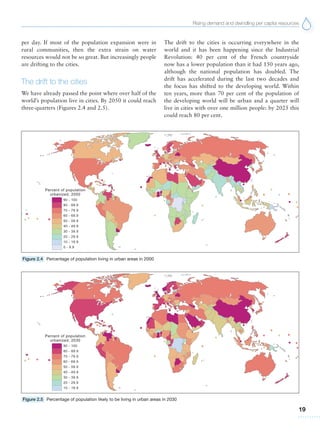
  • 26.
    Rising demand anddwindling per capita resources 13 Turning attention to the bottom of the list, of the 20 nations on the really critical list with the lowest per capita resources 13 are in the Middle East-NorthAfrica (MENA) region and seven are islands, including Singapore. If this is expanded to the bottom 50, these two categories continue to loom large, but they are joined by a major contingent from the drier regions of sub-Saharan Africa. Over 40 per cent are from the MENA region, a quarter are islands and another sixth are sub-Saharan. But the latter class rises to just over one quarter in the group immediately above the bottom 20, equalling the MENA group there. Consider- ing Africa as a whole, African nations account for one third of all those in the bottom 50 and over 40 per cent, excluding the bottom 20. All but the top two of the bottom 50 nations, Uzbekistan and Germany, fall into the official range of water stressed (1700–1000 m3 cap-1 ) and the bottom 27 are officially water scarce (with less than 1000 m3 cap-1 ). This means that 60 per cent of nations suffering water scarcity are in the MENA region, a third are islands and just two are in sub-Saharan Africa: Kenya and Burkino Faso. That Kenya falls into this group and that East Africa has also been plagued by persistent drought in recent years puts its role as the principal supplier of irrigated flowers to the EU in a critical light (see Chapter 8 Trading water – real and virtual). Recent trends More than half of the 20 nations experiencing the great- est reduction in resources over the last five decades are also in regions of water scarcity (see Figure 1.1). This bodes ill if trends continue, as they likely will. And every one of these is in the MENA region with the exception of Kenya. Most of these nations have experi- enced between 75 and nearly 100 per cent reductions in resources over the last half century. Population growth and overexploitation are clearly hitting some of the worst endowed nations hard. The breakdown of the top 20 is very familiar: 50 per cent are from MENA and a third from sub-Saharan Africa. When it comes to the top 50 countries with the great- est reduction in resources, however, sub-Saharan Africa accounts for nearly half of all and MENA just over a quarter. In other words, the most extreme reductions over the last 50 years have been in the MENA region, overwhelmingly from the Middle East proper, closely followed by sub-Saharan Africa. Of these, a third are currently suffering water stress (four nations) or water scarcity (12 nations). At the bottom of this list, the trends are much less severe: indeed, Bulgaria and St Kitts and Nevis are in the rare but enviable situation of slightly increased per capita resources. 85 per cent of the bottom 20 are from the European Union, showing between just 10 and 25 per cent reductions, and Europe continues to dominate the bottom 30, accounting for 80 per cent of those that have lost less than 33 per cent of their per capita resources over the period. Only five members of the EU have severe water short- ages: Poland, the Czech Republic and Denmark (in Figure 2.1 Current per capita water resources
  • 27.
    Water Sustainability 14 In SouthAmerica, the huge dam building programme during the 1980s raised per capita resources to above 1970 levels, but dam building has not kept pace with population growth since then. Australasia is the third best endowed region, but while dam building doubled per capita resources between 1970 and 1992, rising population and a cutback in dam building have severely eaten into this, resulting in a 35 per cent deterioration – hence Queensland’s problems (see box ‘Brisbane’s water crisis: a tale of politics, protests and complacency’ in Chapter 7). Europe has remained stable, balancing population growth and dam building, while Asia has managed to increase resources and turn around from the decline experienced at the beginning of the 1990s. Lastly, by this measure Africa has lost nearly half of the resources it had in 1970, although there has been little change since the early 1990s. Future water demand Predicting future water demand is not easy and prone to error. Individual countries are increasingly modelling demand as a necessary aid to forward planning. Per- haps the earliest national forecasts were undertaken by Canada in 1978 and the USA in 1981. Both predicted water shortages in specific parts of their countries by 2000. Predictions of future demand in the UK by 2025 were produced by the National Rivers Authority (1994), which revealed the parsimonious position of SE Eng- land. The UK water industry has since been instructed to update these predictions to include climate change and to adopt as industry standard the so-called ‘medium- high emissions’ estimate of global warming, which is the scenario produced by the UK Hadley Centre’s green- house-gases-only run of its General Circulation Model (Hulme and Jenkins, 1998; CRU, 2000). The addition of climate change compounds the diffi- culties and increases the range of outcomes. The indus- try now speaks of a range of ‘scenarios’ rather than a simple projection of trends. These scenarios consist of different assumptions about demographic and economic trends and greenhouse gas emissions. Errors in one can be multiplied by errors in another. The physical simu- lation models themselves also contain assumptions and approximations about climatic processes (see Chapter 10 The threat of global warming). The result is a range of possibles that is whittled down to a few probables. This is no argument for not trying, but it is an important caveat. Forward plans must be laid, especially given the stress), and Cyprus and Malta (in scarcity). Although the latter two have also shown some of the lowest declines over the past 50 years, at 32 per cent and 23 per cent respectively, it is unsurprising that Malta has turned to desalination. It is also noteworthy that while Europe as a whole, including the Russian Federation, is among the better-endowed regions outside the humid tropics, it is also one of the greatest consumers of virtual water from the rest of the world. The effect of dams The discussion thus far has been based on the official UN statistics as presented in Aquastat, and these are based on dividing the average annual net water balance by population size. This is the official assessment. While it provides a valid basis for comparison in itself, there are a number of other aspects that should be considered, which might give a somewhat different view. Not all the water that flows into the rivers is usable, either because it comes in spasmodic floods that are not or cannot be harnessed, or because there are other demands upon that water, be it fisheries and the aquatic environment, or because there are countries downstream that have an established demand, perhaps by treaty. Occasionally, it gets too polluted. In the 1970s, the veteran Russian hydrologist M.I. Lvov- ich made his own calculations based on the obvious fact that the main objective of building dams is to harness floodwaters and transform a potential hazard into a potential resource (Lvovich, 1970, 1977). His calcula- tions were very instructive, and they have been extended into the twenty-first century in Table 2.1. The column covering stable per capita runoff without extra capacity shows the effects population growth would have had on per capita resources if no dams had been built. The view is imperfect because we do not know the true purpose of every dam or the proportion of stored water that is destined for water supply and what may be used purely to control floods or to generate hydropower. The dataalsopurporttocoveronlylargedams,ofwhichGleick (2003) counted 48,000 dams, though Chao et al (2008) counted only around 30,000. Nevertheless, extending Lvovich’s approach over the period since the beginning of the 1970s reveals some very interesting divergences in water resources engineering between regions. The table suggests that North America has nearly doubled its per capita resources by building dams.
  • 28.
    Risingdemandanddwindlingpercapitaresources 15 Table 2.1 Theeffect of large dams on stable regional water resources Continent Natural riverflow km3 /year Regulated runoff km3 /year Total stable runoff km3 /year Percentage increase in stable runoff Per capita runoff m3 /year Total Stable baseflow 1970 (1992) 2003 1970 (1992) 2003 1970 (1992) 2003 Total Stable Total Per cent 1970 (1992) 2003 1970 2003 (1992) Theoretical without extra capacity 2003 (1992) Actual with extra capacity Europe 3100 1125 36 200 (312) 384 1325 (1437) 1509 18 (28) 34 4850 (4334) 4270 2100 1550 (1852) 2079 (2009) Asia 13190 3440 26 560 (1198) 8399 4000 (4638) 11839 16 (35) 244 6466 (4210) 3450 1960 900 (1276) 3097 (1481) Africa 4225 1500 36 400 (564) 1121 1900 (2064) 2621 27 (38) 75 12250 (6536) 4965 5500 1763 (2939) 3080 (3193) N. America 5950 1900 32 500 (1115) 1922 2400 (3015) 3822 26 (59) 101 19100 (14280) 18252 7640 5828 (5760) 11724 (7236) S. America 10380 3740 36 160 (4135) 7062 3900 (7875) 10802 4 (110) 189 56100 (35791) 19116 21100 6888 (13447) 19893 (27154) Australasia 1965 465 24 35 (273) 118 500 (738) 583 7.5 (59) 25 109000 (74274) 61406 27800 14531 (18899) 18219 (27895) TOTAL 38830 12170 31 1855 (7597) 19006 14025 (19767) 31176 15 (62) 156 10965 (7442) 6163 3955 1931 (2688) 2049 (3789)
  • 29.
    Water Sustainability 16 The globalwater use model WaterGAP has been used to estimate the changes in annual water withdrawals up to 2025 (Alcamo et al, 2003; Döll et al, 2003; Alcamo et al, 2000). WaterGAP provides a framework for taking into account the impact of key demographic, economic, technological, climatic and other driving forces on the future of the world’s water uses. The model consists of a series of submodels designed to compute water withdrawals and water consumption for the domestic, industrial and agricultural sectors in more than 11,000 river basins. The map in Figure 2.2 shows the calculated changes in annual water withdrawal in 2025 compared to 1995. Total water withdrawals are the total volume of water extracted from surface or subsurface sources for various uses. The effect of different driving forces on future water use will obviously depend on their assumed future trends. In this study we base these assumptions on the input data used to compute the A2 scenario of greenhouse gas emissions (IMAGE Modeling Team, 2001; IPCC, 2000). Specifically, we evaluate the impact of driving forces such as population and economic growth as well as climate change. The A2 scenario assumes that trends in popula- tion and economy are consistent with an economically- oriented world but with a lower level of integration (e.g. world trade and cross-border diffusion of technology) than in an ideal ‘globalized’ world. Compared to the other IPCC scenarios, population growth is relatively low and economic growth is low to moderate. In this analysis we consider climate data from the HadCM3 model of the Hadley Centre in Great Britain (Gordon et al, 2000; Pope et al, 2000). This model is used to compute climate condi- tions under changed levels of greenhouse gas emissions under the A2 scenario for 2025. The result of the model simulation is a worldwide increase in water withdrawals from approximately 3594 km3 /a in 1995 to 4177 km³/a in 2025 under the A2 scenario. Between 1995 and 2025, water withdraw- als increase by more than five per cent in about 46 per cent of the river basins under the A2 scenario. Changes in water withdrawals have a very irregular spatial pattern between 1995 and 2025 arising from varying sectoral and national trends and the uneven pattern of irrigated and settlement areas. Withdrawals tend to stabilize or Estimating future water withdrawals Martina Flo˝rke Figure 2.2 Estimated change in water withdrawals by 2025 according to the WaterGAP model
  • 30.
    Rising demand anddwindling per capita resources 17 timeframe for developing major infrastructure works: Jones (1997) cites 25 years for one central England reser- voir. In her article ‘Estimating future water withdrawals’, above, Dr Martina Flo˝rke of Kassel University, Germany, describes the results of using an elaborate computer model fed with a medium-high climatic scenario. Rising population and growing cities The growing world population is the largest single cause of the water crisis. It is being exacerbated by the drift to the cities and by increasing demand for water and prod- ucts as economies grow. Rising population World population is due to double or even quadruple before stabilizing by the end of the century. The best UN estimates suggest a 50 per cent increase in the first half of this century, from six billion in 2000 to nine billion in 2050. However, in 2009 the UN warned that if rates of increase continue at current levels the world population Figure 2.3 Projected population change during the first three decades of this century decrease (changes less than five per cent) in many indus- trialized countries, because of the saturation of per capita water use, stabilizing population and continuing tech- nological improvements. This is in contrast to the large increases in developing countries where large, currently unfulfilled water demands are being met by 2025. Only about six per cent of all river basins have declining water withdrawals under the A2 scenario in 2025. could double its present level of 6.7 billion by 2050. If, in the most unlikely scenario, there were to be a rapid reduction in fertility, this would clip little more than a billion off the best estimate for mid-century. Worst of all from the water resources point of view, the geographical distribution of this population increase will not only be uneven, but largely concentrated in the Developing World and especially in regions where water resources are already stretched, notably in sub-Saharan Africa, the Middle East and parts of the Indian subcon- tinent. More than a dozen countries in these regions are expected to show population growths in excess of 50 per cent between 2000 and 2030, and most others will expe- rience increases of more than 30 per cent (Figure 2.3). The change in the geographical distribution of popula- tion since the mid-twentieth century is illustrated by the growth in the Arab world. In 1950, the US population stood at 160 million, while the Arab region had a total population of just 60 million, almost equivalent to the population of the UK in 2010. By 2000, the US stood at 284 million, but the Arab world had increased to over 240 million. From 2010 onwards, the Arab world is predicted to overtake America, possibly rising to 650
  • 31.
    Water Sustainability 18 million by2050 against America’s 400 million. Over the next 25 years, the population in the Middle East is projected to double – the fastest growth rate out- side Africa. There is already a critical scarcity of water resources in the Middle East and North Africa, where 11 of the 20 countries in the region have been using more than 50 per cent of their renewable resources for over a decade. Libya and most of the Arabian Penin- sula already use over 100 per cent of their tradition- ally assessed resources with the support of desalination and fossil groundwater, some of which is 10,000 years old and has not received significant recharge since the Pluvial Period at the end of the last glacial period. Most of the current expansion in world population is occurring in the Least Economically Developed Countries. In 1950 the LEDCs contained 67 per cent of world population, in 1990 76 per cent, but by 2025 this could rise to 84 per cent. The population in sub- Saharan Africa is expanding rapidly despite rampant disease (Figure 2.3). In the hundred years between 1950 and 2050 the population is likely to have increased more than sevenfold, from barely two-thirds that of the current EU countries in 1950 to twice the EU now and accelerating to five times the EU by 2050. Another significant change in global demography is the divergence in age structures between Developed and Developing countries. While average age is increasing in most Developed countries – between 1950 and 2000 it rose from 30 to 35 in the USA and from 30 to 38 in Europe – the reverse is happening in most of the Devel- oping World. In many of these countries average age is now in the teens. The greater number of young people is an important factor accelerating overall fertility rates. The International Labour Organization estimates that youth unemployment in the Middle East is already around 25 per cent. There and elsewhere, growth of an impoverished youth class is likely to reduce ability to pay for water services, but worse, it might lead to social unrest, more extremism and terrorism. The implications for per capita water resources are immense. World resources per head of population are likely to fall by a third or more between 2010 and 2050 solely as a result of population growth. Meanwhile, the increase in global precipitation is likely to reduce this loss by a mere three to four per cent (see Chapter 10 The threat of global warming). However, the differ- ences in regional population growth shown in Figure 2.2 mean that the situation is far worse for most of the countries already suffering water stress (see Figures 1.1 and 1.2). By mid-century, the number of people living in water-stressed countries is likely to increase by up to 300 per cent to six billion, of whom half will be suffer- ing severe stress. Climate change will add to regional problems. Although at the global scale climate change will increase resources, in the regions that are currently stressed it will only make matters worse, because of the shifts in rainfall patterns (see Chapter 10 The threat of global warming). Arnell (1998) estimated that climate change will add an extra 66 million people to those suffering moderate stress and 170 million to those suffering severe stress by 2050. These estimates suggest that climate change will add only one per cent as many people as population growth to the numbers living under moderate stress and just five per cent to those with severe water stress. Population growth is clearly the principal problem. What these estimates do not cover is increasing per capita demand as economies grow and people become richer. The so-called ‘multipliers’ of the population explosion include improvements in the quality of life from cen- tralized water supply to more washing machines, dish- washers and bottled water, the expansion of cities and centralized sewerage, and the demand for more indus- trial, commercial and agricultural products. China is going to follow this route over the next few decades. In 1980 per capita consumption in China was under 100 litres a day. It is now around 280 litres. In the UK, house- holds use 150 litres per capita. In America, per capita consumption is 400 litres. An indication of the potential importance of multipliers is given by research in Amer- ica which concluded that just over half of the increase in national demand during the 1970s could be attributed to population growth, a little over a third was due to increased demands from the pre-existing population as affluence and expectations increased, and the remaining ten per cent was due to rising demands from the new additions to the population. While current trends suggest that the greatest popula- tion growth is going to be in the LEDCs, one of the great unknowns is the degree to which this may be accom- panied by increasing prosperity. Prospects do not look good at present, in which case the LEDCs will experi- ence less of a multiplier effect and growth in demand will be more in line with population size. Water con- sumption in poor rural areas of Africa, Asia and Latin America, is currently around 20 to 30 litres per capita
  • 32.
    Rising demand anddwindling per capita resources 19 per day. If most of the population expansion were in rural communities, then the extra strain on water resources would not be so great. But increasingly people are drifting to the cities. The drift to the cities We have already passed the point where over half of the world’s population live in cities. By 2050 it could reach three-quarters (Figures 2.4 and 2.5). The drift to the cities is occurring everywhere in the world and it has been happening since the Industrial Revolution: 40 per cent of the French countryside now has a lower population than it had 150 years ago, although the national population has doubled. The drift has accelerated during the last two decades and the focus has shifted to the developing world. Within ten years, more than 70 per cent of the population of the developing world will be urban and a quarter will live in cities with over one million people: by 2025 this could reach 80 per cent. Figure 2.4 Percentage of population living in urban areas in 2000 Figure 2.5 Percentage of population likely to be living in urban areas in 2030
  • 33.
    Water Sustainability 20 Agriculture andindustry: the big water users ‘Agriculture is the greatest user of water worldwide, accounting for an estimated 70 per cent of potable water use.’ Lester Brown World Resources Institute Agriculture Global water use is dominated by agriculture. This is leading to severe water shortages and competition and disputes over supplies in an increasing number of areas. The quote from Lester Brown relates only to ‘potable’ water, i.e. of drinking grade. But agriculture also uses large quantities of lower grade water, mainly in irriga- tion. The UNESCO-IHE Institute for Water Education estimates that the growth and processing of agricul- tural products account for nearly 86 per cent of global water use (Hoekstra and Chapagain, 2008). Agriculture dominates even more so in many of the regions suffering water scarcity. While this may be a question of neces- sity, it is also true that water for agriculture is priced far below its real cost in most countries of the world and that some of the drive to grow more comes from export- led monetary returns. Of the remaining water, industry now consumes about ten per cent and the rest is down to domestic users (Figure 2.6). It is important to bear this very uneven breakdown in mind when considering where water con- sumption might best be cut (see Chapter 13 Cutting demand). Cutting domestic and industrial consumption may be the prime target in Europe and North America, but for the rest of the world it is agriculture. Most of the water is used for products and services con- sumed within the same country. But a substantial and generally increasing amount is used to produce products that are traded internationally. This is termed ‘virtual water’, an interesting concept that is studied in detail in Chapter 8 Trading water – real and virtual. About 13 per cent of all the water used globally goes into interna- tional trade in food products (the external water foot- print). This amounts to 15 per cent of all the water used in agriculture. Urban dwellers typically consume between 300 and 600 litres a day – between ten and 20 times that of peasant farmers in the Least Economically Developed Countries (LEDCs). Major cities now consume water at rates equivalent to the flow in some of the larger rivers in the world. Indeed, they are often a major factor, along with irrigated agriculture, causing rivers to dry up (Pearce, 2007). The Nile, Colorado and Hwangho (Yellow River) often fail to reach the sea. London consumes over half again as much as currently flows down the Thames, yet a major slice of the government’s planned 160,000 new homes by 2016 is set to be in the Thames basin, an area that is predicted to exceed its local water resources in the 2020s (Rodda, 2006). The Environment Agency complained of lack of consultation over the plans and requested that local water resources should be formally considered in planning applications. China already has some 46 cities of two million or more, of which the fortieth is larger than Paris. Twenty mil- lion people a year are migrating to China’s cities, bar a temporary reversal during the credit crunch: at least 120 million have already done so in recent years. Sixty per cent of Chinese are still rural, but this is expected to fall to 40 per cent by 2030. In China this drift is likely to be accompanied by improved living standards and there- fore more washing machines and more water consump- tion. It is estimated that China’s economic emergence has already raised 400 million people out of poverty. Small wonder that over half of China’s cities are experiencing water shortages. ‘Instant cities’ like Shenzen, which has grown from nothing to five million in just a few years, are further stretching resources in China. China plans to relocate a further 400 million people to new urban centres between 2000 and 2030. The link between city dwelling and water consump- tion is strong, but it is not immutable. There are signs that some US cities are curbing consumption. Residen- tial use in New York has fallen by a third in 15 years, from around 760 litres per capita per day to 530. Seattle and Albuquerque have also cut per capita consumption, and total water withdrawals have also fallen in Califor- nia despite rising population according to Palaniappan (2008) – although the latest revelations suggest that offi- cial statistics may not be too accurate (see Satellites in Chapter 18). The link is also somewhat decoupled in the LEDCs, which account for most of the new increase in urban population globally. A considerable proportion of these new urbanites live in makeshift housing without mains services (see Chapter 3 Water and poverty).
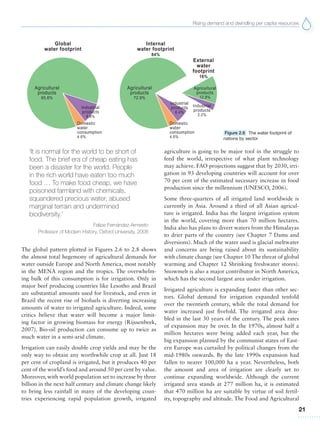
  • 34.
    Rising demand anddwindling per capita resources 21 ‘It is normal for the world to be short of food. The brief era of cheap eating has been a disaster for the world. People in the rich world have eaten too much food … To make food cheap, we have poisoned farmland with chemicals, squandered precious water, abused marginal terrain and undermined biodiversity.’ Felipe Fernández-Armesto Professor of Modern History, Oxford University, 2008 The global pattern plotted in Figures 2.6 to 2.8 shows the almost total hegemony of agricultural demands for water outside Europe and North America, most notably in the MENA region and the tropics. The overwhelm- ing bulk of this consumption is for irrigation. Only in major beef producing countries like Lesotho and Brazil are substantial amounts used for livestock, and even in Brazil the recent rise of biofuels is diverting increasing amounts of water to irrigated agriculture. Indeed, some critics believe that water will become a major limit- ing factor in growing biomass for energy (Rijssenbeek, 2007). Bio-oil production can consume up to twice as much water in a semi-arid climate. Irrigation can easily double crop yields and may be the only way to obtain any worthwhile crop at all. Just 18 per cent of cropland is irrigated, but it produces 40 per cent of the world’s food and around 50 per cent by value. Moreover, with world population set to increase by three billion in the next half century and climate change likely to bring less rainfall in many of the developing coun- tries experiencing rapid population growth, irrigated Figure 2.6 The water footprint of nations by sector agriculture is going to be major tool in the struggle to feed the world, irrespective of what plant technology may achieve. FAO projections suggest that by 2030, irri- gation in 93 developing countries will account for over 70 per cent of the estimated necessary increase in food production since the millennium (UNESCO, 2006). Some three-quarters of all irrigated land worldwide is currently in Asia. Around a third of all Asian agricul- ture is irrigated. India has the largest irrigation system in the world, covering more than 70 million hectares. India also has plans to divert waters from the Himalayas to drier parts of the country (see Chapter 7 Dams and diversions). Much of the water used is glacial meltwater and concerns are being raised about its sustainability with climate change (see Chapter 10 The threat of global warming and Chapter 12 Shrinking freshwater stores). Snowmelt is also a major contributor in North America, which has the second largest area under irrigation. Irrigated agriculture is expanding faster than other sec- tors. Global demand for irrigation expanded tenfold over the twentieth century, while the total demand for water increased just fivefold. The irrigated area dou- bled in the last 30 years of the century. The peak rates of expansion may be over. In the 1970s, almost half a million hectares were being added each year, but the big expansion planned by the communist states of East- ern Europe was curtailed by political changes from the mid-1980s onwards. By the late 1990s expansion had fallen to nearer 100,000 ha a year. Nevertheless, both the amount and area of irrigation are clearly set to continue expanding worldwide. Although the current irrigated area stands at 277 million ha, it is estimated that 470 million ha are suitable by virtue of soil fertil- ity, topography and altitude. The Food and Agricultural
  • 35.
    Water Sustainability 22 Figure 2.7The world pattern of water use by sector (see Figure 2.8 for enlarged area) Figure 2.8 Water use by sector in Europe, the Middle East and North Africa Organization of the United Nations (FAO) estimates that the irrigated area in 93 developing countries will increase by 20 per cent or 40 million ha between 1998 and 2030, even though this is less than half the 100 mil- lion ha expansion in the previous 30 years. Worldwide, the FAO calculates that the irrigated area will expand by 34 per cent and that this will increase the fresh- water demand by 14 per cent up to 2420 km3 in the first three decades of this century. Substantial though this is – at about seven per cent of global river resources – it is modest compared with the a 55 per cent increase in food production, which could result from improve- ments in crops and management. Although most of the increase will be in developing countries – and the World Bank is focusing on support for sub-Saharan Africa – a recent report by the European Environment Agency (2009) describes irrigated agricul- ture in Europe as a heavy and growing burden. Nearly a quarter of water abstracted in Europe is for irrigation. This may be little more than half the 44 per cent that is used for cooling in power plants, but whereas most cool- ing water is returned to the environment, only a third of irrigation water is. The situation is worse in southern Europe where 80 per cent of water abstracted goes to irrigation. Most of this is abstracted in summer when there is less in the rivers anyway, thus maximizing the
  • 36.
    Rising demand anddwindling per capita resources 23 detrimental effects and providing less dilution for pollu- tion. Golf courses are a key bane. A typical golf course in southern Spain consumes 500,000 m3 a year – and the Júcar river basin has 19 courses and 55 more planned (see Saltwater irrigation of leisure landscapes in Chapter 16). These also attract many tourists who add to water demands (see Chapter 7 Dams and diversions). There are, however, a number of problems with current approaches to irrigation that need addressing: waste- ful practices, dominant crops that are extremely thirsty, destruction of the soil, especially through salinization, and pollution of surface and groundwater by fertiliz- ers, herbicides and pesticides. Globally, irrigation is extremely inefficient. Of the 2300 km3 of freshwater withdrawn each year the crops effectively consume only 900 km3 . Cotton and rice top the list of thirsty crops (see Chapter 8 Trading water – real and virtual). And monocultures like cotton require large quantities of fer- tilizers and pesticides (see The Aral Sea: lost and gained? in Chapter 15). The Green Revolution of the 1960s and 1970s may have fed the world but it also killed wildlife (see Chapter 5 Pollution and water-related disease). The problem is still with us. In the run-up to the Copenhagen climate summit in 2009, agri-business companies pro- ducing fertilizers and pesticides lobbied to make agricul- ture exempt from gas emissions targets. (Farming and food account for 30 per cent of greenhouse gas emis- sions.) There is a wide range in the water efficiency of irriga- tion systems around the world due to differences in tech- nology, culture and climate. The key figures are the net consumptive use, the ‘specific water use’ and the return rate rather than the gross intake. Specific water use is the intake per hectare per year, and the return rate is the amount that is returned to the rivers. The net consump- tive use in the USA is one of the lowest. Specific water use in Israel is less than half that in Iraq. The highest rates of return are in North America and the Commonwealth of Independent States (CIS, the former members of the Soviet Union), which at around 40 per cent are twice as high as the world average or that in India. However, for the CIS this return efficiency is outweighed by the high level of initial, gross intake. As a result, the net consump- tive use in the CIS averages more than ten times that of India. The extreme inefficiency of the old Soviet irrigated agriculture contributed to the approval of plans in 1982 to undertake a 50-year programme to divert the arctic rivers to the south (see US and Soviet diversion plans in Chapter 7). It is estimated that over the millennia more than 25 mil- lion hectares have been lost to agriculture through salin- ization and waterlogging, most notably in the Middle East, including substantial areas in Egypt and Iraq as recently as the last quarter of the twentieth century. In part, this is an inevitable consequence of high evapora- tion rates, raising and depositing salts in the surface soils, but it is also in part due to mismanagement: over-irriga- tion and lack of adequate drainage. Flood irrigation in paddies or furrows is still the predominant method, yet it is also the most wasteful in evaporation losses. Dis- tribution channels are predominantly leaky and uncov- ered, yet covering and lining channels could save up to 60 per cent. Converting to spray or drip irrigation could save up to 75 per cent. It is also a question of knowledge and perception – when to irrigate and by how much. In his piece below on irrigation in Saudi Arabia, Abdullah Almisnid shows how wasteful traditional farmers are compared with modern, high-tech commercial farms. Even non-irrigated or ‘rainfed’ agriculture affects water resources. Forest clearance is likely to decrease losses through evaporation and transpiration and can aggra- vate flood problems. Some crops may increase evapo- transpiration and reduce riverflows or groundwater recharge (see Chapter 6 Water, land and wildlife). Industry and commerce Compared with agriculture, industry is a minor player on the world scale, accounting for barely a tenth of total global water use (Figure 2.6). Only in Europe and North America is industry a larger user per head of popula- tion (Figures 2.7 and 2.8). In most developed countries, industrial water use has also been declining for decades. In England and Wales, whereas industry and power took about two-thirds as much as domestic and municipal sources in the 1960s, by the 1990s it took under a third. Industrial use in England and Wales fell by 50 per cent in the 1970s alone, partly because of the shock caused by water cut-offs during the 1976 drought (perhaps a one in 400 year extreme event) and it has not recovered. In contrast, domestic and municipal demand increased 12 per cent over the decade. The decline in industrial use continues. In part, this has been because of the contraction in what used to be heavy water users, like iron and steel production, but it is also due to the need to cut costs, increase efficiency and to revised assessments of vulnerability to outside supplies. It used to take 200 tonnes of water to make a tonne of
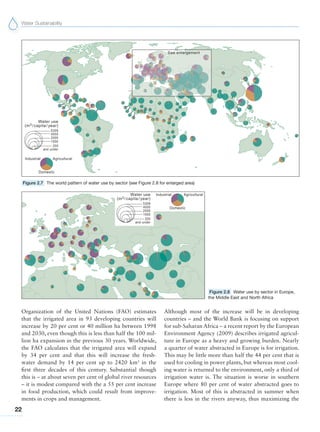
  • 37.
    Water Sustainability 24 The aquifersaround Gassim are being depleted by abstractions for irrigation, yet the economic activity in the region is almost entirely dependent on the groundwater. The local aquifers are barely being replenished by the low rainfall (92 mm per annum). In the only well with a long record, groundwater level fell by 71 metres between 1979 and 2001. Four other wells show falls of between five and 12 metres from 1997 to 2002. In the Al-Hasa area, south east of Gassim, the recent decline has been as much as four metres per year (Omran, 2004). If this pressure on the water supply continues, even without climate change, the area will face severe water storages with dire conse- quences for agricultural production. Both water use and productivity differ significantly between traditional farms, using open furrow irrigation, and modern commercial farms, using sprinkler irriga- tion. Recent observations show that traditional farms use between 12,663 and 18,874 m3 /ha/season to produce only 1.6 to 2 tonnes/ha of wheat (Almisnid, 2005). In con- trast, the modern commercial farms applied only 7100 to 9341 m3 /ha/season and achieved the much higher pro- ductivity of 4.2 to 6.3 tonnes/ha. Farm interviews showed little awareness of the need to conserve water amongst the traditional farmers and a high degree of overuse. The possible impact of climate change on water availability and use Calculations based on the output from three GCMs (HadCM3, CGCM2 and ECHAM4) with two emissions scenarios (A2 and B2) show significant increases in annual temperature of 0.4° to 1.6°C by the 2020s for Saudi Arabia as a whole, and 2° to 4.8°C by the 2080s. There is no clear trend in rainfall, however, with results ranging between -20 and +30 mm/year relative to the baseline period of 1971–2000. Incorporating the consequent changes in evapotran- spiration losses, crop water requirements are estimated to increase by three per cent with a 1.3°C increase in average annual temperature by the 2020s. A 4.1°C rise by the 2080s could increase crop water requirements by 12 per cent under scenario A2, and nine per cent under scenario B2. Without any change in agricultural practices, Gassim would therefore have significantly higher irrigation needs, placing the area under even greater water avail- ability pressures. Every 1°C increase in temperature could lead to an additional water requirement of 103 m3 /ha/ season for winter wheat. Irrigation methods, declining water tables and the potential impact of climate change in Gassim, Central Saudi Arabia Abdullah Almisnid steel in the 1930s, but it now takes only 2 tonnes, and 20 years ago semiconductor production took 17.6 litres per cm2 , but it now takes only 7.6 (Palaniappan and Gleick, 2009). Declining industrial consumption is also partly due to environmental legislation, the need to establish environ- mental credentials with shareholders and some genu- ine concern for the environment. The situation in most developing countries is the opposite. As industrialization spreads, so water use rises, especially when much of the industry is using old, water-intensive processes. China began to rise as a steel producer in the 1970s and is now the largest producer in the world, producing two and a half times that of the EU. India now produces more than half that of the USA. To a large extent, developing countries and especially the emerging economies are now following what hap- pened in the West last century. North America showed a twenty-fold increase in industrial water demand during the twentieth century and by the end of the century North America and the CIS accounted for half of all industrial withdrawals. We normally focus on the impacts of industry on water, but a report by the banking group J.P. Morgan entitled
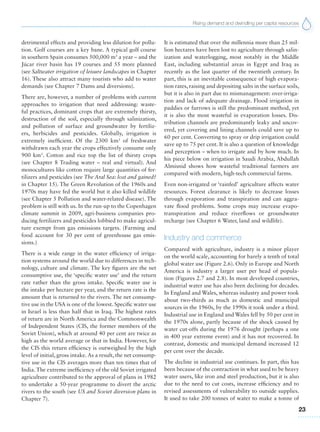
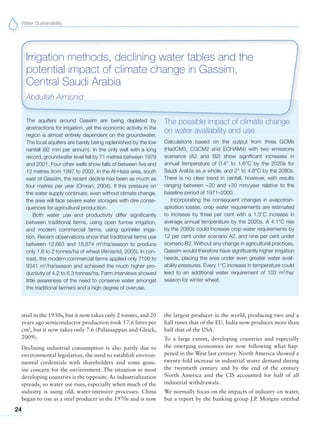
  • 38.
    Rising demand anddwindling per capita resources 25 ‘Watching Water: a guide to evaluating corporate risks in a thirsty world’ focuses on the impacts of water on industry. It points out that industry and commerce gen- erally underestimate their sensitivity to water issues (World Resources Institute, 2008). Exposure to water scarcity and pollution is not limited to onsite produc- tion, but may have a greater effect via the supply chain. The industries most exposed to such risk are: power generation, mining, semiconductor manufacturing, and food and beverages. The authors conclude that disclo- sure of exposure to water-related risks is ‘seriously inad- equate’ and is typically included only in environmental statements prepared for public relations rather than in the regulatory filings that investors use. They recom- mend that investors include vulnerability to water short- ages and pollution in their assessments. Power industry There is increasing evidence of the impact of the power industry on water. Cooling power plants run on fossil and nuclear fuels consumes large amounts of water. The large 2000 MW Didcot A coal-fired station in Eng- land took in 24 million m3 from the River Thames in 2007 and returned just 17 million. Its sister plant, the 1360 MW gas-fired Didcot B, took in 11 million m3 and returned just 5.5 million. Didcot also used over a mil- lion cubic metres of mains water taken from the Thames and treated to drinking water standard to top up the boiler circuits. Coal-fired plants also use substantial amounts of water in the process of scrubbing sulphur dioxide out of the gas emissions – a technology that became widely used following the fears associated with acid rain deposition in the 1980s. Power stations also return warm water to rivers and lakes with likely effects on aquatic life. At Wales’s now defunct Trawsffynydd nuclear plant, fish reared in the lake grew faster and larger and were exported to stock other lakes for fish- ing. However, excessive water temperatures reduce the oxygen content of the water and could asphyxiate fish. Power generation in the United States uses 514 million m3 of freshwater a year and the thermoelectric power sector accounts for 39 per cent of all freshwater with- drawals in the country (World Resources Institute, 2008). Coal plants use 2800 litres to produce one MWh of electricity, and gas plants use 2300. The 882 MW gas- fired Riverside generator in Oklahoma uses 62,000 m3 a day – nearly 25 million m3 a year – which is about as much as a city of 180,000 in America. Nuclear plants need even more cooling: 3100 litres per megawatt hour. Britain’s Dungeness station takes in 1892 million m3 a year. This is seawater, but France’s stations on the Loire use freshwater, as do many in the USA like the Cowan’s Ford plant in North Carolina. When current debates on reducing greenhouse gas emis- sions are being used by governments to revive the nuclear industry as a supposedly ‘green’ source of energy, it is important to note its impact on water resources and on the natural water environment. This is rarely if ever con- sidered in the debate, yet if it were it could substantially alter the verdict. The power industry is also vulnerable itself to changes in the quantity and quality of water available. Events in France are a good illustration. In 2003 and again in 2009, exceptionally high water temperatures and low river discharges caused the power company EDF to close down many of its nuclear power stations. EDF lost €300 million in 2003 closing down a quarter of its nuclear plants and importing electricity from abroad. The Brown’s Ferry nuclear plant that serves Memphis was forced to close in the summer of 2007 because the temperature of the intake water was too high for cool- ing the plant, just as city demand was peaking for air conditioning. This is discussed further in the section on hydropower in Chapter 7. Peak water? We hear a lot about ‘peak oil’, but is there such a thing as ‘peak water’? The term peak water was invented by the American media. The idea may have some value, but it is not true in the same way as for oil. Oil is a finite and limited resource. Water is essentially finite, but it is unlimited, because it is being continually renewed by the water cycle (see Chapter 11 The rest- less water cycle). When we consume it, we are merely transferring water from one place or one medium to another. There can be no global peak water, but there can be local peak water, as local water resources diminish. This is more obvious in some parts of the water cycle than others. Exploiting groundwater that is not being recharged under the current climate is a case where potential exhaustion is possible (see Mining groundwater in Chapter 12). And cases where the rate of extraction exceeds the rate of recharge will fall back to a maximum yield that is dictated by the slower rate of recharge.
  • 39.
    Water Sustainability 26 Further reading Sciencejournalist Fred Pearce’s book is very readable and informative: Pearce, F. 2007. When the Rivers Run Dry – what happens when our water runs out? Transworld Publishers, London. A more complete scientific assessment is available in: Shiklomanov, I.A. and Rodda, J.C. (eds) 2003. World Water Resources at the beginning of the 21st century. Interna- tional Hydrology Series, UNESCO, Cambridge University Press, Cambridge. The following paper and book by Lvovich are worth reading as historical records: Lvovich, M.I. 1970. Water resources of the world and their future. International Association of Scientific Hydrology Pub. No. 92: 317–22. Lvovich, M.I. 1979. World water resources and their future. Washington, D.C., American Geophysical Union. Jones provides a critical summary of Lvovich’s views in: Jones, J.A.A. 1997. Global Hydrology: processes, resources and environmental management. Addison Wesley Long- man, Harlow. The concept of ‘peak water’ is engagingly presented by Meena Palaniappan in her address to the American Planning Associa- tion, available at the website of the Pacific Institute: Palaniappan, M. 2008.‘Peak Water’. Pacific Institute, 11pp. At: www.pacinst.org. and Palaniappan, M. and Gleick, P.H. 2009. Chapter 1 Peak Water, in The world’s water 2008–2009, Pacific Institute, 1–16. G Analyse the validity and implications of the concept of peak water. G Will increasing urbanization inevitably lead to more water crises? G Consider the links between growing population, food demands and the use of water in agriculture. Discussion points ‘It signals we are at the end of the age of cheap, easy water. In the same way that Peak Oil has meant the end of cheap, easy to access sources of petroleum, Peak Water means we are going to have to go further, spend more, and expect less in the realm of freshwater.’ Meena Palaniappan in Keynote address to American Planning Association Salt Lake City, 2008 The point made by Meena Palaniappan in the quotation from her address to the American Planning Association is that water is very expensive to transport over large distances compared to its low value. Either we reduce demand to the levels of locally renewable water or we move to more expensive options like desalination or bulk transportation. As an engineer, she is very familiar with the costs of engineering water (the hard path), but she sees the future in ‘soft path’ options, like controlling demand, as the best way forward – decentralized and in the hands of planners and communities (see box ‘Water soft paths: the route to sustainable water security’ in Chapter 13). One valuable new concept that arises from this is ‘peak ecological water’. This is discussed in Chapter 15. Conclusions The rise in global demand for water shows no sign of abating. Agriculture is the prime user and it is bound to absorb more water as world population continues to grow. Urbanization is demanding more and climate change will add to demand in all sectors. Economies of use are badly needed in every sector. Indus- trial demand is in check in most developed countries, but for reasons more of cost-cutting, changes in prod- ucts and importing goods from abroad than for saving national resources. In many parts of the developing world, however, industry is a growing user. Important elements of both agriculture and industry in the develop- ing world are expanding to supply goods to developed nations. In effect, developed countries are exporting their water demand to the developing world, where many countries are less able to support it through water shortages of their own. Again, providing clean water and sanitation in the developing world is bound to increase their domestic consumption.
  • 40.
    27 Water and poverty3 ‘Weshould all be more alarmed that with the halfway mark to 2015, it is clear that most of these targets will not be met. The cause is not a lack of resources, but a lack of global political will.’ Dr Rowan Williams, Archbishop of Canterbury, Head of the worldwide Anglican Communion ‘Poverty must be eradicated and if we all work together for change, poverty will be eradicated.’ Gordon Brown, former UK Prime Minister (Both at the Lambeth Conference, 2008.) Poverty and lack of adequate drinking water and sanita- tion go hand in hand. The WHO Commission on Social Determinants of Health (2008) reported that social inequalities are killing people on a grand scale: a girl born today may have an average life expectancy of 80 years in the USA compared with just 45 years in the developing world. However, the Commission was opti- mistic that equality could be achieved within a genera- tion if the will is there. The 1.1 billion people who live in what the World Bank classifies as ‘extreme poverty’ have little or no chance of lifting themselves out of their predicament on their own (Chen and Ravallion, 2004). Living on less than $1 per day in equivalent purchasing power, they are incapable of saving and investing, of paying for health care and schooling, of buying new farm implements, or of buying equipment for water treatment or even water storage tanks. Their life is dominated by the daily fight to eat and live. Many exist in declining circumstances, in a negative feedback cycle of failing crops and failing health. Workforces are weakened by malnutrition, and debilitated and decimated by diseases like malaria and HIV/AIDS. In many parts of rural Africa, whole villages have lost their able-bodied men and women to AIDS, ageing grandparents are left to raise orphaned children, often up to half a dozen a time, or else the eldest child, perhaps barely in their teens, is forced to care for their younger siblings. The young have not yet learned the farming knowhow of their parents and the old are incap- able of putting it into practice. Education is curtailed, schools close and the prospects for advancement else- where are cut off. Worse, inheritance rules often divide the farmland between heirs, thus reducing the area of cropland available to sustain each new family. Most countries where more than a quarter of the population are extremely poor lie in the Indian subcontinent and in most of the countries in sub-Saharan Africa. Many of the countries in Latin America and eastern Asia are also in ‘moderate poverty’, where more than a quarter of the population earn between $1 and $2 a day in equivalent buying power. These too are regions where both exist- ing water resources are hard-pressed and demand is pro- jected to increase markedly in the near future (see Figure 2.2). ‘The daily conditions in which people live have a strong influence on health equity. Access to quality housing and shelter and clean water and sanitation are human rights and basic needs for healthy living.’ Commission on Social Determinants of Health, World Health Organization 2008 Environmental change is also playing its part. Haiti is a tragic case, where denudation of the hillsides caused
  • 41.
    Water Sustainability 28 by desperateattempts to get food and fuel has left the country even more vulnerable to devastation by hurri- canes. Climate change has increased the frequency and persistence of drought in parts of Africa, especially in the Sahel. Deforestation is widespread and expanding as people seek out fuel and the lucky few clear more land for farming. And climate change and deforestation can interact, with disastrous consequences. As the land is laid bare, the soil is more vulnerable: rainwater runs off the surface of the sun-baked earth, enters desicca- tion cracks and washes away the topsoil, and with it the nutrients and organic matter needed to maintain the fertility of the soil. Crop yields dwindle. More intense droughts and the occasional heavier cloudbursts, fuelled by more convective activity over warmer land, intensify soil loss. With more rapid runoff and less water stored in the soil or evaporated by vegetation, floods increase (Figure 3.1). The floods are more of a hazard than a potential resource, as they tend to exceed the capacity of village dams and even wash the simple earth dams away. The eminent American climatologist Reid Bryson has even suggested that deforestation and agricultural activity in the semi-arid Sahel may change the climate: that fine soil particles may be blown high into the air, increase the reflectivity of the air to incoming sunlight and so cool the air aloft. The cooled air sinks, gradually heating up under the increasing weight of the more and more atmosphere above, and eventually forms an ‘inver- sion’, a zone of air that is warmer than most convective air cells rising from the ground. The inversion inhibits updrafts and so suppresses rain-forming clouds (Figure 3.1). Bryson suggests that this process may be extending the natural subtropical inversion that is responsible for the Sahara Desert southwards and holding back the sea- sonal northward advance of the West African monsoon. See Aondover Tarhule’s article ‘Drought in the Sahel’, below. Urban slums and shanty towns As subsistence farming becomes less viable, migrants head for the cities. The more able and better educated may manage to raise their standard of living to the next level, the ‘moderately poor’ on $1–2 per day or occa- sionally better still, but many are simply increasing the numbers in extreme poverty in the cities. The ever- expanding shanty towns on the edge of cities in Africa, southern Asia and Latin America are foci for disease and desperation. Still, as in the villages they left, lack- ing centrally supplied water and sewage, they are now prey to the extra hazards born of close living, jerry-built housing, lack of the old community support and exploit- ation by ruthless city ‘entrepreneurs’. The vast differ- ence in water prices between piped public water supplies and water purchased from mobile tankers, which is all even the more affluent poor may have access to in these unplanned settlements, is illustrated in Figure 3.4. These new urban poor are also confined to live in the worst topographic locations, on hillsides prone to soil erosion Figure 3.1 The effects of destroying vegetation cover on hydrological processes in semi-arid regions
  • 42.
    Water and poverty 29 Thesemi-arid Sahel savannah zone in Africa is experienc- ing the longest drought recorded anywhere on Earth in modern times. A narrow bioclimatic zone, the Sahel (an Arabic term meaning ‘desert fringe’) measures only about 500 km on average from North to South but stretches across the entire southern margin of the Sahara Desert from the Atlantic Ocean on the west to the Red Sea on the east (Figure 3.2). Beginning in the late 1960s, the total seasonal rainfall throughout the zone declined abruptly by between 20 and 40 per cent (Figure 3.3). This was due, principally, to a reduced number of high intensity rain events. The onset of this drought, especially the period between 1968 and 1973, was devastating. Famine induced by the drought is generally blamed for the deaths of between 100,000 and 250,000 people along with 12 million head of livestock in the six worst affected Sahelian countries (Senegal, Mauritania, Mali, Burkina Faso, Niger and Chad). In the early to mid-1980s, drought again rav- aged the Sahel. This time, the hardest hit areas were in Sudan and Ethiopia. Approximately one million people starved to death in Ethiopia alone, and nearly 30 million were forced to abandon their homes in search of food and water. Since the late 1980s the total seasonal rainfall in the Sahel has recovered somewhat but the pre-drought levels have yet to be reached and the threat of drought remains. Indeed, in 2005, poor rains, combined with a locust outbreak, caused major famines that threatened nearly three million of Niger’s 12 million inhabitants. The link between drought and famines in Africa is frequently confused in public discussion. Drought is a meteorological condition that denotes a deficiency of water with respect to a place, time or activity for which the available water is normally adequate. Famine, on the other hand, refers to the widespread shortage of food and/or mass starvation of people as a result of a complex web of interacting variables including drought or other climatic phenomena (e.g. floods, locust outbreaks), con- flicts or wars, poor transportation infrastructure, and mac- roeconomic policies among many others. Thus, in parts of the USA, Australia, or Israel with climates like that of the Drought in the Sahel Aondover Tarhule Figure 3.2 The African Sahel Zone
  • 43.
    Water Sustainability 30 Sahel, droughtmight lead to a slight increase in the price of food products but not result in famine. In sub-Saharan Africa, however, droughts and famine are strongly linked primarily because agricultural production is at a near sub- sistence level and the margin between normal food supply and starvation is extremely small. At the same time, owing to high poverty rates, many households that do not grow enough food to eat either have very low-paying jobs or no jobs at all, and cannot earn enough to buy food even when it is physically available. Scientists have pondered the question of whether multidecadal droughts, such as the one currently affecting the Sahel, have previously occurred in the region during the last few centuries or whether the current drought sequence represents a new phenomenon in the climate dynamics of the region. Unfortunately, the instrumental climate records are relatively short (most only go back to the 1930s) and available proxy records, primarily from lake-bottom sediments, have low stratigraphic or chrono- logical resolution (Street-Perrott et al, 2000). However, qualitative historical information can be retrieved from reports referring to the landscape, such as the extent of vegetation and sand dunes, river discharge, population settlements, the size and depth of Lake Chad, droughts and famines. This information is available in various forms including travellers’ accounts and diaries, folklore, oral histories, colonial records and palace chronicles from the many empires and kingdoms that have occupied the Sahel zone over the centuries. These sources indicate that the Sahel as a whole was wetter than present prior to the sixteenth century. They also show that widespread and severe droughts occurred at least once during each of the past four centuries, with a few between 10 and 20 years in duration. The cause of Sahel drought has been the subject of much research since the early 1970s. From the plethora of studies have emerged two leading but sharply differing hypotheses. The first emphasizes the role of anthropo- genic impacts, while the second focuses on changes in sea surface temperatures (SSTs) and their links to Sahel rainfall. The premise of the first hypothesis is that rapid and large-scale human-induced changes in vegetation cover throughout the Sahel created a positive albedo- rainfall feedback loop in which reduced vegetal cover increases surface albedo, leading to desiccation of the land surface and diminished rainfall, which causes further decrease in vegetation cover and still further decrease in rainfall (Glantz, 1994; Nicholson, 2000). Thus, once initi- ated, the process is self-reinforcing, creating persistent drought (Figure 3.1). Both hypotheses appear correct. During the past half century, for example, the Sahel has supported one of the highest rates of population growth in the world, doubling approximately every 25–30 years. The major urban cen- tres have grown even faster, with growth rates of between two to three times those of the national population. To feed the burgeoning population, agriculture and livestock grazing expanded correspondingly, often extending into marginal areas ecologically unsuited to such activities. The expansion in cultivated land was especially large because Figure 3.3 Rainfall variability in the Sahel during the twentieth century – departures from long-term average
  • 44.
    Water and poverty 31 cropyields remained relatively low as the result of very low applications of fertilizers and pesticides. Despite the increased area in cultivation therefore production tonnage remained static. Demand for firewood in the urban cen- tres contributed further to massive deforestation in the surrounding areas. Around major centres like Niamey, tree cover has been so reduced that from the air, the city itself appears as by far the most heavily wooded area within a radius of between 30 and 40 km. These dynamics therefore support the theory of a pos- sible land surface feedback mechanism. This has been replicated to varying degrees in many computer models. The problem is that the amount of change in the land sur- face and the albedo required to simulate the observed rainfall change are much larger than those observed in the real world. Scientists have recognized since the late 1970s that variations in SSTs at key locations have some influence on Sahel rainfall (Lamb and Peppler, 1992; Giannini et al, 2003). Recent modelling indicates that changes in global sea surface temperatures between 1930 and 2000 can account for between 25 and 35 per cent of the observed rainfall change in the Sahel. These results are important because they confirm what scientists had already sus- pected, but they also reveal that SST by themselves cannot explain all of the Sahel’s rainfall variability and drought. A consensus is beginning to emerge that models incor- porating the effects of both vegetation change and SST variations would explain a larger proportion of observed rainfall patterns and provide a basis for predicting future rainfall and perhaps drought. In line with this thinking, scientists from more than 20 countries are collaborating on a new multidisciplinary initiative called AMMA (African Monsoon Multidisciplinary Analysis). The goal of AMMA is to assess the state of knowledge regarding rainfall vari- ability and predictability for West Africa as a whole and to develop new strategies for monitoring the causative land, oceanic, and atmospheric processes (Lebel et al, 2003). Such international collaboration is essential for reducing the real human suffering and economic hardships caused by drought in the Sahel, one of the poorest regions of our world. Figure 3.4 Comparison of the cost of water purchased from private vendors and from public supplies in SE Asia
  • 45.
    Water Sustainability 32 and landslidesor floodplains prone to inundation, typi- cally disowned and unsupported by city authorities (see ‘Floods and poverty in Metro Manila’ by Doracie Zoleta-Nantes, later in this chapter). The lack of mains water supplies for many of the new urban dwellers in the LEDCs may reduce per capita water consumption, but it also increases pollution in urban watercourses and health risks from water-related diseases. The World Health Organization estimates that between 2004 and 2015 the number of people living in cities without sanitation will rise from 611 million to 692 mil- lion. Numbers living in slums could reach two billion by 2030. Over half the population of Mumbai, seven million people, live in slums and three million of those are forced to defecate in the open. Sewage rots in the creeks and disfigures the shore. Some 60 per cent of the population of Nairobi live in slums like Kibera, where plastic bags are used as ‘flying toilets’. Two-thirds of the population of Johannesburg live in Soweto. Around one million people, a quarter of the population of Rio de Janeiro, live in its 946 ‘favelas’. Rocinha favela, the largest slum in South America, where sewers overflow in the street and rats infest the homes, houses 160,000 people. The favelas are creeping up the surrounding hills, destroying the forests. The situation is repeated around the world as people migrate to the city margins attracted by jobs or forced off the land by drought, fall- ing yields, agribusiness or dams. Inevitably, the urban poor are forced to live in the worst locations. This often means they are more exposed to natural disasters like floods and landslides. When typhoon Ketsana struck Manila in September 2009, it was the poor living in shanties in the low-lying areas of city who suffered worst, as shown in Doracie Zolenta- Nantes’ article. Landslides hit the inhabitants of Rio de Janeiro shanty towns after a heavy rainstorm in April 2010. Christina is 13 years old and is the eldest of seven sib- lings. She does not go to school and lives with her unem- ployed and sickly mother. She begs for money with her youngest sister on the street pavements of Manila and earns roughly one US dollar a day. Christina often experi- ences floods as high as her waist on street pavements while she begs, as well as inside her family’s shanty that is made of rusty sheets of galvanized iron and worn out scraps of wood. The family’s shanty is built on top of one dried-up creek in the district of Sampaloc. Annual floods always destroy her family’s shack. Her mother and her siblings rebuild their huts together, with the help of their neighbours, using whatever materials they are able to sal- vage from the floods. They need food, shelter, dry cloth- ing and medicine for respiratory illnesses that they often experience during flooded days. Floods inconvenience everyone in her family, except perhaps for her father who is currently in jail for theft. Christina Lungcay and her family are among millions of Filipinos who are affected by the annual flooding in Metro Manila. About 4500 hectares of the 65,000 hec- tares of land comprising Metro Manila are prone to annual flooding. Metro Manila has a tropical marine climate with two distinct seasons: rainy (mid-June to October) and dry (mid-November to early May). It experiences a mean annual precipitation of 2069 mm, but it can reach 6800 mm some years. The country is hit by about 20 storms and typhoons a year. When a typhoon event coincides with torrential monsoon rains, caused by warm moist south-westerly winds from the Indian Ocean between June and October, the resulting flooding events can be devastating. During this time, the water levels in most res- ervoirs rise up to 30 m above normal. This necessitates an emergency release of water at a time when the rivers have already swelled considerably. This and the com- bined effects of high tides and storm surges in the adjoin- ing waters of Manila Bay contribute to extensive flooding in the region. The flooding is made worse by deforestation in the catchment areas of major rivers such as the Pasig River, and rampant expansion of housing on sloping site to meet the demands of the population, which is growing rapidly Floods and poverty in Metro Manila Doracie Zoleta-Nantes
  • 46.
    Water and poverty 33 mainlydue to immigration from rural areas. The lack of an adequate solid waste management system and weak enforcement of anti-dumping and anti-littering ordinances and other environmental laws compound the problems. An estimated 14 million people and hundreds of indus- tries indiscriminately dump plastic wastes, hazardous chemical wastes and other solid refuse into the metrop- olis’s waterways and drainage systems. The encroach- ment of the squatter population in search of living space and the building of structures by the government, com- merce and industry on most of the waterways that dry up during the summer months has already led to the loss of 60 km of esteros (drainage arteries). The lack of political will on behalf of the government to build sufficient drain- age and sewage systems or to dredge most channels of the antiquated drainage systems is further compounded by the rapid conversion of former swamplands and river banks into housing estates and industrial sites. More- over, the piecemeal allocation of flood countermeasures at both the national and local levels and the lack of public cooperation to systematically solve the problems of flood- ing and the half-hearted support of the political leaders who live in places not affected by floodwaters further add to the complexity of addressing the root causes of flood disasters in Metro Manila. Villages that were built on former rice and swamplands are submerged in flood- waters to depths of between 1 and 6 metres, causing some people to regularly move up to the rooftops of their houses for safety during the rainy season. Thousands of commuters get stranded on flooded streets and pedes- trians wade through, facing the risk of plunging into open manholes or public infrastructure excavations and the danger of coming in contact with floating and maybe disease-infected human wastes. Occasionally, they may bump into swimming rodents and snakes. Floodwaters contaminate some sources of food and drinking water and cause upsurges in the incidence of diarrhoea, chol- era, leptospirosis and bronchitis, influenza and pneumo- nia. People drown and the shanties and informal housing structures of most of the urban poor are destroyed and carried away by the ravaging floodwaters; floods further marginalize poor families and render them homeless. Flood mitigation measures have been undertaken in the past and are continuously being proposed for the future. One is squatter relocation and dismantling the shanties and other illegal constructions on the banks of waterways together with the strict observance of the 3-metre easement rule, which prohibits the construction of any type of structure within 3 metres of any waterway. Clearing, desilting and de-clogging drainage canals and waterways, and the strict enforcement of anti-littering and anti-dumping ordinances are badly needed, as well as the additional construction and installation of flood inlets and pumping stations in low-lying areas. The provision of more public assistance, free transportation and other commu- nity health services during the flood season is also salient. Figure 3.5 All esteros or drainage canals in Greater Manila Area are a convenient waste dumping site for millions of Metro Manila residents and squatters Local and international programmes to ‘Make poverty history’ are entirely necessary to eliminate urban slums and shanty towns, but they will inevitably put great pres- sure on local water resources and require far more careful planning than is presently the norm. Indeed, at present very little of the money that cities spend on improving water supply and sanitation reaches the urban slums. Mumbai’s slums benefited from only ten per cent of the World Bank money that funded flush toilets, treatment plants and provided a long sea outfall for nearly half the city’s population in 2002. It was estimated that Mumbai slums needed 65,000 new toilets, but by the beginning of the second sewage scheme (2008–2011) only a tenth of these had been built and authorities were committed to provide only 4700 more. Sadly, the problems are not all confined to the LEDCs as the EU and the USA receive more immigrants from deprived regions of Africa, Asia and Latin America. Lis- bon’s Cova da Moura is probably the worst urban slum in Europe, a belated legacy from the country’s colonial past as ‘reverse colonization’ brings immigrants from
  • 47.
    Water Sustainability 34 Brazil andAngola, some illegally, to live in a Latin Amer- ican style favela. One of the great tragedies for the children of slum dwell- ers is the loss of school days caused by sanitation-related disease (see No plumbing disease in Chapter 5). The political economy of poverty: how the vast differences have developed In the Millennium Development Goals the UN aims to halve the number of people living on less than a dollar a day by 2015. At the G8 summits in 2005 and 2006, the leaders of the wealthiest nations pledged their sup- port to actually ‘end poverty’. These are ambitious aims and ones that, given the limited success of many pre- vious grand international political aims, like the Inter- national Drinking Water Supply and Sanitation Decade (1981–90), have a high chance of not being realized. Many politicians and political activists alike see inter- national debt relief as a major route to this goal, if not the sole panacea. This debt is certainly a critical factor that has developed as a result of ‘aid’ from the devel- oped world over the last half century, aid that has often been given specifically to develop irrigation projects and hydropower from dams constructed by western compa- nies (see Chapter 7 Dams and diversions). The burden of debt has frequently been worsened by being linked to fluctuating interest rates, which subsequently reached new heights, especially in the 1970s. Widespread moves to cancel debt for the poorer countries in the mid-2000s appear to be a step forward. However, wiping out debt may discourage financial probity and reward spendthrift or corrupt governments. Contrary to the impression given by many well-publi- cized campaigns, notably ones led by certain entertain- ment personalities, debt is not the only cause of national poverty. Financial burdens have also been exacerbated by corrupt regimes that have diverted funds, by civil war and by the direct or indirect costs of schemes that have failed. Emigration of the intelligentsia and qualified tech- nicians – doctors, nurses, school teachers and engineers – has also taken its toll. Education too often leads to the realization that a better lifestyle is achievable abroad: a recent World Bank report claims that emigration has been ‘disastrous’. Parallel calls to increase western aid, while well-mean- ing and potentially of value, similarly need careful and critical evaluation. At the Gleneagles G8 summit lead- ers promised to double aid to Africa by 2010. This has not materialized, but the aim is still there to increase aid to 0.7 per cent of GDP. In 2006, the UK pledged to give £8 billion to Africa over the following ten years as part of a new aid package designed to eradicate poverty. But clearly, the first lesson from the recent past is not to repeat the same sort of aid packages that have intensified debt, fed corruption and often been inappropriate for a particular physical and cultural environment. Improved criteria are needed for giving aid, funding schemes that have been better designed in terms of the social and physical outcomes that are required in each country and, most importantly, including tighter controls on the use of the money. Both the World Bank and the IMF have been rather lax in the latter area (Sachs, 2005). So have many western governments. In 2010, Britain’s Department for International Development pledged to improve after admitting that the £300 million aid given to Malawi to alleviate poverty had just been handed to the government with no requirement to account for how it was spent. Aid might also be given in smaller tranches for ‘pump- priming’ schemes, rather than supporting grandiose projects. Aid need not always be financial: encouraging self-help through the transfer of knowledge and skills, so- called‘capacity-building’, is increasingly recognized as an important solution. The ultimate aim must be to enable the poor countries to help themselves. In the words of travel writer Paul Theroux (2006): ‘the impression that Africa is fatally troubled and can be saved only by outside help … is a destructive and extremely misleading conceit.’ In his view,Africa is more resilient and self-sufficient than often portrayed, but these countries should force people like medics and teachers to stay where they were trained. The causes of poverty vary around the world, with dif- ferent mixes of geographical context and historical devel- opment. Landlocked countries like Bolivia or Nepal are denied the advantages of ocean trade routes that have boosted the economies of most of Western Europe. Although both Nepal and Bolivia are blessed with high per capita water resources by virtue of their mountain location, their economies have failed to develop suffi- ciently to support extensive networks of sanitation and freshwater supply. Many developing countries also suffer from adverse climates with higher exposure to extreme climatic events and endemic diseases that put a strain on weak economies.And a lack of natural resources,like coal and oil, can be a stranglehold on economic development. Indeed, the economic differences between nations were proportionately far less before the Industrial Revolution.
  • 48.
    Water and poverty 35 JeffreySachs, Special Advisor to the UN secretary- general on the Millennium Development Goals, pointed to the need for authorities to recognize these differences and constraints in proposing solutions, and to analyse each case afresh (Sachs, 2005). He notes that the devel- opment policies of the World Bank and the IMF over the past 20 years, dominated by the notion of ‘structural adjustment’ as a universal panacea, have been largely detrimental. Their thesis has been that the sole causes of poverty are: too much state ownership, excessive govern- ment spending and intervention in the markets and gen- erally poor governance.The solutions they imposed have been ‘belt tightening’, liberalization of markets, privati- zation, and improved governance. Many are reminiscent of similar IMF prescriptions for more developed nations and reflect the premise that: ‘Poverty is your own fault. Be like us … enjoy the riches of private-sector-led eco- nomic development’ (Sachs, 2005) (see Privatizing water in Chapter 4). Sachs points to the disastrous effects on countries that hardly had an economic ‘belt’ to tighten, including the destabilization of regimes. Nevertheless, closed markets, poor governance and corruption – often encouraged by loose controls on the use of aid monies – have undoubtedly played a part (see Corruption and poor governance – Africa’s burden in Chapter 4). In analysing the reasons why the economies of some poorer countries have advanced over the previous quar- ter-century, while others have not, Sachs (2005) suggests that food productivity is a major factor. Of the 62 low- income countries with per capita incomes below $3000 in 1980, the economies of 37 have grown and 25 have declined. Sixteen of the 25 are in Africa. Sixteen of the 37 successes are in Asia. While East Asia had higher per capita food productivity in 1980 (2016 kg/ha) and has increased production, sub-Saharan Africa started with low productivity (927 kg/ha), which has since declined. Sachs links this with higher population densities, better roads to transport fertilizer and grain, greater use of irri- gation, and more donor aid supporting higher yield vari- eties in Asia. In 1980, the percentage of cropland under irrigation in EastAsia was 37 per cent compared with only four per cent in sub-Saharan Africa. The ‘poverty trap’ in rural areas, especially in Africa, is a reinforcing cycle: low food productivity, lack of surplus food and infrastructure for trade, and so lack of money, lack of investment in irrigation, fertilizer and Green Revolution crops, thus less food, more illness and a diminished workforce for grow- ing food. In contrast, Sachs sees higher food productivity as the ‘platform for Asia’s extraordinary growth’. There are, however, other factors. Higher levels of edu- cation and literacy, and lower fertility rates and infant mortality have given East Asia an advantage. Accord- ing to Sachs (2005), poor countries that have higher populations also tend to do better, perhaps because they develop more infrastructure and larger markets. Once again, Asia scores over Africa, with India and China prime examples, although there are still areas of extreme poverty within these advancing nations. Conclusions The eradication of poverty is a vital part of the current international political agenda,but it is making little head- way. Poverty and water poverty go hand in hand. There are areas in the western world where this exists, but the biggest challenge lies in the developing world. The poor- est countries also tend to lie in regions that suffer climatic disadvantages – irregular and declining rainfall, and fre- quent extreme weather events like floods, droughts and hurricanes. These countries also have fragile environ- ments, where human destruction of the environment – over-grazing, clearing native vegetation for agriculture and the destruction of trees for firewood or building – is exploited by harsh weather and climate change.The drift to the cities is creating a population of urban poor, which is now expanding at an unprecedented pace. The urban poor often suffer worse, crammed in high density shanty towns with no clean water or sanitation and occupying the areas most prone to floods and landslides. G Study the links between poverty and harsh climatic environments. G Analyse the historical causes of poverty in one region of the world. G Consider the prospects for alleviating poverty and water poverty. Discussion points Further reading Jeremy Sachs has written a readable and thought provoking book: Sachs, J. 2005. The End of Poverty: how we can make it happen in our lifetime. Penguin, London.
  • 49.
    36 Governance and finance4 Inadequategovernance has played a large role in the water crisis and is set to continue to be a major con- tributor. Fragmented responsibilities, ineffective man- agement, overlapping interests and inter-institutional rivalry, private profit-making, lack of coordination between upstream and downstream users, inappropriate political interference, poor legal structures and lack of enforcement mechanisms, historical water rights inhib- iting fairer water distribution, and lack of public or stakeholder involvement are all responsible in different degrees in different places. Communist countries have suffered from over-centralization, underfunding, lack of performance incentives and jobs for life for Party mem- bers. At the other extreme, countries with more laissez- faire capitalist politics have often suffered from too much fragmentation among institutions and an exces- sive profit motive. Many countries of all shades of the political spectrum also continue to suffer from corrup- tion. Corruption continues to be a particular problem for developing countries, but it is by no means exclusive to them. Finance is an integral part of governance. Until recently, finance has been mainly a question for national govern- ments, but the rise of UN agencies in recent decades has added another and largely welcome dimension, espe- cially by introducing an ethical element into the grant- ing of funds. This theme will be taken up more fully in Chapters 20 and 21. Corruption and poor governance – Africa’s burden In no part of the world more manifestly than in sub- Saharan Africa, poor governance and institutional corruption have added to the woes of the poor. In his history of modern Africa, Guy Arnold (2006) points to ‘disappointed hopes and catastrophic failures’ in terms of per capita income, life expectancy and infant mortal- ity. Most have developed since colonial independence. Widespread poverty is becoming increasingly restricted to sub-Saharan Africa as Asia is rapidly assuming the world economic dominance it had prior to 1750. Much of the problem can be put down to international mon- etary aid that has been misdirected by corrupt, inept or unstable governments. Between the early 1970s and 2010, Africa received over £260 billion in aid, yet very few countries outside South Africa have shown any sus- tained economic ‘takeoff’. The Democratic Republic of Congo, Ethiopia and Sudan are prime examples. Soon after receiving the money col- lected by Live Aid, the first global appeal for famine relief in 1985, Ethiopia waged war on Eritrea. Billions of dollars in aid is alleged to have been siphoned into private accounts in Nigeria and Malawi. In March 2010 a former general in the Ethiopian rebels revealed that rebels posing as merchants diverted most of the funds, mostly to buy weapons, some to corrupt politicians. He claims that only five per cent of the $10m aid received in 1984–5 reached the starving people. Oxfam and Bob Geldof disagree and say it was properly accounted for, but there must be strong doubts. Accounting in such sit- uations can be extremely difficult and loose accounting is a big contributor to corruption. Even in relatively successful Mozambique, according to Professor Joseph Hanlon of the Open University, there was little corruption before western aid arrived in quantity. The aid also encouraged dependency and discouraged entrepreneurship. Donors bear much of the responsibility through their natural propensity to publicize success rather than failure, ignoring waste and not insisting on proper auditing procedures. Common- wealth Secretary-General Don McKinnon has said: ‘too much is left to the privacy of the corporate-client rela- tionship.’ The Commission for Africa is now committed to eradi- cating corruption and is pressurizing western banks to repatriate the money. As with international debt relief and aid focused specifically on eliminating poverty, how successful this will be remains to be seen. At the very least, it is an encouraging new mindset.
  • 50.
    Governance and finance 37 Privatizingwater ‘There is little doubt that the headlong rush to private markets has failed to address some of the most critical issues and concerns about water. Our assessment shows that rigorous, independent reviews of water privatization efforts are necessary to protect the public. Water is far too important to human health and the health of our natural world to be placed entirely in the private sector.’ Dr Peter H. Gleick Director of the Pacific Institute, California Many water enterprises began as private initiatives, espe- cially in the USA. The twentieth century tended to see more governmental involvement, both locally and nation- ally. But the theories expounded by economist Milton Friedman which were embraced by the Reagan and Thatcher governments in the 1980s led to a new phase that has been widely copied: return of water adminis- trations into private hands. The creation of the World Trade Organization (WTO) in 1995 and its decision to treat water as a commercial good has proven a major encouragement.The foundations for this commercializa- tion of water were laid beforehand by the international meetings of GATT (the General Agreement on Tariffs and Trade) in the years between its formation in 1948 and the establishment of its permanent successor, the WTO. GATT strove to establish the principle of free trade. In the 1970s, it was supported by the Trilateral Commission in which the USA, Europe and Japan, supported by major international banks, stated their support for free trade, fewer tariff barriers and less ‘excess of democracy’. The free trade philosophy led to the 1994 North Ameri- can Free Trade Agreement (NAFTA), which has become a source of disagreement between the USA and Canada over the extent to which this covers water. NAFTA sees water as a commercial good, a service and an investment. It overrules national law like Canada’s Water Resources Protection Act (1999) in all cases except where exploita- tion can be proven to be environmentally damaging. It supports foreign investment in water goods and services and gives foreign companies the right to sue national and provincial governments that block these in favour of their own companies. The first such case was in 1998 when the Sun Belt Water Company of California sued the British Columbian government for a reported $10 billion for stopping it exporting water from BC to California. The arguments are not all one way. The Nova Group in Canada wanted to use the NAFTA legislation to export Lake Superior water to Asia – 600 million litres by 2002, but was stopped by public outcries on both shores. And there has been a longstanding fight between the New- foundland government and the national government over Newfoundland’s desire to use NAFTA to export water to the USA. Within America itself, the Supreme Court has ruled that water is an article of interstate commerce. The legislation continues to become more and more inva- sive. Further economic integration is being introduced under the provisions of NAFTA’s new Security and Prosper- ity Partnership, which could force public funding of water pipelines from Canada to the USA. Under WTO legisla- tion, any government that wishes to stop foreign takeover of water services can be challenged under international trade rules with enforcement procedures. The WTO’s new GATS (General Agreement on Trade in Services) contains further threats to water sovereignty strengthening judi- cial authority over domestic laws – as does the Free Trade Area of the Americas, still in the planning. The Council of Canadians, an influential NGO chaired by Maude Barlow, is implacably opposed to water privatization and exports and to these trade agreements (Barlow and Clarke, 2003). The NGOs meeting at the 2nd World Water Forum in the Hague, 2000, recorded their clear-cut opposition:‘Water is the common heritage of mankind and should not be nego- tiated as a commodity’ (Morely, 2000).There is also strong opposition in certain quarters of the UN. ‘The Commission views certain goods and services as basic human and societal needs – access to clean water, for example, and health care. Such goods and services must be made available universally regardless of ability to pay. In such instances, therefore, it is the public sector rather than the marketplace that underwrites adequate supply and access.’ Commission on Social Determinants of Health World Health Organization 2008 The principal argument in favour of privatization is that private companies can go to the stock market and banks for funding and overcome the problems of under-investment that had led to ageing and inefficient
  • 51.
    Water Sustainability 38 infrastructure. Theycould also afford to hire managers with strong career experience as professional managers rather than engineers with less experience of the market- place. And competition should be good for the consumer and reduce prices. The model does not fit water as well as most other com- modities, in so far as it tends to be a monopoly industry – competition is limited by its very nature as a heavy, bulky resource largely constrained by the pattern of river basins and aquifers. Nevertheless, the World Bank claims that the other advantages of privatization have led to marked improvements in the provision of water and sanitation around the world. The World Bank also argues that privatization will help developing countries pay off their international debts. The World Bank, the International Monetary Fund and the Asian Develop- ment Bank have all advocated privatization and have often made it a condition of receiving international aid as part of ‘structural adjustment programmes’ since the early 1990s. In 2007, the Bank reported that 84 per cent of all the systems that were privatized in the 1990s remain so. However, 97 per cent of all administrations in developing countries have not been privatized, and a sig- nificant number of countries – 24 in all – have reclaimed their water from private hands. In many cases this has been achieved with some acrimony. Britain and America have been in the forefront of priva- tization. Water Authorities in England and Wales were privatized in 1989. America is more varied with many local community-owned operations remaining public and others opting to try privatization, such as: Atlanta, Georgia; New Orleans; Stockton, California; Chat- tanooga, Tennessee; Jersey City; Peoria, Illinois; and Lee County, Florida. Types of privatization There are numerous forms of privatization. In England and Wales privatization involved the complete sell-off of assets. Under a concession agreement as practised in France, the private company is given licence to run the entire system for a fixed number of years. Under a leas- ing contract, the company leases the assets but invest- ment is controlled by the public sector. Finally, under a management only contract, the company runs the busi- ness and is responsible for investment, but does not own the assets or keep the profits – it is merely paid to do a job. And there is another way that was established in Wales in 2000 when Welsh Water, under its new owning company Glas Cymru became a non-profit organization, reinvesting all profits back into the company and its cus- tomers. This could be a blueprint for a fairer solution – no shareholders to show a profit for, concentration on the primary public services but benefiting from business acumen and the ability to raise money from commer- cial sources. But it was fortuitous. It came about as a management solution to financial difficulties in 2000, when it was nearly taken over by a Japanese company. And ironically, Welsh Water, under the operating com- pany Hyder, had been one of the more acquisitive com- panies following privatization, investing in electricity and hotels, which proved a step too far and were subse- quently sold off before Hyder’s demise. The growth of the transnationals A number of water companies have come to dominate international investment in water services around the world as a result of the freeing up of restrictions. Pri- vate sector water companies in France have competed for local authority contracts for over 50 years, and this has given them the experience that explains why France has so many global players: Vivendi (now, Véolia Envi- ronnement), Suez (now Suez Environnement) and Saur. In 2000, Vivendi and Suez were respectively 91st and 118th in the list of top corporations, operating in over 130 countries. Both companies have now spun off their core water interests, but Véolia Environnement still stood at number 135 in the list in 2009. In terms of global water companies alone, Suez tops the list serving 125 million customers, Véolia is second with 110 million and Saur fourth with 29 million. The German company RWE ranks third. Between them, the French water companies serve a massive 40 per cent of the world’s privatized drinking water. Other substantial international players include Britain’s Thames Water and United Utilities. In 2000, Suez, Vivendi and Thames supplied 80 per cent of the world’s privatized drinking water. Now just five companies still supply around 50 per cent of the privatized public water supplies in the world, despite the entrance of a few more competitors (STWR, 2010). These companies have a tremendous global reach, often incorporating engineering wings selling water and waste treatment equipment as well as supplying water directly. They also commonly incorporate an energy wing. Viv- endi and Suez began buying up water rights in India in the 1990s. Saur operates in Poland and Spain. United
  • 52.
    Governance and finance 39 Utilitiesoperates in Bulgaria, Estonia, Poland and the Philippines, serves half a million people in South Aus- tralia, and hopes to build a seawater desalination plant for Adelaide, although the recession caused it to consider divesting some of its foreign interests to raise £250,000. Véolia began operating Sydney’s desalination plant in February 2010. The other constant feature of the industry over the last 20 years has been its fluidity. Mergers and acquisitions have burgeoned this century, and the global recession has added to the turmoil. RWE bought Thames Water in 2001 and sold it in 2006 to a consortium, Kemble Water, which includes the investment company Mac- quarie of Australia. RWE bought the largest private water company in the USA, the American Water Works Company, in 2002 and sold what is now American Water in 2009. Domestically in the UK, United Utilities bought Southern Water and is currently contracted to manage Scottish Water’s capital investment programme. Ofwat objects to company mergers that reduce competi- tion and diminish Ofwat’s ability to regulate them. It argues that a certain number of companies are needed in order to have comparators, but if the market is allowed to work unfettered, the most efficient or most capital- rich companies will absorb the others and consolidation is the result. The triumph of the multinationals carries at least four major concerns for water. Is it good for a handful of companies, mostly from one country, to control such a large proportion of the water supply systems in the world? Is foreign ownership a potential threat to local democratic control of vital resources and utilities? Is it good for the same companies to have a joint strangle- hold on electricity and water? And is the inconstancy of ownership a sound basis for long-term management and for developments that are sympathetic to the local needs? One noticeable feature of the opposition that Ofwat received from water companies when it published its plans to force them to reduce water prices over the five-year period to 2015, is that the only really serious threats came from foreign-owned companies. Thames, owned by Australia’s Macquarie threatened legal action but withdrew just before the deadline for acceptance. Bristol Water, owned by Aguas de Barcelona, did chal- lenge it and published plans to increase prices by a third. Many takeovers and sales seem to suggest that interests are purely financial. The growing interest from private equity firms in utility companies, generally only con- cerned with profits – even with a reputation for asset stripping – is also a matter for concern. Successes and failures It is a truism that the media report failures rather than successes. There have been many successes. United Utili- ties for one has worked with its partner in the Philip- pines, Manila Water, to raise clean water supplies from 26 per cent in 1997 to 92 per cent of the population in the area served. Water quality in England has improved significantly since privatization due to a £70 billion investment over the past 20 years, double that spent before privatization, but this is also due to new EU directives and the threat of fines from the Environment Agency forcing change. In the UK, during the first eight years of private compa- nies water prices rose around 50 per cent in real terms and company profits increased by 147 per cent, i.e. more than doubled. The UK water industry makes over £1 bil- lion in annual profits. Some companies invested more, but others did not, and many, like SevernTrent, paid substantial amounts of the profits back to sharehold- ers. Investment by some companies, like Welsh Water, has had a marked effect on sewage treatment and gener- ally enabled a year-on-year improvement in the clean- liness of beaches and the number of blue flag beaches (see Chapter 5 Pollution and water-related diseases). But many companies have also received substantial fines for polluting rivers, especially with raw sewage. The fight to stop deliberate release of raw sewage into rivers is still ongoing more than a decade after the policing authori- ties were set up (see Chapter 5). And in social terms, the industry shed 30,000 jobs in the first two years. A very small, but technically important number of jobs were lost by hydrometric officers (see Chapter 18 Improving monitoring and data management). The original privatization plan produced by the Thatcher government in the 1980s had the private companies policing themselves in England and Wales. Swift objec- tions by environmentalists and the threat of taking the issue to European authorities resulted in backtracking. The National Rivers Authority and subsequently the Environment Agency were created to cover environmen- tal issues like pollution and floods, while Ofwat was established to police commercial aspects. The industry in Scotland has remained in the public sector, but with the Water Industry Commission for Scotland setting price limits and the Scottish Environmental Protection Agency
  • 53.
    Water Sustainability 40 policing theenvironment. However, doubt is developing. The Centre for Public Policy for the Regions (2010) sug- gests privatization is the only way to update the infra- structure and cure the 40 per cent leakage losses. Meanwhile, Ofwat and the Environment Agency are looking at ways of stopping water companies blocking plans to move water from the north to SE England, and of introducing competition in order to cut water bills. Ofwat suggests the principle of ‘common carriage’ could be used to create competition.Modelled on the privatized electricity industry, this would nominally allow different companies to use the same pipe network: it becomes a more complex accounting exercise. The regulators also accuse companies of choosing to build unnecessary reser- voirs and desalination plants because these boost profits. In the wider world, during the first ten years of priva- tized water in South Africa, ten million people had their water supplies cut off. A number of forays by western companies into developing countries have resulted in disaster. Tanzania famously terminated the contract of the British company Biwater in 2005 to regain control, just two years into its ten-year lifespan, after marked increases in tariffs and lack of progress in extending the water supply system. In Bolivia, organized public opposition, widespread riots, and a number of deaths in 2000 caused the government to terminate concessions to Aguas del Tunari in Cochabamba, Bolivia’s third city, and to Aguas de Illimani in the capital La Paz. Both com- panies were established after the World Bank refused to renew its $25 million loan to Bolivia unless it changed the law to allow privatization (Barlow, 2001). Aguas del Tunari was formed by a consortium from the USA, UK, Spain and Italy, but the US company Bechtel received most of the opprobrium. It had a 40-year concession to manage water and sewage, and to extend the network to the poorer parts of the city, and was guaranteed a 15 per cent return per annum. The company immedi- ately raised tariffs – to levels equal to between 20 and 30 per cent of household incomes – on the grounds that it needed to build a new dam, the Misicuni. It began cutting off non-payers, and was given the power to seize their homes and outlaw the use of well water. It claimed to have extended water pipes to the poor areas of Cochabamba, but although it had laid pipes down the roads most inhabitants did not get connected to them because of the high costs. Following water supply cut- offs, some 300,000 contracted cholera between 2000 and 2002, and at least 300 died from it in Cochabamba. La Coordinadora de Defense del Agua y la Vida organ- ized a strong opposition movement and helped advise citizens. Aguas de Illimani, a subsidiary of Suez, was similarly relieved of its contract in La Paz following the protests in the suburb of El Alto. Despite the victory for local democracy, very little has changed since. The public companies are still cash- strapped, the infrastructure inadequate for the current population sizes and the poor pay ten times as much for their water as the richer citizens with piped supplies. Access to water supplies has improved, although water is available only five days a week in these areas. Other countries have not been so proactive. This is not surprising as the economic power of some of these com- panies can exceed that of a small state. Legal actions have proliferated,but they can be very expensive.Both Biwater and Bechtel subsequently sued the national governments, as is their right under WTO rules, although Aguas del Tunari signed a contract with the Bolivian government in 2006, which committed both sides to drop any financial claims. Conversely, the giant French companies, Vivendi and Suez, were charged with corruption in Argentina and Indonesia, and in 2002 the US engineering company Halliburton was convicted of bribing a Lesotho govern- ment official in order to win the contract to build a dam funded by $8 million from the World Bank to enhance the water supply for Johannesburg. The moral of these stories must be that if privatization is forced upon developing countries in debt, it should be done with more regard for the local situation and the local communities. This is the argument behind the newer version of privatization: public-private partner- ships (PPPs). Public-Private Partnerships In its Water Action Plan, the 2003 G8 summit in Evian gave its support for a compromise solution, public- private partnerships (PPPs), to utilize private sources of funds and commercial management expertise, while theoretically retaining governmental control. The big question is ‘can such partnerships work?’ One successful scheme was Aquafin, which was established in 1990 by the regional government of Flanders with 51 per cent owned by UK’s SevernTrent Water. It was described as an ‘effective operator’, but in 2005 it was returned to state control by order of the European Commission, which ruled that the original contract broke EU competition rules. Two advantages resulted: a significant reduction in
  • 54.
    Governance and finance 41 thecost of raising loans, and this was passed on in price reductions to the consumers. Yet in 2008, the govern- ment began to consider returning to a PPP (Hall, 2008). Three-quarters of France’s water services are in PPPs and a study in 2004 showed that there were similar higher water prices under them – 16.6 per cent higher than in services provided by municipalities. Chile has a particu- larly successful record of PPPs, which has raised access to piped water from 27 per cent in the 1970s to 99 per cent in 2005. The European Investment Bank is one of the biggest funders of PPPs, including the water sector. Hun- gary and the Czech Republic have established PPPs in water services. Italy has invested more than €2.6 billion in water PPPs. The UK established PPPs in the non-pri- vatized water services in Scotland and Northern Ireland during the 1990s. Lack of complaints seems to suggest that many of these have been successful, such as United Utilities’ contract with Scottish Water. Welsh Water is another example. Though not strictly in public hands, it has contracted work out to United Utilities and Kelda Water and reports that this enabled it to reduce costs more than any other privatized water company in the UK. However, the regulator has required the company to reduce water prices over the five-year period between 2010 and 2015. It also decided to take the United Utili- ties work back in-house in 2010 and to reconsider the Kelda contract in order to help meet the necessary 20 per cent reduction in costs. The outright failure in 2007 of the PPP with Metronet, the operator of London Underground part owned by Thames Water, has, however, led to serious doubts about such schemes in Britain. This is the conclusion of the parliamentary committee: ‘The Government should not enter into any further PPP agreements without a comprehensive and accurate assessment of the level of risk transfer to the private sector and a firm idea of what would constitute an appropriate price for taking on such a level of risk. If it is not possible in reality to transfer a significant proportion of the risk away from the public purse, a simpler – and potentially cheaper – public sector management model should seriously be considered ... we are inclined to the view that the model itself was flawed and probably inferior to traditional public- sector management. We can be more confident in this conclusion now that the potential for inefficiency and failure in the private sector has been so clearly demonstrated. In comparison, whatever the potential inefficiencies of the public sector, proper public scrutiny and the opportunity of meaningful control is likely to provide superior value for money. Crucially, it also offers protection from catastrophic failure. It is worth remembering that when private companies fail to deliver on large public projects they can walk away—the taxpayer is inevitably forced to pick up the pieces.’ House of Commons Transport Committee, January 2008. A special issue of the journal Public Money and Man- agement concurred. The editor, Joop Koppenjan of Delft University, maintains that profit is the primary motive for company involvement, that PPPs frequently do not offer the best of both worlds, and that involving the private sector in national infrastructure has made it harder for governments to uphold public sector values (Koppenjan et al, 2008). All too often the public sector ‘merely pro- vides cover for the pursuit of private interest incompati- ble with the public interest’. Jones (2008) concludes that the best that can be aimed for is a ‘workable (imperfect) mix’. Profits can come from the increased value of shares as well as sales: Hall (2008) reports that shares in PPP companies rose 250 per cent between 2001 and 2007, while the global average was only 100 per cent. Given that the effectiveness of PPPs has been questioned in the UK, the prospects for success in developing coun- tries must be open to serious doubt. The revelation in Bernard Marr’s book Managing and Delivering Perform- ance (2008) that nearly 70 per cent of managers massage data in order to meet performance targets, even in devel- oped countries,adds to the concerns.Bechtel’s claims that they had met water provision targets in Cochabamba are an illustration. In Britain, Ofwat has fined private water companies more than £60 million for misrepresenting customer service levels and/or misreporting leakage data: SevernTrent £35.8 million, Southern Water £20 million and Thames Water £9 million. And there is always the grave danger that the private sector takes any profits, but the public purse shoulders any losses and the job is not even satisfactorily completed (as in the case of London Underground). Worse is the potential loss of sovereignty over national resources.
  • 55.
    Water Sustainability 42 Even theWorld Bank’s own 2006 review of private par- ticipation in infrastructure (PPI) over the period 1983 to 2004 concluded that ‘PPI has disappointed’ (Annez, 2006). The changing geography of wealth and influence The management, improvement and sustainability of water resources around the world, from the local level to the international, are highly dependent on both poli- tics and economics. The main international institutions that currently govern the world, the United Nations Organization, the International Monetary Fund and the World Bank, were set up to provide peace and security at the end of the Second World War, and the dollar was established as the international reserve currency. The stability provided by this economic system survived the decoupling of the dollar from the gold standard in 1973 and the floating of currency exchange rates. Two books written by historians embody the certainty of the western world view: J.M. Roberts’s The Triumph of the West (1985) and Francis Fukuyama’s The End of His- tory (1992), written following the rapid downfall of Soviet communism after 1989. It was assumed that the West would continue to dominate the world, both politi- cally and economically, and that the ‘western’ model of democracy would continue to spread throughout the world without serious competition. Those certainties began to crumble with the turn of the millennium. In 2002, Jim O’Neill of Goldman Sachs coined the term the ‘Bric’ economies to identify the rap- idly advancing economies of Brazil, Russia, India and China. In terms of importance, the acronym should really be read in reverse. Initial doubts as to the likely power of these economies now seem unfounded. The Bric countries contain 40 per cent of world population and already produce 15 per cent of global GDP, half that of the USA. O’Neill (2009) predicts that China’s economy could equal the USA by 2027 and make the total GDP of the Bric economies larger than that of the G7. By 2050, China’s GDP may be twice the size of the USA. Two significant events occurred in 2009. China called for more representation on world governing bodies, especially the IMF and World Bank, and for a new world economic system founded on an alternative cur- rency to the dollar that is not linked to the viability of the economy of one single country (a reaction to the credit crunch). The second event was the first meeting of heads of Bric countries in June 2009, marking the first overt recognition that they may have shared interests and might even represent a new force in international politics as a united group. Unity was not apparent at the meeting: the group is too diverse. But the challenge to the status quo was established and Bric countries promised a ‘multipolar world order’. With the growth of globalization, markets opening up and increased labour mobility, Bric countries, together with some Gulf states such as Abu Dhabi and Qatar, are doing exclusive deals with Africa to get resources, be it food or minerals. In return, some, especially China, are supporting dam- building and water-supply systems. The world appears to be in the process of the greatest change in the geography of wealth and influence since the end of the Second World War. The dollar seems unlikely to be replaced in the foreseeable future, given that half the official monetary reserves of countries are held in US dollars. But it has received a significant challenge, especially from China. More importantly, the political challenge to the way the world is governed is bound to be addressed. The credit crunch of 2008–9 seems to have made that certain. Despite suffering from the economic recession hitting its trade with Europe and America, Chi- na’s economy is set to grow further, perhaps as much as 10 per cent p.a. (O’Neill, 2009), and the loss of exports has forced China to foster its domestic market more and so put its economy on a sounder footing. China and India are clear leaders in the change. But while India is the world’s largest democracy and has thus far shown relatively little interest in seeking resources and political influence in other developing countries (as opposed to manufacturing enterprises in developed countries), China is the world’s largest dictatorship. And it is China that currently has the economic ascendancy, is most politically active internationally and is energeti- cally buying into strategic resources around the world. Whereas India’s companies are independent companies, most of China’s have links with the state, and commer- cial and political interests are inevitably intertwined. China forestalled UN resolutions directed against the repressive Burmese administration, and China has major designs on hydropower resources in Burma. China was the first to call for the International Criminal Court to lift the indictment on President al-Bashir of Sudan for the war crimes that necessitated withdrawal of water, food and medical aid from numerous international agencies (see The role of charities in Chapter 21), and the Chinese
  • 56.
    Governance and finance 43 statepetroleum company has control of Sudan’s valu- able oil reserves. China’s normal defence is that it does not interfere in the internal affairs of states it invests in, but defending these countries against international criti- cism and even UN sanctions goes beyond that. China is offering to build infrastructure rather than emu- late the western approach of offering loans. It is build- ing the Tekeze hydropower scheme on a tributary of the Nile in Ethiopia, and the 40,000 MW scheme at the Grand Inga Dam in the Congo. China’s state company Sino Hydro is also helping Ghana overcome dry season problems at the Volta Dam, which restrict electricity pro- duction and caused major power cuts in 2009, by taking over development of the 400 MW Bui Dam on the Black Volta. The previous proposal by a consortium under the troubled US company Halliburton failed, partly due to a critical environmental impact statement from a Canadian firm. On completion in 2011, the dam will flood over a quarter of the Bui National Park and threaten the exist- ence of the black hippopotamus. China plans to build 216 large dams abroad in 49 countries, mainly in Africa and SE Asia in the coming decade, including more than ten megadams in the Sudan, Zambia, Gabon, Equatorial Guinea, Mozambique and Angola, as well as in Ethiopia, Nigeria, Ghana and the Republic of Congo, generally as part of a package deal in return for energy and minerals. In 2010, China agreed a loan to Ethiopia to build the £1 billion Gibe III megadam on the Omo River, which the World Bank had refused on environmental and social grounds. China’s foray into Africa is regarded by many as under- mining attempts by the World Bank and IMF to improve transparency, reduce corruption and limit environmen- tal impacts. There is little or no public consultation and people are forcibly displaced, like the 50,000 removed from the site of the Merowe Dam in Sudan. The 1350 MW Mphanda Nkuwa Hydropower Dam in Mozam- bique will undermine attempts to restore the Zambezi Delta, which is a Ramsar site. The World Bank and Western interests shunned the project on social and envi- ronmental grounds. China’s investment in Africa is being followed up by Russian investment, with not dissimilar aims. Namibia’s 4366 tonnes of uranium oxide, ten per cent of the world resources, must be attractive to both (see Uranium pol- lution in Chapter 5). Russia is currently seeking more involvement in Nigerian oil and gas. Oil pollution is already a problem in some Nigerian rivers, reportedly caused mainly by attacks on pipelines from nationalists unhappy with the returns that Nigeria gets from foreign companies. Martin Jacques’s book When China Rules the World (2009) charts the trend and gainsays the certainty of Roberts and Fukuyama. Jacques challenges the assump- tion that China is only interested in economic gain. The recession has actually made it easier for Chinese com- panies to pursue an aggressive programme of acquisi- tion of strategic resources, just as the West did in the nineteenth century, in order to lay the foundations for a new hegemony. Jacques concludes that the process will be ‘highly disorientating and disconcerting’. The changes afoot do not stop with the Brics. Accord- ing to O’Neill (2009) the ‘Next 11’ (including Indone- sia, Iran, Nigeria, Turkey and Mexico) will soon follow, though their GDPs are considerably lower than those of the Brics. Their rising influence was recognized in the first meeting of the G20 in London in 2009. Changing demography will add to economic muscle. Whereas in 1900 Europeans accounted for a quarter of world popu- lation, this was halved by 2000 and is projected to fall to 7.5 per cent by 2050, by which time Africans will outnumber Europeans five to one. In 1950 there were 60 million people in Arab countries; by 2000 there were 240 million, compared with 284 million in the USA. In time, different political theories, religions and economic viewpoints, including Muslim views on debt, are likely to alter the principles of international aid that have been guiding world institutions. One principle that seems particularly vulnerable in the water resources context is the insistence on privatization or public-private partner- ships as prerequisites for funding from the World Bank for water and sanitation projects. Debt and transfiguration Debt is the modus operandi of modern business, but there are occasions when it gets out of hand. Credit rat- ings are the essential guidelines for banks and investors, and both companies and governments rely on good rat- ings to raise money and finance projects. Lower credit ratings mean higher interest rates and make it more expensive, or in extremis impossible, to raise funds. Two events in recent decades have demonstrated the often complex links between finance and the water industry. The first was in the 1980s, when loans for water projects were a substantial factor in an international bank- ing crisis, which led to the movement to rescind Third
  • 57.
    Water Sustainability 44 World debtthat rippled on for decades. In the 1980s, Brazil began its vast expansion of hydropower dams in order to kickstart the economy with ‘cheap’ electricity. This was financed by loans from the World Bank and other international sources to the state-owned company Eletrobás. It played a significant part in Brazil becoming the largest debtor in the world with $111 million of debt by 1988, at least 25 per cent of which has been said to be unnecessary. At its peak, $8 out of every $10 spent on developments was derived from international loans. And a third of the revenue of national utilities went to serv- icing the debt. Brazil defaulted on repayment deadlines and the global banking system was rocked by fears that other developing countries would follow. In the second event, water has been the victim rather than part of the cause: the worst economic recession since the 1930s. Recession 2009 ‘Blind faith in progress led to euphoric overconfidence in the financial markets.’ On the Great Depression in: Euphoria and Depression: the US between the wars 1917–1945, National Geographic Visual History of the World, 2005 The credit crunch that began in 2007 with widespread defaults in mortgage repayments among poor, ‘sub- prime’ households in the USA, became a global recession in 2009. In the 1990s, successive US governments had encouraged financial institutions to help families with poor credit ratings to take out mortgages to increase home-ownership. The failure of numerous, time-hon- oured financial institutions, and crucially the collapse of Lehman Brothers in September 2008, exposed the fool- ishness of the novel financial instruments they developed called ‘credit default swaps’, in which sub-prime mort- gages were bundled together in complex mixes that were thought to virtually eliminate the risk from defaults and which banks traded with each other recklessly. Concerns were raised for the financing of the water industry in many developed countries. In 2009, the IMF calculated that economies would contract by an average of two per cent during the year and the International Labour Organization estimated that an extra 50 mil- lion people worldwide would lose their jobs as a result of the recession. Japan suffered badly. In September 2009, Japan’s Infrastructure Minister cancelled bidding for construction contracts on the partially completed Yamba Dam in Gunma Prefecture as part of the gov- ernment ‘war on waste’. He subsequently announced that no funding would be requested for Yamba in the 2010 fiscal budget, even though cost-benefit analysis showed that it was among the highest rated of the 134 dams planned or under construction, with benefits esti- mated at 3.4 times the cost. The total cost of all the dam projects in hand would have been ¥8 trillion. The 100 of these dams that were still in the planning stage were to be considered for termination, 82 of which scored lower than Yamba in cost-benefit terms. A key problem that emerged was the reliance of interna- tional and national banking organizations on credit-rat- ing agencies, like Standard & Poor, as a guide to sound borrowers. As the agencies down-rated companies and countries, these found it more difficult to raise loans for new projects or even to continue operating. The IMF, the EU and other international organizations stepped in to help countries, but companies were largely on their own. Traditionally in a recession, stock market investors gravitate to the ‘utilities’, which sell products that every- one needs, as safer investments, and some did benefit from this trend. Nevertheless, many UK companies lost more than a quarter of their value in a year and some faced down-grading. The steep fall in share prices hit water companies in a number of other ways. Anglian, South East and South- ern Waters were all bought in debt-fuelled deals during the buyout boom of 2006. The fall in share values put them at risk of breaching the terms of the loans based on the value of their assets. The private equity firm 3i, which was part of the consortium that bought Anglian Water, was particularly affected. One company’s misfortune, however, can be another, bigger company’s advantage. The fall in share prices was ideal for takeovers by companies that could still raise the capital, provided government objections to monopolies can be overcome. Hence, by mid-2009 Thames Water was seeking relaxation of merger restrictions in order to buy up over a dozen small water supply companies in the Thames region. The government was sympathetic to the expected reduction in water tariffs in the areas served by the smaller companies and to consolidation of water supply and sewage treatment: consolidation would add 5 million new water supply customers that currently only received sewage services from Thames, creating a total of 13 million combined sewage and
  • 58.
    Governance and finance 45 watersupply customers. The changes were incorporated into the Flood and Water Management bill, which was coincidentally being formulated at the time. Early in the downturn, a number of other events in the UK during January 2009 illustrate some of the sensitivity in the water industry as revenues began to fall. Thames Water brought forward 300 redundan- cies as the number of households unable to pay their bills increased above expectation. SevernTrent Water, announced that it expected revenues to fall by about £25 million due to lower consumption among metered customers. Northumbrian Water and Essex & Suffolk Water warned that revenues would be hit as industrial customers scaled back usage. Anglian Water even put a proposal to government to install ‘drip-meters’ in house- holds that would not, as opposed to could not, pay their water bills. Ofwat was sympathetic to the idea of ‘trickle valves’ which would make showers, baths and garden hoses impractical, allowing flows of one or two litres a minute, as against the normal ten litres. The critical question was how to distinguish between inability to pay and unwillingness to pay: real poverty or playing the system, perhaps many cases fit both. Thames Water reported a 16 per cent rise in bad debt from customers, amounting to £45 million in 2008–9. By October 2009, UK water companies were owed £1.25 billion in unpaid domestic bills. Ofwat reported that 20 per cent of cus- tomers – five million – failed to pay. In the event, British companies like Thames, North- umbrian and South West Water managed to make an operating profit for the financial year 2008–9 by raising tariffs, despite falling demand and bad debts. They were helped by falling interest charges on their debts. Some companies also circumvented the law prohibiting cutting supplies to non-payers by fitting pre-payment meters. Even so, water companies pressed the regulator Ofwat to change its policy of reviewing water tariffs only at five-yearly intervals, and Thames Water proposed a fur- ther tariff rise of 17 per cent in order to support planned improvements. The next event was quite different. As a consequence of the UK Treasury’s need to raise money, it proposed to sell some of the British Waterways’ £400 million worth of canal properties and halted a plan to reopen another canal in the Cotswolds. This would result in a significant loss of income from rents etc. for British Waterways, which depends on its commercial activities for a third of its income and already had a £30 million deficit. It could affect its future roles in flood relief and water sup- plies (see Don’t forget the canals in Chapter 15). British Waterways subsequently proposed going independent because of the lack of available funds from central gov- ernment. Many of the problems experienced by the UK water companies were prompted by the British law that pre- vents companies turning the water off in households that fail to pay their bills, which is rightly designed to pro- tect the poor and vulnerable. As a result, Northumbrian Water raised its provision for bad debt from domestic customers from £2 million to £30 million and along with other companies asked the government’s review of water charges to consider making landlords liable for tenants’ unpaid water bills. With government support, the regulator, Ofwat, began working on ‘social tariffs’ for vulnerable households. The situation in Britain contrasts with that in Detroit, where the city water company was turning domestic water supplies off in large numbers years before the car industry’s near collapse, which dramatically raised unemployment in 2008. SevernTrent’s problem with metered customers brings to mind the classic case of water conservation measures in San Francisco during the water crisis of 1976–8. The city administration requested a 25 per cent reduction in consumption, but 40 per cent was actually achieved. The Public Utilities Commission had granted the Water Department a 43 per cent rate increase in order to maintain its income, which probably contributed to the excessive conservation. To cover the extra loss in rev- enue, the Water Department requested an additional 22 per cent levy and then, at the height of the drought, encouraged customers to consume more to prevent rates going higher! The speed and the way in which the credit crunch devel- oped in 2008–9 seem to have a number of elements in common with the way events unfolded in that San Fran- cisco water crisis: the lack of prediction and foresight, the unforeseen interlinkages within the system, well- intentioned decisions that made matters worse, and the lack of overall coordination of response. What began as a crisis in the banking industry hit the ‘real’ economy as soon as banks failed, especially after Lehmans: investments were lost, administrators called in loans and banks refused new loans – credit dried up.And this is where its true relevance to water supply comes
  • 59.
    Water Sustainability 46 in: thepotential to halt investment in new water-related infrastructure, to cripple investment by foreign compa- nies in developing countries, to reduce government aid to developing nations, and to deprive NGOs and chari- ties of vital operating funds from hard-pressed com- pany sponsors and the public. In autumn 2008, the UK Water Industry announced plans to spend £27 billion on improving infrastructure from 2010 to 2015: how much of this it will be able to raise is currently a moot point. Some may come from the four per cent increase in water bills agreed for 2009 by the regulator Ofwat back in 2004, but most of the funding for the new infrastructure works has to be raised from the financial market. More generally, the downward spiral is aggravated when credit rating agencies downgrade companies, making them less able to raise funds. What is worse, whole countries were forced to seek bailout funds from the IMF: Iceland, Hungary, Ukraine, Latvia, Belarus, Pakistan, Serbia and Greece. And EU banks suffered further heavy losses on large loans they had made to the transition economies of east and cen- tral Europe since the demise of the communist regimes. Even China, once seen as a potential savour of foreign institutions, suffered from the downturn in interna- tional trade and was forced to inject $700 billion into the economy. The fate of environmental protection in Latvia is probably an indication of what may have hap- pened in many east European countries. The Latvian Environment, Geology and Meteorology Agency suf- fered crippling staff cuts. Impacts on developing countries Although a number of emerging economies seem to have been less affected by the global recession, most nota- bly China, the effects have been transmitted to many developing nations. India weathered the crunch mainly because of the large population of rural consumers with little exposure to outside finance. Nevertheless, the char- ity ActionAid estimates the recession will cost develop- ing countries more than $400 billion between 2008 and 2011. Compare this to the $180 billion that would be enough to supply everyone in the world with safe water. The IMF warned that sub-Saharan Africa could be badly affected and calculated that the 22 poorest countries would need as extra $25 billion, or even $140 billion, in 2009 alone to cope with the recession. A number of factors transmitted the recession to Africa: multinational companies had less money to invest in projects, international aid programmes were cut back, reduced consumer spending in developed countries reduced demand for goods, bankrupt companies could no longer give aid, western banks were less able to fund development loans and interest rates on any loans that were made would be higher, and the ability of the coun- tries to raise loans for themselves at an acceptable price was severely reduced. It has hit the poorest hardest, with a likely fall of $46 in annual per capita income among the poor in sub- Saharan Africa (Tutu, 2008; Seager, 2009; Parry, 2009). Lehmans itself was a major donor, particularly to shanty towns and the WHO (2009) says many more people will have to continue to live in areas that are flooded each year with a high risk of contracting leptospirosis and other diseases. Italy cut aid by 50 per cent. The Interac- tion Coalition predicted that US donations would fall by $1 billion in 2009, down nearly ten per cent. The recession set back anti-poverty campaigns and an extra 90 million people are likely to fall into poverty (DfID, 2009) – the World Bank estimates that 64 million of them will be relegated to extreme poverty. Some of the effect is due to lower remittances from migrant workers abroad: half the population of Tajikistan live below the poverty line and prior to the recession, these remittances were equal to 45 per cent of national GDP. In response, the G20 proposed a rapid response fund and a Global Poverty Alert System, and the IMF sug- gested that such a fund would comprise $1 trillion. However, renewed promises of aid tied to GDPs are also not so generous when GDP is falling. The EU pledged to give 0.56 per cent of GDP a year in 2010, but falling GDPs mean an actual reduction of $4.6 billion (Seager, 2009). Impacts on water charities Reports from UK charities reveal substantial cutbacks as a result of pressure on a number of fronts: losses in Ice- landic banks, reduced donations and the fall in the value of the pound. British charities had invested nearly £120 million in Icelandic banks before their collapse and the UK government refused compensation. This was partly alleviated when the UK government decided to channel renewed aid to Zimbabwe through international chari- ties. Nevertheless, charities’ incomes fell by more than 50 per cent in 2009 while demands rose by over 70 per cent in the wake of natural disasters.
  • 60.
    Governance and finance 47 Transfiguration– a new world order? In 2009, world leaders were united in condemning the banking practices that led to the recession, referring to the activities as‘shameful’ (US President Barack Obama), ‘irresponsible’ (UK Prime Minister Gordon Brown), and ‘greedy’ (Chinese Premier Wen Jiabao). The Deputy Governor of the Bank of England spoke of the need for ‘profound’ changes in international financial systems and methods, and many at the World Economic Forum in Davos 2009 called for more socially responsible bank- ing. With governments owning large parts of the bank- ing industry, albeit by default, improvements certainly should be possible. In response to apparent backtracking by banks in 2010, President Obama initiated a renewed attempt to institute domestic and international reform. ‘Before I die I hope someone will clarify quantum physics for me. After I die, I hope God will explain turbulence to me.’ Albert Einstein, quoted by Alan Greenspan, former chairman of the US Federal Reserve in The Age of Turbulence (2007) Economists at the IMF spoke of ‘uncharted waters’ now (Stavrev et al, 2009), and the challenge is twofold: to improve regulation of the financial system, which may involve new institutions, and to improve economic fore- casting. Will it be any more feasible to develop a global financial system that is proof to sudden shocks than it is to guard against all possible floods? The principal weak- ness in both economic and hydrological models is that they rely on past data and experience, yet future events are rarely if ever the same. The details will be dealt with more fully in Chapter 19 Improving prediction and risk assessment. ‘The economic world is driven primarily by random jumps. Yet the common tools of finance were designed for random walks in which the market always moves in baby steps …The inapplicability of the bell curve has long been established, yet close to 100,000 MBA students a year in the US alone are taught to use it to understand financial markets … In bell- curve finance, the chance of big drops is vanishingly small and is thus ignored. The 1987 stock market crash was, according to such models, something that could happen only once in several billion billion years. In power-law finance, big drops – while certainly less likely than small ones – remain a real and calculable possibility.’ From: How the financial gurus get risk all wrong Mandelbrot and Taleb, 2005 Writing in The Times in 2009, resident economist Ana- tole Kaletsky called for new economic models to replace the current ones, which are based on the assumptions that the market is always correct and ‘efficient’ and that investors always behave ‘rationally’. He extols the vir- tues of the models for predicting extreme events based on fractal, power-law mathematics developed by Benoît Mandelbrot. In their book The (Mis)behavior of Mar- kets: a fractal view of financial turbulence (2004), Man- delbrot and Hudson extend Mandelbrot’s theories into the realm of human behaviour by considering the psy- chological bases which generate over-confident invest- ment in the boom years and panic withdrawals when the bust appears. So are we doomed to continue to suffer the cycles of boom and bust? Are they inherent in the capi- talist financial system as we know it? Former chairman of the US Federal Reserve, Alan Greenspan, thinks they will continue to occur, but that each one will be different from the last (Hasell, 2009). Conclusions Significant changes are happening in the balance of influence and wealth around the world. The rise of the emerging countries, the Brics and others soon to join them, is wresting control of international finance from the old western sources, and this is bound to affect water resources developments. The role of China is already making its mark, with less concern for social and envi- ronmental issues than the World Bank and IMF have come to adopt. Corruption is a major problem, espe- cially but by no means exclusively in Africa. Privatiza- tion is still being promoted by most funding agencies, although its record has been a mixed success, especially in the developing world. It raises important questions about sovereignty of resources and there is little doubt that domination of the world market by a few transna- tional companies is a dangerous state of affairs. Ofwat’s policy of limiting company mergers in the UK is based on sound principles that would be a good blueprint for
  • 61.
    Water Sustainability 48 the worldif there were any comparable authority to enforce it. Perhaps the most important issue of all is the stability of the world financial system, as demonstrated by the recent recession. We can only hope that the more dire forecasts of a multiyear global depression and of new national debts blighting a generation to come, are just bad predictions. At least, we might reasonably hope that human resilience will result in new and fairer interna- tional financial systems. But the primary need is to pre- pare new systems that can cope with extreme shocks. Further reading The UN World Water Development Reports provide detailed discussions on governance and regular updates. The book Blue Gold: the fight to stop corporate theft of the world’s water by Maude Barlow and Tony Clarke (Earthscan, 2002/2003) gives a very detailed analysis of developments in privatization. A number of books try to predict the future economic geogra- phy of the world. One authoritative account is: King, Stephen D. 2010. Losing Control: the emerging threats to western prosperity. Yale. G Research the successes and failures of privatization. G Explore the role of corruption in water resources contracts. G Follow the developing news on redesigning world financial systems. Discussion points
  • 62.
    49 Pollution and water- relateddisease 5 Water pollution escalated during the twentieth century as populations grew, industry expanded and agriculture took to artificial fertilizers and pesticides. While popula- tion grew three-fold, water use increased six-fold and more and more waste products were washed into the environment as water treatment failed to keep pace. Controls like the EU Water Framework Directive are stemming the tide in most developed countries, but there is still a substantial legacy lying in the landscape, in soils and river deposits, waiting to be washed out. Moreover, it is now the emerging and developing economies that are becoming the big polluters. The Global International Waters Assessment Report found that pollution is the main water problem in a fifth of the 97 UNEP regions (UNEP, 2006). This is exceeded only by the 23 per cent of regions where shortage of water is the prime concern.Among the most significantly polluted drainage basins are: the Mississippi basin, the Atlantic seaboard basins of Brazil, parts of West Africa, the Congo and Lake Victoria basins, the Murray-Dar- ling and drainage entering the Great Australian Bight, and the Black and Baltic Sea drainages. Many islands are also suffering, especially in the Caribbean, Indian Ocean, Coral Sea and Sea of Japan. Defining and determining pollution Most established water quality standards have been based on the available evidence of their medical effects. They generally relate to human drinking water sup- plies rather than to water in the environment. There are two major problems with this. First, medical evidence is changing; as new links are found, so standards are revised and generally the recommended limits are revised downwards (for example,see the sections headed‘Arsenic in groundwater’ and ‘Uranium pollution in South Africa’ later in this chapter). Second, our knowledge of the effects on wildlife is generally much poorer than our medical knowledge.This is despite the fact that links were mooted and established between water pollution and pathological effects in fish, mammals and birds half a century ago and widely publicized in Rachel Carson’s classic 1962 book Silent Spring. Furthermore, individuals’ resistances vary, as do those of different wildlife species. For wildlife popu- lations, sustainability is not only a matter of individuals’ resistance to toxins, but may also be a question of behav- ioural reactions, the availability of environmental refuges and the effects on predators and food stocks. For humans as well as wildlife, the practicalities of water testing also mean that generally only spot checks are made or (somewhat better) a continuous monitoring devise samples too infrequently to pick up a pollution event, or retains only a statistical average. In such cases, critical peak levels of pollution may be missed. It is also possible to deliberately arrange to sample the water when the risk of pollution is judged to be low. This issue has been raised in criticism of sampling undertaken in some Mediterranean countries to meet the requirements of the EU Bathing Waters Directive. Discharges from sewage plants are often regularly timed and predictable. Worse, faecal pollution is commonly higher in rivers after a rain- storm has washed manure off agricultural fields, so a false impression of the safety of the water could be delib- erately created by avoiding sampling on such days. This is a tricky question for the design of legislation. Where possible, in the following sections we have used data from the international water quality data bank, GEMS/Water, to map the global distribution of pollut- ants. The maps show long-term mean concentrations. World coverage is still patchy. In general, the best cover- age is in Europe and Southeast Asia. However, the data- base currently provides the best overview of the state of surface waters worldwide and will hopefully develop into a major resource as more stations are added. For convenience, we have divided the chapter into two broad halves: the first half deals with pollutants that are poisonous, the second deals with infectious diseases. Again for ease of presentation, the first half is broadly divided into agricultural sources and urban-industrial sources. However, as will become clear, not everything fits neatly into this categorization.
  • 63.
    Water Sustainability 50 Part 1Toxic substances Pollution from agriculture Agriculture is taking over from industry as the greatest source of water pollution in developed countries. This is largely because legislation and environmental protection agencies have focused more on point discharges from industry but find pollution from agriculture, especially from farmland, generally more difficult to pinpoint. The Green Revolution of the 1960s and 1970s also contrib- uted to widespread pollution in developing countries due to reliance of artificial fertilizers, pesticides and herbicides. Intensive livestock rearing, with its slurry ponds and silage liquor, is now adding to river pollution, mainly through accidental releases and storm runoff. The infectious diseases associated with this will be dis- cussed in Part 2. Nitrates Nitrates derived from agricultural fertilizers have been an increasing threat to water quality over the last half century. The EU Common Agricultural Policy encour- aged large-scale application of fertilizer, sometimes as high as 540 kg/ha/year in the Netherlands, by guar- anteeing a minimum price for agricultural products. Use of inorganic nitrate fertilizers increased three-fold in Britain between the 1960s and 1980s, outstripping phosphate or potash fertilizers (DoE, 1986). Urea from animal excreta also increased, providing an additional source. There has been a parallel increase in nitrate concentra- tions in British river water over the last 50 years. Nitrate levels are highest in the agricultural areas of lowland England, where levels were generally in excess of 5.5 mg/L of nitrogen in nitrate during the 1990s (Betton et al, 1991). In the Great Ouse River in East Anglia, levels of nitrogen as nitrate rose dramatically from around 2 mg/L at the start of the 1960s to near the WHO rec- ommended limit of 10 mg/L during the 1980s (Roberts and Marsh, 1987). The EU sets a limit at 50 mg/L of nitrate, which was adopted in the 1980 Directive on the Quality of Water for Human Consumption, while the limit finally adopted by the WHO in 1984 is equivalent to 45 mg of nitrate per litre. The 1991 EU Directive Concerning the Protection of Waters Against Pollution Caused by Nitrates from Agri- cultural Sources provides protection of aquifers used for drinking water. But despite strict controls on the applica- tion levels for nitrogenous fertilizers and farm manures, the designation of nitrate sensitive areas and ground- water protection zones within the EU, the high levels of pollution accumulated during the years of prolific appli- cation are going to affect groundwater quality in some areas for decades to come. The GEMS/Water archive demonstrates relatively high concentrations in many European rivers (Figure 5.1), and there is no reason to suppose that countries not rep- resented, like France and Italy, are any different. Rela- tively high levels are also found in parts of the Indian subcontinent, notably Gujarat, West Bengal and Bangla- desh, as well as in south west USA. ‘Science is simply not always able to provide neat and clean answers, and in order to protect the public, expensive policy decisions must sometimes be made ... We seem to be forced to the conclusion that an exceedingly rare toxic condition, methaemoglobinemia in infants, is linked to two episodes of exposure to endogenous nitrite, but generated by two entirely different mechanisms.’ Roger P. Smith, Professor Emeritus of Pharmacology and Toxicology, Dartmouth College, 2009 The reasons for concern A scientific paper by Henry Comly published in 1945 raised the issue of a link between nitrates in well-water and ‘blue baby syndrome’ or methaemoglobinemia. The paper became a classic and was reprinted in the Journal of the American Medical Association’s landmark series in 1989. As a result, nursing mothers are advised to avoid drinking water contaminated with high levels of nitrate for fear of methaemoglobinemia. The main symptom is cyanosis, a bluish coloration of the skin due to lack of oxygen in the blood, but Comly’s work was based on just two cases. A subsequent survey covering all 50 US states in 1951 reported 278 cases and 39 deaths (Smith,
  • 64.
    Pollution and water-relateddisease 51 2009). The survey found no cases with levels in drinking water below 10 ppm of nitrogen in nitrate, and just two per cent up to 20 ppm, but above that the severity of the symptoms rose in parallel to the increase in nitrates. Due to this early work, the 10 ppm limit became the US, WHO and EU standard and was reaffirmed in America in 1995 by a National Research Council report. How- ever, the number of cases fell steadily during the 1950s without any preventative action. Professor Smith (2009) speculates: was this due to improved public water sup- plies in rural areas, or to public awareness of the dan- gers, or to the popular trend to breastfeeding, because high levels of nitrogen had been found in formula milk? He notes that no cases have been reported in America since 2000. Although blue baby syndrome has received the most publicity, there is evidence of other medical effects. Barrett et al (1998) report statistically significant links between nitrate levels in drinking water in Yorkshire and cancer of the brain and central nervous system, although not of the stomach or oesophagus as has been supposed. Chronic health problems, like cancer and heart dis- ease, can increase sensitivity to nitrates. The Wisconsin Figure 5.1 Nitrogen levels in surface waters, mainly indicating pollution from agricultural fertilizers
  • 65.
    Water Sustainability 52 Department ofNatural Resources recommends that pregnant women avoid high levels of nitrate as it may reduce oxygen supply to the foetus. Nitrate in the gut The very young are most vulnerable because the common microflora of the gut of infants under six months con- vert nitrate to nitrite, which is then absorbed into the blood. In adults, the acid stomach and duodenum kill nitrate-reducing microflora, but the high pH in the gut in early infant allows them to enter the small intestine and reduce more nitrate. Another outbreak of infantile methaemoglobinemia occurred in America during the 1980s and 1990s. In 1982, 11 babies under three months old were affected even though nitrate levels in the drinking water were well below the recommended limit. Between 1983 and 1996 there were more than 90 cases, then nothing. Smith (2009) asks: was this outbreak caused by ‘endogenously produced’ nitric oxide or exogenous drinking water? Some viral infections can increase nitric oxide in the colon and the 1980s outbreak was associated with diar- rhoea and gastroenteritis. He believes well-water could have been the cause in the first mini-outbreak studied by Comly, but not in the 1980s outbreak. More generally, however, nitrosamines, created in the human gut in the presence of high levels of nitrogen, have been identified as carcinogens. Nitrate in the landscape The removal of nitrate from public water supplies is expensive. Conventional treatment is ineffective and the only method currently used is an expensive ion exchange process. Hence, prevention is far better than cure, which means avoiding nitrates reaching the rivers, groundwater and water abstraction sites. Whereas acid- ification and organic pollution are largely problems for surface waters, as they tend to be neutralized or filtered respectively by passage through rocks, nitrates affect both surface and subsurface waters and are a prime source of ‘nonpoint’ pollution of aquifers beneath agri- cultural land. Up to 50 per cent of inorganic nitrates are leached out of the soil and Dudley (1990) estimated that 80 per cent of nitrates entering British seas come from agriculture and factory farms. Some excess nitrogen is assimilated by organic compounds in the soil, but a large propor- tion is washed out, especially after droughts like the ‘400-year event’ in 1976 in England. Land drains on floodplains speed the drainage of nitrate fertilizers into the rivers. They also dry the soils out, which encour- ages cracks and quicker drainage. Technically, they encourage ‘bypass flow’ and reduce ‘residence times’ for nitrate within the soil. In contrast, if the floodplains remain wet and undrained, natural ‘denitrification’ pro- cesses decrease the amount of nitrate reaching the river. Denitrifying bacteria reduce the nitrate to nitrite, and thence nitrogen gas, which is released into the atmos- phere. Some may also be released by volatilization as nitrous oxide gas. A study on the River Windrush in England found a reduction of 82 per cent in nitrate concentrations as water drained across the floodplain, which was attributed mainly to denitrification (70 per cent) with the remainder due to dilution (Burt and Hay- cock, 1992). Hence one proposed solution is to leave the riparian zone untouched to allow natural removal of nitrates. Temperatures and the timing of fertilizer application affect the amount of water pollution that occurs. Bio- chemical processes tend to operate more rapidly in higher temperatures. During the growing season plant uptake tends to absorb nitrate fertilizers, but applica- tions on bare soil in autumn in preparation for winter crops can cause excessive nitrate leaching, especially when assisted by autumn rains. Important biochemical processes also operate within the watercourses. Fertilizer leachates and animal excreta contribute to eutrophication, in which algae take over water bodies over-rich in nutrients. We consider its effects on wildlife in Chapter 6. From the point of view of human water resources, the pollution of groundwater by nitrates is a major con- cern. Because the rate of nitrate movement into and through the aquifers tends to be very slow, many water companies are only now experiencing problems created by nitrogen fertilizer applied many years, even many decades, ago. In some cases, peak levels of pollution may still lie within the aquifer system and are yet to appear in the springs that feed the rivers. Equally, pre- ventative measures taken now, like nitrate protection zones that limit fertilizer applications in the vicinity of public abstraction points, can take years to show results. Figure 5.2 illustrates the problem in the south- ern Netherlands.
  • 66.
    Pollution and water-relateddisease 53 Pesticides and herbicides Pesticides and herbicides were a key element of the Green Revolution in the 1960s and their use has continued to expand. In the current Genetic Modification Revolution, considerable effort is being invested by companies like Monsanto into producing crops that are more resistant to herbicides and pesticides so that more may be applied. These become a potential hazard for water resources when they are washed off the land or into aquifers. Until the 1970s it was believed that soil naturally filters them out. Pesticides bind to soil particles. Some, like paraquat and glyphosate (the principal ingredient in Monsanto’s best-selling Roundup) bind tightly, but others less so. However, soil erosion can still carry them into the rivers. Roundup is not approved for the aquatic environment and should not be applied in wet conditions. Herbicides are adsorbed less on soils when the soil is wet, allow- ing more to drain away. New research at the Univer- sity of Caen’s Comité de Recherche et d’Information Indépendantes sur le génie Génétique (CRIIGEN) sug- gests that Roundup is more toxic to human cells than pure glyphosate because of other ingredients (Gasnier et al, 2009). It is now also clear that pesticides and herbicides are reaching groundwater. The problem was not immedi- ately apparent because they take a long time to filter down. The USGS suggest they could take ten years to penetrate down to the level of the average groundwater monitoring well and up to 50 years to reach the level of a deep drinking water well. Along the way they may be broken down by microbes or chemical reactions, which may make them safe or may produce other toxic com- pounds. Two key aspects of environmental safety are the rate of decay of the pollutant and its breakdown products. Organophosphorus and carbamate pesticides and herbi- cides, such as malathion and parathion, which have been introduced progressively since the 1950s, breakdown far more rapidly in the environment than organohalides such as DDT and dieldrin (Figure 5.3). DDT has a half- life of eight years and dieldrin three years (Alloway and Ayres, 1993). However, this advantage may be offset by soil organisms that increase their solubility, so that atrazine and its sister herbicide simazine can get washed into rivers well before they have decayed. Rates of decay also vary very much according to environmental condi- tions. Dieldrin and aldrin are among a dozen chemicals banned under the 2001 UNEP Convention on Persist- ent Organic Pollutants (POPs), which finally came into effect in 2004. Highly toxic dioxins have been used in herbicides, nota- bly in Agent Orange. Many other dioxins are created by accident as chemical by-products or in the incinera- tion of commercial polymers. Although they are rela- tively insoluble, they may still cause water pollution Figure 5.2 Nitrate in groundwater in Limburg will take many years to clear (after Rang and Schouten, 1988)
  • 67.
    Water Sustainability 54 as thefine soil particles they adhere to are washed out. An iconic incident happened in 1982 in a city dump- site near Niagara Falls, NY, when the partially dug Love Canal exposed buried dioxins that were washed out and emerged in sediment in the storm sewers (Kamrin and Rodgers, 1985). There has been a welcome trend for more recently introduced products to be designed to breakdown into harmless products, like the selective weedkiller Verdone, which breaks down when it hits the soil. Moreover, some of the older pesticides, like DDT, have now had national or international bans imposed, but their use continues in many places, either illicitly or with no locally imposed bans. The USA banned DDT in 1973 as a result of Rachel Carson’s book Silent Spring (1962), and many other countries followed suit. However, DDT is still widely used in the developing world. The UNEP Con- Figure 5.3 Pesticide levels in European rivers
  • 68.
    Pollution and water-relateddisease 55 vention on Persistent Organic Pollutants fell short of an outright ban, principally because of its value in combat- ing malaria, although the UN has expressed an aim to rid the world of DDT by 2020 and called for alternatives to be found. But there are other interests campaigning against a ban. DDT is still widely seen as the most effec- tive weapon against the tsetse fly and DDT levels are dangerously high in many African rivers, like the Zam- bezi, that flow through cattle-rearing country. When it does decay, DDT produces DDE, which is an endocrine disrupter (see section headed Endocrine disrupters – a sea of oestrogens later in this chapter). DDT is still used in China. Kondratjeva and Fhisher (2009) report levels of DDT and the pesticide hexachlorocyclohexane in fish in the Amur River on the Chinese-Russian border that are comparable to levels in British fish before restrictions were introduced in 1972. They cite Chinese agriculture as the principal source. Pesticides and herbicides are poorly monitored globally. Despite detailed recording by the EPA in the USA and national bodies in a few other countries, the only usable regional coverage held in the GEMS/Water archive relates to Europe. European Union drinking water standards have a limit of 0.0001mg/L for total concentration of pesticides (98/83/EC). WHO drinking water standards cite limits of 0.03μg/L for aldrin and dieldrin and 2μg/L for the herbicides lindane and atrazine. Atrazine is on the British Environment Agency’s ‘red list’ of dangerous substances. The Environment Agency has been carefully monitoring atrazine in England since the early 1990s, when it caused pollution of some water supply sources and its use was restricted to maize fields: satellite surveil- lance has been used to track maize fields and farm visits organized to advise farmers on safer use. Some of the worst levels of dieldrin, exceeding the WHO standards, are recorded in British rivers. Levels of aldrin exceed WHO standards in many rivers in the Benelux countries and in Finland. Levels of atrazine are high in parts of Bel- gium, the Netherlands and the River Seine basin, though generally within WHO limits for drinking water (Figure 5.3). The same applies to lindane in southern Belgium. Levels of DDT, though generally within the WHO guide- line, are still remarkably high in some British rivers, despite the ban in 1984. Concentrations of DDT in Polish rivers are part of the legacy of the lack of envi- ronmental protection under the old communist regime. In this respect, Polish rivers are probably representative of the situation covering wide areas of Eastern Europe where data are not readily available. Sheep dip is another hazard. Organophosphate dips were widely used in Britain to combat ectoparasites in the skin and wool until the 1990s, when they were withdrawn following evidence of neurological effects on farmers. They were replaced by cypermethrin dips. These proved devastating for aquatic life and could continue to be washed off the sheep by the rain for a month after treatment. In 2005, the Environment Agency successfully prosecuted ten farms for polluting rivers with sheep dip. One of the worst events was on the River Mint in Cumbria, which killed over 5,000 white-clawed crayfish, a protected species. Sales were suspended in 2006 and the Environment Agency finally banned their use in April 2010. A 70-year record of numbers of aquatic species in the River Teifi in Wales shows a 50 per cent fall in biodiversity over the period, attributed in part to pollution from agriculture, in part perhaps to acid rain. Organophosphate dips are now back in use, but with much stricter controls and instructions. Bio-accumulation A particularly worrying feature of many products released into the environment is bio-accumulation. They become more and more concentrated up the food chain as animal eats animal. This has been noted especially in the case of endocrine disrupters, but may equally well be problematic with any reasonably stable pol- lutant or one that decays into other toxic substances. Lead and mercury are cases in point. Mercury poison- ing has affected fishermen from Japan to Canada. The well-publicized cases in Japan, at Minimata in 1956 and Niigata in 1965, were linked to methyl mercury in industrial effluent ingested by the fish. The result became known as ‘Minimata disease’, causing ataxia, weakening of the muscles and the senses. In the Canadian and Rus- sian Arctic, elevated levels of mercury in rivers and lakes have been caused by the slow anaerobic decay of forest vegetation flooded by reservoirs in the cold climate. The Cree Indians stopped eating fish from the reservoirs of the James Bay hydropower scheme as a result. Bio-accumulation is a major problem with organochlo- rines and some aromatic hydrocarbons. Early evidence of accumulation in the food chain came from Clear Lake, California’s largest freshwater lake, in the 1950s. The lake was sprayed with DDD to control mosqui- toes and the lake itself appeared relatively unpolluted with DDD concentrations of just 20 parts per billion
  • 69.
    Water Sustainability 56 (Moriarty, 1988).However, birds that eat fish from the lake showed levels of 1600 ppb in their fatty tissues. Endocrine disrupters – a sea of oestrogens Research over the last two decades has revealed the dan- gers of many man-made substances now in common use that act as ‘endocrine disputers’, causing the body’s endocrine or hormone release system to malfunction. These compounds affect the sexual development of ani- mals and humans and they tend to bio-accumulate in the body. Endocrine disrupters may either act like female sex hormones, mimicking oestrogens; they may block the normal receptors for the sex hormones, effectively turn- ing off the hormonal activity; or they might activate the receptors in a different way, perhaps stimulating some activity. Many everyday products act as endocrine disrupters, either in their original state or in the secondary sub- stances they produce as they degrade. They are by no means restricted to agricultural use, although it was pes- ticides that first alerted biologists to the dangers. The problem chemicals include many chlorinated hydro- carbons, DDT and its breakdown product DDE, DES (diethyl stilbestrol), some PCBs, parabens used in cos- metics, dioxins, several pesticides such as atrazine, and fungicides. Many of these substances are resistant to biodegradation. But some substances that are non-toxic or have low toxicity may nevertheless break down into other substances in the environment that are unstable and more toxic. Members of one major class of plas- ticizer, called phthalates, used for example to make plastics flexible and to improve the flow of paints, are known to be endocrine disrupters in animals. Although research in the early 1990s first alerted medi- cal and environmental science to the dangers, manu- facturers have mounted strong opposition to legislative controls. Only now are governments beginning to intro- duce controls, more than a decade since expert scientists presented their findings to the US Congress and called for legislation. Around 200 million tonnes of plasticizers are produced in North America annually. The American Chemistry Council – which represents the industry and is not as might appear a scientific organization – claims that there is no sound evidence that these chemicals affect the endocrine system and points out that they play many valuable roles, including producing flexible tubing for medicine and coatings for pills. The International Programme on Chemical Safety (IPCS), run by the WHO, the International Labour Organiza- tion and UNEP, was asked to investigate the claims and present evidence to the contrary (Damstra et al, 2002). There is very strong evidence for effects on wildlife, even though the exact mechanisms are often poorly under- stood. The evidence for effects on humans is less clear, partly because obtaining experimental evidence with humans is more difficult than with laboratory-control- led experiments on animals. Even so, strong statistical evidence was produced in the early 1990s for effects on humans as well as animals. Sharpe and Skakkebaek (1993) and Dibb (1995) stated that at least 37 differ- ent chemicals had been identified that disrupt hormone operations and appear to be linked to testicular cancer and other sexual abnormalities in humans and animals. The IPCS report concluded that although the evidence for effects on humans in ‘weak’, this only means that more rigorous studies are urgently needed. Recently, Swan et al (2005) published meticulous research that establishes a link between genital abnormalities in boys and their prenatal exposure to phthalates as measured in the mother’s urine. ‘Despite an overall lack of knowledge of mechanisms of action of EDCs [endocrine-disrupting chemicals], there are several examples where the mechanism of action is clearly related to direct perturbations of endocrine function … The evidence that high-level exposure may impact both humans and wildlife indicates that this potential mechanism of toxicity warrants our attention.’ WHO/ILO/UNEP International Programme on Chemical Safety, Damstra et al (2002) Research in the Great Lakes in the 1990s revealed major problems with the development of fish in Lake Erie (exploding thyroids and trans-sexual development) even though the lakes have been largely cleaned up. Scien- tists recently identified the ‘Great Lakes Embryo Mor- tality, Edema (or oedema) and Deformity Syndrome’ among fish-eating birds, which has been directly related to PCBs. At the 2009 Annual Conference on Great Lakes Research held in Toledo, Ohio, Parrott and col- leagues from Environment Canada presented evidence of a link between the synthetic oestrogen used in birth
  • 70.
    Pollution and water-relateddisease 57 control pills, ethinyl estradiol (or ethynylestrodiol), and reduced male characteristics in fish and decreased ability to fertilize eggs. Concentrations as low as one nanogram per litre had an effect and these levels have been found in some municipal wastewater effluents. Experiments exposing male fish to municipal wastewater effluents from Ontario decreased egg production by over 50 per cent. Intersex male perch in the Lakes have also been linked to ethinyl estradiol in the water. And male fathead minnows captured from a creek in Saskatchewan that receives municipal wastewater effluents have fewer sex characteristics. Similar evidence emerged in the 1990s from LakeApopka in Florida. There was a major spillage of the pesticide kalthane around the lake in the early 1980s, but neither this nor its decay products can now be found in the water. The lake water appears clean, yet there is an abnormally high incidence of alligators with trans-sexual character- istics, no Florida panthers have descended testicles, and many birds’ eggs are infertile or have extremely fragile shells. In fact, the breakdown products of the pesticide, notably DDE, are there, but they are stored in animal fat and they are being recirculated through the predatory cycle. In Canada and elsewhere, fish downstream of pulp and paper mills show similar sex changes. Males become feminized and females masculinized. Experiments in England by Professor John Sumpter and colleagues at Brunel University in the 1990s showed that male fish kept in cages below sewage outfalls rapidly begin to produce female hormones and develop female characteristics. When the results were presented to the water industry, the official response was that there were no plans to test for these substances in sewage outfalls. However, recent studies on 39 UK rivers confirm the general tenor of the earlier work. They show that both the incidence and severity of intersex conditions in wild roach (Rutilus rutilus) are significantly correlated with the estimated concentrations of the natural estrogens 17b-estrodiol and estrone (E1 and E2) from humans and the synthetic contraceptive pill constituent oestrogen (EE2), as predicted by computer models of water quality in sewage outfalls (Jopling et al, 2006). Similar femini- zation of roach was found in the River Lee in Hertford- shire in the 1970s and led to the banning in 1987 of the antifouling compound TBT (tributyl tin) used on boats, but the dog whelks have still not recovered from the feminization. TBT is still used as a fungicide in paints. On the River Aire in Yorkshire, male fish have become feminized downstream of a textile factory using an alkylphenol-based detergent. In America, the US Geo- logical Survey has reported that male smallmouth bass in the Potomac River have started to produce eggs. Of particular concern is the fact that standard water treatment does not remove these hormones. Estrone has been recorded in tap water in Tulane at levels of 45 parts per trillion – low but potentially a matter for con- cern. Governments are now responding. The US Congress imposed severe restrictions on the content of children’s toys. The EU passed similar legislation and the Austral- ian government introduced restrictions in 2010. Under new legislation, the American EPA issued the first test orders in late 2009/early 2010 to manufacturers and importers of 67 pesticides, including five phthalates, requiring them to prove the substances are safe. Many phthalates are already being phased out of many prod- ucts in North America and Europe because of health concerns. However, the American Chemistry Council points out that if forced by law to test specific phtha- lates, manufacturers will simply withdraw them and choose another. This is yet another case where compa- nies may dodge the law and put the burden of proof on the State. The EPA could be testing up to 15,000 chemi- cals for endocrinal effects. Urban and industrial pollutants As we have already seen in relation to endocrine dis- rupters, modern chemistry has blurred the distinction between agricultural pollutants and those from urban and industrial sources. The same applies to drugs reach- ing the rivers and returning in tap water – some are from medical sources, some from veterinary sources and others from addicts. The earliest industrial pollutants, dating back millen- nia, were heavy metals – copper, tin, silver, lead and gold – to which mercury, cadmium, zinc, aluminium and uranium were added more recently. Until the mid- twentieth century, the main non-metallic pollutants were coal and oil, but a vast array of synthetic products have been added over the last century: polychlorobiphe- nyls (PCBs), nonyl phenols, plasticizers etc. The decline of the European otter and illness or death among the seal and dolphin populations of the North Atlantic have all been ascribed in part or all to PCBs (Alloway and Ayres, 1993).
  • 71.
    Water Sustainability 58 The GEMS/Waterarchive, though very limited at present, does show that parts of southern Belgium con- tinue to rank high in long-term average levels of PCBs, phenols and benzene despite recent moves to conform to EU standards. Levels of phenols also exceed WHO standards in parts of the Rhône-Saône basin and the Netherlands. WHO drinking water standards for vari- ous chlorophenols are in the range of 0.1 to 0.3 μg/L. Drugs in the water – an emerging threat Until very recently, the focus of concern has been on pesticides and non-pharmaceuticals which pose greater threats to the aquatic environment than drugs. Since 2006, however, the European Medicines Evaluation Agency has required all new pharmaceuticals to be tested for environmental impact, though the legislation is not retrospective. Both the US EPA and the UK Drink- ing Water Inspectorate have been criticized for compla- cency and lack of monitoring (Watts, 2008). Clearly, drugs have been passed into rivers ever since they were invented, but two things have changed: increasing drug usage and increasing awareness of the potential dan- gers. In many ways, because the threat is ‘new’, there is a dearth of scientific knowledge, both on the effects of individual breakdown products and on their com- bined or cumulative effects on health. In an issue of the Philosophical Transactions of the Royal Society A in 2009 devoted to the theme ‘Emerging chemical contami- nants in water and wastewater’, Zuccato and Castilioni report substantial amounts of morphine, metamorphine and ecstasy entering sewage plants, and suggest that their presence in surface waters as complex mixtures of breakdown products may be toxic to aquatic life. The EPA drastically expanded testing following a Senate hearing in April 2008, which included evidence that the drinking water of over 41 million people in 24 metro- politan areas across America contains traces of many drugs like antibiotics, mood stabilizers, like Prozac, anticonvulsants and sex hormones. Some of this water passes into irrigation systems and cattle. US manufactur- ers legally release over 123,000 tonnes of pharmaceuti- cals into waterways annually, including lithium to treat bipolar disorder and nitroglycerine for heart treatment (and explosives). Antibiotics were prominent in Tucson’s drinking water in 2008 and Dallas tap contained anti- epileptic and anti-anxiety medication. Particular concern focuses on cytotoxic or cancer drugs like fluorouracil developed for rapid action in hospital, but which patients, once they are home, can continue to excrete into public sewage systems that are not designed to remove them. Many surplus drugs are simply flushed down the toilet, despite labelling advising otherwise. Pos- sible solutions including more pre-treatment of hospital wastewater, an extra day or two for patients in hospital and better water monitoring have been suggested. And more research on toxicity is clearly needed. Veterinary medicines are also found in tap water and they are rising. Steroids were found to increase fourfold downstream of a feeding lot in Nebraska and male flat- head minnows showed reduced levels of testosterone and had smaller heads. There are now new concerns over the possible health effects of ‘cocktails’ of drugs in drinking water, even when the concentrations of the individual drugs may be measured in just nanograms or even picograms per litre and well within recommended limits. There is already evidence that drug cocktails can inhibit the growth of embryonic cells (Watts, 2008): young foetuses may be especially vulnerable. In Canada, the Environment Canada’s National Water Research Institute found nine drugs in water near 20 drinking water treatment plants in Ontario, includ- ing ibroprofen, neproxin, gemfibrzil and cholesterol- reducing medication, all in parts per trillion. Levels were worst downstream of sewage treatment plants. The anticonvulsant caramazepine has been found in tap water across Canada, and the NWRI reports that the St Lawrence River contains a cocktail of drugs. A national survey of the US by the US Geological Survey found active pharmaceutical ingredients in 80 per cent of streams, especially steroids, the insect repellant DEET, caffeine and the disinfectant triclosan. The USGS reports bass in the Potomac River containing nicotine-related chemicals and caffeine. Illicit or classified drugs, like cocaine, amphetamines, opiates and cannabis derivatives, may also be an increas- ing problem. Metabolites of cocaine have already been reported in the River Po in Turin near public water ‘We know we are being exposed to other people’s drugs through our drinking water, and that can’t be good.’ Dr. David Carpenter, Director, Institute for Health and the Environment, State University of New York at Albany, 2009
  • 72.
    Pollution and water-relateddisease 59 abstraction points. Illicit drugs have been found together with endocrine disrupters and personal care products in rivers in south Wales (Kasprzyk-Hordern et al, 2008). Zuccato et al (2008) report metabolites of illicit drugs in rivers near Bristol coming from treated sewage. They calculate that the loading of drugs in rivers tested in Italy and Britain ranged from tenths of a gram to hundreds of grams a day and that most residues still have potent pharmacological effects. In England, 25 per cent of public water supply comes from lowland rivers that are among the most vulnerable in Europe because of the low levels of dilution afforded to wastewater effluents from major cities by rivers with low discharges, especially in summer. As ever, dilution is the key: during the multi-year drought in south east England in the early 1990s, the National Rivers Author- ity banned water abstractions from 40 rivers it desig- nated as ‘endangered’, many of them nearly 100 per cent sewage effluent in the summer (see Sewage overflows in Part 2 of this chapter). A problem common to most of these pollutants is that there is no regular sampling of drinking water sources for these substances, indeed, mostly no testing at all. Authorities generally have no idea of the levels of contamination. In America, there is also an unfortunate division of responsibility between the EPA covering industrial chemicals and the Food and Drug Admin- istration responsible for the safety of pharmaceuti- cals. The call for ‘sustainable pharmacy’ is only just beginning. Manila Bay is one of the finest harbours in Asia. The eco- nomic activities that the Bay facilitates contribute almost half of the Philippines’ GDP. However, the rapid urbani- zation of Metro Manila and its environs has contributed greatly to the decrease in the productivity of the shallow estuaries of the Bay. The remaining pockets of its man- grove forests have been significantly reduced due to the large-scale reclamation of its inter-tidal areas for com- mercial and entertainment activities, housing projects and roads. Tonnes of rubbish generated daily by the 17 cities and municipalities of Metro Manila find their way into the coastal and estuarine waters of Manila Bay. Other rapidly urbanizing communities located along the major river sys- tems that drain into the Bay also contribute to the immen- sity of solid waste that pollutes the Bay. A century ago, the solid wastes were mostly biode- gradable. Banana leaves were used as food wrappers, while pandan and nipa leaves were used for small bags. Many Filipinos continue to see water bodies as bound- less sinks for human waste, but plastic bags and other non-biodegradable materials have long since replaced the biodegradable food wraps and bags. The Pasig River carries a regular load of plastic garbage, wood by- products, animal carcasses and human faeces disposed of by the residents of Metro Manila. The river also delivers chemical compounds and industrial effluents from the 95 industries that are located along its banks (Table 5.1). All the major waterways in Metro Manila are used by hun- dreds of industries as convenient dumping sites for their effluents. The waste either floats as unsightly scum on the shallow waters or settles on the river banks and Bay coast The degradation of Manila Bay Doracie Zoleta-Nantes Table 5.1 Waste generated by industries that dump their waste into the Pasig River Waste generated by industries on the Pasig River Quantity Non-hazardous solid wastes 33,682.1 tonnes Non-hazardous liquid wastes 7,732,932.59 cubic metres Hazardous wastes stored on site 132,170.33 tonnes Hazardous wastes removed from site 721,146.87 tonnes Source: The Study on Solid Waste Management for Metro Manila in the Republic of the Philippines. Final Report Supporting Report, PCCIKKCL. Japan International Cooperation Agency and Metropolitan Manila Development Agency.
  • 73.
    Water Sustainability 60 Heavy metalpollution Some heavy metals are necessary for human health in ‘trace’ amounts, but they soon become toxic as concen- trations rise. Lead is particularly toxic. High levels in the blood can cause liver, kidney and brain damage, and there is increasing evidence that even quite low levels can affect the intelligence and development of children, hence its removal from petrol. Replacement of lead waterpipes has largely made ‘plumbism’ a thing of the past. Heavy metals present a long-term hazard as they do not degrade like organic compounds. Many river floodplains contain heavy metals that date back to past periods of mining and industrial activity. These can be mobilized when floods erode the riverbanks. In the floodplains of the Maas (Meuse) in the Netherlands peak levels of con- tamination are buried 3 metres down in the deposits laid down a century and a quarter ago when the industrial revolution began.Prior to the recent cleanup in the Maas- werken Project, the River Maas reworked 500 tonnes of these deposits each year, supplying the river with over 1500 kg of zinc, 330 kg of lead, 40 kg of copper and 6 kg of cadmium annually (Rang et al, 1986). No matter how much current wastewater treatment is improved, this historical legacy would remain, hence the focus of the largest floodplain cleanup operation ever undertaken (see box ‘Cleaning up contaminated sediments on the Meuse floodplain’ in Chapter 15). Abandoned spoil tips can also be a source of pollution when heavy rains wash material into the rivers. Acid as foul-smelling sludge deposits. They contribute to the increased biological oxygen demand and the decrease in the amount of the dissolved oxygen level on the Bay. Most local government units do not allocate much time and resources to cleaning up the rivers. The nutrient- laden runoff contributes to red tides (algal blooms) in the estuaries of Manila Bay. The red tide outbreak in 1992 cut off 38,500 fisherfolk from their source of livelihood and they suffered an economic loss of about 3.4 billion Philip- pine pesos ($770,000 or £500,000). Ships add to the pollution, spilling and dumping solid waste, oil and sewage, even though it is unlawful. Accord- ing to the records of the Philippine Coast Guard, there were a total of 227 oil spill incidents between 1975 and 2004, 88 of which were land based, while 139 occurred in various other water bodies. However, the Philippine Coast Guard has allowed the dumping of wastes in eight desig- nated areas within Philippine marine waters. If this pollution continues unabated, the productivity of the shallow waters of the Bay will be greatly reduced, and sea level rise will compound the problems. The Phil- ippines government and other interested parties urgently need to initiate a number of antipollution campaigns and environmental measures to protect the shallow waters of Manila Bay against further degradation. Undertaking this initiative, however, will not be easy. Despite the large number of comprehensive environmental laws enacted by the government to protect its marine and aquatic waters over the past eight decades, these laws are frequently ignored by the offending parties. In some cases, the laws are not properly implemented or enforced. Figure 5.4 Rubbish along Manila Bay. Roxas Boulevard with the US Embassy in the background Figure 5.5 The Pasig River and its tributaries are categorized as biologically dead with zero level of dissolved oxygen from its mouth up to 6 km upstream
  • 74.
    Pollution and water-relateddisease 61 drainage waters from abandoned mines can add to this. Spoil tips in mid Wales abandoned nearly a century ago still carry high levels of zinc and cadmium into rivers. On the River Rheidol, zinc concentrations can reach 0.88 mg/L and up to 13 tonnes can be shifted in a single month. Some is dissolved, some carried as particles of ore, and some as coatings on fine sediments that may be ingested by fish. Floodwaters mobilize most sedi- ments and also dissolve more heavy metals, because the water is commonly more acidic due to increased yields from the mine adits (drainage tunnels) and from the peaty mountain moorlands. Concentrations of dissolved metals can also be high during low flows in summer, but there is less sediment movement. Figure 5.6 shows the distribution of lead levels in rivers according to data from the GEMS/Water archive. It shows high concentrations in many mining areas of coastal Brazil, Kenya, Thailand and Indonesia. But the fact that Europe is largely pollution-free is only partially true and reveals some of the limitations of water sam- pling and of reportage. Many rivers have been cleaned up over the last 50 years. Salmon and sea trout (sewin) have returned to Welsh rivers like the Rheidol. Regular sampling tends to record the most common situation, but it is likely to miss the occasional storm that carries high metal concentrations and would raise the aver- age. Table 5.2 lists some of the medical effects of heavy metals. Figure 5.6 Lead pollution in rivers
  • 75.
    Water Sustainability 62 Table 5.2Selected metal pollutants and known medical effects Metal Principal sources Health impacts Cadmium (Cd) Phosphate fertilizers Carcinogen Cobalt (Co) Sewage treatment plants, fertilizers, manure Carcinogen Copper (Cu) Sewage treatment plants, fertilizers, manure, water pipes Liver damage Lead (Pb) Phosphate fertilizers, sewage, sludge Neurological and behavioural problems, migraine, paralysis, liver and kidney damage Nickel (Ni) Industrial wastewater, sedimentary rocks, soils contaminated by fossil fuel burning and industry, phosphate fertilizers Toxic in high concentration but may be valuable in traces. Insoluble forms worse and potentially carcinogenic. Inhibits growth in wildlife invertebrates if food supply limited Paladium (Pd), platinum (Pt) and rhodium (Rh) Vehicle catalytic converters, also mined for jewellery Asthma, sensitizing airways, breathing difficulties Uranium (U) Mining and weapons Carcinogen Zinc (Zn) Pesticides, mining and manufacturing Intestinal irritant, diarrhoea, jaundice, seizures, long- term exposure in drinking water can be deadly (but trace amounts essential for health) Sources: Alloway and Ayres (1993), Alloway (1995), Olajire and Ayodele (1997), Nabulo et al (2006) and Colombo et al (2008). The search for fuel The two great pillars of modern energy production – oil and nuclear power – are both capable of creating seri- ous water pollution during both mining and use. Hydro- power is dealt with in Chapter 7, but it is worth noting at this stage that it, too, is not entirely free from causing pollution. Oil and water don’t mix The extraction and transportation of crude oil is the source of numerous environmental disasters. Accidents at sea, like the burst at the BP oil rig in the Gulf of Mexico in 2010 and the grounding of the Exxon Valdez in Alaska in 1989, attract widespread media coverage; indeed, recent evidence indicates that the Alaskan coast has still not fully recovered from that event. On land, oil spills around pipelines in Nigeria, some blamed on ter- rorist activity, some on poor maintenance, are also well publicized. Rapidly rusting pipelines are also a problem in Siberia, where the Tomsk wetlands are ‘cursed by regular spills over large areas’ (Kotikov, 2003): 11 mil- lion tonnes of crude oil are exported from the area each year, accounting for 40 per cent of the regional govern- ment’s budget and the environment is not high on the agenda. Georgia is particularly concerned to protect its rivers from any possible leakage from the new Baku- Tbilisi-Ceyhan oil pipeline, because it crosses a seismi- cally active region. Their scheme involves constructing five permanent, water-tight tanks in the riverbeds and blocking valves on six rivers (Devidze, 2009). The price of oil is now encouraging the exploitation of ever more difficult sources, which not only have great potential to pollute the environment but also use huge volumes of water in the extraction processes. This is the case with extracting petroleum from oil shales. Oil shales are already being exploited in Alberta and there are plans to develop major reserves of oil and natural gas in the USA, China and Europe. Shale gas could add 30 per cent to US gas reserves. Water is a vital ingredient in the extraction method called ‘hydro-fracturing’ or ‘fracking’. A New York City report expressed grave concerns in 2009 for the damage that expansion of hydro-fracturing in the Cat- skill Mountains and Upper Delaware basin could cause to the city’s water supply, particularly contamination of groundwater supplies by the toxic chemicals used to free the oil. The technique is being used to extract oil from the Marcellus Shale, which is the largest of the American oil shale formations, underlying parts of New York State, Pennsylvania and West Virginia. It involves injecting vast quantities of water down wells to frac- ture the shale and force the oil and gas out: 11–30m m3 per well of which only a half to a third is recovered, all heavily polluted with oil and the chemicals used in the process. New York politicians urged the government to ban fracking and the Federal Government passed a FRAC Act in 2009 putting the EPA in charge of polic-
  • 76.
    Pollution and water-relateddisease 63 ing the practice. It remains to be seen how effective this is. In the Paris basin, Toreador of Texas has licences to explore over 750,000 km2 between St Dizier and Mon- targis where they believe the organic-rich sedimentary rocks could yield 50,000 barrels a day within a few years. The total yield from the Paris basin could reach 65 billion barrels, making it nearly double Nigeria’s 36 billion. Poland may hold 50 per cent of Europe’s gas reserves and is actively developing them to reduce its dependence on Russia’s Gazprom. Germany, Hungary and Sweden could follow suit, with huge implications for European water resources. Most publicity has been given to Canada’s tar sands. Much of Canada’s prosperity over the last decade has been due to Alberta’s fuel resources and even though there was a slump in investment when oil prices fell during the recession, extraction is bound to expand in the coming years. The pollution is appalling (see the article about the Mackenzie Basin, below). It is also tragic that in the 1980s there were grand plans for inter- province cooperation to protect the whole Mackenzie basin that could have been a flagship for Canada and the world. The pollution has already affected wildlife and there are complaints that it is affecting human health. But this is not the only mining operation to depart from the plans and aspirations of the Mackenzie River Basin Committee (1981). Uranium City tells another tale (see the section headed Uranium mining, later in this chapter). Extraction of oil from Canada’s tar sands in Alberta has created the world’s largest area of open cast mines, 520 km2 of mines and toxic lakes. The extraction process uses prolific amounts of water, mainly from the Athabasca River, and returns highly toxic water to storage ponds, many of which are thought to be leaking into the environment and into the Athabasca River itself. An oil company official admitted on CBC television in 2009 that water will even- tually be purposefully released from the ponds into the Athabasca River and claimed some water is already clean enough. This was news to the Dene people, an Indian First Nation that live downstream of Fort Chippewyan on the Athabasca River, who report higher rates of cancer since the tar sands project began. In April 2008, 1600 ducks died landing on an oil slick lake and Syncrude subse- quently erected orange scarecrows, dubbed ‘bit-u-men’. Yet in the 1980s the Mackenzie basin was developing as a pioneering model of environmental protection. The Mackenzie River Basin Committee (MRBC) was set up in 1977, not long after Canada rejected American proposals to include the basin in a continent-wide water grid (see The North America Water and Power Alliance in Chapter 7), to lay the foundations for coordinated development and environmental protection. Although one major dam had already been built, the WAC Bennett in British Colum- bia, the basin had not suffered the wholescale river diver- sions that were underway in northern Quebec (see James Bay Hydro – redesigning a landscape in Chapter 7). There was also little economic development in the larger por- tion of the basin north of the Lesser Slave Lake in the Athabasca basin (Figure 5.7). The Athabasca catchment now threatened by oil extraction is one of the main head- waters, responsible for about a sixth of the total discharge of the Mackenzie River. The tar sands, or ‘oil sands’ as the oil companies prefer to call them, cover an area of 141,000 km2 , and are estimated to contain at least 174 million barrels. This would mean that Canada holds at least a third of the world’s oil reserves, second only to Saudi Arabia; some estimates put the volume even higher at 270 billion m3 of bitumen. Production dipped as oil prices fell during the peak of the credit crunch in 2008, but the long-term view is for expansion. Shell and BP are extracting 1.3m barrels a day and plan to double this by 2015, perhaps reaching 6m by 2030. Further improvements in technol- ogy might even raise the yield to 1.7 trillion barrels. The project was delayed for decades because of the high cost of extraction. The sands contain an admixture of oil, The Mackenzie Basin – gained and lost?
  • 77.
    Water Sustainability 64 bitumen andclay. Extraction is particularly expensive and energy intensive as two tonnes of sand are needed to provide just one barrel of crude oil. The energy needed to heat the sands is equivalent to two barrels of oil for every three produced. But rising oil prices have led to a ‘gold rush’ since 1997. Much of the oil is exported by pipeline to the American mid-West for refining. It now provides petrol for half of Canada’s road vehicles and supplies the USA with a fifth of its needs, more than Saudi Arabia. Between 2000 and 2008, the Canadian Government earned C$430 million from the project and so far only two per cent of the oil has Figure 5.7 The Mackenzie basin, where oil and uranium have trumped environmental protection
  • 78.
    Pollution and water-relateddisease 65 been extracted. A quarter of a million jobs now depend on it. In a ground-breaking book which won the Rachel Carson Environment Book Award from the American Society of Environmental Journalists, Andrew Niki- foruk (2010) blames the scheme for destroying rivers and forests in the Athabasca region and describes it as an ‘out-of-control megaproject’. Apart from the social ills associated with the largest homeless population in Canada, attracted by boom towns like Fort McMurray, the scheme is said to be poisoning the drinking water and draining the Athabasca River. It also threatens to affect the delicate ecology of the Athabasca Sand Dunes, which was singled out for special attention in the 1981 Environmental Protection Plan. Opposition is mounting. In 2000 the Northwest Terri- tories Association of Communities, representing 33 com- munities, passed a resolution calling on the governments of Alberta and Canada to stop approvals for new oil sands projects until they had negotiated enforceable trans- boundary water agreements to ensure that riverflows are ‘clean, uncontaminated and unimpeded’. In practice, the resolution was all but ignored even though it was only reit- erating what the 1981 agreements aimed for. Nearly ten years later, Greenpeace protesters occupied a process- ing plant, and the First Nation movement now estimates that the financial compensation they need could exceed the total royalties received by the Alberta Government. The website Tar Sands Watch documents the pollution and by 2009 the Canadian media were carrying frequent news items on the controversial project. In apparent response, Syncrude recently handed back the first piece of reclaimed land to the government, but it amounts to less than 1.5 km2 on the edge of toxic lakes. The 1981 Environmental Protection Plan The ten-volume prospectus produced by the Macken- zie River Basin Committee in 1981 was world-leading in its range and depth. The scheme covered the whole of Canada’s largest river basin, an area of 1,787,000 km2 , 6095 km of channel and 65 550 km2 of lakes (Figure 5.7). The MRBC Report included: agreements on transbound- ary water management, minimum acceptable flows, water quality and river regulation between four Provincial governments, one Territorial government and the Federal government; a permanent, integrated network of sta- tions for hydrometric and meteorological observations, including snowcover, sediment and water quality; a suite of computer models to predict responses in all parts of the water budget, including a daily routing model for flow in the main river network; a series of special basin-wide and local area studies to cover key environments and pro- cesses, including the most important annual event, spring ice breakup sediment transport, and the ecology of allu- vial areas and the Athabasca Sand Dunes. The Report recommended that every new project should be judged according to an Environmental Impact Assessment, and that all information should be readily shared through the national water document database, WATDOC. This should have been a blueprint for the world. Although the hydropower potential within the basin was estimated at 14,000 MW, development has been limited, partly by the realization that large reservoirs would reduce the spring melt freshet, damage alluvial ecosystems and reduce the stability of ice cover on rivers and lakes. But perhaps more importantly, the basin was saved by the excessive capacity developed in eastern Canada – until the price of oil made the tar sands project profitable. The future Canada is facing increasing domestic and international criticism, though more for its carbon footprint than for effects on the water environment. Canada dropped its commitment to the Kyoto agreement in 2006 and tar sands have now raised CO2 emissions to 26 per cent above the benchmark 1990 levels. Oil extraction releases three times as much CO2 as conventional oil and the mines are now the largest industrial source of CO2 emis- sions in North America. Shell plans to introduce carbon storage and capture (CCS) by 2015, but this is unlikely to reduce emissions by more than a fifth. Several US states have banned the product because of its carbon footprint, but neither this nor any other foreseeable obstacle is likely to halt expansion. What is needed is tighter regulatory control to minimize the environmental impact. Some work is in-hand. The Oil Sands Regional Aquat- ics Monitoring Program (RAMP) was begun in 1997 in order to establish baseline data and predict the impacts of development. The programme covers water quality, cli- mate and hydrology, sediment quality, wetlands, benthic invertebrates, fish populations, aquatic vegetation and acid sensitive lakes. But experience from the recent past suggests that such evidence will have a hard time against strong economic interests. (See Notes.)
  • 79.
    Water Sustainability 66 Radioactive pollution ‘Increasedincidence of childhood leukaemia has now been verified near most of the main sources of radioisotopic pollution in Europe … A reassessment of the hazard to health of such exposure should be the subject of urgent research effort since the problem of risk from such pollution carries important human health policy decision implications.’ Chris Busby and Molly Scott Cato, Energy and Environment, 2000 As more countries return to nuclear power as a means of reducing their carbon footprint and to service burgeon- ing energy demands, water pollution by radioactive sub- stances is an increasing concern. Radioactive pollution of the environment by the nuclear power industry has been an issue since the 1950s, strongly censured by envi- ronmental pressure groups like Greenpeace and equally strongly denied, and sometimes covered up, by govern- ments. The pollution can have many causes: accidents, unsafe disposal of spent fuels and other solid waste, or the regular release of low-level wastewater into water bodies. It is not known whether the extra fear of terror- ist activity has ever materialized. Before the international Nuclear Test Ban Treaty in 1963, most of the globe was covered by fallout from nuclear bombs. Caesium-137 was the predominant caesium isotope, with very little if any caesium-134. Caesium-137 has a half-life of around 30 years. In con- trast, leakages and fallout from nuclear power stations characteristically contain high levels of caesium-134, which has a half-life of just two years, as well as caesium-137. Exposure to radionuclides, especially by ingestion through food and drink, has been associated with genetic damage and various human cancers, notably leukemia. There are reports of increases in human mini- satellite mutation rates in children living in areas affected by Chernobyl fallout in former Soviet Union countries. Busby and Cato (2000) maintain that proven clusters of leukaemia near sources of radioisotopic pollution call into question the models used to assess risk based on external exposure at Hiroshima rather than ingestion. They claim the calculated risk factors can be in error by orders of magnitude: a 100-fold underestimate for Chernobyl, 15-fold near La Hague, France, 10-fold near Sellafield and 20-fold near the UK Atomic Weapons Establishment. They suggest this indicates that a more cautious approach is needed in policy decisions about nuclear power. Release of low-level radioactive wastewater from the Sellafield complex in Cumbria into the Irish Sea formed part of an official complaint from the Irish government and has been blamed for pollution on the coast of North Wales. The local campaign group, Cumbrians Opposed to a Radioactive Environment (CORE), claims that huge amounts of waste are discharged into the local air and water. The site has a long history of accidents and has been called the most contaminated industrial site in western Europe: it houses two-thirds of Britain’s nuclear waste, some from the 1950s. Early accidents in the 1950s, when it was called Windscale, were glossed over in government reports to the media; one cleanup activity involved pouring contaminated milk into drains. Under- standing of the environmental and health hazards has improved since those days. Even so, after the Nuclear Decommissioning Authority passed control of the plant to a private consortium in 2008, a long-standing leak was discovered and the consortium’s chief executive reported a ‘lack of urgency’ culture built on decades of mismanagement. Some 83,000 litres leaked from a cracked pipe in 2005. One potential area for concern that does not appear to have received attention is the possible effect of changing riverflows on sea ice in the Beaufort Sea. The Mackenzie-Peace is the eleventh longest river in the world and discharges 8000 m3 /s into the Arctic Ocean – 250 km3 a year. The discharge plays a major role in reducing the salinity of the ocean surface. Reducing the river discharge will reduce sea ice formation and increase the frequency of an open water Northwest Passage, as first experienced in 2008. Disappearing sea ice is a key factor in the disproportionate warming of the Arctic. The impact of the tar sands project on global warming might not be confined solely to carbon emissions.
  • 80.
    Pollution and water-relateddisease 67 Safe disposal of nuclear waste remains largely unsolved. Only a tiny minority of countries have built any per- manent storages. Before it was disbanded, the British government’s Nirex spent decades searching unsuccess- fully for a secure deep burial site where there is no risk of groundwater ever being contaminated. Britain is now exporting waste to Gorleben in Lower Saxony, where most of the German radioactive waste is stored. Fears emerged in 2010 that some storage sites in Germany may not be as secure as they should be. Nuclear waste buried in a 750 m deep disused mine in Asse, Lower Saxony, may be leaking into the groundwater. Some 12,000 litres of water are thought to be leaking into the mine, which is said to hold 100 tonnes of uranium, 87 tonnes of thorium and 25 tonnes of plutonium. Plans have been laid to transfer canisters to another mine at Schacht Konrad. Another suggestion is to export waste to eastern Siberia. Much of the nuclear waste generated between 1967 and 1978 was buried in a depopulated zone near the East German border when safety standards were less strict and political considerations meant that inventories were kept vague. Although the German government yielded to Green activists with plans to be nuclear free, it is now trying to extend the life of the remaining nuclear plants, as are Britain and the USA. Germany still consumes 400 tonnes of nuclear fuel a year, as well as importing over 17,000 tonnes of waste from Britain and France. The EU is now considering a collective high-level waste stor- age facility in one of the new member states in Eastern Europe, perhaps with monetary compensation. The worst ever nuclear disaster, at Chernobyl in the USSR in 1986, polluted rainfall in Scandinavia and the UK as well as local rivers in the Ukraine. The Soviet gov- ernment tried to cover it up.The alarm was first raised by scientists at a Swedish facility. If the wind had been the normal westerly wind and had carried the toxic cloud over the Soviet Union rather than through Europe, the event might have gone largely unnoticed. Cleanup activi- ties in Kiev involved hosing down the streets and wash- ing the pollution into road drains, and thence into the rivers. In Britain, the pollution was picked up by a soil scientist, not by any professional surveillance system. As the winds carrying the radioactive dust passed over the UK and encountered areas of heavy rain, the rainfall cre- ated radioactive hot spots. Over four million ha in the mountains of North Wales were heavily polluted. Even though the caesium-134 isotope that was a signature of Chernobyl has a very short half-life, monitoring in the area around the Trawsfynnedd nuclear plant by the University of Wales Medical School in the early 1990s revealed continuing high levels of the radioactivity. Was it being topped up from the local Magnox plant or was the radioactivity from the remaining caesium-137? The local plant was beyond its designed lifespan and was subsequently decommissioned in 1991. The experience led to the formation of RIMNET in 1988, a network of 50 government establishments now managed by the Met Office, which continuously monitors radiation levels and issues automatic alerts. Even so, the effects of the single event at Chernobyl persist in upland Britain: in 2004 there were still 53,000 ha of Welsh farmland affected by restrictions on sheep movement and revised predictions indicated that high levels of radioactivity might last a further 50 years. The area has the highest cancer rate in Wales. The only good news is that the radioactive elements bind to the soil and are not readily washed out into surface waters unless the soil itself is washed into the rivers. This happens, however. Walling et al (1992) report levels of caesium-137 increased by two orders of magnitude in suspended sediments in the headwaters of the River Severn in mid-Wales immediately after the Chernobyl disaster, reaching up to 1450 mBq/g, and it remained an order of magnitude higher than before until monitoring stopped in 1988. They note that radiocaesium is carried downstream and deposited in river channels and flood- plains. Some rain also falls directly onto surface waters and some drains from the land by fast routes as ‘bypass flow’ through macropores and natural soil pipes (Jones, 2010). Soon after the Chernobyl event, research by the Minis- try of Agriculture Fisheries and Food in Britain reported that Chernobyl fallout was readily detected in all sectors of the aquatic environment (Mitchell et al, 1986). There is abundant evidence of poor management of nuclear material in Russia. One of the most remarkable incidents resulted from the Soviet plan to reverse the arctic rivers (see Reversing Russia’s arctic rivers in Chap- ter 7). Work to reverse the Pechora and Karna rivers so they drain into the Volga to serve the grainlands of the Ukraine began in 1973, immediately following the severe drought that led to the ‘Great Grain Robbery’ the previ- ous year and America’s subsequent limit on the USSR’s purchases of American grain.‘Controlled’ nuclear explo- sions were used to blast away the basin divides.This pro- duced a toxic lake of radioactive water – and the scheme was halted (Zherelina, 2003). In Siberia, Kotikov (2003)
  • 81.
    Water Sustainability 68 reports thatliquid radioactive waste used to be poured directly into the Tom River, a tributary of the Ob. This has left the riverbed ‘horribly polluted’. Despite closure of the reactors, measurements in the early 2000s show caesium, strontium-90 and phosphorus-32 in the river- bed – and the phosphorus has a half life of just 14 days, indicating recent topping up from some source. Fish in Tomsk market were 20 times above the radioactive limit. After decades in abeyance, both Britain and America are planning new nuclear stations. They aim for safer tech- nology, but an additional criterion since 9/11 is ability to survive a direct impact by aircraft and one of the designs evaluated in the UK may fail the test. Even if the power plants themselves are more secure, however, the burgeoning demand for uranium – with China alone building 21 new nuclear stations and many countries extending the life of old plants – there is an additional hazard in areas surrounding the sources of the uranium. Uranium mining Far less publicity has been given to pollution from uranium mining. There is now belated public concern over its possible effects on the health of local commu- nities in South Africa. Pollution has existed for some time, not just in relation to high-grade uranium ores but also because uranium is commonly associated with gold deposits and has been an inadvertent and unwanted byproduct of the gold mining industry particularly in South Africa. With the expansion of nuclear power around the world, people and environments could suffer for other nations’ attempts to create climate-neutral energy, as mothballed mines in South Africa are reo- pened and prospecting extends throughout southern Africa. Much of the pollution occurs through leakage and infiltration from the waste material held in tailings deposits and slimes dams, and it enters streams directly or via groundwater. Some of this streamwater is used untreated as drinking water in poor townships near the mines. Streams are also polluted by dewatering the mines, pumping out water that has been in contact with uraniferous ore bodies. Now, as the price of gold and uranium rises, many old tailings are being reworked to salvage metal, with the risk of remobilizing the metals. It is an ‘inconvenient truth’ that has been fairly success- fully hidden by commercial interests since the 1960s. Now, however, South African media are at last expos- ing the health risks, due in no small part to the work of Dr Frank Winde of North-West University (see his article below, ‘Uranium pollution in South Africa’). The media attention is valuable, but quantifying the risk scientifically faces three common obstacles: gaps in medical understanding of the dangers for human health; lack of freely available data on pollution levels; and lack of effective and permanent monitoring pro- grammes for both water and people. The long-term impact of radiation pollution on health is, fortunately, somewhat reduced in the mining communities by their more rapid turnover of population. This reduces indi- viduals’ exposure to radiation, but it also means that people whose health may have been damaged have often left the area and are no longer traceable for med- ical research. In Canada, the land around Uranium City on the north shore of Lake Athabasca in the Mackenzie basin once hosted 52 pits and 12 open cast mines extracting gold and uranium (Figure 5.7). They were largely closed down in 1983, leaving the north shore heavily contami- nated. Buried and ponded mine tailings have polluted the waters affecting fish and fishing communities among the Dene and Cree people (MacKenzie, undated). Revival of international interest in uranium led to renewed activity from 1995 around McClean Lake. Deposits at McArthur River contain the world’s largest and highest grade uranium. The renewed operations now have stricter environmental controls and since 2000 the McClean Lake operation has had an ISO 14001 environmental management certificate; activities are intensely moni- tored and tailings are stored in lined pits. But in 1998 one mining company was convicted of contaminating the environment and not reporting it. In common with many other toxic pollutants, the rec- ommended ‘safe’ levels of uranium pollution have been reduced over the years, but the scientific basis for these is still inadequate. The question remains: is any concentra- tion safe if ingested over a long period? Other effects of geology on human health Oil and radioactive minerals are clear examples of pol- lution from geological sources. But there are other, less high-profile geological sources that affect the healthiness of drinking water. There is still debate as to whether the hardness of drinking water – the amount of dissolved calcium and magnesium salts – affects health. There is
  • 82.
    Pollution and water-relateddisease 69 In company with an increasing number of countries, South Africa recently embarked on a nuclear expansion pro- gramme. Since South Africa holds the world’s fourth larg- est deposits of uranium, the expansion of mining activity and uranium exports, which began with the government’s 2007 declaration of uranium as a ‘strategic mineral’, is going to outstrip the requirements of its own nuclear power industry, with important implications for protecting water resources. The Nuclear Fuels Corporation of South Africa (NUFCOR) is the largest continuous producer of uranium concentrate worldwide, with a total of 240,000 tonnes of uranium oxide (U3 O8 ) sold, and it is estimated that at least 25 new uranium mines will be needed by 2020. Already, tailings deposits left by past mining in the goldfields of the West Rand and the Far West Rand are estimated to con- tain well over 100,000 tonnes of uranium (U), constituting a large reservoir for ongoing future water pollution. Other sources of uranium pollution include: runoff from mining rock dumps, water decanting into streams from old bore- holes and mine shafts, water pumped out of operating mines, and uranium-rich river deposits. A 2006 report by the Water Research Commission of South Africa, the so-called WRC 1214, on mining-related uranium pollution and associated health risks, attracted widespread media attention to radioactive water pollution in the Wonderfonteinspruit (WFS), Potchefstroom, North West Province (Coetzee et al, 2006). The National Nuclear Regulator (NNR) was initially sceptical of the WRC find- ings, but the independent report it commissioned from the German consultancy Brenk Systemplanung, which had overseen the rehabilitation of the Wismut uranium mining area in East Germany during the 1990s, confirmed significant risks in 2007. These were mainly due to food crops and animal fodder grown by irrigation. In July 2007, The Sowetan newspaper ran the front page headline ‘Death in the water’. Throughout 2007 and 2008, over 50 articles appeared in national and local newspapers on the topic. Under headlines such as ‘Toxic shock’ (Potchefstroom Herald, 8 February 2008), ‘Lives at risk as mines coin in’ (The Sowetan, 27 July 2007), ‘Living in fear of a toxic tsunami’ and ‘Far West Rand residents claim poisoning’ (Saturday Star, 12 April 2008) some of these articles, often with a certain degree of sen- sationalism, linked water pollution to a number of serious health effects, unsettling the general public. The topic was even raised in radio and television broadcasts in South Africa and on Aljazeera, the UN Integrated Regional Information Network (IRIN) and numerous websites with headings like ‘SA radioactive stream – 400,000 at high risk’. Environmental activists prepared special submis- sions to parliamentary portfolio committees and Mem- bers of Parliament. Mining-related pollution was also at the heart of several legal actions taken or threatened by local municipalities, land owners and environmental pres- sure groups against various gold mines operating in the WFS catchment, as well as against government authori- ties for neglecting law enforcement. One environmental pressure group, the Public Environmental Arbiters (PEA), approached the Human Rights Commission of South Africa on the issue. The first signs of progress are beginning to appear. In 2006, South Africa signed a five-year agreement with the International Atomic Energy Authority (IAEA) aimed, among other things, at water resources development and integrated pollution control. In a generally antagonistic situation between public perceptions of the dangers and government’s nuclear expansion programme, this may provide the first steps toward finding common ground. And in 2007, the Department of Water Affairs and Forestry (DWAF) and the NNR launched a joint initiative to remedi- ate contaminated sites in the WFS, based on a methodol- ogy developed by Winde (2008), which has identified 36 sites along the course of the river for priority intervention. Uranium toxicity and drinking water guidelines: increasing awareness of the dangers Evidence is mounting that the radioactive heavy metal uranium may pose a more severe health risk than Uranium pollution in South Africa: ‘Death in the water’ Frank Winde
  • 83.
    Water Sustainability 70 previously thought,even at comparably low concentra- tion. Uranium is the heaviest, naturally occurring element on earth, with a global background concentration in the earth’s crust of c.2 mg/kg (or ppm). It is approximately 1000 times more common than gold and ten times more abundant than other toxic heavy metals like cadmium (0.3 ppm) or mercury (0.4 ppm). Granite and shales dis- play elevated levels (typically 3.4 and 3.7 ppm, respec- tively). But there are over 200 uranium-bearing minerals and the ability of uranium to form soluble complexes with a large range of ions explains its exceptionally high geo- chemical mobility in aquatic environments. Like all heavy metals, uranium is non-biodegradable and tends to accumulate in the biosphere. Winde (2009) reports several instances where secondary accumulation of waterborne uranium in the environment reached much higher levels than in the original source of pollution. Ele- vated uranium-levels in several municipal water supply sys- tems in Germany, especially in agricultural areas, have been linked to long-term, large-scale applications of uraniferous, phosphate-based fertilizers (Foodwatch, 2008; Schnug et al, 2005). Surveys of bottled mineral waters from a number of countries by Krachler and Shotyk (2008) found uranium levels as high as 27.5 µg/L, mainly due to uranium-rich geological settings. Other sources report up to 72 µg/L in Swedish mineral water, and close to 15,000 µg/L or even 40,000 µg/L in Finnish groundwater, generally associated with uraniferous granites (Winde, 2010a and b). Although most natural uranium (238 U) decays extremely slowly and is therefore relatively harmless, the isotopes 234 U and 235 U, despite making up less than one per cent of naturally occurring uranium, account for roughly half of the total radioactivity. All the isotopes only emit alpha particles that are absorbed within a few centimetres of the air and barely penetrate the skin, but it is a very different matter when they are ingested. Deposits in organs such as kidneys, lungs, brain and bone marrow directly attack surrounding tissues. Shorter-lived, highly radioactive decay products such as radium (226 Ra) and radon (222 Rn) add to the radiotoxicity. Research at Stellenbosch University identified high levels of leukaemia and related blood anomalies in 1996 in a remote arid area in the Northern Cape where borehole drinking water is high in uranium. The link was confirmed by a subsequent WRC report. Other work has pointed to possible links between long-term consumption of contam- inated mineral water and kidney cancer, and with DNA and brain damage. Longstanding rumours in the gold mining town of Carletonville link uranium-polluted drinking water to an abnormally high number of children with learning dif- ficulties in a mining community that relied on groundwater pumped from the mine. Recently, Raymond-Wish et al (2007) added uranium to the long list of known endocrine disruptive compounds that might increase the risk of fer- tility problems and reproductive cancers at levels so far regarded as safe in drinking water even by the US EPA. A major problem for authorities trying to set safe limits for uranium concentrations in drinking water remains the lack of comprehensive medical studies on human beings exposed to relatively low levels of pollution over long periods of time. So far, most limits have been based on short-term experiments on animals, especially on just one experiment exposing rats and rabbits to uranium for 91 days. Others have used evidence from nuclear explosions, which were intense and caused chromosomal damage but which were instantaneous and did not involve ingestion. Retrospective studies of former mine workers from the Wismut uranium mines in Germany found the risk of contracting liver cancer from occupational exposure to uranium was 20–70 times higher than indicated by extrapolating data from the study of atomic bomb survivors. The large variation in official drinking water limits in Table 5.3 (3500 per cent) may be partly explained by dif- ferent dietary assumptions about the amount of water Table 5.3 Comparison of recommended safe limits for uranium concentrations in water Organization Date Limit μg/L WHO 1998 2003 2004 2 9 15 DWAF (S Africa) 1985 1996 1000/4000* (drinking) 70 (drinking) 10 (irrigation) EPA (USA) 2006 (latest)** 30 Germany existing 2 (mineral water and table water) Germany/EU proposed 10 (for life-long exposure) Key: * maximum limit for ‘insignificant risk’; the limit for ‘no risk’ is 1000; Kempster, P.L. and Smith, R., 1985: Proposed aesthetic/ physical and inorganic drinking water criteria for the Republic of South Africa. Research Report no. 628. National Institute for Water Research, CSIR, South Africa. ** US Environmental Protection Agency, 2006: Drinking Water Standards and Health Advisories. US Environmental Protection Agency, Office of Water, Washington D.C.
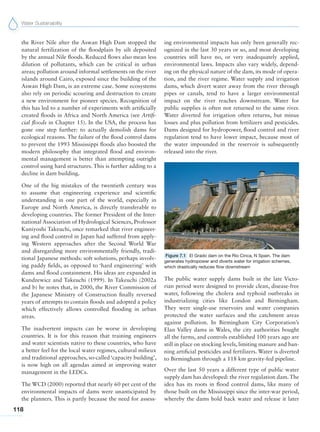
  • 84.
    Pollution and water-relateddisease 71 consumed. It may also reflect differing political and eco- nomic considerations of the legal enforceability of the limits. A more worrying observation is the 1959 agree- ment between the WHO and the IAEA which stated that ‘whenever either organisation proposes to initiate a pro- gramme or activity on a subject in which the organisation has or may have a substantial interest, the first party shall consult the other with a view to adjusting the matter by mutual consent’ (WHO, 1999). Bertell (1999) pointed out that this constitutes a serious conflict of interest and that since 1959 the promotional goals of the IAEA frequently took priority over regulatory aspects. This may explain why the limits set by the WHO were raised twice within a comparably short period when more uranium was needed to satisfy a growing global demand (Winde, 2010). Table 5.4 shows the estimated differences between DWAF standards in 1996 and 2002. When the two guide- lines are converted into the same units of measurement, this reveals considerable differences even within the same organization in South Africa over a short period of time. In contrast to heavy metals such as iron and zinc, which are needed for human metabolism and only toxic above certain threshold levels, uranium has no health benefits at any level. Ideally, uranium and other non- essential metals and half metals such as mercury, arsenic and cadmium should not be in drinking water at all (Figure 5.8). However, owing to their natural abundance in the environment, the costs of completely removing all poten- tially dangerous metals would render tap water unafford- able for many. Table 5.4 Comparison of limits for radioactivity in water in different DWAF guidelines based on 238 U-concentration (DWAF, 1996a) and annual equivalent dose through drinking water (DWAF, 2002) with associated risks of uranium-related cancer Water quality class DWAF (1996a)* DWAF (2002) 238 U-concentration (upper limit) Dose (calculated upper limit) Associated annual fatal cancer risk Dose (upper limit) 238 U-concentration (calculated upper limit) Associated annual fatal cancer risk µg/L mSv/a 1 per number mSv/a µg/L 1 per number 1 (ideal/ TWQR) 70 0.11 4,000,000 0.1 62 1,000,000 2 (good) 284 0.39 1,000,000 1 754 100,000 3 (marginal) 1420 1.87 200,000 10 7677 10,000 4 (poor) >1420 >1.87 >200,000 100 76,908 1000 5 (unacceptable) >100 769,215 <1000 * Bold columns are values given in source, italics show calculated values. For methods see Winde (2010a and b). † 435,000 tonnes of uranium or approximately eight per cent of the world’s total of ‘reasonably assured resources’, plus inferred uranium resources recoverable for under US$ 130/kg, January 2007 (World Nuclear Association, 2009). Figure 5.8 Relationship between uranium-238 concentration in drinking water and annual risk of fatal cancer according to DWAF (1996a) compared with the global natural background and extrapolated to accommodate uranium levels observed in the Wonderfonteinspruit, North West Province, South Africa
  • 85.
    Water Sustainability 72 a long-standingbelief that ‘soft’ water, low in dissolved salts, increases the risk of cardiovascular diseases. The WHO (2003) has decided that the evidence remains statistical and that it does not prove a causal relation- ship, except that soft water with less than 100 mg/L of solutes can increase the solution of heavy metals in the waterpipes – cadmium, lead, zinc and copper – though acidity is also an important factor. A survey by Dr Mar- garet Crawford of the London School of Hygiene and Tropical Medicine concluded that there is a stronger correlation between soft water and deaths for cardiac arrest and to a lesser extent bronchitis, in the UK than elsewhere, but notes there could be many confounding influences (Crawford, 1972). Perhaps the best piece of evidence comes from a Canadian review that while car- diac arrhythmia is more prevalent in soft water areas, adding magnesium can rectify it (Marier, 1978). Similarly, a deficiency of iodine in drinking water has also been linked to health disorders. At the other end of the spectrum, high levels of fluoride and arsenic have clear impacts on health. While fluoride may be added deliberately to drinking water for health reasons, arsenic is a poison that appears to have become more prevalent in recent years in parts of the world where more ground- water is being exploited, often because surface waters have become more polluted. Iodine, goitre and cretinism Goitre is a persistent enlargement of the thyroid gland. The thyroid is an endocrine gland that produces the iodine hormone thyroxin, which increases oxidation and affects the body’s metabolism. Goitre is especially preva- lent in areas with a deficiency of iodine in the soil or water: Derbyshire in England and parts of Switzerland have traditionally had high rates of goitre. Iodine defi- ciency in the local water is becoming a relatively more important factor compared with food grown in the local soil, as food provision becomes more globalized and imported. Cretinism is most commonly caused by severe under- functioning of the thyroid, associated with extreme and persistent iodine deficiency. Unless treated from the very earliest years of life, it results in mental retardation, stunted growth and a prematurely aged appearance. In his article ‘The health effects of iodine and fluorine in drinking water’, Professor Wang Wuyi looks at the distribution of goitre and cretinism in China in relation to water quality (Figures 5.10 and 5.11). Fluorine and fluorosis Fluorine is used in the human body to build bones and teeth. It is present in all natural waters in varying con- centrations, commonly between 0.1 ppm and 6 ppm, usually in fluorides of potassium or sodium leached from weathering minerals. Only relatively small amounts are needed for human health, less than 1 ppm (or 1 mg/L), and, as with many other substances required in small doses, when concentrations get high it becomes toxic. Toxicity may also be induced by a combination of drink- ing water with other sources, like excessive intake of foodstuffs high in fluorine, such as tea or beer, or by breathing polluted air. The GEMS/Water archive shows high levels of fluoride in the southern Low Countries and East Africa, together with moderate levels in the western British Isles (Figure 5.9). Some of the British and Irish cases may be related to granitic rocks, but as Professor Wang Wuyi shows, there are many possible sources, and mining and indus- try may be important locally. Artificial fluoridation of public water supplies has been adopted in many countries and by individual water com- panies and authorities over the last 60 years, especially in North America and Europe, in response to evidence that it increases the resistance of teeth to dental caries (decay) in young people. The incidence of caries nearly halves as concentrations are increased from 0.6 to 1 ppm. This is, however, a very controversial subject. Despite overwhelming, though not complete, support from the medical professions, there is the very slight probabil- ity of toxicity being induced by ingestion from other sources adding to the fluorine in the water. There is also the problem that some of the fluorine accumulates in the body over a period of time, so that people who drink more tap water may be more at risk. More importantly, there is the ethical argument against mass medication, because it removes personal choice and it is unnecessary for mature adults. Some have argued, with little founda- tion to date, that fluoridation could be the precursor to further mass medication. Those in favour argue that it is much cheaper than curing caries, and painless, and that there is no evidence that it has caused harm. Toxicity manifests itself in fluorosis. Dental fluorosis is a mottling of the enamel and is associated with concen- trations above 5 ppm. More severe fluorosis can appear as deformed bones. Fluorosis caused by drinking water that is naturally high in fluorine is found throughout the
  • 86.
    Pollution and water-relateddisease 73 Figure 5.9 Fluoride concentrations in surface waters world. Its prevalence in China is illustrated in Figures 5.10 to 5.12 and analysed by Professor Wang Wuyi in his article. Arsenic in groundwater Arsenic is a matter for increasing concern in many parts of the world, especially in groundwater, where it is released by oxidation of pyrite as groundwater levels are lowered by over-exploitation or climate change. It is a major problem in the Indian subcontinent (see Amaren- dra K. Sinha’s article below, ‘Large-scale human expo- sure to arsenic in groundwater’): some 75 million people live in affected areas of Bangladesh and thousands suffer from chronic arsenicosis. Significant problems have also been reported elsewhere, notably in China, Argentina, Chile and parts of Eastern Europe (Figure 5.16). More minor cases have been reported from Minnesota, Utah, Ontario, Nova Scotia, New Zealand and Japan. The medical effects continue to become more widespread and apparent and, as with so many pollutants, the ‘safe’ limits are being adjusted downwards: the EU reduced limits in drinking water from 50 to 10 μg/L (0.01 mg/L) in 2004, the US EPA followed suit in 2006, and New Jersey even went down to 5 μg/L the same year. This is also the WHO’s currently recommended limit. In addi- tion to drinking water, vegetables and rice irrigated with water polluted by arsenic create a further source of arsenic poisoning. The global coverage of GEMS/ Water data is sparse, but for Europe it does suggest that only five per cent of rivers exceed the EU drinking water standard (Figure 5.17).
  • 87.
    Water Sustainability 74 Endemic goitreand endemic cretinism Endemic goitre is caused by inhabitants drinking deep groundwater with a low iodine content. It occurs in some counties along the Bohai Bay in Hebei and Shandong provinces, and both deep and shallow groundwater in several low-lying interior areas of Xinjiang, Shanxi and Hebei (Figure 5.10). It may also be caused by eating kelp, kelp salt and its pickled products in some coastal areas. Endemic goitre is widespread (Figure 5.11). It is highest in the mountain areas, including the Himalayas, eastern Pamirs and the Da Xinggan and the Changbai mountain- ous areas in Northeast China. It is relatively high on hilly areas like Nanling and the western Guangxi highland in South China, but generally low in the plains, and lowest on the coast. However, it also occurs in some ancient river beds on the plains, in peaty and swampy areas, as well as along parts of the coastal sandy belts. It is also prevalent in Shanghai. Endemic cretinism occurs in most of the same areas as serious goitre and there appears to be a link (Figure 5.12). It is prevalent in all regions except Shanghai and Jiangsu Province. No cretinism is found in coastal areas even where goitre occurs. Clinically, endemic cretinism in most areas of China is of the nerve or mixture type. More patients suffering from myxoedema endemic cretin- ism are found in southern Xinjiang, eastern Qinghai and Liangcheng county of Nei Monggol. Endemic fluorosis Endemic fluorosis is a chronic disease affecting the whole body, including the teeth and the skeleton, which is related to high fluoride concentration in drinking water (Figures 5.13 to 5.15). The health effects of iodine and fluorine in drinking water in China Wang Wuyi Figure 5.10 Iodine in water in China (based on The atlas of endemic diseases and their environment in the People’s Republic of China, by Tan Jianan et al, 1989)
  • 88.
    Pollution and water-relateddisease 75 Figure 5.11 The incidence of goitre in China Figure 5.12 Prevalence of endemic cretinism in China
  • 89.
    Water Sustainability 76 Figure 5.13Fluoride in shallow groundwater in China Figure 5.14 Fluoride in drinking water in China
  • 90.
    Pollution and water-relateddisease 77 Endemic fluorosis is widely distributed throughout the world, covering over 40 countries. It is also extensively distributed in China. It is relatively serious in North China, ranging from Heilongjiang in the northeast to Xinjiang in the northwest. There is an uneven spread in the disease- affected areas. It is also prevalent in the vicinity of high- fluoride hot springs and areas where there is fluoride-rich coal and rocks, but the extent of such areas is rather limited. The higher the fluoride concentration and the longer the exposure, the more serious is the disease. The teeth of children are affected readily up to the age of seven or eight years, but once the enamel is formed, dental fluor- osis does not develop further. Skeletal fluorosis is more prevalent in women and the rate increases above the age of 20. People not native to a high-fluoride locality are more readily affected. The fluorosis-affected areas in China can be roughly divided into five types of environment on the basis of geo- graphical characteristics and sources of fluoride: 1 Shallow high fluoride groundwater type This type affects the largest area in China and is mainly in the vast arid and semi-arid areas in North China. Here the groundwater derives fluoride from fluoride-rich rock formations, such as volcanic lava and granite, and the soils have relatively poor drainage, and suffer from fairly serious salinization and alkalinization. The climate is dry with a high evaporation rate, causing a further concen- tration of fluoride ions in the surface water and shallow groundwater, which may reach up to 32 mg/L. 2 Deep groundwater type This is mainly found along the coastal plains, as well as in the southern part of the Junggar Basin in Xinjiang. The groundwater bearing strata are alternating marine and freshwater sedimentaries. Influenced by the palaeo- geographical environment, the fluoride concentration in the deep groundwater is very high, generally as high as 7 mg/L and occasionally in excess of 20 mg/L. Although the fluoride concentration in the shallow groundwater is not high, the water is undrinkable because it is bitter to taste due to the high salt content. 3 High fluoride hot spring type This is mainly found on the periphery of continental plates and fracture zones. Fluoride concentrations in drinking water are high, owing to hot springs seeping into the sur- rounding areas. Figure 5.15 The prevalence of fluorosis in China
  • 91.
    Water Sustainability 78 4 Abundantfluoride rock formation type This is mainly found in exposed sites of fluorite and apatite mines, where fluoride concentration is high. 5 High fluoride coal type This occurs mainly in the mountainous areas of south- west China. These areas are characterized by low fluoride concentrations in the drinking water (all below 1.0 mg/L), but high content in food and indoor air caused by burn- ing the local coal. Since the climate is cold and wet, the local high-fluoride coal is used as the major fuel for cook- ing, heating and drying grain. As chimneys have not been built, the indoor fluoride concentration rises, and the fluo- ride content in the dried maize and chilli increases up to several hundredfold. Some researchers, however, main- tain that the high fluoride content of the grain originates in the soil surrounding the local coal formation. In some areas, fluorosis is also caused by eating salt with a high fluoride content. Figure 5.16 Documented cases of arsenic problems in groundwater related to natural contamination (source: British Geological Survey, 2001, with additions) Figure 5.17 Arsenic in European rivers A variety of hypotheses have been put forward to explain the problem. Most have some validity and in truth there are a number of causes, ranging from purely natural to totally man-made. In most cases, it appears to be the product of specific combinations of geological environment and water regime. Hydrothermal waters permeating through fractured granites in mountain ranges, like the Himalayas, and the weathering of vol- canic rocks can release arsenic, which may then be car- ried by rivers and deposited in concentrated form in floodplain sediments. Post-glacial deltaic sediments are a major source, especially in the Bengal basin. In New Jersey, the black shales are considered a source. Alka- line waters generally favour arsenic release. However, human modification of the water regime is almost uni- versally the trigger for enhanced groundwater pollu- tion. A key medical observation is that millions of people in some of the areas now badly affected drank well- water for thousands of years but with little evidence of toxic effects until the late twentieth century. This
  • 92.
    Pollution and water-relateddisease 79 appears to imply a major effect on the environment due to increased human influence, most likely related to modern water management. In the Indian subcontinent, the problem was exacerbated by three factors which led to a dramatic increase in the use of groundwater as a supposedly safer source of drinking water and a major resource for expanding irrigated agriculture: 1) the worsening biological contamination of surface waters in the mid-twentieth century; 2) the Green Revolution in agriculture; and 3) the severe cholera outbreak in south Bengal in the 1960s. The World Bank was a principal promoter of the switch to groundwater and funded thousands of tubewells for irrigation from the 1960s onwards. Arsenic may be released by oxidation of pyrite, arse- nopyrite and clay minerals, which have arsenic adsorbed on their surface. Oxygen enters aquifers when the water table is lowered; the arsenic is then free to pollute the groundwater when the rocks are reflooded. Arsenic pollution may thus result from groundwater overdraft. It has even been suggested that reducing surface water discharges can have a similar effect: diversion of the Ganges, the Tisha and 28 other transboundary rivers in India may have contributed to the problem in Bangla- desh by reducing groundwater recharge. Even though millions of tubewells were installed in Bangladesh before the 1970s, medical records only show a significant rise in pathological symptoms during the 1980s in West Bengal and 1990s in Bangladesh. Some observers have linked this with the completion of the Farraka barrage in 1975, which diverted Ganges water to Calcutta and reduced the discharge entering Bangladesh. A second hypothesis focuses on the opposite situation: excess water. In organic-rich clayey sediments, satu- rated, anaerobic conditions create a chemically reduc- ing environment, which leads to the dissolution of iron oxyhydroxides containing sorbed arsenic. Iron-reducing bacteria may also play a part. This situation is typical of natural wetlands and could also be a dangerous by- product of over-irrigation. Yet a third hypothesis blames pollution from human sources, especially from agriculture. Nitrate from ferti- lizer can oxidize sulphate minerals and release sorbed arsenic. And arsenical pesticides were widely used in America for 100 years until banned in the late twenti- eth century, although their low solubility suggests that they are not a major source of water pollution. Cur- rent research in Botswana’s Okavango delta is trying to determine whether the calamitous arsenic pollution that has affected the town of Maun is due to exces- sive drawdown of the water table or human sewage (Huntsman-Mapila et al, 2006, in press). Solutions In recent years, some communities in the Bengal basin have begun to revert to using surface waters as the enormity of the problem has been realized. Yet, ironi- cally, low-cost technology is already available for purifying well-water in the domestic environment. One method is to mix the water with ferric chloride and potassium permanganate to oxidize it in a plas- tic bucket and strain it through a cloth into a second bucket filled with sand to clarify it. Results reported to the United Nations University show arsenic concen- trations reduced to less than 20 μg/L, even with water containing up to 500 μg/L (Ali et al, 2001). Many other sorbents can be used, especially laterite, a clay soil rich in iron and aluminium, providentially common in trop- ical regions. Education and government help are the keys to encouraging adoption. ‘Reversion to surface water-based supply … will involve enormous financial outlay and would nullify the investment of around Rs 10,000 crores [100 billion rupees or around $2 billion] already made in West Bengal alone over the last 30 years. It is necessary that such major policy shift should not be ad hoc, but a science- driven decision.’ S.K. Acharyya, former Director General in the Geological Survey of India, 2002 Better still would be expansion of the public water supply systems in which filtration and coagulation meth- ods are applied centrally. However, the best solution is to identify the specific causes responsible in each area and either to manage water usage appropriately or else to clean up at source. Considerable research effort is cur- rently being devoted to this end, especially in India and Bangladesh. One promising approach is bio-remediation within the aquifer, introducing microbes to precipitate iron sulphide that will sorb arsenic.
  • 93.
    Water Sustainability 80 Over thelast 15 years or so, the widespread nature of human exposure to arsenic in drinking water has become apparent in many countries (Figure 5.16), especially in the Indian subcontinent. Groundwater high in arsenic has been reported from Bangladesh, India, Nepal and Paki- stan, but the contamination in the Ganges delta region of Bangladesh and West Bengal represents the largest poisoning of a population in history, with millions of people exposed. In Bangladesh, 79.9 million people in an area of 92,106 km2 are suffering from arsenic levels above the World Health Organization’s maximum permissible limit of 50 μg/L, and a further 42.7 million in West Bengal, India, in an area of 38,865 km2 . Numerous sources of contamination have been cited: 1) natural – weathering of arsenic bearing mineral ores, arsenic rich geothermal waters, and concentration in accumulated sediments (in the Ganges delta and Bengal plain), or 2) human-induced – past mining activities, combustion of fossil fuels, chemi- cal weapons dump sites and metallurgical processes. Health implications Drinking arsenic contaminated water has been found to increase the risk of disorders of the skin, cardiovascular and nervous systems, and especially the risk of cancer (Table 5.5). The early stages of arsenic poisoning are characterized by dermatitis, keratosis, conjunctivitis, bronchitis and gas- troenteritis. This is followed by peripheral neuropathies, hepatopathy, melanosis, depigmentation, hyperkeratosis. The most advanced stage is marked by gangrene in the limbs and malignant neoplasm (cancers). Even when the concentration in drinking water is reduced to the World Health Organization’s recommen- dation of 10 μg/L (WHO, 1993), potential cancer risks remain high (NRC, 2001). The effects are more acute in countries where people are poor, malnourished and drink groundwater. Conclusion There is no technological ‘magic bullet’ that will solve the arsenic problem quickly and easily. Although our under- standing of the problem has improved in recent years, many uncertainties and wide information gaps still exist. Numerous studies have shown that arsenic may be successfully removed from solution by adsorption onto clays, co-precipitation on laterites or metal ion precipita- Large-scale human exposure to arsenic in groundwater Amarendra K. Sinha Table 5.5 Pathological effects associated with arsenic poisoning Organ system Problems Skin Dermatitis, symmetric hyperkeratosis of palms and soles, melanosis, depigmentation, Bowen’s disease, basal cell and squamous cell carcinoma Liver Enlargement, jaundice, cirrhosis, non-cirrhotic portal hypertension, hepatopathy, cancers of liver and gall bladder Nervous system Peripheral neuropathy, hearing loss, conjunctivitis Cardiovascular system Acrocyanosis and Raynaud’s disease, hypertension Hemopoietic system Megaloblastosis Digestive system Gastroenteritis, vomiting, diarrhoea Respiratory ystem Cancers of lung and nasal passage, bronchitis Endocrine system Diabetes mellitus and goitre Urinary system Cancers of prostate and bladder Limbs Gangrene, muscular cramps, collapse
  • 94.
    Pollution and water-relateddisease 81 tion. However, we still need a much better understanding of arsenic migration processes, accurate and low- cost field water-testing methods, a good understand- ing of the health effects and dose-response patterns of chronic and low-level arsenic exposure, possible clinical treatment methods, and efficient and practical arsenic removal technologies. Accelerated research efforts are urgently needed. Yet the immediate challenge is how to take effective action without delay amid the many unknowns. Figure 5.20 Carcinoma of the hand (Courtesy: Arsenic Foundation Inc.) Figure 5.19 Melanosis of the hand (Courtesy: Arsenic Foundation Inc.) Figure 5.18 Keratosis on the feet (Courtesy: Arsenic Foundation Inc.) Part 2 Infectious diseases Water-related infectious diseases are mostly spread via two routes: from the bites of animal ‘hosts’ or vectors carrying the disease, or via the‘faecal-oral’ route.Appro- priate water and wastewater management can play a vital role in reducing the incidence of both. In the second half of the twentieth century, spraying water bodies with pesticides became the preferred option for controlling vectors, but avoiding low water levels, which promote warmer water, and slack flows and stagnant water, which favour mosquitoes, or waterfalls that favour black fly, are more eco-friendly approaches. Installing adequate sewage treatment systems, along with hygiene educa- tion, is the main route to preventing faecal-oral disease. Poor sanitation can also increase the number of vector animals. Many vectors, like mosquitoes, only become infectious once they have bitten a human carrying a dis- ease. Growing population densities increase the chances of infection in tropical and subtropical countries, but the low level of baseline infection mitigates against this in more northerly countries. Other vectors, like the water snails which carry the flukes that cause schistosomiasis, acquire the agent of disease without human contact. No-plumbing disease Almost four children die every minute from poor sanita- tion and water supply. The World Bank estimates that two million people die of sanitation-related disease every year, 90 per cent of them children. John Sauer coined the term ‘no-plumbing disease’ in an internet article he pub- lished in January 2009. Sauer is Communications Direc- tor for Water Advocates of Washington, DC, a non-profit organization devoted to publicizing water problems. He points out that clean water and sanitation receive far less attention and funding than malaria or Aids, but they kill more children than Aids/HIV, malaria, measles and tuberculosis combined. In total, some two million deaths are linked each year to unsafe water and poor sanita- tion and hygiene, equivalent to ten 2004 Indian Ocean ‘The most practical investment we can make in global public health is plumbing.’ John Sauer, Communications Director, Water Advocates, Washington, DC, 2009
  • 95.
    Water Sustainability 82 tsunamis and1000 Hurricane Katrinas (Table 5.6). Sauer argues that if all the diseases associated with them were lumped together as one disease, then they might be taken more seriously. ‘No-plumbing disease’ comprises more than 25 separate diseases, including cholera and typhoid, campylobacter enteritis, giardia, amoebic dys- entery, bacillary dysentery (shigellosis), Weil’s disease, hepatitis A and Escherichia coli diarrhoea. Poor sanita- tion and unsafe water fill half the hospital beds in the developing world and account for 10–15 per cent of the entire global disease burden. In a poll conducted by the British Medical Journal, basic sanitation, good hygiene and access to safe drink- ing water were rated the most important advances of the twentieth century. But not everywhere is benefiting from those advances. In 2008, the WHO report Safer water, better health calculated that providing safe water, sanitation and hygiene education could save healthcare agencies $7 billion pa, and gain 320 million produc- tive working days and 272 million extra school days a year. The overall payback would be $84 billion from the $11.3 billion annual investment needed to meet interna- tional drinking water and sanitation targets. WaterAid estimates that in Madagascar alone a million working days and 3.5 million school days a year are lost through ill health caused by unsafe water and sanitation. Diarrhoea has many causes, mostly related to water and food contaminated with a range of diseases stemming from poor hygiene and sanitation. The same applies to gastroenteritis, which is inflammation of the gut produc- ing vomiting and diarrhoea. Infections like cholera and dysentery are common causes, but some causes are not related to water at all. Amoebic dysentery is a tropical disease caused by ingest- ing the single cell Entamoeba histolytica, derived from excrement. Far more common, but less serious, is bacil- lary dysentery, which occurs in all climates and is caused by Shigella bacteria. Infective hepatitis A is commonly caused by bathing in faecally-contaminated water. It causes inflamed liver, jaundice and debilitation, and may be fatal to old people. Weil’s disease or infectious leptospirosis, commonly known as swamp fever, can also be contracted by bath- ing in contaminated water, especially stagnant water. It is caused by a spirocaete, Leptospira icterohaemorrhagiae, spread from animal urine entering water bodies, usually from rodents but occasionally cats and dogs. There is a 20 per cent mortality rate through damage to the liver and kidneys. Giardiasis is yet another disease that originates from exposure to faecal material. It is rare in developed coun- tries and where it is endemic it can be relatively mild, but it can cause diarrhoea and intestinal gas. It is caused by the single-celled Giardia lamblia. Faecal coliform Concentrations of faecal coliform are the best indica- tors of organic pollution of rivers by human and animal faeces. For drinking water, the WHO, the US EPA and the EU all set a standard of zero faecal coliform per 100 ml. Faecal material can carry not only bacteria like the ubiq- Table 5.6 Deaths due to water-related diseases and poor water management. Percentages of total deaths according to WHO (2008) WHO region Africa Americas Europe SE Asia Western Pacific Eastern Mediterranean All regions Due to unsafe water, sanitation and hygiene* Diarrhoeal diseases 55 55 44 60 39 62 56 All diseases 72 66 53 78 45 85 73 Due to poor water management Water-related diseases† 21 3 0 3 4 4 12 Drowning‡ 3 14 35 7 41 6 8 Data relate to 2002. Key: * No-plumbing disease. † Diseases carried by vectors: mainly malaria, dengue, onchocerciasis and Japanese encephalitis. ‡ Most but not all due to floods.
  • 96.
    Pollution and water-relateddisease 83 uitous Escherichia coli (E.coli) and Salmonella, but also viruses like Rotovirus, parasitic worms like the tapeworm Taenia saginata, and the protozoan Cryptosporidium.All are prime causes of gastroenteritis and diarrhoea. Cryptosporidium oocysts live in the intestines of live- stock and can be washed from animal faeces into rivers and reservoirs. Cryptosporidiosis causes acute diar- rhoea, vomiting and fever for a week or two. It has caused a number of public health emergencies in Britain and America in recent years, breeding in the warm water of reservoirs in summer. The 1989 incident at Farmoor Reservoir, Oxfordshire, which infected over 400 people, originated from runoff from fields spread with farm slurry. There were 575 cases in Torbay in August 1995. Part of that problem may have been the water com- pany’s decision to recycle water through the treatment plant to save water during the drought, and not passing it through all the treatment processes. In Milwaukie in 1993, 100 people died and half the city population of 800,000 fell ill. Both cryptosporidiosis and giardiasis are essentially diseases of surface water: well water is gener- ally safer. Over the last decade or so, there has been a better under- standingofthebiologyofinfectionsandmonitoringusing genetic fingerprinting is helping to control the risks. New regulations were introduced in England in 1999, requir- ing risk assessments at all treatment plants. Since 2001, companies are required to limit the average number of oocysts to below one per ten litres and health authori- ties must alert water companies after 28 cases have been reported. Noncompliance is a criminal offence. Welsh Water was fined £60,000 for incidents in North Wales in 2005–6. But the problem often returns in warm sum- mers, as in East Anglia in 2008 and in Cornwall and North Wales in 2009. It is resistant to chlorination and most oxidizing agents. The water must be boiled for a number of minutes or else passed through 1 μm filters. Cleaner pipes, better monitoring and warning alarms are helping. South West Water is modernizing 7500 km of mains and 1500 km of pipes and fitting turbidity alarms. The map in Figure 5.21 shows that barely three per cent of the surface waters recorded in the GEMS/Water global archive typically have less than one faecal coliform per 100 ml and only around ten per cent have under 100 per 100 ml. The most extreme pollution, in excess of half a million faecal coliform per 100 ml, is found in just a few locations in Ecuador, mainland Malayasia, Java and Belgium. Sadly, data for Africa are totally inadequate and it is likely that many more sites there and elsewhere are beset by high levels of faecal pollution, especially in cities and shanty towns. The map (Figure 5.21) shows that high levels of pollu- tion are by no means a preserve of developing countries. Despite some of the most rigorous environmental con- trols in the world, the European Union still has many rivers with high mean concentrations. Only six per cent of sites in the pre-2002 Union average less than 100/ 100 ml and around a quarter show in excess of 10,000. Cholera Cholera is an acute infection of the gastrointestinal tract contracted through the faecal-oral route from contami- nated drinking water or food. It is caused by the Vibrio cholerae bacterium. Death can result from chronic loss of water and electrolytes as a result of intense diarrhoea and possible kidney failure. Cholera killed over 36,000 Londoners in four epidemics during the nineteenth century. The cholera outbreak in London’s Soho in 1854 was a landmark event in medical history. Nearly 11,000 died from cholera after drawing water from a public well near the surgery of Dr John Snow. Snow identified the pump and persuaded the coun- cil that it was polluted by sewage and should be disabled. He also noted that the workers at the nearby brewery, which had its own water supply, were unaffected. He had already published a paper ‘On the Mode of Communica- tion of Cholera’ five years earlier, in which he also argued that the practice of flushing sewage from cesspools and ‘water-closets’ (flush toilets) into rivers made cholera epidemics worse. After another epidemic, which killed over 5000 in Whitechapel in 1866, caused by sewage contamination in the East London Water Company’s res- ervoir, the government finally accepted his findings and Joseph Bazalgette, chief engineer to the Metropolitan Board of Works, proposed extending his groundbreak- ing network of mains drainage throughout the city. The events had interesting impacts on the ‘private or public’ debate, both for and against. In his report on the Whitechapel epidemic, William Farr, statistician to the Registrar General, railed against the public blame placed on air pollution for the outbreaks. ‘As the air of London’, he said, ‘is not supplied like water to its inhab- itants by companies the air has the worst of it … while Father Thames and the water gods of London have been loudly proclaimed immaculate and innocent.’ Yet it was not till the passage of the Metropolis Water Act in 1902 that London’s water supplies were removed from private
  • 97.
    Water Sustainability 84 Figure 5.21Levels of faecal coliform, a general indicator of water-borne pathogens companies, partly perhaps because Bazalgette’s sewer system had been so effective in controlling cholera, partly because of strong opposition from the companies (Halliday, 2004). ‘If the general use of water-closets is to increase, it will be desirable to have two supplies of water in large towns, one for the water-closets and another, of soft spring or well water from a distance, to be used by meter like the gas.’ Perspicacious observations by Dr John Snow in the Medical Times and Gazette, 1858, after the cholera epidemic in Soho, London The disease is associated with brackish water and river estuaries, as well as poor management of water and sani- tation. It appears to have originated in the Ganges delta. Cholera is often associated with algal blooms, which are a common indicator of high levels of plant nutrients in the water caused by agricultural fertilizers or faecal pol- lution. Cholera is yet another disease that is now most prev- alent in sub-Saharan Africa and India (Figure 5.22). South Africa is worst, but Mozambique and the Dem- ocratic Republic of Congo are close behind. It tends to occur in discrete pandemics, of which seven major ones have been identified since the nineteenth century. The WHO Global Task Force on Cholera Control has
  • 98.
    Pollution and water-relateddisease 85 made great strides in cholera control through hygiene education since it was launched in 1992, matched by improvements in the provision of sanitation around the world. However, all the campaigns have not kept pace with the rise in the number of people without access to basic sanitation caused by burgeoning populations and by wars and natural disasters that disrupt water sup- plies and sanitation and cause thousands of refugees to be confined in overcrowded conditions. Cholera has re-emerged as a major problem since 2005. The WHO reports a 79 per cent increase in one year alone between 2005 and 2006, bringing the number of cases back to levels last seen in the late 1990s. The WHO recorded nearly a quarter of a million cases and more than 6000 deaths in 52 countries in 2006. Major outbreaks also occurred in Thailand, Iran, Iraq, India, eastern China and Zimbabwe between 2007 and 2009. In Zimbabwe, the unreliability of public water supplies has led many to dig shallow wells, which are prone to faecal con- tamination. As a result, a cholera epidemic broke out in August 2008 infecting over 100,000 and killing more than 4000. Although officially declared over the follow- ing summer, another 150 lives were lost by early 2010 and there is every reason to suppose that this will be a long-running issue. Unfortunately, the WHO estimates that it only receives information on perhaps ten per cent of actual cases. Global data are therefore highly unreliable and in all probability a gross underestimate of the real situation. Typhoid Typhoid fever is caused by ingesting the bacterium Shig- ella typhi through drinking water or food. It is not to be confused with typhus, which is spread human-to-human by body lice hosting a rickettsial bacterium. Despite the availability since the mid-twentieth century of two effec- tive vaccines, the WHO still regards it as a serious public health problem and it is a factor in its recommenda- tions for local Water Safety Plans, to manage drinking water ‘from catchment to consumer’ (WHO, 2005). It estimates that on average 21 million people are infected annually and over 200,000 die. With good antibiotic treatment barely one per cent should die, but without it up to 20 per cent could die. Poverty and poor water sup- plies mean that the disease is most fatal in the Least Eco- nomically Developed Countries. Recent outbreaks have occurred in the Democratic Republic of Congo 2004–5, infecting 42,564 and killing 214, and in 2010 in Chandi- garh, India, on Fiji and in Harare, Zimbabwe. For the same reasons as cholera, it is particularly common in disaster areas and there were fears of an out- break of typhoid and cholera in Haiti as the rainy season arrived after the devastating earthquake early in 2010. Poliomyelitis Polio is a curious case of a disease that is seen as due both to lack of plumbing and too much plumbing! The Figure 5.22 The global distribution of cholera
  • 99.
    Water Sustainability 86 Many brewerieswere established in the east end of London during the nineteenth century by Christian Prot- estant Nonconformists, in apparent contradiction of con- temporary puritanical views on alcohol consumption. The reason was simple: by killing most pathogens, the fermentation process and the acidity of the beer made it safer to drink than the water from the city’s rivers and wells. It is still a sound principle to follow in many parts of the world today. The practice is time-honoured, and appears to have acquired a religious following at least 6000 years ago with a recipe for beer-making appearing in the Sumerian ‘Hymn to Ninkasi’, a goddess thought to reside in Mount Sabu, literally ‘the mountain of the tavern-keepers’ (Hart- Davies, 2004). Washing with beer and hot water was rec- ommended for disinfecting wounds. Beer might even be a by-product of ancient irrigation practice. A Sumerian farming handbook The Farmer’s Instructions, dated at around 1500 BC, contains the oldest known reference to solving the ‘inevitable’ consequence of irrigation in a warm climate, salinization: flushing and leaching the soil with large quantities of freshwater. But the technique was no more successful then than Saddam Hussein’s flushing of the Euphrates Marshes in the 1990s. The solution was to plant barley rather than wheat and other grains that are less salt-tolerant. And barley is the basic ingredient of beer. Drink beer, not water virus is passed through faeces and faecal contamina- tion of water and causes permanent paralysis of the limbs. But the prevalence of polio in developed coun- tries during the first half of the last century has been blamed, ironically, on improvements in public water supplies. Repeated exposure to the virus appears to offer some immunity, so that travellers to areas where polio is endemic tend to be at greater risk than the inhabit- ants. Loss of immunity through drinking cleaner water, it has been argued, increases susceptibility. The incidence peaked in the 1950s, when public swimming pools were often closed when risks were judged to be high – the incidence was very seasonal, rising significantly during the warm, summer months. Polio has all but disappeared in most of the world. The development of the Salk vaccine inoculation and sub- sequently the Sabin oral vaccine were milestones in its eradication, helped by campaigns like the ‘Stop Polio’ campaign pioneered by Save the Children. However, this also poses a medical problem, because little research has been conducted since the 1950s. It means that medical knowledge is very limited compared with most other diseases. Worse, there has been a marked resurgence in India due to contamination of drinking water by faeces and urine, caused by open defecation in the forest and faeces in open ditches beside the road: 660 million people defecate in the open. There was a 26 per cent increase in the number of cases in India between 2008 and 2009, mainly in Uttar Pradesh and Bihar. In parts of Uttar Pradesh less than two per cent of households have a toilet. There is now a determined move to improve sanitation in India. In the State of Haryana, north west of Delhi, a ‘No toilet, no bride’ scheme was launched in 2005 to encour- age men to install a toilet before taking a bride.The State has built over 1.4 million toilets. Dr Bindeshwar Pathak, who founded the Sulabh International Sanitation and Social Reform Movement, which has built toilets for tens of millions in India, received the 2009 Stockholm Water Prize for developing eco-friendly and cheap toilets. The Indian government also advises people not to drink sur- face water or even very shallow groundwater that might be polluted by faecal material: wells should be at least 70 feet (21 m) deep to avoid contamination. India is one of only four countries that have a serious current problem; the others are Nigeria, Sudan and Yemen. In total, 300,000 are estimated to be infected, but one billion people could be at risk. Guinea worm (Dracunculiasis) This is a thin parasitic worm that is a serious threat in parts of Africa. The larvae of Dracunculus medinensis live in copepod crustaceans, minute water fleas that lack a carapace. The fleas are extremely common in fresh-
  • 100.
    Pollution and water-relateddisease 87 water and they can be swallowed in untreated drinking water. Adult worms live in the leg muscles and can grow to 100 cm long. They cause ulceration and can incapaci- tate the sufferer. It is a disease of poverty and lack of safe drinking water. Through incapacitating adults it also contributes to poverty and can put extra burden on children to do adults’ work. The Global 2000 Programme supported by UNICEF and the WHO has made great strides in containing the disease. Larvicides are effective in the environment but there is no cure, short of physical or surgical removal for the adult worms. Education is a major weapon. Filtering the water with a cloth before drinking will remove the fleas. Drinking only deep well water rather than surface water is also advisable, as is preventing infected persons washing and relieving their leg pain in public pools, because the worms can release a milky liquid containing millions of larvae into the water. In 1986, 3.5 million people suffered from the disease, but by 2007 there were less than 10,000 reported cases. The maps (Figures 5.23 and 5.24) show that it used to be problematic in the Indian subcontinent, but receded Figure 5.23 The distribution of Guinea worm disease at the beginning of the 1990s Figure 5.24 The distribution of Guinea worm disease at the beginning of the twenty-first century, showing a marked retreat
  • 101.
    Water Sustainability 88 during the1990s. Asia is now essentially free of the dis- ease. The WHO certified Pakistan free in 1996, India in 2000 and the Yemen in 2004. It is also less prevalent in West Africa, but became a serious problem in the Sudan around the turn of the century. Sudan now accounts for over 60 per cent of all cases. Protracted civil war and a lack of provision from central government have been factors there. It is now largely confined to the Sahel. Mali, Ghana, Niger and Nigeria are the only other remaining countries where dracunculiasis is a problem. Senegal was certified free in 2004, Cameroon and the Central African Republic in 2007. Vector-borne diseases Malaria Malaria is one of the most prevalent water-related dis- eases on Earth, second only to diarrhoea and dysentery. Every year between 350 million and 500 million new cases are recorded, between one and three million people die from it, and 40 per cent of the world population are judged to be at risk. A baby dies from malaria every 30 seconds and nearly three-quarters of a million children under five years old die from it every year. Malaria is still predominantly a disease of tropical and subtropical Africa, despite significant improvement over the last two decades (Figures 5.25 and 5.26). Around 90 per cent of all malaria cases are in sub-Saharan Africa, where 3000 children die each day: it is a major contributor to a child mortality rate of 30 per cent. More Africans die daily from malaria than from any other cause and it is cur- rently estimated to account for 40 per cent of the public health spend in sub-Saharan Africa and to cost Africa’s economy £6.8 billion pa in lost GDP. Yet it is in retreat at the global scale. It was finally eliminated in Europe in the latter part of the twentieth century. It has not been common in Britain since the 1880s, but it was not totally eradicated from Kent and Essex until after the FirstWorld War. The maps show a significant contraction in the area at risk even since 1990. And even in countries where it is still prevalent, the maps show that the number of cases has fallen since the 1990s. However, although the total number of malaria cases peaked in the 1990s, the most severe form, falciparum malaria, did not peak till 2000. The retreat is due to a number of factors: improved standards of living, improved water and sewage man- agement, improved medical cover and drugs, and the spread of bed nets. However, there are also many reasons for being less optimistic: developing resistance to antimalarial drugs, the spread of poverty and failed states, the continued spread of other diseases, like Aids and malnutrition, that weaken the immune system, and climate change and natural disasters. Thus, the worst death rates are not in the hottest or the wettest regions, but appear to be partly related to levels of malnutrition, care and antimosquito measures.The west- ern Sahel is especially badly affected, with the highest rates of all in Mali and Niger, closely followed by Sierra Leone, Liberia, Guinea, Upper Volta and Chad. In south- ern Africa, Angola, the Congo and Mozambique show the highest rates, but these are roughly half as severe as in West Africa. In contrast, there have been marked reductions in the number of cases in Thailand, and China, Argentina, Paraguay and Indonesia are now largely free. A prime example of the effect of a failed state occurred in Zimbabwe in 2009 when the government health serv- ice collapsed through lack of funds and the free supply of mosquito nets stopped, as did chemical sprays in public places. There were real fears of a major malaria outbreak. The ecology of malaria The disease is caused by one of four species of Plasmo- dium parasite in the red blood cells transmitted in the bite of a female Anopheles mosquito that has bitten a person carrying the gametocytes – immature parasites. The parasites multiply in the liver and blood. Each spe- cies has its own characteristic symptoms, with periodic or more continuous fevers, but Plasmodium falciparum is the most serious and can infect the brain and kidneys and cause death. As they reproduce in the body, each new generation of parasite causes a fever attack. The mosquitoes breed in stagnant or slow-moving water. While the females drink blood, the males only drink plant juices. Developing strategies for elimination There are two standard approaches: to eliminate the host mosquitoes or to treat the infection. Probably the most cost-effective control is to eliminate the shallow, stagnant water where the carrier mosquitoes breed. This was well understood as long ago as the ancient Greeks and Romans. The Emperor Trajan began drainage of the Pontine Marshes in Central Italy around 100 AD in
  • 102.
    Pollution and water-relateddisease 89 order to eliminate the malaria that had caused depopu- lation of the area – a scheme only finally completed by Mussolini in 1926. The English Fenlands were drained progressively from Roman times partly to eliminate malaria. But the view that wetlands are inherently ref- uges for pestilence has also led to the demise of many of the world’s wetlands, to the detriment of flood control and wildlife (see Chapter 6 Water, land and wildlife). Since the invention of insecticides in the twentieth cen- tury, the preferred approach in many parts of the world has been to spray water bodies with insecticide from the air at the beginning of the breeding season. This is still the most widespread solution, despite polluting the watercourses and destroying water resources. A wide range of insecticides is employed including organophos- phates like malathion and naled, natural pyrethrin, and synthetic pyrethroid-based permethrin and resmethrin. The juvenile growth hormone methoprene, which is non- toxic to humans, is also used in drinking water cisterns to regulate mosquito development. Spraying has increased in the USA since the arrival of West Nile fever in 1999. Figure 5.25 The incidence of malaria in 1990 Figure 5.26 The incidence of malaria in 2003, showing a marked improvement
  • 103.
    Water Sustainability 90 Weston etal (2006) report tests of the impact on other aquatic life of aerial spraying of pyrethrin and the syner- gist piperonyl butoxide around Sacramento, California. Although the effects were limited, the authors noted that the sprays doubled the toxicity of the river sediments for the amphipod Hyalella azteca, a shrimp-like animal often used as an indicator of pollution. These ‘Mexican freshwater shrimps’ or scuds live in the bottom sedi- ments, which were found to be storing pesticides from previous applications in the urban area. Modern medical approaches face two challenges: increas- ing resistance to drugs and lack of health care workers. Plasmodium falciparum is the first malarial parasite to develop resistance to chloroquine, the main antimalar- ial drug since quinine was phased out. Fortunately, to date Plasmodium vivax, common in North Africa, has yet to develop resistance. A WHO World Health Report in 2006 noted a ‘serious lack of health workers’ in 36 of the 57 countries in sub-Saharan Africa and estimated that four million extra workers are required. The drug manufacturer GlaxoSmithKline is planning a totally new approach with the first antimalarial vaccine, Mosquirix, due to start trials in East Africa in 2011– 2015. A more radical approach is using genetic modification. Water Aid is championing genetically modified mosqui- toes. Initial field trials are being run in India. Research at Imperial College London focuses on producing sterile males to reduce reproduction, while at Johns Hopkins researchers have produced mosquitoes that produce a protein that blocks the malarial infection. Another approach is to genetically modify the mosquitoes’ food. Research at the University of Florida has focused on producing genetically engineered chlorella algae, a green slime that is a favourite food of mosquitoes, to replace DDT. The algae have been modified to produce a hor- mone found in mosquitoes’ digestive systems to make them feel full. They die of malnutrition. The hormone is natural and enters the food chain naturally when the mosquito is eaten by higher animals. The algae do not remain indefinitely in the environment, but disappears naturally when eaten by other water life or killed by viruses that attack it. A more ecological solution comes from the Indian Min- istry of Environment and Forests that proposed using frogs to control mosquitoes. The scheme gets farmers in Haryana and Uttar Pradesh to catch frogs and put them into over 500 rivers and lakes around Delhi, especially the Yamuna River. Over the last 20 years that river has been highly polluted from sewage, pesticides and indus- trial effluent, which has killed the frogs and increased the risk of malaria in the city. River pollution has also killed other predators – spiders, fish and birds – and the year 2006–7 saw a 45 per cent increase in the mosquito population. Other approaches in India include traps that lure females of the Aedes mosquito to deposit their eggs in them, and introducing mosquito-eating fish like the guppy and Gambusia affinis. The same approach to mosquitoes is being taken in California where they are stocking newly constructed wetlands with Gambusia fish in preference to other chemical or biological solutions. A very simple solution is provision of latrines. Chris- tian Aid has been collaborating with a local commu- nity movement to build latrines in Nicaragua to combat malaria and cholera, with dramatic effect. As a more high tech solution, the EU has funded the Africa Monsoon Multidisciplinary Analysis (AMMA), which aims to improve prediction of the West African monsoon. The monsoon brings the heavy rains that pro- duce the spawning grounds for the mosquitoes and it has been difficult to predict recently. Satellites can also be used to identify areas of recent rainfall to help direct spraying operations. The satellite approach was first suc- cessfully employed in the 1970s to track likely sources of locust infestation in north east Africa. Moves to reverse the loss of wetland habitats and to reduce the amount of pesticides sprayed into water bodies, and even to recreate wetlands to improve biodi- versity and serve as natural flood control measures are all acting against the established approaches to control- ling mosquito populations. Since these recent trends all have strong merit (see Chapter 6 Water, land and wild- life), the development of alternative biological and medi- cal approaches is to be welcomed. In the last resort, this includes new methods for quicker diagnoses and treat- ment, such as the infrared sensor system developed at McGill University by Professor Paul Wiseman, which makes secretions from the parasite glow blue in the blood cells, as well as the design of robots to undertake repetitive pathological analyses produced by the robot- ics team under Professor Ross King of Aberystwyth Uni- versity (King et al, 2009). Other diseases transmitted by mosquitoes Mosquitoes are vectors for a wide range of diseases well beyond the geographical confines of malaria. In southern
  • 104.
    Pollution and water-relateddisease 91 Sweden, where they are reconstructing wetlands near set- tlements, there is concern about possible mosquito and midge-borne Sindbis or Sindbis-like virus, which causes Ockelbo disease. The disease was identified in the 1960s in Ockelbo, Sweden, and spread to Finland where it is known as Pogosta or Karelian disease. It causes fever and lesions on the joints. Of more widespread concern, however, are dengue fever, yellow fever, Rift Valley fever, chikungunya virus, filaria- sis and West Nile fever. Dengue fever killed 60 people and infected 3000 after a plague of mosquitoes hit Delhi in 2006. The frog- stocking scheme (mentioned earlier) was introduced to protect against dengue as well as malaria The virus is currently spreading outside the tropics, following the expansion of mosquito habitats. Classic dengue fever resolves itself in a few weeks, but the haemorrhaging variety is frequently fatal. Yellow fever is caused by a virus that is endemic in monkeys in Africa and South America and is transmit- ted to humans by the bite of the female Aedes Egypti mosquito, which breeds in shallow pools and swamps. It may be mild in people normally resident in these areas, but it can also be fatal. Rift Valley fever mainly infects livestock, but is also spread to humans by mosquito bites. It is most common in years of heavy rainfall and floods in sub-Saharan Africa, especially in the East African Rift Valley, and Madagascar. It can cause hundreds of deaths through inflammation of the brain. Its appearance in the 1970s in Egypt was blamed on the Aswan High Dam, and similar outbreaks have been reported around the Diama Dam in Senegal and Volta Lake in Ghana (McSweegan, 1996). Chikungunya virus is carried by mosquitoes of the Aedes species, Aedes Egypti and Aedes albopictus, and is prevalent around the Indian Ocean from Mozam- bique and Tanzania to India and as far as Thailand. The virus causes a highly debilitating fever, headaches and joint pain. A severe outbreak in 2006 affected a third of the population of Réunion, with 5000 new cases a week and 155 deaths. On Mauritius, the government regularly operates a programme of insecticide spraying, along with a public education programme. Over a mil- lion people were infected by the virus in mainland India in 2006 and there have been recent outbreaks in Mada- gascar and the Seychelles. Filariasis is a common disease of tropical climates caused by tiny nematode worms (filaria). The larvae are transferred by a variety of mosquito species to humans, where they mature and settle in the lymph nodes. These block the lymph vessels and cause oedema or elephantia- sis (gross swelling of the legs or arms). West Nile fever was first identified in Uganda in 1937 and remained in the ‘old world’ – Africa, the Middle East and western Asia – till 1999 when it jumped to New York City. It has now spread throughout the contermin- ous USA into Mexico and parts of the Caribbean and into seven provinces of Canada. It is caused by a flavivi- rus that is carried by birds and transmitted by a number of different species of mosquito. It produces encephalitis and occasionally fatal inflammation of the brain. There were 720 cases in the USA in 2009. The US Geologi- cal Survey recommends eliminating standing water and cleaning out gutters. The US Air Force now has a special unit for aerial spraying in emergencies, with particular regard to West Nile fever. Even when not transmitting a disease, mosquitoes can be problematic. In 2007, more than a thousand residents took legal action against Thames Water over their man- agement of the large sewage plant at Mogden, which serves 13.6 million customers in West London. The liti- gants claimed it was responsible for a plague of Culex pipiens that had caused some people to be hospitalized. Numbers of mosquitoes increased dramatically that year over a wide area of southern Britain following warm, wet weather, and the National Health Service reported nearly a third more calls over mosquito bites in August. Tick-borne diseases Although ticks do not breed in water, in some parts of the world changing rainfall patterns are making it easier for pathogens to survive and spread, and changes in water availability are bringing farm animals into more frequent contact with wildlife that carry the ticks. Tick bites can spread cholera, Lyme’s disease and babesiosis, a malaria-like disease spread by Babesia protozoa. River Blindness (Onchocerciasis) Like malaria, river blindness is a disease that is carried by vectors that breed in water. Unlike malaria, however, it is associated with waterfalls and fast-flowing rivers, where oxygen levels are high, rather than swamps. It still affects around 37 million people worldwide, and 300,000 have been permanently blinded, despite one of the most successful eradication programmes in history.
  • 105.
    Water Sustainability 92 No oneappears to have died from the disease directly, but it shortens life by a decade or more because of its effects on the immune system. The infectious agent is a parasitic worm or nematode, Onchocerca volvulus, carried by blackfly of the genus Simulium, which lay their eggs in the water. The disease is spread from person to person by fly bites. Female flies ingest worm larvae by biting infected people and release macrofilarial worms into the flesh of the next person they bite.These adult worms then release minute microfilariae. It causes nodules to develop predominantly in subcuta- neous tissue, accompanied by itching and depigmenta- tion of the skin. If the microfilarial worms reach the eyes, they cause impaired eyesight and eventual blindness. It is the world’s second largest infectious cause of blind- ness. The disease has been especially problematic in West Africa, especially Nigeria, where whole settlements have been abandoned in the river valleys and re-established on higher ground (Cliff et al, 2004). The high incidence of the disease, with its debilitating effect on the mainly agricultural workforce, and the move to less fertile land away from the rivers have impaired agricultural produc- tivity in the region. In the worst affected areas of West Africa,before theWHO Control Programme began in the 1970s, ten per cent of the population were blinded and 30 per cent had severe visual impairment and 250,000 km2 of good agricultural land was abandoned. The map (Figure 5.27) shows that river blindness is pre- dominantly an African disease, where it affects 36 coun- tries. It probably originated in Africa. The limited areas in Central America and the Yemen where the disease has been reported may have originated due to slave trading, but the American cases are also circumscribed by the distribution of suitable inter-human vectors, i.e. flies of the Simulium genus. Some species like S. gonzalezi, S. soubrense and S. damnosum are zoophilic, preying on cattle rather than humans. These predominate in southern Africa. Muro and Raybould (1990) report an interesting case of declining incidence in Tanzania, which was associated with destruc- tion of the breeding sites for the S. woodi blackfly in small shaded streams due to deforestation.The removal of shade is reported to have reduced the populations of S. neavei group flies in other parts of East Africa, without any delib- erate control programme. This may be one of the very few good consequences of deforestation. Eradication measures The WHO began the Onchocerciasis Control Pro- gramme (OCP) in West Africa in 1974, with support from the UNDP, FAO, the World Bank and interna- tional aid, as well as the private sector including free drugs from Merck. The campaign was supported by 11 countries covering West Africa from Senegal, Guinea, Guinea Bissau and Sierra Leone through Mali, Côte d’Ivoire, Ghana, Togo, Benin and Burkino Faso to Niger. The OCP ended officially in 2002. The WHO estimates that 34 million people have been protected against the disease, over 400,000 cases of onchocerciasis have been prevented, 1.5 million people have been cured and more than 11 million children born during the eradication programme have been free from risk. Figure 5.27 The global distribution of river blindness
  • 106.
    Pollution and water-relateddisease 93 The programme focused on both the environmental sources and the human reservoir of worms. Helicopters sprayed more than 50,000 km of rivers with larvicides to kill the blackfly larvae over an area of 1.3 million km2 , and people have been given medication to kill the nematodes. The human reservoir of macrofilarial worms dies out after their cycle of development has been inter- rupted for about 15 successive years. Larviciding has now ceased in the area that has been treated since the beginning of OCP. There the programme now runs mainly as a surveillance scheme to monitor any return of the disease, integrated with surveillance of the other main endemic diseases. In the remaining 40 per cent of the OCP area, where larvicide treatment began ten years later, it is still continuing, together with a human medi- cation programme. Most of the work is now run locally with teams trained down to the district level. In addition to the direct benefits to human health, elimi- nation of the disease has allowed recolonization of the richer agricultural land in the river valleys, opening up 25 million hectares for cultivation, which is sufficient to feed 17 million people and so reduce their susceptibility to other debilitating diseases. River blindness remains a significant problem in Afri- can countries outside the OCP, with 6.5 million suffer- ing from dermatitis and 27,000 blinded. In 1992, the Onchocerciasis Elimination Programme in the Americas (OEPA) was launched. Areas of endemic river blindness in the northern part of Chiapas province in Mexico and the San Antonio region of Colombia were no longer active even before the launch of OEPA (WHO, 1989). The OEPA has since virtually eliminated the problem in the Americas. Schistosomiasis (Bilharzia) Schistosomiasis, bilharziasis or ‘snail fever’ is spread by parasitic flukes or flat worms that live in tropical waters and irrigated fields. Over a billion people are thought to be at risk and 300 million are commonly infected. It is endemic in Africa and Latin America and parts of the Far East. It is commonly contracted through bathing in rivers or lakes. It is the primary cause of death for Egyp- tians aged 20 to 44: its re-emergence in Egypt has been partly blamed on the Aswan High Dam. The eggs of the flukes (or trematodes) hatch in water and the swimming miracidia larvae infest water snails. There they develop into a further larval stage (cercariae) before emerging into the water again and potentially infecting humans or animals. The flukes can burrow into the skin and live in the veins for years. If ingested in drinking water, the flukes cause irritation in the intes- tine or bladder, resulting in bleeding or dysentery before being ejected in urine or faeces, whence they may return to watercourses. The worst cases involve severe damage to the kidneys, liver or bladder, possibly leading to fail- ure, others suffer from flu-like symptoms, but some infected people show no symptoms at all. Some research also suggests that schistosomiasis infection is linked to a higher incidence of bladder cancer. The parasites belong to seven different species of the flat- worm genus Schistosoma, each with its own geographi- cal distribution, preferred genus of snail host, preferred mammalian host and specific medical impact. Schisto- soma japonicum is passed from water snails of the genus Oncomelania to rodents. Rats occasionally pass on the disease to humans. The drug praziquantel is an effective cure, but proper sanitation and hygiene are effective preventions. Among the measures recommended by the WHO to combat the disease are provision of safe drinking water, health education, especially for farmers in irrigated fields and freshwater fishermen, and control of snail populations, especially before dam construction begins. The effects of floods and climate change Floods and disease Floods and standing water can be the breeding grounds for disease. In addition, floods can reduce the popula- tion’s resistance to infection by destroying housing, water and sanitation systems and crops, with sewage overflows, hypothermia, malnutrition and even petro- leum pollution in their wake. Floods are also a common cause of drowning. After every flood disaster in developing countries, there is the fear of disease epidemics. In the autumn of 2009, rains finally returned to East Africa where 23 million people were starving because of the long drought, only to cause floods, landslides, cholera, malaria and hypo- thermia. The hundreds of thousand of refugees from the civil war in Somalia were especially at risk crammed in refugee camps in Kenya.
  • 107.
    Water Sustainability 94 An estimated140,000 people died in the rain and floods of May 2008 in the Irrawaddy delta caused by Cyclone Nargis, the worst cyclone in Burma’s history. Some died as a direct result of the flooding, many others due to the typhoid, cholera and malaria that followed. One of the longer-term problems was caused by saltwater driven inland by the winds in storm surges 3.7 to 7.5 metres deep. As freshwater supplies were contaminated or cut off, people dug new wells but the groundwater was sali- nized. The livelihoods of 2.4 million people were dev- astated as the floods washed the salt and rice factories away, and millions of tonnes of saltwater flooded the rice paddies, making them unfit for planting for some time. With no employment, large numbers left the area. The buffalo used to plant the crops died drinking the muddy salty water and the farmers were wary of using the mechanical tillers provided by aid agencies. Planting of the new rice crop was delayed for months and yields are likely to be lower for years. The cyclone pushed up world rice prices, with a threefold rise in early 2008. Sewage overflows Outflows of raw sewage into rivers and onto beaches have been a scandal in the UK for more than two dec- ades. Considerable improvements have been made by the privatized water companies investing some £80 bil- lion in general system improvements, and their organi- zation, WaterUK, says that £1 billion is earmarked for further improvements in the period 2010–2015. The Environment Agency reported in 2010 that over 8000 overflows and other storm sewage outlets on rivers and coasts have been improved and plans are in place to fit monitoring equipment to another 400. Nevertheless, the European Commission is investigating Britain’s use of these overflow systems and has already taken the UK to the European Court over discharges at Whitburn, South Tyneside. This is another case of the taxpayer being held responsible for the activities of private companies. More stringent EU bathing water legislation is due to become active in 2015, at which point a large proportion of the current arrangements will be inadequate. The problem is mainly caused by the old Victorian system of combined rainfall and wastewater sewers feed- ing combined sewer overflows. During heavy rains, more water enters the sewer system and to avoid overloading treatment plants or the provision of larger sewage treat- ment facilities to contain storm runoff, the drains were designed to allow rainwater to flush some of the sewage into the rivers and sea. But there are many other outlets under the control of the water companies, where sewage can be released when the system comes under pressure. The old systems were not designed to be monitored, so there is a considerable lack of information. Quite apart from the fact that the private water companies claim the Freedom of Information Act does not apply to them, in many cases they do not have much information to give. Current legislation also leaves a loophole allowing companies to exceed the limit in extreme circumstances. Despite EU regulations limiting releases on beaches to three times a season, Southern Water admits some over- flow pipes have been discharging more than 100 times in the summer. Storm runoff from agriculture There is one element, however, that is even more ubiq- uitous and difficult to control: storm runoff from agri- cultural land. Nitrates may be controlled by limiting the application of artificial fertilizers. Slurry and silage releases are obvious point sources that can be pinpointed. But storm runoff carrying urine and excretal material from pastures and upland grazing is much more diffuse and difficult to control. When the City of Birmingham Corporation set up the Elan Valley reservoir system in mid-Wales at the close of the nineteenth century to put an end to typhoid plagues in the city, it bought the whole catchment area and placed limits, still operating today, on the intensity of stocking with livestock. But this is a rare case and it was designed to protect the reservoirs, not the rivers. The effects on rivers went long unnoticed, more or less until water quality legislation began to be introduced in the 1970s. Like sewage overflows, it is worst in storms and floods. It is often cited as the main reason why some beaches in the UK fail to get European Blue Flag status for cleanliness in wet years, yet achieve it in drier years. There was a threefold increase in the number of UK beaches that failed EU mandatory standards in 2008 as a result of heavy rain the previous summer. Research by Professor David Kay’s Centre for Research into Environment and Health at Aberystwyth University has documented numerous cases of high coliform levels in runoff from agricultural land (Crowther et al, 2002a and b; Fewtrell and Kay, 2008; Kay et al, 2010). Their findings show that faecal coliform can survive for an average of eight weeks on the land, with longer survivals in winter (a tenfold reduction, taking 13.4 days against 3.3 in summer). There is also normally more runoff from
  • 108.
    Pollution and water-relateddisease 95 the land in winter increasing the risk of pollution events – and this goes unnoticed when most sampling is under- taken only in summer to meet the requirements of the bathing water legislation. Kay and colleagues make interesting comparisons between the amount of coliform produced by animals and those of humans (Table 5.7). When it is realized that Wales has 33 million sheep and just three million people, the potential significance for riverwater qual- ity becomes clear. Moreover, human sewage is largely treated, animal faeces are not. While there is potential for controlling pollution from farm animals – and Defra produce guidelines for farmers – this is not the case for wild animals, especially birds. So even though a starling (Sturnus vulgaris) is only equivalent to one person, a flock can produce substantial amounts that get washed down the drains in towns and cities. Kay and colleagues suggest that 125,000 starlings can produce the equiva- lent of treated sewage from between 1.25 million and 1.25 billion humans. The best advice is not to bath in rivers after heavy rain in summer to avoid contracting gastroenteritis, hepatitis A or typhoid. The US Natural Resources Defense Coun- cil closed over 13,000 beaches in 2001 as a precaution. Climate change will make matters worse with heavier summer storms and wetter winters. Research by the Crohn’s disease group at St George’s Hospital, London, under Professor John Hermon-Taylor, suggests another hazard (Hermon-Taylor et al, 2000). The group found that two-thirds of water samples from the River Towy in South Wales contained MAP bacte- ria (Mycobacterium avium subspecies paratuberculosis), which may get washed into rivers during storms from pastures grazed by animals suffering from Johne’s dis- ease. The catchment area of the river supports over a million cattle and 1.3 million sheep. The MAP bacte- rium is widespread in modern dairy cattle and the group suspect that it causes Crohn’s disease in humans: sam- ples suggest that it is present in 92 per cent of sufferers. Analyses suggest that 2 per cent of public water sup- plies in England and Wales may contain MAP. A sixth of samples taken from the outflow of the sewage treatment plant on Ambleside in the English Lake District tested positive (Pickup et al, 2006). Lake Ambleside drains into Lake Windermere where water is abstracted for public water supply. 90 per cent of sediment samples from the lakes, dating back 50 years, were contaminated. Spread- ing contaminated slurry on the fields recycles the bacte- ria. In Cardiff, Crohn’s disease is most prevalent on the downwind or east side of the River Taff and the group speculates that it may be transmitted by the wind, in aerosols derived from the river. The conclusions remain tentative and a viral source for the disease is not currently standard medical opinion, but Defra and the Food Standards Agency have already mod- ified their recommendations to farmers and consumers. Climate change and water- related disease Changes in rainfall patterns, temperatures, severe storms and flooding are all likely to have a direct impact on the distribution of water-related diseases. Diseases could also be affected by changes in water demand, leading to more reservoir building and more water abstraction from rivers, which might raise water temperatures by lowering water levels and reducing the velocity of flows. Other indirect effects could result from malnourishment and weakened resistance. Many diseases and their hosts survive better in a warmer climate. A report from the European Centre for Disease Prevention (2006) warns of a possible increased risk of chikungunya in Europe. There are three types of possible scenario that are caus- ing concern: disease-transmitting mosquitoes might spread as climates and habitats change; mosquitoes of the same species as those which transmit the diseases, but which currently do not do so, might become trans- mitters; and travellers might bring the diseases back with them and the diseases might survive in the now more amenable climate. Malaria recently reappeared in Corsica, Turkey, Georgia and Azerbaijan. Anopheles atroparvus and A. plumbeus are present in south east England and capable of hosting malaria, but they would need to have bitten a traveller returning with it. The UK Climate Impacts Programme has mapped locations in England where Plasmodium vivax malaria could be Table 5.7 Amounts of faecal coliform produced by animals compared with humans, according to Kay and colleagues Animal Equivalent number of humans Sheep 9.5 Pig 4.7 Cow 2.8 Starling 1.0
  • 109.
    Water Sustainability 96 transmitted byA. atroparvus during a few months of the year under the present-day climate. Under the HadCM2 climate model’s medium-high scenario, most of lowland England and Wales will be at risk by the 2080s. Similarly, the Asian tiger mosquito, Aedes albopictus, which is capable of carrying malaria, dengue and West Nile fever, is present in Somerset, England. Since 1990, it has become established in Italy, Spain and the south of France, possibly imported from China, and is spreading into Belgium and Switzerland. Malaria is already creeping up Mt Kenya as the threshold temperature of 18°C limit for breeding of the parasite reaches higher up the mountainside. It is affecting mil- lions of people who have not previously been exposed to the disease and have no prior immunity. Maps of predicted changes in the global distribution of falciparum malaria based on the HadCM2 model sug- gest that it will advance into south west USA and south east Europe by the 2050s (Department of Health, 2008). But these are based on the statistical correlation between its current distribution and the purely climatic indicators of temperature, precipitation and atmospheric humidity. In reality, the detailed picture also depends very much on the distribution and persistence of surface water and on human water management – factors that have yet to be adequately incorporated into the predictions. Diseases caused by faecal pollution, like cholera and typhoid, are also likely to become more prevalent in warmer water. In the Netherlands, Ramaker et al (2005) warn that higher temperatures are likely to increase the microbial risk from older water treatment plants. Warmer summers are also likely to increase the patho- genic risk in recreational waters from stormwater over- flows (Schijven and de Roda Husman, 2005). Conclusions The effects of water pollution on human health and wild- life present an increasing and highly complex problem. Long-term issues like lack of sanitation and hygiene are getting worse as populations grow, people concentrate in cities and poverty spreads. The artificial fertilizers and pesticides of the Green Revolution are intensifying the impact of agriculture. And new drugs and chemicals are presenting new challenges for toxicologists. Meanwhile, the fight against infectious diseases trans- mitted by animals that breed in water is meeting with mixed success. Natural disasters and climate change seem set to aggravate most situations. G Review the toxicological issues raised by new drugs and chemicals entering the water environment. G Explore issues of nuclear safety with special regard for mining operations. G Examine the ways in which water management may affect the spread of disease. Discussion topics Further reading The World Atlas of Epidemic Diseases by Andrew Cliff, Peter Haggett and Matthew Smallman-Raynor (2004) gives an in- depth coverage of water-related diseases. The World Health Organization’s Guidelines and related pub- lications are continually updated sources of information, and downloadable from the WHO website. Especially: WHO 2008. Guidelines for drinking-water quality. 3rd edn, WHO, Geneva. Available at: www.who.int/water_ sanitation_health/dwq/gdwq3rev/en/. This book gives a good introduction to chemical pollution: Alloway, B.J. and Ayres, D.C. 1993. Chemical Principles of Environmental Pollution. Glasgow, Blackie.
  • 110.
    97 Water, land andwildlife6 The Global International Waters Assessment Report found that destruction of habitat and ‘community modi- fication’ is the main problem in 18 per cent of world regions, pollution in three-quarters (GIWA, 2006). Much of twentieth century development in both water resources engineering and in agriculture, forestry and urban growth ignored the close natural link between landscape and water resources. Yet the link is really so close, so enmeshed, that if water were alive it would be called symbiotic. We break the link at our peril. The link was understood in its essentials by the nine- teenth-century engineers who purchased the whole of the catchment feeding Birmingham City Corporation’s Elan Valley reservoirs in Wales and put in place strict con- trols on farming and land use. It lies at the heart of what Mark Sagoff (2002) calls New York’s ‘Catskills Parable’ – a tale of land acquisition that never was (see Reed beds and compact wetlands). However, our draining of wet- lands, destruction of forests, intensive agriculture, herbi- cides, and pesticides, and large-scale engineering of the landscape have tended to ignore the link – and problems have ensued. Fish are a good indicator of the health of freshwater sys- tems. There are many reasons for the decline in fresh- water fish stocks. Overfishing is one. But destruction of aquatic environments has played a large part. River engineering focused on flood prevention has tended to remove shallows, backwaters, and gravel shoals where fish may breed or hide from predators. Deforestation has removed shade and water abstraction has reduced the depth of water so that water temperatures rise and oxygen is degassed. Eutrophication and acidification have also played a part. In a book entitled Silent Summer, consciously referring back to Rachel Carson, the authors report invertebrates being wiped out for kilometres when cattle and sheep enter a river after treatment, and rivers running dry in summer through overuse by farmers and water companies in Britain (Maclean, 2010). Blue, green, grey, black or gold? For a colourless liquid, water has been painted many colours. Grey is the established term for wastewater, black for sewage, and Maude Barlow and Tony Clarke (2002) called it ‘blue gold’ to emphasize its commercial value. But the most crucial epithets are blue and green. Traditional water resource management concentrates on rainfall and runoff. Evaporation and transpiration are considered ‘losses’. The absurdity of this viewpoint is highlighted by Malin Falkenmark and Johan Rock- ström in their groundbreaking book Balancing Water for Humans and Nature (2002). ‘Evapotranspiration’ is literally the lifeblood of crops and all terrestrial plants. It has direct economic value in agriculture as well as sus- taining the natural environment. Falkenmark and others dub precipitation, groundwater seepage and riverflows ‘blue water’. The water used by the biosphere and ‘lost’ as vapour is termed ‘green water’. The concept is still regarded by many as ‘new’, but it is gradually getting embedded in policy and its value is becoming more apparent (Falkenmark and Rockström, 2006). It serves a valuable purpose in the concepts of ‘virtual water’ and more recently of ‘water footprints’, Figure 6.1 The Elan Valley Estate in mid-Wales is the largest protected landscape in the hands of a water company in the UK. It is now managed for wildlife and leisure as well as water supplies to Birmingham and, when needed, to South Wales
  • 111.
    Water Sustainability 98 which couldsoon become as important as ‘carbon foot- prints’, with equally wide impacts upon daily living (see Chapter 8). The Food and Agriculture Organiza- tion (FAO) has embraced the blue-green dichotomy. So too has the International Soil Reference and Informa- tion Centre (ISRIC) at Wageningen in the Netherlands. ISRIC’s Green Water Credits scheme is discussed in Chapter 15. Blue water divides into the normal, fair weather flow in rivers, termed ‘baseflow’, which globally accounts for about 11 per cent of annual precipitation, and stormflow (27 per cent). From these, about 1.5 per cent of the global total is used for irrigation, of which only half is returned to the rivers.Turning to green water, in comparison crops use four per cent of global precipitation in ‘rainfed agri- culture’, grasslands 31 per cent and forests and wood- lands 17 per cent. The remaining ten per cent or so of global precipitation falls on arid lands and permanent icefields. So although some two-thirds of all the water abstracted by humans goes into irrigated agriculture, this is a paltry amount compared with nature’s watering of agriculture, which could add up to more than a quarter of all the rainwater in the world. Together with commer- cial forestry it could account for a third of all rainfall. The significance of green water becomes apparent when it is realized that it accounts for around 60 per cent of all water use within the global system. Nature is the largest single beneficiary. The Volga is the longest river in Europe (3700 km). The construction of eight complexes combining dams, res- ervoirs and hydroelectric facilities between 1937 and 1981 for flood control, improved navigation, irrigation and hydropower has converted the free-flowing river into a chain of man-made lakes (Figure 6.2 and Table 6.1). Table 6.1 General characteristics of the Volga River reservoirs Reservoir Year of filling Volume, km3 Area, km2 Maximum depth, m Ivankovo 1937 1.12 327 19 Uglich 1939–43 1.25 249 19 Rybinsk 1940–49 25.42 4550 30 Gor’kiy 1955–57 8.82 1591 22 Cheboksary 1981 13.25 2189 18 Kuibyshev 1955–57 58.00 5900 41 Saratov 1967–68 12.37 1831 31 Volgograd 1958–60 31.45 3117 41 Industrial wastes and runoff from cities and farmland have polluted the river and many of these pollutants are retained by the reservoirs. Thus, 3000 factories dump some 42 million tonnes of contaminated waste in the basin annually, causing immense environmental and health problems. Just three per cent of surface water in the Volga river basin is considered an environmentally safe source of drinking water. Water is polluted by organic matter, heavy metals, acids and other toxic substances. Much of the watershed has been deforested, leading to increased erosion and silting. As a result, the most valu- able fish species, such as sturgeon (Acipenser sturio), salmon (Salmo salar), sea trout (Salmo trutta m. trutta) and vimba (Vimba vimba), have either completely disap- peared or at least decreased significantly. Many fish are contaminated with toxic pollutants such as heavy metals and pesticides (Khaiter et al, 2000). Anthropogenic pollution of the Volga River reservoirs and the related changes in the structural organization of the three trophic levels (phytoplankton, zooplankton and zoobenthos) within their ecosystems have been reported by Khaiter et al (2000). Structural transformations within the communities of aquatic organisms have been found in all the Volga reservoirs. Some of them demonstrate clear signs of ecological regress. Phytoplankton communities show a decrease of green algae in the total biomass, the dominance of blue- greens during the spring, and even trends towards the The ecological impacts of large dams on the Volga River Peter Khaiter
  • 112.
    Water, land andwildlife 99 dominance of a single species. Zooplankton communities show a decline in species variety and the development of an exceptionally high abundance of a few taxa: Cladocera and Rotatoria. Benthos communities show a constant or periodical increase in the population of Oligochaetae, a species typical of polluted and highly polluted waters, a decline in the total number of species and groups of species in the community, and a decrease in species abundance, including the occurrence of ‘empty’ samples – no life. Figure 6.2 Reservoirs of the Volga River Irrigation and dissolved salts Irrigation has caused salinization of soil and water since ancient times. Large areas of former desert newly reclaimed for agriculture after the completion of the Aswan High Dams have been lost through salinization over the last 50 years. Salinization has been a major problem in Iraq and the Aral Sea basin. As irrigation expands, it is now a problem in southern Europe. Electrical conductivity is a reasonable indicator of the general level of dissolved substances in the water, although this may not always be due to agriculture. The salts may come from natural sources, from soluble rocks like gypsum, but most reports of high levels sug- gest human pollution. These may be due to irrigation mobilizing salts in the rocks, but high levels may also arise from industrial and municipal pollution. The GEMS/Water data plotted in Figure 6.6 give an incomplete coverage of the world, but they do high- light some areas where wastewater management is poor, whether agricultural or urban. High levels are reported from Mexico, parts of the Middle East, especially Iran,
  • 113.
    Water Sustainability 100 The Murray-DarlingBasin is Australia’s largest and most developed river system. Supporting 75 per cent of the country’s irrigation and providing drinking water for over three million people, the system is staggering under ever-increasing demand for limited water resources. Sus- tainability issues have come to the fore in recent years as decreased flows due to an unprecedented 11-year extended drought and climate change, rising salinity, declines in water quality and loss of wetlands, fish and bird stocks threaten the survival of the basin. Situated in south-eastern Australia, and covering over one million km2 , or 14 per cent of the country’s total area, the Murray-Darling River Basin provides over 41 per cent of Australia’s gross value of agricultural production and encompasses some 30,000 wetlands. Its headwaters originate in the high country of the Great Dividing Range in the East and flow 1250 km to the mouth of the Murray River near Adelaide. A highly productive landscape in the driest continent on earth, the basin represents much of Australia’s unique flora and fauna. Achieving a balance between water resource extraction and the ecological requirements of the natural environment has proved dif- ficult. The basin has a naturally high level of variability in pre- cipitation and streamflows and its rivers are heavily reg- ulated to provide water security for irrigators and urban users, for salinity control and flood mitigation. Tens of thousands of reservoirs, dams, weirs, locks and barrages have been constructed to facilitate water extraction on a vast scale. Of the almost 14,000 GL of average natural flow to the sea through the system, some 12,000 GL are diverted annually, 96 per cent of which is for irrigation. His- torically, water extraction licences have been handed out to irrigators with little forethought or planning and diver- sion entitlements far exceed the capacity of the system. With so much water being extracted from the rivers the impacts on ecological health are immense. Large tracts of inland wetlands are dying due to reduced and less vari- able flows, fish stocks have plummeted as water quality declines and introduced species flourish, and water birds are disappearing. The National Parks and Wildlife Service has been surveying water birds across the basin over the past 30 years and numbers have fallen to about a quar- ter of what they were in the 1980s. Low flows saw the mouth of the Murray close for the first time in 1981, and constant dredging is now required to keep it open. The adjoining freshwater Lower Murray Lakes have now been below sea level for several years and only extensive bar- rage structures, which once facilitated agriculture, prevent saltwater intrusion from the sea. The large scale adoption of poorly suited European farming practices over the past 150 years has led to widespread land and water degradation throughout the Murray-Darling Basin. Excessive land clearing and poor irrigation management has resulted in excess water enter- ing the water table causing groundwater to rise to the sur- face laden with dissolved salts. As well as ruining the land for agriculture, these salts are carried into the river sys- tems, degrading river and wetland ecosystems and creat- ing problems for water users downstream. Salinity levels in Lower Murray Lakes are now so high as to render the water unfit for irrigation, while the low water levels have exposed sediments, resulting in widespread acidification. The drying of the Murray-Darling Basin, Australia Simon N. Benger Figure 6.3 Acid sulphate deposits on the bed of Lake Alexandrina in the Lower Murray Lakes
  • 114.
    Water, land andwildlife 101 the west coast of India, especially in Gujarat, and the Mekong Delta. Irrigation is a major source on the Mekong. Upstream of the intense irrigation in the Delta, the water in the Mekong and its tributaries is mainly good quality. North America has a generally good record, with the exception of some rivers in the south, notably the Colorado and tributaries of the Mississippi draining the irrigated lands of the Great Plains. Remark- ably high levels of electrical conductivity are also found in parts of southern Europe. Irrigation plays a large role in Spain, where it is made worse by evaporite rocks like gypsum, deposited on an ancient seabed. Over-irrigation has been common for decades and much of the excess water filters down through the bedrock before emerging in the rivers and being reused by farmers further down- stream. In the Ebro basin in northern Spain, levels of dissolved solids rose by up to 10 mg/L every year from the 1950s to the 1990s, and farmers on the lower Rio Gallego near Zaragoza experienced gradual reductions in soil fertility as the soils became salinized. As a result of this experience, the latest extension of irrigation into the Monegros, south east of Zaragoza, is based on sprin- klers rather than the traditional ditch and flood irriga- tion. The Lakes and the extensive Coorong coastal lagoon, once rich in biodiversity and a Wetland of International Significance, are facing ecological collapse. Lack of flow and reduced water allocations have also decimated rural communities and industries throughout the basin. The economic costs alone of salinity currently reach into the hundreds of millions of Australian dollars annually, quite aside from the social and environmental costs. Drastic action on an unprecedented scale is required to address water sustainability issues in the basin before it is too late. The future of the Murray-Darling River Basin may be set to improve, however. Various governments at both the State and Federal level are now working together to achieve meaningful water reform, an end to large scale land clearance and changes in farming practices. A wide- spread commitment to integrated catchment manage- ment, water buybacks for the environment, and reduced water usage, seeks to deliver a sustainable future for the rivers of the Murray-Darling system, their ecological com- munities and all those who depend upon them for their livelihoods. Figure 6.5 The retreat of Lake Alexandrina Figure 6.4 Invasive polychaetes forming reefs and killing a turtle by weighing it down – the freshwater turtle population is being decimated
  • 115.
    Water Sustainability 102 Another beltof relatively high electrical conductivity stretches across north-central Europe from the Low Countries to Poland, which probably is due more to urban-industrial sources. Eutrophication Eutrophication is a major problem for surface waters and a clear indication of high levels of pollution. In the USA, eutrophication is the main problem in around 60 per cent of damaged rivers and 50 per cent of damaged lake areas. It occurs when algal blooms swamp water bodies and consume the oxygen, killing other plants and wildlife. The algae are fed by excessive amounts of nitro- gen and phosphorus produced by bacterial decomposi- tion of organic waste or by artificial fertilizer leached and washed off agricultural land. Initially, high nutri- ent levels cause all aquatic plants to grow abundantly, but the algae tend to take over by reducing the supply of light, oxygen and nutrients to the other plants. Blue- green algae fix additional nitrogen from the air, speeding their growth. The chain of predators is also disrupted: in healthy waters, water fleas eat algae, bream eat the fleas and pike eat the bream, but when pike begin to die as excessive algal growth consumes the oxygen this natu- ral check on algae gradually declines. At nitrogen levels of around 6 mg/L, long, waving filamentous algae float Figure 6.6 Electrical conductivity, indicating level of dissolved salts in the water
  • 116.
    Water, land andwildlife 103 In Brittany, rivers and reservoirs provide 80 per cent of drinking water. Many reservoirs were built in the 1970s and 1980s to meet increasing demand. Most of these have undergone eutrophication, because they are located in areas of intensive agriculture, which generates exces- sive phosphorus and nitrogen. Nitrate concentrations in Breton surface waters are often higher than 50 mg/L and sometimes even exceed 100 mg/L in wintertime. Con- centrations in reservoirs are sometimes higher than the maximum authorized by the European directive (50 mg/L). Treatment plants have to be designed to remove the nitrates before it can be used for drinking. The restoration of water quality will take a very long time and to date the results are insignificant. Surface waters are also contaminated by weedkillers and pesticides. The measured concentrations vary con- siderably according to the time of year and concentra- tions sometimes exceed the maximum concentration authorized in raw waters intended for the production of drinking water. Precautionary measures and in particular the installation of bands of vegetation along the rivers, can limit pollution effectively. In parallel, all drinking water treatment plants were equipped to eliminate herbicides, pesticides and their derivatives. The principal manifestation of water pollution is with- out question the widespread eutrophication. Slow-flowing rivers, ponds and reservoirs regularly suffer a proliferation of algae each year from spring to autumn, particularly Cyanobacteria (blue-green algae). The latter are receiving more and more attention because they can produce toxins – neurotoxins, hepatotoxins and dermatotoxins. Each summer, bathing and boating are prohibited in a number of water bodies because of the health hazard. Algal pollution also causes deoxygenation and changes in pH in the reservoirs. Dead algae and diatoms accumu- late on the bed and cause silting up. The sedimentation can be very significant, ranging between 10 and 50 mm per year. All the eutrophic reservoirs deeper than 10 m have poor quality water, because of the accumulation in the sediments of metals, such as aluminium and iron, and nutrients (ammonia and phosphates) that accentuate the process of eutrophication. Restoration of the aquatic environments will be a long and difficult task. Eutrophication in Brittany’s reservoirs Alain Jigorel on the water, inhibiting photosynthesis in other plants, which then begin to decay. Chlorococcal algae are particularly effective at this around 20 mg/L. Bacteria feeding on the rotting plant material lower the oxygen levels further, killing the less hardy fish like trout and leaving only coarse fish like bream or roach. Eventually all higher life is killed by lack of oxygen, and the water body is engulfed in toxic, anaerobic conditions. Droughts and summer low flow conditions can aggra- vate eutrophication. Shallow, slow flows cause less aera- tion of the water, stagnant areas and warmer water, which speeds decomposition. The situation can be exac- erbated by higher abstraction rates during the summer. Although levels of pollution in East European rivers have generally been drastically reduced as national economies come into line with Western Europe, eutrophication in the Danube Delta has increased markedly in recent dec- ades. The Delta is the largest wetland in Europe, cover- ing 564,000 ha, and an International Biosphere Reserve listed according to the Ramsar agreement. Galatchi (2009) largely attributes the eutrophication to the reduc- tion of wetlands and floodplain storage areas upstream, combined with intensified agriculture. Extensive flood protection levées have reduced the filtering effect of the floodplains, notably the 800 km of embankment along the Romanian border. Dams and reservoirs have also altered the flood regime of the river, reducing the flush- ing of pollutants. At the same time, as countries joined the EU and benefited from agricultural subsidies, more intensive use of artificial fertilizers has increased nutri- ent loads. This has resulted in loss of stocks of the more valuable fish species, like carp. The Delta is still reducing nutrient yields entering the Black Sea, but it is incapable of absorbing all the nutrients that it is now receiving from upstream.
  • 117.
    Water Sustainability 104 Figure 6.7Biological oxygen demand, indicating organic pollution One of the main aims of the European Water Frame- work Directive is to eliminate eutrophication from all EU water bodies by 2015 (see Chapter 15). Biological Oxygen Demand The Biological Oxygen Demand or BOD is a good indi- cator of the level of organic pollution, measuring the amount of oxygen consumed by bacteria feeding on the organic waste. Raw sewage has a BOD of 600 mg of oxygen per litre (in a five-day lab test), compared with under 5 mg for unpolluted water. Slurry from cowsheds has a BOD ten times higher than sewage. Worst of all, silage liquor from fermented fodder grass can have a BOD 3000 times higher than sewage and is therefore lethal to freshwater life. In the UK, Defra recommend a BOD of under 5 mg of oxygen per litre for drinking water. By this measure, European rivers are much better than in terms of faecal coliform, with only 18 per cent of untreated riverwater sites exceeding this recommendation within the pre- 2002 EU (Figure 6.7). In the Danube Delta, however, there has been a hundred-fold decrease in BOD since 1960 and quality of fish in terms of both size and range of species has declined with it (Galatchi, 2009).
  • 118.
    Water, land andwildlife 105 Water temperatures Aquatic life is sensitive to water temperatures and tem- peratures have been increasing in many rivers. An analy- sis of 120 years of records on the River Loire shows that temperatures have risen by 0.8°C and river discharge has decreased (Moater and Gaillard, 2006). Analy- ses of riverwater temperatures in Austria showed rises of 0.47°C to 1.26°C during last century (1901–1990) (Webb and Nobilis, 1995). Webb et al (1995) link the rise with human interference – removal of shade, heated effluents and river regulation – rather than climate change. Between 1955 and 1984, nine barrages were built on the Danube for hydropower. Channel modifi- cations have also reduced discharges and river levels, which results in more solar heating. It is possible that the balance may be changing this cen- tury and that climate change may become more domi- nant. Bonacci et al (2008) found rising temperatures in tributaries of the Danube in Croatia are linked to a rise in air temperatures beginning in 1988. Both Webb (1992) and Arnell et al (1994) conclude that by 2050 the mean temperature of most UK rivers could be over 10°C, with some rivers in the Midlands and southern England exceeding 15°C. This would mean an increase of 1.0–2.5°C in most of Britain and 4°C in the north of Scotland. Minimum temperatures are likely to rise more than maxima, so that the daily range in temperatures would be less. The probability of freezing temperatures would reduce threefold in south west England. Higher temperatures would reduce levels of dissolved oxygen and increase bacterial activity so that BODs increase. Lower levels of oxygen combined with less dilu- tion of pollutants in low summer discharges are likely to have a marked detrimental impact on aquatic life. Com- puter models of chemical and biochemical processes in rivers commonly make the assumption that tempera- tures remain unchanged, and the findings of Webb and colleagues suggest that these will need to be modified (Webb et al, 2008; Doglioni et al, 2008). Acidification of surface waters Acid rain was the research focus of the 1980s, until gov- ernments and research councils began to focus on global warming in the 1990s. But the sources of the acidifica- tion problem have not entirely gone away, the problems of rehabilitating damaged ecosystems have not been solved irrevocably, nor are the issues of climate change and acidification completely independent (see Chapter 10). Increasing acidification of the oceans due to climate change is a growing concern, but there appears to be far less attention given to similar prospects for surface waters on land, due to the same causes. Increased con- centrations of carbon dioxide in the atmosphere trans- late into more acidic rainfall as the carbon dioxide is dissolved in the cloud droplet. One benefit from global warming, though relatively minor, is likely to be the reduction in snowfall, because snow crystals scavenge air pollutants more efficiently than liquid droplets. The main reason why the hysteria over acid rain has subsided since the 1980s is the success of clean air leg- islation, which has significantly reduced emissions of acidic compounds, especially sulphates. Ironically, how- ever, a new threat may be coming from the sea. Provided sufficient essential nutrients are available, extra carbon dioxide will fertilize phytoplankton and cause them to proliferate, releasing more of the acidic gas DMS. More immediate concern is being expressed over sulphur emis- sions from shipping. An EU report in 2009 notes that hundreds of thousands of giant cargo ships, often old and ‘dirty’, ply international waters, burning 289 million Figure 6.8 The remains of a ditch in an old commercial forest in Wales. When the trees were originally planted, these ditches were dug to drain and aerate the soil and encourage root growth. But they have also been blamed for speeding drainage into the streams, creating more floods and directing acid rainwater more quickly to the stream, bypassing the soil that would have neutralized it more
  • 119.
    Water Sustainability 106 tonnes offuel a year with no emissions controls. The EU is proposing to control emissions in the English Channel, North Sea and Baltic by 2015. Acid rain was first identified in Scandinavia and blamed for damage to forests and subsequently to fish stocks. Conifer forests were identified as both victim and culprit – removing base nutrients like calcium and magnesium from the soil and depositing needles on the forest floor that release weak acids as they decompose. Studies in the UK showed that fish in basins afforested by conifers were fewer and smaller than those in natural moorland basins (Edwards et al, 1990). This could be explained partly by lack of food (the populations of invertebrates were lower in the forest catchments), partly to lower water tempera- tures in the forests, and partly to frequent ‘acid flushes’, quick throughput of rainwater creating acidic floodflows, which in the UK situation were largely caused by forest drains that were dug at the time of planting to aerate the soil. The impact of the acid flushes could last for a long time as the fauna gradually recover from the shock. In the UK the acid flushes appear to have a greater impact than the average long-term acidity of the streamwater. The forests also act as ‘brushes’, filtering acid aerosols from the air in dry weather, which then get washed off the trees in rainstorms, creating a more acid event than the rain itself would have done. This is the theory behind cutting back trees away from the streams. Sweden invested in a very expensive programme of liming water bodies. Unfortunately, this has to be an annual exercise, as either the lime is dissolved and washed away, or the coarser granules develop a coat- ing that inhibits solution. Liming the land is more long- lasting and efficient. The issue of rehabilitation is a vexed one. Too much liming could damage mountain ecosystems that are nat- urally adapted to an acid environment. Liming upland soils may also not be cost-effective for farming where soils are low in nutrient levels and the rocks are low in base cations, calcium and magnesium, and therefore have limited natural potential to ‘buffer’ or neutral- ize the acidity. The concept of ‘critical loads’ has been applied in Britain as an aid to planning. It measures the amount of acid deposition that the land can take before critical damage (Bull, 1991). Many mountain areas with poor soils passed this critical level years ago, and it is better to focus remedial activity on the penumbral zone, the area of advancing degradation between the ‘lost’ and the safely buffered zone. From the water resources viewpoint, it is most valuable to lime the source areas of streams rather than wasting effort on the areas of the basin that do not contribute water to the streams. The pH of drinking water is cor- rected as standard treatment before distribution to avoid corrosion in pipes and to limit levels of heavy metals either from the environment or from corrosion in the distribution system. Nevertheless, treatment costs can be reduced if the water entering the system is less acidic and there is less polluted treatment material to dispose of. Perhaps the biggest questions of all are: can ecosystems be effectively rehabilitated and to what degree should they be restored? Steinberg and Wright (1994) reported that attempts had been limited and very anthropocen- Figure 6.10 An automatic limer on a stream in Wales. The system releases an appropriate size shot of lime when the float in the stream responds to an increase in water depth, indicating an acid flush event Figure 6.9 Trees cut back from the stream bank to reduce direct dripping of acid rain into the stream. Areas of Sphagnum moss bog are encouraged near the stream to adsorb acids
  • 120.
    Water, land andwildlife 107 tric – aimed mostly at restoring fish stocks. The whole community structure may have been changed by acidi- fication. While the lower levels of life, like bacteria, may have found a bolthole in which to survive and recolonize, this is less likely for the higher animals, like fish. In reconstructing an ecosystem it is important to provide the top predators that keep the system in bal- ance. Recent evidence shows that as species like mayfly decrease in acid water their place as algal grazers may be replaced by other species, which then make the ecosys- tem resistant to reinvasion once acidity is ameliorated and water chemistry is restored (Ledger and Hildrew, 2005). Experiments in the Netherlands also show lim- ited success in rehabilitating an acidified environment (Beltman et al, 2001). Disappearing forests The FAO estimates that during the first five years of this century, there was a net global loss of forest amounting to 73,000 km2 . Most of this was in Africa and South America: 43,000 km2 in South America and 40,000 km2 in Africa. A further 3000 km2 were lost in North and Central America. In contrast, reafforestation programmes planted just 10,000 km2 in Asia and 7000 in Europe. Figure 6.11 highlights the areas of greatest forest loss according to the IUCN. Although it does not feature strongly in the map, because the area of rainforest is still extensive, the Amazon basin has lost over 600,000 km2 of its rainforest since the 1970s, nearly half due to agriculture and a further 14 per cent due to logging and forest fires, both natural and deliberate. In the recent past, much of the forest clear- ance has been for cattle ranching, but sugar cane and palm oil for biofuel production are taking over. Some natural forest regeneration has occurred here and else- where as farmers have abandoned the fields and left for the cities. But the net effect is minor. In China, it is urbanization and the rapid rise in the price of lumber to build houses – up 300 per cent in ten years – that is the new driver behind expanding deforestation. In Borneo, the rainforest halved between 1985 and 2005. Forests play important roles in water resources, both positive and negative. Trees store and use water, regu- lating riverflows and reducing flood volumes, and they reduce soil erosion by binding the soil with their roots and reducing kinetic energy of the raindrops by inter- cepting the rain. The tropical rainforests not only evap- orate 60 tonnes of water per hectare daily, they also store 1350 tonnes of water for every hectare of forest. Removal of forests during the western colonization of North America and Australia in the nineteenth century caused severe problems with increased floods, landslides and choked river channels. Recent increases in the fre- Figure 6.11 Loss of original forests
  • 121.
    Water Sustainability 108 quency offloods in Indonesia have been blamed on extensive logging. A major part of Haiti’s susceptibility to hurricanes is due to deforestation for firewood and charcoal production. Hundreds, perhaps thousands, die each year from floods and landslides in tropical coun- tries through bad management of the land and forests, including the worst for 25 years in Bali in 2005. Throughout the twentieth century, American water engineers strove to plant forests in catchments feeding reservoirs to prevent silt reducing the storage capac- ity. The strategy was not totally successful, leading to a complaint from US Geological Survey hydrologist D.G. Anderson in 1970 that reservoirs should be collecting water, not sediment. However, application of the same principle in the UK had different results. The Institute of Hydrology was set up as a result of questions in par- liament following experiments by a Fylde Water Board hydrologist, Frank Law, which suggested that forests waste valuable water resources and that water manag- ers should charge forestry authorities for the loss. Subse- quent research at the Institute proved that evaporation from rain intercepted on the forest canopy, together with the trees’ transpiration, could reduce riverflows by up to 20 per cent. Sedimentation, on the other hand, is not a major problem in the UK climate. Forests also have significant effects on the carbon cycle. Deforestation could be the second largest contributor to global warming after fossil fuel emissions, accounting for nearly 20 per cent of all carbon emissions, especially when fire is used. It was suggested at the Copenhagen climate conference in 2009 that countries should be paid to protect their rainforests to offset emissions. In this regard, rainforests are not alone. The UNEP/FAO/ Unesco 2009 publication Blue Carbon suggests that mangrove forests are six times more effective in seques- tering carbon than undisturbed Amazonian rainforest and salt marshes ten times more effective. Unfortu- nately, mangroves and salt marshes are also threatened habitats: since the 1940s, parts of Asia have lost 90 per cent of their mangroves. Experiments in Amazonia by the UK Centre for Ecology and Hydrology also suggest that mature rainforest is not a very efficient carbon sink because of the large amounts re-released in respiration. Young growing forests are more efficient. Indirectly, forests also affect water resources through their effects on climate change. Locally, the evapotran- spiration from forests contributes to rainfall. The mid- afternoon thunderstorms in tropical rainforests recycle water and maintain the forest. There is some evidence to suggest that rainfall has reduced in recent years in parts of the Amazon basin and concern that this may be due to deforestation. The most severe drought in 50 years struck the Amazon basin in 2005 and initiated a state of emergency. Many tributaries dried up and helicopters were needed to supply food and water to many villages when the rivers became unnavigable. There was speculation that defor- estation might have worsened the drought. However, the drought may have been linked to rising air over warmer water in the North Atlantic, which causes sink- ing air in the Amazon. Modelling at the Hadley Centre suggests that anomalies in sea surface temperatures in the Pacific and differences between temperatures in the North and South Atlantic are also likely to be respon- sible for drought in the Amazon (Harris et al, 2008). This effect could get worse with climate change, partly because of the continuing reduction in reflective aero- sol pollution in the North Atlantic caused by clean air policies (Cox et al, 2008). The UK Hadley Centre cou- pled climate-carbon cycle model (HadCM3LC) predicts major forest losses later this century through lack of rainfall. Large parts of the forest might die by 2100. The UK Hadley Centre suggests that even with the lowest temperature rises, between 20 and 40 per cent of the Amazonian rainforest could disappear in 100 years: a 4°C rise could kill 85 per cent. Research by the Hadley Centre and Centre for Ecology and Hydrol- ogy suggests that droughts of the scale of 2005 could occur every other year by 2025 and in nine out of ten years by 2060 (Cox et al, 2008). The time delay in the Figure 6.12 Natural recolonization by shrubs and trees in abandoned fields in the Spanish Pyrenees. Soil erosion took its toll when the fields were abandoned in the late twentieth century, but regrowth of wild vegetation is beginning to stabilize the landscape once more
  • 122.
    Water, land andwildlife 109 forest’s response to drought had masked the effect in observations on the ground, but modelling indicates that warmer temperatures will initially increase eva- potranspiration. However, as the forest dries out this will reduce and eventually the trees will die, with the loss of a significant carbon sink. Numerous plans have been advanced to contain the accelerating rate of deforestation, with hundreds of rec- ommendations dating back to the 1985 Tropical Forest Action Plan and the Non-Binding Forest Principles approved at Rio in 1992 and endorsed by the UN Gen- eral Assembly in 2007. Costa Rica pays farmers to revert to forest for its ‘water service’. Carbon offset schemes allow carbon emitters to invest in rainforests to offset emissions. But it is currently a losing battle. Cambridge lawyer Dr Catherine MacKenzie says that in the face of the growing realization that internal environmental problems like deforestation can threaten international security through food and water shortages, disease and civil instability the UN Security Council might be the best placed to take on enforcing international environ- mental law (MacKenzie, in press). Disappearing wetlands Wetlands have been disappearing at an accelerating rate over the last 200 years. The USA has lost nearly half its wetlands since 1780. Germany and the Netherlands have lost more than half of their wetlands in the last 50 years. Many British wetlands were lost in the ‘dig for vic- tory’ campaign during the Second World War, but more have been lost since through continued subsidies to agriculture and particularly under the European Com- munity’s Common Agricultural Policy (CAP). Overall, OECD countries have lost 13 per cent of their wetlands since the middle of the last century. Much of the destruc- tion has been deliberate: reclaiming land for agriculture, removing supposed ‘sources of pestilence’ – especially mosquitoes – river engineering and flood protection, and urbanization. Reisner (1993) argues that river engi- neering on the Mississippi and Missouri Rivers created a twofold problem: first, channelization and wetland drainage exacerbated flooding,which led the US Corps of Engineers to build more flood-control dams and second, wetland drainage helped intensive agriculture to spread across the floodplains, which increased soil erosion and required the Corps to dredge the rivers more frequently. Interestingly, however, the IUCN’s global survey of wet- lands indicates that the Mississippi-Missouri-Ohio river basin still has a relatively high percentage of wetland area compared with most of the world outside the arctic and subarctic (Figure 6.13). Only in recent decades have the ecological and hydrolog- ical benefits of wetlands been widely accepted: as bolt- holes for threatened species, regulators of floods, filters for pollution and assisting groundwater recharge. The Florida Everglades are a prime example of both delib- erate and inadvertent destruction. Agricultural chemi- cals and urban wastewater have polluted the water, and the increasing demand for water from the burgeoning resident population and tourists has lowered the water table, reduced surface flows to critical levels and allowed saltwater incursion into surface and groundwater. On the Kissimee River, flood alleviation work between 1964 and 1970 drained three-quarters of its 16,000 ha of wet- land and reduced the meandering river to 40 per cent of its former length. Canals were constructed to divert water that used to flow from the Kissimee River into the Everglade wetlands. Within two years there were calls to reverse the process as fish kills occurred in Lake Okee- chobee and flood problems were worse downstream. Wildfowl populations fell by 90 per cent as a result of lower water levels and agricultural pollution. The Kis- simee Restoration Scheme was launched in 1984 to buy back land and naturalize it, reflooding the marshes. The programme was extended in 1992 with the aim of restor- ing the environment of 100 years ago by 2007. Further south, wetlands have been better valued and maintained for longer, beginning with the creation of the Everglades National Park in 1947, the Big Cypress National Pre- serve in 1974, and the prescription of minimum flows into the National Park by act of Congress in 1971. An elaborate flow management system maintains water levels in the South Florida Water Management District and adjacent parts of the Everglades, preventing floods and droughts and maintaining water head to recharge the important Biscayne aquifer. Wetlands still cover three per cent of Nigeria, but they are disappearing at an alarming rate under increas- ing pressure on all fronts: population pressure, unpre- cedented land reclamation, rapid urbanization, mining, oil and industrial pollution, uncontrolled tilling for crops, overgrazing, logging, dam construction, transpor- tation routes and other infrastructure, coastal erosion, subsidence, seawater intrusion, invasion by alien flora and fauna, sand storms, desertification and droughts (Uluocha and Okeke, 2004). Wetland destruction is threatening water resources, because the wetlands main-
  • 123.
    Water Sustainability 110 tain streamflowduring the dry season in the semi-arid region of northern Nigeria, as well as regulate floods and improve water quality. Uluocha and Okeke call urgently for new legislation to safeguard the remaining wetlands. In the article ‘Wetlands of the Canadian arctic’, Professor Ming-ko Woo and colleagues describe the environmental and ecological role of arctic wetland systems that will be vulnerable to the effects of global warming as ground ice thaws. Soil erosion and river sediments Soil erosion clogs waterways and carries pollutants attached to the particles of soil into the rivers. An impor- tant factor in flooding in the Ganges Delta and on the Lower Yangtze has been the accumulation of sediments in the riverbeds caused by agriculture and deforesta- tion upstream (Jones, 2000). This has raised riverbeds above the level of the floodplain in places and reduced the cross-sectional area of the river channels so they can hold less water before flooding overbank. Records of average concentrations of suspended sedi- ments in rivers (Figure 6.15) indicate high levels in many rivers in south east Asia, notably the Mekong and Ganges Delta, and in many rivers draining from the Andes into the South Pacific. In both cases, the rivers are draining from mountain areas with high rainfall and steep slopes, but erosion has been increased by removal of the natural vegetation for fuel and agriculture. India and more recently China have been engaged in reforesta- tion programmes to check soil loss in the mountains. Figure 6.13 Present-day proportions of river basins still covered by wetlands Figure 6.14 Protected wetland – the Norfolk Broads, England. Centuries of drainage beginning in Roman times and culminating in Dutch engineering in the seventeenth century have drastically reduced the wetlands of East Anglia. But they are now being protected and extended
  • 124.
    Water, land andwildlife 111 Wetlands in the polar desert environment of the High Arctic provide a special ecological niche for tundra plants, insects, birds and animals. Wherever local water supply exceeds water losses during the thawed season and the lie of the land allows water to accumulate, conditions tend to favour the formation of wetlands. With the water table at or near the ground surface for a sufficiently long time, aquatic plant communities develop. Such wetlands often occur in patches covering less than a square kilometre, supporting a lush growth of vegetation amid the barren polar desert landscape. They are frequently found at slope concavities where groundwater exfiltrates, or in depres- sions and valley bottoms where ponds, lakes and streams provide a reliable water source. Patchy wetlands are also common down slope of late-lying snow banks which tend to occupy topographic hollows on the slopes. The most usual hydrological rhythm for runoff on hill slopes and in streams in the High Arctic is to have high flows gener- ated by snowmelt at the end of the prolonged winter, fol- lowed by a gradual decline in flow as summer arrives, with occasional runoff spikes generated by rainfall events, and ending in a complete cessation of runoff as winter arrives. Despite their limited extent, patchy wetlands are a sig- nificant ecological niche for the plants and insects which support the birds, rodents and even caribou. Most wet- land soils consist of an organic layer including live vege- tation (mainly mosses, grasses, sedges and herbs) on top of partly decomposed peat, lying above mineral soils which range from clay to gravel. Arctic wetlands have only a brief thawed season when water exists in liquid form, but given sufficient water supply, they are self-sustaining entities in which soil saturation favours ground ice forma- tion. The top zone or ‘active layer’, which freezes and thaws annually, is only 0.2–0.8 m thick. Beneath this, the ice-rich permafrost (permanently frozen ground) prevents deep percolation, so that the active layer in the wetlands is often saturated with ‘suprapermafrost groundwater’, which is retained by the depression. Several processes can alter this balance, especially excessive melting of the ground ice that leads to the for- mation of ‘thermokarst’, with localized ground collapse and subsurface tunnels, which alters the drainage pat- terns. On a regional scale, projected climatic warming of the Arctic may extend the thawed season, enhance evap- oration and eliminate the late-lying snow banks that feed some patchy wetlands. Under this scenario, the patchy wetlands of the High Arctic are considered to be highly vulnerable. The absence of large storage mechanisms, such as deep groundwater storage, makes the hydrologic responses highly sensitive to fluctuations in the climate. The amount of ground ice strongly influences the rate of summer thaw because of the need to satisfy the latent heat requirement for ice melt (Woo and Xia, 1996). For the High Arctic wetlands, ground thaw is hindered by the abundance of ground ice in the active layer and by the insulating peat and live vegetation cover. Gradually, Wetlands of the Canadian arctic and the potential effects of climatic warming Ming-ko Woo, Kathy L. Young and Laura Brown Records are, however, very limited. Most monitoring is undertaken in order to assess water quality rather than for the scientific study of erosion rates and sediment transport. Records are also almost exclusively related to suspended sediments, whereas significant amounts of coarser sediment can move as ‘bedload’ – dragged or bounced along the riverbed. This is extremely diffi- cult to measure. In general, it appears to be less than the amount moved as suspended particles, perhaps as low as one-fourteenth as much, because it requires large floods to transport it. However, evidence suggests that in some rivers bedload may account for 20–40 per cent of total sediment transport, in which case the records are very much underestimates (Dunne and Leopold, 1978). One of main aims of the International Hydrological Programme’s International Sediment Initiative, that was set up with Unesco collaboration in 2002, is to improve monitoring and understanding of the causes of sediment transport, and particularly the role of human activities.
  • 125.
    Water Sustainability 112 Walling (2006)notes that there has been a significant increase in sediment loads in several rivers in recent years, much of which is linked to human activities, including mining as well as logging and agriculture. The trend is, however, complicated by dam building. Dams trap sediments and as the world’s dam-building programmes expand, so sediment transport will be reduced, even without any intentional rehabilitation of the landscape. To date, two attempts have been made to map the world pattern of sediment yields. Lvovich et al (1991) used river discharge measurements, which are more prolific than sediment measurements, and estimated sediment yields using a statistical relationship between sediment yield and river discharge (Figure 6.16). Walling and Webb (1983) based their map on actual records of sedi- ment yield (Figure 6.17). Both have their limitations, but despite a few significant differences the maps show a general conformity. The higher rates are in rivers drain- ing mountainous areas, or, in a few cases, draining areas with highly erodible soil, like those of the Loess Region of China. Although the authors use slightly different classifications in the maps, Walling and Webb’s map sug- gests lower yields in Central and Southern America than Lvovich’s and higher yields in much of East Africa. Comparing Figure 6.17 with the map of river discharges in Figure 11.25 suggests sediment yields are higher for a given river discharge in the arid and semi-arid West- ern USA and Mexico, North east China and East Africa, and lower than river discharges might suggest in much of the arctic and subarctic, and on the eastern seaboard of North America. The contrast between the east and west of the USA is largely a matter of vegetation cover. Lower erosion in much of the arctic and subarctic can be explained by lower topographic slopes. Walling and Webb (1996) draw some interesting con- clusions from their detailed review of research in this field. According to the Global Assessment of Soil Degra- dation in (GLASOD) in 1991, around a billion hectares of land worldwide suffer from severe soil degradation. permafrost aggrades, with the feedback effect that a thin thawed zone above the frost table requires only a small amount of water input to saturate the entire active layer, thus sustaining a high level of wetness throughout the summer season. In this way, wetlands may survive short term fluctuations in the climate. Conversely, thawing of the permafrost underneath a wetland followed by thermokarst development, slumping and erosion can cause its demise. Sustainability under climatic warming A change in the regional climate accompanied by drying can disturb the equilibrium in water balance that sustains wetlands in the area. Most Global Climate Models point to significant warming of the Arctic under scenarios of increased greenhouse gas concentrations in the atmos- phere. Although most of the warming is expected to occur during the winter months when air temperature would remain well below 0°C, there may be a shift in the timing of the shoulder period when air temperature crosses the freezing point, leading to an extension of the thawed season. This will negatively affect the sustainability of High Arctic wetlands. Even if summer rainfall increases, a length- ening of the evaporation period will enhance water loss. The snow will melt earlier and the many late-lying snow banks that support patchy wetlands will possibly vanish. Under the present climate, a significantly warm summer such as 1998 caused many snow patches to shrink, but they re-established to their former size after several cool, wet years (Young and Woo, 2003). With a continued trend towards warming, the snow banks will not rebuild, leading to the demise of most of the existing wetlands. Arctic warming will thicken the active layer and increase the extent of thermokarst. Desiccation, wind erosion and rill erosion may remove the insulating organic cover and cause the ground ice to melt and the permafrost to degrade. Permafrost plays a dual role: it concentrates water in the active layer, thus maintaining the wetland, yet the restricted storage offers little hydrologic buffer to fluctuations in weather and climate. Thus, wetland hydrol- ogy is highly responsive to short-term (seasonal and inter- annual) variations and long-term changes in the climate. Wetlands that receive inflow from small, local ground- water systems are quite vulnerable to climatic change since there is no reliable alternative water source to main- tain a high level of wetness (Winter, 2000). Many wetlands in the High Arctic depend on precipitation for their water supply and those fed by suprapermafrost groundwater are supported by aquifers of limited extent and thickness. It is therefore surmised that these wetlands are not only sensitive to fluctuations of the present day climate, but are vulnerable under the impacts of climatic change.
  • 126.
    Water, land andwildlife 113 Estimates of total soil loss from this area range up to 75 billion tonnes a year. Walling and Webb suggest that half this may be natural and half human-induced. Esti- mates of total suspended sediment in rivers suggest 13.5 billion tonnes are carried to the oceans, and another 14 billion are trapped in reservoirs. This means that just under 20 per cent of the eroded soil now reaches the ocean. There is, however, a strong possibility that the actual amounts are rather higher than the measure- ments suggest. One of the most worrying consequences of soil erosion for water resources, apart from its effects on flooding, is the reduction in reservoir capacities caused by sediment trapped behind dams. A World Bank study in 1970 esti- mated that dams around the world were losing one per cent of capacity a year, or 50 km3 , through sedimenta- tion. In total at that time around 20 per cent of global storage had been lost through 1100 km3 of accumulated sediment. China is worse, losing over two per cent p.a. (McCully, 1996). In many cases, lack of data on river sediments has led to developing countries taking out loans for expensive dams only to find that their lifespan is being considerably shortened by sedimentation. Many hydropower dams built in Central America in the 1970s and 1980s with loans from the World Bank and Inter-American Devel- Figure 6.15 Concentrations of suspended sediments in rivers reveal a combination of natural and anthropogenic causes
  • 127.
    Water Sustainability 114 Figure 6.17World sediment yields based on measurements, according to Walling and Webb (1983) Figure 6.16 Sediment transport by rivers estimated by formula, according to Lvovich et al (1991). Tonnes per square kilometre of basin
  • 128.
    Water, land andwildlife 115 opment Bank are filling with sediment far quicker than expected: the US Army Corps of Engineers concluded that the life of the 135 MW Cerron Grande Dam in El Salvador had reduced to 30 years, compared with the original estimate of 350 years. All of India’s large dams have been accumulating sediment faster than expected by two to three orders of magnitude. The Keban Dam in Turkey’s GAP project collected two million m3 of sedi- ment in its first ten years. Fire, earth, water … and air Fire was the source of the greatest technological and cul- tural advances of prehistory: it aided hunting by clear- ing forests, corralling animals and hardening spears, it cooked indigestible substances broadening the food base, and its warmth and light supported cave-dwelling, social gatherings, perhaps even language, and the great migration out of Africa. Evidence from the Transvaal suggests that even Homo erectus used it, perhaps some half a million years ago, though he could not make it (Roberts, 2004). Making and managing fire was one of the first great achievements of modern Man, Homo sapiens, who appeared a quarter of a million years ago. Eventually, it also became a weapon of war. Natural wildfires were an obvious source of inspiration. Then, as now, they could be a threat as well as an aid, and they could be harnessed for good or evil. Australia’s worst ever wildfires in New South Wales and Victoria, which killed 173 people in February 2009 and returned again later in the year, were part natural, part arson, per- haps part due to man-made climate change. More than 400 wildfires in Australia during 2009 were linked to a prolonged drought that may have been due to El Niño. Many other recent spates of wildfires in Portugal, south- ern France and California may be part natural, part man-made. Arson was thought to be the cause of several forest fires in northern Portugal in March 2009. These forest fires generally follow extended droughts. Wildfires swept through wildlife reserves in Kenya in 2009 following a very prolonged multiyear drought. Fires in southern Portugal in 2005 followed an extreme summer drought and only spread more sporadically into the wetter and greener north. Drought not only aggravates fire risk, the shortage of water also hampers fire fighting, a problem that was very evident in the fire fighting activities in Australia and California in early 2009. California’s severe water short- age is partly due to historical problems with interstate transfers from the Colorado River, partly to population increases, increasing per capita demand and expanding irrigated agriculture, and partly to the increasing sever- ity of climatic droughts. It has suffered numerous wild- fires in recent years, notably in August to October 2007 and again in 2008, but not normally as early in the year as those in 2009. By the time of the 2009 wildfires, Cali- fornia had suffered three years of below average rain- fall, estimated to have cost $3 billion in lost production and 95,000 jobs, mainly in agriculture. For two of those years, California’s governor Schwarzenegger had been fighting to get increases in cross-border water alloca- tions. The water supply system was designed for a state population of 18 million, not the current 30 million. A State of Emergency was announced following the fires in February 2009, and the governor urged a 20 per cent voluntary reduction in water use with the threat of com- pulsory restrictions. A second State of Emergency was declared the following May, when 18,000 people were evacuated around Santa Barbara as fires spread down parched, forested canyons. The fourth component in the ancient philosophers’ quartet of elements, air, is also an integral part of fires: oxygen is absorbed and CO2 released. But for the spread of the fire itself, the wind is critical. Gusts stoke the fire and the fire sucks air in at gale force. During Septem- ber 2009 wildfires around Los Angeles generated a rare storm cloud, a pyrocumulus. It produced heavy rain that helped douse the fires, but this was offset by lightning that set off more fires and violent gusts of wind. Again, global warming is predicted to increase the frequency of strong winds as well as droughts in most of the current fire risk regions. Strong winds exacerbated problems with the wildfires in California, Oklahoma, Texas, South Carolina and New South Wales early in 2009. The 2009 UK Climate Projections report suggests that even Britain may become more prone to wildfires, espe- cially on dry moorlands in summer, as global warming progresses this century. After-effects of scorched earth Fire may be a stimulus for renewed vegetation growth, provide fertilizer, clear dead wood and even unlock the seeds of some plant species. But it can also increase soil erosion and flood risk. Research in Spain has shown that burnt soils tend to be less water absorbent, with lower infiltration capacity and saturated hydraulic conductiv-
  • 129.
    Water Sustainability 116 ity, whichleads to more overland flow (Sala and Rubio, 1994). In the Mediterranean, the fires tend to occur in spring and summer and leave the soil bare and vulnerable during the autumn storms. The increased surface runoff feeds flood waters to the rivers and the lack of protection from vegetation – roots binding the soil and leaves break- ing the force of the rainfall – often leads to catastrophic amounts of soil erosion. Flood risk is further enhanced by reduced evapotranspiration losses once the forest has been destroyed, so that a higher proportion of the rainfall is available to run off. This is especially so with eucalyp- tus forests, which have high rates of evapotranspiration. These trees also contain highly combustible oils that fuel the fires, as exemplified in the New South Wales and Por- tuguese fires in 2009, which bake the earth. One positive result of burning is the enrichment of plant nutrients in the soil, especially carbon, phosphorus and nitrogen. This is one reason for deliberate burning on agricultural land. But the degree of enrichment depends on a number of factors. Phosphorus is more enhanced after moderate fires and decreases in the most intense wildfires. Moreover, the nutrients tend to be mineral- ized and are more easily washed away by surface runoff, especially on wildland hill slopes, increasing the nutrient status of rivers and lakes. The fire also tends to burn off the all important organic material in the soil and can lead to ‘lateritization’, the formation of reddish, blocky rather sterile soils similar to tropical laterite, in the more intense fires. Another common result is ‘hydrophobia’, in which the desiccated soil repels water. This can increase the amount of surface runoff, reduce soil moisture con- tents, and thus inhibit the regrowth of vegetation. In summary, there is a wide variety of possible responses, depending on the local environment, climate and inten- G Follow the latest developments in solving eutrophica- tion or acidification. G Expand on the water impacts of forests or wetlands. G Study the effects of soil erosion on water resources. G Study the environmental impacts of forest fires. G Research the issue of sedimentation in reservoirs. Discussion topics Further reading The website of the International Union for Conservation of Nature (IUCN) gives regular updates on habitat losses at: www.iucn.org. Fuller coverage of acidification problems can be found in: Steinberg, C.E.W. and Wright, R.F. (eds) 1994. Acidification of freshwater ecosystems – implications for the future. Chichester, Wiley. A Special Issue of Hydrological Processes investigates the trends and processes of rising river temperatures: Hannah, D.M., Webb, B.W. and Nobilis, F. (eds) 2008. River and stream temperature: dynamics, processes, models and implications. Hydrological Processes, 22(7). Progress on soil erosion and sediment movement can be found on the websites of: The World Association for Sediment and Erosion Research (www.waser.cn) The IGBP-PAGES-LUCIFS project, which takes an historical view (www.pages-igbp.org) Unesco International Sediment Initiative (www.irtces.org/isi/) And the International Association for Hydro-Environment Engineering (www.iahr.net), which includes the work of the International Coordinating Committee on Reservoir Sedi- mentation (ICCORES). sity of fires. Differences in soil texture and structure can have a major effect on response: sandy soils that develop hydrophobicity can have much higher rates of surface runoff than clay soils with good aggregate structure (Pradas et al, 1994). But overall the most common result of wildfires is a degradation of the soil, reduced water retention and increased flood hazard. Conclusions Wildlife is under threat as never before in human history. Water resources developments are part of the problem. Too many water developments have been made without consideration of the wider environment. Water resources are also the victim, when land use changes are made without regard for the impact on water. New working methods are needed encompassing a more integrated approach, especially more regard for ecological impacts – a greener approach to green water.
  • 130.
    117 Dams and diversions7 Damsare the most fundamental tools of water engineer- ing. They create resources by storing water in periods of good supply, even converting flood hazard into useable resource,accumulating riverflows until needed or making a serviceable volume of water out of more meagre flows. They have been the life blood of civilization, allowing irrigated agriculture and urban development. In the modern world, they are also essential elements in large- scale river diversions and interbasin transfers. Around half the world’s rivers now have one or more large dams on them and the total amount of water stored in the world’s reservoir is around 7000 km3 , which amounts to nearly a sixth of the total annual riverflow in the world. Nearly two-thirds of the world’s 227 largest rivers are dammed. There are now more than 45,000 large dams, with a further 1600 in progress, in over 150 countries. Two-thirds of all large dams under construction in 2003 were in China, Turkey, Japan and Iran. About half of all dams are primarily to supply irrigated agriculture, a little over a third are principally for hydro- power and the remaining one-eighth are for public water supply. The World Commission on Dams (2000) esti- mates that 30 to 40 per cent of the 271 million hectares of irrigated lands worldwide depends on dams, produc- ing between 12 and 16 per cent of world food supplies. Yet dams are controversial. They destroy as well as create. The first controversy in the canon of modern environmental protection came with a dam built in a newly designated National Park in America in the 1900s (see section headed ‘Dam protests’, later in this chapter). Destruction of the environment, especially endangered ecosystems, is still a powerful objection today. To this may be added displacement of people and destruction of traditional livelihoods. Estimates of the total number of people displaced vary widely and unsurprisingly there is usually a big difference between the official and the actual figures. Global estimates range from 40 million to 80 million. Monosowski (1985) estimated that more than half a million people had been displaced solely by dam projects funded by the World Bank between 1965 and 1985. The numbers said to have been displaced during the massive dam-building programmes in China and India between 1950 and 1990 range from 26 mil- lion to 58 million. Recent evidence also blames dams and reservoirs for serious impacts on rivers and wildlife downstream: withholding sediment and nutrients from rivers and floodplains, blocking migratory fish and decimating fish life by reducing water depths, allowing temperatures to rise and causing deoxygenation of the water. The World Wildlife Fund’s report Rivers at Risk identifies 21 rivers at particular risk. The Yangtze is most at risk, with 46 large dams either developed or planned: the Yangtze river dolphin was declared officially extinct in 2007 (see China’s National Strategic Plan: South to North Trans- fer, below). Reservoirs in subarctic regions of Canada and Russia that have flooded conifer forests have suf- fered from the effects of rotting vegetation; hydrogen sulphide can be released by anaerobic decomposition. In northern Quebec, reservoirs suffer from a toxic build-up of mercury in the food chain and the Cree Indians no longer eat the fish. The slow rate of decay in subarctic temperatures means that problems caused by decompo- sition can be long-lasting: one reservoir in the Russian taiga is still suffering from decomposition problems after 80 years. Ecologists also fear that the large surface area of stagnant reservoirs will accumulate toxic pollutants from the atmosphere. Most recently, concern has centred on the release of the powerful greenhouse gas, methane, from the surfaces of large reservoirs, especially in tropi- cal climates. The stagnant bays in the Balbina reservoir, Brazil, are one such example. Calculations such as 67.5 tonnes CO2 being saved by the Itaipu dam in Brazil com- pared with electricity generated by fossil fuel ignore the methane problem. Moreover, although reducing flood events may be seen as an advantage for homes and livestock, in many parts of the world both people and ecosystems have grown to rely on floods. For people and agriculture, the lack of new nutrient-laden silt on the fields can lead to a greater reliance on artificial fertilizers, which then leach out into the rivers and cause eutrophication, as experienced on
  • 131.
    Water Sustainability 118 the RiverNile after the Aswan High Dam stopped the natural fertilization of the floodplain by silt deposited by the annual Nile floods. Reduced flows also mean less dilution of pollutants, which can be critical in urban areas; pollution around informal settlements on the river islands around Cairo, exposed since the building of the Aswan High Dam, is an extreme case. Some ecosystems also rely on periodic scouring and destruction to create a new environment for pioneer species. Recognition of this has led to a number of experiments with artificially created floods in Africa and North America (see Artifi- cial floods in Chapter 15). In the USA, the process has gone one step further: to actually demolish dams for ecological reasons. The failure of the flood control dams to prevent the 1993 Mississippi floods also boosted the modern philosophy that integrated flood and environ- mental management is better than attempting outright control using hard structures. This is further adding to a decline in dam building. One of the big mistakes of the twentieth century was to assume that engineering experience and scientific understanding in one part of the world, especially in Europe and North America, is directly transferable to developing countries. The former President of the Inter- national Association of Hydrological Sciences, Professor Kuniyoshi Takeuchi, once remarked that river engineer- ing and flood control in Japan had suffered from apply- ing Western approaches after the Second World War and disregarding more environmentally friendly, tradi- tional Japanese methods: soft solutions, perhaps involv- ing paddy fields, as opposed to ‘hard engineering’ with dams and flood containment. His ideas are expanded in Kundzewicz and Takeuchi (1999). In Takeuchi (2002a and b) he notes that, in 2000, the River Commission of the Japanese Ministry of Construction finally reversed years of attempts to contain floods and adopted a policy which effectively allows controlled flooding in urban areas. The inadvertent impacts can be worse in developing countries. It is for this reason that training engineers and water scientists native to these countries, who have a better feel for the local water regimes, cultural milieux and traditional approaches, so-called ‘capacity building’, is now high on all agendas aimed at improving water management in the LEDCs. The WCD (2000) reported that nearly 60 per cent of the environmental impacts of dams were unanticipated by the planners. This is partly because the need for assess- ing environmental impacts has only been generally rec- ognized in the last 30 years or so, and most developing countries still have no, or very inadequately applied, environmental laws. Impacts also vary widely, depend- ing on the physical nature of the dam, its mode of opera- tion, and the river regime. Water supply and irrigation dams, which divert water away from the river through pipes or canals, tend to have a larger environmental impact on the river reaches downstream. Water for public supplies is often not returned to the same river. Water diverted for irrigation often returns, but minus losses and plus pollution from fertilizers and pesticides. Dams designed for hydropower, flood control and river regulation tend to have lower impact, because most of the water impounded in the reservoir is subsequently released into the river. The public water supply dams built in the late Victo- rian period were designed to provide clean, disease-free water, following the cholera and typhoid outbreaks in industrializing cities like London and Birmingham. They were single-use reservoirs and water companies protected the water surfaces and the catchment areas against pollution. In Birmingham City Corporation’s Elan Valley dams in Wales, the city authorities bought all the farms, and controls established 100 years ago are still in place on stocking levels, limiting manure and ban- ning artificial pesticides and fertilizers. Water is diverted to Birmingham through a 118 km gravity-fed pipeline. Over the last 50 years a different type of public water supply dam has developed: the river regulation dam. The idea has its roots in flood control dams, like many of those built on the Mississippi since the inter-war period, whereby the dams hold back water and release it later Figure 7.1 El Grado dam on the Rio Cinca, N Spain. The dam generates hydropower and diverts water for irrigation schemes, which drastically reduces flow downstream
  • 132.
    Dams and diversions 119 –after the flood wave has passed. River regulation for public water supply involves using the river itself as the pipeline, controlling the flow in order to guarantee a fixed amount available for abstraction at some point downstream. Like flood control dams they alter the time distribution of riverflows, rather than the total volume of riverflow. This means that the impact on the riverine environment downstream of the dam is more muted until the point of abstraction. There are still some impacts. Figure 7.2 compares water and sediment discharges in two adjacent and very similar rivers in Wales, one natu- ral, the other regulated for hydropower. The river that is dammed, the Rheidol, carries far less sediment than its natural sister, the Ystwyth, the frequency of low flows is reduced and medium flows are enhanced, as water stored in storm events is gradually released to gener- ate power. In this instance, the power company operat- ing the Rheidol scheme is also legally bound to prevent Figure 7.2 Comparison of two adjacent and similar rivers in Wales, one regulated by hydropower dams (Rheidol), the other natural. The regulated river carries less sediment and has fewer low flows
  • 133.
    Water Sustainability 120 floods, ifnecessary by releasing water ahead of a storm to increase the free storage capacity in the reservoirs. For both hydropower and regulation for public supplies, the need to protect the reservoirs from pollution is much reduced. There are plenty more opportunities for pol- lution to enter the river between the dam and the even- tual abstraction point. In Britain this contributed to two developments in the 1960s and 1970s: less environmen- tal control above the dam and more below, opening up reservoirs for leisure use and the growth of water quality legislation to protect the rivers. Increasingly, dams have multiple uses. A number have also undergone a change of use or a change in their mode of operation. The Elan Valley system is now a river regulation scheme as well as direct supply. The severe drought of 1976, an event estimated to happen about once in 400 years, when industry was badly affected in south east Wales, led to a plan to use water from Elan routed down the River Wye to South Wales. The scheme was implemented in time to moderate the 1984 drought, which is now the ‘design drought’ for most dam opera- tions in Wales. Some dams are also ‘conjunctive’, which means that they operate in conjunction with groundwater supplies. Britain’s River Severn is a good example, where water released from the Clywedog and Vyrnwy reservoirs in Wales may be supplemented by groundwater pumped out of Triassic sandstone rocks in Shropshire in order to meet the legal minimum discharge at Bewdley, where water is pumped into the Birmingham water supply system. The operation of the whole scheme is control- led according to predictions from a computer model of riverflow and public demand. Groundwater pumping is a last resort, because it is costly in power and the water is of a different quality and temperature to the riverwater. Consequently, it has to be released in limited amounts and into smaller tributaries so that these differences are largely corrected by the time it reaches the main river. Temperature and water quality can also be a problem with water released from dams. Water released from deeper in the reservoir tends to be warmer in winter and colder in summer than the riverwater. It also tends to lack oxygen. Environmentally sound release therefore often requires mixing water from top and bottom by opening valves at different levels, and aerating the water, for example, by spraying it in the air. Objections to new dams grew towards the end of the twentieth century, partly because of environmental awareness, but also because advances in dam-building technology have been making ever-larger dams feasible. As dams have become larger, the environmental and social impacts have generally increased, although loca- tion-specific factors sometimes mean that impacts are not always commensurate with the scale of the project. The trend towards more and more large dams has also been fuelled by growing populations and the desire of developing countries to underpin economic develop- ment. The World Bank has been in the forefront of fund- ing many of these projects in fulfilment of its founding aim to eradicate poverty in the Third World. Larger dams and larger reservoirs have also displaced greater numbers of people, especially as many have been built in heavily populated regions of the developing world. Large dams also cost more, requiring more loans, and take longer to plan and build. Itaipú in Brazil, the largest before the Chinese Three Gorges Dam, took 16 years to build. The relatively small Carsington Reservoir in Eng- land took nearly a quarter century from the beginning of the feasibility study to full impounding. Kielder Dam, which was designed to form the backbone of industrial revival in northern England took nearly 15 years from feasibility to operation, and cost £167 million. It opened in 1981 in the middle of a recession. British Steel and BASF failed to come and take up the capacity they had requested. Domestic and commercial customers have been paying off the interest on the loans through their water bills ever since. This highlights another prob- lem for dam builders – the economic environment can change radically during the long gestation periods. The dividing line between large and small dams is some- what arbitrary, but the International Commission on Large Dams (ICOLD) defines large dams as more than 15 m high, or between five and 15 m high but impound- ing a reservoir of more than three million cubic metres. The new Narmada dams in India and the Three Gorges in China are prime examples. The World Commission on Dams was set up to inves- tigate the advantages and disadvantages of large dams. The Commission produced a well-balanced report in 2000, which has contributed to a more environmentally aware view of new dams in much of the developed world. Large dams are often crucial sources for irrigation, public water supply and hydropower, and will remain so for the foreseeable future. But many have been built for the wrong reasons. Despotic regimes have built dams for reasons of national pride and influence, new irrigation schemes have been implemented to support agribusiness
  • 134.
    Dams and diversions 121 withoutregard for the needs of private farmers, or cor- ruption has led to local people being deprived of their inheritance. Poor, rural, indigenous people have gener- ally been excluded from the decision-making processes and have borne the brunt of the adverse impacts. The WCD reported that displaced people were consulted in only seven of the 34 dams in the Cross-Check Survey. And even in the 1990s, Environmental Impact Assess- ments (EIA) were undertaken in less than 40 per cent of newly commissioned dams. The WCD also found that large dams generally cost far more than the original estimates, typically half again as much, and usually fail to quite meet the planned output targets. The Commission found that economic evalu- ation methods like risk assessment or distributional analysis were rarely used in planning: they were applied in only 20 per cent of dam projects undertaking in the 1990s. In many developing countries, the dams rarely produce enough revenue from water tariffs alone to recoup capital and running costs. This is not new. It was an axiom of the US Bureau of Reclamation during the settlement of the West in the early twentieth century that hydropower should be incorporated in dams in order to finance irrigation projects (Reisner, 1993). The period of peak dam building is over. Figure 7.3 shows that dam building accelerated in the 1950s as the world recovered from the Second World War, and from the 1960s to the 1980s over 4000 large dams were being built annually. It peaked in the 1970s at nearly 5500 a year, but by the end of the century it had fallen to less than half that rate. Anti-dam protests and the building costs were major factors in this decline, as international finance became more selective in its funding. Neverthe- less, to some extent the decline in numbers is mislead- ing, as it conceals the increasing size of individual dams. There are also regions where building continues apace, notably China (see Changming Lui’s article ‘Hydro- power dams and flood control in China’, later in this chapter), whereas in other regions, like the USA and Europe, dam building is almost at a standstill. There are even moves to dismantle dams, sometimes because of their age, as in Spain, sometimes also for environmental reasons, as in the USA. Between 1999 and 2006, the USA dismantled 654 dams; Spain decommissioned 300 small ones. The average large dam is now 35 years old. The world recession in 2009 and its aftermath contributed to further reductions in dam building. Dams in the plan- ning stage have been cancelled, and some already under construction have been halted or delayed (see Debt and transfiguration? – Recession 2009 in Chapter 4). During the last quarter of the twentieth century, the developing world took on substantial sums of interna- tional debt to build large dams, principally for irriga- tion and hydropower, especially in countries lacking domestic supplies of fossil fuel. The World Bank was a major source of funding, together with commercial and regional development banks. During the peak period of lending between the mid-1970s and mid-1980s over $4 billion a year were being borrowed from multi- lateral and bi-lateral development banks to finance dam projects – and this was probably barely 15 per cent of the total amount of investment. The WCD estimates that the total amount of borrowing from these banks since 1950 has been $125 billion. As interest rates rose, many found difficulty meeting payments. Brazil was a prime example. Much of the international debt that Brazil accrued during the 1970s and 1980s was acquired to fund large dams, designed principally to generate elec- tricity. Brazil’s payment defaults and announcement of a debt moratorium triggered the near-collapse of the international banking system in 1987. The experience gave a major fillip to the campaigns to write off the debt of developing nations. Yet ironically, in the case of Brazil it was caused by borrowing to fund the growth of big city economies, like the huge Itaipú Dam (1975– 1991) to serve Rio de Janeiro, rather than to help theFigure 7.3 Rates of dam building in the twentieth century
  • 135.
    Water Sustainability 122 rural poor,which many subsequent well-meaning public campaigns for Western countries to write off debts have focused on. The shift in the global pattern of dam building away from its earlier focus in North America and Europe towards the developing world is largely reflected in the changing geography of hydropower generation over the last two decades (see Figure 7.5). During the 1990s, developing countries accounted for some 80 per cent of the total worldwide investment in dams, spending $20–30 billion a year on large dams. Hydropower Around 20 per cent of the world’s electricity is currently supplied by hydropower, amounting to five per cent of all energy use. It is generally regarded as sustainable and renewable. Modern hydropower turbines are the most efficient means of generating electricity, converting 90 per cent of the available energy potential into electric- ity, compared with around 50 per cent from fossil fuel plants. Table 7.1 shows that hydropower has the lowest environmental impact according to a standard method of assessment. Table 7.1 Environmental impact of hydropower compared with other energy sources Source of electricity Water impacts Total weighted environmental impact* (ascending order) Hydro – run-of-river 0 21 Hydro-dam impoundments 5.5 30.5 Wind 0 34.5 Solar – photovoltaic 0 41 Biomass 4 47 Nuclear 4.5 47.8 Natural gas 2 71–91 Coal 3.5 216.5 Oil 5 265 *Weighting emissions of solid contaminants by 10, greenhouse gas emissions by 20 and 1 for other impacts including land use, water, radioactivity and waste. Sources: CANDU Canada’s Nuclear Energy Source; SENES Consultants Ltd (Canada) and Ontario Power Authority. Rating the radioactivity impacts of nuclear power as 6 and coal as 10 and weighting these by 1 is likely to underestimate nuclear impacts, considering the impacts of uranium mining (see Radioactive pollution in Chapter 5) and the lack of long-term solutions to waste disposal. It reflects the sources of the assessment, which all have strong nuclear interests, but it would not alter the general rankings significantly. One in three countries derive more than half their elec- tricity from hydropower and about two dozen countries rely on hydropower for 90 per cent or more of their supply. Twelve rely 100 per cent on hydro. Recent shifts away from fossil fuels have contributed to expansion. Between 1992 and 2001, world hydropower generation increased by 366 billion kW, or 1.7 per cent p.a. Canada tops the league table of hydropower producers with over 300 billion kW (see James Bay Hydro – redesigning a landscape, below), half again as much as the USA in fourth place. Brazil and China vie for second place, with China in the ascendancy, and Russia comes fifth. Considering that more than a quarter of the world pop- ulation still have no electricity and that energy demand could triple by 2050, there is going to be considerable pressure to develop more hydropower over the coming century. The UK is already planning a 900 km cable to import hydroelectricity from Norway, and Norway’s hydropower industry will be one of the climate change winners as global warming increases its rainfall. A study by the Utility Data Institute in America estimates that it is feasible to develop 14,400 TWh/yr with present-day technology and that it is currently economically feasi- ble to develop 8000 TWh/yr of this, compared with the 2600 (700 GW) currently operational and the 108 GW under construction. The hope must be that more heed is paid to the lessons of past mistakes for more equitable and sustainable development of resources. Expanding hydropower is one possible way of reducing global warming. ICOLD (1999) report that if only half the global potential hydropower is developed this could reduce greenhouse gas emissions by 13 per cent. How- ever, methane emissions from the reservoirs could reduce this substantially. Unlike irrigation and public water supply, hydropower consumes very little water and returns water directly to the river. In this regard hydropower dams have considerably lower environmental impacts. However, there is an impor- tant distinction between the amount consumed, i.e. wasted or lost to the rivers, and the gross amount of water used. In the United States, hydropower is the largest gross user, but it accounts for only 0.5 per cent of total consumptive use, the so-called ‘irrecoverable losses’. The main losses from hydropower operations are due to evaporation from reser- voir surfaces. This is not to say that such losses from indi- vidual reservoirs may not be significant, hence attempts to contain them by reducing water temperatures or physically blocking evaporating water vapour (see Controlling evap- orative losses in Chapter 17).
  • 136.
    Dams and diversions 123 Evenso, consumptive losses are much higher in coal- fired and nuclear plants because the cooling process is achieved mainly by evaporation. Britain’s Didcot A 2000 MW coal-fired station takes 24 million m3 a year from the River Thames and returns just 17 million, as well as consuming over one million m3 of treated mains water from the river to top up the boiler circuits. Nuclear power stations use 50–100 per cent more water than coal-fired stations, hence their siting near a good supply like the sea, a lake or a large river: the UK’s Dungeness power station takes in 60 m3 of seawater per second, the French station at Gravelines takes in 120 m3 /s. All the nuclear power stations currently operational in the UK use seawater, but the French mostly opted for freshwa- ter from rivers, which was probably a strategic mistake. Exceptionally low flows on French rivers, notably the Loire, during the summer of 2003 forced a quarter of EDF’s 58 nuclear plants to close. Since 80 per cent of France’s electricity comes from nuclear plants, the coun- try was faced with hurriedly arranging sizeable imports of power from Britain and Germany. The average price of electricity shot up 1300 per cent and EDF lost €300 million paying for imported power. Low flows caused French stations to close down again in summer 2009 and France survived on imported electricity. Climate change is likely to increase the frequency of such events. Britain is particularly favoured in this regard by its large coastline relative to land area, but a different geographi- cal ratio has forced the USA to develop many inland, freshwater sites. In North Carolina, Duke Energy has solved the problem by using some of the water stored in the 11 reservoirs in the Catawba-Wateree river basin, which serve its 13 hydro plants with a combined capac- ity of 841 MW, to provide cooling water for its fossil fuel and nuclear installations. The lakes also provide public water supply, recreation and wildlife habitats. Figure 7.5 shows the changing geographical distribu- tion of dam building for hydropower. In 1995, North Figure 7.4 Symbiosis of hydropower and nuclear power (in distance) plants at Cowan’s Ford Dam (1964) on the Catawba- Wateree River system in North Carolina run by Duke Energy. Both plants utilize the same reservoir, which is backed up by ten other reservoirs upstream Figure 7.5 Distribution of new hydropower developments
  • 137.
    Water Sustainability 124 America wasthe top producer of hydropower, followed by Europe and Latin America. While Europe and North America have virtually stopped large-scale developments, in many cases expanding capacity only by retrofitting generating facilities in existing dams, Latin America has continued to expand and has been joined by Asia. Both Asia and Latin America now generate about 20 per cent more hydropower than North America, and Asia is set to become the largest hydropower generator of all. The Three Gorges Dam alone was designed to provide up to 20 per cent of China’s national power requirements (see the section headed Three Gorges and China’s Water and Power Needs, later in this chapter). Africa, on the other hand, remains a relatively small participant, despite being fourth in terms of expansion since the mid-1990s and despite originally leading the way with dams like the Kariba (built in 1959) on the Zambezi and the Aswan High Dam (1970) on the Nile. To some extent Africa’s lack of hydropower development is a reflection of its deep-seated problems of lack of wealth, poor govern- ance, corruption and international fears of investment. Yet during the Cold War, the Soviet Union and the West vied for political influence through investment in dam projects. It remains to be seen whether China’s growing investment in African sources of raw materials will also bring substantial Chinese investment in hydropower. Estimating the total potential for hydropower develop- ment in the world is difficult because technology and economics are continually changing. Conventional estimates currently place 30 per cent of world capac- ity in Asia, largely on the great rivers that issue from the Himalayas and the Tibetan plateau. Africa holds a further 20 per cent. According to the conventional cri- teria, by the turn of the millennium only about 20 per cent of world potential had been developed. There is still considerable room for expansion on conventional terms. But at least as early as the 1970s technology was chal- lenging the conventional requirements, like highwater ‘heads’ typical of mountain valleys with steep gradi- ents and large river discharges, or narrow valleys with strong and impermeable bedrock foundations. The first large-scale development to challenge convention was in Canada’s James Bay lowlands, where river networks covering an area the size of France have been redesigned by megadams and interbasin river diversions. These are low-head sites in a landscape where the relief is so sub- dued that it is often difficult to define where one river basin begins and another ends, and where the resource is mainly snowfall accumulated over the eight or nine months of winter (see James Bay Hydro: redesigning a landscape). More recently, run-of-the-river and microhy- dro sites are making a comeback as developers eschew large dams and government agendas for expanding alternative energy sources favour small-scale generators. Small, micro and pico hydro A second feature of the changes in hydropower distri- bution is the amount of small scale hydro being gener- ated relative to that generated in large dams (Figure 7.5). Small hydro is commonly defined as generating less than 10 MW, micro hydro less than 100 kW, and pico less than 5 kW. The amount of small hydro has grown sub- stantially over the last decade or so. Even so, only about five per cent of the estimated world potential of 150– 200 GW has been exploited to date. In 1995, Asia led in the percentage generated in small schemes, followed by Europe, with very little elsewhere. By 2010 this is still the case, but the percentage in Asia has fallen as the big powers have undertaken major expansion of large hydropower dams. In contrast, the Russian Federation is actually increasing the proportion of power generated by small schemes. Small hydro and micro hydro have many advantages. They are cheaper and tend to have less environmental impact. By definition the dams are small or non-existent. They may be little more than a weir. Small hydro plants used to be run by some villages and minor towns in Brit- ain, like Llandysul on the River Teifi in Wales, before the advent of the national grid in the 1950s. Britain also has many old water mill sites, possibly 20,000, and thou- sands of weirs that might be fitted with small, modern turbines at minimal cost. A survey in the 1980s found a total hydropower potential in Wales equivalent to 80,000 tonnes of oil in small sites capable of generating 25 kW or more, but little if any was developed despite the preferential tariffs offered by the government’s 1989 Non Fossil Fuel Obligation. A quarter century later, with the UK government’s new tariff incentives to cut carbon emissions, the Environment Agency (2010) has identified 26,000 sites in England and Wales capable of generat- ing up to five MW and offers guidelines and assistance for developers to comply with the EU Water Framework Directive and the UK Salmon and Freshwater Fisher- ies Act. Two-thirds of all sites are in the uplands. Some 12,000 sites are rated environmentally sensitive, mainly because of migratory fish, but over 4000 sites are desig- nated‘win-win’ with no environmental problems. British
  • 138.
    Dams and diversions 125 Waterwaysbegan installing small hydro in canals in 2008. The USA has also been re-evaluating small rural dam sites. The US Federal Power Commission found enough such sites to provide power for 40 million people. Micro hydro and small hydro have been widely popu- lar in many developing countries for some time. Micro and pico scale, private domestic power supplies may be generated from riverflow alone with no structures at all, especially in hilly areas; the water equivalent of domes- tic wind turbines. Vietnam has over 100,000 pico hydro turbines: a typical 300W turbine costs $20 and serves a whole family. Such domestic devices, together with small community hydro, could play a minor but significant role in the coming expansion of non-fossil fuel power sources in developed countries as well, given the right govern- mental support. Admittedly, rivers are not as widespread as the wind, but they are often less variable and flows tend to be highest in winter when electricity demand is also highest. The British micro hydro company Segen estimates its systems could repay the cost in ten years. It is predicted that small-scale hydro will more than double in the UK over the next 20 years as part of the government’s aim to obtain 15 per cent of electricity from renewables by 2020, while large hydro will remain more or less static. Even so, it is likely to account for only ten per cent of the UK’s total hydroelectric output, excluding pump storage, by 2030, compared with four per cent in 2010. Most recent developments in the UK have involved retrofitting power turbines within existing water supply dams. Turbines were sometimes installed in dams in the 1960s to provide local backup power, but since the government’s Non-Fossil Fuel Obligation legislation in 1989, retrofitting has become widespread and power is sold to the national grid at a premium. The subsequent Renewables Obligation favoured large hydro, but the 2010 Clean Energy Cashback Scheme is expected to encourage micro and pico hydro, and although the tariff for micro hydro may be only half that of solar, around ten times more energy can be gener- ated by hydro in the British environment. The recession also encouraged micro hydro: the British Hydropower Association received over 200 applications in 2009 com- pared with only between five and ten a year before the recession. Run-of-river hydro The term ‘run-of-river’ is applied to non-storage or ‘non- impoundment’ schemes. Whereas storage schemes derive the pressure head to drive the turbines from the mass of water held back by the dam, run-of-river schemes derive the momentum from the natural, or artificially enhanced, gradient the riverwater flows down. Many small-scale hydro installations, especially pico hydro, can be called ‘run-in-river’ with turbines actually in the river, and they may need little or no structural interfer- ence with the flow. Run-of-river schemes can be much larger and involve barrages or small dams and channels or pipes to divert water down steeper gradients before returning it to the river. The turbines are not installed in these dams and the lack of a large dam and reservoir generally means they have less environmental impact. The impacts are largely confined to the section of river that is bypassed, where riverflow is reduced. Some of these schemes can be very large. The high rain- fall in the Coast Mountains and temperate rainforests of British Columbia, together with meltwaters from the icefields, offer a huge potential for run-of-river hydro. Developments have been underway since the BC govern- ment produced its Integrated Electricity Plan in 2006, which predicted that by 2025 the province might need to import 45 per cent of its electricity from Alberta or the Pacific North West. Run-of-river hydro schemes are either in progress or planned for rivers feeding the Knight, Toba and Bute Inlets. These will link together numerous small installations on small-to-medium rivers to create a huge potential, literally a ‘Green Power Corri- dor’ that could save some 2.8 Mt of CO2 . Plutonic Power is planning a scheme with General Electric for a series of 17 mini-dam sites on rivers flowing into Bute Inlet. It will have a combined output of 1027 MW, equivalent to two of the latest CANDU nuclear plants. The plan was filed in 2008 in response to BC Hydro’s ‘Clean Power Call’. Work is already progressing on a similar 196 MW scheme on Toba Inlet. Negotiations have been success- fully concluded with a number of First Nation groups in the area. But one problem in Canada is that peak river- flows tend to be at melt-time in the spring and flows are low in winter and summer when power demand peaks for heating or air conditioning. There are fears that com- mercial pressure to extend the operating period of these installations into the breeding season could affect the salmon. The Ghazi Barotha hydropower scheme on the River Indus immediately downstream of the mighty Tarbela Dam in Pakistan is a large, single unit run-of-river project, which involves a river diversion channel that takes the water impounded by a low barrage down to the
  • 139.
    Water Sustainability 126 turbines andreturns it to the Indus 52 km downstream. It became operational in 2004 and generates 1450 MW. The environmental impact is reduced by returning flows to the river, but there are significant impacts on both wildlife and the livelihoods of the indigenous popula- tion along the river reach that has been bypassed. These include decimation of fish life, drastic reductions in the once numerous migratory birds that rested and fed in the riparian wetlands, less water for domestic use, especially traditional clothes washing in the river, and less dilution of pollution from domestic and industrial sources. Pollu- tion could be worse if the economic situation allows the new industrial estate to return to full operation. The diversion channel gains momentum by short- circuiting a bend in the river. A similar, but much smaller, 50 MW scheme has operated on the River Rheidol in mid-Wales since the 1960s. This capitalizes on what might be called a ‘geomorphological accident’: it short- circuits an ‘elbow of capture’, where a river draining directly to the sea has eroded back and captured a river that used to follow a much gentler gradient, almost at right angles. In contrast to Ghazi Barotha, however, impacts on the Rheidol are minimized by legal require- ments enforced by the Environment Agency, which mon- itors discharges and water quality. The diversion dams must release minimum levels of compensation flows down the bypassed reach to serve farms and fisheries, and to dilute heavy metal pollution from abandoned lead mines in order to maintain minimum water qual- ity. A fish lift, which works like a lock in a canal, and a fish ladder also allow migratory salmonid fish to get to suitable spawning grounds within the bypassed reach. The three-dam scheme must also be operated as a flood control system, releasing water ahead of critical storms, according to indications from Met Office weather radar and E.ON’s own raingauges in the mountains. The Rhei- dol scheme is really a hybrid, with two smaller genera- tors in standard positions in two of the dams and the other, the largest, at the outfall of the diversion tunnel. Pump storage Yet another variant form of hydropower plant is the pump storage scheme. This may best be described as a water power battery designed to store energy gener- ated from other electrical sources. The aim is to utilize surplus electricity, especially off-peak at night, to pump water into an uphill reservoir and then release the water to generate hydroelectricity as the need arises. Such schemes can be more than 80 per cent efficient.They may allow coal-fired plants to continue generating power at full potential even though the demand is not there. This way, the coal-fired plant remains operating at maximum temperature and so emits less particulate pollution into the air. The current capacity of pump storage schemes worldwide is about 100 GW, but at least 1000 GW are estimated to be potentially available for development, very probably far more. These schemes tend to use more modest sized reservoirs than conventional gravity-fed schemes and therefore the irrecoverable water losses are much lower. Europe’s largest pump storage scheme, Dinorwic, was opened in 1984 in the heart of the Snowdonia National Park in North Wales, generating 1.7 GW. At 16 seconds, the scheme has the fastest response time in the world. The scheme made use of and rehabilitated a disused slate quarry, and for aesthetic reasons within the national park the generators are housed in the largest man-made cavern 750 m beneath the Elidir Mountain. Scotland has a number of medium-sized pump storage schemes, including Ben Cruachan (400 MW), Sloy (160 MW) and Foyers (305 MW), which pumps water from Loch Ness. The 150 MW Pont Ventoux-Susa hydropower scheme in Piedmont, Italy, is an interesting hybrid scheme that generates electricity using a mix of natural gravity feed and pump storage. The plant collects water from the Dora Riparia and Clarea rivers. At night, when electric- ity is cheaper and demand is lower, water is pumped from the Dora River below the turbines back up to the Val Clarea reservoir, whence it is released in daytime Figure 7.6 The Val Clarea reservoir, the upper storage basin in the hybrid pump-storage hydroscheme at Pont Ventoux-Susa, North Italy. The reservoir has an earth dam and is lined with bitumen. The Clarea River bypasses the reservoir on the left of the photo, but the flow is used to supplement the gravity-fed part of the scheme on the main Dora River
  • 140.
    Dams and diversions 127 whendemand returns and electricity prices can be up to 40 times higher than at night. On average, about a third of the flow is reused in this way. The Dora is a gravel-bed river and this presents problems for the tur- bines and increases the environmental impact. Although the gratings trap the gravel and coarser pebbles, finer material passes through the tunnels and the turbine blades have to be protected with a hard aluminium- titanium spray. Environmentally, the gratings cause a build-up of deposits above the intake, and these have to be removed three or four times a year. This mate- rial is sold for construction, depriving the river down- stream of its natural sediment load. The procedure falls within environmental regulations as the gravel used to be extracted commercially before the hydroscheme was built, and a fish ladder allows migratory fish that need the gravel shoals for breeding to reach the natural river above the intake. Three Gorges and China’s water and power needs China’s Three Gorges Dam on the Yangtze River is the largest in the world. It has attracted considerable inter- national criticism from environmental groups, includ- ing Greenpeace and Friends of the Earth. Some critics have argued that the aims could be better achieved by building numerous smaller dams, although ten smaller schemes are already underway upstream, designed to generate 12,000 MW. The demise of the unique Yang- tze river dolphin, announced in 2007, has been blamed on the dam. There are undoubtedly important negative environmental effects. Poor public relations on the part Figure 7.7 Views above and below the hydroscheme intake on the Dora River. Sediment deposited above the intake gratings (on right of first picture) is removed and sold. Migrating fish can bypass the barrage by fish ladder Figure 7.8 Fish ladder at the hydroscheme intake on the Dora River, North Italy of the Chinese authorities have made matters worse by publicizing the height of the dam crest as 190 m, which has been repeated by numerous campaigning websites, when they really meant 190 m above sea level and their own environmental impact assessment actually modified this to 175 m. Yet the dam has a number of vital roles to play in the economic development of twenty-first-century China, providing a major underpinning to the rise of China to become the largest economy in the world from the middle of the century. China’s GDP is set to double by mid-century and its population is currently rising at 1.3
  • 141.
    Water Sustainability 128 China’s exploitablehydroelectric resources top the world at 378 million kW, making up 16.7 per cent of the world’s total. By the end of 2003, the overall generating capacity of China’s hydroelectric power plants reached 92.17 mil- lion kW, about 24 per cent of the country’s total power generating capacity. By 2005, the actual output reached 283 billion kWh, 15 per cent of the country’s total power output. The most promising sites for hydroelectric development are in the upper Yangtze River and the upper Mekong River (the Lancang River). The hydropower potential on the main stem of the Yangtze or Changjiang River and its tributaries is huge, totaling 268 million kW. The Three Gorges project includes one of the world’s largest hydroe- lectric power stations with 18,200 MW of installed capac- ity that will produce 84.7 TWh of electricity output annually. The energy produced is projected to replace the mining and consumption of 40 million tonnes of coal every year. Among the sites already developed are Ertan (2300 MW) on the upper Yangtze River, and Manwan (1500 MW) on the Lancang River. At present, there are more than 3100 reservoirs in the watershed of the Yellow River (Hwang Ho). Their total storage capacity is over 58 billion m3 , which is 2 billion m3 more than the average discharge of the Yellow River at the HuaYuanKou station. There are ten large hydroelectric power stations. The dams also provide flood control. About 8 per cent of the land area located in the middle and downstream parts of the seven major rivers of the country, the Yangtze, Yellow, Soughua, Liaohe, Haihe, Huaihe and Pearl River Basin, is prone to flooding. Half the total population of the country live in these areas, and they contribute over two-thirds of the total agri- cultural and industrial production by value. The reserved flood control capacity of the Three Gorges Reservoir can help cut flood peaks by 27,000 to 33,000 m3 /s, the big- gest for any water conservancy project in the world. The dam will protect 15 million people and 1.5 million hectares of farmland in the Jianghan Plain from 100-year floods. In the past, floods have been exacerbated by large amounts of sediment deposited in the channels of the lowland rivers, which reduces the capacity of the channel to hold the floodwater. In the Loess Plateau in the north, thousands of sediment control dams have been built and many more are planned. The Three Gorges Dam will have a similar effect. By 2003, the sediment load in the Yangtze at Datong was less than 200 Mt/yr. Upon completion of the dam, the sediment load at Datong will decrease to ~210 Mt/yr for the first 20 years, then will recover to ~230 Mt/yr during 2030–2060, and will reach ~310 Mt/yr during 2060–2110. The sediment trapping combined with the flood holding capacity of the reservoir will allow the raising of the levees in the lower reaches to be deferred. Hydropower dams and flood control in China Changming Liu per cent a year and is predicted to reach a peak of 1.62 billion in 2050 from the current 1.33 billion. The contribution the dam is making is diverse. Prima- rily it is a hydropower scheme capable of generating 18.2 GW and providing 12 per cent of China’s electrical needs. In this, it is a greener generator than the rash of coal-fired power stations that China is commissioning at great speed: a contributor to China’s newly avowed com- mitment to controlling greenhouse gas emissions. The output will save 50 million tonnes of coal a year and be equivalent to 18 nuclear plants. Prior to the dam, 70 per cent of China’s electricity was produced by thermal sta- tions and only 19 per cent by hydropower, but officials expect that China will need to increase overall supply by 20–30 per cent to eliminate the power shortages that have been costing the economy dearly, and Three Gorges is a substantial step in this direction. The government plans to increase the overall proportion contributed by hydropower up to 40 per cent in the long term (WCD, 2000). The potential to achieve this is there – prior to Three Gorges only 15 per cent of the potential had been
  • 142.
    Dams and diversions 129 exploited– but to maintain the percentage while overall generating capacity increases by 25 per cent or so will require more large dams. It is also a flood control scheme on a river that has killed millions: half a million last century alone. A total of 3.7 million people died as a result of the 1931 flood, both directly and from subsequent hunger and disease. 30,000 died in the 1954 flood. The official figure for deaths in the smaller 1998 flood is 4000, but some estimate tens of thousands. The impact of floods has got worse in recent years through a combination of deforestation, popula- tion growth and poor planning of farms and settlements. Between 1985 and 1999 forest cover in the upper Yang- tze basin fell by 30 per cent. The floods also disrupt economic life in major industrial cities like Wuhan (population 4.5 million), and destroy the important rice, wheat and lotus crops in the agricul- tural plains. The 1998 flood caused an economic loss of $3.6 billion in Hubei province alone and flooded 1.7 million ha of cropland. The lower basin contains about a quarter of the total cultivated land in China. Rice in particular is still a staple, although it is regarded as poor man’s food and as the population becomes more affluent consumption will fall a little, perhaps down some six per cent by 2050. The reservoir is capable of holding back over two billion m3 of floodwater. One of the arguments against the dam is that the 660 km long Sanxia reservoir it creates is flooding agricultural land. In reality there is relatively little agricultural land in the Gorges themselves – they are gorges after all – and the pre-existing Gezhouba hydropower scheme (1989) had already flooded most of what floodplain there was. Figures of 41,000 up to 100,000 ha of land are quoted as being inundated, but what agricultural land there is in this region is relatively poor compared with that in the middle and lower reaches of the river. Protecting the lowland floodplains against flooding is economically and socially far more impor- tant. Agricultural production downstream of the dam in Hubei province accounts for 22 per cent of China’s GDP (Morimoto and Hope, 2004). The dam will also assist this agriculture by reducing waterlogging in the rainy season and increasing riverflow during the dry season. To what extent the Three Gorges Dam might have reduced the 1998 flood if it had been completed does not appear to have been studied (Wisner et al, 2004). The intention is to raise protection from the ten-year flood to the 100-year flood, but its general flood-control ability is clearly limited by the fact that many floods are generated by the large tributaries that join the river downstream of the dam. The dam has a third role: to improve navigation and open up the hinterland to manufacturing and trade. The increased depth of water will allow 10,000 tonne ves- sels to carry larger volumes of coal and raw materials to cities like Chongqing and to export manufactured goods. This aims to provide alternative employment and to modernize the industries. Yet a fourth role is water supply. China has 20 per cent of the world’s population but only seven per cent of its water resources. More than 600 cities suffer water short- ages and 700 million people have to drink contaminated water. By mid-century, demand for water could increase more than 40 per cent, from 2.5 billion m3 in 2006 to over 3.6 billion in 2050. At the same time, the glaciers and icefields that feed the headwaters of major rivers like the Yangtze will have melted, perhaps down to less than 40 per cent of their present size, due to climate change, creating water shortages for another two billion people. The dam will enhance local supplies, although it will also put a premium on better wastewater treatment. Pol- lution was a growing problem even before the dam. By the mid-1990s, one Gt of wastewater and sewage was being released annually into the river, totally untreated. The impoundment will aggravate the problem by reduc- ing oxygenation and the dispersal of pollutants. Unless this problem is addressed, it could cause the reservoir to become undrinkable. The original planners also hoped to use the dam as part of the grand south-to-north transfer scheme to supply drinking water to Beijing (see the section headed China’s National Strategic Plan, later in this chapter).This part of the scheme has received little or no publicity in the inter- national press and is still rather tentative. The otherwise excellent probabilistic cost-benefit analysis of the scheme produced by members of Cambridge University’s Judge Business School, fails to take this potential benefit into account (Morimoto and Hope, 2004). Yet if it does go ahead, it is likely to prove a very valuable resource for the north. Because the site of the dam lies at the point where the Yangtze emerges from the uplands with steep-sided gorges to contain the reservoir, the volume and reliability of water supply will be better than is possible via the eastern route, which taps the lowland reach where there is no prospect of such a large reservoir. It is also going to be cheaper than pumping water across mountain ranges in the headwaters for the western route.
  • 143.
    Water Sustainability 130 Social andeconomic impacts One of the greatest criticisms of the dam is the forced expulsion of up to 1.5 million (or even 1.98 million) people: the official figure is 1.2 million. Some have lost what livelihood they had, perhaps fishing or farming, and been moved out of the area completely. Others, perhaps the luckier ones, have been retrained with industrial skills and rehoused in high-rise flats higher up the hillsides.The modern flats are far superior to the old riverside houses – many were little more than slums, built with rough, unfinished brickwork, with no window glass, and some- times with families living in rooms with a wall missing. In the process a substantial number of towns and facto- ries have been inundated, but the exact number varies considerably between sources and the precise meaning of ‘inundated’ is unclear – many will have been only partially flooded. Morimoto and Hope (2004) quote 13 cities, 160 towns, 1352 villages and 1500 factories closed, others quote 365 towns and over 3000 factories. But the old, inefficient industries have been replaced by factories producing goods for modern markets, aided by the improved facilities for river freight. There is concern for the impact on tourism, although the gorges are still spectacular and Yangtze cruises continue to be widely advertised in the West. A number of historic monuments may have been lost, and funds have not per- mitted all of them to be saved or replicated, but the best have been moved out of harms way. Only 16 archaeo- logical sites were affected, although up to 12,000 cul- tural antiquities were also threatened. Environmental impacts Despite foreign criticism of the dam, the Chinese author- ities did carry out an Environmental Impact Assessment (China Yangtze Three Gorges Project Development Cor- poration, 1995). Admittedly, this was an official report vetted by the communist authorities, but it does not deny that there will be significant impacts and it does recommend palliative measures, many of which are being implemented. A government research laboratory is breeding migratory fish. During the construction period, fish were transported past the dam site in tanks on the back of trucks. Particular attention is paid to the valu- able Yangtze river sturgeon. However, sediment move- ment was increased during construction and this may not have helped the river dolphins.The official EIA notes that prior to the dam the Yangtze yielded 50 per cent of China’s annual aquatic produce and that it cannot guar- antee that all species will survive the changing habitats. Sediment is likely to be a big problem. The Yangtze has the fifth largest sediment load in the world, and defor- estation in the upper catchment in the late twentieth cen- tury added to the problem. The upper catchment is now being reforested to reduce soil erosion and sedimenta- tion behind the dam. This is also an anti-flood measure that will complement the dam’s role, by delaying runoff and reducing sediment deposits in the lower reaches that raise the riverbed and reduce the capacity of the channel to contain floods. As with all dams, however, sediment is being trapped behind the dam, which will reduce its holding capacity. Reduced sediment trans- portation downstream combined with reduced flows is causing changes in scour and deposition in the estuary and allowing more saltwater intrusion there. Wastewater treatment remains a priority.Topping (1996) predicted that unless treatment is improved waste con- tent could increase 11-fold in some areas because of the dam, especially with some 50 different toxins being released from mines and factories in the reservoir area. Figure 7.9 Building the foundations for the Three Gorges Dam (right) and excavating the navigational locks
  • 144.
    Dams and diversions 131 Figure7.11 New roads and a bridge in one of the three gorges prior to flooding Figure 7.12 Agricultural land prior to flooding – the white marker is intended to indicate the height of final flooding – a case of political spin? Peasant farmers often sowed a quick crop of rice on the small muddy areas down by the river in the hope of catching a harvest before the spring floods arrive Figure 7.10 Towns on the Yangtze above the Three Gorges Dam before partial flooding. New high-rise flats on the hill rehouse people displaced from lower down Figure 7.13 Fishing for coke cans and plastic bottles on the Yangtze (Chang Jiang in Chinese). The river is highly polluted, especially by raw sewage from riverside cities, coal dumps and industries. The photo was taken before the Three Gorges Dam was built and shows that the river was already partly impounded as a result of an earlier hydropower dam just downstream of the new site Dam protests There were celebrations in Tasmania in July 2008 to mark the twenty-fifth anniversary of a landmark victory for anti-dam protestors. Veteran British botanist, envi- ronmental campaigner and television personality, Dr David Bellamy, was there to recall the campaign to stop the Hydro-Electric Commission building a dam on the Franklin River and destroying a large area of ancient rainforest in 1983. Bellamy spent his fiftieth birthday in prison as a result, together with over 500 other cam-
  • 145.
    Water Sustainability 132 paigners, butthe media exposure ensured popular sup- port throughout Australia and worldwide. Bob Hawke’s espousal of the popular cause during the 1983 national election with a pledge to save the river helped the Labour Party to return to power and his own election as Aus- tralian Prime Minister in March, as well as the success of the environmental campaign in the High Court three months later. The site is now a popular tourist destina- tion, attracting over 150,000 people a year. At the time of the Franklin River incident the environ- mental movement was still relatively young in Australia. The world’s first Green Party had been founded inTasma- nia in 1972 after a campaign failed to stop the damming of Lake Pedder. But the success on the Franklin River is said to have inspired a generation of environmental- ists. One of the campaigners, Bob Browne, founded the Australian Wilderness Society, which has campaigned for the preservation of wild rivers, notably on the Wen- lock River in the Cape York Peninsula of Queensland. The Lake Pedder experience was almost a repeat of the events in California in the early twentieth century at the very dawn of environmental objections. The national battle to prevent a dam being built on the Tuolumne River in the Hetch Hetchy valley, Califor- nia, is a classic of environmental lore. It was a founda- tion event for the modern environmental movement a century ago. Not only does the memory live on, but it is now the focus of attempts to restore the valley. The unlikely trigger for the battle was the San Francisco earthquake of 1906 and the great fire that ensued. Fire- fighters complained that they had insufficient water to dowse the flames. Up until then, the city had depended on a private water company that charged high prices and supplied water of variable quality. The fire now provided a convenient argument for the city to take control of its own water supply and institute a publicly owned water supply system, even though it transpired that a large part of the immediate problem had actually been caused by fracturing of the water mains during the earthquake. Even so, San Francisco was really getting short of both water and electricity, and a suitable site for a dam was selected in the Sierra Nevada mountains, where a gorge allows a narrow dam to hold back a large reservoir in the broader mountain meadow area of Hetch Hetchy. Unfortunately, the site was in the newly created Yosemite National Park that John Muir had spent a decade campaigning to have created. Muir is now regarded as the ‘father’ of American National Parks and of the modern environmental movement. He had founded the Sierra Club, the first official environmental organization, in 1892 to campaign for conservation and national parks. Now he initiated a national campaign to stop the dam using the Sierra Club, speeches and pub- licity pamphlets (see quotation below). The campaign delayed the project, but the prospect of large amounts of hydroelectricity from the dam tipped the balance in favour of President Theodore Roosevelt’s dictum of pro- viding the ‘greatest good for the greatest number’. It was approved by federal Act in 1913, the O’Shaughnessy Dam was completed in 1923, but building of the 300 km aqueduct was slow, so that it was not until the 1930s that San Francisco got its water. Muir died bro- ken-hearted in 1914, but it established the Sierra Club as a prominent defender of the environment. The dam is still a vital supplier of water and hydropower for the city, but in 1987 the US Secretary of the Inte- rior proposed restoration of the Hetch Hetchy Valley and in 1988 the Bureau of Reclamation reported to the National Parks Service that‘restoration would renew the national commitment to maintaining the integrity of the national park system’. The Sierra Club is now campaign- ing for this, but the aim is to try to restore the environ- ment without destroying the water and power supplies. See the campaign website ‘Restore Hetch Hetchy’ at www.hetchhetchy.org and www.sierraclub.org/ca/hetch- hetchy. ‘Dam Hetch Hetchy! As well dam for water-tanks the people’s cathedrals and churches, for no holier temple has ever been consecrated by the heart of man … These temple destroyers … seem to have a perfect contempt for Nature, and, instead of lifting their eyes to the God of the mountains, lift them to the Almighty Dollar.’ John Muir, Founder of the Sierra Club, in the campaign pamphlet ‘Let everyone help to save the famous Hetch Hetchy valley and stop the commercial destruction of our National Parks’ (1909) Recent campaigns have been mounted in India along similar lines to Australia, especially over the plans to build more megadams on the Narmada River, which could displace at least 250,000 people – some estimates are as high as one million (see section headed Dams and diversions in India, later in this chapter). The campaign
  • 146.
    Dams and diversions 133 wentinternational in the late 1990s when protest meet- ings resulted in the international prize-winning novelist Arundhati Roy being indicted in the Supreme Court. One of the most recent protests has been even more attention-grabbing. In response to the Peruvian govern- ment’s proposal to sell three-quarters of its Amazonian lands, two-thirds of the whole country, to private compa- nies for hydropower, oil, logging and mining, the Achuar Indians threatened war. In October 2009, a number of indigenous Indian groups representing hundreds of thousands of Indians joined forces on the Pastaza River dressed in war paint and feathers. Further down the Amazon basin in Brazil, other Indian tribes in the Xin- guano group finally lost their 20-year battle to stop con- struction of the Belo Monte hydropower scheme on the Rio Xingu in 2010, despite a high profile international campaign led by the rock star Sting. The scheme was started in the 1990s but abandoned because of protests. The 11 GW dam scheme will be the third largest in the world and flood 500 km2 of rainforest, although this is now only a tenth of the area originally planned. It will not now flood land scheduled as tribal territory, but will still displace up to 12,000 people living on land not so designated – a not-uncommon loophole – the lives of up to 40,000 people could be affected by damage to fish- eries and the rainforest. The government did, however, require the development company to pay $800 million towards environmental protection. Brazil’s emerging economy is increasingly desperate for electricity, despite having built some of the largest hydro- power dams in the world, such as Balbina (112  MW, flooding 2360 km2 , 1989) and Itaipú (12,600  MW, flooding 1350 km2 , finished 1991), and another 70 hydropower schemes are planned. Demand is growing faster than GDP and electricity blackouts are affecting many areas, like the one that afflicted Rio de Janiero and São Paolo in November 2009. A major power failure struck Rio soon after Itaipú came online. The decision to restart Belo Monte was made strategically ahead of a general election: politics and the economy triumphed once again. However, critics say that Belo Monte will generate less than ten per cent of its capacity during the three or four months of the dry season. With a few exceptions like Hetch Hetchy, anti-dam pro- tests are largely a feature of the last 50 years.A wide range of reasons lie behind this: pressure on water resources resulting in more dams, the rise of public awareness of the environmental impacts, advances in dam technol- ogy that have allowed ever larger dams to be built with correspondingly greater impact, the larger numbers of people displaced, the desire of many post-war heads of governments for highly visible illustrations of national power and progress, financial support from foreign gov- ernments keen to expand political influence and obtain contracts for their own engineering companies, and latterly from international funding sources such as the World Bank that view dams as a step towards economic revival in the Third World and may demand them as part of a development loan agreement. The Narmada campaign marked a total reappraisal of the view expressed in the early years of Indian independ- ence by ‘Pandit’ Nehru, India’s first Prime Minister, that Figure 7.14 Itaipú Dam, Brazil. The largest hydropower scheme in the world, generating 91.6 TWh in 2009 against 79.4 TWh at Three Gorges. Unlike Three Gorges the landscape is flat and the dam is 7.7 km long in order to contain the water. Right-hand photo: the spillway had to be carefully designed to prevent serious erosion in the river
  • 147.
    Water Sustainability 134 dams are‘the temples of modern India’, the basis for industrialization and improved agricultural output. The same philosophy was behind President Nasser’s champi- oning of the Aswan High Dam for Egypt in the 1950s, and behind Brazil’s vast programme of hydropower dam development that contributed to a major international debt crisis in the 1980s. Anti-dam protestors have been especially active in Spain in recent years. The trend coincides with a vast expan- sion of dams in and adjacent to the foothills of the Pyrenees to support irrigated agriculture on the gentle slopes of the Ebro valley. Spain now has the largest sur- face area of reservoirs in the world relative to the size of country. The recent National Hydrological Plan to divert water to the southern provinces is adding new pressure and eliciting objections from the European Union and international campaigns led by ecologists, including Greenpeace, the European Rivers Network, and many local organizations (see section headed Dams in Spain, later in this chapter). As the cases of Jánovas in Spain and Tryweryn in Wales show, the wounds of injustice can persist for decades and there is often a feeling that the local population has suffered for the advantage of people elsewhere. Try- weryn is a particularly emotive case. It only involved the evacuation of 48 residents from the tiny hamlet of Capel Celyn and outlying farms in the valley of the Tryweryn, a tributary of the River Dee in north Wales, in order to create Llyn Celyn in the early 1960s. The reservoir is one of four designed to regulate flow in the Dee, mainly to guarantee water supply for the city of Liverpool. But it became a major issue in Welsh politics. The nation- alist party Plaid Cymru objected to the way no Welsh authorities had been consulted about the development and that a Welsh country village had been flooded for the sake of English city dwellers. It enhanced Plaid’s rep- utation as defender of Welsh rights, even though, despite minor acts of sabotage by party supporters in 1962 and 1963, it did not officially endorse any direct action. Tryweryn also fuelled calls for a Secretary of State for Wales to represent Welsh issues at the Westminster Par- liament and prevent similar Acts of Parliament being passed without consultation. And it was a fillip to the foundation of the Welsh Language Society, Cymdeithas yr Iaith Gymraeg, in 1962, since the affected population were Welsh speakers and Welsh was a dying language at the time. Hence the graffito in the photo is still regularly maintained and repainted more than half a century after the event. As so often with popular nationalist movements, the ‘stealing Welsh water’ and ‘destroying Welsh life’ argu- ments were only partly correct. The Dee regulation scheme was also designed to guarantee water supplies to many Welsh customers, including residents of Llan- gollen, Bangor-on-Dee and Wrexham. And it is part of a successful flood control system, the only one in Wales required by law to prevent the 100-year flood, protecting the former flood-prone riparian land between Bala and Corwen, and again downstream of Wrexham. As for the cultural aspects, Tryweryn probably helped rather than hindered the regrowth of the Welsh language that sprang from the establishment of a Welsh language television channel in the early 1970s by drawing extra attention to the problem of declining speakers. A series of recent anti-dam campaigns have arisen in Queensland following urgent plans to counter the multi- year drought, which ended dramatically in 2009 when nearly 60 per cent of the state suffered severe flood- ing. The government has been attacking the problem of water shortage from a number of angles, including a highly publicized water conservation campaign (see Chapter 13 Cutting demand), but also including the tra- ditional solution of planning more dams. As the timeline in the article ‘Brisbane’s water crisis’ (below) shows, one of the problems has been a lack of forward planning for reservoirs in the ‘good’ years, so that government is now faced with the dual problem of being accused of lack of forward infrastructure planning and public opposi- tion to new dams (see box headed ‘Anti-dam slogans’, below). Figure 7.15 A graffito in mid-Wales accorded iconic status. It reads: ‘Do not forget Tryweryn’ – a small event with national repercussions (see text)
  • 148.
    Dams and diversions 135 Figure7.16 The dam that never was. Preparatory tunnel for a reservoir in the Spanish Pyrenees which caused the population of the idyllic village of Jánovas to be evacuated. The project was one of a number that were abandoned after fierce objections to expansion of regulatory dams in the late 1990s Figure 7.17 Former villagers and their heirs now demand the right to return to their village, more than a decade after the forced evacuation Figure 7.18 Graffiti protesting against extension of irrigation into the conservation area in the Monegros in the Ebro basin, northern Spain. The graffiti favour the nature reserve over irrigated agriculture. The graffiti adorn the walls of an abandoned salt factory, which underlines one of the dangers of over-irrigation in the area – salinization. The main purpose of dams like Yesa on the Rio Aragon and El Grado on the Rio Cinca is to divert water south for irrigation In the midst of attempts to combat a severe multiyear drought: Roadside graffiti: ‘Be water wise, no dam disguise.’ ‘Educate, don’t inundate.’ ‘Don’t dam our school.’ Newspaper coverage ‘“Dammed” if we don’t cut back’ Headline in the Courier Mail See also the website: www.savetheMaryRiver.com Anti-dam slogans: Queensland August 2006
  • 149.
    Water Sustainability 136 Figure 7.20Lake Vyrnwy, north Wales, a reservoir created to supply water to the city of Liverpool in 1888. It flooded the village of Llanwddyn, with a population of a few hundred, three public houses, a chapel and church. There was no local consultation but there was also no public protest. A new, but much reduced village was built nearby. Some 75 years later the same water company faced strong protests when it followed the same procedure as in the 1880s and flooded the much smaller settlement of Capel Celyn in the Tryweryn valley, north Wales. Nationalism was on the rise and the event had important political ramifications Figure 7.21 Queensland graffiti Figure 7.19 March protesting against the enlargement of the Yesa dam on the Rio Aragon in northern Spain as part of the 1996 Hydrological Plan of the Ebro Basin, with banners that sound enigmatic to English speakers
  • 150.
    Dams and diversions 137 By2006, after suffering five years of severe drought, Queensland’s water supplies were at a critical ebb and the government was actively promoting water saving by every means possible (see Chapter 13 Cutting demand). Southern Queensland’s lack of current resources can be traced to many factors, especially a history of poor understanding of a climate prone to persistent droughts, government ineptitude and lack of foresight, raids on water revenues to support state budgets, public compla- cency and recent public objections to dams being built in their own community. The two world wars also delayed dam proposals by diverting attention and resources even during drought periods. In the Brisbane Courier Mail, Condon (2006) claimed the problems stretch right back to misjudgements made at the time of the original settlement, and he extended the list to include government fear of expenditure, advice ignored, opportunities lost, political hijacking, bureauc- racy, poor data, and a community believing in limitless water. Others have pointed to the lack of independ- ent institutions that could offer well-informed inputs into public policy debates, lack of machinery for federal gov- ernment support for major resource investments, and politicizing of institutional arrangements. There have been recurrent arguments between federal and state governments and between state governments and local councils, through lack of a clear line of command and because the responsibility for building dams and desali- nation plants falls on local councils, yet federal and state governments provide funding and want to determine how the money is spent. Timeline Early nineteenth century According to dam engineer Geoff Cousins: ‘When Bris- bane was settled first, they did not have a lot of experi- ence of Australian conditions. It took a long time to realize that in the Brisbane area, our weather was a series of floods separated by droughts with not a lot in between, as opposed to the English idea of streams running con- tinuously.’ Drought-resistant gum trees were prolific, the Brisbane River short and few aborigines lived there. Climatic cycles, political cycles and dam building 1893: Flood led to proposal for flood mitigation dam near Wivenhoe in 1899. 1915: Drought, river stopped above tidal limit, but war delayed plans for a dam. A wetter period through much of twentieth century, cul- minating in the 1974 flood, coloured the experience of most people now alive, but the population was grow- ing. 1930s: Brisbane plans its first dam, the Somerset, for operation in 1942 but delayed by war. Eventually built in 1959. 1960s: City mayor lifted water restrictions and Brisbane immediately went from the lowest per capita con- sumer in Australia to the highest. 1970s: Drought 1970–1. Government approved plan for a water supply dam at Wivenhoe, but the 1974 flood delayed it. Dam site identified at Wolffdene and land zoned as rural open space to limit subdivision and facilitate land acquisition. 1985: Wivenhoe Dam finally built with added flood con- trol role: a $460 million megadam on the upper Bris- bane River, 70 km NW of the city, holding five times the city’s annual demand. It is to be followed by a new dam at Wolffdene in Albert valley, south of Beenleigh. Late 1980s: Citizens Against the Wolffdene Dam lobby group ‘orchestrating one of the most effective cam- paigns of civil defiance in recent Queensland history’. 1989: New official calculations suggest that no new source is required until at least 2030 and possibly 2050. Pop- ulation projections indicate rise from 730,000 to 2.1 million by 2001 and 2.6 million by 2011 and that Mount Crosby and North Pine reservoirs will cope. The par- liamentary inquiry into the proposed Wolffdene Dam favours cancellation and proposes industrial recycling using tertiary treatment instead. Albert Valley residents stage protests, Labour wins election and new govern- ment is unwilling to spend $250,000 in land acquisi- Brisbane’s water crisis: a tale of politics, protests and complacency
  • 151.
    Water Sustainability 138 tion costsalone as costs have risen due to re-zoning of land as residential. Wolffdene is cancelled. Australian investment in water infrastructure falls during 1980s to 2000s as state governments take profits and fail to reinvest in water: a fraction of the investment in most OECD countries. Following the Wolffdene cancellation there is ‘general amnesia on water’ by all levels of government and the public (Condon, 2006). According to Cossins, Wolfdene was the most eco- nomical dam to build, its cancellation was purely political, and people relied too much on the idea that Wivenhoe was sufficient: ‘As long as water flows in the taps, the public doesn’t give it another thought.’ 2001: Queensland government receive a plan to combat water crises suggesting business efficiency audits, subsidies for water-wise products, transparent water pricing and leakage reduction, but plan is ignored. A prolonged multi-year drought begins; water supply problems intensify in 2004–6. Proposals for new dams are vigorously opposed by residents in south- ern Queensland (see box headed ‘Anti-dam slogans’, above). 2004: Minister for Natural Resources calls for water reform and modernization of the indigenous property law to avoid crisis that could affect the Gold Coast by 2006 and the Capricorn Coast by 2016; there is a need for federal funding throughout Australia. Pipeline to supply hydropower stations with recycled water is rejected on cost. 2006: State Opposition leader says abandoning Wolffdene was ‘stupid’ and Brisbane is now paying the price: draconian water restrictions are the only option and forward planning will be very expensive. July, 2006: Wivenhoe down to 30 per cent capacity, old fences breaking the water surface. Water Commission plans topping up dams with sewage recycled by reverse osmosis. Newspaper article ‘Scarce drinking water wasted on excess electricity’ – hydropower exported to New South Wales, where it is not needed. Pipeline planned to supply Gold Coast resorts from Brisbane. Federal Secretary for Water argues SE Queensland should look for solutions that do not depend on rain- fall and cancel proposed Traverston Dam. Site of proposed Mary River Dam found unsuitable: limited bedrock, lack of river discharge but high sediment content, plus arsenic from gold mining and cattle dip. Australian Water Association says recycling could provide half the water needs and desalination could be undertaken at reasonable cost. Accusations and counter-accusations between Queensland premier and local councils over lack of strategy and politicizing of issues. 2007: May – Level 5 water restrictions reduce amount available for recycling. 2009: The drought breaks with torrential rains and floods in February. Crocodiles in the high street in northern Queensland. Flash floods April–May. 2009–2010: Summer begins with severe drought and prediction of a ‘roasting summer’. Wildfires in October. New pipeline from Wivenhoe Dam to Toowoomba, the largest inland town by early 2010, where reservoir down to 8.5 per cent. But also drilling boreholes into the Great Artesian Basin – one of the largest reserves in the world. Other towns surviving on water tankers. Dams in Spain: from a command economy to democratic objections and a National Hydrological Plan Spain is beset by a climate in which only eight per cent of natural riverflows occur when and where they are needed. It is also beset by frequent droughts. In order to redress this, Spain has embarked on a number of major dam-building programmes since the Second World War, initially as part of the so-called ‘regenerationist thrust’ under General Franco’s fascist dictatorship, in which a major aim was to support the expansion of irrigated agriculture. At the time of Franco’s death and the return to democracy in 1975, there were 135 major dams in the Ebro basin and the area under irrigation had expanded from 420,000 ha in 1945 to 702,000 ha. The country as a whole now has 1300 large dams, which regulate some 40 per cent of all riverflows and give Spain the biggest surface area of reservoirs relative to size of country in the world. The total reservoir capacity of 56,500 Hm3 (56.5 km3 ), regulating 46,000 Hm3 of riverflow a year, puts Spain fourth in the world after the USA, India and China. Overall, the reservoirs provide water to irrigate
  • 152.
    Dams and diversions 139 morethan 2.7m ha, to generate 20 per cent of national electricity and to supply drinking water to 30 million residents and 60 million tourists. There are 30 dams for every million people, yet because of the irregular and fairly low discharges of most rivers, the reservoir capac- ity relative to population is still 32 per cent lower than the average for high income countries, at 1431 m3 per inhabitant. Most dams are in the north of the country, especially on the northern slopes of the Rio Ebro basin, harness- ing water from the water-rich Pyrenees. The south and centre of the country, even the southern slopes of the Ebro, are water deficient. Up to the 1990s, governments favoured dams mainly to divert water to develop irri- gated agriculture in the northern half of the Ebro basin. These dams even out the seasonal fluctuations in flow, which vary widely from river to river depending of the relative importance and timing of snowmelt and rainfall sources (Figure 7.22). Consumers in the Ebro basin use only about a third of the average natural resources available: 6 km3 a year out of a total of 18 km3 . Plans were laid in the 1990s, under the 1992 Aragon Water Pact and the 1998 Hydrologi- cal Plan of the Ebro Basin, to make an additional 3 km3 available for use. The plans required more regulating dams: expansion of the Yesa and new dams in Aragon (Jánovas, Biscarrués and Santa Liestra), Navarra (Itoiz) and Lerida (Rialb). But this was now a democratic era and public objec- tions were raised, marches organized, graffiti like ‘Yesa No’ proliferated on buildings, legal action was ini- tiated against the administration, direct action was taken against the Santa Liestra site in 1999 and Itoiz was sabotaged. According to the former chairman of the Hydrographic Confederation of the Ebro, Sancho Marco (2006), the objectors represented diverse inter- ests, grouping together for strength but frequently acting in opposition to each other. Nevertheless, the sum total of the protest movements was to practically halt most of the left bank reservoir developments – including Jánovas. As so often, the objections raised ranged from sound assertions to dubious statements and totally erroneous contentions, like the claim that Biscarrués would flood the Mallos de Riglos, a unique sandstone cliff that is a particularly attractive tourist feature. One of the sound objections was that the water was inefficiently used and that water-saving measures were needed before new dams. The 1996 National Irrigation Plan aimed to mod- ernize and improve the efficiency of irrigation systems and was supported by EU funds, but much has remained unchanged. A theme that lies somewhere between the two extremes was that the administrators are not to be trusted and promote their own interests. Public scepti- cism of governments and administrators has continued to grow around the world, with some cause. Doubts Figure 7.22 The Ebro basin showing the strong contrast between the Pyrenean rivers and the southern tributaries and the wide variety in the timing of natural flows, which the dams are designed to even out
  • 153.
    Water Sustainability 140 were alsoraised about the thoroughness of surveys and safety assessments at some sites, including possible foun- dation issues at Jánovas, and the lack of adequate envi- ronmental impact assessments. The National Hydrological Plan In 2001, the Spanish Government approved a much larger plan to extend the system to the rest of the country by diverting water from the Ebro basin to supply agri- culture, cities and leisure facilities in the south, where droughts and a conspicuous expansion of tourism and coastal homes during the 1980s and 1990s had put great stress on local resources. The National Hydrological Plan embodied ideas first put forward in the 1950s and 1960s to produce a ‘balanced’ national distribution of water. The area it aims to supply is home to 55 per cent of the Spanish population yet has only 33 per cent of the national water resources. If it is ever put into effect, the scheme would be the largest reorganization of national river systems relative to size of country anywhere in the world. It was to be completed by 2012, but its future remains in doubt. The Plan would be expensive (£15.5 billion) and Spain sought funding from the European Union for 30–40 per cent of the cost. The EU refused on environmental grounds and even spoke of fining the Spanish Govern- ment for breaching EU directives. In response, the gov- ernment commissioned an independent Environmental Impact Statement according to the requirements of EU legislation, which it approved in November 2003. The EU still remains sceptical of the proposed major river diversions on environmental grounds. Meanwhile, opposition from other sources has multiplied. Substance of the Plan A 912 km pipeline would carry water from the Ebro River to supply irrigation and tourist developments in the south and east of the country. This would be sup- ported by 118 dams, 1000 km of canals, plus over 700 other works, and 41 desalination plants, all to be com- pleted over an eight year period. The scheme would transfer over one billion m3 a year from the Rio Ebro to the Mediterranean coast between Barcelona and Anda- lusia. Up to 35 other rivers would be diverted, including the Douro (Duero), Tagus (Tajo), Guardiana, Segura and Guadalquivir. In conjunction with the National Irriga- tion Plan, the scheme aims to irrigate more than one mil- lion hectares, representing a 35 per cent increase in the national irrigated area, nearly half of which would be supplied by water from the Ebro basin. It would also affect Portugal, as the first three rivers listed above drain across the frontier to supply Oporto, Lisbon and the water-starved Algarve. Beneficiaries Agriculture would take 77 per cent of all the water, including desalinized water, and 56 per cent of the diverted water. Urban areas would take 44 per cent of the diverted riverwater supplemented by 16 of the desal- ination plants to cover summer tourist demand. Controversies The northern provinces are opposed to losing their water. It is an argument that began with objections to the smaller water transfers within the Ebro basin: that the reservoirs and diversions are not for the benefit of the local people, the users who benefit will not be those who suffer the negative effects, and poorer regions will suffer to supply the richer south and east coastal regions. A similar argument arose in 2008 when Barcelona and Catalonia were experiencing their worst drought since 1912. Barcelona proposed diverting the Rio Segre from Aragon to supply the city and crops. Aragon resisted. Catalonia retorted by accusing Aragon of hoarding water for ‘unsustainable developments’, like the Gran Scala, with 70 hotels, theme parks and golf courses, billed as the European Las Vegas. The Spanish govern- ment refused to sanction the diversion. Critics of the National Plan say it too is more concerned with bolstering the tourist industry, including water- ing 66 golf courses around Murcia and Valencia. They maintain that the scheme is an antiquated response to former water supply problems, it is not needed, and that it assumes a demand that should not exist in the twenty- first century. The Spanish government says the water is needed for the agribusiness sector that covers much of southern Spain, but it is also likely to fund uncontrolled urban development and promote a further increase in tourism in a region already blighted by concrete. Environmentalists have also mobilized international sup- port against the scheme. Greenpeace, the World Wildlife Fund (WWF) and the European Rivers Network main- tain the Plan is illegal under EU law and the Ramsar Convention on Estuaries. The WWF released a report entitled ‘Seven Reasons Why WWF Opposes the Span-
  • 154.
    Dams and diversions 141 ishNational Hydrological Plan, and Suggested Actions and Alternatives’. There will be serious negative effects on fisheries, with an estimated 20 per cent decline, not only in the rivers, but also sardines and anchovies in the Mediterranean that rely on the nutrients discharged by the rivers. Over 80 conservation sites that the Spanish government proposed for inclusion within the Natura 2000 network, which was launched under the 1992 EU Habitats Directive, are threatened. The Ebro delta, one of the most important wetlands in Europe, would be severely damaged due to decreased flow and sediment supply, and increased salt intrusion from the Mediter- ranean Sea, affecting both wildlife and rice production. In the Pyrenees, villages would be flooded along with valleys that are the habitat of the rare Iberian lynx, and wild rivers tamed and diverted. Locally, the Platform for the Defence of the Ebro, COAGRET (Coordinadora de Afectados por Grandes Embalses y Trasvases) and the Foundation for a New Water Culture were formed to defend people and the environment. Activists from the Platform painted whole walls of buildings with the graffito ‘Transvasamentes No’ (No river diversions) and a graphic water pipe with a knot in it. The Foundation was started by a group of scientists from 70 universities who favour alternative solutions. As a consequence of the intense concern for water sustainability that has been focused on the Ebro, the first ever international Expo devoted exclusively to water was held in Zaragoza in 2008.‘The Water Tribune – an Expo with no expiry date’ is its legacy. One of the scientific concerns is that climate change will make the Plan less viable. Lower rainfall, higher evapo- ration losses from the reservoirs and increased irrigation demand could reduce water in the Ebro by 4000 Hm3 by 2040 and 6000 Hm3 by 2060. Possible alternative solutions 1 Adapt agriculture to the climate Halt rice and sugar cane production in favour of winter cropsandcropswithlowerwaterrequirements,likeolives and sunflowers, in autumn. Provide income support for farmers who switch: the Programme of Compensation of Income introduced in La Mancha in the early 1990s to promote such switches halved consumption in seven years, whereas the original Common Agricultural Policy subsidies they received after joining the EU in 1986 only increased production of the water-thirsty crops. 2 More water-efficient irrigation Wasteful flood irrigation remains the main method in most water deficit regions of Spain. The WWF estimates that it wastes over 40 per cent of the water, yet this is still the method used for 80 per cent of the irrigation in Valencia, 60 per cent in Murcia and over 40 per cent in Andalusia. This is despite the insistence in the 1998 White Book of Spanish Waters on the necessity for Spain to distance itself progressively from the traditional agri- cultural model relying on flood or ditch irrigation. Both the EU’s 6th Environmental Action Programme and its Water Framework Directive emphasize the pro- motion of sustainable management.The Spanish govern- ment could use mechanisms under the current Common Agricultural Policy designed to promote a more sustain- able use of irrigation water, for example by adding envi- ronmental conditions to olive subsidies to clamp down on new boreholes. The proliferation of illegal boreholes to irrigate olive plantations has been a major cause of aquifer depletion in southern Spain, and the National Plan has been partly justified as a way of relieving pres- sure on the aquifers. 3 Recycling, leakage control and improved urban water savings Curiously, the Plan adopted in 2001 envisaged only 200 Hm3 of recycling per year, whereas the 1995 version proposed twice as much. Recycling already slightly exceeds the Plan’s provisions, so there is clearly room for improvement. The WWF estimates that a more sizeable amount of water could be saved by modernizing urban water sys- tems and reducing leakage losses, potentially 1500 Hm3 , of which 400 could be in the coastal regions, where until very recently housing construction has been burgeoning with very little planning control. In Catalonia, some 20 per cent of water is lost through leakage. 4 More integrated management The WWF noted a lack of integration between agri- cultural policies and environmental policies and also between management of surface and subsurface waters. They showed that one of the areas in southern Spain identified in the Plan as a target for diverted water, the Júcar basin in Valencia, is not as water-deficient as originally estimated, because the Plan omitted to con-
  • 155.
    Water Sustainability 142 sider groundwaterresources that the government subse- quently determined are being recharged at a rate of over 1000 Hm3 /yr. Similarly, some CAP agri-environment subsidies have actually been used to bolster non-prof- itable irrigation schemes and so increase demand rather than reduce it. 5 More environmentally friendly desalination plants Low-energy desalination systems, which have a low environmental impact, are being promoted by the Minis- try of Agriculture. One such system uses natural reverse osmosis at depths of 500 m underground and returns freshwater to the surface at ambient temperature. Solar and wind power sources are also possible. The Spanish Socialist Workers Party claims that desalination could supply 40 per cent of the water that the Plan aims to divert. Following the 2007–2008 drought, Catalonia has built a desalination plant to supply the equivalent of two months consumption a year. 6 The Rhone-Barcelona transfer plan This scheme has been promoted since 1995 by the com- pany that holds the concession from the French State to manage the River Rhone until 2056. It would involve a 330 km long canal transferring 15 m3 /s (1,300,000 m3 a day). So far, Spain refuses to depend on another country for its water while it has plenty in its own Pyrenees. But a severe drought in Catalonia in 2008 saw Barcelona running out of water and the city agreed to import of water from the Rhone by ocean tanker. All but one of Catalonia’s 15 major rivers were below emergency level and seven ships were scheduled to deliver water from Marseilles to Barcelona in May 2008. The government also considered importing water by train from else- where. 7 More environmentally friendly diversion schemes The WWF and other environmental groups have pro- posed that the transfer plan should not be allowed to go ahead until it meets the obligations of EU laws on envi- ronmental impacts and the Birds, Habitats and Water Framework Directives. In 2003, the new Prime Minister Rodriguez Zapatero vowed that the scheme would be cancelled and any future development would only be sanctioned if it meets environmental criteria. Large-scale river diversions Diverting rivers is as old as building dams. The ancient Egyptians did it for irrigation and for transport. The greatest feat of the ancient world was the seventh- century Grand Canal in China connecting Beijing to the southern coastal towns for trade. Modern diversion plans are still dominated by agricultural irrigation, but they generally have a public water supply element as well, and they are on a much grander scale. However, at a time when China and India are actively engaged in planning and executing the largest river diversions ever undertaken, the concept of virtual water trading, which will be discussed in the next chapter, may be offering a cheaper and perhaps more sustainable alternative. Diversions may be by canal, pipeline, tunnel or inter- connecting rivers. Open channels are least efficient because of en route losses from evaporation or leakage. They are also most common because they are generally cheaper. Lengthy individual projects include Turkey’s 180 km long Melen canal, designed to divert 1.2 bil- lion m3 /year and support Istanbul up to 2040, of which Phase 1 (270m m3 /year) was completed in 2007, and the international transfers from China to Hong Kong (60 km) and Malaysia to Singapore (30 km). However, these are minor compared with the plans being realized in China, or those on the drawing board in India and Spain, and the now abandoned plans in North America and Russia. China’s National Strategic Plan: South to North Transfer China has embarked upon the most massive water trans- fer scheme ever attempted. It is estimated to cost $62 billion, at least double the cost of the Three Gorges. The project aims to carry up to 54.55 billion m3 or 54.55 km3 of water a year (over twice the annual global production of desalinated water) from the water-rich south – prin- cipally the Yangtze (Chiang Jiang), China’s prime river and the third-longest river in the world – to the urban industrial heartland around Beijing and the fertile but drought-ridden North China Plain. China as a nation suffers from a major imbalance between the distribution of water and that of agricul- tural resources. Most water is in the south and most of the fertile, cultivable land in the north. The north has
  • 156.
    Dams and diversions 143 lessthan 14 per cent of the national water resources but is home to 45 per cent of the population and contains approximately 60 per cent of the cultivated land. The main crop in the north is winter wheat, which requires irrigation because it grows during the dry season. Yet average per capita resources in Northern China are only 650 m3 , barely two-thirds of the world average, com- pared with 2385, more than double the world average, in the south. Nearly four million people are badly short of water in the north, crops and livestock are suffering and some cities are desperate. Per capita resources in Beijing are only a thirtieth of the world average. The main source of water in the north is the Hwang Ho (Yellow River). Although it is China’s second river, it rises on the relatively dry eastern edge of the Qinghai- Tibet massif and much of its upper reaches flow through regions with under 250 mm of annual rainfall. By com- parison, the Yangtze begins life in the Tibetan Plateau among melting icefields and annual monsoons, and runs for most of its course through lands receiving over 1000 mm of rain a year. Since 2004, the Hwang Ho has failed to reach the sea for up to 200 days a year, partly as a result of over-exploitation for irrigation, but also because of a general drying trend in the northern climate. The trend in the north is aggravated by an erratic cli- mate, with increasingly frequent crippling droughts, like that in 1995. Beijing has suffered nine years of drought since 2000. The drift to the cities and their increasing water demands have further aggravated the problem. Water tables have been falling at up to 1 m a year in the North China Plain, twice this in and around Beijing (see Mining Groundwater in Chapter 12). Most older wells in the city are now dry and Beijing’s rapidly rising demands have led to many farm wells in the region also running dry. Over-pumping has led to local land subsid- ence and is widely blamed for the recent spate of sand- storms that have plagued Beijing. In contrast, the south is frequently fighting catastrophic floods. Global warming will aggravate the differences, adding to the drying trend in the north and creating stronger monsoon and typhoon development in the south. Transferring water from the south to the north is becoming more logical by the year. China’s solution, however, extends beyond diverting water from its own Yangtze. It has other countries’ rivers in its sights as well: India’s Brahmaputra and the Mekong, the lifeblood of Indo-China. The hydro-polit- ical implications are discussed in detail in Chapter 9 Water, war and terrorism. Planners have identified three possible routes: the East- ern Route diverting water from the lower Yangtze near Jiangzhou; a Middle Route diverting water from the Danjiangkou Reservoir on the Hanjiang River, a major tributary that joins the Yangtze at Wuhan, and possi- bly with a canal extension of around 200 km to tap the Three Gorges Dam; and a Western Route tapping three headwaters of the Yangtze – the Dadu, Yalong and Tong- tian – to transfer water into the Hwang. This could also involve taking water from the Brahmaputra (called the Tsangpo in Tibet) from just short of the Indian border and pumping it over the mountains to sustain the upper Yangtze and thence to the Hwang (Figure 7.23). Some of the costs of pumping the Tsangpo water some 2000 m up over the Bayankala Mountains will be recouped by hydropower generation on the other side. The Tsangpo could provide a colossal 100 billion m3 . In between, there are plans to divert water from the Mekong into the Yangtze above the Sanxia Reservoir to compensate for the diversion of its headwaters into the Hwang. The Western Route will mainly serve the northern agri- cultural regions, while the other routes will deliver to the Beijing region. The route from the Three Gorges is slightly compromised by a reduction in the already huge height of the dam, which was ostensibly for environmen- tal reasons, according to the chief engineer and author of the Environmental Impact Assessment (China Yangtze Three Gorges Project Development Corporation, 1995). The original aim was to have zero energy costs by using gravity to feed water from the crest at 190 m above sea level direct to Beijing at 38 m: lowering the height to 175 m now makes this more marginal. If it were to happen, though, it would also enhance the flood control role of the dam in a very cost-effective and practical way. The scheme received the official go-ahead in 2002, exactly 50 years after Chairman Mao Tse-tung originally proposed it. Work immediately began on the 1155 km long Eastern Route, reusing the old Jiangzhou to Beijing Grand Canal for much of the way and picking up water from the Huai and Hai Rivers en route. Work was sched- uled to take five years, adding a tunnel under the Yellow River and 23 new pumping stations and upgrading the seven existing ones to deliver nearly 15 billion m3 . Work on the 1267 km long Middle Route has been delayed, partly because of environmental concerns and partly because it involves a major upgrade of the old Danjiangkou Dam (1967), which is displacing 330,000 people, the largest forced eviction since the Three Gorges. Resettlement is to be completed by 2013. The Dam has
  • 157.
    Water Sustainability 144 been raisedby nearly 15 m, lifting the water level from 157 to 170 m OD. This is expanding the reservoir area by 370 km2 and increasing storage to 29 billion m3 or 70 per cent of the annual flow of the river. Over three billion m3 of the storage will be available for flood con- trol, which will benefit the oft-flooded industrial city of Wuhan. The reservoir will change from one depleted annually to a multi-year one capable of sustaining sup- plies through a bad year. Water is now expected to flow along the open canal route by 2014, diverting a third of the annual flow of the Hanjiang. A four-year delay in the scheme has been partly due to the fact that the government has allowed much freer press coverage than it did with Three Gorges. Local gov- ernments, environmental and archaeological bodies, and the public have raised objections ranging from arguments over compensation for the displaced people to increased pollution in the Hanjiang River caused by lower flows and less dilution, and the lack of time and money to save important archaeological remains. The solutions include many more water treatment plants, enlarging some res- ervoirs downstream of the new diversion to regulate riverflows and improved compensation and relocation packages for the people – although there are complaints that these are not as good as official announcements. There are also calls for water to be diverted from the Yangtze to top up the Han River from a new dam down- stream of the Three Gorges Dam. By 2030, this central route could transfer up to 14 bil- lion m3 a year, but this is unlikely to be achievable with- Figure 7.23 Planned south to north water transfer routes in China. This is not just an internal affair. The plan will impinge on the water resources of India, Bangladesh, Laos, Cambodia, Vietnam and, to a small extent, Burma
  • 158.
    Dams and diversions 145 outadditional supplies from the Three Gorges. Even then, the Sino-Italian Cooperation Program suggests that the water shortage in the region targeted by the Middle Route will rise from 16.2 billion to 31.2 billion m3 p.a. between 2000 and 2020, and the current scheme will be inadequate to support much outside the main towns. Work was scheduled to begin on the Western Route in 2010 and be completed by 2050. It is planned to eventu- ally carry 17 billion m3 a year. But there are currently major questions about its technical viability. The results of a survey presented at a meeting organized by the Chi- nese Academy of Geological Sciences in 2007 suggested that: 1 there is not enough water in the three Yangtze head- water tributaries to support such a large diversion; 2 the area is seismically active and building the six dams and seven tunnels could trigger earthquakes, rock falls and landslides; 3 that the 12 hydropower projects under way or planned upstream of the diversion will create compe- tition and affect the amount of water available; and 4 climate change will eventually reduce glacier melt- water supplies. The overall scheme is likely to have major environ- mental impacts on the donor rivers, reducing river- flows downstream of the diversions, affecting fisheries, reducing dilution of pollution, and increasing saltwater incursions in the estuaries (Liu and Zuo, 1983). Jun Xia analyses the ecological resilience of one of the possibly affected rivers, the Hai River, in the article ‘Determining optimum discharges for ecological water use’ in Chap- ter 15. China also claims that the upstream diversions, together with a series of hydropower dams planned for the Mekong, will ameliorate floods for its neighbours: Cam- bodia for one might not be too happy with this seem- ingly innocuous argument. Similarly, the Brahmaputra diversion could also aggravate seasonal water shortages in India and Bangladesh. US and Soviet diversion plans Two of the largest river diversion schemes yet proposed are unlikely ever to reach fruition,each for their own very different reasons. The North America Water and Power Alliance in which the USA planned to divert Alaskan water through Canada to the water-stressed Ameri- can West, and Canada’s own water into the American East and Mid-west failed because no alliance was ever established – the Canadians realized there was nothing in it for them. The Soviet plan to divert Russia’s arctic rivers south to the agricultural lands of the Ukraine and Central Asia failed because President Gorbachev real- ized that the problem facing agricultural production had more to do with the communist system of collec- tive farms and uniform wages for everyone, irrespec- tive of productivity, rather than lack of water. Prior to Gorbachev’s decision, the river reversal scheme seemed likely to be the first grand scheme to be implemented, involving only domestic decisions within a superpower. With the ensuing breakup of the USSR and the creation of numerous independent states, many with a dislike of Russia, all chances have virtually disappeared. American politicians return to the NAWAPA idea now and then in response to economic events. The attrac- tion of hydropower was increased by a 1600 per cent increase in oil prices in the 1970s and the Three Mile Island nuclear disaster in 1979, and the worst drought in Californian history emphasized the parlous state of water in the west. These events led the US to reconsider the plans in the early 1980s, but by then an already expensive scheme had doubled in cost (Reisner, 1993). Since 1990, the impetus has been global warming, with fears of a drying trend west of the Mississippi. But Canada has moved on since NAWAPA was presented in the 1960s, developing its domestic hydropower schemes (see the section headed James Bay Hydro: redesigning a landscape later in this chapter) and husbanding its own Rocky Mountain resources to solve water shortages in the prairies, notably in the Canada DRI scheme. The North America Water and Power Alliance When NAWAPA was proposed in the 1960s, it was expected to take 30 years to complete and cost $100 bil- lion (Figure 7.24). It would transfer water from Alaska, the Rockies, the Mackenzie River and other arctic basins to the Southwest via the Southwest Reservoir Canal, to the Mississippi via the Dakota Canal, and even to New York via the St Lawrence. The transfer system would provide water and hydropower, and also improve navi- gation.
  • 159.
    Water Sustainability 146 The schemewould require nearly 14,600 km of canals and tunnels and numerous reservoirs. The largest reser- voir would fill 800 km of the American Rocky Mountain Trench with water pumped up to an altitude of 900 m to allow water to be gravity-fed to the south-western States. An average annual runoff of 818 km3 would be diverted from a drainage area of 3.3 million km2 . Nor- mally, only 20 per cent of this runoff would be used, but the plans allowed up to 40 per cent in cases of dire need. Canada was wooed by the prospect of hydropower, more water for the drought-ridden prairies, topping up the falling water levels in the Great Lakes and improv- ing their water quality, and by new north-south naviga- tion routes capable of carrying heavy freight, like the iron ore from Schefferville’s mines. Canada would be the main beneficiary of the hydropower, estimated at capa- ble of providing 50 per cent of its requirements by 1980. Mexico could also benefit from the extra water in the Colorado, where intensive irrigation on the American side of the border was drastically polluting what little riverflow crossed the frontier, and in the Rio Grande, as well as from enough hydropower to service 15 per cent of its domestic needs. Canada was not persuaded. It developed major hydro- schemes in Northern Quebec and Labrador, established the Mackenzie basin as a specially protected region (see The Mackenzie basin gained and lost? in Chapter 5), and from 1972 improved the water quality of the Great Lakes under the joint US-Canadian pollution control programme, which limited wastewater discharges into the Lakes. Apart from some river modifications in the Mackenzie basin that resulted in a sharp increase in river freight tonnage during the late 1970s and 1980s, improving navigation has not been a major considera- tion: the demise of the Schefferville mines contributed to that. Figure 7.24 The North American Water and Power Alliance plan
  • 160.
    Dams and diversions 147 Sadly,Mexico really could have used the water, as the often dry river bed of the Rio Grande demonstrates. But with nothing to give to the project, Mexico is left to its own meagre devices and a worsening social situation on its parched northern border. Reversing Russia’s arctic rivers In 1982, the Supreme Soviet approved the most auda- cious plan of all, not simply to divert rivers, but to actu- ally reverse the flow of all the major rivers draining into the Arctic Ocean to support agriculture in the southern republics (Figure 7.25). The decision was prompted by superpower politics as much as by the geography of water resources. The USA was controlling the amount of grain that the USSR could buy on the American market, partly to protect its own supplies, but mostly it was using the ‘food weapon’ to show its disapproval of the Soviet invasion of Afghanistan and also as part of a long-term policy to destabilize the Soviet Union. The USSR was a prime example of imbalance between the distribution of water resources and population and industry. Eighty per cent of its water resources were in Asia, 70 per cent of the population in Europe, and on both continents most of the water drained into the Arctic Ocean, while most of the economic activity was in the southern basins, draining to the Caspian, Black and Aral Seas. Yet the Soviet Union was unique in having within its own national boundaries both the huge, virtually untapped discharges of the great arctic rivers and some of the world’s top grain lands, as well as having a power- ful command economy capable of pushing big projects through. But the grain lands in the Ukraine and Central Asian Republics were suffering from a chronic combi- nation of natural drought and mismanagement (Holt, 1983). The political issues began in 1972 when the USSR bought millions of tonnes of US grain, including 16 million m3 of wheat, on the open market within a few weeks behind Figure 7.25 Soviet plans for reversing the arctic rivers
  • 161.
    Water Sustainability 148 the backof the US government. The USSR was respond- ing to the effects of a severe drought. What became known as the ‘Great Grain Robbery’ caused world wheat prices to increase nearly threefold and the price of bread in America rose dramatically. After this, the USA established a bilateral agreement with the USSR to limit the amount of food and feed grain that the Soviet Union could purchase. Another drought caused crop failures in 1975, but the amount the USSR could buy was now limited. Following the Soviet invasion of Afghanistan in 1980, the Carter administration rescinded the agreement for two years – hence the Supreme Soviet’s vote to go ahead with the controversial diversion plan. Some work had already been undertaken on the Pechora River reversal prior to 1982, damming it and blasting out a route through the mountains using controlled nuclear explosions. Following the full approval of the scheme, work was due to begin in the European sector in 1986 and in Asia in 1988. It was estimated that another 250 nuclear explosions would be needed to blast through dividing mountains.At the last moment, Gorbachev won a vote to shelve the scheme in 1986, arguing that falling yields were largely caused by the communist agricultural system and that a grand technological ‘fix’ would only delay making the system more efficient and introducing incentives for the workers. The scheme would have taken over 50 years to complete and was effectively uncosted, as the Soviet monetary system was not linked to world financial systems. On completion, 60 km3 of water a year would be diverted, beginning with diverting the Dvina and Pechora Rivers to the Volga. By 2000, 20 km3 a year would be diverted to the Caspian, Sea of Azov and Black Sea basins, and a beginning made on diverting 27 km3 a year from West- ern Siberia to the Central Asian Republics and the Aral Sea. Much of the Central Asian diversion would be via a very inefficient new open and unlined canal. This would be shadowed by ‘leak collector’ channels that would return about half of the 3.5 km3 estimated to be lost through leakage by collecting groundwater seepage and local surface water. The ultimate aim was to create 2.3 million ha of new irrigated land and to replenish falling water levels in the Caspian and Aral Seas (see Aral Sea – lost and regained? in Chapter 15). Environmental impacts Southern agriculture would undoubtedly have profited from the increased water supply, while the north would have fewer snowmelt floods, which could be either an advantage or disadvantage depending on the degree to which the spring freshets were needed for local water supply. Fisheries based on migratory fish like salmon would also suffer. Greatest international concern, however, focused on the potentially global consequences of depriving the Arctic Ocean of huge volumes of freshwater. According to the most established western view, this would reduce the seasonal growth of sea ice, which would feedback to the atmosphere, causing the average winter latitude of the Ferrel jetstream and its attendant depressions to shift northwards over the North Atlantic and so aggra- vate rainfall shortages in southern Europe. The argu- ment centres on the fact that the freshwater freezes more readily than saltwater and being of lower density it floats on top of the seawater and so encourages ice formation. However, an alternative argument held that reduced freshwater discharges from the colder continent, leading to warmer sea surfaces and more evaporation, resulting in more snowstorms that would chill the water and pro- vide freezing nuclei that stimulate ice growth. But the ice might be much thinner and melt earlier, because more snowcover and cloud cover would reduce radiative cool- ing. Computer models in the 1980s were hampered by lack of knowledge and by the complexity of the interac- tions that might be involved, but the scheme was halted for political rather than environmental reasons before the scientific arguments were fully resolved. Ultimately, the route nature might have taken depends mainly upon the critical balance between sea surface temperatures and the amount of reduction in freshwater discharges, with windiness playing a supporting role in mixing the surface layers. In the end, the Aral Sea was the main victim of the axing of the scheme. James Bay Hydro – redesigning a landscape Soon after Canada rejected the NAWAPA proposals, it began developing the most ambitious hydroscheme to date in the north of Quebec Province (Figure 7.26). Hydro-Québec’s $50 billion ‘project of the century’ was launched in 1971 and aimed to develop 26,000 MW over the next half century from the rivers of the James, Hudson and Ungava Bays, of which 16,000 MW is cur-
  • 162.
    Dams and diversions 149 rentlyinstalled. It was the first mega-scale hydroscheme in the subarctic. It is a low-head scheme, using the large quantities of snow that accumulate in northern Quebec and capitalizing on the ease of river diversion in a glaci- ated lowland with subdued catchment divides. The main technical detraction is that the rivers are highly seasonal, with flows dominated by the spring snowmelt, so that the reservoirs need to be exceptionally large. This is a major source of environmental impact. The scheme was devised in an era when social and envi- ronmental impacts were of secondary concern. But as the scheme evolved so did public opinion. The Cree Indi- ans bore the brunt of the development and formed the nucleus of the opposition (see the section headed Social impacts and anti-dam politics later in this chapter). The electricity was intended to support Quebec’s eco- nomic growth, but the amount generated would exceed Canada’s needs and the surplus ten per cent or more is intended for export to the USA. The scheme was spurred on by Newfoundland’s successful exportation of power from Churchill Falls through Quebec to New York, and by Quebec’s own Separatiste politics. The first phase began on the La Grande River in 1972, diverting water from the Eastmain, Opinaca and Caniapiscau Rivers into five reservoirs on the La Grande River. By completion in 1986, this had a capacity of 10,300 MW and involved building 215 dikes and dams, including three enormous ones, flooding 11,300  km2 and diverting 19 billion m3 of annual discharge from seven rivers. Figure 7.26 The James Bay Hydroscheme
  • 163.
    Water Sustainability 150 The secondpart of the scheme began in 1989 with three new reservoirs, including two on the Laforge River, and five new power stations designed to raise the total capacity to over 15,000 MW by 1996. During this stage, Hydro-Quebec proposed an additional scheme on the Great Whale River in the north. In all, another ten rivers in the Great and Little Whale basins in the north and the Nottaway, Broadbeck and Rupert basins in the south were to be diverted. However, the scheme was halted in 1994 due to environmental concerns, pro- tests by First Nations, and fears that the extra electric- ity supply would outstrip demand. Perhaps the most critical factor was New York State’s withdrawal from the electricity purchase agreement due to a decrease in energy requirements and the high profile public protests. In this, the First Nation campaign was key, including the Grand Chief’s canoe trip from Hudson Bay to the Hudson River in New York State. The scheme was only partially resumed after a new agreement was signed by the Cree in 2002 (see ‘Social impacts and anti-dam poli- tics’, below). On completion, the whole project would have reversed or drastically altered 19 major rivers, transformed the landscape over an area of around 350,000 km2 , and sub- merged 176,000 km2 of forest and tundra. The hydrol- ogy and the general environment of an area approaching the size of France would be redesigned and a fifth of Quebec’s surface water, or more than 1.5 per cent of the world’s liquid freshwater, harnessed. Social impacts and anti-dam politics The social response has been so extreme and so power- ful that it has fundamentally affected the develop- ment with delays and cancellations, financial and legal compensation, and established a legal requirement for Environmental Impact Assessment. New road and air links to the south and increased contact with construc- tion workers from southern Canada have been a major culture shock for the previously isolated local people and increased problems of social deprivation. Together, exposure to a different culture and disruption of tra- ditional hunting and trapping pursuits have destroyed time-honoured lifestyles. The anti-dam movement has involved an alliance between First Nations and environmentalists, using a combination of legal challenges and wide publicity. The long-running campaign was always more than anti- dam; it was the beginning of the fight back by aboriginal peoples against the loss of their heritage lands. Feelings were inflamed at the outset when road-building began before the indigenous peoples were informed about the project. The 5000-strong Cree Indian population continue to be the most vociferous in their objections, despite some significant victories. The 3500-strong Inuit population in the Great and Little Whale catchments in the north has also been involved, but has not always agreed with the Cree. Some Inuit have tended to favour development in their area under the final phase more as a source of increased wealth. The Cree-Inuit alliance first challenged the development in court in 1972. They initially won the case to halt the scheme on what they regarded as their traditional hunt- ing grounds, but then lost on appeal. The 1975 James Bay and Northern Quebec Agreement awarded the Cree and Inuit nations about $250 million in compen- sation for loss of their aboriginal land claims. This was the first such agreement in Canada. It gave the Cree unprecedented powers of self-government as a ‘First Nation’, but it was signed under duress and there have been lingering feelings that the developers and the Gov- ernment of Quebec have paid too little regard to their concerns. The Cree have been particularly outspoken in their opposition to Phase II and beyond, especially the damming of the Great Whale River. In 1990, they obtained a federal court order requiring public hear- ings and a full EIA, which was entirely lacking in the original plan, before Phase II could go ahead. This played a major part in successfully blocking the Great Whale development in 1994. The Grand Council of the Cree subsequently signed a deal, ‘La Paix des Braves’, in 2002 allowing development of the southern part of Phase II on the Rupert and Eastmain rivers. This led to disagreements among many Cree chiefs. Despite this, the Grand Council went ahead and signed a formal end to litigation in 2004, much to the chagrin of the Grand Chief newly elected in 2005, who publicly championed wind power as an alternative. Cynics have also sug- gested that agreeing to development of the southern part of the final phase (in Cree territory) and blocking the Great Whale (in Inuit territory) is a partisan victory for the Cree. Environmental impacts The project has already had an unprecedented impact on the hydrology of Northern Quebec. The Caniapiscau- Koksoak River system is the first arctic river to be par-
  • 164.
    Dams and diversions 151 tiallyreversed. The river diversion at the outfall of Lake Caniapiscau redirects flow west-southwest into the La Grande River, cutting the discharge from the Koksoak into Ungava Bay in the north by a third. The discharge of the Eastmain River into James Bay is reduced by 90 per cent. In contrast, the discharge of the La Grande into James Bay is doubled, from 1700 m3 /s to 3400, as a result of river diversions concentrating flow into the La Grande megadams. The difference is even greater in winter with a tenfold increase from 500 to 5000 m3 /s. The extra flow is caused by release of water stored from the summer in the series of gigantic reservoirs. In the natural state, winter riverflows are restricted by the lack of liquid precipitation and by ice growth on the rivers and lakes. A modest but significant portion of these limited natural winter flows may be caused simply by the build-up of snow weighing down the ice cover and displacing water from the lakes, as Jones (1969) discov- ered in a small headwater of the Caniapiscau. Diversion of the Rupert River into the La Grande will halve its outflow into the Rupert Bay arm of James Bay, but add another 420 m3 /s to the La Grande’s discharge. Increased water levels on the La Grande create addi- tional fears. Two thousand five hundred Cree were advised to leave their traditional township of Chisasibi on Fort George Island in the mouth of the La Grande, because hydraulic engineers feared that the La Grande scheme would cause the sandy island to erode. The higher winter discharges also destabilize the river ice, so that it no longer forms a sound bridge across the river for the Indian hunters. Worse still, decomposition of the vegetation flooded by the reservoirs has caused a toxic build-up of mercury in the food chain and the Cree no longer eat fish from the reservoirs. There has been con- cern that the reservoirs might accumulate atmospheric pollutants as well, either through direct precipitation or by concentrating snowmelt runoff: snow is good at scav- enging pollutants because free ionic bonds at the ends of the crystal lattices attract aerosols in the air and wet snow on the ground also traps aerosols. Improvements in air quality as a result of Clean Air Acts have reduced this risk in recent decades. The reservoirs and diversions also disrupt migratory mammals.An unexpected flood on the Caniapiscau River in the spring of 1984 during construction of the river diversion caused the death of 10,000 migrating caribou, despite an emergency helicopter airlift. The extension of Lake Bienville on the Great Whale in Phase II would risk disrupting a caribou calving area. However, the per- manent reduction in flows on the Caniapiscau since the diversion has reduced the risk for migrating caribou. Offshore, increased sediment yields during construction caused concern for the valuable lobster population of James Bay, and long-term changes in salinity in Hudson Bay may threaten the Beluga whales. Concern has also been expressed over possible geological shifts due to compression from the weight of the impounded water, especially for the La Grande-3 reservoir, which covers the glacial deposits to a depth of 90 m. Dams and diversions in India: Narmada and India’s National Perspective Plan Annual rainfall in India as a whole is well above the world average. But, like its Asian twin, China, it has severe problems with the geographical distribution of its water resources, which are exacerbated by a bur- geoning population. The north and east are water-rich, but the south and west are water-poor. Rainfall in the Himalayan Mountains in north east India is some of the highest in the world at around 11,000 mm a year, while in the arid west it can be barely 100 mm, a mas- sive 100-fold difference. This means that the water resources available per person in the Brahmaputra basin are as high as 13,000 m3 , while in the Sabarmati basin in drought-ridden Western Gujarat and the Pennar basin in the south they are just 300 m3 . And as in China, the rain is also highly seasonal. The annual monsoon typically supplies 75–80 per cent of resources in just ten to 16 weeks. In the north, this is supplemented by meltwaters from the glaciers and snow- cover in the Himalayas in late spring. Climatic variabil- ity adds to the range, exaggerating floods and droughts. In 2004, a third of India suffered floods, while another half suffered from drought. The severe flood on the Kosi River in Bihar in 2008 displaced four million people. The late arrival of the monsoon in 2009 caused the driest June since 1926, with rainfall 46 per cent below normal. June to August rains averaged 30 per cent below normal, but in the Punjab, India’s ‘breadbasket’, rains were down 50 per cent and some areas in the west, like Maharashtra State, received only 60 per cent of normal. Agriculture suffered badly and so did many of the 700 million people that depend on it. Drought emergen- cies were declared in parts of Manipur and Jharkhand and the national government banned exports of wheat. Public water supplies failed, there were street fights over
  • 165.
    Water Sustainability 152 water andwater tankers had to have police protection in Madhy Pradesh. The drought did for India what the world recession had not done: reduced GDP some 1.5 per cent (see Debt and transfiguration? – Recession 2009 in Chapter 4). Agri- culture accounts for 18 per cent of GDP. The Mumbai stock market plummeted over fears that consumer demand would fall and millions of poor subsistence farmers would lose their livelihood. Meanwhile, India’s population is growing rapidly. It rose 21 per cent in the decade to 2001 and is predicted to rise from the present 1.17 billion to at least 1.6 billion by 2050. Per capita water resources are dwindling in tandem: 6008 m3 at the time of independence to around 1700 now. The estimated effects of population rise for coming decades range from a conservative per capita resource of 1140 m3 by 2050 to an alarming drop to below 1000 as early as 2025. The latter would plunge the second most populous country in the world into the realm of water scarcity (Bandyopadhyay and Perveen, 2004). Hunger is already a problem. In 2008, the International Food Policy Research Institute ranked India 66th out of 88 countries on the Global Hunger Index. It rated hunger as ‘serious’ in four of the larger states and ‘alarm- ing’ or ‘extremely alarming’ in the other 13. Irrigation provides critical support for Indian agriculture and the World Bank says India is on the edge of an ‘era of severe water scarcity’. India’s solution is very similar to China’s: megadams and diversions. But it is also more complex in both aims and administration. What China is doing with three routes, India is proposing to do with 30. While two-thirds of China’s routes focus on the capital city, India’s canals will serve a scattered and predominantly rural popula- tion. Where China has central control, India is a democ- racy and development is being devolved. China is just beginning to experience the effects of allowing local objections. In modern India, local voices have their say. The Narmada Megadams As India gained independence in 1947, the new Prime Minister Pandit Nehru declared that dams are the ‘tem- ples of modern India’ and championed a scheme to con- struct a series of hydropower dams on the Narmada River. But it was not until 1961 that he laid the foun- dation stone for the first megadam, the Sardar Sarovar. Even then, the scheme did not go ahead and it was not until this century that the dam was completed, following repeated delays caused by anti-dam campaigners. At the time of Nehru’s death in 1964, there were serious fears that the population would outgrow the food supply, the Green Revolution was only just beginning, and the need for more irrigated land seemed paramount. The Narmada is one of the largest rivers in north west India, running 1245 km from the centre of the subconti- nent to the Arabian Sea at Bharuch, some 350 km south of the Thar Desert. Back in 1901, the British Irrigation Commission considered building a barrage at Bharuch, but decided that the soils were not suitable. Sixty years later the motivating forces had changed. However, disputes over the relative share of the costs and benefits broke out among the riparian states – Gujarat, Madhya Pradesh and Maharashtra – as soon as the scheme was resurrected in the early 1960s. Prime Minister Indira Gandhi established the Narmada Water Disputes Tribunal in 1969. Gujarat enlisted the non- riparian state of Rajastan, which is dominated by the desert, to boost its claims for a larger share of water resources to help the drought-prone three-quarters of Gujarat State. Agreement was not reached till 1979, by which time the only sizeable new dam, the Tawa Dam (1973), had been built. The subsequent Narmada Valley Development Plan envisaged a chain of 30 large dams, including megadams at Sardar Sarovar and Narmada Sagar, 135 medium and 3000 small dams on the main stream and 41 of its tributaries. The Sardar Sarovar in Gujarat forms the bottom step of the staircase of dams that will become the largest river modification scheme in the world. The megadam has a planned hydropower capacity of 1450 MW and has become the second larg- est in the world after successive Supreme Court judge- ments between 1999 and 2006 gave permission for it to be raised from the initial 80 m to 122 m. If and when the whole scheme is completed, it will turn the river into a series of lakes and displace 250,000 inhabitants (about one per cent of the current population in the basin). Anti-dam campaigns Local opposition began to form in the mid-1980s and was consolidated into the highly effective Narmada Bachao Andolan (Save the Narmada Movement) in 1989. In the 1990s the opposition became international. The World Wildlife Fund, the International Union for Conservation
  • 166.
    Dams and diversions 153 ofNature (IUCN) and the International Rivers Network joined the opposition, and the Environmental Defence Fund gave financial support to the NBA. The World Bank withdrew its support in 1990. Indian author and environmental activist Vandana Shiva, and Booker Prize-winning novelists Salman Rushdie and Arundhati Roy joined the international publicity campaign. Roy’s book The cost of living: the greater common good and the end of imagination (1999) includes an extended essay on Narmada. The films A Narmada Day (1995) and Drowned Out (2002) spread to the world the mes- sage of the suffering of the indigenous tribes being for- cibly evacuated. Opponents claim that India has a poor record on resettlement. To Hindus the publicity also emphasized the sacrilegious impact on one of their most sacred rivers: bathing in the Ganges purifies the soul, but merely looking at the Narmada does the same. Environmental impacts The scheme received approval without a proper EIA. This is despite the fact that the Indian Central Water Commission produced such guidelines in 1975 and the Department of Environment produced its ‘Guidelines for Environmental Assessment of River Valley Projects’ in 1985. Since 1987, more environmental reports have been produced for the Narmada than for any other scheme in India, but these come after the scheme was designed and are often based on incomplete evidence. Kothari and Ram (1994) claim that the wide-ranging assessment by the internationally respected team at HR Wallingford (1993) was based on an over-estimate of downstream riverflows, either accidentally or deliber- ately supplied to them. Environmental concerns include: 1 destruction of forests. Nearly 14,000 ha of forest are being flooded by the Sardar Sarovar alone. Compen- satory afforestation is planned, but in Kutch, which is a very different environment. Biodiversity is threat- ened, so too are the traditional tribal uses of the woodlands. 2 premature silting-up of the Sardar Sarovar. While construction of the upstream dams, especially the Narmada Sagar, is delayed, soil eroded from the wider catchment will be concentrated in the lower reservoir. Only 27 per cent of the critically erodible land is earmarked for remedial measures. The World Bank would like complete coverage, but there is cur- rently no plan for this. 3 destruction of the marsh crocodiles’ breeding grounds by inundation (Crocodylus palustris is on the IUCN’s Red List of endangered species). 4 waterlogging and salinization of soils, particularly in the reach between the two megadams. 5 saltwater incursion in the estuary owing to the lower river discharge. 6 destruction of traditional fisheries, including the giant freshwater prawn. 7 downstream reduction in the quantity and quality of water available for drinking. 8 increase in malaria vectors with an attendant increase in water pollution, as the main method of control is spraying with pesticides. Many of these problems could be alleviated given the right management. The World Bank’s current view is that it is now a ‘reasonably well structured programme’, but ‘still exhibits weaknesses’. Some excuse has been made that this was an entirely new scale of project for India – for both resettlement and environment – and that lessons have been learnt along the way. This is nothing unique. And it is not just scientific understand- ing that is advancing. Public views are also changing around the world. But one wonders how much remedial work might have been commissioned without the public outcry. In positive terms, the scheme has been dubbed a lifeline for drought-ridden Gujarat. Rajastan may also benefit if diversions extend that far. About 18,000 km2 of new irrigated land is planned, which should be a major step in India’s fight for self-sufficiency. And the electricity is much-needed as India vies with China to be a leading world economic power. But with estimates suggesting the population in the Narmada catchment alone is likely to increase by more than 50 per cent to over 40 million by 2021, here, as elsewhere in India, it is a catch-up race that will be hard to win. The National Perspective Plan – a ‘Garland of Hope’ or Hype? Following severe drought and floods in a number of states in 2001–2002, the Government of India created the ‘Task Force on Interlinking of Rivers in India’ com- prised of specialists and members from both water- surplus and water-deficit states. The Task Force was
  • 167.
    Water Sustainability 154 mandated toevolve a road map for implementation of a scheme to link the rivers from the Himalayas to the southern tip of India within 12 years. In essence, the scheme is intended to harness the tremendous volume of water available during the annual monsoon in the Himalayan region, which causes regular flood problems, and redirect it to the drier regions. The idea of interlinking rivers by canals was first put forward during the British Raj in the nineteenth cen- tury, but the purpose then was navigation. The Minister for Irrigation proposed a single Ganga-Cauvery link to carry water to the south in 1972, and five years later a private proposal suggested a double link consisting of a Himalayan Canal and a Central-Southern ‘Gar- land Canal’. Both were rejected on grounds of cost and technical feasibility. Yet in 1980, the Ministry of Water Resources produced a much broader plan, the National Perspective Plan, and government set up the National Water Development Agency (NWDA) to prepare feasi- bility studies for the scheme in 1982. The Plan has two components: the Himalayan Rivers Development and the Peninsular Rivers Development. The NWDA identified 31 river links on 37 rivers (Figure 7.27). The Himalayan component would transfer water from the Ganges (Ganga) and Brahmaputra towards the water-deficit regions in the west. The scheme proposes transfer of 1500 m3 /s from the Brahmaputra and 1000 m3 /s from the Ganges, out of average flood discharges of 60,000 and 50,000 m3 /s respectively. However, the government has been holding detailed information as Figure 7.27 Interlinking Rivers – India’s National Perspective Plan
  • 168.
    Dams and diversions 155 confidentialbecause of the international implications, particularly the injurious effect on Bangladesh. It would include agreements with Nepal and Bhutan to build retention reservoirs on some of their headwater tribu- taries. The Peninsular component comprises 16 links in four groups, the largest of which runs down the east coast and links up with the Himalayan section, completing a transfer very much along the lines of the discarded Ganga-Cauvery plan. The scheme is now more than just about transfer- ring water to water-deficit regions for irrigation and public water supply. It includes hydropower produc- tion, improved navigation, flood moderation and arti- ficial groundwater recharge. The Central Ground Water Board plans to use some 71 billion m3 a year of water diverted from the Sarda River on the border of Nepal to recharge aquifers beneath the Thar Desert (Figure 7.28). The regional governments of Uttar Pradesh and Madhya Pradesh agreed to proceed with the first link, between the Ken and Betwa rivers, which is seen as a trial run for the Plan, in 2005. It will divert 1020 million cubic metres a year from the Ken. A Duke University study published in 2009 tested the Ken-Betwa scheme using a Super Reservoir Model – treating all the storages as one super-reservoir – and modelled the scheme under a variety of scenarios for water balance and irrigation demands (Mysore, 2009). It showed that the original feasibility studies had greatly underestimated the risk of ‘dry-downs’ in the planned system: the risk could reach 35 per cent in the worst scenario. The study illustrates the need for more sophisticated computer modelling in complex systems like this. Obstacles and opposition The chairman of the Task Force on Interlinking of Rivers in India, Suresh Prabhu, called the scheme a ‘Garland of Hope’, the solution to India’s current and future water crisis. Dunu Roy, director of the Hazard Centre in New Delhi, has branded it the‘Garland of Hype’, pointing out that the various aims are conflicting, such as flood con- trol versus hydropower, or the need for irrigation water to be released in summer when the power companies are wanting to store water to generate power during the dry season. The scheme will also require considerable power to pump water across numerous high watersheds, like lifting the planned 1200 m3 /s up 116 m over from the Mahanadi River to the Krishna. To shift 37.8 km3 of water a year from the Ganges to the Deccan Plateau will require 3.9 GW. Because the administration of water in India is devolved to state governments, there are frequently fierce argu- ments between states as they support their own interests on the relative costs and benefits. Individual states have also expressed divergent views about the studies and fea- sibility reports prepared by the NWDA. Uttar Pradesh has voiced fears about the loss of water and hydropower potential to Madya Pradesh in the latest, Ken-Betwa scheme, and these fears are writ large in interstate rela- tions throughout India. Much of the public opposition comes from the poor record on resettlement of displaced people. There is a history of neglect, some of it clearly affected by tribal and caste differences. One official estimate predicts that just under half a million people will be displaced, but other estimates are as high as 3.5 million. This is on an unprecedented scale. Yet the pilot Ken-Betwa transfer scheme was approved in 2005 without any agreed plan for relocating even the relatively small number of 8550 people likely to be displaced. One of the main environmental concerns is the flood- ing of large tracts of forest and farmland. Reservoirs alone are estimated to inundate over one million hec- tares and at least a further 700,000 ha are likely to be affected. Other strong objections focus on the impacts on the ecology and biodiversity of both the donor and receiver rivers, including the introduction of waters with different chemical signatures, depriving donor rivers of the scouring and depositional effects of floods that bring nutrients to the floodplains and new habitats for pio- neer biological communities. In many respects, the sci- ence needed to adequately design such water transfers is very much in its infancy (see Restoring and protecting the aquatic environment in Chapter 15). However, the greatest obstacles have yet to manifest themselves in the form of international disputes with China, Bangladesh and the Himalayan nations, should the Plan be fully implemented. Some conclusions Dams are the foundation tool of water management. As populations increase, so dams proliferate to convert floodwaters into usable resource and to store supplies for drier periods. They are an essential and cannot be avoided. Yet no dam and no river engineering can be
  • 169.
    Water Sustainability 156 undertaken withoutsome environmental impact. In the modern world, this often means human impacts as well. The art is to minimize these impacts. Ever larger dams and ever more ambitious river diver- sions – interbasin transfers on almost continental scales – are now making these impacts immense. The technol- ogy to do this is widely available. The political and eco- nomic forcing factors are growing. Yet the scientific and regulatory frameworks for minimizing the impacts are generally deficient. In developed countries, far more regard is now given to protecting the environment. While the emerging nations of India and China are still actively building large dams, dam-building is stalling in North America and Europe, where managers and planners are beginning to seek alternatives, like controlling demand, and even to demolish dams or rewrite the operational rules, like recreating floods artificially. The current fate of Spain’s national water transfer scheme is a marker for the new era of legal environmental controls in Europe. As the new millennium is unrolling, the plans of the twentieth-century superpowers, Russia and America, are consigned to the waste bin. In contrast, the plans of the potential superpowers of the twenty-first century, China and India, seem more set to achieve fruition. If they do, both schemes are going to cause some international ruc- tions with the neighbours. In the domestic arena, public protest movements con- tinue to play an important role in controlling and ques- tioning developments. As a democracy, India is home to both active popular protest and the common view of officialdom that concern for environmental impacts is ‘a kind of luxury’ that a developing country cannot afford. As a federation of states with devolved powers, India is hostage to interstate arguments that may yet prove the crucial factor that stops the national plan being imple- mented. As a command economy, China is going to be the first country to implement its nationwide plans, which are likely to be achieved before creeping liber- alization finally allows public and regional objections to have a substantial effect. Whether the diversion plans are sufficient to stem the looming problems of increas- ing demand and climate change, and to see the country through to superpower status is highly questionable. The case of Australia is yet another manifestation of the good and the bad elements of both democratic protest and democratic governance. Australia is beset by a hos- tile climate that seems to be getting worse. Administra- tions have been slow to recognize the fact and equally reluctant to confront anti-dam protest in recent years. There seems little doubt that Australia will need to build more dams and maybe implement some old-style interbasin transfers. But one positive outcome is that Australia is way ahead with alternatives and recent cam- paigns to control demand are examples for the world (see Chapter 13 Cutting demand). G Consider the advantages and disadvantages of large dams. G Assess the environmental and social impacts of large- scale river diversions. G How effective are mass protests against large dams and river diversions? Discussion topics Further reading General coverage of the pros and cons of dams can be found in: Brink, E., McLain, S. and Rothert, S., 2004: ‘Beyond Dams – options and alternatives.’ Report by American Rivers and International Rivers Network. www.internationalrivers.org/ en/the-way-forward/water-energy-solutions/beyond-dams- options-alternatives. International Commission on Large Dams (ICOLD), 1999: Benefits and concerns about dams. www.icold-cigb.org/ PDF/BandC.PDF World Commission on Dams, 2000: Dams and Development: a new framework for decision-making. WCD. World Wildlife Fund website: http://www.wwf.org.uk/what_ we_do/safeguarding _the_natural_world/rivers_and_lakes/ dams_and_infastructure.
  • 170.
    157 Trading water – realand virtual 8 Even before water was designated as an economic good, water was traded. Before refrigerators, ice was a valu- able trading commodity. It still figures in international trading. The Food and Agriculture Organization’s (FAO) trading statistics show ice being exported from India to the EU. But two developments in the late twentieth century caused a major acceleration in trading; one was real, the other virtual. Real water exports expanded quite suddenly with the development of the bottled water industry. This was accompanied by the growth in bulk shipping of water to islands, especially islands that benefited from the growth in tourism, or to strategic outliers like Gibraltar. These have often used decommissioned oil tankers, although shipping in large plastic containers and tug-hauling water bags are increasing in popularity (see Imports by sea – water bags, drogues and cigars in Chapter 14). In recent years, Turkey has signed an agreement with Israel to provide water in large containers. Turkey has also considered exporting water to North Cyprus in water bags rather than by pipeline or tanker. The consumption of water in bottles or large containers varies markedly from region to region (Figure 8.1).West- ern Europe is the largest overall consumer and has the largest per capita consumption. Eastern Europe has the lowest total consumption, but by no means the lowest per capita consumption. The lowest per capita consump- tions are in Asia, Oceania, Africa and the Middle East, largely reflecting general levels of affluence. However, international trading in real water is literally a drop in the ocean compared with ‘virtual’ water. All foodstuffs that are traded have required water to pro- duce them, the unseen so-called ‘virtual water’. The water is needed to grow crops and fodder, for animals to drink, and a substantial amount may also be used in food processing. If a country imports food, it is effec- tively using other countries’ water and saving its own. So there may be a strategic advantage in saving domestic Figure 8.1 World consumption of water traded in bottles or containers
  • 171.
    Water Sustainability 158 water resourcesby importing food, especially for a water-scarce nation. It is not only food that ‘contains’ virtual water – almost every product that is traded has used water in the pro- duction process. So the burgeoning of international trade over the last half century also represents a bur- geoning in virtual water trading. This has important geopolitical ramifications. It means that internal security may be increased by importing food and goods, but it also means that external security might be reduced by becoming too beholden to foreign suppliers that could cease trading. Taking virtual water imports into consideration, 62 per cent of the Britain’s effective total water con- sumption comes from abroad. This gives a whole new insight into the relationship between economic growth and water consumption. It means that little more than a third of Britain’s economic consumption has a direct impact on domestic water resources. Put another way, the quality of life in Britain would require water con- sumption to more than double if it depended solely upon domestic water resources. The impact on the environment would be colossal and the plight of water resources in SE England would require major long- distance water transfers. The UK’s total, import-based ‘external water footprint’ is around 46  billion m3 (46 km3 ) a year (see the section Trading virtual water, later in this chapter). International water trading Trade in real water has grown nearly sevenfold since 1960. Figures 8.2–8.4 show the geographical pattern of this trade. The 12-nation European Union (EU12) is by far the largest importer and exporter of water, but it exports more than twice as much as it imports. This trade is to a considerable extent driven by the well- established taste for bottled water and the resultant large bottled water industry with a number of world players like Perrier and Evian (Figure 8.5). Despite its abundant water resources, Switzerland is a net importer. Other cases reflect the balance between domestic resources and demand more closely. Canada exports almost eight times more than it imports, with the USA being the main trading partner. The USA is very much a net importer, importing ten times as much as it exports. Australia is a net importer with a very similar import/export ratio to the USA, only overall volumes are ten times smaller. Russia is another net exporter, but China imports and exports very similar amounts. The levels of trade in the Middle East are very much smaller, but most countries are net importers, with the curious exception of Saudi Arabia. Elsewhere in the world, trading is on a much smaller scale. Several factors are now appearing to conspire to check and maybe even reduce trade in real water for the first time since the 1960s. One is the success of campaigns to reduce bottled water sales and the better provision of safe public water supplies. The second is the credit crunch and the reduction in disposable incomes, with pay cuts and unemployment. The collapse in world trade in 2009, which certainly affected virtual water trade, may also have some impact as international shipping suffers cutbacks and price increases. The longer-term impacts remain to be seen. Bottling it ‘It borders on morally being unacceptable to spend hundreds of millions of pounds on bottled water when we have pure drinking water, when at the same time one of the crises that is facing the world is the supply of water.’ Phil Woolas, UK Environment Minister on BBC TV Panorama, February, 2008 ‘It’s a completely unnecessary product and will fall away without the hard marketing behind it.’ Giles Coren, The Times restaurant critic, London, 2009 For many reasons, the bottled water industry has expanded rapidly worldwide since the 1980s. Between 1997 and 2004 alone global consumption nearly doubled and export trade grew by a third (Figure 8.6). For equally numerous reasons, there are now signs of it falling out of favour, especially in North America and Western Europe. Both the expansion and the contrac- tion are in part due to arguments that are unfounded. Fashion swings both ways. But there are also some very sound arguments both for and against bottled water in different circumstances.
  • 172.
    Trading water –real and virtual 159 Figure 8.2 Worldwide exports of water, 2002. See Figure 8.4 for EU details Figure 8.3 Worldwide imports of water, 2002. See Figure 8.4 for breakdown within the EU Figure 8.4 Export and import of mineral water in the EU, 2002
  • 173.
    Water Sustainability 160 The originalimpetus that drove bottled water was safety when most public supplies were potential sources of infection.This was a major factor in Europe at least until the final quarter of the twentieth century, and the habit has persisted.The average Frenchman or Italian still con- sumes five times as much bottled water a year as an Eng- lishman. The notion that the water is not only safe but health-giving further bolstered trade. Bottled spa waters, even slightly radioactive, or water with a high mineral content are still considered health-giving in some parts of the world, yet there is little evidence to support this. Perhaps a higher salt content can be helpful in a warm climate where the body loses salts by sweating, but ana- lysts found Vichy Saint Yorre water seven times over the recommended limit, which could be dangerous for someone on a low-salt diet. More recent advertising has focused on supposed advantages for women’s health, for dental hygiene, to counter obesity (by reducing intake of sweetened drinks), and on the sensitivity of the brain to dehydration – therefore a boon for students in exams. The recent decline in sales is largely the result of argu- ments from environmental pressure groups that have been taken up by mains water companies and govern- ments. UK sales peaked at 1.3 billion litres in 2007, having risen from just 30 million litres in 1980. The UK Food Standards Agency and the Consumer Council for Water are among official bodies that have led the campaign against it. The campaign has been supported by restaurants that have decided to bow to customer demands and revert to tap water, waiving the large profit that drove the hard sell in the 1990s. It also owes some- thing to the 2008–9 recession. UK sales fell by over 15 per cent between 2007 and 2009. In the first half of 2009, sales of Nestlé brands – Perrier, Vittel and Buxton – fell by nearly four per cent, also due partly to the strength of the Swiss franc. As a result of the downturn, tens of millions fewer bottles were sold. Figure 8.5 French water exports Figure 8.6 The growth in exports of bottled water over the last 50 years
  • 174.
    Trading water –real and virtual 161 Not all parts of the world are following the same pat- tern, however. The rise of the middle classes in Asia is set to reinvigorate world consumption, which is predicted to reach 280 billion litres by 2012. Between 2010 and 2015, India’s consumption is expected to double. Chi- na’s middle class is expected to approach 350 million by 2011. The rapid increase in affluence could cause con- sumption in China to rise faster than it did in Europe and the USA during the 1990s. The poor quality of public supplies is adding to this. A UN survey in China found that over half of tap water samples had unaccept- able levels of bacteria. The 2009 Global Bottled Water Report by Zenith International predicts that global sales will rise 18 per cent between 2009 and 2012, others esti- mate 25 per cent. Small wonder that the big multina- tionals Nestlé, Danone, Coca-Cola and PepsiCo are all establishing bottling businesses in developing countries. Along with this goes the production: Thailand’s Indo- rama Polymer could soon become the second largest producer of plastic bottles in the world. One of the biggest objections to bottled water is the plastic bottles. Of the 13 billion plastic bottles sold in the UK in 2008, only a third were recycled. Millions end up in landfill. Millions more end up in rivers and in the sea, like the gigantic garbage gyres in the Pacific Ocean. The plastic slowly breaks down into small gravel-sized pellets that birds ingest, blocking their digestive tracts. The Belu Natural Mineral Water company has donated funds towards a ‘rubbish-muncher’ to extract bottles from the River Thames. In China, fishing for bottles is a money-making business. Bottled water is frequently criticized on grounds of cost, perhaps 800 to over 5000 times more expensive than tap water, or the fact that the quality of water is only checked officially at infrequent intervals, that it does not contain any long-acting disinfectant and that over-extraction of groundwater can lower water tables over wide areas. On cost, Dr Barry Groves calls it ‘one of the most profligate schemes ever devised to deprive the gullible of their money’ (www.second-opinions. co.uk). On quality, there is no legal limit for bacte- rial levels in Britain, except that none must be intro- duced during treatment or bottling, and Chester Public Health Lab reported high levels in many bottles. The legal limit in tap water is 100 bacteria per litre and it is mostly less than two. Similarly, no tests are required for pesticides or organic chemicals in bottled water. However, the carbon dioxide added to sparkling water is a bactericide. Further objections are being raised in the guise of carbon footprints. In Britain, transporting the water alone is estimated to have cost over 33,000 tonnes in CO2 emis- sions in 2009, to which must be added the energy used in processing and in producing plastic bottles. Bottling water produces nearly 400 times as much CO2 as tap water. However, it fares much better when compared with other bottled drinks: one litre of still bottled water creates around 165 g of greenhouse gas, whereas fizzy drinks produce three times more and juices eight times. To counter the anti-bottle campaigns, the UK bottling industry formed the Natural Hydration Council in 2008. The Council points out that British water compa- nies lose more water in a day through leakage than the bottled industry produces in a year. And it claims that over 1100 tonnes of chlorine are added as a disinfect- ant to tap water annually in the UK. Chlorination is the most widely used form of disinfection. It is very effec- tive against bacteria, though not against protozoa cysts like Giardia lamblia and Cryptosporidium (see No- plumbing disease in Chapter 5). However, it can become toxic to humans in large quantities and especially when the water being treated contains high levels of organic substances. Trihalomethanes and haloacetic acid can then form, which are carcinogenic. The risk is particu- larly acute where reservoirs are fed from upland peaty soils and it was a concern when chlorination levels were increased in Britain during the 1980s to meet EU drink- ing water standards. The taste of chlorine is a major factor turning drinkers away from tap water. Better filtration, improved flocculants or alternative methods of disinfection are the answer. Restaurants offering tap water in developed countries now commonly use their own purification systems. A common objection to tap water is that it offers a route for mass medication. This generally means fluoridation at present, but there are greater concerns. For years, arguments have been ranged both for and against fluori- dation of public water supplies as a prophylactic against dental caries. Most professional medical and dental authorities support it, but many individual practitioners do not and have questioned the scientific evidence sup- porting it. The head of the British Chartered Institution for Water and Environmental Management (CIWEM) recorded his objections to fluoridation in 2009 on the grounds that it is a form of mass medication. It is undemocratic in that individuals may not be aware they are taking a medicine and they have no choice other than not drinking the water. It is also a case of ‘one size fits all’
  • 175.
    Water Sustainability 162 and thereare fears of toxic overload. The fluoride in the water can add to fluoride in toothpaste, in the air and in food, potentially causing a variety of symptoms from fluorosis, darkening teeth, contributing to brittle bones, and increasing the uptake of lead and behavioural disor- ders in children (see box ‘The health effects of iodine and fluorine in drinking water in China’ in Chapter 5). The ‘fluoride’ is actually fluorosilicic acid, which is classified as a toxic waste by the US EPA: it is not organic fluoride, which would be medically more effective. In addition to disputing the benefits, critics point out that fluoride is a waste product from the fertilizer industry that would cost the industry a considerable amount to dispose of safely otherwise. Perhaps a greater fear is that this could be a first step on the road towards more mass medication. Some doc- tors in America have suggested that statins be added to public water supplies to reduce cholesterol and heart disease. So far, this has been rejected. And then there is the fear of accidents, sabotage or terrorism. People are still suffering from aluminium poisoning after a technician mistakenly poured the floc- culant aluminium sulphate into the treated water instead of into the water to be treated in Camelford, Cornwall, UK in 1988 (see Terrorism in Chapter 9). Alternative polymer flocculants have been widely introduced since the incident. Failure by both operators and equip- ment was blamed for 295 cases of fluoride poisoning in Hooper Bay, Alaska in the 1990s. The potential for deliberate poisoning of the water supply is discussed in Chapter 9 Water, war and terrorism. Bottling companies are not necessarily immune from sabotage. There were fears that Perrier might have succumbed in 1990 when a North Carolina lab found excessive levels of benzene in the water, but Perrier decided it was due to operator error during filtration. Perhaps of more concern is that pollutants derived from the environment may not be tested for in bottled water. High levels of uranium have been found in a number of European bottled waters due to the groundwater filtering through rocks containing uranium (Krachler and Shotyk, 2008) (see box ‘Uranium pollution in South Africa’ in Chapter 5). Bottling tap There has been strong criticism of bottling companies that market repackaged tap water. Public revulsion forced Coca-Cola to abandon plans to introduce the practice into the UK at its Sidcup plant in 2004 and withdraw its Dasani brand. The debacle was largely a question of disastrous marketing, although there was a breach of the law. In its American homeland, Dasani is tap water that is purified by ‘Nasa-style’ processes, including three filtrations, ozone disinfection and added minerals. Extra filtering, dechlorination, UV disinfec- tion, and the addition or removal of minerals for taste or nutrition is common in purification processes. Much of the bottled water in America is purified tap. Pep- siCo’s Aquafina is the most popular bottled water, fol- lowed by Dasani. Most US supermarket home brands are the same: not so in Britain. Forty per cent of all bot- tled water in the world is purified tap. It has its uses, especially where the public supply is unsafe. But this is not the normal European tradition, and oddly Coca- Cola bows to this on the continent: in France and Bel- gium Dasani is spring water. But there are a few purified waters. Purefect 95 is produced in Manchester and claims to be ‘from upland water sources utilising the latest treatment techniques’, i.e. purified mains water. Crystal Spring is London tap water with the chlorine taken out, but analysis has found more copper, zinc and 10,000 times more bacteria. The trouble with Dasani (or ‘Sidcup tap’ as it came to be known) was mainly in the presentation. Trading standards officials investigated Coca-Cola for misrepre- sentation by using the word ‘pure’. The water supplier, Thames Water, objected to the implication that their water was not pure. Customers objected to being sold tap water when they were expecting spring water and to paying 3000 times more for it than out of the tap. Timing was also against it – memories of an edition of the popular television sitcom Only Fools and Horses in which the trickster lead tried to sell bottled tap water were still vivid. The fact that Dasani was actually puri- fied got missed. But the really critical issue was that tests revealed a level of bromide, a carcinogen, at more than double the permitted limit (22mg/L compared with a 10 mg/L limit), which resulted in the recall of half a million bottles. The bromide was introduced during the processing when a batch of calcium chloride containing it was added to raise the calcium level to regulation con- centration. That problem was rectified, but the damage to brand image caused by less than explicit labelling was long term and expensive – at least £10 million. Only water that is labelled natural ‘mineral’ or ‘spring’ water is strictly chemically untreated. In the UK, min- eral waters are tested for 13 chemicals but there is no requirement for daily or weekly testing, compared with
  • 176.
    Trading water –real and virtual 163 90 chemicals for public supplies constantly monitored. There are no such regulations for spring water. How- ever, Nestlé is trying other routes to combine satisfy- ing taste and safety in one: its Pure Life comes from a natural spring in Derbyshire but is then purified, while its Aquarel comes from seven springs that are mixed to taste – this also offers security of supplies. Ethical bottling In recent years the bottled water industry has sought to improve its image. The rise of ethical bottled water companies reflects this trend in a very practical and well-meaning way. It fits in with former UN Secretary- General Kofi Annan’s call for a Global Contract for Business at the same time as being a boost to marketing, like fair-trade and recycling. Large bottled water com- panies are now adopting ethical principles, like biode- gradable bottles and gifting to charitable water projects, that were pioneered by a small number of ethically based private companies. AquAid, a fast growing British water cooler company established in 1988, was one of the larger pioneers. It has operated in partnership with Christian Aid since 1997 and donates 40p to Christian Aid water projects for every 19 litres of bottled water sold. In southern California, the founder of the Ethos Water company, Peter Thum, was so disturbed by the poverty in South Africa that he decided to contribute to non-profit water aid organizations and to use the water bottles to remind people of the global water crisis. The Belu Natural Mineral Water is the first to use bio- degradable water bottles made from corn as well as recyclable glass. It was launched in 2004 and was the first non-profit UK charitable company. All its net profits go to clean water projects, like building pumps in Tamil Nadu or Mali. It focuses marketing on expensive restau- rants in the UK. The ‘One’ company was founded during Live 8 in 2005 and sells through most major British supermarkets. It does not have charitable status, but 100 per cent of its profits on an annual turnover of around £1.5 million go to water aid projects in Zambia, Mozambique, Malawi and South Africa. It is introducing biodegradable bottles and has the idea of fitting a ‘qode’ to bottles that will link mobile phones to a website where donations can be given for PlayPumps in Africa (see Elephant pumps, play pumps, treadle pumps and rope & washer pumps in Chapter 14). It has been building a new play pump every fortnight, helping tens of thousands of people. The Frank company was also founded in 2005 and has sought charity status. It uses bottles made of recyclable PET and glass. It had a £100,000 turnover in 2007 and ploughs all profits into sustainable clean water projects in places like Andhra Pradesh. The smoothies company Innocent also uses only recyclable or biodegradable bottles. The success of these small private ventures has led to interest from the large multinationals. Nestlé claims to have reduced the amount of plastic in its bottles by a third in ten years and reduced the amount of water used in its processing plants by six per cent. Multinationals are also seeking to buy up the small companies. Star- bucks bought the Ethos water company in 2005. Proctor & Gamble tried unsuccessfully to buy Belu. Cynics have dubbed it ‘greenwash’, the attempt to buy respectability by purchasing ethical water companies. Nevertheless, ethical investment is a rapidly growing business, with annual growth rates of around 15 per cent p.a. In the UK it broke through the £10 billion barrier in 2004. Emergency supplies Whatever the continuing arguments about quality, cost, carbon footprint and bottle disposal, there are two situ- ations in which bottled water is valuable, even essential. It is a valuable product for those on the move, whether in sport or travel. Portable hydration can even be live- saving. But it is absolutely essential in emergency relief, in natural disasters or war. Public water supplies are among the first services to be dis- rupted in earthquakes. Bottled water is one of the prime essentials in emergency aid. After the Indian Ocean tsu- nami in 2004, bottled water and portable water treatment plants were among the first international aid to arrive.The main problem then was the influx of seawater into wells and surface waters. In the relief of Port au Prince after the Haiti earthquake in January 2010, the problem was destruction of homes and pipelines.Bottled water supplies are often a first step in restoring public order and confi- dence after a war,as seen in Iraq andAfghanistan in recent years. Bottled water would have alleviated some of the woes of the Palestinians of Gaza after the Israeli offensive in 2009 if more aid had been allowed through. Sadly, bot- tled water can also help corrupt, despotic governments to flourish while their people suffer from lack of safe water. This was the case with President Mugabe’s Zimbabwean government when death and disease spread after the National Water Authority turned off the public supplies through lack of funds to buy chemicals in November 2008.
  • 177.
    Water Sustainability 164 Bottled wateris also a convenient means of supply during droughts, water rationing or breakdowns in public sup- plies. Part of the projected increase in demand in Asia is ascribed to households stocking up for droughts, which climate change will aggravate. Lastly, bottled water is a fundamental of modern war- fare. It is to modern armies in battle what tinned food was for the Duke of Wellington’s campaigns against Napoleon. There is no simple answer in the dispute between ‘tap and cap’. Trading water-rich drinks Trade in juices, wine and liquor also expanded signifi- cantly over the last half century. These contain signifi- cant amounts of real water as well as consuming water in their manufacture and in the growth of their con- stituents, fruit and grain – their virtual water content. The average bottle of wine is 87.5 per cent water. Spir- its (liquor) have around 57–62 per cent water. Since the late 1990s, a new category of beverage has appeared, ‘enhanced waters’, which lie between mineral water and soft drinks. Coca-Cola’s Vitaminwater is one such, an over-diluted squash with reduced calories. These drinks range from flavoured water to ‘power drinks’ designed as energy-giving fashion items.The general aim is to cap- ture new consumers by marketing a lifestyle and open up a new market for water. New drinks are continually appearing and provide a substitute for flagging mineral water sales in the West. There are very marked imbalances in the world trade in beverages (Figures 8.7–8.9). Mexico is a top exporter of beverages despite its severe regional water short- ages. China is also a major net exporter, despite its own water shortages. The USA is the biggest importer in the world by far, five times bigger than the next, its neigh- bour Canada. Yet Canada is a rare case with practically a trade balance – very different from the marked imbal- ance in its trade in mineral water. Japan and Russia are major net importers. Beverage exports are clearly driven by economic gain rather than superior water resources. In many cases, exporters ignore local water shortages. Similarly, imports are driven by wealth rather than necessity. Increasingly, the trade is controlled by large multinational bever- age companies, many of whom are also involved in the bottled mineral water trade. Coca-Cola has been buying up small Indian producers since the early 1990s. Its pro- duction plant in Rajastan, one of the driest regions of India, was blamed by local farmers for a drastic fall in the local water table. The company has since become more mindful of environmental impacts and the power of the green consumer. In 2006, more than half the water used by the company was used in production processes, not bottled. In 2007, Coca-Cola made a £10 million com- mitment to the World Wildlife Fund to reduce its water consumption with a target that it replaces every drop by 2008 and it expanded support for reforestation, rain- fall harvesting and more water-efficient farming. Drinks manufacturers operating in some developing countries may find that it is in their own interests to invest in Figure 8.7 World export of beverages, 2002. See Figure 8.9 for breakdown within the EU
  • 178.
    Trading water –real and virtual 165 local clean water infrastructure, because without clean water it is impossible to make their products, and with- out healthy local populations there are no customers. So there can be some advantage for local communities. Trading virtual water ‘Between 15 and 20 per cent of the water problems in the world can be traced back to production for export to consumers elsewhere in the world.’ Arjen Hoekstra, Director, UNESCO-IHE Institute for Water Education, The Netherlands Virtual water is the water that is used to produce a prod- uct. The concept was originally proposed by Professor Tony Allan of London University’s School of African and Oriental Studies (Allan, 1998). He suggested that the water shortage problems of the Middle East and North Africa (MENA) region might be solved by drop- ping aims for national self-sufficiency in food produc- tion and relying instead on imported food. The MENA was the first substantial region to face a water deficit and this has been hampering its economic development. Professor Arjen Hoekstra and his team at the University of Twente and UNESCO-IHE Delft have quantified the international flows of virtual water and have extended the concept to cover all types of product. Table 8.1 lists Figure 8.8 World import of beverages, 2002. See Figure 8.9 for breakdown with the EU Figure 8.9 Exports and imports of beverages in Europe
  • 179.
    Water Sustainability 166 some averagevalues. In general, water consumption is greater in drier climates. The latest crop calculations take into consideration the differences in the water requirements for similar products produced in different environments using the FAO’s CROPWAT program to calculate crop water requirements and FAO statistics on yields and world trade (Hoekstra and Hung, 2005). The team have also developed the idea of a ‘water footprint’, which is the total amount of water used in the production of goods and services (Chapagain and Hoekstra, 2004). This can be applied nationally or for individual producers. Warner (2003) argues that it could usefully be applied to individual regions or river basins as well. The national water footprint can be divided between internal or domestic and external or interna- tional trade footprints. The concept is analogous to the carbon footprint calculations being introduced as part of the fight against greenhouse gas emissions. The team provide short instructional courses in the method and have recently produced a Water Footprint Manual for use by individuals and companies. The article ‘The globalization of water’ by Arjen Hoekstra, later in this chapter, summarizes the concept and its implications. The water footprint concept reveals the wide differences in consumption around the world and also the extent to which consumption in one nation has an impact on the water resources of another. While the average world citizen consumes around 1240 m3 a year through drink- ing, washing, food and other goods, Americans consume twice as much and Chinese presently consume a little over half as much, although this is rising rapidly (Figure 8.10). In more everyday terms, people in America con- sume over 6000 litres of virtual water daily, compared with less than 2000 in China. World trade means that all countries are to some degree dependent on others. Consumers of imported goods in Europe, Japan and the USA have impacts, sometimes serious ones, on water resources in the developing world and emerging economies, especially in Latin America, where Brazil and Argentina are major exporters. Africa is a net exporter, particularly to Europe, yet much of the continent suffers water shortages and more people are starving in Africa than on any other continent (see Róisín Murray-William’s article ‘Valentine flowers from Kenya – a perverse trade?’, later in this chapter). The USA, Canada and Australia are also major exporters, but their domestic resources can generally sustain the trade with backing from reciprocal imports. Table 8.1 Virtual water needed to produce some common products Product Litres of water Manufactured goods Car (steel only in average car) 32,000 Microchips 1 kg (for cleaning during production) 16,000 Bio-diesel 1 litre (from soybean) 14,000 Leather shoes – pair 8,000 Cotton T-shirt 4,000 Bio-ethanol (sugar beet [lowest] to sugar cane and maize [greatest]) 1,400–2,600 Synthetic rubber 1 kg 460 Copper 1 kg 440 Steel 1 kg 260 Plastic 1 kg 41 Cereals, fruit and vegetables Bananas 1 kg 850 Rice 1 kg 3,400 Sugar (cane) 1 kg 1,500 Wheat 1 kg 1,350 Maize 1 kg 900 Apples/pears 1 kg (single 100g = 70 litres) 700 Cabbage 1 kg 200 Potatoes 1kg 160–250 Tomatoes 1 kg (single 70 g = 13 litres) 180 Lettuce 1 kg 130 Animal products Beef 1 kg 15,500 Pork 1 kg 4,800 Eggs 1 kg (single 60 g = 200 litres) 3,330–4,700 Chicken 1 kg 3,900 Processed food Chocolate 1 kg 24,000 Hamburgers 1 kg (single 150 g = 2400 litres) 16,000 Cheese 1 kg 5,000 Bread (from wheat) 1 kg 1,300 Drinks Coffee, large 250 mL cup (to grow, package and ship the coffee) 280 Milk 250 mL glass 250 Orange juice 250 mL glass 210–250 Wine 250 mL glass 240 Apple juice 250 mL glass 240 Beer (from barley) 250 mL glass 75 Tea 250 mL cup 30 Bottled water 250 mL (processing and plastic) 0.75–1 Sources: Hoekstra and Chapagain (2008); Rijssenbeek (2007); Gleick (1993); www.h20conserve.org
  • 180.
    Trading water –real and virtual 167 Looking at the total water footprint of nations, not accounting for population size, India and China loom largest, followed by the USA (Figure 8.11). But whereas American consumption relies heavily on imports to sus- tain it, consumption in India remains, for the time being, largely reliant on domestic sources (Figure 8.12). China, however, has begun to import substantial amounts of goods from abroad and its external water footprint is now comparable to that of Japan, Germany, Italy and the UK. The wider implications of virtual water trading The implications of these concepts are extremely impor- tant, not simply for water resources, but also potentially for national security (Hoekstra, 2009). International trade has the potential to alleviate national water scar- city, but it can also increase national water dependency – that is, dependency on other nations that may or may Figure 8.10 Average national water footprint per person, coloured according to above (redder) or below (greener) the global average of 1243 m3 /capita/year for washing, drinking and the production of food and other consumer goods Figure 8.11 The total water footprint of nations
  • 181.
    Water Sustainability 168 Figure 8.12The external water footprint of nations: the proportion of national water footprints due to imports not remain friendly or even capable of continuing to supply the products. Figure 8.13 shows the extent to which Western Europe, Japan, Korea and the Middle East are dependent on virtual water imports. What has been called the ‘virtual water hypothesis’ maintains that trade, especially in foodstuffs, can allow a country to overcome the restrictions imposed by the water resources available domestically. This may also reduce international conflict over shared resources. Green Cross International’s ‘Water for Peace’ initiative follows this philosophy (www.gci.ch/). The Middle East effectively ran out of water in the 1970s, but according to Tony Allan (2001) more (virtual) water now ‘flows’ into the region than actual water flows into Egypt down the Nile. Despite a continuing policy to strive for self- Figure 8.13 Proportional dependency of nations on water imports
  • 182.
    Trading water –real and virtual 169 sufficiency as far as possible, Egypt still imports the equivalent of 14 billion m3 a year on top of the 65 billion it withdraws domestically. Jordan, on the other hand, is totally dependent on imports, which, at the equivalent of five billion m3 a year, are five times more than the water it withdraws within its own territory. It can, however, work the other way. Over-exploitation of shared resources to produce export goods could conceivably trigger international disputes: perhaps real water wars caused by virtual water. Some writers have called the virtual water trade ‘per- verse’ in a number of different ways. Tony Allan suggests it is perverse because the availability of virtual water imports has slowed the pace of water policy reforms intended to improve water efficiency (Allan, 2003). He maintains it has also distorted international relations in places where there are conflicts over shared water resources. The Jordan basin is an example, where com- peting countries have been able to defer or even deny the onset of severe water shortages by benefiting from low world grain prices, which are the result of the perversion of normal economic forces by subsidized agriculture in Europe and North America (see Israel and Palestine in Chapter 9). Warner (2003) suggests that it may also be perverse because it redistributes not only water use but also water stress and insecurity in ways that might heighten social conflict. Many African countries could fall into this category. ‘A flower is 90 per cent water. We are one of the driest countries in the world and we are exporting water to one of the wettest.’ Severino Maitima, Ewaso Ngiro Water Authority, Kenya, talking to John Vidal, The Guardian, 2006 International trade can aggravate problems by encour- aging countries to produce products for monetary gain at the expense of their own water resources and those of other water users who share the resource. Flowers from Kenya could be a case in point (again, see the article‘Val- entine flowers from Kenya – a perverse trade?’). Here is a multimillion pound industry using vast amounts of water purely for export of a non-edible product in a country officially suffering long-term water scarcity (Figure 8.14), plagued by multiyear drought, where millions are starving. Until the rains finally returned in the autumn of 2009, causing floods, landslides, cholera, malaria and hypothermia, Kenya had suffered four years of devastating drought. Four million Kenyans were on the brink of starvation, together with nearly 400,000 starving Somalis who had crossed the border for safety from drought and civil war. Nearly 20 million more were starving in East Africa as a whole, many migrating to city slums, added to which food aid to Kenya was corruptly appearing in Sudan. East Africa and the Sahel have long been prone to drought. It used to recur around once every decade, but it seems to be becoming more persistent (see Drought in the Sahel in Chapter 3). Figure 8.14 Water scarcity
  • 183.
    Water Sustainability 170 Although theriver basin is generally seen as the appro- priate unit for analysing freshwater availability and use, it becomes increasingly important to put freshwater issues in a global context. International trade of commodities implies flows of ‘virtual water’ over large distances, where virtual water should be understood as the total volume of water that is required to produce a commodity. ‘Total volume’ refers to the sum of rainwater (relevant in the case of crops) and ground and surface water. Virtual water flows between nations can be estimated from statistics on international product trade and the virtual water con- tent per product in the exporting country. The latter is the sum of the crop and/or process water requirements per unit of product. As an example, the virtual water content (m3 /ton) of a livestock product is calculated based on the virtual water content of the feed and the volumes of drink- ing and service water consumed during the lifetime of the animal and the process water requirements to process the animal products. International virtual water flows In the period 1997–2001 the global volume of virtual water flows related to the international trade in com- modities was 1625 billion m3 /yr. Figure 8.15 shows the average virtual water balances at the level of the 13 world regions and the biggest net virtual water flows between those regions. About 80 per cent of these virtual water flows relate to the trade in agricultural products, while the remainder is related to industrial product trade. An estimated 16 per cent of the global water use is not for producing domestically consumed products but products for export. With increasing glo- balization of trade, global water interdependencies and overseas externalities are likely to increase. At the same time liberalization of trade creates opportunities to increase global water use efficiency and physical water savings. The globalization of water Arjen Y. Hoekstra Figure 8.15 Regional virtual water balances and net interregional virtual water flows related to the trade in agricultural products (1997–2001). Only the largest net flows, greater than ten Gm3 /yr, are shown
  • 184.
    Trading water –real and virtual 171 Global water saving Many nations save domestic water resources by import- ing water-intensive products and exporting commodi- ties that are less water intensive. National water saving through the import of a product can imply saving water at a global level if the flow is from sites with high to sites with low water productivity. It has been estimated that the countries in the world together use a total volume of 1253 billion m3 of water per year to produce agricultural products for export. If the importing countries would not have been able to import those products, they would have required a total volume of 1605 billion m3 per year to produce those products domestically. As a result of international trade in crop and livestock products there is thus a global water saving of 352 billion m3 per year (Figure 8.16). This saving is equivalent to 28 per cent of the international virtual water flows related to the trade of agricultural products and equal to six per cent of the global water use in agriculture. National policy makers are however not interested in global water savings but in the status of national water resources. In the period 1997– 2001, Mexico imported nearly 500,000 tonnes of husked rice per year from the USA and in doing so saved 1.06 billion m3 of water per year. However, due to the higher water productivity in rice production in the USA, if com- pared to Mexico, there was also a global water saving. The rice exported to Mexico was produced in the USA using 0.62 billion m3 of water per year, which means that the global water saving amounted to 0.44 billion m3 per year. International trade can also be less efficient from a global point of view. For instance, in the period 1997– 2001 Indonesia imported more than 400,000 tonnes broken rice per year from Thailand and thus saved 1.3 billion m3 /yr of its national water resources. However, Thailand used 2.3 billion m3 /yr of its water resources to produce the rice exported to Indonesia, which implies a global water loss of 1 billion m3 /yr. Water use for produc- ing export commodities can be beneficial, as for instance in Côte d’Ivoire, Ghana and Brazil, where the use of green water resources (mainly through rain-fed agriculture) for the production of stimulant crops for export has a positive economic impact on the national economy. The opportu- nity cost of the rainwater applied does not outweigh the benefits gained. More doubtful is the use of 28 billion m3 / yr in Thailand for the production of export rice, because a significant fraction of this water is water abstracted from ground and surface water, which is scarce and has high opportunity costs. Water footprints The impact of consumption by people on the global water resources can be mapped with the concept of Figure 8.16 Global water savings associated with international trade of agricultural products (1997–2001). Only individual savings of over five billion m3 a year are included
  • 185.
    Water Sustainability 172 Unsustainable productionfor export can also harm the environment, as seen in the Aral Sea (see The Aral Sea: lost and gained? in Chapter 15). Chapagain et al (2006) take this argument further by suggesting that European consumers of cotton goods have been indirectly respon- sible for 20 per cent of the drying up of the Aral Sea. Hoekstra points out that the Japanese consume large quantities of American cereals and soybean, and so the ‘water footprint’. The water footprint of a nation is defined as the total volume of freshwater that is used to produce the goods and services consumed by the inhabitants of the nation. The internal water foot- print is the volume of water used from domestic water resources; the external water footprint is the volume of water used in other countries to produce goods and services imported and consumed by the inhabitants of the country. The water footprint deviates from traditional indicators of water use in the fact that the water footprint shows water demand related to consumption within a nation, while the traditional indicators (e.g. total water withdrawal for the various sectors of economy) show water demand in relation to production within a nation. Furthermore, the water footprint visualizes how consum- ers in one particular part of the world indirectly employ the water resources in various other parts of the world. The citizens of the USA have a very large water foot- print, 2480 m3 /cap/yr in average. The Chinese people have an average footprint of 700 m3 /cap/yr. The global average water footprint is 1243 m3 /cap/yr. The aver- age per capita water footprints of all nations are shown in Figure 8.10. The four major factors determining the water footprint of a country are: volume of consumption (related to the gross national income); consumption pat- tern (e.g. high versus low meat consumption); climate (growth conditions); and agricultural practice (water use efficiency). The total water footprint of a nation or region indicates the total water use for all consumption catego- ries, including crop products, livestock products indus- trial products and domestic water consumption. The above figures on water footprints exclude water require- ments related to water pollution. With an example for cotton-related water requirements, however, Figure 8.17 shows how the water footprint concept can be extended through quantifying the impacts of pollution as well. contribute to the mining of aquifers, like the Ogallala, emptying rivers, like the Colorado, and increasing evap- oration losses from irrigation (Hoekstra and Chapagain, 2008). Similarly, the 6.5 million tonnes of goods China exports to the UK alone each year are contributing to the falling water tables in the North China Plain and the drying up of the Hwangho. Figure 8.17 The water footprint of people in the enlarged European Union (EU25) related to their consumption of cotton products (1997–2001)
  • 186.
    Trading water –real and virtual 173 Flower exports are, for Kenya, the largest earner of for- eign currency after tea, amounting to around $250 million a year. Around 70 per cent of Kenya’s exports go to The Netherlands, where most of the flowers pass through the Dutch flower auctions and may be re-exported around Europe, and nearly 20 per cent goes direct to the UK. In the first six years of this century, exports increased 250 per cent. A fifth of these annual earnings come from St Valentine’s Day flowers: little wonder that armed guards were deployed around the flower farms during the tribal clashes in February 2007. Kenya’s flower industry sup- ports over 1.5 million people directly and indirectly and produces 90 per cent of all flower exports from Africa. Yet it is a voracious water user in a country where water is scarce: in 2006 the floriculture industry consumed 7.5 million m3 of blue and green water. It takes 32.5 litres to grow just one bunch of 12 roses. It requires a further 16.5 litres of grey water to dilute fertilizers and pesticides to an environmentally safe level. In terms of the annual transfer of virtual water, trade with The Netherlands is equivalent to over 5 million m3 of water and a further 1.5 million m3 goes direct to the UK. Although the industry consumes well under one per cent of Kenya’s national water resources, it has a substantial impact on society and environment within and downstream of the flower-growing areas. To support this production, fertilizer use increased by a fifth between the mid-1980s and mid-1990s, and high levels of pesticides have been blamed for the death of raptors in the River Ngiro. Chapagain (2006) calculates that 44 m3 of clean water are needed for every tonne of flowers grown to dilute wastewaters to safe levels. Based on this estimate, the volume of water needed to dilute the agrochemicals in the wastewater from Kenya’s flower industry to permissible levels rose from about 326,568 m3 a year in 1980 to 3.8 million in 2006. The water level in Lake Naivasha, which lies down- stream from Kenya’s largest floriculture region, began falling in the 1980s just as the floriculture industry was established. The lake is particularly sensitive to changes in river inflows because the underlying groundwater mainly drains away from the lake. The River Ngiro that runs through the Naivasha flower growing area now stops nearly 100 km short and the head of the Ngiro Water Authority claims the big flower firms are ‘stealing’ water in unsustainable quantities (Vidal, 2006). Conflicts over water have broken out between the large international horticultural companies that control most of the produc- tion and the small, independent pastoral farmers. The economic imperative is strong. The economic return per cubic metre of water increased from about £2.75 in 1980 to £25.5 in 2002. In the early 1980s, Kenya was anxious for foreign exchange earnings and then in the 1990s the prices for its other major exports, tea and coffee, dropped. The area under floriculture around Naiva- sha and Thika increased tenfold over this period, and the water footprint increased proportionally. Using the water footprint methodology outlined by Orr and Chapagain (2006), blue water use alone in the Kenyan flower industry increased nearly tenfold up to 2.5 million m3 in 2006. Blue and green water combined increased from 643,834 m3 in 1980 and 7.5 million in 2006. To this must be added nearly 4 million m3 a year if agrochemicals are to be diluted to safe levels. The Kenya Flower Council attempts to reduce the environmental impact by encouraging use of electron- ically-controlled drip irrigation and restricting the use of agrochemicals. Members of the Council account for almost 70 per cent of all exports. However, the increased efficiency in water use has been more or less balanced by the rapid growth in the industry. There is concern that Kenya’s loss of its Least Devel- oped Country status in 2007, under which it could avoid import duties, might eventually lead to the international companies moving production out of the country, per- haps to Ethiopia, Uganda or Tanzania. International companies are inherently more footloose and will try to benefit from every economic incentive and lower regula- tory controls whenever possible. Production continues to increase for the time being, although the highest year-on- year increase (26 per cent) was back in 2002. Valentine flowers from Kenya – a perverse trade? Róisín Murray-Williams
  • 187.
    Water Sustainability 174 Real watertransfer in agricultural crops– a footnote While virtual water trading is by far the largest element in international water trade, every agricultural product contains a certain amount of real water, less so for dried products. This water is eventually released into a new environment. The thought is interesting academically, even though the quantities involved are miniscule in global terms. However, for individuals, eating water-rich food is a good substitute for drinking water. Indeed, it may be medically preferable, as it contains more nutrients and so causes less dilution of the saline level in body fluids than pure water; it may even increase the level. It could be as life-saving as drinking water, perhaps more so. A tomato is 95 per cent water. All uncooked soft fruit is high in water. Cooking alters the amount of this water that is ingested. However, from an import/export view- point, all organic products are transferring water: a potato is 80 per cent water, a live cow 74 per cent. This water content is, of course, part of the so-called ‘virtual water’ that is being traded, because it is part of the water that was used to grow the crop or rear the animal. So not all ‘virtual water’ is actually virtual. Conclusions Growing world trade is increasing the interdependency of nations in terms of water resources as well as econo- mies. This has the potential to be a force for the good: to sustain economies that suffer from water scarcity and to reduce international tensions by providing an alternative means of acquiring goods or reducing water demand in shared river basins or transboundary aquifers. In theory, trade in virtual water could create a more equi- table use of world water resources by allowing water- intensive commodities to be produced where it is most efficient – where sufficient resources are available with- out damaging the environment or depriving other users, and where water use per tonne of product is at a mini- mum. World trade fully optimized in terms of water is, of course, a utopian world that will never be. For many reasons, such as national security or profit, countries will act in their own interests rather than the common good. But although economic and political considerations warp the ideal,the virtual water trade is reducing the hegemony of physical resources and it is helping to alleviate extreme water scarcity: the Middle East is a prime example. Even so, it also has the power to pervert: to encour- age overexploitation for monetary gain. It can transmit stress just as it can alleviate it. The same may be said of bottled water. Further reading The concept of virtual water and its consequences for national security are available in numerous publications from UNESCO-IHE in The Netherlands. It is easy to sign up to the free newsletter at: www.waterfootprint.org An excellent introduction and overview is provided by: Hoekstra, A.Y. and Chapagain, A.K. 2008. Globalization of Water: sharing the planet’s freshwater resources. Blackwell, Oxford. The earlier book is also clear and interesting: Chapagain,A.K. 2006. Globalisation of Water: opportunities and threats of virtual water trade. Taylor and Francis, London. A detailed introduction to the calculation of water footprints is available in: Chapagain, A.K. and Hoekstra, A.Y. 2004. Water Footprints of Nations. Value of Water Research Report Series No. 16, UNESCO-IHE, Delft, the Netherlands. The Water Footprint Manual is available from the Publications section of the Water Footprint Network at: www.waterfootprint.org A new book from the Pacific Institute on bottled water: Gleick, P.H. 2010. Bottled and Sold. Shearwater. G Try calculating the virtual water trade between two nations of interest to you. G Consider how you might calculate the amount of real, as opposed to virtual, water being transferred by international trade in agricultural products. Try a test case. G Evaluate the Water Footprint Manual and try applying it to your own household or business. G Calculate your own water footprint at www.waterfootprint.org. Discussion points
  • 188.
    175 Water, war andterrorism9 ‘Water scarcity threatens economic and social gains and is a potent fuel for wars and conflict.’ Ban Ki-moon, UN Secretary-General, at First Asia-Pacific Water Summit Beppu, Japan, December 2007 Some acts of ‘water violence’ have been executed by retreating forces,either in an act of peek or to protect their rear. In the First World War, German troops poisoned wells as they retreated from Windhoek after it was cap- tured by South African troops in 1915. Retreating from Holland in 1945, the defeated German troops blew up the dyke protecting the newly reclaimed Wieringermeer polder, flooding the land and four villages for no military purpose: ‘bloody-mindedness’ said the Dutch. As Iraqi forces retreated from Kuwait in 1991, they opened the valves on scores of oil wells, releasing tonnes of oil into the Gulf. It is believed the goal was to close down Saudi Arabia’s giant desalination plant at al-Jubail, the prime source of water for Riyadh. ‘It has long been recognized that among public utilities, water supply facilities offer a particularly vulnerable point of attack to the foreign agent.’ J. Edgar Hoover, Director of the FBI, to the American Water Works Association, 1941 More commonly, water has been used directly as a weapon of war, especially withholding or destroying water supplies as a means of wearing down resistance. The Romans used dead carcasses to pollute enemy water supplies (Goldsworthy, 2002). During the 1991 Gulf War, a plan was proposed for Turkey to cut off the flow of the Euphrates to Iraq, but never implemented (see section headed The Tigris-Euphrates basin, later in this chapter). After the war, however, Saddam Hus- sein ordered the supreme modern example of hydraulic War The universal need for water and the often critical time limits to its healthy storage have made freshwater supply a strategic resource in armed conflict throughout history. A secure water supply has always been one of the first prerequisites for protecting a city in wartime. One of the more notable achievements of the ancient world was the kilometrelongtunnelengineeredbyEupalinosofMegara, which diverted spring water to the city of Samos and sustained the Greek city through a critical Persian attack around 550 BC (Hart-Davis, 2004). Although some of the earliest urban settlements, like the Neolithic town of Çatalhöyük (7000–5500 BC) in modern Turkey, show little evidence of water engineering and were established away from major rivers, the ‘hydraulic civilizations’ of Mesopotamia, the Indus and Egypt seem to have devel- oped greater sophistication. On the other hand, there is ample evidence of war and violence in these civilizations, whereas no such evidence has been found at the appar- ently peace-loving town of Çatalhöyük (Jones, 2004). Sustainable water supplies are still open to threat from war and terrorism, either directly or indirectly. Both forms of violence have used disruption or poisoning of water supplies as a weapon, and both may cause collat- eral damage to water supplies. The distinction between war and terrorism can be arguable. Special Operations forces may use some tactics similar to those employed by terrorists, with similar repercussions for water systems, but the main practical distinction is between formal military actions and more informal, smaller scale guer- rilla-style activities that may be directed more at civilian personnel and designed to engender fear and panic as much as any specific damage.
  • 189.
    Water Sustainability 176 warfare –the draining and poisoning of the Tigris- Euphrates marshes in a barely disguised and highly suc- cessful attack on the Marsh Arab population (see box ‘War against the Marsh Arabs’ later in this chapter). Thankfully, two decades on, following Hussein’s depo- sition after the second Gulf War, land and people are being restored (see box ‘Restoring Iraq’s Mesopotamian marshlands’ in Chapter 15). In 2001, Palestinians destroyed the water pipeline of Yitzhar and Kisufim Kabbutz as retribution after Israelis destroyed a Palestinian water cistern, blocked tanker deliveries and attacked material to be used in a wastewater treatment project. In August 2006, as part of their rebellion against the Sri Lankan government, the Tamil Tigers shut off the water supply from Mavi- laru reservoir to 65,000 mainly Sinhalese inhabitants of Trincomalee, which was seen as an act of ‘ethnic cleans- ing’. Large dams can be prime military targets as well as the focus for international influence. The Kajaki Dam in southern Afghanistan represents both and is probably the most fought-over dam in the world. It was built by the Americans in the early 1950s as a Cold War show- case, subsequently taken over by Soviet forces and never completed. It was intended to irrigate 1800 km2 , but sali- nization set in early. The dam was later taken over by the Taliban. The USAF bombed the dam’s powerhouse in 2001 and repeatedly attacked the dam in 2007 to try to dislodge Taliban fighters. Having regained the area, a force of 4000 ISAF troops escorted the final turbine to the dam in September 2008. It remains vulnerable to Taliban attack. Water bombs Occasionally, excess of water has been used as a weapon. During the Second World War, the British ‘dam buster’ aircraft attacked the dams of the Ruhr and Eder val- leys with bouncing bombs, bursting the Mohne and Eder Dams in 1943. Other dams were destroyed by the flood wave for 50 km downstream from the Mohne. The Encouraged by public announcements from President George Bush, Sr., that they might expect US military support, Shi’ite Muslims in southern Iraq, including the Marsh Arabs, rose up against the remnants of Saddam Hussein’s military in 1991. No help came and the regime proceeded to commit near-genocide under the guise of draining the marshes and reclaiming the land for agricul- ture. The marshes provided an impenetrable refuge for the military, but operations began with poisoning the water. Many Marsh Arabs fled to Iran. Subsequent draining and causeways enabled artillery to be moved in. During 1992 and 1993, 40 rivers that used to flow into the al-Amarah Marsh were diverted and the Mother of All Battles Project completed the canal dubbed the Fourth River. Barely 85,000 of an original population of five million or more are thought to have remained, and they were forcibly reset- tled. UNEP estimates that 90 per cent of the 20,000 km2 marshlands was drained. Ostensibly, the move was intended to complete an established plan to reclaim more land for agriculture, begun in 1984. Some 80 per cent of land in the Tigris-Euphrates basin has suffered salinization and 33 per cent has been totally abandoned. Ironically, the food shortage was aggra- vated by UN sanctions after the war. The scheme aimed to cleanse 1.5 million ha of salinized land, but there are serious doubts about its efficacy. Some international con- sultants believed the rehabilitation could be successful, but the World Conservation Union predicted that most of the drained area would become desert within 10 to 20 years. The UN called it the worst ecological disaster of modern times. By 2003 most of the former marshland was barren. A unique ecology was destroyed, topsoil used for dykes and salinization soon began to affect the newly exposed land. The Indian porcupine, smooth-coated otter and grey wolf became extinct and many species that evolved in the local habitat, like the Basrah reed warbler, were threatened. The marshes used to be a winter haven for two-thirds of all the wildfowl in the Middle East as well as for many others from as far away as western Siberia. A 5000-year-old culture, described in the explorer Wilfred Thesiger’s 1964 classic The Marsh Arabs, had been all but destroyed. War against the Marsh Arabs
  • 190.
    Water, war andterrorism 177 Figure 9.1 Mesopotamia and the war on the Marsh Arabs 13.4 MW hydropower plant in the Eder Dam, then the largest dam in Europe, was destroyed. The industrial city of Dortmund, together with Mulheim, coal mines, ironworks and factories were inundated and some 1500 people killed (see Notes). South Korea has long feared North Korea might use its control of cross-border rivers to release unexpected floodwaters as ‘water bombs’ to attack the South. Panic first struck in 1986 when the then military government in South Korea warned, in a pamphlet entitled ‘Water bomb over Seoul’, that the North could use the new dam it was building on the Han River and perhaps other dams in this way, killing millions and possibly to disrupt the 1988 Olympics in Seoul. The government suggested that a flood release could wash away a number of dams and flood Seoul, and it raised money to build a protec- tive dam on its side of the border to guard against such a catastrophe. In the event, nothing happened and it came to be dismissed as propaganda to increase hatred of the communist regime in the North. However, the spectre surfaced again in September 2009 when an unexpected flood wave 2.3 m high struck on the Imjin River, killing a number of people, with no reported rainfall. Blame focused on the Hwanggang Dam or one of the smaller dams on the North’s section of the river basin, releasing an estimated 40 million m3 , one tenth of the Hwanggang reservoir’s total capacity. Was it a deliberate ‘hydraulic attack’ or just human error? It could certainly have fitted in with a series of military provocations being made at a time when North Korea was under intense international pressure to abandon its nuclear weapons programme.
  • 191.
    Water Sustainability 178 Water incollateral damage Water resources were both a weapon and an accidental victim in the Balkan war during the 1990s, from land- mines used to blow up dams to the accidental pollution of soil and water caused by allied bombing of electricity facilities (see Mladen Picer’s article ‘Effects of war in the Balkans on water resources and water quality’, below). Heavy bombing and shelling can disrupt water distri- bution and sanitation systems and are likely to leave a long-lasting‘war footprint’, specially in the environment, for example in pollution from explosives or materials released from the factories or buildings under attack. The mining or bombing of dams, distribution pipelines and treatment plants, the disablement of management systems involving human beings or computer control systems, and general environmental pollution are the main risks. Examples might be depleted uranium from shells or PCBs from electricity stations, for example in Bosnia. Depleted uranium has been blamed for severe medical effects following the second Gulf War. In 2010, the Iraq government advised women around Falluja, the site of some of the heaviest resistance to US troops, not to have any more babies because of a spate of congenital abnormalities (including hydrocephalus, heart defects, neuro-spinal difficulties and tumours). A rather different type of collateral damage arose from the Cold War between the USSR and the West. As a result of the intense competition during the space race of the 1960s to the 1980s, water resources have been severely polluted over a large area on the flight path between the Baikonour Cosmodrome and the Altai Mountains. Farm animals are dying and large numbers of children suffer from nervous disorders, jaundice and anaemia. At least one modern war has been waged in order to secure water supplies rather than destroy them. Israel’s Six-Day War in 1967 aimed to gain control of the head- waters of the River Jordan and aquifers of the West Bank, in response to the 1964 Syrian-Jordanian plan to dam and divert water from the Yarmouk River. Former Israeli Prime Minister Ariel Sharon stated in 2001 that The Balkan countries have suffered for many years from neglectoftheenvironmentandthelackofmaintenanceand improvement in water supply and sewage systems; some of these systems have even been completely destroyed by the effects of war. These issues are of immediate and criti- cal concern for the region, affecting economic develop- ment and stability. Research on the environmental impact of warfare has shown that many types of highly stable organic contaminants have entered the environment. The karstic region of former Yugoslavia warrants particular attention because of its exceptional ecological vulnerabil- ity. Landmines have severe environmental consequences, introducing poisonous substances into the environment as their casings degrade. This substantially decreases the productivity of agricultural land and increases an area’s vulnerability to water and wind erosion, which in turn can add sediment to rivers, adversely affecting water habitats. The Balkan wars affected the now independent states of Croatia (mainly from 1991 to 1995) and Bosnia and Herzegovina (1992 to 1995), together with 78 days of NATO bombing in Serbia and Kosovo (1999). Croatia During the war between Serbia and Croatia, the bombing of industrial sites, refineries and other installations caused the release of polluting materials into streams, ground- water and rivers. Destroying hydroelectric power stations can cause water contamination and the effects of such contamination last over a long period of time. Over half of Croatia’s national territory was directly affected by the war. The area affected was home to 36 per cent of the popula- Effects of war in the Balkans on water resources and water quality Mladen Picer
  • 192.
    Water, war andterrorism 179 tion and covered more than 30 per cent of the nation’s economic activities. It is estimated that by 1994 total war damage amounted to US$27 billion, which amounts to US$5650 per capita. The precious water areas directly affected by the war include the Plitvice Lakes and Krka National Parks, Kopacki Rit Nature Park and Lonjsko Polje. Waste mate- rials in the war zones and damage due to the bombing of chemical industrial complexes resulted in pollution of groundwater, soil and rivers. Many freshwaters were very heavily contaminated with polluting substances, e.g. oil from the Sisak oil refinery observed in the Danube delta near the Black Sea in 1994. In the Lika region, in particular, the contamination of groundwaters will be extremely costly to rectify, especially bearing in mind the very considerable migration via fast flowing underground rivers, even as far as the coast. During the armed conflict no remedial measures were feasible and the remaining water contamination, e.g. contamination of wells with oil, pesticides, paint and animal remains, will continue to affect drinking water resources for many years to come. There are also a number of modern examples of the use of water as a weapon. The Peruca Dam was dam- aged in the Croatian War in 1993, endangering the townspeople of Omis. A positive side effect however was that the destruction of industry meant little or no polluting discharges from these industries entered the rivers. As a result, at Pakrac, the Pakra river, which had been heavily polluted for decades, was again supporting fish in 1993. Bosnia and Herzegovina The events of the 1992–1995 war in Bosnia-Herzegovina resulted in many water resource management facilities suffering damage. Since the outbreak of the war invest- ment in new flood protection facilities has stopped, and the resources for maintaining existing facilities have been negligible. This is particularly true for towns along the Sava River. The consequences of floods resulting from exceptionally high waters in this area would be immeasur- able. The situation is not much better in other parts of the country, as evident from the floods in the Tuzla Canton in June 2001, in which major damage was inflicted on crops, housing and infrastructure, estimated at more than $45 million. Some of the installations were also used for military purposes and damaged so badly during the war that they no longer function properly. The structure of some dikes has been damaged as a result of bunkers being built inside the dikes. Mines have been laid around some flood protection installations. During the war, five of the seven wastewater treatment plants were closed due to war damage, stripping of equipment and installations, lack of maintenance or shortage of electricity. The plants in operation today are all very small, and more than 95 per cent of the municipal wastewater is discharged directly into water bodies without any kind of treatment. Although irrigation systems are not very common – only two per cent of the total arable land of about 1,123,000 ha is irrigated – those irrigation systems that do exist have been seriously damaged due to a combina- tion of poor maintenance and the war. The quality of drinking water is on the whole mediocre, and for the nearly 50 per cent of the population who do not have access to public water supply systems the water quality is probably even more questionable. The high level of PCBs now affecting the Klokot 2 spring near Bihac´, which feeds a commercial fish farm may adversely affect the use of the fish for food. However, Klokot 1 is free of PCBs, which is fortunate because its water serves as the main water-supply source for almost 50,000 inhabitants in Bihac´. Serbia and Kosovo Many of the industrial zones targeted by NATO planes were located along the Danube and tributaries like the Sava, Morava and Lepenica rivers. As a result, tonnes of petroleum products, heavy metals and other toxic sub- stances poured into the rivers from burning industries hit in the bombing raids. Moreover, Europe’s largest water- way was blocked for a long time by the wreckage of bridges that NATO planes destroyed. Scientists point to the following war-related destruc- tion: G The bombing of the Prva Iskra chemical plant in Baric released 165 tonnes of hydrofluoric acid into the Sava River. G The destruction of electrical transformers in Bor resulted in uncontrollable combustion of PCBs and pyralene. G The bombing of a storage tank in Ripanj caused 150 tonnes of used transformer oil to spill into the Topcider- ska River, a tributary of the Sava. G Damage was also sustained to the water supply system in the Zemun and Bistrica hydroelectric power station in Polinje.
  • 193.
    Water Sustainability 180 ‘While theborder disputes between Syria and ourselves were of great significance, the matter of water diver- sion was a stark issue of life and death’. Israeli airstrikes caused the scheme to be dropped (see section headed Israel and Palestine later in this chapter). Emergency services The recent Nato Advanced Workshop on Threats to Global Water Security concluded that the present arrangements for securing water supplies during and immediately after an armed conflict are ‘rather inad- equate and amateur’, especially as a large part of the work is left to NGOs like the Red Cross and Red Cres- cent (Arlosoroff and Jones, 2009). Emergency work has two aims: to provide adequate volumes of water for drinking and, most importantly, sanitation, and to prevent poisoning and the outbreak of epidemics. The Workshop concluded that the order of priority should be: G First priority: Provision of any water – quantity is more important than quality, especially for sanita- tion, because the most immediate danger is from dis- ease caused by inadequate sanitation. G Second: Continuity of supplies – restoring and secur- ing electricity supplies is essential for pumps and con- trol systems. G Third: Attend to water quality if the emergency supply was unsafe. This may involve importing bot- tles or containers and the provision of portable water treatment systems. There should also be a long-term ‘community plan’, which aims to prepare people for emergencies – and this applies equally well to natural disasters. This should aim to educate people on what to do prior to or as early as possible in a conflict, including safe storage of water, methods of purifying and disinfecting, and the dangers of specific diseases. The plan should also include provi- sion of cheap, basic equipment to secure supplies. One of the more controversial recommendations of the Workshop is that the armed forces should be formally involved in restoring safe water and sanitation at the very early stages when it is too dangerous for aid work- ers to enter the field of combat. The idea was taken up by the future UK Prime Minister David Cameron in March 2010, a short time before the General Election. His remarks elicited immediate condemnation from the charities. Save the Children maintained that the military should not do humanitarian work because it blurs the distinction between the combatants and civilians and so puts civilian aid workers at risk. However, the Depart- ment for International Development supported the idea, saying that military and civil organizations need to be combined as security is a huge problem for aid organiza- tions. The Workshop proposed the creation of special sections of the military or under military control that are more specialized in water and sanitation provision and resto- ration than the current military engineers, and noted that NGOs have a multitude of other aims and interests and are funded on a non-professional and potentially less reliable basis, mainly by donations. The hope was also expressed that in the long-term the UN might develop a formal and specific set of international rules concern- ing responsibilities for the protection and restoration of water supplies and sanitation during armed conflicts. Military control of the weather – a future scenario? ‘While some segments of society will always be reluctant to examine controversial issues such as weather- modification, the tremendous military capabilities that could result from this field are ignored at our own peril. From enhancing friendly operations or disrupting those of the enemy via small-scale tailoring of natural weather patterns to complete dominance of global communications and counterspace control, weather- modification offers the war fighter a wide- range of possible options to defeat or coerce an adversary.’ Weather as a Force Multiplier: Owning the Weather in 2025. Research paper presented to the US Air Force by Colonel TJ House et al, 1996 General Dwight D. Eisenhower once said that all that the Germans would have needed to keep control of Normandy during the Second World War was perma- nent, really bad weather (Fuller, 1990).The only weather modification method available at that time was fog
  • 194.
    Water, war andterrorism 181 dispersal (see Chapter 17 Controlling the weather), but the events of the war clearly sowed the seeds in the mili- tary mind to aim for greater capability. Artificial rain- making methods came just too late for deployment in that war, but they were used extensively during the Viet- nam War (1967–1972) to bog down the Vietcong. The aim of Operation Popeye was to seed clouds with silver iodide to extend the monsoon season over North Viet- nam, Laos and Cambodia, causing floods and landslides, mainly to degrade and block the Ho Chi Minh Trail. The USAF flew sorties twice a day for up to 45 days a year over a five-year period. Unfortunately, the Vietcong were skilled in operating during the monsoon. This is old technology. The American military is thinking far more radically. A research paper entitled ‘Weather as a Force Multiplier: Owning the Weather in 2025’ produced by the US armed forces outlines some of the possibilities and purports to offer a ‘road map to weather-modification in 2025’ (House, 1996). The water resources aspects focus on precipitation, fog and storms. The aim of interfering with precipita- tion could be longer term than currently possible and include the prospect of inducing starvation through drought (Table 9.1). The report cites evidence that fog may be induced, at least on a small scale (100 metres), to conceal troop movements. And it notes that while hurricanes, like Hurricane Andrew that destroyed an airbase in Florida in 1992, are far too powerful to be controlled, smaller storms might be controllable. It cites research using black carbon dust as an aerosol in order to increase evaporation and convection (Gray et al, 1976). This involves creating an aerosol of fine dust over a large water body. The dust absorbs solar radia- tion, warming the air and increasing evaporation and convection, eventually leading to a rainstorm. The pro- cess is similar to the natural mechanism that produces the lakeside snowfall around the Great Lakes. The report sees all technologies improving by 2025, but three key predictions stand out, centring on improved computing power and mathematical techniques, smart materialsbasedonnanotechnology,andaGlobalWeather Network. It notes that weather forecasting is currently at best only 85 per cent accurate over 24 hours, but it expects dramatic improvement by 2015. However, the authors predict that between 2015 and 2025 increasing population pressure will magnify the effects of natural disasters, so that governments will turn more to weather modification. They expect rainmaking techniques to improve so much that by 2025 rainfall can be control- led over a period of several days. Part of the advances will incorporate nano-scale smart-seeding materials that adjust their size and dispersal to individual situations, which will deliver artificial weather ‘made to order’. The third development, the Global Weather Network, is seen as a hyper-fast data transmission system that will deliver real-time measurements from a denser and more accu- rate observing network of highly improved sensors to forecast centres from anywhere in the world, fed into improved computer models based on the latest nonlinear mathematical techniques – a faster version of the present World Weather Watch (see Chapters 18 and 19). There is no doubt that these developments are taking place despite the concern at the UN General Assembly in 1977 that resulted in the ‘Convention on the Prohibition of Military or Any Other Hostile Use of Environmental Modification Technique (ENMOD)’. The Convention committed the signatories to desist from military or hos- tile use of weather modification. The US military claim the Convention has slowed the pace of development and caused it to focus on suppression rather than intensifica- tion of weather (House, 1996). Cyber wars ‘I don’t think we can win in cyberspace – it’s like the weather – but we need to have a raincoat and an umbrella to deal with the effects.’ Rear Admiral Chris Parry, Head, Development, Concepts and Doctrine Centre, UK Ministry of Defence, 2006 Table 9.1 Uses of weather modification in war, according to the US military research paper ‘Weather as a Force Multiplier: Owning the weather in 2025’. Modification Aggressive Defensive Precipitation Deny freshwater, induce drought Maintain troops’ comfort, control visibility, Improve/maintain level of operational capability Fog and cloud Removal for airfield operations, increase concealment of operations Increase concealment Storms Choose battlefield environment Hamper enemy operations Virtual weather Mislead enemy with false information Hamper enemy operations
  • 195.
    Water Sustainability 182 Modern watercontrol systems are already heavily reliant on automated, computer control, and most of the improvements underway in water security rely on computers. Hackers can be very sophisticated and even the best antivirus software can be circumvented and firewalls can be penetrated, even the Pentagon’s, as recent events have proven. Cyber attacks are rela- tively easy to initiate from anywhere. Systems that control water distribution have traditionally operated in a very open environment, but they now need more protection. The UK government has said that compa- nies are not doing enough to protect themselves. The head of the British Army, General Sir David Richards, said in 2010 that threats against UK infrastructure require less new weaponry and more computer secu- rity. Attacks are most likely to come via the internet, so a lot can be achieved by holding critical systems offline. Cyber attacks may be state-sponsored, acts of terror- ism, or commercial espionage and they are increasing. The USA recorded over 37,000 attempted breaches of government and private systems in 2007 and Congress cited Chinese espionage as ‘the single greatest risk to the security of American technologies’. The actual number of attacks is probably much higher as the statistics do not include attacks on control systems that do not have firewalls or intrusion detection systems. The USAF has a new unit of 40,000 staff preparing for cyber war. MI5 raised the alert on China’s cyberspace spy threat in Britain in 2007: 300 businesses were warned. The UK government openly accused China of espionage on government and financial institutions and posted a letter on the Centre for the Protection of the National Infrastructure website alerting critical businesses, like banks and water and power companies, of the threat from Chinese state organizations. At the 2008 meeting of World Economic Forum in Davos, the Director of the FBI urged governments, companies and individuals to assess their vulnerability to ‘cyber attack’ by electronic spies. During 2008, the UK suffered thousands of cyber attacks every day, aimed mainly at electricity, telecoms and water companies. Thames Water was named as a possible target. A NATO team led by former US Sec- retary of State Madeleine Albright reported in 2010 that cyber attacks on one country’s power networks or other critical infrastructure that result in casualties and destruction similar to a military attack would be suf- ficient to mobilize the whole of NATO under current rules. Most attacks appear to come from China, Russia, North Korea and India, although attacks have been traced to 120 other countries. To date they appear to have been primarily concerned with commercial espionage, collect- ing data via ‘custom Trojans’ hidden in emails. But they could just as well be aimed at disabling a computer-con- trolled system. The Pentagon and British sources have identified the Chinese telecoms company Huawei as a particular threat. Clandestine software introduced over telephone lines can sit on PCs unnoticed until activated by a remote controller and can then take control of secu- rity webcams and other systems. Too much or too little water could be released; detection, purification and warning systems could be degraded or shut down; intruder alarms could be disabled and raw sewage could be released into the environment. State- controlled espionage is unlikely to take that route, but terrorists might, and with less risk of being caught in the act. Even commercial espionage can affect the water indus- try, especially private companies. In the modern world of international takeovers, prior information on a rival’s bid for a water company can be a crucial tool in negotia- tions (See Privatizing water in Chapter 4). Terrorism ‘The water supplied to US communities is potentially vulnerable to terrorist attacks by insertion of biological agents, chemical agents, or toxins … The possibility of attack is of considerable concern … These agents could be a threat if they were inserted at critical points in the system; theoretically they could cause a large number of casualties.’ The US President’s Critical Infrastructure Assurance Office, 1998 Terrorism is as old as warfare itself, but the events of 9/11 in New York and Washington in 2001 awakened the USA and many western countries to the developing threat of Islamist extremism and the increasing variety of methods and enemies. There were 12 thwarted terror plots in the USA in 2009: more than any year since 9/11. Terrorists may be foreign or home-grown, politi- cal and/or religious, part of an organization or solitary.
  • 196.
    Water, war andterrorism 183 They may have a philosophy or simply a grudge. Devis- ing effective counter-measures is complicated by the fact that the impacts may not be immediate. Immediate impacts might be spectacular, but long-term fallout, for example, continuing to affect public health could be a greater threat: anthrax could cause widespread deaths and persist for years. Following 9/11, many US water companies immedi- ately began to remove potentially sensitive information from their websites and Congress set up a Directorate of Homeland Security to oversee protective measures. Fol- lowing the discovery of a computer in Afghanistan con- taining structural analysis programs for dams, the FBI’s National Infrastructure Protection Center issued a bulle- tin in 2002 warning of‘Terrorist Interest in Water Supply and SCADA [Supervisory Control And Data Acquisi- tion] Systems’ (Shea, 2003). The National Infrastructure Protection Center now sends warning messages to the Association of Metropolitan Water Agencies’ Informa- tion Sharing and Analysis Center (ISAC). ISAC then delivers early-warnings to water officials throughout the country. One ineluctable geographical problem is the extreme concentration of possible targets: just 15 per cent of all large drinking water and sewage plants in the USA supply more than 75 per cent of the population. There are big hydropower plants as well. The Grand Coulee Dam on the Columbia River alone produces 25 per cent of US hydropower. The Hoover Dam on the Colorado River provides seven per cent of all public electricity in the west USA. A bypass was completed in 2007 to divert traffic away from the Hoover Dam and public tours inside the dam have been stopped – as they have in many dams in the USA, Britain and elsewhere. Although these represent the largest targets and would cause maximum disruption, they will be best protected. On the other hand, there are hundreds of smaller water targets that could be less protected. They would not have the same physical effect, but they could have a dis- proportionately high scare effect. The task of providing effective protection is complicated by the very large range of possible aims and methods of attack: whether toxins are chemical, biological or radio- logical; where and how the toxins might be introduced into water systems; whether the terrorists’ aim is to kill, infect or simply create fear and panic; whether the aim is to poison or to physically disrupt the water supply system by breaching pipelines to cut off supplies or by breaching dams to cause a flood; whether the attack is physical or cyber; or whether the attack is indeed aimed at the water system itself or just using the distribution network to attack other buildings, as in the possible case of using sewers to plant bombs beneath key buildings. Sewage plants and sewer networks are also theoretical targets. Such attacks may not be so spectacular, but they could lead to widespread infection. The list of vulnerable activities also extends well beyond municipal drinking water supplies. It includes bottled water production and food and beverage manufac- ture. Companies using their own private water sources could be especially vulnerable to commercial terrorism: the recall of thousands of bottles of Perrier Water after some were found to contain traces of benzene in 1990 illustrates the potential commercial damage that can be done, whether this is intentional or accidental. In that particular case, Perrier attributed the problem to filters designed to remove the natural benzene that had not been renewed. Prevention of waterborne disease has been hindered by ageing infrastructure and outmoded analysers in many water plants.The USA Environmental Protection Agency (EPA) established a water protection task force in 2001, charged with helping federal, state and local partners to improve protection of drinking water supplies from terrorist attack. And the EPA’s National Homeland Security Research Center initiated the Environmental Technology Verification (ETV) programme to examine rapid screening tests that could detect water terrorist acts as early as possible. The ETV study shows that the Aqua Survey IQ-Tox Test™ performed extremely well for the detection of toxic agents or ‘threat contaminants’ in drinking water. The tests focus on both chemical and biological toxins, such as aldicarb, colchicine, cyanide, dicrotophos, thallium sulphate, Botulinum toxin, ricin, soman and VX. Britain has also spent tens of thousands of pounds on improving the security of water systems, and the Severn Trent Eclox system performed well in EPA tests. The international Bentley Institute is market- ing a wide range of software to help design more secure water systems, including WaterCAD, WaterGEMS and WaterSAFE™, offering a full detection, prediction and response system developed by Haestad. Starodub (2009) gives a detailed up-to-date review of progress with instrumental systems to detect threat contaminants in water. He notes that despite the 1972 Biological Weap- ons Convention, many countries continue to produce agents of biological warfare, ranging from biochemical
  • 197.
    Water Sustainability 184 toxins toviruses and bacteria, which may find their way into terrorists’ hands. Chemical agents are generally the easiest for terrorists to get and use. Biological agents like mycotoxins are harder to get and more expensive, and the effects may be delayed for weeks, which may or may not serve the terrorists’ purpose. However, Botulinum bacteria can be found naturally and botulism is a powerful, short- term infection that could kill 100,000. In a report to the USAF Counterproliferation Center, Hickman (1999) noted that an individual with an internet connection and $10,000 could build a biological fermentation capabil- ity, producing trillions of deadly bacteria that do not require any sophisticated delivery system. Fortunately, the more deadly agents like anthrax, smallpox or radio- active materials like polonium-210 and caesium-137 are not so easily obtained, although water soluble caesium chloride is obtainable in powder from hospital supplies. On the other hand, mixtures of a number of different threat contaminants could have a deadly effect and they will be more difficult to eliminate than single agents. Detection kits cannot be expected to cover every pos- sible contaminant, so there is still room for the time- honoured practice of running water through tanks of fish, especially Gnathonemus petersii (elephantnose fish) or Daphnia: disturbed reactions from the animals give an immediate warning about water quality. In June 2002, the federal government passed the Public Health Security and Bioterrorism and Response Act (H.R. 3448), which requires all public water systems serving more than 3300 people to submit a security assessment and an appropriate emergency response plan. Water companies were instructed to prepare for the worst case scenario, as this would automatically provide cover for lesser attacks. No defence system can ever give total protection from every possible type of attack, and it is impossible to monitor every part of the system continually, but firms were required to install threat detection kits at strategic locations and to take all reasonable measures, such as: improving security checks on employees and visitors; limiting public access to infrastructure; fencing, illuminating and installing cameras at all facilities; enhancing security on computer systems; establishing backups and alternative sources; securing access points to systems; sensitizing the public to the dangers, to increase vigilance and reporting of suspicious events; and improving communications, warning systems and coordination with the emergency services. Toxic substances could be introduced into reservoirs, at water intakes, at treatment plants or within the distribu- tion system. Some are more effective than others. Reser- voirs are generally regarded as the least effective because of the large amount of dilution of any chemical toxin, but, as natural outbreaks of Cryptosporidium show, biological contaminants can multiply and invalidate the argument. Radioactive contaminants may also be dis- proportionately effective, despite dilution. Fifty employ- ees at the Kaiga nuclear power station in India fell ill after a colleague poisoned a water cooler with tritium in November 2009. The radiation from tritium is rela- tively weak (it occurs naturally in the environment) and cannot penetrate skin. However, as with all radioactive isotopes, ingestion raises it to a different level, risking cancer and genetic abnormalities. Inside jobs like this are worrying and require more careful screening of employ- ees, including psychological profiling – but grudges can always develop. The complexity of assessing vulnerability and deploy- ing protective measures is illustrated by the case of the Washington Suburban Sanitary Commission (WSSC). The WSSC is one of the ten largest water utilities in the USA, with four reservoirs in the Patuxent and Potomac watersheds, 60 storage tanks, 14 pumping stations and some 8300 km of water mains. It serves 1.6 mil- lion people in Montgomery and Prince George’s coun- ties and sells some water to the Howard County Bureau of Utilities. Ironically, the WSSC found itself having to withhold information from colleagues in the industry, for fear that crucial information might fall into the wrong hands. Figure 9.2 Fish used to monitor the quality of water taken from the River Po at the Turin water treatment works. Disturbed activity will indicate the presence of toxic pollutants
  • 198.
    Water, war andterrorism 185 The costs entailed in assessing and improving systems have been substantial, but most improvements will also provide protection again natural pollution events and against more minor cases of vandalism. Nevertheless, federal aid was made available immediately following the Bioterrorism Act, and the EPA spent $53 million to help 400 large public utilities across the country exam- ine and improve their systems. The American College of Preventive Medicine pro- duced an online guide for the medical profession, jointly sponsored by the EPA and the American Water Works Association entitled ‘Physician preparedness for acts of water terrorism’. The College points out that, although detection methods in catchments and water plants are improving, the first indication that a con- tamination event has occurred may be a change in the patterns of disease and illness, potentially involving a cluster of water-related cases of toxicity or a commu- nity-wide outbreak. Doctors and healthcare workers are likely to be the ‘front-line responders’ and need to learn to recognize unusual trends in patients’ diseases and the early warning signs that may result from bio- logical, chemical or radiological terrorism. The medical community could play a vital role in minimizing the impacts by maintaining a heightened level of suspicion. The guide recommends close cooperation between healthcare providers, public health and water utility practitioners, law enforcement professionals and com- munity leaders, including constantly updated informa- tion. To date, there have been very few successful attacks on water systems. A religious cult managed to contaminate the public water supply in The Dalles, Oregon, with Sal- monella and infected over 750 people (Clark and Dei- ninger, 2000). An attempt in 2002 to poison the water system in Rome was foiled when police apprehended terrorists in possession of 4 kg of a cyanide compound and maps marking the city’s water pipelines, a reservoir and the entrances to the US embassy. Both companies and governments have generally presented the argument to the public that attacks are unlikely to be very success- ful physically, mainly because of the sizeable amounts of poison needed, especially if it is introduced into a large reservoir, and because most toxins and pathogens are either neutralized by chlorination or ozone or else fil- tered out in water treatment plants. But the introduction of the substances in the transfer pipes post-treatment is likely to be more effective. Water quality is not generally monitored in distribution pipes. Two acts of cyber terrorism stand out. In 2000, a dis- contented former employee at a treatment plant in Maroochy Shire, Australia, was able to access the con- trols of the sewage plant remotely and discharge around 1000 m3 of untreated sewage into the environment. And in 1994, a hacker successfully broke into the computer system of the Salt River Project in Arizona, one of Arizo- na’s largest water suppliers and the third-largest public power utility. The most potent weapon of the water terrorist, how- ever, is fear, generating public panic, and the best defence is denial of publicity. This was the strategy adopted by the British government in 1999 when it blocked media coverage of the Irish Republican Revenge Group’s threat to introduce poison via public water hydrants. Even so, if the poisoning had taken place, it could have been serious. This type of ‘backwater’ introduction of toxic agents is a serious threat, with the potential of making ill or killing large numbers of people. A small pump fitted to a domestic water tap can counteract the mains water pressure and allow agents to flow backwards into the system (Arlosoroff and Jones, 2009). Scottish terrorists also threatened to use backwater introduction via street fire hydrants in 2007. It would be impossible to monitor over a million hydrants in England alone, but just 10 kg of poison introduced in this way is reported to have the potential to kill 200,000 people. In 2002, the Astronomer Royal, Lord Martin Rees, laid a bet of $1000 in an internet competition for the maga- zine Wired that by 2020 an instance of bio-terror or bio- error will have killed a million people. And in his book Our final century? (2003/4), subtitled How terror, error, and environmental disaster threaten humankind’s future in the American version, he suggests that ‘the odds are no more than fifty-fifty that our present civilisation on Earth will survive to the end of the present century with- out a serious setback’.The prospect of terror due to error affecting water supplies was clearly illustrated by an incident in Camelford, Cornwall, in 1988, when a driver deposited 20 tonnes of the water-cleansing coagulant aluminium sulphate into the wrong tank. It caused levels of the compound in tap water serving 20,000 homes to reach up to 620 mg/L – the EU guideline is 0.2 mg/L. It caused intense psychological trauma at the time and there were official attempts to alleviate concern, but ten years later, analyses revealed damaged cerebral func- tions that could not be attributed simply to the trauma (Altmann et al, 1999). Some people suffered bone dis- ease, and the fear of developing Alzheimer’s disease.
  • 199.
    Water Sustainability 186 The NatoAdvanced Research Workshop on Global Water Security (Arlosoroff and Jones, 2009) made the following important recommendations: 1 Priority should be given to advance information from national intelligence agencies in order to be fore- warned. 2 Priority should also be given to continuous, auto- mated online monitoring, increasing the effectiveness of the instrumental systems and the range of analy- ses, including DNA analysis, luminescence and live animals, and reducing the currently very high costs of around $100,000 per instrument. This raises the question of the possible willingness or ability of pri- vate water companies to afford the equipment – who should control security measures? 3 Improving the education and preparedness of the medical profession and the public. 4 Developing improved and cheaper domestic-scale in-house safeguarding systems, like UV irradiation and carbon filters with pre-programmed automatic responses when overloaded or used up. 5 Improving the security of computer systems. The final solution ‘Dialogue is the way forward. Terrorism is a symptom, not a root cause.’ Terry Waite, former kidnap victim and Archbishop of Canterbury’s Special Envoy to the Middle East, 2007 ‘With the terrible weaponry of the modern world; with Muslims and Christians intertwined everywhere as never before; no side can unilaterally win a conflict between more than half of the world’s inhabitants. Our common future is at stake.’ Open letter from 138 Muslim scholars to Christian churches, October 2007 Terrorist threats are unlikely to subside until the root causes of discontent are removed or negated. This seems to be a very long way from being achieved with the Islamist issue. But there is no question that this must be the ultimate aim, as both the open letter of Muslim scholars to Christian churches and the Archbishop of Canterbury’s special envoy have said. This means fight- ing poverty, inequality and injustice and also religious fanaticism. From the water security point of view, the quantitative impact of such acts, at least in terms of current technol- ogy, is likely to be very limited and local. But as Rear Admiral Parry observed, any technological advantage developed to deal with the threats is unlikely to last (Almond, 2006). It is a game of cat and mouse and noth- ing remains static. Can virtual water prevent water wars? One interesting suggestion from the originator of the con- cept of ‘virtual water’, Tony Allan, is that international tensions over water in the Middle East have become less tense, not more, since population growth caused demand in the region to outstrip available resources in 1970 (Allan, 2003). The reason for the irony, accord- ing to Allan in his article ‘Virtual water eliminates water wars’, is that water has been available on the interna- tional market in the form of ‘virtual water’ (see Chap- ter 8). This now means that countries that can afford to import grain and other products do not need to utilize their own scarce water resources to produce them. Grain is the largest user of water in the region and by 2000 the MENA region was importing 50 million tonnes. He predicts that the remaining ten per cent of water needed for drinking, domestic and industrial use may soon be met by low-cost desalination. His only regret is that the market has delayed the introduction of much needed improvements in water efficiency. The Green Cross Water for Peace Project has adopted the virtual water hypothesis. But while virtual water may have reduced some international tension, there is little sign of its effect in the Israeli-Palestinian conflict, and it seems to have little relevance to international ter- rorism, which is more driven by poverty, inequality and religious idealism. Transboundary waters The World Water Council warned of possible ‘water wars’ in 1992. The main focus then was on river basins that are divided between a number of countries, and
  • 200.
    Water, war andterrorism 187 where the upstream state has the first call on the water, often to the detriment of the downstream state. Less obvious but equally contentious resources lie in aquifers that cross international frontiers. Wolf (1998) noted 261 major international rivers, whose basins cover nearly half of the total land area of the globe, and ‘untold num- bers of shared aquifers’. The Intergovernmental Coun- cil of Unesco’s International Hydrological Programme endorsed the setting up of the Internationally Shared Aquifer Resources Management (ISARM) programme to try to find ways to reduce tension and achieve sus- tainable management, in response to the ‘Ministerial Declaration of The Hague on Water Security in the 21st Century’, at the World Water Forum in 2000. Interna- tional law has been almost totally inadequate for solving disputes. This and recent improvements are discussed in Chapter 20. Around 60 per cent of African rivers are transboundary and 65 per cent of Asian rivers. In the case of rivers, the problem arises from the historical habit of choos- ing rivers as natural boundaries, aggravated, especially last century, by colonial powers and treaties that drew straight lines on maps. The USA is a prime example, sandwiched in large measure between the Rio Grande and the 49th parallel. Treaties regulate use of the main cross-border rivers and it is inconceivable that a water war could break out between the NAFTA countries, but there have been disagreements and tense moments. Mexico remains dissatisfied with the quality and volume of water it receives from the Colorado, and with the depletion of the Rio Grande. The USA has had issues with Canada over its use of the Columbia, over the proposed North American Water and Power Alliance, and recently over the terms of the North American Free Trade Agreement. Transboundary resources in Europe are perhaps even better regulated. The International Commission for Navigation on the Rhine was established after the 1815 Congress of Vienna, the most recent update being in 1963. The International Commission for the Protection of the Rhine was set up in 1950 and legally incorpo- rated in 1963. And the International Committee for the Hydrology of the Rhine was established in 1970 under encouragement from UNESCO to promote sustain- able development. Political history has delayed similar agreements on the Danube, especially the Cold War, but the International Commission for the Protection of the Danube River was set up in 1998 and its Danube River Basin Management Plan for sustainable management under the EU Water Framework Directive was endorsed by a Ministerial Declaration in Vienna in February 2010. Outside of Europe and North America, however, agree- ments are limited. The Mekong and the Southern Africa Development Community’s Regional Strategic Water Infrastructure programme are two of the more notable. The Middle East has already witnessed a number of water wars and could see more as resources dwindle.The region suffers political, ethnic and religious conflicts in addi- tion to national boundaries that place the headwaters of many important rivers – like the Nile, Tigris, Euphrates and Jordan – in the hands of countries that are already at variance. As demand already exceeds supply by up to fourfold in much of the region, some of the most rapid population growth in the world – predicted to double in the next 25 years and even possibly quadruple before stabilizing – coupled with the prospects of diminished resources due to climate change, will add to conflict. The Tigris-Euphrates basin As a result of the settlements following the First World War, which broke up the Ottoman Empire, Turkey holds the headwaters and Iraq is the downstream state (Figure 9.1). In between, the Euphrates passes through Syria and some major tributaries of the Tigris are in Iran. The break up also left the Kurds without a state of their own, split mainly between Turkey and Iraq, and their continu- ing fight for independence has also affected the course of water disputes. As many Middle Eastern countries began to reach the limits of their water resources in the late 1960s, Turkey embarked upon ambitious plans to make the head- water region the ‘bread basket’ of the Middle East by the twenty-first century. The south east Anatolia or GAP Project aims to build 22 large dams to irrigate 1.6 mil- lion ha to grow the equivalent of half Turkey’s rice and vegetables, to introduce cotton as a cash crop, and to generate 26 billion kW pa, or 70 per cent of Turkey’s needs. The project has been delayed by lack of funding, as the World Bank and Western countries perceived the potential destabilizing effect on regional politics. Turkey decided to proceed on its own. The Project began dis- placing tens of thousands of Kurdish peasant farmers. Many fled to Iraq, the Kurdish PKK terrorist organiza- tion was formed and a series of bombing campaigns ensued.
  • 201.
    Water Sustainability 188 In the1980s, Turkey advertised plans for a 3000 km ‘Peace Pipeline’ to supply water from two of its Medi- terranean rivers, the Ceyhan and Seyhan, through Syria and Lebanon to Israel, Jordan, Saudi Arabia and Kuwait. It would carry between six and eight billion m3 a year, priced at a third of the contemporary cost of desalinated water. The aim was to raise funds and curry political favour. The proposed pipeline pointedly avoided Iraq, which was the source of much of the armed Kurd- ish resistance. The project fell into abeyance through numerous political obstacles, not least the inclusion of Israel, and its vulnerability to the rising tide of ter- rorism. Syria supported the PKK, the Kurdish Workers Party, by allowing it to run terrorist training camps in its territory. Turkey appears to have opted to apply physi- cal pressure on Syria by cutting off the Euphrates: when the first megadam, the Atatürk, was completed in 1990, there was zero discharge in the Euphrates for a month as the reservoir filled up. Syria and Iraq laid plans for a joint military retaliation. Turkey officially denied apply- ing deliberate pressure and had warned Syria and Iraq of its plans beforehand. However, it gave Turkey leverage in secret negotiations, under which Syria agreed to close the PKK training camps and extradited rebels in return for an assured water supply with a guaranteed minimum of 500 m3 /sec. However, that supply was only around 60 per cent of the original average discharge. Iraq fared worse. When Syria’s own damming and irrigation pro- gramme began in the 1970s with the al-Thawrah (Revo- lution) Dam, which created the Assad reservoir designed to irrigate 640,000 ha, Iraq had threatened war in sup- port of the more than three million farmers whose live- lihoods were affected. War was only narrowly averted in 1975. Now, as a result of GAP on top of Syria’s diversions, Iraq receives only a third of its original sup- plies from the Euphrates. Turkey’s claim that the dams remove the seasonal drought and flooding problems for Iraq hardly compensate. The Atatürk Dam incident gave the Allies in the first Gulf War of 1991 a precedent, and a proposal was advanced to cut off water to Iraq as part of the war effort. The plan was never implemented as it would also harm a key ally, Syria, and would probably have had more effect on civilians than on the Iraqi military machine. However, the UK government was more sym- pathetic to Turkey by the late 1990s and offered export credit guarantees of £200 million for the construction company Balfour Beatty to work on the proposed Ilisu Dam on the Tigris. The support was short-lived. A two- year protest campaign led by environmental groups including Friends of the Earth caused Balfour Beatty and Sweden’s Skanska to pull out. The UK government stated that all future guarantees would require environ- mental impact assessments. Construction began in 2006 with support from German, Austria and Switzerland, only to be withdrawn again in 2008 after Turkey failed to reach the required environmental and social stand- ards, especially on the resettlement of displaced Kurds and the destruction of the 10,000-year-old Kurdish town of Hasankeyf. Turkey restarted it yet again in July 2009. Israel and Palestine The main point of contention between Israel and its Arab neighbours has been over the use of the River Jordan and its tributaries, but groundwater resources have been emerging as equally controversial in recent years, extending outside the Jordan Valley and into Gaza (Figure 9.3). Israel is the most efficient user of water in Asia – it has to be! A quarter of Israel’s water is reused and it aims to recycle 430 million m3 in 2010. But there is a strong con- trast between the 300 litres per day per head consump- tion in Israel and 80 litres in Jordan. Moreover, Israel and Jordan are using 120 per cent of the ‘safe yield’ from the Jordan Valley. The River Jordan is reduced to a heavily polluted trickle for parts of its length. Water tables are falling in Jordan and the West Bank, springs are drying up, groundwater is turning salty in Amman and over-pumping on the Mediterranean coast, includ- ing Gaza, is causing saltwater incursions. Israel fought the Six-Day War in June 1967 in large part to secure water resources, as well as to gain more defen- sible borders. The main aim was to pre-empt plans by Syria and Jordan to dam the River Yarmouk, which they achieved first with tank fire and then airstrikes. Syria and its allies had begun three years previously by divert- ing some Jordan headwaters, first the Banias River to the Yarmouk, followed by Lebanon connecting the Has- bani River to the Banias, aiming to divert 20–30 million m3 pa to the Yarmouk. Capture of the Golan Heights not only gave Israel command over Syria’s Bekaa Valley, but also extensive coverage of the Jordan headwaters, including the Yarmouk. Syria’s actions were partly in response to river diver- sions by Israel. The ‘Jordan Valley Unified Water Plan’
  • 202.
    Water, war andterrorism 189 advanced by the US ambassador Eric Johnston in the mid-1950s had given Israel the right to channel water from the Jordan River to the Negev Desert in the south, in return for Israel dropping its claim to water from the Litani, a river draining to the Mediterranean wholly within Lebanon. Under the Plan, Israel was to receive 400 million m3 p.a., nearly 40 per cent of the Jordan River’s average flow, Jordan would get 480, Syria 132 and Lebanon 35m m3 . But the Plan was rejected by the Arab League. Israel went ahead nevertheless, diverting headwaters of the River Jordan around Lake Tiberias (the Sea of Gali- lee) in the 1950s and channelling water from the Lake to the coast and southern Israel via a National Water Carrier completed in 1964. The scheme included divert- ing unwanted saline springs into the Jordan River, begin- ning its slow degradation. The National Carrier aimed to redress the balance in water resources between the north with 93 per cent of the nation’s water, and the south with 65 per cent of the arable land (Hillel, 1992). Figure 9.3 Israel and the Jordan Valley
  • 203.
    Water Sustainability 190 When Israelestablished a buffer zone in southern Leba- non in 1978 to counter attacks from Hesbollah, it gained control of the Hasbani and the Wazzani springs that feed it. A plan to formally annex south east Lebanon was rejected by Israel’s ally, the Army of Free Lebanon. However, Israel began pumping water from the Wazzani and appears to have annexed the Litani as well. Accord- ing to the UN Economic and Social Commission for Western Asia in 1994, Israel diverted over 200,000 m3 pa from the Litani and Wazzani Rivers, leaving large areas of southern Lebanon short of water for irrigation and drinking. Water is also an important element in West Bank poli- tics. Prior to the Six-Day War, Israel took 60 per cent of the water abstracted from aquifers that straddle the border between the West Bank and Israel proper. It has taken some 80 per cent since. Now, 40 per cent of Israel’s water comes from West Bank aquifers. Palestinians are forbidden licences to sink new wells, but not so the new- comers in the illegal Israeli settlements in the West Bank. Since the building of the boundary wall between Israel and the West Bank, intended to keep out terrorists, and also ruled illegal by the UN, the plight of ordinary Pal- estinians in villages near the border has become worse, with many villages and farms cut off from their wells by the wall and with no rights to drill new ones (Pearce, 2007). The plight of Gaza’s water supplies is even worse since the Israeli invasion early in 2009, which destroyed much of the infrastructure and Israel’s subsequent block- age that bans the importation of cement and steel prod- ucts. With no rivers and no alternative to abstracting water from the increasingly salinized aquifer, the pros- pects are bleak. Israel for its part can hardly feel secure enough to comply with international demands to relinquish the West Bank to an independent Palestinian state without alternative sources of water. It signed an agreement with Turkey, its only friend in the region, to import up to 400 million m3 a year by ship. It has treated this as an option of last resort, but since the disastrous murder by Israeli commandos of eight Turkish aid workers on the relief flotilla heading for Gaza in June 2010 and severe condemnation from Turkey’s Prime Minister, it seems unlikely this option will be available any more. Israel’s only other serious option is desalination, which it has begun, despite elements in the National Water Corpora- tion saying it is too expensive. An extremely elaborate and highly controversial scheme has also been commissioned from the British architec- tural firm of Norman Foster, dubbed ‘Red to Dead’. The scheme envisages transferring water from the Gulf of Aqaba on the Red Sea over the mountains to the Dead Sea. It would require a considerable amount of electric- ity to pump the water across, but hydropower would be generated in the descent into the Dead Sea, and since the Dead Sea is 400 m below sea level the hope is to generate more electricity than it uses. Some seawater could also be desalinated for water supply. The level of the Dead Sea has been falling as a result of diversions from the River Jordan and the sea has been getting more salty. Opponents say the salinity of the Red Sea will not match and have an adverse effect on the special ecology. How- ever, as the cost would be so great and the gains small, except perhaps for tourism, the scheme is unlikely to go ahead. Meanwhile, Syria is now going it alone with plans to build 20 dams on Yarmouk, which will severely impact on flow reaching the Jordan. Egypt and the Nile ‘In the next few years the demographic explosion in Egypt, in Kenya and in Uganda will lead to all those countries using more water; unless we can agree on the management of water resources we may have international or intra-African disputes.’ Former UN Secretary-General Boutros Boutros Ghali The Nile basin covers ten countries with widely differ- ing ethnic, religious and economic backgrounds (Figure 9.4). Four of those countries are among the ten poor- est in the world, with per capita incomes of under $200 a year. Many have been ravaged by civil wars over the last 30 years which have contributed to famine, disease, refugees and some broken economies, from Ethiopia and Sudan to Uganda and Rwanda. While these have undoubtedly reduced demand for water, prevented more investment in water infrastructure, and deferred inter- national conflicts over water, the effects are being coun- tered by a ‘demographic explosion’. The basin is currently home to 160 million people and this is expected to double in the next 25 years. Egypt’s rate of population increase is approaching three per cent p.a. and demand is rising. The World Bank estimates
  • 204.
    Water, war andterrorism 191 that Egypt’s population of 80 million could reach 97 million by 2025. Many upstream countries are experi- encing similar population rises. Egypt relies on the Nile for 90 per cent of its water and it is extremely exposed to water resource developments in the countries upstream, especially to the plans of Ethiopia and the Sudan. Both Egypt and Sudan have objected to any dams being built by upstream countries. The Nile is also such an attractive proposition in the midst of a water scarce region that both Israel and Libya have harboured desires to get Nile water. A plan was advanced by Zionists in 1903, well before the modern state of Israel existed. For a while around 1980 it seemed this might happen under international pressure aimed at solving the Palestinian problem. With no such pressure to support it, Libya’s proposal was quickly rejected. Sudan has longstanding plans to drain the Sudd Marshes with the partially built Jonglei Canal, which would halt the massive evapotranspiration losses from the marshland and release a vast amount of water for new Figure 9.4 The Nile
  • 205.
    Water Sustainability 192 irrigation projects.Only frequent and prolonged civil war has delayed work. Ethiopia, on the other hand, has been free of civil war for longer and is now beginning to implement its plans for a series of large hydropower and irrigation projects on the Blue Nile. The Tana Beles Dam was finally inaugurated in May 2010 with aid from the European Investment Bank and particularly from Italy, its one-time colonial power, in support of the Italian construction company Salini. Egypt’s response is awaited. In 1970, President Sadat had threatened war if dam building began which could divert 85 per cent of flow in the Blue Nile (Postel and Wolf, 2001). Ethiopia has plans for up to 40 dams on the Blue Nile system. More recently, Egypt objected to Tanzania’s proposal to pipe water from Lake Victoria for drinking water and irrigation and threatened to bomb the construction site if it went ahead. For many years, the only formal agreement on the Nile was the 1959 Nile Waters Agreement between Egypt and Sudan, which guaranteed Egypt 55.5 billion m3 a year. This was an agreement obtained under duress. Egypt sent a military expedition into territory disputed with Sudan between January and April 1958, ahead of the negotiations and prior to Egypt’s construction of the Aswan High Dam, which created Lake Nasser whose waters would back up into Sudan. Sudan agreed to take just 18.5 billion m3 . But Egypt has continued to expand irrigation and has regularly ‘borrowed’ extra water from Sudan in support of massive irrigation programmes, especially in the Nile Delta. Uniquely, Kenya actually volunteered to limit their development of the Nile to help, even to its own disadvantage. As a result of the Camp David Accord brokered by President Carter and the subsequent Peace Treaty with Israel in 1979, the Egyptian government went further, acceding to Israel’s request for one per cent of Egypt’s allocation of Nile discharge to be diverted into the Negev and connecting to the National Water Carrier in exchange for establishing full Palestinian sover- eignty in East Jerusalem and the return of Sinai, which Israel had occupied since the Six-Day War. Egyptian President Sadat proposed extending the ‘Peace Canal’ to Lebanon and Jordan as a way of defusing tensions and acting as the basis for regional cooperation. In addition, he proposed to use the diversion to reclaim land for agriculture in the Sinai, especially to irrigate 2500 km2 in the North Sinai Agricultural Development Project. Even so, this was a step too far for many in the Egyptian public. It was also too much for fellow Arab countries, who had regarded Egypt as the only country that could put real pressure on Israel over the Palestinian issue. Egypt was forced out of the Arab League for years. The deal to share water with Israel was dropped, ostensibly when Israel’s promise over East Jerusalem did not materialize. But it also followed threats to President Sadat’s life, which sadly came to fruition soon afterwards with his assassination by a member of the Egyptian military. The plans also enraged other states in the Nile Basin, who regard unilateral disposal of Nile waters as an ille- gal act. Nevertheless, Egyptian internal plans to divert Nile water to the Sinai continue. Since 1987, water has been diverted to the west bank of the Suez Canal, and in 1996 plans were unveiled to tunnel under the Canal to carry water into Sinai up to 40 km short of Gaza. Israel is reportedly still trying to get Nile water and may be negotiating with Sudan (Bleier, 2009). Although no full-scale water wars have yet broken out, Egypt is reported to have trained élite army units in both desert and jungle warfare, the one in case of disagree- ment with Libya and Sahelian countries, the other for countries further south. There is still some concern over a possible conflict with Libya. Some Egyptian hydro- geologists fear that Colonel Gaddafi’s ‘Great Man-Made River’ could reduce the Nile’s discharge because the Nubian Sandstone aquifer system it exploits extends into the Nile basin and the scheme might draw off water from the river (see box ‘Libya’s Great Man-Made River’ in Chapter 12), Egypt is also exploiting the system and recent assessments do suggest that particularly intense water extraction could lower water tables up to 70 km beyond the Egyptian-Sudanese border. Further extrac- tion in the Siwa oasis near the Libyan border could also draw saline water into the aquifer, especially if coupled with more extraction from Jaghbub on the Libyan side of the frontier (Salem and Pallas, 2001). There are, however, some encouraging developments in collaboration. The Nile Basin Initiative (NBI) was offi- cially launched in 1999. Its projects include: the Nile Trans-boundary Environment Action Project; Water Resources Planning and Management Project to improve water efficiency in agriculture; and the Equatorial Lakes Subsidiary Action Project (www.nilebasin.org). In May, 2010, members of the NBI, with the notable excep- tion of Egypt and Sudan, signed the Agreement on Nile River Basin Cooperative Framework. The Framework aims for fully equitable water rights for all the riparian
  • 206.
    Water, war andterrorism 193 countries in order to achieve sustainable socio-economic development. It is due for full ratification by May 2011. Egypt and Sudan are objecting to any revision of the 1959 agreement (Zahran, 2010). India, Pakistan and Bangladesh The partition of British India between India and Paki- stan in 1948 left the Indus basin divided in a particularly convoluted fashion, and Pakistan divided between East (modern Bangladesh) and West. Disputed territory in Kashmir has continued to cause military conflict, with disputes over irrigation water exacerbating tensions and bringing the two countries to the brink of war. The Indus Waters Agreement was reached in 1960 after 12 years of negotiations led by the World Bank, but disputes still arise. There has been less agreement in the East, where Bang- ladesh broke away from Pakistan in 1971. Bangladesh is a classic downstream user. Eighty per cent of the coun- try is formed by the delta floodplains of the Ganges, Meghna and Brahmaputra Rivers, but less than ten per cent of the total catchment area of these rivers lies within Bangladeshi control (Figure 9.5). The rest is in the hands of India, China, Nepal and Bhutan. India has taken more and more from the Ganges and built scores of dams to regulate dry season flows to supply its rising population. India’s diversion of the Ganges at the Far- raka Barrage, just 18 km short of the Bangladesh fron- tier, has been a major source of contention since 1975. There was no long-term agreement to guarantee water to Bangladesh. The UN managed to broker the Ganges Waters Agreement in 1977, which guaranteed 60 per cent of Ganges discharge to Bangladesh at the height of the dry season, but India allowed it to lapse in 1988. Bangladeshi estimates suggest that crops worth £2 bil- lion have been lost as a result. Only 260 m3 /s entered Bangladesh in the Ganges in 1993 compared with nearly 2000 m3 /s being diverted at Farakka through the Hugli to Kolkata (Calcutta), in part to flush silt out of the har- bour as well as for water supply. By 1995, a third of the country was threatened with economic and environmen- tal catastrophe because the pre-monsoon low flows had been reduced by 80 per cent. As a result of lower flows since Farakka, saltwater has spread up the distributaries of the delta, fishermen have lost their livelihoods and river salinity at Khulna has increased 58-fold. Because of less sediment from the Ganges, the seaward edges of the delta are eroding and the parts of the largest mangrove forests in the world are dying in the Sunderbans National Park. Perhaps one of the worst results is the lowering of water tables in the delta which has aggravated problems of arsenic poisoning (see the section headed Arsenic in groundwater in Chapter 5). In contrast, India has maintained accords with Nepal, whereby Nepalese dams regulate flows to improve public supply its citizens in Northern India and generate hydro- power for India. The World Bank did refuse to fund an extra Indian-sponsored hydropower scheme in Nepal because of the Ganges dispute, and Bangladesh success- fully blocked an Indian plan to divert the Brahmaputra wholly through Indian territory to join the Ganges out- side Bangladesh. These pressures did get India back to the negotiating table and in December 1996 it signed a 30-year agreement, which guarantees Bangladesh 50 per cent of the Ganges discharge during the critical March- Figure 9.5 The Ganges, Brahmaputra and Bangladesh
  • 207.
    Water Sustainability 194 May period,rising to 80 per cent in the event of a severe drought. Bangladesh’s main worry now could be China, which has plans to divert the Brahmaputra or Tsangpo from Tibet to feed the Yellow River (see section headed China’s National Strategic Plan in Chapter 7). The Mekong The UN rightly regards the Mekong Accord signed between Laos, Cambodia, Thailand and Vietnam in 1994 as a major success. The UN set up the Commit- tee for Coordination of Investigations of the Lower Mekong Basin in 1957, but for decades it failed to get Figure 9.6 The Mekong
  • 208.
    Water, war andterrorism 195 a multinational agreement. The Committee produced a plan in the 1960s for 100 dams to regulate the 30-fold range in seasonal discharges along the river and to serve irrigation, hydropower and navigational needs for all the riparian states. But conflict in Indo-China, especially the Vietnam War, delayed progress. Only the six main projects were completed in the 1960s and these mainly benefit Thailand, since this was the only peaceful state in the region. In the 1980s, although relative peace had returned except for the Khmer Rouge in Cambodia, the Committee began to bend to environmental pressures and favour small-scale and non-structural solutions over large dams. Particular concern was expressed then and now for the impact of engineering developments on the Tonlé Sap or the Great Lake of Cambodia. This is a unique water feature on a tributary of the Mekong that has acquired UNESCO World Heritage status. When the Mekong is in full flood during the monsoon season, the floodwaters cause the Tonlé Sap River to back up and create a 13,000 km2 lake. It is vital to local villagers who fish the lake and, when the waters recede and the lake returns to cover just 2850 km2 , they grow rice in the new silt on the lake bed. It is also a wildlife haven. It seems almost inevitable that dams and diversions will eventually kill this spectacle. Plans were revived in the 1990s for a series of major hydropower dams. Laos is actively developing hydropower for export. The dams will transform the wild river and reduce the annual floods and the silt that so much of the agriculture depends upon. Vietnam’s economy is especially vulner- able to these developments, because 60 per cent of its agricultural produce comes from the Mekong Delta. But a third of the population of the four signatory nations lives within the basin and largely subsists on fishing and rice production. However, the situation is going to deteriorate further and the seeds of the downfall were there at the signing of the original Accord. The headwater states of China and Burma (Myanmar) never signed. Now China plans to divert water to the Yangtze and Three Gorges Dam, as well as building perhaps hundreds of dams on the Mekong itself. It is working with the Burmese regime on building hydropower dams on their territory. These plans will destroy the traditional resources of all the signatories and no one is going to oppose China. When flow in the Mekong reached a 50-year low in the first half of 2010, the immediate response was to blame China. China, of course, denies it is to blame, but it is only time until it is. The Senegal River – international cooperation and ethnic violence Cooperation between the three riparian states of the Senegal River basin – Senegal, Mali and Mauritania – was initiated in response to the Sahelian droughts of the early 1970s. The Organisation for the Development of the Senegal River (OMVS) was established in 1972 to coordinate water management, reduce economic vulner- ability and accelerate economic development. It began with building two dams, the Manantali and Diama, to irrigate new farmland, generate 800 GWh a year and provide a navigational connection to the sea for Mali. Unfortunately, it overlooked some crucial social aspects that resulted in ethnic violence. The boost given to farm- ing along the river resulted in rising land values. A pow- erful elite in Mauritania acquired property rights and many villagers were forced to move and resettle among people who resented them. Moors and black Africans quarrelled. Two Senegalese peasant farmers were killed by Mauritanians in a quarrel over grazing rights in 1989 and ethnic violence broke out in both countries, leav- ing hundreds dead. Order was eventually restored by the Mauritanian and Senegalese armies, but sporadic out- breaks recurred till full diplomatic relations are resumed in 1991. Even so, the displaced population received no help or compensation. The OMVS aims to ensuring equitable sharing of the costs and benefits of the water management programme, to strengthen community-based management units and to maintain an Environmental Impact Mitigation and Monitoring Programme. However, critics point to unre- solved inequities in the sharing of costs and benefits at sub-national and community levels and a lack of coher- ence between the different water management units, partly due to historical evolution. A water union in southern Africa The Regional Strategic Water Infrastructure Develop- ment Programme of the Southern African Development Community (SADC) is perhaps the greatest success story of all. It is totally homegrown and did not involve any violence or war. The SADC had developed as a loose grouping of nine nations attempting to lessen their dependence on apartheid South Africa in 1980 and became a formal development community in 1992. With the end of the apartheid regime, the newly enfranchised South African government of Nelson Mandela brokered
  • 209.
    Water Sustainability 196 the regionalwater cooperative agreement between 12 nations of southern Africa, together with a hydropower agreement with the Democratic Republic of the Congo (called Zaire at the time) in 1995. The overriding aim was to mitigate the effects of the frequent droughts that had been gripping the region. The agreement established a new joint water administration for the region based on the principle of Equitable Utilization (see Chapter 20). Expertise and information are shared and plans devel- oped for a water grid to divert water from the Zambezi to drier parts of the region. The Dar-es-Salaam Decla- ration on Agriculture and Food Security in the SADC Region accelerated the development programme for transboundary resources and management, including interbasin transfers, in 2004. Plans published in 2009 include doubling the area under irrigation by 2015 and halving the number of people without access to safe drinking water and sanitation. New dams are planned at Movene (Mozambique-Swaziland), the Kafue Gorge (Zambia-Zimbabwe) and Metolong (Lesotho). The Community now comprises 15 nations – South Africa, Mozambique, Swaziland, Zambia, Zimbabwe, Namibia, Botswana, Lesotho, Angola, Malawi, Tanzania, the Democratic Republic of the Congo, and the islands of Mauritius, the Seychelles and Madagascar. The SADC plans to become a ‘European Union’ of southern Africa, progressing from Free Trade Area (2008) to Common Market by 2015, and a single cur- rency by 2018. But there is one significant difference: water. The integration of water resources management goes well beyond the EU’s Water Framework. The plans are offering a peaceful solution to a region with marked differences in national water resources. ‘From Potential Conflict to Cooperation Potential’ (PC-CP) facilitates multi-level and interdisciplinary dialogues in order to foster peace, co-operation and development related to the management of transboundary water resources.’ Mission Statement of the PC-CP programme, Unesco-Green Cross International (2001+) Conclusions War and terrorism can have a huge impact on water security. Water insecurity can also trigger conflicts. The issues will never be solved while inequality and lack of mutual understanding and cooperation exist. It is a tall order. In this, the work of Unesco and Green Cross Inter- national in their programme ‘From Potential Conflict to Cooperation Potential’ (PC-CP), which is helping coun- tries manage their shared water resources in a peaceful and equitable manner, is a vital first step. And the efforts of the Southern African Development Community are developing into a model of peaceful cooperation. G Research the roots of terrorism and the threats it holds for water security. G Follow the progress of any one of the regions of water conflict outlined in this chapter. G Follow the development of SADC’s water programme. Discussion topics Further reading The Unesco/Green Cross International PC-CP programme can be followed at: www.webworld.unesco.org. The US National Research Council (2004) reviewed the EPA’s technical support action plan and a number of reports to the US Congressional Research Service assess the terrorist threat to critical infrastructure (Shea, 2003; Copeland and Cody, 2005). Hickman, D.C. 1999. A Chemical and Biological Warfare Threat: USAF Water Systems at risk. The Counterprolifera- tion Papers Future Warfare Series No. 3, USAF Counterpro- liferation Center, Air War College, Air University, Maxwell Air Force Base, Alabama. A general introduction to the various agencies overseeing international cooperation on the Rhine is provided by: Frijters,I.D.andLeentvaar,J.2003.‘Rhinecasestudy.’UNESCO- IHP, PCCP Series Publication, 33pp. http://www.unesco. org/water/wwap/pccp/case_studies.shtml.
  • 210.
    197 The threat ofglobal warming 10 ‘Tackling climate change globally will demand political will and leadership, and strong stakeholder engagement. Adaptation to the changes expected is now a global priority. Improved monitoring is needed, and it is urgent to enhance our scientific understanding of the potential tipping points beyond which reversibility is not assured.’ ‘Global Environment Outlook’ report (GEO-4), UN Environment Programme, 2007 pains to eliminate is changes in land-use and urbaniza- tion. This is a difficult issue. Most met stations are near cities that have grown considerably over the last two centuries, many are also at airports where jet engines might affect temperatures. However, data centres like that at the UK Met Office collect around 1.5 million observations a month not only from some 2000 land stations around the world, but also at sea from over 1000 drifting and moored meteorological buoys and the 4000-strong Voluntary Observing Ship programme. Sat- ellite data are also used. As part of the drive to improve transparency, all three international databases are now available online. The WMO also made the data available and the UK Met Office released the computer code used in the analysis into the public domain and published a detailed re-analy- sis (Stott et al, 2010). The Met Office analysis uses a pro- cedure called ‘optimal detection’, whereby their Global Circulation Model (GCM) is run with different natural and human causes of climate change – including solar radiation, El Niño, volcanic eruptions, and greenhouse gas, dust and soot emissions – and the predicted warm- ing trend is then compared with the station records. The evidence included Arctic sea ice records and global pre- cipitation patterns as well as sea and air temperatures. Arctic sea ice cover is now 40 per cent less than in 1972 and winter snowcover in the northern hemisphere is also slightly less. The leader of the Met Office review, Peter Stott, concludes: ‘The wealth of evidence shows that there is an increasingly remote possibility that climate change is being dominated by natural factors rather than human factors’. Independent analysis of the data Global water resources are highly sensitive to tempera- tures, not only through the obvious effects on evapora- tion, but also because of the effects on wind patterns, convection and rainfall distribution. The evidence for global warming over the last two centuries is now over- whelming. There is also broad agreement among all the major Global Climate Models that the warming is likely to continue over the coming century, so long as the con- centration of greenhouse gases continues to rise in the atmosphere. The Intergovernmental Panel on Climate Change stated in its Fourth Assessment (2007): ‘Warm- ing of the climate system is unequivocal, as is now evi- dent from observations of increases in global average air and ocean temperatures, widespread melting of snow and ice, and rising global average sea level.’ All three major data sets of global temperatures – Nasa’s Goddard Institute for Space Studies (GISS), the Ameri- can National Oceanic and Atmospheric Administration (NOAA) through its National Climatic Data Center (NCDC) and the Climatic Research Unit (CRU) at the University of East Anglia, which processes data from the British Met Office – agree that average temperatures have risen since the early nineteenth century, despite numerous fluctuations and a levelling off in recent years. The events surrounding ‘Climategate’, when hackers published private emails from the director of CRU after the Copenhagen climate summit in December 2009, which appeared to indicate a conspiracy to exaggerate the warming trend, led to a number of valuable in-depth reviews of the data by scientific institutions and expert assessors. One of the principal sources of bias in the records that all analyses and re-analyses have been at
  • 211.
    Water Sustainability 198 did reveala few errors in the original Met Office data, but not enough to alter the overall trend. One key find- ing in the Met Office reassessment is that rainfall pat- terns appear to be changing more quickly than expected, implying that future changes may be greater than cur- rent GCMs are suggesting (Table 10.1). The reasons are as yet unknown. Table 10.1 Key results from the 2010 UK Met Office reassessment of evidence for climate change Feature Trends Temperature Global average temperatures increased by about 0.75°C over the twentieth century: 2000–2009 was the warmest decade on record. Human influence detected on every continent. Rainfall Wetter regions generally getting wetter (mid- and high latitudes in N Hemisphere, tropical regions). Drier regions getting drier. Some evidence that rainfall patterns are changing faster than expected. Humidity Atmospheric moisture increased over last 20–30 years, according to ground and satellite observations. This increases risk of extreme rainfall events and floods. Ocean temperature Warming over last 50 years in Atlantic, Pacific and Indian Oceans. Cannot be attributed to variations in volcanic, solar or ocean current activity. Ocean salinity The Atlantic is becoming saltier in the sub- tropics due to increased evaporation. High latitude ocean regions expected to become less salty in long term due to increased ice melt and rainfall. Sea ice Arctic Ocean summer minimum declining by 600,000 km2 /decade. Can only be explained by human influences. Antarctic – small overall increase since satellite record began in 1978, consistent with increased greenhouse gas and reduced ozone layer. This can explain increases, e.g. in the Ross Sea, and also some decrease, e.g. in Amundsen- Bellingshausen Sea. Source: Stott et al (2010) and www.metoffice.gov.uk/ Although not differentiating between natural or human causes, satellite data analysed by Nasa also confirm that the first decade of this century was the warmest on record, and that the rate of warming has increased during the last 30 years, with a rise of 0.2°C/decade in mean global temperature compared with an overall rise of 0.8°C between 1880 and 2010. Satellite measurements are capable of providing a more complete and unbiased sample of surface temperatures than individual met sta- tions. All the top ten warmest years in the last century and a half occurred during the last two decades: such a concentration of warm years is statistically most unlikely to be random. The European Centre for Medium Range Forecasting also issued a new set of records covering the last 30 years incorporating satellite data, which confirm the warming trend. ‘With more than 450 lead authors, 800 contributing authors, and 2,500 reviewers from more than 130 countries, the IPCC 4th Assessment Report represents the most comprehensive international scientific assessment ever conducted … in proportion to the sheer volume of research reviewed and analysed, these lapses of accuracy are minor and they in no way undermine the main conclusions … we should continue to be critical but constructively so and in ways that openly recognize the strengths and limitations of the scientific process itself.’ Statement by ICSU on the controversy around the 4th IPCC Assessment International Council for Science (ICSU), 23 February 2010 Causes of climate change Part of the temperature rise is due to natural causes. In the early 1800s, the world saw the final throws of the Little Ice Age (LIA), which had caused varying degrees of cold since the fifteenth century. The River Thames fre- quently froze over in London and ‘frost fairs’ were held on the ice, the last in 1814. However, although these events are often taken as climatic indicators, they were only partly due to the climate. River engineering played a part. The narrow arches of the old London Bridge obstructed flow and the river never froze up after the new bridge was built in 1831 and the new city embank- ments speeded up the flow. The last big cold snap in the 1810s coincided with Napoleon’s strategic underestimate of the severity of the Russian winter in 1812 and the wet weather that bogged his cavalry down at Waterloo in 1815. Since then, the world has been climbing out of the Little Ice Age. The
  • 212.
    The threat ofglobal warming 199 exact origins of the LIA are unknown, but it was prob- ably partly due to reduced solar activity and partly to processes on Earth, especially volcanic eruptions. Solar activity Sunspot activity was exceptionally low during the Maunder Minimum (1645–1715) and dipped again in the Dalton Minimum (c. 1810s–1840s). Incoming solar radiation, i.e. visible sunlight, UV and infrared (part of the wide spectrum of ‘electromagnetic radiation’), could have been a few tenths of a Watt per square metre less during the Maunder Minimum than now (Houghton, 2009). Solar activity has gradually increased since then. Changes in the amount of ultraviolet light reaching the Earth’s atmosphere create more or less ozone in the stratosphere. More stratospheric ozone traps heat being lost from the surface of the Earth and reradiates heat back to the surface. It also affects circulation in the strat- osphere, whence there is some evidence of links to the troposphere, our weather zone. Scientists have suggested that the ozone hole over Antarctica during the 1980s and 1990s may have cooled the continent and masked the effects of global warming there until the recent recovery in ozone levels following the phasing out of the destructive manmade CFC gases under the provisions of the 1987 Montreal Protocol (Scientific Committee on Antarctic Research, 2009). The Committee’s report predicts that gradual repair of the hole over the next 50 years could raise temperatures on the continent by 3°C, although it points out that this is unlikely to have much effect on the centre of the ice sheet as a rise from –55°C to –50°C will not have much effect on melting. It is not simply a matter of minute changes in sunlight. Sunspots are accompanied by solar flares, which are the main source of the solar wind – a stream of charged par- ticles that cause the Northern Lights when they strike and heat up the ionosphere. The strength of the solar wind could affect the weather via a range of mecha- nisms, as yet not all fully understood. Gusts in the solar wind affect the electrical properties of the upper atmos- phere and the effects may somehow be transmitted to the lower atmosphere. But perhaps most important is that when the wind is weakest, the Sun’s magnetic field, which shields the Earth from cosmic radiation from the galaxy, is also weakest and this allows more galactic cosmic radiation to penetrate the atmosphere and may cause more low-altitude clouds to form, which reflect more solar radiation and so cool the Earth’s surface (see Clouds and rain-forming processes). When the solar wind weakens, the ionosphere is cooler and it shrinks, as in the past decade. Incoming cosmic rays alter the electrical conductivity of the atmosphere, with poten- tial implications for lightning strikes. The rays may also cause more nitrogen oxides to form in the atmosphere, which affects the radiation balance of the Earth. Some of the falling off in the warming trend during the 2000s (which caused concern and bolstered climate change deniers prior to the Copenhagen Climate Con- ference) might be explained by the period of quiet Sun since 2002 that reached a 100-year low in 2007: the solar wind reached a 50-year low and radio emissions a 55-year low. There were months without any sunspots and ‘recovery’ was unusually delayed till beyond the end of the decade. The verdict of the Intergovernmental Panel on Climate Change (IPCC) 2007 report is that there is now more evidence for solar forcing of climate change, but that the role of galactic cosmic radiation (GCR) remains in dispute. However, science is advancing rapidly and the CLOUD Project at the European Centre for Nuclear Research (CERN) is reporting fascinating results from cloud chamber experiments and from analyses of new data on global cloud cover from Nasa’s CERES satel- lite (Svensmark et al, 2007, 2009; Kirkby, 2008, 2009). Svensmark found a correlation between annual cloud cover and levels of galactic cosmic radiation. The CERN team find that higher levels of GCR are associated with a cooler climate, fluctuations in precipitation at high lati- tudes, a southward shift in the Intertropical Convergence Zone (ITCZ) – the junction between the southern and northern hemisphere circulations (Figure 11.5), which is responsible for some monsoons, most notably in West Africa – and weaker monsoons in general in SE Asia and Africa. They speculate that the mechanism may involve: 1 ion-mediated nucleation encouraging cloud- formation – brighter clouds and longer-lasting clouds reflecting more sunlight back to space (see Clouds and rain-forming processes in Chapter 11) 2 producing highly charged aerosols and cloud drop- lets, cloud condensation nuclei or ice particles 3 converting gases like sulphur dioxide and nitrogen oxides into aerosol particles that scatter and absorb electromagnetic radiation, or 4 through indirect effects on the global electrical cir- cuit.
  • 213.
    Water Sustainability 200 Long-term, polarice has increased during periods of high GCR, like the LIA, although the current retreat of arctic ice does not seem to fit this pattern (see Chapter 12 Shrinking freshwater stores). Kirkby (2009) even sees an effect on sea level rise. The rate of change is lowest during low sunspot periods, varying roughly between +7 and –3 mm/yr over the cycles, which can be related to changes in the rates of thermal expansion of the ocean and melting of land ice. The problem for research is that the range or ‘modula- tion’ in sea level rise is much greater than could be due to changes in incoming solar radiation, which points to one or more of the less visible and currently speculative processes being in control. Volcanic activity Volcanic eruptions emit carbon dioxide that adds to the greenhouse effect and sulphur dioxide (SO2 ) and dust particles that cool the atmosphere. The carbon dioxide has a longer-term effect. The sulphur dioxide and dust raise the planet’s albedo, but for a shorter period; the dust may reflect more sunlight back to space, it may also act as nuclei for cloud formation, as does the sulphur dioxide, which converts to sulphate particles under sun- light (see Clouds and rain-forming processes in Chapter 11). Thus, colder periods can be associated with a con- centration of volcanic eruptions over a few years, but a long-term warming trend may result from an extended period of eruptions, maybe over millions of years, as postulated for the end of ‘snowball Earth’ 650 million years ago (see Chapter 11 The restless water cycle). In contrast, several powerful volcanic eruptions between 1638 and 1643 helped cooling at the beginning of the Maunder Minimum, the period of quiet Sun, and con- tributed to poor harvests and political turmoil across Europe during the 1640s. The fact that European har- vests recovered after 1660, when there were fewer erup- tions, and remained good for 30 years despite the low solar activity, gives a measure of the importance of the eruptions. It is not just a question of the frequency of eruptions, but also of size and type of eruption, the height at which material is injected into the atmosphere and the relative composition of gases and ash. Many individual volca- noes in the ‘Ring of Fire’ around the northern edge of the Pacific have produced eruptions large enough on their own to have worldwide effects on temperatures and precipitation. The final cold snap of the LIA, during the Dalton Minimum, was augmented by the single, huge eruption of Tambora in Indonesia in 1815, that was followed by two exceptionally cold years around the world: in Canada and New England 1816 became known as ‘the year without a summer’. Krakatoa (Indo- nesia, 1883), El Chichón (Mexico, 1982) and Pinatubo (Philippines, 1991) all affected temperature and rainfall as far away as the UK. Pinatubo put more SO2 into the stratosphere than any eruption since Krakatoa and UK temperatures dipped 0.5°C below the 1982–2006 aver- age in 1993. El Chichón probably played a part in the 1°C dip in UK temperatures in 1985–6. One reason why the 1980 Mount St Helens eruption in Washington State had little effect outside North America was that it largely erupted sideways, devastating the local area, but not injecting much into the stratosphere. Once material is injected into the stratosphere it can circumnavigate the globe in a week or two and linger there for far longer before it finally returns to earth. Dust from El Chichón was still visible in the stratosphere over the UK some five years after the eruption (Thomas et al, 1987). Even without an exceptional eruption or concentration of eruptions, volcanoes are currently responsible for around 25 per cent of all the SO2 in the atmosphere. This means that it is not only an important player in the radiation and heat balance of the Earth, it is also a significant element in acid rain. The eruptions from the Icelandic volcano beneath Eyjaf- jallajökull in 2010 raised the possibility of yet another cooling mechanism. An international expedition organ- ized by the National Oceanography Centre, Southamp- ton, was launched to investigate whether iron in the fallout might feed phytoplankton growth, which would absorb more CO2 (see The biosphere below). The region of the North Atlantic south of Iceland and east of Green- land is important for deep water formation, which could take some of this extra phytoplankton down with it (see The ocean below). If true, this might provide one of the longer term influences of volcanoes on climate. Human activities The burning of fossil fuels since the industrial revolu- tion is widely blamed for the current global warming trend. But there are other human causes. Perhaps the largest is deforestation. One calculation suggests that this was the main human factor up to the mid-twentieth century, linked particularly with western colonization of the New World. Its effect is twofold: where the ancient
  • 214.
    The threat ofglobal warming 201 forests are used for firewood or burnt to clear land for farming, carbon that has been sequestered over decades or centuries is suddenly released into the air, and once the trees are dead they no longer act as a sink for atmos- pheric carbon. The other human causes are largely related to population growth – our sheer numbers, our need for food and our concentration in cities. The effects of urbanization and the ‘urban heat island’ are well known: the concentrated release of heat from homes, offices, traffic and factories, high rise buildings that intercept sunlight and reflect it into the ‘urban canyons’ of streets, and air pollution (Barry and Chorley, 2010). A much smaller amount of heat comes from human beings themselves – each indi- vidual must dissipate metabolic heat of the order of 100W, so 6.6 billion people are releasing 660 billion W into the environment. But this is still microscopic com- pared with the 341 ¥ 1015 W reaching the Earth’s surface from the Sun. While the vast expansion of cities in recent decades has undoubtedly affected actual mean air tem- peratures, and this is exaggerated by the fact that mete- orological stations are overwhelmingly concentrated in and around cities, these effects are thought to have been largely eliminated from the main international climatic data analyses (IPCC, 2007). Far more significant is the effect of agriculture through irrigation and animals, both of which can release meth- ane as well as carbon dioxide and water vapour. Further expansion of irrigated agriculture and increasing meat consumption in the large emerging economies could have a major effect on the warming trend. Irrigation must increase, at least in the shorter term, in order to feed the world. To what extent this follows traditional water-profligate practices or not, and whether it feeds water-hungry varieties of crop or not, remain unknown. Similar questions hang over the expansion of reservoirs. The World Commission on Dams (2000) calculated that reservoirs account for up to 28 per cent of all greenhouse gas emissions. This severely dents the conventional view that hydropower is necessarily a totally ‘green’ source of power. However, the Commission did admit to wide variations in emissions from reservoirs. In practice, there is a dearth of data on reservoir emissions and an urgent need for coverage of different climatic environments. Methane and nitrous oxide Methane (CH4 ) is a powerful greenhouse gas: although much rarer than CO2 , it is up to 20 times more effective molecule for molecule. It is the main component of natu- ral gas and arises from the decomposition of vegetable matter in wet conditions. It is currently responsible for a little under a fifth of the warming effect of all the non- water gases, or around a third that of CO2 . Its lifespan in the atmosphere is only a tenth that of CO2 , but emissions are increasing. Over the last 2000 years, its concentra- tion has more than doubled. Human activity, especially irrigation, must be a major factor. Rice paddy fields are estimated to produce between 30 and 90 tonnes a year. Methane emissions were increasing at about 10 ppb a year in the 1980s, but fell back to 5 ppb in the 1990s and showed little increase during the first five years of this century (Houghton, 2009). However, it began rising again in the late 2000s, so that by 2008 it reached 1800 ppb and measurements from the arctic in 2010 indicate 1850 ppb. This suggests that the rate has returned to near that of the 1980s. The reasons for these fluctuations are unclear. The range of future scenarios adopted in the IPCC Special Report on Emissions Scenarios (SRES) (2000) showed a great range of possible trends from a reduction of 25 per cent to another doubling over the twenty-first century. This great uncertainty is even worse when the future of methane hydrates is considered. These are peculiar compounds that have a shell of water around a meth- ane core, known chemically as clathrates. There are huge quantities frozen in the permafrost at high latitudes: they are really an unusual form of ice and melt at 0°C. This means they are unstable immediately the frozen ground melts, and there are concerns that this could lead to a strong positive feedback to global warming (Lipkowski, 2006). Destabilization of methane hydrates is believed to have been a principal mechanism of global warm- ing at the end of the last ice age. Similar hydrates are known to exist on the ocean bed. These are probably too deep to be readily susceptible to ocean warming, but the potential remains, especially for hydrates buried in shallower sediments in the arctic. Nitrous oxide is another greenhouse gas on the increase. It accounts for about six per cent of the effects of the non-water gases and has increased by about 15 per cent since the eighteenth century. Unlike methane, it is long- lived (about 120 years) and over its lifetime its effects are 300 times greater than CO2 . Most appears to come from the ocean. The main human source is nitrate ferti- lizers and this appears to have been underestimated until recently. It has another role: it is the main destroyer of the greenhouse gas ozone. So once again, there is a lack
  • 215.
    Water Sustainability 202 of datacombined with ambivalent effects, which com- plicates modelling. But it appears to fluctuate less than methane. Aerosols and global dimming Soot, smoke and sulphur dioxide gas from fossil fuels, smoke from cooking and wildfires, deforestation and stubble burning, and dust from agriculture – princi- pally ploughing in semi-arid regions – have all affected the radiation balance of the atmosphere over the last century. The effects are complicated. Broadly speaking, until very recently they have been considered to have a predominantly ‘anti-greenhouse’ effect, contributing to what has been termed ‘global dimming’. Any light- coloured material, like clay particles or smoke from forest fires, tends to reflect sunlight back to space. When sunlight acts on sulphur dioxide gas it creates solid par- ticles that act in a similar way. During the latter part of the twentieth century, over half of all SO2 emissions were man-made. Dimming dominated between 1950 and 1980, and contributed to the post-war dip in the warm- ing trend. Maps of the effect of sulphate particles show a net cooling over large areas downwind of the main urban-industrial regions, especially Europe, Japan and the eastern USA of the order of 2–6 W/m2 . The pattern is now changing. Less SO2 is now emitted from the old industrial centres as a result of clean air legislation, but more is being emitted from the developing world. China and the Himalayas are now among the worst affected. In contrast, Europe has experienced the most ‘brightening’. Overall, global sulphur emissions have reduced from over 18 megatonnes (Mt) a year in 1980 to just 4 Mt in 2002. This dramatic reduction in SO2 emissions has not only added to global warming, but it will also have had an effect on clouds and rainfall, because sulphate parti- cles are good condensation nuclei and dissolve in cloud droplets to form acid rain (see Acidification of surface waters in Chapter 6 and Clouds and rain-forming proc- esses in Chapter 11). By stimulating cloud-formation and creating denser clouds, SO2 therefore has a double cooling effect, assuming most of the clouds affected are low cloud. By contrast, dark aerosols like soot tend to absorb radiation, warming the atmosphere. Recent research has complicated matters further. So- called‘brownclouds’havebeenidentifiedthatarecapable of travelling thousands of kilometres, carrying aerosols from America to Europe, Europe to Asia and China to the USA (Haag, 2007). Ramanathan et al (2007) used unmanned drones to measure the effects of brown clouds over India. They calculate that soot aerosols in these clouds have added to the effects of greenhouse gases over the Himalayas in roughly equal amounts. Between them they have raised local air temperatures by 0.25°/ decade since 1950, double the global average, and been sufficient to account for the recent melting of the Hima- layan glaciers. Smoke from cooking fires in Central Asia appears to be a major source of the aerosols in the brown clouds that cross the Himalayas in winter and spring. Factories and dung-heap fires add to brown clouds over southern Asia from Tibet and Pakistan to Vietnam and Beijing. Unlike greenhouse gases that last hundreds of years and readily mix more or less evenly around the globe, the effects of black carbon aerosols are relatively localized because they remain airborne for just weeks or months. The effects may also depend on the type of carbon. Hansen et al (2005) report that soot aerosols from fossil fuels have a warming effect, whereas organic carbon from biomass burning has a cooling effect. Further complications are emerging from research on air pollution and global dimming that are potentially important for water resources. Mercado et al (2009) conclude that increased air pollution enhanced plant productivity by up to a quarter between 1960 and the millennium, and led to an extra net ten per cent of carbon being stored in the soil. It has been assumed that plants grow best in sun, but this research shows this is not always the case – forests and crops can thrive in hazy or ‘diffuse’ sunshine because scattered light bathes more leaves. Plants absorb less carbon in clean air. So aerosols and low clouds work together to reduce global warming through the biosphere as well as the atmosphere. Does the enhanced photosynthesis, however, mean greater water use? Modelling and predicting future climate change Global Climate Models or General Circulation Models (GCMs) are extensions of daily weather forecasting models, but they are more complicated. Where short- term weather forecasting is basically an exercise in trans- ferring and transforming a body of air over a few hours or days based solely on its internal properties, predicting changes for longer periods involves complex exchanges and feedbacks between the air and the surface. They
  • 216.
    The threat ofglobal warming 203 have been developing for two decades and are now highly sophisticated. But there are still significant gaps in scientific knowledge and limitations as to what can be modelled. Computer capacity has expanded dramati- cally, but it is still impractical to model most convective storm systems within a global scale model. The British HadCM3 GCM has a spatial resolution of 2.5° latitude by 3.75° longitude, equal to around 295 by 278 km at a latitude of 45°, which is far too coarse. There is volu- minous literature on the question of ‘downscaling’, that is, methods for interpolating climatic values for river basins that are smaller than the grid square resolution of GCMs. These include statistical methods in which local meteorological measurements are correlated with synoptic-scale weather patterns during present observa- tions and this statistical link is then used to downscale from the GCM synoptic patterns (Pilling et al, 1998; Wilby et al, 2002; Jones et al, 2007). The problem may also be addressed by ‘nesting’ a Regional Climate Model (RCM) or a Limited Area Model (LAM) within part of the global model. These may offer grid cells of 50 km square or less. These models allow better simulation of convective storms and also the effects of mountains: HadCM3, for example, cannot model the effects of the British mountains on rainfall. HadCM3 does, however, include important elements that were lacking in earlier models: a sophisticated model of ocean circulation and an initial attempt to model biospheric interactions. The fourth generation Hadley Centre model, HadCM4, with further improved modelling of the ocean and biosphere, is due to be released shortly. Further uncertainty is introduced by our lack of knowl- edge as to how population will grow, what greenhouse emissions will be like and how effective the adoption of carbon-reducing technologies might be. For this reason, the IPCC devised a set of ‘scenarios’ of possible change, ranging from business-as-usual to full adoption of effec- tive carbon reductions. These are the Special Report on Emissions Scenarios (SRES) scenarios (Nakicenovic and Swart, 2000). The results of GCM simulations are not forecasts like daily weather forecasts. They are simula- tions of what might be if social, economic and technical developments were to follow the storyline of one of these SRES scenarios. Although the latest GCMs model the gradual progression of increasing greenhouse gases and produce daily values, again these are not real forecasts of daily changes. Rather, they provide samples that allow a statistical summary to be made for selected decades. This is extremely valuable for estimating the risks of extreme events. Finally, no results are published without strict quality control that involves taking the average of a large number of simulation runs. Summaries, like those produced by the IPCC, often use averages of a number of different GCMs, such as HadCM3, ECHAM5 (Ger- many), NCAR-DoE (USA) and CSIRO (Australia). See Further Reading for introductions to GCMs. We will concentrate on just two aspects: the role of water in climate change and the impacts of climate change on water. The role of the hydrological cycle in global warming Water vapour is the most important greenhouse gas (GHG) of all. On average it accounts for about half of greenhouse effect, maintaining air temperature at a live- able level: without it we would freeze to death. However, the actual effect of water in the atmosphere is far from easy to model. So long as the water remains as vapour, it acts as a greenhouse gas. Once it condenses or forms ice crystals, its radiative effects become more complicated, even reversed. Even the so-called ‘radiative forcing’ due to the vapour can be difficult to assess because many of the wavelengths of infrared radiation that water vapour intercepts are shared with other greenhouse gases, especially CO2 . So the radiative effect of water vapour alters according to the amount of other gases present in the atmosphere that share the same wavelengths. In combination with other GHGs, the contribution might fall to around a third; more alone it could rise to nearly three-quarters. The second issue is the amount of water in the atmos- phere. The overall amount of water vapour is likely to increase as the climate warms up. This is partly due to an increase in evaporation and partly to the increased water-holding capacity of the warmer air. A three per cent increase in the water vapour content of the air could add 0.5°C to greenhouse warming. Ultimately, however, the water-holding capacity provides a limit, the satura- tion point when the air is holding the maximum amount of vapour possible at a given temperature (determined by the Clausius-Clapeyron relationship between capac- ity and temperature). Beyond this point, extra vapour is forced to condense, or at sub-zero temperatures to sub- limate as ice crystals.
  • 217.
    Water Sustainability 204 There issome controversy over exactly how water vapour concentrations will change as the atmosphere warms up. The normal assumption in GCMs is that relative humidity (RH) will remain constant. (A relative humid- ity of 100 per cent means the air is saturated.) However, Minschwaner and Dessler (2004) produced evidence to suggest that RH will not increase as much as previously assumed. This is because warmer surfaces will not only increase evaporation but also increase convection, which will carry some of the extra moisture with it higher into the atmosphere, where the air is colder. There the vapour will ‘freeze-dry’, forming ice clouds and reducing vapour. They modelled their hypothesis and found that data from NASA’s Upper Atmosphere Research Satellite confirmed this pattern. They argue that GCMs are overestimating the warming effects. However, as we shall now see, ice crystals themselves also trap radiation from the Earth. Clouds are one of the most complicated parts of the system. Their role in the radiation budget depends on their altitude and composition as well as their amount. In general, high clouds (above 7 km) like cirrus are thin and predominantly composed of ice crystals. These tend to let sunlight through but are very efficient at blocking outgoing heat loss from the Earth. Their net effect is to add to global warming. They are a significant factor as they currently cover about a fifth of the globe daily. Air pollution, especially from high-flying aircraft, can stimu- late their growth. This is an important part of air travel’s effects on global warming – it is not simply a question of carbon emissions. Low clouds (below 2 km) tend to be thicker and liquid and reflect more sunlight back to space. The resulting increase in daytime albedo is quan- titatively more important than the amount of heat loss they block, even though they raise night-time tempera- tures. Thus, an increase of just three per cent in aver- age global low cloud cover could negate a 2°C forcing by greenhouse gases. Until the introduction of satellites in the Clouds and the Earth’s Radiative Energy System (CERES) from 1997 onwards, this small difference was close to the error margin for surveillance (see Satellites in Chapter 18). Researchers from CalTech and the New Jersey Institute of Technology have used these satellite cloud cover data in conjunction with measurements of ‘earthshine’ and proved the close relationship between the Earth’s albedo and cloudiness. The research shows that the Earth became less cloudy between 1984 and 2000, rather more cloudy 2001–2003, and then reverted to pre-1995 levels. These data are helping refine climate models. Early computer experiments by the UK Met Office also demonstrated the importance of internal cloud physics. Making different assumptions about ice content caused a 2°C difference in mean global temperatures, ranging between 2.7 and 4.5°C (Mitchell, 1991). Although ice crystals are more efficient infrared absorbers, they tend to fall out of clouds that have weak updraft currents – like cirrus – faster than water droplets. This interrupts the Bergeron precipitation-forming process (see Clouds and rain-forming processes in Chapter 11) and can leave a more liquid cloud (Rowntree, 1990). It is still diffi- cult to get the necessary observational data on ice crys- tals in clouds on a global scale. Radiative properties are affected by the shape and size as well as the number or density of crystals. A recent technological breakthrough that addresses these needs – an optical scattering instru- ment designed to fit on aircraft – is described by Kaye et al (2008), but global coverage by aircraft is clearly limited. What is apparent from satellite coverage, however, is that cirrus clouds themselves have been increasing in the last two decades at rates of around two to three per cent on land and four to six per cent over the ocean, linked pri- marily with air traffic (e.g. Stubenrauch and Schumann, 2005). A field experiment by the UK Met Office over the North Sea in 2009 clearly demonstrated how con- trails (condensation trails) from aircraft can expand into broad cloud cover. This is part of the argument blaming air travel for contributing to global warming, although as Stubenrauch and Schumann point out, only five to ten per cent of situations favour cirrus formation. The concentration of water vapour, that is the humidity of the air, varies widely over space and time. Whereas carbon dioxide molecules can stay in the atmosphere for more than a century and so become well-mixed around the globe, the average water molecule is resident in the air for less than ten days. So on average the point of deposition, predominantly as rain, is not so distant from the point of evaporation. This is demonstrated in the afternoon thunderstorms of the Amazon rainforest. It is why deforestation in the Amazon basin is reducing rainfall – perhaps by 20 per cent in places over the last decade, although this awaits scientific confirmation. The answer to the oft-maligned hypothesis that forests make rain is ‘yes, large forests do’ locally, but all forests do in the long run. A similar argument has been advanced for the grand, but quite impractical, proposed scheme to resuscitate the fast diminishing Lake Chad by importing water from the Congo to help irrigate agriculture: that
  • 218.
    The threat ofglobal warming 205 the water lost by evaporation would be returned to the basin and maintain the lake. However, the authors of Unesco’s atlas of the world water balance (1978) calcu- lated that water evaporated from the planned increase in irrigation in the Ukraine would eventually be returned in the Central Asian Republics, at that time all within the Soviet Union, but that Australia is too small to ben- efit from returns from its irrigation. If such calculations are correct, then we must point to differences in weather processes in different parts of the world. For example, water vapour is likely to move shorter distances in a cli- mate dominated by rainfall generated by vertical convec- tion than where rain comes mainly from large, frontal storms such as mid-latitude depressions. The exact balance between these often opposing fac- tors is extremely difficult to compute. It is clear that a warmer world will mean more evaporation and more water in the atmosphere. The warmer surfaces will also increase convective activity, which will cause the water vapour to rise higher, condense and create clouds. Water vapour reaching higher altitudes will also freeze and sublimate, so a warmer atmosphere could have more ice, not less. These factors seem likely to increase the rain- fall intensities. To what extent this cloud cover cools the Earth remains a moot point. The ocean Oceanic processes are extremely important in regulat- ing climate. The great advance in the current generation of GCMs has been to couple atmospheric models with oceanic models and to extend modelling of ocean circu- lation to the deep ocean. HadCM3 models 20 levels in the ocean to a depth of 5 km. The ocean is not only the main source of atmospheric moisture (Figure 11.3), it is also a major storer and transporter of heat. In the traditional view, the ocean delays climate change by storing large amounts of heat and releasing it only gradually. We now know that it is more complicated and that certain elements of the ocean react quite quickly to atmospheric change. Until recently ocean transport was thought to account for up to one-third of all poleward heat transfer, but oceanographic evidence now suggests the proportion may be slightly more than half (Bryden et al, 1991; Chahine, 1992). This is because water has a higher heat capacity than air and the ocean covers most of the tropi- cal Earth, and also because warm ocean currents are free to transport heat out of the tropics everywhere except the northern Indian Ocean. These ocean currents affect regional patterns of evaporation and rainfall (see Chap- ter 11 The restless water cycle). Current interest is focusing on two specific aspects of ocean circulation that have only come to light in recent decades: the thermohaline circulation and El Niño. These operate at opposite ends of the time spectrum. Whereas the thermohaline circulation is continuous and takes centuries to complete, El Niño lasts less than a year and recurs roughly every five years (see Oscillations and teleconnections in Chapter 19). Both are being incorpo- rated in GCMs. As its name implies, the thermohaline circulation is driven by a combination of differences or ‘gradients’ in heat and salt (Broecker, 1989). The Gulf Stream and its extension the North Atlantic Drift are part of it and are responsible for the milder and wetter climates in West- ern Europe. The Stream is driven by the thermal gradi- ent in the ocean between the Caribbean and Greenland. This has been known for some time. But it now appears that it is also ‘sucked’ along by water sinking south of Greenland. By that time the excessive amount of evapo- ration has left it very salty (Figure 11.16). It has also become cold, and the cold, dense water sinks. Similar sinking points occur off Antarctica. One off the end of the Mertz Glacier in East Antarctica produces 20 per cent of all the world’s ‘bottom water’. There were fears in 2010 that a newly calved iceberg the size of Luxem- bourg (2550 km2 ) might settle over this area and block bottom water formation for decades. This would reduce oxygen supply to life in the ocean deep as well as disrupt the thermohaline circulation. There are longer-term fears as well. Increased meltwaters from the polar icecaps and higher river discharges enter- ing the Arctic Ocean caused by increased rainfall in Canada and Russia will dilute the salty water. The fresh- water will also float over the surface of the salty water because it is less dense.This will insulate the saltier water from evaporation. The net effect will be to reduce the formation of extra salty bottom water and slow down the North Atlantic Drift and perhaps divert it slightly southwards. In response to fears that this might mean that global warming will cause Europe to get colder, the Hadley Centre simulated this in their GCM (Gregory et al, 2005). The conclusion was that it will not be strong enough to halt warming in Europe, but it will reduce the rate of warming a little.
  • 219.
    Water Sustainability 206 Direct observationsin the North Atlantic reveal the complexity of the processes. In general, the surface water in the North Atlantic has grown saltier over the last 50 years, which would be expected from increased evaporation and is matched by warmer sea surface temperatures. This should promote the thermohaline circulation, but there have been marked fluctuations, notably in the mid-1960s when increased precipita- tion, melting land ice and icebergs escaping through the Fram Strait sent a freshwater pulse into the Atlantic. Studies by Bryden et al (2005) have suggested that the ‘meridional overturning circulation’ slowed by a third in recent decades compared with the 1950s, although the Gulf Stream remains fairly constant. The deep water also seems less salty now. However, the most recent evi- dence suggests that rapid fluctuations are normal and that the limited data available so far is insufficient to infer any trend (Cunningham et al, 2007). Observations since 2004 have shown fluxes in the deep water varying from 35 million tonnes per second to just four million (see Chapter 18 Improved monitoring and data man- agement). The importance of El Niño is also becoming more apparent. This is a leading example of strong coupling between the ocean and the atmosphere. Incorporating it into recent GCMs and medium-term weather models has improved predictions. There is also some evidence that El Niño events have been stronger in recent decades. They appear to be both a giver and a taker in climate change. El Niño peaks around the end of the year, towards Christmas, hence the Spanish name meaning ‘little boy’ (see Oscillations and teleconnections in Chapter 19). Its name is Spanish because the first effects were noticed on the west coast of Central and South America, where every few years the waters warm up and cause cata- strophic decimation of the valuable anchovy fisheries. It also creates heavy rains in the Americas and drought in Indonesia and India. This is created by a reversal of the surface current in the equatorial Pacific bringing warm water to the Americas. It is linked to a similar reversal in the atmosphere, the Southern Oscillation, which con- tributes to it through frictional contact with the ocean surface. The atmospheric process begins with a weak- ening of the easterly Trade Winds that normally push warm water westwards across the equatorial Pacific and encourage the cold Humboldt Current to spread further up the west coast of South America from the Antarc- tic and its nutrient-laden waters to upwell off Ecuador. This is accompanied by an eastward movement of a low pressure area from its ‘normal’ position in the eastern Indian Ocean towards the eastern Pacific, which carries the warm water with it. This warm water spreads out from the largest ‘warm pool’ in the world in the western Pacific. Satellite observations have revealed a second mechanism at work: wave motions, not ocean waves in the common sense, but much longer waves – some are thousands of kilometres wide – that bounce around the ocean. These waves are Rossby waves generated by the Earth’s rota- tion, like the Rossby waves that form in the mid-latitude jetstream and control the routes of depressions. These travel slowly westwards across the Pacific.When they hit the western rim of the ocean, the momentum is reflected and translated into waves of warm water called Kelvin waves, which carry water eastwards from the warm pool, raising sea surface temperatures by up to 7°C and sea levels by 5–10 cm. There is a certain degree of regularity in the whole El Niño/Southern Oscillation (ENSO) sequence, but only so far. The cycle ranges from three to seven years. El Niños last between 12 and 18 months. In between, ‘normal’ events peak as ‘La Niña’ (little girl) events, when cold water reaches its maximum extent across the Pacific. Both the weakening of the Trade Winds and the migra- tion of the low away from the eastern Indian Ocean are fitful. Only the more persistent changes seem to translate into full-scale reversals. ENSO events have almost global scale effects and improving monitoring and modelling have become key endeavours (see Satellites in Chapter 18 and Oscillations and teleconnections in Chapter 19). The ocean is also a major carbon sink, both chemically and biologically. Carbon dioxide dissolves in the water. This is behind fears of acidification of the oceans, which may kill many ocean species, especially coral polyps. As CO2 increases in the atmosphere, rainfall over the ocean will become more acidic. But the carbon also forms shells and precipitates as carbonate minerals, both of which end up on the ocean bed and provide an extremely long-term depository for atmospheric carbon. However, gasses dissolve less in warmer water and once water is chemically saturated it can absorb no more. This should mean that the ocean becomes a less effective carbon sink as temperatures rise. However, warming should also increase windspeeds, which will generate turbulence in the water and mix the surface water deeper in, diluting
  • 220.
    The threat ofglobal warming 207 the carbon concentration. And biology should take over where chemistry leaves off. The biosphere The response of plant life to global warming is one of the most complex problems for climate modellers. The effects are threefold: plants cycle water and carbon, and they can affect surface albedo. Evaporation and transpiration from plants are inherently more difficult to predict than precipitation because they depend on plant species, soil properties, and weather both current and in recent days. Substantial amounts of precipitation may be intercepted by leaves and plant architecture, whence it may evaporate or drip. Transpi- ration is more complex (and usually only calculated in the combined term ‘evapotranspiration’). Plants gener- ally transpire more when they are growing, temperatures are higher, air humidity lower and winds stronger, but they may also limit transpiration losses by closing sto- mata to protect themselves against desiccation. Plants may also exude fluid when the air is saturated simply to maintain sap movement. The degree to which the air contains less than the maximum moisture it can hold at a given temperature, that is its relative humidity, is fundamental for calculating both the potential and the actual evapotranspiration. Unfortunately, this is still not well predicted in GCMs, although the other critical com- ponents, windspeed and radiation balance, are rather better predicted. A considerable amount of research has been carried out by botanists over the last two decades into understand- ing how plants react to climate change. But there are still significant aspects that require more research and much still remains to be done to incorporate the knowledge into GCMs and to simulate the reaction of an assem- blage of plants in a given area. There are still issues of scale – how to generalize a landscape and upscale proc- esses from individual plants or plant species to mixed vegetation or a mixture of patches of vegetation. The problem of extrapolating from the vegetation ‘patch’ to the river basin or GCM grid square, is matched by the complementary problem of downscaling from GCM grids to the scale of river basins (Bass et al, 1996). The Biospheric Aspects of the Hydrological Cycle (BAHC) project within the International Geosphere-Biosphere Programme made substantial progress on upscaling models for different types of landscape and ecosystem, building up to regional models that couple land cover with regional climate systems (Kabat et al, 2004). SVAT (Soil-Vegetation-Atmosphere) models are a basic tool for this, representing the transfer of water, energy and carbon through the combined system. Carbon dioxide is a fertilizer. But different plant species respond differently. Growth rates tend to be greater in response to higher CO2 levels in plants with a so-called C3 metabolism, like wheat, than in plants of the C4 group, like maize and many tropical species. Differ- ent plant species also respond differently to drought or ‘moisture stress’, and this response may vary according to CO2 concentrations. New research by Mercado et al (2009) also underlines the further complication caused by aerosol pollution in the atmosphere (see Aerosols and global dimming, above). The net effect on the exchange of water between plants and the atmosphere is extremely varied and not wholly understood. The ocean biosphere could be the most important of all, yet it is also among the least understood. Phytoplankton absorb CO2 in photosynthesis like land plants and they are expected to flourish in a CO2 -rich world. But phyto- plankton response could be reduced by genetic damage from more solar UVB radiation, especially if the shield- ing effect of the ozone layer is further reduced (Hardy and Gucinski, 1989). Predicted changes in water resources and riverflows in the twenty-first century Researchers are still working hard to improve the output from GCMs in terms of hydrology.This is partly a matter of scale. It is also a question of complexity. GCMs are much better predictors of temperature and pressure than of rainfall and evaporation. And predicting river- flows is still more complicated, because riverflow is also a product of the landscape – the rocks, soils, relief and vegetation. Instead of the smoothly changing patterns of rainfall, riverflow is a checkerboard. Rivers right next to each other can respond very differently to the same rainfall. This makes it much more difficult to generalize. It also requires a lot more information in order to model any changes. The difference is illustrated in Figure 10.1. Here the relatively simple patterns of rainfall and evaporation become more complex when riverflow is modelled.
  • 221.
    Water Sustainability 208 Figure 10.1Changes in the patterns of summer rainfall, potential evaporation and riverflow in Britain for 2065. Changes are shown as a percentage of present-day values based on a hydrological model run for each 10¥10 km grid squares with its specific landscape properties. (After Pilling and Jones, 1999) Figure 10.2 Changes in global riverflows by the 2050s relative to the 1960–1990 average. Based on the WaterGAP model and IPCC A2 climate change scenario
  • 222.
    The threat ofglobal warming 209 Global changes in average annual water resources Palmer et al (2008) use the WaterGAP model to predict changes in annual riverflows for the 2050s. Figure 10.2 plots the results using the Hadley Centre HadCM3 cli- mate change model and the IPCC A2 scenario in basins around the world. A2 is one of the more extreme sce- narios, with rapid growth in population and world economies resulting in one of the higher estimates of greenhouse gas concentrations. It is generally taken to represent a reasonable ‘worst case scenario’, though not as extreme as A1 (IPCC, 2007). The WaterGAP model includes consideration of whether the rivers are dammed or not. This is the most sophisti- cated modelling procedure yet applied to the problem. Table 10.2 summarizes the changes based on 291 basins. The broad global pattern is a familiar one: drier regions getting drier and wetter regions getting wetter. Broadly speaking, global warming is likely to reduce water resources in the lower mid-latitudes and sub- tropics, roughly equatorwards of 50°N and 35–40°S, and increase resources polewards of 55°N and 40°S. The ‘winners’ are likely to be North America, northern Europe and Asia. The ‘losers’ are Central and Southern America, most of Africa and southern Europe. Much of Australasia may benefit, but not Australia itself, where the Murray-Darling basin fairs particularly badly: not welcome news following the six drought years that have afflicted much of eastern Australia in the late 2000s (see The drying of the Murray-Darling basin in Chapter 6). Note that the overall 8–9 per cent reduction in river- flows shown in Table 10.2 appears to be at odds with the theoretical increase in global water resources that should result from warmer seas and more precipitation. This is, of course, a summary of only a limited sample of rivers, although the selection is intended to be fairly rep- resentative. However, there is also a real suggestion that the enhanced river resources will be disproportionately concentrated in just a few regions, where large increases will take place – here estimated as 24 per cent in North America and 35.5 per cent in northern Asia. Some earlier predictions suggested that equatorial regions will experience an increase in resources (e.g. Arnell and King, 1997), and this would be consistent with increased convective activity in the Hadley Cell producing more rainfall (see Chapter 11 The restless water cycle). How- ever, the latest modelling, which takes more account of landscape properties, suggests that much of equatorial Central and South America is set to become significantly drier. Central America as a whole tops the list of losers, followed by South America (see Table 10.2). In Africa, only the West African regions that receive rains from the summer migration of the ITCZ, notably the Niger and Volta Rivers, appear to get more resources. The fact that Europe as a whole shows little change masks the strong contrast between a wetter Scandi- navia and Baltic, and a drier Mediterranean and East- ern Europe. This will boost hydropower resources in Scandinavia, but will be stressful for the larger popu- lations in the south, damage Mediterranean agriculture and compound the problems for seasonal tourism. The pattern of reduced resources can be seen in the Tagus and Danube, extending to the Don and Dniepr in the Ukraine and southern CIS. This dry belt extends further into the Middle East and the Central Asian Republics – the Tigris-Euphrates and on to the Caspian and Aral Sea basins. Similarly, even though Western Europe as a region may show little change in river resources, numerous studies show strong variations within the region.An early exam- ple is Bultot’s sensitivity study of three rivers in Belgium with different underlying geology (Bultot et al, 1988). This showed that with a uniform increase in rainfall, the greatest increases in riverflow are in a clayey, lowland basin, and how outflow from an aquifer in a sandy, low- land basin maintains flow in summer better than in the rocky, upland basin in the Ardennes. In Britain, studies suggest that the present gradient in water resources between the wetter northwest and the drier southeast will intensify, increasing pressure for water transfer schemes (e.g. Arnell, 1992; Arnell and Reynard, 1993). Arnell found that changes in runoff amplify rainfall changes by up to threefold in SE Eng- land. Modelling by Pilling and Jones (1999) suggests that riverflows in SE England could fall some 25 per cent or more by the second half of this century. The only salvation is that basins with greater groundwater stor- age, which are more common in the lowland southeast, may benefit during summer from higher winter rainfall. In Wales, Holt and Jones (1996) concluded that short- falls are likely to start as an autumn problem and move progressively earlier into the summer in later years as the oceanic system warms up. Jones et al (2007) com- pare results from a variety of scenarios and modelling approaches and find them remarkably consistent. A
  • 223.
    WaterSustainability 210 Table 10.2. Changesin riverflows by 2050 under the IPCC A2 global warming scenario. Based on data from Palmer et al (2008) Region Dam impacted No dams All rivers Total change† km3 Overall per cent change‡ Sample size* Average river per cent change** Total change† km3 Overall per cent change‡ Sample size* Average river per cent change** Total change† km3 Overall per cent change‡ Average river per cent change** NORTH AMERICA +321.0 +13.1 39 +14.5 +172.5 +25.3 36 +33.7 +493.5 +15.8 +23.7 CENTRAL AMERICA –114.3 –46.1 9 –41.7 –43.0 –60.1 4 –59.4 –157.3 –49.3 –47.2 SOUTH AMERICA –1337.2 –16.5 18 –16.1 –170.9 –29.9 20 –20.9 –1508.1 –17.4 –18.6 EUROPE –0.8 0.0 36 –2.4 +42.5 +21.8 5 +15.8 +37.1 +2.5 –0.1 Northern Europe +47.3 +13.2 15 +10.1 +42.8 +21.0 4 +20.8 +90.1 +16.5 +12.1 Southern Europe –48.1 –5.1 21 –7.6 –0.3 –4.9 1 –4.9 –53.0 –5.6 –7.5 ASIA +1225.3 +18.8 49 +13.2 +205.5 +24.6 29 +22.9 +1430.3 +19.5 +16.0 North Asia +444.5 +23.6 4 +23.5 +158.5 39.5 15 +38.7 +484.0 +21.2 +35.5 South Asia +780.8 +16.8 45 +7.6 +46.5 +10.8 13 +5.9 +827.3 +16.3 +10.8 AFRICA –71.4 –3.4 15 –4.1 –10.5 –4.0 9 –5.5 –81.9 –3.5 –4.6 AUSTRALASIA +9.7 +9.3 6 +5.8 +109.5 +15.8 17 +7.4 +120.2 +15.1 +6.9 WORLD –1571.0 –7.9 172 –7.7 –224.7 –6.6 119 10.1 –1800.3 –8.4 –8.7 Key: Red indicates a marked reduction; blue a marked increase. † Addition or reduction in the total volume of flow for the selected rivers. ‡ Change as a percentage of total flows in the selected rivers. * Number of rivers included in the selection. The number used in the ‘All rivers’ columns is the sum of the dammed and undammed samples. ** Average change in individual rivers. This is different from the overall average because a large change in a small river has little impact on the overall amount of change.
  • 224.
    The threat ofglobal warming 211 report published by the English Environment Agency in 2008 suggests that households need to reduce con- sumption by at least one-third over the next 40 years to compensate for a 10–15 per cent reduction in available resources in southern Britain. For the south of England it is not just a question of seasonality, more in winter, less in summer; annual resources are also likely to be less, whereas Scotland’s annual resources will increase. There are similar regional contrasts within North Amer- ica. Although North America as a whole is second only to northern Asia in the winners’ league, this hides an increasing contrast between the contiguous States of the USA and Canada. This is bound to have an impact in coming years on the already rather strained relations between those two countries over the tradable status of water – essentially a one-way trade out of Canada (see The North America Water and Power Alliance in Chapter 7). The WaterGAP simulation shows an overall increase of 11 per cent in US river resources against a 20 per cent increase in Canada. But if the Alaskan rivers are removed, the increase in US rivers falls to just four per cent, while the Alaskan rivers show a massive 34 per cent increase. At least this run of WaterGAP suggests that most of the USA will gain in resources, whereas some earlier models suggested that the Midwest and particularly the grain- lands of the Great Plains will lose out, which would have a major impact on the amount of grain available for global food aid. The exception could be California as here represented by the Sacramento River. Transfers from an enhanced Colorado River might partly offset this, but the volume of water available from the Colo- rado is very limited: the 80 per cent increase in discharge suggested by the model is on a current annual discharge of just 1.3 km3 , one of the lowest among the large rivers of the world. In contrast, the Indian subcontinent and most of south- ern Asia fair better in this model than in some other predictions. There have been fears that the Indian monsoons might weaken (e.g. Arnell and King, 1997), but this modelling suggests otherwise. Even so, India’s central and southern states show less improvement in resources than the north – a situation that could help justify India’s grand north-to-south river diversion plan (see The National Perspective Plan – a ‘Garland of Hope’ or Hype? in Chapter 7). The sole exception in southern Asia identified by WaterGAP is the Mekong, but this is only a one per cent reduction on a current annual dis- charge of 422 km3 and well within the limits of reason- able error. Overall, the outlook for India and China is better than suggested by other modelling experiments or by extrapolating recent trends. The most notable dif- ferences are the increased riverflows in the Himalayas and a 39 per cent increase in the Yellow River basin. These are in contrast to current fears that glacier melting will eventually reduce riverflows in the Himalayas and a well-recognized drying trend in northern China. It dem- onstrates some of the uncertainty that still surrounds these predictions. Unfortunately, this uncertainty applies to an extremely critical part of the world, potentially affecting the lives and livelihoods of billions of people. Despite the uncertainties in southern Asia, the WaterGAP modelling agrees with other models and with extrapola- tions of current trends in all northern latitudes. All rivers in or near the Arctic Circle have enhanced flows, even in Siberia, in line with predictions of increased rainfall in northern latitudes. Seasonal changes One of the key changes found in numerous studies in the UK is an increase in ‘seasonality’, wetter winters and drier summers. In Wales, Jones et al (2007) show that even though most climate change scenarios lead to little if any change in annual water resources, there will be an increase in river discharges and a greater risk of flood- ing in winter and a greater risk of drought in summer. This presents a problem for water managers, which may require new or enlarged reservoirs later this century. Changes in seasonal resources have so far received less attention than average annual resources. The season of maximum change and the degree of seasonal concentra- tion will vary around the world and will present its own particular problems for local water management. An attempt to assess seasonal changes in Europe based on early results for a double-CO2 scenario from the GISS GCM suggested that much of the Mediterranean would experience lower rainfall throughout the year except in autumn, perhaps due in part to a build-up of convective activity over warmer seas (Jones, 1996). The problems for the Mediterranean could be severe. Desertification is already creeping into southern Spain, Sicily and Italy, and many areas are under increasing pressure from tourist demand during the summer. Devising a blueprint for sustainable water resources in the region is a major concern of the Euro-Mediterranean cooperative project Plan Bleu (www.planbleu.org).
  • 225.
    Water Sustainability 212 Perhaps thegreatest concern of all is what will happen to the monsoons. Both the Indian and West African mon- soons have been very variable of late, with a number of weak annual events. The worst cases in which the Indian monsoon either failed or was badly delayed occurred in 1965–66, 1972, 1987 and again in 2009, with severe eco- nomic and social effects. The monsoon supplies 80 per cent of India’s annual rainfall over a four-month period. In June 2009, the rainfall was 46 per cent below normal – the worst since 1926 – and during June to August some areas received 60 per cent less. In Maharashtra State, over 80 per cent of wells were dry in August. Agricul- ture and the lives of the 700,000 mainly poor people (60 per cent of the national population) who depend on it were severely disrupted. With agriculture accounting for 18 per cent of India’s GDP, the rate of growth in the economy was set back, probably by a quarter from the predicted 6.8 per cent rate. The monsoon had a greater effect on GDP than the global credit crunch. Most current GCM predictions suggest that South- east Asian monsoons will become more unreliable. The events of 2009 in India may be a foretaste. The West African monsoon is also showing signs of changing as the Intertropical Convergence Zone (ITCZ) has not been penetrating as far inland in recent decades (see Drought in the Sahel in Chapter 3). The shift from snow to rain There will also be significant changes in the timing of riverflows as a result of a shift from snow to rain. The effects could vary widely. Table 10.3 lists some possible changes in snowfall in the Alps and Bavaria. In Finland, the combination of more annual rainfall and less winter snow could reduce the period of snowcover by two or three months, snowmelt freshets and springtime floods will be less pronounced, snowmelt events in mid-winter will become more frequent, but river levels will be higher for the rest of the year (Vehvilainen and Lohvansuu, 1991). Activities that rely on winter storage and delayed release of meltwaters are likely to be adversely affected, e.g. hydropower (cp. James Bay Hydro – redesigning a landscape). In contrast, higher temperatures could main- tain or even enhance spring flood levels on the Rhine and Danube, but they would occur earlier in the year (Kwadijk, 1993; Gauzer, 1993). The presence of glaciers will have a strong influence on meltwater response. Less snowcover and warmer tem- peratures will increase the exposure of the glacier ice, which will then melt faster because it has a lower albedo (Chen and Ohmura, 1990). Glaciers will retreat not just because there is less snow to replenish them, but also because they will have less protective cover. Studies on the upper Rhone suggest that riverflows in basins with a large amount of ice are more sensitive to temperature changes, but those with less ice are more sensitive to changes in snowfall (Collins, 1989). Changes in extreme events It is now commonplace to read news reports of predicted increases in the severity of extreme weather events like floods, droughts and hurricanes linked to global warm- ing. It is true that GCM results tend to suggest that extreme events will become more frequent in a warmer world, but it is impossible to say that individual present- day weather events are indicative of man-made climate change or even that a series of such events is. Many of the individual events that trigger these media reports are either part of the natural spectrum of events Table 10.3 Changes in the reliability of snowfall with a 2°C warming. Based on the 2006 OECD report Location Per cent chance of snow Per cent reduction* Now +2°C Germany Bavaria (Oberbayern) 18 3 83 France Haute-Savoie (Chamonix, Val d’Isère) 35 18 49 Austria Tyrol (St Anton, Obergurgl, Lech, Ischgl) 75 45 40 Salzburg (Kitzbühel) 35 24 31 Italy Alto Adige (Livigno) 31 20 35 Piedmonte & Aoste (Courmayeur, Cervinia) 18 15 17 Switzerland Graubünden (Davos, Engelberg) 36 35 3 Valais (Verbier, Zermatt) 49 49 0 * Calculated from the OECD (2006) data
  • 226.
    The threat ofglobal warming 213 that occur within any climate or else they are part of what is termed ‘climatic variability’, periodic departures from the average that may involve solitary extreme events or a cluster of events in a cycle that eventually returns to the average and may even swing the oppo- site way. In other words, they may be part of a natu- ral random variation or part of cyclical variations that oscillate around the average. The fact is that climate is, in the words of statisticians, ‘non-stationary’: forever changing. Climate is defined by statistics. The World Meteorological Organization (WMO) defines climate as the average over a 30-year period of records, but every 30-year period will give different statistics. Rodda (1970) presented a classic example from the rainfall record at Oxford. Records going back to 1881 show that the heaviest daily rainfall to be expected once in 50 years was nearly twice as high during the wettest period as in the driest. What might be done to improve the assessment of magnitude and frequency of extreme events will be taken up in Chapter 19. Nevertheless, meteorological theory supports the results of GCM simulations of future trends. The extra energy available in a warmer world will feed convective storms, rainfall intensities are likely to increase, and chang- ing wind and pressure patterns will expand the areas prone to drought. The daily weather sequences for dif- ferent scenarios that are produced by the latest GCMs, while not real ‘forecasts’ for actual days, provide a large ensemble of possible days that allows statistical analy- sis of the risks of extreme events. These do show that greater extremes are likely (Jones et al, 2007). However, there is intense controversy over any evidence that this trend has already begun. The IPCC (2007) report says the world has ‘suffered rapidly rising costs due to extreme weather-related events since the 1970s’. The 2006 Stern Report, which was commissioned by the UK government following a bout of severe flooding, took a similar view, citing a two per cent per annum increase in economic losses since 1970 over and above increases in wealth, inflation and population growth. Projecting the trend suggested that losses could reach between half and one per cent of global GDP by mid- century. There are, however, a number of pitfalls in these argu- ments. First, flooding problems in Britain have been aggravated by new housing and commercial develop- ments on floodplains, resurgence of sewage from old combined drainage systems and in some cases blocked or inadequately maintained drains; not just heavy rain. Secondly, both the IPCC and Stern misused the work of Robert Muir-Wood of Risk Management Solutions in London, which was commissioned by IPCC member Roger Pielke.Actually, Muir-Wood found no net increase in losses from 1950 to 2005 if economic growth is taken into account, and the two per cent annual increase between 1970 and 2005 was all due to strong hurri- canes in 2004 and 2005 (Miller et al, 2008). The vice- chairman of the IPCC report, Professor Jean-Pascal van Ypersele, has promised a revised assessment. Tropical storms, hurricanes and cyclones There is still considerable debate over whether the fre- quency and intensity of hurricanes is increasing due to global warming. A spate of extreme cyclonic storms in the first decade of this century, like Hurricane Katrina that hit New Orleans in 2005 and Typhoon Nargis that hit Burma in 2008, seem to suggest that they are increas- ing. During the 2008 season Atlantic hurricanes caused damage estimated at $54 billion. Among these, Hurri- cane Kyle was the worst to reach Nova Scotia for nearly two decades in September 2008. However, 2009 was unusually quiet, but this may have been related to the developing El Niño, which generally seems to dampen activity in the Atlantic. The IPCC (2007) report suggests that South Asia is likely to warm up more than the world average. This could fuel tropical storms. Already, tens of thousands of people are driven from their homes and thousands die every year in India and Bangladesh as a result of tropical storms, particularly by coastal floods. This could rise to millions. Mumbai, Kolkata and large areas of Bangladesh are very exposed to these coastal floods. Typhoons and hurricanes release torrential rains. A sta- tionary hurricane can deliver 500 mm a day, a moving one 200 mm, creating flash floods. Even a lesser ‘tropi- cal storm’ can deposit substantial rainfall: in 2007 Erin yielded between 75 and 200 mm in southern Texas, reaching as far as San Antonio some 200 km inland. These storms begin at sea and once they cross the coastline and are starved of water supply hurricanes normally die back to the strength of a tropical storm within 36 hours. Whether there is a trend currently developing or not, physics gives a clear indicator for the future. GCMs pre- dict generally increased activity.Warmer sea surface tem-
  • 227.
    Water Sustainability 214 peratures willfuel more intense tropical storms, cyclones and typhoons (hurricanes). Hurricanes need two factors to develop: sea surface temperatures over 27°C, that pro- vides sufficient evaporated moisture, and a Coriolis force (caused by the Earth’s rotation) strong enough to give the spin to the winds, which means locating at least 5° from the equator.An additional factor helps: being on the west- ern side of the ocean basin, because, for reasons related to the way the Trade Winds descend out of the subtropical high pressure zones on the east side, the tropical inver- sion layer is lower on the east side, limiting the height convective storms can grow to on the east. Height is all important to allow sufficient condensation and release of latent heat to energize the storm (Jones, 1997). Saunders and Lea (2008) find that hurricane activity in the North Atlantic is extremely sensitive to sea surface temperatures. They calculate that 40 per cent of the increased activity during 1996–2005 relative to 1950– 2000 was due to sea temperatures. They predict that a further 0.5°C rise could cause a 40 per cent increase in activity. Research at the National Center for Atmos- pheric Research (NCAR) in Boulder supports this view. However, an interesting complication has been discov- ered by Vecchi and Soden (2007). They find that while warmer seas in the vicinity of the storm do fuel activity, warmer seas elsewhere can dampen it. This is because warmer seas in other areas of the tropical ocean warm the atmosphere, so that when the winds carry this air around the globe there is a lower vertical gradient in air temperature, which means weaker convection. Hence the authors conclude that regions where warming is above the tropical average have the greatest potential for hurricane development. There is evidence of increase in the North Atlantic. The long-term average from 1950 to 1990 was ten tropi- cal storms a year, of which five became hurricanes, but in the period 1998–2007 the average was 15 tropical storms with eight becoming hurricanes. The upsurge in the North Atlantic began in the early 1990s. In the view of the IPCC, the increased activity since 1995 is ‘more likely than not’ to be linked to man-made climate change. However, Nyberg et al (2007) conclude that stronger vertical wind shear (i.e. stronger winds aloft) before 1995 tended to destroy developing hurricanes. By reconstructing a 270-year history of hurricanes from geological evidence – corals and sediments – they also suggest that the recent upsurge in activity is not unusual, so questioning the view that it is predominantly anthro- pogenic. The Pew Center for Global Climate Change suggests there is little or no evidence of a similar increase in other regions (www.pewclimate.org). However, there have been occasional storms in recent years in places that do not normally experience them. The South Atlan- tic is not normally considered a hurricane region, yet in March 2004 Hurricane Catarina hit Brazil. The Hadley Centre GCM only predicts hurricanes around there by around 2075. Another southern hemisphere cyclone, a category 3 hurricane named Fanele, hit Madagas- car in January 2009. In 2007, the Mosquito Coast in Central America experienced two maximum strength, category 5 hurricanes for the first time since reliable records began in 1928: Dean in August and Felix in September. At the same time as Felix, Henriette began unusually in the eastern Pacific and lashed the Baja coast: east Pacific storms are so rare that five have been called Henriette since 1983 without fear of confusion. Norbet, an extremely dangerous category 4 hurricane, hit the Pacific coast of Mexico in October 2008. In July 2008, Hurricane Bertha developed unusually far east off the Cape Verde islands, and also very early. The North Atlantic hurricane season normally peaks August to mid-October when seas are warmest. But hurricanes have been occurring outside the normal hurricane season, as in 2003. Tropical storms are not all bad.They can break droughts. The floods can also wash substantial quantities of carbon and other nutrients into the sea. This can cause a blooming of phytoplankton, which enhances carbon sequestration (Wetz and Paerl, 2008), as too can depo- sition of the carbon directly onto the seabed. A single typhoon in Taiwan washed as much sediment into the sea as a whole year’s rainfall. Similarly steep catchments in the Caribbean could have a comparable effect, but more research is needed. Impacts on groundwater Predicting the impact on groundwater is even more complex than for surface water. This is partly because of lack of information on the aquifers – limited moni- toring of groundwater, limited information on rock properties, especially cracks and fissures – that forms the basis for numerical modelling, and partly because of the great variety of physical situations – mechanism of recharge and drainage, and feedbacks with local cli- mates – which make it difficult to extrapolate from one region to another.
  • 228.
    The threat ofglobal warming 215 Recharge can be sensitive to the intensity of rainfall as well as the amount. High intensity tends to cause more rapid runoff: a higher proportion runs away on the surface and less infiltrates into the ground. The rate of recharge does not increase in proportion to the intensity. This was the situation during the multiyear drought in SE England in the early 1990s, when intense rainstorms failed to recharge the depleted aquifers. However, if the higher riverflows flood the floodplain, then aquifers beneath the floodplain will receive more recharge: this is commonly a major source of recharge for floodplain aquifers. In semi-arid and arid regions, increased rainfall can lead to more plant growth, which intercepts, evapo- rates and transpires more of the rain, limiting recharge (Scanlon et al, 2006). The decline of snowfall in favour of rainfall may also affect recharge. Snowmelt is a major contributor in the Sierra Nevada and modelling predicts that snow- fall will decline 33–79 per cent by the end of the cen- tury (Dettinger et al, 2004). Rainfall will not recharge the groundwater so well as it tends to run off quicker, whereas snowmelt provides a more steady, lingering infiltration. In contrast, aquifers in Alaska and Siberia may get more recharge as permafrost and ice covers melt and allow more infiltration through the soil (Hughes et al, in press). The IPCC (2007) reports the results of modelling the impact on global groundwater recharge patterns by Döll and Flörke. They used the A2 and B2 scenarios and cli- matic outputs from the HadCM3 and ECHAM4 GCMs and compared results for the 2050s with the standard 1961–1990 baseline. These suggest that SW Africa, NE Brazil and parts of the Mediterranean will suffer marked reductions in recharge. However, the authors noted that the differences between the GCMs are greater than the differences between the two emissions scenarios – which should not be the case. It underlines the need for further refinement in climate modelling. Coastal aquifers are vulnerable to saltwater intrusion. Over-exploitation allows seawater in, as in Gaza. Rising sea level also increases saltwater incursion. Ranjan et al (2009) calculate that under the A2 scenario significant reductions in fresh groundwater resources will occur throughout the coastal areas of the Caribbean, the Gulf of Mexico and Central America from the southern USA to northern Brazil, the Mediterranean, Australia, the Yellow Sea and much of Africa. Islands built of coral or porous volcanic rocks are particularly vulnerable and can be slow to recover when a drought reduces the freshwater lens. Some saltwater intrusions may extend a number of kilometres inland, others only a few metres. Models of the response have to make a number of assumptions, especially whether the advance of salt- water is driven by the head of seawater or the flow of the groundwater and local models are needed to inform sound management practices (Hughes et al, in press). Sea level rise Sea level rise threatens many low-lying islands and coastal regions with inundation. It may also cause pol- lution of coastal aquifers by saltwater incursion or the build-up of pollutants in river estuaries through slacker drainage. The IPCC (2007) report estimates that average global sea level will rise by between 18 and 59 cm by 2100, depending on the economic and emissions scenario used. A rise of just 40 cm in the Bay of Bengal would flood more than a tenth of the coastal lands of Bangladesh and force up to ten million people to become refugees. Already, a thousand inhabitants were evacuated from Carteret atoll in Papua New Guinea in 2005 because of sea level rise. Some of the more extreme projections for sea level rise would have greater worldwide effects. A one metre rise in sea level is calculated to displace 100 million people in Asia, mostly in China, Vietnam and Bangladesh. Fourteen million people in Europe would also be at risk and there would be major economic costs: $156 billion to protect the coastal regions of America according to one estimate. A 1.4 m rise, though most unlikely, could displace a tenth of the world’s popula- tion. Evidence from tide gauges suggests that sea level has been rising at a rate of 1.8 mm a year over the past cen- tury, but this seems to be accelerating. Between 1993 and 2003, tide gauges and satellite altimetry indicate a rise of 2.8–3.1 mm a year. The IPCC estimate is based on a continued rise of about 2 mm p.a. or an acceleration to just over 6 mm p.a. The large range in the estimate reflects not only uncertainties about the amount of tem- perature rise, but also the large uncertainty about the processes causing sea level rise. The main process causing sea level rise last century is thought to be the melting of small glaciers. But this has now been overtaken by thermal expansion of the ocean; water expands as it warms up. Whereas small
  • 229.
    Water Sustainability 216 glaciers probablycontributed about half of the overall rise between 1961 and 2003, and thermal expansion 40 per cent, the latter contributed to over 60 per cent of sea level rise between 1993 and 2003, and glaciers only around 25 per cent (Houghton, 2009). If the world’s small glaciers melt away, but there is little change in Greenland or Antarctica, then the rise will level off. The reasons for the recent acceleration are unknown, but may be related to melting in the polar ice sheets. There is broad agreement that Greenland is set to become a major contributor. There is less agree- ment about Antarctica, although evidence is accruing to suggest that it too will melt faster than it is fed by new snowfall (see Shrinking land ice in Chapter 12). The IPCC estimates the rise could be 10–20 cm more if polar ice sheets continue to melt, but the report points to the current uncertainties about trends and lack of knowl- edge on processes. A number of other factors may also affect sea level to a lesser degree, for example, if there is a change in the relative balance between evaporation and precipitation – warmer sea surface temperatures will increase evapo- ration, but there are many factors that conspire to cause proportionately more precipitation to fall on land (see Clouds and rain-forming processes in Chapter 11). The net result is expected to be more riverflow. Most of this riverflow will drain back into the ocean. Global warm- ing will increase the amount of river discharge entering the Arctic Ocean. That is, unless rivers are reversed or dammed more (see below, and Reversing Russia’s arctic rivers in Chapter 7). Some scientists regard the IPCC estimates as too con- servative. The Dutch Delta Commission (2008) recom- mended planning for rises of 0.55–1.3 m in regional sea level for the Rhine Delta region, but this included a factor for continued land subsidence. There is currently little evidence to support more extreme views like those of Vermeer and Rahmstorf (2009) who extrapolated the recent acceleration to get a rise of 1.88 m by 2100 given a 6.4°C temperature rise – the most extreme of the IPCC (2007) scenarios compared with 75 cm for the least. Their estimate received widespread criticism for being over-simplistic when it was released to coin- cide with the Copenhagen climate summit. It is based purely on a mathematical relationship between sea level and temperature developed from analysis of data for 1881–2001, and the view that the rate of rise increases at higher temperatures. Much of the twentieth-century sea level rise was due to the melting of small glaciers, which will be contributing less by 2100. There is even less support for earlier suggestions that the West Ant- arctic Ice Sheet (WAIS) might collapse and raise global sea levels by 5–6 m over the next century (e.g. Tooley, 1991). Large parts of the WAIS rest on rock below sea level and it is the most unstable ice body on Earth (see Shrinking land ice in Chapter 12). However, computer models developed by Bamber et al (2009) based on the latest glaciological information suggest that it is more stable than previously supposed and that even if it did collapse it would only raise global sea level by 3.3 m. Nevertheless, contributions from polar icemelt seem likely to increase (see Shrinking land ice in Chapter 12). Lastly, measuring and predicting sea level rise is compli- cated by the fact that the sea is not ‘flat’. It is affected not only by the gravitational pull of the Moon and Sun, but also by changes in the Earth’s own gravity around the globe and by the spin of the Earth. As Antarctica melts and the mass at the South Pole reduces so the Earth’s gravity in the southern hemisphere will be reduced and seawater will pile up more in the northern hemisphere. Bamber et al (2009) predict that it will also affect the rotation of the Earth, which will add to sea level rise in the northern hemisphere with potentially critical effects in the Indian Ocean and around North America. They calculate that sea level around North America will rise by 25 per cent more than the global average, increasing flood risk for major cities like San Francisco and New York. The Baltic Sea is also a good example of how wind alone can affect sea level, piling water up in some of the bays. To this must be added tectonic movement of the land. One of the few tide gauge records that does not confirm sea level rise comes from Stockholm.This shows a steady fall in sea level relative to the land because Sweden is still rising ‘isostatically’, due to the gradual rebound as the Earth’s crust continues to adjust to the removal of the overburden of ice at the end of the last ice age. The land is in fact rising faster than the sea. The flipside of this is that south of a fulcrum around southern Denmark, the Netherlands and the southeast corner of England, including London, are sinking and the apparent sea level rise is greater there – a factor affecting the Thames Bar- rier and the Delta Project. There is, however, one important negative effect that human activity is having on sea level rise: reservoirs. Reservoirs stop and delay riverwater reaching the
  • 230.
    The threat ofglobal warming 217 sea. Chao et al (2008) calculate that reservoirs have reduced sea level rise by 30 mm over the past 50 years by impounding and withholding a cumulative total of 10,800 km3 . In perspective, this is equivalent to a quar- ter of the annual riverflow in the world. By the onset of the Second World War only around 400 km3 had been impounded, but the rapid rise to present levels began in the early 1950s when cumulative impoundments stood at around 700 km3 . Small though the 30 mm reduction is, without the reservoirs mean sea level would be 3 m further up on the average beach, with some implications for coastal erosion and storm surges. It also means that ‘natural’ sea level rise is greater than estimated. A bigger issue though is what will happen to reservoir volumes this century. In effect, the trend is still upwards and rising demand will ensure this continues (see Chap- ter 7 Dams and diversions). Building more dams could be part of a geoengineering solution to sea level rise. But should building stall, the sea will rise more. There is also an important scientific issue. It underlines the gaps in our knowledge of the processes driving sea level rise. The IPCC (2007) report admitted that adding up all the known natural causes does not account for all of the measured rise. Adding reservoirs into the equation only makes this worse. Moreover, Chao et al found that when they added the amount of water impounded pro- gressively back to the sea over the last 80 years, global sea level rise was almost constant at +2.46 mm a year, whereas the conventional view based on the observed records is that the rate of rise has been variable.There is a strong implication here that a significant part of the vari- ability might be explained by rates of reservoir building. Yet another case of human interference that does not appear to have been quantified at all is ‘groundwater mining’, that is, exploiting deep groundwater that is not being renewed in the current climate (see Mining ground- water in Chapter 12). This is bringing ancient water out of its isolation back into the active hydrological cycle: Libya’s scheme alone is capable of raising 2 km3 p.a. (see Libya’s great man-made river in Chapter 12). More such schemes are planned as water scarcity strikes the semi- arid regions. Storm surge floods One of the worst aspects of sea level rise is storm surges. While sea level rise will be slow and more predictable, these are occasional extreme events that require more sophisticated forecasting and warning systems. They occur when a severe storm breaches sea defences and floods the land. They can cause destruction and tempo- rary flooding well above sea level. The English Environ- ment Agency sets a ‘blue line’ at 5 m above sea level to delimit land that could potentially be affected. Storm surges are usually due to a combination of high sea levels and intense storms. The worst events occur when a storm strikes the coast during high tide, especially if it is a spring tide. Strong winds can pile water up against the shore and also create large waves, and the low atmos- pheric pressure can temporarily cause an additional slight increase in sea level. Global sea level rise will aggravate the situation in two important respects: it increases tidal height and the deeper water reduces the friction on the seabed or beach, which slows down the waves. So the waves strike the coast with greater force. Coastal erosion is therefore likely to increase. Two aspects of climate change are thus likely to combine to make storm surges more frequent and more damaging. One is sea level rise. The other is increased storminess (see Changes in extreme events, above). One of the worst storm surges last century occurred in the North Sea in 1953. Over 1850 people died in the Netherlands and 280 in eastern England. It led to the Dutch Delta Project, a chain of dykes, dams and storm surge barriers down the Dutch coast, which was finally completed in 2000. More than a fifth of the Netherlands is already below sea level, but it is well-protected and a model for how the risks of sea level rise might be con- tained. The Dutch design their coastal protection works for the one in 4000 year extreme surge event. Although the Delta Project is a success as regards flood protec- tion, however, there are unfortunate side-effects on pollution and wildlife (see Cleanup in The Netherlands in Chapter 15). Sea ice and sea level rise Sea ice is not commonly used as a water resource and it has been generally assumed that its potential demise will not affect sea level rise – after all, surely most sea ice floats and displaces only as much water as it contains, including any snowcover. The main significance of sea ice reduction is in lowering the regional surface albedo: shrinking sea ice is a major reason for greater climate warming in the arctic, perhaps four times that of the tropics.
  • 231.
    Water Sustainability 218 The areacovered by arctic sea ice has been shrinking for the last three decades and reached a record low in summer 2007 at 4.27 million km2 , 39 per cent below the 1979–2001 average. In September 2007 the coverage was half that of a typical September in the 1960s (see Table 10.1). Interestingly, 2007 also saw a record-break- ing amount of river discharge entering the Eurasian sec- tion of the Arctic Ocean. Shiklomanov and Lammers (2009) report a total annual discharge of 2254 km3 from the six largest Russian rivers, compared with the next highest of 2080 in 2002 and a long-term average of just 1796 km3 . They also note that there is a trend of increas- ing discharges even disregarding 2007, which would fit GCM predictions for changing patterns of precipitation. The extra freshwater discharge should make ice forma- tion easier – but it didn’t. Even so, by summer 2009, ice coverage had recovered to over five million km2 and by winter 2009–10 had returned to 2001 levels, perhaps due to the Arctic Oscil- lation (see Oscillations and teleconnections in Chapter 19). Nevertheless, the long-term trend is clear. On aver- age, arctic ice coverage in summer has been decreasing by around 600,000 km2 per decade. Model results reported in the IPCC (2007) assessment predict that the Arctic Ocean will be ice free in summer by 2060 to 2080, though some estimates say it will be quicker because recent observations show the ice is also thinning more than estimated. Satellite observations show a sudden downturn in the winter of 2007–8 when ice thickness over Arctic Ocean as whole was ten per cent below the average of the five previous winters and the famed Northwest Passage opened up in 2008 (Giles et al, 2008). Measurements of ice thickness taken by Peter Wadhams (Professor of Ocean Physics at Cambridge Uni- versity) from a nuclear submarine using an upward echo sounder, showed that in March 2007 the ice was 50 per cent thinner than in 1976.And explorer Pen Hadlow’s sea ice trek for the 2009 Catlin Arctic Survey showed that ice in the Beaufort Sea, that is normally multiyear ice, was mainly only one year old, which means it is more vulner- able to melting. Wadhams believes the arctic could be ice free in summer in 20 years (www.catlin.com/cgl/media/ press_release/pr_2009/209-10-15). Wang and Overland (2009) predict ice-free conditions by 2037 based on pro- jections from six IPCC models. Nasa-funded modelling by Bruno Tremblay and colleagues at McGill also sug- gests the arctic coastline could become ice free in summer by 2040 and he believes that melting could reach a dra- matic tipping point soon. A new and interesting feature of this work is that half of all the different runs of models showed periods of sudden, large reductions in ice cover, up to two-thirds in a decade, during the twenty-first century. These are presaged by growth in areas of open water between the thinning ice, where the lower albedo captures heat, which is then conducted into the ocean (Holland et al, 2006). Retreat is particularly abrupt when ocean currents are also transporting heat into the region. However, more recent research suggests that melting sea ice and ice shelves may also affect sea level, contrary to received wisdom. This is because the meltwaters both cool and dilute the seawater, altering its density. Model- ling has shown that the volume of meltwater from an ice shelf can be nearly three per cent greater than the original displacement because of the difference in salin- ity (Noerdlinger and Brower, 2007; Jenkins and Hol- land, 2007). Falling lake levels Lake levels can be sensitive indicators of changes in regional water balances. There are widespread reports of falling lake levels. Many cases are blamed on climate change, but there is usually a combination of factors, including overuse, especially for irrigation. One of the rarer cases in which water levels are rising is in pro- glacial lakes, which are being fed by glaciers melting at accelerated rates. Nearly 8000 km2 of lakes and wetlands have dried up in North China in recent decades as a result of over- exploitation of surface and groundwater combined with a drying trend in the climate (Xia, 2007). The recent history of falling levels in Lake Sevan in Arme- nia is almost entirely a result of local human activities rather than climate change (Vardanian and Robinson, 2007). A key factor in a 17 m fall there was over-deep- ening of the river draining the lake to feed a hydro- power scheme. The reasons behind the recent fall in water levels in the Great Lakes remain an enigma. The lakes contain 20 per cent of the world’s freshwater, but 99 per cent of it is derived from the last ice age and is non-renewable. Levels have been falling since the late 1990s, the longest downturn in their recorded history. Lake Superior and Georgian Bay have fallen 60 cm in the last decade, Lake Ontario 20 cm and Erie 10 cm. The US-Canada International Joint Commission on the Great Lakes is due to report in 2010 on whether the
  • 232.
    The threat ofglobal warming 219 fall can be attributed to climate change. Environment Canada’s models predict continued falls of up to 1.2 m by 2050 despite increased precipitation. Evaporation losses are a major factor. Water temperatures in Lake Superior rose 2.5°C 1979–2006, which has meant less lake ice cover and more evaporation in winter as well as summer. But there is also an engineering element. The St Clair River was dredged in the 1960s. This initially drained an extra 3.2 billion litres a day into Lake Erie, but rampant channel erosion has now raised this to an estimated ten billion, hence Erie has fallen much less. Containing the erosion would be a major corrective move. Conclusions There is no doubt that global warming is under way and presents critical problems for water resources that need to be addressed sooner rather than later. As ever, it is G Explore GCM predictions for your area. G Compare the different effects that the various SRES scenarios will have on water resources, globally, regionally or locally. Discussion points Further reading The UK Met Office online offers regular climate change updates and background at: www.metoffice.gov.uk/climate change/science/explained/. The WMO Guide lists the standard methods of extreme event analysis and a detailed discussion of the pros and cons can be found in Jones (1997): WMO, 1994. Guide to hydrological practices. 5th edition, WMO Pub. No. 168, Geneva, WMO, 735pp. WMO, in press. Guide to Hydrological Practices. 6th edition, Geneva, WMO. Jones, J.A.A. 1997. Global Hydrology: Processes, Resources and Environmental Management. Harlow, Longman. The impacts of extreme climatic events and analyses of trends and projections are well covered by a number of papers in: Diaz, H.F. and Murnane, R.J. (eds) 2008. Climate Extremes and Society. Cambridge University Press, Cambridge. those parts of the world that are already stressed and least able to cope that will suffer worst. International collaboration is essential, including redoubling of tech- nology transfer and capacity building to assist develop- ing countries. GCMs are forming the first line in the battle for awareness.
  • 233.
  • 234.
    11 The restlesswater cycle 222 12 Shrinking freshwater stores 246 Part 2 Nature’s resources
  • 235.
    222 The restless watercycle11 Humankind entered the world when the atmospheric water cycle was in one of its most changeable phases. It is possible that this played an important role in our evo- lution as a species. It has certainly led to invention and resourcefulness in managing or adapting to change, day to day, season to season, year to year, decade to decade and beyond.Today, we face the prospect of global warm- ing with concern. The trends seem real and the climate models that predict marked change by the end of the cen- tury are ever more soundly based. However, unlike our ancestors, we have forewarning and we have an expand- ing range of solutions for adapting and managing. For the last two million years, the Earth has been locked in an ice age sequence. We have no reason to suppose that this has ended. It has consisted of major periods of expanded glaciers and ice sheets, typically lasting around 100,000 years, interspersed by shorter, warm ‘intergla- cials’ lasting 10,000 years or so. We are in one of these interglacials now and maybe towards the end of it. Many of the factors thought to be responsible for this climatic aberration are still with us. The oscillations in the Earth’s orbit around the Sun remain essentially the same. A 100,000-year stretch shifts the orbit between more elliptical, placing Earth further from the Sun at certain times of the year or more circular, while a chang- ing tilt and a wobble in the polar axis points different hemispheres more towards the Sun, or away. This fun- damental pattern has probably changed little since the Earth was created, but the dramatic shift in water stor- age between ice and liquid over the last 1.8 million years appears to be due to changes in global geography. Continental Drift has moved the continents into criti- cal positions and created mountains where landmasses collide. Polar regions remain unusually cold because the Antarctic continent blocks the penetration of warmer oceanic waters in the south, and the Eurasian and North American continents block them in the north. One cal- culation indicates that, if continental drift continues at present rates, in 50 million years Europe and America will be far enough apart to allow sufficient warm water into the Arctic Ocean to halt this cycle. Mountain- building may also have had its effect. The raising of the Antarctic mountains will have made the continent even colder. The raising of the Himalayas may have acceler- ated the sequestration of carbon from the atmosphere: carbon dioxide dissolves more in snow and cold water and the rejuvenated rivers may carry more away to be deposited in the ocean as limestone. This process would reduce the greenhouse effect and cool the atmosphere (Raymo and Ruddiman, 1992). At the same time, the expansion of snow and ice surfaces also cools the atmosphere by reflecting more sunlight back into the air: while the average grass surface may absorb 85 per cent of the sunlight, new snow may absorb only ten per cent. Because of this, deglaciation lags behind the forcing factors in the Earth’s orbit. Conversely, the beginning of glaciation is delayed by the vast amount of heat stored in the oceans. There is an in-built resistance to change, but in the current geography, change wins through. There is strong evidence for numerous ice ages in the more distant geological record. There may have been up to five ice ages in the Neoproterozoic (late PreCambrian) more than 500 million years ago. Russian climatologist Mikhail Budyko calculated from a simple energy balance modelthattherecouldbeatippingpointificeadvancedto within 30° of the equator, whereby the enhanced albedo of the Earth would cause run away cooling. Suggestions that the whole Earth may have become ice-covered – a ‘snowball Earth’ – and the hydrological cycle halted completely remain controversial. If the cycle did stall, the lack of heat-conserving low-level cloud formation would add to the cooling. Some modellers suggest the tropics may have retained significant amounts of open water – a ‘slushball Earth’ with a drastically weakened hydro- logical cycle. Budyko’s climatic model did not contain a mechanism for melting the ice, but subsequent theories have proposed that a build-up of greenhouse gases could occur as volcanic eruptions add CO2 to the atmosphere over millions of years, which is not removed by precipi- tation and rock weathering. Professor Ian Fairchild lik- ened the situation to a baked Alaska pudding, cold on the inside and hot outside, and presented new evidence
  • 236.
    The restless watercycle 223 supporting the idea of an atmosphere high in CO2 ending these Snowball Earth events (Bao et al, 2009). These shifts in temperature and water have caused vast changes in the distribution of plants and animals. For the last two million years humankind has survived by following these shifts. We are still hugely dependent upon these climatic patterns, but is this perhaps about to change? Are we capable of defying nature in this as our ancestors have in countless smaller ways, from building houses to irrigated agriculture? The water cycle now The world’s freshwater resources are currently stored mainly as snow and ice or groundwater (Figure 11.1). Although rivers and lakes are often the first to be exploited, they hold only a small fraction of the total. They are especially sensitive to changes in supplies from the atmosphere. The water cycle is dominated by the oceans. The oceans are the largest store of water on Earth and the principal source of evaporation and precipitation (Figure 11.2). 97  per cent of all water on Earth is stored there and 86 per cent of all evaporation occurs over the oceans. Together with the Sun’s radiation and the Earth’s orbital characteristics – its spin, tilt and orbital track – the size and location of the oceans control the pattern of world climate and the distribution of water resources. Estimates now suggest that oceanic circulation trans- fers more of the surplus heat from the tropics towards Figure 11.1 Major stores in the global water cycle (with maximum and minimum values from a variety of estimates) Figure 11.2 Annual rates of exchange within the water cycle (with maximum, minimum and mean estimates)
  • 237.
    Water Sustainability 224 higher latitudesthan does the atmosphere. The oceans also have one of the slowest rates of turnover in the whole system, on average second only to the ice caps. The longest residence time is found in the ocean deeps. A raindrop falling in the ocean might expect to stay there for more than 10,000 years if it enters the deep, but if it remains near the surface its component molecules could be wending their way through the air again in a very short time. The depth of the oceans and the long resi- dence times combine with the high heat specific heat and relatively low thermal conductivity of the water to make ocean temperatures slow to change. This has an amelio- rating effect on coastal and maritime climates on scales from seasons to centuries. Evaporation, unlike the oceans, is an essentially invis- ible component in the water cycle, yet it is the key to our existence in more ways than one. It too has a cru- cial role in the world’s climate. Water vapour is the main greenhouse gas. By capturing and returning much of the Earth’s infrared heat loss, the natural greenhouse effect maintains the average surface air temperature at 33°C warmer than it would otherwise be. About 30°C of this is due to water vapour. Since the global average mean annual temperature is only 14°C, it is clear that life based on the internal circulation of liquid water could not exist as now – over much of the Earth – without the heat-conserving effect of atmospheric water, or an effec- tive substitute gas. In addition, water vapour plays a cru- cial role in transferring heat from the tropics towards the poles. Heat is absorbed in the tropics to evaporate surface water. This latent heat of vaporization is subse- quently released when the air cools and the water con- denses to form clouds and precipitation, predominantly at higher latitudes. Recent estimates suggest that nearly a third of the energy that drives atmospheric circulation is transported and released as latent heat. Sadly, this process is also the driving force for some of the most destructive storms, hurricanes or typhoons, because it is the concentrated release of the latent heat that causes the intense convection around the eye of the storm. If a cycle has a starting point, then evaporation is the log- ical beginning of the water cycle. It provides the essential link between the land and the sea, allowing water to be transferred to the land and making the water fresh in the process. The net transfer of water evaporated from the oceans and deposited on land is the principal source of river flow and of water resources for humans and freshwater ecosystems. It is also the principal sculptor of the land surface on which we live. In round figures, this currently amounts to about 40,000 km3 a year (Figure 11.3). This is the amount by which precipitation on land exceeds evaporation from the land surface and terres- trial water bodies, respiration from animals and transpi- ration from terrestrial plants in an average year. Humans currently use a mere 15 per cent of this resource globally, and most of this is returned to the environment within days, albeit variously polluted. Terrestrial eco- systems, including freshwater aquatic systems, require a further very substantial supply for healthy life, although the exact amount is currently difficult to determine (see Chapter 6 Water, land and wildlife). An additional one per cent of this resource gets locked up in permanent or semi-permanent terrestrial ice bodies every year, most of it in remote polar regions, where it may remain outside the active water cycle for centuries or millennia. This is partially replaced by glacial meltwaters that add a small but locally significant supply to rivers (Figure 11.4). Meltwaters provide a third of all the water used in irriga- tion worldwide and are especially important for irriga- tion prior to the annual monsoon along the great rivers draining the Himalayas. Overall, this would seem to sug- gest that there is no shortage of freshwater in the world. However, averages can be misleading. Its distribution in time and space depends on the winds that carry the rainclouds. The global pattern of winds is set by the dis- tribution of incoming solar radiation and the Earth’s deflecting spin (Figure 11.5). This creates the great- est precipitation in equatorial regions, where the trade winds carry moisture evaporated from the tropical oceans into the convective low-pressure belt at the ther- mal equator, and local evaporation is rapidly recycled as rainfall. This is a haven for nature: it is the most species- rich region on land. But it is inimical to humankind. The Amazon basin has the largest liquid freshwater resource on Earth, but one of the lowest population densities out- side the drylands. The secondary precipitation peak in mid-latitudes occurs in far more amenable temperatures, and this has been the locus of most human development. Here, the convergence of warm, moist air from the trop- ics and cold, dry air from polar regions causes the warm air to rise, generating low pressure ‘depressions’ and frontal precipitation at the weather front where the two air masses meet. In warm periods, this is supplemented by precipitation developed by local convection. Between these two precipitation peaks lies a region of low precipitation, largely generated by the high-pressure belt, which forms the poleward arm of the tropical
  • 238.
    The restless watercycle 225 Figure 11.3 Storage and exchange within the average global water cycle (in thousands of cubic kilometres) P = precipitation, E = evaporation, ET = evapotranspiration Figure 11.4 Pathways of rain and snow feeding the world’s rivers
  • 239.
    Water Sustainability 226 ‘Hadley cells’(Figure 11.5). Here, descending air stifles convection and inhibits the build-up of storm clouds, even though in some areas like the Rajputana desert in Rajastan the air might be as moist as a tropical rainforest. In the northern hemisphere, this region extends well into Central Asia as‘continentality’ takes its toll: the moisture content of the westerly winds blowing to the north of the Himalayas reduces as they progress further from the sea. Polewards of the mid-latitude precipitation peaks, the precipitation potential is reduced by colder seas, colder air and the sinking air over the poles. Superimposed upon this average pattern, temporal fluc- tuations beset most regions.Atmospheric water transport is a fragile system, partly because the volume of water stored in the air is the smallest of all, providing little capacity for smoothing over fluctuations in the amount of input from evaporation in warmer or colder periods. Partly, it is because the storm tracks shift. Location and intensity change with the seasons, with longer-term fluc- tuations in atmospheric pressure gradients, with warm- ing and cooling trends in the Earth-atmosphere system, and even due to shifts in warm or cool ocean currents. The ever-changing components Precipitation Precipitation is the driving force for water resources. Figure 11.6 shows the average annual pattern of pre- cipitation. Note the belt of low precipitation across the subtropics in both hemispheres, which is caused by the subtropical high-pressure zones where descending air stifles convection (see Figure 11.5). This is most marked in the northern hemisphere, which has more land mass in the subtropics, where it extends into Central Asia and is now spreading into North China. Figures 11.7 to 11.10 show the seasonal march of pre- cipitation around the world, based on a new analysis of recent climatic data. In January, the dry area in the northern hemisphere is far larger than the annual aver- age, covering most of North Africa and Asia and central Figure 11.5 Global wind systems and the pattern of precipitation
  • 240.
    The restless watercycle 227 Figure 11.6 Average annual precipitation Figure 11.7 January precipitation. Winter crops in the Middle East require irrigation. Extensive dry areas cover most of Asia, North Africa and central North America Figure 11.8 April precipitation. Rains begin to reduce the dry areas in the northern hemisphere, but drought extends in the southern hemisphere, especially in Australia and southern Africa
  • 241.
    Water Sustainability 228 North America.Winter crops in the Middle East require irrigation from groundwater.This is the wet season in the southern hemisphere mid-latitudes. By April, the rains in the southern hemisphere are generally on the retreat and rain is returning to Southeast Asia. In July, the southern hemisphere is in the middle of winter, oceans are cooler and precipitation is near its lowest ebb. The Mediter- ranean also receives less rain as the depression tracks migrate polewards. Rain expands across North America east of the Rockies as the westerlies suck warm, moist air from the Caribbean up the Mississippi-Missouri basin. In South Asia, the monsoon rains appear. By October, the rains increase in Western Europe as tropical air laden with moisture from the warm ocean current – the Gulf Stream/North Atlantic Drift – meets air from a cooling arctic. But the rains die away in North China and Cen- tral Asia along with the retreat of the monsoons in South Asia. Rain is returning to the southern hemisphere as the Sun warms the ocean surfaces. The traditional solution to these seasonal surpluses and deficits has been to build dams to hold back the water from one season to the next. Figure 11.11 shows that seasonality is highest in the subtropics and especially around the world’s deserts. It is also high in the prairies and Great Plains of North America and in North China. Both of these areas are key agricultural regions now suf- fering long-term water management problems. Variations in water resources from one year to another generally present more problems. Inter-annual vari- Figure 11.9 July precipitation. Expansion of low precipitation across the southern hemisphere (winter) and through the Mediterranean into the Middle East (summer). Monsoons in SE Asia Figure 11.10 October precipitation. Asian monsoons die away, but tropical rains in central Africa and South America expand
  • 242.
    The restless watercycle 229 ability is measured in Figure 11.12 by the coefficient of variation. Once again, the desert margins in both hemispheres stand out as highly variable. The drought that threatened in Niger in 2005, though aggravated by human mismanagement, was part of the same high level of variability that has caused a series of Sahel droughts and mass starvation, attracting large-scale international aid from the time of the great drought of 1968–72, through Bob Geldof’s Band Aid Trust in 1984 and the subsequent Live Aid concerts to Live 8 in 2004 (see ‘Drought in the Sahel’ in Chapter 3). A key problem for West Africa is the degree to which the rain-bearing Inter-tropical Convergence Zone (ITCZ) – the meeting Figure 11.11 Seasonality of precipitation (see Notes for seasonality formula) Seasonality problems are worst in the subtropics, especially around deserts point between the atmospheric circulation in the two hemispheres – penetrates inland in the summer. There is some evidence that penetration has been weaker in recent decades and that there are cycles in its move- ment. Figures 11.13 and 11.14 show extremes of wet and dry years. They plot the wettest or driest year to be expected once in 20 years, so that only five per cent of years are likely to be as wet or as dry. Note that the probabil- ity relates to each site on the globe. The extremes never occur everywhere across the globe at the same time, so these maps do not show real years viewed globally, but Figure 11.12 Year-to-year variability of annual precipitation, as measured by the coefficient of variation. Inter-annual variability can be more difficult to manage than the seasonal cycle. Desert margins are most vulnerable
  • 243.
    Water Sustainability 230 water managementcases are where two or three of these indicators combine. This again highlights the desert mar- gins. The most problematic areas are in North Africa, the Middle East and North China. The Australian inte- rior suffers particularly from highly unreliable rainfall year to year, but does not generally rank as extreme on the other indicators as those other areas. Southern California, however, experiences the dual combination of ranking high in both inter-annual variability and low precipitation. The worst problems occur where two or three of these combine. Again, desert margins stand out. they represent a measure of ‘worst case’ for each site. These show that the western USA, Central Asia and Aus- tralia fare significantly better in the ‘very wet years’, but in the very dry years, the dry areas expand markedly in the Sahel, especially in the Horn of Africa, and in Cen- tral Asia. Three factors – low mean annual precipitation, high sea- sonality and high year-on-year variability – have been plotted together in Figure 11.15, in order to distinguish the main sources of water management problems. For clarity, only the worst ten per cent of land area afflicted by these problems has been mapped. The most difficult Figure 11.13 Very wet years. The map shows the largest annual precipitation to be expected once in 20 years at each location. Note that this is not a world map of a particular year, but of the once-in-20-years event at each point on the map. Wet years can be problematic in equatorial and monsoon climates, whereas the western USA, Central Asia and Australia fare better, with lower extremes Figure 11.14 Very dry years. The map shows the lowest annual precipitation to be expected once in 20 years at each location, as in Figure 11.13. Note the marked expansion of dry areas in the Sahel, Central Asia and Australia compared with the map of average years
  • 244.
    The restless watercycle 231 Evaporation Although precipitation is generally more important than losses due to ‘evapotranspiration’ for determining the local water balance in most of the world, evaporation, especially from the oceans, drives terrestrial precipita- tion. The transpirational component is also the key to plant life and food production. Two-thirds of continen- tal precipitation is returned to the atmosphere as water vapour, of which at least half is transpired by plants. Water taken up by the plant roots is broken down in the process of photosynthesis and combined with carbon to grow ‘biomass’. Some of this water is reconstituted and evaporated away in the process of respiration. The remainder acts as a transporter of nutrients through the plant and is eventually returned to the atmosphere as transpired water vapour. Falkenmark and Rockström (2004) have called the water that plants return to the atmosphere as vapour‘green’ water to distinguish it from ‘blue’ water, which takes the liquid route back to the sea via rivers or seepage on the coast (so-called ‘runout’). They estimate that 60–70 per cent of human food pro- duction is rainfed, using ‘green’ water, as opposed to artificially irrigated with ‘blue’ water, and that 1200 m3 of this green water are required to produce enough food to adequately feed one person for a year. Figure 11.16 shows the pattern of actual evaporation and evapotranspiration in the average year. The lowest rates are found over the deserts, both warm and cold (ice cov- ered). The highest rates occur over subtropical seas, asso- ciated with clear skies in the subtropical high pressure belts. Warm ocean currents heading polewards on the western margins of the oceans extend high rates of evap- oration into mid-latitudes. These provide major sources for precipitation in mid-latitudes. The Gulf Stream and North Atlantic Drift raise ocean temperatures and evap- oration rates across the North Atlantic, feeding rainfall over Western Europe. Evaporation off the east coasts of the USA and Japan is also enhanced by the ‘oasis effect’, whereby the westerly winds blowing over the warm Gulf Stream and Kuro Shio currents take up moisture more readily because they have been dried during their long passage over the continents. In contrast, cold currents tend to reduce evaporation on the eastern margin of many oceans, notably on the west coast of the Americas and southern Africa, contributing in some regions to coastal deserts. Low rates of actual evapotranspiration in mid- latitude continental interiors, despite high summer tem- peratures, are principally caused by the lack of rainfall. Evaporation rates are slightly reduced over equatorial waters by the cloud cover in the ITCZ. In contrast, evaporation on land peaks in the equatorial rainforests. Actual evaporation rates at sea are typically two to three times greater than on the adjacent land, although greater differences are found around subtropical deserts of the subtropical high-pressure belt and the least difference occurs on the margins of equatorial rain forests. As with precipitation, there are wide differences between seasons and between years (as shown in Fig- Figure 11.15 The most problematic areas with triple management problems: low precipitation, high seasonality and high inter-annual variability
  • 245.
    Water Sustainability 232 ures 11.17to 11.20). January sees generally below average evaporation over the oceans, except around the warm currents in the Caribbean/Gulf Stream and the Japanese Kuro Shio (Figure 11.17). Evaporation is reduced over much of the northern continents, except western Europe. Interestingly, some ‘negative evapora- tion’ appears over snow-covered surfaces in arctic and subarctic regions as a result of sublimation of atmos- pheric moisture on the snow. High evaporation rates spread into mid-latitudes in parts of the southern conti- nents during the summer. By April, oceanic evaporation tends to reach a minimum worldwide. On land, rates are beginning to reduce in the southern continents and to increase in the northern continents. July sees some return of higher rates in the subtropical seas of the southern hemisphere and a marked increase on land in the mid-latitudes of the northern hemisphere. Rates have decreased in both these regions by October, but rates remain high over Western Europe and the Medi- terranean, and notably in the Sahel. Figure 11.16 Mean annual actual evaporation Figure 11.17 January evaporation
  • 246.
    The restless watercycle 233 The coefficient of variation mapped in Figure 11.21 indi- cates highest variability is to be found in and around the deserts, again both hot and cold deserts. The subtropical oceans show generally low variability. One very nota- ble feature occurs in the equatorial Pacific, where higher variability is caused by the El Niño Southern Oscillation. The greatest year-to-year differences in the total volume of evaporation are found in the oceans (com- pare point locations in Figures 11.22 and 11.23). However, in percentage terms, some of the greatest inter-annual variation occurs on land (Figure 11.21). Once again, it is the desert margins that stand out. Here, the high level of variability in evapotranspira- tion losses compounds the problems created by high variability in rainfall. Some of the lowest variability is found in the high mid-latitudes of the northern hemi- sphere: much of north eastern North America and the Figure 11.18 April evaporation Figure 11.19 July evaporation
  • 247.
    Water Sustainability 234 Figure 11.20October evaporation Figure 11.21 Inter-annual variation in evaporation. The coefficient of variation is particularly high in desert margins central belt of the EU from France to Poland have the lowest degree of variation. The high inter-annual variation in evaporation in the eastern equatorial Pacific, is due to the quasi-regular, cyclical reversal of the normal east-west flow of the ocean surface current. Every five years or so the so- called El Niño current flows from west to east, bringing warmer waters (up to 7°C above normal) to the coast of Ecuador, accompanied by high evaporation rates and torrential rains and floods on the mainland. Net water balance The total amount of water resources available is obvi- ously determined by the balance between precipitation receipts and evaporation losses. Figure 11.24 shows the mean annual balance around the globe. The bluer the area on the map, the more positive the balance and the greater the local water resources. Conversely, the redder the area, the lower the level of resources. The map highlights the water scarce regions that extend across North Africa and the Middle East and on into Central
  • 248.
    The restless watercycle 235 Asia, and also the areas that have been called the ‘west coast deserts’ in South America, southern Africa and Australia, where cold currents from Antarctica reduce oceanic evaporation and provide less moisture for the onshore winds. The Humboldt Current off the west coast of South America is primarily responsible for the Atacama Desert, but its importance is far more extensive. Fluctuations in the strength of the current are an integral part of the El Niño phenomenon, which has now been shown to have an influence on weather patterns over a large part of the world’s mid-latitudes, including America and West- ern Europe (see El Niño/Southern Oscillation (ENSO) in Chapter 19). These cold currents chill the air and reduce its vapour- holding capacity. But although these effects reduce rain- storms, they can produce extensive coastal fogs, which local wildlife benefits from. For example, a species of beetle in Namibia collects moisture by raising its fore- wings to catch fog droplets. Figure 11.22 Highest annual evaporation in 20 years at each location. Evaporation is considerably higher in desert margins and equatorial rainforests than in the average year Figure 11.23 Lowest evaporation years. Again, the greatest deviations from normal are in desert margins and equatorial rainforests
  • 249.
    Water Sustainability 236 In fact,fog and dew are a much under-researched water resource. They do not appear in conventional assess- ments of water receipts, which are based on rain gauges. Yet measurements made decades ago suggest that Table Mountain in South Africa receives half again as much moisture from dew as it does from rainfall. We are still a long way from being able to assess the amount of water that certain ecosystems receive from these sources of so-called ‘occult precipitation’, but recent experiments in South Africa are leading the way towards possible exploitation of fog for human water resources (see Har- vesting fog and dew in Chapter 14). Runoff About one-third of continental precipitation drains to the sea as liquid water. Surface runoff provides the bulk of the water used by humans worldwide and is the life- blood of freshwater aquatic ecosystems and much of ter- restrial wildlife. Despite ‘water crisis’ concerns, average riverflows around the world are estimated to be some seven times greater than the total amount of water cur- rently extracted for human use. Unfortunately, only about one-third of this is ‘stable’ flow. The rest occurs in various levels of floodflows, which generally require artificial regulation by dams or weirs to convert them into usable water resources. All too obviously, however, the extremes of high and low flows create some of the most devastating environmental hazards. Floods are responsible for about 40 per cent of the damage caused by all natural disasters. They are esti- mated to have claimed the lives of over 75,000 people a year during the twentieth century – a rate of 34 people per million p.a. (Goklany, 2007). Droughts killed even more: over 130,000 p.a. – 58 per million. However, floods are not all bad. Floods can clear and clean rivers and deposit valuable nutrients and silt on the land, renewing channels and floodplains for new life to develop. The annual flood on the Nile was the mainstay of life in Egypt from the earliest civilizations to the twentieth century. Nature conservationists have recently championed the use of artificial floods as a means of restoring habitats destroyed by dam-building. Notable experiments with artificial flood releases from dams have been undertaken on the Colorado River and in Africa (see Artificial floods in Chapter 15). Even lesser fluctuations in flow can have valuable ecological func- tions. The average pattern of riverflow shows a very skewed distribution, with most of the continental land area gen- erating less than 100 mm of runoff per square millimetre per year, and a few hot spots generating in excess of 4000 mm (Figure 11.25). The lowest flows are found in the subtropics, western North America and central Asia, associated with low rainfall and high evaporation. Marked seasonal shifts are visible in Figures 11.26 to 11.29, with particularly noticeable poleward movements in tropical regions associated with summer in both hem- ispheres. January is mostly drier than the annual aver- age, except in Western Europe, eastern North America and equatorial regions. During April, riverflow gener- ally increases in Europe and North America, fuelled by snowmelt and increasing sea surface temperatures, but Figure 11.24 Average net annual water balance, indicating the available water resources
  • 250.
    The restless watercycle 237 Figure 11.25 Average annual runoff. The subtropics and continental interiors have the lowest riverflows Figure 11.26 January runoff. Most regions are drier than average except western Europe, eastern North America and equatorial regions Figure 11.27 April runoff. Expansion in the area of higher runoff in Europe and North America; contraction in the Sahel and SE Asia
  • 251.
    Water Sustainability 238 is ata low ebb in the Sahel and south east Asia. In July, Africa is generally drier, but runoff returns to the Sahel with the ITCZ. Southeast Asia experiences runoff from the monsoon rains and there is more riverflow in higher latitudes in the northern hemisphere as depression tracks are pushed polewards by the northward migration of the westerlies and the subtropical high pressure belt. By October, the Sahel rivers are fuller from the West African monsoon, the tail-end of the south east Asian monsoon flows is still visible, but in both hemispheres as a whole runoff is generally below average as the autumn equinox signals the change of seasons. The seasonality of riverflows can be a major problem for water resources management: it has been the prime stimulus for dam-building for millennia. The greatest contrasts between the seasons are found on the desert margins, but these ‘margins’ can extend well beyond into some regions not normally regarded as semi-arid (Figure 11.30). Seasonal contrasts are high throughout most of Australia. Critical contrasts also occur in the western USA and Canada and over much of the Russian Federa- tion, two of the most important ‘bread basket’ regions of the world. Unfortunately, riverflow records are generally too short to enable a meaningful analysis at the global scale of inter-year variability or the risk of extreme events. These analyses are only possible for a few countries, princi- pally in Western Europe and North America. The chal- Figure 11.28 July runoff. Central Africa dries, but runoff returns to the Sahel, monsoon runoff appears in SE Asia, and there is more runoff in high latitudes Figure 11.29 October runoff. Rivers in the Sahel are fuller, the tail-end of the SE Asian monsoon flows is still visible, but runoff is generally reduced in both hemispheres
  • 252.
    The restless watercycle 239 lenge of improving data collection is a major issue and is discussed in Chapter 18 Improved monitoring and data management. However, data collated by the Global Runoff Centre in Koblenz give an interesting picture of the geographical distribution of river discharges into the ocean, calcu- lated for units of 5° square (Figure 11.31). These reflect the dominance of the great rivers of the world, like the Amazon, Orinoco and La Plata in South America, the Congo and Niger in Africa, and the Ganges, Irrawaddy, Yangtze and Mekong in Asia, and the Mississippi in North America. But there are also substantial ‘second tier’ discharges from many smaller equatorial and tropi- cal rivers,the rivers of the mid-latitude rainforests of Brit- ish Columbia, and rivers fed by meltwaters in Canada, Alaska and arctic Russia. The other notable feature of this map is the areas of internal drainage – rivers, often seasonal, that naturally do not reach the sea, as opposed to rivers like the Hwang Ho that frequently fail to reach the sea due to over-exploitation by man. Many of these ‘internal sinks’ have little or no surface water, but when and where rivers do exist they feed salt lakes or ‘seas’, like the Aral Sea, Utah’s Great Salt Lake or Lake Eyre Figure 11.30 The seasonality of river runoff Figure 11.31 River discharges into the ocean. (Courtesy of GRDC.)
  • 253.
    Water Sustainability 240 in Australia.Salt Lake City is a shining example of suc- cessful human habitation in this restrictive environment. The Aral Sea is the exact opposite, where over-exploi- tation of water resources has created the worst human and environmental disaster in history (see Aral Sea – lost and regained? in Chapter 15). Improvements in the tech- nology and cost of desalination are critical for contin- ued survival in these environments (see Desalination in Chapter 16). Finally – a few geopolitical observations. Water resources are not only essential for human life and food production, they are also an important founda- tion for economic development. Looking at the maps of riverflow reveals that all the so-called ‘Bric’ countries (Brazil, Russia, India and China), which economists predict will be the powerhouses of economic develop- ment in the coming decades, are blessed with substan- tial water resources centred on some of the world’s greatest rivers. Brazil and China have already begun major hydropower developments on their rivers. China is diverting more riverwater from the south towards Beijing. But the blessing comes with a caveat: many are not in total control of their major rivers. China and India need to have control the sources of their rivers in the Himalayas and Tibetan Plateau. Hence retaining control of Tibet is vital to China, if only human rights can be better respected and the Dalai Lama’s compro- mise of autonomy, not independence, be put into effect to the satisfaction of both parties. To India’s chagrin, Tibet also puts China in control of the Brahmapu- tra. Conversely, India claims a sizeable section of the headwaters of the Indus River, which is the lifeblood of Pakistan, and this is an element in the long-running dispute over control of Kashmir. Brazil has the greatest river of all. Yet it too lacks control of the headwaters, and future developments on the head- waters in Peru, Colombia and Ecuador could reduce resources. But the Amazon is different from the Ganges or Brahmaputra in so far as it is also sustained by sub- stantial rainfall in the rainforests of the central basin, so the mountain headwaters are less significant. Even so, the economic centre of the country lies well to the southeast of the Amazon basin, and its second river, the Paraná, crosses into Paraguay and Argentina, discharg- ing into the La Plata estuary between Argentina and Uruguay (see the peak discharge south of the Amazon in Figure 11.31). Both countries have exerted some politi- cal constraints on development in Brazil, although Brazil has the upper hand as it controls the headwaters. And Russia? In the breakup of the Soviet Union in 1991, Russia retained control of all its major rivers, bar the upper reaches of the large Irtysh tributary of the Ob, which went to Kazakhstan. Arguably, therefore, Russia is the most favoured among the Bric countries to be able to develop its substantial water resources free from international interference – especially the seven high yielding rivers draining over 100 km3 a year each into the Arctic Ocean (shown in Figure 11.31). The big draw- back is that all but two of the large arctic rivers are in remote Siberia, and only the Volga (entering the Caspian Sea) serves the Russian heartland. China controls all the headwaters of its major rivers, and some others (like the Mekong),but the river that serves its main agricultural region, the Hwang Ho, is failing. Both China and India have major plans to redistribute river- waters across the country to help water-stressed regions. Russia abandoned similar plans during the 1980s, but what of the future? Many of the old arguments for and against disappeared with Communism, but new ones may be appearing, like climate change, which is likely to adversely affect the agricultural south of the country, and industrial growth, which could benefit from hydro- power. Climate change is also likely to add to China’s reasons for diverting more riverwater from the south to the increasingly parched north. Many of these issues will be discussed fully in Chapter 7 Dams and diversions. Figure 11.31 also emphasizes America’s current and potential future dependence on Canadian water resources. Apart from the Mississippi, all its major rivers have headwaters in Canada. In contrast, Canada owns the Mackenzie and the rivers of James Bay in their entirety. Canada has exploited James Bay for hydro- power, which it exports to the USA (see James Bay Hydro – redesigning a landscape in Chapter 7). It has thus far tried to save the Mackenzie as an ecological preserve, but its grip may be slipping (see The Mackenzie Basin: gained and lost? in Chapter 5). Climate change is likely to emphasize the disparity between Canada and the con- tiguous states of America, and is an added consideration behind America’s pressing for the full inclusion of water resources in the North American Free Trade Agreement. The root problem for many countries, not just the Brics, is that the present division of the land into discrete countries pays little attention to the natural boundaries between river basins. The issues surrounding ‘trans- boundary rivers’ are analysed in greater detail in the sec- tion on Transboundary waters in Chapter 9. The same
  • 254.
    The restless watercycle 241 applies to transboundary groundwater, which is becom- ing an increasingly exploited source of water (see Chap- ter 12 Shrinking freshwater stores). Regional variants of the water cycle The maps of precipitation, evapotranspiration and runoff clearly indicate vast differences in the nature of the water cycle in different regions of the world. It is because of this that ‘one-size-fits-all’ solutions to water problems can often be dangerous. Measurements of rain- fall alone are not sufficient to determine available water resources. Seasonal and inter-annual variability in all the components of the cycle mean that lengthy records are needed in order to determine the range and frequency of extremes, and so estimate risks. Errors in the design of dams and flood control structures, such as reservoirs not filling to capacity or floods larger than expected, have been caused by lack of hydrometric records or misjudg- ing the type of river regimes. Figure 11.32 gives a selection of generic annual water balances from around the world. Although the highest runoff in these few illustrative examples is generated in the Amazon basin, the highest proportion of rain- fall translating into runoff is found in Japan, owing to lower evaporation losses there. Higher precipitation in the Himalayas is partly negated by high evaporation losses, and the greatest groundwater recharge potentials in these samples occur in the Amazon basin, eastern USA and Japan. The paucity of groundwater recharge in the two desert regions represented is a graphic illustration of the problems facing exploitation of groundwater resources in Australia and Saudi Arabia. There are, of course, countless other variants. Until recently, global views of water balances were lim- ited to mean annual statistics. Since the establishment of global data centres as repositories of data from around the world during the latter part of the twentieth century, however, it has become possible to look in more detail at the global pattern of river regimes. This theme is taken up in Chapter 18 Improved monitoring and data man- agement. Clouds and rain- forming processes Scientific understanding of the processes by which rain and snow are created is still developing. And we are beginning to appreciate the importance of understand- ing these processes for a wide range of activities, not only weather forecasting and artificial rainmaking, but also for the study of future climate change. The first significant advance in the science began with studies in laboratory cloud chambers by Scottish physi- cists John Aitken and Charles Wilson in the 1890s. They discovered that microscopic nuclei are necessary to cause water vapour to condense at normal atmospheric vapour concentrations: in pure, clean air with no micro- scopic dust particles, Wilson measured vapour contents seven times greater than can theoretically be held in air at a given temperature before condensation occurred. The most effective of these nuclei are now known as Aitken nuclei (Table 11.1). Some of the most efficient nuclei are hygroscopic, that is, they absorb moisture at vapour contents below the level where the air is ‘satu- rated’. Common salt is an excellent example, which is capable of scavenging moisture from the air even when vapour content is only half saturation level: technically, at relative humidities as low as 50 per cent. Research has shown that many materials can act as condensation nuclei if the dust is the size classified as Aitken nuclei, including many types of clay minerals. The best nuclei have the same hexagonal crystal structure as ice or a related structure, especially at sub-zero temperatures, when they may be called freezing nuclei. Others can become more efficient nuclei once they have become coated in water. The second major advance was made in the 1930s by the British-born Swedish meteorologist Tor Bergeron, who Table 11.1 Types of condensation nuclei Type of nucleus Effectiveness By condensation properties Non-wettable and insoluble Useless Wettable, insoluble and non- hygroscopic Some value because they impersonate a water droplet once surface is wetted Hygroscopic Most efficient By size (radius in micrometres) More than 10 μm Ineffective as quickly drop out of the air 1–10 μm Giant No use unless hygroscopic 0.1–1.0 μm Large More effective 0.01–0.1 μm Aitken Most effective Less than 0.001 μm High levels of supersaturation of air needed before effective
  • 255.
    Water Sustainability 242 Figure 11.32Generic water budgets for a variety of climatic regions. Millimetres per year
  • 256.
    The restless watercycle 243 discovered that ice crystals are extremely efficient col- lectors of water vapour and suggested that rainfall may often be snowfall that has melted as it passes through warmer air nearer the ground. The heart of the theory is that at sub-zero air temperatures ice crystals will attract water vapour at lower atmospheric vapour concentra- tions than will super-cooled cloud droplets, and they will continue to scavenge moisture until the droplets are gone and ‘vapour pressure’ is too low. Walter Findeisen elaborated on the theory and hence it is more correctly known as the Bergeron-Findeisen theory. The theory largely displaced the idea that raindrops are formed by condensation creating cloud droplets and then by multiple collisions between these droplets. Most rainmaking activities are still based on this premise, but since the 1990s significant advances have been made using alternative techniques based on the displaced theory of condensation and coalescence (see Making Rain in Chapter 17). Recent research is providing fasci- nating additional insights, particularly on the sources of condensation nuclei. Most fascinating of all is the discovery of the role of biological ice nucleators. It has been known for 40 years that bacteria can be excellent nucleators, hence their use in artificial snowmaking (see Snowmaking for leisure in Chapter 17), but there was no information on how common they are in the natural atmosphere. Now, work published by Christner et al (2008) provides more detail on natural bacterial plant pathogens in the atmosphere. The authors estimate that these are widely dispersed in the atmosphere and that they may have an important role in ice formation. The bacteria were found to be abundant in fresh snow and ubiquitous in precipitation worldwide, with the highest concentrations in samples from well-vegetated regions like Montana and France and the lowest in Antarctica. They can operate at higher temperatures than many earth materials, at just –2°C, and are at their best between –4 and –7°C. The activ- ity of most nuclei is mediated by proteins or proteina- ceous compounds. Lysozyme decreases activity and they can be completely deactivated by heat. In contrast, heat does not deactivate mineral nuclei, but John Mason pro- pounded a theory of ‘training’ whereby once clay miner- als that have been activated by lower temperatures in high clouds like cirrus they can subsequently operate at higher temperatures: thus, he proposed that ice crystals falling from cirrus clouds may evaporate leaving trained nuclei to pepper the lower clouds and make up for the lack of first time nuclei there. This recent research has important implications. The first is that plants play an important role in rain for- mation: more plants, more rain – another self-sustain- ing process for James Lovelock’s Gaia world. Second, the agents are pathogens from infected plants, so could spreading infection or introducing infected plants help alleviate drought? Third, it has substantial implications for climate modelling in deciphering the biological inter- actions. It has also been found that extra nuclei are pro- duced on the seashore when the common large brown seaweed called kelp is exposed to the sun between tides; the seaweed releases iodide, which forms condensation nuclei. Smoke from forest fires also provides nuclei. Dense smoke can inhibit rain formation by providing too many nuclei, but smoke that reaches higher alti- tudes can stimulate intense rainfall and hail formation. Fears have been expressed that increased fire risk due to drought in Amazonia might further reduce rainfall. Over the last half century, Clean Air Acts in most devel- oped countries have reduced the particulate pollution that used to contribute to heavier rainfall over or down- wind of urban-industrial areas (Jones, 1997). Is this now being replaced by forest fires like those in the tropical rainforests of Indonesia and Amazonia, and will the high concentrations of particles reduce rather than increase rainfall? Current research at CERN also suggests that the proc- esses that create aerosols and condensation and ice nuclei from gases might be more varied than previ- ously supposed. It has long been realized that sunlight may act as a catalyst in ‘photochemical reactions’, for example, converting sulphur dioxide into sulphate par- ticles, which may then act as cloud nuclei. But recent research by Svensmark and others at CERN suggests that bombardment by cosmic particles may have a simi- lar effect (Svensmark et al, 2007). Svensmark postulates that electrons supplied by cosmic radiation may stimu- late a kind of fast-breeder reaction, so that only a few electrons are needed to start a series of particle clusters that may form condensation nuclei. As Svensmark puts it: ‘You can think of an electron as a teacher organiz- ing several teams of children for a game. First one team, then another, and so on. In previous theories of cluster growth, each electron was supposed to remain with just one cluster – as if you needed a teacher for every team. The catalytic behaviour of the electrons is much more efficient.’ Kirkby (2009) notes that estimates of the importance of these ion-induced aerosols vary widely, ranging from
  • 257.
    Water Sustainability 244 10–20 percent of all aerosols over the land to more than 80 per cent. But even the lower estimate would mean that fluctuations in cosmic radiation reaching Earth could have a significant effect on global cloud cover and potentially on precipitation as well. The addition of extra cloud condensation nuclei over the land could create denser clouds with more but smaller droplets, as more nuclei compete for a fixed amount of water vapour. This will alter the thermal and radiational prop- erties of the clouds. It could also suppress precipitation and extend the life of the clouds. The net result, how- ever, will depend very much on local atmospheric prop- erties, especially the pre-existing concentration of nuclei. Kirkby suggests they may be relatively even more impor- tant at high altitudes over the oceans where there are fewer ‘background’ aerosols from surface sources and lower concentrations of trace gases (see Making clouds in Chapter 17). Implications for the geography of rain and snow The processes outlined in these theories have paramount consequences for the geography of rainfall and global water resources, and indeed for their history. The first of these is that aerosols, dust particles suspended in the air, are the root cause of rainfall. Without them, there would be hardly any rain. Second, they play a significant role in causing a disproportionate amount of that rain to fall on the land because more dust is derived from the land. At around five million nuclei per litre of air, condensa- tion nuclei are estimated to be five times more common over land than over the sea. This is supplemented by two other properties of the land – relief and a low thermal capacity. Hills and mountains cause the air to cool as it is forced over them, and sunshine warms up the land faster than the sea, causing convective currents that lift and cool the air. We have to thank this tripartite combination for all our freshwater resources – the 40,000 km3 of extra precipi- tation over the land that feeds the rivers every year. The third consequence is historical and it is down to Bergeron. The fact that most rainfall, at least in mid to high latitudes, is melted snow crystals means that a rela- tively small reduction in the temperature of the lower air could allow that snow to reach the ground. The factors that cause ice ages and interglacials are then amplified by this change of phase in the precipitation, because snow cools the climate by reflecting more solar radiation back to space. It thus creates the environment for its own con- tinued existence on the ground, until the external warm- ing processes once again cross a threshold, the melting snow exposes the ground and reflectivity suddenly drops from 80–90 per cent to 10–20 per cent. The ground and the air warm rapidly and the days are numbered for the rest of the snow. This is happening on a global scale and is the primary reason why the polar regions are warming much faster than the global average and will continue to do so for many decades. This sudden change also hap- pens every year on a smaller, river catchment scale in regions of annual snowcover and causes the steep rise in river levels in meltwater floods. The ice sheets and glaciers are only partly within the presently active water cycle. Most of the ice falls into what the Russian hydrologist M.I. Lvovich (1970) called a ‘deadlock arc’, a relatively inactive part of the system, rather like deep groundwater and the ocean depths. Meltwaters and icebergs are in the ‘here and now’. The amount of water added to the ocean by calving icebergs is roughly equal to one-twentieth of annual riverflow. But the bulk of ice on land is stored for millennia before returning to active exchange. Nevertheless, it is supremely important to the system. The growth and decay of land ice has played an inte- gral part in climate change over the last million years and has had a major effect on the amount of freshwater in the system. At the peak of the last glaciation 18,000 years ago, around 64 million km3 of ice were stored on land. Now there are only 24 million km3 – the amount of meltwater generated by the retreat of the ice would be sufficient to keep all the rivers of the world flowing at present rates for nearly a thousand years. As current global temperatures rise, the remaining ice is once again becoming a more active component of the water cycle. And as liquid water resources are under stress in some parts of the world, so there is increased interest in exploiting these frozen assets. Conclusions Over the last half century, we have learnt how extremely variable the world’s climate is and how fragile the water resources are in many parts of the world. We saw in Chapter 10 how relatively small changes in the factors that control the weather can have major effects upon it. The water cycle is an integral part of that system and it shifts and changes endlessly at a vast range of scales.
  • 258.
    The restless watercycle 245 Riverflow is probably the most sensitive of all, because it stands at the end of the line, gathering together all the variability in its driving forces, from precipitation and evaporation to changes in land surface properties. Yet rivers are the foundation of water resources and understanding what drives changes in riverflow is key to improving their management. Further reading An excellent introduction to climatic process is given by: Barry, R.G. and Chorley, R.J. 2010. Atmosphere, Weather and Climate. 9th edition, Routledge, Abingdon. Sir John Mason’s classic texts The Physics of Clouds and the easier Clouds, Rain and Rainmaking give a fascinating insight into the physical processes. Precipitation processes are also covered in Jones, Global Hydrology (1997), Chapter 2. G Select and study an area of the world where climatic variability causes severe problems for water manage- ment. G Investigate the effects of changes in the proportion of precipitation falling as rain or snow on river regimes and water management. G Study the role of ocean currents in patterns of evapo- ration and precipitation. Discussion points
  • 259.
    246 Shrinking freshwater stores 12 Shrinking landice ‘Glaciers and ice caps are indeed key indicators and unique demonstration objects of ongoing climate change. Their shrinkage and, in many cases, even complete disappearance leaves no doubt about the fact that the climate is changing at a global scale and at a fast if not accelerating rate … Glacier shrinkage may lead to the deglaciation of large parts of many mountain ranges in the coming decades.’ Wilfried Haeberli, Director World Glacier Monitoring Service, 2009 The two great stores of freshwater, frozen resources and groundwater, are both suffering a steep decline. The icecaps and glaciers are suffering mainly because of climate change. Groundwater reserves are suffering mainly as a result of human exploitation. The loss of land ice is receiving wide media attention, while ground- water hardly gets a mention. Land ice may still hold the largest store of freshwater (Figure 12.1), but while ice masses are a vital source of water in some countries in mid- and low latitude, most especially around the Hima- layas and Tibetan plateau, the Rockies and Andes, large- scale exploitation of arctic and antarctic resources is still merely a long-term possibility (see Exploiting the cryo- sphere in Chapter 14). In contrast, groundwater is a vital resource for many more people throughout the world. As surface water supplies diminish, so people and com- panies are increasingly turning to groundwater. Figure 12.1 World distribution of glaciers and ice sheets. Average altitudes shown are very close to the equilibrium line (After Cogley)
  • 260.
    Shrinking freshwater stores 247 Figure12.2 Fluctuations in world glaciers since the nineteenth century. Data from the Swiss Glacier Monitor compiled by Dr Andreas Bauder of the Glaciological Commission of the Swiss Academy of Natural Sciences. About 70 glaciers were monitored at the beginning of the twentieth century and slightly over 100 for the last 50 years Measurements of mass balance are difficult and expensive. Direct measurements of the mass balance have become possible only recently for the two largest ice bodies, the Antarctic Ice Sheet and the Greenland Ice Sheet. The first credible estimates of ice-sheet mass balance were based partly on modelling and partly on measurements with poor resolution. For example, measurements of the accumula- tion rate are at best climatological, that is, they are aver- ages over several decades, but this problem has now been alleviated by the development of regional climate models capable of simulating the measurements with acceptable accuracy. There are few in situ measurements of the melt- ing rate in Greenland, although it can reliably be assumed to be nearly negligible in Antarctica. The rate of loss by calving is also very difficult to measure, but satellite remote sensing technology now yields a clearer picture of rates of loss of land ice (that is, of flow across the grounding line, which separates land ice from the floating ice of ice shelves). Most importantly GRACE, the gravimetric satel- lite mission launched in 2002 and still operational in 2010, has transformed our understanding of the net mass bal- ance, that is, the sum of gains and losses. Table 12.1 gives the current best estimates for the mass balance of the two ice sheets. Recent measurements make it clear not only that both ice sheets are losing mass to the ocean but that their rates of loss are accelerating. Glacier mass balances and recent changes J. Graham Cogley Evidence is accruing which suggests that ice sheets and glaciers are melting at an accelerating pace. Data collated by the World Glacier Monitoring Service in Zurich indicates that the world’s glaciers thinned by an average of 74 cm in 2007 and have been melting twice as fast in the 2000s as in the previous 20 years. Vir- tually all mountain glaciers are melting (Figure 12.2), from the Alps to the Rockies, the Sierras and the Andes. Perhaps the most critical area of all is the Himalayas and the Tibet-Qinghai Plateau, where temperatures are rising faster than elsewhere in South Asia. The glaciers and ice caps there supply essential water to support irri- gated agriculture and drinking water for over a billion people through major rivers like the Brahmaputra and Yangtze. The polar ice sheets are also melting. Although these are not currently significant sources of water supply for humanity, they will have numerous indirect effects on established water resources through the effects of melt- ing on weather patterns and the ocean (see Chapter 10 The threat of global warming).
  • 261.
    Water Sustainability 248 On glacierssmaller than the ice sheets, mass-balance measurements are more numerous, but in a global popu- lation of as many as 300,000 glaciers there are in situ measurements for only about 350, and geodetic meas- urements (based on repeated mapping) for another 350. Most in situ measurement records are short, and most geodetic measurements have poor time resolution. In order to obtain a comprehensive regional or global esti- mate of change it is necessary to extrapolate to the many unmeasured glaciers. Uncertainty due to incomplete tem- poral and spatial coverage is illustrated in Figure 12.3. These uncertainties do not obscure the general picture, which is that the world’s small glaciers had slightly nega- tive balance during the 1960s and have been losing mass at an accelerating rate since then. There is some evidence that mass balances were also negative before the 1960s. This is consistent with more abundant, but indirect evidence that in general glacier terminuses have been retreating since at least the nineteenth century. (Ter- minus retreat, however, is not necessarily the same thing as mass loss.) Figure 12.3 also makes a different point of significance in the water resources context. No assumptions about temperature are made in measurements of glacier mass balance. For monitoring global environmental change, glaciers and weather stations are therefore independent sources of information. The Figure shows that the two sources are consistent and well-correlated in their depic- tion of global change since the 1960s. Modelling of the evolution of glacier mass balance during the twenty-first century suggests that plausible warming trends will bring about substantial reductions Table 12.1 Glacier size and mass balances Area (106 km2 ) Volumea (106 km3 ) Balancea (mm a-1 ) Balancea (km3 a-1 ) Balance effect on sea level (mm a-1 ) Small glaciersb 0.741 0.241 –690±98 –511±72 1.41±0.20 Greenland Ice Sheetc 1.710 2.900 –134±19 –230±33 0.63±0.09 Antarctic Ice Sheetc,d 12.144 24.700 –12±6 –143±73 0.40±0.20 Ice shelvese 1.591 0.700 –700? –1110? 0.00 Key: a: All volumes are water-equivalent (not ice-equivalent). 1 mm water-equivalent a-1 is equal to 1 kg m-2 a-1 . 1km3 of (fresh) water has a mass of 1 Gt (109 t). b: All glaciers other than the Antarctic and Greenland Ice Sheets. Balance is an average for 2000–2005 based on in situ and geodetic measurements, and spatial interpolation; for 1960–1990 the equivalent figure is –173±73 mm a-1 , or 0.37 mm a-1 of sea-level equivalent. c: Balances are from analysis of trends in GRACE gravity fields for 2002–2009. d: Grounded ice only, excluding ice rises. e: Antarctica only; including ice rises. The mass balance of the ice shelves is very uncertain. The weight of ice shelves is supported by the ocean and therefore their balance has negligible impact on sea level. Figure 12.3 Trends in the mass balance of northern hemisphere glaciers compared with changes in average air temperatures (The bands around the lines indicate the level of uncertainty. The top graph shows the number of glaciers monitored.)
  • 262.
    Shrinking freshwater stores 249 TheGreenland ice sheet The rate of melting in the Greenland ice sheet has accel- erated rapidly during the last 20 years. In the mid-1990s, it was losing nearly 100 km3 a year. The period 2006–8 was the fastest of all, with warm summers causing an annual loss of 273 km3 a year, which amounts to an extra 0.75 mm in sea level rise (van den Broeke et al, 2009). In 2006, Greenland lost 1 km3 of water equivalent every 40 days, equal to a whole year’s water consumption for Los Angeles. It lost a record amount in 2007. The Jakobshavn Glacier in West Greenland has retreated nearly 50 km since 1851 (www.nsidc, 2009). According to Hanna et al (2008), five of the top nine years of melt- ing in Greenland since 1958 have occurred since 2000. About half of the loss of ice is due to increased melting and half to more iceberg production, as the outlet gla- ciers have speeded up in part because more meltwater has lubricated the flow. By lowering cameras into surface sinkholes called ‘moulins’, Konrad Steffen of the Univer- sity of Colorado has found that the ice sheet is riddled with tunnels. Surface meltwaters drain into the moulins and tunnels and lubricate the ice flow. The Greenland ice sheet has lost 1500 km3 since 2000, equal to a 5 mm rise in sea level. If this rate continues as expected, it would add 400 mm to sea level by 2100. According to the IPCC (2007), if it were ever to melt completely, the global ocean would rise by 7 m – compared with 57–65 m if the Antarctic ice sheet melted or just 0.15–0.37 m if all the world’s small glaciers melted. However, evidence presented by Jonathan Bamber of Bristol University to the 2009 Copenhagen Climate Conference suggests that the temperature ‘tipping point’ beyond which the Greenland ice sheet will melt irreversibly is twice as high as estimated by the IPCC (2007) report: a mean global temperature rise of 6°C, not 3°C, based on a new model which considers more of the physics. The IPCC estimated that the 3°C tipping point could be reached within decades. However, Bamber notes that Greenland retained an ice sheet half the current size throughout the Eemian Interglacial period 125,000 years ago when tem- peratures reached 5°C above the present. Predictions are complicated by the fact that temperature and melting are only part of the equation. Snowfall rates can increase or decrease, offsetting meltwater losses or adding to their effect. Warmer seas and lack of sea ice around Greenland have increased snowfall. Hanna et al (2008) estimate that increased winter snowfall in recent years has offset about 80 per cent of the summer melt- ing. This is delaying the ice sheet’s demise. Nevertheless, melting of the marginal glaciers in Greenland is exposing more land and making mineral exploration easier. The first gold and silver mines were opened in 2009, help- ing to pave the way for Greenland’s independence from Denmark; oil exploration is likely to follow. All of which may also have an effect on melt rates by increasing pollu- tion. Indeed, airborne pollution has been increasing melt rates for some time. Hansen et al (2005) identify soot or black carbon deposits as a factor in arctic snowmelt by lowering the albedo of the snow. Flanner et al (2007) calculate that the recent effect on melting has been three times greater than that of greenhouse gases. The latest predictions for the Greenland icecap use a com- bination of satellite observations, a regional atmospheric model, and observations of small changes in the Earth’s gravity field: gravity lessens as the ice sheet melts. But the trend is complicated by climatic variability. Ice loss on two of the largest glaciers in Greenland doubled in one year in 2004 and then returned almost back to previ- ous levels in 2006 (Howat et al, 2007). Van den Broeke et al (2009) report that the ice sheet would have lost in the volume of small glaciers. However, the smaller the glacier the greater is the proportional predicted shrink- age, essentially because smaller glaciers are thinner. Most of the world’s ice is in large ice bodies in unpopulated regions, but the smaller, more vulnerable glaciers are dis- proportionately concentrated in densely peopled drain- age basins. Those glaciers which are in present use as water resources are therefore relatively more sensitive to climatic change, or at least to atmospheric change. Predicting the evolution of the ice sheets is more dif- ficult. Models of ice-sheet dynamics are less well devel- oped than models of the climate, and in particular they are not yet able to simulate interactions with the ocean. This means that they cannot be used to assess ‘unpleas- ant surprises’ due for example to the incursion of warmer seawater beneath the ice shelves. Recent measurements in Greenland and West Antarctica have shown that such incursions are indeed responsible for accelerated basal melting beneath the ice shelves. This in turn is largely responsible for accelerated flow across the grounding line, and hence for the recently-detected acceleration towards faster mass loss from the ice sheets.
  • 263.
    Water Sustainability 250 twice asmuch as observed since 1996 if snowfall had not increased at almost the same rate as melting increased up to about 2005, and if a substantial part of the meltwater had not refrozen in the cold snowpack. Before accurate satellite altimetry, this ‘superimposed ice’ used to make it difficult for glaciologists to estimate changes in glacier mass balances because it blurs the boundary between the area of net gain on the upper glacier, the ‘accumulation zone’, and the area of net loss on the lower glacier, the ‘ablation zone’, which loses its snowcover in summer. This is why the ‘snowline’, which used to be thought of as the dividing line between these two zones, is not neces- sarily a good indicator of the extent of the ablation zone. Glaciologists speak of the ‘equilibrium line’, which is the true dividing line between ablation and accumulation, and the best indicator of changes in the growth or decay of a glacier. Unfortunately, it is more difficult to observe The Alpine glaciers constitute an important source of water for irrigation, drinking and energy production. There are over 4000 glacial units distributed over the entire Alpine chain, of which 807 covering 22 per cent of the total surface area of all the Alpine glaciers are in the Italian Alps (Haeberli et al, 1989). According to the Italian glacier inventory compiled by the Italian Glaciological Committee in 1959–61, at that time there were 745 glaciers and 93 iced snowfields, with an overall surface area of about 525 km2 . A second inventory in 1989 recorded 29 fewer units and the area covered by glaciers had fallen to 482 km2 , showing a marked decrease of 43 km2 (8.1 per cent) in less than 30 years (Biancotti and Motta, 2002). A notable example of recent change can be seen at the Ghiacciaio dei Forni in higher Valtellina in Lombardy, which is the largest valley glacier unit in Italy (13 km2 ). Between 1929 and 1998, the width of the ablation tongue reduced from 1.43 km2 to just 0.29 km2 and the average thickness of the glacier in the ablation zone fell by 73 m, an average annual loss of about 1 m (Merli et al, 2001). Pictures taken at the end of the nineteenth century and at the start of the twentieth century show that practically all the Alpine glaciers show a similar trend. On the southern side of the Alps, the Lys Glacier on Mount Rosa has the longest series of observations in Italy starting in 1812 (Cassardo et al, 2006). From 1860 to 2006, the glacier snout retreated about 1600 m (Figure 12.4). Where only 150 years ago an ice tongue about 150 m deep was present, there is now a larch forest: this landscape change follows an increase of 1°C in average temperature. Figure 12.5 shows that the measurements, though discontinuous, capture the main features of the end of the Little Ice Age well. There was a dramatic retreat after 1860, due to the negative mass balance of the gla- cier, mainly caused by the reduction in snowfall at high altitudes. The snout is still retreating, interrupted only by two modest advances in 1913–21 and 1973–85. A glacier database called GLAD has recently been cre- ated by the Centro Elettrotecnico Sperimentale Italiano (CESI) and the University of Milan, which contains data on frontal movements for all Italian glaciers (Apadula et al, 2001). The glaciers monitored show a series of phases: general advance before the 1920s, intensive retreat from the 1920s to the end of the 1960s, followed by slight advance up to the mid-1980s, and then a strong with- drawal since 1985. In 2005, 94 per cent of glaciers were Glacier melt in the Italian Alps Claudio Cassardo because there is less visual contrast between old ice and superimposed ice than between ice and snow. This was a problem for the first attempts to catalogue the state of the world’s glaciers in the 1970s, which were based largely on analysis of aerial photographs and maps. Accurate altimetry overcomes this problem, but many of the old glacier records in the archives only recorded snowline levels, which may be a poor indicator of the state of the glaciers’ ‘mass balance’. Even now, there are many glaciers worldwide that lack accurate records of the equilibrium line or the mass balance in the World Glacier Inventory (NSIDC, 2009). Mountain glaciers The World Glacier Inventory now holds detailed meas- urements for about half of all ice bodies and one third of
  • 264.
    Shrinking freshwater stores 251 Figure12.4 Lys glacier, Mount Rosa, seen from Aosta Valley, in 1868 (photo: Monterin archive) and in 2007 (photo © Italian Meteorological Society) Figure 12.5 Frontal movement on the Lys Glacier, Mount Rosa, in the Aosta Valley. Zero marks the altitude of the glacier front in 1812. Note the advances at the end of the Little Ice Age at the beginning of the nineteenth century, as well as the small advances during the twentieth century. The present position is probably the lowest in the last 500 years. (Italian Meteorological Society.) Figure 12.6 Indren glacier, Mount Rosa, Aosta Valley, in 1920 (old postcard) and in 2000 (photo © Italian Meteorological Society)
  • 265.
    Water Sustainability 252 retreating, somevery rapidly. In one year, the Money Gla- cier in the Gran Paradiso chain retreated 119 m and the Scerscen Glacier in Valtellina 118 m (Citterio et al, 2007). These dynamics, which generally agree with measure- ments of the glacier mass balances, are in quite good agreement with the secular climatic trend, which has wit- nessed a general increase of the global mean temperature with short periods of slight decrease during the 1920s and between the 1960s and the 1980s (Pinna, 1996). A study of the correlation between all the Italian glaciers (Cogley and Adams, 1998) shows that some adjacent glaciers can behave differently, whereas those some distance away with similar topographic char- acteristics can react in the same way. Each glacier’s response to climate change is controlled by its altitude, orientation and geometric properties. All the Alpine gla- ciers are now showing a consistent correlation between retreat and negative mass balance (Diolaiuti, 2001), in remote areas as well as closer to the urban-industrial centres where pollution could play a role. This means that remote monitoring of glacier frontal variations can give a reliable indication of glacier health. And the wide- spread retreat can be considered a clear signal of a warmer climate. Figure 12.7 Pré de Bar glacier in the Ferret Valley, Mount Blanc, Aosta Valley, in 1897 (photo: Druetti, Glaciologic Bullettin) and in 2000 (photo © Italian Meteorological Society) the total area of land ice in the world, covering 240,000 km2 out of a total of 445,000 km2 . But of the 100,000 or so glaciers listed only 230 have mass balance records, and records of length are available for just 1800 gla- ciers, respectively amounting to 3400 mass balance and 36,000 length records collated over the 40 years or so since the Inventory began. This is no mean achievement considering the harsh environments involved and limited funding in the early days. But, unfortunately, length is an even poorer measure of a glacier’s health than snow- line, because advance or retreat of the glacier snout may reflect change in the mass balance that occurred some time back and have only just worked their way down to the end of the glacier. Changes in the length of a glacier can also be affected by sudden ‘surging’. Glaciers that suddenly surge forwards, some regularly, some only once in a while, perhaps because of a build-up of meltwater within the glacier or due to earthquakes, are excluded from detailed analysis of trends. The same applies to glaciers covered by an excessive amount of rock debris, which insulates the ice from changes in air temperature. Nevertheless, current evidence shows a great preponder- ance of thinning and retreating glaciers (Figures 12.2 and 12.3). Average annual melting rates in mountain glaciers accelerated in the last two decades of the twentieth cen- tury and have doubled since 2000: a pattern very simi- lar to the Greenland ice sheet. Melt rates in 2006 were nearly twice those in the previous high in 1998. Glaciers in the Alps are estimated to have lost 50 per cent of their ice over the last 50 years, more than a third of which has been in the since 1990 (see later in this chapter, ‘Glacier melt in the Italian Alps’ by Claudio Cassardo, above). Two-thirds of alpine ski resorts could be snow-free by 2050 and the Alps could be totally ice-free by the end of the century (hence the popularity of snowmaking – see
  • 266.
    Shrinking freshwater stores 253 Glaciersin the Central Cordillera of the Andes in Argen- tina show marked retreat since the late nineteenth century (Figure 12.8). The glaciers provide ‘natural regulation’ for the rivers draining from the mountains. This is critical for maintaining water supply in the semi-arid regions east of the mountains, where precipitation is limited by the Andes, which act as a barrier for most of the humidity coming from the Pacific Ocean on the westerly winds. Loss of the glaciers would be a severe blow for agriculture, viticulture and many cities in the region. The fluctuations of the Las Vacas, Güssfeldt, El Azufre and El Peñón glaciers in Mendoza Province have been studied from the late nineteenth century to 2007, through historical records, topographic maps, aerial photographs (from 1963 and 1974), recent images from the Landsat satellite (Figures 12.9 and 12.10), and measurements in the field using Global Positioning (GPS). Satellite remote sensing is a useful tool for studying glacier fluctuations because the areas are often inaccessible. The Las Vacas and Güssfeldt glaciers are large glaciers (between 5 and 10 km long) and El Azufre and El Peñón are medium-sized glaciers (between 1 and 5 km long), all flowing toward the east. Figures 12.8 to 12.10 show that there is a clear, overall retreating trend from 1894/6 to 2007. The Las Vacas glacier showed a marked retreat from 1896 to 1963, and a lesser one between 1963 and 1974. The glacier advanced in 1974–2003, then remained Glacier retreat in the Central Andes of Argentina Lydia E. Espizua, Gabriela I. Maldonado and Pierre Pitte Figure 12.8 Changes in the length of glaciers in the Argentinian Andes since 1896 Figure 12.9 The progressive retreat of two Andean glaciers since the late nineteenth century Figure 12.10 The retreat of the El Azufre and El Peñón glaciers since 1896
  • 267.
    Water Sustainability 254 Making snowin Chapter 17). The Pyrenees are almost there already. Pyrenean glaciers lost 90 per cent of their ice last century and a report by the Spanish Environ- ment Ministry in 2009 predicts they will be ice-free within decades. This follows a long-term trend. Despite periodic advances, Europe has lost a fifth of its glaciers since 1850. There are, however, exceptions in northern Europe. Many glaciers have been growing recently in Norway and Iceland as a result of higher snowfalls. Coastal gla- ciers in Norway thickened in 2007. Glaciers have also been growing in New Zealand for similar climatic rea- sons. These are recent trends that fit in with the expected effects of global warming. But in the longer term, Ice- land has lost so much ice over the last 100 years that it appears to have triggered some of the volcanic activity. The Vatnajokull ice cap has lost ten per cent of its ice since 1890, shedding 435 km3 between 1890 and 2003, causing the land to rise by 25 m a year due to isostasy, which has resulted in an increase in magma production and seismic activity (Pagli and Sigmundsson, 2008). Glaciers at low latitudes are especially vulnerable. Gla- ciers throughout Africa may soon disappear. Mount Kilimanjaro has lost 85 per cent of its ice since 1912. Only two large icefields and isolated patches covering 1.9 km2 are now left out of the 12 km2 a century ago. It could be totally gone by 2020. Thompson et al (2009) suggest that the loss of ice is due to a combination of factors that are unique in over 11,700 years: rising tem- peratures, which are rising faster at high altitudes in the tropics, reduced cloud cover allowing more solar radia- tion in, drier air and variable snowfall, and finally, a pos- itive feedback as the reduced ice cover lowers the albedo and warms the ground. Some of these effects may be due to extensive human modification of the landscape and vegetation around the mountain in recent decades. The glaciers in the Rwenzori Mountains in Central Africa are also declining. And Mount Kenya has already lost over stationary, and has retreated slightly since then. The Güssfeldt glacier retreated dramatically between 1896 and 1987, continued retreating slightly between 1987 and 1999 and remained stationary in 2004 and 2007. Large glaciers like these give strong, smoothed signals of trends with a delay of several decades. The El Azufre and El Peñón glaciers also underwent a general retreat over the period (Figures 12.8 and 12.10). Both display simultaneous fluctuations with very marked retreats (1894/1897–1963 and 1990–2004), advances (1963–1986), and a near stationary period (1986–1990). The glaciers advanced slightly during 2004–2007. The advance of Las Vacas, El Azufre and El Peñón gla- ciers during the 1980s and 1990s could be related with the strong ENSO events of 1982–1983, 1986–1987 and 1997–1998. 90 per cent of its largest glacier, which is the main water supply for many Kenyans who will soon have to rely solely on the increasingly infrequent rains. The UK Met Office predicts that glacial retreats could cause a major decline in agricultural productivity in the surrounding regions as the rivers dry up. The situation is worse in the tropics than at higher latitudes. Whereas in higher latitudes glacial decay is almost exclusively by melting, which at least enhances riverflow for a while, in the high altitude glaciers of the tropics a substantial amount is being lost by sublimation directly into the atmosphere. Sublimation requires much more energy than melting; enough to propel water through two phase changes in one go, consuming the latent heats of both melting and evaporation (2.83 million Joules per kg, against just 0.335 million for melting on its own). So sub- limation is only significant in climates with high inputs of solar energy, which is unfortunate for tropical water resources. Thompson et al (2009) find that mass loss on Kilimanjaro is dominated by sublimation from the sur- face with only a relatively small amount of meltwater. Considerable concern centres on the glaciers of the Himalayas, Hindu Kush and Tibetan Plateau; some of it rather exaggerated, as in the IPCC (2007) report. They contain the largest body of ice outside the poles with some 36,000 glaciers, hence it is sometimes called ‘the third pole’ or the ‘the water tower of Asia’. Ice covered around 50,000 km2 in the late nineteenth century, but has shrunk by 30 per cent since. Over 80 per cent of the glaciers are now retreating and the area under ice has shrunk 4.5 per cent since 1990. Average snowlines have risen to 5300 m above sea level, some 700 m higher than in the 1970s. Even so, a few glaciers in the Karakoram Mountains are advancing. Unlike the polar ice sheets, the Himalayan glaciers are currently a major source of public water supply. They serve 1.3 billion people in 17 countries via the melt-
  • 268.
    Shrinking freshwater stores 255 Figure12.11 The retreat of the Rhone Glacier in the Swiss Alps over 200 years: 1856, 2000, and projected for 2050. Note the glacial lake on its surface, signs of which are already appearing. (Simulated images courtesy of the Division of Glaciology at ETH. Zurich) waters, which feed the Indus, Ganges, Brahmaputra, Salween, Mekong, Yangtze and Hwang. The Hwang Ho supplies 50 big cities and a fifth of China’s population. In recent years it has stopped flowing for nearly two- thirds of the year, largely because of over-exploitation from agriculture, but also because of reduced precipi- tation and higher evaporation in its middle to lower reaches and drying out of wetlands in its headwaters. The glacier area around the headwaters of the Yang- tze has decreased 60 per cent in the last 40 years. The Jianggendiru Glacier, which is the main glacier supply- ing the Yangtze, has been decaying rapidly since 1970. Riverflows in the headwaters of the Mekong are also said to be lower. There are a number of reasons for this. One is a sharp decline in snowfall over much of the region: parts of Tibet receive 30–80 per cent less precipitation than in the mid-twentieth century. Another is rising tempera- tures. Temperatures in Tibet have risen 1°C between 1980 and 2010, which is twice the global rate: another case of greater change at higher altitudes. Temperatures in China as a whole have only risen 0.4°C in the last 100 years. But in Tibet there is a major additional reason for glacial decline: black carbon or soot deposits on the ice, which lower the albedo. The amount of soot on the glaciers has risen dramatically since the 1990s, reflecting the economic growth of China and India and their reli- ance on coal. Without the soot, some suggest that Hima- layan glaciers could possibly recover up to a quarter of last century’s losses. Problems are also exacerbated by shifts in the pattern of the annual monsoon, which is tending to become weaker and more variable. There is a lack of detailed mass balance studies of gla- ciers in the region due to the remote and inhospitable locations combined with a lack of research prioritization and finance. There is now an urgent need to improve glacier monitoring throughout the region. In 2009, The Energy and Resources Institute (TERI) in India made a renewed effort, installing modern, intensive instrumen- tation on three Himalayan glaciers to be used as bench- marks. One effect of melting glaciers is a proliferation of melt- water lakes. Nepal now has over 2000 glacial lakes, which are growing, behind glacier end moraines. These moraine barriers are formed by deposits of rock debris left by the retreating glaciers, and they are at risk of bursting as the waters build up, especially if they are affected by earthquakes. Some 20 lakes are now in a dangerous state in Nepal. The rising temperature is also melting the permafrost, causing land subsidence. The situation is similar in the Caucasus Mountains on the border of Russia and Georgia, where glaciation is on a 1856 2000 2050
  • 269.
    Water Sustainability 256 much smallerscale (1600 km2 ): glaciers are retreating, glacial lakes expanding and the threat of lake outburst floods, like those in the hot summer of 2006, is increas- ing (Shahgedanova et al, 2009). Glaciers are rapidly disappearing in the Rocky Moun- tains. Glacier National Park, Montana, could lose its raison d’être by 2030. In 1850 the Park had 150 glaciers. It currently has just 26 and they are melting fast. The US Geological Survey began documenting their retreat in its Repeat Photography Project in 1997, returning to sites photographed earlier in the century, and estimates all could be gone by mid-century. Like the Himalayas, soot is a major factor in combination with rising tempera- tures. In America, much of the soot is from automobiles as well as industry. The same factors are affecting snow- cover in the Sierra Nevadas and adding to California’s water shortages. A snowpack that was only 60 per cent of the long-term average contributed to water rationing in the summer of 2009 by reducing the meltwaters feed- ing the headwaters of the Sacramento and San Joaquin rivers in Central Valley. There are now fears the Spanish epithet ‘nevada’ might become a misnomer as the Sier- ras could be completely snow-free before the end of the century. Ice is melting exceptionally fast in the Andes from the tropics to mid-latitudes, threatening drinking water supplies and hydropower schemes. Until 1992, Bolivia had its own winter Olympics team that used the world’s highest ski run on the Chacaltaya Glacier at 5300 m OD. This is no longer the case. The glacier has lost more than 80 per cent of its ice in about the last 20 years. Evidence of retreating glaciers in the Argentinian Andes is pre- sented in the article ‘Glacier retreat in the Central Andes of Argentina’, above. Antarctica The Antarctic ice sheet holds the largest freshwater store on the surface of the Earth and contains 87 per cent of all frozen water (Table 12.1). It is currently only used as a water resource by small scientific missions. There is, nevertheless, every reason to avoid overexploitation for water, just as for oil and minerals. However, there is the possibility for safely exploiting natural wastage, like icebergs or meltwater from beneath the ice shelves (see Exploiting the cryosphere in Chapter 14). Whether this might also apply to the hundreds or thousands of lakes that exist beneath the ice sheet on land is an open question. Fortunately, the ice sheet appears to be less vulnerable than the Greenland ice sheet partly because it is ten times thicker and partly because it is surrounded by the cold Circumpolar Ocean Current and is not threatened by a major warm ocean current like the North Atlantic Drift. However, recent shifts in wind and currents may be warming the water beneath some floating ice shelves. Rignot and Jacobs (2002) estimated that 10 m of shelf ice can be melted for every 0.1°C rise in temperature above freezing point. Moreover, air temperatures on the Antarctic Peninsula, which is the only part of the continent to protrude outside the Antarctic Circle, have risen 3°C in the last 50 years. The Peninsula has shown the highest rate of increased losses, rising from 25 km3 in 1996 to over 60 km3 now. A number of ice shelves have broken away. The Larsen Ice Shelf has completely disintegrated: the 1500 km2 Larsen A shelf broke up into numerous small icebergs in 1995, and in 2002 the 3250 km2 Larsen B shelf broke up in large chunks, the main part an iceberg measuring 70 by 25 km. Although this was a floating shelf, Larsen B was fed by glaciers and over the following 18 months the glaciers speeded up eightfold. The Wilkins Ice Shelf began breaking up on the west side of the Peninsula in 1998 and even more in 2008. Over the Antarctic continent as a whole, ice melt has doubled between 2000 and 2010, losing another 80 km3 and raising the total annual loss to around 196  km3 . The only relatively stable area is East Antarctica, where annual losses of 4 km3 have remained virtually unchanged over the same period. Satellite radar shows that melting in some areas has increased 140 per cent since 1996 (Rignot et al, 2008). Melting is particularly active on the Pacific side of the continent. West Antarc- tica lost 136 km3 in 2006, up 49 km3 since 1996. All of the eight large ice shelves in Antarctica outside the Peninsula are glacier-fed, which means that if they dis- integrate the glaciers backed up behind them will begin to flow faster. The Ross shelf has already begun to break up: in 2000 iceberg B-15 calved off, and iceberg C-19 in 2002, returning the shelf to the size mapped by Cap- tain Scott in 1911. However, there is some doubt as to whether this is due to warming like the Larsen. Like mountain glaciers, the progress of the glaciers feeding the ice shelves depends to varying extent upon past pat- terns of accumulation and ablation. Some changes occur- ring now may be a response to changes that occurred 12,000 years ago, and some fluctuations may be part of a natural cycle whereby the shelves grow to the point
  • 270.
    Shrinking freshwater stores 257 wherethey become unstable and break up under their own weight. Two big questions hang over predictions of what might happen in Antarctica: whether snowfall will increase to buffer losses, and whether some of the large ice shelves will float away and allow the glaciers discharging into them to rush forward, eventually causing the West Ant- arctic ice sheet to drain away. The argument that snow- fall will increase, as it is doing around Greenland, was advanced in the 1990s when early modelling suggested that while Greenland will be a net contributor to sea level rise, Antarctica would offset this by growing, leav- ing small glaciers and thermal expansion as the main causes of sea level rise. In practice, this was never likely to be true for two reasons: 1 Most importantly, climatically the Antarctic High Pressure belt consists of descending cold air that blows out from the centre of the continent, repel- ling invading air masses. Its location is fixed by the negative radiation budget in the atmosphere over the South Pole and by the super-cold ice surfaces beneath, and warm air incursions and especially con- vective cloud formation are therefore strictly limited to the very margins of the land. 2 Whereas an established warm current enters the Arctic Ocean between Greenland and Norway and the recent retreat of sea ice in the arctic is allow- ing that ocean to warm up, increasing evaporation, atmospheric moisture and snowfall, no such situa- tion exists in and around Antarctica. Satellite radar measurements presented by Rignot et al (2008) seem to confirm the view that snowfall is not increasing in Antarctica, and many glaciologists are now begin- ning to question the older theory. The fear that the break up of ice shelves might lead to the demise of the whole West Antarctic Ice Sheet also seems to be exaggerated. Original support for the idea came from a suggestion by geologists that it may have collapsed during the last interglacial, but even this is in doubt. However, there is still much to learn about the mechanics of ice shelves: to what extent they may be grounded, to what extent sea level rise may flex and weaken their attachment to the ice sheet or warmer water cause melting underneath the shelves, and how quickly the feeder glaciers might flow into the sea once the shelves no longer hold them back. Only recently, the view that the melting of ice shelves will not add to sea level rise in itself has been challenged on the basis of the different densities of saltwater and freshwater (see Chapter 10 The threat of global warming). It is even possible that parts of some shelves may be held above normal floating level by their attachment to land ice, i.e. they are not totally floating. Shrinking groundwater resources Groundwater is generally considered to be the second largest store of freshwater, after the ice sheets and gla- ciers (see Figure 11.1). It tends to be more conveniently located closer to the majority of the world population than most ice resources, but the distribution of exploit- able volumes depends on suitable rocks as well as the present (or past) climatic water balance (Figure 12.12). Moreover, because it is underground and out-of-sight, and so difficult to assess the amount available, it is often ignored and undervalued. This has led to over- exploitation and ecological damage. It is also partly to blame for a tendency among hydrological scientists to overlook it and simply assume that it is a fixed storage year to year. The IPCC (2007) report had little to say about it. Groundwater is very much the Cinderella of hydrology. Nearly half of the world population drink groundwater. In 2000, groundwater provided over 18 per cent of all water withdrawals and 48 per cent of drinking water (WWAP, 2009). In many regions most drinking water comes from groundwater. In many parts of Europe and Russia up to 80 per cent of drinking water is groundwa- ter, and even more in the Middle East and North Africa. Many cities depend heavily on groundwater supplies and much of the world’s agriculture would not exist without it, particularly in North Africa and the Middle East. Increasing demand for water and exhaustion of surface water supplies are forcing all sectors to seek more groundwater. Yet groundwater is less well understood and monitored than surface flows. Rocks containing sufficient water to be exploited in bulk, known as ‘aquifers’, underlie nearly half of the total continental land area, excluding Antarc- tica: 30 per cent is underlain by relatively large, homoge- neous and reasonably readily exploitable aquifers and a further 19 per cent is underlain by less easily exploitable
  • 271.
    Water Sustainability 258 complex geologicalstructures. In the remaining 50 per cent of the continental land area there are local, patchy and relatively small aquifers, largely in near-surface sand and gravel deposits. In total, these aquifers probably hold around 30 per cent of the Earth’s freshwater sup- plies, although estimates vary widely. Exploitation of groundwater is often hampered by the difficulties of assessing the level of usable supplies. A good aquifer should possess three key properties: 1) it should be large; 2) it should have a moderate to high drainable porosity, in order to hold enough extractable water in the voids; and 3) it should have sufficient per- meability to allow easy abstraction of the water. The porosity of the rocks determines the amount of water that can be held, but the amount that is extractable is determined by the storativity or specific yield, which has to be determined from pumping experiments in wells. Excellent numerical models like MODFLOW can be used to predict yields at new sites and the impact extracting groundwater will have on ground- water levels in the surrounding area, but they depend on good field data, especially on rock types and geo- logical structures, and require a higher degree of geo- logical information than is generally readily available. Few rocks are uniform. Water is likely to drain faster through joints and faults in the rocks than through the porous mass of rock. Such discontinuities invalidate the normal assumption of homogeneous porosity made in computer models. An important distinction must be made between ‘deep’ groundwater and ‘active’ groundwater. Groundwater stored in deep aquifers has a very slow turnover rate run- ning into millennia and is generally not actively renewed within the present-day water cycle. Because of its long residence in the rocks, it may contain high concentra- tions of dissolved minerals that make it less suitable for human use. Despite the fact that this groundwater is not presently being recharged, it is being used in some of the more arid parts of the world, notably in North Africa and the Middle East: in essence it is being ‘mined’ (see Sonia Thomas’s article ‘Libya’s great man-made river’ later in the chapter). Water held in shallow aquifers tends to be actively renewed in the present-day water cycle, as it is recharged each year by rain and meltwater that seeps into the ground. This groundwater remains underground for rel- atively short periods, it sustains springs and rivers during dry periods and it is the main source of groundwater for human use in most of the world. But even within this ‘active’ realm of groundwater there is a wide spectrum of activity, from daily response in which groundwater is forced out into surface waters by heavy rain percolating down through the rocks to groundwater that takes dec- ades or even centuries to return to the active water cycle. An important consequence of the slow rate of turnover in groundwater is that it is more prone to suffer long- term pollution. Rivers, by contrast, may be polluted more quickly but they tend to recover more quickly as Figure 12.12 Groundwater resources of the world, based on WHYMAP
  • 272.
    Shrinking freshwater stores 259 well.Nitrate pollution from agricultural fertilizers is a current worry in many European aquifers (see Pollution from agriculture in Chapter 5). The map in Figure 12.13 shows that substantial resources exist across the well-populated regions of north-central Europe and the eastern United States, but the most extensive and actively recharging aquifers lie in areas with low population in South America and west- central Africa, notably beneath the tropical rain forests. Dr Petra Do˝ll and colleagues at Frankfurt University and Dr Martina Flo˝rke at Kassel University have modelled recharge rates using a new version of their WaterGap Global Hydrological Model. Figure 12.13 illustrates the results. Taken together, the two maps confirm the view that eastern North America and Northern Europe are generally well supplied with groundwater recharge and, with the notable exception of the low porosity ancient ‘shield’ lands of northern Canada and Scandinavia, have the aquifers to store it. In contrast, Southern China, Southeast Asia and especially Indonesia have the cli- matic potential but lack the vital geological substrate for extensive resources. The WaterGap map shows the strong dependence of groundwater resources upon current precipitation pat- terns and water surpluses (see Chapter 11, Figures 11.6 and 11.24). Comparing this map with the global runoff map (Figure 11.25) also suggests that surface and subsurface resources tend to have broadly similar distributions. It is only by resorting to groundwater mining that the constraints imposed by present-day precipitation patterns may be overcome, short of importing water or desalination. However, the detailed pattern is complicated by the way rivers collect and direct surface resources. It is very clear from Figure 12.13 that river basins and groundwater basins rarely coincide. Rivers may drain water surpluses in one direction and the aquifers in another: river basins generally lead to the sea, groundwater basins are defined by rock structures. This has important implications for integrated water resources management: the units of management need to be carefully delimited with these incongruities in mind (see Integrated Water Resources Management in Chapter 20). Groundwater overdraft Overexploitation or‘overdraft’ is the worst and most visi- ble problem affecting present-day groundwater resources. This arises when groundwater is extracted faster than it is replenished. In most cases of overdraft, this is a feature of recent decades, as human demand, especially for irrigated agriculture, has exceeded the natural rate of recharge. Its expression in the landscape is often seen as falling crop yields or dying vegetation. In the most extreme case, when the groundwater that is being exploited is ancient and is not being recharged at all in the current climate, overexploitation is a form of mining: it is consuming a non-replaceable resource (see the section headed‘Mining groundwater’, later in this chapter). As with all things climatic, there is a complete spectrum of cases between fully recharging to non-recharging aquifers. Most of the western USA is suffering moderate to high levels of overdraft (Figure 12.14). Falling water tables in Figure 12.13 Annual rates of groundwater recharge, as modelled by WaterGap
  • 273.
    Water Sustainability 260 the Ogallalaaquifer from Nebraska to Texas have been a major concern for some time, with levels falling by a metre a year mainly due to irrigated agriculture. There are fears that agriculture in the region could be forced into rapid decline in coming decades.The problem began 100 years ago, when farmers first settled the High Plains and were encouraged to rely on groundwater to support irrigation schemes. China’s bread basket in the North China Plain is in a sim- ilar situation and is the focus of the grandest river diver- sion project currently in progress (see China’s national strategic plan: South to North transfer in Chapter 7), extensive rainmaking activity (see Making rain in Chap- ter 17) and attempts by the government to get farmers to use less water (see Chapter 13 Cutting demand). Parts of southern India are worse with water tables falling 30 m in ten years, and this is a major reason for plans to interlink rivers around the subcontinent (see Dams and diversions in India in Chapter 7). Many major cities have also been overdrawing their groundwater. In Bei- jing, the water table has been falling by 2 m a year and most of the old wells in the city have been dry for years. A side effect of falling water tables beneath Tokyo and Bangkok is land subsidence. Mining groundwater North Africa and the Middle East have significant groundwater resources, but they are generally non- recharging owing to lack of rainfall in the region. Many of these aquifers are storing ‘fossil’ water some 8000 or more years old that collected during the wetter Plu- vial Period around the end of the last ice age. There has been very little recharge since. In essence, exploiting fossil groundwater is unsustainable; it is mining a finite resource. Unlike overdraft in much of the USA, reduc- ing extraction would not allow the resource to regener- ate: it would not return even if exploitation were halted completely. It is therefore has a limited lifespan. But the effects on the landscape where the groundwater is extracted may be far less than in regions where ground- water is being actively recharged but over-exploited, Figure 12.14 Groundwater overdraft in the USA
  • 274.
    Shrinking freshwater stores 261 becausethe aquifers lie outside the current ecological system and what vegetation and wildlife there is on the ground does not rely upon it. Groundwater oases in the desert are the exception, where groundwater rises to the surface, and mining is killing many North African oases. Groundwater mining is widespread in the Middle East, especially in Iraq and the Arabian Peninsula. The groundwater is mostly used locally or transported over relatively short distances, but Libya’s Great Man-made River is an example of groundwater diversion on a grand scale (see article below ‘Libya’s great man-made river’), and Algeria now has a plan for groundwater diversion to rival Libya. How long these fossil groundwaters might be sustained is unknown; perhaps another 50 or 100 years. The assess- ment by Salem and Pallas (2001) suggests that current extraction represents only 0.01 per cent of the estimated total recoverable freshwater volume stored in the Nubian Sandstone Aquifer System, which is more encouraging, but it does rely on a number of assumptions. Libya’s massive pipeline net- work, dubbed the ‘Great Man- made River’ by Colonel Gaddafi, is the largest groundwater piping scheme in the world (Figure 12.15). It was begun in 1985 as the basis for developing irri- gated agriculture in the Mediter- ranean coastlands. The scheme is extracting water from ‘fossil’ reserves which accumulated during the period of wetter cli- mate that followed the last gla- ciation: the North African Pluvial period. The groundwater is hardly being recharged under present- day conditions, so it is essentially being ‘mined’ and will eventually run out, like oil reserves. There are concerns about the environ- mental impact of the scheme and even stronger concerns among neighbouring countries that the scheme will deplete their own groundwater reserves. Libya as a whole suffers from a dryland climate, which provides insufficient rainfall for productive agriculture. The Libya’s great man-made river: unsustainability on a grand scale Sonia Thomas Figure 12.15 Libya’s great man-made river
  • 275.
    Water Sustainability 262 What isa sustainable rate of groundwater abstraction? The question is not easily answered, partly because of lack of data on the essential properties of the aquifers, but more importantly because of the natural variability of the climate. One year’s rainfall is rarely the same as the next, and apparently random fluctuations can create sequences of wet years or drought years. Short records can produce erroneous estimates of long-term resources. The combination of climatic cycles and fluctuations makes estimating average recharge rates very difficult (see Chapter 11 The restless water cycle). Indeed, there is no such thing as a stable average. In theory, resources might be exploitable at a rate above the rate of recharge for a while‘knowing’ that statistically rainfall will return to the average or above in the coming years. But this is a dangerous strategy, especially in view of current evi- dence of systematic climate change. One of the biggest problems is determining whether increasing droughts are part of a short-term cycle that will correct itself or a long-term trend. Much of the western USA and eastern Australia have been suffering prolonged droughts in recent years that have had severe impacts on groundwater resources. This is a topic where improved scientific understanding of climatic processes and better monitoring of resources will yield valuable results. We should value groundwater resources more There is very little information available on the wealth creation resulting from groundwater supplies. Ground- water that is used for irrigation does not generally require treatment and normally only costs a few cents per cubic metre at most. Groundwater that is treated may cost up to €2 and bottled water can cost €1000 or more per cubic metre. Professor Wilhelm Struckmeier, head of the WHYMAP programme, attempts to assess the value of groundwater to the world economy by assigning it a notional global value of €0.5 per cubic metre, based on sole exception is a small area of the Djebel Akhdar in the north-west of the country, which receives more than 400 mm of rainfall a year. The coastal region, known as the Maghreb, is the most favourable part of Libya for agri- culture and home to three-quarters of the population (six million inhabitants). By completion in 2010, the scheme is planned to transfer 6.5 million m3 of water per day, or two billion m3 per year, to irrigate the coastal region, for a total investment of $30 billion. This involves 3850 km of pipe- line, 4 m in diameter. The scheme should irrigate between 135,000 and 150,000 ha and increase the cultivated area of Libya by 50 per cent, as its main goal is to provide food self-sufficiency. The aquifers being exploited cover some 250,000 km2 straddling the borders of Egypt, Libya, Sudan and Chad. Egyptian scientists have expressed fears that the ground- water pumping could even reduce flow in the Nile by inducing ‘influent’ seepage from the river into the aquifer. The Libyan part of the reserves is estimated at between 20,000 and 120,000 billion m3 of water and is divided in four large basins: Sarir and Kufra, in the east and Murzurq and Hamadah, in the west. The first phase, comprising the eastern or Cyrenaic branch was completed in 1991. Tripoli was served in 1997 in the second phase. The third phase of the project is currently under development and will connect the Cyrenaic and Tripolitan branches. The latter phases will include extra collecting sites in the region of Kufra and in the extreme east and west of the country. Between 1970 and 1990, the water level of the aqui- fers fell by 60 m, resulting in the drying up of wells in oases and increased pumping costs. Moreover, while the cost of this scheme was competitive with the cost of seawater desalination 20 years ago, the situation has recently shifted in favour of seawater desalination (less than $0.55/m3 versus more than $0.83/m3 ). Paradoxically, Libya is now likely to produce more water than it needs for home consumption and is run- ning its ‘river’ at a tenth of its capacity. Whereas Gaddafi expelled many Egyptian families in the 1970s, Libya now needs Egyptian farmers to run its agriculture and the two countries have become closer once again. However, should geologists present the proof that mining water in Libya has a direct effect on the Nile, the Egyptian army could try to put an end to the scheme. There may be a standing commission between Sudan and Libya for integrating economic activity, but no agreement has yet been signed between Sudan, Egypt, Chad and Libya for sharing groundwater.
  • 276.
    Shrinking freshwater stores 263 averageEuropean values which typically range between €0.8 and €1.4 (Table 12.2). The result is revealing. Of all the major underground resources, groundwater tops the list in terms of the annual quantity used and is second only to oil in terms of monetary value. Even so, this ‘value’ is still only a crude indicator of its value to humanity. It is an estimate of what might be charged for it, not of its value to life or as the basis for economic activity. Nevertheless, even the value assigned here is higher than the cost in many parts of the world, includ- ing regions where groundwater is being over-exploited. Raising tariffs in some of these regions could be a valu- able aid to controlling consumption. Conclusions The evidence for shrinking glaciers and ice sheets is now overwhelming. There are also strong grounds for con- cern over groundwater levels, which are falling at the fastest rates for a century.There is special concern for the role of human exploitation in accelerating the shrinkage, especially the mining of groundwaters that are receiving little or no topping up in the present climate. Further reading Two particularly good internet sources of information on gla- ciers are: The World Glacier Monitoring Service (WGMS) website at www.geo.unizh.ch/wgms/ provides data free of charge online, including a meta-data file browser facility in Google Earth. National Snow and Ice Data Center (NSIDC), 1999 updated 2009. World glacier inventory. World Glacier Monitoring Service and National Snow and Ice Data Center/World Data Center for Glaciology, Boulder, Colorado. Access: www.nsidc.org. G Analyse the unfolding evidence for the demise of small glaciers. G Critically review the evidence for and against further growth of Antarctic ice. G Consider the prospects for halting continued falls in groundwater levels. Discussion points Table 12.2 Volume and value of groundwater production compared with other major natural resources Resource Annual Production (million tonnes) Total Value (million €) Groundwater > 600,000 300,000* Sand and gravel 18,000 90,000 Coal 3640 101,900 Oil 3560 812,300 Lignite 882 12,300 Iron 662 16,400 Rock salt 213 4500 Gypsum 105 1500 Mineral and table water 89 22,000 Phosphate 44 3000 * at notional value of €0.5/m3 . Source: Struckmeier et al (2005)
  • 277.
  • 278.
    13 Cutting demand266 14 Increasing supplies 281 15 Cleaning up and protecting the aquatic environment 299 16 Using seawater 326 17 Controlling the weather 339 18 Improved monitoring and data management 353 19 Improving prediction and risk assessment 367 20 Improving management and justice 381 21 Aid for the developing world 397 Part 3 Towards sustainability
  • 279.
    266 Cutting demand13 Reducing theamount of water consumed is clearly a logical means of alleviating or even avoiding water shortages. It is a way of reducing processing costs for industries. It is also a means of increasing water security for companies. Both were motivations for British indus- try in the 1970s, especially car manufacturers, following water cut-offs during the severe drought of 1976. During recent decades it has become a widely held policy for governments and private water companies, aimed pri- marily at reducing the costs of infrastructure and water processing. More recently still, it has become an envi- ronmental issue. Campaign groups like Friends of the Earth argue that we have a moral duty to interfere as little as possible with nature. Later in this chapter, Dr David Brooks presents their views and describes some of the ‘soft path’ solutions being tested in ‘Water Soft Paths: the route to sustainable water security’. The director of the Pacific Institute, Dr Peter Gleick (2003), says a transi- tion is under way towards a soft path that complements centralized infrastructure with lower cost, decentral- ized community-scale systems employing open decision making, water markets and equitable pricing, as well as efficient technologies and environmental protection. Demand management Managing demand is the first step in reducing the volume of public water supply needed. Introducing water meters, reducing losses through leaky pipes and running media campaigns to alert the public to the need for frugality are now standard in most developed countries. Respon- sibility for change has to be shared between water sup- pliers and water users, and the route to reducing demand is clearly part coercion, part persuasion. Customers can be persuaded to conserve water, but not all the ‘demand’ comes from the customer. The demand as seen from the supplier’s end includes losses en route to the customer. Fixing these leaks is primarily the responsibility of sup- pliers, and it can have dramatic effects. Solving leakage losses in southern Britain could more than counter the reduction in riverflows due to global warming by mid- century. Leakage reduction Levels of leakage from distribution pipes are unaccept- ably high in many countries. The 4th Annual Global Water Leakage Summit, hosted by the International Water Association in London in January 2010, reviewed the continuing problems and compared solutions. It was attended by delegates from such disparate countries as Gulf states, the USA, Malaysia, Australia, Canada, China, Uganda, Brazil and the EU. China reported that new pilot studies combining leakage reduction and metering had reduced losses of ‘non-revenue water’ from 39.2 per cent to 31.3 per cent in three years. Qatar launched its own leakage control programme in 2009. Germany is in the lead. Intense activity to replace old pipes over the last two decades has reduced German losses to single figures, often below five per cent. Den- mark is close, having reduced losses from ten per cent to nearly six per cent. In the early 1990s, Britain was losing nearly 25 per cent, more in some areas. A National Leakage Control Initiative was set up to pro- mote methods of detecting, measuring and controlling leaks. Acoustic loggers were introduced and new meth- ods of relining old pipes by injecting polymers into the water. Pressure management was introduced: higher water pressure increases the chance of a burst and raises the level of leakage in pre-existing holes and cracks. Faced with a dense network of old, leaky iron mains, London opted to invest in a new 2.44 m diameter ring main around the city to take some of the pressure off the old 10–90 cm diameter mains. Better monitoring of flows using flowmeters and more rapid response to major leaks were introduced by the water industry, in part as an alternative to the high cost of replacing old mains. This focuses on management of leakage rather than eradicating it. Ofwat requires all water companies to report leakage statistics annually and it sets agreed targets for each company. Even so, leakage levels continue to run high. Daily losses in England and Wales are still around 200 litres per person. In 2007, SevernTrent Water was fined by the Serious Fraud Office for misreporting leaks in
  • 280.
    Cutting demand 267 2000–2002. Ofwatconsidered fining Thames Water in 2006 for failing to meet the targets for three years run- ning. It was losing over 900 million litres a day, a quarter of all the losses in the UK, despite raising charges and increasing profits by 31 per cent. When Thames Water proposed to develop a desalination plant in the Thames estuary, the London mayor at the time, Ken Livingstone, objected and insisted they control leakage, educate the public and employ more water-saving devices first. The decision was overturned by a new mayor in 2008 on the basis of a new environmental programme agreement including accelerated mains replacement and a leakage action plan. It met the target in 2008. Metering supplies Very significant reductions in consumption can be achieved by metering. At the extreme end, an experi- ment by a Japanese engineer in his own household in the late 1970s led him to estimate that domestic consump- tion in Tokyo could be reduced by about 40 per cent, which would reduce total consumption in the city from 910 million m3 to 800 million m3 a year, obviating the need for extra strategic imports. An official experiment at Normanton, England, in the 1990s showed that water bills for metered homes were 29 per cent lower than for unmetered homes. However, there was no charge for installing the meters and water tariffs were modified during the trial. A three-year experiment on the Isle of Wight involving universal metering of domestic users reported a 20 per cent saving in 1992, but there were suggestions that the community structure on the island may not be representative of the country as a whole. A more reliable comparison between households with and without meters in England and Wales in the late 2000s shows that metered homes use 13 per cent less. Germany was a leader in introducing water meters for both domestic and commercial users and this has played a significant part in holding demand virtually static for two decades. Its introduction in Britain has been slower and less universal. Part of the problem in the UK may be a propensity to value individual freedom, as perhaps expressed to an extent by Lord Randolph Churchill back in 1884 when he denounced a bill promoted by City of London proposing the introduction of meters as ‘the wildest Socialistic doctrine’. Churchill’s view is, of course, wildly outdated. In the National River Authority’s 1994 ‘Strategy’, it states that ‘water companies must be required to achieve economic levels of leakage and metering before new abstraction licences are granted for strategic develop- ments’ – strategic developments meaning new infrastruc- ture such as dams and interbasin transfers. South East Water proved the point when it calculated that installing meters in the mid-Kent region at a cost of £30–40 mil- lion is a cheaper and better solution to local water short- ages, which were aggravated by the 1988–93 drought, than spending £70 million on the proposed Broad Oak Reservoir, which was the subject of vociferous agricul- tural and environmental objections. During the severe drought in south east England in 2006, Ofwat, the gov- ernment regulator, called for compulsory metering in the driest areas of south east England, and Folkestone and Dover Water Company became the first company to be granted the right to introduce compulsory meter- ing. The company aims to install meters in 90 per cent of homes (50,000 households) by 2015. Nevertheless, as predicted, demand continues to increase. It appears that Broad Oak is back in consultation with a planned com- missioning date of 2024. Most new properties built in England since 1991 have meters. Some companies, like Thames Water, now install meters automatically when there is a change of owner, and they can insist on compulsorily metering if cus- tomers are using excessive amounts of water. The UK Environment Agency wants 75 per cent of homes in Eng- land and Wales to be metered by 2025 and 100 per cent by 2035. The EA Water Resources Strategy document (2009) says meters should be compulsory for homes in areas of water shortage, like south east England, within six years. It proposes that water companies should aim to reduce daily consumption from 148 litres per person to 130 within 20 years and be rewarded for reducing the amount of water supplied. However, the National Cam- paign for Water Justice is concerned about the impact on poor people. Water tariffs can also be adjusted to encourage frugality, either permanently or as an emergency measure, as in the case of the San Francisco water crisis during 1976–8 (see Debt and transfiguration in Chapter 4). Conceiv- ably, there could also be a role for ‘smart meters’ in the future, similar to those now being introduced by elec- tricity companies. These tell the customer how much they are using and spending in real time, and can rec- ognize different tariff periods. It is also possible that such meters could be updated by information sent along power lines.
  • 281.
    Water Sustainability 268 Recycling andreusing grey water The distinction between recycling and reuse is a moot point. Strictly, the word ‘recycling’ implies returning to use again, but it is commonly used to include water that is simply put to onward use. Recycling may involve treatment before reuse. Simple reuse may not. Indeed, reuse without extra treatment has been practised since time immemorial. It is only really since modern central- ized public water supply and sewage disposal systems were introduced that reuse has become an anathema. We are now realizing how wasteful that is. Recycling can make a valuable contribution towards reducing demand.All the grey water discharged from the house, from washing clothes, dishes and people, can be reused for processes that do not require water of drink- ing water standard, like flushing the toilet or watering the garden. This could amount to 50–80 per cent of all domestic wastewater. Estimates in Australia suggest that recycling can reduce residential consumption by 40–50 per cent (Vigneswaran and Sundaravadivel, 2004). The rest is mostly black water from toilets, which needs spe- cial treatment (see Reducing black water later in this chapter). There is therefore considerable potential for reducing both water consumption and wastewater pro- duction. In addition, vegetable oils and other organic matter in the wastewater may provide useful nutrients for the garden, while soaps are a traditional treatment for aphids. Care is nevertheless needed in matching the type of grey water to the use to which it is applied: some grey water may contain toxins and pathogens. The US Environmental Protection Agency (EPA) issues guidelines for water reuse. These distinguish between direct potable reuse, which is recycling for drinking water, and indirect potable reuse where wastewater is discharged into surface water bodies before reclamation. Direct reuse is not generally accepted in the USA, but it is successful in Namibia. The German Association for Rainwater Harvesting and Water Recycling also pro- duces a regulatory guide aimed at manufacturers, and urban planners as well as individuals. One of the biggest obstacles to domestic adoption of recycling is plumbing. Most plumbing systems, both domestic and industrial, were designed when water was more plentiful and the prime objective was to pro- vide a clean, safe water supply. Dual plumbing systems, termed ‘dual reticulation’, with one system for drinking water and one for grey water, are more expensive to fit than normal single systems and even more expensive to retrofit in existing buildings. The UK Environment Agency 2009 report proposes that all new housing and industrial properties in England should be fitted with separate supplies of drinking and grey water. It is most affordable where there is a significant eco- nomic return or an environmental imperative. Larger scale applications are possible in industry, agricultural and landscape irrigation, groundwater recharge, or even at municipal level. At the time of writing, only a few towns with a dire shortage of water, like Windhoek in Namibia, oper- ate recycling on an urban scale. But the extension of recycling on this scale is more a question of current eco- nomics and degree of water shortage than of available technology. Windhoek’s scheme began when the city was approaching the limits of conventional water supplies in the 1960s. Trials began in 1968 and were so successful it became fully operational in 1982. It recycles domestic wastewater and avoids industrial and other potentially toxic sources. The water is blended with fresh water before reuse. In the 1990s, Dubai City adopted a system for irrigating its public parks and golf courses based on partially reclaimed urban wastewater blended with fresh desalinated water. Recycling has been used quite widely in Japan at least since 1951. The Shinjuku dis- trict of Tokyo is a large urban redevelopment that uses recycling. In America, Chanute, Kansas, was an early, emergency adopterin1956afteritsprimesupply,theNishuRiver,ran dry following a five-year drought. The authorities built a dam below the sewage outfall to collect the wastewater. The town populace survived with no notable ill effects for five months on water that was retreated and recycled up to 15 times. Altamonte Springs, near Orlando, Flor- ida, adopted a permanent recycling scheme after concern over pollution of the local lake and groundwater. Their scheme involves extensive re-treatment before recycling and the city of 45,000 was retrofitted with a new pipe network. The Denver Potable Reuse Demonstration Project was begun in 1984, but despite its title it is not used for drinking. Israel is one of the most efficient water users in the world. More than a quarter of its water is reused and it has plans to recycle 80 per cent. Israel hopes to recycle 430 million m3 annually from 2010. Figure 13.1 shows an unusual case in Japan where no extra plumbing is required: it is reuse rather than recycling in the strict sense.
  • 282.
    Cutting demand 269 Water-saving technology Considerableadvances have been made in water-sav- ing technology in industry and in domestic appliances over the last two decades. Electric washing machines were one of the main causes of rising domestic water demand in developed economies during the latter part of the twentieth century. The average UK household still uses nearly 21 litres a day to wash clothes – 13 per cent of total consumption. In response to public criticism and governmental pressure, manufacturers of domestic and commercial washing machines have been steadily reducing the quantities of water and energy requirements. Miele have been in the forefront of water-saving technologies. Even so, the pressure group Waterwise says that the use of domestic wash- ing machines in Britain has risen by nearly a quarter in the last 15 years, which partially counter-balances the increased efficiency. The Environment Agency’s 2009 Strategy proposes that water-saving domestic equip- ment be given lower value added tax (VAT) rating to encourage uptake. Waterless washing An entirely new approach has recently been developed at Leeds University that raises the prospect of virtually waterless washing. It uses barely a cupful of water per wash, offering a 90 per cent saving on water and 30 per cent saving on energy, and is being promoted by the spinoff company Xeros. It is based on nylon polymer beads that absorb dirt and stains in a humid environ- ment of water vapour and can be reused up to a hun- dred times. Further development is needed before it is ready for use in domestic machines, but the commercial company GreenEarth Cleaning has signed up to sell the technology in North America. Flow limiters The most basic flow restriction is cutting off supplies. It is the weapon of last resort used against customers who fail to pay their bills (see Debt and transfiguration in Chapter 4). It is also a frequent and often irregular bugbear for thousands of families in India, more usually because of shortage of electricity to power the pumps than shortage of water. Some 20 per cent of domestic water use is through taps and part of Germany’s success in containing demand is due to mechanical flow restrictors installed by manu- facturers as standard in all new equipment. These con- sist of extra metal filters in taps and showers that can be easily removed where legislation allows. The British firm, Bristan is marketing a range of ‘eco-smart’ prod- ucts that includes eco-click taps – a cartridge gradually restricts flow once flow exceeds half capacity, but this can be overridden by clicking the button – and spray taps that aerate the water to reduce the volume used. Bristan claims that eco-click reduces use by 32 per cent and aerating taps by 72 per cent. Inducements to adoption The cost of replacing old technology is often a big dis- incentive for households. The same applies to energy saving, and governments, as in the UK, are responding to the commitments made on greenhouse gas emissions by subsidizing energy-saving measures and encourag- ing electricity and gas suppliers to do likewise. A strong case is emerging for similar policies to support water saving. During the multi-year drought in 2006, the Queensland government passed legislation requiring all new houses to have water-saving infrastructure from 2007. The state government set predetermined water saving targets for councils, but left it up to them how this is achieved, for example, by rainwater harvesting, recycling or flow restriction. Figure 13.1 Reusing artesian groundwater in Japan. A typical domestic case in the Kurobe alluvial fan area of Toyama Prefecture. (Courtesy of Kurobe City Office and K. Mori)
  • 283.
    Water Sustainability 270 Reducing blackwater Flushing toilets can account for up to 30 per cent of household water use. They have made a vital contribu- tion to improved public health, especially in urban areas, but the battle is now on to find less profligate systems. The problem is not so much the quantity of water con- sumed as the fact that it is generally water that has been treated to drinking water standards: sourcing the water from rainwater can reduce the demand on public water supply dramatically (see Rainwater harvesting in Chap- ter 14). Significant savings can be made simply by reducing the volume of toilet cisterns. Whereas older cisterns may have used 9–12 litres a flush, more modern ones use 7–8 litres, and many now use less than 4 litres: Bristan have a 2.6 litre cistern. After the ‘400-year’ drought of 1976, East Anglia encouraged the installation of 4.5 litre cis- terns, half the size of the typical English cistern, and a third of many Scottish cisterns. Early attempts to reduce capacity by putting a brick in the cistern have been suc- ceeded by products manufactured for the purpose, like ‘hippos’ and other cistern bags, the ‘Interflush’ system that flushes only so long as the handle is held down, or the now common dual flush levers for selecting long or short flushes. These systems can save more than half the water, but is there scope for an intelligent toilet that can work out exactly how much water to use? Using no water at all is a logical extension of standard approaches to reducing black water and will be dis- cussed under the section headed Soft path solutions, later in this chapter. The role of media campaigns: persuasion versus coercion All water management agencies have their own systems for reducing demand during emergencies. These begin subtly by alerting the public to the dangers and gradu- ally escalate from banning garden hoses and topping up the swimming pool to more draconian restrictions policed with the threat of fines. However, coercion often encourages covert avoidance. Following 18 months of low rainfall in south east Eng- land, by August 2006 13 million people were affected by official watering bans. Unfortunately, it also encouraged ‘stealth watering’; an estimated 750,000 people crept out to water at night to circumvent the bans. A poll sug- gested that more people were prepared to break the bans to water the garden than to wash the car or top up the pool. Water companies encouraged neighbours to act as ‘water vigilantes’ and report transgressors. As a result, Thames Water issued over 2000 warnings and the Three Valleys water company referred people to the magis- trates’ court with a possible £1000 fine if they ignored three warnings. Despite bans and advice issued by Queensland authori- ties during the drought years of the late 2000s, the temp- tation to cheat is as strong in Australia as England. Many gardeners in SE Queensland responded to the watering bans by sinking their own boreholes to avoid the restric- tions. Private boreholes are largely uncontrolled. Toow- oomba City has about 650 boreholes, mostly private with no licensing or metering requirements, and there have been moves to bring these more under government control and make bore water usable in gardens only by bucket or can. Ironically, the city council itself began sinking more boreholes in 2006 to ease pressure on its three dams, which were predicted to run dry by 2008 without further rain. With all bans and restrictions there is always the need to protect the vulnerable. The first act of Queensland’s new Water Commission in 2006 was to exempt 200,000 people over the age of 70 and disabled people from level 3 water restrictions, allowing use of a garden hose for one hour a week. Watering of new gardens was permit- ted for 14 days, but only by bucket. But all exemptions are nullified if deepening drought requires level 4 restric- tions. In a privatized water industry there is also the problem that restricting water consumption also reduces income and profits. The case of the 1978 San Francisco drought orders discussed in Debt and transfiguration in Chapter 4 is a graphic illustration. Drought emergencies can never be totally eliminated, but there is often room for improvements in predic- tion and management, and in conditioning customers to long-term reductions in water consumption. Improv- ing prediction and forecasting is covered in Chapter 19 Improving prediction and risk assessment. Public education is the ultimate key to sustainable, long- term reductions. People in developed countries have grown up with abundant supplies and taken them for granted. Most developed nations now have active water conservation campaigns aimed at permanently reduc-
  • 284.
    Cutting demand 271 ing percapita demand, in many cases supplemented by inducements like free meters and by pointing out the money that can be saved.The US EPA has its Water Sense website. The UK Environment Agency runs its ‘Save Water’ website, and the theme is taken up by the individ- ual water companies. Thames Water runs the ‘Wise Up to Water’ campaign. Australia runs a national ‘Water- watch’ educational programme. South East Queensland Water has its ‘Water for Ever’ campaign (www.waterfor- ever.com.au). It is not just adults that need to be exposed to informa- tion. Attitudes are formed at an early age and invest- ment in the young will last longer. The US Geological Survey runs ‘Water Science for Schools’ with offices in every state and downloadable podcasts. In Melbourne, Melbourne Water and city West Water provide teaching resources for teachers and educational tours of water treatment and sewage plants. Sydney Water Corporation has published a ‘Water Cycle Fun Book’ since the 1990s. Public exhibitions like the permanent Delta Expo in the Netherlands, and especially Zaragoza’s grand Interna- tional Water Expo in 2008, mix fun with sound facts. More efficient irrigation Irrigated agriculture is the biggest single water user in the world and clearly there is considerable scope for greater efficiency. Irrigating by sprinkler, or better still drip irrigation from perforated hoses that deliver the water directly to the roots of the crops, are far more efficient than irrigating by open ditches or flooding. Irrigation in most of the former Soviet states in the CIS is notoriously inefficient, typically consuming around 25 times more water per hectare than in France (Jones, 1997). India is one of the biggest users, with an annual intake of more than 300 km3 , twice that of the USA, and returning only 20 per cent, half the USA. Israel has the most efficient irrigation in Asia, which consumes only half the amount used in Iraq. The differences are partly down to technology, but there is also a large element due to lack of understanding. Peasant farmers often over-irrigate, either with too much or too frequent irrigation, sometimes through lack of understanding and following the traditional approach, sometimes because they do not have the support of information on soil moisture levels, crop requirements, evaporation losses and weather forecasts. In Chapter 2, Abdullah Almisnid shows how greater understanding and access to better information in the company-run farms in Saudi Arabia results in markedly lower water consumption. Farmers in countries like the USA are not only well-educated, but they also have access to more technical information, such as the US Department of Agriculture’s Soil Conservation Service evapotranspira- tion calculations, which are also used to allocate water in large irrigation schemes. There is considerable scope for water-saving technolo- gies to be combined with more government-funded information for farmers, both in terms of training and advice and in real time management of irrigation sched- ules, especially in developing countries. Some technologies that can improve irrigation in devel- oping countries can be quite simple and cheap.The Indian International Development Enterprises (IDEI), winners of the London Ashden Award for outstanding and inno- vative inventions in sustainable energy in 2006, has been promoting a suite of ‘affordable drip irrigation technolo- gies’ to accompany its human-powered treadle pumps (see Elephant pumps, play pumps, treadle pumps and rope & washer pumps in Chapter 14). All are supplied in kit form for private or small-scale commercial use, with storage units mounted a metre above the ground to provide gravity feeding through a number of perforated flexible waterpipes. They start with the bucket kit for kitchen gardens up to 20 m2 in area, which has proved very popular with women growing the family vegeta- bles. The family nutrition kit extends this to 40 m2 using a 20 litre plastic bag instead of the bucket. The drum kit is designed for small commercial enterprises and uses a pre-assembled 200 litre drum attached to five or more Figure 13.2 Billboards were deployed in the streets of Brisbane during the severe drought in 2006. Even city buses carried messages
  • 285.
    Water Sustainability 272 rows ofpipes feeding between 100 and 1000 m2 . Larger customized systems are available that can serve up to 2 ha. Hydroponics and aeroponics Hydroponics is not a new concept, but it has been grad- ually gaining ground in recent years and there are now many manufacturers promoting the equipment. As a growth method that does not rely on soil, it is poten- tially useful for agriculture and horticulture in hostile environments where soils are unsuitable, and Nasa has shown interest in possible space applications. From the water resources viewpoint there are two strong advan- tages in the approaches: hydroponic systems usually involve recycling the water and aeroponic systems go further by relying on aerosol water droplets rather than circulating liquid water. Standard hydroponic systems grow the plants in an essentially inert medium, like clay balls or rock wool, and circulate aerated, nutrient-laden water around the roots. Aeration prevents anoxic condi- tions developing that can kill the plants through water- logging. Semi-hydroponic systems use less water by relying on capillary attraction to raise water from an underlying reservoir through tiny pores in the growing medium. Finally, aeroponics use even less water by circu- lating a mist through the growth medium: tests suggest 65 per cent less water than in standard hydroponics. There are disadvantages. The systems are essentially greenhouse methods, so scale is limited. But the control- led environment means it is particularly useful in desert and semi-desert climates. There is also the danger of the environment favouring pathogens, though less so with aeroponics. But computerized control systems can ensure that watering is kept at exactly the right level for the crop and without wastage. Soft path solutions Standard demand management is concerned with saving water, whereas the concept of ‘soft paths’ that has been developed over the last decade also considers social jus- tice and equality and environmental protection. The concept includes low-cost community-scale systems, decentralized and open decision making, water mar- kets, equitable pricing, efficient technology and environ- mental protection. The exact division between demand management and soft paths might be debated, but the important point is that both need to work together in an integrated way. Distinctions are to some extent academic – soft path solutions are really offering new and inno- vative extensions to established demand management, as outlined by David Brooks in the article ‘Water Soft Paths’, below. Dry sanitation Chemical and composting toilets save even more than low-flush toilets. Originally developed for camping and mobile homes, these are now finding favour in more set- tled environments. Chemical toilets are less environmen- tally friendly and require regular, professional servicing. Biological or composting toilets can be cleared by the owners and the waste used as compost. Envirolet VF (vacuum flush) of Scandinavia recommends emptying about four times a year for continuous use. Depending on local rules, the waste may be spread on the land or it may have to be put in the regular rubbish bins. How- ever, installation costs can be a disincentive: Envirolet’s cost around $4000 for vacuum-flush models, which cut down on smells, and $2000 for non-vacuum models. Envirolet’s Low Water Remote Systems connect to composting units and their Waterless Remote Systems, include a ‘mulcherator’, which works occasionally to aid composting. In standard toilets, up to 90 per cent of all toilet waste is water, but Envirolet’s unique six-way aeration and evaporation process eliminates the liquid, leaving ten per cent as dry compost. Using a composting toilet means that all household wastewater is greywater, and therefore recyclable. Xeriscaping Lawn sprinklers are a major user of potable water sup- plies in America. There and in many other countries there have been campaigns in recent years to reduce water use in the garden. Interesting moves are also afoot to reduce the use of public water supplies for irrigat- ing golf courses (see Saltwater irrigation of leisure land- scapes in Chapter 16). In Britain, the Environment Agency publishes a guide to low-water gardening, and most water companies offer their own advice. The severe drought in south east Eng- land in 2006 stimulated renewed interest in dry garden- ing.There has been a large rise in the number of‘drought exhibitors’ at the Royal Horticultural Society’s annual Chelsea Flower Show, one recommending using old car- pets to reduce evaporation losses. However, there is one
  • 286.
    Cutting demand 273 The keyto a fresh approach for water management – one that seeks sustainable water security – lies in shifting policy from expanding supply to moderating demand. A full shift requires a two-step process: first, from supply manage- ment to demand management; then, from demand man- agement to what is called a ‘soft path’. Water demand management seeks primarily economic efficiency, better ways to achieve the same service with less water. Water soft paths (WSP) accept the importance of greater water efficiency, but go further by searching for changes in water use habits and water management insti- tutions to achieve a triple bottom line: economic efficiency, social equity and ecological sustainability. WSP accom- plishes this by making two significant changes to the cur- rent methodology: 1) it changes the conception of ‘water’ from an end to a means; and 2) it inverts the ‘standard’ analytical process that projects the present status forward to one that works backwards from a desired future to find a range of acceptable policies that can help guide our efforts to reach that goal. Demand management asks the question ‘How’: How can we get more from each drop of water? Cost-effective savings typically reach 30 to 40 per cent of current use. Water soft paths ask the question ‘Why’: Why should we use water for this task at all? Why, for example, do we use water to carry away our waste? Demand manage- ment would urge low-flow toilets; soft paths promote waterless or composting systems for homes, and on-site methods of waste treatment for larger buildings. Using WSP, potential savings reach 80 to 90 per cent of current use. Modelling studies on the efficacy of water soft paths undertaken by Friends of the Earth Canada, the first such studies anywhere in the world, explore what water soft path policies might achieve at three scales: G Watershed: The Annapolis Valley in Nova Scotia has a maritime climate but only ten per cent of the rain falls in the summer when nearly half of withdrawals occur – mainly for golf courses and agriculture. Sustainable limits are already being exceeded nearly every third year. Setting a desired goal of keeping summer withdraw- als below available water in drought years, the study showed that even widespread adoption of conventional demand management measures could not cut over- drafts to less than one year in five. Adding soft path methods including, for example, using wastewater on golf courses, rooftop rainwater harvesting for homes, and high-efficiency irrigation on farms could reduce summer use to half its current level and almost assure sustainable supplies. G Urban: Urban water use, which is dominated by resi- dential, commercial and institutional sectors, was mod- elled in a generic community that expects to grow in population by 50 per cent over the next 40 years but that seeks to keep water use to current levels. Conven- tional projections show water use growing by 50 per cent but demand management for enhanced efficiency appliances, low-volume sprinklers etc., can cut the growth in half. Adding such measures as extensive xer- iscaping, dry sanitation, and policies directed at behav- iour and lifestyle choices are sufficient to keep future water use well below today’s level. G Provincial: Ontario is the largest and most heavily industrialized province of Canada. It has a continental climate. Results for the residential, commercial and institutional sectors were similar to those for the urban model described above, with future water use little more than half current use despite growth in population. Cut- ting a projected doubling of industrial water use was more difficult. Demand management focusing on leak reduction and recycling could cut the growth in half, and soft path measures focusing on reuse and project adjustment could cut it in half again. Getting industrial water use below current levels requires redesign of existing plants to adopt the best available technologies as well as some change in the industrial mix, especially for the more water-intensive sectors. The results of these initial studies of the application of water soft path analysis should be seen as indicative rather than definitive. Nevertheless, they do show that the goal of sustainable water security is within our grasp. Water soft paths: the route to sustainable water security David Brooks, Friends of the Earth Canada
  • 287.
    Water Sustainability 274 problem fordrought resistant gardens in the UK: cold, wet winters to drown and freeze them! Queensland has a more consistent need to conserve water, especially in the urbanized south east. Queensland offers advice on designing drought resistant gardens: planting species with low water requirements like olean- der, poinsettia, plumbago, brunfelsia, leptospermum and hibiscus; using mulches and water-retaining crystals, and supplementing supplies with grey water and rainwater harvesting. Official literature points out that leaky hoses can cut water use to ten per cent of the original, and gar- dening shops in Brisbane advertise ‘get your grey water hoses here’. Even so, hundreds of jobs have been lost in Queensland’s nursery and garden industry as a result of the drought in recent years. Water markets The idea of water markets is controversial. It is a ver- sion of the concept of permit trading introduced by the US EPA to combat air pollution and now incorporated into measures to reduce greenhouse gas emissions. Each user or company is issued with a government permit to emit certain levels of pollutant, or in the case of water to access a certain amount of water. If they over-achieve, they can trade the residual amount on the permit with someone who wishes to use more than their own permit allows. Water markets have operated since the 1970s in Cali- fornia, where owners of historical water rights, usually farmers, sell unwanted water to other farmers, towns or industry. We discuss this in detail in the section on National law, the public commons and private markets in Chapter 20, where it is also covered by lawyer Joseph Dellapenna. Wasting food is wasting water Despite the expansion of waste recycling in many devel- oped countries, large amounts of food waste are still being consigned to landfill. Not only does this potentially increase methane emissions and pollute groundwater, it is also a waste of the water used in food production, and the portion that goes down the sink adds to treatment costs. Britain is the largest dumper of household waste in Europe: 27 million tonnes a year, of which up to 8.3 million is food waste, which amounts to around a third of all food bought. Food waste from all sources in Brit- ain, including supermarkets, restaurants and processing plants, amounts to 18.4 million tonnes pa. A sizeable portion of food and drink is thrown down the sink, around 1.8m tonnes in 2009, into the sewers and water treatment plants. This includes an amazing £470 mil- lion worth of wine, £190 million of fizzy drinks, £120 million of beer and cider, £100 million of tea and £35 million of bottled water. Fat deposits in sewers due to restaurant waste have caused problems in London. The water implications of this wastage are hardly ever considered, yet reducing this waste must be seen as a priority for water conservation globally. In Britain’s case, most of this waste is virtual water imported from around the world, including vegetables from southern Spain and fruit from Israel – both regions of water stress. In a very full analysis of the problem, Stuart (2009) also argues that reducing this waste could help in lifting the poorest nations out of malnutrition. There are also numerous ways in which the waste may be reused to reduce water treatment costs and improve environmental disposal. It can be composted or used for energy or fodder. Restaurants could use dehydrat- ing machines to reduce the volume and the dry waste converted into fuel pellets. The water removed could then be used on the vegetable garden. Anaerobic digester plants may produce useable fertilizer and biogas from the waste. The Wrap campaign ‘Love food, hate waste’ aims to reduce UK food waste by a quarter of a million tonnes by 2011, through raising awareness and recom- mending methods of reusing the waste, such as freezing waste wine in ice cubes, using it in cooking or decant- ing it into smaller bottles (www.wrap.org.uk). Unfortu- nately, the situation in the EU was made worse in 2001 when the response to the foot-and-mouth outbreak was to ban pig swill. Stuart argues that a temporary ban fol- lowed by clear guidelines on sterilizing the waste was all that was needed. However, most of the water issues can only be addressed by cultural change, by creating less waste in the first place. The governments in Japan, Korea and Taiwan have already made some progress by making it manda- tory for food businesses to reduce waste by up to two- thirds (Stuart, 2009). Changing diets and lifestyle There is no doubt that the burgeoning middle classes of China and India are going to consume more food per
  • 288.
    Cutting demand 275 capita andthat more of that food will be meat. This is likely to have a major impact on water resources. Rice production already consumes 21 per cent of the total water used to grow crops globally. On average, rice har- vested from a paddy field consumes 2300 m3 /tonne and after it is processed into white rice for food this rises to 3400. In some regions of the world like India and Brazil the average is even higher – 4254 and 4600 m3 /tonne respectively for white rice. In contrast, super-efficient Japan manages to produce it for just 1822. The shift to eating more meat has an even greater impact. According to the calculations of Hoekstra and colleagues, beef requires 15,500 m3 /tonne (see Table 8.1). But is meat really that wasteful? Sheep, goats and cattle on mountain pastures use grass grown from green water only, at no net cost to traditional water resources. Even in lowland fields, when there is no irrigation and the animals are fed solely on grass with no extra feed involved, there is minimal blue water cost apart from possible drinking water. The grass would grow anyway. Only where animals are fed by extra fodder is there likely to be significant water costs. This argues for less intensive production and a return to traditional methods of rearing. One key message from the UN International Year of the Potato (2008) was that potatoes use less water than most other foods. The world average for growing a tonne of potatoes is only 250 m3 of water, an average saving of more than three million litres per tonne over white rice – and potatoes do not require processing to make them edible. While cereals, including rice, are calculated to use 50 per cent of all the water consumed by crops globally, potatoes consume just one per cent. In part, the differ- ence is due to the differing volumes of crop grown, but it is also due to the lower water requirements of pota- toes compared with rice, especially when rice is grown in flood-irrigated paddy fields. There is a serious message here. The potato has the potential to supply the world population with the nec- essary carbohydrates while consuming a tiny fraction of the water needed to grow grains. But can diets be changed? Containing population growth Without question, population growth is the greatest con- tributor to the water crisis. It is also the most intractable. The UN International Conference on Population and Development held in Cairo in 1994 generated heated debate, both during the conference and afterwards, mostly relating to methods of reining in population growth. Demands from women’s groups clashed with religious interests over family planning, and totalitar- ian China interpreted ‘reproductive health’ as meaning a right to abortion and the USA and others disagreed. It was seen by many as a lost opportunity, ironically set in a country with one of the fastest growing popu- lations in the world. Although a resolution to improve access to family planning was accepted and forms part of the 20-year Programme of Action of the UN Popu- lation Fund (UNFPA), the programme is directed more towards improving health and wellbeing for women and children. There is no prospect of containing population growth in the foreseeable future. Both India and China have attempted to contain their populations. China introduced its one child policy in the late 1970s, and relaxed it slightly in 1984 to allow rural mothers to have a second if the first is a girl. China now has a population of 1.3 billion and it is calculated that without the draconian measures it would be 1.7 billion, just under a 25 per cent reduction. Such a policy would not be possible in a democracy like India. India’s popu- lation is increasing at 1.6 per cent p.a. and is expected to overtake China in 20 years. However, some Indian states have encouraged vasectomies with incentives, like fast-tracking gun licences. In 2009, the Indian Health Minister called for a redoubling of efforts to bring elec- tricity to all rural areas, because he believes that late night television could cut population growth by 80 per cent. There are also reports of unauthorized sterilization of untouchables. The only real hope of slowing population growth is a matter of economics and wellbeing: a populace that is richer and better fed is less likely to have a high growth rate. Japan is a prime example, with a declining birth rate. Germany is another. Although the USA’s growth rate remains around 0.9 per cent p.a., it has been falling almost continually since the 1960s. Most West European countries would have a declining population were it not for immigration, which is increasing partly because the expansion of the EU is allowing free movement to migrants from Eastern Europe, and partly because of illegal migrants from disadvantaged regions in Africa and Asia. Immigration is becoming a water resources issue. Immi- gration is one reason why the UK’s population is rising. It
  • 289.
    Water Sustainability 276 accounted foraround one million or approximately half of the population increase during the first decade of the twenty-first century. From being fairly stable at around 56 million in the 1970s and 1980s, the population began to rise significantly around the turn of the millennium and is now 61 million and set to rise to 71 million by 2031 or possibly 75.4 by 2050, according to the Opti- mum Population Trust. If this transpires, it would rep- resent a 16 per cent cut in per capita water resources. The shock could be absorbed nationally, but south east England, where most of the increase will be, is already parlously short of water (Rodda, 2006). The OPT esti- mates are, however, based on a simple extrapolation of recent trends – see the critique of this type of approach in Chapter 19 Improving prediction and risk assessment. Hydropolis – the water sensitive city ‘I believe we need nothing short of a revolution in thinking about Australia’s urban water challenge. Two assumptions have dominated water infrastructure in our cities. The first is that water should be used only once. The second is that storm water should be carried away to rivers and oceans as quickly as possible. Neither assumption is suited to a world in which we should judge water by its quality and not by its history.’ John Howard, Australian Prime Minister, 17 July 2006, to all state premiers, setting out minimum criteria for projects to deliver a ‘genuinely transformative impact on water management’. Engineers, planners and landscape architects meeting in Perth, Western Australia, in 1989 to discuss the way for- ward in urban planning coined the phrase ‘water sensi- tive urban design’. Perth has continued to host a number of international conferences on the theme, especially since 2000 (http://www.keynotewa.com/wsud09/). Yet Prime Minister John Howard was still calling for a fun- damental rethink of urban planning at the height of the 2006 drought – and coincidentally the year Perth hosted the Hydropolis conference. Howard emphasized the need to ‘drought-proof’ Australian cities by recycling, desalination and using rainfall and floodwaters. Citieshavecontinuedtoexpandatincreasingrates world- wide over the last 20 years with very little new thinking about sustainability. With an estimated 70 per cent of world population concentrated in cities that occupy just two per cent of the world’s land surface by 2050, the issue is becoming urgent. Dubai City emerged as one of the worst planned cities in 2008 when its beaches were covered in illegally dumped sewage. It transpires that the city’s rapid growth in the 1990s and 2000s was based largely on septic tanks rather than a centralized sewage system. Tankers making daily collections from thou- sands of septic tanks faced ten-hour queues at the emir- ate’s only treatment plant in the desert at Al-Awir. Many tankers dumped their loads in the storm drains that run straight to the sea. Since storms are rare, the raw sewage festered for months before being washed to the sea. The media dubbed it ‘Poo-bai’. Las Vegas is a prime example of a desert city in trouble; a city of two million inhabitants and all-year-round tour- ists that has been expanding by 50,000 a year since the 1990s. The city depends upon the Colorado River for 90 per cent of its water supply, but the water level in Lake Mead, the reservoir formed by the Hoover Dam, fell 37 m between 1999 and 2009. Although the city uses a prolific amount of water, in its fountains as well as hotels and casinos, it actually uses only three per cent of the two per cent of the discharge of the Colorado that is allocated to the State of Nevada.The problem is drought. The Colorado is suffering from a prolonged sequence of drought years. Water engineers estimate that water restrictions will be needed by 2011, the hydropower scheme will shut down by 2013 and the city will be in grave danger by 2017.A plan to pipe water from aquifers in eastern Nevada is not due to come on stream till 2018. Eco-cities – building the ideal Ironically, Dubai’s neighbouring emirate, Abu Dhabi, is planning one of the first eco-cities, Masdar City, due for completion in 2016. Planned to house 50,000, Masdar will be zero-carbon, use solar power to desalinate 8000 m3 of drinking water a day, recycle water and col- lect dew. Sewage and other organic waste will be used as fuel, and wastewater will be processed and used to irrigate green spaces. Planners calculate Masdar will need only a quarter of the energy of a normal city and will have no waste output. Without its advanced water treatment and recycling system, the city would consume 20,000 m3 of water a day. Where desalinated water is the primary source, the saving is especially cost-effective.
  • 290.
    Cutting demand 277 With morethan 300 million people likely to be living in its cities by 2030, China has grand plans to follow suit with eco-cities, although there have been some ini- tial problems and delays. Huangbaiyu in the northern province of Liaoning is reportedly languishing with problems of inferior construction, lack of regard for the existing populace and the high cost of the housing. The showcase eco-city of Dongtan near Shanghai was due to have Phase One open for the 2010 Shanghai Inter- national Expo, but has hit delays, partly through the economic downturn and partly through controversy. It is planned to house half a million by 2040. It is to be built on marshland considered as ecologically important for wildlife and migratory birds. But it now looks set to proceed, as is the latest development near Tianjin in NE China, where the plans call for daily domestic con- sumption to be held below 120 litres per person and over half of this to come from rainwater harvesting and recycled grey water. China is planning a number of other eco-cities, including Rizhao, Wanzhuang and Nanjing. These are currently being planned in collaboration with foreign engineering firms like Arup and McKinsey. At Wanzhuang, Arup is planning a water capture and stor- age scheme to provide irrigation water for local farms. In turn, these international companies are applying the lessons around the world. Arup is currently engaged in designing similar projects in the Netherlands, USA, Chile, Azerbaijan and Helsinki. In the USA, the Clinton Climate Initiative has selected 16 sites for eco-cities, of which one is Destiny, Florida, south of Orlando. Building is scheduled to start at Des- tiny in 2011 and take up to 50 years to create a city of 166 km2 , the size of Washington DC. It will be built on swampland and old cattle ranches. Water management will be based on rainwater harvesting, reusing grey water for the garden and using local brackish water where possible. Ecologically sensitive areas are to be mapped and designated as nature sanctuaries, and construction work confined to disturbed land. Golf courses will be planted with less thirsty grasses. The scheme is intended to be largely self-funding, with some additional support from the founder of the Subway sandwich chain, but the housing market has not been strong since the subprime crash: Florida is second only to Nevada in the number of home repossessions and many buildings have been aban- doned through fears of hurricane damage. Hydrogenic city 2020 is a more futuristic and slightly quirky vision for Los Angeles. The scheme was a final- ist in the 2009 Working Public Architecture competi- tion run by the Department of Architecture and Urban Design at the University of California Los Angeles. The designers point out that 41 per cent of southern Cali- fornia’s water supplies are now vulnerable to reductions in snowmelt from the Sierra Nevadas and in flow in the Colorado River, and that LA gets 85 per cent of its water from these two sources. The plan is to replace the four present centralized wastewater treatment plants with a decentralized network of water reclamation units using eco-energy and linked to community life (www.hydro- geniccity.com). After treatment, water would be released into wetlands, shallow channels, swimming pools and more curious ‘mist platforms’, water towers used to mount solar panels, urban beaches and ‘aquatic park- ing lots’. The mist platforms are simply public art using vaporized water to create a chest-high fog. It is based on the creation by the French landscape architect Michel Corajoud, which opened on the quayside in Bordeaux in 2006. He also created ‘water mirrors’ – thin sheets of water across the pavement. The idea of aquatic parking probably comes from this – underground car parks lit by light filtered through thin sheets of water. The message is that water art can be used to enliven urban living as well as using up surplus water and maybe purifying it. It is the twenty-first-century equivalent of the fountains of Rome, with a more ecological twist. Other eco-cities are planned near San Francisco, London, Berlin and Warsaw. Britain has unveiled plans for ten new eco-cities, but retrofitting is currently to the fore. Arup is also involved in retrofitting schemes. The former mayor of London, Ken Livingstone, was enthused by eco-city methods after visiting Dongtan and proposed introducing them in London. The C40 Cities Network was established in London in 2005 and aims to foster retrofitting and recycling in partnership with the Clinton Foundation. As a result, buildings in the East London Albert Basin project are being retrofitted. The Thames Institute for Sustainability, a group comprising commercial and academic interests, is also retrofitting 100 houses in Dartford with water efficient systems and planning ‘green roof’ trials in London (see the section ‘Green roofs’, below). New approaches to urban drainage and water sustainability Recent approaches to urban drainage and water sustain- ability are taking a more holistic view of water manage- ment, considering not just the environment and flooding,
  • 291.
    Water Sustainability 278 but alsorainwater harvesting and grey water reuse, and using the drainage and flood water as a resource. One of the side effects of efficient urban storm drainage, which has traditionally drained stormwater directly into local rivers, is its contribution to flooding downstream and occasionally in the city itself. The expanse of imper- meable and low-permeability surfaces results is swifter runoff velocities, flood peaks perhaps two to eight times higher and double the total stormwater volume (Jones, 1997). Lvovich and Chernishov (1977) estimated that every one per cent increase in urban cover is amplified to become a two to four per cent increase in runoff. Observations at Harlow New Town in England found that some summer stormflows were 12 times larger than in the rural area (Hollis, 1979) and at Skelmersdale New Town in Lancashire stormflows with shorter return periods showed marked increases in magnitude and fre- quency (Knight 1979). In Britain, the Chartered Institution of Water and Envi- ronmental Managers established its Urban Drainage Group in 2009, incorporating the former Wastewater Planning Users Group, in response to concern over a spate of floods in the late 2000s and the Pitt review of the floods in summer 2007. The Institution emphasizes the need to slow the progress of water to the sea so as to reduce flooding and provide greater opportunity for its use as a resource. The CIWEM is concerned to develop innovative technologies, codes of practice and techni- cal guides, like the ‘Integrated Urban Drainage Model- ling Guide’, and to redress the skills shortage by helping train new practitioners. The CIWEM called for statu- tory requirements for all parties with flood manage- ment responsibilities to cooperate and share data. It also supported the cancellation of automatic rights for new urban developments to be connected to existing sewers and the new requirement for Surface Water Manage- ment Plans in the government’s 2010 Floods and Water Management Act. The potential effects of urban drainage on runoff were recognized in Ontario in the 1970s with the introduc- tion of policies to ensure that all new urban develop- ments must be designed to have ‘zero hydrological impact’ (Marsalek, 1977). At the Canadian Inland Waters Directorate, Marsalek used the US EPA Storm Water Management Model (SWMM) to design deten- tion/retention ponds. Measurements of riverflow are often not available prior to urban development, so Mar- salek used SWMM to simulate both the pre-urban and post-expansion responses, first calibrating the model on the current urban situation and then changing the parameters that would be affected. The model was then used to calculate the volumes of detention storage that must be provided by artificial ponds in order to maintain peak discharges at or below pre-development levels. The ponds can be incorporated as a scenic fea- ture in urban parks. America adopted the Low Impact Development (LID) policy and Best Management Practice for stormwater (EPA, 2000). The last decade has seen growing interest in Sustainable Urban Drainage Systems (SUDS) in the UK, or, more generally, Sustainable Drainage Systems (SuDS), which also aim to develop new methods for reducing the environmental impact of artificial drainage. One of these schemes designed to alleviate flooding and water pollution has been successful at Ravenswood, Ips- wich. In the mid-2000s, the Ministry of Defence initiated Project Aquatrine for its properties combining rainwater harvesting, grey water use, metering, sustainable drain- age systems using reed ponds, swales and soakaways to control peak runoff, and tests for green roofing. In 2002, the Office of the Deputy Prime Minister pre- dicted that over four million new households would be needed in the UK by 2016. These would have to be built at increasingly high density on both urban ‘brown- field’ and rural ‘greenfield’ sites. At the same time, the government initiated a consultation programme within the water industry on sustainable water management as part of its Foresight project. The national consultation highlighted the need for stable investment, manage- ment organized around river basins and an unequivo- cal commitment to SUDS and leakage reduction, and called for ways of improving customer participation. There was a recognition that a wide range of techno- logical approaches are needed, including stormwater detention and attenuation, rainwater harvesting and groundwater recharge, and real-time control. Butler and Dixon (2002) point out that a significant barrier to adopting sustainable approaches is that they are often hard to justify in standard financial terms, because the issue of direct and indirect costs and benefits associated with them has not yet been fully addressed (Foxon et al, 2000). The full implications of new practices also need to be explored. The ‘obvious’ approach of reduc- ing water consumption can also reduce the amount of water available to transport waste products and sewage. The UK Construction Industry Research and Information Association (CIRIA) established the Water
  • 292.
    Cutting demand 279 Cycle Managementfor New Developments (WaND) project (2003–2008) to address these issues. Fu et al (2009, 2010) report some results. Ottenpohl et al (1997) report a pilot scheme in a small settlement of 300 inhabitants on the outskirts of Lübeck in Germany, which has separate systems for excreta, grey water and stormwater. Excreta are collected by a vacuum system and treated anaerobically in combina- tion with organic household waste. The digested sludge is used as agricultural fertilizer during the growing season, and the biogas for heat and power generation. The grey water is treated in standard aerated sand fil- ters or constructed wetlands, and disposed of in the stormwater handling system. Stormwater is collected for reuse and excess is either held in retention ponds or spread to infiltrate the soil. The capital costs were about 50 per cent greater than for a traditional system, but the operating costs are only half to two-thirds as much as standard wastewater treatment costs. It is, however, a system for small communities of under 1000. Above that, sludge transport costs escalate and vacuum sys- tems are less appropriate. Another pioneering experiment in urban flood control has been running since 2004 in the town of Chevilly- Larue in the French Department of Val-de-Marne. The town council gave homeowners €1000 each to install rainwater harvesting and large collection tanks in the gardens. Permits allow recycling of 500 L/m2 of ground area from a house of 100 m2 , or 50 m3 of water. The scheme was extended in 2007 to over 220 buildings, which represent around 40 per cent of the town and which calculations suggest should be sufficient to sup- press most floods. But the Environmental Protection Service says it will only stop flooding if the tanks are empty when it rains – so the EPS is also issuing warnings via mobile phones and the internet in the worst storms to warn interested parties to switch on the washing machine as well! The other approach to reducing urban runoff is to increase infiltration into the soil, not just in soakaways, but also through permeable hard surfaces – leaving per- meable gaps between paving slabs or, more inventively, using permeable materials. In Britain, the Construction Industry Research and Information Association (CIRIA) is promoting Sureset resin-bonded paving, which is per- meable, for driveways and paths (www.ciria.com/suds/). Green roofs Green roofs are another approach to sustainable urban drainage. The idea is that they absorb, retain and detain rainwater, thus slowing and reducing the runoff. Part of the effect is due to increased evapotranspiration. They also increase insulation, reducing energy costs for both heating and air conditioning, as well as reducing green- house gas emissions. The European Federation of Green Roof Associations is helping to promote the technique, as is Livingroofs.com. Ministry of Defence tests in the UK show Sedum species to be particularly effective. Tests with turf roofs on Vic- torian semi-detached houses in Camberwell, south east London in 2002 showed the roofs retained 50 per cent of the rainfall. The Fusionopolis building in Singapore has a 1.4 km-long coil of vegetation on the roof to col- lect rainwater, assist cooling and improve biodiversity in the city. London, Sheffield, Bristol, Birmingham and Manchester all started studying and developing policies on green roofing in 2008. Green roofs are being fitted to 40 per cent of the 11,000 new houses at the Barking Riv- erside Development in East London. But the green roof boom has yet to arrive. There is likely to be more under- standable resistance to this than to rainwater harvesting. For ecologists, an additional attraction is that it is likely to encourage its own fauna as well – but this might not be to everyone’s liking! Conclusions Curbing the expansion of demand that has typified the past century is clearly a prime aim for water man- agement now. Population growth, urbanization and increased affluence have increased demand well beyond the levels envisaged when the bases for standard water supply and sanitation systems were laid down in devel- oped countries during the nineteenth century. Containing demand must be a combination of persua- sion and coercion – neither on its own is likely to be successful in meeting targets. There are plenty of tech- nologies available already that will assist in the quest. But two aspects seem paramount: that people need to be thoroughly informed and understand the limits and the aims, and that change should be affordable. That said, there is still scope for increasing resources, which is the topic of the next chapter.
  • 293.
    Water Sustainability 280 G Reviewthe water-saving measures in your home area. G Explore the prospects for new water-saving technology. G To what extent is food a water resource problem? G Compare approaches to designing eco-cities. G Consider the role of education in saving water. Discussion topics Further reading The theory and application of water soft paths, including the models used, are available in a book edited by David B. Brooks, Oliver M. Brandes and Stephen Gurman and published by Earthscan: Making the Most of the Water We Have: The Soft Path Approach to Water Management (2009). A summary ver- sion by Brandes and Brooks, The Soft Path for Water in a Nut- shell (2007), is available from Friends of the Earth Canada in Ottawa, Canada, and from the POLIS Project for Ecological Governance at the University of Victoria, Victoria, Canada. See Gleick, P. 2003: Global freshwater resources: soft path solutions for the 21st century. Science 302 (5650), 1524–1528. doi 10.1126/science.1089967. The ebook Encyclopedia of Life Support Systems offers inter- esting details of recycling, especially in: Vigneswaran, S. and Sundaravadivel, M. 2004. ‘Recycle and reuse of domestic wastewater.’ In: Saravanamuthu, V. (ed.) Encyclopedia of Life Support Systems, EOLSS Publishers, Oxford, UK, under auspices of Unesco, ebooks at www. eolss.net/ebooks/. The issue of waste is thoroughly explored in: Stuart, T. 2009. Waste: Uncovering the Global Food Scandal. Penguin.
  • 294.
    281 Increasing supplies14 ‘The onlyway to predict the future is to invent it.’ Vinod Khosla, co-founder Sun Microsystems, Silicon Valley, California The time-honoured alternative to economizing on water usage is to increase supplies. Dams have been the prime instrument and they will continue to serve a purpose. Large-scale strategic imports through river diversions was a concept of the late twentieth century that nearly died until adopted now by the emerging economies of China and India. But innovative thinking has already produced a number of alternatives, some more viable than others, many with less environmental impact. Indeed, there is a cogent argument that new engineering solutions to the water shortage will multiply in coming years. Over the last half century advances in science and engineering have doubled every 20 years. In 2008, soft- ware expert Ray Kurzweil told the American Associa- tion for the Advancement of Science meeting in Boston that technical advances over the next 50 years could be 32 times more than in the last. Not everyone totally agrees, but no one can disagree that one very sustain- able way that supplies might be increased is to improve wastewater treatment and reduce pollution. And inven- tions in this field are burgeoning, as we will discuss in the next chapter. Inventions will include modifications of existing strate- gies that are less environmentally disruptive and more cost-effective.They are also bound to include grand ideas like ‘Red to Dead’, the idea put forward by Sir Norman Foster’s architectural team to solve the problems of the Jordan Valley by bringing water from the Gulf of Aqaba to the Dead Sea (see Israel and Palestine in Chapter 9). This may be too grand and expensive to implement, but brainstorming has its merits. Desalination and rainmaking are now well established. The use of seawater is being extended in other innovative ways, as is weather modification, even to fog harvest- ing. These approaches now deserve separate chapters. In this chapter we will look at some less well-developed approaches and consider their potential. New sources of surface and groundwater ‘We have to look at any possible alternative, including towing icebergs from the Arctic and seeding rain clouds … tankers from Scotland and Norway ... It would be an extraordinary thing to do, but we will have to look at extraordinary measures if we are in an extraordinary situation.’ Richard Aylard, Director, Thames Water, during 2006 drought Imports by sea – water bags, drogues and cigars The bulk transfer of water by sea has generally been done by tankers, often surplus oil tankers. Malta and Gibraltar have benefited from this method in the past. Israel recently established this as a standby option from Turkey, potentially importing up to 400 million m3 /year. It can be precarious and vulnerable, and desalination is tending to replace it. But more recently a much more flexible system using floating bags has been developed. In addition to providing a transport medium, dragged behind an ocean-going tug, these can provide long-term or short-term storage as a reservoir anchored in the sea or moored in a harbour and linked to shore by pipeline. The system might obviate the need to build reservoirs on land and so avoid the likely protests and planning
  • 295.
    Water Sustainability 282 restrictions. Itcan also act as a seasonal supply during periods of high demand, and then be removed. Or it could provide emergency supplies in a severe drought or following a disaster. The method was pioneered in the 1980s by British uni- versity researchers and the Aquarius company was set up in 1992, manufacturing the bags in Southampton. These so-called ‘drogues’ or ‘cigars’ are made of thick polyurethane with an anti-tear and anti-UV coating. The material is compatible with drinking water standards and is approved by the American National Sanitation Foundation. Aquarius has been delivering potable water to the Greek Islands using tugs or large fishing boats since 1997. The first generation drogues were 64 m long and held 720,000 litres of water.Aquarius now offers a 2,000,000 litre bag as well. Buoyancy chambers hold them upright, they float with 95 per cent of the bag underwater like an iceberg, so warning markers are needed at sea, and they automatically fold up as the water is pumped out. The technique is successful and economical and seems likely to become more widely deployed in the future. There are proposals for even larger water bags. Water bags were first considered seriously by English water companies during the 1997 drought, when it was proposed to transport water from Scotland or Norway to southern counties if the drought persisted into 1998. In the event, they were not required. Thames Water seri- ously considered the technique again in 2006. Ocean springs An unknown amount of groundwater drains directly into the sea. The initial attempt to calculate the amount undertaken in 1970 by R.L. Nace of the US Geologi- cal Survey, based on estimated permeability of coastal rocks suggested that it is insignificant in global terms, at only 7000 m3 /s (221 km3 /year): barely one per cent of global riverflow. He called this seepage into the sea ‘runout’. Nace was trying to balance estimates of global riverflow derived from discharge records, which gave him about 22,075 km3 /year, with the higher amount of runoff suggested by meteorological records of around 29,139 km3 /year: a shortfall of about 25 per cent. The accuracy of these calculations was drawn into ques- tion by the UNESCO (1978) climatic estimate of total riverflow at 47,000 km3 /year, more than double Nace’s original figure. This suggests that riverflow gauges are picking up somewhere between 7000 and 25,000 km3 / year less than the climate is providing. There is no doubt that riverflow records are inadequate and underestimate riverflows globally, and it is possible the climatic esti- mates are over-estimates, but these figures do suggest that large amounts are also ‘going to waste’, and this can only mean underground, because evaporation losses are included in the climatic calculations. A recalculation by Speidel and Agnew (1988) sup- ports this view. Their estimate places runout at around 12,000 km3 /year, which is globally significant: equiva- lent to a quarter to a third of net atmospheric transport from the ocean to the land. A recent investigation by Burnett et al (2006) reviewing a variety of methods for quantifying submarine groundwater discharge corrobo- rates this view. They conclude that the process is essen- tially ubiquitous in coastal areas. In the words of Dragoni and Sukhija (2008): ‘All this water is lost to the sea, often of acceptable quality, and research to improve the measurement and recovery of it should be strongly enhanced’. The practical problem is that if this discharge is largely diffuse, it will be virtually impossible to harness. How- ever, we do know that this is not always the case. There are submarine springs. Karstic areas are the most promis- ing. There is a very large spring off the northeast coast of Florida near St Augustine, which discharges 40 m3 /s (1.26 km3 /year) and has already had a proposal to harness it.A survey in 1995 identified 15 submarine springs off the Florida coast, mainly on the Gulf coast between Wakulla and Lee. Freshwater resurgence has been identified up to 120 km offshore in Florida. During the water shortage in Sevastopol in the Crimea in 1993, Ukrainian scientists investigated the possibility of tapping some of the local submarine freshwater springs. One on Cape Aiya was discharging 30,000 m3 /day (1 km3 /year) of low salinity (5.5 per mille) water (Kondratev et al, 1999). Submarine springs are common in the Mediterranean, for example, along the coast of Croatia, especially near the Velebit Mountains, Crete and the south of France. A spring off Montpellier yields 50 L/s. Of all the areas so far investi- gated, Florida seems the most promising in terms of total yields and stability of discharge, particularly the typical deep-seated springs called ‘Floridan springs’, which are fed from a vast aquifer, and maintain a steady discharge even through droughts, in contrast to the shallow springs. Conceivably, the spring water might be collected in flex- ible pods or piped onshore, but the technology is yet to be developed.
  • 296.
    Increasing supplies 283 Groundwater reservoirs Artificiallyrecharging groundwater sources has been practised for a while, but its use has increased mark- edly in recent years. Aquifers can make very efficient reservoirs, as they lose little or nothing through evap- oration. This makes them preferable to surface reser- voirs in warm climates. Where and when there is spare storage capacity, it can be used to store surplus surface water until it is needed. It is generally a cheap and cost- effective method, requiring little in the way of structural building and maintenance. It may be used to improve groundwater quality by injecting high-quality surface water, or it can be used to filter and purify low-quality surface water, as used during the clean-up of water from the River Rhine in Germany. It can also be used as an efficient means of water trans- port, pumping water in one borehole and abstracting from another elsewhere. It can be especially useful when demand is very seasonal. The Algarve is a good example of a warm, dry climate combined with highly seasonal demand from tourism (see the article ‘Aquifer storage and recovery’ by Ferreira and Oliveira, below). The method has been used in Israel as an efficient means of storing and transferring water at least since the 1970s. Artificial storage and recovery schemes have proliferated in the USA over the last quarter century. The Everglades Restoration scheme in southern Florida is injecting high- quality surface water, which would normally discharge into the sea during the wet season, into more than 300 boreholes in order to restore the Upper Floridan Aquifer that has become brackish through over-pumping. It has also been used in England. Edworthy and Down- ing (1979) made the case for its application in Britain. Under the North London Artificial Recharge Scheme in the chalk and Tertiary sandstone of the Lea Valley, over 20 boreholes are used to inject water during periods of riverwater surplus and the same boreholes are reused to abstract the groundwater when riverflows are low in summer. Tests in a confined chalk aquifer in Dorset were less successful (Hiscock, 2005). Hiscock also gives details of the Great Ouse Groundwater Scheme devel- oped in the 1970s and its subsequent incorporation in the Ely Ouse–Essex Water Transfer Scheme. The original groundwater scheme was designed to top up the River Ouse during the summer with riverwater stored in the chalk aquifer from the winter: an example of river regu- lation using a groundwater reservoir instead of the more usual surface reservoir, and so avoiding loss of valuable farmland in the area. The Ouse–Essex transfer scheme now takes surplus water from the Great Ouse from a point downstream where it would otherwise just drain to the sea, and diverts it over the topographic divide to supplement flows in the Rivers Stour and Blackwater to serve the growing population in Essex. This has reduced the need for new surface reservoirs in Essex. Under the Thames Groundwater Scheme introduced in the 1970s, water was pumped out of the chalk aquifer beneath the River Lambourn in Berkshire and thence into the River Kennet to top up levels in the Thames. But it proved of limited use and was environmentally unsustainable, so artificial recharge was subsequently introduced to restore groundwater levels and sustain the river through summer. A case of an ecological application is presented by Boeye et al (1995) in Belgium. They observed that groundwater recharge from a canal reduced the acidity of a wetland transforming a bog into a rich fen. Aquifers also filter the water, producing better quality water, and artificial recharge can be used as a clean-up strategy for river- water (see Chapter 15 Cleaning up and protecting the aquatic environment). A variety of techniques are used, from wells and bore- holes to recharge pits and trenches, and permeable sur- faces. Where the aquifer is shallow and ‘unconfined’, i.e. there is no impermeable layer above it, permeable mate- rial like sand may be used to create infiltration areas. Water may then be spread artificially over the area or rainwater harvesting may be used to concentrate rain- water in the infiltration area. A similar approach may be adopted within a river channel where the riverbed is very permeable. Dams can be installed to retain the riverwater and increase infiltration. Archaeologists have discovered that this technique was in use in Baluchistan and Kutch in India in the third millennium BC. It is still used in the Middle East in desert wadis, valleys where water only flows during the occasional storm. A slightly more complicated modern approach is to induce river- water to infiltrate the banks. The method involves drill- ing boreholes parallel to the river on the floodplain and pumping groundwater out. This creates a hydraulic gra- dient away from the river and causes the river to seep into its banks and bed. Exploiting the cryosphere Although ice and snow contain the vast bulk of the freshwater on Earth, only about 0.5 per cent of it is
  • 297.
    Water Sustainability 284 The techniqueof artificial recharge of groundwater is used in many parts of the world with several aims, e.g. stor- ing water in aquifers to support future water needs during droughts, as protection against pollution or even for the restoration of groundwater quality. Aquifer Storage and Recovery (ASR) is a technique with a double purpose, injecting water in a well when surplus water is available and withdrawing it from the same well when the water is needed. The advantage of using the same well is that no extra wells, facilities or water treat- ment plants are needed: the same treatment plant can be used to treat the water injected and the water extracted. An alternative is Aquifer Storage Transfer and Recovery (ASTR) plants, where the injection and withdrawal wells are different, adding a travel distance parameter to the recovery. This may be used to filter and purify the water. A large number of Aquifer Storage and Recovery plants are working around the world and many more projects are under construction. There are several techniques for artificially recharging aquifers. The choice of the best technique depends on several factors, such as the natu- ral characteristics of the aquifer, proximity to the water source or the objective of the artificial recharge. Infiltra- tion basins for artificial recharge are based on increas- ing natural infiltration to the aquifer by making the surface more permeable. This is the easiest and oldest technique of artificial recharge. Infiltration basins are the preferred method when large open areas are available. When the area available is limited or the water table is really deep, the alternative is to inject water directly into the aquifer using wells. Artificial recharge in the Querença- Silves aquifer, Algarve, Portugal Water supply in the Algarve faces two problems: low rain- fall and a highly seasonal population. Its permanent popu- lation is just 405,380, but it receives over six million tourists a year, mainly in summer, attracted by the beaches and golf courses. Average precipitation is only around 500 mm pa, surface water is limited and the topography is not well suited to large dams. However, the region is rich in aquifer systems. Until about the turn of the century, almost all the water supply in the Algarve came from groundwater. Some 17 systems have been identified, of which the Quer- ença-Silves system is the largest, covering 318 km2 . The aquifer is mainly composed by karstified Lower Jurassic dolomites with high water productivity. Artificial recharge of the Querença-Silves aquifer system was listed as a priority in the Regional Land Use Programme of the Algarve (PROT-AL). ASTR could use surface water from the Arade-Funcho group of dams and, in future, also from the Odelouca reservoir, which is under construction. Aquifer storage and recovery João Paulo Lobo Ferreira and Luis Oliveira easily accessible. Nevertheless, the annual melting of glaciers and seasonal snowcover already provides valu- able support for water resources in many parts of the world. Natural meltwaters supply more than a third of all the water used in the world for irrigation and are a major source of water supply in 28 countries, most nota- bly in the countries reliant on the rivers of the Himala- yas. Many deserts are irrigated largely from meltwater: the Thar from the Indus, the Ulan Buh from the Hwang Ho, and the Kyzl-Kum from the Amu Darya. Typically, 50–80 per cent of flows in Russian rivers are from snow- melt. Meltwaters provide 90 per cent of the flow in the Colorado, 50 per cent in the Mississippi and 40 per cent of riverflow in the Canadian prairies. Fifteen per cent of flow in the Columbia River, Canada, comes from the meltwaters of the Columbia Icefield and sustains numer- ous hydropower plants. The James Bay hydropower schemes rely almost entirely on snowmelt: 45 per cent of the annual precipitation is snow. Glacial meltwaters also support hydropower in Switzerland and Norway. It is very tempting to try to enhance meltwater supplies. It is even more tempting to go for the big polar stores. Controlling snowmelt By not infiltrating into the ground or running away like rain, snow provides a natural reservoir. It is super-
  • 298.
    Increasing supplies 285 efficient becauseevaporation losses are minimal and when it does melt it is often over frozen ground, so infil- tration losses are small. Why not improve on nature by making a deeper snowpack and controlling the time of melting? Snow reservoirs Minimal structural work is needed to trap drifting and blowing snow with permeable barriers. Barrow, Alaska, has been supplied from a snow reservoir created by snow fences since the early 1970s: a 4 m deep pack is all that is needed. Even more environmentally attractive is to plant designer forests. The USDA in Wyoming and the University of Arizona School of Renewable Natural Resources have carried out extensive research into the best tree species and spacing not only to create permeable windbreaks, but also to protect the snowpack from wind deflation and to slow down melting to avoid snowmelt floods. Mixed conifer forest offers the ideal high initial storage followed by slow release. Observations in Russia have shown that the melt period lasts only 5–20 days on the open plain, but 20–30 days under forest. Rela- tively low-density or ‘honeycomb’ forests located in low- insolation, high-altitude environments provide optimal conditions, with a maximum ‘storage-duration index’. A honeycomb structure allows the maximum accumulation over a larger area, but the trees must also be dense enough to provide sufficient shade to spread the snowmelt, and avoid a snowmelt flood that cannot be harnessed. Stubble management Even less effort is needed for the method of ‘stubble management’ proposed for the Canadian prairies by Steppuhn (1981). He calculated that if crop stubble is left standing over winter to trap and retain just 30 cm of snow across the prairies and northern Great Plains, it would provide 213.5 billion m3 of meltwater for agricul- ture, comparable to the entire annual discharge of the Great Lakes into the St Lawrence River, which would increase soil moisture levels at the beginning of the growing season. Artificial avalanches Another novel form of snow manipulation has been tried using explosives. Artificial avalanching is sometimes used to reduce the risk of unexpected avalanches. But this has been applied to water management in the Colo- rado Rockies to create deeper, denser bodies of snow which melt more slowly, extending the melt period and reducing the risk of floods (Obled and Harder, 1979). Quite apart from the dangers of using explosives in this instance, some ecologists are concerned about the pos- sible effect of deeper snowpacks on wildlife. However, studies by the Bureau of Reclamation in Colorado and Wyoming suggest that reducing the stress on wildlife caused by floods and droughts might outweigh effects like restricting access to food beneath the snow or hin- dering movement. Artificial icemelt After Canada published one of the first national surveys of available water resources in 1981, there were sugges- tions that one possible solution to the predicted water shortage might be to induce more melting from some of its 100,000 glaciers. Many of these glaciers are well placed to feed meltwaters into the prairie provinces, which have been suffering from frequent water short- ages for decades. Wisely, Environment Canada’s scien- tists pointed out that this would be a very short-term strategy, in effect a form of mining, and that it would be well nigh impossible to ‘turn the tap off’ and stop the glaciers and icefields melting completely. Nevertheless, Russian scientists did propose just such a scheme as a possible solution to the Aral Sea crisis. Krenke and Kravchenko (1996) calculate that glaciers provide 15 per cent of annual runoff and 40 per cent of summer runoff in the basin and estimate that induce- ment could increase runoff by a much-needed 4.12 km3 , but that this is likely to be reduced to 3.93 km3 in a double-CO2 scenario because of reduced snowfall and higher equilibrium lines. The only proven method of inducing glacier melt is to lower the albedo over some part of the ablation zone by spraying the surface with dark material, like black carbon or more rarely, black plastic discs. Removing this material once it has induced sufficient meltwater is fun- damentally impractical: the ‘tap’ remains on unless and until the meltwaters can flush the material away. Inducing freshwater icemelt Freshwater ice is the ice that forms on lakes and rivers. Induced melting is usually undertaken to reduce flood- ing. Ice-jam floods are a common problem in Canada and Russia. Ice cover on the Great Lakes can also be a flood hazard when meltwaters flow down the rivers and
  • 299.
    Water Sustainability 286 hit asolid cover of lake ice.The problems may be relieved by spreading black carbon, by cutting leads around the edge of lake ice or by designing channels to eliminate jamming points and trapping ice floes in booms, even fixing steel cutters in the channel to slice up the ice floes into smaller blocks, as at Belleville, Canada. Icetec – harnessing icebergs The idea of harnessing icebergs was proposed in the early 1970s. One estimate suggests that a trillion cubic metres of water a year could be harvestable, equivalent to half the annual discharge of the Mississippi. Weeks and Campbell (1973) expected it would become an opera- tional procedure by the mid-1980s, but it has never been applied. At the time, about 5000 icebergs were issuing from Antarctica each year, containing a total of 1000 km3 of ice.Yields have increased in recent years (see Shrinking land ice in Chapter 12). Despite lack of development and considerable technical doubts,‘icetec’ is still occasionally raised as an option. Even Thames Water considered it in 2006, before opting for desalination. Antarctic icebergs are considered potentially more useful than icebergs from the arctic because they tend to be larger and more manoeuvrable. Most calve from ice shelves and are flat or tabular rather than the arctic bergs that calve from valley glaciers and are more pyramidal in shape. Greenland icebergs also get trapped by the shal- low lips of the arctic fjords and can melt away slowly there for up to a decade. Antarctic icebergs can be over 200 m thick and contain 250 million tonnes, against just a few million for a Greenland berg. They contain thou- sands of years of snowfall. Suitable icebergs might be identified from satellites, marked by radio beacons and allowed to float until they reach a location where they can be harnessed by ocean-going tugs. The ‘superberg’ that broke away from around the Mertz Glacier in East Antarctica in March 2010 contained the equivalent of 20 per cent of the world’s annual water use. Antarctic icebergs could be a useful resource for some of the water scarce regions of the southern hemisphere. But there are three major handicaps. Their slow move- ment in ocean currents means that they lose a lot of their useful mass while drifting. Once harnessed, towing speeds are limited because the drag increases with the square of the velocity. And their large draught of per- haps 200 m or more means they can only approach land where the ocean is exceptionally deep. Although not best placed in terms of calving sites, ocean currents or deep water, Australia could well benefit from icetec in future. Because the icebergs are so large, it has even been suggested that India might benefit. Prince Moham- mad al-Faisal hosted a conference in 1977 in which he proposed that within three years Antarctic icebergs would be towed to Saudi Arabia by his new company, Iceberg Transport International. The icebergs would be wrapped in sailcloth and plastic to reduce melting and calculations suggested this might be achieved at a cost of 50 cents per cubic metre – less than the 80 cents cost of desalination at the time. It did not materialize and improvements in desalination technology are making it increasingly unlikely that icebergs can usefully be dragged across the equator. Better placed would be Chile or Namibia. The cold Humboldt Current flows from Antarctica along the deep Peru-Chile Trench close to the Chilean shore and extra water could assist irrigation in the Atacama Desert. The coast of southern Africa is similarly favoured by the cold Benguela Current and the Namib Desert could benefit. Even so, the icebergs will need to be broken up by explo- sives to make them small enough to tow inshore. One suggested treatment involves generating electric- ity at the same time to reduce the net cost. The smaller pieces of iceberg would be towed inshore and left to melt in an artificial lagoon impounded by a flexible floating barrier. The meltwater-seawater mix would be piped off and purified, while ammonia would be piped through the cold lagoon and back to the land where it gasifies in the warm air and drives gas turbines (Figure 14.1). Calculations in the 1970s suggested that a million