GI
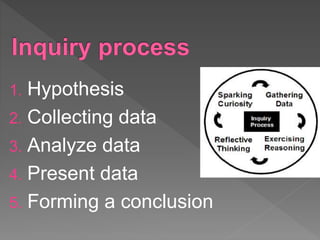
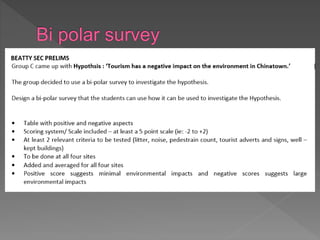
1. Hypothesis
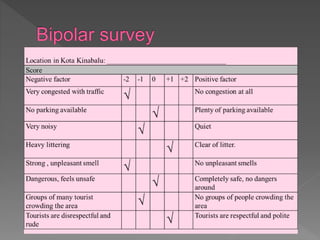
2. Collecting data
3. Analyze data
4. Present data
5. Forming a conclusion
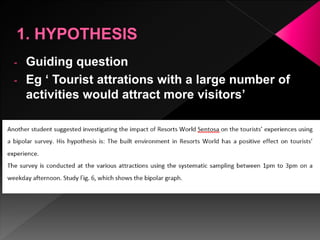
- Guiding question
- Eg ‘ Tourist attrations with a large number of
activities would attract more visitors’
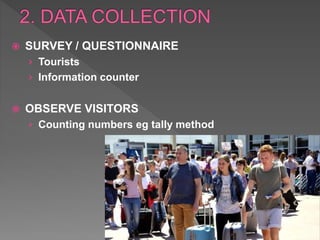
 SURVEY / QUESTIONNAIRE
› Tourists
› Information counter
 OBSERVE VISITORS
› Counting numbers eg tally method
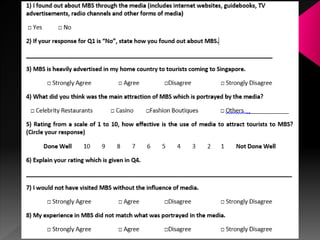
1. Types of question
1. What to avoid asking?
2. How many questions
1. Less than 10 questions
3. Open or close ended
1. MCQ
2. Check boxes
3. Short answers
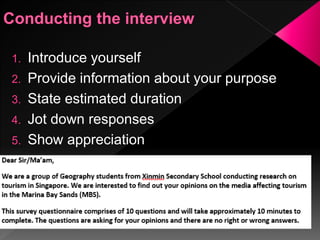
1. Introduce yourself
2. Provide information about your purpose
3. State estimated duration
4. Jot down responses
5. Show appreciation
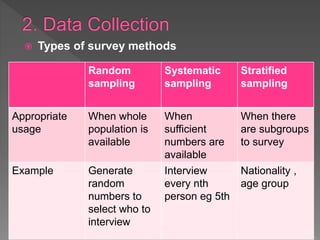
 Types of survey methods
Random
sampling
Systematic
sampling
Stratified
sampling
Appropriate
usage
When whole
population is
available
When
sufficient
numbers are
available
When there
are subgroups
to survey
Example Generate
random
numbers to
select who to
interview
Interview
every nth
person eg 5th
Nationality ,
age group
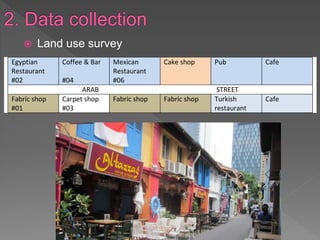
 Land use survey
Egyptian
Restaurant
#02
Coffee & Bar
#04
Mexican
Restaurant
#06
Cake shop Pub Cafe
ARAB STREET
Fabric shop
#01
Carpet shop
#03
Fabric shop Fabric shop Turkish
restaurant
Cafe
How reliable is the data collected? Is the data
accurate?
What are the limitations of the survey?
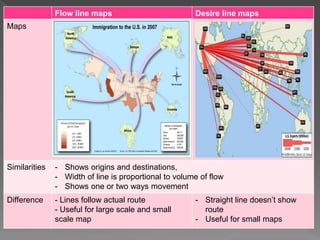
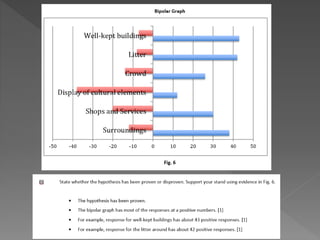
Flow line maps Desire line maps
Maps
Similarities - Shows origins and destinations,
- Width of line is proportional to volume of flow
- Shows one or two ways movement
Difference - Lines follow actual route
- Useful for large scale and small
scale map
- Straight line doesn’t show
route
- Useful for small maps
 What are the inaccuracies in the data
collected?
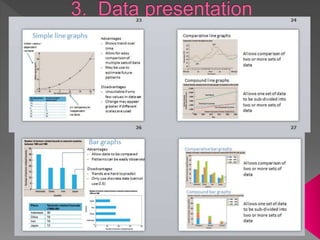
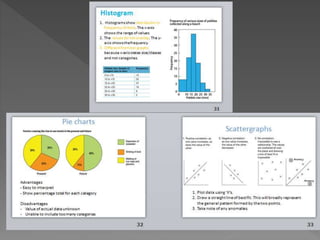
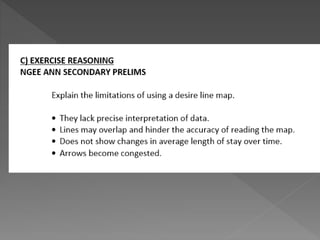
 What are the advantages/ disadvantages of
using this data presentation method?
Identify the
Relationships
Trends
highest number
Lowest number
Anomalies
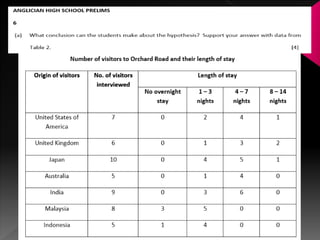
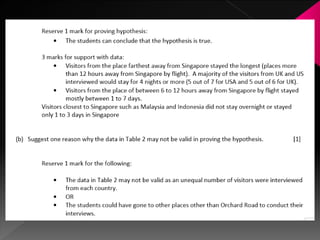
Is the hypothesis proven or not?
Suggest reasons to support or reject it.
Evaluate data collection method
Suggest ways to improve the methods
Tourism gi lecture notes

Tourism gi lecture notes

  • 1.
  • 2.
    1. Hypothesis 2. Collectingdata 3. Analyze data 4. Present data 5. Forming a conclusion
  • 3.
    - Guiding question -Eg ‘ Tourist attrations with a large number of activities would attract more visitors’
  • 4.
     SURVEY /QUESTIONNAIRE › Tourists › Information counter  OBSERVE VISITORS › Counting numbers eg tally method
  • 5.
    1. Types ofquestion 1. What to avoid asking? 2. How many questions 1. Less than 10 questions 3. Open or close ended 1. MCQ 2. Check boxes 3. Short answers
  • 7.
    1. Introduce yourself 2.Provide information about your purpose 3. State estimated duration 4. Jot down responses 5. Show appreciation
  • 9.
     Types ofsurvey methods Random sampling Systematic sampling Stratified sampling Appropriate usage When whole population is available When sufficient numbers are available When there are subgroups to survey Example Generate random numbers to select who to interview Interview every nth person eg 5th Nationality , age group
  • 14.
     Land usesurvey Egyptian Restaurant #02 Coffee & Bar #04 Mexican Restaurant #06 Cake shop Pub Cafe ARAB STREET Fabric shop #01 Carpet shop #03 Fabric shop Fabric shop Turkish restaurant Cafe
  • 15.
    How reliable isthe data collected? Is the data accurate? What are the limitations of the survey?
  • 18.
    Flow line mapsDesire line maps Maps Similarities - Shows origins and destinations, - Width of line is proportional to volume of flow - Shows one or two ways movement Difference - Lines follow actual route - Useful for large scale and small scale map - Straight line doesn’t show route - Useful for small maps
  • 21.
     What arethe inaccuracies in the data collected?  What are the advantages/ disadvantages of using this data presentation method?
  • 22.
  • 23.
    Is the hypothesisproven or not? Suggest reasons to support or reject it. Evaluate data collection method Suggest ways to improve the methods