U Plug, We Play
David Middlehurst
NEDSummit > Ireland
Thursday 13 November 2014
Who am I?
David Middlehurst
Twitter: @dtmsecurity
• Security Consultant
• Specialisms:
• Application Security
• Develops Security Testing Tools
• Previous Research
• Near Field Communications (NFC)
• Virtualisation
Agenda
• Brief overview of UPnP
• Introduce a new UPnP assessment tool
• Tool overview
• Demo
• Authorisation
• Common flaws and their implications
• Places you might expect to find vulnerabilities
• Conclusion
UPnP
Universal Plug and Play (UPnP) allows devices to discover each others
presence on a network and identify available services
UPnP – Basic Discovery
Two main methods
• Devices can announce that they are there by sending a “NOTIFY” packet
• Devices can send out an “M-SEARCH” request asking for devices to reveal
themselves if they meet the specified requirements
UPnP – NOTIFY Packet
Devices periodically send multicast UDP packets to indicate they are online.
This includes headers for the type of service they are offering and the URL to
the XML device description.
NOTIFY * HTTP/1.1
Cache-Control: max-age = 300
Host: 239.255.255.250:1900
Location:
http://192.168.0.15:8080/01c18570-b4a4-
4356-8afa-5eeac61aa583/
ST: urn:schemas-upnp-
org:service:WANPPPConnection:1
NTS: ssdp:alive
SERVER: UPnP-Pentest-Toolkit
USN: uuid:85e5f606-c406-4c89-8af3-
5fc4ef27ee18
UPnP – M-SEARCH
A device can probe for other UPnP devices by sending an M-SEARCH
request. This can include a header asking for devices that have a specific
service.
M-SEARCH * HTTP/1.1
HOST:239.255.255.250:1900
ST: ssdp:all
MAN: "ssdp:discover"
MX:2
UPnP – M-SEARCH
Devices respond by sending a 'HTTP 1/1 200" response via UDP to the source
IP and source port that the M-SEARCH packet originated from.
HTTP/1.1 200 OK
Cache-Control:max-age = 300
Date:
ST: urn:schemas-upnp-org:service:ContentDirectory:1
USN:uuid
Location: http://192.168.0.15:8080/01c18570-b4a4-4356-
8afa-5eeac61aa583/
OPT:"http://schemas.upnp.org/upnp/1/0/"; ns=01
01-NLS:
Server: UPnP-Pentest-Toolkit
Ext:
New Tool Is Born – “UPnP Pentest Toolkit”
Motivation:
Lack of a security focused tool which provides easy access to the required
information and allowed easy interaction and a framework to add new ideas.
Aim:
The aim of this tool is to bring together a range of UPnP assessment features,
enabling a quick security assessment with minimal configuration and set-up.
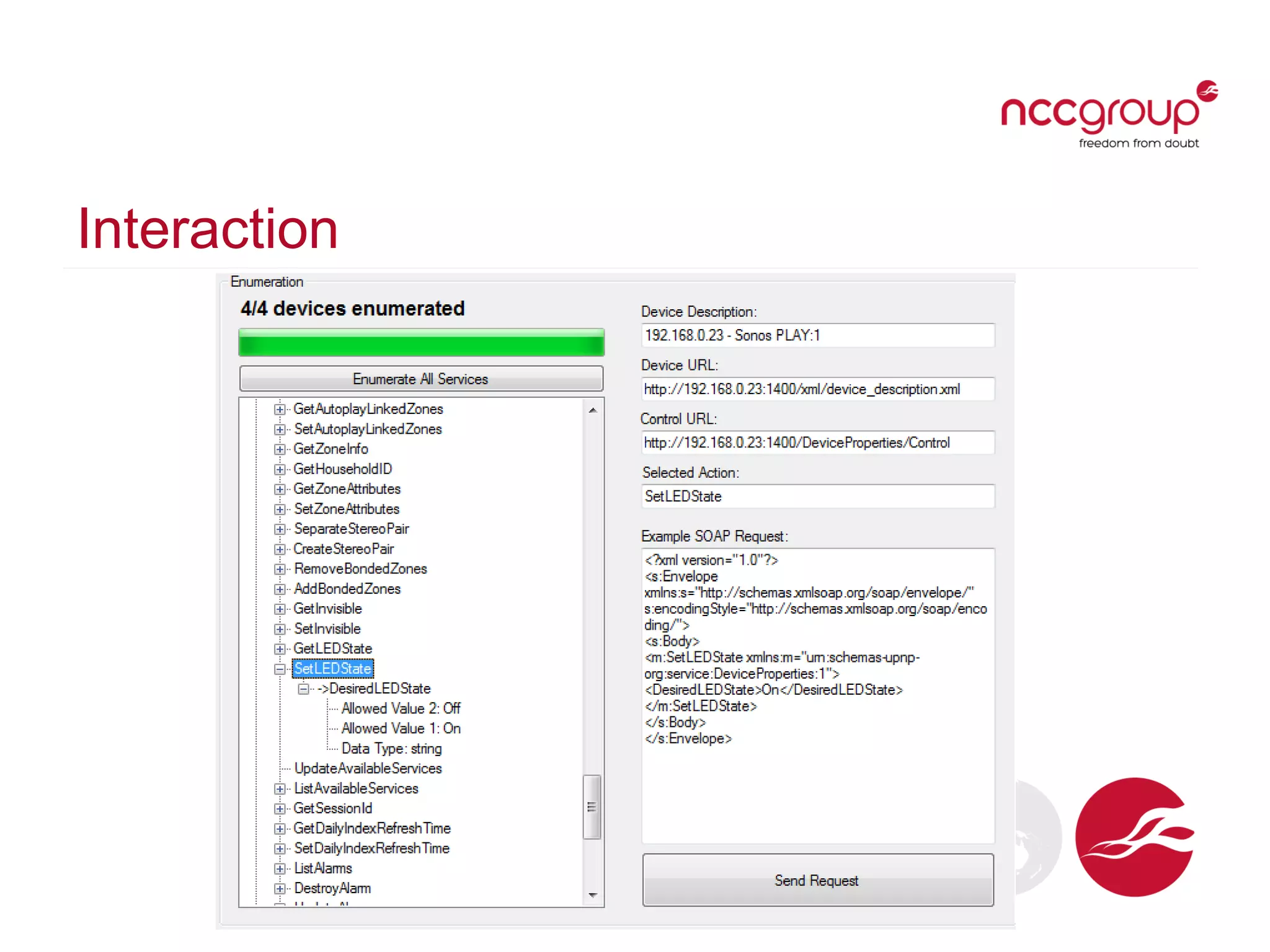
UPnP Pentest Toolkit
Windows GUI tool
Written in C#
Uses the libraries:
• Managed UPnP
• PcapDotNet
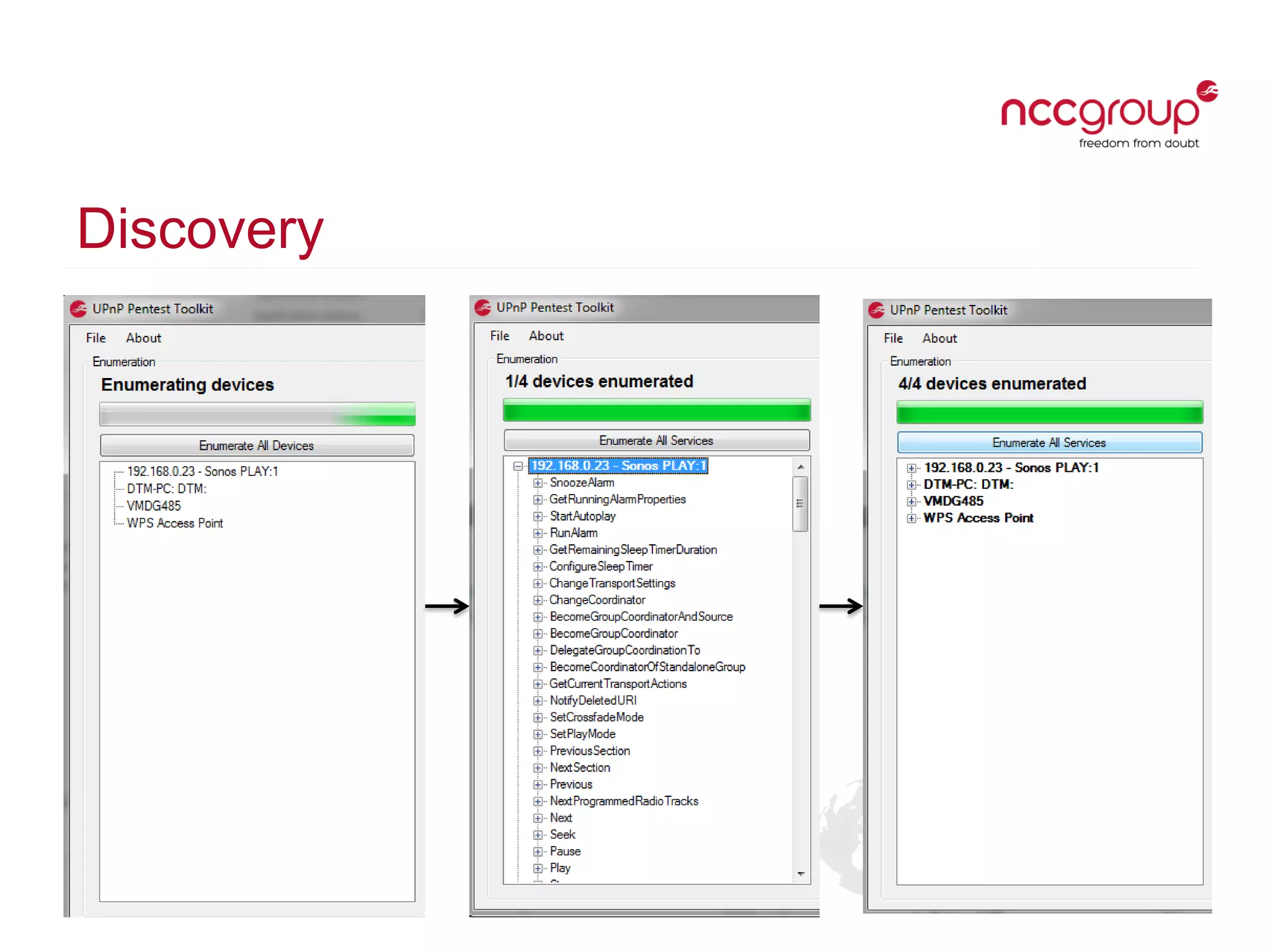
Discovery
Interaction
Interaction
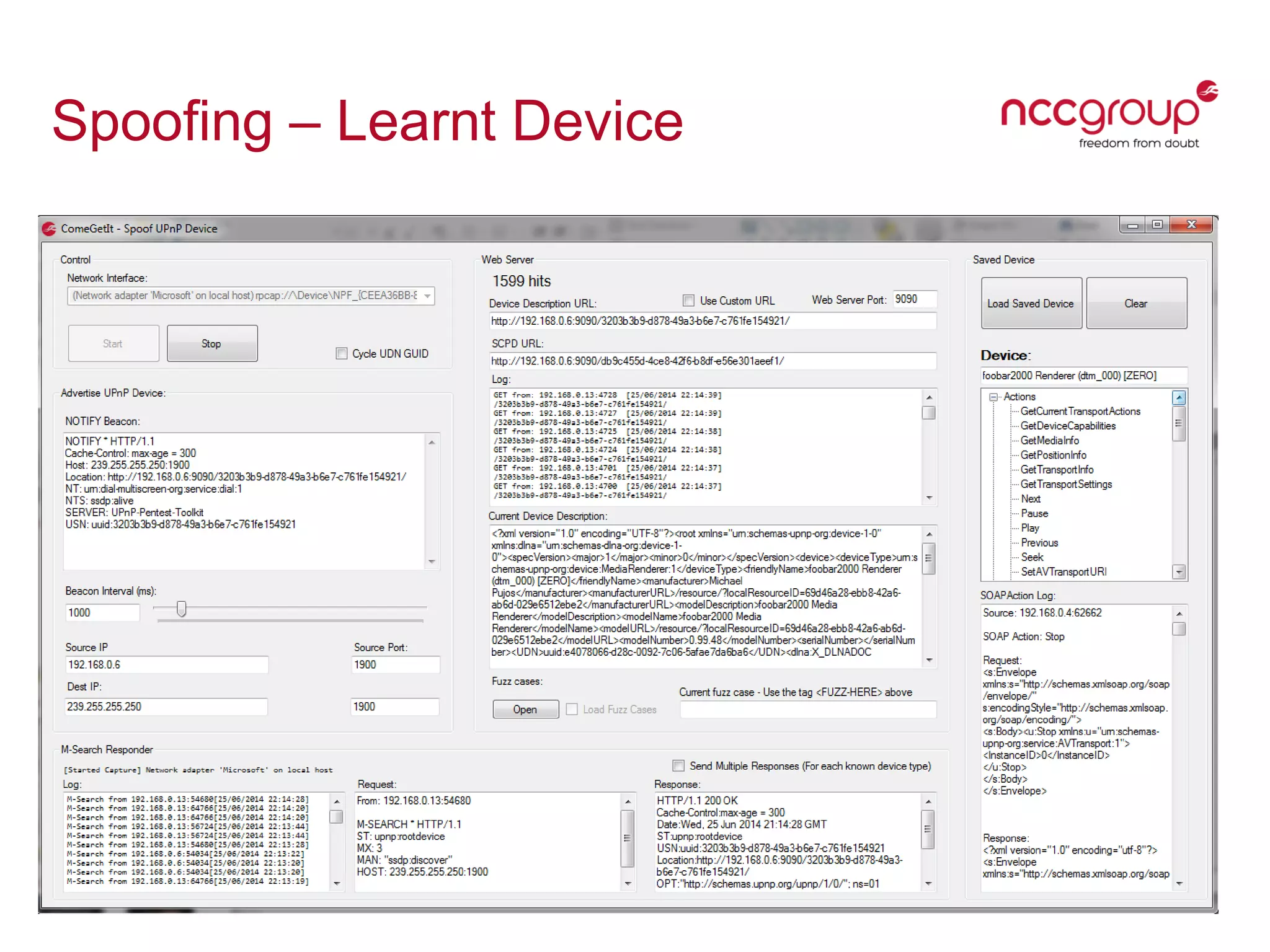
Spoofing
Spoofing
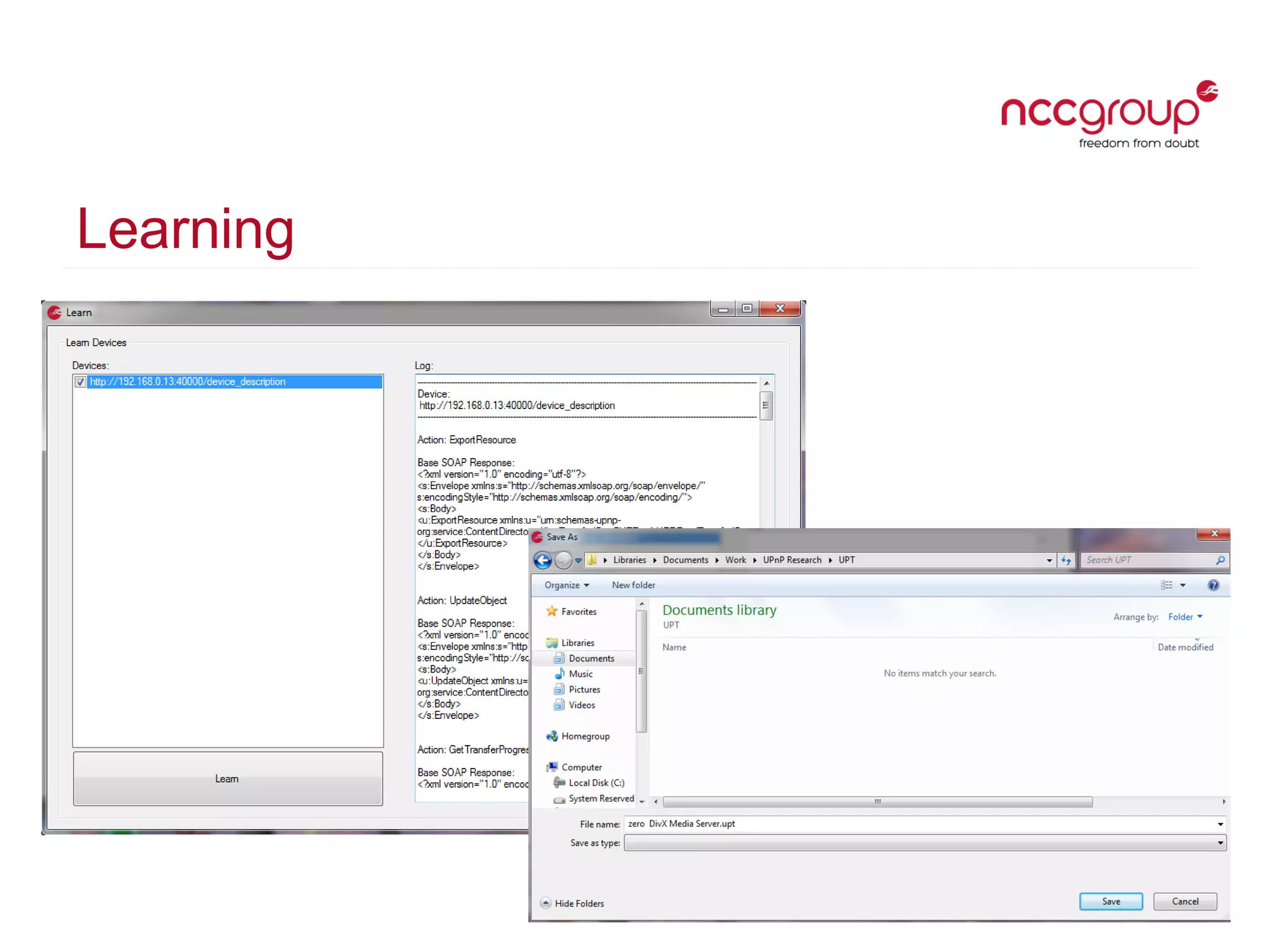
Learning
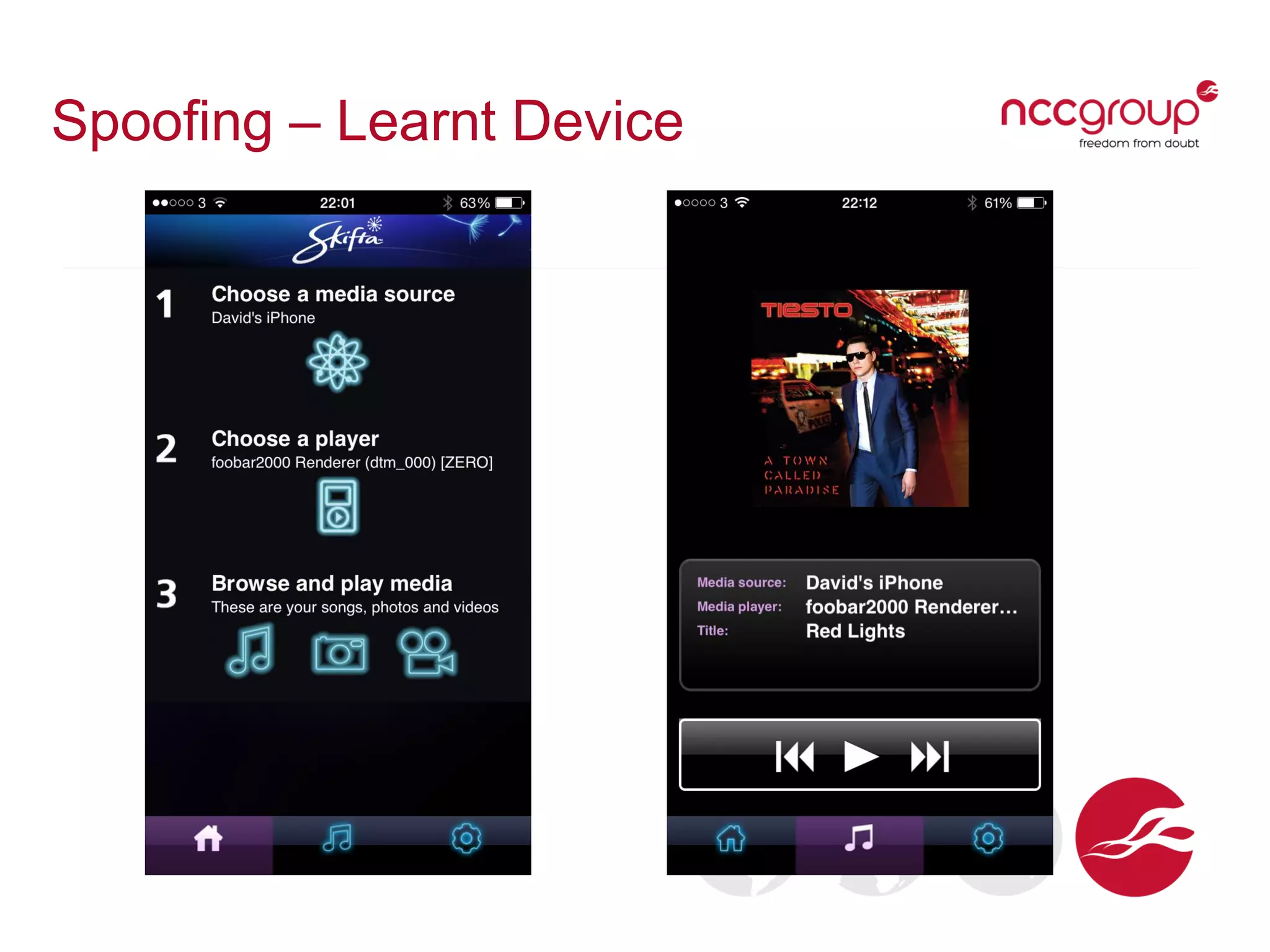
Spoofing – Learnt Device
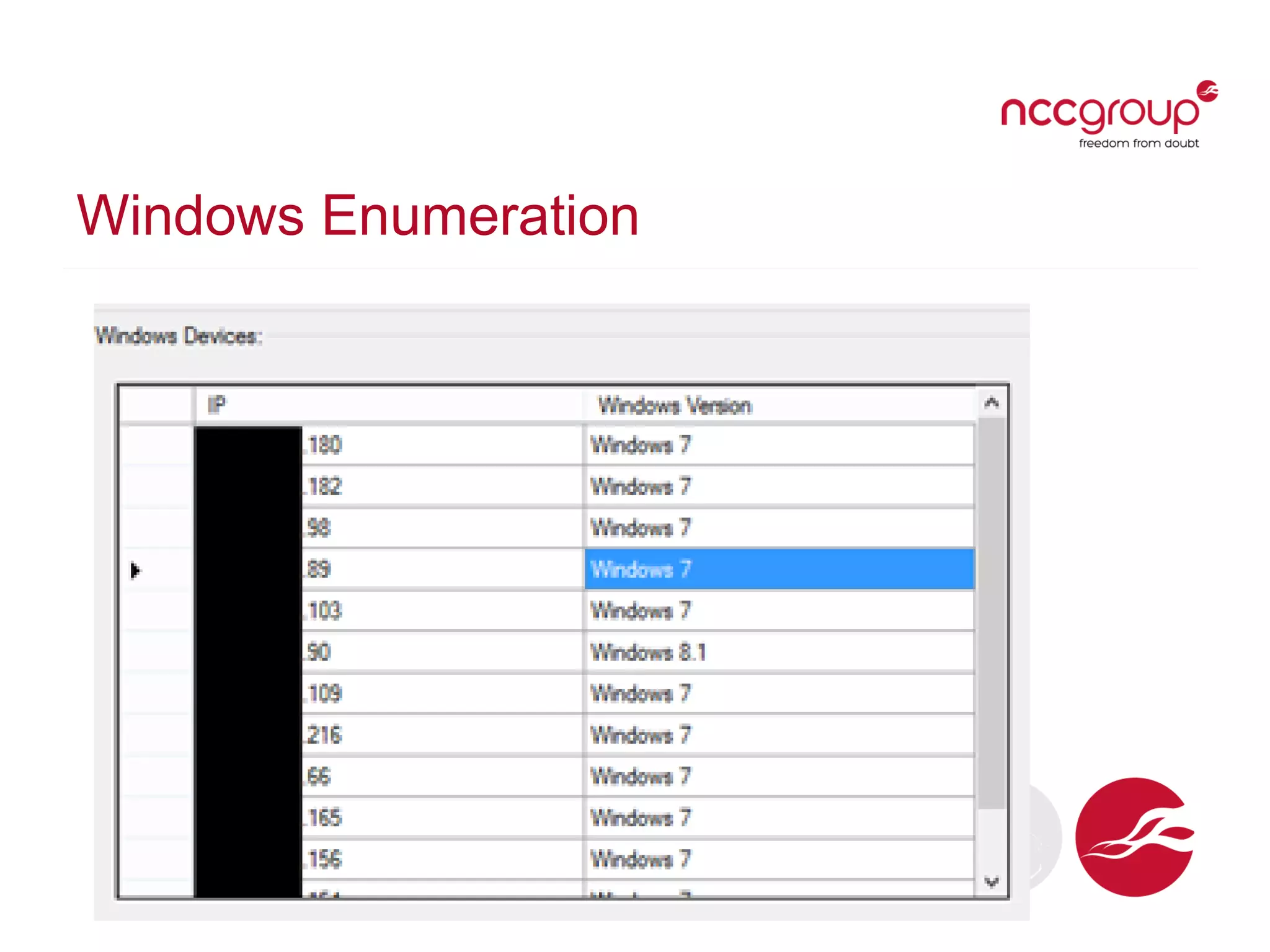
Windows Enumeration
Windows Network Device Spoofing
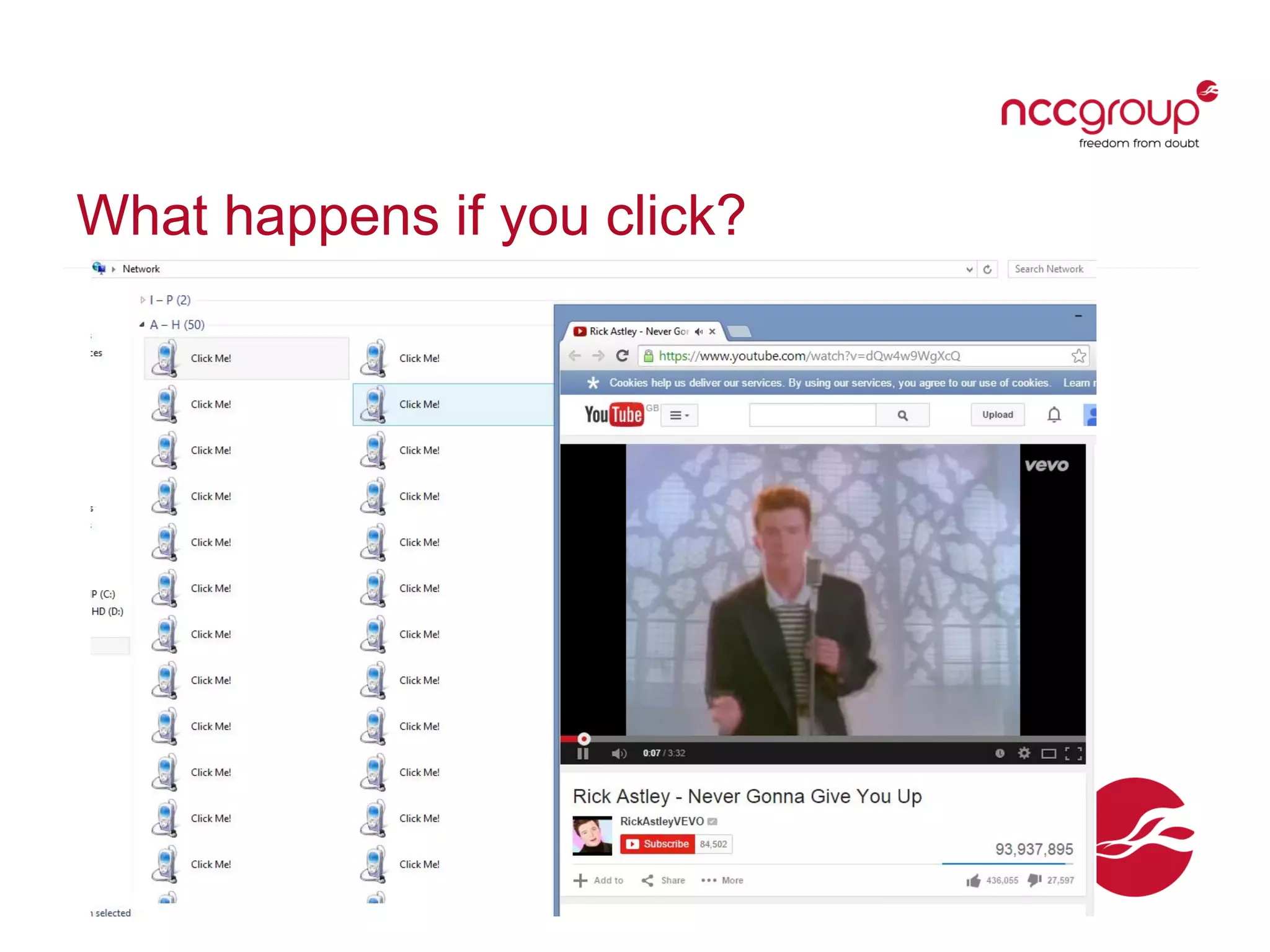
What happens if you click?
Demo
Authorisation - Bad Vendor Practices
• Mostly:
“What do you mean by authorisation?”
• Intentional or not you see some security by
obscurity
•Looking for fixed User Agents
•Deviating from the specification slightly
Authorisation - Good Vendor Practices
Flaws – M-SEARCH Spoofing
“Devices respond by sending a 'HTTP 1/1 200’ response via UDP to
the source IP and source port that the M-SEARCH packet
originated from.”
• 60% of devices I looked at will
respond to any routable destination
• Most will send traffic to any port
We can cause devices to send UDP
traffic to an arbitrary target
Flaws – External Device URL’s
NOTIFY * HTTP/1.1
Cache-Control: max-age = 300
Host: 239.255.255.250:1900
Location: http://192.168.0.6:9090/685f34e2-9a75-
49c8-b642-2b1586ad4433/
NT: urn:schemas-upnp-
org:service:WANPPPConnection:1
NTS: ssdp:alive
SERVER: UPnP-Pentest-Toolkit
USN: uuid:685f34e2-9a75-49c8-b642-2b1586ad4433
What happens if we specify a URL
outside of the local subnet i.e. the
internet
• 40% of devices / apps that I looked
at will make requests to any routable
destination
• Most will send traffic to any port
We can cause devices to make a
TCP connection and HTTP request
to an arbitrary target
HTTP/1.1 200 OK
Cache-Control:max-age = 300
Date:Wed, 25 Jun 2014 22:19:27 GMT
ST:upnp:rootdevice
USN:uuid:685f34e2-9a75-49c8-b642-2b1586ad4433
Location:http://192.168.0.6:9090/685f34e2-9a75-49c8-
b642-2b1586ad4433/
OPT:"http://schemas.upnp.org/upnp/1/0/"; ns=01
01-NLS:2404a5f72618151d22759c04a8cad0b6
Server:UPnP-Pentest-Toolkit
Ext:
Flaws – External Traffic
Possible implications of UPnP services not taking note of where they are
sending traffic
• Sounds like Denial of Service (DoS)?
• Attacker sends one packet  Multiple packets sent to a target
• Attacker sends one packet  Multiple devices send packets to a
target
• Send a small packet  Bigger packets sent to a target
• Influence over audit activity:
• Malware Beacon Signatures
• Dodgy Web Sites
• Port scanning
• Trust Boundaries…
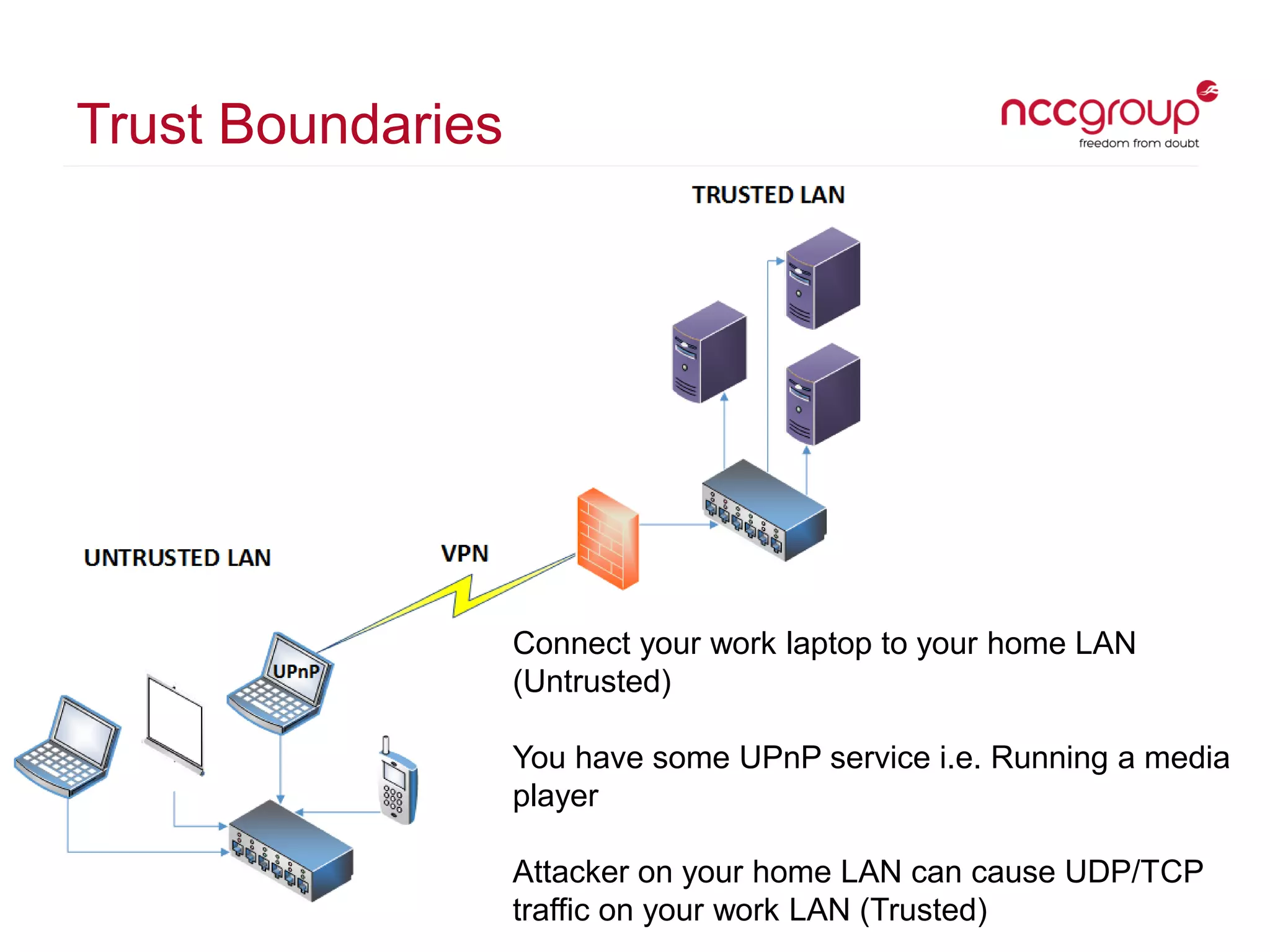
Trust Boundaries
Connect your work laptop to your home LAN
(Untrusted)
You have some UPnP service i.e. Running a media
player
Attacker on your home LAN can cause UDP/TCP
traffic on your work LAN (Trusted)
Bugs to look for
• Do devices and apps impose limits on the size of files they
attempt to download?
• Do they assume that all they have to process is a small XML
file?
• How do they handle traditional XML based attacks? i.e. XML
Entity Injection (XXE)
• When they have parsed the information do they safely handle
it?
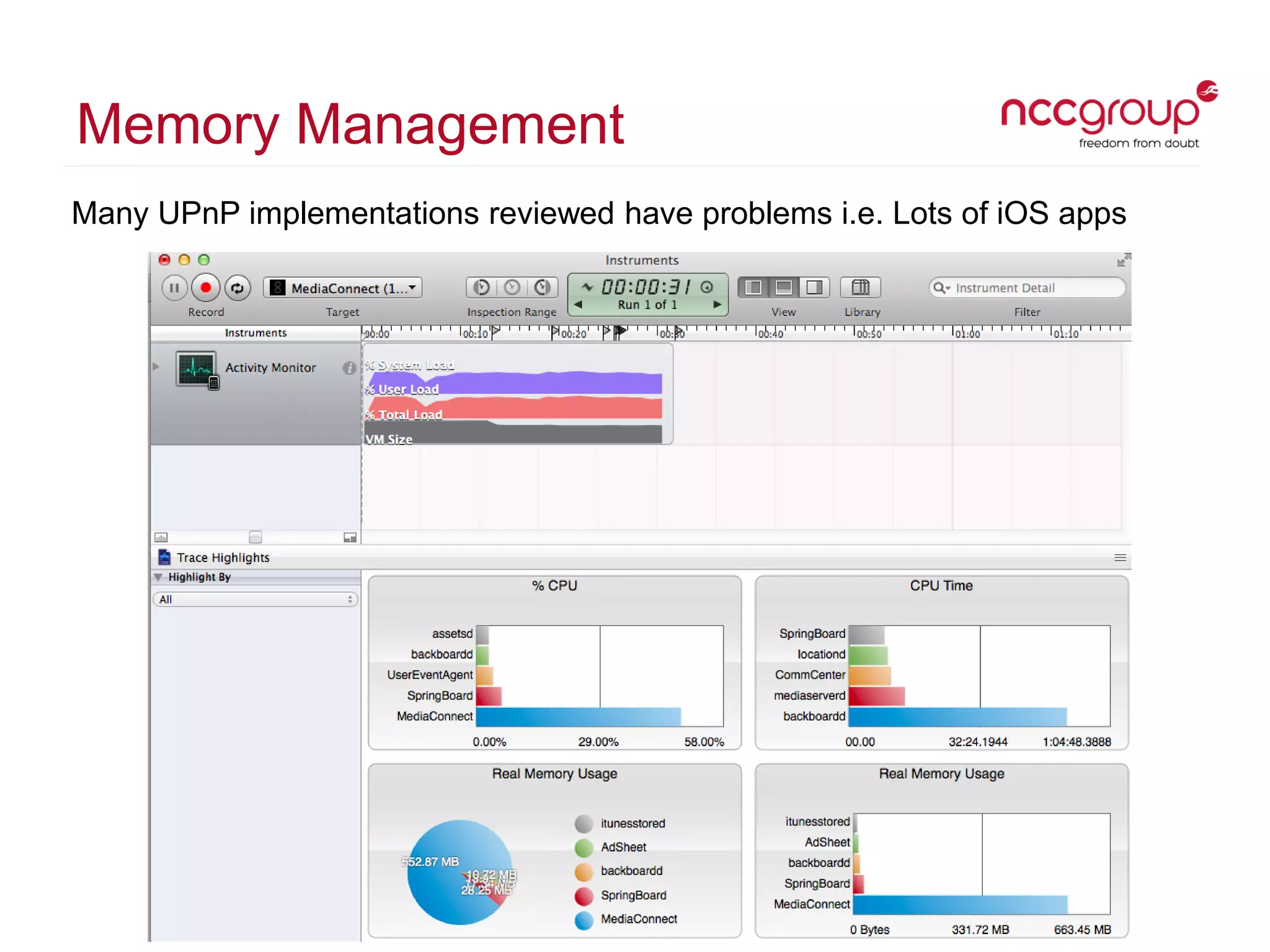
Memory Management
Many UPnP implementations reviewed have problems i.e. Lots of iOS apps
Where are we heading?
“UPnP+ will expand beyond the group's
traditional work on devices using Internet
Protocol on WiFi LANs to create bridges to
wide-area networks and non-IP devices.”
"Today there's not a good standard for
accessing devices across any network, but
UPnP [Forum] is working on it," said Alan
Messer, a Samsung researcher in San Jose
who is vice president of UPnP [Forum].
From: http://www.eetindia.co.in/ART_8800698124_1800001_NT_8dd16112.HTM
Conclusion
• I think UPnP can be a hidden gem on security
assessments
• Vendor best practices vary to huge degree
• I have introduced some common classes of bug. I am
sure there are plenty of bugs to be identified.
• The future looks even more scary! Watch this space,
hopefully I will present on some of this in the years to
come
• Hopefully UPnP Pentest Toolkit will be a useful tool for
people who want to assess UPnP targets or get started
in carrying out research in this area
Get UPnP Pentest Toolkit
NCC Group GitHub:
https://github.com/nccgroup/UPnP-Pentest-Toolkit
Goto:
upnp.ninja
Keep updated
Tool:
Via GitHub page
or the
‘About’ Dialog
Research:
Follow
@dtmsecurity
@nccgroupinfosec
UK Offices
Manchester - Head Office
Cheltenham
Edinburgh
Leatherhead
London
Milton Keynes
North American Offices
San Francisco
Atlanta
New York
Seattle
Australian Offices
Sydney
European Offices
Amsterdam - Netherlands
Munich – Germany
Zurich - Switzerland

U Plug, We Play - NED Summit. Cork, Ireland

  • 1.
    U Plug, WePlay David Middlehurst NEDSummit > Ireland Thursday 13 November 2014
  • 2.
    Who am I? DavidMiddlehurst Twitter: @dtmsecurity • Security Consultant • Specialisms: • Application Security • Develops Security Testing Tools • Previous Research • Near Field Communications (NFC) • Virtualisation
  • 3.
    Agenda • Brief overviewof UPnP • Introduce a new UPnP assessment tool • Tool overview • Demo • Authorisation • Common flaws and their implications • Places you might expect to find vulnerabilities • Conclusion
  • 4.
    UPnP Universal Plug andPlay (UPnP) allows devices to discover each others presence on a network and identify available services
  • 5.
    UPnP – BasicDiscovery Two main methods • Devices can announce that they are there by sending a “NOTIFY” packet • Devices can send out an “M-SEARCH” request asking for devices to reveal themselves if they meet the specified requirements
  • 6.
    UPnP – NOTIFYPacket Devices periodically send multicast UDP packets to indicate they are online. This includes headers for the type of service they are offering and the URL to the XML device description. NOTIFY * HTTP/1.1 Cache-Control: max-age = 300 Host: 239.255.255.250:1900 Location: http://192.168.0.15:8080/01c18570-b4a4- 4356-8afa-5eeac61aa583/ ST: urn:schemas-upnp- org:service:WANPPPConnection:1 NTS: ssdp:alive SERVER: UPnP-Pentest-Toolkit USN: uuid:85e5f606-c406-4c89-8af3- 5fc4ef27ee18
  • 7.
    UPnP – M-SEARCH Adevice can probe for other UPnP devices by sending an M-SEARCH request. This can include a header asking for devices that have a specific service. M-SEARCH * HTTP/1.1 HOST:239.255.255.250:1900 ST: ssdp:all MAN: "ssdp:discover" MX:2
  • 8.
    UPnP – M-SEARCH Devicesrespond by sending a 'HTTP 1/1 200" response via UDP to the source IP and source port that the M-SEARCH packet originated from. HTTP/1.1 200 OK Cache-Control:max-age = 300 Date: ST: urn:schemas-upnp-org:service:ContentDirectory:1 USN:uuid Location: http://192.168.0.15:8080/01c18570-b4a4-4356- 8afa-5eeac61aa583/ OPT:"http://schemas.upnp.org/upnp/1/0/"; ns=01 01-NLS: Server: UPnP-Pentest-Toolkit Ext:
  • 9.
    New Tool IsBorn – “UPnP Pentest Toolkit” Motivation: Lack of a security focused tool which provides easy access to the required information and allowed easy interaction and a framework to add new ideas. Aim: The aim of this tool is to bring together a range of UPnP assessment features, enabling a quick security assessment with minimal configuration and set-up.
  • 10.
    UPnP Pentest Toolkit WindowsGUI tool Written in C# Uses the libraries: • Managed UPnP • PcapDotNet
  • 11.
  • 12.
  • 13.
  • 14.
  • 15.
  • 16.
  • 17.
  • 18.
  • 19.
  • 20.
  • 21.
    What happens ifyou click?
  • 22.
  • 23.
    Authorisation - BadVendor Practices • Mostly: “What do you mean by authorisation?” • Intentional or not you see some security by obscurity •Looking for fixed User Agents •Deviating from the specification slightly
  • 24.
    Authorisation - GoodVendor Practices
  • 25.
    Flaws – M-SEARCHSpoofing “Devices respond by sending a 'HTTP 1/1 200’ response via UDP to the source IP and source port that the M-SEARCH packet originated from.” • 60% of devices I looked at will respond to any routable destination • Most will send traffic to any port We can cause devices to send UDP traffic to an arbitrary target
  • 26.
    Flaws – ExternalDevice URL’s NOTIFY * HTTP/1.1 Cache-Control: max-age = 300 Host: 239.255.255.250:1900 Location: http://192.168.0.6:9090/685f34e2-9a75- 49c8-b642-2b1586ad4433/ NT: urn:schemas-upnp- org:service:WANPPPConnection:1 NTS: ssdp:alive SERVER: UPnP-Pentest-Toolkit USN: uuid:685f34e2-9a75-49c8-b642-2b1586ad4433 What happens if we specify a URL outside of the local subnet i.e. the internet • 40% of devices / apps that I looked at will make requests to any routable destination • Most will send traffic to any port We can cause devices to make a TCP connection and HTTP request to an arbitrary target HTTP/1.1 200 OK Cache-Control:max-age = 300 Date:Wed, 25 Jun 2014 22:19:27 GMT ST:upnp:rootdevice USN:uuid:685f34e2-9a75-49c8-b642-2b1586ad4433 Location:http://192.168.0.6:9090/685f34e2-9a75-49c8- b642-2b1586ad4433/ OPT:"http://schemas.upnp.org/upnp/1/0/"; ns=01 01-NLS:2404a5f72618151d22759c04a8cad0b6 Server:UPnP-Pentest-Toolkit Ext:
  • 27.
    Flaws – ExternalTraffic Possible implications of UPnP services not taking note of where they are sending traffic • Sounds like Denial of Service (DoS)? • Attacker sends one packet  Multiple packets sent to a target • Attacker sends one packet  Multiple devices send packets to a target • Send a small packet  Bigger packets sent to a target • Influence over audit activity: • Malware Beacon Signatures • Dodgy Web Sites • Port scanning • Trust Boundaries…
  • 28.
    Trust Boundaries Connect yourwork laptop to your home LAN (Untrusted) You have some UPnP service i.e. Running a media player Attacker on your home LAN can cause UDP/TCP traffic on your work LAN (Trusted)
  • 29.
    Bugs to lookfor • Do devices and apps impose limits on the size of files they attempt to download? • Do they assume that all they have to process is a small XML file? • How do they handle traditional XML based attacks? i.e. XML Entity Injection (XXE) • When they have parsed the information do they safely handle it?
  • 30.
    Memory Management Many UPnPimplementations reviewed have problems i.e. Lots of iOS apps
  • 31.
    Where are weheading? “UPnP+ will expand beyond the group's traditional work on devices using Internet Protocol on WiFi LANs to create bridges to wide-area networks and non-IP devices.” "Today there's not a good standard for accessing devices across any network, but UPnP [Forum] is working on it," said Alan Messer, a Samsung researcher in San Jose who is vice president of UPnP [Forum]. From: http://www.eetindia.co.in/ART_8800698124_1800001_NT_8dd16112.HTM
  • 32.
    Conclusion • I thinkUPnP can be a hidden gem on security assessments • Vendor best practices vary to huge degree • I have introduced some common classes of bug. I am sure there are plenty of bugs to be identified. • The future looks even more scary! Watch this space, hopefully I will present on some of this in the years to come • Hopefully UPnP Pentest Toolkit will be a useful tool for people who want to assess UPnP targets or get started in carrying out research in this area
  • 33.
    Get UPnP PentestToolkit NCC Group GitHub: https://github.com/nccgroup/UPnP-Pentest-Toolkit Goto: upnp.ninja
  • 34.
    Keep updated Tool: Via GitHubpage or the ‘About’ Dialog Research: Follow @dtmsecurity @nccgroupinfosec
  • 35.
    UK Offices Manchester -Head Office Cheltenham Edinburgh Leatherhead London Milton Keynes North American Offices San Francisco Atlanta New York Seattle Australian Offices Sydney European Offices Amsterdam - Netherlands Munich – Germany Zurich - Switzerland