Downloaded 454 times
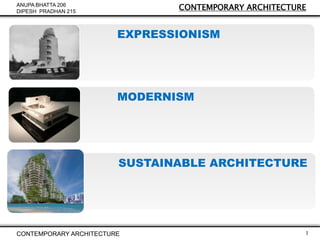
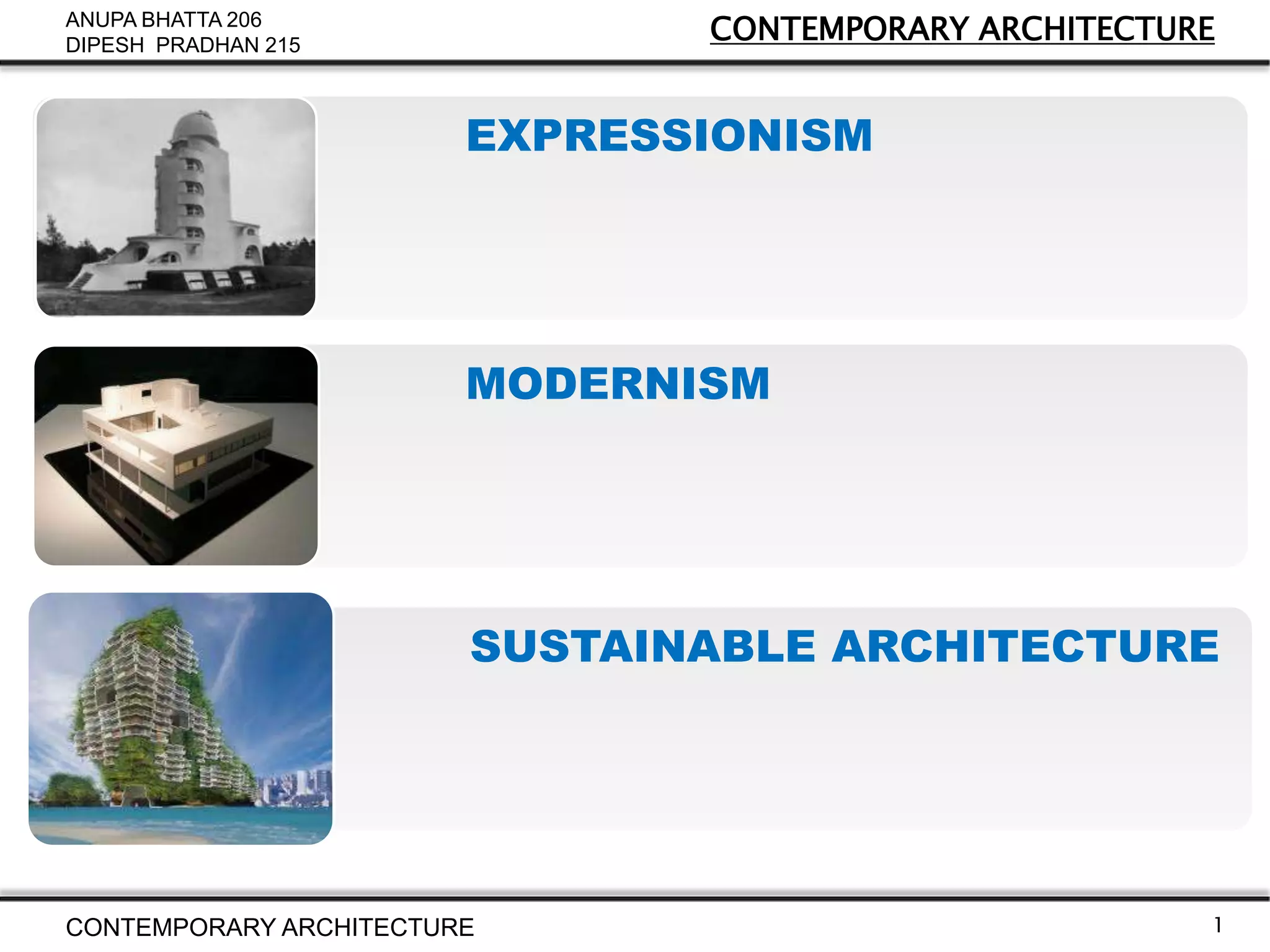


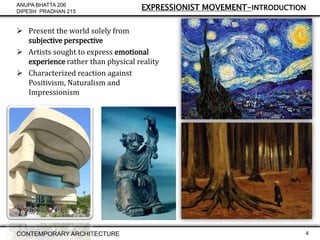
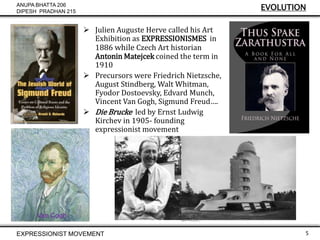


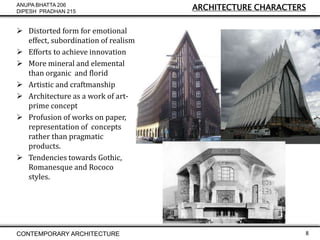
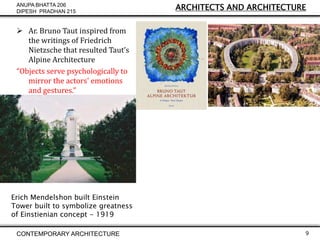
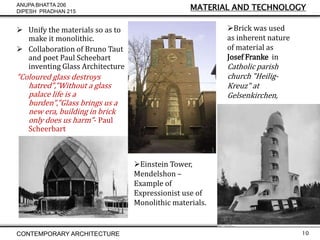
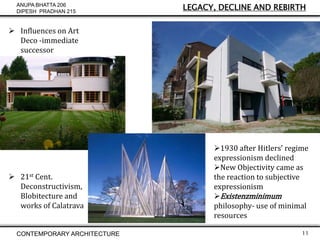
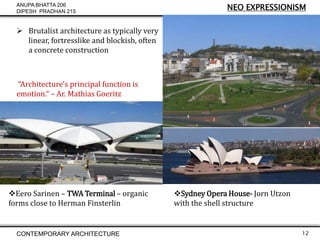

This document discusses the history and evolution of Expressionist architecture. It describes how Expressionism began as an artistic movement in Germany in the early 20th century focused on subjective experience over physical reality. Expressionist architecture emerged around 1910 and was characterized by distorted forms to evoke emotion, experimentation, and seeing architecture as a work of art. Notable Expressionist architects included Bruno Taut, whose works were inspired by Friedrich Nietzsche, and Erich Mendelsohn, who built the distinctive Einstein Tower in 1919. Though declining under Hitler, Expressionism continues to influence contemporary architecture through styles like Brutalism, Organic architecture, and the works of architects like Santiago Calatrava.


