PY1543-ELECTRONICS
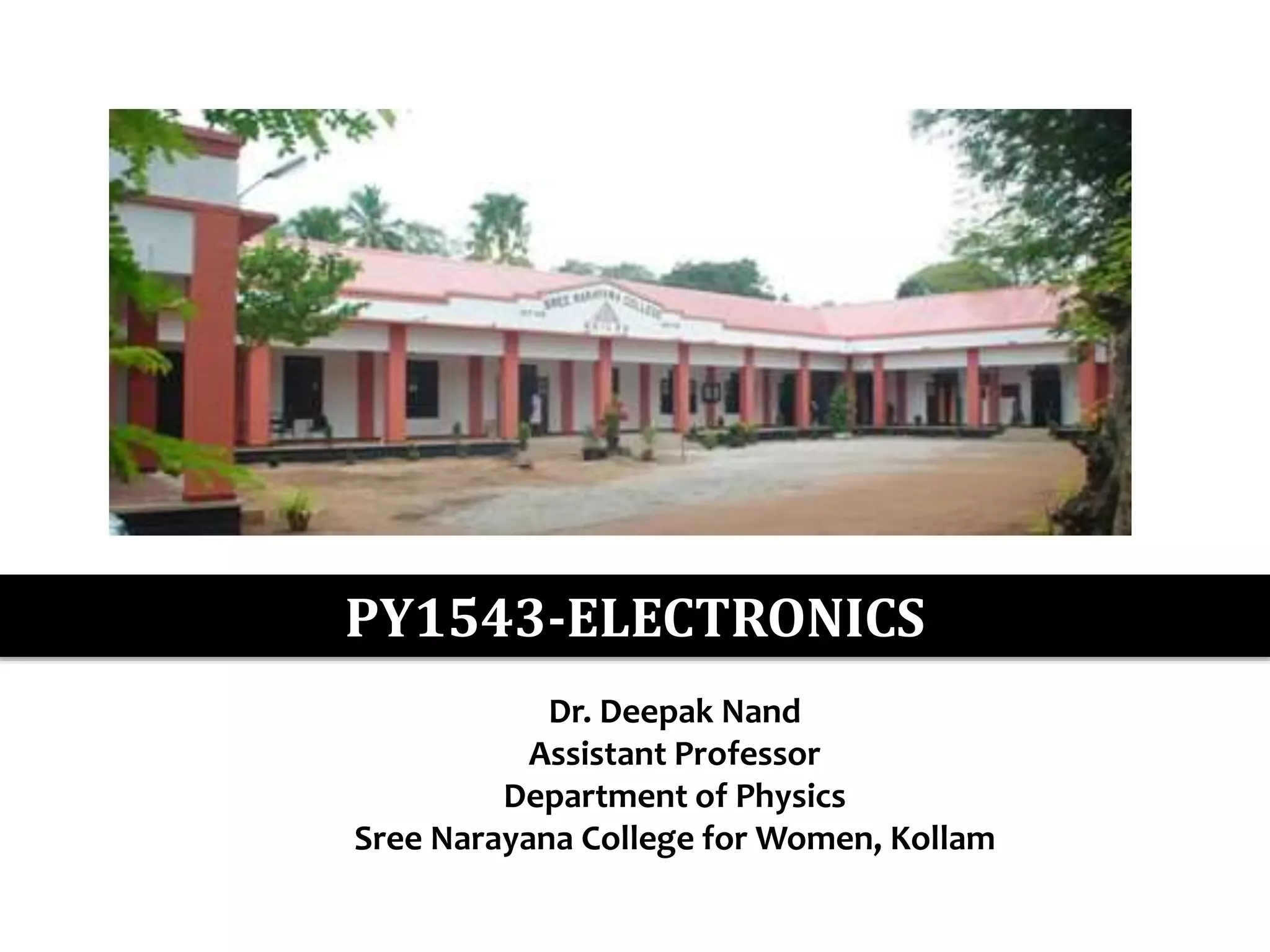
Dr. Deepak Nand
Assistant Professor
Department of Physics
Sree Narayana College for Women, Kollam
ELECTRONICS
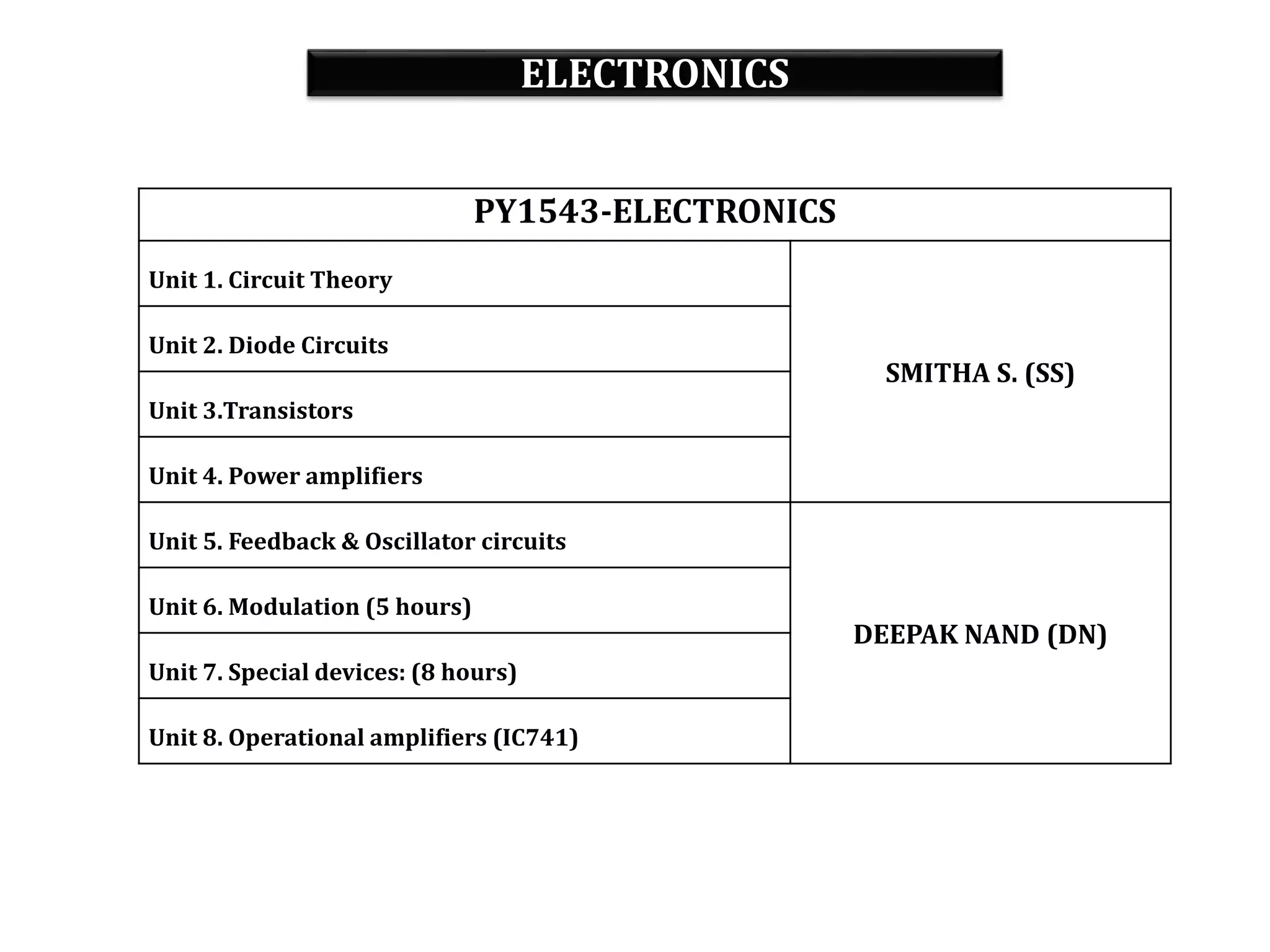
PY1543-ELECTRONICS
Unit 1. Circuit Theory
SMITHA S. (SS)
Unit 2. Diode Circuits
Unit 3.Transistors
Unit 4. Power amplifiers
Unit 5. Feedback & Oscillator circuits
DEEPAK NAND (DN)
Unit 6. Modulation (5 hours)
Unit 7. Special devices: (8 hours)
Unit 8. Operational amplifiers (IC741)
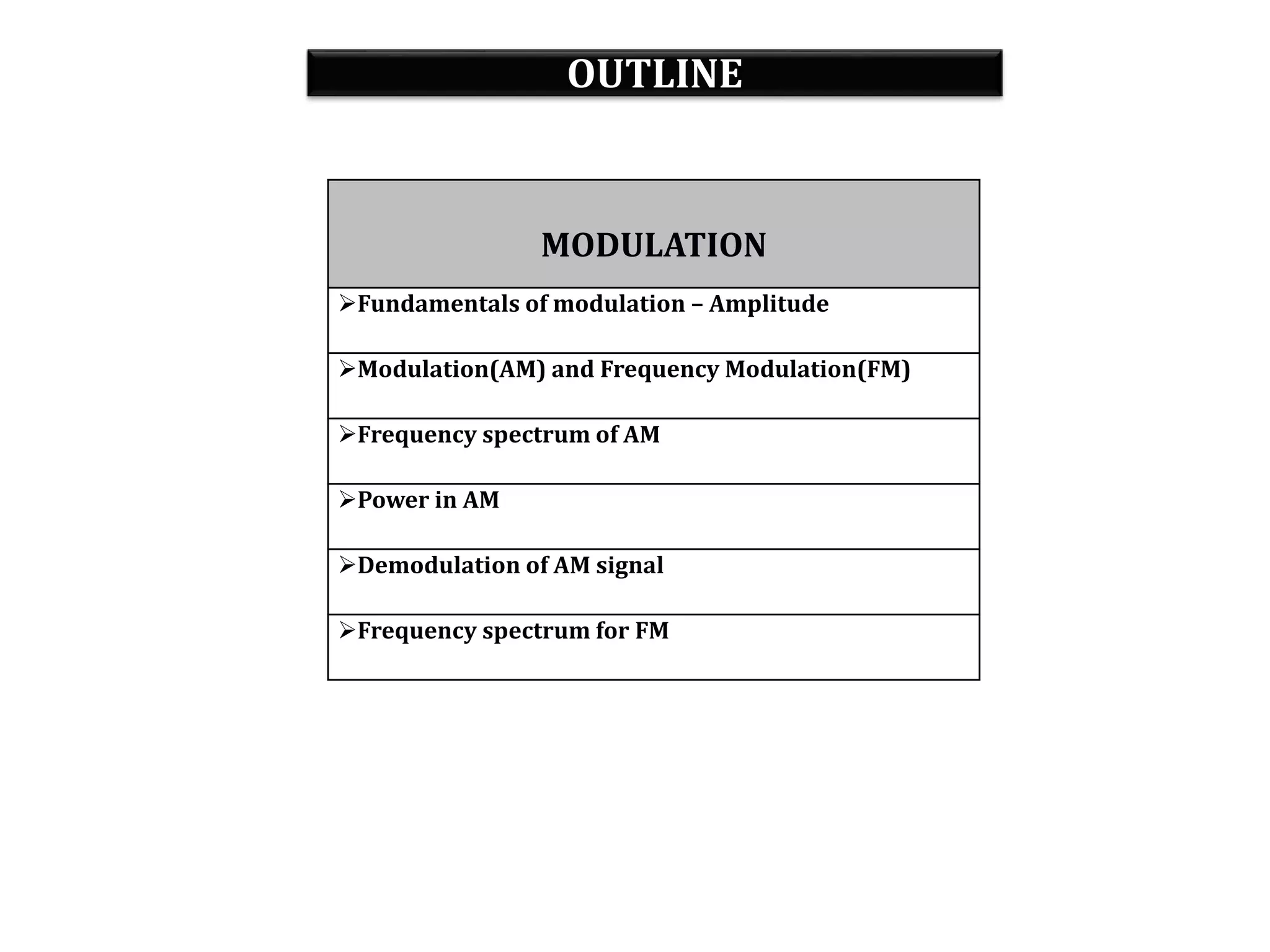
OUTLINE
MODULATION
Fundamentals of modulation – Amplitude
Modulation(AM) and Frequency Modulation(FM)
Frequency spectrum of AM
Power in AM
Demodulation of AM signal
Frequency spectrum for FM
MODULATION - COMMUNICATION
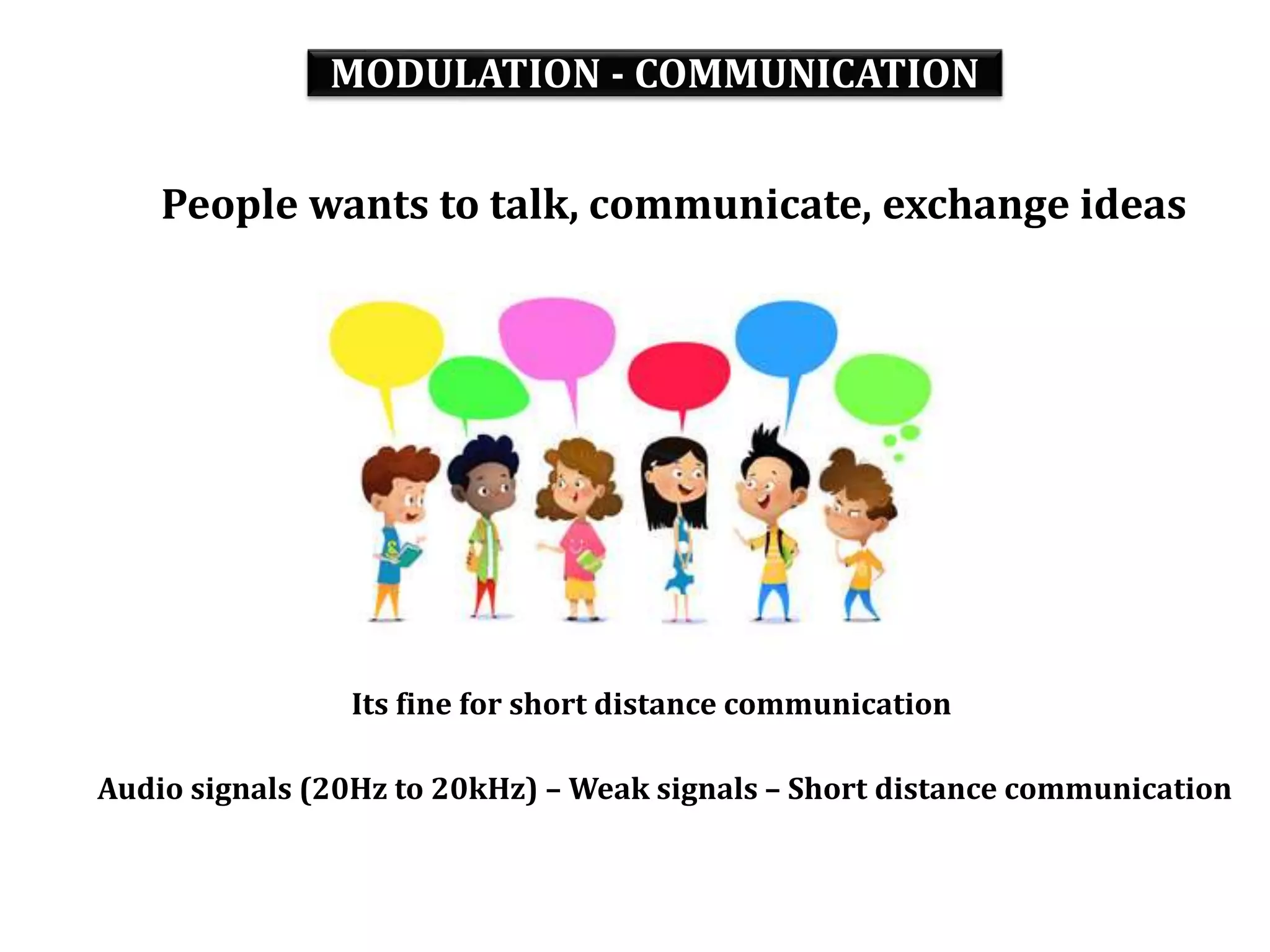
People wants to talk, communicate, exchange ideas
Its fine for short distance communication
Audio signals (20Hz to 20kHz) – Weak signals – Short distance communication
MODULATION - COMMUNICATION
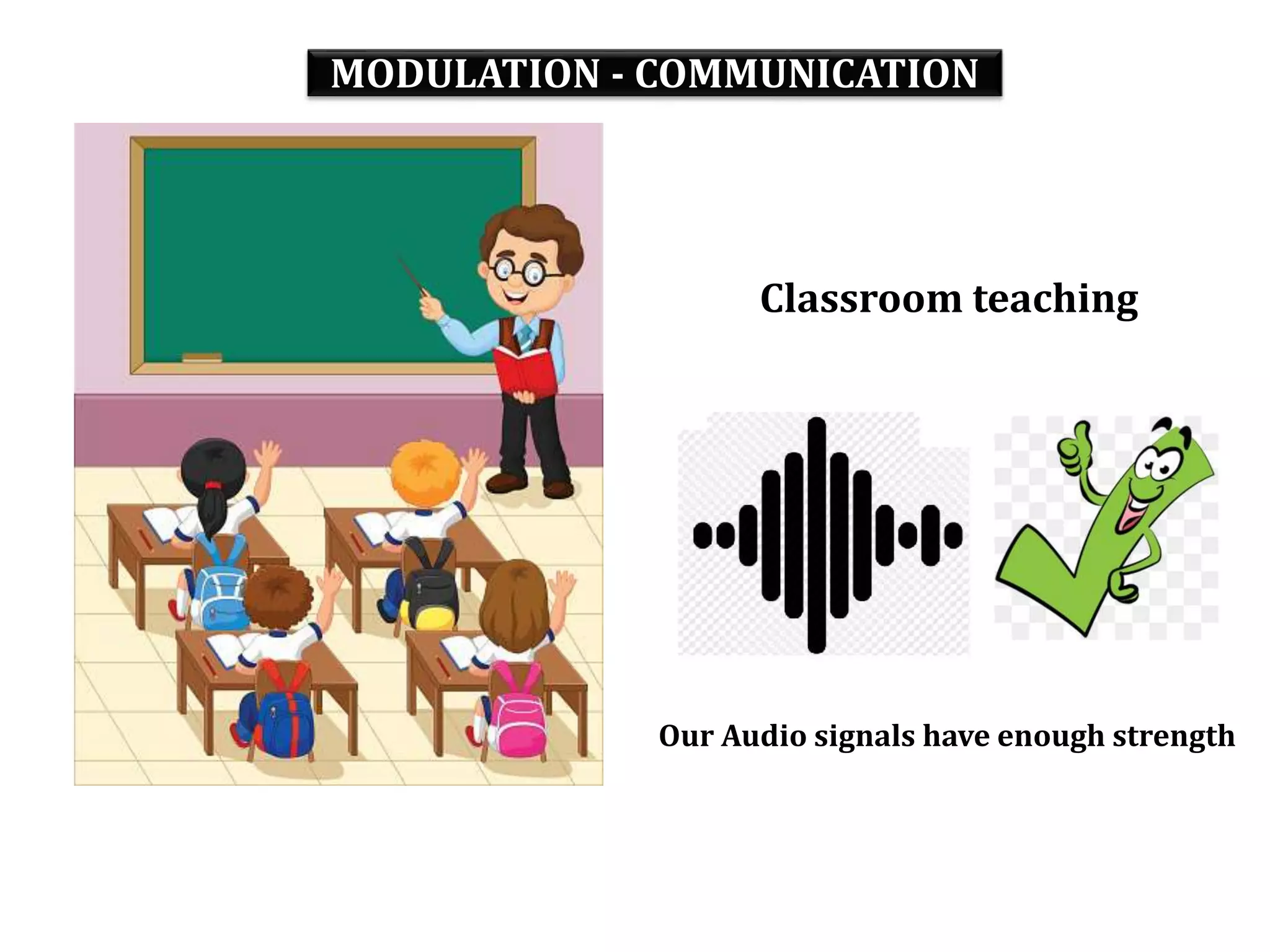
Classroom teaching
Our Audio signals have enough strength
MODULATION - COMMUNICATION
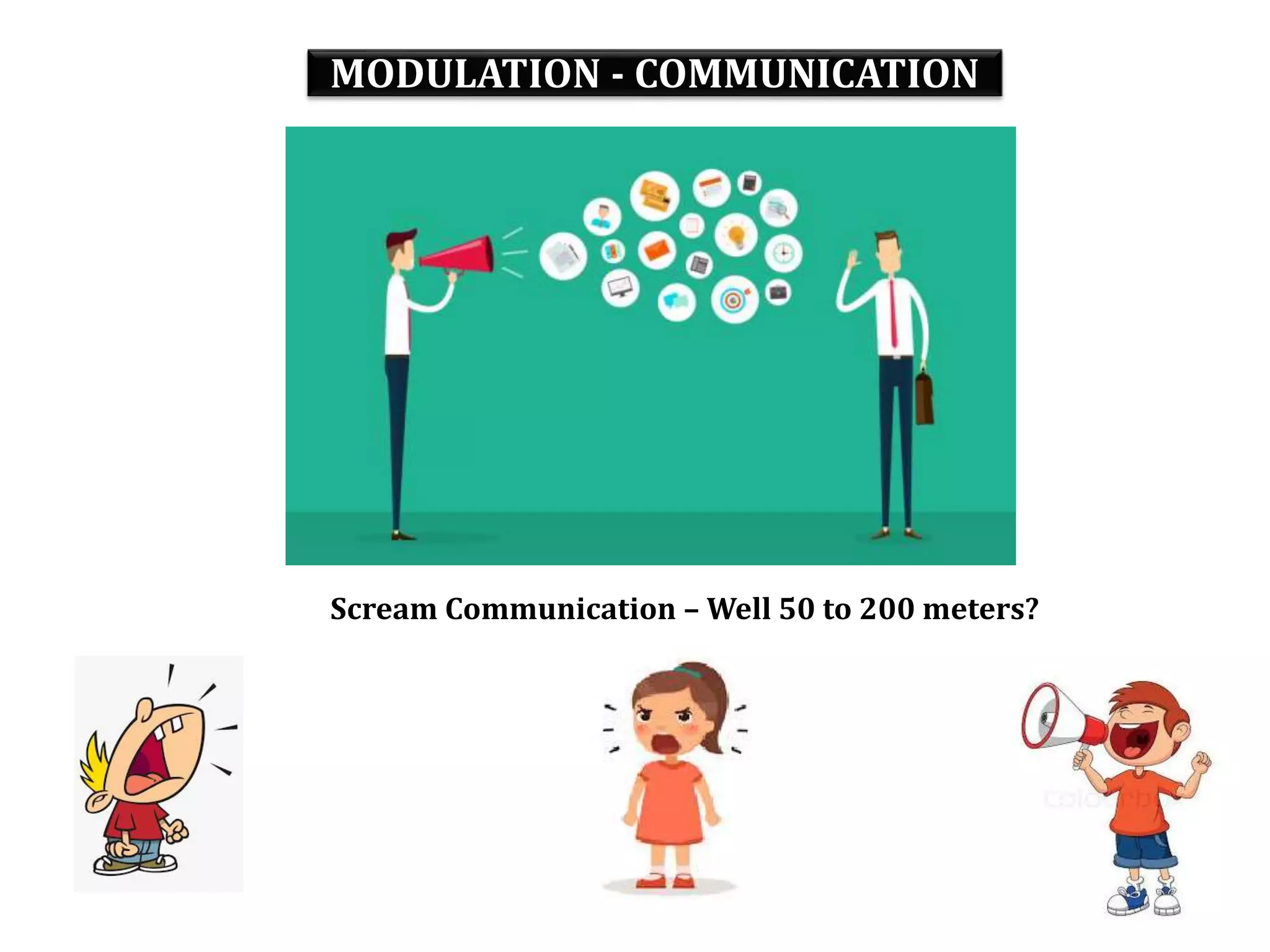
Scream Communication – Well 50 to 200 meters?
MODULATION - COMMUNICATION
SPEAKERS / AMPLIFIERS
May be 1 km communication?
How can you achieve long distance communication ?
DISTANT COMMUNICATION
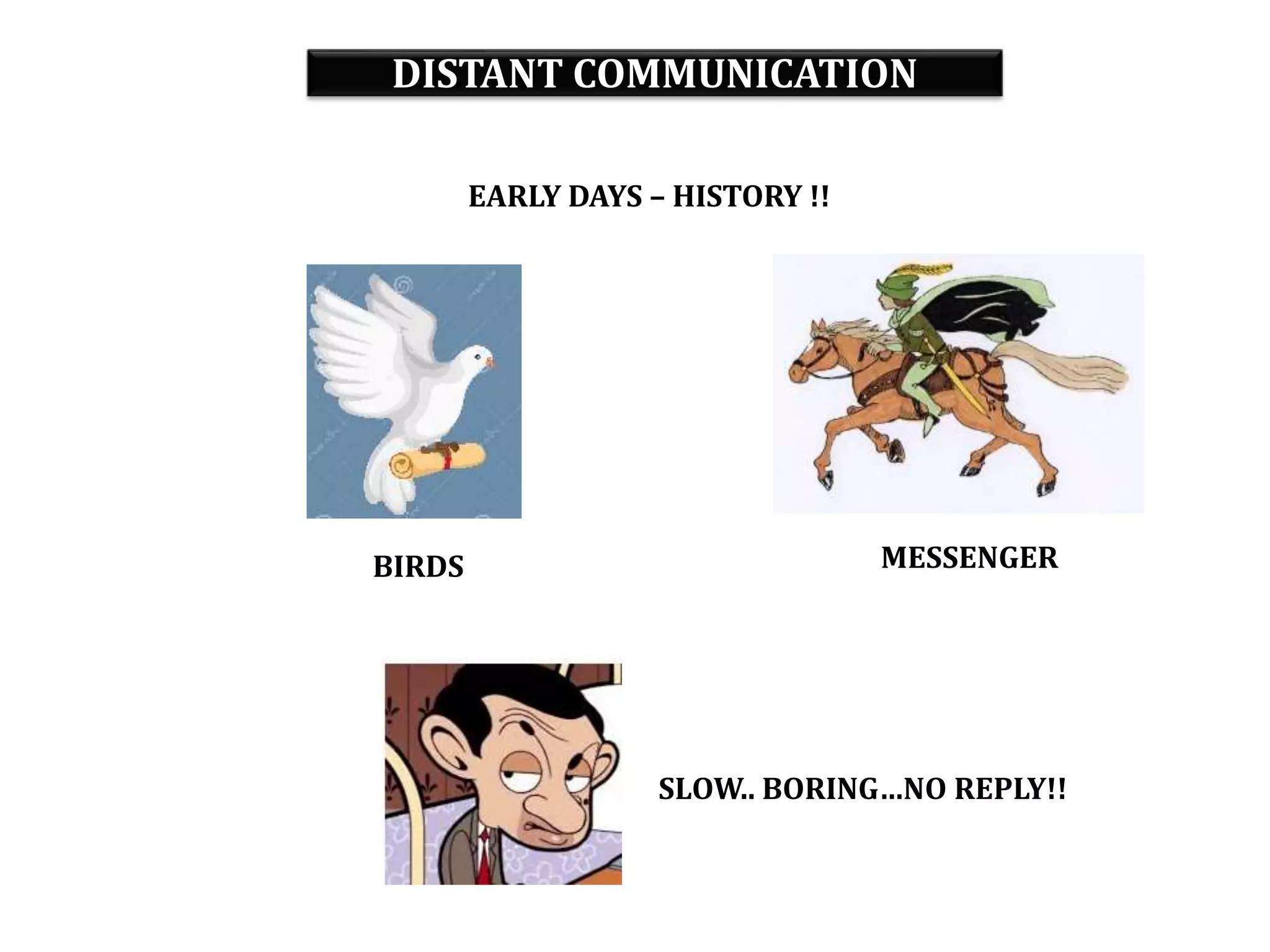
EARLY DAYS – HISTORY !!
BIRDS MESSENGER
SLOW.. BORING…NO REPLY!!
DISTANT COMMUNICATION - WIRELESS COMMUNICATION
DISTANT COMMUNICATION
WIRELESS COMMUNICATION
WHAT IS THE MAGIC ?? HOW IS IT POSSIBLE??
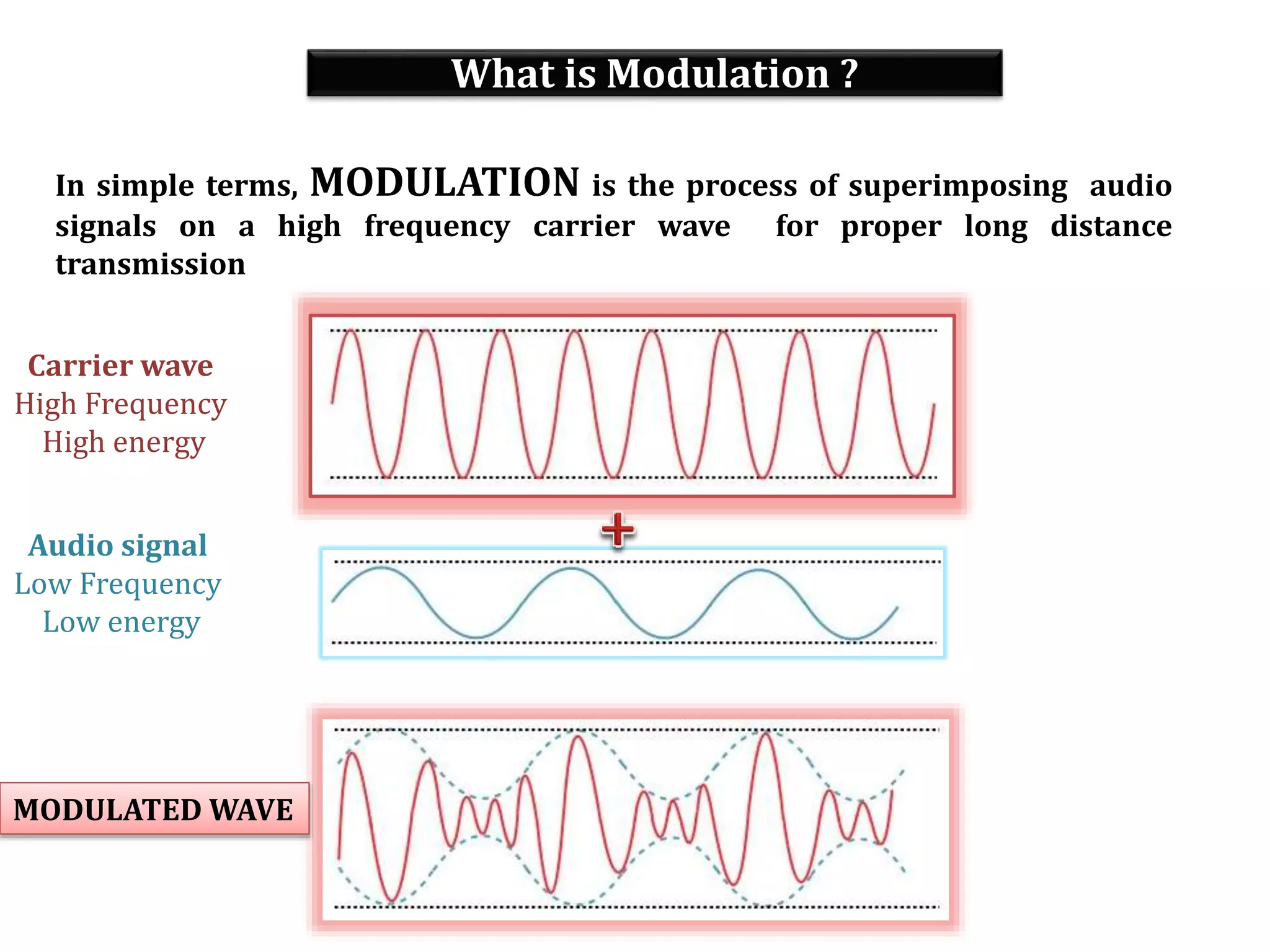
What is Modulation ?
In simple terms, MODULATION is the process of superimposing audio
signals on a high frequency carrier wave for proper long distance
transmission
Carrier wave
High Frequency
High energy
Audio signal
Low Frequency
Low energy
MODULATED WAVE
Need for Modulation
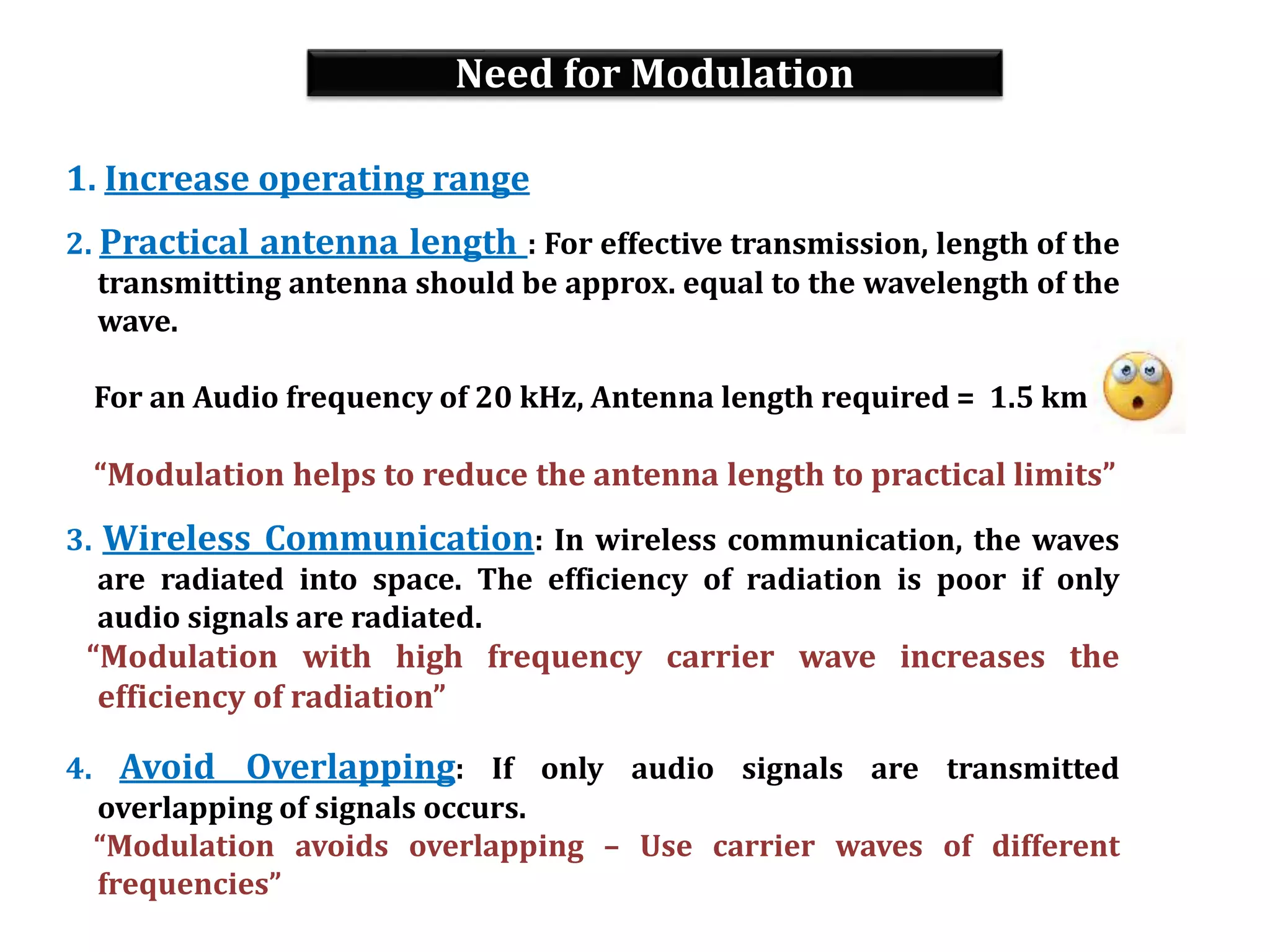
1. Increase operating range
2. Practical antenna length : For effective transmission, length of the
transmitting antenna should be approx. equal to the wavelength of the
wave.
For an Audio frequency of 20 kHz, Antenna length required = 1.5 km
“Modulation helps to reduce the antenna length to practical limits”
3. Wireless Communication: In wireless communication, the waves
are radiated into space. The efficiency of radiation is poor if only
audio signals are radiated.
“Modulation with high frequency carrier wave increases the
efficiency of radiation”
4. Avoid Overlapping: If only audio signals are transmitted
overlapping of signals occurs.
“Modulation avoids overlapping – Use carrier waves of different
frequencies”
What is Modulation ?
Definition
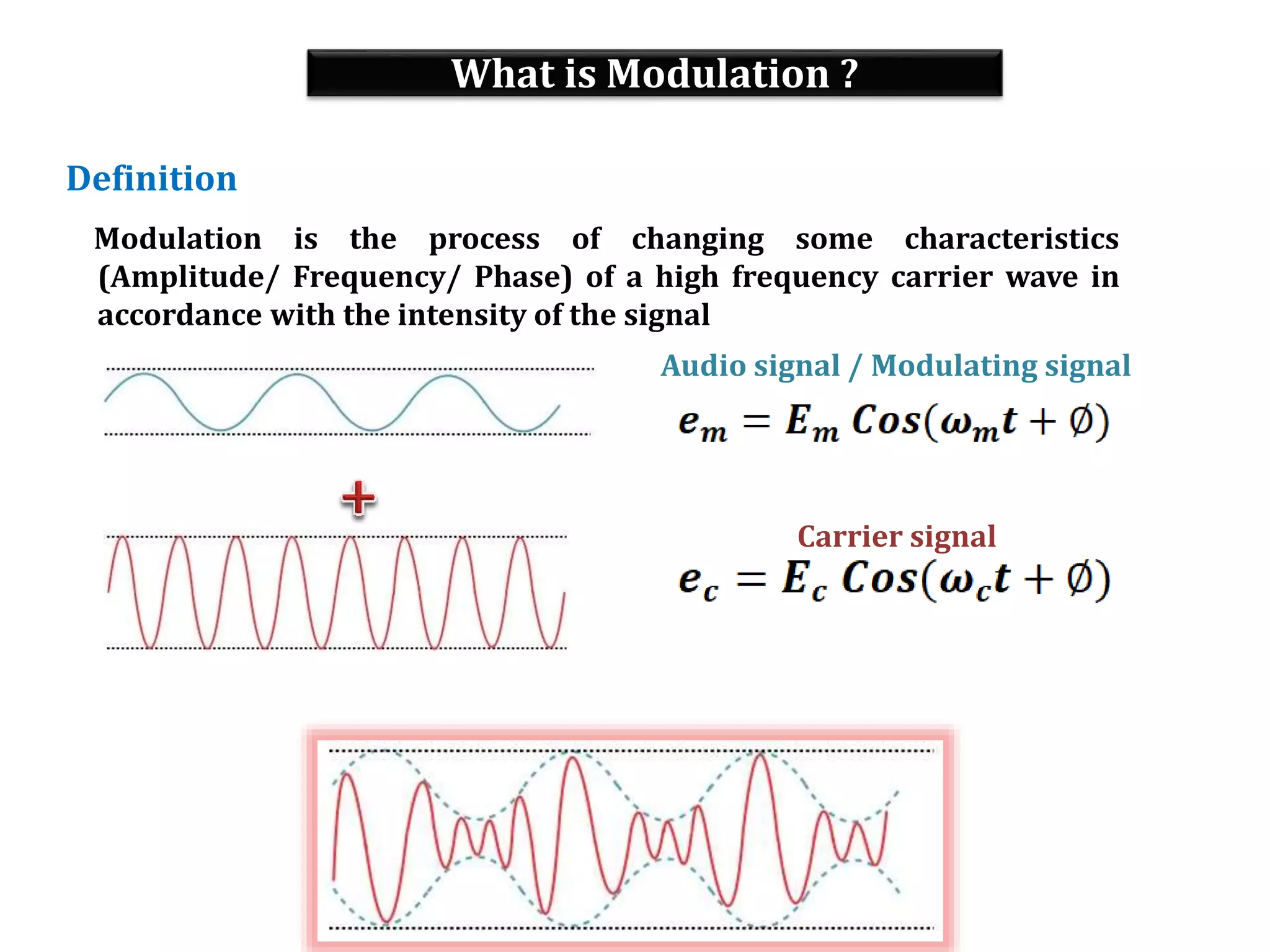
Modulation is the process of changing some characteristics
(Amplitude/ Frequency/ Phase) of a high frequency carrier wave in
accordance with the intensity of the signal
Audio signal / Modulating signal
Carrier signal
Types of Modulation
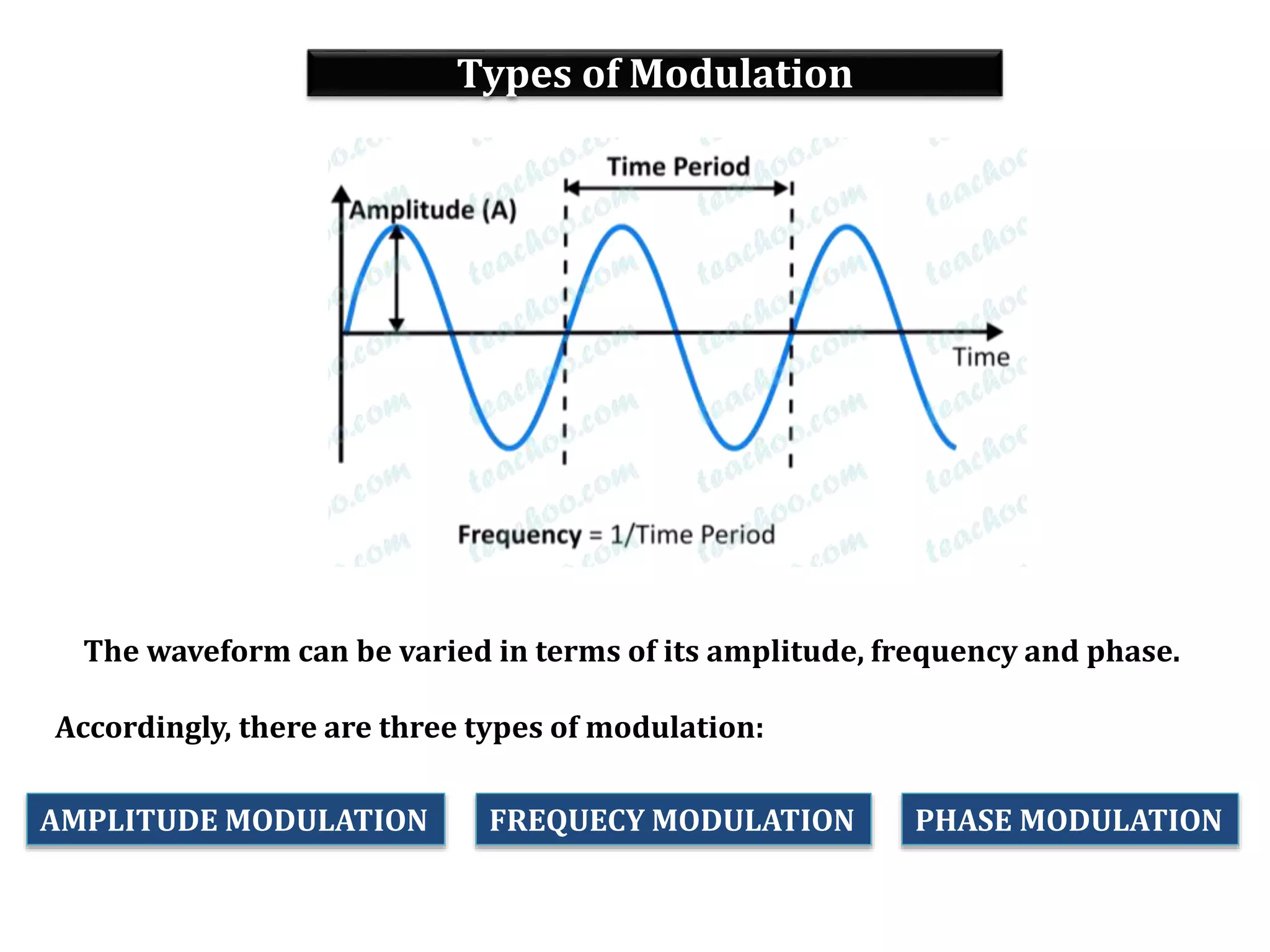
The waveform can be varied in terms of its amplitude, frequency and phase.
Accordingly, there are three types of modulation:
AMPLITUDE MODULATION FREQUECY MODULATION PHASE MODULATION
AMPLITUDE MODULATION (AM)
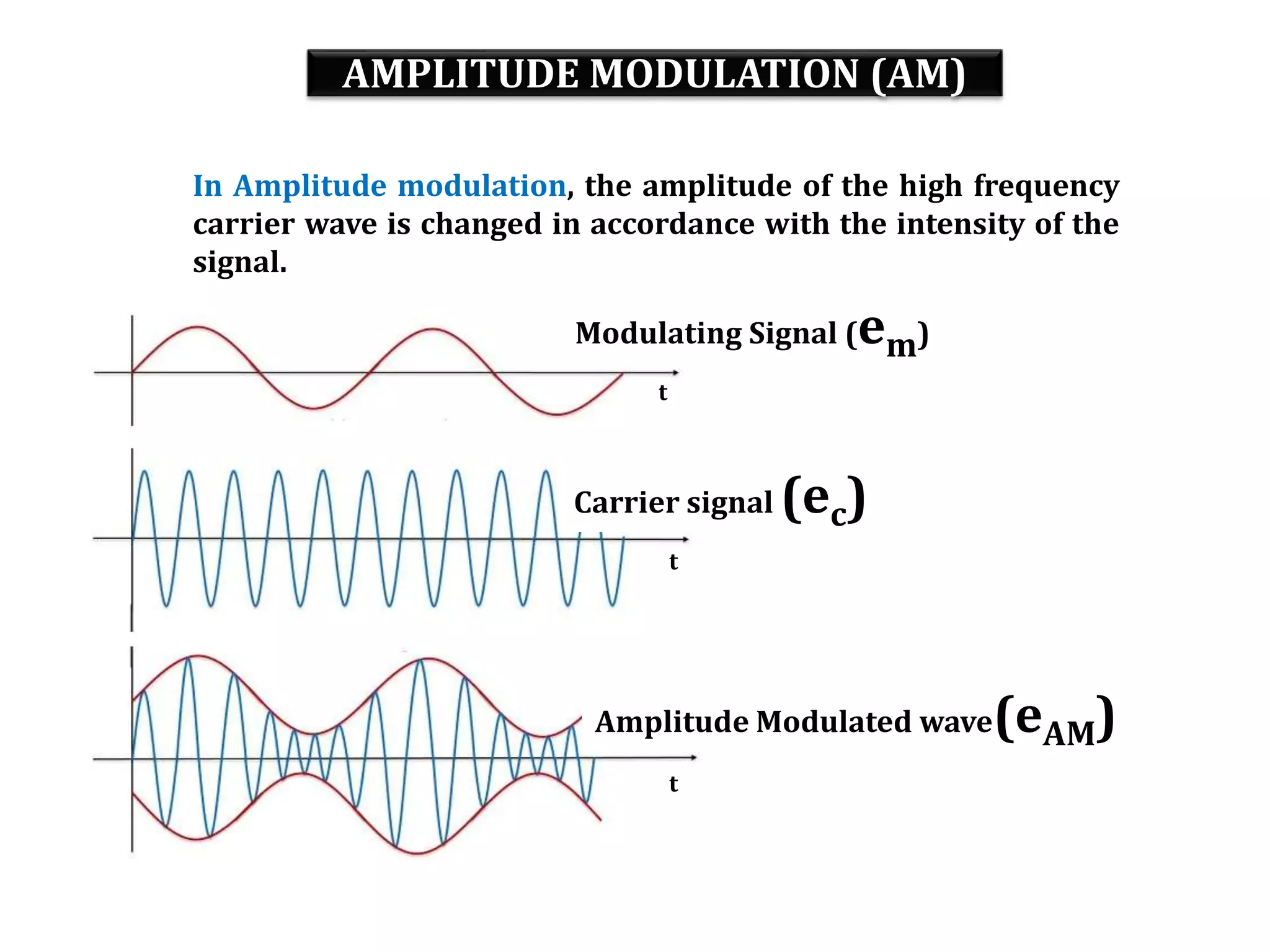
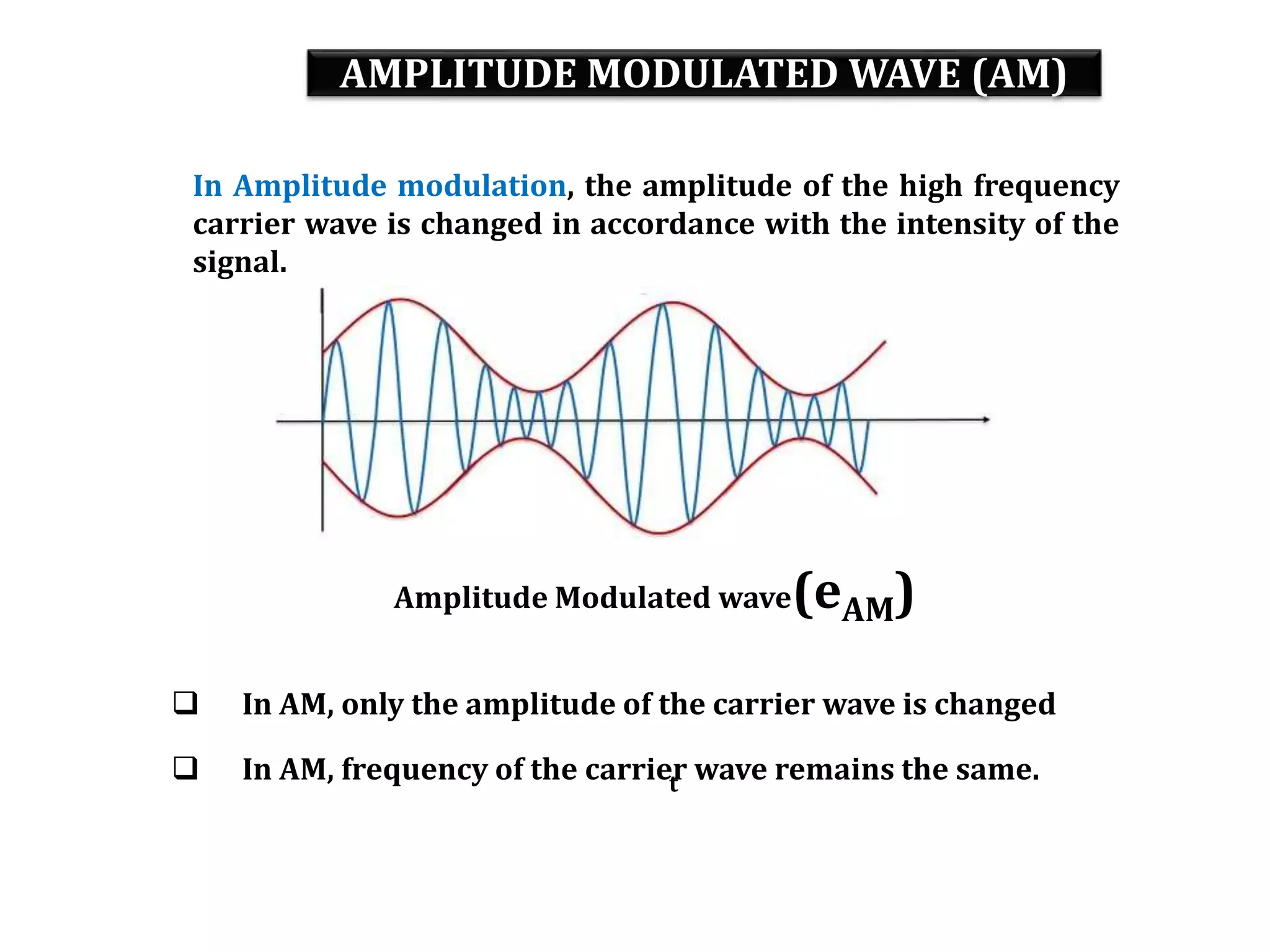
In Amplitude modulation, the amplitude of the high frequency
carrier wave is changed in accordance with the intensity of the
signal.
Modulating Signal (em)
Carrier signal (ec)
Amplitude Modulated wave(eAM)
t
t
t
AMPLITUDE MODULATED WAVE (AM)
In Amplitude modulation, the amplitude of the high frequency
carrier wave is changed in accordance with the intensity of the
signal.
Amplitude Modulated wave(eAM)
t
 In AM, only the amplitude of the carrier wave is changed
 In AM, frequency of the carrier wave remains the same.
MODULATION FACTOR IN AM
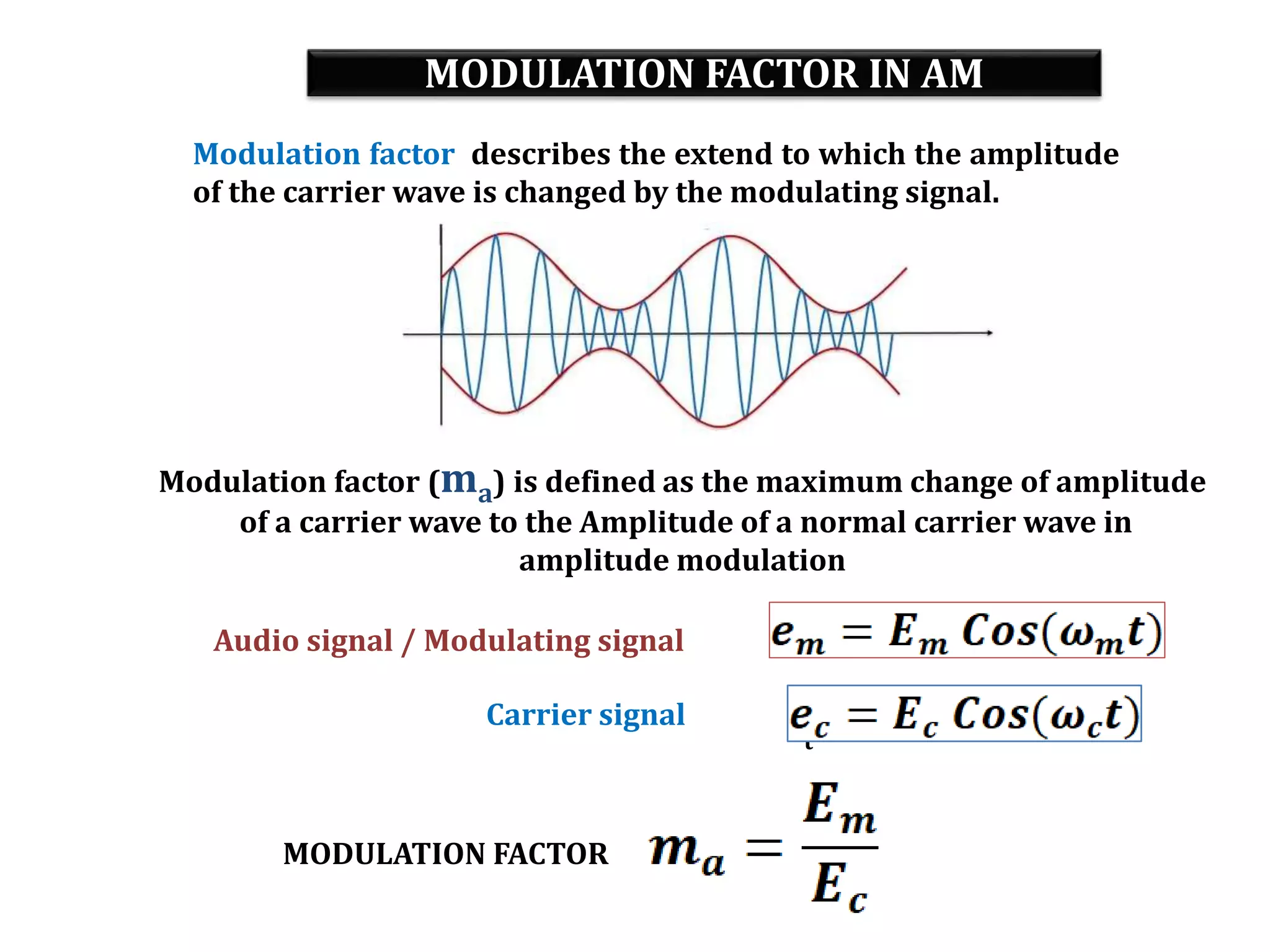
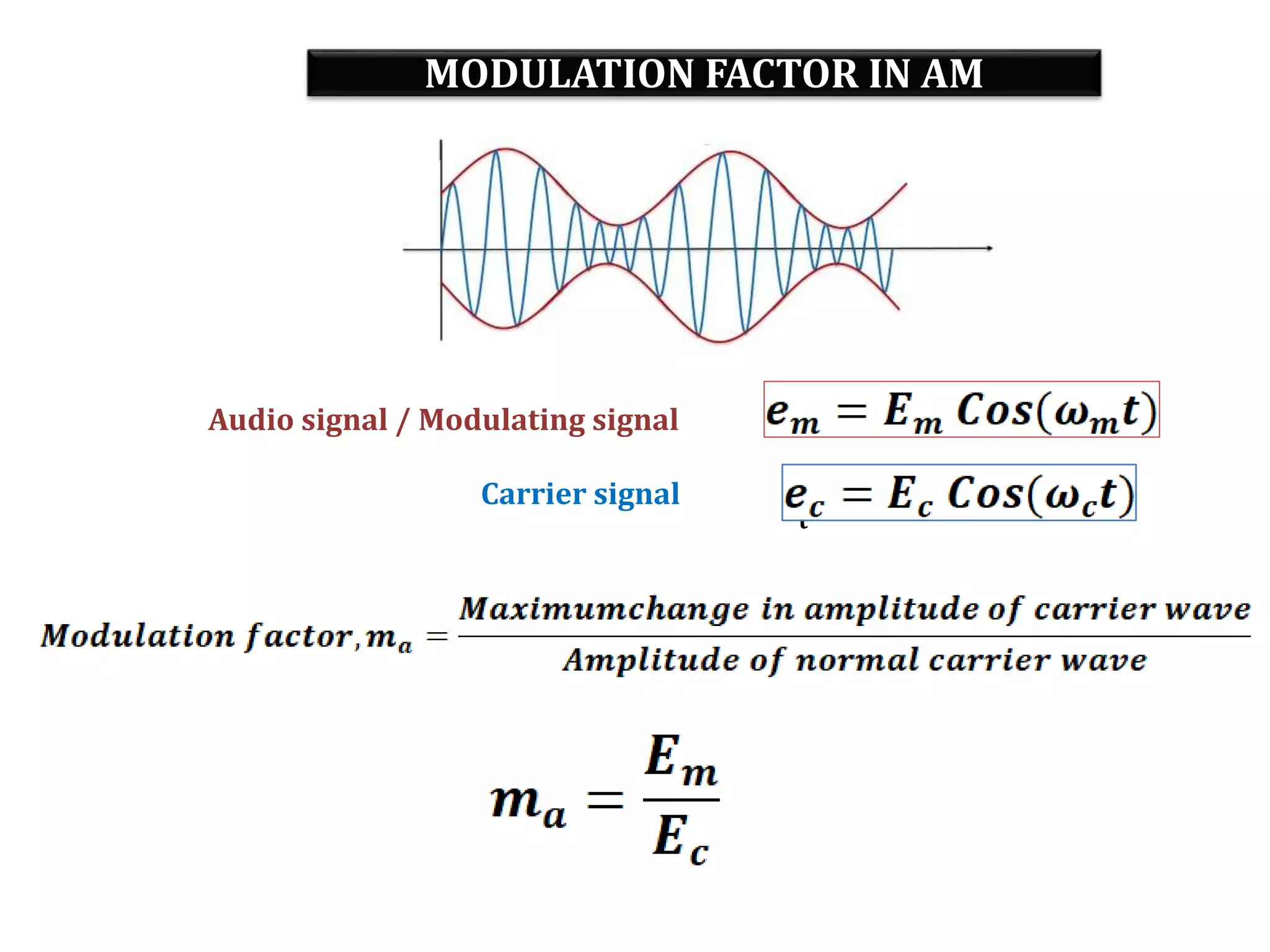
Modulation factor describes the extend to which the amplitude
of the carrier wave is changed by the modulating signal.
t
Modulation factor (ma) is defined as the maximum change of amplitude
of a carrier wave to the Amplitude of a normal carrier wave in
amplitude modulation
Audio signal / Modulating signal
Carrier signal
MODULATION FACTOR
MODULATION FACTOR IN AM
t
Audio signal / Modulating signal
Carrier signal
Analysis of AM wave
t
Audio signal / Modulating signal
Carrier signal
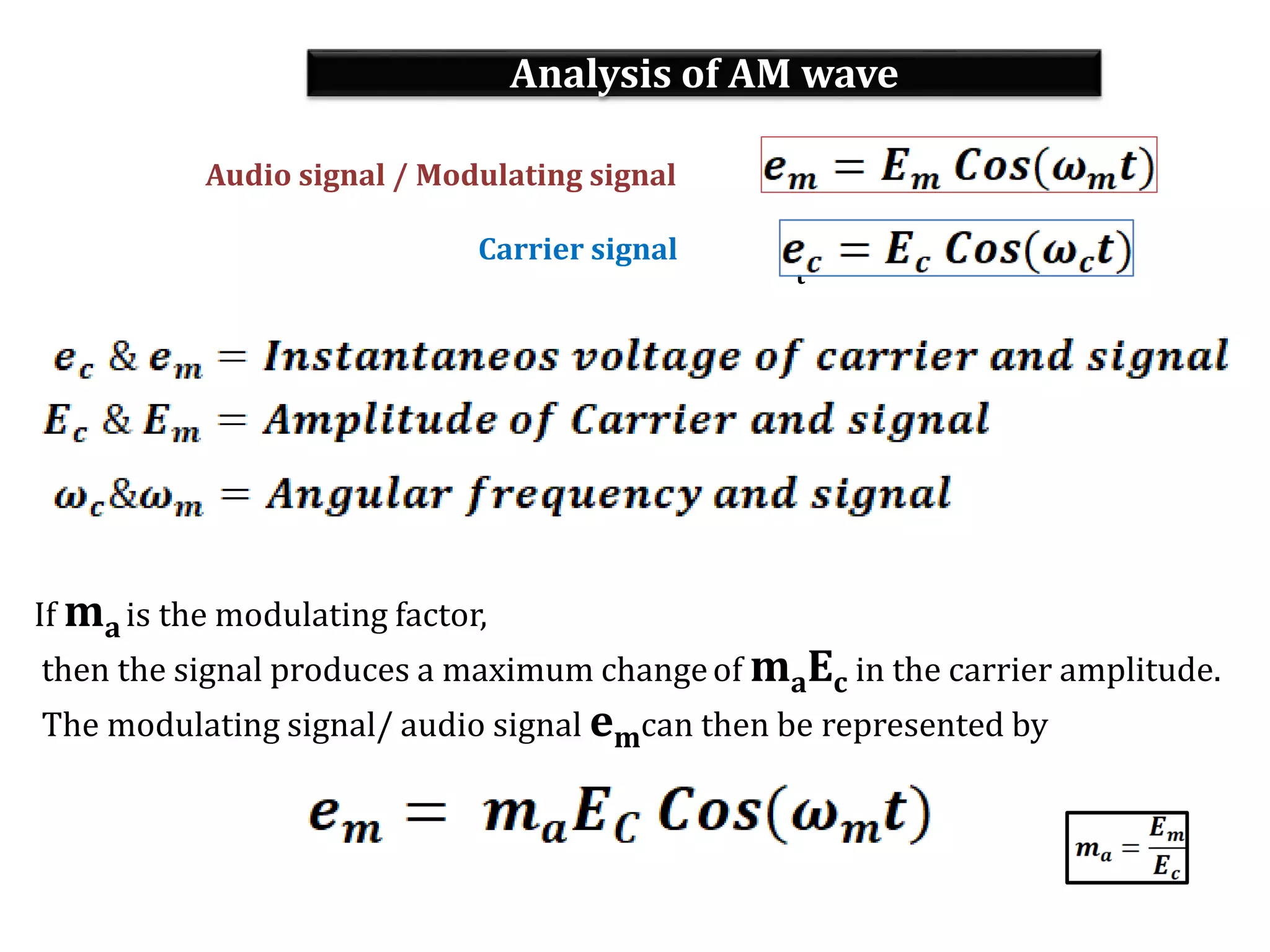
If ma is the modulating factor,
then the signal produces a maximum changeof maEc in the carrier amplitude.
The modulating signal/ audio signal emcan then be represented by
Analysis of AM wave
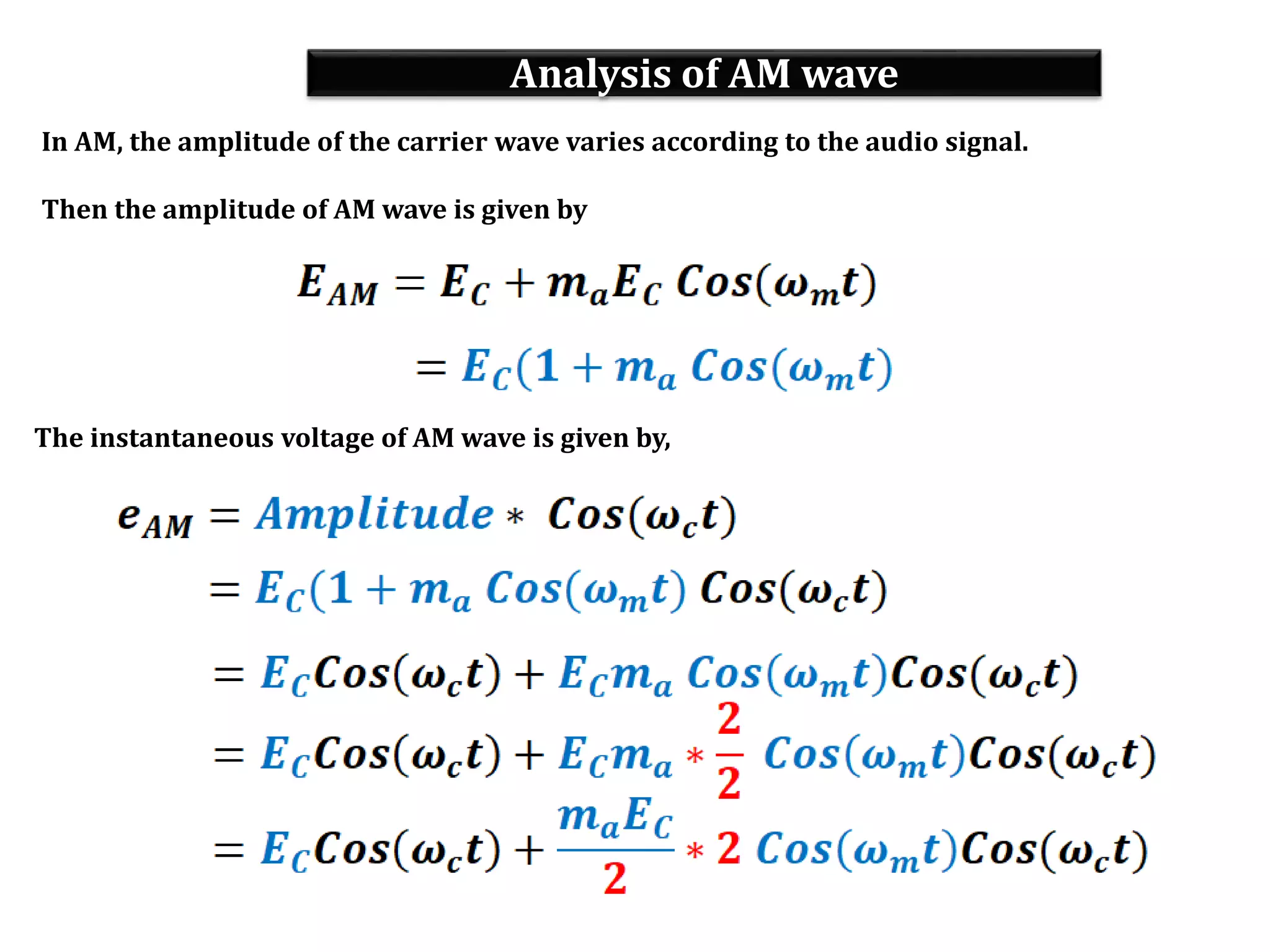
In AM, the amplitude of the carrier wave varies according to the audio signal.
Then the amplitude of AM wave is given by
The instantaneous voltage of AM wave is given by,
Analysis of AM wave
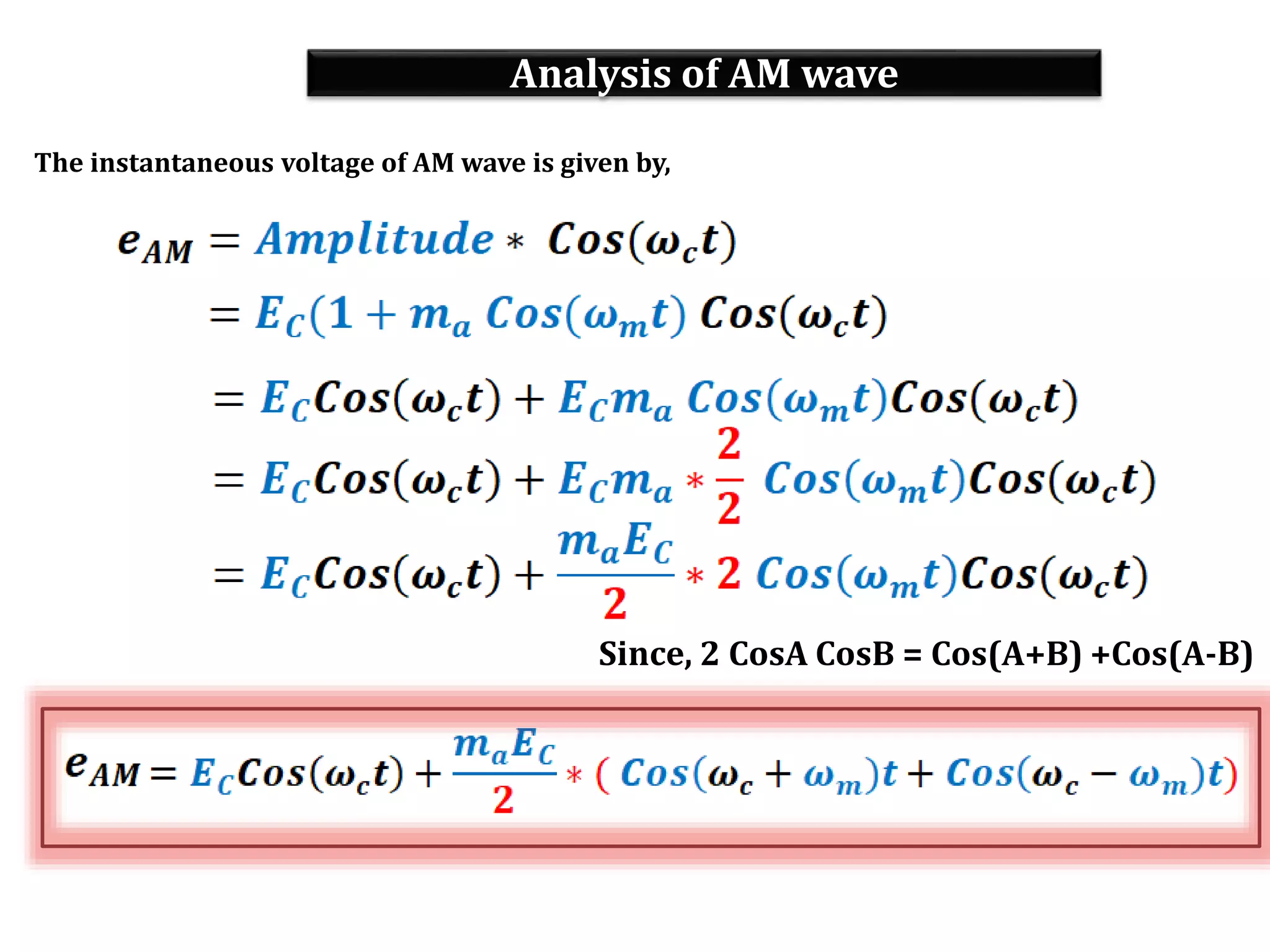
The instantaneous voltage of AM wave is given by,
Since, 2 CosA CosB = Cos(A+B) +Cos(A-B)
Analysis of AM wave
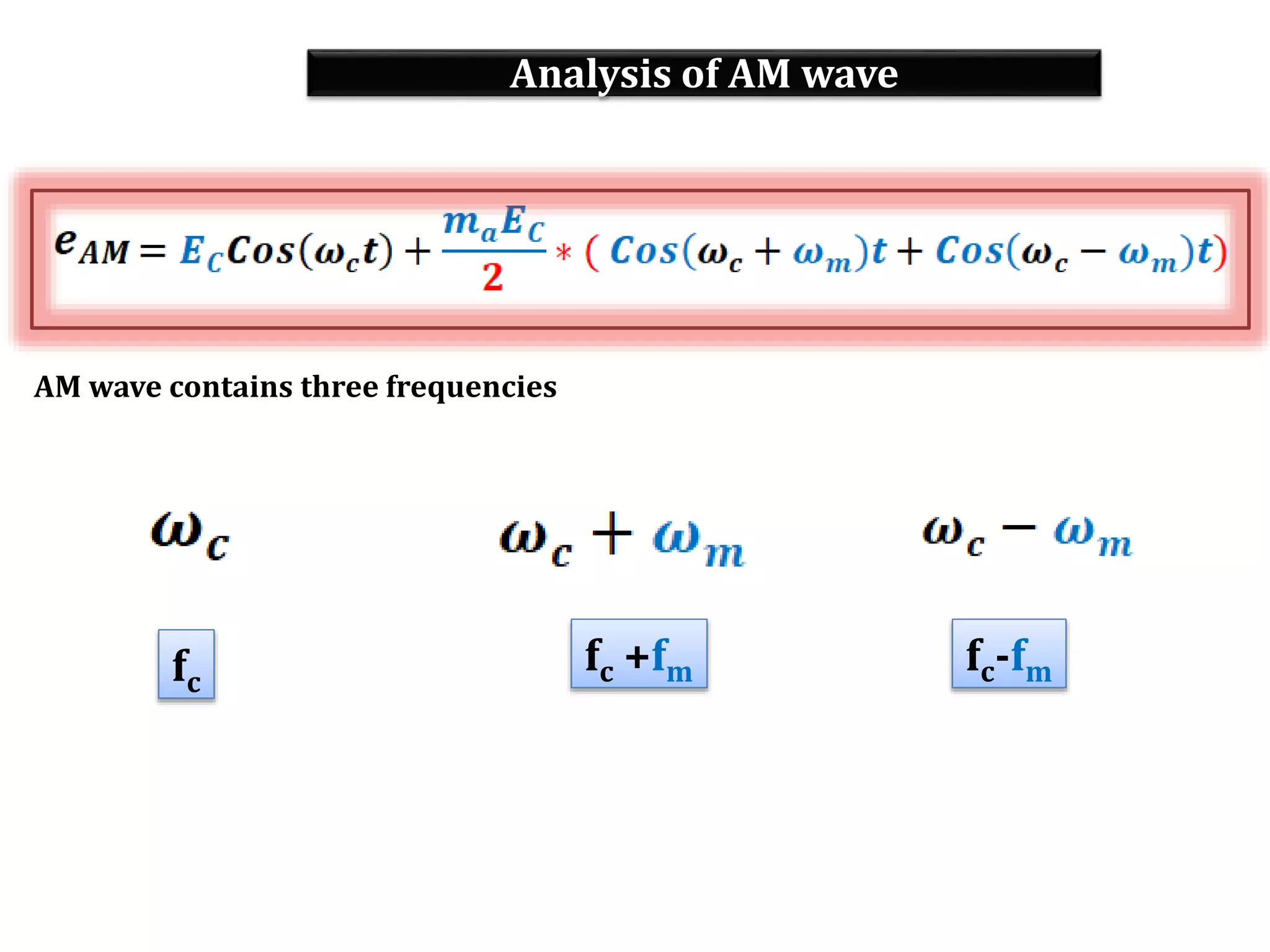
AM wave contains three frequencies
fc
fc +fm fc-fm
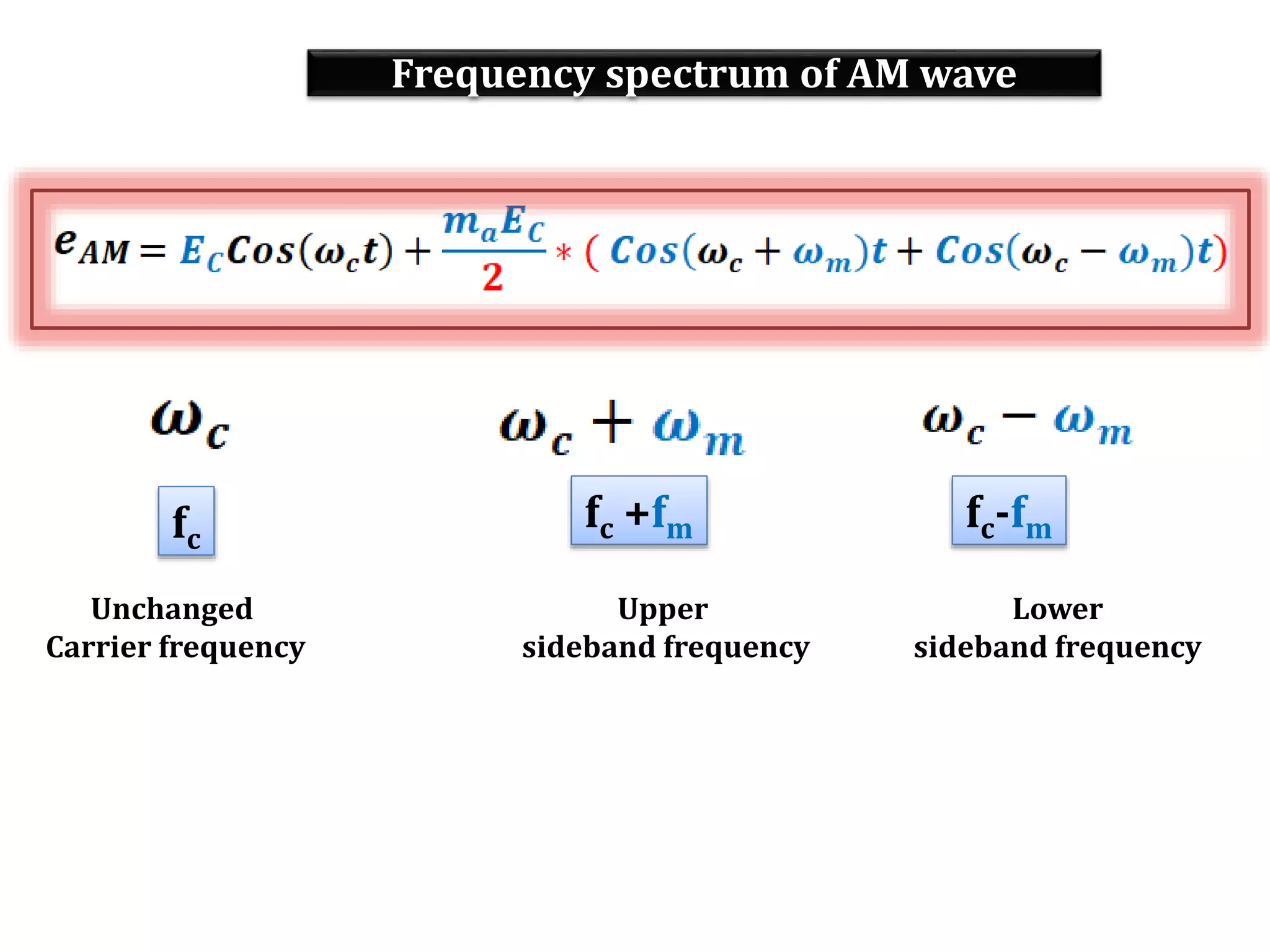
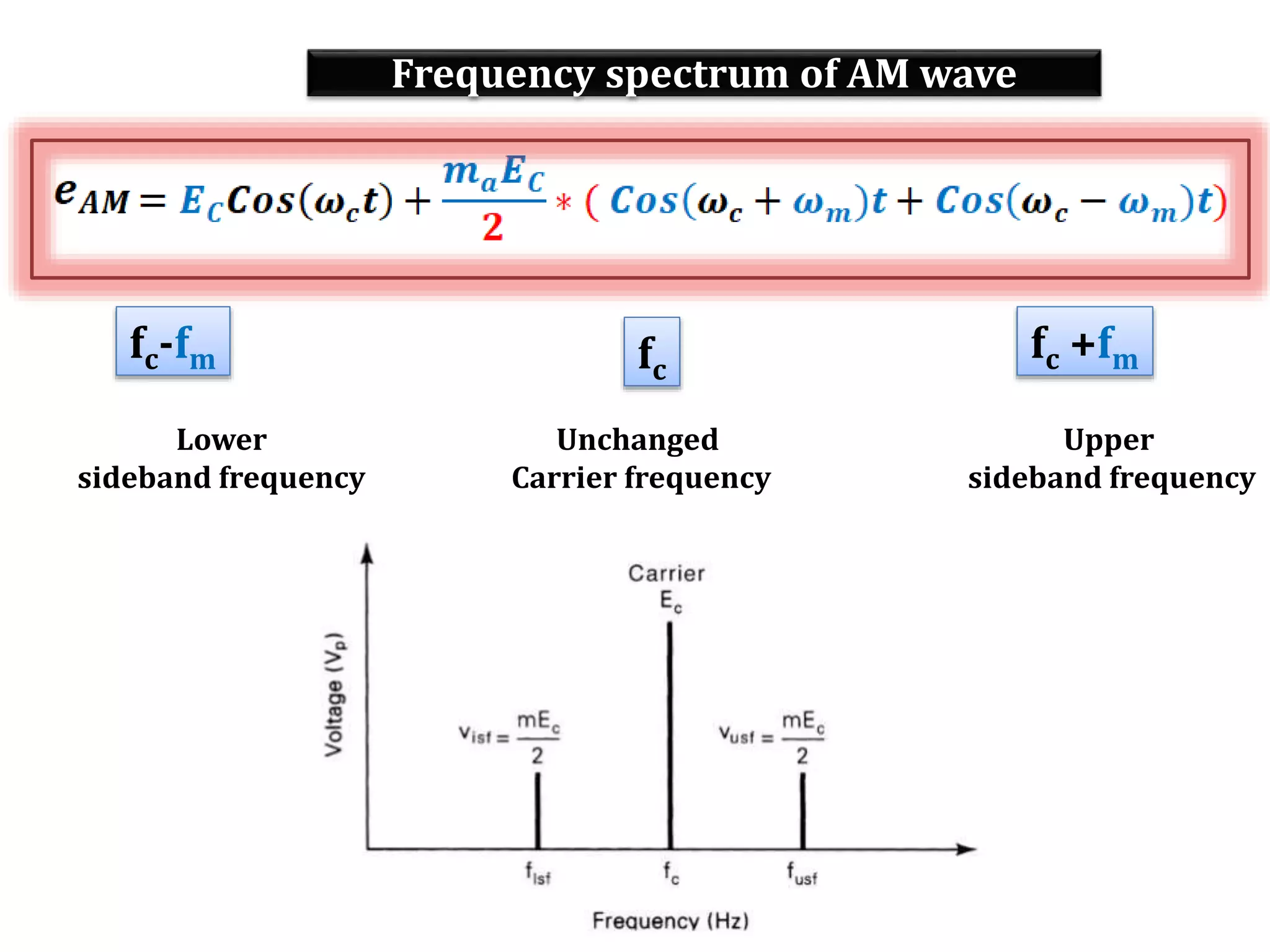
Frequency spectrum of AM wave
fc
fc +fm fc-fm
Unchanged
Carrier frequency
Upper
sideband frequency
Lower
sideband frequency
Frequency spectrum of AM wave
fc
fc +fmfc-fm
Unchanged
Carrier frequency
Upper
sideband frequency
Lower
sideband frequency
THANK YOU

Modulation Basics

  • 1.
    PY1543-ELECTRONICS Dr. Deepak Nand AssistantProfessor Department of Physics Sree Narayana College for Women, Kollam
  • 2.
    ELECTRONICS PY1543-ELECTRONICS Unit 1. CircuitTheory SMITHA S. (SS) Unit 2. Diode Circuits Unit 3.Transistors Unit 4. Power amplifiers Unit 5. Feedback & Oscillator circuits DEEPAK NAND (DN) Unit 6. Modulation (5 hours) Unit 7. Special devices: (8 hours) Unit 8. Operational amplifiers (IC741)
  • 3.
    OUTLINE MODULATION Fundamentals of modulation– Amplitude Modulation(AM) and Frequency Modulation(FM) Frequency spectrum of AM Power in AM Demodulation of AM signal Frequency spectrum for FM
  • 4.
    MODULATION - COMMUNICATION Peoplewants to talk, communicate, exchange ideas Its fine for short distance communication Audio signals (20Hz to 20kHz) – Weak signals – Short distance communication
  • 5.
    MODULATION - COMMUNICATION Classroomteaching Our Audio signals have enough strength
  • 6.
    MODULATION - COMMUNICATION ScreamCommunication – Well 50 to 200 meters?
  • 7.
    MODULATION - COMMUNICATION SPEAKERS/ AMPLIFIERS May be 1 km communication? How can you achieve long distance communication ?
  • 8.
    DISTANT COMMUNICATION EARLY DAYS– HISTORY !! BIRDS MESSENGER SLOW.. BORING…NO REPLY!!
  • 9.
    DISTANT COMMUNICATION -WIRELESS COMMUNICATION
  • 10.
    DISTANT COMMUNICATION WIRELESS COMMUNICATION WHATIS THE MAGIC ?? HOW IS IT POSSIBLE??
  • 12.
    What is Modulation? In simple terms, MODULATION is the process of superimposing audio signals on a high frequency carrier wave for proper long distance transmission Carrier wave High Frequency High energy Audio signal Low Frequency Low energy MODULATED WAVE
  • 13.
    Need for Modulation 1.Increase operating range 2. Practical antenna length : For effective transmission, length of the transmitting antenna should be approx. equal to the wavelength of the wave. For an Audio frequency of 20 kHz, Antenna length required = 1.5 km “Modulation helps to reduce the antenna length to practical limits” 3. Wireless Communication: In wireless communication, the waves are radiated into space. The efficiency of radiation is poor if only audio signals are radiated. “Modulation with high frequency carrier wave increases the efficiency of radiation” 4. Avoid Overlapping: If only audio signals are transmitted overlapping of signals occurs. “Modulation avoids overlapping – Use carrier waves of different frequencies”
  • 14.
    What is Modulation? Definition Modulation is the process of changing some characteristics (Amplitude/ Frequency/ Phase) of a high frequency carrier wave in accordance with the intensity of the signal Audio signal / Modulating signal Carrier signal
  • 15.
    Types of Modulation Thewaveform can be varied in terms of its amplitude, frequency and phase. Accordingly, there are three types of modulation: AMPLITUDE MODULATION FREQUECY MODULATION PHASE MODULATION
  • 16.
    AMPLITUDE MODULATION (AM) InAmplitude modulation, the amplitude of the high frequency carrier wave is changed in accordance with the intensity of the signal. Modulating Signal (em) Carrier signal (ec) Amplitude Modulated wave(eAM) t t t
  • 17.
    AMPLITUDE MODULATED WAVE(AM) In Amplitude modulation, the amplitude of the high frequency carrier wave is changed in accordance with the intensity of the signal. Amplitude Modulated wave(eAM) t  In AM, only the amplitude of the carrier wave is changed  In AM, frequency of the carrier wave remains the same.
  • 18.
    MODULATION FACTOR INAM Modulation factor describes the extend to which the amplitude of the carrier wave is changed by the modulating signal. t Modulation factor (ma) is defined as the maximum change of amplitude of a carrier wave to the Amplitude of a normal carrier wave in amplitude modulation Audio signal / Modulating signal Carrier signal MODULATION FACTOR
  • 19.
    MODULATION FACTOR INAM t Audio signal / Modulating signal Carrier signal
  • 20.
    Analysis of AMwave t Audio signal / Modulating signal Carrier signal If ma is the modulating factor, then the signal produces a maximum changeof maEc in the carrier amplitude. The modulating signal/ audio signal emcan then be represented by
  • 21.
    Analysis of AMwave In AM, the amplitude of the carrier wave varies according to the audio signal. Then the amplitude of AM wave is given by The instantaneous voltage of AM wave is given by,
  • 22.
    Analysis of AMwave The instantaneous voltage of AM wave is given by, Since, 2 CosA CosB = Cos(A+B) +Cos(A-B)
  • 23.
    Analysis of AMwave AM wave contains three frequencies fc fc +fm fc-fm
  • 24.
    Frequency spectrum ofAM wave fc fc +fm fc-fm Unchanged Carrier frequency Upper sideband frequency Lower sideband frequency
  • 25.
    Frequency spectrum ofAM wave fc fc +fmfc-fm Unchanged Carrier frequency Upper sideband frequency Lower sideband frequency
  • 26.